EP3410334A1 - Method for authenticating an intergrated circuit device - Google Patents
Method for authenticating an intergrated circuit device Download PDFInfo
- Publication number
- EP3410334A1 EP3410334A1 EP18175189.2A EP18175189A EP3410334A1 EP 3410334 A1 EP3410334 A1 EP 3410334A1 EP 18175189 A EP18175189 A EP 18175189A EP 3410334 A1 EP3410334 A1 EP 3410334A1
- Authority
- EP
- European Patent Office
- Prior art keywords
- uid
- dsk
- devices
- provider
- online service
- Prior art date
- Legal status (The legal status is an assumption and is not a legal conclusion. Google has not performed a legal analysis and makes no representation as to the accuracy of the status listed.)
- Granted
Links
Images

Classifications
-
- G—PHYSICS
- G06—COMPUTING OR CALCULATING; COUNTING
- G06F—ELECTRIC DIGITAL DATA PROCESSING
- G06F21/00—Security arrangements for protecting computers, components thereof, programs or data against unauthorised activity
- G06F21/30—Authentication, i.e. establishing the identity or authorisation of security principals
- G06F21/44—Program or device authentication
-
- H—ELECTRICITY
- H04—ELECTRIC COMMUNICATION TECHNIQUE
- H04L—TRANSMISSION OF DIGITAL INFORMATION, e.g. TELEGRAPHIC COMMUNICATION
- H04L63/00—Network architectures or network communication protocols for network security
- H04L63/08—Network architectures or network communication protocols for network security for authentication of entities
- H04L63/0876—Network architectures or network communication protocols for network security for authentication of entities based on the identity of the terminal or configuration, e.g. MAC address, hardware or software configuration or device fingerprint
-
- G—PHYSICS
- G06—COMPUTING OR CALCULATING; COUNTING
- G06F—ELECTRIC DIGITAL DATA PROCESSING
- G06F21/00—Security arrangements for protecting computers, components thereof, programs or data against unauthorised activity
- G06F21/70—Protecting specific internal or peripheral components, in which the protection of a component leads to protection of the entire computer
- G06F21/71—Protecting specific internal or peripheral components, in which the protection of a component leads to protection of the entire computer to assure secure computing or processing of information
- G06F21/72—Protecting specific internal or peripheral components, in which the protection of a component leads to protection of the entire computer to assure secure computing or processing of information in cryptographic circuits
-
- H—ELECTRICITY
- H04—ELECTRIC COMMUNICATION TECHNIQUE
- H04L—TRANSMISSION OF DIGITAL INFORMATION, e.g. TELEGRAPHIC COMMUNICATION
- H04L41/00—Arrangements for maintenance, administration or management of data switching networks, e.g. of packet switching networks
- H04L41/28—Restricting access to network management systems or functions, e.g. using authorisation function to access network configuration
-
- H—ELECTRICITY
- H04—ELECTRIC COMMUNICATION TECHNIQUE
- H04L—TRANSMISSION OF DIGITAL INFORMATION, e.g. TELEGRAPHIC COMMUNICATION
- H04L9/00—Cryptographic mechanisms or cryptographic arrangements for secret or secure communications; Network security protocols
- H04L9/08—Key distribution or management, e.g. generation, sharing or updating, of cryptographic keys or passwords
- H04L9/0861—Generation of secret information including derivation or calculation of cryptographic keys or passwords
- H04L9/0866—Generation of secret information including derivation or calculation of cryptographic keys or passwords involving user or device identifiers, e.g. serial number, physical or biometrical information, DNA, hand-signature or measurable physical characteristics
-
- H—ELECTRICITY
- H04—ELECTRIC COMMUNICATION TECHNIQUE
- H04L—TRANSMISSION OF DIGITAL INFORMATION, e.g. TELEGRAPHIC COMMUNICATION
- H04L9/00—Cryptographic mechanisms or cryptographic arrangements for secret or secure communications; Network security protocols
- H04L9/32—Cryptographic mechanisms or cryptographic arrangements for secret or secure communications; Network security protocols including means for verifying the identity or authority of a user of the system or for message authentication, e.g. authorization, entity authentication, data integrity or data verification, non-repudiation, key authentication or verification of credentials
- H04L9/3271—Cryptographic mechanisms or cryptographic arrangements for secret or secure communications; Network security protocols including means for verifying the identity or authority of a user of the system or for message authentication, e.g. authorization, entity authentication, data integrity or data verification, non-repudiation, key authentication or verification of credentials using challenge-response
-
- G—PHYSICS
- G06—COMPUTING OR CALCULATING; COUNTING
- G06F—ELECTRIC DIGITAL DATA PROCESSING
- G06F21/00—Security arrangements for protecting computers, components thereof, programs or data against unauthorised activity
- G06F21/70—Protecting specific internal or peripheral components, in which the protection of a component leads to protection of the entire computer
- G06F21/71—Protecting specific internal or peripheral components, in which the protection of a component leads to protection of the entire computer to assure secure computing or processing of information
- G06F21/73—Protecting specific internal or peripheral components, in which the protection of a component leads to protection of the entire computer to assure secure computing or processing of information by creating or determining hardware identification, e.g. serial numbers
-
- G—PHYSICS
- G06—COMPUTING OR CALCULATING; COUNTING
- G06F—ELECTRIC DIGITAL DATA PROCESSING
- G06F2221/00—Indexing scheme relating to security arrangements for protecting computers, components thereof, programs or data against unauthorised activity
- G06F2221/21—Indexing scheme relating to G06F21/00 and subgroups addressing additional information or applications relating to security arrangements for protecting computers, components thereof, programs or data against unauthorised activity
- G06F2221/2103—Challenge-response
-
- H—ELECTRICITY
- H04—ELECTRIC COMMUNICATION TECHNIQUE
- H04W—WIRELESS COMMUNICATION NETWORKS
- H04W12/00—Security arrangements; Authentication; Protecting privacy or anonymity
- H04W12/04—Key management, e.g. using generic bootstrapping architecture [GBA]
Landscapes
- Engineering & Computer Science (AREA)
- Computer Security & Cryptography (AREA)
- Theoretical Computer Science (AREA)
- Computer Hardware Design (AREA)
- Physics & Mathematics (AREA)
- Computer Networks & Wireless Communication (AREA)
- Signal Processing (AREA)
- General Engineering & Computer Science (AREA)
- Software Systems (AREA)
- General Physics & Mathematics (AREA)
- Mathematical Physics (AREA)
- Computing Systems (AREA)
- Power Engineering (AREA)
- Storage Device Security (AREA)
Abstract
Description
- This disclosure relates generally to integrated circuits and more specifically to a method for authenticating an integrated circuit device.
- In contract manufacturing for integrated circuits, the design and development is done by an original device manufacturer (ODM), but the actual integrated circuit device production may be outsourced to a third-party contract manufacturer. This creates the risk for the ODM that illicit clones of the original devices are created through overproduction runs by the contract manufacturer, where the production chain of the original devices is misused for the creation of extra units. These extra units are not manufactured under the control of the ODM and the manufacturing cost will also not be paid by them. These extra units are in effect identical to the legitimate units (except perhaps for quality control), but may be considered as illicit clones, as they will not be sold through the ODM's channels.
- The sale of the illicit devices not only affects the ODM's business, but may also affect the functionality of the legitimate devices. In a situation where the manufactured devices are functionally dependent on an on-line service provider, as is typically the case for internet of things (IoT) devices, such cloned devices, when sold to end users, may adversely affect the availability of the on-line service, and through that the overall functioning of all sold devices, including the legitimate devices.
- If more devices than expected access and make use of the on-line service, more network traffic can result (simultaneously and overall), potentially exceeding the available bandwidth, and cause more transactions (perhaps with accompanying calculations, bookkeeping, data storage, etc.). As a result, this could undermine the stability and availability of the on-line service, forcing the service provider to invest in more capacity (both bandwidth and computation power). This may in turn adversely affect the business viability of the online service itself.
- Therefore, a need exists for a method to detect the illicit devices and thus prevent the unauthorized use of bandwidth and computation power.
- The present invention is illustrated by way of example and is not limited by the accompanying figures, in which like references indicate similar elements. Elements in the figures are illustrated for simplicity and clarity and have not necessarily been drawn to scale.
-
FIG. 1 illustrates a flowchart for a method for authenticating an IC device in accordance with an embodiment. -
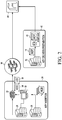
FIG. 2 illustrates a graphical view of cryptographical key insertion and key delivery for a plurality of IC devices in accordance with an embodiment. - Generally, there is provided, a method for authenticating an integrated circuit (IC) device. The method includes provisioning the IC device with a unique identification number (UID), and configuring the IC device to calculate a device-specific key (DSK) using the UID. The UID is used with a secure application separate from the IC device to calculate the DSK. The DSK calculated by the IC device is the same as the DSK calculated by the secure application. The UIDs of the IC devices are collected during manufacturing of the IC devices. The UID and the DSK calculated by the secure application is provided to a provider of an online service. The provider of the online service is thus enabled to authenticate the IC device using the UID and the DSK that was calculated with the secure application in response to the IC device contacting the online service. The service provider may authenticate the device using a standard cryptographic challenge-response protocol. If the IC device has knowledge of a particular DSK, then the IC device is a legitimate authorized device. An illicit IC device will not have knowledge of the particular DSK.
- In accordance with an embodiment, there is provided, a method including: provisioning an integrated circuit (IC) device with a unique identification number (UID); configuring the IC device to calculate a device-specific key (DSK) using the UID; using the UID and a secure application separate from the IC device, calculating a DSK for the IC device; providing the UID and the DSK calculated with the secure application separate from the IC device to a provider of an online service; and enabling the provider of the online service to authenticate the IC device using the UID and the DSK calculated with the secure application in response to the IC device contacting the online service. Provisioning an integrated circuit (IC) device with a unique identification number (UID) may further include provisioning a plurality of IC devices, each with a UID. The method may further include creating a log file of a UID and corresponding DSK for each of the plurality of IC devices. Creating a log file of a UID and corresponding DSK for each of the plurality of IC devices may further include providing the log file to the provider of the online service. Enabling the provider of the online service to authenticate the IC device may further include enabling the provider of the online service to authenticate the IC device using a predetermined cryptographic challenge-response protocol. The IC device may be authenticated as a legitimately manufactured IC device when the DSK calculated by the IC device favorably matches the DSK calculated with the secure application. Provisioning the IC device with the UID may be performed by a IC manufacturer that manufactured the IC device for an original device manufacturer (ODM). The IC device may be characterized as being an internet of things (IoT) device. Using the UID and a secure application separate from the IC device, calculating a DSK for the IC device may further include calculating the DSK for the IC device by an original device manufacturer (ODM).
- In another embodiment, there is provided, a method including: provisioning a plurality of integrated circuit (IC) devices with unique identification numbers, each of the plurality of IC devices being provided with a unique identification number (UID); configuring each of the plurality of IC devices to calculate a device-specific key (DSK) using the UID; using the UID and a secure application separate from the IC device, calculating a DSK for each of the plurality of IC devices; providing the UIDs and the DSKs calculated with the secure application separate from the IC device to a provider of an online service; and enabling the provider of the online service to authenticate an IC device using the UIDs and the DSKs calculated with the secure application in response to the IC device contacting the online service. The method may further include creating a log file of a UID and corresponding DSK for each of the plurality of IC devices. Creating the log file of a UID and corresponding DSK for each of the plurality of IC devices may further include providing the log file to the provider of the online service. Enabling the provider of the online service to authenticate the IC device may further include enabling the provider of the online service to authenticate the IC device using a predetermined cryptographic challenge-response protocol. The IC device may be authenticated as a legitimately manufactured IC device when the DSK calculated by the IC device favorably matches the DSK calculated with the secure application. Provisioning the plurality of IC devices with the UIDs is performed by an IC manufacturer that manufactured the plurality of IC devices for an original device manufacturer (ODM). The IC device may be characterized as being an internet of things (IoT) device. Using the UID and a secure application separate from the IC device, calculating a DSK for the IC device may further comprise calculating the DSK for the IC device by an original device manufacturer (ODM).
- In yet another embodiment, there is provided, a method including: provisioning a plurality of integrated circuit (IC) devices with unique identification numbers, each of the plurality of IC devices being provided with a unique identification number (UID); configuring each of the plurality of IC devices to calculate a device-specific key (DSK) using the UID; using the UID and a secure application separate from the IC device, calculating a DSK for each of the plurality of IC devices; creating a log file of a UID and corresponding DSK for each of the plurality of IC devices; providing the log file of UIDs and DSKs calculated with the secure application separate from the IC device to a provider of an online service; and enabling the provider of the online service to authenticate an IC device using the UIDs and the DSKs calculated with the secure application in response to the IC device contacting the online service. The IC device may be authenticated as a legitimately manufactured IC device when the DSK calculated by the IC device favorably matches the DSK calculated with the secure application. Provisioning the plurality of IC devices with the UIDs may be performed by an IC manufacturer that manufactured the plurality of IC devices for an original device manufacturer (ODM). Provisioning an IC device with the UID may further comprise selecting a large prime number, p, selecting a generator from a group of numbers modulo p; selecting the KDD from the group of numbers modulo p; and, determining the UID from the generator and the KDD.
-
FIG. 1 illustrates a flowchart of amethod 10 for authenticating an IC device in accordance with an embodiment. Usingmethod 10, it can be determined if an IC device is a legitimate device manufactured with the authorization of an original device manufacturer, or if the device is an illicit, unauthorized, clone device. A provider of online services may usemethod 10 to detect devices not authorized to use an online service.Method 10 starts atstep 12. Atstep 12, an IC device is provisioned with a unique identification number (UID) and key derivation data (KDD). Generally, the IC manufacturer of the device, which may be a contract manufacturer, does the provisioning. The UID of each device manufactured is provided to the original device manufacturer (ODM). Atstep 14, the IC devices are each configured with an algorithm and parameters to calculate a secret device specific key (DSK) using the KDD. The calculation of the DSK will be discussed below. Atstep 16, the ODM uses the UIDs and a secure application, separate from the IC devices to derive and calculate the secret DSKs for the IC devices. The DSKs calculated by the IC devices matches the DSKs calculated by the ODM using the secure application. A log file may be created with all of the UIDs and corresponding DSKs. Atstep 18, the log file for UIDs and corresponding DSKs may be provided to a provider of online services. The IC devices may be characterized as being internet of things (IoT) devices, and the online service provider may provide a specific IoT service on, for example, a subscription basis. Atstep 20, the service provider uses the UIDs and DSKs to authenticate IC devices that contact the online service. If the UID is known to the service provider, and the UIDs and DSKs match, then the IC device has knowledge of the DSK used by the service provider and is therefore an original IC device. If the UIDs and DSKs do not match, then the IC device contacting the service may not be an original device. The service provider may then choose to deny access to the online service. -
FIG. 2 illustrates a graphical view of cryptographical key insertion and key delivery for a plurality of IC devices in accordance with an embodiment. Referring toFIG. 2 ,key insertion 24 may be performed by the IC manufacturer. Asemiconductor wafer 30 is processed by the IC manufacturer to have a plurality of semiconductor die. The semiconductor die are singulated and packaged to provide a plurality ofIC devices 38. Duringkey insertion 24, aUID database 28 and akey insertion server 26 communicate with awafer tester 32.Tester 32 provisions each functional die ofwafer 30 withUID 36 and key derivation data (KDD) 34. In one embodiment,UID 36 may be a serial number or other manufacturer generated code for uniquely identifying each particular die.UID 36 may be provided by theUID database 28 andKDD 34 may be provided by thekey insertion server 26. The plurality of IC devices is provided tocustomer 48.Customer 48 may be, for example, an IoT device manufacturer or a distributor. If the customer is an IoT device manufacturer, the customer may include the IC device in an loT device. Note that the customer may also acquire the IC devices from a distributor. The IC manufacturer does not need to have a direct delivery channel to the customer to still be able to achieve a unique key for each die that will only be known to that die and the customer. To prepare a device specific key (DSK) for each of the plurality of devices,key delivery preparation 40 may include using aserver 42 to configure, for example, asmart card 46 with a manufacturer diversification parameter (MDP) 44 that is specific to the customer.Smart card 46 is then provided tocustomer 48 by the ODM andcustomer 48 uses the MDP fromsmart card 46 to generate a product specific parameter (PSP) in accordance withkey delivery process 40. The PSP may be a random number used bycustomer 48 to identify the particular product being manufactured. TheMDP 44 and PSP is loaded onto each IC device purchased by the customer during the first boot-up, or initialization, of the IC devices. Alternately,MDP 44 and the PSP may be loaded onto each IC device by the contract manufacturer. - To calculate a DSK, the customer chooses a large prime p (length of the prime is at least 1024 bits), which can be made public. The customer also randomly chooses a generator


smart card 46 and the MDP is provided to the ODM in the clear. This step is typically performed once per IC device. To produce the required additional parameters the customer generates a random Product Specific Key
- The PSP is embedded inside a firmware image that is to be programmed inside each of the IC devices. The firmware image is then sent to the contract manufacturer to be put inside the IC devices. This step is typically done for each product (or group of products) that the ODM manufacturers. With all the data in place, the IC device inside the customer's IoT device can now derive its own unique Device Specific Key as follows: DSK = PSPKDD mod p. On the other side, the ODM can also calculate the same key using
smart card 46 after the UID of the customer's loT device has been transmitted to it.Smart card 46 calculates the temporary result k = UIDMCP mod p and then DSK' = kPSK mod p. - To show that DSK' calculated by
smart card 46 equals DSK that has been calculated by the IC device, note that
- So now every IoT device has a unique DSK and the ODM can also derive these same keys, while no one else can duplicate the keys, including the contract manufacturer. Next, the ODM takes the list of logged UIDs produced by the contract manufacturer and uses
smart card 46 to calculate for each UID the corresponding DSK. The created list of pairs of UIDs with corresponding DSKs is then delivered to the service provider. To make this system secure, it needs to be ensured that no one, not contract manufacturer (or anyone else) can clone UIDs and DSKs. As the ICs that contain the UID and the corresponding secret data to calculate the DSK typically do not offer the kind of security and resistance against attacks that is offered by, for example, a high-security smart card IC or a secure element, such as a secure processor, a trade-off has to be made. As long as it can be ensured that an attacker (such as a contract manufacturer) cannot compromise the security of the IC devices on a large scale, the system may be secure enough. However, there will always be the possibility that one or a handful of individual IC devices are compromised. If a contract manufacturer would make use of this information to create clones, this would result in multiple devices sharing the same UID. Such a situation can likely be detected through logging and analysis of the log data and can be mitigated by the blacklisting of such devices. - Various embodiments, or portions of the embodiments, may be implemented in hardware or as instructions on a non-transitory machine-readable storage medium including any mechanism for storing information in a form readable by a machine, such as a personal computer, laptop computer, file server, smart phone, or other computing device. The non-transitory machine-readable storage medium may include volatile and non-volatile memories such as read only memory (ROM), random access memory (RAM), magnetic disk storage media, optical storage medium, flash memory, and the like. The non-transitory machine-readable storage medium excludes transitory signals.
- Although the invention is described herein with reference to specific embodiments, various modifications and changes can be made without departing from the scope of the present invention as set forth in the claims below. Accordingly, the specification and figures are to be regarded in an illustrative rather than a restrictive sense, and all such modifications are intended to be included within the scope of the present invention. Any benefits, advantages, or solutions to problems that are described herein with regard to specific embodiments are not intended to be construed as a critical, required, or essential feature or element of any or all the claims.
- The term "coupled," as used herein, is not intended to be limited to a direct coupling or a mechanical coupling.
- Furthermore, the terms "a" or "an," as used herein, are defined as one or more than one. Also, the use of introductory phrases such as "at least one" and "one or more" in the claims should not be construed to imply that the introduction of another claim element by the indefinite articles "a" or "an" limits any particular claim containing such introduced claim element to inventions containing only one such element, even when the same claim includes the introductory phrases "one or more" or "at least one" and indefinite articles such as "a" or "an." The same holds true for the use of definite articles.
- Unless stated otherwise, terms such as "first" and "second" are used to arbitrarily distinguish between the elements such terms describe. Thus, these terms are not necessarily intended to indicate temporal or other prioritization of such elements.
Claims (10)
- A method comprising:provisioning an integrated circuit, IC, device with a unique identification number, UID, and Key Derivation Data, KDD;configuring the IC device to calculate a device-specific key, DSK, using the KDD;using the UID and a secure application separate from the IC device, calculating a DSK for the IC device;providing the UID and the DSK calculated with the secure application separate from the IC device to a provider of an online service; andenabling the provider of the online service to authenticate the IC device using the UID and the DSK calculated with the secure application in response to the IC device contacting the online service.
- The method of claim 1, wherein provisioning an IC device with a UID further comprises provisioning a plurality of IC devices, each with a UID.
- The method of claim 2, further comprising creating a log file of a UID and corresponding DSK for each of the plurality of IC devices.
- The method of claim 3, wherein creating a log file of a UID and corresponding DSK for each of the plurality of IC devices further comprises providing the log file to the provider of the online service.
- The method of any preceding claim, wherein enabling the provider of the online service to authenticate the IC device further comprises enabling the provider of the online service to authenticate the IC device using a predetermined cryptographic challenge-response protocol.
- The method of any preceding claim, wherein the IC device is authenticated as a legitimately manufactured IC device when the DSK calculated by the IC device favorably matches the DSK calculated with the secure application.
- The method of any preceding claim, wherein provisioning the IC device with the UID is performed by a IC manufacturer that manufactured the IC device for an original device manufacturer, ODM.
- The method of any preceding claim, wherein the IC device is characterized as being an internet of things, loT, device.
- The method of any preceding claim, wherein using the UID and a secure application separate from the IC device, calculating a DSK for the IC device further comprises calculating the DSK for the IC device by an original device manufacturer, ODM.
- The method of any preceding claim wherein provisioning an IC device with the UID further comprises: selecting a large prime number, p, selecting a generator from a group of numbers modulo p; selecting the KDD from the group of numbers modulo p; and, determining the UID from the generator and the KDD.
Applications Claiming Priority (1)
| Application Number | Priority Date | Filing Date | Title |
|---|---|---|---|
| US15/611,904 US10505931B2 (en) | 2017-06-02 | 2017-06-02 | Method for authenticating an integrated circuit device |
Publications (2)
| Publication Number | Publication Date |
|---|---|
| EP3410334A1 true EP3410334A1 (en) | 2018-12-05 |
| EP3410334B1 EP3410334B1 (en) | 2021-09-01 |
Family
ID=62528256
Family Applications (1)
| Application Number | Title | Priority Date | Filing Date |
|---|---|---|---|
| EP18175189.2A Active EP3410334B1 (en) | 2017-06-02 | 2018-05-30 | Method for authenticating an intergrated circuit device |
Country Status (2)
| Country | Link |
|---|---|
| US (1) | US10505931B2 (en) |
| EP (1) | EP3410334B1 (en) |
Cited By (1)
| Publication number | Priority date | Publication date | Assignee | Title |
|---|---|---|---|---|
| CN112910651A (en) * | 2021-01-15 | 2021-06-04 | 烽火通信科技股份有限公司 | Automatic binding method and system for intelligent lamp pole and access equipment ID |
Families Citing this family (4)
| Publication number | Priority date | Publication date | Assignee | Title |
|---|---|---|---|---|
| US11101984B2 (en) * | 2019-04-04 | 2021-08-24 | Micron Technology, Inc. | Onboarding software on secure devices to generate device identities for authentication with remote servers |
| US11233632B1 (en) | 2020-07-02 | 2022-01-25 | Cal-Chip Electronics Specialty Products, Inc. | Connected secure key redistribution system and method |
| US12158942B2 (en) * | 2022-06-29 | 2024-12-03 | Lennox Industries Inc. | Security token provisioning for a product |
| DE102023108877A1 (en) * | 2023-04-06 | 2024-10-10 | Connaught Electronics Ltd. | Locking and unlocking a communication interface of an electronic device for a motor vehicle |
Citations (2)
| Publication number | Priority date | Publication date | Assignee | Title |
|---|---|---|---|---|
| EP2388949A1 (en) * | 2010-05-20 | 2011-11-23 | Oberthur Technologies | Method of managing electronic devices, such as integrated circuits, with internal generation of a personal authentication key |
| US20160261565A1 (en) * | 2015-03-06 | 2016-09-08 | Qualcomm Incorporated | Apparatus and method for providing a public key for authenticating an integrated circuit |
Family Cites Families (22)
| Publication number | Priority date | Publication date | Assignee | Title |
|---|---|---|---|---|
| DE4446966A1 (en) | 1994-12-28 | 1996-07-04 | Itt Ind Gmbh Deutsche | Production control information system |
| FR2789829B1 (en) * | 1999-02-11 | 2001-04-20 | Bull Sa | METHOD FOR VERIFYING THE USE OF PUBLIC KEYS GENERATED BY AN ON-BOARD SYSTEM |
| US7730300B2 (en) * | 1999-03-30 | 2010-06-01 | Sony Corporation | Method and apparatus for protecting the transfer of data |
| US7210617B2 (en) * | 2002-02-20 | 2007-05-01 | David Chaum | Secret-ballot systems with voter-verifiable integrity |
| US20040109567A1 (en) * | 2002-12-05 | 2004-06-10 | Canon Kabushiki Kaisha | Encryption key generation in embedded devices |
| KR20060123134A (en) * | 2003-10-08 | 2006-12-01 | 스테판 제이. 잉베르그 | Method and system for establishing communication using privacy enhancement technology |
| US7011245B1 (en) * | 2004-11-05 | 2006-03-14 | Michael Hu | Pedigree code enabling authentification through computer generated unbroken chain reflective coding including transaction party data |
| CA2510366C (en) * | 2005-06-14 | 2013-02-26 | Certicom Corp. | System and method for remote device registration |
| JP5423088B2 (en) * | 2009-03-25 | 2014-02-19 | ソニー株式会社 | Integrated circuit, encryption communication device, encryption communication system, information processing method, and encryption communication method |
| US10771448B2 (en) * | 2012-08-10 | 2020-09-08 | Cryptography Research, Inc. | Secure feature and key management in integrated circuits |
| US9094205B2 (en) * | 2012-08-31 | 2015-07-28 | Freescale Semiconductor, Inc. | Secure provisioning in an untrusted environment |
| GB2507988A (en) * | 2012-11-15 | 2014-05-21 | Univ Belfast | Authentication method using physical unclonable functions |
| US9239920B2 (en) * | 2013-04-23 | 2016-01-19 | Qualcomm Incorporated | Generation of working security key based on security parameters |
| KR102064210B1 (en) * | 2013-07-04 | 2020-01-10 | 삼성디스플레이 주식회사 | Polarizer, polarized light illuminating apparatus having the same and method of manufacturing the same |
| US11349675B2 (en) * | 2013-10-18 | 2022-05-31 | Alcatel-Lucent Usa Inc. | Tamper-resistant and scalable mutual authentication for machine-to-machine devices |
| US20150312228A1 (en) * | 2014-04-29 | 2015-10-29 | Qualcomm Incorporated | Remote station for deriving a derivative key in a system-on-a-chip device |
| US10440000B2 (en) * | 2014-07-11 | 2019-10-08 | Cryptography Research, Inc. | Secure data provisioning |
| US9756030B2 (en) * | 2014-08-08 | 2017-09-05 | Eurotech S.P.A. | Secure cloud based multi-tier provisioning |
| US20160164725A1 (en) * | 2014-12-08 | 2016-06-09 | Cyntec Co., Ltd. | Wireless System Package and Communication Method of Wireless System Package and Communication Device |
| US9430658B2 (en) * | 2014-12-16 | 2016-08-30 | Freescale Semiconductor, Inc. | Systems and methods for secure provisioning of production electronic circuits |
| US11080414B2 (en) * | 2015-05-22 | 2021-08-03 | Huawei Device Co., Ltd. | Cryptographic unit for public key infrastructure (PKI) operations |
| US10129035B2 (en) * | 2015-08-10 | 2018-11-13 | Data I/O Corporation | Device birth certificate |
-
2017
- 2017-06-02 US US15/611,904 patent/US10505931B2/en active Active
-
2018
- 2018-05-30 EP EP18175189.2A patent/EP3410334B1/en active Active
Patent Citations (2)
| Publication number | Priority date | Publication date | Assignee | Title |
|---|---|---|---|---|
| EP2388949A1 (en) * | 2010-05-20 | 2011-11-23 | Oberthur Technologies | Method of managing electronic devices, such as integrated circuits, with internal generation of a personal authentication key |
| US20160261565A1 (en) * | 2015-03-06 | 2016-09-08 | Qualcomm Incorporated | Apparatus and method for providing a public key for authenticating an integrated circuit |
Cited By (2)
| Publication number | Priority date | Publication date | Assignee | Title |
|---|---|---|---|---|
| CN112910651A (en) * | 2021-01-15 | 2021-06-04 | 烽火通信科技股份有限公司 | Automatic binding method and system for intelligent lamp pole and access equipment ID |
| CN112910651B (en) * | 2021-01-15 | 2022-07-01 | 烽火通信科技股份有限公司 | Automatic binding method and system for intelligent lamp pole and access equipment ID |
Also Published As
| Publication number | Publication date |
|---|---|
| US20180351948A1 (en) | 2018-12-06 |
| US10505931B2 (en) | 2019-12-10 |
| EP3410334B1 (en) | 2021-09-01 |
Similar Documents
| Publication | Publication Date | Title |
|---|---|---|
| EP3410334B1 (en) | Method for authenticating an intergrated circuit device | |
| US10505732B2 (en) | Method for generating a public/private key pair and public key certificate for an internet of things device | |
| US10341329B2 (en) | Method for generating a public/private key pair and public key certificate for an internet of things device | |
| US20230231715A1 (en) | Methods for secure cryptogram generation | |
| US7979696B2 (en) | System and method of providing security | |
| US8078876B2 (en) | Apparatus and method for direct anonymous attestation from bilinear maps | |
| US7490070B2 (en) | Apparatus and method for proving the denial of a direct proof signature | |
| US20080307223A1 (en) | Apparatus and method for issuer based revocation of direct proof and direct anonymous attestation | |
| FR3038416A1 (en) | ||
| KR101004829B1 (en) | Apparatus and Method for Direct Anonymous Proof from Bilinear Maps | |
| US20180219857A1 (en) | Systems and methods for certificate chain validation of secure elements | |
| US10547451B2 (en) | Method and device for authentication | |
| JPWO2008056613A1 (en) | Authentication device | |
| US8595505B2 (en) | Apparatus and method for direct anonymous attestation from bilinear maps | |
| EP3785399B1 (en) | Method for generating on-board a cryptographic key using a physically unclonable function | |
| EP3336788B1 (en) | Distributed cryptographic key insertion and key delivery | |
| US10439816B2 (en) | Method for provisioning a device with a verified and diversified public key | |
| US9860059B1 (en) | Distributing token records | |
| CN103326861A (en) | Method and device for conducting RSA safety signing on data and safety chip | |
| KR20220159665A (en) | Apparatus and method for generating barcodes, and apparatus and method for verifying barcodes |
Legal Events
| Date | Code | Title | Description |
|---|---|---|---|
| PUAI | Public reference made under article 153(3) epc to a published international application that has entered the european phase |
Free format text: ORIGINAL CODE: 0009012 |
|
| STAA | Information on the status of an ep patent application or granted ep patent |
Free format text: STATUS: THE APPLICATION HAS BEEN PUBLISHED |
|
| AK | Designated contracting states |
Kind code of ref document: A1 Designated state(s): AL AT BE BG CH CY CZ DE DK EE ES FI FR GB GR HR HU IE IS IT LI LT LU LV MC MK MT NL NO PL PT RO RS SE SI SK SM TR |
|
| AX | Request for extension of the european patent |
Extension state: BA ME |
|
| STAA | Information on the status of an ep patent application or granted ep patent |
Free format text: STATUS: REQUEST FOR EXAMINATION WAS MADE |
|
| 17P | Request for examination filed |
Effective date: 20190605 |
|
| RBV | Designated contracting states (corrected) |
Designated state(s): AL AT BE BG CH CY CZ DE DK EE ES FI FR GB GR HR HU IE IS IT LI LT LU LV MC MK MT NL NO PL PT RO RS SE SI SK SM TR |
|
| RIC1 | Information provided on ipc code assigned before grant |
Ipc: G06F 21/73 20130101ALN20210317BHEP Ipc: G06F 21/72 20130101ALI20210317BHEP Ipc: G06F 21/44 20130101AFI20210317BHEP |
|
| GRAP | Despatch of communication of intention to grant a patent |
Free format text: ORIGINAL CODE: EPIDOSNIGR1 |
|
| STAA | Information on the status of an ep patent application or granted ep patent |
Free format text: STATUS: GRANT OF PATENT IS INTENDED |
|
| INTG | Intention to grant announced |
Effective date: 20210423 |
|
| GRAS | Grant fee paid |
Free format text: ORIGINAL CODE: EPIDOSNIGR3 |
|
| GRAA | (expected) grant |
Free format text: ORIGINAL CODE: 0009210 |
|
| STAA | Information on the status of an ep patent application or granted ep patent |
Free format text: STATUS: THE PATENT HAS BEEN GRANTED |
|
| AK | Designated contracting states |
Kind code of ref document: B1 Designated state(s): AL AT BE BG CH CY CZ DE DK EE ES FI FR GB GR HR HU IE IS IT LI LT LU LV MC MK MT NL NO PL PT RO RS SE SI SK SM TR |
|
| REG | Reference to a national code |
Ref country code: GB Ref legal event code: FG4D |
|
| REG | Reference to a national code |
Ref country code: CH Ref legal event code: EP Ref country code: AT Ref legal event code: REF Ref document number: 1426970 Country of ref document: AT Kind code of ref document: T Effective date: 20210915 |
|
| REG | Reference to a national code |
Ref country code: DE Ref legal event code: R096 Ref document number: 602018022671 Country of ref document: DE |
|
| REG | Reference to a national code |
Ref country code: IE Ref legal event code: FG4D |
|
| REG | Reference to a national code |
Ref country code: LT Ref legal event code: MG9D |
|
| REG | Reference to a national code |
Ref country code: NL Ref legal event code: MP Effective date: 20210901 |
|
| PG25 | Lapsed in a contracting state [announced via postgrant information from national office to epo] |
Ref country code: HR Free format text: LAPSE BECAUSE OF FAILURE TO SUBMIT A TRANSLATION OF THE DESCRIPTION OR TO PAY THE FEE WITHIN THE PRESCRIBED TIME-LIMIT Effective date: 20210901 Ref country code: ES Free format text: LAPSE BECAUSE OF FAILURE TO SUBMIT A TRANSLATION OF THE DESCRIPTION OR TO PAY THE FEE WITHIN THE PRESCRIBED TIME-LIMIT Effective date: 20210901 Ref country code: FI Free format text: LAPSE BECAUSE OF FAILURE TO SUBMIT A TRANSLATION OF THE DESCRIPTION OR TO PAY THE FEE WITHIN THE PRESCRIBED TIME-LIMIT Effective date: 20210901 Ref country code: RS Free format text: LAPSE BECAUSE OF FAILURE TO SUBMIT A TRANSLATION OF THE DESCRIPTION OR TO PAY THE FEE WITHIN THE PRESCRIBED TIME-LIMIT Effective date: 20210901 Ref country code: SE Free format text: LAPSE BECAUSE OF FAILURE TO SUBMIT A TRANSLATION OF THE DESCRIPTION OR TO PAY THE FEE WITHIN THE PRESCRIBED TIME-LIMIT Effective date: 20210901 Ref country code: NO Free format text: LAPSE BECAUSE OF FAILURE TO SUBMIT A TRANSLATION OF THE DESCRIPTION OR TO PAY THE FEE WITHIN THE PRESCRIBED TIME-LIMIT Effective date: 20211201 Ref country code: LT Free format text: LAPSE BECAUSE OF FAILURE TO SUBMIT A TRANSLATION OF THE DESCRIPTION OR TO PAY THE FEE WITHIN THE PRESCRIBED TIME-LIMIT Effective date: 20210901 Ref country code: BG Free format text: LAPSE BECAUSE OF FAILURE TO SUBMIT A TRANSLATION OF THE DESCRIPTION OR TO PAY THE FEE WITHIN THE PRESCRIBED TIME-LIMIT Effective date: 20211201 |
|
| REG | Reference to a national code |
Ref country code: AT Ref legal event code: MK05 Ref document number: 1426970 Country of ref document: AT Kind code of ref document: T Effective date: 20210901 |
|
| PG25 | Lapsed in a contracting state [announced via postgrant information from national office to epo] |
Ref country code: PL Free format text: LAPSE BECAUSE OF FAILURE TO SUBMIT A TRANSLATION OF THE DESCRIPTION OR TO PAY THE FEE WITHIN THE PRESCRIBED TIME-LIMIT Effective date: 20210901 Ref country code: LV Free format text: LAPSE BECAUSE OF FAILURE TO SUBMIT A TRANSLATION OF THE DESCRIPTION OR TO PAY THE FEE WITHIN THE PRESCRIBED TIME-LIMIT Effective date: 20210901 Ref country code: GR Free format text: LAPSE BECAUSE OF FAILURE TO SUBMIT A TRANSLATION OF THE DESCRIPTION OR TO PAY THE FEE WITHIN THE PRESCRIBED TIME-LIMIT Effective date: 20211202 |
|
| PG25 | Lapsed in a contracting state [announced via postgrant information from national office to epo] |
Ref country code: AT Free format text: LAPSE BECAUSE OF FAILURE TO SUBMIT A TRANSLATION OF THE DESCRIPTION OR TO PAY THE FEE WITHIN THE PRESCRIBED TIME-LIMIT Effective date: 20210901 |
|
| PG25 | Lapsed in a contracting state [announced via postgrant information from national office to epo] |
Ref country code: IS Free format text: LAPSE BECAUSE OF FAILURE TO SUBMIT A TRANSLATION OF THE DESCRIPTION OR TO PAY THE FEE WITHIN THE PRESCRIBED TIME-LIMIT Effective date: 20220101 Ref country code: SM Free format text: LAPSE BECAUSE OF FAILURE TO SUBMIT A TRANSLATION OF THE DESCRIPTION OR TO PAY THE FEE WITHIN THE PRESCRIBED TIME-LIMIT Effective date: 20210901 Ref country code: SK Free format text: LAPSE BECAUSE OF FAILURE TO SUBMIT A TRANSLATION OF THE DESCRIPTION OR TO PAY THE FEE WITHIN THE PRESCRIBED TIME-LIMIT Effective date: 20210901 Ref country code: RO Free format text: LAPSE BECAUSE OF FAILURE TO SUBMIT A TRANSLATION OF THE DESCRIPTION OR TO PAY THE FEE WITHIN THE PRESCRIBED TIME-LIMIT Effective date: 20210901 Ref country code: PT Free format text: LAPSE BECAUSE OF FAILURE TO SUBMIT A TRANSLATION OF THE DESCRIPTION OR TO PAY THE FEE WITHIN THE PRESCRIBED TIME-LIMIT Effective date: 20220103 Ref country code: NL Free format text: LAPSE BECAUSE OF FAILURE TO SUBMIT A TRANSLATION OF THE DESCRIPTION OR TO PAY THE FEE WITHIN THE PRESCRIBED TIME-LIMIT Effective date: 20210901 Ref country code: EE Free format text: LAPSE BECAUSE OF FAILURE TO SUBMIT A TRANSLATION OF THE DESCRIPTION OR TO PAY THE FEE WITHIN THE PRESCRIBED TIME-LIMIT Effective date: 20210901 Ref country code: CZ Free format text: LAPSE BECAUSE OF FAILURE TO SUBMIT A TRANSLATION OF THE DESCRIPTION OR TO PAY THE FEE WITHIN THE PRESCRIBED TIME-LIMIT Effective date: 20210901 Ref country code: AL Free format text: LAPSE BECAUSE OF FAILURE TO SUBMIT A TRANSLATION OF THE DESCRIPTION OR TO PAY THE FEE WITHIN THE PRESCRIBED TIME-LIMIT Effective date: 20210901 |
|
| REG | Reference to a national code |
Ref country code: DE Ref legal event code: R097 Ref document number: 602018022671 Country of ref document: DE |
|
| PLBE | No opposition filed within time limit |
Free format text: ORIGINAL CODE: 0009261 |
|
| STAA | Information on the status of an ep patent application or granted ep patent |
Free format text: STATUS: NO OPPOSITION FILED WITHIN TIME LIMIT |
|
| PG25 | Lapsed in a contracting state [announced via postgrant information from national office to epo] |
Ref country code: IT Free format text: LAPSE BECAUSE OF FAILURE TO SUBMIT A TRANSLATION OF THE DESCRIPTION OR TO PAY THE FEE WITHIN THE PRESCRIBED TIME-LIMIT Effective date: 20210901 Ref country code: DK Free format text: LAPSE BECAUSE OF FAILURE TO SUBMIT A TRANSLATION OF THE DESCRIPTION OR TO PAY THE FEE WITHIN THE PRESCRIBED TIME-LIMIT Effective date: 20210901 |
|
| 26N | No opposition filed |
Effective date: 20220602 |
|
| PG25 | Lapsed in a contracting state [announced via postgrant information from national office to epo] |
Ref country code: SI Free format text: LAPSE BECAUSE OF FAILURE TO SUBMIT A TRANSLATION OF THE DESCRIPTION OR TO PAY THE FEE WITHIN THE PRESCRIBED TIME-LIMIT Effective date: 20210901 |
|
| REG | Reference to a national code |
Ref country code: CH Ref legal event code: PL |
|
| REG | Reference to a national code |
Ref country code: BE Ref legal event code: MM Effective date: 20220531 |
|
| GBPC | Gb: european patent ceased through non-payment of renewal fee |
Effective date: 20220530 |
|
| PG25 | Lapsed in a contracting state [announced via postgrant information from national office to epo] |
Ref country code: MC Free format text: LAPSE BECAUSE OF FAILURE TO SUBMIT A TRANSLATION OF THE DESCRIPTION OR TO PAY THE FEE WITHIN THE PRESCRIBED TIME-LIMIT Effective date: 20210901 Ref country code: LU Free format text: LAPSE BECAUSE OF NON-PAYMENT OF DUE FEES Effective date: 20220530 Ref country code: LI Free format text: LAPSE BECAUSE OF NON-PAYMENT OF DUE FEES Effective date: 20220531 Ref country code: CH Free format text: LAPSE BECAUSE OF NON-PAYMENT OF DUE FEES Effective date: 20220531 |
|
| PG25 | Lapsed in a contracting state [announced via postgrant information from national office to epo] |
Ref country code: IE Free format text: LAPSE BECAUSE OF NON-PAYMENT OF DUE FEES Effective date: 20220530 Ref country code: FR Free format text: LAPSE BECAUSE OF NON-PAYMENT OF DUE FEES Effective date: 20220531 |
|
| PG25 | Lapsed in a contracting state [announced via postgrant information from national office to epo] |
Ref country code: GB Free format text: LAPSE BECAUSE OF NON-PAYMENT OF DUE FEES Effective date: 20220530 Ref country code: BE Free format text: LAPSE BECAUSE OF NON-PAYMENT OF DUE FEES Effective date: 20220531 |
|
| P01 | Opt-out of the competence of the unified patent court (upc) registered |
Effective date: 20230725 |
|
| PG25 | Lapsed in a contracting state [announced via postgrant information from national office to epo] |
Ref country code: HU Free format text: LAPSE BECAUSE OF FAILURE TO SUBMIT A TRANSLATION OF THE DESCRIPTION OR TO PAY THE FEE WITHIN THE PRESCRIBED TIME-LIMIT; INVALID AB INITIO Effective date: 20180530 |
|
| PG25 | Lapsed in a contracting state [announced via postgrant information from national office to epo] |
Ref country code: MK Free format text: LAPSE BECAUSE OF FAILURE TO SUBMIT A TRANSLATION OF THE DESCRIPTION OR TO PAY THE FEE WITHIN THE PRESCRIBED TIME-LIMIT Effective date: 20210901 Ref country code: CY Free format text: LAPSE BECAUSE OF FAILURE TO SUBMIT A TRANSLATION OF THE DESCRIPTION OR TO PAY THE FEE WITHIN THE PRESCRIBED TIME-LIMIT Effective date: 20210901 |
|
| PG25 | Lapsed in a contracting state [announced via postgrant information from national office to epo] |
Ref country code: TR Free format text: LAPSE BECAUSE OF FAILURE TO SUBMIT A TRANSLATION OF THE DESCRIPTION OR TO PAY THE FEE WITHIN THE PRESCRIBED TIME-LIMIT Effective date: 20210901 |
|
| PG25 | Lapsed in a contracting state [announced via postgrant information from national office to epo] |
Ref country code: MT Free format text: LAPSE BECAUSE OF FAILURE TO SUBMIT A TRANSLATION OF THE DESCRIPTION OR TO PAY THE FEE WITHIN THE PRESCRIBED TIME-LIMIT Effective date: 20210901 |
|
| PGFP | Annual fee paid to national office [announced via postgrant information from national office to epo] |
Ref country code: DE Payment date: 20250423 Year of fee payment: 8 |