EP3410318A1 - Method for providing a customized product recommendation - Google Patents
Method for providing a customized product recommendation Download PDFInfo
- Publication number
- EP3410318A1 EP3410318A1 EP18175336.9A EP18175336A EP3410318A1 EP 3410318 A1 EP3410318 A1 EP 3410318A1 EP 18175336 A EP18175336 A EP 18175336A EP 3410318 A1 EP3410318 A1 EP 3410318A1
- Authority
- EP
- European Patent Office
- Prior art keywords
- hair
- product
- user
- trend
- images
- Prior art date
- Legal status (The legal status is an assumption and is not a legal conclusion. Google has not performed a legal analysis and makes no representation as to the accuracy of the status listed.)
- Withdrawn
Links
Images



Classifications
-
- G—PHYSICS
- G06—COMPUTING OR CALCULATING; COUNTING
- G06Q—INFORMATION AND COMMUNICATION TECHNOLOGY [ICT] SPECIALLY ADAPTED FOR ADMINISTRATIVE, COMMERCIAL, FINANCIAL, MANAGERIAL OR SUPERVISORY PURPOSES; SYSTEMS OR METHODS SPECIALLY ADAPTED FOR ADMINISTRATIVE, COMMERCIAL, FINANCIAL, MANAGERIAL OR SUPERVISORY PURPOSES, NOT OTHERWISE PROVIDED FOR
- G06Q30/00—Commerce
- G06Q30/06—Buying, selling or leasing transactions
- G06Q30/0601—Electronic shopping [e-shopping]
- G06Q30/0631—Recommending goods or services
-
- G—PHYSICS
- G06—COMPUTING OR CALCULATING; COUNTING
- G06F—ELECTRIC DIGITAL DATA PROCESSING
- G06F16/00—Information retrieval; Database structures therefor; File system structures therefor
- G06F16/50—Information retrieval; Database structures therefor; File system structures therefor of still image data
- G06F16/58—Retrieval characterised by using metadata, e.g. metadata not derived from the content or metadata generated manually
- G06F16/583—Retrieval characterised by using metadata, e.g. metadata not derived from the content or metadata generated manually using metadata automatically derived from the content
-
- G—PHYSICS
- G06—COMPUTING OR CALCULATING; COUNTING
- G06N—COMPUTING ARRANGEMENTS BASED ON SPECIFIC COMPUTATIONAL MODELS
- G06N3/00—Computing arrangements based on biological models
- G06N3/02—Neural networks
- G06N3/04—Architecture, e.g. interconnection topology
- G06N3/0464—Convolutional networks [CNN, ConvNet]
-
- G—PHYSICS
- G06—COMPUTING OR CALCULATING; COUNTING
- G06N—COMPUTING ARRANGEMENTS BASED ON SPECIFIC COMPUTATIONAL MODELS
- G06N3/00—Computing arrangements based on biological models
- G06N3/02—Neural networks
- G06N3/08—Learning methods
- G06N3/09—Supervised learning
-
- G—PHYSICS
- G06—COMPUTING OR CALCULATING; COUNTING
- G06Q—INFORMATION AND COMMUNICATION TECHNOLOGY [ICT] SPECIALLY ADAPTED FOR ADMINISTRATIVE, COMMERCIAL, FINANCIAL, MANAGERIAL OR SUPERVISORY PURPOSES; SYSTEMS OR METHODS SPECIALLY ADAPTED FOR ADMINISTRATIVE, COMMERCIAL, FINANCIAL, MANAGERIAL OR SUPERVISORY PURPOSES, NOT OTHERWISE PROVIDED FOR
- G06Q30/00—Commerce
- G06Q30/02—Marketing; Price estimation or determination; Fundraising
- G06Q30/0282—Rating or review of business operators or products
-
- A—HUMAN NECESSITIES
- A45—HAND OR TRAVELLING ARTICLES
- A45D—HAIRDRESSING OR SHAVING EQUIPMENT; EQUIPMENT FOR COSMETICS OR COSMETIC TREATMENTS, e.g. FOR MANICURING OR PEDICURING
- A45D44/00—Other cosmetic or toiletry articles, e.g. for hairdressers' rooms
- A45D2044/007—Devices for determining the condition of hair or skin or for selecting the appropriate cosmetic or hair treatment
Definitions
- the present invention relates generally to systems and methods for providing customized product recommendations and specifically to systems and methods for providing customized hair product recommendations for a user from information collected from a database.
- a wide variety of products are marketed for cutting, removing, styling, cleaning and conditioning hair.
- Such products include products for cutting hair, products for removing hair, products to be applied by a user prior to cutting/removing hair, products to be applied by a user after cutting/removing hair, hair styling products, hair cleaning products, hair conditioning products and hair enhancing products.
- products to choose from and each for different purposes and/or benefits it is not uncommon for a user to have difficulty determining which product or combination of products such as a regimen should be used for their unique needs.
- a variety of methods have been used in other industries such as the cosmetics industry to provide customized product recommendations to users. For example, some methods use a feature-based analysis in which one or more features of a skin condition (e.g., fine lines, wrinkles, spots, uneven skin tone) are detected in a captured image (e.g., a digital photo) by looking for features that meet a definition are commonly used.
- a skin condition e.g., fine lines, wrinkles, spots, uneven skin tone
- a captured image e.g., a digital photo
- a method for providing a customized product recommendation to a user/individual and/or a group of individuals/users is provided.
- a plurality of images of a plurality of people are collected from a database.
- a neural network is used in evaluating the images to identify a hair trend.
- Information from a user or group of users is collected to determine if the user or group of user's hair style falls within the hair trend.
- a product is selected from at least two available products for the user or group of users whose hair style falls within for the hair trend. The selected product is recommended to the user.
- the hair trend may be a facial hair trend and/or a head hair trend.
- the products comprise a product for cutting hair, a product for removing hair, a product to be applied by the user prior to cutting and/or removing hair, a product to be applied by the user after cutting and/or removing hair, a hair styling product, a hair cleaning product, a hair conditioner product, and a hair enhancing product.
- the products may be for facial hair and/or head hair.
- the products for cutting hair comprise a multi-blade razor, a single blade razor, a straight razor, a disposable razor, a dry shaver, and a trimmer.
- the products for removing hair comprise a wax, a light-based device, and a laser based device, a depilatory cream, an epilator, and an abrasive pad.
- the products to be applied by a user prior to cutting and/or removing hair comprise a shave cream, a shave soap, a shave oil, a shave prep, a shave foam and a shave gel.
- the products to be applied by the user after cutting and/or removing hair comprise an after shave lotion, an after shave balm, an after shave gel, an oil, a serum and a moisturizer.
- the head hair and facial hair styling product comprises a comb, a brush, a hair dryer, a curling iron, a hair straightener, a hair gel, a hair mousse, a hair dye, a beard wax and a moustache wax.
- the hair cleaning product comprises a shampoo, a soap, a beard wash, and a beard soap.
- the hair conditioning product comprises a hair conditioner, a beard oil, a stubble softener, a beard balm, a stubble balm, a beard lotion, a beard moisturizer, a beard cream, and a beard conditioner.
- the hair enhancing products comprise a hair vitamin, a hair nutritional supplement, a hair thickener, a bald patch concealer and a hair growth minimizing treatment.
- the database is a social media database.
- the database may be an online database.
- the information is collected using a computing device.
- the computing device comprises a mobile device, a tablet, a handheld device, and a desktop device.
- the images comprise pictorial images, photograph images, videos, images from videos, and digital images.
- the product selected comprises a regimen of two or more products.
- the present invention also relates to a method for providing a customized product recommendation to a user.
- a plurality of images of a plurality of people are collected.
- a neural network is used in evaluating the images to identify a hair trend.
- Information from the user is collected to determine if the user's hair would be a suitable fit for the hair trend.
- a product is selected from at least two available products for the user whose hair style falls within the hair trend. The selected product is recommended to the user.
- FIG. 1 depicts a system 100 for collecting information from a database, analyzing the information, and providing a customized product recommendation.
- the system 100 may include a network 101, which may be embodied as a wide area network (such as a mobile telephone network, a public switched telephone network, a satellite network, the internet, etc.), a local area network (such as wireless-fidelity, Wi-Max, ZigBeeTM, BluetoothTM, etc.), and/or other forms of networking capabilities. Coupled to the network 101 are a computing device 102, a kiosk computing device 106, a database 110, and a cloud based service 120, a web app 130, and/or an e-commerce platform 135.
- a network 101 may be embodied as a wide area network (such as a mobile telephone network, a public switched telephone network, a satellite network, the internet, etc.), a local area network (such as wireless-fidelity, Wi-Max, ZigBeeTM, BluetoothTM, etc.), and/or other forms of networking capabilities.
- the computing device 102 may be a mobile device, a handheld device, a mobile telephone, a tablet, a laptop, a personal digital assistant, a desktop device, a desktop computer and/or other computing device configured for collecting, capturing, storing, and/or transferring information such as voice information, pictorial information, video information, written questionnaire and/or digital information such as a digital photograph.
- the computing device 102 may comprise an image capture device 103 such as a digital camera and may be configured to receive images from other devices (device can capture 2D or 3D information about the surrounding).
- the computing device 102 may comprise an image display screen 105 to display an image of a person or a product such as a multi-blade razor 107.
- the computing device 102 may include a memory component 140, which stores information capture logic 144a, interface logic 144b, and analyzing logic 144c.
- the memory component 140a may include random access memory (such as SRAM, DRAM, etc.), read only memory (ROM), registers, and/or other forms of computing storage hardware.
- the information capture logic 144a, the interface logic 144b and the analyzing logic 144c may include software components, hardware circuitry, firmware, and/or other computing infrastructure, as described herein.
- the information capture logic 144a may facilitate capturing, storing, preprocessing, analyzing, transferring, and/or performing other functions on collected information from a user.
- the interface logic 144b may be configured for providing one or more user interfaces to the user, which may include questions, options, and the like.
- the analyzing logic 144c may facilitate processing, analyzing, transferring, and/or performing other functions on collected information from a user for selecting a product to be recommended to a user.
- the mobile computing device 102 may also be configured for communicating with other computing devices via the network 101.
- the devices may also be linked to an e-commerce platform 135 to enable the user to purchase the product(s) being recommended.
- the device can also be used to simply move data to and from the cloud where the analysis and storage can be.
- the system 100 may also comprise a kiosk computing device 106.
- the kiosk computing device 106 may operate similar to the computing device 102 but may also be able to dispense one or more products and/or receive payment in the form of cash or electronic transactions.
- kiosk computing device 106 is depicted as a vending machine type of device, this is merely an example. Some embodiments may utilize a mobile device that also provides payment and/or production dispensing. As a consequence, the hardware and software depicted for the computing device 102 may be included in the kiosk computing device 106 and/or other devices.
- the system 100 may also comprise a database 110.
- Database 110 may be any database capable of collecting and storing images of people. Examples of suitable databases include but are not limited to Facebook, Google, YouTube, and Instagram. Pinterest and Snapchat.
- the images may comprise pictorial images, photograph images, videos, images from videos and digital images, embedded and un-embedded text, audio, etc.
- the system 100 may also comprise a cloud based service 120.
- the cloud based service 120 may include a memory component 140, which stores information capture logic 144a, interface logic 144b and analyzing logic 144c.
- the memory component 140a may include random access memory (such as SRAM, DRAM, etc.), read only memory (ROM), registers, and/or other forms of computing storage hardware.
- the information capture logic 144a, the interface logic 144b and the analyzing logic 144c may include software components, hardware circuitry, firmware, and/or other computing infrastructure, as described herein.
- the information capture logic 144a may facilitate capturing, storing, preprocessing, analyzing, transferring, and/or performing other functions on collected information from a user.
- the interface logic 144b may be configured for providing one or more user interfaces to the user, which may include questions, options, and the like.
- the analyzing logic 144c may facilitate processing, analyzing, transferring and/or performing other functions on collected information from a user for selecting a product to be recommended to a user.
- the system 100 may also comprise a web app 130.
- the web app 130 may include a memory component 140, which stores information capture logic 144a, interface logic 144b and analyzing logic 144c.
- the memory component 140a may include random access memory (such as SRAM, DRAM, etc.), read only memory (ROM), registers, and/or other forms of computing storage hardware.
- the information capture logic 144a, the interface logic 144b and the analyzing logic 144c may include software components, hardware circuitry, firmware, and/or other computing infrastructure, as described herein.
- the information capture logic 144a may facilitate capturing, storing, preprocessing, analyzing, transferring, and/or performing other functions on collected information from a user.
- the interface logic 144b may be configured for providing one or more user interfaces to the user, which may include questions, options, and the like.
- the analyzing logic 144c may facilitate processing, analyzing, transferring and/or performing other functions on collected information from a user for selecting a product to be recommended to a user.
- a plurality of images from a plurality of people are collected from database 110.
- a neural network is used to evaluate the collected images to identify a trend (hair).
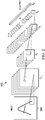
- Fig. 2 depicts a structure of one type of neural network 500 known as a convolutional neural network (CNN) that may be utilized for identifying a feature of an image, according to embodiments described herein.
- the CNN 500 may include an inputted image 505, one or more convolution layers C1, C2, one or more subsampling layers S1 and S2, one or more partially connected layers, one or more fully connected layers, and an output.
- an image 505 is inputted into the CNN 500 (e.g., the image of a person or a user).
- the CNN may sample one or more portions of the image to create one or more feature maps in a first convolution layer C1. For example, as illustrated in FIG.
- the CNN may sample six portions of the image 505 to create six feature maps in the first convolution layer C1.
- the CNN may subsample one or more portions of the feature map(s) in the first convolution layer C1 to create a first subsampling layer S1.
- the subsampled portion of the feature map may be half the area of the feature map. For example, if a feature map comprises a sample area of 28 x 28 pixels from the image 505, the subsampled area may be 14 x 14 pixels.
- the CNN 500 may perform one or more additional levels of sampling and subsampling to provide a second convolution layer C2 and a second subsampling layer S2.
- the CNN 500 may include any number of convolution layers and subsampling layers as desired.
- the CNN 500 Upon completion of final subsampling layer (e.g., layer S2 in FIG. 2 ), the CNN 500 generates a fully connected layer F1, in which every neuron is connected to every other neuron. From the fully connected layer F1, the CNN can generate an output such as a predicted head hair style and or beard style.
- the CNN can be trained to predict hair and/or beard style by either of the three ways. It can be understood that an ensemble of CNN can be used or CNN can be used with other machine learning methods such as recurrent neural network, support vector machines, K-mean nearest neighbor, etc.
- the convolutional neural network is trained with pre-identified styles based on current trends.
- the users input data will be predicted against these retrained classes.
- the pre-identified styles are continuously compared to a population distribution and as distribution shifts the trained classes will be updated and recommendations are made as needed based on the current classes.
- the convolutional neural network is trained as in the first way and there are four (4) pre-trained classes, class A, B, C, and D for example.
- one uses a convolutional neural network similar to the one in FaceNet in order to encode the clusters of hair styles.
- ED Euclidean Distance
- One way to determine the formation of a cluster could be 10% of the images are falling into this new cluster.
- Clustering can be done automatically but the categorization has to be done by a human. The users input data will be predicted against these dynamic classes.
- the hair trend may be a head hair trend or a facial hair trend.
- a CNN can be used to determine if a user or a group of user's hair style falls within the identified trend. To do this information from the user is collected. The information collected is preferably an image of the user or group of users.
- a convolutional neural network such as CNN 500, is used to evaluate the user image to determine if the user image falls within the identified hair trend. If the image falls within the identified hair trend the user's hair style then falls within the hair trend. This approach can be used to track many other trends and make a custom recommendation to user based on trend and their current data.
- a CNN can also be used to determine if a user or a group of user's hair would be a suitable fit for the identified trend. To do this information from the user is collected. The information collected is preferably an image of the user or group of users.
- a convolutional neural network such as CNN 500, is used to evaluate the user image to determine if the user image falls within an identified grouping that would be a suitable fit for the identified hair trend. If the image falls within the identified grouping a recommendation may be made to the user that the user's hair is a suitable fit for the identified hair trend.
- Flow chart 150 includes a method for providing a customized product recommendation to a user.
- images of people individuals are collected from a database.
- the collected images 151 are then evaluated at 152.
- the images are evaluated using a neural network as described previously.
- a hair trend is identified at 153.
- the hair trend may be a facial hair trend and/or a head hair trend. Examples of identified hair trends include hair trends 154A-154C.
- Information is collected from a user to determine if the user's hair style falls within the trend 155.
- a product is selected at 157 for the user or group of users whose hair style falls within the identified hair trend 154A-154C.
- the product selection 157 is performed from at least two available products.
- the selected product is then recommended to the user 158.
- the collection of images may occur on any desired timing or frequency allowing the trends to be identified as desired. For example, the collection may happen daily, several times a day, once a week, once a month, etc.
- Machine learning e.g., heuristics
- the microcontroller is configured to adaptively adjust (e.g., using heuristic learning) to identify new hair trends from the collected images.
- Product selection 157 of a product may comprise one or more selections of different types of products.
- Product selection may comprise selection of a product to use for cutting hair 160a-160c. If a user style falls within hair trend A, hair cutting product A is selected 160a. If a user style falls within hair trend B, hair cutting product B is selected 160b. If a user style falls within hair trend C, hair cutting product C is selected 160c.
- Product selection 157 of a product may comprise one or more selections of different types of products.
- Product selection may comprise selection of a product to use for removing hair 260a-260c. If a user falls within hair trend A, hair removing product A is selected 260a. If a user falls within hair trend B, hair removing product B is selected 260b. If a user falls within hair trend C, hair removing product C is selected 260c.
- Product selection 157 may comprise selection of a product to be applied by a user prior to hair cutting/removing 161a-161c. If a user falls within hair trend A, prior to hair cutting/removing product A is selected 161a. If a user falls within hair trend B, prior to hair cutting/removing product B is selected 161b. If a user falls within hair trend C, prior to hair cutting product C is selected 161c.
- Product selection 157 may comprise selection of a product to be applied by a user after hair cutting/removing 162a-162c. If a user falls within hair trend A, after hair cutting/removing product A is selected 162a. If a user falls within hair trend B, after hair cutting/removing product B is selected 162b. If a user falls within hair trend C, after hair cutting/removing product C is selected 162c.
- Product selection 157 may comprise selection of a hair styling product 163a-163c. If a user falls within hair trend A, hair styling product A is selected 163a. If a user falls within hair trend B, hair styling product B is selected 163b. If a user falls within hair trend C, hair styling product C is selected 163c.
- Product selection 157 may comprise selection of a hair cleaning product 164a-164c. If a user falls within hair trend A, hair cleaning product A is selected 164a. If a user falls within hair trend B, hair cleaning product B is selected 164b. If a user falls within hair trend C, hair cleaning product C is selected 164c.
- Product selection 157 may comprise selection of a hair conditioning product 165a-165c. If a user falls within hair trend A, hair conditioning product A is selected 165a. If a user falls within hair trend B, hair conditioning product B is selected 165b. If a user falls within hair trend C, hair conditioning product C is selected 165c.
- Product selection 157 may comprise selection of a hair enhancement product 166a-166c. If a user falls within hair trend A, hair enhancement product A is selected 165a. If a user falls within hair trend B, hair enhancement product B is selected 165b. If a user falls within hair trend C, hair enhancement product C is selected 165c.
- the product selection may comprise a regimen of two or more products.
- the product selection may be a regimen comprising a product to use for cutting hair 160a and a product to be applied by a user prior to cutting hair 161a.
- the product selection may be a regimen comprising a product to use for cutting hair 160b, a product to be applied by a user prior to cutting hair 161b and a product to be applied by a user after cutting hair 162b.
- Other combinations are possible from the choices shown.
- the selected product is recommended to the user as is shown in Fig. 3 .
- the recommended product allows the user to maintain the identified hair trend.
- Products to be selected from for cutting hair comprise a multi-blade razor 170, a single blade razor 171, a straight razor 172, a disposable razor 173, dry shaver 174 and a trimmer 175.
- Products to be used for removal of hair comprise a wax 270, a light-based device 271, a laser based device 272, a depilatory cream 273, an epilator 274 and an abrasive pad 275.
- FIG. 6 there is shown another product selection 157 of a product to be applied by a user prior to hair cutting/removing 161.
- Products to be selected from to be applied by a user prior to hair cutting/removing comprise a shave cream 180, a shave soap 181, a shave oil 182, a shave prep 183, a shave foam 184 and a shave gel 185.
- Products to be selected from to be applied by a user after hair cutting/removing comprise an after shave lotion 190, an after shave balm 191, an after shave gel 192, an oil 193, a serum 194 and a moisturizer 195.
- FIG. 8 there is shown another product selection 157 of a product to be used for head hair and/or facial hair styling 163.
- Products to be selected from for head hair and facial hair styling comprise a comb 200, a brush 201, a hair dryer 202, a curling iron 203, a hair straightener 204, a hair gel 205, a hair mousse 206, a hair dye 207, a beard wax 208 and a moustache wax 209.
- FIG. 9 there is shown another product selection 157 of a product to be used for head hair and/or facial hair cleaning 164.
- Products to be selected from for head hair and facial hair cleaning comprise a shampoo 210, a soap 211, a beard wash 212 and a beard soap 213.
- FIG. 10 there is shown another product selection 157 of a product to be used for head hair and/or facial hair conditioning 165.
- Products to be selected from for head hair and facial hair conditioning comprise a hair conditioner 220, a beard oil 221, a beard conditioner 222, a stubble softener 223, a beard balm 224, a stubble balm 225, a beard lotion 226, a beard moisturizer 227 and a beard cream 228.
- Products to be selected from for hair treatment or enhancement comprise a hair vitamin/hair nutritional supplement 240, a hair thickener 241, a bald patch concealer 242 and a hair growth minimizing treatment 243.
- the information collected may also be used to provide users with styling tips and guidance. For example, with some trends information about styling tips and guidance may be useful to enable the user to achieve and maintain the desired style especially if the style is new to the user.
- the information collected may also be used to predict product manufacturing, volume and distribution to address the needs of a current trend. For example, a trend may require the use of a particular product to obtain and/or maintain the trend. With the trend identified a company can produce that product in the right quantities and distribute to the right locations.
- the information collected may also be used to develop marketing materials to communicate the trends and the accompanying products to be used with the trends. For example, the information may be used to generate and provided tailored messaging to users practicing a current trend.
- the information collected may also be used to guide the efforts of product research and development. For example, if a trend is identified and the currently available products are not optimum for addressing the needs of the trend new products may need to be developed to optimize the product performance associated with the trend.
Landscapes
- Engineering & Computer Science (AREA)
- Theoretical Computer Science (AREA)
- Physics & Mathematics (AREA)
- Business, Economics & Management (AREA)
- General Physics & Mathematics (AREA)
- Accounting & Taxation (AREA)
- Finance (AREA)
- Development Economics (AREA)
- Strategic Management (AREA)
- Data Mining & Analysis (AREA)
- General Engineering & Computer Science (AREA)
- Marketing (AREA)
- General Business, Economics & Management (AREA)
- Economics (AREA)
- Library & Information Science (AREA)
- Computational Linguistics (AREA)
- Evolutionary Computation (AREA)
- Software Systems (AREA)
- Health & Medical Sciences (AREA)
- Life Sciences & Earth Sciences (AREA)
- Artificial Intelligence (AREA)
- Mathematical Physics (AREA)
- Biomedical Technology (AREA)
- Computing Systems (AREA)
- Biophysics (AREA)
- General Health & Medical Sciences (AREA)
- Molecular Biology (AREA)
- Game Theory and Decision Science (AREA)
- Databases & Information Systems (AREA)
- Entrepreneurship & Innovation (AREA)
- Cosmetics (AREA)
Abstract
Description
- The present invention relates generally to systems and methods for providing customized product recommendations and specifically to systems and methods for providing customized hair product recommendations for a user from information collected from a database.
- A wide variety of products are marketed for cutting, removing, styling, cleaning and conditioning hair. Such products include products for cutting hair, products for removing hair, products to be applied by a user prior to cutting/removing hair, products to be applied by a user after cutting/removing hair, hair styling products, hair cleaning products, hair conditioning products and hair enhancing products. With such a wide variety of products to choose from and each for different purposes and/or benefits it is not uncommon for a user to have difficulty determining which product or combination of products such as a regimen should be used for their unique needs. In addition, as trends in styles for head hair and facial hair change it is difficult for a user to determine which products are best to be used to obtain and maintain the style they desire.
- A variety of methods have been used in other industries such as the cosmetics industry to provide customized product recommendations to users. For example, some methods use a feature-based analysis in which one or more features of a skin condition (e.g., fine lines, wrinkles, spots, uneven skin tone) are detected in a captured image (e.g., a digital photo) by looking for features that meet a definition are commonly used. However, such systems have not addressed the needs for hair cutting, hair removal, hair styling, hair cleaning, and hair conditioning to be used with a particular style.
- Accordingly, there remains a need to provide a customized product recommendation to a user or group of users that are trying to obtain and maintain a particular style.
- A method for providing a customized product recommendation to a user/individual and/or a group of individuals/users is provided. A plurality of images of a plurality of people are collected from a database. A neural network is used in evaluating the images to identify a hair trend. Information from a user or group of users is collected to determine if the user or group of user's hair style falls within the hair trend. A product is selected from at least two available products for the user or group of users whose hair style falls within for the hair trend. The selected product is recommended to the user.
- The hair trend may be a facial hair trend and/or a head hair trend.
- The products comprise a product for cutting hair, a product for removing hair, a product to be applied by the user prior to cutting and/or removing hair, a product to be applied by the user after cutting and/or removing hair, a hair styling product, a hair cleaning product, a hair conditioner product, and a hair enhancing product. The products may be for facial hair and/or head hair.
- The products for cutting hair comprise a multi-blade razor, a single blade razor, a straight razor, a disposable razor, a dry shaver, and a trimmer.
- The products for removing hair comprise a wax, a light-based device, and a laser based device, a depilatory cream, an epilator, and an abrasive pad.
- The products to be applied by a user prior to cutting and/or removing hair comprise a shave cream, a shave soap, a shave oil, a shave prep, a shave foam and a shave gel.
- The products to be applied by the user after cutting and/or removing hair comprise an after shave lotion, an after shave balm, an after shave gel, an oil, a serum and a moisturizer.
- The head hair and facial hair styling product comprises a comb, a brush, a hair dryer, a curling iron, a hair straightener, a hair gel, a hair mousse, a hair dye, a beard wax and a moustache wax.
- The hair cleaning product comprises a shampoo, a soap, a beard wash, and a beard soap.
- The hair conditioning product comprises a hair conditioner, a beard oil, a stubble softener, a beard balm, a stubble balm, a beard lotion, a beard moisturizer, a beard cream, and a beard conditioner.
- The hair enhancing products comprise a hair vitamin, a hair nutritional supplement, a hair thickener, a bald patch concealer and a hair growth minimizing treatment.
- The database is a social media database. The database may be an online database.
- The information is collected using a computing device. The computing device comprises a mobile device, a tablet, a handheld device, and a desktop device. The images comprise pictorial images, photograph images, videos, images from videos, and digital images.
- The product selected comprises a regimen of two or more products.
- The present invention also relates to a method for providing a customized product recommendation to a user. A plurality of images of a plurality of people are collected. A neural network is used in evaluating the images to identify a hair trend. Information from the user is collected to determine if the user's hair would be a suitable fit for the hair trend. A product is selected from at least two available products for the user whose hair style falls within the hair trend. The selected product is recommended to the user.
- It is to be understood that both the foregoing general description and the following detailed description describe various embodiments and are intended to provide an overview or framework for understanding the nature and character of the claimed subject matter. The accompanying drawings are included to provide a further understanding of the various embodiments and are incorporated into and constitute a part of this specification. The drawings illustrate various embodiments described herein, and together with the description serve to explain the principles and operations of the claimed subject matter.
-
FIG. 1 depicts a computing environment for providing customized product recommendations, according to embodiments described herein. -
FIG. 2 depicts a structure of a convolutional neural network that may be utilized for identifying features of an image/video, according to embodiments described herein. -
FIG. 3 depicts a flow chart of a method for providing a customized product recommendation to a user or a group of users. -
FIG. 4 depicts a chart showing products to be selected from for cutting hair. -
FIG. 5 depicts a chart showing products to be selected from for removing hair. -
FIG. 6 depicts a chart showing products to be selected from to be applied by a user prior to cutting/removing hair. -
FIG. 7 depicts a chart showing products to be selected from to be applied by a user after cutting/removing hair. -
FIG. 8 depicts a chart showing products to be selected from for head hair and/or facial hair styling. -
FIG. 9 depicts a chart showing products to be selected from for head hair and/or facial hair cleaning. -
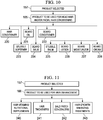
FIG. 10 depicts a chart showing products to be selected from for head hair and/or facial hair conditioning. -
FIG. 11 depicts a chart showing products to be selected from for hair enhancement. -
FIG. 1 depicts asystem 100 for collecting information from a database, analyzing the information, and providing a customized product recommendation. Thesystem 100 may include anetwork 101, which may be embodied as a wide area network (such as a mobile telephone network, a public switched telephone network, a satellite network, the internet, etc.), a local area network (such as wireless-fidelity, Wi-Max, ZigBee™, Bluetooth™, etc.), and/or other forms of networking capabilities. Coupled to thenetwork 101 are acomputing device 102, akiosk computing device 106, adatabase 110, and a cloud basedservice 120, aweb app 130, and/or ane-commerce platform 135. - The
computing device 102 may be a mobile device, a handheld device, a mobile telephone, a tablet, a laptop, a personal digital assistant, a desktop device, a desktop computer and/or other computing device configured for collecting, capturing, storing, and/or transferring information such as voice information, pictorial information, video information, written questionnaire and/or digital information such as a digital photograph. Accordingly, thecomputing device 102 may comprise animage capture device 103 such as a digital camera and may be configured to receive images from other devices (device can capture 2D or 3D information about the surrounding). Thecomputing device 102 may comprise animage display screen 105 to display an image of a person or a product such as amulti-blade razor 107. Thecomputing device 102 may include amemory component 140, which storesinformation capture logic 144a,interface logic 144b, and analyzinglogic 144c. The memory component 140a may include random access memory (such as SRAM, DRAM, etc.), read only memory (ROM), registers, and/or other forms of computing storage hardware. Theinformation capture logic 144a, theinterface logic 144b and the analyzinglogic 144c may include software components, hardware circuitry, firmware, and/or other computing infrastructure, as described herein. Theinformation capture logic 144a may facilitate capturing, storing, preprocessing, analyzing, transferring, and/or performing other functions on collected information from a user. Theinterface logic 144b may be configured for providing one or more user interfaces to the user, which may include questions, options, and the like. The analyzinglogic 144c may facilitate processing, analyzing, transferring, and/or performing other functions on collected information from a user for selecting a product to be recommended to a user. Themobile computing device 102 may also be configured for communicating with other computing devices via thenetwork 101. The devices may also be linked to ane-commerce platform 135 to enable the user to purchase the product(s) being recommended. The device can also be used to simply move data to and from the cloud where the analysis and storage can be. - The
system 100 may also comprise akiosk computing device 106. Thekiosk computing device 106 may operate similar to thecomputing device 102 but may also be able to dispense one or more products and/or receive payment in the form of cash or electronic transactions. - It should be understood that while the
kiosk computing device 106 is depicted as a vending machine type of device, this is merely an example. Some embodiments may utilize a mobile device that also provides payment and/or production dispensing. As a consequence, the hardware and software depicted for thecomputing device 102 may be included in thekiosk computing device 106 and/or other devices. - The
system 100 may also comprise adatabase 110.Database 110 may be any database capable of collecting and storing images of people. Examples of suitable databases include but are not limited to Facebook, Google, YouTube, and Instagram. Pinterest and Snapchat. The images may comprise pictorial images, photograph images, videos, images from videos and digital images, embedded and un-embedded text, audio, etc. - The
system 100 may also comprise a cloud basedservice 120. The cloud basedservice 120 may include amemory component 140, which storesinformation capture logic 144a,interface logic 144b and analyzinglogic 144c. The memory component 140a may include random access memory (such as SRAM, DRAM, etc.), read only memory (ROM), registers, and/or other forms of computing storage hardware. Theinformation capture logic 144a, theinterface logic 144b and the analyzinglogic 144c may include software components, hardware circuitry, firmware, and/or other computing infrastructure, as described herein. Theinformation capture logic 144a may facilitate capturing, storing, preprocessing, analyzing, transferring, and/or performing other functions on collected information from a user. Theinterface logic 144b may be configured for providing one or more user interfaces to the user, which may include questions, options, and the like. The analyzinglogic 144c may facilitate processing, analyzing, transferring and/or performing other functions on collected information from a user for selecting a product to be recommended to a user. - The
system 100 may also comprise aweb app 130. Theweb app 130 may include amemory component 140, which storesinformation capture logic 144a,interface logic 144b and analyzinglogic 144c. The memory component 140a may include random access memory (such as SRAM, DRAM, etc.), read only memory (ROM), registers, and/or other forms of computing storage hardware. Theinformation capture logic 144a, theinterface logic 144b and the analyzinglogic 144c may include software components, hardware circuitry, firmware, and/or other computing infrastructure, as described herein. Theinformation capture logic 144a may facilitate capturing, storing, preprocessing, analyzing, transferring, and/or performing other functions on collected information from a user. Theinterface logic 144b may be configured for providing one or more user interfaces to the user, which may include questions, options, and the like. The analyzinglogic 144c may facilitate processing, analyzing, transferring and/or performing other functions on collected information from a user for selecting a product to be recommended to a user. - To provide a customized product recommendation to a user a plurality of images from a plurality of people are collected from
database 110. A neural network is used to evaluate the collected images to identify a trend (hair). -
Fig. 2 depicts a structure of one type ofneural network 500 known as a convolutional neural network (CNN) that may be utilized for identifying a feature of an image, according to embodiments described herein. TheCNN 500 may include an inputtedimage 505, one or more convolution layers C1, C2, one or more subsampling layers S1 and S2, one or more partially connected layers, one or more fully connected layers, and an output. To begin an analysis or to train the CNN, animage 505 is inputted into the CNN 500 (e.g., the image of a person or a user). The CNN may sample one or more portions of the image to create one or more feature maps in a first convolution layer C1. For example, as illustrated inFIG. 2 , the CNN may sample six portions of theimage 505 to create six feature maps in the first convolution layer C1. Next, the CNN may subsample one or more portions of the feature map(s) in the first convolution layer C1 to create a first subsampling layer S1. In some instances, the subsampled portion of the feature map may be half the area of the feature map. For example, if a feature map comprises a sample area of 28 x 28 pixels from theimage 505, the subsampled area may be 14 x 14 pixels. TheCNN 500 may perform one or more additional levels of sampling and subsampling to provide a second convolution layer C2 and a second subsampling layer S2. It is to be appreciated that theCNN 500 may include any number of convolution layers and subsampling layers as desired. Upon completion of final subsampling layer (e.g., layer S2 inFIG. 2 ), theCNN 500 generates a fully connected layer F1, in which every neuron is connected to every other neuron. From the fully connected layer F1, the CNN can generate an output such as a predicted head hair style and or beard style. The CNN can be trained to predict hair and/or beard style by either of the three ways. It can be understood that an ensemble of CNN can be used or CNN can be used with other machine learning methods such as recurrent neural network, support vector machines, K-mean nearest neighbor, etc. - In the first way, the convolutional neural network is trained with pre-identified styles based on current trends. The users input data will be predicted against these retrained classes. The pre-identified styles are continuously compared to a population distribution and as distribution shifts the trained classes will be updated and recommendations are made as needed based on the current classes.
- In the second way, the convolutional neural network is trained as in the first way and there are four (4) pre-trained classes, class A, B, C, and D for example. The convolutional neural network outputs probabilities of A, B, C, and D. In one instance one can take the largest probability and can call it the class. If one assumes the following image probabilities for the example: A = 0.7, B= 0.2, C= 0.9, D = 0.1 (all add to 1) one can say that the image is class A. Alternatively, if the image probabilities for the example are: A = 0.4, B= 0.4, C= 0.3, D = 0.1 (all add to 1), one might be able to say that there might be a new class that sits between class A and class B. If for example class A is a soul patch and class B is a moustache, therefore maybe this image might be a goatee. The recommendation is made on the mix probabilities of the predictions.
- In the third way one uses a convolutional neural network similar to the one in FaceNet in order to encode the clusters of hair styles. Using Euclidean Distance (ED) one can assign to one of the pre-ID clusters or dynamically form new clusters based on the ED space. One way to determine the formation of a cluster could be 10% of the images are falling into this new cluster. Clustering can be done automatically but the categorization has to be done by a human. The users input data will be predicted against these dynamic classes.
- From one of the first three ways a hair trend is identified. The hair trend may be a head hair trend or a facial hair trend.
- Similarly to identifying a hair trend a CNN can be used to determine if a user or a group of user's hair style falls within the identified trend. To do this information from the user is collected. The information collected is preferably an image of the user or group of users. A convolutional neural network, such as
CNN 500, is used to evaluate the user image to determine if the user image falls within the identified hair trend. If the image falls within the identified hair trend the user's hair style then falls within the hair trend. This approach can be used to track many other trends and make a custom recommendation to user based on trend and their current data. - A CNN can also be used to determine if a user or a group of user's hair would be a suitable fit for the identified trend. To do this information from the user is collected. The information collected is preferably an image of the user or group of users. A convolutional neural network, such as
CNN 500, is used to evaluate the user image to determine if the user image falls within an identified grouping that would be a suitable fit for the identified hair trend. If the image falls within the identified grouping a recommendation may be made to the user that the user's hair is a suitable fit for the identified hair trend. - Referring now to
FIG. 3 aflow chart 150 is shown.Flow chart 150 includes a method for providing a customized product recommendation to a user. At 151 images of people, individuals are collected from a database. The collectedimages 151 are then evaluated at 152. The images are evaluated using a neural network as described previously. Based on the collected and evaluatedinformation hair trends 154A-154C. Information is collected from a user to determine if the user's hair style falls within thetrend 155. A product is selected at 157 for the user or group of users whose hair style falls within the identifiedhair trend 154A-154C. Theproduct selection 157 is performed from at least two available products. The selected product is then recommended to theuser 158. - The collection of images may occur on any desired timing or frequency allowing the trends to be identified as desired. For example, the collection may happen daily, several times a day, once a week, once a month, etc. Machine learning (e.g., heuristics) may be used to determine the hair trends. The microcontroller is configured to adaptively adjust (e.g., using heuristic learning) to identify new hair trends from the collected images.
-
Product selection 157 of a product may comprise one or more selections of different types of products. Product selection may comprise selection of a product to use for cutting hair 160a-160c. If a user style falls within hair trend A, hair cutting product A is selected 160a. If a user style falls within hair trend B, hair cutting product B is selected 160b. If a user style falls within hair trend C, hair cutting product C is selected 160c. -
Product selection 157 of a product may comprise one or more selections of different types of products. Product selection may comprise selection of a product to use for removing hair 260a-260c. If a user falls within hair trend A, hair removing product A is selected 260a. If a user falls within hair trend B, hair removing product B is selected 260b. If a user falls within hair trend C, hair removing product C is selected 260c. -
Product selection 157 may comprise selection of a product to be applied by a user prior to hair cutting/removing 161a-161c. If a user falls within hair trend A, prior to hair cutting/removing product A is selected 161a. If a user falls within hair trend B, prior to hair cutting/removing product B is selected 161b. If a user falls within hair trend C, prior to hair cutting product C is selected 161c. -
Product selection 157 may comprise selection of a product to be applied by a user after hair cutting/removing 162a-162c. If a user falls within hair trend A, after hair cutting/removing product A is selected 162a. If a user falls within hair trend B, after hair cutting/removing product B is selected 162b. If a user falls within hair trend C, after hair cutting/removing product C is selected 162c. -
Product selection 157 may comprise selection of a hair styling product 163a-163c. If a user falls within hair trend A, hair styling product A is selected 163a. If a user falls within hair trend B, hair styling product B is selected 163b. If a user falls within hair trend C, hair styling product C is selected 163c. -
Product selection 157 may comprise selection of a hair cleaning product 164a-164c. If a user falls within hair trend A, hair cleaning product A is selected 164a. If a user falls within hair trend B, hair cleaning product B is selected 164b. If a user falls within hair trend C, hair cleaning product C is selected 164c. -
Product selection 157 may comprise selection of a hair conditioning product 165a-165c. If a user falls within hair trend A, hair conditioning product A is selected 165a. If a user falls within hair trend B, hair conditioning product B is selected 165b. If a user falls within hair trend C, hair conditioning product C is selected 165c. -
Product selection 157 may comprise selection of a hair enhancement product 166a-166c. If a user falls within hair trend A, hair enhancement product A is selected 165a. If a user falls within hair trend B, hair enhancement product B is selected 165b. If a user falls within hair trend C, hair enhancement product C is selected 165c. - The product selection may comprise a regimen of two or more products. For example, the product selection may be a regimen comprising a product to use for cutting hair 160a and a product to be applied by a user prior to cutting hair 161a. The product selection may be a regimen comprising a product to use for cutting hair 160b, a product to be applied by a user prior to cutting hair 161b and a product to be applied by a user after cutting hair 162b. Other combinations are possible from the choices shown.
- After
product selection 157 is complete, the selected product is recommended to the user as is shown inFig. 3 . The recommended product allows the user to maintain the identified hair trend. - Referring now to
FIG. 4 , there is shownproduct selection 157 of a product to use for cuttinghair 160. Products to be selected from for cutting hair comprise amulti-blade razor 170, asingle blade razor 171, astraight razor 172, adisposable razor 173,dry shaver 174 and atrimmer 175. - Referring now to
FIG. 5 , there is a shownproduct selection 157 of a product to use for removal ofhair 260. Products to be used for removal of hair comprise awax 270, a light-baseddevice 271, a laser baseddevice 272, adepilatory cream 273, anepilator 274 and anabrasive pad 275. - Referring now to
FIG. 6 , there is shown anotherproduct selection 157 of a product to be applied by a user prior to hair cutting/removing 161. Products to be selected from to be applied by a user prior to hair cutting/removing comprise ashave cream 180, ashave soap 181, ashave oil 182, ashave prep 183, ashave foam 184 and ashave gel 185. - Referring now to
FIG. 7 , there is shown anotherproduct selection 157 of a product to be applied by a user after hair cutting/removing 162. Products to be selected from to be applied by a user after hair cutting/removing comprise an aftershave lotion 190, an aftershave balm 191, an aftershave gel 192, anoil 193, aserum 194 and amoisturizer 195. - Referring now to
FIG. 8 there is shown anotherproduct selection 157 of a product to be used for head hair and/orfacial hair styling 163. Products to be selected from for head hair and facial hair styling comprise acomb 200, abrush 201, ahair dryer 202, a curlingiron 203, ahair straightener 204, ahair gel 205, ahair mousse 206, ahair dye 207, abeard wax 208 and amoustache wax 209. - Referring now to
FIG. 9 there is shown anotherproduct selection 157 of a product to be used for head hair and/or facial hair cleaning 164. Products to be selected from for head hair and facial hair cleaning comprise ashampoo 210, asoap 211, abeard wash 212 and abeard soap 213. - Referring now to
FIG. 10 there is shown anotherproduct selection 157 of a product to be used for head hair and/orfacial hair conditioning 165. Products to be selected from for head hair and facial hair conditioning comprise ahair conditioner 220, abeard oil 221, abeard conditioner 222, astubble softener 223, abeard balm 224, astubble balm 225, abeard lotion 226, abeard moisturizer 227 and abeard cream 228. - Referring now to
FIG. 11 there is shown anotherproduct selection 157 of a product to be used forhair enhancement 166. Products to be selected from for hair treatment or enhancement comprise a hair vitamin/hairnutritional supplement 240, ahair thickener 241, abald patch concealer 242 and a hairgrowth minimizing treatment 243. - The information collected may also be used to provide users with styling tips and guidance. For example, with some trends information about styling tips and guidance may be useful to enable the user to achieve and maintain the desired style especially if the style is new to the user.
- The information collected may also be used to predict product manufacturing, volume and distribution to address the needs of a current trend. For example, a trend may require the use of a particular product to obtain and/or maintain the trend. With the trend identified a company can produce that product in the right quantities and distribute to the right locations. In addition, the information collected may also be used to develop marketing materials to communicate the trends and the accompanying products to be used with the trends. For example, the information may be used to generate and provided tailored messaging to users practicing a current trend. The information collected may also be used to guide the efforts of product research and development. For example, if a trend is identified and the currently available products are not optimum for addressing the needs of the trend new products may need to be developed to optimize the product performance associated with the trend.
- An example is below:
- A. A method for providing a customized product recommendation to a user comprising the steps of:
- a. collecting a plurality of images of a plurality of people from a database;
- b. using a neural network in evaluating the images to identify a hair trend;
- c. collecting information from the user to determine if the user's hair style falls within the hair trend;
- d. selecting a product from at least two available products for the user whose hair style falls within the hair trend; and
- e. recommending the selected product to the user.
- B. The method of Paragraph A, wherein the hair trend is a facial hair trend and/or a head hair trend.
- C. The method of either Paragraph A or B, wherein the products comprise a product for cutting hair, a product for removing hair, a product to be applied by the user prior to cutting and/or removing hair, a product to be applied by the user after cutting and/or removing hair, a head hair and/or facial hair styling product, a head hair and/or facial hair cleaning product, a head hair and/or facial hair conditioning product and a hair enhancement product.
- D. The method of Paragraph C, wherein the products for cutting hair comprise a multi-blade razor, a single blade razor, a straight razor, a disposable razor, a dry shaver and a trimmer.
- E. The method of Paragraph C, wherein the products for removing hair comprise a wax, a light based device, a laser based device, a depilatory cream, an epilator and an abrasive pad.
- F. The method of Paragraph C, wherein the products to be applied by a user prior to cutting and/or removing hair comprise a shave cream, a shave soap, a shave oil, a shave prep, a shave foam and a shave gel.
- G. The method of Paragraph C, wherein the products to be applied by the user after cutting and/or removing hair comprise an after shave lotion, an after shave balm, an after shave gel, an oil, a serum and a moisturizer.
- H. The method of Paragraph C, wherein the head hair and/or facial hair conditioning product comprises a beard conditioner, a beard oil, a stubble softener, a beard balm, a stubble balm, a beard lotion, a beard moisturizer, a beard cream and a conditioner.
- I. The method of Paragraph C, wherein the head hair and/or facial hair cleaning product comprises a shampoo, a soap, a beard wash and a beard soap.
- J. The method of Paragraph C, wherein the head hair and/or facial hair styling product comprises a comb, a brush, a hair dryer, a curling iron, a hair straightener, a hair gel, a hair mousse and a hair dye.
- K. The method of Paragraph C, wherein the hair enhancement product comprises comprise a hair vitamin, a hair nutritional supplement, a hair thickener, a bald patch concealer and a hair growth minimizing treatment.
- L. The method of any one of Paragraphs A-K, wherein the database is a social media database.
- M. The method of any one of Paragraphs A-M, wherein the database is an online database.
- N. The method of any one of Paragraphs A-N, wherein the information is analyzed using a computing device.
- O. The method of Paragraph N, wherein the computing device comprises a mobile device, a tablet, a handheld device and a desktop device.
- P. The method of any one of Paragraphs A-O, wherein the images comprise pictorial images, photograph images, videos, images from videos and digital images.
- Q. The method of any one of Paragraphs A-Q, wherein the product selected comprises a regimen of two or more products.
- R. A method for providing a customized product recommendation to a user comprising the steps of:
- a. collecting a plurality of images of a plurality of people from a database;
- b. using a neural network in evaluating the images to identify a hair trend;
- c. collecting information from the user to determine if the user's hair would be a suitable fit for the hair trend;
- d. selecting a product from at least two available products for the user whose hair style falls within the hair trend; and
- e. recommending the selected product to the user.
- The dimensions and values disclosed herein are not to be understood as being strictly limited to the exact numerical values recited. Instead, unless otherwise specified, each such dimension is intended to mean both the recited value and a functionally equivalent range surrounding that value. For example, a dimension disclosed as "40 mm" is intended to mean "about 40 mm."
- Every document cited herein, including any cross referenced or related patent or application and any patent application or patent to which this application claims priority or benefit thereof, is hereby incorporated herein by reference in its entirety unless expressly excluded or otherwise limited. The citation of any document is not an admission that it is prior art with respect to any invention disclosed or claimed herein or that it alone, or in any combination with any other reference or references, teaches, suggests or discloses any such invention. Further, to the extent that any meaning or definition of a term in this document conflicts with any meaning or definition of the same term in a document incorporated by reference, the meaning or definition assigned to that term in this document shall govern.
- While particular embodiments of the present invention have been illustrated and described, it would be obvious to those skilled in the art that various other changes and modifications can be made without departing from the spirit and scope of the invention. It is therefore intended to cover in the appended claims all such changes and modifications that are within the scope of this invention.
Claims (18)
- A method for providing a customized product recommendation to a user comprising the steps of:a. collecting a plurality of images of a plurality of people from a database;b. using a neural network in evaluating the images to identify a hair trend;c. collecting information from the user to determine if the user's hair style falls within the hair trend;d. selecting a product from at least two available products for the user whose hair style falls within the hair trend; ande. recommending the selected product to the user.
- The method of claim 1, wherein the hair trend is a facial hair trend and/or a head hair trend.
- The method of either claim 1 or 2, wherein the products comprise a product for cutting hair, a product for removing hair, a product to be applied by the user prior to cutting and/or removing hair, a product to be applied by the user after cutting and/or removing hair, a head hair and/or facial hair styling product, a head hair and/or facial hair cleaning product, a head hair and/or facial hair conditioning product and a hair enhancement product.
- The method of claim 3, wherein the products for cutting hair comprise a multi-blade razor, a single blade razor, a straight razor, a disposable razor, a dry shaver and a trimmer.
- The method of claim 3, wherein the products for removing hair comprise a wax, a light based device, a laser based device, a depilatory cream, an epilator and an abrasive pad.
- The method of claim 3, wherein the products to be applied by a user prior to cutting and/or removing hair comprise a shave cream, a shave soap, a shave oil, a shave prep, a shave foam and a shave gel.
- The method of claim 3, wherein the products to be applied by the user after cutting and/or removing hair comprise an after shave lotion, an after shave balm, an after shave gel, an oil, a serum and a moisturizer.
- The method of claim 3, wherein the head hair and/or facial hair conditioning product comprises a beard conditioner, a beard oil, a stubble softener, a beard balm, a stubble balm, a beard lotion, a beard moisturizer, a beard cream and a conditioner.
- The method of claim 3, wherein the head hair and/or facial hair cleaning product comprises a shampoo, a soap, a beard wash and a beard soap.
- The method of claim 3, wherein the head hair and/or facial hair styling product comprises a comb, a brush, a hair dryer, a curling iron, a hair straightener, a hair gel, a hair mousse and a hair dye.
- The method of claim 3, wherein the hair enhancement product comprises comprise a hair vitamin, a hair nutritional supplement, a hair thickener, a bald patch concealer and a hair growth minimizing treatment.
- The method of any one of the preceding claims, wherein the database is a social media database.
- The method of any one of the preceding claims, wherein the database is an online database.
- The method of any one of the preceding claims, wherein the information is analyzed using a computing device.
- The method of claim 14, wherein the computing device comprises a mobile device, a tablet, a handheld device and a desktop device.
- The method of any one of the preceding claims, wherein the images comprise pictorial images, photograph images, videos, images from videos and digital images.
- The method of any one of the preceding claims, wherein the product selected comprises a regimen of two or more products.
- A method for providing a customized product recommendation to a user comprising the steps of:a. collecting a plurality of images of a plurality of people from a database;b. using a neural network in evaluating the images to identify a hair trend;c. collecting information from the user to determine if the user's hair would be a suitable fit for the hair trend;d. selecting a product from at least two available products for the user whose hair style falls within the hair trend; ande. recommending the selected product to the user.
Applications Claiming Priority (1)
| Application Number | Priority Date | Filing Date | Title |
|---|---|---|---|
| US15/610,969 US20180349979A1 (en) | 2017-06-01 | 2017-06-01 | Method for providing a customized product recommendation |
Publications (1)
| Publication Number | Publication Date |
|---|---|
| EP3410318A1 true EP3410318A1 (en) | 2018-12-05 |
Family
ID=62495617
Family Applications (1)
| Application Number | Title | Priority Date | Filing Date |
|---|---|---|---|
| EP18175336.9A Withdrawn EP3410318A1 (en) | 2017-06-01 | 2018-05-31 | Method for providing a customized product recommendation |
Country Status (2)
| Country | Link |
|---|---|
| US (1) | US20180349979A1 (en) |
| EP (1) | EP3410318A1 (en) |
Families Citing this family (17)
| Publication number | Priority date | Publication date | Assignee | Title |
|---|---|---|---|---|
| WO2019222340A1 (en) | 2018-05-17 | 2019-11-21 | The Procter & Gamble Company | Systems and methods for hair coverage analysis |
| US11172873B2 (en) | 2018-05-17 | 2021-11-16 | The Procter & Gamble Company | Systems and methods for hair analysis |
| CN112771164B (en) | 2018-06-29 | 2026-03-27 | 宝洁公司 | Aptamers for personal care applications |
| US11354965B2 (en) * | 2018-11-02 | 2022-06-07 | Pepsico, Inc. | Interactive vending machine |
| CA3134968A1 (en) | 2019-04-16 | 2020-10-22 | Juan Esteban Velasquez | Aptamers for odor control applications |
| US12274346B2 (en) * | 2019-05-15 | 2025-04-15 | Clics Llc | Systems and methods for coloring hair |
| US11741606B2 (en) * | 2020-07-02 | 2023-08-29 | The Gillette Company Llc | Digital imaging systems and methods of analyzing pixel data of an image of a user's body after removing hair for determining a user-specific hair removal efficiency value |
| US11419540B2 (en) | 2020-07-02 | 2022-08-23 | The Gillette Company Llc | Digital imaging systems and methods of analyzing pixel data of an image of a shaving stroke for determining pressure being applied to a user's skin |
| US11734823B2 (en) * | 2020-07-02 | 2023-08-22 | The Gillette Company Llc | Digital imaging systems and methods of analyzing pixel data of an image of a user's body for determining a user-specific skin irritation value of the user's skin after removing hair |
| US11890764B2 (en) | 2020-07-02 | 2024-02-06 | The Gillette Company Llc | Digital imaging systems and methods of analyzing pixel data of an image of a user's body for determining a hair density value of a user's hair |
| US11801610B2 (en) | 2020-07-02 | 2023-10-31 | The Gillette Company Llc | Digital imaging systems and methods of analyzing pixel data of an image of a user's body for determining a hair growth direction value of the user's hair |
| US11455747B2 (en) * | 2020-07-02 | 2022-09-27 | The Gillette Company Llc | Digital imaging systems and methods of analyzing pixel data of an image of a user's body for determining a user-specific skin redness value of the user's skin after removing hair |
| CN112084983B (en) * | 2020-09-15 | 2022-07-26 | 华南理工大学 | Hair style recommendation method based on ResNet and application thereof |
| CN112906585B (en) * | 2021-02-25 | 2022-08-23 | 商楚苘 | Intelligent hairdressing auxiliary system, method and readable medium based on machine learning |
| US12039732B2 (en) | 2021-04-14 | 2024-07-16 | The Procter & Gamble Company | Digital imaging and learning systems and methods for analyzing pixel data of a scalp region of a users scalp to generate one or more user-specific scalp classifications |
| CN117915806A (en) * | 2021-07-29 | 2024-04-19 | 联合利华知识产权控股有限公司 | Hair Care Monitoring and Feedback |
| US20240108280A1 (en) * | 2022-09-30 | 2024-04-04 | L'oreal | Systems, device, and methods for curly hair assessment and personalization |
Citations (1)
| Publication number | Priority date | Publication date | Assignee | Title |
|---|---|---|---|---|
| US20030065636A1 (en) * | 2001-10-01 | 2003-04-03 | L'oreal | Use of artificial intelligence in providing beauty advice |
Family Cites Families (2)
| Publication number | Priority date | Publication date | Assignee | Title |
|---|---|---|---|---|
| US8556630B2 (en) * | 2006-09-29 | 2013-10-15 | Zannah HACKETT | System and method for human physical and behavioral profiling |
| US10052026B1 (en) * | 2017-03-06 | 2018-08-21 | Bao Tran | Smart mirror |
-
2017
- 2017-06-01 US US15/610,969 patent/US20180349979A1/en not_active Abandoned
-
2018
- 2018-05-31 EP EP18175336.9A patent/EP3410318A1/en not_active Withdrawn
Patent Citations (1)
| Publication number | Priority date | Publication date | Assignee | Title |
|---|---|---|---|---|
| US20030065636A1 (en) * | 2001-10-01 | 2003-04-03 | L'oreal | Use of artificial intelligence in providing beauty advice |
Non-Patent Citations (4)
| Title |
|---|
| CHEN JU-CHIN ET AL: "Deep net architectures for visual-based clothing image recognition on large database", SOFT COMPUTING, SPRINGER VERLAG, BERLIN, DE, vol. 21, no. 11, 27 April 2017 (2017-04-27), pages 2923 - 2939, XP036237143, ISSN: 1432-7643, [retrieved on 20170427], DOI: 10.1007/S00500-017-2585-8 * |
| LIU SI ET AL: "Magic Mirror: An Intelligent Fashion Recommendation System", 2013 2ND IAPR ASIAN CONFERENCE ON PATTERN RECOGNITION, IEEE, 5 November 2013 (2013-11-05), pages 11 - 15, XP032581635, DOI: 10.1109/ACPR.2013.212 * |
| SANCHEZ-RIERA JORDI ET AL: "i-Stylist: Finding the Right Dress Through Your Social Networks", 31 December 2016, MEDICAL IMAGE COMPUTING AND COMPUTER-ASSISTED INTERVENTION - MICCAI 2015 : 18TH INTERNATIONAL CONFERENCE, MUNICH, GERMANY, OCTOBER 5-9, 2015; PROCEEDINGS; [LECTURE NOTES IN COMPUTER SCIENCE; LECT.NOTES COMPUTER], SPRINGER INTERNATIONAL PUBLISHING, CH, ISBN: 978-3-319-24946-9, ISSN: 0302-9743, XP047405248 * |
| YIHUI MA ET AL: "Towards Better Understanding the Clothing Fashion Styles: A Multimodal Deep Learning Approach", PROCEEDINGS OF THE THIRTY-FIRST AAAI CONFERENCE ON ARTIFICIAL INTELLIGENCE (AAAI-17), 4 February 2017 (2017-02-04), XP055514266 * |
Also Published As
| Publication number | Publication date |
|---|---|
| US20180349979A1 (en) | 2018-12-06 |
Similar Documents
| Publication | Publication Date | Title |
|---|---|---|
| EP3410318A1 (en) | Method for providing a customized product recommendation | |
| US11468490B2 (en) | Method for providing a customized product recommendation | |
| US20180040053A1 (en) | Method for providing a customized product recommendation | |
| US11403694B2 (en) | System and method for intelligent context-based personalized beauty product recommendation and matching | |
| US20210209427A1 (en) | Machine-implemented facial health and beauty assistant | |
| US10943156B2 (en) | Machine-implemented facial health and beauty assistant | |
| EP3718050A1 (en) | Machine-implemented facial health and beauty assistant | |
| US20180040052A1 (en) | Method for providing a customized product recommendation | |
| US10621647B2 (en) | Method for providing a customized product recommendation | |
| US20160171166A1 (en) | Methods and systems for generating diagnostic algorithms based on questionnaires | |
| US20230385903A1 (en) | System and method for intelligent context-based personalized beauty product recommendation and matching at retail environments | |
| US10482522B2 (en) | Method for providing a customized product recommendation | |
| EP3410317A1 (en) | Method for providing a customized product recommendation | |
| CN110169646A (en) | A kind of hairdressing service system | |
| US20180040055A1 (en) | Method for providing a customized product recommendation | |
| Qiu | Measuring Customer Experience Based on Ecommerce Reviews: The Pedagogical Case Study of LOOKFANTASTIC® | |
| US20180040051A1 (en) | Method for providing a customized product recommendation | |
| Lee et al. | A cognitive knowledge-based system for hair and makeup recommendation based on facial features classification | |
| Jyothika et al. | Skin Type Prediction and Cosmetic Suggestion | |
| Laxmi et al. | Skin Condition Based Smart Cosmetics Suggestion System Using Artificial Intelligence | |
| Hela et al. | The role of virtual communities in purchasing decision making: A Netnographic Approach | |
| Kamil et al. | DEW-to-go: E-Grooming Portfolio | |
| Chen et al. | Construction of perfume bottle visual design model based on multiple affective responses | |
| JP2026072991A (en) | system | |
| Kluczek et al. | Exploring post-pandemic perception of industry 4.0 technology implications in tourism: a study of central European travelers |
Legal Events
| Date | Code | Title | Description |
|---|---|---|---|
| PUAI | Public reference made under article 153(3) epc to a published international application that has entered the european phase |
Free format text: ORIGINAL CODE: 0009012 |
|
| AK | Designated contracting states |
Kind code of ref document: A1 Designated state(s): AL AT BE BG CH CY CZ DE DK EE ES FI FR GB GR HR HU IE IS IT LI LT LU LV MC MK MT NL NO PL PT RO RS SE SI SK SM TR |
|
| AX | Request for extension of the european patent |
Extension state: BA ME |
|
| 17P | Request for examination filed |
Effective date: 20190603 |
|
| RBV | Designated contracting states (corrected) |
Designated state(s): AL AT BE BG CH CY CZ DE DK EE ES FI FR GB GR HR HU IE IS IT LI LT LU LV MC MK MT NL NO PL PT RO RS SE SI SK SM TR |
|
| 17Q | First examination report despatched |
Effective date: 20200309 |
|
| STAA | Information on the status of an ep patent application or granted ep patent |
Free format text: STATUS: THE APPLICATION HAS BEEN WITHDRAWN |
|
| 18W | Application withdrawn |
Effective date: 20200701 |