EP3410310A1 - Question recommendation method and device - Google Patents
Question recommendation method and device Download PDFInfo
- Publication number
- EP3410310A1 EP3410310A1 EP17743648.2A EP17743648A EP3410310A1 EP 3410310 A1 EP3410310 A1 EP 3410310A1 EP 17743648 A EP17743648 A EP 17743648A EP 3410310 A1 EP3410310 A1 EP 3410310A1
- Authority
- EP
- European Patent Office
- Prior art keywords
- question
- features
- feature
- questions
- acquired
- Prior art date
- Legal status (The legal status is an assumption and is not a legal conclusion. Google has not performed a legal analysis and makes no representation as to the accuracy of the status listed.)
- Withdrawn
Links
Images

Classifications
-
- G—PHYSICS
- G06—COMPUTING OR CALCULATING; COUNTING
- G06Q—INFORMATION AND COMMUNICATION TECHNOLOGY [ICT] SPECIALLY ADAPTED FOR ADMINISTRATIVE, COMMERCIAL, FINANCIAL, MANAGERIAL OR SUPERVISORY PURPOSES; SYSTEMS OR METHODS SPECIALLY ADAPTED FOR ADMINISTRATIVE, COMMERCIAL, FINANCIAL, MANAGERIAL OR SUPERVISORY PURPOSES, NOT OTHERWISE PROVIDED FOR
- G06Q10/00—Administration; Management
- G06Q10/06—Resources, workflows, human or project management; Enterprise or organisation planning; Enterprise or organisation modelling
-
- G—PHYSICS
- G06—COMPUTING OR CALCULATING; COUNTING
- G06N—COMPUTING ARRANGEMENTS BASED ON SPECIFIC COMPUTATIONAL MODELS
- G06N3/00—Computing arrangements based on biological models
- G06N3/02—Neural networks
- G06N3/04—Architecture, e.g. interconnection topology
- G06N3/047—Probabilistic or stochastic networks
-
- G—PHYSICS
- G06—COMPUTING OR CALCULATING; COUNTING
- G06F—ELECTRIC DIGITAL DATA PROCESSING
- G06F16/00—Information retrieval; Database structures therefor; File system structures therefor
-
- G—PHYSICS
- G06—COMPUTING OR CALCULATING; COUNTING
- G06F—ELECTRIC DIGITAL DATA PROCESSING
- G06F16/00—Information retrieval; Database structures therefor; File system structures therefor
- G06F16/90—Details of database functions independent of the retrieved data types
- G06F16/95—Retrieval from the web
- G06F16/953—Querying, e.g. by the use of web search engines
- G06F16/9535—Search customisation based on user profiles and personalisation
-
- G—PHYSICS
- G06—COMPUTING OR CALCULATING; COUNTING
- G06N—COMPUTING ARRANGEMENTS BASED ON SPECIFIC COMPUTATIONAL MODELS
- G06N3/00—Computing arrangements based on biological models
- G06N3/02—Neural networks
- G06N3/04—Architecture, e.g. interconnection topology
- G06N3/0499—Feedforward networks
-
- G—PHYSICS
- G06—COMPUTING OR CALCULATING; COUNTING
- G06N—COMPUTING ARRANGEMENTS BASED ON SPECIFIC COMPUTATIONAL MODELS
- G06N3/00—Computing arrangements based on biological models
- G06N3/02—Neural networks
- G06N3/08—Learning methods
- G06N3/09—Supervised learning
-
- G—PHYSICS
- G06—COMPUTING OR CALCULATING; COUNTING
- G06N—COMPUTING ARRANGEMENTS BASED ON SPECIFIC COMPUTATIONAL MODELS
- G06N3/00—Computing arrangements based on biological models
- G06N3/02—Neural networks
- G06N3/08—Learning methods
- G06N3/084—Backpropagation, e.g. using gradient descent
Definitions
- the present application relates to the field of communications technologies, and in particular, to a question recommendation method; the present application also relates to a question recommendation device.
- a self-help customer service system needs to have a more powerful processing capacity to meet the requirement of the customer service.
- the self-help customer service system can process and solve users' questions automatically.
- the existing method can no longer process all the data.
- the computing efficiency of existing algorithms declines as the quantity of questions increases.
- most features are sparse, while the prior art is applicable to processing dense features.
- the precision of user question prediction decreases as the quantity of question features in the system increases.
- only a single model is used in the prior art, which limits the effect. Therefore, with the incessant information explosions, current machine learning models can no longer meet the requirement.
- a technical problem to be solved urgently by those skilled in the art is how to carry out calculation based on previous question features to obtain questions to be recommended to users, to improve the accuracy of questions recommended to users, thus solving the users' questions at a self-help customer service node, reducing the number of users using the manual customer service, and lowering the costs of the manual customer service.
- the present invention provides a question recommendation method, for improving the accuracy of question recommendation to users.
- the method includes the following steps:
- the question features include numerical features and textual features, the numerical features are continuous, and the textual features are discontinuous.
- the step of acquiring questions specifically includes:
- the step of acquiring question features corresponding to the questions specifically includes:
- the step of processing the question features specifically includes:
- the second probabilities are obtained by performing Deep Neural Network (DNN) calculation on the processed question features and the first probabilities.
- DNN Deep Neural Network
- the present application further proposes a question recommendation device, including:
- the question features include numerical features and textual features, the numerical features are continuous, and the textual features are discontinuous.
- the acquisition module is specifically configured to:
- the acquisition module is specifically configured to:
- the processing module is specifically configured to:
- the second probabilities are obtained by performing DNN calculation on the processed question features and the first probabilities.
- question features are processed and subject to classification calculation, and further deep calculation is then performed on obtained results, so that the questions and second probabilities can be output accurately.
- the present application improves the accuracy of question recommendation to users.
- the present application can process dense question feature values, and is also applicable to processing large-scale sparse data, thus improving the precision of prediction.
- the present invention proposes a question recommendation method.
- the method is applied to a question recommendation system, and model training is carried out using a combination of a machine learning model and a DNN model.
- the system can recommend a user-required question to a user according to historical records, is good at processing sparse and dense question features, and can be used for improving the accuracy of question recommendation to the user.
- FIG. 1 is a schematic flowchart of a verification information processing method according to the present application.
- the method includes the following steps: S101: Questions and question features corresponding to the questions are acquired in a sample collection cycle.
- the present application is intended to recommend a question to a user who needs a question recommendation service. Users may be the user to whom the question needs to be recommended and other users. Historical records of the users exist in the system of the present invention.
- the historical records include questions and corresponding question features.
- the question recommendation system generally includes a collection layer, a processing layer, a storage layer and an output layer.
- the collection layer is responsible for collecting questions and question features sent by other devices.
- the processing layer carries out model training by using the collected questions and question features.
- the storage layer is responsible for data storage, in which the historical records of the users are stored.
- the output layer outputs questions and question features.
- the question recommendation system in the present application can be implemented on a server. Preferably, a distributed server is adopted. Moreover, the present application can use one server, or use a cluster consisting of multiple servers.
- the question features include numerical features and textual features.
- the numerical features are continuous.
- the numerical feature is the number of times that application software is used, and a numerical value 9 represents that the application software is used 9 times.
- the textual features are discontinuous.
- the textual feature is an invoice status, which corresponds to a non-invoiced state and an invoiced state.
- a feature acquisition cycle is set, and the questions are acquired in the feature acquisition cycle. If there is a question not acquired in the feature acquisition cycle, a value of the question not acquired is null. If there is no question not acquired in the feature acquisition cycle, the acquired questions are used as the questions.
- Question features are acquired in the feature acquisition cycle. If there is a question feature not acquired in the feature acquisition cycle and the question feature is the numerical feature, a mean of numerical values of the acquired question features corresponding to the questions is used as the question feature.
- a question feature with a highest frequency of occurrence in the acquired question features corresponding to the questions is used as the question feature. If there is no question feature not acquired in the feature acquisition cycle, the acquired question features are used as the question features.
- the recommendation system screens the question features to delete some features, for example, delete identical question features possessed by all the users, question features that easily exceed the feature acquisition cycle, and question features irrelevant to business.
- Some features for example, delete identical question features possessed by all the users, question features that easily exceed the feature acquisition cycle, and question features irrelevant to business.
- Features obtained after the screening can be used to prepare for establishing a classification model subsequently.
- the question features are processed, the processed question features being in a preset numerical range.
- the question recommendation system After acquiring the questions and the corresponding question features, the question recommendation system processes the question features. Normalization processing is performed on the question feature if the question feature is a numerical question feature, so that the processed question feature is in a specified numerical range; vectorization processing is performed on the question feature if the question feature is a textual question feature, so that the processed question feature becomes a numerical question feature and is in the specified question feature.
- question features are numerical features
- normalization processing can be performed on the question features by using a percentile binning algorithm, so that all the question features are in a specified numerical range after processing.
- original numerical values are categorized into 100 bins, and then the bins are coded, for example, 0.01, 0.02 ..., 1.00.
- the processed numerical question features are in a numerical range of 0 to 1.
- Textual question features are presented in the form of texts, and cannot participate in calculation. Therefore, it is necessary to perform vectorization processing on the textual question features to convert the question features from textual features into numerical features.
- One hot encoding may be employed to process the textual features to calculate a frequency of each feature, thus providing one hot codes based on the frequencies.
- the textual feature is an invoice status corresponding to a non-invoiced state and an invoiced state.
- Numerical features 0 and 1 are obtained after vectorization processing, which are in the numerical range of 0 to 1.
- the question features are in the specified numerical range to facilitate participation in the subsequent calculation.
- question features in the specified numerical range need to be obtained in the present application, the foregoing percentile binning algorithm and vectorization processing method are performed, and this is only an example proposed in a preferred embodiment of the present application.
- the protection scope of the present application is not limited to this example. Based on the foregoing example proposed in the preferred embodiment of the present application, other manners may be selected for calculation, so that the present application is applicable to more application fields, and all these improvements belong to the protection scope of the present invention.
- a to-be-recommended question is determined according to the questions, a second probability of each question among the questions, and a specified recommendation threshold.
- the present application further needs to carry out calculation on the question features based on a simple classification model to obtain first probabilities by using a decision tree algorithm.
- a simple classification model to obtain first probabilities by using a decision tree algorithm.
- two rounds of sampling need to be performed first.
- the question features are randomly sampled to obtain question features that can be processed by the decision tree.
- important features are sampled, and weights are calculated according to the question features that can be processed.
- IV Information Value
- IG Information Gain
- a criterion for measuring the importance is how much information a feature can contribute to a classification system. The more information a feature contributes to the system, the more important the feature is. Therefore, for a feature, a difference between an information amount of the system in the presence of the feature and an information amount of the system in the absence of the feature is the amount of information that the feature contributes to the system, i.e., the IG.
- Both the IV and the IG can represent the weight corresponding to the question feature. Therefore, the weight is the IV and/or the IG. Important features are selected according to the weights, and then a classification model is established according to the important features. Then, the question features obtained after screening are analyzed based on the classification model to obtain first probabilities. Corresponding probabilities obtained after the question features are subject to calculation based on the decision tree are used as the first probabilities.
- a DNN in the question recommendation system includes an input node and a calculation node.
- the DNN calculation includes the following steps: (1) The input node acquires the processed question features and the first probabilities. (2) The calculation node performs calculation on the processed question features and the first probabilities by using a fully connected layer, an activation function ReLu and a multi-class loss function softmax loss to obtain the second probabilities.
- operation steps are as shown in FIG. 2 :
- the second probabilities are obtained from the first probabilities and the numerical question features that are obtained after processing.
- the calculation manner proposed in the present application is DNN calculation, but the protection scope of the present application is not limited to the DNN calculation.
- the above is merely an example proposed in a preferred embodiment. Based on this example, other manners can also be selected for calculation, so that the present application is applicable to more application fields, and all these improvements belong to the protection scope of the present invention.
- the question recommendation system determines a to-be-recommended question according to the questions, a second probability of each question among the questions, and a specified recommendation threshold. Then, a question feature within the threshold is obtained according to the threshold, and a question corresponding to the question feature is used as the to-be-recommended question. For example, if question features of six questions are obtained within the threshold, the system recommends the six questions.
- a corresponding result is directly invoked when a user accesses the question recommendation system. By using the question recommendation system in the present application, the user can directly acquire questions that are highly correlated with the user.
- the present application further proposes a question recommendation device.
- the device includes:
- the question features include numerical features and textual features, the numerical features are continuous, and the textual features are discontinuous.
- the acquisition module is specifically configured to:
- the acquisition module is specifically configured to:
- the processing module is specifically configured to:
- the second probabilities are obtained by performing DNN calculation on the processed question features and the first probabilities.
- the present application can be implemented by hardware or implemented by software plus a necessary hardware platform. Based on such understanding, the technical solution of the present application can be embodied in the form of a software product.
- the computer software product can be stored in a non-volatile storage medium (such as a CD-ROM, a USB flash drive, or a mobile hard disk drive), and includes several instructions for instructing a computer device (which can be a personal computer, a server, a network device, or the like) to execute the methods in various implementation scenarios of the present application.
- modules in an apparatus in an implementation scenario can be distributed in the apparatus in the implementation scenario according to the description of the implementation scenario, and can also be located in one or more apparatuses different from the apparatus in the current implementation scenario.
- the modules in the implementation scenario can be combined into one module, and can also be further divided into multiple sub-modules.
Landscapes
- Engineering & Computer Science (AREA)
- Theoretical Computer Science (AREA)
- Physics & Mathematics (AREA)
- General Physics & Mathematics (AREA)
- Data Mining & Analysis (AREA)
- Business, Economics & Management (AREA)
- General Engineering & Computer Science (AREA)
- Databases & Information Systems (AREA)
- Entrepreneurship & Innovation (AREA)
- Human Resources & Organizations (AREA)
- Economics (AREA)
- Strategic Management (AREA)
- Computing Systems (AREA)
- Molecular Biology (AREA)
- General Health & Medical Sciences (AREA)
- Health & Medical Sciences (AREA)
- Mathematical Physics (AREA)
- Software Systems (AREA)
- Evolutionary Computation (AREA)
- Life Sciences & Earth Sciences (AREA)
- Computational Linguistics (AREA)
- Artificial Intelligence (AREA)
- Biophysics (AREA)
- Biomedical Technology (AREA)
- Development Economics (AREA)
- Game Theory and Decision Science (AREA)
- Educational Administration (AREA)
- Marketing (AREA)
- Operations Research (AREA)
- Quality & Reliability (AREA)
- Tourism & Hospitality (AREA)
- General Business, Economics & Management (AREA)
- Probability & Statistics with Applications (AREA)
- Information Retrieval, Db Structures And Fs Structures Therefor (AREA)
- Pens And Brushes (AREA)
- Measuring Pulse, Heart Rate, Blood Pressure Or Blood Flow (AREA)
- Telephone Function (AREA)
Abstract
Description
- The present application relates to the field of communications technologies, and in particular, to a question recommendation method; the present application also relates to a question recommendation device.
- With the rise of e-commerce festivals such as Double Eleven and Double Twelve, increasingly more people start to shop online. However, the "festival economy" also causes double impacts on e-commerce, i.e., pressure from sales explosions and pressure on customer service. The customer service of an enterprise is generally divided into manual customer service and self-help customer service. Higher pressure on the customer service impels the enterprise to use more staff in the manual customer service, and thus the costs rise accordingly.
- Therefore, a self-help customer service system needs to have a more powerful processing capacity to meet the requirement of the customer service. The self-help customer service system can process and solve users' questions automatically. However, as the amount of data to be processed in the self-help customer service system increases, the existing method can no longer process all the data. The computing efficiency of existing algorithms declines as the quantity of questions increases. Moreover, most features are sparse, while the prior art is applicable to processing dense features. As such, the precision of user question prediction decreases as the quantity of question features in the system increases. In addition, only a single model is used in the prior art, which limits the effect. Therefore, with the incessant information explosions, current machine learning models can no longer meet the requirement.
- Therefore, a technical problem to be solved urgently by those skilled in the art is how to carry out calculation based on previous question features to obtain questions to be recommended to users, to improve the accuracy of questions recommended to users, thus solving the users' questions at a self-help customer service node, reducing the number of users using the manual customer service, and lowering the costs of the manual customer service.
- The present invention provides a question recommendation method, for improving the accuracy of question recommendation to users. The method includes the following steps:
- acquiring questions and acquiring question features corresponding to the questions in a sample collection cycle;
- processing the question features, the processed question features being in a preset numerical range; and
- determining a to-be-recommended question according to the questions, a second probability of each question among the questions, and a specified recommendation threshold;
- where the questions and the second probability of each question among the questions are obtained by using the processed question features and first probabilities; and the first probabilities are obtained based on the question features.
- Preferably, the question features include numerical features and textual features, the numerical features are continuous, and the textual features are discontinuous.
- Preferably, the step of acquiring questions specifically includes:
- acquiring the questions in a feature acquisition cycle;
- if there is a question not acquired in the feature acquisition cycle, setting a value of the question not acquired to null; and
- if there is no question not acquired in the feature acquisition cycle, using the acquired questions as the questions.
- Preferably, the step of acquiring question features corresponding to the questions specifically includes:
- acquiring question features in a feature acquisition cycle;
- if there is a question feature not acquired in the feature acquisition cycle and the question feature is the numerical feature, using a mean of numerical values of the acquired question features corresponding to the questions as the question feature;
- if there is a question feature not acquired in the feature acquisition cycle and the question feature is the textual question feature, using a question feature with a highest frequency of occurrence in the acquired question features corresponding to the questions as the question feature; and
- if there is no question feature not acquired in the feature acquisition cycle, using the acquired question features as the question features.
- Preferably, the step of processing the question features specifically includes:
- performing normalization processing on the question features if the question features are numerical question features; and
- performing vectorization processing on the question features if the question features are textual question features, a question feature obtained after the vectorization processing being a numerical question feature.
- Preferably, the second probabilities are obtained by performing Deep Neural Network (DNN) calculation on the processed question features and the first probabilities.
- Correspondingly, the present application further proposes a question recommendation device, including:
- an acquisition module configured to acquire questions and acquire question features corresponding to the questions in a sample collection cycle;
- a processing module configured to process the question features, the processed question features being in a preset numerical range; and
- a determination module configured to determine a to-be-recommended question according to the questions, a second probability of each question among the questions, and a specified recommendation threshold;
- where the questions and the second probability of each question among the questions are obtained by using the processed question features and first probabilities; and the first probabilities are obtained based on the question features.
- Preferably, the question features include numerical features and textual features, the numerical features are continuous, and the textual features are discontinuous.
- Preferably, the acquisition module is specifically configured to:
- acquire the questions in a feature acquisition cycle;
- if there is a question not acquired in the feature acquisition cycle, set a value of the question not acquired to null; and
- if there is no question not acquired in the feature acquisition cycle, use the acquired questions as the questions.
- Preferably, the acquisition module is specifically configured to:
- acquire question features in a feature acquisition cycle;
- if there is a question feature not acquired in the feature acquisition cycle and the question feature is the numerical feature, use a mean of numerical values of the acquired question features corresponding to the questions as the question feature;
- if there is a question feature not acquired in the feature acquisition cycle and the question feature is the textual question feature, use a question feature with a highest frequency of occurrence in the acquired question features corresponding to the questions as the question feature; and
- if there is no question feature not acquired in the feature acquisition cycle, use the acquired question features as the question features.
- Preferably, the processing module is specifically configured to:
- perform normalization processing on the question features if the question features are numerical question features; and
- perform vectorization processing on the question features if the question features are textual question features, a question feature obtained after the vectorization processing being a numerical question feature.
- Preferably, the second probabilities are obtained by performing DNN calculation on the processed question features and the first probabilities.
- As can be seen, by using the technical solution of the present application, question features are processed and subject to classification calculation, and further deep calculation is then performed on obtained results, so that the questions and second probabilities can be output accurately. The present application improves the accuracy of question recommendation to users. The present application can process dense question feature values, and is also applicable to processing large-scale sparse data, thus improving the precision of prediction.
-
-
FIG. 1 is a schematic flowchart of a question recommendation method according to the present application; -
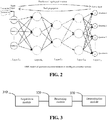
FIG. 2 is a schematic diagram of a DNN model according to a specific embodiment of the present application; and -
FIG. 3 is a schematic structural diagram of a question recommendation device according to the present application. - In view of the problem in the prior art, the present invention proposes a question recommendation method. The method is applied to a question recommendation system, and model training is carried out using a combination of a machine learning model and a DNN model. The system can recommend a user-required question to a user according to historical records, is good at processing sparse and dense question features, and can be used for improving the accuracy of question recommendation to the user.
- As shown in
FIG. 1, FIG. 1 is a schematic flowchart of a verification information processing method according to the present application. The method includes the following steps:
S101: Questions and question features corresponding to the questions are acquired in a sample collection cycle. - The present application is intended to recommend a question to a user who needs a question recommendation service. Users may be the user to whom the question needs to be recommended and other users. Historical records of the users exist in the system of the present invention. The historical records include questions and corresponding question features. The question recommendation system generally includes a collection layer, a processing layer, a storage layer and an output layer. The collection layer is responsible for collecting questions and question features sent by other devices. The processing layer carries out model training by using the collected questions and question features. The storage layer is responsible for data storage, in which the historical records of the users are stored. The output layer outputs questions and question features. The question recommendation system in the present application can be implemented on a server. Preferably, a distributed server is adopted. Moreover, the present application can use one server, or use a cluster consisting of multiple servers.
- The question features include numerical features and textual features. The numerical features are continuous. For example, the numerical feature is the number of times that application software is used, and a numerical value 9 represents that the application software is used 9 times. The textual features are discontinuous. For example, the textual feature is an invoice status, which corresponds to a non-invoiced state and an invoiced state. As questions and question features in the historical records are only valid in a particular period of time, a sample collection cycle is set to collect questions and question features in a period of time, for example, in one week or one month. When other devices send questions and question features to the system, it takes a relatively long time to acquire some questions and question features because different devices have different IP addresses. As a result, the system may fail to complete acquisition in a long time.
- In order to process data more efficiently, in a preferred embodiment of the present application, a feature acquisition cycle is set, and the questions are acquired in the feature acquisition cycle. If there is a question not acquired in the feature acquisition cycle, a value of the question not acquired is null. If there is no question not acquired in the feature acquisition cycle, the acquired questions are used as the questions. Question features are acquired in the feature acquisition cycle. If there is a question feature not acquired in the feature acquisition cycle and the question feature is the numerical feature, a mean of numerical values of the acquired question features corresponding to the questions is used as the question feature. If there is a question feature not acquired in the feature acquisition cycle and the question feature is the textual question feature, a question feature with a highest frequency of occurrence in the acquired question features corresponding to the questions is used as the question feature. If there is no question feature not acquired in the feature acquisition cycle, the acquired question features are used as the question features.
- After acquiring the questions and the question features corresponding to the questions, the recommendation system screens the question features to delete some features, for example, delete identical question features possessed by all the users, question features that easily exceed the feature acquisition cycle, and question features irrelevant to business. Features obtained after the screening can be used to prepare for establishing a classification model subsequently.
- S102: The question features are processed, the processed question features being in a preset numerical range.
- After acquiring the questions and the corresponding question features, the question recommendation system processes the question features. Normalization processing is performed on the question feature if the question feature is a numerical question feature, so that the processed question feature is in a specified numerical range; vectorization processing is performed on the question feature if the question feature is a textual question feature, so that the processed question feature becomes a numerical question feature and is in the specified question feature.
- In a preferred embodiment of the present application, if question features are numerical features, normalization processing can be performed on the question features by using a percentile binning algorithm, so that all the question features are in a specified numerical range after processing. During processing based on the percentile binning algorithm, original numerical values are categorized into 100 bins, and then the bins are coded, for example, 0.01, 0.02 ..., 1.00. The processed numerical question features are in a numerical range of 0 to 1.
- Textual question features are presented in the form of texts, and cannot participate in calculation. Therefore, it is necessary to perform vectorization processing on the textual question features to convert the question features from textual features into numerical features. One hot encoding may be employed to process the textual features to calculate a frequency of each feature, thus providing one hot codes based on the frequencies. For example, the textual feature is an invoice status corresponding to a non-invoiced state and an invoiced state. Numerical features 0 and 1 are obtained after vectorization processing, which are in the numerical range of 0 to 1.
- After processing, the question features are in the specified numerical range to facilitate participation in the subsequent calculation. It should be noted that, as question features in the specified numerical range need to be obtained in the present application, the foregoing percentile binning algorithm and vectorization processing method are performed, and this is only an example proposed in a preferred embodiment of the present application. The protection scope of the present application is not limited to this example. Based on the foregoing example proposed in the preferred embodiment of the present application, other manners may be selected for calculation, so that the present application is applicable to more application fields, and all these improvements belong to the protection scope of the present invention.
- S103: A to-be-recommended question is determined according to the questions, a second probability of each question among the questions, and a specified recommendation threshold.
- After the questions and the corresponding question features are obtained, the present application further needs to carry out calculation on the question features based on a simple classification model to obtain first probabilities by using a decision tree algorithm. During calculation based on a decision tree, two rounds of sampling need to be performed first. In the first round, the question features are randomly sampled to obtain question features that can be processed by the decision tree. In the second round, important features are sampled, and weights are calculated according to the question features that can be processed.
- Nowadays, original variables and derivative variables of data sets increase as the number of data interfaces grows. Therefore, an Information Value (IV) is critical in the actual data application. The IV is used to represent the amount of "information" that each variable contributes to a target variable, so that feature selection becomes easy and fast.
- During feature selection, features are usually selected after the importance of the features is quantified, and how to quantify features becomes the biggest difference among various methods. In an Information Gain (IG), a criterion for measuring the importance is how much information a feature can contribute to a classification system. The more information a feature contributes to the system, the more important the feature is. Therefore, for a feature, a difference between an information amount of the system in the presence of the feature and an information amount of the system in the absence of the feature is the amount of information that the feature contributes to the system, i.e., the IG.
- Both the IV and the IG can represent the weight corresponding to the question feature. Therefore, the weight is the IV and/or the IG. Important features are selected according to the weights, and then a classification model is established according to the important features. Then, the question features obtained after screening are analyzed based on the classification model to obtain first probabilities. Corresponding probabilities obtained after the question features are subject to calculation based on the decision tree are used as the first probabilities.
- It should be noted that, the foregoing process of obtaining probability values corresponding to the question features based on the decision tree algorithm in the present application is merely an example proposed in a preferred embodiment of the present application. Apart from that, other calculation methods such as logical regression calculation may also be selected, so that the present application is applicable to more application fields, and all these improvements belong to the protection scope of the present invention.
- After the processed question features and the first probabilities are obtained, calculation is performed on the processed question features and the first probabilities to obtain the questions and the second probability of each question among the questions. In a preferred embodiment, the questions and the second probability of each question among the questions are obtained by means of DNN calculation. A DNN in the question recommendation system includes an input node and a calculation node. The DNN calculation includes the following steps: (1) The input node acquires the processed question features and the first probabilities. (2) The calculation node performs calculation on the processed question features and the first probabilities by using a fully connected layer, an activation function ReLu and a multi-class loss function softmax loss to obtain the second probabilities.
- In a specific application scenario, operation steps are as shown in
FIG. 2 : - a. An input layer acquires the processed question features and the first probabilities.
Before DNN training, data can be classified preliminarily by using a decision tree. Meanwhile, weights of network nodes in the DNN can be controlled based on the first probabilities. - b. An intermediate layer, i.e., a calculation layer, recommends questions. The calculation layer performs calculation on the processed question features and the first probabilities by using a fully connected layer, an activation function ReLu and a multi-class loss function softmax loss to obtain questions corresponding to the question features and the second probabilities.
Calculation is carried out based on the activation function ReLu, so that neurons in a part of the network output 0, thus contributing to the sparsity of the network and reducing dependency between parameters, and alleviating the overfitting problem. Meanwhile, the calculation node has a relatively small calculation amount, which helps improve the efficiency of question recommendation of the system. In addition, a GPU can be used in the DNN training to accelerate matrix calculation, thus further improving the calculation speed. In addition to the activation function ReLu, a sigmoid layer can also be used for calculation. - c. An output layer outputs the questions and the second probabilities corresponding to the questions.
- It should be noted that, in the present application, the second probabilities are obtained from the first probabilities and the numerical question features that are obtained after processing. The calculation manner proposed in the present application is DNN calculation, but the protection scope of the present application is not limited to the DNN calculation. The above is merely an example proposed in a preferred embodiment. Based on this example, other manners can also be selected for calculation, so that the present application is applicable to more application fields, and all these improvements belong to the protection scope of the present invention.
- In a preferred embodiment of the present application, the question recommendation system determines a to-be-recommended question according to the questions, a second probability of each question among the questions, and a specified recommendation threshold. Then, a question feature within the threshold is obtained according to the threshold, and a question corresponding to the question feature is used as the to-be-recommended question. For example, if question features of six questions are obtained within the threshold, the system recommends the six questions. In the present invention, after calculation is performed on questions and question features in historical records corresponding to users and thus to-be-recommended questions are determined, a corresponding result is directly invoked when a user accesses the question recommendation system. By using the question recommendation system in the present application, the user can directly acquire questions that are highly correlated with the user.
- In order to achieve the foregoing technical objective, the present application further proposes a question recommendation device. As shown in
FIG. 3 , the device includes: - an
acquisition module 310 configured to acquire questions and acquire question features corresponding to the questions in a sample collection cycle; - a
processing module 320 configured to process the question features, the processed question features being in a preset numerical range; and - a
determination module 330 configured to determine a to-be-recommended question according to the questions, a second probability of each question among the questions, and a specified recommendation threshold; - where the questions and the second probability of each question among the questions are obtained by using the processed question features and first probabilities; and the first probabilities are obtained based on the question features.
- In a preferred embodiment, the question features include numerical features and textual features, the numerical features are continuous, and the textual features are discontinuous.
- In a preferred embodiment, the acquisition module is specifically configured to:
- acquire the questions in a feature acquisition cycle;
- if there is a question not acquired in the feature acquisition cycle, set a value of the question not acquired to null; and
- if there is no question not acquired in the feature acquisition cycle, use the acquired questions as the questions.
- In a preferred embodiment, the acquisition module is specifically configured to:
- acquire question features in a feature acquisition cycle;
- if there is a question feature not acquired in the feature acquisition cycle and the question feature is the numerical feature, use a mean of numerical values of the acquired question features corresponding to the questions as the question feature;
- if there is a question feature not acquired in the feature acquisition cycle and the question feature is the textual question feature, use a question feature with a highest frequency of occurrence in the acquired question features corresponding to the questions as the question feature; and
- if there is no question feature not acquired in the feature acquisition cycle, use the acquired question features as the question features.
- In a preferred embodiment, the processing module is specifically configured to:
- perform normalization processing on the question features if the question features are numerical question features; and
- perform vectorization processing on the question features if the question features are textual question features, a question feature obtained after the vectorization processing being a numerical question feature.
- In a preferred embodiment, the second probabilities are obtained by performing DNN calculation on the processed question features and the first probabilities.
- According to the description of the foregoing implementations, those skilled in the art can clearly understand that the present application can be implemented by hardware or implemented by software plus a necessary hardware platform. Based on such understanding, the technical solution of the present application can be embodied in the form of a software product. The computer software product can be stored in a non-volatile storage medium (such as a CD-ROM, a USB flash drive, or a mobile hard disk drive), and includes several instructions for instructing a computer device (which can be a personal computer, a server, a network device, or the like) to execute the methods in various implementation scenarios of the present application.
- Those skilled in the art can understand that the accompanying drawings are merely schematic diagrams of a preferred implementation scenario. Modules or processes in the accompanying drawings are not necessarily mandatory to the implementation of the present application.
- Those skilled in the art can understand that modules in an apparatus in an implementation scenario can be distributed in the apparatus in the implementation scenario according to the description of the implementation scenario, and can also be located in one or more apparatuses different from the apparatus in the current implementation scenario. The modules in the implementation scenario can be combined into one module, and can also be further divided into multiple sub-modules.
- The sequence numbers in the present application are merely for the convenience of description, and do not imply the preference among implementation scenarios.
- The above disclosed are merely some specific implementation scenarios of the present application. However, the present application is not limited to these implementation scenarios. All variations that can be conceived of by those skilled in the art should fall in the protection scope of the present application.
Claims (12)
- A question recommendation method, comprising:acquiring questions and acquiring question features corresponding to the questions in a sample collection cycle;processing the question features, the processed question features being in a preset numerical range; anddetermining a to-be-recommended question according to the questions, a second probability of each question among the questions, and a specified recommendation threshold;wherein the questions and the second probability of each question among the questions are obtained by using the processed question features and first probabilities; and the first probabilities are obtained based on the question features.
- The method according to claim 1, wherein the question features comprise numerical features and textual features, the numerical features are continuous, and the textual features are discontinuous.
- The method according to claim 1, wherein the step of acquiring questions specifically comprises:acquiring the questions in a feature acquisition cycle;if there is a question not acquired in the feature acquisition cycle, setting a value of the question not acquired to null; andif there is no question not acquired in the feature acquisition cycle, using the acquired questions as the questions.
- The method according to claim 2, wherein the step of acquiring question features corresponding to the questions specifically comprises:acquiring question features in a feature acquisition cycle;if there is a question feature not acquired in the feature acquisition cycle and the question feature is the numerical feature, using a mean of numerical values of the acquired question features corresponding to the questions as the question feature;if there is a question feature not acquired in the feature acquisition cycle and the question feature is the textual question feature, using a question feature with a highest frequency of occurrence in the acquired question features corresponding to the questions as the question feature; andif there is no question feature not acquired in the feature acquisition cycle, using the acquired question features as the question features.
- The method according to claim 2, wherein the step of processing the question features specifically comprises:performing normalization processing on the question features if the question features are numerical question features; andperforming vectorization processing on the question features if the question features are textual question features, a question feature obtained after the vectorization processing being a numerical question feature.
- The method according to claim 1, wherein the second probabilities are obtained by performing Deep Neural Network (DNN) calculation on the processed question features and the first probabilities.
- A question recommendation device, comprising:an acquisition module configured to acquire questions and acquire question features corresponding to the questions in a sample collection cycle;a processing module configured to process the question features, the processed question features being in a preset numerical range; anda determination module configured to determine a to-be-recommended question according to the questions, a second probability of each question among the questions, and a specified recommendation threshold;wherein the questions and the second probability of each question among the questions are obtained by using the processed question features and first probabilities; and the first probabilities are obtained based on the question features.
- The question recommendation device according to claim 7, wherein the question features comprise numerical features and textual features, the numerical features are continuous, and the textual features are discontinuous.
- The question recommendation device according to claim 7, wherein the acquisition module is specifically configured to:acquire the questions in a feature acquisition cycle;if there is a question not acquired in the feature acquisition cycle, set a value of the question not acquired to null; andif there is no question not acquired in the feature acquisition cycle, use the acquired questions as the questions.
- The question recommendation device according to claim 8, wherein the acquisition module is specifically configured to:acquire question features in a feature acquisition cycle;if there is a question feature not acquired in the feature acquisition cycle and the question feature is the numerical feature, use a mean of numerical values of the acquired question features corresponding to the questions as the question feature;if there is a question feature not acquired in the feature acquisition cycle and the question feature is the textual question feature, use a question feature with a highest frequency of occurrence in the acquired question features corresponding to the questions as the question feature; andif there is no question feature not acquired in the feature acquisition cycle, use the acquired question features as the question features.
- The question recommendation device according to claim 8, wherein the processing module is specifically configured to:perform normalization processing on the question features if the question features are numerical question features; andperform vectorization processing on the question features if the question features are textual question features, a question feature obtained after the vectorization processing being a numerical question feature.
- The question recommendation device according to claim 7, wherein the second probabilities are obtained by performing Deep Neural Network (DNN) calculation on the processed question features and the first probabilities.
Applications Claiming Priority (2)
| Application Number | Priority Date | Filing Date | Title |
|---|---|---|---|
| CN201610065638.2A CN107025228B (en) | 2016-01-29 | 2016-01-29 | Question recommendation method and equipment |
| PCT/CN2017/071704 WO2017129033A1 (en) | 2016-01-29 | 2017-01-19 | Question recommendation method and device |
Publications (2)
| Publication Number | Publication Date |
|---|---|
| EP3410310A1 true EP3410310A1 (en) | 2018-12-05 |
| EP3410310A4 EP3410310A4 (en) | 2019-01-02 |
Family
ID=59397449
Family Applications (1)
| Application Number | Title | Priority Date | Filing Date |
|---|---|---|---|
| EP17743648.2A Withdrawn EP3410310A4 (en) | 2016-01-29 | 2017-01-19 | Question recommendation method and device |
Country Status (6)
| Country | Link |
|---|---|
| US (1) | US20180330226A1 (en) |
| EP (1) | EP3410310A4 (en) |
| JP (1) | JP7007279B2 (en) |
| CN (1) | CN107025228B (en) |
| TW (1) | TWI772287B (en) |
| WO (1) | WO2017129033A1 (en) |
Families Citing this family (9)
| Publication number | Priority date | Publication date | Assignee | Title |
|---|---|---|---|---|
| CN108363745B (en) | 2018-01-26 | 2020-06-30 | 阿里巴巴集团控股有限公司 | Method and device for converting robot customer service to manual customer service |
| CN108764273B (en) * | 2018-04-09 | 2023-12-05 | 中国平安人寿保险股份有限公司 | A data processing method, device, terminal equipment and storage medium |
| US11586417B2 (en) | 2018-09-28 | 2023-02-21 | Qualcomm Incorporated | Exploiting activation sparsity in deep neural networks |
| CN111353093B (en) * | 2018-12-24 | 2023-05-23 | 北京嘀嘀无限科技发展有限公司 | Problem recommendation method, device, server and readable storage medium |
| CN109711982A (en) * | 2019-01-04 | 2019-05-03 | 深圳壹账通智能科技有限公司 | Face core questioning method, device, computer equipment and readable storage medium storing program for executing |
| CN110263133B (en) * | 2019-05-07 | 2023-11-24 | 平安科技(深圳)有限公司 | Knowledge graph-based question and answer method, electronic device, equipment and storage medium |
| CN112819019B (en) * | 2019-11-15 | 2023-06-20 | 财团法人资讯工业策进会 | Classification model generation device and classification model generation method thereof |
| CN112528010B (en) * | 2020-12-15 | 2022-09-02 | 建信金融科技有限责任公司 | Knowledge recommendation method and device, computer equipment and readable storage medium |
| CN118827415A (en) * | 2023-12-06 | 2024-10-22 | 中移物联网有限公司 | A method, device, medium and equipment for predicting radio frequency performance of an Internet of Things module |
Family Cites Families (17)
| Publication number | Priority date | Publication date | Assignee | Title |
|---|---|---|---|---|
| JPH09128401A (en) * | 1995-10-27 | 1997-05-16 | Sharp Corp | Video search device and video-on-demand device |
| US7409335B1 (en) * | 2001-06-29 | 2008-08-05 | Microsoft Corporation | Inferring informational goals and preferred level of detail of answers based on application being employed by the user |
| US6922680B2 (en) * | 2002-03-19 | 2005-07-26 | Koninklijke Philips Electronics N.V. | Method and apparatus for recommending an item of interest using a radial basis function to fuse a plurality of recommendation scores |
| US20050089878A1 (en) * | 2003-02-14 | 2005-04-28 | Debe Derek A. | Method for determining functional sites in a protein |
| US20100235343A1 (en) * | 2009-03-13 | 2010-09-16 | Microsoft Corporation | Predicting Interestingness of Questions in Community Question Answering |
| CN101986298A (en) * | 2010-10-28 | 2011-03-16 | 浙江大学 | Information real-time recommendation method for online forum |
| US9916538B2 (en) * | 2012-09-15 | 2018-03-13 | Z Advanced Computing, Inc. | Method and system for feature detection |
| US9249287B2 (en) * | 2012-02-24 | 2016-02-02 | Nec Corporation | Document evaluation apparatus, document evaluation method, and computer-readable recording medium using missing patterns |
| US8938438B2 (en) * | 2012-10-11 | 2015-01-20 | Go Daddy Operating Company, LLC | Optimizing search engine ranking by recommending content including frequently searched questions |
| CN104462156B (en) * | 2013-09-25 | 2018-12-28 | 阿里巴巴集团控股有限公司 | A kind of feature extraction based on user behavior, personalized recommendation method and system |
| CN104572734B (en) | 2013-10-23 | 2019-04-30 | 腾讯科技(深圳)有限公司 | Method for recommending problem, apparatus and system |
| US9911088B2 (en) * | 2014-05-01 | 2018-03-06 | Microsoft Technology Licensing, Llc | Optimizing task recommendations in context-aware mobile crowdsourcing |
| US10943181B2 (en) * | 2015-06-26 | 2021-03-09 | Microsoft Technology Licensing, Llc | Just in time classifier training |
| CN105095477A (en) * | 2015-08-12 | 2015-11-25 | 华南理工大学 | Recommendation algorithm based on multi-index grading |
| CN105243389A (en) * | 2015-09-28 | 2016-01-13 | 北京橙鑫数据科技有限公司 | Industry classification tag determining method and apparatus for company name |
| CN105279288B (en) * | 2015-12-04 | 2018-08-24 | 深圳大学 | A kind of online content recommendation method based on deep neural network |
| US10861106B1 (en) * | 2016-01-14 | 2020-12-08 | Intuit Inc. | Computer generated user interfaces, computerized systems and methods and articles of manufacture for personalizing standardized deduction or itemized deduction flow determinations |
-
2016
- 2016-01-29 CN CN201610065638.2A patent/CN107025228B/en active Active
-
2017
- 2017-01-19 EP EP17743648.2A patent/EP3410310A4/en not_active Withdrawn
- 2017-01-19 WO PCT/CN2017/071704 patent/WO2017129033A1/en not_active Ceased
- 2017-01-19 JP JP2018538883A patent/JP7007279B2/en active Active
- 2017-01-24 TW TW106102678A patent/TWI772287B/en not_active IP Right Cessation
-
2018
- 2018-07-26 US US16/046,800 patent/US20180330226A1/en active Pending
Also Published As
| Publication number | Publication date |
|---|---|
| EP3410310A4 (en) | 2019-01-02 |
| CN107025228B (en) | 2021-01-26 |
| JP7007279B2 (en) | 2022-01-24 |
| JP2019511764A (en) | 2019-04-25 |
| WO2017129033A1 (en) | 2017-08-03 |
| US20180330226A1 (en) | 2018-11-15 |
| CN107025228A (en) | 2017-08-08 |
| TWI772287B (en) | 2022-08-01 |
| TW201800987A (en) | 2018-01-01 |
Similar Documents
| Publication | Publication Date | Title |
|---|---|---|
| EP3410310A1 (en) | Question recommendation method and device | |
| CN113869521A (en) | Method, apparatus, computing device and storage medium for constructing predictive model | |
| KR20190117713A (en) | Neural Network Architecture Optimization | |
| Zuev et al. | Machine learning in IT service management | |
| CN106354856B (en) | Deep neural network enhanced search method and device based on artificial intelligence | |
| CN108846695A (en) | The prediction technique and device of terminal replacement cycle | |
| CN111401788A (en) | Attribution method and device for business time series indicators | |
| WO2024230745A1 (en) | Performance testing system and method for deep learning model, and prediction model generation method | |
| CN110516697A (en) | Statement verification method and system based on evidence figure polymerization and reasoning | |
| CN110647995A (en) | Rule training method, device, equipment and storage medium | |
| WO2021262344A1 (en) | Method and apparatus to detect scripted network traffic | |
| CN111582341A (en) | User abnormal operation prediction method and device | |
| CN110288085A (en) | A data processing method, device, system and storage medium | |
| WO2023087933A1 (en) | Content recommendation method and apparatus, device, storage medium, and program product | |
| CN111598700A (en) | Financial wind control system and method | |
| CN119379350A (en) | Method, system and device for simulating customer approval results based on historical data learning | |
| CN111210332A (en) | Method and device for generating post-loan management strategy and electronic equipment | |
| CN110147388A (en) | A method and device for data processing | |
| CN114511022A (en) | Feature screening, behavior recognition model training and abnormal behavior recognition method and device | |
| CN116433262A (en) | User evaluation method, device and storage medium | |
| CN109271495B (en) | Question-answer recognition effect detection method, device, equipment and readable storage medium | |
| CN114969509A (en) | Information pushing method, device, equipment and computer readable storage medium | |
| CN111325255B (en) | Specific crowd delineating method and device, electronic equipment and storage medium | |
| CN109241249B (en) | Method and device for determining burst problem | |
| CN110059457B (en) | Body-building method and device |
Legal Events
| Date | Code | Title | Description |
|---|---|---|---|
| STAA | Information on the status of an ep patent application or granted ep patent |
Free format text: STATUS: THE INTERNATIONAL PUBLICATION HAS BEEN MADE |
|
| PUAI | Public reference made under article 153(3) epc to a published international application that has entered the european phase |
Free format text: ORIGINAL CODE: 0009012 |
|
| STAA | Information on the status of an ep patent application or granted ep patent |
Free format text: STATUS: REQUEST FOR EXAMINATION WAS MADE |
|
| 17P | Request for examination filed |
Effective date: 20180820 |
|
| AK | Designated contracting states |
Kind code of ref document: A1 Designated state(s): AL AT BE BG CH CY CZ DE DK EE ES FI FR GB GR HR HU IE IS IT LI LT LU LV MC MK MT NL NO PL PT RO RS SE SI SK SM TR |
|
| AX | Request for extension of the european patent |
Extension state: BA ME |
|
| RIC1 | Information provided on ipc code assigned before grant |
Ipc: G06F 17/30 20060101AFI20181123BHEP Ipc: G06Q 10/06 20120101ALI20181123BHEP |
|
| A4 | Supplementary search report drawn up and despatched |
Effective date: 20181130 |
|
| DAV | Request for validation of the european patent (deleted) | ||
| DAX | Request for extension of the european patent (deleted) | ||
| STAA | Information on the status of an ep patent application or granted ep patent |
Free format text: STATUS: THE APPLICATION IS DEEMED TO BE WITHDRAWN |
|
| 18D | Application deemed to be withdrawn |
Effective date: 20190629 |