EP3410290A1 - Audio processing method, server, user equipment, and system - Google Patents
Audio processing method, server, user equipment, and system Download PDFInfo
- Publication number
- EP3410290A1 EP3410290A1 EP17743745.6A EP17743745A EP3410290A1 EP 3410290 A1 EP3410290 A1 EP 3410290A1 EP 17743745 A EP17743745 A EP 17743745A EP 3410290 A1 EP3410290 A1 EP 3410290A1
- Authority
- EP
- European Patent Office
- Prior art keywords
- audio
- user equipment
- instruction
- server
- audio data
- Prior art date
- Legal status (The legal status is an assumption and is not a legal conclusion. Google has not performed a legal analysis and makes no representation as to the accuracy of the status listed.)
- Granted
Links
Images




Classifications
-
- G—PHYSICS
- G06—COMPUTING OR CALCULATING; COUNTING
- G06F—ELECTRIC DIGITAL DATA PROCESSING
- G06F16/00—Information retrieval; Database structures therefor; File system structures therefor
- G06F16/60—Information retrieval; Database structures therefor; File system structures therefor of audio data
- G06F16/68—Retrieval characterised by using metadata, e.g. metadata not derived from the content or metadata generated manually
- G06F16/683—Retrieval characterised by using metadata, e.g. metadata not derived from the content or metadata generated manually using metadata automatically derived from the content
-
- G—PHYSICS
- G06—COMPUTING OR CALCULATING; COUNTING
- G06F—ELECTRIC DIGITAL DATA PROCESSING
- G06F3/00—Input arrangements for transferring data to be processed into a form capable of being handled by the computer; Output arrangements for transferring data from processing unit to output unit, e.g. interface arrangements
- G06F3/16—Sound input; Sound output
- G06F3/162—Interface to dedicated audio devices, e.g. audio drivers, interface to CODECs
-
- A—HUMAN NECESSITIES
- A63—SPORTS; GAMES; AMUSEMENTS
- A63F—CARD, BOARD, OR ROULETTE GAMES; INDOOR GAMES USING SMALL MOVING PLAYING BODIES; VIDEO GAMES; GAMES NOT OTHERWISE PROVIDED FOR
- A63F13/00—Video games, i.e. games using an electronically generated display having two or more dimensions
- A63F13/30—Interconnection arrangements between game servers and game devices; Interconnection arrangements between game devices; Interconnection arrangements between game servers
- A63F13/35—Details of game servers
- A63F13/358—Adapting the game course according to the network or server load, e.g. for reducing latency due to different connection speeds between clients
-
- A—HUMAN NECESSITIES
- A63—SPORTS; GAMES; AMUSEMENTS
- A63F—CARD, BOARD, OR ROULETTE GAMES; INDOOR GAMES USING SMALL MOVING PLAYING BODIES; VIDEO GAMES; GAMES NOT OTHERWISE PROVIDED FOR
- A63F13/00—Video games, i.e. games using an electronically generated display having two or more dimensions
- A63F13/30—Interconnection arrangements between game servers and game devices; Interconnection arrangements between game devices; Interconnection arrangements between game servers
- A63F13/35—Details of game servers
- A63F13/355—Performing operations on behalf of clients with restricted processing capabilities, e.g. servers transform changing game scene into an encoded video stream for transmitting to a mobile phone or a thin client
-
- A—HUMAN NECESSITIES
- A63—SPORTS; GAMES; AMUSEMENTS
- A63F—CARD, BOARD, OR ROULETTE GAMES; INDOOR GAMES USING SMALL MOVING PLAYING BODIES; VIDEO GAMES; GAMES NOT OTHERWISE PROVIDED FOR
- A63F13/00—Video games, i.e. games using an electronically generated display having two or more dimensions
- A63F13/50—Controlling the output signals based on the game progress
- A63F13/54—Controlling the output signals based on the game progress involving acoustic signals, e.g. for simulating revolutions per minute [RPM] dependent engine sounds in a driving game or reverberation against a virtual wall
-
- G—PHYSICS
- G06—COMPUTING OR CALCULATING; COUNTING
- G06F—ELECTRIC DIGITAL DATA PROCESSING
- G06F16/00—Information retrieval; Database structures therefor; File system structures therefor
- G06F16/10—File systems; File servers
- G06F16/17—Details of further file system functions
- G06F16/1734—Details of monitoring file system events, e.g. by the use of hooks, filter drivers, logs
-
- G—PHYSICS
- G06—COMPUTING OR CALCULATING; COUNTING
- G06F—ELECTRIC DIGITAL DATA PROCESSING
- G06F3/00—Input arrangements for transferring data to be processed into a form capable of being handled by the computer; Output arrangements for transferring data from processing unit to output unit, e.g. interface arrangements
- G06F3/16—Sound input; Sound output
- G06F3/165—Management of the audio stream, e.g. setting of volume, audio stream path
Definitions
- the present disclosure relates to the field of cloud technology, and in particular, to an audio processing method, a server, user equipment, and a system.
- a current cloud interactive system usually includes a server and multiple user equipment.
- the server may be a cluster server.
- Multiple interactive applications may be executed in the cloud interactive system.
- the server usually plays an audio in the interactive applications and obtains a clip of the played audio in real time at a certain frequency. The clip is sent to the user equipment, so that the user equipment can play the audio of the server end.
- an audio processing solution from the server to the user equipment is that the server obtains a clip of audio data of the server in real time at a certain frequency.
- network fluctuation has a great effect on the audio clip, leading to audio freeze.
- the user equipment cannot receive a new clip of the audio data when the previous clip of the audio data is completely played. Therefore, no audio data is played in an interval of playing the two clips of the audio data, also leading to audio freeze.
- the server has to continuously obtain audio clips. Some audio clips may be the same, but are sent repeatedly, causing large network traffic from the server to the user equipment. Further, when the server repeatedly plays cycled background music, especially when music is mixed, the server cannot extract each music component, causing poor playing quality of an audio of the user equipment.
- An audio processing method provided in the embodiments of the present disclosure may improve the playing quality of an audio at a user equipment end and reduce network traffic from the server to the user equipment.
- the embodiments of the present disclosure further provide a corresponding server, user equipment, and a system.
- a first aspect of the present disclosure provides an audio processing method, applied to a cloud interactive system, the cloud interactive system including user equipment and a server, and the method including:
- a second aspect of the present disclosure provides an audio processing method, applied to a cloud interactive system, the cloud interactive system including user equipment and a server, and the method including:
- a third aspect of the present disclosure provides a server, applied to a cloud interactive system, the cloud interactive system further including user equipment, and the server including:
- a fourth aspect of the present disclosure provides user equipment, applied to a cloud interactive system, the cloud interactive system further including a server, and the user equipment including:
- a fifth aspect of the present disclosure provides a server, applied to a cloud interactive system, the cloud interactive system further including user equipment, and the server including: a transceiver, a processor, and a memory, and the memory being configured to store a program of the processor used to execute audio processing; the processor being configured to:
- a sixth aspect of the present disclosure provides user equipment, applied to a cloud interactive system, the cloud interactive system further including a server, and the user equipment including: a transceiver, a processor, and a memory, and the memory being configured to store a program of the processor used to execute audio processing; the transceiver being configured to receive an audio instruction sent by the server; and the processor being configured to obtain audio data corresponding to the audio instruction from a cache and use the cached audio data when executing the audio instruction.
- a seventh aspect of the present disclosure provides cloud interactive system, including user equipment and a server, the server being configured to:
- the embodiments of the present disclosure provide an audio processing method.
- the server sends an audio instruction to the user equipment to implement playing the audio at the server end by the user equipment, so as to improve the playing quality of an audio at a user equipment end.
- the server merely sends the audio instruction to the user equipment when the server determines that there exists a sending record that audio data corresponding to the audio instruction is already sent to the user equipment, without repeatedly sending the audio data, reducing network traffic from the server to the user equipment.
- An audio processing method provided in the embodiments of the present disclosure may improve the playing quality of an audio at a user equipment end and reduce network traffic from the server to the user equipment.
- the embodiments of the present disclosure further provide a server, user equipment, and a system accordingly. Detailed descriptions are made below separately.
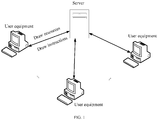
- FIG. 1 is a schematic diagram of an embodiment of a cloud interactive system according to an embodiment of the present disclosure.
- the cloud interactive system can be understood as a cloud game system, usually including a server and user equipment, where the user equipment may be multiple and the server may further be a server cluster.
- the user equipment may be terminal devices such as a personal computer (PC), a laptop, and a smartphone.
- the server may be a dedicated game server.
- an audio processing solution for a game is to obtain an audio clip being played at a server end by the server and transmit the audio clip to a user equipment end to play, causing poor playing quality of an audio at the user equipment end and leading to large network traffic from the server to the user equipment.
- the server using an audio instruction to instruct the user equipment to play audio data, so as to improve the playing quality of the audio at the user equipment end.
- the server merely sends the audio instruction when there is a sending record that the audio data is already sent to the user equipment.
- the user equipment may use the cached audio data to perform an audio operation when executing the audio instruction, so as to reduce the network traffic from the server to the user equipment.
- the embodiments of the present disclosure involves a Hook function, that is, hook injection, which replaces an original function executing process with a self-defining function.
- FIG. 2 With reference to the cloud interactive system shown in FIG. 1 , an audio processing process provided in the embodiments of the present disclosure is described referring to a schematic diagram of an audio processing method shown in FIG. 2 .
- an embodiment of the audio processing method provided in an embodiment of the present disclosure includes steps S101 to S106.
- the server detects a function call from an interactive application to an audio interface when running the interactive application.
- the step is to detect, by the server, a function call from a game to an audio interface of an audio software development kit (SDK) when running the game.
- SDK audio software development kit
- the step may include: detecting, by the server, the function call from the interactive application to the audio interface by using a Hook function for the audio interface; and determining the function call from the interactive application to the audio interface if a function call instruction of the interactive application to the audio interface is detected to enter the Hook function for the audio interface.
- the server In S102, the server generates, according to a type of the audio interface, an audio instruction corresponding to the type when the function call from the interactive application to the audio interface is detected.
- audio interfaces There are multiple types of the audio interface, such as audio interfaces of creating audio, playing audio, mixing audio, and pausing audio.
- a audio instruction generated according to the type of the audio interface has a corresponding function, for example, creating an audio, playing an audio, mixing an audio, and pausing an audio.
- an audio instruction of pausing audio does not need audio data.
- the server may first determine that the audio data is not needed according to the type of the audio interface and directly send the audio instruction that does not need the audio data to the user equipment.
- the server determines whether there exists a sending record that audio data corresponding to the audio instruction is already sent to the user equipment.
- the server may record the audio data sent to the user equipment, so as to avoid repeated sending.
- the server sends the audio instruction to the user equipment if the sending record exists.
- the server When the sending record of the audio data corresponding to the audio instruction exists in the server, the server merely needs to send the audio instruction to reduce network traffic.
- the user equipment obtains the audio data corresponding to the audio instruction from a cache after receiving the audio instruction sent by the server.
- the user equipment uses the cached audio data to perform a corresponding audio operation when executing the audio instruction.
- the user equipment has to play an audio clip sent by a server to implement playing an audio at a server end by the user equipment.
- the embodiments of the present disclosure provide an audio processing method.
- the server sends an audio instruction to the user equipment to implement playing the audio at the server end by the user equipment, so as to improve the playing quality of an audio at a user equipment end.
- the server merely sends the audio instruction to the user equipment when the server determines that there exists a sending record that audio data corresponding to the audio instruction is already sent to the user equipment, without repeatedly sending the audio data, reducing network traffic from the server to the user equipment.
- FIG. 3 another embodiment of the audio processing method provided in the present disclosure includes steps S201 to S210.
- S201 to 203 are the same as S101 to 103 in the embodiment in FIG. 2 .
- S201 to 203 may be understood with reference to S101 to 103 in the embodiment in FIG. 2 , which is not described herein.
- the server calls the audio data corresponding to the audio instruction if the sending record does not exist.
- the audio data may be audio data in a compressed state.
- the step may include: using, by the server, a Hook function for magnetic disk reading to call the audio data in the compressed state corresponding to the audio instruction; and function call the audio data in the compressed state corresponding to the audio instruction if a function call instruction of the interactive application to read the magnetic disk is detected to enter the Hook function for magnetic disk reading.
- the server directly calls the audio data in the compressed state in the magnetic disk and does not need to compress an audio clip as in the existing technology, so as to reduce occupation of a processor in the server.
- the server sends the audio data to the user equipment.
- the server sends the audio instruction to the user equipment.
- the server adds a sending record that the audio data is already sent to the user equipment in a data sending record.
- the server stores the audio data corresponding to the audio instruction in a cache after the user equipment receives the audio data corresponding to the audio instruction sent by the server.
- the audio data may be audio data in a compressed state.
- a data head of the audio data includes a Key value of an associated audio file of the audio data and an offset position and an offset length of the audio data in the audio file.
- the storing the audio data corresponding to the audio instruction in the cache includes: determining, by the user equipment, the associated audio file according to the Key value of the audio file; determining, by the user equipment, a storage position of the audio data in the associated audio file according to the offset position and the offset length; and caching, by the user equipment, the audio data in the associated audio file according to the storage position.
- S209 and 210 are the same as S105 and 106 in an embodiment corresponding to FIG. 2 .
- S209 and 210 may be understood with reference to S105 and 106, which is not described herein.
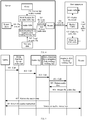
- the server may include several parts such as a system drive, a game, an audio SDK, a magnetic disk, a Hook function for the audio SDK Api, and a Hook function for a magnetic disk reading/writing Api.
- Hook is performed on Api of magnetic disk reading and writing related to an audio in the audio SDK used in the game to detect the loading of an audio file.
- the audio data is streamed after being extracted, to be transmitted to user equipment.
- an audio instruction is generated and streamed, to be transmitted to the user equipment.
- the audio data and the audio instruction are sequentially transmitted via the network to the user equipment.
- the user equipment stores the audio data in a magnetic disk cache after receiving the audio data.
- the user equipment loads the audio data from the magnetic disk cache after receiving the audio instruction.
- the audio instruction is executed to replay the sound.
- the server end relates to streaming of the audio data and the audio instruction.
- a streaming process may be understood by referring to FIG. 5 .
- the Api of the audio SDK is called first in the Hook function for the audio Api.
- the games enters the Hook function for magnetic disk reading if a current function call of the audio Api leads an interactive application to read a file on the magnetic disk.
- the audio data is streamed to be sent to the user equipment.
- the audio Api returns the audio instruction to the game.
- the sound may be played in the game according to the audio data and the audio instruction.
- whether data read by the audio SDK is new may be detected. If the data is new, the audio data is streamed to a Retrace end and a file name of the audio data is used as a Key value to update the reading information, such as an offset and the length, of the audio data. If the audio data is streamed before, the audio data is no longer streamed. Network traffic may be reduced.
- the file name is always used as the Key value, which together with the offset and length of the audio data in an original file is used as a data head.
- data can be correctly written into a correct file and a correct position.
- the audio data needed by the audio instruction may be streamed to the user equipment before the audio instruction. Therefore, when the audio replaying instruction is executed at the user equipment end, the needed audio data is always cached on the magnetic disk.
- Data cached by the user equipment in this solution is the same with data used by the game at the server end, as well as a file code and the audio SDK. Therefore, once a piece of audio data is played for one time at the user equipment end and is cached, the server end no longer needs to stream the same music if hit in the cached data when an audio engine based on events used in the game mixes different music and triggers repeatedly played music.
- original audio data stored on the magnetic disk and used in the game is cached.
- the data may be compressed. Therefore, when being streamed, data read from the magnetic disk does not need to be compressed to stream, so as to reduce occupation of a processor in the server.
- the present disclosure may further be applied in a remote program desktop system, so as to reduce CPU occupation of the remote system and network traffic when playing streaming media.
- the server 50 provided in the embodiments of the present disclosure is applied to a cloud interactive system.
- the cloud interactive system includes user equipment.
- An embodiment of the server includes the following units 501 to 504.
- a detecting unit 501 is configured to detect a function call from an interactive application to an audio interface when running the interactive application.
- a generating unit 502 is configured to generate, according to a type of the audio interface, an audio instruction corresponding to the type when the function call from the interactive application to the audio interface is detected.
- a determining unit 503 is configured to determine whether there exists a sending record that audio data corresponding to the audio instruction generated by the generating unit 502 is already sent to the user equipment.
- a sending unit 504 is configured to send the audio instruction to the user equipment if the determining unit 503 determines that the sending record exists, where the audio instruction is used to instruct the user equipment to use the cached audio data when executing the audio instruction.
- the embodiments of the present disclosure provide a server.
- the server sends an audio instruction to the user equipment to implement playing the audio at the server end by the user equipment, so as to improve the playing quality of an audio at a user equipment end.
- the server merely sends the audio instruction to the user equipment when the server determines that there exists a sending record that audio data corresponding to the audio instruction is already sent to the user equipment, without repeatedly sending the audio data, reducing network traffic from the server to the user equipment.
- the server further includes a function call unit 505.
- the function call unit 505 is configured to call the audio data corresponding to the audio instruction when the determining unit 503 determines that the sending record does not exist.
- the sending unit 504 is further configured to sequentially send the audio data called by the function call unit 505 and the audio instruction to the user equipment.
- the server 50 further includes an adding unit 506.
- the adding unit 506 is configured to add a sending record that the audio data is already sent to the user equipment in a data sending record after the sending unit 504 sends the audio data.
- the detecting unit 501 is configured to: detect the function call from the interactive application to the audio interface by using a Hook function for the audio interface; and determine the function call from the interactive application to the audio interface if a function call instruction of the interactive application to the audio interface is detected to enter the Hook function for the audio interface.
- the function call unit 505 is configured to use a Hook function for magnetic disk reading to call the audio data corresponding to the audio instruction; and call the audio data corresponding to the audio instruction if a function call instruction of the interactive application to read the magnetic disk is detected to enter the Hook function for magnetic disk reading.
- the user equipment 60 provided in the embodiments of the present disclosure is applied to a cloud interactive system.
- the cloud interactive system further includes a server.
- the user equipment 60 includes the following units 601 to 603.
- a receiving unit 601 is configured to receive an audio instruction sent by the server.
- An obtaining unit 602 is configured to obtain audio data corresponding to the audio instruction received by the receiving unit 601 from a cache.
- a processing unit 603 is configured to use the cached audio data obtained by the obtaining unit 602 when executing the audio instruction.
- the embodiments of the present disclosure provide user equipment.
- the user equipment may play an audio according to the audio instruction, so as to improve the playing quality of the audio.
- audio data may be cached so that the server does not need to repeatedly send same audio data, reducing network traffic from the server to the user equipment.
- the receiving unit 601 is further configured to receive the audio data corresponding to the audio instruction sent by the server, wherein the audio data is sent when the server determines that there does not exist a sending record that the audio data corresponding to the audio instruction is already sent to the user equipment.
- the processing unit 603 is further configured to store the audio data corresponding to the audio instruction in the cache.
- the processing unit 603 is further configured to: when a data head of the audio data comprises a Key value of an associated audio file of the audio data and an offset position and an offset length of the audio data in the audio file, determine the associated audio file according to the Key value of the audio file, determine a storage position of the audio data in the associated audio file according to the offset position and the offset length, and cache the audio data in the associated audio file according to the storage position.
- FIG. 10 is a schematic structural diagram of a server 50 according to an embodiment of the present disclosure.
- the server 50 is applied to a cloud interactive system.
- the cloud interactive system includes user equipment and a server.
- the server 50 includes a processor 510, a memory 550, and a transceiver 530.
- the memory 550 may include a read-only memory and a random access memory and provides operating instructions and data to the processor 510.
- a part of the memory 550 may further include a non-volatile random access memory (NVRAM).
- NVRAM non-volatile random access memory
- the memory 550 stores the following elements: executable modules or data structures, or a subset thereof, or an extension set thereof.
- the processor 510 calls the operation instructions (the operation instructions may be stored in an operating system) stored in the memory 550.
- the processor 510 is configured to detect a function call from an interactive application to an audio interface, generate, according to a type of the audio interface, an audio instruction corresponding to the type when the function call from the interactive application to the audio is detected, and determine whether there exists a sending record that audio data corresponding to the audio instruction generated by the generating unit is already sent to the user equipment.
- the transceiver 530 is configured to send the audio instruction to the user equipment if the sending record exists, where the audio instruction is used to instruct the user equipment to use the cached audio data when executing the audio instruction.
- the embodiments of the present disclosure provide a server.
- the server sends an audio instruction to the user equipment to implement playing the audio at the server end by the user equipment, so as to improve the playing quality of an audio at a user equipment end.
- the server merely sends the audio instruction to the user equipment when the server determines that there exists a sending record that audio data corresponding to the audio instruction is already sent to the user equipment, without repeatedly sending the audio data, reducing network traffic from the server to the user equipment.
- the processor 510 controls an operation of the server 50.
- the processor 510 may further be referred to as a central processing unit (CPU).
- the memory 550 may include a read-only memory and a random access memory, and provides instructions and data to the processor 510.
- a part of the memory 550 may further include a non-volatile random access memory (NVRAM).
- NVRAM non-volatile random access memory
- components of the server 50 are coupled together by using a bus system 520, where in addition to a data bus, the bus system 520 may include a power bus, a control bus, a status signal bus, and the like. However, for clear description, various types of buses in the figure are marked as the bus system 520.
- the method disclosed in the foregoing embodiment of the present disclosure may be applied to the processor 510, or be implemented by the processor 510.
- the processor 510 may be an integrated circuit chip and has a signal processing capability. In an implementation process, each step of the foregoing method may be implemented by a hardware integrated logic circuit in the processor 510 or by an instruction in a software form.
- the foregoing processor 510 may be a general purpose processor, a digital signal processor (DSP), an application-specific integrated circuit (ASIC), a field programmable gate array (FPGA), or other programmable logical device, discrete gate or transistor logical device, or discrete hardware component.
- the processor 230 may implement or execute methods, steps and logical block diagrams disclosed in the embodiments of the present disclosure.
- the general purpose processor may be a microprocessor or the processor may be any conventional processor and the like. Steps of the methods disclosed with reference to the embodiments of the present disclosure may be directly executed and completed by means of a hardware decoding processor, or may be executed and completed by using a combination of hardware and software modules in the decoding processor.
- the software module may be located in a mature storage medium in the field, such as a random access memory, a flash memory, a read-only memory, a programmable read-only memory, an electrically-erasable programmable memory, or a register.
- the storage medium is located in the memory 550, and the processor 510 reads information in the memory 550 and completes the steps in the foregoing methods in combination with hardware of the processor.
- the processor 510 is further configured to call the audio data corresponding to the audio instruction if the sending record does not exist.
- the transceiver 530 is further configured to sequentially send the audio data and the audio instruction to the user equipment.
- the processor 510 is further configured to add a sending record that the audio data is already sent to the user equipment in a data sending record.
- the processor 510 is configured to detect the function call from the interactive application to the audio interface by using a Hook function for the audio interface, and determine the function call from the interactive application to the audio interface if a function call instruction of the interactive application to the audio interface is detected to enter the Hook function for the audio interface.
- the processor 510 is configured to use a Hook function for magnetic disk reading to call the audio data corresponding to the audio instruction, and call the audio data corresponding to the audio instruction if a function call instruction of the interactive application to read the magnetic disk is detected to enter the Hook function for magnetic disk reading.
- the foregoing server 50 may be understood with reference to related descriptions in FIG. 1 to FIG. 5 , which is not described herein.
- FIG. 11 is a schematic structural diagram of user equipment 60 according to an embodiment of the present disclosure.
- the user equipment 60 is applied to a cloud interactive system.
- the cloud interactive system includes user equipment and a server.
- the user equipment 60 includes a processor 610, a memory 650, and a transceiver 630.
- the memory 650 may include a read-only memory and a random access memory and provides operating instructions and data to the processor 610.
- a part of the memory 650 may further include a non-volatile random access memory (NVRAM).
- NVRAM non-volatile random access memory
- the memory 650 stores the following elements: executable modules or data structures, or a subset thereof, or an extension set thereof.
- the processor 610 calls the operation instructions (the operation instructions may be stored in an operating system) stored in the memory 650.
- the transceiver 630 is configured to receive an audio instruction sent by the server.
- the processor 610 is configured to obtain audio data corresponding to the audio instruction from a cache and use the cached audio data to perform corresponding audio operations when executing the audio instruction.
- the embodiments of the present disclosure provide user equipment.
- the user equipment may play an audio according to the audio instruction, so as to improve the playing quality of the audio.
- audio data may be cached and the server does not need to repeatedly send same audio data, reducing network traffic from the server to the user equipment.
- the processor 610 controls an operation of the user equipment 60.
- the processor 610 may further be referred to as a central processing unit (CPU).
- the memory 650 may include a read-only memory and a random access memory, and provides instructions and data to the processor 610.
- a part of the memory 650 may further include a non-volatile random access memory (NVRAM).
- NVRAM non-volatile random access memory
- components of the user equipment 60 are coupled together by using a bus system 620, where in addition to a data bus, the bus system 620 may include a power bus, a control bus, a status signal bus, and the like.
- various types of buses in the figure are marked as the bus system 620.
- the method disclosed in the foregoing embodiment of the present disclosure may be applied to the processor 610, or be implemented by the processor 610.
- the processor 610 may be an integrated circuit chip and has a signal processing capability. In an implementation process, each step of the foregoing method may be implemented by a hardware integrated logic circuit in the processor 610 or by an instruction in a software form.
- the foregoing processor 610 may be a general purpose processor, a digital signal processor (DSP), an application-specific integrated circuit (ASIC), a field programmable gate array (FPGA), or another programmable logical device, discrete gate or transistor logical device, or discrete hardware component.
- the processor 230 may implement or execute methods, steps and logical block diagrams disclosed in the embodiments of the present disclosure.
- the general purpose processor may be a microprocessor or the processor may be any conventional processor and the like. Steps of the methods disclosed with reference to the embodiments of the present disclosure may be directly executed and completed by means of a hardware decoding processor, or may be executed and completed by using a combination of hardware and software modules in the decoding processor.
- the software module may be located in a mature storage medium in the field, such as a random access memory, a flash memory, a read-only memory, a programmable read-only memory, an electrically-erasable programmable memory, or a register.
- the storage medium is located in the memory 650, and the processor 610 reads information in the memory 650 and completes the steps in the foregoing methods in combination with hardware of the processor.
- the transceiver 630 is further configured to receive the audio data corresponding to the audio instruction sent by the server, where the audio data is sent when the server determines there does not exist a sending record that the audio data corresponding to the audio instruction is already sent to the user equipment.
- the processor 610 is further configured to: when a data head of the audio data includes a Key value of an associated audio file of the audio data and an offset position and an offset length of the audio data in the audio file, determine the associated audio file according to the Key value of the audio file, determine a storage position of the audio data in the associated audio file according to the offset position and the offset length, and cache the audio data in the associated audio file according to the storage position.
- the foregoing user equipment 60 may be understood with reference to related descriptions in FIG. 1 to FIG. 5 , which is not described herein.
- the embodiments of the present disclosure further provide a cloud interactive system.
- the cloud interactive system includes user equipment and a server.
- the server is configured to: detect a function call from an interactive application to an audio interface, and generate, according to a type of the audio interface, an audio instruction corresponding to the type when the function call from the interactive application to the audio interface is detected; determine whether there exists a sending record that audio data corresponding to the audio instruction is already sent to the user equipment; and send the audio instruction to the user equipment if the sending record exists, where the audio instruction is used to instruct the user equipment to use the cached audio data when executing the audio instruction.
- the user equipment is configured to: receive an audio instruction sent by the server, obtain audio data corresponding to the audio instruction from a cache, and use the cached audio data when executing the audio instruction.
- the server when the server determines there does not exist the sending record that the audio data corresponding to the audio instruction is already sent to the user equipment, the server is further configured to: call the audio data corresponding to the audio instruction, and sequentially send the audio data and the audio instruction to the user equipment.
- the user equipment is further configured to: receive the audio data corresponding to the audio instruction sent by the server.
- the user equipment may receive the audio data before receiving the audio instruction sent by the server, and the user equipment caches the audio data corresponding to the audio instruction.
- the user equipment may continuously update the audio data being cached, so as to improve the playing quality of an audio and reduce network traffic from the server to the user equipment.
- the audio data may be in a compressed state.
- the server when the server sends the audio data to the user equipment, the server may add a sending record that the audio data is already sent to the user equipment in a data sending record. In this way, the server may conveniently determine whether the audio data is already sent to the user equipment, so as to avoid repeatedly sending same audio data and reducing the network traffic from the server to the user equipment.
- a data head of the audio data sent to the user equipment by the server may include a Key value of an associated audio file of the audio data and an offset position and an offset length of the audio data in the audio file.
- the user equipment determines the associated audio file according to the Key value of the audio file, determines a storage position of the audio data in the associated audio file according to the offset position and the offset length, and caches the audio data in the associated audio file according to the storage position.
- the audio data may be accurately cached by accurately determining the associated audio file of the audio data and a position of the audio data in associated audio file, so as to ensure the accuracy of audio playing.
- the cloud interactive system provided in the embodiments of the present disclosure may be understood with reference to related descriptions in FIG. 1 to FIG. 5 , which is not described herein.
- the program may be stored in a computer-readable storage medium.
- the storage medium may include: a ROM, a RAM, a magnetic disk, or an optical disc.
Landscapes
- Engineering & Computer Science (AREA)
- Multimedia (AREA)
- Theoretical Computer Science (AREA)
- Physics & Mathematics (AREA)
- General Physics & Mathematics (AREA)
- General Engineering & Computer Science (AREA)
- Audiology, Speech & Language Pathology (AREA)
- Health & Medical Sciences (AREA)
- General Health & Medical Sciences (AREA)
- Human Computer Interaction (AREA)
- Databases & Information Systems (AREA)
- Data Mining & Analysis (AREA)
- Library & Information Science (AREA)
- Acoustics & Sound (AREA)
- Telephonic Communication Services (AREA)
Abstract
Description
- This application claims priority to Chinese Patent Application No.
201610067813.1 - The present disclosure relates to the field of cloud technology, and in particular, to an audio processing method, a server, user equipment, and a system.
- With the rapid development of network bandwidth in recent years, a cloud interactive system is developed with increasingly mature cloud computing technology. A current cloud interactive system usually includes a server and multiple user equipment. The server may be a cluster server. Multiple interactive applications may be executed in the cloud interactive system. For an application related to audio processing in the cloud interactive system in the existing technology, the server usually plays an audio in the interactive applications and obtains a clip of the played audio in real time at a certain frequency. The clip is sent to the user equipment, so that the user equipment can play the audio of the server end.
- In the existing technology, an audio processing solution from the server to the user equipment is that the server obtains a clip of audio data of the server in real time at a certain frequency. During transmission, network fluctuation has a great effect on the audio clip, leading to audio freeze. In addition, during network transmission of the audio data, in a case of high network delay, the user equipment cannot receive a new clip of the audio data when the previous clip of the audio data is completely played. Therefore, no audio data is played in an interval of playing the two clips of the audio data, also leading to audio freeze. Moreover, the server has to continuously obtain audio clips. Some audio clips may be the same, but are sent repeatedly, causing large network traffic from the server to the user equipment. Further, when the server repeatedly plays cycled background music, especially when music is mixed, the server cannot extract each music component, causing poor playing quality of an audio of the user equipment.
- An audio processing method provided in the embodiments of the present disclosure may improve the playing quality of an audio at a user equipment end and reduce network traffic from the server to the user equipment. The embodiments of the present disclosure further provide a corresponding server, user equipment, and a system.
- A first aspect of the present disclosure provides an audio processing method, applied to a cloud interactive system, the cloud interactive system including user equipment and a server, and the method including:
- detecting, by the server, function call from an interactive application to an audio interface, and generating, by the server according to a type of the audio interface, an audio instruction corresponding to the type when the function call from the interactive application to the audio is detected;
- determining, by the server, whether there exists a sending record that audio data corresponding to the audio instruction is already sent to the user equipment; and
- sending, by the server, the audio instruction to the user equipment if the sending record exists, where the audio instruction is used to instruct the user equipment to use the cached audio data when executing the audio instruction.
- A second aspect of the present disclosure provides an audio processing method, applied to a cloud interactive system, the cloud interactive system including user equipment and a server, and the method including:
- receiving, by the user equipment, an audio instruction sent by the server;
- obtaining, by the user equipment, audio data corresponding to the audio instruction from a cache; and
- using, by the user equipment, the cached audio data when executing the audio instruction.
- A third aspect of the present disclosure provides a server, applied to a cloud interactive system, the cloud interactive system further including user equipment, and the server including:
- a detecting unit, configured to detect function call from an interactive application to an audio interface;
- a generating unit, configured to generate, according to a type of the audio interface, an audio instruction corresponding to the type when the function call from the interactive application to the audio interface is detected;
- a determining unit, configured to determine whether there exists a sending record that audio data corresponding to the audio instruction generated by the generating unit is already sent to the user equipment; and
- a sending unit, configured to send the audio instruction to the user equipment if the sending unit determines that the sending record exists, where the audio instruction is used to instruct the user equipment to use the cached audio data when executing the audio instruction.
- A fourth aspect of the present disclosure provides user equipment, applied to a cloud interactive system, the cloud interactive system further including a server, and the user equipment including:
- a receiving unit, configured to receive an audio instruction sent by the server;
- an obtaining unit, configured to obtain audio data corresponding to the audio instruction received by the receiving unit from a cache; and
- a processing unit, configured to use the cached audio data obtained by the obtaining unit when executing the audio instruction.
- A fifth aspect of the present disclosure provides a server, applied to a cloud interactive system, the cloud interactive system further including user equipment, and the server including: a transceiver, a processor, and a memory, and the memory being configured to store a program of the processor used to execute audio processing;
the processor being configured to: - detect function call from an interactive application to an audio interface;
- generate, according to a type of the audio interface, an audio instruction corresponding to the type when the function call from the interactive application to the audio interface is detected;
- determine whether there exists a sending record that audio data corresponding to the audio instruction is already sent to the user equipment; and
- the transceiver being configured to send the audio instruction to the user equipment if the sending record exists, where the audio instruction is used to instruct the user equipment to use the cached audio data when executing the audio instruction.
- A sixth aspect of the present disclosure provides user equipment, applied to a cloud interactive system, the cloud interactive system further including a server, and the user equipment including: a transceiver, a processor, and a memory, and the memory being configured to store a program of the processor used to execute audio processing;
the transceiver being configured to receive an audio instruction sent by the server; and
the processor being configured to obtain audio data corresponding to the audio instruction from a cache and use the cached audio data when executing the audio instruction. - A seventh aspect of the present disclosure provides cloud interactive system, including user equipment and a server,
the server being configured to: - detect function call from an interactive application to an audio interface;
- generate, according to a type of the audio interface, an audio instruction corresponding to the type when the function call from the interactive application to the audio interface is detected;
- determine whether there exists a sending record that audio data corresponding to the audio instruction is already sent to the user equipment; and
- send the audio instruction to the user equipment if the sending record exists, where the audio instruction is used to instruct the user equipment to use the cached audio data when executing the audio instruction.
- the user equipment being configured to:
- receive an audio instruction sent by the server;
- obtain audio data corresponding to the audio instruction from a cache; and
- use the cached audio data when executing the audio instruction.
- In the existing technology, user equipment needs to play an audio clip sent by a server to implement playing an audio at a server end by the user equipment. Compared with that, the embodiments of the present disclosure provide an audio processing method. The server sends an audio instruction to the user equipment to implement playing the audio at the server end by the user equipment, so as to improve the playing quality of an audio at a user equipment end. In addition, the server merely sends the audio instruction to the user equipment when the server determines that there exists a sending record that audio data corresponding to the audio instruction is already sent to the user equipment, without repeatedly sending the audio data, reducing network traffic from the server to the user equipment.
- To describe the technical solutions in the embodiments of the present disclosure more clearly, the following briefly introduces the accompanying drawings required for describing the embodiments. Apparently, the accompanying drawings in the following description show merely some embodiments of the present disclosure, and a person skilled in the art may still derive other drawings from these accompanying drawings without creative efforts.
-
FIG. 1 is a schematic diagram of a cloud interactive system according to an embodiment of the present disclosure; -
FIG. 2 is a schematic diagram of an audio processing method according to an embodiment of the present disclosure; -
FIG. 3 is a schematic diagram of an audio processing method according to an embodiment of the present disclosure; -
FIG. 4 is a schematic diagram of an audio processing method according to an embodiment of the present disclosure; -
FIG. 5 is a schematic diagram of an audio processing method according to an embodiment of the present disclosure; -
FIG. 6 is a schematic diagram of a server according to an embodiment of the present disclosure; -
FIG. 7 is a schematic diagram of a server according to an embodiment of the present disclosure; -
FIG. 8 is a schematic diagram of a server according to an embodiment of the present disclosure; -
FIG. 9 is a schematic diagram of user equipment according to an embodiment of the present disclosure; -
FIG. 10 is a schematic diagram of a server according to an embodiment of the present disclosure; and -
FIG. 11 is a schematic diagram of user equipment according to an embodiment of the present disclosure. - An audio processing method provided in the embodiments of the present disclosure may improve the playing quality of an audio at a user equipment end and reduce network traffic from the server to the user equipment. The embodiments of the present disclosure further provide a server, user equipment, and a system accordingly. Detailed descriptions are made below separately.
- The following clearly and completely describes the technical solutions in the embodiments of the present disclosure with reference to the accompanying drawings in the embodiments of the present disclosure. Apparently, the described embodiments are merely some but not all of the embodiments of the present disclosure. All other embodiments obtained by a person skilled in the art based on the embodiments of the present disclosure without creative efforts shall fall within the protection scope of the present disclosure.
-
FIG. 1 is a schematic diagram of an embodiment of a cloud interactive system according to an embodiment of the present disclosure. - Referring to
FIG. 1 , the cloud interactive system can be understood as a cloud game system, usually including a server and user equipment, where the user equipment may be multiple and the server may further be a server cluster. The user equipment may be terminal devices such as a personal computer (PC), a laptop, and a smartphone. The server may be a dedicated game server. Currently, an audio processing solution for a game is to obtain an audio clip being played at a server end by the server and transmit the audio clip to a user equipment end to play, causing poor playing quality of an audio at the user equipment end and leading to large network traffic from the server to the user equipment. - In the embodiments of the present disclosure, the server using an audio instruction to instruct the user equipment to play audio data, so as to improve the playing quality of the audio at the user equipment end. In addition, the server merely sends the audio instruction when there is a sending record that the audio data is already sent to the user equipment. The user equipment may use the cached audio data to perform an audio operation when executing the audio instruction, so as to reduce the network traffic from the server to the user equipment.
- The embodiments of the present disclosure involves a Hook function, that is, hook injection, which replaces an original function executing process with a self-defining function.
- With reference to the cloud interactive system shown in
FIG. 1 , an audio processing process provided in the embodiments of the present disclosure is described referring to a schematic diagram of an audio processing method shown inFIG. 2 . - Referring to
FIG. 2 , an embodiment of the audio processing method provided in an embodiment of the present disclosure includes steps S101 to S106. - In S101, the server detects a function call from an interactive application to an audio interface when running the interactive application.
- With reference to a game scene, the step is to detect, by the server, a function call from a game to an audio interface of an audio software development kit (SDK) when running the game.
- The step may include: detecting, by the server, the function call from the interactive application to the audio interface by using a Hook function for the audio interface; and determining the function call from the interactive application to the audio interface if a function call instruction of the interactive application to the audio interface is detected to enter the Hook function for the audio interface.
- In S102, the server generates, according to a type of the audio interface, an audio instruction corresponding to the type when the function call from the interactive application to the audio interface is detected.
- There are multiple types of the audio interface, such as audio interfaces of creating audio, playing audio, mixing audio, and pausing audio.
- A audio instruction generated according to the type of the audio interface has a corresponding function, for example, creating an audio, playing an audio, mixing an audio, and pausing an audio.
- In fact, not all audio instructions need audio data. For example, an audio instruction of pausing audio does not need audio data. For an audio instruction that does not need audio data, the server may first determine that the audio data is not needed according to the type of the audio interface and directly send the audio instruction that does not need the audio data to the user equipment.
- Because the audio instruction occupies little network traffic, a processing solution of an audio instruction that needs audio data is particularly illustrated in the embodiments of the present disclosure. However, the protection scope of the present disclosure is not limited.
- In S103, the server determines whether there exists a sending record that audio data corresponding to the audio instruction is already sent to the user equipment.
- The server may record the audio data sent to the user equipment, so as to avoid repeated sending.
- In S104, the server sends the audio instruction to the user equipment if the sending record exists.
- When the sending record of the audio data corresponding to the audio instruction exists in the server, the server merely needs to send the audio instruction to reduce network traffic.
- In S105, the user equipment obtains the audio data corresponding to the audio instruction from a cache after receiving the audio instruction sent by the server.
- In S106, the user equipment uses the cached audio data to perform a corresponding audio operation when executing the audio instruction.
- In the existing technology, the user equipment has to play an audio clip sent by a server to implement playing an audio at a server end by the user equipment. Compared with that, the embodiments of the present disclosure provide an audio processing method. The server sends an audio instruction to the user equipment to implement playing the audio at the server end by the user equipment, so as to improve the playing quality of an audio at a user equipment end. In addition, the server merely sends the audio instruction to the user equipment when the server determines that there exists a sending record that audio data corresponding to the audio instruction is already sent to the user equipment, without repeatedly sending the audio data, reducing network traffic from the server to the user equipment.
- Referring to
FIG. 3 , another embodiment of the audio processing method provided in the present disclosure includes steps S201 to S210. - S201 to 203 are the same as S101 to 103 in the embodiment in
FIG. 2 . S201 to 203 may be understood with reference to S101 to 103 in the embodiment inFIG. 2 , which is not described herein. - In S204, the server calls the audio data corresponding to the audio instruction if the sending record does not exist. The audio data may be audio data in a compressed state.
- The step may include: using, by the server, a Hook function for magnetic disk reading to call the audio data in the compressed state corresponding to the audio instruction; and function call the audio data in the compressed state corresponding to the audio instruction if a function call instruction of the interactive application to read the magnetic disk is detected to enter the Hook function for magnetic disk reading.
- The server directly calls the audio data in the compressed state in the magnetic disk and does not need to compress an audio clip as in the existing technology, so as to reduce occupation of a processor in the server.
- In S205, the server sends the audio data to the user equipment.
- In S206, the server sends the audio instruction to the user equipment.
- In S207, the server adds a sending record that the audio data is already sent to the user equipment in a data sending record.
- In S208, the server stores the audio data corresponding to the audio instruction in a cache after the user equipment receives the audio data corresponding to the audio instruction sent by the server. The audio data may be audio data in a compressed state.
- In an implementation, a data head of the audio data includes a Key value of an associated audio file of the audio data and an offset position and an offset length of the audio data in the audio file.
- The storing the audio data corresponding to the audio instruction in the cache includes: determining, by the user equipment, the associated audio file according to the Key value of the audio file; determining, by the user equipment, a storage position of the audio data in the associated audio file according to the offset position and the offset length; and caching, by the user equipment, the audio data in the associated audio file according to the storage position.
- S209 and 210 are the same as S105 and 106 in an embodiment corresponding to
FIG. 2 . S209 and 210 may be understood with reference to S105 and 106, which is not described herein. - Referring to
FIG. 4 , the following further describes the audio processing method in the embodiments of the present disclosure with reference to a game scene. - As shown in
FIG. 4 , in view of software and hardware, the server may include several parts such as a system drive, a game, an audio SDK, a magnetic disk, a Hook function for the audio SDK Api, and a Hook function for a magnetic disk reading/writing Api. - In S301, Hook is performed on Api of audio SDK used in a game.
- In S302, Hook is performed on Api of magnetic disk reading and writing related to an audio in the audio SDK used in the game to detect the loading of an audio file.
- In S303, the audio data is streamed after being extracted, to be transmitted to user equipment.
- In S304, a sound is played by using a system drive.
- In S305, an audio instruction is generated and streamed, to be transmitted to the user equipment.
- In S306, the audio data and the audio instruction are sequentially transmitted via the network to the user equipment.
- In S307, the user equipment stores the audio data in a magnetic disk cache after receiving the audio data.
- In S308, the user equipment loads the audio data from the magnetic disk cache after receiving the audio instruction.
- In S309, the audio instruction is executed to replay the sound.
- In the embodiments of the present disclosure, the server end relates to streaming of the audio data and the audio instruction. A streaming process may be understood by referring to
FIG. 5 . - In S401: the game enters the Hook function for the audio Api of this solution first when function call the Api of the audio SDK.
- In S402, the Api of the audio SDK is called first in the Hook function for the audio Api.
- In S403,the games enters the Hook function for magnetic disk reading if a current function call of the audio Api leads an interactive application to read a file on the magnetic disk.
- In S404, the Api of the magnetic disk reading and writing is called in the Hook function for magnetic disk reading.
- In S405, the Api of the magnetic disk reading and writing returns audio data.
- In S406, the audio data is streamed to be sent to the user equipment.
- In S407, the Hook function for magnetic disk reading returns the audio data to the game.
- In S408, the audio Api returns the audio instruction to the game.
- In this case, the sound may be played in the game according to the audio data and the audio instruction.
- S409: the Hook function for the audio Api streams the audio instruction to send to the user equipment.
- In this solution, whether data read by the audio SDK is new may be detected. If the data is new, the audio data is streamed to a Retrace end and a file name of the audio data is used as a Key value to update the reading information, such as an offset and the length, of the audio data. If the audio data is streamed before, the audio data is no longer streamed. Network traffic may be reduced.
- At the server end, when the audio data is streamed, for example, the file name is always used as the Key value, which together with the offset and length of the audio data in an original file is used as a data head. In this case, at a user equipment end, data can be correctly written into a correct file and a correct position.
- As shown in
FIG. 5 , for example, the audio data needed by the audio instruction may be streamed to the user equipment before the audio instruction. Therefore, when the audio replaying instruction is executed at the user equipment end, the needed audio data is always cached on the magnetic disk. - Data cached by the user equipment in this solution, for example, is the same with data used by the game at the server end, as well as a file code and the audio SDK. Therefore, once a piece of audio data is played for one time at the user equipment end and is cached, the server end no longer needs to stream the same music if hit in the cached data when an audio engine based on events used in the game mixes different music and triggers repeatedly played music.
- In this disclosure, original audio data stored on the magnetic disk and used in the game is cached. The data may be compressed. Therefore, when being streamed, data read from the magnetic disk does not need to be compressed to stream, so as to reduce occupation of a processor in the server.
- Apart from the cloud game system, the present disclosure may further be applied in a remote program desktop system, so as to reduce CPU occupation of the remote system and network traffic when playing streaming media.
- Referring to
FIG. 6 , theserver 50 provided in the embodiments of the present disclosure is applied to a cloud interactive system. The cloud interactive system includes user equipment. An embodiment of the server includes the followingunits 501 to 504. - A detecting
unit 501 is configured to detect a function call from an interactive application to an audio interface when running the interactive application. - A generating
unit 502 is configured to generate, according to a type of the audio interface, an audio instruction corresponding to the type when the function call from the interactive application to the audio interface is detected. - A determining
unit 503 is configured to determine whether there exists a sending record that audio data corresponding to the audio instruction generated by the generatingunit 502 is already sent to the user equipment. - A sending
unit 504 is configured to send the audio instruction to the user equipment if the determiningunit 503 determines that the sending record exists, where the audio instruction is used to instruct the user equipment to use the cached audio data when executing the audio instruction. - In the existing technology, user equipment needs to play an audio clip sent by a server to implement playing an audio at a server end by the user equipment. Compared with that, the embodiments of the present disclosure provide a server. The server sends an audio instruction to the user equipment to implement playing the audio at the server end by the user equipment, so as to improve the playing quality of an audio at a user equipment end. In addition, the server merely sends the audio instruction to the user equipment when the server determines that there exists a sending record that audio data corresponding to the audio instruction is already sent to the user equipment, without repeatedly sending the audio data, reducing network traffic from the server to the user equipment.
- Optionally, based on the embodiment corresponding to
FIG. 6 , referring toFIG. 7 , in a first optional embodiment of the server provided in the embodiments of the present disclosure, the server further includes afunction call unit 505. - The
function call unit 505 is configured to call the audio data corresponding to the audio instruction when the determiningunit 503 determines that the sending record does not exist. - The sending
unit 504 is further configured to sequentially send the audio data called by thefunction call unit 505 and the audio instruction to the user equipment. - Optionally, based on the embodiment corresponding to
FIG. 7 , referring toFIG. 8 , in a second optional embodiment of the server provided in the embodiments of the present disclosure, theserver 50 further includes an addingunit 506. - The adding
unit 506 is configured to add a sending record that the audio data is already sent to the user equipment in a data sending record after the sendingunit 504 sends the audio data. - Optionally, the detecting
unit 501 is configured to: detect the function call from the interactive application to the audio interface by using a Hook function for the audio interface; and determine the function call from the interactive application to the audio interface if a function call instruction of the interactive application to the audio interface is detected to enter the Hook function for the audio interface. - Optionally, the
function call unit 505 is configured to use a Hook function for magnetic disk reading to call the audio data corresponding to the audio instruction; and call the audio data corresponding to the audio instruction if a function call instruction of the interactive application to read the magnetic disk is detected to enter the Hook function for magnetic disk reading. - Referring to
FIG. 9 , theuser equipment 60 provided in the embodiments of the present disclosure is applied to a cloud interactive system. The cloud interactive system further includes a server. Theuser equipment 60 includes the followingunits 601 to 603. - A receiving
unit 601 is configured to receive an audio instruction sent by the server. - An obtaining
unit 602 is configured to obtain audio data corresponding to the audio instruction received by the receivingunit 601 from a cache. - A
processing unit 603 is configured to use the cached audio data obtained by the obtainingunit 602 when executing the audio instruction. - In the existing technology, user equipment needs to play an audio clip sent by a server to implement playing an audio at a server end by the user equipment. Compared with that, the embodiments of the present disclosure provide user equipment. The user equipment may play an audio according to the audio instruction, so as to improve the playing quality of the audio. In addition, audio data may be cached so that the server does not need to repeatedly send same audio data, reducing network traffic from the server to the user equipment.
- Optionally, based on the embodiment corresponding to
FIG. 9 , in a first optional embodiment of the user equipment provided in the embodiments of the present disclosure, the receivingunit 601 is further configured to receive the audio data corresponding to the audio instruction sent by the server, wherein the audio data is sent when the server determines that there does not exist a sending record that the audio data corresponding to the audio instruction is already sent to the user equipment. Theprocessing unit 603 is further configured to store the audio data corresponding to the audio instruction in the cache. - Optionally, based on the corresponding embodiment corresponding to
FIG. 9 or the first optional embodiment, in a second optional embodiment of the user equipment provided in the embodiments of the present disclosure, theprocessing unit 603 is further configured to: when a data head of the audio data comprises a Key value of an associated audio file of the audio data and an offset position and an offset length of the audio data in the audio file, determine the associated audio file according to the Key value of the audio file, determine a storage position of the audio data in the associated audio file according to the offset position and the offset length, and cache the audio data in the associated audio file according to the storage position. -
FIG. 10 is a schematic structural diagram of aserver 50 according to an embodiment of the present disclosure. Theserver 50 is applied to a cloud interactive system. The cloud interactive system includes user equipment and a server. Theserver 50 includes aprocessor 510, amemory 550, and atransceiver 530. Thememory 550 may include a read-only memory and a random access memory and provides operating instructions and data to theprocessor 510. A part of thememory 550 may further include a non-volatile random access memory (NVRAM). - In some implementations, the
memory 550 stores the following elements: executable modules or data structures, or a subset thereof, or an extension set thereof. - In the embodiments of the present disclosure, the
processor 510 calls the operation instructions (the operation instructions may be stored in an operating system) stored in thememory 550. - The
processor 510 is configured to detect a function call from an interactive application to an audio interface, generate, according to a type of the audio interface, an audio instruction corresponding to the type when the function call from the interactive application to the audio is detected, and determine whether there exists a sending record that audio data corresponding to the audio instruction generated by the generating unit is already sent to the user equipment. - The
transceiver 530 is configured to send the audio instruction to the user equipment if the sending record exists, where the audio instruction is used to instruct the user equipment to use the cached audio data when executing the audio instruction. - In the existing technology, user equipment needs to play an audio clip sent by a server to implement playing an audio at a server end by the user equipment. Compared with that, the embodiments of the present disclosure provide a server. The server sends an audio instruction to the user equipment to implement playing the audio at the server end by the user equipment, so as to improve the playing quality of an audio at a user equipment end. In addition, the server merely sends the audio instruction to the user equipment when the server determines that there exists a sending record that audio data corresponding to the audio instruction is already sent to the user equipment, without repeatedly sending the audio data, reducing network traffic from the server to the user equipment.
- The
processor 510 controls an operation of theserver 50. Theprocessor 510 may further be referred to as a central processing unit (CPU). Thememory 550 may include a read-only memory and a random access memory, and provides instructions and data to theprocessor 510. A part of thememory 550 may further include a non-volatile random access memory (NVRAM). In specific application, components of theserver 50 are coupled together by using abus system 520, where in addition to a data bus, thebus system 520 may include a power bus, a control bus, a status signal bus, and the like. However, for clear description, various types of buses in the figure are marked as thebus system 520. - The method disclosed in the foregoing embodiment of the present disclosure may be applied to the
processor 510, or be implemented by theprocessor 510. Theprocessor 510 may be an integrated circuit chip and has a signal processing capability. In an implementation process, each step of the foregoing method may be implemented by a hardware integrated logic circuit in theprocessor 510 or by an instruction in a software form. The foregoingprocessor 510 may be a general purpose processor, a digital signal processor (DSP), an application-specific integrated circuit (ASIC), a field programmable gate array (FPGA), or other programmable logical device, discrete gate or transistor logical device, or discrete hardware component. The processor 230 may implement or execute methods, steps and logical block diagrams disclosed in the embodiments of the present disclosure. The general purpose processor may be a microprocessor or the processor may be any conventional processor and the like. Steps of the methods disclosed with reference to the embodiments of the present disclosure may be directly executed and completed by means of a hardware decoding processor, or may be executed and completed by using a combination of hardware and software modules in the decoding processor. The software module may be located in a mature storage medium in the field, such as a random access memory, a flash memory, a read-only memory, a programmable read-only memory, an electrically-erasable programmable memory, or a register. The storage medium is located in thememory 550, and theprocessor 510 reads information in thememory 550 and completes the steps in the foregoing methods in combination with hardware of the processor. - Optionally, the
processor 510 is further configured to call the audio data corresponding to the audio instruction if the sending record does not exist. - The
transceiver 530 is further configured to sequentially send the audio data and the audio instruction to the user equipment. - Optionally, the
processor 510 is further configured to add a sending record that the audio data is already sent to the user equipment in a data sending record. - Optionally, the
processor 510 is configured to detect the function call from the interactive application to the audio interface by using a Hook function for the audio interface, and determine the function call from the interactive application to the audio interface if a function call instruction of the interactive application to the audio interface is detected to enter the Hook function for the audio interface. - Optionally, the
processor 510 is configured to use a Hook function for magnetic disk reading to call the audio data corresponding to the audio instruction, and call the audio data corresponding to the audio instruction if a function call instruction of the interactive application to read the magnetic disk is detected to enter the Hook function for magnetic disk reading. - The foregoing
server 50 may be understood with reference to related descriptions inFIG. 1 to FIG. 5 , which is not described herein. -
FIG. 11 is a schematic structural diagram ofuser equipment 60 according to an embodiment of the present disclosure. Theuser equipment 60 is applied to a cloud interactive system. The cloud interactive system includes user equipment and a server. Theuser equipment 60 includes aprocessor 610, amemory 650, and atransceiver 630. Thememory 650 may include a read-only memory and a random access memory and provides operating instructions and data to theprocessor 610. A part of thememory 650 may further include a non-volatile random access memory (NVRAM). - In some implementations, the
memory 650 stores the following elements: executable modules or data structures, or a subset thereof, or an extension set thereof. - In the embodiments of the present disclosure, the
processor 610 calls the operation instructions (the operation instructions may be stored in an operating system) stored in thememory 650. - The
transceiver 630 is configured to receive an audio instruction sent by the server. - The
processor 610 is configured to obtain audio data corresponding to the audio instruction from a cache and use the cached audio data to perform corresponding audio operations when executing the audio instruction. - In the existing technology, user equipment needs to play an audio clip sent by a server to implement playing an audio at a server end by the user equipment. Compared with that, the embodiments of the present disclosure provide user equipment. The user equipment may play an audio according to the audio instruction, so as to improve the playing quality of the audio. In addition, audio data may be cached and the server does not need to repeatedly send same audio data, reducing network traffic from the server to the user equipment.
- The
processor 610 controls an operation of theuser equipment 60. Theprocessor 610 may further be referred to as a central processing unit (CPU). Thememory 650 may include a read-only memory and a random access memory, and provides instructions and data to theprocessor 610. A part of thememory 650 may further include a non-volatile random access memory (NVRAM). In specific application, components of theuser equipment 60 are coupled together by using abus system 620, where in addition to a data bus, thebus system 620 may include a power bus, a control bus, a status signal bus, and the like. However, for clear description, various types of buses in the figure are marked as thebus system 620. - The method disclosed in the foregoing embodiment of the present disclosure may be applied to the
processor 610, or be implemented by theprocessor 610. Theprocessor 610 may be an integrated circuit chip and has a signal processing capability. In an implementation process, each step of the foregoing method may be implemented by a hardware integrated logic circuit in theprocessor 610 or by an instruction in a software form. The foregoingprocessor 610 may be a general purpose processor, a digital signal processor (DSP), an application-specific integrated circuit (ASIC), a field programmable gate array (FPGA), or another programmable logical device, discrete gate or transistor logical device, or discrete hardware component. The processor 230 may implement or execute methods, steps and logical block diagrams disclosed in the embodiments of the present disclosure. The general purpose processor may be a microprocessor or the processor may be any conventional processor and the like. Steps of the methods disclosed with reference to the embodiments of the present disclosure may be directly executed and completed by means of a hardware decoding processor, or may be executed and completed by using a combination of hardware and software modules in the decoding processor. The software module may be located in a mature storage medium in the field, such as a random access memory, a flash memory, a read-only memory, a programmable read-only memory, an electrically-erasable programmable memory, or a register. The storage medium is located in thememory 650, and theprocessor 610 reads information in thememory 650 and completes the steps in the foregoing methods in combination with hardware of the processor. - Optionally, the
transceiver 630 is further configured to receive the audio data corresponding to the audio instruction sent by the server, where the audio data is sent when the server determines there does not exist a sending record that the audio data corresponding to the audio instruction is already sent to the user equipment. - The
processor 610 is further configured to: when a data head of the audio data includes a Key value of an associated audio file of the audio data and an offset position and an offset length of the audio data in the audio file, determine the associated audio file according to the Key value of the audio file, determine a storage position of the audio data in the associated audio file according to the offset position and the offset length, and cache the audio data in the associated audio file according to the storage position. - The foregoing
user equipment 60 may be understood with reference to related descriptions inFIG. 1 to FIG. 5 , which is not described herein. - The embodiments of the present disclosure further provide a cloud interactive system. The cloud interactive system includes user equipment and a server. The server is configured to: detect a function call from an interactive application to an audio interface, and generate, according to a type of the audio interface, an audio instruction corresponding to the type when the function call from the interactive application to the audio interface is detected; determine whether there exists a sending record that audio data corresponding to the audio instruction is already sent to the user equipment; and send the audio instruction to the user equipment if the sending record exists, where the audio instruction is used to instruct the user equipment to use the cached audio data when executing the audio instruction. The user equipment is configured to: receive an audio instruction sent by the server, obtain audio data corresponding to the audio instruction from a cache, and use the cached audio data when executing the audio instruction.
- In the embodiment, for example, when the server determines there does not exist the sending record that the audio data corresponding to the audio instruction is already sent to the user equipment, the server is further configured to: call the audio data corresponding to the audio instruction, and sequentially send the audio data and the audio instruction to the user equipment. In this case, for example, the user equipment is further configured to: receive the audio data corresponding to the audio instruction sent by the server. For example, the user equipment may receive the audio data before receiving the audio instruction sent by the server, and the user equipment caches the audio data corresponding to the audio instruction. In view of this, the user equipment may continuously update the audio data being cached, so as to improve the playing quality of an audio and reduce network traffic from the server to the user equipment. The audio data may be in a compressed state.
- In the foregoing embodiment, for example, when the server sends the audio data to the user equipment, the server may add a sending record that the audio data is already sent to the user equipment in a data sending record. In this way, the server may conveniently determine whether the audio data is already sent to the user equipment, so as to avoid repeatedly sending same audio data and reducing the network traffic from the server to the user equipment.
- In the foregoing embodiment, for example, a data head of the audio data sent to the user equipment by the server, for example, may include a Key value of an associated audio file of the audio data and an offset position and an offset length of the audio data in the audio file. For example, the user equipment determines the associated audio file according to the Key value of the audio file, determines a storage position of the audio data in the associated audio file according to the offset position and the offset length, and caches the audio data in the associated audio file according to the storage position. The audio data may be accurately cached by accurately determining the associated audio file of the audio data and a position of the audio data in associated audio file, so as to ensure the accuracy of audio playing.
- The cloud interactive system provided in the embodiments of the present disclosure may be understood with reference to related descriptions in
FIG. 1 to FIG. 5 , which is not described herein. - A person of ordinary skill in the art may understand that all or some of the steps of the methods in the embodiments may be implemented by a program instructing relevant hardware. The program may be stored in a computer-readable storage medium. The storage medium may include: a ROM, a RAM, a magnetic disk, or an optical disc.
- The audio processing method, the server, and the user equipment provided in the embodiments of the present disclosure are described in detail in the foregoing, and the text applies specific examples to describe the principle and implementation manners of the present disclosure. The foregoing descriptions of the embodiments are only intended to help understand the method and core idea of the present disclosure. Meanwhile, to persons of ordinary skill in the art, changes can be made on the specific implementation manners and application range according to the idea of the present disclosure. In conclusion, the content of the specification should not be construed as a limit to the present disclosure.
Claims (20)
- An audio processing method, applied to a cloud interactive system, the cloud interactive system comprising user equipment and a server, and the method comprising:detecting, by the server, a function call from an interactive application to an audio interface;generating, by the server, according to a type of the audio interface, an audio instruction corresponding to the type when the function call from the interactive application to the audio interface is detected;determining, by the server, whether there exists a sending record that audio data corresponding to the audio instruction is already sent to the user equipment; andsending, by the server, the audio instruction to the user equipment if the sending record exists, wherein the audio instruction is used to instruct the user equipment to use the cached audio data when executing the audio instruction.
- The method according to claim 1, further comprising:
calling, by the server, the audio data corresponding to the audio instruction if the sending record does not exist, and sequentially sending the audio data and the audio instruction to the user equipment. - The method according to claim 2, further comprising:
adding, by the server, the sending record that the audio data is already sent to the user equipment in a data sending record. - The method according to any one of claims 1 to 3, wherein the detecting a function call from an interactive application to an audio interface comprises:detecting, by the server, the function call from the interactive application to the audio interface by using a Hook function for the audio interface; anddetermining the function call from the interactive application to the audio interface if a function call instruction of the interactive application to the audio interface is detected to enter the Hook function for the audio interface.
- The method according to claim 2, wherein the function call, by the server, the audio data corresponding to the audio instruction comprises:using, by the server, a Hook function for magnetic disk reading to call the audio data corresponding to the audio instruction; andcalling the audio data corresponding to the audio instruction if a function call instruction of the interactive application to read the magnetic disk is detected to enter the Hook function for magnetic disk reading.
- An audio processing method, applied to a cloud interactive system, the cloud interactive system comprising user equipment and a server, and the method comprising:receiving, by the user equipment, an audio instruction sent by the server;obtaining, by the user equipment, audio data corresponding to the audio instruction from a cache; andusing, by the user equipment, the cached audio data when executing the audio instruction.
- The method according to claim 6, wherein before the receiving, by the user equipment, an audio instruction sent by the server, the method further comprises:receiving, by the user equipment, the audio data corresponding to the audio instruction sent by the server, wherein the audio data is sent when the server determines that there does not exist a sending record that the audio data corresponding to the audio instruction is already sent to the user equipment; andstoring, by the user equipment, the audio data corresponding to the audio instruction in the cache.
- The method according to claim 7, wherein a data head of the audio data comprises a Key value of an associated audio file of the audio data and an offset position and an offset length of the audio data in the audio file; and
the storing the audio data corresponding to the audio instruction in the cache comprises:determining, by the user equipment, the associated audio file according to the Key value of the audio file;determining, by the user equipment, a storage position of the audio data in the associated audio file according to the offset position and the offset length; andcaching, by the user equipment, the audio data in the associated audio file according to the storage position. - A server, applied to a cloud interactive system, the cloud interactive system further comprising user equipment, and the server comprising:a detecting unit, configured to detect a function call from an interactive application to an audio interface;a generating unit, configured to generate, according to a type of the audio interface, an audio instruction corresponding to the type when the function call from the interactive application to the audio is detected;a determining unit, configured to determine whether there exists a sending record that audio data corresponding to the audio instruction generated by the generating unit is already sent to the user equipment; anda sending unit, configured to send the audio instruction to the user equipment if the determining unit determines that the sending record exists, wherein the audio instruction is used to instruct the user equipment to use the cached audio data when executing the audio instruction.
- The server according to claim 9, wherein the server further comprises a function call unit;
the function call unit is configured to call the audio data corresponding to the audio instruction when the determining unit determines that the sending record does not exist; and
the sending unit is further configured to sequentially send the audio data called by the function call unit and the audio instruction to the user equipment. - The server according to claim 10, further comprising:
an adding unit, configured to add a sending record that the audio data is already sent to the user equipment in a data sending record after the sending unit sends the audio data. - The server according to any one of claims 9 to 11, wherein
the detecting unit is configured to:detect the function call from the interactive application to the audio interface by using a Hook function for the audio interface; anddetermine the function call from the interactive application to the audio interface if a function call instruction of the interactive application to the audio interface is detected to enter the Hook function for the audio interface. - The server according to claim 10, wherein
the function call unit is configured to:use a Hook function for magnetic disk reading to call the audio data corresponding to the audio instruction; andcall the audio data corresponding to the audio instruction if a function call instruction of the interactive application to read the magnetic disk is detected to enter the Hook function for magnetic disk reading. - User equipment, applied to a cloud interactive system, the cloud interactive system further comprising a server, and the user equipment comprising:a receiving unit, configured to receive an audio instruction sent by the server;an obtaining unit, configured to obtain audio data corresponding to the audio instruction received by the receiving unit from a cache; anda processing unit, configured to use the audio data obtained by the obtaining unit when executing the audio instruction.
- The user equipment according to claim 14, wherein
the receiving unit is further configured to receive the audio data corresponding to the audio instruction sent by the server, wherein the audio data is sent when the server determines that there does not exist a sending record that the audio data corresponding to the audio instruction is already sent to the user equipment; and
the processing unit is further configured to store the audio data corresponding to the audio instruction in the cache. - The user equipment according to claim 15, wherein
the processing unit is further configured to: when a data head of the audio data comprises a Key value of an associated audio file of the audio data and an offset position and an offset length of the audio data in the audio file, determine the associated audio file according to the Key value of the audio file, determine a storage position of the audio data in the associated audio file according to the offset position and the offset length, and cache the audio data in the associated audio file according to the storage position. - A cloud interactive system, comprising user equipment and a server,
the server being configured to:detect a function call from an interactive application to an audio interface, and generate, according to a type of the audio interface, an audio instruction corresponding to the type when the function call from the interactive application to the audio interface is detected;determine whether there exists a sending record that audio data corresponding to the audio instruction is already sent to the user equipment; andsend the audio instruction to the user equipment if the sending record exists, wherein the audio instruction is used to instruct the user equipment to use the cached audio data when executing the audio instruction; andthe user equipment being configured to:receive the audio instruction sent by the server;obtain the audio data corresponding to the audio instruction from a cache; anduse the cached audio data when executing the audio instruction. - The cloud interactive system according to claim 17, wherein if the sending record does not exist, the server is further configured to:call the audio data corresponding to the audio instruction, and sequentially send the audio data and the audio instruction to the user equipment; andthe user equipment is further configured to:receive the audio data corresponding to the audio instruction and the audio instruction that are sent by the server; andcache, by the user equipment, the audio data corresponding to the audio instruction.
- The cloud interactive system according to claim 18, wherein the server is further configured to add a sending record that the audio data is already sent to the user equipment in a data sending record.
- The cloud interactive system according to claim 18, wherein a data head of the audio data comprises a Key value of an associated audio file of the audio data and an offset position and an offset length of the audio data in the audio file;
the user equipment is configured to determine the associated audio file according to the Key value of the audio file;
the user equipment is configured to determine a storage position of the audio data in the associated audio file according to the offset position and the offset length; and
the user equipment is configured to cache the audio data in the associated audio file according to the storage position.
Applications Claiming Priority (2)
| Application Number | Priority Date | Filing Date | Title |
|---|---|---|---|
| CN201610067813.1A CN105786441B (en) | 2016-01-29 | 2016-01-29 | A kind of method of audio processing, server, user equipment and system |
| PCT/CN2017/072592 WO2017129130A1 (en) | 2016-01-29 | 2017-01-25 | Audio processing method, server, user equipment, and system |
Publications (3)
| Publication Number | Publication Date |
|---|---|
| EP3410290A1 true EP3410290A1 (en) | 2018-12-05 |
| EP3410290A4 EP3410290A4 (en) | 2019-08-07 |
| EP3410290B1 EP3410290B1 (en) | 2022-03-16 |
Family
ID=56402334
Family Applications (1)
| Application Number | Title | Priority Date | Filing Date |
|---|---|---|---|
| EP17743745.6A Active EP3410290B1 (en) | 2016-01-29 | 2017-01-25 | Audio processing method, server, user equipment, and system |
Country Status (4)
| Country | Link |
|---|---|
| US (1) | US11182425B2 (en) |
| EP (1) | EP3410290B1 (en) |
| CN (1) | CN105786441B (en) |
| WO (1) | WO2017129130A1 (en) |
Families Citing this family (9)
| Publication number | Priority date | Publication date | Assignee | Title |
|---|---|---|---|---|
| CN105786441B (en) | 2016-01-29 | 2019-01-25 | 腾讯科技(深圳)有限公司 | A kind of method of audio processing, server, user equipment and system |
| CN107195314B (en) * | 2017-05-04 | 2018-07-24 | 腾讯科技(深圳)有限公司 | The method for recording and device of audio data |
| CN110096250B (en) * | 2018-01-31 | 2020-05-29 | 北京金山云网络技术有限公司 | Audio data processing method and device, electronic equipment and storage medium |
| CN108854052A (en) * | 2018-06-22 | 2018-11-23 | 福州市马尾区朱雀网络信息技术有限公司 | A kind of game sound real-time feedback method and system |
| CN109634809A (en) * | 2018-12-05 | 2019-04-16 | 腾讯音乐娱乐科技(深圳)有限公司 | A kind of audio plays monitoring method and relevant device |
| CN109448740B (en) * | 2018-12-18 | 2022-05-27 | 网易(杭州)网络有限公司 | Voice sound effect processing method and device and voice system |
| CN111078448B (en) * | 2019-08-06 | 2022-04-05 | 华为技术有限公司 | A method and electronic device for handling audio anomalies |
| CN112379857B (en) * | 2020-11-24 | 2022-01-04 | 惠州Tcl移动通信有限公司 | Audio data processing method, device, storage medium and mobile terminal |
| CN115350471B (en) * | 2022-08-23 | 2026-04-07 | 北京蔚领时代科技有限公司 | A method and apparatus for saving audio bandwidth and improving sound quality in cloud gaming |
Family Cites Families (27)
| Publication number | Priority date | Publication date | Assignee | Title |
|---|---|---|---|---|
| US6106399A (en) * | 1997-06-16 | 2000-08-22 | Vr-1, Inc. | Internet audio multi-user roleplaying game |
| US8157654B2 (en) * | 2000-11-28 | 2012-04-17 | Nintendo Co., Ltd. | Hand-held video game platform emulation |
| US7479063B2 (en) * | 2000-10-04 | 2009-01-20 | Wms Gaming Inc. | Audio network for gaming machines |
| US7386356B2 (en) * | 2001-03-05 | 2008-06-10 | Microsoft Corporation | Dynamic audio buffer creation |
| US7107110B2 (en) * | 2001-03-05 | 2006-09-12 | Microsoft Corporation | Audio buffers with audio effects |
| US6970822B2 (en) * | 2001-03-07 | 2005-11-29 | Microsoft Corporation | Accessing audio processing components in an audio generation system |
| US20060184369A1 (en) * | 2005-02-15 | 2006-08-17 | Robin Levonas | Voice activated instruction manual |
| CN101366075B (en) * | 2005-08-09 | 2016-04-20 | 移动声控有限公司 | The control center of voice controlled wireless communication device system |
| US8463612B1 (en) * | 2005-11-08 | 2013-06-11 | Raytheon Company | Monitoring and collection of audio events |
| US8401169B2 (en) * | 2007-12-19 | 2013-03-19 | At&T Intellectual Property I, L.P. | System and method of delivering ringback audio content |
| US20110054647A1 (en) * | 2009-08-26 | 2011-03-03 | Nokia Corporation | Network service for an audio interface unit |
| EP2439692A1 (en) * | 2010-09-23 | 2012-04-11 | Webdoc SA | Platform enabling web-based interpersonal communication within shared digital media |
| JP5849411B2 (en) * | 2010-09-28 | 2016-01-27 | ヤマハ株式会社 | Maska sound output device |
| CN102355504A (en) * | 2011-10-17 | 2012-02-15 | 苏州迈科网络安全技术股份有限公司 | Online flash video (FLV) cache method and device |
| TWI546701B (en) * | 2011-11-15 | 2016-08-21 | 崑山科技大學 | System and method for controlling output of music and input of multiple operations for wireless amusement device |
| KR101904482B1 (en) * | 2011-12-26 | 2018-10-08 | 에스케이텔레콤 주식회사 | Content delivery system, method for network redundant traffic optimization, redundant monitoring device and local caching device in the system |
| US8533266B2 (en) * | 2012-02-14 | 2013-09-10 | Google Inc. | User presence detection and event discovery |
| CN103051617B (en) * | 2012-12-18 | 2015-09-02 | 北京奇虎科技有限公司 | The method of the network behavior of recognizer, Apparatus and system |
| CN103067129B (en) * | 2012-12-24 | 2015-10-28 | 中国科学院深圳先进技术研究院 | network data transmission method and system |
| US9373336B2 (en) * | 2013-02-04 | 2016-06-21 | Tencent Technology (Shenzhen) Company Limited | Method and device for audio recognition |
| WO2014176747A1 (en) * | 2013-04-28 | 2014-11-06 | Tencent Technology (Shenzhen) Company Limited | Enabling an interactive program associated with a live broadcast on a mobile device |
| CN104347098B (en) * | 2013-08-08 | 2018-09-07 | 腾讯科技(深圳)有限公司 | A kind of method and device of data processing |
| WO2015117068A1 (en) * | 2014-01-31 | 2015-08-06 | Sparcq, Inc. | Media content marking and tracking methods and apparatus |
| WO2016014603A1 (en) * | 2014-07-22 | 2016-01-28 | Sony Computer Entertainment America Llc | Save game load time reduction for cloud gaming |
| US10080111B2 (en) * | 2015-03-19 | 2018-09-18 | Facebook, Inc. | Techniques for communication using audio stickers |
| US9596539B1 (en) * | 2015-09-16 | 2017-03-14 | Nightingale Smart Solutions, Inc. | Wireless sound-emitting device and system for remotely controlling a sound-emitting device |
| CN105786441B (en) * | 2016-01-29 | 2019-01-25 | 腾讯科技(深圳)有限公司 | A kind of method of audio processing, server, user equipment and system |
-
2016
- 2016-01-29 CN CN201610067813.1A patent/CN105786441B/en active Active
-
2017
- 2017-01-25 WO PCT/CN2017/072592 patent/WO2017129130A1/en not_active Ceased
- 2017-01-25 EP EP17743745.6A patent/EP3410290B1/en active Active
-
2018
- 2018-05-09 US US15/975,547 patent/US11182425B2/en active Active
Also Published As
| Publication number | Publication date |
|---|---|
| WO2017129130A1 (en) | 2017-08-03 |
| EP3410290A4 (en) | 2019-08-07 |
| US20180260478A1 (en) | 2018-09-13 |
| CN105786441A (en) | 2016-07-20 |
| US11182425B2 (en) | 2021-11-23 |
| EP3410290B1 (en) | 2022-03-16 |
| CN105786441B (en) | 2019-01-25 |
Similar Documents
| Publication | Publication Date | Title |
|---|---|---|
| EP3410290B1 (en) | Audio processing method, server, user equipment, and system | |
| CN111135569B (en) | Cloud game processing method and device, storage medium and electronic equipment | |
| US20190028562A1 (en) | Adaptive transfer rate for retrieving content from a server | |
| CN108079578A (en) | A kind of code rate adjustment method based on cloud game, device and storage medium | |
| WO2017054377A1 (en) | Audio data processing method, apparatus and system | |
| US10326704B2 (en) | Enabling continuous content playback | |
| US20210211777A1 (en) | Information Presenting Method, Terminal Device, Server and System | |
| WO2017113708A1 (en) | Video playback method and device | |
| KR101899576B1 (en) | Timing synchronization method and timing synchronization system for remote controlling of multimedia content | |
| JP5143295B1 (en) | Electronic device and index generation method | |
| US10674188B2 (en) | Playback apparatus, method of controlling playback apparatus, playback method and server apparatus | |
| CN109429076A (en) | The broadcasting Caton processing method and device of multi-medium data | |
| KR102134250B1 (en) | Method and system for reproducing streaming content | |
| JP5106671B1 (en) | Electronic device and reproduction control method | |
| WO2020248873A1 (en) | Television channel presetting method and apparatus, computer device, and readable storage medium | |
| CN109194971A (en) | Method and device for generating multimedia file | |
| CN117666985A (en) | Display interface control method and device, electronic equipment and storage medium | |
| CN112055238B (en) | Video playing control method, device and system | |
| CN114302180A (en) | Video single-frame playing method, device, server, system and storage medium | |
| WO2022170731A1 (en) | Video display method and system for driving recorder, and computer storage medium | |
| KR101949494B1 (en) | Method and system for providing remote operation tool for multimedia content | |
| KR102399661B1 (en) | Apparatus and method for remote connection | |
| CN113765886B (en) | Multimedia playing method and device, storage medium and electronic equipment | |
| KR102287429B1 (en) | Method and apparatus for outputting video through streaming service | |
| CN114900715A (en) | Video data processing method, terminal and storage medium |
Legal Events
| Date | Code | Title | Description |
|---|---|---|---|
| STAA | Information on the status of an ep patent application or granted ep patent |
Free format text: STATUS: THE INTERNATIONAL PUBLICATION HAS BEEN MADE |
|
| PUAI | Public reference made under article 153(3) epc to a published international application that has entered the european phase |
Free format text: ORIGINAL CODE: 0009012 |
|
| STAA | Information on the status of an ep patent application or granted ep patent |
Free format text: STATUS: REQUEST FOR EXAMINATION WAS MADE |
|
| 17P | Request for examination filed |
Effective date: 20180829 |
|
| AK | Designated contracting states |
Kind code of ref document: A1 Designated state(s): AL AT BE BG CH CY CZ DE DK EE ES FI FR GB GR HR HU IE IS IT LI LT LU LV MC MK MT NL NO PL PT RO RS SE SI SK SM TR |
|
| AX | Request for extension of the european patent |
Extension state: BA ME |
|
| DAV | Request for validation of the european patent (deleted) | ||
| DAX | Request for extension of the european patent (deleted) | ||
| A4 | Supplementary search report drawn up and despatched |
Effective date: 20190705 |
|
| RIC1 | Information provided on ipc code assigned before grant |
Ipc: A63F 13/54 20140101ALI20190701BHEP Ipc: G06F 3/16 20060101AFI20190701BHEP |
|
| RIC1 | Information provided on ipc code assigned before grant |
Ipc: A63F 13/358 20140101ALI20211118BHEP Ipc: A63F 13/355 20140101ALI20211118BHEP Ipc: A63F 13/54 20140101ALI20211118BHEP Ipc: G06F 3/16 20060101AFI20211118BHEP |
|
| GRAP | Despatch of communication of intention to grant a patent |
Free format text: ORIGINAL CODE: EPIDOSNIGR1 |
|
| STAA | Information on the status of an ep patent application or granted ep patent |
Free format text: STATUS: GRANT OF PATENT IS INTENDED |
|
| INTG | Intention to grant announced |
Effective date: 20220105 |
|
| GRAS | Grant fee paid |
Free format text: ORIGINAL CODE: EPIDOSNIGR3 |
|
| GRAA | (expected) grant |
Free format text: ORIGINAL CODE: 0009210 |
|
| STAA | Information on the status of an ep patent application or granted ep patent |
Free format text: STATUS: THE PATENT HAS BEEN GRANTED |
|
| AK | Designated contracting states |
Kind code of ref document: B1 Designated state(s): AL AT BE BG CH CY CZ DE DK EE ES FI FR GB GR HR HU IE IS IT LI LT LU LV MC MK MT NL NO PL PT RO RS SE SI SK SM TR |
|
| REG | Reference to a national code |
Ref country code: GB Ref legal event code: FG4D |
|
| REG | Reference to a national code |
Ref country code: CH Ref legal event code: EP Ref country code: DE Ref legal event code: R096 Ref document number: 602017054649 Country of ref document: DE |
|
| REG | Reference to a national code |
Ref country code: IE Ref legal event code: FG4D |
|
| REG | Reference to a national code |
Ref country code: AT Ref legal event code: REF Ref document number: 1476368 Country of ref document: AT Kind code of ref document: T Effective date: 20220415 |
|
| REG | Reference to a national code |
Ref country code: LT Ref legal event code: MG9D |
|
| RAP4 | Party data changed (patent owner data changed or rights of a patent transferred) |
Owner name: TENCENT TECHNOLOGY (SHENZHEN) COMPANY LIMITED |
|
| REG | Reference to a national code |
Ref country code: NL Ref legal event code: MP Effective date: 20220316 |
|
| PG25 | Lapsed in a contracting state [announced via postgrant information from national office to epo] |
Ref country code: SE Free format text: LAPSE BECAUSE OF FAILURE TO SUBMIT A TRANSLATION OF THE DESCRIPTION OR TO PAY THE FEE WITHIN THE PRESCRIBED TIME-LIMIT Effective date: 20220316 Ref country code: RS Free format text: LAPSE BECAUSE OF FAILURE TO SUBMIT A TRANSLATION OF THE DESCRIPTION OR TO PAY THE FEE WITHIN THE PRESCRIBED TIME-LIMIT Effective date: 20220316 Ref country code: NO Free format text: LAPSE BECAUSE OF FAILURE TO SUBMIT A TRANSLATION OF THE DESCRIPTION OR TO PAY THE FEE WITHIN THE PRESCRIBED TIME-LIMIT Effective date: 20220616 Ref country code: LT Free format text: LAPSE BECAUSE OF FAILURE TO SUBMIT A TRANSLATION OF THE DESCRIPTION OR TO PAY THE FEE WITHIN THE PRESCRIBED TIME-LIMIT Effective date: 20220316 Ref country code: HR Free format text: LAPSE BECAUSE OF FAILURE TO SUBMIT A TRANSLATION OF THE DESCRIPTION OR TO PAY THE FEE WITHIN THE PRESCRIBED TIME-LIMIT Effective date: 20220316 Ref country code: BG Free format text: LAPSE BECAUSE OF FAILURE TO SUBMIT A TRANSLATION OF THE DESCRIPTION OR TO PAY THE FEE WITHIN THE PRESCRIBED TIME-LIMIT Effective date: 20220616 |
|
| REG | Reference to a national code |
Ref country code: AT Ref legal event code: MK05 Ref document number: 1476368 Country of ref document: AT Kind code of ref document: T Effective date: 20220316 |
|
| PG25 | Lapsed in a contracting state [announced via postgrant information from national office to epo] |
Ref country code: LV Free format text: LAPSE BECAUSE OF FAILURE TO SUBMIT A TRANSLATION OF THE DESCRIPTION OR TO PAY THE FEE WITHIN THE PRESCRIBED TIME-LIMIT Effective date: 20220316 Ref country code: GR Free format text: LAPSE BECAUSE OF FAILURE TO SUBMIT A TRANSLATION OF THE DESCRIPTION OR TO PAY THE FEE WITHIN THE PRESCRIBED TIME-LIMIT Effective date: 20220617 Ref country code: FI Free format text: LAPSE BECAUSE OF FAILURE TO SUBMIT A TRANSLATION OF THE DESCRIPTION OR TO PAY THE FEE WITHIN THE PRESCRIBED TIME-LIMIT Effective date: 20220316 |
|
| PG25 | Lapsed in a contracting state [announced via postgrant information from national office to epo] |
Ref country code: NL Free format text: LAPSE BECAUSE OF FAILURE TO SUBMIT A TRANSLATION OF THE DESCRIPTION OR TO PAY THE FEE WITHIN THE PRESCRIBED TIME-LIMIT Effective date: 20220316 |
|
| PG25 | Lapsed in a contracting state [announced via postgrant information from national office to epo] |
Ref country code: SM Free format text: LAPSE BECAUSE OF FAILURE TO SUBMIT A TRANSLATION OF THE DESCRIPTION OR TO PAY THE FEE WITHIN THE PRESCRIBED TIME-LIMIT Effective date: 20220316 Ref country code: SK Free format text: LAPSE BECAUSE OF FAILURE TO SUBMIT A TRANSLATION OF THE DESCRIPTION OR TO PAY THE FEE WITHIN THE PRESCRIBED TIME-LIMIT Effective date: 20220316 Ref country code: RO Free format text: LAPSE BECAUSE OF FAILURE TO SUBMIT A TRANSLATION OF THE DESCRIPTION OR TO PAY THE FEE WITHIN THE PRESCRIBED TIME-LIMIT Effective date: 20220316 Ref country code: PT Free format text: LAPSE BECAUSE OF FAILURE TO SUBMIT A TRANSLATION OF THE DESCRIPTION OR TO PAY THE FEE WITHIN THE PRESCRIBED TIME-LIMIT Effective date: 20220718 Ref country code: ES Free format text: LAPSE BECAUSE OF FAILURE TO SUBMIT A TRANSLATION OF THE DESCRIPTION OR TO PAY THE FEE WITHIN THE PRESCRIBED TIME-LIMIT Effective date: 20220316 Ref country code: EE Free format text: LAPSE BECAUSE OF FAILURE TO SUBMIT A TRANSLATION OF THE DESCRIPTION OR TO PAY THE FEE WITHIN THE PRESCRIBED TIME-LIMIT Effective date: 20220316 Ref country code: CZ Free format text: LAPSE BECAUSE OF FAILURE TO SUBMIT A TRANSLATION OF THE DESCRIPTION OR TO PAY THE FEE WITHIN THE PRESCRIBED TIME-LIMIT Effective date: 20220316 Ref country code: AT Free format text: LAPSE BECAUSE OF FAILURE TO SUBMIT A TRANSLATION OF THE DESCRIPTION OR TO PAY THE FEE WITHIN THE PRESCRIBED TIME-LIMIT Effective date: 20220316 |
|
| PG25 | Lapsed in a contracting state [announced via postgrant information from national office to epo] |
Ref country code: PL Free format text: LAPSE BECAUSE OF FAILURE TO SUBMIT A TRANSLATION OF THE DESCRIPTION OR TO PAY THE FEE WITHIN THE PRESCRIBED TIME-LIMIT Effective date: 20220316 Ref country code: IS Free format text: LAPSE BECAUSE OF FAILURE TO SUBMIT A TRANSLATION OF THE DESCRIPTION OR TO PAY THE FEE WITHIN THE PRESCRIBED TIME-LIMIT Effective date: 20220716 Ref country code: AL Free format text: LAPSE BECAUSE OF FAILURE TO SUBMIT A TRANSLATION OF THE DESCRIPTION OR TO PAY THE FEE WITHIN THE PRESCRIBED TIME-LIMIT Effective date: 20220316 |
|
| REG | Reference to a national code |
Ref country code: DE Ref legal event code: R097 Ref document number: 602017054649 Country of ref document: DE |
|
| PLBE | No opposition filed within time limit |
Free format text: ORIGINAL CODE: 0009261 |
|
| STAA | Information on the status of an ep patent application or granted ep patent |
Free format text: STATUS: NO OPPOSITION FILED WITHIN TIME LIMIT |
|
| PG25 | Lapsed in a contracting state [announced via postgrant information from national office to epo] |
Ref country code: DK Free format text: LAPSE BECAUSE OF FAILURE TO SUBMIT A TRANSLATION OF THE DESCRIPTION OR TO PAY THE FEE WITHIN THE PRESCRIBED TIME-LIMIT Effective date: 20220316 |
|
| 26N | No opposition filed |
Effective date: 20221219 |
|
| PG25 | Lapsed in a contracting state [announced via postgrant information from national office to epo] |
Ref country code: SI Free format text: LAPSE BECAUSE OF FAILURE TO SUBMIT A TRANSLATION OF THE DESCRIPTION OR TO PAY THE FEE WITHIN THE PRESCRIBED TIME-LIMIT Effective date: 20220316 |
|
| PG25 | Lapsed in a contracting state [announced via postgrant information from national office to epo] |
Ref country code: IT Free format text: LAPSE BECAUSE OF FAILURE TO SUBMIT A TRANSLATION OF THE DESCRIPTION OR TO PAY THE FEE WITHIN THE PRESCRIBED TIME-LIMIT Effective date: 20220316 |
|
| REG | Reference to a national code |
Ref country code: CH Ref legal event code: PL |
|
| PG25 | Lapsed in a contracting state [announced via postgrant information from national office to epo] |
Ref country code: LU Free format text: LAPSE BECAUSE OF NON-PAYMENT OF DUE FEES Effective date: 20230125 |
|
| REG | Reference to a national code |
Ref country code: BE Ref legal event code: MM Effective date: 20230131 |
|
| PG25 | Lapsed in a contracting state [announced via postgrant information from national office to epo] |
Ref country code: LI Free format text: LAPSE BECAUSE OF NON-PAYMENT OF DUE FEES Effective date: 20230131 Ref country code: CH Free format text: LAPSE BECAUSE OF NON-PAYMENT OF DUE FEES Effective date: 20230131 |
|
| PG25 | Lapsed in a contracting state [announced via postgrant information from national office to epo] |
Ref country code: BE Free format text: LAPSE BECAUSE OF NON-PAYMENT OF DUE FEES Effective date: 20230131 |
|
| PG25 | Lapsed in a contracting state [announced via postgrant information from national office to epo] |
Ref country code: IE Free format text: LAPSE BECAUSE OF NON-PAYMENT OF DUE FEES Effective date: 20230125 |
|
| PG25 | Lapsed in a contracting state [announced via postgrant information from national office to epo] |
Ref country code: MC Free format text: LAPSE BECAUSE OF FAILURE TO SUBMIT A TRANSLATION OF THE DESCRIPTION OR TO PAY THE FEE WITHIN THE PRESCRIBED TIME-LIMIT Effective date: 20220316 |
|
| PG25 | Lapsed in a contracting state [announced via postgrant information from national office to epo] |
Ref country code: MC Free format text: LAPSE BECAUSE OF FAILURE TO SUBMIT A TRANSLATION OF THE DESCRIPTION OR TO PAY THE FEE WITHIN THE PRESCRIBED TIME-LIMIT Effective date: 20220316 |
|
| PG25 | Lapsed in a contracting state [announced via postgrant information from national office to epo] |
Ref country code: CY Free format text: LAPSE BECAUSE OF FAILURE TO SUBMIT A TRANSLATION OF THE DESCRIPTION OR TO PAY THE FEE WITHIN THE PRESCRIBED TIME-LIMIT; INVALID AB INITIO Effective date: 20170125 |
|
| PG25 | Lapsed in a contracting state [announced via postgrant information from national office to epo] |
Ref country code: HU Free format text: LAPSE BECAUSE OF FAILURE TO SUBMIT A TRANSLATION OF THE DESCRIPTION OR TO PAY THE FEE WITHIN THE PRESCRIBED TIME-LIMIT; INVALID AB INITIO Effective date: 20170125 |
|
| PG25 | Lapsed in a contracting state [announced via postgrant information from national office to epo] |
Ref country code: TR Free format text: LAPSE BECAUSE OF FAILURE TO SUBMIT A TRANSLATION OF THE DESCRIPTION OR TO PAY THE FEE WITHIN THE PRESCRIBED TIME-LIMIT Effective date: 20220316 |
|
| PGFP | Annual fee paid to national office [announced via postgrant information from national office to epo] |
Ref country code: GB Payment date: 20260122 Year of fee payment: 10 |
|
| PGFP | Annual fee paid to national office [announced via postgrant information from national office to epo] |
Ref country code: DE Payment date: 20260120 Year of fee payment: 10 |
|
| PGFP | Annual fee paid to national office [announced via postgrant information from national office to epo] |
Ref country code: FR Payment date: 20260121 Year of fee payment: 10 |