EP3407236A1 - Identifying a file using metadata and determining a security classification of the file before completing receipt of the file - Google Patents
Identifying a file using metadata and determining a security classification of the file before completing receipt of the file Download PDFInfo
- Publication number
- EP3407236A1 EP3407236A1 EP18164921.1A EP18164921A EP3407236A1 EP 3407236 A1 EP3407236 A1 EP 3407236A1 EP 18164921 A EP18164921 A EP 18164921A EP 3407236 A1 EP3407236 A1 EP 3407236A1
- Authority
- EP
- European Patent Office
- Prior art keywords
- file
- hash
- security
- information
- metadata
- Prior art date
- Legal status (The legal status is an assumption and is not a legal conclusion. Google has not performed a legal analysis and makes no representation as to the accuracy of the status listed.)
- Granted
Links
Images




Classifications
-
- H—ELECTRICITY
- H04—ELECTRIC COMMUNICATION TECHNIQUE
- H04L—TRANSMISSION OF DIGITAL INFORMATION, e.g. TELEGRAPHIC COMMUNICATION
- H04L63/00—Network architectures or network communication protocols for network security
- H04L63/10—Network architectures or network communication protocols for network security for controlling access to devices or network resources
-
- H—ELECTRICITY
- H04—ELECTRIC COMMUNICATION TECHNIQUE
- H04L—TRANSMISSION OF DIGITAL INFORMATION, e.g. TELEGRAPHIC COMMUNICATION
- H04L63/00—Network architectures or network communication protocols for network security
- H04L63/14—Network architectures or network communication protocols for network security for detecting or protecting against malicious traffic
- H04L63/1408—Network architectures or network communication protocols for network security for detecting or protecting against malicious traffic by monitoring network traffic
-
- H—ELECTRICITY
- H04—ELECTRIC COMMUNICATION TECHNIQUE
- H04L—TRANSMISSION OF DIGITAL INFORMATION, e.g. TELEGRAPHIC COMMUNICATION
- H04L63/00—Network architectures or network communication protocols for network security
- H04L63/14—Network architectures or network communication protocols for network security for detecting or protecting against malicious traffic
- H04L63/1408—Network architectures or network communication protocols for network security for detecting or protecting against malicious traffic by monitoring network traffic
- H04L63/1425—Traffic logging, e.g. anomaly detection
-
- G—PHYSICS
- G06—COMPUTING OR CALCULATING; COUNTING
- G06F—ELECTRIC DIGITAL DATA PROCESSING
- G06F16/00—Information retrieval; Database structures therefor; File system structures therefor
- G06F16/20—Information retrieval; Database structures therefor; File system structures therefor of structured data, e.g. relational data
- G06F16/22—Indexing; Data structures therefor; Storage structures
- G06F16/2228—Indexing structures
- G06F16/2255—Hash tables
-
- G—PHYSICS
- G06—COMPUTING OR CALCULATING; COUNTING
- G06F—ELECTRIC DIGITAL DATA PROCESSING
- G06F16/00—Information retrieval; Database structures therefor; File system structures therefor
- G06F16/20—Information retrieval; Database structures therefor; File system structures therefor of structured data, e.g. relational data
- G06F16/28—Databases characterised by their database models, e.g. relational or object models
- G06F16/284—Relational databases
- G06F16/285—Clustering or classification
-
- G—PHYSICS
- G06—COMPUTING OR CALCULATING; COUNTING
- G06F—ELECTRIC DIGITAL DATA PROCESSING
- G06F21/00—Security arrangements for protecting computers, components thereof, programs or data against unauthorised activity
- G06F21/50—Monitoring users, programs or devices to maintain the integrity of platforms, e.g. of processors, firmware or operating systems
- G06F21/55—Detecting local intrusion or implementing counter-measures
- G06F21/56—Computer malware detection or handling, e.g. anti-virus arrangements
- G06F21/562—Static detection
- G06F21/564—Static detection by virus signature recognition
-
- G—PHYSICS
- G06—COMPUTING OR CALCULATING; COUNTING
- G06F—ELECTRIC DIGITAL DATA PROCESSING
- G06F21/00—Security arrangements for protecting computers, components thereof, programs or data against unauthorised activity
- G06F21/60—Protecting data
- G06F21/62—Protecting access to data via a platform, e.g. using keys or access control rules
- G06F21/6218—Protecting access to data via a platform, e.g. using keys or access control rules to a system of files or objects, e.g. local or distributed file system or database
-
- H—ELECTRICITY
- H04—ELECTRIC COMMUNICATION TECHNIQUE
- H04L—TRANSMISSION OF DIGITAL INFORMATION, e.g. TELEGRAPHIC COMMUNICATION
- H04L63/00—Network architectures or network communication protocols for network security
- H04L63/10—Network architectures or network communication protocols for network security for controlling access to devices or network resources
- H04L63/101—Access control lists [ACL]
-
- H—ELECTRICITY
- H04—ELECTRIC COMMUNICATION TECHNIQUE
- H04L—TRANSMISSION OF DIGITAL INFORMATION, e.g. TELEGRAPHIC COMMUNICATION
- H04L67/00—Network arrangements or protocols for supporting network services or applications
- H04L67/01—Protocols
- H04L67/02—Protocols based on web technology, e.g. hypertext transfer protocol [HTTP]
Definitions
- a security platform may provide one or more threat protection services to a client device.
- the security platform may be configured to determine a security classification of a file, received from a server (e.g., a server associated with a website), before allowing a client device to access the file.
- the security platform may determine the security classification of the file using, for example, uniform resource locator (URL) reputations, blacklists, whitelists, anti-virus scanning, anti-malware techniques, and/or the like.
- URL uniform resource locator
- a security platform may include one or more processors to: determine, during receipt of a file, metadata associated with the file, where the file is intended for a client device; compute, based on the metadata and during the receipt of the file, a hash associated with the file; identify, during the receipt of the file, a stored hash that matches the hash associated with the file; determine a security classification of the file based on information associated with a security classification corresponding to the stored hash, where the security classification of the file is determined before the receipt of the file is complete; and selectively permit, based on the security classification of the file, the client device to complete a receipt of the file.
- a computer-readable medium may store one or more instructions that, when executed by one or more processors, cause the one or more processors to: compute, during a receipt of a file and based on metadata associated with the file, a hash associated with the file, where the file is intended for a client device; identify, during the receipt of the file, a stored hash that matches the hash associated with the file; determine, before the receipt of the file is complete, a security classification of the file based on information associated with a security classification corresponding to the stored hash; and selectively permit, based on the security classification of the file, the client device to complete a receipt of the file.
- a method may include: determining, by a device and during receipt of a file, metadata associated with the file, where the file is intended for a client device; computing, by the device and during the receipt of the file, at least one hash associated with the file, where the at least one hash is computed based on the metadata; identifying, by the device and during the receipt of the file, a stored hash that matches one of the at least one hash associated with the file; determining, by the device, a security classification of the file based on information associated with a security classification corresponding to the stored hash, where the security classification of the file is determined before the receipt of the file is complete; and selectively causing, by the device and based on the security classification of the file, an entirety of the file to be provided to the client device.
- a security platform configured to provide a threat protection service to a client device, may receive (e.g., from a server device and via a network device) a file that is also received by the client device.
- the security platform may analyze the file (e.g., using anti-virus software, using anti-malware software, etc.) and determine a security classification of the file based on a result of the analysis (e.g., indicating whether the file is a malicious file, a suspicious file, a clean file, and/or the like).
- a cost (e.g., a temporal cost, a cost in network resources, a cost in processor resources, and/or the like) associated with determining security classifications of files may be undesirably high since the entirety of every file needs to be received before determining the security classification. Such costs may remain undesirably high even when security classifications, associated with received files, are stored for use at a later time since a later receipt of the file still must be complete before the security platform is able to determine whether the file has been previously classified.
- the security classification of the file should be determined before receipt of the file is completed by the client device.
- a uniform resource locator via which the file is requested by the client device, may not be relied upon for determination of the security classification, or even to identify the file.
- a single URL can serve multiple versions of the file (e.g., depending on the time of download), and/or can serve binaries targeted to different operating systems (e.g., based on request headers)
- the file received by the client device in association with the URL may not be the same as a previously received file associated with the URL.
- a portion of the file alone may not be used to reliably identify the file and/or determine the security classification since, for example, an attacker could inject malicious code in another portion of the file that is not analyzed by the security platform.
- Some implementations described herein provide a security platform capable of determining a security classification of a file based on a hash associated with the file, before completing receipt of the file (i.e., before the security platform completes receipt of the file).
- the security platform may determine the security classification based on a hash store created, managed, maintained, or accessible by the security platform.
- the security platform may compare the hash to stored hashes, included in the hash store and associated with previously received files, in order to determine the security classification of the file before completing receipt of the file.
- the hash-based determination of the security classification reduces a cost (e.g., a temporal cost, a cost in processor resources, a cost in network resources, and/or the like) associated with determining the security classification of the file and/or allows for in-line blocking associated with protecting the client device from malicious or suspicious files.
- a cost e.g., a temporal cost, a cost in processor resources, a cost in network resources, and/or the like
- Figs. 1A and 1B are diagrams of an overview of an example implementation 100 described herein.
- a security platform is configured to provide a threat protection to a client device that is capable of communicating, via a network device, with a server device (e.g., a website server).
- a server device e.g., a website server.
- Fig. 1A is a diagram of the security platform creating a hash store to be used for determining security classifications of files, before completing receipt of the files.
- the server device may provide (e.g., based on a hypertext transfer protocol (HTTP) request provided by the client device via the network device) a file stream associated with a file to be received by the client device (e.g., a series of HTTP responses, each including a portion of the file).
- HTTP hypertext transfer protocol
- the network device may send the file stream, provided by the server device, to the client device such that the client device receives the complete file (including metadata associated with the file).
- the network device may mirror the file stream to the security platform (e.g., such that the security platform receives the complete file and the metadata associated with the file) in order to allow the security platform to provide the protection service.
- the security platform may determine (e.g., based on analyzing the complete file) a security classification of the file.
- the security classification may include an indication of whether the file is a malicious file, a suspicious file, a clean file, and/or the like.
- the security platform may selectively permit the client device to access the file. For example, if the security platform classifies the file as a malicious file or a suspicious file, then the security platform may not permit (i.e., may prevent) the client device from opening the file, executing the file, manipulating the file, or the like. Conversely, if the security platform classifies the file as a clean file, then the security platform may permit the client device to open the file, execute the file, manipulate the file, or the like.
- the security platform may also compute a hash, associated with the file, based on the metadata associated with the file.
- the metadata may include, for example, information included in one or more header fields of a response associated with the file (e.g., an entity tag (ETag) field, a Last-Modified field, a Content-Length field, and/or the like), a processed URL associated with the file (e.g., a URL from which one or more query parameters have been removed), address information associated with the file (e.g., a subnet or a range of an Internet protocol (IP) address associated with the file), and/or the like.
- ETag entity tag
- IP Internet protocol
- the hash may include a value (e.g., a string of alphanumeric characters) computed based on applying a hash function to the metadata associated with the file.
- the security platform may compute the hash based on concatenating one or more items of metadata associated with the file, as described below. Additionally, or alternatively, the security platform may compute the hash based on concatenating one or more items of metadata with a portion of the file included in the response, as described below.
- the security platform may store the hash and information associated with security classification in a hash store created, managed, maintained, and/or accessible by the security platform. This process may be performed for other files, received by the security platform, in order to create the hash store.
- the security platform may use the hash store to determine a security classification of a file, during receipt of the file, at a later time, as described with regard to Fig. 1B .
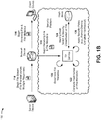
- Fig. 1B is a diagram of the security platform determining a security classification of a file, during receipt of the file (e.g., before completing receipt of the file), based on the hash store.
- the server device may begin providing a file, to be received by the client device, via a file stream.
- the network device may begin sending the file stream (e.g., may send a first HTTP response in the file stream), provided by the server device, to the client device such that the client device begins to receive the complete file (including metadata associated with the file).
- the network device may begin mirroring the file stream to the security platform (e.g., such that the security platform receives the first HTTP response and the associated metadata).
- the security platform may determine, based on the beginning of the file stream (e.g., based on the first HTTP response) the metadata associated with the file (e.g., information included in one or more header fields, a processed URL associated with the file, address information associated with the file, and/or the like).
- the security platform may compute a hash, associated with the file, based on the metadata, during receipt of the file.
- the security platform may compute the hash based on metadata associated with multiple responses (e.g., a first two responses in the file stream).
- the security platform may determine, during receipt of the file, whether the hash associated with the file matches a stored hash included in the hash store. For example, as shown by reference number 124, the security platform may determine, using the hash store, that the hash associated with the file matches (e.g., is identical to) a stored hash associated with a previously received file. Here, the security platform may identify a security classification corresponding to the stored hash, and may determine the security classification of the file (i.e., the file being received) based on the identified security classification. In this way, the security platform may determine the security classification of the file before completing receipt of the file.
- the security platform may complete receipt of the file and proceed as described above with regard to Fig. 1A .
- the security platform may apply a security policy by, for example, by selectively permitting the client device to complete receipt of the file (i.e., may perform in-line blocking, if needed). For example, if the security platform classifies the file as a malicious file or a suspicious file (e.g., based on information included in the hash store), then the security platform may not permit (i.e., may prevent) the client device to complete receipt of the file (e.g., by sending an instruction to the network device to block the file stream from being provided to the client device). Conversely, if the security platform classifies the file as a clean file, then the security platform may permit the client device to complete receipt of the file.
- a security policy by, for example, by selectively permitting the client device to complete receipt of the file (i.e., may perform in-line blocking, if needed). For example, if the security platform classifies the file as a malicious file or a suspicious file (e.g., based on information included in the hash store), then the security platform may
- the security platform may apply a security policy that causes the security platform to perform another type of action, such as providing a warning to the client device, causing another (i.e., alternate) file to be delivered to the client device, causing the client device to be directed to another device and/or site in order to obtain the file, and/or the like.
- a security policy that causes the security platform to perform another type of action, such as providing a warning to the client device, causing another (i.e., alternate) file to be delivered to the client device, causing the client device to be directed to another device and/or site in order to obtain the file, and/or the like.
- the security platform may determine a security classification of a file based on a hash associated with the file, before completing receipt of the file, thereby reducing a cost (e.g., a temporal cost, a cost in processor resources, a cost in network resources, and/or the like) associated with determining the security classification of the file and/or allowing for in-line blocking associated with protecting the client device from malicious or suspicious files.
- a cost e.g., a temporal cost, a cost in processor resources, a cost in network resources, and/or the like
- FIGS. 1A and 1B are provided merely as an example. Other examples are possible and may differ from what was described with regard to Figs. 1A and 1B .
- Fig. 2 is a diagram of an example environment 200 in which systems and/or methods, described herein, may be implemented.
- environment 200 may include a client device 205, a network device 210, a security platform 215 (e.g., hosted in a cloud computing environment), one or more server devices 225-1 through 225-N (N ⁇ 1) (hereinafter referred to collectively as server devices 225, and individually as server device 225), and a network 230.
- Devices of environment 200 may interconnect via wired connections, wireless connections, or a combination of wired and wireless connections.
- Client device 205 includes a device capable of communicating with another device (e.g., server device 225, another client device 205, and/or the like) via network device 210, in order to receive a file.
- client device 205 may include a user device, such as a mobile phone (e.g., a smart phone, a radiotelephone, etc.), a laptop computer, a tablet computer, a handheld computer, a desktop computer, a gaming device, a wearable communication device (e.g., a smart wristwatch, a pair of smart eyeglasses, etc.), or a similar type of device.
- client device 205 may include a server or a group of servers.
- Network device 210 includes one or more devices (e.g., one or more traffic transfer devices) capable of processing and/or transferring traffic between client device 205 and another device (e.g., server device 225).
- network device 210 may include a firewall, a router, a gateway, a switch, a hub, a bridge, a reverse proxy, a server (e.g., a proxy server), a security device, an intrusion detection device, a load balancer, or a similar device.
- network device 210 may be a physical device implemented within a housing, such as a chassis.
- network device 210 may be a virtual device implemented by one or more computer devices of a cloud computing environment or a data center.
- Security platform 215 includes one or more devices capable of determining a security classification of a file based on a hash associated with the file, before completing receipt of the file (i.e., before the security platform completes receipt of the file), as described herein.
- security platform 215 may include a server or a group of servers.
- security platform 215 may be hosted in a cloud computing environment.
- security platform 215 may operate in conjunction with a network device 210 arranged at an edge of a private network (e.g., that includes a plurality of client devices 205).
- security platform 215 may operate in conjunction with a plurality of network devices 210, which may provide security platform 215 with information related to files transmitted via the private network.
- security platform 215 may not be cloud-based or may be partially cloud-based.
- security platform 215 may be hosted in a cloud computing environment that delivers computing as a service, whereby shared resources, services, etc. may be provided to host security platform 215.
- the cloud computing environment may provide computation, software, data access, storage, and/or other services that do not require end-user knowledge of a physical location and configuration of a system and/or a device that delivers the services.
- the cloud computing environment may include a group of computing resources 217 associated with hosting security platform 215.
- Computing resource 217 includes one or more personal computers, workstation computers, server devices, or another type of computation and/or communication device.
- computing resource 217 may host security platform 215.
- the cloud resources may include compute instances executing in computing resource 217, storage devices provided in computing resource 217, data transfer devices provided by computing resource 217, etc.
- computing resource 217 may communicate with other computing resources 217 via wired connections, wireless connections, or a combination of wired and wireless connections.
- computing resource 217 may include a group of cloud resources, such as one or more applications (APPs) 217-1, one or more virtual machines (VMs) 217-2, virtualized storage (VSs) 217-3, one or more hypervisors (HYPs) 217-4, or the like.
- APPs applications
- VMs virtual machines
- VSs virtualized storage
- HOPs hypervisors
- Application 217-1 includes one or more software applications that may be provided to or accessed by network device 210. Application 217-1 may eliminate a need to install and execute the software applications on network device 210. For example, application 217-1 may include software associated with security platform 215 and/or any other software capable of being provided via the cloud computing environment. In some implementations, one application 217-1 may send/receive information to/from one or more other applications 217-1, via virtual machine 217-2.
- Virtual machine 217-2 includes a software implementation of a machine (e.g., a computer) that executes programs like a physical machine.
- Virtual machine 217-2 may be either a system virtual machine or a process virtual machine, depending upon use and degree of correspondence to any real machine by virtual machine 217-2.
- a system virtual machine may provide a complete system platform that supports execution of a complete operating system (OS).
- a process virtual machine may execute a single program, and may support a single process.
- virtual machine 217-2 may execute on behalf of a user (e.g., network device 210), and may manage infrastructure of the cloud computing environment, such as data management, synchronization, or long-duration data transfers.
- Virtualized storage 217-3 includes one or more storage systems and/or one or more devices that use virtualization techniques within the storage systems or devices of computing resource 217.
- types of virtualizations may include block virtualization and file virtualization.
- Block virtualization may refer to abstraction (or separation) of logical storage from physical storage so that the storage system may be accessed without regard to physical storage or heterogeneous structure. The separation may permit administrators of the storage system flexibility in how the administrators manage storage for end users.
- File virtualization may eliminate dependencies between data accessed at a file level and a location where files are physically stored. This may enable optimization of storage use, server consolidation, and/or performance of non-disruptive file migrations.
- Hypervisor 217-4 provides hardware virtualization techniques that allow multiple operating systems (e.g., guest operating systems) to execute concurrently on a host computer, such as computing resource 217.
- Hypervisor 217-4 may present a virtual operating platform to the guest operating systems, and may manage the execution of the guest operating systems. Multiple instances of a variety of operating systems may share virtualized hardware resources.
- Server device 225 includes one or more devices capable of providing a file to client device 205 (e.g., via network device 210) via a file stream (e.g., in response to an HTTP request).
- server device 225 may include a server, a group of servers, and/or the like.
- Network 230 includes one or more wired and/or wireless networks.
- network 230 may include a cellular network (e.g., a long-term evolution (LTE) network, a 3G network, a code division multiple access (CDMA) network, etc.), a public land mobile network (PLMN), a local area network (LAN), a wide area network (WAN), a metropolitan area network (MAN), a telephone network (e.g., the Public Switched Telephone Network (PSTN)), a private network, an ad hoc network, an intranet, the Internet, a fiber optic-based network, or the like, and/or a combination of these or other types of networks.
- LTE long-term evolution
- CDMA code division multiple access
- PLMN public land mobile network
- LAN local area network
- WAN wide area network
- MAN metropolitan area network
- PSTN Public Switched Telephone Network
- the number and arrangement of devices and networks shown in Fig. 2 are provided as an example. In practice, there may be additional devices and/or networks, fewer devices and/or networks, different devices and/or networks, or differently arranged devices and/or networks than those shown in Fig. 2 . Furthermore, two or more devices shown in Fig. 2 may be implemented within a single device, or a single device shown in Fig. 2 may be implemented as multiple, distributed devices. Additionally, or alternatively, a set of devices (e.g., one or more devices) of environment 200 may perform one or more functions described as being performed by another set of devices of environment 200.
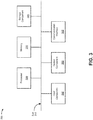
- Fig. 3 is a diagram of example components of a device 300.
- Device 300 may correspond to client device 205, network device 210, security platform 215, computing resource 217, and/or server device 225.
- client device 205, network device 210, security platform 215, computing resource 217, and/or server device 225 may include one or more devices 300 and/or one or more components of device 300.
- device 300 may include a bus 310, a processor 320, a memory 330, a storage component 340, an input component 350, an output component 360, and a communication interface 370.
- Bus 310 includes a component that permits communication among the components of device 300.
- Processor 320 is implemented in hardware, firmware, or a combination of hardware and software.
- Processor 320 takes the form of a central processing unit (CPU), a graphics processing unit (GPU), an accelerated processing unit (APU), a microprocessor, a microcontroller, a digital signal processor (DSP), a field-programmable gate array (FPGA), an application-specific integrated circuit (ASIC), or another type of processing component.
- processor 320 includes one or more processors capable of being programmed to perform a function.
- Memory 330 includes a random access memory (RAM), a read only memory (ROM), and/or another type of dynamic or static storage device (e.g., a flash memory, a magnetic memory, and/or an optical memory) that stores information and/or instructions for use by processor 320.
- RAM random access memory
- ROM read only memory
- static storage device e.g., a flash memory, a magnetic memory, and/or an optical memory
- Storage component 340 stores information and/or software related to the operation and use of device 300.
- storage component 340 may include a hard disk (e.g., a magnetic disk, an optical disk, a magneto-optic disk, and/or a solid state disk), a compact disc (CD), a digital versatile disc (DVD), a floppy disk, a cartridge, a magnetic tape, and/or another type of non-transitory computer-readable medium, along with a corresponding drive.
- Input component 350 includes a component that permits device 300 to receive information, such as via user input (e.g., a touch screen display, a keyboard, a keypad, a mouse, a button, a switch, and/or a microphone). Additionally, or alternatively, input component 350 may include a sensor for sensing information (e.g., a global positioning system (GPS) component, an accelerometer, a gyroscope, and/or an actuator).
- Output component 360 includes a component that provides output information from device 300 (e.g., a display, a speaker, and/or one or more light-emitting diodes (LEDs)).
- LEDs light-emitting diodes
- Communication interface 370 includes a transceiver-like component (e.g., a transceiver and/or a separate receiver and transmitter) that enables device 300 to communicate with other devices, such as via a wired connection, a wireless connection, or a combination of wired and wireless connections.
- Communication interface 370 may permit device 300 to receive information from another device and/or provide information to another device.
- communication interface 370 may include an Ethernet interface, an optical interface, a coaxial interface, an infrared interface, a radio frequency (RF) interface, a universal serial bus (USB) interface, a Wi-Fi interface, a cellular network interface, or the like.
- RF radio frequency
- USB universal serial bus
- Device 300 may perform one or more processes described herein. Device 300 may perform these processes in response to processor 320 executing software instructions stored by a computer-readable medium, such as memory 330 and/or storage component 340.
- a computer readable medium may include non-transitory type media such as physical storage media including storage discs and solid state devices.
- a computer readable medium may also or alternatively include transient media such as carrier signals and transmission media.
- a computer-readable storage medium is defined herein as a non-transitory memory device.
- a memory device includes memory space within a single physical storage device or memory space spread across multiple physical storage devices.
- Software instructions may be read into memory 330 and/or storage component 340 from another computer-readable medium or from another device via communication interface 370. When executed, software instructions stored in memory 330 and/or storage component 340 may cause processor 320 to perform one or more processes described herein. Additionally, or alternatively, hardwired circuitry may be used in place of or in combination with software instructions to perform one or more processes described herein. Thus, implementations described herein are not limited to any specific combination of hardware circuitry and software.
- device 300 may include additional components, fewer components, different components, or differently arranged components than those shown in Fig. 3 . Additionally, or alternatively, a set of components (e.g., one or more components) of device 300 may perform one or more functions described as being performed by another set of components of device 300.
- a set of components e.g., one or more components
- Fig. 4 is a flow chart of an example process 400 for determining a security classification of a file, computing a hash based on metadata associated with the file, and storing the hash and information associated with the security classification.
- one or more process blocks of Fig. 4 may be performed by security platform 215.
- one or more process blocks of Fig. 4 may be performed by another device or a group of devices separate from or including security platform 215, such as network device 210 and/or client device 205.
- process 400 may include determining a security classification of a file (block 410).
- security platform 215 may determine a security classification of a file.
- the file may include, for example, an executable file, a document file, an image file, a web page file, a text file, a page layout file, a compressed file, and/or another type of file.
- security platform 215 may receive the file from server device 225 via network device 210.
- client device 205 may send (e.g., based on user input), to server device 225 and via network device 210, a request (e.g., an HTTP request) for the file.
- server device 225 may receive the request, and provide the file in a file stream (e.g., a series of HTTP responses, each including a portion of the file).
- network device 210 may be configured to mirror the file stream to security platform 215 (e.g., such that both client device 205 and security platform 215 receive the file stream) in order to allow security platform 215 to provide one or more threat protection services to client device 205 (e.g., one or more services associated with protecting client device 205 from malicious and/or suspicious files), and security platform 215 may receive the file via the mirrored file stream.
- security platform 215 e.g., such that both client device 205 and security platform 215 receive the file stream
- security platform 215 may receive the file via the mirrored file stream.
- the security classification of the file may include information that classifies the file as a malicious file (e.g., a file that includes content that would be harmful to client device 205 if accessed by client device 205), a suspicious file (e.g., a file that includes content that may be harmful to client device 205 if accessed by client device 205), a clean file (e.g., a file that does not pose a risk to client device 205), and/or the like.
- a malicious file e.g., a file that includes content that would be harmful to client device 205 if accessed by client device 205
- a suspicious file e.g., a file that includes content that may be harmful to client device 205 if accessed by client device 205
- a clean file e.g., a file that does not pose a risk to client device 205
- security platform 215 may be configured to classify a file as being acceptable or unacceptable based on, for example, whether a type of the file is permitted for use by client device 205 (e.g., when an entity wishes to prevent download of particular types of software that are not malicious).
- security platform 215 may apply a security policy, associated with such a classification, in a manner similar to that described herein when based on a security classification of the file.
- security platform 215 may determine the security classification of the file based on information associated with the file. For example, security platform 215 may complete receipt of the file via the file stream, may analyze the file (e.g., using anti-virus software, using anti-malware software, using sandboxing, etc.), and may determine the security classification of the file based on a result of the analysis. As a particular example, security platform 215 may determine, based on information associated with the file and using anti-malware software configured on security platform 215, a malware score associated with the file (e.g., a value from 0 to 100, a letter grade, and/or the like).
- a malware score associated with the file e.g., a value from 0 to 100, a letter grade, and/or the like.
- security platform 215 may determine the security classification of the file based on whether the malware score satisfies a threshold. Here, if the malware score satisfies the threshold (e.g., is greater than or equal to the threshold), then security platform 215 may classify the file as a malicious or suspicious file. Conversely, if the malware score does not satisfy the threshold, then security platform 215 may classify the file as a clean file.
- security platform 215 may determine the security classification in another manner, such as based on information that identifies known malicious and/or suspicious files (e.g., a list, accessible by security platform 215, that identifies known malicious and/or suspicious files), based on information provided by another device (e.g., when the other device determines the security classification of the file), and/or the like.
- information that identifies known malicious and/or suspicious files e.g., a list, accessible by security platform 215, that identifies known malicious and/or suspicious files
- information provided by another device e.g., when the other device determines the security classification of the file
- security platform 215 may selectively permit client device 205 to access the file based on the security classification. For example, if security platform 215 classifies the file as a malicious file or a suspicious file, then security platform 215 may not permit (i.e., prevent) client device 205 from accessing the file. In other words, although receipt of the file is completed by security platform 215 and client device 205, security platform 215 may prevent client device 205 from opening the file, executing file, manipulating the file, and/or the like. As another example, if security platform 215 classifies the file as a clean file, then security platform 215 may permit client device 205 to access the file.
- process 400 may include computing a hash, associated with the file, based on metadata associated with the file (block 420).
- security platform 215 may compute a hash, associated with the file, based on metadata associated with the file.
- the metadata, associated with the file may include information that describes one or more characteristics, attributes, parameters, and/or the like, associated with the file.
- the metadata may be received in a response included in the file stream associated with receiving the file.
- the file stream may include a series of responses (e.g., HTTP responses) provided by server device 225, where each response includes a portion of the file.
- the metadata may be received in one or more of the responses, such as information included in one or more header fields of the one or more responses (e.g., an ETag field, a Last-Modified field, a Content-Length field, and/or the like).
- security platform 215 may determine the metadata based on inspecting one or more responses included in the file stream (e.g., a first response in the file stream, a tenth response in the file stream, a first four responses in the file stream, every third response in the file stream, and/or the like).
- responses included in the file stream e.g., a first response in the file stream, a tenth response in the file stream, a first four responses in the file stream, every third response in the file stream, and/or the like.
- the metadata may include a URL associated with the file (e.g., a URL based on which client device 205 requested the file).
- security platform 215 may process the URL in order to remove one or more query parameters that may negatively impact computation of the hash.
- security platform 215 may remove one or more query parameters that may change among URLs associated with requesting the file, such as a filename, a session ID, a language setting, a timestamp, and/or the like.
- security platform 215 may process the URL to remove query parameters that may cause different hashes to be computed for the same file at different times (e.g., such that security platform 215 may compute the hash based on query parameters that are not likely to change among URLs associated with requesting the file).
- the metadata may include address information associated with the file, such as a subnet of an IP address of server device 225 that provided the file, a range of the IP address, and/or the like.
- the metadata may include information associated with server device 225 that provided the file, such as information that identifies software running on server device 225, information that identifies a version of the server software, and/or another type of information associated with server device 225.
- the hash (sometimes referred to as a hash value, a hash code, or a digest) may include a value (e.g., a string of alphanumeric characters) computed based on applying a hash function (e.g., a function used to map information of arbitrary size to information with a fixed size) to the metadata associated with the file.
- a hash function e.g., a function used to map information of arbitrary size to information with a fixed size
- security platform 215 may compute the hash based on applying the hash function to the metadata associated with the file. For example, security platform 215 may concatenate two or more items of metadata (e.g., the ETag field information, the Last-Modified field information, the Content-Length field information, the processed URL, the subnet associated with the IP address, the range associated with the IP address, and/or the like), apply the hash function to the two or more items of concatenated metadata, and determine the hash as a result of applying the hash function. In some implementations, security platform 215 may compute the hash based on a single item of metadata.
- metadata e.g., the ETag field information, the Last-Modified field information, the Content-Length field information, the processed URL, the subnet associated with the IP address, the range associated with the IP address, and/or the like
- security platform 215 may compute the hash based on a single item of metadata.
- security platform 215 may compute the hash based on a portion of the file. For example, as described above, security platform 215 may determine the metadata, associated with the file, based on a response included in the file stream. In this example, security platform 215 may identify the portion of the file included the response (since the response carries a portion of the file).
- security platform 215 may compute the hash based on the portion of the file and the metadata by, for example, concatenating the portion of the file and one or more items of metadata, and applying the hash function to the concatenated portion of the file and the one or more items of metadata. In some implementations, computing the hash based on the portion of the file improves accuracy when determining whether another hash, computed during another receipt of the file at a later time, matches the hash, as described below.
- security platform 215 may compute the hash based on a single response (e.g., based on metadata from a first response in the file stream, based on metadata and a portion of the file from a third response in the file stream, and/or the like). In some implementations, security platform 215 may compute the hash based on multiple responses (e.g., based on metadata from a first response and metadata from a second response in the file stream, based on metadata from a first response and a portion of the file from a second response, and/or the like).
- security platform 215 may compute multiple hashes, associated with the file, based on different combinations of metadata and/or portions of the file. For example, security platform 215 may compute a first hash based on one or more first items of metadata (e.g., the ETag field information, the Last-Modified field information, and the URL), may compute a second hash based on one or more second items of metadata (e.g., the Content-length field and the subnet of the IP address), may compute a third hash based on one or more third items of metadata (e.g., the ETag field information) and a portion of the file included in the response, and/or the like. In some implementations, computing multiple hashes reduces a likelihood that another receipt of the file at a later time is missed or inaccurately identified by security platform 215, as described below.
- first items of metadata e.g., the ETag field information, the Last-Modified field information, and the URL
- second items of metadata e.g., the Content-length field and the subnet
- security platform 215 may use one or more hashes to determine a security classification of the file at a later time, before another receipt of the file is complete, as described below.
- process 400 may include storing the hash and information associated with the security classification (block 430).
- security platform 215 may store the hash and information associated with the security classification.
- security platform 215 may store the hash and the information associated with the security classification in a hash store managed, maintained, and/or accessible by security platform 215. In some implementations, security platform 215 may store information associating the hash with the security classification (e.g., such that the security classification of the file may be identified based on the hash).
- security platform 215 may store another type of information associated with the hash, such as information that identifies the type of metadata based on which the hash was computed, information that identifies a response from which a portion of the file, based on which the hash was computed, was obtained (e.g., the first response in the file stream, the third response in the file stream), and/or the like.
- security platform 215 may selectively store the hash and the information associated with the security classification based on reputation information associated with server device 225 that provides the file. For example, security platform 215 may store or have access to information that identifies (e.g., a site address or name, an IP address, and/or the like) trusted devices (i.e., a "white list" of server devices 225). In this example, if security platform 215 classifies the file as a clean file and server device 225 is a trusted device, then security platform 215 may store the hash and the information associated with the security classification.
- identifies e.g., a site address or name, an IP address, and/or the like
- trusted devices i.e., a "white list" of server devices 225.
- security platform 215 classifies the file as a suspicious file or a malicious file and server device 225 is a trusted device, then security platform 215 may not store the hash and the information associated with the security classification. In other words, when server device 225 that provided the file is a trusted device, then security platform 215 may be configured to store the hash only when the file is classified as a clean file.
- security platform 215 may store or have access to information that identifies (e.g., a site name, an IP address, and/or the like) untrusted devices and/or websites (i.e., a "black list" of server devices 225 and/or websites).
- security platform 215 may not store the hash and the information associated with the security classification.
- security platform 215 may store the hash and the information associated with the security classification.
- security platform 215 may be configured to store the hash only when the file is classified as a malicious or suspicious file.
- selectively storing the hash based on the information associated with server device 225 may increase accuracy when determining whether another hash (e.g., computed during receipt of a file at a later time) matches the hash and/or may serve to ensure that the hash store includes accurate security classifications.
- security platform 215 may store the hash and information associated with the security classification in order to allow security platform 215 to determine the security classification of the file during another receipt of the file (i.e., before completing the other receipt of the file), as described below.
- process 400 may include additional blocks, fewer blocks, different blocks, or differently arranged blocks than those depicted in Fig. 4 . Additionally, or alternatively, two or more of the blocks of process 400 may be performed in parallel.
- Fig. 5 is a flow chart of an example process 500 for determining a security classification of a file, based on a hash associated with the file, before completing receipt of the file.
- one or more process blocks of Fig. 5 may be performed by security platform 215.
- one or more process blocks of Fig. 5 may be performed by another device or a group of devices separate from or including security platform 215, such as network device 210 and/or client device 205.
- process 500 may include beginning receiving a file (block 510).
- security platform 215 may begin receiving a file.
- security platform 215 may begin receiving the file in a file stream mirrored by network device 210.
- client device 205 may send (e.g., based on user input), to server device 225 and via network device 210, a request (e.g., an HTTP request) for the file.
- server device 225 may receive the request, and provide the file in a file stream (e.g., a series of HTTP responses, each including a portion of the file).
- network device 210 may be configured to mirror the file stream to security platform 215 in order to allow security platform 215 to provide one or more threat protection services to client device 205, and security platform 215 may begin receiving the file via the mirrored file stream.
- process 500 may include determining, during receipt of the file, metadata associated with the file (block 520).
- security platform 215 may determine, during receipt of the file, metadata associated with the file.
- security platform 215 may determine the metadata, associated with the file, based on one or more responses in the file stream. For example, security platform 215 may receive a response (e.g., a first response) in the file stream, and may determine, based on the response, information included in one or more header fields (e.g., an ETag field, a Last-Modified field, a Content-Length field, and/or the like), a processed URL, address information (e.g., a subnet or a range of an IP address of server device 225), and/or the like, as described above. In some implementations, security platform 215 may also identify the portion of the file included in the response (e.g., when security platform 215 is configured to compute hashes based in part on the portion of the file in the first response), as described above.
- a response e.g., a first response
- security platform 215 may also identify the portion of the file included in the response (e.g., when security platform 215 is configured to compute has
- security platform 215 determines the metadata, associated with the file, during receipt of the file (i.e., before receipt of the file is complete). As described below, this may allow security platform 215 to determine the security classification of the file before receipt of the file is complete.
- process 500 may include computing, based on the metadata and during receipt of the file, a hash associated with the file (block 530).
- security platform 215 may compute, based on the metadata and during receipt of the file, a hash associated with the file.
- security platform 215 may compute the hash in the manner described above with regard to process 400.
- security platform 215 computes the hash, associated with the file, during receipt of the file (i.e., before receipt of the file is complete). As described below, this may allow security platform 215 to determine the security classification of the file before receipt of the file is complete.
- process 500 may include determining whether the hash, associated with the file, matches a stored hash (block 540).
- security platform 215 may determine whether the hash, associated with the file, matches a stored hash.
- security platform 215 may determine whether the hash, associated with the file, matches a stored hash (e.g., a hash stored in the hash store) based on searching the hash store. For example, security platform 215 may search the hash store using the hash. Here, if the hash store includes an entry with an identical hash, then security platform 215 may determine that the hash matches a stored hash. Alternatively, if the hash store does not include an entry with an identical hash, then security platform 215 may determine that the hash does not match a stored hash. In some implementations, security platform 215 may determine that the hash is a fuzzy match with a stored hash (e.g., not identical, but matching within a threshold). In other words, in some implementations, security platform 215 may determine that the hash matches a stored hash even when there is only a partial match between the hash and the stored hash.
- a stored hash e.g., a hash stored in the hash store
- security platform 215 may determine whether each of the multiple hashes matches a stored hash. In some implementations, security platform 215 may be configured to identify a hash match when security platform 215 determines that any one of the multiple hashes matches a stored hash. Additionally, or alternatively, security platform 215 may be configured to identify a hash match when security platform 215 determines that a threshold number of the multiple hashes are matched in the hash store (e.g., when a majority of the multiple hashes are matched in the hash store). Additionally, or alternatively, security platform 215 may be configured to identify a hash match when each of the multiple hashes are matched in the hash store.
- security platform 215 determines whether there exists a hash match during receipt of the file (i.e., before receipt of the file is complete). As described below, this may allow security platform 215 to determine the security classification of the file before receipt of the file is complete.
- process 500 may include determining, based on the stored hash and before completing receipt of the file, a security classification of the file (block 550).
- security platform 215 may determine that the hash, associated with the file, matches a stored hash, and may determine, based on the stored hash and before completing receipt of the file, a security classification of the file.
- security platform 215 may determine the security classification of the file based on information associated with the stored hash that matches the hash associated with the file.
- the hash store may include hashes, associated with received files, and corresponding security classifications associated with the received files.
- security platform 215 may determine the security classification of the file as a security classification associated with the stored hash.
- the security classification of the file may indicate that the file is a malicious file, a suspicious file, a clean file, and/or the like.
- security platform 215 determines the security classification of the file during receipt of the file (i.e., before receipt of the file is complete).
- security platform 215 determines the security classification of the file without completing receipt of the file, thereby decreasing an amount of time associated with classifying the file (e.g., as compared to waiting to complete receipt of the file).
- security platform 215 may prevent client device 205 from completing receipt of the file, thereby conserving network resources and/or client device 205 resources (e.g., processor resources, memory, and/or the like), while improving a threat protection service provided to client device 205 (e.g., since client device 205 does not receive the complete file, there is no risk of client device 205 opening, executing, or otherwise manipulating the file before security platform 215 prevents client device 205 from accessing the file).
- network resources e.g., processor resources, memory, and/or the like
- process 500 may include selectively permitting, based on the security classification, a client device to complete receipt of the file (block 560).
- security platform 215 may selectively permit, based on the security classification, client device 205 to complete receipt of the file.
- security platform 215 may selectively permit client device 205 to complete receipt of the file based on the security classification. For example, if security platform 215 determines, based on the stored hash, that the file is a malicious file or a suspicious file, then security platform 215 may not permit (i.e., prevent) client device 205 to complete receipt of the file. As a particular example, security platform 215 may stop, close, interrupt, and/or the like, the file stream via which client device 205 is receiving the file by client device 205 by, for example, sending an instruction to network device 210 to stop, close, interrupt, and/or the like, the file stream.
- preventing client device 205 from completing receipt of the file may conserve network resources and/or client device 205 resources, while improving the threat protection service provided to client device 205.
- security platform 215 may permit client device 205 to complete receipt of the file.
- process 500 may include completing receipt of the file (block 570).
- security platform 215 may determine that the hash, associated with the file, does not match a stored hash, and may complete receipt of the file via the file stream.
- process 500 may include determining the security classification of the file and storing the hash and information associated with the security classification (block 580).
- security platform 215 may determine the security classification of the file and store the hash and information associated with the security classification, in a manner similar to that described above with regard to Fig. 4 .
- process 500 may include additional blocks, fewer blocks, different blocks, or differently arranged blocks than those depicted in Fig. 5 . Additionally, or alternatively, two or more of the blocks of process 500 may be performed in parallel.
- Some implementations described herein provide a security platform capable of determining a security classification of a file based on a hash associated with the file, before completing receipt of the file (i.e., before the security platform completes receipt of the file).
- the hash-based determination of the security classification reduces a cost (e.g., a temporal cost, a cost in processor resources, a cost in network resources, and/or the like) associated with determining the security classification of the file and/or allows for in-line blocking associated with protecting the client device from malicious or suspicious files.
- a security platform may determine, during receipt of a file, metadata associated with the file.
- the file may be intended for a client device.
- the security platform may compute, based on the metadata and during the receipt of the file, a hash associated with the file.
- the security platform may identify, during the receipt of the file, a stored hash that matches the hash associated with the file.
- the security platform may determine a security classification of the file based on information associated with a security classification corresponding to the stored hash.
- the security classification of the file may be determined before the receipt of the file is complete.
- the security platform may selectively permit, based on the security classification of the file, the client device to complete a receipt of the file.
- the term component is intended to be broadly construed as hardware, firmware, and/or a combination of hardware and software.
- satisfying a threshold may refer to a value being greater than the threshold, more than the threshold, higher than the threshold, greater than or equal to the threshold, less than the threshold, fewer than the threshold, lower than the threshold, less than or equal to the threshold, equal to the threshold, etc.
Landscapes
- Engineering & Computer Science (AREA)
- Computer Security & Cryptography (AREA)
- General Engineering & Computer Science (AREA)
- Theoretical Computer Science (AREA)
- Computer Hardware Design (AREA)
- Databases & Information Systems (AREA)
- General Physics & Mathematics (AREA)
- Software Systems (AREA)
- Physics & Mathematics (AREA)
- Signal Processing (AREA)
- Computer Networks & Wireless Communication (AREA)
- Computing Systems (AREA)
- Health & Medical Sciences (AREA)
- Virology (AREA)
- Data Mining & Analysis (AREA)
- General Health & Medical Sciences (AREA)
- Bioethics (AREA)
- Information Transfer Between Computers (AREA)
Abstract
Description
- A security platform may provide one or more threat protection services to a client device. For example, the security platform may be configured to determine a security classification of a file, received from a server (e.g., a server associated with a website), before allowing a client device to access the file. The security platform may determine the security classification of the file using, for example, uniform resource locator (URL) reputations, blacklists, whitelists, anti-virus scanning, anti-malware techniques, and/or the like.
- According to some possible implementations, a security platform may include one or more processors to: determine, during receipt of a file, metadata associated with the file, where the file is intended for a client device; compute, based on the metadata and during the receipt of the file, a hash associated with the file; identify, during the receipt of the file, a stored hash that matches the hash associated with the file; determine a security classification of the file based on information associated with a security classification corresponding to the stored hash, where the security classification of the file is determined before the receipt of the file is complete; and selectively permit, based on the security classification of the file, the client device to complete a receipt of the file.
- According to some possible implementations, a computer-readable medium may store one or more instructions that, when executed by one or more processors, cause the one or more processors to: compute, during a receipt of a file and based on metadata associated with the file, a hash associated with the file, where the file is intended for a client device; identify, during the receipt of the file, a stored hash that matches the hash associated with the file; determine, before the receipt of the file is complete, a security classification of the file based on information associated with a security classification corresponding to the stored hash; and selectively permit, based on the security classification of the file, the client device to complete a receipt of the file.
- According to some possible implementations, a method may include: determining, by a device and during receipt of a file, metadata associated with the file, where the file is intended for a client device; computing, by the device and during the receipt of the file, at least one hash associated with the file, where the at least one hash is computed based on the metadata; identifying, by the device and during the receipt of the file, a stored hash that matches one of the at least one hash associated with the file; determining, by the device, a security classification of the file based on information associated with a security classification corresponding to the stored hash, where the security classification of the file is determined before the receipt of the file is complete; and selectively causing, by the device and based on the security classification of the file, an entirety of the file to be provided to the client device.
-
-
Figs. 1A and1B are diagrams of an overview of an example implementation described herein; -
Fig. 2 is a diagram of an example environment in which systems and/or methods, described herein, may be implemented; -
Fig. 3 is a diagram of example components of one or more devices ofFig. 2 ; -
Fig. 4 is a flow chart of an example process for determining a security classification of a file, computing a hash based on metadata associated with the file, and storing the hash and information associated with the security classification; and -
Fig. 5 is a flow chart of an example process for determining a security classification of a file, based on a hash associated with the file, before completing receipt of the file. - The following detailed description of example implementations refers to the accompanying drawings. The same reference numbers in different drawings may identify the same or similar elements.
- A security platform, configured to provide a threat protection service to a client device, may receive (e.g., from a server device and via a network device) a file that is also received by the client device. In order to provide the threat protection service to the client device, the security platform may analyze the file (e.g., using anti-virus software, using anti-malware software, etc.) and determine a security classification of the file based on a result of the analysis (e.g., indicating whether the file is a malicious file, a suspicious file, a clean file, and/or the like).
- However, in order to ensure accurate determination of the security classification, the security platform may need to wait until receipt of the file is complete before determining the security classification. Thus, a cost (e.g., a temporal cost, a cost in network resources, a cost in processor resources, and/or the like) associated with determining security classifications of files may be undesirably high since the entirety of every file needs to be received before determining the security classification. Such costs may remain undesirably high even when security classifications, associated with received files, are stored for use at a later time since a later receipt of the file still must be complete before the security platform is able to determine whether the file has been previously classified. Moreover, in order to achieve in-line blocking that prevents an attack at the client device, the security classification of the file should be determined before receipt of the file is completed by the client device.
- A uniform resource locator (URL), via which the file is requested by the client device, may not be relied upon for determination of the security classification, or even to identify the file. For example, since a single URL can serve multiple versions of the file (e.g., depending on the time of download), and/or can serve binaries targeted to different operating systems (e.g., based on request headers), the file received by the client device in association with the URL, may not be the same as a previously received file associated with the URL. Similarly, a portion of the file alone may not be used to reliably identify the file and/or determine the security classification since, for example, an attacker could inject malicious code in another portion of the file that is not analyzed by the security platform.
- Some implementations described herein provide a security platform capable of determining a security classification of a file based on a hash associated with the file, before completing receipt of the file (i.e., before the security platform completes receipt of the file). In some implementations, the security platform may determine the security classification based on a hash store created, managed, maintained, or accessible by the security platform. Here, the security platform may compare the hash to stored hashes, included in the hash store and associated with previously received files, in order to determine the security classification of the file before completing receipt of the file. In some implementations, the hash-based determination of the security classification reduces a cost (e.g., a temporal cost, a cost in processor resources, a cost in network resources, and/or the like) associated with determining the security classification of the file and/or allows for in-line blocking associated with protecting the client device from malicious or suspicious files.
-
Figs. 1A and1B are diagrams of an overview of anexample implementation 100 described herein. For the purposes ofexample implementation 100, a security platform is configured to provide a threat protection to a client device that is capable of communicating, via a network device, with a server device (e.g., a website server). -
Fig. 1A is a diagram of the security platform creating a hash store to be used for determining security classifications of files, before completing receipt of the files. As shown inFig. 1A , and byreference number 102, the server device may provide (e.g., based on a hypertext transfer protocol (HTTP) request provided by the client device via the network device) a file stream associated with a file to be received by the client device (e.g., a series of HTTP responses, each including a portion of the file). As shown byreference number 104, the network device may send the file stream, provided by the server device, to the client device such that the client device receives the complete file (including metadata associated with the file). As shown byreference number 106, the network device may mirror the file stream to the security platform (e.g., such that the security platform receives the complete file and the metadata associated with the file) in order to allow the security platform to provide the protection service. - As shown by
reference number 108, the security platform may determine (e.g., based on analyzing the complete file) a security classification of the file. The security classification may include an indication of whether the file is a malicious file, a suspicious file, a clean file, and/or the like. As further shown, based on the security classification of the file the security platform may selectively permit the client device to access the file. For example, if the security platform classifies the file as a malicious file or a suspicious file, then the security platform may not permit (i.e., may prevent) the client device from opening the file, executing the file, manipulating the file, or the like. Conversely, if the security platform classifies the file as a clean file, then the security platform may permit the client device to open the file, execute the file, manipulate the file, or the like. - As shown by
reference number 110, the security platform may also compute a hash, associated with the file, based on the metadata associated with the file. The metadata may include, for example, information included in one or more header fields of a response associated with the file (e.g., an entity tag (ETag) field, a Last-Modified field, a Content-Length field, and/or the like), a processed URL associated with the file (e.g., a URL from which one or more query parameters have been removed), address information associated with the file (e.g., a subnet or a range of an Internet protocol (IP) address associated with the file), and/or the like. - The hash may include a value (e.g., a string of alphanumeric characters) computed based on applying a hash function to the metadata associated with the file. In some implementations, the security platform may compute the hash based on concatenating one or more items of metadata associated with the file, as described below. Additionally, or alternatively, the security platform may compute the hash based on concatenating one or more items of metadata with a portion of the file included in the response, as described below.
- As shown by
reference number 112, the security platform may store the hash and information associated with security classification in a hash store created, managed, maintained, and/or accessible by the security platform. This process may be performed for other files, received by the security platform, in order to create the hash store. In some implementations, the security platform may use the hash store to determine a security classification of a file, during receipt of the file, at a later time, as described with regard toFig. 1B . -
Fig. 1B is a diagram of the security platform determining a security classification of a file, during receipt of the file (e.g., before completing receipt of the file), based on the hash store. As shown inFig. 1B , and byreference number 114, the server device may begin providing a file, to be received by the client device, via a file stream. As shown byreference number 116, the network device may begin sending the file stream (e.g., may send a first HTTP response in the file stream), provided by the server device, to the client device such that the client device begins to receive the complete file (including metadata associated with the file). As shown byreference number 118, the network device may begin mirroring the file stream to the security platform (e.g., such that the security platform receives the first HTTP response and the associated metadata). - As shown by
reference number 120, the security platform may determine, based on the beginning of the file stream (e.g., based on the first HTTP response) the metadata associated with the file (e.g., information included in one or more header fields, a processed URL associated with the file, address information associated with the file, and/or the like). As shown byreference number 122, the security platform may compute a hash, associated with the file, based on the metadata, during receipt of the file. Notably, whileexample implementation 100 is described in the context of computing the hash based on metadata associated with a single response, in some implementations, the security platform may compute the hash based on metadata associated with multiple responses (e.g., a first two responses in the file stream). - In some implementations, the security platform may determine, during receipt of the file, whether the hash associated with the file matches a stored hash included in the hash store. For example, as shown by
reference number 124, the security platform may determine, using the hash store, that the hash associated with the file matches (e.g., is identical to) a stored hash associated with a previously received file. Here, the security platform may identify a security classification corresponding to the stored hash, and may determine the security classification of the file (i.e., the file being received) based on the identified security classification. In this way, the security platform may determine the security classification of the file before completing receipt of the file. In a case where the security platform determines, during receipt of the file, that the hash associated with the file does not match a stored hash included in the hash store, then the security platform may complete receipt of the file and proceed as described above with regard toFig. 1A . - As shown by
reference number 126, based on the security classification of the file, the security platform may apply a security policy by, for example, by selectively permitting the client device to complete receipt of the file (i.e., may perform in-line blocking, if needed). For example, if the security platform classifies the file as a malicious file or a suspicious file (e.g., based on information included in the hash store), then the security platform may not permit (i.e., may prevent) the client device to complete receipt of the file (e.g., by sending an instruction to the network device to block the file stream from being provided to the client device). Conversely, if the security platform classifies the file as a clean file, then the security platform may permit the client device to complete receipt of the file. In some implementations, the security platform may apply a security policy that causes the security platform to perform another type of action, such as providing a warning to the client device, causing another (i.e., alternate) file to be delivered to the client device, causing the client device to be directed to another device and/or site in order to obtain the file, and/or the like. - In this way, the security platform may determine a security classification of a file based on a hash associated with the file, before completing receipt of the file, thereby reducing a cost (e.g., a temporal cost, a cost in processor resources, a cost in network resources, and/or the like) associated with determining the security classification of the file and/or allowing for in-line blocking associated with protecting the client device from malicious or suspicious files.
- As indicated above,
Figs. 1A and1B are provided merely as an example. Other examples are possible and may differ from what was described with regard toFigs. 1A and1B . -
Fig. 2 is a diagram of anexample environment 200 in which systems and/or methods, described herein, may be implemented. As shown inFig. 2 ,environment 200 may include aclient device 205, a network device 210, a security platform 215 (e.g., hosted in a cloud computing environment), one or more server devices 225-1 through 225-N (N ≥ 1) (hereinafter referred to collectively asserver devices 225, and individually as server device 225), and anetwork 230. Devices ofenvironment 200 may interconnect via wired connections, wireless connections, or a combination of wired and wireless connections. -
Client device 205 includes a device capable of communicating with another device (e.g.,server device 225, anotherclient device 205, and/or the like) via network device 210, in order to receive a file. For example,client device 205 may include a user device, such as a mobile phone (e.g., a smart phone, a radiotelephone, etc.), a laptop computer, a tablet computer, a handheld computer, a desktop computer, a gaming device, a wearable communication device (e.g., a smart wristwatch, a pair of smart eyeglasses, etc.), or a similar type of device. As another example,client device 205 may include a server or a group of servers. - Network device 210 includes one or more devices (e.g., one or more traffic transfer devices) capable of processing and/or transferring traffic between
client device 205 and another device (e.g., server device 225). For example, network device 210 may include a firewall, a router, a gateway, a switch, a hub, a bridge, a reverse proxy, a server (e.g., a proxy server), a security device, an intrusion detection device, a load balancer, or a similar device. In some implementations, network device 210 may be a physical device implemented within a housing, such as a chassis. In some implementations, network device 210 may be a virtual device implemented by one or more computer devices of a cloud computing environment or a data center. -
Security platform 215 includes one or more devices capable of determining a security classification of a file based on a hash associated with the file, before completing receipt of the file (i.e., before the security platform completes receipt of the file), as described herein. For example,security platform 215 may include a server or a group of servers. In some implementations,security platform 215 may be hosted in a cloud computing environment. In some implementations,security platform 215 may operate in conjunction with a network device 210 arranged at an edge of a private network (e.g., that includes a plurality of client devices 205). In some implementations,security platform 215 may operate in conjunction with a plurality of network devices 210, which may providesecurity platform 215 with information related to files transmitted via the private network. Notably, while implementations described herein describesecurity platform 215 as being hosted in a cloud computing environment, in some implementations,security platform 215 may not be cloud-based or may be partially cloud-based. - In some implementations,
security platform 215 may be hosted in a cloud computing environment that delivers computing as a service, whereby shared resources, services, etc. may be provided to hostsecurity platform 215. The cloud computing environment may provide computation, software, data access, storage, and/or other services that do not require end-user knowledge of a physical location and configuration of a system and/or a device that delivers the services. As shown, the cloud computing environment may include a group of computingresources 217 associated with hostingsecurity platform 215. -
Computing resource 217 includes one or more personal computers, workstation computers, server devices, or another type of computation and/or communication device. In some implementations,computing resource 217 may hostsecurity platform 215. The cloud resources may include compute instances executing incomputing resource 217, storage devices provided incomputing resource 217, data transfer devices provided bycomputing resource 217, etc. In some implementations,computing resource 217 may communicate withother computing resources 217 via wired connections, wireless connections, or a combination of wired and wireless connections. - As further shown in
Fig. 2 ,computing resource 217 may include a group of cloud resources, such as one or more applications (APPs) 217-1, one or more virtual machines (VMs) 217-2, virtualized storage (VSs) 217-3, one or more hypervisors (HYPs) 217-4, or the like. - Application 217-1 includes one or more software applications that may be provided to or accessed by network device 210. Application 217-1 may eliminate a need to install and execute the software applications on network device 210. For example, application 217-1 may include software associated with
security platform 215 and/or any other software capable of being provided via the cloud computing environment. In some implementations, one application 217-1 may send/receive information to/from one or more other applications 217-1, via virtual machine 217-2. - Virtual machine 217-2 includes a software implementation of a machine (e.g., a computer) that executes programs like a physical machine. Virtual machine 217-2 may be either a system virtual machine or a process virtual machine, depending upon use and degree of correspondence to any real machine by virtual machine 217-2. A system virtual machine may provide a complete system platform that supports execution of a complete operating system (OS). A process virtual machine may execute a single program, and may support a single process. In some implementations, virtual machine 217-2 may execute on behalf of a user (e.g., network device 210), and may manage infrastructure of the cloud computing environment, such as data management, synchronization, or long-duration data transfers.
- Virtualized storage 217-3 includes one or more storage systems and/or one or more devices that use virtualization techniques within the storage systems or devices of
computing resource 217. In some implementations, within the context of a storage system, types of virtualizations may include block virtualization and file virtualization. Block virtualization may refer to abstraction (or separation) of logical storage from physical storage so that the storage system may be accessed without regard to physical storage or heterogeneous structure. The separation may permit administrators of the storage system flexibility in how the administrators manage storage for end users. File virtualization may eliminate dependencies between data accessed at a file level and a location where files are physically stored. This may enable optimization of storage use, server consolidation, and/or performance of non-disruptive file migrations. - Hypervisor 217-4 provides hardware virtualization techniques that allow multiple operating systems (e.g., guest operating systems) to execute concurrently on a host computer, such as
computing resource 217. Hypervisor 217-4 may present a virtual operating platform to the guest operating systems, and may manage the execution of the guest operating systems. Multiple instances of a variety of operating systems may share virtualized hardware resources. -
Server device 225 includes one or more devices capable of providing a file to client device 205 (e.g., via network device 210) via a file stream (e.g., in response to an HTTP request). For example,server device 225 may include a server, a group of servers, and/or the like. -
Network 230 includes one or more wired and/or wireless networks. For example,network 230 may include a cellular network (e.g., a long-term evolution (LTE) network, a 3G network, a code division multiple access (CDMA) network, etc.), a public land mobile network (PLMN), a local area network (LAN), a wide area network (WAN), a metropolitan area network (MAN), a telephone network (e.g., the Public Switched Telephone Network (PSTN)), a private network, an ad hoc network, an intranet, the Internet, a fiber optic-based network, or the like, and/or a combination of these or other types of networks. - The number and arrangement of devices and networks shown in
Fig. 2 are provided as an example. In practice, there may be additional devices and/or networks, fewer devices and/or networks, different devices and/or networks, or differently arranged devices and/or networks than those shown inFig. 2 . Furthermore, two or more devices shown inFig. 2 may be implemented within a single device, or a single device shown inFig. 2 may be implemented as multiple, distributed devices. Additionally, or alternatively, a set of devices (e.g., one or more devices) ofenvironment 200 may perform one or more functions described as being performed by another set of devices ofenvironment 200. -
Fig. 3 is a diagram of example components of adevice 300.Device 300 may correspond toclient device 205, network device 210,security platform 215,computing resource 217, and/orserver device 225. In some implementations,client device 205, network device 210,security platform 215,computing resource 217, and/orserver device 225 may include one ormore devices 300 and/or one or more components ofdevice 300. As shown inFig. 3 ,device 300 may include abus 310, aprocessor 320, amemory 330, astorage component 340, aninput component 350, anoutput component 360, and acommunication interface 370. -
Bus 310 includes a component that permits communication among the components ofdevice 300.Processor 320 is implemented in hardware, firmware, or a combination of hardware and software.Processor 320 takes the form of a central processing unit (CPU), a graphics processing unit (GPU), an accelerated processing unit (APU), a microprocessor, a microcontroller, a digital signal processor (DSP), a field-programmable gate array (FPGA), an application-specific integrated circuit (ASIC), or another type of processing component. In some implementations,processor 320 includes one or more processors capable of being programmed to perform a function.Memory 330 includes a random access memory (RAM), a read only memory (ROM), and/or another type of dynamic or static storage device (e.g., a flash memory, a magnetic memory, and/or an optical memory) that stores information and/or instructions for use byprocessor 320. -
Storage component 340 stores information and/or software related to the operation and use ofdevice 300. For example,storage component 340 may include a hard disk (e.g., a magnetic disk, an optical disk, a magneto-optic disk, and/or a solid state disk), a compact disc (CD), a digital versatile disc (DVD), a floppy disk, a cartridge, a magnetic tape, and/or another type of non-transitory computer-readable medium, along with a corresponding drive. -
Input component 350 includes a component that permitsdevice 300 to receive information, such as via user input (e.g., a touch screen display, a keyboard, a keypad, a mouse, a button, a switch, and/or a microphone). Additionally, or alternatively,input component 350 may include a sensor for sensing information (e.g., a global positioning system (GPS) component, an accelerometer, a gyroscope, and/or an actuator).Output component 360 includes a component that provides output information from device 300 (e.g., a display, a speaker, and/or one or more light-emitting diodes (LEDs)). -
Communication interface 370 includes a transceiver-like component (e.g., a transceiver and/or a separate receiver and transmitter) that enablesdevice 300 to communicate with other devices, such as via a wired connection, a wireless connection, or a combination of wired and wireless connections.Communication interface 370 may permitdevice 300 to receive information from another device and/or provide information to another device. For example,communication interface 370 may include an Ethernet interface, an optical interface, a coaxial interface, an infrared interface, a radio frequency (RF) interface, a universal serial bus (USB) interface, a Wi-Fi interface, a cellular network interface, or the like. -
Device 300 may perform one or more processes described herein.Device 300 may perform these processes in response toprocessor 320 executing software instructions stored by a computer-readable medium, such asmemory 330 and/orstorage component 340. A computer readable medium may include non-transitory type media such as physical storage media including storage discs and solid state devices. A computer readable medium may also or alternatively include transient media such as carrier signals and transmission media. A computer-readable storage medium is defined herein as a non-transitory memory device. A memory device includes memory space within a single physical storage device or memory space spread across multiple physical storage devices. - Software instructions may be read into
memory 330 and/orstorage component 340 from another computer-readable medium or from another device viacommunication interface 370. When executed, software instructions stored inmemory 330 and/orstorage component 340 may causeprocessor 320 to perform one or more processes described herein. Additionally, or alternatively, hardwired circuitry may be used in place of or in combination with software instructions to perform one or more processes described herein. Thus, implementations described herein are not limited to any specific combination of hardware circuitry and software. - The number and arrangement of components shown in
Fig. 3 are provided as an example. In practice,device 300 may include additional components, fewer components, different components, or differently arranged components than those shown inFig. 3 . Additionally, or alternatively, a set of components (e.g., one or more components) ofdevice 300 may perform one or more functions described as being performed by another set of components ofdevice 300. -
Fig. 4 is a flow chart of anexample process 400 for determining a security classification of a file, computing a hash based on metadata associated with the file, and storing the hash and information associated with the security classification. In some implementations, one or more process blocks ofFig. 4 may be performed bysecurity platform 215. In some implementations, one or more process blocks ofFig. 4 may be performed by another device or a group of devices separate from or includingsecurity platform 215, such as network device 210 and/orclient device 205. - As shown in
Fig. 4 ,process 400 may include determining a security classification of a file (block 410). For example,security platform 215 may determine a security classification of a file. The file may include, for example, an executable file, a document file, an image file, a web page file, a text file, a page layout file, a compressed file, and/or another type of file. - In some implementations,
security platform 215 may receive the file fromserver device 225 via network device 210. For example,client device 205 may send (e.g., based on user input), toserver device 225 and via network device 210, a request (e.g., an HTTP request) for the file. Here,server device 225 may receive the request, and provide the file in a file stream (e.g., a series of HTTP responses, each including a portion of the file). In this example, network device 210 may be configured to mirror the file stream to security platform 215 (e.g., such that bothclient device 205 andsecurity platform 215 receive the file stream) in order to allowsecurity platform 215 to provide one or more threat protection services to client device 205 (e.g., one or more services associated with protectingclient device 205 from malicious and/or suspicious files), andsecurity platform 215 may receive the file via the mirrored file stream. - The security classification of the file may include information that classifies the file as a malicious file (e.g., a file that includes content that would be harmful to
client device 205 if accessed by client device 205), a suspicious file (e.g., a file that includes content that may be harmful toclient device 205 if accessed by client device 205), a clean file (e.g., a file that does not pose a risk to client device 205), and/or the like. Notably, while implementations are described herein are described in the context of security classifications (e.g., based on classifying a file as malicious, suspicious, or clean), in some implementations, another type of classification may be implemented in a similar manner in order to causesecurity platform 215 to selectively apply a security policy to receipt of a file byclient device 205. For example,security platform 215 may be configured to classify a file as being acceptable or unacceptable based on, for example, whether a type of the file is permitted for use by client device 205 (e.g., when an entity wishes to prevent download of particular types of software that are not malicious). Here,security platform 215 may apply a security policy, associated with such a classification, in a manner similar to that described herein when based on a security classification of the file. - In some implementations,
security platform 215 may determine the security classification of the file based on information associated with the file. For example,security platform 215 may complete receipt of the file via the file stream, may analyze the file (e.g., using anti-virus software, using anti-malware software, using sandboxing, etc.), and may determine the security classification of the file based on a result of the analysis. As a particular example,security platform 215 may determine, based on information associated with the file and using anti-malware software configured onsecurity platform 215, a malware score associated with the file (e.g., a value from 0 to 100, a letter grade, and/or the like). In this example,security platform 215 may determine the security classification of the file based on whether the malware score satisfies a threshold. Here, if the malware score satisfies the threshold (e.g., is greater than or equal to the threshold), thensecurity platform 215 may classify the file as a malicious or suspicious file. Conversely, if the malware score does not satisfy the threshold, thensecurity platform 215 may classify the file as a clean file. - In some implementations,
security platform 215 may determine the security classification in another manner, such as based on information that identifies known malicious and/or suspicious files (e.g., a list, accessible bysecurity platform 215, that identifies known malicious and/or suspicious files), based on information provided by another device (e.g., when the other device determines the security classification of the file), and/or the like. - In some implementations,
security platform 215 may selectively permitclient device 205 to access the file based on the security classification. For example, ifsecurity platform 215 classifies the file as a malicious file or a suspicious file, thensecurity platform 215 may not permit (i.e., prevent)client device 205 from accessing the file. In other words, although receipt of the file is completed bysecurity platform 215 andclient device 205,security platform 215 may preventclient device 205 from opening the file, executing file, manipulating the file, and/or the like. As another example, ifsecurity platform 215 classifies the file as a clean file, thensecurity platform 215 may permitclient device 205 to access the file. - As further shown in
Fig. 4 ,process 400 may include computing a hash, associated with the file, based on metadata associated with the file (block 420). For example,security platform 215 may compute a hash, associated with the file, based on metadata associated with the file. - The metadata, associated with the file, may include information that describes one or more characteristics, attributes, parameters, and/or the like, associated with the file. In some implementations, the metadata may be received in a response included in the file stream associated with receiving the file. For example, the file stream may include a series of responses (e.g., HTTP responses) provided by
server device 225, where each response includes a portion of the file. In this example, the metadata may be received in one or more of the responses, such as information included in one or more header fields of the one or more responses (e.g., an ETag field, a Last-Modified field, a Content-Length field, and/or the like). In some implementations,security platform 215 may determine the metadata based on inspecting one or more responses included in the file stream (e.g., a first response in the file stream, a tenth response in the file stream, a first four responses in the file stream, every third response in the file stream, and/or the like). - As another example, the metadata may include a URL associated with the file (e.g., a URL based on which
client device 205 requested the file). In some implementations,security platform 215 may process the URL in order to remove one or more query parameters that may negatively impact computation of the hash. For example,security platform 215 may remove one or more query parameters that may change among URLs associated with requesting the file, such as a filename, a session ID, a language setting, a timestamp, and/or the like. In other words,security platform 215 may process the URL to remove query parameters that may cause different hashes to be computed for the same file at different times (e.g., such thatsecurity platform 215 may compute the hash based on query parameters that are not likely to change among URLs associated with requesting the file). - As another example, the metadata may include address information associated with the file, such as a subnet of an IP address of
server device 225 that provided the file, a range of the IP address, and/or the like. - As another example, the metadata may include information associated with
server device 225 that provided the file, such as information that identifies software running onserver device 225, information that identifies a version of the server software, and/or another type of information associated withserver device 225. - The hash (sometimes referred to as a hash value, a hash code, or a digest) may include a value (e.g., a string of alphanumeric characters) computed based on applying a hash function (e.g., a function used to map information of arbitrary size to information with a fixed size) to the metadata associated with the file.
- In some implementations,
security platform 215 may compute the hash based on applying the hash function to the metadata associated with the file. For example,security platform 215 may concatenate two or more items of metadata (e.g., the ETag field information, the Last-Modified field information, the Content-Length field information, the processed URL, the subnet associated with the IP address, the range associated with the IP address, and/or the like), apply the hash function to the two or more items of concatenated metadata, and determine the hash as a result of applying the hash function. In some implementations,security platform 215 may compute the hash based on a single item of metadata. - Additionally, or alternatively,
security platform 215 may compute the hash based on a portion of the file. For example, as described above,security platform 215 may determine the metadata, associated with the file, based on a response included in the file stream. In this example,security platform 215 may identify the portion of the file included the response (since the response carries a portion of the file). Here,security platform 215 may compute the hash based on the portion of the file and the metadata by, for example, concatenating the portion of the file and one or more items of metadata, and applying the hash function to the concatenated portion of the file and the one or more items of metadata. In some implementations, computing the hash based on the portion of the file improves accuracy when determining whether another hash, computed during another receipt of the file at a later time, matches the hash, as described below. - In some implementations,
security platform 215 may compute the hash based on a single response (e.g., based on metadata from a first response in the file stream, based on metadata and a portion of the file from a third response in the file stream, and/or the like). In some implementations,security platform 215 may compute the hash based on multiple responses (e.g., based on metadata from a first response and metadata from a second response in the file stream, based on metadata from a first response and a portion of the file from a second response, and/or the like). - In some implementations,
security platform 215 may compute multiple hashes, associated with the file, based on different combinations of metadata and/or portions of the file. For example,security platform 215 may compute a first hash based on one or more first items of metadata (e.g., the ETag field information, the Last-Modified field information, and the URL), may compute a second hash based on one or more second items of metadata (e.g., the Content-length field and the subnet of the IP address), may compute a third hash based on one or more third items of metadata (e.g., the ETag field information) and a portion of the file included in the response, and/or the like. In some implementations, computing multiple hashes reduces a likelihood that another receipt of the file at a later time is missed or inaccurately identified bysecurity platform 215, as described below. - In some implementations,
security platform 215 may use one or more hashes to determine a security classification of the file at a later time, before another receipt of the file is complete, as described below. - As further shown in
Fig. 4 ,process 400 may include storing the hash and information associated with the security classification (block 430). For example,security platform 215 may store the hash and information associated with the security classification. - In some implementations,
security platform 215 may store the hash and the information associated with the security classification in a hash store managed, maintained, and/or accessible bysecurity platform 215. In some implementations,security platform 215 may store information associating the hash with the security classification (e.g., such that the security classification of the file may be identified based on the hash). - In some implementations,
security platform 215 may store another type of information associated with the hash, such as information that identifies the type of metadata based on which the hash was computed, information that identifies a response from which a portion of the file, based on which the hash was computed, was obtained (e.g., the first response in the file stream, the third response in the file stream), and/or the like. - In some implementations,
security platform 215 may selectively store the hash and the information associated with the security classification based on reputation information associated withserver device 225 that provides the file. For example,security platform 215 may store or have access to information that identifies (e.g., a site address or name, an IP address, and/or the like) trusted devices (i.e., a "white list" of server devices 225). In this example, ifsecurity platform 215 classifies the file as a clean file andserver device 225 is a trusted device, thensecurity platform 215 may store the hash and the information associated with the security classification. Conversely, ifsecurity platform 215 classifies the file as a suspicious file or a malicious file andserver device 225 is a trusted device, thensecurity platform 215 may not store the hash and the information associated with the security classification. In other words, whenserver device 225 that provided the file is a trusted device, thensecurity platform 215 may be configured to store the hash only when the file is classified as a clean file. - As another example,
security platform 215 may store or have access to information that identifies (e.g., a site name, an IP address, and/or the like) untrusted devices and/or websites (i.e., a "black list" ofserver devices 225 and/or websites). In this example, ifsecurity platform 215 classifies the file as a clean file andserver device 225 is an untrusted device, thensecurity platform 215 may not store the hash and the information associated with the security classification. Conversely, ifsecurity platform 215 classifies the file as a suspicious file or a malicious file andserver device 225 is an untrusted device, thensecurity platform 215 may store the hash and the information associated with the security classification. In other words, whenserver device 225 that provided the file is an untrusted device, thensecurity platform 215 may be configured to store the hash only when the file is classified as a malicious or suspicious file. - In some implementations, selectively storing the hash based on the information associated with
server device 225 may increase accuracy when determining whether another hash (e.g., computed during receipt of a file at a later time) matches the hash and/or may serve to ensure that the hash store includes accurate security classifications. - In some implementations,
security platform 215 may store the hash and information associated with the security classification in order to allowsecurity platform 215 to determine the security classification of the file during another receipt of the file (i.e., before completing the other receipt of the file), as described below. - Although
Fig. 4 shows example blocks ofprocess 400, in some implementations,process 400 may include additional blocks, fewer blocks, different blocks, or differently arranged blocks than those depicted inFig. 4 . Additionally, or alternatively, two or more of the blocks ofprocess 400 may be performed in parallel. -
Fig. 5 is a flow chart of anexample process 500 for determining a security classification of a file, based on a hash associated with the file, before completing receipt of the file. In some implementations, one or more process blocks ofFig. 5 may be performed bysecurity platform 215. In some implementations, one or more process blocks ofFig. 5 may be performed by another device or a group of devices separate from or includingsecurity platform 215, such as network device 210 and/orclient device 205. - As shown in
Fig. 5 ,process 500 may include beginning receiving a file (block 510). For example,security platform 215 may begin receiving a file. - In some implementations,
security platform 215 may begin receiving the file in a file stream mirrored by network device 210. For example,client device 205 may send (e.g., based on user input), toserver device 225 and via network device 210, a request (e.g., an HTTP request) for the file. Here,server device 225 may receive the request, and provide the file in a file stream (e.g., a series of HTTP responses, each including a portion of the file). In this example, network device 210 may be configured to mirror the file stream tosecurity platform 215 in order to allowsecurity platform 215 to provide one or more threat protection services toclient device 205, andsecurity platform 215 may begin receiving the file via the mirrored file stream. - As further shown in
Fig. 5 ,process 500 may include determining, during receipt of the file, metadata associated with the file (block 520). For example,security platform 215 may determine, during receipt of the file, metadata associated with the file. - In some implementations,
security platform 215 may determine the metadata, associated with the file, based on one or more responses in the file stream. For example,security platform 215 may receive a response (e.g., a first response) in the file stream, and may determine, based on the response, information included in one or more header fields (e.g., an ETag field, a Last-Modified field, a Content-Length field, and/or the like), a processed URL, address information (e.g., a subnet or a range of an IP address of server device 225), and/or the like, as described above. In some implementations,security platform 215 may also identify the portion of the file included in the response (e.g., whensecurity platform 215 is configured to compute hashes based in part on the portion of the file in the first response), as described above. - Notably,
security platform 215 determines the metadata, associated with the file, during receipt of the file (i.e., before receipt of the file is complete). As described below, this may allowsecurity platform 215 to determine the security classification of the file before receipt of the file is complete. - As further shown in
Fig. 5 ,process 500 may include computing, based on the metadata and during receipt of the file, a hash associated with the file (block 530). For example,security platform 215 may compute, based on the metadata and during receipt of the file, a hash associated with the file. In some implementations,security platform 215 may compute the hash in the manner described above with regard toprocess 400. - Notably,
security platform 215 computes the hash, associated with the file, during receipt of the file (i.e., before receipt of the file is complete). As described below, this may allowsecurity platform 215 to determine the security classification of the file before receipt of the file is complete. - As further shown in
Fig. 5 ,process 500 may include determining whether the hash, associated with the file, matches a stored hash (block 540). For example,security platform 215 may determine whether the hash, associated with the file, matches a stored hash. - In some implementations,
security platform 215 may determine whether the hash, associated with the file, matches a stored hash (e.g., a hash stored in the hash store) based on searching the hash store. For example,security platform 215 may search the hash store using the hash. Here, if the hash store includes an entry with an identical hash, thensecurity platform 215 may determine that the hash matches a stored hash. Alternatively, if the hash store does not include an entry with an identical hash, thensecurity platform 215 may determine that the hash does not match a stored hash. In some implementations,security platform 215 may determine that the hash is a fuzzy match with a stored hash (e.g., not identical, but matching within a threshold). In other words, in some implementations,security platform 215 may determine that the hash matches a stored hash even when there is only a partial match between the hash and the stored hash. - In some implementations, when
security platform 215 computes multiple hashes associated with the file (e.g.., based on different combinations of items of metadata),security platform 215 may determine whether each of the multiple hashes matches a stored hash. In some implementations,security platform 215 may be configured to identify a hash match whensecurity platform 215 determines that any one of the multiple hashes matches a stored hash. Additionally, or alternatively,security platform 215 may be configured to identify a hash match whensecurity platform 215 determines that a threshold number of the multiple hashes are matched in the hash store (e.g., when a majority of the multiple hashes are matched in the hash store). Additionally, or alternatively,security platform 215 may be configured to identify a hash match when each of the multiple hashes are matched in the hash store. - Notably,
security platform 215 determines whether there exists a hash match during receipt of the file (i.e., before receipt of the file is complete). As described below, this may allowsecurity platform 215 to determine the security classification of the file before receipt of the file is complete. - As further shown in
Fig. 5 , if the hash, associated with the file, matches a stored hash (block 540 - YES), then process 500 may include determining, based on the stored hash and before completing receipt of the file, a security classification of the file (block 550). For example,security platform 215 may determine that the hash, associated with the file, matches a stored hash, and may determine, based on the stored hash and before completing receipt of the file, a security classification of the file. - In some implementations,
security platform 215 may determine the security classification of the file based on information associated with the stored hash that matches the hash associated with the file. For example, as described above, the hash store may include hashes, associated with received files, and corresponding security classifications associated with the received files. Here, ifsecurity platform 215 determines that the hash of the file (being received via the file stream) matches a stored hash, thensecurity platform 215 may determine the security classification of the file as a security classification associated with the stored hash. In some implementations, as described above, the security classification of the file may indicate that the file is a malicious file, a suspicious file, a clean file, and/or the like. - Notably,
security platform 215 determines the security classification of the file during receipt of the file (i.e., before receipt of the file is complete). Here,security platform 215 determines the security classification of the file without completing receipt of the file, thereby decreasing an amount of time associated with classifying the file (e.g., as compared to waiting to complete receipt of the file). Moreover, in a case where the file is a malicious file or a suspicious file,security platform 215 may preventclient device 205 from completing receipt of the file, thereby conserving network resources and/orclient device 205 resources (e.g., processor resources, memory, and/or the like), while improving a threat protection service provided to client device 205 (e.g., sinceclient device 205 does not receive the complete file, there is no risk ofclient device 205 opening, executing, or otherwise manipulating the file beforesecurity platform 215 preventsclient device 205 from accessing the file). - As further shown in
Fig. 5 ,process 500 may include selectively permitting, based on the security classification, a client device to complete receipt of the file (block 560). For example,security platform 215 may selectively permit, based on the security classification,client device 205 to complete receipt of the file. - In some implementations,
security platform 215 may selectively permitclient device 205 to complete receipt of the file based on the security classification. For example, ifsecurity platform 215 determines, based on the stored hash, that the file is a malicious file or a suspicious file, thensecurity platform 215 may not permit (i.e., prevent)client device 205 to complete receipt of the file. As a particular example,security platform 215 may stop, close, interrupt, and/or the like, the file stream via whichclient device 205 is receiving the file byclient device 205 by, for example, sending an instruction to network device 210 to stop, close, interrupt, and/or the like, the file stream. As described above, preventingclient device 205 from completing receipt of the file may conserve network resources and/orclient device 205 resources, while improving the threat protection service provided toclient device 205. As another example, ifsecurity platform 215 determines, based on the stored hash, that the file is a clean file, thensecurity platform 215 may permitclient device 205 to complete receipt of the file. - As further shown in
Fig. 5 , if the hash, associated with the file, does not match a stored hash (block 540 - NO), then process 500 may include completing receipt of the file (block 570). For example,security platform 215 may determine that the hash, associated with the file, does not match a stored hash, and may complete receipt of the file via the file stream. - As further shown in
Fig. 5 ,process 500 may include determining the security classification of the file and storing the hash and information associated with the security classification (block 580). For example,security platform 215 may determine the security classification of the file and store the hash and information associated with the security classification, in a manner similar to that described above with regard toFig. 4 . - Although
Fig. 5 shows example blocks ofprocess 500, in some implementations,process 500 may include additional blocks, fewer blocks, different blocks, or differently arranged blocks than those depicted inFig. 5 . Additionally, or alternatively, two or more of the blocks ofprocess 500 may be performed in parallel. - Some implementations described herein provide a security platform capable of determining a security classification of a file based on a hash associated with the file, before completing receipt of the file (i.e., before the security platform completes receipt of the file). In some implementations, the hash-based determination of the security classification reduces a cost (e.g., a temporal cost, a cost in processor resources, a cost in network resources, and/or the like) associated with determining the security classification of the file and/or allows for in-line blocking associated with protecting the client device from malicious or suspicious files.
- Therefore, from one perspective, there has been described that a security platform may determine, during receipt of a file, metadata associated with the file. The file may be intended for a client device. The security platform may compute, based on the metadata and during the receipt of the file, a hash associated with the file. The security platform may identify, during the receipt of the file, a stored hash that matches the hash associated with the file. The security platform may determine a security classification of the file based on information associated with a security classification corresponding to the stored hash. The security classification of the file may be determined before the receipt of the file is complete. The security platform may selectively permit, based on the security classification of the file, the client device to complete a receipt of the file.
- Further examples of and consistent with the present teachings are set out in the following numbered clauses:
- Clause 1 A security platform, comprising: one or more processors to: determine, during receipt of a file, metadata associated with the file, the file being intended for a client device; compute, based on the metadata and during the receipt of the file, a hash associated with the file; identify, during the receipt of the file, a stored hash that matches the hash associated with the file; determine a security classification of the file based on information associated with a security classification corresponding to the stored hash, the security classification of the file being determined before the receipt of the file is complete; and selectively permit, based on the security classification of the file, the client device to complete a receipt of the file.
- Clause 2 The security platform of clause 1, where the one or more processors are further to: concatenate two or more items of metadata included in the metadata associated with the file; and where the one or more processors, when computing the hash associated with the file, are to: compute the hash using the concatenated two or more items of metadata.
- Clause 3 The security platform of clause 1 or 2, where the one or more processors are further to: identify a portion of the file; and where the one or more processors, when computing the hash associated with the file, are to: compute the hash further based on the portion of the file.
- Clause 4 The security platform of clause 1, 2 or 3, where the metadata includes at least one of: information from a header field of a response associated with the file; information from a uniform resource locator (URL) associated with the file; or information relating to an Internet protocol (IP) address associated with the file.
- Clause 5 The security platform of clause 4, where the information from the header field includes information from at least one of: an entity tag field of a header; a last-modified field of the header; or a content-length field of the header.
- Clause 6 The security platform of any preceding clause, where the one or more processors are further to: determine a security classification of a received file; compute a hash, associated with the received file, based on metadata associated with the received file; and store the hash, associated with the received file, and information associated with the security classification of the received file, the hash, associated with the received file, being the stored hash, and the security classification of the received file being the security classification corresponding to the stored hash.
- Clause 7 The security platform of clause 6, where the one or more processors, when storing the hash associated with the received file and the information associated with the security classification, are to: determine reputation information associated with a server device that provided the received file; and selectively store the hash, associated with the received file, and the information associated with the security classification based on the reputation information.
- Clause 8 A computer-readable medium storing instructions, the instructions comprising: one or more instructions that, when executed by one or more processors, cause the one or more processors to: compute, during a receipt of a file and based on metadata associated with the file, a hash associated with the file, the file being intended for a client device; identify, during the receipt of the file, a stored hash that matches the hash associated with the file; determine, before the receipt of the file is complete, a security classification of the file based on information associated with a security classification corresponding to the stored hash; and selectively permit, based on the security classification of the file, the client device to complete a receipt of the file.
- Clause 9 The computer-readable medium of clause 8, where the one or more instructions, when executed by the one or more processors, further cause the one or more processors to: concatenate two or more items of metadata included in the metadata associated with the file; and where the one or more instructions, that cause the one or more processors to compute the hash associated with the file, cause the one or more processors to: compute the hash based on the concatenated two or more items of metadata.
- Clause 10 The computer-readable medium of clause 8 or 9, where the one or more instructions, when executed by the one or more processors, further cause the one or more processors to: identify a portion of the file; and where the one or more instructions, that cause the one or more processors to compute the hash associated with the file, cause the one or more processors to: compute the hash further based on the portion of the file.
- Clause 11 The computer-readable medium of clause 8, 9 or 10, where the metadata includes at least one of: information from a header field of a response associated with the file; information from a uniform resource locator (URL) associated with the file; or information relating to an Internet protocol (IP) address associated with the file.
- Clause 12 The computer-readable medium of any of clauses 8 to 11, where the one or more instructions, when executed by the one or more processors, further cause the one or more processors to: determine a security classification of a received file; compute a hash, associated with the received file, based on metadata associated with the received file; and store the hash, associated with the received file, and information associated with the security classification of the received file, the hash, associated with the received file, being the stored hash, and the security classification of the received file being the security classification corresponding to the stored hash.
- Clause 13 The computer-readable medium of clause 12, where the one or more instructions, that cause the one or more processors to store the hash associated with the received file and the information associated with the security classification, cause the one or more processors to: determine reputation information associated with a server device that provided the received file; and selectively store the hash, associated with the received file, and the information associated with the security classification based on the reputation information.
- Clause 14 A method, comprising: determining, by a device and during receipt of a file, metadata associated with the file, the file being intended for a client device; computing, by the device and during the receipt of the file, at least one hash associated with the file, the at least one hash being computed based on the metadata; identifying, by the device and during the receipt of the file, a stored hash that matches one of the at least one hash associated with the file; determining, by the device, a security classification of the file based on information associated with a security classification corresponding to the stored hash, the security classification of the file being determined before the receipt of the file is complete; and selectively causing, by the device and based on the security classification of the file, an entirety of the file to be provided to the client device.
- Clause 15 The method of clause 14, where the at least one hash includes a first hash and a second hash, and where computing the at least one hash associated with the file comprises: computing the first hash based on a first set of metadata included in the metadata associated with the file; and computing the second hash based on a second set of metadata included in the metadata associated with the file, the second set of metadata being different from the first set of metadata.
- Clause 16 The method of clause 14 or 15, further comprising: identifying a portion of the file; and where computing the at least one hash associated with the file comprises: computing one of the at least one hash based on the portion of the file.
- Clause 17 The method of clause 14, 15 or 16, where the metadata includes at least one of: information from an entity tag field of a header of a transmission associated with the file; information from a last-modified field of the header of the transmission associated with the file; information from a content-length field of the header of the transmission associated with the file; information from a uniform resource locator (URL) associated with the file; or information that identifies a subnet of an Internet protocol (IP) address associated with the file; or information that identifies a range of the IP address associated with the file.
- Clause 18 The method of any of clauses 14 to 17, further comprising: determining a security classification of a received file; computing a hash, associated with the received file, based on metadata associated with the received file; and selectively storing the hash, associated with the received file, and information associated with the security classification of the received file, the hash, associated with the received file, being the stored hash, and the security classification of the received file being the security classification corresponding to the stored hash.
- Clause 19 The method of clause 18, where selectively storing the hash associated with the received file and the information associated with the security classification comprises: determining reputation information associated with a server device that provided the received file, the reputation information indicating whether the server device is a trusted device; and storing, based on the reputation information, the hash, associated with the received file, and the information associated with the security classification.
- Clause 20 The method of clause 18 or 19, where selectively storing the hash associated with the received file and the information associated with the security classification comprises: determining reputation information associated with a server device that provided the received file, the reputation information indicating whether the server device is a trusted device; and discarding, based on the reputation information, the hash, associated with the received file, and the information associated with the security classification.
- The foregoing disclosure provides illustration and description, but is not intended to be exhaustive or to limit the implementations to the precise form disclosed. Modifications and variations are possible in light of the above disclosure or may be acquired from practice of the implementations. For example, while some implementations, described herein, are described in the context of HTTP requests and responses, implementations using another protocol may be possible, such as HTTP secure (HTTPS) or another type of communications protocol.
- As used herein, the term component is intended to be broadly construed as hardware, firmware, and/or a combination of hardware and software.
- Some implementations are described herein in connection with thresholds. As used herein, satisfying a threshold may refer to a value being greater than the threshold, more than the threshold, higher than the threshold, greater than or equal to the threshold, less than the threshold, fewer than the threshold, lower than the threshold, less than or equal to the threshold, equal to the threshold, etc.
- It will be apparent that systems and/or methods, described herein, may be implemented in different forms of hardware, firmware, or a combination of hardware and software. The actual specialized control hardware or software code used to implement these systems and/or methods is not limiting of the implementations. Thus, the operation and behavior of the systems and/or methods were described herein without reference to specific software code-it being understood that software and hardware can be designed to implement the systems and/or methods based on the description herein.
- Even though particular combinations of features are recited in the claims and/or disclosed in the specification, these combinations are not intended to limit the disclosure of possible implementations. In fact, many of these features may be combined in ways not specifically recited in the claims and/or disclosed in the specification. Although each dependent claim listed below may directly depend on only one claim, the disclosure of possible implementations includes each dependent claim in combination with every other claim in the claim set.
- No element, act, or instruction used herein should be construed as critical or essential unless explicitly described as such. Also, as used herein, the articles "a" and "an" are intended to include one or more items, and may be used interchangeably with "one or more." Furthermore, as used herein, the term "set" is intended to include one or more items (e.g., related items, unrelated items, a combination of related and unrelated items, etc.), and may be used interchangeably with "one or more." Where only one item is intended, the term "one" or similar language is used. Also, as used herein, the terms "has," "have," "having," or the like are intended to be open-ended terms. Further, the phrase "based on" is intended to mean "based, at least in part, on" unless explicitly stated otherwise.
Claims (15)
- A security platform, comprising:
one or more processors configured to:determine, during receipt of a file, metadata associated with the file, the file being intended for a client device;compute, based on the metadata and during the receipt of the file, a hash associated with the file;identify, during the receipt of the file, a stored hash that matches the hash associated with the file;determine a security classification of the file based on information associated with a security classification corresponding to the stored hash, the security classification of the file being determined before the receipt of the file is complete; andselectively permit, based on the security classification of the file, the client device to complete a receipt of the file. - The security platform of claim 1, where the one or more processors are further configured to:concatenate two or more items of metadata included in the metadata associated with the file; andwhere the one or more processors, when computing the hash associated with the file, are configured to:
compute the hash using the concatenated two or more items of metadata. - The security platform of claim 1 or 2, where the one or more processors are further configured to:identify a portion of the file; andwhere the one or more processors, when computing the hash associated with the file, configured are to:
compute the hash further based on the portion of the file. - The security platform of claim 1, 2 or 3, where the metadata includes at least one of:information from a header field of a response associated with the file;information from a uniform resource locator (URL) associated with the file; orinformation relating to an Internet protocol (IP) address associated with the file.
- The security platform of claim 4, where the information from the header field includes information from at least one of:an entity tag field of a header;a last-modified field of the header; ora content-length field of the header.
- The security platform of any preceding claim, where the one or more processors are further configured to:determine a security classification of a received file;compute a hash, associated with the received file, based on metadata associated with the received file; andstore the hash, associated with the received file, and information associated with the security classification of the received file, the hash, associated with the received file, being the stored hash, and the security classification of the received file being the security classification corresponding to the stored hash.
- The security platform of claim 6, where the one or more processors, when storing the hash associated with the received file and the information associated with the security classification, are to:determine reputation information associated with a server device that provided the received file; andselectively store the hash, associated with the received file, and the information associated with the security classification based on the reputation information.
- A method, comprising:determining, by a device and during receipt of a file, metadata associated with the file, the file being intended for a client device;computing, by the device and during the receipt of the file, at least one hash associated with the file, the at least one hash being computed based on the metadata;identifying, by the device and during the receipt of the file, a stored hash that matches one of the at least one hash associated with the file;determining, by the device, a security classification of the file based on information associated with a security classification corresponding to the stored hash, the security classification of the file being determined before the receipt of the file is complete; andselectively causing, by the device and based on the security classification of the file, an entirety of the file to be provided to the client device.
- The method of claim 8, where the at least one hash includes a first hash and a second hash, and where computing the at least one hash associated with the file comprises:computing the first hash based on a first set of metadata included in the metadata associated with the file; andcomputing the second hash based on a second set of metadata included in the metadata associated with the file, the second set of metadata being different from the first set of metadata.
- The method of claim 8 or 9, further comprising:identifying a portion of the file; andwhere computing the at least one hash associated with the file comprises:
computing one of the at least one hash based on the portion of the file. - The method of claim 8, 9 or 10, where the metadata includes at least one of:information from an entity tag field of a header of a transmission associated with the file;information from a last-modified field of the header of the transmission associated with the file;information from a content-length field of the header of the transmission associated with the file;information from a uniform resource locator (URL) associated with the file; orinformation that identifies a subnet of an Internet protocol (IP) address associated with the file; orinformation that identifies a range of the IP address associated with the file.
- The method of any of claims 8 to 11, further comprising:determining a security classification of a received file;computing a hash, associated with the received file, based on metadata associated with the received file; andselectively storing the hash, associated with the received file, and information associated with the security classification of the received file, the hash, associated with the received file, being the stored hash, and the security classification of the received file being the security classification corresponding to the stored hash.
- The method of claim 12, where selectively storing the hash associated with the received file and the information associated with the security classification comprises:determining reputation information associated with a server device that provided the received file, the reputation information indicating whether the server device is a trusted device; andstoring, based on the reputation information, the hash, associated with the received file, and the information associated with the security classification.
- The method of claim 12 or 13, where selectively storing the hash associated with the received file and the information associated with the security classification comprises:determining reputation information associated with a server device that provided the received file, the reputation information indicating whether the server device is a trusted device; anddiscarding, based on the reputation information, the hash, associated with the received file, and the information associated with the security classification.
- A computer program product comprising machine executable instructions on computer readable media, which, when loaded and executed by a processor, cause the processor to perform operations according to the method of any one of claims 8-14.
Applications Claiming Priority (1)
| Application Number | Priority Date | Filing Date | Title |
|---|---|---|---|
| US15/602,682 US10834099B2 (en) | 2017-05-23 | 2017-05-23 | Identifying a file using metadata and determining a security classification of the file before completing receipt of the file |
Publications (2)
| Publication Number | Publication Date |
|---|---|
| EP3407236A1 true EP3407236A1 (en) | 2018-11-28 |
| EP3407236B1 EP3407236B1 (en) | 2024-08-07 |
Family
ID=61837672
Family Applications (1)
| Application Number | Title | Priority Date | Filing Date |
|---|---|---|---|
| EP18164921.1A Active EP3407236B1 (en) | 2017-05-23 | 2018-03-29 | Identifying a file using metadata and determining a security classification of the file before completing receipt of the file |
Country Status (3)
| Country | Link |
|---|---|
| US (1) | US10834099B2 (en) |
| EP (1) | EP3407236B1 (en) |
| CN (1) | CN108933773B (en) |
Families Citing this family (12)
| Publication number | Priority date | Publication date | Assignee | Title |
|---|---|---|---|---|
| KR101893518B1 (en) * | 2016-10-28 | 2018-10-04 | 한국전자통신연구원 | Update management apparatus of industry control system, apparatus and method for update verification |
| US10523699B1 (en) * | 2017-06-20 | 2019-12-31 | Amazon Technologies, Inc. | Privilege escalation vulnerability detection using message digest differentiation |
| US10708283B2 (en) * | 2017-06-30 | 2020-07-07 | Fortinet, Inc. | Detection and mitigation of time-delay based network attacks |
| WO2019020194A1 (en) * | 2017-07-28 | 2019-01-31 | Telefonaktiebolaget Lm Ericsson (Publ) | Data stream integrity |
| US11288385B2 (en) * | 2018-04-13 | 2022-03-29 | Sophos Limited | Chain of custody for enterprise documents |
| US11277373B2 (en) * | 2019-07-24 | 2022-03-15 | Lookout, Inc. | Security during domain name resolution and browsing |
| CN110995679B (en) * | 2019-11-22 | 2022-03-01 | 杭州迪普科技股份有限公司 | File data flow control method, device, equipment and storage medium |
| US11018873B1 (en) * | 2020-01-16 | 2021-05-25 | Tyson York Winarski | Collision resistant digital signatures |
| US11895129B2 (en) * | 2021-06-29 | 2024-02-06 | Juniper Networks, Inc. | Detecting and blocking a malicious file early in transit on a network |
| US12373605B2 (en) * | 2022-09-30 | 2025-07-29 | Sophos Limited | Secure hashing of large data files to verify file identity |
| US12407695B2 (en) * | 2023-01-31 | 2025-09-02 | Palo Alto Networks, Inc. | Machine learning architecture for detecting malicious files using stream of data |
| US12407717B2 (en) | 2023-01-31 | 2025-09-02 | Palo Alto Networks, Inc. | Machine learning architecture for detecting malicious files using stream of data |
Citations (3)
| Publication number | Priority date | Publication date | Assignee | Title |
|---|---|---|---|---|
| US20040181687A1 (en) * | 2003-03-14 | 2004-09-16 | Nachenberg Carey S. | Stream scanning through network proxy servers |
| US8607066B1 (en) * | 2008-08-04 | 2013-12-10 | Zscaler, Inc. | Content inspection using partial content signatures |
| US20150319182A1 (en) * | 2008-05-28 | 2015-11-05 | Zscaler, Inc. | Systems and methods for dynamic cloud-based malware behavior analysis |
Family Cites Families (16)
| Publication number | Priority date | Publication date | Assignee | Title |
|---|---|---|---|---|
| US20040073617A1 (en) * | 2000-06-19 | 2004-04-15 | Milliken Walter Clark | Hash-based systems and methods for detecting and preventing transmission of unwanted e-mail |
| US7328349B2 (en) * | 2001-12-14 | 2008-02-05 | Bbn Technologies Corp. | Hash-based systems and methods for detecting, preventing, and tracing network worms and viruses |
| US20040064737A1 (en) * | 2000-06-19 | 2004-04-01 | Milliken Walter Clark | Hash-based systems and methods for detecting and preventing transmission of polymorphic network worms and viruses |
| US7143169B1 (en) * | 2002-04-04 | 2006-11-28 | Cisco Technology, Inc. | Methods and apparatus for directing messages to computer systems based on inserted data |
| US8732825B2 (en) * | 2008-05-28 | 2014-05-20 | Symantec Corporation | Intelligent hashes for centralized malware detection |
| WO2010031084A1 (en) | 2008-09-12 | 2010-03-18 | 3Com Corporation | Distributed packet flow inspection and processing |
| US8683216B2 (en) * | 2010-07-13 | 2014-03-25 | F-Secure Corporation | Identifying polymorphic malware |
| US9294501B2 (en) * | 2013-09-30 | 2016-03-22 | Fireeye, Inc. | Fuzzy hash of behavioral results |
| US8863284B1 (en) * | 2013-10-10 | 2014-10-14 | Kaspersky Lab Zao | System and method for determining a security status of potentially malicious files |
| US9237161B2 (en) * | 2013-12-16 | 2016-01-12 | Morphick, Inc. | Malware detection and identification |
| US9652468B2 (en) * | 2013-12-17 | 2017-05-16 | Annapurna Labs Ltd. | In-band de-duplication |
| CN105808583B (en) * | 2014-12-30 | 2019-09-17 | Tcl集团股份有限公司 | File type identification method and device |
| US9690938B1 (en) * | 2015-08-05 | 2017-06-27 | Invincea, Inc. | Methods and apparatus for machine learning based malware detection |
| US9948556B2 (en) | 2015-08-25 | 2018-04-17 | Google Llc | Systems and methods for externalizing network functions via packet trunking |
| US9935973B2 (en) * | 2015-12-16 | 2018-04-03 | Carbonite, Inc. | Systems and methods for automatic detection of malicious activity via common files |
| US10440051B2 (en) * | 2017-03-03 | 2019-10-08 | Bank Of America Corporation | Enhanced detection of polymorphic malicious content within an entity |
-
2017
- 2017-05-23 US US15/602,682 patent/US10834099B2/en active Active
-
2018
- 2018-03-29 EP EP18164921.1A patent/EP3407236B1/en active Active
- 2018-03-30 CN CN201810277451.8A patent/CN108933773B/en active Active
Patent Citations (3)
| Publication number | Priority date | Publication date | Assignee | Title |
|---|---|---|---|---|
| US20040181687A1 (en) * | 2003-03-14 | 2004-09-16 | Nachenberg Carey S. | Stream scanning through network proxy servers |
| US20150319182A1 (en) * | 2008-05-28 | 2015-11-05 | Zscaler, Inc. | Systems and methods for dynamic cloud-based malware behavior analysis |
| US8607066B1 (en) * | 2008-08-04 | 2013-12-10 | Zscaler, Inc. | Content inspection using partial content signatures |
Also Published As
| Publication number | Publication date |
|---|---|
| EP3407236B1 (en) | 2024-08-07 |
| US20180343271A1 (en) | 2018-11-29 |
| CN108933773B (en) | 2021-11-26 |
| US10834099B2 (en) | 2020-11-10 |
| CN108933773A (en) | 2018-12-04 |
Similar Documents
| Publication | Publication Date | Title |
|---|---|---|
| EP3407236B1 (en) | Identifying a file using metadata and determining a security classification of the file before completing receipt of the file | |
| EP3002704B1 (en) | Dynamically optimizing performance of a security appliance | |
| US12518013B2 (en) | Analysis of malware | |
| US9984233B2 (en) | Identifying malware based on a relationship between a downloader file and a downloaded file | |
| US9594908B2 (en) | Identifying an evasive malicious object based on a behavior delta | |
| US11562066B2 (en) | Memory tracking for malware detection | |
| EP3076326A1 (en) | Configuring a sandbox environment for malware testing | |
| US20200104850A1 (en) | Trust platform | |
| EP3076327B1 (en) | Analyzing a password-protected file for malware | |
| US20250047696A1 (en) | Stateful Clustering Methods | |
| EP3076322B1 (en) | Determining internet-based object information using public internet search | |
| Shankar et al. | Mobile big data: malware and its analysis | |
| CN103561076B (en) | Webpage trojan-linking real-time protection method and system based on cloud | |
| US9124472B1 (en) | Providing file information to a client responsive to a file download stability prediction | |
| US20200267205A1 (en) | MONITORING A PROCESS ON AN IoT DEVICE | |
| CN112149126B (en) | System and method for determining trust level of file | |
| US12153675B2 (en) | Memory tracking for malware detection | |
| US12579282B2 (en) | Identifying vulnerabilities in binary files using a code signature |
Legal Events
| Date | Code | Title | Description |
|---|---|---|---|
| PUAI | Public reference made under article 153(3) epc to a published international application that has entered the european phase |
Free format text: ORIGINAL CODE: 0009012 |
|
| STAA | Information on the status of an ep patent application or granted ep patent |
Free format text: STATUS: THE APPLICATION HAS BEEN PUBLISHED |
|
| AK | Designated contracting states |
Kind code of ref document: A1 Designated state(s): AL AT BE BG CH CY CZ DE DK EE ES FI FR GB GR HR HU IE IS IT LI LT LU LV MC MK MT NL NO PL PT RO RS SE SI SK SM TR |
|
| AX | Request for extension of the european patent |
Extension state: BA ME |
|
| STAA | Information on the status of an ep patent application or granted ep patent |
Free format text: STATUS: REQUEST FOR EXAMINATION WAS MADE |
|
| 17P | Request for examination filed |
Effective date: 20190528 |
|
| RBV | Designated contracting states (corrected) |
Designated state(s): AL AT BE BG CH CY CZ DE DK EE ES FI FR GB GR HR HU IE IS IT LI LT LU LV MC MK MT NL NO PL PT RO RS SE SI SK SM TR |
|
| STAA | Information on the status of an ep patent application or granted ep patent |
Free format text: STATUS: EXAMINATION IS IN PROGRESS |
|
| 17Q | First examination report despatched |
Effective date: 20200806 |
|
| REG | Reference to a national code |
Ref legal event code: R079 Ref country code: DE Ref legal event code: R079 Ref document number: 602018072669 Country of ref document: DE Free format text: PREVIOUS MAIN CLASS: G06F0021560000 Ipc: H04L0009400000 |
|
| GRAP | Despatch of communication of intention to grant a patent |
Free format text: ORIGINAL CODE: EPIDOSNIGR1 |
|
| STAA | Information on the status of an ep patent application or granted ep patent |
Free format text: STATUS: GRANT OF PATENT IS INTENDED |
|
| RIC1 | Information provided on ipc code assigned before grant |
Ipc: G06F 21/56 20130101ALI20240307BHEP Ipc: G06F 16/28 20190101ALI20240307BHEP Ipc: G06F 16/22 20190101ALI20240307BHEP Ipc: H04L 9/40 20220101AFI20240307BHEP |
|
| INTG | Intention to grant announced |
Effective date: 20240321 |
|
| GRAS | Grant fee paid |
Free format text: ORIGINAL CODE: EPIDOSNIGR3 |
|
| GRAA | (expected) grant |
Free format text: ORIGINAL CODE: 0009210 |
|
| STAA | Information on the status of an ep patent application or granted ep patent |
Free format text: STATUS: THE PATENT HAS BEEN GRANTED |
|
| RAP1 | Party data changed (applicant data changed or rights of an application transferred) |
Owner name: HEWLETT PACKARD ENTERPRISE DEVELOPMENT LP |
|
| AK | Designated contracting states |
Kind code of ref document: B1 Designated state(s): AL AT BE BG CH CY CZ DE DK EE ES FI FR GB GR HR HU IE IS IT LI LT LU LV MC MK MT NL NO PL PT RO RS SE SI SK SM TR |
|
| REG | Reference to a national code |
Ref country code: GB Ref legal event code: FG4D |
|
| REG | Reference to a national code |
Ref country code: CH Ref legal event code: EP |
|
| REG | Reference to a national code |
Ref country code: IE Ref legal event code: FG4D |
|
| REG | Reference to a national code |
Ref country code: DE Ref legal event code: R096 Ref document number: 602018072669 Country of ref document: DE |
|
| REG | Reference to a national code |
Ref country code: LT Ref legal event code: MG9D |
|
| REG | Reference to a national code |
Ref country code: NL Ref legal event code: MP Effective date: 20240807 |
|
| PG25 | Lapsed in a contracting state [announced via postgrant information from national office to epo] |
Ref country code: NO Free format text: LAPSE BECAUSE OF FAILURE TO SUBMIT A TRANSLATION OF THE DESCRIPTION OR TO PAY THE FEE WITHIN THE PRESCRIBED TIME-LIMIT Effective date: 20241107 |
|
| REG | Reference to a national code |
Ref country code: AT Ref legal event code: MK05 Ref document number: 1712122 Country of ref document: AT Kind code of ref document: T Effective date: 20240807 |
|
| PG25 | Lapsed in a contracting state [announced via postgrant information from national office to epo] |
Ref country code: FI Free format text: LAPSE BECAUSE OF FAILURE TO SUBMIT A TRANSLATION OF THE DESCRIPTION OR TO PAY THE FEE WITHIN THE PRESCRIBED TIME-LIMIT Effective date: 20240807 Ref country code: NL Free format text: LAPSE BECAUSE OF FAILURE TO SUBMIT A TRANSLATION OF THE DESCRIPTION OR TO PAY THE FEE WITHIN THE PRESCRIBED TIME-LIMIT Effective date: 20240807 Ref country code: PL Free format text: LAPSE BECAUSE OF FAILURE TO SUBMIT A TRANSLATION OF THE DESCRIPTION OR TO PAY THE FEE WITHIN THE PRESCRIBED TIME-LIMIT Effective date: 20240807 Ref country code: GR Free format text: LAPSE BECAUSE OF FAILURE TO SUBMIT A TRANSLATION OF THE DESCRIPTION OR TO PAY THE FEE WITHIN THE PRESCRIBED TIME-LIMIT Effective date: 20241108 Ref country code: PT Free format text: LAPSE BECAUSE OF FAILURE TO SUBMIT A TRANSLATION OF THE DESCRIPTION OR TO PAY THE FEE WITHIN THE PRESCRIBED TIME-LIMIT Effective date: 20241209 |
|
| PG25 | Lapsed in a contracting state [announced via postgrant information from national office to epo] |
Ref country code: BG Free format text: LAPSE BECAUSE OF FAILURE TO SUBMIT A TRANSLATION OF THE DESCRIPTION OR TO PAY THE FEE WITHIN THE PRESCRIBED TIME-LIMIT Effective date: 20240807 |
|
| PG25 | Lapsed in a contracting state [announced via postgrant information from national office to epo] |
Ref country code: LV Free format text: LAPSE BECAUSE OF FAILURE TO SUBMIT A TRANSLATION OF THE DESCRIPTION OR TO PAY THE FEE WITHIN THE PRESCRIBED TIME-LIMIT Effective date: 20240807 |
|
| PG25 | Lapsed in a contracting state [announced via postgrant information from national office to epo] |
Ref country code: AT Free format text: LAPSE BECAUSE OF FAILURE TO SUBMIT A TRANSLATION OF THE DESCRIPTION OR TO PAY THE FEE WITHIN THE PRESCRIBED TIME-LIMIT Effective date: 20240807 Ref country code: IS Free format text: LAPSE BECAUSE OF FAILURE TO SUBMIT A TRANSLATION OF THE DESCRIPTION OR TO PAY THE FEE WITHIN THE PRESCRIBED TIME-LIMIT Effective date: 20241207 |
|
| PG25 | Lapsed in a contracting state [announced via postgrant information from national office to epo] |
Ref country code: HR Free format text: LAPSE BECAUSE OF FAILURE TO SUBMIT A TRANSLATION OF THE DESCRIPTION OR TO PAY THE FEE WITHIN THE PRESCRIBED TIME-LIMIT Effective date: 20240807 |
|
| PG25 | Lapsed in a contracting state [announced via postgrant information from national office to epo] |
Ref country code: RS Free format text: LAPSE BECAUSE OF FAILURE TO SUBMIT A TRANSLATION OF THE DESCRIPTION OR TO PAY THE FEE WITHIN THE PRESCRIBED TIME-LIMIT Effective date: 20241107 Ref country code: ES Free format text: LAPSE BECAUSE OF FAILURE TO SUBMIT A TRANSLATION OF THE DESCRIPTION OR TO PAY THE FEE WITHIN THE PRESCRIBED TIME-LIMIT Effective date: 20240807 |
|
| PG25 | Lapsed in a contracting state [announced via postgrant information from national office to epo] |
Ref country code: RS Free format text: LAPSE BECAUSE OF FAILURE TO SUBMIT A TRANSLATION OF THE DESCRIPTION OR TO PAY THE FEE WITHIN THE PRESCRIBED TIME-LIMIT Effective date: 20241107 Ref country code: PT Free format text: LAPSE BECAUSE OF FAILURE TO SUBMIT A TRANSLATION OF THE DESCRIPTION OR TO PAY THE FEE WITHIN THE PRESCRIBED TIME-LIMIT Effective date: 20241209 Ref country code: PL Free format text: LAPSE BECAUSE OF FAILURE TO SUBMIT A TRANSLATION OF THE DESCRIPTION OR TO PAY THE FEE WITHIN THE PRESCRIBED TIME-LIMIT Effective date: 20240807 Ref country code: NO Free format text: LAPSE BECAUSE OF FAILURE TO SUBMIT A TRANSLATION OF THE DESCRIPTION OR TO PAY THE FEE WITHIN THE PRESCRIBED TIME-LIMIT Effective date: 20241107 Ref country code: NL Free format text: LAPSE BECAUSE OF FAILURE TO SUBMIT A TRANSLATION OF THE DESCRIPTION OR TO PAY THE FEE WITHIN THE PRESCRIBED TIME-LIMIT Effective date: 20240807 Ref country code: LV Free format text: LAPSE BECAUSE OF FAILURE TO SUBMIT A TRANSLATION OF THE DESCRIPTION OR TO PAY THE FEE WITHIN THE PRESCRIBED TIME-LIMIT Effective date: 20240807 Ref country code: IS Free format text: LAPSE BECAUSE OF FAILURE TO SUBMIT A TRANSLATION OF THE DESCRIPTION OR TO PAY THE FEE WITHIN THE PRESCRIBED TIME-LIMIT Effective date: 20241207 Ref country code: HR Free format text: LAPSE BECAUSE OF FAILURE TO SUBMIT A TRANSLATION OF THE DESCRIPTION OR TO PAY THE FEE WITHIN THE PRESCRIBED TIME-LIMIT Effective date: 20240807 Ref country code: GR Free format text: LAPSE BECAUSE OF FAILURE TO SUBMIT A TRANSLATION OF THE DESCRIPTION OR TO PAY THE FEE WITHIN THE PRESCRIBED TIME-LIMIT Effective date: 20241108 Ref country code: FI Free format text: LAPSE BECAUSE OF FAILURE TO SUBMIT A TRANSLATION OF THE DESCRIPTION OR TO PAY THE FEE WITHIN THE PRESCRIBED TIME-LIMIT Effective date: 20240807 Ref country code: ES Free format text: LAPSE BECAUSE OF FAILURE TO SUBMIT A TRANSLATION OF THE DESCRIPTION OR TO PAY THE FEE WITHIN THE PRESCRIBED TIME-LIMIT Effective date: 20240807 Ref country code: BG Free format text: LAPSE BECAUSE OF FAILURE TO SUBMIT A TRANSLATION OF THE DESCRIPTION OR TO PAY THE FEE WITHIN THE PRESCRIBED TIME-LIMIT Effective date: 20240807 Ref country code: AT Free format text: LAPSE BECAUSE OF FAILURE TO SUBMIT A TRANSLATION OF THE DESCRIPTION OR TO PAY THE FEE WITHIN THE PRESCRIBED TIME-LIMIT Effective date: 20240807 |
|
| PG25 | Lapsed in a contracting state [announced via postgrant information from national office to epo] |
Ref country code: SM Free format text: LAPSE BECAUSE OF FAILURE TO SUBMIT A TRANSLATION OF THE DESCRIPTION OR TO PAY THE FEE WITHIN THE PRESCRIBED TIME-LIMIT Effective date: 20240807 Ref country code: DK Free format text: LAPSE BECAUSE OF FAILURE TO SUBMIT A TRANSLATION OF THE DESCRIPTION OR TO PAY THE FEE WITHIN THE PRESCRIBED TIME-LIMIT Effective date: 20240807 Ref country code: RO Free format text: LAPSE BECAUSE OF FAILURE TO SUBMIT A TRANSLATION OF THE DESCRIPTION OR TO PAY THE FEE WITHIN THE PRESCRIBED TIME-LIMIT Effective date: 20240807 |
|
| PG25 | Lapsed in a contracting state [announced via postgrant information from national office to epo] |
Ref country code: EE Free format text: LAPSE BECAUSE OF FAILURE TO SUBMIT A TRANSLATION OF THE DESCRIPTION OR TO PAY THE FEE WITHIN THE PRESCRIBED TIME-LIMIT Effective date: 20240807 |
|
| PG25 | Lapsed in a contracting state [announced via postgrant information from national office to epo] |
Ref country code: CZ Free format text: LAPSE BECAUSE OF FAILURE TO SUBMIT A TRANSLATION OF THE DESCRIPTION OR TO PAY THE FEE WITHIN THE PRESCRIBED TIME-LIMIT Effective date: 20240807 |
|
| PG25 | Lapsed in a contracting state [announced via postgrant information from national office to epo] |
Ref country code: SK Free format text: LAPSE BECAUSE OF FAILURE TO SUBMIT A TRANSLATION OF THE DESCRIPTION OR TO PAY THE FEE WITHIN THE PRESCRIBED TIME-LIMIT Effective date: 20240807 |
|
| REG | Reference to a national code |
Ref country code: DE Ref legal event code: R097 Ref document number: 602018072669 Country of ref document: DE |
|
| PLBE | No opposition filed within time limit |
Free format text: ORIGINAL CODE: 0009261 |
|
| STAA | Information on the status of an ep patent application or granted ep patent |
Free format text: STATUS: NO OPPOSITION FILED WITHIN TIME LIMIT |
|
| 26N | No opposition filed |
Effective date: 20250508 |
|
| PG25 | Lapsed in a contracting state [announced via postgrant information from national office to epo] |
Ref country code: SE Free format text: LAPSE BECAUSE OF FAILURE TO SUBMIT A TRANSLATION OF THE DESCRIPTION OR TO PAY THE FEE WITHIN THE PRESCRIBED TIME-LIMIT Effective date: 20240807 |
|
| PG25 | Lapsed in a contracting state [announced via postgrant information from national office to epo] |
Ref country code: MC Free format text: LAPSE BECAUSE OF FAILURE TO SUBMIT A TRANSLATION OF THE DESCRIPTION OR TO PAY THE FEE WITHIN THE PRESCRIBED TIME-LIMIT Effective date: 20240807 |
|
| REG | Reference to a national code |
Ref country code: CH Ref legal event code: H13 Free format text: ST27 STATUS EVENT CODE: U-0-0-H10-H13 (AS PROVIDED BY THE NATIONAL OFFICE) Effective date: 20251024 |
|
| PG25 | Lapsed in a contracting state [announced via postgrant information from national office to epo] |
Ref country code: LU Free format text: LAPSE BECAUSE OF NON-PAYMENT OF DUE FEES Effective date: 20250329 |
|
| GBPC | Gb: european patent ceased through non-payment of renewal fee |
Effective date: 20250329 |
|
| REG | Reference to a national code |
Ref country code: BE Ref legal event code: MM Effective date: 20250331 |
|
| PG25 | Lapsed in a contracting state [announced via postgrant information from national office to epo] |
Ref country code: GB Free format text: LAPSE BECAUSE OF NON-PAYMENT OF DUE FEES Effective date: 20250329 |
|
| PG25 | Lapsed in a contracting state [announced via postgrant information from national office to epo] |
Ref country code: FR Free format text: LAPSE BECAUSE OF NON-PAYMENT OF DUE FEES Effective date: 20250331 |
|
| PG25 | Lapsed in a contracting state [announced via postgrant information from national office to epo] |
Ref country code: BE Free format text: LAPSE BECAUSE OF NON-PAYMENT OF DUE FEES Effective date: 20250331 |
|
| PG25 | Lapsed in a contracting state [announced via postgrant information from national office to epo] |
Ref country code: CH Free format text: LAPSE BECAUSE OF NON-PAYMENT OF DUE FEES Effective date: 20250331 |
|
| PG25 | Lapsed in a contracting state [announced via postgrant information from national office to epo] |
Ref country code: IE Free format text: LAPSE BECAUSE OF NON-PAYMENT OF DUE FEES Effective date: 20250329 |
|
| PG25 | Lapsed in a contracting state [announced via postgrant information from national office to epo] |
Ref country code: IT Free format text: LAPSE BECAUSE OF FAILURE TO SUBMIT A TRANSLATION OF THE DESCRIPTION OR TO PAY THE FEE WITHIN THE PRESCRIBED TIME-LIMIT Effective date: 20240807 |
|
| PGFP | Annual fee paid to national office [announced via postgrant information from national office to epo] |
Ref country code: DE Payment date: 20260326 Year of fee payment: 9 |
|
| PG25 | Lapsed in a contracting state [announced via postgrant information from national office to epo] |
Ref country code: CY Free format text: LAPSE BECAUSE OF FAILURE TO SUBMIT A TRANSLATION OF THE DESCRIPTION OR TO PAY THE FEE WITHIN THE PRESCRIBED TIME-LIMIT Effective date: 20240807 |
|
| PG25 | Lapsed in a contracting state [announced via postgrant information from national office to epo] |
Ref country code: LT Free format text: LAPSE BECAUSE OF FAILURE TO SUBMIT A TRANSLATION OF THE DESCRIPTION OR TO PAY THE FEE WITHIN THE PRESCRIBED TIME-LIMIT Effective date: 20240807 |
|
| PG25 | Lapsed in a contracting state [announced via postgrant information from national office to epo] |
Ref country code: TR Free format text: LAPSE BECAUSE OF FAILURE TO SUBMIT A TRANSLATION OF THE DESCRIPTION OR TO PAY THE FEE WITHIN THE PRESCRIBED TIME-LIMIT Effective date: 20240807 |