EP3402155A1 - Device and method for handling a feature through network slice management - Google Patents
Device and method for handling a feature through network slice management Download PDFInfo
- Publication number
- EP3402155A1 EP3402155A1 EP18171099.7A EP18171099A EP3402155A1 EP 3402155 A1 EP3402155 A1 EP 3402155A1 EP 18171099 A EP18171099 A EP 18171099A EP 3402155 A1 EP3402155 A1 EP 3402155A1
- Authority
- EP
- European Patent Office
- Prior art keywords
- network slice
- network
- communication device
- nas message
- attached
- Prior art date
- Legal status (The legal status is an assumption and is not a legal conclusion. Google has not performed a legal analysis and makes no representation as to the accuracy of the status listed.)
- Withdrawn
Links
- 238000000034 method Methods 0.000 title abstract description 17
- 238000004891 communication Methods 0.000 claims description 50
- 238000012545 processing Methods 0.000 claims description 10
- 230000004044 response Effects 0.000 claims description 6
- 230000004075 alteration Effects 0.000 description 2
- 230000005540 biological transmission Effects 0.000 description 2
- 238000013500 data storage Methods 0.000 description 2
- 238000010586 diagram Methods 0.000 description 2
- 238000012986 modification Methods 0.000 description 2
- 230000004048 modification Effects 0.000 description 2
- 238000005457 optimization Methods 0.000 description 2
- 238000012546 transfer Methods 0.000 description 2
- 230000001413 cellular effect Effects 0.000 description 1
- 230000007774 longterm Effects 0.000 description 1
- 230000003287 optical effect Effects 0.000 description 1
- 230000011664 signaling Effects 0.000 description 1
Images


Classifications
-
- H—ELECTRICITY
- H04—ELECTRIC COMMUNICATION TECHNIQUE
- H04W—WIRELESS COMMUNICATION NETWORKS
- H04W76/00—Connection management
- H04W76/10—Connection setup
-
- H—ELECTRICITY
- H04—ELECTRIC COMMUNICATION TECHNIQUE
- H04W—WIRELESS COMMUNICATION NETWORKS
- H04W60/00—Affiliation to network, e.g. registration; Terminating affiliation with the network, e.g. de-registration
-
- H—ELECTRICITY
- H04—ELECTRIC COMMUNICATION TECHNIQUE
- H04L—TRANSMISSION OF DIGITAL INFORMATION, e.g. TELEGRAPHIC COMMUNICATION
- H04L5/00—Arrangements affording multiple use of the transmission path
- H04L5/003—Arrangements for allocating sub-channels of the transmission path
- H04L5/0053—Allocation of signalling, i.e. of overhead other than pilot signals
-
- H—ELECTRICITY
- H04—ELECTRIC COMMUNICATION TECHNIQUE
- H04L—TRANSMISSION OF DIGITAL INFORMATION, e.g. TELEGRAPHIC COMMUNICATION
- H04L63/00—Network architectures or network communication protocols for network security
- H04L63/10—Network architectures or network communication protocols for network security for controlling access to devices or network resources
- H04L63/108—Network architectures or network communication protocols for network security for controlling access to devices or network resources when the policy decisions are valid for a limited amount of time
-
- H—ELECTRICITY
- H04—ELECTRIC COMMUNICATION TECHNIQUE
- H04W—WIRELESS COMMUNICATION NETWORKS
- H04W48/00—Access restriction; Network selection; Access point selection
- H04W48/08—Access restriction or access information delivery, e.g. discovery data delivery
- H04W48/12—Access restriction or access information delivery, e.g. discovery data delivery using downlink control channel
-
- H—ELECTRICITY
- H04—ELECTRIC COMMUNICATION TECHNIQUE
- H04W—WIRELESS COMMUNICATION NETWORKS
- H04W48/00—Access restriction; Network selection; Access point selection
- H04W48/08—Access restriction or access information delivery, e.g. discovery data delivery
- H04W48/14—Access restriction or access information delivery, e.g. discovery data delivery using user query or user detection
-
- H—ELECTRICITY
- H04—ELECTRIC COMMUNICATION TECHNIQUE
- H04W—WIRELESS COMMUNICATION NETWORKS
- H04W48/00—Access restriction; Network selection; Access point selection
- H04W48/18—Selecting a network or a communication service
-
- H—ELECTRICITY
- H04—ELECTRIC COMMUNICATION TECHNIQUE
- H04W—WIRELESS COMMUNICATION NETWORKS
- H04W76/00—Connection management
- H04W76/10—Connection setup
- H04W76/18—Management of setup rejection or failure
-
- H—ELECTRICITY
- H04—ELECTRIC COMMUNICATION TECHNIQUE
- H04W—WIRELESS COMMUNICATION NETWORKS
- H04W4/00—Services specially adapted for wireless communication networks; Facilities therefor
- H04W4/50—Service provisioning or reconfiguring
-
- H—ELECTRICITY
- H04—ELECTRIC COMMUNICATION TECHNIQUE
- H04W—WIRELESS COMMUNICATION NETWORKS
- H04W84/00—Network topologies
- H04W84/02—Hierarchically pre-organised networks, e.g. paging networks, cellular networks, WLAN [Wireless Local Area Network] or WLL [Wireless Local Loop]
- H04W84/04—Large scale networks; Deep hierarchical networks
- H04W84/042—Public Land Mobile systems, e.g. cellular systems
Definitions
- the present invention relates to a device and a method used in a wireless communication system, and more particularly, to a device and a method of handling a feature in a wireless communication system.
- a network transmits an indication indicating whether a feature is supported by the network or not or whether a feature requested by a communication device is allowed or not, to the communication device. These features may not be available temporarily at the network. Since the network does not indicate how long the feature is not available to the communication device, the communication device may transmit a message for requesting the service that was rejected earlier and unnecessary signaling overhead is caused.
- the present invention therefore provides a communication device for handling a feature to solve the abovementioned problem.
- a network for handling a feature comprises at least one storage device for storing instructions and at least one processing circuit coupled to the at least one storage device.
- the at least one processing circuit is configured to execute the instructions stored in the at least one storage device.
- the instructions comprise receiving a first non-access stratum (NAS) message comprising a first information element (IE) and a second IE, from a communication device, wherein the first IE identifies a first network slice, and the second IE identifies a second network slice; and transmitting a second NAS message comprising a third IE, a fourth IE and a fifth IE, to the communication device, wherein the third IE indicates that the communication device is attached to the first network slice successfully, the fourth IE indicates that the communication device is not attached to the second network slice, and the fifth IE comprises a first timer value indicating a first time period for which the second network slice is not available to be attached, in response to the first NAS message.
- NAS non-access stratum
- IE information element
- the network comprises at least one of a long-term evolution (LTE) network, a new radio (NR) network and a sixth generation (6G) network.
- LTE long-term evolution
- NR new radio
- 6G sixth generation
- the LTE network comprises at least one of an evolved universal terrestrial radio access network (E-UTRAN) including at least one evolved Node-B (eNB) and an Evolved Packet Core (EPC) .
- E-UTRAN evolved universal terrestrial radio access network
- eNB evolved Node-B
- EPC Evolved Packet Core
- the NR network comprises a fifth generation (5G) radio access network including at least one 5G BS (called gNB or an evolved eNB (eLTE eNB)) and a Next Generation Core (NGC).
- 5G fifth generation
- the 6G network includes at least one 6G BS and a NGC or 6G Core.
- a communication device may be a user equipment (UE), a machine type communication (MTC) device, a mobile phone, a laptop, a tablet computer, an electronic book, a portable computer system, a vehicle, or an aircraft.
- the network and the communication device can be seen as a transmitter or a receiver according to direction of transmission (i.e., transmission direction), e.g., for an uplink (UL), the communication device is the transmitter and the network is the receiver, and for a downlink (DL), the network is the transmitter and the communication device is the receiver.
- a communication device 20 may be a communication device or the network shown in Fig. 1 , but is not limited herein.
- the communication device 20 may include at least one processing circuit 200 of which each may be a microprocessor or Application Specific Integrated Circuit (ASIC), at least one storage device 210 and at least one communication interfacing device 220.
- the at least one storage device 210 may be any data storage device that may store program codes 214, accessed and executed by the at least one processing circuit 200.
- the at least one storage device 210 examples include but are not limited to a subscriber identity module (SIM), read-only memory (ROM), flash memory, random-access memory (RAM), hard disk, optical data storage device, non-volatile storage device, non-transitory computer-readable medium (e.g., tangible media), etc.
- SIM subscriber identity module
- ROM read-only memory
- RAM random-access memory
- the at least one communication interfacing device 220 comprises at least one transceiver used to transmit and receive signals (e.g., data, messages and/or packets) according to processing results of the at least one processing circuit 200.
- a UE is used for representing a communication device in Fig. 1 , to simplify the illustration of the embodiments.
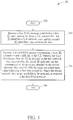
- a process 30 in Fig. 3 is utilized in a network, and includes the following steps: Step 300: Start. Step 302: Receive a first non-access stratum (NAS) message comprising a first information element (IE) and a second IE, from a UE, wherein the first IE identifies a first network slice, and the second IE identifies a second network slice.
- NAS non-access stratum
- Step 304 Transmit a second NAS message comprising a third IE, a fourth IE and a fifth IE, to the UE, wherein the third IE indicates that the UE is attached to the first network slice successfully, the fourth IE indicates that the communication device is not attached to the second network slice, and the fifth IE comprises a first timer value indicating a first time period for which the second network slice is not available to be attached, in response to the first NAS message.
- Step 306 End.
- the network after receiving the first NAS message from the UE requesting attaching to the first network slice and the second network slice, the network informs the UE that the first network slice is attached successfully and the second network slice is prohibited to attach.
- the unnecessary requests from the UE can be avoided or reduced.
- the first NAS message is a registration request message, an attach request message or a tracking area update request message.
- the second NAS message is a registration accept message, an attach accept message or a tracking area update accept message.
- the first IE comprises a single network slice selection assistance information (S-NSSAI) identifying the first network slice.
- the second IE comprises a S-NSSAI identifying the second network slice.
- the first IE and the second IE are encoded and transmitted as a single IE, wherein the single IE comprises a network slice selection assistance information (NSSAI).
- NSSAI network slice selection assistance information
- the first IE and the second IE are encoded and transmitted separately.
- the third IE comprises a S-NSSAI identifying the first network slice and a first value indicating that the UE is attached to the first network slice successfully.
- the fourth IE comprises a S-NSSAI identifying the second network slice and a second value indicating that the UE is not attached to the second network slice.
- the second NAS message comprises a sixth IE comprising a second timer value indicating a second time period for (e.g., in) which the UE is available to attach to the first network slice.
- the network accepts any service for the first network slice for (e.g., in) the second time period indicated in the sixth IE.
- the network rejects the UE for attaching to the second network slice in the first time period indicated in the fifth IE.
- the first timer value and the second timer value comprise time value in milliseconds, seconds, hours, etc.).
- the network calculates the timer values based on a user subscription, local configuration of the network, network policies or any combination of above.
- the network sets a longer value for a timer value for a user whose subscription indicates that it is a low priority user.
- the network sets a shorter value for a timer value for a user whose subscription indicates that it is a high priority user. If the local configuration of the network indicates that there is less resource in the network, the network sets a longer value for the time value.
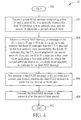
- a process 40 in Fig. 4 is utilized in a UE, and includes the following steps: Step 400: Start. Step 402: Transmit a first NAS message comprising a first IE and a second IE, to a network, wherein the first IE identifies a first network slice, and the second IE identifies a second network slice.
- Step 404 Receive a second NAS message comprising a third IE, a fourth IE and a fifth IE, from the network, wherein the third IE indicates that the UE is attached to the first network slice successfully, the fourth IE indicates that the UE is not attached to the second network slice, and the fifth IE comprises a first timer value indicating a first time period for which the second network slice is not available to be attached, in response to the first NAS message.
- Step 406 Not transmit a third NAS message to the network for a second time period, wherein the third NAS message is related to the second network slice.
- Step 408 Transmit the third NAS message to the network after the second time period.
- Step 410 End.
- the UE since the UE is informed of the unavailability to attach to the second network slice by the network, the UE temporarily suspends transmitting the NAS message related to the second network slice, which reduces the unnecessary request from the UE.
- the first NAS message is a registration request message, an attach request message or a tracking area update request message.
- the second NAS message is a registration accept message, an attach accept message or a tracking area update accept message.
- the first IE comprises a S-NSSAI identifying the first network slice.
- the second IE comprises a S-NSSAI identifying the second network slice.
- the first IE and the second IE are encoded and transmitted as one IE comprising a NSSAI.
- the first IE and the second IE are encoded and transmitted separately.
- the third IE comprises a S-NSSAI identifying the first network slice and a first value indicating that the UE is attached to the first network slice successfully.
- the fourth IE comprises a S-NSSAI identifying the second network slice and a second value indicating that the UE is not attached to the second network slice.
- the second NAS message comprises a sixth IE comprising a second timer value indicating a third time period for which the UE is available to attach to the first network slice (e.g. , to get service from the first network slice).
- the UE transmits user data on data radio bearers (DRBs) to use a service related to the first network slice for (e.g., in) the third time period indicated in the sixth IE, to the network.
- DRBs data radio bearers
- the UE stops transmitting the user data related to the second network slice to the network, transmits (e.g., initiates) the third NAS message to attach to the second network slice and transmits the user data related to the second network slice.
- the UE receives a fourth NAS message from the network, in response to the third NAS message, wherein the fourth NAS message indicates that the UE is attached to the second network slice successfully.
- the UE transmits data related to the second network slice on the DRBs.
- the network configures the first time period by transmitting the first timer value in the second NAS message.
- the UE applies a default value for the first time period.
- the first network slice and the second network slice comprise network nodes (e.g., radio access network (RAN), 5G Core and Data network) providing Internet Protocol (IP) Multimedia Subsystem (IMS) service (e.g., IMS emergency voice service or emergency bearer service) or Cellular Internet of Things (CIoT) (e.g., user plane CIoT evolved packet system (EPS) optimization, control plane CIoT EPS optimization or attach without packet data network (PDN) connectivity), Internet service (e.g., hypertext transfer protocol (HTTP), file transfer protocol (FTP), etc.) mobile initiated connection only (MICO) mode service, location service (LCS) or short message service (SMS).
- IP Internet Protocol
- IMS Internet Multimedia Subsystem
- CIoT Cellular Internet of Things
- EPS user plane CIoT evolved packet system
- FTP file transfer protocol
- MICO mobile initiated connection only
- LCS location service
- SMS short message service
- the UE transmits a registration request message to the network for requesting to attach to an IMS network slice and a CIoT network slice.
- the network transmits a registration accept message indicating that the UE is attached to the IMS network slice successfully and indicating that the UE fails to be attached to the CIoT network slice.
- the network transmits a timer value (e.g., 10 seconds) related to the CIoT network slice to the UE, after receiving the registration request message.
- the UE receives the registration accept message from the network.
- the UE does not transmit any registration request message related to the CIoT network slice for the time period (e.g., 10 seconds) as received in the registration accept message. After the received time period (e.g., 10 seconds), the UE transmits the registration request message to attach to the CIoT network slice.
- the present invention provides methods and devices for handling a feature.
- the UE does not transmit the NAS message related to a specific network slice to the network. Unnecessary requests from the UE can be avoided or reduced. Thus, the problem in the art is solved.
Landscapes
- Engineering & Computer Science (AREA)
- Signal Processing (AREA)
- Computer Networks & Wireless Communication (AREA)
- Computer Security & Cryptography (AREA)
- Computer Hardware Design (AREA)
- Computing Systems (AREA)
- General Engineering & Computer Science (AREA)
- Mobile Radio Communication Systems (AREA)
Abstract
Description
- The present invention relates to a device and a method used in a wireless communication system, and more particularly, to a device and a method of handling a feature in a wireless communication system.
- A network transmits an indication indicating whether a feature is supported by the network or not or whether a feature requested by a communication device is allowed or not, to the communication device. These features may not be available temporarily at the network. Since the network does not indicate how long the feature is not available to the communication device, the communication device may transmit a message for requesting the service that was rejected earlier and unnecessary signaling overhead is caused.
- The present invention therefore provides a communication device for handling a feature to solve the abovementioned problem.
- A network for handling a feature comprises at least one storage device for storing instructions and at least one processing circuit coupled to the at least one storage device. The at least one processing circuit is configured to execute the instructions stored in the at least one storage device. The instructions comprise receiving a first non-access stratum (NAS) message comprising a first information element (IE) and a second IE, from a communication device, wherein the first IE identifies a first network slice, and the second IE identifies a second network slice; and transmitting a second NAS message comprising a third IE, a fourth IE and a fifth IE, to the communication device, wherein the third IE indicates that the communication device is attached to the first network slice successfully, the fourth IE indicates that the communication device is not attached to the second network slice, and the fifth IE comprises a first timer value indicating a first time period for which the second network slice is not available to be attached, in response to the first NAS message.
- These and other objectives of the present invention will no doubt become obvious to those of ordinary skill in the art after reading the following detailed description of the preferred embodiment that is illustrated in the various figures and drawings.
-
-
Fig. 1 is a schematic diagram of a wireless communication system according to an example of the present invention. -
Fig. 2 is a schematic diagram of a communication device according to an example of the present invention. -
Fig. 3 is a flowchart of a process according to an example of the present invention. -
Fig. 4 is a flowchart of a process according to an example of the present invention. - In
Fig. 1 , a network and communication devices are simply utilized for illustrating the structure of awireless communication system 10. Practically, the network comprises at least one of a long-term evolution (LTE) network, a new radio (NR) network and a sixth generation (6G) network. The LTE network comprises at least one of an evolved universal terrestrial radio access network (E-UTRAN) including at least one evolved Node-B (eNB) and an Evolved Packet Core (EPC) . The NR network comprises a fifth generation (5G) radio access network including at least one 5G BS (called gNB or an evolved eNB (eLTE eNB)) and a Next Generation Core (NGC). The 6G network includes at least one 6G BS and a NGC or 6G Core. - A communication device may be a user equipment (UE), a machine type communication (MTC) device, a mobile phone, a laptop, a tablet computer, an electronic book, a portable computer system, a vehicle, or an aircraft. In addition, the network and the communication device can be seen as a transmitter or a receiver according to direction of transmission (i.e., transmission direction), e.g., for an uplink (UL), the communication device is the transmitter and the network is the receiver, and for a downlink (DL), the network is the transmitter and the communication device is the receiver.
- In
Fig. 2 , acommunication device 20 may be a communication device or the network shown inFig. 1 , but is not limited herein. Thecommunication device 20 may include at least one processing circuit 200 of which each may be a microprocessor or Application Specific Integrated Circuit (ASIC), at least onestorage device 210 and at least onecommunication interfacing device 220. The at least onestorage device 210 may be any data storage device that may storeprogram codes 214, accessed and executed by the at least one processing circuit 200. Examples of the at least onestorage device 210 include but are not limited to a subscriber identity module (SIM), read-only memory (ROM), flash memory, random-access memory (RAM), hard disk, optical data storage device, non-volatile storage device, non-transitory computer-readable medium (e.g., tangible media), etc. The at least onecommunication interfacing device 220 comprises at least one transceiver used to transmit and receive signals (e.g., data, messages and/or packets) according to processing results of the at least one processing circuit 200. - In the following embodiments, a UE is used for representing a communication device in
Fig. 1 , to simplify the illustration of the embodiments. - A
process 30 inFig. 3 is utilized in a network, and includes the following steps:Step 300: Start. Step 302: Receive a first non-access stratum (NAS) message comprising a first information element (IE) and a second IE, from a UE, wherein the first IE identifies a first network slice, and the second IE identifies a second network slice. Step 304: Transmit a second NAS message comprising a third IE, a fourth IE and a fifth IE, to the UE, wherein the third IE indicates that the UE is attached to the first network slice successfully, the fourth IE indicates that the communication device is not attached to the second network slice, and the fifth IE comprises a first timer value indicating a first time period for which the second network slice is not available to be attached, in response to the first NAS message. Step 306: End. - According to the
process 30, after receiving the first NAS message from the UE requesting attaching to the first network slice and the second network slice, the network informs the UE that the first network slice is attached successfully and the second network slice is prohibited to attach. The unnecessary requests from the UE can be avoided or reduced. - The following examples may be applied to the
process 30. - In one example, the first NAS message is a registration request message, an attach request message or a tracking area update request message. In one example, the second NAS message is a registration accept message, an attach accept message or a tracking area update accept message. In one example, the first IE comprises a single network slice selection assistance information (S-NSSAI) identifying the first network slice. The second IE comprises a S-NSSAI identifying the second network slice. In one example, the first IE and the second IE are encoded and transmitted as a single IE, wherein the single IE comprises a network slice selection assistance information (NSSAI). In one example, the first IE and the second IE are encoded and transmitted separately.
- In one example, the third IE comprises a S-NSSAI identifying the first network slice and a first value indicating that the UE is attached to the first network slice successfully. In one example, the fourth IE comprises a S-NSSAI identifying the second network slice and a second value indicating that the UE is not attached to the second network slice.
- In one example, the second NAS message comprises a sixth IE comprising a second timer value indicating a second time period for (e.g., in) which the UE is available to attach to the first network slice. In one example, the network accepts any service for the first network slice for (e.g., in) the second time period indicated in the sixth IE.
- In one example, the network rejects the UE for attaching to the second network slice in the first time period indicated in the fifth IE. In one example, the first timer value and the second timer value comprise time value in milliseconds, seconds, hours, etc.).
- In one example, the network calculates the timer values based on a user subscription, local configuration of the network, network policies or any combination of above. The network sets a longer value for a timer value for a user whose subscription indicates that it is a low priority user. The network sets a shorter value for a timer value for a user whose subscription indicates that it is a high priority user. If the local configuration of the network indicates that there is less resource in the network, the network sets a longer value for the time value.
- A
process 40 inFig. 4 is utilized in a UE, and includes the following steps:Step 400: Start. Step 402: Transmit a first NAS message comprising a first IE and a second IE, to a network, wherein the first IE identifies a first network slice, and the second IE identifies a second network slice. Step 404: Receive a second NAS message comprising a third IE, a fourth IE and a fifth IE, from the network, wherein the third IE indicates that the UE is attached to the first network slice successfully, the fourth IE indicates that the UE is not attached to the second network slice, and the fifth IE comprises a first timer value indicating a first time period for which the second network slice is not available to be attached, in response to the first NAS message. Step 406: Not transmit a third NAS message to the network for a second time period, wherein the third NAS message is related to the second network slice. Step 408: Transmit the third NAS message to the network after the second time period. Step 410: End. - According to the
process 40, since the UE is informed of the unavailability to attach to the second network slice by the network, the UE temporarily suspends transmitting the NAS message related to the second network slice, which reduces the unnecessary request from the UE. - The following examples may be applied to the
process 40. - In one example, the first NAS message is a registration request message, an attach request message or a tracking area update request message. In one example, the second NAS message is a registration accept message, an attach accept message or a tracking area update accept message. In one example, the first IE comprises a S-NSSAI identifying the first network slice. The second IE comprises a S-NSSAI identifying the second network slice. In one example, the first IE and the second IE are encoded and transmitted as one IE comprising a NSSAI. In one example, the first IE and the second IE are encoded and transmitted separately.
- In one example, the third IE comprises a S-NSSAI identifying the first network slice and a first value indicating that the UE is attached to the first network slice successfully. In one example, the fourth IE comprises a S-NSSAI identifying the second network slice and a second value indicating that the UE is not attached to the second network slice.
- In one example, the second NAS message comprises a sixth IE comprising a second timer value indicating a third time period for which the UE is available to attach to the first network slice (e.g. , to get service from the first network slice). In one example, the UE transmits user data on data radio bearers (DRBs) to use a service related to the first network slice for (e.g., in) the third time period indicated in the sixth IE, to the network. After the third period, the UE stops transmitting the user data related to the second network slice to the network, transmits (e.g., initiates) the third NAS message to attach to the second network slice and transmits the user data related to the second network slice.
- In one example, the UE receives a fourth NAS message from the network, in response to the third NAS message, wherein the fourth NAS message indicates that the UE is attached to the second network slice successfully. The UE transmits data related to the second network slice on the DRBs.
- In one example, the network configures the first time period by transmitting the first timer value in the second NAS message. When the network does not provide the first time period in the second NAS message, the UE applies a default value for the first time period.
- The following examples may be applied to the
processes - In one example, the first network slice and the second network slice comprise network nodes (e.g., radio access network (RAN), 5G Core and Data network) providing Internet Protocol (IP) Multimedia Subsystem (IMS) service (e.g., IMS emergency voice service or emergency bearer service) or Cellular Internet of Things (CIoT) (e.g., user plane CIoT evolved packet system (EPS) optimization, control plane CIoT EPS optimization or attach without packet data network (PDN) connectivity), Internet service (e.g., hypertext transfer protocol (HTTP), file transfer protocol (FTP), etc.) mobile initiated connection only (MICO) mode service, location service (LCS) or short message service (SMS).
- In one example, the UE transmits a registration request message to the network for requesting to attach to an IMS network slice and a CIoT network slice. The network transmits a registration accept message indicating that the UE is attached to the IMS network slice successfully and indicating that the UE fails to be attached to the CIoT network slice. The network transmits a timer value (e.g., 10 seconds) related to the CIoT network slice to the UE, after receiving the registration request message. The UE receives the registration accept message from the network. The UE does not transmit any registration request message related to the CIoT network slice for the time period (e.g., 10 seconds) as received in the registration accept message. After the received time period (e.g., 10 seconds), the UE transmits the registration request message to attach to the CIoT network slice.
- Those skilled in the art should readily make combinations, modifications and/or alterations on the abovementioned description and examples. For example, the skilled person easily makes new embodiments of the network based on the embodiments and examples of the UE, and makes new embodiments of the UE based on the embodiments and examples of the network. The abovementioned description, steps and/or processes including suggested steps can be realized by means that could be hardware, software, firmware (known as a combination of a hardware device and computer instructions and data that reside as read-only software on the hardware device), an electronic system, or combination thereof. An example of the means may be the
communication device 20. Any of the above processes and examples above may be compiled into theprogram codes 214. - To sum up, the present invention provides methods and devices for handling a feature. According to the IE received from the network, the UE does not transmit the NAS message related to a specific network slice to the network. Unnecessary requests from the UE can be avoided or reduced. Thus, the problem in the art is solved.
- Those skilled in the art will readily observe that numerous modifications and alterations of the device and method may be made while retaining the teachings of the invention. Accordingly, the above disclosure should be construed as limited only by the metes and bounds of the appended claims.
Claims (15)
- A network for handling a feature, comprising:at least one storage device; andat least one processing circuit, coupled to the at least one storage device, wherein the at least one storage device stores, and the at least one processing circuit is configured to execute instructions of:receiving a first non-access stratum (NAS) message comprising a first information element (IE) and a second IE, from a communication device, wherein the first IE identifies a first network slice, and the second IE identifies a second network slice; andtransmitting a second NAS message comprising a third IE, a fourth IE and a fifth IE, to the communication device, wherein the third IE indicates that the communication device is attached to the first network slice successfully, the fourth IE indicates that the communication device is not attached to the second network slice, and the fifth IE comprises a first timer value indicating a first time period for which the second network slice is not available to be attached, in response to the first NAS message.
- The network of claim 1, wherein the first IE comprises a single network slice selection assistance information (S-NSSAI) identifying the first network slice and the second IE comprises a S-NSSAI identifying the second network slice.
- The network of claim 1, wherein the third IE comprises a S-NSSAI identifying the first network slice and a first value indicating that the communication device is attached to the first network slice successfully.
- The network of claim 1, wherein the fourth IE comprises a S-NSSAI identifying the second network slice and a second value indicating that the communication device is not attached to the second network slice.
- The network of claim 1, wherein the second NAS message comprises a sixth IE comprising a second timer value indicating a second time period for which the communication device is available to attach to the first network slice.
- The network of claim 5, wherein the instructions further comprise:
accepting any service for the first network slice for the second time period indicated in the sixth IE. - The network of claim 1, wherein the instructions further comprise:
rejecting the communication device for attaching to the second network slice in the first time period indicated in the fifth IE. - A communication device for handling a feature, comprising:at least one storage device; andat least one processing circuit, coupled to the at least one storage device, wherein the at least one storage device stores, and the at least one processing circuit is configured to execute instructions of:transmitting a first non-access stratum (NAS) message comprising a first information element (IE) and a second IE, to a network, wherein the first IE identifies a first network slice, and the second IE identifies a second network slice;receiving a second NAS message comprising a third IE, a fourth IE and a fifth IE, from the network, wherein the third IE indicates that the communication device is attached to the first network slice successfully, the fourth IE indicates that the communication device is not attached to the second network slice, and the fifth IE comprises a first timer value indicating a first time period for which the second network slice is not available to be attached, in response to the first NAS message;not transmitting a third NAS message to the network for a second time period, wherein the third NAS message is related to the second network slice; andtransmitting the third NAS message to the network after the second time period.
- The communication device of claim 8, wherein the first IE comprises a single network slice selection assistance information (S-NSSAI) identifying the first network slice.
- The communication device of claim 9, wherein the second IE comprises a S-NSSAI identifying the second network slice.
- The communication device of claim 8, wherein the third IE comprises a S-NSSAI identifying the first network slice and a first value indicating that the communication device is attached to the first network slice successfully.
- The communication device of claim 8, wherein the fourth IE comprises a S-NSSAI identifying the second network slice and a second value indicating that the communication device is not attached to the second network slice.
- The communication device of claim 8, wherein the second NAS message comprises a sixth IE comprising a second timer value indicating a third time period for which the communication device is available to attach to the first network slice.
- The communication device of claim 13, wherein the instructions further comprise:transmitting user data to use a service related to the first network slice for the third time period indicated in the sixth IE, to the network; andstopping transmitting the user data to the network and transmitting the third NAS message, after the third time period.
- The communication device of claim 8, wherein the instructions further comprise:
receiving a fourth NAS message from the network, wherein the fourth NAS message indicates that the communication device is attached to the second network slice successfully.
Applications Claiming Priority (1)
| Application Number | Priority Date | Filing Date | Title |
|---|---|---|---|
| US201762503316P | 2017-05-08 | 2017-05-08 |
Publications (1)
| Publication Number | Publication Date |
|---|---|
| EP3402155A1 true EP3402155A1 (en) | 2018-11-14 |
Family
ID=62148126
Family Applications (1)
| Application Number | Title | Priority Date | Filing Date |
|---|---|---|---|
| EP18171099.7A Withdrawn EP3402155A1 (en) | 2017-05-08 | 2018-05-07 | Device and method for handling a feature through network slice management |
Country Status (4)
| Country | Link |
|---|---|
| US (1) | US10327270B2 (en) |
| EP (1) | EP3402155A1 (en) |
| CN (1) | CN108882359B (en) |
| TW (1) | TWI700954B (en) |
Families Citing this family (8)
| Publication number | Priority date | Publication date | Assignee | Title |
|---|---|---|---|---|
| US10764785B2 (en) * | 2017-03-07 | 2020-09-01 | Htc Corporation | Device and method of handling network slice information |
| US11240720B2 (en) * | 2017-06-02 | 2022-02-01 | FG Innovation Company Limited | Methods, devices, and systems for service-driven mobility management |
| WO2018231813A1 (en) * | 2017-06-13 | 2018-12-20 | Intel IP Corporation | Systems, methods and devices for legacy system fallback in a cellular communications system |
| JP6854712B2 (en) * | 2017-06-19 | 2021-04-07 | シャープ株式会社 | UE and UE communication control method |
| CN109257769B (en) * | 2017-07-12 | 2020-09-01 | 维沃移动通信有限公司 | A method, related device and system for handling network slice congestion |
| KR102636658B1 (en) * | 2019-01-14 | 2024-02-15 | 삼성전자주식회사 | Electronic device for requesting nssai in wireless communication network and method thereof |
| CN113347700B (en) | 2020-02-14 | 2023-01-20 | 大唐移动通信设备有限公司 | A method for checking terminal capability matching, AMF, base station and storage medium |
| US12232212B2 (en) * | 2021-02-26 | 2025-02-18 | Nokia Solutions And Networks Oy | Emergency operations slice exchange between entities in mobile networks |
Family Cites Families (11)
| Publication number | Priority date | Publication date | Assignee | Title |
|---|---|---|---|---|
| US8321565B2 (en) * | 2009-11-02 | 2012-11-27 | Verizon Patent And Licensing Inc. | Network usage throttling systems and methods |
| KR101670253B1 (en) * | 2010-02-16 | 2016-10-31 | 삼성전자 주식회사 | Method and device for controlling network access of ue in wireless communication system |
| US8818367B2 (en) * | 2011-01-12 | 2014-08-26 | Htc Corporation | Apparatuses and methods for handling mobility management (MM) back-off timers |
| WO2013137698A1 (en) * | 2012-03-16 | 2013-09-19 | 엘지전자 주식회사 | Method and apparatus for processing nas signaling request in wireless communication system |
| US9483431B2 (en) * | 2013-04-17 | 2016-11-01 | Apeiron Data Systems | Method and apparatus for accessing multiple storage devices from multiple hosts without use of remote direct memory access (RDMA) |
| US20160353367A1 (en) * | 2015-06-01 | 2016-12-01 | Huawei Technologies Co., Ltd. | System and Method for Virtualized Functions in Control and Data Planes |
| CN106375987B (en) * | 2015-07-22 | 2021-08-20 | 中兴通讯股份有限公司 | A method and system for selecting network slices |
| CN106572517B (en) * | 2015-10-09 | 2018-12-18 | 中国移动通信集团公司 | The processing method of network slice, the selection method and device for accessing network |
| CN113905427A (en) * | 2015-11-10 | 2022-01-07 | 日本电气株式会社 | Communication system |
| US10433174B2 (en) * | 2017-03-17 | 2019-10-01 | Qualcomm Incorporated | Network access privacy |
| US10484886B2 (en) * | 2017-05-05 | 2019-11-19 | Qualcomm Incorporated | Method for broadcast information on supported and non-supported slices |
-
2018
- 2018-05-03 US US15/969,794 patent/US10327270B2/en active Active
- 2018-05-07 EP EP18171099.7A patent/EP3402155A1/en not_active Withdrawn
- 2018-05-07 TW TW107115365A patent/TWI700954B/en active
- 2018-05-08 CN CN201810431438.3A patent/CN108882359B/en active Active
Non-Patent Citations (2)
| Title |
|---|
| "3rd Generation Partnership Project; Technical Specification Group Services and System Aspects; Study on Architecture for Next Generation System (Release 14)", 3GPP STANDARD ; TECHNICAL REPORT ; 3GPP TR 23.799, 3RD GENERATION PARTNERSHIP PROJECT (3GPP), MOBILE COMPETENCE CENTRE ; 650, ROUTE DES LUCIOLES ; F-06921 SOPHIA-ANTIPOLIS CEDEX ; FRANCE, vol. SA WG2, no. V14.0.0, 16 December 2016 (2016-12-16), pages 1 - 527, XP051295448 * |
| "3rd Generation Partnership Project; Technical Specification Group Services and System Aspects; System Architecture for the 5G System; Stage 2 (Release 15)", 3GPP STANDARD ; TECHNICAL SPECIFICATION ; 3GPP TS 23.501, 3RD GENERATION PARTNERSHIP PROJECT (3GPP), MOBILE COMPETENCE CENTRE ; 650, ROUTE DES LUCIOLES ; F-06921 SOPHIA-ANTIPOLIS CEDEX ; FRANCE, vol. SA WG2, no. V0.4.0, 20 April 2017 (2017-04-20), pages 1 - 124, XP051298169 * |
Also Published As
| Publication number | Publication date |
|---|---|
| US10327270B2 (en) | 2019-06-18 |
| CN108882359B (en) | 2021-11-09 |
| US20180324877A1 (en) | 2018-11-08 |
| TW201844055A (en) | 2018-12-16 |
| CN108882359A (en) | 2018-11-23 |
| TWI700954B (en) | 2020-08-01 |
Similar Documents
| Publication | Publication Date | Title |
|---|---|---|
| US10327270B2 (en) | Device and method for handling a feature | |
| US11553388B2 (en) | Device and method of handling mobility between long-term evolution network and fifth generation network | |
| US10225780B2 (en) | Device and method of handling radio resource control connection resume procedure | |
| US10492108B2 (en) | Device and method of handling transferring of a state | |
| US10327280B2 (en) | Device and method of handling a state mismatch in a wireless communication system | |
| US20180227737A1 (en) | Device and Method for Handling New Radio Capabilities | |
| US20100184448A1 (en) | Method of Handling Radio Resource Control Connection Establishment for a Wireless Communication System and Related Communication Device | |
| EP3474601B1 (en) | Device and method of handling a protocol data unit session and a network slice | |
| US10264611B2 (en) | Device and method of handling radio resource control connection resume procedure | |
| US9538497B2 (en) | Method of handling location reporting procedure and related communication device | |
| US20240323708A1 (en) | Network slice quotas in the presence of interworking | |
| EP2373101A1 (en) | Method to inform user equipment to perform register procedure in wireless communications system and related communication device | |
| US10568012B2 (en) | Device and method of handling mobility management | |
| US10021624B2 (en) | Device and method of handling network feature | |
| US20170111879A1 (en) | Resource control for wireless device detach | |
| US9955455B2 (en) | Device and method of handling paging procedure | |
| US20180262954A1 (en) | Device and Method of Handling Network Slice Information | |
| US20170332428A1 (en) | Device and Method of Communicating with Network |
Legal Events
| Date | Code | Title | Description |
|---|---|---|---|
| STAA | Information on the status of an ep patent application or granted ep patent |
Free format text: STATUS: EXAMINATION IS IN PROGRESS |
|
| PUAI | Public reference made under article 153(3) epc to a published international application that has entered the european phase |
Free format text: ORIGINAL CODE: 0009012 |
|
| 17P | Request for examination filed |
Effective date: 20180507 |
|
| AK | Designated contracting states |
Kind code of ref document: A1 Designated state(s): AL AT BE BG CH CY CZ DE DK EE ES FI FR GB GR HR HU IE IS IT LI LT LU LV MC MK MT NL NO PL PT RO RS SE SI SK SM TR |
|
| AX | Request for extension of the european patent |
Extension state: BA ME |
|
| RBV | Designated contracting states (corrected) |
Designated state(s): AL AT BE BG CH CY CZ DE DK EE ES FI FR GB GR HR HU IE IS IT LI LT LU LV MC MK MT NL NO PL PT RO RS SE SI SK SM TR |
|
| STAA | Information on the status of an ep patent application or granted ep patent |
Free format text: STATUS: THE APPLICATION IS DEEMED TO BE WITHDRAWN |
|
| 18D | Application deemed to be withdrawn |
Effective date: 20200603 |