EP3401780A1 - Notification message processing method and apparatus - Google Patents
Notification message processing method and apparatus Download PDFInfo
- Publication number
- EP3401780A1 EP3401780A1 EP16883465.3A EP16883465A EP3401780A1 EP 3401780 A1 EP3401780 A1 EP 3401780A1 EP 16883465 A EP16883465 A EP 16883465A EP 3401780 A1 EP3401780 A1 EP 3401780A1
- Authority
- EP
- European Patent Office
- Prior art keywords
- notification message
- predefined
- application
- keyword
- predefined keyword
- Prior art date
- Legal status (The legal status is an assumption and is not a legal conclusion. Google has not performed a legal analysis and makes no representation as to the accuracy of the status listed.)
- Ceased
Links
Images




Classifications
-
- G—PHYSICS
- G06—COMPUTING OR CALCULATING; COUNTING
- G06F—ELECTRIC DIGITAL DATA PROCESSING
- G06F16/00—Information retrieval; Database structures therefor; File system structures therefor
- G06F16/30—Information retrieval; Database structures therefor; File system structures therefor of unstructured textual data
- G06F16/33—Querying
- G06F16/338—Presentation of query results
-
- G—PHYSICS
- G06—COMPUTING OR CALCULATING; COUNTING
- G06F—ELECTRIC DIGITAL DATA PROCESSING
- G06F16/00—Information retrieval; Database structures therefor; File system structures therefor
- G06F16/20—Information retrieval; Database structures therefor; File system structures therefor of structured data, e.g. relational data
- G06F16/24—Querying
- G06F16/245—Query processing
-
- G—PHYSICS
- G06—COMPUTING OR CALCULATING; COUNTING
- G06F—ELECTRIC DIGITAL DATA PROCESSING
- G06F16/00—Information retrieval; Database structures therefor; File system structures therefor
- G06F16/50—Information retrieval; Database structures therefor; File system structures therefor of still image data
- G06F16/58—Retrieval characterised by using metadata, e.g. metadata not derived from the content or metadata generated manually
- G06F16/5866—Retrieval characterised by using metadata, e.g. metadata not derived from the content or metadata generated manually using information manually generated, e.g. tags, keywords, comments, manually generated location and time information
-
- G—PHYSICS
- G06—COMPUTING OR CALCULATING; COUNTING
- G06F—ELECTRIC DIGITAL DATA PROCESSING
- G06F9/00—Arrangements for program control, e.g. control units
- G06F9/06—Arrangements for program control, e.g. control units using stored programs, i.e. using an internal store of processing equipment to receive or retain programs
- G06F9/44—Arrangements for executing specific programs
-
- G—PHYSICS
- G06—COMPUTING OR CALCULATING; COUNTING
- G06F—ELECTRIC DIGITAL DATA PROCESSING
- G06F9/00—Arrangements for program control, e.g. control units
- G06F9/06—Arrangements for program control, e.g. control units using stored programs, i.e. using an internal store of processing equipment to receive or retain programs
- G06F9/46—Multiprogramming arrangements
- G06F9/54—Interprogram communication
- G06F9/542—Event management; Broadcasting; Multicasting; Notifications
-
- H—ELECTRICITY
- H04—ELECTRIC COMMUNICATION TECHNIQUE
- H04L—TRANSMISSION OF DIGITAL INFORMATION, e.g. TELEGRAPHIC COMMUNICATION
- H04L51/00—User-to-user messaging in packet-switching networks, transmitted according to store-and-forward or real-time protocols, e.g. e-mail
- H04L51/21—Monitoring or handling of messages
- H04L51/224—Monitoring or handling of messages providing notification on incoming messages, e.g. pushed notifications of received messages
-
- H—ELECTRICITY
- H04—ELECTRIC COMMUNICATION TECHNIQUE
- H04L—TRANSMISSION OF DIGITAL INFORMATION, e.g. TELEGRAPHIC COMMUNICATION
- H04L67/00—Network arrangements or protocols for supporting network services or applications
- H04L67/50—Network services
- H04L67/53—Network services using third party service providers
-
- H—ELECTRICITY
- H04—ELECTRIC COMMUNICATION TECHNIQUE
- H04L—TRANSMISSION OF DIGITAL INFORMATION, e.g. TELEGRAPHIC COMMUNICATION
- H04L67/00—Network arrangements or protocols for supporting network services or applications
- H04L67/50—Network services
- H04L67/55—Push-based network services
-
- G—PHYSICS
- G06—COMPUTING OR CALCULATING; COUNTING
- G06F—ELECTRIC DIGITAL DATA PROCESSING
- G06F9/00—Arrangements for program control, e.g. control units
- G06F9/06—Arrangements for program control, e.g. control units using stored programs, i.e. using an internal store of processing equipment to receive or retain programs
- G06F9/44—Arrangements for executing specific programs
- G06F9/445—Program loading or initiating
-
- G—PHYSICS
- G06—COMPUTING OR CALCULATING; COUNTING
- G06F—ELECTRIC DIGITAL DATA PROCESSING
- G06F9/00—Arrangements for program control, e.g. control units
- G06F9/06—Arrangements for program control, e.g. control units using stored programs, i.e. using an internal store of processing equipment to receive or retain programs
- G06F9/44—Arrangements for executing specific programs
- G06F9/451—Execution arrangements for user interfaces
Definitions
- the present application relates to the technical field of the Internet, and particularly to methods and apparatuses for processing a notification message.
- a notification message is usually generated, and an operation of notification related to this notification message is executed to help prompting a user to read the new message or to pay attention to an event that is pre-arranged in time, for example.
- WeChat will display a notification message of this new message on a notification panel of an operating system or lock screen interface, and prompt a user to read the new message through a means such as voice or vibration.
- a time corresponding to a reminder event in a calendar application is reached at a current time, the reminder event in the calendar application is triggered.
- the calendar application displays a notification message describing this reminder event on a lock screen interface or a front page of a smart electronic device, and prompts a user to pay attention to this reminder event through a means such as voice or vibration.
- a goal of the present invention is to provide a method and an apparatus for processing a notification message.
- a method of processing a notification message includes the following steps: monitoring a notification message of an application through an interface of an auxiliary function of an operating system of a smart electronic device; and in response to detecting that the notification message includes a predefined keyword, performing corresponding processing on the notification message that includes the predefined keyword according to a processing method corresponding to the predefined keyword.
- an apparatus of processing a notification message includes a monitoring module used for monitoring a notification message of an application through an interface of an auxiliary function of an operating system of a smart electronic device; and a processing module used for, in response to detecting that the notification message includes a predefined keyword, performing corresponding processing on the notification message that includes the predefined keyword according to a processing method corresponding to the predefined keyword.
- the present invention has the following advantages.
- the present invention can obtain the notification message of the application in a convenient, quick and accurate manner without affecting normal operations of the operating system.
- the present invention can thereby determine a processing method corresponding to the notification message using the predefined keyword when the detected notification message includes the predefined keyword.
- the present invention can perform corresponding processing on the notification message that includes the predefined keyword.
- Different notification messages can therefore be allowed to correspond to different processing methods, such as providing an enhanced prompt or a warning prompt for a notification message, or conducting information exchange with an application to which the notification message belongs.
- technical solutions provided by the present invention can perform different processing for different notification messages, enriching processing methods of notification messages, while preventing the notification messages from interrupting users, thus improving the degree of intelligentization of processing of the notification messages.
- the smart electronic devices include a user device and a network device.
- the user device includes, but is not limited to, a computer, a smart mobile phone, or PDA, etc.
- the network device includes, but is not limited to, a single network server, a server group formed by a plurality of network servers, a large number of computers based on cloud computing, or a cloud formed by network servers.
- the cloud computing is a type of distributed computing, and is a super virtual computer formed by a set of loosely coupled computers.
- the smart electronic device can connect to a network, and conducts operations of information exchange with other smart electronic devices in the network.
- the network to which the smart electronic device can connect includes, but is not limited to, the Internet, a wide area network, a metropolitan area network, a local area network, a virtual private network, etc.
- the user device, the network device and the network are merely examples.
- Other smart electronic devices or networks that exist currently or may exist in the future are also applicable to the present invention, and should be included in the scope of protection of the present invention, which are included herein by reference.
- Embodiments of methods can be implemented in a form of hardware, software, firmware, middleware, microcode, hardware description language, or any combination thereof.
- program codes or code segments that are used for implementing necessary tasks can be stored in machine or computer readable media (such as storage media).
- processors can execute the necessary tasks.
- first and second are used herein for describing various units, these units should not be limited by these terms. These terms are used merely for distinguishing one unit from another unit. For example, without departing the scope of the exemplary embodiments, a first unit can be called as a second unit, and similarly the second unit can be called as the first unit.
- a term "and/or” used herein includes a combination of any or all of one or more associated items that are listed.
- FIG. 1 is a flowchart of a method of processing a notification message in accordance with the present embodiment.
- the method of the present embodiment mainly includes step S100 and step S110.
- the method recorded in the present embodiment is generally performed in a smart electronic device.
- the method recorded in the present embodiment is generally performed in a smart electronic device (i.e., a user device) such as smart mobile phone and a tablet computer, etc.
- the method recorded in the present embodiment can be deployed in an application (e.g., Ali money shield application) that is installed in a smart electronic device.
- the method recorded in the present embodiment can be performed after the application is activated.
- S100 monitors a notification message of an application through an interface of an auxiliary function of an operating system of a smart electronic device.
- an auxiliary function of an operating system of a smart electronic device in the present embodiment is used for enabling a user (such as certain disabled users, which may be visually impaired users, for example) to use the smart electronic device without any barrier.
- a user such as certain disabled users, which may be visually impaired users, for example
- an auxiliary function of the operating system can read aloud the text in a user interface of the smart electronic device, or magnify the text in the user interface of the smart electronic device, etc.
- Operating systems of smart electronic devices generally provide open interfaces of auxiliary functions. The present embodiment achieves monitoring of notification of an application through an interface of an auxiliary function.
- the smart electronic device in the present embodiment is usually a smart electronic device based on an Android operating system. If other operating systems also provide interfaces of auxiliary functions, the smart electronic device in the present embodiment may also be smart electronic devices of the other operating systems.
- an auxiliary function provided by an operating system of a smart electronic device is not in an activated status
- an operating of activating the auxiliary function provided by the operating system of the smart electronic device is first performed.
- a user of the smart electronic device is guided step by step to cause the smart electronic device to set the auxiliary function provided by the operating system of the smart electronic device into an activated status.
- the notification message of the application that is monitored through the interface of the auxiliary function of the operating system of the smart electronic device in the present embodiment may be a notification message of a system application, or may be a notification message of a third-party application.
- a notification message of a system application may be a notification message of a short messaging application, such as a notification message that is generated after a short messaging application receives a new short message.
- a notification message of a third-party application may be a notification message of an instant messaging application, such as a notification message that is generated when a WeChat application receives a new message.
- a notification message of a third-party application may be a notification message of a new message pushed by an application client, such as a notification message that is generated when a Sohu Video client or Tencent news client wants to push new video/news to a user.
- monitoring the notification message of the application through the interface of the auxiliary function of the operating system of the smart electronic device may include monitoring information content of the notification message of the application through the interface of the auxiliary function of the operating system of the smart electronic device, such as monitoring whether the content of the notification message of the application includes a predefined keyword of a keyword set through the interface of the auxiliary function of the operating system of the smart electronic device.
- a keyword set generally includes a predefined keyword, or a plurality of different predefined keywords.
- predefined keyword(s) of a keyword set may be predefined keyword(s) that is/are downloaded from a cloud server (for example, updating a keyword set that is locally stored in a smart electronic device from a cloud server regularly or irregularly), or predefined keyword(s) that is/are self-defined by a smart electronic device (i.e., predefined keyword(s) that is/are defined by a user of the smart electronic device himself/herself can also be stored in a keyword set).
- the present embodiment obtains information content of a notification message through an interface of an auxiliary function of an operating system of a smart electronic device.
- the present embodiment can perform matching of the textual information of the notification message according to predefined keyword(s) of a locally stored keyword set (separately performing matching and querying of each predefined keyword for the textual information of the notification message if the keyword set includes a plurality of different predefined keywords) to determine whether the textual information of the notification message includes information that matches with a predefined keyword of the keyword set.
- a keyword set may be set to include a predefined keyword "red pocket”.
- the present embodiment can obtain information content of a notification message through an interface of an auxiliary function of an operating system of a smart electronic device.
- the present embodiment can first perform image recognition on the picture in the notification message to convert the picture in the notification message into textual information.
- the present embodiment then performs matching of the textual information that is obtained from the image recognition according to predefined keyword(s) of a locally stored keyword set (the present embodiment can separately perform matching and querying of each predefined keyword for the textual information that is obtained from the image recognition if the keyword set includes a plurality of different predefined keywords) to determine whether the textual information that is obtained from the image recognition includes information that matches with a predefined keyword of the keyword set.
- a search result indicating that information of a predefined keyword of the keyword set exists in the textual information that is obtained from the image recognition
- a determination is made that a notification message that is detected includes a predefined keyword. Otherwise, a determination is made that the notification message does not include a predefined keyword.
- a keyword set may be set to include a predefined keyword "red pocket”.
- the present embodiment can determine whether the textual information in the notification message includes a predefined keyword. Alternatively, a determination can be made as to whether the picture in the notification message includes a predefined keyword. Alternatively, a determination can be made as to whether the textual information in the notification message includes a predefined keyword and whether the picture in the notification message includes a predefined keyword. A detailed process thereof is not described in detail again. Similarly, the present embodiment does not individually describe a second example, a third example and a fourth example which are described below in detail.
- details of the present embodiment of monitoring the notification message of the application through the interface of the auxiliary function of the operating system of the smart electronic device may include monitoring information content of the notification message of the application and application property information of the application to which the notification message belongs through the interface of the auxiliary function of the operating system of the smart electronic device.
- monitoring is performed on a notification message of an application as to whether information content thereof includes a predefined keyword of a keyword set and whether application property information of the application to which the notification message belongs satisfies predefined condition(s) (the predefined condition(s) can be called as predefined application property condition(s)) through an interface of an auxiliary function of a smart electronic device.
- application property information may include any one or more of a packet name of an application, a name of the application, a type of the application (such as a system application or a third-party application), a space occupied by the application after installation, and memory occupied by the application after launch.
- a predefined application property condition is generated set in conjunction with a predefined keyword.
- a single predefined keyword may be configured with and correspond to a single predefined application property condition. In a real application, however, the present embodiment does not exclude situations in which a single predefined keyword is configured with and correspond to multiple predefined application property conditions.
- a predefined application property condition can be a predefined application property condition downloaded from a cloud server (such as updating predefined application property conditions that are local to a smart electronic device from the cloud server regularly or irregularly), or a predefined application property condition that is self-defined by a smart electronic device (i.e., a user of the smart electronic device can set a predefined application property condition on his/her own).
- the present embodiment can flexibly set up predefined application property conditions based on content included in application property information according to an actual need. Examples of how to individually set up predefined application property conditions based on content of application property information are not described in detail herein.
- the present embodiment obtains information content of a notification message and application property information of an application to which the notification message belongs through an interface of an auxiliary function of an operating system of a smart electronic device.
- the information content of the notification message includes textual information (such as all the information content of the notification message is textual information)
- the present embodiment matches and searches the textual information of the notification message for a predefined keyword in a locally stored keyword set (when the keyword set includes a plurality of different predefined keywords, the present embodiment can separately matches and searches the textual information of the notification message for each predefined keyword), to determine whether information matching with the predefined keyword in the keyword set exists in the textual information of the notification message.
- a search result indicates that no information matching with a predefined keyword in the keyword set exists in the textual information of the notification message
- the present embodiment continues to determine whether the application property information that is obtained satisfies predefined application property condition(s) corresponding to the predefined keyword that is included in the notification message.
- the detected notification message includes the predefined keyword and the application property information of the application to which the notification message belongs satisfies the predefined application property condition(s). Otherwise, a determination can be made that the detected notification message includes the predefined keyword and the application property information of the application to which the notification message belongs fails to satisfy the predefined application property condition(s).
- a keyword set is set to include a predefined keyword "red pocket”, and a predefined application property condition corresponding to this predefined keyword "red pocket” is an application packet name being "com.tencent.mm” (i.e., a WeChat packet name that is officially defined by WebChat).
- the present embodiment After obtaining information content of a notification message and application property information of an application to which the notification message belongs through an interface of an auxiliary function of an operating system of a smart electronic device, and when the information content of the notification message includes textual information (such as all the information content of the notification message is textual information), the present embodiment matches and searches the textual information of the notification message according to the predefined keyword "red pocket", to determine whether information matching with "red pocket" exists in the textual information of the notification message. When a search result indicates that the textual information of the notification message does not include information matching with the predefined keyword "red pocket", a determination is made that the notification message does not include the predefined keyword "red pocket".
- the present embodiment determines whether an application packet name of an application to which the notification message belongs is "com.tencent.mm". If the application packet name of the application to which the notification message belongs is "com.tencent.mm”, a determination is made that the notification message including "red pocket” is detected, and the application property information of the application to which the notification message belongs satisfies the predefined application property condition. Otherwise, a determination is made that the application property information of the application to which the notification message belongs does not satisfy the predefined application property condition even though the notification message including "red pocket" is detected.
- the present embodiment obtains information content of a notification message and application property information of an application to which the notification message belongs through an interface of an auxiliary function of an operating system of a smart electronic device.
- the information content of the notification message includes a picture (such as all or part of the information content of the notification message is picture(s))
- the present embodiment can first perform image recognition on the picture in the notification message to convert the picture in the notification message into textual information.
- the present embodiment then performs matching of the textual information that is obtained from the image recognition according to predefined keyword(s) of a locally stored keyword set (the present embodiment can separately perform matching and querying of each predefined keyword for the textual information that is obtained from the image recognition if the keyword set includes a plurality of different predefined keywords) to determine whether the textual information that is obtained from the image recognition includes information that matches with a predefined keyword of the keyword set.
- a search result indicating that information of a predefined keyword of the keyword set does not exist in the textual information that is obtained from the image recognition
- a determination is made that the notification message does not include the predefined keyword.
- the present embodiment In response to a search result indicating that information of a predefined keyword of the keyword set exists in the textual information that is obtained from the image recognition, the present embodiment continues to determine whether the application property information that is obtained satisfies predefined application property condition(s) corresponding to the predefined keyword that is included in the notification message. If the obtained application property information satisfies the predefined application property condition(s) corresponding to the predefined keyword that is included in the notification message, a determination can be made that the notification message that is detected includes the predefined keyword and the application property information of the application to which the notification message belongs satisfies the predefined application property condition(s).
- a keyword set is set to include a predefined keyword "red pocket”
- a predefined application property condition corresponding to this predefined keyword "red pocket” is an application packet name being "com.tencent.mm” (i.e., a WeChat packet name that is officially defined by WebChat).
- the present embodiment After obtaining information content of a notification message and application property information of an application to which the notification message belongs through an interface of an auxiliary function of an operating system of a smart electronic device, and when the information content of the notification message includes a picture (such as all the information content of the notification message is the picture), the present embodiment first performs image recognition on the picture in the notification message to convert the notification message into textual information. Matching and searching of the textual information that is obtained from the image recognition are then performed according to the predefined keyword "red pocket" to determine whether information matching with the "red pocket" exists in the textual information that is obtained from the image recognition.
- the present embodiment determines whether an application packet name of an application to which the notification message belongs is "com.tencent.mm". If the application packet name of the application to which the notification message belongs is "com.tencent.mm”, a determination is made that the notification message including "red pocket” is detected, and the application property information of the application to which the notification message belongs satisfies the predefined application property condition. Otherwise, a determination is made that the application property information of the application to which the notification message belongs does not satisfy the predefined application property condition even though the notification message including "red pocket" is detected.
- details of the present embodiment of monitoring the notification message of the application through the interface of the auxiliary function of the operating system of the smart electronic device may include monitoring information content of the notification message of the application and message property information of the notification message through the interface of the auxiliary function of the operating system of the smart electronic device. For example, monitoring is performed on a notification message of an application as to whether information content thereof includes a predefined keyword of a keyword set and whether message property information of the notification message satisfies predefined condition(s) (the predefined condition(s) can be called as predefined message property condition(s)) through an interface of an auxiliary function of a smart electronic device.
- the message property information may include one or both of a time of information (e.g., a time of sending the message or a time of receiving the message, etc.), and information about a message sending party.
- the predefined message property condition(s) is/are generally set in conjunction with predefined keyword(s).
- a single predefined keyword may be configured with and correspond to a single predefined message property condition. In a real application, however, the present embodiment does not exclude situations in which a single predefined keyword is configured with and correspond to multiple predefined message property conditions.
- a predefined message property condition can be a predefined message property condition downloaded from a cloud server (such as updating predefined message property conditions that are local to a smart electronic device from the cloud server regularly or irregularly), or a predefined message property condition that is self-defined by a smart electronic device (i.e., a user of the smart electronic device can set a predefined message property condition on his/her own).
- the present embodiment can flexibly set up predefined message property conditions based on content included in message property information according to an actual need. Examples of how to individually set up predefined message property conditions based on content of message property information are not described in detail herein.
- the present embodiment obtains information content of a notification message and message property information of the notification message through an interface of an auxiliary function of an operating system of a smart electronic device.
- the information content of the notification message includes textual information (such as all the information content of the notification message is textual information)
- the present embodiment matches and searches the textual information of the notification message for a predefined keyword in a locally stored keyword set (when the keyword set includes a plurality of different predefined keywords, the present embodiment can separately matches and searches the textual information of the notification message for each predefined keyword), to determine whether information matching with the predefined keyword in the keyword set exists in the textual information of the notification message.
- a search result indicates that no information matching with a predefined keyword in the keyword set exists in the textual information of the notification message
- the present embodiment continues to determine whether the message property information that is obtained satisfies predefined message property condition(s) corresponding to the predefined keyword that is included in the notification message.
- the detected notification message includes the predefined keyword and the message property information of the notification message satisfies the predefined message property condition(s). Otherwise, a determination can be made that the detected notification message includes the predefined keyword and the message property information of the notification message fails to satisfy the predefined message property condition(s).
- a keyword set is set to include a predefined keyword "train ticket”, and message property conditions corresponding to this predefined keyword "train ticket” are a number segment of a message sending party belonging to a predefined number segment and a time of sending the notification message belonging to a peak time period of ticket ordering (such as a period of time before and after a holiday).
- the present embodiment After obtaining information content of a notification message and message property information of the notification message through an interface of an auxiliary function of an operating system of a smart electronic device, and when the information content of the notification message includes textual information (such as all the information content of the notification message is textual information), the present embodiment matches and searches the textual information of the notification message according to the predefined keyword "train ticket", to determine whether information matching with "train ticket” exists in the textual information of the notification message. When a search result indicates that the textual information of the notification message does not include information matching with the predefined keyword "train ticket”, a determination is made that the notification message does not include the predefined keyword "train ticket”.
- the present embodiment determines whether a number segment of a message sending party of the notification message belongs to a predefined number segment that is locally stored and whether a message sending time of the notification message belongs to a peak time period of ticket ordering (a predefined number segment that is locally stored and a peak time period of ticket ordering can be downloaded from a cloud server, or may be configured by a user on his/her own).
- the message sending party of the notification message belongs to the predefined number segment that is locally stored and the message sending time of the notification message belongs to the peak time period of ticket ordering, a determination is made that the notification message including "train ticket" is detected, and the message property information of the notification message satisfies the predefined message property condition. Otherwise, a determination is made that the message property information of the notification message belongs does not satisfy the predefined message property information even though the notification message including "train ticket" is detected.
- the present embodiment obtains information content of a notification message and message property information of the notification message through an interface of an auxiliary function of an operating system of a smart electronic device.
- the information content of the notification message includes a picture (such as all or part of the information content of the notification message is picture(s))
- the present embodiment can first perform image recognition on the picture in the notification message to convert the picture in the notification message into textual information.
- the present embodiment then performs matching of the textual information that is obtained from the image recognition according to predefined keyword(s) of a locally stored keyword set (the present embodiment can separately perform matching and querying of each predefined keyword for the textual information that is obtained from the image recognition if the keyword set includes a plurality of different predefined keywords) to determine whether the textual information that is obtained from the image recognition includes information that matches with a predefined keyword of the keyword set.
- a search result indicating that information of a predefined keyword of the keyword set does not exist in the textual information that is obtained from the image recognition
- a determination is made that the notification message does not include the predefined keyword.
- the present embodiment continues to determine whether the message property information that is obtained satisfies predefined message property condition(s) corresponding to the predefined keyword that is included in the notification message. If the obtained message property information satisfies the predefined message property condition(s) corresponding to the predefined keyword that is included in the notification message, a determination can be made that the notification message that is detected includes the predefined keyword and the message property information of the notification message satisfies the predefined message property condition(s). Otherwise, a determination can be made that the detected notification message includes the predefined keyword and the message property information of the notification message fails to satisfy the predefined message property condition(s).
- a keyword set is set to include a predefined keyword "train ticket”, and message property conditions corresponding to this predefined keyword "train ticket” are a number segment of a message sending party belonging to a predefined number segment and a time of sending the notification message belonging to a peak time period of ticket ordering (such as a period of time before and after a holiday).
- message property conditions corresponding to this predefined keyword "train ticket” are a number segment of a message sending party belonging to a predefined number segment and a time of sending the notification message belonging to a peak time period of ticket ordering (such as a period of time before and after a holiday).
- Matching and searching of the textual information that is obtained from the image recognition are then performed according to the predefined keyword "train ticket” to determine whether information matching with the "train ticket” exists in the textual information that is obtained from the image recognition.
- a search result indicating that no information matching with the keyword "train ticket” exists in the textual information that is obtained from the image recognition
- the present embodiment determines whether a number segment of a message sending party of the notification message belongs to a predefined number segment that is locally stored and whether a message sending time of the notification message belongs to a peak time period of ticket ordering (a predefined number segment that is locally stored and a peak time period of ticket ordering can be downloaded from a cloud server, or may be configured by a user on his/her own).
- the message sending party of the notification message belongs to the predefined number segment that is locally stored and the message sending time of the notification message belongs to the peak time period of ticket ordering, a determination is made that the notification message including "train ticket" is detected, and the message property information of the notification message satisfies the predefined message property condition. Otherwise, a determination is made that the message property information of the notification message belongs does not satisfy the predefined message property information even though the notification message including "train ticket" is detected.
- details of the present embodiment of monitoring the notification message of the application through the interface of the auxiliary function of the operating system of the smart electronic device may include monitoring information content of the notification message of the application, application property information of the application to which the notification message belongs, and message property information of the notification message, through the interface of the auxiliary function of the operating system of the smart electronic device. For example, based on the interface of the auxiliary function of the operating system of the smart electronic device, a detection is made as to whether the information content of the notification message includes a predefined keyword of a keyword set, and whether the application property information of the application to which the notification message belongs and the message property information of the notification message satisfy respective predefined conditions.
- the predefined application property condition(s) and the predefined message property condition(s) as described above can form the predefined conditions in the present embodiment. Details of implementations of the fourth example can be made from a combination of the details of implementations of the second example and the details of implementations of the third example, and a detailed process of implementation thereof is not repeatedly described in detail herein.
- S110 performs, in response to detecting that the notification message includes a predefined keyword, corresponding processing on the notification message that includes the predefined keyword according to a processing method corresponding to the predefined keyword.
- the present embodiment can configure a processing method of a notification message for a predefined keyword (a predefined keyword and a corresponding processing method of a notification message can form a notification message processing rule). Therefore, when a notification message including a predefined keyword is detected, the present embodiment can directly employ a processing method of the notification message corresponding to the keyword included in the notification message to perform corresponding processing on the notification message. In other words, a processing method of a notification message in a corresponding notification message processing rule is directly employed for performing corresponding processing on the notification message.
- the present embodiment can also configure a processing method of a notification message for a predefined keyword and a corresponding predefined application property condition (a predefined keyword, a predefined application property condition corresponding to the predefined keyword, and a corresponding processing method of a notification message can form a notification message processing rule). Therefore, in response to detecting that a notification message includes a predefined keyword and application property information of an application to which the notification message belongs satisfies a predefined application property condition, corresponding processing is performed on the notification message using a processing method of the notification message corresponding to both the keyword that is included in the notification message and the predefined message property condition that is satisfied.
- a processing method of a notification message in a corresponding notification message processing rule is employed for performing corresponding processing on the notification message.
- the present embodiment can also configure a processing method of a notification message for a predefined keyword and a corresponding predefined message property condition (a predefined keyword, a predefined message property condition corresponding to the predefined keyword, and a corresponding processing method of a notification message can form a notification message processing rule). Therefore, in response to detecting that a notification message includes a predefined keyword and message property information of the notification message satisfies a predefined message property condition, corresponding processing is performed on the notification message using a processing method of the notification message corresponding to both the keyword that is included in the notification message and the predefined message property condition that is satisfied.
- a processing method of a notification message in a corresponding notification message processing rule is employed for performing corresponding processing on the notification message.
- the present embodiment can also configure a processing method of a notification message (a predefined keyword, a predefined application property condition corresponding to the predefined keyword, a predefined message property condition corresponding to the predefined keyword, and a corresponding processing method of a notification message can form a notification message processing rule) for a predefined keyword and corresponding predefined conditions (which include a predefined application property condition and a predefined message property condition).
- a processing method of a notification message in a corresponding notification message processing rule is employed for performing corresponding processing on the notification message.
- performing corresponding processing for a notification message that includes a predefined keyword can be performing enhanced prompting for the notification message.
- information content of a notification message can be displayed in a form of a popup window (such as displaying a popup window having a red pocket).
- a user is prompted by playing a corresponding audio signal and/or generating vibration.
- performing corresponding processing for a notification message that includes a predefined keyword can be providing a warning prompt for the notification message.
- warning information is displayed in a form of a popup window.
- a user is warned by playing a corresponding audio signal and/or generating vibration.
- performing corresponding processing for a notification message that includes a predefined keyword can also be targeted for the notification message.
- An application to which a notification message belongs is invoked based on an interface of an auxiliary function of an operating system of a smart electronic device, thereby simulating operations performed by a user, e.g., opening the notification message in the application to which the notification message belongs through the interface of the auxiliary function.
- the present embodiment can open a WeChat red pocket in a WeChat application through an interface of an auxiliary function.
- the present embodiment can also open a dialing interface of a telephone application through an interface of an auxiliary function, and can even simulate a dialing operation of a user based on a telephone number configured in a notification message processing rule.
- the present embodiment can also delete a notification message associated with a fraud train ticket through an interface of an auxiliary function.
- the present embodiment does not have any limitation of specifics of corresponding processing methods for performing corresponding processing on a notification message that includes a predefined keyword.
- the present embodiment detects whether application property information of an application to which the notification message belongs and/or message property information of the notification message satisfy predefined conditions, and can effectively avoid incorrect processing operations for disguised/deceitful notification messages that include a predefined keyword, such as deceitful notification messages including a fake "red pocket".
- the present embodiment does not perform enhanced prompting for the notification message, thus avoiding an incorrect prompt for the deceitful notification message that includes the predefined keyword "red pocket".
- the present embodiment does not perform enhanced prompting for the notification message in response to determining that a number segment of a sending party of the notification message belongs to a number segment of fraud numbers that are known, thus avoiding an incorrect prompt for the deceitful notification message that includes a predefined keyword "train ticket”.
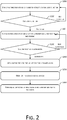
- FIG. 2 is a flowchart of a method of processing a notification message in accordance with the present embodiment. Each operation in FIG. 2 is described in detail hereinafter.
- S200 displays corresponding description information in a user interface of a smart electronic device, to guide a user to enter into an interface of an auxiliary function of an operating system for activating the auxiliary function.
- S210 determines whether the auxiliary function of the operating system is activated. If the auxiliary function is activated, S230 is entered. Otherwise, S200 is returned to continue to guide the user to enter into the interface of the auxiliary function of the operating system.
- S220 displays corresponding description information on the user interface of the smart electronic device to guide the user to allow monitoring of notification messages of application(s), i.e., the user authorizing an authorization of monitoring the notification messages of the application(s).
- S230 determines whether the user authorize an authorization of monitoring the notification messages of the application(s). If an authorization of monitoring the notification messages of the application(s) is authorized, S240 is entered. Otherwise, S220 is returned to continue to guide the user to authorize an authorization of monitoring the notification messages of the application(s).
- S240 sets a switch for monitoring the notification messages of the application(s) as on.
- S250 monitors the notification messages of the application(s) through the interface of the auxiliary function of the operating system. For example, information content of the notification messages of the application(s) is monitored. For another example, the information content of the notification messages of the application(s) and application property information of the application(s) to which the notification messages is monitored. For another example, the information content of the notification messages of the application(s), the application property information of the application(s) to which the notification messages, and message property information of the notification messages is monitored.
- S260 is entered.
- a monitored notification message does not trigger any notification message processing rule that is configured in advance, an operation of monitoring the notification messages of the application(s) through the interface of the auxiliary function of the operating system is continued to be performed.
- the notification message processing rule may specifically include a predefined keyword and a processing method of a notification message. For this type of notification message processing rule, when information content of a monitored notification message includes a predefined keyword in a notification message processing rule, such notification message processing rule is triggered.
- the notification message processing rule may specifically include a predefined keyword, a predefined condition that is set up for application property information of an application to which a notification message belongs, and a processing method of the notification message.
- a predefined keyword a predefined condition that is set up for application property information of an application to which a notification message belongs
- a processing method of the notification message a processing method of the notification message.
- the notification message processing rule may specifically include a predefined keyword, a predefined condition that is set up for message property information of a notification message, and a processing method of the notification message.
- a predefined keyword For this type of notification message processing rule, when information content of a monitored notification message includes a predefined keyword in a notification message processing rule, and message property information of the notification message satisfies a predefined condition, such notification message processing rule is triggered.
- the notification message processing rule may specifically include a predefined keyword, predefined conditions that are set up for application property information of an application to which a notification message belongs and message property information of the notification message, and a processing method of the notification message.
- a predefined keyword predefined conditions that are set up for application property information of an application to which a notification message belongs and message property information of the notification message
- a processing method of the notification message For this type of notification message processing rule, when information content of a monitored notification message includes a predefined keyword in a notification message processing rule, and application property information of an application to which the notification message and message property information of the notification message belongs satisfy respective predefined conditions, such notification message processing rule is triggered.
- S260 performs corresponding processing on a notification message according to a processing method of the notification message in a notification message processing rule that is triggered by the notification message, such as opening the notification message through the application to which the notification message belongs, or popping up an enhanced prompt window that is set for the notification message through an Ali money shield application, etc.
- a processing method of the notification message in a notification message processing rule that is triggered by the notification message such as opening the notification message through the application to which the notification message belongs, or popping up an enhanced prompt window that is set for the notification message through an Ali money shield application, etc.
- the present embodiment does not limit specific ways of implementations for performing corresponding processing on a notification message.
- an apparatus that implements processing of a notification message is generally deployed in a smart electronic device, such as being deployed in a smart electronic device having an Android-based operating system. If other operating systems also provide an interface of an auxiliary function, the apparatus of the present embodiment can also be deployed in smart electronic devices having these other operating systems. Structures of implementations of an apparatus of processing a notification message in accordance with the present embodiment are shown in FIGS. 3-9 .
- An apparatus in FIG. 3 mainly includes a monitoring module 300 and a processing module 310.
- the monitoring module 300 is mainly used for monitoring notification messages of an application through an interface of an auxiliary function of an operating system of a smart electronic device.
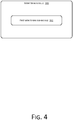
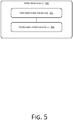
- the monitoring module 300 mainly includes a first monitoring sub-module 301 (as shown in FIG. 4 ). Furthermore, the monitoring module 300 may also include a second monitoring sub-module 302 (as shown in FIG. 5 ).
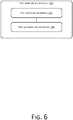
- the first monitoring sub-module 301 may include a first searching sub-module 303 and a first determination sub-module 304 (as shown in FIG. 6 ).
- the first monitoring sub-module 301 may also include an image recognition sub-module 305, a second searching sub-module 306, and a second determination sub-module 307 (as shown in FIG. 7 ).
- the first monitoring sub-module 301 is mainly used for detecting whether information content of a notification message includes a predefined keyword of a keyword set through the interface of the auxiliary function of the operating system of the smart electronic device.
- the second monitoring sub-module 302 is mainly used for detecting whether application property information of an application to which the notification message belongs and/or message property information of the notification message satisfy respective predefined conditions.
- the first searching sub-module 303 is mainly used for querying whether textual information in the information content of the notification message includes the predefined keyword of the keyword set.
- the first determination sub-module 304 is mainly used for determining that the notification message including the predefined keyword is detected in response to a query result indicating that the textual information in the information content of the notification message includes the predefined keyword.
- the image recognition sub-module 305 is mainly used for performing image recognition on a picture in the information content of the notification message.
- the second searching sub-module 306 is mainly used for querying whether an image recognition result includes the predefined keyword of the keyword set.
- the second determination sub-module 307 is mainly used for determining that the notification message including the predefined keyword is detected in response to a query result indicating that the image recognition result includes the predefined keyword.
- the apparatus implementing notification message processing (such as a configuration module) needs to perform an operation of activating the auxiliary function provided by the operating system of the smart electronic device first.
- the configuration module enables a user of the smart electronic device to set the auxiliary function provided by the operating system of the smart electronic device to an activated status by guiding the user of the smart electronic device step by step.
- the notification message of the application that is monitored by the monitoring module 300 through the interface of the auxiliary function of the operating system of the smart electronic device may be a notification message of a system application, or may be a notification message of a third-party application.
- the notification message of a system application may be a notification message of a short messaging application, such as a notification message that is generated after a short messaging application receives a new short message.
- the notification message of a third-party application may be a notification message of an instant messaging application, such as a notification message that is generated when a WeChat application receives a new message.
- the notification message of a third-party application may be a notification message of a new message pushed by an application client, such as a notification message that is generated when a Sohu Video client or Tencent news client wants to push new video/news to a user.
- the first monitoring sub-module 301 can detect whether information content of a notification message includes a predefined keyword of a keyword set through the interface of the auxiliary function of the operating system of the smart electronic device.
- the keyword set generally includes a predefined keyword or a plurality of different predefined keywords.
- the predefined keyword(s) in the keyword set can be predefined keyword(s) that is/are downloaded by the first monitoring sub-module 301 from a cloud server (for example, updating a keyword set that is locally stored in a smart electronic device from a cloud server regularly or irregularly), or predefined keyword(s) that is/are self-defined by a smart electronic device (i.e., the first monitoring sub-module 301 stores predefined keyword(s) that is/are defined by a user of the smart electronic device himself/herself in a keyword set).
- the first monitoring sub-module 301 may obtain information content of a notification message through an interface of an auxiliary function of an operating system of a smart electronic device.
- the first searching sub-module 303 can perform matching of the textual information of the notification message according to predefined keyword(s) of a locally stored keyword set (the first searching sub-module 303 can separately perform matching and querying of each predefined keyword for the textual information of the notification message if the keyword set includes a plurality of different predefined keywords) to determine whether the textual information of the notification message includes information that matches with a predefined keyword of the keyword set.
- the first determination sub-module 304 determines that a notification message that is detected includes a predefined keyword. Otherwise, the first determination sub-module 304 determines that the notification message does not include a predefined keyword.
- the first monitoring sub-module 301 can obtain information content of a notification message through an interface of an auxiliary function of an operating system of a smart electronic device.
- the image recognition sub-module 305 can first perform image recognition on the picture in the notification message to convert the picture in the notification message into textual information.
- the second searching sub-module 306 then performs matching of the textual information that is obtained from the image recognition according to predefined keyword(s) of a locally stored keyword set (the second searching sub-module 306 can separately perform matching and querying of each predefined keyword for the textual information that is obtained from the image recognition if the keyword set includes a plurality of different predefined keywords) to determine whether the textual information that is obtained from the image recognition includes information that matches with a predefined keyword of the keyword set.
- the second determination sub-module 307 determines that a notification message that is detected includes a predefined keyword. Otherwise, the second determination sub-module 307 determines that the notification message does not include a predefined keyword.
- the first monitoring sub-module 301 and the second monitoring sub-module 302 monitor the information content of the notification message of the application and the application property information of the application to which the notification message belongs through the interface of the auxiliary function of the operating system of the smart electronic device. For example, the first monitoring sub-module 301 detects whether information content of a notification message includes a predefined keyword of a keyword set through an interface of an auxiliary function of a smart electronic device, and the second monitoring sub-module 302 detects whether application property information of an application to which the notification message belongs satisfies predefined condition(s) (the predefined condition(s) can be called as predefined application property condition(s)).
- predefined condition(s) can be called as predefined application property condition(s)
- application property information may include any one or more of a packet name of an application, a name of the application, a type of the application (such as a system application or a third-party application), a space occupied by the application after installation, and memory occupied by the application after launch.
- a predefined application property condition is generated set in conjunction with a predefined keyword.
- a single predefined keyword may be configured with and correspond to a single predefined application property condition. In a real application, however, the present embodiment does not exclude situations in which a single predefined keyword is configured with and correspond to multiple predefined application property conditions.
- a predefined application property condition can be a predefined application property condition that is downloaded by the second monitoring sub-module 302 from a cloud server (such as updating predefined application property conditions that are local to a smart electronic device from the cloud server regularly or irregularly), or a predefined application property condition that is self-defined by a smart electronic device (i.e., second monitoring sub-module 302 allows a user of the smart electronic device to set a predefined application property condition on his/her own).
- the processing module 310 is mainly used for performing corresponding processing on a notification message including a predefined keyword according to a processing method corresponding to the predefined keyword in response to the monitoring module 300 detects the notification message including the predefined keyword.
- the processing module 310 mainly includes one or more of a first processing sub-module 311, a second processing sub-module 312, and a third processing sub-module 313 (as shown in FIG. 8 ). Furthermore, the processing module 310 may also mainly include an enhanced prompting sub-module 314, an early warning sub-module 315, and an invocation sub-module 316 (as shown in FIG. 9 ). In a specific real application, the first processing sub-module 311, the second processing sub-module 312, and the third processing sub-module 313 all include the enhanced prompting sub-module 314, the early warning sub-module 315, and the invocation sub-module 316.
- the first processing sub-module 311 is mainly used for performing corresponding processing on the notification message including the predefined keyword according to a processing method corresponding to the predefined keyword and the predefined condition when the notification message includes the predefined keyword and application property information satisfies the predefined condition.
- the second processing sub-module 312 is mainly used for performing corresponding processing on the notification message including the predefined keyword according to a processing method corresponding to the predefined keyword and the predefined condition when the notification message includes the predefined keyword and message property information satisfies the predefined condition.
- the third processing sub-module 313 is mainly used for performing corresponding processing on the notification message including the predefined keyword according to a processing method corresponding to the predefined keyword and the predefined condition when the notification message includes the predefined keyword, and application property information and message property information satisfies the predefined condition.
- the enhanced prompting sub-module 314 is mainly used for performing enhanced prompting for the notification information.
- the early warning sub-module 315 is mainly used for providing an early warning for the notification information.
- the invocation sub-module 316 is mainly used for invoking the application to which the notification message belongs for the notification message through the interface of the auxiliary function of the operating system of the smart electronic device.
- the processing module 310 can configure a processing method of a notification message for a predefined keyword (a predefined keyword and a corresponding processing method of a notification message can form a notification message processing rule). Therefore, when a notification message including a predefined keyword is detected by the monitoring module 300, the processing module 310 can directly employ a processing method of the notification message corresponding to the keyword included in the notification message to perform corresponding processing on the notification message. In other words, the processing module 310 can directly employ a processing method of a notification message in a corresponding notification message processing rule for performing corresponding processing on the notification message.
- the processing module 310 can also configure a processing method of a notification message for a predefined keyword and a corresponding predefined application property condition (a predefined keyword, a predefined application property condition corresponding to the predefined keyword, and a corresponding processing method of a notification message can form a notification message processing rule). Therefore, in response to the monitoring module 300 detecting that a notification message includes a predefined keyword and application property information of an application to which the notification message belongs satisfies a predefined application property condition, the first processing sub-module 311 can perform corresponding processing on the notification message by employing a processing method of the notification message corresponding to both the keyword that is included in the notification message and the predefined message property condition that is satisfied. In other words, the first processing sub-module 311 employs a processing method of a notification message in a corresponding notification message processing rule for performing corresponding processing on the notification message.
- the processing module 310 can also configure a processing method of a notification message for a predefined keyword and a corresponding predefined message property condition (a predefined keyword, a predefined message property condition corresponding to the predefined keyword, and a corresponding processing method of a notification message can form a notification message processing rule). Therefore, in response to the monitoring module 300 detecting that a notification message includes a predefined keyword and message property information of the notification message satisfies a predefined message property condition, the second processing sub-module 312 can perform corresponding processing on the notification message by using a processing method of the notification message corresponding to both the keyword that is included in the notification message and the predefined message property condition that is satisfied. In other words, the second processing sub-module 312 employs a processing method of a notification message in a corresponding notification message processing rule for performing corresponding processing on the notification message.
- the processing module 310 can also configure a processing method of a notification message (a predefined keyword, a predefined application property condition corresponding to the predefined keyword, a predefined message property condition corresponding to the predefined keyword, and a corresponding processing method of a notification message can form a notification message processing rule) for a predefined keyword and corresponding predefined conditions (which include a predefined application property condition and a predefined message property condition).
- the third processing sub-module 313 can perform corresponding processing on the notification message by using a processing method of the notification message corresponding to both the keyword that is included in the notification message and the predefined property conditions that are satisfied.
- the third processing sub-module 313 employs a processing method of a notification message in a corresponding notification message processing rule for performing corresponding processing on the notification message.
- Corresponding processing that is performed for a notification message that includes a predefined keyword by the processing module 310 can be performing enhanced prompting for the notification message by the enhanced prompting sub-module 314.
- the enhanced prompting sub-module 314 displays information content of a notification message in a form of a popup window (such as the enhanced prompting sub-module 314 displays a popup window having a red pocket).
- the enhanced prompting sub-module 314 prompts a user by playing a corresponding audio signal and/or generating vibration.
- Corresponding processing that is performed for a notification message that includes a predefined keyword by the processing module 310 can be providing a warning prompt for the notification message.
- the early warning sub-module 314 displays warning information in a form of a popup window.
- the early warning sub-module 314 warns a user by playing a corresponding audio signal and/or generating vibration.
- Corresponding processing that is performed for a notification message that includes a predefined keyword by the processing module 310 can also be the invocation sub-module 316 targeted for the notification message.
- An application to which a notification message belongs is invoked based on an interface of an auxiliary function of an operating system of a smart electronic device, thereby simulating operations performed by a user, e.g., invoking the invocation module 316 to open the notification message in the application to which the notification message belongs through the interface of the auxiliary function.
- the invocation module 316 can open a WeChat red pocket in a WeChat application through an interface of an auxiliary function.
- the invocation module 316 can also open a dialing interface of a telephone application through an interface of an auxiliary function.
- the invocation module 316 can even simulate a dialing operation of a user based on a telephone number configured in a notification message processing rule.
- the invocation module 316 can also delete a notification message associated with a fraud train ticket through an interface of an auxiliary function.
- the present embodiment does not have any limitation on specifics of corresponding processing methods used by the invocation module 316 for performing corresponding processing on a notification message that includes a predefined keyword.
- a portion of the present invention can be applied as a computer program product, such as computer program instructions that, when executed by a smart electronic device (such as a smart mobile phone or a tablet computer), can call or provide a method and/or a technical solution according to the present invention through operations of the smart electronic device.
- the program instructions that call the method of the present invention may be stored in a fixed or movable recording media, and/or transmitted through broadcasting or a data stream in other signal carrier media, and/or stored in a work storage device of a smart electronic device that runs according to the program instructions.
- an apparatus is included herein.
- the apparatus includes a storage device storing computer program instructions, and processor(s) executing the program instructions. When the computer program instructions are executed by the processor(s), the apparatus is triggered to run the method(s) and/or technical solution(s) according to the foregoing embodiments of the present invention.
Landscapes
- Engineering & Computer Science (AREA)
- Theoretical Computer Science (AREA)
- Software Systems (AREA)
- Physics & Mathematics (AREA)
- General Engineering & Computer Science (AREA)
- General Physics & Mathematics (AREA)
- Data Mining & Analysis (AREA)
- Databases & Information Systems (AREA)
- Signal Processing (AREA)
- Computer Networks & Wireless Communication (AREA)
- Computational Linguistics (AREA)
- Multimedia (AREA)
- Library & Information Science (AREA)
- Human Computer Interaction (AREA)
- User Interface Of Digital Computer (AREA)
- Debugging And Monitoring (AREA)
- Information Transfer Between Computers (AREA)
- Telephone Function (AREA)
Abstract
Description
- The present application claims priority to Chinese Patent Application No.
201610006150.2, filed on 5 January 2016 - The present application relates to the technical field of the Internet, and particularly to methods and apparatuses for processing a notification message.
- Along with the rapid development of mobile Internet technologies, smart electronic devices, especially smart mobile phones, have become increasingly popular. The types of applications provided for smart electronic devices, especially smart mobile phones, have become more abundant in variety.
- In situations such as when an application in a smart electronic device receives a new message or a certain reminding event in the application is triggered, a notification message is usually generated, and an operation of notification related to this notification message is executed to help prompting a user to read the new message or to pay attention to an event that is pre-arranged in time, for example. As a specific example, when a new message comes to WeChat, WeChat will display a notification message of this new message on a notification panel of an operating system or lock screen interface, and prompt a user to read the new message through a means such as voice or vibration. As another specific example, when a time corresponding to a reminder event in a calendar application is reached at a current time, the reminder event in the calendar application is triggered. The calendar application displays a notification message describing this reminder event on a lock screen interface or a front page of a smart electronic device, and prompts a user to pay attention to this reminder event through a means such as voice or vibration.
- During implementations of the present invention, inventors notice that methods of processing notification messages of different applications are approximately the same, though types and number of applications continue to vary and increase. In other words, methods of processing notification messages are relatively simple.
- A goal of the present invention is to provide a method and an apparatus for processing a notification message.
- According to an aspect of the present invention, a method of processing a notification message is provided. The method includes the following steps: monitoring a notification message of an application through an interface of an auxiliary function of an operating system of a smart electronic device; and in response to detecting that the notification message includes a predefined keyword, performing corresponding processing on the notification message that includes the predefined keyword according to a processing method corresponding to the predefined keyword.
- According to another aspect of the present invention, an apparatus of processing a notification message is provided. The apparatus includes a monitoring module used for monitoring a notification message of an application through an interface of an auxiliary function of an operating system of a smart electronic device; and a processing module used for, in response to detecting that the notification message includes a predefined keyword, performing corresponding processing on the notification message that includes the predefined keyword according to a processing method corresponding to the predefined keyword.
- Compared with existing technologies, the present invention has the following advantages. By monitoring a notification message of an application using an interface of an auxiliary function of an operating system of a smart electronic device, the present invention can obtain the notification message of the application in a convenient, quick and accurate manner without affecting normal operations of the operating system. By detecting whether a notification message includes a predefined keyword and setting up respective processing methods corresponding to various predefined keywords, the present invention can thereby determine a processing method corresponding to the notification message using the predefined keyword when the detected notification message includes the predefined keyword. As such, the present invention can perform corresponding processing on the notification message that includes the predefined keyword. Different notification messages can therefore be allowed to correspond to different processing methods, such as providing an enhanced prompt or a warning prompt for a notification message, or conducting information exchange with an application to which the notification message belongs. As can be seen, technical solutions provided by the present invention can perform different processing for different notification messages, enriching processing methods of notification messages, while preventing the notification messages from interrupting users, thus improving the degree of intelligentization of processing of the notification messages.
- By reading and referencing the accompanying drawings for detailed description of nonlimiting embodiments, other features, goals and advantages of the present invention can be made more apparently.
-
FIG. 1 is a flowchart of a method of processing a notification message in accordance with a first embodiment of the present invention. -
FIG. 2 is a flowchart of a method of processing a notification message in accordance with a second embodiment of the present invention. -
FIG. 3 is a schematic structural diagram of an apparatus of processing a notification message in accordance with a third embodiment of the present invention. -
FIG. 4 is a schematic structural diagram of a monitoring module in accordance with the third embodiment of the present invention. -
FIG. 5 is a schematic structural diagram of another monitoring module in accordance with the third embodiment of the present invention. -
FIG. 6 is a schematic structural diagram of a first monitoring sub-module in accordance with the third embodiment of the present invention. -
FIG. 7 is a schematic structural diagram of another first monitoring sub-module in accordance with the third embodiment of the present invention. -
FIG. 8 is a schematic structural diagram of a processing module in accordance with the third embodiment of the present invention. -
FIG. 9 is a schematic structural diagram of another processing module in accordance with the third embodiment of the present invention. - The same or similar drawing labels in the accompanying drawings represent the same or similar components.
- In order to make the goals, technical solutions and advantages of the present invention more clearly, the embodiments of the present invention are described herein in conjunction with the accompanying drawings.
- Before describing the exemplary embodiments in more detail, it should be noted that some exemplary embodiments are described as processes or methods shown by flowcharts. Although flowcharts of the present invention describe various operations as sequences, a number of operations therein can be executed in parallel, simultaneously, or at the same time. Furthermore, an order of operations can be rearranged. A process can be ended when operations thereof are completed. Nevertheless, additional operations not shown may also be included. The process can correspond to a method, a function, a procedure, a sub-routine, a routine, etc.
- The smart electronic devices include a user device and a network device. The user device includes, but is not limited to, a computer, a smart mobile phone, or PDA, etc. The network device includes, but is not limited to, a single network server, a server group formed by a plurality of network servers, a large number of computers based on cloud computing, or a cloud formed by network servers. The cloud computing is a type of distributed computing, and is a super virtual computer formed by a set of loosely coupled computers. The smart electronic device can connect to a network, and conducts operations of information exchange with other smart electronic devices in the network. The network to which the smart electronic device can connect includes, but is not limited to, the Internet, a wide area network, a metropolitan area network, a local area network, a virtual private network, etc.
- It should be noted that the user device, the network device and the network are merely examples. Other smart electronic devices or networks that exist currently or may exist in the future are also applicable to the present invention, and should be included in the scope of protection of the present invention, which are included herein by reference.
- Embodiments of methods (some of which are shown in flowcharts) that are described and discussed hereinafter can be implemented in a form of hardware, software, firmware, middleware, microcode, hardware description language, or any combination thereof. When being implemented using software, firmware, middleware or microcode, program codes or code segments that are used for implementing necessary tasks can be stored in machine or computer readable media (such as storage media). (One or more) processors can execute the necessary tasks.
- Details of structures and functions disclosed herein are merely representative, and are used for the purpose of describing the exemplary embodiments of the present invention. However, the present application can be implemented through a number of alternative forms, and should not be interpreted to be only limited to the embodiments described herein.
- It should be noted that, although terms such as "first" and "second", etc., are used herein for describing various units, these units should not be limited by these terms. These terms are used merely for distinguishing one unit from another unit. For example, without departing the scope of the exemplary embodiments, a first unit can be called as a second unit, and similarly the second unit can be called as the first unit. A term "and/or" used herein includes a combination of any or all of one or more associated items that are listed.
- It should be noted that, when a unit is said to be "connected" or "coupled" to another unit, that unit can be directly connected or coupled to the other unit, or an intermediate unit may exist therebetween. Correspondingly, when a unit is said to be "directly connected" or "directly coupled" to another unit, no intermediate unit exists therebetween. Other terms that are used for describing a relationship between units (for example, "in between" as compared to "directly in between", "adjacent to" as compared to "directly adjacent to", etc.) should also be interpreted in a similar way accordingly.
- Terms used herein are merely used for describing specific embodiments, and are not intended to limit the exemplary embodiments. Unless clearly stated otherwise in the context, singular forms used herein such as "a" and "an" are also intended to include a plural form. It should also be noted that terms such as "include" and/or "contain" set forth an existence of features, numbers, procedures, operations, units, and/or components that are described, and do not exclude an additional existence of one or more other features, numbers, procedures, operations, units, components, and/or combinations thereof.
- It should also be noted that functions/actions described in some alternative implementations may not occur according to an order shown in associated accompanying drawings. For example, depending on functions/actions involved, two figures that are shown successively can be executed substantially at the same or in a reverse order in reality.
- The technical solutions of the present application are described in further detail in conjunction with the accompanying drawings.
-
FIG. 1 is a flowchart of a method of processing a notification message in accordance with the present embodiment. As shown inFIG. 1 , the method of the present embodiment mainly includes step S100 and step S110. The method recorded in the present embodiment is generally performed in a smart electronic device. Preferably, the method recorded in the present embodiment is generally performed in a smart electronic device (i.e., a user device) such as smart mobile phone and a tablet computer, etc. For example, the method recorded in the present embodiment can be deployed in an application (e.g., Ali money shield application) that is installed in a smart electronic device. The method recorded in the present embodiment can be performed after the application is activated. - Each step in
FIG. 1 is separately described in detail hereinafter. - S100 monitors a notification message of an application through an interface of an auxiliary function of an operating system of a smart electronic device.
- Specifically, an auxiliary function of an operating system of a smart electronic device in the present embodiment is used for enabling a user (such as certain disabled users, which may be visually impaired users, for example) to use the smart electronic device without any barrier. For example, an auxiliary function of the operating system can read aloud the text in a user interface of the smart electronic device, or magnify the text in the user interface of the smart electronic device, etc. Operating systems of smart electronic devices generally provide open interfaces of auxiliary functions. The present embodiment achieves monitoring of notification of an application through an interface of an auxiliary function.
- As an example, the smart electronic device in the present embodiment is usually a smart electronic device based on an Android operating system. If other operating systems also provide interfaces of auxiliary functions, the smart electronic device in the present embodiment may also be smart electronic devices of the other operating systems.
- As an example, in a process of implementation of the present embodiment, if an auxiliary function provided by an operating system of a smart electronic device is not in an activated status, an operating of activating the auxiliary function provided by the operating system of the smart electronic device is first performed. For example, a user of the smart electronic device is guided step by step to cause the smart electronic device to set the auxiliary function provided by the operating system of the smart electronic device into an activated status.
- As an example, the notification message of the application that is monitored through the interface of the auxiliary function of the operating system of the smart electronic device in the present embodiment may be a notification message of a system application, or may be a notification message of a third-party application. In the present embodiment, a notification message of a system application may be a notification message of a short messaging application, such as a notification message that is generated after a short messaging application receives a new short message. In the present embodiment, a notification message of a third-party application may be a notification message of an instant messaging application, such as a notification message that is generated when a WeChat application receives a new message. In the present embodiment, a notification message of a third-party application may be a notification message of a new message pushed by an application client, such as a notification message that is generated when a Sohu Video client or Tencent news client wants to push new video/news to a user.
- As an example, in the present embodiment, monitoring the notification message of the application through the interface of the auxiliary function of the operating system of the smart electronic device may include monitoring information content of the notification message of the application through the interface of the auxiliary function of the operating system of the smart electronic device, such as monitoring whether the content of the notification message of the application includes a predefined keyword of a keyword set through the interface of the auxiliary function of the operating system of the smart electronic device. In the present embodiment, a keyword set generally includes a predefined keyword, or a plurality of different predefined keywords. Furthermore, in the present embodiment, predefined keyword(s) of a keyword set may be predefined keyword(s) that is/are downloaded from a cloud server (for example, updating a keyword set that is locally stored in a smart electronic device from a cloud server regularly or irregularly), or predefined keyword(s) that is/are self-defined by a smart electronic device (i.e., predefined keyword(s) that is/are defined by a user of the smart electronic device himself/herself can also be stored in a keyword set).
- Details of an implementation of the first example described above are given. The present embodiment obtains information content of a notification message through an interface of an auxiliary function of an operating system of a smart electronic device. In an event that the information content of the notification message includes textual information (such as the entire information content of the notification message is textual information), the present embodiment can perform matching of the textual information of the notification message according to predefined keyword(s) of a locally stored keyword set (separately performing matching and querying of each predefined keyword for the textual information of the notification message if the keyword set includes a plurality of different predefined keywords) to determine whether the textual information of the notification message includes information that matches with a predefined keyword of the keyword set. In response to a search result indicating that information of a predefined keyword of the keyword set exists in the textual information of the notification message, a determination is made that a notification message that is detected includes a predefined keyword. Otherwise, a determination is made that the notification message does not include a predefined keyword. For a more specific example, a keyword set may be set to include a predefined keyword "red pocket". After a notification message is obtained through an interface of an auxiliary function of an operating system of a smart electronic device and when information content of the notification message includes textual information, the present embodiment match and search the textual information of the notification message according to the predefined keyword "red pocket" to determine whether information matching with the predefined keyword "red pocket" exists in the textual information of the notification message. In response to a search result indicating that the information matching with the predefined keyword "red pocket" exists in the textual information of the notification message, a determination is made that the notification message that is detected includes the predefined keyword "red pocket". Otherwise, a determination is made that the notification message does not include the predefined keyword "red pocket".
- Details of another implementation of the first example described above may include the following. The present embodiment can obtain information content of a notification message through an interface of an auxiliary function of an operating system of a smart electronic device. In an event that the information content of the notification message includes a picture (such as all or part of the information content of the notification message is a picture), the present embodiment can first perform image recognition on the picture in the notification message to convert the picture in the notification message into textual information. The present embodiment then performs matching of the textual information that is obtained from the image recognition according to predefined keyword(s) of a locally stored keyword set (the present embodiment can separately perform matching and querying of each predefined keyword for the textual information that is obtained from the image recognition if the keyword set includes a plurality of different predefined keywords) to determine whether the textual information that is obtained from the image recognition includes information that matches with a predefined keyword of the keyword set. In response to a search result indicating that information of a predefined keyword of the keyword set exists in the textual information that is obtained from the image recognition, a determination is made that a notification message that is detected includes a predefined keyword. Otherwise, a determination is made that the notification message does not include a predefined keyword. For a more specific example, a keyword set may be set to include a predefined keyword "red pocket". After a notification message is obtained through an interface of an auxiliary function of an operating system of a smart electronic device and when information content of the notification message includes a picture (i.e., all or part of the information content of the notification message is the picture), the present embodiment first performs image recognition on the picture in the notification message to convert the notification message into textual information. Matching and searching of the textual information that is obtained from the image recognition are then performed according to the predefined keyword "red pocket" to determine whether information matching with the predefined keyword "red pocket" exists in the textual information that is obtained from the image recognition. In response to a search result indicating that the information matching with the "red pocket" exists in the textual information that is obtained from the image recognition, a determination is made that the notification message that is detected includes the "red pocket". Otherwise, a determination is made that the notification message does not include the "red pocket".
- It should be noted that, when the present embodiment obtains a notification message through an interface of an auxiliary function of an operating system of a smart electronic device and information content of the notification message includes textual information and a picture, the present embodiment can determine whether the textual information in the notification message includes a predefined keyword. Alternatively, a determination can be made as to whether the picture in the notification message includes a predefined keyword. Alternatively, a determination can be made as to whether the textual information in the notification message includes a predefined keyword and whether the picture in the notification message includes a predefined keyword. A detailed process thereof is not described in detail again. Similarly, the present embodiment does not individually describe a second example, a third example and a fourth example which are described below in detail.
- As a second example, details of the present embodiment of monitoring the notification message of the application through the interface of the auxiliary function of the operating system of the smart electronic device may include monitoring information content of the notification message of the application and application property information of the application to which the notification message belongs through the interface of the auxiliary function of the operating system of the smart electronic device. For example, monitoring is performed on a notification message of an application as to whether information content thereof includes a predefined keyword of a keyword set and whether application property information of the application to which the notification message belongs satisfies predefined condition(s) (the predefined condition(s) can be called as predefined application property condition(s)) through an interface of an auxiliary function of a smart electronic device. In the present embodiment, application property information may include any one or more of a packet name of an application, a name of the application, a type of the application (such as a system application or a third-party application), a space occupied by the application after installation, and memory occupied by the application after launch. In the present embodiment, a predefined application property condition is generated set in conjunction with a predefined keyword. Furthermore, in a normal situation, a single predefined keyword may be configured with and correspond to a single predefined application property condition. In a real application, however, the present embodiment does not exclude situations in which a single predefined keyword is configured with and correspond to multiple predefined application property conditions. Moreover, in the present embodiment, a predefined application property condition can be a predefined application property condition downloaded from a cloud server (such as updating predefined application property conditions that are local to a smart electronic device from the cloud server regularly or irregularly), or a predefined application property condition that is self-defined by a smart electronic device (i.e., a user of the smart electronic device can set a predefined application property condition on his/her own). The present embodiment can flexibly set up predefined application property conditions based on content included in application property information according to an actual need. Examples of how to individually set up predefined application property conditions based on content of application property information are not described in detail herein.
- Details of another implementation of the above second example are given. The present embodiment obtains information content of a notification message and application property information of an application to which the notification message belongs through an interface of an auxiliary function of an operating system of a smart electronic device. When the information content of the notification message includes textual information (such as all the information content of the notification message is textual information), the present embodiment matches and searches the textual information of the notification message for a predefined keyword in a locally stored keyword set (when the keyword set includes a plurality of different predefined keywords, the present embodiment can separately matches and searches the textual information of the notification message for each predefined keyword), to determine whether information matching with the predefined keyword in the keyword set exists in the textual information of the notification message. When a search result indicates that no information matching with a predefined keyword in the keyword set exists in the textual information of the notification message, a determination is made that the notification message does not includes a predefined keyword. When a search result indicates that information matching with a predefined keyword in the keyword set exists in the textual information of the notification message, the present embodiment continues to determine whether the application property information that is obtained satisfies predefined application property condition(s) corresponding to the predefined keyword that is included in the notification message. If the obtained application property information satisfies the predefined application property condition(s) corresponding to the predefined keyword that is included in the notification message, a determination can be made that the detected notification message includes the predefined keyword and the application property information of the application to which the notification message belongs satisfies the predefined application property condition(s). Otherwise, a determination can be made that the detected notification message includes the predefined keyword and the application property information of the application to which the notification message belongs fails to satisfy the predefined application property condition(s). For a more specific example, a keyword set is set to include a predefined keyword "red pocket", and a predefined application property condition corresponding to this predefined keyword "red pocket" is an application packet name being "com.tencent.mm" (i.e., a WeChat packet name that is officially defined by WebChat). After obtaining information content of a notification message and application property information of an application to which the notification message belongs through an interface of an auxiliary function of an operating system of a smart electronic device, and when the information content of the notification message includes textual information (such as all the information content of the notification message is textual information), the present embodiment matches and searches the textual information of the notification message according to the predefined keyword "red pocket", to determine whether information matching with "red pocket" exists in the textual information of the notification message. When a search result indicates that the textual information of the notification message does not include information matching with the predefined keyword "red pocket", a determination is made that the notification message does not include the predefined keyword "red pocket". When a search result indicates that the textual information of the notification message includes information matching with the predefined keyword "red pocket", the present embodiment further determines whether an application packet name of an application to which the notification message belongs is "com.tencent.mm". If the application packet name of the application to which the notification message belongs is "com.tencent.mm", a determination is made that the notification message including "red pocket" is detected, and the application property information of the application to which the notification message belongs satisfies the predefined application property condition. Otherwise, a determination is made that the application property information of the application to which the notification message belongs does not satisfy the predefined application property condition even though the notification message including "red pocket" is detected.
- Details of another implementation of the above second example are given. The present embodiment obtains information content of a notification message and application property information of an application to which the notification message belongs through an interface of an auxiliary function of an operating system of a smart electronic device. When the information content of the notification message includes a picture (such as all or part of the information content of the notification message is picture(s)), the present embodiment can first perform image recognition on the picture in the notification message to convert the picture in the notification message into textual information. The present embodiment then performs matching of the textual information that is obtained from the image recognition according to predefined keyword(s) of a locally stored keyword set (the present embodiment can separately perform matching and querying of each predefined keyword for the textual information that is obtained from the image recognition if the keyword set includes a plurality of different predefined keywords) to determine whether the textual information that is obtained from the image recognition includes information that matches with a predefined keyword of the keyword set. In response to a search result indicating that information of a predefined keyword of the keyword set does not exist in the textual information that is obtained from the image recognition, a determination is made that the notification message does not include the predefined keyword. In response to a search result indicating that information of a predefined keyword of the keyword set exists in the textual information that is obtained from the image recognition, the present embodiment continues to determine whether the application property information that is obtained satisfies predefined application property condition(s) corresponding to the predefined keyword that is included in the notification message. If the obtained application property information satisfies the predefined application property condition(s) corresponding to the predefined keyword that is included in the notification message, a determination can be made that the notification message that is detected includes the predefined keyword and the application property information of the application to which the notification message belongs satisfies the predefined application property condition(s). Otherwise, a determination can be made that the detected notification message includes the predefined keyword and the application property information of the application to which the notification message belongs fails to satisfy the predefined application property condition(s). For a more specific example, a keyword set is set to include a predefined keyword "red pocket", and a predefined application property condition corresponding to this predefined keyword "red pocket" is an application packet name being "com.tencent.mm" (i.e., a WeChat packet name that is officially defined by WebChat). After obtaining information content of a notification message and application property information of an application to which the notification message belongs through an interface of an auxiliary function of an operating system of a smart electronic device, and when the information content of the notification message includes a picture (such as all the information content of the notification message is the picture), the present embodiment first performs image recognition on the picture in the notification message to convert the notification message into textual information. Matching and searching of the textual information that is obtained from the image recognition are then performed according to the predefined keyword "red pocket" to determine whether information matching with the "red pocket" exists in the textual information that is obtained from the image recognition. In response to a search result indicating that no information matching with the keyword "red pocket" exists in the textual information that is obtained from the image recognition, a determination is made that the notification message does not include the predefined keyword "red pocket". In response to a search result indicating that the information matching with the predefined keyword "red pocket" exists in the textual information that is obtained from the image recognition, the present embodiment further determines whether an application packet name of an application to which the notification message belongs is "com.tencent.mm". If the application packet name of the application to which the notification message belongs is "com.tencent.mm", a determination is made that the notification message including "red pocket" is detected, and the application property information of the application to which the notification message belongs satisfies the predefined application property condition. Otherwise, a determination is made that the application property information of the application to which the notification message belongs does not satisfy the predefined application property condition even though the notification message including "red pocket" is detected.
- As a third example, details of the present embodiment of monitoring the notification message of the application through the interface of the auxiliary function of the operating system of the smart electronic device may include monitoring information content of the notification message of the application and message property information of the notification message through the interface of the auxiliary function of the operating system of the smart electronic device. For example, monitoring is performed on a notification message of an application as to whether information content thereof includes a predefined keyword of a keyword set and whether message property information of the notification message satisfies predefined condition(s) (the predefined condition(s) can be called as predefined message property condition(s)) through an interface of an auxiliary function of a smart electronic device. In the present embodiment, the message property information may include one or both of a time of information (e.g., a time of sending the message or a time of receiving the message, etc.), and information about a message sending party. In the present embodiment, the predefined message property condition(s) is/are generally set in conjunction with predefined keyword(s). Furthermore, in a normal situation, a single predefined keyword may be configured with and correspond to a single predefined message property condition. In a real application, however, the present embodiment does not exclude situations in which a single predefined keyword is configured with and correspond to multiple predefined message property conditions. Moreover, in the present embodiment, a predefined message property condition can be a predefined message property condition downloaded from a cloud server (such as updating predefined message property conditions that are local to a smart electronic device from the cloud server regularly or irregularly), or a predefined message property condition that is self-defined by a smart electronic device (i.e., a user of the smart electronic device can set a predefined message property condition on his/her own). The present embodiment can flexibly set up predefined message property conditions based on content included in message property information according to an actual need. Examples of how to individually set up predefined message property conditions based on content of message property information are not described in detail herein.
- Details of an implementation of the above third example are given. The present embodiment obtains information content of a notification message and message property information of the notification message through an interface of an auxiliary function of an operating system of a smart electronic device. When the information content of the notification message includes textual information (such as all the information content of the notification message is textual information), the present embodiment matches and searches the textual information of the notification message for a predefined keyword in a locally stored keyword set (when the keyword set includes a plurality of different predefined keywords, the present embodiment can separately matches and searches the textual information of the notification message for each predefined keyword), to determine whether information matching with the predefined keyword in the keyword set exists in the textual information of the notification message. When a search result indicates that no information matching with a predefined keyword in the keyword set exists in the textual information of the notification message, a determination is made that the notification message does not includes a predefined keyword. When a search result indicates that information matching with a predefined keyword in the keyword set exists in the textual information of the notification message, the present embodiment continues to determine whether the message property information that is obtained satisfies predefined message property condition(s) corresponding to the predefined keyword that is included in the notification message. If the obtained message property information satisfies the predefined message property condition(s) corresponding to the predefined keyword that is included in the notification message, a determination can be made that the detected notification message includes the predefined keyword and the message property information of the notification message satisfies the predefined message property condition(s). Otherwise, a determination can be made that the detected notification message includes the predefined keyword and the message property information of the notification message fails to satisfy the predefined message property condition(s). For a more specific example, a keyword set is set to include a predefined keyword "train ticket", and message property conditions corresponding to this predefined keyword "train ticket" are a number segment of a message sending party belonging to a predefined number segment and a time of sending the notification message belonging to a peak time period of ticket ordering (such as a period of time before and after a holiday). After obtaining information content of a notification message and message property information of the notification message through an interface of an auxiliary function of an operating system of a smart electronic device, and when the information content of the notification message includes textual information (such as all the information content of the notification message is textual information), the present embodiment matches and searches the textual information of the notification message according to the predefined keyword "train ticket", to determine whether information matching with "train ticket" exists in the textual information of the notification message. When a search result indicates that the textual information of the notification message does not include information matching with the predefined keyword "train ticket", a determination is made that the notification message does not include the predefined keyword "train ticket". When a search result indicates that the textual information of the notification message includes information matching with the predefined keyword "train ticket", the present embodiment further determines whether a number segment of a message sending party of the notification message belongs to a predefined number segment that is locally stored and whether a message sending time of the notification message belongs to a peak time period of ticket ordering (a predefined number segment that is locally stored and a peak time period of ticket ordering can be downloaded from a cloud server, or may be configured by a user on his/her own). If the number segment of the message sending party of the notification message belongs to the predefined number segment that is locally stored and the message sending time of the notification message belongs to the peak time period of ticket ordering, a determination is made that the notification message including "train ticket" is detected, and the message property information of the notification message satisfies the predefined message property condition. Otherwise, a determination is made that the message property information of the notification message belongs does not satisfy the predefined message property information even though the notification message including "train ticket" is detected.
- Details of another implementation of the above third example are given. The present embodiment obtains information content of a notification message and message property information of the notification message through an interface of an auxiliary function of an operating system of a smart electronic device. When the information content of the notification message includes a picture (such as all or part of the information content of the notification message is picture(s)), the present embodiment can first perform image recognition on the picture in the notification message to convert the picture in the notification message into textual information. The present embodiment then performs matching of the textual information that is obtained from the image recognition according to predefined keyword(s) of a locally stored keyword set (the present embodiment can separately perform matching and querying of each predefined keyword for the textual information that is obtained from the image recognition if the keyword set includes a plurality of different predefined keywords) to determine whether the textual information that is obtained from the image recognition includes information that matches with a predefined keyword of the keyword set. In response to a search result indicating that information of a predefined keyword of the keyword set does not exist in the textual information that is obtained from the image recognition, a determination is made that the notification message does not include the predefined keyword. In response to a search result indicating that information of a predefined keyword of the keyword set exists in the textual information that is obtained from the image recognition, the present embodiment continues to determine whether the message property information that is obtained satisfies predefined message property condition(s) corresponding to the predefined keyword that is included in the notification message. If the obtained message property information satisfies the predefined message property condition(s) corresponding to the predefined keyword that is included in the notification message, a determination can be made that the notification message that is detected includes the predefined keyword and the message property information of the notification message satisfies the predefined message property condition(s). Otherwise, a determination can be made that the detected notification message includes the predefined keyword and the message property information of the notification message fails to satisfy the predefined message property condition(s). For a more specific example, a keyword set is set to include a predefined keyword "train ticket", and message property conditions corresponding to this predefined keyword "train ticket" are a number segment of a message sending party belonging to a predefined number segment and a time of sending the notification message belonging to a peak time period of ticket ordering (such as a period of time before and after a holiday). After obtaining information content of a notification message and message property information of the notification message through an interface of an auxiliary function of an operating system of a smart electronic device, and when the information content of the notification message includes a picture (such as all the information content of the notification message is the picture), the present embodiment first performs image recognition on the picture in the notification message to convert the notification message into textual information. Matching and searching of the textual information that is obtained from the image recognition are then performed according to the predefined keyword "train ticket" to determine whether information matching with the "train ticket" exists in the textual information that is obtained from the image recognition. In response to a search result indicating that no information matching with the keyword "train ticket" exists in the textual information that is obtained from the image recognition, a determination is made that the notification message does not include the predefined keyword "train ticket". In response to a search result indicating that the information matching with the predefined keyword "train ticket" exists in the textual information that is obtained from the image recognition, the present embodiment further determines whether a number segment of a message sending party of the notification message belongs to a predefined number segment that is locally stored and whether a message sending time of the notification message belongs to a peak time period of ticket ordering (a predefined number segment that is locally stored and a peak time period of ticket ordering can be downloaded from a cloud server, or may be configured by a user on his/her own). If the number segment of the message sending party of the notification message belongs to the predefined number segment that is locally stored and the message sending time of the notification message belongs to the peak time period of ticket ordering, a determination is made that the notification message including "train ticket" is detected, and the message property information of the notification message satisfies the predefined message property condition. Otherwise, a determination is made that the message property information of the notification message belongs does not satisfy the predefined message property information even though the notification message including "train ticket" is detected.
- As a fourth example, details of the present embodiment of monitoring the notification message of the application through the interface of the auxiliary function of the operating system of the smart electronic device may include monitoring information content of the notification message of the application, application property information of the application to which the notification message belongs, and message property information of the notification message, through the interface of the auxiliary function of the operating system of the smart electronic device. For example, based on the interface of the auxiliary function of the operating system of the smart electronic device, a detection is made as to whether the information content of the notification message includes a predefined keyword of a keyword set, and whether the application property information of the application to which the notification message belongs and the message property information of the notification message satisfy respective predefined conditions. The predefined application property condition(s) and the predefined message property condition(s) as described above can form the predefined conditions in the present embodiment. Details of implementations of the fourth example can be made from a combination of the details of implementations of the second example and the details of implementations of the third example, and a detailed process of implementation thereof is not repeatedly described in detail herein.
- S110 performs, in response to detecting that the notification message includes a predefined keyword, corresponding processing on the notification message that includes the predefined keyword according to a processing method corresponding to the predefined keyword.
- Specifically, the present embodiment can configure a processing method of a notification message for a predefined keyword (a predefined keyword and a corresponding processing method of a notification message can form a notification message processing rule). Therefore, when a notification message including a predefined keyword is detected, the present embodiment can directly employ a processing method of the notification message corresponding to the keyword included in the notification message to perform corresponding processing on the notification message. In other words, a processing method of a notification message in a corresponding notification message processing rule is directly employed for performing corresponding processing on the notification message.
- The present embodiment can also configure a processing method of a notification message for a predefined keyword and a corresponding predefined application property condition (a predefined keyword, a predefined application property condition corresponding to the predefined keyword, and a corresponding processing method of a notification message can form a notification message processing rule). Therefore, in response to detecting that a notification message includes a predefined keyword and application property information of an application to which the notification message belongs satisfies a predefined application property condition, corresponding processing is performed on the notification message using a processing method of the notification message corresponding to both the keyword that is included in the notification message and the predefined message property condition that is satisfied. In other words, a processing method of a notification message in a corresponding notification message processing rule is employed for performing corresponding processing on the notification message.
- The present embodiment can also configure a processing method of a notification message for a predefined keyword and a corresponding predefined message property condition (a predefined keyword, a predefined message property condition corresponding to the predefined keyword, and a corresponding processing method of a notification message can form a notification message processing rule). Therefore, in response to detecting that a notification message includes a predefined keyword and message property information of the notification message satisfies a predefined message property condition, corresponding processing is performed on the notification message using a processing method of the notification message corresponding to both the keyword that is included in the notification message and the predefined message property condition that is satisfied. In other words, a processing method of a notification message in a corresponding notification message processing rule is employed for performing corresponding processing on the notification message.
- The present embodiment can also configure a processing method of a notification message (a predefined keyword, a predefined application property condition corresponding to the predefined keyword, a predefined message property condition corresponding to the predefined keyword, and a corresponding processing method of a notification message can form a notification message processing rule) for a predefined keyword and corresponding predefined conditions (which include a predefined application property condition and a predefined message property condition). Therefore, in response to detecting that a notification message includes a predefined keyword, and application property information of an application to which the notification message belongs satisfies a predefined application property condition, message property information of the notification message satisfies a predefined message property condition, corresponding processing is performed on the notification message using a processing method of the notification message corresponding to both the keyword that is included in the notification message and the predefined property conditions that are satisfied. In other words, a processing method of a notification message in a corresponding notification message processing rule is employed for performing corresponding processing on the notification message.
- In the present embodiment, performing corresponding processing for a notification message that includes a predefined keyword can be performing enhanced prompting for the notification message. For example, information content of a notification message can be displayed in a form of a popup window (such as displaying a popup window having a red pocket). For another example, a user is prompted by playing a corresponding audio signal and/or generating vibration.
- In the present embodiment, performing corresponding processing for a notification message that includes a predefined keyword can be providing a warning prompt for the notification message. For example, warning information is displayed in a form of a popup window. For another example, a user is warned by playing a corresponding audio signal and/or generating vibration.
- In the present embodiment, performing corresponding processing for a notification message that includes a predefined keyword can also be targeted for the notification message. An application to which a notification message belongs is invoked based on an interface of an auxiliary function of an operating system of a smart electronic device, thereby simulating operations performed by a user, e.g., opening the notification message in the application to which the notification message belongs through the interface of the auxiliary function. Specifically, the present embodiment can open a WeChat red pocket in a WeChat application through an interface of an auxiliary function. The present embodiment can also open a dialing interface of a telephone application through an interface of an auxiliary function, and can even simulate a dialing operation of a user based on a telephone number configured in a notification message processing rule. The present embodiment can also delete a notification message associated with a fraud train ticket through an interface of an auxiliary function. The present embodiment does not have any limitation of specifics of corresponding processing methods for performing corresponding processing on a notification message that includes a predefined keyword.
- On a basis of whether a notification message that is detected includes a predefined keyword, the present embodiment detects whether application property information of an application to which the notification message belongs and/or message property information of the notification message satisfy predefined conditions, and can effectively avoid incorrect processing operations for disguised/deceitful notification messages that include a predefined keyword, such as deceitful notification messages including a fake "red pocket". In response to determining that an application packet name of an application to which the notification message belongs is not "com.tencent.mm", the present embodiment does not perform enhanced prompting for the notification message, thus avoiding an incorrect prompt for the deceitful notification message that includes the predefined keyword "red pocket". For another example of a deceitful notification message that is associated with maliciously and deceitfully selling train tickets, the present embodiment does not perform enhanced prompting for the notification message in response to determining that a number segment of a sending party of the notification message belongs to a number segment of fraud numbers that are known, thus avoiding an incorrect prompt for the deceitful notification message that includes a predefined keyword "train ticket".
-
FIG. 2 is a flowchart of a method of processing a notification message in accordance with the present embodiment. Each operation inFIG. 2 is described in detail hereinafter. - S200 displays corresponding description information in a user interface of a smart electronic device, to guide a user to enter into an interface of an auxiliary function of an operating system for activating the auxiliary function.
- S210 determines whether the auxiliary function of the operating system is activated. If the auxiliary function is activated, S230 is entered. Otherwise, S200 is returned to continue to guide the user to enter into the interface of the auxiliary function of the operating system.
- S220 displays corresponding description information on the user interface of the smart electronic device to guide the user to allow monitoring of notification messages of application(s), i.e., the user authorizing an authorization of monitoring the notification messages of the application(s).
- S230 determines whether the user authorize an authorization of monitoring the notification messages of the application(s). If an authorization of monitoring the notification messages of the application(s) is authorized, S240 is entered. Otherwise, S220 is returned to continue to guide the user to authorize an authorization of monitoring the notification messages of the application(s).
- S240 sets a switch for monitoring the notification messages of the application(s) as on.
- S250 monitors the notification messages of the application(s) through the interface of the auxiliary function of the operating system. For example, information content of the notification messages of the application(s) is monitored. For another example, the information content of the notification messages of the application(s) and application property information of the application(s) to which the notification messages is monitored. For another example, the information content of the notification messages of the application(s), the application property information of the application(s) to which the notification messages, and message property information of the notification messages is monitored.
- When a monitored notification message triggers a notification message processing rule that is configured in advance, S260 is entered. When a monitored notification message does not trigger any notification message processing rule that is configured in advance, an operation of monitoring the notification messages of the application(s) through the interface of the auxiliary function of the operating system is continued to be performed.
- The notification message processing rule may specifically include a predefined keyword and a processing method of a notification message. For this type of notification message processing rule, when information content of a monitored notification message includes a predefined keyword in a notification message processing rule, such notification message processing rule is triggered.
- The notification message processing rule may specifically include a predefined keyword, a predefined condition that is set up for application property information of an application to which a notification message belongs, and a processing method of the notification message. For this type of notification message processing rule, when information content of a monitored notification message includes a predefined keyword in a notification message processing rule, and application property information of an application to which the notification message belongs satisfies a predefined condition, such notification message processing rule is triggered.
- The notification message processing rule may specifically include a predefined keyword, a predefined condition that is set up for message property information of a notification message, and a processing method of the notification message. For this type of notification message processing rule, when information content of a monitored notification message includes a predefined keyword in a notification message processing rule, and message property information of the notification message satisfies a predefined condition, such notification message processing rule is triggered.
- The notification message processing rule may specifically include a predefined keyword, predefined conditions that are set up for application property information of an application to which a notification message belongs and message property information of the notification message, and a processing method of the notification message. For this type of notification message processing rule, when information content of a monitored notification message includes a predefined keyword in a notification message processing rule, and application property information of an application to which the notification message and message property information of the notification message belongs satisfy respective predefined conditions, such notification message processing rule is triggered.
- S260 performs corresponding processing on a notification message according to a processing method of the notification message in a notification message processing rule that is triggered by the notification message, such as opening the notification message through the application to which the notification message belongs, or popping up an enhanced prompt window that is set for the notification message through an Ali money shield application, etc. The present embodiment does not limit specific ways of implementations for performing corresponding processing on a notification message.
- In the present embodiment, an apparatus that implements processing of a notification message is generally deployed in a smart electronic device, such as being deployed in a smart electronic device having an Android-based operating system. If other operating systems also provide an interface of an auxiliary function, the apparatus of the present embodiment can also be deployed in smart electronic devices having these other operating systems. Structures of implementations of an apparatus of processing a notification message in accordance with the present embodiment are shown in
FIGS. 3-9 . - An apparatus in
FIG. 3 mainly includes amonitoring module 300 and aprocessing module 310. - The
monitoring module 300 is mainly used for monitoring notification messages of an application through an interface of an auxiliary function of an operating system of a smart electronic device. - The
monitoring module 300 mainly includes a first monitoring sub-module 301 (as shown inFIG. 4 ). Furthermore, themonitoring module 300 may also include a second monitoring sub-module 302 (as shown inFIG. 5 ). Thefirst monitoring sub-module 301 may include a first searchingsub-module 303 and a first determination sub-module 304 (as shown inFIG. 6 ). Thefirst monitoring sub-module 301 may also include animage recognition sub-module 305, a second searching sub-module 306, and a second determination sub-module 307 (as shown inFIG. 7 ). - The
first monitoring sub-module 301 is mainly used for detecting whether information content of a notification message includes a predefined keyword of a keyword set through the interface of the auxiliary function of the operating system of the smart electronic device. - The
second monitoring sub-module 302 is mainly used for detecting whether application property information of an application to which the notification message belongs and/or message property information of the notification message satisfy respective predefined conditions. - The first searching
sub-module 303 is mainly used for querying whether textual information in the information content of the notification message includes the predefined keyword of the keyword set. - The
first determination sub-module 304 is mainly used for determining that the notification message including the predefined keyword is detected in response to a query result indicating that the textual information in the information content of the notification message includes the predefined keyword. - The
image recognition sub-module 305 is mainly used for performing image recognition on a picture in the information content of the notification message. - The
second searching sub-module 306 is mainly used for querying whether an image recognition result includes the predefined keyword of the keyword set. - The
second determination sub-module 307 is mainly used for determining that the notification message including the predefined keyword is detected in response to a query result indicating that the image recognition result includes the predefined keyword. - Specifically, in a process of implementation of the present embodiment, if the auxiliary function provided by the operating system of the smart electronic device is not in an activated status, the apparatus implementing notification message processing (such as a configuration module) needs to perform an operation of activating the auxiliary function provided by the operating system of the smart electronic device first. For example, the configuration module enables a user of the smart electronic device to set the auxiliary function provided by the operating system of the smart electronic device to an activated status by guiding the user of the smart electronic device step by step.
- As an example, the notification message of the application that is monitored by the
monitoring module 300 through the interface of the auxiliary function of the operating system of the smart electronic device may be a notification message of a system application, or may be a notification message of a third-party application. The notification message of a system application may be a notification message of a short messaging application, such as a notification message that is generated after a short messaging application receives a new short message. The notification message of a third-party application may be a notification message of an instant messaging application, such as a notification message that is generated when a WeChat application receives a new message. The notification message of a third-party application may be a notification message of a new message pushed by an application client, such as a notification message that is generated when a Sohu Video client or Tencent news client wants to push new video/news to a user. - As a first example, the
first monitoring sub-module 301 can detect whether information content of a notification message includes a predefined keyword of a keyword set through the interface of the auxiliary function of the operating system of the smart electronic device. In the present embodiment, the keyword set generally includes a predefined keyword or a plurality of different predefined keywords. Furthermore, in the present embodiment, the predefined keyword(s) in the keyword set can be predefined keyword(s) that is/are downloaded by thefirst monitoring sub-module 301 from a cloud server (for example, updating a keyword set that is locally stored in a smart electronic device from a cloud server regularly or irregularly), or predefined keyword(s) that is/are self-defined by a smart electronic device (i.e., thefirst monitoring sub-module 301 stores predefined keyword(s) that is/are defined by a user of the smart electronic device himself/herself in a keyword set). - Details of an implementation of the first example are given. The
first monitoring sub-module 301 may obtain information content of a notification message through an interface of an auxiliary function of an operating system of a smart electronic device. In an event that the information content of the notification message includes textual information (such as the entire information content of the notification message is textual information), the first searching sub-module 303 can perform matching of the textual information of the notification message according to predefined keyword(s) of a locally stored keyword set (the first searching sub-module 303 can separately perform matching and querying of each predefined keyword for the textual information of the notification message if the keyword set includes a plurality of different predefined keywords) to determine whether the textual information of the notification message includes information that matches with a predefined keyword of the keyword set. In response to a search result of the first searching sub-module 303 indicating that information of a predefined keyword of the keyword set exists in the textual information of the notification message, thefirst determination sub-module 304 determines that a notification message that is detected includes a predefined keyword. Otherwise, thefirst determination sub-module 304 determines that the notification message does not include a predefined keyword. - Details of another implementation of the first example described above may include the following. The
first monitoring sub-module 301 can obtain information content of a notification message through an interface of an auxiliary function of an operating system of a smart electronic device. In an event that the information content of the notification message includes a picture (such as all or part of the information content of the notification message is a picture), the image recognition sub-module 305 can first perform image recognition on the picture in the notification message to convert the picture in the notification message into textual information. The second searching sub-module 306 then performs matching of the textual information that is obtained from the image recognition according to predefined keyword(s) of a locally stored keyword set (the second searching sub-module 306 can separately perform matching and querying of each predefined keyword for the textual information that is obtained from the image recognition if the keyword set includes a plurality of different predefined keywords) to determine whether the textual information that is obtained from the image recognition includes information that matches with a predefined keyword of the keyword set. In response to a search result of the second searching sub-module 306 indicating that information of a predefined keyword of the keyword set exists in the textual information that is obtained from the image recognition, thesecond determination sub-module 307 determines that a notification message that is detected includes a predefined keyword. Otherwise, thesecond determination sub-module 307 determines that the notification message does not include a predefined keyword. - As a second example, the
first monitoring sub-module 301 and thesecond monitoring sub-module 302 monitor the information content of the notification message of the application and the application property information of the application to which the notification message belongs through the interface of the auxiliary function of the operating system of the smart electronic device. For example, thefirst monitoring sub-module 301 detects whether information content of a notification message includes a predefined keyword of a keyword set through an interface of an auxiliary function of a smart electronic device, and thesecond monitoring sub-module 302 detects whether application property information of an application to which the notification message belongs satisfies predefined condition(s) (the predefined condition(s) can be called as predefined application property condition(s)). In the present embodiment, application property information may include any one or more of a packet name of an application, a name of the application, a type of the application (such as a system application or a third-party application), a space occupied by the application after installation, and memory occupied by the application after launch. In the present embodiment, a predefined application property condition is generated set in conjunction with a predefined keyword. Furthermore, in a normal situation, a single predefined keyword may be configured with and correspond to a single predefined application property condition. In a real application, however, the present embodiment does not exclude situations in which a single predefined keyword is configured with and correspond to multiple predefined application property conditions. Moreover, in the present embodiment, a predefined application property condition can be a predefined application property condition that is downloaded by thesecond monitoring sub-module 302 from a cloud server (such as updating predefined application property conditions that are local to a smart electronic device from the cloud server regularly or irregularly), or a predefined application property condition that is self-defined by a smart electronic device (i.e.,second monitoring sub-module 302 allows a user of the smart electronic device to set a predefined application property condition on his/her own). - Specific operations performed by the
second monitoring sub-module 302 are similar to the two implementations of the second example, the third example, the two implementations of the third example, and the fourth example in the first embodiment as described above, and are not repeatedly described in detail herein. - The
processing module 310 is mainly used for performing corresponding processing on a notification message including a predefined keyword according to a processing method corresponding to the predefined keyword in response to themonitoring module 300 detects the notification message including the predefined keyword. - The
processing module 310 mainly includes one or more of afirst processing sub-module 311, asecond processing sub-module 312, and a third processing sub-module 313 (as shown inFIG. 8 ). Furthermore, theprocessing module 310 may also mainly include anenhanced prompting sub-module 314, anearly warning sub-module 315, and an invocation sub-module 316 (as shown inFIG. 9 ). In a specific real application, thefirst processing sub-module 311, thesecond processing sub-module 312, and thethird processing sub-module 313 all include the enhanced prompting sub-module 314, theearly warning sub-module 315, and theinvocation sub-module 316. - The
first processing sub-module 311 is mainly used for performing corresponding processing on the notification message including the predefined keyword according to a processing method corresponding to the predefined keyword and the predefined condition when the notification message includes the predefined keyword and application property information satisfies the predefined condition. - The
second processing sub-module 312 is mainly used for performing corresponding processing on the notification message including the predefined keyword according to a processing method corresponding to the predefined keyword and the predefined condition when the notification message includes the predefined keyword and message property information satisfies the predefined condition. - The
third processing sub-module 313 is mainly used for performing corresponding processing on the notification message including the predefined keyword according to a processing method corresponding to the predefined keyword and the predefined condition when the notification message includes the predefined keyword, and application property information and message property information satisfies the predefined condition. - The enhanced
prompting sub-module 314 is mainly used for performing enhanced prompting for the notification information. - The
early warning sub-module 315 is mainly used for providing an early warning for the notification information. - The
invocation sub-module 316 is mainly used for invoking the application to which the notification message belongs for the notification message through the interface of the auxiliary function of the operating system of the smart electronic device. - Specifically, the
processing module 310 can configure a processing method of a notification message for a predefined keyword (a predefined keyword and a corresponding processing method of a notification message can form a notification message processing rule). Therefore, when a notification message including a predefined keyword is detected by themonitoring module 300, theprocessing module 310 can directly employ a processing method of the notification message corresponding to the keyword included in the notification message to perform corresponding processing on the notification message. In other words, theprocessing module 310 can directly employ a processing method of a notification message in a corresponding notification message processing rule for performing corresponding processing on the notification message. - The
processing module 310 can also configure a processing method of a notification message for a predefined keyword and a corresponding predefined application property condition (a predefined keyword, a predefined application property condition corresponding to the predefined keyword, and a corresponding processing method of a notification message can form a notification message processing rule). Therefore, in response to themonitoring module 300 detecting that a notification message includes a predefined keyword and application property information of an application to which the notification message belongs satisfies a predefined application property condition, thefirst processing sub-module 311 can perform corresponding processing on the notification message by employing a processing method of the notification message corresponding to both the keyword that is included in the notification message and the predefined message property condition that is satisfied. In other words, thefirst processing sub-module 311 employs a processing method of a notification message in a corresponding notification message processing rule for performing corresponding processing on the notification message. - The
processing module 310 can also configure a processing method of a notification message for a predefined keyword and a corresponding predefined message property condition (a predefined keyword, a predefined message property condition corresponding to the predefined keyword, and a corresponding processing method of a notification message can form a notification message processing rule). Therefore, in response to themonitoring module 300 detecting that a notification message includes a predefined keyword and message property information of the notification message satisfies a predefined message property condition, thesecond processing sub-module 312 can perform corresponding processing on the notification message by using a processing method of the notification message corresponding to both the keyword that is included in the notification message and the predefined message property condition that is satisfied. In other words, thesecond processing sub-module 312 employs a processing method of a notification message in a corresponding notification message processing rule for performing corresponding processing on the notification message. - The
processing module 310 can also configure a processing method of a notification message (a predefined keyword, a predefined application property condition corresponding to the predefined keyword, a predefined message property condition corresponding to the predefined keyword, and a corresponding processing method of a notification message can form a notification message processing rule) for a predefined keyword and corresponding predefined conditions (which include a predefined application property condition and a predefined message property condition). Therefore, in response to themonitoring module 300 detecting that a notification message includes a predefined keyword, and application property information of an application to which the notification message belongs satisfies a predefined application property condition, message property information of the notification message satisfies a predefined message property condition, thethird processing sub-module 313 can perform corresponding processing on the notification message by using a processing method of the notification message corresponding to both the keyword that is included in the notification message and the predefined property conditions that are satisfied. In other words, thethird processing sub-module 313 employs a processing method of a notification message in a corresponding notification message processing rule for performing corresponding processing on the notification message. - Corresponding processing that is performed for a notification message that includes a predefined keyword by the
processing module 310 can be performing enhanced prompting for the notification message by the enhancedprompting sub-module 314. For example, the enhanced prompting sub-module 314 displays information content of a notification message in a form of a popup window (such as the enhanced prompting sub-module 314 displays a popup window having a red pocket). For another example, the enhanced prompting sub-module 314 prompts a user by playing a corresponding audio signal and/or generating vibration. - Corresponding processing that is performed for a notification message that includes a predefined keyword by the
processing module 310 can be providing a warning prompt for the notification message. For example, theearly warning sub-module 314 displays warning information in a form of a popup window. For another example, theearly warning sub-module 314 warns a user by playing a corresponding audio signal and/or generating vibration. - Corresponding processing that is performed for a notification message that includes a predefined keyword by the
processing module 310 can also be the invocation sub-module 316 targeted for the notification message. An application to which a notification message belongs is invoked based on an interface of an auxiliary function of an operating system of a smart electronic device, thereby simulating operations performed by a user, e.g., invoking theinvocation module 316 to open the notification message in the application to which the notification message belongs through the interface of the auxiliary function. Specifically, theinvocation module 316 can open a WeChat red pocket in a WeChat application through an interface of an auxiliary function. Theinvocation module 316 can also open a dialing interface of a telephone application through an interface of an auxiliary function. Theinvocation module 316 can even simulate a dialing operation of a user based on a telephone number configured in a notification message processing rule. Theinvocation module 316 can also delete a notification message associated with a fraud train ticket through an interface of an auxiliary function. The present embodiment does not have any limitation on specifics of corresponding processing methods used by theinvocation module 316 for performing corresponding processing on a notification message that includes a predefined keyword. - It should be noted that a portion of the present invention can be applied as a computer program product, such as computer program instructions that, when executed by a smart electronic device (such as a smart mobile phone or a tablet computer), can call or provide a method and/or a technical solution according to the present invention through operations of the smart electronic device. The program instructions that call the method of the present invention may be stored in a fixed or movable recording media, and/or transmitted through broadcasting or a data stream in other signal carrier media, and/or stored in a work storage device of a smart electronic device that runs according to the program instructions. According to an embodiment of the present invention, an apparatus is included herein. The apparatus includes a storage device storing computer program instructions, and processor(s) executing the program instructions. When the computer program instructions are executed by the processor(s), the apparatus is triggered to run the method(s) and/or technical solution(s) according to the foregoing embodiments of the present invention.
- For one skilled in the art, the present invention is apparently not limited to the details of the exemplary embodiments that are described above, and the present invention can be implemented in other forms without departing the spirit and basic features of the present invention. Therefore, regardless of which point of view, the embodiments are all considered as exemplary description, and not limiting description. The scope of the present invention is defined by the appended claims, and not limited by the above specification. Accordingly, implications of equivalent elements of the claims and all modifications that fall within the scope are intended to be covered in the present invention. No accompanying label in a claim should be treated as limiting the claim that is involved. Furthermore, a term "include" apparently does not exclude other units or steps, and a singular form does not exclude a plural form. Multiple units or apparatuses recited in a system claim can also be implemented by a single unit or apparatus through software or hardware. Terms such as first and second are used for representing names, and do not represent any specific order.
Claims (24)
- A method of processing a notification message, wherein the method comprises the following steps:monitoring a notification message of an application through an interface of an auxiliary function of an operating system of a smart electronic device; andin response to detecting that the notification message includes a predefined keyword, performing corresponding processing on the notification message that includes the predefined keyword according to a processing method corresponding to the predefined keyword.
- The method of claim 1, wherein the notification message of the application comprises a notification message of a system application, or a notification message of a third-party application.
- The method of claim 2, wherein:the notification message of the system application includes a notification message of a new message received by a short messaging application; andthe notification message of the third-party application includes a notification message of new information received by an instant messaging application or a notification message of new information pushed by an application client.
- The method of claim 1, wherein monitoring the notification message of the application through the interface of the auxiliary function of the operating system of the smart electronic device comprises detecting whether information content of the notification message of the application includes the predefined keyword in a keyword set through the interface of the auxiliary function of the operating system of the smart electronic device.
- The method of claim 4, wherein detecting whether the information content of the notification message of the application includes the predefined keyword in the keyword set through the interface of the auxiliary function of the operating system of the smart electronic device comprises:querying whether textual information in the information content of the notification message includes the predefined keyword in the keyword set; anddetermining that the notification message that includes the predefined keyword is detected in response to a query result indicating that the textual information in the information content includes the predefined keyword.
- The method of claim 4, wherein detecting whether the information content of the notification message of the application includes the predefined keyword in the keyword set through the interface of the auxiliary function of the operating system of the smart electronic device comprises:performing an image recognition on a picture in the information content of the notification message;querying whether an image recognition result includes the predefined keyword in the keyword set; anddetermining that the notification message that includes the predefined keyword is detected in response to a query result indicating that the image recognition result includes the predefined keyword.
- The method of any one of claims 4-6, wherein the predefined keyword included in the keyword set comprises a predefined keyword that is downloaded from a cloud server and/or a predefined keyword that is self-defined by the smart electronic device.
- The method of any one of claims 4-6, wherein monitoring the notification message of the application through the interface of the auxiliary function of the operating system of the smart electronic device further comprises detecting whether application property information of the application to which the notification message belongs and/or message property information of the notification message satisf(ies) respective predefined condition(s).
- The method of claim 8, wherein the application property information comprises one or more of a packet name of the application, a name of the application, a type of the application, a space occupied by the application after installation, and memory occupied by the application after being activated.
- The method of claim 8, wherein the message property information comprises one or more of a message time and a message sending party information.
- The method of claim 8, wherein: in response to detecting that the notification message includes the predefined keyword, performing the corresponding processing on the notification message that includes the predefined keyword according to the processing method corresponding to the predefined keyword comprises:in response to detecting that the notification message includes the predefined keyword and the application property information satisfies a predefined condition, performing the corresponding processing on the notification message that includes the predefined keyword according to the processing method corresponding to the predefined keyword and the predefined condition;in response to detecting that the notification message includes the predefined keyword and the message property information satisfies a predefined condition, performing the corresponding processing on the notification message that includes the predefined keyword according to the processing method corresponding to the predefined keyword the predefined condition; orin response to detecting that the notification message includes the predefined keyword, and the application property information and the message property information satisfy respective predefined conditions, performing the corresponding processing on the notification message that includes the predefined keyword according to the processing method corresponding to the predefined keyword and the respective predefined conditions.
- The method of claim 1, wherein the corresponding processing performed for the notification message that includes the predefined keyword comprises at least one of the following:performing enhanced prompting for the notification message;providing an early warning for the notification message; andinvoking the application to which the notification message belongs for the notification message using the interface of the auxiliary function of the operating system of the smart electronic device.
- An apparatus of implementing notification message processing, wherein the apparatus comprises:a monitoring module used for monitoring a notification message of an application through an interface of an auxiliary function of an operating system of a smart electronic device; anda processing module used for, in response to detecting that the notification message includes a predefined keyword, performing corresponding processing on the notification message that includes the predefined keyword according to a processing method corresponding to the predefined keyword.
- The apparatus of claim 13, wherein the notification message of the application comprises a notification message of a system application, or a notification message of a third-party application.
- The apparatus of claim 14, wherein:the notification message of the system application includes a notification message of a new message received by a short messaging application; andthe notification message of the third-party application includes a notification message of new information received by an instant messaging application or a notification message of new information pushed by an application client.
- The apparatus of claim 13, wherein the monitoring module comprises a first monitoring sub-module used for detecting whether information content of the notification message of the application includes the predefined keyword in a keyword set through the interface of the auxiliary function of the operating system of the smart electronic device.
- The apparatus of claim 16, wherein the first monitoring sub-module comprises:a first searching sub-module used for querying whether textual information in the information content of the notification message includes the predefined keyword in the keyword set; anda first determination sub-module used for determining that the notification message that includes the predefined keyword is detected in response to a query result indicating that the textual information in the information content includes the predefined keyword.
- The apparatus of claim 16, wherein the first monitoring sub-module comprises:an image recognition sub-module used for performing an image recognition on a picture in the information content of the notification message;a second searching sub-module used for querying whether an image recognition result includes the predefined keyword in the keyword set; anda second determination sub-module used for determining that the notification message that includes the predefined keyword is detected in response to a query result indicating that the image recognition result includes the predefined keyword.
- The apparatus of any one of claims 16-18, wherein the predefined keyword included in the keyword set comprises a predefined keyword that is downloaded from a cloud server and/or a predefined keyword that is self-defined by the smart electronic device.
- The apparatus of any one of claims 16-18, wherein the monitoring module further comprises a second monitoring sub-module used for detecting whether application property information of the application to which the notification message belongs and/or message property information of the notification message satisf(ies) respective predefined condition(s).
- The apparatus of claim 20, wherein the application property information comprises one or more of a packet name of the application, a name of the application, a type of the application, a space occupied by the application after installation, and memory occupied by the application after being activated.
- The apparatus of claim 20, wherein the message property information comprises one or more of a message time and a message sending party information.
- The apparatus of claim 20, wherein the processing module comprises:a first processing sub-module used for, in response to detecting that the notification message includes the predefined keyword and the application property information satisfies a predefined condition, performing the corresponding processing on the notification message that includes the predefined keyword according to the processing method corresponding to the predefined keyword and the predefined condition;a second processing sub-module used for, in response to detecting that the notification message includes the predefined keyword and the message property information satisfies a predefined condition, performing the corresponding processing on the notification message that includes the predefined keyword according to the processing method corresponding to the predefined keyword the predefined condition; ora third processing sub-module used for, in response to detecting that the notification message includes the predefined keyword, and the application property information and the message property information satisfy respective predefined conditions, performing the corresponding processing on the notification message that includes the predefined keyword according to the processing method corresponding to the predefined keyword and the respective predefined conditions.
- The apparatus of claim 13, wherein the processing module comprises at least one of:an enhanced prompting sub-module used for performing enhanced prompting for the notification message;an early warning sub-module used for providing an early warning for the notification message; andan invocation sub-module used for invoking the application to which the notification message belongs for the notification message using the interface of the auxiliary function of the operating system of the smart electronic device.
Applications Claiming Priority (2)
| Application Number | Priority Date | Filing Date | Title |
|---|---|---|---|
| CN201610006150.2A CN106940641B (en) | 2016-01-05 | 2016-01-05 | Method and device for processing notification messages |
| PCT/CN2016/113447 WO2017118340A1 (en) | 2016-01-05 | 2016-12-30 | Notification message processing method and apparatus |
Publications (2)
| Publication Number | Publication Date |
|---|---|
| EP3401780A1 true EP3401780A1 (en) | 2018-11-14 |
| EP3401780A4 EP3401780A4 (en) | 2019-07-03 |
Family
ID=59274511
Family Applications (1)
| Application Number | Title | Priority Date | Filing Date |
|---|---|---|---|
| EP16883465.3A Ceased EP3401780A4 (en) | 2016-01-05 | 2016-12-30 | METHOD AND APPARATUS FOR PROCESSING NOTIFICATION MESSAGES |
Country Status (5)
| Country | Link |
|---|---|
| US (1) | US11093303B2 (en) |
| EP (1) | EP3401780A4 (en) |
| JP (1) | JP2019512113A (en) |
| CN (1) | CN106940641B (en) |
| WO (1) | WO2017118340A1 (en) |
Families Citing this family (12)
| Publication number | Priority date | Publication date | Assignee | Title |
|---|---|---|---|---|
| CN107402827A (en) * | 2017-07-21 | 2017-11-28 | 深圳市金立通信设备有限公司 | Forming method, terminal and the computer-readable recording medium of prompting message pipeline |
| CN108009034A (en) * | 2017-12-27 | 2018-05-08 | 掌阅科技股份有限公司 | Notification Method, server, electronic equipment and the storage medium of application message |
| CN108762847A (en) * | 2018-05-30 | 2018-11-06 | 上海连尚网络科技有限公司 | Method for handling information |
| CN109951603B (en) * | 2019-02-25 | 2020-09-04 | 深圳市卡卓无线信息技术有限公司 | Method and device for enhancing reminding |
| US10946294B1 (en) | 2019-08-30 | 2021-03-16 | Sony Interactive Entertainment Inc. | Summarizing notifications on a user display |
| US10946279B1 (en) | 2019-08-30 | 2021-03-16 | Sony Interactive Entertainment Inc. | Context-based notifications on a user display |
| CN112445961B (en) * | 2019-09-05 | 2024-05-10 | 腾讯科技(深圳)有限公司 | Information processing method, device, terminal equipment and storage medium |
| CN111327515B (en) * | 2020-01-20 | 2022-06-03 | Oppo广东移动通信有限公司 | Electronic red envelope detection method, electronic red envelope detection device and mobile terminal |
| CN112347129B (en) * | 2020-12-01 | 2023-03-28 | 歌尔科技有限公司 | Notification message processing method and device and intelligent wearable device |
| CN112702261B (en) * | 2020-12-30 | 2023-05-26 | 维沃移动通信有限公司 | Information display method and device and electronic equipment |
| CN113468023A (en) * | 2021-07-09 | 2021-10-01 | 中国电信股份有限公司 | Monitoring method, monitoring device, monitoring medium and electronic equipment |
| CN116709339B (en) * | 2022-10-09 | 2024-07-12 | 荣耀终端有限公司 | A method for detecting application notification message and electronic device |
Family Cites Families (17)
| Publication number | Priority date | Publication date | Assignee | Title |
|---|---|---|---|---|
| US8503624B2 (en) * | 2005-09-28 | 2013-08-06 | Cisco Technology, Inc. | Method and apparatus to process an incoming message |
| US20080201434A1 (en) * | 2007-02-16 | 2008-08-21 | Microsoft Corporation | Context-Sensitive Searches and Functionality for Instant Messaging Applications |
| US8117304B2 (en) * | 2007-10-25 | 2012-02-14 | International Business Machines Corporation | Processing event notifications with an event sink |
| CN102708864A (en) * | 2011-03-28 | 2012-10-03 | 德信互动科技(北京)有限公司 | Conversation-based household electronic equipment and control method thereof |
| JP2013046151A (en) * | 2011-08-23 | 2013-03-04 | Ricoh Co Ltd | Projector, projection system, and information search display method |
| CN103259825A (en) * | 2012-02-21 | 2013-08-21 | 腾讯科技(深圳)有限公司 | Method and device for message pushing |
| US8635124B1 (en) * | 2012-11-28 | 2014-01-21 | Ebay, Inc. | Message based generation of item listings |
| CN104572712A (en) * | 2013-10-18 | 2015-04-29 | 英业达科技有限公司 | Multimedia file browsing system and multimedia file browsing method |
| US10575039B2 (en) * | 2014-02-13 | 2020-02-25 | Piksel, Inc. | Delivering media content |
| US9471212B2 (en) * | 2014-03-10 | 2016-10-18 | Htc Corporation | Reminder generating method and a mobile electronic device using the same |
| US9749781B2 (en) * | 2014-03-19 | 2017-08-29 | Oath Inc. | Systems and methods for optimizing message notification based on geographic location and time |
| CN104869248B (en) * | 2015-05-15 | 2018-09-11 | 广东欧珀移动通信有限公司 | The method and device of information of mobile terminal prompt |
| CN105120053A (en) * | 2015-06-24 | 2015-12-02 | 惠州Tcl移动通信有限公司 | Intelligent terminal and information identification method |
| CN104980585B (en) * | 2015-06-26 | 2018-10-26 | 小米科技有限责任公司 | Information cuing method and device |
| CN105138229B (en) * | 2015-09-29 | 2019-06-25 | 联想(北京)有限公司 | A kind of information processing method and electronic equipment |
| CN105227995A (en) * | 2015-10-20 | 2016-01-06 | 青岛海信电器股份有限公司 | Television program interaction method and device |
| KR102362868B1 (en) * | 2015-12-23 | 2022-02-15 | 삼성전자주식회사 | A method for providing contents to a user based on preference of the user and an electronic device therefor |
-
2016
- 2016-01-05 CN CN201610006150.2A patent/CN106940641B/en active Active
- 2016-12-30 EP EP16883465.3A patent/EP3401780A4/en not_active Ceased
- 2016-12-30 JP JP2018535043A patent/JP2019512113A/en active Pending
- 2016-12-30 WO PCT/CN2016/113447 patent/WO2017118340A1/en not_active Ceased
-
2018
- 2018-07-03 US US16/026,752 patent/US11093303B2/en active Active
Also Published As
| Publication number | Publication date |
|---|---|
| JP2019512113A (en) | 2019-05-09 |
| CN106940641B (en) | 2021-10-22 |
| WO2017118340A1 (en) | 2017-07-13 |
| US20180321992A1 (en) | 2018-11-08 |
| US11093303B2 (en) | 2021-08-17 |
| EP3401780A4 (en) | 2019-07-03 |
| CN106940641A (en) | 2017-07-11 |
Similar Documents
| Publication | Publication Date | Title |
|---|---|---|
| EP3401780A1 (en) | Notification message processing method and apparatus | |
| US10990623B2 (en) | Information retrieval method, eletronic device and storage medium | |
| US10469902B2 (en) | Apparatus and method for confirming content viewing | |
| US9763100B2 (en) | Instant messaging message processing method and device and storage medium | |
| US20230153520A1 (en) | Message Display Method and Electronic Device | |
| CN104640116B (en) | A kind of fraud text message means of defence and communication terminal | |
| EP3176719B1 (en) | Methods and devices for acquiring certification document | |
| CN106980442B (en) | Icon management method and electronic equipment | |
| CN101727646A (en) | Alarm system and method thereof of network bank | |
| CN107066536B (en) | Comment determining method and device | |
| EP3839945A1 (en) | Speech processing method, apparatus and device, and computer storage medium | |
| US7793223B2 (en) | Methods, systems, and computer program products for managing user focus change between applications | |
| CN112261595B (en) | Event reminding method and device, storage medium and mobile terminal | |
| CN112667852B (en) | Video-based searching method and device, electronic equipment and storage medium | |
| CN114143566A (en) | Information pushing method, device, equipment and storage medium | |
| US10291766B2 (en) | Information processing method and apparatus | |
| CN108347401A (en) | A kind of method and device of log-on message processing | |
| CN115756225B (en) | Message reminding method, device, equipment and computer readable storage medium | |
| CN112230815B (en) | Intelligent help seeking method, device, equipment and storage medium | |
| CN113821832A (en) | Automatic identification method and automatic identification device for verification text | |
| TWI754627B (en) | Method and device for processing notification messages | |
| CN113949682A (en) | Message processing method and device, electronic equipment and storage medium | |
| HK1239877A (en) | Notification message processing method and device | |
| HK1239877A1 (en) | Notification message processing method and device | |
| CN111443907A (en) | Method and device for calling SDK function |
Legal Events
| Date | Code | Title | Description |
|---|---|---|---|
| STAA | Information on the status of an ep patent application or granted ep patent |
Free format text: STATUS: THE INTERNATIONAL PUBLICATION HAS BEEN MADE |
|
| PUAI | Public reference made under article 153(3) epc to a published international application that has entered the european phase |
Free format text: ORIGINAL CODE: 0009012 |
|
| STAA | Information on the status of an ep patent application or granted ep patent |
Free format text: STATUS: REQUEST FOR EXAMINATION WAS MADE |
|
| 17P | Request for examination filed |
Effective date: 20180626 |
|
| AK | Designated contracting states |
Kind code of ref document: A1 Designated state(s): AL AT BE BG CH CY CZ DE DK EE ES FI FR GB GR HR HU IE IS IT LI LT LU LV MC MK MT NL NO PL PT RO RS SE SI SK SM TR |
|
| AX | Request for extension of the european patent |
Extension state: BA ME |
|
| DAV | Request for validation of the european patent (deleted) | ||
| DAX | Request for extension of the european patent (deleted) | ||
| A4 | Supplementary search report drawn up and despatched |
Effective date: 20190604 |
|
| RIC1 | Information provided on ipc code assigned before grant |
Ipc: G06F 9/44 20180101ALI20190528BHEP Ipc: G06F 16/30 20190101AFI20190528BHEP |
|
| STAA | Information on the status of an ep patent application or granted ep patent |
Free format text: STATUS: EXAMINATION IS IN PROGRESS |
|
| 17Q | First examination report despatched |
Effective date: 20200625 |
|
| REG | Reference to a national code |
Ref country code: DE Ref legal event code: R003 |
|
| STAA | Information on the status of an ep patent application or granted ep patent |
Free format text: STATUS: THE APPLICATION HAS BEEN REFUSED |
|
| 18R | Application refused |
Effective date: 20220615 |