EP3401347A1 - Electrochromic polymer and preparation method therefor and component containing same - Google Patents
Electrochromic polymer and preparation method therefor and component containing same Download PDFInfo
- Publication number
- EP3401347A1 EP3401347A1 EP16861083.0A EP16861083A EP3401347A1 EP 3401347 A1 EP3401347 A1 EP 3401347A1 EP 16861083 A EP16861083 A EP 16861083A EP 3401347 A1 EP3401347 A1 EP 3401347A1
- Authority
- EP
- European Patent Office
- Prior art keywords
- formula
- compound
- electrochromic
- polymer
- carbon atoms
- Prior art date
- Legal status (The legal status is an assumption and is not a legal conclusion. Google has not performed a legal analysis and makes no representation as to the accuracy of the status listed.)
- Withdrawn
Links
- 229920000642 polymer Polymers 0.000 title claims abstract description 42
- 238000002360 preparation method Methods 0.000 title 1
- 238000000034 method Methods 0.000 claims abstract description 38
- 150000001875 compounds Chemical class 0.000 claims description 35
- 125000000217 alkyl group Chemical group 0.000 claims description 31
- 125000004432 carbon atom Chemical group C* 0.000 claims description 22
- -1 2-ethylhexyl Chemical group 0.000 claims description 16
- 238000006243 chemical reaction Methods 0.000 claims description 12
- ZMXDDKWLCZADIW-UHFFFAOYSA-N N,N-Dimethylformamide Chemical compound CN(C)C=O ZMXDDKWLCZADIW-UHFFFAOYSA-N 0.000 claims description 11
- 239000002904 solvent Substances 0.000 claims description 11
- RTZKZFJDLAIYFH-UHFFFAOYSA-N Diethyl ether Chemical compound CCOCC RTZKZFJDLAIYFH-UHFFFAOYSA-N 0.000 claims description 10
- CTQNGGLPUBDAKN-UHFFFAOYSA-N O-Xylene Chemical compound CC1=CC=CC=C1C CTQNGGLPUBDAKN-UHFFFAOYSA-N 0.000 claims description 10
- WYURNTSHIVDZCO-UHFFFAOYSA-N Tetrahydrofuran Chemical compound C1CCOC1 WYURNTSHIVDZCO-UHFFFAOYSA-N 0.000 claims description 10
- YXFVVABEGXRONW-UHFFFAOYSA-N Toluene Chemical compound CC1=CC=CC=C1 YXFVVABEGXRONW-UHFFFAOYSA-N 0.000 claims description 10
- 229910052736 halogen Inorganic materials 0.000 claims description 9
- 150000002367 halogens Chemical class 0.000 claims description 9
- JOXIMZWYDAKGHI-UHFFFAOYSA-N toluene-4-sulfonic acid Chemical compound CC1=CC=C(S(O)(=O)=O)C=C1 JOXIMZWYDAKGHI-UHFFFAOYSA-N 0.000 claims description 7
- YLQBMQCUIZJEEH-UHFFFAOYSA-N tetrahydrofuran Natural products C=1C=COC=1 YLQBMQCUIZJEEH-UHFFFAOYSA-N 0.000 claims description 5
- 239000003054 catalyst Substances 0.000 claims description 4
- RIOQSEWOXXDEQQ-UHFFFAOYSA-N triphenylphosphine Chemical compound C1=CC=CC=C1P(C=1C=CC=CC=1)C1=CC=CC=C1 RIOQSEWOXXDEQQ-UHFFFAOYSA-N 0.000 claims description 4
- COIOYMYWGDAQPM-UHFFFAOYSA-N tris(2-methylphenyl)phosphane Chemical compound CC1=CC=CC=C1P(C=1C(=CC=CC=1)C)C1=CC=CC=C1C COIOYMYWGDAQPM-UHFFFAOYSA-N 0.000 claims description 4
- CYPYTURSJDMMMP-WVCUSYJESA-N (1e,4e)-1,5-diphenylpenta-1,4-dien-3-one;palladium Chemical compound [Pd].[Pd].C=1C=CC=CC=1\C=C\C(=O)\C=C\C1=CC=CC=C1.C=1C=CC=CC=1\C=C\C(=O)\C=C\C1=CC=CC=C1.C=1C=CC=CC=1\C=C\C(=O)\C=C\C1=CC=CC=C1 CYPYTURSJDMMMP-WVCUSYJESA-N 0.000 claims description 3
- FXHOOIRPVKKKFG-UHFFFAOYSA-N N,N-Dimethylacetamide Chemical compound CN(C)C(C)=O FXHOOIRPVKKKFG-UHFFFAOYSA-N 0.000 claims description 2
- 239000003446 ligand Substances 0.000 claims description 2
- PIBWKRNGBLPSSY-UHFFFAOYSA-L palladium(II) chloride Chemical compound Cl[Pd]Cl PIBWKRNGBLPSSY-UHFFFAOYSA-L 0.000 claims description 2
- YJVFFLUZDVXJQI-UHFFFAOYSA-L palladium(ii) acetate Chemical compound [Pd+2].CC([O-])=O.CC([O-])=O YJVFFLUZDVXJQI-UHFFFAOYSA-L 0.000 claims description 2
- 238000003860 storage Methods 0.000 abstract description 14
- 238000004519 manufacturing process Methods 0.000 abstract description 8
- 230000004044 response Effects 0.000 abstract description 8
- 239000003086 colorant Substances 0.000 abstract description 3
- 238000002834 transmittance Methods 0.000 description 28
- 239000000243 solution Substances 0.000 description 14
- 150000002500 ions Chemical class 0.000 description 12
- 229920006254 polymer film Polymers 0.000 description 12
- 239000000463 material Substances 0.000 description 11
- 239000000203 mixture Substances 0.000 description 11
- 239000000758 substrate Substances 0.000 description 10
- 239000003792 electrolyte Substances 0.000 description 7
- 230000008569 process Effects 0.000 description 7
- KFZMGEQAYNKOFK-UHFFFAOYSA-N Isopropanol Chemical compound CC(C)O KFZMGEQAYNKOFK-UHFFFAOYSA-N 0.000 description 6
- OKKJLVBELUTLKV-UHFFFAOYSA-N Methanol Chemical compound OC OKKJLVBELUTLKV-UHFFFAOYSA-N 0.000 description 6
- 238000004528 spin coating Methods 0.000 description 6
- 230000015572 biosynthetic process Effects 0.000 description 5
- 238000002484 cyclic voltammetry Methods 0.000 description 5
- 238000005507 spraying Methods 0.000 description 5
- 238000003786 synthesis reaction Methods 0.000 description 5
- 239000011521 glass Substances 0.000 description 4
- MHCFAGZWMAWTNR-UHFFFAOYSA-M lithium perchlorate Chemical compound [Li+].[O-]Cl(=O)(=O)=O MHCFAGZWMAWTNR-UHFFFAOYSA-M 0.000 description 4
- 229910001486 lithium perchlorate Inorganic materials 0.000 description 4
- 239000011159 matrix material Substances 0.000 description 4
- 239000012074 organic phase Substances 0.000 description 4
- BQCADISMDOOEFD-UHFFFAOYSA-N Silver Chemical compound [Ag] BQCADISMDOOEFD-UHFFFAOYSA-N 0.000 description 3
- 238000004440 column chromatography Methods 0.000 description 3
- 229940125904 compound 1 Drugs 0.000 description 3
- 229940125782 compound 2 Drugs 0.000 description 3
- 229940126214 compound 3 Drugs 0.000 description 3
- UAOMVDZJSHZZME-UHFFFAOYSA-N diisopropylamine Chemical compound CC(C)NC(C)C UAOMVDZJSHZZME-UHFFFAOYSA-N 0.000 description 3
- VLKZOEOYAKHREP-UHFFFAOYSA-N hexane Substances CCCCCC VLKZOEOYAKHREP-UHFFFAOYSA-N 0.000 description 3
- 230000004048 modification Effects 0.000 description 3
- 238000012986 modification Methods 0.000 description 3
- BASFCYQUMIYNBI-UHFFFAOYSA-N platinum Chemical compound [Pt] BASFCYQUMIYNBI-UHFFFAOYSA-N 0.000 description 3
- 238000006116 polymerization reaction Methods 0.000 description 3
- RUOJZAUFBMNUDX-UHFFFAOYSA-N propylene carbonate Chemical compound CC1COC(=O)O1 RUOJZAUFBMNUDX-UHFFFAOYSA-N 0.000 description 3
- XLYOFNOQVPJJNP-UHFFFAOYSA-N water Substances O XLYOFNOQVPJJNP-UHFFFAOYSA-N 0.000 description 3
- YIWUKEYIRIRTPP-UHFFFAOYSA-N 2-ethylhexan-1-ol Chemical compound CCCCC(CC)CO YIWUKEYIRIRTPP-UHFFFAOYSA-N 0.000 description 2
- 0 Cc1cc*(-c2ccc(C)[n]2)[n]1 Chemical compound Cc1cc*(-c2ccc(C)[n]2)[n]1 0.000 description 2
- HEDRZPFGACZZDS-UHFFFAOYSA-N Chloroform Chemical compound ClC(Cl)Cl HEDRZPFGACZZDS-UHFFFAOYSA-N 0.000 description 2
- CSNNHWWHGAXBCP-UHFFFAOYSA-L Magnesium sulfate Chemical compound [Mg+2].[O-][S+2]([O-])([O-])[O-] CSNNHWWHGAXBCP-UHFFFAOYSA-L 0.000 description 2
- MZRVEZGGRBJDDB-UHFFFAOYSA-N N-Butyllithium Chemical compound [Li]CCCC MZRVEZGGRBJDDB-UHFFFAOYSA-N 0.000 description 2
- 238000005481 NMR spectroscopy Methods 0.000 description 2
- 229960001701 chloroform Drugs 0.000 description 2
- 238000004040 coloring Methods 0.000 description 2
- 230000000694 effects Effects 0.000 description 2
- 230000003647 oxidation Effects 0.000 description 2
- 238000007254 oxidation reaction Methods 0.000 description 2
- 238000001556 precipitation Methods 0.000 description 2
- 238000006722 reduction reaction Methods 0.000 description 2
- 230000002441 reversible effect Effects 0.000 description 2
- 238000002390 rotary evaporation Methods 0.000 description 2
- 229910000104 sodium hydride Inorganic materials 0.000 description 2
- 125000006850 spacer group Chemical group 0.000 description 2
- VXUYXOFXAQZZMF-UHFFFAOYSA-N titanium(IV) isopropoxide Chemical compound CC(C)O[Ti](OC(C)C)(OC(C)C)OC(C)C VXUYXOFXAQZZMF-UHFFFAOYSA-N 0.000 description 2
- CHUGKEQJSLOLHL-UHFFFAOYSA-N 2,2-Bis(bromomethyl)propane-1,3-diol Chemical compound OCC(CO)(CBr)CBr CHUGKEQJSLOLHL-UHFFFAOYSA-N 0.000 description 1
- SXNCMLQAQIGJDO-UHFFFAOYSA-N 2-bromo-5-(5-bromothiophen-2-yl)thiophene Chemical compound S1C(Br)=CC=C1C1=CC=C(Br)S1 SXNCMLQAQIGJDO-UHFFFAOYSA-N 0.000 description 1
- ZUDCKLVMBAXBIF-UHFFFAOYSA-N 3,4-dimethoxythiophene Chemical compound COC1=CSC=C1OC ZUDCKLVMBAXBIF-UHFFFAOYSA-N 0.000 description 1
- 102100032373 Coiled-coil domain-containing protein 85B Human genes 0.000 description 1
- 101000868814 Homo sapiens Coiled-coil domain-containing protein 85B Proteins 0.000 description 1
- 239000004793 Polystyrene Substances 0.000 description 1
- KEAYESYHFKHZAL-UHFFFAOYSA-N Sodium Chemical compound [Na] KEAYESYHFKHZAL-UHFFFAOYSA-N 0.000 description 1
- GCTFWCDSFPMHHS-UHFFFAOYSA-M Tributyltin chloride Chemical compound CCCC[Sn](Cl)(CCCC)CCCC GCTFWCDSFPMHHS-UHFFFAOYSA-M 0.000 description 1
- HPLXJFZCZSBAAH-UHFFFAOYSA-N [V+3].CC(C)[O-].CC(C)[O-].CC(C)[O-] Chemical compound [V+3].CC(C)[O-].CC(C)[O-].CC(C)[O-] HPLXJFZCZSBAAH-UHFFFAOYSA-N 0.000 description 1
- 230000009471 action Effects 0.000 description 1
- QVGXLLKOCUKJST-UHFFFAOYSA-N atomic oxygen Chemical compound [O] QVGXLLKOCUKJST-UHFFFAOYSA-N 0.000 description 1
- 238000004364 calculation method Methods 0.000 description 1
- NPAXBRSUVYCZGM-UHFFFAOYSA-N carbonic acid;propane-1,2-diol Chemical compound OC(O)=O.CC(O)CO NPAXBRSUVYCZGM-UHFFFAOYSA-N 0.000 description 1
- 230000008859 change Effects 0.000 description 1
- 238000000576 coating method Methods 0.000 description 1
- 230000001351 cycling effect Effects 0.000 description 1
- 230000003247 decreasing effect Effects 0.000 description 1
- 239000008367 deionised water Substances 0.000 description 1
- 229910021641 deionized water Inorganic materials 0.000 description 1
- LVTYICIALWPMFW-UHFFFAOYSA-N diisopropanolamine Chemical compound CC(O)CNCC(C)O LVTYICIALWPMFW-UHFFFAOYSA-N 0.000 description 1
- 229940043279 diisopropylamine Drugs 0.000 description 1
- 230000005684 electric field Effects 0.000 description 1
- 238000002848 electrochemical method Methods 0.000 description 1
- 238000004070 electrodeposition Methods 0.000 description 1
- 238000005516 engineering process Methods 0.000 description 1
- 238000005530 etching Methods 0.000 description 1
- 238000005227 gel permeation chromatography Methods 0.000 description 1
- 238000002347 injection Methods 0.000 description 1
- 239000007924 injection Substances 0.000 description 1
- 239000003350 kerosene Substances 0.000 description 1
- 239000007788 liquid Substances 0.000 description 1
- 239000011259 mixed solution Substances 0.000 description 1
- 239000001301 oxygen Substances 0.000 description 1
- 229910052760 oxygen Inorganic materials 0.000 description 1
- KDLHZDBZIXYQEI-UHFFFAOYSA-N palladium Substances [Pd] KDLHZDBZIXYQEI-UHFFFAOYSA-N 0.000 description 1
- 239000012071 phase Substances 0.000 description 1
- 239000003495 polar organic solvent Substances 0.000 description 1
- 229920002223 polystyrene Polymers 0.000 description 1
- 229920000123 polythiophene Polymers 0.000 description 1
- 238000000425 proton nuclear magnetic resonance spectrum Methods 0.000 description 1
- 230000009467 reduction Effects 0.000 description 1
- 239000011347 resin Substances 0.000 description 1
- 229920005989 resin Polymers 0.000 description 1
- 150000003839 salts Chemical class 0.000 description 1
- 150000003384 small molecules Chemical class 0.000 description 1
- 239000012312 sodium hydride Substances 0.000 description 1
- 239000007787 solid Substances 0.000 description 1
- 238000001228 spectrum Methods 0.000 description 1
- 239000007921 spray Substances 0.000 description 1
- 238000004544 sputter deposition Methods 0.000 description 1
- 238000009210 therapy by ultrasound Methods 0.000 description 1
- 238000007669 thermal treatment Methods 0.000 description 1
Images



Classifications
-
- C—CHEMISTRY; METALLURGY
- C08—ORGANIC MACROMOLECULAR COMPOUNDS; THEIR PREPARATION OR CHEMICAL WORKING-UP; COMPOSITIONS BASED THEREON
- C08G—MACROMOLECULAR COMPOUNDS OBTAINED OTHERWISE THAN BY REACTIONS ONLY INVOLVING UNSATURATED CARBON-TO-CARBON BONDS
- C08G61/00—Macromolecular compounds obtained by reactions forming a carbon-to-carbon link in the main chain of the macromolecule
- C08G61/12—Macromolecular compounds containing atoms other than carbon in the main chain of the macromolecule
- C08G61/122—Macromolecular compounds containing atoms other than carbon in the main chain of the macromolecule derived from five- or six-membered heterocyclic compounds, other than imides
- C08G61/123—Macromolecular compounds containing atoms other than carbon in the main chain of the macromolecule derived from five- or six-membered heterocyclic compounds, other than imides derived from five-membered heterocyclic compounds
- C08G61/126—Macromolecular compounds containing atoms other than carbon in the main chain of the macromolecule derived from five- or six-membered heterocyclic compounds, other than imides derived from five-membered heterocyclic compounds with a five-membered ring containing one sulfur atom in the ring
-
- G—PHYSICS
- G02—OPTICS
- G02F—OPTICAL DEVICES OR ARRANGEMENTS FOR THE CONTROL OF LIGHT BY MODIFICATION OF THE OPTICAL PROPERTIES OF THE MEDIA OF THE ELEMENTS INVOLVED THEREIN; NON-LINEAR OPTICS; FREQUENCY-CHANGING OF LIGHT; OPTICAL LOGIC ELEMENTS; OPTICAL ANALOGUE/DIGITAL CONVERTERS
- G02F1/00—Devices or arrangements for the control of the intensity, colour, phase, polarisation or direction of light arriving from an independent light source, e.g. switching, gating or modulating; Non-linear optics
- G02F1/01—Devices or arrangements for the control of the intensity, colour, phase, polarisation or direction of light arriving from an independent light source, e.g. switching, gating or modulating; Non-linear optics for the control of the intensity, phase, polarisation or colour
- G02F1/15—Devices or arrangements for the control of the intensity, colour, phase, polarisation or direction of light arriving from an independent light source, e.g. switching, gating or modulating; Non-linear optics for the control of the intensity, phase, polarisation or colour based on an electrochromic effect
-
- C—CHEMISTRY; METALLURGY
- C08—ORGANIC MACROMOLECULAR COMPOUNDS; THEIR PREPARATION OR CHEMICAL WORKING-UP; COMPOSITIONS BASED THEREON
- C08G—MACROMOLECULAR COMPOUNDS OBTAINED OTHERWISE THAN BY REACTIONS ONLY INVOLVING UNSATURATED CARBON-TO-CARBON BONDS
- C08G2261/00—Macromolecular compounds obtained by reactions forming a carbon-to-carbon link in the main chain of the macromolecule
- C08G2261/10—Definition of the polymer structure
- C08G2261/14—Side-groups
- C08G2261/142—Side-chains containing oxygen
- C08G2261/1424—Side-chains containing oxygen containing ether groups, including alkoxy
-
- C—CHEMISTRY; METALLURGY
- C08—ORGANIC MACROMOLECULAR COMPOUNDS; THEIR PREPARATION OR CHEMICAL WORKING-UP; COMPOSITIONS BASED THEREON
- C08G—MACROMOLECULAR COMPOUNDS OBTAINED OTHERWISE THAN BY REACTIONS ONLY INVOLVING UNSATURATED CARBON-TO-CARBON BONDS
- C08G2261/00—Macromolecular compounds obtained by reactions forming a carbon-to-carbon link in the main chain of the macromolecule
- C08G2261/10—Definition of the polymer structure
- C08G2261/18—Definition of the polymer structure conjugated
-
- C—CHEMISTRY; METALLURGY
- C08—ORGANIC MACROMOLECULAR COMPOUNDS; THEIR PREPARATION OR CHEMICAL WORKING-UP; COMPOSITIONS BASED THEREON
- C08G—MACROMOLECULAR COMPOUNDS OBTAINED OTHERWISE THAN BY REACTIONS ONLY INVOLVING UNSATURATED CARBON-TO-CARBON BONDS
- C08G2261/00—Macromolecular compounds obtained by reactions forming a carbon-to-carbon link in the main chain of the macromolecule
- C08G2261/10—Definition of the polymer structure
- C08G2261/22—Molecular weight
- C08G2261/228—Polymers, i.e. more than 10 repeat units
-
- C—CHEMISTRY; METALLURGY
- C08—ORGANIC MACROMOLECULAR COMPOUNDS; THEIR PREPARATION OR CHEMICAL WORKING-UP; COMPOSITIONS BASED THEREON
- C08G—MACROMOLECULAR COMPOUNDS OBTAINED OTHERWISE THAN BY REACTIONS ONLY INVOLVING UNSATURATED CARBON-TO-CARBON BONDS
- C08G2261/00—Macromolecular compounds obtained by reactions forming a carbon-to-carbon link in the main chain of the macromolecule
- C08G2261/30—Monomer units or repeat units incorporating structural elements in the main chain
- C08G2261/32—Monomer units or repeat units incorporating structural elements in the main chain incorporating heteroaromatic structural elements in the main chain
- C08G2261/322—Monomer units or repeat units incorporating structural elements in the main chain incorporating heteroaromatic structural elements in the main chain non-condensed
- C08G2261/3223—Monomer units or repeat units incorporating structural elements in the main chain incorporating heteroaromatic structural elements in the main chain non-condensed containing one or more sulfur atoms as the only heteroatom, e.g. thiophene
-
- C—CHEMISTRY; METALLURGY
- C08—ORGANIC MACROMOLECULAR COMPOUNDS; THEIR PREPARATION OR CHEMICAL WORKING-UP; COMPOSITIONS BASED THEREON
- C08G—MACROMOLECULAR COMPOUNDS OBTAINED OTHERWISE THAN BY REACTIONS ONLY INVOLVING UNSATURATED CARBON-TO-CARBON BONDS
- C08G2261/00—Macromolecular compounds obtained by reactions forming a carbon-to-carbon link in the main chain of the macromolecule
- C08G2261/30—Monomer units or repeat units incorporating structural elements in the main chain
- C08G2261/32—Monomer units or repeat units incorporating structural elements in the main chain incorporating heteroaromatic structural elements in the main chain
- C08G2261/324—Monomer units or repeat units incorporating structural elements in the main chain incorporating heteroaromatic structural elements in the main chain condensed
-
- C—CHEMISTRY; METALLURGY
- C08—ORGANIC MACROMOLECULAR COMPOUNDS; THEIR PREPARATION OR CHEMICAL WORKING-UP; COMPOSITIONS BASED THEREON
- C08G—MACROMOLECULAR COMPOUNDS OBTAINED OTHERWISE THAN BY REACTIONS ONLY INVOLVING UNSATURATED CARBON-TO-CARBON BONDS
- C08G2261/00—Macromolecular compounds obtained by reactions forming a carbon-to-carbon link in the main chain of the macromolecule
- C08G2261/50—Physical properties
- C08G2261/54—Physical properties electrochromatic
-
- G—PHYSICS
- G02—OPTICS
- G02F—OPTICAL DEVICES OR ARRANGEMENTS FOR THE CONTROL OF LIGHT BY MODIFICATION OF THE OPTICAL PROPERTIES OF THE MEDIA OF THE ELEMENTS INVOLVED THEREIN; NON-LINEAR OPTICS; FREQUENCY-CHANGING OF LIGHT; OPTICAL LOGIC ELEMENTS; OPTICAL ANALOGUE/DIGITAL CONVERTERS
- G02F1/00—Devices or arrangements for the control of the intensity, colour, phase, polarisation or direction of light arriving from an independent light source, e.g. switching, gating or modulating; Non-linear optics
- G02F1/01—Devices or arrangements for the control of the intensity, colour, phase, polarisation or direction of light arriving from an independent light source, e.g. switching, gating or modulating; Non-linear optics for the control of the intensity, phase, polarisation or colour
- G02F1/15—Devices or arrangements for the control of the intensity, colour, phase, polarisation or direction of light arriving from an independent light source, e.g. switching, gating or modulating; Non-linear optics for the control of the intensity, phase, polarisation or colour based on an electrochromic effect
- G02F1/1514—Devices or arrangements for the control of the intensity, colour, phase, polarisation or direction of light arriving from an independent light source, e.g. switching, gating or modulating; Non-linear optics for the control of the intensity, phase, polarisation or colour based on an electrochromic effect characterised by the electrochromic material, e.g. by the electrodeposited material
- G02F1/1516—Devices or arrangements for the control of the intensity, colour, phase, polarisation or direction of light arriving from an independent light source, e.g. switching, gating or modulating; Non-linear optics for the control of the intensity, phase, polarisation or colour based on an electrochromic effect characterised by the electrochromic material, e.g. by the electrodeposited material comprising organic material
- G02F1/15165—Polymers
-
- G—PHYSICS
- G02—OPTICS
- G02F—OPTICAL DEVICES OR ARRANGEMENTS FOR THE CONTROL OF LIGHT BY MODIFICATION OF THE OPTICAL PROPERTIES OF THE MEDIA OF THE ELEMENTS INVOLVED THEREIN; NON-LINEAR OPTICS; FREQUENCY-CHANGING OF LIGHT; OPTICAL LOGIC ELEMENTS; OPTICAL ANALOGUE/DIGITAL CONVERTERS
- G02F1/00—Devices or arrangements for the control of the intensity, colour, phase, polarisation or direction of light arriving from an independent light source, e.g. switching, gating or modulating; Non-linear optics
- G02F1/01—Devices or arrangements for the control of the intensity, colour, phase, polarisation or direction of light arriving from an independent light source, e.g. switching, gating or modulating; Non-linear optics for the control of the intensity, phase, polarisation or colour
- G02F1/15—Devices or arrangements for the control of the intensity, colour, phase, polarisation or direction of light arriving from an independent light source, e.g. switching, gating or modulating; Non-linear optics for the control of the intensity, phase, polarisation or colour based on an electrochromic effect
- G02F1/153—Constructional details
- G02F1/155—Electrodes
-
- G—PHYSICS
- G02—OPTICS
- G02F—OPTICAL DEVICES OR ARRANGEMENTS FOR THE CONTROL OF LIGHT BY MODIFICATION OF THE OPTICAL PROPERTIES OF THE MEDIA OF THE ELEMENTS INVOLVED THEREIN; NON-LINEAR OPTICS; FREQUENCY-CHANGING OF LIGHT; OPTICAL LOGIC ELEMENTS; OPTICAL ANALOGUE/DIGITAL CONVERTERS
- G02F1/00—Devices or arrangements for the control of the intensity, colour, phase, polarisation or direction of light arriving from an independent light source, e.g. switching, gating or modulating; Non-linear optics
- G02F1/01—Devices or arrangements for the control of the intensity, colour, phase, polarisation or direction of light arriving from an independent light source, e.g. switching, gating or modulating; Non-linear optics for the control of the intensity, phase, polarisation or colour
- G02F1/15—Devices or arrangements for the control of the intensity, colour, phase, polarisation or direction of light arriving from an independent light source, e.g. switching, gating or modulating; Non-linear optics for the control of the intensity, phase, polarisation or colour based on an electrochromic effect
- G02F1/153—Constructional details
- G02F1/161—Gaskets; Spacers; Sealing of cells; Filling or closing of cells
-
- G—PHYSICS
- G02—OPTICS
- G02F—OPTICAL DEVICES OR ARRANGEMENTS FOR THE CONTROL OF LIGHT BY MODIFICATION OF THE OPTICAL PROPERTIES OF THE MEDIA OF THE ELEMENTS INVOLVED THEREIN; NON-LINEAR OPTICS; FREQUENCY-CHANGING OF LIGHT; OPTICAL LOGIC ELEMENTS; OPTICAL ANALOGUE/DIGITAL CONVERTERS
- G02F1/00—Devices or arrangements for the control of the intensity, colour, phase, polarisation or direction of light arriving from an independent light source, e.g. switching, gating or modulating; Non-linear optics
- G02F1/01—Devices or arrangements for the control of the intensity, colour, phase, polarisation or direction of light arriving from an independent light source, e.g. switching, gating or modulating; Non-linear optics for the control of the intensity, phase, polarisation or colour
- G02F1/15—Devices or arrangements for the control of the intensity, colour, phase, polarisation or direction of light arriving from an independent light source, e.g. switching, gating or modulating; Non-linear optics for the control of the intensity, phase, polarisation or colour based on an electrochromic effect
- G02F1/153—Constructional details
- G02F1/1533—Constructional details structural features not otherwise provided for
- G02F2001/1536—Constructional details structural features not otherwise provided for additional, e.g. protective, layer inside the cell
Definitions
- the present disclosure belongs to the field of electrochromic material, and relates to a novel electrochromic polymer, a method for fabricating the same, and a component comprising the same.
- an electrochromic material Under the action of an external electric field, an electrochromic material is subject to reversible oxidation and reduction reactions, so as to exhibit a reversible change in color and transparency.
- a device made from the electrochromic material is referred to as an electrochromic device.
- a conductive substrate coated with an electrochromic material acts as a working electrode
- a conductive substrate coated with an ion storage layer acts as a counter electrode.
- the working electrode and the counter electrode form a "sandwich" structure by an electrolyte assembling process.
- the electrochromic working electrode and the ion storage layer counter electrode are formed by electrochemical deposition process.
- an electrode with a large surface area can hardly be formed, the utilization ratio of material is low, and the stability of process is low.
- inorganic and organic small molecules have shortcomings in term of coloring efficiency, electrochromic response, and cycling life.
- Embodiments of the present disclosure intend to provide a novel electrochromic material, to overcome the shortcomings of the electrochromic material in the prior art in term of coloring efficiency and electrochromic response or other shortcomings.
- an electrochromic polymer having formula (1), wherein R 1 is a linear chain or side chain alkyl containing 1-20 carbon atoms, and n is an integer between 10 and 100.
- a component comprising the electrochromic polymer having formula (1).
- Reference numerals 1 black matrix; 2 common electrode; 3 ion storage layer; 4 electrolyte; 5 spacer; 6 pixel retaining wall; 7 electrochromic layer; 8 pixel electrode.
- the present disclosure provides the following implementation.
- n the value of n by adjusting the polymerization time and reaction temperature. For example, a longer polymerization time and a higher reaction temperature lead to a larger value of n. In contrast, a shorter polymerization time and a lower reaction temperature lead to a smaller value of n.
- the component comprising the electrochromic polymer of embodiments of the present disclosure is an electrochromic film.
- the electrochromic film is formed by spin coating or spray coating, and features a low voltage, decreased response time, and high transmittance.
- the display device is a device comprising the electrochromic film.
- the display device is formed by assembling a suitable ion storage layer and electrolyte.
- Embodiment 1 - synthesis of the electrochromic polymer of the present disclosure. (wherein R 1 is 2-ethylhexyl, n is 40-70)
- 3,4-dimethoxy thiophene (10 g, 69 mmol), dibromo neopentyl glycol (36.3 g, 138 mmol), p-toluenesulfonic acid (p-TSA, 1.2 g, 7 mmol) and 250 mL methylbenzene are added to a 500 mL three-necked flask, and stirred and refluxed at 120 °C for 12 hours. The solvent in the mixture is removed by rotary evaporation at a reduced pressure. The mixture is subject to column chromatography to produce white solid, i.e., Compound 1 (with a yield of 73%).
- 2-ethylhexanol (6.43 g, 49 mmol), sodium hydride (NaH, 3.95g, 99 mmol, protected by kerosene, with a content of 60%), and 100 mL N,N-dimethylformamide (DMF) are added to a 250 mL three-necked flask, and react in water and oxygen free conditions at 90 °C for 2 hours. Then, the mixture is added with compound 1 (4g, 12 mmol), and reacts at 95 °C for 24 hours. The mixture is then added with appropriate amount of salt water, and is extracted with diethyl ether to produce organic phase. The organic phase is dried with anhydrous magnesium sulfate, and is subject to column chromatography to produce a colorless oily liquid, i.e., compound 2(with a yield of 70%).
- DMF N,N-dimethylformamide
- diisopropylamine (DIPA, 2.06g, 20.4 mmol) is added to 50 mL tetrahydrofuran (THF).
- THF tetrahydrofuran
- a solution of N-butyllithium in N-hexane (8.5mL, 20.4 mmol, with a concentration of 2.4mol/L) is dropped into the mixture.
- the mixture is stirred for 1 hour, is heated up to room temperature, and cooled again to 0 °C.
- the mixture is added with compound 2 (3 g, 6.81 mmol), is raised to room temperature and reacts overnight.
- the resultant mixed solution is added to 800 mL methanol, and is filtered to produce precipitation, and the resultant precipitation is rinsed by using a soxhlet extractor and using methyl alcohol and n-hexane as an extractant, to produce a target electrochromic polymer (with a yield of 65%).
- the 1 H NMR spectrum of the target electrochromic polymer is shown in Fig. 1 .
- Tetrahydrofuran of a chromatographic grade is used as a mobile phase, and polystyrene is used as standard sample, and a gel chromatography is applied to measure a molecular weight of the polymer.
- n is 42 ⁇ 70.
- Embodiment 2 fabrication of a film comprising the electrochromic polymer of the present disclosure
- the polymer from embodiment 1 is dissolved in trichloromethane, to prepare a solution of 5 mg/mL.
- An art spray gun is used for spray coating this solution on a clean ITO glass, to produce an ITO working electrode which is coated with the polymer film with a thickness of 150 nm.
- a 0.05M solution of lithium perchlorate in propylene glycol carbonate is prepared. Platinum wire is used as a counter electrode, silver wire is used as a reference electrode, and the ITO glass coated with the polymer film is used as a working electrode.
- a cyclic voltammetry plot of the resultant polymer film is obtained by a cyclic voltammetry method and shown in Fig. 2 . As seen from Fig. 2 , the polymer of the present disclosure has oxidation and reduction potentials at 1.0 V and 0.2 V, respectively.
- a 0.05M solution of lithium perchlorate in propylene carbonate is prepared. Platinum wire is used as a counter electrode, silver wire is used as a reference electrode, and the ITO glass coated with the polymer film is used as a working electrode.
- the film is drove by a cyclic voltammetry method to vary between a colored state and a de-colored state. Transmittance in the corresponding states is measured by an ultraviolet spectrophotometer and shown in Fig. 3 .
- the polymer film in the de-colored state has a transmittance of 58% at 486 nm
- the polymer film in the colored state has a transmittance of 3% at 553 nm.
- a contrast (a ratio between transmittance in the de-colored state and colored state) is up to 10:1 or more.
- Fig. 4 illustrates difference in transmittance of the polymer film of embodiment 2 in the colored state and the de-colored state. As seen from Fig. 4 , the difference in transmittance is 54% at 534 nm.
- a 0.05M solution of lithium perchlorate in propylene carbonate is prepared. Platinum wire is used as a counter electrode, silver wire is used as a reference electrode, and an ITO glass coated with the polymer film is used as a working electrode.
- the film is drove by a multi-potential step method to vary between a colored state and a de-colored state. Transmittance in the corresponding states is measured by an ultraviolet spectrophotometer, and is shown as a multi-potential step - transmittance plot in Fig. 5 .
- a response time is defined as 95% of the time for the transmittance to vary from the maximum to zero in respective state. The response time is 1.3 sec in the colored state and 3.0 sec in the de-colored state.
- Embodiment 3 fabrication of an electrochromic display device comprising the electrochromic polymer of the present disclosure
- electrochromic polymer obtained from embodiment 1 0.05 g is dissolved in 10 mL trichloromethane, and is subject to ultrasonic treatment for 20 min. By means of spray coating, the electrochromic polymer is coated onto a substrate of the working electrode, and forms a film on the substrate. An electrochromic working electrode is thus obtained.
- 0.7 mL vanadium triisopropoxide is measured and added to 30 mL isopropyl alcohol, and is stirred for 5 min to produce a transparent and clear solution A.
- 0.3 mL titanium tetraisopropoxide is measured and added to 10 mL isopropyl alcohol, and is stirred for 5 min to produce a transparent and clear solution B.
- Solution A and solution B are mixed and then stirred for 10 min, thus producing a spin coating solution for the ion storage layer.
- the spin coating solution is coated onto a counter electrode substrate by a spin coater at 1000 rpm for 30 sec.
- the spin coating solution is then subject to a thermal treatment at 200 °C for 3 hours, thus producing the ion storage layer counter electrode.
- anhydrous lithium perchlorate is weighed and added to 50 mL propylene carbonate, and is stirred to dissolve, thus producing the electrolyte for the electrochromic device.
- the working electrode, the ion storage layer counter electrode, and the electrolyte as fabricated above are used for fabricating the electrochromic display device.
- the structure is shown in Fig. 6 .
- a black matrix 1 is arranged between a second substrate and a common electrode 2.
- the black matrix 1 is also arranged between the common electrode 2 and an ion storage layer 3.
- the display device of Fig. 6 is fabricated in a process flow shown in Fig. 7 .
- TFTs are fabricated on a first substrate, and pixel electrodes 8 are formed by sputtering.
- a resin material for pixel retaining wall is coated onto the pixel electrode layer 8, and is subject to exposure, etching, and developing to form a pixel retaining wall 6.
- An electrochromic material is dropped into each pixel area within the pixel retaining wall, forming an electrochromic layer 7.
- the black matrix 1, the common electrode 2, a spacer 5, the ion storage layer 3 are fabricated on a second substrate in this sequence. Then the ion storage layer is activated, and is ready for use.
- the first substrate and the second substrate are assembled into a cell, and the electrolyte is injected into the cell by vacuum injection.
- the resultant electrochromic display device has an effect shown in Fig. 8 . It indicates that the electrochromic device has a relatively large difference in transmittance.
- Fig. 8 illustrates transmittance for the electrochromic device of embodiment 3 in the colored state and de-colored state.
- the device is drove by a cyclic voltammetry method to vary between a colored state and a de-colored state. Transmittance in the corresponding states is measured by an ultraviolet spectrophotometer.
- the electrochromic device in the de-colored state has a transmittance of 46% at 461 nm
- the electrochromic device in the colored state has a transmittance of 6% near 615 nm.
- the electrochromic polymer is a soluble purple polythiophene electrochromic material, and varies its color between purple and transparent.
- the electrochromic polymer has rich and adjustable colors.
- the electrochromic polymer is dissolvable in a polar organic solvent, so that a solution can be formed for spray coating and spin coating, and this is applicable for fabricating a display device with a large area.
- the electrochromic working electrode which is formed from the electrochromic polymer of embodiments of the present disclosure by spray coating and the ion storage layer counter electrode which is formed by spin coating are assembled appropriately, to produce a novel electrochromic device.
- the device is capable of varying between purple and transparent, and has advantages of easy fabrication, wide viewing angle, rich colors, high contrast, low driving voltage, and reduced response time.
- the device can realize storage without power consumption, and can be applied to the field of electrochromic display device.
Landscapes
- Chemical & Material Sciences (AREA)
- Health & Medical Sciences (AREA)
- Chemical Kinetics & Catalysis (AREA)
- Medicinal Chemistry (AREA)
- Polymers & Plastics (AREA)
- Organic Chemistry (AREA)
- Physics & Mathematics (AREA)
- Nonlinear Science (AREA)
- General Physics & Mathematics (AREA)
- Optics & Photonics (AREA)
- Electrochromic Elements, Electrophoresis, Or Variable Reflection Or Absorption Elements (AREA)
Abstract

Description
- The present disclosure belongs to the field of electrochromic material, and relates to a novel electrochromic polymer, a method for fabricating the same, and a component comprising the same.
- Under the action of an external electric field, an electrochromic material is subject to reversible oxidation and reduction reactions, so as to exhibit a reversible change in color and transparency.
- A device made from the electrochromic material is referred to as an electrochromic device. In the electrochromic device, a conductive substrate coated with an electrochromic material acts as a working electrode, and a conductive substrate coated with an ion storage layer acts as a counter electrode. The working electrode and the counter electrode form a "sandwich" structure by an electrolyte assembling process. In a conventional process, the electrochromic working electrode and the ion storage layer counter electrode are formed by electrochemical deposition process. However, in the electrochemical method, an electrode with a large surface area can hardly be formed, the utilization ratio of material is low, and the stability of process is low. In addition, inorganic and organic small molecules have shortcomings in term of coloring efficiency, electrochromic response, and cycling life.
- There is a demand in the art for a novel electrochromic material, which is soluble in a solvent, can be used for fabricating relevant components by a coating method, and has an improved electrochromic response.
- Embodiments of the present disclosure intend to provide a novel electrochromic material, to overcome the shortcomings of the electrochromic material in the prior art in term of coloring efficiency and electrochromic response or other shortcomings.
- According to a first aspect of the present disclosure, it is provided an electrochromic polymer having formula (1),

- According to a second aspect of the present disclosure, it is provided a method for fabricating the above electrochromic polymer having formula (1), comprising steps of:
- i) making a compound having formula (2) react with a compound having formula (3) to obtain a compound having formula (4),


- ii) making the compound having formula (4) react with a compound having formula R1-OH to obtain a compound having formula (5),

- iii) making the compound having formula (5) react with an alkyl tin halide to obtain a compound having formula (6), wherein in the alkyl tin halide, halogen is Cl or Br, and alkyl is a linear chain or side chain alkyl containing 1-10 carbon atoms,

- iv) making the compound having formula (6) react with a compound having formula (7) to obtain the polymer having formula (1),

- According to a third aspect of the present disclosure, it is provided a component comprising the electrochromic polymer having formula (1).
-
-
Fig. 1 illustrates a 1H nuclear magnetic resonance (NMR) spectrum for an electrochromic polymer fabricated ofembodiment 1. -
Fig. 2 illustrates a cyclic voltammetry plot for a polymer film of embodiment 2, where the vertical coordinate represents magnitude of current, and the horizontal coordinate represents the applied voltage. -
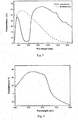
Fig. 3 illustrates transmittance of the polymer film of embodiment 2 in a colored state and a de-colored state, where the vertical coordinate represents transmittance, the horizontal coordinate represents wavelength. The dotted line represents transmittance of the polymer film in the de-colored state, and the solid line represents its transmittance in the colored state. -
Fig. 4 illustrates difference in transmittance of the polymer film of embodiment 2 in the colored state and de-colored state, where the vertical coordinate represents transmittance, the horizontal coordinate represents wavelength, and this plot is obtained by subtracting the transmittance in the colored state from the transmittance in the de-colored state. -
Fig. 5 illustrates a multi-potential step - transmittance plot, where the vertical coordinate represents transmittance, and horizontal coordinate represents time. -
Fig. 6 illustrates a structural view for an electrochromic display device ofembodiment 3. -
Fig. 7 illustrates a process flow of fabricating the electrochromic display device ofFig. 6 . -
Fig. 8 illustrates transmittance for the electrochromic display device ofembodiment 3 in the colored state and de-colored state. The dotted line represents transmittance of the electrochromic device in the de-colored state, and the solid line represents its transmittance in the colored state. -
Fig. 9 illustrates an effect of the electrochromic display device ofembodiment 3. - Reference numerals: 1 black matrix; 2 common electrode; 3 ion storage layer; 4 electrolyte; 5 spacer; 6 pixel retaining wall; 7 electrochromic layer; 8 pixel electrode.
- The present disclosure provides the following implementation.
-
Implementation 1. An electrochromic polymer has formula (1),
- Implementation 2. The electrochromic polymer of
implementation 1, wherein R1 is a linear chain or side chain alkyl containing 4-15 carbon atoms. -
Implementation 3. The electrochromic polymer ofimplementation 1, wherein R1 is a linear chain or side chain alkyl containing 4-10 carbon atoms. -
Implementation 4. The electrochromic polymer of any one of implementations 1-3, wherein n is an integer between 20 and 80. -
Implementation 5. The electrochromic polymer ofimplementation 1, wherein R1 is a linear chain or side chain alkyl containing 6-10 carbon atoms, and n is an integer between 20 and 70. - Implementation 6. The electrochromic polymer of
implementation 1, wherein R1 is 2-ethylhexyl, and n is an integer between 40 and 70. -
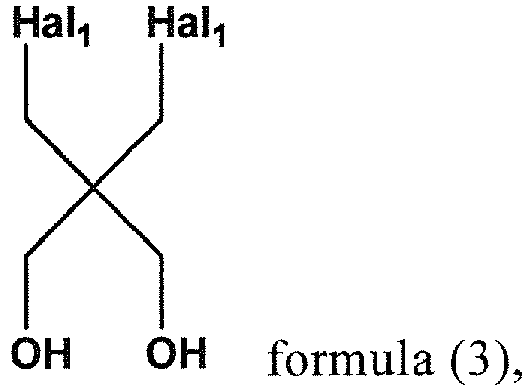
Implementation 7. A method for fabricating the electrochromic polymer having formula (1) of any one of implementations 1-6, comprising steps of:- i) making a compound having formula (2) react with a compound having formula (3) to obtain a compound having formula (4),


- ii) making the compound having formula (4) react with a compound having formula R1-OH to obtain a compound having formula (5),

- iii) making the compound having formula (5) react with an alkyl tin halide to obtain a compound having formula (6), wherein in the alkyl tin halide, halogen is Cl or Br, and alkyl is a linear chain or side chain alkyl containing 1-10 carbon atoms,

- iv) making the compound having formula (6) react with a compound having formula (7) to obtain the polymer having formula (1),

- i) making a compound having formula (2) react with a compound having formula (3) to obtain a compound having formula (4),
- Implementation 8. The method of
implementation 7, wherein R2 is a linear chain or side chain alkyl containing 1-10 carbon atoms. - Implementation 9. The method of
implementation 7, wherein R2 is a linear chain or side chain alkyl containing 1-8 carbon atoms. -
Implementation 10. The method ofimplementation 7, wherein R2 is a linear chain or side chain alkyl containing 1-6 carbon atoms. - Implementation 11. The method of
implementation 7, wherein R2 is a linear chain or side chain alkyl containing 1-4 carbon atoms. - Implementation 12. The method of any one of implementations 7-11, wherein Hal1 and Hal2 are selected independently from Cl and Br.
- Implementation 13. The method of any one of implementations 7-12, wherein the alkyl in the alkyl tin halide is a linear chain or side chain alkyl containing 1-6 carbon atoms.
- Implementation 14. The method of any one of implementations 7-12, wherein the alkyl in the alkyl tin halide is a linear chain or side chain alkyl containing 1-4 carbon atoms.
- Implementation 15. The method of any one of implementations 7-12, wherein reaction in step i) is performed in a solvent selected from a group of methylbenzene and dimethylbenzene at temperature of about 100 - 140 °C for a duration of about 5 - 24 hours, and p-toluenesulfonic acid is used as a catalyst.
- Implementation 16. The method of implementation 15, wherein reaction in step i) is performed at temperature of 120 °C for a duration of 12 hours.
- Implementation 17. The method of any one of implementations 7-16, wherein reaction in step ii) is performed in a solvent selected from the group of N,N-dimethylformamide and N,N-dimethylacetamide, at temperature of about 80∼120 °C for a duration of about 12∼48 hours.
- Implementation 18. The method of implementation 17, wherein reaction in step ii) is performed at temperature of 95 °C for a duration of 24 hours.
- Implementation 19. The method of any one of implementations 7-18, wherein reaction in step iii) is performed in a solvent selected from a group of tetrahydrofuran and absolute ether at temperature of about -10∼5 °C for a duration of about 2-4 hours.
-
Implementation 20. The method of implementation 19, wherein reaction in step iii) is performed at temperature of 0 °C for a duration of 3 hours. - Implementation 21. The method of any one of implementations 7-18, wherein reaction in step iv) is performed in a solvent selected from a group of methylbenzene and dimethylbenzene at temperature of about 100∼130 °C for a duration of about 36∼72 hours, a catalyst selected from a group of palladium acetate, tris(dibenzylideneacetone) dipalladium, and bistriphenylphosphine palladium dichloride is used, and a ligand selected from a group of triphenylphosphine and tris(o-methylphenyl) phosphine is used.
- Implementation 22. The method of implementation 21, wherein reaction in step iv) is performed at temperature of 128 °C for a duration of 72 hours.
- Implementation 23. A component comprises the electrochromic polymer having formula (1) in any one of implementations 1-6.
- Implementation 24. The component of implementation 23, wherein the component is a film or a display device.
- During fabricating the electrochromic polymer of embodiments of the present disclosure, it is possible to adjust the value of n by adjusting the polymerization time and reaction temperature. For example, a longer polymerization time and a higher reaction temperature lead to a larger value of n. In contrast, a shorter polymerization time and a lower reaction temperature lead to a smaller value of n.
- The component comprising the electrochromic polymer of embodiments of the present disclosure is an electrochromic film. The electrochromic film is formed by spin coating or spray coating, and features a low voltage, decreased response time, and high transmittance.
- The display device is a device comprising the electrochromic film. The display device is formed by assembling a suitable ion storage layer and electrolyte.
- Some of potential embodiments of the present disclosure will be elucidated hereinafter, only for purpose of providing basic understanding of the present disclosure, instead of identifying key or essential elements of the present disclosure or restricting the scope to be protected.
- Embodiment 1 - synthesis of the electrochromic polymer of the present disclosure.

-

- 3,4-dimethoxy thiophene (10 g, 69 mmol), dibromo neopentyl glycol (36.3 g, 138 mmol), p-toluenesulfonic acid (p-TSA, 1.2 g, 7 mmol) and 250 mL methylbenzene are added to a 500 mL three-necked flask, and stirred and refluxed at 120 °C for 12 hours. The solvent in the mixture is removed by rotary evaporation at a reduced pressure. The mixture is subject to column chromatography to produce white solid, i.e., Compound 1 (with a yield of 73%).
-

- 2-ethylhexanol (6.43 g, 49 mmol), sodium hydride (NaH, 3.95g, 99 mmol, protected by kerosene, with a content of 60%), and 100 mL N,N-dimethylformamide (DMF) are added to a 250 mL three-necked flask, and react in water and oxygen free conditions at 90 °C for 2 hours. Then, the mixture is added with compound 1 (4g, 12 mmol), and reacts at 95 °C for 24 hours. The mixture is then added with appropriate amount of salt water, and is extracted with diethyl ether to produce organic phase. The organic phase is dried with anhydrous magnesium sulfate, and is subject to column chromatography to produce a colorless oily liquid, i.e., compound 2(with a yield of 70%).
-

- At -78 °C, diisopropylamine (DIPA, 2.06g, 20.4 mmol) is added to 50 mL tetrahydrofuran (THF). After the mixture is cooled to -78 °C, a solution of N-butyllithium in N-hexane (8.5mL, 20.4 mmol, with a concentration of 2.4mol/L) is dropped into the mixture. The mixture is stirred for 1 hour, is heated up to room temperature, and cooled again to 0 °C. The mixture is added with compound 2 (3 g, 6.81 mmol), is raised to room temperature and reacts overnight. The mixture is cooled to 0 °C, is added with tributyltin chloride (SnCl(Bu)3, 6.64g, 20.4 mmol), and is stirred for 3 hours. The solvent is removed by rotary evaporation. The mixture is added with appropriate amount of deionized water, and is extracted with diethyl ether to produce organic phase. The organic phase is dried with anhydrous magnesium sulfate, and is subject to column chromatography to produce compound 3 (with a yield of 90%).
-
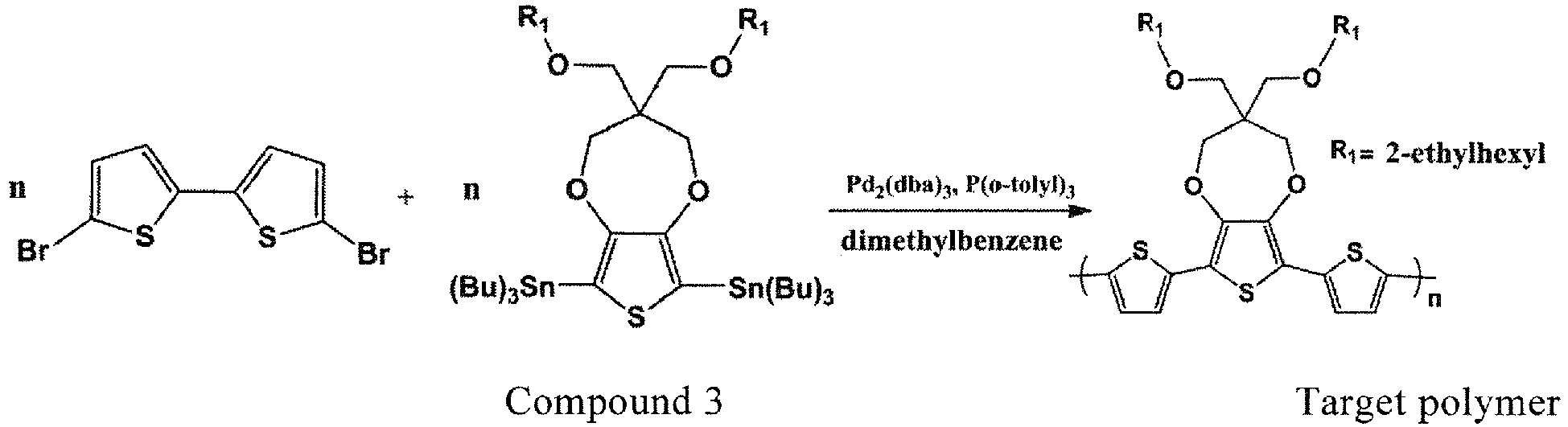
- In the glove box, 5,5'-dibromo-2,2'-bithiophene (0.64g, 2 mmol), compound 3 (2 g, 2 mmol), tris(dibenzylideneacetone) dipalladium (Pd2(dba)3, 36 mg, 0.04 mmol), tris(o-methylphenyl) phosphine (P(o-tolyl)3, 48 mg, 0.16 mmol), and 50 mL dimethylbenzene are added to a 150 mL long necked flask. Then the mixture is stirred and reacts at 128 °C for 72 hours. The resultant mixed solution is added to 800 mL methanol, and is filtered to produce precipitation, and the resultant precipitation is rinsed by using a soxhlet extractor and using methyl alcohol and n-hexane as an extractant, to produce a target electrochromic polymer (with a yield of 65%).The 1H NMR spectrum of the target electrochromic polymer is shown in
Fig. 1 . - Tetrahydrofuran of a chromatographic grade is used as a mobile phase, and polystyrene is used as standard sample, and a gel chromatography is applied to measure a molecular weight of the polymer. By calculation, n is 42∼70.
- Embodiment 2, fabrication of a film comprising the electrochromic polymer of the present disclosure
- The polymer from
embodiment 1 is dissolved in trichloromethane, to prepare a solution of 5 mg/mL. An art spray gun is used for spray coating this solution on a clean ITO glass, to produce an ITO working electrode which is coated with the polymer film with a thickness of 150 nm. - A 0.05M solution of lithium perchlorate in propylene glycol carbonate is prepared. Platinum wire is used as a counter electrode, silver wire is used as a reference electrode, and the ITO glass coated with the polymer film is used as a working electrode. A cyclic voltammetry plot of the resultant polymer film is obtained by a cyclic voltammetry method and shown in
Fig. 2 . As seen fromFig. 2 , the polymer of the present disclosure has oxidation and reduction potentials at 1.0 V and 0.2 V, respectively. - A 0.05M solution of lithium perchlorate in propylene carbonate is prepared. Platinum wire is used as a counter electrode, silver wire is used as a reference electrode, and the ITO glass coated with the polymer film is used as a working electrode. The film is drove by a cyclic voltammetry method to vary between a colored state and a de-colored state. Transmittance in the corresponding states is measured by an ultraviolet spectrophotometer and shown in
Fig. 3 . As seen fromFig. 3 , the polymer film in the de-colored state has a transmittance of 58% at 486 nm, and the polymer film in the colored state has a transmittance of 3% at 553 nm. At a range about 540∼580 nm, a contrast (a ratio between transmittance in the de-colored state and colored state) is up to 10:1 or more. -
Fig. 4 illustrates difference in transmittance of the polymer film of embodiment 2 in the colored state and the de-colored state. As seen fromFig. 4 , the difference in transmittance is 54% at 534 nm. - A 0.05M solution of lithium perchlorate in propylene carbonate is prepared. Platinum wire is used as a counter electrode, silver wire is used as a reference electrode, and an ITO glass coated with the polymer film is used as a working electrode. The film is drove by a multi-potential step method to vary between a colored state and a de-colored state. Transmittance in the corresponding states is measured by an ultraviolet spectrophotometer, and is shown as a multi-potential step - transmittance plot in
Fig. 5 . A response time is defined as 95% of the time for the transmittance to vary from the maximum to zero in respective state. The response time is 1.3 sec in the colored state and 3.0 sec in the de-colored state. -
Embodiment 3, fabrication of an electrochromic display device comprising the electrochromic polymer of the present disclosure - 0.05 g of the electrochromic polymer obtained from
embodiment 1 is dissolved in 10 mL trichloromethane, and is subject to ultrasonic treatment for 20 min. By means of spray coating, the electrochromic polymer is coated onto a substrate of the working electrode, and forms a film on the substrate. An electrochromic working electrode is thus obtained. - 0.7 mL vanadium triisopropoxide is measured and added to 30 mL isopropyl alcohol, and is stirred for 5 min to produce a transparent and clear solution A. 0.3 mL titanium tetraisopropoxide is measured and added to 10 mL isopropyl alcohol, and is stirred for 5 min to produce a transparent and clear solution B. Solution A and solution B are mixed and then stirred for 10 min, thus producing a spin coating solution for the ion storage layer. The spin coating solution is coated onto a counter electrode substrate by a spin coater at 1000 rpm for 30 sec. The spin coating solution is then subject to a thermal treatment at 200 °C for 3 hours, thus producing the ion storage layer counter electrode.
- 0.532 g anhydrous lithium perchlorate is weighed and added to 50 mL propylene carbonate, and is stirred to dissolve, thus producing the electrolyte for the electrochromic device.
- The working electrode, the ion storage layer counter electrode, and the electrolyte as fabricated above are used for fabricating the electrochromic display device. The structure is shown in
Fig. 6 . InFig. 6 , ablack matrix 1 is arranged between a second substrate and a common electrode 2. Optionally, theblack matrix 1 is also arranged between the common electrode 2 and anion storage layer 3. The display device ofFig. 6 is fabricated in a process flow shown inFig. 7 . - In particular, TFTs are fabricated on a first substrate, and pixel electrodes 8 are formed by sputtering. A resin material for pixel retaining wall is coated onto the pixel electrode layer 8, and is subject to exposure, etching, and developing to form a pixel retaining wall 6. An electrochromic material is dropped into each pixel area within the pixel retaining wall, forming an
electrochromic layer 7. - The
black matrix 1, the common electrode 2, aspacer 5, theion storage layer 3 are fabricated on a second substrate in this sequence. Then the ion storage layer is activated, and is ready for use. - The first substrate and the second substrate are assembled into a cell, and the electrolyte is injected into the cell by vacuum injection.
- Finally, a module process is performed to complete the device.
- The resultant electrochromic display device has an effect shown in
Fig. 8 . It indicates that the electrochromic device has a relatively large difference in transmittance. -
Fig. 8 illustrates transmittance for the electrochromic device ofembodiment 3 in the colored state and de-colored state. The device is drove by a cyclic voltammetry method to vary between a colored state and a de-colored state. Transmittance in the corresponding states is measured by an ultraviolet spectrophotometer. As seen fromFig. 8 , the electrochromic device in the de-colored state has a transmittance of 46% at 461 nm, and the electrochromic device in the colored state has a transmittance of 6% near 615 nm. - In embodiments of the present disclosure, the electrochromic polymer is a soluble purple polythiophene electrochromic material, and varies its color between purple and transparent. The electrochromic polymer has rich and adjustable colors. The electrochromic polymer is dissolvable in a polar organic solvent, so that a solution can be formed for spray coating and spin coating, and this is applicable for fabricating a display device with a large area.
- The electrochromic working electrode which is formed from the electrochromic polymer of embodiments of the present disclosure by spray coating and the ion storage layer counter electrode which is formed by spin coating are assembled appropriately, to produce a novel electrochromic device. The device is capable of varying between purple and transparent, and has advantages of easy fabrication, wide viewing angle, rich colors, high contrast, low driving voltage, and reduced response time. The device can realize storage without power consumption, and can be applied to the field of electrochromic display device.
- Apparently, the person with ordinary skill in the art can make various modifications and variations to the present disclosure without departing from the spirit and the scope of the present disclosure. In this way, provided that these modifications and variations of the present disclosure belong to the scopes of the claims of the present disclosure and the equivalent technologies thereof, the present disclosure also intends to encompass these modifications and variations.
Claims (14)
- An electrochromic polymer having formula (1),

- The electrochromic polymer of claim 1, wherein R1 is a linear chain or side chain alkyl containing 4-15 carbon atoms.
- The electrochromic polymer of claim 1, wherein R1 is a linear chain or side chain alkyl containing 6-10 carbon atoms, and n is an integer between 20 and 70.
- The electrochromic polymer of claim 1, wherein R1 is 2-ethylhexyl, and n is an integer in between 40 and 70.
- A method for fabricating the electrochromic polymer having formula (1) of any one of claims 1-4, comprising steps of:i) making a compound having formula (2) react with a compound having formula (3) to obtain a compound having formula (4),

 ii) making the compound having formula (4) react with a compound having formula R1-OH to obtain a compound having formula (5),
 iii) making the compound having formula (5) react with an alkyl tin halide to obtain a compound having formula (6), wherein in the alkyl tin halide, halogen is Cl or Br, and alkyl is a linear chain or side chain alkyl containing 1-10 carbon atoms,
 iv) making the compound having formula (6) react with a compound having formula (7) to obtain the polymer having formula (1),
- The method of claim 5, wherein R2 is a linear chain or side chain alkyl containing 1-4 carbon atoms.
- The method of claim 5, wherein Hal1 and Hal2 are selected independently from Cl and Br.
- The method of claim 5, wherein the alkyl in the alkyl tin halide is a linear chain or side chain alkyl containing 1-4 carbon atoms.
- The method of any one of claims 5-8, wherein in step i), the compound having formula (2) reacts with the compound having formula (3) in a solvent selected from a group of methylbenzene and dimethylbenzene at temperature of about 100 - 140 °C for a duration of about 5 - 24 hours, and p-toluenesulfonic acid is used as a catalyst.
- The method of any one of claims 5-8, wherein in step ii), the compound having formula (4) reacts with the compound having formula R1-OH in a solvent selected from a group of N,N-dimethylformamide and N,N-dimethylacetamide, at temperature of about 80-120 °C for a duration of about 12∼48 hours.
- The method of any one of claims 5-8, wherein in step iii), the compound having formula (5) reacts with an alkyl tin halide in a solvent selected from a group of tetrahydrofuran and absolute ether at temperature of about -10∼5 °C for a duration of about 2-4 hours.
- The method of any one of claims 5-8, wherein reaction in step iv) is performed in a solvent selected from a group of methylbenzene and dimethylbenzene at temperature of about 100∼130 °C for a duration of about 36∼72 hours, a catalyst selected from a group of palladium acetate, tris(dibenzylideneacetone) dipalladium, and bistriphenylphosphine palladium dichloride is used, a ligand selected from a group of triphenylphosphine and tris(o-methylphenyl) phosphine is used.
- A component, comprising the electrochromic polymer having formula (1) of any one of claims 1-4.
- The component of claim 13, wherein the component is a film or a display device.
Applications Claiming Priority (2)
| Application Number | Priority Date | Filing Date | Title |
|---|---|---|---|
| CN201610006046.3A CN105504233B (en) | 2016-01-04 | 2016-01-04 | Electrochromic polymeric compounds and preparation method thereof and component comprising it |
| PCT/CN2016/102258 WO2017118139A1 (en) | 2016-01-04 | 2016-10-17 | Electrochromic polymer and preparation method therefor and component containing same |
Publications (2)
| Publication Number | Publication Date |
|---|---|
| EP3401347A1 true EP3401347A1 (en) | 2018-11-14 |
| EP3401347A4 EP3401347A4 (en) | 2019-10-16 |
Family
ID=55712573
Family Applications (1)
| Application Number | Title | Priority Date | Filing Date |
|---|---|---|---|
| EP16861083.0A Withdrawn EP3401347A4 (en) | 2016-01-04 | 2016-10-17 | ELECTROCHROME POLYMER AND METHOD FOR ITS PREPARATION AND ITEM CONTAINER |
Country Status (4)
| Country | Link |
|---|---|
| US (1) | US20180072843A1 (en) |
| EP (1) | EP3401347A4 (en) |
| CN (1) | CN105504233B (en) |
| WO (1) | WO2017118139A1 (en) |
Families Citing this family (2)
| Publication number | Priority date | Publication date | Assignee | Title |
|---|---|---|---|---|
| CN105504233B (en) * | 2016-01-04 | 2018-09-07 | 京东方科技集团股份有限公司 | Electrochromic polymeric compounds and preparation method thereof and component comprising it |
| CN115417976B (en) * | 2022-09-19 | 2023-10-27 | 湖南大学 | Hydrophilic red to transparent electrochromic polymer and preparation method and application thereof |
Family Cites Families (7)
| Publication number | Priority date | Publication date | Assignee | Title |
|---|---|---|---|---|
| EP1784686A2 (en) * | 2004-09-09 | 2007-05-16 | University of Washington | Green electrochromic (ec) material and device |
| US7951902B2 (en) * | 2008-01-21 | 2011-05-31 | The University Of Connecticut | Conjugated polymers from substituted 3,4-propylenedioxythiophene, compositions, method of making, and use thereof |
| WO2011119664A2 (en) * | 2010-03-25 | 2011-09-29 | University Of Connecticut | Formation of conjugated polymers for solid-state devices |
| CA2797406C (en) * | 2010-05-21 | 2018-06-26 | University Of Florida Research Foundation, Inc. | Multi-colored conjugated polymers with highly transmissive oxidized state |
| BR112013010583A2 (en) * | 2010-10-28 | 2016-08-09 | Univ Florida | cathodically soluble yellow light-emitting and electrochromic polymers |
| WO2015179789A1 (en) * | 2014-05-23 | 2015-11-26 | University Of Florida Research Foundation, Inc. | Broadly absorbing electrochromic polymers |
| CN105504233B (en) * | 2016-01-04 | 2018-09-07 | 京东方科技集团股份有限公司 | Electrochromic polymeric compounds and preparation method thereof and component comprising it |
-
2016
- 2016-01-04 CN CN201610006046.3A patent/CN105504233B/en active Active
- 2016-10-17 US US15/525,929 patent/US20180072843A1/en not_active Abandoned
- 2016-10-17 WO PCT/CN2016/102258 patent/WO2017118139A1/en not_active Ceased
- 2016-10-17 EP EP16861083.0A patent/EP3401347A4/en not_active Withdrawn
Also Published As
| Publication number | Publication date |
|---|---|
| US20180072843A1 (en) | 2018-03-15 |
| WO2017118139A1 (en) | 2017-07-13 |
| CN105504233A (en) | 2016-04-20 |
| CN105504233B (en) | 2018-09-07 |
| EP3401347A4 (en) | 2019-10-16 |
Similar Documents
| Publication | Publication Date | Title |
|---|---|---|
| Zhu et al. | Electropolymerization of DAD type monomers consisting of thiophene and quionaxline moieties for electrochromic devices and supercapacitors | |
| Li et al. | Highly contrasted and stable electrochromic device based on well-matched viologen and triphenylamine | |
| Higuchi | Electrochromic organic–metallic hybrid polymers: fundamentals and device applications | |
| CN114907551B (en) | Red electrochromic polymer, preparation method, film and device | |
| US10545387B2 (en) | Electrochromic device for applying voltage to electrodes | |
| Cong et al. | Metal-organic coordination polymer bearing dual-redox centra enables high-performance electrochromic supercapacitor | |
| CN112500557B (en) | Asymmetric donor-acceptor-donor electrochromic polymer based on 5-fluoro-2, 1, 3-benzothiadiazole and application thereof | |
| CN106543415B (en) | Thin polymer film and the preparation method and application thereof based on intersection construction conjugated molecule | |
| CN101649196A (en) | Electrochromic materials and electrochromic devices using the same | |
| Zeng et al. | Colorless-to-black electrochromic materials and solid-state devices with high optical contrast based on cross-linked Poly (4-vinyltriphenylamine) | |
| Kim et al. | Electrochemical characterization of newly synthesized polyterthiophene benzoate and its applications to an electrochromic device and a photovoltaic cell | |
| JP2011085773A (en) | Electrochromic compound, electrochromic composition, and display element | |
| Hong et al. | A red-to-gray poly (3-methylthiophene) electrochromic device using a zinc hexacyanoferrate/PEDOT: PSS composite counter electrode | |
| Zhao et al. | Two novel ambipolar donor–acceptor type electrochromic polymers with the realization of RGB (red-green-blue) display in one polymer | |
| Cong et al. | Mixed-valence system with near-infrared electrochromism of Fe (II)-based metal-organic coordination polymers | |
| CN106916099A (en) | A kind of cathodic electrochromic compound in electrochromic device and preparation method thereof | |
| US20180072843A1 (en) | Electrochromic polymer, fabricating method and component comprising the same | |
| CN112500556B (en) | Donor-receptor type electrochromic polymer, preparation method, electrochromic film and application | |
| Zhang et al. | A multi-color electrochromic material based on organic polymer | |
| Yang et al. | Introducing Conjugation Spacer in Electrochromic Metallo‐Supramolecular Polymer for Enhanced Optical Memory Effect | |
| CN114316216B (en) | Symmetrical polymer based on dithieno quinoxaline matrix as center and flexible electrochromic device | |
| CN109942797A (en) | One kind can multiple color varying bithiophene-EDOTs base electrochromic polymeric compounds material and preparation method | |
| Pan et al. | Molecular engineering of colorless triphenylamine-based polymers for multicolor electrochromism and energy storage | |
| CN119684281B (en) | A display device composed of a viologen compound and a hydrogel and its application | |
| CN112430313B (en) | Electrochromic polymer containing benzodithiophene structure, preparation method, electrochromic film and application |
Legal Events
| Date | Code | Title | Description |
|---|---|---|---|
| STAA | Information on the status of an ep patent application or granted ep patent |
Free format text: STATUS: UNKNOWN |
|
| STAA | Information on the status of an ep patent application or granted ep patent |
Free format text: STATUS: THE INTERNATIONAL PUBLICATION HAS BEEN MADE |
|
| PUAI | Public reference made under article 153(3) epc to a published international application that has entered the european phase |
Free format text: ORIGINAL CODE: 0009012 |
|
| STAA | Information on the status of an ep patent application or granted ep patent |
Free format text: STATUS: REQUEST FOR EXAMINATION WAS MADE |
|
| 17P | Request for examination filed |
Effective date: 20170508 |
|
| AK | Designated contracting states |
Kind code of ref document: A1 Designated state(s): AL AT BE BG CH CY CZ DE DK EE ES FI FR GB GR HR HU IE IS IT LI LT LU LV MC MK MT NL NO PL PT RO RS SE SI SK SM TR |
|
| AX | Request for extension of the european patent |
Extension state: BA ME |
|
| DAV | Request for validation of the european patent (deleted) | ||
| DAX | Request for extension of the european patent (deleted) | ||
| A4 | Supplementary search report drawn up and despatched |
Effective date: 20190918 |
|
| RIC1 | Information provided on ipc code assigned before grant |
Ipc: C08G 61/12 20060101AFI20190912BHEP Ipc: G02F 1/15 20190101ALI20190912BHEP |
|
| STAA | Information on the status of an ep patent application or granted ep patent |
Free format text: STATUS: THE APPLICATION HAS BEEN WITHDRAWN |
|
| 18W | Application withdrawn |
Effective date: 20191202 |