EP3399803A1 - Device and method of handling a cell selection procedure or a cell reselection procedure - Google Patents
Device and method of handling a cell selection procedure or a cell reselection procedure Download PDFInfo
- Publication number
- EP3399803A1 EP3399803A1 EP18170853.8A EP18170853A EP3399803A1 EP 3399803 A1 EP3399803 A1 EP 3399803A1 EP 18170853 A EP18170853 A EP 18170853A EP 3399803 A1 EP3399803 A1 EP 3399803A1
- Authority
- EP
- European Patent Office
- Prior art keywords
- value
- cell
- threshold
- communication device
- beams
- Prior art date
- Legal status (The legal status is an assumption and is not a legal conclusion. Google has not performed a legal analysis and makes no representation as to the accuracy of the status listed.)
- Granted
Links
Images


Classifications
-
- H—ELECTRICITY
- H04—ELECTRIC COMMUNICATION TECHNIQUE
- H04W—WIRELESS COMMUNICATION NETWORKS
- H04W48/00—Access restriction; Network selection; Access point selection
- H04W48/16—Discovering, processing access restriction or access information
-
- H—ELECTRICITY
- H04—ELECTRIC COMMUNICATION TECHNIQUE
- H04B—TRANSMISSION
- H04B17/00—Monitoring; Testing
- H04B17/30—Monitoring; Testing of propagation channels
- H04B17/309—Measuring or estimating channel quality parameters
- H04B17/318—Received signal strength
- H04B17/328—Reference signal received power [RSRP]; Reference signal received quality [RSRQ]
-
- H—ELECTRICITY
- H04—ELECTRIC COMMUNICATION TECHNIQUE
- H04B—TRANSMISSION
- H04B7/00—Radio transmission systems, i.e. using radiation field
- H04B7/02—Diversity systems; Multi-antenna system, i.e. transmission or reception using multiple antennas
- H04B7/04—Diversity systems; Multi-antenna system, i.e. transmission or reception using multiple antennas using two or more spaced independent antennas
- H04B7/0408—Diversity systems; Multi-antenna system, i.e. transmission or reception using multiple antennas using two or more spaced independent antennas using two or more beams, i.e. beam diversity
-
- H—ELECTRICITY
- H04—ELECTRIC COMMUNICATION TECHNIQUE
- H04W—WIRELESS COMMUNICATION NETWORKS
- H04W24/00—Supervisory, monitoring or testing arrangements
- H04W24/08—Testing, supervising or monitoring using real traffic
-
- H—ELECTRICITY
- H04—ELECTRIC COMMUNICATION TECHNIQUE
- H04W—WIRELESS COMMUNICATION NETWORKS
- H04W36/00—Hand-off or reselection arrangements
- H04W36/0005—Control or signalling for completing the hand-off
- H04W36/0055—Transmission or use of information for re-establishing the radio link
- H04W36/0061—Transmission or use of information for re-establishing the radio link of neighbour cell information
-
- H—ELECTRICITY
- H04—ELECTRIC COMMUNICATION TECHNIQUE
- H04W—WIRELESS COMMUNICATION NETWORKS
- H04W36/00—Hand-off or reselection arrangements
- H04W36/0005—Control or signalling for completing the hand-off
- H04W36/0083—Determination of parameters used for hand-off, e.g. generation or modification of neighbour cell lists
- H04W36/0085—Hand-off measurements
-
- H—ELECTRICITY
- H04—ELECTRIC COMMUNICATION TECHNIQUE
- H04W—WIRELESS COMMUNICATION NETWORKS
- H04W36/00—Hand-off or reselection arrangements
- H04W36/0005—Control or signalling for completing the hand-off
- H04W36/0083—Determination of parameters used for hand-off, e.g. generation or modification of neighbour cell lists
- H04W36/0085—Hand-off measurements
- H04W36/0094—Definition of hand-off measurement parameters
-
- H—ELECTRICITY
- H04—ELECTRIC COMMUNICATION TECHNIQUE
- H04W—WIRELESS COMMUNICATION NETWORKS
- H04W48/00—Access restriction; Network selection; Access point selection
- H04W48/20—Selecting an access point
-
- H—ELECTRICITY
- H04—ELECTRIC COMMUNICATION TECHNIQUE
- H04W—WIRELESS COMMUNICATION NETWORKS
- H04W16/00—Network planning, e.g. coverage or traffic planning tools; Network deployment, e.g. resource partitioning or cells structures
- H04W16/24—Cell structures
- H04W16/28—Cell structures using beam steering
Definitions
- the present invention relates to a device and a method used in a wireless communication system, and more particularly, to a device and a method of handling a cell selection procedure or a cell reselection procedure.
- a user equipment may perform a cell selection procedure or a cell reselection procedure before performing communications via the cell.
- UE user equipment
- how to perform the cell selection procedure regarding the beams belonging to the cell is an important problem to be solved.
- the present invention therefore provides a method and related communication device for handling a cell selection procedure or a cell reselection procedure to solve the abovementioned problem.
- a communication device for handling a cell selection procedure or a cell reselection procedure comprises a storage device and a processing circuit, coupled to the storage device.
- the storage device stores, and the processing circuit is configured to execute instructions of: measuring a plurality of power values corresponding to a plurality of beams of a cell; determining a first cell quality value according to an average of the plurality of power values; determining an offset value according to a number of the plurality of beams corresponding to the plurality of power values; determining a second cell quality value according to the first cell quality value and the offset value; and performing the cell selection procedure or the cell reselection procedure according to the second cell quality value.
- a communication device for handling a cell selection procedure or a cell reselection procedure comprises a storage device and a processing circuit, coupled to the storage device.
- the storage device stores, and the processing circuit is configured to execute instructions of: measuring a plurality of power values corresponding to a plurality of beams of a cell; determining a cell quality value according to an average of the plurality of power values; determining a threshold value according to a number of the plurality of beams corresponding to the plurality of power values; performing a comparison of the cell quality value and the threshold value; and performing the cell selection procedure to select the cell or performing the reselection procedure to reselect the cell, when the comparison is that the cell quality value is greater than the threshold value.
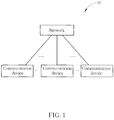
- Fig. 1 is a schematic diagram of a wireless communication system 10 according to an example of the present invention.
- the wireless communication system 10 is briefly composed of a network and a plurality of communication devices.
- the network and the communication device may simultaneously communicate with each other via one or multiple cells (e.g., multiple carriers) including a primary cell (PCell) and one or more secondary cells (SCells), after the communication device performs a cell selection procedure to select the one or multiple cells, or after the communication device performs a cell reselection procedure to reselect the one or multiple cells.
- PCell primary cell
- SCells secondary cells
- the abovementioned cells may be operated in the same or different duplexing modes, e.g., frequency-division duplexing (FDD), time-division duplexing (TDD) or flexible duplexing.
- FDD frequency-division duplexing
- TDD time-division duplexing
- the PCell may be operated on a licensed carrier
- the SCell may be operated on an unlicensed carrier.
- the network and the communication devices are simply utilized for illustrating the structure of the wireless communication system 10.
- the network may be a narrowband internet of things (NB-IoT) network or an evolved universal terrestrial radio access network (E-UTRAN) including at least one evolved Node-B (eNB).
- the network may be a new radio (NR)/next generation (NextGen) network including at least one 5G base station (BS) (or called gNB).
- BS 5G base station
- the 5G radio communication technology may employ orthogonal frequency-division multiplexing (OFDM) and/or non-OFDM, and transmission time interval (TTI) shorter than 1ms (e.g., 1, 2, 3 or 4 OFDM symbols, 100, or 200 us) for communicating between the communication devices and the 5G BS.
- OFDM orthogonal frequency-division multiplexing
- TTI transmission time interval
- a BS may also be used to refer any of the eNB and the 5G BS.
- a communication device may be a user equipment (UE), a NB-IoT UE, a machine type communication (MTC) device, a mobile phone, a laptop, a tablet computer, an electronic book, a portable computer system, a vehicle, or an aircraft.
- the network and the communication device can be seen as a transmitter or a receiver according to direction (i.e., transmission direction), e.g., for a UL, the communication device is the transmitter and the network is the receiver, and for a DL, the network is the transmitter and the communication device is the receiver.
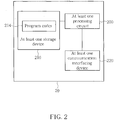
- Fig. 2 is a schematic diagram of a communication device 20 according to an example of the present invention.
- the communication device 20 may be a communication device or the network shown in Fig. 1 , but is not limited herein.
- the communication device 20 may include at least one processing circuit 200 such as a microprocessor or Application Specific Integrated Circuit (ASIC), at least one storage device 210 and at least one communication interfacing device 220.
- the at least one storage device 210 may be any data storage device that may store program codes 214, accessed and executed by the at least one processing circuit 200.
- Examples of the at least one storage device 210 include but are not limited to a subscriber identity module (SIM), read-only memory (ROM), flash memory, random-access memory (RAM), hard disk, optical data storage device, non-volatile storage device, non-transitory computer-readable medium (e.g., tangible media), etc.
- SIM subscriber identity module
- ROM read-only memory
- RAM random-access memory
- the at least one communication interfacing device 220 includes at least one transceiver and is used to transmit and receive signals (e.g., data, messages and/or packets) according to processing results of the at least one processing circuit 200.
- a UE is used to represent a communication device in Fig. 1 , to simplify the illustration of the embodiments.
- a process 30 in Fig. 3 may be utilized in a UE, and includes the following steps:
- the UE (e.g., in an idle mode) measures a plurality of power values corresponding to a plurality of beams of a cell.
- the UE may actually measures more than a plurality of beams, and the plurality of beams in the process 30 may be a number of best ones among the beams that the UE have measured.
- the UE determines a first cell quality value according to (e.g., by using) an average of the plurality of power values.
- the UE determines an offset value according to a number of the plurality of beams corresponding to the plurality of power values.
- the UE determines a second cell quality value according to (e.g., by using) the first cell quality value and the offset value.
- the UE performs the cell selection procedure or the cell reselection procedure according to the second cell quality value. That is, not only the first cell quality value but also the number of the plurality of beams are considered by the UE for performing the cell selection procedure or the cell reselection procedure.
- the UE determines that the offset value is a first value (e.g., -10 dbm), if the number of the plurality of beams is a first number (e.g., 1).
- the UE determines that the offset value is a second value smaller than the first value (e.g., -15 dbm), if the number of the plurality of beams is a second number greater than the first number (e.g., 2). That is, the greater the number of the plurality of beams is, the smaller the offset value is.
- the UE determines that the offset value is a first value (e.g., -10 dbm), if the number of the plurality of beams is smaller than a threshold (e.g., 3).
- the UE determines that the offset value is a second value smaller than the first value (e.g., -15 dbm), if the number of the plurality of beams is greater than the threshold (e.g., 3). That is, the offset value is determined according to a comparison of the number of the plurality of beams and the threshold.
- the UE determines that the offset value is a first offset value received from a network (e.g., the network in Fig. 1 ). For example, the first offset value is corresponding to the number of the plurality of beams. In one example, the UE determines that the offset value is a second offset value stored (e.g., predetermined) in the UE. For example, the second offset value is corresponding to the number of the plurality of beams.
- the UE determines that the offset value is the second offset value, before receiving the first offset value from the network. In one example, the UE determines that the offset value is the first offset value, after receiving the first offset value from the network. That is, the UE use the first offset value instead of the second offset value, after receiving the first offset value from the network.
- the first offset value or the second offset value is used for performing the cell selection procedure, to select the cell (e.g., a serving cell) .
- the first offset value or the second offset value is used for performing the cell reselection procedure, to reselect the cell (e.g. , a neighbor cell) .
- the UE determines the second cell quality value according to (e.g., by using) the offset value (i.e., the same offset value) on all cells with the same frequency as that of the cell (e.g., the serving cell or the neighbor cell).
- the offset value i.e., the same offset value
- the UE determines the second cell quality value by adding the first cell quality value and the offset value. In one example, the UE determines the second cell quality value by subtracting the first cell quality value and the offset value. In one example, the UE determines the second cell quality value by multiplying the first cell quality value and the offset value. In one example, the UE determines the second cell quality value by dividing the first cell quality value by the offset value.
- the UE performs the cell selection procedure to select the cell (e.g., a serving cell), when the second cell quality value is greater than a first threshold.
- the UE performs the cell reselection procedure to reselect the cell (e.g., a neighbor cell), when the second cell quality value is greater than a second threshold.
- the first threshold and the second threshold are received from a network (e.g., the network in Fig. 1 ).
- the first threshold and the second threshold are stored (e.g., predetermined) in the UE, and a third threshold for performing the cell selection procedure and a fourth threshold for performing the cell reselection procedure are received from the network.
- the UE may use the third threshold or the fourth threshold instead of the first threshold or the second threshold, after receiving the third threshold or the fourth threshold from the network.
- the first threshold and the second threshold are the same.
- the second threshold is a third cell quality value of the serving cell of the UE.
- the first cell quality value is derived from a channel state information reference signal (CSI-RS) of the cell.
- the first cell quality value is a reference signal received power (RSRP) value or a reference signal received quality (RSRQ) value.
- a process 40 in Fig. 4 may be utilized in a UE, and includes the following steps:
- the UE (e.g., in an idle mode) measures a plurality of power values corresponding to a plurality of beams of a cell.
- the UE may actually measures more than a plurality of beams, and the plurality of beams in the process 40 may be a number of best ones among the beams that the UE have measured.
- the UE determines a cell quality value according to (e.g., by using) an average of the plurality of power values.
- the UE determines a threshold value according to (e.g., by using) a number of the plurality of beams corresponding to the plurality of power values.
- the UE performs a comparison of the cell quality value and the threshold value.
- the UE performs the cell selection procedure to select the cell or performing the reselection procedure to reselect the cell, when the comparison is that the cell quality value is greater than the threshold value. That is, not only the cell quality value but also the number of the plurality of beams are considered by the UE for performing the cell selection procedure or the cell reselection procedure.
- the UE determines that the threshold value is a first value (e.g., -90 dbm), if the number of the plurality of beams is a first number (e.g., 1).
- the UE determines that the threshold value is a second value smaller than the first value (e.g., -100 dbm), if the number of the plurality of beams is a second number greater than the first number (e.g., 2). That is, the greater the number of the plurality of beams is, the smaller the threshold value is.
- the UE determines that the threshold value is a first value (e.g., -90 dbm), if the number of the plurality of beams is smaller than a threshold (e.g., 3) .
- the UE determines that the threshold value is a second value smaller than the first value (e.g., -100 dbm), if the number of the plurality of beams is greater than the threshold (e.g., 3). That is, the threshold value is determined according to a comparison of the number of the plurality of beams and the threshold.
- the UE determines that the threshold value is a first threshold value received from a network (e.g., the network in Fig. 1 ).
- the first offset value is corresponding to the number of the plurality of beams.
- the UE determines that the threshold value is a second threshold value stored in the UE.
- the second offset value is corresponding to the number of the plurality of beams.
- the UE determines that the threshold value is the second threshold value, before receiving the first threshold value from the network. In one example, the UE determines that the threshold value is the first threshold value, after receiving the first threshold value from the network. That is, the UE use the first offset value instead of the second offset value, after receiving the first offset value from the network.
- the first threshold value or the second threshold value is used for performing the cell selection procedure, to select the cell (e.g. , a serving cell) .
- the first threshold value or the second threshold value is used for performing the cell reselection procedure, to reselect the cell (e.g., a neighbor cell).
- the UE performs the comparison according to (e.g., by using) the threshold value (i.e., the same threshold value) on all cells with the same frequency as that of the cell (e.g., the serving cell or the neighbor cell).
- the threshold value i.e., the same threshold value
- the cell quality value is derived from a CSI-RS of the cell. In one example, the cell quality value is a RSRP value or a RSRQ value.
- the present invention provides a method and a communication device for handling a cell selection procedure or a cell reselection procedure. Both the cell quality value and the number of the plurality of beams are considered by the UE for performing the cell selection procedure or the cell reselection procedure. As a result, the problem of performing the cell selection procedure or the cell reselection procedure regarding multiple beams belonging to the cell is solved.
Landscapes
- Engineering & Computer Science (AREA)
- Computer Networks & Wireless Communication (AREA)
- Signal Processing (AREA)
- Quality & Reliability (AREA)
- Computer Security & Cryptography (AREA)
- Physics & Mathematics (AREA)
- Electromagnetism (AREA)
- Mobile Radio Communication Systems (AREA)
Abstract
Description
- The present invention relates to a device and a method used in a wireless communication system, and more particularly, to a device and a method of handling a cell selection procedure or a cell reselection procedure.
- A user equipment (UE) may perform a cell selection procedure or a cell reselection procedure before performing communications via the cell. However, it may not be proper to perform the cell selection procedure or the cell reselection procedure only according to a cell quality derived from the cell, when multiple beams belong to the cell. Thus, how to perform the cell selection procedure regarding the beams belonging to the cell is an important problem to be solved.
- The present invention therefore provides a method and related communication device for handling a cell selection procedure or a cell reselection procedure to solve the abovementioned problem.
- A communication device for handling a cell selection procedure or a cell reselection procedure comprises a storage device and a processing circuit, coupled to the storage device. The storage device stores, and the processing circuit is configured to execute instructions of: measuring a plurality of power values corresponding to a plurality of beams of a cell; determining a first cell quality value according to an average of the plurality of power values; determining an offset value according to a number of the plurality of beams corresponding to the plurality of power values; determining a second cell quality value according to the first cell quality value and the offset value; and performing the cell selection procedure or the cell reselection procedure according to the second cell quality value.
- A communication device for handling a cell selection procedure or a cell reselection procedure comprises a storage device and a processing circuit, coupled to the storage device. The storage device stores, and the processing circuit is configured to execute instructions of: measuring a plurality of power values corresponding to a plurality of beams of a cell; determining a cell quality value according to an average of the plurality of power values; determining a threshold value according to a number of the plurality of beams corresponding to the plurality of power values; performing a comparison of the cell quality value and the threshold value; and performing the cell selection procedure to select the cell or performing the reselection procedure to reselect the cell, when the comparison is that the cell quality value is greater than the threshold value.
- These and other objectives of the present invention will no doubt become obvious to those of ordinary skill in the art after reading the following detailed description of the preferred embodiment that is illustrated in the various figures and drawings.
-
-
Fig. 1 is a schematic diagram of a wireless communication system according to an example of the present invention. -
Fig. 2 is a schematic diagram of a communication device according to an example of the present invention. -
Fig. 3 is a flowchart of a process according to an example of the present invention. -
Fig. 4 is a flowchart of a process according to an example of the present invention. -
Fig. 1 is a schematic diagram of awireless communication system 10 according to an example of the present invention. Thewireless communication system 10 is briefly composed of a network and a plurality of communication devices. The network and the communication device may simultaneously communicate with each other via one or multiple cells (e.g., multiple carriers) including a primary cell (PCell) and one or more secondary cells (SCells), after the communication device performs a cell selection procedure to select the one or multiple cells, or after the communication device performs a cell reselection procedure to reselect the one or multiple cells. The abovementioned cells may be operated in the same or different duplexing modes, e.g., frequency-division duplexing (FDD), time-division duplexing (TDD) or flexible duplexing. For example, the PCell may be operated on a licensed carrier, while the SCell may be operated on an unlicensed carrier. - In
Fig. 1 , the network and the communication devices are simply utilized for illustrating the structure of thewireless communication system 10. Practically, the network may be a narrowband internet of things (NB-IoT) network or an evolved universal terrestrial radio access network (E-UTRAN) including at least one evolved Node-B (eNB). The network may be a new radio (NR)/next generation (NextGen) network including at least one 5G base station (BS) (or called gNB). The 5G radio communication technology may employ orthogonal frequency-division multiplexing (OFDM) and/or non-OFDM, and transmission time interval (TTI) shorter than 1ms (e.g., 1, 2, 3 or 4 OFDM symbols, 100, or 200 us) for communicating between the communication devices and the 5G BS. In general, a BS may also be used to refer any of the eNB and the 5G BS. - A communication device may be a user equipment (UE), a NB-IoT UE, a machine type communication (MTC) device, a mobile phone, a laptop, a tablet computer, an electronic book, a portable computer system, a vehicle, or an aircraft. In addition, the network and the communication device can be seen as a transmitter or a receiver according to direction (i.e., transmission direction), e.g., for a UL, the communication device is the transmitter and the network is the receiver, and for a DL, the network is the transmitter and the communication device is the receiver.
-
Fig. 2 is a schematic diagram of acommunication device 20 according to an example of the present invention. Thecommunication device 20 may be a communication device or the network shown inFig. 1 , but is not limited herein. Thecommunication device 20 may include at least oneprocessing circuit 200 such as a microprocessor or Application Specific Integrated Circuit (ASIC), at least onestorage device 210 and at least onecommunication interfacing device 220. The at least onestorage device 210 may be any data storage device that may storeprogram codes 214, accessed and executed by the at least oneprocessing circuit 200. Examples of the at least onestorage device 210 include but are not limited to a subscriber identity module (SIM), read-only memory (ROM), flash memory, random-access memory (RAM), hard disk, optical data storage device, non-volatile storage device, non-transitory computer-readable medium (e.g., tangible media), etc. The at least onecommunication interfacing device 220 includes at least one transceiver and is used to transmit and receive signals (e.g., data, messages and/or packets) according to processing results of the at least oneprocessing circuit 200. - In the following examples, a UE is used to represent a communication device in
Fig. 1 , to simplify the illustration of the embodiments. - A
process 30 inFig. 3 may be utilized in a UE, and includes the following steps: - Step 300:
- Start.
- Step 302:
- Measure a plurality of power values corresponding to a plurality of beams of a cell.
- Step 304:
- Determine a first cell quality value according to an average of the plurality of power values.
- Step 306:
- Determine an offset value according to a number of the plurality of beams corresponding to the plurality of power values.
- Step 308:
- Determine a second cell quality value according to the first cell quality value and the offset value.
- Step 310:
- Perform the cell selection procedure or the cell reselection procedure according to the second cell quality value.
- Step 312:
- End.
- According to the
process 30, the UE (e.g., in an idle mode) measures a plurality of power values corresponding to a plurality of beams of a cell. The UE may actually measures more than a plurality of beams, and the plurality of beams in theprocess 30 may be a number of best ones among the beams that the UE have measured. The UE determines a first cell quality value according to (e.g., by using) an average of the plurality of power values. The UE determines an offset value according to a number of the plurality of beams corresponding to the plurality of power values. The UE determines a second cell quality value according to (e.g., by using) the first cell quality value and the offset value. The UE performs the cell selection procedure or the cell reselection procedure according to the second cell quality value. That is, not only the first cell quality value but also the number of the plurality of beams are considered by the UE for performing the cell selection procedure or the cell reselection procedure. - In one example, the UE determines that the offset value is a first value (e.g., -10 dbm), if the number of the plurality of beams is a first number (e.g., 1). The UE determines that the offset value is a second value smaller than the first value (e.g., -15 dbm), if the number of the plurality of beams is a second number greater than the first number (e.g., 2). That is, the greater the number of the plurality of beams is, the smaller the offset value is.
- In one example, the UE determines that the offset value is a first value (e.g., -10 dbm), if the number of the plurality of beams is smaller than a threshold (e.g., 3). The UE determines that the offset value is a second value smaller than the first value (e.g., -15 dbm), if the number of the plurality of beams is greater than the threshold (e.g., 3). That is, the offset value is determined according to a comparison of the number of the plurality of beams and the threshold.
- In one example, the UE determines that the offset value is a first offset value received from a network (e.g., the network in
Fig. 1 ). For example, the first offset value is corresponding to the number of the plurality of beams. In one example, the UE determines that the offset value is a second offset value stored (e.g., predetermined) in the UE. For example, the second offset value is corresponding to the number of the plurality of beams. - In one example, the UE determines that the offset value is the second offset value, before receiving the first offset value from the network. In one example, the UE determines that the offset value is the first offset value, after receiving the first offset value from the network. That is, the UE use the first offset value instead of the second offset value, after receiving the first offset value from the network.
- In one example, the first offset value or the second offset value is used for performing the cell selection procedure, to select the cell (e.g., a serving cell) . In one example, the first offset value or the second offset value is used for performing the cell reselection procedure, to reselect the cell (e.g. , a neighbor cell) .
- In one example, the UE determines the second cell quality value according to (e.g., by using) the offset value (i.e., the same offset value) on all cells with the same frequency as that of the cell (e.g., the serving cell or the neighbor cell).
- In one example, the UE determines the second cell quality value by adding the first cell quality value and the offset value. In one example, the UE determines the second cell quality value by subtracting the first cell quality value and the offset value. In one example, the UE determines the second cell quality value by multiplying the first cell quality value and the offset value. In one example, the UE determines the second cell quality value by dividing the first cell quality value by the offset value.
- In one example, the UE performs the cell selection procedure to select the cell (e.g., a serving cell), when the second cell quality value is greater than a first threshold. In one example, the UE performs the cell reselection procedure to reselect the cell (e.g., a neighbor cell), when the second cell quality value is greater than a second threshold. In one example, the first threshold and the second threshold are received from a network (e.g., the network in
Fig. 1 ). In one example, the first threshold and the second threshold are stored (e.g., predetermined) in the UE, and a third threshold for performing the cell selection procedure and a fourth threshold for performing the cell reselection procedure are received from the network. The UE may use the third threshold or the fourth threshold instead of the first threshold or the second threshold, after receiving the third threshold or the fourth threshold from the network. In one example, the first threshold and the second threshold are the same. In one example, the second threshold is a third cell quality value of the serving cell of the UE. - In one example, the first cell quality value is derived from a channel state information reference signal (CSI-RS) of the cell. In one example, the first cell quality value is a reference signal received power (RSRP) value or a reference signal received quality (RSRQ) value.
- A
process 40 inFig. 4 may be utilized in a UE, and includes the following steps: - Step 400:
- Start.
- Step 402:
- Measure a plurality of power values corresponding to a plurality of beams of a cell.
- Step 404:
- Determine a cell quality value according to an average of the plurality of power values.
- Step 406:
- Determine a threshold value according to a number of the plurality of beams corresponding to the plurality of power values.
- Step 408:
- Perform a comparison of the cell quality value and the threshold value.
- Step 410:
- Perform the cell selection procedure to select the cell or performing the reselection procedure to reselect the cell, when the comparison is that the cell quality value is greater than the threshold value.
- Step 412:
- End.
- According to the
process 40, the UE (e.g., in an idle mode) measures a plurality of power values corresponding to a plurality of beams of a cell. The UE may actually measures more than a plurality of beams, and the plurality of beams in theprocess 40 may be a number of best ones among the beams that the UE have measured. The UE determines a cell quality value according to (e.g., by using) an average of the plurality of power values. The UE determines a threshold value according to (e.g., by using) a number of the plurality of beams corresponding to the plurality of power values. The UE performs a comparison of the cell quality value and the threshold value. The UE performs the cell selection procedure to select the cell or performing the reselection procedure to reselect the cell, when the comparison is that the cell quality value is greater than the threshold value. That is, not only the cell quality value but also the number of the plurality of beams are considered by the UE for performing the cell selection procedure or the cell reselection procedure. - In one example, the UE determines that the threshold value is a first value (e.g., -90 dbm), if the number of the plurality of beams is a first number (e.g., 1). The UE determines that the threshold value is a second value smaller than the first value (e.g., -100 dbm), if the number of the plurality of beams is a second number greater than the first number (e.g., 2). That is, the greater the number of the plurality of beams is, the smaller the threshold value is.
- In one example, the UE determines that the threshold value is a first value (e.g., -90 dbm), if the number of the plurality of beams is smaller than a threshold (e.g., 3) . The UE determines that the threshold value is a second value smaller than the first value (e.g., -100 dbm), if the number of the plurality of beams is greater than the threshold (e.g., 3). That is, the threshold value is determined according to a comparison of the number of the plurality of beams and the threshold.
- In one example, the UE determines that the threshold value is a first threshold value received from a network (e.g., the network in
Fig. 1 ). For example, the first offset value is corresponding to the number of the plurality of beams. In one example, the UE determines that the threshold value is a second threshold value stored in the UE. For example, the second offset value is corresponding to the number of the plurality of beams. - In one example, the UE determines that the threshold value is the second threshold value, before receiving the first threshold value from the network. In one example, the UE determines that the threshold value is the first threshold value, after receiving the first threshold value from the network. That is, the UE use the first offset value instead of the second offset value, after receiving the first offset value from the network.
- In one example, the first threshold value or the second threshold value is used for performing the cell selection procedure, to select the cell (e.g. , a serving cell) . In one example, the first threshold value or the second threshold value is used for performing the cell reselection procedure, to reselect the cell (e.g., a neighbor cell).
- In one example, the UE performs the comparison according to (e.g., by using) the threshold value (i.e., the same threshold value) on all cells with the same frequency as that of the cell (e.g., the serving cell or the neighbor cell).
- In one example, the cell quality value is derived from a CSI-RS of the cell. In one example, the cell quality value is a RSRP value or a RSRQ value.
- It should be noted that although the above examples are illustrated to clarify the related operations of corresponding processes. The examples can be combined and/or modified arbitrarily according to system requirements and/or design considerations.
- Those skilled in the art should readily make combinations, modifications and/or alterations on the abovementioned description and examples. For example, the skilled person easily makes new embodiments of the network based on the embodiments and examples of the UE or the network. The abovementioned description, steps and/or processes including suggested steps can be realized by means that could be hardware, software, firmware (known as a combination of a hardware device and computer instructions and data that reside as read-only software on the hardware device), an electronic system, or combination thereof. An example of the means may be the
communication device 20. Any of the above processes and examples above may be compiled into theprogram codes 214. - To sum up, the present invention provides a method and a communication device for handling a cell selection procedure or a cell reselection procedure. Both the cell quality value and the number of the plurality of beams are considered by the UE for performing the cell selection procedure or the cell reselection procedure. As a result, the problem of performing the cell selection procedure or the cell reselection procedure regarding multiple beams belonging to the cell is solved.
- Those skilled in the art will readily observe that numerous modifications and alterations of the device and method may be made while retaining the teachings of the invention. Accordingly, the above disclosure should be construed as limited only by the metes and bounds of the appended claims.
Claims (15)
- A communication device for handling a cell selection procedure or a cell reselection procedure, comprising:a storage device; anda processing circuit, coupled to the storage device, wherein the storage device stores, and the processing circuit is configured to execute instructions of:measuring a plurality of power values corresponding to a plurality of beams of a cell;determining a first cell quality value according to an average of the plurality of power values;determining an offset value according to a number of the plurality of beams corresponding to the plurality of power values;determining a second cell quality value according to the first cell quality value and the offset value; andperforming the cell selection procedure or the cell reselection procedure according to the second cell quality value.
- The communication device of claim 1, wherein the instruction of determining the offset value according to the number of the plurality of beams comprises:determining that the offset value is a first value, if the number of the plurality of beams is a first number; anddetermining that the offset value is a second value smaller than the first value, if the number of the plurality of beams is a second number greater than the first number.
- The communication device of claim 1, wherein the instruction of determining the offset value according to the number of the plurality of beams comprises:determining that the offset value is a first value, if the number of the plurality of beams is smaller than a threshold; anddetermining that the offset value is a second value smaller than the first value, if the number of the plurality of beams is greater than the threshold.
- The communication device of claim 1, wherein the communication device determines that the offset value is a first offset value received from a network, or determines that the offset value is a second offset value stored in the communication device; and the communication device determines that the offset value is the second offset value before receiving the first offset value from the network, and determines that the offset value is the first offset value after receiving the first offset value from the network.
- The communication device of claim 1, wherein the instruction of determining the second cell quality value according to the first cell quality value and the offset value comprises:
determining the second cell quality value by adding the first cell quality value and the offset value, subtracting the first cell quality value and the offset value, multiplying the first cell quality value and the offset value, or dividing the first cell quality value by the offset value. - The communication device of claim 1, wherein the instruction of performing the cell selection procedure or the cell reselection procedure according to the second cell quality value comprises:performing the cell selection procedure to select the cell, when the second cell quality value is greater than a first threshold; orperforming the cell reselection procedure to reselect the cell, when the second cell quality value is greater than a second threshold.
- The communication device of claim 6, wherein the first threshold and the second threshold are received from a network, or the first threshold and the second threshold are stored in the communication device.
- The communication device of claim 6, wherein the first threshold and the second threshold are the same.
- The communication device of claim 6, wherein the second threshold is a third cell quality value of a serving cell of the communication device.
- The communication device of claim 1, wherein the first cell quality value is a reference signal received power (RSRP) value or a reference signal received quality (RSRQ) value.
- A communication device for handling a cell selection procedure or a cell reselection procedure, comprising:a storage device; anda processing circuit, coupled to the storage device, wherein the storage device stores, and the processing circuit is configured to execute instructions of:measuring a plurality of power values corresponding to a plurality of beams of a cell;determining a cell quality value according to an average of the plurality of power values;determining a threshold value according to a number of the plurality of beams corresponding to the plurality of power values;performing a comparison of the cell quality value and the threshold value; andperforming the cell selection procedure to select the cell or performing the reselection procedure to reselect the cell, when the comparison is that the cell quality value is greater than the threshold value.
- The communication device of claim 11, wherein the instruction of determining the threshold value according to the number of the plurality of beams comprises:determining that the threshold value is a first value, if the number of the plurality of beams is a first number; anddetermining that the threshold value is a second value smaller than the first value, if the number of the plurality of beams is a second number greater than the first number.
- The communication device of claim 11, wherein the instruction of determining the threshold value according to the number of the plurality of beams comprises:determining that the threshold value is a first value, if the number of the plurality of beams is smaller than a threshold; anddetermining that the threshold value is a second value smaller than the first value, if the number of the plurality of beams is greater than the threshold.
- The communication device of claim 11, wherein the communication device determines that the threshold value is a first threshold value received from a network, or determines that the threshold value is a second threshold value stored in the communication device; and the communication device determines that the threshold value is the second threshold value before receiving the first threshold value from the network, and determines that the threshold value is the first threshold value after receiving the first threshold value from the network.
- The communication device of claim 11, wherein the cell quality value is a reference signal received power (RSRP) value or a reference signal received quality (RSRQ) value.
Applications Claiming Priority (1)
| Application Number | Priority Date | Filing Date | Title |
|---|---|---|---|
| US201762501774P | 2017-05-05 | 2017-05-05 |
Publications (2)
| Publication Number | Publication Date |
|---|---|
| EP3399803A1 true EP3399803A1 (en) | 2018-11-07 |
| EP3399803B1 EP3399803B1 (en) | 2020-08-26 |
Family
ID=62116735
Family Applications (1)
| Application Number | Title | Priority Date | Filing Date |
|---|---|---|---|
| EP18170853.8A Active EP3399803B1 (en) | 2017-05-05 | 2018-05-04 | Device for handling a cell selection procedure or a cell reselection procedure |
Country Status (4)
| Country | Link |
|---|---|
| US (1) | US10390296B2 (en) |
| EP (1) | EP3399803B1 (en) |
| CN (1) | CN108811017B (en) |
| TW (1) | TWI653901B (en) |
Families Citing this family (7)
| Publication number | Priority date | Publication date | Assignee | Title |
|---|---|---|---|---|
| US11206565B2 (en) * | 2017-06-09 | 2021-12-21 | Shenzhen Heytap Technology Corp., Ltd. | Measurement method and related product |
| WO2019028730A1 (en) | 2017-08-10 | 2019-02-14 | 北京小米移动软件有限公司 | Information generating method and device, signal transmitting method and device |
| US11483751B2 (en) * | 2017-08-18 | 2022-10-25 | Telefonaktiebolaget Lm Ericsson (Publ) | Method for evaluating cell quality of cells using beamforming |
| CN109548043B (en) * | 2017-09-22 | 2020-12-11 | 中国移动通信有限公司研究院 | Cell signal quality determination, cell selection or reselection method, device and medium |
| US10681583B2 (en) * | 2017-12-14 | 2020-06-09 | Qualcomm Incorporated | Cell quality measurement reporting for cells with mismatched beam numbers |
| US20230142391A1 (en) * | 2020-03-06 | 2023-05-11 | Ntt Docomo, Inc. | Terminal, radio communication method, and base station |
| WO2021253163A1 (en) * | 2020-06-15 | 2021-12-23 | Qualcomm Incorporated | Handover mechanism for restraining ping-pong handover in new radio cells |
Citations (1)
| Publication number | Priority date | Publication date | Assignee | Title |
|---|---|---|---|---|
| WO2016089146A1 (en) * | 2014-12-05 | 2016-06-09 | 엘지전자(주) | Method and device for selecting cell in wireless communication system |
Family Cites Families (12)
| Publication number | Priority date | Publication date | Assignee | Title |
|---|---|---|---|---|
| GB0120033D0 (en) | 2001-08-16 | 2001-10-10 | Fujitsu Ltd | Cell selection |
| KR101498065B1 (en) | 2009-04-03 | 2015-03-03 | 엘지전자 주식회사 | How to estimate the number of antennas used by neighboring cells performing CoMP operation |
| US20110263260A1 (en) | 2009-10-22 | 2011-10-27 | Qualcomm Incorporated | Determining cell reselection parameter for transmission by access point |
| KR101150846B1 (en) | 2011-09-05 | 2012-06-13 | 엘지전자 주식회사 | Method for performing cell measurement and method for providing information for cell measurement |
| JP6336728B2 (en) * | 2013-08-20 | 2018-06-06 | 株式会社Nttドコモ | Synchronization signal transmission method and base station apparatus |
| US9729219B2 (en) | 2014-02-06 | 2017-08-08 | Telefonaktiebolaget Lm Ericsson (Publ) | Methods for signaling and using beam forming quality indicators |
| JP6482179B2 (en) * | 2014-03-20 | 2019-03-13 | 株式会社Nttドコモ | User equipment and base station |
| KR102187855B1 (en) * | 2014-07-31 | 2020-12-07 | 삼성전자 주식회사 | Apparatus and method for cell measuring in a beam formed system |
| WO2016138655A1 (en) | 2015-03-05 | 2016-09-09 | Mediatek (Beijing) Inc. | Methods and apparatus for cell selection/reselection in millimeter wave system |
| WO2017135305A1 (en) * | 2016-02-05 | 2017-08-10 | 株式会社Nttドコモ | User equipment and base station |
| EP3533152B1 (en) * | 2017-05-04 | 2020-02-19 | Telefonaktiebolaget LM Ericsson (publ) | Cell change in a wireless communication system |
| WO2018204863A1 (en) * | 2017-05-04 | 2018-11-08 | Ofinno Technologies, Llc | Beam-based measurement configuration |
-
2018
- 2018-05-03 US US15/969,789 patent/US10390296B2/en active Active
- 2018-05-04 CN CN201810420442.XA patent/CN108811017B/en active Active
- 2018-05-04 TW TW107115201A patent/TWI653901B/en active
- 2018-05-04 EP EP18170853.8A patent/EP3399803B1/en active Active
Patent Citations (2)
| Publication number | Priority date | Publication date | Assignee | Title |
|---|---|---|---|---|
| WO2016089146A1 (en) * | 2014-12-05 | 2016-06-09 | 엘지전자(주) | Method and device for selecting cell in wireless communication system |
| US20170366996A1 (en) * | 2014-12-05 | 2017-12-21 | Lg Electronics Inc. | Method and device for selecting cell in wireless communication system |
Non-Patent Citations (3)
| Title |
|---|
| HUAWEI ET AL: "Cell quality derivation from multiple beam quality", vol. RAN WG2, no. Spokane, USA; 20170403 - 20170407, 3 April 2017 (2017-04-03), XP051245248, Retrieved from the Internet <URL:http://www.3gpp.org/ftp/Meetings_3GPP_SYNC/RAN2/Docs/> [retrieved on 20170403] * |
| NEC: "On selection of N best beams for cell quality derivation", vol. RAN WG2, no. Spokane, USA; 20170403 - 20170407, 3 April 2017 (2017-04-03), XP051245517, Retrieved from the Internet <URL:http://www.3gpp.org/ftp/Meetings_3GPP_SYNC/RAN2/Docs/> [retrieved on 20170403] * |
| NOKIA ET AL: "On Deriving Cell Quality in NR", vol. RAN WG2, no. Athens, Greece; 20170213 - 20170217, 12 February 2017 (2017-02-12), XP051212189, Retrieved from the Internet <URL:http://www.3gpp.org/ftp/Meetings_3GPP_SYNC/RAN2/Docs/> [retrieved on 20170212] * |
Also Published As
| Publication number | Publication date |
|---|---|
| EP3399803B1 (en) | 2020-08-26 |
| CN108811017A (en) | 2018-11-13 |
| TW201844022A (en) | 2018-12-16 |
| TWI653901B (en) | 2019-03-11 |
| CN108811017B (en) | 2021-04-06 |
| US10390296B2 (en) | 2019-08-20 |
| US20180324687A1 (en) | 2018-11-08 |
Similar Documents
| Publication | Publication Date | Title |
|---|---|---|
| US10390296B2 (en) | Device and method of handling a cell selection procedure or a cell reselection procedure | |
| US9872316B2 (en) | Enhanced PRACH scheme for power savings, range improvement and improved detection | |
| EP3261282B1 (en) | Devices for handling dual cellular system aggregation | |
| US10932296B2 (en) | Device and method of handling physical random access channel resources on a secondary cell in carrier aggregation | |
| US10575356B2 (en) | Device and method of configuring a secondary node and reporting in dual connectivity | |
| US10863398B2 (en) | Device and method of handling a handover | |
| EP2362571A1 (en) | Carrier indication method for wireless communication system and related communication device | |
| EP3614784A1 (en) | Wireless data transmission | |
| US20180302818A1 (en) | Device and Method of Handling a Measurement Gap in a Wireless Communication System | |
| EP3829242A1 (en) | Method and device for indicating space-related information | |
| US11375390B2 (en) | Device and method of handling a measurement configuration and a reporting | |
| US11178690B2 (en) | Device and method of handling a channel access procedure | |
| EP3739995B1 (en) | Method, terminal device and network device for transmitting channels | |
| EP3442255A1 (en) | Method of handling measurement and related communication device | |
| EP3089392A2 (en) | Device and method of handling harq operation for unlicensed band | |
| US20190082480A1 (en) | Device and Method of Handling a Radio Resource Control Connection | |
| EP3606181A1 (en) | Method for terminal device to access network, terminal device and network device | |
| US20190150216A1 (en) | Device and Method of Handling a Cell Selection Procedure | |
| CN106982465A (en) | The transmission method and Wireless Communication Equipment of a kind of radio frames | |
| US10925055B2 (en) | Device and method of handling channel access procedure | |
| US10674543B2 (en) | Device and method of handling random access procedure | |
| US9668185B2 (en) | Device and method of handling system information | |
| HK40023000A (en) | Wireless data transmission |
Legal Events
| Date | Code | Title | Description |
|---|---|---|---|
| STAA | Information on the status of an ep patent application or granted ep patent |
Free format text: STATUS: EXAMINATION IS IN PROGRESS |
|
| PUAI | Public reference made under article 153(3) epc to a published international application that has entered the european phase |
Free format text: ORIGINAL CODE: 0009012 |
|
| 17P | Request for examination filed |
Effective date: 20180504 |
|
| AK | Designated contracting states |
Kind code of ref document: A1 Designated state(s): AL AT BE BG CH CY CZ DE DK EE ES FI FR GB GR HR HU IE IS IT LI LT LU LV MC MK MT NL NO PL PT RO RS SE SI SK SM TR |
|
| AX | Request for extension of the european patent |
Extension state: BA ME |
|
| RBV | Designated contracting states (corrected) |
Designated state(s): AL AT BE BG CH CY CZ DE DK EE ES FI FR GB GR HR HU IE IS IT LI LT LU LV MC MK MT NL NO PL PT RO RS SE SI SK SM TR |
|
| GRAP | Despatch of communication of intention to grant a patent |
Free format text: ORIGINAL CODE: EPIDOSNIGR1 |
|
| STAA | Information on the status of an ep patent application or granted ep patent |
Free format text: STATUS: GRANT OF PATENT IS INTENDED |
|
| RIC1 | Information provided on ipc code assigned before grant |
Ipc: H04B 7/0408 20170101ALI20200226BHEP Ipc: H04B 7/005 20060101ALI20200226BHEP Ipc: H04W 48/20 20090101AFI20200226BHEP Ipc: H04W 16/28 20090101ALN20200226BHEP |
|
| RIC1 | Information provided on ipc code assigned before grant |
Ipc: H04B 7/0408 20170101ALI20200302BHEP Ipc: H04W 48/20 20090101AFI20200302BHEP Ipc: H04B 7/005 20060101ALI20200302BHEP Ipc: H04W 16/28 20090101ALN20200302BHEP |
|
| INTG | Intention to grant announced |
Effective date: 20200320 |
|
| RIN1 | Information on inventor provided before grant (corrected) |
Inventor name: CHEN, TE-MING |
|
| GRAJ | Information related to disapproval of communication of intention to grant by the applicant or resumption of examination proceedings by the epo deleted |
Free format text: ORIGINAL CODE: EPIDOSDIGR1 |
|
| STAA | Information on the status of an ep patent application or granted ep patent |
Free format text: STATUS: EXAMINATION IS IN PROGRESS |
|
| GRAR | Information related to intention to grant a patent recorded |
Free format text: ORIGINAL CODE: EPIDOSNIGR71 |
|
| GRAS | Grant fee paid |
Free format text: ORIGINAL CODE: EPIDOSNIGR3 |
|
| STAA | Information on the status of an ep patent application or granted ep patent |
Free format text: STATUS: GRANT OF PATENT IS INTENDED |
|
| GRAA | (expected) grant |
Free format text: ORIGINAL CODE: 0009210 |
|
| STAA | Information on the status of an ep patent application or granted ep patent |
Free format text: STATUS: THE PATENT HAS BEEN GRANTED |
|
| INTC | Intention to grant announced (deleted) | ||
| RIC1 | Information provided on ipc code assigned before grant |
Ipc: H04W 48/20 20090101AFI20200702BHEP Ipc: H04B 7/005 20060101ALI20200702BHEP Ipc: H04B 7/0408 20170101ALI20200702BHEP Ipc: H04W 16/28 20090101ALN20200702BHEP |
|
| INTG | Intention to grant announced |
Effective date: 20200716 |
|
| AK | Designated contracting states |
Kind code of ref document: B1 Designated state(s): AL AT BE BG CH CY CZ DE DK EE ES FI FR GB GR HR HU IE IS IT LI LT LU LV MC MK MT NL NO PL PT RO RS SE SI SK SM TR |
|
| REG | Reference to a national code |
Ref country code: GB Ref legal event code: FG4D |
|
| REG | Reference to a national code |
Ref country code: CH Ref legal event code: EP |
|
| REG | Reference to a national code |
Ref country code: DE Ref legal event code: R096 Ref document number: 602018007194 Country of ref document: DE |
|
| REG | Reference to a national code |
Ref country code: AT Ref legal event code: REF Ref document number: 1307633 Country of ref document: AT Kind code of ref document: T Effective date: 20200915 |
|
| REG | Reference to a national code |
Ref country code: IE Ref legal event code: FG4D |
|
| REG | Reference to a national code |
Ref country code: NL Ref legal event code: FP |
|
| REG | Reference to a national code |
Ref country code: LT Ref legal event code: MG4D |
|
| PG25 | Lapsed in a contracting state [announced via postgrant information from national office to epo] |
Ref country code: GR Free format text: LAPSE BECAUSE OF FAILURE TO SUBMIT A TRANSLATION OF THE DESCRIPTION OR TO PAY THE FEE WITHIN THE PRESCRIBED TIME-LIMIT Effective date: 20201127 Ref country code: NO Free format text: LAPSE BECAUSE OF FAILURE TO SUBMIT A TRANSLATION OF THE DESCRIPTION OR TO PAY THE FEE WITHIN THE PRESCRIBED TIME-LIMIT Effective date: 20201126 Ref country code: SE Free format text: LAPSE BECAUSE OF FAILURE TO SUBMIT A TRANSLATION OF THE DESCRIPTION OR TO PAY THE FEE WITHIN THE PRESCRIBED TIME-LIMIT Effective date: 20200826 Ref country code: BG Free format text: LAPSE BECAUSE OF FAILURE TO SUBMIT A TRANSLATION OF THE DESCRIPTION OR TO PAY THE FEE WITHIN THE PRESCRIBED TIME-LIMIT Effective date: 20201126 Ref country code: FI Free format text: LAPSE BECAUSE OF FAILURE TO SUBMIT A TRANSLATION OF THE DESCRIPTION OR TO PAY THE FEE WITHIN THE PRESCRIBED TIME-LIMIT Effective date: 20200826 Ref country code: LT Free format text: LAPSE BECAUSE OF FAILURE TO SUBMIT A TRANSLATION OF THE DESCRIPTION OR TO PAY THE FEE WITHIN THE PRESCRIBED TIME-LIMIT Effective date: 20200826 Ref country code: HR Free format text: LAPSE BECAUSE OF FAILURE TO SUBMIT A TRANSLATION OF THE DESCRIPTION OR TO PAY THE FEE WITHIN THE PRESCRIBED TIME-LIMIT Effective date: 20200826 Ref country code: PT Free format text: LAPSE BECAUSE OF FAILURE TO SUBMIT A TRANSLATION OF THE DESCRIPTION OR TO PAY THE FEE WITHIN THE PRESCRIBED TIME-LIMIT Effective date: 20201228 |
|
| REG | Reference to a national code |
Ref country code: AT Ref legal event code: MK05 Ref document number: 1307633 Country of ref document: AT Kind code of ref document: T Effective date: 20200826 |
|
| PG25 | Lapsed in a contracting state [announced via postgrant information from national office to epo] |
Ref country code: PL Free format text: LAPSE BECAUSE OF FAILURE TO SUBMIT A TRANSLATION OF THE DESCRIPTION OR TO PAY THE FEE WITHIN THE PRESCRIBED TIME-LIMIT Effective date: 20200826 Ref country code: LV Free format text: LAPSE BECAUSE OF FAILURE TO SUBMIT A TRANSLATION OF THE DESCRIPTION OR TO PAY THE FEE WITHIN THE PRESCRIBED TIME-LIMIT Effective date: 20200826 Ref country code: RS Free format text: LAPSE BECAUSE OF FAILURE TO SUBMIT A TRANSLATION OF THE DESCRIPTION OR TO PAY THE FEE WITHIN THE PRESCRIBED TIME-LIMIT Effective date: 20200826 Ref country code: IS Free format text: LAPSE BECAUSE OF FAILURE TO SUBMIT A TRANSLATION OF THE DESCRIPTION OR TO PAY THE FEE WITHIN THE PRESCRIBED TIME-LIMIT Effective date: 20201226 |
|
| PG25 | Lapsed in a contracting state [announced via postgrant information from national office to epo] |
Ref country code: SM Free format text: LAPSE BECAUSE OF FAILURE TO SUBMIT A TRANSLATION OF THE DESCRIPTION OR TO PAY THE FEE WITHIN THE PRESCRIBED TIME-LIMIT Effective date: 20200826 Ref country code: RO Free format text: LAPSE BECAUSE OF FAILURE TO SUBMIT A TRANSLATION OF THE DESCRIPTION OR TO PAY THE FEE WITHIN THE PRESCRIBED TIME-LIMIT Effective date: 20200826 Ref country code: CZ Free format text: LAPSE BECAUSE OF FAILURE TO SUBMIT A TRANSLATION OF THE DESCRIPTION OR TO PAY THE FEE WITHIN THE PRESCRIBED TIME-LIMIT Effective date: 20200826 Ref country code: DK Free format text: LAPSE BECAUSE OF FAILURE TO SUBMIT A TRANSLATION OF THE DESCRIPTION OR TO PAY THE FEE WITHIN THE PRESCRIBED TIME-LIMIT Effective date: 20200826 Ref country code: EE Free format text: LAPSE BECAUSE OF FAILURE TO SUBMIT A TRANSLATION OF THE DESCRIPTION OR TO PAY THE FEE WITHIN THE PRESCRIBED TIME-LIMIT Effective date: 20200826 |
|
| REG | Reference to a national code |
Ref country code: DE Ref legal event code: R097 Ref document number: 602018007194 Country of ref document: DE |
|
| PG25 | Lapsed in a contracting state [announced via postgrant information from national office to epo] |
Ref country code: AT Free format text: LAPSE BECAUSE OF FAILURE TO SUBMIT A TRANSLATION OF THE DESCRIPTION OR TO PAY THE FEE WITHIN THE PRESCRIBED TIME-LIMIT Effective date: 20200826 Ref country code: AL Free format text: LAPSE BECAUSE OF FAILURE TO SUBMIT A TRANSLATION OF THE DESCRIPTION OR TO PAY THE FEE WITHIN THE PRESCRIBED TIME-LIMIT Effective date: 20200826 Ref country code: ES Free format text: LAPSE BECAUSE OF FAILURE TO SUBMIT A TRANSLATION OF THE DESCRIPTION OR TO PAY THE FEE WITHIN THE PRESCRIBED TIME-LIMIT Effective date: 20200826 |
|
| PG25 | Lapsed in a contracting state [announced via postgrant information from national office to epo] |
Ref country code: SK Free format text: LAPSE BECAUSE OF FAILURE TO SUBMIT A TRANSLATION OF THE DESCRIPTION OR TO PAY THE FEE WITHIN THE PRESCRIBED TIME-LIMIT Effective date: 20200826 |
|
| PLBE | No opposition filed within time limit |
Free format text: ORIGINAL CODE: 0009261 |
|
| STAA | Information on the status of an ep patent application or granted ep patent |
Free format text: STATUS: NO OPPOSITION FILED WITHIN TIME LIMIT |
|
| PG25 | Lapsed in a contracting state [announced via postgrant information from national office to epo] |
Ref country code: IT Free format text: LAPSE BECAUSE OF FAILURE TO SUBMIT A TRANSLATION OF THE DESCRIPTION OR TO PAY THE FEE WITHIN THE PRESCRIBED TIME-LIMIT Effective date: 20200826 |
|
| 26N | No opposition filed |
Effective date: 20210527 |
|
| PG25 | Lapsed in a contracting state [announced via postgrant information from national office to epo] |
Ref country code: SI Free format text: LAPSE BECAUSE OF FAILURE TO SUBMIT A TRANSLATION OF THE DESCRIPTION OR TO PAY THE FEE WITHIN THE PRESCRIBED TIME-LIMIT Effective date: 20200826 |
|
| REG | Reference to a national code |
Ref country code: CH Ref legal event code: PL |
|
| PG25 | Lapsed in a contracting state [announced via postgrant information from national office to epo] |
Ref country code: LI Free format text: LAPSE BECAUSE OF NON-PAYMENT OF DUE FEES Effective date: 20210531 Ref country code: MC Free format text: LAPSE BECAUSE OF FAILURE TO SUBMIT A TRANSLATION OF THE DESCRIPTION OR TO PAY THE FEE WITHIN THE PRESCRIBED TIME-LIMIT Effective date: 20200826 Ref country code: LU Free format text: LAPSE BECAUSE OF NON-PAYMENT OF DUE FEES Effective date: 20210504 Ref country code: CH Free format text: LAPSE BECAUSE OF NON-PAYMENT OF DUE FEES Effective date: 20210531 |
|
| REG | Reference to a national code |
Ref country code: BE Ref legal event code: MM Effective date: 20210531 |
|
| PG25 | Lapsed in a contracting state [announced via postgrant information from national office to epo] |
Ref country code: IE Free format text: LAPSE BECAUSE OF NON-PAYMENT OF DUE FEES Effective date: 20210504 |
|
| PG25 | Lapsed in a contracting state [announced via postgrant information from national office to epo] |
Ref country code: BE Free format text: LAPSE BECAUSE OF NON-PAYMENT OF DUE FEES Effective date: 20210531 |
|
| PG25 | Lapsed in a contracting state [announced via postgrant information from national office to epo] |
Ref country code: CY Free format text: LAPSE BECAUSE OF FAILURE TO SUBMIT A TRANSLATION OF THE DESCRIPTION OR TO PAY THE FEE WITHIN THE PRESCRIBED TIME-LIMIT Effective date: 20200826 |
|
| P01 | Opt-out of the competence of the unified patent court (upc) registered |
Effective date: 20230602 |
|
| PG25 | Lapsed in a contracting state [announced via postgrant information from national office to epo] |
Ref country code: HU Free format text: LAPSE BECAUSE OF FAILURE TO SUBMIT A TRANSLATION OF THE DESCRIPTION OR TO PAY THE FEE WITHIN THE PRESCRIBED TIME-LIMIT; INVALID AB INITIO Effective date: 20180504 |
|
| PG25 | Lapsed in a contracting state [announced via postgrant information from national office to epo] |
Ref country code: MK Free format text: LAPSE BECAUSE OF FAILURE TO SUBMIT A TRANSLATION OF THE DESCRIPTION OR TO PAY THE FEE WITHIN THE PRESCRIBED TIME-LIMIT Effective date: 20200826 |
|
| PG25 | Lapsed in a contracting state [announced via postgrant information from national office to epo] |
Ref country code: MT Free format text: LAPSE BECAUSE OF FAILURE TO SUBMIT A TRANSLATION OF THE DESCRIPTION OR TO PAY THE FEE WITHIN THE PRESCRIBED TIME-LIMIT Effective date: 20200826 |
|
| PGFP | Annual fee paid to national office [announced via postgrant information from national office to epo] |
Ref country code: DE Payment date: 20250311 Year of fee payment: 8 |
|
| PG25 | Lapsed in a contracting state [announced via postgrant information from national office to epo] |
Ref country code: TR Free format text: LAPSE BECAUSE OF FAILURE TO SUBMIT A TRANSLATION OF THE DESCRIPTION OR TO PAY THE FEE WITHIN THE PRESCRIBED TIME-LIMIT Effective date: 20200826 |
|
| PGFP | Annual fee paid to national office [announced via postgrant information from national office to epo] |
Ref country code: GB Payment date: 20260312 Year of fee payment: 9 |
|
| PGFP | Annual fee paid to national office [announced via postgrant information from national office to epo] |
Ref country code: NL Payment date: 20260317 Year of fee payment: 9 |
|
| PGFP | Annual fee paid to national office [announced via postgrant information from national office to epo] |
Ref country code: FR Payment date: 20260309 Year of fee payment: 9 |