EP3399583A1 - Mononuclear magnesium cationized salt, preparation method and use thereof - Google Patents
Mononuclear magnesium cationized salt, preparation method and use thereof Download PDFInfo
- Publication number
- EP3399583A1 EP3399583A1 EP15911685.4A EP15911685A EP3399583A1 EP 3399583 A1 EP3399583 A1 EP 3399583A1 EP 15911685 A EP15911685 A EP 15911685A EP 3399583 A1 EP3399583 A1 EP 3399583A1
- Authority
- EP
- European Patent Office
- Prior art keywords
- magnesium
- dimethyl ether
- cationized
- glycol dimethyl
- nuclei
- Prior art date
- Legal status (The legal status is an assumption and is not a legal conclusion. Google has not performed a legal analysis and makes no representation as to the accuracy of the status listed.)
- Granted
Links
- 0 CC1=CCCCC*2(CC3)I*[C@]3[C@]1CC=CCCCC2 Chemical compound CC1=CCCCC*2(CC3)I*[C@]3[C@]1CC=CCCCC2 0.000 description 1
Images




Classifications
-
- H—ELECTRICITY
- H01—ELECTRIC ELEMENTS
- H01M—PROCESSES OR MEANS, e.g. BATTERIES, FOR THE DIRECT CONVERSION OF CHEMICAL ENERGY INTO ELECTRICAL ENERGY
- H01M10/00—Secondary cells; Manufacture thereof
- H01M10/05—Accumulators with non-aqueous electrolyte
- H01M10/056—Accumulators with non-aqueous electrolyte characterised by the materials used as electrolytes, e.g. mixed inorganic/organic electrolytes
- H01M10/0564—Accumulators with non-aqueous electrolyte characterised by the materials used as electrolytes, e.g. mixed inorganic/organic electrolytes the electrolyte being constituted of organic materials only
- H01M10/0566—Liquid materials
-
- H—ELECTRICITY
- H01—ELECTRIC ELEMENTS
- H01M—PROCESSES OR MEANS, e.g. BATTERIES, FOR THE DIRECT CONVERSION OF CHEMICAL ENERGY INTO ELECTRICAL ENERGY
- H01M10/00—Secondary cells; Manufacture thereof
- H01M10/05—Accumulators with non-aqueous electrolyte
- H01M10/056—Accumulators with non-aqueous electrolyte characterised by the materials used as electrolytes, e.g. mixed inorganic/organic electrolytes
- H01M10/0564—Accumulators with non-aqueous electrolyte characterised by the materials used as electrolytes, e.g. mixed inorganic/organic electrolytes the electrolyte being constituted of organic materials only
- H01M10/0566—Liquid materials
- H01M10/0568—Liquid materials characterised by the solutes
-
- C—CHEMISTRY; METALLURGY
- C07—ORGANIC CHEMISTRY
- C07F—ACYCLIC, CARBOCYCLIC OR HETEROCYCLIC COMPOUNDS CONTAINING ELEMENTS OTHER THAN CARBON, HYDROGEN, HALOGEN, OXYGEN, NITROGEN, SULFUR, SELENIUM OR TELLURIUM
- C07F3/00—Compounds containing elements of Groups 2 or 12 of the Periodic Table
- C07F3/02—Magnesium compounds
-
- H—ELECTRICITY
- H01—ELECTRIC ELEMENTS
- H01M—PROCESSES OR MEANS, e.g. BATTERIES, FOR THE DIRECT CONVERSION OF CHEMICAL ENERGY INTO ELECTRICAL ENERGY
- H01M10/00—Secondary cells; Manufacture thereof
- H01M10/05—Accumulators with non-aqueous electrolyte
- H01M10/054—Accumulators with insertion or intercalation of metals other than lithium, e.g. with magnesium or aluminium
-
- H—ELECTRICITY
- H01—ELECTRIC ELEMENTS
- H01M—PROCESSES OR MEANS, e.g. BATTERIES, FOR THE DIRECT CONVERSION OF CHEMICAL ENERGY INTO ELECTRICAL ENERGY
- H01M6/00—Primary cells; Manufacture thereof
- H01M6/14—Cells with non-aqueous electrolyte
- H01M6/16—Cells with non-aqueous electrolyte with organic electrolyte
- H01M6/162—Cells with non-aqueous electrolyte with organic electrolyte characterised by the electrolyte
-
- H—ELECTRICITY
- H01—ELECTRIC ELEMENTS
- H01M—PROCESSES OR MEANS, e.g. BATTERIES, FOR THE DIRECT CONVERSION OF CHEMICAL ENERGY INTO ELECTRICAL ENERGY
- H01M6/00—Primary cells; Manufacture thereof
- H01M6/14—Cells with non-aqueous electrolyte
- H01M6/16—Cells with non-aqueous electrolyte with organic electrolyte
- H01M6/162—Cells with non-aqueous electrolyte with organic electrolyte characterised by the electrolyte
- H01M6/166—Cells with non-aqueous electrolyte with organic electrolyte characterised by the electrolyte by the solute
-
- H—ELECTRICITY
- H01—ELECTRIC ELEMENTS
- H01M—PROCESSES OR MEANS, e.g. BATTERIES, FOR THE DIRECT CONVERSION OF CHEMICAL ENERGY INTO ELECTRICAL ENERGY
- H01M2300/00—Electrolytes
- H01M2300/0017—Non-aqueous electrolytes
- H01M2300/0025—Organic electrolyte
-
- H—ELECTRICITY
- H01—ELECTRIC ELEMENTS
- H01M—PROCESSES OR MEANS, e.g. BATTERIES, FOR THE DIRECT CONVERSION OF CHEMICAL ENERGY INTO ELECTRICAL ENERGY
- H01M2300/00—Electrolytes
- H01M2300/0017—Non-aqueous electrolytes
- H01M2300/0025—Organic electrolyte
- H01M2300/0045—Room temperature molten salts comprising at least one organic ion
-
- Y—GENERAL TAGGING OF NEW TECHNOLOGICAL DEVELOPMENTS; GENERAL TAGGING OF CROSS-SECTIONAL TECHNOLOGIES SPANNING OVER SEVERAL SECTIONS OF THE IPC; TECHNICAL SUBJECTS COVERED BY FORMER USPC CROSS-REFERENCE ART COLLECTIONS [XRACs] AND DIGESTS
- Y02—TECHNOLOGIES OR APPLICATIONS FOR MITIGATION OR ADAPTATION AGAINST CLIMATE CHANGE
- Y02E—REDUCTION OF GREENHOUSE GAS [GHG] EMISSIONS, RELATED TO ENERGY GENERATION, TRANSMISSION OR DISTRIBUTION
- Y02E60/00—Enabling technologies; Technologies with a potential or indirect contribution to GHG emissions mitigation
- Y02E60/10—Energy storage using batteries
Definitions
- the invention relates to a mono-nuclei cationized magnesium salt, a preparation method and applications thereof, belonging to the field of electrochemical energy sources.
- a lithium-ion battery energy storage system as an efficient energy storage means draws more and more attentions from the energy departments and energy enterprises of all countries, and holds a dominant position in the current energy storage industrial field.
- global lithium resources are limited in reservation and not uniform in space distribution (lithium resources are mainly located in South America), not only resulting in high cost in the raw materials of lithium-ion batteries, but also generating risks of export limits by other countries in the future.
- lithium-ion batteries have serious safety problems in applications to the large-scale battery fields such as automobiles and energy storage.
- Tesla electric cars had many fire accidents
- Boeing airplanes 787 had many safety accidents.
- Safety problems have become the main bottleneck of the future lithium-ion battery industry and market development.
- magnesium is higher in capacity, more in reservation, lower in price and higher in safety, and has been widely accepted as the most potential candidate of the post-lithium-ion batteries.
- magnesium as an environmentally-friendly storage battery is expected to replace lithium-ion batteries in the electro-mobile and large-scaled energy storage fields.
- a magnesium battery faces many challenges in comparison with the mature lithium-ion battery energy storage technology.
- the key factor that restrains the development of the rechargeable magnesium battery is that metal magnesium tends to form a dense passivation coating on the surface in the majority of non-protonic electrolyte solutions.
- the passivation coating is a poor conductor of magnesium ions, preventing magnesium ions from passing through, and finally resulting in malfunction to the battery. So far, electrolyte is still the biggest bottleneck that restrains the development of the rechargeable magnesium battery.
- the simple mono-nuclei cationized magnesium salts cannot be used in the rechargeable magnesium battery.
- magnesium can perform deposition and dissolution in a reversible way in the ether solutions of Grignard reagents, but common Grignard reagents cannot be directly used as the electrolyte solution of the rechargeable magnesium battery because of too narrow electrochemical window and high activity.
- the ether solutions of organic boric magnesium salts and organic aluminum magnesium salts can also perform magnesium deposition and dissolution in a reversible way, so that a large progress is made in the practical use of the rechargeable magnesium battery.
- the cations of such electrolyte salts are usually dual-nuclei magnesium cations, have a large size, and generate an adverse effect on the ion conduction; and the anions contain organic radicals, and have poor electrochemical stability.
- the preparation of such electrolyte salts is complicated and relatively high in cost.
- the main objective of the invention is to provide a mono-nuclei cationized magnesium salt, a preparation method and applications thereof, to overcome defects in the prior art.
- An embodiment of the invention provides a mono-nuclei cationized magnesium salt with a chemical formula of MgR n MX 4-m Y m , wherein R is a non-aqueous solvent molecule; M includes Al 3+ and/or B 3+ ; X and Y respectively include halide ion and halogenoid ion; n is any one integer selected in the range of 0 ⁇ 6, and m is any one integer selected in the range of 0 ⁇ 4.
- the halide ions include F - , Cl - , Br - or I - .
- the halogenoid ions include CN - or SCN - .
- R is preferable, but not limited to tetrahydrofuran, toluene, glycol dimethyl ether, diethylene glycol dimethyl ether, triethylene glycol dimethyl ether, tetraethylene glycol dimethyl ether, dioxane, pyridine, dimethyl sulfoxide, dimethyl formamide, N-methylimidazole, acetonitrile or polyethylene glycol dimethyl ether.
- An embodiment of the invention also provides a synthesis method of the mono-nuclei cationized magnesium salt, including a step that, Lewis acid containing Mg 2+ and Lewis base containing Al 3+ and /or B 3+ react in a non-aqueous solvent to generate the mono-nuclei cationized magnesium salt.
- the synthesis method adopts the reaction temperature of 30 ⁇ 200°C and a reaction time of 3 - 48 hours.
- the Lewis acid includes inorganic magnesium salts, for example MgX 2 , wherein X includes halide ions or halogenoid ions.
- the Lewis base includes inorganic aluminum salts and/or inorganic boron salts, for example, AlY 3 and BY 3 , wherein Y includes halide ions or halogenoid ions.
- halide ions include F - , Cl - , Br - or I - .
- halogenoid ions include CN - or SCN - .
- the non-aqueous solvent may be preferably selected from ionic liquids and/or organic solvents, for example, selected from imidazole ionic liquids such as 1 -ethyl-3 -methylimidazo lium tetrafluoroborate and 1 -ethyl-3 -methylimidazo lium bis(trifluoromethylsulfonyl)imide, pyrrolic ionic liquids such as N-butyl-N-methylpyrrolidinium bis(trifluoromethyl sulfonyl)imide, piperidine ionic liquids such as N-butyl-N-methylpiperidinium bis(trifluoromethyl sulfonyl)imide, and any one or more of organic solvents such as tetrahydrofuran, toluene, glycol dimethyl ether, diethylene glycol dimethyl ether, triethylene glycol dimethyl ether, tetraethylene glycol dimethyl ether, dioxane
- the synthesis method is as follows: an environmentally-friendly solvent ionic liquid with a high boiling point and high chemical and electric stability or an organic solvent with a high boiling point (for example, 1-butyl-1-methylpyrrolidinium bis (trifluoromethanesulfonyl) imide, N-butyl-N-methylpiperidinium bis(trifluoromethyl sulfonyl)imide, diethylene glycol dimethyl ether, triethylene glycol dimethyl ether, tetraethylene glycol dimethyl ether, polyethylene glycol dimethyl ether, etc.) is selected as the reaction solvent of the inorganic magnesium salt and inorganic aluminum salt and/or inorganic boron salt, and the Lewis acid of the inorganic aluminum salt and/or inorganic boron salt reacts with the Lewis base of the inorganic magnesium salt under the heating condition to obtain the mono-nuclei cationized magnesium salt (also called mono-nuclei magnesium-cation purely inorgan
- An embodiment of the invention also provides an electrolyte solution, including a non-aqueous solvent which includes an organic solvent and/or an ionic liquid, and the mono-nuclei cationized magnesium salt dissolved in the non-aqueous solvent.
- the mono-nuclei cationized magnesium salt is electrolyte.
- the electrolyte solution has an electrolyte concentration of 0.1 ⁇ 1.5 mol/L.
- the ionic liquids and/or organic solvents include imidazole ionic liquids such as 1-ethyl-3-methylimidazolium tetrafluoroborate and 1-ethyl-3-methylimidazolium bis(trifluoromethylsulfonyl)imide, pyrrolic ionic liquids such as N-butyl-N-methylpyrrolidinium bis(trifluoromethyl sulfonyl)imide, piperidine ionic liquids such as N-Butyl-N-methylpiperidinium bis(trifluoromethyl sulfonyl)imide, and any one or more of organic solvents such as tetrahydrofuran, toluene, glycol dimethyl ether, diethylene glycol dimethyl ether, triethylene glycol dimethyl ether, tetraethylene glycol dimethyl ether, dioxane, pyridine, dimethyl sulfoxide, dimethyl formamide, N-methylimidazole
- An embodiment of the invention also provides applications of the mono-nuclei cationized magnesium salt or the electrolyte solution to the preparation of magnesium batteries.
- the magnesium batteries include disposable magnesium batteries or rechargeable magnesium batteries, for example, rechargeable magnesium sulfur batteries, but are not limited the above.
- the invention has the following advantages:
Landscapes
- Chemical & Material Sciences (AREA)
- Engineering & Computer Science (AREA)
- General Chemical & Material Sciences (AREA)
- Manufacturing & Machinery (AREA)
- Chemical Kinetics & Catalysis (AREA)
- Electrochemistry (AREA)
- Organic Chemistry (AREA)
- Physics & Mathematics (AREA)
- Condensed Matter Physics & Semiconductors (AREA)
- General Physics & Mathematics (AREA)
- Inorganic Chemistry (AREA)
- Materials Engineering (AREA)
- Secondary Cells (AREA)
- Primary Cells (AREA)
Abstract
Description
- The invention relates to a mono-nuclei cationized magnesium salt, a preparation method and applications thereof, belonging to the field of electrochemical energy sources.
- To meet the requirements for efficient, clean, economical and safe energy systems of the 21st century, developing novel, environmentally-friendly, high-performance, large-scaled energy storage technologies and utilizing new energy sources efficiency have become an issue that draws attention from the whole world and are an irresistible trend of the future. A lithium-ion battery energy storage system as an efficient energy storage means draws more and more attentions from the energy departments and energy enterprises of all countries, and holds a dominant position in the current energy storage industrial field. However, global lithium resources are limited in reservation and not uniform in space distribution (lithium resources are mainly located in South America), not only resulting in high cost in the raw materials of lithium-ion batteries, but also generating risks of export limits by other countries in the future. Moreover, lithium-ion batteries have serious safety problems in applications to the large-scale battery fields such as automobiles and energy storage. For example, Tesla electric cars had many fire accidents, and Boeing airplanes 787 had many safety accidents. Safety problems have become the main bottleneck of the future lithium-ion battery industry and market development.
- Compared with lithium, magnesium is higher in capacity, more in reservation, lower in price and higher in safety, and has been widely accepted as the most potential candidate of the post-lithium-ion batteries. In future, magnesium as an environmentally-friendly storage battery is expected to replace lithium-ion batteries in the electro-mobile and large-scaled energy storage fields. However, a magnesium battery faces many challenges in comparison with the mature lithium-ion battery energy storage technology.
- The key factor that restrains the development of the rechargeable magnesium battery is that metal magnesium tends to form a dense passivation coating on the surface in the majority of non-protonic electrolyte solutions. The passivation coating is a poor conductor of magnesium ions, preventing magnesium ions from passing through, and finally resulting in malfunction to the battery. So far, electrolyte is still the biggest bottleneck that restrains the development of the rechargeable magnesium battery.
- A large number of experiments prove that different from the frequently used lithium-ion salts (LiClO4, LiPF6, Li(CF3SO3)2, etc.) in the commercial lithium-ion batteries, a layer of condense passivation coating which does not conduct magnesium ions tends to form in the non-protonic electrolyte polar solvents of simple mono-nuclei cationized magnesium salts (for example MgCl2, Mg(ClO4)2, Mg(CF3SO3)2), so that the magnesium ions fail to perform deposition and dissolution in a reversible way (Journal of Electroanalytical Chemistry, 1999, 466(2): 203-217). Thus, the simple mono-nuclei cationized magnesium salts cannot be used in the rechargeable magnesium battery. Through researches it is found that magnesium can perform deposition and dissolution in a reversible way in the ether solutions of Grignard reagents, but common Grignard reagents cannot be directly used as the electrolyte solution of the rechargeable magnesium battery because of too narrow electrochemical window and high activity. Then it is discovered that the ether solutions of organic boric magnesium salts and organic aluminum magnesium salts can also perform magnesium deposition and dissolution in a reversible way, so that a large progress is made in the practical use of the rechargeable magnesium battery. However, the cations of such electrolyte salts are usually dual-nuclei magnesium cations, have a large size, and generate an adverse effect on the ion conduction; and the anions contain organic radicals, and have poor electrochemical stability. In addition, the preparation of such electrolyte salts is complicated and relatively high in cost.
- Therefore, developing a magnesium electrolyte salt with a simple structure, an efficient synthesis method and excellent electrochemical performance has an important significance for the commercialization of the rechargeable magnesium battery.
- The main objective of the invention is to provide a mono-nuclei cationized magnesium salt, a preparation method and applications thereof, to overcome defects in the prior art.
- To fulfill the above objective, the invention employs the following technical solutions:
- An embodiment of the invention provides a mono-nuclei cationized magnesium salt with a chemical formula of MgRnMX4-mYm, wherein R is a non-aqueous solvent molecule; M includes Al3+ and/or B3+; X and Y respectively include halide ion and halogenoid ion; n is any one integer selected in the range of 0∼6, and m is any one integer selected in the range of 0∼4.
- In this embodiment, the halide ions include F-, Cl-, Br- or I- .
- In this embodiment, the halogenoid ions include CN- or SCN-.
- Further, R is preferable, but not limited to tetrahydrofuran, toluene, glycol dimethyl ether, diethylene glycol dimethyl ether, triethylene glycol dimethyl ether, tetraethylene glycol dimethyl ether, dioxane, pyridine, dimethyl sulfoxide, dimethyl formamide, N-methylimidazole, acetonitrile or polyethylene glycol dimethyl ether.
- An embodiment of the invention also provides a synthesis method of the mono-nuclei cationized magnesium salt, including a step that, Lewis acid containing Mg2+ and Lewis base containing Al3+ and /or B3+ react in a non-aqueous solvent to generate the mono-nuclei cationized magnesium salt.
- Preferably, the synthesis method adopts the reaction temperature of 30∼200°C and a reaction time of 3 - 48 hours.
- Further, the Lewis acid includes inorganic magnesium salts, for example MgX2, wherein X includes halide ions or halogenoid ions.
- Further, the Lewis base includes inorganic aluminum salts and/or inorganic boron salts, for example, AlY3 and BY3, wherein Y includes halide ions or halogenoid ions.
- Further, the halide ions include F-, Cl-, Br- or I- .
- Further, the halogenoid ions include CN- or SCN- .
- Further, the non-aqueous solvent may be preferably selected from ionic liquids and/or organic solvents, for example, selected from imidazole ionic liquids such as 1 -ethyl-3 -methylimidazo lium tetrafluoroborate and 1 -ethyl-3 -methylimidazo lium bis(trifluoromethylsulfonyl)imide, pyrrolic ionic liquids such as N-butyl-N-methylpyrrolidinium bis(trifluoromethyl sulfonyl)imide, piperidine ionic liquids such as N-butyl-N-methylpiperidinium bis(trifluoromethyl sulfonyl)imide, and any one or more of organic solvents such as tetrahydrofuran, toluene, glycol dimethyl ether, diethylene glycol dimethyl ether, triethylene glycol dimethyl ether, tetraethylene glycol dimethyl ether, dioxane, pyridine, dimethyl sulfoxide, dimethyl formamide, N-methylimidazole, acetonitrile or polyethylene glycol dimethyl ether, and is not limited to the above.
- In a preferable specific implementation solution, the synthesis method is as follows: an environmentally-friendly solvent ionic liquid with a high boiling point and high chemical and electric stability or an organic solvent with a high boiling point (for example, 1-butyl-1-methylpyrrolidinium bis (trifluoromethanesulfonyl) imide, N-butyl-N-methylpiperidinium bis(trifluoromethyl sulfonyl)imide, diethylene glycol dimethyl ether, triethylene glycol dimethyl ether, tetraethylene glycol dimethyl ether, polyethylene glycol dimethyl ether, etc.) is selected as the reaction solvent of the inorganic magnesium salt and inorganic aluminum salt and/or inorganic boron salt, and the Lewis acid of the inorganic aluminum salt and/or inorganic boron salt reacts with the Lewis base of the inorganic magnesium salt under the heating condition to obtain the mono-nuclei cationized magnesium salt (also called mono-nuclei magnesium-cation purely inorganic electrolyte salt).
- An embodiment of the invention also provides an electrolyte solution, including a non-aqueous solvent which includes an organic solvent and/or an ionic liquid, and the mono-nuclei cationized magnesium salt dissolved in the non-aqueous solvent. In the electrolyte solution, the mono-nuclei cationized magnesium salt is electrolyte.
- More preferably, the electrolyte solution has an electrolyte concentration of 0.1∼1.5 mol/L.
- Further, the ionic liquids and/or organic solvents include imidazole ionic liquids such as 1-ethyl-3-methylimidazolium tetrafluoroborate and 1-ethyl-3-methylimidazolium bis(trifluoromethylsulfonyl)imide, pyrrolic ionic liquids such as N-butyl-N-methylpyrrolidinium bis(trifluoromethyl sulfonyl)imide, piperidine ionic liquids such as N-Butyl-N-methylpiperidinium bis(trifluoromethyl sulfonyl)imide, and any one or more of organic solvents such as tetrahydrofuran, toluene, glycol dimethyl ether, diethylene glycol dimethyl ether, triethylene glycol dimethyl ether, tetraethylene glycol dimethyl ether, dioxane, pyridine, dimethyl sulfoxide, dimethyl formamide, N-methylimidazole, acetonitrile or polyethylene glycol dimethyl ether, and are not limited to the above.
- An embodiment of the invention also provides applications of the mono-nuclei cationized magnesium salt or the electrolyte solution to the preparation of magnesium batteries. In this embodiment, the magnesium batteries include disposable magnesium batteries or rechargeable magnesium batteries, for example, rechargeable magnesium sulfur batteries, but are not limited the above.
- Compared with the prior art, the invention has the following advantages:
- (1) A low-cost integrated synthesis method of the mono-nuclei cationized magnesium salt is provided; the raw materials are accessible; the preparation process is simple; scaled production is easy; and the provided synthesis method overcomes the defects of complication and high cost of the electrolyte salt synthesis method of the existing rechargeable batteries.
- (2) The provided mono-nuclei cationized magnesium salt has a simple structure; the cation portion thereof includes mono-nuclei magnesium ions which help conduction of the magnesium ions; the anion portion includes no organic radical, and has relatively stable electrochemical properties and higher performance. The provided mono-nuclei cationized magnesium salt, on the one hand, overcomes the problem of failure to perform deposition and dissolution of the simple magnesium electrolyte salt in a reversible way, and on the other hand, can overcome the defects of complicated structure and huge difficulties in synthesis of the existing magnesium electrolyte salts which can perform magnesium deposition and dissolution in a reversible way, and plays an important role in the development of the rechargeable magnesium batteries.
- (3) When the provided mono-nuclei cationized magnesium salt is used as the electrolyte solution of the rechargeable magnesium batteries, the generated electrolyte solution has a high ionic conductivity, high reversible magnesium deposition-dissolution efficiency, excellent circulating performance and a high anode oxidation deposition potential. For example, when the electrolyte solution is applied to the magnesium sulphur rechargeable batteries, the initial discharging capacity of the batteries can reach over 700 mAh/g, and the cycle number can be greater than 20.
-
-
FIG.1 is a crystal structural view of the obtained [Mg(THF)6] [AlCl4]2 inembodiment 1 of the invention; -
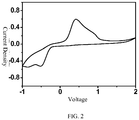
FIG.2 is a cyclic voltammogram of the [Mg(THF)6] [AlCl4]2 in embodiment 7 of the invention; -
FIG.3 is a linearly scanned voltammogram of the [Mg(THF)6] [AlCl4]2 in embodiment 7 of the invention; -
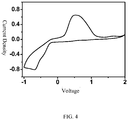
FIG.4 is a cyclic voltammogram of the [Mg(DMSO)6] [AlCl4]2 in embodiment 8 of the invention; -
FIG.5 is a cyclic voltammogram of the [Mg(DMSO)6] [AlF4]2 in embodiment 9 of the invention; -
FIG.6 is a first charging-discharging curve diagram of a magnesium sulphur battery inembodiment 10 of the invention; -
FIG.7 is a cycle performance test diagram of the magnesium sulphur battery inembodiment 10 of the invention. - Typical embodiments that embody the characteristics and advantages are described in detail below. It should be understood that the invention can have various variations at different embodiments, all within the scope of the invention, and the descriptions and drawings thereof should be regarded as explanation in nature, instead of limits in the invention.
- Unless otherwise defined, all technical and scientific terms used in the text have meanings generally understood by those skilled in the technical field of the invention. The terms in text of the description of the invention are used only for the purpose of describing the specific embodiments of the invention, instead of limiting the invention.
- Embodiment 1: 56 mg of anhydrous magnesium chloride (MgCl2) and 158 mg of anhydrous aluminum chloride (AlCl3) react in 1mL of ionic liquid, namely 1-methyl-(1-butyl) pyrrolidinium bis(trifluoromethanesulfonyl)imide (PYR14TFSI), at a temperature of 95°C for 24 hours to obtain a light yellow solution; the obtained solution is cooled to room temperature and then added into 1mL of THF; and 0.3M rechargeable magnesium electrolyte solution is obtained. The crystal structure represents that the electrolyte salt is [Mg(THF)6] [AlCl4]2, and the crystal structure can be seen in
FIG. 1 . The theoretical values according to the element analysis include C: 36.28, and H: 6.09; and the measured values include C: 36.27%, and N: 6.10%. Raman spectrum test results show that 350 cm-1 is the characteristic peak of the anions AlCl4 -, and the Raman peak of other aluminum chloride anions is not seen. - Embodiment 2: 56 mg of anhydrous magnesium chloride (MgCl2) and 158 mg of anhydrous aluminum chloride (AlCl3) react in 1mL of triethylene glycol dimethyl ether (TEGDME) at a temperature of 30°C for 24 hours to obtain a light yellow solution; the obtained solution is cooled to room temperature; and then, 0.6M rechargeable magnesium electrolyte solution is obtained. The crystal structure represents that the electrolyte salt is [Mg(TEGDME)2] [AlCl4]2. The theoretical values according to the element analysis include C: 22.87, and H: 4.48; and the measured values include C: 22.89%, and N: 4.47%. Raman spectrum test results show that 350cm-1 is the characteristic peak of the anions AlCl4 -, and the Raman peak of other aluminum chloride anions is not seen.
- Embodiment 3: 56 mg of anhydrous magnesium chloride (MgCl2) and 158 mg of anhydrous aluminum chloride (AlCl3) react in 1mL of toluene at a temperature of 100°C for 24 hours to obtain a light yellow solution; the obtained solution is cooled to room temperature; and then, 0.6M rechargeable magnesium electrolyte solution is obtained. The crystal structure represents that the electrolyte salt is [Mg(toluene)6] [AlCl4]2. The theoretical values according to the element analysis include C: 55.15, and H: 5.29; and the measured values include C: 55.10%, and H: 5.30%. Raman spectrum test results show that 350 cm-1 is the characteristic peak of the anions AlCl4 -, and the Raman peak of other aluminum chloride anions is not seen.
- Embodiment 4: 56 mg of anhydrous magnesium chloride (MgCl2) and 158 mg of anhydrous aluminum chloride (AlCl3) react in 1mL of polyethylene glycol dimethyl ether at a temperature of 95°C for 24 hours to obtain a light yellow solution; the obtained solution is cooled to room temperature; and then, 0.6M rechargeable magnesium electrolyte solution is obtained. Raman spectrum test results show that 350cm-1 is the characteristic peak of the anions AlCl4 -, and the Raman peak of other aluminum chloride anions is not seen.
- Embodiment 5: 56 mg of anhydrous magnesium chloride (MgCl2) and 158 mg of anhydrous aluminum chloride (AlCl3) react in 1mL of dimethyl sulfoxide (DMSO) at a temperature of 120°C for 24 hours to obtain a light yellow solution; the obtained solution is cooled to room temperature; and then, 0.6M rechargeable magnesium electrolyte solution is obtained. The crystal structure represents that the electrolyte salt is [Mg(DMSO)6] [AlCl4]2. The theoretical values according to the element analysis include C: 17.35, and H: 4.37; and the measured values include C: 17.36%, and H: 4.37%. Raman spectrum test results show that 350cm-1 is the characteristic peak of the anions AlCl4 -, and the Raman peak of other aluminum chloride anions is not seen.
- Embodiment 6: 56 mg of anhydrous magnesium chloride (MgCl2) and 100.8 mg of anhydrous aluminum fluoride (AlF3) react in 1mL of ionic liquid, namely 1-methyl-(1-butyl) pyrrolidinium bis(trifluoromethanesulfonyl)imide (PYR14TFSI), at a temperature of 150°C for 24 hours to obtain a light yellow solution; the obtained solution is cooled to room temperature and then added into 1mL of THF; and 0.3M rechargeable magnesium electrolyte solution is obtained. The crystal structure represents that the electrolyte salt is [Mg(THF)6] [AlClF3]2. The theoretical values according to the element analysis include C: 41.43, and H: 6.95; and the measured values include C: 41.40%, and H: 6.97%.
- Embodiment 7: 19 mg of anhydrous magnesium chloride (MgCl2) and 100.8 mg of anhydrous aluminum fluoride (AlF3) react in 1mL of dimethyl sulfoxide (DMSO) at a temperature of 200°C for 24 hours to obtain a light yellow solution; the obtained solution is cooled to room temperature; and then, 0.6M rechargeable magnesium electrolyte solution is obtained. The crystal structure represents that the electrolyte salt is [Mg(DMSO)6] [AlF4]2. The theoretical values according to the element analysis include C: 20.62, and H: 5.19; and the measured values include C: 20.61%, and H: 5.20%.
- Embodiment 8: 56 mg of anhydrous magnesium chloride (MgCl2) and 69mg of anhydrous boron chloride (BCl3) react in 1mL of ionic liquid, namely 1-methyl-(1-butyl) pyrrolidinium bis (trifluoromethanesulfonyl) imide (PYR14TFSI), at a temperature of 95°C for 24 hours to obtain a light yellow solution; the obtained solution is cooled to room temperature and then added into 1mL of THF; and 0.3M rechargeable magnesium electrolyte solution is obtained. The crystal structure represents that the electrolyte salt is [Mg(THF)6] [BCl4]2. The theoretical values according to the element analysis include C: 37.82, and H: 6.35; and the measured values include C: 37.82%, and H: 6.34%.
- Embodiment 9: Platinum is used as a working electrode; the PYR14TFSI/THF solution of 0.3M magnesium salt ([Mg(THF)6] [AlCl4]2) is used as the electrolyte solution; and metal magnesium is used as a counter electrode and a reference electrode. The three units are assembled to form a three-electrode system. The system undergoes cyclic voltammetry in an argon glove box. The scanning rate is 25mV/s. The results of cyclic voltammetry and linearly scanned voltammetry can be seen in
FIG.2 andFIG.3 . FromFIG.2 it can be known that the oxidation-reduction process that appears nearby 0.2V and -0.2V vs.Mg corresponds to the deposition and dissolution of magnesium, and the oxidation potential of the anode can reach 2.5V vs.Mg. - Embodiment 10: Copper is used as a working electrode; the PYR14TFSI/THF solution of 0.3M magnesium salt ([Mg(DMSO)6] [AlCl4]2 ) is used as the electrolyte solution; and metal magnesium is used as a counter electrode and a reference electrode. The three units are assembled to form a three-electrode system. The system undergoes cyclic voltammetry in an argon glove box. The scanning rate is 25 mV/s. The cyclic voltammetry results can be seen in
FIG.4 . FromFIG.4 it can be known that the oxidation-reduction process that appears nearby 0.2V and -0.2V vs.Mg corresponds to the deposition and dissolution of magnesium. - Embodiment 11: Platinum is used as a working electrode; the DMSO solution of 0.3M magnesium salt ([Mg(DMSO)6] [AlF4]2) is used as the electrolyte solution; and metal magnesium is used as a counter electrode and a reference electrode. The three units are assembled to form a three-electrode system. The system undergoes cyclic voltammetry in an argon glove box. The scanning rate is 25 mV/s. The cyclic voltammetry results can be seen in
FIG.5 . FromFIG.5 it can be known that the oxidation-reduction process that appears nearby 0.2V and -0.2V vs.Mg corresponds to the deposition and dissolution of magnesium, and the oxidation potential of the anode can reach 2.6V vs.Mg. - Embodiment 12: A sulphur-carbon compound (S/C) is used as the electrolyte solution; the PYR14TFSI/THF solution of 0.3M magnesium salt ([Mg(THF)6] [AlCl4]2) is used as the electrolyte solution; and the metal magnesium is used as the cathode. The three units are assembled to form a magnesium-sulphur battery. The charging-discharging curve and the cyclic performance test results can be seen in
FIG.6 andFIG.7 . FromFIG.6 andFIG.7 it can be known that magnesium-sulphur battery has an initial discharging capacity of approx. 700mAh/G, and has a cycle number of greater than 20. - All product structural parameters, all reaction participants and process conditions in the above embodiments are all typical examples. However, a large number of experiments made by the inventor show that other different structural parameters, other types of reaction participants and process conditions are also applicable, and can achieve the Claimed technical effects of the invention.
- It should be explained that the terms "comprise", "include" or any other synonyms are intended to cover non-exclusive inclusion, so the processes, methods, articles or devices of a series of elements include not only those elements, but also other elements which are not clearly listed, or also include all inherent factors of those processes, methods, articles or terminals. In the case of no more limit, the elements defined by the sentence "comprising/including a/an..." should not exclude that the processes, methods, articles or devices including the elements also include other identical elements.
- The above embodiments are specific embodiments of the invention. It should be noted that, for those ordinarily skilled in the art, various improvements and changes can be made on the basis of the principle of the invention. The improvements and changes shall also fall within the protective scope of the invention.
Claims (11)
- A mono-nuclei cationized magnesium salt with a chemical formula of MgRnMX4-mYm, wherein R is a non-aqueous solvent molecule; M include Al3+ and/or B3+; X and Y respectively comprise halide ions and halogenoid ions; halogenoid ions include CN- or SCN- ; n is any one integer selected in the range of 0∼6, and m is any one integer selected in the range of 0∼4.
- The mono-nuclei cationized magnesium salt according to Claim 1, characterized in that R includes tetrahydrofuran, toluene, dioxane, pyridine, dimethyl sulfoxide, dimethyl formamide, N-methylimidazole, acetonitrile, glycol dimethyl ether, triethylene glycol dimethyl ether or polyethylene glycol dimethyl ether.
- A synthesis method of the mono-nuclei cationized magnesium salt, characterized by comprising a step that, Lewis acid containing Mg2+ and Lewis base containing Al3+ and /or B3+ react in a non-aqueous solvent to generate the mono-nuclei cationized magnesium salt.
- The synthesis method according to Claim 3, characterized in that the synthesis method adopts the reaction temperature of 30∼200°C and a reaction time of 3 - 48 hours.
- The synthesis method according to Claim 3, characterized in that the Lewis acid includes inorganic magnesium salts, wherein the inorganic magnesium salts include MgX2, and X includes halide ions or halogenoid ions; and/or, the Lewis base includes inorganic aluminum salts and/or boron salts, wherein the inorganic aluminum salts include AlY3, the boron salts include BY3, Y includes halide ions or halogenoid ions; and, the halogenoid ions include CN- or SCN-.
- The synthesis method according to Claim 3, characterized in that the non-aqueous solvent is selected from ionic liquids and/or organic solvents; the ionic liquids include imidazole ionic liquids, pyrrolic ionic liquids or piperidine ionic liquids; and the organic solvents include tetrahydrofuran, toluene, glycol dimethyl ether, diethylene glycol dimethyl ether, triethylene glycol dimethyl ether, tetraethylene glycol dimethyl ether, dioxane, pyridine, dimethyl sulfoxide, dimethyl formamide, N-methylimidazole, acetonitrile, or polyethylene glycol dimethyl ether.
- An electrolyte solution, characterized by comprising: a non-aqueous solvent which includes organic solvents and/or ionic liquids, and the mono-nuclei cationized magnesium salt according to any one of Claims 1-2, wherein the non-aqueous solvent is dissolved in the non-aqueous solvent.
- The electrolyte solution according to Claim 7, characterized in that the electrolyte solution has an electrolyte concentration of 0.1∼1.5 mol/L.
- The electrolyte solution according to Claim 7, characterized in that the ionic liquids include imidazole ionic liquids, pyrrolic ionic liquids or piperidine ionic liquids; and/or, the organic solvents include tetrahydrofuran, toluene, glycol dimethyl ether, diethylene glycol dimethyl ether, triethylene glycol dimethyl ether, tetraethylene glycol dimethyl ether, dioxane, pyridine, dimethyl sulfoxide, dimethyl formamide, N-methylimidazole, acetonitrile, or polyethylene glycol dimethyl ether.
- Applications of the mono-nuclei cationized magnesium salt according to any one of Claims 1-2 or the electrolyte solution according to any one of Claims 7-9 in the preparation of magnesium batteries.
- The applications according to Claim 10, characterized in that the magnesium batteries include disposable magnesium batteries or rechargeable magnesium batteries.
Priority Applications (1)
| Application Number | Priority Date | Filing Date | Title |
|---|---|---|---|
| PL15911685T PL3399583T3 (en) | 2015-12-28 | 2015-12-28 | Mononuclear magnesium cationized salt, preparation method and use thereof |
Applications Claiming Priority (1)
| Application Number | Priority Date | Filing Date | Title |
|---|---|---|---|
| PCT/CN2015/099184 WO2017113053A1 (en) | 2015-12-28 | 2015-12-28 | Mononuclear magnesium cationized salt, preparation method and use thereof |
Publications (3)
| Publication Number | Publication Date |
|---|---|
| EP3399583A1 true EP3399583A1 (en) | 2018-11-07 |
| EP3399583A4 EP3399583A4 (en) | 2019-08-21 |
| EP3399583B1 EP3399583B1 (en) | 2021-03-24 |
Family
ID=59223997
Family Applications (1)
| Application Number | Title | Priority Date | Filing Date |
|---|---|---|---|
| EP15911685.4A Active EP3399583B1 (en) | 2015-12-28 | 2015-12-28 | Mononuclear magnesium cationized salt, preparation method and use thereof |
Country Status (6)
| Country | Link |
|---|---|
| US (1) | US10826125B2 (en) |
| EP (1) | EP3399583B1 (en) |
| JP (1) | JP2018533832A (en) |
| KR (1) | KR102180394B1 (en) |
| PL (1) | PL3399583T3 (en) |
| WO (1) | WO2017113053A1 (en) |
Families Citing this family (9)
| Publication number | Priority date | Publication date | Assignee | Title |
|---|---|---|---|---|
| CN109364695B (en) * | 2018-10-08 | 2021-04-20 | 南京林业大学 | An absorbent for recovering toluene in industrial waste gas and its application |
| WO2020115938A1 (en) * | 2018-12-05 | 2020-06-11 | パナソニックIpマネジメント株式会社 | Nonaqueous electrolyte solution for magnesium secondary batteries and magnesium secondary battery using same |
| CN112892190B (en) * | 2021-01-27 | 2023-03-10 | 成都中科绿生环境科技有限公司 | Chemical deodorant and preparation method thereof |
| CN113363578B (en) * | 2021-06-08 | 2022-10-14 | 重庆大学 | Boron-based non-nucleophilic rechargeable magnesium battery electrolyte and preparation method thereof |
| CN114551999B (en) * | 2022-02-14 | 2023-10-27 | 清华大学 | Electrolyte for rechargeable magnesium battery, preparation method thereof, and rechargeable magnesium battery containing same |
| CN114552018A (en) * | 2022-02-15 | 2022-05-27 | 清华大学 | Magnesium battery electrolyte, preparation method thereof and magnesium battery |
| CN115347230B (en) * | 2022-09-14 | 2024-09-17 | 哈尔滨工业大学 | A non-nucleophilic electrolyte for magnesium secondary battery with in-situ generation of magnesium salt, preparation method and application thereof |
| CN116454388A (en) * | 2023-05-18 | 2023-07-18 | 清华大学 | Electrolyte for magnesium ion battery, preparation method of electrolyte and magnesium ion battery |
| CN118352606A (en) * | 2024-04-17 | 2024-07-16 | 苏州科技大学 | A magnesium secondary battery electrolyte and its preparation method and application |
Family Cites Families (9)
| Publication number | Priority date | Publication date | Assignee | Title |
|---|---|---|---|---|
| JP5245108B2 (en) | 2007-07-11 | 2013-07-24 | ソニー株式会社 | Magnesium ion-containing non-aqueous electrolyte, method for producing the same, and electrochemical device |
| JP5471036B2 (en) * | 2008-06-05 | 2014-04-16 | ソニー株式会社 | Magnesium ion-containing non-aqueous electrolyte and electrochemical device using the same |
| US8951680B2 (en) * | 2011-03-08 | 2015-02-10 | Pellion Technologies, Inc. | Rechargeable magnesium ion cell components and assembly |
| CN102916220B (en) * | 2011-08-05 | 2015-10-14 | 丰田自动车株式会社 | Magnesium battery electrolyte |
| EP2795703B1 (en) * | 2011-12-22 | 2018-10-10 | Pellion Technologies Inc. | Non-aqueous electrolyte for rechargeable magnesium ion cell |
| WO2013180807A2 (en) * | 2012-03-20 | 2013-12-05 | Pellion Technologies, Inc. | Non-aqueous electrolyte for high voltage rechargeable magnesium batteries |
| CN103066326B (en) | 2013-01-18 | 2015-07-15 | 上海交通大学 | Electrolyte for chargeable magnesium battery |
| CN103794815A (en) | 2014-02-18 | 2014-05-14 | 上海交通大学 | Electrolytic solution of rechargeable magnesium cell and application method thereof |
| KR20170089890A (en) * | 2014-11-28 | 2017-08-04 | 와코 쥰야꾸 고교 가부시키가이샤 | Magnesium-containing electrolytic solution |
-
2015
- 2015-12-28 WO PCT/CN2015/099184 patent/WO2017113053A1/en not_active Ceased
- 2015-12-28 JP JP2018540192A patent/JP2018533832A/en active Pending
- 2015-12-28 PL PL15911685T patent/PL3399583T3/en unknown
- 2015-12-28 KR KR1020187008635A patent/KR102180394B1/en active Active
- 2015-12-28 EP EP15911685.4A patent/EP3399583B1/en active Active
- 2015-12-28 US US15/769,667 patent/US10826125B2/en active Active
Also Published As
| Publication number | Publication date |
|---|---|
| WO2017113053A1 (en) | 2017-07-06 |
| US20180316059A1 (en) | 2018-11-01 |
| US10826125B2 (en) | 2020-11-03 |
| EP3399583A4 (en) | 2019-08-21 |
| PL3399583T3 (en) | 2021-11-22 |
| KR20180077154A (en) | 2018-07-06 |
| EP3399583B1 (en) | 2021-03-24 |
| JP2018533832A (en) | 2018-11-15 |
| KR102180394B1 (en) | 2020-11-19 |
Similar Documents
| Publication | Publication Date | Title |
|---|---|---|
| EP3399583B1 (en) | Mononuclear magnesium cationized salt, preparation method and use thereof | |
| Kravchyk et al. | High-energy-density dual-ion battery for stationary storage of electricity using concentrated potassium fluorosulfonylimide | |
| Zhang et al. | Novel design concepts of efficient Mg‐Ion electrolytes toward high‐performance magnesium–selenium and magnesium–sulfur batteries | |
| Xia et al. | Ionic liquid electrolytes for aluminium secondary battery: influence of organic solvents | |
| Li et al. | Synthesis, crystal structure, and electrochemical properties of a simple magnesium electrolyte for magnesium/sulfur batteries | |
| Kar et al. | Chelating ionic liquids for reversible zinc electrochemistry | |
| Wang et al. | Exploring polymeric lithium tartaric acid borate for thermally resistant polymer electrolyte of lithium batteries | |
| CN106384844B (en) | Non-nucleophilic double-salt system magnesium battery electrolyte, preparation method and application thereof | |
| Canever et al. | Acetamide: a low-cost alternative to alkyl imidazolium chlorides for aluminium-ion batteries | |
| Han et al. | Ionic liquids and plastic crystals based on tertiary sulfonium and bis (fluorosulfonyl) imide | |
| CN102916220B (en) | Magnesium battery electrolyte | |
| Reiter et al. | Ternary polymer electrolytes with 1-methylimidazole based ionic liquids and aprotic solvents | |
| Liu et al. | Ionic liquids based on (fluorosulfonyl)(pentafluoroethanesulfonyl) imide with various oniums | |
| Zhang et al. | Amide-based molten electrolyte with hybrid active ions for rechargeable Zn batteries | |
| Reed et al. | A combined experimental and computational study of an aluminum triflate/diglyme electrolyte | |
| Peng et al. | Investigation of the anodic behavior of Al current collector in room temperature ionic liquid electrolytes | |
| CN106916173B (en) | Mononuclear magnesium cationized salt, its preparation method and application | |
| KR101374754B1 (en) | Method for preparing metal lithium using electrolysis in non-aqueous electrolyte | |
| Chai et al. | Ether-functionalized pyrazolium ionic liquids as new electrolytes for lithium battery | |
| CN115051033A (en) | Application of fluoroether solvent and electrolyte in energy storage battery | |
| Nidhi et al. | Advancement in field of energy storage applications by using ionic liquids | |
| McOwen et al. | Anion coordination interactions in solvates with the lithium salts LiDCTA and LiTDI | |
| Zhang et al. | New ionic liquids based on a super-delocalized perfluorinated sulfonimide anion: physical and electrochemical properties | |
| Usui et al. | Li-insertion/extraction properties of Si thick-film anodes in ionic liquid electrolytes based on bis (fluorosulfonyl) amide and bis (trifluoromethanesulfonyl) amide anions | |
| Fang et al. | Guanidinium-based ionic liquids as new electrolytes for lithium battery |
Legal Events
| Date | Code | Title | Description |
|---|---|---|---|
| STAA | Information on the status of an ep patent application or granted ep patent |
Free format text: STATUS: THE INTERNATIONAL PUBLICATION HAS BEEN MADE |
|
| PUAI | Public reference made under article 153(3) epc to a published international application that has entered the european phase |
Free format text: ORIGINAL CODE: 0009012 |
|
| STAA | Information on the status of an ep patent application or granted ep patent |
Free format text: STATUS: REQUEST FOR EXAMINATION WAS MADE |
|
| 17P | Request for examination filed |
Effective date: 20180714 |
|
| AK | Designated contracting states |
Kind code of ref document: A1 Designated state(s): AL AT BE BG CH CY CZ DE DK EE ES FI FR GB GR HR HU IE IS IT LI LT LU LV MC MK MT NL NO PL PT RO RS SE SI SK SM TR |
|
| AX | Request for extension of the european patent |
Extension state: BA ME |
|
| DAV | Request for validation of the european patent (deleted) | ||
| DAX | Request for extension of the european patent (deleted) | ||
| A4 | Supplementary search report drawn up and despatched |
Effective date: 20190718 |
|
| RIC1 | Information provided on ipc code assigned before grant |
Ipc: H01M 10/0566 20100101AFI20190712BHEP Ipc: C07F 3/02 20060101ALI20190712BHEP |
|
| GRAP | Despatch of communication of intention to grant a patent |
Free format text: ORIGINAL CODE: EPIDOSNIGR1 |
|
| STAA | Information on the status of an ep patent application or granted ep patent |
Free format text: STATUS: GRANT OF PATENT IS INTENDED |
|
| INTG | Intention to grant announced |
Effective date: 20201013 |
|
| GRAS | Grant fee paid |
Free format text: ORIGINAL CODE: EPIDOSNIGR3 |
|
| GRAA | (expected) grant |
Free format text: ORIGINAL CODE: 0009210 |
|
| STAA | Information on the status of an ep patent application or granted ep patent |
Free format text: STATUS: THE PATENT HAS BEEN GRANTED |
|
| AK | Designated contracting states |
Kind code of ref document: B1 Designated state(s): AL AT BE BG CH CY CZ DE DK EE ES FI FR GB GR HR HU IE IS IT LI LT LU LV MC MK MT NL NO PL PT RO RS SE SI SK SM TR |
|
| REG | Reference to a national code |
Ref country code: GB Ref legal event code: FG4D |
|
| REG | Reference to a national code |
Ref country code: CH Ref legal event code: EP |
|
| REG | Reference to a national code |
Ref country code: IE Ref legal event code: FG4D |
|
| REG | Reference to a national code |
Ref country code: AT Ref legal event code: REF Ref document number: 1375428 Country of ref document: AT Kind code of ref document: T Effective date: 20210415 Ref country code: DE Ref legal event code: R096 Ref document number: 602015067353 Country of ref document: DE |
|
| REG | Reference to a national code |
Ref country code: LT Ref legal event code: MG9D |
|
| PG25 | Lapsed in a contracting state [announced via postgrant information from national office to epo] |
Ref country code: GR Free format text: LAPSE BECAUSE OF FAILURE TO SUBMIT A TRANSLATION OF THE DESCRIPTION OR TO PAY THE FEE WITHIN THE PRESCRIBED TIME-LIMIT Effective date: 20210625 Ref country code: HR Free format text: LAPSE BECAUSE OF FAILURE TO SUBMIT A TRANSLATION OF THE DESCRIPTION OR TO PAY THE FEE WITHIN THE PRESCRIBED TIME-LIMIT Effective date: 20210324 Ref country code: FI Free format text: LAPSE BECAUSE OF FAILURE TO SUBMIT A TRANSLATION OF THE DESCRIPTION OR TO PAY THE FEE WITHIN THE PRESCRIBED TIME-LIMIT Effective date: 20210324 Ref country code: BG Free format text: LAPSE BECAUSE OF FAILURE TO SUBMIT A TRANSLATION OF THE DESCRIPTION OR TO PAY THE FEE WITHIN THE PRESCRIBED TIME-LIMIT Effective date: 20210624 Ref country code: NO Free format text: LAPSE BECAUSE OF FAILURE TO SUBMIT A TRANSLATION OF THE DESCRIPTION OR TO PAY THE FEE WITHIN THE PRESCRIBED TIME-LIMIT Effective date: 20210624 |
|
| PG25 | Lapsed in a contracting state [announced via postgrant information from national office to epo] |
Ref country code: SE Free format text: LAPSE BECAUSE OF FAILURE TO SUBMIT A TRANSLATION OF THE DESCRIPTION OR TO PAY THE FEE WITHIN THE PRESCRIBED TIME-LIMIT Effective date: 20210324 Ref country code: RS Free format text: LAPSE BECAUSE OF FAILURE TO SUBMIT A TRANSLATION OF THE DESCRIPTION OR TO PAY THE FEE WITHIN THE PRESCRIBED TIME-LIMIT Effective date: 20210324 Ref country code: LV Free format text: LAPSE BECAUSE OF FAILURE TO SUBMIT A TRANSLATION OF THE DESCRIPTION OR TO PAY THE FEE WITHIN THE PRESCRIBED TIME-LIMIT Effective date: 20210324 |
|
| REG | Reference to a national code |
Ref country code: NL Ref legal event code: MP Effective date: 20210324 |
|
| REG | Reference to a national code |
Ref country code: AT Ref legal event code: MK05 Ref document number: 1375428 Country of ref document: AT Kind code of ref document: T Effective date: 20210324 |
|
| PG25 | Lapsed in a contracting state [announced via postgrant information from national office to epo] |
Ref country code: NL Free format text: LAPSE BECAUSE OF FAILURE TO SUBMIT A TRANSLATION OF THE DESCRIPTION OR TO PAY THE FEE WITHIN THE PRESCRIBED TIME-LIMIT Effective date: 20210324 |
|
| PG25 | Lapsed in a contracting state [announced via postgrant information from national office to epo] |
Ref country code: SM Free format text: LAPSE BECAUSE OF FAILURE TO SUBMIT A TRANSLATION OF THE DESCRIPTION OR TO PAY THE FEE WITHIN THE PRESCRIBED TIME-LIMIT Effective date: 20210324 Ref country code: AT Free format text: LAPSE BECAUSE OF FAILURE TO SUBMIT A TRANSLATION OF THE DESCRIPTION OR TO PAY THE FEE WITHIN THE PRESCRIBED TIME-LIMIT Effective date: 20210324 Ref country code: EE Free format text: LAPSE BECAUSE OF FAILURE TO SUBMIT A TRANSLATION OF THE DESCRIPTION OR TO PAY THE FEE WITHIN THE PRESCRIBED TIME-LIMIT Effective date: 20210324 Ref country code: CZ Free format text: LAPSE BECAUSE OF FAILURE TO SUBMIT A TRANSLATION OF THE DESCRIPTION OR TO PAY THE FEE WITHIN THE PRESCRIBED TIME-LIMIT Effective date: 20210324 Ref country code: LT Free format text: LAPSE BECAUSE OF FAILURE TO SUBMIT A TRANSLATION OF THE DESCRIPTION OR TO PAY THE FEE WITHIN THE PRESCRIBED TIME-LIMIT Effective date: 20210324 |
|
| PG25 | Lapsed in a contracting state [announced via postgrant information from national office to epo] |
Ref country code: PT Free format text: LAPSE BECAUSE OF FAILURE TO SUBMIT A TRANSLATION OF THE DESCRIPTION OR TO PAY THE FEE WITHIN THE PRESCRIBED TIME-LIMIT Effective date: 20210726 Ref country code: SK Free format text: LAPSE BECAUSE OF FAILURE TO SUBMIT A TRANSLATION OF THE DESCRIPTION OR TO PAY THE FEE WITHIN THE PRESCRIBED TIME-LIMIT Effective date: 20210324 Ref country code: RO Free format text: LAPSE BECAUSE OF FAILURE TO SUBMIT A TRANSLATION OF THE DESCRIPTION OR TO PAY THE FEE WITHIN THE PRESCRIBED TIME-LIMIT Effective date: 20210324 Ref country code: IS Free format text: LAPSE BECAUSE OF FAILURE TO SUBMIT A TRANSLATION OF THE DESCRIPTION OR TO PAY THE FEE WITHIN THE PRESCRIBED TIME-LIMIT Effective date: 20210724 |
|
| REG | Reference to a national code |
Ref country code: DE Ref legal event code: R097 Ref document number: 602015067353 Country of ref document: DE |
|
| PG25 | Lapsed in a contracting state [announced via postgrant information from national office to epo] |
Ref country code: ES Free format text: LAPSE BECAUSE OF FAILURE TO SUBMIT A TRANSLATION OF THE DESCRIPTION OR TO PAY THE FEE WITHIN THE PRESCRIBED TIME-LIMIT Effective date: 20210324 Ref country code: AL Free format text: LAPSE BECAUSE OF FAILURE TO SUBMIT A TRANSLATION OF THE DESCRIPTION OR TO PAY THE FEE WITHIN THE PRESCRIBED TIME-LIMIT Effective date: 20210324 Ref country code: DK Free format text: LAPSE BECAUSE OF FAILURE TO SUBMIT A TRANSLATION OF THE DESCRIPTION OR TO PAY THE FEE WITHIN THE PRESCRIBED TIME-LIMIT Effective date: 20210324 |
|
| PLBE | No opposition filed within time limit |
Free format text: ORIGINAL CODE: 0009261 |
|
| STAA | Information on the status of an ep patent application or granted ep patent |
Free format text: STATUS: NO OPPOSITION FILED WITHIN TIME LIMIT |
|
| PG25 | Lapsed in a contracting state [announced via postgrant information from national office to epo] |
Ref country code: SI Free format text: LAPSE BECAUSE OF FAILURE TO SUBMIT A TRANSLATION OF THE DESCRIPTION OR TO PAY THE FEE WITHIN THE PRESCRIBED TIME-LIMIT Effective date: 20210324 |
|
| 26N | No opposition filed |
Effective date: 20220104 |
|
| PG25 | Lapsed in a contracting state [announced via postgrant information from national office to epo] |
Ref country code: IS Free format text: LAPSE BECAUSE OF FAILURE TO SUBMIT A TRANSLATION OF THE DESCRIPTION OR TO PAY THE FEE WITHIN THE PRESCRIBED TIME-LIMIT Effective date: 20210724 |
|
| PG25 | Lapsed in a contracting state [announced via postgrant information from national office to epo] |
Ref country code: MC Free format text: LAPSE BECAUSE OF FAILURE TO SUBMIT A TRANSLATION OF THE DESCRIPTION OR TO PAY THE FEE WITHIN THE PRESCRIBED TIME-LIMIT Effective date: 20210324 |
|
| REG | Reference to a national code |
Ref country code: CH Ref legal event code: PL |
|
| REG | Reference to a national code |
Ref country code: BE Ref legal event code: MM Effective date: 20211231 |
|
| PG25 | Lapsed in a contracting state [announced via postgrant information from national office to epo] |
Ref country code: LU Free format text: LAPSE BECAUSE OF NON-PAYMENT OF DUE FEES Effective date: 20211228 Ref country code: IE Free format text: LAPSE BECAUSE OF NON-PAYMENT OF DUE FEES Effective date: 20211228 |
|
| PG25 | Lapsed in a contracting state [announced via postgrant information from national office to epo] |
Ref country code: BE Free format text: LAPSE BECAUSE OF NON-PAYMENT OF DUE FEES Effective date: 20211231 |
|
| PG25 | Lapsed in a contracting state [announced via postgrant information from national office to epo] |
Ref country code: LI Free format text: LAPSE BECAUSE OF NON-PAYMENT OF DUE FEES Effective date: 20211231 Ref country code: CH Free format text: LAPSE BECAUSE OF NON-PAYMENT OF DUE FEES Effective date: 20211231 |
|
| PG25 | Lapsed in a contracting state [announced via postgrant information from national office to epo] |
Ref country code: CY Free format text: LAPSE BECAUSE OF FAILURE TO SUBMIT A TRANSLATION OF THE DESCRIPTION OR TO PAY THE FEE WITHIN THE PRESCRIBED TIME-LIMIT Effective date: 20210324 |
|
| PG25 | Lapsed in a contracting state [announced via postgrant information from national office to epo] |
Ref country code: HU Free format text: LAPSE BECAUSE OF FAILURE TO SUBMIT A TRANSLATION OF THE DESCRIPTION OR TO PAY THE FEE WITHIN THE PRESCRIBED TIME-LIMIT; INVALID AB INITIO Effective date: 20151228 |
|
| PG25 | Lapsed in a contracting state [announced via postgrant information from national office to epo] |
Ref country code: MK Free format text: LAPSE BECAUSE OF FAILURE TO SUBMIT A TRANSLATION OF THE DESCRIPTION OR TO PAY THE FEE WITHIN THE PRESCRIBED TIME-LIMIT Effective date: 20210324 |
|
| PG25 | Lapsed in a contracting state [announced via postgrant information from national office to epo] |
Ref country code: MT Free format text: LAPSE BECAUSE OF FAILURE TO SUBMIT A TRANSLATION OF THE DESCRIPTION OR TO PAY THE FEE WITHIN THE PRESCRIBED TIME-LIMIT Effective date: 20210324 |
|
| PG25 | Lapsed in a contracting state [announced via postgrant information from national office to epo] |
Ref country code: TR Free format text: LAPSE BECAUSE OF FAILURE TO SUBMIT A TRANSLATION OF THE DESCRIPTION OR TO PAY THE FEE WITHIN THE PRESCRIBED TIME-LIMIT Effective date: 20210324 |
|
| PGFP | Annual fee paid to national office [announced via postgrant information from national office to epo] |
Ref country code: GB Payment date: 20251229 Year of fee payment: 11 |
|
| PGFP | Annual fee paid to national office [announced via postgrant information from national office to epo] |
Ref country code: IT Payment date: 20251210 Year of fee payment: 11 |
|
| PGFP | Annual fee paid to national office [announced via postgrant information from national office to epo] |
Ref country code: FR Payment date: 20251230 Year of fee payment: 11 |
|
| PGFP | Annual fee paid to national office [announced via postgrant information from national office to epo] |
Ref country code: PL Payment date: 20251126 Year of fee payment: 11 |
|
| PGFP | Annual fee paid to national office [announced via postgrant information from national office to epo] |
Ref country code: DE Payment date: 20251231 Year of fee payment: 11 |