EP3399464B1 - Target object color analysis and tagging - Google Patents
Target object color analysis and tagging Download PDFInfo
- Publication number
- EP3399464B1 EP3399464B1 EP18161411.6A EP18161411A EP3399464B1 EP 3399464 B1 EP3399464 B1 EP 3399464B1 EP 18161411 A EP18161411 A EP 18161411A EP 3399464 B1 EP3399464 B1 EP 3399464B1
- Authority
- EP
- European Patent Office
- Prior art keywords
- color
- image
- target object
- executed
- hardware processor
- Prior art date
- Legal status (The legal status is an assumption and is not a legal conclusion. Google has not performed a legal analysis and makes no representation as to the accuracy of the status listed.)
- Active
Links
Images


Classifications
-
- G—PHYSICS
- G06—COMPUTING OR CALCULATING; COUNTING
- G06V—IMAGE OR VIDEO RECOGNITION OR UNDERSTANDING
- G06V10/00—Arrangements for image or video recognition or understanding
- G06V10/40—Extraction of image or video features
- G06V10/56—Extraction of image or video features relating to colour
-
- G—PHYSICS
- G06—COMPUTING OR CALCULATING; COUNTING
- G06F—ELECTRIC DIGITAL DATA PROCESSING
- G06F18/00—Pattern recognition
- G06F18/20—Analysing
- G06F18/24—Classification techniques
Definitions
- An image may include various objects that include a variety of colors.
- an object may include an element such as a person, an animal, clothing worn by a person, furniture near a person, etc.
- An object may also include a region of the image, such as the sky, a forest, a road, etc.
- An image may include background colors that separate an object in the image from other objects in the image.
- US 2016/0162497 discloses a video recording apparatus which includes: an object classifier configured to classify an object which is included in an input video and related to a detected event, according to a type of the object; an object color extractor configured to extract a representative color of the object; and a search color storage configured to transform the representative color into a search color and store the search color as color information to be used for searching the object or the detected event from the input video.
- Tag Tagging: Towards More Descriptive Keywords of Image Content relates to an automatic scheme called tag tagging to supplement semantic image descriptions by associating a group of property tags with each existing tag.
- a lazy learning approach is first applied to estimate the corresponding image regions of each initial tag, and then a set of property tags are derived for each initial tag.
- the terms “a” and “an” are intended to denote at least one of a particular element.
- the term “includes” means includes but not limited to, the term “including” means including but not limited to.
- the term “based on” means based at least in part on.
- Target object color analysis and tagging apparatuses, methods for target object color analysis and tagging, and non-transitory computer readable media having stored thereon machine readable instructions to provide target object color analysis and tagging are disclosed herein.
- the apparatuses, methods, and non-transitory computer readable media disclosed herein provide for color tagging of a target object by assigning a color tag of a plurality of color tags associated with the target object.
- the target object may include an element such as a person, an animal, clothing worn by a person, furniture near a person, etc., and/or a region of an image, such as the sky, a forest, a road, etc.
- Color tags may be described as specified colors (e.g., beige, black, blue, red, etc.) that are to be analyzed for assignment to the target object.
- color may be extracted.
- it is technically challenging to extract color from a target object where it may be uncertain as to what the target object is, and where the target object is located.
- it is technically challenging to extract color from a target object where it may be uncertain as to what the target is from a plurality of other objects.
- It is also technically challenging to determine a color of an object where the color of the object may need to be matched to a limited number of available colors.
- the target object color analysis and tagging as disclosed herein provide for assignment of a color tag from a plurality of available color tags to an identified target object by ascertaining, for an image (or a video, or generally another source) that is to be analyzed, an attribute of the image.
- an attribute of the image may include text associated with the image, sound associated with the image, a shape (e.g., a face) included in the image, etc.
- a target object that is to be identified and color tagged in the image may be determined.
- a plurality of objects is extracted from the image based on a learning model.
- the target object is a shirt worn by a person
- the plurality of objects may include furniture adjacent to the person, other clothes worn by the person, shoes worn by the person, etc.
- the target object in the image is identified based on a comparison of the target object that is to be identified and color tagged in the image and the plurality of extracted objects from the image.
- the target object may be determined by determining, based on an analysis of a repository of available objects based on the text associated with the image, categories of related objects. For example, assuming that the target object is a shirt worn by a person, the categories may include sweaters, t-shirts, jackets, shirts, and other such clothing worn by a person.
- the categories may further include sub-categories. For example, a sweaters category may include sub-categories that include sleeveless sweaters, sweaters with sleeves, etc.
- Color information is extracted from the identified target object, and a plurality of color tags associated with the identified target object is ascertained.
- the color tags may include colors such as beige, blue, green, red, etc.
- a plurality of color distances is determined between the color information and the plurality of color tags.
- the color distances may represent CIEDE2000 color distances between the color information and the plurality of color tags.
- a color tag of the plurality of color tags that is to be assigned to the identified target object is determined. Further, the color tag may be assigned to the identified target object.
- the elements of the apparatuses, methods, and non-transitory computer readable media disclosed herein may be any combination of hardware and programming to implement the functionalities of the respective elements.
- the combinations of hardware and programming may be implemented in a number of different ways.
- the programming for the elements may be processor executable instructions stored on a non-transitory machine-readable storage medium and the hardware for the elements may include a processing resource to execute those instructions.
- a computing device implementing such elements may include the machine-readable storage medium storing the instructions and the processing resource to execute the instructions, or the machine-readable storage medium may be separately stored and accessible by the computing device and the processing resource.
- some elements may be implemented in circuitry.
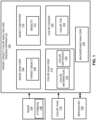
- Figure 1 illustrates a layout of an example target object color analysis and tagging apparatus (hereinafter also referred to as "apparatus 100").
- the apparatus 100 includes an image analyzer 102, which is executed by at least one hardware processor (e.g., the processor 302 of Figure 3 or the processor 504 of Figure 5 ), to ascertain, for an image 104 that is to be analyzed, an attribute 106 of the image 104. Further, the image analyzer 102 is to determine, based on the attribute 106 of the image 104, a target object 108 that is to be identified and color tagged in the image 104. According to an example, the attribute 106 of the image 104 may include audible and/or visible attributes associated with the image 104. According to an example, the target object 108 may include an element and/or a region of the image 104.
- the hardware processor e.g., the processor 302 of Figure 3 or the processor 504 of Figure 5
- the image analyzer 102 is to determine, based on the attribute 106 of the image 104, a target object 108 that is to be identified and color tagged in the image 104.
- An object identifier 110 which is executed by the at least one hardware processor (e.g., the processor 302 of Figure 3 or the processor 504 of Figure 5 ), is to extract, based on a learning model, a plurality of objects 112 from the image 104. Further, the object identifier 110 is to identify, based on a comparison of the target object 108 that is to be identified and color tagged in the image 104 and the plurality of extracted objects 112 from the image, the target object 108 in the image 104.
- the at least one hardware processor e.g., the processor 302 of Figure 3 or the processor 504 of Figure 5
- a color analyzer 114 which is executed by the at least one hardware processor (e.g., the processor 302 of Figure 3 or the processor 504 of Figure 5 ), is to extract color information 116 from the identified target object 108.
- the color analyzer 114 is to ascertain a plurality of color tags 118 associated with the identified target object 108. Further, the color analyzer 114 is to determine a plurality of color distances 120 between the color information 116 and the plurality of color tags 118.
- a color tagger 122 which is executed by the at least one hardware processor (e.g., the processor 302 of Figure 3 or the processor 504 of Figure 5 ), is to determine, based on a determination of a minimum color distance from the plurality of color distances 120, a color tag 124 of the plurality of color tags 118 that is to be assigned to the identified target object 108.
- the at least one hardware processor e.g., the processor 302 of Figure 3 or the processor 504 of Figure 5
- a background analyzer 126 which is executed by the at least one hardware processor (e.g., the processor 302 of Figure 3 or the processor 504 of Figure 5 ), is to determine whether background color (i.e., color of the image other than the color of objects in the image, or color of the image outside of the boundaries of the target object 108) should be removed from the image 104.
- the analysis by the background analyzer 126 may be performed prior to extraction of the color information 116 from the identified target object 108.
- the difference may represent a difference between background color and a color of an object.
- the highest order bin may represent a bin which includes a highest count of color occurrences for a particular color in the image 104
- the subsequent bin may represent a bin which includes the second highest count of color occurrences for the particular color in the image 104, and so forth.
- the background analyzer 126 may determine whether the difference is greater than a specified threshold.
- the specified threshold may be 40%.
- the background analyzer 126 may remove background color from the image 104. Otherwise, in response to a determination that the difference is less than the specified threshold, the background analyzer 126 may not remove background color from the image 104. In this manner, background color interference with respect to extraction of the color information 116 from the identified target object 108 may be minimized.
- the attribute 106 of the image 104 includes text within the image 104.
- the image analyzer 102 is executed by the at least one hardware processor (e.g., the processor 302 of Figure 3 or the processor 504 of Figure 5 ) to determine, based on the text associated with the image, the target object 108 that is to be identified and color tagged in the image 104 by determining, based on an analysis of a repository 128 of available objects 112 based on the text associated with the image, categories of related objects.
- the categories of related objects may include the target object 108 that is to be identified and color tagged in the image 104.
- the object identifier 110 is executed by the at least one hardware processor (e.g., the processor 302 of Figure 3 or the processor 504 of Figure 5 ) to identify, based on the comparison of the categories of related objects and the plurality of extracted objects 112 from the image, the target object 108 in the image 104.
- the tfw categories of related objects may be determined as a function of synonyms determined from the text associated with the image 104.
- the color analyzer 114 is executed by the at least one hardware processor (e.g., the processor 302 of Figure 3 or the processor 504 of Figure 5 ) to extract color information 116 from the identified target object 108 by applying k-means clustering.
- the at least one hardware processor e.g., the processor 302 of Figure 3 or the processor 504 of Figure 5 .
- the color analyzer 114 may determine, based on the L*C*h values for each of the plurality of color tags 118 and the L*C*h values for the extracted color information 116, the plurality of color distances 120 between the color information 116 and the plurality of color tags 118.
- the color analyzer 114 is executed by the at least one hardware processor (e.g., the processor 302 of Figure 3 or the processor 504 of Figure 5 ) to determine the plurality of color distances 120 between the color information 116 and the plurality of color tags 118 by determining CIEDE2000 color distances 120 between the color information 116 and the plurality of color tags 118.
- the at least one hardware processor e.g., the processor 302 of Figure 3 or the processor 504 of Figure 5
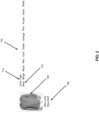
- Figure 2 illustrates an example of color tagging to illustrate operation of the apparatus 100 in accordance with an example of the present disclosure.
- the image analyzer 102 determines, based on the attribute 106 of the image 104, the target object 108 that is to be identified and color tagged in the image 104.
- the image analyzer 102 determines, based on an analysis of the repository 128 of available objects 112 based on the text associated with the image, categories of related objects.
- the repository may include categories of related objects that include sweaters, t-shirts, shirts, and other such clothing worn by a person.
- the categories may also include sub-categories.
- a sweaters category may include sub-categories that include sleeveless sweaters, sweaters with sleeves, etc.
- the object identifier 110 extracts, based on the learning model, the plurality of objects 112 from the image 104.
- the learning model may include a convolutional neural network (CNN) based deep learning model.
- the CNN may be trained, for example, by the object identifier 110 on product images to provide information in the images.
- the CNN model may provide information such as shirt, pants, etc.
- the object identifier 110 identifies, based on a comparison of the target object 108 that is to be identified and color tagged in the image 104 and the plurality of extracted objects 112 from the image, the target object 108 in the image 104.
- the object identifier 110 may implement a lexical database of the English language to refine the aforementioned extracted categories to match with object information extracted by using the learning model.
- the object identifier 110 may compare the categories of sweaters, t-shirts, and shirts to the extracted objects that include shirt and pants to identify the target object 108 as shirt. Further, the object identifier 110 may identify aspects such as the location of the target object 108 so that this location information may be used to extract color information from the target object 108.
- the color analyzer 114 extracts color information 116 from the identified target object 108.
- the color analyzer 114 may extract color information 116 from the identified target object 108 that includes a shirt.
- the color analyzer 114 ascertains a plurality of color tags 118 associated with the identified target object 108.
- the color analyzer 114 may ascertain the plurality of color tags 118 that include blue, beige, black, red, etc.
- the color analyzer 114 determines a plurality of color distances 120 between the color information 116 and the plurality of color tags 118.
- the color distances 120 between the color information 116 and the plurality of color tags 118 may be used to identify the closest color tag to the color information 116.
- the color tagger 122 determines, based on a determination of a minimum color distance from the plurality of color distances 120, a color tag 124 (e.g., the color tag blue) of the plurality of color tags 118 that is to be assigned to the identified target object 108.
- the color tagger 122 may determine that the color tag blue is the closest color tag to the color information 116 for the shirt.
- Figures 3-5 respectively illustrate an example block diagram 300, a flowchart of an example method 400, and a further example block diagram 500 for target object color analysis and tagging, according to examples.
- the block diagram 300, the method 400, and the block diagram 500 may be implemented on the apparatus 100 described above with reference to Figure 1 by way of example and not of limitation.
- the block diagram 300, the method 400, and the block diagram 500 may be practiced in other apparatus.
- Figure 3 shows hardware of the apparatus 100 that may execute the instructions of the block diagram 300.
- the hardware may include a processor 302, and a memory 304 storing machine readable instructions that when executed by the processor cause the processor to perform the instructions of the block diagram 300.
- the memory 304 may represent a non-transitory computer readable medium.
- Figure 4 may represent an example method for target object color analysis and tagging, and the steps of the method.
- Figure 5 may represent a non-transitory computer readable medium 502 having stored thereon machine readable instructions to provide target object color analysis and tagging according to an example. The machine readable instructions, when executed, cause a processor 504 to perform the instructions of the block diagram 500 also shown in Figure 5 .
- the processor 302 of Figure 3 and/or the processor 504 of Figure 5 may include a single or multiple processors or other hardware processing circuit, to execute the methods, functions and other processes described herein. These methods, functions and other processes may be embodied as machine readable instructions stored on a computer readable medium, which may be non-transitory (e.g., the non-transitory computer readable medium 502 of Figure 5 ), such as hardware storage devices (e.g., RAM (random access memory), ROM (read only memory), EPROM (erasable, programmable ROM), EEPROM (electrically erasable, programmable ROM), hard drives, and flash memory).
- the memory 304 may include a RAM, where the machine readable instructions and data for a processor may reside during runtime.
- the memory 304 may include instructions 306 to ascertain, for the image 104 that is to be analyzed, the attribute 106 of the image 104.
- the processor 302 may fetch, decode, and execute the instructions 308 to determine, based on the attribute 106 of the image, the target object 108 that is to be identified and color tagged in the image 104.
- the processor 302 may fetch, decode, and execute the instructions 310 to extract, based on a learning model, the plurality of objects 112 from the image 104.
- the processor 302 may fetch, decode, and execute the instructions 312 to identify, based on a comparison of the target object 108 that is to be identified and color tagged in the image 104 and the plurality of extracted objects 112 from the image, the target object 108 in the image 104.
- the processor 302 may fetch, decode, and execute the instructions 314 to extract color information 116 from the identified target object 108.
- the processor 302 may fetch, decode, and execute the instructions 316 to ascertain the plurality of color tags 118 associated with the identified target object 108.
- the processor 302 may fetch, decode, and execute the instructions 318 to determine the plurality of color distances 120 between the color information 116 and the plurality of color tags 118.
- the processor 302 may fetch, decode, and execute the instructions 320 to determine, based on a determination of a minimum color distance from the plurality of color distances 120, the color tag 124 of the plurality of color tags 118 that is to be assigned to the identified target object 108.
- the method includes ascertaining (e.g., by the image analyzer 102), for the image 104 or a video that is to be analyzed, the attribute 106 of the image 104 or the video.
- the method includes determining (e.g., by the image analyzer 102), based on the attribute 106 of the image 104 or the video, the target object 108 that is to be identified and color tagged in the image 104 or the video.
- the method includes extracting (e.g., by the object identifier 110), based on a learning model, the plurality of objects 112 from the image 104 or the video.
- the method includes identifying (e.g., by the object identifier 110), based on a comparison of the target object 108 that is to be identified and color tagged in the image 104 or the video and the plurality of extracted objects 112 from the image 104 or the video, the target object 108 in the image 104 or the video.
- the method includes extracting (e.g., by the color analyzer 114), color information 116 from the identified target object 108.
- the method includes ascertaining (e.g., by the color analyzer 114), a plurality of color tags 118 associated with the identified target object 108.
- the method includes determining (e.g., by the color analyzer 114), the plurality of color distances 120 between the color information 116 and the plurality of color tags 118.
- the method includes determining (e.g., by the color tagger 122), based on a determination of a minimum color distance from the plurality of color distances 120, the color tag 124 of the plurality of color tags 118 that is to be assigned to the identified target object 108.
- the non-transitory computer readable medium 502 includes instructions 506 to ascertain (e.g., by the image analyzer 102), for the image 104 that is to be analyzed, the attribute 106 of the image 104.
- the processor 504 fetches, decodes, and executes the instructions 508 to determine (e.g., by the image analyzer 102), based on the attribute 106 of the image, the target object 108 that is to be identified and color tagged in the image 104.
- the processor 504 fetches, decodes, and executes the instructions 510 to extract (e.g., by the object identifier 110), based on a learning model, the plurality of objects 112 from the image 104.
- the processor 504 fetches, decodes, and executes the instructions 512 to identify (e.g., by the object identifier 110), based on a comparison of the target object 108 that is to be identified and color tagged in the image 104 and the plurality of extracted objects 112 from the image, the target object 108 in the image 104.
- the processor 504 fetches, decodes, and executes the instructions 514 to extract (e.g., by the color analyzer 114), color information 116 from the identified target object 108.
- the processor 504 fetches, decodes, and executes the instructions 516 to ascertain (e.g., by the color analyzer 114), the plurality of available color tags 118.
- the processor 504 fetches, decodes, and executes the instructions 518 to determine (e.g., by the color analyzer 114), the plurality of color distances 120 between the color information 116 and the plurality of available color tags 118.
- the processor 504 fetches, decodes, and executes the instructions 520 to determine (e.g., by the color tagger 122), based on a determination of a minimum color distance from the plurality of color distances 120, the color tag 124 of the plurality of available color tags 118 that represents a closest color tag to the identified target object 108.
- the processor 504 fetches, decodes, and executes the instructions 522 to assign (e.g., by the color tagger 122), the closest color tag to the identified target object 108.
Landscapes
- Engineering & Computer Science (AREA)
- Theoretical Computer Science (AREA)
- Physics & Mathematics (AREA)
- General Physics & Mathematics (AREA)
- Data Mining & Analysis (AREA)
- Multimedia (AREA)
- Artificial Intelligence (AREA)
- Evolutionary Biology (AREA)
- Evolutionary Computation (AREA)
- Computer Vision & Pattern Recognition (AREA)
- General Engineering & Computer Science (AREA)
- Bioinformatics & Computational Biology (AREA)
- Bioinformatics & Cheminformatics (AREA)
- Life Sciences & Earth Sciences (AREA)
- Image Analysis (AREA)
Description
- An image may include various objects that include a variety of colors. For example, an object may include an element such as a person, an animal, clothing worn by a person, furniture near a person, etc. An object may also include a region of the image, such as the sky, a forest, a road, etc. An image may include background colors that separate an object in the image from other objects in the image.
-
US 2016/0162497 discloses a video recording apparatus which includes: an object classifier configured to classify an object which is included in an input video and related to a detected event, according to a type of the object; an object color extractor configured to extract a representative color of the object; and a search color storage configured to transform the representative color into a search color and store the search color as color information to be used for searching the object or the detected event from the input video. - "Tag Tagging: Towards More Descriptive Keywords of Image Content" relates to an automatic scheme called tag tagging to supplement semantic image descriptions by associating a group of property tags with each existing tag. In the proposed scheme, a lazy learning approach is first applied to estimate the corresponding image regions of each initial tag, and then a set of property tags are derived for each initial tag.
- The invention is set out in the appended set of claims. Particular embodiments are the subject of the dependent claims.
- Features of the present disclosure are illustrated by way of example and not limited in the following figure(s), in which like numerals indicate like elements, in which:
-
Figure 1 illustrates a layout of a target object color analysis and tagging apparatus in accordance with an example of the present disclosure; -
Figure 2 illustrates an example of color tagging to illustrate operation of the target object color analysis and tagging apparatus ofFigure 1 in accordance with an example of the present disclosure; -
Figure 3 illustrates an example block diagram for target object color analysis and tagging in accordance with an example of the present disclosure; -
Figure 4 illustrates a flowchart of an example method for target object color analysis and tagging in accordance with an example of the present disclosure; and -
Figure 5 illustrates a further example block diagram for target object color analysis and tagging in accordance with another example of the present disclosure. - For simplicity and illustrative purposes, the present disclosure is described by referring mainly to examples. In the following description, numerous specific details are set forth in order to provide a thorough understanding of the present disclosure. It will be readily apparent however, that the present disclosure may be practiced without limitation to these specific details. In other instances, some methods and structures have not been described in detail so as not to unnecessarily obscure the present disclosure.
- Throughout the present disclosure, the terms "a" and "an" are intended to denote at least one of a particular element. As used herein, the term "includes" means includes but not limited to, the term "including" means including but not limited to. The term "based on" means based at least in part on.
- Target object color analysis and tagging apparatuses, methods for target object color analysis and tagging, and non-transitory computer readable media having stored thereon machine readable instructions to provide target object color analysis and tagging are disclosed herein. The apparatuses, methods, and non-transitory computer readable media disclosed herein provide for color tagging of a target object by assigning a color tag of a plurality of color tags associated with the target object. The target object may include an element such as a person, an animal, clothing worn by a person, furniture near a person, etc., and/or a region of an image, such as the sky, a forest, a road, etc. Color tags may be described as specified colors (e.g., beige, black, blue, red, etc.) that are to be analyzed for assignment to the target object.
- In the case of images, videos, and other such sources that include objects, color may be extracted. However, it is technically challenging to extract color from a target object, where it may be uncertain as to what the target object is, and where the target object is located. For example, it is technically challenging to extract color from a target object, where it may be uncertain as to what the target is from a plurality of other objects. It is also technically challenging to determine a color of an object, where the color of the object may need to be matched to a limited number of available colors.
- In order to address at least these technical challenges with respect to extraction of color from a target object and determination of a color of an object, the target object color analysis and tagging as disclosed herein provide for assignment of a color tag from a plurality of available color tags to an identified target object by ascertaining, for an image (or a video, or generally another source) that is to be analyzed, an attribute of the image. Examples of an attribute of the image may include text associated with the image, sound associated with the image, a shape (e.g., a face) included in the image, etc. Based on the attribute of the image, a target object that is to be identified and color tagged in the image may be determined.
- A plurality of objects is extracted from the image based on a learning model. For example, assuming that the target object is a shirt worn by a person, the plurality of objects may include furniture adjacent to the person, other clothes worn by the person, shoes worn by the person, etc.
- The target object in the image is identified based on a comparison of the target object that is to be identified and color tagged in the image and the plurality of extracted objects from the image. Assuming that the attribute of the image includes text associated with the image, the target object may be determined by determining, based on an analysis of a repository of available objects based on the text associated with the image, categories of related objects. For example, assuming that the target object is a shirt worn by a person, the categories may include sweaters, t-shirts, jackets, shirts, and other such clothing worn by a person. The categories may further include sub-categories. For example, a sweaters category may include sub-categories that include sleeveless sweaters, sweaters with sleeves, etc.
- Color information is extracted from the identified target object, and a plurality of color tags associated with the identified target object is ascertained. For example, assuming that the target object is a shirt worn by a person, the color tags may include colors such as beige, blue, green, red, etc.
- A plurality of color distances is determined between the color information and the plurality of color tags. For example, the color distances may represent CIEDE2000 color distances between the color information and the plurality of color tags.
- Based on a determination of a minimum color distance from the plurality of color distances, a color tag of the plurality of color tags that is to be assigned to the identified target object is determined. Further, the color tag may be assigned to the identified target object.
- For the apparatuses, methods, and non-transitory computer readable media disclosed herein, the elements of the apparatuses, methods, and non-transitory computer readable media disclosed herein may be any combination of hardware and programming to implement the functionalities of the respective elements. In some examples described herein, the combinations of hardware and programming may be implemented in a number of different ways. For example, the programming for the elements may be processor executable instructions stored on a non-transitory machine-readable storage medium and the hardware for the elements may include a processing resource to execute those instructions. In these examples, a computing device implementing such elements may include the machine-readable storage medium storing the instructions and the processing resource to execute the instructions, or the machine-readable storage medium may be separately stored and accessible by the computing device and the processing resource. In some examples, some elements may be implemented in circuitry.
-
Figure 1 illustrates a layout of an example target object color analysis and tagging apparatus (hereinafter also referred to as "apparatus 100"). - Referring to
Figure 1 , theapparatus 100 includes animage analyzer 102, which is executed by at least one hardware processor (e.g., theprocessor 302 ofFigure 3 or theprocessor 504 ofFigure 5 ), to ascertain, for animage 104 that is to be analyzed, anattribute 106 of theimage 104. Further, theimage analyzer 102 is to determine, based on theattribute 106 of theimage 104, atarget object 108 that is to be identified and color tagged in theimage 104. According to an example, theattribute 106 of theimage 104 may include audible and/or visible attributes associated with theimage 104. According to an example, thetarget object 108 may include an element and/or a region of theimage 104. - An
object identifier 110, which is executed by the at least one hardware processor (e.g., theprocessor 302 ofFigure 3 or theprocessor 504 ofFigure 5 ), is to extract, based on a learning model, a plurality ofobjects 112 from theimage 104. Further, theobject identifier 110 is to identify, based on a comparison of thetarget object 108 that is to be identified and color tagged in theimage 104 and the plurality of extractedobjects 112 from the image, thetarget object 108 in theimage 104. - A
color analyzer 114, which is executed by the at least one hardware processor (e.g., theprocessor 302 ofFigure 3 or theprocessor 504 ofFigure 5 ), is to extractcolor information 116 from the identifiedtarget object 108. Thecolor analyzer 114 is to ascertain a plurality ofcolor tags 118 associated with the identifiedtarget object 108. Further, thecolor analyzer 114 is to determine a plurality ofcolor distances 120 between thecolor information 116 and the plurality ofcolor tags 118. - A
color tagger 122, which is executed by the at least one hardware processor (e.g., theprocessor 302 ofFigure 3 or theprocessor 504 ofFigure 5 ), is to determine, based on a determination of a minimum color distance from the plurality ofcolor distances 120, acolor tag 124 of the plurality ofcolor tags 118 that is to be assigned to the identifiedtarget object 108. - A
background analyzer 126, which is executed by the at least one hardware processor (e.g., theprocessor 302 ofFigure 3 or theprocessor 504 ofFigure 5 ), is to determine whether background color (i.e., color of the image other than the color of objects in the image, or color of the image outside of the boundaries of the target object 108) should be removed from theimage 104. In this regard, the analysis by thebackground analyzer 126 may be performed prior to extraction of thecolor information 116 from the identifiedtarget object 108. With respect to determining whether background color should be removed from theimage 104, thebackground analyzer 126 may determine a histogram of a plurality of color clusters, where the color clusters are determined from the entire image 104 (e.g., the extractedcolor information 116 from the identifiedtarget object 108 and color information from a remaining portion of the image 104). The plurality of color clusters may be determined, for example, by using k-means clustering. Thebackground analyzer 126 may sort histogram bins associated with the determined histogram of the plurality of color clusters in descending order. Thebackground analyzer 126 may determine a difference between a highest order bin and a subsequent bin of the sorted histogram bins. The difference may represent a difference between background color and a color of an object. The highest order bin may represent a bin which includes a highest count of color occurrences for a particular color in theimage 104, the subsequent bin may represent a bin which includes the second highest count of color occurrences for the particular color in theimage 104, and so forth. Thebackground analyzer 126 may determine whether the difference is greater than a specified threshold. For example, the specified threshold may be 40%. In this regard, in response to a determination that the difference is greater than the specified threshold, thebackground analyzer 126 may remove background color from theimage 104. Otherwise, in response to a determination that the difference is less than the specified threshold, thebackground analyzer 126 may not remove background color from theimage 104. In this manner, background color interference with respect to extraction of thecolor information 116 from the identifiedtarget object 108 may be minimized. - The
attribute 106 of theimage 104 includes text within theimage 104. In this regard, theimage analyzer 102 is executed by the at least one hardware processor (e.g., theprocessor 302 ofFigure 3 or theprocessor 504 ofFigure 5 ) to determine, based on the text associated with the image, thetarget object 108 that is to be identified and color tagged in theimage 104 by determining, based on an analysis of arepository 128 ofavailable objects 112 based on the text associated with the image, categories of related objects. According to an example, the categories of related objects may include thetarget object 108 that is to be identified and color tagged in theimage 104. Further, theobject identifier 110 is executed by the at least one hardware processor (e.g., theprocessor 302 ofFigure 3 or theprocessor 504 ofFigure 5 ) to identify, based on the comparison of the categories of related objects and the plurality of extractedobjects 112 from the image, thetarget object 108 in theimage 104. The tfw categories of related objects may be determined as a function of synonyms determined from the text associated with theimage 104. - According to an example, the
color analyzer 114 is executed by the at least one hardware processor (e.g., theprocessor 302 ofFigure 3 or theprocessor 504 ofFigure 5 ) to extractcolor information 116 from the identifiedtarget object 108 by applying k-means clustering. - According to an example, the
color analyzer 114 is executed by the at least one hardware processor (e.g., theprocessor 302 ofFigure 3 or theprocessor 504 ofFigure 5 ) to determine the plurality ofcolor distances 120 between thecolor information 116 and the plurality ofcolor tags 118 by determining values of L*C*h for each of the plurality of color tags 118. In this regard, L* may represent lightness, C* may represent chroma, and h may represent a hue angle. Thecolor analyzer 114 may also determine values of L*C*h for the extractedcolor information 116. Further, thecolor analyzer 114 may determine, based on the L*C*h values for each of the plurality ofcolor tags 118 and the L*C*h values for the extractedcolor information 116, the plurality ofcolor distances 120 between thecolor information 116 and the plurality of color tags 118. - According to an example, the
color analyzer 114 is executed by the at least one hardware processor (e.g., theprocessor 302 ofFigure 3 or theprocessor 504 ofFigure 5 ) to determine the plurality ofcolor distances 120 between thecolor information 116 and the plurality ofcolor tags 118 by determining CIEDE2000 color distances 120 between thecolor information 116 and the plurality of color tags 118. -
Figure 2 illustrates an example of color tagging to illustrate operation of theapparatus 100 in accordance with an example of the present disclosure. - Referring to
Figure 1 and2 , as disclosed herein, theimage analyzer 102 ascertains, for theimage 104 that is to be analyzed, theattribute 106 of theimage 104. For example, as shown inFigure 2 , theimage 104 may include the image of a person wearing a shirt. Theattribute 106 of theimage 104 may include text such as "men's sky blue shirt". - The
image analyzer 102 determines, based on theattribute 106 of theimage 104, thetarget object 108 that is to be identified and color tagged in theimage 104. Theimage analyzer 102 determines, based on an analysis of therepository 128 ofavailable objects 112 based on the text associated with the image, categories of related objects. For the example ofFigure 2 that includes theimage 104 of a person wearing a shirt, the repository may include categories of related objects that include sweaters, t-shirts, shirts, and other such clothing worn by a person. The categories may also include sub-categories. For example, a sweaters category may include sub-categories that include sleeveless sweaters, sweaters with sleeves, etc. Theimage analyzer 102 may match the attribute 106 (i.e., each component or word of the attribute 106) to the objects in therepository 128, and use data mining techniques such as bag of the words and N-gram to extract features of theattribute 106. In this regard, the extracted features may represent synonyms of theattribute 106, where the synonyms are used to identify the categories present in therepository 128. For the example ofFigure 2 where the target object includes a shirt, synonyms of theattribute 106 may include sweaters, t-shirts, jackets, shirts, and other such clothing worn by a person. Further, for the example ofFigure 2 , synonyms of "men's" "sky" and "blue" may also be determined to determine associated categories, but these categories may be eliminated by theobject identifier 110 as they do not match to any of the objects extracted from theimage 104 as described below. - As disclosed herein, the
object identifier 110 extracts, based on the learning model, the plurality ofobjects 112 from theimage 104. For example, the learning model may include a convolutional neural network (CNN) based deep learning model. The CNN may be trained, for example, by theobject identifier 110 on product images to provide information in the images. For the example ofFigure 2 , the CNN model may provide information such as shirt, pants, etc. - As disclosed herein, the
object identifier 110 identifies, based on a comparison of thetarget object 108 that is to be identified and color tagged in theimage 104 and the plurality of extractedobjects 112 from the image, thetarget object 108 in theimage 104. For the example ofFigure 2 , theobject identifier 110 may implement a lexical database of the English language to refine the aforementioned extracted categories to match with object information extracted by using the learning model. For the example ofFigure 2 , theobject identifier 110 may compare the categories of sweaters, t-shirts, and shirts to the extracted objects that include shirt and pants to identify thetarget object 108 as shirt. Further, theobject identifier 110 may identify aspects such as the location of thetarget object 108 so that this location information may be used to extract color information from thetarget object 108. - As disclosed herein, the
color analyzer 114extracts color information 116 from the identifiedtarget object 108. For the example ofFigure 2 , thecolor analyzer 114 may extractcolor information 116 from the identifiedtarget object 108 that includes a shirt. - As disclosed herein, the
color analyzer 114 ascertains a plurality ofcolor tags 118 associated with the identifiedtarget object 108. For the example ofFigure 2 , thecolor analyzer 114 may ascertain the plurality ofcolor tags 118 that include blue, beige, black, red, etc. - Further, as disclosed herein, the
color analyzer 114 determines a plurality ofcolor distances 120 between thecolor information 116 and the plurality of color tags 118. In this regard, for the example ofFigure 2 , assuming that the color of the shirt is sky blue, and assuming that none of the color tags 118 include sky blue, the color distances 120 between thecolor information 116 and the plurality ofcolor tags 118 may be used to identify the closest color tag to thecolor information 116. In this regard, thecolor tagger 122 determines, based on a determination of a minimum color distance from the plurality ofcolor distances 120, a color tag 124 (e.g., the color tag blue) of the plurality ofcolor tags 118 that is to be assigned to the identifiedtarget object 108. Thus, for the example ofFigure 2 , thecolor tagger 122 may determine that the color tag blue is the closest color tag to thecolor information 116 for the shirt. -
Figures 3-5 respectively illustrate an example block diagram 300, a flowchart of anexample method 400, and a further example block diagram 500 for target object color analysis and tagging, according to examples. The block diagram 300, themethod 400, and the block diagram 500 may be implemented on theapparatus 100 described above with reference toFigure 1 by way of example and not of limitation. The block diagram 300, themethod 400, and the block diagram 500 may be practiced in other apparatus. In addition to showing the block diagram 300,Figure 3 shows hardware of theapparatus 100 that may execute the instructions of the block diagram 300. The hardware may include aprocessor 302, and amemory 304 storing machine readable instructions that when executed by the processor cause the processor to perform the instructions of the block diagram 300. Thememory 304 may represent a non-transitory computer readable medium.Figure 4 may represent an example method for target object color analysis and tagging, and the steps of the method.Figure 5 may represent a non-transitory computerreadable medium 502 having stored thereon machine readable instructions to provide target object color analysis and tagging according to an example. The machine readable instructions, when executed, cause aprocessor 504 to perform the instructions of the block diagram 500 also shown inFigure 5 . - The
processor 302 ofFigure 3 and/or theprocessor 504 ofFigure 5 may include a single or multiple processors or other hardware processing circuit, to execute the methods, functions and other processes described herein. These methods, functions and other processes may be embodied as machine readable instructions stored on a computer readable medium, which may be non-transitory (e.g., the non-transitory computerreadable medium 502 ofFigure 5 ), such as hardware storage devices (e.g., RAM (random access memory), ROM (read only memory), EPROM (erasable, programmable ROM), EEPROM (electrically erasable, programmable ROM), hard drives, and flash memory). Thememory 304 may include a RAM, where the machine readable instructions and data for a processor may reside during runtime. - Referring to
Figures 1-3 , and particularly to the block diagram 300 shown inFigure 3 , thememory 304 may include instructions 306 to ascertain, for theimage 104 that is to be analyzed, theattribute 106 of theimage 104. - The
processor 302 may fetch, decode, and execute theinstructions 308 to determine, based on theattribute 106 of the image, thetarget object 108 that is to be identified and color tagged in theimage 104. - The
processor 302 may fetch, decode, and execute theinstructions 310 to extract, based on a learning model, the plurality ofobjects 112 from theimage 104. - The
processor 302 may fetch, decode, and execute the instructions 312 to identify, based on a comparison of thetarget object 108 that is to be identified and color tagged in theimage 104 and the plurality of extractedobjects 112 from the image, thetarget object 108 in theimage 104. - The
processor 302 may fetch, decode, and execute theinstructions 314 to extractcolor information 116 from the identifiedtarget object 108. - The
processor 302 may fetch, decode, and execute theinstructions 316 to ascertain the plurality ofcolor tags 118 associated with the identifiedtarget object 108. - The
processor 302 may fetch, decode, and execute theinstructions 318 to determine the plurality ofcolor distances 120 between thecolor information 116 and the plurality of color tags 118. - The
processor 302 may fetch, decode, and execute theinstructions 320 to determine, based on a determination of a minimum color distance from the plurality ofcolor distances 120, thecolor tag 124 of the plurality ofcolor tags 118 that is to be assigned to the identifiedtarget object 108. - Referring to
Figures 1-2 and4 , and particularlyFigure 4 , for themethod 400, atblock 402, the method includes ascertaining (e.g., by the image analyzer 102), for theimage 104 or a video that is to be analyzed, theattribute 106 of theimage 104 or the video. - At
block 404, the method includes determining (e.g., by the image analyzer 102), based on theattribute 106 of theimage 104 or the video, thetarget object 108 that is to be identified and color tagged in theimage 104 or the video. - At
block 406, the method includes extracting (e.g., by the object identifier 110), based on a learning model, the plurality ofobjects 112 from theimage 104 or the video. - At
block 408, the method includes identifying (e.g., by the object identifier 110), based on a comparison of thetarget object 108 that is to be identified and color tagged in theimage 104 or the video and the plurality of extractedobjects 112 from theimage 104 or the video, thetarget object 108 in theimage 104 or the video. - At
block 410, the method includes extracting (e.g., by the color analyzer 114),color information 116 from the identifiedtarget object 108. - At
block 412, the method includes ascertaining (e.g., by the color analyzer 114), a plurality ofcolor tags 118 associated with the identifiedtarget object 108. - At
block 414, the method includes determining (e.g., by the color analyzer 114), the plurality ofcolor distances 120 between thecolor information 116 and the plurality of color tags 118. - At block 416, the method includes determining (e.g., by the color tagger 122), based on a determination of a minimum color distance from the plurality of
color distances 120, thecolor tag 124 of the plurality ofcolor tags 118 that is to be assigned to the identifiedtarget object 108. - Referring to
Figures 1-2 and5 , and particularlyFigure 5 , for the block diagram 500, the non-transitory computerreadable medium 502 includes instructions 506 to ascertain (e.g., by the image analyzer 102), for theimage 104 that is to be analyzed, theattribute 106 of theimage 104. - The
processor 504 fetches, decodes, and executes theinstructions 508 to determine (e.g., by the image analyzer 102), based on theattribute 106 of the image, thetarget object 108 that is to be identified and color tagged in theimage 104. - The
processor 504 fetches, decodes, and executes theinstructions 510 to extract (e.g., by the object identifier 110), based on a learning model, the plurality ofobjects 112 from theimage 104. - The
processor 504 fetches, decodes, and executes the instructions 512 to identify (e.g., by the object identifier 110), based on a comparison of thetarget object 108 that is to be identified and color tagged in theimage 104 and the plurality of extractedobjects 112 from the image, thetarget object 108 in theimage 104. - The
processor 504 fetches, decodes, and executes theinstructions 514 to extract (e.g., by the color analyzer 114),color information 116 from the identifiedtarget object 108. - The
processor 504 fetches, decodes, and executes theinstructions 516 to ascertain (e.g., by the color analyzer 114), the plurality of available color tags 118. - The
processor 504 fetches, decodes, and executes theinstructions 518 to determine (e.g., by the color analyzer 114), the plurality ofcolor distances 120 between thecolor information 116 and the plurality of available color tags 118. - The
processor 504 fetches, decodes, and executes theinstructions 520 to determine (e.g., by the color tagger 122), based on a determination of a minimum color distance from the plurality ofcolor distances 120, thecolor tag 124 of the plurality ofavailable color tags 118 that represents a closest color tag to the identifiedtarget object 108. - The
processor 504 fetches, decodes, and executes theinstructions 522 to assign (e.g., by the color tagger 122), the closest color tag to the identifiedtarget object 108.
Claims (10)
- A target object color analysis and tagging apparatus (100) comprising:an image analyzer (102), executed by at least one hardware processor (302; 504), toascertain, for an image (104) or video that is to be analyzed, an attribute (106) of the image or video, wherein the attribute of the image or video includes text within the image or video, anddetermine, based on the attribute of the image or video, categories of related objects by:
determining, based on an analysis of a repository (128) of objects based on the text within the image or video, categories of related objects, wherein the categories of related objects are determined as a function of synonyms determined from the text within the image or video, wherein the categories of related objects include a target object that is to be identified;an object identifier (110), executed by the at least one hardware processor, toextract, based on a learning model, a plurality of objects (112) from the image or video, andidentify, based on a comparison of the categories of related objects and the plurality of extracted objects from the image or video, the target object in the image or video, based on matching a category and an extracted object;a color analyzer (114), executed by the at least one hardware processor, toextract color information (116) from the identified target object,ascertain a plurality of color tags (118) associated with the identified target object, anddetermine a plurality of color distances (120) between the color information and the plurality of color tags; anda color tagger (122), executed by the at least one hardware processor, to
determine, based on a determination of a minimum color distance from the plurality of color distances, a color tag (124) of the plurality of color tags that is to be assigned to the identified target object. - The target object color analysis and tagging apparatus according to any of the preceding claims, wherein the identified target object includes at least one of an element and a region of the image or video.
- The target object color analysis and tagging apparatus according to any of the preceding claims, wherein the color analyzer is executed by the at least one hardware processor to extract color information from the identified target object by applying k-means clustering.
- The target object color analysis and tagging apparatus according to any of the preceding claims, wherein the color analyzer is executed by the at least one hardware processor to determine the plurality of color distances between the color information and the plurality of color tags by:determining values of L*C*h for each of the plurality of color tags, wherein L* represents lightness, C* represents chroma, and h represents a hue angle;determining values of L*C*h for the extracted color information; anddetermining, based on the L*C*h values for each of the plurality of color tags and the L*C*h values for the extracted color information, the plurality of color distances between the color information and the plurality of color tags.
- The target object color analysis and tagging apparatus according to any of the preceding claims, wherein the color analyzer is executed by the at least one hardware processor to determine the plurality of color distances between the color information and the plurality of color tags by:
determining CIEDE2000 color distances between the color information and the plurality of color tags. - The target object color analysis and tagging apparatus according to any of the preceding claims, wherein the color analyzer is executed by the at least one hardware processor to extract color information from the identified target object and color information from a remaining portion of the image or video to determine a plurality of color clusters, further comprising:
a background analyzer (126), executed by the at least one hardware processor, todetermine a histogram of the plurality of color clusters,sort histogram bins associated with the determined histogram of the plurality of color clusters in descending order,determine a difference between a highest order bin and a subsequent bin of the sorted histogram bins,determine whether the difference is greater than a specified threshold, andin response to a determination that the difference is greater than the specified threshold, remove background color from the image or video. - A method for target object color analysis and tagging comprising:ascertaining, by an image analyzer (102) that is executed by at least one hardware processor (302; 504), for an image (104) or video that is to be analyzed, an attribute (106) of the image or the video, wherein the attribute of the image or video includes text within the image or video;determining, by the image analyzer that is executed by the at least one hardware processor, based on the attribute of the image or the video, categories of related objects:
determining, based on an analysis of a repository (128) of available objects based on the text within the image or the video, categories of related objects, wherein the categories of related objects are determined as a function of synonyms determined from the text within the image or video, wherein the categories of related objects include a target object that is to be identified;extracting, by an object identifier (110) that is executed by the at least one hardware processor, based on a learning model, a plurality of objects (112) from the image or the video;identifying, by the object identifier that is executed by the at least one hardware processor, based on the comparison of the categories of related objects and the plurality of extracted objects from the image or the video, the target object in the image or the video, based on matching a category and an extracted object;extracting, by a color analyzer (114) that is executed by the at least one hardware processor, color information (116) from the identified target object;ascertaining, by the color analyzer that is executed by the at least one hardware processor, a plurality of color tags (118) associated with the identified target object;determining, by the color analyzer that is executed by the at least one hardware processor, a plurality of color distances (120) between the color information and the plurality of color tags; anddetermining, by a color tagger (122) that is executed by the at least one hardware processor, based on a determination of a minimum color distance from the plurality of color distances, a color tag (124) of the plurality of color tags that is to be assigned to the identified target object. - The method according to claim 7, wherein extracting, by the color analyzer that is executed by the at least one hardware processor, color information from the identified target object comprises applying k-means clustering.
- The method according to any of claims 7 or 8, further comprising:extracting, by the color analyzer that is executed by the at least one hardware processor, color information from the identified target object and color information from a remaining portion of the image to determine a plurality of color clusters;determining, by a background analyzer (126) that is executed by the at least one hardware processor, a histogram of the plurality of color clusters;sorting, by the background analyzer that is executed by the at least one hardware processor, histogram bins associated with the determined histogram of the plurality of color clusters in descending order;determining, by the background analyzer that is executed by the at least one hardware processor, a difference between a highest order bin and a subsequent bin of the sorted histogram bins;determining, by the background analyzer that is executed by the at least one hardware processor, whether the difference is greater than a specified threshold; andin response to a determination that the difference is greater than the specified threshold, removing, by the background analyzer that is executed by the at least one hardware processor, background color from the image.
- Computer program instructions that, when executed by at least one hardware processor, cause the at least one hardware processor to perform the method of one or more of claims 7 to 9.
Applications Claiming Priority (1)
| Application Number | Priority Date | Filing Date | Title |
|---|---|---|---|
| US15/585,893 US10289926B2 (en) | 2017-05-03 | 2017-05-03 | Target object color analysis and tagging |
Publications (2)
| Publication Number | Publication Date |
|---|---|
| EP3399464A1 EP3399464A1 (en) | 2018-11-07 |
| EP3399464B1 true EP3399464B1 (en) | 2025-01-22 |
Family
ID=61628175
Family Applications (1)
| Application Number | Title | Priority Date | Filing Date |
|---|---|---|---|
| EP18161411.6A Active EP3399464B1 (en) | 2017-05-03 | 2018-03-13 | Target object color analysis and tagging |
Country Status (2)
| Country | Link |
|---|---|
| US (1) | US10289926B2 (en) |
| EP (1) | EP3399464B1 (en) |
Families Citing this family (4)
| Publication number | Priority date | Publication date | Assignee | Title |
|---|---|---|---|---|
| CN111385527B (en) * | 2018-12-28 | 2021-09-14 | 成都云天励飞技术有限公司 | Method for judging peer and related products |
| US11010935B2 (en) | 2019-08-28 | 2021-05-18 | International Business Machines Corporation | Context aware dynamic image augmentation |
| CN112948635B (en) * | 2021-02-26 | 2022-11-08 | 北京百度网讯科技有限公司 | Video analysis method and device, electronic equipment and readable storage medium |
| US12386958B2 (en) * | 2022-04-29 | 2025-08-12 | Crowdstrike, Inc. | Deriving statistically probable and statistically relevant indicator of compromise signature for matching engines |
Family Cites Families (10)
| Publication number | Priority date | Publication date | Assignee | Title |
|---|---|---|---|---|
| US6578017B1 (en) | 1999-02-26 | 2003-06-10 | Information Decision Technologies, Llc | Method to aid object detection in images by incorporating contextual information |
| JP3264273B2 (en) | 1999-09-22 | 2002-03-11 | 日本電気株式会社 | Automatic color correction device, automatic color correction method, and recording medium storing control program for the same |
| US7657100B2 (en) | 2005-05-09 | 2010-02-02 | Like.Com | System and method for enabling image recognition and searching of images |
| WO2012065037A1 (en) * | 2010-11-12 | 2012-05-18 | Colormodules Inc. | Method and system for color matching and color recommendation |
| US20150186965A1 (en) * | 2013-12-27 | 2015-07-02 | Salsberg Paul | Computerized device, system, and method for coordinating an outfit |
| US9922050B2 (en) * | 2014-06-26 | 2018-03-20 | Amazon Technologies, Inc. | Identifying data from keyword searches of color palettes and color palette trends |
| US10223727B2 (en) | 2014-10-20 | 2019-03-05 | Oath Inc. | E-commerce recommendation system and method |
| KR101858651B1 (en) | 2014-12-05 | 2018-05-16 | 한화테크윈 주식회사 | Method and Imaging device for providing smart search |
| WO2018094164A2 (en) * | 2016-11-18 | 2018-05-24 | Stylyze Inc. | Data attribution of items and contextual content creation of coordinating groups for the items |
| US10733654B2 (en) * | 2016-12-20 | 2020-08-04 | Facebook, Inc. | Product scoring for clustering |
-
2017
- 2017-05-03 US US15/585,893 patent/US10289926B2/en active Active
-
2018
- 2018-03-13 EP EP18161411.6A patent/EP3399464B1/en active Active
Non-Patent Citations (4)
| Title |
|---|
| KUIYUAN YANG ET AL: "Tag Tagging: Towards More Descriptive Keywords of Image Content", IEEE TRANSACTIONS ON MULTIMEDIA, IEEE, USA, vol. 13, no. 4, 1 August 2011 (2011-08-01), pages 662 - 673, XP011330170, ISSN: 1520-9210, DOI: 10.1109/TMM.2011.2147777 * |
| TIRKAZ CAGLAR ET AL: "Identifying visual attributes for object recognition from text and taxonomy", COMPUTER VISION AND IMAGE UNDERSTANDING, ACADEMIC PRESS, US, vol. 137, 23 March 2015 (2015-03-23), pages 12 - 23, XP029209282, ISSN: 1077-3142, DOI: 10.1016/J.CVIU.2015.02.006 * |
| WANG JOSIAH ET AL: "Learning Models for Object Recognition from Natural Language Descriptions", PROCEDINGS OF THE BRITISH MACHINE VISION CONFERENCE 2009, 2 September 2009 (2009-09-02), pages 2.1 - 2.11, XP055787403, ISBN: 978-1-901725-39-1, DOI: 10.5244/C.23.2 * |
| YU SU ET AL: "Improving Image Classification Using Semantic Attributes", INTERNATIONAL JOURNAL OF COMPUTER VISION, KLUWER ACADEMIC PUBLISHERS, BO, vol. 100, no. 1, 8 May 2012 (2012-05-08), pages 59 - 77, XP035075183, ISSN: 1573-1405, DOI: 10.1007/S11263-012-0529-4 * |
Also Published As
| Publication number | Publication date |
|---|---|
| US20180322359A1 (en) | 2018-11-08 |
| EP3399464A1 (en) | 2018-11-07 |
| US10289926B2 (en) | 2019-05-14 |
Similar Documents
| Publication | Publication Date | Title |
|---|---|---|
| US10726308B2 (en) | Image content moderation | |
| US11809393B2 (en) | Image and text data hierarchical classifiers | |
| Bossard et al. | Apparel classification with style | |
| Wang et al. | Clothes search in consumer photos via color matching and attribute learning | |
| US11341377B2 (en) | Image content moderation | |
| Li et al. | Characterness: An indicator of text in the wild | |
| US9817900B2 (en) | Interactive clothes searching in online stores | |
| US20150110387A1 (en) | Method for binary classification of a query image | |
| US20130044944A1 (en) | Clothing search in images | |
| US10289926B2 (en) | Target object color analysis and tagging | |
| US11475500B2 (en) | Device and method for item recommendation based on visual elements | |
| US7657100B2 (en) | System and method for enabling image recognition and searching of images | |
| WO2015096565A1 (en) | Method and device for identifying target object in image | |
| Uijlings et al. | Situational object boundary detection | |
| CN107533547A (en) | Product index editing method and its system | |
| Yanikoglu et al. | Sabanci-Okan system at LifeCLEF 2014 plant identification competition | |
| US9619521B1 (en) | Classification using concept ranking according to negative exemplars | |
| Zhou et al. | A framework for semantic people description in multi-camera surveillance systems | |
| Rothe et al. | Discriminative learning of apparel features | |
| CN118570503B (en) | Image recognition method, device and system | |
| US10956493B2 (en) | Database comparison operation to identify an object | |
| KR20170039524A (en) | Image search system and method using visual part vocabulary | |
| CN105740269B (en) | The method and apparatus that color is labeled | |
| KR20160118993A (en) | Tag Extraction System | |
| Zhan et al. | Tagging the shoe images by semantic attributes |
Legal Events
| Date | Code | Title | Description |
|---|---|---|---|
| PUAI | Public reference made under article 153(3) epc to a published international application that has entered the european phase |
Free format text: ORIGINAL CODE: 0009012 |
|
| STAA | Information on the status of an ep patent application or granted ep patent |
Free format text: STATUS: THE APPLICATION HAS BEEN PUBLISHED |
|
| AK | Designated contracting states |
Kind code of ref document: A1 Designated state(s): AL AT BE BG CH CY CZ DE DK EE ES FI FR GB GR HR HU IE IS IT LI LT LU LV MC MK MT NL NO PL PT RO RS SE SI SK SM TR |
|
| AX | Request for extension of the european patent |
Extension state: BA ME |
|
| STAA | Information on the status of an ep patent application or granted ep patent |
Free format text: STATUS: REQUEST FOR EXAMINATION WAS MADE |
|
| 17P | Request for examination filed |
Effective date: 20190503 |
|
| RBV | Designated contracting states (corrected) |
Designated state(s): AL AT BE BG CH CY CZ DE DK EE ES FI FR GB GR HR HU IE IS IT LI LT LU LV MC MK MT NL NO PL PT RO RS SE SI SK SM TR |
|
| STAA | Information on the status of an ep patent application or granted ep patent |
Free format text: STATUS: EXAMINATION IS IN PROGRESS |
|
| 17Q | First examination report despatched |
Effective date: 20210324 |
|
| REG | Reference to a national code |
Ref country code: DE Ref legal event code: R079 Free format text: PREVIOUS MAIN CLASS: G06K0009460000 Ipc: G06V0010560000 Ref country code: DE Ref legal event code: R079 Ref document number: 602018078629 Country of ref document: DE Free format text: PREVIOUS MAIN CLASS: G06K0009460000 Ipc: G06V0010560000 |
|
| GRAP | Despatch of communication of intention to grant a patent |
Free format text: ORIGINAL CODE: EPIDOSNIGR1 |
|
| STAA | Information on the status of an ep patent application or granted ep patent |
Free format text: STATUS: GRANT OF PATENT IS INTENDED |
|
| RIC1 | Information provided on ipc code assigned before grant |
Ipc: G06V 10/56 20220101AFI20240930BHEP |
|
| INTG | Intention to grant announced |
Effective date: 20241014 |
|
| RIN1 | Information on inventor provided before grant (corrected) |
Inventor name: KUMAR, NAGENDRA K Inventor name: SHIVARAM, MADHURA Inventor name: KUMAR, AMIOY |
|
| GRAS | Grant fee paid |
Free format text: ORIGINAL CODE: EPIDOSNIGR3 |
|
| GRAA | (expected) grant |
Free format text: ORIGINAL CODE: 0009210 |
|
| STAA | Information on the status of an ep patent application or granted ep patent |
Free format text: STATUS: THE PATENT HAS BEEN GRANTED |
|
| P01 | Opt-out of the competence of the unified patent court (upc) registered |
Free format text: CASE NUMBER: APP_61598/2024 Effective date: 20241118 |
|
| AK | Designated contracting states |
Kind code of ref document: B1 Designated state(s): AL AT BE BG CH CY CZ DE DK EE ES FI FR GB GR HR HU IE IS IT LI LT LU LV MC MK MT NL NO PL PT RO RS SE SI SK SM TR |
|
| REG | Reference to a national code |
Ref country code: GB Ref legal event code: FG4D |
|
| REG | Reference to a national code |
Ref country code: CH Ref legal event code: EP |
|
| REG | Reference to a national code |
Ref country code: IE Ref legal event code: FG4D |
|
| REG | Reference to a national code |
Ref country code: DE Ref legal event code: R096 Ref document number: 602018078629 Country of ref document: DE |
|
| REG | Reference to a national code |
Ref country code: NL Ref legal event code: MP Effective date: 20250122 |
|
| PG25 | Lapsed in a contracting state [announced via postgrant information from national office to epo] |
Ref country code: NL Free format text: LAPSE BECAUSE OF FAILURE TO SUBMIT A TRANSLATION OF THE DESCRIPTION OR TO PAY THE FEE WITHIN THE PRESCRIBED TIME-LIMIT Effective date: 20250122 |
|
| PG25 | Lapsed in a contracting state [announced via postgrant information from national office to epo] |
Ref country code: RS Free format text: LAPSE BECAUSE OF FAILURE TO SUBMIT A TRANSLATION OF THE DESCRIPTION OR TO PAY THE FEE WITHIN THE PRESCRIBED TIME-LIMIT Effective date: 20250422 |
|
| PG25 | Lapsed in a contracting state [announced via postgrant information from national office to epo] |
Ref country code: FI Free format text: LAPSE BECAUSE OF FAILURE TO SUBMIT A TRANSLATION OF THE DESCRIPTION OR TO PAY THE FEE WITHIN THE PRESCRIBED TIME-LIMIT Effective date: 20250122 |
|
| PG25 | Lapsed in a contracting state [announced via postgrant information from national office to epo] |
Ref country code: PL Free format text: LAPSE BECAUSE OF FAILURE TO SUBMIT A TRANSLATION OF THE DESCRIPTION OR TO PAY THE FEE WITHIN THE PRESCRIBED TIME-LIMIT Effective date: 20250122 |
|
| PG25 | Lapsed in a contracting state [announced via postgrant information from national office to epo] |
Ref country code: ES Free format text: LAPSE BECAUSE OF FAILURE TO SUBMIT A TRANSLATION OF THE DESCRIPTION OR TO PAY THE FEE WITHIN THE PRESCRIBED TIME-LIMIT Effective date: 20250122 |
|
| REG | Reference to a national code |
Ref country code: LT Ref legal event code: MG9D |
|
| PG25 | Lapsed in a contracting state [announced via postgrant information from national office to epo] |
Ref country code: IS Free format text: LAPSE BECAUSE OF FAILURE TO SUBMIT A TRANSLATION OF THE DESCRIPTION OR TO PAY THE FEE WITHIN THE PRESCRIBED TIME-LIMIT Effective date: 20250522 Ref country code: NO Free format text: LAPSE BECAUSE OF FAILURE TO SUBMIT A TRANSLATION OF THE DESCRIPTION OR TO PAY THE FEE WITHIN THE PRESCRIBED TIME-LIMIT Effective date: 20250422 |
|
| REG | Reference to a national code |
Ref country code: AT Ref legal event code: MK05 Ref document number: 1762033 Country of ref document: AT Kind code of ref document: T Effective date: 20250122 |
|
| PG25 | Lapsed in a contracting state [announced via postgrant information from national office to epo] |
Ref country code: HR Free format text: LAPSE BECAUSE OF FAILURE TO SUBMIT A TRANSLATION OF THE DESCRIPTION OR TO PAY THE FEE WITHIN THE PRESCRIBED TIME-LIMIT Effective date: 20250122 |
|
| PG25 | Lapsed in a contracting state [announced via postgrant information from national office to epo] |
Ref country code: PT Free format text: LAPSE BECAUSE OF FAILURE TO SUBMIT A TRANSLATION OF THE DESCRIPTION OR TO PAY THE FEE WITHIN THE PRESCRIBED TIME-LIMIT Effective date: 20250522 Ref country code: LV Free format text: LAPSE BECAUSE OF FAILURE TO SUBMIT A TRANSLATION OF THE DESCRIPTION OR TO PAY THE FEE WITHIN THE PRESCRIBED TIME-LIMIT Effective date: 20250122 |
|
| PG25 | Lapsed in a contracting state [announced via postgrant information from national office to epo] |
Ref country code: GR Free format text: LAPSE BECAUSE OF FAILURE TO SUBMIT A TRANSLATION OF THE DESCRIPTION OR TO PAY THE FEE WITHIN THE PRESCRIBED TIME-LIMIT Effective date: 20250423 Ref country code: BG Free format text: LAPSE BECAUSE OF FAILURE TO SUBMIT A TRANSLATION OF THE DESCRIPTION OR TO PAY THE FEE WITHIN THE PRESCRIBED TIME-LIMIT Effective date: 20250122 |
|
| PG25 | Lapsed in a contracting state [announced via postgrant information from national office to epo] |
Ref country code: AT Free format text: LAPSE BECAUSE OF FAILURE TO SUBMIT A TRANSLATION OF THE DESCRIPTION OR TO PAY THE FEE WITHIN THE PRESCRIBED TIME-LIMIT Effective date: 20250122 |
|
| PG25 | Lapsed in a contracting state [announced via postgrant information from national office to epo] |
Ref country code: SE Free format text: LAPSE BECAUSE OF FAILURE TO SUBMIT A TRANSLATION OF THE DESCRIPTION OR TO PAY THE FEE WITHIN THE PRESCRIBED TIME-LIMIT Effective date: 20250122 |
|
| REG | Reference to a national code |
Ref country code: DE Ref legal event code: R119 Ref document number: 602018078629 Country of ref document: DE |
|
| PG25 | Lapsed in a contracting state [announced via postgrant information from national office to epo] |
Ref country code: SM Free format text: LAPSE BECAUSE OF FAILURE TO SUBMIT A TRANSLATION OF THE DESCRIPTION OR TO PAY THE FEE WITHIN THE PRESCRIBED TIME-LIMIT Effective date: 20250122 |
|
| PG25 | Lapsed in a contracting state [announced via postgrant information from national office to epo] |
Ref country code: DK Free format text: LAPSE BECAUSE OF FAILURE TO SUBMIT A TRANSLATION OF THE DESCRIPTION OR TO PAY THE FEE WITHIN THE PRESCRIBED TIME-LIMIT Effective date: 20250122 |
|
| PG25 | Lapsed in a contracting state [announced via postgrant information from national office to epo] |
Ref country code: MC Free format text: LAPSE BECAUSE OF FAILURE TO SUBMIT A TRANSLATION OF THE DESCRIPTION OR TO PAY THE FEE WITHIN THE PRESCRIBED TIME-LIMIT Effective date: 20250122 |
|
| PG25 | Lapsed in a contracting state [announced via postgrant information from national office to epo] |
Ref country code: IT Free format text: LAPSE BECAUSE OF FAILURE TO SUBMIT A TRANSLATION OF THE DESCRIPTION OR TO PAY THE FEE WITHIN THE PRESCRIBED TIME-LIMIT Effective date: 20250122 |
|
| PG25 | Lapsed in a contracting state [announced via postgrant information from national office to epo] |
Ref country code: CZ Free format text: LAPSE BECAUSE OF FAILURE TO SUBMIT A TRANSLATION OF THE DESCRIPTION OR TO PAY THE FEE WITHIN THE PRESCRIBED TIME-LIMIT Effective date: 20250122 Ref country code: EE Free format text: LAPSE BECAUSE OF FAILURE TO SUBMIT A TRANSLATION OF THE DESCRIPTION OR TO PAY THE FEE WITHIN THE PRESCRIBED TIME-LIMIT Effective date: 20250122 |
|
| PG25 | Lapsed in a contracting state [announced via postgrant information from national office to epo] |
Ref country code: RO Free format text: LAPSE BECAUSE OF FAILURE TO SUBMIT A TRANSLATION OF THE DESCRIPTION OR TO PAY THE FEE WITHIN THE PRESCRIBED TIME-LIMIT Effective date: 20250122 |
|
| REG | Reference to a national code |
Ref country code: CH Ref legal event code: H13 Free format text: ST27 STATUS EVENT CODE: U-0-0-H10-H13 (AS PROVIDED BY THE NATIONAL OFFICE) Effective date: 20251024 |
|
| PG25 | Lapsed in a contracting state [announced via postgrant information from national office to epo] |
Ref country code: SK Free format text: LAPSE BECAUSE OF FAILURE TO SUBMIT A TRANSLATION OF THE DESCRIPTION OR TO PAY THE FEE WITHIN THE PRESCRIBED TIME-LIMIT Effective date: 20250122 |
|
| PG25 | Lapsed in a contracting state [announced via postgrant information from national office to epo] |
Ref country code: LU Free format text: LAPSE BECAUSE OF NON-PAYMENT OF DUE FEES Effective date: 20250313 |
|
| PLBE | No opposition filed within time limit |
Free format text: ORIGINAL CODE: 0009261 |
|
| STAA | Information on the status of an ep patent application or granted ep patent |
Free format text: STATUS: NO OPPOSITION FILED WITHIN TIME LIMIT |
|
| REG | Reference to a national code |
Ref country code: BE Ref legal event code: MM Effective date: 20250331 |
|
| GBPC | Gb: european patent ceased through non-payment of renewal fee |
Effective date: 20250422 |
|
| 26N | No opposition filed |
Effective date: 20251023 |
|
| PG25 | Lapsed in a contracting state [announced via postgrant information from national office to epo] |
Ref country code: DE Free format text: LAPSE BECAUSE OF NON-PAYMENT OF DUE FEES Effective date: 20251001 |
|
| PG25 | Lapsed in a contracting state [announced via postgrant information from national office to epo] |
Ref country code: GB Free format text: LAPSE BECAUSE OF NON-PAYMENT OF DUE FEES Effective date: 20250422 |
|
| PG25 | Lapsed in a contracting state [announced via postgrant information from national office to epo] |
Ref country code: FR Free format text: LAPSE BECAUSE OF NON-PAYMENT OF DUE FEES Effective date: 20250322 |
|
| PG25 | Lapsed in a contracting state [announced via postgrant information from national office to epo] |
Ref country code: BE Free format text: LAPSE BECAUSE OF NON-PAYMENT OF DUE FEES Effective date: 20250331 |
|
| PG25 | Lapsed in a contracting state [announced via postgrant information from national office to epo] |
Ref country code: CH Free format text: LAPSE BECAUSE OF NON-PAYMENT OF DUE FEES Effective date: 20250331 |
|
| PG25 | Lapsed in a contracting state [announced via postgrant information from national office to epo] |
Ref country code: IE Free format text: LAPSE BECAUSE OF NON-PAYMENT OF DUE FEES Effective date: 20250313 |