EP3399430B1 - Method and apparatus for recognizing slide - Google Patents
Method and apparatus for recognizing slide Download PDFInfo
- Publication number
- EP3399430B1 EP3399430B1 EP16880805.3A EP16880805A EP3399430B1 EP 3399430 B1 EP3399430 B1 EP 3399430B1 EP 16880805 A EP16880805 A EP 16880805A EP 3399430 B1 EP3399430 B1 EP 3399430B1
- Authority
- EP
- European Patent Office
- Prior art keywords
- slide
- placeholders
- layout
- determining
- template
- Prior art date
- Legal status (The legal status is an assumption and is not a legal conclusion. Google has not performed a legal analysis and makes no representation as to the accuracy of the status listed.)
- Active
Links
Images





Classifications
-
- G—PHYSICS
- G06—COMPUTING OR CALCULATING; COUNTING
- G06F—ELECTRIC DIGITAL DATA PROCESSING
- G06F16/00—Information retrieval; Database structures therefor; File system structures therefor
- G06F16/40—Information retrieval; Database structures therefor; File system structures therefor of multimedia data, e.g. slideshows comprising image and additional audio data
- G06F16/43—Querying
- G06F16/438—Presentation of query results
- G06F16/4387—Presentation of query results by the use of playlists
- G06F16/4393—Multimedia presentations, e.g. slide shows, multimedia albums
-
- G—PHYSICS
- G06—COMPUTING OR CALCULATING; COUNTING
- G06V—IMAGE OR VIDEO RECOGNITION OR UNDERSTANDING
- G06V30/00—Character recognition; Recognising digital ink; Document-oriented image-based pattern recognition
- G06V30/40—Document-oriented image-based pattern recognition
- G06V30/41—Analysis of document content
- G06V30/412—Layout analysis of documents structured with printed lines or input boxes, e.g. business forms or tables
-
- G—PHYSICS
- G06—COMPUTING OR CALCULATING; COUNTING
- G06F—ELECTRIC DIGITAL DATA PROCESSING
- G06F40/00—Handling natural language data
- G06F40/10—Text processing
- G06F40/103—Formatting, i.e. changing of presentation of documents
-
- G—PHYSICS
- G06—COMPUTING OR CALCULATING; COUNTING
- G06F—ELECTRIC DIGITAL DATA PROCESSING
- G06F40/00—Handling natural language data
- G06F40/10—Text processing
- G06F40/103—Formatting, i.e. changing of presentation of documents
- G06F40/106—Display of layout of documents; Previewing
-
- G—PHYSICS
- G06—COMPUTING OR CALCULATING; COUNTING
- G06F—ELECTRIC DIGITAL DATA PROCESSING
- G06F40/00—Handling natural language data
- G06F40/10—Text processing
- G06F40/166—Editing, e.g. inserting or deleting
- G06F40/186—Templates
-
- G—PHYSICS
- G06—COMPUTING OR CALCULATING; COUNTING
- G06F—ELECTRIC DIGITAL DATA PROCESSING
- G06F40/00—Handling natural language data
- G06F40/10—Text processing
- G06F40/189—Automatic justification
-
- G—PHYSICS
- G06—COMPUTING OR CALCULATING; COUNTING
- G06T—IMAGE DATA PROCESSING OR GENERATION, IN GENERAL
- G06T11/00—Two-dimensional [2D] image generation
- G06T11/20—Drawing from basic elements
- G06T11/23—Drawing from basic elements using straight lines or curves
-
- G—PHYSICS
- G06—COMPUTING OR CALCULATING; COUNTING
- G06T—IMAGE DATA PROCESSING OR GENERATION, IN GENERAL
- G06T11/00—Two-dimensional [2D] image generation
- G06T11/60—Creating or editing images; Combining images with text
Definitions
- the present invention relates to the field of office software, and in particular to a method and an apparatus for identifying a slide.
- Presentation software is an important component of the office software.
- a user can not only show a presentation on a projector or a computer, but also can print out the presentation and create films for uses in more fields.
- a presentation consists of a plurality of slides, and different slides have different layouts. Before beautifying a slide or changing the layout of a slide, it is necessary to identify the layout of the slide.
- US 7,383,499 B2 proposes techniques and mechanisms for dynamically creating a destination template based on content within a source document. A portion of content objects within the source document are grouped into content objects based on a relationship between the content objects, such as a physical relationship, a functional relationship, or a combination of both. For each content block, one of several module templates is dynamically selected and arranged to create the destination template. The destination template is then populated with the content.
- US2014/298218A1 discloses an apparatus and a method applying a layout template to content.
- a plurality of content included in a visual workspace is automatically grouped into one or more clusters, one or more content of the plurality of content being at different spatial position from each other. At least one cluster is automatically located to a respective content placeholder included in the layout template.
- the clusters with the layout template are presented in accordance with the automatically locating of the clusters. Further, a user interface is provided.
- US2006/282779A1 discloses applying a design to a slide using equivalent layouts. A search is made within layouts associated with the new design for an equivalent layout to the slide's layout. When an equivalent layout is found, the placeholders are mapped from the slide to a new slide base on the equivalent layout. An equivalent layout is determined based on a comparison between the slide's layout and the new design.
- the object of the present application is to provide a method and an apparatus for identifying a slide, to identify a slide layout automatically.
- Fig. 1 is a schematic flowchart of a method for identifying a slide provided by the first embodiment of the present application. The method is applicable in an electronic device, and includes the following steps:
- the objects include placeholders in the slide to be identified.
- the feature information of the objects is information about the number, size, type, position, sequence of the placeholders in the slide. As shown in Fig. 2 , for example, there are three placeholders in the slide, i.e., placeholder 1, placeholder 2, and placeholder 3.
- the position information of the placeholder 1 is that: the distance in the horizontal direction from the top left corner of the placeholder 1 to the top left corner of the slide is 1.55 cm and the distance in the vertical direction to the top left corner of the slide is 0.99 cm; the type of the placeholder 1 is a plain text; and the size of the placeholder 1 is that the height is 3.18 cm and the width is 22.86 cm.
- the position information of the placeholder 2 is that the distance in the horizontal direction from the top left corner of the placeholder 2 to the top left corner of the slide is 1.39 cm and the distance in the vertical direction to the top left corner of the slide is 4.96 cm; the type of the placeholder 2 is a table; and the size of the placeholder 2 is that the height is 12.37 cm and the width is 11.22 cm.
- the position information of the placeholder 3 is that the distance in the horizontal direction from the top left corner of the placeholder 3 to the top left corner of the slide is 14.49 cm and the distance in the vertical direction to the top left corner of the slide is 6.55 cm; the type of the placeholder 3 is a picture; and the size of the placeholder 3 is that the height is 9.13 cm and the width is 9.14 cm.
- the objects can also include text boxes, shapes, tables, and the like.
- the feature information of these objects is obtained from the file source code.
- the feature information of the objects can be obtained by the electronic device by reading the file source code of the slide.
- obtaining feature information of objects in the slide to be identified from the file source code may include: finding all parameter names representing placeholders in the file source code to obtain the number information of the placeholders in the slide to be identified. Taking the slide shown in Fig. 2 as an example, it would found 3 parameter names representing placeholders in the file source code of the slide, thus the number of the placeholders is 3.
- obtaining feature information of objects in the slide to be identified from the file source code may include: finding a parameter value, which relates to the size, corresponding to a parameter name of each placeholder to obtain the size information of each placeholder in the slide to be identified. For example, after a certain parameter name representing a placeholder is found, the size of the placeholder is determined by finding a keyword in the property code of the parameter name, for example, finding the parameter value corresponding to a keyword "width" or "height".
- obtaining feature information of objects in the slide to be identified from the file source code may include: determining a type of each parameter name representing a placeholder in the file source code to obtain the type information of each placeholder in the slide to be identified. For example, after a certain parameter name denoting a placeholder is found, a type parameter corresponding to the keyword "type" is searched in the property code of the parameter name. For example, the type of the placeholder is determined as "picture” if the type parameter is "picture”; and the type of the placeholder is determined as “table” if the type parameter is “table”, and so on.
- obtaining feature information of objects in the slide to be identified from the file source code may include: determining a horizontal distance from the top left corner of each placeholder to the left side of a baseplate of the slide and a vertical distance to the top side of the baseplate of the slide, and determining the horizontal distance and the vertical distance as the position information of this placeholder in the slide. For example, as shown in Fig.
- the position information of the placeholder 1 is that the distance in the horizontal direction from the top left corner of the placeholder 1 to the top left corner of the slide is 1.55 cm and the distance in the vertical direction to the top left corner of the slide is 0.99 cm;
- the position information of the placeholder 2 is that the distance in the horizontal direction from the top left corner of the placeholder 2 to the top left corner of the slide is 1.39 cm and the distance in the vertical direction to the top left corner of the slide is 4.96 cm;
- the position information of the placeholder 3 is that the distance in the horizontal direction from the top left corner of the placeholder 3 to the top left corner of the slide is 14.49 cm and the distance in the vertical direction to the top left corner of the slide is 6.55 cm.
- obtaining feature information of obj ects in the slide to be identified from the file source code may include: adding a virtual two-dimensional rectangular plane coordinate system in the slide to be identified according to a preset rule; obtaining the position of the center point of each placeholder; drawing a straight line with a preset slope respectively through the center point of each placeholder in the two-dimensional rectangular plane coordinate system, wherein the straight lines respectively intersect with the y-axis of the two-dimensional rectangular plane coordinate system at a point; determining the sequence of the placeholders according to ordinate values of intersection points on the y-axis, and wherein the greater the ordinate value of an intersection point on the y-axis is, the smaller the sequence number of a placeholder will be; and if there are a plurality of straight lines corresponding to a plurality of placeholders intersect with the y-axis at a same point, sequence numbers of the placeholders are determined in such a way that a sequence number of a placeholder on
- the placeholder 1 can be defined as the first placeholder in the sequence and the placeholder 3 can be defined as the fourth placeholder in the sequence.
- the sequence number of the placeholder 2 is smaller than that of the placeholder 4. Therefore, the sequence number of the placeholder 1 is 1, the sequence number of the placeholder 2 is 2, the sequence number of the placeholder 3 is 4, and the sequence number of the placeholder 4 is 3.
- the layout of the slide is the arrangement and layout presented by the slide, which is determined from the feature information of the objects in the slide.
- a picture-text-mixed layout indicates that there are a text object(s) and a picture object(s) in the slide
- a parallel-style layout indicates that the objects in the slide are arranged side by side in a plurality of rows or columns.
- a slide layout can contain a wide range of contents, and the specific contents contained in the layout and the meaning of the layout can be further determined according to specific needs for use.
- the layout of the slide can be determined based on the number information of placeholders in the slide, size information of the placeholders in the slide, type information of the placeholders in the slide, position information of the placeholders in the slide and sequence information of the placeholders in the slide. For example, if it is detected that the number of placeholders in the slide to be identified is greater than 2 and the types of the placeholders are both of text type and picture type, it can be determined that the layout of the slide to be identified is a picture and text layout.
- the determined slide layout can be a parallel-style layout, step-style layout, comparison-style layout, and the like. If the electronic device detected that the number of placeholders in the slide to be identified is greater than 2 and the placeholders are horizontally or vertically symmetrically positioned, it can be determined that the layout of the slide to be identified is a parallel-style layout.
- the determined slide layout can be a parallel-style layout, step-style layout, comparison-style layout, and the like. If the table contains only one row or one column and the contents in the table contain a serial number, it is determined that the layout of the slide is a step-style layout.
- the contents in the table can include a serial number and specific description text, and the serial number can be either a number input manually by a user or a number that is shown due to the cell in the table has a property set to item number. If the table contains only one row or one column and texts in the table are not serial numbers, it is determined that the layout of the slide is a parallel-style layout. If there are a plurality of titles in the first row or the first column in the table, it is determined that the layout of the slide is a comparison-style layout, wherein the method for determining a title include:
- the embodiment of the present application obtains source code of a slide document, reads feature information of the objects from the file source code, and determines a layout of the slide based on the feature information, which realizes automatic identification of the layout of a slide and solves the problem that it is inefficient to manually identify the layout of a slide.
- the feature information of the objects can include: connection elements between the placeholders, serial number elements corresponding to the placeholders, distances between the placeholders, and arrangement of the placeholders.
- the step S103 can include:
- the electronic device is a server, which can locally store slide templates having a plurality of layouts.
- the server can utilize the method according to the first embodiment of the present application, search for a slide template having the determined layout in the slide templates locally stored, and can send the template to a terminal device.
- the electronic device is a server, which stores slide templates having a plurality of layouts, and the server can send the slide templates to a terminal device.
- the method shown in Fig. 1 can further include:
- Fig. 5 is a schematic flowchart of a method for identifying a slide provided by a second embodiment of the present application.
- the electronic device is a terminal device that stores slide templates with a plurality of layouts.
- the server can utilize the method according to the first embodiment of the present application, to find a slide template with a determined layout in the slide templates locally stored, and can send the template to a terminal device.
- the method can include following steps:
- the feature information of the objects in the slide to be identified is compared with feature information of objects in the slide templates having a plurality of layouts to determine a slide template matching the slide to be identified.
- the server can identify feature information of objects in the slide template, and compare this feature information with the feature information of the objects in the slide to be identified according to a preset matching scheme to obtain a matching slide template.
- the objects include placeholders, and the feature information of the objects in the slide to be identified includes number information of the placeholders in the slide, size information of the placeholders in the slide, type information of the placeholders in the slide, position information of the placeholders in the slide, sequence information of the placeholders in the slide.
- the step S504 includes the step a to step e:
- S505 sending the found slide template to the terminal device such that the terminal device copies contents of each of the objects in the slide to be identified to a corresponding object in the received slide template to obtain a modified slide.
- the terminal device After having received the slide template sent by the server, the terminal device copies the contents in each of the objects in the slide to be identified to an object, having a same sequence number, in the slide template matching the slide to be identified to obtain a modified slide.
- Fig. 2 shows a slide to be identified
- Fig. 6A shows a slide template matching the slide to be identified
- the objects are placeholders.
- the sequence number of the placeholder 1 is 1, the sequence number of the placeholder 2 is 2, and the sequence number of the placeholder 3 is 3.
- the sequence number of the placeholder 1a is 1, the sequence number of the placeholder 2a is 2, and the sequence number of the placeholder 3a is 3.
- the contents in the placeholders in the slide shown in Fig. 2 are copied to the slide template shown in Fig. 6A , that is, the contents in placeholders shown in Fig. 2 are copied to placeholders with a same sequence number shown in Fig. 6A , to obtain a modified slide as shown in Fig. 6B .
- the electronic device is a terminal device that stores slide templates with a plurality of layouts. After having identified the layout of the slide to be identified, the server finds a template with a identified slide layout in the slide templates, and sends the template to the terminal device such that the terminal device performs a replacement of contents of placeholders, which improves the efficiency of identifying and using a slide layout.
- the electronic device is a terminal device, which can locally store slide templates having a plurality of layouts.
- the terminal device can utilize the method according to the first embodiment of the present application, search for a slide template having the determined layout in the slide templates locally stored, and copy the contents in the objects in the slide to be identified to corresponding objects in the slide template.
- the electronic device is a terminal device, which stores slide templates having a plurality of layouts.
- the method shown in Fig. 1 can further include:
- Fig. 7 is a schematic flowchart of a method for identifying a slide provided by a third embodiment of the present application.
- the electronic device is a terminal device, which can locally store slide templates with a plurality of layouts.
- the terminal device can utilize the method according to the first embodiment of the present application, find a slide template with a determined layout in the slide templates locally stored, and copy the contents in the objects in the slide to be identified to corresponding objects in the slide template.
- the method includes the following steps:
- the electronic device is a terminal device, which stores slide templates having a plurality of layouts. After having identified the layout of the slide to be identified, the terminal device searches for a template having the identified slide layout in the slide templates, and copies the contents in the objects in the slide to be identified to the template, which improves the efficiency of identifying and using a slide layout.
- the electronic device is a server, which can further store thumbnails of the slide templates. After the modified slide is obtained, the terminal device can further send a modification instruction for the modified slide to the server.
- the method shown in Fig. 5 can further include following steps:
- Fig. 8 is a schematic flowchart of a method for identifying a slide provided by a fourth embodiment of the present application.
- the server can further store thumbnails of the slide templates.
- the terminal device can further send a modification instruction for the modified slide to the server.
- the method includes the following steps:
- the modification instruction contains relevant feature information of the objects in the modified slide.
- the modification instruction can contain the layout and the type information of the placeholders in the modified slide, in order for the server to locally search for a slide template in the slide templates, in which the layout and type information of the placeholders are the same as those of the modified slide and only the number of placeholders is different, and send the slide template to the terminal device.
- the modification instruction can contain the number and the type information of the placeholders in the modified slide, in order for the server to locally search in a template library for a slide template in the slide templates, in which the number and the type information of the placeholders are the same as those of the modified slide and only the layout of the placeholders is different, and send the slide template to the terminal device.
- the layout of a placeholder described herein refers to the appearance style of the placeholder, such as a round style, lace border style, and the like.
- S807 sending thumbnails of a plurality of slide templates corresponding to the modification instruction to the terminal device.
- the objects are placeholders, as shown in Fig. 9 .
- the terminal device After sending an instruction for only changing the number of placeholders to the server, the terminal device receives thumbnails of a plurality of slide templates with different numbers of placeholders sent by the server; and a user can click a thumbnail of a slide template according to his/her needs to select a desired slide template.
- the objects are placeholders, as shown in Fig. 10 .
- the terminal device After sending an instruction for only changing the layout of placeholders to the server, the terminal device receives thumbnails of a plurality of slide templates having placeholders with a different layout sent by the server; and a user can click a thumbnail of a slide template according to his/her needs to select a desired slide template.
- the layout of a placeholder described herein refers to the appearance style of the placeholder, such as a round style, lace border style, and the like.
- S808 receiving, from the terminal device, identification information of a slide template that corresponds to a thumbnail selected by a user.
- the identification information of the slide template is the identification information of the slide template in the server.
- the server can find the corresponding template based on the identification information.
- the identification information is sent by the server to the terminal device along with thumbnails of the relevant slide templates.
- the electronic device is a server, which can receive the modification instruction for the modified slide sent by the terminal device, send thumbnails of relevant slide templates to the terminal device according to the modification instruction, and send a corresponding slide template to the terminal device based on the selection of a thumbnail by the terminal device, which further improves the efficiency of identifying and using a slide layout.
- the embodiment of the present application provides a method for identifying a slide, which is applied to an electronic device.
- the method includes: obtaining file source code of a slide to be identified, obtaining feature information of objects in the slide to be identified from the file source code, and determining a layout of the slide to be identified based on the obtained feature information.
- the embodiment of the present application can automatically obtain the feature information of the objects in the slide to be identified from the file source code containing the slide. Therefore, compared to the manual identification, the efficiency and accuracy of identifying the layout of the slide are significantly improved. Moreover, this makes it possible to perform subsequent automatic processes on the slide based on the layout of the slide.
- the present application further provides an apparatus for identifying a slide.
- Fig. 11 is a schematic structure of an apparatus for identifying a slide provided by an embodiment of the present application.
- the apparatus is applied to an electronic device, and the apparatus can include: a file source code obtaining module 101, an object feature information obtaining module 102, and a slide layout determining module 103.
- the file source code obtaining module 101 is configured for obtaining file source code of a slide to be identified.
- the object feature information obtaining module 102 is configured for obtaining feature information of objects in the slide to be identified from the file source code.
- the slide layout determining module 103 is configured for determining a layout of the slide to be identified based on the obtained feature information.
- the electronic device is a server that stores slide templates with a plurality of layouts and is able to send the slide templates to a terminal device, and the apparatus can further include a first finding module and a first template sending module.
- the first finding module (not shown in the figure) is configured for finding a slide template with a determined layout in the electronic device.
- the first template sending module (not shown in the figure) is configured for sending the found slide template to the terminal device such that the terminal device copies the contents in each object in the slide to be identified to a corresponding object in the received slide template to obtain a modified slide.
- the electronic device is a terminal device that stores slide templates with a plurality of layouts
- the apparatus can further include: a second finding module and a content copying module.
- the second finding module (not shown in the figure) is configured for finding a slide template with a determined layout in the terminal device.
- the content copying module (not shown in the figure) is configured for copying contents in each of the objects in the slide to be identified to a corresponding object in the slide template to obtain a modified slide.
- the feature information of the objects in the slide to be identified includes: number information of the placeholders in the slide, size information of the placeholders in the slide, type information of the placeholders in the slide, position information of the placeholders in the slide, and sequence information of the placeholders in the slide.
- the object feature information obtaining module 102 can include: a number information obtaining sub-module (not shown in the figure), configured for finding all parameter names representing placeholders in the file source code to obtain the number information of the placeholders in the slide to be identified.
- the object feature information obtaining module 102 can include: a size information obtaining sub-module (not shown in the figure), configured for finding a parameter value, which relates to the size, corresponding to a parameter name of each placeholder to obtain the size information of each placeholder in the slide to be identified.
- the object feature information obtaining module 102 can include: a type information obtaining sub-module (not shown in the figure), configured for determining a type of each parameter name representing a placeholder in the file source code to obtain the type information of each placeholder in the slide to be identified.
- the object feature information obtaining module 102 can include: a position information obtaining sub-module (not shown in the figure), configured for determining, from the file source code, a horizontal distance from the top left corner of each placeholder to the left side of a baseplate of the slide and a vertical distance to the top side of the baseplate of the slide, and determining the horizontal distance and the vertical distance as the position information of this placeholder in the slide.
- a position information obtaining sub-module (not shown in the figure), configured for determining, from the file source code, a horizontal distance from the top left corner of each placeholder to the left side of a baseplate of the slide and a vertical distance to the top side of the baseplate of the slide, and determining the horizontal distance and the vertical distance as the position information of this placeholder in the slide.
- the object feature information obtaining module 102 can include: a sequence information obtaining sub-module (not shown in the figure), configured for adding, according to a preset rule, a virtual two-dimensional rectangular plane coordinate system in the slide to be identified; obtaining the position of the center point of each placeholder; drawing straight lines with a preset slope respectively through the center points of the placeholders in the two-dimensional rectangular plane coordinate system, wherein each of the straight lines intersects with the y-axis of the two-dimensional rectangular plane coordinate system at a point; determining the sequence of the placeholders according to ordinate values of intersection points on the y-axis, and wherein the greater the ordinate value of an intersection point on the y-axis is, the smaller the sequence number for the corresponding placeholder will be, and if there are a plurality of straight lines corresponding to a plurality of placeholders intersect with y-axis at a same point, sequence numbers of the placeholders are determined in such a way that a sequence
- connection elements between the placeholders can include: connection elements between the placeholders, serial number elements corresponding to the placeholders, distances between the placeholders, and arrangement of the placeholders, and the slide layout determining module 103 can include:
- the apparatus can further include: a modification instruction receiving module, a thumbnail sending module, an identification information receiving module, and a second template sending module.
- the modification instruction receiving module (not shown in the figure) is configured for receiving, from the terminal device, a modification instruction for the modified slide.
- the thumbnail sending module (not shown in the figure) is configured for sending thumbnails of a plurality of slide templates corresponding to the modification instruction to the terminal device.
- the identification information receiving module (not shown in the figure) is configured for receiving, from the terminal device, identification information of a slide template that corresponds to a thumbnail selected by a user.
- the second template sending module (not shown in the figure) is configured for sending a slide template having the identification information to the terminal device, such that the terminal device copies the contents in each object in the modified slide to a corresponding object in the slide template with the identification information to obtain a modified slide.
- the embodiment of the present application provides an apparatus for identifying a slide, which is applied in an electronic device.
- the apparatus can obtain file source code of a slide to be identified, obtain feature information of objects in the slide to be identified from the file source code, and determine a layout of the slide to be identified according to the obtained feature information.
- the embodiment of the present application automatically obtains the feature information of the objects in the slide to be identified from the file source code containing the slide. Therefore, compared to the manual identification, the efficiency and accuracy of identifying the layout of the slide are significantly improved. Moreover, this makes it possible to perform subsequent automatic processes on the slide based on the layout of the slide.
- An embodiment of the present application further provides an electronic device including: a housing, a processor, a memory, a circuit board and a power supply circuit.
- the circuit board is arranged inside a space enclosed by the housing, the processor and the memory are arranged on the circuit board; the power supply circuit is used to supply power for various circuits or means; the memory is configured to store executable program code; and the processor executes a program corresponding to the executable program code by reading the executable program code stored on the memory for executing the method for identifying a slide provided by the embodiments of the present application, wherein the method can include:
- the embodiment of the present invention obtains file source code of a slide, reads feature information of the objects from the file source code, and determines a layout of the slide based on the feature information, which realizes automatic identification of the layout of a slide and solves the problem that it is inefficient to manually identify the layout of a slide.
- An embodiment of the present application provides an application for carrying out the method for identifying a slide provided by the embodiments of the present application when being executed.
- the method for identifying a slide includes:
- the embodiment of the present invention obtains file source code of a slide, reads feature information of the objects from the file source code, and determines a layout of the slide based on the feature information, which realizes automatic identification of the layout of a slide and solves the problem that it is inefficient to manually identify the layout of a slide.
- An embodiment of the present application provides a storage medium for storing executable program code, which are executed to implement the methods for identifying a slide provided by the embodiments of the present application.
- the method for identifying a slide includes:
- the embodiment of the present invention obtains file source code of a slide, reads feature information of the objects from the file source code, and determines a layout of the slide based on the feature information, which realizes automatic identification of the layout of a slide and solves the problem that it is inefficient to manually identify the layout of a slide.
Landscapes
- Engineering & Computer Science (AREA)
- Theoretical Computer Science (AREA)
- Physics & Mathematics (AREA)
- General Physics & Mathematics (AREA)
- General Engineering & Computer Science (AREA)
- Artificial Intelligence (AREA)
- Multimedia (AREA)
- General Health & Medical Sciences (AREA)
- Health & Medical Sciences (AREA)
- Audiology, Speech & Language Pathology (AREA)
- Computational Linguistics (AREA)
- Data Mining & Analysis (AREA)
- Databases & Information Systems (AREA)
- Computer Vision & Pattern Recognition (AREA)
- Processing Or Creating Images (AREA)
- Document Processing Apparatus (AREA)
- User Interface Of Digital Computer (AREA)
- Character Input (AREA)
- Character Discrimination (AREA)
- Information Retrieval, Db Structures And Fs Structures Therefor (AREA)
Description
- The present invention relates to the field of office software, and in particular to a method and an apparatus for identifying a slide.
- With the development of science and technology, it becomes more and more common to use office software for office work.
- Presentation software is an important component of the office software. A user can not only show a presentation on a projector or a computer, but also can print out the presentation and create films for uses in more fields. A presentation consists of a plurality of slides, and different slides have different layouts. Before beautifying a slide or changing the layout of a slide, it is necessary to identify the layout of the slide.
- Typically, the layout of a slide is identified manually, which is inefficient and error-prone and is not conducive for batch processing on slides.
US 7,383,499 B2 proposes techniques and mechanisms for dynamically creating a destination template based on content within a source document. A portion of content objects within the source document are grouped into content objects based on a relationship between the content objects, such as a physical relationship, a functional relationship, or a combination of both. For each content block, one of several module templates is dynamically selected and arranged to create the destination template. The destination template is then populated with the content.US2014/298218A1 discloses an apparatus and a method applying a layout template to content. A plurality of content included in a visual workspace is automatically grouped into one or more clusters, one or more content of the plurality of content being at different spatial position from each other. At least one cluster is automatically located to a respective content placeholder included in the layout template. The clusters with the layout template are presented in accordance with the automatically locating of the clusters. Further, a user interface is provided.US2006/282779A1 discloses applying a design to a slide using equivalent layouts. A search is made within layouts associated with the new design for an equivalent layout to the slide's layout. When an equivalent layout is found, the placeholders are mapped from the slide to a new slide base on the equivalent layout. An equivalent layout is determined based on a comparison between the slide's layout and the new design. The comparison is based on the name of the layouts, the number of placeholders, and whether the placeholders are of an equivalent type.US2006/259858A1 discloses applying a slide layout with an arbitrary number of placeholders, wherein placeholders in an original slide are mapped to placeholders within a new slide layout configuration. - The object of the present application is to provide a method and an apparatus for identifying a slide, to identify a slide layout automatically.
- The object is achieved thorough independent claims. The dependent claims define preferred and/or advantageous examples of the invention.
- In order to more clearly describe the technical solution of the embodiments of the present application or of the prior art, drawings needed in the embodiments and the prior art will be briefly described below. Obviously, the drawings described below are for only some embodiments of the present application, one of ordinary skills in the art can also obtain other drawings based on these drawings without any creative efforts.
-
Fig. 1 is a schematic flowchart of a method for identifying a slide provided by a first embodiment of the present application; -
Fig. 2 is a schematic diagram of a slide to be identified provided by an embodiment of the present application; -
Fig. 3 schematically shows the determining of the sequence of placeholders in a slide according to an embodiment of the present application; -
Fig. 4A is a schematic diagram of a step-style layout provided by an embodiment of the present application; -
Fig. 4B is a schematic diagram of another step-style layout provided by an embodiment of the present application; -
Fig. 4C is a schematic diagram of a cycle-style layout provided by an embodiment of the present application; -
Fig. 4D is a schematic diagram of a summary-partition-style layout provided by an embodiment of the present application; -
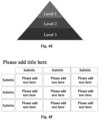
Fig. 4E is a schematic diagram of a pyramid-style layout provided by an embodiment of the present application; -
Fig. 4F is a schematic diagram of a comparison-style layout provided by an embodiment of the present application; -
Fig. 4G is a schematic diagram of a tree-style layout provided by an embodiment of the present application; -
Fig. 4H is a schematic diagram of a parallel-style layout provided by an embodiment of the present application; -
Fig. 5 is a schematic flowchart of a method for identifying a slide provided by a second embodiment of the present application; -
Fig. 6A is a schematic diagram of a slide template provided by an embodiment of the present application; -
Fig. 6B is a schematic diagram of a modified slide obtained by copying the contents in the placeholders in the slide shown inFig. 2 to the slide template shown inFig. 6A . -
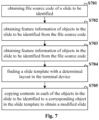
Fig. 7 is a schematic flowchart of a method for identifying a slide provided by a third embodiment of the present application; -
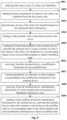
Fig. 8 is a schematic flowchart of a method for identifying a slide provided by a fourth embodiment of the present application; -
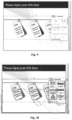
Fig. 9 is a schematic diagram of a slide after the terminal device has received a plurality of thumbnails, sent by a server, of slide templates with only the number of placeholders changed; -
Fig. 10 is a schematic diagram of a slide after the terminal device has received a plurality of thumbnails, sent by a server, of slide templates with only the layouts of placeholders changed; -
Fig. 11 is a schematic structure of an apparatus for identifying a slide provided by an embodiment of the present application. - The technical solution of the present application will be described in detail with reference to the drawings of embodiments of the present application. Obviously, the embodiments described herein should be regarded as only a portion of the present invention. All other embodiments obtained by those of ordinary skills in the art based on the embodiments herein without any creative efforts are within the scope of the present application.
-
Fig. 1 is a schematic flowchart of a method for identifying a slide provided by the first embodiment of the present application. The method is applicable in an electronic device, and includes the following steps: - S101: obtaining file source code of a slide to be identified.
- S102: obtaining feature information of objects in the slide to be identified from the file source code.
- The objects include placeholders in the slide to be identified. The feature information of the objects is information about the number, size, type, position, sequence of the placeholders in the slide. As shown in
Fig. 2 , for example, there are three placeholders in the slide, i.e.,placeholder 1,placeholder 2, andplaceholder 3. The position information of theplaceholder 1 is that: the distance in the horizontal direction from the top left corner of theplaceholder 1 to the top left corner of the slide is 1.55 cm and the distance in the vertical direction to the top left corner of the slide is 0.99 cm; the type of theplaceholder 1 is a plain text; and the size of theplaceholder 1 is that the height is 3.18 cm and the width is 22.86 cm. The position information of theplaceholder 2 is that the distance in the horizontal direction from the top left corner of theplaceholder 2 to the top left corner of the slide is 1.39 cm and the distance in the vertical direction to the top left corner of the slide is 4.96 cm; the type of theplaceholder 2 is a table; and the size of theplaceholder 2 is that the height is 12.37 cm and the width is 11.22 cm. The position information of theplaceholder 3 is that the distance in the horizontal direction from the top left corner of theplaceholder 3 to the top left corner of the slide is 14.49 cm and the distance in the vertical direction to the top left corner of the slide is 6.55 cm; the type of theplaceholder 3 is a picture; and the size of theplaceholder 3 is that the height is 9.13 cm and the width is 9.14 cm. - The objects can also include text boxes, shapes, tables, and the like. The feature information of these objects is obtained from the file source code.
- The feature information of the objects can be obtained by the electronic device by reading the file source code of the slide.
- When the feature information is the number information of the placeholders in the slide, obtaining feature information of objects in the slide to be identified from the file source code may include:
finding all parameter names representing placeholders in the file source code to obtain the number information of the placeholders in the slide to be identified. Taking the slide shown inFig. 2 as an example, it would found 3 parameter names representing placeholders in the file source code of the slide, thus the number of the placeholders is 3. - When the feature information is the size of the placeholders in the slide, obtaining feature information of objects in the slide to be identified from the file source code may include:
finding a parameter value, which relates to the size, corresponding to a parameter name of each placeholder to obtain the size information of each placeholder in the slide to be identified. For example, after a certain parameter name representing a placeholder is found, the size of the placeholder is determined by finding a keyword in the property code of the parameter name, for example, finding the parameter value corresponding to a keyword "width" or "height". - When the feature information is the type information of the placeholders in the slide, obtaining feature information of objects in the slide to be identified from the file source code may include:
determining a type of each parameter name representing a placeholder in the file source code to obtain the type information of each placeholder in the slide to be identified. For example, after a certain parameter name denoting a placeholder is found, a type parameter corresponding to the keyword "type" is searched in the property code of the parameter name. For example, the type of the placeholder is determined as "picture" if the type parameter is "picture"; and the type of the placeholder is determined as "table" if the type parameter is "table", and so on. - When the feature information is the position information of the placeholders in the slide, obtaining feature information of objects in the slide to be identified from the file source code may include:
determining a horizontal distance from the top left corner of each placeholder to the left side of a baseplate of the slide and a vertical distance to the top side of the baseplate of the slide, and determining the horizontal distance and the vertical distance as the position information of this placeholder in the slide. For example, as shown inFig. 2 , the position information of theplaceholder 1 is that the distance in the horizontal direction from the top left corner of theplaceholder 1 to the top left corner of the slide is 1.55 cm and the distance in the vertical direction to the top left corner of the slide is 0.99 cm; the position information of theplaceholder 2 is that the distance in the horizontal direction from the top left corner of theplaceholder 2 to the top left corner of the slide is 1.39 cm and the distance in the vertical direction to the top left corner of the slide is 4.96 cm; the position information of theplaceholder 3 is that the distance in the horizontal direction from the top left corner of theplaceholder 3 to the top left corner of the slide is 14.49 cm and the distance in the vertical direction to the top left corner of the slide is 6.55 cm. - When the feature information is the sequence information of the placeholders in the slide, obtaining feature information of obj ects in the slide to be identified from the file source code may include:
adding a virtual two-dimensional rectangular plane coordinate system in the slide to be identified according to a preset rule; obtaining the position of the center point of each placeholder; drawing a straight line with a preset slope respectively through the center point of each placeholder in the two-dimensional rectangular plane coordinate system, wherein the straight lines respectively intersect with the y-axis of the two-dimensional rectangular plane coordinate system at a point; determining the sequence of the placeholders according to ordinate values of intersection points on the y-axis, and wherein the greater the ordinate value of an intersection point on the y-axis is, the smaller the sequence number of a placeholder will be; and if there are a plurality of straight lines corresponding to a plurality of placeholders intersect with the y-axis at a same point, sequence numbers of the placeholders are determined in such a way that a sequence number of a placeholder on the left is smaller than a sequence number of a placeholder on the right; and obtaining the sequence information of each placeholder in the slide to be identified. As shown inFig. 3 , in the rectangular plane coordinate system added to the slide, straight lines with a preset slope are drawn respectively through the center point of 4 placeholders, and the straight lines intersect respectively with the y-axis at point (0, y1), point (0, y2), point (0, y3), and point (0, y2). As y1 >y2>y3, theplaceholder 1 can be defined as the first placeholder in the sequence and theplaceholder 3 can be defined as the fourth placeholder in the sequence. As the straight lines through the center points ofplaceholder 2 andplaceholder 4 intersect with the y-axis at the same point (0, y2) and theplaceholder 2 is on the left of theplaceholder 4, the sequence number of theplaceholder 2 is smaller than that of theplaceholder 4. Therefore, the sequence number of theplaceholder 1 is 1, the sequence number of theplaceholder 2 is 2, the sequence number of theplaceholder 3 is 4, and the sequence number of theplaceholder 4 is 3. - S103: determining a layout of the slide to be identified based on the obtained feature information.
- The layout of the slide is the arrangement and layout presented by the slide, which is determined from the feature information of the objects in the slide. For example, a picture-text-mixed layout indicates that there are a text object(s) and a picture object(s) in the slide, or a parallel-style layout indicates that the objects in the slide are arranged side by side in a plurality of rows or columns. A slide layout can contain a wide range of contents, and the specific contents contained in the layout and the meaning of the layout can be further determined according to specific needs for use.
- In practical applications, the layout of the slide can be determined based on the number information of placeholders in the slide, size information of the placeholders in the slide, type information of the placeholders in the slide, position information of the placeholders in the slide and sequence information of the placeholders in the slide. For example, if it is detected that the number of placeholders in the slide to be identified is greater than 2 and the types of the placeholders are both of text type and picture type, it can be determined that the layout of the slide to be identified is a picture and text layout. For another example, the determined slide layout can be a parallel-style layout, step-style layout, comparison-style layout, and the like. If the electronic device detected that the number of placeholders in the slide to be identified is greater than 2 and the placeholders are horizontally or vertically symmetrically positioned, it can be determined that the layout of the slide to be identified is a parallel-style layout.
- For another example, for a table, the determined slide layout can be a parallel-style layout, step-style layout, comparison-style layout, and the like. If the table contains only one row or one column and the contents in the table contain a serial number, it is determined that the layout of the slide is a step-style layout. The contents in the table can include a serial number and specific description text, and the serial number can be either a number input manually by a user or a number that is shown due to the cell in the table has a property set to item number. If the table contains only one row or one column and texts in the table are not serial numbers, it is determined that the layout of the slide is a parallel-style layout. If there are a plurality of titles in the first row or the first column in the table, it is determined that the layout of the slide is a comparison-style layout, wherein the method for determining a title include:
- if cells of the first row or cells of the first column in the table are filled, for example, with color, texture, and the like, it is determined that the texts in the filled cells are titles; or,
- if the font size of texts in cells of the first row or in cells of the first column is greater than the font size of texts in cells of other rows or columns, it is determined that the texts in the cells of the first row or in the cells of the first column are titles; or,
- if the font style of texts (for example, such as bold or italic) in cells of the first row or in cells of the first column is different from the font style of texts in cells of other rows or columns, it is determined that the texts in the cells of the first row or in the cells of the first column are titles.
- The embodiment of the present application obtains source code of a slide document, reads feature information of the objects from the file source code, and determines a layout of the slide based on the feature information, which realizes automatic identification of the layout of a slide and solves the problem that it is inefficient to manually identify the layout of a slide.
- The feature information of the objects can include: connection elements between the placeholders, serial number elements corresponding to the placeholders, distances between the placeholders, and arrangement of the placeholders.
- The step S103 can include:
- determining that the layout of the slide to be identified is a step-style layout, if there are directional connection elements between the placeholders and the directivities of the connection elements are the same;
Fig. 4A shows a schematic diagram of a step layout of a slide that has directional connection elements directing to a same direction; - determining that the layout of the slide to be identified is a step-style layout, if each of the placeholders has a corresponding serial number element;
Fig. 4B shows a schematic diagram of a step layout of a slide with corresponding serial number elements; - determining that the layout of the slide to be identified is a cycle-style layout, if there are directional connection elements between the placeholders and any of the placeholders has only one connection element directing to that placeholder and one connection element that originates from that placeholder and directs to another placeholder;
Fig. 4C shows a schematic diagram of a cycle layout of a slide; - determining that the layout of the slide to be identified is a summary-partition-style layout, if the distances from one placeholder to all the other placeholders are the same;
Fig. 4D shows a schematic diagram of a summary-breakdown layout of a slide; - determining that the layout of the slide to be identified is a comparison-style layout, if all the placeholders are arranged in a two-dimensional list;
Fig. 4F shows a schematic diagram of a compare layout of a slide; - determining that the layout of the slide to be identified is a pyramid-style layout, if all the placeholders are arranged in a triangle or trapezoid;
Fig. 4E shows a schematic diagram of a pyramid layout of a slide; - determining that the layout of the slide to be identified is a tree-style layout, if there are connection elements that originate from a same placeholder and respectively direct to different placeholders;
Fig. 4G shows a schematic diagram of a tree layout of a slide; - determining that the layout of the slide to be identified is a parallel-style layout, if the layout of the slide to be identified is not any one of the step-style layout, cycle-style layout, summary-partition-style layout, comparison-style layout, pyramid-style layout, and tree-style layout;
Fig. 4H shows a schematic diagram of a parallel layout of a slide. - In some specific embodiments, the electronic device is a server, which can locally store slide templates having a plurality of layouts. The server can utilize the method according to the first embodiment of the present application, search for a slide template having the determined layout in the slide templates locally stored, and can send the template to a terminal device. On the basis of the method illustrated by the first embodiment of the present application, the electronic device is a server, which stores slide templates having a plurality of layouts, and the server can send the slide templates to a terminal device. The method shown in
Fig. 1 can further include: - finding a slide template with a determined layout in the server;
- sending the found slide template to the terminal device such that the terminal device copies contents of each of the objects in the slide to be identified to a corresponding object in the received slide template to obtain a modified slide.
-
Fig. 5 is a schematic flowchart of a method for identifying a slide provided by a second embodiment of the present application. On the basis of the steps illustrated by the first embodiment, the electronic device is a terminal device that stores slide templates with a plurality of layouts. The server can utilize the method according to the first embodiment of the present application, to find a slide template with a determined layout in the slide templates locally stored, and can send the template to a terminal device. The method can include following steps: - S501: obtaining file source code of a slide to be identified;
- S502: obtaining feature information of objects in the slide to be identified from the file source code;
- S503: determining a layout of the slide to be identified based on the obtained feature information; and
- S504: finding a slide template with a determined layout in the server.
- The feature information of the objects in the slide to be identified is compared with feature information of objects in the slide templates having a plurality of layouts to determine a slide template matching the slide to be identified.
- The server can identify feature information of objects in the slide template, and compare this feature information with the feature information of the objects in the slide to be identified according to a preset matching scheme to obtain a matching slide template.
- The objects include placeholders, and the feature information of the objects in the slide to be identified includes number information of the placeholders in the slide, size information of the placeholders in the slide, type information of the placeholders in the slide, position information of the placeholders in the slide, sequence information of the placeholders in the slide. The step S504 includes the step a to step e:
- step a, comparing the number of the placeholders in the slide to be identified with the number of placeholders in each slide template to obtain slide templates having placeholders the number of which is the same as the number of placeholders in the slide to be identified;
- step b, comparing the size of the placeholders in the slide to be identified with the size of the placeholders having a same sequence number in the obtained slide templates to obtain a size comparison result;
- step c, comparing the type of the placeholders in the slide to be identified with the type of the placeholders having a same sequence number in the obtained slide templates to obtain a type comparison result;
- step d, comparing the position information of the placeholders in the slide to be identified with the position information of the placeholders having a same sequence number in the obtained slide templates to obtain a position information comparison result;
- step e, evaluating each slide template obtained according to the size comparison result, the type comparison result, and the position information comparison result, and determining a slide template having a score that meets a preset score condition as a slide template matching the slide to be identified.
- There can be one or more slide templates that meet the preset score condition.
- S505: sending the found slide template to the terminal device such that the terminal device copies contents of each of the objects in the slide to be identified to a corresponding object in the received slide template to obtain a modified slide.
- After having received the slide template sent by the server, the terminal device copies the contents in each of the objects in the slide to be identified to an object, having a same sequence number, in the slide template matching the slide to be identified to obtain a modified slide.
- For example,
Fig. 2 shows a slide to be identified, andFig. 6A shows a slide template matching the slide to be identified. In the slide shown inFig. 2 , the objects are placeholders. According to the method for determining the sequence of placeholders, the sequence number of theplaceholder 1 is 1, the sequence number of theplaceholder 2 is 2, and the sequence number of theplaceholder 3 is 3. In the slide shown inFig. 6A , the sequence number of the placeholder 1a is 1, the sequence number of theplaceholder 2a is 2, and the sequence number of theplaceholder 3a is 3. The contents in the placeholders in the slide shown inFig. 2 are copied to the slide template shown inFig. 6A , that is, the contents in placeholders shown inFig. 2 are copied to placeholders with a same sequence number shown inFig. 6A , to obtain a modified slide as shown inFig. 6B . - In the embodiment of the present application, the electronic device is a terminal device that stores slide templates with a plurality of layouts. After having identified the layout of the slide to be identified, the server finds a template with a identified slide layout in the slide templates, and sends the template to the terminal device such that the terminal device performs a replacement of contents of placeholders, which improves the efficiency of identifying and using a slide layout.
- In some specific embodiments, the electronic device is a terminal device, which can locally store slide templates having a plurality of layouts. The terminal device can utilize the method according to the first embodiment of the present application, search for a slide template having the determined layout in the slide templates locally stored, and copy the contents in the objects in the slide to be identified to corresponding objects in the slide template. On the basis of the method illustrated by the first embodiment of the present application, the electronic device is a terminal device, which stores slide templates having a plurality of layouts. The method shown in
Fig. 1 can further include: - finding a slide template with a determined layout in the terminal device;
- copying contents in each of the objects in the slide to be identified to a corresponding object in the slide template to obtain a modified slide.
-
Fig. 7 is a schematic flowchart of a method for identifying a slide provided by a third embodiment of the present application. On the basis of the steps illustrated by the first embodiment, the electronic device is a terminal device, which can locally store slide templates with a plurality of layouts. The terminal device can utilize the method according to the first embodiment of the present application, find a slide template with a determined layout in the slide templates locally stored, and copy the contents in the objects in the slide to be identified to corresponding objects in the slide template. The method includes the following steps: - S701: obtaining file source code of a slide to be identified;
- S702: obtaining feature information of objects in the slide to be identified from the file source code;
- S703: obtaining feature information of objects in the slide to be identified from the file source code;.
- S704: finding a slide template with a determined layout in the terminal device;
- S705: copying contents in each of the objects in the slide to be identified to a corresponding object in the slide template to obtain a modified slide.
- In an embodiment of the present application, the electronic device is a terminal device, which stores slide templates having a plurality of layouts. After having identified the layout of the slide to be identified, the terminal device searches for a template having the identified slide layout in the slide templates, and copies the contents in the objects in the slide to be identified to the template, which improves the efficiency of identifying and using a slide layout.
- In other specific embodiments, the electronic device is a server, which can further store thumbnails of the slide templates. After the modified slide is obtained, the terminal device can further send a modification instruction for the modified slide to the server. On the basis of the method illustrated by the second embodiment of the present application, the method shown in
Fig. 5 can further include following steps: - receiving, from the terminal device, a modification instruction for the modified slide;
- sending thumbnails of a plurality of slide templates corresponding to the modification instruction to the terminal device;
- receiving, from the terminal device, identification information of a slide template that corresponds to a thumbnail selected by a user;
- sending a slide template having the identification information to the terminal device, such that the terminal device copies the contents in each object in the modified slide to a corresponding object in the slide template with the identification information to obtain a modified slide.
-
Fig. 8 is a schematic flowchart of a method for identifying a slide provided by a fourth embodiment of the present application. On the basis of the steps illustrated by the second embodiment, the server can further store thumbnails of the slide templates. After the modified slide is obtained, the terminal device can further send a modification instruction for the modified slide to the server. The method includes the following steps: - S801: obtaining file source code of a slide to be identified;
- S802: obtaining feature information of objects in the slide to be identified from the file source code;
- S803: determining a layout of the slide to be identified based on the obtained feature information;
- S804: finding a slide template with a determined layout in the server;
- S805: sending the found slide template to the terminal device such that the terminal device copies contents of each of the objects in the slide to be identified to a corresponding object in the received slide template to obtain a modified slide.
- S806: receiving, from the terminal device, a modification instruction for the modified slide.
- The modification instruction contains relevant feature information of the objects in the modified slide. For example, in the case where the objects are placeholders, if only the number of the placeholders in the modified slide is to be modified, the modification instruction can contain the layout and the type information of the placeholders in the modified slide, in order for the server to locally search for a slide template in the slide templates, in which the layout and type information of the placeholders are the same as those of the modified slide and only the number of placeholders is different, and send the slide template to the terminal device.
- For another example, in the case where the objects are placeholders, if only the layout of the placeholders in the modified slide is to be modified, the modification instruction can contain the number and the type information of the placeholders in the modified slide, in order for the server to locally search in a template library for a slide template in the slide templates, in which the number and the type information of the placeholders are the same as those of the modified slide and only the layout of the placeholders is different, and send the slide template to the terminal device. The layout of a placeholder described herein refers to the appearance style of the placeholder, such as a round style, lace border style, and the like.
- S807: sending thumbnails of a plurality of slide templates corresponding to the modification instruction to the terminal device.
- For example, the objects are placeholders, as shown in
Fig. 9 . After sending an instruction for only changing the number of placeholders to the server, the terminal device receives thumbnails of a plurality of slide templates with different numbers of placeholders sent by the server; and a user can click a thumbnail of a slide template according to his/her needs to select a desired slide template. - For another example, the objects are placeholders, as shown in
Fig. 10 . After sending an instruction for only changing the layout of placeholders to the server, the terminal device receives thumbnails of a plurality of slide templates having placeholders with a different layout sent by the server; and a user can click a thumbnail of a slide template according to his/her needs to select a desired slide template. The layout of a placeholder described herein refers to the appearance style of the placeholder, such as a round style, lace border style, and the like. - S808: receiving, from the terminal device, identification information of a slide template that corresponds to a thumbnail selected by a user.
- The identification information of the slide template is the identification information of the slide template in the server. The server can find the corresponding template based on the identification information. The identification information is sent by the server to the terminal device along with thumbnails of the relevant slide templates.
- S809: sending a slide template having the identification information to the terminal device, such that the terminal device copies the contents in each object in the modified slide to a corresponding object in the slide template with the identification information to obtain a modified slide.
- In an embodiment of the present application, the electronic device is a server, which can receive the modification instruction for the modified slide sent by the terminal device, send thumbnails of relevant slide templates to the terminal device according to the modification instruction, and send a corresponding slide template to the terminal device based on the selection of a thumbnail by the terminal device, which further improves the efficiency of identifying and using a slide layout.
- The embodiment of the present application provides a method for identifying a slide, which is applied to an electronic device. The method includes: obtaining file source code of a slide to be identified, obtaining feature information of objects in the slide to be identified from the file source code, and determining a layout of the slide to be identified based on the obtained feature information. The embodiment of the present application can automatically obtain the feature information of the objects in the slide to be identified from the file source code containing the slide. Therefore, compared to the manual identification, the efficiency and accuracy of identifying the layout of the slide are significantly improved. Moreover, this makes it possible to perform subsequent automatic processes on the slide based on the layout of the slide.
- Corresponding to the method shown in
Fig. 1 , the present application further provides an apparatus for identifying a slide. -
Fig. 11 is a schematic structure of an apparatus for identifying a slide provided by an embodiment of the present application. The apparatus is applied to an electronic device, and the apparatus can include: a file sourcecode obtaining module 101, an object featureinformation obtaining module 102, and a slidelayout determining module 103. - The file source
code obtaining module 101 is configured for obtaining file source code of a slide to be identified. - The object feature
information obtaining module 102 is configured for obtaining feature information of objects in the slide to be identified from the file source code. - The slide
layout determining module 103 is configured for determining a layout of the slide to be identified based on the obtained feature information. - Further, the electronic device is a server that stores slide templates with a plurality of layouts and is able to send the slide templates to a terminal device, and the apparatus can further include a first finding module and a first template sending module.
- The first finding module (not shown in the figure) is configured for finding a slide template with a determined layout in the electronic device.
- The first template sending module (not shown in the figure) is configured for sending the found slide template to the terminal device such that the terminal device copies the contents in each object in the slide to be identified to a corresponding object in the received slide template to obtain a modified slide.
- Further, the electronic device is a terminal device that stores slide templates with a plurality of layouts, and the apparatus can further include: a second finding module and a content copying module.
- The second finding module (not shown in the figure) is configured for finding a slide template with a determined layout in the terminal device.
- The content copying module (not shown in the figure) is configured for copying contents in each of the objects in the slide to be identified to a corresponding object in the slide template to obtain a modified slide.
- Further, the feature information of the objects in the slide to be identified includes: number information of the placeholders in the slide, size information of the placeholders in the slide, type information of the placeholders in the slide, position information of the placeholders in the slide, and sequence information of the placeholders in the slide.
- When the feature information is the number information of the placeholders in the slide, the object feature
information obtaining module 102 can include:
a number information obtaining sub-module (not shown in the figure), configured for finding all parameter names representing placeholders in the file source code to obtain the number information of the placeholders in the slide to be identified. - When the feature information is the size information of the placeholders in the slide, the object feature
information obtaining module 102 can include:
a size information obtaining sub-module (not shown in the figure), configured for finding a parameter value, which relates to the size, corresponding to a parameter name of each placeholder to obtain the size information of each placeholder in the slide to be identified. - When the feature information is the type information of the placeholders in the slide, the object feature
information obtaining module 102 can include:
a type information obtaining sub-module (not shown in the figure), configured for determining a type of each parameter name representing a placeholder in the file source code to obtain the type information of each placeholder in the slide to be identified. - When the feature information is the position information of the placeholders in the slide, the object feature
information obtaining module 102 can include:
a position information obtaining sub-module (not shown in the figure), configured for determining, from the file source code, a horizontal distance from the top left corner of each placeholder to the left side of a baseplate of the slide and a vertical distance to the top side of the baseplate of the slide, and determining the horizontal distance and the vertical distance as the position information of this placeholder in the slide. - When the feature information is the sequence information of the placeholders in the slide, the object feature
information obtaining module 102 can include:
a sequence information obtaining sub-module (not shown in the figure), configured for adding, according to a preset rule, a virtual two-dimensional rectangular plane coordinate system in the slide to be identified; obtaining the position of the center point of each placeholder; drawing straight lines with a preset slope respectively through the center points of the placeholders in the two-dimensional rectangular plane coordinate system, wherein each of the straight lines intersects with the y-axis of the two-dimensional rectangular plane coordinate system at a point; determining the sequence of the placeholders according to ordinate values of intersection points on the y-axis, and wherein the greater the ordinate value of an intersection point on the y-axis is, the smaller the sequence number for the corresponding placeholder will be, and if there are a plurality of straight lines corresponding to a plurality of placeholders intersect with y-axis at a same point, sequence numbers of the placeholders are determined in such a way that a sequence number of a placeholder on the left is smaller than a sequence number of a placeholder on the right; and obtaining the sequence information of each placeholder in the slide to be identified. - Further, the feature information of the objects can include: connection elements between the placeholders, serial number elements corresponding to the placeholders, distances between the placeholders, and arrangement of the placeholders, and the slide
layout determining module 103 can include: - a step-style layout determining sub-module (not shown in the figure), configured for determining that the layout of the slide to be identified is a step-style layout, if there are directional connection elements between the placeholders and the directivities of the connection elements are the same,
- determining that the layout of the slide to be identified is a step-style layout, if each of the placeholders has a corresponding serial number element;
- a cycle-style layout determining sub-module (not shown in the figure), configured for determining that the layout of the slide to be identified is a cycle-style layout, if there are directional connection elements between the placeholders and any of the placeholders has only one connection element directing to that placeholder and one connection element that originates from that placeholder and directs to another placeholder;
- a summary-partition-style layout determining sub-module (not shown in the figure), configured for determining that the layout of the slide to be identified is a summary-partition-style layout, if the distances from one placeholder to all the other placeholders are the same;
- a comparison-style layout determining sub-module (not shown in the figure), configured for determining that the layout of the slide to be identified is a comparison-style layout, if all the placeholders are arranged in a two-dimensional list;
- a pyramid-style layout determining sub-module (not shown in the figure), configured for determining that the layout of the slide to be identified is a pyramid-style layout, if all the placeholders are arranged in a triangle or trapezoid;
- a tree-style layout determining sub-module (not shown in the figure), configured for determining that the layout of the slide to be identified is a tree-style layout, if there are connection elements that originate from a same placeholder and respectively direct to different placeholders;
- a parallel-style layout determining sub-module (not shown in the figure), configured for determining that the layout of the slide to be identified is a parallel-style layout, if the layout of the slide to be identified is not any one of the step-style layout, cycle-style layout, summary-partition-style layout, comparison-style layout, pyramid-style layout, and tree-style layout.
- Further, the apparatus can further include: a modification instruction receiving module, a thumbnail sending module, an identification information receiving module, and a second template sending module.
- The modification instruction receiving module (not shown in the figure) is configured for receiving, from the terminal device, a modification instruction for the modified slide.
- The thumbnail sending module (not shown in the figure) is configured for sending thumbnails of a plurality of slide templates corresponding to the modification instruction to the terminal device.
- The identification information receiving module (not shown in the figure) is configured for receiving, from the terminal device, identification information of a slide template that corresponds to a thumbnail selected by a user.
- The second template sending module (not shown in the figure) is configured for sending a slide template having the identification information to the terminal device, such that the terminal device copies the contents in each object in the modified slide to a corresponding object in the slide template with the identification information to obtain a modified slide.
- The embodiment of the present application provides an apparatus for identifying a slide, which is applied in an electronic device. The apparatus can obtain file source code of a slide to be identified, obtain feature information of objects in the slide to be identified from the file source code, and determine a layout of the slide to be identified according to the obtained feature information. The embodiment of the present application automatically obtains the feature information of the objects in the slide to be identified from the file source code containing the slide. Therefore, compared to the manual identification, the efficiency and accuracy of identifying the layout of the slide are significantly improved. Moreover, this makes it possible to perform subsequent automatic processes on the slide based on the layout of the slide.
- An embodiment of the present application further provides an electronic device including: a housing, a processor, a memory, a circuit board and a power supply circuit. The circuit board is arranged inside a space enclosed by the housing, the processor and the memory are arranged on the circuit board; the power supply circuit is used to supply power for various circuits or means; the memory is configured to store executable program code; and the processor executes a program corresponding to the executable program code by reading the executable program code stored on the memory for executing the method for identifying a slide provided by the embodiments of the present application, wherein the method can include:
- obtaining file source code of a slide to be identified;
- obtaining feature information of objects in the slide to be identified from the file source code; and
- determining a layout of the slide to be identified based on the obtained feature information.
- The embodiment of the present invention obtains file source code of a slide, reads feature information of the objects from the file source code, and determines a layout of the slide based on the feature information, which realizes automatic identification of the layout of a slide and solves the problem that it is inefficient to manually identify the layout of a slide.
- An embodiment of the present application provides an application for carrying out the method for identifying a slide provided by the embodiments of the present application when being executed. The method for identifying a slide includes:
- obtaining file source code of a slide to be identified;
- obtaining feature information of objects in the slide to be identified from the file source code; and
- determining a layout of the slide to be identified based on the obtained feature information.
- The embodiment of the present invention obtains file source code of a slide, reads feature information of the objects from the file source code, and determines a layout of the slide based on the feature information, which realizes automatic identification of the layout of a slide and solves the problem that it is inefficient to manually identify the layout of a slide.
- An embodiment of the present application provides a storage medium for storing executable program code, which are executed to implement the methods for identifying a slide provided by the embodiments of the present application. The method for identifying a slide includes:
- obtaining file source code of a slide to be identified;
- obtaining feature information of objects in the slide to be identified from the file source code; and
- determining a layout of the slide to be identified based on the obtained feature information.
- The embodiment of the present invention obtains file source code of a slide, reads feature information of the objects from the file source code, and determines a layout of the slide based on the feature information, which realizes automatic identification of the layout of a slide and solves the problem that it is inefficient to manually identify the layout of a slide.
- It should be noted that the relationship terms herein such as "first", "second" and the like, if any, are only used for distinguishing one entity or operation from another entity or operation, but do not necessarily require or imply that there is any actual relationship or order between these entities or operations. Moreover, the terms "include", "comprise" or any other variants thereof are intended to cover non-exclusive inclusions, so that processes, methods, articles or devices comprising a series of elements comprise not only those elements listed but also those not specifically listed or the elements intrinsic to these processes, methods, articles, or devices. Without further limitations, elements defined by the sentences "comprise(s) a." or "include(s) a." do not exclude that there are other identical elements in the processes, methods, articles, or devices that include these elements.
- All the embodiments are described in corresponding ways, same or similar parts in each of the embodiments can be referred to one another, and the parts emphasized are differences to other embodiments. For embodiments of the apparatus, electronic device, application program and storage medium, since they are similar to the embodiments of the method, the description thereof is relatively simple; the relating parts could refer to the parts of the description of embodiments of the method.
Claims (13)
- A method for determining a layout of a slide, which is applicable in an electronic device, the method comprising:obtaining file source code of the slide (S101, S501);obtaining feature information (S103, S503) of objects in the slide from the file source code (S102, S502);determining the layout of the slide based on the obtained feature information (S103, S503), wherein the feature information of the objects in the slide comprises the number of placeholders in the slide and a sequence of the placeholders in the slide, size information of the placeholders in the slide, type information of the placeholders in the slide, and position information of the placeholders in the slide;identifying, from slide templates, a slide template with the determined layout (S504), wherein, identifying, from slide templates, a slide template with the determined layout comprises:comparing the number of the placeholders in the slide with the number of placeholders in each slide template to obtain slide templates having the same number of placeholders as the slide;comparing the size information of the placeholders in the slide with the size information of the placeholders having a same sequence number in the obtained slide templates to obtain a size comparison result;comparing the type information of the placeholders in the slide with the type information of the placeholders having a same sequence number in the obtained slide templates to obtain a type comparison result;comparing the position information of the placeholders in the slide with the position information of the placeholders having a same sequence number in the obtained slide templates to obtain a position information comparison result; andevaluating each slide template obtained according to the size comparison result, the type comparison result, and the position information comparison result, and determining a slide template having a score that meets a preset score condition as a slide template matching the slide;copying content of each of the objects in the slide to an object, having a same sequence number, in the slide template matching the slide to obtain a modified slide .
- The method of claim 1, wherein the electronic device is a server that stores slide templates with a plurality of layouts and is able to send the slide templates to a terminal device, and wherein the method further comprises:identifying a slide template with the determined layout in the server (S504);sending the found slide template to the terminal device such that the terminal device copies contents of each of the objects in the slide to a corresponding object in the received slide template to obtain a modified slide (S505).
- The method of claim 1, wherein the electronic device is a terminal device that stores slide templates with a plurality of layouts, and wherein the method further comprises:identifying a slide template with a determined layout in the terminal device (S704);copying contents in each of the objects in the slide to a corresponding object in the slide template to obtain a modified slide (S705).
- The method of claim 1, wherein,
when the feature information is the number of the placeholders in the slide, obtaining feature information of objects in the slide from the file source code (S102) comprises:finding all parameter names representing placeholders in the file source code to obtain the number of the placeholders in the slide;when the feature information is the size information of the placeholders in the slide, obtaining feature information of objects in the slide from the file source code (S102) comprises:finding a parameter value, which relates to the size, corresponding to a parameter name of each placeholder to obtain the size information of each placeholder in the slide;when the feature information is the type information of the placeholders in the slide, obtaining feature information of objects in the slide from the file source code (S102) comprises:determining a type of each parameter name representing a placeholder in the file source code to obtain the type information of each placeholder in the slide; andwhen the feature information is the position information of the placeholders in the slide, obtaining feature information of objects in the slide from the file source code (S102) comprises:
determining, from the file source code, a horizontal distance from the top left corner of each placeholder to the left side of a baseplate of the slide and a vertical distance to the top side of the baseplate of the slide, and determining the horizontal distance and the vertical distance as the position information of this placeholder in the slide. - The method of any one of claims 1 to 3, wherein the feature information of the objects comprises: connection elements between the placeholders, serial number elements corresponding to the placeholders, distances between the placeholders, and arrangement of the placeholders;
determining a layout of the slide based on the obtained feature information (S103) additionally comprises:determining that the layout of the slide is a step-style layout, if there are directional connection elements between the placeholders and the directivities of the connection elements are the same;determining that the layout of the slide is a step-style layout, if each of the placeholders has a corresponding serial number element;determining that the layout of the slide is a cycle-style layout, if there are directional connection elements between the placeholders and any of the placeholders has only one connection element directing to that placeholder and one connection element that originates from that placeholder and directs to another placeholder;determining that the layout of the slide is a summary-partition-style layout, if the distances from one placeholder to all the other placeholders are the same;determining that the layout of the slide is a comparison-style layout, if all the placeholders are arranged in a two-dimensional list;determining that the layout of the slide is a pyramid-style layout, if all the placeholders are arranged in a triangle or trapezoid;determining that the layout of the slide is a tree-style layout, if there are connection elements that originate from a same placeholder and respectively direct to different placeholders; anddetermining that the layout of the slide is a parallel-style layout, if the layout of the slide is not any one of the step-style layout, cycle-style layout, summary-partition-style layout, comparison-style layout, pyramid-style layout, and tree-style layout. - The method of claim 2, wherein the method further comprises:receiving, from the terminal device, a modification instruction for the modified slide (S806);sending thumbnails of a plurality of slide templates corresponding to the modification instruction to the terminal device (S807);receiving, from the terminal device, identification information of a slide template that corresponds to a thumbnail selected by a user (S808);sending a slide template having the identification information to the terminal device, such that the terminal device copies the contents in each object in the modified slide to a corresponding object in the slide template with the identification information to obtain a modified slide (S809).
- An electronic device comprising: a housing, a processor, a memory, a circuit board and a power supply circuit, wherein the circuit board is arranged inside a space enclosed by the housing, the processor and the memory are arranged on the circuit board; the power supply circuit is configured to supply power for various circuits or components; the memory is configured to store executable program codes; and the processor executes the executable program codes by reading the executable program codes stored on the memory for implementing a method for determining a layout of a slide, comprising the operations of:obtaining file source code of the slide (S 101);obtaining feature information of objects in the slide from the file source code (S102);determining the layout of the slide based on the obtained feature information (S103), wherein the feature information of the objects in the slide comprises the number of placeholders in the slide and a sequence of the placeholders in the slide, size information of the placeholders in the slide, type information of the placeholders in the slide, and position information of the placeholders in the slide;identifying, from slide templates, a slide template with the determined layout, wherein, identifying, from slide templates, a slide template with the determined layout comprises:comparing the number of the placeholders in the slide with the number of placeholders in each slide template to obtain slide templates having the same number of placeholders as the slide;comparing the size information of the placeholders in the slide with the size information of the placeholders having a same sequence number in the obtained slide templates to obtain a size comparison result;comparing the type information of the placeholders in the slide with the type information of the placeholders having a same sequence number in the obtained slide templates to obtain a type comparison result;comparing the position information of the placeholders in the slide with the position information of the placeholders having a same sequence number in the obtained slide templates to obtain a position information comparison result; andevaluating each slide template obtained according to the size comparison result, the type comparison result, and the position information comparison result, and determining a slide template having a score that meets a preset score condition as a slide template matching the slide;copying content of each of the objects in the slide to an object, having a same sequence number, in the slide template matching the slide to obtain a modified slide.
- The device of claim 7, wherein the electronic device is a server that stores slide templates with a plurality of layouts and is able to send the slide templates to a terminal device, and the operations further comprise:identifying a slide template with the determined layout in the server (S504);sending the found slide template to the terminal device such that the terminal device copies contents of each of the objects in the slide to a corresponding object in the received slide template to obtain a modified slide (S505);or wherein the electronic device is a terminal device that stores slide templates with a plurality of layouts, and the operations further comprise:identifying a slide template with a determined layout in the terminal device (S704);copying contents in each of the objects in the slide to a corresponding object in the slide template to obtain a modified slide (S705).
- The device of claim 7, wherein,
when the feature information is the number of the placeholders in the slide, obtaining feature information of objects in the slide from the file source code (S102) comprises:finding all parameter names representing placeholders in the file source code to obtain the number of the placeholders in the slide;when the feature information is the size information of the placeholders in the slide, obtaining feature information of objects in the slide from the file source code (S102) comprises:finding a parameter value, which relates to the size, corresponding to a parameter name of each placeholder to obtain the size information of each placeholder in the slide;when the feature information is the type information of the placeholders in the slide, obtaining feature information of objects in the slide from the file source code (S102) comprises:determining a type of each parameter name representing a placeholder in the file source code to obtain the type information of each placeholder in the slide; andwhen the feature information is the position information of the placeholders in the slide, obtaining feature information of objects in the slide from the file source code (S102) comprises:
determining, from the file source code, a horizontal distance from the top left corner of each placeholder to the left side of a baseplate of the slide and a vertical distance to the top side of the baseplate of the slide, and determining the horizontal distance and the vertical distance as the position information of this placeholder in the slide. - The device of claim 7 or 8, wherein, the feature information of the objects additionally comprises: connection elements between the placeholders, serial number elements corresponding to the placeholders, distances between the placeholders, and arrangement of the placeholders;
determining a layout of the slide based on the obtained feature information (S103) additionally comprises:determining that the layout of the slide is a step-style layout, if there are directional connection elements between the placeholders and the directivities of the connection elements are the same;determining that the layout of the slide is a step-style layout, if each of the placeholders has a corresponding serial number element;determining that the layout of the slide is a cycle-style layout, if there are directional connection elements between the placeholders and any of the placeholders has only one connection element directing to that placeholder and one connection element that originates from that placeholder and directs to another placeholder;determining that the layout of the slide is a summary-partition-style layout, if the distances from one placeholder to all the other placeholders are the same;determining that the layout of the slide is a comparison-style layout, if all the placeholders are arranged in a two-dimensional list;determining that the layout of the slide is a pyramid-style layout, if all the placeholders are arranged in a triangle or trapezoid;determining that the layout of the slide is a tree-style layout, if there are connection elements that originate from a same placeholder and respectively direct to different placeholders; anddetermining that the layout of the slide is a parallel-style layout, if the layout of the slide is not any one of the step-style layout, cycle-style layout, summary-partition-style layout, comparison-style layout, pyramid-style layout, and tree-style layout. - The device of claim 8, wherein, the operations further comprise:receiving, from the terminal device, a modification instruction for the modified slide (S806);sending thumbnails of a plurality of slide templates corresponding to the modification instruction to the terminal device (S807);receiving, from the terminal device, identification information of a slide template that corresponds to a thumbnail selected by a user (S808);sending a slide template having the identification information to the terminal device, such that the terminal device copies the contents in each object in the modified slide to a corresponding object in the slide template with the identification information to obtain a modified slide (S809).
- A computer program configured to carry out, when executed by a processor, the method for determining a layout of a slide of any one of the claims 1-6.
- A storage medium, which is configured for storing executable program code, wherein the executable code is executed to implement the method for determining a layout of a slide of any one of the claims 1-6.
Applications Claiming Priority (2)
| Application Number | Priority Date | Filing Date | Title |
|---|---|---|---|
| CN201511033937.XA CN106934336B (en) | 2015-12-31 | 2015-12-31 | Method and device for identifying slide |
| PCT/CN2016/105885 WO2017114015A1 (en) | 2015-12-31 | 2016-11-15 | Method and apparatus for recognizing slide |
Publications (3)
| Publication Number | Publication Date |
|---|---|
| EP3399430A1 EP3399430A1 (en) | 2018-11-07 |
| EP3399430A4 EP3399430A4 (en) | 2019-07-10 |
| EP3399430B1 true EP3399430B1 (en) | 2023-09-27 |
Family
ID=59224493
Family Applications (1)
| Application Number | Title | Priority Date | Filing Date |
|---|---|---|---|
| EP16880805.3A Active EP3399430B1 (en) | 2015-12-31 | 2016-11-15 | Method and apparatus for recognizing slide |
Country Status (8)
| Country | Link |
|---|---|
| US (1) | US10698943B2 (en) |
| EP (1) | EP3399430B1 (en) |
| JP (1) | JP6661014B2 (en) |
| CN (1) | CN106934336B (en) |
| AU (1) | AU2016380716B2 (en) |
| CA (1) | CA3006001C (en) |
| ES (1) | ES2966414T3 (en) |
| WO (1) | WO2017114015A1 (en) |
Families Citing this family (3)
| Publication number | Priority date | Publication date | Assignee | Title |
|---|---|---|---|---|
| CN108182391B (en) * | 2017-12-19 | 2021-12-17 | 中山大学 | Method for automatically extracting nonrepetitive slide based on education video |
| CN114238671B (en) * | 2021-12-17 | 2025-09-23 | 广州金山移动科技有限公司 | Presentation processing method, device, electronic device and storage medium |
| CN114254610B (en) * | 2021-12-17 | 2025-09-23 | 广州金山移动科技有限公司 | Slide processing method, device and electronic equipment |
Citations (2)
| Publication number | Priority date | Publication date | Assignee | Title |
|---|---|---|---|---|
| US20060259858A1 (en) * | 2005-05-13 | 2006-11-16 | Microsoft Corporation | Applying a slide layout with an arbitrary number of placeholders |
| US20060282779A1 (en) * | 2005-06-13 | 2006-12-14 | Microsoft Corporation | Applying a design to a slide using equivalent layouts |
Family Cites Families (13)
| Publication number | Priority date | Publication date | Assignee | Title |
|---|---|---|---|---|
| CN1389809A (en) * | 2001-06-04 | 2003-01-08 | 黎明网络有限公司 | Electronic official document expressing method and system |
| US7721195B2 (en) * | 2004-08-24 | 2010-05-18 | Oracle International Corporation | RTF template and XSL/FO conversion: a new way to create computer reports |
| US7707498B2 (en) * | 2004-09-30 | 2010-04-27 | Microsoft Corporation | Specific type content manager in an electronic document |
| US7383499B2 (en) * | 2004-12-30 | 2008-06-03 | Microsoft Corporation | System and method for dynamically creating a destination template |
| CN100498775C (en) | 2005-12-31 | 2009-06-10 | 珠海金山软件股份有限公司 | Method for demonstration data file capable of being processed by SVG application program |
| JPWO2009081791A1 (en) | 2007-12-21 | 2011-05-06 | 日本電気株式会社 | Information processing system, method and program thereof |
| CN102169483A (en) * | 2011-04-25 | 2011-08-31 | 江西省电力公司信息通信中心 | Filmstrip automatic generation method based on electronic spreadsheet |
| CN102841893A (en) * | 2011-06-21 | 2012-12-26 | 北大方正集团有限公司 | Method and device for processing fragmentation data in document |
| US9354779B2 (en) * | 2012-03-12 | 2016-05-31 | Microsoft Technology Licensing, Llc | Providing theme variations in a user interface |
| US9460416B2 (en) | 2012-08-16 | 2016-10-04 | Microsoft Technology Licensing, Llc | Reading mode for interactive slide presentations with accompanying notes |
| US9436673B2 (en) | 2013-03-28 | 2016-09-06 | Prezi, Inc | Automatic application of templates to content |
| CN104199808A (en) * | 2014-09-26 | 2014-12-10 | 广州金山移动科技有限公司 | Method and device for typesetting document framework |
| US9648080B2 (en) * | 2014-10-30 | 2017-05-09 | Flipboard, Inc. | Selection of page templates for presenting digital magazine content based on characteristics of additional page templates |
-
2015
- 2015-12-31 CN CN201511033937.XA patent/CN106934336B/en active Active
-
2016
- 2016-11-15 WO PCT/CN2016/105885 patent/WO2017114015A1/en not_active Ceased
- 2016-11-15 AU AU2016380716A patent/AU2016380716B2/en active Active
- 2016-11-15 CA CA3006001A patent/CA3006001C/en active Active
- 2016-11-15 JP JP2018529114A patent/JP6661014B2/en active Active
- 2016-11-15 ES ES16880805T patent/ES2966414T3/en active Active
- 2016-11-15 EP EP16880805.3A patent/EP3399430B1/en active Active
- 2016-11-15 US US15/780,077 patent/US10698943B2/en active Active
Patent Citations (2)
| Publication number | Priority date | Publication date | Assignee | Title |
|---|---|---|---|---|
| US20060259858A1 (en) * | 2005-05-13 | 2006-11-16 | Microsoft Corporation | Applying a slide layout with an arbitrary number of placeholders |
| US20060282779A1 (en) * | 2005-06-13 | 2006-12-14 | Microsoft Corporation | Applying a design to a slide using equivalent layouts |
Also Published As
| Publication number | Publication date |
|---|---|
| EP3399430A1 (en) | 2018-11-07 |
| WO2017114015A1 (en) | 2017-07-06 |
| ES2966414T3 (en) | 2024-04-22 |
| EP3399430A4 (en) | 2019-07-10 |
| JP6661014B2 (en) | 2020-03-11 |
| JP2019505038A (en) | 2019-02-21 |
| AU2016380716A1 (en) | 2018-06-14 |
| US10698943B2 (en) | 2020-06-30 |
| CA3006001A1 (en) | 2017-07-06 |
| CN106934336B (en) | 2020-07-03 |
| CN106934336A (en) | 2017-07-07 |
| US20180365245A1 (en) | 2018-12-20 |
| CA3006001C (en) | 2024-01-30 |
| AU2016380716B2 (en) | 2019-11-21 |
Similar Documents
| Publication | Publication Date | Title |
|---|---|---|
| US11714953B2 (en) | Facilitating dynamic document layout by determining reading order using document content stream cues | |
| US11256383B2 (en) | Graphically representing content relationships on a surface of graphical object | |
| US20190206105A1 (en) | Methods and systems for determining the structure of a sorted collection list of layouts | |
| CA3006001C (en) | Method and apparatus for recognizing slide | |
| WO2014112143A1 (en) | Display control device and program | |
| CN116663088A (en) | Label automatic typesetting layout method, system, electronic device and storage medium | |
| US8326812B2 (en) | Data search device, data search method, and recording medium | |
| JP2012014608A (en) | Information processing device, information processing method and program | |
| US20230011287A1 (en) | Predictive placement of structured versions of digital assets in unstructured 2-dimensional or 3-dimensional space | |
| KR20220052134A (en) | Method for providing documentation service based on block editor, server and computer program thereof | |
| CN113298599B (en) | Object display method, device and equipment | |
| CN114020576B (en) | Webpage label text positioning method | |
| Yarwood | Introduction to AutoCAD 2004 | |
| KR102076561B1 (en) | Electronic device for controlling a plurality of images included in electronic document and operating method thereof | |
| CN120431216A (en) | Image processing method, device and electronic equipment | |
| CN115796135A (en) | A form generation method and electronic device | |
| CN119739316A (en) | Interface display method, device, equipment, medium and product | |
| CN121365144A (en) | Information display method and device and related products | |
| CN119105759A (en) | Method and device for generating UI design diagram, storage medium and electronic device | |
| CN115204121A (en) | Method and device for teaching electronic book hot-zone point reading rapid generation, computer equipment and storage medium | |
| JP2013011955A (en) | Information processing device, control method therefor, program, and computer-readable program recording medium |
Legal Events
| Date | Code | Title | Description |
|---|---|---|---|
| STAA | Information on the status of an ep patent application or granted ep patent |
Free format text: STATUS: THE INTERNATIONAL PUBLICATION HAS BEEN MADE |
|
| PUAI | Public reference made under article 153(3) epc to a published international application that has entered the european phase |
Free format text: ORIGINAL CODE: 0009012 |
|
| STAA | Information on the status of an ep patent application or granted ep patent |
Free format text: STATUS: REQUEST FOR EXAMINATION WAS MADE |
|
| 17P | Request for examination filed |
Effective date: 20180622 |
|
| AK | Designated contracting states |
Kind code of ref document: A1 Designated state(s): AL AT BE BG CH CY CZ DE DK EE ES FI FR GB GR HR HU IE IS IT LI LT LU LV MC MK MT NL NO PL PT RO RS SE SI SK SM TR |
|
| AX | Request for extension of the european patent |
Extension state: BA ME |
|
| DAV | Request for validation of the european patent (deleted) | ||
| DAX | Request for extension of the european patent (deleted) | ||
| A4 | Supplementary search report drawn up and despatched |
Effective date: 20190613 |
|
| RIC1 | Information provided on ipc code assigned before grant |
Ipc: G06F 17/21 20060101AFI20190606BHEP Ipc: G06F 17/24 20060101ALI20190606BHEP |
|
| STAA | Information on the status of an ep patent application or granted ep patent |
Free format text: STATUS: EXAMINATION IS IN PROGRESS |
|
| 17Q | First examination report despatched |
Effective date: 20200416 |
|
| REG | Reference to a national code |
Ref country code: DE Ref legal event code: R079 Free format text: PREVIOUS MAIN CLASS: G06F0017250000 Ipc: G06F0016430000 Ref document number: 602016083082 Country of ref document: DE |
|
| GRAP | Despatch of communication of intention to grant a patent |
Free format text: ORIGINAL CODE: EPIDOSNIGR1 |
|
| STAA | Information on the status of an ep patent application or granted ep patent |
Free format text: STATUS: GRANT OF PATENT IS INTENDED |
|
| RIC1 | Information provided on ipc code assigned before grant |
Ipc: G06F 16/43 20190101AFI20230110BHEP |
|
| INTG | Intention to grant announced |
Effective date: 20230127 |
|
| GRAJ | Information related to disapproval of communication of intention to grant by the applicant or resumption of examination proceedings by the epo deleted |
Free format text: ORIGINAL CODE: EPIDOSDIGR1 |
|
| STAA | Information on the status of an ep patent application or granted ep patent |
Free format text: STATUS: EXAMINATION IS IN PROGRESS |
|
| GRAP | Despatch of communication of intention to grant a patent |
Free format text: ORIGINAL CODE: EPIDOSNIGR1 |
|
| STAA | Information on the status of an ep patent application or granted ep patent |
Free format text: STATUS: GRANT OF PATENT IS INTENDED |
|
| INTC | Intention to grant announced (deleted) | ||
| INTG | Intention to grant announced |
Effective date: 20230623 |
|
| GRAS | Grant fee paid |
Free format text: ORIGINAL CODE: EPIDOSNIGR3 |
|
| GRAA | (expected) grant |
Free format text: ORIGINAL CODE: 0009210 |
|
| STAA | Information on the status of an ep patent application or granted ep patent |
Free format text: STATUS: THE PATENT HAS BEEN GRANTED |
|
| AK | Designated contracting states |
Kind code of ref document: B1 Designated state(s): AL AT BE BG CH CY CZ DE DK EE ES FI FR GB GR HR HU IE IS IT LI LT LU LV MC MK MT NL NO PL PT RO RS SE SI SK SM TR |
|
| REG | Reference to a national code |
Ref country code: GB Ref legal event code: FG4D |
|
| REG | Reference to a national code |
Ref country code: CH Ref legal event code: EP |
|
| REG | Reference to a national code |
Ref country code: DE Ref legal event code: R096 Ref document number: 602016083082 Country of ref document: DE |
|
| REG | Reference to a national code |
Ref country code: IE Ref legal event code: FG4D |
|
| P01 | Opt-out of the competence of the unified patent court (upc) registered |
Effective date: 20231204 |
|
| REG | Reference to a national code |
Ref country code: LT Ref legal event code: MG9D |
|
| PG25 | Lapsed in a contracting state [announced via postgrant information from national office to epo] |
Ref country code: GR Free format text: LAPSE BECAUSE OF FAILURE TO SUBMIT A TRANSLATION OF THE DESCRIPTION OR TO PAY THE FEE WITHIN THE PRESCRIBED TIME-LIMIT Effective date: 20231228 |
|
| PG25 | Lapsed in a contracting state [announced via postgrant information from national office to epo] |
Ref country code: SE Free format text: LAPSE BECAUSE OF FAILURE TO SUBMIT A TRANSLATION OF THE DESCRIPTION OR TO PAY THE FEE WITHIN THE PRESCRIBED TIME-LIMIT Effective date: 20230927 Ref country code: RS Free format text: LAPSE BECAUSE OF FAILURE TO SUBMIT A TRANSLATION OF THE DESCRIPTION OR TO PAY THE FEE WITHIN THE PRESCRIBED TIME-LIMIT Effective date: 20230927 Ref country code: NO Free format text: LAPSE BECAUSE OF FAILURE TO SUBMIT A TRANSLATION OF THE DESCRIPTION OR TO PAY THE FEE WITHIN THE PRESCRIBED TIME-LIMIT Effective date: 20231227 Ref country code: LV Free format text: LAPSE BECAUSE OF FAILURE TO SUBMIT A TRANSLATION OF THE DESCRIPTION OR TO PAY THE FEE WITHIN THE PRESCRIBED TIME-LIMIT Effective date: 20230927 Ref country code: LT Free format text: LAPSE BECAUSE OF FAILURE TO SUBMIT A TRANSLATION OF THE DESCRIPTION OR TO PAY THE FEE WITHIN THE PRESCRIBED TIME-LIMIT Effective date: 20230927 Ref country code: GR Free format text: LAPSE BECAUSE OF FAILURE TO SUBMIT A TRANSLATION OF THE DESCRIPTION OR TO PAY THE FEE WITHIN THE PRESCRIBED TIME-LIMIT Effective date: 20231228 Ref country code: FI Free format text: LAPSE BECAUSE OF FAILURE TO SUBMIT A TRANSLATION OF THE DESCRIPTION OR TO PAY THE FEE WITHIN THE PRESCRIBED TIME-LIMIT Effective date: 20230927 |
|
| REG | Reference to a national code |
Ref country code: NL Ref legal event code: MP Effective date: 20230927 |
|
| REG | Reference to a national code |
Ref country code: AT Ref legal event code: MK05 Ref document number: 1616108 Country of ref document: AT Kind code of ref document: T Effective date: 20230927 |
|
| PG25 | Lapsed in a contracting state [announced via postgrant information from national office to epo] |
Ref country code: NL Free format text: LAPSE BECAUSE OF FAILURE TO SUBMIT A TRANSLATION OF THE DESCRIPTION OR TO PAY THE FEE WITHIN THE PRESCRIBED TIME-LIMIT Effective date: 20230927 |
|
| PG25 | Lapsed in a contracting state [announced via postgrant information from national office to epo] |
Ref country code: IS Free format text: LAPSE BECAUSE OF FAILURE TO SUBMIT A TRANSLATION OF THE DESCRIPTION OR TO PAY THE FEE WITHIN THE PRESCRIBED TIME-LIMIT Effective date: 20240127 |
|
| REG | Reference to a national code |
Ref country code: ES Ref legal event code: FG2A Ref document number: 2966414 Country of ref document: ES Kind code of ref document: T3 Effective date: 20240422 |
|
| PG25 | Lapsed in a contracting state [announced via postgrant information from national office to epo] |
Ref country code: AT Free format text: LAPSE BECAUSE OF FAILURE TO SUBMIT A TRANSLATION OF THE DESCRIPTION OR TO PAY THE FEE WITHIN THE PRESCRIBED TIME-LIMIT Effective date: 20230927 |
|
| PG25 | Lapsed in a contracting state [announced via postgrant information from national office to epo] |
Ref country code: SM Free format text: LAPSE BECAUSE OF FAILURE TO SUBMIT A TRANSLATION OF THE DESCRIPTION OR TO PAY THE FEE WITHIN THE PRESCRIBED TIME-LIMIT Effective date: 20230927 Ref country code: RO Free format text: LAPSE BECAUSE OF FAILURE TO SUBMIT A TRANSLATION OF THE DESCRIPTION OR TO PAY THE FEE WITHIN THE PRESCRIBED TIME-LIMIT Effective date: 20230927 Ref country code: IS Free format text: LAPSE BECAUSE OF FAILURE TO SUBMIT A TRANSLATION OF THE DESCRIPTION OR TO PAY THE FEE WITHIN THE PRESCRIBED TIME-LIMIT Effective date: 20240127 Ref country code: EE Free format text: LAPSE BECAUSE OF FAILURE TO SUBMIT A TRANSLATION OF THE DESCRIPTION OR TO PAY THE FEE WITHIN THE PRESCRIBED TIME-LIMIT Effective date: 20230927 Ref country code: CZ Free format text: LAPSE BECAUSE OF FAILURE TO SUBMIT A TRANSLATION OF THE DESCRIPTION OR TO PAY THE FEE WITHIN THE PRESCRIBED TIME-LIMIT Effective date: 20230927 Ref country code: AT Free format text: LAPSE BECAUSE OF FAILURE TO SUBMIT A TRANSLATION OF THE DESCRIPTION OR TO PAY THE FEE WITHIN THE PRESCRIBED TIME-LIMIT Effective date: 20230927 Ref country code: SK Free format text: LAPSE BECAUSE OF FAILURE TO SUBMIT A TRANSLATION OF THE DESCRIPTION OR TO PAY THE FEE WITHIN THE PRESCRIBED TIME-LIMIT Effective date: 20230927 Ref country code: PT Free format text: LAPSE BECAUSE OF FAILURE TO SUBMIT A TRANSLATION OF THE DESCRIPTION OR TO PAY THE FEE WITHIN THE PRESCRIBED TIME-LIMIT Effective date: 20240129 |
|
| PG25 | Lapsed in a contracting state [announced via postgrant information from national office to epo] |
Ref country code: PL Free format text: LAPSE BECAUSE OF FAILURE TO SUBMIT A TRANSLATION OF THE DESCRIPTION OR TO PAY THE FEE WITHIN THE PRESCRIBED TIME-LIMIT Effective date: 20230927 Ref country code: IT Free format text: LAPSE BECAUSE OF FAILURE TO SUBMIT A TRANSLATION OF THE DESCRIPTION OR TO PAY THE FEE WITHIN THE PRESCRIBED TIME-LIMIT Effective date: 20230927 |
|
| REG | Reference to a national code |
Ref country code: DE Ref legal event code: R097 Ref document number: 602016083082 Country of ref document: DE Ref country code: CH Ref legal event code: PL |
|
| PG25 | Lapsed in a contracting state [announced via postgrant information from national office to epo] |
Ref country code: MC Free format text: LAPSE BECAUSE OF FAILURE TO SUBMIT A TRANSLATION OF THE DESCRIPTION OR TO PAY THE FEE WITHIN THE PRESCRIBED TIME-LIMIT Effective date: 20230927 |
|
| PG25 | Lapsed in a contracting state [announced via postgrant information from national office to epo] |
Ref country code: DK Free format text: LAPSE BECAUSE OF FAILURE TO SUBMIT A TRANSLATION OF THE DESCRIPTION OR TO PAY THE FEE WITHIN THE PRESCRIBED TIME-LIMIT Effective date: 20230927 |
|
| PG25 | Lapsed in a contracting state [announced via postgrant information from national office to epo] |
Ref country code: LU Free format text: LAPSE BECAUSE OF NON-PAYMENT OF DUE FEES Effective date: 20231115 |
|
| PG25 | Lapsed in a contracting state [announced via postgrant information from national office to epo] |
Ref country code: CH Free format text: LAPSE BECAUSE OF NON-PAYMENT OF DUE FEES Effective date: 20231130 |
|
| PG25 | Lapsed in a contracting state [announced via postgrant information from national office to epo] |
Ref country code: MC Free format text: LAPSE BECAUSE OF FAILURE TO SUBMIT A TRANSLATION OF THE DESCRIPTION OR TO PAY THE FEE WITHIN THE PRESCRIBED TIME-LIMIT Effective date: 20230927 Ref country code: LU Free format text: LAPSE BECAUSE OF NON-PAYMENT OF DUE FEES Effective date: 20231115 Ref country code: DK Free format text: LAPSE BECAUSE OF FAILURE TO SUBMIT A TRANSLATION OF THE DESCRIPTION OR TO PAY THE FEE WITHIN THE PRESCRIBED TIME-LIMIT Effective date: 20230927 Ref country code: CH Free format text: LAPSE BECAUSE OF NON-PAYMENT OF DUE FEES Effective date: 20231130 |
|
| REG | Reference to a national code |
Ref country code: BE Ref legal event code: MM Effective date: 20231130 |
|
| PLBE | No opposition filed within time limit |
Free format text: ORIGINAL CODE: 0009261 |
|
| STAA | Information on the status of an ep patent application or granted ep patent |
Free format text: STATUS: NO OPPOSITION FILED WITHIN TIME LIMIT |
|
| GBPC | Gb: european patent ceased through non-payment of renewal fee |
Effective date: 20231227 |
|
| 26N | No opposition filed |
Effective date: 20240628 |
|
| REG | Reference to a national code |
Ref country code: IE Ref legal event code: MM4A |
|
| PG25 | Lapsed in a contracting state [announced via postgrant information from national office to epo] |
Ref country code: IE Free format text: LAPSE BECAUSE OF NON-PAYMENT OF DUE FEES Effective date: 20231115 |
|
| PG25 | Lapsed in a contracting state [announced via postgrant information from national office to epo] |
Ref country code: GB Free format text: LAPSE BECAUSE OF NON-PAYMENT OF DUE FEES Effective date: 20231227 |
|
| PG25 | Lapsed in a contracting state [announced via postgrant information from national office to epo] |
Ref country code: BE Free format text: LAPSE BECAUSE OF NON-PAYMENT OF DUE FEES Effective date: 20231130 |
|
| PG25 | Lapsed in a contracting state [announced via postgrant information from national office to epo] |
Ref country code: SI Free format text: LAPSE BECAUSE OF FAILURE TO SUBMIT A TRANSLATION OF THE DESCRIPTION OR TO PAY THE FEE WITHIN THE PRESCRIBED TIME-LIMIT Effective date: 20230927 |
|
| PG25 | Lapsed in a contracting state [announced via postgrant information from national office to epo] |
Ref country code: SI Free format text: LAPSE BECAUSE OF FAILURE TO SUBMIT A TRANSLATION OF THE DESCRIPTION OR TO PAY THE FEE WITHIN THE PRESCRIBED TIME-LIMIT Effective date: 20230927 Ref country code: IE Free format text: LAPSE BECAUSE OF NON-PAYMENT OF DUE FEES Effective date: 20231115 Ref country code: GB Free format text: LAPSE BECAUSE OF NON-PAYMENT OF DUE FEES Effective date: 20231227 Ref country code: BE Free format text: LAPSE BECAUSE OF NON-PAYMENT OF DUE FEES Effective date: 20231130 |
|
| PG25 | Lapsed in a contracting state [announced via postgrant information from national office to epo] |
Ref country code: BG Free format text: LAPSE BECAUSE OF FAILURE TO SUBMIT A TRANSLATION OF THE DESCRIPTION OR TO PAY THE FEE WITHIN THE PRESCRIBED TIME-LIMIT Effective date: 20230927 |
|
| PG25 | Lapsed in a contracting state [announced via postgrant information from national office to epo] |
Ref country code: BG Free format text: LAPSE BECAUSE OF FAILURE TO SUBMIT A TRANSLATION OF THE DESCRIPTION OR TO PAY THE FEE WITHIN THE PRESCRIBED TIME-LIMIT Effective date: 20230927 |
|
| PG25 | Lapsed in a contracting state [announced via postgrant information from national office to epo] |
Ref country code: HR Free format text: LAPSE BECAUSE OF FAILURE TO SUBMIT A TRANSLATION OF THE DESCRIPTION OR TO PAY THE FEE WITHIN THE PRESCRIBED TIME-LIMIT Effective date: 20230927 |
|
| PG25 | Lapsed in a contracting state [announced via postgrant information from national office to epo] |
Ref country code: CY Free format text: LAPSE BECAUSE OF FAILURE TO SUBMIT A TRANSLATION OF THE DESCRIPTION OR TO PAY THE FEE WITHIN THE PRESCRIBED TIME-LIMIT; INVALID AB INITIO Effective date: 20161115 |
|
| PG25 | Lapsed in a contracting state [announced via postgrant information from national office to epo] |
Ref country code: HU Free format text: LAPSE BECAUSE OF FAILURE TO SUBMIT A TRANSLATION OF THE DESCRIPTION OR TO PAY THE FEE WITHIN THE PRESCRIBED TIME-LIMIT; INVALID AB INITIO Effective date: 20161115 |
|
| PG25 | Lapsed in a contracting state [announced via postgrant information from national office to epo] |
Ref country code: TR Free format text: LAPSE BECAUSE OF FAILURE TO SUBMIT A TRANSLATION OF THE DESCRIPTION OR TO PAY THE FEE WITHIN THE PRESCRIBED TIME-LIMIT Effective date: 20230927 |
|
| PGFP | Annual fee paid to national office [announced via postgrant information from national office to epo] |
Ref country code: DE Payment date: 20251028 Year of fee payment: 10 |
|
| PGFP | Annual fee paid to national office [announced via postgrant information from national office to epo] |
Ref country code: FR Payment date: 20251110 Year of fee payment: 10 |
|
| PGFP | Annual fee paid to national office [announced via postgrant information from national office to epo] |
Ref country code: ES Payment date: 20251212 Year of fee payment: 10 |