EP3397657B1 - Non-phthalate catalyst system and its use in the polymerization of olefins - Google Patents
Non-phthalate catalyst system and its use in the polymerization of olefins Download PDFInfo
- Publication number
- EP3397657B1 EP3397657B1 EP16882686.5A EP16882686A EP3397657B1 EP 3397657 B1 EP3397657 B1 EP 3397657B1 EP 16882686 A EP16882686 A EP 16882686A EP 3397657 B1 EP3397657 B1 EP 3397657B1
- Authority
- EP
- European Patent Office
- Prior art keywords
- diethyl
- bis
- diisobutyl
- dineopentyl
- compound
- Prior art date
- Legal status (The legal status is an assumption and is not a legal conclusion. Google has not performed a legal analysis and makes no representation as to the accuracy of the status listed.)
- Active
Links
Images
Classifications
-
- C—CHEMISTRY; METALLURGY
- C08—ORGANIC MACROMOLECULAR COMPOUNDS; THEIR PREPARATION OR CHEMICAL WORKING-UP; COMPOSITIONS BASED THEREON
- C08F—MACROMOLECULAR COMPOUNDS OBTAINED BY REACTIONS ONLY INVOLVING CARBON-TO-CARBON UNSATURATED BONDS
- C08F110/00—Homopolymers of unsaturated aliphatic hydrocarbons having only one carbon-to-carbon double bond
- C08F110/04—Monomers containing three or four carbon atoms
- C08F110/06—Propene
-
- C—CHEMISTRY; METALLURGY
- C08—ORGANIC MACROMOLECULAR COMPOUNDS; THEIR PREPARATION OR CHEMICAL WORKING-UP; COMPOSITIONS BASED THEREON
- C08F—MACROMOLECULAR COMPOUNDS OBTAINED BY REACTIONS ONLY INVOLVING CARBON-TO-CARBON UNSATURATED BONDS
- C08F4/00—Polymerisation catalysts
- C08F4/42—Metals; Metal hydrides; Metallo-organic compounds; Use thereof as catalyst precursors
- C08F4/44—Metals; Metal hydrides; Metallo-organic compounds; Use thereof as catalyst precursors selected from light metals, zinc, cadmium, mercury, copper, silver, gold, boron, gallium, indium, thallium, rare earths or actinides
- C08F4/60—Metals; Metal hydrides; Metallo-organic compounds; Use thereof as catalyst precursors selected from light metals, zinc, cadmium, mercury, copper, silver, gold, boron, gallium, indium, thallium, rare earths or actinides together with refractory metals, iron group metals, platinum group metals, manganese, rhenium technetium or compounds thereof
- C08F4/62—Refractory metals or compounds thereof
- C08F4/64—Titanium, zirconium, hafnium or compounds thereof
- C08F4/647—Catalysts containing a specific non-metal or metal-free compound
- C08F4/649—Catalysts containing a specific non-metal or metal-free compound organic
- C08F4/6494—Catalysts containing a specific non-metal or metal-free compound organic containing oxygen
-
- B—PERFORMING OPERATIONS; TRANSPORTING
- B01—PHYSICAL OR CHEMICAL PROCESSES OR APPARATUS IN GENERAL
- B01J—CHEMICAL OR PHYSICAL PROCESSES, e.g. CATALYSIS OR COLLOID CHEMISTRY; THEIR RELEVANT APPARATUS
- B01J31/00—Catalysts comprising hydrides, coordination complexes or organic compounds
- B01J31/26—Catalysts comprising hydrides, coordination complexes or organic compounds containing in addition, inorganic metal compounds not provided for in groups B01J31/02 - B01J31/24
- B01J31/38—Catalysts comprising hydrides, coordination complexes or organic compounds containing in addition, inorganic metal compounds not provided for in groups B01J31/02 - B01J31/24 of titanium, zirconium or hafnium
-
- C—CHEMISTRY; METALLURGY
- C08—ORGANIC MACROMOLECULAR COMPOUNDS; THEIR PREPARATION OR CHEMICAL WORKING-UP; COMPOSITIONS BASED THEREON
- C08F—MACROMOLECULAR COMPOUNDS OBTAINED BY REACTIONS ONLY INVOLVING CARBON-TO-CARBON UNSATURATED BONDS
- C08F10/00—Homopolymers and copolymers of unsaturated aliphatic hydrocarbons having only one carbon-to-carbon double bond
- C08F10/04—Monomers containing three or four carbon atoms
- C08F10/06—Propene
-
- C—CHEMISTRY; METALLURGY
- C08—ORGANIC MACROMOLECULAR COMPOUNDS; THEIR PREPARATION OR CHEMICAL WORKING-UP; COMPOSITIONS BASED THEREON
- C08F—MACROMOLECULAR COMPOUNDS OBTAINED BY REACTIONS ONLY INVOLVING CARBON-TO-CARBON UNSATURATED BONDS
- C08F210/00—Copolymers of unsaturated aliphatic hydrocarbons having only one carbon-to-carbon double bond
- C08F210/04—Monomers containing three or four carbon atoms
- C08F210/06—Propene
-
- C—CHEMISTRY; METALLURGY
- C08—ORGANIC MACROMOLECULAR COMPOUNDS; THEIR PREPARATION OR CHEMICAL WORKING-UP; COMPOSITIONS BASED THEREON
- C08F—MACROMOLECULAR COMPOUNDS OBTAINED BY REACTIONS ONLY INVOLVING CARBON-TO-CARBON UNSATURATED BONDS
- C08F4/00—Polymerisation catalysts
- C08F4/02—Carriers therefor
- C08F4/022—Magnesium halide as support anhydrous or hydrated or complexed by means of a Lewis base for Ziegler-type catalysts
-
- C—CHEMISTRY; METALLURGY
- C08—ORGANIC MACROMOLECULAR COMPOUNDS; THEIR PREPARATION OR CHEMICAL WORKING-UP; COMPOSITIONS BASED THEREON
- C08F—MACROMOLECULAR COMPOUNDS OBTAINED BY REACTIONS ONLY INVOLVING CARBON-TO-CARBON UNSATURATED BONDS
- C08F4/00—Polymerisation catalysts
- C08F4/42—Metals; Metal hydrides; Metallo-organic compounds; Use thereof as catalyst precursors
- C08F4/44—Metals; Metal hydrides; Metallo-organic compounds; Use thereof as catalyst precursors selected from light metals, zinc, cadmium, mercury, copper, silver, gold, boron, gallium, indium, thallium, rare earths or actinides
- C08F4/60—Metals; Metal hydrides; Metallo-organic compounds; Use thereof as catalyst precursors selected from light metals, zinc, cadmium, mercury, copper, silver, gold, boron, gallium, indium, thallium, rare earths or actinides together with refractory metals, iron group metals, platinum group metals, manganese, rhenium technetium or compounds thereof
- C08F4/62—Refractory metals or compounds thereof
- C08F4/64—Titanium, zirconium, hafnium or compounds thereof
- C08F4/65—Pretreating the metal or compound covered by group C08F4/64 before the final contacting with the metal or compound covered by group C08F4/44
- C08F4/651—Pretreating with non-metals or metal-free compounds
-
- B—PERFORMING OPERATIONS; TRANSPORTING
- B01—PHYSICAL OR CHEMICAL PROCESSES OR APPARATUS IN GENERAL
- B01J—CHEMICAL OR PHYSICAL PROCESSES, e.g. CATALYSIS OR COLLOID CHEMISTRY; THEIR RELEVANT APPARATUS
- B01J2231/00—Catalytic reactions performed with catalysts classified in B01J31/00
- B01J2231/10—Polymerisation reactions involving at least dual use catalysts, e.g. for both oligomerisation and polymerisation
- B01J2231/12—Olefin polymerisation or copolymerisation
-
- B—PERFORMING OPERATIONS; TRANSPORTING
- B01—PHYSICAL OR CHEMICAL PROCESSES OR APPARATUS IN GENERAL
- B01J—CHEMICAL OR PHYSICAL PROCESSES, e.g. CATALYSIS OR COLLOID CHEMISTRY; THEIR RELEVANT APPARATUS
- B01J2523/00—Constitutive chemical elements of heterogeneous catalysts
- B01J2523/20—Constitutive chemical elements of heterogeneous catalysts of Group II (IIA or IIB) of the Periodic Table
- B01J2523/22—Magnesium
-
- B—PERFORMING OPERATIONS; TRANSPORTING
- B01—PHYSICAL OR CHEMICAL PROCESSES OR APPARATUS IN GENERAL
- B01J—CHEMICAL OR PHYSICAL PROCESSES, e.g. CATALYSIS OR COLLOID CHEMISTRY; THEIR RELEVANT APPARATUS
- B01J2523/00—Constitutive chemical elements of heterogeneous catalysts
- B01J2523/40—Constitutive chemical elements of heterogeneous catalysts of Group IV (IVA or IVB) of the Periodic Table
- B01J2523/47—Titanium
-
- C—CHEMISTRY; METALLURGY
- C08—ORGANIC MACROMOLECULAR COMPOUNDS; THEIR PREPARATION OR CHEMICAL WORKING-UP; COMPOSITIONS BASED THEREON
- C08F—MACROMOLECULAR COMPOUNDS OBTAINED BY REACTIONS ONLY INVOLVING CARBON-TO-CARBON UNSATURATED BONDS
- C08F2500/00—Characteristics or properties of obtained polyolefins; Use thereof
- C08F2500/04—Broad molecular weight distribution, i.e. Mw/Mn > 6
-
- C—CHEMISTRY; METALLURGY
- C08—ORGANIC MACROMOLECULAR COMPOUNDS; THEIR PREPARATION OR CHEMICAL WORKING-UP; COMPOSITIONS BASED THEREON
- C08F—MACROMOLECULAR COMPOUNDS OBTAINED BY REACTIONS ONLY INVOLVING CARBON-TO-CARBON UNSATURATED BONDS
- C08F2500/00—Characteristics or properties of obtained polyolefins; Use thereof
- C08F2500/12—Melt flow index or melt flow ratio
-
- C—CHEMISTRY; METALLURGY
- C08—ORGANIC MACROMOLECULAR COMPOUNDS; THEIR PREPARATION OR CHEMICAL WORKING-UP; COMPOSITIONS BASED THEREON
- C08F—MACROMOLECULAR COMPOUNDS OBTAINED BY REACTIONS ONLY INVOLVING CARBON-TO-CARBON UNSATURATED BONDS
- C08F2500/00—Characteristics or properties of obtained polyolefins; Use thereof
- C08F2500/15—Isotactic
Definitions
- This invention relates to a non-phthalate catalyst system with a novel external electron donor for olefin polymerization.
- Phthalate-based catalysts have been widely used in the commercial production of polypropylene worldwide. Extensive research and development have shown that the use of certain alkoxysilanes as external donors leads to optimum performance of phthalate-based catalysts ( Kissin, Alkene Polymerizations with Transition Metal Catalysts, Studies in Surface Science and Catalysis 173: 224-243 (Elsevier, Amsterdam, 2007 ); Pasquini, Polypropylene Handbook (2nd Ed., Hanser Publishers, Kunststoff, 2005 ); Moore, The Rebirth of Polypropylene: Supported Catalysts (Hanser Publishers, Kunststoff, 1998 )).
- silane donors allows for the production of a wide range of polypropylene products, due to the varied effect of these donors on the hydrogen response (characterized by melt flow rate (MFR)), isotacticity (characterized by % xylene solubles (%XS) or the isotactic pentad contents (mmmm) of the xylene-insoluble fraction (XI)), and molecular weight distribution (MWD).
- MFR melt flow rate
- %XS % xylene solubles
- mmmm isotactic pentad contents
- XI xylene-insoluble fraction
- MWD molecular weight distribution
- Non-phthalate catalysts have been evaluated as replacements for the phthalate-based systems.
- the current non-phthalate catalysts generally do not match the performance of the phthalate systems.
- Non-phthalate catalysts have certain limitations compared to the phthalate systems, for instance, very high initial activity, fast decay of polymerization activity, insufficient catalyst activity or low gas phase activity in sequential polymerization process for impact copolymer production. Additionally, non-phthalate catalysts often exhibit one or more of the following characteristics: low hydrogen response (characterized by low MFR) and low isotacticity. These limitations of the non-phthalate catalysts often render the properties of the polymers made with non-phthalate systems poorer than those of the polymers made with the phthalate-based catalysts.
- the non-phthalate catalyst system comprises (a) a solid Ziegler-Natta catalyst composition comprising a transition metal, a Group 2 metal, and one or more halogens; and one or more internal electron donor compounds; and (b) one or more external electron donor compounds.
- the internal electron donor compound is i) a diether compound having a formula of or iv) a succinate compound having a formula of
- each of R 1 and R 2 is independently H or an alkyl, cycloalkyl, aryl, or aralkyl group, each having from 1 to 18 carbon atoms; or, R 1 and R 2 together form one or more saturated or unsaturated mono- or poly- cyclic structures.
- Each R 3 is independently an alkyl, aryl, or aralkyl group having from 1 to 18 carbon atoms.
- Each R 4 is H or R 3 . of R 13 and R 14 is independently a C 1 to C 18 hydrocarbyl group.
- Each of R 1 , R 2 , R 3 , R 4 , R 13 , and R 14 can contain one or more heteroatoms, selected from the group consisting of halogens, P, N, O, S, and Si, that replace one or more carbon atoms in the hydrocarbyl group.
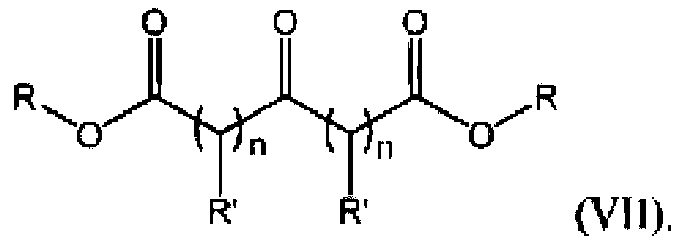
- the external electron donor compound is i) a triester compound having a formula of ii) a diester compound having a formula of or iii) an oxo-substituted diester compound having a formula of (VII).
- X is CH 2 or O.
- Each R is independently a C 1 -C 10 hydrocarbyl group in formula (V) and (VII); and a C 1 -C 10 alkyl in formula (VI).
- Each R' is independently H or R.
- Each n is independently an integer from 1 to 4. The integer n' ranges from 0 to 4.
- Another aspect of the invention relates to a process for preparing a polyolefin.
- the process comprises polymerizing one or more olefins, in the presence of the non-phthalate catalyst system under reaction conditions sufficient to form the polyolefin.
- the non-phthalate catalyst system may be any non-phthalate catalyst system described herein.
- This invention relates to a non-phthalate catalyst system capable to produce polyolefins with good catalyst activity, high isotacticity, and increased hydrogen response.
- non-phthalate catalyst systems have typically focused on using conventional alkoxysilane external donors.
- the non-phthalate catalysts often respond poorly to the changes in the type of conventional alkoxysilane external donors used, and the conventional alkoxysilane external donors generally have little modifying effect on the performance of the non-phthalate catalysts and the resulting polymer properties
- the inventors have discovered a series of novel catalyst/ non-silane external donor systems that are chemically different from catalyst/alkoxysilane external donor systems. These non-silane external donors can modify the non-phthalate catalysts more significantly than the well-known alkoxysilane external donors and, thus, significantly improving the performance of the resulting polymer.
- the non-phthalate catalyst system comprises (a) a solid Ziegler-Natta catalyst composition comprising a transition metal, a Group 2 metal, and one or more halogens; and one or more internal electron donor compounds; and (b) one or more external electron donor compounds.
- the internal electron donor compound is i) a diether compound having a formula of or iv) a succinate compound having a formula of
- each of R 1 and R 2 is independently H or an alkyl, cycloalkyl, aryl, or aralkyl group, each having from 1 to 18 carbon atoms; or, R 1 and R 2 together form one or more saturated or unsaturated mono- or poly- cyclic structures.
- Each R 3 is independently an alkyl, aryl, or aralkyl group having from 1 to 18 carbon atoms.
- Each R 4 is H or R 3 of R 13 and R 14 is independently a C 1 to C 18 hydrocarbyl group.
- Each of R 1 , R 2 , R 3 , R 4 , R 13 , and R 14 can contain one or more heteroatoms, selected from the group consisting of halogens, P, N, O, S, and Si, that replace one or more carbon atoms in the hydrocarbyl group.
- the external electron donor compound is i) a triester compound having a formula of ii) a diester compound having a formula of or iii) an oxo-substituted diester compound having a formula of
- X is CH 2 or O.
- Each R is independently a C 1 -C 10 hydrocarbyl group in formula (V) and (VII); and C 1 -C 10 alkyl in formula (VI).
- Each R' is independently H or R.
- Each n is independently an integer from 1 to 4. The integer n' ranges from 0 to 4.
- Catalyst systems for the stereospecific polymerization of olefins are well known in the art.
- the most common type of catalyst system is the Ziegler-Natta family, which comprises a solid catalyst composition containing a Ziegler-Natta procatalyst composition, an internal electron donor, and an external electron donor.
- the Ziegler-Natta procatalyst composition typically contains a transition metal compound and a Group 2 metal compound.
- the transition metal compound may be a solid complex derived from a transition metal compound, for example, titanium-, zirconium-, chromium- or vanadium-hydrocarbyloxides, hydrocarbyls, halides, or mixtures thereof.
- the transition metal is titanium
- the Group 2 metal is magnesium
- the halogen is chloride.
- the transition metal compound may have the general formulas of TrX x or Tr(OQ) g X 4-g .
- Tr is the transition metal, for instance, Tr may be a Group 4, 5, or 6 metal. In one embodiment, Tr is a Group 4 metal, such as titanium. In another embodiment, Tr is Group 5 metal, such as vanadium.
- Each Q independently represents a hydrocarbon group, such as a C 1 -C 10 alkyl group.
- X represents a halogen atom, such as chloride, bromide, or iodide; x is an integer from 3 to 4; and g is an integer from 0 to 4.
- Exemplary transition metal compounds include titanium trihalides such as TiCl 3 , TiBr 3 , and TiI 3 ; titanium tetrahalides such as TiCl 4 , TiBr 4 , and TiI 4 ; alkoxytitanium trihalides such as Ti(OCH 3 )Cl 3 , Ti(OC 2 H 5 )Cl 3 , Ti(OC 4 H 9 )Cl 3 , Ti(OC 2 H 5 )Br 3 , and Ti(OC 4 H 9 )Br 3 ; dialkoxytitanium dihalides such as Ti(OCH 3 ) 2 Cl 2 , Ti(OC 2 H 5 ) 2 Cl 2 , Ti(OC 4 H 9 ) 2 Cl 2 and Ti(OC 2 H 5 ) 2 Br 2 ; trialkoxytitanium monohalides such as Ti(OCH 3 ) 3 Cl, Ti(OC 2 H 5 ) 3 Cl, Ti(OC 4 H 9 ) 3 Cl, and Ti(OC 2 H 5 ) 3 Br; and
- Suitable Group 2 metal compounds include magnesium halides, such as magnesium chloride and magnesium bromide; alkoxymagnesiums, such as ethoxymagnesium, isopropoxymagnesium, butoxymagnesium, and 2-ethylhexoxymagnesium; dialkoxymagnesiums, such as diethoxymagnesium; alkoxymagnesium halides, such as methoxymagnesium chloride, ethoxymagnesium chloride, isopropoxy magnesium chloride, butoxy magnesium chloride, and octoxy magnesium chloride; magnesium oxyhalides; dialkylmagnesiums; aryloxymagnesiums, such as phenoxymagnesium and methylphenoxy magnesium chloride; and carboxylates of magnesium, such as magnesium laurate and magnesium stearate. These magnesium compounds may be in the liquid or solid state. Typically, the Group 2 metal compound is magnesium dichloride.
- the Ziegler-Natta procatalyst composition includes an internal electron donor.
- the internal electron donor provides tacticity control and catalyst crystallite sizing.
- Suitable internal electron donors include diethers, diesters, cyclic diesters, and succinates, and combinations thereof.
- hydrocarbyl is a linear or branched aliphatic radical, such as alkyl, alkenyl, and alkynyl; alicyclic radical, such as cycloalkyl, cycloalkenyl; aromatic radical, such as monocyclic or polycyclic aromatic radical; as well as combinations thereof, such as alkaryl and aralkyl.
- the internal electron donor can be a diether compound, such as a 1,3-diether having a formula of
- R 1 and R 2 is independently H or an alkyl, cycloalkyl, aryl, or aralkyl group, each having from 1 to 18 carbon atoms; or, R 1 and R 2 together form one or more saturated or unsaturated mono- or poly- cyclic structures.
- Each R 3 is independently an alkyl, aryl, or aralkyl group having from 1 to 18 carbon atoms.
- Each R 4 is H or R 3 .
- the alkyl, cycloalkyl, and aryl for each R group can be further substituted with one or more of alkyl, cycloalkyl, aryl, or halogen groups.
- R 1 , R 2 , R 3 , and R 4 can contain one or more heteroatoms, selected from the group consisting of halogens, P, N, O, S, and Si, that replace one or more carbon atoms in the hydrocarbyl group.
- R 1 and R 2 are each independently H, C 1 -C 6 alkyl, C 2 -C 10 mono- or di- cycloalkyl, phenyl, benzyl, or naphthyl;
- R 3 is a C 1 -C 6 alkyl such as methyl; and R 4 is hydrogen.
- R 1 and R 2 when one of R 1 and R 2 is hydrogen, the other can be ethyl, butyl, 2-ethylhexyl, cyclohexylethyl, diphenylmethyl, p-chlorophenyl, 1-naphthyl, or 1-decahydronaphthyl.
- the other when one of R 1 and R 2 is methyl, ethyl, or propyl; the other can be ethyl, propyl, butyl, pentyl, 2-ethylhexyl, cyclopentyl, cyclohexyl, methylcyclohexyl, phenyl, or benzyl.
- both R 3 and R 2 can be ethyl, propyl, isopropyl, butyl, pentyl, phenyl, benzyl, cyclohexyl, or cyclopentyl.
- Exemplary diether compounds include, but are not limited to, 2-(2-ethylhexyl)-1,3-dimethoxypropane, 2-isopropyl-1,3-dimethoxypropane, 2-butyl-1,3-dimethoxypropane, 2-sec-butyl-1,3-dimethoxypropane, 2-cyclohexyl-1,3-dimethoxypropane, 2-phenyl-1,3-dimethoxypropane, 2-tert-butyl-1,3-dimethoxypropane, 2-cumyl-1,3-di4methoxypropane, 2-(2-phenylethyl)-1,3-dimethoxypropane, 2-(2-cyclohexylethyl)-1,3-dimethoxypropane, 2-(p-chlorophenyl)-1,3-dimethoxypropane, 2-(diphenylmethyl)-1,3-dimethoxypropane, 2 (1-
- R 1 and R 2 together form one or more unsaturated mono- or poly- cyclic structures, such as cyclopentadiene.
- the resulting diether compound has a formula of R 3 and R 4 are defined as above.
- Each R 1 ' is independently H, halogen, or an alkyl, cycloalkyl, aryl, or aralkyl group, each having from 1 to 18 carbon atoms; or, two or more of R 1 ', together with the pentadiene ring, form fused di- or tri- cyclic structures.
- the alkyl, cycloalkyl, and aryl for each R 1 ' group can be further substituted with one or more of alkyl, cycloalkyl, aryl, or halogen groups.
- Each R 1 ' and its substituent group can optionally contain one or more heteroatoms, selected from the group consisting of halogens, P, N, O, S, and Si, that replace one or more carbon atoms.
- the integer r ranges from 0 to 4.
- R 3 is a C 1 -C 6 alkyl such as methyl; and R 4 is hydrogen.
- each R 1 ' is H, halogen such as fluoro or chloro; C 1 -C 6 alkyl; C 2 -C 6 cycloalkyl; phenyl; or two of the R 1 ' groups form an indene with the pentadiene ring.
- Exemplary pentadiene- or indiene- containing compounds are 1,1-bis(methoxymethyl)-cyclopentadiene; 1,1-bis(methoxymethyl)-2,3,4,5-tetramethylcyclopentadiene; 1, 1-bis(methoxymethyl)-2,3,4,5-tetraphenylcyclopentadiene; 1,1-bis(methoxymethyl)-2,3,4,5-tetrafluorocyclopentadiene; 1,1-bis(methoxymethyl)-3,4-dicyclopentylcyclopentadiene; 1,1-bis(methoxymethyl)indene; 1,1-bis(methoxymethyl)-2,3-dimethylindene; 1,1-bis(methoxymethyl)-4,5,6,7-tetrahydroindene; 1,1-bis(methoxymethyl)-2,3,6,7-tetrafluoroindene; 1,1-bis(methoxymethyl)-4,7-dimethylindene; 1,1-
- R 1 ' groups together with the pentadiene ring, form fused di- or tri- cyclic structures, such as fluorene.
- the resulting diether compound has a formula of R 3 and R 4 are defined as above.
- Each R 15 is independently H, halogen, or an alkyl, cycloalkyl, aryl, alkylaryl, or aralkyl group, each having from 1 to 18 carbon atoms; or one or more R 15 groups, together with the benzene ring, form fused rings.
- the integer q ranges from 0 to 4.
- the symbol " ------ " in the formula refers to a saturated bond or unsaturated bond.
- R 15 is H; halogen such as fluoro or chloro; C 1 -C 6 alkyl; C 2 -C 6 cycloalkyl; or two or more R 15 form benzofluorene with the benzene ring(s).
- Exemplary fluorene-containing diether compounds are 9,9-bis(methoxymethyl)fluorene; 9,9-bis(methoxymethyl)-2,3,6,7-tetramethylfluorene; 9,9-bis(methoxymethyl)-2,3,4,5,6,7-hexafluorofluorene; 9,9-bis(methoxymethyl)-2,3-benzofluorene; 9,9-bis(methoxymethyl)-2,3,6,7-dibenzofluorene; 9,9-bis(methoxymethyl)-2,7-diisopropylfluorene; 9,9-bis(methoxymethyl)-1,8-dichlorofluorene; 9,9-bis(methoxymethyl)-2,7-dicyclopentylfluorene; 9,9-bis(methoxymethyl)-1,8-difluorofluorene; 9,9-bis(methoxymethyl)-1,2,3,4-tetrahydrofluorene; 9,9
- the internal electron donor can be a succinate compound having a formula of
- Each of R 13 and R 14 is independently a C 1 to C 18 hydrocarbyl group.
- each of R 13 and R 14 can be C 1 to C 18 alkyl, C 2 to C 18 alkenyl, C 3 to C 18 cycloalkyl, or aryl.
- the alkyl, alkenyl, cycloalkyl, and aryl for each R group can be further substituted with one or more of alkyl, cycloalkyl, aryl, or halogen groups.
- R 13 and R 14 can contain one or more heteroatoms, selected from the group consisting of halogens, P, N, O, S, and Si, that replace one or more carbon atoms in the hydrocarbyl group.
- R 13 is C 1 to C 6 alkyl, C 5 -C 6 cycloalkyl, phenyl, fluorenyl; each of these groups can be optionally substituted with one or more of C 1 to C 6 alkyl, C 5 -C 6 cycloalkyl, phenyl, or halogen atoms such as fluoro or chloro.
- R 14 is C 1 to C 6 alkyl.
- succinate compounds are diethyl 2-sec-butyl-3-methylsuccinate, diethyl 2-(3,3,3-trifluoropropyl)-3-methylsuccinate, diethyl 2,3-bis(2-ethylbutyl) succinate, diethyl 2,3-diethyl-2-isopropylsuccinate, diethyl 2,3-diisopropyl-2-methylsuccinate, diethyl 2,3-dicyclohexyl-2-methylsuccinate, diethyl 2,3-dibenzylsuccinate, diethyl 2,3-diisopropylsuccinate, diethyl 2,3-bis (cyclohexylmethyl)succinate, diethyl 2,3-di-t-butylsuccinate, diethyl 2,3-diisobutylsuccinate, diethyl 2,3-dineopentylsuccinate, diethyl 2,3-diisopentyl
- the solid Ziegler-Nata procatalyst composition can be carried out by various methods known to one skilled in the art.
- the titanium compound, the magnesium dichloride in an anhydrous state, and the electron donor compounds can be milled together under conditions in which activation of the magnesium dichloride occurs.
- the product can be treated one or more times with an excess of TiCl 4 at a temperature about 80 to 135 °C, followed by washings with hydrocarbon solvents until chloride ions disappear.
- magnesium dichloride is preactivated by methods known to one skilled in the art, and then treated with an excess of TiCl 4 at a temperature of about 80 to 135 °C in the presence of the electron donor compounds.
- the treatment with TiCl 4 can be repeated and the solid can be washed with a hydrocarbon solvent such as hexane to eliminate any non-reacted TiCl 4 .
- the titanium compound, the magnesium chloride in an anhydrous state, the electron donor compounds can be milled together under conditions in which activation of the magnesium chloride occurs.
- the product can be treated with halogenated hydrocarbons such as 1,2-dichloroethane, chlorobenzene, dichloromethane, etc., for about 1 and 4 hours and at temperature of from 40 °C to the boiling point of the halogenated hydrocarbon.
- halogenated hydrocarbons such as 1,2-dichloroethane, chlorobenzene, dichloromethane, etc.
- the solid catalyst component can be prepared by reacting a titanium compound of formula TiX x or Ti(OQ) g X 4-g with a magnesium chloride deriving from an adduct of formula (MgCl 2 ) p ROH, in which p is a number between 0.1 and 6, for instance, between 2 to 3.5; and R is a C 1 -C 18 hydrocarbyl.
- the adduct can be suitably prepared in spherical form by mixing alcohol and magnesium chloride in the presence of an inert hydrocarbon immiscible with the adduct, operating under stirring conditions at the melting temperature of the adduct (100-130 °C).
- the emulsion can then be quenched, causing the solidification of the adduct in form of spherical particles.
- spherical adducts prepared according to this procedure are described in U.S. Patent Nos. 4,399,054 and 4,469,648 , which are incorporated herein by reference in their entirety.
- the obtained adduct can be directly reacted with the titanium compound.
- the obtained adduct can be first subjected to thermally controlled dealcoholation (at 80-130 °C) to obtain an adduct in which the number of moles of alcohol is generally lower than 3, for instance, between 0.1 and 2.5.
- the reaction of the adduct with the titanium compound can be carried out by suspending the adduct (dealcoholated or not) in cold TiCl 4 (generally at 0 °C), and heating the mixture to about 80-130 °C (the temperature can be kept at this range for about 0.5-2 hours).
- the treatment with TiCl 4 can be carried out one or more times.
- the electron donor compounds can be added during the treatment with TiCl 4 , and can be added together in the same treatment with TiCl 4 or separately in two or more treatments.
- the solid Ziegler-Nata procatalyst composition can contain from about 0.5 to about 6.0 wt% titanium; from about 10 to about 25 wt% magnesium; from about 40 to about 70 wt% halogen; from about 1 to about 50 wt% internal electron donor compound; and optionally inert diluent from about 0 to about 15 wt%.
- the Ziegler-Nata procatalyst composition contains from about 2 to about 20 wt% of one or more of the internal electron donor compounds, or from about 5 to about 15wt % of one or more of the internal electron donor compounds.
- the amounts of the components used in preparing the solid Ziegler-Nata procatalyst composition may vary depending upon the method of preparation. For instance, from about 0.01 to about 5 moles of the total internal electron donor compounds and from about 0.01 to about 500 moles of the titanium compound are used per mole of the magnesium compound used to make the solid procatalyst composition. Typically, from about 0.05 to about 2 moles of the total internal electron donor compounds and from about 0.05 to about 300 moles of the titanium compound are used per mole of the magnesium compound used to make the solid procatalyst composition.
- the Ziegler-Natta procatalyst composition may also include an inert support material.
- the support material may be an inert solid which does not adversely alter the catalytic performance of the transition metal compound.
- Exemplary inert support materials include metal oxides, such as alumina, and metalloid oxides, such as silica.
- the non-phthalate catalyst system may further comprise an organometallic cocatalyst.
- the metal element in the organometallic cocatalyst is a Group 13 metal, for instance, aluminum.
- Suitable organoaluminum compounds include those having at least one aluminum-carbon bond in the molecule, such as alkylaluminum, alkylaluminum hydride, alkylaluminum halide, and alkylaluminum alkoxide containing from 1-10 or 1-6 carbon atoms in each alkyl or alkoxide group.
- Exemplary organoaluminum compounds are trialkyl aluminums, such as triethyl aluminum and tributyl aluminum; trialkenyl aluminums such as triisoprenyl aluminum; dialkyl aluminum alkoxides such as diethyl aluminum ethoxide and dibutyl aluminum butoxide; alkyl aluminum sesquialkoxides such as ethyl aluminum sesquiethoxide and butyl aluminum sesquibutoxide; dialkyl aluminum halides such as diethyl aluminum chloride, dibutyl aluminum chloride and diethyl aluminum bromide; alkyl aluminum sesquihalides such as ethyl aluminum sesquichloride, butyl aluminum sesquichloride, and ethyl aluminum sesquibromide; partially halogenated alkyl aluminums, e.g., alkyl aluminum dihalides such as ethyl aluminum dichloride, propyl aluminum dichloride and butyl aluminum dibromide; dialkyl aluminum hydr
- the organometallic cocatalyst used in the non-phthalate catalyst system is in an amount that the molar ratio of the metal in the organometallic cocatalyst to transition metal in the Ziegler-Natta procatalyst composition is from about 5 to about 1000, for instance, from about 10 to about 700, from about 25 to about 400, or from about 100 to about 300.
- the non-phthalate catalyst system also includes one or more non-silane external electron donor compounds.
- the external electron donor is a compound added independent of the Ziegler-Natta procatalyst formation, and contains at least one functional group that is capable of donating a pair of electrons to a metal atom.
- the external electron donor compound serves as one component of the non-phthalate Ziegler-Natta catalyst system for olefin polymerization, often contributing to the ability to obtain a polymer having a controllable molecular weight distribution and controllable crystallinity. In fact, when an external donor compound is absent, the isotactic index of the resulting polymer is not sufficiently high even if the internal donor is used.
- the conventional alkoxysilane external donors often times do not have significant modifying effect on the performance of the non-phthalate catalyst system.
- the non-silane external donors below are chemically different from alkoxysilanes and provide improvements in the performance of the non-phthalate catalyst system.
- the external donor compound is used in the non-phthalate catalyst system in an amount that the molar ratio of the total external donor compounds to the transition metal in the Ziegler-Natta procatalyst composition (e.g., titanium compound) ranges from about 0.5 to about 90, for instance, from about 1 to about 70, or from about 1 to about 30.
- the molar ratio of the total external donor compounds to the transition metal in the Ziegler-Natta procatalyst composition e.g., titanium compound
- the external electron donor can be a triester compound having a formula of Each R is independently a C 1 -C 10 hydrocarbyl group.
- each R is a C 1 to C 10 alkyl, such as methyl, ethyl, or isobutyl; optionally substituted with methyl, isobutyl, or 2-ethylhexyl.
- Each R' is independently H or R.
- Each n is independently an integer from 1 to 4, for instance, from 1 to 2, or 1.
- the integer n' ranges from 0 to 4, for instance, from 0 to 2 or 0.
- a typical triester compound is glyceryl triacetate (also referred to as triacetin in which R is methyl, R' is H n is 1, and n' is 0.
- the external electron donor can be a diester compound having a formula of X is CH 2 or O.
- Each R is a C 1 -C 10 alkyl group.
- each R is a C 1 to C 10 alkyl, such as methyl, ethyl, or isobutyl; optionally substituted with methyl, isobutyl, or 2-ethylhexyl.
- Each R' is independently H or R.
- Each n is independently an integer from 1 to 4, for instance, from 1 to 2.
- Typical diester compounds include those having R as methyl, R' as H, and n as 2.
- two typical diester compounds are 1,5-pentanediol diacetate (PDOA, and diethyleneglycol diacetate (DEGA,
- the external electron donor can be an oxo-substituted triester compound having a formula of Each R is independently a C 1 -C 10 hydrocarbyl group.
- each R is a C 1 to C 10 alkyl, such as methyl, ethyl, or isobutyl; optionally substituted with methyl, isobutyl, or 2-ethylhexyl.
- Each R' is independently H or R.
- Each n is independently an integer from 1 to 4, for instance, from 1 to 2.
- a typical oxo-substituted triester compound is diethyl-4-oxopimelate (DEOP, in which each R is methyl, each R' is H, and each n is 2.
- Another aspect of the invention relates to a process for preparing a polyolefin.
- the process comprises polymerizing one or more olefins, in the presence of the non-phthalate catalyst system under reaction conditions known by one skilled in the art sufficient to form the polyolefin.
- the non-phthalate catalyst system may be any non-phthalate catalyst system described herein according to the embodiments in the first and second aspects of the invention.
- the reaction conditions are temperature and pressure ranges within a polymerization reactor suitable for promoting polymerization and/or copolymerization between one or more olefins and the non-phthalate catalyst system to form the desired polymer.
- the polymerization process may be performed in any manner including gas phase, slurry, or a bulk polymerization process, with the polymerization occurring in one or more reactor(s).
- the olefins may be linear or branched olefins having 2 to 20 carbon atoms, 2 to 16 carbon atoms, or 2 to 12 carbon atoms.
- the olefin used to prepare the polyolefin is an ⁇ -olefin.
- Exemplary linear or branched ⁇ -olefins includes, but are not limited to, ethylene, propylene, 1-butene, 2-butene, 1-pentene, 3-methyl-1-butene, 4-methyl-1-pentene, 3-methyl-1-pentene, 1-hexene, 3,5,5-trimethyl-1-hexene, 4,6-dimethyl-1-heptene, 1-octene, 1-decene, 1-undecene, 1-dodecene, 1-tetradecene, 1-hexadecene, 1-octadecene, and 1-eicocene.
- the olefin used to prepare a polyolefin is propylene.
- These olefins may contain one or more heteroatoms such as an oxygen, nitrogen, or silicon.
- the olefin may be used individually or in mixture, either the gaseous state or the liquid state.
- the polymerization process may include a pre-activation step.
- Pre-activation includes contacting the Ziegler-Natta procatalyst composition with the cocatalyst and the external electron donor compound.
- the resulting preactivated catalyst stream is subsequently introduced into the polymerization reaction zone and contacted with the olefin monomer to be polymerized.
- one or more of the external electron donor components may be added at this time.
- Pre-activation results in the combination of the procatalyst composition with the cocatalyst and the external electron donor compounds.
- the polymerization process may include a pre-polymerization step.
- Pre-polymerization includes contacting a small amount of the olefin with the Ziegler-Natta procatalyst composition after the procatalyst composition has been contacted with the cocatalyst and the external donor compound. Then, the resulting preactivated catalyst stream is introduced into the polymerization reaction zone and contacted with the remainder of the olefin monomer to be polymerized.
- one or more of the external electron donor components may be added at this time. Pre-polymerization results in the procatalyst composition being combined with the cocatalyst and the external electron donor compounds, with the combination being dispersed in a matrix of the polymer during polymerization, to facilitate the polymerization.
- a catalyst is considered to be pre-polymerized when the amount of the polymer produced is from about 0.1 to about 1000 gram per gram of the solid catalyst system.
- the pre-polymerization step can be carried out at temperatures from about 0 °C to about 80 °C, for instance, from 5 °C to 50 °C, in liquid or gas phase.
- the pre-polymerization step can be performed in-line as a part of a continuous polymerization process or separately in a batch process.
- any kind of polymerization process suitable for preparing a polyolefin can be used with the non-phthalate catalyst system.
- the polymerization can be carried out, for example, in bulk phase using a liquid monomer (e.g., propylene) as a reaction medium, in slurry using an inert liquid (e.g., hydrocarbon) as a diluent, in solution using either monomers or inert hydrocarbons as solvent for the nascent polymer, or in gas phase, operating in one or more fluidized or mechanically agitated bed reactors.
- a liquid monomer e.g., propylene
- an inert liquid e.g., hydrocarbon
- the polymerization process can be a gas phase polymerization process, operating in one or more reactors.
- a suitable gas phase polymerization process includes the use of condensing mode as well as super condensing mode wherein gaseous components (including addition of inert low boiling compounds) are injected into the reactor in liquid form.
- gaseous components including addition of inert low boiling compounds
- Additional amount of the same or different non-phthalate catalyst system or catalyst components e.g., the procatalyst composition, cocatalyst, or external donor compound
- the procatalyst composition e.g., the procatalyst composition, cocatalyst, or external donor compound
- the polymerization process includes preparing an ethylenepropylene copolymer by contacting propylene and ethylene with the non-phthalate catalyst system.
- the polymerization process can be conducted in two reactors in which two olefins, such as propylene and ethylene, are contacted to prepare a copolymer.
- Polypropylene is prepared in the first reactor by a bulk phase (e.g., solution) homopolymerization, and a copolymer of ethylene and propylene is prepared in the second reactor in the presence of the polypropylene from the first reactor by a gas phase copolymerization.
- the polymerization process can be conducted in one reactors but in two sequential steps, with a bulk phase homopolymerization of polypropylene in the first step, and a a gas phase copolymerization of ethylene and propylene in the presence of the polypropylene in the second step.
- This process is exemplified in Example 2.
- the procatalyst composition, the cocatalyst, and the external electron donor thereof may be contacted in the absence of other polymerization components, especially monomer, prior to addition to the reactor.
- the temperature of the polymerization process can range from about 20 to about 130 °C, from about 60 to about 100 °C, or from about 70 °C to about 85 °C.
- the temperature of the polymerization process can range from about 75 to about 85 °C, for instance at about 80 °C; when the polymerization is carried out in bulk phase, the temperature of the polymerization process can range from about 70 to about 80 °C, for instance at about 75 °C.
- the operating pressure generally ranges from about 0.5 to about 10 MPa, from about 0.9 to about 5 MPa, or from about 4 to about 5 MPa.
- the operating pressure In the bulk polymerization, the operating pressure generally ranges from about 0.5 to about 6 MPa, from about 0.9 to about 4 MPa, or from about 3.5 to about 4 MPa.
- the resulting polymer prepared according to the above process, using the non-phthalate catalyst system described in this invention, has an improved isotacticity. Moreover, the resulting polymer prepared according to the process of the invention has an improved hydrogen response characterized by melt flow rate.
- the polymer prepared by the non-phthalate catalyst system described in this invention, with the non-silane external donors can have improved hydrogen response and isotacticity at the same time. This is surprising behavior because, in a typical Ziegler-Natta catalyst system, the external donors that increase hydrogen response (i.e., characterized by MFR) typically decrease isotacticity (i.e., characterized by increased % XS).
- the non-phthalate catalyst system used contains the internal electron donor compound that is a diether compound having a formula of ; and the external electron donor compound that is a triester compound having a formula of or a diester compound having a formula of
- the definitions of R 3 , R 4 , R 15 , R, R', q, and n are the same as those described for formula Ib, V, and VI in the first aspect of the invention.
- the exemplary internal donor compounds and external donor compounds are the same as those exemplary compounds described for formulas Ib, V, and VI in the first aspect of the invention.
- the internal electron donor compound is 9,9-bis(methoxymethyl)fluorene
- the external electron donor compound is triacetin, 1,5-pentanediol diacetate, diethyl-4-oxopimelate, or diethyleneglycol diacetate.
- one non-phthalate catalyst system uses 9,9-bis(methoxymethyl)fluorene as the internal electron donor compound and triacetin as the external electron donor compound; another non-phthalate catalyst system uses 9,9-bis(methoxymethyl)fluorene as the internal electron donor compound and diethyl-4-oxopimelate as the external electron donor compound.
- the polymer prepared according to the process of the invention has an improved isotacticity.
- the resulting polymer prepared according to the process of the invention has an improved hydrogen response characterized by melt flow rate.
- the polymer prepared by the non-phthalate catalyst system described in this invention, with the non-silane external donors can have improved hydrogen response and isotacticity at the same time. This is surprising behavior because, in a typical Ziegler-Natta catalyst system, the external donors that increase hydrogen response (i.e., characterized by MFR) mostly decrease isotacticity (i.e., characterized by increased % XS).
- the polymer prepared by the non-phthalate catalyst system described in this invention can have improved hydrogen response and isotacticity at the same time.
- This is surprising behavior because, in a typical Ziegler-Natta catalyst system, the external donors that increase hydrogen response (i.e., characterized by MFR) mostly decrease isotacticity (i.e., characterized by increased % XS).
- Table 1 lists the phthalate catalysts tested as reference systems (or comparative examples). Table 1. Phthalate catalysts tested as reference systems: Comparative Catalyst Example Internal Donor 1 Diisobutylphthalate 2 Diisobutylphthalate 3 Diisobutylphthalate 4 Di-n-butylphthalate
- alkoxysilanes used as reference systems in the comparative examples were C-donor (cyclohexylmethyl dimethoxysilane), D-donor (dicyclopentyl dimethoxysilane), P-donor (diisopropyl dimethoxysilane), and DIBS (diisobutyl dimethoxysilane).
- Table 2 lists the non-phthalate procatalysts Catalyst example 1 falling within the scope of this invention. Table 2. Non-phthalate catalysts tested Catalyst Example No. Internal Donor 1 9,9-bis(methoxymethyl)fluorene [ “Diether” ] 2 1,8-Napthyl dibenzoate 3 Cyclohexanedicarboxylate ester 4 Cyclohexanedicarboxylate ester 5 Cyclohexanedicarboxylate ester
- Polymerizations were carried out in either a 1- or 2- gallon autoclave reactor in bulk liquid propylene (2000 grams in 1 gallon, 3000 grams in 2 gallon). Polymerization temperature and the amount of hydrogen added varied. Prior to the polymerization, triethylaluminum (TEAL), external donor, and procatalysts (including the internal donors) were injected to the reactor sequentially at room temperature and low pressure ( ⁇ 5 psig). Propylene and hydrogen were then added, and the reactor temperature was increased to the desired set point.
- TEAL triethylaluminum
- ⁇ 5 psig room temperature and low pressure
- Impact copolymers were made by sequential bulk homopolymerizationand gas phase copolymerization in a 2 gallon reactor. After the homopolymerization stage (at 75 °C), the reactor was depressured and purged with N 2 for 15 minutes before feeding ethylene, propylene, and hydrogen gas into the reactor. The gases were fed continuously to the reactor and constant pressure was maintained using a back pressure regulator thus ensuring a constant gas ratio.
- non-phthalate catalysts are not strongly influenced by the type of alkoxysilane external donor used. This is illustrated in Table 4 for several different non-phthalate systems. Note that the ranges of MFR and %XS are much narrower for the phthalate procatalysts in Table 3 than for the non-phthalate procatalysts in Table 4. Table 3. The phthalate procatalysts with conventional alkoxysilane external donors Comparative Catalyst Example No.
- Example No. 2 procatalyst is a non-phthalate catalyst containing 1,8-napthyl dibenzoate as an internal donor (see U.S. Patent No. 8,003,558 , which is incorporated herein by reference in its entirety).
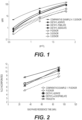
- Example No. 2 procatalyst had a significantly lower hydrogen response compared to a phthalate catalyst (Comparative Example 4) (see Figure 1 ).
- Figure 1 also shows that the type of alkoxysilane external donor has very little influence on the hydrogen response of Example No. 2 procatalyst.
- Example No. 2 procatalyst A series of non-silane aliphatic diester molecules were tested as external donors to improve the hydrogen response of Example No. 2 procatalyst. The results are shown in Figure 1 , Table 5.2, and Table 5.3. Table 5.1 illustrates the Example No. 2 procatalyst with varied Do/Ti ratios (1-gallon reactor, at 75 °C, 1.8 gm H 2 ). While the aliphatic diesters somewhat decreased the catalyst activity, the hydrogen response gap between Example No. 2 procatalyst (non-phthalate) and Comparative Example 4 procatalyst (phthalate) was significantly reduced, especially at higher hydrogen levels.
- the polymers produced using the non-silane aliphatic diester external donors had a higher isotacticity (i.e., lower % XS) than those produced with the conventional alkoxysilane external donors at the same donor level.
- Example No. 5 is a non-phthalate procatalyst based on a cyclohexanedicarboxylate internal donor (see U.S. Patent Nos. 7,649,062 and 7,888,438 , which are incorporated herein by reference in their entirety).
- Table 6 shows that Example No. 5 procatalyst with conventional alkoxysilane external donor provided somewhat lower MFR and higher xylene solubles than Comparative Example 1 procatalyst (phthalate).
- diethyladipate as the external donor increased both the hydrogen response and isotacticity of Example No. 5 procatalyst. The increase in isotacticity was enough to make this non-phthalate catalyst system comparable to Comparative Example 1 (a phthalate catalyst system).
- Example No. 5 procatalyst with an aliphatic diester external donor was somewhat decreased compared to the conventional alkoxysilane external donor at the same donor / Ti compound ratio. Table 6. Comparison of Example No.
- Example No. 3 is a non-phthalate procatalyst based on a cyclohexanedicarboxylate internal donor which produces very broad MWD products (see U.S. Patent No. 8,729,189 , which is incorporated herein by reference in its entirety).
- Example No. 3 A comparison of polymerization with Example No. 3 procatalyst in combination with a conventional alkoxysilane external donor and in combination with the non-silane aliphatic diester external donors is shown in Tables 7.1 and 7.2. Although the catalyst activity was decreased, the hydrogen response was in some cases increased by the diester external donors compared to the conventional alkoxysilane external donor, isotacticity was improved and the MWD remained the same or was broadened. Table 7.1. Comparison of Example No.
- External Donor PI P- Donor 5.6 Triacetin 8.4 Diethyl 4-Oxopimelate 7.8 1,5-Pentanediol Diacetate 7.8 Diethyl Adipate 7.6 Diethyl Pimelate 6.5 Diethylene Gylcol Diacetate 8.8 Tinuvin 770 7.5
- Example No. 3 procatalyst has relatively low gas phase activity in the production of impact copolymer compared to the phthalate catalyst of Comparative Example 1.
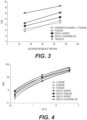
- Figure 2 illustrates the gap in gas phase production between Example No. 3 procatalyst (non-phthalate) and Comparative Example 1 procatalyst (phthalate) when using P-donor as the external donor. This shows that Example No. 3, procatalyst (non-phthalate) in combination with the conventional alkoxysilane external donors, does not have as good of a performance as the phthalate catalyst of Comparative Example 1 in the production of an impact copolymer.
- Example No. 1 is a commercial non-phthalate diether procatalyst (see U.S. Patent No. 5,723,400 , which is incorporated herein by reference in its entirety).
- Diether catalysts typically produce polypropylenes having lower crystallinity and stiffness than the phthalate catalysts, due to a narrower MWD and more regioirregular chain structure (Tables 8 and 10).
- Diether procatalysts also do not respond very differently to different alkoxysilane donors (see Tables 4 and 8).
- Example No. 1 procatalyst was tested with alternative external donors to improve the attributes of the polymer product compared to the conventional alkoxysilane systems and to create products more similar to phthalate-based catalysts.
- Example No. 1 procatalyst One particular advantage of the alternative external donors with Example No. 1 procatalyst is the increase in the isotacticity of polymers, while the polydispersity index (PI) appeared to be essentially unchanged (Table 9). Thus, these new donors can modify the polymer structure in a way that differs from conventional alkoxysilane donors. Table 9. Comparison of Example No.
- Example No. 1 procatalyst The positive effect of the alternative donors on the hydrogen response of Example No. 1 procatalyst is illustrated in Figure 4 .
- the new external donors in combination with the diether procatalysts produced a higher MFR product, which can lead to the production of a wider range of products than currently possible with conventional alkoxysilane external donors.
Landscapes
- Chemical & Material Sciences (AREA)
- Health & Medical Sciences (AREA)
- Chemical Kinetics & Catalysis (AREA)
- Organic Chemistry (AREA)
- Medicinal Chemistry (AREA)
- Polymers & Plastics (AREA)
- Engineering & Computer Science (AREA)
- Materials Engineering (AREA)
- Emergency Medicine (AREA)
- Inorganic Chemistry (AREA)
- Transition And Organic Metals Composition Catalysts For Addition Polymerization (AREA)
Description
- This application claims the benefit of priority to
U.S. Provisional Patent Application Serial No. 62/273,584, filed December 31, 2015 U.S. Provisional Patent Application Serial No. 62/278,256, filed January 13, 2016 - This invention relates to a non-phthalate catalyst system with a novel external electron donor for olefin polymerization.
- Phthalate-based catalysts have been widely used in the commercial production of polypropylene worldwide. Extensive research and development have shown that the use of certain alkoxysilanes as external donors leads to optimum performance of phthalate-based catalysts (Kissin, Alkene Polymerizations with Transition Metal Catalysts, Studies in Surface Science and Catalysis 173: 224-243 (Elsevier, Amsterdam, 2007); Pasquini, Polypropylene Handbook (2nd Ed., Hanser Publishers, Munich, 2005); Moore, The Rebirth of Polypropylene: Supported Catalysts (Hanser Publishers, Munich, 1998)). The use of these silane donors allows for the production of a wide range of polypropylene products, due to the varied effect of these donors on the hydrogen response (characterized by melt flow rate (MFR)), isotacticity (characterized by % xylene solubles (%XS) or the isotactic pentad contents (mmmm) of the xylene-insoluble fraction (XI)), and molecular weight distribution (MWD).
- Yet the use of these phthalate-based catalysts has caused regulatory and human health and safety concerns. Non-phthalate catalysts have been evaluated as replacements for the phthalate-based systems. However, the current non-phthalate catalysts generally do not match the performance of the phthalate systems.
- Non-phthalate catalysts have certain limitations compared to the phthalate systems, for instance, very high initial activity, fast decay of polymerization activity, insufficient catalyst activity or low gas phase activity in sequential polymerization process for impact copolymer production. Additionally, non-phthalate catalysts often exhibit one or more of the following characteristics: low hydrogen response (characterized by low MFR) and low isotacticity. These limitations of the non-phthalate catalysts often render the properties of the polymers made with non-phthalate systems poorer than those of the polymers made with the phthalate-based catalysts.
- There thus remains a need in the art to improve the technology of these non-phthalate catalyst systems to overcome the above-described limitations in the non-phthalate catalyst systems. This invention answers that need.
- One aspect of the invention relates to a non-phthalate catalyst system for olefin polymerization. The non-phthalate catalyst system comprises (a) a solid Ziegler-Natta catalyst composition comprising a transition metal, a
Group 2 metal, and one or more halogens; and one or more internal electron donor compounds; and (b) one or more external electron donor compounds. - The internal electron donor compound is i) a diether compound having a formula of


- The external electron donor compound is i) a triester compound having a formula of


- Another aspect of the invention relates to a process for preparing a polyolefin. The process comprises polymerizing one or more olefins, in the presence of the non-phthalate catalyst system under reaction conditions sufficient to form the polyolefin. The non-phthalate catalyst system may be any non-phthalate catalyst system described herein.
-
-
Figure 1 is a graph showing the hydrogen responses of polymers prepared with Example No. 2 procatalyst (non-phthalate) in combination with a conventional alkoxysilane external donor and non-silane aliphatic diester external donors (1-gallon reactor, 75 °C, ratio of donor / Ti compound = 10), as compared to a phthalate procatalyst in combination with a conventional alkoxysilane external donor. -
Figure 2 is a graph showing the ethylene incorporation into an impact copolymer using Example No. 3 procatalyst (non-phthalate) in combination with a conventional alkoxysilane external donor and non-silane ester external donors, as compared to a phthalate procatalyst (Comparative Example 1) in combination with the conventional alkoxysilane external donor (2-gallon reactor, ratio of donor / Ti compound = 10). -
Figure 3 is a graph showing the %XS in an impact copolymer using Example No. 3 procatalyst (non-phthalate) in combination with a conventional alkoxysilane external donor and non-silane ester external donors, as compared to a phthalate procatalyst (Comparative Example 1) in combination with the conventional alkoxysilane external donor (2-gallon reactor, ratio of donor / Ti compound = 10). -
Figure 4 is a graph showing the hydrogen responses of Example No. 1 procatalyst (non-phthalate) in combination with conventional alkoxysilane external donors and non-silane aliphatic diester external donors (1-gallon reactor, 75 °C, ratio of donor / Ti compound = 10). - This invention relates to a non-phthalate catalyst system capable to produce polyolefins with good catalyst activity, high isotacticity, and increased hydrogen response. Previously, non-phthalate catalyst systems have typically focused on using conventional alkoxysilane external donors. However, the non-phthalate catalysts often respond poorly to the changes in the type of conventional alkoxysilane external donors used, and the conventional alkoxysilane external donors generally have little modifying effect on the performance of the non-phthalate catalysts and the resulting polymer properties In this invention, the inventors have discovered a series of novel catalyst/ non-silane external donor systems that are chemically different from catalyst/alkoxysilane external donor systems. These non-silane external donors can modify the non-phthalate catalysts more significantly than the well-known alkoxysilane external donors and, thus, significantly improving the performance of the resulting polymer.
- One aspect of the invention relates to a non-phthalate catalyst system for olefin polymerization. The non-phthalate catalyst system comprises (a) a solid Ziegler-Natta catalyst composition comprising a transition metal, a
Group 2 metal, and one or more halogens; and one or more internal electron donor compounds; and (b) one or more external electron donor compounds. - The internal electron donor compound is i) a diether compound having a formula of


- The external electron donor compound is i) a triester compound having a formula of


- Catalyst systems for the stereospecific polymerization of olefins are well known in the art. The most common type of catalyst system is the Ziegler-Natta family, which comprises a solid catalyst composition containing a Ziegler-Natta procatalyst composition, an internal electron donor, and an external electron donor.
- Any Ziegler-Natta procatalyst known in the art may be used in the non-phthalate catalyst system. For instance, the Ziegler-Natta procatalyst composition typically contains a transition metal compound and a
Group 2 metal compound. The transition metal compound may be a solid complex derived from a transition metal compound, for example, titanium-, zirconium-, chromium- or vanadium-hydrocarbyloxides, hydrocarbyls, halides, or mixtures thereof. In a typical Ziegler-Natta procatalyst composition, the transition metal is titanium, theGroup 2 metal is magnesium, and the halogen is chloride. - The transition metal compound may have the general formulas of TrX x or Tr(OQ) g X 4-g . Tr is the transition metal, for instance, Tr may be a
Group Group 4 metal, such as titanium. In another embodiment, Tr is Group 5 metal, such as vanadium. Each Q independently represents a hydrocarbon group, such as a C1-C10 alkyl group. X represents a halogen atom, such as chloride, bromide, or iodide; x is an integer from 3 to 4; and g is an integer from 0 to 4. Exemplary transition metal compounds include titanium trihalides such as TiCl3, TiBr3, and TiI3; titanium tetrahalides such as TiCl4, TiBr4, and TiI4; alkoxytitanium trihalides such as Ti(OCH3)Cl3, Ti(OC2H5)Cl3, Ti(OC4H9)Cl3, Ti(OC2H5)Br3, and Ti(OC4H9)Br3; dialkoxytitanium dihalides such as Ti(OCH3)2 Cl2, Ti(OC2H5)2Cl2, Ti(OC4H9)2Cl2 and Ti(OC2H5)2Br2; trialkoxytitanium monohalides such as Ti(OCH3)3Cl, Ti(OC2H5)3Cl, Ti(OC4H9)3Cl, and Ti(OC2H5)3Br; and tetraalkoxytitaniums such as Ti(OCH3)4, Ti(OC2H5)4 and Ti(OC4H9)4. Mixtures of two or more such transition metal compounds may be used as well. The transition metal compound may be used individually or in solutions of hydrocarbon compounds or halogenated hydrocarbons. -
Suitable Group 2 metal compounds include magnesium halides, such as magnesium chloride and magnesium bromide; alkoxymagnesiums, such as ethoxymagnesium, isopropoxymagnesium, butoxymagnesium, and 2-ethylhexoxymagnesium; dialkoxymagnesiums, such as diethoxymagnesium; alkoxymagnesium halides, such as methoxymagnesium chloride, ethoxymagnesium chloride, isopropoxy magnesium chloride, butoxy magnesium chloride, and octoxy magnesium chloride; magnesium oxyhalides; dialkylmagnesiums; aryloxymagnesiums, such as phenoxymagnesium and methylphenoxy magnesium chloride; and carboxylates of magnesium, such as magnesium laurate and magnesium stearate. These magnesium compounds may be in the liquid or solid state. Typically, theGroup 2 metal compound is magnesium dichloride. - The Ziegler-Natta procatalyst composition includes an internal electron donor. The internal electron donor provides tacticity control and catalyst crystallite sizing. Suitable internal electron donors include diethers, diesters, cyclic diesters, and succinates, and combinations thereof.
- As used herein, a "hydrocarbyl" is a linear or branched aliphatic radical, such as alkyl, alkenyl, and alkynyl; alicyclic radical, such as cycloalkyl, cycloalkenyl; aromatic radical, such as monocyclic or polycyclic aromatic radical; as well as combinations thereof, such as alkaryl and aralkyl.
- The internal electron donor can be a diether compound, such as a 1,3-diether having a formula of

- In some embodiments, when one of R1 and R2 is hydrogen, the other can be ethyl, butyl, 2-ethylhexyl, cyclohexylethyl, diphenylmethyl, p-chlorophenyl, 1-naphthyl, or 1-decahydronaphthyl. In some embodiments, when one of R1 and R2 is methyl, ethyl, or propyl; the other can be ethyl, propyl, butyl, pentyl, 2-ethylhexyl, cyclopentyl, cyclohexyl, methylcyclohexyl, phenyl, or benzyl. In some embodiments, both R3 and R2 can be ethyl, propyl, isopropyl, butyl, pentyl, phenyl, benzyl, cyclohexyl, or cyclopentyl. Exemplary diether compounds include, but are not limited to, 2-(2-ethylhexyl)-1,3-dimethoxypropane, 2-isopropyl-1,3-dimethoxypropane, 2-butyl-1,3-dimethoxypropane, 2-sec-butyl-1,3-dimethoxypropane, 2-cyclohexyl-1,3-dimethoxypropane, 2-phenyl-1,3-dimethoxypropane, 2-tert-butyl-1,3-dimethoxypropane, 2-cumyl-1,3-di4methoxypropane, 2-(2-phenylethyl)-1,3-dimethoxypropane, 2-(2-cyclohexylethyl)-1,3-dimethoxypropane, 2-(p-chlorophenyl)-1,3-dimethoxypropane, 2-(diphenylmethyl)-1,3-dimethoxypropane, 2 (1-naphthyl)-1,3-dimethoxypropane, 2(p-fluorophenyl)-1,3-dimethoxypropane, 2(1-decahydronaphthyl)-1,3-dimethoxypropane, 2(p-tert-butylphenyl)-1,3-dimethoxypropane, 2,2-dicyclohexyl-1,3-dimethoxypropane, 2,2-diethyl-1,3-dimethoxypropane, 2,2-dipropyl-1,3-dimethoxypropane, 2,2-dibutyl-1,3-dimethoxypropane, 2,2-diethyl-1,3-diethoxypropane, 2,2-dicyclopentyl-1,3-dimethoxypropane, 2,2-dipropyl-1,3-diethoxypropane, 2,2-dibutyl-1,3-diethoxypropane, 2-methyl-2-ethyl-1,3-dimethoxypropane, 2-methyl-2-propyl-1,3-dimethoxypropane, 2-methyl-2-benzyl-1,3-dimethoxypropane, 2-methyl-2-phenyl-1,3-dimethoxypropane, 2-methyl-2-cyclohexyl-1,3-dimethoxypropane, 2-methyl-2-methylcyclohexyl-1,3-dimethoxypropane, 2,2-bis (p-chlorophenyl)-1,3-dimethoxypropane, 2,2-bis(2-phenylethyl)-1,3-dimethoxypropane, 2,2-bis(2-cyclohexylethyl)-1,3-dimethoxypropane, 2-methyl-2-isobutyl-1,3-dimethoxypropane, 2-methyl-2-(2-ethylhexyl)-1,3-dimethoxypropane, 2,2-bis(2-ethylhexyl)-1,3-dimethoxypropane, 2,2-bis(p-methylphenyl)-1,3-dimethoxypropane, 2-methyl-2-isopropyl-1,3-dimethoxypropane, 2,2-diisobutyl-1,3-dimethoxypropane, 2,2-diphenyl-1,3-dimethoxypropane, 2,2-dibenzyl-1,3-dimethoxypropane, 2-isopropyl-2-cyclopentyl-1,3-dimethoxypropane, 2,2-bis(cyclohexylmethyl)-1,3-dimethoxypropane, 2,2-diisobutyl-1,3-diethoxypropane, 2,2-diisobutyl-1,3-dibutoxypropane, 2-isobutyl-2-isopropyl-1,3-dimetoxypropane, 2,2-di-sec-butyl-1,3-dimetoxypropane, 2,2-di-tert-butyl-1,3-dimethoxypropane, 2,2-dineopentyl-1,3-dimethoxypropane, 2-iso-propyl-2-isopentyl-1,3-dimethoxypropane, 2-phenyl-2-benzyl-1,3-dimetoxypropane, 2-cyclohexyl-2-cyclohexylmethyl-1,3-dimethoxypropane. Mixtures of two or more such diether compounds may be used as well.
- In some embodiments, R1 and R2 together form one or more unsaturated mono- or poly- cyclic structures, such as cyclopentadiene. The resulting diether compound has a formula of

- Alternatively, two or more of R1' groups, together with the pentadiene ring, form fused di- or tri- cyclic structures, such as fluorene. The resulting diether compound has a formula of

------ " in the formula refers to a saturated bond or unsaturated bond. Typically, R15 is H; halogen such as fluoro or chloro; C1-C6 alkyl; C2-C6 cycloalkyl; or two or more R15 form benzofluorene with the benzene ring(s). Exemplary fluorene-containing diether compounds are 9,9-bis(methoxymethyl)fluorene; 9,9-bis(methoxymethyl)-2,3,6,7-tetramethylfluorene; 9,9-bis(methoxymethyl)-2,3,4,5,6,7-hexafluorofluorene; 9,9-bis(methoxymethyl)-2,3-benzofluorene; 9,9-bis(methoxymethyl)-2,3,6,7-dibenzofluorene; 9,9-bis(methoxymethyl)-2,7-diisopropylfluorene; 9,9-bis(methoxymethyl)-1,8-dichlorofluorene; 9,9-bis(methoxymethyl)-2,7-dicyclopentylfluorene; 9,9-bis(methoxymethyl)-1,8-difluorofluorene; 9,9-bis(methoxymethyl)-1,2,3,4-tetrahydrofluorene; 9,9-bis(methoxymethyl)-1,2,3,4,5,6,7,8-octahydrofluorene; and 9,9-bis(methoxymethyl)-4-tert-butylfluorene. A typical fluorene-containing diether compound is 9,9-bis(methoxymethyl)fluorene. Mixtures of two or more such diether compounds may be used as well. - The internal electron donor can be a succinate compound having a formula of

- Exemplary succinate compounds are diethyl 2-sec-butyl-3-methylsuccinate, diethyl 2-(3,3,3-trifluoropropyl)-3-methylsuccinate, diethyl 2,3-bis(2-ethylbutyl) succinate, diethyl 2,3-diethyl-2-isopropylsuccinate, diethyl 2,3-diisopropyl-2-methylsuccinate, diethyl 2,3-dicyclohexyl-2-methylsuccinate, diethyl 2,3-dibenzylsuccinate, diethyl 2,3-diisopropylsuccinate, diethyl 2,3-bis (cyclohexylmethyl)succinate, diethyl 2,3-di-t-butylsuccinate, diethyl 2,3-diisobutylsuccinate, diethyl 2,3-dineopentylsuccinate, diethyl 2,3-diisopentylsuccinate, diethyl 2,3-(1-trifluoromethyl-ethyl)succinate, diethyl 2-(9-fluorenyl)succinate, diethyl 2-isopropyl-3-isobutylsuccinate, diethyl 2-t-butyl-3-isopropylsuccinate, diethyl 2-isopropyl-1,3-cyclohexylsuccinates diethyl 2-isopentyl-3-cyclohexylsuccinate, diethyl 2-cyclohexyl-3-cyclopentylsuccinate, diethyl 2,2,3,3-tetramethylsuccinate, diethyl 2,2,3,3-tetraethylsuccinate, diethyl 2,2,3,3-tetra-n-propylsuccinate, diethyl 2,3-diethyl-2,3-diisopropylsuccinate, diisobutyl 2,3-bis(trimethylsilyl)succinate, diisobutyl 2-sec-butyl-3-methylsuccinate, diisobutyl 2-(3,3,3-trifluoropropyl)-3-methylsuccinate, diisobutyl 2,3-bis(2-ethylbutyl)succinate, diisobutyl 2,3-diethyl-2-isopropylsuccinate, diisobutyl 2,3-diisopropyl-2-methylsuccinate, diisobutyl 2,3-dicyclohexyl-2-methylsuccinate, diisobutyl 2,3-dibenzylsuccinate, diisobutyl 2,3-diisopropylsuccinate, diisobutyl 2,3-bis(cyclohexylmethyl)succinate, diisobutyl 2,3-di-t-butylsuccinate, diisobutyl 2,3-diisobutylsuccinate, diisobutyl 2,3-dineopentylsuccinate, diisobutyl 2,3-diisopentylsuccinate, diisobutyl 2,3-bis(3,3,3-trifluoropropyl)succinate, diisobutyl 2,3-di-n-propylsuccinate, diisobutyl 2-(9-fluorenyl)succinate, diisobutyl 2-isopropyl-3-isobutylsuccinate, diisobutyl 2-t-butyl-3-isopropylsuccinate, diisobutyl 2-isopropyl-3-cyclohexylsuccinate, diisobutyl 2-isopentyl-3-cyclohexylsuccinate, diisobutyl 2-n-propyl-3-(cyclohexylmethyl)succinate, diisobutyl 2-cyclohexyl-3-cyclopentylsuccinate, diisobutyl 2,2,3,3-tetramethylsuccinate, diisobutyl 2,2,3,3-tetraethylsuccinate, diisobutyl 2,2,3,3-tetra-n-propylsuccinate, diisobutyl 2,3-diethyl-2,3-diisopropylsuccinate, dineopentyl 2,3-bis(trimethylsilyl)succinate, dineopentyl 2,2-di-sec-butyl-3-methylsuccinate, dineopentyl 2-(3,3,3-trifluoropropyl)-3-methylsuccinate, dineopentyl 2,3 bis-(2-ethylbutyl)succinate, dineopentyl 2,3-diethyl-2-isopropylsuccinate, dineopentyl 2,3-diisopropyl-2-methylsuccinate, dineopentyl 2,3-dicyclohexyl-2-methylsuccinate, dineopentyl 2,3-dibenzylsuccinate, dineopentyl 2,3-diisopropylsuccinate, dineopentyl 2,3-bis-(cyclohexylmethyl)succinate, dineopentyl 2,3-di-t-butylsuccinate, dineopentyl 2,3-diisobutylsuccinate, dineopentyl 2,3-dineopentylsuccinate, dineopentyl 2,3-diisopentylsuccinate, dineopentyl 2,3-bis(3,3,3-trifluoropropyl)succinate, dineopentyl 2,3-n-propylsuccinate, dineopentyl 2-(9-fluorenyl)succinate, dineopentyl 2-isopropyl-3-isobutylsuccinate, dineopentyl 2-t-butyl-3-isopropylsuccinate, dineopentyl 2-isopropyl-3-cyclohexylsuccinate, dineopentyl 2-isopentyl-3-cyclohexylsuccinate, dineopentyl 2-n-propyl-3-(cyclohexylmethyl)succinate, dineopentyl 2-cyclohexyl-3-cyclopentylsuccinate, dineopentyl 2,2,3,3-tetramethylsuccinate, dineopentyl 2,2,3,3-tetra-ethylsuccinate, dineopentyl 2,2,3,3-tetra-n-propylsuccinate, dineopentyl 2,3-diethyl-2,3-diisopropylsuccinate, diethyl 1,2-cyclohexanedicarboxylate, and diethyl norbornene-2,3-dicarboxylate. Typically, the succinate compound is diethyl 2,3-diisopropylsuccinate. Mixtures of two or more such succinate compounds may be used as well.
- The solid Ziegler-Nata procatalyst composition can be carried out by various methods known to one skilled in the art. For instance, the titanium compound, the magnesium dichloride in an anhydrous state, and the electron donor compounds can be milled together under conditions in which activation of the magnesium dichloride occurs. The product can be treated one or more times with an excess of TiCl4 at a temperature about 80 to 135 °C, followed by washings with hydrocarbon solvents until chloride ions disappear. Alternatively, magnesium dichloride is preactivated by methods known to one skilled in the art, and then treated with an excess of TiCl4 at a temperature of about 80 to 135 °C in the presence of the electron donor compounds. The treatment with TiCl4 can be repeated and the solid can be washed with a hydrocarbon solvent such as hexane to eliminate any non-reacted TiCl4.
- In another example, the titanium compound, the magnesium chloride in an anhydrous state, the electron donor compounds can be milled together under conditions in which activation of the magnesium chloride occurs. The product can be treated with halogenated hydrocarbons such as 1,2-dichloroethane, chlorobenzene, dichloromethane, etc., for about 1 and 4 hours and at temperature of from 40 °C to the boiling point of the halogenated hydrocarbon. The product is then washed with inert hydrocarbon solvents such as hexane.
- In another example, the solid catalyst component can be prepared by reacting a titanium compound of formula TiX x or Ti(OQ) g X 4-g with a magnesium chloride deriving from an adduct of formula (MgCl2)pROH, in which p is a number between 0.1 and 6, for instance, between 2 to 3.5; and R is a C1-C18 hydrocarbyl. The adduct can be suitably prepared in spherical form by mixing alcohol and magnesium chloride in the presence of an inert hydrocarbon immiscible with the adduct, operating under stirring conditions at the melting temperature of the adduct (100-130 °C). The emulsion can then be quenched, causing the solidification of the adduct in form of spherical particles. Examples of spherical adducts prepared according to this procedure are described in
U.S. Patent Nos. 4,399,054 and4,469,648 , which are incorporated herein by reference in their entirety. The obtained adduct can be directly reacted with the titanium compound. Alternatively, the obtained adduct can be first subjected to thermally controlled dealcoholation (at 80-130 °C) to obtain an adduct in which the number of moles of alcohol is generally lower than 3, for instance, between 0.1 and 2.5. The reaction of the adduct with the titanium compound can be carried out by suspending the adduct (dealcoholated or not) in cold TiCl4 (generally at 0 °C), and heating the mixture to about 80-130 °C (the temperature can be kept at this range for about 0.5-2 hours). The treatment with TiCl4 can be carried out one or more times. The electron donor compounds can be added during the treatment with TiCl4, and can be added together in the same treatment with TiCl4 or separately in two or more treatments. - The preparations of the solid catalyst components in spherical forms are described, for example, in
WO98/44001 U.S. Patent Application Publication No. 2013/0197173 . - The solid Ziegler-Nata procatalyst composition can contain from about 0.5 to about 6.0 wt% titanium; from about 10 to about 25 wt% magnesium; from about 40 to about 70 wt% halogen; from about 1 to about 50 wt% internal electron donor compound; and optionally inert diluent from about 0 to about 15 wt%. For instance, the Ziegler-Nata procatalyst composition contains from about 2 to about 20 wt% of one or more of the internal electron donor compounds, or from about 5 to about 15wt % of one or more of the internal electron donor compounds.
- The amounts of the components used in preparing the solid Ziegler-Nata procatalyst composition may vary depending upon the method of preparation. For instance, from about 0.01 to about 5 moles of the total internal electron donor compounds and from about 0.01 to about 500 moles of the titanium compound are used per mole of the magnesium compound used to make the solid procatalyst composition. Typically, from about 0.05 to about 2 moles of the total internal electron donor compounds and from about 0.05 to about 300 moles of the titanium compound are used per mole of the magnesium compound used to make the solid procatalyst composition.
- The Ziegler-Natta procatalyst composition may also include an inert support material. The support material may be an inert solid which does not adversely alter the catalytic performance of the transition metal compound. Exemplary inert support materials include metal oxides, such as alumina, and metalloid oxides, such as silica.
- The non-phthalate catalyst system may further comprise an organometallic cocatalyst. The metal element in the organometallic cocatalyst is a Group 13 metal, for instance, aluminum. Suitable organoaluminum compounds include those having at least one aluminum-carbon bond in the molecule, such as alkylaluminum, alkylaluminum hydride, alkylaluminum halide, and alkylaluminum alkoxide containing from 1-10 or 1-6 carbon atoms in each alkyl or alkoxide group. Exemplary organoaluminum compounds are trialkyl aluminums, such as triethyl aluminum and tributyl aluminum; trialkenyl aluminums such as triisoprenyl aluminum; dialkyl aluminum alkoxides such as diethyl aluminum ethoxide and dibutyl aluminum butoxide; alkyl aluminum sesquialkoxides such as ethyl aluminum sesquiethoxide and butyl aluminum sesquibutoxide; dialkyl aluminum halides such as diethyl aluminum chloride, dibutyl aluminum chloride and diethyl aluminum bromide; alkyl aluminum sesquihalides such as ethyl aluminum sesquichloride, butyl aluminum sesquichloride, and ethyl aluminum sesquibromide; partially halogenated alkyl aluminums, e.g., alkyl aluminum dihalides such as ethyl aluminum dichloride, propyl aluminum dichloride and butyl aluminum dibromide; dialkyl aluminum hydrides such as diethyl aluminum hydride and dibutyl aluminum hydride; other partially hydrogenated alkyl aluminum, e.g., alkyl aluminum dihyrides such as ethyl aluminum dihydride and propyl aluminum dihydride; and partially alkoxylated and halogenated alkyl aluminums, such as ethyl aluminum ethoxychloride, butyl aluminum butoxychloride, and ethyl aluminum ethoxybromide.
- The organometallic cocatalyst used in the non-phthalate catalyst system is in an amount that the molar ratio of the metal in the organometallic cocatalyst to transition metal in the Ziegler-Natta procatalyst composition is from about 5 to about 1000, for instance, from about 10 to about 700, from about 25 to about 400, or from about 100 to about 300.
- The non-phthalate catalyst system also includes one or more non-silane external electron donor compounds. The external electron donor is a compound added independent of the Ziegler-Natta procatalyst formation, and contains at least one functional group that is capable of donating a pair of electrons to a metal atom. The external electron donor compound serves as one component of the non-phthalate Ziegler-Natta catalyst system for olefin polymerization, often contributing to the ability to obtain a polymer having a controllable molecular weight distribution and controllable crystallinity. In fact, when an external donor compound is absent, the isotactic index of the resulting polymer is not sufficiently high even if the internal donor is used. Also, for the non-phthalate catalyst system, the conventional alkoxysilane external donors often times do not have significant modifying effect on the performance of the non-phthalate catalyst system. The non-silane external donors below are chemically different from alkoxysilanes and provide improvements in the performance of the non-phthalate catalyst system.
- The external donor compound is used in the non-phthalate catalyst system in an amount that the molar ratio of the total external donor compounds to the transition metal in the Ziegler-Natta procatalyst composition (e.g., titanium compound) ranges from about 0.5 to about 90, for instance, from about 1 to about 70, or from about 1 to about 30.
- The external electron donor can be a triester compound having a formula of


- The external electron donor can be a diester compound having a formula of


- The external electron donor can be an oxo-substituted triester compound having a formula of


- Another aspect of the invention relates to a process for preparing a polyolefin. The process comprises polymerizing one or more olefins, in the presence of the non-phthalate catalyst system under reaction conditions known by one skilled in the art sufficient to form the polyolefin. The non-phthalate catalyst system may be any non-phthalate catalyst system described herein according to the embodiments in the first and second aspects of the invention.
- The reaction conditions are temperature and pressure ranges within a polymerization reactor suitable for promoting polymerization and/or copolymerization between one or more olefins and the non-phthalate catalyst system to form the desired polymer. The polymerization process may be performed in any manner including gas phase, slurry, or a bulk polymerization process, with the polymerization occurring in one or more reactor(s).
- The olefins may be linear or branched olefins having 2 to 20 carbon atoms, 2 to 16 carbon atoms, or 2 to 12 carbon atoms. Typically, the olefin used to prepare the polyolefin is an α-olefin. Exemplary linear or branched α-olefins includes, but are not limited to, ethylene, propylene, 1-butene, 2-butene, 1-pentene, 3-methyl-1-butene, 4-methyl-1-pentene, 3-methyl-1-pentene, 1-hexene, 3,5,5-trimethyl-1-hexene, 4,6-dimethyl-1-heptene, 1-octene, 1-decene, 1-undecene, 1-dodecene, 1-tetradecene, 1-hexadecene, 1-octadecene, and 1-eicocene. For instance, the olefin used to prepare a polyolefin is propylene. These olefins may contain one or more heteroatoms such as an oxygen, nitrogen, or silicon. The olefin may be used individually or in mixture, either the gaseous state or the liquid state.
- The polymerization process may include a pre-activation step. Pre-activation includes contacting the Ziegler-Natta procatalyst composition with the cocatalyst and the external electron donor compound. The resulting preactivated catalyst stream is subsequently introduced into the polymerization reaction zone and contacted with the olefin monomer to be polymerized. Optionally, one or more of the external electron donor components may be added at this time. Pre-activation results in the combination of the procatalyst composition with the cocatalyst and the external electron donor compounds.
- Alternatively, the polymerization process may include a pre-polymerization step. Pre-polymerization includes contacting a small amount of the olefin with the Ziegler-Natta procatalyst composition after the procatalyst composition has been contacted with the cocatalyst and the external donor compound. Then, the resulting preactivated catalyst stream is introduced into the polymerization reaction zone and contacted with the remainder of the olefin monomer to be polymerized. Optionally, one or more of the external electron donor components may be added at this time. Pre-polymerization results in the procatalyst composition being combined with the cocatalyst and the external electron donor compounds, with the combination being dispersed in a matrix of the polymer during polymerization, to facilitate the polymerization.
- Typically, a catalyst is considered to be pre-polymerized when the amount of the polymer produced is from about 0.1 to about 1000 gram per gram of the solid catalyst system. The pre-polymerization step can be carried out at temperatures from about 0 °C to about 80 °C, for instance, from 5 °C to 50 °C, in liquid or gas phase. The pre-polymerization step can be performed in-line as a part of a continuous polymerization process or separately in a batch process.
- Any kind of polymerization process suitable for preparing a polyolefin can be used with the non-phthalate catalyst system. The polymerization can be carried out, for example, in bulk phase using a liquid monomer (e.g., propylene) as a reaction medium, in slurry using an inert liquid (e.g., hydrocarbon) as a diluent, in solution using either monomers or inert hydrocarbons as solvent for the nascent polymer, or in gas phase, operating in one or more fluidized or mechanically agitated bed reactors.
- The polymerization process can be a gas phase polymerization process, operating in one or more reactors. A suitable gas phase polymerization process includes the use of condensing mode as well as super condensing mode wherein gaseous components (including addition of inert low boiling compounds) are injected into the reactor in liquid form. When multiple reactors are employed, it is desirable that they operate in series, e.g., the effluent from the first reactor is charged to the second reactor, with an additional monomer (for homopolymerization) or different monomer (for copolymerization) added to continue the polymerization. Additional amount of the same or different non-phthalate catalyst system or catalyst components (e.g., the procatalyst composition, cocatalyst, or external donor compound) may be added.
- As an example, the polymerization process includes preparing an ethylenepropylene copolymer by contacting propylene and ethylene with the non-phthalate catalyst system. For instance, the polymerization process can be conducted in two reactors in which two olefins, such as propylene and ethylene, are contacted to prepare a copolymer. Polypropylene is prepared in the first reactor by a bulk phase (e.g., solution) homopolymerization, and a copolymer of ethylene and propylene is prepared in the second reactor in the presence of the polypropylene from the first reactor by a gas phase copolymerization. Alternatively, the polymerization process can be conducted in one reactors but in two sequential steps, with a bulk phase homopolymerization of polypropylene in the first step, and a a gas phase copolymerization of ethylene and propylene in the presence of the polypropylene in the second step. This process is exemplified in Example 2. Regardless of the polymerization technique employed, it is understood that the procatalyst composition, the cocatalyst, and the external electron donor thereof may be contacted in the absence of other polymerization components, especially monomer, prior to addition to the reactor.
- The temperature of the polymerization process can range from about 20 to about 130 °C, from about 60 to about 100 °C, or from about 70 °C to about 85 °C. For instance, when the polymerization is carried out in gas phase, the temperature of the polymerization process can range from about 75 to about 85 °C, for instance at about 80 °C; when the polymerization is carried out in bulk phase, the temperature of the polymerization process can range from about 70 to about 80 °C, for instance at about 75 °C. When the polymerization is carried out in gas phase, the operating pressure generally ranges from about 0.5 to about 10 MPa, from about 0.9 to about 5 MPa, or from about 4 to about 5 MPa. In the bulk polymerization, the operating pressure generally ranges from about 0.5 to about 6 MPa, from about 0.9 to about 4 MPa, or from about 3.5 to about 4 MPa.
- The resulting polymer prepared according to the above process, using the non-phthalate catalyst system described in this invention, has an improved isotacticity. Moreover, the resulting polymer prepared according to the process of the invention has an improved hydrogen response characterized by melt flow rate. Surprisingly, the polymer prepared by the non-phthalate catalyst system described in this invention, with the non-silane external donors, can have improved hydrogen response and isotacticity at the same time. This is surprising behavior because, in a typical Ziegler-Natta catalyst system, the external donors that increase hydrogen response (i.e., characterized by MFR) typically decrease isotacticity (i.e., characterized by increased % XS).
- In some embodiments, the non-phthalate catalyst system used contains the internal electron donor compound that is a diether compound having a formula of


- For instance, in a typical non-phthalate catalyst system, the internal electron donor compound is 9,9-bis(methoxymethyl)fluorene, and the external electron donor compound is triacetin, 1,5-pentanediol diacetate, diethyl-4-oxopimelate, or diethyleneglycol diacetate. For instance, one non-phthalate catalyst system uses 9,9-bis(methoxymethyl)fluorene as the internal electron donor compound and triacetin as the external electron donor compound; another non-phthalate catalyst system uses 9,9-bis(methoxymethyl)fluorene as the internal electron donor compound and diethyl-4-oxopimelate as the external electron donor compound. In these embodiments, the polymer prepared according to the process of the invention has an improved isotacticity. Moreover, the resulting polymer prepared according to the process of the invention has an improved hydrogen response characterized by melt flow rate. Surprisingly, the polymer prepared by the non-phthalate catalyst system described in this invention, with the non-silane external donors, can have improved hydrogen response and isotacticity at the same time. This is surprising behavior because, in a typical Ziegler-Natta catalyst system, the external donors that increase hydrogen response (i.e., characterized by MFR) mostly decrease isotacticity (i.e., characterized by increased % XS). Surprisingly, the polymer prepared by the non-phthalate catalyst system described in this invention, with the non-silane external donors, can have improved hydrogen response and isotacticity at the same time. This is surprising behavior because, in a typical Ziegler-Natta catalyst system, the external donors that increase hydrogen response (i.e., characterized by MFR) mostly decrease isotacticity (i.e., characterized by increased % XS).
- The following examples are for illustrative purposes only and are not intended to limit, in any way, the scope of the present invention.
- Table 1 lists the phthalate catalysts tested as reference systems (or comparative examples).
Table 1. Phthalate catalysts tested as reference systems: Comparative Catalyst Example Internal Donor 1 Diisobutylphthalate 2 Diisobutylphthalate 3 Diisobutylphthalate 4 Di-n-butylphthalate - The alkoxysilanes used as reference systems in the comparative examples were C-donor (cyclohexylmethyl dimethoxysilane), D-donor (dicyclopentyl dimethoxysilane), P-donor (diisopropyl dimethoxysilane), and DIBS (diisobutyl dimethoxysilane).
- Table 2 lists the non-phthalate procatalysts Catalyst example 1 falling within the scope of this invention.
Table 2. Non-phthalate catalysts tested Catalyst Example No. Internal Donor 1 9,9-bis(methoxymethyl)fluorene [ "Diether" ] 2 1,8- Napthyl dibenzoate 3 Cyclohexanedicarboxylate ester 4 Cyclohexanedicarboxylate ester 5 Cyclohexanedicarboxylate ester - Structures of the non-silane aliphatic ester external donors, tested in combination with Catalyst Example Nos. 1-5, are shown below.
Diesters: Triester: 

Diethyl malonate (n = 1, R = ethyl) Diethyl glutarate (n = 3, R = ethyl) Glyceryl Triacetate (Triacetin) Diethyl adipate (n = 4, R = ethyl) Diisopropyl adipate (n = 4, R = isopropyl) Dibutyl adipate (n = 4, R = n-butyl or isobutyl) Bis (2-ethylhexyl) adipate (n = 4, R = 2-ethylhexyl) Diethyl pimelate (n = 5, R = ethyl) Diethyl azelate (n = 7, R = ethyl) Diethyl sebacate (n = 8, R = ethyl) Bis(2,2,6,6-tetramethyl-4-piperidyl) seb (Tinuvin® 770) (n = 8, R = 2,2,6,6-tetra piperidyl) acate methyl-4- Diacetates: 

1,5-Pentanediol Diacetate (PDOA) Diethyleneglycol diacetate (DEGA) 
Diethyl-4-oxopimelate (DEOP) - Polymerizations were carried out in either a 1- or 2- gallon autoclave reactor in bulk liquid propylene (2000 grams in 1 gallon, 3000 grams in 2 gallon). Polymerization temperature and the amount of hydrogen added varied. Prior to the polymerization, triethylaluminum (TEAL), external donor, and procatalysts (including the internal donors) were injected to the reactor sequentially at room temperature and low pressure (< 5 psig). Propylene and hydrogen were then added, and the reactor temperature was increased to the desired set point.
- Impact copolymers were made by sequential bulk homopolymerizationand gas phase copolymerization in a 2 gallon reactor. After the homopolymerization stage (at 75 °C), the reactor was depressured and purged with N2 for 15 minutes before feeding ethylene, propylene, and hydrogen gas into the reactor. The gases were fed continuously to the reactor and constant pressure was maintained using a back pressure regulator thus ensuring a constant gas ratio. The gas phase copolymerization conditions were: 80 °C, 140 psi, and molar ratios of the components in the gas phase are: ethylene / (ethylene + propylene) = 0.43; and H2/ ethylene = 0.067.
- Molecular weight distribution of the polymers was measured by either GPC (Mw/Mn) or dynamic rheology (Polydispersity Index - PI). Polymer isotacticity was measured by xylene fractionation (%XS) or 500 MHz 13C NMR (Bruker). DSC thermal fractionation was carried out by heating a sample to 200 °C at 10 °C/minute, equilibrating for two hours, and then lowering the temperature by 10 °C increments to 120 °C. The sample was allowed to equilibrate for two hours at each successive temperature. At the end of this cycle, the sample was heated up to 200 °C at 10 °C/minute, and the melting endotherm was measured.
- The different phthalate and non-phthalate procatalyst systems listed in Table 1 and Table 2, respectively, were analyzed with conventional alkoxysilane external donors and analyzed in Table 3 and Table 4, respectively, below.
- Unlike phthalate-based catalysts, most non-phthalate catalysts are not strongly influenced by the type of alkoxysilane external donor used. This is illustrated in Table 4 for several different non-phthalate systems. Note that the ranges of MFR and %XS are much narrower for the phthalate procatalysts in Table 3 than for the non-phthalate procatalysts in Table 4.
Table 3. The phthalate procatalysts with conventional alkoxysilane external donors Comparative Catalyst Example No. External Donor kg Polypropylene/ g Procatalyst MFR %XS 11 C-donor 35 80 4.0 P-donor 33 70 3.0 D-donor 30 25 2.7 12 C-donor 31 120 3.3 P-donor 34 100 2.9 D-donor 38 40 2.8 22 C-donor 34 100 3.0 P- donor 40 80 2.5 D-donor 44 25 2.0 33 C-donor 38 8 2.6 P-donor 36 3 2.2 D-donor 35 2 2.2 DIBS 34 6 3.5 34 C-donor 38 20 2.7 P-donor 39 10 2.1 DIBS 39 20 2.7 1 2-gallon reactor, 70 °C, 3.5 g H2, ratio of donor / Ti compound = 10
2 2-gallon reactor, 75 °C, 4.75 g H2, ratio of donor / Ti compound = 10
3 1-gallon reactor, 75 °C, 0.6 g H2, ratio of donor / Ti compound = 10
4 1-gallon reactor, 75 °C, 0.9 g H2, ratio of donor / Ti compound = 10Table 4. The non-phthalate procatalysts (see Table 2 for internal donors for each example) with conventional alkoxysilane external donors (1-gallon reactor, 75 °C, ratio of donor / Ti compound = 10) Catalyst Example External Donor kg Polypropylene/ g Procatalyst / g Procatalyst MFR %XS 1 C- Donor 40 45 1.4 P- Donor 40 50 1.5 D-Donor 39 50 1.4 2 C-Donor 47 4 2.0 P-Donor 44 9 2.0 D-Donor 43 8 1.7 3 C-Donor 33 20 2.4 P-Donor 33 30 2.5 D-Donor 30 15 2.4 4 C-Donor 29 6 2.4 P-Donor 30 8 7 7 5 C-Donor 35 28 2.9 D-Donor 37 24 2.7 - The effects of non-silane aliphatic diester external donors on different phthalate and non-phthalate procatalyst systems listed in Table 2 were analyzed. As shown in results below, each of these non-phthalate procatalysts had a particular deficiency that could not be influenced by alkoxysilanes, but were influenced by the new external donors.
- Example No. 2 procatalyst is a non-phthalate catalyst containing 1,8-napthyl dibenzoate as an internal donor (see
U.S. Patent No. 8,003,558 , which is incorporated herein by reference in its entirety). With typical alkoxysilane external donors (C, D, and P), Example No. 2 procatalyst had a significantly lower hydrogen response compared to a phthalate catalyst (Comparative Example 4) (seeFigure 1 ). Furthermore,Figure 1 also shows that the type of alkoxysilane external donor has very little influence on the hydrogen response of Example No. 2 procatalyst. - A series of non-silane aliphatic diester molecules were tested as external donors to improve the hydrogen response of Example No. 2 procatalyst. The results are shown in
Figure 1 , Table 5.2, and Table 5.3. Table 5.1 illustrates the Example No. 2 procatalyst with varied Do/Ti ratios (1-gallon reactor, at 75 °C, 1.8 gm H2). While the aliphatic diesters somewhat decreased the catalyst activity, the hydrogen response gap between Example No. 2 procatalyst (non-phthalate) and Comparative Example 4 procatalyst (phthalate) was significantly reduced, especially at higher hydrogen levels. In addition, the polymers produced using the non-silane aliphatic diester external donors had a higher isotacticity (i.e., lower % XS) than those produced with the conventional alkoxysilane external donors at the same donor level. - At least some of the activity appeared to be recovered at a lower ratio of donor / Ti compound. Therefore, lowering the ratio of donor / Ti compound may be desirable to provide an improved performance comparable to conventional alkoxysilane external donors. Lowering the ratio of donor / Ti compound may also result in lower donor residues in the final product as well as providing an economic advantage over conventional alkoxysilane external donors.
Table 5.1. Example No. 2 procatalyst with varied Do/Ti ratios (1-gallon reactor, at 75 °C, 1.8 gm H2) Donor Do/Ti kg Polypropylene/ g Procatalyst P- donor 10 43 30 46 Diethyl Adipate 2 49 5 47 10 33 30 11 Table 5.2. Comparison of Example No. 2 procatalyst with conventional alkoxysilane external donors and with non-silane aliphatic diester external donors (2-gallon reactor, at 75 °C, Do/Ti= 10, 4.0 gm H2) External Donor kg Polypropylene/ g Procatalyst MFR %XS C- donor 60 27 1.8 Diethylene Gylcol Diacetate 18 71 1.6 1,5-Pentanediol Diacetate 27 54 1.4 Triacetin 43 45 2.6 Diethyl Malonate 73 44 3.6 Diethyl 4- Oxopimelate 40 41 1.8 Diethyl Adipate 35 34 1.6 Tinuvin 770 56 25 2.0 Table 5.3. Comparison of Example No. 2 procatalyst with conventional alkoxysilane external donors and with non-silane aliphatic diester external donors (1-gallon reactor, at 75 °C, Do/Ti=10, 1.8 gm H2) External Donor kg Polypropylene/ g Procatalyst MFR %XS C- Donor 46 37 2.2 D- Donor 48 24 2.2 P- Donor 43 43 2.1 Diethyl Sebacate 31 94 1.5 Diethyl Pimelate 34 83 2.2 Diethyl Adipate 33 81 1.5 Diisopropyl Adipate 46 47 2.2 Dibutyl Adipate 42 44 2.1 Diethyl Azelate 41 42 2.0 Diethyl Glutarate 46 41 2.7 Diethyl Malonate 51 25 3.4 Diisobutyl Adipate 50 23 2.6 Bis (2-ethylhexyl) Adipate 56 18 2.9 - Example No. 5 is a non-phthalate procatalyst based on a cyclohexanedicarboxylate internal donor (see
U.S. Patent Nos. 7,649,062 and7,888,438 , which are incorporated herein by reference in their entirety). Table 6 shows that Example No. 5 procatalyst with conventional alkoxysilane external donor provided somewhat lower MFR and higher xylene solubles than Comparative Example 1 procatalyst (phthalate). However, using diethyladipate as the external donor increased both the hydrogen response and isotacticity of Example No. 5 procatalyst. The increase in isotacticity was enough to make this non-phthalate catalyst system comparable to Comparative Example 1 (a phthalate catalyst system). - Similar to Example No. 2 procatalyst and aliphatic diester external donors, the catalyst activity when using Example No. 5 procatalyst with an aliphatic diester external donor was somewhat decreased compared to the conventional alkoxysilane external donor at the same donor / Ti compound ratio.
Table 6. Comparison of Example No. 5 procatalyst with conventional alkoxysilane external donors and with non-silane aliphatic diester external donors to Comparative Example 1 procatalyst (phthalate) with conventional alkoxysilane external donors (1-gallon reactor, 75 °C, ratio of donor / Ti compound = 10) Catalyst External Donor g H2 kg Polypropylene/ g Procatalyst MFR %XS Example No. 5 P-Donor 1.8 54 60 3.3 1.2 52 19 3.6 0.6 45 3 4.0 Example No. 5 Diethyl Adipate 1.8 38 290 2.5 1.2 36 78 2.5 0.6 32 8 3.2 1.8 44 110 3.2 Comparative Example 1 P-donor 1.2 40 30 2.6 0.6 30 3 2.7 - Example No. 3 is a non-phthalate procatalyst based on a cyclohexanedicarboxylate internal donor which produces very broad MWD products (see
U.S. Patent No. 8,729,189 , which is incorporated herein by reference in its entirety). - A comparison of polymerization with Example No. 3 procatalyst in combination with a conventional alkoxysilane external donor and in combination with the non-silane aliphatic diester external donors is shown in Tables 7.1 and 7.2. Although the catalyst activity was decreased, the hydrogen response was in some cases increased by the diester external donors compared to the conventional alkoxysilane external donor, isotacticity was improved and the MWD remained the same or was broadened.
Table 7.1. Comparison of Example No. 3 procatalyst with a conventional alkoxysilane external donor and non-silane aliphatic diester external donors (1-gallon reactor, 75 °C, ratio of donor / Ti compound = 10, 1.8g H2) External Donor kg Polypropylene/ g Procatalyst MFR %XS C- Donor 32 71 2.4 D- Donor 34 58 2.1 P- Donor 33 140 2.6 Triacetin 18 148 2.6 Diethyl 4-Oxopimelate 15 146 2.2 1,5-Pentanediol Diacetate 13 125 1.7 Diethyl Malonate 39 105 4.7 Diethyl Adipate 14 100 2.0 Diethyl Sebacate 16 96 2.0 Diethyl Pimelate 18 90 2.0 Diethylene Gylcol Diacetate 6 90 1.4 Tinuvin 770 23 138 2.3 Table 7.2. Comparison of Example No. 3 procatalyst with a conventional alkoxysilane external donor and non-silane aliphatic diester external donors (1-gallon reactor, 75 °C, ratio of donor / Ti compound = 10, 0.6g H2) External Donor PI P- Donor 5.6 Triacetin 8.4 Diethyl 4-Oxopimelate 7.8 1,5-Pentanediol Diacetate 7.8 Diethyl Adipate 7.6 Diethyl Pimelate 6.5 Diethylene Gylcol Diacetate 8.8 Tinuvin 770 7.5 - It was previously observed that Example No. 3 procatalyst has relatively low gas phase activity in the production of impact copolymer compared to the phthalate catalyst of Comparative Example 1.
Figure 2 illustrates the gap in gas phase production between Example No. 3 procatalyst (non-phthalate) and Comparative Example 1 procatalyst (phthalate) when using P-donor as the external donor. This shows that Example No. 3, procatalyst (non-phthalate) in combination with the conventional alkoxysilane external donors, does not have as good of a performance as the phthalate catalyst of Comparative Example 1 in the production of an impact copolymer. - However, when the non-silane aliphatic ester compounds were used with Example No. 3 procatalyst, much more promising gas phase production was observed (
Figures 2 and3 ). Diethyladipate external donor gave similar or slightly better ethylene incorporation than the phthalate/alkoxysilane system, and the triester donor (triacetin) improved the ethylene incorporation beyond that of the phthalate catalyst. - Example No. 1 is a commercial non-phthalate diether procatalyst (see
U.S. Patent No. 5,723,400 , which is incorporated herein by reference in its entirety). Diether catalysts typically produce polypropylenes having lower crystallinity and stiffness than the phthalate catalysts, due to a narrower MWD and more regioirregular chain structure (Tables 8 and 10). Diether procatalysts also do not respond very differently to different alkoxysilane donors (see Tables 4 and 8). - Example No. 1 procatalyst was tested with alternative external donors to improve the attributes of the polymer product compared to the conventional alkoxysilane systems and to create products more similar to phthalate-based catalysts.
Table 8. Comparison of Example No. 1 procatalyst with conventional alkoxysilane external donors and non-silane aliphatic ester donors (1-gallon reactor, 75 °C, ratio of donor / Ti Compound = 10, 1.2 gm H2) External Donor kg Polypropylene / g Procatalyst MFR %XS D-donor 35 270 1.5 C-donor 36 290 1.7 P-donor 37 310 2.1 Diethylene Gylcol Diacetate 19 610 1.1 Diethyl 4-Oxopimelate 24 530 0.9 1,5-Pentanediol Diacetate 25 490 0.9 Triacetin 31 470 1.5 - One particular advantage of the alternative external donors with Example No. 1 procatalyst is the increase in the isotacticity of polymers, while the polydispersity index (PI) appeared to be essentially unchanged (Table 9). Thus, these new donors can modify the polymer structure in a way that differs from conventional alkoxysilane donors.
Table 9. Comparison of Example No. 1 procatalyst with conventional alkoxysilane external donors and non-silane aliphatic ester external donors (1-gallon reactor, 75°C, ratio of donor / Ti Compound = 10, 0.6 gm H2) External Donor kg Polypropylene/ g Procatalyst MFR %XS PI D-donor 36 3.2 1.3 3.4 C-Donor 37 3.5 1.7 - P-Donor 47 2.3 1.8 - Triacetin 27 25 1.1 3.3 Diethylene Gylcol Diacetate 14 13 1.1 3.7 Diethyl 4-Oxopimelate 21 9 1.4 3.4 1,5- Pentanediol Diacetate 18 7 1.0 3.7 - The positive effect of the alternative donors on the hydrogen response of Example No. 1 procatalyst is illustrated in
Figure 4 . As shown inFigure 4 , the new external donors in combination with the diether procatalysts produced a higher MFR product, which can lead to the production of a wider range of products than currently possible with conventional alkoxysilane external donors. - The above results show that aliphatic di- and tri-ester donors appeared to improve both hydrogen response and isotacticity at the same time. This is a desirable and novel behavior compared to the conventional response of the Ziegler-Natta procatalysts to the external donors. Typically, external donors that increase MFR also decrease isotacticity (increase %XS).
- Compared to conventional alkoxysilane external donors, a relatively lower activity is seen at the same donor / Ti compound with the diester external donors. However, at least some of the activity appeared to be recovered at a lower donor / Ti compound. Therefore, lowering the ratio of donor / Ti compound may be desirable to provide an improved performance comparable to conventional alkoxysilane external donors. Lowering the ratio of donor / Ti compound may also result in lower donor residues in the final product as well as providing an economic advantage over conventional alkoxysilane external donors.
- The results of the new aliphatic ester external donors in combination with the non-phthalate procatalyst are surprising as the phthalate catalysts typically do not respond well to these non-silane aliphatic ester external donors. As shown in Table 10, when these non-silane aliphatic ester external donors in combination with the phthalate procatalyst, the catalyst activity was dramatically reduced and both the MFR and %XS were significantly increased.
Table 10. Comparison of the phthalate procatalyst of Comparative Example 1 with a conventional alkoxysilane external donor and a non-silane aliphatic diester external donor (1-gallon reactor, 75 °C, ratio of donor / Ti Compound = 10) External Donor gH2 kg Polypropylene/ g Procatalyst MFR %XS 1.8 44 110 3.2 P-Donor 1.2 40 30 2.6 0.6 30 3 2.7 1.8 6 1000 4.5 Diethyl Adipate 1.2 5 400 5.1 0.6 4 70 6.8
Claims (15)
- A non-phthalate catalyst system for olefin polymerization, comprising:(a) a solid Ziegler-Natta catalyst composition comprising a transition metal, a Group 2 metal, and one or more halogens; and
one or more internal electron donor compounds selected from the group consisting of:i) a diether compound having a formula of ii) a succinate compound having a formula of
 each of R1 and R2 is independently H or an alkyl, cycloalkyl, aryl, or aralkyl group, each having from 1 to 18 carbon atoms; or, R1 and R2 together form one or more saturated or unsaturated mono- or poly- cyclic structures;each R3 is independently an alkyl, aryl, or aralkyl group having from 1 to 18 carbon atoms,each R4 is H or R3;each of R13 and R14 is independently a C1 to C18 hydrocarbyl group; andwherein each of R1, R2, R3, R4, R13, and R14 can contain one or more heteroatoms that replace one or more carbon atoms in the hydrocarbyl group, wherein the one or more heteroatoms are selected from the group consisting of halogens, P, N, O, S, and Si; and(b) an external electron donor compound consisting of one or more compounds selected from the group consisting of:i) a triester compound having a formula of
 ii) an oxo-substituted diester compound having a formula of
 each R is independently a C1-C10 hydrocarbyl group,each R' is independently H or R,each n is independently an integer from 1 to 4, andn' is an integer from 0 to 4.
 - The non-phthalate catalyst system of claim 1, wherein the transition metal is titanium, the Group 2 metal is magnesium, and the halogen is chloride.
- The non-phthalate catalyst system of claim 1, wherein the catalyst system further comprises an organoaluminum cocatalyst selected from the group consisting of alkylaluminum, alkylaluminum hydride, alkylaluminum halide, and alkylaluminum alkoxide.
- The non-phthalate catalyst system of claim 1, wherein the internal electron donor compound is a diether compound having a formula of:
 each R15 is independently H, halogen, or an alkyl, cycloalkyl, aryl, alkylaryl, or aralkyl group, each having from 1 to 18 carbon atoms; or one or more R15 groups, together with the benzene ring, form fused rings, andq is an integer from 0 to 4.
 - The non-phthalate catalyst system of claim 4, wherein the diether compound is selected from the group consisting of 9,9-bis(methoxymethyl)fluorene; 9,9-bis(methoxymethyl)-2,3,6,7-tetramethylfluorene; 9,9-bis(methoxymethyl)-2,3,4,5,6,7-hexafluorofluorene; 9,9-bis(methoxymethyl)-2,3-benzofluorene; 9,9-bis(methoxymethyl)-2,3,6,7-dibenzofluorene; 9,9-bis(methoxymethyl)-2,7-diisopropylfluorene; 9,9-bis(methoxymethyl)-1,8-dichlorofluorene; 9,9-bis(methoxymethyl)-2,7-dicyclopentylfluorene; 9,9-bis(methoxymethyl)-1,8-difluorofluorene; 9,9-bis(methoxymethyl)-1,2,3,4-tetrahydrofluorene; 9,9-bis(methoxymethyl)-1,2,3,4,5,6,7,8-octahydrofluorene; and 9,9-bis(methoxymethyl)-4 -tert-butylfluorene, wherein the diether compound is preferably 9,9-bis(methoxymethyl)fluorene.
- The non-phthalate catalyst system of claim 1, wherein the internal electron donor compound is a succinate compound, wherein R13 is C1 to C6 alkyl, C5-C6 cycloalkyl, phenyl, fluorenyl, optionally substituted with one or more of C1 to C6 alkyl, C5-C6 cycloalkyl, phenyl, or halogen such as fluoro or chloro; and R14 is C1 to C6 alkyl, wherein the succinate compound is preferably selected from the group consisting of diethyl 2-sec-butyl-3-methylsuccinate, diethyl 2-(3,3,3-trifluoropropyl)-3-methylsuccinate, diethyl 2,3-bis(2-ethylbutyl) succinate, diethyl 2,3-diethyl-2-isopropylsuccinate, diethyl 2,3-diisopropyl-2-methylsuccinate, diethyl 2,3-dicyclohexyl-2-methylsuccinate, diethyl 2,3-dibenzylsuccinate, diethyl 2,3-diisopropylsuccinate, diethyl 2,3-bis (cyclohexylmethyl)succinate, diethyl 2,3-dit-butylsuccinate, diethyl 2,3-diisobutylsuccinate, diethyl 2,3-dineopentylsuccinate, diethyl 2,3-diisopentylsuccinate, diethyl 2,3-(1-trifluoromethyl-ethyl)succinate, diethyl 2-(9-fluorenyl)succinate, diethyl 2-isopropyl-3-isobutylsuccinate, diethyl 2-t-butyl-3-isopropylsuccinate, diethyl 2-isopropyl-1,3-cyclohexylsuccinates diethyl 2-isopentyl-3-cyclohexylsuccinate, diethyl 2-cyclohexyl-3-cyclopentylsuccinate, diethyl 2,2,3,3-tetramethylsuccinate, diethyl 2,2,3,3-tetraethylsuccinate, diethyl 2,2,3,3-tetra-n-propylsuccinate, diethyl 2,3-diethyl-2,3-diisopropylsuccinate, diisobutyl 2,3-bis(trimethylsilyl)succinate, diisobutyl 2-sec-butyl-3-methylsuccinate, diisobutyl 2-(3,3,3-trifluoropropyl)-3-methylsuccinate, diisobutyl 2,3-bis(2-ethylbutyl)succinate, diisobutyl 2,3-diethyl-2-isopropylsuccinate, diisobutyl 2,3-diisopropyl-2-methylsuccinate, diisobutyl 2,3-dicyclohexyl-2-methylsuccinate, diisobutyl 2,3-dibenzylsuccinate, diisobutyl 2,3-diisopropylsuccinate, diisobutyl 2,3-bis(cyclohexylmethyl)succinate, diisobutyl 2,3-di-t-butylsuccinate, diisobutyl 2,3-diisobutylsuccinate, diisobutyl 2,3-dineopentylsuccinate, diisobutyl 2,3-diisopentylsuccinate, diisobutyl 2,3-bis(3,3,3-trifluoropropyl)succinate, diisobutyl 2,3-di-n-propylsuccinate, diisobutyl 2-(9-fluorenyl)succinate, diisobutyl 2-isopropyl-3-isobutylsuccinate, diisobutyl 2-t-butyl-3-isopropylsuccinate, diisobutyl 2-isopropyl-3-cyclohexylsuccinate, diisobutyl 2-isopentyl-3-cyclohexylsuccinate, diisobutyl 2-n-propyl-3-(cyclohexylmethyl)succinate, diisobutyl 2-cyclohexyl-3-cyclopentylsuccinate, diisobutyl 2,2,3,3-tetramethylsuccinate, diisobutyl 2,2,3,3-tetraethylsuccinate, diisobutyl 2,2,3,3-tetra-n-propylsuccinate, diisobutyl 2,3-diethyl-2,3-diisopropylsuccinate, dineopentyl 2,3-bis(trimethylsilyl)succinate, dineopentyl 2,2-di-sec-butyl-3-methylsuccinate, dineopentyl 2-(3,3,3-trifluoropropyl)-3-methylsuccinate, dineopentyl 2,3 bis-(2-ethylbutyl)succinate, dineopentyl 2,3-diethyl-2-isopropylsuccinate, dineopentyl 2,3-diisopropyl-2-methylsuccinate, dineopentyl 2,3-dicyclohexyl-2-methylsuccinate, dineopentyl 2,3-dibenzylsuccinate, dineopentyl 2,3-diisopropylsuccinate, dineopentyl 2,3-bis-(cyclohexylmethyl)succinate, dineopentyl 2,3-di-t-butylsuccinate, dineopentyl 2,3-diisobutylsuccinate, dineopentyl 2,3-dineopentylsuccinate, dineopentyl 2,3-diisopentylsuccinate, dineopentyl 2,3-bis(3,3,3-trifluoropropyl)succinate, dineopentyl 2,3-n-propylsuccinate, dineopentyl 2-(9-fluorenyl)succinate, dineopentyl 2-isopropyl-3-isobutylsuccinate, dineopentyl 2-t-butyl-3-isopropylsuccinate, dineopentyl 2-isopropyl-3-cyclohexylsuccinate, dineopentyl 2-isopentyl-3-cyclohexylsuccinate, dineopentyl 2-n-propyl-3-(cyclohexylmethyl)succinate, dineopentyl 2-cyclohexyl-3-cyclopentylsuccinate, dineopentyl 2,2,3,3-tetramethylsuccinate, dineopentyl 2,2,3,3-tetra-ethylsuccinate, dineopentyl 2,2,3,3-tetra-n-propylsuccinate, dineopentyl 2,3-diethyl-2,3-diisopropylsuccinate, diethyl 1,2-cyclohexanedicarboxylate, and diethyl norbornene-2,3-dicarboxylate.
- The non-phthalate catalyst system of claim 1, wherein the external electron donor is a triester compound of formula (V) in which, preferably, each R is a C1 to C10 alkyl, each R' is H or CH3, each n is an integer from 1 to 2, and n' is an integer from 0 to 2, more preferably, wherein each R is methyl, each R' is H, each n is 1, and n' is 0.
- A non-phthalate catalyst system for olefin polymerization, comprising:(a) a solid Ziegler-Natta catalyst composition comprising a transition metal, a Group 2 metal, and one or more halogens; and
one or more internal electron donor compounds selected from the group consisting of:i) a diether compound having a formula of ii) a succinate compound having a formula of
 each of R1 and R2 is independently H or an alkyl, cycloalkyl, aryl, or aralkyl group, each having from 1 to 18 carbon atoms; or, R1 and R2 together form one or more saturated or unsaturated mono- or poly- cyclic structures;each R3 is independently an alkyl, aryl, or aralkyl group having from 1 to 18 carbon atoms,each R4 is H or R3;each of R13 and R14 is independently a C1 to C18 hydrocarbyl group; andwherein each of R1, R2, R3, R4, R13, and R14 can contain one or more heteroatoms that replace one or more carbon atoms in the hydrocarbyl group, wherein the one or more heteroatoms are selected from the group consisting of halogens, P, N, O, S, and Si; and(b) one or more external electron donor compounds consisting of a diester compound having a formula of
 X is CH2 or O,each R is a C1-C10 alkyl,each R' is independently H or R, andeach n is independently an integer from 1 to 4.
 - The non-phthalate catalyst system of claim 8, wherein each R is a C1 to C10 alkyl, each R' is H or CH3, and each n is an integer from 1 to 2, preferably, wherein each R is methyl, each R' is H, and each n is 2.
- The non-phthalate catalyst system of claim 1, wherein the external electron donor is an oxo-substituted diester compound of formula (VII), in which, preferably, each R is a C1 to C10 alkyl, each R' is H or CH3, and each n is an integer from 1 to 2, more preferably, wherein each R is methyl, each R' is H, and each n is 2.
- A process for preparing a polyolefin, comprising:
polymerizing one or more olefins, in the presence of the non-phthalate catalyst system according to claim 1, under reaction conditions sufficient to form the polyolefin. - The process of claim 11, wherein in the non-phthalate catalyst system:
the internal electron donor compound is a diether compound having a formula of each R15 is independently H, halogen, or an alkyl, cycloalkyl, aryl, alkylaryl, or aralkyl group, each having from 1 to 18 carbon atoms; or one or more R15, together with the benzene ring, form fused rings, andeach q is independently an integer from 0 to 4;preferably, wherein the internal electron donor compound is 9,9-bis(methoxymethyl)fluorene, and the external electron donor compound is triacetin, or diethyl-4-oxopimelate.
 - The non-phthalate catalyst system of claim 8, wherein the internal electron donor compound is a diether compound having a formula of:
 each R15 is independently H, halogen, or an alkyl, cycloalkyl, aryl, alkylaryl, or aralkyl group, each having from 1 to 18 carbon atoms; or one or more R15 groups, together with the benzene ring, form fused rings, andq is an integer from 0 to 4;preferably, the internal electron donor compound is a succinate compound, wherein R13 is C1 to C6 alkyl, C5-C6 cycloalkyl, phenyl, fluorenyl, optionally substituted with one or more of C1 to C6 alkyl, C5-C6 cycloalkyl, phenyl, or halogen such as fluoro or chloro; and R14 is C1 to C6 alkyl.
 - A process for preparing a polyolefin, comprising:
polymerizing one or more olefins, in the presence of the non-phthalate catalyst system according to claim 8, under reaction conditions sufficient to form the polyolefin. - The process of claim 14, wherein in the non-phthalate catalyst system:
the internal electron donor compound is a diether compound having a formula of, each R15 is independently H, halogen, or an alkyl, cycloalkyl, aryl, alkylaryl, or aralkyl group, each having from 1 to 18 carbon atoms; or one or more R15, together with the benzene ring, form fused rings, andeach q is independently an integer from 0 to 4;preferably, wherein the internal electron donor compound is 9,9-bis(methoxymethyl)fluorene, and the external electron donor compound is 1,5-pentanediol diacetate or diethyleneglycol diacetate.
Applications Claiming Priority (3)
| Application Number | Priority Date | Filing Date | Title |
|---|---|---|---|
| US201562273584P | 2015-12-31 | 2015-12-31 | |
| US201662278256P | 2016-01-13 | 2016-01-13 | |
| PCT/US2016/069287 WO2017117433A1 (en) | 2015-12-31 | 2016-12-29 | Non-phthalate catalyst system and its use in the polymerization of olefins |
Publications (3)
| Publication Number | Publication Date |
|---|---|
| EP3397657A1 EP3397657A1 (en) | 2018-11-07 |
| EP3397657A4 EP3397657A4 (en) | 2019-09-11 |
| EP3397657B1 true EP3397657B1 (en) | 2024-06-12 |
Family
ID=59225403
Family Applications (3)
| Application Number | Title | Priority Date | Filing Date |
|---|---|---|---|
| EP16882692.3A Pending EP3397659A4 (en) | 2015-12-31 | 2016-12-29 | CATALYTIC SYSTEM WITHOUT PHTHALATE AND ITS USE IN THE POLYMERIZATION OF OLEFINS |
| EP16882689.9A Active EP3397658B1 (en) | 2015-12-31 | 2016-12-29 | Non-phthalate catalyst system and its use in the polymerization of olefins |
| EP16882686.5A Active EP3397657B1 (en) | 2015-12-31 | 2016-12-29 | Non-phthalate catalyst system and its use in the polymerization of olefins |
Family Applications Before (2)
| Application Number | Title | Priority Date | Filing Date |
|---|---|---|---|
| EP16882692.3A Pending EP3397659A4 (en) | 2015-12-31 | 2016-12-29 | CATALYTIC SYSTEM WITHOUT PHTHALATE AND ITS USE IN THE POLYMERIZATION OF OLEFINS |
| EP16882689.9A Active EP3397658B1 (en) | 2015-12-31 | 2016-12-29 | Non-phthalate catalyst system and its use in the polymerization of olefins |
Country Status (5)
| Country | Link |
|---|---|
| US (4) | US10633464B2 (en) |
| EP (3) | EP3397659A4 (en) |
| BR (4) | BR112018013476B8 (en) |
| MX (3) | MX2018008208A (en) |
| WO (3) | WO2017117433A1 (en) |
Families Citing this family (14)
| Publication number | Priority date | Publication date | Assignee | Title |
|---|---|---|---|---|
| CN109678997B (en) * | 2017-10-19 | 2021-11-19 | 中国石油化工股份有限公司 | Catalyst component and catalyst for olefin polymerization, prepolymerized catalyst and olefin polymerization method |
| CN109912735B (en) * | 2017-12-12 | 2020-09-29 | 中国科学院化学研究所 | External electron donor for olefin polymerization catalyst, catalyst system and preparation method of polyolefin |
| JP2022522534A (en) | 2019-04-02 | 2022-04-19 | アリゴス セラピューティクス インコーポレイテッド | Compounds that target PRMT5 |
| WO2020242715A1 (en) | 2019-05-31 | 2020-12-03 | The Procter & Gamble Company | Absorbent article having a waist gasketing element |
| CN110483666A (en) * | 2019-07-02 | 2019-11-22 | 浙江石油化工有限公司 | A kind of catalyst for polymerization of propylene |
| WO2021092606A1 (en) | 2019-11-04 | 2021-05-14 | The Procter & Gamble Company | Method and apparatus for bonding elastic parts under tension to an advancing carrier |
| US12364628B2 (en) | 2020-05-05 | 2025-07-22 | The Procter & Gamble Company | Absorbent articles including front and back waist panels with different stretch characteristics |
| US11931233B2 (en) | 2020-05-05 | 2024-03-19 | The Procter & Gamble Company | Absorbent articles including improved elastic panels |
| CN113621098B (en) | 2020-05-09 | 2022-11-04 | 中国石油天然气股份有限公司 | Propylene polymerization catalyst, propylene polymerization catalyst system and its preparation and application |
| JP2024522663A (en) * | 2021-06-10 | 2024-06-21 | ダブリュー・アール・グレース・アンド・カンパニー-コーン | Polypropylene random copolymer for 3D printing and filaments made therefrom |
| CN119331140B (en) * | 2023-07-21 | 2025-09-05 | 中国石油天然气股份有限公司 | Catalyst component for olefin polymerization, catalyst and application thereof |
| KR20250130388A (en) * | 2023-07-21 | 2025-09-01 | 페트로차이나 컴퍼니 리미티드 | Catalyst components for olefin polymerization, catalysts and their applications |
| CN119331145B (en) * | 2023-07-21 | 2025-08-19 | 中国石油天然气股份有限公司 | Catalyst component for olefin polymerization, catalyst and application thereof |
| EP4617293A1 (en) * | 2024-03-14 | 2025-09-17 | Lummus Novolen Technology GmbH | Phtalate-free ziegler-natta catalysts using mixed internal donors to adjust achievable xs range |
Citations (1)
| Publication number | Priority date | Publication date | Assignee | Title |
|---|---|---|---|---|
| EP2373702B1 (en) * | 2008-12-31 | 2018-03-21 | W.R. Grace & Co.-Conn. | Procatalyst composition with substituted 1,2-phenylene aromatic diester internal donor and method |
Family Cites Families (27)
| Publication number | Priority date | Publication date | Assignee | Title |
|---|---|---|---|---|
| IT1096661B (en) | 1978-06-13 | 1985-08-26 | Montedison Spa | PROCEDURE FOR THE PREPARATION OF SOLID SPHEROIDAL PRODUCTS AT AMBIENT TEMPERATURE |
| IT1098272B (en) | 1978-08-22 | 1985-09-07 | Montedison Spa | COMPONENTS, CATALYSTS AND CATALYSTS FOR THE POLYMERIZATION OF ALPHA-OLEFINS |
| IT1274253B (en) | 1995-02-21 | 1997-07-15 | Himont Inc | PROCESS FOR THE PREPARATION OF SOLID CATALYTIC COMPONENTS FOR THE POLYMERIZATION OF OLEFINE |
| AUPO591797A0 (en) | 1997-03-27 | 1997-04-24 | Commonwealth Scientific And Industrial Research Organisation | High avidity polyvalent and polyspecific reagents |
| CN1169845C (en) * | 2002-02-07 | 2004-10-06 | 中国石油化工股份有限公司 | Solid catalyst component for olefin polymerization and catalyst containing same and use thereof |
| US7491670B2 (en) * | 2003-09-23 | 2009-02-17 | Dow Global Technologies Inc. | Self limiting catalyst composition and propylene polymerization process |
| JP5530054B2 (en) | 2005-01-19 | 2014-06-25 | 三井化学株式会社 | Solid titanium catalyst component for producing olefin polymer, catalyst for olefin polymerization, and method for producing olefin polymer |
| US7888438B2 (en) | 2005-01-19 | 2011-02-15 | Mitsui Chemicals, Inc. | Catalyst for olefin polymerization and process for olefin polymerization |
| US7388060B2 (en) | 2006-01-04 | 2008-06-17 | China Petroleum & Chemical Corporation | Catalyst component for olefin (co)polymerization, preparation thereof, a catalyst comprising the same and use thereof |
| CN101874046B (en) * | 2007-11-27 | 2013-03-20 | 三井化学株式会社 | Solid titanium catalyst ingredient, catalyst for olefin polymerization, and method of polymerizing olefin |
| US8003558B2 (en) | 2008-07-29 | 2011-08-23 | Basf Corporation | Internal donor for olefin polymerization catalysts |
| WO2010032793A1 (en) | 2008-09-22 | 2010-03-25 | 三井化学株式会社 | Propylene-based block copolymer and composition containing said copolymer, and molded body obtained therefrom |
| MX2011007154A (en) * | 2008-12-31 | 2011-09-26 | Dow Global Technologies Llc | Propylene impact copolymer and method. |
| US8211819B2 (en) | 2009-12-21 | 2012-07-03 | Basf Corporation | Internal and external donor compounds for olefin polymerization catalysts |
| US8569195B2 (en) | 2010-02-24 | 2013-10-29 | Basf Corporation | Internal and external donor compounds for olefin polymerization catalysts II |
| WO2011160936A1 (en) | 2010-06-24 | 2011-12-29 | Basell Poliolefine Italia Srl | Catalyst system for the polymerization of olefins |
| ES2525554T3 (en) * | 2010-07-13 | 2014-12-26 | Borealis Ag | Catalyst component |
| ES2542080T3 (en) * | 2010-10-19 | 2015-07-30 | Basell Poliolefine Italia S.R.L. | Catalyst system for polymerization of olefins |
| US8227370B2 (en) * | 2010-11-10 | 2012-07-24 | Basf Corporation | High activity catalyst component for olefin polymerization and method of using the same |
| US10647790B2 (en) | 2011-06-30 | 2020-05-12 | W. R. Grace & Co.-Conn. | Process for gas-phase polymerization having high bed bulk density |
| EP2610273B1 (en) | 2011-12-30 | 2018-02-07 | Borealis AG | Catalyst component |
| US9481741B2 (en) | 2012-11-26 | 2016-11-01 | Lummus Novolen Technology Gmbh | High performance Ziegler-Natta catalyst systems, process for producing such supported catalysts and use thereof |
| US9790291B2 (en) * | 2013-03-14 | 2017-10-17 | Formosa Plastics Corporation, Usa | Non-phthalate compounds as electron donors for polyolefin catalysts |
| TWI639626B (en) | 2013-09-30 | 2018-11-01 | 中國石油化工科技開發有限公司 | Catalyst composition for olefin polymerization and application thereof |
| US10093759B2 (en) | 2013-11-21 | 2018-10-09 | W. R. Grace & Co.-Conn. | Producing high comonomer content propylene-based polymers |
| RU2690192C2 (en) | 2014-04-24 | 2019-05-31 | Чайна Петролеум Энд Кемикэл Корпорейшн | Catalyst component for polymerisation of propene, method for production thereof and catalyst containing thereof |
| EP2960257B1 (en) | 2014-06-27 | 2022-09-28 | Borealis AG | Improved process for preparing a particulate olefin polymerisation catalyst component |
-
2016
- 2016-12-29 BR BR112018013476A patent/BR112018013476B8/en active IP Right Grant
- 2016-12-29 BR BR112018013506-2A patent/BR112018013506B1/en active IP Right Grant
- 2016-12-29 MX MX2018008208A patent/MX2018008208A/en unknown
- 2016-12-29 US US16/067,348 patent/US10633464B2/en active Active
- 2016-12-29 EP EP16882692.3A patent/EP3397659A4/en active Pending
- 2016-12-29 WO PCT/US2016/069287 patent/WO2017117433A1/en not_active Ceased
- 2016-12-29 WO PCT/US2016/069299 patent/WO2017117443A1/en not_active Ceased
- 2016-12-29 EP EP16882689.9A patent/EP3397658B1/en active Active
- 2016-12-29 MX MX2018008209A patent/MX2018008209A/en unknown
- 2016-12-29 EP EP16882686.5A patent/EP3397657B1/en active Active
- 2016-12-29 BR BR112018013487-2A patent/BR112018013487B1/en active IP Right Grant
- 2016-12-29 BR BR122022010417-7A patent/BR122022010417B1/en active IP Right Grant
- 2016-12-29 US US16/067,350 patent/US11117982B2/en active Active
- 2016-12-29 US US16/067,346 patent/US10633463B2/en active Active
- 2016-12-29 MX MX2018008207A patent/MX2018008207A/en unknown
- 2016-12-29 WO PCT/US2016/069295 patent/WO2017117439A1/en not_active Ceased
-
2020
- 2020-03-04 US US16/809,413 patent/US11041028B2/en active Active
Patent Citations (1)
| Publication number | Priority date | Publication date | Assignee | Title |
|---|---|---|---|---|
| EP2373702B1 (en) * | 2008-12-31 | 2018-03-21 | W.R. Grace & Co.-Conn. | Procatalyst composition with substituted 1,2-phenylene aromatic diester internal donor and method |
Also Published As
| Publication number | Publication date |
|---|---|
| US11117982B2 (en) | 2021-09-14 |
| EP3397658B1 (en) | 2022-07-27 |
| MX2018008209A (en) | 2018-08-28 |
| US10633464B2 (en) | 2020-04-28 |
| BR112018013476A2 (en) | 2018-12-04 |
| BR112018013506A2 (en) | 2018-12-11 |
| WO2017117443A1 (en) | 2017-07-06 |
| EP3397658A1 (en) | 2018-11-07 |
| MX2018008208A (en) | 2018-08-28 |
| US20190010264A1 (en) | 2019-01-10 |
| US20200199262A1 (en) | 2020-06-25 |
| EP3397657A1 (en) | 2018-11-07 |
| BR122022010417B1 (en) | 2023-01-31 |
| BR112018013476B8 (en) | 2022-11-08 |
| US20190010258A1 (en) | 2019-01-10 |
| EP3397658A4 (en) | 2019-09-11 |
| BR112018013487A2 (en) | 2018-12-04 |
| EP3397659A4 (en) | 2019-09-04 |
| EP3397659A1 (en) | 2018-11-07 |
| US20190016832A1 (en) | 2019-01-17 |
| WO2017117439A1 (en) | 2017-07-06 |
| US11041028B2 (en) | 2021-06-22 |
| WO2017117433A1 (en) | 2017-07-06 |
| BR112018013487B1 (en) | 2022-08-30 |
| US10633463B2 (en) | 2020-04-28 |
| MX2018008207A (en) | 2018-08-28 |
| EP3397657A4 (en) | 2019-09-11 |
| BR112018013476B1 (en) | 2022-10-11 |
| BR112018013506B1 (en) | 2022-10-11 |
Similar Documents
| Publication | Publication Date | Title |
|---|---|---|
| US11041028B2 (en) | Non-phthalate catalyst system and its use in the polymerization of olefins | |
| EP2225288B1 (en) | Self-limiting catalyst composition with bidentate internal donor | |
| US7560521B2 (en) | Components and catalysts for the polymerization of olefins | |
| EP2585499B1 (en) | Catalyst system for the polymerization of olefins | |
| CN101910208B (en) | Catalyst components for the polymerization of olefins | |
| CN108570120B (en) | Solid catalyst component containing o-phenylenediamine compounds, catalyst and application thereof | |
| US20230092187A1 (en) | Olefin polymerization catalyst component having carbonate compounds | |
| RU2342998C2 (en) | Magnesium dichloride-containing adducts and catalytic components obtained with them | |
| EP1483301B1 (en) | Process for preparing a diether-based catalyst component | |
| US9777084B2 (en) | Catalyst system for olefin polymerization and method for producing olefin polymer | |
| CN108517022B (en) | Solid catalyst component for olefin polymerization, catalyst and application thereof | |
| WO2018161854A1 (en) | Solid catalyst component for use in olefin polymerisation, catalyst, and application thereof | |
| CN108570119B (en) | Solid catalyst component containing naphthalenediamine compound, catalyst and application thereof | |
| CN109694420B (en) | Catalyst system for olefin polymerization, prepolymerized catalyst and olefin polymerization process | |
| CN107417819B (en) | Solid catalyst component for olefin polymerization, catalyst and application thereof | |
| CN107417818B (en) | Catalyst component for olefin polymerization, preparation method and catalyst | |
| JP7791865B2 (en) | Solid catalyst for propylene polymerization and method for producing propylene polymer using the same | |
| CN119331130B (en) | A solid catalyst component for olefin polymerization, an olefin polymerization catalyst and its application | |
| CN119331145A (en) | Catalyst component for olefin polymerization, catalyst and application thereof |
Legal Events
| Date | Code | Title | Description |
|---|---|---|---|
| STAA | Information on the status of an ep patent application or granted ep patent |
Free format text: STATUS: THE INTERNATIONAL PUBLICATION HAS BEEN MADE |
|
| PUAI | Public reference made under article 153(3) epc to a published international application that has entered the european phase |
Free format text: ORIGINAL CODE: 0009012 |
|
| STAA | Information on the status of an ep patent application or granted ep patent |
Free format text: STATUS: REQUEST FOR EXAMINATION WAS MADE |
|
| 17P | Request for examination filed |
Effective date: 20180727 |
|
| AK | Designated contracting states |
Kind code of ref document: A1 Designated state(s): AL AT BE BG CH CY CZ DE DK EE ES FI FR GB GR HR HU IE IS IT LI LT LU LV MC MK MT NL NO PL PT RO RS SE SI SK SM TR |
|
| AX | Request for extension of the european patent |
Extension state: BA ME |
|
| DAV | Request for validation of the european patent (deleted) | ||
| DAX | Request for extension of the european patent (deleted) | ||
| REG | Reference to a national code |
Ref country code: DE Ref legal event code: R079 Free format text: PREVIOUS MAIN CLASS: C08F0004000000 Ipc: C08F0004640000 |
|
| A4 | Supplementary search report drawn up and despatched |
Effective date: 20190808 |
|
| RIC1 | Information provided on ipc code assigned before grant |
Ipc: C08F 4/64 20060101AFI20190802BHEP Ipc: C08F 4/654 20060101ALI20190802BHEP Ipc: B01J 31/38 20060101ALI20190802BHEP Ipc: C08F 4/00 20060101ALI20190802BHEP Ipc: C08F 10/06 20060101ALI20190802BHEP Ipc: C08F 2/00 20060101ALI20190802BHEP |
|
| STAA | Information on the status of an ep patent application or granted ep patent |
Free format text: STATUS: EXAMINATION IS IN PROGRESS |
|
| 17Q | First examination report despatched |
Effective date: 20230214 |
|
| GRAP | Despatch of communication of intention to grant a patent |
Free format text: ORIGINAL CODE: EPIDOSNIGR1 |
|
| GRAJ | Information related to disapproval of communication of intention to grant by the applicant or resumption of examination proceedings by the epo deleted |
Free format text: ORIGINAL CODE: EPIDOSDIGR1 |
|
| GRAP | Despatch of communication of intention to grant a patent |
Free format text: ORIGINAL CODE: EPIDOSNIGR1 |
|
| STAA | Information on the status of an ep patent application or granted ep patent |
Free format text: STATUS: GRANT OF PATENT IS INTENDED |
|
| INTG | Intention to grant announced |
Effective date: 20240105 |
|
| GRAS | Grant fee paid |
Free format text: ORIGINAL CODE: EPIDOSNIGR3 |
|
| GRAA | (expected) grant |
Free format text: ORIGINAL CODE: 0009210 |
|
| STAA | Information on the status of an ep patent application or granted ep patent |
Free format text: STATUS: THE PATENT HAS BEEN GRANTED |
|
| AK | Designated contracting states |
Kind code of ref document: B1 Designated state(s): AL AT BE BG CH CY CZ DE DK EE ES FI FR GB GR HR HU IE IS IT LI LT LU LV MC MK MT NL NO PL PT RO RS SE SI SK SM TR |
|
| REG | Reference to a national code |
Ref country code: GB Ref legal event code: FG4D |
|
| REG | Reference to a national code |
Ref country code: CH Ref legal event code: EP |
|
| REG | Reference to a national code |
Ref country code: IE Ref legal event code: FG4D |
|
| REG | Reference to a national code |
Ref country code: DE Ref legal event code: R096 Ref document number: 602016087992 Country of ref document: DE |
|
| PG25 | Lapsed in a contracting state [announced via postgrant information from national office to epo] |
Ref country code: BG Free format text: LAPSE BECAUSE OF FAILURE TO SUBMIT A TRANSLATION OF THE DESCRIPTION OR TO PAY THE FEE WITHIN THE PRESCRIBED TIME-LIMIT Effective date: 20240612 |
|
| PG25 | Lapsed in a contracting state [announced via postgrant information from national office to epo] |
Ref country code: HR Free format text: LAPSE BECAUSE OF FAILURE TO SUBMIT A TRANSLATION OF THE DESCRIPTION OR TO PAY THE FEE WITHIN THE PRESCRIBED TIME-LIMIT Effective date: 20240612 Ref country code: FI Free format text: LAPSE BECAUSE OF FAILURE TO SUBMIT A TRANSLATION OF THE DESCRIPTION OR TO PAY THE FEE WITHIN THE PRESCRIBED TIME-LIMIT Effective date: 20240612 |
|
| REG | Reference to a national code |
Ref country code: LT Ref legal event code: MG9D |
|
| PG25 | Lapsed in a contracting state [announced via postgrant information from national office to epo] |
Ref country code: GR Free format text: LAPSE BECAUSE OF FAILURE TO SUBMIT A TRANSLATION OF THE DESCRIPTION OR TO PAY THE FEE WITHIN THE PRESCRIBED TIME-LIMIT Effective date: 20240913 |
|
| REG | Reference to a national code |
Ref country code: NL Ref legal event code: MP Effective date: 20240612 |
|
| PG25 | Lapsed in a contracting state [announced via postgrant information from national office to epo] |
Ref country code: ES Free format text: LAPSE BECAUSE OF FAILURE TO SUBMIT A TRANSLATION OF THE DESCRIPTION OR TO PAY THE FEE WITHIN THE PRESCRIBED TIME-LIMIT Effective date: 20240612 |
|
| PG25 | Lapsed in a contracting state [announced via postgrant information from national office to epo] |
Ref country code: LV Free format text: LAPSE BECAUSE OF FAILURE TO SUBMIT A TRANSLATION OF THE DESCRIPTION OR TO PAY THE FEE WITHIN THE PRESCRIBED TIME-LIMIT Effective date: 20240612 |
|
| PG25 | Lapsed in a contracting state [announced via postgrant information from national office to epo] |
Ref country code: NO Free format text: LAPSE BECAUSE OF FAILURE TO SUBMIT A TRANSLATION OF THE DESCRIPTION OR TO PAY THE FEE WITHIN THE PRESCRIBED TIME-LIMIT Effective date: 20240912 Ref country code: LV Free format text: LAPSE BECAUSE OF FAILURE TO SUBMIT A TRANSLATION OF THE DESCRIPTION OR TO PAY THE FEE WITHIN THE PRESCRIBED TIME-LIMIT Effective date: 20240612 Ref country code: HR Free format text: LAPSE BECAUSE OF FAILURE TO SUBMIT A TRANSLATION OF THE DESCRIPTION OR TO PAY THE FEE WITHIN THE PRESCRIBED TIME-LIMIT Effective date: 20240612 Ref country code: GR Free format text: LAPSE BECAUSE OF FAILURE TO SUBMIT A TRANSLATION OF THE DESCRIPTION OR TO PAY THE FEE WITHIN THE PRESCRIBED TIME-LIMIT Effective date: 20240913 Ref country code: FI Free format text: LAPSE BECAUSE OF FAILURE TO SUBMIT A TRANSLATION OF THE DESCRIPTION OR TO PAY THE FEE WITHIN THE PRESCRIBED TIME-LIMIT Effective date: 20240612 Ref country code: ES Free format text: LAPSE BECAUSE OF FAILURE TO SUBMIT A TRANSLATION OF THE DESCRIPTION OR TO PAY THE FEE WITHIN THE PRESCRIBED TIME-LIMIT Effective date: 20240612 Ref country code: BG Free format text: LAPSE BECAUSE OF FAILURE TO SUBMIT A TRANSLATION OF THE DESCRIPTION OR TO PAY THE FEE WITHIN THE PRESCRIBED TIME-LIMIT Effective date: 20240612 Ref country code: RS Free format text: LAPSE BECAUSE OF FAILURE TO SUBMIT A TRANSLATION OF THE DESCRIPTION OR TO PAY THE FEE WITHIN THE PRESCRIBED TIME-LIMIT Effective date: 20240912 |
|
| P01 | Opt-out of the competence of the unified patent court (upc) registered |
Free format text: CASE NUMBER: UPC_APP_326151/2023 Effective date: 20230524 |
|
| PG25 | Lapsed in a contracting state [announced via postgrant information from national office to epo] |
Ref country code: NL Free format text: LAPSE BECAUSE OF FAILURE TO SUBMIT A TRANSLATION OF THE DESCRIPTION OR TO PAY THE FEE WITHIN THE PRESCRIBED TIME-LIMIT Effective date: 20240612 |
|
| REG | Reference to a national code |
Ref country code: AT Ref legal event code: MK05 Ref document number: 1694178 Country of ref document: AT Kind code of ref document: T Effective date: 20240612 |
|
| PG25 | Lapsed in a contracting state [announced via postgrant information from national office to epo] |
Ref country code: NL Free format text: LAPSE BECAUSE OF FAILURE TO SUBMIT A TRANSLATION OF THE DESCRIPTION OR TO PAY THE FEE WITHIN THE PRESCRIBED TIME-LIMIT Effective date: 20240612 |
|
| PG25 | Lapsed in a contracting state [announced via postgrant information from national office to epo] |
Ref country code: PT Free format text: LAPSE BECAUSE OF FAILURE TO SUBMIT A TRANSLATION OF THE DESCRIPTION OR TO PAY THE FEE WITHIN THE PRESCRIBED TIME-LIMIT Effective date: 20241014 |
|
| PG25 | Lapsed in a contracting state [announced via postgrant information from national office to epo] |
Ref country code: PT Free format text: LAPSE BECAUSE OF FAILURE TO SUBMIT A TRANSLATION OF THE DESCRIPTION OR TO PAY THE FEE WITHIN THE PRESCRIBED TIME-LIMIT Effective date: 20241014 |
|
| PG25 | Lapsed in a contracting state [announced via postgrant information from national office to epo] |
Ref country code: PL Free format text: LAPSE BECAUSE OF FAILURE TO SUBMIT A TRANSLATION OF THE DESCRIPTION OR TO PAY THE FEE WITHIN THE PRESCRIBED TIME-LIMIT Effective date: 20240612 |
|
| PGFP | Annual fee paid to national office [announced via postgrant information from national office to epo] |
Ref country code: GB Payment date: 20241107 Year of fee payment: 9 |
|
| PG25 | Lapsed in a contracting state [announced via postgrant information from national office to epo] |
Ref country code: EE Free format text: LAPSE BECAUSE OF FAILURE TO SUBMIT A TRANSLATION OF THE DESCRIPTION OR TO PAY THE FEE WITHIN THE PRESCRIBED TIME-LIMIT Effective date: 20240612 |
|
| PG25 | Lapsed in a contracting state [announced via postgrant information from national office to epo] |
Ref country code: AT Free format text: LAPSE BECAUSE OF FAILURE TO SUBMIT A TRANSLATION OF THE DESCRIPTION OR TO PAY THE FEE WITHIN THE PRESCRIBED TIME-LIMIT Effective date: 20240612 Ref country code: IS Free format text: LAPSE BECAUSE OF FAILURE TO SUBMIT A TRANSLATION OF THE DESCRIPTION OR TO PAY THE FEE WITHIN THE PRESCRIBED TIME-LIMIT Effective date: 20241012 |
|
| PG25 | Lapsed in a contracting state [announced via postgrant information from national office to epo] |
Ref country code: CZ Free format text: LAPSE BECAUSE OF FAILURE TO SUBMIT A TRANSLATION OF THE DESCRIPTION OR TO PAY THE FEE WITHIN THE PRESCRIBED TIME-LIMIT Effective date: 20240612 |
|
| PG25 | Lapsed in a contracting state [announced via postgrant information from national office to epo] |
Ref country code: RO Free format text: LAPSE BECAUSE OF FAILURE TO SUBMIT A TRANSLATION OF THE DESCRIPTION OR TO PAY THE FEE WITHIN THE PRESCRIBED TIME-LIMIT Effective date: 20240612 Ref country code: SK Free format text: LAPSE BECAUSE OF FAILURE TO SUBMIT A TRANSLATION OF THE DESCRIPTION OR TO PAY THE FEE WITHIN THE PRESCRIBED TIME-LIMIT Effective date: 20240612 |
|
| PG25 | Lapsed in a contracting state [announced via postgrant information from national office to epo] |
Ref country code: SM Free format text: LAPSE BECAUSE OF FAILURE TO SUBMIT A TRANSLATION OF THE DESCRIPTION OR TO PAY THE FEE WITHIN THE PRESCRIBED TIME-LIMIT Effective date: 20240612 |
|
| PG25 | Lapsed in a contracting state [announced via postgrant information from national office to epo] |
Ref country code: SM Free format text: LAPSE BECAUSE OF FAILURE TO SUBMIT A TRANSLATION OF THE DESCRIPTION OR TO PAY THE FEE WITHIN THE PRESCRIBED TIME-LIMIT Effective date: 20240612 Ref country code: SK Free format text: LAPSE BECAUSE OF FAILURE TO SUBMIT A TRANSLATION OF THE DESCRIPTION OR TO PAY THE FEE WITHIN THE PRESCRIBED TIME-LIMIT Effective date: 20240612 Ref country code: RO Free format text: LAPSE BECAUSE OF FAILURE TO SUBMIT A TRANSLATION OF THE DESCRIPTION OR TO PAY THE FEE WITHIN THE PRESCRIBED TIME-LIMIT Effective date: 20240612 Ref country code: PL Free format text: LAPSE BECAUSE OF FAILURE TO SUBMIT A TRANSLATION OF THE DESCRIPTION OR TO PAY THE FEE WITHIN THE PRESCRIBED TIME-LIMIT Effective date: 20240612 Ref country code: IS Free format text: LAPSE BECAUSE OF FAILURE TO SUBMIT A TRANSLATION OF THE DESCRIPTION OR TO PAY THE FEE WITHIN THE PRESCRIBED TIME-LIMIT Effective date: 20241012 Ref country code: EE Free format text: LAPSE BECAUSE OF FAILURE TO SUBMIT A TRANSLATION OF THE DESCRIPTION OR TO PAY THE FEE WITHIN THE PRESCRIBED TIME-LIMIT Effective date: 20240612 Ref country code: CZ Free format text: LAPSE BECAUSE OF FAILURE TO SUBMIT A TRANSLATION OF THE DESCRIPTION OR TO PAY THE FEE WITHIN THE PRESCRIBED TIME-LIMIT Effective date: 20240612 Ref country code: AT Free format text: LAPSE BECAUSE OF FAILURE TO SUBMIT A TRANSLATION OF THE DESCRIPTION OR TO PAY THE FEE WITHIN THE PRESCRIBED TIME-LIMIT Effective date: 20240612 |
|
| REG | Reference to a national code |
Ref country code: DE Ref legal event code: R097 Ref document number: 602016087992 Country of ref document: DE |
|
| PG25 | Lapsed in a contracting state [announced via postgrant information from national office to epo] |
Ref country code: DK Free format text: LAPSE BECAUSE OF FAILURE TO SUBMIT A TRANSLATION OF THE DESCRIPTION OR TO PAY THE FEE WITHIN THE PRESCRIBED TIME-LIMIT Effective date: 20240612 |
|
| PLBE | No opposition filed within time limit |
Free format text: ORIGINAL CODE: 0009261 |
|
| STAA | Information on the status of an ep patent application or granted ep patent |
Free format text: STATUS: NO OPPOSITION FILED WITHIN TIME LIMIT |
|
| 26N | No opposition filed |
Effective date: 20250313 |
|
| PG25 | Lapsed in a contracting state [announced via postgrant information from national office to epo] |
Ref country code: MC Free format text: LAPSE BECAUSE OF FAILURE TO SUBMIT A TRANSLATION OF THE DESCRIPTION OR TO PAY THE FEE WITHIN THE PRESCRIBED TIME-LIMIT Effective date: 20240612 |
|
| REG | Reference to a national code |
Ref country code: CH Ref legal event code: PL |
|
| PG25 | Lapsed in a contracting state [announced via postgrant information from national office to epo] |
Ref country code: LU Free format text: LAPSE BECAUSE OF NON-PAYMENT OF DUE FEES Effective date: 20241229 |
|
| PG25 | Lapsed in a contracting state [announced via postgrant information from national office to epo] |
Ref country code: SE Free format text: LAPSE BECAUSE OF FAILURE TO SUBMIT A TRANSLATION OF THE DESCRIPTION OR TO PAY THE FEE WITHIN THE PRESCRIBED TIME-LIMIT Effective date: 20240612 |
|
| REG | Reference to a national code |
Ref country code: BE Ref legal event code: MM Effective date: 20241231 |
|
| PG25 | Lapsed in a contracting state [announced via postgrant information from national office to epo] |
Ref country code: BE Free format text: LAPSE BECAUSE OF NON-PAYMENT OF DUE FEES Effective date: 20241231 |
|
| PG25 | Lapsed in a contracting state [announced via postgrant information from national office to epo] |
Ref country code: CH Free format text: LAPSE BECAUSE OF NON-PAYMENT OF DUE FEES Effective date: 20241231 |
|
| PG25 | Lapsed in a contracting state [announced via postgrant information from national office to epo] |
Ref country code: IE Free format text: LAPSE BECAUSE OF NON-PAYMENT OF DUE FEES Effective date: 20241229 |
|
| PGFP | Annual fee paid to national office [announced via postgrant information from national office to epo] |
Ref country code: DE Payment date: 20251104 Year of fee payment: 10 |
|
| PGFP | Annual fee paid to national office [announced via postgrant information from national office to epo] |
Ref country code: IT Payment date: 20251121 Year of fee payment: 10 |
|
| PGFP | Annual fee paid to national office [announced via postgrant information from national office to epo] |
Ref country code: FR Payment date: 20251110 Year of fee payment: 10 |
|
| PG25 | Lapsed in a contracting state [announced via postgrant information from national office to epo] |
Ref country code: CY Free format text: LAPSE BECAUSE OF FAILURE TO SUBMIT A TRANSLATION OF THE DESCRIPTION OR TO PAY THE FEE WITHIN THE PRESCRIBED TIME-LIMIT Effective date: 20240612 |
|
| PG25 | Lapsed in a contracting state [announced via postgrant information from national office to epo] |
Ref country code: TR Free format text: LAPSE BECAUSE OF FAILURE TO SUBMIT A TRANSLATION OF THE DESCRIPTION OR TO PAY THE FEE WITHIN THE PRESCRIBED TIME-LIMIT Effective date: 20240612 |
|
| PG25 | Lapsed in a contracting state [announced via postgrant information from national office to epo] |
Ref country code: HU Free format text: LAPSE BECAUSE OF FAILURE TO SUBMIT A TRANSLATION OF THE DESCRIPTION OR TO PAY THE FEE WITHIN THE PRESCRIBED TIME-LIMIT; INVALID AB INITIO Effective date: 20161229 |
|
| PG25 | Lapsed in a contracting state [announced via postgrant information from national office to epo] |
Ref country code: SI Free format text: LAPSE BECAUSE OF FAILURE TO SUBMIT A TRANSLATION OF THE DESCRIPTION OR TO PAY THE FEE WITHIN THE PRESCRIBED TIME-LIMIT Effective date: 20240612 |
|
| PG25 | Lapsed in a contracting state [announced via postgrant information from national office to epo] |
Ref country code: LT Free format text: LAPSE BECAUSE OF FAILURE TO SUBMIT A TRANSLATION OF THE DESCRIPTION OR TO PAY THE FEE WITHIN THE PRESCRIBED TIME-LIMIT Effective date: 20240612 |