EP3396120A2 - Method and system to ensure full oil tubes after gas turbine engine shutdown - Google Patents
Method and system to ensure full oil tubes after gas turbine engine shutdown Download PDFInfo
- Publication number
- EP3396120A2 EP3396120A2 EP18169099.1A EP18169099A EP3396120A2 EP 3396120 A2 EP3396120 A2 EP 3396120A2 EP 18169099 A EP18169099 A EP 18169099A EP 3396120 A2 EP3396120 A2 EP 3396120A2
- Authority
- EP
- European Patent Office
- Prior art keywords
- conduit
- supply
- reservoir
- junction
- bearing compartment
- Prior art date
- Legal status (The legal status is an assumption and is not a legal conclusion. Google has not performed a legal analysis and makes no representation as to the accuracy of the status listed.)
- Granted
Links
Images

Classifications
-
- F—MECHANICAL ENGINEERING; LIGHTING; HEATING; WEAPONS; BLASTING
- F01—MACHINES OR ENGINES IN GENERAL; ENGINE PLANTS IN GENERAL; STEAM ENGINES
- F01D—NON-POSITIVE DISPLACEMENT MACHINES OR ENGINES, e.g. STEAM TURBINES
- F01D25/00—Component parts, details, or accessories, not provided for in, or of interest apart from, other groups
- F01D25/18—Lubricating arrangements
- F01D25/20—Lubricating arrangements using lubrication pumps
-
- F—MECHANICAL ENGINEERING; LIGHTING; HEATING; WEAPONS; BLASTING
- F01—MACHINES OR ENGINES IN GENERAL; ENGINE PLANTS IN GENERAL; STEAM ENGINES
- F01M—LUBRICATING OF MACHINES OR ENGINES IN GENERAL; LUBRICATING INTERNAL COMBUSTION ENGINES; CRANKCASE VENTILATING
- F01M1/00—Pressure lubrication
- F01M1/02—Pressure lubrication using lubricating pumps
-
- F—MECHANICAL ENGINEERING; LIGHTING; HEATING; WEAPONS; BLASTING
- F01—MACHINES OR ENGINES IN GENERAL; ENGINE PLANTS IN GENERAL; STEAM ENGINES
- F01M—LUBRICATING OF MACHINES OR ENGINES IN GENERAL; LUBRICATING INTERNAL COMBUSTION ENGINES; CRANKCASE VENTILATING
- F01M1/00—Pressure lubrication
- F01M1/12—Closed-circuit lubricating systems not provided for in groups F01M1/02 - F01M1/10
-
- F—MECHANICAL ENGINEERING; LIGHTING; HEATING; WEAPONS; BLASTING
- F16—ENGINEERING ELEMENTS AND UNITS; GENERAL MEASURES FOR PRODUCING AND MAINTAINING EFFECTIVE FUNCTIONING OF MACHINES OR INSTALLATIONS; THERMAL INSULATION IN GENERAL
- F16N—LUBRICATING
- F16N29/00—Special means in lubricating arrangements or systems providing for the indication or detection of undesired conditions; Use of devices responsive to conditions in lubricating arrangements or systems
- F16N29/02—Special means in lubricating arrangements or systems providing for the indication or detection of undesired conditions; Use of devices responsive to conditions in lubricating arrangements or systems for influencing the supply of lubricant
-
- F—MECHANICAL ENGINEERING; LIGHTING; HEATING; WEAPONS; BLASTING
- F16—ENGINEERING ELEMENTS AND UNITS; GENERAL MEASURES FOR PRODUCING AND MAINTAINING EFFECTIVE FUNCTIONING OF MACHINES OR INSTALLATIONS; THERMAL INSULATION IN GENERAL
- F16N—LUBRICATING
- F16N7/00—Arrangements for supplying oil or unspecified lubricant from a stationary reservoir or the equivalent in or on the machine or member to be lubricated
- F16N7/02—Arrangements for supplying oil or unspecified lubricant from a stationary reservoir or the equivalent in or on the machine or member to be lubricated with gravity feed or drip lubrication
-
- F—MECHANICAL ENGINEERING; LIGHTING; HEATING; WEAPONS; BLASTING
- F16—ENGINEERING ELEMENTS AND UNITS; GENERAL MEASURES FOR PRODUCING AND MAINTAINING EFFECTIVE FUNCTIONING OF MACHINES OR INSTALLATIONS; THERMAL INSULATION IN GENERAL
- F16N—LUBRICATING
- F16N7/00—Arrangements for supplying oil or unspecified lubricant from a stationary reservoir or the equivalent in or on the machine or member to be lubricated
- F16N7/38—Arrangements for supplying oil or unspecified lubricant from a stationary reservoir or the equivalent in or on the machine or member to be lubricated with a separate pump; Central lubrication systems
- F16N7/40—Arrangements for supplying oil or unspecified lubricant from a stationary reservoir or the equivalent in or on the machine or member to be lubricated with a separate pump; Central lubrication systems in a closed circulation system
-
- F—MECHANICAL ENGINEERING; LIGHTING; HEATING; WEAPONS; BLASTING
- F05—INDEXING SCHEMES RELATING TO ENGINES OR PUMPS IN VARIOUS SUBCLASSES OF CLASSES F01-F04
- F05D—INDEXING SCHEME FOR ASPECTS RELATING TO NON-POSITIVE-DISPLACEMENT MACHINES OR ENGINES, GAS-TURBINES OR JET-PROPULSION PLANTS
- F05D2260/00—Function
- F05D2260/98—Lubrication
-
- F—MECHANICAL ENGINEERING; LIGHTING; HEATING; WEAPONS; BLASTING
- F16—ENGINEERING ELEMENTS AND UNITS; GENERAL MEASURES FOR PRODUCING AND MAINTAINING EFFECTIVE FUNCTIONING OF MACHINES OR INSTALLATIONS; THERMAL INSULATION IN GENERAL
- F16N—LUBRICATING
- F16N2210/00—Applications
- F16N2210/02—Turbines
-
- F—MECHANICAL ENGINEERING; LIGHTING; HEATING; WEAPONS; BLASTING
- F16—ENGINEERING ELEMENTS AND UNITS; GENERAL MEASURES FOR PRODUCING AND MAINTAINING EFFECTIVE FUNCTIONING OF MACHINES OR INSTALLATIONS; THERMAL INSULATION IN GENERAL
- F16N—LUBRICATING
- F16N2210/00—Applications
- F16N2210/14—Bearings
-
- F—MECHANICAL ENGINEERING; LIGHTING; HEATING; WEAPONS; BLASTING
- F16—ENGINEERING ELEMENTS AND UNITS; GENERAL MEASURES FOR PRODUCING AND MAINTAINING EFFECTIVE FUNCTIONING OF MACHINES OR INSTALLATIONS; THERMAL INSULATION IN GENERAL
- F16N—LUBRICATING
- F16N2260/00—Fail safe
- F16N2260/02—Indicating
- F16N2260/06—Temperature
-
- Y—GENERAL TAGGING OF NEW TECHNOLOGICAL DEVELOPMENTS; GENERAL TAGGING OF CROSS-SECTIONAL TECHNOLOGIES SPANNING OVER SEVERAL SECTIONS OF THE IPC; TECHNICAL SUBJECTS COVERED BY FORMER USPC CROSS-REFERENCE ART COLLECTIONS [XRACs] AND DIGESTS
- Y02—TECHNOLOGIES OR APPLICATIONS FOR MITIGATION OR ADAPTATION AGAINST CLIMATE CHANGE
- Y02T—CLIMATE CHANGE MITIGATION TECHNOLOGIES RELATED TO TRANSPORTATION
- Y02T50/00—Aeronautics or air transport
- Y02T50/60—Efficient propulsion technologies, e.g. for aircraft
Definitions
- This disclosure relates to a lubrication system for gas turbine engines and more particularly to a configuration for overcoming oil coking in the lubrication system.
- a gas turbine engine typically includes a fan section, a compressor section, a combustor section and a turbine section. Air entering the compressor section is compressed and delivered into the combustor section where it is mixed with fuel and ignited to generate a high-speed exhaust gas flow. The high-speed exhaust gas flow expands through the turbine section to drive the compressor and the fan section.
- the compressor section typically includes low and high pressure compressors, and the turbine section includes low and high pressure turbines. High and low spools or shafts respectively support the high pressure and low pressure turbines and compressors.
- the engine has bearings that support the high and low shafts.
- the bearings are typically housed in bearing compartments that are connected to a lubrication system.
- the lubrication system provides lubricant, such as oil, to the bearing compartment through a supply line to lubricate and cool the bearings.
- the lubrication system also recovers the oil from the bearing compartment through a scavenge line and sends the oil through a filter and heat exchanger before cycling the oil back to the bearing compartment.
- the lubrication system ceases to circulate oil to the bearing compartment and the oil, now without pumping pressure, drains out of both the supply line and the scavenge line and back to a sump or low point in the lubrication system.
- heat produced by the gas turbine engine just prior to shutdown can "soak" into both the bearing compartment and the supply and scavenge lines and can excessively elevate the temperature of these engine components.
- the elevated temperatures caused by the heat soak back can cause oil mist or film located in the supply and scavenge lines to react with air and form coke deposits on the inside surfaces of the supply and scavenge lines. Over time, these coke deposits can accumulate and clog the tubes preventing oil from flowing to the bearing compartment. Without an adequate supply of oil, the bearings in the bearing compartment can fail and result in engine-wide failure of the gas turbine engine.
- a gas turbine engine in one exemplary embodiment, includes a bearing compartment that has an inlet.
- a supply line splits into a supply conduit and a reservoir conduit that are fluidly parallel to one another for a length.
- the reservoir conduit fluidly rejoins the supply conduit at a junction.
- the supply conduit is fluidly connected to the inlet and the reservoir conduit includes a flow restrictor upstream from the junction.
- a main pump is fluidly connected to the supply line and is configured to supply a lubricant to the bearing compartment through the supply line and supply and reservoir conduits in an operating state.
- the main pump has a non-operating state in which the reservoir conduit is configured to slowly refill the supply conduit through the flow restrictor.
- a reservoir and a scavenger pump there is a reservoir and a scavenger pump.
- the bearing compartment includes an outlet.
- the scavenger pump is fluidly connected to the reservoir and the outlet respectively by a return line and a scavenge line.
- the inlet and the outlet are respectively provided on high and low pressure sides.
- a pressure differential between the high and low pressure sides is configured to evacuate the supply conduit with the main pump in the non-operating state.
- an anti-siphon line is fluidly interconnected to the supply line and the reservoir.
- a flow restriction separates the anti-siphon line from the supply line.
- the supply conduit includes a U-shaped portion gravitationally below the junction in a normal engine operating condition.
- the U-shaped portion includes a flow meter downstream from the junction.
- the U-shaped portion is gravitationally below the bearing compartment in the normal engine operating condition.
- the U-shaped portion includes legs that are filled by the reservoir conduit with the main pump in the non-operating condition.
- the reservoir conduit is gravitationally above the junction in the normal engine operating condition.
- the supply split into the supply and reservoir conduits is gravitationally above the junction in the normal engine operating condition.
- the main pump is gravitationally below the U-shaped portion and the reservoir in the normal engine operating condition.
- the bearing compartment is a first bearing compartment.
- the inlet is a first inlet.
- the supply and reservoir conduits are first supply and reservoir conduits.
- the length is a first length and the junction is a first junction.
- the flow restrictor is a first flow restrictor.
- a second bearing compartment has a second inlet.
- the supply line splits into a second supply conduit and a second reservoir conduit that are fluidly parallel to one another for a second length.
- the second reservoir conduit fluidly rejoins the second supply conduit at a second junction.
- the second supply conduit is fluidly connected to the second inlet.
- the second reservoir conduit includes a second flow restrictor upstream from the second junction.
- a main pump is configured to supply a lubricant to the second bearing compartment through the supply line and second supply and reservoir conduits in an operating state.
- the second reservoir conduit is configured to slowly refill the second supply conduit through the second flow restrictor with the main pump in the non-operating state.
- a method of operating a lubrication system for a gas turbine engine includes pumping a lubricant from a supply conduit to a bearing compartment. A pressure differential is created in the bearing compartment. The supply conduit is evacuated in response to the pressure differential creating step. The supply conduit is refilled with the lubricant from a reservoir conduit fluidly joined to the supply conduit at a junction by gravitationally draining the reservoir conduit.
- the lubrication system includes a main pump fluidly connected to the bearing compartment by a supply line.
- the pumping step includes providing lubricant to the bearing compartment through a supply line that splits into the supply conduit and the reservoir conduit that are fluidly parallel to one another for a length before rejoining with one another at the junction.
- the reservoir conduit includes a flow restrictor upstream from the junction.
- the refilling step includes filling the supply conduit through the flow restrictor more slowly that the lubricant is evacuated from the supply conduit.
- the supply conduit includes a U-shaped portion gravitationally below the junction and the bearing compartment in a normal engine operating condition.
- the U-shaped portion includes the flow meter downstream from the junction.
- the U-shaped portion includes legs and the refilling step includes filling the legs.
- the method includes scavenging the lubricant from the bearing compartment while simultaneously performing the pumping step.
- the scavenging step including returning the lubricant to a reservoir.
- the pumping step includes pumping the lubricant to at least two bearing compartments.
- a gas turbine engine in another exemplary embodiment, includes a bearing compartment that has an inlet and an outlet. There is a reservoir.
- a supply line splits into a supply conduit and a reservoir conduit that are fluidly parallel to one another for a length. The reservoir conduit fluidly rejoins the supply conduit at a junction.
- the supply conduit is fluidly connected to the inlet.
- the reservoir conduit includes a flow restrictor upstream from the junction.
- An anti-siphon line is fluidly interconnected to the supply line and the reservoir. A flow restriction separates the anti-siphon line from the supply line.
- a main pump is fluidly connected to the supply line and is configured to supply a lubricant to the bearing compartment through the supply line and supply and reservoir conduits in an operating state.
- the main pump has a non-operating state in which the reservoir conduit is configured to slowly refill the supply conduit through the flow restrictor.
- the inlet and the outlet are respectively provided on high and low pressure sides.
- a pressure differential between the high and low pressure sides is configured to evacuate the supply conduit with the main pump in the non-operating state.
- a scavenger pump is fluidly connected to the reservoir and the outlet respectively by a return line and a scavenge line.
- the supply conduit includes a U-shaped portion gravitationally below the junction in a normal engine operating condition.
- the U-shaped portion includes a flow meter downstream from the junction.
- the U-shaped portion is gravitationally below the bearing compartment in the normal engine operating condition.
- the U-shaped portion includes legs that are filled by the reservoir conduit with the main pump in the non-operating condition.
- the reservoir conduit is gravitationally above the junction in the normal engine operating condition.
- the supply is split into the supply and reservoir conduits that is gravitationally above the junction in the normal engine operating condition.
- the main pump is gravitationally below the U-shaped portion and the reservoir in the normal engine operating condition.
- FIG. 1 schematically illustrates a gas turbine engine 20.
- the gas turbine engine 20 is disclosed herein as a two-spool turbofan that generally incorporates a fan section 22, a compressor section 24, a combustor section 26 and a turbine section 28.
- Alternative engines might include an augmenter section (not shown) among other systems or features.
- the fan section 22 drives air along a bypass flow path B in a bypass duct defined within a nacelle 15, while the compressor section 24 drives air along a core flow path C for compression and communication into the combustor section 26 then expansion through the turbine section 28.
- the exemplary engine 20 generally includes a low speed spool 30 and a high speed spool 32 mounted for rotation about an engine central longitudinal axis A relative to an engine static structure 36 via several bearing systems 38. It should be understood that various bearing systems 38 at various locations may alternatively or additionally be provided, and the location of bearing systems 38 may be varied as appropriate to the application.
- the low speed spool 30 generally includes an inner shaft 40 that interconnects a fan 42, a first (or low) pressure compressor 44 and a first (or low) pressure turbine 46.
- the inner shaft 40 is connected to the fan 42 through a speed change mechanism, which in exemplary gas turbine engine 20 is illustrated as a geared architecture 48 to drive the fan 42 at a lower speed than the low speed spool 30.
- the high speed spool 32 includes an outer shaft 50 that interconnects a second (or high) pressure compressor 52 and a second (or high) pressure turbine 54.
- a combustor 56 is arranged in exemplary gas turbine 20 between the high pressure compressor 52 and the high pressure turbine 54.
- a mid-turbine frame 57 of the engine static structure 36 is arranged generally between the high pressure turbine 54 and the low pressure turbine 46.
- the mid-turbine frame 57 further supports bearing systems 38 in the turbine section 28.
- the inner shaft 40 and the outer shaft 50 are concentric and rotate via bearing systems 38 about the engine central longitudinal axis A which is collinear with their longitudinal axes.
- the core airflow is compressed by the low pressure compressor 44 then the high pressure compressor 52, mixed and burned with fuel in the combustor 56, then expanded over the high pressure turbine 54 and low pressure turbine 46.
- the mid-turbine frame 57 includes airfoils 59 which are in the core airflow path C.
- the turbines 46, 54 rotationally drive the respective low speed spool 30 and high speed spool 32 in response to the expansion.
- gear system 48 may be located aft of combustor section 26 or even aft of turbine section 28, and fan section 22 may be positioned forward or aft of the location of gear system 48.
- the engine 20 in one example is a high-bypass geared aircraft engine.
- the engine 20 bypass ratio is greater than about six, with an example embodiment being greater than about ten
- the geared architecture 48 is an epicyclic gear train, such as a planetary gear system or other gear system, with a gear reduction ratio of greater than about 2.3 and the low pressure turbine 46 has a pressure ratio that is greater than about five.
- the engine 20 bypass ratio is greater than about ten
- the fan diameter is significantly larger than that of the low pressure compressor 44
- the low pressure turbine 46 has a pressure ratio that is greater than about five.
- Low pressure turbine 46 pressure ratio is pressure measured prior to inlet of low pressure turbine 46 as related to the pressure at the outlet of the low pressure turbine 46 prior to an exhaust nozzle.
- the geared architecture 48 may be an epicycle gear train, such as a planetary gear system or other gear system, with a gear reduction ratio of greater than about 2.3:1. It should be understood, however, that the above parameters are only exemplary of one embodiment of a geared architecture engine and that the present invention is applicable to other gas turbine engines including direct drive turbofans.
- the fan section 22 of the engine 20 is designed for a particular flight condition -- typically cruise at about 0.8 Mach and about 35,000 feet (10,668 meters).
- the flight condition of 0.8 Mach and 35,000 ft (10,668 meters), with the engine at its best fuel consumption - also known as "bucket cruise Thrust Specific Fuel Consumption ('TSFC')" - is the industry standard parameter of lbm of fuel being burned divided by lbf of thrust the engine produces at that minimum point.
- "Low fan pressure ratio” is the pressure ratio across the fan blade alone, without a Fan Exit Guide Vane (“FEGV”) system.
- the low fan pressure ratio as disclosed herein according to one non-limiting embodiment is less than about 1.45.
- the "Low corrected fan tip speed” as disclosed herein according to one non-limiting embodiment is less than about 1150 ft/second (350.5 meters/second).
- a lubrication system 60 is schematically shown with the relative position of its components positioned gravitationally with respect to one another as if in a normal engine operating condition in which an aircraft travels along a horizontal flight path with respect to the Earth's horizon.
- the lubrication system 60 includes first and second bearing compartments 62, 64.
- the first bearing compartment housing a bearing that corresponds to the #4 bearing, which supports an aft portion of the high spool 50.
- the second bearing compartment 64 houses the #5 and #6 bearings that support an aft portion of low spool 40 with respect to a turbine exhaust case.
- an accessory drive gearbox 110 is rotationally driven by one of the spools, for example, the high spool 50, via a tower shaft (not shown).
- One or more pumps e.g., main pump 66 and first and second scavenge pumps 92, 108 is mounted to the accessory drive gearbox 110 where the pumps are rotationally driven during engine operation in an operating state. In response to an engine shutdown procedure, rotation of the pumps cease which stops circulation of lubricant to the first and second bearing compartment 62, 64.
- the main pump 66 is fluidly connected to a reservoir 68 by a feed line 70.
- the main pump 66 when in the operating state, draws lubricant from the reservoir 68 through the feed line 70 and supplies the lubricant to the first and second bearing compartment 62, 64 through a supply line 72.
- An anti-siphon line 76 fluidly connects the supply line 72 at a flow restriction 74 to a top of the reservoir 68.
- the reservoir 68 may also include a vent 69.
- the flow restriction 74 may permit a small amount of fluid to leak from the supply line 72 into the anti-siphon line 76 during the operating state.
- Each of the first and second bearing compartments 62, 64 includes a fluid circuit. Beginning with the first bearing compartment 62, the supply line 72 splits into a first supply conduit 78 and first reservoir conduit 80 that are fluidly parallel to one another for a length. The first reservoir conduit 80 fluidly rejoins the first supply conduit 78 at a junction. The first supply conduit 78, which has a U-shape downstream from the junction is fluidly connected to the first bearing compartment 62 at a first inlet 86.
- a first flow meter 82 is provided in the U-shape portion of the first supply conduit 78 downstream from the junction.
- the first flow meter 82 balances the fluid flow rate delivered to the first bearing compartment 62 with respect to the second bearing compartment 64.
- a first flow restrictor 84 is arranged in the first reservoir conduit 80 upstream from the junction.
- the first bearing compartment 62 includes a first outlet 88.
- the first scavenge pump 92 is fluidly connected to the first outlet 88 by a first scavenge line 90 and to the reservoir 68 by first return line 91.
- the first supply conduit 78 includes a U-shaped portion gravitationally below the junction and the bearing compartment 62 in the normal engine operating condition.
- the U-shaped portion has the first flow meter 82 arranged downstream from the junction.
- the first reservoir conduit 80 is gravitationally above the junction in the normal engine operating condition, and the supply split into the first supply and first reservoir conduits 78, 80 is gravitationally above the junction in the normal engine operating condition.
- the main pump 66 is gravitationally below the U-shaped portion and the reservoir 68 in the normal engine operating condition.
- the second bearing compartment 64 and its associated fluid circuit is configured similarly to the first bearing compartment 62 and its associated fluid circuit.
- the supply line 72 splits into a second supply conduit 94 and second reservoir conduit 96 that are fluidly parallel to one another for a length.
- the second reservoir conduit 96 fluidly rejoins the first supply conduit 94 at a junction.
- the second supply conduit 94 which has a U-shape downstream from the junction is fluidly connected to the second bearing compartment 64 at second inlet 102.
- a second flow meter 98 is provided in the U-shape portion of the second supply conduit 94 downstream from the junction.
- the second flow meter 98 balances the fluid flow rate delivered to the second bearing compartment 64 with respect to the first bearing compartment 62.
- a second flow restrictor 100 is arranged in the second reservoir conduit 96 upstream from the junction.
- the second bearing compartment 64 includes a second outlet 104.
- the second scavenge pump 108 is fluidly connected to the second outlet 104 by a second scavenge line 106 and to the reservoir 68 by second return line 107, which is separate and discrete from the first return line 91 in the example.
- the relative gravitational positions of the components associated with the second bearing compartment 64 are similar to those associated with the first bearing compartment 62.
- FIG. 2 illustrates the location of lubricant within the lubrication 60 following engine shutdown.
- the inlets 86, 102 and outlets 88, 104 respectively provide high H and low L pressure sides, creating a pressure differential across each of the first and second bearing compartments 62, 64.
- This pressure differential evacuates lubricant from the U-shaped portion of the first and second supply conduit 78, 94 such that first conduit portions 116, 118 and second conduit portions 120, 122 would otherwise be emptied of lubricant making these passages more susceptible to coking during a heat soak.
- each of the first and second reservoir conduits 80, 96 slowly refill the legs of the U-shaped portions of the first and second supply conduits 78, 94 respectively through their first and second flow restrictors 84, 100, which prevents rapid filling of the supply conduits that would result in the supply conduits being immediately evacuated of the lubricant before the pressure differential has dissipated via air leakage from the anti-siphon feature through the supply conduit into the bearing compartment.
- the disclosed method of operating the lubrication system 60 includes pumping a lubricant from a supply conduit to a bearing compartment.
- a pressure differential is created in the bearing compartment by ceasing the pumping of the lubricant to the bearing compartment.
- the supply conduit is evacuated in response to the pressure differential creating step.
- the supply conduit is refilled with the lubricant from a reservoir conduit fluidly joined to the supply conduit at a junction by gravitationally draining the reservoir conduit.
- the disclosed lubrication system is configured such that lubricant does not drain out of the supply conduit back toward the scavenge pumps by more slowly refilling the supply conduits with the reservoir conduits than lubricant is able to be evacuate from the supply conduit.
- the differential pressure is broken using the parallel reservoir conduit that has a small orifice provided by the flow restrictor at its gravitational low point.
- the differential pressure is broken by air flow through main supply conduit into the bearing compartment.
Landscapes
- Engineering & Computer Science (AREA)
- General Engineering & Computer Science (AREA)
- Mechanical Engineering (AREA)
- Control Of Turbines (AREA)
- Rolling Contact Bearings (AREA)
- Lubrication Of Internal Combustion Engines (AREA)
Abstract
Description
- This disclosure relates to a lubrication system for gas turbine engines and more particularly to a configuration for overcoming oil coking in the lubrication system.
- A gas turbine engine typically includes a fan section, a compressor section, a combustor section and a turbine section. Air entering the compressor section is compressed and delivered into the combustor section where it is mixed with fuel and ignited to generate a high-speed exhaust gas flow. The high-speed exhaust gas flow expands through the turbine section to drive the compressor and the fan section. The compressor section typically includes low and high pressure compressors, and the turbine section includes low and high pressure turbines. High and low spools or shafts respectively support the high pressure and low pressure turbines and compressors.
- The engine has bearings that support the high and low shafts. The bearings are typically housed in bearing compartments that are connected to a lubrication system. The lubrication system provides lubricant, such as oil, to the bearing compartment through a supply line to lubricate and cool the bearings. The lubrication system also recovers the oil from the bearing compartment through a scavenge line and sends the oil through a filter and heat exchanger before cycling the oil back to the bearing compartment.
- At shutdown of the gas turbine engine, the lubrication system ceases to circulate oil to the bearing compartment and the oil, now without pumping pressure, drains out of both the supply line and the scavenge line and back to a sump or low point in the lubrication system. With the lubrication system inactive and no longer dissipating heat from the bearing compartment, heat produced by the gas turbine engine just prior to shutdown can "soak" into both the bearing compartment and the supply and scavenge lines and can excessively elevate the temperature of these engine components. The elevated temperatures caused by the heat soak back can cause oil mist or film located in the supply and scavenge lines to react with air and form coke deposits on the inside surfaces of the supply and scavenge lines. Over time, these coke deposits can accumulate and clog the tubes preventing oil from flowing to the bearing compartment. Without an adequate supply of oil, the bearings in the bearing compartment can fail and result in engine-wide failure of the gas turbine engine.
- In one exemplary embodiment, a gas turbine engine includes a bearing compartment that has an inlet. A supply line splits into a supply conduit and a reservoir conduit that are fluidly parallel to one another for a length. The reservoir conduit fluidly rejoins the supply conduit at a junction. The supply conduit is fluidly connected to the inlet and the reservoir conduit includes a flow restrictor upstream from the junction. A main pump is fluidly connected to the supply line and is configured to supply a lubricant to the bearing compartment through the supply line and supply and reservoir conduits in an operating state. The main pump has a non-operating state in which the reservoir conduit is configured to slowly refill the supply conduit through the flow restrictor.
- In an embodiment of the above, there is a reservoir and a scavenger pump. The bearing compartment includes an outlet. The scavenger pump is fluidly connected to the reservoir and the outlet respectively by a return line and a scavenge line.
- In a further embodiment of any of the above, the inlet and the outlet are respectively provided on high and low pressure sides. A pressure differential between the high and low pressure sides is configured to evacuate the supply conduit with the main pump in the non-operating state.
- In a further embodiment of any of the above, an anti-siphon line is fluidly interconnected to the supply line and the reservoir. A flow restriction separates the anti-siphon line from the supply line.
- In a further embodiment of any of the above, the supply conduit includes a U-shaped portion gravitationally below the junction in a normal engine operating condition.
- In a further embodiment of any of the above, the U-shaped portion includes a flow meter downstream from the junction.
- In a further embodiment of any of the above, the U-shaped portion is gravitationally below the bearing compartment in the normal engine operating condition.
- In a further embodiment of any of the above, the U-shaped portion includes legs that are filled by the reservoir conduit with the main pump in the non-operating condition.
- In a further embodiment of any of the above, the reservoir conduit is gravitationally above the junction in the normal engine operating condition.
- In a further embodiment of any of the above, the supply split into the supply and reservoir conduits is gravitationally above the junction in the normal engine operating condition.
- In a further embodiment of any of the above, the main pump is gravitationally below the U-shaped portion and the reservoir in the normal engine operating condition.
- In a further embodiment of any of the above, the bearing compartment is a first bearing compartment. The inlet is a first inlet. The supply and reservoir conduits are first supply and reservoir conduits. The length is a first length and the junction is a first junction. The flow restrictor is a first flow restrictor. A second bearing compartment has a second inlet. The supply line splits into a second supply conduit and a second reservoir conduit that are fluidly parallel to one another for a second length. The second reservoir conduit fluidly rejoins the second supply conduit at a second junction. The second supply conduit is fluidly connected to the second inlet. The second reservoir conduit includes a second flow restrictor upstream from the second junction. A main pump is configured to supply a lubricant to the second bearing compartment through the supply line and second supply and reservoir conduits in an operating state. The second reservoir conduit is configured to slowly refill the second supply conduit through the second flow restrictor with the main pump in the non-operating state.
- In another exemplary embodiment, a method of operating a lubrication system for a gas turbine engine includes pumping a lubricant from a supply conduit to a bearing compartment. A pressure differential is created in the bearing compartment. The supply conduit is evacuated in response to the pressure differential creating step. The supply conduit is refilled with the lubricant from a reservoir conduit fluidly joined to the supply conduit at a junction by gravitationally draining the reservoir conduit.
- In an embodiment of the above, the lubrication system includes a main pump fluidly connected to the bearing compartment by a supply line. The pumping step includes providing lubricant to the bearing compartment through a supply line that splits into the supply conduit and the reservoir conduit that are fluidly parallel to one another for a length before rejoining with one another at the junction.
- In a further embodiment of any of the above, the reservoir conduit includes a flow restrictor upstream from the junction. The refilling step includes filling the supply conduit through the flow restrictor more slowly that the lubricant is evacuated from the supply conduit.
- In a further embodiment of any of the above, the supply conduit includes a U-shaped portion gravitationally below the junction and the bearing compartment in a normal engine operating condition. The U-shaped portion includes the flow meter downstream from the junction.
- In a further embodiment of any of the above, the U-shaped portion includes legs and the refilling step includes filling the legs.
- In a further embodiment of any of the above, the method includes scavenging the lubricant from the bearing compartment while simultaneously performing the pumping step. The scavenging step including returning the lubricant to a reservoir.
- In a further embodiment of any of the above, the pumping step includes pumping the lubricant to at least two bearing compartments.
- In another exemplary embodiment, a gas turbine engine includes a bearing compartment that has an inlet and an outlet. There is a reservoir. A supply line splits into a supply conduit and a reservoir conduit that are fluidly parallel to one another for a length. The reservoir conduit fluidly rejoins the supply conduit at a junction. The supply conduit is fluidly connected to the inlet. The reservoir conduit includes a flow restrictor upstream from the junction. An anti-siphon line is fluidly interconnected to the supply line and the reservoir. A flow restriction separates the anti-siphon line from the supply line. A main pump is fluidly connected to the supply line and is configured to supply a lubricant to the bearing compartment through the supply line and supply and reservoir conduits in an operating state. The main pump has a non-operating state in which the reservoir conduit is configured to slowly refill the supply conduit through the flow restrictor. The inlet and the outlet are respectively provided on high and low pressure sides. A pressure differential between the high and low pressure sides is configured to evacuate the supply conduit with the main pump in the non-operating state. A scavenger pump is fluidly connected to the reservoir and the outlet respectively by a return line and a scavenge line. The supply conduit includes a U-shaped portion gravitationally below the junction in a normal engine operating condition. The U-shaped portion includes a flow meter downstream from the junction. The U-shaped portion is gravitationally below the bearing compartment in the normal engine operating condition. The U-shaped portion includes legs that are filled by the reservoir conduit with the main pump in the non-operating condition. The reservoir conduit is gravitationally above the junction in the normal engine operating condition. The supply is split into the supply and reservoir conduits that is gravitationally above the junction in the normal engine operating condition. The main pump is gravitationally below the U-shaped portion and the reservoir in the normal engine operating condition.
- The disclosure can be further understood by reference to the following detailed description when considered in connection with the accompanying drawings wherein:
-
Figure 1 schematically illustrates a gas turbine engine embodiment. -
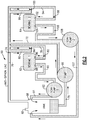
Figure 2 is a lubrication system schematic with fluid pumps operational in an operating state. -
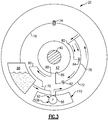
Figure 3 is a schematic end view of portions of the lubrication system shown inFigure 2 in relation to the gas turbine engine ofFigure 1 . -
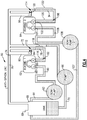
Figure 4 is the lubrication system schematic shown inFigure 2 , but with the fluid pumps off and in a non-operating state. - The embodiments, examples and alternatives of the preceding paragraphs, the claims, or the following description and drawings, including any of their various aspects or respective individual features, may be taken independently or in any combination. Features described in connection with one embodiment are applicable to all embodiments, unless such features are incompatible.
-
Figure 1 schematically illustrates agas turbine engine 20. Thegas turbine engine 20 is disclosed herein as a two-spool turbofan that generally incorporates afan section 22, acompressor section 24, acombustor section 26 and aturbine section 28. Alternative engines might include an augmenter section (not shown) among other systems or features. Thefan section 22 drives air along a bypass flow path B in a bypass duct defined within a nacelle 15, while thecompressor section 24 drives air along a core flow path C for compression and communication into thecombustor section 26 then expansion through theturbine section 28. Although depicted as a two-spool turbofan gas turbine engine in the disclosed non-limiting embodiment, it should be understood that the concepts described herein are not limited to use with two-spool turbofans as the teachings may be applied to other types of turbine engines including three-spool architectures. - The
exemplary engine 20 generally includes alow speed spool 30 and ahigh speed spool 32 mounted for rotation about an engine central longitudinal axis A relative to an enginestatic structure 36 viaseveral bearing systems 38. It should be understood that various bearingsystems 38 at various locations may alternatively or additionally be provided, and the location of bearingsystems 38 may be varied as appropriate to the application. - The
low speed spool 30 generally includes aninner shaft 40 that interconnects afan 42, a first (or low)pressure compressor 44 and a first (or low)pressure turbine 46. Theinner shaft 40 is connected to thefan 42 through a speed change mechanism, which in exemplarygas turbine engine 20 is illustrated as a gearedarchitecture 48 to drive thefan 42 at a lower speed than thelow speed spool 30. Thehigh speed spool 32 includes anouter shaft 50 that interconnects a second (or high)pressure compressor 52 and a second (or high)pressure turbine 54. Acombustor 56 is arranged inexemplary gas turbine 20 between thehigh pressure compressor 52 and thehigh pressure turbine 54. Amid-turbine frame 57 of the enginestatic structure 36 is arranged generally between thehigh pressure turbine 54 and thelow pressure turbine 46. Themid-turbine frame 57 furthersupports bearing systems 38 in theturbine section 28. Theinner shaft 40 and theouter shaft 50 are concentric and rotate via bearingsystems 38 about the engine central longitudinal axis A which is collinear with their longitudinal axes. - The core airflow is compressed by the
low pressure compressor 44 then thehigh pressure compressor 52, mixed and burned with fuel in thecombustor 56, then expanded over thehigh pressure turbine 54 andlow pressure turbine 46. Themid-turbine frame 57 includesairfoils 59 which are in the core airflow path C. Theturbines low speed spool 30 andhigh speed spool 32 in response to the expansion. It will be appreciated that each of the positions of thefan section 22,compressor section 24,combustor section 26,turbine section 28, and fandrive gear system 48 may be varied. For example,gear system 48 may be located aft ofcombustor section 26 or even aft ofturbine section 28, andfan section 22 may be positioned forward or aft of the location ofgear system 48. - The
engine 20 in one example is a high-bypass geared aircraft engine. In a further example, theengine 20 bypass ratio is greater than about six, with an example embodiment being greater than about ten, the gearedarchitecture 48 is an epicyclic gear train, such as a planetary gear system or other gear system, with a gear reduction ratio of greater than about 2.3 and thelow pressure turbine 46 has a pressure ratio that is greater than about five. In one disclosed embodiment, theengine 20 bypass ratio is greater than about ten, the fan diameter is significantly larger than that of thelow pressure compressor 44, and thelow pressure turbine 46 has a pressure ratio that is greater than about five.Low pressure turbine 46 pressure ratio is pressure measured prior to inlet oflow pressure turbine 46 as related to the pressure at the outlet of thelow pressure turbine 46 prior to an exhaust nozzle. The gearedarchitecture 48 may be an epicycle gear train, such as a planetary gear system or other gear system, with a gear reduction ratio of greater than about 2.3:1. It should be understood, however, that the above parameters are only exemplary of one embodiment of a geared architecture engine and that the present invention is applicable to other gas turbine engines including direct drive turbofans. - A significant amount of thrust is provided by the bypass flow B due to the high bypass ratio. The
fan section 22 of theengine 20 is designed for a particular flight condition -- typically cruise at about 0.8 Mach and about 35,000 feet (10,668 meters). The flight condition of 0.8 Mach and 35,000 ft (10,668 meters), with the engine at its best fuel consumption - also known as "bucket cruise Thrust Specific Fuel Consumption ('TSFC')" - is the industry standard parameter of lbm of fuel being burned divided by lbf of thrust the engine produces at that minimum point. "Low fan pressure ratio" is the pressure ratio across the fan blade alone, without a Fan Exit Guide Vane ("FEGV") system. The low fan pressure ratio as disclosed herein according to one non-limiting embodiment is less than about 1.45. "Low corrected fan tip speed" is the actual fan tip speed in ft/sec divided by an industry standard temperature correction of [(Tram °R) / (518.7 °R)]0.5 (where °R = K x 9/5). The "Low corrected fan tip speed" as disclosed herein according to one non-limiting embodiment is less than about 1150 ft/second (350.5 meters/second). - Referring to
Figure 2 , alubrication system 60 is schematically shown with the relative position of its components positioned gravitationally with respect to one another as if in a normal engine operating condition in which an aircraft travels along a horizontal flight path with respect to the Earth's horizon. In the example, thelubrication system 60 includes first and second bearing compartments 62, 64. In one example, the first bearing compartment housing a bearing that corresponds to the #4 bearing, which supports an aft portion of thehigh spool 50. Thesecond bearing compartment 64 houses the #5 and #6 bearings that support an aft portion oflow spool 40 with respect to a turbine exhaust case. - Referring to
Figure 3 , anaccessory drive gearbox 110 is rotationally driven by one of the spools, for example, thehigh spool 50, via a tower shaft (not shown). One or more pumps (e.g.,main pump 66 and first and second scavenge pumps 92, 108) is mounted to theaccessory drive gearbox 110 where the pumps are rotationally driven during engine operation in an operating state. In response to an engine shutdown procedure, rotation of the pumps cease which stops circulation of lubricant to the first andsecond bearing compartment - Returning to
Figure 2 , themain pump 66 is fluidly connected to areservoir 68 by afeed line 70. Themain pump 66, when in the operating state, draws lubricant from thereservoir 68 through thefeed line 70 and supplies the lubricant to the first andsecond bearing compartment supply line 72. Ananti-siphon line 76 fluidly connects thesupply line 72 at aflow restriction 74 to a top of thereservoir 68. Thereservoir 68 may also include avent 69. Theflow restriction 74 may permit a small amount of fluid to leak from thesupply line 72 into theanti-siphon line 76 during the operating state. - Each of the first and second bearing compartments 62, 64 includes a fluid circuit. Beginning with the
first bearing compartment 62, thesupply line 72 splits into afirst supply conduit 78 andfirst reservoir conduit 80 that are fluidly parallel to one another for a length. Thefirst reservoir conduit 80 fluidly rejoins thefirst supply conduit 78 at a junction. Thefirst supply conduit 78, which has a U-shape downstream from the junction is fluidly connected to thefirst bearing compartment 62 at afirst inlet 86. - A
first flow meter 82 is provided in the U-shape portion of thefirst supply conduit 78 downstream from the junction. Thefirst flow meter 82 balances the fluid flow rate delivered to thefirst bearing compartment 62 with respect to thesecond bearing compartment 64. Afirst flow restrictor 84 is arranged in thefirst reservoir conduit 80 upstream from the junction. - The
first bearing compartment 62 includes afirst outlet 88. Thefirst scavenge pump 92 is fluidly connected to thefirst outlet 88 by afirst scavenge line 90 and to thereservoir 68 byfirst return line 91. - The
first supply conduit 78 includes a U-shaped portion gravitationally below the junction and thebearing compartment 62 in the normal engine operating condition. The U-shaped portion has thefirst flow meter 82 arranged downstream from the junction. Thefirst reservoir conduit 80 is gravitationally above the junction in the normal engine operating condition, and the supply split into the first supply andfirst reservoir conduits main pump 66 is gravitationally below the U-shaped portion and thereservoir 68 in the normal engine operating condition. These relative gravitational positions better retain lubricant in the fluid passages to avoid coking. - The
second bearing compartment 64 and its associated fluid circuit is configured similarly to thefirst bearing compartment 62 and its associated fluid circuit. Thesupply line 72 splits into asecond supply conduit 94 andsecond reservoir conduit 96 that are fluidly parallel to one another for a length. Thesecond reservoir conduit 96 fluidly rejoins thefirst supply conduit 94 at a junction. Thesecond supply conduit 94, which has a U-shape downstream from the junction is fluidly connected to thesecond bearing compartment 64 atsecond inlet 102. - A
second flow meter 98 is provided in the U-shape portion of thesecond supply conduit 94 downstream from the junction. Thesecond flow meter 98 balances the fluid flow rate delivered to thesecond bearing compartment 64 with respect to thefirst bearing compartment 62. Asecond flow restrictor 100 is arranged in thesecond reservoir conduit 96 upstream from the junction. - The
second bearing compartment 64 includes asecond outlet 104. Thesecond scavenge pump 108 is fluidly connected to thesecond outlet 104 by asecond scavenge line 106 and to thereservoir 68 bysecond return line 107, which is separate and discrete from thefirst return line 91 in the example. The relative gravitational positions of the components associated with thesecond bearing compartment 64 are similar to those associated with thefirst bearing compartment 62. - As shown in
Figure 2 , during the operating state of themain pump 66, the supply side and scavenge side fluid lines and conduits are full of lubricant. Following an engine shutdown procedure, themain pump 66 is off and in a non-operating state.Figure 4 illustrates the location of lubricant within thelubrication 60 following engine shutdown. Theinlets outlets second supply conduit first conduit portions second conduit portions second reservoir conduits second supply conduits second flow restrictors - The disclosed method of operating the
lubrication system 60 includes pumping a lubricant from a supply conduit to a bearing compartment. A pressure differential is created in the bearing compartment by ceasing the pumping of the lubricant to the bearing compartment. The supply conduit is evacuated in response to the pressure differential creating step. The supply conduit is refilled with the lubricant from a reservoir conduit fluidly joined to the supply conduit at a junction by gravitationally draining the reservoir conduit. - The disclosed lubrication system is configured such that lubricant does not drain out of the supply conduit back toward the scavenge pumps by more slowly refilling the supply conduits with the reservoir conduits than lubricant is able to be evacuate from the supply conduit. In this manner, the differential pressure is broken using the parallel reservoir conduit that has a small orifice provided by the flow restrictor at its gravitational low point. The differential pressure is broken by air flow through main supply conduit into the bearing compartment. By placing the reservoir in parallel with a restrictor between it and the main supply conduit, the air can flow from the anti-siphon feature through the main conduit and into the bearing compartment without affecting the volume of oil in the reservoir. The reservoir can then drain into the main supply conduit, replenishing the oil volume that was forced into the bearing compartment as the anti-siphon air acted to break the pressure differential.
- It should also be understood that although a particular component arrangement is disclosed in the illustrated embodiment, other arrangements will benefit herefrom. Although particular step sequences are shown, described, and claimed, it should be understood that steps may be performed in any order, separated or combined unless otherwise indicated and will still benefit from the present invention.
- Although the different examples have specific components shown in the illustrations, embodiments of this invention are not limited to those particular combinations. It is possible to use some of the components or features from one of the examples in combination with features or components from another one of the examples.
- Although an example embodiment has been disclosed, a worker of ordinary skill in this art would recognize that certain modifications would come within the scope of the claims. For that reason, the following claims should be studied to determine their true scope and content.
Claims (15)
- A gas turbine engine (20) comprising:a bearing compartment (62) having an inlet (86);a supply line (72) that splits into a supply conduit (78) and a reservoir conduit (80) that are fluidly parallel to one another for a length, the reservoir conduit (80) fluidly rejoining the supply conduit (78) at a junction, the supply conduit (78) fluidly connected to the inlet (86), and the reservoir conduit (80) including a flow restrictor (84) upstream from the junction; anda main pump (66) fluidly connected to the supply line (72) and configured to supply a lubricant to the bearing compartment (62) through the supply line (72), supply conduit (78) and reservoir conduit (80) in an operating state, the main pump (66) having a non-operating state in which the reservoir conduit (80) is configured to slowly refill the supply conduit (78) through the flow restrictor (84).
- The gas turbine engine (20) according to claim 1, further comprising a reservoir (68) and a scavenger pump (92), wherein the bearing compartment (62) includes an outlet (88), and the scavenger pump (92) is fluidly connected to the reservoir (68) and the outlet (88) respectively by a return line (91) and a scavenge line (90).
- The gas turbine engine (20) according to claim 2, wherein the inlet (86) and the outlet (88) are respectively provided on high and low pressure sides, and a pressure differential between the high and low pressure sides is configured to evacuate the supply conduit (78) with the main pump (66) in the non-operating state.
- The gas turbine engine (20) according to claim 1, 2 or 3, further comprising an anti-siphon line (76) fluidly interconnected to the supply line (72) and the reservoir (68), and a flow restriction (74) separating the anti-siphon line (76) from the supply line (72).
- The gas turbine engine (20) according to any preceding claim, wherein the supply conduit (78) includes a U-shaped portion gravitationally below the junction and/or the bearing compartment (62) in a normal engine operating condition.
- The gas turbine engine (20) according to claim 5, wherein the U-shaped portion includes:a flow meter (82) downstream from the junction; and/orlegs (116, 118) that are filled by the reservoir conduit (80) with the main pump (66) in the non-operating condition.
- The gas turbine engine (20) according to claim 5 or 6, wherein the main pump (66) is gravitationally below the U-shaped portion and the reservoir (68) in the normal engine operating condition.
- The gas turbine engine (20) according to any preceding claim, wherein the reservoir conduit (80) and/or the supply line (72) split into the supply and reservoir conduits (78, 80) is gravitationally above the junction in the normal engine operating condition.
- The gas turbine engine (20) according to any preceding claim, wherein the bearing compartment (62) is a first bearing compartment, the inlet (86) is a first inlet, the supply and reservoir conduits (78, 80) are first supply and reservoir conduits, the length is a first length, the junction is a first junction, the flow restrictor (82) is a first flow restrictor, and the engine further comprises a second bearing compartment (64) having a second inlet (102), wherein:the supply line (72) splits into a second supply conduit (94) and a second reservoir conduit (96) that are fluidly parallel to one another for a second length, the second reservoir conduit (96) fluidly rejoining the second supply conduit (94) at a second junction, the second supply conduit (94) fluidly connected to the second inlet (102), and the second reservoir conduit (96) including a second flow restrictor (100) upstream from the second junction; andthe main pump (66) is configured to supply lubricant to the second bearing compartment (64) through the supply line (72) and second supply and reservoir conduits (94, 96) in an operating state, and the second reservoir conduit (96) is configured to slowly refill the second supply conduit (94) through the second flow restrictor (100) with the main pump (66) in the non-operating state.
- A method of operating a lubrication system (60) for a gas turbine engine (20), the method comprising:pumping a lubricant from a supply conduit (78) to a bearing compartment (62);creating a pressure differential in the bearing compartment (62);evacuating the supply conduit (78) in response to the pressure differential creating step; andrefilling the supply conduit (78) with the lubricant from a reservoir conduit (80) fluidly joined to the supply conduit (78) at a junction by gravitationally draining the reservoir conduit (80).
- The method according to claim 10, wherein the lubrication system (60) includes a main pump (66) fluidly connected to the bearing compartment (62) by a supply line (72), and the pumping step includes providing lubricant to the bearing compartment (62) through the supply line (72) that splits into the supply conduit (78) and the reservoir conduit (80) that are fluidly parallel to one another for a length before rejoining with one another at the junction.
- The method according to claim 10 or 11, wherein the reservoir conduit (80) includes a flow restrictor (84) upstream from the junction, and the refilling step includes filling the supply conduit (78) through the flow restrictor (84) more slowly than the lubricant is evacuated from the supply conduit (78).
- The method according to claim 10, 11 or 12, wherein the supply conduit (78) includes a U-shaped portion gravitationally below the junction and the bearing compartment (62) in a normal engine operating condition, and the U-shaped portion includes a flow meter (82) downstream from the junction, optionally wherein the U-shaped portion includes legs (116, 118), and the refilling step includes filling the legs (116, 118).
- The method according to any of claims 10 to 13, comprising a step of scavenging the lubricant from the bearing compartment (62) while simultaneously performing the pumping step, the scavenging step including returning the lubricant to a reservoir (68).
- The method according to any of claims 10 to 14, wherein the pumping step includes pumping the lubricant to at least two bearing compartments (62, 64).
Applications Claiming Priority (1)
| Application Number | Priority Date | Filing Date | Title |
|---|---|---|---|
| US15/495,639 US10711644B2 (en) | 2017-04-24 | 2017-04-24 | Method and system to ensure full oil tubes after gas turbine engine shutdown |
Publications (3)
| Publication Number | Publication Date |
|---|---|
| EP3396120A2 true EP3396120A2 (en) | 2018-10-31 |
| EP3396120A3 EP3396120A3 (en) | 2018-12-19 |
| EP3396120B1 EP3396120B1 (en) | 2020-07-01 |
Family
ID=62062954
Family Applications (1)
| Application Number | Title | Priority Date | Filing Date |
|---|---|---|---|
| EP18169099.1A Active EP3396120B1 (en) | 2017-04-24 | 2018-04-24 | Method and system to ensure full oil tubes after gas turbine engine shutdown |
Country Status (2)
| Country | Link |
|---|---|
| US (2) | US10711644B2 (en) |
| EP (1) | EP3396120B1 (en) |
Cited By (1)
| Publication number | Priority date | Publication date | Assignee | Title |
|---|---|---|---|---|
| EP4130442A1 (en) * | 2021-07-06 | 2023-02-08 | Pratt & Whitney Canada Corp. | Lubrication system for a turbine engine |
Families Citing this family (20)
| Publication number | Priority date | Publication date | Assignee | Title |
|---|---|---|---|---|
| US10458278B2 (en) * | 2016-11-04 | 2019-10-29 | United Technologies Corporation | Apparatus and method for providing fluid to a bearing damper |
| US10494998B2 (en) * | 2017-01-30 | 2019-12-03 | United Technologies Corporation | Lubrication of epicyclic gear system for gas turbine engine |
| US10465828B2 (en) | 2017-02-06 | 2019-11-05 | United Technologies Corporation | Tube fitting |
| US10385710B2 (en) | 2017-02-06 | 2019-08-20 | United Technologies Corporation | Multiwall tube and fitting for bearing oil supply |
| US10830139B2 (en) | 2017-02-06 | 2020-11-10 | Raytheon Technologies Corporation | Fitting for multiwall tube |
| US10393303B2 (en) | 2017-02-06 | 2019-08-27 | United Technologies Corporation | Threaded fitting for tube |
| US10711642B2 (en) * | 2017-03-31 | 2020-07-14 | Raytheon Technologies Corporation | Gas turbine engine lubrication system and apparatus with boost pump system |
| DE102017215466A1 (en) * | 2017-09-04 | 2019-03-07 | Deere & Company | Arrangement for lubricating a bearing of a crop conveying and / or processing arrangement of a harvesting machine |
| CN111083484B (en) | 2018-10-22 | 2024-06-28 | 北京字节跳动网络技术有限公司 | Sub-block based prediction |
| CN111083489B (en) | 2018-10-22 | 2024-05-14 | 北京字节跳动网络技术有限公司 | Multiple iteration motion vector refinement |
| CN111436227B (en) | 2018-11-12 | 2024-03-29 | 北京字节跳动网络技术有限公司 | Use of combined inter-intra prediction in video processing |
| WO2020103877A1 (en) | 2018-11-20 | 2020-05-28 | Beijing Bytedance Network Technology Co., Ltd. | Coding and decoding of video coding modes |
| WO2020103852A1 (en) | 2018-11-20 | 2020-05-28 | Beijing Bytedance Network Technology Co., Ltd. | Difference calculation based on patial position |
| GB201900906D0 (en) * | 2019-01-23 | 2019-03-13 | Rolls Royce Plc | Oil scavenge system |
| KR102635518B1 (en) | 2019-03-06 | 2024-02-07 | 베이징 바이트댄스 네트워크 테크놀로지 컴퍼니, 리미티드 | Use of converted single prediction candidates |
| GB202005916D0 (en) | 2020-04-23 | 2020-06-10 | Rolls Royce Plc | Gas turbine engine lubrication system |
| CN112627985A (en) * | 2020-12-02 | 2021-04-09 | 北京动力机械研究所 | Pressure balance mechanism of gas turbine engine lubricating system |
| US11525399B1 (en) * | 2021-06-17 | 2022-12-13 | Pratt & Whitney Canada Corp. | Oil system with flow restrictor |
| FR3160729A1 (en) * | 2024-03-28 | 2025-10-03 | Safran Helicopter Engines | COLLECTOR OF AT LEAST ONE LIQUID FOR AN AIRCRAFT TURBOMACHINE |
| US12595749B1 (en) | 2024-11-21 | 2026-04-07 | Pratt & Whitney Canada Corp. | Oil system for aircraft engine having features to prevent drainage of component |
Family Cites Families (17)
| Publication number | Priority date | Publication date | Assignee | Title |
|---|---|---|---|---|
| US3147821A (en) * | 1962-11-20 | 1964-09-08 | Gen Electric | Emergency bearing oil supply for a decelerating shaft |
| GB2133481A (en) | 1983-01-05 | 1984-07-25 | Gen Motors Overseas | Turbocharged diesel engine |
| US6463819B1 (en) * | 2000-10-24 | 2002-10-15 | Pratt & Whitney Canada Corp. | Uninterruptible oil supply system |
| US6793042B2 (en) * | 2002-07-24 | 2004-09-21 | Pratt & Whitney Canada Corp. | Dual independent tank and oil system with single port filling |
| US7174997B2 (en) | 2003-07-03 | 2007-02-13 | United Technologies Corporation | Failure tolerant passive lubrication system |
| US7387189B2 (en) * | 2003-08-14 | 2008-06-17 | United Technologies Corp. | Emergency lubrication system |
| GB0422241D0 (en) | 2004-10-07 | 2004-11-10 | Rolls Royce Plc | Aeroengine oil tank fire protection system |
| GB0511788D0 (en) * | 2005-06-10 | 2005-07-20 | Rolls Royce Plc | Bearing arrangement |
| US8651240B1 (en) * | 2012-12-24 | 2014-02-18 | United Technologies Corporation | Pressurized reserve lubrication system for a gas turbine engine |
| EP3044438B1 (en) * | 2013-09-13 | 2018-07-04 | United Technologies Corporation | Fan drive gear system auxiliary pump monitoring system |
| EP3090147B1 (en) * | 2013-12-05 | 2021-04-28 | Raytheon Technologies Corporation | Auxiliary pump monitoring system and method thereof |
| US10066507B1 (en) * | 2015-02-10 | 2018-09-04 | United Technologies Corporation | Turbine engine lubrication system with wash flow filter |
| US10267233B2 (en) * | 2015-10-23 | 2019-04-23 | United Technologies Corporation | Method and apparatus for monitoring lubrication pump operation during windmilling |
| US10287916B2 (en) | 2016-06-01 | 2019-05-14 | United Technologies Corporation | Internal tube oil coke prevention geometry |
| US10544717B2 (en) * | 2016-09-07 | 2020-01-28 | Pratt & Whitney Canada Corp. | Shared oil system arrangement for an engine component and a generator |
| US10513949B2 (en) * | 2016-09-09 | 2019-12-24 | United Technologies Corporation | Auxiliary journal oil supply system |
| US10711642B2 (en) * | 2017-03-31 | 2020-07-14 | Raytheon Technologies Corporation | Gas turbine engine lubrication system and apparatus with boost pump system |
-
2017
- 2017-04-24 US US15/495,639 patent/US10711644B2/en active Active
-
2018
- 2018-04-24 EP EP18169099.1A patent/EP3396120B1/en active Active
-
2020
- 2020-05-18 US US16/876,383 patent/US10961868B2/en active Active
Non-Patent Citations (1)
| Title |
|---|
| None |
Cited By (1)
| Publication number | Priority date | Publication date | Assignee | Title |
|---|---|---|---|---|
| EP4130442A1 (en) * | 2021-07-06 | 2023-02-08 | Pratt & Whitney Canada Corp. | Lubrication system for a turbine engine |
Also Published As
| Publication number | Publication date |
|---|---|
| US10711644B2 (en) | 2020-07-14 |
| US10961868B2 (en) | 2021-03-30 |
| US20200277878A1 (en) | 2020-09-03 |
| EP3396120A3 (en) | 2018-12-19 |
| EP3396120B1 (en) | 2020-07-01 |
| US20180306062A1 (en) | 2018-10-25 |
Similar Documents
| Publication | Publication Date | Title |
|---|---|---|
| US10961868B2 (en) | Method and system to ensure full oil tubes after gas turbine engine shutdown | |
| US10151240B2 (en) | Mid-turbine frame buffer system | |
| EP3808947B1 (en) | Geared turbomachine fluid delivery system | |
| EP3102807B1 (en) | Auxiliary oil system for geared gas turbine engine | |
| US20130319006A1 (en) | Direct feed auxiliary oil system for geared turbofan engine | |
| EP3112627B1 (en) | Negative-g oil system for geared turbofan engines | |
| WO2015147949A2 (en) | Auxiliary oil system for geared gas turbine engine | |
| US9964039B2 (en) | Auxiliary lubricant supply pump stage integral with main lubricant pump stage | |
| EP2971663A1 (en) | Oil transfer passage arrangement for a shaft of a gas turbine engine | |
| US10711645B2 (en) | Multiple reservoir lubrication system | |
| EP2949883A1 (en) | Gas turbine engine lubrication system | |
| WO2015094539A1 (en) | Transfer bearing for geared turbofan | |
| EP2946082B1 (en) | Oil pump transfer plate | |
| EP4074952B1 (en) | Geared gas turbine with oil scavenge ejector pump assist |
Legal Events
| Date | Code | Title | Description |
|---|---|---|---|
| PUAI | Public reference made under article 153(3) epc to a published international application that has entered the european phase |
Free format text: ORIGINAL CODE: 0009012 |
|
| STAA | Information on the status of an ep patent application or granted ep patent |
Free format text: STATUS: THE APPLICATION HAS BEEN PUBLISHED |
|
| AK | Designated contracting states |
Kind code of ref document: A2 Designated state(s): AL AT BE BG CH CY CZ DE DK EE ES FI FR GB GR HR HU IE IS IT LI LT LU LV MC MK MT NL NO PL PT RO RS SE SI SK SM TR |
|
| AX | Request for extension of the european patent |
Extension state: BA ME |
|
| PUAL | Search report despatched |
Free format text: ORIGINAL CODE: 0009013 |
|
| AK | Designated contracting states |
Kind code of ref document: A3 Designated state(s): AL AT BE BG CH CY CZ DE DK EE ES FI FR GB GR HR HU IE IS IT LI LT LU LV MC MK MT NL NO PL PT RO RS SE SI SK SM TR |
|
| AX | Request for extension of the european patent |
Extension state: BA ME |
|
| RIC1 | Information provided on ipc code assigned before grant |
Ipc: F01D 25/18 20060101AFI20181115BHEP Ipc: F16N 29/02 20060101ALI20181115BHEP Ipc: F01D 21/14 20060101ALI20181115BHEP Ipc: F01D 25/12 20060101ALI20181115BHEP Ipc: F16N 7/02 20060101ALI20181115BHEP Ipc: F16N 7/40 20060101ALI20181115BHEP |
|
| STAA | Information on the status of an ep patent application or granted ep patent |
Free format text: STATUS: REQUEST FOR EXAMINATION WAS MADE |
|
| 17P | Request for examination filed |
Effective date: 20190619 |
|
| RBV | Designated contracting states (corrected) |
Designated state(s): AL AT BE BG CH CY CZ DE DK EE ES FI FR GB GR HR HU IE IS IT LI LT LU LV MC MK MT NL NO PL PT RO RS SE SI SK SM TR |
|
| GRAP | Despatch of communication of intention to grant a patent |
Free format text: ORIGINAL CODE: EPIDOSNIGR1 |
|
| STAA | Information on the status of an ep patent application or granted ep patent |
Free format text: STATUS: GRANT OF PATENT IS INTENDED |
|
| INTG | Intention to grant announced |
Effective date: 20200117 |
|
| GRAS | Grant fee paid |
Free format text: ORIGINAL CODE: EPIDOSNIGR3 |
|
| GRAA | (expected) grant |
Free format text: ORIGINAL CODE: 0009210 |
|
| STAA | Information on the status of an ep patent application or granted ep patent |
Free format text: STATUS: THE PATENT HAS BEEN GRANTED |
|
| AK | Designated contracting states |
Kind code of ref document: B1 Designated state(s): AL AT BE BG CH CY CZ DE DK EE ES FI FR GB GR HR HU IE IS IT LI LT LU LV MC MK MT NL NO PL PT RO RS SE SI SK SM TR |
|
| REG | Reference to a national code |
Ref country code: CH Ref legal event code: EP Ref country code: AT Ref legal event code: REF Ref document number: 1286375 Country of ref document: AT Kind code of ref document: T Effective date: 20200715 |
|
| REG | Reference to a national code |
Ref country code: IE Ref legal event code: FG4D |
|
| REG | Reference to a national code |
Ref country code: DE Ref legal event code: R096 Ref document number: 602018005633 Country of ref document: DE |
|
| REG | Reference to a national code |
Ref country code: LT Ref legal event code: MG4D |
|
| PG25 | Lapsed in a contracting state [announced via postgrant information from national office to epo] |
Ref country code: BG Free format text: LAPSE BECAUSE OF FAILURE TO SUBMIT A TRANSLATION OF THE DESCRIPTION OR TO PAY THE FEE WITHIN THE PRESCRIBED TIME-LIMIT Effective date: 20201001 |
|
| REG | Reference to a national code |
Ref country code: NL Ref legal event code: MP Effective date: 20200701 |
|
| REG | Reference to a national code |
Ref country code: AT Ref legal event code: MK05 Ref document number: 1286375 Country of ref document: AT Kind code of ref document: T Effective date: 20200701 |
|
| PG25 | Lapsed in a contracting state [announced via postgrant information from national office to epo] |
Ref country code: SE Free format text: LAPSE BECAUSE OF FAILURE TO SUBMIT A TRANSLATION OF THE DESCRIPTION OR TO PAY THE FEE WITHIN THE PRESCRIBED TIME-LIMIT Effective date: 20200701 Ref country code: AT Free format text: LAPSE BECAUSE OF FAILURE TO SUBMIT A TRANSLATION OF THE DESCRIPTION OR TO PAY THE FEE WITHIN THE PRESCRIBED TIME-LIMIT Effective date: 20200701 Ref country code: NO Free format text: LAPSE BECAUSE OF FAILURE TO SUBMIT A TRANSLATION OF THE DESCRIPTION OR TO PAY THE FEE WITHIN THE PRESCRIBED TIME-LIMIT Effective date: 20201001 Ref country code: FI Free format text: LAPSE BECAUSE OF FAILURE TO SUBMIT A TRANSLATION OF THE DESCRIPTION OR TO PAY THE FEE WITHIN THE PRESCRIBED TIME-LIMIT Effective date: 20200701 Ref country code: GR Free format text: LAPSE BECAUSE OF FAILURE TO SUBMIT A TRANSLATION OF THE DESCRIPTION OR TO PAY THE FEE WITHIN THE PRESCRIBED TIME-LIMIT Effective date: 20201002 Ref country code: HR Free format text: LAPSE BECAUSE OF FAILURE TO SUBMIT A TRANSLATION OF THE DESCRIPTION OR TO PAY THE FEE WITHIN THE PRESCRIBED TIME-LIMIT Effective date: 20200701 Ref country code: CZ Free format text: LAPSE BECAUSE OF FAILURE TO SUBMIT A TRANSLATION OF THE DESCRIPTION OR TO PAY THE FEE WITHIN THE PRESCRIBED TIME-LIMIT Effective date: 20200701 Ref country code: PT Free format text: LAPSE BECAUSE OF FAILURE TO SUBMIT A TRANSLATION OF THE DESCRIPTION OR TO PAY THE FEE WITHIN THE PRESCRIBED TIME-LIMIT Effective date: 20201102 Ref country code: ES Free format text: LAPSE BECAUSE OF FAILURE TO SUBMIT A TRANSLATION OF THE DESCRIPTION OR TO PAY THE FEE WITHIN THE PRESCRIBED TIME-LIMIT Effective date: 20200701 Ref country code: LT Free format text: LAPSE BECAUSE OF FAILURE TO SUBMIT A TRANSLATION OF THE DESCRIPTION OR TO PAY THE FEE WITHIN THE PRESCRIBED TIME-LIMIT Effective date: 20200701 |
|
| PG25 | Lapsed in a contracting state [announced via postgrant information from national office to epo] |
Ref country code: PL Free format text: LAPSE BECAUSE OF FAILURE TO SUBMIT A TRANSLATION OF THE DESCRIPTION OR TO PAY THE FEE WITHIN THE PRESCRIBED TIME-LIMIT Effective date: 20200701 Ref country code: RS Free format text: LAPSE BECAUSE OF FAILURE TO SUBMIT A TRANSLATION OF THE DESCRIPTION OR TO PAY THE FEE WITHIN THE PRESCRIBED TIME-LIMIT Effective date: 20200701 Ref country code: LV Free format text: LAPSE BECAUSE OF FAILURE TO SUBMIT A TRANSLATION OF THE DESCRIPTION OR TO PAY THE FEE WITHIN THE PRESCRIBED TIME-LIMIT Effective date: 20200701 Ref country code: IS Free format text: LAPSE BECAUSE OF FAILURE TO SUBMIT A TRANSLATION OF THE DESCRIPTION OR TO PAY THE FEE WITHIN THE PRESCRIBED TIME-LIMIT Effective date: 20201101 |
|
| RAP2 | Party data changed (patent owner data changed or rights of a patent transferred) |
Owner name: RAYTHEON TECHNOLOGIES CORPORATION |
|
| PG25 | Lapsed in a contracting state [announced via postgrant information from national office to epo] |
Ref country code: NL Free format text: LAPSE BECAUSE OF FAILURE TO SUBMIT A TRANSLATION OF THE DESCRIPTION OR TO PAY THE FEE WITHIN THE PRESCRIBED TIME-LIMIT Effective date: 20200701 |
|
| REG | Reference to a national code |
Ref country code: DE Ref legal event code: R097 Ref document number: 602018005633 Country of ref document: DE |
|
| PG25 | Lapsed in a contracting state [announced via postgrant information from national office to epo] |
Ref country code: IT Free format text: LAPSE BECAUSE OF FAILURE TO SUBMIT A TRANSLATION OF THE DESCRIPTION OR TO PAY THE FEE WITHIN THE PRESCRIBED TIME-LIMIT Effective date: 20200701 Ref country code: SM Free format text: LAPSE BECAUSE OF FAILURE TO SUBMIT A TRANSLATION OF THE DESCRIPTION OR TO PAY THE FEE WITHIN THE PRESCRIBED TIME-LIMIT Effective date: 20200701 Ref country code: EE Free format text: LAPSE BECAUSE OF FAILURE TO SUBMIT A TRANSLATION OF THE DESCRIPTION OR TO PAY THE FEE WITHIN THE PRESCRIBED TIME-LIMIT Effective date: 20200701 Ref country code: DK Free format text: LAPSE BECAUSE OF FAILURE TO SUBMIT A TRANSLATION OF THE DESCRIPTION OR TO PAY THE FEE WITHIN THE PRESCRIBED TIME-LIMIT Effective date: 20200701 Ref country code: RO Free format text: LAPSE BECAUSE OF FAILURE TO SUBMIT A TRANSLATION OF THE DESCRIPTION OR TO PAY THE FEE WITHIN THE PRESCRIBED TIME-LIMIT Effective date: 20200701 |
|
| PLBE | No opposition filed within time limit |
Free format text: ORIGINAL CODE: 0009261 |
|
| STAA | Information on the status of an ep patent application or granted ep patent |
Free format text: STATUS: NO OPPOSITION FILED WITHIN TIME LIMIT |
|
| PG25 | Lapsed in a contracting state [announced via postgrant information from national office to epo] |
Ref country code: AL Free format text: LAPSE BECAUSE OF FAILURE TO SUBMIT A TRANSLATION OF THE DESCRIPTION OR TO PAY THE FEE WITHIN THE PRESCRIBED TIME-LIMIT Effective date: 20200701 |
|
| 26N | No opposition filed |
Effective date: 20210406 |
|
| PG25 | Lapsed in a contracting state [announced via postgrant information from national office to epo] |
Ref country code: SK Free format text: LAPSE BECAUSE OF FAILURE TO SUBMIT A TRANSLATION OF THE DESCRIPTION OR TO PAY THE FEE WITHIN THE PRESCRIBED TIME-LIMIT Effective date: 20200701 |
|
| PG25 | Lapsed in a contracting state [announced via postgrant information from national office to epo] |
Ref country code: SI Free format text: LAPSE BECAUSE OF FAILURE TO SUBMIT A TRANSLATION OF THE DESCRIPTION OR TO PAY THE FEE WITHIN THE PRESCRIBED TIME-LIMIT Effective date: 20200701 |
|
| PG25 | Lapsed in a contracting state [announced via postgrant information from national office to epo] |
Ref country code: MC Free format text: LAPSE BECAUSE OF FAILURE TO SUBMIT A TRANSLATION OF THE DESCRIPTION OR TO PAY THE FEE WITHIN THE PRESCRIBED TIME-LIMIT Effective date: 20200701 |
|
| PG25 | Lapsed in a contracting state [announced via postgrant information from national office to epo] |
Ref country code: LU Free format text: LAPSE BECAUSE OF NON-PAYMENT OF DUE FEES Effective date: 20210424 |
|
| REG | Reference to a national code |
Ref country code: BE Ref legal event code: MM Effective date: 20210430 |
|
| PG25 | Lapsed in a contracting state [announced via postgrant information from national office to epo] |
Ref country code: CH Free format text: LAPSE BECAUSE OF NON-PAYMENT OF DUE FEES Effective date: 20210430 Ref country code: LI Free format text: LAPSE BECAUSE OF NON-PAYMENT OF DUE FEES Effective date: 20210430 |
|
| PG25 | Lapsed in a contracting state [announced via postgrant information from national office to epo] |
Ref country code: IE Free format text: LAPSE BECAUSE OF NON-PAYMENT OF DUE FEES Effective date: 20210424 |
|
| PG25 | Lapsed in a contracting state [announced via postgrant information from national office to epo] |
Ref country code: IS Free format text: LAPSE BECAUSE OF FAILURE TO SUBMIT A TRANSLATION OF THE DESCRIPTION OR TO PAY THE FEE WITHIN THE PRESCRIBED TIME-LIMIT Effective date: 20201101 |
|
| PG25 | Lapsed in a contracting state [announced via postgrant information from national office to epo] |
Ref country code: BE Free format text: LAPSE BECAUSE OF NON-PAYMENT OF DUE FEES Effective date: 20210430 |
|
| P01 | Opt-out of the competence of the unified patent court (upc) registered |
Effective date: 20230521 |
|
| PG25 | Lapsed in a contracting state [announced via postgrant information from national office to epo] |
Ref country code: CY Free format text: LAPSE BECAUSE OF FAILURE TO SUBMIT A TRANSLATION OF THE DESCRIPTION OR TO PAY THE FEE WITHIN THE PRESCRIBED TIME-LIMIT Effective date: 20200701 |
|
| PG25 | Lapsed in a contracting state [announced via postgrant information from national office to epo] |
Ref country code: HU Free format text: LAPSE BECAUSE OF FAILURE TO SUBMIT A TRANSLATION OF THE DESCRIPTION OR TO PAY THE FEE WITHIN THE PRESCRIBED TIME-LIMIT; INVALID AB INITIO Effective date: 20180424 |
|
| PG25 | Lapsed in a contracting state [announced via postgrant information from national office to epo] |
Ref country code: MK Free format text: LAPSE BECAUSE OF FAILURE TO SUBMIT A TRANSLATION OF THE DESCRIPTION OR TO PAY THE FEE WITHIN THE PRESCRIBED TIME-LIMIT Effective date: 20200701 |
|
| PG25 | Lapsed in a contracting state [announced via postgrant information from national office to epo] |
Ref country code: TR Free format text: LAPSE BECAUSE OF FAILURE TO SUBMIT A TRANSLATION OF THE DESCRIPTION OR TO PAY THE FEE WITHIN THE PRESCRIBED TIME-LIMIT Effective date: 20200701 |
|
| PG25 | Lapsed in a contracting state [announced via postgrant information from national office to epo] |
Ref country code: MT Free format text: LAPSE BECAUSE OF FAILURE TO SUBMIT A TRANSLATION OF THE DESCRIPTION OR TO PAY THE FEE WITHIN THE PRESCRIBED TIME-LIMIT Effective date: 20200701 |
|
| PGFP | Annual fee paid to national office [announced via postgrant information from national office to epo] |
Ref country code: DE Payment date: 20250319 Year of fee payment: 8 |
|
| REG | Reference to a national code |
Ref country code: DE Ref legal event code: R081 Ref document number: 602018005633 Country of ref document: DE Owner name: RTX CORPORATION (N.D.GES.D. STAATES DELAWARE),, US Free format text: FORMER OWNER: UNITED TECHNOLOGIES CORPORATION, FARMINGTON, CONN., US |
|
| PGFP | Annual fee paid to national office [announced via postgrant information from national office to epo] |
Ref country code: GB Payment date: 20260319 Year of fee payment: 9 |
|
| PGFP | Annual fee paid to national office [announced via postgrant information from national office to epo] |
Ref country code: FR Payment date: 20260319 Year of fee payment: 9 |