EP3392798A1 - A method for the semantic segmentation of an image - Google Patents
A method for the semantic segmentation of an image Download PDFInfo
- Publication number
- EP3392798A1 EP3392798A1 EP17167514.3A EP17167514A EP3392798A1 EP 3392798 A1 EP3392798 A1 EP 3392798A1 EP 17167514 A EP17167514 A EP 17167514A EP 3392798 A1 EP3392798 A1 EP 3392798A1
- Authority
- EP
- European Patent Office
- Prior art keywords
- image
- superpixels
- accordance
- features
- grid structure
- Prior art date
- Legal status (The legal status is an assumption and is not a legal conclusion. Google has not performed a legal analysis and makes no representation as to the accuracy of the status listed.)
- Withdrawn
Links
Images


Classifications
-
- G—PHYSICS
- G06—COMPUTING OR CALCULATING; COUNTING
- G06T—IMAGE DATA PROCESSING OR GENERATION, IN GENERAL
- G06T7/00—Image analysis
- G06T7/10—Segmentation; Edge detection
- G06T7/187—Segmentation; Edge detection involving region growing; involving region merging; involving connected component labelling
-
- G—PHYSICS
- G06—COMPUTING OR CALCULATING; COUNTING
- G06T—IMAGE DATA PROCESSING OR GENERATION, IN GENERAL
- G06T7/00—Image analysis
- G06T7/10—Segmentation; Edge detection
-
- G—PHYSICS
- G06—COMPUTING OR CALCULATING; COUNTING
- G06F—ELECTRIC DIGITAL DATA PROCESSING
- G06F18/00—Pattern recognition
- G06F18/20—Analysing
- G06F18/24—Classification techniques
- G06F18/241—Classification techniques relating to the classification model, e.g. parametric or non-parametric approaches
-
- G—PHYSICS
- G06—COMPUTING OR CALCULATING; COUNTING
- G06N—COMPUTING ARRANGEMENTS BASED ON SPECIFIC COMPUTATIONAL MODELS
- G06N3/00—Computing arrangements based on biological models
- G06N3/02—Neural networks
- G06N3/04—Architecture, e.g. interconnection topology
- G06N3/045—Combinations of networks
-
- G—PHYSICS
- G06—COMPUTING OR CALCULATING; COUNTING
- G06N—COMPUTING ARRANGEMENTS BASED ON SPECIFIC COMPUTATIONAL MODELS
- G06N3/00—Computing arrangements based on biological models
- G06N3/02—Neural networks
- G06N3/04—Architecture, e.g. interconnection topology
- G06N3/0464—Convolutional networks [CNN, ConvNet]
-
- G—PHYSICS
- G06—COMPUTING OR CALCULATING; COUNTING
- G06T—IMAGE DATA PROCESSING OR GENERATION, IN GENERAL
- G06T7/00—Image analysis
- G06T7/10—Segmentation; Edge detection
- G06T7/11—Region-based segmentation
-
- G—PHYSICS
- G06—COMPUTING OR CALCULATING; COUNTING
- G06V—IMAGE OR VIDEO RECOGNITION OR UNDERSTANDING
- G06V10/00—Arrangements for image or video recognition or understanding
- G06V10/20—Image preprocessing
- G06V10/26—Segmentation of patterns in the image field; Cutting or merging of image elements to establish the pattern region, e.g. clustering-based techniques; Detection of occlusion
- G06V10/267—Segmentation of patterns in the image field; Cutting or merging of image elements to establish the pattern region, e.g. clustering-based techniques; Detection of occlusion by performing operations on regions, e.g. growing, shrinking or watersheds
-
- G—PHYSICS
- G06—COMPUTING OR CALCULATING; COUNTING
- G06V—IMAGE OR VIDEO RECOGNITION OR UNDERSTANDING
- G06V10/00—Arrangements for image or video recognition or understanding
- G06V10/40—Extraction of image or video features
- G06V10/44—Local feature extraction by analysis of parts of the pattern, e.g. by detecting edges, contours, loops, corners, strokes or intersections; Connectivity analysis, e.g. of connected components
-
- G—PHYSICS
- G06—COMPUTING OR CALCULATING; COUNTING
- G06V—IMAGE OR VIDEO RECOGNITION OR UNDERSTANDING
- G06V10/00—Arrangements for image or video recognition or understanding
- G06V10/40—Extraction of image or video features
- G06V10/50—Extraction of image or video features by performing operations within image blocks; by using histograms, e.g. histogram of oriented gradients [HoG]; by summing image-intensity values; Projection analysis
-
- G—PHYSICS
- G06—COMPUTING OR CALCULATING; COUNTING
- G06V—IMAGE OR VIDEO RECOGNITION OR UNDERSTANDING
- G06V10/00—Arrangements for image or video recognition or understanding
- G06V10/70—Arrangements for image or video recognition or understanding using pattern recognition or machine learning
- G06V10/764—Arrangements for image or video recognition or understanding using pattern recognition or machine learning using classification, e.g. of video objects
-
- G—PHYSICS
- G06—COMPUTING OR CALCULATING; COUNTING
- G06V—IMAGE OR VIDEO RECOGNITION OR UNDERSTANDING
- G06V10/00—Arrangements for image or video recognition or understanding
- G06V10/70—Arrangements for image or video recognition or understanding using pattern recognition or machine learning
- G06V10/82—Arrangements for image or video recognition or understanding using pattern recognition or machine learning using neural networks
-
- G—PHYSICS
- G06—COMPUTING OR CALCULATING; COUNTING
- G06V—IMAGE OR VIDEO RECOGNITION OR UNDERSTANDING
- G06V20/00—Scenes; Scene-specific elements
- G06V20/40—Scenes; Scene-specific elements in video content
- G06V20/41—Higher-level, semantic clustering, classification or understanding of video scenes, e.g. detection, labelling or Markovian modelling of sport events or news items
-
- G—PHYSICS
- G06—COMPUTING OR CALCULATING; COUNTING
- G06V—IMAGE OR VIDEO RECOGNITION OR UNDERSTANDING
- G06V20/00—Scenes; Scene-specific elements
- G06V20/50—Context or environment of the image
- G06V20/56—Context or environment of the image exterior to a vehicle by using sensors mounted on the vehicle
- G06V20/58—Recognition of moving objects or obstacles, e.g. vehicles or pedestrians; Recognition of traffic objects, e.g. traffic signs, traffic lights or roads
-
- G—PHYSICS
- G06—COMPUTING OR CALCULATING; COUNTING
- G06V—IMAGE OR VIDEO RECOGNITION OR UNDERSTANDING
- G06V20/00—Scenes; Scene-specific elements
- G06V20/50—Context or environment of the image
- G06V20/56—Context or environment of the image exterior to a vehicle by using sensors mounted on the vehicle
- G06V20/588—Recognition of the road, e.g. of lane markings; Recognition of the vehicle driving pattern in relation to the road
-
- H—ELECTRICITY
- H04—ELECTRIC COMMUNICATION TECHNIQUE
- H04N—PICTORIAL COMMUNICATION, e.g. TELEVISION
- H04N23/00—Cameras or camera modules comprising electronic image sensors; Control thereof
- H04N23/90—Arrangement of cameras or camera modules, e.g. multiple cameras in TV studios or sports stadiums
-
- G—PHYSICS
- G06—COMPUTING OR CALCULATING; COUNTING
- G06T—IMAGE DATA PROCESSING OR GENERATION, IN GENERAL
- G06T2207/00—Indexing scheme for image analysis or image enhancement
- G06T2207/20—Special algorithmic details
- G06T2207/20081—Training; Learning
-
- G—PHYSICS
- G06—COMPUTING OR CALCULATING; COUNTING
- G06T—IMAGE DATA PROCESSING OR GENERATION, IN GENERAL
- G06T2207/00—Indexing scheme for image analysis or image enhancement
- G06T2207/20—Special algorithmic details
- G06T2207/20084—Artificial neural networks [ANN]
-
- G—PHYSICS
- G06—COMPUTING OR CALCULATING; COUNTING
- G06V—IMAGE OR VIDEO RECOGNITION OR UNDERSTANDING
- G06V10/00—Arrangements for image or video recognition or understanding
- G06V10/40—Extraction of image or video features
- G06V10/46—Descriptors for shape, contour or point-related descriptors, e.g. scale invariant feature transform [SIFT] or bags of words [BoW]; Salient regional features
- G06V10/467—Encoded features or binary features, e.g. local binary patterns [LBP]
-
- G—PHYSICS
- G06—COMPUTING OR CALCULATING; COUNTING
- G06V—IMAGE OR VIDEO RECOGNITION OR UNDERSTANDING
- G06V20/00—Scenes; Scene-specific elements
- G06V20/50—Context or environment of the image
- G06V20/56—Context or environment of the image exterior to a vehicle by using sensors mounted on the vehicle
- G06V20/58—Recognition of moving objects or obstacles, e.g. vehicles or pedestrians; Recognition of traffic objects, e.g. traffic signs, traffic lights or roads
- G06V20/584—Recognition of moving objects or obstacles, e.g. vehicles or pedestrians; Recognition of traffic objects, e.g. traffic signs, traffic lights or roads of vehicle lights or traffic lights
Definitions
- the present invention relates to a method for the semantic segmentation of an image having a two-dimensional arrangement of pixels.
- Automated scene understanding is an important goal in the field of modern computer vision.
- One way to achieve automated scene understanding is the semantic segmentation of an image, wherein each pixel of the image is labelled according to semantic categories.
- semantic segmentation of an image is especially useful in the context of object detection for advanced driver assistance systems (ADAS).
- ADAS advanced driver assistance systems
- the semantic segmentation of an image could comprise the division of the pixels into regions belonging to the road and regions that don't belong to the road.
- the semantic categories are "road” and "non-road”.
- there can be more than two semantic categories for example "pedestrian", “car”, “traffic sign” and the like. Since the appearance of pre-defined regions such as road regions is variable, it is a challenging task to correctly label the pixels.
- a method in accordance with the invention comprises the following steps: segmenting at least a part of the image into superpixels, wherein the superpixels are coherent image regions comprising a plurality of pixels having similar image features, determining image descriptors for the superpixels, wherein each image descriptor comprises a plurality of image features, feeding the image descriptors of the superpixels to a convolutional network and labeling the pixels of the image according to semantic categories by means of the convolutional network, wherein the superpixels are assigned to corresponding positions of a regular grid structure extending across the image and the image descriptors are fed to the convolutional network based on the assignment.
- Superpixels are obtained from an over-segmentation of an image and aggregate visually homogeneous pixels while respecting natural boundaries.
- superpixels are the result of a local grouping of pixels based on features like color, brightness or the like. Thus, they capture redundancy in the image.
- superpixels enable the preservation of information about the spatial context and the avoidance of the above mentioned problem of pairings in the nearest neighbor search. Compared to full image resolution, a division of the images into superpixels enables a considerable reduction of computational effort.
- superpixels have different sizes and irregularly shaped boundaries.
- An image analysis based on superpixels is therefore not suitable as an input data model for a convolutional network.
- a regular topology is needed to convolute the input data with kernels.
- the regular grid structure enables to establish an input matrix for a convolutional network despite the superpixels having different sizes and irregularly shaped boundaries.
- the superpixels are "re-arranged” or “re-aligned” such that a proper input into a convolutional network is possible.
- the convolutional network includes 10 or less layers, preferably 5 or less layers. In other words, it is preferred to not use a deep network. This enables a considerable reduction of computational effort.
- each of the image descriptors can comprise a plurality of "histogram of oriented gradients"-features (HOG-features) and/or a plurality of "local binary pattern”-features (LBP-features).
Landscapes
- Engineering & Computer Science (AREA)
- Theoretical Computer Science (AREA)
- Physics & Mathematics (AREA)
- General Physics & Mathematics (AREA)
- Multimedia (AREA)
- Computer Vision & Pattern Recognition (AREA)
- Evolutionary Computation (AREA)
- Software Systems (AREA)
- Artificial Intelligence (AREA)
- Health & Medical Sciences (AREA)
- Computing Systems (AREA)
- General Health & Medical Sciences (AREA)
- Data Mining & Analysis (AREA)
- Medical Informatics (AREA)
- Databases & Information Systems (AREA)
- Computational Linguistics (AREA)
- Life Sciences & Earth Sciences (AREA)
- General Engineering & Computer Science (AREA)
- Signal Processing (AREA)
- Biomedical Technology (AREA)
- Biophysics (AREA)
- Molecular Biology (AREA)
- Mathematical Physics (AREA)
- Bioinformatics & Cheminformatics (AREA)
- Bioinformatics & Computational Biology (AREA)
- Evolutionary Biology (AREA)
- Image Analysis (AREA)
Abstract
Description
- The present invention relates to a method for the semantic segmentation of an image having a two-dimensional arrangement of pixels.
- Automated scene understanding is an important goal in the field of modern computer vision. One way to achieve automated scene understanding is the semantic segmentation of an image, wherein each pixel of the image is labelled according to semantic categories. Such a semantic segmentation of an image is especially useful in the context of object detection for advanced driver assistance systems (ADAS). For example, the semantic segmentation of an image could comprise the division of the pixels into regions belonging to the road and regions that don't belong to the road. In this case, the semantic categories are "road" and "non-road". Depending on the application, there can be more than two semantic categories, for example "pedestrian", "car", "traffic sign" and the like. Since the appearance of pre-defined regions such as road regions is variable, it is a challenging task to correctly label the pixels.
- Machine learning techniques enable a visual understanding of image scenes and are helpful for a variety of object detection and classification tasks. Such techniques may use convolutional networks. Currently, there are two major approaches to train network-based image processing systems. The two approaches differ with respect to the input data model. One of the approaches is based on a patch-wise analysis of the images, i.e. an extraction and classification of rectangular regions having a fixed size for every single image. Due to the incomplete information about spatial context, such methods have only a limited performance. A specific problem is the possibility of undesired pairings in the nearest neighbor search. Moreover, the fixed patches can span multiple distinct image regions, which can degrade the classification performance.
- There are also approaches which are based on full image resolution, wherein all pixels of an image in the original size are analyzed. Such methods are, however, prone to noise and require a considerable amount of computational resources. Specifically, deep and complex convolutional networks are needed for full image resolution. Such networks require powerful processing units and are not suitable for real-time applications. In particular, deep and complex convolutional networks are not suitable for embedded devices in self-driving vehicles.
- It is an object of the invention to provide a method for the semantic segmentation of an image which is in a position to deliver accurate results with a low computing effort.
- The object is satisfied in accordance with the invention by a method in accordance with claim 1.
- A method in accordance with the invention comprises the following steps: segmenting at least a part of the image into superpixels, wherein the superpixels are coherent image regions comprising a plurality of pixels having similar image features,
determining image descriptors for the superpixels, wherein each image descriptor comprises a plurality of image features,
feeding the image descriptors of the superpixels to a convolutional network and labeling the pixels of the image according to semantic categories by means of the convolutional network, wherein
the superpixels are assigned to corresponding positions of a regular grid structure extending across the image and the image descriptors are fed to the convolutional network based on the assignment. - Superpixels are obtained from an over-segmentation of an image and aggregate visually homogeneous pixels while respecting natural boundaries. In other words, superpixels are the result of a local grouping of pixels based on features like color, brightness or the like. Thus, they capture redundancy in the image. Contrary to rectangular patches of a fixed size, superpixels enable the preservation of information about the spatial context and the avoidance of the above mentioned problem of pairings in the nearest neighbor search. Compared to full image resolution, a division of the images into superpixels enables a considerable reduction of computational effort.
- Usually, superpixels have different sizes and irregularly shaped boundaries. An image analysis based on superpixels is therefore not suitable as an input data model for a convolutional network. A regular topology is needed to convolute the input data with kernels. However, the regular grid structure enables to establish an input matrix for a convolutional network despite the superpixels having different sizes and irregularly shaped boundaries. By means of the regular grid structure, the superpixels are "re-arranged" or "re-aligned" such that a proper input into a convolutional network is possible.
- Advantageous embodiments of the invention can be seen from the dependent claims and from the following description.
- The image descriptors are preferably fed to a convolutional neural network (CNN). Convolutional neural networks are efficient machine learning tools suitable for a variety of tasks and having a low error rate.
- The assigning of the superpixels to corresponding positions of the regular grid structure can be carried out by means of a grid projection process. Such a projection process can be carried out in a quick and easy manner. Preferably, the projection is centered in the regular grid structure.
- Preferably, the segmentation of at least a part of the image into superpixels is carried out by means of an iterative clustering algorithm, in particular by means of a simple linear iterative clustering algorithm (SLIC algorithm). A simple linear iterative clustering algorithm is disclosed, for example, in the paper "SLIC Superpixels" by Achanta R. et al., EPFL Technical Report 149300, June 2010. The SLIC algorithm uses a distance measure that enforces compactness and regularity in the superpixel shapes. It has turned out that the regularity of the superpixels generated by a SLIC algorithm is sufficient for projecting the superpixel centers onto a regular lattice or grid.
- In accordance with an embodiment of the invention, the iterative clustering algorithm comprises a plurality of iteration steps, in particular at least 5 iteration steps, wherein the regular grid structure is extracted from the first iteration step. The first iteration step of a SLIC algorithm delivers a grid or lattice, for example defined by the centers of the superpixels. This grid has a sufficient regularity to be used as the regular grid structure. Thus, the grid extracted from the first iteration step can be used in an advantageous manner to establish a regular topology for the final superpixels, i. e. the superpixels generated by the last iteration step.
- Specifically, the superpixels generated by the last iteration step can be matched to the regular grid structure extracted from the first iteration step.
- The regular grid structure can be generated based on the positions of the centers of those superpixels which are generated by the first iteration step. It has turned out that the grid structure is only slightly distorted in the course of the further iterations.
- In accordance with a further embodiment of the invention, the convolutional network includes 10 or less layers, preferably 5 or less layers. In other words, it is preferred to not use a deep network. This enables a considerable reduction of computational effort.
- In particular, the convolutional network can be composed of two convolutional layers and two fully-connected layers. It has turned out that such a network is sufficient for reliable results.
- In accordance with a further embodiment of the invention, each of the image descriptors comprises at least 30, preferably at least 50 and more preferably at least 80 image features. In other words, it is preferred to use a high-dimensional descriptor space. This provides for high accuracy and reliability.
- In particular, each of the image descriptors can comprise a plurality of "histogram of oriented gradients"-features (HOG-features) and/or a plurality of "local binary pattern"-features (LBP-features).
- The invention also relates to a method for the recognition of objects in an image of a vehicle environment comprising a semantic segmentation method as described above.
- A further subject of the invention is a system for the recognition of objects from a motor vehicle, wherein the system includes a camera to be arranged at the motor vehicle and an image processing device for processing images captured by the camera.
- According to the invention, the image processing device is configured for carrying out a method as described above. Due to the reduction of computational effort achieved by combining the superpixel segmentation and the use of a convolutional network, the image processing device can be configured sufficiently simple to be embedded in an autonomous driving system or an advanced driver assistance system.
- Preferably, the camera is configured for repeatedly or continuously capturing images and the image processing device is configured for a real-time processing of the captured images. It has turned out that a superpixel-based approach is sufficiently fast for a real-time processing.
- A computer program product is also a subject of the invention including executable program code which, when executed, carries out a method in accordance with the invention.
- Subsequently, the present invention is explained in more detail based on an exemplary embodiment with reference to the accompanying figures, wherein:
- Fig. 1
- is a digital image showing the environment of a motor vehicle.
- Fig. 2
- is an output image generated by semantically segmenting the image shown in
Fig. 1 . - Fig. 3
- is a digital image segmented into superpixels.
- Fig. 4
- is a representation to illustrate a method in accordance with the invention; and
- Fig. 5
- is a representation to illustrate the machine learning capability of the method in accordance with the invention.
- In
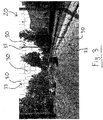
Fig. 1 , there is shown anoriginal image 20 captured by a digital camera which is attached to a motor vehicle. Theimage 20 comprises a two-dimensional arrangement of individual pixels which are not visible inFig. 1 . In theoriginal image 20, various objects of interest such as theroad 10,vehicles 11 andtraffic signs 13 are discernable. For autonomous driving applications and advanced driver assistance systems, a computer-based understanding of the captured scene is required. A measure for achieving such an automated scene understanding is the semantic segmentation of the image, wherein each pixel is labeled according to semantic categories such as "road", "non-road", "pedestrian", "traffic sign" and the like. InFig. 2 , there is exemplarily shown a processedimage 21 as a result of a semantic segmentation of the original image 20 (Fig. 1 ). Thesemantic segments 15 of the processedimage 21 correspond to the different categories and are displayed in different colors or gray levels. - In accordance with the invention, a method for the semantic segmentation of a captured
original image 20 comprises the step of segmenting theoriginal image 20 intosuperpixels 30 as shown inFig. 3 . Superpixels are coherent image regions comprising a plurality of pixels having similar image features. The segmenting into thesuperpixels 30 is carried out by a simple linear iterative clustering algorithm (SLIC algorithm) as described in the paper "SLIC Superpixels" by Achanta R. et al., EPFL Technical Report 149300, June 2010. The simple linear iterative clustering algorithm comprises a plurality of iteration steps, preferably at least 5 iteration steps. As can be seen inFig. 3 , thesuperpixels 30 have slightly different sizes andirregular boundaries 33. - As shown in
Fig. 4 , a two-dimensional, regular andrectangular grid structure 37 or lattice structure extending across theoriginal image 20 is extracted from the first iteration step of the simple linear iterative clustering algorithm. Specifically, thegrid structure 37 is generated based on the positions of the centers of thosesuperpixels 30 which are generated by the first iteration step. - When the simple linear iterative clustering algorithm is completed, the
final superpixels 30, i. e. thesuperpixels 30 generated by the last iteration step, are overlaid with thegrid structure 37 by means of a grid projection centered in thegrid structure 37. Further, local image descriptors are determined for each of thesuperpixels 30 in adescriptor determination step 38, wherein each image descriptor comprises a plurality of image features, preferably 70 image features or more. Depending on the application, each of the image descriptors can comprise a plurality of "histogram of oriented gradients"-features (HOG-features) and/or a plurality of "local binary pattern"-features (LBP-features). - Based on the projection of the
final superpixels 30 centered in thegrid structure 37, the image descriptors of thefinal superpixels 30 are fed asinput data 39 to a convolutional neural network (CNN) 40. Preferably, the convolutionalneural network 40 has only few layers, for example 5 or less layers. By means of the convolutional neural network (CNN) 40, the pixels of theoriginal image 20 are labeled according to semantic categories. As an example,Fig. 4 shows anoutput image 41 segmented according to the two semantic categories "road" and "non-road". -
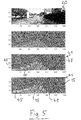
Fig. 5 shows training results for a method in accordance with the present invention. In the topmost panel, theoriginal image 20 is shown. The panel below the topmost panel represents the ground truth, here determined manually. The two lower panels shows the output of the semantic segmentation, wherein the lowermost panel represents the prediction.Unsure segments 45 are present at the boundaries of thesemantic segments 15. It can be seen that the prediction capability is sufficient. - Since the convolutional neural network (CNN) 40 is rather simple, the accurate results can be achieved without complex computer hardware and even in embedded real-time systems.
-
- 10
- road
- 11
- vehicle
- 13
- traffic sign
- 15
- semantic segment
- 20
- original image
- 21
- processed image
- 30
- superpixel
- 33
- boundary
- 37
- grid structure
- 39
- input data
- 40
- convolutional neural network
- 41
- output image
- 45
- unsure segment
Claims (15)
- A method for the semantic segmentation of an image (20) having a two-dimensional arrangement of pixels, comprising the steps:segmenting at least a part of the image into superpixels (30), wherein the superpixels (30) are coherent image regions comprising a plurality of pixels having similar image features,determining image descriptors for the superpixels, wherein each image descriptor comprises a plurality of image features,feeding the image descriptors of the superpixels to a convolutional network (40) andlabeling the pixels of the image (20) according to semantic categories by means of the convolutional network (40), whereinthe superpixels (30) are assigned to corresponding positions of a regular grid structure (37) extending across the image (20) and the image descriptors are fed to the convolutional network (40) based on the assignment.
- A method in accordance with claim 1,
characterized in that
the image descriptors are fed to a convolutional neural network (CNN). - A method in accordance with claim 1 or claim 2,
characterized in that
the assigning of the superpixels (30) to corresponding positions of the regular grid structure (37) is carried out by means of a grid projection process. - A method in accordance with any one of the preceding claims,
characterized in that
the segmentation of at least a part of the image (20) into superpixels (30) is carried out by means of an iterative clustering algorithm, in particular by means of a simple linear iterative clustering algorithm (SLIC). - A method in accordance with claim 4,
characterized in that
the iterative clustering algorithm comprises a plurality of iteration steps, in particular at least 5 iteration steps, wherein the regular grid structure (37) is extracted from the first iteration step. - A method in accordance with claim 5,
characterized in that
the superpixels (30) generated by the last iteration step are matched to the regular grid structure (37) extracted from the first iteration step. - A method in accordance with claim 5 or 6,
characterized in that
the regular grid structure (37) is generated based on the positions of the centers of those superpixels (30) which are generated by the first iteration step. - A method in accordance with any one of the preceding claims,
characterized in that
the convolutional network (40) includes 10 or less layers, preferably 5 or less layers. - A method in accordance with claim 8,
characterized in that
the convolutional network (40) is composed of two convolutional layers and two fully connected layers. - A method in accordance with any one of the preceding claims,
characterized in that
each of the image descriptors comprises at least 30, preferably at least 50 and more preferably at least 80 image features. - A method in accordance with any one of the preceding claims,
characterized in that
each of the image descriptors comprises a plurality of "histogram of oriented gradients"-features (HOG-features) and/or a plurality of "local binary pattern"-features (LBP-features). - A method for the recognition of objects (10, 11, 13) in an image (20) of a vehicle environment, comprising a semantic segmentation method in accordance with any one of the preceding claims.
- A system for the recognition of objects (10, 11, 13) from a motor vehicle,
wherein the system includes a camera to be arranged at the motor vehicle and an image processing device for processing images (20) captured by the camera,
characterized in that
the image processing device is configured for carrying out a method in accordance with any one of claims 1 to 12. - A system in accordance with claim 13,
characterized in that
the camera is configured for repeatedly or continuously capturing images (20) and the image processing device is configured for a real-time processing of the captured images (20). - A computer program product including executable program code which, when executed, carries out a method in accordance with any one of claims 1 to 12.
Priority Applications (3)
| Application Number | Priority Date | Filing Date | Title |
|---|---|---|---|
| EP17167514.3A EP3392798A1 (en) | 2017-04-21 | 2017-04-21 | A method for the semantic segmentation of an image |
| US15/949,246 US20180307911A1 (en) | 2017-04-21 | 2018-04-10 | Method for the semantic segmentation of an image |
| CN201810352999.4A CN108734711A (en) | 2017-04-21 | 2018-04-19 | The method that semantic segmentation is carried out to image |
Applications Claiming Priority (1)
| Application Number | Priority Date | Filing Date | Title |
|---|---|---|---|
| EP17167514.3A EP3392798A1 (en) | 2017-04-21 | 2017-04-21 | A method for the semantic segmentation of an image |
Publications (1)
| Publication Number | Publication Date |
|---|---|
| EP3392798A1 true EP3392798A1 (en) | 2018-10-24 |
Family
ID=58644842
Family Applications (1)
| Application Number | Title | Priority Date | Filing Date |
|---|---|---|---|
| EP17167514.3A Withdrawn EP3392798A1 (en) | 2017-04-21 | 2017-04-21 | A method for the semantic segmentation of an image |
Country Status (3)
| Country | Link |
|---|---|
| US (1) | US20180307911A1 (en) |
| EP (1) | EP3392798A1 (en) |
| CN (1) | CN108734711A (en) |
Cited By (2)
| Publication number | Priority date | Publication date | Assignee | Title |
|---|---|---|---|---|
| CN112560779A (en) * | 2020-12-25 | 2021-03-26 | 中科云谷科技有限公司 | Method and device for identifying feed inlet flash and feed control system of mixing plant |
| CN114648633A (en) * | 2020-12-02 | 2022-06-21 | Aptiv技术有限公司 | Method for determining semantic segmentation of a vehicle environment |
Families Citing this family (23)
| Publication number | Priority date | Publication date | Assignee | Title |
|---|---|---|---|---|
| US10552691B2 (en) | 2017-04-25 | 2020-02-04 | TuSimple | System and method for vehicle position and velocity estimation based on camera and lidar data |
| US10649459B2 (en) * | 2018-04-26 | 2020-05-12 | Zoox, Inc. | Data segmentation using masks |
| CN111223118A (en) * | 2018-11-27 | 2020-06-02 | 富士通株式会社 | Image processing apparatus, image processing method, and computer-readable recording medium |
| US11823389B2 (en) * | 2018-12-20 | 2023-11-21 | Qatar Foundation For Education, Science And Community Development | Road network mapping system and method |
| CN111382753B (en) * | 2018-12-27 | 2023-05-12 | 曜科智能科技(上海)有限公司 | Light field semantic segmentation method, system, electronic terminal and storage medium |
| CN109859209B (en) * | 2019-01-08 | 2023-10-17 | 平安科技(深圳)有限公司 | Remote sensing image segmentation method, device, storage medium, and server |
| CN109919159A (en) * | 2019-01-22 | 2019-06-21 | 西安电子科技大学 | A kind of semantic segmentation optimization method and device for edge image |
| CN110033004B (en) * | 2019-03-25 | 2021-01-05 | 广东奥普特科技股份有限公司 | A method for identifying sticky characters |
| CN110287771B (en) * | 2019-05-10 | 2024-09-10 | 平安科技(深圳)有限公司 | Image palm region extraction method and device |
| CN110197505B (en) * | 2019-05-30 | 2022-12-02 | 西安电子科技大学 | Remote sensing image binocular stereo matching method based on depth network and semantic information |
| KR102224276B1 (en) * | 2019-07-24 | 2021-03-05 | 금오공과대학교 산학협력단 | Method and Apparatus for Training of Image Data |
| CN110942513B (en) * | 2019-10-30 | 2023-04-25 | 广州海格星航信息科技有限公司 | Space filling method and device for three-dimensional grid model |
| CN111582111B (en) * | 2020-04-29 | 2022-04-29 | 电子科技大学 | Cell component segmentation method based on semantic segmentation |
| US12087060B2 (en) * | 2020-09-30 | 2024-09-10 | Magna Electronics Inc. | Vehicular vision system with object classification |
| CN112417976B (en) * | 2020-10-26 | 2024-05-21 | 深圳大学 | A road surface detection and identification method, device, intelligent terminal and storage medium |
| CN112802197B (en) * | 2021-03-19 | 2025-02-18 | 浙江农林大学 | Visual SLAM method and system based on fully convolutional neural network in dynamic scenes |
| KR20220132375A (en) * | 2021-03-23 | 2022-09-30 | 현대모비스 주식회사 | Embedded semantic segmentation network device optimized for matrix multiplication accelerator that classifies pixels in vehicle image |
| US12167171B2 (en) | 2021-10-05 | 2024-12-10 | Magna Electronics Inc. | Vehicular vision system with object classification based on change in orientation of object |
| CN114092494B (en) * | 2021-11-29 | 2024-12-17 | 长春工业大学 | Brain MR image segmentation method based on super-pixel and full convolution neural network |
| CN113936141B (en) * | 2021-12-17 | 2022-02-22 | 深圳佑驾创新科技有限公司 | Image semantic segmentation method and computer-readable storage medium |
| CN114693670B (en) * | 2022-04-24 | 2023-05-23 | 西京学院 | Ultrasonic detection method for weld defects of longitudinal submerged arc welded pipe based on multi-scale U-Net |
| US12400353B2 (en) | 2022-05-10 | 2025-08-26 | Magna Electronics Inc. | Vehicular vision system with object detection and identification with adaptive thresholding |
| CN114898216B (en) * | 2022-06-14 | 2025-02-11 | 湖南省农林工业勘察设计研究总院 | Remote sensing image deep learning segmentation method and system based on superpixel and watershed |
-
2017
- 2017-04-21 EP EP17167514.3A patent/EP3392798A1/en not_active Withdrawn
-
2018
- 2018-04-10 US US15/949,246 patent/US20180307911A1/en not_active Abandoned
- 2018-04-19 CN CN201810352999.4A patent/CN108734711A/en active Pending
Non-Patent Citations (3)
| Title |
|---|
| ACHANTA R. ET AL.: "SLIC Superpixels", EPFL TECHNICAL REPORT 149300, June 2010 (2010-06-01) |
| ACHANTA RADHAKRISHNA ET AL: "SLIC Superpixels", INTERNET CITATION, June 2010 (2010-06-01), pages 1 - 16, XP002712355, Retrieved from the Internet <URL:http://infoscience.epfl.ch/record/149300/files/SLIC_Superpixels_TR_2.pdf> [retrieved on 20130904] * |
| KANGRU WANG ET AL: "Ground Plane Detection with a Local Descriptor", 19 April 2017 (2017-04-19), XP055406076, Retrieved from the Internet <URL:https://arxiv.org/vc/arxiv/papers/1609/1609.08436v6.pdf> [retrieved on 20170912] * |
Cited By (3)
| Publication number | Priority date | Publication date | Assignee | Title |
|---|---|---|---|---|
| CN114648633A (en) * | 2020-12-02 | 2022-06-21 | Aptiv技术有限公司 | Method for determining semantic segmentation of a vehicle environment |
| CN112560779A (en) * | 2020-12-25 | 2021-03-26 | 中科云谷科技有限公司 | Method and device for identifying feed inlet flash and feed control system of mixing plant |
| CN112560779B (en) * | 2020-12-25 | 2024-01-05 | 中科云谷科技有限公司 | Inlet overflow identification method, equipment and mixing station feeding control system |
Also Published As
| Publication number | Publication date |
|---|---|
| US20180307911A1 (en) | 2018-10-25 |
| CN108734711A (en) | 2018-11-02 |
Similar Documents
| Publication | Publication Date | Title |
|---|---|---|
| US20180307911A1 (en) | Method for the semantic segmentation of an image | |
| US8620026B2 (en) | Video-based detection of multiple object types under varying poses | |
| Rotaru et al. | Color image segmentation in HSI space for automotive applications | |
| US10503999B2 (en) | System for detecting salient objects in images | |
| US10019652B2 (en) | Generating a virtual world to assess real-world video analysis performance | |
| CN109583345B (en) | Road recognition method, device, computer device and computer readable storage medium | |
| CN107944450B (en) | License plate recognition method and device | |
| US9530218B2 (en) | Method for classification and segmentation and forming 3D models from images | |
| CN111886600B (en) | A device and method for instance level segmentation of an image | |
| CN110390314B (en) | Visual perception method and equipment | |
| KR101436369B1 (en) | Apparatus and method for detecting multiple object using adaptive block partitioning | |
| CN111191611B (en) | Traffic sign identification method based on deep learning | |
| Shukla et al. | Moving object tracking of vehicle detection: a concise review | |
| Guindel et al. | Joint object detection and viewpoint estimation using CNN features | |
| Mujtaba et al. | An Automatic Traffic Control System over Aerial Dataset via U-Net and CNN Model | |
| Gad et al. | Real-time lane instance segmentation using SegNet and image processing | |
| CN117392638A (en) | Open object class sensing method and device for serving robot scene | |
| Sundaram et al. | Object detection and estimation: A hybrid image segmentation technique using convolutional neural network model | |
| Alkhorshid et al. | Road detection through supervised classification | |
| Teutsch | Moving object detection and segmentation for remote aerial video surveillance | |
| Al Mamun et al. | Efficient lane marking detection using deep learning technique with differential and cross-entropy loss. | |
| Lee et al. | Multiple moving object segmentation using motion orientation histogram in adaptively partitioned blocks for high-resolution video surveillance systems | |
| Kaimkhani et al. | UAV with vision to recognise vehicle number plates | |
| WO2019005255A2 (en) | SYSTEM FOR DETECTING HIGHLIGHTS IN IMAGES | |
| CN115280376A (en) | Object detection and tracking |
Legal Events
| Date | Code | Title | Description |
|---|---|---|---|
| PUAI | Public reference made under article 153(3) epc to a published international application that has entered the european phase |
Free format text: ORIGINAL CODE: 0009012 |
|
| STAA | Information on the status of an ep patent application or granted ep patent |
Free format text: STATUS: THE APPLICATION HAS BEEN PUBLISHED |
|
| AK | Designated contracting states |
Kind code of ref document: A1 Designated state(s): AL AT BE BG CH CY CZ DE DK EE ES FI FR GB GR HR HU IE IS IT LI LT LU LV MC MK MT NL NO PL PT RO RS SE SI SK SM TR |
|
| AX | Request for extension of the european patent |
Extension state: BA ME |
|
| RAP1 | Party data changed (applicant data changed or rights of an application transferred) |
Owner name: APTIV TECHNOLOGIES LIMITED |
|
| STAA | Information on the status of an ep patent application or granted ep patent |
Free format text: STATUS: REQUEST FOR EXAMINATION WAS MADE |
|
| 17P | Request for examination filed |
Effective date: 20181217 |
|
| RBV | Designated contracting states (corrected) |
Designated state(s): AL AT BE BG CH CY CZ DE DK EE ES FI FR GB GR HR HU IE IS IT LI LT LU LV MC MK MT NL NO PL PT RO RS SE SI SK SM TR |
|
| STAA | Information on the status of an ep patent application or granted ep patent |
Free format text: STATUS: EXAMINATION IS IN PROGRESS |
|
| 17Q | First examination report despatched |
Effective date: 20200402 |
|
| STAA | Information on the status of an ep patent application or granted ep patent |
Free format text: STATUS: THE APPLICATION IS DEEMED TO BE WITHDRAWN |
|
| 18D | Application deemed to be withdrawn |
Effective date: 20200813 |