EP3391608B1 - Handling of content delivery in a client node - Google Patents
Handling of content delivery in a client node Download PDFInfo
- Publication number
- EP3391608B1 EP3391608B1 EP15816754.4A EP15816754A EP3391608B1 EP 3391608 B1 EP3391608 B1 EP 3391608B1 EP 15816754 A EP15816754 A EP 15816754A EP 3391608 B1 EP3391608 B1 EP 3391608B1
- Authority
- EP
- European Patent Office
- Prior art keywords
- content
- entity
- client node
- media player
- mbms
- Prior art date
- Legal status (The legal status is an assumption and is not a legal conclusion. Google has not performed a legal analysis and makes no representation as to the accuracy of the status listed.)
- Active
Links
Images


Classifications
-
- H—ELECTRICITY
- H04—ELECTRIC COMMUNICATION TECHNIQUE
- H04L—TRANSMISSION OF DIGITAL INFORMATION, e.g. TELEGRAPHIC COMMUNICATION
- H04L65/00—Network arrangements, protocols or services for supporting real-time applications in data packet communication
- H04L65/60—Network streaming of media packets
- H04L65/61—Network streaming of media packets for supporting one-way streaming services, e.g. Internet radio
- H04L65/611—Network streaming of media packets for supporting one-way streaming services, e.g. Internet radio for multicast or broadcast
-
- H—ELECTRICITY
- H04—ELECTRIC COMMUNICATION TECHNIQUE
- H04L—TRANSMISSION OF DIGITAL INFORMATION, e.g. TELEGRAPHIC COMMUNICATION
- H04L65/00—Network arrangements, protocols or services for supporting real-time applications in data packet communication
- H04L65/10—Architectures or entities
- H04L65/1045—Proxies, e.g. for session initiation protocol [SIP]
-
- H—ELECTRICITY
- H04—ELECTRIC COMMUNICATION TECHNIQUE
- H04L—TRANSMISSION OF DIGITAL INFORMATION, e.g. TELEGRAPHIC COMMUNICATION
- H04L63/00—Network architectures or network communication protocols for network security
- H04L63/04—Network architectures or network communication protocols for network security for providing a confidential data exchange among entities communicating through data packet networks
- H04L63/0428—Network architectures or network communication protocols for network security for providing a confidential data exchange among entities communicating through data packet networks wherein the data content is protected, e.g. by encrypting or encapsulating the payload
-
- H—ELECTRICITY
- H04—ELECTRIC COMMUNICATION TECHNIQUE
- H04L—TRANSMISSION OF DIGITAL INFORMATION, e.g. TELEGRAPHIC COMMUNICATION
- H04L65/00—Network arrangements, protocols or services for supporting real-time applications in data packet communication
- H04L65/60—Network streaming of media packets
- H04L65/61—Network streaming of media packets for supporting one-way streaming services, e.g. Internet radio
- H04L65/613—Network streaming of media packets for supporting one-way streaming services, e.g. Internet radio for the control of the source by the destination
-
- H—ELECTRICITY
- H04—ELECTRIC COMMUNICATION TECHNIQUE
- H04L—TRANSMISSION OF DIGITAL INFORMATION, e.g. TELEGRAPHIC COMMUNICATION
- H04L65/00—Network arrangements, protocols or services for supporting real-time applications in data packet communication
- H04L65/60—Network streaming of media packets
- H04L65/61—Network streaming of media packets for supporting one-way streaming services, e.g. Internet radio
- H04L65/612—Network streaming of media packets for supporting one-way streaming services, e.g. Internet radio for unicast
Definitions
- Embodiments presented herein relate to a system, a client node, a method, a computer program, and a computer program product for handling content delivery in the client node.
- LTE Broadcast also known as eMBMS, where MBMS is short for Multimedia Broadcast Multicast Service
- LTE Broadcast allows service offerings using broadcast only or service offerings which combine unicast and broadcast. Different levels of combinations are possible.
- LTE Broadcast allows associated delivery procedures such as File Repair or Reception reporting using unicast for associated services.
- More advance offerings allow usage of unicast in case broadcast is not available. For instance, when a device intended to consume a service is outside of broadcast coverage, the device can activate unicast reception for service consumption.
- Broadcast transmission is activated on a need bases.
- broadcast transmission can be activated when the number of receiving devices has grown sufficiently high to justify broadcast.
- broadcast transmission can be terminated when the interest for reception of the broadcasted service has dropped below a threshold.
- Service And Network assisted DASH operation allows a DASH network to control, or at least influence, the behavior of the DASH client of a media player of a client node.
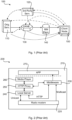
- Fig. 1 schematically illustrates a communications system 100.
- the communications system 100 comprises at least one client node 150.
- the client node comprises a DASH client and is arranged to receive media from a media origin.
- the communications system 100 comprises an origin server 110 symbolizing the media origin.
- the communications system 100 comprises a third party server 120.
- the communications system 100 comprises at least one DASH aware network element (DANE) entity 130, which has at least minimum intelligence about DASH; the DANE entity 130 may for instance be aware that the delivered objects of the media are DASH-formatted objects such as the Media Presentation Description (MPD) or DASH segments, and may prioritize, parse, or even modify such objects.
- DANE DASH aware network element
- the origin server 110 that serves DASH content may in addition to its primary function also receive metric or status messages from the client node 150, and/or send parameters to other DANE entities and is therefore also considered a DANE element.
- the third-party server 120 that receives metrics messages from the client node 150 and sends SAND messages to the client 150 is considered DANE element.
- the third-party server 120 is not necessarily on the media delivery path so it does not see the DASH segments. However, as it is assumed to understand the DASH metrics and may produce SAND messages to the client node 150, for example to improve delivery, it is nevertheless considered a DANE element.
- the origin server 110 as well as the third party server 120 are thus also considered to represent respective DANE entities 110, 120.
- the communications system 100 comprises a network element 140.
- the network element 140 represents a regular network element in the sense that it is DASH unaware and treat DASH delivery objects as any other object, but is present on the path between the origin server 110 and client node 150, e.g. transparent caches.
- Fig. 1 Media is in Fig. 1 provided along the solid line. Interfaces between the entities 110-150 of the communications system 100 are identified as being of one of the following types: The interface from DANE entity 110, 120, 130 to client node 150 (dotted lines in Fig. 1 ): A DANE entity 110, 120, 130 provides Parameters Enhancing Reception (PER) messages.
- PER Parameters Enhancing Reception
- the interface from client node 150 to DANE entity 110, 120, 130 (dash-dotted lines in Fig. 1 ):
- the client 150 provides metric and status messages to a DANE entity 110, 120, 130.
- a DANE entity 110, 120, 130 provides Parameters Enhancing Delivery (PED) messages to another DANE entity 110, 120, 130.
- PED Parameters Enhancing Delivery
- PER messages can be send in-band with the media stream (i.e. at least traversing the same network elements as the media) or can originate form any third party server 120 outside of the media path (i.e., outside the path defined by the solid line in Fig. 1 ).
- the DASH client cannot by itself control the behavior of the media player to be optimal from a network perspective.
- DASH is based on the concept that the transport network and HTTP caching network is not aware about the DASH content (in contrast to Real-time Transport Protocol (RTP), where dedicated nodes are required).
- RTP Real-time Transport Protocol
- a standard HTTP server such as the third party server 120, developed for serving web-sites, can also be used to serve DASH content.
- the DASH content is treated a regular file by the HTTP server.
- the DASH client of the client node 150 uses regular HTTP transactions to access the content.
- FIG. 2 An example architecture 200 of a client node 210 configured for popularity based switching is shown in Fig. 2 .
- the client node 210 can be identical to the client node 150 of Fig. 1 .
- the client node 210 comprises a radio modem 220 configured to receive service content both via unicast and multicast.
- the client node 210 is thereby configured to support both unicast and multicast reception.
- Received service content, in the form of media is stored in a local server 240.
- a media player 260 that may comprise a DASH client, is arranged to playout media provided by a HTTP proxy 250.
- the middleware 230 is configured to control the HTTP proxy 250 to steer the traffic through HTTP redirects (as indicated by the interface between the middleware 230 and the HTTP proxy 250).
- TLS Transport Layer Security
- the HTTP proxy 250 of the client node 210 therefore has to be trusted and will need to have access to the public key of the origin server 110. This approach thus requires the HTTP proxy 250 to sign security certificates and to be trusted.
- An object of embodiments herein is to provide efficient handling of content delivery in a client node.
- US 2013/007814 A1 provides techniques for a dynamic adaptive streaming proxy for unicast or broadcast/multicast service and relates to a dynamic adaptive streaming proxy for unicast or broadcast/multicast service, and especially to controlling an encoding format of multimedia content provided to a multimedia client of a wireless communications network.
- 3GPP TS 26.852 "Group services and system aspects; Multimedia Broadcast/Multicast Services (MBMS); MBMS Extension and Profiling" (Release 13), 12 December 2015 relates to optimising content delivery via unicast and multicast services of a public land mobile network, and especially to delivering streaming media from a media source to a group of user terminals where those user terminals are located within a given cell of a Public Land Mobile Network.
- MBMS Multimedia Broadcast/Multicast Services
- MBMS Extension and Profiling Release 13
- EP 2 903 310 A1 discloses a wireless telecommunications network node method, comprising: determining a change in status of at least one MBMS service provided to user equipment; and initiating transmission of a control message to said user equipment to indicate said change in status.
- WO 2013/182247 A1 relate to a method of delivering streaming media from a media source to a group of user terminals where those user terminals are located within a given cell of a Public Land Mobile Network.
- Preferred embodiments are defined in the attached claims and define a system, a client node, a method, a computer program and a computer program product.
- this claimed system, this claimed client node, this claimed method, this claimed computer program and this claimed computer program product for handling content delivery in a client node provide control over how the client node should receive content which enables efficient handling of content delivery in the client node.
- the middleware 230 cannot interact with the content through HTTP redirect.
- the HTTP proxy 250 to sign security certificates and to be trusted.
- the embodiments disclosed herein therefore relate to handling content delivery in a client node 600a, 600b.
- a client node 600a, 600b In order to obtain adaptive beamforming scanning there is provided a client node 600a, 600b, a method performed by the client node 600a, 600b, a computer program comprising code, for example in the form of a computer program product, that when run on a client node 600a, 600b, causes the client node 600a, 600b to perform the method.
- Figs. 3 and 4 are flow chart illustrating embodiments of methods for handling content delivery in a client node 600a, 600b. The methods are performed by the client node 600a, 600b. The methods are advantageously provided as computer programs 720.
- FIG. 3 illustrating a method for handling content delivery in a client node 600a, 600b as performed by the client node 600a, 600b according to an embodiment.
- Parallel references are made to the communications systems 500a and 500b of Figs. 5a and 5b , respectively.
- An application entity 620 of the client node 600a, 600b registers with a Multimedia Broadcast Multicast Services (MBMS) entity 630 of the client node 600a, 600b in order for the client node 600a, 600b to be able to receive content the client node 600a, 600b.
- MBMS Multimedia Broadcast Multicast Services
- the client node 600a, 600b is configured to perform step S102: S102: The application entity 620 of the client node 600a, 600b registers with the MBMS entity 630 of the client node 600a, 600b for enabling the client node 600a, 600b to receive content delivered by encrypted unicast transmission and to receive the content delivered by broadcast transmission.
- the trusted entity 610 steers the media player 640 from reception of the content via encrypted unicast transmission to reception of the content via broadcast (and vice versa) when the MBMS entity 630 detects identical content of encrypted unicast transmission being available on broadcast transmission.
- the client node 600a, 600b is configured to perform step S104:
- the client node 600a, 600b can comprise more than one media player 640 and the application entity 620 can be configured to determine which media player 640 of the client node 600a, 600b to invoke for the content rendering; thus enabling the possibility of multiple device player support.
- the application entity 620 can be configured to determine which media player 640 of the client node 600a, 600b to invoke for the content rendering; thus enabling the possibility of multiple device player support.
- trusted entity 610 is a DASH aware network element (DANE) where DASH denotes Dynamic Adaptive Streaming over HTTP, and where HTTP denotes Hypertext Transfer Protocol.
- DASH denotes Dynamic Adaptive Streaming over HTTP
- HTTP denotes Hypertext Transfer Protocol
- the media player 640 comprises a DASH client. This enables the media player 640 to receive and to play out DASH content.
- the encrypted unicast transmission is encrypted using a Transport Layer Security (TLS) protocol. This ensures privacy between the communicating applications and their users.
- TLS Transport Layer Security
- the MBMS entity 630 is provided by MBMS middleware (MW). This provides efficient implementation of the MBMS entity 630.
- MW MBMS middleware
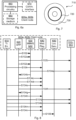
- Fig. 4 illustrating methods for handling content delivery in a client node 600a, 600b as performed by the client node 600a, 600b according to further embodiments. It is assumed that steps S102 and S104 are performed as disclosed above. Continued parallel references are made to the communications systems 500a and 500b of Figs. 5a and 5b , respectively and the signalling diagram of Fig. 8 .
- the application entity 620 can be regarded as implementing a SAND proxy.
- the application entity 620 can thereby register with the MBMS entity 630 for the desired content, such as "content available on broadcast". Based on such notifications, the application entity 620 can steer the media player 640 (or its DASH client) to consume content either from the encrypted unicast transmission or from the broadcast transmission.
- the trusted entity 610 is provided in, or co-located with, the application entity 620.
- the trusted entity 610 can be implemented in the application entity 620.
- the application entity 620 can be regarded as delegating the trust to the MBMS entity 630.
- the application entity 620 can instantiate and initialize the media player 640 (or its DASH client) and pass a handle (such as a SAND handle) to the media player 640 (or its DASH client) to the MBMS entity 630.
- the MBMS entity 630 can now steer the media player 640 (or its DASH client) directly.
- the trusted entity 610 is provided in, or co-located with, the MBMS entity 630.
- the trusted entity 610 can be implemented in the MBMS entity 630.
- step S102 Details of step S102 will now be disclosed.
- the client node 600a, 600b can perform the registration in step S102.
- the application entity 620 can provide a content identifier of the content.
- the client node 600a, 600b can be configured to perform step S102a as part of step S102: S102a:
- the application entity 620 provides to the MBMS entity 630, a content identifier of the content.
- the content identifier is an MBMS service identity or a unicast Uniform Resource Locator (URL).
- the client node 600a, 600b can continuously monitor content availability via broadcast transmission.
- the client node 600a, 600b can be configured to perform step S102b after having performed step S102a and as part of step S102:
- the MBMS entity 630 monitors, using the content identifier, a broadcast service announcement channel for the content. Thereby, when the MBMS entity 630 detects previously registered content available for reception via broadcast transmission, the MBMS entity 630 can notify the application entity 620 or the the media player 640 to receive the content from broadcast transmission. This will be further disclosed below in conjunction with details of step S104.
- the client node 600a, 600b is configured to perform step S102c as part of step S102 instead of steps S102a and S102b: S102c:
- the application entity 620 provides to the MBMS entity 630, a reference to the media player 640.
- step S104 the application entity 620 registers with the MBMS entity 630 to receive the content via unicast transmission.
- the MBMS entity 630 can then check whether the content is available also via broadcast transmission or not. When the content is not available via broadcast transmission, the MBMS entity 630 can notify the application entity 620, which then starts receiving the content via unicast transmission.
- the client node 600a, 600b is configured to selectively controlling reception of the content in the media player 640 by performing steps S104a, S104b, S104c: S104a:
- the MBMS entity 630 determines that the content is not available for delivery by broadcast transmission.
- Step S104b The MBMS entity 630 provides to the application entity 620 a notification that the content is not available for delivery by broadcast transmission.
- the application entity 620 provides to the media player 640 an indication to initiate reception of the content delivered by the encrypted unicast transmission.
- the client node 600a, 600b is configured to selectively controlling reception of the content in the media player 640 by performing steps S104f, S104g, S104h: S104f:
- the MBMS entity 630 determines that the content is available for delivery by broadcast transmission.
- step S104 Further details of step S104 will now be disclosed.
- One example includes the client node 600a, 600b to be configured to perform step S104d.
- the application entity 620 provides to the media player 640 a URL to a Media Presentation Description (MPD) for encrypted unicast transmission of the content.
- MPD Media Presentation Description
- the provision of the URL to the MDP may thus act as a trigger for the media player 640 to receive the content (i.e. for reception of the content in the media player 640).
- the content is to be received via encrypted unicast transmission when not available on the broadcast transmission.
- the client node 600a, 600b can therefore be configured to perform step S104e: S104e: The trusted entity 610 instructs the media player 640 to receive the content on the encrypted unicast transmission when not available on the broadcast transmission.
- the client node 600a, 600b detects activation of a broadcast transmission of the content.
- the client node 600a, 600b can therefore be configured to perform step S104j: S104j:
- the trusted entity 610 detects activation of a broadcast transmission of the content.
- activation is detected via an announcement of a User Service Description.
- the client node 600a, 600b can therefore be configured to perform step S104k: S104k:
- the trusted entity 610 obtains an announcement of a User Service Description of the content on a broadcast service announcement channel.
- the client node 600a, 600b Upon having detected activation of the broadcast transmission of the content the client node 600a, 600b can receive the content on the broadcast transmission.
- the client node 600a, 600b can therefore be configured to perform step S104m: S104m:
- the trusted entity 610 instructs the media player 640 to receive the content on the broadcast transmission when available.
- the trusted entity 610 can condition an MPD of the content received via broadcast transmission.
- the client node 600a, 600b can therefore be configured to perform step S104m as part of selectively controlling reception of the content in the media player 640:
- the trusted entity 610 conditions the MPD of the content to make at least one representation of the content un-available to the media player 640 and to provide an Availability Start Time (AST) transport timing offset for compensating for transport delay of the content.
- AST Availability Start Time
- the media player 640 can start receiving the content.
- the content is in the client node 600a, 600b first stored, or buffered, in the local server 650.
- the client node 600a, 600b is therefore configured to perform step S106: S106: The media player 640 receives the content from a local server 650 of the client node 600a, 600b.
- a first particular embodiment for handling content delivery in a client node 600a will now be disclosed with reference the communications system 500a of Fig. 5a .
- the trusted entity 610 is provided in, or co-located with, the application entity 620 and hence the MBMS entity 630is not trusted as DANE.
- the application entity 620 registers for notifications, e.g. providing a service identity (ID) or providing a unicast MPD URL.
- the application (APP) entity 620 registers with the MBMS Middleware (MW) 630 and provides the MBMS entity 630 with a unicast DASH media presentation description (MPD) uniform resource locator (URL) or another content identifier.
- MPD unicast DASH media presentation description
- URL uniform resource locator
- the MBMS entity 630 uses this content identifier to monitor a broadcast service announcement channel for the content.
- the application 620 triggers the DASH client of the media player 640 by providing the unicast MPD URL.
- the (DASH client of the) media player 640 starts fetching content from the content ingest 510 via the unicast content delivery network (CDN) 520 via a unicast transmission system 530.
- the MPD and the content are TLS protected. Play-out of the content thus follows a normal TLS procedure.
- the LTE broadcast (BC) transmission system 550 detects trending content and activates broadcast transmission of the content from the content ingest 510 via the Broadcast Multicast Service Centre (BM-SC) 540.
- BM-SC Broadcast Multicast Service Centre
- S204 A User Service Description of the content to be broadcasted is announced on the broadcast service announcement channel.
- S205 The broadcast of the content is started on the broadcast service announcement channel.
- the MBMS entity 630 detects the broadcasted content on the broadcast service announcement channel and notifies the application 620 about the alternative content (meaning the device hosting the client node 600a is in eMBMS coverage). The new MPD location is provided.
- the trusted entity 610 of the application entity 620 triggers the media player 640 to fetch the content from the local server 650.
- a new MPD location is provided in order for the media player 640 to stop updating MPDs over unicast.
- the media player 640 starts fetching the content from the local server 650.
- a second particular embodiment for handling content delivery in the client node 600b will now be disclosed with reference the communications system 500b of Fig. 5b .
- the trusted entity 610 is provided in, or co-located with, the MBMS entity 630.
- the application entity 620 can delegate the DANE trust relation to the MBMS entity 630 and can give a reference to the media player 640 to the MBMS entity 630.
- the application (APP) entity 620 registers with the MBMS entity 630 and provides a reference to the media player 640. Further, the application entity 620 registers the consumed content, e.g. a MBMS service identity or the unicast URL.
- APP application
- the application 620 triggers the DASH client of the media player 640 to start by providing the unicast MPD URL.
- the (DASH client of the) media player 640 starts fetching content from the content ingest 510 via the unicast content delivery network (CDN) 520 via a unicast transmission system 530.
- the MPD and the content are TLS protected. Play-out of the content thus follows a normal TLS procedure.
- the LTE broadcast (BC) transmission system 550 detects trending content and activates broadcast transmission of the content from the content ingest 510 via a Broadcast Multicast Service Centre (BM-SC) 540.
- BM-SC Broadcast Multicast Service Centre
- S304 A User Service Description of the content to be broadcasted is announced on the broadcast service announcement channel.
- S305 The broadcast of the content is started on the broadcast service announcement channel.
- the MBMS entity 630 uses the SAND channel and notifies the (DASH client of the) media player 640 that the application entity 620 (meaning the device hosting the client node 600a, 600b is in eMBMS coverage).
- the MBMS entity 630 gives a new MPD location and (conditions the MPD) in this case making at least one representation of the content un-available to the media player 640.
- the conditioning also provides an Availability Start Time (AST) offset which is used to compensate or adjust for the eMBMS transport delay.
- AST Availability Start Time
- the media player 640 starts fetching the content from the local server 650.
- Fig. 6a schematically illustrates, in terms of a number of functional units, the components of a client node 600a, 600b according to an embodiment.
- Processing circuitry 660 is provided using any combination of one or more of a suitable central processing unit (CPU), multiprocessor, microcontroller, digital signal processor (DSP), application specific integrated circuit (ASIC), field programmable gate arrays (FPGA) etc., capable of executing software instructions stored in a computer program product 710 (as in Fig. 7 ), e.g. in the form of a storage medium 680.
- CPU central processing unit
- DSP digital signal processor
- ASIC application specific integrated circuit
- FPGA field programmable gate arrays
- the processing circuitry 660 is configured to cause the client node 600a, 600b to perform a set of operations, or steps, S102-S106, S200-S208, S300-S307, as disclosed above.
- the storage medium 680 may store the set of operations
- the processing circuitry 660 may be configured to retrieve the set of operations from the storage medium 680 to cause the client node 600a, 600b to perform the set of operations.
- the set of operations may be provided as a set of executable instructions.
- the processing circuitry 660 is thereby arranged to execute methods as herein disclosed.
- the storage medium 680 may also comprise persistent storage, which, for example, can be any single one or combination of magnetic memory, optical memory, solid state memory or even remotely mounted memory.
- the client node 600a, 600b may further comprise a communications interface 670 for communications with at least a unicast transmission system 530 and a broadcast transmission system 550.
- the communications interface 670 may comprise one or more transmitters and receivers, comprising analogue and digital components.
- the processing circuitry 660 controls the general operation of the client node 600a, 600b e.g.
- client node 600a, 600b by sending data and control signals to the communications interface 670 and the storage medium 680, by receiving data and reports from the communications interface 670, and by retrieving data and instructions from the storage medium 680.
- Other components, as well as the related functionality, of the client node 600a, 600b are omitted in order not to obscure the concepts presented herein.
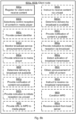
- Fig. 6b schematically illustrates, in terms of a number of functional modules, the components of a client node 600a, 600b according to an embodiment.
- the client node 600a, 600b of Fig. 6b comprises a number of functional modules:
- the client node 600a, 600b of Fig. 6b may further comprises a number of optional functional modules, such as any of:
- each functional module 660a-660u may in one embodiment be implemented only in hardware or and in another embodiment with the help of software, i.e., the latter embodiment having computer program instructions stored on the storage medium 680 which when run on the processing circuitry 660 makes the client node 600a, 600b perform the corresponding steps mentioned above in conjunction with Figs. 3, 4 , 5a, and 5b .
- the functional modules 660a-660u may be implemented in the processing circuitry 660, possibly also in the communications interface 670 and the storage medium 680. It should also be mentioned that even though the modules correspond to parts of a computer program, they do not need to be separate modules therein, but the way in which they are implemented in software is dependent on the programming language used.
- one or more or all functional modules 660a-660u may be implemented by the processing circuitry 660, possibly in cooperation with functional units 670 and/or 680.
- the processing circuitry 660 may thus be configured to from the storage medium 680 fetch instructions as provided by a functional module 660a-660u and to execute these instructions, thereby performing any steps as herein disclosed.
- Fig. 6b provides a functional oriented description of the client node 600a, 600b whereas Fig. 6a provides a building block oriented view of the client node 600a, 600b.
- the building blocks i.e., the processing circuitry 660, the communications interface 670, and the storage medium 680
- the building blocks i.e., the processing circuitry 660, the communications interface 670, and the storage medium 680
- the processing circuitry 660, the communications interface 670, and the storage medium 680 of the client node 600a, 600b in Fig. 6a may be configured to perform the functionality defined by the functional modules 660a-660u of the client node 600a, 600b in Fig. 6b .
- the client node 600a, 600b can be part of the communications system 500a, 500b.
- the communications system 500a, 500b for handling content delivery in the client node 600a, 600b can, in addition to at least one client node 600a, 600b, comprise the content ingest 510, the unicast content delivery network 520, and the BM-SC 540.
- the client node 600a, 600b can be hosted by a device such as an end-user device.
- a device such as an end-user device.
- Examples of such devices are wireless devices, user equipment, smartphones, tablet computers, laptop computers, etc.
- Fig. 7 shows one example of a computer program product 710 comprising computer readable means 730.
- a computer program 720 can be stored, which computer program 720 can cause the processing circuitry 660 and thereto operatively coupled entities and devices, such as the communications interface 670 and the storage medium 680, to execute methods according to embodiments described herein.
- the computer program 720 and/or computer program product 710 may thus provide means for performing any steps as herein disclosed.
- the computer program product 710 is illustrated as an optical disc, such as a CD (compact disc) or a DVD (digital versatile disc) or a Blu-Ray disc.
- the computer program product 710 could also be embodied as a memory, such as a random access memory (RAM), a read-only memory (ROM), an erasable programmable read-only memory (EPROM), or an electrically erasable programmable read-only memory (EEPROM) and more particularly as a non-volatile storage medium of a device in an external memory such as a USB (Universal Serial Bus) memory or a Flash memory, such as a compact Flash memory.
- the computer program 720 is here schematically shown as a track on the depicted optical disk, the computer program 720 can be stored in any way which is suitable for the computer program product 710.
Landscapes
- Engineering & Computer Science (AREA)
- Multimedia (AREA)
- Computer Networks & Wireless Communication (AREA)
- Signal Processing (AREA)
- Computer Security & Cryptography (AREA)
- Computer Hardware Design (AREA)
- Computing Systems (AREA)
- General Engineering & Computer Science (AREA)
- Mobile Radio Communication Systems (AREA)
- Information Transfer Between Computers (AREA)
Description
- Embodiments presented herein relate to a system, a client node, a method, a computer program, and a computer program product for handling content delivery in the client node.
- In communications systems, there may be a challenge to obtain good performance and capacity for a given communications protocol, its parameters and the physical environment in which the communications system is deployed.
- For example, concepts such as Long Term Evolution (LTE) Broadcast (also known as eMBMS, where MBMS is short for Multimedia Broadcast Multicast Service) allow service offerings using broadcast only or service offerings which combine unicast and broadcast. Different levels of combinations are possible. In the simplest cases, LTE Broadcast allows associated delivery procedures such as File Repair or Reception reporting using unicast for associated services. More advance offerings allow usage of unicast in case broadcast is not available. For instance, when a device intended to consume a service is outside of broadcast coverage, the device can activate unicast reception for service consumption.
- For hybrid service offerings, it is also possible that Broadcast transmission is activated on a need bases. For example, broadcast transmission can be activated when the number of receiving devices has grown sufficiently high to justify broadcast. For example, broadcast transmission can be terminated when the interest for reception of the broadcasted service has dropped below a threshold.
- Service And Network assisted DASH operation (SAND; where DASH is short for Dynamic Adaptive Streaming over HTTP, and where HTTP is short for Hypertext Transfer Protocol) allows a DASH network to control, or at least influence, the behavior of the DASH client of a media player of a client node.
-
Fig. 1 schematically illustrates acommunications system 100. Thecommunications system 100 comprises at least oneclient node 150. The client node comprises a DASH client and is arranged to receive media from a media origin. Thecommunications system 100 comprises anorigin server 110 symbolizing the media origin. - The
communications system 100 comprises athird party server 120. - The
communications system 100 comprises at least one DASH aware network element (DANE)entity 130, which has at least minimum intelligence about DASH; theDANE entity 130 may for instance be aware that the delivered objects of the media are DASH-formatted objects such as the Media Presentation Description (MPD) or DASH segments, and may prioritize, parse, or even modify such objects. - In this context the
origin server 110 that serves DASH content may in addition to its primary function also receive metric or status messages from theclient node 150, and/or send parameters to other DANE entities and is therefore also considered a DANE element. Similarly, the third-party server 120 that receives metrics messages from theclient node 150 and sends SAND messages to theclient 150 is considered DANE element. The third-party server 120 is not necessarily on the media delivery path so it does not see the DASH segments. However, as it is assumed to understand the DASH metrics and may produce SAND messages to theclient node 150, for example to improve delivery, it is nevertheless considered a DANE element. Theorigin server 110 as well as thethird party server 120 are thus also considered to representrespective DANE entities - The
communications system 100 comprises anetwork element 140. Thenetwork element 140 represents a regular network element in the sense that it is DASH unaware and treat DASH delivery objects as any other object, but is present on the path between theorigin server 110 andclient node 150, e.g. transparent caches. - Media is in
Fig. 1 provided along the solid line. Interfaces between the entities 110-150 of thecommunications system 100 are identified as being of one of the following types:
The interface fromDANE entity Fig. 1 ): ADANE entity - The interface from
client node 150 toDANE entity Fig. 1 ): Theclient 150 provides metric and status messages to aDANE entity - The interface from
DANE entity DANE entity Fig. 1 ): ADANE entity DANE entity - PER messages can be send in-band with the media stream (i.e. at least traversing the same network elements as the media) or can originate form any
third party server 120 outside of the media path (i.e., outside the path defined by the solid line inFig. 1 ). - In several cases, the DASH client cannot by itself control the behavior of the media player to be optimal from a network perspective.
- DASH is based on the concept that the transport network and HTTP caching network is not aware about the DASH content (in contrast to Real-time Transport Protocol (RTP), where dedicated nodes are required). For example, a standard HTTP server, such as the
third party server 120, developed for serving web-sites, can also be used to serve DASH content. The DASH content is treated a regular file by the HTTP server. The DASH client of theclient node 150 uses regular HTTP transactions to access the content. - An
example architecture 200 of aclient node 210 configured for popularity based switching is shown inFig. 2 . Theclient node 210 can be identical to theclient node 150 ofFig. 1 . - The
client node 210 comprises aradio modem 220 configured to receive service content both via unicast and multicast. Theclient node 210 is thereby configured to support both unicast and multicast reception. Received service content, in the form of media, is stored in alocal server 240. Amedia player 260, that may comprise a DASH client, is arranged to playout media provided by aHTTP proxy 250. Themiddleware 230 is configured to control theHTTP proxy 250 to steer the traffic through HTTP redirects (as indicated by the interface between themiddleware 230 and the HTTP proxy 250). - Some services, such as Over-The-Top (OTT) services, are beginning to use Transport Layer Security (TLS) protected unicast transmission. When TLS is activated, the
middleware 230 cannot interact with the content through HTTP redirect. - One way to handle this issue is based on providing an encryption key server in the operator's network. The key server stores the content provider's private encryption key with a client certificate signed provisioned to identify the operator when asking for the encryption key server. The
HTTP proxy 250 of theclient node 210 therefore has to be trusted and will need to have access to the public key of theorigin server 110. This approach thus requires theHTTP proxy 250 to sign security certificates and to be trusted. - Hence, there is a need for an improved way to handle content delivery in a client node.
- An object of embodiments herein is to provide efficient handling of content delivery in a client node.
-
US 2013/007814 A1 provides techniques for a dynamic adaptive streaming proxy for unicast or broadcast/multicast service and relates to a dynamic adaptive streaming proxy for unicast or broadcast/multicast service, and especially to controlling an encoding format of multimedia content provided to a multimedia client of a wireless communications network. - 3GPP TS 26.852 "Group services and system aspects; Multimedia Broadcast/Multicast Services (MBMS); MBMS Extension and Profiling" (Release 13), 12 December 2015 relates to optimising content delivery via unicast and multicast services of a public land mobile network, and especially to delivering streaming media from a media source to a group of user terminals where those user terminals are located within a given cell of a Public Land Mobile Network.
-
EP 2 903 310 A1 discloses a wireless telecommunications network node method, comprising: determining a change in status of at least one MBMS service provided to user equipment; and initiating transmission of a control message to said user equipment to indicate said change in status. -
WO 2013/182247 A1 relate to a method of delivering streaming media from a media source to a group of user terminals where those user terminals are located within a given cell of a Public Land Mobile Network. - Preferred embodiments are defined in the attached claims and define a system, a client node, a method, a computer program and a computer program product.
- Advantageously this claimed system, this claimed client node, this claimed method, this claimed computer program and this claimed computer program product for handling content delivery in a client node provide control over how the client node should receive content which enables efficient handling of content delivery in the client node.
- Other objectives, features and advantages of the enclosed embodiments will be apparent from the following detailed disclosure, from the attached dependent claims as well as from the drawings.
- Generally, all terms used in the claims are to be interpreted according to their ordinary meaning in the technical field, unless explicitly defined otherwise herein. All references to "a/an/the element, apparatus, component, means, step, etc." are to be interpreted openly as referring to at least one instance of the element, apparatus, component, means, step, etc., unless explicitly stated otherwise. The steps of any method disclosed herein do not have to be performed in the exact order disclosed, unless explicitly stated.
- The inventive concept is now described, by way of example, with reference to the accompanying drawings, in which:
-
Fig. 1 is a schematic diagram illustrating a communications system according to state of the art; -
Fig. 2 is a schematic diagram showing building blocks of a network device according to state of the art; -
Figs. 3 and 4 are flowcharts of methods according to embodiments; -
Figs. 5a and 5b are schematic diagrams illustrating communications systems according to embodiments; -
Fig. 6a is a schematic diagram showing functional units of a network device according to an embodiment; -
Fig. 6b is a schematic diagram showing functional modules of a network device according to an embodiment; -
Fig. 7 shows one example of a computer program product comprising computer readable means according to an embodiment; and -
Fig. 8 is a signalling diagram according to an embodiment. - The inventive concept will now be described more fully hereinafter with reference to the accompanying drawings, in which certain embodiments of the inventive concept are shown. This inventive concept may, however, be embodied in many different forms and should not be construed as limited to the embodiments set forth herein; rather, these embodiments are provided by way of example so that this disclosure will be thorough and complete, and will fully convey the scope of the inventive concept to those skilled in the art. Like numbers refer to like elements throughout the description. Any step or feature illustrated by dashed lines should be regarded as optional.
- As noted above, when TLS is activated, the
middleware 230 cannot interact with the content through HTTP redirect. This requires theHTTP proxy 250 to sign security certificates and to be trusted. Hence, in the current state of the art there is no practical way to, at aclient node HTPP proxy 250, from a security point of view, acts as the "man in the middle". - The embodiments disclosed herein therefore relate to handling content delivery in a
client node client node client node client node client node -
Figs. 3 and 4 are flow chart illustrating embodiments of methods for handling content delivery in aclient node client node computer programs 720. - Reference is now made to
Fig. 3 illustrating a method for handling content delivery in aclient node client node communications systems Figs. 5a and 5b , respectively. Reference is also made to the signalling diagram ofFig. 8 . - An
application entity 620 of theclient node entity 630 of theclient node client node client node client node
S102: Theapplication entity 620 of theclient node MBMS entity 630 of theclient node client node - The trusted
entity 610, in some aspects, steers themedia player 640 from reception of the content via encrypted unicast transmission to reception of the content via broadcast (and vice versa) when theMBMS entity 630 detects identical content of encrypted unicast transmission being available on broadcast transmission. Hence, theclient node
S104: The trustedentity 610 selectively controls reception of the content in amedia player 640 of theclient node - In this respect the
client node media player 640 and theapplication entity 620 can be configured to determine whichmedia player 640 of theclient node client node - This enables efficient switching between reception of the content via unicast and broadcast transmission depending on factors such as mobility coverage or external network popularity heuristics switching on broadcast according to trending content in a geographical area.
- Further aspects of handling content delivery in a
client node - There are different examples of trusted
entities 510. According to an embodiment the trustedentity 610 is a DASH aware network element (DANE) where DASH denotes Dynamic Adaptive Streaming over HTTP, and where HTTP denotes Hypertext Transfer Protocol. - According to an embodiment the
media player 640 comprises a DASH client. This enables themedia player 640 to receive and to play out DASH content. - There are different ways to encrypt the unicast transmission. According to an embodiment the encrypted unicast transmission is encrypted using a Transport Layer Security (TLS) protocol. This ensures privacy between the communicating applications and their users.
- There are different ways to provide the
MBMS entity 630. According to an embodiment theMBMS entity 630 is provided by MBMS middleware (MW). This provides efficient implementation of theMBMS entity 630. - Reference is now made to
Fig. 4 illustrating methods for handling content delivery in aclient node client node communications systems Figs. 5a and 5b , respectively and the signalling diagram ofFig. 8 . - There are different ways to provide, and to implement, the trusted
entity 610. Two embodiments relating thereto will now be disclosed in detail. - According to some aspects, the
application entity 620 can be regarded as implementing a SAND proxy. Theapplication entity 620 can thereby register with theMBMS entity 630 for the desired content, such as "content available on broadcast". Based on such notifications, theapplication entity 620 can steer the media player 640 (or its DASH client) to consume content either from the encrypted unicast transmission or from the broadcast transmission. Hence, according to a first embodiment the trustedentity 610 is provided in, or co-located with, theapplication entity 620. According to this first embodiment the trustedentity 610 can be implemented in theapplication entity 620. - According to some aspects, the
application entity 620 can be regarded as delegating the trust to theMBMS entity 630. Here, theapplication entity 620 can instantiate and initialize the media player 640 (or its DASH client) and pass a handle (such as a SAND handle) to the media player 640 (or its DASH client) to theMBMS entity 630. The MBMS entity 630can now steer the media player 640 (or its DASH client) directly. Hence, according to a second embodiment the trustedentity 610 is provided in, or co-located with, theMBMS entity 630. According to this second embodiment the trustedentity 610 can be implemented in theMBMS entity 630. - Details of step S102 will now be disclosed.
- There are different ways for the
client node application entity 620 can provide a content identifier of the content. Hence, theclient node
S102a: Theapplication entity 620 provides to theMBMS entity 630, a content identifier of the content. In this respect, there are different content identifiers. According to some aspects the content identifier is an MBMS service identity or a unicast Uniform Resource Locator (URL). - The
client node client node
S102b: TheMBMS entity 630 monitors, using the content identifier, a broadcast service announcement channel for the content. Thereby, when theMBMS entity 630 detects previously registered content available for reception via broadcast transmission, theMBMS entity 630 can notify theapplication entity 620 or the themedia player 640 to receive the content from broadcast transmission. This will be further disclosed below in conjunction with details of step S104. - According to another embodiment the
client node
S102c: Theapplication entity 620 provides to theMBMS entity 630, a reference to themedia player 640. - Details of step S104 will now be disclosed. As disclosed above, the
application entity 620 registers with theMBMS entity 630 to receive the content via unicast transmission. TheMBMS entity 630 can then check whether the content is available also via broadcast transmission or not. When the content is not available via broadcast transmission, theMBMS entity 630 can notify theapplication entity 620, which then starts receiving the content via unicast transmission. - Hence, according to an embodiment (when the content is not available via broadcast transmission) the
client node media player 640 by performing steps S104a, S104b, S104c:
S104a: TheMBMS entity 630 determines that the content is not available for delivery by broadcast transmission. - As a result thereof steps S104b, S104c are performed:
S104b: TheMBMS entity 630 provides to the application entity 620 a notification that the content is not available for delivery by broadcast transmission. - S104c: The
application entity 620 provides to themedia player 640 an indication to initiate reception of the content delivered by the encrypted unicast transmission. - Further, according to an embodiment (when the content is available via broadcast transmission) the
client node media player 640 by performing steps S104f, S104g, S104h:
S104f: TheMBMS entity 630 determines that the content is available for delivery by broadcast transmission. - As a result thereof steps S104g, S104h are performed:
- S104g: The
MBMS entity 630 provides to theapplication entity 620 or to the media player 640 a notification that the content is available for delivery by broadcast transmission. The notification is provided to theapplication entity 620 if the trustedentity 610 is provided in theapplication entity 620. The notification is provided to themedia player 640 if the trustedentity 610 is provided in theMBMS entity 630. - S104h: The trusted
entity 610 provides to themedia player 640 an indication to initiate reception of the content delivered by the broadcast transmission. - Further details of step S104 will now be disclosed.
- There can be different ways for triggering reception of the content in the
media player 640. One example includes theclient node - S104d: The
application entity 620 provides to the media player 640 a URL to a Media Presentation Description (MPD) for encrypted unicast transmission of the content. The provision of the URL to the MDP may thus act as a trigger for themedia player 640 to receive the content (i.e. for reception of the content in the media player 640). - Further embodiment relating to how the reception of the content in the
media player 640 can be selectively controlled by the trustedentity 610 will now be disclosed. - The content is to be received via encrypted unicast transmission when not available on the broadcast transmission. The
client node
S104e: The trustedentity 610 instructs themedia player 640 to receive the content on the encrypted unicast transmission when not available on the broadcast transmission. - The
client node client node
S104j: The trustedentity 610 detects activation of a broadcast transmission of the content. - There can be different ways to detect activation of the broadcast transmission of the content. According to some aspects activation is detected via an announcement of a User Service Description. The
client node
S104k: The trustedentity 610 obtains an announcement of a User Service Description of the content on a broadcast service announcement channel. - Upon having detected activation of the broadcast transmission of the content the
client node client node
S104m: The trustedentity 610 instructs themedia player 640 to receive the content on the broadcast transmission when available. - Further, the trusted
entity 610 can condition an MPD of the content received via broadcast transmission. Theclient node
S104n: The trustedentity 610 conditions the MPD of the content to make at least one representation of the content un-available to themedia player 640 and to provide an Availability Start Time (AST) transport timing offset for compensating for transport delay of the content. - Once the
media player 640 has access to all information needed to receive the content themedia player 640 can start receiving the content. The content is in theclient node local server 650. According to an embodiment theclient node
S106: Themedia player 640 receives the content from alocal server 650 of theclient node - Two particular embodiments for handling content delivery in the
client node - A first particular embodiment for handling content delivery in a
client node 600a will now be disclosed with reference thecommunications system 500a ofFig. 5a . - In this first particular embodiment the trusted
entity 610 is provided in, or co-located with, theapplication entity 620 and hence the MBMS entity 630is not trusted as DANE. Theapplication entity 620 registers for notifications, e.g. providing a service identity (ID) or providing a unicast MPD URL. - S200: The application (APP)
entity 620 registers with the MBMS Middleware (MW) 630 and provides theMBMS entity 630 with a unicast DASH media presentation description (MPD) uniform resource locator (URL) or another content identifier. TheMBMS entity 630 uses this content identifier to monitor a broadcast service announcement channel for the content. - S201: The
application 620 triggers the DASH client of themedia player 640 by providing the unicast MPD URL. - S202: The (DASH client of the)
media player 640 starts fetching content from the content ingest 510 via the unicast content delivery network (CDN) 520 via aunicast transmission system 530. The MPD and the content are TLS protected. Play-out of the content thus follows a normal TLS procedure. - S203: The LTE broadcast (BC)
transmission system 550 detects trending content and activates broadcast transmission of the content from the content ingest 510 via the Broadcast Multicast Service Centre (BM-SC) 540. - S204: A User Service Description of the content to be broadcasted is announced on the broadcast service announcement channel.
- S205: The broadcast of the content is started on the broadcast service announcement channel.
- S206: The
MBMS entity 630 detects the broadcasted content on the broadcast service announcement channel and notifies theapplication 620 about the alternative content (meaning the device hosting theclient node 600a is in eMBMS coverage). The new MPD location is provided. - S207: The trusted
entity 610 of theapplication entity 620 triggers themedia player 640 to fetch the content from thelocal server 650. A new MPD location is provided in order for themedia player 640 to stop updating MPDs over unicast. - S208: The
media player 640 starts fetching the content from thelocal server 650. - A second particular embodiment for handling content delivery in the
client node 600b will now be disclosed with reference thecommunications system 500b ofFig. 5b . - In this second particular embodiment, the trusted
entity 610 is provided in, or co-located with, theMBMS entity 630. Hence, theapplication entity 620 can delegate the DANE trust relation to theMBMS entity 630 and can give a reference to themedia player 640 to theMBMS entity 630. - S300: The application (APP)
entity 620 registers with theMBMS entity 630 and provides a reference to themedia player 640. Further, theapplication entity 620 registers the consumed content, e.g. a MBMS service identity or the unicast URL. - S301: The
application 620 triggers the DASH client of themedia player 640 to start by providing the unicast MPD URL. - S302: The (DASH client of the)
media player 640 starts fetching content from the content ingest 510 via the unicast content delivery network (CDN) 520 via aunicast transmission system 530. The MPD and the content are TLS protected. Play-out of the content thus follows a normal TLS procedure. - S303: The LTE broadcast (BC)
transmission system 550 detects trending content and activates broadcast transmission of the content from the content ingest 510 via a Broadcast Multicast Service Centre (BM-SC) 540. - S304: A User Service Description of the content to be broadcasted is announced on the broadcast service announcement channel.
- S305: The broadcast of the content is started on the broadcast service announcement channel.
- S306: The
MBMS entity 630 uses the SAND channel and notifies the (DASH client of the)media player 640 that the application entity 620 (meaning the device hosting theclient node MBMS entity 630 gives a new MPD location and (conditions the MPD) in this case making at least one representation of the content un-available to themedia player 640. The conditioning also provides an Availability Start Time (AST) offset which is used to compensate or adjust for the eMBMS transport delay. - S307: The
media player 640 starts fetching the content from thelocal server 650. -
Fig. 6a schematically illustrates, in terms of a number of functional units, the components of aclient node Processing circuitry 660 is provided using any combination of one or more of a suitable central processing unit (CPU), multiprocessor, microcontroller, digital signal processor (DSP), application specific integrated circuit (ASIC), field programmable gate arrays (FPGA) etc., capable of executing software instructions stored in a computer program product 710 (as inFig. 7 ), e.g. in the form of astorage medium 680. - Particularly, the
processing circuitry 660 is configured to cause theclient node storage medium 680 may store the set of operations, and theprocessing circuitry 660 may be configured to retrieve the set of operations from thestorage medium 680 to cause theclient node - Thus the
processing circuitry 660 is thereby arranged to execute methods as herein disclosed. Thestorage medium 680 may also comprise persistent storage, which, for example, can be any single one or combination of magnetic memory, optical memory, solid state memory or even remotely mounted memory. Theclient node communications interface 670 for communications with at least aunicast transmission system 530 and abroadcast transmission system 550. As such thecommunications interface 670 may comprise one or more transmitters and receivers, comprising analogue and digital components. Theprocessing circuitry 660 controls the general operation of theclient node communications interface 670 and thestorage medium 680, by receiving data and reports from thecommunications interface 670, and by retrieving data and instructions from thestorage medium 680. Other components, as well as the related functionality, of theclient node -
Fig. 6b schematically illustrates, in terms of a number of functional modules, the components of aclient node client node Fig. 6b comprises a number of functional modules: - a register for client node to receive
content module 660a for registering for a client node to receive content and thus configured to perform step S102; and - a selectively control reception of content in
media player module 660b for selectively control reception of content in the media player and thus configured to perform step S104. - The
client node Fig. 6b may further comprises a number of optional functional modules, such as any of: - a provide
content identifier module 660c for providing content identifier and thus configured to perform step S102a; - a monitor broadcast service
announcement channel module 660d for monitoring a broadcast service announcement channel and thus configured to perform step S102b; - a provide reference to
media player module 660e for providing a reference to the media player and thus configured to perform step S102c; - a determine delivery by broadcast not available module 66of for determining delivery by broadcast not available and thus configured to perform step S104a;
- a provide notification of content not
available module 660g for providing a notification of content not available and thus configured to perform step S104b; - a provide indication to initiate reception via
unicast module 660h for providing an indication to initiate reception via unicast and thus configured to perform step S104c; - a provide URL to MPD to media player module 660j for providing a URL to an MPD to a media player and thus configured to perform step S104d;
- an instruct to receive content via
unicast module 660k for instructing to receive content via unicast and thus configured to perform step S104e; - a determine delivery by broadcast is
available module 660m for determining that delivery by broadcast is available and thus configured to perform step S104f; - a provide notification of content is
available module 660n for providing a notification that content is available and thus configured to perform step S104g; - a provide indication to initiate reception via
broadcast module 660p for providing an indication to initiate reception via broadcast and thus configured to perform step S104h; - a detect activation of
broadcast transmission module 660q for detecting activation of broadcast transmission and thus configured to perform step S104j; - an obtain announcement of USD of
content module 660r for obtaining an announcement of USD of content and thus configured to perform step S104k; - an instruct to receive via
broadcast transmission module 660s for instructing to receive via broadcast transmission and thus configured to perform step S104m; - a
condition MPD module 660t for conditioning MPD and thus configured to perform step S104n; and - a receive content from
local server module 660u for receiving content from a local server and thus configured to perform step S106. - In general terms, each
functional module 660a-660u may in one embodiment be implemented only in hardware or and in another embodiment with the help of software, i.e., the latter embodiment having computer program instructions stored on thestorage medium 680 which when run on theprocessing circuitry 660 makes theclient node Figs. 3, 4 ,5a, and 5b . For a hardware implementation thefunctional modules 660a-660u may be implemented in theprocessing circuitry 660, possibly also in thecommunications interface 670 and thestorage medium 680. It should also be mentioned that even though the modules correspond to parts of a computer program, they do not need to be separate modules therein, but the way in which they are implemented in software is dependent on the programming language used. Preferably, one or more or allfunctional modules 660a-660u may be implemented by theprocessing circuitry 660, possibly in cooperation withfunctional units 670 and/or 680. Theprocessing circuitry 660 may thus be configured to from thestorage medium 680 fetch instructions as provided by afunctional module 660a-660u and to execute these instructions, thereby performing any steps as herein disclosed. - Hence, in comparison to
Fig. 6a ,Fig. 6b provides a functional oriented description of theclient node Fig. 6a provides a building block oriented view of theclient node processing circuitry 660, thecommunications interface 670, and the storage medium 680) of theclient node Fig. 6a may be configured to perform the functionality defined by thefunctional modules 660a-660u of theclient node Fig. 6b . - The
client node communications system communications system client node client node content delivery network 520, and the BM-SC 540. - The
client node -
Fig. 7 shows one example of acomputer program product 710 comprising computerreadable means 730. On this computerreadable means 730, acomputer program 720 can be stored, whichcomputer program 720 can cause theprocessing circuitry 660 and thereto operatively coupled entities and devices, such as thecommunications interface 670 and thestorage medium 680, to execute methods according to embodiments described herein. Thecomputer program 720 and/orcomputer program product 710 may thus provide means for performing any steps as herein disclosed. - In the example of
Fig. 7 , thecomputer program product 710 is illustrated as an optical disc, such as a CD (compact disc) or a DVD (digital versatile disc) or a Blu-Ray disc. Thecomputer program product 710 could also be embodied as a memory, such as a random access memory (RAM), a read-only memory (ROM), an erasable programmable read-only memory (EPROM), or an electrically erasable programmable read-only memory (EEPROM) and more particularly as a non-volatile storage medium of a device in an external memory such as a USB (Universal Serial Bus) memory or a Flash memory, such as a compact Flash memory. Thus, while thecomputer program 720 is here schematically shown as a track on the depicted optical disk, thecomputer program 720 can be stored in any way which is suitable for thecomputer program product 710. - The inventive concept has mainly been described above with reference to a few embodiments. However, as is readily appreciated by a person skilled in the art, other embodiments than the ones disclosed above are equally possible within the scope of the inventive concept, as defined by the appended patent claims.
Claims (19)
- A client node (600a, 600b) for handling content delivery in the client node (600a, 600b), the client node (600a, 600b) comprising processing circuitry (660) implementing a trusted entity (610), an application entity (620) and a Multimedia Broadcast Multicast Services, MBMS, entity (630), wherein the trusted entity (610) is provided in, or co-located with, the application entity (620) or provided in, or co-located with, the MBMS entity (630) and the client node (600a, 600b) is configured to:register, by the application entity (620) and with the MBMS entity (630), for enabling the client node (600a, 600b) to receive content delivered by encrypted unicast transmission and to receive the content delivered by broadcast transmission;selectively control, by the trusted entity (610), reception of the content in a media player (640) of the client node (600a, 600b) between reception of the encrypted unicast transmission and broadcast transmission by:determining, by the MBMS entity (630), whether or not the content is available for delivery by broadcast transmission; andresponsive to determining, by the MBMS entity (630), that the content is not available for delivery by broadcast transmission, providing, by the MBMS entity (630) and to the application entity (620), a notification that the content is not available for delivery by broadcast transmission, and providing, by the application entity (620) and to the media player (640), an indication to initiate reception of the content delivered by the encrypted unicast transmission.
- The client node (600a, 600b) according to claim 1, wherein the client node (600a, 600b) is configured to selectively control reception of the content in the media player (640) by:determining, by the MBMS entity (630), whether or not the content is available for delivery by broadcast transmission; andresponsive to determining, by the MBMS entity (630), that the content is available for delivery by broadcast transmission, providing, by the MBMS entity (630) and to the application entity (620) or the media player (640), a notification that the content is available for delivery by broadcast transmission, and providing, by the trusted entity (610) and to the media player (640), an indication to initiate reception of the content delivered by the broadcast transmission.
- The client node (600a, 600b) according to claim 2, wherein the notification is provided to the application entity (620) if the trusted entity (610) is provided in the application entity (620), and to the media player (640) if the trusted entity (610) is provided in the MBMS entity (630).
- The client node (600a, 600b) according to claim 1, wherein the client node (600a, 600b) is configured to register with the MBMS entity (630) by:providing, by the application entity (620) and to the MBMS entity (630), a content identifier of the content; andmonitoring, by the MBMS entity (630) using the content identifier, a broadcast service announcement channel for the content.
- The client node (600a, 600b) according to claim 1, wherein the client node (600a, 600b) is configured to register with the MBMS entity (630) by:
providing, by the application entity (620) and to the MBMS entity (630), a reference to the media player (640). - The client node (600a, 600b) according to claim 1, wherein the client node (600a, 600b) is configured to selectively control reception of the content in the media player (640) by:
instructing, by the trusted entity (610), the media player (640) to receive the content on the encrypted unicast transmission when not available on the broadcast transmission. - The client node (600a, 600b) according to claim 1, wherein the client node (600a, 600b) is configured to selectively control reception of the content in the media player (640) by:
detecting activation of a broadcast transmission of the content. - The client node (600a, 600b) according to claim 1, wherein the client node (600a, 600b) is configured to selectively control reception of the content in the media player (640) by:
obtaining an announcement of a User Service Description of the content on a broadcast service announcement channel. - The client node (600a, 600b) according to claim 1, wherein the client node (600a, 600b) is configured to selectively control reception of the content in the media player (640) by:
instructing, by the trusted entity (610), the media player (640) to receive the content on the broadcast transmission when available. - The client node (600a, 600b) according to claim 1, wherein the client node (600a, 600b) is configured to selectively control reception of the content in the media player (640) by:
conditioning a Media Presentation Description, MPD, of the content to make at least one representation of the content un-available to the media player (640) and providing an Availability Start Time, AST, transport timing offset for compensating for transport delay of the content. - The client node (600a, 600b) according to claim 1, wherein the client node (600a, 600b) is configured to:
receive, by the media player (640), the content from a local server (650) of the client node (600a, 600b). - A method for handling content delivery in a client node (600a, 600b), the method being performed by the client node (600a, 600b), the method comprising:registering (S102), by an application entity (620) of the client node (600a, 600b) and with a Multimedia Broadcast Multicast Services, MBMS, entity (630) of the client node (600a, 600b), for enabling the client node (600a, 600b) to receive content delivered by encrypted unicast transmission and to receive the content delivered by broadcast transmission; andselectively controlling (S104), by a trusted entity (610) of the client node (600a, 600b) , provided in, or co-located with, the application entity (620) or provided in, or co-located with, the MBMS entity (630), reception of the content in a media player (640) of the client node (600a, 600b) between reception of the encrypted unicast transmission and broadcast transmission by:determining, by the MBMS entity (630), whether or not the content is available for delivery by broadcast transmission; andresponsive to determining, by the MBMS entity (630), that the content is not available for delivery by broadcast transmission, providing, by the MBMS entity (630) and to the application entity (620), a notification that the content is not available for delivery by broadcast transmission, and providing, by the application entity (620) and to the media player (640), an indication to initiate reception of the content delivered by the encrypted unicast transmission.
- The method according to claim 12, wherein selectively controlling reception of the content in the media player (640) comprises:
instructing (S104e), by the trusted entity (610), the media player (640) to receive the content on the encrypted unicast transmission when not available on the broadcast transmission. - The method according to claim 12, wherein selectively controlling reception of the content in the media player (640) comprises:
determining (S104f), by the MBMS entity (630), that the content is available for delivery by broadcast transmission; and as a result thereof:providing (S104g), by the MBMS entity (630) and to the application entity (620) or the media player (640), a notification that the content is available for delivery by broadcast transmission; andproviding (S104h), by the trusted entity (610) and to the media player (640), an indication to initiate reception of the content delivered by the broadcast transmission. - The method according to claim 14, wherein the notification is provided to the application entity (620) if the trusted entity (610) is provided in the application entity (620), and to the media player (640) if the trusted entity (610) is provided in the MBMS entity (630).
- The method according to claim 12, wherein selectively controlling reception of the content in the media player (640) comprises:
detecting (S104j) activation of a broadcast transmission of the content. - A communications system (500a, 500b) for handling content delivery in a client node (600a, 600b) according to claim 1, the communications system (500a, 500b) comprising the client node (600a, 600b), a content ingest (510), a unicast content delivery network (520), and a Broadcast Multicast Service Centre, BM-SC, (540), wherein the client node (600a, 600b) is configured selectively to initiate reception of content delivered by encrypted unicast transmission from the content ingest (510) via the unicast content delivery network (520) or to initiate reception of the content delivered by broadcast transmission from the content ingest (510) via the BM-SC (540).
- A computer program (720) for handling content delivery in a client node (600a, 600b), the computer program comprising computer code which, when run on processing circuitry (660) of the client node (600a, 600b), causes the client node (600a, 600b) to:register (S102), by an application entity (620) of the client node (600a, 600b) and with a Multimedia Broadcast Multicast Services, MBMS, entity (630) of the client node (600a, 600b), for enabling the client node (600a, 600b) to receive content delivered by encrypted unicast transmission and to receive the content delivered by broadcast transmission; andselectively control (S104), by a trusted entity (610) of the client node (600a, 600b), provided in, or co-located with, the application entity (620) or provided in, or co-located with, the MBMS entity (630), reception of the content in a media player (640) of the client node (600a, 600b) between reception of the encrypted unicast transmission and broadcast transmission by:determining, by the MBMS entity (630), whether or not the content is available for delivery by broadcast transmission;responsive to determining, by the MBMS entity (630), that the content is not available for delivery by broadcast transmission, providing, by the MBMS entity (630) and to the application entity (620), a notification that the content is not available for delivery by broadcast transmission, and providing, by the application entity (620) and to the media player (640), an indication to initiate reception of the content delivered by the encrypted unicast transmission; andresponsive to determining, by the MBMS entity (630), that the content is available for delivery by broadcast transmission, providing, by the MBMS entity (630) and to the application entity (620) or the media player (640), a notification that the content is available for delivery by broadcast transmission, and providing, by the trusted entity (610) and to the media player (640), an indication to initiate reception of the content delivered by the broadcast transmission.
- A computer program product (710) comprising a computer program (720) according to claim 18, and a computer readable storage medium (730) on which the computer program is stored.
Applications Claiming Priority (1)
| Application Number | Priority Date | Filing Date | Title |
|---|---|---|---|
| PCT/EP2015/080429 WO2017102021A1 (en) | 2015-12-18 | 2015-12-18 | Handling of content delivery in a client node |
Publications (2)
| Publication Number | Publication Date |
|---|---|
| EP3391608A1 EP3391608A1 (en) | 2018-10-24 |
| EP3391608B1 true EP3391608B1 (en) | 2023-08-09 |
Family
ID=55025060
Family Applications (1)
| Application Number | Title | Priority Date | Filing Date |
|---|---|---|---|
| EP15816754.4A Active EP3391608B1 (en) | 2015-12-18 | 2015-12-18 | Handling of content delivery in a client node |
Country Status (3)
| Country | Link |
|---|---|
| US (1) | US11283847B2 (en) |
| EP (1) | EP3391608B1 (en) |
| WO (1) | WO2017102021A1 (en) |
Families Citing this family (7)
| Publication number | Priority date | Publication date | Assignee | Title |
|---|---|---|---|---|
| CN107637045B (en) * | 2015-06-16 | 2020-11-27 | 苹果公司 | Adaptive Video Streaming Using Dynamic Radio Access Network Information |
| US11265132B2 (en) * | 2016-09-21 | 2022-03-01 | Kyocera Corporation | Enhancing utilization efficiency of radio resources in MBMS |
| KR102132266B1 (en) * | 2016-11-10 | 2020-07-10 | 소니 모바일 커뮤니케이션즈 인크. | Secondary node type based control for data streaming |
| GB201708199D0 (en) * | 2017-05-22 | 2017-07-05 | Glass Gareth | Expandable anode assembly |
| US10601886B2 (en) * | 2018-02-05 | 2020-03-24 | Telefonaktiebolaget Lm Ericsson (Publ) | Method, a user equipment and a computer program product for enabling a dynamic adaptive streaming over HTTP, DASH, player to fetch media segments from a network |
| CN117751570A (en) * | 2021-08-12 | 2024-03-22 | 高通股份有限公司 | Hybrid 5G media streaming |
| US12520110B2 (en) * | 2021-08-12 | 2026-01-06 | Qualcomm Incorporated | Hybrid 5G media streaming |
Family Cites Families (12)
| Publication number | Priority date | Publication date | Assignee | Title |
|---|---|---|---|---|
| US20110064219A1 (en) * | 2008-05-29 | 2011-03-17 | Peter Edlund | Iptv security in a communication network |
| US9693299B2 (en) * | 2009-11-30 | 2017-06-27 | Nokia Technology Oy | Method and apparatus for power saving operations in wireless network elements |
| US9160779B2 (en) * | 2011-06-30 | 2015-10-13 | Qualcomm Incorporated | Dynamic adaptive streaming proxy for unicast or broadcast/multicast services |
| WO2013182247A1 (en) | 2012-06-08 | 2013-12-12 | Telefonaktiebolaget L M Ericsson (Publ) | Optimising content delivery via unicast and multicast services of a public land mobile network |
| US20140095668A1 (en) * | 2012-09-28 | 2014-04-03 | Ozgur Oyman | Method for seamless unicast-broadcast switching during dash-formatted content streaming |
| US9646162B2 (en) * | 2013-04-10 | 2017-05-09 | Futurewei Technologies, Inc. | Dynamic adaptive streaming over hypertext transfer protocol service protection |
| US9674251B2 (en) * | 2013-06-17 | 2017-06-06 | Qualcomm Incorporated | Mediating content delivery via one or more services |
| EP2903310A1 (en) | 2014-01-30 | 2015-08-05 | Alcatel Lucent | Multi-media broadcast/multi-media services |
| US10902474B2 (en) * | 2014-03-24 | 2021-01-26 | Qualcomm Incorporated | Targeted advertisement insertion for streaming media data |
| US9872276B2 (en) * | 2015-01-12 | 2018-01-16 | Google Llc | Scheduling of software package transmissions on a multimedia broadcast multicast service channel |
| US10193994B2 (en) * | 2015-06-18 | 2019-01-29 | Qualcomm Incorporated | Signaling cached segments for broadcast |
| US9768339B2 (en) * | 2015-06-22 | 2017-09-19 | IQE, plc | Optoelectronic detectors having a dilute nitride layer on a substrate with a lattice parameter nearly matching GaAs |
-
2015
- 2015-12-18 US US15/775,546 patent/US11283847B2/en active Active
- 2015-12-18 EP EP15816754.4A patent/EP3391608B1/en active Active
- 2015-12-18 WO PCT/EP2015/080429 patent/WO2017102021A1/en not_active Ceased
Also Published As
| Publication number | Publication date |
|---|---|
| EP3391608A1 (en) | 2018-10-24 |
| US20180332089A1 (en) | 2018-11-15 |
| WO2017102021A1 (en) | 2017-06-22 |
| US11283847B2 (en) | 2022-03-22 |
Similar Documents
| Publication | Publication Date | Title |
|---|---|---|
| US11283847B2 (en) | Handling of content delivery in a client node | |
| EP2497267B1 (en) | Streaming with optional broadcast delivery of data segments | |
| US20170155928A1 (en) | Method, Device and System for Playing Live Video | |
| US20170155695A1 (en) | Method, device and system for uploading live video | |
| KR101641915B1 (en) | Methods and systems for dynamic media content output for mobile devices | |
| TWI566595B (en) | Outage notification with client control modification in an abr streaming network | |
| US9445223B2 (en) | Portable electronic device, server and connection method thereof | |
| US8931016B2 (en) | Program handoff between devices and program network offloading | |
| US9706249B2 (en) | Extended, home, and mobile content delivery networks | |
| US20210160294A1 (en) | Methods, devices, and systems for live video streaming from a remote location based on a received request utilizing keep alive messages | |
| EP2930935A1 (en) | Method of delivering media content | |
| CN111246311A (en) | Data transmission method and device, storage medium and electronic equipment | |
| US12225132B2 (en) | Cybersecurity guard for core network elements | |
| KR102243529B1 (en) | Methods and apparatuses for dynamic content offloading | |
| EP3236685B1 (en) | Detecting and warning of base stations with a security risk | |
| KR20130031345A (en) | Method and apparatus for changing the configuration of an ongoing streaming session | |
| US20170295065A1 (en) | Cloud based manual discovery of devices in a device management environment | |
| CN104660484B (en) | A kind of data transmission method and device for instant communication client | |
| US10142385B2 (en) | Multi-service initialization for adaptive media streaming | |
| US20190253508A1 (en) | Delivering messages to offline devices using peer-to-peer communication | |
| EP3017382B1 (en) | Caching content | |
| KR20230157869A (en) | A method for performing dynamic eas instantiation triggering and a device performing the same | |
| US8700900B2 (en) | Communicating admission decisions and status information to a client | |
| US20160094599A1 (en) | Handling network connection changes during adaptive bitrate streaming | |
| US20140324991A1 (en) | Method and im client device for playing multimedia messages and im server |
Legal Events
| Date | Code | Title | Description |
|---|---|---|---|
| STAA | Information on the status of an ep patent application or granted ep patent |
Free format text: STATUS: THE INTERNATIONAL PUBLICATION HAS BEEN MADE |
|
| PUAI | Public reference made under article 153(3) epc to a published international application that has entered the european phase |
Free format text: ORIGINAL CODE: 0009012 |
|
| STAA | Information on the status of an ep patent application or granted ep patent |
Free format text: STATUS: REQUEST FOR EXAMINATION WAS MADE |
|
| 17P | Request for examination filed |
Effective date: 20180705 |
|
| AK | Designated contracting states |
Kind code of ref document: A1 Designated state(s): AL AT BE BG CH CY CZ DE DK EE ES FI FR GB GR HR HU IE IS IT LI LT LU LV MC MK MT NL NO PL PT RO RS SE SI SK SM TR |
|
| AX | Request for extension of the european patent |
Extension state: BA ME |
|
| DAV | Request for validation of the european patent (deleted) | ||
| DAX | Request for extension of the european patent (deleted) | ||
| STAA | Information on the status of an ep patent application or granted ep patent |
Free format text: STATUS: EXAMINATION IS IN PROGRESS |
|
| 17Q | First examination report despatched |
Effective date: 20200624 |
|
| REG | Reference to a national code |
Ref country code: DE Ref legal event code: R079 Free format text: PREVIOUS MAIN CLASS: H04L0029060000 Ipc: H04L0065104500 Ref country code: DE Ref legal event code: R079 Ref document number: 602015085061 Country of ref document: DE Free format text: PREVIOUS MAIN CLASS: H04L0029060000 Ipc: H04L0065104500 |
|
| GRAP | Despatch of communication of intention to grant a patent |
Free format text: ORIGINAL CODE: EPIDOSNIGR1 |
|
| STAA | Information on the status of an ep patent application or granted ep patent |
Free format text: STATUS: GRANT OF PATENT IS INTENDED |
|
| RIC1 | Information provided on ipc code assigned before grant |
Ipc: H04L 65/613 20220101ALI20230323BHEP Ipc: H04L 65/611 20220101ALI20230323BHEP Ipc: H04L 65/1045 20220101AFI20230323BHEP |
|
| INTG | Intention to grant announced |
Effective date: 20230425 |
|
| GRAS | Grant fee paid |
Free format text: ORIGINAL CODE: EPIDOSNIGR3 |
|
| GRAA | (expected) grant |
Free format text: ORIGINAL CODE: 0009210 |
|
| STAA | Information on the status of an ep patent application or granted ep patent |
Free format text: STATUS: THE PATENT HAS BEEN GRANTED |
|
| AK | Designated contracting states |
Kind code of ref document: B1 Designated state(s): AL AT BE BG CH CY CZ DE DK EE ES FI FR GB GR HR HU IE IS IT LI LT LU LV MC MK MT NL NO PL PT RO RS SE SI SK SM TR |
|
| REG | Reference to a national code |
Ref country code: GB Ref legal event code: FG4D |
|
| REG | Reference to a national code |
Ref country code: CH Ref legal event code: EP |
|
| REG | Reference to a national code |
Ref country code: DE Ref legal event code: R096 Ref document number: 602015085061 Country of ref document: DE |
|
| REG | Reference to a national code |
Ref country code: IE Ref legal event code: FG4D |
|
| REG | Reference to a national code |
Ref country code: LT Ref legal event code: MG9D |
|
| REG | Reference to a national code |
Ref country code: NL Ref legal event code: MP Effective date: 20230809 |
|
| REG | Reference to a national code |
Ref country code: AT Ref legal event code: MK05 Ref document number: 1598801 Country of ref document: AT Kind code of ref document: T Effective date: 20230809 |
|
| PG25 | Lapsed in a contracting state [announced via postgrant information from national office to epo] |
Ref country code: GR Free format text: LAPSE BECAUSE OF FAILURE TO SUBMIT A TRANSLATION OF THE DESCRIPTION OR TO PAY THE FEE WITHIN THE PRESCRIBED TIME-LIMIT Effective date: 20231110 |
|
| PG25 | Lapsed in a contracting state [announced via postgrant information from national office to epo] |
Ref country code: IS Free format text: LAPSE BECAUSE OF FAILURE TO SUBMIT A TRANSLATION OF THE DESCRIPTION OR TO PAY THE FEE WITHIN THE PRESCRIBED TIME-LIMIT Effective date: 20231209 |
|
| PG25 | Lapsed in a contracting state [announced via postgrant information from national office to epo] |
Ref country code: SE Free format text: LAPSE BECAUSE OF FAILURE TO SUBMIT A TRANSLATION OF THE DESCRIPTION OR TO PAY THE FEE WITHIN THE PRESCRIBED TIME-LIMIT Effective date: 20230809 Ref country code: RS Free format text: LAPSE BECAUSE OF FAILURE TO SUBMIT A TRANSLATION OF THE DESCRIPTION OR TO PAY THE FEE WITHIN THE PRESCRIBED TIME-LIMIT Effective date: 20230809 Ref country code: PT Free format text: LAPSE BECAUSE OF FAILURE TO SUBMIT A TRANSLATION OF THE DESCRIPTION OR TO PAY THE FEE WITHIN THE PRESCRIBED TIME-LIMIT Effective date: 20231211 Ref country code: NO Free format text: LAPSE BECAUSE OF FAILURE TO SUBMIT A TRANSLATION OF THE DESCRIPTION OR TO PAY THE FEE WITHIN THE PRESCRIBED TIME-LIMIT Effective date: 20231109 Ref country code: NL Free format text: LAPSE BECAUSE OF FAILURE TO SUBMIT A TRANSLATION OF THE DESCRIPTION OR TO PAY THE FEE WITHIN THE PRESCRIBED TIME-LIMIT Effective date: 20230809 Ref country code: LV Free format text: LAPSE BECAUSE OF FAILURE TO SUBMIT A TRANSLATION OF THE DESCRIPTION OR TO PAY THE FEE WITHIN THE PRESCRIBED TIME-LIMIT Effective date: 20230809 Ref country code: LT Free format text: LAPSE BECAUSE OF FAILURE TO SUBMIT A TRANSLATION OF THE DESCRIPTION OR TO PAY THE FEE WITHIN THE PRESCRIBED TIME-LIMIT Effective date: 20230809 Ref country code: IS Free format text: LAPSE BECAUSE OF FAILURE TO SUBMIT A TRANSLATION OF THE DESCRIPTION OR TO PAY THE FEE WITHIN THE PRESCRIBED TIME-LIMIT Effective date: 20231209 Ref country code: HR Free format text: LAPSE BECAUSE OF FAILURE TO SUBMIT A TRANSLATION OF THE DESCRIPTION OR TO PAY THE FEE WITHIN THE PRESCRIBED TIME-LIMIT Effective date: 20230809 Ref country code: GR Free format text: LAPSE BECAUSE OF FAILURE TO SUBMIT A TRANSLATION OF THE DESCRIPTION OR TO PAY THE FEE WITHIN THE PRESCRIBED TIME-LIMIT Effective date: 20231110 Ref country code: FI Free format text: LAPSE BECAUSE OF FAILURE TO SUBMIT A TRANSLATION OF THE DESCRIPTION OR TO PAY THE FEE WITHIN THE PRESCRIBED TIME-LIMIT Effective date: 20230809 Ref country code: AT Free format text: LAPSE BECAUSE OF FAILURE TO SUBMIT A TRANSLATION OF THE DESCRIPTION OR TO PAY THE FEE WITHIN THE PRESCRIBED TIME-LIMIT Effective date: 20230809 |
|
| PG25 | Lapsed in a contracting state [announced via postgrant information from national office to epo] |
Ref country code: PL Free format text: LAPSE BECAUSE OF FAILURE TO SUBMIT A TRANSLATION OF THE DESCRIPTION OR TO PAY THE FEE WITHIN THE PRESCRIBED TIME-LIMIT Effective date: 20230809 |
|
| PG25 | Lapsed in a contracting state [announced via postgrant information from national office to epo] |
Ref country code: ES Free format text: LAPSE BECAUSE OF FAILURE TO SUBMIT A TRANSLATION OF THE DESCRIPTION OR TO PAY THE FEE WITHIN THE PRESCRIBED TIME-LIMIT Effective date: 20230809 |
|
| PG25 | Lapsed in a contracting state [announced via postgrant information from national office to epo] |
Ref country code: SM Free format text: LAPSE BECAUSE OF FAILURE TO SUBMIT A TRANSLATION OF THE DESCRIPTION OR TO PAY THE FEE WITHIN THE PRESCRIBED TIME-LIMIT Effective date: 20230809 Ref country code: RO Free format text: LAPSE BECAUSE OF FAILURE TO SUBMIT A TRANSLATION OF THE DESCRIPTION OR TO PAY THE FEE WITHIN THE PRESCRIBED TIME-LIMIT Effective date: 20230809 Ref country code: ES Free format text: LAPSE BECAUSE OF FAILURE TO SUBMIT A TRANSLATION OF THE DESCRIPTION OR TO PAY THE FEE WITHIN THE PRESCRIBED TIME-LIMIT Effective date: 20230809 Ref country code: EE Free format text: LAPSE BECAUSE OF FAILURE TO SUBMIT A TRANSLATION OF THE DESCRIPTION OR TO PAY THE FEE WITHIN THE PRESCRIBED TIME-LIMIT Effective date: 20230809 Ref country code: DK Free format text: LAPSE BECAUSE OF FAILURE TO SUBMIT A TRANSLATION OF THE DESCRIPTION OR TO PAY THE FEE WITHIN THE PRESCRIBED TIME-LIMIT Effective date: 20230809 Ref country code: CZ Free format text: LAPSE BECAUSE OF FAILURE TO SUBMIT A TRANSLATION OF THE DESCRIPTION OR TO PAY THE FEE WITHIN THE PRESCRIBED TIME-LIMIT Effective date: 20230809 Ref country code: SK Free format text: LAPSE BECAUSE OF FAILURE TO SUBMIT A TRANSLATION OF THE DESCRIPTION OR TO PAY THE FEE WITHIN THE PRESCRIBED TIME-LIMIT Effective date: 20230809 |
|
| REG | Reference to a national code |
Ref country code: DE Ref legal event code: R097 Ref document number: 602015085061 Country of ref document: DE |
|
| PG25 | Lapsed in a contracting state [announced via postgrant information from national office to epo] |
Ref country code: IT Free format text: LAPSE BECAUSE OF FAILURE TO SUBMIT A TRANSLATION OF THE DESCRIPTION OR TO PAY THE FEE WITHIN THE PRESCRIBED TIME-LIMIT Effective date: 20230809 |
|
| PLBE | No opposition filed within time limit |
Free format text: ORIGINAL CODE: 0009261 |
|
| STAA | Information on the status of an ep patent application or granted ep patent |
Free format text: STATUS: NO OPPOSITION FILED WITHIN TIME LIMIT |
|
| 26N | No opposition filed |
Effective date: 20240513 |
|
| PG25 | Lapsed in a contracting state [announced via postgrant information from national office to epo] |
Ref country code: SI Free format text: LAPSE BECAUSE OF FAILURE TO SUBMIT A TRANSLATION OF THE DESCRIPTION OR TO PAY THE FEE WITHIN THE PRESCRIBED TIME-LIMIT Effective date: 20230809 |
|
| REG | Reference to a national code |
Ref country code: CH Ref legal event code: PL |
|
| PG25 | Lapsed in a contracting state [announced via postgrant information from national office to epo] |
Ref country code: LU Free format text: LAPSE BECAUSE OF NON-PAYMENT OF DUE FEES Effective date: 20231218 |
|
| PG25 | Lapsed in a contracting state [announced via postgrant information from national office to epo] |
Ref country code: MC Free format text: LAPSE BECAUSE OF FAILURE TO SUBMIT A TRANSLATION OF THE DESCRIPTION OR TO PAY THE FEE WITHIN THE PRESCRIBED TIME-LIMIT Effective date: 20230809 |
|
| REG | Reference to a national code |
Ref country code: BE Ref legal event code: MM Effective date: 20231231 |
|
| PG25 | Lapsed in a contracting state [announced via postgrant information from national office to epo] |
Ref country code: MC Free format text: LAPSE BECAUSE OF FAILURE TO SUBMIT A TRANSLATION OF THE DESCRIPTION OR TO PAY THE FEE WITHIN THE PRESCRIBED TIME-LIMIT Effective date: 20230809 Ref country code: LU Free format text: LAPSE BECAUSE OF NON-PAYMENT OF DUE FEES Effective date: 20231218 |
|
| REG | Reference to a national code |
Ref country code: IE Ref legal event code: MM4A |
|
| PG25 | Lapsed in a contracting state [announced via postgrant information from national office to epo] |
Ref country code: IE Free format text: LAPSE BECAUSE OF NON-PAYMENT OF DUE FEES Effective date: 20231218 |
|
| PG25 | Lapsed in a contracting state [announced via postgrant information from national office to epo] |
Ref country code: BE Free format text: LAPSE BECAUSE OF NON-PAYMENT OF DUE FEES Effective date: 20231231 |
|
| PG25 | Lapsed in a contracting state [announced via postgrant information from national office to epo] |
Ref country code: FR Free format text: LAPSE BECAUSE OF NON-PAYMENT OF DUE FEES Effective date: 20231231 |
|
| PG25 | Lapsed in a contracting state [announced via postgrant information from national office to epo] |
Ref country code: CH Free format text: LAPSE BECAUSE OF NON-PAYMENT OF DUE FEES Effective date: 20231231 |
|
| PG25 | Lapsed in a contracting state [announced via postgrant information from national office to epo] |
Ref country code: IE Free format text: LAPSE BECAUSE OF NON-PAYMENT OF DUE FEES Effective date: 20231218 Ref country code: FR Free format text: LAPSE BECAUSE OF NON-PAYMENT OF DUE FEES Effective date: 20231231 Ref country code: CH Free format text: LAPSE BECAUSE OF NON-PAYMENT OF DUE FEES Effective date: 20231231 Ref country code: BE Free format text: LAPSE BECAUSE OF NON-PAYMENT OF DUE FEES Effective date: 20231231 |
|
| PG25 | Lapsed in a contracting state [announced via postgrant information from national office to epo] |
Ref country code: BG Free format text: LAPSE BECAUSE OF FAILURE TO SUBMIT A TRANSLATION OF THE DESCRIPTION OR TO PAY THE FEE WITHIN THE PRESCRIBED TIME-LIMIT Effective date: 20230809 |
|
| PG25 | Lapsed in a contracting state [announced via postgrant information from national office to epo] |
Ref country code: BG Free format text: LAPSE BECAUSE OF FAILURE TO SUBMIT A TRANSLATION OF THE DESCRIPTION OR TO PAY THE FEE WITHIN THE PRESCRIBED TIME-LIMIT Effective date: 20230809 |
|
| PG25 | Lapsed in a contracting state [announced via postgrant information from national office to epo] |
Ref country code: CY Free format text: LAPSE BECAUSE OF FAILURE TO SUBMIT A TRANSLATION OF THE DESCRIPTION OR TO PAY THE FEE WITHIN THE PRESCRIBED TIME-LIMIT; INVALID AB INITIO Effective date: 20151218 |
|
| PG25 | Lapsed in a contracting state [announced via postgrant information from national office to epo] |
Ref country code: HU Free format text: LAPSE BECAUSE OF FAILURE TO SUBMIT A TRANSLATION OF THE DESCRIPTION OR TO PAY THE FEE WITHIN THE PRESCRIBED TIME-LIMIT; INVALID AB INITIO Effective date: 20151218 |
|
| PG25 | Lapsed in a contracting state [announced via postgrant information from national office to epo] |
Ref country code: TR Free format text: LAPSE BECAUSE OF FAILURE TO SUBMIT A TRANSLATION OF THE DESCRIPTION OR TO PAY THE FEE WITHIN THE PRESCRIBED TIME-LIMIT Effective date: 20230809 |
|
| PGFP | Annual fee paid to national office [announced via postgrant information from national office to epo] |
Ref country code: GB Payment date: 20251229 Year of fee payment: 11 |
|
| PGFP | Annual fee paid to national office [announced via postgrant information from national office to epo] |
Ref country code: DE Payment date: 20251229 Year of fee payment: 11 |