EP3388978A1 - Image classification method, electronic device, and storage medium - Google Patents
Image classification method, electronic device, and storage medium Download PDFInfo
- Publication number
- EP3388978A1 EP3388978A1 EP16871963.1A EP16871963A EP3388978A1 EP 3388978 A1 EP3388978 A1 EP 3388978A1 EP 16871963 A EP16871963 A EP 16871963A EP 3388978 A1 EP3388978 A1 EP 3388978A1
- Authority
- EP
- European Patent Office
- Prior art keywords
- neural network
- image
- network model
- probability
- preset class
- Prior art date
- Legal status (The legal status is an assumption and is not a legal conclusion. Google has not performed a legal analysis and makes no representation as to the accuracy of the status listed.)
- Granted
Links
Images



Classifications
-
- G—PHYSICS
- G06—COMPUTING OR CALCULATING; COUNTING
- G06V—IMAGE OR VIDEO RECOGNITION OR UNDERSTANDING
- G06V10/00—Arrangements for image or video recognition or understanding
- G06V10/70—Arrangements for image or video recognition or understanding using pattern recognition or machine learning
- G06V10/82—Arrangements for image or video recognition or understanding using pattern recognition or machine learning using neural networks
-
- G—PHYSICS
- G06—COMPUTING OR CALCULATING; COUNTING
- G06F—ELECTRIC DIGITAL DATA PROCESSING
- G06F18/00—Pattern recognition
- G06F18/20—Analysing
- G06F18/21—Design or setup of recognition systems or techniques; Extraction of features in feature space; Blind source separation
- G06F18/214—Generating training patterns; Bootstrap methods, e.g. bagging or boosting
-
- G—PHYSICS
- G06—COMPUTING OR CALCULATING; COUNTING
- G06F—ELECTRIC DIGITAL DATA PROCESSING
- G06F18/00—Pattern recognition
- G06F18/20—Analysing
- G06F18/21—Design or setup of recognition systems or techniques; Extraction of features in feature space; Blind source separation
- G06F18/211—Selection of the most significant subset of features
- G06F18/2111—Selection of the most significant subset of features by using evolutionary computational techniques, e.g. genetic algorithms
-
- G—PHYSICS
- G06—COMPUTING OR CALCULATING; COUNTING
- G06F—ELECTRIC DIGITAL DATA PROCESSING
- G06F18/00—Pattern recognition
- G06F18/20—Analysing
- G06F18/21—Design or setup of recognition systems or techniques; Extraction of features in feature space; Blind source separation
- G06F18/217—Validation; Performance evaluation; Active pattern learning techniques
-
- G—PHYSICS
- G06—COMPUTING OR CALCULATING; COUNTING
- G06F—ELECTRIC DIGITAL DATA PROCESSING
- G06F18/00—Pattern recognition
- G06F18/20—Analysing
- G06F18/24—Classification techniques
-
- G—PHYSICS
- G06—COMPUTING OR CALCULATING; COUNTING
- G06F—ELECTRIC DIGITAL DATA PROCESSING
- G06F18/00—Pattern recognition
- G06F18/20—Analysing
- G06F18/24—Classification techniques
- G06F18/241—Classification techniques relating to the classification model, e.g. parametric or non-parametric approaches
- G06F18/2413—Classification techniques relating to the classification model, e.g. parametric or non-parametric approaches based on distances to training or reference patterns
-
- G—PHYSICS
- G06—COMPUTING OR CALCULATING; COUNTING
- G06F—ELECTRIC DIGITAL DATA PROCESSING
- G06F18/00—Pattern recognition
- G06F18/20—Analysing
- G06F18/24—Classification techniques
- G06F18/241—Classification techniques relating to the classification model, e.g. parametric or non-parametric approaches
- G06F18/2413—Classification techniques relating to the classification model, e.g. parametric or non-parametric approaches based on distances to training or reference patterns
- G06F18/24133—Distances to prototypes
- G06F18/24137—Distances to cluster centroïds
- G06F18/2414—Smoothing the distance, e.g. radial basis function networks [RBFN]
-
- G—PHYSICS
- G06—COMPUTING OR CALCULATING; COUNTING
- G06F—ELECTRIC DIGITAL DATA PROCESSING
- G06F18/00—Pattern recognition
- G06F18/20—Analysing
- G06F18/25—Fusion techniques
- G06F18/254—Fusion techniques of classification results, e.g. of results related to same input data
-
- G—PHYSICS
- G06—COMPUTING OR CALCULATING; COUNTING
- G06N—COMPUTING ARRANGEMENTS BASED ON SPECIFIC COMPUTATIONAL MODELS
- G06N3/00—Computing arrangements based on biological models
- G06N3/02—Neural networks
- G06N3/04—Architecture, e.g. interconnection topology
- G06N3/045—Combinations of networks
-
- G—PHYSICS
- G06—COMPUTING OR CALCULATING; COUNTING
- G06N—COMPUTING ARRANGEMENTS BASED ON SPECIFIC COMPUTATIONAL MODELS
- G06N3/00—Computing arrangements based on biological models
- G06N3/02—Neural networks
- G06N3/04—Architecture, e.g. interconnection topology
- G06N3/0464—Convolutional networks [CNN, ConvNet]
-
- G—PHYSICS
- G06—COMPUTING OR CALCULATING; COUNTING
- G06N—COMPUTING ARRANGEMENTS BASED ON SPECIFIC COMPUTATIONAL MODELS
- G06N3/00—Computing arrangements based on biological models
- G06N3/02—Neural networks
- G06N3/08—Learning methods
- G06N3/084—Backpropagation, e.g. using gradient descent
-
- G—PHYSICS
- G06—COMPUTING OR CALCULATING; COUNTING
- G06N—COMPUTING ARRANGEMENTS BASED ON SPECIFIC COMPUTATIONAL MODELS
- G06N3/00—Computing arrangements based on biological models
- G06N3/02—Neural networks
- G06N3/08—Learning methods
- G06N3/088—Non-supervised learning, e.g. competitive learning
-
- G—PHYSICS
- G06—COMPUTING OR CALCULATING; COUNTING
- G06N—COMPUTING ARRANGEMENTS BASED ON SPECIFIC COMPUTATIONAL MODELS
- G06N3/00—Computing arrangements based on biological models
- G06N3/02—Neural networks
- G06N3/08—Learning methods
- G06N3/09—Supervised learning
-
- G—PHYSICS
- G06—COMPUTING OR CALCULATING; COUNTING
- G06V—IMAGE OR VIDEO RECOGNITION OR UNDERSTANDING
- G06V10/00—Arrangements for image or video recognition or understanding
- G06V10/70—Arrangements for image or video recognition or understanding using pattern recognition or machine learning
- G06V10/77—Processing image or video features in feature spaces; using data integration or data reduction, e.g. principal component analysis [PCA] or independent component analysis [ICA] or self-organising maps [SOM]; Blind source separation
- G06V10/80—Fusion, i.e. combining data from various sources at the sensor level, preprocessing level, feature extraction level or classification level
- G06V10/809—Fusion, i.e. combining data from various sources at the sensor level, preprocessing level, feature extraction level or classification level of classification results, e.g. where the classifiers operate on the same input data
-
- G—PHYSICS
- G06—COMPUTING OR CALCULATING; COUNTING
- G06V—IMAGE OR VIDEO RECOGNITION OR UNDERSTANDING
- G06V30/00—Character recognition; Recognising digital ink; Document-oriented image-based pattern recognition
- G06V30/10—Character recognition
- G06V30/19—Recognition using electronic means
- G06V30/191—Design or setup of recognition systems or techniques; Extraction of features in feature space; Clustering techniques; Blind source separation
- G06V30/1916—Validation; Performance evaluation
-
- G—PHYSICS
- G06—COMPUTING OR CALCULATING; COUNTING
- G06V—IMAGE OR VIDEO RECOGNITION OR UNDERSTANDING
- G06V30/00—Character recognition; Recognising digital ink; Document-oriented image-based pattern recognition
- G06V30/10—Character recognition
- G06V30/19—Recognition using electronic means
- G06V30/191—Design or setup of recognition systems or techniques; Extraction of features in feature space; Clustering techniques; Blind source separation
- G06V30/19173—Classification techniques
-
- G—PHYSICS
- G06—COMPUTING OR CALCULATING; COUNTING
- G06N—COMPUTING ARRANGEMENTS BASED ON SPECIFIC COMPUTATIONAL MODELS
- G06N20/00—Machine learning
- G06N20/10—Machine learning using kernel methods, e.g. support vector machines [SVM]
Definitions
- the present disclosure relates to the field of computer visual technologies, and in particular, to an image classification method, an electronic device, and a storage medium.
- An image classification method is an image processing method for distinguishing objects of different classes according to different features reflected in image information and specifically, is using a computer to perform quantitative analysis on an image to classifying the image or each pixel or region in the image into one of several classes to replace visual interpretation of a person. After the image is classified, various applications, such as image retrieval, video surveillance, and image-related semantic analysis, may be further performed according to a classification result.
- a neural network model may be used to implement relatively accurate image classification.
- requirements on accuracy of image classification are continuously raised. Therefore, how to improve accuracy of image classification is an important problem that needs to be resolved currently.
- an image classification method capable of improving accuracy of image classification, an electronic device, and a storage medium are provided.
- An image classification method includes:
- An electronic device includes a memory and a processor, the memory storing instructions, which, when being executed by the processor, cause the processor to perform the following steps:
- a computer readable non-volatile storage medium store computer readable instructions, which, when being executed by one or more processors, cause the one or more processors to perform the following steps:
- an electronic device for implementing an image classification method including a processor, a non-volatile storage medium, and an internal memory that are connected through a system bus.
- the processor has a calculation function and a function of controlling the electronic device to work, and the processor is configured to execute an image classification method.
- the non-volatile storage medium includes at least one of a magnetic storage medium, an optical storage medium, and a flash storage medium, and the non-volatile storage medium stores an operating system.
- the non-volatile storage medium and the internal memory may store a computer readable instruction, and when executed by the processor, the computer readable instruction may cause the processor to execute an image classification method.
- an image classification method is provided.
- applying the method to the electronic device shown in FIG. 1 is used as an example for description.
- the method specifically includes the following steps:
- Step 202 Input a to-be-classified image into a plurality of different neural network models, to obtain data output by a plurality of non-input layers specified by each neural network model to generate a plurality of corresponding image features.
- the to-be-classified image is an image that needs to be classified and may be carried in a picture preset format, and for example, the preset format may be the JPEG format, the PNG format, the BMP format, GIF format, or the like.
- the neural network model also referred to as Artificial Neural Networks (ANNs), is a machine learning model simulating a brain structure.
- ANNs Artificial Neural Networks
- a neural network is usually used to model a relatively complex task. Dimensions, including a depth and a width, of the neural network are all adjustable and depend on an application field and the scale of the problem. Because of a powerful expression capability, the neural network is widely used in application fields such as voice recognition, image classification, facial recognition, natural language processing, and advertising.
- a structure of the neural network model includes a plurality of layers, the first layer is an input layer, the last layer is an output layer, there is no intermediate layer or a plurality of intermediate layers in the middle and each layer includes one or more nodes.
- Dimensions of the input layer depend on a quantity of input variables, and dimensions of the output layer depend on a quantity of classification classes.
- An implicit layer includes a plurality of neurons, and complexity and an expression capability of the neural network model may be adjusted by adjusting a quantity of neurons. Generally, a wider and/or deeper neural network has a stronger modeling capability.
- a plurality of neural network models includes at least two neural network models, different neural network models are mainly trained by using different training sets, and the different training sets indicate that training images in the training sets are different. Certainly, existence of a small number of same training images in different training sets is also acceptable.
- the training image is an image whose class is known.
- Non-output layers of different neural network models may have a uniform architecture, and specifically, the non-output layers may include a same quantity of layers and have a same width.
- the architecture herein does not include a coefficient for connecting different layers.
- the non-output layer indicates an input layer and an intermediate layer, and the non-input layer indicates an intermediate layer and an output layer.
- the output layer includes a plurality of nodes.
- the neural network model may be a convolutional neural network model.
- a connection relationship between neurons of two adjacent layers changes from original full connection to connection between each neuron and only a few neurons, and a connection coefficient (or referred to as a weight) is the same between neurons and is referred to as a shared convolution kernel or a shared weight.
- a connection manner similar to a convolution can greatly reduce a quantity of learned parameters, by means of which some features with invariance are learned, is very suitable for processing image data, and is used to further improve classification accuracy during image classification.
- a to-be-classified image is input into output layers of a plurality of different neural network models to obtain data output by at least one layer in an intermediate layer and an output layer of each neural network model, preferably, data output by at least two layers in an intermediate layer and an output layer of each neural network model may be obtained, and a plurality of image features having one-to-one correspondence with each neural network model is generated according to the obtained data.
- An output layer of a neural network model may output a probability that a to-be-classified image belongs to a preset class, and each node of the output layer represents a preset class.
- the non-input layer is preferably selected in a direction from an output layer to an input layer, for example, the output layer and the last-but-one are selected, or the output layer, the last-but-one layer, and the last-but-two layer are selected.
- Step 204 Respectively input the plurality of image features into a linear classifier, configured to determine a preset class, corresponding to each neural network model, to obtain a corresponding probability that the to-be-classified image includes an object image of the preset class, the linear classifier being obtained by training according to a feature extracted by a corresponding neural network model from a corresponding training image.
- a linear classifier configured to determine a preset class, corresponding to each neural network model, to obtain a corresponding probability that the to-be-classified image includes an object image of the preset class, the linear classifier being obtained by training according to a feature extracted by a corresponding neural network model from a corresponding training image.
- each neural network model separately trains a linear classifier configured to determine the corresponding preset class, the linear classifier of the preset class is obtained, according to a training image whose true probability of including an object image of the preset class is known, after the neural network model corresponding to the linear classifier extracts image features.
- a plurality of image features may be separately input to a linear classifier, configured to determine a specific preset class, corresponding to each neural network model; if it is needed to determine which preset class or preset classes are included by a to-be-classified image, a plurality of image features may be separately input into all linear classifiers corresponding to each neural network model, and each linear classifier is configured to determine a preset class.
- Including an object image of a preset class is, for example, including an image of a television, including an image of a dog, including an image of human, or the like.
- a result output by a linear classifier may be a real number range, and a mapping function whose independent variable is a real number set and whose dependent variable is [0, 1] may be used for mapping the result output by the linear classifier into a probability that a to-be-classified image includes an object image of a preset class.
- the linear classifier is a linear classifier based on a Support Vector Machine (SVM).
- SVM Support Vector Machine
- the dependent variable of the mapping function is positively correlated to the independent variable of the mapping function, that is, the dependent variable increases as the independent variable increases and decreases as the independent variable decreases.
- a curve of the Sigmoid function is shown in FIG. 4 .
- the mapping function may be integrated into the linear classifier to enable the linear classifier to directly output a probability that a to-be-classified image includes an object image of a preset class.
- Step 206 Determine, according to each obtained probability, whether the to-be-classified image includes the object image of the preset class.
- an average or a weighted average may be obtained from probabilities obtained in step 204 to obtain a comprehensive probability, so as to determine whether the comprehensive probability is greater than or equal to a probability threshold of the corresponding preset class. If the comprehensive probability is greater than or equal to the probability threshold, it is determined that the to-be-classified image includes the object image of the preset class; if the comprehensive probability is less than the probability threshold, it is determined that the to-be-classified image does not include the object image of the preset class.
- weight combinations For a weight of each probability when the weight average is calculated, several weight combinations may be prepared in advance, image classification accuracy under each weight combination is verified by using a validation set, and a weight combination with the highest image classification accuracy is selected as a weight of each probability when the weight average is calculated.
- features of a to-be-classified image are extracted by using data output by a plurality of non-input layers of a neural network model, so as to express the features of the image more accurately.
- the image features are further input into a corresponding linear classifier, configured to determine a preset class, corresponding to a neural network model, and a probability obtained by using a result output by the linear classifier can more accurately reflect a probability that the to-be-classified image includes an object image of the preset class.
- Accuracy of image classification may be further improved by integrating probabilities corresponding to linear classifiers, configured to determine preset classes, respectively corresponding to different neural network models.
- step 202 specifically includes the following steps:
- Step 502 Input a to-be-classified image into each neural network model.
- step 502 includes: separately inputting a to-be-classified image into each neural network model according to a plurality of sizes. Images of the plurality of sizes are all obtained by scaling up or down the to-be-classified image at a same aspect ratio.
- the to-be-classified image may be scaled down or up into images of three sizes, whose shorter sides are 256, 384, and 512, which are separately input into each neural network model.
- Step 504 Obtain vectors output by a plurality of layers specified in an intermediate layer and an output layer of each neural network model.
- a plurality of layers specified in an intermediate layer and an output layer of each neural network model indicates that at least two layers that are specified in advance are selected from a set of layers constituted by the intermediate layer and the output layer. For example, vectors output by the output layer, the last-but-one layer, and the last-but-two layer of each neural network model may be obtained.
- a vector output by each layer is a vector with a fixed length
- Step 506 Stitch vectors of different layers of each neural network model to obtain a plurality of image features separately corresponding to each neural network model.
- vectors of different layers of each neural network model are stitched to obtain image features having one-to-one correspondence with neural network models.
- a quantity of the obtained image features is consistent with a quantity of the neural network models.
- step 506 specifically includes: stitching vectors of different layers corresponding to images of a same size of each neural network model and averaging vectors corresponding to images of different sizes, to obtain a plurality of image features separately corresponding to each neural network model.
- vectors output by a same layer of each neural network model have a fixed length, and features of the images of different sizes may be integrated in a manner of obtaining an average.
- vectors output by different layers of each neural network model usually have different lengths, and features of images of different layers may be integrated in a stitching manner.
- Vectors of different layers corresponding to images of a same size of each neural network model are stitched, and vectors corresponding to images of different sizes are averaged, which can be implemented without defining a sequential order.
- the image features obtained finally can accurately express the features of the to-be-classified image.
- vectors output by a plurality of layers in the non-input layer of the neural network model are used to generate image features, so that the image features can better express features of the to-be-classified image, which is beneficial to obtaining better accuracy of classification.
- the image classification method further includes: clearing up a coefficient of an output layer of an original neural network model trained by using a training set, adjusting the output layer to adapt to another training set, and performing retraining, by using the another training set, to obtain a retrained neural network model.
- a training set is a training set that is used when an original neural network model is trained and includes several training image whose true probabilities of including an object image of the preset class are known.
- Another training set is a training set different from the training set is used when an original neural network model is trained.
- Different training sets have different quantities of preset classes. Therefore, it is needed to adjust nodes of the output layer according to a quantity of preset classes of another training set and clear up the coefficient of the output layer to perform retraining.
- a neural network model that is trained by using an ImageNet training set and that is published by the VGG laboratory of University of Oxford may be used as the original neural network model.
- another open neural network model such as an open-source neural network model of the Google Company, may also be used.
- ImageNet is a computer visual system recognition project, is established by computer scientists in the U.S.A by simulating the recognition system of human, and is configured to establish a depth learning model of recognizing an object from a picture.
- the ImageNet training set used for training the original neural network model has 1000 classes, and the scale of the output layer coefficient is 4096*1000 (4096 is an output quantity of the last-but-one layer). Another data set does not necessarily include 1000 classes. Assuming that there are 20 classes, the scale of the coefficient of the output layer is 4096*20. Therefore, the output layer should be adjusted to adapt to another training set to perform retraining.
- the Fully Convolutional Networks FCN (refer to Fully Convolutional Networks for Semantic Segmentation, arxiv:1411.4038v2) algorithm may be used for retraining.
- the coefficient of the output layer of the neural network model whose output layer has been adjusted is initialized, each training image in a corresponding training set is scaled into a same size to be input into the neural network model, and the output layer outputs a probability of including the object image of the preset class.
- the true probability may be a proportion of the object image of the preset class to the corresponding training image.
- the output probability is compared with the true probability of the training image to adjust the coefficient of the retrained neural network model, so that a difference between the probability output by the output layer and the corresponding true probability is reduced, and the training is finally completed.
- the scaled image is traversed by using a square with a shorter side as a side length to obtain a sub-image to input it into the neural network model until all pixels of the scaled image are traversed.
- the training image may be scaled to 256 according to the shorter side, and according to the size of the longer side, sub-images of 256*256 are input multiple times at an interval of 16 pixels each time until all pixels of the scaled image are traversed.
- density probability spatial distribution of an object image of each preset class of a training image may be obtained based on the OverFeat algorithm.
- True density probability spatial distribution may be calculated according to a true position of the object image in the training image.
- the back propagation gradient may be calculated according to the density probability spatial distribution obtained by using the OverFeat algorithm and the true density probability spatial distribution, so as to adjust a coefficient of the retrained neural network model according to the back propagation gradient, so that the difference between the probability output by the output layer and the corresponding true probability is reduced.
- the coefficient of the retrained neural network model is a vector X
- the input training image is I
- the probability output by the output layer is y(X, I)
- y can be calculated if X and I are given, and the true probability y' is known, it is needed to adjust the vector X to make y close to y' as much as possible.
- E a partial derivative about X is obtained, to obtain a gradient direction ⁇ X, and a value of X is adjusted in a direction - ⁇ X opposite to the gradient direction ⁇ X, to reduce E.
- the output layer outputs a probability matrix of the corresponding step class. For example, if an image of 256*256 is input, a probability matrix of 2*2 is obtained, and each probability in the matrix corresponds to a sub-image of the input training image. As shown in FIG. 6 , a value on the upper left corner of the probability matrix only depends on a sub-image of a size of 224*224 on the upper left corner of the training image.
- the probability in the probability matrix may be a proportion of a part of the object image of the preset class in a corresponding sub-image to the entire object image.
- a triangle in a sub-image of a size of 224*224 on the upper left corner of FIG. 6 is completely located inside the sub-image, and a corresponding probability is 1; a pentagram is not in the sub-image, so that a corresponding probability is 0; a half of a circle is in the sub-image, so that a corresponding probability is 0.5.
- a neural network model needed for image classification may be obtained by rapid training, so that the time needed for training is greatly saved.
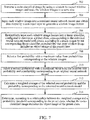
- step 206 specifically includes the following steps:
- Step 702 Traverse the to-be-classified image by using a window to extract window images and scale the window images to a same size.
- a Selective Search algorithm is applied to the to-be-classified image to extract 100 window images from the to-be-classified image, and the 100 window images are uniformly scaled to a size of 256*256.
- the scaled size should satisfy the size required for the input image of the neural network model.
- Step 704 Input each window image into a retrained neural network model and obtain data output by the non-input layer to generate a window image feature.
- each window image may be input into the retrained neural network model, vectors output by a plurality of layers specified in the intermediate layer and the output layer may be obtained, and vectors of different layers are stitched to obtain a window image feature.
- window images may be separately input into the retrained neural network model according to a plurality of sizes, vectors of different layers corresponding to images of a same size are stitched, and vectors corresponding to images of different sizes are averaged, so as to obtain a window image feature.
- Step 706 Respectively input each window image feature into a linear classifier, configured to determine a preset class, corresponding to the retrained neural network model and obtain, according to a result output by the corresponding linear classifier, a probability that each window image includes an object image of the preset class.
- a linear classifier configured to determine a preset class, corresponding to the retrained neural network model and obtain, according to a result output by the corresponding linear classifier, a probability that each window image includes an object image of the preset class.
- Step 708 Select a probability with a maximum value from probabilities corresponding to the window images. Specifically, herein, a maximum probability selected from probabilities corresponding to the window images is recorded as P3, a probability corresponding to the original neural network model is recorded as P2, and a probability corresponding to the retrained neural network model is P1.
- Step 710 Select a probability with a maximum value from the selected probability and a probability corresponding to an original neural network model. Specifically, a maximum probability selected from P2 and P3 is recorded as max(P2, P3).
- Step 712 Calculate a weighted average of the selected probability and the probability corresponding to the retrained neural network model.
- a weighted average of P1 and max(P2, P3) is calculated.
- the weight of P1 and max(P2, P3) may be determined by verifying image classification accuracy by using a validation set.
- several weight combinations such as 0.1 and 0.9, 0.2 and 0.8, as well as 0.3 and 0.7, may be prepared in advance, and image classification accuracy under different weight combinations is verified by using a validation set, so as to select a weight combination having the highest image classification accuracy as the weight combination in step 712 for calculating a weighted average.
- the validation set includes several sets of images whose true probabilities of including an object image of a preset class are known.
- Step 714 Determine, according to a relationship between the weighted average and a probability threshold corresponding to the preset class, whether the to-be-classified image includes the object image of the preset class.
- the weighted average is compared with a probability threshold of the preset class, and if the weighted average is greater than or equal to the probability threshold of the preset class, it is determined that the to-be-classified image includes an object image of the preset class; and if the weighted average is less than the probability threshold of the preset class, it is determined that the to-be-classified image does not include an object image of the preset class.
- the probability threshold may be 0.5.
- the to-be-classified image when the size of the to-be-classified image is greater than the size of the training image, the to-be-classified image may be divided into several sub-images that can partially overlap, and a weighted average of each sub-image is obtained separately through step 202, step 204, and step 702 to step 712, the weighted average indicates a comprehensive probability of each neural network model, and the comprehensive probability of each sub-image constitutes probability spatial distribution.
- a maximum probability passing through the probability spatial distribution may present a probability that the whole to-be-classified image includes the object image of the preset class, and object images of which preset classes are included by the to-be-classified image can be determined by using maximum probabilities of different preset classes.
- determination of some classes depends on context information, for example, the sea as a background is usually needed to determine a boat, so that a value of the corresponding P2 is greater than that of P3. Moreover, determination of some classes does not depend on the context information, so that a value of P3 is greater than that of P2. Moreover, if an object image of the preset class is not included, both P2 and P3 are relatively low. Therefore, as long as either P2 or P3 is very high, it could be basically determined that the possibility that the to-be-classified image includes an object image of the preset class is very high, so that image classification accuracy may be further improved.
- an electronic device 800 is provided, and an internal structure of the electronic device 800 may correspond to a structure of the electronic device as shown in FIG. 1 , and all or some of the modules below may be implemented by using software, hardware, or a combination thereof.
- the electronic device 800 includes an image feature extraction module 810, a linear classifier classification module 820, and a determining module 830.
- the image feature extraction module 810 is configured to input a to-be-classified image into a plurality of different neural network models, to obtain data output by a plurality of non-input layers specified by each neural network model to generate a plurality of corresponding image features.
- the to-be-classified image is an image that needs to be classified and may be carried in a picture preset format, and for example, the preset format may be the JPEG format, the PNG format, the BMP format, GIF format, or the like.
- the neural network model also referred to as Artificial Neural Networks (ANNs), is a machine learning model simulating a brain structure.
- ANNs Artificial Neural Networks
- a neural network is usually used to model a relatively complex task. Dimensions, including a depth and a width, of the neural network are all adjustable and depend on an application field and the scale of the problem. Because of a powerful expression capability, the neural network is widely used in application fields such as voice recognition, image classification, facial recognition, natural language processing, and advertising.
- a structure of the neural network model includes a plurality of layers, the first layer is an input layer, the last layer is an output layer, there is no intermediate layer or a plurality of intermediate layers in the middle and each layer includes one or more nodes.
- Dimensions of the input layer depend on a quantity of input variables, and dimensions of the output layer depend on a quantity of classification classes.
- An implicit layer includes a plurality of neurons, and complexity and an expression capability of the neural network model may be adjusted by adjusting a quantity of neurons. Generally, a wider and/or deeper neural network has a stronger modeling capability.
- a plurality of neural network models includes at least two neural network models, different neural network models are mainly trained by using different training sets, and the different training sets indicate that training images in the training sets are different. Certainly, existence of a small number of same training images in different training sets is also acceptable.
- the training image is an image whose class is known.
- Non-output layers of different neural network models may have a uniform architecture, and specifically, the non-output layers may include a same quantity of layers and have a same width.
- the architecture herein does not include a coefficient for connecting different layers.
- the non-output layer indicates an input layer and an intermediate layer, and the non-input layer indicates an intermediate layer and an output layer.
- the output layer includes a plurality of nodes.
- the neural network model may be a convolutional neural network model.
- a connection relationship between neurons of two adjacent layers changes from original full connection to connection between each neuron and only a few neurons, and a connection coefficient is the same between neurons and is referred to as a shared convolution kernel or a shared weight.
- Such a connection manner similar to a convolution can greatly reduce a quantity of learned parameters, by means of which some features with invariance are learned, is very suitable for processing image data, and is used to further improve classification accuracy during image classification.
- the image feature extraction module 810 is configured to input a to-be-classified image into output layers of a plurality of different neural network models to obtain data output by at least one layer in an intermediate layer and an output layer of each neural network model, where preferably, data output by at least two layers in an intermediate layer and an output layer of each neural network model may be obtained, and a plurality of image features having one-to-one correspondence with each neural network model is generated according to the obtained data.
- An output layer of a neural network model may output a probability that a to-be-classified image belongs to a preset class, and each node of the output layer represents a preset class.
- the non-input layer is preferably selected in a direction from an output layer to an input layer, for example, the output layer and the last-but-one are selected, or the output layer, the last-but-one layer, and the last-but-two layer are selected.
- the linear classifier classification module 820 is configured to respectively input the plurality of image features into a linear classifier, configured to determine a preset class, corresponding to each neural network model, to obtain a corresponding probability that the to-be-classified image includes an object image of the preset class, the linear classifier being obtained by training according to a feature extracted by a corresponding neural network model from a corresponding training image.
- each neural network model separately trains a linear classifier configured to determine the corresponding preset class, the linear classifier of the preset class is obtained, according to a training image whose true probability of including an object image of the preset class is known, after the neural network model corresponding to the linear classifier extracts image features.
- a plurality of image features may be separately input to a linear classifier, configured to determine a specific preset class, corresponding to each neural network model; if it is needed to determine which preset class or preset classes are included by a to-be-classified image, a plurality of image features may be separately input into all linear classifiers corresponding to each neural network model, and each linear classifier is configured to determine a preset class.
- Including an object image of a preset class is, for example, including an image of a television, including an image of a dog, including an image of human, or the like.
- a result output by a linear classifier may be a real number range, and a mapping function whose independent variable is a real number set and whose dependent variable is [0, 1] may be used for mapping the result output by the linear classifier into a probability that a to-be-classified image includes an object image of a preset class.
- the dependent variable of the mapping function is positively correlated to the independent variable of the mapping function, that is, the dependent variable increases as the independent variable increases and decreases as the independent variable decreases.
- the mapping function may be integrated into the linear classifier to enable the linear classifier to directly output a probability that a to-be-classified image includes an object image of a preset class.
- the determining module 830 is configured to determine, according to each obtained probability, whether the to-be-classified image includes the object image of the preset class.
- an average or a weighted average may be obtained from probabilities obtained by the linear classifier classification module 820 to obtain a comprehensive probability, so as to determine whether the comprehensive probability is greater than or equal to a probability threshold of the corresponding preset class. If the comprehensive probability is greater than or equal to the probability threshold, it is determined that the to-be-classified image includes the object image of the preset class; if the comprehensive probability is less than the probability threshold, it is determined that the to-be-classified image does not include the object image of the preset class.
- weight combinations For a weight of each probability when the weight average is calculated, several weight combinations may be prepared in advance, image classification accuracy under each weight combination is verified by using a validation set, and a weight combination with the highest image classification accuracy is selected as a weight of each probability when the weight average is calculated.
- the electronic device 800 extracts features of a to-be-classified image by using data output by a plurality of non-input layers of a neural network model, so as to express the features of the image more accurately.
- the image features are further input into a corresponding linear classifier, configured to determine a preset class, corresponding to a neural network model, and a probability obtained by using a result output by the linear classifier can more accurately reflect a probability that the to-be-classified image includes an object image of the preset class.
- Accuracy of image classification may be further improved by integrating probabilities corresponding to linear classifiers, configured to determine preset classes, respectively corresponding to different neural network models.
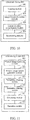
- the image feature extraction module 810 includes an input module 811, a vector obtaining module 812, and an image feature generation module 813.
- the input module 811 is configured to input a to-be-classified image into each neural network model.
- the vector obtaining module 812 is configured to obtain vectors output by a plurality of layers specified in an intermediate layer and an output layer of each neural network model.
- a plurality of layers specified in an intermediate layer and an output layer of each neural network model indicates that at least two layers that are specified in advance are selected from a set of layers constituted by the intermediate layer and the output layer. For example, vectors output by the output layer, the last-but-one layer, and the last-but-two layer of each neural network model may be obtained.
- a vector output by each layer is a vector with a fixed length.
- the image feature generation module 813 is configured to stitch vectors of different layers of each neural network model to obtain a plurality of image features separately corresponding to each neural network model.
- the image feature generation module 813 is configured to stitch, according to a predetermined stitching sequence, vectors of different layers of each neural network model to obtain image features having one-to-one correspondence with neural network models.
- a quantity of the obtained image features is consistent with a quantity of the neural network models.
- vectors output by a plurality of layers in the non-input layer of the neural network model are used to generate image features, so that the image features can better express features of the to-be-classified image, which is beneficial to obtaining better accuracy of classification.
- the input module 811 is specifically configured to separately input a to-be-classified image into each neural network model according to a plurality of sizes. Images of the plurality of sizes are all obtained by scaling up or down the to-be-classified image at a same aspect ratio.
- the to-be-classified image may be scaled down or up into images of three sizes, whose shorter sides are 256, 384, and 512, which are separately input into each neural network model.
- the image feature generation module 813 is specifically configured to stitch vectors of different layers corresponding to images of a same size of each neural network model and average vectors corresponding to images of different sizes, to obtain a plurality of image features separately corresponding to each neural network model.
- vectors output by a same layer of each neural network model have a fixed length, and features of the images of different sizes may be integrated in a manner of obtaining an average.
- vectors output by different layers of each neural network model usually have different lengths, and features of images of different layers may be integrated in a stitching manner.
- Vectors of different layers corresponding to images of a same size of each neural network model are stitched, and vectors corresponding to images of different sizes are averaged, which can be implemented without defining a sequential order.
- the image features obtained finally can accurately express the features of the to-be-classified image.
- the electronic device 800 further includes a training module 840, configured to clear up a coefficient of an output layer of an original neural network model trained by using a training set, adjust the output layer to adapt to another training set, and perform retraining, by using the another training set, to obtain a retrained neural network model.
- a training module 840 configured to clear up a coefficient of an output layer of an original neural network model trained by using a training set, adjust the output layer to adapt to another training set, and perform retraining, by using the another training set, to obtain a retrained neural network model.
- a training set is a training set that is used when an original neural network model is trained and includes several training image whose true probabilities of including an object image of the preset class are known.
- Another training set is a training set different from the training set is used when an original neural network model is trained.
- Different training sets have different quantities of preset classes. Therefore, it is needed to adjust nodes of the output layer according to a quantity of preset classes of another training set and clear up the coefficient of the output layer to perform retraining.
- a neural network model that is trained by using an ImageNet training set and that is published by the VGG laboratory of University of Oxford may be used as the original neural network model.
- another open neural network model such as an open-source neural network model of the Google Company, may also be used.
- ImageNet is a computer visual system recognition project, is established by computer scientists in the U.S.A by simulating the recognition system of human, and is configured to establish a depth learning model of recognizing an object from a picture.
- the ImageNet training set used for training the original neural network model has 1000 classes, and the scale of the output layer coefficient is 4096*1000 (4096 is an output quantity of the last-but-one layer). Another data set does not necessarily include 1000 classes. Assuming that there are 20 classes, the scale of the coefficient of the output layer is 4096*20. Therefore, the output layer should be adjusted to adapt to another training set to perform retraining.
- the FCN Frully Convolutional Networks for Semantic Segmentation
- the training module 840 may initialize the coefficient of the output layer of the neural network model whose output layer has been adjusted, and scale each training image in a corresponding training set into a same size to input it into the neural network model, where the output layer outputs a probability of including the object image of the preset class.
- the true probability may be a proportion of the object image of the preset class to the corresponding training image.
- the output probability is compared with the true probability of the training image to adjust the coefficient of the retrained neural network model, so that a difference between the probability output by the output layer and the corresponding true probability is reduced, and the training is finally completed.
- the training module 840 When scaling each training image in the corresponding training set into a same size to input it into the neural network model, the training module 840, if the aspect ratios are different, traverses the scaled image by using a square with a shorter side as a side length to obtain a sub-image to input it into the neural network model until all pixels of the scaled image are traversed.
- the training image may be scaled to 256 according to the shorter side, and according to the size of the longer side, sub-images of 256*256 are input multiple times at an interval of 16 pixels each time until all pixels of the scaled image are traversed.
- the training module 840 may obtain density probability spatial distribution of an object image of each preset class of a training image based on the OverFeat algorithm.
- True density probability spatial distribution may be calculated according to a true position of the object image in the training image.
- the back propagation gradient may be calculated according to the density probability spatial distribution obtained by using the OverFeat algorithm and the true density probability spatial distribution, so as to adjust a coefficient of the retrained neural network model according to the back propagation gradient, so that the difference between the probability output by the output layer and the corresponding true probability is reduced.
- the coefficient of the retrained neural network model is a vector X
- the input training image is I
- the probability output by the output layer is y(X, I)
- y can be calculated if X and I are given, and the true probability y' is known, it is needed to adjust the vector X to make y close to y' as much as possible.
- E a partial derivative about X is obtained, to obtain a gradient direction ⁇ X, and a value of X is adjusted in a direction - ⁇ X opposite to the gradient direction ⁇ X, to reduce E.
- the output layer outputs a probability matrix of the corresponding step class. For example, if an image of 256*256 is input, a probability matrix of 2*2 is obtained, and each probability in the matrix corresponds to a sub-image of the input training image. As shown in FIG. 6 , a value on the upper left corner of the probability matrix only depends on a sub-image of a size of 224*224 on the upper left corner of the training image.
- the probability in the probability matrix may be a proportion of a part of the object image of the preset class in a corresponding sub-image to the entire object image.
- a triangle in a sub-image of a size of 224*224 on the upper left corner of FIG. 6 is completely located inside the sub-image, and a corresponding probability is 1; a pentagram is not in the sub-image, so that a corresponding probability is 0; a half of a circle is in the sub-image, so that a corresponding probability is 0.5.
- a neural network model needed for image classification may be obtained by rapid training, so that the time needed for training is greatly saved.
- the determining module 830 includes: a window image extraction module 831, a window image feature generation module 832, a probability obtaining module 833, a probability filtering module 834, a calculation module 835 and an execution module 836.
- the window image extraction module 831 is configured to traverse the to-be-classified image by using a window to extract window images and scale the window images to a same size.
- the a window image extraction module 831 may be configured to apply the Selective Search algorithm to the to-be-classified image to extract 100 window images from the to-be-classified image, and uniformly scale the 100 window images to a size of 256*256.
- the scaled size should satisfy the size required for the input image of the neural network model.
- the window image feature generation module 832 is configured to input each window image into the retrained neural network model and obtain data output by the non-input layer to generate a window image feature.
- the window image feature generation module 832 may input each window image into the retrained neural network model, obtain vectors output by a plurality of layers specified in the intermediate layer and the output layer, and stitch vectors of different layers to obtain a window image feature.
- the window image feature generation module 832 may separately input window images into the retrained neural network model according to a plurality of sizes, stitch vectors of different layers corresponding to images of a same size, and average vectors corresponding to images of different sizes, so as to obtain a window image feature.
- the probability obtaining module 833 is configured to separately input each window image feature into a linear classifier, configured to determine a preset class, corresponding to the retrained neural network model and obtain, according to a result output by the corresponding linear classifier, a probability that each window image includes an object image of the preset class.
- the probability filtering module 834 is configured to select a probability with a maximum value from probabilities corresponding to the window images, and select a probability with a maximum value from the selected probability and a probability corresponding to an original neural network model. Specifically, herein, a maximum probability selected from probabilities corresponding to the window images is recorded as P3, a probability corresponding to the original neural network model is recorded as P2, and a probability corresponding to the retrained neural network model is P1. Specifically, a maximum probability selected from P2 and P3 is recorded as max(P2, P3).
- the calculation module 835 is configured to calculate a weighted average of the selected probability and the probability corresponding to the retrained neural network model.
- a weighted average of P1 and max(P2, P3) is calculated.
- the weight of P1 and max(P2, P3) may be determined by verifying image classification accuracy by using a validation set.
- several weight combinations such as 0.1 and 0.9, 0.2 and 0.8, as well as 0.3 and 0.7, may be prepared in advance, and image classification accuracy under different weight combinations is verified by using a validation set, so as to select a weight combination having the highest image classification accuracy as the weight combination in step 712 for calculating a weighted average.
- the validation set includes several sets of images whose true probabilities of including an object image of a preset class are known.
- the execution module 836 is configured to determine, according to a relationship between the weighted average and a probability threshold corresponding to the preset class, whether the to-be-classified image includes the object image of the preset class.
- the execution module 836 compares the weighted average with a probability threshold of the preset class, if the weighted average is greater than or equal to the probability threshold of the preset class, determine that the to-be-classified image includes an object image of the preset class; and if the weighted average is less than the probability threshold of the preset class, determine that the to-be-classified image does not include an object image of the preset class.
- the probability threshold may be 0.5.
- determination of some classes depends on context information, for example, the sea as a background is usually needed to determine a boat, so that a value of the corresponding P2 is greater than that of P3. Moreover, determination of some classes does not depend on the context information, so that a value of P3 is greater than that of P2. Moreover, if an object image of the preset class is not included, both P2 and P3 are relatively low. Therefore, as long as either P2 or P3 is very high, it could be basically determined that the possibility that the to-be-classified image includes an object image of the preset class is very high, so that image classification accuracy may be further improved.
- the foregoing program may be stored in a computer readable storage medium. When the program runs, the steps of the foregoing method embodiments are performed.
- the storage medium may be a non-volatile storage medium, such as a magnetic disk, an optical disc, or a read-only memory (ROM), a random access memory (RAM), or the like.
Landscapes
- Engineering & Computer Science (AREA)
- Theoretical Computer Science (AREA)
- Physics & Mathematics (AREA)
- General Physics & Mathematics (AREA)
- Data Mining & Analysis (AREA)
- Evolutionary Computation (AREA)
- Artificial Intelligence (AREA)
- Computer Vision & Pattern Recognition (AREA)
- General Engineering & Computer Science (AREA)
- Life Sciences & Earth Sciences (AREA)
- Health & Medical Sciences (AREA)
- Computing Systems (AREA)
- General Health & Medical Sciences (AREA)
- Software Systems (AREA)
- Evolutionary Biology (AREA)
- Bioinformatics & Cheminformatics (AREA)
- Bioinformatics & Computational Biology (AREA)
- Multimedia (AREA)
- Biomedical Technology (AREA)
- Biophysics (AREA)
- Computational Linguistics (AREA)
- Molecular Biology (AREA)
- Mathematical Physics (AREA)
- Medical Informatics (AREA)
- Databases & Information Systems (AREA)
- Physiology (AREA)
- Image Analysis (AREA)
Abstract
Description
- This application claims priority to Chinese Patent Application No.
201510921073.9 - The present disclosure relates to the field of computer visual technologies, and in particular, to an image classification method, an electronic device, and a storage medium.
- An image classification method is an image processing method for distinguishing objects of different classes according to different features reflected in image information and specifically, is using a computer to perform quantitative analysis on an image to classifying the image or each pixel or region in the image into one of several classes to replace visual interpretation of a person. After the image is classified, various applications, such as image retrieval, video surveillance, and image-related semantic analysis, may be further performed according to a classification result.
- Currently, a neural network model may be used to implement relatively accurate image classification. However, with continuous expansion and refinement of image classification applications, requirements on accuracy of image classification are continuously raised. Therefore, how to improve accuracy of image classification is an important problem that needs to be resolved currently.
- According to various embodiments of the present application, an image classification method capable of improving accuracy of image classification, an electronic device, and a storage medium are provided.
- An image classification method includes:
- inputting a to-be-classified image into a plurality of different neural network models, to obtain data output by a plurality of non-input layers specified by each neural network model to generate a plurality of corresponding image features;
- respectively inputting the plurality of image features into a linear classifier, configured to determine a preset class, corresponding to each neural network model, to obtain a corresponding probability that the to-be-classified image includes an object image of the preset class, the linear classifier being obtained by training according to a feature extracted by a corresponding neural network model from a corresponding training image; and
- determining, according to each obtained probability, whether the to-be-classified image includes the object image of the preset class.
- An electronic device includes a memory and a processor, the memory storing instructions, which, when being executed by the processor, cause the processor to perform the following steps:
- inputting a to-be-classified image into a plurality of different neural network models, to obtain data output by a plurality of non-input layers specified by each neural network model to generate a plurality of corresponding image features;
- respectively inputting the plurality of image features into a linear classifier, configured to determine a preset class, corresponding to each neural network model, to obtain a corresponding probability that the to-be-classified image includes an object image of the preset class, the linear classifier being obtained by training according to a feature extracted by a corresponding neural network model from a corresponding training image; and
- determining, according to each obtained probability, whether the to-be-classified image includes the object image of the preset class.
- A computer readable non-volatile storage medium store computer readable instructions, which, when being executed by one or more processors, cause the one or more processors to perform the following steps:
- inputting a to-be-classified image into a plurality of different neural network models, to obtain data output by a plurality of non-input layers specified by each neural network model to generate a plurality of corresponding image features;
- respectively inputting the plurality of image features into a linear classifier, configured to determine a preset class, corresponding to each neural network model, to obtain a corresponding probability that the to-be-classified image includes an object image of the preset class, the linear classifier being obtained by training according to a feature extracted by a corresponding neural network model from a corresponding training image; and
- determining, according to each obtained probability, whether the to-be-classified image includes the object image of the preset class.
- Details of one or more embodiments of the present disclosure are provided below in the accompanying drawings and descriptions. Other features, objectives, and advantages of this disclosure become apparent with reference to the specification, the accompanying drawings, and the claims.
- To describe the technical solutions of the embodiments of the present disclosure or the existing technology more clearly, the following briefly introduces the accompanying drawings required for describing the embodiments or the existing technology. Apparently, the accompanying drawings in the following description show only some embodiments of the present disclosure, and a person of ordinary skill in the art may still derive other drawings from these accompanying drawings without creative efforts.
-
FIG. 1 is a schematic structural diagram of an electronic device for implementing an image classification method in an embodiment; -
FIG. 2 is a flowchart of an image classification method in an embodiment; -
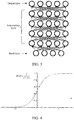
FIG. 3 is a schematic structural diagram of a simplified neural network model in a specific instance; -
FIG. 4 is a schematic diagram of a curve of a mapping function in an embodiment; -
FIG. 5 is a flowchart of a step of inputting a to-be-classified image into a plurality of different neural network models to obtain data output by a plurality of non-input layers specified by each neural network model to generate a plurality of corresponding image features; -
FIG. 6 is a schematic diagram of outputting a probability matrix when inputting a training image larger than a standard size during retraining a neural network model in an embodiment; -
FIG. 7 is a flowchart of determining whether a to-be-classified image includes an object image of a preset class according to each obtained probability in an embodiment; -
FIG. 8 is a structural block diagram of an electronic device in an embodiment; -
FIG. 9 is a structural block diagram of an image feature extraction module of an electronic device in an embodiment; -
FIG. 10 is a structural block diagram of an electronic device in another embodiment; -
FIG. 11 is a structural block diagram of a determining module of an electronic device in an embodiment. - To make the objectives, technical solutions, and advantages of the present disclosure more comprehensible, the present disclosure is described below in further detail with reference to the accompanying drawings and embodiments. It should be understood that the specific embodiments described therein are merely used for explaining the present disclosure instead of limiting the present disclosure.
- As shown in
FIG. 1 , in an embodiment, an electronic device for implementing an image classification method is provided, including a processor, a non-volatile storage medium, and an internal memory that are connected through a system bus. The processor has a calculation function and a function of controlling the electronic device to work, and the processor is configured to execute an image classification method. The non-volatile storage medium includes at least one of a magnetic storage medium, an optical storage medium, and a flash storage medium, and the non-volatile storage medium stores an operating system. The non-volatile storage medium and the internal memory may store a computer readable instruction, and when executed by the processor, the computer readable instruction may cause the processor to execute an image classification method. - As shown in
FIG. 2 , in an embodiment, an image classification method is provided. In this embodiment, applying the method to the electronic device shown inFIG. 1 is used as an example for description. The method specifically includes the following steps: - Step 202: Input a to-be-classified image into a plurality of different neural network models, to obtain data output by a plurality of non-input layers specified by each neural network model to generate a plurality of corresponding image features.
- The to-be-classified image is an image that needs to be classified and may be carried in a picture preset format, and for example, the preset format may be the JPEG format, the PNG format, the BMP format, GIF format, or the like. The neural network model, also referred to as Artificial Neural Networks (ANNs), is a machine learning model simulating a brain structure. In the field of machine learning, a neural network is usually used to model a relatively complex task. Dimensions, including a depth and a width, of the neural network are all adjustable and depend on an application field and the scale of the problem. Because of a powerful expression capability, the neural network is widely used in application fields such as voice recognition, image classification, facial recognition, natural language processing, and advertising.
- In the simplified neural network model as shown in
FIG. 3 , a structure of the neural network model includes a plurality of layers, the first layer is an input layer, the last layer is an output layer, there is no intermediate layer or a plurality of intermediate layers in the middle and each layer includes one or more nodes. Dimensions of the input layer depend on a quantity of input variables, and dimensions of the output layer depend on a quantity of classification classes. An implicit layer includes a plurality of neurons, and complexity and an expression capability of the neural network model may be adjusted by adjusting a quantity of neurons. Generally, a wider and/or deeper neural network has a stronger modeling capability. - A plurality of neural network models includes at least two neural network models, different neural network models are mainly trained by using different training sets, and the different training sets indicate that training images in the training sets are different. Certainly, existence of a small number of same training images in different training sets is also acceptable. The training image is an image whose class is known. Non-output layers of different neural network models may have a uniform architecture, and specifically, the non-output layers may include a same quantity of layers and have a same width. The architecture herein does not include a coefficient for connecting different layers. The non-output layer indicates an input layer and an intermediate layer, and the non-input layer indicates an intermediate layer and an output layer. The output layer includes a plurality of nodes.
- Preferably, the neural network model may be a convolutional neural network model. In the convolutional neural network model, a connection relationship between neurons of two adjacent layers changes from original full connection to connection between each neuron and only a few neurons, and a connection coefficient (or referred to as a weight) is the same between neurons and is referred to as a shared convolution kernel or a shared weight. Such a connection manner similar to a convolution can greatly reduce a quantity of learned parameters, by means of which some features with invariance are learned, is very suitable for processing image data, and is used to further improve classification accuracy during image classification.
- A to-be-classified image is input into output layers of a plurality of different neural network models to obtain data output by at least one layer in an intermediate layer and an output layer of each neural network model, preferably, data output by at least two layers in an intermediate layer and an output layer of each neural network model may be obtained, and a plurality of image features having one-to-one correspondence with each neural network model is generated according to the obtained data. An output layer of a neural network model may output a probability that a to-be-classified image belongs to a preset class, and each node of the output layer represents a preset class.
- When data output by a non-input layer is obtained, the non-input layer is preferably selected in a direction from an output layer to an input layer, for example, the output layer and the last-but-one are selected, or the output layer, the last-but-one layer, and the last-but-two layer are selected.
- Step 204: Respectively input the plurality of image features into a linear classifier, configured to determine a preset class, corresponding to each neural network model, to obtain a corresponding probability that the to-be-classified image includes an object image of the preset class, the linear classifier being obtained by training according to a feature extracted by a corresponding neural network model from a corresponding training image.
- Specifically, for each preset class, each neural network model separately trains a linear classifier configured to determine the corresponding preset class, the linear classifier of the preset class is obtained, according to a training image whose true probability of including an object image of the preset class is known, after the neural network model corresponding to the linear classifier extracts image features. During image feature extraction, if it is needed to determine whether a to-be-classified image includes an object image of a specific preset class, a plurality of image features may be separately input to a linear classifier, configured to determine a specific preset class, corresponding to each neural network model; if it is needed to determine which preset class or preset classes are included by a to-be-classified image, a plurality of image features may be separately input into all linear classifiers corresponding to each neural network model, and each linear classifier is configured to determine a preset class. Including an object image of a preset class is, for example, including an image of a television, including an image of a dog, including an image of human, or the like.
- A result output by a linear classifier may be a real number range, and a mapping function whose independent variable is a real number set and whose dependent variable is [0, 1] may be used for mapping the result output by the linear classifier into a probability that a to-be-classified image includes an object image of a preset class. The linear classifier is a linear classifier based on a Support Vector Machine (SVM). The dependent variable of the mapping function is positively correlated to the independent variable of the mapping function, that is, the dependent variable increases as the independent variable increases and decreases as the independent variable decreases. For example, a Sigmoid function may be used as the mapping function, and the Sigmoid function is specifically

FIG. 4 . The mapping function may be integrated into the linear classifier to enable the linear classifier to directly output a probability that a to-be-classified image includes an object image of a preset class. - Step 206: Determine, according to each obtained probability, whether the to-be-classified image includes the object image of the preset class.
- Specifically, an average or a weighted average may be obtained from probabilities obtained in
step 204 to obtain a comprehensive probability, so as to determine whether the comprehensive probability is greater than or equal to a probability threshold of the corresponding preset class. If the comprehensive probability is greater than or equal to the probability threshold, it is determined that the to-be-classified image includes the object image of the preset class; if the comprehensive probability is less than the probability threshold, it is determined that the to-be-classified image does not include the object image of the preset class. For a weight of each probability when the weight average is calculated, several weight combinations may be prepared in advance, image classification accuracy under each weight combination is verified by using a validation set, and a weight combination with the highest image classification accuracy is selected as a weight of each probability when the weight average is calculated. - In the foregoing image classification method, features of a to-be-classified image are extracted by using data output by a plurality of non-input layers of a neural network model, so as to express the features of the image more accurately. The image features are further input into a corresponding linear classifier, configured to determine a preset class, corresponding to a neural network model, and a probability obtained by using a result output by the linear classifier can more accurately reflect a probability that the to-be-classified image includes an object image of the preset class. Accuracy of image classification may be further improved by integrating probabilities corresponding to linear classifiers, configured to determine preset classes, respectively corresponding to different neural network models.
- As shown in
FIG. 5 , in an embodiment, step 202 specifically includes the following steps: - Step 502: Input a to-be-classified image into each neural network model.
- In an embodiment,
step 502 includes: separately inputting a to-be-classified image into each neural network model according to a plurality of sizes. Images of the plurality of sizes are all obtained by scaling up or down the to-be-classified image at a same aspect ratio. For example, the to-be-classified image may be scaled down or up into images of three sizes, whose shorter sides are 256, 384, and 512, which are separately input into each neural network model. - Step 504: Obtain vectors output by a plurality of layers specified in an intermediate layer and an output layer of each neural network model.
- A plurality of layers specified in an intermediate layer and an output layer of each neural network model indicates that at least two layers that are specified in advance are selected from a set of layers constituted by the intermediate layer and the output layer. For example, vectors output by the output layer, the last-but-one layer, and the last-but-two layer of each neural network model may be obtained. A vector output by each layer is a vector with a fixed length,
- Step 506: Stitch vectors of different layers of each neural network model to obtain a plurality of image features separately corresponding to each neural network model.
- Specifically, according to a predetermined stitching sequence, vectors of different layers of each neural network model are stitched to obtain image features having one-to-one correspondence with neural network models. A quantity of the obtained image features is consistent with a quantity of the neural network models.
- In an embodiment, step 506 specifically includes: stitching vectors of different layers corresponding to images of a same size of each neural network model and averaging vectors corresponding to images of different sizes, to obtain a plurality of image features separately corresponding to each neural network model.
- Specifically, after images of different sizes are input into a neural network model, vectors output by a same layer of each neural network model have a fixed length, and features of the images of different sizes may be integrated in a manner of obtaining an average. Moreover, vectors output by different layers of each neural network model usually have different lengths, and features of images of different layers may be integrated in a stitching manner. Vectors of different layers corresponding to images of a same size of each neural network model are stitched, and vectors corresponding to images of different sizes are averaged, which can be implemented without defining a sequential order. The image features obtained finally can accurately express the features of the to-be-classified image.
- In this embodiment, vectors output by a plurality of layers in the non-input layer of the neural network model are used to generate image features, so that the image features can better express features of the to-be-classified image, which is beneficial to obtaining better accuracy of classification.
- In an embodiment, the image classification method further includes: clearing up a coefficient of an output layer of an original neural network model trained by using a training set, adjusting the output layer to adapt to another training set, and performing retraining, by using the another training set, to obtain a retrained neural network model.
- A training set is a training set that is used when an original neural network model is trained and includes several training image whose true probabilities of including an object image of the preset class are known. Another training set is a training set different from the training set is used when an original neural network model is trained. Different training sets have different quantities of preset classes. Therefore, it is needed to adjust nodes of the output layer according to a quantity of preset classes of another training set and clear up the coefficient of the output layer to perform retraining.
- A neural network model that is trained by using an ImageNet training set and that is published by the VGG laboratory of University of Oxford may be used as the original neural network model. In another embodiment, another open neural network model, such as an open-source neural network model of the Google Company, may also be used. ImageNet is a computer visual system recognition project, is established by computer scientists in the U.S.A by simulating the recognition system of human, and is configured to establish a depth learning model of recognizing an object from a picture.
- The ImageNet training set used for training the original neural network model has 1000 classes, and the scale of the output layer coefficient is 4096*1000 (4096 is an output quantity of the last-but-one layer). Another data set does not necessarily include 1000 classes. Assuming that there are 20 classes, the scale of the coefficient of the output layer is 4096*20. Therefore, the output layer should be adjusted to adapt to another training set to perform retraining. During retraining, the Fully Convolutional Networks (FCN) (refer to Fully Convolutional Networks for Semantic Segmentation, arxiv:1411.4038v2) algorithm may be used for retraining.
- In an embodiment, when the neural network model is retrained, the coefficient of the output layer of the neural network model whose output layer has been adjusted is initialized, each training image in a corresponding training set is scaled into a same size to be input into the neural network model, and the output layer outputs a probability of including the object image of the preset class. The true probability may be a proportion of the object image of the preset class to the corresponding training image. The output probability is compared with the true probability of the training image to adjust the coefficient of the retrained neural network model, so that a difference between the probability output by the output layer and the corresponding true probability is reduced, and the training is finally completed.
- When each training image in the corresponding training set is scaled into a same size to be input into the neural network model, if the aspect ratios are different, the scaled image is traversed by using a square with a shorter side as a side length to obtain a sub-image to input it into the neural network model until all pixels of the scaled image are traversed. For example, the training image may be scaled to 256 according to the shorter side, and according to the size of the longer side, sub-images of 256*256 are input multiple times at an interval of 16 pixels each time until all pixels of the scaled image are traversed.
- In an embodiment, when a neural network model is retrained, density probability spatial distribution of an object image of each preset class of a training image may be obtained based on the OverFeat algorithm. True density probability spatial distribution may be calculated according to a true position of the object image in the training image. The back propagation gradient may be calculated according to the density probability spatial distribution obtained by using the OverFeat algorithm and the true density probability spatial distribution, so as to adjust a coefficient of the retrained neural network model according to the back propagation gradient, so that the difference between the probability output by the output layer and the corresponding true probability is reduced.
- For example, assuming that the coefficient of the retrained neural network model is a vector X, the input training image is I, the probability output by the output layer is y(X, I), y can be calculated if X and I are given, and the true probability y' is known, it is needed to adjust the vector X to make y close to y' as much as possible. Hence, X is optimized to minimize the cost function E=|y-y'|2. For E, a partial derivative about X is obtained, to obtain a gradient direction ΔX, and a value of X is adjusted in a direction -ΔX opposite to the gradient direction ΔX, to reduce E.
- Assuming that a standard size of the input image of the retrained neural network model is 224*224, if a training image larger than the standard size is input, the output layer outputs a probability matrix of the corresponding step class. For example, if an image of 256*256 is input, a probability matrix of 2*2 is obtained, and each probability in the matrix corresponds to a sub-image of the input training image. As shown in
FIG. 6 , a value on the upper left corner of the probability matrix only depends on a sub-image of a size of 224*224 on the upper left corner of the training image. The probability in the probability matrix may be a proportion of a part of the object image of the preset class in a corresponding sub-image to the entire object image. For example, a triangle in a sub-image of a size of 224*224 on the upper left corner ofFIG. 6 is completely located inside the sub-image, and a corresponding probability is 1; a pentagram is not in the sub-image, so that a corresponding probability is 0; a half of a circle is in the sub-image, so that a corresponding probability is 0.5. - In this embodiment, by adjusting and retraining an existing neural network model, a neural network model needed for image classification may be obtained by rapid training, so that the time needed for training is greatly saved.
- As shown in
FIG. 7 , in an embodiment, step 206 specifically includes the following steps: - Step 702: Traverse the to-be-classified image by using a window to extract window images and scale the window images to a same size.
- Specifically, a Selective Search algorithm is applied to the to-be-classified image to extract 100 window images from the to-be-classified image, and the 100 window images are uniformly scaled to a size of 256*256. The scaled size should satisfy the size required for the input image of the neural network model.
- Step 704: Input each window image into a retrained neural network model and obtain data output by the non-input layer to generate a window image feature.
- Specifically, each window image may be input into the retrained neural network model, vectors output by a plurality of layers specified in the intermediate layer and the output layer may be obtained, and vectors of different layers are stitched to obtain a window image feature.
- In an embodiment, window images may be separately input into the retrained neural network model according to a plurality of sizes, vectors of different layers corresponding to images of a same size are stitched, and vectors corresponding to images of different sizes are averaged, so as to obtain a window image feature.
- Step 706: Respectively input each window image feature into a linear classifier, configured to determine a preset class, corresponding to the retrained neural network model and obtain, according to a result output by the corresponding linear classifier, a probability that each window image includes an object image of the preset class.
- Step 708: Select a probability with a maximum value from probabilities corresponding to the window images. Specifically, herein, a maximum probability selected from probabilities corresponding to the window images is recorded as P3, a probability corresponding to the original neural network model is recorded as P2, and a probability corresponding to the retrained neural network model is P1.
- Step 710: Select a probability with a maximum value from the selected probability and a probability corresponding to an original neural network model. Specifically, a maximum probability selected from P2 and P3 is recorded as max(P2, P3).
- Step 712: Calculate a weighted average of the selected probability and the probability corresponding to the retrained neural network model.
- Specifically, a weighted average of P1 and max(P2, P3) is calculated. The weight of P1 and max(P2, P3) may be determined by verifying image classification accuracy by using a validation set. Specifically, several weight combinations, such as 0.1 and 0.9, 0.2 and 0.8, as well as 0.3 and 0.7, may be prepared in advance, and image classification accuracy under different weight combinations is verified by using a validation set, so as to select a weight combination having the highest image classification accuracy as the weight combination in
step 712 for calculating a weighted average. The validation set includes several sets of images whose true probabilities of including an object image of a preset class are known. - Step 714: Determine, according to a relationship between the weighted average and a probability threshold corresponding to the preset class, whether the to-be-classified image includes the object image of the preset class.
- Specifically, the weighted average is compared with a probability threshold of the preset class, and if the weighted average is greater than or equal to the probability threshold of the preset class, it is determined that the to-be-classified image includes an object image of the preset class; and if the weighted average is less than the probability threshold of the preset class, it is determined that the to-be-classified image does not include an object image of the preset class. For example, the probability threshold may be 0.5.
- In an embodiment, when the size of the to-be-classified image is greater than the size of the training image, the to-be-classified image may be divided into several sub-images that can partially overlap, and a weighted average of each sub-image is obtained separately through
step 202,step 204, and step 702 to step 712, the weighted average indicates a comprehensive probability of each neural network model, and the comprehensive probability of each sub-image constitutes probability spatial distribution. A maximum probability passing through the probability spatial distribution may present a probability that the whole to-be-classified image includes the object image of the preset class, and object images of which preset classes are included by the to-be-classified image can be determined by using maximum probabilities of different preset classes. - In this embodiment, it is considered that determination of some classes depends on context information, for example, the sea as a background is usually needed to determine a boat, so that a value of the corresponding P2 is greater than that of P3. Moreover, determination of some classes does not depend on the context information, so that a value of P3 is greater than that of P2. Moreover, if an object image of the preset class is not included, both P2 and P3 are relatively low. Therefore, as long as either P2 or P3 is very high, it could be basically determined that the possibility that the to-be-classified image includes an object image of the preset class is very high, so that image classification accuracy may be further improved.
- As shown in
FIG. 8 , in an embodiment, anelectronic device 800 is provided, and an internal structure of theelectronic device 800 may correspond to a structure of the electronic device as shown inFIG. 1 , and all or some of the modules below may be implemented by using software, hardware, or a combination thereof. Theelectronic device 800 includes an imagefeature extraction module 810, a linearclassifier classification module 820, and a determiningmodule 830. - The image
feature extraction module 810 is configured to input a to-be-classified image into a plurality of different neural network models, to obtain data output by a plurality of non-input layers specified by each neural network model to generate a plurality of corresponding image features. - The to-be-classified image is an image that needs to be classified and may be carried in a picture preset format, and for example, the preset format may be the JPEG format, the PNG format, the BMP format, GIF format, or the like. The neural network model, also referred to as Artificial Neural Networks (ANNs), is a machine learning model simulating a brain structure. In the field of machine learning, a neural network is usually used to model a relatively complex task. Dimensions, including a depth and a width, of the neural network are all adjustable and depend on an application field and the scale of the problem. Because of a powerful expression capability, the neural network is widely used in application fields such as voice recognition, image classification, facial recognition, natural language processing, and advertising.
- In the simplified neural network model as shown in
FIG. 3 , a structure of the neural network model includes a plurality of layers, the first layer is an input layer, the last layer is an output layer, there is no intermediate layer or a plurality of intermediate layers in the middle and each layer includes one or more nodes. Dimensions of the input layer depend on a quantity of input variables, and dimensions of the output layer depend on a quantity of classification classes. An implicit layer includes a plurality of neurons, and complexity and an expression capability of the neural network model may be adjusted by adjusting a quantity of neurons. Generally, a wider and/or deeper neural network has a stronger modeling capability. - A plurality of neural network models includes at least two neural network models, different neural network models are mainly trained by using different training sets, and the different training sets indicate that training images in the training sets are different. Certainly, existence of a small number of same training images in different training sets is also acceptable. The training image is an image whose class is known. Non-output layers of different neural network models may have a uniform architecture, and specifically, the non-output layers may include a same quantity of layers and have a same width. The architecture herein does not include a coefficient for connecting different layers. The non-output layer indicates an input layer and an intermediate layer, and the non-input layer indicates an intermediate layer and an output layer. The output layer includes a plurality of nodes.
- Preferably, the neural network model may be a convolutional neural network model. In the convolutional neural network model, a connection relationship between neurons of two adjacent layers changes from original full connection to connection between each neuron and only a few neurons, and a connection coefficient is the same between neurons and is referred to as a shared convolution kernel or a shared weight. Such a connection manner similar to a convolution can greatly reduce a quantity of learned parameters, by means of which some features with invariance are learned, is very suitable for processing image data, and is used to further improve classification accuracy during image classification.
- The image
feature extraction module 810 is configured to input a to-be-classified image into output layers of a plurality of different neural network models to obtain data output by at least one layer in an intermediate layer and an output layer of each neural network model, where preferably, data output by at least two layers in an intermediate layer and an output layer of each neural network model may be obtained, and a plurality of image features having one-to-one correspondence with each neural network model is generated according to the obtained data. An output layer of a neural network model may output a probability that a to-be-classified image belongs to a preset class, and each node of the output layer represents a preset class. - When data output by a non-input layer is obtained by the image
feature extraction module 810, the non-input layer is preferably selected in a direction from an output layer to an input layer, for example, the output layer and the last-but-one are selected, or the output layer, the last-but-one layer, and the last-but-two layer are selected. - The linear
classifier classification module 820 is configured to respectively input the plurality of image features into a linear classifier, configured to determine a preset class, corresponding to each neural network model, to obtain a corresponding probability that the to-be-classified image includes an object image of the preset class, the linear classifier being obtained by training according to a feature extracted by a corresponding neural network model from a corresponding training image. - Specifically, for each preset class, each neural network model separately trains a linear classifier configured to determine the corresponding preset class, the linear classifier of the preset class is obtained, according to a training image whose true probability of including an object image of the preset class is known, after the neural network model corresponding to the linear classifier extracts image features. If it is needed to determine whether a to-be-classified image includes an object image of a specific preset class, a plurality of image features may be separately input to a linear classifier, configured to determine a specific preset class, corresponding to each neural network model; if it is needed to determine which preset class or preset classes are included by a to-be-classified image, a plurality of image features may be separately input into all linear classifiers corresponding to each neural network model, and each linear classifier is configured to determine a preset class. Including an object image of a preset class is, for example, including an image of a television, including an image of a dog, including an image of human, or the like.
- A result output by a linear classifier may be a real number range, and a mapping function whose independent variable is a real number set and whose dependent variable is [0, 1] may be used for mapping the result output by the linear classifier into a probability that a to-be-classified image includes an object image of a preset class. The dependent variable of the mapping function is positively correlated to the independent variable of the mapping function, that is, the dependent variable increases as the independent variable increases and decreases as the independent variable decreases. For example, an Sigmoid function may be used as the mapping function, and the Sigmoid function is specifically

- The determining
module 830 is configured to determine, according to each obtained probability, whether the to-be-classified image includes the object image of the preset class. - Specifically, an average or a weighted average may be obtained from probabilities obtained by the linear
classifier classification module 820 to obtain a comprehensive probability, so as to determine whether the comprehensive probability is greater than or equal to a probability threshold of the corresponding preset class. If the comprehensive probability is greater than or equal to the probability threshold, it is determined that the to-be-classified image includes the object image of the preset class; if the comprehensive probability is less than the probability threshold, it is determined that the to-be-classified image does not include the object image of the preset class. For a weight of each probability when the weight average is calculated, several weight combinations may be prepared in advance, image classification accuracy under each weight combination is verified by using a validation set, and a weight combination with the highest image classification accuracy is selected as a weight of each probability when the weight average is calculated. - The
electronic device 800 extracts features of a to-be-classified image by using data output by a plurality of non-input layers of a neural network model, so as to express the features of the image more accurately. The image features are further input into a corresponding linear classifier, configured to determine a preset class, corresponding to a neural network model, and a probability obtained by using a result output by the linear classifier can more accurately reflect a probability that the to-be-classified image includes an object image of the preset class. Accuracy of image classification may be further improved by integrating probabilities corresponding to linear classifiers, configured to determine preset classes, respectively corresponding to different neural network models. - As shown in
FIG. 9 , in an embodiment, the imagefeature extraction module 810 includes aninput module 811, avector obtaining module 812, and an imagefeature generation module 813. - The
input module 811 is configured to input a to-be-classified image into each neural network model. - The
vector obtaining module 812 is configured to obtain vectors output by a plurality of layers specified in an intermediate layer and an output layer of each neural network model. - A plurality of layers specified in an intermediate layer and an output layer of each neural network model indicates that at least two layers that are specified in advance are selected from a set of layers constituted by the intermediate layer and the output layer. For example, vectors output by the output layer, the last-but-one layer, and the last-but-two layer of each neural network model may be obtained. A vector output by each layer is a vector with a fixed length.
- The image
feature generation module 813 is configured to stitch vectors of different layers of each neural network model to obtain a plurality of image features separately corresponding to each neural network model. - Specifically, the image
feature generation module 813 is configured to stitch, according to a predetermined stitching sequence, vectors of different layers of each neural network model to obtain image features having one-to-one correspondence with neural network models. A quantity of the obtained image features is consistent with a quantity of the neural network models. - In this embodiment, vectors output by a plurality of layers in the non-input layer of the neural network model are used to generate image features, so that the image features can better express features of the to-be-classified image, which is beneficial to obtaining better accuracy of classification.
- In an embodiment, the
input module 811 is specifically configured to separately input a to-be-classified image into each neural network model according to a plurality of sizes. Images of the plurality of sizes are all obtained by scaling up or down the to-be-classified image at a same aspect ratio. For example, the to-be-classified image may be scaled down or up into images of three sizes, whose shorter sides are 256, 384, and 512, which are separately input into each neural network model. - The image
feature generation module 813 is specifically configured to stitch vectors of different layers corresponding to images of a same size of each neural network model and average vectors corresponding to images of different sizes, to obtain a plurality of image features separately corresponding to each neural network model. - Specifically, after images of different sizes are input into a neural network model, vectors output by a same layer of each neural network model have a fixed length, and features of the images of different sizes may be integrated in a manner of obtaining an average. Moreover, vectors output by different layers of each neural network model usually have different lengths, and features of images of different layers may be integrated in a stitching manner. Vectors of different layers corresponding to images of a same size of each neural network model are stitched, and vectors corresponding to images of different sizes are averaged, which can be implemented without defining a sequential order. The image features obtained finally can accurately express the features of the to-be-classified image.
- As shown in
FIG. 10 , in an embodiment, theelectronic device 800 further includes atraining module 840, configured to clear up a coefficient of an output layer of an original neural network model trained by using a training set, adjust the output layer to adapt to another training set, and perform retraining, by using the another training set, to obtain a retrained neural network model. - A training set is a training set that is used when an original neural network model is trained and includes several training image whose true probabilities of including an object image of the preset class are known. Another training set is a training set different from the training set is used when an original neural network model is trained. Different training sets have different quantities of preset classes. Therefore, it is needed to adjust nodes of the output layer according to a quantity of preset classes of another training set and clear up the coefficient of the output layer to perform retraining.
- A neural network model that is trained by using an ImageNet training set and that is published by the VGG laboratory of University of Oxford may be used as the original neural network model. In another embodiment, another open neural network model, such as an open-source neural network model of the Google Company, may also be used. ImageNet is a computer visual system recognition project, is established by computer scientists in the U.S.A by simulating the recognition system of human, and is configured to establish a depth learning model of recognizing an object from a picture.
- The ImageNet training set used for training the original neural network model has 1000 classes, and the scale of the output layer coefficient is 4096*1000 (4096 is an output quantity of the last-but-one layer). Another data set does not necessarily include 1000 classes. Assuming that there are 20 classes, the scale of the coefficient of the output layer is 4096*20. Therefore, the output layer should be adjusted to adapt to another training set to perform retraining. During retraining, the FCN (Fully Convolutional Networks for Semantic Segmentation) algorithm may be used for retraining.
- In an embodiment, when retraining the neural network model, the
training module 840 may initialize the coefficient of the output layer of the neural network model whose output layer has been adjusted, and scale each training image in a corresponding training set into a same size to input it into the neural network model, where the output layer outputs a probability of including the object image of the preset class. The true probability may be a proportion of the object image of the preset class to the corresponding training image. The output probability is compared with the true probability of the training image to adjust the coefficient of the retrained neural network model, so that a difference between the probability output by the output layer and the corresponding true probability is reduced, and the training is finally completed. - When scaling each training image in the corresponding training set into a same size to input it into the neural network model, the
training module 840, if the aspect ratios are different, traverses the scaled image by using a square with a shorter side as a side length to obtain a sub-image to input it into the neural network model until all pixels of the scaled image are traversed. For example, the training image may be scaled to 256 according to the shorter side, and according to the size of the longer side, sub-images of 256*256 are input multiple times at an interval of 16 pixels each time until all pixels of the scaled image are traversed. - In an embodiment, when retraining a neural network model, the
training module 840 may obtain density probability spatial distribution of an object image of each preset class of a training image based on the OverFeat algorithm. True density probability spatial distribution may be calculated according to a true position of the object image in the training image. The back propagation gradient may be calculated according to the density probability spatial distribution obtained by using the OverFeat algorithm and the true density probability spatial distribution, so as to adjust a coefficient of the retrained neural network model according to the back propagation gradient, so that the difference between the probability output by the output layer and the corresponding true probability is reduced. - For example, assuming that the coefficient of the retrained neural network model is a vector X, the input training image is I, the probability output by the output layer is y(X, I), y can be calculated if X and I are given, and the true probability y' is known, it is needed to adjust the vector X to make y close to y' as much as possible. Hence, X is optimized to minimize the cost function E=|y-y'|2. For E, a partial derivative about X is obtained, to obtain a gradient direction ΔX, and a value of X is adjusted in a direction -ΔX opposite to the gradient direction ΔX, to reduce E.
- Assuming that a standard size of the input image of the retrained neural network model is 224*224, if a training image larger than the standard size is input, the output layer outputs a probability matrix of the corresponding step class. For example, if an image of 256*256 is input, a probability matrix of 2*2 is obtained, and each probability in the matrix corresponds to a sub-image of the input training image. As shown in
FIG. 6 , a value on the upper left corner of the probability matrix only depends on a sub-image of a size of 224*224 on the upper left corner of the training image. The probability in the probability matrix may be a proportion of a part of the object image of the preset class in a corresponding sub-image to the entire object image. For example, a triangle in a sub-image of a size of 224*224 on the upper left corner ofFIG. 6 is completely located inside the sub-image, and a corresponding probability is 1; a pentagram is not in the sub-image, so that a corresponding probability is 0; a half of a circle is in the sub-image, so that a corresponding probability is 0.5. - In this embodiment, by adjusting and retraining an existing neural network model, a neural network model needed for image classification may be obtained by rapid training, so that the time needed for training is greatly saved.
- As shown in
FIG. 11 , in an embodiment, the determiningmodule 830 includes: a windowimage extraction module 831, a window imagefeature generation module 832, aprobability obtaining module 833, aprobability filtering module 834, acalculation module 835 and anexecution module 836. - The window
image extraction module 831 is configured to traverse the to-be-classified image by using a window to extract window images and scale the window images to a same size. - Specifically, the a window
image extraction module 831 may be configured to apply the Selective Search algorithm to the to-be-classified image to extract 100 window images from the to-be-classified image, and uniformly scale the 100 window images to a size of 256*256. The scaled size should satisfy the size required for the input image of the neural network model. - The window image
feature generation module 832 is configured to input each window image into the retrained neural network model and obtain data output by the non-input layer to generate a window image feature. - Specifically, the window image
feature generation module 832 may input each window image into the retrained neural network model, obtain vectors output by a plurality of layers specified in the intermediate layer and the output layer, and stitch vectors of different layers to obtain a window image feature. - In an embodiment, the window image
feature generation module 832 may separately input window images into the retrained neural network model according to a plurality of sizes, stitch vectors of different layers corresponding to images of a same size, and average vectors corresponding to images of different sizes, so as to obtain a window image feature. - The
probability obtaining module 833 is configured to separately input each window image feature into a linear classifier, configured to determine a preset class, corresponding to the retrained neural network model and obtain, according to a result output by the corresponding linear classifier, a probability that each window image includes an object image of the preset class. - The
probability filtering module 834 is configured to select a probability with a maximum value from probabilities corresponding to the window images, and select a probability with a maximum value from the selected probability and a probability corresponding to an original neural network model. Specifically, herein, a maximum probability selected from probabilities corresponding to the window images is recorded as P3, a probability corresponding to the original neural network model is recorded as P2, and a probability corresponding to the retrained neural network model is P1. Specifically, a maximum probability selected from P2 and P3 is recorded as max(P2, P3). - The
calculation module 835 is configured to calculate a weighted average of the selected probability and the probability corresponding to the retrained neural network model. - Specifically, a weighted average of P1 and max(P2, P3) is calculated. The weight of P1 and max(P2, P3) may be determined by verifying image classification accuracy by using a validation set. Specifically, several weight combinations, such as 0.1 and 0.9, 0.2 and 0.8, as well as 0.3 and 0.7, may be prepared in advance, and image classification accuracy under different weight combinations is verified by using a validation set, so as to select a weight combination having the highest image classification accuracy as the weight combination in
step 712 for calculating a weighted average. The validation set includes several sets of images whose true probabilities of including an object image of a preset class are known. - The
execution module 836 is configured to determine, according to a relationship between the weighted average and a probability threshold corresponding to the preset class, whether the to-be-classified image includes the object image of the preset class. - Specifically, the
execution module 836 compares the weighted average with a probability threshold of the preset class, if the weighted average is greater than or equal to the probability threshold of the preset class, determine that the to-be-classified image includes an object image of the preset class; and if the weighted average is less than the probability threshold of the preset class, determine that the to-be-classified image does not include an object image of the preset class. For example, the probability threshold may be 0.5. - In this embodiment, it is considered that determination of some classes depends on context information, for example, the sea as a background is usually needed to determine a boat, so that a value of the corresponding P2 is greater than that of P3. Moreover, determination of some classes does not depend on the context information, so that a value of P3 is greater than that of P2. Moreover, if an object image of the preset class is not included, both P2 and P3 are relatively low. Therefore, as long as either P2 or P3 is very high, it could be basically determined that the possibility that the to-be-classified image includes an object image of the preset class is very high, so that image classification accuracy may be further improved.
- A person of ordinary skill in the art may understand that, all or a part of the processes of the foregoing method embodiments may be implemented by a computer program instructing relevant hardware. The foregoing program may be stored in a computer readable storage medium. When the program runs, the steps of the foregoing method embodiments are performed. The storage medium may be a non-volatile storage medium, such as a magnetic disk, an optical disc, or a read-only memory (ROM), a random access memory (RAM), or the like.
- Technical features of the foregoing embodiments may be combined randomly. To make descriptions brief, not all possible combinations of technical features in the embodiments are described. Therefore, as long as there is no contradiction between the combinations of technical features, they should all be considered as scopes disclosed in this description.
- The foregoing embodiments only describe several implementation manners of the present disclosure, and their description is specific and detailed, but cannot therefore be understood as a limitation to the patent scope of the present disclosure. It should be noted that a person of ordinary skill in the art may further make variations and improvements without departing from the conception of the present disclosure, and these all fall within the protection scope of the present disclosure. Therefore, the patent protection scope of the present disclosure should be subject to the appended claims.
Claims (15)
- An image classification method, comprising:inputting a to-be-classified image into a plurality of different neural network models, to obtain data output by a plurality of non-input layers specified by each neural network model to generate a plurality of corresponding image features;respectively inputting the plurality of image features into a linear classifier, configured to determine a preset class, corresponding to each neural network model, to obtain a corresponding probability that the to-be-classified image comprises an object image of the preset class, the linear classifier being obtained by training according to a feature extracted by a corresponding neural network model from a corresponding training image; anddetermining, according to each obtained probability, whether the to-be-classified image comprises the object image of the preset class.
- The method according to claim 1, wherein the inputting a to-be-classified image into a plurality of different neural network models, to obtain data output by a plurality of non-input layers specified by each neural network model to generate a plurality of corresponding image features comprises:inputting the to-be-classified image into each neural network model;obtaining vectors output by a plurality of layers specified in an intermediate layer and an output layer of each neural network model; andstitching vectors of different layers of each neural network model to obtain a plurality of image features separately corresponding to each neural network model.
- The method according to claim 2, wherein the inputting the to-be-classified image into each neural network model comprises:separately inputting the to-be-classified image into each neural network model according to a plurality of sizes; andthe stitching vectors of different layers of each neural network model to obtain a plurality of image features separately corresponding to each neural network model comprises:
stitching vectors of different layers corresponding to images of a same size of each neural network model and averaging vectors corresponding to images of different sizes, to obtain a plurality of image features separately corresponding to each neural network model. - The method according to claim 1, further comprising:
clearing up a coefficient of an output layer of an original neural network model trained by using a training set, adjusting the output layer to adapt to another training set, and performing retraining, by using the another training set, to obtain a retrained neural network model. - The method according to claim 4, wherein the determining, according to each obtained probability, whether the to-be-classified image comprises the object image of the preset class comprises:traversing the to-be-classified image by using a window to extract window images and scaling the window images to a same size;inputting each window image into the retrained neural network model and obtaining data output by the non-input layer to generate a window image feature;respectively inputting each window image feature into a linear classifier, configured to determine a preset class, corresponding to the retrained neural network model and obtaining, according to a result output by the corresponding linear classifier, a probability that each window image comprises an object image of the preset class;selecting a probability with a maximum value from probabilities corresponding to the window images;selecting a probability with a maximum value from the selected probability and a probability corresponding to the original neural network model;calculating a weighted average of the selected probability and the probability corresponding to the retrained neural network model; anddetermining, according to a relationship between the weighted average and a probability threshold corresponding to the preset class, whether the to-be-classified image comprises the object image of the preset class.
- An electronic device, comprising a memory and a processor, the memory storing instructions, which, when being executed by the processor, cause the processor to perform the following steps:inputting a to-be-classified image into a plurality of different neural network models, to obtain data output by a plurality of non-input layers specified by each neural network model to generate a plurality of corresponding image features;respectively inputting the plurality of image features into a linear classifier, configured to determine a preset class, corresponding to each neural network model, to obtain a corresponding probability that the to-be-classified image comprises an object image of the preset class, the linear classifier being obtained by training according to a feature extracted by a corresponding neural network model from a corresponding training image; anddetermining, according to each obtained probability, whether the to-be-classified image comprises the object image of the preset class.
- The electronic device according to claim 6, wherein the inputting a to-be-classified image into a plurality of different neural network models, to obtain data output by a plurality of non-input layers specified by each neural network model to generate a plurality of corresponding image features comprises:inputting the to-be-classified image into each neural network model;obtaining vectors output by a plurality of layers specified in an intermediate layer and an output layer of each neural network model; andstitching vectors of different layers of each neural network model to obtain a plurality of image features separately corresponding to each neural network model.
- The electronic device according to claim 7, wherein the inputting the to-be-classified image into each neural network model comprises:separately inputting the to-be-classified image into each neural network model according to a plurality of sizes; andthe stitching vectors of different layers of each neural network model to obtain a plurality of image features separately corresponding to each neural network model comprises:
stitching vectors of different layers corresponding to images of a same size of each neural network model and averaging vectors corresponding to images of different sizes, to obtain a plurality of image features separately corresponding to each neural network model. - The electronic device according to claim 6, wherein when being executed by the processor, the instructions further cause the processor to perform the following step:
clearing up a coefficient of an output layer of an original neural network model trained by using a training set, adjusting the output layer to adapt to another training set, and performing retraining, by using the another training set, to obtain a retrained neural network model. - The electronic device according to claim 9, wherein the determining, according to each obtained probability, whether the to-be-classified image comprises the object image of the preset class comprises:traversing the to-be-classified image by using a window to extract window images and scaling the window images to a same size;inputting each window image into the retrained neural network model and obtaining data output by the non-input layer to generate a window image feature;respectively inputting each window image feature into a linear classifier, configured to determine a preset class, corresponding to the retrained neural network model and obtaining, according to a result output by the corresponding linear classifier, a probability that each window image comprises an object image of the preset class;selecting a probability with a maximum value from probabilities corresponding to the window images;selecting a probability with a maximum value from the selected probability and a probability corresponding to the original neural network model;calculating a weighted average of the selected probability and the probability corresponding to the retrained neural network model; anddetermining, according to a relationship between the weighted average and a probability threshold corresponding to the preset class, whether the to-be-classified image comprises the object image of the preset class.
- A computer readable non-volatile storage medium storing computer readable instructions, which, when being executed by one or more processors, cause the one or more processors to perform the following steps:inputting a to-be-classified image into a plurality of different neural network models, to obtain data output by a plurality of non-input layers specified by each neural network model to generate a plurality of corresponding image features;respectively inputting the plurality of image features into a linear classifier, configured to determine a preset class, corresponding to each neural network model, to obtain a corresponding probability that the to-be-classified image comprises an object image of the preset class, the linear classifier being obtained by training according to a feature extracted by a corresponding neural network model from a corresponding training image; anddetermining, according to each obtained probability, whether the to-be-classified image comprises the object image of the preset class.
- The computer readable non-volatile storage medium according to claim 11, wherein the inputting a to-be-classified image into a plurality of different neural network models, to obtain data output by a plurality of non-input layers specified by each neural network model to generate a plurality of corresponding image features comprises:inputting the to-be-classified image into each neural network model;obtaining vectors output by a plurality of layers specified in an intermediate layer and an output layer of each neural network model; andstitching vectors of different layers of each neural network model to obtain a plurality of image features separately corresponding to each neural network model.
- The computer readable non-volatile storage medium according to claim 12, wherein the inputting the to-be-classified image into each neural network model comprises:separately inputting the to-be-classified image into each neural network model according to a plurality of sizes; andthe stitching vectors of different layers of each neural network model to obtain a plurality of image features separately corresponding to each neural network model comprises:
stitching vectors of different layers corresponding to images of a same size of each neural network model and averaging vectors corresponding to images of different sizes, to obtain a plurality of image features separately corresponding to each neural network model. - The computer readable non-volatile storage medium according to claim 11, wherein when being executed by one or more processors, the computer readable instructions further cause the one or more processors to perform the following step:
clearing up a coefficient of an output layer of an original neural network model trained by using a training set, adjusting the output layer to adapt to another training set, and performing retraining, by using the another training set, to obtain a retrained neural network model. - The computer readable non-volatile storage medium according to claim 14, wherein the determining, according to each obtained probability, whether the to-be-classified image comprises the object image of the preset class comprises:traversing the to-be-classified image by using a window to extract window images and scaling the window images to a same size;inputting each window image into the retrained neural network model and obtaining data output by the non-input layer to generate a window image feature;respectively inputting each window image feature into a linear classifier, configured to determine a preset class, corresponding to the retrained neural network model and obtaining, according to a result output by the corresponding linear classifier, a probability that each window image comprises an object image of the preset class;selecting a probability with a maximum value from probabilities corresponding to the window images;selecting a probability with a maximum value from the selected probability and a probability corresponding to the original neural network model;calculating a weighted average of the selected probability and the probability corresponding to the retrained neural network model; anddetermining, according to a relationship between the weighted average and a probability threshold corresponding to the preset class, whether the to-be-classified image comprises the object image of the preset class.
Applications Claiming Priority (2)
| Application Number | Priority Date | Filing Date | Title |
|---|---|---|---|
| CN201510921073.9A CN106874921B (en) | 2015-12-11 | 2015-12-11 | Image classification method and device |
| PCT/CN2016/083064 WO2017096758A1 (en) | 2015-12-11 | 2016-05-23 | Image classification method, electronic device, and storage medium |
Publications (3)
| Publication Number | Publication Date |
|---|---|
| EP3388978A1 true EP3388978A1 (en) | 2018-10-17 |
| EP3388978A4 EP3388978A4 (en) | 2019-05-01 |
| EP3388978B1 EP3388978B1 (en) | 2021-02-24 |
Family
ID=59012622
Family Applications (1)
| Application Number | Title | Priority Date | Filing Date |
|---|---|---|---|
| EP16871963.1A Active EP3388978B1 (en) | 2015-12-11 | 2016-05-23 | Image classification method, electronic device, and storage medium |
Country Status (4)
| Country | Link |
|---|---|
| US (1) | US10325181B2 (en) |
| EP (1) | EP3388978B1 (en) |
| CN (1) | CN106874921B (en) |
| WO (1) | WO2017096758A1 (en) |
Cited By (2)
| Publication number | Priority date | Publication date | Assignee | Title |
|---|---|---|---|---|
| CN111292026A (en) * | 2020-04-27 | 2020-06-16 | 江苏金恒信息科技股份有限公司 | Scrap steel grading method and device based on neural network model fusion |
| CN115187819A (en) * | 2022-08-23 | 2022-10-14 | 北京医准智能科技有限公司 | Training method and device for image classification model, electronic equipment and storage medium |
Families Citing this family (100)
| Publication number | Priority date | Publication date | Assignee | Title |
|---|---|---|---|---|
| FR3050855B1 (en) * | 2016-04-27 | 2019-05-03 | Commissariat A L'energie Atomique Et Aux Energies Alternatives | DEVICE AND METHOD FOR CONVOLUTION CALCULATION OF A CONVOLUTIONAL NEURON NETWORK |
| US10043088B2 (en) * | 2016-06-23 | 2018-08-07 | Siemens Healthcare Gmbh | Image quality score using a deep generative machine-learning model |
| JP6633462B2 (en) * | 2016-06-29 | 2020-01-22 | 株式会社東芝 | Information processing apparatus and information processing method |
| CN107665333A (en) * | 2017-08-28 | 2018-02-06 | 平安科技(深圳)有限公司 | A kind of indecency image identification method, terminal, equipment and computer-readable recording medium based on convolutional neural networks |
| EP3474189A1 (en) * | 2017-10-18 | 2019-04-24 | Aptiv Technologies Limited | A device and a method for assigning labels of a plurality of predetermined classes to pixels of an image |
| CN110399929B (en) * | 2017-11-01 | 2023-04-28 | 腾讯科技(深圳)有限公司 | Fundus image classification method, fundus image classification apparatus, and computer-readable storage medium |
| CN110348428B (en) * | 2017-11-01 | 2023-03-24 | 腾讯科技(深圳)有限公司 | Fundus image classification method and device and computer-readable storage medium |
| WO2019111550A1 (en) | 2017-12-08 | 2019-06-13 | 日本電気株式会社 | Person identification device, person identification method, and non-transitory computer readable medium |
| US20190042743A1 (en) * | 2017-12-15 | 2019-02-07 | Intel Corporation | Malware detection and classification using artificial neural network |
| CN108156519B (en) * | 2017-12-25 | 2020-12-11 | 深圳Tcl新技术有限公司 | Image classification method, television device, and computer-readable storage medium |
| CN108319968A (en) * | 2017-12-27 | 2018-07-24 | 中国农业大学 | A kind of recognition methods of fruits and vegetables image classification and system based on Model Fusion |
| US11734567B2 (en) * | 2018-02-13 | 2023-08-22 | Samsung Electronics Co., Ltd. | Method and system for reducing deep neural network architectures |
| CN108280490A (en) * | 2018-02-28 | 2018-07-13 | 北京邮电大学 | A kind of fine granularity model recognizing method based on convolutional neural networks |
| WO2019171116A1 (en) * | 2018-03-05 | 2019-09-12 | Omron Corporation | Method and device for recognizing object |
| CN108416168B (en) * | 2018-03-29 | 2021-11-02 | 北京航空航天大学 | Selection scheme of terrain adaptation area based on hierarchical decision-making |
| CN108629772B (en) * | 2018-05-08 | 2023-10-03 | 上海商汤智能科技有限公司 | Image processing method and device, computer equipment and computer storage medium |
| CN108765449B (en) * | 2018-05-16 | 2022-04-26 | 南京信息工程大学 | A method for image background segmentation and recognition based on convolutional neural network |
| US11640522B2 (en) | 2018-12-13 | 2023-05-02 | Tybalt, Llc | Computational efficiency improvements for artificial neural networks |
| WO2020003434A1 (en) * | 2018-06-28 | 2020-01-02 | 株式会社島津製作所 | Machine learning method, machine learning device, and machine learning program |
| CN110163049B (en) * | 2018-07-18 | 2023-08-29 | 腾讯科技(深圳)有限公司 | A face attribute prediction method, device and storage medium |
| US10769428B2 (en) * | 2018-08-13 | 2020-09-08 | Google Llc | On-device image recognition |
| US10991092B2 (en) * | 2018-08-13 | 2021-04-27 | Siemens Healthcare Gmbh | Magnetic resonance imaging quality classification based on deep machine-learning to account for less training data |
| CN109447097B (en) * | 2018-08-23 | 2021-01-08 | 浙江理工大学 | Fabric principal component detection method based on convolutional neural network |
| TWI691930B (en) * | 2018-09-19 | 2020-04-21 | 財團法人工業技術研究院 | Classification method and classification device based on neural network |
| CN109124635B (en) * | 2018-09-25 | 2022-09-02 | 上海联影医疗科技股份有限公司 | Model generation method, magnetic resonance imaging scanning method and system |
| US10915734B2 (en) | 2018-09-28 | 2021-02-09 | Apple Inc. | Network performance by including attributes |
| CN111104954B (en) * | 2018-10-26 | 2023-11-14 | 华为云计算技术有限公司 | A method and device for object classification |
| CN109151615B (en) * | 2018-11-02 | 2022-01-25 | 湖南双菱电子科技有限公司 | Video processing method, computer device, and computer storage medium |
| CN109766742B (en) * | 2018-11-20 | 2022-12-06 | 安徽农业大学 | Corn seed crack identification method, device, system, equipment and storage medium |
| US10963757B2 (en) * | 2018-12-14 | 2021-03-30 | Industrial Technology Research Institute | Neural network model fusion method and electronic device using the same |
| CN111382758B (en) * | 2018-12-28 | 2023-12-26 | 杭州海康威视数字技术股份有限公司 | Training image classification models, image classification methods, devices, equipment and media |
| WO2020141587A1 (en) * | 2019-01-02 | 2020-07-09 | パナソニック インテレクチュアル プロパティ コーポレーション オブ アメリカ | Information processing device, information processing method, and program |
| CN109766823A (en) * | 2019-01-07 | 2019-05-17 | 浙江大学 | A kind of high-definition remote sensing ship detecting method based on deep layer convolutional neural networks |
| CN109784415B (en) * | 2019-01-25 | 2021-02-26 | 北京地平线机器人技术研发有限公司 | Image recognition method and device and method and device for training convolutional neural network |
| CN111488893B (en) * | 2019-01-25 | 2023-05-30 | 银河水滴科技(北京)有限公司 | An image classification method and device |
| US11003947B2 (en) * | 2019-02-25 | 2021-05-11 | Fair Isaac Corporation | Density based confidence measures of neural networks for reliable predictions |
| CN111626400B (en) * | 2019-02-28 | 2024-03-15 | 佳能株式会社 | Training and application method and device for multi-layer neural network model and storage medium |
| CN110009800B (en) * | 2019-03-14 | 2023-04-07 | 北京京东乾石科技有限公司 | Identification method and equipment |
| SG11202110629VA (en) | 2019-03-26 | 2021-10-28 | Agency Science Tech & Res | Method and system for image classification |
| CN111800287B (en) * | 2019-04-09 | 2023-07-18 | Oppo广东移动通信有限公司 | Data processing method, device, storage medium and electronic equipment |
| CN111814813B (en) * | 2019-04-10 | 2024-07-19 | 北京市商汤科技开发有限公司 | Neural network training and image classification method and device |
| CN110070122B (en) * | 2019-04-15 | 2022-05-06 | 沈阳理工大学 | Convolutional neural network fuzzy image classification method based on image enhancement |
| CN110188613A (en) * | 2019-04-28 | 2019-08-30 | 上海鹰瞳医疗科技有限公司 | Image Classification Method and Equipment |
| CN110222733B (en) * | 2019-05-17 | 2021-05-11 | 嘉迈科技(海南)有限公司 | High-precision multi-order neural network classification method and system |
| US11164478B2 (en) | 2019-05-17 | 2021-11-02 | NotCo Delaware, LLC | Systems and methods to mimic target food items using artificial intelligence |
| CN110246134A (en) * | 2019-06-24 | 2019-09-17 | 株洲时代电子技术有限公司 | A kind of rail defects and failures sorter |
| CN110427970B (en) * | 2019-07-05 | 2023-08-01 | 平安科技(深圳)有限公司 | Image classification method, apparatus, computer device and storage medium |
| CN110321968B (en) * | 2019-07-11 | 2023-05-05 | 广东工业大学 | Ultrasonic image classification device |
| CN110472675B (en) * | 2019-07-31 | 2023-04-18 | Oppo广东移动通信有限公司 | Image classification method, image classification device, storage medium and electronic equipment |
| CA3140835C (en) | 2019-08-08 | 2023-05-16 | NotCo Delaware, LLC | Method of classifying flavors |
| CN112446459B (en) * | 2019-08-28 | 2025-09-16 | 阿里巴巴集团控股有限公司 | Data identification, model construction and training and feature extraction method, system and equipment |
| CN112446403B (en) * | 2019-09-03 | 2024-10-08 | 顺丰科技有限公司 | Loading rate identification method, device, computer equipment and storage medium |
| WO2021051268A1 (en) * | 2019-09-17 | 2021-03-25 | 深圳市大疆创新科技有限公司 | Machine vision-based tree type identification method and apparatus |
| CN112529146B (en) * | 2019-09-18 | 2023-10-17 | 华为技术有限公司 | Methods and devices for neural network model training |
| US11259770B2 (en) * | 2019-11-14 | 2022-03-01 | GE Precision Healthcare LLC | Methods and systems for noise reduction in x-ray imaging |
| CN110956101B (en) * | 2019-11-19 | 2020-08-07 | 广东省城乡规划设计研究院 | Remote sensing image yellow river ice detection method based on random forest algorithm |
| CN110675415B (en) * | 2019-12-05 | 2020-05-15 | 北京同方软件有限公司 | Road ponding area detection method based on deep learning enhanced example segmentation |
| CN111046949A (en) * | 2019-12-10 | 2020-04-21 | 东软集团股份有限公司 | Image classification method, device and equipment |
| CN113051434A (en) * | 2019-12-27 | 2021-06-29 | 深圳Tcl数字技术有限公司 | A video classification method, storage medium and terminal device |
| CN111401215B (en) * | 2020-03-12 | 2023-10-31 | 杭州涂鸦信息技术有限公司 | Multi-class target detection method and system |
| CN111091132B (en) * | 2020-03-19 | 2021-01-15 | 腾讯科技(深圳)有限公司 | Image recognition method and device based on artificial intelligence, computer equipment and medium |
| CN111507989A (en) * | 2020-04-15 | 2020-08-07 | 上海眼控科技股份有限公司 | Training generation method of semantic segmentation model, and vehicle appearance detection method and device |
| CN111860491B (en) * | 2020-04-17 | 2025-01-21 | 北京嘀嘀无限科技发展有限公司 | Vehicle authenticity authentication method, authentication device and readable storage medium |
| CN111582372B (en) * | 2020-05-09 | 2024-06-14 | 西交利物浦大学 | Image classification method, model, storage medium and electronic device |
| JP7486349B2 (en) * | 2020-05-28 | 2024-05-17 | キヤノン株式会社 | Neural network, neural network learning method, program, and image processing device |
| CN111738316B (en) * | 2020-06-10 | 2024-02-02 | 北京字节跳动网络技术有限公司 | Zero sample learning image classification method and device and electronic equipment |
| KR20210155179A (en) | 2020-06-15 | 2021-12-22 | 삼성전자주식회사 | Electronic apparatus and method for controlling thereof |
| CN111931840B (en) * | 2020-08-04 | 2024-12-24 | 中国建设银行股份有限公司 | A method, device, equipment and storage medium for image classification |
| CN114202712A (en) * | 2020-08-31 | 2022-03-18 | 国家广播电视总局广播电视科学研究院 | Feature extraction method and device and electronic equipment |
| WO2022041222A1 (en) * | 2020-08-31 | 2022-03-03 | Top Team Technology Development Limited | Process and system for image classification |
| CN112163631A (en) * | 2020-10-14 | 2021-01-01 | 山东黄金矿业(莱州)有限公司三山岛金矿 | Gold ore mineral analysis method based on video analysis for orepass |
| US10962473B1 (en) | 2020-11-05 | 2021-03-30 | NotCo Delaware, LLC | Protein secondary structure prediction |
| KR20220071011A (en) * | 2020-11-23 | 2022-05-31 | 삼성전자주식회사 | Electronic apparatus and control method thereof |
| CN112580716B (en) * | 2020-12-16 | 2023-07-11 | 北京百度网讯科技有限公司 | Method, device, equipment and storage medium for identifying edge types in atlas |
| CN114638249B (en) * | 2020-12-16 | 2025-10-24 | 奇点新源国际技术开发(北京)有限公司 | Perimeter signal classification method and device |
| US12602910B2 (en) | 2021-01-28 | 2026-04-14 | Beijing Zhongxiangying Technology Co., Ltd. | Method for detecting defect and method for training model |
| EP4036792B1 (en) | 2021-01-29 | 2025-10-22 | Aptiv Technologies AG | Method and device for classifying pixels of an image |
| CN112580617B (en) * | 2021-03-01 | 2021-06-18 | 中国科学院自动化研究所 | Expression recognition method and device in natural scene |
| CN112966623B (en) * | 2021-03-16 | 2024-03-19 | 长安大学 | Multi-layer wide neural network and training method and application thereof |
| US11893792B2 (en) * | 2021-03-25 | 2024-02-06 | Adobe Inc. | Integrating video content into online product listings to demonstrate product features |
| EP4083858A1 (en) | 2021-04-29 | 2022-11-02 | Siemens Aktiengesellschaft | Training data set reduction and image classification |
| US11514350B1 (en) | 2021-05-04 | 2022-11-29 | NotCo Delaware, LLC | Machine learning driven experimental design for food technology |
| US11205101B1 (en) * | 2021-05-11 | 2021-12-21 | NotCo Delaware, LLC | Formula and recipe generation with feedback loop |
| CN114972834B (en) * | 2021-05-12 | 2023-09-05 | 中移互联网有限公司 | Image classification method and device of multi-level multi-classifier |
| CN113344040A (en) * | 2021-05-20 | 2021-09-03 | 深圳索信达数据技术有限公司 | Image classification method and device, computer equipment and storage medium |
| CN113033518B (en) * | 2021-05-25 | 2021-08-31 | 北京中科闻歌科技股份有限公司 | Image detection method, image detection device, electronic equipment and storage medium |
| US11348664B1 (en) | 2021-06-17 | 2022-05-31 | NotCo Delaware, LLC | Machine learning driven chemical compound replacement technology |
| CN113313063A (en) * | 2021-06-21 | 2021-08-27 | 暨南大学 | Ear detection method, electronic device and storage medium |
| CN113535951B (en) * | 2021-06-21 | 2023-02-17 | 深圳大学 | Method, device, terminal equipment and storage medium for information classification |
| CN115546574B (en) * | 2021-06-30 | 2026-05-12 | 华为技术有限公司 | Image classification, model training method, apparatus, storage medium, and computer program |
| CN114140637B (en) * | 2021-10-21 | 2023-09-12 | 阿里巴巴达摩院(杭州)科技有限公司 | Image classification method, storage medium and electronic device |
| US11404144B1 (en) | 2021-11-04 | 2022-08-02 | NotCo Delaware, LLC | Systems and methods to suggest chemical compounds using artificial intelligence |
| US11373107B1 (en) | 2021-11-04 | 2022-06-28 | NotCo Delaware, LLC | Systems and methods to suggest source ingredients using artificial intelligence |
| CN114169405B (en) * | 2021-11-16 | 2025-05-02 | 王树松 | Object classification method, device, equipment and storage medium |
| CN118020087A (en) * | 2022-01-06 | 2024-05-10 | 三星电子株式会社 | Electronic device and method of controlling the same |
| US12175767B2 (en) * | 2022-04-07 | 2024-12-24 | Waymo Llc | End-to-end object tracking using neural networks with attention |
| CN115223052B (en) * | 2022-06-16 | 2026-03-20 | 中南民族大学 | Remote sensing image scene classification methods, devices, equipment and storage media |
| CN115187566B (en) * | 2022-07-25 | 2025-12-05 | 杭州脉流科技有限公司 | Methods and Devices for Intracranial Aneurysm Detection Based on MRA Imaging |
| CN115662005A (en) * | 2022-08-15 | 2023-01-31 | 中国工商银行股份有限公司 | Residual currency exchange method, device, storage medium and electronic equipment |
| US11982661B1 (en) | 2023-05-30 | 2024-05-14 | NotCo Delaware, LLC | Sensory transformer method of generating ingredients and formulas |
Family Cites Families (17)
| Publication number | Priority date | Publication date | Assignee | Title |
|---|---|---|---|---|
| JP2001331799A (en) * | 2000-03-16 | 2001-11-30 | Toshiba Corp | Image processing apparatus and image processing method |
| US7016885B1 (en) * | 2001-08-28 | 2006-03-21 | University Of Central Florida Research Foundation, Inc. | Self-designing intelligent signal processing system capable of evolutional learning for classification/recognition of one and multidimensional signals |
| US7274822B2 (en) * | 2003-06-30 | 2007-09-25 | Microsoft Corporation | Face annotation for photo management |
| US7596247B2 (en) * | 2003-11-14 | 2009-09-29 | Fujifilm Corporation | Method and apparatus for object recognition using probability models |
| CN102622607B (en) * | 2012-02-24 | 2013-09-25 | 河海大学 | Remote sensing image classification method based on multi-feature fusion |
| CN102629320B (en) * | 2012-03-27 | 2014-08-27 | 中国科学院自动化研究所 | Ordinal measurement statistical description face recognition method based on feature level |
| CN102831447B (en) * | 2012-08-30 | 2015-01-21 | 北京理工大学 | Method for identifying multi-class facial expressions at high precision |
| JP5880454B2 (en) * | 2013-01-11 | 2016-03-09 | 富士ゼロックス株式会社 | Image identification apparatus and program |
| CN104899856B (en) * | 2014-03-07 | 2018-11-27 | 清华大学 | Image processing method and device |
| CN104156464B (en) * | 2014-08-20 | 2018-04-27 | 中国科学院重庆绿色智能技术研究院 | Micro- video retrieval method and device based on micro- video frequency feature data storehouse |
| CN104281853B (en) * | 2014-09-02 | 2017-11-17 | 电子科技大学 | A kind of Activity recognition method based on 3D convolutional neural networks |
| CN104504658A (en) * | 2014-12-15 | 2015-04-08 | 中国科学院深圳先进技术研究院 | Single image defogging method and device on basis of BP (Back Propagation) neural network |
| US10685262B2 (en) * | 2015-03-20 | 2020-06-16 | Intel Corporation | Object recognition based on boosting binary convolutional neural network features |
| US20160283864A1 (en) * | 2015-03-27 | 2016-09-29 | Qualcomm Incorporated | Sequential image sampling and storage of fine-tuned features |
| CN104850890B (en) * | 2015-04-14 | 2017-09-26 | 西安电子科技大学 | Instance-based learning and the convolutional neural networks parameter regulation means of Sadowsky distributions |
| US10860887B2 (en) * | 2015-11-16 | 2020-12-08 | Samsung Electronics Co., Ltd. | Method and apparatus for recognizing object, and method and apparatus for training recognition model |
| US11003988B2 (en) * | 2016-11-23 | 2021-05-11 | General Electric Company | Hardware system design improvement using deep learning algorithms |
-
2015
- 2015-12-11 CN CN201510921073.9A patent/CN106874921B/en active Active
-
2016
- 2016-05-23 WO PCT/CN2016/083064 patent/WO2017096758A1/en not_active Ceased
- 2016-05-23 EP EP16871963.1A patent/EP3388978B1/en active Active
-
2017
- 2017-09-13 US US15/703,027 patent/US10325181B2/en active Active
Cited By (2)
| Publication number | Priority date | Publication date | Assignee | Title |
|---|---|---|---|---|
| CN111292026A (en) * | 2020-04-27 | 2020-06-16 | 江苏金恒信息科技股份有限公司 | Scrap steel grading method and device based on neural network model fusion |
| CN115187819A (en) * | 2022-08-23 | 2022-10-14 | 北京医准智能科技有限公司 | Training method and device for image classification model, electronic equipment and storage medium |
Also Published As
| Publication number | Publication date |
|---|---|
| US10325181B2 (en) | 2019-06-18 |
| CN106874921A (en) | 2017-06-20 |
| EP3388978A4 (en) | 2019-05-01 |
| EP3388978B1 (en) | 2021-02-24 |
| US20180012107A1 (en) | 2018-01-11 |
| CN106874921B (en) | 2020-12-04 |
| WO2017096758A1 (en) | 2017-06-15 |
Similar Documents
| Publication | Publication Date | Title |
|---|---|---|
| US10325181B2 (en) | Image classification method, electronic device, and storage medium | |
| US20200218948A1 (en) | Thundernet: a turbo unified network for real-time semantic segmentation | |
| US8379994B2 (en) | Digital image analysis utilizing multiple human labels | |
| US9633044B2 (en) | Apparatus and method for recognizing image, and method for generating morphable face images from original image | |
| US20240404018A1 (en) | Image processing method and apparatus, device, storage medium and program product | |
| CN115050064A (en) | Face living body detection method, device, equipment and medium | |
| WO2019100723A1 (en) | Method and device for training multi-label classification model | |
| CN111738231A (en) | Target object detection method, device, computer equipment and storage medium | |
| WO2014205231A1 (en) | Deep learning framework for generic object detection | |
| GB2545661A (en) | A method for analysing media content | |
| US11367206B2 (en) | Edge-guided ranking loss for monocular depth prediction | |
| CN115205985B (en) | A generalized method, device and medium for face anti-counterfeiting with causal intervention | |
| CN114821774B (en) | Time sequence action detection method and detector based on anchor-free frame technology | |
| Hajrulla et al. | Polynomial Regression and Faster R-CNN Models for University Library Decision Implementation Discovery based on Deep Learning | |
| CN119515791B (en) | Lightweight tunnel crack segmentation and recognition method based on improved YOLOv8 | |
| CN115565146A (en) | Perception model training method and system for acquiring aerial view characteristics based on self-encoder | |
| Kang et al. | Tunable U-Net: Controlling image-to-image outputs using a tunable scalar value | |
| Guo et al. | Face illumination normalization based on generative adversarial network | |
| CN111898465B (en) | Method and device for acquiring face recognition model | |
| CN119693996B (en) | Live pig behavior identification method based on feature point detection | |
| Oktavian et al. | Improving accuracy of multi-class image classification using ensemble learning of convolutional neural networks | |
| Gao et al. | YOLOv8 Algorithm Improvement and Its Application in Small Target Detection. | |
| CN120632135B (en) | Sketch retrieval three-dimensional model method and system based on cross-modal class center alignment | |
| Ma et al. | Har enhanced weakly-supervised semantic segmentation coupled with adversarial learning | |
| Mccloskey | Using Generative Adversarial Networks to Augment Unmanned Aerial Vehicle Image ClassifixC; cation Training Sets |
Legal Events
| Date | Code | Title | Description |
|---|---|---|---|
| STAA | Information on the status of an ep patent application or granted ep patent |
Free format text: STATUS: THE INTERNATIONAL PUBLICATION HAS BEEN MADE |
|
| PUAI | Public reference made under article 153(3) epc to a published international application that has entered the european phase |
Free format text: ORIGINAL CODE: 0009012 |
|
| STAA | Information on the status of an ep patent application or granted ep patent |
Free format text: STATUS: REQUEST FOR EXAMINATION WAS MADE |
|
| 17P | Request for examination filed |
Effective date: 20180308 |
|
| AK | Designated contracting states |
Kind code of ref document: A1 Designated state(s): AL AT BE BG CH CY CZ DE DK EE ES FI FR GB GR HR HU IE IS IT LI LT LU LV MC MK MT NL NO PL PT RO RS SE SI SK SM TR |
|
| AX | Request for extension of the european patent |
Extension state: BA ME |
|
| RIC1 | Information provided on ipc code assigned before grant |
Ipc: G06N 3/04 20060101ALI20181128BHEP Ipc: G06K 9/62 20060101AFI20181128BHEP |
|
| DAV | Request for validation of the european patent (deleted) | ||
| DAX | Request for extension of the european patent (deleted) | ||
| A4 | Supplementary search report drawn up and despatched |
Effective date: 20190329 |
|
| RIC1 | Information provided on ipc code assigned before grant |
Ipc: G06N 3/04 20060101ALI20190325BHEP Ipc: G06K 9/62 20060101AFI20190325BHEP |
|
| GRAP | Despatch of communication of intention to grant a patent |
Free format text: ORIGINAL CODE: EPIDOSNIGR1 |
|
| STAA | Information on the status of an ep patent application or granted ep patent |
Free format text: STATUS: GRANT OF PATENT IS INTENDED |
|
| INTG | Intention to grant announced |
Effective date: 20201119 |
|
| GRAS | Grant fee paid |
Free format text: ORIGINAL CODE: EPIDOSNIGR3 |
|
| GRAA | (expected) grant |
Free format text: ORIGINAL CODE: 0009210 |
|
| STAA | Information on the status of an ep patent application or granted ep patent |
Free format text: STATUS: THE PATENT HAS BEEN GRANTED |
|
| AK | Designated contracting states |
Kind code of ref document: B1 Designated state(s): AL AT BE BG CH CY CZ DE DK EE ES FI FR GB GR HR HU IE IS IT LI LT LU LV MC MK MT NL NO PL PT RO RS SE SI SK SM TR |
|
| REG | Reference to a national code |
Ref country code: CH Ref legal event code: EP |
|
| REG | Reference to a national code |
Ref country code: DE Ref legal event code: R096 Ref document number: 602016053347 Country of ref document: DE |
|
| REG | Reference to a national code |
Ref country code: AT Ref legal event code: REF Ref document number: 1365416 Country of ref document: AT Kind code of ref document: T Effective date: 20210315 |
|
| REG | Reference to a national code |
Ref country code: IE Ref legal event code: FG4D |
|
| REG | Reference to a national code |
Ref country code: LT Ref legal event code: MG9D |
|
| REG | Reference to a national code |
Ref country code: NL Ref legal event code: MP Effective date: 20210224 |
|
| PG25 | Lapsed in a contracting state [announced via postgrant information from national office to epo] |
Ref country code: LT Free format text: LAPSE BECAUSE OF FAILURE TO SUBMIT A TRANSLATION OF THE DESCRIPTION OR TO PAY THE FEE WITHIN THE PRESCRIBED TIME-LIMIT Effective date: 20210224 Ref country code: BG Free format text: LAPSE BECAUSE OF FAILURE TO SUBMIT A TRANSLATION OF THE DESCRIPTION OR TO PAY THE FEE WITHIN THE PRESCRIBED TIME-LIMIT Effective date: 20210524 Ref country code: PT Free format text: LAPSE BECAUSE OF FAILURE TO SUBMIT A TRANSLATION OF THE DESCRIPTION OR TO PAY THE FEE WITHIN THE PRESCRIBED TIME-LIMIT Effective date: 20210624 Ref country code: NO Free format text: LAPSE BECAUSE OF FAILURE TO SUBMIT A TRANSLATION OF THE DESCRIPTION OR TO PAY THE FEE WITHIN THE PRESCRIBED TIME-LIMIT Effective date: 20210524 Ref country code: HR Free format text: LAPSE BECAUSE OF FAILURE TO SUBMIT A TRANSLATION OF THE DESCRIPTION OR TO PAY THE FEE WITHIN THE PRESCRIBED TIME-LIMIT Effective date: 20210224 Ref country code: GR Free format text: LAPSE BECAUSE OF FAILURE TO SUBMIT A TRANSLATION OF THE DESCRIPTION OR TO PAY THE FEE WITHIN THE PRESCRIBED TIME-LIMIT Effective date: 20210525 Ref country code: FI Free format text: LAPSE BECAUSE OF FAILURE TO SUBMIT A TRANSLATION OF THE DESCRIPTION OR TO PAY THE FEE WITHIN THE PRESCRIBED TIME-LIMIT Effective date: 20210224 |
|
| REG | Reference to a national code |
Ref country code: AT Ref legal event code: MK05 Ref document number: 1365416 Country of ref document: AT Kind code of ref document: T Effective date: 20210224 |
|
| PG25 | Lapsed in a contracting state [announced via postgrant information from national office to epo] |
Ref country code: SE Free format text: LAPSE BECAUSE OF FAILURE TO SUBMIT A TRANSLATION OF THE DESCRIPTION OR TO PAY THE FEE WITHIN THE PRESCRIBED TIME-LIMIT Effective date: 20210224 Ref country code: RS Free format text: LAPSE BECAUSE OF FAILURE TO SUBMIT A TRANSLATION OF THE DESCRIPTION OR TO PAY THE FEE WITHIN THE PRESCRIBED TIME-LIMIT Effective date: 20210224 Ref country code: PL Free format text: LAPSE BECAUSE OF FAILURE TO SUBMIT A TRANSLATION OF THE DESCRIPTION OR TO PAY THE FEE WITHIN THE PRESCRIBED TIME-LIMIT Effective date: 20210224 Ref country code: LV Free format text: LAPSE BECAUSE OF FAILURE TO SUBMIT A TRANSLATION OF THE DESCRIPTION OR TO PAY THE FEE WITHIN THE PRESCRIBED TIME-LIMIT Effective date: 20210224 Ref country code: NL Free format text: LAPSE BECAUSE OF FAILURE TO SUBMIT A TRANSLATION OF THE DESCRIPTION OR TO PAY THE FEE WITHIN THE PRESCRIBED TIME-LIMIT Effective date: 20210224 |
|
| PG25 | Lapsed in a contracting state [announced via postgrant information from national office to epo] |
Ref country code: IS Free format text: LAPSE BECAUSE OF FAILURE TO SUBMIT A TRANSLATION OF THE DESCRIPTION OR TO PAY THE FEE WITHIN THE PRESCRIBED TIME-LIMIT Effective date: 20210624 |
|
| PG25 | Lapsed in a contracting state [announced via postgrant information from national office to epo] |
Ref country code: AT Free format text: LAPSE BECAUSE OF FAILURE TO SUBMIT A TRANSLATION OF THE DESCRIPTION OR TO PAY THE FEE WITHIN THE PRESCRIBED TIME-LIMIT Effective date: 20210224 Ref country code: SM Free format text: LAPSE BECAUSE OF FAILURE TO SUBMIT A TRANSLATION OF THE DESCRIPTION OR TO PAY THE FEE WITHIN THE PRESCRIBED TIME-LIMIT Effective date: 20210224 Ref country code: EE Free format text: LAPSE BECAUSE OF FAILURE TO SUBMIT A TRANSLATION OF THE DESCRIPTION OR TO PAY THE FEE WITHIN THE PRESCRIBED TIME-LIMIT Effective date: 20210224 Ref country code: CZ Free format text: LAPSE BECAUSE OF FAILURE TO SUBMIT A TRANSLATION OF THE DESCRIPTION OR TO PAY THE FEE WITHIN THE PRESCRIBED TIME-LIMIT Effective date: 20210224 |
|
| REG | Reference to a national code |
Ref country code: DE Ref legal event code: R097 Ref document number: 602016053347 Country of ref document: DE |
|
| REG | Reference to a national code |
Ref country code: DE Ref legal event code: R079 Ref document number: 602016053347 Country of ref document: DE Free format text: PREVIOUS MAIN CLASS: G06K0009620000 Ipc: G06V0030190000 |
|
| PG25 | Lapsed in a contracting state [announced via postgrant information from national office to epo] |
Ref country code: RO Free format text: LAPSE BECAUSE OF FAILURE TO SUBMIT A TRANSLATION OF THE DESCRIPTION OR TO PAY THE FEE WITHIN THE PRESCRIBED TIME-LIMIT Effective date: 20210224 Ref country code: SK Free format text: LAPSE BECAUSE OF FAILURE TO SUBMIT A TRANSLATION OF THE DESCRIPTION OR TO PAY THE FEE WITHIN THE PRESCRIBED TIME-LIMIT Effective date: 20210224 Ref country code: DK Free format text: LAPSE BECAUSE OF FAILURE TO SUBMIT A TRANSLATION OF THE DESCRIPTION OR TO PAY THE FEE WITHIN THE PRESCRIBED TIME-LIMIT Effective date: 20210224 |
|
| REG | Reference to a national code |
Ref country code: CH Ref legal event code: PL |
|
| PLBE | No opposition filed within time limit |
Free format text: ORIGINAL CODE: 0009261 |
|
| STAA | Information on the status of an ep patent application or granted ep patent |
Free format text: STATUS: NO OPPOSITION FILED WITHIN TIME LIMIT |
|
| PG25 | Lapsed in a contracting state [announced via postgrant information from national office to epo] |
Ref country code: ES Free format text: LAPSE BECAUSE OF FAILURE TO SUBMIT A TRANSLATION OF THE DESCRIPTION OR TO PAY THE FEE WITHIN THE PRESCRIBED TIME-LIMIT Effective date: 20210224 Ref country code: CH Free format text: LAPSE BECAUSE OF NON-PAYMENT OF DUE FEES Effective date: 20210531 Ref country code: AL Free format text: LAPSE BECAUSE OF FAILURE TO SUBMIT A TRANSLATION OF THE DESCRIPTION OR TO PAY THE FEE WITHIN THE PRESCRIBED TIME-LIMIT Effective date: 20210224 Ref country code: LI Free format text: LAPSE BECAUSE OF NON-PAYMENT OF DUE FEES Effective date: 20210531 Ref country code: MC Free format text: LAPSE BECAUSE OF FAILURE TO SUBMIT A TRANSLATION OF THE DESCRIPTION OR TO PAY THE FEE WITHIN THE PRESCRIBED TIME-LIMIT Effective date: 20210224 Ref country code: LU Free format text: LAPSE BECAUSE OF NON-PAYMENT OF DUE FEES Effective date: 20210523 |
|
| 26N | No opposition filed |
Effective date: 20211125 |
|
| REG | Reference to a national code |
Ref country code: BE Ref legal event code: MM Effective date: 20210531 |
|
| PG25 | Lapsed in a contracting state [announced via postgrant information from national office to epo] |
Ref country code: SI Free format text: LAPSE BECAUSE OF FAILURE TO SUBMIT A TRANSLATION OF THE DESCRIPTION OR TO PAY THE FEE WITHIN THE PRESCRIBED TIME-LIMIT Effective date: 20210224 |
|
| PG25 | Lapsed in a contracting state [announced via postgrant information from national office to epo] |
Ref country code: IT Free format text: LAPSE BECAUSE OF FAILURE TO SUBMIT A TRANSLATION OF THE DESCRIPTION OR TO PAY THE FEE WITHIN THE PRESCRIBED TIME-LIMIT Effective date: 20210224 Ref country code: IE Free format text: LAPSE BECAUSE OF NON-PAYMENT OF DUE FEES Effective date: 20210523 |
|
| PG25 | Lapsed in a contracting state [announced via postgrant information from national office to epo] |
Ref country code: IS Free format text: LAPSE BECAUSE OF FAILURE TO SUBMIT A TRANSLATION OF THE DESCRIPTION OR TO PAY THE FEE WITHIN THE PRESCRIBED TIME-LIMIT Effective date: 20210624 |
|
| PG25 | Lapsed in a contracting state [announced via postgrant information from national office to epo] |
Ref country code: BE Free format text: LAPSE BECAUSE OF NON-PAYMENT OF DUE FEES Effective date: 20210531 |
|
| PG25 | Lapsed in a contracting state [announced via postgrant information from national office to epo] |
Ref country code: CY Free format text: LAPSE BECAUSE OF FAILURE TO SUBMIT A TRANSLATION OF THE DESCRIPTION OR TO PAY THE FEE WITHIN THE PRESCRIBED TIME-LIMIT Effective date: 20210224 |
|
| PG25 | Lapsed in a contracting state [announced via postgrant information from national office to epo] |
Ref country code: HU Free format text: LAPSE BECAUSE OF FAILURE TO SUBMIT A TRANSLATION OF THE DESCRIPTION OR TO PAY THE FEE WITHIN THE PRESCRIBED TIME-LIMIT; INVALID AB INITIO Effective date: 20160523 |
|
| PG25 | Lapsed in a contracting state [announced via postgrant information from national office to epo] |
Ref country code: MK Free format text: LAPSE BECAUSE OF FAILURE TO SUBMIT A TRANSLATION OF THE DESCRIPTION OR TO PAY THE FEE WITHIN THE PRESCRIBED TIME-LIMIT Effective date: 20210224 |
|
| PG25 | Lapsed in a contracting state [announced via postgrant information from national office to epo] |
Ref country code: TR Free format text: LAPSE BECAUSE OF FAILURE TO SUBMIT A TRANSLATION OF THE DESCRIPTION OR TO PAY THE FEE WITHIN THE PRESCRIBED TIME-LIMIT Effective date: 20210224 |
|
| PG25 | Lapsed in a contracting state [announced via postgrant information from national office to epo] |
Ref country code: MT Free format text: LAPSE BECAUSE OF FAILURE TO SUBMIT A TRANSLATION OF THE DESCRIPTION OR TO PAY THE FEE WITHIN THE PRESCRIBED TIME-LIMIT Effective date: 20210224 |
|
| PGFP | Annual fee paid to national office [announced via postgrant information from national office to epo] |
Ref country code: DE Payment date: 20250519 Year of fee payment: 10 |
|
| PGFP | Annual fee paid to national office [announced via postgrant information from national office to epo] |
Ref country code: FR Payment date: 20250516 Year of fee payment: 10 |
|
| PGFP | Annual fee paid to national office [announced via postgrant information from national office to epo] |
Ref country code: GB Payment date: 20260324 Year of fee payment: 11 |