EP3388821A1 - Short-wavelength laser chiral raman spectrometer - Google Patents
Short-wavelength laser chiral raman spectrometer Download PDFInfo
- Publication number
- EP3388821A1 EP3388821A1 EP16874726.9A EP16874726A EP3388821A1 EP 3388821 A1 EP3388821 A1 EP 3388821A1 EP 16874726 A EP16874726 A EP 16874726A EP 3388821 A1 EP3388821 A1 EP 3388821A1
- Authority
- EP
- European Patent Office
- Prior art keywords
- raman
- circularly polarized
- laser
- wavelength
- excitation
- Prior art date
- Legal status (The legal status is an assumption and is not a legal conclusion. Google has not performed a legal analysis and makes no representation as to the accuracy of the status listed.)
- Granted
Links
Images


Classifications
-
- G—PHYSICS
- G01—MEASURING; TESTING
- G01N—INVESTIGATING OR ANALYSING MATERIALS BY DETERMINING THEIR CHEMICAL OR PHYSICAL PROPERTIES
- G01N21/00—Investigating or analysing materials by the use of optical means, i.e. using sub-millimetre waves, infrared, visible or ultraviolet light
- G01N21/62—Systems in which the material investigated is excited whereby it emits light or causes a change in wavelength of the incident light
- G01N21/63—Systems in which the material investigated is excited whereby it emits light or causes a change in wavelength of the incident light optically excited
- G01N21/65—Raman scattering
-
- G—PHYSICS
- G01—MEASURING; TESTING
- G01J—MEASUREMENT OF INTENSITY, VELOCITY, SPECTRAL CONTENT, POLARISATION, PHASE OR PULSE CHARACTERISTICS OF INFRARED, VISIBLE OR ULTRAVIOLET LIGHT; COLORIMETRY; RADIATION PYROMETRY
- G01J3/00—Spectrometry; Spectrophotometry; Monochromators; Measuring colours
- G01J3/02—Details
- G01J3/0205—Optical elements not provided otherwise, e.g. optical manifolds, diffusers, windows
- G01J3/0218—Optical elements not provided otherwise, e.g. optical manifolds, diffusers, windows using optical fibers
-
- G—PHYSICS
- G01—MEASURING; TESTING
- G01J—MEASUREMENT OF INTENSITY, VELOCITY, SPECTRAL CONTENT, POLARISATION, PHASE OR PULSE CHARACTERISTICS OF INFRARED, VISIBLE OR ULTRAVIOLET LIGHT; COLORIMETRY; RADIATION PYROMETRY
- G01J3/00—Spectrometry; Spectrophotometry; Monochromators; Measuring colours
- G01J3/02—Details
- G01J3/0205—Optical elements not provided otherwise, e.g. optical manifolds, diffusers, windows
- G01J3/0224—Optical elements not provided otherwise, e.g. optical manifolds, diffusers, windows using polarising or depolarising elements
-
- G—PHYSICS
- G01—MEASURING; TESTING
- G01J—MEASUREMENT OF INTENSITY, VELOCITY, SPECTRAL CONTENT, POLARISATION, PHASE OR PULSE CHARACTERISTICS OF INFRARED, VISIBLE OR ULTRAVIOLET LIGHT; COLORIMETRY; RADIATION PYROMETRY
- G01J3/00—Spectrometry; Spectrophotometry; Monochromators; Measuring colours
- G01J3/02—Details
- G01J3/10—Arrangements of light sources specially adapted for spectrometry or colorimetry
-
- G—PHYSICS
- G01—MEASURING; TESTING
- G01J—MEASUREMENT OF INTENSITY, VELOCITY, SPECTRAL CONTENT, POLARISATION, PHASE OR PULSE CHARACTERISTICS OF INFRARED, VISIBLE OR ULTRAVIOLET LIGHT; COLORIMETRY; RADIATION PYROMETRY
- G01J3/00—Spectrometry; Spectrophotometry; Monochromators; Measuring colours
- G01J3/28—Investigating the spectrum
- G01J3/44—Raman spectrometry; Scattering spectrometry ; Fluorescence spectrometry
-
- G—PHYSICS
- G01—MEASURING; TESTING
- G01N—INVESTIGATING OR ANALYSING MATERIALS BY DETERMINING THEIR CHEMICAL OR PHYSICAL PROPERTIES
- G01N21/00—Investigating or analysing materials by the use of optical means, i.e. using sub-millimetre waves, infrared, visible or ultraviolet light
- G01N21/17—Systems in which incident light is modified in accordance with the properties of the material investigated
- G01N21/21—Polarisation-affecting properties
-
- G—PHYSICS
- G01—MEASURING; TESTING
- G01J—MEASUREMENT OF INTENSITY, VELOCITY, SPECTRAL CONTENT, POLARISATION, PHASE OR PULSE CHARACTERISTICS OF INFRARED, VISIBLE OR ULTRAVIOLET LIGHT; COLORIMETRY; RADIATION PYROMETRY
- G01J3/00—Spectrometry; Spectrophotometry; Monochromators; Measuring colours
- G01J3/02—Details
- G01J3/10—Arrangements of light sources specially adapted for spectrometry or colorimetry
- G01J2003/102—Plural sources
- G01J2003/104—Monochromatic plural sources
-
- G—PHYSICS
- G01—MEASURING; TESTING
- G01N—INVESTIGATING OR ANALYSING MATERIALS BY DETERMINING THEIR CHEMICAL OR PHYSICAL PROPERTIES
- G01N21/00—Investigating or analysing materials by the use of optical means, i.e. using sub-millimetre waves, infrared, visible or ultraviolet light
- G01N21/17—Systems in which incident light is modified in accordance with the properties of the material investigated
- G01N21/21—Polarisation-affecting properties
- G01N2021/216—Polarisation-affecting properties using circular polarised light
Definitions
- a short-wavelength laser-excitation chiral Raman Spectrometer (A short-wavelength laser-excitation Raman Optical Activity Spectrometer) comprises a laser-excitation light source between 325nm and 532nm, the linear polarized homogeneous system, circularly polarized light converter, sample cell holder, circularly polarized light splitter, double beam bifurcated optical fiber, Rayleigh line filter, imaging spectrometer, CCD sensitive to short-wavelength range and data processing system.
- the short-wavelength laser-excitation chiral Raman Spectrometer can be used for the Chiral Raman (Rman Optical Activity) spectra study of gaseous, liquid and solid-state chiral samples, getting information about their absolute configuration and conformation.
- Chiral Raman Spectrometer determines the chiral Raman signals (Raman Optical Activity signals) by the signal differences between the sample's scattering light of the incident right and left circularly polarized radiation, or equivalently, by the difference between the right and left circularly polarized radiation in the Raman scattering light of the sample.
- the CID value of chiral Raman spectra which is defined as the ratio the total Raman intensity divided by the scattering intensity difference between the incident right and left circularly polarized light, is lower than 10 -3 order.
- the commercial chiral Raman spectrometers are all adopted with 532nm excitation laser as the light source.
- This invention applies a light source with shorter wavelength as the excitation source of the chiral Raman spectrometer.
- intensity of Raman scattering is proportional to the fourth power of the reciprocal of wavelength of the scattered radiation
- chiral Raman signal (Raman Optical Activity signal) is proportional to the fifth power of the reciprocal of wavelength, thus normalized Raman circular intensity difference is proportional to the reciprocal of excitation wavelength, the detection sensitivities of Raman and Chiral Raman spectra are promoted.
- the promotion of short-wavelength Chiral Raman Spectrometer will advance the development of chiral Raman spectra study.
- a short-wavelength laser-excitation chiral Raman Spectrometer (A short-wavelength laser-excitation Raman Optical Activity Spectrometer) comprises a laser-excitation light source between 325nm and 532nm, the linear polarized homogeneous system, circularly polarized light converter, sample cell holder, circularly polarized light splitter, double beam bifurcated optical fiber, Rayleigh line filter, imaging spectrometer, CCD sensitive to short-wavelength range and data processing system.
- the laser coming from laser-excitation light source goes through the linear polarized homogeneous system then exposures to the sample cell, or the laser coming from laser-excitation light source goes through the linear polarized homogeneous system and circularly polarized light converter then exposures to the sample cell.
- the right/left circularly polarized Raman signals coming from sample cell go through the Rayleigh line filter, then enter into the incidence A/B end of Y-type double-beam optical fiber, divided into two beams of polarized light via circularly polarized light splitter, present as a linear array on the other end of the optical fiber, then enter on the incident slit of imaging spectrograph.
- the Raman signals are separated by the imaging spectrograph then enter the CCD on the exit of spectrograph which is sensitive in a wide range of short wavelength, and enter on the top half and the bottom of it.
- CCD's acquisition system collects the light signals of the top half and the bottom half, that is, the right and the left circularly polarized Raman signals, converting them into electrical signals and transmitting the signals to the computer.
- the sum of right and left circularly polarized Raman signals is counted as the total Raman signal, and the difference between right and left circularly polarized Raman signals as the circularly polarized Raman difference signal, that is, the Raman optical activity signal, and One acquisition when normalized difference of circular polarization intensity is computed as the circularly polarized Raman difference signal divided by the total Raman signal.
- the collection of circular polarization Raman spectra (Raman Optical Activity Spectra) is accomplished.
- the laser coming from laser-excitation light source goes through the linear polarized homogeneous system then exposures to the sample cell.
- the incident light is linear polarized, so scattering circular polarization (SCP) can be achieved by detecting the circular polarization component of the scattered light.
- SCP scattering circular polarization
- the laser coming from laser-excitation light source goes through the linear polarized homogeneous system and the circularly polarized light converter then exposures to the sample cell. After the circularly polarized light converter, there is a 1/2 wave plate that can be in or out of the light path.
- the right/left circularly polarized light can be transformed into left/right circularly polarized light, and Incident Circular Polarization (ICP) collection is realized through the detection of the scattered light, with incident light being circularly polarized.
- ICP Incident Circular Polarization
- the right/left circularly polarized Raman signals coming from sample cell goes through the Rayleigh line filter, then enter into the incidence end A/B of Y-type double-beam optical fiber, divided into two beams of polarized light via circularly polarized light splitter, present as a linear array on the other end of the optical fiber, then enter on the incident slit of imaging spectrograph.
- the Raman signals are separated by the imaging spectrograph then enter the CCD on the exit of spectrograph which is sensitive in a wide range of short wavelength, and enter on the top half and the bottom of it.
- CCD's acquisition system collects the light signals of the top half and the bottom half, that is, the right and the left circularly polarized Raman signals, converting them into electrical signals and transmitting the signals to the computer. After data processing, the sum of right and left circularly polarized Raman signals is counted as the total Raman signal, and the difference between right and left circularly polarized Raman signals as the circularly polarized Raman difference signal, that is, the Raman optical activity signal, and One acquisition is accomplished when normalized difference of circular polarization intensity is computed as the circularly polarized Raman difference signal divided by the total Raman signal.
- a short-wavelength laser-excitation chiral Raman Spectrometer (A short-wavelength laser-excitation Raman Optical Activity Spectrometer) comprises a laser-excitation light source between 325nm and 532nm, the linear polarized homogeneous system, circularly polarized light converter, sample cell holder, circularly polarized light splitter, double beam forking optical fiber, Rayleigh line filter, imaging spectrometer, CCD sensitive to short-wavelength range and data processing system.
- Excitation source mainly comprises DPSS lasers with different wavelengths.
- the output power is greater than 300mW for 457nm-excitation and 1000mW for 532nm-excitation.
- the output power and mode are steady to meet the demand for chiral Raman spectra studies.
- the laser coming from laser-excitation light source goes through the linear polarized homogeneous system, and after being collimating focused, the laser becomes highly linear polarized light, calibrated by high-precision polarizing devices;
- the linear polarized light is converted by circularly polarized light converter, and the system working state can be switched between Incident Circular Polarization (ICP), Scattered Circular Polarization (SCP), Incident Circular Polarization (ICP), (DCPI), (DCPII), by choosing the corresponding devices (for example all types of wave plates, Liquid crystal retarder, KD*P and so on).
- the scattered light collected from the sample cell enters the circularly polarized light splitter, then after filtration of Raleigh line, the light is split into chiral beams according to the former choice of systems.
- the split light enters the bifurcated optical fiber, being guided into the imaging spectrograph.
- the optical grating of the spectrometer can be chose from reflection, transmission and concave.
- the Raman signals enter the CCD on the exit of spectrograph which is sensitive in a wide range of short wavelength, and get on the top half and the bottom of it.
- CCD's acquisition system collects the light signals of the top half and the bottom half, that is, the right and the left circularly polarized Raman signals, converting them into electrical signals and transmitting the signals to the computer.
- the sum of right and left circularly polarized Raman signals is counted as the total Raman signal, and the difference between right and left circularly polarized Raman signals as the circularly polarized Raman difference signal, that is, the Raman optical activity signal, and
- One acquisition is accomplished when normalized difference of circular polarization intensity is computed as the circularly polarized Raman difference signal divided by the total Raman signal.
- the light route compensation for the circularly polarized Raman signals' differential detection can be complete, so is the cycle of circularly polarized Raman difference acquisition. Noise can be lower down by multiple uniform accumulations. All the optical elements of the whole system are wide wave band devices, which can be used to acquiring chiral Raman spectra in the range of 200nm-600nm.
- Figs. 2-7 are diagrams of Raman and ROA spectra of R/S- ⁇ -pinene, L-Alanine, L-Proline, L-glucose, Lysozyme and TG4T-K+, with great signal-to-noise ratio. Comparing the spectrograms of 457nm-ecitation and 532nm-excitation Raman and ROA, it can be noticed that when collected with short-wavelength laser-excitation chiral Raman Spectrometer, both Raman and ROA spectra' intensity are improved, with higher signal-to-noise ratio and CID ratio.
Landscapes
- Physics & Mathematics (AREA)
- Spectroscopy & Molecular Physics (AREA)
- General Physics & Mathematics (AREA)
- Health & Medical Sciences (AREA)
- Biochemistry (AREA)
- Analytical Chemistry (AREA)
- Chemical & Material Sciences (AREA)
- General Health & Medical Sciences (AREA)
- Life Sciences & Earth Sciences (AREA)
- Immunology (AREA)
- Pathology (AREA)
- Nuclear Medicine, Radiotherapy & Molecular Imaging (AREA)
- Investigating, Analyzing Materials By Fluorescence Or Luminescence (AREA)
Abstract
Description
- A short-wavelength laser-excitation chiral Raman Spectrometer (A short-wavelength laser-excitation Raman Optical Activity Spectrometer) comprises a laser-excitation light source between 325nm and 532nm, the linear polarized homogeneous system, circularly polarized light converter, sample cell holder, circularly polarized light splitter, double beam bifurcated optical fiber, Rayleigh line filter, imaging spectrometer, CCD sensitive to short-wavelength range and data processing system. The short-wavelength laser-excitation chiral Raman Spectrometer can be used for the Chiral Raman (Rman Optical Activity) spectra study of gaseous, liquid and solid-state chiral samples, getting information about their absolute configuration and conformation.
- Chiral Raman Spectrometer (namely Raman Optical Activity Spectrometer) determines the chiral Raman signals (Raman Optical Activity signals) by the signal differences between the sample's scattering light of the incident right and left circularly polarized radiation, or equivalently, by the difference between the right and left circularly polarized radiation in the Raman scattering light of the sample. The CID value of chiral Raman spectra which is defined as the ratio the total Raman intensity divided by the scattering intensity difference between the incident right and left circularly polarized light, is lower than 10-3 order. At present the commercial chiral Raman spectrometers are all adopted with 532nm excitation laser as the light source. Since the chiral Raman spectra can be easily interfered by fluorescence, and the sensitivity is too low, studies of chiral samples with low concentration are challenging. This invention applies a light source with shorter wavelength as the excitation source of the chiral Raman spectrometer. By using the characteristics that intensity of Raman scattering is proportional to the fourth power of the reciprocal of wavelength of the scattered radiation, chiral Raman signal (Raman Optical Activity signal) is proportional to the fifth power of the reciprocal of wavelength, thus normalized Raman circular intensity difference is proportional to the reciprocal of excitation wavelength, the detection sensitivities of Raman and Chiral Raman spectra are promoted. In virtue of the improved sensitivity and the avoidance of fluorescence, the promotion of short-wavelength Chiral Raman Spectrometer will advance the development of chiral Raman spectra study.
- A short-wavelength laser-excitation chiral Raman Spectrometer (A short-wavelength laser-excitation Raman Optical Activity Spectrometer) comprises a laser-excitation light source between 325nm and 532nm, the linear polarized homogeneous system, circularly polarized light converter, sample cell holder, circularly polarized light splitter, double beam bifurcated optical fiber, Rayleigh line filter, imaging spectrometer, CCD sensitive to short-wavelength range and data processing system. Wherein, the laser coming from laser-excitation light source goes through the linear polarized homogeneous system then exposures to the sample cell, or the laser coming from laser-excitation light source goes through the linear polarized homogeneous system and circularly polarized light converter then exposures to the sample cell. The right/left circularly polarized Raman signals coming from sample cell go through the Rayleigh line filter, then enter into the incidence A/B end of Y-type double-beam optical fiber, divided into two beams of polarized light via circularly polarized light splitter, present as a linear array on the other end of the optical fiber, then enter on the incident slit of imaging spectrograph. The Raman signals are separated by the imaging spectrograph then enter the CCD on the exit of spectrograph which is sensitive in a wide range of short wavelength, and enter on the top half and the bottom of it. CCD's acquisition system collects the light signals of the top half and the bottom half, that is, the right and the left circularly polarized Raman signals, converting them into electrical signals and transmitting the signals to the computer. After data processing, the sum of right and left circularly polarized Raman signals is counted as the total Raman signal, and the difference between right and left circularly polarized Raman signals as the circularly polarized Raman difference signal, that is, the Raman optical activity signal, and One acquisition when normalized difference of circular polarization intensity is computed as the circularly polarized Raman difference signal divided by the total Raman signal. Via multiple accumulations of spectra of circularly polarized Raman difference, the collection of circular polarization Raman spectra (Raman Optical Activity Spectra) is accomplished.
- The laser coming from laser-excitation light source goes through the linear polarized homogeneous system then exposures to the sample cell. The incident light is linear polarized, so scattering circular polarization (SCP) can be achieved by detecting the circular polarization component of the scattered light. Or the laser coming from laser-excitation light source goes through the linear polarized homogeneous system and the circularly polarized light converter then exposures to the sample cell. After the circularly polarized light converter, there is a 1/2 wave plate that can be in or out of the light path. By varying the in or out state of the 1/2 wave plate, the right/left circularly polarized light can be transformed into left/right circularly polarized light, and Incident Circular Polarization (ICP) collection is realized through the detection of the scattered light, with incident light being circularly polarized. Two kinds of acquisition methods with one and the same instrument, that is, transformation between ICP and SCP realized by whether laser that comes from the laser-excitation light source goes through the circularly polarized light converter or not. The right/left circularly polarized Raman signals coming from sample cell goes through the Rayleigh line filter, then enter into the incidence end A/B of Y-type double-beam optical fiber, divided into two beams of polarized light via circularly polarized light splitter, present as a linear array on the other end of the optical fiber, then enter on the incident slit of imaging spectrograph. The Raman signals are separated by the imaging spectrograph then enter the CCD on the exit of spectrograph which is sensitive in a wide range of short wavelength, and enter on the top half and the bottom of it. CCD's acquisition system collects the light signals of the top half and the bottom half, that is, the right and the left circularly polarized Raman signals, converting them into electrical signals and transmitting the signals to the computer. After data processing, the sum of right and left circularly polarized Raman signals is counted as the total Raman signal, and the difference between right and left circularly polarized Raman signals as the circularly polarized Raman difference signal, that is, the Raman optical activity signal, and One acquisition is accomplished when normalized difference of circular polarization intensity is computed as the circularly polarized Raman difference signal divided by the total Raman signal. Meanwhile, by switching the working state of the circularly polarized light splitter, the entry of the right/left circularly polarized Raman signals to the A/B end of the double beam forking optical fiber alternately, then the signals enter the bottom half and the top half of CCD. Via multiple accumulations of spectra of circularly polarized Raman difference, the collection of circular polarization Raman spectra (Raman Optical Activity Spectra) is accomplished.
- The advantages of short-wavelength laser-excitation chiral Raman Spectrometer: This invention is applied to the studies of chiral Raman spectra namely Raman Optical Activity spectra in the wavelength range between 325nm and 532nm. To gain information about the chiral structure of chiral materials, determinate their chiral centers, determinate their absolute configuration, it plays an important role in the region of chiral catalysis, drug testing and biochemistry.
- The invention will be illustrated by means of the attached drawing, wherein:
-
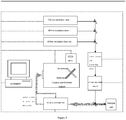
Fig. 1 is a diagram of the system configuration of the short-wavelength chiral Raman Spectrometer -
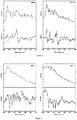
Fig. 2 are diagrams of Raman and ROA spectra of neat R/S-α-pinene (457nm, 50mW, 10min) -
Fig. 3 are diagrams of Raman and ROA spectra of L-Alanine (1M) (532nm, 1000mW, 489min; 457nm, 200mW, 63min) -
Fig. 4 are diagrams of Raman and ROA spectra of L-Proline (1M) (532nm, 800mW, 426min; 457nm, 200mW, 206min) -
Fig. 5 are diagrams of Raman and ROA spectra of L-glucose (3.7M) (532nm, 800mW, 472min; 457nm, 200mW, 276min) -
Fig. 6 are diagrams of Raman and ROA spectra of Lysozyme (75mg/mL) (532nm, 900mW, 360min; 457nm, 250mW, 172min) -
Fig. 7 are diagrams of Raman and ROA spectra of TG4T-K+ (~mM) (532nm, 1200mW, 1000min; 457nm, 200mW, 125min) - As showed in
Fig1 , a short-wavelength laser-excitation chiral Raman Spectrometer (A short-wavelength laser-excitation Raman Optical Activity Spectrometer) comprises a laser-excitation light source between 325nm and 532nm, the linear polarized homogeneous system, circularly polarized light converter, sample cell holder, circularly polarized light splitter, double beam forking optical fiber, Rayleigh line filter, imaging spectrometer, CCD sensitive to short-wavelength range and data processing system. Excitation source mainly comprises DPSS lasers with different wavelengths. The output power is greater than 300mW for 457nm-excitation and 1000mW for 532nm-excitation. The output power and mode are steady to meet the demand for chiral Raman spectra studies. - The laser coming from laser-excitation light source goes through the linear polarized homogeneous system, and after being collimating focused, the laser becomes highly linear polarized light, calibrated by high-precision polarizing devices; The linear polarized light is converted by circularly polarized light converter, and the system working state can be switched between Incident Circular Polarization (ICP), Scattered Circular Polarization (SCP), Incident Circular Polarization (ICP), (DCPI), (DCPII), by choosing the corresponding devices (for example all types of wave plates, Liquid crystal retarder, KD*P and so on). The scattered light collected from the sample cell enters the circularly polarized light splitter, then after filtration of Raleigh line, the light is split into chiral beams according to the former choice of systems. The split light enters the bifurcated optical fiber, being guided into the imaging spectrograph. The optical grating of the spectrometer can be chose from reflection, transmission and concave. The Raman signals enter the CCD on the exit of spectrograph which is sensitive in a wide range of short wavelength, and get on the top half and the bottom of it. CCD's acquisition system collects the light signals of the top half and the bottom half, that is, the right and the left circularly polarized Raman signals, converting them into electrical signals and transmitting the signals to the computer. After data processing, the sum of right and left circularly polarized Raman signals is counted as the total Raman signal, and the difference between right and left circularly polarized Raman signals as the circularly polarized Raman difference signal, that is, the Raman optical activity signal, and One acquisition is accomplished when normalized difference of circular polarization intensity is computed as the circularly polarized Raman difference signal divided by the total Raman signal. By varying the right/left circular polarization working state, the light route compensation for the circularly polarized Raman signals' differential detection can be complete, so is the cycle of circularly polarized Raman difference acquisition. Noise can be lower down by multiple uniform accumulations. All the optical elements of the whole system are wide wave band devices, which can be used to acquiring chiral Raman spectra in the range of 200nm-600nm.
- All the mechanical controls, data collecting and electronic information feedbacks are computer-controlled, as imaginary lines showed in
Fig1 . -
Figs. 2-7 are diagrams of Raman and ROA spectra of R/S-α-pinene, L-Alanine, L-Proline, L-glucose, Lysozyme and TG4T-K+, with great signal-to-noise ratio. Comparing the spectrograms of 457nm-ecitation and 532nm-excitation Raman and ROA, it can be noticed that when collected with short-wavelength laser-excitation chiral Raman Spectrometer, both Raman and ROA spectra' intensity are improved, with higher signal-to-noise ratio and CID ratio. From all those results, it can be concluded that short-wavelength laser-excitation chiral Raman Spectrometer have great potential and advantages in the studies of chiral materials, and is expected to play an important role in the region of chiral catalysis, drug testing and biochemistry.
Claims (8)
- A short-wavelength laser-excitation Chiral Raman Spectrometer (A short-wavelength laser-excitation Raman Optical Activity Spectrometer), wherein "short-wavelength" refers to the wavelength of excitation light source shorter than 532nm of normal Raman spectrometer, comprising :laser light source with excitations between 325nm and 532nm;a linear polarized homogeneous system;a circularly polarized light converter;a sample cell holder;circularly polarized light splitter;double beam bifurcated optical fiber;Rayleigh line filter;imaging spectrometer;CCD sensitive to short-wavelength range;data processing system;the spectrometer is characterized as:the laser from laser-excitation light source goes through the linear polarized homogeneous system then exposure to the sample cell, or the laser from laser-excitation light source goes through the linear polarized homogeneous system and circularly polarized light converter then exposure to the sample cell;the left/right circularly polarized Raman signals coming from sample cell go through the Rayleigh line filter, then enter into the incidence end of Y-type double-beam bifurcated optical fiber, divided into two beams of polarized light via circularly polarized light splitter, present as a linear array on the other end of the optical fiber, then entry on the incident slit of imaging spectrograph; the Raman signals are separated by the imaging spectrograph then enter the CCD on the exit of spectrograph which is sensitive in a wide range of short wavelength, and entry on the top half and the bottom of it;CCD's acquisition system collects the light signals of the top half and the bottom half, that is, the right and the left circularly polarized Raman signals, converting them into electrical signals and transmitting the signals to the computer; after data processing, the sum of right and left circularly polarized Raman signals is counted as the total Raman signal, and the difference between right and left circularly polarized Raman signals as the circularly polarized Raman difference signal, that is, the Raman optical activity signal, and One acquisition is accomplished when normalized difference of circular polarization intensity is computed as the circularly polarized Raman difference signal divided by the total Raman signal.
- The short-wavelength laser-excitation chiral Raman Spectrometer of claim 1, wherein circularly polarized light splitter comprises 1/4 wave plate sequentially arrayed along the light transmission direction and liner polarized light splitter, the 1/4 wave plate is realized by liquid crystal retarder; change the voltage applied on the 1/4 wave plate of the circularly polarized light splitter then the principal axes of the 1/4 wave plate turn 90°, realizing the incidence of the right/left circularly polarized Raman signals to the A/B end of the double beam bifurcated optical fiber alternately, then the signals enter the top half and the bottom half of CCD, used as the light route compensation for the circularly polarized Raman signals' differential detection.
- The short-wavelength laser-excitation chiral Raman Spectrometer of claim 1, wherein the linear polarized homogeneous system comprises an 1/2 wave plate rotating along the geometric center at a constant speed, whose geometric center is located at the light path, and the 1/2 wave plate is vertical to the light path.
- The short-wavelength laser-excitation chiral Raman Spectrometer of claim 1, wherein the laser from laser-excitation light source goes through the linear polarized homogeneous system then exposure to the sample cell directly, where the incident light is linearly polarized, and Scattered Circular Polarization (SCP) collection is realized through the detection of circular polarization components of the scattered light; Or the laser from laser-excitation light source goes through the linear polarized homogeneous system then exposure to the sample cell after being converted to circularly polarized light via the circularly polarized light converter, which is followed by a 1/2 wave plate that can be in or out of the light path; By varying the in or out state of the 1/2 wave plate, the right/left circularly polarized light can be transformed into left/right circularly polarized light, and Incident Circular Polarization (ICP) collection is realized through the detection of the scattered light, with incident light being circularly polarized; Two kinds of acquisition methods with one and the same instrument, that is, transformation between ICP and SCP realized by whether laser that from the laser-excitation light source goes through the circularly polarized light converter or not.
- The short-wavelength laser-excitation chiral Raman Spectrometer of claim 1, wherein the laser-excitation light source comprises a continuously adjustable laser with wavelength between 325nm∼532nm as the excitation source or multiple parallel laser excitation light sources whose wavelength are between 325nm∼532nm; The parallel laser excitation light sources refer to multiple laser excitation light sources whose emergent light paths are parallel to each other, and the laser beams enter the incident light path of spectrograph after being reflected by speculums; All the optical elements except the Rayleigh line filter can performance in the wide range of wavelength between 325nm∼532nm, reducing the errors due to the changes of wavelength and optical elements, to realize signal collection of the same sample through the same light path with different excitation wavelength.
- The short-wavelength laser-excitation chiral Raman Spectrometer of claim 1, wherein transmission grating imaging spectrograph, reflection grating imaging spectrograph or concave grating imaging spectrograph can be used as the imaging spectrograph that achieve Raman signals splitting.
- The short-wavelength laser-excitation chiral Raman Spectrometer of claim 1, wherein the data-processing system count the sum of right and left circularly polarized Raman signals as the total Raman signal, and the difference between right and left circularly polarized Raman signals as the circularly polarized Raman difference signal, that is, the Raman optical activity signal; One acquisition of circular polarization Raman spectra, in other word: Raman Optical Activity Spectra is complete when normalized difference of circular polarization intensity is computed as the circularly polarized Raman difference signal divided by the total Raman signal; Meanwhile, by changing the working state of the circularly polarized light splitter, the right/left circularly polarized Raman signals incident to the B/A end of the double beam bifurcated optical fiber alternately; The images are formed on the top half and the bottom half of CCD to the light, completing the route compensation for the circularly polarized Raman signals' differential detection, and then a circular acquisition of circularly polarized Raman difference signal is achieved; Via multiple accumulation of spectra of circularly polarized Raman difference, the collection of circular polarization Raman spectra ,that is Raman Optical Activity Spectra, is accomplished.
- The short-wavelength laser-excitation chiral Raman Spectrometer of claim 1, wherein a continuously adjustable laser with wavelength between 325nm∼532nm is used as the excitation source; When the wavelength of excitation light source is shorter than 532nm, the interference of chiral molecules' fluorescence to the collection of Raman and chiral Raman signals can be avoided; In the meantime, since intensity of Raman scattering is proportional to the fourth power of the reciprocal of wavelength of the scattered radiation, chiral Raman signal, that is Raman Optical Activity signal, is proportional to the fifth power of the reciprocal of excitation wavelength, thus normalized Raman circular intensity difference is proportional to the reciprocal of excitation wavelength; Hence the short-wavelength chiral Raman spectrometer can improve sensitivity of chiral Raman signals, that is Raman Optical Activity signals.
Applications Claiming Priority (2)
| Application Number | Priority Date | Filing Date | Title |
|---|---|---|---|
| CN201510925965.6A CN106546572B (en) | 2015-12-13 | 2015-12-13 | A kind of short wavelength laser chirality Raman spectrometer |
| PCT/CN2016/107611 WO2017101669A1 (en) | 2015-12-13 | 2016-11-29 | Short-wavelength laser chiral raman spectrometer |
Publications (3)
| Publication Number | Publication Date |
|---|---|
| EP3388821A1 true EP3388821A1 (en) | 2018-10-17 |
| EP3388821A4 EP3388821A4 (en) | 2019-07-24 |
| EP3388821B1 EP3388821B1 (en) | 2023-03-29 |
Family
ID=58365764
Family Applications (1)
| Application Number | Title | Priority Date | Filing Date |
|---|---|---|---|
| EP16874726.9A Active EP3388821B1 (en) | 2015-12-13 | 2016-11-29 | Short-wavelength laser-excitation chiral raman spectrometer |
Country Status (3)
| Country | Link |
|---|---|
| EP (1) | EP3388821B1 (en) |
| CN (1) | CN106546572B (en) |
| WO (1) | WO2017101669A1 (en) |
Families Citing this family (9)
| Publication number | Priority date | Publication date | Assignee | Title |
|---|---|---|---|---|
| CN109724962A (en) * | 2017-10-27 | 2019-05-07 | 中国科学院大连化学物理研究所 | A multi-acquisition device for a chiral Raman spectrometer and an acquisition method thereof |
| CN108548791A (en) * | 2018-02-05 | 2018-09-18 | 广东研捷医药科技有限公司 | A kind of absolute configuration identification method of metconazole diastereoisomer |
| CN108507627B (en) * | 2018-06-27 | 2023-09-26 | 吉林大学 | A spectral detection system for gaseous species concentration and temperature under high temperature and high pressure |
| WO2020011560A1 (en) * | 2018-07-13 | 2020-01-16 | Danmarks Tekniske Universitet | Apparatus for carrying out polarization resolved raman spectroscopy |
| CN108956578B (en) * | 2018-08-13 | 2023-09-12 | 吉林大学 | A measurement system for Raman spectrum real-time in-situ calibration of fluorescence spectrum |
| CN114795123B (en) * | 2022-04-25 | 2026-01-30 | 四川省肿瘤医院 | System and Method for Predicting Skin Radiation Damage in Radiotherapy Patients |
| CN114910420B (en) * | 2022-05-10 | 2024-11-12 | 大连理工大学 | A chiral molecule separation method based on oppositely polarized laser action |
| CN119321815A (en) * | 2024-12-16 | 2025-01-17 | 南京大学 | Circular polarization fluorescence spectrometer equipped with light concentrator and control method thereof |
| CN120522100B (en) * | 2025-07-25 | 2025-10-10 | 东海实验室 | A method and device for measuring circular polarization hyperspectral of water bodies throughout the day |
Family Cites Families (5)
| Publication number | Priority date | Publication date | Assignee | Title |
|---|---|---|---|---|
| ATE539330T1 (en) * | 2001-07-03 | 2012-01-15 | Harvard College | MICROSCOPIC APPARATUS AND METHOD USING POLARIZED COHERENT ANTI-STOKES RAM SCATTERING |
| CN101806740B (en) * | 2010-04-19 | 2011-12-21 | 福建师范大学 | Detection method of human plasma surface enhanced raman spectroscopy by integrating main component analysis |
| US9195042B2 (en) * | 2011-09-30 | 2015-11-24 | Cornell University | Laser based apparatus, methods and applications |
| CN103618205B (en) * | 2013-11-28 | 2016-09-21 | 清华大学 | A kind of full-solid-state single longitudinal mode yellow light laser |
| CN104953463A (en) * | 2014-03-27 | 2015-09-30 | 中国科学院大连化学物理研究所 | Low-pulse power laser pumping gas medium Raman laser |
-
2015
- 2015-12-13 CN CN201510925965.6A patent/CN106546572B/en active Active
-
2016
- 2016-11-29 WO PCT/CN2016/107611 patent/WO2017101669A1/en not_active Ceased
- 2016-11-29 EP EP16874726.9A patent/EP3388821B1/en active Active
Also Published As
| Publication number | Publication date |
|---|---|
| WO2017101669A1 (en) | 2017-06-22 |
| EP3388821B1 (en) | 2023-03-29 |
| CN106546572A (en) | 2017-03-29 |
| CN106546572B (en) | 2018-06-19 |
| EP3388821A4 (en) | 2019-07-24 |
Similar Documents
| Publication | Publication Date | Title |
|---|---|---|
| EP3388821B1 (en) | Short-wavelength laser-excitation chiral raman spectrometer | |
| CN111504978B (en) | Pulse-type time-lapse dispersion spectroscopy measurement method and device and spectral imaging method and device | |
| US11788967B2 (en) | Apparatus for carrying out Raman spectroscopy | |
| Dobryakov et al. | Femtosecond pump/supercontinuum-probe spectroscopy: Optimized setup and signal analysis for single-shot spectral referencing | |
| Wabuyele et al. | Hyperspectral surface-enhanced Raman imaging of labeled silver nanoparticles in single cells | |
| US7929134B2 (en) | Even frequency spacing spectrometer and optical coherence tomography device | |
| JP2015194359A (en) | Scattering spectrometer | |
| CN104777150A (en) | Portable light filter type Raman spectrometer for measuring protein adulteration in milk or milk powder | |
| CN104267505B (en) | A kind of wedge postpones the grating of depolarization and rotates light-dividing device and method | |
| CN110987898A (en) | Spatial heterodyne offset Raman spectrum detection device and detection method thereof | |
| CN117554352A (en) | Broadband coherent Raman scattering excitation module and imaging system | |
| US20210215537A1 (en) | Composite multispectral raman spectroscopy method and device | |
| CN113899728B (en) | Dual wavelength light source Raman spectrometer system | |
| Frosch et al. | Device for Raman difference spectroscopy | |
| JPWO2017002535A1 (en) | Measuring device | |
| CN107153053A (en) | A kind of multichannel circular polarization XRF | |
| De la Cadena et al. | Multiplex chemical imaging based on broadband stimulated Raman scattering microscopy | |
| CN212031304U (en) | Novel Raman spectrometer based on optical field coupling device | |
| CN1417618A (en) | The Method of Improving the Signal-to-Noise Ratio of AOTF Spectroscopic Optical System | |
| Xia et al. | Dual-channel Raman spectrometer device based on multi-field-of-view spectrometer for on-line detection | |
| CN114719983B (en) | Spatial heterodyne Raman spectrometer | |
| US20100014076A1 (en) | Spectrometric apparatus for measuring shifted spectral distributions | |
| Fan et al. | Compact high‐sensitivity symmetrical integrated optical system for the detection of Raman scattering with dual channels | |
| CN209910827U (en) | Polarized Raman Spectroscopy Equipment | |
| CN108713135B (en) | A spectral analysis system |
Legal Events
| Date | Code | Title | Description |
|---|---|---|---|
| STAA | Information on the status of an ep patent application or granted ep patent |
Free format text: STATUS: THE INTERNATIONAL PUBLICATION HAS BEEN MADE |
|
| PUAI | Public reference made under article 153(3) epc to a published international application that has entered the european phase |
Free format text: ORIGINAL CODE: 0009012 |
|
| STAA | Information on the status of an ep patent application or granted ep patent |
Free format text: STATUS: REQUEST FOR EXAMINATION WAS MADE |
|
| 17P | Request for examination filed |
Effective date: 20180705 |
|
| AK | Designated contracting states |
Kind code of ref document: A1 Designated state(s): AL AT BE BG CH CY CZ DE DK EE ES FI FR GB GR HR HU IE IS IT LI LT LU LV MC MK MT NL NO PL PT RO RS SE SI SK SM TR |
|
| AX | Request for extension of the european patent |
Extension state: BA ME |
|
| DAV | Request for validation of the european patent (deleted) | ||
| DAX | Request for extension of the european patent (deleted) | ||
| A4 | Supplementary search report drawn up and despatched |
Effective date: 20190626 |
|
| RIC1 | Information provided on ipc code assigned before grant |
Ipc: G01J 3/447 20060101ALI20190619BHEP Ipc: G01J 3/28 20060101ALI20190619BHEP Ipc: G01N 21/21 20060101ALI20190619BHEP Ipc: G01N 21/65 20060101AFI20190619BHEP Ipc: G01J 4/04 20060101ALI20190619BHEP Ipc: G01J 3/44 20060101ALI20190619BHEP |
|
| STAA | Information on the status of an ep patent application or granted ep patent |
Free format text: STATUS: EXAMINATION IS IN PROGRESS |
|
| 17Q | First examination report despatched |
Effective date: 20201118 |
|
| GRAP | Despatch of communication of intention to grant a patent |
Free format text: ORIGINAL CODE: EPIDOSNIGR1 |
|
| STAA | Information on the status of an ep patent application or granted ep patent |
Free format text: STATUS: GRANT OF PATENT IS INTENDED |
|
| RIC1 | Information provided on ipc code assigned before grant |
Ipc: G01J 3/44 20060101ALI20220913BHEP Ipc: G01J 3/10 20060101ALI20220913BHEP Ipc: G01J 3/02 20060101ALI20220913BHEP Ipc: G01N 21/21 20060101ALI20220913BHEP Ipc: G01N 21/65 20060101AFI20220913BHEP |
|
| INTG | Intention to grant announced |
Effective date: 20221007 |
|
| GRAS | Grant fee paid |
Free format text: ORIGINAL CODE: EPIDOSNIGR3 |
|
| GRAA | (expected) grant |
Free format text: ORIGINAL CODE: 0009210 |
|
| STAA | Information on the status of an ep patent application or granted ep patent |
Free format text: STATUS: THE PATENT HAS BEEN GRANTED |
|
| AK | Designated contracting states |
Kind code of ref document: B1 Designated state(s): AL AT BE BG CH CY CZ DE DK EE ES FI FR GB GR HR HU IE IS IT LI LT LU LV MC MK MT NL NO PL PT RO RS SE SI SK SM TR |
|
| REG | Reference to a national code |
Ref country code: GB Ref legal event code: FG4D |
|
| REG | Reference to a national code |
Ref country code: CH Ref legal event code: EP |
|
| REG | Reference to a national code |
Ref country code: DE Ref legal event code: R096 Ref document number: 602016078587 Country of ref document: DE |
|
| REG | Reference to a national code |
Ref country code: AT Ref legal event code: REF Ref document number: 1557029 Country of ref document: AT Kind code of ref document: T Effective date: 20230415 |
|
| REG | Reference to a national code |
Ref country code: IE Ref legal event code: FG4D |
|
| REG | Reference to a national code |
Ref country code: LT Ref legal event code: MG9D |
|
| PG25 | Lapsed in a contracting state [announced via postgrant information from national office to epo] |
Ref country code: RS Free format text: LAPSE BECAUSE OF FAILURE TO SUBMIT A TRANSLATION OF THE DESCRIPTION OR TO PAY THE FEE WITHIN THE PRESCRIBED TIME-LIMIT Effective date: 20230329 Ref country code: NO Free format text: LAPSE BECAUSE OF FAILURE TO SUBMIT A TRANSLATION OF THE DESCRIPTION OR TO PAY THE FEE WITHIN THE PRESCRIBED TIME-LIMIT Effective date: 20230629 Ref country code: LV Free format text: LAPSE BECAUSE OF FAILURE TO SUBMIT A TRANSLATION OF THE DESCRIPTION OR TO PAY THE FEE WITHIN THE PRESCRIBED TIME-LIMIT Effective date: 20230329 Ref country code: LT Free format text: LAPSE BECAUSE OF FAILURE TO SUBMIT A TRANSLATION OF THE DESCRIPTION OR TO PAY THE FEE WITHIN THE PRESCRIBED TIME-LIMIT Effective date: 20230329 Ref country code: HR Free format text: LAPSE BECAUSE OF FAILURE TO SUBMIT A TRANSLATION OF THE DESCRIPTION OR TO PAY THE FEE WITHIN THE PRESCRIBED TIME-LIMIT Effective date: 20230329 |
|
| REG | Reference to a national code |
Ref country code: NL Ref legal event code: MP Effective date: 20230329 |
|
| REG | Reference to a national code |
Ref country code: AT Ref legal event code: MK05 Ref document number: 1557029 Country of ref document: AT Kind code of ref document: T Effective date: 20230329 |
|
| PG25 | Lapsed in a contracting state [announced via postgrant information from national office to epo] |
Ref country code: SE Free format text: LAPSE BECAUSE OF FAILURE TO SUBMIT A TRANSLATION OF THE DESCRIPTION OR TO PAY THE FEE WITHIN THE PRESCRIBED TIME-LIMIT Effective date: 20230329 Ref country code: NL Free format text: LAPSE BECAUSE OF FAILURE TO SUBMIT A TRANSLATION OF THE DESCRIPTION OR TO PAY THE FEE WITHIN THE PRESCRIBED TIME-LIMIT Effective date: 20230329 Ref country code: GR Free format text: LAPSE BECAUSE OF FAILURE TO SUBMIT A TRANSLATION OF THE DESCRIPTION OR TO PAY THE FEE WITHIN THE PRESCRIBED TIME-LIMIT Effective date: 20230630 Ref country code: FI Free format text: LAPSE BECAUSE OF FAILURE TO SUBMIT A TRANSLATION OF THE DESCRIPTION OR TO PAY THE FEE WITHIN THE PRESCRIBED TIME-LIMIT Effective date: 20230329 |
|
| PG25 | Lapsed in a contracting state [announced via postgrant information from national office to epo] |
Ref country code: SM Free format text: LAPSE BECAUSE OF FAILURE TO SUBMIT A TRANSLATION OF THE DESCRIPTION OR TO PAY THE FEE WITHIN THE PRESCRIBED TIME-LIMIT Effective date: 20230329 Ref country code: RO Free format text: LAPSE BECAUSE OF FAILURE TO SUBMIT A TRANSLATION OF THE DESCRIPTION OR TO PAY THE FEE WITHIN THE PRESCRIBED TIME-LIMIT Effective date: 20230329 Ref country code: PT Free format text: LAPSE BECAUSE OF FAILURE TO SUBMIT A TRANSLATION OF THE DESCRIPTION OR TO PAY THE FEE WITHIN THE PRESCRIBED TIME-LIMIT Effective date: 20230731 Ref country code: ES Free format text: LAPSE BECAUSE OF FAILURE TO SUBMIT A TRANSLATION OF THE DESCRIPTION OR TO PAY THE FEE WITHIN THE PRESCRIBED TIME-LIMIT Effective date: 20230329 Ref country code: EE Free format text: LAPSE BECAUSE OF FAILURE TO SUBMIT A TRANSLATION OF THE DESCRIPTION OR TO PAY THE FEE WITHIN THE PRESCRIBED TIME-LIMIT Effective date: 20230329 Ref country code: AT Free format text: LAPSE BECAUSE OF FAILURE TO SUBMIT A TRANSLATION OF THE DESCRIPTION OR TO PAY THE FEE WITHIN THE PRESCRIBED TIME-LIMIT Effective date: 20230329 |
|
| PG25 | Lapsed in a contracting state [announced via postgrant information from national office to epo] |
Ref country code: SK Free format text: LAPSE BECAUSE OF FAILURE TO SUBMIT A TRANSLATION OF THE DESCRIPTION OR TO PAY THE FEE WITHIN THE PRESCRIBED TIME-LIMIT Effective date: 20230329 Ref country code: PL Free format text: LAPSE BECAUSE OF FAILURE TO SUBMIT A TRANSLATION OF THE DESCRIPTION OR TO PAY THE FEE WITHIN THE PRESCRIBED TIME-LIMIT Effective date: 20230329 Ref country code: IS Free format text: LAPSE BECAUSE OF FAILURE TO SUBMIT A TRANSLATION OF THE DESCRIPTION OR TO PAY THE FEE WITHIN THE PRESCRIBED TIME-LIMIT Effective date: 20230729 |
|
| REG | Reference to a national code |
Ref country code: DE Ref legal event code: R097 Ref document number: 602016078587 Country of ref document: DE |
|
| PG25 | Lapsed in a contracting state [announced via postgrant information from national office to epo] |
Ref country code: DK Free format text: LAPSE BECAUSE OF FAILURE TO SUBMIT A TRANSLATION OF THE DESCRIPTION OR TO PAY THE FEE WITHIN THE PRESCRIBED TIME-LIMIT Effective date: 20230329 |
|
| PLBE | No opposition filed within time limit |
Free format text: ORIGINAL CODE: 0009261 |
|
| STAA | Information on the status of an ep patent application or granted ep patent |
Free format text: STATUS: NO OPPOSITION FILED WITHIN TIME LIMIT |
|
| 26N | No opposition filed |
Effective date: 20240103 |
|
| PG25 | Lapsed in a contracting state [announced via postgrant information from national office to epo] |
Ref country code: SI Free format text: LAPSE BECAUSE OF FAILURE TO SUBMIT A TRANSLATION OF THE DESCRIPTION OR TO PAY THE FEE WITHIN THE PRESCRIBED TIME-LIMIT Effective date: 20230329 |
|
| PG25 | Lapsed in a contracting state [announced via postgrant information from national office to epo] |
Ref country code: SI Free format text: LAPSE BECAUSE OF FAILURE TO SUBMIT A TRANSLATION OF THE DESCRIPTION OR TO PAY THE FEE WITHIN THE PRESCRIBED TIME-LIMIT Effective date: 20230329 Ref country code: IT Free format text: LAPSE BECAUSE OF FAILURE TO SUBMIT A TRANSLATION OF THE DESCRIPTION OR TO PAY THE FEE WITHIN THE PRESCRIBED TIME-LIMIT Effective date: 20230329 |
|
| REG | Reference to a national code |
Ref country code: DE Ref legal event code: R119 Ref document number: 602016078587 Country of ref document: DE |
|
| REG | Reference to a national code |
Ref country code: CH Ref legal event code: PL |
|
| PG25 | Lapsed in a contracting state [announced via postgrant information from national office to epo] |
Ref country code: MC Free format text: LAPSE BECAUSE OF FAILURE TO SUBMIT A TRANSLATION OF THE DESCRIPTION OR TO PAY THE FEE WITHIN THE PRESCRIBED TIME-LIMIT Effective date: 20230329 |
|
| PG25 | Lapsed in a contracting state [announced via postgrant information from national office to epo] |
Ref country code: LU Free format text: LAPSE BECAUSE OF NON-PAYMENT OF DUE FEES Effective date: 20231129 |
|
| PG25 | Lapsed in a contracting state [announced via postgrant information from national office to epo] |
Ref country code: CH Free format text: LAPSE BECAUSE OF NON-PAYMENT OF DUE FEES Effective date: 20231130 |
|
| PG25 | Lapsed in a contracting state [announced via postgrant information from national office to epo] |
Ref country code: MC Free format text: LAPSE BECAUSE OF FAILURE TO SUBMIT A TRANSLATION OF THE DESCRIPTION OR TO PAY THE FEE WITHIN THE PRESCRIBED TIME-LIMIT Effective date: 20230329 Ref country code: LU Free format text: LAPSE BECAUSE OF NON-PAYMENT OF DUE FEES Effective date: 20231129 Ref country code: CH Free format text: LAPSE BECAUSE OF NON-PAYMENT OF DUE FEES Effective date: 20231130 |
|
| REG | Reference to a national code |
Ref country code: BE Ref legal event code: MM Effective date: 20231130 |
|
| REG | Reference to a national code |
Ref country code: IE Ref legal event code: MM4A |
|
| PG25 | Lapsed in a contracting state [announced via postgrant information from national office to epo] |
Ref country code: IE Free format text: LAPSE BECAUSE OF NON-PAYMENT OF DUE FEES Effective date: 20231129 Ref country code: DE Free format text: LAPSE BECAUSE OF NON-PAYMENT OF DUE FEES Effective date: 20240601 |
|
| PG25 | Lapsed in a contracting state [announced via postgrant information from national office to epo] |
Ref country code: BE Free format text: LAPSE BECAUSE OF NON-PAYMENT OF DUE FEES Effective date: 20231130 |
|
| PG25 | Lapsed in a contracting state [announced via postgrant information from national office to epo] |
Ref country code: FR Free format text: LAPSE BECAUSE OF NON-PAYMENT OF DUE FEES Effective date: 20231130 |
|
| PG25 | Lapsed in a contracting state [announced via postgrant information from national office to epo] |
Ref country code: IE Free format text: LAPSE BECAUSE OF NON-PAYMENT OF DUE FEES Effective date: 20231129 Ref country code: FR Free format text: LAPSE BECAUSE OF NON-PAYMENT OF DUE FEES Effective date: 20231130 Ref country code: DE Free format text: LAPSE BECAUSE OF NON-PAYMENT OF DUE FEES Effective date: 20240601 Ref country code: BE Free format text: LAPSE BECAUSE OF NON-PAYMENT OF DUE FEES Effective date: 20231130 |
|
| PG25 | Lapsed in a contracting state [announced via postgrant information from national office to epo] |
Ref country code: BG Free format text: LAPSE BECAUSE OF FAILURE TO SUBMIT A TRANSLATION OF THE DESCRIPTION OR TO PAY THE FEE WITHIN THE PRESCRIBED TIME-LIMIT Effective date: 20230329 |
|
| PG25 | Lapsed in a contracting state [announced via postgrant information from national office to epo] |
Ref country code: BG Free format text: LAPSE BECAUSE OF FAILURE TO SUBMIT A TRANSLATION OF THE DESCRIPTION OR TO PAY THE FEE WITHIN THE PRESCRIBED TIME-LIMIT Effective date: 20230329 |
|
| PG25 | Lapsed in a contracting state [announced via postgrant information from national office to epo] |
Ref country code: CY Free format text: LAPSE BECAUSE OF FAILURE TO SUBMIT A TRANSLATION OF THE DESCRIPTION OR TO PAY THE FEE WITHIN THE PRESCRIBED TIME-LIMIT; INVALID AB INITIO Effective date: 20161129 |
|
| PG25 | Lapsed in a contracting state [announced via postgrant information from national office to epo] |
Ref country code: HU Free format text: LAPSE BECAUSE OF FAILURE TO SUBMIT A TRANSLATION OF THE DESCRIPTION OR TO PAY THE FEE WITHIN THE PRESCRIBED TIME-LIMIT; INVALID AB INITIO Effective date: 20161129 |
|
| PGFP | Annual fee paid to national office [announced via postgrant information from national office to epo] |
Ref country code: CZ Payment date: 20250910 Year of fee payment: 10 |
|
| PG25 | Lapsed in a contracting state [announced via postgrant information from national office to epo] |
Ref country code: TR Free format text: LAPSE BECAUSE OF FAILURE TO SUBMIT A TRANSLATION OF THE DESCRIPTION OR TO PAY THE FEE WITHIN THE PRESCRIBED TIME-LIMIT Effective date: 20230329 |
|
| PGFP | Annual fee paid to national office [announced via postgrant information from national office to epo] |
Ref country code: GB Payment date: 20251020 Year of fee payment: 10 |