EP3388424A1 - Method for preparing anti-heart-failure medicine lcz696 - Google Patents
Method for preparing anti-heart-failure medicine lcz696 Download PDFInfo
- Publication number
- EP3388424A1 EP3388424A1 EP16871977.1A EP16871977A EP3388424A1 EP 3388424 A1 EP3388424 A1 EP 3388424A1 EP 16871977 A EP16871977 A EP 16871977A EP 3388424 A1 EP3388424 A1 EP 3388424A1
- Authority
- EP
- European Patent Office
- Prior art keywords
- sacubitril
- temperature
- preparing
- sodium hydroxide
- dicyclohexylamine salt
- Prior art date
- Legal status (The legal status is an assumption and is not a legal conclusion. Google has not performed a legal analysis and makes no representation as to the accuracy of the status listed.)
- Granted
Links
- 0 *(C1CCCCC1)C1CCCCC1 Chemical compound *(C1CCCCC1)C1CCCCC1 0.000 description 1
Images

Classifications
-
- C—CHEMISTRY; METALLURGY
- C07—ORGANIC CHEMISTRY
- C07D—HETEROCYCLIC COMPOUNDS
- C07D257/00—Heterocyclic compounds containing rings having four nitrogen atoms as the only ring hetero atoms
- C07D257/02—Heterocyclic compounds containing rings having four nitrogen atoms as the only ring hetero atoms not condensed with other rings
- C07D257/04—Five-membered rings
-
- A—HUMAN NECESSITIES
- A61—MEDICAL OR VETERINARY SCIENCE; HYGIENE
- A61P—SPECIFIC THERAPEUTIC ACTIVITY OF CHEMICAL COMPOUNDS OR MEDICINAL PREPARATIONS
- A61P9/00—Drugs for disorders of the cardiovascular system
- A61P9/12—Antihypertensives
-
- B—PERFORMING OPERATIONS; TRANSPORTING
- B01—PHYSICAL OR CHEMICAL PROCESSES OR APPARATUS IN GENERAL
- B01D—SEPARATION
- B01D9/00—Crystallisation
- B01D9/005—Selection of auxiliary, e.g. for control of crystallisation nuclei, of crystal growth, of adherence to walls; Arrangements for introduction thereof
- B01D9/0054—Use of anti-solvent
-
- B—PERFORMING OPERATIONS; TRANSPORTING
- B01—PHYSICAL OR CHEMICAL PROCESSES OR APPARATUS IN GENERAL
- B01D—SEPARATION
- B01D9/00—Crystallisation
- B01D9/0063—Control or regulation
-
- C—CHEMISTRY; METALLURGY
- C07—ORGANIC CHEMISTRY
- C07C—ACYCLIC OR CARBOCYCLIC COMPOUNDS
- C07C231/00—Preparation of carboxylic acid amides
- C07C231/02—Preparation of carboxylic acid amides from carboxylic acids or from esters, anhydrides, or halides thereof by reaction with ammonia or amines
-
- C—CHEMISTRY; METALLURGY
- C07—ORGANIC CHEMISTRY
- C07C—ACYCLIC OR CARBOCYCLIC COMPOUNDS
- C07C233/00—Carboxylic acid amides
- C07C233/01—Carboxylic acid amides having carbon atoms of carboxamide groups bound to hydrogen atoms or to acyclic carbon atoms
- C07C233/45—Carboxylic acid amides having carbon atoms of carboxamide groups bound to hydrogen atoms or to acyclic carbon atoms having the nitrogen atom of at least one of the carboxamide groups bound to a carbon atom of a hydrocarbon radical substituted by carboxyl groups
- C07C233/46—Carboxylic acid amides having carbon atoms of carboxamide groups bound to hydrogen atoms or to acyclic carbon atoms having the nitrogen atom of at least one of the carboxamide groups bound to a carbon atom of a hydrocarbon radical substituted by carboxyl groups with the substituted hydrocarbon radical bound to the nitrogen atom of the carboxamide group by an acyclic carbon atom
- C07C233/47—Carboxylic acid amides having carbon atoms of carboxamide groups bound to hydrogen atoms or to acyclic carbon atoms having the nitrogen atom of at least one of the carboxamide groups bound to a carbon atom of a hydrocarbon radical substituted by carboxyl groups with the substituted hydrocarbon radical bound to the nitrogen atom of the carboxamide group by an acyclic carbon atom having the carbon atom of the carboxamide group bound to a hydrogen atom or to a carbon atom of an acyclic saturated carbon skeleton
-
- C—CHEMISTRY; METALLURGY
- C07—ORGANIC CHEMISTRY
- C07B—GENERAL METHODS OF ORGANIC CHEMISTRY; APPARATUS THEREFOR
- C07B2200/00—Indexing scheme relating to specific properties of organic compounds
- C07B2200/13—Crystalline forms, e.g. polymorphs
Definitions
- the present invention relates to the field of pharmaceutical synthesis, and in particular to a method for preparing an anti-heart-failure medicine LCZ696.
- LCZ696 is a novel antihypertensive anti-heart-failure medicine developed by Novartis.
- the medicine mainly contains two components: Diovan (common name: valsartan) of Novartis and experimental medicine Sacubitril (AHU-377), wherein the Sacubitril can block an action mechanism which threatens two polypeptides in charge of reducing the blood pressure, and the medicine was approved by U.S. Food and Drug Administration on 7 July, 2015, and is used for the heart failure patients with a reduced ejection fraction, to reduce the cardiovascular death and heart failure hospitalization risks.
- Diovan common name: valsartan
- Sacubitril AHU-377
- the LCZ696 is generally obtained by subjecting Diovan and Sacubitril with a molar ratio of 1: 1 to cocrystallization in the mixed solvent of a sodium hydroxide aqueous solution and an organic solvent.
- the Sacubitril gains wide attention as an important constituent of LCZ696.
- the chemical name of the Sacubitril is 4- ⁇ [(2S,4R)-1-(4-biphenylyl)-5-ethoxy-4-methyl-5-oxo-2-pentanyl]amino ⁇ -4-oxobutanoic acid, with a Chinese name of: (4- ⁇ [(2S,4R)-1-(4- )-5- -4- -5- -2- ⁇ -4- ),and its chemical formula is as shown in the following formula II:
- patents WO03059345 , WO2006086456 and WO2007045663 to Novartis discloses the triethanolamine salt and tromethamine salt of Sacubitril.
- the organic amine salts of the Sacubitril disclosed in these patents are directly used for forming pharmaceutical composition with the valsartan, without preparing LCZ696 by cocrystallization of these organic amine salts after reacting with the valsartan and sodium hydroxide.
- the technical problem to be solved by the present invention is to provide a method for preparing anti-heart-failure medicine LCZ696 in view of the above defects in the prior art.
- the preparing method according to the present invention is simple in process, and omits the procedures of ion exchange from a sodium salt to a calcium salt and hydrochloric acid dissociation in an existing production process, the residues of calcium ions are avoided, and the production efficiency is effectively improved.
- the present invention provides a method for preparing LCZ696, comprising the following steps: in an organic solvent, reacting a Sacubitril dicyclohexylamine salt with valsartan under the effect of a sodium hydroxide aqueous solution, thereby obtaining LCZ696: : sacubitril dicyclohexylamine salt; : valsartan; : sodium hydroxide aqueous solution
- the organic solvent may be various organic solvents conventionally used in the art, and is preferably a mixed solvent of isopropyl acetate and acetone or a mixed solvent of isopropyl acetate and acetonitrile or acetonitrile.
- the molar ratio of the Sacubitril dicyclohexylamine salt to the valsartan is preferably 1:0.95-1.10, and more preferably 1:1.05.
- the molar ratio of the Sacubitril dicyclohexylamine salt to Sodium hydroxide is preferably 1:2.95-3.10, and more preferably 1:3.05.
- the mass percent concentration of the sodium hydroxide aqueous solution is preferably 30%-40%.
- the preparing method preferably comprises the following steps: dissolving the Sacubitril dicyclohexylamine salt in the organic solvent, adding the valsartan after the obtained solution is clear by raising temperature and through dissolving process, then adding the sodium hydroxide aqueous solution dropwise, and then performing crystallization.
- the temperature for the process that the obtained solution is clear by raising temperature and through dissolving process is preferably 50-65°C.
- the operation step (i) is preferred: adding the isopropyl acetate dropwise and performing reduced pressure distillation; and repeating the operation step (i) for 2-3 times; the operation step (ii) is more preferred: adding the isopropyl acetate dropwise within a temperature range of 40 ⁇ 3°C, performing temperature preservation at 40 ⁇ 3°C, performing reduced pressure distillation in a temperature range of 35 ⁇ 5°C; and repeating the operation step (ii) for 2-3 times.
- the temperature preservation is preferably performed at 50-55°C.
- the time for the temperature preservation at 40 ⁇ 3°C is preferably 0.5-1h.
- the crystallization temperature is preferably 0-60°C, and more preferably 20-25°C.
- a conventional post-processing step can be further performed to obtain the LCZ 696 according to the present invention.
- the post-processing step is preferably filtration and reducing pressure drying.
- Sacubitril dicyclohexylamine salt may be made by the following process: reacting Sacubitril with dicyclohexylamine in ethyl acetate.
- the method for preparing the Sacubitril dicyclohexylamine salt preferably comprises the following steps: dissolving the Sacubitril in the ethyl acetate at 10-30°C, adding the dicyclohexylamine dropwise, and precipitating a solid by slowly cooling to 0-5°C under a stirring condition.
- the molar ratio of the Sacubitril to the dicyclohexylamine is preferably 1:1.0-1.2, and more preferably 1:1.05.
- the slow cooling is preferably natural cooling.
- the present invention provides a Sacubitril dicyclohexylamine salt, and its structure is as shown in the following formula III,
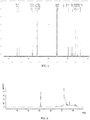
- the present invention further provides the crystal form of the Sacubitril dicyclohexylamine salt, and when the diffractive angle of the X-ray powder diffraction for the crystal form is 2 ⁇ , the characteristic diffraction peaks are 6.6° ⁇ 0.2°, 7.2° ⁇ 0.2°, 8.3° ⁇ 0.2°, 9.7° ⁇ 0.2°, 13.0° ⁇ 0.2°, 14.5° ⁇ 0.2°, 15.5° ⁇ 0.2°, 16.6° ⁇ 0.2°, 17.0° ⁇ 0.2°, 18.0° ⁇ 0.2°, 19.4° ⁇ 0.2°, 19.9° ⁇ 0.2°, 20.8° ⁇ 0.2°, 22.4° ⁇ 0.2°, 25.0° ⁇ 0.2°, 25.9° ⁇ 0.2° and 26.3° ⁇ 0.2°; and the target form used in the X-ray powder diffraction is a Cu target.
- the melting point of the crystal form is 121-123°C, and a DSC peak value is preferably 122.23°C.
- the present invention further provides a method for preparing the above Sacubitril dicyclohexylamine salt, which comprises the following step: reacting Sacubitril with dicyclohexylamine in ethyl acetate.
- the preparing method preferably comprises the following steps: dissolving the Sacubitril in the ethyl acetate at 10-30°C, adding the dicyclohexylamine dropwise, and precipitating a solid by slowly cooling to 0-5°C under a stirring condition.
- the molar ratio of the Sacubitril to the dicyclohexylamine is preferably 1:1.0-1.2, and more preferably 1:1.05.
- the slow cooling is preferably natural cooling.
- the present invention further provides a method for preparing the above crystal form of the Sacubitril dicyclohexylamine salt, which comprises the following steps: adding the Sacubitril dicyclohexylamine salt into an organic solvent, heating the obtained solution under a refluxing condition till the salt is dissolved, and performing crystallization by slowly cooling to 0-5°C after stirring.
- the organic solvent may be various organic solvents conventionally used in the art, and is preferably one or more of methanol, ethyl alcohol, isopropyl alcohol, ethyl acetate, isopropyl acetate, methylbenzene and acetone.
- the ratio of mass to volume of the Sacubitril dicyclohexylamine salt to the organic solvent is preferably 1:2-20g/mL, more preferably 1:4-10g/mL and most preferably 1:5g/mL.
- the slow cooling is preferably natural cooling.
- a conventional post-processing step can be performed to obtain the crystal form of the Sacubitril dicyclohexylamine salt according to the present invention.
- the post-processing step is preferably filtration or vacuum drying.
- the present invention has the following beneficial effects.
- the inventive process for preparing LCZ696 is simple and easy to apply, with omission of the procedures of ion exchange from the sodium salt to the calcium salt and hydrochloric acid dissociation in the production process of Novartis, and effective improvement of production efficiency.
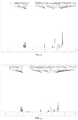
- the 1 HNMR diagram for the Sacubitril dicyclohexylamine salt is as shown in Fig. 3 ; the 1 HNMR diagram of the Sacubitril dicyclohexylamine salt after heavy water exchange is as shown in Fig. 4 ; and the 13 CNMR diagram of the Sacubitril dicyclohexylamine salt is as shown in Fig. 5 .
- the nuclear magnetic data is as follows: 1 HNMR (400 MHz, CDCl 3 ): ⁇ 8.70 (br, 2H), 7.49 (m, 2H), 7.41 (m, 2H), 7.37 (m, 1H), 7.25-7.10 (m, 2H), 4.05 (br, 1H), 4.01 (m, 2H), 2.86 (m, 2H), 2.70 (m, 2H), 2.47 (m, 2H), 2.36 (m, 4H), 1.93 (m, 5H), 1.68 (m, 4H), 1.52 (m, 2H), 1.36 (m, 5H), 1.10 (m, 12H); 13 C NMR (100 MHz, CDCI 3 ): 178.24, 176.25, 173.20, 140.89, 139.12, 137.23, 129.89, 128.74, 127.12, 126.96, 126.93, 60.42, 52.72, 48.49, 40.92, 37.88, 36.72, 34.02
- the HPLC diagram for the Sacubitril dicyclohexylamine salt is as shown in Fig. 6 , and data for respective peaks in the figure is as shown in the following table.
- Sacubitril dicyclohexylamine salt (84g, 142mmol) is dissolved into the mixed solvent of 60mL isopropyl acetate and 1220mL acetone, the temperature is raised to 50-55°C, after the obtained solution is clear by stirring, the valsartan (63g, 145mmol) is added, then 47g 36% Sodium hydroxide aqueous solution is added dropwise, the temperature preservation is performed for 2h at 40-45°C, and then cooling is performed to room temperature (25-30°C), at which the temperature preservation is performed for 2h.
- the temperature is raised to 40 ⁇ 3°C after the temperature preservation is ended, 610mL isopropyl acetate is added dropwise, after that, the temperature preservation is performed at 40 ⁇ 3°C for 0.5h.
- 760mL solvent is removed by controlling temperature to be 35 ⁇ 5°C and by pressure reduction.
- the temperature is raised to 40 ⁇ 3°C, 920mL isopropyl acetate is added dropwise, after that, the temperature is controlled to be 40 ⁇ 3°C at which the temperature preservation is performed for 0.5h.
- 1220mL solvent is removed by controlling temperature to be 35 ⁇ 5°C, and by pressure reduction, then the temperature is raised to 40 ⁇ 3°C, 1220mL isopropyl acetate is added dropwise, and after that, the temperature preservation is performed for 0.5h. Then the temperature is controlled to be 35 ⁇ 5°C, and 1220mL solvent is removed by pressure reduction. After removal, the temperature is reduced to 20-25°C at which the temperature preservation is performed for 3h. After the temperature preservation and crystallization are ended, reducing pressure filtering is performed to obtain a wet product.
- Sacubitril dicyclohexylamine salt (84g, 142mmol) is dissolved into a mixed solvent of 60mL isopropyl acetate and 1220mL acetonitrile, the temperature is raised to 50-55°C, after the obtained solution is clear by stirring, valsartan (63g, 145mmol) is added, then 47g 36% Sodium hydroxide aqueous solution is added dropwise, the temperature preservation is performed at 40-45°C for 2h, and then the temperature is reduced to room temperature (25-30°C) at which temperature preservation is performed for 2h.
- the temperature is raised to 40 ⁇ 3°C after the temperature preservation is ended, 610mL isopropyl acetate is added dropwise, after that, the temperature preservation is performed at 40 ⁇ 3°C for 0.5h.
- the temperature is controlled to be 35 ⁇ 5°C, and 760mL solvent is removed by pressure reduction.
- the temperature is raised to 40 ⁇ 3°C, 920mL isopropyl acetate is added dropwise, and after that, the temperature is controlled to be 40 ⁇ 3°C at which temperature preservation is performed for 0.5h.
- the temperature is controlled to be 35 ⁇ 5°C, and 1220mL solvent is removed by pressure reduction, then the temperature is raised to 40 ⁇ 3°C, 1220mL isopropyl acetate is added dropwise, and after that, the temperature preservation is performed for 0.5h. Then the temperature is controlled to be 35 ⁇ 5°C, and 1220mL solvent is removed by pressure reduction. After the removal, the temperature is reduced to 20-25°C at which the temperature preservation is performed for 3h. After the temperature preservation and crystallization are ended, reducing pressure filtering is performed to obtain a wet product.
- the wet product is subjected to reducing pressure drying in an oven at temperature of 35°C for 12h to obtain 119g finished product of LCZ696, with a yield of 88% and a purity of 99.91%.
- the DSC and X-ray powder diffractive data for the obtained LCZ696 are matched with that reported by Novartis, the crystal form is consistent with that reported by Novartis, and the content data of respective components of the obtained LCZ696 is seen in the following table.
- Content of Sacubitril Content of Valsartan Content of Sodium Ions Water Content Theoretical Value 42.8% 45.3% 7.2% 4.7% Measured Value 42.7% 45.1% 7.3% 4.9%
- the Sacubitril dicyclohexylamine salt (84g, 142mmol) is dissolved into a mixed solvent of 60mL isopropyl acetate and 1800mL acetonitrile, the temperature is raised to 60-65°C, after the obtained solution is clear by stirring, the valsartan (63g, 145mmol) is added, then 47g 36% sodium hydroxide aqueous solution is added dropwise, the temperature is raised to 40 ⁇ 3°C after the temperature preservation is ended, 610mL isopropyl acetate is added dropwise, and after that, the temperature preservation is performed at 40 ⁇ 3°C for 0.5h.
- the temperature is controlled to be 35 ⁇ 5°C, and 760mL solvent is removed by pressure reduction. After the removal, the temperature is raised to 40 ⁇ 3°C, 920mL isopropyl acetate is added dropwise, and after that, the temperature is controlled to be 40 ⁇ 3°C at which the temperature preservation is performed for 0.5h. After the temperature preservation is ended, the temperature is controlled to be 35 ⁇ 5°C, and 1220mL solvent is removed by pressure reduction, then the temperature is raised to 40 ⁇ 3°C, 1220mL isopropyl acetate is added dropwise, and after that, the temperature preservation is performed for 0.5h. Then the temperature is controlled to be 35 ⁇ 5°C, and 1220mL solvent is removed by pressure reduction.
- the temperature is reduced to 20-25°C at which the temperature preservation is performed for 3h.
- reducing pressure filtering is performed to obtain a wet product. It is subjected to reducing pressure drying in an oven at temperature of 35°C for 12h to obtain 124g finished product of LCZ696, with a yield of 91% and a purity of 99.93%.
- the DSC and X-ray powder diffractive data of the obtained LCZ696 are matched with that reported by Novartis, the crystal form is consistent with that reported by Novartis, and the content data of respective components of the obtained LCZ696 refer to the following table. Content of Sacubitril Content of Valsartan Content of Sodium Ions Water Content Theoretical Value 42.8% 45.3% 7.2% 4.7% Measured Value 42.6% 45.1% 7.4% 4.9%
- Sacubitril dicyclohexylamine salt (84g, 142mmol) is dissolved into 900mL acetonitrile, the temperature is raised to 60-65°C, after the solution is clear by stirring, the valsartan (63g, 145mmol) is added, then 47g 36% Sodium hydroxide aqueous solution is added dropwise, the temperature is reduced to 50-55°C at which the temperature preservation is performed for 2h, then slow cooling is performed to 25-30°C, and temperature preservation and crystallization are performed for 3h. After the crystallization is ended, filtration is performed to obtain a wet product.
- the wet product is subjected to reducing pressure drying in an oven at temperature of 35°C for 12h to obtain 110g the finished product of LCZ696, with a yield of 81% and a purity of 99.92%.
- the DSC and X-ray powder diffractive data for the obtained LCZ696 are matched with that reported by Novartis, the crystal form is consistent with that reported by Novartis, and the content data of respective components of the obtained LCZ696 is seen in the following table.
- Content of Sacubitril Content of Valsartan Content of Sodium Ions Water Content Theoretical Value 42.8% 45.3% 7.2% 4.7% Measured Value 42.7% 45.2% 7.2% 4.9%
Landscapes
- Chemical & Material Sciences (AREA)
- Organic Chemistry (AREA)
- Chemical Kinetics & Catalysis (AREA)
- Health & Medical Sciences (AREA)
- Crystallography & Structural Chemistry (AREA)
- Pharmacology & Pharmacy (AREA)
- Life Sciences & Earth Sciences (AREA)
- General Chemical & Material Sciences (AREA)
- Medicinal Chemistry (AREA)
- Bioinformatics & Cheminformatics (AREA)
- Nuclear Medicine, Radiotherapy & Molecular Imaging (AREA)
- Heart & Thoracic Surgery (AREA)
- Engineering & Computer Science (AREA)
- Animal Behavior & Ethology (AREA)
- General Health & Medical Sciences (AREA)
- Public Health (AREA)
- Veterinary Medicine (AREA)
- Cardiology (AREA)
- Organic Low-Molecular-Weight Compounds And Preparation Thereof (AREA)
- Pharmaceuticals Containing Other Organic And Inorganic Compounds (AREA)
Abstract
Description
- The present invention relates to the field of pharmaceutical synthesis, and in particular to a method for preparing an anti-heart-failure medicine LCZ696.
- LCZ696 is a novel antihypertensive anti-heart-failure medicine developed by Novartis. The medicine mainly contains two components: Diovan (common name: valsartan) of Novartis and experimental medicine Sacubitril (AHU-377), wherein the Sacubitril can block an action mechanism which threatens two polypeptides in charge of reducing the blood pressure, and the medicine was approved by U.S. Food and Drug Administration on 7 July, 2015, and is used for the heart failure patients with a reduced ejection fraction, to reduce the cardiovascular death and heart failure hospitalization risks. The LCZ696 is generally obtained by subjecting Diovan and Sacubitril with a molar ratio of 1: 1 to cocrystallization in the mixed solvent of a sodium hydroxide aqueous solution and an organic solvent. LCZ696 consists of Diovan:Sacubitril:Na:H20=1:1:3:2.5 (molar ratio), and has a chemical formula is as shown in the following formula I.

- The Sacubitril gains wide attention as an important constituent of LCZ696. The chemical name of the Sacubitril is 4-{[(2S,4R)-1-(4-biphenylyl)-5-ethoxy-4-methyl-5-oxo-2-pentanyl]amino}-4-oxobutanoic acid, with a Chinese name of: (4-{[(2S,4R)-1-(4-)-5-
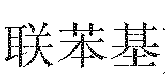 -4-
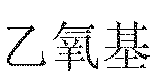 -5-
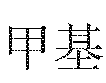 -2-
 }-4-
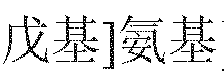 ),and its chemical formula is as shown in the following formula II:


- At present, there are more reports about synthetic methods for Sacubitril, for example, patents
WO2008083967 ,WO2008031567 ,WO2008031567 ,WO2010034236 ,WO2014032627 or the like. Although the synthetic methods for the Sacubitril are relatively mature, due to the influence of the long chain alkyls in molecular structures per se, the crude product of the Sacubitril in the large scale production process is colorless viscous liquid, as a result, the problems that the Sacubitril is hard to be purified and the quality is hard to be controlled are caused. - In the other aspect, in the production process for LCZ696 reported by patent
WO2007056546 to Novartis, the crude product of Sacubitril reacts with sodium hydroxide at first to form a sodium salt, then the sodium salt is converted to a calcium salt by ion exchange with calcium chloride to form a solid and the solid is isolated, the obtained solid is dissociated again with diluted hydrochloric acid, and free acid is regained after the procedures of extraction and concentration. Afterwards, the free Sacubitril acid and valsartan are dissolved in an organic solvent, and the obtained mixture and a sodium hydroxide aqueous solution are subjected to a salt forming reaction and a cocrystallization process to obtain LCZ696. The whole production process needs repeated dissociation and ion exchange, thereby causing a relatively tedious production process flow and the residues of calcium ions which are hard to control. - In addition, patents
WO03059345 WO2006086456 andWO2007045663 to Novartis discloses the triethanolamine salt and tromethamine salt of Sacubitril. The organic amine salts of the Sacubitril disclosed in these patents are directly used for forming pharmaceutical composition with the valsartan, without preparing LCZ696 by cocrystallization of these organic amine salts after reacting with the valsartan and sodium hydroxide. - The technical problem to be solved by the present invention is to provide a method for preparing anti-heart-failure medicine LCZ696 in view of the above defects in the prior art. The preparing method according to the present invention is simple in process, and omits the procedures of ion exchange from a sodium salt to a calcium salt and hydrochloric acid dissociation in an existing production process, the residues of calcium ions are avoided, and the production efficiency is effectively improved.
- The present invention provides a method for preparing LCZ696, comprising the following steps: in an organic solvent, reacting a Sacubitril dicyclohexylamine salt with valsartan under the effect of a sodium hydroxide aqueous solution, thereby obtaining LCZ696:
 : sacubitril dicyclohexylamine salt;
 : valsartan;
 : sodium hydroxide aqueous solution

- Herein, the organic solvent may be various organic solvents conventionally used in the art, and is preferably a mixed solvent of isopropyl acetate and acetone or a mixed solvent of isopropyl acetate and acetonitrile or acetonitrile.
- Herein, the molar ratio of the Sacubitril dicyclohexylamine salt to the valsartan is preferably 1:0.95-1.10, and more preferably 1:1.05.
- Herein, the molar ratio of the Sacubitril dicyclohexylamine salt to Sodium hydroxide is preferably 1:2.95-3.10, and more preferably 1:3.05.
- Herein, the mass percent concentration of the sodium hydroxide aqueous solution is preferably 30%-40%.
- Herein, the preparing method preferably comprises the following steps: dissolving the Sacubitril dicyclohexylamine salt in the organic solvent, adding the valsartan after the obtained solution is clear by raising temperature and through dissolving process, then adding the sodium hydroxide aqueous solution dropwise, and then performing crystallization.
- Herein, the temperature for the process that the obtained solution is clear by raising temperature and through dissolving process is preferably 50-65°C.
- Herein, after the sodium hydroxide aqueous solution is added dropwise and before the crystallization, when the organic solvent is the mixed solvent of isopropyl acetate and acetone or the mixed solvent of isopropyl acetate and acetonitrile, the operation step (i) is preferred: adding the isopropyl acetate dropwise and performing reduced pressure distillation; and repeating the operation step (i) for 2-3 times; the operation step (ii) is more preferred: adding the isopropyl acetate dropwise within a temperature range of 40±3°C, performing temperature preservation at 40±3°C, performing reduced pressure distillation in a temperature range of 35±5°C; and repeating the operation step (ii) for 2-3 times.
- Herein, after the sodium hydroxide aqueous solution is added dropwise and before the crystallization, when the organic solvent is acetonitrile, the temperature preservation is preferably performed at 50-55°C.
- The time for the temperature preservation at 40±3°C is preferably 0.5-1h.
- The crystallization temperature is preferably 0-60°C, and more preferably 20-25°C.
- After the crystallization is finished, a conventional post-processing step can be further performed to obtain the LCZ 696 according to the present invention. The post-processing step is preferably filtration and reducing pressure drying.
- In the present invention, the Sacubitril dicyclohexylamine salt may be made by the following process: reacting Sacubitril with dicyclohexylamine in ethyl acetate.
- The method for preparing the Sacubitril dicyclohexylamine salt preferably comprises the following steps: dissolving the Sacubitril in the ethyl acetate at 10-30°C, adding the dicyclohexylamine dropwise, and precipitating a solid by slowly cooling to 0-5°C under a stirring condition.
- Herein, the molar ratio of the Sacubitril to the dicyclohexylamine is preferably 1:1.0-1.2, and more preferably 1:1.05.
- Herein, the slow cooling is preferably natural cooling.
- The present invention provides a Sacubitril dicyclohexylamine salt, and its structure is as shown in the following formula III,

- The present invention further provides the crystal form of the Sacubitril dicyclohexylamine salt, and when the diffractive angle of the X-ray powder diffraction for the crystal form is 2θ, the characteristic diffraction peaks are 6.6°±0.2°, 7.2°±0.2°, 8.3°±0.2°, 9.7°±0.2°, 13.0°±0.2°, 14.5°±0.2°, 15.5°±0.2°, 16.6°±0.2°, 17.0°±0.2°, 18.0°±0.2°, 19.4°±0.2°, 19.9°±0.2°, 20.8°±0.2°, 22.4°±0.2°, 25.0°±0.2°, 25.9°±0.2° and 26.3°±0.2°; and the target form used in the X-ray powder diffraction is a Cu target.
- The melting point of the crystal form is 121-123°C, and a DSC peak value is preferably 122.23°C.
- The present invention further provides a method for preparing the above Sacubitril dicyclohexylamine salt, which comprises the following step: reacting Sacubitril with dicyclohexylamine in ethyl acetate.
- The preparing method preferably comprises the following steps: dissolving the Sacubitril in the ethyl acetate at 10-30°C, adding the dicyclohexylamine dropwise, and precipitating a solid by slowly cooling to 0-5°C under a stirring condition.
- Herein, the molar ratio of the Sacubitril to the dicyclohexylamine is preferably 1:1.0-1.2, and more preferably 1:1.05.
- Herein, the slow cooling is preferably natural cooling.
- The present invention further provides a method for preparing the above crystal form of the Sacubitril dicyclohexylamine salt, which comprises the following steps: adding the Sacubitril dicyclohexylamine salt into an organic solvent, heating the obtained solution under a refluxing condition till the salt is dissolved, and performing crystallization by slowly cooling to 0-5°C after stirring.
- Herein, the organic solvent may be various organic solvents conventionally used in the art, and is preferably one or more of methanol, ethyl alcohol, isopropyl alcohol, ethyl acetate, isopropyl acetate, methylbenzene and acetone.
- Herein, the ratio of mass to volume of the Sacubitril dicyclohexylamine salt to the organic solvent is preferably 1:2-20g/mL, more preferably 1:4-10g/mL and most preferably 1:5g/mL.
- Herein, the slow cooling is preferably natural cooling.
- After the crystallization is finished, a conventional post-processing step can be performed to obtain the crystal form of the Sacubitril dicyclohexylamine salt according to the present invention. The post-processing step is preferably filtration or vacuum drying.
- The present invention has the following beneficial effects.
- (1) The inventive process for preparing LCZ696 is simple and easy to apply, with omission of the procedures of ion exchange from the sodium salt to the calcium salt and hydrochloric acid dissociation in the production process of Novartis, and effective improvement of production efficiency.
- (2) By the inventive process for preparing LCZ696, the crystal form of the Sacubitril dicyclohexylamine salt is stable and suitable for long-term storage and transportation.
- (3) In the inventive process for preparing LCZ696, no residues of calcium ions is present.
-
-
Fig. 1 is a DSC diagram for the Sacubitril dicyclohexylamine salt prepared by an embodiment of the present invention. -
Fig. 2 is a powder X-ray diffractive diagram for the Sacubitril dicyclohexylamine salt prepared by an embodiment of the present invention. -
Fig. 3 is a 1HNMR diagram for the Sacubitril dicyclohexylamine salt prepared by an embodiment of the present invention. -
Fig. 4 is a 1HNMR diagram after heavy water exchange for the Sacubitril dicyclohexylamine salt prepared by an embodiment of the present invention. -
Fig. 5 is a 13CNMR diagram for the Sacubitril dicyclohexylamine salt prepared by an embodiment of the present invention. -
Fig. 6 is an HPLC diagram for the Sacubitril dicyclohexylamine salt prepared by an embodiment of the present invention. - The present invention will be further described through specific embodiments, but the present invention is not limited in the scope of the embodiments. The experimental methods without clearly-indicated specific conditions in the following embodiments are selected according to the conventional methods and conditions or the specification of commodities.
- Under the condition of room temperature (10-30°C), 4.5g Sacubitril is added into 25ml ethyl acetate, after the solution is clear through dissolution by stirring, 1.7g dicyclohexylamine is slowly added dropwise, the stirring is continued to precipitate a solid, afterwards, natural cooling is performed to 3°C, at which temperature preservation is performed for 2h, then filtering is performed, the filter cake is washed with the ethyl acetate, and vacuum drying is performed to obtain 6.0g white powder, i.e., the crude product of the Sacubitril dicyclohexylamine salt.
- 6.0g crude product of the Sacubitril dicyclohexylamine salt made in
Embodiment 1 is added into 50ml ethyl acetate, heated to 78°C for dissolving, and stirred for half hour, then the obtained solution is subjected to natural cooling to 2°C for performing crystallization, and the solution is filtered, and is subjected to vacuum drying to obtain 5.6g white crystal, with a yield of 93%, and a melting point of 122-123°C. The DSC diagram of the obtained crystal (crystal form I) refers toFig. 1 , and the powder X-ray diffraction spectrum thereof refers toFig. 2 . - The 1HNMR diagram for the Sacubitril dicyclohexylamine salt is as shown in
Fig. 3 ; the 1HNMR diagram of the Sacubitril dicyclohexylamine salt after heavy water exchange is as shown inFig. 4 ; and the 13CNMR diagram of the Sacubitril dicyclohexylamine salt is as shown inFig. 5 . - The nuclear magnetic data is as follows: 1HNMR (400 MHz, CDCl3): δ 8.70 (br, 2H), 7.49 (m, 2H), 7.41 (m, 2H), 7.37 (m, 1H), 7.25-7.10 (m, 2H), 4.05 (br, 1H), 4.01 (m, 2H), 2.86 (m, 2H), 2.70 (m, 2H), 2.47 (m, 2H), 2.36 (m, 4H), 1.93 (m, 5H), 1.68 (m, 4H), 1.52 (m, 2H), 1.36 (m, 5H), 1.10 (m, 12H); 13C NMR (100 MHz, CDCI3): 178.24, 176.25, 173.20, 140.89, 139.12, 137.23, 129.89, 128.74, 127.12, 126.96, 126.93, 60.42, 52.72, 48.49, 40.92, 37.88, 36.72, 34.02, 33.58, 29.66, 25.25, 24.83, 17.92, 14.20 ppm.
- The HPLC diagram for the Sacubitril dicyclohexylamine salt is as shown in
Fig. 6 , and data for respective peaks in the figure is as shown in the following table.Peak Number Time (min) Peak Width (min) Peak Height (mAU) Area (%) 1 15.770 0.1750 5.63530e-l 0.0458 2 31.098 0.2224 989.22791 99.8636 3 43.942 0.1980 1.02434 0.0907 - According to the operation process of
Embodiment 2, crystallization is performed by using varying different solvents, usage amounts and temperature conditions, see the embodiments in the following table for results, the DSC diagram for the obtained crystal form is seen inFig. 1 , the powder X-ray diffraction spectrum thereof is seen inFig. 2 , nuclear magnetic data is the same as that inEmbodiment 2, and HPLC spectrum is as shown inFig. 6 .Number Usage Amount of Dicyclohexylamine Salt Solvent for Crystallization Usage Amount of Solvent Heating Temperature Temperature for Crystallization Yield Crystal Form Embodiment 3 6.0g Methylbenzen e 70mL 110° C 1°C 94% Cryst al Form I Embodiment 4 6.0g Isopropyl Acetate 60mL 88°C 0°C 92% Cryst al Form Embodiment 5 6.0g Methanol 30mL 63°C 5°C 85% Crystal Form Embodiment 6 6.0g Ethyl Alcohol 40mL 78° C 4°C 88% Crystal Form Embodiment 7 6.0g Isopropyl Alcohol 40mL 89° C 2°C 92% Crystal Form Embodiment 8 6.0g Acetone 50mL 57° C 3°C 87% Crystal Form I - The Sacubitril dicyclohexylamine salt (84g, 142mmol) is dissolved into the mixed solvent of 60mL isopropyl acetate and 1220mL acetone, the temperature is raised to 50-55°C, after the obtained solution is clear by stirring, the valsartan (63g, 145mmol) is added, then 47g 36% Sodium hydroxide aqueous solution is added dropwise, the temperature preservation is performed for 2h at 40-45°C, and then cooling is performed to room temperature (25-30°C), at which the temperature preservation is performed for 2h. The temperature is raised to 40±3°C after the temperature preservation is ended, 610mL isopropyl acetate is added dropwise, after that, the temperature preservation is performed at 40±3°C for 0.5h. After the temperature preservation is ended, and 760mL solvent is removed by controlling temperature to be 35±5°C and by pressure reduction. Then, the temperature is raised to 40±3°C, 920mL isopropyl acetate is added dropwise, after that, the temperature is controlled to be 40±3°C at which the temperature preservation is performed for 0.5h. After the temperature preservation is ended, 1220mL solvent is removed by controlling temperature to be 35±5°C, and by pressure reduction, then the temperature is raised to 40±3°C, 1220mL isopropyl acetate is added dropwise, and after that, the temperature preservation is performed for 0.5h. Then the temperature is controlled to be 35±5°C, and 1220mL solvent is removed by pressure reduction. After removal, the temperature is reduced to 20-25°C at which the temperature preservation is performed for 3h. After the temperature preservation and crystallization are ended, reducing pressure filtering is performed to obtain a wet product. It is subjected to reducing pressure drying in an oven at a temperature of 35°C for 12h to obtain 116g finished product of LCZ696, with a yield of 85% and a purity of 99.94%. The DSC and X-ray powder diffractive data for the obtained LCZ696 are matched with the data reported by Novartis, the crystal form is consistent with the crystal form reported by Novartis, and the content data of respective components of the obtained LCZ696 is seen in the following table.
Content of Sacubitril Content of Valsartan Content of Sodium Ions Water Content Theoretical Value 42.8% 45.3% 7.2% 4.7% Measured Value 42.7% 45.2% 7.3% 4.8% - Sacubitril dicyclohexylamine salt (84g, 142mmol) is dissolved into a mixed solvent of 60mL isopropyl acetate and 1220mL acetonitrile, the temperature is raised to 50-55°C, after the obtained solution is clear by stirring, valsartan (63g, 145mmol) is added, then 47g 36% Sodium hydroxide aqueous solution is added dropwise, the temperature preservation is performed at 40-45°C for 2h, and then the temperature is reduced to room temperature (25-30°C) at which temperature preservation is performed for 2h. The temperature is raised to 40±3°C after the temperature preservation is ended, 610mL isopropyl acetate is added dropwise, after that, the temperature preservation is performed at 40±3°C for 0.5h. After the temperature preservation is ended, the temperature is controlled to be 35±5°C, and 760mL solvent is removed by pressure reduction. After the removal is ended, the temperature is raised to 40±3°C, 920mL isopropyl acetate is added dropwise, and after that, the temperature is controlled to be 40±3°C at which temperature preservation is performed for 0.5h. After the temperature preservation is ended, the temperature is controlled to be 35±5°C, and 1220mL solvent is removed by pressure reduction, then the temperature is raised to 40±3°C, 1220mL isopropyl acetate is added dropwise, and after that, the temperature preservation is performed for 0.5h. Then the temperature is controlled to be 35±5°C, and 1220mL solvent is removed by pressure reduction. After the removal, the temperature is reduced to 20-25°C at which the temperature preservation is performed for 3h. After the temperature preservation and crystallization are ended, reducing pressure filtering is performed to obtain a wet product. The wet product is subjected to reducing pressure drying in an oven at temperature of 35°C for 12h to obtain 119g finished product of LCZ696, with a yield of 88% and a purity of 99.91%. The DSC and X-ray powder diffractive data for the obtained LCZ696 are matched with that reported by Novartis, the crystal form is consistent with that reported by Novartis, and the content data of respective components of the obtained LCZ696 is seen in the following table.
Content of Sacubitril Content of Valsartan Content of Sodium Ions Water Content Theoretical Value 42.8% 45.3% 7.2% 4.7% Measured Value 42.7% 45.1% 7.3% 4.9% - The Sacubitril dicyclohexylamine salt (84g, 142mmol) is dissolved into a mixed solvent of 60mL isopropyl acetate and 1800mL acetonitrile, the temperature is raised to 60-65°C, after the obtained solution is clear by stirring, the valsartan (63g, 145mmol) is added, then 47g 36% sodium hydroxide aqueous solution is added dropwise, the temperature is raised to 40±3°C after the temperature preservation is ended, 610mL isopropyl acetate is added dropwise, and after that, the temperature preservation is performed at 40±3°C for 0.5h. After the temperature preservation is ended, the temperature is controlled to be 35±5°C, and 760mL solvent is removed by pressure reduction. After the removal, the temperature is raised to 40±3°C, 920mL isopropyl acetate is added dropwise, and after that, the temperature is controlled to be 40±3°C at which the temperature preservation is performed for 0.5h. After the temperature preservation is ended, the temperature is controlled to be 35±5°C, and 1220mL solvent is removed by pressure reduction, then the temperature is raised to 40±3°C, 1220mL isopropyl acetate is added dropwise, and after that, the temperature preservation is performed for 0.5h. Then the temperature is controlled to be 35±5°C, and 1220mL solvent is removed by pressure reduction. After the removal is ended, the temperature is reduced to 20-25°C at which the temperature preservation is performed for 3h. After the temperature preservation and crystallization are ended, reducing pressure filtering is performed to obtain a wet product. It is subjected to reducing pressure drying in an oven at temperature of 35°C for 12h to obtain 124g finished product of LCZ696, with a yield of 91% and a purity of 99.93%. The DSC and X-ray powder diffractive data of the obtained LCZ696 are matched with that reported by Novartis, the crystal form is consistent with that reported by Novartis, and the content data of respective components of the obtained LCZ696 refer to the following table.
Content of Sacubitril Content of Valsartan Content of Sodium Ions Water Content Theoretical Value 42.8% 45.3% 7.2% 4.7% Measured Value 42.6% 45.1% 7.4% 4.9% - The Sacubitril dicyclohexylamine salt (84g, 142mmol) is dissolved into 900mL acetonitrile, the temperature is raised to 60-65°C, after the solution is clear by stirring, the valsartan (63g, 145mmol) is added, then 47g 36% Sodium hydroxide aqueous solution is added dropwise, the temperature is reduced to 50-55°C at which the temperature preservation is performed for 2h, then slow cooling is performed to 25-30°C, and temperature preservation and crystallization are performed for 3h. After the crystallization is ended, filtration is performed to obtain a wet product. The wet product is subjected to reducing pressure drying in an oven at temperature of 35°C for 12h to obtain 110g the finished product of LCZ696, with a yield of 81% and a purity of 99.92%. The DSC and X-ray powder diffractive data for the obtained LCZ696 are matched with that reported by Novartis, the crystal form is consistent with that reported by Novartis, and the content data of respective components of the obtained LCZ696 is seen in the following table.
Content of Sacubitril Content of Valsartan Content of Sodium Ions Water Content Theoretical Value 42.8% 45.3% 7.2% 4.7% Measured Value 42.7% 45.2% 7.2% 4.9%
Claims (10)
- A method for preparing LCZ696, comprising the following step: in an organic solvent, reacting a Sacubitril dicyclohexylamine salt with valsartan under the effect of a Sodium hydroxide aqueous solution:
 : Sacubitril dicyclohexylamine salt ;
 : valsartan; NaOH
 : sodium hydroxide aqueous solution

- The preparing method according to claim 1, wherein the organic solvent is a mixed solvent of isopropyl acetate and acetone, a mixed solvent of isopropyl acetate and acetonitrile, or acetonitrile; and
the preparing method comprises the following steps: dissolving the Sacubitril dicyclohexylamine salt in the organic solvent, adding the valsartan after the obtained solution is clear by raising temperature, then adding the sodium hydroxide aqueous solution dropwise, and performing crystallization. - The preparing method according to claim 1, wherein the molar ratio of the Sacubitril dicyclohexylamine salt to the valsartan is 1:0.95-1.10, and preferably 1:1.05; and/or
the molar ratio of the Sacubitril dicyclohexylamine salt to sodium hydroxide is 1:2.95-3.10, and preferably 1:3.05; and/or
the mass percent concentration of the sodium hydroxide aqueous solution is 30%-40%. - The preparing method according to claim 2, wherein after the sodium hydroxide aqueous solution is added dropwise and before performing crystallization, when the organic solvent is the mixed solvent of isopropyl acetate and acetone or the mixed solvent of isopropyl acetate and acetonitrile, operation step (i) is performed: adding the isopropyl acetate dropwise and performing reducing pressure distillation, and repeating the operation step (i) for 2-3 times; operation step (ii) is performed preferably: adding the isopropyl acetate dropwise within a temperature range of 40±3°C, performing temperature preservation at 40±3°C, and performing reducing pressure distillation in a temperature range of 35±5°C; and repeating the operation step (ii) for 2-3 times; and
After adding the Sodium hydroxide aqueous solution dropwise and before performing crystallization, when the organic solvent is the acetonitrile, the temperature preservation is performed at 50-55°C. - The preparing method according to claim 2, wherein the temperature for raising the temperature to make the solution clear is 50-65°C.
- The preparing method according to claim 4, wherein the time for which the temperature preservation is performed at 40±3°C is 0.5-1h.
- The preparing method according to claim 2, wherein the temperature for the crystallization is 0-60°C, and preferably 20-25°C.
- The preparing method according to any one of claims 1-7, wherein the method for preparing the Sacubitril dicyclohexylamine salt comprises the following step: reacting Sacubitril with dicyclohexylamine in ethyl acetate.
- The preparing method according to claim 8, wherein the method for preparing the Sacubitril dicyclohexylamine salt comprises the following steps: dissolving the Sacubitril in the ethyl acetate at 10-30°C, adding the dicyclohexylamine dropwise, and slowly cooling to 0-5°C under a stirring condition to precipitate a solid.
- The preparing method according to claim 9, wherein the molar ratio of the Sacubitril to the dicyclohexylamine is 1:1.0-1.2, and preferably 1:1.05; and/or
the slow cooling is natural cooling.
Applications Claiming Priority (2)
| Application Number | Priority Date | Filing Date | Title |
|---|---|---|---|
| CN201510903519.5A CN105348209B (en) | 2015-12-09 | 2015-12-09 | A kind of anti-heart failure medicine LCZ696 preparation method |
| PCT/CN2016/084914 WO2017096772A1 (en) | 2015-12-09 | 2016-06-06 | Method for preparing anti-heart-failure medicine lcz696 |
Publications (3)
| Publication Number | Publication Date |
|---|---|
| EP3388424A1 true EP3388424A1 (en) | 2018-10-17 |
| EP3388424A4 EP3388424A4 (en) | 2019-05-29 |
| EP3388424B1 EP3388424B1 (en) | 2022-07-06 |
Family
ID=55324294
Family Applications (1)
| Application Number | Title | Priority Date | Filing Date |
|---|---|---|---|
| EP16871977.1A Active EP3388424B1 (en) | 2015-12-09 | 2016-06-06 | Method for preparing anti-heart-failure medicine lcz696 |
Country Status (4)
| Country | Link |
|---|---|
| US (1) | US10221145B2 (en) |
| EP (1) | EP3388424B1 (en) |
| CN (1) | CN105348209B (en) |
| WO (1) | WO2017096772A1 (en) |
Families Citing this family (7)
| Publication number | Priority date | Publication date | Assignee | Title |
|---|---|---|---|---|
| CN105348209B (en) * | 2015-12-09 | 2017-12-26 | 浙江天宇药业股份有限公司 | A kind of anti-heart failure medicine LCZ696 preparation method |
| CN105503638A (en) * | 2016-01-13 | 2016-04-20 | 浙江天宇药业股份有限公司 | Sacubitril dicyclohexylamine salt, crystal form and preparation method of crystal form |
| EP3522886A4 (en) | 2016-10-10 | 2020-02-19 | Laurus Labs Limited | STABLE AMORPHOUS FORM OF A TRISODIC SACUBITRIL-VALSARTAN COMPLEX AND METHODS OF PREPARING THE SAME |
| CN111592500A (en) * | 2017-01-03 | 2020-08-28 | 上海博志研新药物技术有限公司 | ARB-NEPi compound, crystal form, preparation method and application |
| EP3840746A1 (en) | 2018-08-23 | 2021-06-30 | Novartis AG | New pharmaceutical use for the treatment of heart failure |
| WO2020039394A1 (en) | 2018-08-24 | 2020-02-27 | Novartis Ag | New drug combinations |
| CN112174798B (en) * | 2019-07-03 | 2023-08-08 | 山东科巢生物制药有限公司 | Synthesis method of Sakuba/valsartan sodium LCZ696 |
Family Cites Families (13)
| Publication number | Priority date | Publication date | Assignee | Title |
|---|---|---|---|---|
| DE60315795T2 (en) | 2002-01-17 | 2008-06-05 | Novartis Ag | PHARMACEUTICAL COMPOSITION CONTAINING VALSARTAN AND NEP INHIBITORS |
| US20090036672A1 (en) * | 2002-10-01 | 2009-02-05 | Antibioticos S.P.A. | Intermediate cefdinir salts |
| MY146830A (en) | 2005-02-11 | 2012-09-28 | Novartis Ag | Combination of organic compounds |
| WO2007045663A2 (en) | 2005-10-19 | 2007-04-26 | Novartis Ag | Combination of an ati receptor antagonist and a np inhibitor fro treating ia hypertension and heartfailure |
| AR057882A1 (en) | 2005-11-09 | 2007-12-26 | Novartis Ag | DOUBLE ACTION COMPOUNDS OF ANGIOTENSIN RECEPTOR BLOCKERS AND NEUTRAL ENDOPEPTIDASE INHIBITORS |
| EP1903027A1 (en) | 2006-09-13 | 2008-03-26 | Novartis AG | Process for preparing biaryl substituted 4-amino-butyric acid or derivatives thereof and their use in the production of NEP inhibitors |
| ES2602566T3 (en) | 2007-01-12 | 2017-02-21 | Novartis Ag | Process for preparing 5-biphenyl-4-amino-2-methyl pentanoic acid |
| CN101684077B (en) | 2008-09-24 | 2013-01-02 | 浙江九洲药业股份有限公司 | Method for preparing N-acyl diphenylalanine |
| AR092278A1 (en) | 2012-08-31 | 2015-04-08 | Novartis Ag | PROCESS FOR OBTAINING N-ACILIC DERIVATIVES OF BIFENYL-ALANINE AND RELATED INTERMEDIARIES |
| EP3038653A1 (en) * | 2013-08-26 | 2016-07-06 | Novartis AG | New use |
| CN104860894B (en) * | 2015-06-10 | 2017-05-17 | 北京博全健医药科技有限公司 | Method for preparing cardiotonic drug LCZ696 |
| CN105348209B (en) * | 2015-12-09 | 2017-12-26 | 浙江天宇药业股份有限公司 | A kind of anti-heart failure medicine LCZ696 preparation method |
| CN105503638A (en) * | 2016-01-13 | 2016-04-20 | 浙江天宇药业股份有限公司 | Sacubitril dicyclohexylamine salt, crystal form and preparation method of crystal form |
-
2015
- 2015-12-09 CN CN201510903519.5A patent/CN105348209B/en active Active
-
2016
- 2016-06-06 WO PCT/CN2016/084914 patent/WO2017096772A1/en not_active Ceased
- 2016-06-06 US US16/060,297 patent/US10221145B2/en active Active
- 2016-06-06 EP EP16871977.1A patent/EP3388424B1/en active Active
Also Published As
| Publication number | Publication date |
|---|---|
| EP3388424A4 (en) | 2019-05-29 |
| EP3388424B1 (en) | 2022-07-06 |
| US10221145B2 (en) | 2019-03-05 |
| CN105348209A (en) | 2016-02-24 |
| WO2017096772A1 (en) | 2017-06-15 |
| CN105348209B (en) | 2017-12-26 |
| US20180354915A1 (en) | 2018-12-13 |
Similar Documents
| Publication | Publication Date | Title |
|---|---|---|
| EP3388424B1 (en) | Method for preparing anti-heart-failure medicine lcz696 | |
| EP3395813A1 (en) | Voriconazole intermediate and voriconazole synthesis method | |
| US11584715B2 (en) | Crystalline form of sofpironium bromide and preparation method thereof | |
| CN105348262B (en) | A kind of improved method preparing dabigatran etcxilate | |
| EP2245000B1 (en) | Process of preparation of optically active alpha aminoacetals | |
| CN105503638A (en) | Sacubitril dicyclohexylamine salt, crystal form and preparation method of crystal form | |
| US20180282252A1 (en) | Method for producing optically active 2-(2-fluorobiphenyl-4-yl) propanoic acid | |
| EP3981759B1 (en) | New crystal form of treprostinil sodium salt and preparation method therefor | |
| DE2059985A1 (en) | Optically active, basic substituted phenylacetonitrile | |
| DE1568929A1 (en) | Amino-substituted indanes and tetralins and processes for their preparation | |
| CN113754525A (en) | Method for improving bulk density and fluidity of curcumin crystal | |
| KR20180079967A (en) | A new synthesis method of (+)-Decursinol | |
| KR100903549B1 (en) | Complex salt of homogeneous crystalline acetyl-L-carnitine and potassium thiocate salt, preparation method thereof and pharmaceutical composition comprising the same | |
| DE10108308A1 (en) | Process for the isolation and purification of (1RS, 2RS) -2 [(dimethylamino) methyl] -1- (3-methoxyphenyl) cyclohexanol | |
| EP1881956B1 (en) | 3-(2-(dimethylamino)methyl(cyclohex-1-yl))phenol maleate and its crystalline forms | |
| CN115785057B (en) | A kind of preparation method of ticagrelor intermediate compound and its salt | |
| DE1182245B (en) | Process for the preparation of a levorotatory 1- (4'-hydroxyphenyl) -2- (1 "-methyl-3" phenylpropylamino) propanol with uterospasmolytic activity | |
| KR102552918B1 (en) | Method for preparing carnitine ortate using novel ortate intermediate | |
| CN109761801B (en) | Novel method for preparing ketovaline calcium | |
| CN102304085A (en) | Process for synthesizing trigonelline hydrochloride from dimethyl carbonate and nicotinic acid | |
| TWI693209B (en) | Method for preparing sacubitril sodium salt and application thereof | |
| WO1998038183A1 (en) | Creatine-ascorbates, production process | |
| DE2440744C2 (en) | ||
| EP3381922B1 (en) | Crystals of thiadiazole derivative dpp-iv inhibitors and uses thereof | |
| JP2015051933A (en) | Method for producing chlorogenic acid and metal complex of chlorogenic acid |
Legal Events
| Date | Code | Title | Description |
|---|---|---|---|
| STAA | Information on the status of an ep patent application or granted ep patent |
Free format text: STATUS: THE INTERNATIONAL PUBLICATION HAS BEEN MADE |
|
| PUAI | Public reference made under article 153(3) epc to a published international application that has entered the european phase |
Free format text: ORIGINAL CODE: 0009012 |
|
| STAA | Information on the status of an ep patent application or granted ep patent |
Free format text: STATUS: REQUEST FOR EXAMINATION WAS MADE |
|
| 17P | Request for examination filed |
Effective date: 20180709 |
|
| AK | Designated contracting states |
Kind code of ref document: A1 Designated state(s): AL AT BE BG CH CY CZ DE DK EE ES FI FR GB GR HR HU IE IS IT LI LT LU LV MC MK MT NL NO PL PT RO RS SE SI SK SM TR |
|
| AX | Request for extension of the european patent |
Extension state: BA ME |
|
| RIN1 | Information on inventor provided before grant (corrected) |
Inventor name: XIE, WENLONG Inventor name: TU, YONGJUN Inventor name: ZHU, GUORONG Inventor name: WANG, ZHEN Inventor name: XU, SHAOJUN |
|
| RIN1 | Information on inventor provided before grant (corrected) |
Inventor name: TU, YONGJUN Inventor name: XIE, WENLONG Inventor name: XU, SHAOJUN Inventor name: WANG, ZHEN Inventor name: ZHU, GUORONG |
|
| RIN1 | Information on inventor provided before grant (corrected) |
Inventor name: XIE, WENLONG Inventor name: ZHU, GUORONG Inventor name: XU, SHAOJUN Inventor name: TU, YONGJUN Inventor name: WANG, ZHEN |
|
| DAV | Request for validation of the european patent (deleted) | ||
| DAX | Request for extension of the european patent (deleted) | ||
| A4 | Supplementary search report drawn up and despatched |
Effective date: 20190429 |
|
| RIC1 | Information provided on ipc code assigned before grant |
Ipc: C07C 233/47 20060101ALI20190423BHEP Ipc: C07C 231/02 20060101ALI20190423BHEP Ipc: C07D 257/04 20060101AFI20190423BHEP |
|
| STAA | Information on the status of an ep patent application or granted ep patent |
Free format text: STATUS: EXAMINATION IS IN PROGRESS |
|
| 17Q | First examination report despatched |
Effective date: 20210111 |
|
| GRAP | Despatch of communication of intention to grant a patent |
Free format text: ORIGINAL CODE: EPIDOSNIGR1 |
|
| STAA | Information on the status of an ep patent application or granted ep patent |
Free format text: STATUS: GRANT OF PATENT IS INTENDED |
|
| INTG | Intention to grant announced |
Effective date: 20220127 |
|
| GRAS | Grant fee paid |
Free format text: ORIGINAL CODE: EPIDOSNIGR3 |
|
| GRAA | (expected) grant |
Free format text: ORIGINAL CODE: 0009210 |
|
| STAA | Information on the status of an ep patent application or granted ep patent |
Free format text: STATUS: THE PATENT HAS BEEN GRANTED |
|
| AK | Designated contracting states |
Kind code of ref document: B1 Designated state(s): AL AT BE BG CH CY CZ DE DK EE ES FI FR GB GR HR HU IE IS IT LI LT LU LV MC MK MT NL NO PL PT RO RS SE SI SK SM TR |
|
| REG | Reference to a national code |
Ref country code: AT Ref legal event code: REF Ref document number: 1502800 Country of ref document: AT Kind code of ref document: T Effective date: 20220715 Ref country code: CH Ref legal event code: EP |
|
| REG | Reference to a national code |
Ref country code: DE Ref legal event code: R096 Ref document number: 602016073420 Country of ref document: DE |
|
| REG | Reference to a national code |
Ref country code: IE Ref legal event code: FG4D |
|
| REG | Reference to a national code |
Ref country code: LT Ref legal event code: MG9D |
|
| REG | Reference to a national code |
Ref country code: NL Ref legal event code: MP Effective date: 20220706 |
|
| PG25 | Lapsed in a contracting state [announced via postgrant information from national office to epo] |
Ref country code: SE Free format text: LAPSE BECAUSE OF FAILURE TO SUBMIT A TRANSLATION OF THE DESCRIPTION OR TO PAY THE FEE WITHIN THE PRESCRIBED TIME-LIMIT Effective date: 20220706 Ref country code: RS Free format text: LAPSE BECAUSE OF FAILURE TO SUBMIT A TRANSLATION OF THE DESCRIPTION OR TO PAY THE FEE WITHIN THE PRESCRIBED TIME-LIMIT Effective date: 20220706 Ref country code: PT Free format text: LAPSE BECAUSE OF FAILURE TO SUBMIT A TRANSLATION OF THE DESCRIPTION OR TO PAY THE FEE WITHIN THE PRESCRIBED TIME-LIMIT Effective date: 20221107 Ref country code: NO Free format text: LAPSE BECAUSE OF FAILURE TO SUBMIT A TRANSLATION OF THE DESCRIPTION OR TO PAY THE FEE WITHIN THE PRESCRIBED TIME-LIMIT Effective date: 20221006 Ref country code: NL Free format text: LAPSE BECAUSE OF FAILURE TO SUBMIT A TRANSLATION OF THE DESCRIPTION OR TO PAY THE FEE WITHIN THE PRESCRIBED TIME-LIMIT Effective date: 20220706 Ref country code: LV Free format text: LAPSE BECAUSE OF FAILURE TO SUBMIT A TRANSLATION OF THE DESCRIPTION OR TO PAY THE FEE WITHIN THE PRESCRIBED TIME-LIMIT Effective date: 20220706 Ref country code: LT Free format text: LAPSE BECAUSE OF FAILURE TO SUBMIT A TRANSLATION OF THE DESCRIPTION OR TO PAY THE FEE WITHIN THE PRESCRIBED TIME-LIMIT Effective date: 20220706 Ref country code: FI Free format text: LAPSE BECAUSE OF FAILURE TO SUBMIT A TRANSLATION OF THE DESCRIPTION OR TO PAY THE FEE WITHIN THE PRESCRIBED TIME-LIMIT Effective date: 20220706 Ref country code: ES Free format text: LAPSE BECAUSE OF FAILURE TO SUBMIT A TRANSLATION OF THE DESCRIPTION OR TO PAY THE FEE WITHIN THE PRESCRIBED TIME-LIMIT Effective date: 20220706 |
|
| REG | Reference to a national code |
Ref country code: AT Ref legal event code: MK05 Ref document number: 1502800 Country of ref document: AT Kind code of ref document: T Effective date: 20220706 |
|
| PG25 | Lapsed in a contracting state [announced via postgrant information from national office to epo] |
Ref country code: PL Free format text: LAPSE BECAUSE OF FAILURE TO SUBMIT A TRANSLATION OF THE DESCRIPTION OR TO PAY THE FEE WITHIN THE PRESCRIBED TIME-LIMIT Effective date: 20220706 Ref country code: IS Free format text: LAPSE BECAUSE OF FAILURE TO SUBMIT A TRANSLATION OF THE DESCRIPTION OR TO PAY THE FEE WITHIN THE PRESCRIBED TIME-LIMIT Effective date: 20221106 Ref country code: HR Free format text: LAPSE BECAUSE OF FAILURE TO SUBMIT A TRANSLATION OF THE DESCRIPTION OR TO PAY THE FEE WITHIN THE PRESCRIBED TIME-LIMIT Effective date: 20220706 Ref country code: GR Free format text: LAPSE BECAUSE OF FAILURE TO SUBMIT A TRANSLATION OF THE DESCRIPTION OR TO PAY THE FEE WITHIN THE PRESCRIBED TIME-LIMIT Effective date: 20221007 |
|
| REG | Reference to a national code |
Ref country code: DE Ref legal event code: R097 Ref document number: 602016073420 Country of ref document: DE |
|
| PG25 | Lapsed in a contracting state [announced via postgrant information from national office to epo] |
Ref country code: SM Free format text: LAPSE BECAUSE OF FAILURE TO SUBMIT A TRANSLATION OF THE DESCRIPTION OR TO PAY THE FEE WITHIN THE PRESCRIBED TIME-LIMIT Effective date: 20220706 Ref country code: RO Free format text: LAPSE BECAUSE OF FAILURE TO SUBMIT A TRANSLATION OF THE DESCRIPTION OR TO PAY THE FEE WITHIN THE PRESCRIBED TIME-LIMIT Effective date: 20220706 Ref country code: DK Free format text: LAPSE BECAUSE OF FAILURE TO SUBMIT A TRANSLATION OF THE DESCRIPTION OR TO PAY THE FEE WITHIN THE PRESCRIBED TIME-LIMIT Effective date: 20220706 Ref country code: CZ Free format text: LAPSE BECAUSE OF FAILURE TO SUBMIT A TRANSLATION OF THE DESCRIPTION OR TO PAY THE FEE WITHIN THE PRESCRIBED TIME-LIMIT Effective date: 20220706 Ref country code: AT Free format text: LAPSE BECAUSE OF FAILURE TO SUBMIT A TRANSLATION OF THE DESCRIPTION OR TO PAY THE FEE WITHIN THE PRESCRIBED TIME-LIMIT Effective date: 20220706 |
|
| PLBE | No opposition filed within time limit |
Free format text: ORIGINAL CODE: 0009261 |
|
| STAA | Information on the status of an ep patent application or granted ep patent |
Free format text: STATUS: NO OPPOSITION FILED WITHIN TIME LIMIT |
|
| PG25 | Lapsed in a contracting state [announced via postgrant information from national office to epo] |
Ref country code: SK Free format text: LAPSE BECAUSE OF FAILURE TO SUBMIT A TRANSLATION OF THE DESCRIPTION OR TO PAY THE FEE WITHIN THE PRESCRIBED TIME-LIMIT Effective date: 20220706 Ref country code: EE Free format text: LAPSE BECAUSE OF FAILURE TO SUBMIT A TRANSLATION OF THE DESCRIPTION OR TO PAY THE FEE WITHIN THE PRESCRIBED TIME-LIMIT Effective date: 20220706 |
|
| 26N | No opposition filed |
Effective date: 20230411 |
|
| PG25 | Lapsed in a contracting state [announced via postgrant information from national office to epo] |
Ref country code: AL Free format text: LAPSE BECAUSE OF FAILURE TO SUBMIT A TRANSLATION OF THE DESCRIPTION OR TO PAY THE FEE WITHIN THE PRESCRIBED TIME-LIMIT Effective date: 20220706 |
|
| PG25 | Lapsed in a contracting state [announced via postgrant information from national office to epo] |
Ref country code: SI Free format text: LAPSE BECAUSE OF FAILURE TO SUBMIT A TRANSLATION OF THE DESCRIPTION OR TO PAY THE FEE WITHIN THE PRESCRIBED TIME-LIMIT Effective date: 20220706 |
|
| PG25 | Lapsed in a contracting state [announced via postgrant information from national office to epo] |
Ref country code: MC Free format text: LAPSE BECAUSE OF FAILURE TO SUBMIT A TRANSLATION OF THE DESCRIPTION OR TO PAY THE FEE WITHIN THE PRESCRIBED TIME-LIMIT Effective date: 20220706 |
|
| PG25 | Lapsed in a contracting state [announced via postgrant information from national office to epo] |
Ref country code: MC Free format text: LAPSE BECAUSE OF FAILURE TO SUBMIT A TRANSLATION OF THE DESCRIPTION OR TO PAY THE FEE WITHIN THE PRESCRIBED TIME-LIMIT Effective date: 20220706 Ref country code: IT Free format text: LAPSE BECAUSE OF FAILURE TO SUBMIT A TRANSLATION OF THE DESCRIPTION OR TO PAY THE FEE WITHIN THE PRESCRIBED TIME-LIMIT Effective date: 20220706 |
|
| REG | Reference to a national code |
Ref country code: CH Ref legal event code: PL |
|
| REG | Reference to a national code |
Ref country code: BE Ref legal event code: MM Effective date: 20230630 |
|
| GBPC | Gb: european patent ceased through non-payment of renewal fee |
Effective date: 20230606 |
|
| PG25 | Lapsed in a contracting state [announced via postgrant information from national office to epo] |
Ref country code: LU Free format text: LAPSE BECAUSE OF NON-PAYMENT OF DUE FEES Effective date: 20230606 |
|
| REG | Reference to a national code |
Ref country code: IE Ref legal event code: MM4A |
|
| PG25 | Lapsed in a contracting state [announced via postgrant information from national office to epo] |
Ref country code: LU Free format text: LAPSE BECAUSE OF NON-PAYMENT OF DUE FEES Effective date: 20230606 |
|
| PG25 | Lapsed in a contracting state [announced via postgrant information from national office to epo] |
Ref country code: IE Free format text: LAPSE BECAUSE OF NON-PAYMENT OF DUE FEES Effective date: 20230606 |
|
| PG25 | Lapsed in a contracting state [announced via postgrant information from national office to epo] |
Ref country code: IE Free format text: LAPSE BECAUSE OF NON-PAYMENT OF DUE FEES Effective date: 20230606 Ref country code: CH Free format text: LAPSE BECAUSE OF NON-PAYMENT OF DUE FEES Effective date: 20230630 Ref country code: GB Free format text: LAPSE BECAUSE OF NON-PAYMENT OF DUE FEES Effective date: 20230606 |
|
| PG25 | Lapsed in a contracting state [announced via postgrant information from national office to epo] |
Ref country code: BE Free format text: LAPSE BECAUSE OF NON-PAYMENT OF DUE FEES Effective date: 20230630 |
|
| PG25 | Lapsed in a contracting state [announced via postgrant information from national office to epo] |
Ref country code: BG Free format text: LAPSE BECAUSE OF FAILURE TO SUBMIT A TRANSLATION OF THE DESCRIPTION OR TO PAY THE FEE WITHIN THE PRESCRIBED TIME-LIMIT Effective date: 20220706 |
|
| PG25 | Lapsed in a contracting state [announced via postgrant information from national office to epo] |
Ref country code: BG Free format text: LAPSE BECAUSE OF FAILURE TO SUBMIT A TRANSLATION OF THE DESCRIPTION OR TO PAY THE FEE WITHIN THE PRESCRIBED TIME-LIMIT Effective date: 20220706 |
|
| PG25 | Lapsed in a contracting state [announced via postgrant information from national office to epo] |
Ref country code: CY Free format text: LAPSE BECAUSE OF FAILURE TO SUBMIT A TRANSLATION OF THE DESCRIPTION OR TO PAY THE FEE WITHIN THE PRESCRIBED TIME-LIMIT; INVALID AB INITIO Effective date: 20160606 |
|
| PG25 | Lapsed in a contracting state [announced via postgrant information from national office to epo] |
Ref country code: HU Free format text: LAPSE BECAUSE OF FAILURE TO SUBMIT A TRANSLATION OF THE DESCRIPTION OR TO PAY THE FEE WITHIN THE PRESCRIBED TIME-LIMIT; INVALID AB INITIO Effective date: 20160606 |
|
| PG25 | Lapsed in a contracting state [announced via postgrant information from national office to epo] |
Ref country code: TR Free format text: LAPSE BECAUSE OF FAILURE TO SUBMIT A TRANSLATION OF THE DESCRIPTION OR TO PAY THE FEE WITHIN THE PRESCRIBED TIME-LIMIT Effective date: 20220706 |
|
| PGFP | Annual fee paid to national office [announced via postgrant information from national office to epo] |
Ref country code: DE Payment date: 20260612 Year of fee payment: 11 |
|
| PGFP | Annual fee paid to national office [announced via postgrant information from national office to epo] |
Ref country code: FR Payment date: 20260630 Year of fee payment: 11 |