EP3386599B1 - Polymers of polyoxometalates and hydroxy-terminated monomer units and uses in degrading noxious agents - Google Patents
Polymers of polyoxometalates and hydroxy-terminated monomer units and uses in degrading noxious agents Download PDFInfo
- Publication number
- EP3386599B1 EP3386599B1 EP16891887.8A EP16891887A EP3386599B1 EP 3386599 B1 EP3386599 B1 EP 3386599B1 EP 16891887 A EP16891887 A EP 16891887A EP 3386599 B1 EP3386599 B1 EP 3386599B1
- Authority
- EP
- European Patent Office
- Prior art keywords
- polymer
- cnhco
- agent
- och
- hexavanadate
- Prior art date
- Legal status (The legal status is an assumption and is not a legal conclusion. Google has not performed a legal analysis and makes no representation as to the accuracy of the status listed.)
- Active
Links
Images



Classifications
-
- C—CHEMISTRY; METALLURGY
- C08—ORGANIC MACROMOLECULAR COMPOUNDS; THEIR PREPARATION OR CHEMICAL WORKING-UP; COMPOSITIONS BASED THEREON
- C08G—MACROMOLECULAR COMPOUNDS OBTAINED OTHERWISE THAN BY REACTIONS ONLY INVOLVING UNSATURATED CARBON-TO-CARBON BONDS
- C08G83/00—Macromolecular compounds not provided for in groups C08G2/00 - C08G81/00
- C08G83/002—Dendritic macromolecules
- C08G83/003—Dendrimers
-
- C—CHEMISTRY; METALLURGY
- C08—ORGANIC MACROMOLECULAR COMPOUNDS; THEIR PREPARATION OR CHEMICAL WORKING-UP; COMPOSITIONS BASED THEREON
- C08G—MACROMOLECULAR COMPOUNDS OBTAINED OTHERWISE THAN BY REACTIONS ONLY INVOLVING UNSATURATED CARBON-TO-CARBON BONDS
- C08G83/00—Macromolecular compounds not provided for in groups C08G2/00 - C08G81/00
- C08G83/001—Macromolecular compounds containing organic and inorganic sequences, e.g. organic polymers grafted onto silica
-
- A—HUMAN NECESSITIES
- A62—LIFE-SAVING; FIRE-FIGHTING
- A62D—CHEMICAL MEANS FOR EXTINGUISHING FIRES OR FOR COMBATING OR PROTECTING AGAINST HARMFUL CHEMICAL AGENTS; CHEMICAL MATERIALS FOR USE IN BREATHING APPARATUS
- A62D3/00—Processes for making harmful chemical substances harmless or less harmful, by effecting a chemical change in the substances
- A62D3/30—Processes for making harmful chemical substances harmless or less harmful, by effecting a chemical change in the substances by reacting with chemical agents
- A62D3/35—Processes for making harmful chemical substances harmless or less harmful, by effecting a chemical change in the substances by reacting with chemical agents by hydrolysis
-
- A—HUMAN NECESSITIES
- A62—LIFE-SAVING; FIRE-FIGHTING
- A62D—CHEMICAL MEANS FOR EXTINGUISHING FIRES OR FOR COMBATING OR PROTECTING AGAINST HARMFUL CHEMICAL AGENTS; CHEMICAL MATERIALS FOR USE IN BREATHING APPARATUS
- A62D3/00—Processes for making harmful chemical substances harmless or less harmful, by effecting a chemical change in the substances
- A62D3/30—Processes for making harmful chemical substances harmless or less harmful, by effecting a chemical change in the substances by reacting with chemical agents
- A62D3/38—Processes for making harmful chemical substances harmless or less harmful, by effecting a chemical change in the substances by reacting with chemical agents by oxidation; by combustion
-
- C—CHEMISTRY; METALLURGY
- C08—ORGANIC MACROMOLECULAR COMPOUNDS; THEIR PREPARATION OR CHEMICAL WORKING-UP; COMPOSITIONS BASED THEREON
- C08G—MACROMOLECULAR COMPOUNDS OBTAINED OTHERWISE THAN BY REACTIONS ONLY INVOLVING UNSATURATED CARBON-TO-CARBON BONDS
- C08G83/00—Macromolecular compounds not provided for in groups C08G2/00 - C08G81/00
- C08G83/002—Dendritic macromolecules
- C08G83/003—Dendrimers
- C08G83/004—After treatment of dendrimers
-
- A—HUMAN NECESSITIES
- A62—LIFE-SAVING; FIRE-FIGHTING
- A62D—CHEMICAL MEANS FOR EXTINGUISHING FIRES OR FOR COMBATING OR PROTECTING AGAINST HARMFUL CHEMICAL AGENTS; CHEMICAL MATERIALS FOR USE IN BREATHING APPARATUS
- A62D2101/00—Harmful chemical substances made harmless, or less harmful, by effecting chemical change
- A62D2101/02—Chemical warfare substances, e.g. cholinesterase inhibitors
-
- A—HUMAN NECESSITIES
- A62—LIFE-SAVING; FIRE-FIGHTING
- A62D—CHEMICAL MEANS FOR EXTINGUISHING FIRES OR FOR COMBATING OR PROTECTING AGAINST HARMFUL CHEMICAL AGENTS; CHEMICAL MATERIALS FOR USE IN BREATHING APPARATUS
- A62D2101/00—Harmful chemical substances made harmless, or less harmful, by effecting chemical change
- A62D2101/20—Organic substances
- A62D2101/26—Organic substances containing nitrogen or phosphorus
-
- C—CHEMISTRY; METALLURGY
- C08—ORGANIC MACROMOLECULAR COMPOUNDS; THEIR PREPARATION OR CHEMICAL WORKING-UP; COMPOSITIONS BASED THEREON
- C08G—MACROMOLECULAR COMPOUNDS OBTAINED OTHERWISE THAN BY REACTIONS ONLY INVOLVING UNSATURATED CARBON-TO-CARBON BONDS
- C08G2261/00—Macromolecular compounds obtained by reactions forming a carbon-to-carbon link in the main chain of the macromolecule
- C08G2261/30—Monomer units or repeat units incorporating structural elements in the main chain
- C08G2261/37—Metal complexes
Definitions
- Organophosphorus (OP) nerve agents are a class of warfare agents with high toxicity and potential for large-scale release.
- Traditional materials for decomposing OP nerve agents such as activated carbon are effective for sequestration but are not ideal for decontamination as incorporation of catalytically active functional groups into these materials is challenging.
- OP nerve agents are a class of nerve agents with high toxicity and potential for large-scale release.
- Traditional materials for decomposing OP nerve agents such as activated carbon are effective for sequestration but are not ideal for decontamination as incorporation of catalytically active functional groups into these materials is challenging.
- POMs polyoxometalates
- Mondloch et al. report destruction of chemical warfare agents using metal-organic frameworks. Nature Materials, 14, 512-516 (2015 ).
- DeCoste et al. report metal-organic frameworks for air purification of toxic chemicals.
- Kinnan et al. report nerve agent degradation with polyoxoniobates.
- Guo et al. report decontamination of chemical warfare agents by heteropolyniobates. Angew Chem Int Ed Engl., 2016, 55(26):7403-7 .
- Carraro et al. report hybrid materials based on embedding transition metal oxoclusters or polyoxometalates into polymers. Materials, 2014, 7, 3956-3989 . Bromberg et al. report gels in hydrolytic degradation of chemical warfare agents. ACS Appl. Mater. Interfaces, 2015, 7 (39):22001-22011 .
- Chinese Patent Document CN 103 923 282 A discloses multipolymer comprising polyoxometalate units and trihydroxymethylaminomethane units, wherein the hydroxy groups coordinate with the oxygen atoms of the polyoxometalate.
- WO01/34279 A2 discloses a polyoxometalate topical composition for removing a contaminant, which comprises a chemical warfare agent, from an environment, comprising a topical carrier and at least one polyoxometalate.
- the document discloses a polyoxometalate having formula: [V k Mo m W n Nb o Ta p M q X r O s ] y- [A], wherein M is not vanadium, molybdenum, tungsten, niobium, or tantalum and A is one or more different counterions.
- This disclosure relates to polymers and polymer compositions having monomer units of polyoxometalates and monomer units comprising hydroxy-terminated molecules such as branched molecules and uses in degradation, decontamination, and deodorization.
- the present invention discloses a polyanionic polymer comprising tetrabutylammonium hexavanadate salt polymer [n-C 4 H 9 )4N] 2n [(V 6 O 13 ) n [((OCH 2 ) 3 CNHCO) 3 C 6 H 3 ] x [((OCH 2 ) 3 CNHCO) 2 ((HOCH 2 ) 3 CNHCO)C 6 H 3 ] y ] or lithium hexavanadate salt of the polymer, wherein tetrabutylammonium is exchanged with Li +
- the polymer is [n-C 4 H 9 ) 4 N] 2n [(V 6 O 13 ) n [((OCH 2 ) 3 CNHCO) 3 C 6 H 3 ] x [((OCH 2 ) 3 CNHCO) 2 ((HOCH 2 ) 3 CNHCO)C 6 H 3 ] y , which according to a particular embodiment has an average molecular weight of 1586 ⁇ 33 kDa, measured by static light scattering, indicating that the average polymer is comprised of roughly 1000 monomer units.
- the present invention discloses also a composition
- a composition comprising a polyanionic polymer comprising the tetrabutylammonium hexavanadate salt polymer [n-C 4 H 9 ) 4 N] 2n [(V 6 O 13 ) n [((OCH 2 ) 3 CNHCO) 3 C 6 H 3 ] x [((OCH 2 ) 3 CNHCO) 2 ((HOCH 2 ) 3 CNHCO)C 6 H 3 ] y ].
- the composition further comprises a polar aprotic solvent and/or water.
- the present invention discloses an article comprising a solid substrate and a composition comprising a polyanionic polymer comprising the tetrabutylammonium hexavanadate salt polymer [n-C 4 H 9 ) 4 N] 2n [(V 6 O 13 ) n [((OCH 2 ) 3 CNHCO) 3 C 6 H 3 ] x [((OCH 2 ) 3 CNHCO) 2 ((HOCH 2 ) 3 CNHCO)C 6 H 3 ] y ].
- the solid substrate is a piece of clothing, fabric, string, matrix, collagen, leather, paper, polymer, plastic, glass, wood, metal surface, cement, rock, or solid aggregate of minerals or mineraloids.
- the present invention discloses a method of oxidizing an agent comprising a thiol group, comprising exposing the composition comprising a polyanionic polymer comprising the tetrabutylammonium hexavanadate salt polymer [n-C 4 H 9 ) 4 N] 2n [(V 6 O 13 ) n [((OCH 2 ) 3 CNHCO) 3 C 6 H 3 ] x [((OCH 2 ) 3 CNHCO) 2 ((HOCH 2 ) 3 CNHCO)C 6 H 3 ] y ] to the agent such that the agent is oxidized by the metal complexes.
- the present invention discloses a method of hydrolysing an agent comprising a phosphate ester group, comprising exposing the composition comprising a polyanionic polymer comprising the tetrabutylammonium hexavanadate salt polymer [n-C 4 H 9 ) 4 N] 2n [(V 6 O 13 ) n [((OCH 2 ) 3 CNHCO) 3 C 6 H 3 ] x [((OCH 2 ) 3 CNHCO) 2 ((HOCH 2 ) 3 CNHCO)C 6 H 3 ] y ] to the agent such that the agent is oxidized by the metal complexes.
- Embodiments of the present disclosure will employ, unless otherwise indicated, techniques of medicine, organic chemistry, biochemistry, molecular biology, pharmacology, and the like, which are within the skill of the art. Such techniques are explained fully in the literature.
- the words “comprising” (and any form of comprising, such as “comprise” and “comprises”), “having” (and any form of having, such as “have” and “has”), “including” (and any form of including, such as “includes” and “include”) or “containing” (and any form of containing, such as “contains” and “contain”) have the meaning ascribed to them in U.S. Patent law in that they are inclusive or open-ended and do not exclude additional, unrecited elements or method steps.
- compositions like those disclosed herein that exclude certain prior art elements to provide an inventive feature of a claim but which may contain additional composition components or method steps, etc., that do not materially affect the basic and novel characteristic(s) of the compositions or methods, compared to those of the corresponding compositions or methods disclosed herein.
- polymer refers to a macromolecular structure comprising repeating molecular arrangements referred to as “monomers” or “units.” "Polymer” is intended to encompass polymers that contain more than one or more than two repeating molecular arrangement sometimes referred to as “co-polymers.”
- This disclosure relates to polymers and polymer compositions having monomer units comprising a hydroxy-terminated branched molecules, dendrimers, arborols, or combinations thereof.
- dendrimer or “arborol” can be used interchangeably to refer to compounds with repeating molecular arrangements having branches, e.g., a carbon substituted with at least three substituents, which is typically the result of synthesis from a core molecule. The synthesis may be in two or more directions.
- the dendrimer product can result in 1 to 2 branching patterns or 1 to 3 branching patterns or 1 to 1 and 2 branching patters as illustrated in Newkome & Shreiner, Dendrimers Derived from 1 [to] 3 Branching Motifs, Chem. Rev. 2010, 110, 6338-6442 . See also Mekelburger et al., (1992), Dendrimers, Arborols, and Cascade Molecules: Breakthrough into Generations of New Materials. Angew. Chem. Int. Ed. Engl., 31: 1571-1576 .
- N,N',N"-tris[tris(hydroxymethyl)methyl]-1,3,5-benzenetricarboxamide has repeating molecular arrangements represented by branched carbons with hydroxymethyl groups that emanate from a central phenyl ring; thus, N,N',N"-tris[tris(hydroxymethyl)methyl]-1,3,5-benzenetricarboxamide is a dendrimer.
- the hydroxy-terminated dendrimer comprises terminal 1,1-tris(hydroxymethyl)methyl or 1,1,1-tris(hydroxyalkyl)methyl groups.
- a "linking group” refers to any variety of molecular arrangements that can be used to bridge to molecular moieties together.
- linking groups include bridging alkyl groups and alkoxyalkyl groups.
- compositions that have mixtures of hydroxy-terminated branched molecules such as mixtures of N,N',N"-tris[tris(hydroxymethyl)methyl]-1,3,5-benzenetricarboxamide and two-way branching molecules such as N,N'-bis[tris(hydroxymethyl)methyl]-5-tert-butyl-1,3- benzenedicarboxamide or oxybis[N-tris(hydroxymethyl)methyl]-4,4'-benzenedicarboxamide.
- mixtures of hydroxy-terminated branched molecules such as mixtures of N,N',N"-tris[tris(hydroxymethyl)methyl]-1,3,5-benzenetricarboxamide and two-way branching molecules such as N,N'-bis[tris(hydroxymethyl)methyl]-5-tert-butyl-1,3- benzenedicarboxamide or oxybis[N-tris(hydroxymethyl)methyl]-4,4'-benzenedicarboxamide.
- polyoxometalate refers to a polyatomic anion that contains a central metal atom/atoms and metal oxyanions linked together by shared oxygen atoms.
- the central metal atoms are typically Mo, W, V, Nb, or Ta.
- Polyoxometalate is intended to include isopolymetalates, composed of only one kind of metal, and heteropolymetalates, composed of a mixture of central metal(s) and
- the polyoxometalate according to the present invention is hexavanadate.
- polyoxometalate which is a metal complex having the following formula: M p M' q O x (OH) n wherein
- the metal complex can be (Co 4 ), (Ni 4 ), (Ni 5 ), (W 10 ), (Mo 7 ), (V 10 ), (Ru 3 ), (Ru 4 ), (CoMo 6 ), (Co 2 Mo 10 ) (SiW 9 ), (SiW 10 ), (Co 4 SiW 9 ), (RuSiW 11 ), (GeW 9 ), (RuGeW 11 ), (PW 9 ), (AsW 9 ), (GeNb 12 ), or combinations thereof.
- M' can be a transition metal selected from titanium, chromium, manganese, cobalt, iron, nickel, copper, rhodium, silver, iridium, palladium, platinum, mercury, ruthenium, and vanadium.
- Tunable gelating networks to entrap, detect, and catalytically destroy toxic agents
- a polyanionic polymer according to the present invention is comprised of covalently functionalized hexavanadate clusters and hydrogen-bonding tricarboxamides (BTAs) with the quaternary ammonium cation (Q), tetrabutylammonium counterions, (Q-BTAV 6 ) and forms gels when exposed to select organic compounds, including the nerve agent simulant dimethyl methylphosphonate.
- Q-BTAV 6 catalyzes both hydrolysis of the organophosphorus nerve agent simulant diethylcyanophosphonate and oxidation of the representative odorant propanethiol. The oxidation reaction results in a color change in the polymer from red to green, providing built-in colorimetric detection.
- Q-BTAV 6 Facile cation exchange, Li + for Q + , reveals the potential for modifying this type of polymer and tailoring its response to a variety of target compounds.
- Q-BTAV 6 is one representative of a class of materials that can simultaneously isolate, detect and destroy deleterious compounds.
- Hybrid organic/inorganic networks were constructed based on polyoxometalates (POMs). The behavior of these hybrid polymers towards capturing and destroying harmful agents is reported. POMs are oligomeric aggregates of metal cations bridged by oxide anions. These hybrid organic/inorganic POMs allow for a broad array of functionalities to be designed and incorporated, facilitating their tailoring towards specific targets.
- the catalytically active POM-based polymers form organogels when exposed to polar organic compounds, including OP agent analogues.
- This material has the ability to entrap select toxic compounds by gelation, catalyze their hydrolytic or air-based oxidative decontamination, and detect the redox reactions via rapid color change. Furthermore, it is robust and highly tunable to particular targets and applications.
- the tetrabutylammonium hexavanadate salt of the polymer [(n-C 4 F[ 9 ) 4 N] 2n [(V 6 O 13 ) n [((OCH 2 ) 3 CNHCO) 3 C 6 H 3 ] x [((OCH 2 ) 3 (Q-BTAV 6 ), detects and catalyzes oxidation under mild conditions a common odorant, propanethiol (PrSH). Diethyl cyanophosphonate (DECP) is a mimic of tabun.
- Q-BTAV 6 is also capable of sequestration and hydrolytic decontamination of a G-series chemical warfare agent analogue, diethyl cyanophosphonate (DECP).
- Synthesis of Q-BTAV 6 proceeds through an esterification reaction between C 6 H 3 (CONHC(CH 2 OH) 3 ) 3 (trisBTA) and the Q + salt of decavanadate, [Q] 3 H 3 V 10 O 28 .
- a single peak in the solution 51 V NMR at -500 ppm confirms the presence of intact hexavanadate units containing symmetrical triester groups of the resulting Q-BTAV 6 .
- Each vanadium atom in the esterified hexavanadate unit is symmetrically identical, so the single peak in 51 V NMR spectrum supports the presence of discrete hexavanadate clusters.
- Static light scattering measurements determined the average molecular weight of Q-BTAV 6 to be 1586 ⁇ 33 kDa indicating the average polymer is comprised of roughly 1000 monomer units. Deconvolution of the 13 C NMR peaks estimates a ratio of 4 hexavanadate-bound to 3 unbound methylene carbons, and elemental analysis of Q-BTAV 6 suggests a ratio of 1.3 hexavanadate units per trisBTA linker. Together, these data suggest that Q-BTAV 6 is an extensively cross-linked polymer. Z-contrast scanning transmission electron microscopy (STEM) and transmission electron microscopy (TEM) reveal the presence of cross-linked fibers in the material.
- STEM transmission electron microscopy
- TEM transmission electron microscopy
- Q-BTAV 6 is designed to be a multifunctional material.
- One function of Q-BTAV 6 is its ability to sequester molecules of interest, forming gels in seconds when exposed to polar aprotic organic liquids. Addition of diethyl ether or toluene to the swollen gel results in release of the solvents from the gel network with accompanying contraction. The material retains its gelation capability even after multiple swelling/contraction cycles.
- ATR FT-IR studies demonstrate that gel formation is mediated by hydrogen-bonging interactions between Q-BTAV 6 and the solvent. This hydrogen-bonding behavior is observed in trisBTA-based molecules as well as in other functionalized POMs, however this is the first example of a hexavanadate-based organogelator.
- DMMP dimethyl methylphosphonate
- the swelling behavior of Q-BTAV 6 was demonstrates when exposed to DMMP.
- the effect of Q-BTAV 6 on the hydrolysis of the nerve agent analogue DECP was examined.
- 31 P NMR to monitor the reaction, experiments show that Q-BTAV 6 catalyzes the hydrolytic breakdown of DECP ( Figure 3 ).
- Trials using the trisBTA linker show minor hydrolytic rate enhancements, whereas using an equimolar ratio of the monomer compound (based on V 6 units) resulted in an observation of a similar hydrolytic rate as that of Q-BTAV 6 .
- This data suggests that the hexavanadate core is catalyzing the hydrolysis of the OP analogue, and that the incorporation of V 6 into the polymer retains the catalytic activity in the heterogeneous polymer system.
- the material also has built-in redox activity, giving it color-change detection and oxidative decontamination capabilities.
- redox activity giving it color-change detection and oxidative decontamination capabilities.
- studies were conducted on the catalytic oxidation of propane thiol. Thiols are the largest class of odorants present in human environments. This representative thiol is fully oxidized to the corresponding non-odorous disulfide, using only O 2 to reoxidize the reduced POM units ( Figure 4 ).
- the persistent observation of a green reduced hexavanadate species suggests that reoxidation of Q-BTAV 6 by O 2 is rate-limiting under these conditions and demonstrates colorimetric detection capabilities of the polymer material.
- ⁇ max 390 nm
- 2- core 2- core
- R trisBTA linkers.
- Q-BTAV 6 becomes dark green as the peak at 390 nm decreases and a broad peak between 600 and 900 nm increases, attributed to intervalence charge-transfer bands in the reduced POM.
- Electrochemical studies reveal two accessible redox states corresponding to the fully chemically reversible one-electron reduced states of the hexavanadate clusters. These are likely the relevant redox states that are implicated in the catalytic cycle for the oxidation of PrSH.
Landscapes
- Chemical & Material Sciences (AREA)
- Health & Medical Sciences (AREA)
- Chemical Kinetics & Catalysis (AREA)
- Medicinal Chemistry (AREA)
- Polymers & Plastics (AREA)
- Organic Chemistry (AREA)
- General Chemical & Material Sciences (AREA)
- Toxicology (AREA)
- General Health & Medical Sciences (AREA)
- Business, Economics & Management (AREA)
- Emergency Management (AREA)
- Inorganic Chemistry (AREA)
- Organic Low-Molecular-Weight Compounds And Preparation Thereof (AREA)
- Compositions Of Macromolecular Compounds (AREA)
- Polyethers (AREA)
- Addition Polymer Or Copolymer, Post-Treatments, Or Chemical Modifications (AREA)
Description
- Chemical warfare agents are toxic chemicals that have either lethal or incapacitating effects on humans. Organophosphorus (OP) nerve agents are a class of warfare agents with high toxicity and potential for large-scale release. Traditional materials for decomposing OP nerve agents such as activated carbon are effective for sequestration but are not ideal for decontamination as incorporation of catalytically active functional groups into these materials is challenging. Thus, there is a need to identify improved compositions and methods for degradation or decontamination of OP nerve agents.
- Certain polyoxometalates (POMs) have been reported for the degradation of noxious agents. Mondloch et al. report destruction of chemical warfare agents using metal-organic frameworks. Nature Materials, 14, 512-516 (2015). DeCoste et al. report metal-organic frameworks for air purification of toxic chemicals. Chemical Reviews 114, 5695-5727 (2014). Kinnan et al. report nerve agent degradation with polyoxoniobates. European Journal of Inorganic Chemistry 2014, 2361-2367 (2014). Guo et al. report decontamination of chemical warfare agents by heteropolyniobates. Angew Chem Int Ed Engl., 2016, 55(26):7403-7.
- Carraro et al. report hybrid materials based on embedding transition metal oxoclusters or polyoxometalates into polymers. Materials, 2014, 7, 3956-3989. Bromberg et al. report gels in hydrolytic degradation of chemical warfare agents. ACS Appl. Mater. Interfaces, 2015, 7 (39):22001-22011.
- The article by Zhaohui Huo et al., "Synthesis and characterization of Lindqvist-type polyoxometalate-porphyrin copolymers", ELECTROCHIMICA ACTA,vol. 179, 2015, pages 326-335, describes hybrid polyoxometalate-porphyrin copolymeric films obtained by the electrooxidation of 5, 15-ditolyl porphyrin and zinc-β-octaethylporphyrin in the presence of the Lindqvist-type polyoxovanadates having formula (NBu4)2[V6O13{(OCH2)3CNHCO(4-C5H4N)}2].
- The article by Unsong Tong et al., "Reversible Light-Driven Polymerization of Polyoxometalate Tethered with Coumarin Molecules", Chemistry - A European Journal, vol. 20, no. 6, 2014, pages 1500-1504, describes a photosensitive polyoxometalate (POM) organic-inorganic hybrid compound prepared by covalently tethering coumarin moieties onto a Mn-Anderson cluster.
- The article by Chullikkattil P. Pradeep et al., "Design and Synthesis of "Dumb-bell" and "Triangular" Inorganic-Organic Hybrid Nanopolyoxometalate Clusters and their Characterisation through ESI-MS Analyses", Chemistry - A European Journal, vol. 17, no. 27, 2011, pages 7472-7479, describes a series of tris(hydroxymethyl)aminomethane (TRIS)-based, linear (bis(TRIS)) and triangular (tris-(TRIS)) ligands covalently attached to the Wells-Dawson type cluster [P2V3W15O62]9- to generate a series of nanometer-sized inorganic-organic hybrid polyoxometalate clusters.
-
Chinese Patent Document CN 103 923 282 A discloses multipolymer comprising polyoxometalate units and trihydroxymethylaminomethane units, wherein the hydroxy groups coordinate with the oxygen atoms of the polyoxometalate. - The article by Huadong Zeng et al., "Poly(polyoxometalate) Dendrimers: Molecular Prototypes of New Catalytic Materials", Angew. Chem., 2000, pages 1842-1844, describes dendrimers wherein the hydroxy groups of the tris(hydroxymethyl) moieties decorating the dendrimers are covalently bonded to polyoxymetalate [P2V3W15O62] units.
- The article by Joel R. Morgan, et al., "Synthesis of carbohydrate-linked poly(polyoxometalate) poly(amido)amine dendrimers", Journal of Polymer Science, Part A: Polymer Chemistry, vol. 43, no. 14, 2005, pages 3059-3066, describes mannose-functionalized and ethoxyethanol-functionalized poly(amido)amine dendrimers bound to multiple vanadate-substituted polyoxotungstate Wells-Dawson-type polyoxometalates (POMs), which are used in oxidation reactions.
-
WO01/34279 A2 - This disclosure relates to polymers and polymer compositions having monomer units of polyoxometalates and monomer units comprising hydroxy-terminated molecules such as branched molecules and uses in degradation, decontamination, and deodorization.
- In one aspect the present invention discloses a polyanionic polymer comprising tetrabutylammonium hexavanadate salt polymer [n-C4H9)4N]2n[(V6O13)n[((OCH2)3CNHCO)3C6H3]x[((OCH2)3CNHCO)2((HOCH2)3CNHCO)C6H3]y] or lithium hexavanadate salt of the polymer, wherein tetrabutylammonium is exchanged with Li+
- According to an embodiment of the present invention, the polymer is [n-C4H9)4N]2n[(V6O13)n[((OCH2)3CNHCO)3C6H3]x[((OCH2)3CNHCO)2((HOCH2)3CNHCO)C6H3]y, which according to a particular embodiment has an average molecular weight of 1586 ± 33 kDa, measured by static light scattering, indicating that the average polymer is comprised of roughly 1000 monomer units.
- The present invention discloses also a composition comprising a polyanionic polymer comprising the tetrabutylammonium hexavanadate salt polymer [n-C4H9)4N]2n[(V6O13)n[((OCH2)3CNHCO)3C6H3]x[((OCH2)3CNHCO)2((HOCH2)3CNHCO)C6H3]y].
- According to a particular embodiment of the present invention the composition further comprises a polar aprotic solvent and/or water.
- In another aspect the present invention discloses an article comprising
a solid substrate and a composition comprising a polyanionic polymer comprising the tetrabutylammonium hexavanadate salt polymer [n-C4H9)4N]2n[(V6O13)n[((OCH2)3CNHCO)3C6H3]x[((OCH2)3CNHCO)2((HOCH2)3CNHCO)C6H3]y]. - In a particular embodiment the solid substrate is a piece of clothing, fabric, string, matrix, collagen, leather, paper, polymer, plastic, glass, wood, metal surface, cement, rock, or solid aggregate of minerals or mineraloids.
- In another aspect the present invention discloses a method of oxidizing an agent
comprising a thiol group, comprising exposing the composition comprising a polyanionic polymer comprising the tetrabutylammonium hexavanadate salt polymer [n-C4H9)4N]2n[(V6O13)n[((OCH2)3CNHCO)3C6H3]x[((OCH2)3CNHCO)2((HOCH2)3CNHCO)C6H3]y] to the agent such that the agent is oxidized by the metal complexes. - In further aspect the present invention discloses a method of hydrolysing an agent
comprising a phosphate ester group, comprising exposing the composition comprising a polyanionic polymer comprising the tetrabutylammonium hexavanadate salt polymer [n-C4H9)4N]2n[(V6O13)n[((OCH2)3CNHCO)3C6H3]x[((OCH2)3CNHCO)2((HOCH2)3CNHCO)C6H3]y] to the agent such that the agent is oxidized by the metal complexes. -
-
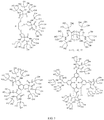
Figure 1A illustrates representative structural unit of Q-BTAV6 and resulting gel after addition of DMF. The spheres represent VV and O2-. -
Figure 1B illustrates CP-MAS 13C NMR of Q-BTAV6. Residual DMF peak (†) and tetrabutylammonium peaks (*) are indicated. -
Figure 2 illustrates the polymer Q-BTAV6. Solid spheres in the polymer network indicate hexavanadate [VV6O13(OR)6)]2- (R = trisBTA) linkers) clusters. Each cluster is associated with two tetrabutylammonium cations, which are omitted for clarity. -
Figure 3 illustrates and shows data on the hydrolysis of diethyl cyanophosphonate catalyzed by Q-BTAV6 in DMF. Q-BTAV6 (5.7 mg; 3.6 µmol based on number of hexavanadate units) and DECP (66 µmol) were added to DMF, and 900 µmol water was added to initiate the hydrolysis. Reactions were monitored by 31P NMR. The control reaction was run using the same conditions as the catalyzed reaction but with the omission of Q-BTAV6. -
Figure 4 illustrates and shows data on the oxidation of propane thiol to dipropyl disulfide catalyzed by Q-BTAV6. Reaction progress is measured by GC analysis. 3.0 mL wet DMF, 220 mM PrSH, 120 mM 1,3-dichlorobenzene as an internal standard, 7.6 mg Q-BTAV6, 100% O2. The mole ratio of reactant to product is 127. Control reaction was run under identical conditions but with the omission of Q-BTAV6. As reaction proceeds, a color change is observed from orange-yellow to dark green as the hexavanadate units are reduced. -
Figure 5 illustrates hydroxy-terminal dendrimers. See Newkome & Shreiner, Dendrimers Derived from 1 [to] 3 Branching Motifs, Chem. Rev. 2010, 110, 6338-6442. -
Figure 6 illustrates carboxyl-terminal dendrimers. See Newkome & Shreiner, Dendrimers Derived from 1 [to] 3 Branching Motifs, Chem. Rev. 2010, 110, 6338-6442. - Before the present disclosure is described in greater detail, it is to be understood that this disclosure is not limited to particular embodiments described, and as such may, of course, vary. It is also to be understood that the terminology used herein is for the purpose of describing particular embodiments only, and is not intended to be limiting, since the scope of the present disclosure will be limited only by the appended claims.
- Unless defined otherwise, all technical and scientific terms used herein have the same meaning as commonly understood by one of ordinary skill in the art to which this disclosure belongs. Although any methods and materials similar or equivalent to those described herein can also be used in the practice or testing of the present disclosure, the preferred methods and materials are now described.
- All publications and patents cited in this specification are herein incorporated by reference as if each individual publication or patent were specifically and individually indicated to be incorporated by reference and are incorporated herein by reference to disclose and describe the methods and/or materials in connection with which the publications are cited. The citation of any publication is for its disclosure prior to the filing date and should not be construed as an admission that the present disclosure is not entitled to antedate such publication by virtue of prior disclosure. Further, the dates of publication provided could be different from the actual publication dates that may need to be independently confirmed.
- As will be apparent to those of skill in the art upon reading this disclosure, each of the individual embodiments described and illustrated herein has discrete components and features which may be readily separated from or combined with the features of any of the other several embodiments without departing from the scope or spirit of the present disclosure. Any recited method can be carried out in the order of events recited or in any other order that is logically possible.
- Embodiments of the present disclosure will employ, unless otherwise indicated, techniques of medicine, organic chemistry, biochemistry, molecular biology, pharmacology, and the like, which are within the skill of the art. Such techniques are explained fully in the literature.
- It must be noted that, as used in the specification and the appended claims, the singular forms "a," "an," and "the" include plural referents unless the context clearly dictates otherwise. In this specification and in the claims that follow, reference will be made to a number of terms that shall be defined to have the following meanings unless a contrary intention is apparent.
- As used in this disclosure and claim(s), the words "comprising" (and any form of comprising, such as "comprise" and "comprises"), "having" (and any form of having, such as "have" and "has"), "including" (and any form of including, such as "includes" and "include") or "containing" (and any form of containing, such as "contains" and "contain") have the meaning ascribed to them in U.S. Patent law in that they are inclusive or open-ended and do not exclude additional, unrecited elements or method steps. "Consisting essentially of" or "consists essentially" or the like, when applied to methods and compositions encompassed by the present disclosure refers to compositions like those disclosed herein that exclude certain prior art elements to provide an inventive feature of a claim, but which may contain additional composition components or method steps, etc., that do not materially affect the basic and novel characteristic(s) of the compositions or methods, compared to those of the corresponding compositions or methods disclosed herein.
- As used herein, the term "polymer" refers to a macromolecular structure comprising repeating molecular arrangements referred to as "monomers" or "units." "Polymer" is intended to encompass polymers that contain more than one or more than two repeating molecular arrangement sometimes referred to as "co-polymers."
- This disclosure relates to polymers and polymer compositions having monomer units comprising a hydroxy-terminated branched molecules, dendrimers, arborols, or combinations thereof. As used herein, the term "dendrimer" or "arborol" can be used interchangeably to refer to compounds with repeating molecular arrangements having branches, e.g., a carbon substituted with at least three substituents, which is typically the result of synthesis from a core molecule. The synthesis may be in two or more directions. The dendrimer product can result in 1 to 2 branching patterns or 1 to 3 branching patterns or 1 to 1 and 2 branching patters as illustrated in Newkome & Shreiner, Dendrimers Derived from 1 [to] 3 Branching Motifs, Chem. Rev. 2010, 110, 6338-6442. See also Mekelburger et al., (1992), Dendrimers, Arborols, and Cascade Molecules: Breakthrough into Generations of New Materials. Angew. Chem. Int. Ed. Engl., 31: 1571-1576.
- Hernandez et al. report synthesis of N-[tris(hydroxymethyl)methyl]benzene-carboxamides. J Org Chem, 64, 6905-6906 (1999). The branched molecule, N,N',N"-tris[tris(hydroxymethyl)methyl]-1,3,5-benzenetricarboxamide, as illustrated in
figure 1 , has repeating molecular arrangements represented by branched carbons with hydroxymethyl groups that emanate from a central phenyl ring; thus, N,N',N"-tris[tris(hydroxymethyl)methyl]-1,3,5-benzenetricarboxamide is a dendrimer. In certain embodiments, the hydroxy-terminated dendrimer comprises terminal 1,1-tris(hydroxymethyl)methyl or 1,1,1-tris(hydroxyalkyl)methyl groups. - The monomer units comprising a hydroxy-terminated dendrimer can have the following structure:


- As used herein, a "linking group" refers to any variety of molecular arrangements that can be used to bridge to molecular moieties together. An example formula may be -Rm- wherein R is selected individually and independently at each occurrence as: -CRmRm-, -CHRm-, -CH-, -C-, -CH2-, -C(OH)Rm, -C(OH)(OH)-, -C(OH)H, -C(Hal)Rm-, -C(Hal)(Hal)-, -C(Hal)H-, -C(N3)Rm-, -C(CN)Rm-, -C(CN)(CN)-, -C(CN)H-, -C(N3)(N3)-, -C(N3)H-, -O-, -S-, -N-, -NH-, -NRm-, -(C=O)-, -(C=NH)-, -(C=S)-, -(C=CH2)-, which may contain single, double, or triple bonds individually and independently between the R groups. If an R is branched with an Rm it may be terminated with a group such as -CH3, -H, -CH=CH2, -CCH, -OH, -SH, -NH2, -N3, -CN, or -Hal, or two branched Rs may form a cyclic structure. It is contemplated that in certain instances, the total Rs or "m" may be less than 100 or 50 or 25 or 10. Examples of linking groups include bridging alkyl groups and alkoxyalkyl groups.
- Herein are also disclosed compositions that have mixtures of hydroxy-terminated branched molecules such as mixtures of N,N',N"-tris[tris(hydroxymethyl)methyl]-1,3,5-benzenetricarboxamide and two-way branching molecules such as N,N'-bis[tris(hydroxymethyl)methyl]-5-tert-butyl-1,3- benzenedicarboxamide or oxybis[N-tris(hydroxymethyl)methyl]-4,4'-benzenedicarboxamide.
- This disclosure relates to polymers and polymer compositions having units of polyoxometalates. As used herein, "polyoxometalate" refers to a polyatomic anion that contains a central metal atom/atoms and metal oxyanions linked together by shared oxygen atoms. The central metal atoms are typically Mo, W, V, Nb, or Ta. Polyoxometalate is intended to include isopolymetalates, composed of only one kind of metal, and heteropolymetalates, composed of a mixture of central metal(s) and The polyoxometalate according to the present invention is hexavanadate.
- Herein it is disclosed also a polyoxometalate, which is a metal complex having the following formula:
MpM'qOx(OH)n
wherein - M is a metal atom typically a do center, such as tungsten (W), molybdenum (Mo), vanadium (V), niobium (Nb), tantalum (Ta), or combinations thereof;
- M' is one or more redox active metals atoms selected from f-block elements, d-block elements, or combinations thereof;
- p is an integer from 0 to 50;
- q is an integer from 0 to 40; wherein the sum of p and q is two or more;
- x is an integer from 0 to 400; and
- n is an integer from 0 to 200.
- In certain embodiments, wherein the sum of x and n is 4 or more.
- The metal complex can be (Co4), (Ni4), (Ni5), (W10), (Mo7), (V10), (Ru3), (Ru4), (CoMo6), (Co2Mo10) (SiW9), (SiW10), (Co4SiW9), (RuSiW11), (GeW9), (RuGeW11), (PW9), (AsW9), (GeNb12), or combinations thereof.
- M' can be a transition metal selected from titanium, chromium, manganese, cobalt, iron, nickel, copper, rhodium, silver, iridium, palladium, platinum, mercury, ruthenium, and vanadium.
- A polyanionic polymer according to the present invention is comprised of covalently functionalized hexavanadate clusters and hydrogen-bonding tricarboxamides (BTAs) with the quaternary ammonium cation (Q), tetrabutylammonium counterions, (Q-BTAV6) and forms gels when exposed to select organic compounds, including the nerve agent simulant dimethyl methylphosphonate. Q-BTAV6 catalyzes both hydrolysis of the organophosphorus nerve agent simulant diethylcyanophosphonate and oxidation of the representative odorant propanethiol. The oxidation reaction results in a color change in the polymer from red to green, providing built-in colorimetric detection. Facile cation exchange, Li+ for Q+, reveals the potential for modifying this type of polymer and tailoring its response to a variety of target compounds. Q-BTAV6 is one representative of a class of materials that can simultaneously isolate, detect and destroy deleterious compounds.
- Hybrid organic/inorganic networks were constructed based on polyoxometalates (POMs). The behavior of these hybrid polymers towards capturing and destroying harmful agents is reported. POMs are oligomeric aggregates of metal cations bridged by oxide anions. These hybrid organic/inorganic POMs allow for a broad array of functionalities to be designed and incorporated, facilitating their tailoring towards specific targets.
- The catalytically active POM-based polymers form organogels when exposed to polar organic compounds, including OP agent analogues. This material has the ability to entrap select toxic compounds by gelation, catalyze their hydrolytic or air-based oxidative decontamination, and detect the redox reactions via rapid color change. Furthermore, it is robust and highly tunable to particular targets and applications.
- The tetrabutylammonium hexavanadate salt of the polymer, [(n-C4F[9)4N]2n[(V6O13)n [((OCH2)3CNHCO)3C6H3]x[((OCH2)3(Q-BTAV6), detects and catalyzes oxidation under mild conditions a common odorant, propanethiol (PrSH). Diethyl cyanophosphonate (DECP) is a mimic of tabun. Q-BTAV6 is also capable of sequestration and hydrolytic decontamination of a G-series chemical warfare agent analogue, diethyl cyanophosphonate (DECP).
- Synthesis of Q-BTAV6 proceeds through an esterification reaction between C6H3(CONHC(CH2OH)3)3 (trisBTA) and the Q+ salt of decavanadate, [Q]3H3V10O28. A single peak in the solution 51V NMR at -500 ppm confirms the presence of intact hexavanadate units containing symmetrical triester groups of the resulting Q-BTAV6. Each vanadium atom in the esterified hexavanadate unit is symmetrically identical, so the single peak in 51V NMR spectrum supports the presence of discrete hexavanadate clusters. Each bis(triester-hexavanadate) bears a 2- charge, compensated by two Q+ counter cations. A comparison between the V-O stretching frequencies in the infrared spectrum of the monomeric hexavanadate [(n-C4H9)4N]2[(V6O13) [((OCH2)3CNH2]2 (NH2V6) further confirms the presence of these units within the material. Solid-state CP-MAS 13C NMR reveals POM-bound trisBTA linkers in the product as indicated by a shift in the alcohol methylene peak from 58 ppm to 84 ppm (
Figure 1A and B ). Static light scattering measurements determined the average molecular weight of Q-BTAV6 to be 1586 ± 33 kDa indicating the average polymer is comprised of roughly 1000 monomer units. Deconvolution of the 13C NMR peaks estimates a ratio of 4 hexavanadate-bound to 3 unbound methylene carbons, and elemental analysis of Q-BTAV6 suggests a ratio of 1.3 hexavanadate units per trisBTA linker. Together, these data suggest that Q-BTAV6 is an extensively cross-linked polymer. Z-contrast scanning transmission electron microscopy (STEM) and transmission electron microscopy (TEM) reveal the presence of cross-linked fibers in the material. - Q-BTAV6 is designed to be a multifunctional material. One function of Q-BTAV6 is its ability to sequester molecules of interest, forming gels in seconds when exposed to polar aprotic organic liquids. Addition of diethyl ether or toluene to the swollen gel results in release of the solvents from the gel network with accompanying contraction. The material retains its gelation capability even after multiple swelling/contraction cycles ATR FT-IR studies demonstrate that gel formation is mediated by hydrogen-bonging interactions between Q-BTAV6 and the solvent. This hydrogen-bonding behavior is observed in trisBTA-based molecules as well as in other functionalized POMs, however this is the first example of a hexavanadate-based organogelator.
- Considering high toxicity of G-agents, DMMP (dimethyl methylphosphonate) is used experimentally because of its similar chemical structure and much lower toxicity. The swelling behavior of Q-BTAV6 was demonstrates when exposed to DMMP. The effect of Q-BTAV6 on the hydrolysis of the nerve agent analogue DECP was examined. Using 31P NMR to monitor the reaction, experiments show that Q-BTAV6 catalyzes the hydrolytic breakdown of DECP (
Figure 3 ). Trials using the trisBTA linker show minor hydrolytic rate enhancements, whereas using an equimolar ratio of the monomer compound (based on V6 units) resulted in an observation of a similar hydrolytic rate as that of Q-BTAV6. This data suggests that the hexavanadate core is catalyzing the hydrolysis of the OP analogue, and that the incorporation of V6 into the polymer retains the catalytic activity in the heterogeneous polymer system. - The material also has built-in redox activity, giving it color-change detection and oxidative decontamination capabilities. In order to demonstrate the applicability of Q-BTAV6 for air-based oxidative removal reactions, studies were conducted on the catalytic oxidation of propane thiol. Thiols are the largest class of odorants present in human environments. This representative thiol is fully oxidized to the corresponding non-odorous disulfide, using only O2 to reoxidize the reduced POM units (
Figure 4 ). The persistent observation of a green reduced hexavanadate species suggests that reoxidation of Q-BTAV6 by O2 is rate-limiting under these conditions and demonstrates colorimetric detection capabilities of the polymer material. The material is red in its powder state and reddish-orange when dispersed in solvent (λmax= 390 nm), indicative of the oxygen-to-metal charge transfer absorption manifold of a fully-oxidized [VV 6O13(OR)6)]2- core (R = trisBTA linkers). Upon reduction of the POM, Q-BTAV6 becomes dark green as the peak at 390 nm decreases and a broad peak between 600 and 900 nm increases, attributed to intervalence charge-transfer bands in the reduced POM. Electrochemical studies reveal two accessible redox states corresponding to the fully chemically reversible one-electron reduced states of the hexavanadate clusters. These are likely the relevant redox states that are implicated in the catalytic cycle for the oxidation of PrSH.
Claims (9)
- A polyanionic polymer comprising tetrabutylammonium hexavanadate salt polymer [(n-C4H9)4N]2n[(V6O13)n[((OCH2)3CNHCO)3C6H3]x[((OCH2)3 CNHCO)2((HOCH2)3CNHCO)C6H3]y, or lithium hexavanadate salt of the polymer, wherein the tetrabutylammonium is exchanged with Li+
- The polymer of Claim 1, which is [(n-C4H9)4N]2n[(V6O13)n [((OCH2)3CNHCO)3C6H3]x[((OCH2)3CNHCO)2((HOCH2)3CNHCO)C6H3]y].
- A composition comprising a polyanionic polymer of Claim 1 with tetrabutylammonium.
- The composition of Claim 3, further comprising a polar aprotic solvent and/or water.
- An article comprising a solid substrate and a composition of Claim 3.
- The article of Claim 5, wherein the solid substrate is a piece of clothing, fabric, string, matrix, collagen, leather, paper, polymer, plastic, glass, wood, metal surface, cement, rock, or solid aggregate of minerals or mineraloids.
- A method of oxidizing an agent comprising a thiol group, comprising exposing the composition of Claim 3 to the agent such that the agent is oxidized by the metal complexes.
- A method of hydrolyzing an agent comprising a phosphate ester group, comprising exposing the composition of Claim 3 to the agent, such that the agent is hydrolyzed by the metal complexes.
- The polymer material of Claim 2 having an average molecular weight of 1586 ± 33 kDa, measured by static light scattering, indicating that the polymer is comprised of roughly 1000 monomer units.
Applications Claiming Priority (2)
| Application Number | Priority Date | Filing Date | Title |
|---|---|---|---|
| US201562265746P | 2015-12-10 | 2015-12-10 | |
| PCT/US2016/065776 WO2017146801A2 (en) | 2015-12-10 | 2016-12-09 | Polymers of polyoxometalates and hydroxy-terminated monomer units and uses in degrading noxious agents |
Publications (3)
| Publication Number | Publication Date |
|---|---|
| EP3386599A2 EP3386599A2 (en) | 2018-10-17 |
| EP3386599A4 EP3386599A4 (en) | 2019-05-01 |
| EP3386599B1 true EP3386599B1 (en) | 2021-07-21 |
Family
ID=59685512
Family Applications (1)
| Application Number | Title | Priority Date | Filing Date |
|---|---|---|---|
| EP16891887.8A Active EP3386599B1 (en) | 2015-12-10 | 2016-12-09 | Polymers of polyoxometalates and hydroxy-terminated monomer units and uses in degrading noxious agents |
Country Status (3)
| Country | Link |
|---|---|
| US (1) | US11174352B2 (en) |
| EP (1) | EP3386599B1 (en) |
| WO (1) | WO2017146801A2 (en) |
Families Citing this family (1)
| Publication number | Priority date | Publication date | Assignee | Title |
|---|---|---|---|---|
| CN107513163B (en) * | 2017-09-18 | 2020-03-24 | 株洲时代新材料科技股份有限公司 | Preparation method of high-transparency high-toughness nylon 66 resin |
Citations (1)
| Publication number | Priority date | Publication date | Assignee | Title |
|---|---|---|---|---|
| WO2001034279A2 (en) * | 1999-10-12 | 2001-05-17 | Emory University | Polyoxometalate materials, metal-containing materials, and methods of use thereof |
Family Cites Families (5)
| Publication number | Priority date | Publication date | Assignee | Title |
|---|---|---|---|---|
| US5585510A (en) * | 1994-06-24 | 1996-12-17 | The B. F. Goodrich Company | Ligated polyoxometalates and methods for their synthesis |
| US6713076B1 (en) * | 1998-04-13 | 2004-03-30 | Emory University | Methods for removing a contaminant by a polyoxometalate-modified fabric or a polyoxometalate-modified cellulosic fiber and fabrics thereof |
| AU2003263735A1 (en) * | 2002-05-03 | 2003-11-11 | Emory University | Materials for degrading contaminants |
| EP2848667B1 (en) * | 2013-09-17 | 2019-04-10 | Essilor International | Electrochromic single and two-core viologens and optical articles containing them |
| CN103923282B (en) * | 2014-01-08 | 2018-04-06 | 南开大学 | The copolymer and preparation method of the silsesquioxane containing polyoxometallate |
-
2016
- 2016-12-09 WO PCT/US2016/065776 patent/WO2017146801A2/en not_active Ceased
- 2016-12-09 EP EP16891887.8A patent/EP3386599B1/en active Active
- 2016-12-09 US US16/061,327 patent/US11174352B2/en active Active
Patent Citations (1)
| Publication number | Priority date | Publication date | Assignee | Title |
|---|---|---|---|---|
| WO2001034279A2 (en) * | 1999-10-12 | 2001-05-17 | Emory University | Polyoxometalate materials, metal-containing materials, and methods of use thereof |
Also Published As
| Publication number | Publication date |
|---|---|
| US20190040208A1 (en) | 2019-02-07 |
| WO2017146801A3 (en) | 2017-10-19 |
| EP3386599A4 (en) | 2019-05-01 |
| EP3386599A2 (en) | 2018-10-17 |
| WO2017146801A2 (en) | 2017-08-31 |
| US11174352B2 (en) | 2021-11-16 |
Similar Documents
| Publication | Publication Date | Title |
|---|---|---|
| Hsini et al. | Synthesis of an arginine-functionalized polyaniline@ FeOOH composite with high removal performance of hexavalent chromium ions from water: Adsorption behavior, regeneration and process capability studies | |
| Zhao et al. | Metal–organic frameworks constructed from a new thiophene-functionalized dicarboxylate: luminescence sensing and pesticide removal | |
| Kaur et al. | Photocatalytic reduction and recognition of Cr (VI): new Zn (II)-based metal–organic framework as catalytic surface | |
| Kothaplamoottil Sivan et al. | Greener assembling of MoO3 nanoparticles supported on gum arabic: cytotoxic effects and catalytic efficacy towards reduction of p-nitrophenol: S. Kothaplamoottil Sivan et al. | |
| Gan et al. | Biomimetic photodegradation of glyphosate in carborane-functionalized nanoconfined spaces | |
| Zayed et al. | Molecular structure, molecular docking, thermal, spectroscopic and biological activity studies of bis‐Schiff base ligand and its metal complexes | |
| Fdez-Sanromán et al. | Heterogeneous electro-Fenton system using Fe-MOF as catalyst and electrocatalyst for degradation of pharmaceuticals | |
| Moustafa et al. | Structural characterization, spectroscopic studies, and molecular docking studies on metal complexes of new hexadentate cyclic peptide ligand | |
| Basak et al. | A trinuclear centrosymmetric zinc (II) Schiff base complex: exploration of its photocatalytic and phosphatase mimicking activity | |
| Chandrasekhar et al. | Phosphazenes | |
| Muslim et al. | A zinc (II) metal–organic complex based on 2-(2-aminophenyl)-1H-benzimidazole ligand: exhibiting high adsorption capacity for aromatic hazardous dyes and catecholase mimicking activity | |
| Qureashi et al. | Bifunctional zirconium phosphate with greigite for electrochemical detection and simultaneous removal of heavy metal ions and nitro compounds | |
| Pendar et al. | Multifunctional Anionic Cyclotriphosphazene-Based Metal–Organic Framework Featuring a One-Dimensional Zn (II) Inorganic Building Unit for Selective Chemical Sensing and Efficient Photocatalytic Activity | |
| Uma et al. | A new dinuclear biphenylene bridged copper (II) complex: DNA cleavage under hydrolytic conditions | |
| Pendar et al. | Ag (I) and Hg (II) coordination polymers decorated from fully benzimidazole substituted cyclotriphosphazene ligand and adsorption behaviour against Methylene Blue | |
| Li et al. | Hydrolysis of organophosphorus agents catalyzed by cobalt nanoparticles supported on three-dimensional nitrogen-doped graphene | |
| Abdelaziz et al. | RETRACTED: Cost-effective zinc ferrite-functionalized hydroxyethyl cellulose/chitosan film for efficient removal of methyl orange dye from aqueous solutions | |
| Bakhtiyari-Ramezani et al. | Plasma-assisted solid phase modification of UIO-66 metal-organic framework for enhanced hydrolysis of nerve agent simulant | |
| US11174352B2 (en) | Polymers of polyoxometalates and hydroxy-terminated monomer units and uses in degrading noxious agents | |
| Vera-Tuset et al. | Electroactive sulfur-rich materials obtained via inverse vulcanization of a diallylsilyl-functionalized ferrocene | |
| Wang et al. | Fabrication of molecularly imprinted electrospun nanofibers with mono-amidoxime functional ligand for efficient decontamination of toxic organophosphates | |
| Umar et al. | Facile Synthesis and Characterization of Trimetallic CuCrFe‐BTC MOF for the Adsorptive Removal of Diamond Green G: Kinetic, Isotherm, and Thermodynamic Study | |
| Aina et al. | Assessing Hydrolysis Performance of Ce (OH) 4@ PIM-1 Composites Functionalized with Amidoxime, Aldoxime, and Carboxylate Groups Toward Dimethyl 4-Nitrophenylphosphonate, a Nerve Agent Simulant | |
| Nomiya et al. | Intercluster compound between a tetrakis {triphenylphosphinegold (I)} oxonium cation and a Keggin polyoxometalate (POM): formation during the course of carboxylate elimination of a monomeric triphenylphosphinegold (I) carboxylate in the presence of POMs | |
| Ulmann et al. | Reversible ligand pairing and sorting processes leading to heteroligated palladium (II) complexes with hemilabile ligands |
Legal Events
| Date | Code | Title | Description |
|---|---|---|---|
| STAA | Information on the status of an ep patent application or granted ep patent |
Free format text: STATUS: THE INTERNATIONAL PUBLICATION HAS BEEN MADE |
|
| PUAI | Public reference made under article 153(3) epc to a published international application that has entered the european phase |
Free format text: ORIGINAL CODE: 0009012 |
|
| STAA | Information on the status of an ep patent application or granted ep patent |
Free format text: STATUS: REQUEST FOR EXAMINATION WAS MADE |
|
| 17P | Request for examination filed |
Effective date: 20180629 |
|
| AK | Designated contracting states |
Kind code of ref document: A2 Designated state(s): AL AT BE BG CH CY CZ DE DK EE ES FI FR GB GR HR HU IE IS IT LI LT LU LV MC MK MT NL NO PL PT RO RS SE SI SK SM TR |
|
| AX | Request for extension of the european patent |
Extension state: BA ME |
|
| DAV | Request for validation of the european patent (deleted) | ||
| DAX | Request for extension of the european patent (deleted) | ||
| A4 | Supplementary search report drawn up and despatched |
Effective date: 20190329 |
|
| RIC1 | Information provided on ipc code assigned before grant |
Ipc: C01G 41/02 20060101ALI20190325BHEP Ipc: C08G 83/00 20060101ALI20190325BHEP Ipc: C01G 39/02 20060101ALI20190325BHEP Ipc: A62D 3/30 20070101AFI20190325BHEP Ipc: B01J 23/00 20060101ALI20190325BHEP |
|
| STAA | Information on the status of an ep patent application or granted ep patent |
Free format text: STATUS: EXAMINATION IS IN PROGRESS |
|
| 17Q | First examination report despatched |
Effective date: 20191107 |
|
| GRAP | Despatch of communication of intention to grant a patent |
Free format text: ORIGINAL CODE: EPIDOSNIGR1 |
|
| STAA | Information on the status of an ep patent application or granted ep patent |
Free format text: STATUS: GRANT OF PATENT IS INTENDED |
|
| INTG | Intention to grant announced |
Effective date: 20210212 |
|
| GRAS | Grant fee paid |
Free format text: ORIGINAL CODE: EPIDOSNIGR3 |
|
| GRAA | (expected) grant |
Free format text: ORIGINAL CODE: 0009210 |
|
| STAA | Information on the status of an ep patent application or granted ep patent |
Free format text: STATUS: THE PATENT HAS BEEN GRANTED |
|
| AK | Designated contracting states |
Kind code of ref document: B1 Designated state(s): AL AT BE BG CH CY CZ DE DK EE ES FI FR GB GR HR HU IE IS IT LI LT LU LV MC MK MT NL NO PL PT RO RS SE SI SK SM TR |
|
| REG | Reference to a national code |
Ref country code: GB Ref legal event code: FG4D |
|
| REG | Reference to a national code |
Ref country code: CH Ref legal event code: EP |
|
| REG | Reference to a national code |
Ref country code: DE Ref legal event code: R096 Ref document number: 602016061119 Country of ref document: DE |
|
| REG | Reference to a national code |
Ref country code: AT Ref legal event code: REF Ref document number: 1412045 Country of ref document: AT Kind code of ref document: T Effective date: 20210815 |
|
| REG | Reference to a national code |
Ref country code: IE Ref legal event code: FG4D |
|
| REG | Reference to a national code |
Ref country code: LT Ref legal event code: MG9D |
|
| REG | Reference to a national code |
Ref country code: NL Ref legal event code: MP Effective date: 20210721 |
|
| REG | Reference to a national code |
Ref country code: AT Ref legal event code: MK05 Ref document number: 1412045 Country of ref document: AT Kind code of ref document: T Effective date: 20210721 |
|
| PG25 | Lapsed in a contracting state [announced via postgrant information from national office to epo] |
Ref country code: LT Free format text: LAPSE BECAUSE OF FAILURE TO SUBMIT A TRANSLATION OF THE DESCRIPTION OR TO PAY THE FEE WITHIN THE PRESCRIBED TIME-LIMIT Effective date: 20210721 Ref country code: BG Free format text: LAPSE BECAUSE OF FAILURE TO SUBMIT A TRANSLATION OF THE DESCRIPTION OR TO PAY THE FEE WITHIN THE PRESCRIBED TIME-LIMIT Effective date: 20211021 Ref country code: AT Free format text: LAPSE BECAUSE OF FAILURE TO SUBMIT A TRANSLATION OF THE DESCRIPTION OR TO PAY THE FEE WITHIN THE PRESCRIBED TIME-LIMIT Effective date: 20210721 Ref country code: NL Free format text: LAPSE BECAUSE OF FAILURE TO SUBMIT A TRANSLATION OF THE DESCRIPTION OR TO PAY THE FEE WITHIN THE PRESCRIBED TIME-LIMIT Effective date: 20210721 Ref country code: NO Free format text: LAPSE BECAUSE OF FAILURE TO SUBMIT A TRANSLATION OF THE DESCRIPTION OR TO PAY THE FEE WITHIN THE PRESCRIBED TIME-LIMIT Effective date: 20211021 Ref country code: PT Free format text: LAPSE BECAUSE OF FAILURE TO SUBMIT A TRANSLATION OF THE DESCRIPTION OR TO PAY THE FEE WITHIN THE PRESCRIBED TIME-LIMIT Effective date: 20211122 Ref country code: ES Free format text: LAPSE BECAUSE OF FAILURE TO SUBMIT A TRANSLATION OF THE DESCRIPTION OR TO PAY THE FEE WITHIN THE PRESCRIBED TIME-LIMIT Effective date: 20210721 Ref country code: FI Free format text: LAPSE BECAUSE OF FAILURE TO SUBMIT A TRANSLATION OF THE DESCRIPTION OR TO PAY THE FEE WITHIN THE PRESCRIBED TIME-LIMIT Effective date: 20210721 Ref country code: HR Free format text: LAPSE BECAUSE OF FAILURE TO SUBMIT A TRANSLATION OF THE DESCRIPTION OR TO PAY THE FEE WITHIN THE PRESCRIBED TIME-LIMIT Effective date: 20210721 Ref country code: RS Free format text: LAPSE BECAUSE OF FAILURE TO SUBMIT A TRANSLATION OF THE DESCRIPTION OR TO PAY THE FEE WITHIN THE PRESCRIBED TIME-LIMIT Effective date: 20210721 Ref country code: SE Free format text: LAPSE BECAUSE OF FAILURE TO SUBMIT A TRANSLATION OF THE DESCRIPTION OR TO PAY THE FEE WITHIN THE PRESCRIBED TIME-LIMIT Effective date: 20210721 |
|
| PG25 | Lapsed in a contracting state [announced via postgrant information from national office to epo] |
Ref country code: PL Free format text: LAPSE BECAUSE OF FAILURE TO SUBMIT A TRANSLATION OF THE DESCRIPTION OR TO PAY THE FEE WITHIN THE PRESCRIBED TIME-LIMIT Effective date: 20210721 Ref country code: LV Free format text: LAPSE BECAUSE OF FAILURE TO SUBMIT A TRANSLATION OF THE DESCRIPTION OR TO PAY THE FEE WITHIN THE PRESCRIBED TIME-LIMIT Effective date: 20210721 Ref country code: GR Free format text: LAPSE BECAUSE OF FAILURE TO SUBMIT A TRANSLATION OF THE DESCRIPTION OR TO PAY THE FEE WITHIN THE PRESCRIBED TIME-LIMIT Effective date: 20211022 |
|
| REG | Reference to a national code |
Ref country code: DE Ref legal event code: R097 Ref document number: 602016061119 Country of ref document: DE |
|
| PG25 | Lapsed in a contracting state [announced via postgrant information from national office to epo] |
Ref country code: DK Free format text: LAPSE BECAUSE OF FAILURE TO SUBMIT A TRANSLATION OF THE DESCRIPTION OR TO PAY THE FEE WITHIN THE PRESCRIBED TIME-LIMIT Effective date: 20210721 |
|
| PLBE | No opposition filed within time limit |
Free format text: ORIGINAL CODE: 0009261 |
|
| STAA | Information on the status of an ep patent application or granted ep patent |
Free format text: STATUS: NO OPPOSITION FILED WITHIN TIME LIMIT |
|
| PG25 | Lapsed in a contracting state [announced via postgrant information from national office to epo] |
Ref country code: SM Free format text: LAPSE BECAUSE OF FAILURE TO SUBMIT A TRANSLATION OF THE DESCRIPTION OR TO PAY THE FEE WITHIN THE PRESCRIBED TIME-LIMIT Effective date: 20210721 Ref country code: SK Free format text: LAPSE BECAUSE OF FAILURE TO SUBMIT A TRANSLATION OF THE DESCRIPTION OR TO PAY THE FEE WITHIN THE PRESCRIBED TIME-LIMIT Effective date: 20210721 Ref country code: RO Free format text: LAPSE BECAUSE OF FAILURE TO SUBMIT A TRANSLATION OF THE DESCRIPTION OR TO PAY THE FEE WITHIN THE PRESCRIBED TIME-LIMIT Effective date: 20210721 Ref country code: EE Free format text: LAPSE BECAUSE OF FAILURE TO SUBMIT A TRANSLATION OF THE DESCRIPTION OR TO PAY THE FEE WITHIN THE PRESCRIBED TIME-LIMIT Effective date: 20210721 Ref country code: CZ Free format text: LAPSE BECAUSE OF FAILURE TO SUBMIT A TRANSLATION OF THE DESCRIPTION OR TO PAY THE FEE WITHIN THE PRESCRIBED TIME-LIMIT Effective date: 20210721 Ref country code: AL Free format text: LAPSE BECAUSE OF FAILURE TO SUBMIT A TRANSLATION OF THE DESCRIPTION OR TO PAY THE FEE WITHIN THE PRESCRIBED TIME-LIMIT Effective date: 20210721 |
|
| 26N | No opposition filed |
Effective date: 20220422 |
|
| PG25 | Lapsed in a contracting state [announced via postgrant information from national office to epo] |
Ref country code: MC Free format text: LAPSE BECAUSE OF FAILURE TO SUBMIT A TRANSLATION OF THE DESCRIPTION OR TO PAY THE FEE WITHIN THE PRESCRIBED TIME-LIMIT Effective date: 20210721 Ref country code: IT Free format text: LAPSE BECAUSE OF FAILURE TO SUBMIT A TRANSLATION OF THE DESCRIPTION OR TO PAY THE FEE WITHIN THE PRESCRIBED TIME-LIMIT Effective date: 20210721 |
|
| REG | Reference to a national code |
Ref country code: CH Ref legal event code: PL |
|
| REG | Reference to a national code |
Ref country code: BE Ref legal event code: MM Effective date: 20211231 |
|
| PG25 | Lapsed in a contracting state [announced via postgrant information from national office to epo] |
Ref country code: LU Free format text: LAPSE BECAUSE OF NON-PAYMENT OF DUE FEES Effective date: 20211209 Ref country code: IE Free format text: LAPSE BECAUSE OF NON-PAYMENT OF DUE FEES Effective date: 20211209 |
|
| PG25 | Lapsed in a contracting state [announced via postgrant information from national office to epo] |
Ref country code: BE Free format text: LAPSE BECAUSE OF NON-PAYMENT OF DUE FEES Effective date: 20211231 |
|
| PG25 | Lapsed in a contracting state [announced via postgrant information from national office to epo] |
Ref country code: LI Free format text: LAPSE BECAUSE OF NON-PAYMENT OF DUE FEES Effective date: 20211231 Ref country code: CH Free format text: LAPSE BECAUSE OF NON-PAYMENT OF DUE FEES Effective date: 20211231 |
|
| PG25 | Lapsed in a contracting state [announced via postgrant information from national office to epo] |
Ref country code: HU Free format text: LAPSE BECAUSE OF FAILURE TO SUBMIT A TRANSLATION OF THE DESCRIPTION OR TO PAY THE FEE WITHIN THE PRESCRIBED TIME-LIMIT; INVALID AB INITIO Effective date: 20161209 |
|
| PG25 | Lapsed in a contracting state [announced via postgrant information from national office to epo] |
Ref country code: CY Free format text: LAPSE BECAUSE OF FAILURE TO SUBMIT A TRANSLATION OF THE DESCRIPTION OR TO PAY THE FEE WITHIN THE PRESCRIBED TIME-LIMIT Effective date: 20210721 |
|
| PG25 | Lapsed in a contracting state [announced via postgrant information from national office to epo] |
Ref country code: MK Free format text: LAPSE BECAUSE OF FAILURE TO SUBMIT A TRANSLATION OF THE DESCRIPTION OR TO PAY THE FEE WITHIN THE PRESCRIBED TIME-LIMIT Effective date: 20210721 |
|
| PG25 | Lapsed in a contracting state [announced via postgrant information from national office to epo] |
Ref country code: TR Free format text: LAPSE BECAUSE OF FAILURE TO SUBMIT A TRANSLATION OF THE DESCRIPTION OR TO PAY THE FEE WITHIN THE PRESCRIBED TIME-LIMIT Effective date: 20210721 |
|
| PG25 | Lapsed in a contracting state [announced via postgrant information from national office to epo] |
Ref country code: MT Free format text: LAPSE BECAUSE OF FAILURE TO SUBMIT A TRANSLATION OF THE DESCRIPTION OR TO PAY THE FEE WITHIN THE PRESCRIBED TIME-LIMIT Effective date: 20210721 |
|
| PGFP | Annual fee paid to national office [announced via postgrant information from national office to epo] |
Ref country code: GB Payment date: 20241227 Year of fee payment: 9 |
|
| PGFP | Annual fee paid to national office [announced via postgrant information from national office to epo] |
Ref country code: FR Payment date: 20241226 Year of fee payment: 9 |
|
| PGFP | Annual fee paid to national office [announced via postgrant information from national office to epo] |
Ref country code: DE Payment date: 20241227 Year of fee payment: 9 |