EP3386508B1 - Cpap-tubulin module - Google Patents
Cpap-tubulin module Download PDFInfo
- Publication number
- EP3386508B1 EP3386508B1 EP16808670.0A EP16808670A EP3386508B1 EP 3386508 B1 EP3386508 B1 EP 3386508B1 EP 16808670 A EP16808670 A EP 16808670A EP 3386508 B1 EP3386508 B1 EP 3386508B1
- Authority
- EP
- European Patent Office
- Prior art keywords
- cancer
- compound
- alkyl
- pharmaceutical composition
- phenyl
- Prior art date
- Legal status (The legal status is an assumption and is not a legal conclusion. Google has not performed a legal analysis and makes no representation as to the accuracy of the status listed.)
- Active
Links
Images





Classifications
-
- C—CHEMISTRY; METALLURGY
- C07—ORGANIC CHEMISTRY
- C07D—HETEROCYCLIC COMPOUNDS
- C07D471/00—Heterocyclic compounds containing nitrogen atoms as the only ring hetero atoms in the condensed system, at least one ring being a six-membered ring with one nitrogen atom, not provided for by groups C07D451/00 - C07D463/00
- C07D471/02—Heterocyclic compounds containing nitrogen atoms as the only ring hetero atoms in the condensed system, at least one ring being a six-membered ring with one nitrogen atom, not provided for by groups C07D451/00 - C07D463/00 in which the condensed system contains two hetero rings
- C07D471/04—Ortho-condensed systems
-
- A—HUMAN NECESSITIES
- A61—MEDICAL OR VETERINARY SCIENCE; HYGIENE
- A61K—PREPARATIONS FOR MEDICAL, DENTAL OR TOILETRY PURPOSES
- A61K31/00—Medicinal preparations containing organic active ingredients
- A61K31/33—Heterocyclic compounds
- A61K31/395—Heterocyclic compounds having nitrogen as a ring hetero atom, e.g. guanethidine or rifamycins
- A61K31/435—Heterocyclic compounds having nitrogen as a ring hetero atom, e.g. guanethidine or rifamycins having six-membered rings with one nitrogen as the only ring hetero atom
- A61K31/47—Quinolines; Isoquinolines
- A61K31/4738—Quinolines; Isoquinolines ortho- or peri-condensed with heterocyclic ring systems
- A61K31/4745—Quinolines; Isoquinolines ortho- or peri-condensed with heterocyclic ring systems condensed with ring systems having nitrogen as a ring hetero atom, e.g. phenantrolines
-
- A—HUMAN NECESSITIES
- A61—MEDICAL OR VETERINARY SCIENCE; HYGIENE
- A61K—PREPARATIONS FOR MEDICAL, DENTAL OR TOILETRY PURPOSES
- A61K31/00—Medicinal preparations containing organic active ingredients
- A61K31/33—Heterocyclic compounds
- A61K31/395—Heterocyclic compounds having nitrogen as a ring hetero atom, e.g. guanethidine or rifamycins
- A61K31/495—Heterocyclic compounds having nitrogen as a ring hetero atom, e.g. guanethidine or rifamycins having six-membered rings with two or more nitrogen atoms as the only ring heteroatoms, e.g. piperazine or tetrazines
- A61K31/505—Pyrimidines; Hydrogenated pyrimidines, e.g. trimethoprim
- A61K31/517—Pyrimidines; Hydrogenated pyrimidines, e.g. trimethoprim ortho- or peri-condensed with carbocyclic ring systems, e.g. quinazoline, perimidine
-
- A—HUMAN NECESSITIES
- A61—MEDICAL OR VETERINARY SCIENCE; HYGIENE
- A61K—PREPARATIONS FOR MEDICAL, DENTAL OR TOILETRY PURPOSES
- A61K31/00—Medicinal preparations containing organic active ingredients
- A61K31/33—Heterocyclic compounds
- A61K31/395—Heterocyclic compounds having nitrogen as a ring hetero atom, e.g. guanethidine or rifamycins
- A61K31/55—Heterocyclic compounds having nitrogen as a ring hetero atom, e.g. guanethidine or rifamycins having seven-membered rings, e.g. azelastine, pentylenetetrazole
-
- A—HUMAN NECESSITIES
- A61—MEDICAL OR VETERINARY SCIENCE; HYGIENE
- A61K—PREPARATIONS FOR MEDICAL, DENTAL OR TOILETRY PURPOSES
- A61K45/00—Medicinal preparations containing active ingredients not provided for in groups A61K31/00 - A61K41/00
- A61K45/06—Mixtures of active ingredients without chemical characterisation, e.g. antiphlogistics and cardiaca
-
- A—HUMAN NECESSITIES
- A61—MEDICAL OR VETERINARY SCIENCE; HYGIENE
- A61P—SPECIFIC THERAPEUTIC ACTIVITY OF CHEMICAL COMPOUNDS OR MEDICINAL PREPARATIONS
- A61P35/00—Antineoplastic agents
-
- C—CHEMISTRY; METALLURGY
- C07—ORGANIC CHEMISTRY
- C07D—HETEROCYCLIC COMPOUNDS
- C07D495/00—Heterocyclic compounds containing in the condensed system at least one hetero ring having sulfur atoms as the only ring hetero atoms
- C07D495/12—Heterocyclic compounds containing in the condensed system at least one hetero ring having sulfur atoms as the only ring hetero atoms in which the condensed system contains three hetero rings
- C07D495/14—Ortho-condensed systems
Definitions
- the invention relates to CPAP-tubulin inhibitors and their use as cancer therapeutics.
- Centrosome amplification is a hallmark of human cancers that can trigger cancer cell invasion.
- Centrosomes are major microtubule organizing centers in mammalian cells whose numerical abnormalities contribute to increased cellular invasiveness.
- cancer cells display supernumerary centrosomes.
- non-small-cell lung cancer cells harboring somatic activating and resistance mutations in epidermal growth factor receptor (EGFR) gene exhibit an extreme increase in centrosome numbers.
- Cancer cells cluster their supernumerary centrosomes both at interphase and mitosis to generate pseudo-bipolar spindles so as to circumvent the deleterious effects of centrosomal amplification caused by mitotic catastrophe.
- centrosomes While the mechanisms by which cancer cells cluster their supernumerary centrosomes are largely unknown, it is known that extra-centrosomes remain inactive with no or less microtubule nucleating activity both during and after centrosomal clustering at the interphase of cell cycle. Further, it is known that microtubule-nucleating activity of centrosomes is spatiotemporally regulated so that they nucleate less during interphase and more during mitosis. Still further, it is known that in order to combat cancer, centrosomes can be removed. However, cancer cells can proliferate upon centrosome removal, raising the possibility that cancer cells use the extra-centrosomes for the benefit of cellular invasion.
- centrosomes In the context of centrosomes, reference can be made, for example, to Blachon and Gopalakrishnan et al., Genetics 2008 ; Gopalakrishnan et al., JBC 2010 ; Gopalakrishnan et al., Nature Commun 2011 ; Gopalakrishnan et al., Nature Cell Biology 2012 ; Gopalakrishnan et al., Current Opinion in Cell Biol 2013 ; Zheng et al., PNAS 2014 ; and Pannu et al., Cell Death and Dis 2014 .
- anti-microtubule agents that block cell division by preventing microtubule function.
- the two main groups of anti-microtubule agents are vinca alkaloids and taxanes.
- the vinca alkaloids prevent the formation of the microtubules, whereas the taxanes prevent the microtubule disassembly. By doing so, they prevent the cancer cells from completing mitosis. Following this, cell cycle arrest occurs, which induces programmed cell death (apoptosis).
- topoisomerase inhibitors are employed in cancer therapies. These inhibitors affect the activity of topoisomerase enzymes which unwind DNA during replication or transcription.
- Another group of compounds for cancer therapy are tyrosine-kinase inhibitors such as compounds kown under the name of Imatinib, Gefitinib, Erlotinib, Sunitinib and Cabozantinib.
- US 2009/0118135 discloses an assay for determining compounds that inhibit activity of a Bcl-2-protein, or affect conversion of Bcl-2 from antiapoptotic to a proapoptotic form. Further, US 2009/0118135 relates to a pro-apoptotic modulator of Bcl which can be linked through GX to a cyclic disulfide loop peptide that binds specifically to breast cancer cells.
- US 6,864,238 relates to polypeptides that comprise approx. 100-amino acid residue region of a centrosomal P4.1-associated protein (CPAP) that possess microtubule-destabilizing activity, polynucleotides encoding such polypeptides, compositions comprising the polypeptides and polynucleotides, and methods of use thereof.
- the invention is useful for destabilizing microtubules in eukaryotic cells, including but not limited to cancer cells.
- Centrosome activation mediated by the CPAP-tubulin inhibitors according to the invention has broad anti-invasive activity against a wide-spectrum of cancers including tyrosine-kinase inhibitor (TKI) resistant EGFR and KRAS mutant cancers. Further, centrosome activation by the CPAP-tubulin inhibitors according to the invention effectively synergizes these cells to EGFR inhibition.
- TKI tyrosine-kinase inhibitor
- the present invention is defined by the independent claims.
- the dependent claims depict other embodiments of the invention. Any embodiment not falling under the scope of the appended claims does not form part of the invention.
- the invention relates to a compound
- compositions may also contain adjuvants, such as preservative agents, wetting agents, emulsifying agents, and dispersing agents. Prevention of the action of microorganisms may be ensured by various antibacterial and antifungal agents, for example, parabens, phenol, chlorobutanol, sorbic acid, and the like. It also may be desirable to include isotonic agents, for example, sugars, sodium chloride and the like. Prolonged absorption of the injectable pharmaceutical form may be brought about by the use of agents delaying absorption, for example, aluminum monostearate and gelatin.
- the compounds may be incorporated into slow-release or targeted-delivery systems such as polymer matrices, liposomes, and microspheres. They may be sterilized, for example, by filtration through a bacteria-retaining filter or by incorporation of sterilizing agents in the form of sterile solid compositions, which may be dissolved in sterile water or some other sterile injectable medium immediately before use.
- Dosage forms for topical or transdermal administration of a compound include ointments, pastes, creams, lotions, gels, powders, solutions, sprays, inhalants or patches.
- a desired compound is admixed under sterile conditions with a pharmaceutically acceptable carrier and any needed preservatives or buffers as may be required.
- Ophthalmic formulation, eardrops, eye ointments, powders and solutions are also contemplated as being within the scope of this disclosure.
- the ointments, pastes, creams and gels may contain, in addition to an active compound, animal and vegetable fats, oils, waxes, paraffins, starch, tragacanth, cellulose derivatives, polyethylene glycols, silicones, bentonites, silicic acid, talc and zinc oxide, or mixtures thereof.
- Powders and sprays may contain, in addition to the compounds, lactose, talc, silicic acid, aluminum hydroxide, calcium silicates and polyamide powder, or mixtures of these substances. Sprays additionally may contain customary propellants such as chlorofluorohydrocarbons.
- liposomes are generally derived from phospholipids or other lipid substances. Liposomes are formed by mono- or multi-lamellar hydrated liquid crystals that are dispersed in an aqueous medium. Any non-toxic, physiologically acceptable and metabolizable lipid capable of forming liposomes may be used.
- the present compositions in liposome form may contain, in addition to the compounds, stabilizers, preservatives, and the like.
- the preferred lipids are the natural and synthetic phospholipids and phosphatidylcholines (lecithins) used separately or together. Methods to form liposomes are known in the art.
- Dosage forms for topical administration of a compound according to the invention as described above include powders, sprays, ointments and inhalants.
- the active compound is mixed under sterile conditions with a pharmaceutically acceptable carrier and any needed preservatives, buffers or propellants.
- Ophthalmic formulations, eye ointments, powders and solutions are also possible.
- Aqueous liquid compositions may also be useful.
- the compounds according to the invention are preferably administered once daily, twice daily, thrice daily or more often to a subject in need thereof.
- the compounds according to the invention are preferably administered orally, rectally, intravenously, intramuscularly, intraperitoneally, intrasternally, subcutaneously, by intraarticular injection, by infusion, intravaginally, intracisternally, intraperitoneally, topically, bucally or extracorporeally.
- a combination of cancer medicaments to achieve the desired remission of cancer cells.
- the need for such a combination of cancer medicaments i.e. a combination therapy, particularly arises when cancer cells are or become resistant to conventional cancer medicaments such as e.g. tyrosine-kinase inhibitors.
- conventional cancer medicaments such as e.g. tyrosine-kinase inhibitors.
- Such a resistance to conventional cancer medicaments has for example been observed in lung cancer cells which may exhibit a resistance to tyrosine-kinase inhibitors after the patient has been treated with tyrosine-kinase inhibitors for a while.
- Another aspect of the invention relates to a pharmaceutical composition
- a pharmaceutical composition comprising a combination of
- the second pharmacologically active compound is a tyrosine-kinase inhibitor, more preferred the second pharmacologically active compound is selected from the group consisting of Imatinib, Gefitinib, Erlotinib, Sunitinib and Cabozantinib.
- the combination of a compound according to any of formulae (2), (3), (4), (A), (B), (D), (E), (G), (I), (J), (K) or (L) and a second pharmacologically active compound is used in the treatment of cancer, more preferred in the treatment of drug resistant cancer, even more preferred in the treatment of cancer selected from the group consisting of tyrosine-kinase inhibitor (TKI) resistant EGFR and KRAS mutant cancers.
- TKI tyrosine-kinase inhibitor
- a compound according to any of formulae (2), (3), (4), (A), (B), (D), (E), (G), (I), (J), (K) or (L) and a second pharmacologically active compound in the treatment of cancer selected from the group consisting of lung cancer, brain cancer, eye cancer, oral cancer, throat cancer, tongue cancer, trachea cancer, stomach cancer, liver cancer, kidney cancer, pancreatic cancer, gallbladder cancer, colorectal cancer, cancer of the urinary tract, bladder cancer, testicular cancer, ovarian cancer, cervical cancer, endometrial cancer, pancreatic cancer, skin cancer, Hodgkin's lymphoma, non-Hodgkin's lymphoma, breast cancer, and prostate cancer.
- NSCLC non-small cell lung cancer
- Another aspect of the invention relates to a kit comprising
- the first pharmaceutical composition and the second pharmaceutical composition of said kit are for administration through the same route.
- the first pharmaceutical composition is for administration through a different route than the second pharmaceutical composition.
- Preferred administration routes for the first and second pharmaceutical composition of said kit are oral, rectal parenteral, intravaginal, intracisternal, intraperitoneal, topical or bucal administration to a patient.
- the first pharmaceutical composition and the second pharmaceutical composition of said kit are administered to a patient subsequent to each other, wherein
- the period of time between the administration of the first pharmaceutical composition and the second pharmaceutical composition, or vice versa is at least 1 hour, at least 2 hours, at least 3 hours, at least 4 hours or at least 5 hours.
- the period of time between the administration of the first pharmaceutical composition and the second pharmaceutical composition, or vice versa is at least 1 day, at least 2 days, at least 3 days, at least 4 days, at least 5 days, at least 6 days, at least 7 days or at least 8n days.
- the period of time between the administration of the first pharmaceutical composition and the second pharmaceutical composition, or vice versa is at least 2 weeks, at least 3 weeks, at least 4 weeks, at least 5 weeks, at least 6 weeks or at least 7 weeks or at least 8 weeks.
- the second pharmacologically active compound of said kit is a tyrosine-kinase inhibitor, more preferably the second pharmacologically active compound of said kit is selected from the group consisting of Imatinib, Gefitinib, Erlotinib, Sunitinib and Cabozantinib.
- kits in the treatment of cancer selected from the group consisting of lung cancer, brain cancer, eye cancer, oral cancer, throat cancer, tongue cancer, trachea cancer, stomach cancer, liver cancer, kidney cancer, pancreatic cancer, gallbladder cancer, colorectal cancer, cancer of the urinary tract, bladder cancer, testicular cancer, ovarian cancer, cervical cancer, endometrial cancer, pancreatic cancer, skin cancer, Hodgkin's lymphoma, non-Hodgkin's lymphoma, breast cancer, and prostate cancer.
- kits in the treatment of lung cancer, particularly non-small cell lung cancer (NSCLC).
- NSCLC non-small cell lung cancer
- CPAP ⁇ T cells resided in mitosis ⁇ 10 times much longer than control cells and eventually underwent apoptosis as characterized by the formation of apoptopic blebs.
- a three-dimensional (3D) organotypic culture model for cancer cells was adapted that recapitulates many aspects of human epithelial cancer tissue architecture. Inducing CPAP ⁇ T in H1975 organoids prevented the formation of actin-positive invasive protrusions that invade the surrounding matrix.
- CPAP ⁇ T cells resulted in significant decrease in in vivo growth of breast cancer xenografts accompanied by reduced cell proliferation.
- Compound (B) was synthesized according to the scheme provided with FIGURE 17 .
- the educt 3-Chlorobenzo[b][1,6]naphthyridine-4-carbonitrile was synthesized as described in Russ. Chem.Bull., Int. Ed. 2002, 51, 2121-2128 , Chem. Heterocycl. Compd. 1986, 22, 909-914 , Russ.Chem.Bull., Int.Ed. 2004, 873-881 .
- Compound (B) (3-Methoxybenzo[b][1,6]naphthyridine-4-carbonitrile) was prepared from Chlorobenzo[b][1,6]naphthyridine-4-carbonitrile according to the following procedure: A suspension of 3-Chlorobenzo[b] [1,6]naphthyridine-4-carbonitrile (400 mg, 1.67 mmol) in a mixture of absolute methanol (30 mL) and dry tetrahydrofuran (20 mL) was stirred at reflux and 0.5 M solution of sodium methoxide in methanol (4.00 mL, 2.00 mmol, 1.2 eq) was added dropwise over 1 h.
- IR (ATR) vmax (cm-1) 3044, 3019, 2958, 2894, 2847, 2224, 1605, 1557, 1512, 1466, 1411, 1331, 1285, 1181, 1140, 1107, 1041, 969, 800, 741, 613.
- Compound (B) prevented cancer cell proliferation with IC50 values between 0.86-2.9 ⁇ M. Analyzing centrosomes revealed that compound (B) prevented clustering of extra centrosomes during interphase, with each nucleating enhanced microtubule asters, suggesting that compound (B) prematurely activates extra centrosomes in interphase resulting in the formation of multipolar spindles in interphase and mitosis.
- tubulin-binding agents act on spindle microtubules and thus prevent mitosis nonspecifically.
- compound (B) was compared to known tubulin binders such as Taxol, Bactallin III, Docetaxel and Vinblastine ( Figures 1 , 3 , 19 , 20 ).
- mice bearing tumor volume >100 mm 3 were used.
- Compound (B) (10 or 20 mg, Kg-1 /day) by oral gavage was delivered.
- TKI (tyrosine kinase inhibitor) resistant lung cancer cell lines (A549, HCC827-GR and H1975) were treated with Erlotinib and compound (B).
Landscapes
- Health & Medical Sciences (AREA)
- Chemical & Material Sciences (AREA)
- Organic Chemistry (AREA)
- General Health & Medical Sciences (AREA)
- Veterinary Medicine (AREA)
- Pharmacology & Pharmacy (AREA)
- Life Sciences & Earth Sciences (AREA)
- Animal Behavior & Ethology (AREA)
- Medicinal Chemistry (AREA)
- Public Health (AREA)
- Epidemiology (AREA)
- Chemical Kinetics & Catalysis (AREA)
- General Chemical & Material Sciences (AREA)
- Nuclear Medicine, Radiotherapy & Molecular Imaging (AREA)
- Pharmaceuticals Containing Other Organic And Inorganic Compounds (AREA)
- Medicinal Preparation (AREA)
- Medicines That Contain Protein Lipid Enzymes And Other Medicines (AREA)
Description
- The invention relates to CPAP-tubulin inhibitors and their use as cancer therapeutics.
- Centrosome amplification is a hallmark of human cancers that can trigger cancer cell invasion. Centrosomes are major microtubule organizing centers in mammalian cells whose numerical abnormalities contribute to increased cellular invasiveness. In contrast to normal fibroblasts with a pair of centrosomes, usually cancer cells display supernumerary centrosomes. In particular, non-small-cell lung cancer cells harboring somatic activating and resistance mutations in epidermal growth factor receptor (EGFR) gene exhibit an extreme increase in centrosome numbers. Cancer cells cluster their supernumerary centrosomes both at interphase and mitosis to generate pseudo-bipolar spindles so as to circumvent the deleterious effects of centrosomal amplification caused by mitotic catastrophe.
- While the mechanisms by which cancer cells cluster their supernumerary centrosomes are largely unknown, it is known that extra-centrosomes remain inactive with no or less microtubule nucleating activity both during and after centrosomal clustering at the interphase of cell cycle. Further, it is known that microtubule-nucleating activity of centrosomes is spatiotemporally regulated so that they nucleate less during interphase and more during mitosis. Still further, it is known that in order to combat cancer, centrosomes can be removed. However, cancer cells can proliferate upon centrosome removal, raising the possibility that cancer cells use the extra-centrosomes for the benefit of cellular invasion. In the context of centrosomes, reference can be made, for example, to Blachon and Gopalakrishnan et al., Genetics 2008; Gopalakrishnan et al., JBC 2010; Gopalakrishnan et al., Nature Commun 2011; Gopalakrishnan et al., Nature Cell Biology 2012; Gopalakrishnan et al., Current Opinion in Cell Biol 2013; Zheng et al., PNAS 2014; and Pannu et al., Cell Death and Dis 2014.
- Different approaches to combat cancer are known and include inter alia anti-microtubule agents that block cell division by preventing microtubule function. The two main groups of anti-microtubule agents are vinca alkaloids and taxanes. The vinca alkaloids prevent the formation of the microtubules, whereas the taxanes prevent the microtubule disassembly. By doing so, they prevent the cancer cells from completing mitosis. Following this, cell cycle arrest occurs, which induces programmed cell death (apoptosis). Further, topoisomerase inhibitors are employed in cancer therapies. These inhibitors affect the activity of topoisomerase enzymes which unwind DNA during replication or transcription. Another group of compounds for cancer therapy are tyrosine-kinase inhibitors such as compounds kown under the name of Imatinib, Gefitinib, Erlotinib, Sunitinib and Cabozantinib.
- The most common medications affect mainly the fast-dividing cells of the body, such as blood cells and the cells lining the mouth, stomach, and intestines. Unfortunately, common drugs used in chemotherapy do not preoperly differentiate between healthy cells and cancer cells. Next to finding a compound that effectively leads to the apoptosis of cancer cells another concern of cancer research are cells that are and/or become resistant to cancer drugs.
-
US 2009/0118135 discloses an assay for determining compounds that inhibit activity of a Bcl-2-protein, or affect conversion of Bcl-2 from antiapoptotic to a proapoptotic form. Further,US 2009/0118135 relates to a pro-apoptotic modulator of Bcl which can be linked through GX to a cyclic disulfide loop peptide that binds specifically to breast cancer cells. - Lack, N.A., et al., "Targeting the , relates to inhibitors that target a site on the androgen receptor that is involved into transcriptional activity of the receptor.
- Deady, L.W., et al., "Synthesis and Cytotoxic Activity of Carboxamide Derivatives of Benzo[b][1,6]naphtyridines", J. Med. Chem., 2003, vol. 46, p. 1049.1054, discloses 4-N-[2-(dimethylamino)ethyl]carboxamides which were tested for growth inhibitory properties against murine P388 leukemia, Lewis lung carcinoma and human Jurkat leukemia cell lines.
- Rivalle, C., et al., "Nouvelle synthèse des pyrido[4,3-b]quinoléines substituées sur leur , relates to pyrido[4,3-b]quinolines which are substituted with different groups and capable of intercalating into DNA and have anti-tumor properties against leukemia.
- Jingping, C., et al., "Electron-Deficient DNA-Intercalating Agents as Antitumor Drugs: Aza Analogues of the Experimental Clinical Agent N-[2-(Dimethylamino)ethyl]acridine-4-carboxamide", J. Med. Chem. 1994, vo. 37, p. 593-597; discloses that analogues of N-[2-(Dimethylamino)ethyl]acridine-4-caiboxamide (DACA) were synthesized and that these compounds showed DNA binding affinities but were generally less potent cytotoxins than DACA. The only azaacridine to show significant in vivo antileukemic activity was benzo[b][1,5]naphtyridine-6-carboxamide.
- Deady, L.W., et al., "Novel Derivatives of the Benzo[b][1,6]naphtyridine System", J. Heterocyclic Chem., 2006, vol. 43, p. 405-416, relates to precursors to a new series of potential antitumor carboxamides.
- Pradeep, B., et al., "Comparison of a homologous series of benzonaphthyridine anti-cancer agents in mice: divergence between tumor and plasma pharmacokinetics", Cancer Chemother. Pharmacol., 2012, vol, 70, p. 151-160, discloses a DNA-binding benzonaphtyridine which has shown curative activity against colon-38 adenocarcinoma after a single dose n mice.
- Deady, L.W., et al., "Synthesis and cytotoxic activity of carboxamide derivatives of benzo[b][1,6]naphtiyridin-5H)ones", Bioorganic & Medicinal Chemistry, 2005, vol. 13, p. 1341-1355, discloses that potent cytotoxicity against murine P388 leukemia and Lewis lung carcinoma was retained for compounds bearing a remarkably diverse range of 2-substituents.
-
WO 03/097642 - Tugusheva, N.Z., et al., "Synthesis and Biological Activity of Mono- and Tricyclic Derivatives of 2-Amino-3-Cyanopyridine", Pharmaceutical Chemistry Journal, 1. Jan. 1986, p. 483-488, discloses the synthesis of derivatives of 2-Amino-3-Cyanopyridine and their analysis as an antagonist of bradykinin.
- Bernardino, A.M.R., et al., "SAR of a series of anti-HSV-1 acridone derivatives, and a rational acridone-based design of a new anti-HSV-1 3H-benzol[b]pyrazolo[3,4-h]-1,6-naphthyridine series", Bioorganic & Medicinal Chemistry, 2008, vol. 16, p. 313-321, asses the structural features and electronic properties of a series of 1-hydroacridone derivatives described as a new class of non-nucleoside inhibitors of Herpes Simplex Virus-1 (HSV-1).
-
US 6,864,238 relates to polypeptides that comprise approx. 100-amino acid residue region of a centrosomal P4.1-associated protein (CPAP) that possess microtubule-destabilizing activity, polynucleotides encoding such polypeptides, compositions comprising the polypeptides and polynucleotides, and methods of use thereof. The invention is useful for destabilizing microtubules in eukaryotic cells, including but not limited to cancer cells. - There is a demand for compounds that could provide cancer-selective medication against cancer and substantially avoid affecting the functions of healthy cells of the body, in particular the functions of the centrosomes.
- Further, there is a demand for compounds that could be employed in the treatment of cancer which is resistant against cancer drugs.
- It was an object of the invention to provide compounds that are capable of reducing cellular invasion. It was another object of the invention to provide compounds that are useful in the treatment of diseases and disorders that are associated with cellular invasion, i.e. cancers.
- These objects have been achieved by the subject-matter of the patent claims.
- Instead of removing the extra-centrosomes, it was surprisingly found that by modifying their behavior, prematurely activation of the extra-centrosomes and nucleation of microtubules is achieved. Such modification is achieved by the CPAP-tubulin inhibitors according to the invention, namely by preventing tubulin, a negative regulator of centrosome activity, from interacting with the centrosomal protein CPAP. Premature activation of extra-centrosomes either by the CPAP-tubulin inhibitors according to the invention or genetic disruption of CPAP-tubulin interaction specifically causes cancer cells to undergo mitotic catastrophe and cell death. Centrosome activation mediated by the CPAP-tubulin inhibitors according to the invention has broad anti-invasive activity against a wide-spectrum of cancers including tyrosine-kinase inhibitor (TKI) resistant EGFR and KRAS mutant cancers. Further, centrosome activation by the CPAP-tubulin inhibitors according to the invention effectively synergizes these cells to EGFR inhibition.
- Accordingly, a general vulnerability of cancer cells to extra centrosomal activation has been identified, which can also be combined with other perturbations as a global concept to target various cancer types including drug resistant cancers. The approach according to the invention provides cancer-selective chemotherapy as it specifically targets cancer cells harboring supernumerary centrosome but spares normal cells.
- The present invention is defined by the independent claims. The dependent claims depict other embodiments of the invention. Any embodiment not falling under the scope of the appended claims does not form part of the invention. In a first aspect, the invention relates to a compound
- (i) having the general formula (2)

- R2 represents -F, -Cl, -Br, -I, -O-C1-8-alkyl, -S-phenyl, -S-C1-8-alkyl-C(=O)NH-phenyl, -NH-C1-8-alkyl, -NH-C1-8-alkyl-CO2H, or -NH-C1-8-alkyl-phenyl;
- or having the general formula (3)

- X represents -S-;
- Y represents -C-R10;
- R9 and R10, independently of one another, represent -C(=O)-C1-8-alkyl-NH-phenyl or -NH2; or
- (ii) having the general formula (4)

- X represents -S-;
- Y represents -C-R10;
- R10 represents -C(=O)-CH2-NH-phenyl or -NH2;
or
- (iii) having the general formula (2)

- R2 represents -Cl, -O-C1-8-alkyl, -S-phenyl, -S-C1-8-alkyl-C(=O)NH-phenyl, -NH-C1-8-alkyl, -NH-C1-8-alkyl-CO2H, or -NH-C1-8-alkyl-phenyl;
- or having the general formula (4)

- X represents -S-;
- Y represents -C-R10;
- R10 represents -C(=O)-CH2-NH-phenyl;
or
- (iv) having the general formula (2)

R2 represents -NH-C1-8-alkyl or -NH-C1-8-alkyl-CO2H, wherein -C1-8-alkyl is unsubstituted;
or - (v) having the general formula (2)

R2 represents -O-C1-8-alkyl or -NH-C1-8-alkyl-CO2H, wherein -C1-8-alkyl is unsubstituted;
or - (vi) having the formula (J)

- (vii) having the formula (L)

for use in the treatment of cancer, preferably of tyrosine-kinase inhibitor (TKI) resistant EGFR cancer, or KRAS mutant cancer, or drug resistant cancer. - Preferably, the compound is for use in the treatment of cancer selected from the group consisting of lung cancer, brain cancer, eye cancer, oral cancer, throat cancer, tongue cancer, trachea cancer, stomach cancer, liver cancer, kidney cancer, pancreatic cancer, gallbladder cancer, colorectal cancer, cancer of the urinary tract, bladder cancer, testicular cancer, ovarian cancer, cervical cancer, endometrial cancer, pancreatic cancer, skin cancer, Hodgkin's lymphoma, non-Hodgkin's lymphoma, breast cancer, and prostate cancer.
- More preferably, the compound is used in the treatment of lung cancer, most preferred in the treatment of non-small cell lung cancer (NSCLC).
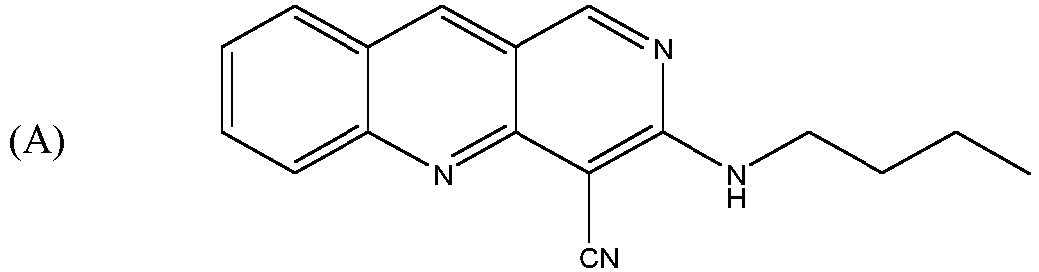
- Compounds from the following group are most particularly preferred and/or discussed in the experimental section:


- Unless expressly stated otherwise, residues having more than a single binding partner can be attached in any direction. For example, the residue "-S-(CH2)-C(=O)-" which is attached to binding partners B1 and B2 can be present in either direction, B1-S-(CH2)-C(=O)-B2 or B1-C(=O)-(CH2)-S-B2.
- The compounds according to the invention can be present in the form of a single stereoisomer or mixture thereof, the free compounds and/or their physiologically acceptable salts and/or solvates.
- The compounds according to the invention can be chiral or achiral, depending on the substitution pattern.
- If the compounds according to the invention are chiral, then they are preferably present as racemate or a mixture of stereoisomers or diastereomers or in enriched form of an enantiomer. In a preferred embodiment the enantiomer excess (ee) of the S-enantiomer amounts to at least 50% ee, more preferred at least 75% ee, more preferred at least 90% ee, most preferred at least 95% ee, and in particular at least 99% ee. In another preferred embodiment, the enantiomer excess (ee) of the R-enantiomer amounts to at least 50% ee, more preferred at least 75% ee, more preferred at least 90% ee, most preferred at least 95% ee, and in particular at least 99% ee.
- Suitable methods for separating the enantiomers are known to the person skilled in the art. Preparative HPLC on chiral stationary phases and conversion into diastereomeric intermediates can be given as examples. The conversion into diastereomeric intermediates can occur, for example, as salt formation by means of chiral, enantiomer-pure acids. After separation of the diastereomers thus formed, the salt can then be converted into the free base or another salt again.
- Unless expressly specified, each reference to the compounds according to the invention covers all isomers in pure form and admixture with one another (e.g. stereoisomers, diastereomers, enantiomers) in any desired mixture ratio.
- Unless expressly specified, each reference to the compounds according to the invention covers the free compounds (i.e. the forms that are not present in the form of salt) and all physiologically acceptable salts.
- For the purposes of the description, physiologically acceptable salts of the compounds according to the invention are present as salts with anions or acids of the respective compound with inorganic or organic acids, which are physiologically acceptable - in particular on application in humans and/or mammals.
- Examples of physiologically acceptable salts of specific acids are salts of: hydrochloric acid, hydrobromic acid, sulphuric acid, methane sulphonic acid, formic acid, acetic acid, oxalic acid, succinic acid, malic acid, tartaric acid, mandelic acid, fumaric acid, lactic acid, citric acid, glutamic acid, saccharinic acid, monomethyl sebacic acid, 5-oxo-proline, hexane-1-sulphonic acid, nicotinic acid, 2-, 3- or 4-aminobenzoic acid, 2,4,6-trimethyl benzoic acid, α-liponic acid, acetylglycine, acetylsalicylic acid, hippuric acid and/or aspartic acid. The hydrochloride, citrate and hemicitrate are particularly preferred.
- Physiologically acceptable salts with cations or bases are salts of the respective compound - as anion with at least one, preferably inorganic, cation, which are physiologically acceptable - in particular on application in humans and/or mammals. Particularly preferred are the salts of the alkali and earth alkali metals, also ammonium salts, but in particular (mono-) or (di-) sodium, (mono-) or (di-) potassium, magnesium or calcium salts.
- The compounds according to the invention are defined by substituents, e.g. by R1, R2 and R3 (substituents of the first generation), which are themselves possibly substituted (substituents of the second generation). Depending on the definition, these substituents of the substituents can themselves be substituted again (substituents of the third generation). If, for example, R1= -RZ, wherein -RZ = -C1-8-aliphatic (substituent of the first generation), then -C1-8-aliphatic can itself be substituted, e.g. with -ORZ, wherein RZ = -aryl (substituent of the second generation). This gives the functional group -C1-8-aliphatic-O-aryl. -Aryl can then in turn be substituted again, e.g. with -Cl (substituent of the third generation). This then gives overall the functional group -C1-8-aliphatic-O-aryl-Cl.
- Another aspect of the invention relates to the compounds according to the invention as described above as medicaments.
- Another aspect of the invention relates to pharmaceutical compositions or pharmaceutical dosage forms comprising the compounds according to the invention as described above.
- Preferably, the pharmaceutical compositions comprise a compound according to the invention as described above, and a pharmaceutically acceptable carrier. The term "pharmaceutically acceptable carrier," as used herein, means a non-toxic, inert solid, semi-solid or liquid filler, diluent, encapsulating material or formulation auxiliary of any type.
- Some examples of materials which may serve as pharmaceutically acceptable carriers are sugars such as lactose, glucose and sucrose; starches such as corn starch and potato starch; cellulose and its derivatives such as sodium carboxymethyl cellulose, ethyl cellulose and cellulose acetate; powdered tragacanth; malt; gelatin; talc; cocoa butter and suppository waxes; oils such as peanut oil, cottonseed oil, safflower oil, sesame oil, olive oil, corn oil and soybean oil; glycols; such a propylene glycol; esters such as ethyl oleate and ethyl laurate; agar; buffering agents; alginic acid; pyrogen-free water; isotonic saline; Ringer's solution; ethyl alcohol, and phosphate buffer solutions, as well as other non-toxic compatible lubricants such as sodium lauryl sulfate and magnesium stearate, as well as releasing agents, coloring agents, coating agents, sweetening, flavoring and perfuming agents, preservatives and antioxidants may also be present in the composition, according to the judgment of one skilled in the art of formulations.
- The pharmaceutical compositions may be administered to subjects (e.g., humans and other mammals) orally, rectally, parenterally, intravaginally, intracisternally, intraperitoneally, topically (as by powders, ointments or drops), bucally, extracorporeally, e.g. by dialysis, or as an oral or nasal spray. The term "parenterally," as used herein, refers to modes of administration, including intravenous, intramuscular, intraperitoneal, intrasternal, subcutaneous, intraarticular injection and infusion.
- Pharmaceutical compositions for parenteral injection comprise pharmaceutically acceptable sterile aqueous or nonaqueous solutions, dispersions, suspensions or emulsions and sterile powders for reconstitution into sterile injectable solutions or dispersions. Examples of suitable aqueous and nonaqueous carriers, diluents, solvents or vehicles include water, ethanol, polyols (polyethylene glycol, propylene glycol, glycerol, and the like, and suitable mixtures thereof), vegetable oils (such as olive oil) and injectable organic esters such as ethyl oleate, or suitable mixtures thereof. Suitable fluidity of the composition may be maintained, for example, by the use of a coating such as lecithin, by the maintenance of the required particle size in the case of dispersions, and by the use of surfactants.
- These compositions may also contain adjuvants, such as preservative agents, wetting agents, emulsifying agents, and dispersing agents. Prevention of the action of microorganisms may be ensured by various antibacterial and antifungal agents, for example, parabens, phenol, chlorobutanol, sorbic acid, and the like. It also may be desirable to include isotonic agents, for example, sugars, sodium chloride and the like. Prolonged absorption of the injectable pharmaceutical form may be brought about by the use of agents delaying absorption, for example, aluminum monostearate and gelatin.
- In some cases, in order to prolong the effect of a drug, it is often desirable to slow the absorption of the drug from subcutaneous or intramuscular injection. This may be accomplished by the use of a liquid suspension of crystalline or amorphous material with poor water solubility. The rate of absorption of the drug may depend upon its rate of dissolution, which, in turn, may depend upon crystal size and crystalline form. Alternatively, a parenterally administered drug form may be administered by dissolving or suspending the drug in an oil vehicle.
- Suspensions, in addition to the active compounds, may contain suspending agents, for example, polyoxyethylene sorbitol, ethoxylated isostearyl alcohols, and sorbitan esters, microcrystalline cellulose, aluminum metahydroxide, bentonite, agar-agar, tragacanth, and mixtures thereof.
- If desired, and for more effective distribution, the compounds may be incorporated into slow-release or targeted-delivery systems such as polymer matrices, liposomes, and microspheres. They may be sterilized, for example, by filtration through a bacteria-retaining filter or by incorporation of sterilizing agents in the form of sterile solid compositions, which may be dissolved in sterile water or some other sterile injectable medium immediately before use.
- Injectable depot forms are made by forming microencapsulated matrices of the drug in biodegradable polymers such as polylactide-polyglycolide. Depending upon the ratio of drug to polymer and the nature of the particular polymer employed, the rate of drug release may be controlled. Depot injectable formulations also are prepared by entrapping the drug in liposomes or microemulsions which are compatible with body tissues.
- The injectable formulations may be sterilized, for example, by filtration through a bacterial-retaining filter or by incorporating sterilizing agents in the form of sterile solid compositions which may be dissolved or dispersed in sterile water or other sterile injectable medium just prior to use.
- Injectable preparations, for example, sterile injectable aqueous or oleaginous suspensions may be formulated according to the known art using suitable dispersing or wetting agents, suspending agents and the like. The sterile injectable preparation also may be a sterile injectable solution, suspension or emulsion in a nontoxic, parenterally acceptable diluent or solvent such as a solution in 1,3-butanediol. Among the acceptable vehicles and solvents that may be employed are water, Ringer's solution, U.S.P. and isotonic sodium chloride solution. In addition, sterile, fixed oils are conventionally employed as a solvent or suspending medium. For this purpose, any bland fixed oil may be employed including synthetic mono- or diglycerides. In addition, fatty acids such as oleic acid are used in the preparation of injectables.
- Solid dosage forms for oral administration include, but are not limited to, capsules, tablets, pills, powders, and granules. In such solid dosage forms, one or more compounds is mixed with at least one inert pharmaceutically acceptable carrier such as sodium citrate or dicalcium phosphate and/or a) fillers or extenders such as starches, lactose, sucrose, glucose, mannitol, and salicylic acid; b) binders such as carboxymethylcellulose, alginates, gelatin, polyvinylpyrrolidinone, sucrose, and acacia; c) humectants such as glycerol; d) disintegrating agents such as agar-agar, calcium carbonate, potato or tapioca starch, alginic acid, certain silicates, and sodium carbonate; e) solution retarding agents such as paraffin; f) absorption accelerators such as quaternary ammonium compounds; g) wetting agents such as cetyl alcohol and glycerol monostearate; h) absorbents such as kaolin and bentonite clay; and i) lubricants such as talc, calcium stearate, magnesium stearate, solid polyethylene glycols, sodium lauryl sulfate, and mixtures thereof. In the case of capsules, tablets and pills, the dosage form may also comprise buffering agents.
- Solid compositions of a similar type may also be employed as fillers in soft and hard-filled gelatin capsules using lactose or milk sugar as well as high molecular weight polyethylene glycols.
- The solid dosage forms of tablets, dragees, capsules, pills, and granules may be prepared with coatings and shells such as enteric coatings and other coatings well-known in the pharmaceutical formulating art. They optionally may contain opacifying agents and also may be of a composition that they release the active ingredient(s) only, or preferentially, in a certain part of the intestinal tract in a delayed manner. Examples of materials useful for delaying release of the active agent may include polymeric substances and waxes.
- Compositions for rectal or vaginal administration are preferably suppositories which may be prepared by mixing the compounds with suitable non-irritating carriers such as cocoa butter, polyethylene glycol or a suppository wax which are solid at ambient temperature but liquid at body temperature and therefore melt in the rectum or vaginal cavity and release the active compound.
- Liquid dosage forms for oral administration may include, but are not limited to, pharmaceutically acceptable emulsions, microemulsions, solutions, suspensions, syrups and elixirs. In addition to the active compounds, the liquid dosage forms may contain inert diluents commonly used in the art such as, for example, water or other solvents, solubilizing agents and emulsifiers such as ethyl alcohol, isopropyl alcohol, ethyl carbonate, ethyl acetate, benzyl alcohol, benzyl benzoate, propylene glycol, 1,3-butylene glycol, dimethylformamide, oils (in particular, cottonseed, groundnut, corn, germ, olive, castor, and sesame oils), glycerol, tetrahydrofurfuryl alcohol, polyethylene glycols and fatty acid esters of sorbitan, and mixtures thereof.
- Besides inert diluents, the oral compositions may also include adjuvants such as wetting agents, emulsifying and suspending agents, sweetening, flavoring, and perfuming agents.
- Suspensions, in addition to the active compounds, may contain suspending agents, for example, ethoxylated isostearyl alcohols, polyoxyethylene sorbitol and sorbitan esters, microcrystalline cellulose, aluminum metahydroxide, bentonite, agar-agar, tragacanth, and mixtures thereof.
- If desired, and for more effective distribution, the compounds may be incorporated into slow-release or targeted-delivery systems such as polymer matrices, liposomes, and microspheres. They may be sterilized, for example, by filtration through a bacteria-retaining filter or by incorporation of sterilizing agents in the form of sterile solid compositions, which may be dissolved in sterile water or some other sterile injectable medium immediately before use.
- Dosage forms for topical or transdermal administration of a compound include ointments, pastes, creams, lotions, gels, powders, solutions, sprays, inhalants or patches. A desired compound is admixed under sterile conditions with a pharmaceutically acceptable carrier and any needed preservatives or buffers as may be required. Ophthalmic formulation, eardrops, eye ointments, powders and solutions are also contemplated as being within the scope of this disclosure.
- The ointments, pastes, creams and gels may contain, in addition to an active compound, animal and vegetable fats, oils, waxes, paraffins, starch, tragacanth, cellulose derivatives, polyethylene glycols, silicones, bentonites, silicic acid, talc and zinc oxide, or mixtures thereof.
- Powders and sprays may contain, in addition to the compounds, lactose, talc, silicic acid, aluminum hydroxide, calcium silicates and polyamide powder, or mixtures of these substances. Sprays additionally may contain customary propellants such as chlorofluorohydrocarbons.
- Compounds also may be administered in the form of liposomes. As is known in the art, liposomes are generally derived from phospholipids or other lipid substances. Liposomes are formed by mono- or multi-lamellar hydrated liquid crystals that are dispersed in an aqueous medium. Any non-toxic, physiologically acceptable and metabolizable lipid capable of forming liposomes may be used. The present compositions in liposome form may contain, in addition to the compounds, stabilizers, preservatives, and the like. The preferred lipids are the natural and synthetic phospholipids and phosphatidylcholines (lecithins) used separately or together. Methods to form liposomes are known in the art.
- Dosage forms for topical administration of a compound according to the invention as described above include powders, sprays, ointments and inhalants. The active compound is mixed under sterile conditions with a pharmaceutically acceptable carrier and any needed preservatives, buffers or propellants. Ophthalmic formulations, eye ointments, powders and solutions are also possible. Aqueous liquid compositions may also be useful.
- The compounds according to the invention are preferably administered once daily, twice daily, thrice daily or more often to a subject in need thereof.
- The compounds according to the invention are preferably administered orally, rectally, intravenously, intramuscularly, intraperitoneally, intrasternally, subcutaneously, by intraarticular injection, by infusion, intravaginally, intracisternally, intraperitoneally, topically, bucally or extracorporeally.
- In some cases it is of advantage to treat a patient with a combination of cancer medicaments to achieve the desired remission of cancer cells. The need for such a combination of cancer medicaments, i.e. a combination therapy, particularly arises when cancer cells are or become resistant to conventional cancer medicaments such as e.g. tyrosine-kinase inhibitors. Such a resistance to conventional cancer medicaments has for example been observed in lung cancer cells which may exhibit a resistance to tyrosine-kinase inhibitors after the patient has been treated with tyrosine-kinase inhibitors for a while.
- Another aspect of the invention relates to a pharmaceutical composition comprising a combination of
- a compound according to any of formulae (2), (3), (4), (A), (B), (D), (E), (G), (I), (J), (K) or (L) and
- a second pharmacologically active compound.
- Preferably, the second pharmacologically active compound is a tyrosine-kinase inhibitor, more preferred the second pharmacologically active compound is selected from the group consisting of Imatinib, Gefitinib, Erlotinib, Sunitinib and Cabozantinib.
- Preferably, the combination of a compound according to any of formulae (2), (3), (4), (A), (B), (D), (E), (G), (I), (J), (K) or (L) and a second pharmacologically active compound is used in the treatment of cancer, more preferred in the treatment of drug resistant cancer, even more preferred in the treatment of cancer selected from the group consisting of tyrosine-kinase inhibitor (TKI) resistant EGFR and KRAS mutant cancers.
- Particularly preferred is the use of the combination of a compound according to any of formulae (2), (3), (4), (A), (B), (D), (E), (G), (I), (J), (K) or (L) and a second pharmacologically active compound in the treatment of cancer selected from the group consisting of lung cancer, brain cancer, eye cancer, oral cancer, throat cancer, tongue cancer, trachea cancer, stomach cancer, liver cancer, kidney cancer, pancreatic cancer, gallbladder cancer, colorectal cancer, cancer of the urinary tract, bladder cancer, testicular cancer, ovarian cancer, cervical cancer, endometrial cancer, pancreatic cancer, skin cancer, Hodgkin's lymphoma, non-Hodgkin's lymphoma, breast cancer, and prostate cancer.
- Most preferred is the use of the combination of a compound according to any of formulae (2), (3), (4), (A), (B), (D), (E), (G), (I), (J), (K) or (L) and a second pharmacologically active compound in the treatment of lung cancer, particularly non-small cell lung cancer (NSCLC).
- All aspects of a pharmaceutical composition comprising the compounds according to the invention as described above also apply to the pharmaceutical composition comprising a combination of a compound according to any of formulae (2), (3), (4), (A), (B), (D), (E), (G), (I), (J), (K) or (L) and a second pharmacologically active compound.
- Another aspect of the invention relates to a kit comprising
- a first pharmaceutical composition comprising a compound according to any of formulae (2), (3), (4), (A), (B), (D), (E), (G), (I), (J), (K) or (L) and
- a second pharmaceutical composition comprising a second pharmacologically active compound;
- Preferably, the first pharmaceutical composition and the second pharmaceutical composition of said kit are for administration through the same route. In another embodiment of the invention, the first pharmaceutical composition is for administration through a different route than the second pharmaceutical composition.
- Preferred administration routes for the first and second pharmaceutical composition of said kit are oral, rectal parenteral, intravaginal, intracisternal, intraperitoneal, topical or bucal administration to a patient.
- Preferably, the first pharmaceutical composition and the second pharmaceutical composition of said kit are administered to a patient subsequent to each other, wherein
- the first pharmaceutical composition is administered first, followed by administration of the second pharmaceutical composition, or
- the second pharmaceutical composition is administered first, followed by administration of the first pharmaceutical composition.
- It is preferred that the period of time between the administration of the first pharmaceutical composition and the second pharmaceutical composition, or vice versa, is at least 1 hour, at least 2 hours, at least 3 hours, at least 4 hours or at least 5 hours.
- More preferred, the period of time between the administration of the first pharmaceutical composition and the second pharmaceutical composition, or vice versa, is at least 1 day, at least 2 days, at least 3 days, at least 4 days, at least 5 days, at least 6 days, at least 7 days or at least 8n days.
- More preferred, the period of time between the administration of the first pharmaceutical composition and the second pharmaceutical composition, or vice versa, is at least 2 weeks, at least 3 weeks, at least 4 weeks, at least 5 weeks, at least 6 weeks or at least 7 weeks or at least 8 weeks.
- Preferably, the second pharmacologically active compound of said kit is a tyrosine-kinase inhibitor, more preferably the second pharmacologically active compound of said kit is selected from the group consisting of Imatinib, Gefitinib, Erlotinib, Sunitinib and Cabozantinib.
- Preferably, the kit is used in the treatment of cancer, more preferred in the treatment of drug resistant cancer, even more preferred in the treatment of cancer selected from the group consisting of tyrosine-kinase inhibitor (TKI) resistant EGFR and KRAS mutant cancers.
- Particularly preferred is the use of the kit in the treatment of cancer selected from the group consisting of lung cancer, brain cancer, eye cancer, oral cancer, throat cancer, tongue cancer, trachea cancer, stomach cancer, liver cancer, kidney cancer, pancreatic cancer, gallbladder cancer, colorectal cancer, cancer of the urinary tract, bladder cancer, testicular cancer, ovarian cancer, cervical cancer, endometrial cancer, pancreatic cancer, skin cancer, Hodgkin's lymphoma, non-Hodgkin's lymphoma, breast cancer, and prostate cancer.
- Most preferred is the use of the kit in the treatment of lung cancer, particularly non-small cell lung cancer (NSCLC).
- All aspects of a pharmaceutical composition comprising the compounds according to the invention as described above also apply to the first pharmaceutical composition and the second pharmaceutical composition of said kit.
- In a further embodiment, the invention relates to the use of a compound according to the invention for the manufacture of a medicament for use in treatment of cancer, preferably selected from the group consisting of tyrosine-kinase inhibitor (TKI) resistant EGFR and KRAS mutant cancers, drug resistant cancer, breast cancer and lung cancer.
- A yet further aspect of the invention relates to the following compounds as such


- In a preferred embodiment, the invention relates to compounds (B), (K) or a physiologically acceptable salt thereof, for use as medicine.
-
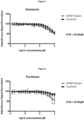
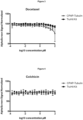
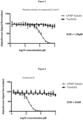
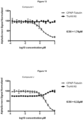
FIGURES 1 to 4 ,19 and20 show normalized AlphaScreen signal for conventional tubulin binders Vinblastin (Figure 1 ), Paclitaxel (Figure 2 ), Docetaxel (Figure 3 ) Colchicin (Figure 4 ), Bactallin III (Figure 19 ) and Taxol (Figure 20 ). -
FIGURES 5 to 16 show normalized AlphaScreen signal for the inventive compounds (B) to (L). -
FIGURE 17 shows the synthesis scheme for compound (B). -
FIGURE 18 shows proteins in interphase centrosomes. -
FIGURE 21 shows the growth of activated caspase-positive cells in H1975T790M organoids treated with compound (B) -
FIGURE 22 and 23 show the anti-tumor activity of compound (B) with respect to control after 10 (for PC3) and 31 (for MDA-MB-231) days. -
FIGURES 24 and 25 show dose response curves of combination therapy with conventional cancer drugs and compound (B) compared to therapy with only one conventional cancer drug. -
FIGURE 26 shows IC50 values of TKI resistant (NSCLC) lung cancer cell lines treated with combination therapy compared to therapy with only one conventional cancer drug. - The following examples further illustrate the invention but are not to be construed as limiting its scope.
- Studies in Drosophila have shown that free-tubulin dimers negatively regulate the microtubule nucleating activity of centrosomes through its direct interaction with the conserved centrosomal protein Sas-4/CPAP. Specifically, Drosophila carrying a mutated Sas-4, which cannot interact with tubulin, prematurely activated interphase centrosomes to nucleate robust microtubules suggesting that tubulin can function as a molecular switch in regulating centrosome activity. The subsequent CPAP-tubulin crystal structure identified that CPAP forms a high-affinity CPAP-tubulin complex via a conserved phenylalanine (F375) of its tubulin-binding domain.
- Building on Example 1, a proof-of-principle experiment was established in which lentiviral-mediated transduction of constitutive or doxycycline-inducible CPAPF375A that cannot interact with tubulin (hereafter CPAPΔT) was introduced into non-transformed human mammary epithelial MCF10A cells. These MCF10A cells are engineered to regulate centrosome amplification via doxycycline-inducible overexpression of Polo-Like-Kinase (PLK4). Introducing CPAPΔT prematurely activated Plk4-induced extra-centrosomes in interphase to nucleate microtubules and prevented them from clustering.
- As a result, the prematurely nucleating extra-centrosomes caused multi-polar spindles as cells progressed into mitosis. Strikingly, CPAPΔT cells resided in mitosis ~10 times much longer than control cells and eventually underwent apoptosis as characterized by the formation of apoptopic blebs.
- These results demonstrate that premature activation of extra-centrosomes could cause multipolar mitosis and mitotic catastrophe. Importantly, expressing CPAPΔT in cells that do not carry extra-centrosomes did not display any of these effects.
- CPAPΔT was introduced in breast cancer (MDA-MB-231) and EGFR tyrosine-kinase inhibitor (TKI) resistant EGFR T790M mutant NSCLC cells (H1975T790M) and it was found that these cells exclusively underwent premature centrosome activation, centrosome declustering in interphase followed by multipolar mitosis.
- Further, to test whether preventing CPAP-tubulin interaction could impair cancer cell invasiveness, a three-dimensional (3D) organotypic culture model for cancer cells was adapted that recapitulates many aspects of human epithelial cancer tissue architecture. Inducing CPAPΔT in H1975 organoids prevented the formation of actin-positive invasive protrusions that invade the surrounding matrix.
- Finally, to explore the effect of CPAPΔT on the growth of MDA-MB-231 cells in vivo, CPAPΔT carrying MDA-MB-231 cells was introduced subcutaneously into nude mice and the tumor growth rate was monitored.
- In contrast to control cells, CPAPΔT cells resulted in significant decrease in in vivo growth of breast cancer xenografts accompanied by reduced cell proliferation.
- Overall, these results suggest that CPAP-tubulin interaction is a cancer target and preventing CPAP-tubulin interaction causes premature activation of extra-centrosomes to specifically induce cancer cells to undergo mitotic catastrophe and cell death.
- Building on Examples 1 to 3 and by applying AlphaScreen technology, with a further cell-based assay to evaluate centrosome declustering activity, inter alia compound (A) was identified: a compound that prevented the CPAP-tubulin interaction with an IC50 value of 0.453 µM and satisfied the screening criteria of declustering centrosomes at 0.5 to 1 µM.
- In order to improve biochemical and cellular potency of compound (A), structural activity relationship assisted-medicinal chemistry was performed and compound (A) was modified by replacing the -NH-CH2-CH2-CH2- CH3 group with an -O-CH3 group. Resulting compound (B) inhibited CPAP-tubulin interaction with an IC50 value of 0.689 µM and exhibited increased stability and solubility with a potent centrosome declustering activity in cancer cells.
- To evaluate the effect of compound (A) in cancer cells, a spectrum of breast cancer-(BT549, MDA-MB-231), lung cancer- (TKI-sensitive PC9, TKI-resistant H1975T790M or HCC827 with C-met amplification) and hepatocellular carcinoma- (POP10) cells was treated with compound (A) for 24 h.
- Strikingly, compound (A) at as low as 500 nM in BT549 cells caused declustering of extra-centrosomes in interphase, with each nucleating massive microtubule asters, indicating that compound (A) prematurely activates interphase centrosomes. As a result, cancer cells failed to cluster their extra-centrosomes instead exhibiting multipolar spindles both in interphase and mitosis. Live cell experiments with MDA-MB-231 cells expressing tubulin-GFP further revealed that similar to CPAPΔT transfected cells, compound-(A)-treatment also caused prolonged mitosis with eventual apoptosis. Accordingly, compound (A) effectively prevented cancer cell proliferation with IC50 values between 0.86 µM and 2.9 µM. The 24 h pulse labeling experiment-using ethynyl-deoxyuridine (EdU) further supported this finding revealing a reduced number of compound-(A)-treated cancer cells with EdU incorporation, indicating that fewer cells have entered S-phase. Taken together, these data show that compound-(A)-mediated premature activation of extra centrosomes causes multipolar mitosis, mitotic catastrophe to effectively impair the proliferation of cancer cells.
- Although tubulin binders have been shown to possess excellent anticancer activity, their usage is limited due to their non-selective activity in normal cells. Since compound (A) is a tubulin binder, its tolerability and cellular toxicity in comparison to taxol in Plk-4-inducible MCF10A was evaluated. Taxol, at 100 nM concentration itself non-selectively prevented MCF10A cells proliferation regardless of whether they carry extra centrosomes or not. In addition, taxol treatment did not affect centrosome clustering but instead collapsed the spindles by stabilizing microtubules.
- In contrast, compound-(A)-treatment specifically inhibited the proliferation of MCF10A cells that harbor extra centrosomes via its centrosome declustering activity.
- Importantly, MCF10A cells with two centrosomes could tolerate compound (A) up to 10 µM without displaying any defect in their bipolar mitotic spindles indicating that compound (A) does not affect microtubule dynamics in normal cells.
- A cell proliferation experiment using erlotinib, a known EGFR TKI inhibitor, revealed that both H827 and A549 cells responded to erlotinib relatively at higher concentration with an IC50 value of 6.9 µM and 5 µM, respectively. These results indicate that H827 and A549 cells are to some extent resistant to erlotinib as described previously. Analyses of centrosomes revealed that erlotinib treatment does not affect centrosome clustering in H827.
- However, the EGFR inhibitor erlotinib was more potent in preventing the proliferation of H827 when combined with 750 nM (half of its original IC50) of compound (A). Combinatorial treatment with compound (A) decreasing the IC50 value of erlotinib from 6.9 µM to 30 nM suggests that compound (A) could synergize H827 cells to erlotinib. Similarly, addition of 1.5 µM of compound (A) to A549 cells reduced the IC50 value of erlotinib from 5.07 µM to 0.5 µM.
- Finally, combination (compound (A) plus erlotinib) but not single agent (erotinib) alone effectively prevented the formation of invasive protrusions from the threedimensional (3D) organotypic cultures of H1975 and A549.
- To evaluate the anti-tumor activity of compound (A), compound (A) was delivered to nude mice bearing subcutaneous human prostate tumor cell (PC3) xenografts. Compound (A) was administered (10 mg/kg) by oral gavage once per day and the rate of tumor growth was monitored. Compared to vehicle treated controls, it was noticed a reduction in tumor growth rate in compound-(A)-treated mice. Importantly, the anti-tumor activity of compound (A) could be observed as determined by reduced tumor volume with respect to control at
day 10. - Compound (B) was synthesized according to the scheme provided with
FIGURE 17 . The educt 3-Chlorobenzo[b][1,6]naphthyridine-4-carbonitrile was synthesized as described in Russ. Chem.Bull., Int. Ed. 2002, 51, 2121-2128, Chem. Heterocycl. Compd. 1986, 22, 909-914, Russ.Chem.Bull., Int.Ed. 2004, 873-881. - Compound (B) (3-Methoxybenzo[b][1,6]naphthyridine-4-carbonitrile) was prepared from Chlorobenzo[b][1,6]naphthyridine-4-carbonitrile according to the following procedure: A suspension of 3-Chlorobenzo[b] [1,6]naphthyridine-4-carbonitrile (400 mg, 1.67 mmol) in a mixture of absolute methanol (30 mL) and dry tetrahydrofuran (20 mL) was stirred at reflux and 0.5 M solution of sodium methoxide in methanol (4.00 mL, 2.00 mmol, 1.2 eq) was added dropwise over 1 h. The resulting brown solution was kept at reflux for further 30 min, cooled, quenched with saturated aqueous solution of ammonium chloride (2 mL) and concentrated in vacuo. The residue was partitioned between water (10 mL) and methylene chloride (50 mL). The layers were separated and the aqueous phase was extracted with methylene chloride (2x15 mL). The combined organic extract was washed with saturated aqueous ammonium chloride, dried over anhydrous sodium sulfate, filtered and concentrated in vacuo. The residue was subjected to reverse-phase flash chromatography (gradient: 0 to 45% acetonitrile in water v/v) to provide the title compound (210 mg, 0.89 mmol, 54%) as a yellow solid.
- NMR spectra were recorded at 303 K on a Bruker Avance III HD 400 (400 MHz) spectrometer. Chemical shifts are reported in parts per million (ppm) relative to residual d5-DMSO (δH = 2.50 ppm) and d6-DMSO (δC = 39.52 ppm). Splitting patterns are designated as s (singlet), d (doublet), t (triplet), td (triplet of doublets), ddd (doublet of doublets of doublets), m (multiplet) or bs (broad signal). The coupling constants (J) are reported in Hertz (Hz).
- TLC (pentane: ethyl acetate, 2:1 v/v): Rf = 0.33; 1H NMR (400 MHz, d6-DMSO) δ 9.71 (s, 1H, H-1), 9.48 (s, 1H, H-10), 8.26 (d, J = 8.4 Hz, 1H, H-9), 8.15 (d, J = 8.8 Hz, 1H, H-6), 8.04 (ddd, J = 8.6, 6.6, 1.5 Hz, 1H, H-7), 7.70 (td, J = 6.8, 3.3 Hz, 1H, H-8), 4.23 (s, 3H, OCH3); 13C NMR (101 MHz, d6-DMSO) δ 166.6 (C-3), 160.4 (C-1), 152.6 (C-9a), 150.0 (C-10a), 141.5 (C-10), 135.2 (C-7), 130.5 (C-9), 128.8 (C-6), 126.8 (C-8), 126.3 (C-4a), 118.3 (C-5a), 115.2 (CN), 86.5 (C-4), 56.1 (OCH3).
- IR (ATR) vmax (cm-1) 3044, 3019, 2958, 2894, 2847, 2224, 1605, 1557, 1512, 1466, 1411, 1331, 1285, 1181, 1140, 1107, 1041, 969, 800, 741, 613.
- ESI-H RMS (m/z): [M+H]+ calcd. For C14H10N3O, 236.08184; found, 236.08194; LCMS (m/z): [M+H]+ 236, retention time 3.23 min.
- The effects of compound (B) on a spectrum of breast cancer-(BT549, MDA-MB-231),NSCLC-(PC9, TKI-resistant H1975T790M, HCC827-GR) and hepatocellular-carcinoma-(POP10)-cells were tested by treatment with compound (B) for 72hrs.
- Compound (B) prevented cancer cell proliferation with IC50 values between 0.86-2.9µM. Analyzing centrosomes revealed that compound (B) prevented clustering of extra centrosomes during interphase, with each nucleating enhanced microtubule asters, suggesting that compound (B) prematurely activates extra centrosomes in interphase resulting in the formation of multipolar spindles in interphase and mitosis.
- Live imaging of compound (B)-treated MCF10A (+Dox, extra centrosomes) and HCC827-GR cells revealed that similar to CPAPΔT expression, compound (B)-treatment caused extra centrosomes to nucleate enhanced microtubule asters at interphase itself. Compound (B)-induced microtubule asters persisted in cells, preventing extra centrosomes from clustering, causing multipolar spindles and prolonged mitosis with an apparent apoptosis.
- Together, these results suggest that compound (B)-treatment can impair proliferation of extra centrosome containing cells.
- Mechanisms by which compound (B) activates extra centrosomes to nucleate enhanced microtubules were identified. Peri-centriolar material (PCM) recruitment to centrosomes is required for microtubule nucleation. Compound (B)-treated interphase centrosomes prematurely nucleating microtubules suggest that these centrosomes recruit enhanced levels of PCM.
- To test this, we estimated the amounts of Cep152, PCNT and CDK5RAP2 recruitment to interphase centrosomes of compound (B) - treated MCF10A cells. Notably, both human and Drosophila CPAP interacts with these proteins to form the S-CAP complex. High-resolution imaging and heat map intensity analyses revealed that interphase centrosomes recruit enhanced amounts of these proteins as compared to vehicle-treated cells (
Fig. 18 ). As a result, compound (B)-treated interphase centrosomes display enhanced microtubule nucleation suggesting that compound (B) could activate centrosomes. - This finding is in agreement with live imaging experiments where compound (B) treated cells display centrosomes with robust microtubule nucleation.
- Furthermore, western blot analysis of biochemically fractionated centrosomes revealed that-treated cells contained centrosomes with elevated levels of CPAP-interacting proteins.
- Finally, it was tested if compound (B) could prevent CPAP-tubulin interaction in cells and simultaneously enhance the ability of CPAP to bind its interacting proteins. CPAP complexes from cytoplasmic extracts of compound (B)-treated MCF10A cells were immunopurified. It was identified that compound (B) specifically perturbs CPAP-tubulin interaction thereby allowing CPAP to bind an enhanced amount of its interacting proteins.
- Together, these results suggest that chemical inhibition of the CPAP-tubulin interaction could enhance the recruitment of CPAP interacting proteins to centrosomes.
- Most tubulin-binding agents act on spindle microtubules and thus prevent mitosis nonspecifically. To evaluate if the effects of compound (B) are specific to CPAP-tubulin interaction and not due to general effects on microtubule dynamics, compound (B) was compared to known tubulin binders such as Taxol, Bactallin III, Docetaxel and Vinblastine (
Figures 1 ,3 ,19 ,20 ). - Except compound (B) , neither of the tested tubulin binders could perturb CPAP-tubulin interaction, enhance PCM recruitment to interphase centrosomes and prevent extra centrosomes from clustering . Notably, disrupted mitotic spindles in cells treated with tubulin binding agents were observed and this could be due to their general toxicity to microtubules. In addition, to rule out the possible microtubule toxic effect of compound (B), live imaging experiments were performed. It was found that compound (B) up to 5µM does not affect microtubule dynamics, cell cycle progression or mitotic spindle assembly of two-centrosomes containing cells. Furthermore, in contrast to taxol, which at 30nM itself collapsed the spindles of two-centrosomes containing cells, compound (B) up to 8µM did not prevent the formation of bipolar mitotic spindles.
- These results suggest that the anti-proliferative effects of compound (B) are not due to altering microtubule dynamics.
- Centrosome amplification triggers cellular invasion in
3D cultures 8. To test if compound (B)- mediated effects could impair the invasive behavior of cancer cells, 3D-organotypic cultures of H1975T790M, HCC827-GR and A549 (KRASG12S) exhibiting resistance to EGFR-TKIs were used. - In contrast to 5µM erlotinib treatment, a known TKI, compound (B) at 5µM was sufficient to prevent actinpositive invasive protrusions emerging from 3D spheres. Instead, compound (B)- treatment caused cell-rounding, characteristics of prolonged mitotic arrest with concomitant cell death as revealed by activated caspase-positive cells in H1975T790M organoids. As a result, compound (B)-treated organoids did not grow further from its original size (
Fig. 21 ). - Together, these data show that compound (B) could impair NSCLC cells invasive behavior in vitro.
- To evaluate if compound (B) has anti-tumor activity in vivo, nude mice bearing subcutaneous human prostate (PC3) and breast (MDA-MB-231) tumor xenografts were used.
- In each case, two groups of mice bearing tumor volume >100 mm3 were used. Compound (B) (10 or 20 mg, Kg-1 /day) by oral gavage was delivered. At the end of treatment, we measured the total tumor volume of compound (B)-treated groups and compared with vehicle-treated controls. A significant reduction in tumor growth rate in compound (B)-treated mice was noticed.
- Importantly, the body weights of treated animals did not change. This finding suggests that compound (B) has anti-tumor activity with less or no adverse effects.
- The anti-tumor activity of compound (B) resulted in reduced tumor volume with respect to control after 10 (for PC3) and 31 (for MDA-MB-231) days (
Fig. 22 and 23 ). - TKI (tyrosine kinase inhibitor) resistant lung cancer cell lines (A549, HCC827-GR and H1975) were treated with Erlotinib and compound (B).
- Dose-response curves to show the effect of single-agent TKI in the presence or absence of compound (B) in HCC827-GR cells (
Figure 24 ). For A549G12S cells, single-agent TKI in the presence of compound (B) and in the absence of (Figure 25 ). 1µM of compound (B) is used for 72-96 hours. Error bars, mean ± SEM. - A summary of IC50 values of TKI resistant (NSCLC) lung cancer cell lines is given in
Figure 26 . Error bars, mean ± SEM. Values are from three independent experiments. Unpaired t-test *P < 0.01, **P < 0.001. - Compound (M) was synthesized according to the scheme provided with
FIGURE 27 . - Compound (M) was synthesized according to the following procedure: Under an argon atmosphere, to a solution of 300 mg 3-Chlorobenzo[b][1,6]naphtiridine-4-carbonitrile (1.25 mmol, 1 eq.) in 4 mL d6-DMSO were added 231 mg Glycine tert-butyl ester hydrochloride (1.38 mmol, 1.1 eq.), 79.5 mg (0.75 mmol, 0.6 eq.) Na2CO3, and 72.6 mg (1.25 mmol, 1 eq.) KF. The reaction mixture was then heated in a microwave (125°C, 300W, 9 bar) for 1 hour. To the black solution was then added 2 mL water and the aqueous phase was extracted with CH2Cl2 (4 x 50 mL). The combined organic phases were dried over MgSO4, and after filtration, the solvent was removed under reduced pressure. The residue was purified by flash column chromatography on silica (CH2Cl2:EtOAc = 3:1) to afford 106 mg (0.31 mmol, 25%) of a dark orange solid. To a solution of 71 mg (0.21 mmol, 1 eq.) tert-butyl ester derivative in 2 mL CH2Cl2 was added 2 mL (0.03 mmol, 0.2 eq.) TFA at 0°C. The reaction mixture was then stirred at room temperature for 1 hour. The solvent was removed in vacuo and the obtained solid was washed with a small amount of CH2Cl2 to obtain the desired product in 57 mg (0.21 mmol, 98%) yield as a orange solid.
- The Error bars in
Figures 1 to 16 ,19 and20 indicate data from a triplicate determination. The TruHit Kit captures possible effects on AlphaScreen assay technology. The experimental data ofFigures 1 to 4 ,19 and20 shows that the compounds according to the invention exhibited a dose dependent reduction of CPAP-tubulin interaction, whereas the conventional tubulin binders did not show any reduction in the signal. This indicates that CPAP-tubulin interaction is specific for the compounds according to the invention.
Claims (9)
- A compound(i) having the general formula (2)
 R2 represents -F, -Cl, -Br, -I, -O-C1-8-alkyl, -S-phenyl, -S-C1-8-alkyl-C(=O)NH-phenyl, -NH-C1-8-alkyl, -NH-C1-8-alkyl-CO2H, or -NH-C1-8-alkyl-phenyl;or having the general formula (3)
 X represents -S-;Y represents -C-R10;R9 and R10, independently of one another, represent -C(=O)-C1-8-alkyl-NH-phenyl or -NH2; or(ii) having the general formula (4)
 X represents -S-;Y represents -C-R10;R10 represents -C(=O)-CH2-NH-phenyl or -NH2;
or(iii) having the general formula (2) R2 represents -Cl, -O-C1-8-alkyl, -S-phenyl, -S-C1-8-alkyl-C(=O)NH-phenyl, -NH-C1-8-alkyl, -NH-C1-8-alkyl-CO2H, or -NH-C1-8-alkyl-phenyl;or having the general formula (4)
 X represents -S-;Y represents -C-R10;R10 represents -C(=O)-CH2-NH-phenyl;
or(iv) having the general formula (2)
R2 represents -NH-C1-8-alkyl or -NH-C1-8-alkyl-CO2H, wherein -C1-8-alkyl is unsubstituted; or(v) having the general formula (2)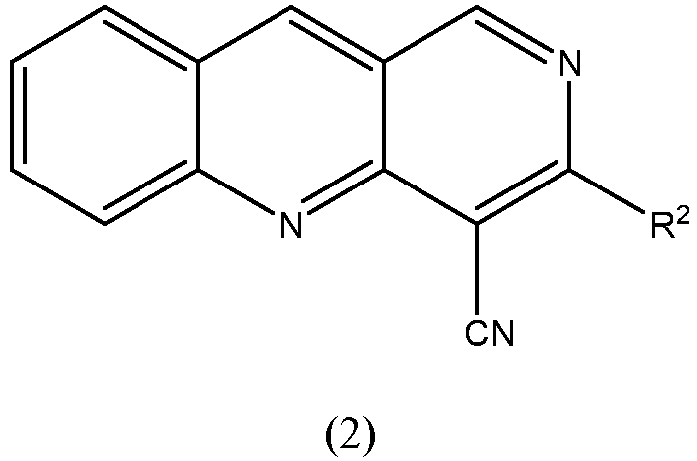
R2 represents -O-C1-8-alkyl or -NH-C1-8-alkyl-CO2H, wherein -C1-8-alkyl is unsubstituted; or(vi) having the formula (J) (vii) having the formula (L)
 or a physiologically acceptable salt thereof;for use in the treatment of cancer.
 - The compound for use according to claim 1, which is selected from the group consisting of


- The compound for use according to claim 1 or 2, which is

- The compound for use according to any of the preceding claims, wherein the compound is administered- once daily, twice daily, thrice daily or more often to a subject in need thereof; and/or- orally, rectally, intravenously, intramuscularly, intraperitoneally, intrasternally, subcutaneously, by intraarticular injection, by infusion, intravaginally, intracisternally, intraperitoneally, topically, bucally or extracorporeally.
- A pharmaceutical composition comprising a combination of- a compound according to any of formulae (2), (3), (4), (A), (B), (D), (E), (G), (I), (J), (K) or (L) as defined in any of claims 1 to 3 and- a second pharmacologically active compound, which is preferably a tyrosine-kinase inhibitor and/or preferably selected from the group consisting of Imatinib, Gefitinib, Erlotinib, Sunitinib and Cabozantinib;and wherein the pharmaceutical composition is preferably for use in the treatment of cancer.
- A kit comprising- a first pharmaceutical composition comprising a compound according to any of formulae (2), (3), (4), (A), (B), (D), (E), (G), (I), (J), (K) or (L) as defined in any of claims 1 to 3 and- a second pharmaceutical composition comprising a second pharmacologically active compound, which is preferably a tyrosine-kinase inhibitor and/or preferably selected from the group consisting of Imatinib, Gefitinib, Erlotinib, Sunitinib and Cabozantinib;wherein the first pharmaceutical composition and the second pharmaceutical composition are separate of one another;and wherein preferably both, the first pharmaceutical composition and the second pharmaceutical composition are for use in the treatment of cancer.
- The kit for use according to claim 6, wherein the first pharmaceutical composition and the second pharmaceutical composition are for administration through the same route or the first pharmaceutical composition and the second pharmaceutical composition are for administration through different routes.
- The compound for use according to any of claims 1 to 3, the pharmaceutical composition for use according to claim 5, or the kit for use according to claims 6 or 7, wherein the cancer is- selected from the group consisting of tyrosine-kinase inhibitor (TKI) resistant EGFR and KRAS mutant cancers; or- selected from the group consisting of lung cancer, brain cancer, eye cancer, oral cancer, throat cancer, tongue cancer, trachea cancer, stomach cancer, liver cancer, kidney cancer, pancreatic cancer, gallbladder cancer, colorectal cancer, cancer of the urinary tract, bladder cancer, testicular cancer, ovarian cancer, cervical cancer, endometrial cancer, pancreatic cancer, skin cancer, Hodgkin's lymphoma, non-Hodgkin's lymphoma, breast cancer, and prostate cancer; or- drug resistant cancer; or- lung cancer; or- non-small cell lung cancer (NSCLC).
- A compound selected from the group consisting of


Applications Claiming Priority (2)
| Application Number | Priority Date | Filing Date | Title |
|---|---|---|---|
| EP15198526 | 2015-12-08 | ||
| PCT/EP2016/080316 WO2017097928A1 (en) | 2015-12-08 | 2016-12-08 | Cpap-tubulin module |
Publications (2)
| Publication Number | Publication Date |
|---|---|
| EP3386508A1 EP3386508A1 (en) | 2018-10-17 |
| EP3386508B1 true EP3386508B1 (en) | 2025-04-16 |
Family
ID=54843723
Family Applications (1)
| Application Number | Title | Priority Date | Filing Date |
|---|---|---|---|
| EP16808670.0A Active EP3386508B1 (en) | 2015-12-08 | 2016-12-08 | Cpap-tubulin module |
Country Status (6)
| Country | Link |
|---|---|
| US (1) | US10875856B2 (en) |
| EP (1) | EP3386508B1 (en) |
| JP (1) | JP6984824B2 (en) |
| CN (1) | CN108601779B (en) |
| CA (1) | CA3006413C (en) |
| WO (1) | WO2017097928A1 (en) |
Families Citing this family (1)
| Publication number | Priority date | Publication date | Assignee | Title |
|---|---|---|---|---|
| US20240041859A1 (en) * | 2020-12-03 | 2024-02-08 | Washington University | Methods of treating and preventing kidney disease |
Family Cites Families (4)
| Publication number | Priority date | Publication date | Assignee | Title |
|---|---|---|---|---|
| AUPS234402A0 (en) * | 2002-05-15 | 2002-06-13 | Auckland Uniservices Limited | Anti-tumour polycyclic carboxamides |
| US6864238B1 (en) * | 2003-10-06 | 2005-03-08 | Academia Sinica | Methods and compositions for destabilizing microtubules |
| US20090118135A1 (en) * | 2007-06-08 | 2009-05-07 | The Burnham Institute | Methods and compounds for regulating apoptosis |
| CN103483255B (en) * | 2012-06-13 | 2015-02-18 | 中国科学院上海有机化学研究所 | Fluorinated isoquinoline compounds and preparation method thereof |
-
2016
- 2016-12-08 WO PCT/EP2016/080316 patent/WO2017097928A1/en not_active Ceased
- 2016-12-08 JP JP2018528348A patent/JP6984824B2/en not_active Expired - Fee Related
- 2016-12-08 CN CN201680071539.3A patent/CN108601779B/en active Active
- 2016-12-08 EP EP16808670.0A patent/EP3386508B1/en active Active
- 2016-12-08 CA CA3006413A patent/CA3006413C/en active Active
- 2016-12-08 US US16/060,425 patent/US10875856B2/en active Active
Non-Patent Citations (2)
| Title |
|---|
| DATABASE CAPLUS, CHEMICAL ABSTRACT [online] 1 January 2011 (2011-01-01), CHERKASOV ARTEM: "Targeting the Binding Function 3 (BF3) Site of the Human Androgen Receptor through Virtual Screening", XP002755369, retrieved from CAPLUS; STN Database accession no. 2011-1619070 * |
| DATABASE CAPLUS, CHEMICAL ABSTRACT [online] 1 January 2011 (2011-01-01), LACK N A ET AL: "Tarteting the Binding Function 3 (BF3) Site of the Human Androgen Receptor through Virtual Screening", XP002755370, retrieved from CAPLUS; STN Database accession no. 2011-1407166 * |
Also Published As
| Publication number | Publication date |
|---|---|
| EP3386508A1 (en) | 2018-10-17 |
| JP2018536670A (en) | 2018-12-13 |
| US10875856B2 (en) | 2020-12-29 |
| CA3006413C (en) | 2025-06-10 |
| CN108601779A (en) | 2018-09-28 |
| CN108601779B (en) | 2021-11-12 |
| CA3006413A1 (en) | 2017-06-15 |
| US20180362527A1 (en) | 2018-12-20 |
| WO2017097928A1 (en) | 2017-06-15 |
| JP6984824B2 (en) | 2021-12-22 |
Similar Documents
| Publication | Publication Date | Title |
|---|---|---|
| JP7792942B2 (en) | Tetrahydro-pyrido[3,4-b]indole estrogen receptor modulators and uses thereof | |
| EP3440067B1 (en) | Tetrahydroisoquinoline estrogen receptor modulators and uses thereof | |
| EP3472162B1 (en) | Heteroaryl estrogen receptor modulators and uses thereof | |
| JP5685231B2 (en) | Diazabenzo [de] anthracen-3-one compound and method for inhibiting PARP | |
| JP2018536658A (en) | Tetrahydronaphthalene estrogen receptor modulator and use thereof | |
| US10654867B2 (en) | Heteroaryl estrogen receptor modulators and uses thereof | |
| JP2018508563A (en) | USP7 inhibitor compounds and methods of use | |
| LV13360B (en) | (2-carboxamido)(3-amino)thiophene compounds | |
| CA3181909A1 (en) | 4-ethynylpyridine derivatives useful as gcn2 inhibitors | |
| Li et al. | Novel 4, 5-dihydrospiro [benzo [c] azepine-1, 1′-cyclohexan]-3 (2H)-one derivatives as PARP-1 inhibitors: design, synthesis and biological evaluation | |
| TWI441829B (en) | Tricyclic pyrazolopyrimidine derivatives | |
| EP1265898A2 (en) | 1,8-NAPHTHALIMIDE IMIDAZO 4,5,1- i de /i ]ACRIDONES WITH ANTI-TUMOR ACTIVITY | |
| US10875856B2 (en) | CPAP-tubulin module | |
| EP2864332B1 (en) | Imidazo bicyclic imminium compounds as antitumor agents | |
| EP4448520A1 (en) | 4-(2-pyrazolo[3,4-b]pyridine-5-yl)ethynyl-2-pyridine derivatives useful as gcn2 inhibitors | |
| WO2016153394A1 (en) | Use of novel chemical compounds (variants) as nuak1 kinase inhibitors for treating oncological diseases | |
| HK40003208B (en) | Tetrahydroisoquinoline estrogen receptor modulators and uses thereof | |
| HK1190142A (en) | Pyridonaphthyridine pi3k/mtor dual inhibitors and preparation and use thereof | |
| NZ730448B2 (en) | TETRAHYDRO-PYRIDO[3,4-b]INDOLE ESTROGEN RECEPTOR MODULATORS AND USES THEREOF |
Legal Events
| Date | Code | Title | Description |
|---|---|---|---|
| STAA | Information on the status of an ep patent application or granted ep patent |
Free format text: STATUS: UNKNOWN |
|
| STAA | Information on the status of an ep patent application or granted ep patent |
Free format text: STATUS: THE INTERNATIONAL PUBLICATION HAS BEEN MADE |
|
| PUAI | Public reference made under article 153(3) epc to a published international application that has entered the european phase |
Free format text: ORIGINAL CODE: 0009012 |
|
| STAA | Information on the status of an ep patent application or granted ep patent |
Free format text: STATUS: REQUEST FOR EXAMINATION WAS MADE |
|
| 17P | Request for examination filed |
Effective date: 20180709 |
|
| AK | Designated contracting states |
Kind code of ref document: A1 Designated state(s): AL AT BE BG CH CY CZ DE DK EE ES FI FR GB GR HR HU IE IS IT LI LT LU LV MC MK MT NL NO PL PT RO RS SE SI SK SM TR |
|
| AX | Request for extension of the european patent |
Extension state: BA ME |
|
| RIN1 | Information on inventor provided before grant (corrected) |
Inventor name: KOMAL, SONI Inventor name: SCHORPP, KARL KENJI Inventor name: SATTLER, MICHAEL Inventor name: GOPALAKRISHNAN, JAY Inventor name: HADIAN, KAMYAR |
|
| DAV | Request for validation of the european patent (deleted) | ||
| DAX | Request for extension of the european patent (deleted) | ||
| STAA | Information on the status of an ep patent application or granted ep patent |
Free format text: STATUS: EXAMINATION IS IN PROGRESS |
|
| 17Q | First examination report despatched |
Effective date: 20200319 |
|
| GRAP | Despatch of communication of intention to grant a patent |
Free format text: ORIGINAL CODE: EPIDOSNIGR1 |
|
| STAA | Information on the status of an ep patent application or granted ep patent |
Free format text: STATUS: GRANT OF PATENT IS INTENDED |
|
| RIC1 | Information provided on ipc code assigned before grant |
Ipc: C07D 495/14 20060101ALI20241213BHEP Ipc: C07D 471/04 20060101ALI20241213BHEP Ipc: A61K 31/55 20060101ALI20241213BHEP Ipc: A61K 31/517 20060101ALI20241213BHEP Ipc: A61P 35/00 20060101ALI20241213BHEP Ipc: A61K 31/4745 20060101AFI20241213BHEP |
|
| INTG | Intention to grant announced |
Effective date: 20250120 |
|
| GRAS | Grant fee paid |
Free format text: ORIGINAL CODE: EPIDOSNIGR3 |
|
| GRAA | (expected) grant |
Free format text: ORIGINAL CODE: 0009210 |
|
| STAA | Information on the status of an ep patent application or granted ep patent |
Free format text: STATUS: THE PATENT HAS BEEN GRANTED |
|
| AK | Designated contracting states |
Kind code of ref document: B1 Designated state(s): AL AT BE BG CH CY CZ DE DK EE ES FI FR GB GR HR HU IE IS IT LI LT LU LV MC MK MT NL NO PL PT RO RS SE SI SK SM TR |
|
| REG | Reference to a national code |
Ref country code: GB Ref legal event code: FG4D |
|
| REG | Reference to a national code |
Ref country code: CH Ref legal event code: EP |
|
| REG | Reference to a national code |
Ref country code: IE Ref legal event code: FG4D |
|
| REG | Reference to a national code |
Ref country code: DE Ref legal event code: R096 Ref document number: 602016091928 Country of ref document: DE |
|
| REG | Reference to a national code |
Ref country code: DE Ref legal event code: R081 Ref document number: 602016091928 Country of ref document: DE Owner name: UNIVERSITAET ZU KOELN, KOERPERSCHAFT DES OEFFE, DE Free format text: FORMER OWNER: ANMELDERANGABEN UNKLAR / UNVOLLSTAENDIG, 80297 MUENCHEN, DE Ref country code: DE Ref legal event code: R081 Ref document number: 602016091928 Country of ref document: DE Owner name: HELMHOLTZ ZENTRUM MUENCHEN DEUTSCHES FORSCHUNG, DE Free format text: FORMER OWNER: ANMELDERANGABEN UNKLAR / UNVOLLSTAENDIG, 80297 MUENCHEN, DE |
|
| REG | Reference to a national code |
Ref country code: NL Ref legal event code: MP Effective date: 20250416 |
|
| PG25 | Lapsed in a contracting state [announced via postgrant information from national office to epo] |
Ref country code: NL Free format text: LAPSE BECAUSE OF FAILURE TO SUBMIT A TRANSLATION OF THE DESCRIPTION OR TO PAY THE FEE WITHIN THE PRESCRIBED TIME-LIMIT Effective date: 20250416 |
|
| REG | Reference to a national code |
Ref country code: AT Ref legal event code: MK05 Ref document number: 1785089 Country of ref document: AT Kind code of ref document: T Effective date: 20250416 |
|
| PG25 | Lapsed in a contracting state [announced via postgrant information from national office to epo] |
Ref country code: PT Free format text: LAPSE BECAUSE OF FAILURE TO SUBMIT A TRANSLATION OF THE DESCRIPTION OR TO PAY THE FEE WITHIN THE PRESCRIBED TIME-LIMIT Effective date: 20250818 Ref country code: FI Free format text: LAPSE BECAUSE OF FAILURE TO SUBMIT A TRANSLATION OF THE DESCRIPTION OR TO PAY THE FEE WITHIN THE PRESCRIBED TIME-LIMIT Effective date: 20250416 Ref country code: ES Free format text: LAPSE BECAUSE OF FAILURE TO SUBMIT A TRANSLATION OF THE DESCRIPTION OR TO PAY THE FEE WITHIN THE PRESCRIBED TIME-LIMIT Effective date: 20250416 |
|
| REG | Reference to a national code |
Ref country code: LT Ref legal event code: MG9D |
|
| PG25 | Lapsed in a contracting state [announced via postgrant information from national office to epo] |
Ref country code: GR Free format text: LAPSE BECAUSE OF FAILURE TO SUBMIT A TRANSLATION OF THE DESCRIPTION OR TO PAY THE FEE WITHIN THE PRESCRIBED TIME-LIMIT Effective date: 20250717 Ref country code: NO Free format text: LAPSE BECAUSE OF FAILURE TO SUBMIT A TRANSLATION OF THE DESCRIPTION OR TO PAY THE FEE WITHIN THE PRESCRIBED TIME-LIMIT Effective date: 20250716 |
|
| PG25 | Lapsed in a contracting state [announced via postgrant information from national office to epo] |
Ref country code: PL Free format text: LAPSE BECAUSE OF FAILURE TO SUBMIT A TRANSLATION OF THE DESCRIPTION OR TO PAY THE FEE WITHIN THE PRESCRIBED TIME-LIMIT Effective date: 20250416 |
|
| PG25 | Lapsed in a contracting state [announced via postgrant information from national office to epo] |
Ref country code: BG Free format text: LAPSE BECAUSE OF FAILURE TO SUBMIT A TRANSLATION OF THE DESCRIPTION OR TO PAY THE FEE WITHIN THE PRESCRIBED TIME-LIMIT Effective date: 20250416 |
|
| PG25 | Lapsed in a contracting state [announced via postgrant information from national office to epo] |
Ref country code: HR Free format text: LAPSE BECAUSE OF FAILURE TO SUBMIT A TRANSLATION OF THE DESCRIPTION OR TO PAY THE FEE WITHIN THE PRESCRIBED TIME-LIMIT Effective date: 20250416 |
|
| PG25 | Lapsed in a contracting state [announced via postgrant information from national office to epo] |
Ref country code: AT Free format text: LAPSE BECAUSE OF FAILURE TO SUBMIT A TRANSLATION OF THE DESCRIPTION OR TO PAY THE FEE WITHIN THE PRESCRIBED TIME-LIMIT Effective date: 20250416 |
|
| PG25 | Lapsed in a contracting state [announced via postgrant information from national office to epo] |
Ref country code: RS Free format text: LAPSE BECAUSE OF FAILURE TO SUBMIT A TRANSLATION OF THE DESCRIPTION OR TO PAY THE FEE WITHIN THE PRESCRIBED TIME-LIMIT Effective date: 20250716 |
|
| PG25 | Lapsed in a contracting state [announced via postgrant information from national office to epo] |
Ref country code: IS Free format text: LAPSE BECAUSE OF FAILURE TO SUBMIT A TRANSLATION OF THE DESCRIPTION OR TO PAY THE FEE WITHIN THE PRESCRIBED TIME-LIMIT Effective date: 20250816 |
|
| PG25 | Lapsed in a contracting state [announced via postgrant information from national office to epo] |
Ref country code: LV Free format text: LAPSE BECAUSE OF FAILURE TO SUBMIT A TRANSLATION OF THE DESCRIPTION OR TO PAY THE FEE WITHIN THE PRESCRIBED TIME-LIMIT Effective date: 20250416 |
|
| PG25 | Lapsed in a contracting state [announced via postgrant information from national office to epo] |
Ref country code: DK Free format text: LAPSE BECAUSE OF FAILURE TO SUBMIT A TRANSLATION OF THE DESCRIPTION OR TO PAY THE FEE WITHIN THE PRESCRIBED TIME-LIMIT Effective date: 20250416 Ref country code: SM Free format text: LAPSE BECAUSE OF FAILURE TO SUBMIT A TRANSLATION OF THE DESCRIPTION OR TO PAY THE FEE WITHIN THE PRESCRIBED TIME-LIMIT Effective date: 20250416 |
|
| REG | Reference to a national code |
Ref country code: DE Ref legal event code: R097 Ref document number: 602016091928 Country of ref document: DE |
|
| PG25 | Lapsed in a contracting state [announced via postgrant information from national office to epo] |
Ref country code: CZ Free format text: LAPSE BECAUSE OF FAILURE TO SUBMIT A TRANSLATION OF THE DESCRIPTION OR TO PAY THE FEE WITHIN THE PRESCRIBED TIME-LIMIT Effective date: 20250416 |
|
| PG25 | Lapsed in a contracting state [announced via postgrant information from national office to epo] |
Ref country code: EE Free format text: LAPSE BECAUSE OF FAILURE TO SUBMIT A TRANSLATION OF THE DESCRIPTION OR TO PAY THE FEE WITHIN THE PRESCRIBED TIME-LIMIT Effective date: 20250416 |
|
| PG25 | Lapsed in a contracting state [announced via postgrant information from national office to epo] |
Ref country code: SK Free format text: LAPSE BECAUSE OF FAILURE TO SUBMIT A TRANSLATION OF THE DESCRIPTION OR TO PAY THE FEE WITHIN THE PRESCRIBED TIME-LIMIT Effective date: 20250416 Ref country code: RO Free format text: LAPSE BECAUSE OF FAILURE TO SUBMIT A TRANSLATION OF THE DESCRIPTION OR TO PAY THE FEE WITHIN THE PRESCRIBED TIME-LIMIT Effective date: 20250416 |
|
| PG25 | Lapsed in a contracting state [announced via postgrant information from national office to epo] |
Ref country code: IT Free format text: LAPSE BECAUSE OF FAILURE TO SUBMIT A TRANSLATION OF THE DESCRIPTION OR TO PAY THE FEE WITHIN THE PRESCRIBED TIME-LIMIT Effective date: 20250416 |
|
| PLBE | No opposition filed within time limit |
Free format text: ORIGINAL CODE: 0009261 |
|
| STAA | Information on the status of an ep patent application or granted ep patent |
Free format text: STATUS: NO OPPOSITION FILED WITHIN TIME LIMIT |
|
| REG | Reference to a national code |
Ref country code: CH Ref legal event code: L10 Free format text: ST27 STATUS EVENT CODE: U-0-0-L10-L00 (AS PROVIDED BY THE NATIONAL OFFICE) Effective date: 20260225 |
|
| 26N | No opposition filed |
Effective date: 20260119 |
|
| PGFP | Annual fee paid to national office [announced via postgrant information from national office to epo] |
Ref country code: DE Payment date: 20260120 Year of fee payment: 10 |
|
| PG25 | Lapsed in a contracting state [announced via postgrant information from national office to epo] |
Ref country code: LT Free format text: LAPSE BECAUSE OF FAILURE TO SUBMIT A TRANSLATION OF THE DESCRIPTION OR TO PAY THE FEE WITHIN THE PRESCRIBED TIME-LIMIT Effective date: 20250416 |
|
| PG25 | Lapsed in a contracting state [announced via postgrant information from national office to epo] |
Ref country code: MC Free format text: LAPSE BECAUSE OF FAILURE TO SUBMIT A TRANSLATION OF THE DESCRIPTION OR TO PAY THE FEE WITHIN THE PRESCRIBED TIME-LIMIT Effective date: 20250416 |
|
| REG | Reference to a national code |
Ref country code: CH Ref legal event code: H13 Free format text: ST27 STATUS EVENT CODE: U-0-0-H10-H13 (AS PROVIDED BY THE NATIONAL OFFICE) Effective date: 20260723 |
|
| PG25 | Lapsed in a contracting state [announced via postgrant information from national office to epo] |
Ref country code: SE Free format text: LAPSE BECAUSE OF FAILURE TO SUBMIT A TRANSLATION OF THE DESCRIPTION OR TO PAY THE FEE WITHIN THE PRESCRIBED TIME-LIMIT Effective date: 20250416 |