EP3385853A1 - Control system, communication control method, and program - Google Patents
Control system, communication control method, and program Download PDFInfo
- Publication number
- EP3385853A1 EP3385853A1 EP16870711.5A EP16870711A EP3385853A1 EP 3385853 A1 EP3385853 A1 EP 3385853A1 EP 16870711 A EP16870711 A EP 16870711A EP 3385853 A1 EP3385853 A1 EP 3385853A1
- Authority
- EP
- European Patent Office
- Prior art keywords
- content data
- request
- terminal
- communication terminal
- pub
- Prior art date
- Legal status (The legal status is an assumption and is not a legal conclusion. Google has not performed a legal analysis and makes no representation as to the accuracy of the status listed.)
- Withdrawn
Links
Images





Classifications
-
- H—ELECTRICITY
- H04—ELECTRIC COMMUNICATION TECHNIQUE
- H04L—TRANSMISSION OF DIGITAL INFORMATION, e.g. TELEGRAPHIC COMMUNICATION
- H04L65/00—Network arrangements, protocols or services for supporting real-time applications in data packet communication
- H04L65/40—Support for services or applications
- H04L65/403—Arrangements for multi-party communication, e.g. for conferences
-
- H—ELECTRICITY
- H04—ELECTRIC COMMUNICATION TECHNIQUE
- H04N—PICTORIAL COMMUNICATION, e.g. TELEVISION
- H04N21/00—Selective content distribution, e.g. interactive television or video on demand [VOD]
- H04N21/20—Servers specifically adapted for the distribution of content, e.g. VOD servers; Operations thereof
- H04N21/25—Management operations performed by the server for facilitating the content distribution or administrating data related to end-users or client devices, e.g. end-user or client device authentication, learning user preferences for recommending movies
- H04N21/258—Client or end-user data management, e.g. managing client capabilities, user preferences or demographics, processing of multiple end-users preferences to derive collaborative data
- H04N21/25808—Management of client data
- H04N21/25816—Management of client data involving client authentication
-
- G—PHYSICS
- G06—COMPUTING OR CALCULATING; COUNTING
- G06F—ELECTRIC DIGITAL DATA PROCESSING
- G06F13/00—Interconnection of, or transfer of information or other signals between, memories, input/output devices or central processing units
-
- H—ELECTRICITY
- H04—ELECTRIC COMMUNICATION TECHNIQUE
- H04N—PICTORIAL COMMUNICATION, e.g. TELEVISION
- H04N21/00—Selective content distribution, e.g. interactive television or video on demand [VOD]
- H04N21/20—Servers specifically adapted for the distribution of content, e.g. VOD servers; Operations thereof
- H04N21/25—Management operations performed by the server for facilitating the content distribution or administrating data related to end-users or client devices, e.g. end-user or client device authentication, learning user preferences for recommending movies
- H04N21/258—Client or end-user data management, e.g. managing client capabilities, user preferences or demographics, processing of multiple end-users preferences to derive collaborative data
- H04N21/25866—Management of end-user data
- H04N21/25875—Management of end-user data involving end-user authentication
-
- H—ELECTRICITY
- H04—ELECTRIC COMMUNICATION TECHNIQUE
- H04N—PICTORIAL COMMUNICATION, e.g. TELEVISION
- H04N21/00—Selective content distribution, e.g. interactive television or video on demand [VOD]
- H04N21/40—Client devices specifically adapted for the reception of or interaction with content, e.g. set-top-box [STB]; Operations thereof
- H04N21/41—Structure of client; Structure of client peripherals
- H04N21/426—Internal components of the client ; Characteristics thereof
- H04N21/42684—Client identification by a unique number or address, e.g. serial number, MAC address, socket ID
-
- H—ELECTRICITY
- H04—ELECTRIC COMMUNICATION TECHNIQUE
- H04N—PICTORIAL COMMUNICATION, e.g. TELEVISION
- H04N21/00—Selective content distribution, e.g. interactive television or video on demand [VOD]
- H04N21/60—Network structure or processes for video distribution between server and client or between remote clients; Control signalling between clients, server and network components; Transmission of management data between server and client, e.g. sending from server to client commands for recording incoming content stream; Communication details between server and client
- H04N21/63—Control signaling related to video distribution between client, server and network components; Network processes for video distribution between server and clients or between remote clients, e.g. transmitting basic layer and enhancement layers over different transmission paths, setting up a peer-to-peer communication via Internet between remote STB's; Communication protocols; Addressing
- H04N21/632—Control signaling related to video distribution between client, server and network components; Network processes for video distribution between server and clients or between remote clients, e.g. transmitting basic layer and enhancement layers over different transmission paths, setting up a peer-to-peer communication via Internet between remote STB's; Communication protocols; Addressing using a connection between clients on a wide area network, e.g. setting up a peer-to-peer communication via Internet for retrieving video segments from the hard-disk of other client devices
Definitions
- the present invention relates to a control system, a communication control method, and a program.
- Patent Document 1 discloses a method for providing access control in either content-based publish system or subscribe system for delivering messages from an issuing side client to a subscribing side client via multiple routing broker machines.
- a control system configured to control transmission of content data between communication terminals.
- the control system includes:
- the present invention may provide an advantageous effect of improving security in processing content data with respect to a specific destination in the pub-sub model system.
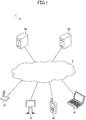
- FIG. 1 is a schematic diagram of a communication system according to an embodiment of the present invention.
- a communication system 1 includes a communication terminal 10, an authentication server 40, and a management system 50.
- the communication terminal 10 will simply be referred to as a terminal 10.
- the management system 50 is configured to receive, from a client, a request for publication of a message (publish, hereinafter referred to as "pub” where appropriate) and a request for subscription of a message (subscribe, hereinafter referred to as "sub” where appropriate) in order to exchange messages between clients.
- a request for publishing (or a pub request) a message (data) is an example of a request for transmitting a message (data)
- a request for subscribing (or a sub request) a message (data) is an example of a request for receiving a message (data).
- the management system 50 may implement MQTT (MQ Telemetry Transport), pub-sub extension (XEP-0060) of XMPP (Extensible Messaging and Presence Protocol), and the like, as a protocol corresponding to the pub-sub model (pub-sub pattern).
- MQTT MQ Telemetry Transport
- XEP-0060 pub-sub extension
- XMPP Extensible Messaging and Presence Protocol
- Each terminal 10 is, for example, a general-purpose terminal, on which desired client applications are installed.
- the client application may also be referred to as a "client app".
- Each terminal 10 is, for example, a dedicated terminal, which incorporates a specific client application that operates as a client. Since the terminal 10 is communicably connected to the management system 50 via a communication network 2, each client may be enabled to request the management system 50 to perform publication (pub) or subscription (sub) of a message.
- the terminal 10 may, for example, be a television conference terminal, an electronic whiteboard, an electronic signage, a telephone, a tablet, a smartphone, a camera, a PC (personal computer), or the like.
- the authentication server 40 is configured to authenticate a "client” which is a client app operating on the terminal 10 and a "user” who uses the client to authorize the use of or access to the management system 50.
- the management system 50 implements authentication and authorization protocols such as OAuth 2.0 and OpenID connect so as to achieve the above authentication and authorization.
- the communication system 1 indicates a configuration where each of the management system 50 and the authentication server 40 is composed of a single apparatus for simplifying description; however, the present invention is not limited to such an embodiment. At least one of the management system 50 and the authentication server 40 may be composed of multiple apparatuses. Further, the management system 50 and the authentication server 40 may be composed of one system or one apparatus.
- FIG. 1 an embodiment illustrates the communication system 1 that includes four terminals 10 as an example for simplifying illustration; however, the present invention is not limited to such an embodiment.
- the number of terminals 10 provided in the communication system 1 may be two, three, five or more.
- each terminal 10 may be of the same type or may be of different type as illustrated in FIG. 1 .
- FIG. 2 is a block diagram depicting a hardware configuration of a terminal according to an embodiment.
- the hardware configuration of the terminal 10 is not limited to the configuration illustrated in FIG. 2 insofar as the terminal 10 is designed to perform communication.
- the terminal 10 may include a configuration not described in FIG. 2 , or the terminal 10 may exclude a part of the configuration described in FIG. 2 .
- a part of the configuration illustrated in FIG. 2 may be an external apparatus or the like connectable to the terminal 10. As illustrated in FIG.
- the terminal 10 of the embodiment includes a central processing unit (CPU) 101 configured to control overall operations of the terminal 10, a read only memory (ROM) 102 configured to store a program used for driving the CPU 101 such as an initial program loader (IPL), a random access memory (RAM) 103 used as a work area of the CPU 101, a flash memory 104 configured to store programs for various terminals of the terminal 10 and various data such as image data and audio data, a solid-state drive (SSD) 105 configured to control reading or writing of various data such as image data and sound data with respect to the flash memory 104 under the control of the CPU 101, a media I/F 107 configured to control reading or writing (storing) of data with respect to a recording medium 106 such as a flash memory or an IC card (Integrated Circuit Card), an operation button 108 operated in the case of selecting a destination, a power switch 109 configured to switch on/off the power supply of the terminal 10, and a network I/F (Interface) 111 configured to perform data transmission using the communication
- the terminal 10 further includes a built-in camera 112 configured to capture an image of a subject to acquire image data under the control of the CPU 101, an image pickup element I/F 113 configured to control the driving of the camera 112, a built-in microphone 114 configured to input voice or sound, a built-in speaker 115 configured to output voice or sound, a sound input/output I/F 116 configured to process input and output of sound signals between the microphone 114 and the speaker 115 under the control of the CPU 101, a display I/F 117 configured to transmit image data to an external display 120 under the control of the CPU 101, an external apparatus connection I/F 118 configured to connect various external apparatuses, an alarm lamp 119 configured to indicate abnormality of various functions of the terminal 10, and a bus line 110 such as an address bus and a data bus for electrically connecting the above-described constituent elements as illustrated in FIG. 2 .
- a bus line 110 such as an address bus and a data bus for electrically connecting the above-described constituent elements as illustrated in FIG. 2 .
- the display 120 is a display unit composed of a liquid crystal or an organic electroluminescence (organic EL) configured to display an image of a subject, an operation, and the like. Further, the display 120 is connected to the display I/F 117 via a cable 120c.
- the cable 120c may be an analog RGB (VGA) signal cable, a component video cable, a high-definition multimedia interface (HDMI) (registered trademark) cable, or a digital video interactive signal (DVI) cable.
- the camera 112 includes lenses and a solid-state image sensor configured to convert an image (video) of a subject into electronic data by converting light into electric charges.
- CMOS complementary metal oxide semiconductor
- CCD charge coupled device
- External apparatuses such as an external camera, an external microphone, and an external speaker may electrically be connected to the external apparatus connection I/F 118 via a USB (universal serial bus) cable or the like inserted in a connection port 1132 of a case 1100.
- a USB universal serial bus
- the external camera is driven in preference to the built-in camera 112 in accordance with the control of the CPU 101.
- the external microphone or the external speaker is driven in preference to the built-in microphone 114 or the built-in speaker 115 in accordance with the control of the CPU 101.
- the recording medium 106 is detachably attached to the terminal 10. Further, insofar as a nonvolatile memory is configured to read or write data in accordance with the control of the CPU 101, such a nonvolatile memory is not limited to the flash memory 104, and may be an EEPROM (Electrically Erasable and Programmable ROM), or the like.
- EEPROM Electrical Erasable and Programmable ROM
- FIG. 3 is a block diagram depicting a hardware configuration of a management system 50 according to an embodiment.
- the management system 50 includes a CPU 501 configured to control overall operations of the entire management system 50, a ROM 502 configured to store a program used for driving the CPU 501 such as IPL, a RAM 503 used as a work area of the CPU 501, an HD 504 configured to store various data such as a program for the management system 50, a hard disk drive (HDD) 505 configured to control reading or writing of various data with respect to the HD 504 under the control of the CPU 501, a media drive 507 configured to control reading or writing (storing) of data with respect to the recording medium 506 such as a flash memory, a display 508 configured to display various information such as a cursor, a menu, a window, a character, or an image, a network I/F 509 configured to perform data communication using a communication network 2, a keyboard 511 provided with multiple keys for a user to input characters, numerical values, various instructions,
- the authentication server 40 has a hardware configuration similar to that of the management system 50, and hence, a duplicated illustration of the hardware configuration is omitted from the specification.
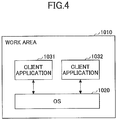
- FIG. 4 is a block diagram depicting a software configuration of the terminal 10 according to an embodiment.
- an OS 1020 and client applications (1031 and 1032) operate in a work area 1010 of the RAM 103 of the terminal 10.
- the OS 1020 and client applications (1031 and 1032) are installed in the terminal 10.
- the OS 1020 and client applications (1031 and 1032) are installed in each of the terminals 10 constituting the communication system 1 of this embodiment.
- the OS 1020 is basic software for providing basic functions to the terminal 10 so as to manage the terminal 10 in its entirety.
- the client applications (1031 and 1032) are apps configured to request the authentication server 40 to perform authentication and to cause the management system 50 to execute at least one of a pub request and a sub request.
- At least two client applications (1031 and 1032) are installed on the terminal 10; however, any number of one or more client applications may be installed on the terminal 10. Further, any desired application may operate on the OS 1020, and a client application may operate on this desired application.
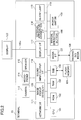
- FIG. 5 is a block diagram illustrating functions (components or elements) of the terminal 10, the authentication server 40, and the management system 50 constituting a part of the communication system 1 according to the embodiment.
- the terminal 10, the authentication server 40, and the management system 50 are connected via the communication network 2 to perform data communications with one another.
- the terminal 10 includes a transmitter-receiver 11, an operation input receiver 12, a display controller 13, an authentication request unit 14, a pub request unit 15, a sub request unit 16, and a storage-reader 19. These components are functions that may be achieved by any of the components illustrated in FIG. 2 to operate instructions from the CPU 101 in accordance with a program loaded from the flash memory 104 in the RAM 103.
- the terminal 10 also includes a storage 1000 composed of the ROM 102, the RAM 103, and the flash memory 104 illustrated in FIG. 2 .
- FIGS. 2 and 5 a functional configuration of the terminal 10 will be described in detail with reference to FIGS. 2 and 5 .
- a relationship between the components illustrated in FIG. 2 and the main components for implementing respective functional configurations of the terminal 10 will also be described.
- the transmitter-receiver 11 is implemented by instructions from the CPU 101 and by the network I/F 111.
- the transmitter-receiver 11 is configured to transmit and receive various data (or information) with respect to a counterpart terminal, apparatuses, a system, or the like via the communication network 2.
- the operation input receiver 12 is implemented by instructions from the CPU 101, the operation button 108 and the power switch 109.
- the operation input receiver 12 is configured to receive various inputs by a user and various types of selection made by the user.
- the display controller 13 is implemented by instructions from the CPU 101 and the display I/F 117.
- the display controller 13 is configured to perform control for sending instructions from the CPU 101 and sending image data received from the other party during a phone call.
- the authentication request unit 14 is implemented by instructions from the CPU 101 according to the client application and requests authentication from the authentication server 40. Note that when multiple client applications are installed in the terminal 10, the authentication request unit 14 is generated for each of the activated client applications installed on the terminal 10.
- the pub request unit 15 is implemented by instructions from the CPU 101 according to the client application and makes a pub request for a message with respect to the management system 50. In other words, the pub request unit 15 requests the management system 50 to transmit a message. Note that when the client application supports sub but does not support pub, the pub request unit 15 is not generated in the terminal 10. Note that when multiple client applications that support pub are installed on the terminal 10, the pub request unit 15 is generated for each of the activated client applications installed on the terminal 10.
- the sub request unit 16 is implemented by instructions from the CPU 101 according to the client application and makes a sub request for a message with respect to the management system 50. In other words, the sub request unit 16 makes a request for receiving a message to the management system 50. Note that when the client application supports pub but does not support sub, the sub request unit 16 is not generated in the terminal 10. Note that in a case where multiple client applications that support sub are installed on the terminal 10, the sub request unit 16 is generated for each of the activated client applications installed on the terminal 10.
- the storage-reader 19 is implemented by instructions from the CPU 101 and by the SSD 105, or by instructions from the CPU 101 alone, and is configured to store various data in the storage 1000 and extract various data stored in the storage 1000.
- the authentication server 40 includes a transmitter-receiver 41, a user authentication unit 42, a client authentication unit 43, an authorization unit 44, a token issuing unit 45, and a storage-reader 49. These elements are functions that may be achieved by any of the above elements illustrated in FIG. 3 to operate instructions from the CPU 501 in accordance with the authentication server 40 program loaded from the HD 504 in the RAM 503. Further, the authentication server 40 has a storage 4000 composed of the HD 504.
- FIG. 6A is a schematic diagram illustrating a user management table.
- a user management DB 4001 is constructed by a user management table.
- the user management table is configured to manage a user name and a password in association with a user ID (identifier, identification), for every user ID.
- FIG. 6B is a schematic diagram illustrating a client management table.
- a client management DB 4002 is constructed by a client management table.
- the client management table is configured to manage a client name and a password in association with a client ID (identifier, identification), for every client ID.
- the chat application is a client application for exchanging messages between multiple users.
- the log application is a client application for the terminal 10 to request the management system 50 to publish (pub) the log of the terminal 10 as a message.
- the log application is a client application for requesting the management system 50 to subscribe (sub) the log of the terminal 10 as a message.
- the log management application is a client application that makes a sub request to the management system 50, and the log management application is also a server application that receives a log management request from the log application.
- the monitoring camera application is a client application for the terminal 10 to request the management system 50 to publish (pub) image data of a captured image as a message.
- the monitoring center camera application is a client application for requesting the management system 50 to subscribe (sub) image data of a captured image as a message.
- the monitoring center application is a client application that makes a sub request to the management system 50, and the monitoring center application is also a server application that receives a captured image management request from the monitoring application.
- each terminal 10 may request the management system 50 to transmit a message by using one or more applications.
- each terminal 10 may receive a message from the management system 50 by using one or more applications.
- FIG. 6C is a schematic diagram illustrating a service management table.
- a service management DB 4003 is constructed by a service management table.
- the service management table is configured to manage a service name in association with a service ID, for every service ID.
- a service called a "transmission management system" identified by the service ID "S01" is the management system 50.
- the access right to use or to have access to the Pub-sub function of the management system 50 indicates resources.
- the pub-sub service using the management system 50 is a scope that is a unit of authorization in the protocol of OAuth 2.0.
- the management system 50 corresponds to a resource server.
- FIG. 6D is a schematic diagram illustrating a service authorization management table.
- a service authorization management DB 4004 is constructed by a service authorization management table.
- the service authorization management table is configured to manage a service ID in association with a client ID, for every client ID. As a result, the service authorization management table may manage which client has access to and is enabled to use which service.
- the chat application identified by the client ID "C01” has access to and is enabled to use the transmission management system identified by the service ID "S01", that is, the management system 50.
- the transmitter-receiver 41 is implemented by instructions from the CPU 501 and by the network I/F 509.
- the transmitter-receiver 41 is configured to transmit and receive various data (or information) with respect to a counterpart terminal, apparatuses, system, or the like via the communication network 2.
- the user authentication unit 42 is implemented by instructions from the CPU 501 and is configured to perform user authentication in response to a request from the client.
- the client authentication unit 43 is implemented by instructions from the CPU 501 and is configured to perform client authentication in response to a request from the client.
- the authorization unit 44 is implemented by instructions from the CPU 501 and is configured to authorize a client to have access to a service by designating the access right of the client to the service.
- the token issuing unit 45 is implemented by instructions from the CPU 501, and is configured to issue the authorization token used in the service upon the client accessing the service.
- the storage-reader 49 is implemented by instructions from the CPU 501 and by the HDD 505, or by instructions from the CPU 501 alone, and is configured to store various data in the storage 4000 and extract various data stored in the storage 4000.
- the management system 50 includes a transmitter-receiver 51, a token checker 52, a pub processor 53, a sub processor 54, and a storage-reader 59. These elements are functions that may be achieved by any of the above elements illustrated in FIG. 3 to operate instructions from the CPU 501 in accordance with the management system 50 program loaded from the HD 504 in the RAM 503. Further, the management system 50 has a storage 5000 composed of the HD 504.
- FIG. 7A is a schematic diagram illustrating a topic management table.
- a topic management DB 5001 is constructed by a topic management table.
- the topic management table is configured to manage a topic name in association with a topic ID, for every topic ID.
- a topic is an attribute associated with a message.
- FIG. 7B is a schematic diagram illustrating a session management table.
- a session management DB 5004 is constructed by a session management table.
- the terminal 10 logs in by transmitting an authorization token including a user name to the management system 50.
- the terminal 10 makes a sub request with respect to the topic using the session established by logging in.
- the session management table is configured to manage the user name of the logged-in user in association with the topic ID of the topic sub requested by this user.
- the transmitter-receiver 51 is implemented by instructions from the CPU 501 and by the network I/F 509.
- the transmitter-receiver 51 is configured to transmit and receive various data (or information) with respect to each terminal, apparatus, or system via the communication network 2.
- the token checker 52 checks the authorization token included in the login request of the terminal 10, which is implemented by instructions from the CPU 501.
- the pub processor 53 is implemented by instructions from the CPU 501 and is configured to receive a pub request made by the client.
- the sub processor 54 is implemented by instructions from the CPU 501 and is configured to receive a sub request made by the client.
- the storage-reader 59 is implemented by instructions from the CPU 501 and by the HDD 505, or by instructions from the CPU 501 alone, and is configured to store various data in the storage 5000 and extract various data stored in the storage 5000.
- FIG. 8 is a sequence diagram illustrating a licensing process according to an embodiment.
- the client application of the terminal 10 acquires a user ID and a user password of a user (step S22).
- the method for acquiring a user ID and a user password is not particularly specified; however, a user ID and a user password may be acquired by a method in which the operation input receiver 12 receives a user ID and a password input by a user, a method in which the storage-reader 19 reads a user ID and a password stored in advance in the storage 1000, and the like.
- the authentication request unit 14 of the terminal 10 transmits an authentication/authorization request to the authentication server 40 via the transmitter-receiver 11 (step S23).
- This authentication/authorization request includes a user authentication request, a client authentication request, and a service access authorization request.
- the authentication request transmitted to the authentication server 40 includes a user ID and a user password acquired by the terminal 10, a client ID and a client password of the activated client, and a service ID as a scope indicating a service to be accessed in the future.
- the client ID and the client password are stored in advance in the storage 1000 and may be read by the storage-reader 19. The following illustrates a case where the service ID included in the authentication request is "S01" indicating the management system 50.
- the transmitter-receiver 41 of the authentication server 40 receives an authentication request from the terminal 10.
- the user authentication unit 42 of the authentication server 40 performs user authentication based on whether a combination of a user ID and a user password included in the authentication request is managed in the user management table (see FIG. 6A ) (step S24). In a case where a combination of a user ID and a user password included in the authentication request is managed in the user management table, the user authentication unit 42 succeeds in user authentication; in a case where a combination of a user ID and a user password included in the authentication request is not managed in the user management table, the user authentication unit 42 fails in the user authentication.
- the client authentication unit 43 of the authentication server 40 performs client authentication based on whether a combination of a client ID and a client password included in the authentication request is managed in the client management table (see FIG. 6B ) (step S25). In a case where a combination of a client ID and a client password included in the authentication request is managed in the client management table, the client authentication unit 43 succeeds in client authentication; in a case where a combination of a client ID and a client password included in the authentication request is not managed in the client management table, the client authentication unit 43 fails in the client authentication.
- the authorization unit 44 of the authentication server 40 authorizes an access to the service based on whether a combination of a client ID and a service ID included in the authentication request is managed in the service authorization management table (see FIG. 6D ) (step S26). In a case where a combination of a combination of a client ID and a service ID included in the authentication request is managed in the service authorization management table, the authorization unit 44 succeeds in authentication; in a case where a combination of a client ID and a service ID included in the authentication request is not managed in the service authorization management table, the authorization unit 44 fails in authentication.
- the terminal 10 transmits an authentication request including the user ID "U01", the client ID "C01", and the service ID “S01” to the authentication server 40.
- the combination of the client ID "C01” and the service ID "S01” included in the authentication request is managed in the service authorization management table, and the authorization unit 44 thus succeeds in authentication.
- the transmitter-receiver 41 transmits an error message indicating authentication failure or authorization failure to the terminal 10.
- the token issuing unit 45 of the authentication server 40 issues an authorization token indicating that the terminal 10 requesting authentication is accessible to the management system 50 (step S27).
- the authorization token includes a user name, a client name, a service name using the authorization token, validation period of the token, and the like.
- authentication and authorization may also be performed using protocols such as OAuth 2.0 and OpenID Connect.
- the method of transmitting/receiving authentication information such as user ID/user password and contents included in the authorization token will be defined by the specification such as OAuth 2.0 and OpenID Connect.
- the token itself may be JWT (JSON Web Token).
- the token issuing unit 45 may sign the authorization token using a secret key.
- the secret key may use RSA (Rivest, Shamir, Adleman) encryption.
- a signature may use a public key such as Hash-based Message Authentication Code (HMAC).
- HMAC Hash-based Message Authentication Code
- the management system 50 using the authorization token identifies a signature using a public key or a shared key, depending on whether the authorization token is signed with the secret key or signed with the shared key.
- the signature may use a known standard such as JWS (JSON Web Signature).
- JWE JSON Web Encryption
- the transmitter-receiver 41 includes the issued authorization token in the authentication result and transmits the authorization token with the authentication result to the terminal 10.
- the transmitter-receiver 11 of the terminal 10 receives the authentication result including the authorization token transmitted by the authentication server 40. Subsequently, the transmitter-receiver 11 of the terminal 10 transmits a login request to the management system 50 by transmitting the received authorization token to the management system 50 (step S28).
- the transmitter-receiver 51 of the management system 50 receives the login request transmitted by the terminal 10.
- the token checker 52 of the management system 50 checks the authorization token included in the login request (step S29). In this case, the token checker 52 analyzes the authorization token included in the login request according to the standard used in the communication system 1. The token checker 52 may determine whether the signature by the authentication server is correct, depending on the result of the analysis. In a case where the token checker 52 determines that the signature by the authentication server is not correct, the token checker 52 determines that the authorization token included in the login request has been tampered with, and fails the authorization.
- the token checker 52 determines whether the validation period of the authorization token has expired by checking the validation period included in the authorization token. In a case where the token checker 52 determines that the validation period of the authorization token has expired, the token checker 52 fails the authorization due to expiration of the authorization token.
- the token checker 52 checks whether the service name corresponding to the management system 50 is included in the authorization token. In a case where the token checker 52 determines that the service name corresponding to the management system 50 is not included in the authorization token, the token checker 52 fails the authorization.
- the transmitter-receiver 51 transmits the authorization result information indicating that the authorization has failed to the terminal 10.
- the token checker 52 determines that all of the signature of the authorization token, the expiration date, and the service are valid, the token checker 52 authorizes the use of the service by the user and the client indicated in the authorization token.
- the management system 50 establishes a session with the terminal 10 (step S30). In this case, the management system 50 transmits authorization result information indicating that the authorization has succeeded to the terminal 10.
- the storage-reader 59 of the management system 50 records the user name included in the authorization token in the session management table (step S31). Further, the management system 50 may manage the user name included in the authorization token, the client name of the client, an IP address of the client and the like in association with one another in the storage 1000. As a result, even when the user name and the client name are not transmitted to the management system 50 every time a counterpart client transmits information, the management system 50 is enabled to identify the user name and the client name of the transmission source client.
- steps S21 to S31 are executed for each of the client applications activated on the terminal 10.
- each of the client applications such as the chat application and the log management application may make an authentication request to the authentication server 40 using a common user ID and user password.
- the management system 50 succeeds in authentication with respect to each of the client applications, separate sessions may be simultaneously established between the management system 50 and the respective client applications.
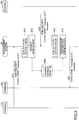
- FIG. 9 is a sequence diagram illustrating an example of a pub and sub process of a message.
- a terminal 10a as an example of the terminal 10 is authenticated with a user ID "U01" of a user "a” and a client ID "C01" of a client "chat application", and logs in to the management system 50 as a service.
- a terminal 10b as an example of the terminal 10 is authenticated with a user ID "U02" of a user "b” and a client ID "C01" of a client “chat application”, and logs in to the management system 50 as a service.
- a terminal 10c as an example of the terminal 10 is authenticated with a user ID "U03" of a user "c” and a client ID "C01” of a client “chat application”, and logs in to the management system 50 as a service.
- the terminal 10c used by the user c transmits a sub request to the management system 50 for a message to be transmitted from the user b to the user a, as an example of a process of rejecting the sub request made by spoofing.
- the sub request unit 16 of the terminal 10c transmits a sub request (reception request) to the management system 50 (step S41).
- a format of a specific topic name is defined for a message addressed to a specific user, i.e., for a message for direct messaging.
- the expression (1) indicates an example of a topic name in a format for direct messaging corresponding to a message transmitted from the user b to the user a.
- message / a / b The topic name for direct messaging as indicated in expression (1) includes a first layer "message” indicating a topic for direct messaging, a second layer "a" indicating a destination user, and a third layer “b” indicating a transmission source user.
- the sub request transmitted from the terminal 10c to the terminal 10a in step S41 includes the topic name represented by the expression (1) as a topic name to be a sub target.
- the transmitter-receiver 51 of the management system 50 receives a sub request transmitted by the chat application of the terminal 10c.
- the sub processor 54 of the management system 50 determines whether the chat application of the terminal 10c has authorization to sub (receive) a message of a topic relating to the sub request (step S42).
- step S42 In the present embodiment, regarding direct messaging, it is assumed that subscription is performed without a sub request; hence, the following illustrates a case where the sub request made for the message for direct messaging is unconditionally rejected.
- the process of step S42 will be described in detail with reference to FIG. 10.
- FIG. 10 is a flowchart depicting an example of a process of determining whether a terminal has authorization to subscribe (sub) a message.
- the sub processor 54 determines whether the topic name included in the sub request is in a format for direct messaging (step S42-1). When “message" is included in the first layer of the topic name, the sub processor 54 determines that the topic name included in the sub request is in the format for direct messaging; when "message" is not included in the first layer of the topic name, the sub processor 54 determines that the topic name included in the sub request is not in the format for direct messaging.
- the sub processor 54 determines to reject the sub request (step S42-2).
- the transmitter-receiver 51 of the management system 50 may transmit information for rejecting the sub request to the sub request source terminal 10c; or the transmitter-receiver 51 of the management system 50 may end the process without transmitting information for rejecting the sub request to the sub request source terminal 10c. Further, the transmitter-receiver 51 of the management system 50 may determine the sub request transmitted by the terminal 10c to be a malicious one and may log out the terminal 10c.
- the sub processor 54 determines to register the sub request (step S42-3). In this case, the sub processor 54 searches the topic management table using the topic name included in the sub request as a search key, and acquires the corresponding topic ID. The sub processor 54 subsequently registers the acquired topic ID in the session management table in association with the user name "c" included in the authorization token transmitted to the management system 50 when the terminal 10c logs in first (step S43).
- the sub processor 54 may, upon receiving the sub request relating to the direct messaging, reject the sub request.
- the sub processor 54 registers the sub request; when the second layer is not the user name "c" of the user c, the sub processor 54 rejects the sub request.
- the following illustrates a process where the terminal 10b used by the user b transmits a pub request (transmission request) with respect to the topic.
- the pub request unit 15 uses a session established with the management system 50 to transmit a pub request to the management system 50 (step S44).
- the pub request transmitted from the terminal 10b to the management system 50 includes the topic name "message/a/b" in the format for direct messaging and the message "Hello".
- the transmitter-receiver 11 of the terminal 10b transmits a topic name that is not in the format for direct messaging to the management system 50.
- the transmitter-receiver 51 of the management system 50 receives a pub request transmitted by the chat application of the terminal 10b.
- the pub processor 53 of the management system 50 determines whether the chat application of the terminal 10b has authorization to pub (transmit) a message of a topic relating to the pub request (step S45).
- the process of step S45 will be described in detail with reference to FIG. 11.
- FIG. 11 is a flowchart depicting an example of a process of determining whether a terminal has authorization to publish (pub) a message.
- the pub processor 53 determines whether the topic name included in the pub request is in a format for direct messaging (step S45-1). When “message" is included in the first layer of the topic name, the pub processor 53 determines that the topic name included in the pub request is in the format for direct messaging; when "message" is not included in the first layer of the topic name, the pub processor 53 determines that the topic name included in the pub request is not in the format for direct messaging.
- the pub processor 53 determines whether the third layer "b" in the topic name included in the pub request matches the user name of the pub request source (step S45-2).
- the third layer is information indicating the transmission source of the message.
- the user name of the pub request source is included in the authorization token transmitted when the terminal 10b has first logged in to the management system 50.
- the pub processor 53 determines that the third layer "b" in the topic name included in the pub request does not match the user name of the pub request source (NO in step S45-2), the pub processor 53 determines not to transmit the message relating to the pub request to the destination (step S45-7).
- the transmitter-receiver 51 of the management system 50 may transmit information for rejecting the pub request to the pub request source terminal 10b; or the transmitter-receiver 51 of the management system 50 may end the process without transmitting information for rejecting the pub request to the pub request source terminal 10b.
- the pub processor 53 determines whether the second layer "a" in the topic name included in the pub request is managed in the user management table (step S45-3).
- the second layer is information indicating the destination of the message.
- a method for checking whether the second layer is managed in the user management table is not particularly specified; however, a method for making an inquiry to the authentication server 40 as to whether the second layer "a" is managed in the user management table, a method for constructing a DB synchronized with the user management DB 4001 of the authentication server 40 in the storage 5000, or the like may be given as examples.
- the pub processor 53 determines not to transmit the message relating to the pub request to the destination (step S45-7).
- the transmitter-receiver 51 of the management system 50 may transmit information for rejecting the pub request to the pub request source terminal 10b; or the transmitter-receiver 51 of the management system 50 may end the process without transmitting information for rejecting the pub request to the pub request source terminal 10b.
- the pub processor 53 determines whether the user indicated by the second layer logs into the service to be currently connected (step S45-4). In step S45-4, the pub processor 53 refers to the session management table and determines that the connection is currently in progress when the second layer "a" in the topic name included in the pub request is recorded as the user name, and determines that the connection is not currently in progress when the second layer "a" in the topic name included in the pub request is not recorded as the user name.
- the pub processor 53 determines not to transmit the message relating to the pub request to the destination (step S45-7).
- the transmitter-receiver 51 of the management system 50 may transmit information for rejecting the pub request to the pub request source terminal 10b; or the transmitter-receiver 51 of the management system 50 may end the process without transmitting information for rejecting the pub request to the pub request source terminal 10b.
- the pub processor 53 determines to transmit the message relating to the pub request to the destination indicated by the second layer "a" (step S45-6). Since a user name "a" is included in the authorization token transmitted when the terminal 10a has first logged in to the management system 50, the transmitter-receiver 51 of the management system 50 is enabled to specify the terminal 10a as the destination of the message (step S46). The transmitter-receiver 51 of the management system 50 transmits the topic name "message/a/b" and the message "Hello" included in the pub request by the terminal 10b to the terminal 10a (step S47) .
- the transmitter-receiver 11 of the terminal 10a receives the topic name and the message transmitted by the management system 50.
- the terminal 10a is enabled to specify the user "b" as a transmission source of the message by the third layer "b" of the received topic.
- the pub processor 53 determines whether there is a user who has transmitted a sub request with respect to the topic relating to the pub request (step S45-5). Specifically, the pub processor 53 searches the topic management table using the topic name included in the pub request as a search key, and acquires the corresponding topic ID. Further, the pub processor 53 searches the session management table using the acquired topic ID as a search key. Note that when the pub processor 53 acquires a corresponding user name, the pub processor 53 determines that there is a user who has made a sub request with respect to the topic relating to the pub request.
- the pub processor 53 determines that there is no user who has made a sub request with respect to the topic relating to the pub request.
- the pub processor 53 determines that there is no user who has made a sub request with respect to the topic relating to the pub request (NO in step S45-5)
- the pub processor 53 determines not to transmit a message relating to the pub request (step S45-7).
- the transmitter-receiver 51 of the management system 50 may transmit information for rejecting the pub request to the pub request source terminal 10b; or the transmitter-receiver 51 of the management system 50 may end the process without transmitting information for rejecting the pub request to the pub request source terminal 10b.
- the pub processor 53 determines to transmit a message of the topic relating to the pub request to the sub request source that has made a sub request with respect to the topic (step S45-8).
- the transmitter-receiver 51 of the management system 50 specifies the terminal 10 that has transmitted the authorization token including the user name of the sub request source acquired from the session management table in step S45-5 as the transmission destination of the message (step S46). In this case, the transmitter-receiver 51 of the management system 50 transmits the topic name and the message included in the pub request to the specified terminal 10.
- the transmitter-receiver 11 of the sub request source terminal 10 thus receives the topic name and the message transmitted by the management system 50.
- the management system 50 controls transmission of a message (an example of content data) between the terminals 10.
- the message is content data such as text, image data, video data, or sound data that may be published (pub) or subscribed (sub) in the pub-sub model.
- the transmitter-receiver 51 (an example of a receiver) of the management system 50 receives (an example of a reception process) a pub request (an example of a transmission request for transmitting a message) including a topic name of a message (an example of attribute information indicating an attribute) transmitted by a terminal 10b (an example of a first communication terminal).
- the topic is a predetermined attribute in the pub-sub model in order to specify subscribing information.
- the topic name is in a format for direct messaging (an example of a predetermined format) including the second layer (an example of destination information) indicating the destination of the message
- the pub processor 53 an example of a controller of the management system 50 performs control for transmitting a message to the terminal 10a (an example of a second communication terminal) specified based on the second layer included in the topic name.
- the pub processor 53 of the management system 50 performs control for transmitting a message to a terminal 10 (an example of a third communication terminal) that has made a sub request (an example of a reception request) of a message of a topic indicated by a topic name (an example of a control process).
- a terminal 10 an example of a third communication terminal
- a sub request an example of a reception request
- the message is transmitted to a specific destination based on the second layer of the topic name, thereby improving security.
- the transmitter-receiver 51 of the management system 50 receives the sub request (an example of the reception request of the content data) including the topic name that is transmitted by the terminal 10.
- the sub processor 54 (an example of the controller) of the management system 50 rejects the sub request when the topic name is in the format for direct messaging. This will prevent the message in the format for direct messaging from being sub (subscribed/received) based on the sub request.
- the topic name in the format for direct messaging includes a third layer (an example of transmission source information) indicating the transmission source of the message.
- a third layer an example of transmission source information
- the terminal 10a that has received the message is enabled to specify the transmission source of the message based on the third layer of the topic name.
- the user authentication unit 42 (an example of the authentication unit) of the authentication server 40 (an example of a control system) authenticates the terminal 10b.
- the account is authorization to use or have access to services, etc.
- the communication system 1 uses the user ID as an account.
- the pub processor 53 performs control for transmitting a message to the terminal 10a.
- the pub processor 53 performs control for not transmitting the content data to the terminal 10a. This will prevent spoofing by the pub request source.
- the pub processor 53 When the terminal 10a is authenticated based on the user ID "U01" corresponding to the second layer “a” and logged in, the pub processor 53 performs control for transmitting a message in the format for direct messaging to the terminal 10a; when the terminal 10a is not authenticated by the account information corresponding to the second layer "a", the pub processor 53 performs control for not transmitting a message in the format for direct messaging to the terminal 10a. This will improve security for message transmission.
- the terminal 10 transmits a pub request including the topic name in the format for direct messaging to the management system 50; in a case where the destination of the message is not specified, the terminal 10 transmits a pub request including a topic name that is not in the format for direct messaging to the management system 50 (an example of transmission processing).
- the terminal 10 is enabled to make a pub request with a specified destination or to make a pub request without a specified destination by a similar process except that the topic name is different.
- Each of the programs for the terminal 10, the authentication server 40, and management system 50 is stored in a computer-readable recording medium (a recording medium 106 etc.) in an installable form or in an executable form to be ready for distribution.
- a computer-readable recording medium may include a compact disc recordable (CD-R), a digital versatile disk (DVD), and a Blu-ray Disc.
- the above-described recording media that store the above-described programs such as a CD-ROM, and the HDs 504 that store these programs may be provided domestically or internationally as a program product.
- the terminal 10, the authentication server 40, and the management system 50 in the above-described embodiments may be constructed by a single computer, or may be constructed by multiple computers separately assigned to the desired components (functions or means). Further, the authentication server 40 and the management system 50 may be constructed by a single computer.
- the control system may be achieved by a device memory storing one or more programs and one or more processors.
- One or more processors perform the processes described in the embodiments by executing one or more programs.
- the device memory and one or more processors may achieve (implement) the functions as described in the embodiments.
- the device memory and one or more processors may be achieved (implemented) by hardware components as described in the embodiments.
Landscapes
- Engineering & Computer Science (AREA)
- Multimedia (AREA)
- Signal Processing (AREA)
- Databases & Information Systems (AREA)
- Theoretical Computer Science (AREA)
- Computer Security & Cryptography (AREA)
- Computer Graphics (AREA)
- Power Engineering (AREA)
- General Engineering & Computer Science (AREA)
- General Physics & Mathematics (AREA)
- Physics & Mathematics (AREA)
- Computer Networks & Wireless Communication (AREA)
- Information Transfer Between Computers (AREA)
Abstract
Description
- The present invention relates to a control system, a communication control method, and a program.
- Communication systems for making phone calls, conducting conferences, and the like via communication networks such as the Internet and dedicated lines have become widespread along with demands for reduction in traveling expenses and time of parties concerned. In such communication systems, when communication is started between communication terminals, content data such as image data and sound data are transmitted and received to achieve communication between the parties. In addition, as a method for transmitting content data between communication terminals, a publish-subscribe model (hereinafter referred to as pub-sub model) is known in the art.
- For example,
Patent Document 1 discloses a method for providing access control in either content-based publish system or subscribe system for delivering messages from an issuing side client to a subscribing side client via multiple routing broker machines. - [PTL 1] Japanese Patent No.
5160134 - However, in the pub-sub model, for example, even if a publication request for a message directed to a specific destination is made with respect to a topic, an account that does not correspond to the specific destination will have access to the content data by making a subscription request with respect to this topic. Thus, in the pub-sub model communication system, sufficient security may fail to be obtained in a case of processing content data with respect to a specific destination.
- According to an aspect of the disclosure, a control system configured to control transmission of content data between communication terminals is provided. The control system includes:
- a receiver configured to receive a transmission request including attribute information indicating an attribute of the content data for transmitting the content data from a first communication terminal; and
- a controller configured to perform control for transmitting the content data. The controller performs control for transmitting the content data to a second communication terminal specified based on the destination information in response to the attribute information being in a predetermined format, the predetermined format including destination information indicating a destination of the content data, and the controller performs control for transmitting the content data to a third communication terminal that has requested reception of the content data having the attribute indicated by the attribute information in response to the attribute information not being in the predetermined format.
- As described above, the present invention may provide an advantageous effect of improving security in processing content data with respect to a specific destination in the pub-sub model system.
-
-
FIG. 1 is a schematic diagram of a communication system according to an embodiment of the present invention; -
FIG. 2 is a block diagram depicting a hardware configuration of a terminal according to an embodiment; -
FIG. 3 is a block diagram depicting a hardware configuration of a management system according to an embodiment; -
FIG. 4 is a block diagram depicting a software configuration of a terminal according to an embodiment; -
FIG. 5 is a block diagram depicting functions of a terminal, an authentication server, and a management system according to an embodiment; -
FIG. 6A is a schematic diagram depicting a user management table managed by the authentication server; -
FIG. 6B is a schematic diagram depicting a client management table managed by the authentication server; -
FIG. 6C is a schematic diagram depicting a service management table managed by the authentication server; -
FIG. 6D is a schematic diagram depicting a service authorization management table managed by the authentication server; -
FIG. 7A is a schematic diagram depicting a topic management table managed by the management system; -
FIG. 7B is a schematic diagram depicting a session management table managed by the management system; -
FIG. 8 is a sequence diagram illustrating an authentication process according to an embodiment; -
FIG. 9 is a sequence diagram illustrating an example of a process of publishing and subscribing a message; -
FIG. 10 is a flowchart depicting an example of a process of determining whether a terminal has authorization to subscribe a message; and -
FIG. 11 is a flowchart depicting an example of a process of determining whether a terminal has authorization to publish a message. - In the following, embodiments of the present invention will be described with reference to the drawings.
-
FIG. 1 is a schematic diagram of a communication system according to an embodiment of the present invention. As illustrated inFIG. 1 , acommunication system 1 includes acommunication terminal 10, anauthentication server 40, and amanagement system 50. Hereinafter, thecommunication terminal 10 will simply be referred to as aterminal 10. - In the publish-subscribe (hereinafter referred to as "pub-sub") model, the
management system 50 is configured to receive, from a client, a request for publication of a message (publish, hereinafter referred to as "pub" where appropriate) and a request for subscription of a message (subscribe, hereinafter referred to as "sub" where appropriate) in order to exchange messages between clients. Note that a request for publishing (or a pub request) a message (data) is an example of a request for transmitting a message (data), and a request for subscribing (or a sub request) a message (data) is an example of a request for receiving a message (data). Themanagement system 50 may implement MQTT (MQ Telemetry Transport), pub-sub extension (XEP-0060) of XMPP (Extensible Messaging and Presence Protocol), and the like, as a protocol corresponding to the pub-sub model (pub-sub pattern). - Each
terminal 10 is, for example, a general-purpose terminal, on which desired client applications are installed. Hereinafter, the client application may also be referred to as a "client app". Eachterminal 10 is, for example, a dedicated terminal, which incorporates a specific client application that operates as a client. Since theterminal 10 is communicably connected to themanagement system 50 via acommunication network 2, each client may be enabled to request themanagement system 50 to perform publication (pub) or subscription (sub) of a message. Theterminal 10 may, for example, be a television conference terminal, an electronic whiteboard, an electronic signage, a telephone, a tablet, a smartphone, a camera, a PC (personal computer), or the like. - The
authentication server 40 is configured to authenticate a "client" which is a client app operating on theterminal 10 and a "user" who uses the client to authorize the use of or access to themanagement system 50. Themanagement system 50 implements authentication and authorization protocols such as OAuth 2.0 and OpenID connect so as to achieve the above authentication and authorization. - The
communication system 1 according to the embodiment described inFIG. 1 indicates a configuration where each of themanagement system 50 and theauthentication server 40 is composed of a single apparatus for simplifying description; however, the present invention is not limited to such an embodiment. At least one of themanagement system 50 and theauthentication server 40 may be composed of multiple apparatuses. Further, themanagement system 50 and theauthentication server 40 may be composed of one system or one apparatus. InFIG. 1 , an embodiment illustrates thecommunication system 1 that includes fourterminals 10 as an example for simplifying illustration; however, the present invention is not limited to such an embodiment. The number ofterminals 10 provided in thecommunication system 1 may be two, three, five or more. In addition, eachterminal 10 may be of the same type or may be of different type as illustrated inFIG. 1 . - Next, hardware configurations of devices forming the
communication system 1 will be described. -
FIG. 2 is a block diagram depicting a hardware configuration of a terminal according to an embodiment. Note that the hardware configuration of the terminal 10 is not limited to the configuration illustrated inFIG. 2 insofar as the terminal 10 is designed to perform communication. For example, the terminal 10 may include a configuration not described inFIG. 2 , or the terminal 10 may exclude a part of the configuration described inFIG. 2 . In addition, a part of the configuration illustrated inFIG. 2 may be an external apparatus or the like connectable to the terminal 10. As illustrated inFIG. 2 , theterminal 10 of the embodiment includes a central processing unit (CPU) 101 configured to control overall operations of the terminal 10, a read only memory (ROM) 102 configured to store a program used for driving theCPU 101 such as an initial program loader (IPL), a random access memory (RAM) 103 used as a work area of theCPU 101, aflash memory 104 configured to store programs for various terminals of the terminal 10 and various data such as image data and audio data, a solid-state drive (SSD) 105 configured to control reading or writing of various data such as image data and sound data with respect to theflash memory 104 under the control of theCPU 101, a media I/F 107 configured to control reading or writing (storing) of data with respect to arecording medium 106 such as a flash memory or an IC card (Integrated Circuit Card), anoperation button 108 operated in the case of selecting a destination, apower switch 109 configured to switch on/off the power supply of the terminal 10, and a network I/F (Interface) 111 configured to perform data transmission using thecommunication network 2. - The terminal 10 further includes a built-in
camera 112 configured to capture an image of a subject to acquire image data under the control of theCPU 101, an image pickup element I/F 113 configured to control the driving of thecamera 112, a built-inmicrophone 114 configured to input voice or sound, a built-inspeaker 115 configured to output voice or sound, a sound input/output I/F 116 configured to process input and output of sound signals between themicrophone 114 and thespeaker 115 under the control of theCPU 101, a display I/F 117 configured to transmit image data to anexternal display 120 under the control of theCPU 101, an external apparatus connection I/F 118 configured to connect various external apparatuses, analarm lamp 119 configured to indicate abnormality of various functions of the terminal 10, and abus line 110 such as an address bus and a data bus for electrically connecting the above-described constituent elements as illustrated inFIG. 2 . - The
display 120 is a display unit composed of a liquid crystal or an organic electroluminescence (organic EL) configured to display an image of a subject, an operation, and the like. Further, thedisplay 120 is connected to the display I/F 117 via acable 120c. Thecable 120c may be an analog RGB (VGA) signal cable, a component video cable, a high-definition multimedia interface (HDMI) (registered trademark) cable, or a digital video interactive signal (DVI) cable. - The
camera 112 includes lenses and a solid-state image sensor configured to convert an image (video) of a subject into electronic data by converting light into electric charges. Examples of the solid-state image sensor include a CMOS (complementary metal oxide semiconductor) or a CCD (charge coupled device). - External apparatuses such as an external camera, an external microphone, and an external speaker may electrically be connected to the external apparatus connection I/
F 118 via a USB (universal serial bus) cable or the like inserted in a connection port 1132 of a case 1100. Upon an external camera being connected to the external apparatus connection I/F 118, the external camera is driven in preference to the built-incamera 112 in accordance with the control of theCPU 101. Similarly, upon the external microphone or the external speaker being connected to the external apparatus connection I/F 118, the external microphone or the external speaker connected to the external apparatus connection I/F 118 is driven in preference to the built-inmicrophone 114 or the built-inspeaker 115 in accordance with the control of theCPU 101. - The
recording medium 106 is detachably attached to the terminal 10. Further, insofar as a nonvolatile memory is configured to read or write data in accordance with the control of theCPU 101, such a nonvolatile memory is not limited to theflash memory 104, and may be an EEPROM (Electrically Erasable and Programmable ROM), or the like. -
FIG. 3 is a block diagram depicting a hardware configuration of amanagement system 50 according to an embodiment. The management system 50 includes a CPU 501 configured to control overall operations of the entire management system 50, a ROM 502 configured to store a program used for driving the CPU 501 such as IPL, a RAM 503 used as a work area of the CPU 501, an HD 504 configured to store various data such as a program for the management system 50, a hard disk drive (HDD) 505 configured to control reading or writing of various data with respect to the HD 504 under the control of the CPU 501, a media drive 507 configured to control reading or writing (storing) of data with respect to the recording medium 506 such as a flash memory, a display 508 configured to display various information such as a cursor, a menu, a window, a character, or an image, a network I/F 509 configured to perform data communication using a communication network 2, a keyboard 511 provided with multiple keys for a user to input characters, numerical values, various instructions, a mouse 512 for a user to select and execute various instructions, to select an object to be processed, and to move a cursor, a CD-ROM drive 514 configured to control reading or writing of various data with respect to a compact disc read only memory (CD-ROM) 513 as an example of a removable recording medium, a bus line 510 such as an address bus or a data bus for electrically connecting the above-mentioned components as illustrated inFIG. 3 . - The
authentication server 40 has a hardware configuration similar to that of themanagement system 50, and hence, a duplicated illustration of the hardware configuration is omitted from the specification. -
FIG. 4 is a block diagram depicting a software configuration of the terminal 10 according to an embodiment. As illustrated inFIG. 4 , anOS 1020 and client applications (1031 and 1032) operate in awork area 1010 of theRAM 103 of the terminal 10. TheOS 1020 and client applications (1031 and 1032) are installed in the terminal 10. TheOS 1020 and client applications (1031 and 1032) are installed in each of theterminals 10 constituting thecommunication system 1 of this embodiment. - The
OS 1020 is basic software for providing basic functions to the terminal 10 so as to manage the terminal 10 in its entirety. The client applications (1031 and 1032) are apps configured to request theauthentication server 40 to perform authentication and to cause themanagement system 50 to execute at least one of a pub request and a sub request. - According to an example in
FIG. 4 , at least two client applications (1031 and 1032) are installed on the terminal 10; however, any number of one or more client applications may be installed on the terminal 10. Further, any desired application may operate on theOS 1020, and a client application may operate on this desired application. - Next, a description is given of functional configurations of the embodiment.
FIG. 5 is a block diagram illustrating functions (components or elements) of the terminal 10, theauthentication server 40, and themanagement system 50 constituting a part of thecommunication system 1 according to the embodiment. InFIG. 5 , the terminal 10, theauthentication server 40, and themanagement system 50 are connected via thecommunication network 2 to perform data communications with one another. - The terminal 10 includes a transmitter-receiver 11, an
operation input receiver 12, adisplay controller 13, anauthentication request unit 14, apub request unit 15, asub request unit 16, and a storage-reader 19. These components are functions that may be achieved by any of the components illustrated inFIG. 2 to operate instructions from theCPU 101 in accordance with a program loaded from theflash memory 104 in theRAM 103. The terminal 10 also includes astorage 1000 composed of theROM 102, theRAM 103, and theflash memory 104 illustrated inFIG. 2 . - Next, a functional configuration of the terminal 10 will be described in detail with reference to
FIGS. 2 and5 . In describing the functional configuration of the terminal 10, a relationship between the components illustrated inFIG. 2 and the main components for implementing respective functional configurations of the terminal 10 will also be described. - The transmitter-receiver 11 is implemented by instructions from the
CPU 101 and by the network I/F 111. The transmitter-receiver 11 is configured to transmit and receive various data (or information) with respect to a counterpart terminal, apparatuses, a system, or the like via thecommunication network 2. - The
operation input receiver 12 is implemented by instructions from theCPU 101, theoperation button 108 and thepower switch 109. Theoperation input receiver 12 is configured to receive various inputs by a user and various types of selection made by the user. - The
display controller 13 is implemented by instructions from theCPU 101 and the display I/F 117. Thedisplay controller 13 is configured to perform control for sending instructions from theCPU 101 and sending image data received from the other party during a phone call. - The
authentication request unit 14 is implemented by instructions from theCPU 101 according to the client application and requests authentication from theauthentication server 40. Note that when multiple client applications are installed in the terminal 10, theauthentication request unit 14 is generated for each of the activated client applications installed on the terminal 10. - The
pub request unit 15 is implemented by instructions from theCPU 101 according to the client application and makes a pub request for a message with respect to themanagement system 50. In other words, thepub request unit 15 requests themanagement system 50 to transmit a message. Note that when the client application supports sub but does not support pub, thepub request unit 15 is not generated in the terminal 10. Note that when multiple client applications that support pub are installed on the terminal 10, thepub request unit 15 is generated for each of the activated client applications installed on the terminal 10. - The
sub request unit 16 is implemented by instructions from theCPU 101 according to the client application and makes a sub request for a message with respect to themanagement system 50. In other words, thesub request unit 16 makes a request for receiving a message to themanagement system 50. Note that when the client application supports pub but does not support sub, thesub request unit 16 is not generated in the terminal 10. Note that in a case where multiple client applications that support sub are installed on the terminal 10, thesub request unit 16 is generated for each of the activated client applications installed on the terminal 10. - The storage-
reader 19 is implemented by instructions from theCPU 101 and by theSSD 105, or by instructions from theCPU 101 alone, and is configured to store various data in thestorage 1000 and extract various data stored in thestorage 1000. - The
authentication server 40 includes a transmitter-receiver 41, auser authentication unit 42, aclient authentication unit 43, anauthorization unit 44, atoken issuing unit 45, and a storage-reader 49. These elements are functions that may be achieved by any of the above elements illustrated inFIG. 3 to operate instructions from theCPU 501 in accordance with theauthentication server 40 program loaded from theHD 504 in theRAM 503. Further, theauthentication server 40 has astorage 4000 composed of theHD 504. -
FIG. 6A is a schematic diagram illustrating a user management table. In thestorage 4000, auser management DB 4001 is constructed by a user management table. The user management table is configured to manage a user name and a password in association with a user ID (identifier, identification), for every user ID. -
FIG. 6B is a schematic diagram illustrating a client management table. In thestorage 4000, aclient management DB 4002 is constructed by a client management table. The client management table is configured to manage a client name and a password in association with a client ID (identifier, identification), for every client ID. - The chat application is a client application for exchanging messages between multiple users. The log application is a client application for the terminal 10 to request the
management system 50 to publish (pub) the log of the terminal 10 as a message. The log application is a client application for requesting themanagement system 50 to subscribe (sub) the log of the terminal 10 as a message. The log management application is a client application that makes a sub request to themanagement system 50, and the log management application is also a server application that receives a log management request from the log application. The monitoring camera application is a client application for the terminal 10 to request themanagement system 50 to publish (pub) image data of a captured image as a message. The monitoring center camera application is a client application for requesting themanagement system 50 to subscribe (sub) image data of a captured image as a message. The monitoring center application is a client application that makes a sub request to themanagement system 50, and the monitoring center application is also a server application that receives a captured image management request from the monitoring application. In other words, each terminal 10 may request themanagement system 50 to transmit a message by using one or more applications. In addition, each terminal 10 may receive a message from themanagement system 50 by using one or more applications. -
FIG. 6C is a schematic diagram illustrating a service management table. In thestorage 4000, aservice management DB 4003 is constructed by a service management table. The service management table is configured to manage a service name in association with a service ID, for every service ID. In one embodiment, a service called a "transmission management system" identified by the service ID "S01" is themanagement system 50. Note that the access right to use or to have access to the Pub-sub function of themanagement system 50 indicates resources. Further, the pub-sub service using themanagement system 50 is a scope that is a unit of authorization in the protocol of OAuth 2.0. Themanagement system 50 corresponds to a resource server. -
FIG. 6D is a schematic diagram illustrating a service authorization management table. In thestorage 4000, a serviceauthorization management DB 4004 is constructed by a service authorization management table. The service authorization management table is configured to manage a service ID in association with a client ID, for every client ID. As a result, the service authorization management table may manage which client has access to and is enabled to use which service. According to the service authorization management table illustrated inFIG. 6D , the chat application identified by the client ID "C01" has access to and is enabled to use the transmission management system identified by the service ID "S01", that is, themanagement system 50. - The transmitter-receiver 41 is implemented by instructions from the
CPU 501 and by the network I/F 509. The transmitter-receiver 41 is configured to transmit and receive various data (or information) with respect to a counterpart terminal, apparatuses, system, or the like via thecommunication network 2. - The
user authentication unit 42 is implemented by instructions from theCPU 501 and is configured to perform user authentication in response to a request from the client. - The
client authentication unit 43 is implemented by instructions from theCPU 501 and is configured to perform client authentication in response to a request from the client. - The
authorization unit 44 is implemented by instructions from theCPU 501 and is configured to authorize a client to have access to a service by designating the access right of the client to the service. - The
token issuing unit 45 is implemented by instructions from theCPU 501, and is configured to issue the authorization token used in the service upon the client accessing the service. - The storage-
reader 49 is implemented by instructions from theCPU 501 and by theHDD 505, or by instructions from theCPU 501 alone, and is configured to store various data in thestorage 4000 and extract various data stored in thestorage 4000. - The
management system 50 includes a transmitter-receiver 51, atoken checker 52, apub processor 53, asub processor 54, and a storage-reader 59. These elements are functions that may be achieved by any of the above elements illustrated inFIG. 3 to operate instructions from theCPU 501 in accordance with themanagement system 50 program loaded from theHD 504 in theRAM 503. Further, themanagement system 50 has astorage 5000 composed of theHD 504. -
FIG. 7A is a schematic diagram illustrating a topic management table.
In thestorage 5000, atopic management DB 5001 is constructed by a topic management table.
The topic management table is configured to manage a topic name in association with a topic ID, for every topic ID. A topic is an attribute associated with a message. When the pub side (publisher) client application publishes a message with respect to the topic, themanagement system 50 transmits the message to the sub side (subscriber) client application. -
FIG. 7B is a schematic diagram illustrating a session management table. In thestorage 5000, asession management DB 5004 is constructed by a session management table. As will be described later, the terminal 10 logs in by transmitting an authorization token including a user name to themanagement system 50. The terminal 10 makes a sub request with respect to the topic using the session established by logging in. The session management table is configured to manage the user name of the logged-in user in association with the topic ID of the topic sub requested by this user. - Next, a detailed description is given of a functional configuration of the
management system 50. Note that in the following, an illustration is also given of a relationship between the components illustrated inFIG. 3 and with main components for implementing the respective functions of themanagement server 50. - The transmitter-receiver 51 is implemented by instructions from the
CPU 501 and by the network I/F 509. The transmitter-receiver 51 is configured to transmit and receive various data (or information) with respect to each terminal, apparatus, or system via thecommunication network 2. - The
token checker 52 checks the authorization token included in the login request of the terminal 10, which is implemented by instructions from theCPU 501. - The
pub processor 53 is implemented by instructions from theCPU 501 and is configured to receive a pub request made by the client. - The
sub processor 54 is implemented by instructions from theCPU 501 and is configured to receive a sub request made by the client. - The storage-
reader 59 is implemented by instructions from theCPU 501 and by theHDD 505, or by instructions from theCPU 501 alone, and is configured to store various data in thestorage 5000 and extract various data stored in thestorage 5000. - The following illustrates processes or operations of the terminal 10, the
authentication server 40, and themanagement system 50 constituting thecommunication system 1 of the present embodiment. First, an authentication process in one embodiment will be described with reference toFIG. 8. FIG. 8 is a sequence diagram illustrating a licensing process according to an embodiment. - When a desired client application installed on the terminal 10 is activated (step S21), the following process is started by each functional unit corresponding to the activated client application. The client application of the terminal 10 acquires a user ID and a user password of a user (step S22). The method for acquiring a user ID and a user password is not particularly specified; however, a user ID and a user password may be acquired by a method in which the
operation input receiver 12 receives a user ID and a password input by a user, a method in which the storage-reader 19 reads a user ID and a password stored in advance in thestorage 1000, and the like. - The
authentication request unit 14 of the terminal 10 transmits an authentication/authorization request to theauthentication server 40 via the transmitter-receiver 11 (step S23). This authentication/authorization request includes a user authentication request, a client authentication request, and a service access authorization request. The authentication request transmitted to theauthentication server 40 includes a user ID and a user password acquired by the terminal 10, a client ID and a client password of the activated client, and a service ID as a scope indicating a service to be accessed in the future. The client ID and the client password are stored in advance in thestorage 1000 and may be read by the storage-reader 19. The following illustrates a case where the service ID included in the authentication request is "S01" indicating themanagement system 50. - The transmitter-receiver 41 of the
authentication server 40 receives an authentication request from the terminal 10. Theuser authentication unit 42 of theauthentication server 40 performs user authentication based on whether a combination of a user ID and a user password included in the authentication request is managed in the user management table (seeFIG. 6A ) (step S24). In a case where a combination of a user ID and a user password included in the authentication request is managed in the user management table, theuser authentication unit 42 succeeds in user authentication; in a case where a combination of a user ID and a user password included in the authentication request is not managed in the user management table, theuser authentication unit 42 fails in the user authentication. - Further, the
client authentication unit 43 of theauthentication server 40 performs client authentication based on whether a combination of a client ID and a client password included in the authentication request is managed in the client management table (seeFIG. 6B ) (step S25). In a case where a combination of a client ID and a client password included in the authentication request is managed in the client management table, theclient authentication unit 43 succeeds in client authentication; in a case where a combination of a client ID and a client password included in the authentication request is not managed in the client management table, theclient authentication unit 43 fails in the client authentication. - In addition, the
authorization unit 44 of theauthentication server 40 authorizes an access to the service based on whether a combination of a client ID and a service ID included in the authentication request is managed in the service authorization management table (seeFIG. 6D ) (step S26). In a case where a combination of a combination of a client ID and a service ID included in the authentication request is managed in the service authorization management table, theauthorization unit 44 succeeds in authentication; in a case where a combination of a client ID and a service ID included in the authentication request is not managed in the service authorization management table, theauthorization unit 44 fails in authentication. For example, in a case where the chat application used by the user "a" requests use of themanagement system 50, the terminal 10 transmits an authentication request including the user ID "U01", the client ID "C01", and the service ID "S01" to theauthentication server 40. In this case, the combination of the client ID "C01" and the service ID "S01" included in the authentication request is managed in the service authorization management table, and theauthorization unit 44 thus succeeds in authentication. - In a case where at least one of the user authentication, the client authentication and the service authorization fails, the transmitter-receiver 41 transmits an error message indicating authentication failure or authorization failure to the terminal 10.
- In a case where all of the user authentication, the client authentication and the service authorization succeeds, the
token issuing unit 45 of theauthentication server 40 issues an authorization token indicating that the terminal 10 requesting authentication is accessible to the management system 50 (step S27). The authorization token includes a user name, a client name, a service name using the authorization token, validation period of the token, and the like. - In the
communication system 1, authentication and authorization may also be performed using protocols such as OAuth 2.0 and OpenID Connect. In such a case, the method of transmitting/receiving authentication information such as user ID/user password and contents included in the authorization token will be defined by the specification such as OAuth 2.0 and OpenID Connect. In that case, the token itself may be JWT (JSON Web Token). In order to ensure that the authorization token is not tampered with on that route, thetoken issuing unit 45 may sign the authorization token using a secret key. The secret key may use RSA (Rivest, Shamir, Adleman) encryption. Note that a signature may use a public key such as Hash-based Message Authentication Code (HMAC). Themanagement system 50 using the authorization token identifies a signature using a public key or a shared key, depending on whether the authorization token is signed with the secret key or signed with the shared key. The signature may use a known standard such as JWS (JSON Web Signature). The authorization token is encrypted by JWE (JSON Web Encryption), for example, as necessary. - The transmitter-receiver 41 includes the issued authorization token in the authentication result and transmits the authorization token with the authentication result to the terminal 10. The transmitter-receiver 11 of the terminal 10 receives the authentication result including the authorization token transmitted by the
authentication server 40. Subsequently, the transmitter-receiver 11 of the terminal 10 transmits a login request to themanagement system 50 by transmitting the received authorization token to the management system 50 (step S28). - The transmitter-receiver 51 of the
management system 50 receives the login request transmitted by the terminal 10. Thetoken checker 52 of themanagement system 50 checks the authorization token included in the login request (step S29). In this case, thetoken checker 52 analyzes the authorization token included in the login request according to the standard used in thecommunication system 1. Thetoken checker 52 may determine whether the signature by the authentication server is correct, depending on the result of the analysis. In a case where thetoken checker 52 determines that the signature by the authentication server is not correct, thetoken checker 52 determines that the authorization token included in the login request has been tampered with, and fails the authorization. - Subsequently, the
token checker 52 determines whether the validation period of the authorization token has expired by checking the validation period included in the authorization token. In a case where thetoken checker 52 determines that the validation period of the authorization token has expired, thetoken checker 52 fails the authorization due to expiration of the authorization token. - Subsequently, the
token checker 52 checks whether the service name corresponding to themanagement system 50 is included in the authorization token. In a case where thetoken checker 52 determines that the service name corresponding to themanagement system 50 is not included in the authorization token, thetoken checker 52 fails the authorization. - In a case where the
token checker 52 fails authorization during checking any one of the signature of the authorization token, the expiration period, and the service, the transmitter-receiver 51 transmits the authorization result information indicating that the authorization has failed to the terminal 10. In a case where thetoken checker 52 determines that all of the signature of the authorization token, the expiration date, and the service are valid, thetoken checker 52 authorizes the use of the service by the user and the client indicated in the authorization token. When the user and the client are authorized, themanagement system 50 establishes a session with the terminal 10 (step S30). In this case, themanagement system 50 transmits authorization result information indicating that the authorization has succeeded to the terminal 10. - When the session is established, the storage-
reader 59 of themanagement system 50 records the user name included in the authorization token in the session management table (step S31). Further, themanagement system 50 may manage the user name included in the authorization token, the client name of the client, an IP address of the client and the like in association with one another in thestorage 1000. As a result, even when the user name and the client name are not transmitted to themanagement system 50 every time a counterpart client transmits information, themanagement system 50 is enabled to identify the user name and the client name of the transmission source client. - The processes in steps S21 to S31 are executed for each of the client applications activated on the terminal 10. For example, each of the client applications such as the chat application and the log management application may make an authentication request to the
authentication server 40 using a common user ID and user password. In a case where themanagement system 50 succeeds in authentication with respect to each of the client applications, separate sessions may be simultaneously established between themanagement system 50 and the respective client applications. - Subsequently, a pub and sub process of a message performed between the
terminals 10 will be described with reference toFIG. 9. FIG. 9 is a sequence diagram illustrating an example of a pub and sub process of a message. A terminal 10a as an example of the terminal 10 is authenticated with a user ID "U01" of a user "a" and a client ID "C01" of a client "chat application", and logs in to themanagement system 50 as a service. A terminal 10b as an example of the terminal 10 is authenticated with a user ID "U02" of a user "b" and a client ID "C01" of a client "chat application", and logs in to themanagement system 50 as a service. A terminal 10c as an example of the terminal 10 is authenticated with a user ID "U03" of a user "c" and a client ID "C01" of a client "chat application", and logs in to themanagement system 50 as a service. - Initially, the following describes a process where the terminal 10c used by the user c transmits a sub request to the
management system 50 for a message to be transmitted from the user b to the user a, as an example of a process of rejecting the sub request made by spoofing. In order to receive a message transmitted from the user b to the user a, thesub request unit 16 of the terminal 10c transmits a sub request (reception request) to the management system 50 (step S41). - In the protocol of the service used by the chat application, a format of a specific topic name is defined for a message addressed to a specific user, i.e., for a message for direct messaging. The expression (1) indicates an example of a topic name in a format for direct messaging corresponding to a message transmitted from the user b to the user a.

- The transmitter-receiver 51 of the
management system 50 receives a sub request transmitted by the chat application of the terminal 10c. Thesub processor 54 of themanagement system 50 determines whether the chat application of the terminal 10c has authorization to sub (receive) a message of a topic relating to the sub request (step S42). In the present embodiment, regarding direct messaging, it is assumed that subscription is performed without a sub request; hence, the following illustrates a case where the sub request made for the message for direct messaging is unconditionally rejected. The process of step S42 will be described in detail with reference toFIG. 10. FIG. 10 is a flowchart depicting an example of a process of determining whether a terminal has authorization to subscribe (sub) a message. - Initially, the
sub processor 54 determines whether the topic name included in the sub request is in a format for direct messaging (step S42-1). When "message" is included in the first layer of the topic name, thesub processor 54 determines that the topic name included in the sub request is in the format for direct messaging; when "message" is not included in the first layer of the topic name, thesub processor 54 determines that the topic name included in the sub request is not in the format for direct messaging. - When the
sub processor 54 determines that the topic name included in the sub request is in the format for direct messaging (YES in step S42-1), thesub processor 54 determines to reject the sub request (step S42-2). In this case, the transmitter-receiver 51 of themanagement system 50 may transmit information for rejecting the sub request to the sub request source terminal 10c; or the transmitter-receiver 51 of themanagement system 50 may end the process without transmitting information for rejecting the sub request to the sub request source terminal 10c. Further, the transmitter-receiver 51 of themanagement system 50 may determine the sub request transmitted by the terminal 10c to be a malicious one and may log out the terminal 10c. - When the
sub processor 54 determines that the topic name included in the sub request is not in the format for direct messaging (NO in step S42-1), thesub processor 54 determines to register the sub request (step S42-3). In this case, thesub processor 54 searches the topic management table using the topic name included in the sub request as a search key, and acquires the corresponding topic ID. Thesub processor 54 subsequently registers the acquired topic ID in the session management table in association with the user name "c" included in the authorization token transmitted to themanagement system 50 when the terminal 10c logs in first (step S43). - As a modification of the embodiment, in a case where the destination for the direct messaging is not the sub request source, the
sub processor 54 may, upon receiving the sub request relating to the direct messaging, reject the sub request. In this case, when the second layer of the topic name included in the sub request is the user name "c" of the user c, thesub processor 54 registers the sub request; when the second layer is not the user name "c" of the user c, thesub processor 54 rejects the sub request. - Next, the following illustrates a process where the terminal 10b used by the user b transmits a pub request (transmission request) with respect to the topic. When the
operation input receiver 12 of the terminal 10b receives an input of a message "Hello" addressed to the user a, thepub request unit 15 uses a session established with themanagement system 50 to transmit a pub request to the management system 50 (step S44). The pub request transmitted from the terminal 10b to themanagement system 50 includes the topic name "message/a/b" in the format for direct messaging and the message "Hello". When transmitting a pub request having a topic without designated destination, the transmitter-receiver 11 of the terminal 10b transmits a topic name that is not in the format for direct messaging to themanagement system 50. - The transmitter-receiver 51 of the
management system 50 receives a pub request transmitted by the chat application of the terminal 10b. Thepub processor 53 of themanagement system 50 determines whether the chat application of the terminal 10b has authorization to pub (transmit) a message of a topic relating to the pub request (step S45). The process of step S45 will be described in detail with reference toFIG. 11. FIG. 11 is a flowchart depicting an example of a process of determining whether a terminal has authorization to publish (pub) a message. - Initially, the
pub processor 53 determines whether the topic name included in the pub request is in a format for direct messaging (step S45-1). When "message" is included in the first layer of the topic name, thepub processor 53 determines that the topic name included in the pub request is in the format for direct messaging; when "message" is not included in the first layer of the topic name, thepub processor 53 determines that the topic name included in the pub request is not in the format for direct messaging. - When the
pub processor 53 determines that the topic name included in the pub request is in the format for direct messaging (YES in step S45-1), thepub processor 53 determines whether the third layer "b" in the topic name included in the pub request matches the user name of the pub request source (step S45-2). Note that the third layer is information indicating the transmission source of the message. The user name of the pub request source is included in the authorization token transmitted when the terminal 10b has first logged in to themanagement system 50. When thepub processor 53 determines that the third layer "b" in the topic name included in the pub request does not match the user name of the pub request source (NO in step S45-2), thepub processor 53 determines not to transmit the message relating to the pub request to the destination (step S45-7). This enables thepub processor 53 to reject a pub request made by spoofing. In this case, the transmitter-receiver 51 of themanagement system 50 may transmit information for rejecting the pub request to the pub request source terminal 10b; or the transmitter-receiver 51 of themanagement system 50 may end the process without transmitting information for rejecting the pub request to the pub request source terminal 10b. - When the
pub processor 53 determines that the third layer "b" in the topic name included in the pub request matches the user name of the pub request source (YES in step S45-2), thepub processor 53 determines whether the second layer "a" in the topic name included in the pub request is managed in the user management table (step S45-3). Note that the second layer is information indicating the destination of the message. A method for checking whether the second layer is managed in the user management table is not particularly specified; however, a method for making an inquiry to theauthentication server 40 as to whether the second layer "a" is managed in the user management table, a method for constructing a DB synchronized with theuser management DB 4001 of theauthentication server 40 in thestorage 5000, or the like may be given as examples. When thepub processor 53 determines that the second layer "a" is not managed in the user management table (NO in step S45-3), thepub processor 53 determines not to transmit the message relating to the pub request to the destination (step S45-7). In this case, the transmitter-receiver 51 of themanagement system 50 may transmit information for rejecting the pub request to the pub request source terminal 10b; or the transmitter-receiver 51 of themanagement system 50 may end the process without transmitting information for rejecting the pub request to the pub request source terminal 10b. - When the
pub processor 53 determines that the second layer "a" is managed in the user management table (YES in step S45-3), thepub processor 53 determines whether the user indicated by the second layer logs into the service to be currently connected (step S45-4). In step S45-4, thepub processor 53 refers to the session management table and determines that the connection is currently in progress when the second layer "a" in the topic name included in the pub request is recorded as the user name, and determines that the connection is not currently in progress when the second layer "a" in the topic name included in the pub request is not recorded as the user name. When thepub processor 53 determines that the user indicated by the second layer is not currently connected (NO in step S45-4), thepub processor 53 determines not to transmit the message relating to the pub request to the destination (step S45-7). In this case, the transmitter-receiver 51 of themanagement system 50 may transmit information for rejecting the pub request to the pub request source terminal 10b; or the transmitter-receiver 51 of themanagement system 50 may end the process without transmitting information for rejecting the pub request to the pub request source terminal 10b. - When the
pub processor 53 determines that the user indicated by the second layer is currently connected (YES in step S45-4), thepub processor 53 determines to transmit the message relating to the pub request to the destination indicated by the second layer "a" (step S45-6). Since a user name "a" is included in the authorization token transmitted when the terminal 10a has first logged in to themanagement system 50, the transmitter-receiver 51 of themanagement system 50 is enabled to specify the terminal 10a as the destination of the message (step S46). The transmitter-receiver 51 of themanagement system 50 transmits the topic name "message/a/b" and the message "Hello" included in the pub request by the terminal 10b to theterminal 10a (step S47) . - The transmitter-receiver 11 of the terminal 10a receives the topic name and the message transmitted by the
management system 50. The terminal 10a is enabled to specify the user "b" as a transmission source of the message by the third layer "b" of the received topic. - When the
pub processor 53 determines that the topic name included in the pub request is not in the format for direct messaging in step S45-1 (NO in step S45-1), thepub processor 53 determines whether there is a user who has transmitted a sub request with respect to the topic relating to the pub request (step S45-5). Specifically, thepub processor 53 searches the topic management table using the topic name included in the pub request as a search key, and acquires the corresponding topic ID. Further, thepub processor 53 searches the session management table using the acquired topic ID as a search key. Note that when thepub processor 53 acquires a corresponding user name, thepub processor 53 determines that there is a user who has made a sub request with respect to the topic relating to the pub request. When thepub processor 53 does not acquire a corresponding user name, thepub processor 53 determines that there is no user who has made a sub request with respect to the topic relating to the pub request. When thepub processor 53 determines that there is no user who has made a sub request with respect to the topic relating to the pub request (NO in step S45-5), thepub processor 53 determines not to transmit a message relating to the pub request (step S45-7). In this case, the transmitter-receiver 51 of themanagement system 50 may transmit information for rejecting the pub request to the pub request source terminal 10b; or the transmitter-receiver 51 of themanagement system 50 may end the process without transmitting information for rejecting the pub request to the pub request source terminal 10b. - When the
pub processor 53 determines that there is a user who has made a sub request with respect to the topic relating to the pub request (YES in step S45-5), thepub processor 53 determines to transmit a message of the topic relating to the pub request to the sub request source that has made a sub request with respect to the topic (step S45-8). The transmitter-receiver 51 of themanagement system 50 specifies the terminal 10 that has transmitted the authorization token including the user name of the sub request source acquired from the session management table in step S45-5 as the transmission destination of the message (step S46). In this case, the transmitter-receiver 51 of themanagement system 50 transmits the topic name and the message included in the pub request to the specifiedterminal 10. The transmitter-receiver 11 of the subrequest source terminal 10 thus receives the topic name and the message transmitted by themanagement system 50. - Subsequently, main effects of the above embodiment will be described. According to the communication control method of the above embodiment, the management system 50 (an example of a control system) controls transmission of a message (an example of content data) between the
terminals 10. Note that the message is content data such as text, image data, video data, or sound data that may be published (pub) or subscribed (sub) in the pub-sub model. The transmitter-receiver 51 (an example of a receiver) of themanagement system 50 receives (an example of a reception process) a pub request (an example of a transmission request for transmitting a message) including a topic name of a message (an example of attribute information indicating an attribute) transmitted by a terminal 10b (an example of a first communication terminal). Note that the topic is a predetermined attribute in the pub-sub model in order to specify subscribing information. In a case where the topic name is in a format for direct messaging (an example of a predetermined format) including the second layer (an example of destination information) indicating the destination of the message, the pub processor 53 (an example of a controller) of themanagement system 50 performs control for transmitting a message to theterminal 10a (an example of a second communication terminal) specified based on the second layer included in the topic name. In a case where the topic name is not in a format for direct messaging, thepub processor 53 of themanagement system 50 performs control for transmitting a message to a terminal 10 (an example of a third communication terminal) that has made a sub request (an example of a reception request) of a message of a topic indicated by a topic name (an example of a control process). Thus, when a pub request is made with respect to a topic in a format for direct messaging, the message is transmitted to a specific destination based on the second layer of the topic name, thereby improving security. - The transmitter-receiver 51 of the
management system 50 receives the sub request (an example of the reception request of the content data) including the topic name that is transmitted by the terminal 10. The sub processor 54 (an example of the controller) of themanagement system 50 rejects the sub request when the topic name is in the format for direct messaging. This will prevent the message in the format for direct messaging from being sub (subscribed/received) based on the sub request. - The topic name in the format for direct messaging includes a third layer (an example of transmission source information) indicating the transmission source of the message. As a result, the terminal 10a that has received the message is enabled to specify the transmission source of the message based on the third layer of the topic name.
- Based on the user ID "U02" (an example of the first account information) included in the authentication request transmitted by the terminal 10b, the user authentication unit 42 (an example of the authentication unit) of the authentication server 40 (an example of a control system) authenticates the terminal 10b. Note that the account is authorization to use or have access to services, etc., and the
communication system 1 uses the user ID as an account. In a case where the topic name is in the format for direct messaging, and the third layer "b" corresponding to the above-described user ID "U02" is included in the topic name, thepub processor 53 performs control for transmitting a message to the terminal 10a. In a case where the third layer "b" corresponding to the above-described user ID "U02" is not included in the topic name, thepub processor 53 performs control for not transmitting the content data to the terminal 10a. This will prevent spoofing by the pub request source. - When the terminal 10a is authenticated based on the user ID "U01" corresponding to the second layer "a" and logged in, the
pub processor 53 performs control for transmitting a message in the format for direct messaging to the terminal 10a; when the terminal 10a is not authenticated by the account information corresponding to the second layer "a", thepub processor 53 performs control for not transmitting a message in the format for direct messaging to the terminal 10a. This will improve security for message transmission. - In a case where the destination of the message is specified, the terminal 10 transmits a pub request including the topic name in the format for direct messaging to the
management system 50; in a case where the destination of the message is not specified, the terminal 10 transmits a pub request including a topic name that is not in the format for direct messaging to the management system 50 (an example of transmission processing). As a result, the terminal 10 is enabled to make a pub request with a specified destination or to make a pub request without a specified destination by a similar process except that the topic name is different. - Each of the programs for the terminal 10, the
authentication server 40, andmanagement system 50 is stored in a computer-readable recording medium (arecording medium 106 etc.) in an installable form or in an executable form to be ready for distribution. Other examples of the recording medium may include a compact disc recordable (CD-R), a digital versatile disk (DVD), and a Blu-ray Disc. - The above-described recording media that store the above-described programs such as a CD-ROM, and the
HDs 504 that store these programs may be provided domestically or internationally as a program product. - Further, the terminal 10, the
authentication server 40, and themanagement system 50 in the above-described embodiments may be constructed by a single computer, or may be constructed by multiple computers separately assigned to the desired components (functions or means). Further, theauthentication server 40 and themanagement system 50 may be constructed by a single computer. - The control system according to the above-described embodiment may be achieved by a device memory storing one or more programs and one or more processors. One or more processors perform the processes described in the embodiments by executing one or more programs. For example, the device memory and one or more processors may achieve (implement) the functions as described in the embodiments. For example, the device memory and one or more processors may be achieved (implemented) by hardware components as described in the embodiments.
- Although the present invention has been described based on the embodiments, the present invention is not limited to the above-described embodiments, and various modifications may be made within the scope described in the claims.
- The present application is based on and claims the benefit of priority of Japanese Priority Application No.
2015-237382 filed on December 4, 2015 -
- 1
- communication system
- 2
- communication network
- 10
- terminal
- 11
- transmitter-receiver
- 12
- operation input receiver
- 13
- display controller
- 14
- authentication request unit
- 15
- pub request unit
- 16
- sub request unit
- 19
- storage-reader
- 40
- authentication server
- 41
- transmitter-receiver
- 42
- user authentication unit
- 43
- client authentication unit
- 44
- authorization unit
- 45
- token issuing unit
- 49
- storage-reader
- 50
- management system
- 51
- transmitter-receiver
- 52
- token checker
- 53
- pub processor
- 54
- sub processor
- 59
- storage-reader
- 1000
- storage
- 4000
- storage
- 4001
- user management DB
- 4002
- client management DB
- 4003
- service management DB
- 4004
- service authorization management DB
- 5000
- storage
- 5001
- topic management DB
- 5004
- session management DB
Claims (9)
- A control system configured to control transmission of content data between communication terminals, the control system comprising;
a receiver configured to receive a transmission request including attribute information indicating an attribute of the content data for transmitting the content data from a first communication terminal; and
a controller configured toperform control for transmitting the content data to a second communication terminal specified based on the destination information in response to the attribute information being in a predetermined format, the predetermined format including destination information indicating a destination of the content data, andperform control for transmitting the content data to a third communication terminal that has requested reception of the content data having the attribute indicated by the attribute information in response to the attribute information not being in the predetermined format. - The control system according to claim 1, wherein
the receiver receives, from the third communication terminal, a reception request including the attribute information for receiving the content data, and
the controller rejects the reception request in response to the attribute information being in the predetermined format. - The control system according to claim 1 or 2, wherein
the attribute information in the predetermined format includes transmission source information indicating a transmission source of the content data. - The control system according to claim 3, further comprising:an authentication unit configured to authenticate the first communication terminal based on first account information transmitted by the first communication terminal, wherein in a case of the attribute information being in the predetermined format,the controller performs control for transmitting the content data to the second communication terminal in response to the transmission source information corresponding to the first account information being included in the attribute information, andthe controller performs control for not transmitting the content data to the second communication terminal in response to the transmission source information corresponding to the first account information not being included in the attribute information.
- The control system according to claim 3 or 4, wherein
the controller performs control for transmitting the content data to the second communication terminal in response to the second communication terminal being authenticated based on the account information corresponding to the destination information, and
the controller performs control for not transmitting the content data to the second communication terminal in response to the second communication terminal not being authenticated based on the account information corresponding to the destination information. - The control system according to claim 1, wherein
the first communication terminal transmits a transmission request including the attribute information in the predetermined format to the control system in response to the destination of the content data being specified, and
the first communication terminal transmits a transmission request including the attribute information not in the predetermined format to the control system in response to the destination of the content data not being specified. - A communication control method performed by a control system configured to control transmission of content data between communication terminals, the communication control method comprising:receiving a transmission request including attribute information indicating an attribute of the content data for transmitting the content data from a first communication terminal; andperforming control for transmitting the content data to a second communication terminal specified based on the destination information in response to the attribute information being in a predetermined format, the predetermined format including destination information indicating a destination of the content data, andperforming control for transmitting the content data to a third communication terminal that has requested reception of the content data having the attribute indicated by the attribute information in response to the attribute information not being in the predetermined format.
- The communication control method according to claim 7, wherein
the first communication terminal transmits a transmission request including the attribute information in the predetermined format to the control system in response to the destination of the content data being specified, and
the first communication terminal transmits a transmission request including the attribute information not in the predetermined format to the control system in response to the destination of the content data not being specified. - A program for causing a control system to perform a process, the control system being configured to control transmission of content data between communication terminals, the process comprising:receiving a transmission request including attribute information indicating an attribute of the content data for transmitting the content data from a first communication terminal; andperforming control for transmitting the content data to a second communication terminal specified based on the destination information in response to the attribute information being in a predetermined format, the predetermined format including destination information indicating a destination of the content data, and performing control for transmitting the content data to a third communication terminal that has requested reception of the content data having the attribute indicated by the attribute information in response to the attribute information not being in the predetermined format.
Applications Claiming Priority (2)
| Application Number | Priority Date | Filing Date | Title |
|---|---|---|---|
| JP2015237382 | 2015-12-04 | ||
| PCT/JP2016/085550 WO2017094774A1 (en) | 2015-12-04 | 2016-11-30 | Control system, communication control method, and program |
Publications (2)
| Publication Number | Publication Date |
|---|---|
| EP3385853A1 true EP3385853A1 (en) | 2018-10-10 |
| EP3385853A4 EP3385853A4 (en) | 2018-12-26 |
Family
ID=58796974
Family Applications (1)
| Application Number | Title | Priority Date | Filing Date |
|---|---|---|---|
| EP16870711.5A Withdrawn EP3385853A4 (en) | 2015-12-04 | 2016-11-30 | Control system, communication control method, and program |
Country Status (4)
| Country | Link |
|---|---|
| US (1) | US10681094B2 (en) |
| EP (1) | EP3385853A4 (en) |
| JP (1) | JP6528856B2 (en) |
| WO (1) | WO2017094774A1 (en) |
Families Citing this family (6)
| Publication number | Priority date | Publication date | Assignee | Title |
|---|---|---|---|---|
| JP2019125334A (en) * | 2018-07-31 | 2019-07-25 | 株式会社Cygames | System, program, method and server for communication |
| CN111371889B (en) * | 2020-03-03 | 2023-03-31 | 广州致远电子股份有限公司 | Message processing method and device, internet of things system and storage medium |
| JP7593002B2 (en) | 2020-08-04 | 2024-12-03 | 株式会社リコー | COMMUNICATION SYSTEM, COMMUNICATION METHOD, AND PROGRAM |
| US20220070234A1 (en) * | 2020-08-31 | 2022-03-03 | Avaya Inc. | Systems and methods for consolidating correlated messages in group conversations |
| CN114422966B (en) * | 2020-10-28 | 2023-05-30 | 中国联合网络通信集团有限公司 | Information sending method and electronic equipment |
| US12256006B1 (en) * | 2022-06-16 | 2025-03-18 | Cisco Technology, Inc. | API compliance verification based on a distributed ledger |
Family Cites Families (14)
| Publication number | Priority date | Publication date | Assignee | Title |
|---|---|---|---|---|
| US20030187743A1 (en) * | 2002-02-07 | 2003-10-02 | International Business Machines Corp. | Method and system for process brokering and content integration for collaborative business process management |
| US7720910B2 (en) * | 2002-07-26 | 2010-05-18 | International Business Machines Corporation | Interactive filtering electronic messages received from a publication/subscription service |
| US8307109B2 (en) * | 2003-08-27 | 2012-11-06 | International Business Machines Corporation | Methods and systems for real time integration services |
| US7254579B2 (en) * | 2004-03-15 | 2007-08-07 | Microsoft Corporation | Using endpoint references in a pub-sub system |
| GB0524742D0 (en) * | 2005-12-03 | 2006-01-11 | Ibm | Methods and apparatus for remote monitoring |
| US20070245018A1 (en) | 2006-04-12 | 2007-10-18 | International Business Machines Corporation | Dynamic access control in a content-based publish/subscribe system with delivery guarantees |
| US8601162B1 (en) * | 2006-07-27 | 2013-12-03 | Aol Inc. | Sharing network addresses |
| JP2008124977A (en) * | 2006-11-15 | 2008-05-29 | Hitachi Ltd | Message delivery method, apparatus and program |
| JP2009152995A (en) * | 2007-12-21 | 2009-07-09 | Toshiba Corp | Communication system, transmission terminal used in communication system, relay terminal used in communication system, communication method in communication system, and computer program used in communication system |
| US9250975B2 (en) * | 2011-01-26 | 2016-02-02 | International Business Machines Corporation | Elastic and scalable publish/subscribe service |
| JP5618876B2 (en) * | 2011-03-18 | 2014-11-05 | 三菱電機株式会社 | Computer and distributed computer system |
| JP2014038483A (en) * | 2012-08-16 | 2014-02-27 | Nec Corp | Data distribution system, data distribution method, and program |
| US9087193B2 (en) * | 2012-11-13 | 2015-07-21 | Gogo Llc | Communication system and method for nodes associated with a vehicle |
| CN105531711B (en) * | 2013-09-28 | 2018-10-02 | 迈克菲股份有限公司 | Context-aware network on data exchange layer |
-
2016
- 2016-11-30 JP JP2017554141A patent/JP6528856B2/en not_active Expired - Fee Related
- 2016-11-30 WO PCT/JP2016/085550 patent/WO2017094774A1/en not_active Ceased
- 2016-11-30 EP EP16870711.5A patent/EP3385853A4/en not_active Withdrawn
-
2018
- 2018-06-01 US US15/995,300 patent/US10681094B2/en not_active Expired - Fee Related
Also Published As
| Publication number | Publication date |
|---|---|
| WO2017094774A1 (en) | 2017-06-08 |
| JP6528856B2 (en) | 2019-06-12 |
| EP3385853A4 (en) | 2018-12-26 |
| US20180288112A1 (en) | 2018-10-04 |
| US10681094B2 (en) | 2020-06-09 |
| JPWO2017094774A1 (en) | 2018-09-13 |
Similar Documents
| Publication | Publication Date | Title |
|---|---|---|
| US10681094B2 (en) | Control system, communication control method, and program product | |
| US10778455B2 (en) | Conference system, information transmission method, and storage medium | |
| EP3151508A1 (en) | Management system, communication system, and transmission control method | |
| US9300913B2 (en) | Communication system, communication management apparatus, and recording medium | |
| EP3174265B1 (en) | Management system, communication control method, and communication system | |
| US10164784B2 (en) | Communication terminal, communication system, and data transmission method | |
| CN111368232A (en) | Password sharing reflux method and device, electronic equipment and storage medium | |
| EP3261317B1 (en) | Authentication system, communication system, and authentication and authorization method | |
| JP2017097652A (en) | Management system, communication system, communication control method, and program | |
| US11128623B2 (en) | Service providing system, service delivery system, service providing method, and non-transitory recording medium | |
| EP3151481B1 (en) | Communication terminal, communication system, and output method | |
| US10728254B2 (en) | Management system, communication system, and management method | |
| US20170339135A1 (en) | Authentication system, communication system, and authentication method | |
| JP2017098780A (en) | Management system, communication system, communication control method, and program | |
| JP6724423B2 (en) | Communication terminal, communication system, output method, and program | |
| US11716331B2 (en) | Authentication method, an authentication device and a system comprising the authentication device | |
| CN113468506B (en) | Method, device, equipment and storage medium for activating equipment | |
| JP2017211769A (en) | Management system, communication system, authorization method, and program | |
| JP2022053955A (en) | Method, program, information processing apparatus, authentication server, and information processing system |
Legal Events
| Date | Code | Title | Description |
|---|---|---|---|
| STAA | Information on the status of an ep patent application or granted ep patent |
Free format text: STATUS: THE INTERNATIONAL PUBLICATION HAS BEEN MADE |
|
| PUAI | Public reference made under article 153(3) epc to a published international application that has entered the european phase |
Free format text: ORIGINAL CODE: 0009012 |
|
| STAA | Information on the status of an ep patent application or granted ep patent |
Free format text: STATUS: REQUEST FOR EXAMINATION WAS MADE |
|
| 17P | Request for examination filed |
Effective date: 20180528 |
|
| AK | Designated contracting states |
Kind code of ref document: A1 Designated state(s): AL AT BE BG CH CY CZ DE DK EE ES FI FR GB GR HR HU IE IS IT LI LT LU LV MC MK MT NL NO PL PT RO RS SE SI SK SM TR |
|
| AX | Request for extension of the european patent |
Extension state: BA ME |
|
| A4 | Supplementary search report drawn up and despatched |
Effective date: 20181122 |
|
| RIC1 | Information provided on ipc code assigned before grant |
Ipc: G06F 13/00 20060101ALI20181116BHEP Ipc: H04N 21/63 20110101AFI20181116BHEP |
|
| DAV | Request for validation of the european patent (deleted) | ||
| DAX | Request for extension of the european patent (deleted) | ||
| STAA | Information on the status of an ep patent application or granted ep patent |
Free format text: STATUS: EXAMINATION IS IN PROGRESS |
|
| 17Q | First examination report despatched |
Effective date: 20210423 |
|
| STAA | Information on the status of an ep patent application or granted ep patent |
Free format text: STATUS: THE APPLICATION HAS BEEN WITHDRAWN |
|
| 18W | Application withdrawn |
Effective date: 20210611 |