EP3384302B1 - A method for metabolite signal quantitation for magnetic resonance spectroscopy data - Google Patents
A method for metabolite signal quantitation for magnetic resonance spectroscopy data Download PDFInfo
- Publication number
- EP3384302B1 EP3384302B1 EP16886195.3A EP16886195A EP3384302B1 EP 3384302 B1 EP3384302 B1 EP 3384302B1 EP 16886195 A EP16886195 A EP 16886195A EP 3384302 B1 EP3384302 B1 EP 3384302B1
- Authority
- EP
- European Patent Office
- Prior art keywords
- mrs
- data
- magnetic resonance
- metabolite
- processing
- Prior art date
- Legal status (The legal status is an assumption and is not a legal conclusion. Google has not performed a legal analysis and makes no representation as to the accuracy of the status listed.)
- Active
Links
Images



Classifications
-
- G—PHYSICS
- G01—MEASURING; TESTING
- G01R—MEASURING ELECTRIC VARIABLES; MEASURING MAGNETIC VARIABLES
- G01R33/00—Arrangements or instruments for measuring magnetic variables
- G01R33/20—Arrangements or instruments for measuring magnetic variables involving magnetic resonance
- G01R33/44—Arrangements or instruments for measuring magnetic variables involving magnetic resonance using nuclear magnetic resonance [NMR]
- G01R33/48—NMR imaging systems
- G01R33/483—NMR imaging systems with selection of signals or spectra from particular regions of the volume, e.g. in vivo spectroscopy
- G01R33/485—NMR imaging systems with selection of signals or spectra from particular regions of the volume, e.g. in vivo spectroscopy based on chemical shift information [CSI] or spectroscopic imaging, e.g. to acquire the spatial distributions of metabolites
-
- G—PHYSICS
- G01—MEASURING; TESTING
- G01R—MEASURING ELECTRIC VARIABLES; MEASURING MAGNETIC VARIABLES
- G01R33/00—Arrangements or instruments for measuring magnetic variables
- G01R33/20—Arrangements or instruments for measuring magnetic variables involving magnetic resonance
- G01R33/44—Arrangements or instruments for measuring magnetic variables involving magnetic resonance using nuclear magnetic resonance [NMR]
- G01R33/446—Multifrequency selective RF pulses, e.g. multinuclear acquisition mode
-
- G—PHYSICS
- G01—MEASURING; TESTING
- G01R—MEASURING ELECTRIC VARIABLES; MEASURING MAGNETIC VARIABLES
- G01R33/00—Arrangements or instruments for measuring magnetic variables
- G01R33/20—Arrangements or instruments for measuring magnetic variables involving magnetic resonance
- G01R33/44—Arrangements or instruments for measuring magnetic variables involving magnetic resonance using nuclear magnetic resonance [NMR]
- G01R33/46—NMR spectroscopy
- G01R33/4625—Processing of acquired signals, e.g. elimination of phase errors, baseline fitting, chemometric analysis
-
- G—PHYSICS
- G01—MEASURING; TESTING
- G01R—MEASURING ELECTRIC VARIABLES; MEASURING MAGNETIC VARIABLES
- G01R33/00—Arrangements or instruments for measuring magnetic variables
- G01R33/20—Arrangements or instruments for measuring magnetic variables involving magnetic resonance
- G01R33/44—Arrangements or instruments for measuring magnetic variables involving magnetic resonance using nuclear magnetic resonance [NMR]
- G01R33/48—NMR imaging systems
- G01R33/54—Signal processing systems, e.g. using pulse sequences ; Generation or control of pulse sequences; Operator console
- G01R33/56—Image enhancement or correction, e.g. subtraction or averaging techniques, e.g. improvement of signal-to-noise ratio and resolution
- G01R33/5608—Data processing and visualization specially adapted for MR, e.g. for feature analysis and pattern recognition on the basis of measured MR data, segmentation of measured MR data, edge contour detection on the basis of measured MR data, for enhancing measured MR data in terms of signal-to-noise ratio by means of noise filtering or apodization, for enhancing measured MR data in terms of resolution by means for deblurring, windowing, zero filling, or generation of gray-scaled images, colour-coded images or images displaying vectors instead of pixels
Definitions
- the present invention relates to signal processing and quantitation in Magnetic Resonance Spectroscopy. Particularly, the invention provides a comprehensive method that offers both automated and interactive signal processing and increases accuracy in signal quantitation.
- Magnetic resonance spectroscopy is an important non- invasive technique for in vivo detection of a wide range of brain neurochemicals. MRS technique has been commonly used for diagnostic purposes, and the utility of MRS is extended to diagnosing chronic and severe low back pain, as disclosed in one of the prior art patents.
- MRS technique is based on the ability to quantify characteristic metabolite spectra, which has various limitations such as small signal to noise ratio, overlapping spectra, distorted baseline due to physical reasons and engineering related concerns, not limited thereto.
- a variety of data processing packages are available that attempt to address specific limitations and are optimized for either proton ( 1 H) or phosphorous ( 31 P) MRS and incorporate a specific baseline estimation method and peak fitting method.
- various models like LCModel and AQSES are designed specifically for 1 H MRS data; MIDAS, jSIPRO, SIVIC are optimized specifically for multi-voxel magnetic resonance spectroscopy imaging (MRSI) data; GANNET is designed for batch analysis of GABA edited spectra, and proFIT is designed for J-resolved spectra only.
- US 2014/0085304 A1 describes a method of removing distortion by lipids from an MR image including obtaining an MR image including voxels, obtaining data of the voxels from the obtained MR image, estimating a lipid-related spectrum by using the obtained data, and removing the estimated lipid-related spectrum from the obtained data.
- MRS quantitation tool In order to realize the research and clinical potential of MRS technique, a comprehensive MRS quantitation tool is required that offers various features such as customization to both clinical and research use, capacity to be optimized for multiple MR detectable nuclei e.g. 1 H, 31 P. It is capable of implementing all MRS preprocessing, quantitation, and post-processing techniques in single platform thereby reducing dependencies on multiple software, and implements robust and reliable quantitation method.
- MRS signal processing packages implement a single quantitation algorithm that relies on a given set of underlying assumptions regarding the nature of the baseline and the treatment of signals from macromolecules. As such, they have been individually designed to be used for a specific data types and restrict the user to either time- or frequency- domain analysis.
- the principal object of this invention is to offer a comprehensive solution that meets all the aforementioned feature requirements.
- One key object of the invention is to provide an interface that enables both automatic signal processing and quantitation of metabolites for clinical use as well as customizable modules that enable processing parameters to be dynamically varied to achieve the optimal post-processed results for research setting.
- Another object of the invention is that the method provides segmentation and absolute quantitation interface along with signal processing.
- Yet another object of the invention is to enhance the accuracy of spectral fitting by use of an iterative baseline estimation and peak fitting method to attempt to minimize the residual error of the signal fit.
- the method offers the option of utilization of this iterative algorithm with various non-parametric baseline estimation and peak fitting methods.
- a final object of the invention is that it can be utilized for both proton ( 1 H) and phosphorous ( 31 P) MRS data.
- the present invention relates to a comprehensive method for versatile processing and improved quantitation accuracy of magnetic resonance spectra using an iterative baseline estimation and fitting procedure that can be implemented with a variety of baseline estimation and peak fitting methods. It is an integrative MATLAB-based platform for visualization, preprocessing and quantitation of MRS data acquired using single voxel and MRSI and special type (e.g., MEGA-PRESS) acquisition methods.
- the method integrates both time- and frequency-domain signal processing methods on a single platform and implements non-parametric modeling of baseline through a variety of available methods.
- the novelty lies in its approach to signal quantitation.
- a computer-implemented method for processing of signals in MRS is disclosed in accordance with independent claim 1.
- each unit may comprise within itself one or more components, which are implicitly understood. These components may be operatively coupled to each other and be configured to communicate with each other to perform the function of the said unit.
- the present invention is directed to an integrative platform for visualization, preprocessing and quantitation of MRS data acquired using single voxel or multi- voxel MRSI and MEGA-PRESS acquisition methods.
- the method is MATLAB-based, integrates both time-domain and frequency-domain signal processing methods on a single platform and implements non-parametric modeling of baseline through a variety of known techniques.
- novelty of the method lies in its approach to signal quantitation.
- Signal quantitation through various time-domain and frequency-domain methods has been achieved through application of an iterative baseline extraction and peak fitting method which allows for maximum accuracy and reliability of signal quantitation.
- SV Single voxel
- MV Multi voxel i.e. multiple spectra
- MRSI Magnetic Resonance Spectroscopic Imaging
- MRI Magnetic Resonance Imaging
- MRS Magnetic Resonance Spectroscopy
- MEGA-PRESS MEshcher-GArwood Point-RESolved Spectroscopy
- PSF Point Spread Function
- CSF Cerebero-spinal fluid
- LCModel Linear combination model
- AQSES automatic quantitation of short echo time spectra
- MIDAS Metabolite Imaging and Data Analysis System
- jSIPRO java Spectroscopic Imaging Processing
- SIVIC Spectroscopic Imaging, Visualization, and Computing
- GANNET GABA-MRS Analysis Tool
- proFit Prior-Knowledge Fitting
- TDFD time-domain frequency-domain
- FD Frequency Domain
- TD Time Domain
- NLLS NLLS
- This invention is useful in both clinical and research settings. Specifically, in vivo MRS is beneficial for non-invasive acquisition of biochemical information of various tissues in the human body related to many diseases such as cancer, epilepsy, and Parkinson's disease and as such this invention has tremendous applicative value.
- the invention provides following key features over the prior art.
- the method is optimized for a wide variety of data that includes SV, MRSI and edited spectra such as MEGA-PRESS in contrast to most of the existing packages, which are optimized for particular type of data, for instance, LCModel and AQSES are designed specifically for 1 H MRS data; MIDAS, jSIPRO, SIVIC are optimized specifically for MRSI data; GANNET is designed for batch analysis of GABA edited spectra, and proFIT is designed for J-resolved spectra only. It also provides a variety of peak fitting methods under one integrated platform. The user has an advantage of spectral fitting in time-domain, frequency-domain, or mixed domain.
- the method provided by the present invention implements an iterative baseline estimation and peak fitting algorithm with all methods leading to better quantitation accuracy.
- this algorithm has only been implemented for TDFD fitting in combination with baseline estimation using wavelet shrinkage method and has been shown to yield more accurate results as compared to conventional method of modelling baseline and metabolite signal together to form non-linear least square (NLLS) cost function.
- NLLS non-linear least square
- the present method extends and improves upon this invention by implementing iterative estimation procedure with VARPRO, time-domain NLLS, and FDpeak fitting methods, and in combination with various baseline estimation methods, i.e. Singular Spectrum Analysis (SSA), spline, and wavelet decomposition.
- SSA Singular Spectrum Analysis
- the invention also provides various post-processing features such as absolute quantitation, segmentation, and metabolite map generation, where several existing packages lack e.g. jMRUI, LCModel, TARQUIN, 3DiCSI, AQSES.
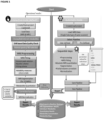
- FIG. 1 illustrates a flow diagram of default processing pipeline for metabolite map generation for MRSI data.
- This pipeline requires the MRSI data 103, the reference MRSI data 105, and MRI images as input files 101. Water is usually used for reference MRSI data.
- the steps executed in the processing pipeline are as follows: The metabolite MRSI data are assessed for quality and voxels containing data with low signal-to-noise ratio (SNR), are rejected.
- SNR signal-to-noise ratio
- the spectra from remaining voxels are then preprocessed as follows: phase and frequency correction with respect to reference input, water suppression with Hankel Singular Value Decomposition (HSVD) method, zero-filling to twice the spectral length, and a filtered signal is obtained by applying temporal apodization by use of a 4-Hz Gaussian filter.
- HSVD Hankel Singular Value Decomposition
- the individual spectral peak areas are then quantified using SSA as baseline estimation method and time-domain peak fitting.
- MRI image is segmented and percent cerebrospinal fluid (CSF) is calculated within each MRSI voxel by convolving CSF mask image with MRSI point spread function.
- CSF cerebrospinal fluid
- metabolite concentration map is corrected for partial volume effects at each voxel and displayed as an overlay onto anatomical MRI images.
- the final output of the pipeline is metabolite concentration map co-registered with the MRI image as well as a tabulated listing of voxel-wise metabolite concentrations in institutional units along with estimated spectral parameter values.
- FIG 1 illustrates table 1 depicting comparison of features of the main user interface of prior art and the present invention.
- the criteria of differentiating the package discloses here are: Input data types which includes SV, MV, MRSI or other types (e.g., MEGA-PRESS); processing mode of user interface which may be interactive, automatic and batch type and post-processing methods provided (absolute quantitation and correction factors for absolute quantitation).
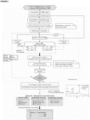
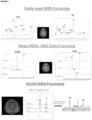
- the present invention provides an intuitive user interface that enables three different approaches for MRS data processing. Primarily, it permits the expert users to specify processing parameters at each stage and test the performance of different quantitation algorithms on their data in order to choose the best suited processing pipeline. Second for nonexpert users, it provides customizable processing modules optimized separately for SV, MRSI, and MEGA-PRESS that allow complete quantitation with just a few clicks. Third, a batch processing interface is provided for automated analysis of large datasets without user interaction. The batch processing interface lets the user load and customize any default processing pipeline or define a new processing pipeline and run it for bulk data.
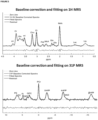
- This invention ensures reliable and robust spectral quantitation by using an iterative baseline estimation and peak fitting approach, whereby the process of baseline estimation and parametric peak fitting is alternated until the improvement in fitting residual in consecutive iterations is lower than a pre-defined threshold level. Further, it offers the option of utilizing this iterative process with various baseline estimation methods along with commonly used peak fitting methods in time- and frequency-domain.
- the robustness and accuracy of the invention in metabolite quantitation is well-matched to the established packages for MRS quantitation i.e. LCModel and jMRUI.
- the present invention may be embodied as a method, system, or computer program product. Accordingly, the present invention may take the form of an entirely hardware embodiment, a software embodiment or an embodiment combining software and hardware aspects all generally referred to herein as a "circuit" or "module.” Furthermore, the present invention may take the form of a computer program product on a computer-usable storage medium having computer-usable program code embodied in the medium.
- Instructions may also be loaded onto a computer or other programmable data processing apparatus like a scanner/check scanner to cause a series of operational steps to be performed on the computer or other programmable apparatus to produce a computer implemented process such that the instructions which execute on the computer or other programmable apparatus provide steps for implementing the functions/acts specified in the flowchart and/or block diagram block or blocks.
Landscapes
- Physics & Mathematics (AREA)
- High Energy & Nuclear Physics (AREA)
- Condensed Matter Physics & Semiconductors (AREA)
- General Physics & Mathematics (AREA)
- Engineering & Computer Science (AREA)
- Spectroscopy & Molecular Physics (AREA)
- Signal Processing (AREA)
- Optics & Photonics (AREA)
- Artificial Intelligence (AREA)
- Computer Vision & Pattern Recognition (AREA)
- Health & Medical Sciences (AREA)
- General Health & Medical Sciences (AREA)
- Nuclear Medicine, Radiotherapy & Molecular Imaging (AREA)
- Radiology & Medical Imaging (AREA)
- Magnetic Resonance Imaging Apparatus (AREA)
Description
- The present invention relates to signal processing and quantitation in Magnetic Resonance Spectroscopy. Particularly, the invention provides a comprehensive method that offers both automated and interactive signal processing and increases accuracy in signal quantitation.
- Magnetic resonance spectroscopy (MRS) is an important non- invasive technique for in vivo detection of a wide range of brain neurochemicals. MRS technique has been commonly used for diagnostic purposes, and the utility of MRS is extended to diagnosing chronic and severe low back pain, as disclosed in one of the prior art patents.
- The effectiveness of MRS technique is based on the ability to quantify characteristic metabolite spectra, which has various limitations such as small signal to noise ratio, overlapping spectra, distorted baseline due to physical reasons and engineering related concerns, not limited thereto.
- Studies have been conducted and indicated that the choice of quantification methods may affect the interpretation of results and their statistical significance. Different processing algorithms may be suitable for processing different MR data types. Indeed, it is preferable to analyze each spectrum separately using two or more quantification methods in time and frequency domain, to establish the robustness and consistency of observations. Therefore, a comprehensive MRS quantitation method with a provision of choosing different quantitation algorithms in time and frequency-domain as well as in-built features like segmentation and quantitation is much needed in MRS data processing.
- A variety of data processing packages are available that attempt to address specific limitations and are optimized for either proton (1H) or phosphorous (31P) MRS and incorporate a specific baseline estimation method and peak fitting method. For instance, various models like LCModel and AQSES are designed specifically for 1H MRS data; MIDAS, jSIPRO, SIVIC are optimized specifically for multi-voxel magnetic resonance spectroscopy imaging (MRSI) data; GANNET is designed for batch analysis of GABA edited spectra, and proFIT is designed for J-resolved spectra only.
-
US 2014/0085304 A1 describes a method of removing distortion by lipids from an MR image including obtaining an MR image including voxels, obtaining data of the voxels from the obtained MR image, estimating a lipid-related spectrum by using the obtained data, and removing the estimated lipid-related spectrum from the obtained data. - In order to realize the research and clinical potential of MRS technique, a comprehensive MRS quantitation tool is required that offers various features such as customization to both clinical and research use, capacity to be optimized for multiple MR detectable nuclei e.g. 1H, 31P. It is capable of implementing all MRS preprocessing, quantitation, and post-processing techniques in single platform thereby reducing dependencies on multiple software, and implements robust and reliable quantitation method.
- While existing packages cater to some of these requirements, none are designed to provide a complete solution. Certain vendor specific packages are intended for clinical use and offer close to complete automation features with accessible visualization of results, but often restrict user customization of the processing workflows preventing optimization of parameters for particular metabolites. In contrast, certain tools developed for research laboratories aim for processing control and flexibility, but do not focus as much on data visualization, automation, and post processing features such as segmentation.
- Further, most of the currently available MRS signal processing packages implement a single quantitation algorithm that relies on a given set of underlying assumptions regarding the nature of the baseline and the treatment of signals from macromolecules. As such, they have been individually designed to be used for a specific data types and restrict the user to either time- or frequency- domain analysis.
- The principal object of this invention is to offer a comprehensive solution that meets all the aforementioned feature requirements. One key object of the invention is to provide an interface that enables both automatic signal processing and quantitation of metabolites for clinical use as well as customizable modules that enable processing parameters to be dynamically varied to achieve the optimal post-processed results for research setting.
- Another object of the invention is that the method provides segmentation and absolute quantitation interface along with signal processing.
- Yet another object of the invention is to enhance the accuracy of spectral fitting by use of an iterative baseline estimation and peak fitting method to attempt to minimize the residual error of the signal fit. The method offers the option of utilization of this iterative algorithm with various non-parametric baseline estimation and peak fitting methods.
- A final object of the invention is that it can be utilized for both proton (1H) and phosphorous (31P) MRS data.
- The present invention relates to a comprehensive method for versatile processing and improved quantitation accuracy of magnetic resonance spectra using an iterative baseline estimation and fitting procedure that can be implemented with a variety of baseline estimation and peak fitting methods. It is an integrative MATLAB-based platform for visualization, preprocessing and quantitation of MRS data acquired using single voxel and MRSI and special type (e.g., MEGA-PRESS) acquisition methods. The method integrates both time- and frequency-domain signal processing methods on a single platform and implements non-parametric modeling of baseline through a variety of available methods. Apart from providing a comprehensive and flexible signal processing interface, the novelty lies in its approach to signal quantitation.
- According to an embodiment of the present invention, a computer-implemented method for processing of signals in MRS is disclosed in accordance with
independent claim 1. - The detailed description is described with reference to the accompanying figures. In the figures, the left-most digit(s) of a reference number identifies the figure in which the reference number first appears. The same numbers are used throughout the drawings to reference like features and components.
-
Figure 1 illustrates a flow diagram of default processing pipeline for metabolite map generation for MRSI data. -
Figure 2 is a table depicting comparison of features the main user interface of prior art and the method provided by the present invention. - The following discussion provides a brief, general description of a suitable environment in which various embodiments of the present disclosure can be implemented. The aspects and embodiments are described in the general context of computer executable mechanisms such as routines executed by a device. The embodiments described herein can be practiced with other system configurations, including Internet appliances, hand held devices, multi-processor systems, microprocessor based or programmable consumer electronics, network PCs, mini computers, mainframe computers etc. The embodiments can be embodied in a special purpose computer or data processor that is specifically programmed configured or constructed to perform one or more of the computer executable mechanisms explained in detail below.
- Exemplary embodiments now will be described with reference to the accompanying drawings. The disclosure may, however, be embodied in many different forms and should not be construed as limited to the embodiments set forth herein; rather, these embodiments are provided so that this disclosure will be thorough and complete, and will fully convey its scope to those skilled in the art. The terminology used in the detailed description of the particular exemplary embodiments illustrated in the accompanying drawings is not intended to be limiting. In the drawings, like numbers refer to like elements.
- The specification may refer to "an", "one" or "some" embodiment(s) in several locations. This does not necessarily imply that each such reference is to the same embodiment(s), or that the feature only applies to a single embodiment. Single features of different embodiments may also be combined to provide other embodiments.
- As used herein, the singular forms "a", "an" and "the" are intended to include the plural forms as well, unless expressly stated otherwise. It will be further understood that the terms "includes", "comprises", "including" and/or "comprising" when used in this specification, specify the presence of stated features, integers, steps, operations, elements, and/or components, but do not preclude the presence or addition of one or more other features, integers, steps, operations, elements, components, and/or groups thereof. It will be understood that when an element is referred to as being "connected" or "coupled" to another element, it can be directly connected or coupled to the other element or intervening elements may be present. Furthermore, "connected" or "coupled" as used herein may include wirelessly connected or coupled. As used herein, the term "and/or" includes any and all combinations and arrangements of one or more of the associated listed items.
- Unless otherwise defined, all terms (including technical and scientific terms) used herein have the same meaning as commonly understood by one of ordinary skill in the art to which this disclosure pertains. It will be further understood that terms, such as those defined in commonly used dictionaries, should be interpreted as having a meaning that is consistent with their meaning in the context of the relevant art and will not be interpreted in an idealized or overly formal sense unless expressly so defined herein.
- The figures depict a simplified structure only showing some elements and functional entities, all being logical units whose implementation may differ from what is shown. The connections shown are logical connections; the actual physical connections may be different. It is apparent to a person skilled in the art that the structure may also comprise other functions and structures. It should be appreciated that the functions, structures, elements and the protocols used in communication are irrelevant to the present disclosure. Therefore, they need not to be discussed in further detail here.
- In addition, all logical units described and depicted in the figures include the software and/or hardware components required for the unit to function. Further, each unit may comprise within itself one or more components, which are implicitly understood. These components may be operatively coupled to each other and be configured to communicate with each other to perform the function of the said unit.
- The present invention is directed to an integrative platform for visualization, preprocessing and quantitation of MRS data acquired using single voxel or multi- voxel MRSI and MEGA-PRESS acquisition methods. The method is MATLAB-based, integrates both time-domain and frequency-domain signal processing methods on a single platform and implements non-parametric modeling of baseline through a variety of known techniques. Apart from providing a unique comprehensive and flexible signal processing interface, novelty of the method lies in its approach to signal quantitation. Signal quantitation through various time-domain and frequency-domain methods has been achieved through application of an iterative baseline extraction and peak fitting method which allows for maximum accuracy and reliability of signal quantitation. The following terms have been used in abbreviated form in the subsequent paragraphs, SV: Single voxel; MV: Multi voxel i.e. multiple spectra; MRSI: Magnetic Resonance Spectroscopic Imaging; MRI: Magnetic Resonance Imaging; MRS: Magnetic Resonance Spectroscopy; MEGA-PRESS: MEshcher-GArwood Point-RESolved Spectroscopy; PSF: Point Spread Function; CSF: Cerebero-spinal fluid; LCModel: Linear combination model; AQSES: automatic quantitation of short echo time spectra; MIDAS: Metabolite Imaging and Data Analysis System; jSIPRO: java Spectroscopic Imaging Processing; SIVIC: Spectroscopic Imaging, Visualization, and Computing; GANNET: GABA-MRS Analysis Tool; proFit: Prior-Knowledge Fitting; TDFD: time-domain frequency-domain; FD: Frequency Domain; TD: Time Domain; NLLS: Non-linear least square; SSA: Singular Spectrum Analysis; jMRUI: Java-based graphical user interface for the Magnetic Resonance User Interface; TARQUIN: Totally Automatic Robust Quantitation in NMR; 3DiCSI: 3D Interactive Chemical Shift Imaging; HSVD: Hankel Singular Value Decomposition; VARPRO: Variable Projection.
- This invention is useful in both clinical and research settings. Specifically, in vivo MRS is beneficial for non-invasive acquisition of biochemical information of various tissues in the human body related to many diseases such as cancer, epilepsy, and Parkinson's disease and as such this invention has tremendous applicative value.
- The invention provides following key features over the prior art. The method is optimized for a wide variety of data that includes SV, MRSI and edited spectra such as MEGA-PRESS in contrast to most of the existing packages, which are optimized for particular type of data, for instance, LCModel and AQSES are designed specifically for 1H MRS data; MIDAS, jSIPRO, SIVIC are optimized specifically for MRSI data; GANNET is designed for batch analysis of GABA edited spectra, and proFIT is designed for J-resolved spectra only. It also provides a variety of peak fitting methods under one integrated platform. The user has an advantage of spectral fitting in time-domain, frequency-domain, or mixed domain.
- Further, the method provided by the present invention implements an iterative baseline estimation and peak fitting algorithm with all methods leading to better quantitation accuracy. In prior art, this algorithm has only been implemented for TDFD fitting in combination with baseline estimation using wavelet shrinkage method and has been shown to yield more accurate results as compared to conventional method of modelling baseline and metabolite signal together to form non-linear least square (NLLS) cost function. However, the present method extends and improves upon this invention by implementing iterative estimation procedure with VARPRO, time-domain NLLS, and FDpeak fitting methods, and in combination with various baseline estimation methods, i.e. Singular Spectrum Analysis (SSA), spline, and wavelet decomposition.
- The invention also provides various post-processing features such as absolute quantitation, segmentation, and metabolite map generation, where several existing packages lack e.g. jMRUI, LCModel, TARQUIN, 3DiCSI, AQSES.
-
Figure 1 illustrates a flow diagram of default processing pipeline for metabolite map generation for MRSI data. This pipeline requires the MRSI data 103, the reference MRSI data 105, and MRI images as input files 101. Water is usually used for reference MRSI data. In brief, the steps executed in the processing pipeline are as follows: The metabolite MRSI data are assessed for quality and voxels containing data with low signal-to-noise ratio (SNR), are rejected. The spectra from remaining voxels are then preprocessed as follows: phase and frequency correction with respect to reference input, water suppression with Hankel Singular Value Decomposition (HSVD) method, zero-filling to twice the spectral length, and a filtered signal is obtained by applying temporal apodization by use of a 4-Hz Gaussian filter. The individual spectral peak areas are then quantified using SSA as baseline estimation method and time-domain peak fitting. - The peak area values from all voxels are then converted to metabolite concentrations using water or a similar metabolite as an internal reference. In order to correct for partial volume effects, MRI image is segmented and percent cerebrospinal fluid (CSF) is calculated within each MRSI voxel by convolving CSF mask image with MRSI point spread function. Subsequently, metabolite concentration map is corrected for partial volume effects at each voxel and displayed as an overlay onto anatomical MRI images. The final output of the pipeline is metabolite concentration map co-registered with the MRI image as well as a tabulated listing of voxel-wise metabolite concentrations in institutional units along with estimated spectral parameter values.
- Abbreviations used in
figure 1 are MRI: Magnetic Resonance Imaging; MRSI: Magnetic Resonance Spectroscopy Imaging; PSF: Point spread function; CSF: Cerebrospinal fluid
Figure 2 illustrates table 1 depicting comparison of features of the main user interface of prior art and the present invention. The criteria of differentiating the package discloses here are: Input data types which includes SV, MV, MRSI or other types (e.g., MEGA-PRESS); processing mode of user interface which may be interactive, automatic and batch type and post-processing methods provided (absolute quantitation and correction factors for absolute quantitation). - Following references have been used: a 2D JPRESS; b MEGA-PRESS; ** Command line; *** Segmentation only.
- The present invention provides an intuitive user interface that enables three different approaches for MRS data processing. Primarily, it permits the expert users to specify processing parameters at each stage and test the performance of different quantitation algorithms on their data in order to choose the best suited processing pipeline. Second for nonexpert users, it provides customizable processing modules optimized separately for SV, MRSI, and MEGA-PRESS that allow complete quantitation with just a few clicks. Third, a batch processing interface is provided for automated analysis of large datasets without user interaction. The batch processing interface lets the user load and customize any default processing pipeline or define a new processing pipeline and run it for bulk data.
- This invention ensures reliable and robust spectral quantitation by using an iterative baseline estimation and peak fitting approach, whereby the process of baseline estimation and parametric peak fitting is alternated until the improvement in fitting residual in consecutive iterations is lower than a pre-defined threshold level. Further, it offers the option of utilizing this iterative process with various baseline estimation methods along with commonly used peak fitting methods in time- and frequency-domain. The robustness and accuracy of the invention in metabolite quantitation is well-matched to the established packages for MRS quantitation i.e. LCModel and jMRUI.
- The above-mentioned description of the embodiments of the invention has been presented for the purposes of illustration and description. It is not intended to be exhaustive or to limit the invention to the precise form disclosed. Many modifications and variations are possible in light of the above teaching. It is intended that the scope of the invention be limited not by this detailed description, but rather by the claims appended hereto.
- As will be appreciated by one skilled in the art, the present invention may be embodied as a method, system, or computer program product. Accordingly, the present invention may take the form of an entirely hardware embodiment, a software embodiment or an embodiment combining software and hardware aspects all generally referred to herein as a "circuit" or "module." Furthermore, the present invention may take the form of a computer program product on a computer-usable storage medium having computer-usable program code embodied in the medium.
- It will be understood that each block of the flowchart illustrations and/or block diagrams, and combinations of blocks in the flowchart illustrations and/or block diagrams, can be implemented by computer program instructions. These computer program instructions may be provided to a processor of a general purpose computer, special purpose computer, or other programmable data processing apparatus to produce a machine, such that the instructions, which execute via the processor of the computer or other programmable data processing apparatus, create means for implementing the functions/acts specified in the flowchart and/or block diagram block or blocks.
- Instructions may also be loaded onto a computer or other programmable data processing apparatus like a scanner/check scanner to cause a series of operational steps to be performed on the computer or other programmable apparatus to produce a computer implemented process such that the instructions which execute on the computer or other programmable apparatus provide steps for implementing the functions/acts specified in the flowchart and/or block diagram block or blocks.
- In the drawings and specification, there have been disclosed exemplary embodiments of the invention. Although specific terms are employed, they are used in a generic and descriptive sense only and not for purposes of limitation, the scope of the invention being defined by the following claims.
Claims (7)
- A computer-implemented method for magnetic resonance spectroscopy (MRS) processing to quantify and analyze metabolites, the method comprising:a. obtaining and inputting metabolite and image data to a magnetic resonance spectroscopy system;b. segregating a set of voxels containing data having a minimum signal-to-noise ratio based on given input;c. pre-processing spectral parameters from the remaining voxels;d. establishing individual spectral peak area from each voxel for conversion into metabolite concentration, wherein an iterative approach is used for baseline correction and peak fitting of the individual spectral peak area;e. generating a metabolite concentration map along with a magnetic resonance image as output, wherein the metabolite concentration map is corrected for partial volume effect at each voxel.
- The method as claimed in claim 1, wherein the metabolite and image data include MRS imaging data, reference MRS imaging data, and MRI image.
- The method as claimed in claim 1, wherein the method is optimized for both proton (1H) and phosphorous (31P) MRS data.
- The method as claimed in claim 2, wherein the MRS imaging data is from single voxel (SV) or magnetic resonance spectroscopy imaging (MRSI), and a MEshcher-GArwood Point RESolved Spectroscopy (MEGA-PRESS) acquisition technique is used to identify particular metabolites.
- The method as claimed in claim 2, wherein the reference MRS imaging data is at least one of unsuppressed water, an internal peak, and in vitro MRS signal from a phantom.
- The method as claimed in claim 1, wherein the step of pre-processing spectral parameters from the remaining voxels comprises the steps of:a. correcting phase and frequency with respect to reference MRS imaging data;b. applying water suppression with Hankel Singular Value Decomposition (HSVD);c. zero- filling to improve the spectral resolution; andd. obtaining a filtered signal by temporal apodization method.
- The method as claimed in claim 1, wherein the image data include an MRI image, and absolute quantitation of metabolite concentration and segmentation of the MRI image is done.
Applications Claiming Priority (2)
| Application Number | Priority Date | Filing Date | Title |
|---|---|---|---|
| IN201611001944 | 2016-01-19 | ||
| PCT/IB2016/054978 WO2017125800A1 (en) | 2016-01-19 | 2016-08-19 | A method for metabolite signal quantitation for magnetic resonance spectroscopy data |
Publications (4)
| Publication Number | Publication Date |
|---|---|
| EP3384302A1 EP3384302A1 (en) | 2018-10-10 |
| EP3384302A4 EP3384302A4 (en) | 2019-11-20 |
| EP3384302C0 EP3384302C0 (en) | 2024-02-28 |
| EP3384302B1 true EP3384302B1 (en) | 2024-02-28 |
Family
ID=59361864
Family Applications (1)
| Application Number | Title | Priority Date | Filing Date |
|---|---|---|---|
| EP16886195.3A Active EP3384302B1 (en) | 2016-01-19 | 2016-08-19 | A method for metabolite signal quantitation for magnetic resonance spectroscopy data |
Country Status (3)
| Country | Link |
|---|---|
| US (1) | US11372068B2 (en) |
| EP (1) | EP3384302B1 (en) |
| WO (1) | WO2017125800A1 (en) |
Families Citing this family (5)
| Publication number | Priority date | Publication date | Assignee | Title |
|---|---|---|---|---|
| WO2020209566A1 (en) * | 2019-04-08 | 2020-10-15 | 서울대학교산학협력단 | Artificial neural network-based nuclear magnetic resonance and magnetic resonance spectroscopy data processing method and apparatus thereof |
| US11821971B2 (en) | 2020-09-04 | 2023-11-21 | Musc Foundation For Research Development | Methods, systems, and computer readable media for utilizing spectral circles for magnetic resonance spectroscopy analysis |
| WO2022221760A1 (en) * | 2021-04-16 | 2022-10-20 | The Trustees Of Columbia University In The City Of New York | Magnetic resonance spectroscopy frequency and phase correction |
| CN115389993A (en) * | 2022-07-15 | 2022-11-25 | 上海东软医疗科技有限公司 | Magnetic resonance spectrum analysis method and system |
| EP4584602A1 (en) * | 2022-09-08 | 2025-07-16 | The Trustees Of Columbia University In The City Of New York | Frequency-and-phase correction for magnetic resonance spectroscopy |
Family Cites Families (6)
| Publication number | Priority date | Publication date | Assignee | Title |
|---|---|---|---|---|
| US20090091322A1 (en) * | 2007-04-25 | 2009-04-09 | Stefan Posse | Single-shot magnetic resonance spectroscopic imaging with partial parallel imaging |
| US7683620B2 (en) | 2007-05-03 | 2010-03-23 | The General Hospital Corporation | Suppression of noise in MR images and MR spectroscopic images using signal space projection filtering |
| US7966053B2 (en) * | 2007-11-26 | 2011-06-21 | The Board Of Trustees Of The Leland Stanford Junior University | Method for magnetic resonance spectroscopic imaging |
| US9234953B2 (en) * | 2010-01-18 | 2016-01-12 | Max-Planck-Gesellschaft Zur Foerderung Der Wissenschaften E.V. | Method and device for magnetic resonance spectroscopic imaging |
| KR101351584B1 (en) * | 2012-09-26 | 2014-01-22 | 연세대학교 산학협력단 | The method and apparatus for removing distortion by lipid from a magnetic resonance image |
| DE102013200058B3 (en) * | 2013-01-04 | 2014-06-26 | Siemens Aktiengesellschaft | Automated evaluation of the raw data of an MR spectrum |
-
2016
- 2016-08-19 US US16/071,068 patent/US11372068B2/en active Active
- 2016-08-19 WO PCT/IB2016/054978 patent/WO2017125800A1/en not_active Ceased
- 2016-08-19 EP EP16886195.3A patent/EP3384302B1/en active Active
Also Published As
| Publication number | Publication date |
|---|---|
| EP3384302A4 (en) | 2019-11-20 |
| WO2017125800A1 (en) | 2017-07-27 |
| EP3384302A1 (en) | 2018-10-10 |
| US20210190891A1 (en) | 2021-06-24 |
| US11372068B2 (en) | 2022-06-28 |
| EP3384302C0 (en) | 2024-02-28 |
Similar Documents
| Publication | Publication Date | Title |
|---|---|---|
| Nieto-Castanon | Preparing fMRI data for statistical analysis | |
| Nieto-Castanon et al. | CONN functional connectivity toolbox (RRID: SCR_009550), Version 21 | |
| US8217652B2 (en) | Spatial intensity correction for RF shading non-uniformities in MRI | |
| Haldar et al. | Improved diffusion imaging through SNR‐enhancing joint reconstruction | |
| US11372068B2 (en) | Method for metabolite signal quantitation for magnetic resonance spectroscopy data | |
| Gates et al. | Extended unified SEM approach for modeling event-related fMRI data | |
| US20190287674A1 (en) | Medical signal processing apparatus | |
| Sourbron et al. | Pixel-by-pixel deconvolution of bolus-tracking data: optimization and implementation | |
| US9928596B2 (en) | Motion corrected imaging system | |
| Liu et al. | Functional overestimation due to spatial smoothing of fMRI data | |
| US20140062473A1 (en) | Automated mri detection of tissue macromolecular t2/t2* characteristics using z-spectra | |
| Yakovleva et al. | Noise and signal estimation in MRI: two-parametric analysis of rice-distributed data by means of the maximum likelihood approach | |
| Tana et al. | GMAC: A Matlab toolbox for spectral Granger causality analysis of fMRI data | |
| US12369811B2 (en) | Method for attenuating the noise in images resulting from multiple acquisitions by magnetic resonance imaging | |
| US9709651B2 (en) | Compensated magnetic resonance imaging system and method for improved magnetic resonance imaging and diffusion imaging | |
| Placidi et al. | Local contrast normalization to improve preprocessing in mri of the brain | |
| US11241163B2 (en) | Measuring blood vessel characteristics with MRI | |
| US10789713B2 (en) | Symplectomorphic image registration | |
| Stevenson et al. | Bridging brain and behavior: A step-by-step tutorial to joint modeling with fMRI | |
| DE102018212481A1 (en) | Linear phase-corrected local averaging of MR image data | |
| Bush et al. | Deconvolution filtering: Temporal smoothing revisited | |
| Stevenson et al. | Building bridges between brain and behavior: An open-source toolbox for joint modeling with fMRI | |
| De Pasquale et al. | Empirical Markov chain Monte Carlo bayesian analysis of fMRI data | |
| Bromiley | Problems with the Brainweb MRI simulator in the evaluation of medical image segmentation algorithms, and an alternative methodology | |
| Rousseau et al. | On high-resolution image estimation using low-resolution brain MRI |
Legal Events
| Date | Code | Title | Description |
|---|---|---|---|
| STAA | Information on the status of an ep patent application or granted ep patent |
Free format text: STATUS: THE INTERNATIONAL PUBLICATION HAS BEEN MADE |
|
| PUAI | Public reference made under article 153(3) epc to a published international application that has entered the european phase |
Free format text: ORIGINAL CODE: 0009012 |
|
| STAA | Information on the status of an ep patent application or granted ep patent |
Free format text: STATUS: REQUEST FOR EXAMINATION WAS MADE |
|
| 17P | Request for examination filed |
Effective date: 20180706 |
|
| AK | Designated contracting states |
Kind code of ref document: A1 Designated state(s): AL AT BE BG CH CY CZ DE DK EE ES FI FR GB GR HR HU IE IS IT LI LT LU LV MC MK MT NL NO PL PT RO RS SE SI SK SM TR |
|
| AX | Request for extension of the european patent |
Extension state: BA ME |
|
| DAV | Request for validation of the european patent (deleted) | ||
| DAX | Request for extension of the european patent (deleted) | ||
| REG | Reference to a national code |
Ref country code: DE Ref legal event code: R079 Free format text: PREVIOUS MAIN CLASS: G01R0033000000 Ipc: G01R0033460000 |
|
| A4 | Supplementary search report drawn up and despatched |
Effective date: 20191022 |
|
| RIC1 | Information provided on ipc code assigned before grant |
Ipc: G01R 33/46 20060101AFI20191016BHEP Ipc: G01R 33/56 20060101ALI20191016BHEP Ipc: G01R 33/485 20060101ALI20191016BHEP Ipc: G01R 33/44 20060101ALI20191016BHEP |
|
| STAA | Information on the status of an ep patent application or granted ep patent |
Free format text: STATUS: EXAMINATION IS IN PROGRESS |
|
| 17Q | First examination report despatched |
Effective date: 20220209 |
|
| GRAP | Despatch of communication of intention to grant a patent |
Free format text: ORIGINAL CODE: EPIDOSNIGR1 |
|
| STAA | Information on the status of an ep patent application or granted ep patent |
Free format text: STATUS: GRANT OF PATENT IS INTENDED |
|
| INTG | Intention to grant announced |
Effective date: 20230914 |
|
| RAP3 | Party data changed (applicant data changed or rights of an application transferred) |
Owner name: NATIONAL BRAIN RESEARCH CENTRE Owner name: SECRETARY, DEPARTMENT OF ELECTRONICS AND INFORMATION TECHNOLOGY (DEITY) |
|
| GRAS | Grant fee paid |
Free format text: ORIGINAL CODE: EPIDOSNIGR3 |
|
| GRAA | (expected) grant |
Free format text: ORIGINAL CODE: 0009210 |
|
| STAA | Information on the status of an ep patent application or granted ep patent |
Free format text: STATUS: THE PATENT HAS BEEN GRANTED |
|
| AK | Designated contracting states |
Kind code of ref document: B1 Designated state(s): AL AT BE BG CH CY CZ DE DK EE ES FI FR GB GR HR HU IE IS IT LI LT LU LV MC MK MT NL NO PL PT RO RS SE SI SK SM TR |
|
| REG | Reference to a national code |
Ref country code: GB Ref legal event code: FG4D |
|
| REG | Reference to a national code |
Ref country code: CH Ref legal event code: EP |
|
| REG | Reference to a national code |
Ref country code: DE Ref legal event code: R096 Ref document number: 602016086088 Country of ref document: DE |
|
| REG | Reference to a national code |
Ref country code: IE Ref legal event code: FG4D |
|
| U01 | Request for unitary effect filed |
Effective date: 20240327 |
|
| U07 | Unitary effect registered |
Designated state(s): AT BE BG DE DK EE FI FR IT LT LU LV MT NL PT SE SI Effective date: 20240408 |
|
| PG25 | Lapsed in a contracting state [announced via postgrant information from national office to epo] |
Ref country code: IS Free format text: LAPSE BECAUSE OF FAILURE TO SUBMIT A TRANSLATION OF THE DESCRIPTION OR TO PAY THE FEE WITHIN THE PRESCRIBED TIME-LIMIT Effective date: 20240628 |
|
| PG25 | Lapsed in a contracting state [announced via postgrant information from national office to epo] |
Ref country code: GR Free format text: LAPSE BECAUSE OF FAILURE TO SUBMIT A TRANSLATION OF THE DESCRIPTION OR TO PAY THE FEE WITHIN THE PRESCRIBED TIME-LIMIT Effective date: 20240529 |
|
| PG25 | Lapsed in a contracting state [announced via postgrant information from national office to epo] |
Ref country code: RS Free format text: LAPSE BECAUSE OF FAILURE TO SUBMIT A TRANSLATION OF THE DESCRIPTION OR TO PAY THE FEE WITHIN THE PRESCRIBED TIME-LIMIT Effective date: 20240528 Ref country code: HR Free format text: LAPSE BECAUSE OF FAILURE TO SUBMIT A TRANSLATION OF THE DESCRIPTION OR TO PAY THE FEE WITHIN THE PRESCRIBED TIME-LIMIT Effective date: 20240228 |
|
| PG25 | Lapsed in a contracting state [announced via postgrant information from national office to epo] |
Ref country code: ES Free format text: LAPSE BECAUSE OF FAILURE TO SUBMIT A TRANSLATION OF THE DESCRIPTION OR TO PAY THE FEE WITHIN THE PRESCRIBED TIME-LIMIT Effective date: 20240228 |
|
| PG25 | Lapsed in a contracting state [announced via postgrant information from national office to epo] |
Ref country code: RS Free format text: LAPSE BECAUSE OF FAILURE TO SUBMIT A TRANSLATION OF THE DESCRIPTION OR TO PAY THE FEE WITHIN THE PRESCRIBED TIME-LIMIT Effective date: 20240528 Ref country code: NO Free format text: LAPSE BECAUSE OF FAILURE TO SUBMIT A TRANSLATION OF THE DESCRIPTION OR TO PAY THE FEE WITHIN THE PRESCRIBED TIME-LIMIT Effective date: 20240528 Ref country code: IS Free format text: LAPSE BECAUSE OF FAILURE TO SUBMIT A TRANSLATION OF THE DESCRIPTION OR TO PAY THE FEE WITHIN THE PRESCRIBED TIME-LIMIT Effective date: 20240628 Ref country code: HR Free format text: LAPSE BECAUSE OF FAILURE TO SUBMIT A TRANSLATION OF THE DESCRIPTION OR TO PAY THE FEE WITHIN THE PRESCRIBED TIME-LIMIT Effective date: 20240228 Ref country code: GR Free format text: LAPSE BECAUSE OF FAILURE TO SUBMIT A TRANSLATION OF THE DESCRIPTION OR TO PAY THE FEE WITHIN THE PRESCRIBED TIME-LIMIT Effective date: 20240529 Ref country code: ES Free format text: LAPSE BECAUSE OF FAILURE TO SUBMIT A TRANSLATION OF THE DESCRIPTION OR TO PAY THE FEE WITHIN THE PRESCRIBED TIME-LIMIT Effective date: 20240228 |
|
| PG25 | Lapsed in a contracting state [announced via postgrant information from national office to epo] |
Ref country code: PL Free format text: LAPSE BECAUSE OF FAILURE TO SUBMIT A TRANSLATION OF THE DESCRIPTION OR TO PAY THE FEE WITHIN THE PRESCRIBED TIME-LIMIT Effective date: 20240228 |
|
| U20 | Renewal fee for the european patent with unitary effect paid |
Year of fee payment: 9 Effective date: 20240723 |
|
| PG25 | Lapsed in a contracting state [announced via postgrant information from national office to epo] |
Ref country code: PL Free format text: LAPSE BECAUSE OF FAILURE TO SUBMIT A TRANSLATION OF THE DESCRIPTION OR TO PAY THE FEE WITHIN THE PRESCRIBED TIME-LIMIT Effective date: 20240228 |
|
| PG25 | Lapsed in a contracting state [announced via postgrant information from national office to epo] |
Ref country code: SM Free format text: LAPSE BECAUSE OF FAILURE TO SUBMIT A TRANSLATION OF THE DESCRIPTION OR TO PAY THE FEE WITHIN THE PRESCRIBED TIME-LIMIT Effective date: 20240228 |
|
| PG25 | Lapsed in a contracting state [announced via postgrant information from national office to epo] |
Ref country code: CZ Free format text: LAPSE BECAUSE OF FAILURE TO SUBMIT A TRANSLATION OF THE DESCRIPTION OR TO PAY THE FEE WITHIN THE PRESCRIBED TIME-LIMIT Effective date: 20240228 |
|
| PG25 | Lapsed in a contracting state [announced via postgrant information from national office to epo] |
Ref country code: SK Free format text: LAPSE BECAUSE OF FAILURE TO SUBMIT A TRANSLATION OF THE DESCRIPTION OR TO PAY THE FEE WITHIN THE PRESCRIBED TIME-LIMIT Effective date: 20240228 |
|
| PG25 | Lapsed in a contracting state [announced via postgrant information from national office to epo] |
Ref country code: SM Free format text: LAPSE BECAUSE OF FAILURE TO SUBMIT A TRANSLATION OF THE DESCRIPTION OR TO PAY THE FEE WITHIN THE PRESCRIBED TIME-LIMIT Effective date: 20240228 Ref country code: SK Free format text: LAPSE BECAUSE OF FAILURE TO SUBMIT A TRANSLATION OF THE DESCRIPTION OR TO PAY THE FEE WITHIN THE PRESCRIBED TIME-LIMIT Effective date: 20240228 Ref country code: RO Free format text: LAPSE BECAUSE OF FAILURE TO SUBMIT A TRANSLATION OF THE DESCRIPTION OR TO PAY THE FEE WITHIN THE PRESCRIBED TIME-LIMIT Effective date: 20240228 Ref country code: CZ Free format text: LAPSE BECAUSE OF FAILURE TO SUBMIT A TRANSLATION OF THE DESCRIPTION OR TO PAY THE FEE WITHIN THE PRESCRIBED TIME-LIMIT Effective date: 20240228 |
|
| REG | Reference to a national code |
Ref country code: DE Ref legal event code: R097 Ref document number: 602016086088 Country of ref document: DE |
|
| PLBE | No opposition filed within time limit |
Free format text: ORIGINAL CODE: 0009261 |
|
| STAA | Information on the status of an ep patent application or granted ep patent |
Free format text: STATUS: NO OPPOSITION FILED WITHIN TIME LIMIT |
|
| 26N | No opposition filed |
Effective date: 20241129 |
|
| REG | Reference to a national code |
Ref country code: CH Ref legal event code: PL |
|
| GBPC | Gb: european patent ceased through non-payment of renewal fee |
Effective date: 20240819 |
|
| PG25 | Lapsed in a contracting state [announced via postgrant information from national office to epo] |
Ref country code: CH Free format text: LAPSE BECAUSE OF NON-PAYMENT OF DUE FEES Effective date: 20240831 Ref country code: MC Free format text: LAPSE BECAUSE OF FAILURE TO SUBMIT A TRANSLATION OF THE DESCRIPTION OR TO PAY THE FEE WITHIN THE PRESCRIBED TIME-LIMIT Effective date: 20240228 |
|
| PG25 | Lapsed in a contracting state [announced via postgrant information from national office to epo] |
Ref country code: GB Free format text: LAPSE BECAUSE OF NON-PAYMENT OF DUE FEES Effective date: 20240819 |
|
| PG25 | Lapsed in a contracting state [announced via postgrant information from national office to epo] |
Ref country code: IE Free format text: LAPSE BECAUSE OF NON-PAYMENT OF DUE FEES Effective date: 20240819 |
|
| U20 | Renewal fee for the european patent with unitary effect paid |
Year of fee payment: 10 Effective date: 20250815 |
|
| PG25 | Lapsed in a contracting state [announced via postgrant information from national office to epo] |
Ref country code: CY Free format text: LAPSE BECAUSE OF FAILURE TO SUBMIT A TRANSLATION OF THE DESCRIPTION OR TO PAY THE FEE WITHIN THE PRESCRIBED TIME-LIMIT; INVALID AB INITIO Effective date: 20160819 |
|
| PG25 | Lapsed in a contracting state [announced via postgrant information from national office to epo] |
Ref country code: HU Free format text: LAPSE BECAUSE OF FAILURE TO SUBMIT A TRANSLATION OF THE DESCRIPTION OR TO PAY THE FEE WITHIN THE PRESCRIBED TIME-LIMIT; INVALID AB INITIO Effective date: 20160819 |
|
| PG25 | Lapsed in a contracting state [announced via postgrant information from national office to epo] |
Ref country code: TR Free format text: LAPSE BECAUSE OF FAILURE TO SUBMIT A TRANSLATION OF THE DESCRIPTION OR TO PAY THE FEE WITHIN THE PRESCRIBED TIME-LIMIT Effective date: 20240228 |