EP3383064A1 - Echo cancellation method and system - Google Patents
Echo cancellation method and system Download PDFInfo
- Publication number
- EP3383064A1 EP3383064A1 EP16867671.6A EP16867671A EP3383064A1 EP 3383064 A1 EP3383064 A1 EP 3383064A1 EP 16867671 A EP16867671 A EP 16867671A EP 3383064 A1 EP3383064 A1 EP 3383064A1
- Authority
- EP
- European Patent Office
- Prior art keywords
- signal
- reference signal
- obtaining
- loudspeaker
- mixed
- Prior art date
- Legal status (The legal status is an assumption and is not a legal conclusion. Google has not performed a legal analysis and makes no representation as to the accuracy of the status listed.)
- Granted
Links
Images



Classifications
-
- G—PHYSICS
- G10—MUSICAL INSTRUMENTS; ACOUSTICS
- G10L—SPEECH ANALYSIS TECHNIQUES OR SPEECH SYNTHESIS; SPEECH RECOGNITION; SPEECH OR VOICE PROCESSING TECHNIQUES; SPEECH OR AUDIO CODING OR DECODING
- G10L21/00—Speech or voice signal processing techniques to produce another audible or non-audible signal, e.g. visual or tactile, in order to modify its quality or its intelligibility
- G10L21/02—Speech enhancement, e.g. noise reduction or echo cancellation
- G10L21/0208—Noise filtering
- G10L21/0216—Noise filtering characterised by the method used for estimating noise
- G10L21/0232—Processing in the frequency domain
-
- H—ELECTRICITY
- H04—ELECTRIC COMMUNICATION TECHNIQUE
- H04M—TELEPHONIC COMMUNICATION
- H04M9/00—Arrangements for interconnection not involving centralised switching
- H04M9/08—Two-way loud-speaking telephone systems with means for conditioning the signal, e.g. for suppressing echoes for one or both directions of traffic
- H04M9/082—Two-way loud-speaking telephone systems with means for conditioning the signal, e.g. for suppressing echoes for one or both directions of traffic using echo cancellers
-
- G—PHYSICS
- G10—MUSICAL INSTRUMENTS; ACOUSTICS
- G10L—SPEECH ANALYSIS TECHNIQUES OR SPEECH SYNTHESIS; SPEECH RECOGNITION; SPEECH OR VOICE PROCESSING TECHNIQUES; SPEECH OR AUDIO CODING OR DECODING
- G10L21/00—Speech or voice signal processing techniques to produce another audible or non-audible signal, e.g. visual or tactile, in order to modify its quality or its intelligibility
- G10L21/02—Speech enhancement, e.g. noise reduction or echo cancellation
- G10L21/0316—Speech enhancement, e.g. noise reduction or echo cancellation by changing the amplitude
- G10L21/0356—Speech enhancement, e.g. noise reduction or echo cancellation by changing the amplitude for synchronising with other signals, e.g. video signals
-
- H—ELECTRICITY
- H04—ELECTRIC COMMUNICATION TECHNIQUE
- H04R—LOUDSPEAKERS, MICROPHONES, GRAMOPHONE PICK-UPS OR LIKE ACOUSTIC ELECTROMECHANICAL TRANSDUCERS; ELECTRIC HEARING AIDS; PUBLIC ADDRESS SYSTEMS
- H04R3/00—Circuits for transducers
- H04R3/02—Circuits for transducers for preventing acoustic reaction, i.e. acoustic oscillatory feedback
-
- G—PHYSICS
- G10—MUSICAL INSTRUMENTS; ACOUSTICS
- G10L—SPEECH ANALYSIS TECHNIQUES OR SPEECH SYNTHESIS; SPEECH RECOGNITION; SPEECH OR VOICE PROCESSING TECHNIQUES; SPEECH OR AUDIO CODING OR DECODING
- G10L21/00—Speech or voice signal processing techniques to produce another audible or non-audible signal, e.g. visual or tactile, in order to modify its quality or its intelligibility
- G10L21/02—Speech enhancement, e.g. noise reduction or echo cancellation
- G10L21/0208—Noise filtering
- G10L2021/02082—Noise filtering the noise being echo, reverberation of the speech
Definitions
- the present disclosure relates to the field of telecommunication technology, and more particularly to a method and a system for eliminating an echo.
- a microphone mounted on the television is closer to a loudspeaker of the television itself, that is, the distance between the microphone and the loudspeaker is closer than that between the microphone and a mouth of a person, and the sound of a program given out from the loudspeaker is generally louder than the sound of the person, so the sound of the television received by the microphone would be louder than the sound received from the person's mouth, that is, to the microphone, the sound of the television (an echo signal) would seriously interfere with the sound of people speaking and seriously affect human speech recognition by the system.
- the television output audio signal is obtained to proceed offsetting with the television sound signal received by the microphone, so as to achieve the effect of eliminating television echo.
- the echo signal picked up by the microphone and the sound signal obtained from the driving loudspeaker have been already relatively different (the difference in the degree of the attenuation or superposition of each frequency band, being reflected as further changes in the frequency response), therefore the effect of this echo eliminating is relatively limited.
- the present disclosure is to provide a method and a system for eliminating an echo which aims to improve the effect of eliminating the echo.
- the present disclosure provides a method for eliminating an echo which includes:
- the block "calculating the amplitudes of the mixed signal and the reference signal” includes:
- the block "obtaining a compensation signal of the reference signal based on the gain signal and a corresponding preset compensation coefficient" includes:
- the present disclosure also provides a method for eliminating an echo which includes:
- the block "comparing the mixed signal with the reference signal to obtain a gain coefficient of the reference signal, and obtaining a gain signal of the reference signal through the gain coefficient” includes:
- the block "calculating the amplitudes of the mixed signal and the reference signal” includes:
- the block "obtaining a compensation signal of the reference signal based on the gain signal and a corresponding preset compensation coefficient" includes:
- the block "obtaining a mixed signal of a mixture of a user's voice given out from the user and the echo given out from a loudspeaker, and obtaining a sound signal given out from the loudspeaker based on the volume of the sound given out from the loudspeaker, the sound signal being used as a reference signal” includes:
- the present disclosure also provides a system for eliminating an echo which includes:
- the second obtaining module includes:
- the calculating module includes:
- the third obtaining module includes:
- the first obtaining module includes:
- the mixed signal of the mixture of the user's voice given out from the user and the echo given out from the loudspeaker is obtained, and the sound signal given out from the loudspeaker based on the volume of the sound given out from the loudspeaker is obtained, the sound signal is used as the reference signal; the gain coefficient of the reference signal is obtained based on comparing the mixed signal with the reference signal, and the gain signal of the reference signal is obtained through the gain coefficient; the compensation signal of the reference signal is obtained based on the gain signal and the corresponding preset compensation coefficient; the compensation signal is inverted; and the inverted compensation signal is combined with the mixed signal, so as to eliminate the echo given out from the loudspeaker.
- the present disclosure first obtains the gain signal of the reference signal based on the mixed signal, then compensates the gain signal to obtain the compensation signal, and converts the reference signal into the same signal with the echo given out from the actual loudspeaker, then inverts the compensation signal and combines with the mixed signal in order to eliminate the echo in the mixed signal, the elimination of the echo in the mixed signal can be improved, even the echo in the mixed signal is completely eliminated.
- the present disclosure provides a method for eliminating an echo.
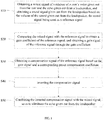
- Fig. 1 is a flowchart illustrating a first embodiment of a method for eliminating an echo according to the present disclosure.
- the method for eliminating the echo includes: S10, obtaining a mixed signal of a mixture of a user's voice given out from the user and the echo given out from a loudspeaker, and obtaining a sound signal given out from the loudspeaker based on the volume of the sound given out from the loudspeaker, the sound signal being used as a reference signal;
- a television is used as an example for description.
- the present disclosure may also be applied to other occasions where echo elimination is needed according to the core idea of the present disclosure.
- the television obtains a user's voice from a user through a microphone while the television may be playing video and/or audio at the same time.
- the loudspeaker of the television gives out a corresponding sound, the sound given out from the loudspeaker through reflection, diffraction and so on by walls and various objects in the room reflected value the microphone of the television, and is received by the microphone, the microphone obtains a mixed sound of a mixture of the user's voice given out from the user and the echo given out from the loudspeaker, so as to obtain the mixed signal.
- an analog signal of the mixed signal is obtained, certainly the obtained analog signal may also be converted into a digital signal.
- a corresponding sound signal given out from the loudspeaker is simulated according to a preset rule, the sound signal is used as the reference signal, wherein the preset rule refers to the reference signal obtained by a technician according to the volume in an ideal environment, that is, an environment without any reflection or diffraction by various objects.
- the mixed signal of a mixture of the user's voice given out from the user and the echo given out from a loudspeaker and the reference signal may be obtained in advance by other means.
- S20 comparing the mixed signal with the reference signal to obtain a gain coefficient of the reference signal, and obtaining a gain signal of the reference signal through the gain coefficient; Due to the difference in power amplifier gain and loudspeaker sensitivity of each TV or other device, the amplitudes of an echo signal picked up by the microphone also vary greatly. The amplitude difference between the reference signal and the echo signal is also very large.
- the gain coefficient of the reference signal can be obtained via a gain circuit being passed through by the mixed signal obtained in step S10 and the reference signal, the gain circuit of the echo elimination is already widely used, or the gain coefficient of the reference signal is obtained by software, allowing the amplitude of the reference signal is approximately equivalent to the amplitude of the mixed signal, that is, approximately the same.
- the compensation signal of the reference signal is obtained based on the gain signal obtained in step S20 and the corresponding preset compensation coefficient, specifically the compensation signal of the reference signal is obtained by multiplying the gain signal by the corresponding preset compensation coefficient, certainly it is also possible to obtain compensation coefficients of different frequencies according to the gain signal.
- the preset compensation coefficient is obtained by conducting tests of single-frequency positive selection signals of different frequencies preset in the television before the television obtaining the user's voice, certainly it could be a signal of other shapes.
- the television stores n groups of single-frequency positive selection signals with frequencies between 20Hz and 20kHz, the amplitude of each is A, a preset number of signals are randomly selected from the n groups of signals before obtaining the user's voice for testing, in this example five groups are selected, the five selected groups of signals are performing test in sequence respectively, the microphone can sequentially obtain five groups of echo signals, and the amplitudes are recorded as A1, A2...A5 respectively, and then the 5 groups of signals are respectively divided by the amplitude A, thus, the compensation coefficients G1-G5 of frequencies of the five groups are obtained.
- the testing could also performed by put different television sizes in different environments, based on the testing results, the average compensation coefficients under different television sizes are obtained and preset in the television.
- the compensation coefficient the more frequencies are used for testing, the more compensation coefficients of different frequencies are obtained, and the finer when adjusting the gain signal, the better the final effect is.
- the relationship of the number of signal groups and the similarity between the reference signal after adjustment and the actual echo signal obtained by the loudspeaker obtained by the microphone is shown in the following table, the similarity is identified by an approximate quality number Q. According to the data in the table below, it can be seen that when 10 groups of preset signals with different frequencies are used for testing, the ideal state can be reached by compensation.
- a signal with a preset number of groups may also be used for testing to obtain the compensation coefficient.
- An inverted compensation signal is obtained by inverting the compensation signal obtained in S30, and then the inverted compensation signal is combined with the mixed signal, according to the principle of superposition of two waveforms, the inverted compensation signal similar to the echo given out from the loudspeaker can offset the echo given out from the loudspeaker, so as to eliminate the echo given out from the loudspeaker.
- operations such as filtering may also be performed to obtain a more pure user voice.
- the mixed signal eliminated the echo is recognized, and corresponding processing is performed.
- the pure voice of the user can be sent to the cloud or recognized locally to obtain a corresponding control instruction, the television performs a corresponding processing according to the control instruction, or performs other operations, such as searching through network.
- the mixed signal of a mixture of the user's voice given out from the user and the echo given out from the loudspeaker is obtained, and the sound signal given out from the loudspeaker is obtained based on the volume of the sound given out from the loudspeaker, the sound signal is used as the reference signal; the gain coefficient of the reference signal is obtained based on comparing the mixed signal with the reference signal, and the gain signal of the reference signal is obtained through the gain coefficient; the compensation signal of the reference signal based on the gain signal and the corresponding preset compensation coefficient is obtained; the compensation signal is inverted; and the inverted compensation signal is combined with the mixed signal, so as to eliminate the echo given out from the loudspeaker.
- the present disclosure first obtains the gain signal of the reference signal based on the mixed signal, then compensates the gain signal to obtain the compensation signal, and converts the reference signal into the same signal with the echo given out from the actual loudspeaker, then inverts the compensation signal and combines with the mixed signal in order to eliminate the echo in the mixed signal , the elimination of the echo in the mixed signal can be improved, even the echo in the mixed signal is completely eliminated.
- FIG. 2 is a flowchart illustrating an embodiment of obtaining a gain signal of the reference signal based on the mixed signal and the reference signal according to the present disclosure.
- S20 includes:
- the reference signal is processed in a software way.
- the calculation is performed based on the mixed signal and the reference signal to obtain the amplitudes of the mixed signal and the reference signal respectively, and then the gain coefficient of the reference signal is obtained based on the amplitudes of the mixed signal and the reference signal, specifically, the amplitude of the mixed signal is divided by the amplitude of the reference signal to obtain the ratio of the amplitudes of the mixed signal and the reference signal, i.e. to obtain the gain coefficient of the reference signal, and then the amplitude of the reference signal is multiplied by the gain coefficient, thereby to obtain the gain signal of the reference signal.
- FIG. 3 is a flowchart illustrating an embodiment of the block "calculating the amplitudes of the mixed signal and the reference signal" according to the present disclosure.
- S21 includes: S211, performing a preset number of samplings to the mixed signal and the reference signal in a preset period to obtain a preset number of sampling signals respectively;
- the obtained signal acts as a sampling signal, such as 5k samplings in 0.2s.
- F is the quantity of samplings
- T is the sampling period
- t is the time of the beginning of a certain period.
- N is the quantity of samplings.
- FIG. 4 is a flowchart illustrating an embodiment of the block "calculating the amplitudes of the mixed signal and the reference signal" according to the present disclosure.
- S30 includes:
- the preset number of frequencies are selected from the preset signals of various frequencies in the television, testing is conducted with a specific preset amplitude, sounds of various frequencies are sequentially given out through the loudspeaker, the microphone in the television sequentially receives the echo signals corresponding to the sounds of various frequencies, corresponding amplitudes are obtained respectively according to the echo signals, then the preset compensation coefficients are obtained by calculating based on the amplitudes of the echo signals and the preset amplitude.
- the specific process is the same as that in S30 in the first embodiment, thus would not be repeated here.
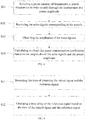
- FIG. 5 is a flowchart illustrating an embodiment of the block "obtaining a mixed signal of a mixture of a user's voice given out from the user and the echo given out from a loudspeaker, and obtaining a reference signal of a sound signal given out from the loudspeaker based on the volume of the sound given out from the loudspeaker" according to the present disclosure.
- S10 includes:
- Prior to the block "combining the inverted compensation signal with the mixed signal, so as to eliminate the echo given out from the loudspeaker" includes: Synchronizing the time of the mixed signal and the compensation signal based on the time delay of the reference signal.
- the time of the mixed signal and the compensation signal is synchronized.
- the time of the mixed signal and the compensation signal may also be synchronized at other times, as long as before the inverted compensation signal combined with the mixed signal.
- the present disclosure also provides a system for eliminating the echo.
- FIG. 6 is a block diagram illustrating a first embodiment of a system for eliminating an echo according to the present disclosure.
- the system for eliminating the echo includes: A first obtaining module 10, configured to obtain a mixed signal of a mixture of a user's voice given out from the user and the echo given out from a loudspeaker, and to obtain a sound signal given out from the loudspeaker based on the volume of the sound given out from the loudspeaker, the sound signal being used as a reference signal.
- a television is used as an example for description.
- the present disclosure may also be applied to other occasions where echo elimination is needed according to the core idea of the present disclosure.
- the television obtains a user's voice from a user through a microphone while the television may be playing video and/or audio at the same time.
- the loudspeaker of the television gives out a corresponding sound, the sound given out from the loudspeaker through reflection, diffraction and so on by walls and various objects in the room is reflected to the microphone of the television, and is received by the microphone, the microphone obtains a mixed sound of a mixture of the user's voice given out from the user and the echo given out from the loudspeaker, so as to obtain the mixed signal.
- an analog signal of the mixed signal is obtained, certainly the obtained analog signal may also be converted into a digital signal.
- a corresponding sound signal given out from the loudspeaker is simulated according to a preset rule, the sound signal is used as the reference signal, wherein the preset rule refers to the reference signal obtained by a technician according to the volume in an ideal environment, that is, an environment without any reflection or diffraction by various objects.
- the mixed signal mixed by the user's voice given out from the user and the echo given out from a loudspeaker and the reference signal may be obtained in advance by other means.
- a second obtaining module 20 configured to obtain a gain coefficient of the reference signal based on comparing the mixed signal with the reference signal, and to obtain a gain signal of the reference signal through the gain coefficient.
- the gain coefficient of the reference signal can be obtained via a gain circuit being passed through by the mixed signal obtained in step S10 and the reference signal, the gain circuit of the echo elimination is already widely used, or the gain coefficient of the reference signal is obtained by software, allowing the amplitude of the reference signal is approximately equivalent to the amplitude of the mixed signal, that is, approximately the same.
- a third obtaining module 30 configured to obtain a compensation signal of the reference signal based on the gain signal and a corresponding preset compensation coefficient.
- the signal obtained by the microphone has different degrees of enhancement and attenuation in each frequency band, in order to make the gain signal more similar to the echo signal given out from the loudspeaker in the mixed signal, so further processing is required.
- the compensation signal of the reference signal is obtained based on the gain signal obtained in step S20 and the corresponding preset compensation coefficient, specifically the compensation signal of the reference signal is obtained by multiplying the gain signal by the corresponding preset compensation coefficient, certainly it is also possible to obtain compensation coefficients of different frequencies according to the gain signal.
- the preset compensation coefficient is obtained by conducting tests of single-frequency positive selection signals of different frequencies preset in the television before the television obtaining the user's voice, certainly it could be a signal of other shapes.
- the television stores n groups of single-frequency positive selection signals with frequencies between 20Hz and 20kHz, the amplitude of each is A, a preset number of signals are randomly selected from the n groups of signals before obtaining the user's voice for testing, in this example five groups are selected, the five selected groups of signals are performing test in sequence respectively, the microphone can sequentially obtain five groups of echo signals, and the amplitudes are recorded as A1, A2...A5 respectively, and then the 5 groups of signals are respectively divided by the amplitude A, thus, the compensation coefficients G1-G5 of frequencies of the five groups are obtained.
- the testing could also performed by put different television sizes in different environments, based on the testing results, the average compensation coefficients under different television sizes are obtained and preset in the television.
- the relationship of the number of signal groups and the similarity between the reference signal after adjustment and the actual echo signal obtained by the loudspeaker obtained by the microphone is shown in the following table, the similarity is identified by an approximate quality number Q. According to the data in the table below, it can be seen that when 10 groups of preset signals with different frequencies are used for testing, the ideal state can be reached by compensation.
- a signal with a preset number of groups may also be used for testing to obtain the compensation coefficient.
- An inverting module 40 configured to invert the compensation signal.
- a combining module 50 configured to combine the inverted compensation signal with the mixed signal, so as to eliminate the echo given out from the loudspeaker.
- An inverted compensation signal is obtained by inverting the compensation signal obtained in S30, and then the inverted compensation signal is combined with the mixed signal, according to the principle of superposition of two waveforms, the inverted compensation signal similar to the echo given out from the loudspeaker can offset the echo given out from the loudspeaker, so as to eliminate the echo given out from the loudspeaker.
- operations such as filtering may also be performed to obtain a more pure user voice.
- a recognizing module (not shown in the figures), configured for recognizing the mixed signal eliminated the echo, and corresponding processing is performed.
- the pure voice of the user can be sent to the cloud or recognized locally to obtain a corresponding control instruction, the television performs a corresponding processing according to the control instruction, or performs other operations, such as searching through network.
- the mixed signal of a mixture of the user's voice given out from the user and the echo given out from the loudspeaker is obtained, and the sound signal given out from the loudspeaker based on the volume of the sound given out from the loudspeaker is obtained, the sound signal is used as the reference signal; the gain coefficient of the reference signal based on comparing the mixed signal with the reference signal is obtained, and the gain signal of the reference signal through the gain coefficient is obtained; the compensation signal of the reference signal based on the gain signal and the corresponding preset compensation coefficient is obtained; the compensation signal is inverted; and the inverted compensation signal is combined with the mixed signal, so as to eliminate the echo given out from the loudspeaker.
- the present disclosure first obtains the gain signal of the reference signal based on the mixed signal, then compensates the gain signal to obtain the compensation signal, and converts the reference signal into the same signal with the echo given out from the actual loudspeaker, then inverts the compensation signal and combines with the mixed signal in order to eliminate the echo in the mixed signal, the elimination of the echo in the mixed signal can be improved, even the echo in the mixed signal is completely eliminated.
- FIG. 7 is a detailed block diagram illustrating an embodiment of a second obtaining module according to the present disclosure.
- the second obtaining module 20 includes:
- a calculating unit 21 configured to calculate the amplitudes of the mixed signal and the reference signal.
- a first obtaining unit 22 configured to obtain the gain coefficient of the reference signal based on the amplitudes of the mixed signal and the reference signal.
- a second obtaining unit 23 configured to obtain the gain signal of the reference signal through multiplying the amplitude of the reference signal by the gain coefficient.
- the reference signal is processed in a software way.
- the calculation is performed based on the mixed signal and the reference signal to obtain the amplitudes of the mixed signal and the reference signal respectively, and then the gain coefficient of the reference signal is obtained based on the amplitudes of the mixed signal and the reference signal, specifically, the amplitude of the mixed signal is divided by the amplitude of the reference signal to obtain the ratio of the amplitudes of the mixed signal and the reference signal, i.e. to obtain the gain coefficient of the reference signal, and then the amplitude of the reference signal is multiplied by the gain coefficient, thereby to obtain the gain signal of the reference signal.
- FIG. 8 is a detailed block diagram illustrating an embodiment of a calculating unit according to the present disclosure.
- the calculating unit 21 includes: A sampling subunit 211, configured to perform a preset number of samplings to the mixed signal and the reference signal in a preset time to obtain a preset number of mixed signals respectively.
- the obtained signal acts as a sampling signal, such as 5k samplings in 0.2s.
- a calculating subunit 212 configured to calculate respectively through a preset algorithm based on the sampling signals of the mixed signal and the reference signal, so as to obtain root mean square values of the sampling signals as the amplitudes of the mixed signal and the reference signal.
- F is the quantity of samplings
- T is the sampling period
- t is the time of the beginning of a certain period.
- N is the quantity of samplings.
- FIG. 9 is a detailed block diagram illustrating an embodiment of a third obtaining module according to the present disclosure.
- the third obtaining module 30 includes:
- the preset number of frequencies are selected from the preset signals of various frequencies in the television, testing is conducted with a specific preset amplitude, sounds of various frequencies are sequentially given out through the loudspeaker, the microphone in the television sequentially receives the echo signals corresponding to the sounds of various frequencies, corresponding amplitudes are obtained respectively according to the echo signals, then the preset compensation coefficients are obtained by calculating based on the amplitudes of the echo signals and the preset amplitude.
- the specific process is the same as that in S30 in the first embodiment, thus would not be repeated here.
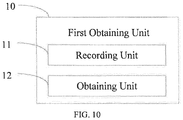
- FIG. 10 is a detailed block diagram illustrating an embodiment of a first obtaining module according to the present disclosure.
- the first obtaining module 10 includes:
- the device further includes: A synchronizing module (not shown in the figures), configured to synchronize the time of the mixed signal and the compensation signal based on the time delay of the reference signal.
- a synchronizing module (not shown in the figures), configured to synchronize the time of the mixed signal and the compensation signal based on the time delay of the reference signal.
- the timing of the mixed signal and the compensation signal is synchronized.
- the timing of the mixed signal and the compensation signal may also be synchronized at other times, as long as before the inverted compensation signal combined with the mixed signal.
Landscapes
- Engineering & Computer Science (AREA)
- Signal Processing (AREA)
- Physics & Mathematics (AREA)
- Health & Medical Sciences (AREA)
- Acoustics & Sound (AREA)
- Otolaryngology (AREA)
- General Health & Medical Sciences (AREA)
- Human Computer Interaction (AREA)
- Audiology, Speech & Language Pathology (AREA)
- Multimedia (AREA)
- Quality & Reliability (AREA)
- Computational Linguistics (AREA)
- Circuit For Audible Band Transducer (AREA)
- Cable Transmission Systems, Equalization Of Radio And Reduction Of Echo (AREA)
- Telephone Function (AREA)
Abstract
Description
- The present disclosure relates to the field of telecommunication technology, and more particularly to a method and a system for eliminating an echo.
- In speech recognition systems, especially in long-distance speech recognition systems, such as performing speech recognition on television, because a microphone mounted on the television is closer to a loudspeaker of the television itself, that is, the distance between the microphone and the loudspeaker is closer than that between the microphone and a mouth of a person, and the sound of a program given out from the loudspeaker is generally louder than the sound of the person, so the sound of the television received by the microphone would be louder than the sound received from the person's mouth, that is, to the microphone, the sound of the television (an echo signal) would seriously interfere with the sound of people speaking and seriously affect human speech recognition by the system.
- Traditionally, the television output audio signal is obtained to proceed offsetting with the television sound signal received by the microphone, so as to achieve the effect of eliminating television echo. However, due to the unevenness of frequency response and the orientation of the loudspeaker itself, and through the reflection and diffraction of the room and various objects, the echo signal picked up by the microphone and the sound signal obtained from the driving loudspeaker have been already relatively different (the difference in the degree of the attenuation or superposition of each frequency band, being reflected as further changes in the frequency response), therefore the effect of this echo eliminating is relatively limited.
- The present disclosure is to provide a method and a system for eliminating an echo which aims to improve the effect of eliminating the echo.
- In order to achieve the above aim, the present disclosure provides a method for eliminating an echo which includes:
- obtaining a mixed signal of a mixture of a user's voice given out from the user and the echo given out from a loudspeaker, and obtaining a sound signal given out from the loudspeaker based on the volume of the sound given out from the loudspeaker, the sound signal being used as a reference signal;
- obtaining a gain coefficient of the reference signal based on the amplitudes of the mixed signal and the reference signal;
- obtaining a gain signal of the reference signal through multiplying the amplitude of the reference signal by the gain coefficient;
- obtaining a compensation signal of the reference signal based on the gain signal and a corresponding preset compensation coefficient;
- inverting the compensation signal;
- synchronizing the time of the mixed signal and the compensation signal based on a time delay of the reference signal; and
- combining the inverted compensation signal with the mixed signal, so as to eliminate the echo given out from the loudspeaker;
- wherein the block "obtaining a mixed signal of a mixture of a user's voice given out from the user and the echo given out from a loudspeaker, and obtaining a sound signal given out from the loudspeaker based on the volume of the sound given out from the loudspeaker, the sound signal being used as a reference signal" including:
- recording the time of obtaining the mixed signal and the reference signal;
- obtaining the time delay of the reference signal based on the time of the mixed signal and the reference signal;
- calculating the amplitudes of the mixed signal and the reference signal.
- Optionally, the block "calculating the amplitudes of the mixed signal and the reference signal" includes:
- performing a preset number of samplings to the mixed signal and the reference signal in a preset period to obtain a preset number of sampling signals respectively; and
- calculating respectively through a preset algorithm based on the sampling signals of the mixed signal and the reference signal, so as to obtain root mean square values of the sampling signals as the amplitudes of the mixed signal and the reference signal.
- Optionally, the block "obtaining a compensation signal of the reference signal based on the gain signal and a corresponding preset compensation coefficient" includes:
- selecting a preset number of frequencies in preset frequencies to make sounds through the loudspeaker at a preset amplitude;
- receiving the echo signals corresponding to the sounds;
- obtaining the amplitudes of the echo signals; and
- calculating to obtain the preset compensation coefficients based on the amplitudes of the echo signals and the preset amplitude.
- In addition, in order to achieve the above aim, the present disclosure also provides a method for eliminating an echo which includes:
- obtaining a mixed signal of a mixture of a user's voice given out from the user and the echo given out from a loudspeaker, and obtaining a sound signal given out from the loudspeaker based on the volume of the sound given out from the loudspeaker, the sound signal being used as a reference signal;
- comparing the mixed signal with the reference signal to obtain a gain coefficient of the reference signal, and obtaining a gain signal of the reference signal through the gain coefficient;
- obtaining a compensation signal of the reference signal based on the gain signal and a corresponding preset compensation coefficient;
- inverting the compensation signal; and
- combining the inverted compensation signal with the mixed signal, so as to eliminate the echo given out from the loudspeaker.
- Optionally, the block "comparing the mixed signal with the reference signal to obtain a gain coefficient of the reference signal, and obtaining a gain signal of the reference signal through the gain coefficient" includes:
- calculating the amplitudes of the mixed signal and the reference signal;
- obtaining the gain coefficient of the reference signal based on the amplitudes of the mixed signal and the reference signal; and
- obtaining the gain signal of the reference signal through multiplying the amplitude of the reference signal by the gain coefficient.
- Optionally, the block "calculating the amplitudes of the mixed signal and the reference signal" includes:
- performing a preset number of samplings to the mixed signal and the reference signal in a preset period to obtain a preset number of sampling signals respectively; and
- calculating respectively through a preset algorithm based on the sampling signals of the mixed signal and the reference signal, so as to obtain root mean square values of the sampling signals as the amplitudes of the mixed signal and the reference signal.
- Optionally, the block "obtaining a compensation signal of the reference signal based on the gain signal and a corresponding preset compensation coefficient" includes:
- selecting a preset number of frequencies in preset frequencies to make sounds through the loudspeaker at a preset amplitude;
- receiving the echo signals corresponding to the sounds;
- obtaining the amplitudes of the echo signals; and
- calculating to obtain the preset compensation coefficients based on the amplitudes of the echo signals and the preset amplitude.
- Optionally, the block "obtaining a mixed signal of a mixture of a user's voice given out from the user and the echo given out from a loudspeaker, and obtaining a sound signal given out from the loudspeaker based on the volume of the sound given out from the loudspeaker, the sound signal being used as a reference signal" includes:
- recording the time of obtaining the mixed signal and the reference signal;
- obtaining a time delay of the reference signal based on the time of the mixed signal and the reference signal;
- wherein prior to the block "combining the inverted compensation signal with the mixed signal, so as to eliminate the echo given out from the loudspeaker" includes:
- synchronizing the time of the mixed signal and the compensation signal based on the time delay of the reference signal.
- In addition, in order to achieve the above aim, the present disclosure also provides a system for eliminating an echo which includes:
- a first obtaining module, configured to obtain a mixed signal of a mixture of a user's voice given out from the user and the echo given out from a loudspeaker, and to obtain a sound signal given out from the loudspeaker based on the volume of the sound given out from the loudspeaker, the sound signal being used as a reference signal;
- a second obtaining module, configured to obtain a gain coefficient of the reference signal based on comparing the mixed signal with the reference signal, and to obtain a gain signal of the reference signal through the gain coefficient;
- a third obtaining module, configured to obtain a compensation signal of the reference signal based on the gain signal and a corresponding preset compensation coefficient;
- an inverting module, configured to invert the compensation signal; and
- a combining module, configured to combine the inverted compensation signal with the mixed signal, so as to eliminate the echo given out from the loudspeaker.
- Optionally, the second obtaining module includes:
- a calculating unit, configured to calculate the amplitudes of the mixed signal and the reference signal;
- a first obtaining unit, configured to obtain the gain coefficient of the reference signal based on the amplitudes of the mixed signal and the reference signal; and
- a second obtaining unit, configured to obtain the gain signal of the reference signal through multiplying the amplitude of the reference signal by the gain coefficient.
- Optionally, the calculating module includes:
- a sampling subunit, configured to perform a preset number of samplings to the mixed signal and the reference signal in a preset period to obtain a preset number of sampling signals respectively; and
- a calculating subunit, configured to calculate respectively through a preset algorithm based on the sampling signals of the mixed signal and the reference signal, so as to obtain root mean square values of the sampling signals as the amplitudes of the mixed signal and the reference signal.
- Optionally, the third obtaining module includes:
- a selecting unit, configured to select a preset number of frequencies in preset frequencies to make sounds through the loudspeaker at a preset amplitude;
- a receiving unit, configured to receive the echo signals corresponding to the sounds;
- an obtaining unit, configured to obtain the amplitudes of the echo signals; and
- a calculating unit, configured to calculate the preset compensation coefficients based on the amplitudes of the echo signal and the preset amplitude.
- Optionally, the first obtaining module includes:
- a recording unit, configured to record the time of obtaining the mixed signal and the reference signal;
- an obtaining unit, configured to obtain a time delay of the mixed signal based on the time of the mixed signal and the reference signal;
- the system further includes:
- a synchronizing module, configured to synchronize the time of the mixed signal and the compensation signal based on the delay of the mixed signal.
- In the present disclosure the mixed signal of the mixture of the user's voice given out from the user and the echo given out from the loudspeaker is obtained, and the sound signal given out from the loudspeaker based on the volume of the sound given out from the loudspeaker is obtained, the sound signal is used as the reference signal; the gain coefficient of the reference signal is obtained based on comparing the mixed signal with the reference signal, and the gain signal of the reference signal is obtained through the gain coefficient; the compensation signal of the reference signal is obtained based on the gain signal and the corresponding preset compensation coefficient; the compensation signal is inverted; and the inverted compensation signal is combined with the mixed signal, so as to eliminate the echo given out from the loudspeaker. Through the above method, the present disclosure first obtains the gain signal of the reference signal based on the mixed signal, then compensates the gain signal to obtain the compensation signal, and converts the reference signal into the same signal with the echo given out from the actual loudspeaker, then inverts the compensation signal and combines with the mixed signal in order to eliminate the echo in the mixed signal, the elimination of the echo in the mixed signal can be improved, even the echo in the mixed signal is completely eliminated.
-
-
Fig. 1 is a flowchart illustrating a first embodiment of a method for eliminating an echo according to the present disclosure. -
FIG. 2 is a flowchart illustrating an embodiment of obtaining a gain signal of the reference signal based on the mixed signal and the reference signal according to the present disclosure. -
FIG. 3 is a flowchart illustrating an embodiment of the block "calculating the amplitudes of the mixed signal and the reference signal" according to the present disclosure. -
FIG. 4 is a flowchart illustrating an embodiment of the block "obtaining a compensation signal of the reference signal based on the gain signal and a preset compensation coefficient" according to the present disclosure. -
FIG. 5 is a flowchart illustrating an embodiment of obtaining a mixed signal mixed by a user's voice given out from the user and the echo given out from a loudspeaker, and obtaining a reference signal of a sound signal given out from the loudspeaker based on the volume of the sound given out from the loudspeaker according to the present disclosure. -
FIG. 6 is a block diagram illustrating a first embodiment of a system for eliminating an echo according to the present disclosure. -
FIG. 7 is a detailed block diagram illustrating an embodiment of a second obtaining module according to the present disclosure. -
FIG. 8 is a detailed block diagram illustrating an embodiment of a calculating unit according to the present disclosure. -
FIG. 9 is a detailed block diagram illustrating an embodiment of a third obtaining module according to the present disclosure. -
FIG. 10 is a detailed block diagram illustrating an embodiment of a first obtaining module according to the present disclosure. - Various implementations, functional features, and advantages of the present disclosure will now be described in further detail with reference to the accompanying drawings and some illustrative embodiments.
- It is to be understood that, the specific embodiments described herein portrays merely some illustrative embodiments of the present disclosure, and are not intended to limit the patentable scope of the present disclosure.
- The present disclosure provides a method for eliminating an echo.
- Referring to
Fig. 1, Fig. 1 is a flowchart illustrating a first embodiment of a method for eliminating an echo according to the present disclosure. - In this embodiment, the method for eliminating the echo includes:
S10, obtaining a mixed signal of a mixture of a user's voice given out from the user and the echo given out from a loudspeaker, and obtaining a sound signal given out from the loudspeaker based on the volume of the sound given out from the loudspeaker, the sound signal being used as a reference signal;
In this embodiment, a television is used as an example for description. In the specific implementation, the present disclosure may also be applied to other occasions where echo elimination is needed according to the core idea of the present disclosure. - In a speech recognition system of the television, the television obtains a user's voice from a user through a microphone while the television may be playing video and/or audio at the same time. The loudspeaker of the television gives out a corresponding sound, the sound given out from the loudspeaker through reflection, diffraction and so on by walls and various objects in the room reflected value the microphone of the television, and is received by the microphone, the microphone obtains a mixed sound of a mixture of the user's voice given out from the user and the echo given out from the loudspeaker, so as to obtain the mixed signal. Specifically, an analog signal of the mixed signal is obtained, certainly the obtained analog signal may also be converted into a digital signal.
- Based on the volume of the sound given out from the loudspeaker, a corresponding sound signal given out from the loudspeaker is simulated according to a preset rule, the sound signal is used as the reference signal, wherein the preset rule refers to the reference signal obtained by a technician according to the volume in an ideal environment, that is, an environment without any reflection or diffraction by various objects.
- In the specific implementation, if the present disclosure is applied to other occasions, the mixed signal of a mixture of the user's voice given out from the user and the echo given out from a loudspeaker and the reference signal may be obtained in advance by other means.
S20, comparing the mixed signal with the reference signal to obtain a gain coefficient of the reference signal, and obtaining a gain signal of the reference signal through the gain coefficient;
Due to the difference in power amplifier gain and loudspeaker sensitivity of each TV or other device, the amplitudes of an echo signal picked up by the microphone also vary greatly. The amplitude difference between the reference signal and the echo signal is also very large. To eliminate the difference, the gain coefficient of the reference signal can be obtained via a gain circuit being passed through by the mixed signal obtained in step S10 and the reference signal, the gain circuit of the echo elimination is already widely used, or the gain coefficient of the reference signal is obtained by software, allowing the amplitude of the reference signal is approximately equivalent to the amplitude of the mixed signal, that is, approximately the same.
S30, obtaining a compensation signal of the reference signal based on the gain signal and a corresponding preset compensation coefficient;
Because the sound given out from the loudspeaker passes through different environments, the conditions of the sound passing through various reflection and diffraction varies in different environments, after the sound signal given out from the loudspeaker arrives the microphone, the signal obtained by the microphone has different degrees of enhancement and attenuation in each frequency band, in order to make the gain signal more similar to the echo signal given out from the loudspeaker in the mixed signal, so further processing is required.
The compensation signal of the reference signal is obtained based on the gain signal obtained in step S20 and the corresponding preset compensation coefficient, specifically the compensation signal of the reference signal is obtained by multiplying the gain signal by the corresponding preset compensation coefficient, certainly it is also possible to obtain compensation coefficients of different frequencies according to the gain signal. In the present embodiment, the preset compensation coefficient is obtained by conducting tests of single-frequency positive selection signals of different frequencies preset in the television before the television obtaining the user's voice, certainly it could be a signal of other shapes. Specifically, for example, the television stores n groups of single-frequency positive selection signals with frequencies between 20Hz and 20kHz, the amplitude of each is A, a preset number of signals are randomly selected from the n groups of signals before obtaining the user's voice for testing, in this example five groups are selected, the five selected groups of signals are performing test in sequence respectively, the microphone can sequentially obtain five groups of echo signals, and the amplitudes are recorded as A1, A2...A5 respectively, and then the 5 groups of signals are respectively divided by the amplitude A, thus, the compensation coefficients G1-G5 of frequencies of the five groups are obtained. In a specific implementation, the testing could also performed by put different television sizes in different environments, based on the testing results, the average compensation coefficients under different television sizes are obtained and preset in the television. Those skilled in the art could understand that when obtaining the compensation coefficient, the more frequencies are used for testing, the more compensation coefficients of different frequencies are obtained, and the finer when adjusting the gain signal, the better the final effect is. Through testing, the relationship of the number of signal groups and the similarity between the reference signal after adjustment and the actual echo signal obtained by the loudspeaker obtained by the microphone is shown in the following table, the similarity is identified by an approximate quality number Q. According to the data in the table below, it can be seen that when 10 groups of preset signals with different frequencies are used for testing, the ideal state can be reached by compensation. In a specific implementation, a signal with a preset number of groups may also be used for testing to obtain the compensation coefficient.Groups of Signal Q 5 3 6 3.5 7 4 8 4.5 9 5 10 6
S40, inverting the compensation signal; and
S50, combining the inverted compensation signal with the mixed signal, so as to eliminate the echo given out from the loudspeaker. - An inverted compensation signal is obtained by inverting the compensation signal obtained in S30, and then the inverted compensation signal is combined with the mixed signal, according to the principle of superposition of two waveforms, the inverted compensation signal similar to the echo given out from the loudspeaker can offset the echo given out from the loudspeaker, so as to eliminate the echo given out from the loudspeaker. In specific implementations, operations such as filtering may also be performed to obtain a more pure user voice.
- Further, the mixed signal eliminated the echo is recognized, and corresponding processing is performed.
- Being eliminating the echo given from the loudspeaker, the pure voice of the user can be sent to the cloud or recognized locally to obtain a corresponding control instruction, the television performs a corresponding processing according to the control instruction, or performs other operations, such as searching through network.
- In the present disclosure the mixed signal of a mixture of the user's voice given out from the user and the echo given out from the loudspeaker is obtained, and the sound signal given out from the loudspeaker is obtained based on the volume of the sound given out from the loudspeaker, the sound signal is used as the reference signal; the gain coefficient of the reference signal is obtained based on comparing the mixed signal with the reference signal, and the gain signal of the reference signal is obtained through the gain coefficient; the compensation signal of the reference signal based on the gain signal and the corresponding preset compensation coefficient is obtained; the compensation signal is inverted; and the inverted compensation signal is combined with the mixed signal, so as to eliminate the echo given out from the loudspeaker. Through the above method, the present disclosure first obtains the gain signal of the reference signal based on the mixed signal, then compensates the gain signal to obtain the compensation signal, and converts the reference signal into the same signal with the echo given out from the actual loudspeaker, then inverts the compensation signal and combines with the mixed signal in order to eliminate the echo in the mixed signal , the elimination of the echo in the mixed signal can be improved, even the echo in the mixed signal is completely eliminated.
- Referring to
Fig. 2, FIG. 2 is a flowchart illustrating an embodiment of obtaining a gain signal of the reference signal based on the mixed signal and the reference signal according to the present disclosure. - Based on the first embodiment of the method for eliminating the echo in the present disclosure, S20 includes:
- S21, calculating the amplitudes of the mixed signal and the reference signal;
- S22, obtaining the gain coefficient of the reference signal based on the amplitudes of the mixed signal and the reference signal; and
- S23, obtaining the gain signal of the reference signal through multiplying the amplitude of the reference signal by the gain coefficient.
- In this embodiment, in order to reduce the redundancy of the circuit configuration on the television, the reference signal is processed in a software way. When the mixed signal and the reference signal are obtained, the calculation is performed based on the mixed signal and the reference signal to obtain the amplitudes of the mixed signal and the reference signal respectively, and then the gain coefficient of the reference signal is obtained based on the amplitudes of the mixed signal and the reference signal, specifically, the amplitude of the mixed signal is divided by the amplitude of the reference signal to obtain the ratio of the amplitudes of the mixed signal and the reference signal, i.e. to obtain the gain coefficient of the reference signal, and then the amplitude of the reference signal is multiplied by the gain coefficient, thereby to obtain the gain signal of the reference signal.
- Referring to
Fig. 3, FIG. 3 is a flowchart illustrating an embodiment of the block "calculating the amplitudes of the mixed signal and the reference signal" according to the present disclosure. - Based on the second embodiment of the method for eliminating the echo in the present disclosure, S21 includes:
S211, performing a preset number of samplings to the mixed signal and the reference signal in a preset period to obtain a preset number of sampling signals respectively;
In order to improve the similarity between the obtained gain signal and the echo given out from the loudspeaker in the mixed signal, in the present disclosure the obtained mixed signal is divided into multi-segment signals, every a preset time is a segment, a preset number of samplings to the mixed signal and the reference signal in a preset period are performed, for example, in a period T=0.2S, i.e., a sampling period T=0.2S, in each period samplings with a sampling rate being 48khz of the mixed signal and the reference signal are performed, then both of the quantities of sampling signals of the mixed signal and the reference signal are obtained respectively, that is 48khz*0.2=9600. - In a specific implementation, it could only randomly select a signal of the preset period from the mixed signal and the reference signal to perform the preset number of samplings, the obtained signal acts as a sampling signal, such as 5k samplings in 0.2s.
- S212, calculating respectively through a preset algorithm based on the sampling signals of the mixed signal and the reference signal, so as to obtain root mean squares values of the sampling signals as the amplitudes of the mixed signal and the reference signal.
- According to the sampling signals of the mixed signal and the reference signal obtained in S211, calculation is performed through a preset algorithm to obtain the root mean square values of the sampling signals of the mixed signal and the reference signal as the amplitudes of the mixed signal and the reference signal. Wherein the preset algorithm is amplitude

- Wherein F is the quantity of samplings, T is the sampling period, and t is the time of the beginning of a certain period. In a specific implementation, if a signal of a preset time is randomly selected from the mixed signal and the reference signal to perform sampling for a preset number of times, the obtained signal acts as a sampling signal, the preset algorithm is the amplitude

- Wherein N is the quantity of samplings.
- Referring to
Fig. 4, FIG. 4 is a flowchart illustrating an embodiment of the block "calculating the amplitudes of the mixed signal and the reference signal" according to the present disclosure. - Based on the first embodiment of the method for eliminating the echo in the present disclosure, S30 includes:
- S31, selecting a preset number of frequencies in preset frequencies to make sounds through the loudspeaker at a preset amplitude;
- S32, receiving the echo signals corresponding to the sounds;
- S33, obtaining the amplitudes of the echo signals; and
- S34, calculating to obtain the preset compensation coefficients based on the amplitudes of the echo signals and the preset amplitude.
- In this embodiment, in order to avoid in reality that various objects in the room may be moved, resulting in the compensation coefficient obtained in advance being different from the actual situation, when the gain signal is obtained in S20, the preset number of frequencies are selected from the preset signals of various frequencies in the television, testing is conducted with a specific preset amplitude, sounds of various frequencies are sequentially given out through the loudspeaker, the microphone in the television sequentially receives the echo signals corresponding to the sounds of various frequencies, corresponding amplitudes are obtained respectively according to the echo signals, then the preset compensation coefficients are obtained by calculating based on the amplitudes of the echo signals and the preset amplitude. The specific process is the same as that in S30 in the first embodiment, thus would not be repeated here.
- Referring to
Fig. 5, FIG. 5 is a flowchart illustrating an embodiment of the block "obtaining a mixed signal of a mixture of a user's voice given out from the user and the echo given out from a loudspeaker, and obtaining a reference signal of a sound signal given out from the loudspeaker based on the volume of the sound given out from the loudspeaker" according to the present disclosure. - Based on the first embodiment of the method for eliminating the echo in the present disclosure, S10 includes:
- S11, recording the time of obtaining the mixed signal and the reference signal;
- S12, obtaining a time delay of the reference signal based on the time of the mixed signal and the reference signal;
In practical applications, since the time of the sound given out from the loudspeaker reaching the microphone may be not synchronized with the time of obtaining the reference signal of the sound given out from the loudspeaker based on the volume of the sound given out from the loudspeaker due to the sound given out the loudspeaker passing through reflection and diffraction in the environment, in order to obtain a more ideal final result, the time of the reference signal and the mixed signal need to be synchronized. First, when the mixed signal and the reference signal are obtained, the time of obtaining the mixed signal and the reference signal are recorded at the same time, the time of the reference signal lagging behind the time of the mixed signal is obtained. The time delay of the reference signal is obtained based on the time of the mixed signal and the reference signal. - Prior to the block "combining the inverted compensation signal with the mixed signal, so as to eliminate the echo given out from the loudspeaker" includes:
Synchronizing the time of the mixed signal and the compensation signal based on the time delay of the reference signal. - In this embodiment, after the time delay of the reference signal is obtained, when the inverted compensation signal is combined with the mixed signal, the time of the mixed signal and the compensation signal is synchronized. In a specific implementation, the time of the mixed signal and the compensation signal may also be synchronized at other times, as long as before the inverted compensation signal combined with the mixed signal.
- The present disclosure also provides a system for eliminating the echo.
- Referring to
Fig. 6, FIG. 6 is a block diagram illustrating a first embodiment of a system for eliminating an echo according to the present disclosure. - In the present embodiment, the system for eliminating the echo includes:
A first obtainingmodule 10, configured to obtain a mixed signal of a mixture of a user's voice given out from the user and the echo given out from a loudspeaker, and to obtain a sound signal given out from the loudspeaker based on the volume of the sound given out from the loudspeaker, the sound signal being used as a reference signal. - In this embodiment, a television is used as an example for description. In the specific implementation, the present disclosure may also be applied to other occasions where echo elimination is needed according to the core idea of the present disclosure.
- In a speech recognition system of the television, the television obtains a user's voice from a user through a microphone while the television may be playing video and/or audio at the same time. The loudspeaker of the television gives out a corresponding sound, the sound given out from the loudspeaker through reflection, diffraction and so on by walls and various objects in the room is reflected to the microphone of the television, and is received by the microphone, the microphone obtains a mixed sound of a mixture of the user's voice given out from the user and the echo given out from the loudspeaker, so as to obtain the mixed signal. Specifically, an analog signal of the mixed signal is obtained, certainly the obtained analog signal may also be converted into a digital signal.
- Based on the volume of the sound given out from the loudspeaker, a corresponding sound signal given out from the loudspeaker is simulated according to a preset rule, the sound signal is used as the reference signal, wherein the preset rule refers to the reference signal obtained by a technician according to the volume in an ideal environment, that is, an environment without any reflection or diffraction by various objects. In the specific implementation, if the present disclosure is applied to other occasions, the mixed signal mixed by the user's voice given out from the user and the echo given out from a loudspeaker and the reference signal may be obtained in advance by other means.
- A second obtaining
module 20, configured to obtain a gain coefficient of the reference signal based on comparing the mixed signal with the reference signal, and to obtain a gain signal of the reference signal through the gain coefficient. - Due to the difference in power amplifier gain and loudspeaker sensitivity of each TV or other device, the amplitudes of an echo signal picked up by the microphone also vary greatly. The amplitude difference between the reference signal and the echo signal is also very large. To eliminate the difference, the gain coefficient of the reference signal can be obtained via a gain circuit being passed through by the mixed signal obtained in step S10 and the reference signal, the gain circuit of the echo elimination is already widely used, or the gain coefficient of the reference signal is obtained by software, allowing the amplitude of the reference signal is approximately equivalent to the amplitude of the mixed signal, that is, approximately the same.
- A third obtaining
module 30, configured to obtain a compensation signal of the reference signal based on the gain signal and a corresponding preset compensation coefficient. - Because the sound given out from the loudspeaker passes through different environments, the conditions of the sound passing through various reflection and diffraction varies in different environments, after the sound signal given out from the loudspeaker arrives the microphone, the signal obtained by the microphone has different degrees of enhancement and attenuation in each frequency band, in order to make the gain signal more similar to the echo signal given out from the loudspeaker in the mixed signal, so further processing is required.
- The compensation signal of the reference signal is obtained based on the gain signal obtained in step S20 and the corresponding preset compensation coefficient, specifically the compensation signal of the reference signal is obtained by multiplying the gain signal by the corresponding preset compensation coefficient, certainly it is also possible to obtain compensation coefficients of different frequencies according to the gain signal. In the present embodiment, the preset compensation coefficient is obtained by conducting tests of single-frequency positive selection signals of different frequencies preset in the television before the television obtaining the user's voice, certainly it could be a signal of other shapes. Specifically, for example, the television stores n groups of single-frequency positive selection signals with frequencies between 20Hz and 20kHz, the amplitude of each is A, a preset number of signals are randomly selected from the n groups of signals before obtaining the user's voice for testing, in this example five groups are selected, the five selected groups of signals are performing test in sequence respectively, the microphone can sequentially obtain five groups of echo signals, and the amplitudes are recorded as A1, A2...A5 respectively, and then the 5 groups of signals are respectively divided by the amplitude A, thus, the compensation coefficients G1-G5 of frequencies of the five groups are obtained. In a specific implementation, the testing could also performed by put different television sizes in different environments, based on the testing results, the average compensation coefficients under different television sizes are obtained and preset in the television. Those skilled in the art could understand that when obtaining the compensation coefficient, the more frequencies are used for testing, the more compensation coefficients of different frequencies are obtained, and the finer when adjusting the gain signal, the better the final effect is. Through testing, the relationship of the number of signal groups and the similarity between the reference signal after adjustment and the actual echo signal obtained by the loudspeaker obtained by the microphone is shown in the following table, the similarity is identified by an approximate quality number Q. According to the data in the table below, it can be seen that when 10 groups of preset signals with different frequencies are used for testing, the ideal state can be reached by compensation. In a specific implementation, a signal with a preset number of groups may also be used for testing to obtain the compensation coefficient.
Groups of Signal Q 5 3 6 3.5 7 4 8 4.5 9 5 10 6 - An
inverting module 40, configured to invert the compensation signal. - A combining
module 50, configured to combine the inverted compensation signal with the mixed signal, so as to eliminate the echo given out from the loudspeaker. - An inverted compensation signal is obtained by inverting the compensation signal obtained in S30, and then the inverted compensation signal is combined with the mixed signal, according to the principle of superposition of two waveforms, the inverted compensation signal similar to the echo given out from the loudspeaker can offset the echo given out from the loudspeaker, so as to eliminate the echo given out from the loudspeaker. In specific implementations, operations such as filtering may also be performed to obtain a more pure user voice.
- A recognizing module (not shown in the figures), configured for recognizing the mixed signal eliminated the echo, and corresponding processing is performed.
- Being eliminating the echo given from the loudspeaker, the pure voice of the user can be sent to the cloud or recognized locally to obtain a corresponding control instruction, the television performs a corresponding processing according to the control instruction, or performs other operations, such as searching through network.
- In the present disclosure the mixed signal of a mixture of the user's voice given out from the user and the echo given out from the loudspeaker is obtained, and the sound signal given out from the loudspeaker based on the volume of the sound given out from the loudspeaker is obtained, the sound signal is used as the reference signal; the gain coefficient of the reference signal based on comparing the mixed signal with the reference signal is obtained, and the gain signal of the reference signal through the gain coefficient is obtained; the compensation signal of the reference signal based on the gain signal and the corresponding preset compensation coefficient is obtained; the compensation signal is inverted; and the inverted compensation signal is combined with the mixed signal, so as to eliminate the echo given out from the loudspeaker. Through the above method, the present disclosure first obtains the gain signal of the reference signal based on the mixed signal, then compensates the gain signal to obtain the compensation signal, and converts the reference signal into the same signal with the echo given out from the actual loudspeaker, then inverts the compensation signal and combines with the mixed signal in order to eliminate the echo in the mixed signal, the elimination of the echo in the mixed signal can be improved, even the echo in the mixed signal is completely eliminated.
- Referring to
Fig. 7, FIG. 7 is a detailed block diagram illustrating an embodiment of a second obtaining module according to the present disclosure. - Based on the first embodiment of the system for eliminating the echo in the present disclosure, the second obtaining
module 20 includes: - A calculating
unit 21, configured to calculate the amplitudes of the mixed signal and the reference signal. - A first obtaining
unit 22, configured to obtain the gain coefficient of the reference signal based on the amplitudes of the mixed signal and the reference signal. - A second obtaining
unit 23, configured to obtain the gain signal of the reference signal through multiplying the amplitude of the reference signal by the gain coefficient. - In this embodiment, in order to reduce the redundancy of the circuit configuration on the television, the reference signal is processed in a software way. When the mixed signal and the reference signal are obtained, the calculation is performed based on the mixed signal and the reference signal to obtain the amplitudes of the mixed signal and the reference signal respectively, and then the gain coefficient of the reference signal is obtained based on the amplitudes of the mixed signal and the reference signal, specifically, the amplitude of the mixed signal is divided by the amplitude of the reference signal to obtain the ratio of the amplitudes of the mixed signal and the reference signal, i.e. to obtain the gain coefficient of the reference signal, and then the amplitude of the reference signal is multiplied by the gain coefficient, thereby to obtain the gain signal of the reference signal.
- Referring to
Fig. 8, FIG. 8 is a detailed block diagram illustrating an embodiment of a calculating unit according to the present disclosure. - Based on the second embodiment of the device for eliminating the echo in the present disclosure, the calculating
unit 21 includes:
Asampling subunit 211, configured to perform a preset number of samplings to the mixed signal and the reference signal in a preset time to obtain a preset number of mixed signals respectively. - In order to improve the similarity between the obtained gain signal and the echo given out from the loudspeaker in the mixed signal, in the present disclosure the obtained mixed signal is divided into multiple segments of signals, every a preset time interval is defined as one segment, a preset number of samplings to the mixed signal and the reference signal in a preset time are performed, for example, in a time T=0.2S, i.e., a sampling period T=0.2S, in each period samplings with a sampling rate being 48khz of the mixed signal and the reference signal are performed, then both of the quantities of sampling signals of the mixed signal and the reference signal are obtained respectively, that is 48khz*0.2=9600.
- In a specific implementation, it could only randomly select a signal of the preset time from the mixed signal and the reference signal to perform the preset number of samplings, the obtained signal acts as a sampling signal, such as 5k samplings in 0.2s.
- A calculating
subunit 212, configured to calculate respectively through a preset algorithm based on the sampling signals of the mixed signal and the reference signal, so as to obtain root mean square values of the sampling signals as the amplitudes of the mixed signal and the reference signal. - According to the sampling signals of the mixed signal and the reference signal obtained in S211, calculation is performed through a preset algorithm to obtain the root mean square values of the sampling signals of the mixed signal and the reference signal as the amplitudes of the mixed signal and the reference signal. Wherein the preset algorithm is amplitude

- Wherein F is the quantity of samplings, T is the sampling period, and t is the time of the beginning of a certain period. In a specific implementation, if a signal of a preset time is randomly selected from the mixed signal and the reference signal to perform sampling for a preset number of times, the obtained signal acts as a sampling signal, the preset algorithm is the amplitude

- Wherein N is the quantity of samplings.
- Referring to
Fig. 9, FIG. 9 is a detailed block diagram illustrating an embodiment of a third obtaining module according to the present disclosure. - Based on the first embodiment of the device for eliminating the echo in the present disclosure, the third obtaining
module 30 includes: - A selecting
unit 31, configured to select a preset number of frequencies in preset frequencies to make sounds through the loudspeaker at a preset amplitude; - A receiving
unit 32, configured to receive the echo signals corresponding to the sounds; - An obtaining
unit 33, configured to obtain the amplitudes of the echo signals; - A calculating
unit 34, configured to calculate the preset compensation coefficients based on the amplitudes of the echo signals and the preset amplitude. - In this embodiment, in order to avoid in reality that various objects in the room may be moved, resulting in the compensation coefficient obtained in advance being different from the actual situation, when the gain signal is obtained in S20, the preset number of frequencies are selected from the preset signals of various frequencies in the television, testing is conducted with a specific preset amplitude, sounds of various frequencies are sequentially given out through the loudspeaker, the microphone in the television sequentially receives the echo signals corresponding to the sounds of various frequencies, corresponding amplitudes are obtained respectively according to the echo signals, then the preset compensation coefficients are obtained by calculating based on the amplitudes of the echo signals and the preset amplitude. The specific process is the same as that in S30 in the first embodiment, thus would not be repeated here.
- Referring to
Fig. 10, FIG. 10 is a detailed block diagram illustrating an embodiment of a first obtaining module according to the present disclosure. - Based on the first embodiment of the device for eliminating the echo in the present disclosure, the first obtaining
module 10 includes: - A
recording unit 11, configured to record the time of obtaining the mixed signal and the reference signal; - An obtaining
unit 12, configured to obtain a time delay of the mixed signal based on the time of the mixed signal and the reference signal; - In practical applications, since the time of the sound given out from the loudspeaker reaching the microphone may be not synchronized with the time of obtaining the reference signal of the sound given out from the loudspeaker based on the volume of the sound given out from the loudspeaker due to the sound given out the loudspeaker passing through reflection and diffraction in the environment, in order to obtain a more ideal final result, the time of the reference signal and the mixed signal need to be synchronized. First, when the mixed signal and the reference signal are obtained, the time of obtaining the mixed signal and the reference signal are recorded at the same time, the time of the reference signal lagging behind the time of the mixed signal is obtained. The time delay of the reference signal is obtained based on the time of the mixed signal and the reference signal.
- The device further includes:
A synchronizing module (not shown in the figures), configured to synchronize the time of the mixed signal and the compensation signal based on the time delay of the reference signal. - In this embodiment, after the time delay of the reference signal is obtained, when the inverted compensation signal is combined with the mixed signal, the timing of the mixed signal and the compensation signal is synchronized. In a specific implementation, the timing of the mixed signal and the compensation signal may also be synchronized at other times, as long as before the inverted compensation signal combined with the mixed signal.

- The foregoing description portrays merely some illustrative embodiments of the present disclosure, and are not intended to limit the patentable scope of the present disclosure. Any equivalent structural or flow transformations based on the specification and the drawing of the present disclosure, or any direct or indirect applications of the present disclosure in other related technical fields, shall all fall within the protection scope of the present disclosure.
Claims (13)
- A method for eliminating an echo, comprising:obtaining a mixed signal of a mixture of a user's voice given out from the user and the echo given out from a loudspeaker, and obtaining a sound signal given out from the loudspeaker based on the volume of the sound given out from the loudspeaker, the sound signal being used as a reference signal;obtaining a gain coefficient of the reference signal based on the amplitudes of the mixed signal and the reference signal;obtaining a gain signal of the reference signal through multiplying the amplitude of the reference signal by the gain coefficient;obtaining a compensation signal of the reference signal based on the gain signal and a corresponding preset compensation coefficient;inverting the compensation signal;synchronizing the time of the mixed signal and the compensation signal based on a time delay of the reference signal; andcombining the inverted compensation signal with the mixed signal, so as to eliminate the echo given out from the loudspeaker;wherein the block "obtaining a mixed signal of a mixture of a user's voice given out from the user and the echo given out from a loudspeaker, and obtaining a sound signal given out from the loudspeaker based on the volume of the sound given out from the loudspeaker, the sound signal being used as a reference signal" comprising:recording the time of obtaining the mixed signal and the reference signal;obtaining the time delay of the reference signal based on the time of the mixed signal and the reference signal;calculating the amplitudes of the mixed signal and the reference signal.
- The method of claim 1, wherein the block "calculating the amplitudes of the mixed signal and the reference signal" comprises:performing a preset number of samplings to the mixed signal and the reference signal in a preset period to obtain a preset number of sampling signals respectively; andcalculating respectively through a preset algorithm based on the sampling signals of the mixed signal and the reference signal, so as to obtain root mean square values of the sampling signals as the amplitudes of the mixed signal and the reference signal.
- The method of claim 1, wherein the block "obtaining a compensation signal of the reference signal based on the gain signal and a corresponding preset compensation coefficient" comprises:selecting a preset number of frequencies in preset frequencies to make sounds through the loudspeaker at a preset amplitude;receiving the echo signals corresponding to the sounds;obtaining the amplitudes of the echo signals; andcalculating to obtain the preset compensation coefficients based on the amplitudes of the echo signals and the preset amplitude.
- A method for eliminating an echo, comprising:obtaining a mixed signal of a mixture of a user's voice given out from the user and the echo given out from a loudspeaker, and obtaining a sound signal given out from the loudspeaker based on the volume of the sound given out from the loudspeaker, the sound signal being used as a reference signal;comparing the mixed signal with the reference signal to obtain a gain coefficient of the reference signal, and obtaining a gain signal of the reference signal through the gain coefficient;obtaining a compensation signal of the reference signal based on the gain signal and a corresponding preset compensation coefficient;inverting the compensation signal; andcombining the inverted compensation signal with the mixed signal, so as to eliminate the echo given out from the loudspeaker.
- The method of claim 4, wherein the block "comparing the mixed signal with the reference signal to obtain a gain coefficient of the reference signal, and obtaining a gain signal of the reference signal through the gain coefficient" comprises:calculating the amplitudes of the mixed signal and the reference signal;obtaining the gain coefficient of the reference signal based on the amplitudes of the mixed signal and the reference signal; andobtaining the gain signal of the reference signal through multiplying the amplitude of the reference signal by the gain coefficient.
- The method of claim 5, wherein the block "calculating the amplitudes of the mixed signal and the reference signal" comprises:performing a preset number of samplings to the mixed signal and the reference signal in a preset period to obtain a preset number of sampling signals respectively; andcalculating respectively through a preset algorithm based on the sampling signals of the mixed signal and the reference signal, so as to obtain root mean square values of the sampling signals as the amplitudes of the mixed signal and the reference signal.
- The method of claim 4, wherein the block "obtaining a compensation signal of the reference signal based on the gain signal and a corresponding preset compensation coefficient" comprises:selecting a preset number of frequencies in preset frequencies to make sounds through the loudspeaker at a preset amplitudereceiving the echo signals corresponding to the sounds;
obtaining the amplitudes of the echo signals; andcalculating to obtain the preset compensation coefficients based on the amplitudes of the echo signals and the preset amplitude. - The method of claim 4, wherein the block "obtaining a mixed signal of a mixture of a user's voice given out from the user and the echo given out from a loudspeaker, and obtaining a sound signal given out from the loudspeaker based on the volume of the sound given out from the loudspeaker, the sound signal being used as a reference signal" comprises:recording the time of obtaining the mixed signal and the reference signal;obtaining a time delay of the reference signal based on the time of the mixed signal and the reference signal;wherein prior to the block "combining the inverted compensation signal with the mixed signal, so as to eliminate the echo given out from the loudspeaker" comprises:
synchronizing the time of the mixed signal and the compensation signal based on the time delay of the reference signal. - A system for eliminating an echo, comprising:a first obtaining module, configured to obtain a mixed signal of a mixture of a user's voice given out from the user and the echo given out from a loudspeaker, and to obtain a sound signal given out from the loudspeaker based on the volume of the sound given out from the loudspeaker, the sound signal being used as a reference signal;a second obtaining module, configured to obtain a gain coefficient of the reference signal based on comparing the mixed signal with the reference signal, and to obtain a gain signal of the reference signal through the gain coefficient;a third obtaining module, configured to obtain a compensation signal of the reference signal based on the gain signal and a corresponding preset compensation coefficient;an inverting module, configured to invert the compensation signal; anda combining module, configured to combine the inverted compensation signal with the mixed signal, so as to eliminate the echo given out from the loudspeaker.
- A system of claim 9, wherein the second obtaining module comprises:a calculating unit, configured to calculate the amplitudes of the mixed signal and the reference signal;a first obtaining unit, configured to obtain the gain coefficient of the reference signal based on the amplitudes of the mixed signal and the reference signal; anda second obtaining unit, configured to obtain the gain signal of the reference signal through multiplying the amplitude of the reference signal by the gain coefficient.
- A system of claim 10, wherein the calculating module comprises:a sampling subunit, configured to perform a preset number of samplings to the mixed signal and the reference signal in a preset period to obtain a preset number of sampling signals respectively; anda calculating subunit, configured to calculate respectively through a preset algorithm based on the sampling signals of the mixed signal and the reference signal, so as to obtain root mean square values of the sampling signals as the amplitudes of the mixed signal and the reference signal.
- A system of claim 9, wherein the third obtaining module comprises:a selecting unit, configured to select a preset number of frequencies in preset frequencies to make sounds through the loudspeaker at a preset amplitude;a receiving unit, configured to receive the echo signals corresponding to the sounds;an obtaining unit, configured to obtain the amplitudes of the echo signals; anda calculating unit, configured to calculate the preset compensation coefficients based on the amplitudes of the echo signal and the preset amplitude.
- A system of claim 9, wherein the first obtaining module comprises:a recording unit, configured to record the time of obtaining the mixed signal and the reference signal;an obtaining unit, configured to obtain a time delay of the mixed signal based on the time of the mixed signal and the reference signal;the system further comprises:
a synchronizing module, configured to synchronize the time of the mixed signal and the compensation signal based on the delay of the mixed signal.
Applications Claiming Priority (2)
| Application Number | Priority Date | Filing Date | Title |
|---|---|---|---|
| CN201510870000.1A CN105516859B (en) | 2015-11-27 | 2015-11-27 | Method and system for echo cancellation |
| PCT/CN2016/084821 WO2017088443A1 (en) | 2015-11-27 | 2016-06-03 | Echo cancellation method and system |
Publications (3)
| Publication Number | Publication Date |
|---|---|
| EP3383064A1 true EP3383064A1 (en) | 2018-10-03 |
| EP3383064A4 EP3383064A4 (en) | 2019-05-08 |
| EP3383064B1 EP3383064B1 (en) | 2020-11-04 |
Family
ID=55724441
Family Applications (1)
| Application Number | Title | Priority Date | Filing Date |
|---|---|---|---|
| EP16867671.6A Active EP3383064B1 (en) | 2015-11-27 | 2016-06-03 | Echo cancellation method and system |
Country Status (4)
| Country | Link |
|---|---|
| US (1) | US10360923B2 (en) |
| EP (1) | EP3383064B1 (en) |
| CN (1) | CN105516859B (en) |
| WO (1) | WO2017088443A1 (en) |
Cited By (1)
| Publication number | Priority date | Publication date | Assignee | Title |
|---|---|---|---|---|
| WO2024129713A1 (en) * | 2022-12-13 | 2024-06-20 | Stryker Corporation | Active noise cancellation in a medical environment |
Families Citing this family (17)
| Publication number | Priority date | Publication date | Assignee | Title |
|---|---|---|---|---|
| CN105516859B (en) | 2015-11-27 | 2019-04-16 | 深圳Tcl数字技术有限公司 | Method and system for echo cancellation |
| CN106098078B (en) * | 2016-06-14 | 2020-06-02 | 惠州Tcl移动通信有限公司 | Voice recognition method and system capable of filtering loudspeaker noise |
| CN107231598B (en) * | 2017-06-21 | 2020-06-02 | 惠州Tcl移动通信有限公司 | Self-adaptive audio debugging method and system and mobile terminal |
| CN109121044B (en) * | 2017-06-26 | 2021-04-23 | 北京小米移动软件有限公司 | Headphone crosstalk processing method and device |
| CN107396158A (en) * | 2017-08-21 | 2017-11-24 | 深圳创维-Rgb电子有限公司 | A kind of acoustic control interactive device, acoustic control exchange method and television set |
| CN108198551A (en) * | 2018-01-15 | 2018-06-22 | 深圳前海黑鲸科技有限公司 | The processing method and processing device of echo cancellor delay |
| CN108206023A (en) * | 2018-04-10 | 2018-06-26 | 南京地平线机器人技术有限公司 | Sound processing apparatus and sound processing method |
| CN109003620A (en) * | 2018-05-24 | 2018-12-14 | 北京潘达互娱科技有限公司 | A kind of echo removing method, device, electronic equipment and storage medium |
| WO2020006699A1 (en) * | 2018-07-04 | 2020-01-09 | 华为技术有限公司 | Method and apparatus for voice processing |
| CN110913312B (en) * | 2018-09-17 | 2021-06-18 | 海信集团有限公司 | Echo cancellation method and device |
| KR102067692B1 (en) * | 2018-09-28 | 2020-01-17 | 주식회사 앤씨앤 | Method and apparatus generating mixing signal of video and audio |
| CN109545237B (en) * | 2018-10-24 | 2022-01-28 | 广东思派康电子科技有限公司 | Computer readable storage medium and voice interaction sound box applying same |
| CN109379676A (en) * | 2018-11-23 | 2019-02-22 | 珠海格力电器股份有限公司 | Audio data processing method and device, storage medium and electronic device |
| CN110310654A (en) * | 2019-07-26 | 2019-10-08 | 歌尔科技有限公司 | Echo cancel method and device, electronic equipment, readable storage medium storing program for executing |
| CN110600048B (en) * | 2019-08-23 | 2022-03-25 | Oppo广东移动通信有限公司 | Audio verification method and device, storage medium and electronic equipment |
| CN113309710B (en) * | 2021-05-25 | 2022-11-01 | 清华大学 | Measuring device and measuring method for underwater mode of rotary impeller machine |
| CN116962583B (en) * | 2023-09-20 | 2023-12-08 | 腾讯科技(深圳)有限公司 | Echo control method, device, equipment, storage medium and program product |
Family Cites Families (12)
| Publication number | Priority date | Publication date | Assignee | Title |
|---|---|---|---|---|
| US6185300B1 (en) * | 1996-12-31 | 2001-02-06 | Ericsson Inc. | Echo canceler for use in communications system |
| KR100368289B1 (en) * | 2001-02-20 | 2003-01-24 | (주)성우테크노 | A voice command identifier for a voice recognition system |
| JP4282260B2 (en) * | 2001-11-20 | 2009-06-17 | 株式会社リコー | Echo canceller |
| JP4155774B2 (en) * | 2002-08-28 | 2008-09-24 | 富士通株式会社 | Echo suppression system and method |
| JP2008311876A (en) * | 2007-06-13 | 2008-12-25 | Funai Electric Co Ltd | Television set with telephone function, television system and method for removing noise signal |
| US8553610B2 (en) * | 2011-05-12 | 2013-10-08 | Qualcomm Incorporated | Interference cancellation repeater incorporating a non-linear element |
| CN103179295A (en) * | 2011-12-26 | 2013-06-26 | 沈阳晨讯希姆通科技有限公司 | Mobile terminal capable of removing echo and echo removing method thereof |
| US9343078B2 (en) * | 2012-01-09 | 2016-05-17 | Intel Corporation | Pre-process (amplitude distortion) and post-process (phase synchronization) for linear AEC system |
| CN103152546B (en) * | 2013-02-22 | 2015-12-09 | 华鸿汇德(北京)信息技术有限公司 | Based on pattern recognition and the video conference echo suppressing method postponing feedfoward control |
| CN104282314A (en) * | 2013-07-02 | 2015-01-14 | 华为终端有限公司 | Acoustical signal transmission method and communication equipment |
| CN104754157B (en) | 2013-12-26 | 2017-06-16 | 联芯科技有限公司 | Method and system for suppressing residual echo |
| CN105516859B (en) * | 2015-11-27 | 2019-04-16 | 深圳Tcl数字技术有限公司 | Method and system for echo cancellation |
-
2015
- 2015-11-27 CN CN201510870000.1A patent/CN105516859B/en active Active
-
2016
- 2016-06-03 US US15/779,830 patent/US10360923B2/en active Active
- 2016-06-03 WO PCT/CN2016/084821 patent/WO2017088443A1/en not_active Ceased
- 2016-06-03 EP EP16867671.6A patent/EP3383064B1/en active Active
Cited By (1)
| Publication number | Priority date | Publication date | Assignee | Title |
|---|---|---|---|---|
| WO2024129713A1 (en) * | 2022-12-13 | 2024-06-20 | Stryker Corporation | Active noise cancellation in a medical environment |
Also Published As
| Publication number | Publication date |
|---|---|
| CN105516859B (en) | 2019-04-16 |
| CN105516859A (en) | 2016-04-20 |
| WO2017088443A1 (en) | 2017-06-01 |
| EP3383064B1 (en) | 2020-11-04 |
| EP3383064A4 (en) | 2019-05-08 |
| US20180350384A1 (en) | 2018-12-06 |
| US10360923B2 (en) | 2019-07-23 |
Similar Documents
| Publication | Publication Date | Title |
|---|---|---|
| US10360923B2 (en) | Method and system for eliminating an echo | |
| US10271138B2 (en) | Method and device for compensating frequency response of audio signal | |
| US10231072B2 (en) | Information processing to measure viewing position of user | |
| US20070121955A1 (en) | Room acoustics correction device | |
| US20230116128A1 (en) | Multi-device audio playback correction method and device | |
| US20100111329A1 (en) | Sound Processing Apparatus, Sound Processing Method and Program | |
| JP2002135897A (en) | Sound field measuring device and sound field measuring method | |
| US10368162B2 (en) | Method and apparatus for recreating directional cues in beamformed audio | |
| CN106612482A (en) | Method for adjusting audio parameter and mobile terminal | |
| CN108198551A (en) | The processing method and processing device of echo cancellor delay | |
| CN104540015A (en) | Automatic volume adjustment method and device applied to online class system | |
| US11380313B2 (en) | Voice-based control in a media system or other voice-controllable sound generating system | |
| CN111145773B (en) | Sound field restoration method and device | |
| US8660272B2 (en) | Parameter setting method and audio apparatus | |
| CN106782598A (en) | Television image and peripheral hardware synchronous sound control method and device | |
| CN110996238A (en) | Binaural synchronous signal processing hearing aid system and method | |
| JP4892095B1 (en) | Acoustic correction device and acoustic correction method | |
| CN105261363A (en) | Voice recognition method, device and terminal | |
| CN114141261A (en) | Echo cancellation method, apparatus, computer equipment and storage medium | |
| CN106412763B (en) | A kind of method and apparatus of audio processing | |
| Baumann et al. | Beamforming-based convolutive source separation | |
| CN113965662A (en) | Audio and video output device and audio and video delay calibration method and related components thereof | |
| CN114866949B (en) | Digital audio sound field effect processing method and speaker device | |
| US20240022855A1 (en) | Stereo enhancement system and stereo enhancement method | |
| JP4856559B2 (en) | Received audio playback device |
Legal Events
| Date | Code | Title | Description |
|---|---|---|---|
| STAA | Information on the status of an ep patent application or granted ep patent |
Free format text: STATUS: THE INTERNATIONAL PUBLICATION HAS BEEN MADE |
|
| PUAI | Public reference made under article 153(3) epc to a published international application that has entered the european phase |
Free format text: ORIGINAL CODE: 0009012 |
|
| STAA | Information on the status of an ep patent application or granted ep patent |
Free format text: STATUS: REQUEST FOR EXAMINATION WAS MADE |
|
| 17P | Request for examination filed |
Effective date: 20180608 |
|
| AK | Designated contracting states |
Kind code of ref document: A1 Designated state(s): AL AT BE BG CH CY CZ DE DK EE ES FI FR GB GR HR HU IE IS IT LI LT LU LV MC MK MT NL NO PL PT RO RS SE SI SK SM TR |
|
| AX | Request for extension of the european patent |
Extension state: BA ME |
|
| DAV | Request for validation of the european patent (deleted) | ||
| DAX | Request for extension of the european patent (deleted) | ||
| A4 | Supplementary search report drawn up and despatched |
Effective date: 20190409 |
|
| RIC1 | Information provided on ipc code assigned before grant |
Ipc: H04R 3/02 20060101AFI20190402BHEP |
|
| REG | Reference to a national code |
Ref country code: DE Ref legal event code: R079 Ref document number: 602016047449 Country of ref document: DE Free format text: PREVIOUS MAIN CLASS: H04R0003020000 Ipc: H04M0009080000 |
|
| GRAP | Despatch of communication of intention to grant a patent |
Free format text: ORIGINAL CODE: EPIDOSNIGR1 |
|
| STAA | Information on the status of an ep patent application or granted ep patent |
Free format text: STATUS: GRANT OF PATENT IS INTENDED |
|
| RIC1 | Information provided on ipc code assigned before grant |
Ipc: H04R 3/02 20060101ALI20200529BHEP Ipc: H04M 9/08 20060101AFI20200529BHEP |
|
| INTG | Intention to grant announced |
Effective date: 20200629 |
|
| GRAS | Grant fee paid |
Free format text: ORIGINAL CODE: EPIDOSNIGR3 |
|
| GRAA | (expected) grant |
Free format text: ORIGINAL CODE: 0009210 |
|
| STAA | Information on the status of an ep patent application or granted ep patent |
Free format text: STATUS: THE PATENT HAS BEEN GRANTED |
|
| AK | Designated contracting states |
Kind code of ref document: B1 Designated state(s): AL AT BE BG CH CY CZ DE DK EE ES FI FR GB GR HR HU IE IS IT LI LT LU LV MC MK MT NL NO PL PT RO RS SE SI SK SM TR |
|
| REG | Reference to a national code |
Ref country code: GB Ref legal event code: FG4D |
|
| RIN1 | Information on inventor provided before grant (corrected) |
Inventor name: ZHU, SHENGLIN Inventor name: GAO, WEIBIAO |
|
| REG | Reference to a national code |
Ref country code: CH Ref legal event code: EP |
|
| REG | Reference to a national code |
Ref country code: AT Ref legal event code: REF Ref document number: 1332312 Country of ref document: AT Kind code of ref document: T Effective date: 20201115 |
|
| REG | Reference to a national code |
Ref country code: DE Ref legal event code: R096 Ref document number: 602016047449 Country of ref document: DE |
|
| REG | Reference to a national code |
Ref country code: IE Ref legal event code: FG4D |
|
| REG | Reference to a national code |
Ref country code: NL Ref legal event code: MP Effective date: 20201104 |
|
| REG | Reference to a national code |
Ref country code: AT Ref legal event code: MK05 Ref document number: 1332312 Country of ref document: AT Kind code of ref document: T Effective date: 20201104 |
|
| PG25 | Lapsed in a contracting state [announced via postgrant information from national office to epo] |
Ref country code: PT Free format text: LAPSE BECAUSE OF FAILURE TO SUBMIT A TRANSLATION OF THE DESCRIPTION OR TO PAY THE FEE WITHIN THE PRESCRIBED TIME-LIMIT Effective date: 20210304 Ref country code: RS Free format text: LAPSE BECAUSE OF FAILURE TO SUBMIT A TRANSLATION OF THE DESCRIPTION OR TO PAY THE FEE WITHIN THE PRESCRIBED TIME-LIMIT Effective date: 20201104 Ref country code: NO Free format text: LAPSE BECAUSE OF FAILURE TO SUBMIT A TRANSLATION OF THE DESCRIPTION OR TO PAY THE FEE WITHIN THE PRESCRIBED TIME-LIMIT Effective date: 20210204 Ref country code: FI Free format text: LAPSE BECAUSE OF FAILURE TO SUBMIT A TRANSLATION OF THE DESCRIPTION OR TO PAY THE FEE WITHIN THE PRESCRIBED TIME-LIMIT Effective date: 20201104 Ref country code: GR Free format text: LAPSE BECAUSE OF FAILURE TO SUBMIT A TRANSLATION OF THE DESCRIPTION OR TO PAY THE FEE WITHIN THE PRESCRIBED TIME-LIMIT Effective date: 20210205 |
|
| PG25 | Lapsed in a contracting state [announced via postgrant information from national office to epo] |
Ref country code: SE Free format text: LAPSE BECAUSE OF FAILURE TO SUBMIT A TRANSLATION OF THE DESCRIPTION OR TO PAY THE FEE WITHIN THE PRESCRIBED TIME-LIMIT Effective date: 20201104 Ref country code: PL Free format text: LAPSE BECAUSE OF FAILURE TO SUBMIT A TRANSLATION OF THE DESCRIPTION OR TO PAY THE FEE WITHIN THE PRESCRIBED TIME-LIMIT Effective date: 20201104 Ref country code: IS Free format text: LAPSE BECAUSE OF FAILURE TO SUBMIT A TRANSLATION OF THE DESCRIPTION OR TO PAY THE FEE WITHIN THE PRESCRIBED TIME-LIMIT Effective date: 20210304 Ref country code: LV Free format text: LAPSE BECAUSE OF FAILURE TO SUBMIT A TRANSLATION OF THE DESCRIPTION OR TO PAY THE FEE WITHIN THE PRESCRIBED TIME-LIMIT Effective date: 20201104 Ref country code: BG Free format text: LAPSE BECAUSE OF FAILURE TO SUBMIT A TRANSLATION OF THE DESCRIPTION OR TO PAY THE FEE WITHIN THE PRESCRIBED TIME-LIMIT Effective date: 20210204 Ref country code: ES Free format text: LAPSE BECAUSE OF FAILURE TO SUBMIT A TRANSLATION OF THE DESCRIPTION OR TO PAY THE FEE WITHIN THE PRESCRIBED TIME-LIMIT Effective date: 20201104 Ref country code: AT Free format text: LAPSE BECAUSE OF FAILURE TO SUBMIT A TRANSLATION OF THE DESCRIPTION OR TO PAY THE FEE WITHIN THE PRESCRIBED TIME-LIMIT Effective date: 20201104 |
|
| REG | Reference to a national code |
Ref country code: LT Ref legal event code: MG9D |
|
| PG25 | Lapsed in a contracting state [announced via postgrant information from national office to epo] |
Ref country code: HR Free format text: LAPSE BECAUSE OF FAILURE TO SUBMIT A TRANSLATION OF THE DESCRIPTION OR TO PAY THE FEE WITHIN THE PRESCRIBED TIME-LIMIT Effective date: 20201104 |
|
| PG25 | Lapsed in a contracting state [announced via postgrant information from national office to epo] |
Ref country code: RO Free format text: LAPSE BECAUSE OF FAILURE TO SUBMIT A TRANSLATION OF THE DESCRIPTION OR TO PAY THE FEE WITHIN THE PRESCRIBED TIME-LIMIT Effective date: 20201104 Ref country code: SK Free format text: LAPSE BECAUSE OF FAILURE TO SUBMIT A TRANSLATION OF THE DESCRIPTION OR TO PAY THE FEE WITHIN THE PRESCRIBED TIME-LIMIT Effective date: 20201104 Ref country code: LT Free format text: LAPSE BECAUSE OF FAILURE TO SUBMIT A TRANSLATION OF THE DESCRIPTION OR TO PAY THE FEE WITHIN THE PRESCRIBED TIME-LIMIT Effective date: 20201104 Ref country code: SM Free format text: LAPSE BECAUSE OF FAILURE TO SUBMIT A TRANSLATION OF THE DESCRIPTION OR TO PAY THE FEE WITHIN THE PRESCRIBED TIME-LIMIT Effective date: 20201104 Ref country code: CZ Free format text: LAPSE BECAUSE OF FAILURE TO SUBMIT A TRANSLATION OF THE DESCRIPTION OR TO PAY THE FEE WITHIN THE PRESCRIBED TIME-LIMIT Effective date: 20201104 Ref country code: EE Free format text: LAPSE BECAUSE OF FAILURE TO SUBMIT A TRANSLATION OF THE DESCRIPTION OR TO PAY THE FEE WITHIN THE PRESCRIBED TIME-LIMIT Effective date: 20201104 |
|
| REG | Reference to a national code |
Ref country code: DE Ref legal event code: R097 Ref document number: 602016047449 Country of ref document: DE |
|
| PG25 | Lapsed in a contracting state [announced via postgrant information from national office to epo] |
Ref country code: DK Free format text: LAPSE BECAUSE OF FAILURE TO SUBMIT A TRANSLATION OF THE DESCRIPTION OR TO PAY THE FEE WITHIN THE PRESCRIBED TIME-LIMIT Effective date: 20201104 |
|
| PLBE | No opposition filed within time limit |
Free format text: ORIGINAL CODE: 0009261 |
|
| STAA | Information on the status of an ep patent application or granted ep patent |
Free format text: STATUS: NO OPPOSITION FILED WITHIN TIME LIMIT |
|
| 26N | No opposition filed |
Effective date: 20210805 |
|
| PG25 | Lapsed in a contracting state [announced via postgrant information from national office to epo] |
Ref country code: NL Free format text: LAPSE BECAUSE OF FAILURE TO SUBMIT A TRANSLATION OF THE DESCRIPTION OR TO PAY THE FEE WITHIN THE PRESCRIBED TIME-LIMIT Effective date: 20201104 Ref country code: AL Free format text: LAPSE BECAUSE OF FAILURE TO SUBMIT A TRANSLATION OF THE DESCRIPTION OR TO PAY THE FEE WITHIN THE PRESCRIBED TIME-LIMIT Effective date: 20201104 Ref country code: IT Free format text: LAPSE BECAUSE OF FAILURE TO SUBMIT A TRANSLATION OF THE DESCRIPTION OR TO PAY THE FEE WITHIN THE PRESCRIBED TIME-LIMIT Effective date: 20201104 |
|
| PG25 | Lapsed in a contracting state [announced via postgrant information from national office to epo] |
Ref country code: SI Free format text: LAPSE BECAUSE OF FAILURE TO SUBMIT A TRANSLATION OF THE DESCRIPTION OR TO PAY THE FEE WITHIN THE PRESCRIBED TIME-LIMIT Effective date: 20201104 |
|
| PG25 | Lapsed in a contracting state [announced via postgrant information from national office to epo] |
Ref country code: MC Free format text: LAPSE BECAUSE OF FAILURE TO SUBMIT A TRANSLATION OF THE DESCRIPTION OR TO PAY THE FEE WITHIN THE PRESCRIBED TIME-LIMIT Effective date: 20201104 |
|
| REG | Reference to a national code |
Ref country code: CH Ref legal event code: PL |
|
| REG | Reference to a national code |
Ref country code: BE Ref legal event code: MM Effective date: 20210630 |
|
| PG25 | Lapsed in a contracting state [announced via postgrant information from national office to epo] |
Ref country code: LU Free format text: LAPSE BECAUSE OF NON-PAYMENT OF DUE FEES Effective date: 20210603 |
|
| PG25 | Lapsed in a contracting state [announced via postgrant information from national office to epo] |
Ref country code: LI Free format text: LAPSE BECAUSE OF NON-PAYMENT OF DUE FEES Effective date: 20210630 Ref country code: IE Free format text: LAPSE BECAUSE OF NON-PAYMENT OF DUE FEES Effective date: 20210603 Ref country code: CH Free format text: LAPSE BECAUSE OF NON-PAYMENT OF DUE FEES Effective date: 20210630 |
|
| PG25 | Lapsed in a contracting state [announced via postgrant information from national office to epo] |
Ref country code: IS Free format text: LAPSE BECAUSE OF FAILURE TO SUBMIT A TRANSLATION OF THE DESCRIPTION OR TO PAY THE FEE WITHIN THE PRESCRIBED TIME-LIMIT Effective date: 20210304 |
|
| PG25 | Lapsed in a contracting state [announced via postgrant information from national office to epo] |
Ref country code: BE Free format text: LAPSE BECAUSE OF NON-PAYMENT OF DUE FEES Effective date: 20210630 |
|
| PG25 | Lapsed in a contracting state [announced via postgrant information from national office to epo] |
Ref country code: CY Free format text: LAPSE BECAUSE OF FAILURE TO SUBMIT A TRANSLATION OF THE DESCRIPTION OR TO PAY THE FEE WITHIN THE PRESCRIBED TIME-LIMIT Effective date: 20201104 |
|
| P01 | Opt-out of the competence of the unified patent court (upc) registered |
Effective date: 20230530 |
|
| PG25 | Lapsed in a contracting state [announced via postgrant information from national office to epo] |
Ref country code: HU Free format text: LAPSE BECAUSE OF FAILURE TO SUBMIT A TRANSLATION OF THE DESCRIPTION OR TO PAY THE FEE WITHIN THE PRESCRIBED TIME-LIMIT; INVALID AB INITIO Effective date: 20160603 |
|
| PG25 | Lapsed in a contracting state [announced via postgrant information from national office to epo] |
Ref country code: MK Free format text: LAPSE BECAUSE OF FAILURE TO SUBMIT A TRANSLATION OF THE DESCRIPTION OR TO PAY THE FEE WITHIN THE PRESCRIBED TIME-LIMIT Effective date: 20201104 |
|
| PG25 | Lapsed in a contracting state [announced via postgrant information from national office to epo] |
Ref country code: MT Free format text: LAPSE BECAUSE OF FAILURE TO SUBMIT A TRANSLATION OF THE DESCRIPTION OR TO PAY THE FEE WITHIN THE PRESCRIBED TIME-LIMIT Effective date: 20201104 |
|
| PG25 | Lapsed in a contracting state [announced via postgrant information from national office to epo] |
Ref country code: TR Free format text: LAPSE BECAUSE OF FAILURE TO SUBMIT A TRANSLATION OF THE DESCRIPTION OR TO PAY THE FEE WITHIN THE PRESCRIBED TIME-LIMIT Effective date: 20201104 |
|
| PGFP | Annual fee paid to national office [announced via postgrant information from national office to epo] |
Ref country code: GB Payment date: 20260626 Year of fee payment: 11 |
|
| PGFP | Annual fee paid to national office [announced via postgrant information from national office to epo] |
Ref country code: DE Payment date: 20260622 Year of fee payment: 11 |
|
| PGFP | Annual fee paid to national office [announced via postgrant information from national office to epo] |
Ref country code: FR Payment date: 20260626 Year of fee payment: 11 |
|
| REG | Reference to a national code |
Ref country code: DE Ref legal event code: R081 Ref document number: 602016047449 Country of ref document: DE Owner name: MAXELL, LTD., OYAMAZAKI, JP Free format text: FORMER OWNER: SHENZHEN TCL DIGITAL TECHNOLOGY LTD., SHENZHEN, GUANGDONG, CN Ref country code: DE Ref legal event code: R082 Ref document number: 602016047449 Country of ref document: DE Representative=s name: DENNEMEYER & ASSOCIATES S.A., DE |