EP3382633A1 - System for building community posting - Google Patents
System for building community posting Download PDFInfo
- Publication number
- EP3382633A1 EP3382633A1 EP18164901.3A EP18164901A EP3382633A1 EP 3382633 A1 EP3382633 A1 EP 3382633A1 EP 18164901 A EP18164901 A EP 18164901A EP 3382633 A1 EP3382633 A1 EP 3382633A1
- Authority
- EP
- European Patent Office
- Prior art keywords
- posts
- mobile device
- user mobile
- display screen
- user
- Prior art date
- Legal status (The legal status is an assumption and is not a legal conclusion. Google has not performed a legal analysis and makes no representation as to the accuracy of the status listed.)
- Withdrawn
Links
Images



Classifications
-
- H—ELECTRICITY
- H04—ELECTRIC COMMUNICATION TECHNIQUE
- H04L—TRANSMISSION OF DIGITAL INFORMATION, e.g. TELEGRAPHIC COMMUNICATION
- H04L51/00—User-to-user messaging in packet-switching networks, transmitted according to store-and-forward or real-time protocols, e.g. e-mail
- H04L51/04—Real-time or near real-time messaging, e.g. instant messaging [IM]
-
- G—PHYSICS
- G06—COMPUTING OR CALCULATING; COUNTING
- G06F—ELECTRIC DIGITAL DATA PROCESSING
- G06F3/00—Input arrangements for transferring data to be processed into a form capable of being handled by the computer; Output arrangements for transferring data from processing unit to output unit, e.g. interface arrangements
- G06F3/14—Digital output to display device ; Cooperation and interconnection of the display device with other functional units
- G06F3/1454—Digital output to display device ; Cooperation and interconnection of the display device with other functional units involving copying of the display data of a local workstation or window to a remote workstation or window so that an actual copy of the data is displayed simultaneously on two or more displays, e.g. teledisplay
-
- B—PERFORMING OPERATIONS; TRANSPORTING
- B66—HOISTING; LIFTING; HAULING
- B66B—ELEVATORS; ESCALATORS OR MOVING WALKWAYS
- B66B3/00—Applications of devices for indicating or signalling operating conditions of elevators
- B66B3/002—Indicators
- B66B3/008—Displaying information not related to the elevator, e.g. weather, publicity, internet or TV
-
- G—PHYSICS
- G06—COMPUTING OR CALCULATING; COUNTING
- G06F—ELECTRIC DIGITAL DATA PROCESSING
- G06F3/00—Input arrangements for transferring data to be processed into a form capable of being handled by the computer; Output arrangements for transferring data from processing unit to output unit, e.g. interface arrangements
- G06F3/01—Input arrangements or combined input and output arrangements for interaction between user and computer
- G06F3/048—Interaction techniques based on graphical user interfaces [GUI]
- G06F3/0487—Interaction techniques based on graphical user interfaces [GUI] using specific features provided by the input device, e.g. functions controlled by the rotation of a mouse with dual sensing arrangements, or of the nature of the input device, e.g. tap gestures based on pressure sensed by a digitiser
- G06F3/0488—Interaction techniques based on graphical user interfaces [GUI] using specific features provided by the input device, e.g. functions controlled by the rotation of a mouse with dual sensing arrangements, or of the nature of the input device, e.g. tap gestures based on pressure sensed by a digitiser using a touch-screen or digitiser, e.g. input of commands through traced gestures
-
- G—PHYSICS
- G06—COMPUTING OR CALCULATING; COUNTING
- G06Q—INFORMATION AND COMMUNICATION TECHNOLOGY [ICT] SPECIALLY ADAPTED FOR ADMINISTRATIVE, COMMERCIAL, FINANCIAL, MANAGERIAL OR SUPERVISORY PURPOSES; SYSTEMS OR METHODS SPECIALLY ADAPTED FOR ADMINISTRATIVE, COMMERCIAL, FINANCIAL, MANAGERIAL OR SUPERVISORY PURPOSES, NOT OTHERWISE PROVIDED FOR
- G06Q10/00—Administration; Management
- G06Q10/40—Business processes related to social networking or social networking services
-
- G—PHYSICS
- G06—COMPUTING OR CALCULATING; COUNTING
- G06Q—INFORMATION AND COMMUNICATION TECHNOLOGY [ICT] SPECIALLY ADAPTED FOR ADMINISTRATIVE, COMMERCIAL, FINANCIAL, MANAGERIAL OR SUPERVISORY PURPOSES; SYSTEMS OR METHODS SPECIALLY ADAPTED FOR ADMINISTRATIVE, COMMERCIAL, FINANCIAL, MANAGERIAL OR SUPERVISORY PURPOSES, NOT OTHERWISE PROVIDED FOR
- G06Q30/00—Commerce
- G06Q30/02—Marketing; Price estimation or determination; Fundraising
- G06Q30/0241—Advertisements
- G06Q30/0251—Targeted advertisements
-
- G—PHYSICS
- G06—COMPUTING OR CALCULATING; COUNTING
- G06Q—INFORMATION AND COMMUNICATION TECHNOLOGY [ICT] SPECIALLY ADAPTED FOR ADMINISTRATIVE, COMMERCIAL, FINANCIAL, MANAGERIAL OR SUPERVISORY PURPOSES; SYSTEMS OR METHODS SPECIALLY ADAPTED FOR ADMINISTRATIVE, COMMERCIAL, FINANCIAL, MANAGERIAL OR SUPERVISORY PURPOSES, NOT OTHERWISE PROVIDED FOR
- G06Q30/00—Commerce
- G06Q30/02—Marketing; Price estimation or determination; Fundraising
- G06Q30/0241—Advertisements
- G06Q30/0251—Targeted advertisements
- G06Q30/0261—Targeted advertisements based on user location
-
- G—PHYSICS
- G06—COMPUTING OR CALCULATING; COUNTING
- G06Q—INFORMATION AND COMMUNICATION TECHNOLOGY [ICT] SPECIALLY ADAPTED FOR ADMINISTRATIVE, COMMERCIAL, FINANCIAL, MANAGERIAL OR SUPERVISORY PURPOSES; SYSTEMS OR METHODS SPECIALLY ADAPTED FOR ADMINISTRATIVE, COMMERCIAL, FINANCIAL, MANAGERIAL OR SUPERVISORY PURPOSES, NOT OTHERWISE PROVIDED FOR
- G06Q30/00—Commerce
- G06Q30/02—Marketing; Price estimation or determination; Fundraising
- G06Q30/0241—Advertisements
- G06Q30/0251—Targeted advertisements
- G06Q30/0269—Targeted advertisements based on user profile or attribute
- G06Q30/0271—Personalized advertisement
-
- H—ELECTRICITY
- H04—ELECTRIC COMMUNICATION TECHNIQUE
- H04L—TRANSMISSION OF DIGITAL INFORMATION, e.g. TELEGRAPHIC COMMUNICATION
- H04L51/00—User-to-user messaging in packet-switching networks, transmitted according to store-and-forward or real-time protocols, e.g. e-mail
- H04L51/21—Monitoring or handling of messages
- H04L51/212—Monitoring or handling of messages using filtering or selective blocking
-
- H—ELECTRICITY
- H04—ELECTRIC COMMUNICATION TECHNIQUE
- H04L—TRANSMISSION OF DIGITAL INFORMATION, e.g. TELEGRAPHIC COMMUNICATION
- H04L51/00—User-to-user messaging in packet-switching networks, transmitted according to store-and-forward or real-time protocols, e.g. e-mail
- H04L51/52—User-to-user messaging in packet-switching networks, transmitted according to store-and-forward or real-time protocols, e.g. e-mail for supporting social networking services
Definitions
- the subject matter disclosed herein generally relates to the field of information conveyance, and more particularly to a system that facilitates information conveyance in a building.
- Corkboard community message boards contain information that is often cluttered, disorganized, and outdated, so much so that the messages on community message boards are often ignored.
- a method of operating a building information conveyance system comprising: receiving one or more posts from a first user mobile device; determining at least one display screen to display the one or more posts; and displaying the one or more posts on the display screen.
- further embodiments of the method may include where the display screen is located in an elevator car.
- further embodiments of the method may include displaying the one or more posts on a second user mobile device.
- further embodiments of the method may include: detecting a third user mobile device located in the elevator car; and filtering the one or more posts on the display screen located in the elevator car in response to user data of the third user mobile device.
- further embodiments of the method may include where the user data includes a home location of the third user mobile device.
- further embodiments of the method may include filtering the one or more posts on the second user mobile device in response to user data of the second user mobile device.
- further embodiments of the method may include where the user data includes a home location of the second user mobile device.
- further embodiments of the method may include sorting the one or more posts in the order that the one or more posts are received.
- further embodiments of the method may include: detecting a third user mobile device located in the elevator car; and sorting the one or more posts on the display screen located in the elevator car in response to user data of the third user mobile device.
- further embodiments of the method may include: transmitting the one or more posts to a manager device; receiving a remove request for the one or more posts from the manager device; and removing the one or more posts from the display screen and all user mobile devices.
- further embodiments of the method may include: transmitting the one or more posts to a manager device; receiving a block request for the first user mobile device from the manager device; and blocking posts received from the first user mobile device after the block request is received, wherein the blocked posts are not displayed on any user mobile device or any display screen.
- further embodiments of the method may include transmitting an alert to the first user mobile device indicating the block request.
- further embodiments of the method may include where the one or more posts are sent from a social media platform on the user mobile device.
- further embodiments of the method may include generating on a user interface an add post screen on the user mobile device, the add post screen being configured to allow entry of the post.
- further embodiments of the method may include where the post may be entered via a verbal input from a user of the user mobile device.
- further embodiments of the method may include where the display screen in the elevator car is interactive.
- further embodiments of the method may include: detecting a third user mobile device located proximate the display screen; and filtering the one or more posts on the display screen in response to user data of the third user mobile device.
- further embodiments of the method may include where the user data includes a destination of the third user device.
- a building information conveyance system comprising: a processor; a memory comprising computer-executable instructions that, when executed by the processor, cause the processor to perform operations, the operations comprising: receiving one or more posts from a first user mobile device; determining at least one display screen to display the one or more posts; and displaying the one or more posts on the display screen.
- a computer program product tangibly embodied on a computer readable medium including instructions that, when executed by a processor, cause the processor to perform operations comprising: receiving one or more posts from a first user mobile device; determining at least one display screen to display the one or more posts; and displaying the one or more posts on the display screen.
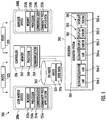
- FIG. 1 depicts a building information conveyance system 200 in an example embodiment.
- the building information conveyance system 200 includes an elevator system 203 installed at a building 202.
- the building 202 may be a building or a collection of buildings that may or may not be physically located near each other.
- the building 202 may include any number of floors. Persons entering the building 202 may enter at a lobby floor, or any other floor, and may go to a destination floor via one or more transportation devices, such as the elevator system 203.
- the elevator system 203 may be operably connected to one or more computing devices, such as a controller 206.
- the controller 206 may be configured to control dispatching operations for one or more elevator cars (e.g., elevator cars 204-1, 204-2..204-n) associated with the elevator system 203. It is understood that the elevator system 203 may utilize more than one controller 206, and that each controller may control a group of elevators cars 204-1 and 204-2. Although two elevator cars 204-1 and 204-2 are shown in FIG. 1 , it is understood that any number of elevators cars 204-n may be used in the elevator system 203.
- the elevator cars 204-1 and 204-2 may be located in the same hoistway or in different hoistways so as to allow coordination amongst elevator cars 204-1 and 204-2 in different elevator banks serving different floors. It is understood that other components of the elevator system 203 (e.g., drive, counterweight, safeties, etc.) are not depicted for ease of illustration. In general, the elevator cars (e.g., elevator cars 204-1, 204-2, ... 204-n) may each be referred to as an elevator car 204.
- the controller 206 may include a processor 260, memory 262 and communication module 264 as shown in FIG. 1 .
- the processor 260 can be any type or combination of computer processors, such as a microprocessor, microcontroller, digital signal processor, application specific integrated circuit, programmable logic device, and/or field programmable gate array.
- the memory 262 is an example of a non-transitory computer readable storage medium tangibly embodied in the controller 206 including executable instructions stored therein, for instance, as firmware.
- the communication module 264 may implement one or more communication protocols as described in further detail herein.
- the elevator system 203 includes one or more display screens 205 (e.g., 205-1, 205-2, ... 205-n). Although two display screens 205-1 and 205-2 are shown in FIG. 1 , it is understood that any number of display screens 205-n may be used. In general, the display screens (e.g., 205-1, 205-2, ... 205-n) may each be referred to as a display screen 205.
- the controller 206 may be coupled to each display screen 205 through a hardwired connection and/or connected wirelessly through a cloud computing network.
- Each display screen 205 is configured to display information.
- the display screen 205 may be a computer monitor, television screen, tablet, projector, hologram or any other display system known to one of skill in the art.
- Each display screen may be located proximate the elevator system 203. In an embodiment, the display screen 205 is located in an elevator car 204. In another embodiment, each elevator car 204 contains a display screen 205.
- the user mobile device 208a may include a device that is typically carried by a person, such as a phone, PDA, smart watch, tablet, laptop, etc.
- the user mobile device 208a may include a processor 250a, memory 252a and communication module 254a as shown in FIG. 1 .
- the processor 250a can be any type or combination of computer processors, such as a microprocessor, microcontroller, digital signal processor, application specific integrated circuit, programmable logic device, and/or field programmable gate array.
- the memory 252a is an example of a non-transitory computer readable storage medium tangibly embodied in the user mobile device 208a including executable instructions stored therein, for instance, as firmware.
- the communication module 254a may implement one or more communication protocols as described in further detail herein.
- the user mobile device 208a may belong to a resident of the building 202 or an employee who works in the building 202.
- the user mobile device 208a also includes a community post application 255a that a user may utilize to send posts 325 to a display 205 as described in further detail herein.
- the manager device 208b may be a computing device such as a desktop computer.
- the visitor device 208b may also be a mobile computing device that is typically carried by a person, such as, for example a phone, PDA, smart watch, tablet, laptop, etc.
- the manager device 208b may include a processor 250b, memory 252b and communication module 254b as shown in FIG. 1 .
- the processor 250b can be any type or combination of computer processors, such as a microprocessor, microcontroller, digital signal processor, application specific integrated circuit, programmable logic device, and/or field programmable gate array.
- the memory 252b is an example of a non-transitory computer readable storage medium tangibly embodied in the manager device 208b including executable instructions stored therein, for instance, as firmware.
- the communication module 254b may implement one or more communication protocols as described in further detail herein.
- the manager device 208b also includes a community post application 255b that a manager may utilize to send posts 325 to a display 205 and regulate the messages posted as described in further detail herein.
- the manager device 208b may belong to a manager of the building 202 and have superseding authority to the resident mobile device 208a in rejecting or allows posts 325.
- the user mobile device 208a and manager device 208b may both be referred to as a device 208 for ease of explanation.
- Each device 208 may have a unique identification code and/or login that identifies each device 208.
- the code may be a name, email, or some code linked to the device 208 or user account used for posting.
- the device 208 and the controller 206 communicate with one another.
- the device 208 and the controller 206 may communicate with one another when proximate to one another (e.g., within a threshold distance).
- the device 208 and the controller 206 may communicate over a wireless network, such as 802.11x (WiFi), short-range radio (Bluetooth), cellular, satellite, etc.
- WiFi 802.11x
- Bluetooth short-range radio
- the controller 206 may include, or be associated with (e.g., communicatively coupled to) a networked element, such as kiosk, beacon, hall call fixture, lantern, bridge, router, network node, door lock, elevator control panel, building intercom system, etc.
- the networked element may communicate with the device 208 using one or more communication protocols or standards.
- the networked element may communicate with the device 208 using near field communications (NFC).
- NFC near field communications
- the controller 206 may establish communication with a device 208 that is outside of the building 202. This connection may be established with various technologies including GPS, triangulation, or signal strength detection, by way of non-limiting example.
- the device 208 communicates with the controller 206 over multiple independent wired and/or wireless networks. Embodiments are intended to cover a wide variety of types of communication between the device 208 and controller 206, and embodiments are not limited to the examples provided in this disclosure. Communication between the device 208 and the controller 206 will allow the controller 206 to determine the location of the device 208 in relation to the elevator system 203 and/or the door system 205. Knowing the relative location of the device 208 will allow the controller 206 to determine what elevator car 204 the device 208 is currently located in and what to display on the display screen 205 in that elevator car 204.
- Posts 325 may be stored in a database 263.
- the database 263 may be operatively connected to the controller 206 or stored within the controller 206. In one embodiment, the database 263 may be part of a building computer system, stored offsite, remotely, or in the cloud.
- the database 263 may also store 326 user data 326 that may be specific to each user mobile device 208a.
- the user data 326 may include information including but not limited to the home location of the user, the age of the user, the gender of the user, hobbies of the user, work place of the user, and any interests of the user.
- FIG. 2 depicts a display screen 205 located in an elevator car 204 in an example embodiment.
- FIG. 2 shows a first user mobile device 208a-1, a second user mobile device 208a-2, and a third user mobile device 208a-2
- any number of user mobile devices 208a-n may be utilized for posting posts 325 and/or displaying posts 325.
- Each user mobile device 208a may be located inside the elevator car 204 and/or outside of the elevator car 204 at any time.
- a first user mobile device 208a-1 may be used to enter the post 325 to be displayed on the display screen 205.
- the display screen 205 is located in an elevator car 204. In an embodiment, the display screen 205 may be located in an elevator lobby or elsewhere in the building 202. In another embodiment, the display screen 205 may also be used to display advertisements 270.
- the advertisements 270 may be paid advertisements and/or general building posts from the building manager posted through the community post application 255b on the manager device 208b.
- the posts 325 from the first user device 208a-1 may be viewed on any other user mobile device 208a unless the post 325 is blocked by the manager device 208b.
- the controller 206 may detect the location of a user mobile device 208a in relation to a display screen 205 and adjust the posts 325 being displayed in response to the user mobile device 208a being proximate to the display screen 205.
- the display screen 208 will display posts 325 relevant to the third user mobile device 208a-3.
- the controller 206 determines which posts 325 to display in response to user data 326 stored in the database 263 (see FIG. 1 ).
- the display screen 208 may display posts 325 and/or advertisements 270 relevant to lobby stores.
- the display screen 208 may display posts 325 and/or advertisements 270 relevant to the spa.
- the controller 206 may also determine where the device 208 is heading (e.g. a destination of the mobile device 208) and display posts 325 regarding the destination. For example, while in the lobby, the controller 206 may determine that the device 208 is heading to the spa and then the display screen 208 in the lobby may display posts 325 and/or advertisements 270 relevant to the spa. In another example, while in the lobby, the controller 206 may determine that the device 208 is heading to the spa and then the display screen 208 in an elevator car may display posts 325 and/or advertisements 270 relevant to the spa as the device 208 heads to the spa.
- Embodiments generate a user interface on the device 208 through a community post application 255a, 255b.
- the community post application 255a may be used for user of the user mobile device 208a to enter posts 325. For example, a resident may report that they will be having a party and to let them know if it gets too loud.
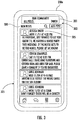
- FIGs. 3-4 depict an example user interface 300 on a user mobile device 208a.
- the community post application 255a may display posts 325 entered by various user mobile devices 208a.
- the source of the posts 325 may be identified by a user name 305.
- the posts 325 may be sorted and the newest post may be seen first.
- a user may be able to flag favorite users and have their posts appear first.
- a user may be able to block posts from certain users.
- the posts 325 may be sorted or filtered by topic tags (ex. social events, building maintenance discussions, etc) or post type (ex. pictures, advertisements, posts by people on the same floor).
- the "new post" section 302 includes a text input section 304 where the new post 325 may be entered.
- the post 325 may be manually typed into a text input section 304 by a user of the user mobile device 208a.
- the text input section 304 is not intended to be limiting as other data input methods may be used, such as, for example drop down menus to display multiple options for data entry.
- the post 325 may be entered via a verbal input from a user of the user mobile device 208a.
- the user may select an "Add Post" button 310 to transmit the post 302 to the controller 206.
- the controller 206 may then determine which display screen 205 to display the post 325 on.
- pictures may be included in posts 325. The user may be able to take a picture from the display screen 205 or select an existing picture file from their user mobile device 208-1.
- FIG. 5 shows a flow chart of method 500 of operating a building information conveyance system 200, in accordance with an embodiment of the disclosure.
- one or more posts 325 are received from a first user mobile device 208a-1.
- the posts may be sent from a social media platform including but not limited to Facebook, twitter, Instagram, LinkedIn, or any other social media platform known to one or skill in the art.
- the posts 325 may be entered via a verbal input on the first user mobile device 208a-1.
- the controller 206 determines at least one display screen 205 to display the one or more posts 325.
- the controller 206 may determine to post certain posts 325 to certain display screens 205. For instance, if the post 325 is in relation to one side of a building 202 the controller 206 will display the post 325 on display screen 205 on that one side of the building 202.
- the one or more posts 205 are displayed on a display screen 205.
- the display screen 205 is located in an elevator car 204.
- the display screen 205 is interactive and a user may scroll through the posts 325 displayed.
- the user may user their user mobile device 208a to scroll through the posts 325
- the display screen 205 may be a touch screen, or the display screen 205 may have a manual scroll button.
- the controller 206 may detect when a third user mobile device 208a-3 is located in the elevator car 204 and filter the one or more posts 325 on the display screen 205 located in the elevator car 204 in response to user data 326 of the third user mobile device 208a-3 located in the elevator car 204.
- the user data 326 includes a home location of the third user mobile device 208a-3.
- the home location may be the floor in the building 202 on which the user of the third user mobile device 208a-3 lives.
- the posts 325 may also be sorted.
- the posts 325 may be sorted in order of the posts 325 are received.
- the posts 325 may be sorted in response to the user data 326. For example, based on the user data 326 some posts 325 may be more relevant to a user than other posts 325 and the relevancy may drive the sort.
- the one or more posts 325 are displayed on a second user mobile device 208a-2.
- the posts 325 may also be filtered and/or sorted on the second user device 208a-5, as described above in relation to the display screen 205.
- the method 500 may also include transmitting the posts 325 to a manager device 208b.
- the manager using the manager device 208b may then review the posts 325 and decide whether a particular post 325 should be removed from being displayed on a display screen 205 and/or user mobile device 208a.
- the manager may use the manager device 208b to send a remove request to the controller 206 in order to remove a post 325.
- the manager may be required to approve all posts 325 prior to the post 325 being displayed.
- the posts 325 may be limited to a maximum number of posts 325 from a user and/or a frequency of posts 325 form a user.
- the manager may also use the manager device 208b to send a block request to the controller to block a particular user of a user mobile device 208a from posting, thus the posts 325 from that user will no longer be displayed any display screen 205 and/or any user mobile device 208a.
- An alert may be transmitted to a user mobile device 208a when they have been blocked and/or a post 325 from the user mobile device 208a has been removed. The alert will indicate the block request or the remove request.
- embodiments can be in the form of processor-implemented processes and devices for practicing those processes, such as a processor.
- Embodiments can also be in the form of computer program code containing instructions embodied in tangible media, such as network cloud storage, SD cards, flash drives, floppy diskettes, CD ROMs, hard drives, or any other computer-readable storage medium, wherein, when the computer program code is loaded into and executed by a computer, the computer becomes a device for practicing the embodiments.
- Embodiments can also be in the form of computer program code, for example, whether stored in a storage medium, loaded into and/or executed by a computer, or transmitted over some transmission medium, loaded into and/or executed by a computer, or transmitted over some transmission medium, such as over electrical wiring or cabling, through fiber optics, or via electromagnetic radiation, wherein, when the computer program code is loaded into an executed by a computer, the computer becomes an device for practicing the embodiments.
- the computer program code segments configure the microprocessor to create specific logic circuits.
Landscapes
- Engineering & Computer Science (AREA)
- Business, Economics & Management (AREA)
- Strategic Management (AREA)
- Theoretical Computer Science (AREA)
- Finance (AREA)
- Development Economics (AREA)
- Accounting & Taxation (AREA)
- General Physics & Mathematics (AREA)
- Physics & Mathematics (AREA)
- Entrepreneurship & Innovation (AREA)
- General Business, Economics & Management (AREA)
- Marketing (AREA)
- Economics (AREA)
- Game Theory and Decision Science (AREA)
- Signal Processing (AREA)
- Computer Networks & Wireless Communication (AREA)
- General Engineering & Computer Science (AREA)
- Operations Research (AREA)
- Tourism & Hospitality (AREA)
- Human Resources & Organizations (AREA)
- Human Computer Interaction (AREA)
- Quality & Reliability (AREA)
- Computing Systems (AREA)
- Indicating And Signalling Devices For Elevators (AREA)
- Telephonic Communication Services (AREA)
Abstract
Description
- The subject matter disclosed herein generally relates to the field of information conveyance, and more particularly to a system that facilitates information conveyance in a building.
- Corkboard community message boards contain information that is often cluttered, disorganized, and outdated, so much so that the messages on community message boards are often ignored.
- According to one embodiment, a method of operating a building information conveyance system is provided. The method comprising: receiving one or more posts from a first user mobile device; determining at least one display screen to display the one or more posts; and displaying the one or more posts on the display screen.
- In addition to one or more of the features described above, or as an alternative, further embodiments of the method may include where the display screen is located in an elevator car.
- In addition to one or more of the features described above, or as an alternative, further embodiments of the method may include displaying the one or more posts on a second user mobile device.
- In addition to one or more of the features described above, or as an alternative, further embodiments of the method may include: detecting a third user mobile device located in the elevator car; and filtering the one or more posts on the display screen located in the elevator car in response to user data of the third user mobile device.
- In addition to one or more of the features described above, or as an alternative, further embodiments of the method may include where the user data includes a home location of the third user mobile device.
- In addition to one or more of the features described above, or as an alternative, further embodiments of the method may include filtering the one or more posts on the second user mobile device in response to user data of the second user mobile device.
- In addition to one or more of the features described above, or as an alternative, further embodiments of the method may include where the user data includes a home location of the second user mobile device.
- In addition to one or more of the features described above, or as an alternative, further embodiments of the method may include sorting the one or more posts in the order that the one or more posts are received.
- In addition to one or more of the features described above, or as an alternative, further embodiments of the method may include: detecting a third user mobile device located in the elevator car; and sorting the one or more posts on the display screen located in the elevator car in response to user data of the third user mobile device.
- In addition to one or more of the features described above, or as an alternative, further embodiments of the method may include: transmitting the one or more posts to a manager device; receiving a remove request for the one or more posts from the manager device; and removing the one or more posts from the display screen and all user mobile devices.
- In addition to one or more of the features described above, or as an alternative, further embodiments of the method may include: transmitting the one or more posts to a manager device; receiving a block request for the first user mobile device from the manager device; and blocking posts received from the first user mobile device after the block request is received, wherein the blocked posts are not displayed on any user mobile device or any display screen.
- In addition to one or more of the features described above, or as an alternative, further embodiments of the method may include transmitting an alert to the first user mobile device indicating the block request.
- In addition to one or more of the features described above, or as an alternative, further embodiments of the method may include where the one or more posts are sent from a social media platform on the user mobile device.
- In addition to one or more of the features described above, or as an alternative, further embodiments of the method may include generating on a user interface an add post screen on the user mobile device, the add post screen being configured to allow entry of the post.
- In addition to one or more of the features described above, or as an alternative, further embodiments of the method may include where the post may be entered via a verbal input from a user of the user mobile device.
- In addition to one or more of the features described above, or as an alternative, further embodiments of the method may include where the display screen in the elevator car is interactive.
- In addition to one or more of the features described above, or as an alternative, further embodiments of the method may include: detecting a third user mobile device located proximate the display screen; and filtering the one or more posts on the display screen in response to user data of the third user mobile device.
- In addition to one or more of the features described above, or as an alternative, further embodiments of the method may include where the user data includes a destination of the third user device.
- According to another embodiment, a building information conveyance system is provided. The building information conveyance system comprising: a processor; a memory comprising computer-executable instructions that, when executed by the processor, cause the processor to perform operations, the operations comprising: receiving one or more posts from a first user mobile device; determining at least one display screen to display the one or more posts; and displaying the one or more posts on the display screen.
- According to another embodiment, a computer program product tangibly embodied on a computer readable medium is provided. The computer program product including instructions that, when executed by a processor, cause the processor to perform operations comprising: receiving one or more posts from a first user mobile device; determining at least one display screen to display the one or more posts; and displaying the one or more posts on the display screen.
- Technical effects of embodiments of the present disclosure include the ability for a display screen to convey relevant information to users of an elevator system.
- The foregoing features and elements may be combined in various combinations without exclusivity, unless expressly indicated otherwise. These features and elements as well as the operation thereof will become more apparent in light of the following description and the accompanying drawings. It should be understood, however, that the following description and drawings are intended to be illustrative and explanatory in nature and non-limiting.
- The following descriptions should not be considered limiting in any way. With reference to the accompanying drawings, like elements are numbered alike:
-
FIG. 1 illustrates a schematic view of a building information conveyance system, in accordance with an embodiment of the disclosure; -
FIG. 2 depicts a user interface on a display screen in an elevator car, in accordance with an embodiment of the disclosure; -
FIG. 3 depicts a user interface on a mobile device, in accordance with an embodiment of the disclosure; -
FIG. 4 depicts a user interface on a mobile device, in accordance with an embodiment of the disclosure; and -
FIG. 5 is a flow diagram illustrating a method of managing maintenance of an elevator system, according to an embodiment of the present disclosure. - A detailed description of one or more embodiments of the disclosed apparatus and method are presented herein by way of exemplification and not limitation with reference to the Figures.
-
FIG. 1 depicts a buildinginformation conveyance system 200 in an example embodiment. The buildinginformation conveyance system 200 includes anelevator system 203 installed at abuilding 202. In some embodiments, thebuilding 202 may be a building or a collection of buildings that may or may not be physically located near each other. Thebuilding 202 may include any number of floors. Persons entering thebuilding 202 may enter at a lobby floor, or any other floor, and may go to a destination floor via one or more transportation devices, such as theelevator system 203. - The
elevator system 203 may be operably connected to one or more computing devices, such as acontroller 206. Thecontroller 206 may be configured to control dispatching operations for one or more elevator cars (e.g., elevator cars 204-1, 204-2..204-n) associated with theelevator system 203. It is understood that theelevator system 203 may utilize more than onecontroller 206, and that each controller may control a group of elevators cars 204-1 and 204-2. Although two elevator cars 204-1 and 204-2 are shown inFIG. 1 , it is understood that any number of elevators cars 204-n may be used in theelevator system 203. The elevator cars 204-1 and 204-2 may be located in the same hoistway or in different hoistways so as to allow coordination amongst elevator cars 204-1 and 204-2 in different elevator banks serving different floors. It is understood that other components of the elevator system 203 (e.g., drive, counterweight, safeties, etc.) are not depicted for ease of illustration. In general, the elevator cars (e.g., elevator cars 204-1, 204-2, ... 204-n) may each be referred to as anelevator car 204. - The
controller 206 may include aprocessor 260,memory 262 andcommunication module 264 as shown inFIG. 1 . Theprocessor 260 can be any type or combination of computer processors, such as a microprocessor, microcontroller, digital signal processor, application specific integrated circuit, programmable logic device, and/or field programmable gate array. Thememory 262 is an example of a non-transitory computer readable storage medium tangibly embodied in thecontroller 206 including executable instructions stored therein, for instance, as firmware. Thecommunication module 264 may implement one or more communication protocols as described in further detail herein. - The
elevator system 203 includes one or more display screens 205 (e.g., 205-1, 205-2, ... 205-n). Although two display screens 205-1 and 205-2 are shown inFIG. 1 , it is understood that any number of display screens 205-n may be used. In general, the display screens (e.g., 205-1, 205-2, ... 205-n) may each be referred to as adisplay screen 205. Thecontroller 206 may be coupled to eachdisplay screen 205 through a hardwired connection and/or connected wirelessly through a cloud computing network. Eachdisplay screen 205 is configured to display information. Thedisplay screen 205 may be a computer monitor, television screen, tablet, projector, hologram or any other display system known to one of skill in the art. Each display screen may be located proximate theelevator system 203. In an embodiment, thedisplay screen 205 is located in anelevator car 204. In another embodiment, eachelevator car 204 contains adisplay screen 205. - Also shown in
FIG. 1 is a usermobile device 208a. The usermobile device 208a may include a device that is typically carried by a person, such as a phone, PDA, smart watch, tablet, laptop, etc. The usermobile device 208a may include aprocessor 250a,memory 252a andcommunication module 254a as shown inFIG. 1 . Theprocessor 250a can be any type or combination of computer processors, such as a microprocessor, microcontroller, digital signal processor, application specific integrated circuit, programmable logic device, and/or field programmable gate array. Thememory 252a is an example of a non-transitory computer readable storage medium tangibly embodied in the usermobile device 208a including executable instructions stored therein, for instance, as firmware. Thecommunication module 254a may implement one or more communication protocols as described in further detail herein. In a non-limiting example, the usermobile device 208a may belong to a resident of thebuilding 202 or an employee who works in thebuilding 202. The usermobile device 208a also includes a community post application 255a that a user may utilize to sendposts 325 to adisplay 205 as described in further detail herein. - Also shown in
FIG. 1 is amanager device 208b. Themanager device 208b may be a computing device such as a desktop computer. Thevisitor device 208b may also be a mobile computing device that is typically carried by a person, such as, for example a phone, PDA, smart watch, tablet, laptop, etc. Themanager device 208b may include aprocessor 250b,memory 252b andcommunication module 254b as shown inFIG. 1 . Theprocessor 250b can be any type or combination of computer processors, such as a microprocessor, microcontroller, digital signal processor, application specific integrated circuit, programmable logic device, and/or field programmable gate array. Thememory 252b is an example of a non-transitory computer readable storage medium tangibly embodied in themanager device 208b including executable instructions stored therein, for instance, as firmware. Thecommunication module 254b may implement one or more communication protocols as described in further detail herein. Themanager device 208b also includes acommunity post application 255b that a manager may utilize to sendposts 325 to adisplay 205 and regulate the messages posted as described in further detail herein. Themanager device 208b may belong to a manager of thebuilding 202 and have superseding authority to the residentmobile device 208a in rejecting or allowsposts 325. - The user
mobile device 208a andmanager device 208b may both be referred to as a device 208 for ease of explanation. Each device 208 may have a unique identification code and/or login that identifies each device 208. The code may be a name, email, or some code linked to the device 208 or user account used for posting. The device 208 and thecontroller 206 communicate with one another. For example, the device 208 and thecontroller 206 may communicate with one another when proximate to one another (e.g., within a threshold distance). The device 208 and thecontroller 206 may communicate over a wireless network, such as 802.11x (WiFi), short-range radio (Bluetooth), cellular, satellite, etc. In some embodiments, thecontroller 206 may include, or be associated with (e.g., communicatively coupled to) a networked element, such as kiosk, beacon, hall call fixture, lantern, bridge, router, network node, door lock, elevator control panel, building intercom system, etc. The networked element may communicate with the device 208 using one or more communication protocols or standards. For example, the networked element may communicate with the device 208 using near field communications (NFC). In other embodiments, thecontroller 206 may establish communication with a device 208 that is outside of thebuilding 202. This connection may be established with various technologies including GPS, triangulation, or signal strength detection, by way of non-limiting example. In example embodiments, the device 208 communicates with thecontroller 206 over multiple independent wired and/or wireless networks. Embodiments are intended to cover a wide variety of types of communication between the device 208 andcontroller 206, and embodiments are not limited to the examples provided in this disclosure. Communication between the device 208 and thecontroller 206 will allow thecontroller 206 to determine the location of the device 208 in relation to theelevator system 203 and/or thedoor system 205. Knowing the relative location of the device 208 will allow thecontroller 206 to determine whatelevator car 204 the device 208 is currently located in and what to display on thedisplay screen 205 in thatelevator car 204. -
Posts 325 may be stored in adatabase 263. Thedatabase 263 may be operatively connected to thecontroller 206 or stored within thecontroller 206. In one embodiment, thedatabase 263 may be part of a building computer system, stored offsite, remotely, or in the cloud. Thedatabase 263 may also store 326user data 326 that may be specific to each usermobile device 208a. Theuser data 326 may include information including but not limited to the home location of the user, the age of the user, the gender of the user, hobbies of the user, work place of the user, and any interests of the user. -
FIG. 2 depicts adisplay screen 205 located in anelevator car 204 in an example embodiment. Referring now toFIG. 2 with continued reference toFIG. 1 . It is understood that whileFIG. 2 shows a first usermobile device 208a-1, a second usermobile device 208a-2, and a third usermobile device 208a-2, any number of usermobile devices 208a-n may be utilized for postingposts 325 and/or displayingposts 325. Each usermobile device 208a may be located inside theelevator car 204 and/or outside of theelevator car 204 at any time. In the example illustrated inFIG. 2 , a first usermobile device 208a-1 may be used to enter thepost 325 to be displayed on thedisplay screen 205. In an embodiment, thedisplay screen 205 is located in anelevator car 204. In an embodiment, thedisplay screen 205 may be located in an elevator lobby or elsewhere in thebuilding 202. In another embodiment, thedisplay screen 205 may also be used to displayadvertisements 270. Theadvertisements 270 may be paid advertisements and/or general building posts from the building manager posted through thecommunity post application 255b on themanager device 208b. Theposts 325 from thefirst user device 208a-1 may be viewed on any other usermobile device 208a unless thepost 325 is blocked by themanager device 208b. In embodiment, thecontroller 206 may detect the location of a usermobile device 208a in relation to adisplay screen 205 and adjust theposts 325 being displayed in response to the usermobile device 208a being proximate to thedisplay screen 205. In one example, if the third usermobile device 208a-3 is located in theelevator car 204, the display screen 208 will displayposts 325 relevant to the third usermobile device 208a-3. Thecontroller 206 determines which posts 325 to display in response touser data 326 stored in the database 263 (seeFIG. 1 ). In another example, if the display screen 208 is located in a lobby then the display screen 208 may displayposts 325 and/oradvertisements 270 relevant to lobby stores. In another example, if the display screen 208 is located on a spa floor then the display screen 208 may displayposts 325 and/oradvertisements 270 relevant to the spa. Alternatively, in another embodiment, thecontroller 206 may also determine where the device 208 is heading (e.g. a destination of the mobile device 208) anddisplay posts 325 regarding the destination. For example, while in the lobby, thecontroller 206 may determine that the device 208 is heading to the spa and then the display screen 208 in the lobby may displayposts 325 and/oradvertisements 270 relevant to the spa. In another example, while in the lobby, thecontroller 206 may determine that the device 208 is heading to the spa and then the display screen 208 in an elevator car may displayposts 325 and/oradvertisements 270 relevant to the spa as the device 208 heads to the spa. - Embodiments generate a user interface on the device 208 through a
community post application 255a, 255b. The community post application 255a may be used for user of the usermobile device 208a to enterposts 325. For example, a resident may report that they will be having a party and to let them know if it gets too loud. -
FIGs. 3-4 depict anexample user interface 300 on a usermobile device 208a. Referring toFIGs. 3-4 with continued reference toFIGs. 1 and2 , when the usermobile device 208a launches the community post application 255a, an "our community"screen 301 may be presented as shown inFIG. 3 . The community post application 255a may displayposts 325 entered by various usermobile devices 208a. The source of theposts 325 may be identified by auser name 305. As seen inFIG. 3 , theposts 325 may be sorted and the newest post may be seen first. In one embodiment, a user may be able to flag favorite users and have their posts appear first. In one embodiment, a user may be able to block posts from certain users. In another embodiment, theposts 325 may be sorted or filtered by topic tags (ex. social events, building maintenance discussions, etc) or post type (ex. pictures, advertisements, posts by people on the same floor). - In order to enter a
post 325, a user can select the "add a post" 303 button, which will prompt theuser interface 300 to generate a "new post"section 302 within the "our community"screen 301, as shown inFIG. 4 . As seen inFIG. 4 , the "new post"section 302 includes atext input section 304 where thenew post 325 may be entered. In an embodiment, thepost 325 may be manually typed into atext input section 304 by a user of the usermobile device 208a. Thetext input section 304 is not intended to be limiting as other data input methods may be used, such as, for example drop down menus to display multiple options for data entry. In another embodiment, thepost 325 may be entered via a verbal input from a user of the usermobile device 208a. Once a user of the usermobile device 208a has completed entry of theirpost 325 in thetext input section 304, the user may select an "Add Post"button 310 to transmit thepost 302 to thecontroller 206. Thecontroller 206 may then determine whichdisplay screen 205 to display thepost 325 on. In embodiment, pictures may be included inposts 325. The user may be able to take a picture from thedisplay screen 205 or select an existing picture file from their user mobile device 208-1. - Referring now to
FIG. 5 , with continued reference toFIGs. 1-4 .FIG. 5 shows a flow chart ofmethod 500 of operating a buildinginformation conveyance system 200, in accordance with an embodiment of the disclosure. Atblock 504, one ormore posts 325 are received from a first usermobile device 208a-1. The posts may be sent from a social media platform including but not limited to Facebook, twitter, Instagram, LinkedIn, or any other social media platform known to one or skill in the art. Theposts 325 may be entered via a verbal input on the first usermobile device 208a-1. Atblock 506, thecontroller 206 determines at least onedisplay screen 205 to display the one ormore posts 325. Thecontroller 206 may determine to postcertain posts 325 to certain display screens 205. For instance, if thepost 325 is in relation to one side of abuilding 202 thecontroller 206 will display thepost 325 ondisplay screen 205 on that one side of thebuilding 202. - At
block 508, the one ormore posts 205 are displayed on adisplay screen 205. In an embodiment, thedisplay screen 205 is located in anelevator car 204. In an embodiment, thedisplay screen 205 is interactive and a user may scroll through theposts 325 displayed. For example, the user may user their usermobile device 208a to scroll through theposts 325, thedisplay screen 205 may be a touch screen, or thedisplay screen 205 may have a manual scroll button. In an embodiment, thecontroller 206 may detect when a third usermobile device 208a-3 is located in theelevator car 204 and filter the one ormore posts 325 on thedisplay screen 205 located in theelevator car 204 in response touser data 326 of the third usermobile device 208a-3 located in theelevator car 204. In an embodiment, theuser data 326 includes a home location of the third usermobile device 208a-3. For example, the home location may be the floor in thebuilding 202 on which the user of the third usermobile device 208a-3 lives. Advantageously, by filtering theposts 325 based on theuser data 326, the user may only view information relevant to that user. Additionally, theposts 325 may also be sorted. In one embodiment, theposts 325 may be sorted in order of theposts 325 are received. In another embodiment, theposts 325 may be sorted in response to theuser data 326. For example, based on theuser data 326 someposts 325 may be more relevant to a user thanother posts 325 and the relevancy may drive the sort. Atblock 510, the one ormore posts 325 are displayed on a second usermobile device 208a-2. Theposts 325 may also be filtered and/or sorted on thesecond user device 208a-5, as described above in relation to thedisplay screen 205. - Further, the
method 500 may also include transmitting theposts 325 to amanager device 208b. The manager using themanager device 208b may then review theposts 325 and decide whether aparticular post 325 should be removed from being displayed on adisplay screen 205 and/or usermobile device 208a. The manager may use themanager device 208b to send a remove request to thecontroller 206 in order to remove apost 325. In an embodiment, the manager may be required to approve allposts 325 prior to thepost 325 being displayed. Alternatively, theposts 325 may be limited to a maximum number ofposts 325 from a user and/or a frequency ofposts 325 form a user. The manager may also use themanager device 208b to send a block request to the controller to block a particular user of a usermobile device 208a from posting, thus theposts 325 from that user will no longer be displayed anydisplay screen 205 and/or any usermobile device 208a. An alert may be transmitted to a usermobile device 208a when they have been blocked and/or apost 325 from the usermobile device 208a has been removed. The alert will indicate the block request or the remove request. - While the above description has described the flow process of
FIG. 5 in a particular order, it should be appreciated that unless otherwise specifically required in the attached claims that the ordering of the steps may be varied. - As described above, embodiments can be in the form of processor-implemented processes and devices for practicing those processes, such as a processor. Embodiments can also be in the form of computer program code containing instructions embodied in tangible media, such as network cloud storage, SD cards, flash drives, floppy diskettes, CD ROMs, hard drives, or any other computer-readable storage medium, wherein, when the computer program code is loaded into and executed by a computer, the computer becomes a device for practicing the embodiments. Embodiments can also be in the form of computer program code, for example, whether stored in a storage medium, loaded into and/or executed by a computer, or transmitted over some transmission medium, loaded into and/or executed by a computer, or transmitted over some transmission medium, such as over electrical wiring or cabling, through fiber optics, or via electromagnetic radiation, wherein, when the computer program code is loaded into an executed by a computer, the computer becomes an device for practicing the embodiments. When implemented on a general-purpose microprocessor, the computer program code segments configure the microprocessor to create specific logic circuits.
- The term "about" is intended to include the degree of error associated with measurement of the particular quantity based upon the equipment available at the time of filing the application. For example, "about" can include a range of ± 8% or 5%, or 2% of a given value.
- The terminology used herein is for the purpose of describing particular embodiments only and is not intended to be limiting of the present disclosure. As used herein, the singular forms "a", "an" and "the" are intended to include the plural forms as well, unless the context clearly indicates otherwise. It will be further understood that the terms "comprises" and/or "comprising," when used in this specification, specify the presence of stated features, integers, steps, operations, elements, and/or components, but do not preclude the presence or addition of one or more other features, integers, steps, operations, element components, and/or groups thereof.
- While the present disclosure has been described with reference to an exemplary embodiment or embodiments, it will be understood by those skilled in the art that various changes may be made and equivalents may be substituted for elements thereof without departing from the scope of the present disclosure. In addition, many modifications may be made to adapt a particular situation or material to the teachings of the present disclosure without departing from the essential scope thereof. Therefore, it is intended that the present disclosure not be limited to the particular embodiment disclosed as the best mode contemplated for carrying out this present disclosure, but that the present disclosure will include all embodiments falling within the scope of the claims.
Claims (15)
- A method of operating a building information conveyance system, the method comprising:receiving one or more posts from a first user mobile device;determining at least one display screen to display the one or more posts; anddisplaying the one or more posts on the display screen.
- The method of claim 1, wherein:
the display screen is located in an elevator car. - The method of claim 1 or 2, further comprising:
displaying the one or more posts on a second user mobile device. - The method of claim 2 or 3, further comprising:detecting a third user mobile device located in the elevator car; andfiltering the one or more posts on the display screen located in the elevator car in response to user data of the third user mobile device,wherein, optionally:
the user data includes a home location of the third user mobile device. - The method of claim 3 or 4, further comprising:filtering the one or more posts on the second user mobile device in response to user data of the second user mobile device,wherein, optionally:
the user data includes a home location of the second user mobile device. - The method of any preceding claim, further comprising:
sorting the one or more posts in the order that the one or more posts are received. - The method of any of claims 2 to 6, further comprising:detecting a third user mobile device located in the elevator car; andsorting the one or more posts on the display screen located in the elevator car in response to user data of the third user mobile device.
- The method of any preceding claim, further comprising:transmitting the one or more posts to a manager device;receiving a remove request for the one or more posts from the manager device; andremoving the one or more posts from the display screen and all user mobile devices.
- The method of any preceding claim, further comprising:transmitting the one or more posts to a manager device;receiving a block request for the first user mobile device from the manager device; andblocking posts received from the first user mobile device after the block request is received, wherein the blocked posts are not displayed on any user mobile device or any display screen, optionally further comprising:
transmitting an alert to the first user mobile device indicating the block request. - The method of any preceding claim, wherein:the one or more posts are sent from a social media platform on the user mobile device.
- The method of any preceding claim, further comprising:generating on a user interface an add post screen on the user mobile device, the add post screen being configured to allow entry of the post,wherein, optionally:
the post may be entered via a verbal input from a user of the user mobile device. - The method of any preceding claim, wherein:
the display screen in the elevator car is interactive. - The method of any of claims 2 to 12, further comprising:detecting a third user mobile device located proximate the display screen; andfiltering the one or more posts on the display screen in response to user data of the third user mobile device,wherein, optionally:
the user data includes a destination of the third user device. - A building information conveyance system comprising:a processor;a memory comprising computer-executable instructions that, when executed by the processor, cause the processor to perform operations, the operations comprising:receiving one or more posts from a first user mobile device;determining at least one display screen to display the one or more posts; anddisplaying the one or more posts on the display screen.
- A computer program product tangibly embodied on a computer readable medium, the computer program product including instructions that, when executed by a processor, cause the processor to perform operations comprising:receiving one or more posts from a first user mobile device;determining at least one display screen to display the one or more posts; anddisplaying the one or more posts on the display screen.
Applications Claiming Priority (1)
| Application Number | Priority Date | Filing Date | Title |
|---|---|---|---|
| US15/476,599 US10412027B2 (en) | 2017-03-31 | 2017-03-31 | System for building community posting |
Publications (1)
| Publication Number | Publication Date |
|---|---|
| EP3382633A1 true EP3382633A1 (en) | 2018-10-03 |
Family
ID=61837661
Family Applications (1)
| Application Number | Title | Priority Date | Filing Date |
|---|---|---|---|
| EP18164901.3A Withdrawn EP3382633A1 (en) | 2017-03-31 | 2018-03-29 | System for building community posting |
Country Status (4)
| Country | Link |
|---|---|
| US (1) | US10412027B2 (en) |
| EP (1) | EP3382633A1 (en) |
| KR (1) | KR20180111652A (en) |
| CN (1) | CN108694224B (en) |
Families Citing this family (13)
| Publication number | Priority date | Publication date | Assignee | Title |
|---|---|---|---|---|
| CN107176508A (en) * | 2016-03-11 | 2017-09-19 | 奥的斯电梯公司 | Elevator interactive terminal and elevator interactive system |
| JP6497404B2 (en) * | 2017-03-23 | 2019-04-10 | カシオ計算機株式会社 | Electronic musical instrument, method for controlling the electronic musical instrument, and program for the electronic musical instrument |
| US10544007B2 (en) * | 2017-03-23 | 2020-01-28 | International Business Machines Corporation | Risk-aware management of elevator operations |
| US10472207B2 (en) * | 2017-03-31 | 2019-11-12 | Otis Elevator Company | Passenger-initiated dynamic elevator service request |
| EP3406554B1 (en) * | 2017-05-23 | 2021-04-21 | Otis Elevator Company | Interactive touch-based car operating panel systems for elevator cars |
| US11472666B2 (en) * | 2019-04-05 | 2022-10-18 | Otis Elevator Company | Elevator maintenance app matching mechanics position with faults detected |
| KR102113290B1 (en) * | 2019-09-30 | 2020-05-20 | 윤자영 | System and method for elavator full duplex information communication |
| US12122639B2 (en) | 2019-10-03 | 2024-10-22 | Otis Elevator Company | Mobile interface, communication, and control system to facilitate operation of elevator cars with media options |
| JP7137716B2 (en) * | 2019-11-25 | 2022-09-14 | ジャパンエレベーターサービスホールディングス株式会社 | Elevator advertising system |
| JP7447210B1 (en) | 2022-09-15 | 2024-03-11 | 東芝エレベータ株式会社 | elevator information system |
| CN119968332A (en) * | 2022-09-28 | 2025-05-09 | 因温特奥股份公司 | Method for sending a user-specific message from a user device to an elevator installation |
| WO2024079380A1 (en) | 2022-10-12 | 2024-04-18 | Kone Corporation | Elevator related communication service |
| JP7500837B1 (en) | 2023-07-05 | 2024-06-17 | 東芝エレベータ株式会社 | Elevator System |
Citations (5)
| Publication number | Priority date | Publication date | Assignee | Title |
|---|---|---|---|---|
| US6288688B1 (en) * | 1998-06-25 | 2001-09-11 | Elevating Communications, Inc. | System for distribution and display of advertisements within elevator cars |
| US20020013144A1 (en) * | 2000-05-20 | 2002-01-31 | Waters John Deryk | Targeted information display |
| US20020129995A1 (en) * | 2001-03-14 | 2002-09-19 | Paul Friedli | Method of communicating information for elevator users |
| US20030177097A1 (en) * | 2002-03-01 | 2003-09-18 | Paul Friedli | Procedures, system and computer program product for the presentation of multimedia contents in elevator installations |
| US20130054714A1 (en) * | 2011-08-22 | 2013-02-28 | Salesforce.Com, Inc. | Computer Implemented Methods and Apparatus for Sharing Data of an Information Feed of an Online Social Network |
Family Cites Families (42)
| Publication number | Priority date | Publication date | Assignee | Title |
|---|---|---|---|---|
| US5955710A (en) | 1998-01-20 | 1999-09-21 | Captivate Network, Inc. | Information distribution system for use in an elevator |
| US6349797B1 (en) * | 1999-12-21 | 2002-02-26 | Captivate Network, Inc. | Information distribution system for use in an elevator |
| US6341668B1 (en) | 2000-04-03 | 2002-01-29 | Televator One, Llc | Interactive elevator communication system |
| US7797374B2 (en) | 2001-04-17 | 2010-09-14 | Cbs Interactive Inc. | System and method for providing digital messaging services |
| US6968362B2 (en) | 2001-12-28 | 2005-11-22 | Bellsouth Intellectual Property Corp. | Systems and methods for remote access to a display-based bulletin board in a shared user environment |
| CN1464382A (en) | 2002-06-10 | 2003-12-31 | 王志圣 | Residential building elevator message system |
| US7151923B2 (en) * | 2003-06-30 | 2006-12-19 | Lucent Technologies Inc. | Systems for providing message waiting notification updates in a cellular communication network |
| US20070040891A1 (en) | 2005-08-17 | 2007-02-22 | Jacob Calloway | Community message board |
| US9100454B2 (en) | 2006-04-07 | 2015-08-04 | Groupon, Inc. | Method and system for enabling the creation and maintenance of proximity-related user groups |
| US8216056B2 (en) * | 2007-02-13 | 2012-07-10 | Cfph, Llc | Card picks for progressive prize |
| US20080255870A1 (en) | 2007-04-13 | 2008-10-16 | Jon Butler | Systems and Methods for Grouping Kiosk Users and Non-Users into a Community |
| US9177283B2 (en) | 2007-06-29 | 2015-11-03 | Verizon Patent And Licensing Inc. | System and method for providing a community portal for chat-based support services |
| WO2009108703A1 (en) | 2008-02-25 | 2009-09-03 | Locamoda, Inc. | Associating a user's activity in relation to a physical location with a virtual community |
| US20100299899A1 (en) | 2009-05-29 | 2010-12-02 | Johnson Jr James H | Method of converting existing static sign to a digital sign |
| US20100318921A1 (en) | 2009-06-16 | 2010-12-16 | Marc Trachtenberg | Digital easel collaboration system and method |
| US20110173549A1 (en) | 2010-05-24 | 2011-07-14 | Hipskind Kelly T | Interactive kiosk system and method |
| TWI528305B (en) | 2011-06-24 | 2016-04-01 | 啟碁科技股份有限公司 | Digital signage system |
| CN103648946B (en) | 2011-07-15 | 2015-06-03 | 奥的斯电梯公司 | Customized elevator passenger interface |
| KR20130012235A (en) | 2011-07-18 | 2013-02-01 | 삼성전자주식회사 | Apparatus and method for providing community service in portable terminal |
| US8910309B2 (en) | 2011-12-05 | 2014-12-09 | Microsoft Corporation | Controlling public displays with private devices |
| US8930456B2 (en) * | 2012-03-13 | 2015-01-06 | Google Inc. | Method and system of suggesting contacts through the display of public posts within a social networking service |
| US20130290855A1 (en) | 2012-04-29 | 2013-10-31 | Britt C. Ashcraft | Virtual shared office bulletin board |
| US9479548B2 (en) | 2012-05-23 | 2016-10-25 | Haworth, Inc. | Collaboration system with whiteboard access to global collaboration data |
| US9479549B2 (en) | 2012-05-23 | 2016-10-25 | Haworth, Inc. | Collaboration system with whiteboard with federated display |
| CN104321266B (en) * | 2012-06-22 | 2017-05-03 | 奥的斯电梯公司 | System and method for controlling elevator system access |
| US20130346867A1 (en) * | 2012-06-25 | 2013-12-26 | United Video Properties, Inc. | Systems and methods for automatically generating a media asset segment based on verbal input |
| US20140040054A1 (en) | 2012-08-01 | 2014-02-06 | Community Technology Solutions LLC | Housing services kiosk |
| US20140173461A1 (en) | 2012-09-21 | 2014-06-19 | Satyajeet Arvind Shahade | Electronic Community Board Creation And Management System |
| US9571443B2 (en) | 2012-10-12 | 2017-02-14 | International Business Machines Corporation | Mobile device message enabled on-line community bulletin board |
| CA2914709C (en) * | 2013-07-10 | 2024-08-27 | Vertical City Inc. | Systems and methods for providing information to an audience in a defined space |
| US9704137B2 (en) | 2013-09-13 | 2017-07-11 | Box, Inc. | Simultaneous editing/accessing of content by collaborator invitation through a web-based or mobile application to a cloud-based collaboration platform |
| EP2922008A1 (en) | 2014-03-17 | 2015-09-23 | Kone Corporation | Public display arrangement |
| US20160028781A1 (en) | 2014-07-22 | 2016-01-28 | International Business Machines Corporation | Surface computing based social interaction |
| US10481763B2 (en) | 2014-09-17 | 2019-11-19 | Lett.rs LLC. | Mobile stamp creation and management for digital communications |
| WO2016042200A1 (en) * | 2014-09-19 | 2016-03-24 | Kone Corporation | Display language arrangement |
| US20160110899A1 (en) * | 2014-10-15 | 2016-04-21 | StoryCloud, Inc. | Methods and systems for creating storylines |
| US9398422B2 (en) * | 2014-11-05 | 2016-07-19 | Beco, Inc. | Systems, methods and apparatus for light enabled indoor positioning and reporting |
| CA2966304A1 (en) * | 2014-11-05 | 2016-05-12 | Visa International Service Association | Value-added services data and protocol and transactions involving vehicle specific data |
| US10650626B2 (en) | 2015-04-01 | 2020-05-12 | Urban SKY, LLC | Smart building system for integrating and automating property management and resident services in multi-dwelling unit buildings |
| WO2016207477A1 (en) | 2015-06-26 | 2016-12-29 | Kone Corporation | Elevator media |
| US10305977B2 (en) * | 2016-08-05 | 2019-05-28 | International Business Machines Corporation | Social network image filtering |
| IL254612A0 (en) * | 2016-09-19 | 2017-11-30 | Electra Ltd | Digital media led monitor and screen built into external or internal elevator door |
-
2017
- 2017-03-31 US US15/476,599 patent/US10412027B2/en active Active
-
2018
- 2018-03-29 EP EP18164901.3A patent/EP3382633A1/en not_active Withdrawn
- 2018-03-29 KR KR1020180036652A patent/KR20180111652A/en not_active Ceased
- 2018-03-29 CN CN201810269907.6A patent/CN108694224B/en active Active
Patent Citations (5)
| Publication number | Priority date | Publication date | Assignee | Title |
|---|---|---|---|---|
| US6288688B1 (en) * | 1998-06-25 | 2001-09-11 | Elevating Communications, Inc. | System for distribution and display of advertisements within elevator cars |
| US20020013144A1 (en) * | 2000-05-20 | 2002-01-31 | Waters John Deryk | Targeted information display |
| US20020129995A1 (en) * | 2001-03-14 | 2002-09-19 | Paul Friedli | Method of communicating information for elevator users |
| US20030177097A1 (en) * | 2002-03-01 | 2003-09-18 | Paul Friedli | Procedures, system and computer program product for the presentation of multimedia contents in elevator installations |
| US20130054714A1 (en) * | 2011-08-22 | 2013-02-28 | Salesforce.Com, Inc. | Computer Implemented Methods and Apparatus for Sharing Data of an Information Feed of an Online Social Network |
Also Published As
| Publication number | Publication date |
|---|---|
| CN108694224A (en) | 2018-10-23 |
| CN108694224B (en) | 2023-11-28 |
| US20180287970A1 (en) | 2018-10-04 |
| US10412027B2 (en) | 2019-09-10 |
| KR20180111652A (en) | 2018-10-11 |
Similar Documents
| Publication | Publication Date | Title |
|---|---|---|
| US10412027B2 (en) | System for building community posting | |
| KR102596263B1 (en) | User management of door and elevator access control | |
| EP3326951A1 (en) | Elevator activity level management of mobile device access | |
| CN108689262B (en) | Passenger initiated dynamic elevator service request | |
| US10647544B2 (en) | Elevator notifications on mobile device associated with user identification device | |
| EP3381854B1 (en) | Visual status indicator for door and lock state | |
| EP3569544B1 (en) | Seamless elevator call from mobile device application | |
| US20170291796A1 (en) | Orchestration of an occupant evacuation operation using destination entry fixtures | |
| EP3421403B1 (en) | Building access zone specification for mobile applications | |
| US20210142246A1 (en) | Scheduling system and method | |
| US20180284704A1 (en) | Multi-target dynamic ui action element | |
| US10832508B2 (en) | Intent driven building occupant path and system interaction optimization | |
| US10997807B2 (en) | Method to create a building path for building occupants based on historic information | |
| HK1262495B (en) | Passenger-initiated dynamic elevator service request | |
| HK1262495A1 (en) | Passenger-initiated dynamic elevator service request | |
| US20210127227A1 (en) | Method to configure user positioning information sharing | |
| HK1262499B (en) | User management of door and elevator access control |
Legal Events
| Date | Code | Title | Description |
|---|---|---|---|
| PUAI | Public reference made under article 153(3) epc to a published international application that has entered the european phase |
Free format text: ORIGINAL CODE: 0009012 |
|
| STAA | Information on the status of an ep patent application or granted ep patent |
Free format text: STATUS: THE APPLICATION HAS BEEN PUBLISHED |
|
| AK | Designated contracting states |
Kind code of ref document: A1 Designated state(s): AL AT BE BG CH CY CZ DE DK EE ES FI FR GB GR HR HU IE IS IT LI LT LU LV MC MK MT NL NO PL PT RO RS SE SI SK SM TR |
|
| AX | Request for extension of the european patent |
Extension state: BA ME |
|
| STAA | Information on the status of an ep patent application or granted ep patent |
Free format text: STATUS: REQUEST FOR EXAMINATION WAS MADE |
|
| 17P | Request for examination filed |
Effective date: 20190402 |
|
| RBV | Designated contracting states (corrected) |
Designated state(s): AL AT BE BG CH CY CZ DE DK EE ES FI FR GB GR HR HU IE IS IT LI LT LU LV MC MK MT NL NO PL PT RO RS SE SI SK SM TR |
|
| STAA | Information on the status of an ep patent application or granted ep patent |
Free format text: STATUS: EXAMINATION IS IN PROGRESS |
|
| 17Q | First examination report despatched |
Effective date: 20201217 |
|
| STAA | Information on the status of an ep patent application or granted ep patent |
Free format text: STATUS: THE APPLICATION HAS BEEN WITHDRAWN |
|
| 18W | Application withdrawn |
Effective date: 20220620 |