EP3382549A1 - Enabling device under test conferencing via a collaboration platform - Google Patents
Enabling device under test conferencing via a collaboration platform Download PDFInfo
- Publication number
- EP3382549A1 EP3382549A1 EP18162494.1A EP18162494A EP3382549A1 EP 3382549 A1 EP3382549 A1 EP 3382549A1 EP 18162494 A EP18162494 A EP 18162494A EP 3382549 A1 EP3382549 A1 EP 3382549A1
- Authority
- EP
- European Patent Office
- Prior art keywords
- user device
- result data
- user
- technique
- test result
- Prior art date
- Legal status (The legal status is an assumption and is not a legal conclusion. Google has not performed a legal analysis and makes no representation as to the accuracy of the status listed.)
- Granted
Links
Images




Classifications
-
- G—PHYSICS
- G06—COMPUTING OR CALCULATING; COUNTING
- G06F—ELECTRIC DIGITAL DATA PROCESSING
- G06F11/00—Error detection; Error correction; Monitoring
- G06F11/22—Detection or location of defective computer hardware by testing during standby operation or during idle time, e.g. start-up testing
- G06F11/2294—Detection or location of defective computer hardware by testing during standby operation or during idle time, e.g. start-up testing by remote test
-
- H—ELECTRICITY
- H04—ELECTRIC COMMUNICATION TECHNIQUE
- H04L—TRANSMISSION OF DIGITAL INFORMATION, e.g. TELEGRAPHIC COMMUNICATION
- H04L43/00—Arrangements for monitoring or testing data switching networks
- H04L43/06—Generation of reports
- H04L43/065—Generation of reports related to network devices
-
- H—ELECTRICITY
- H04—ELECTRIC COMMUNICATION TECHNIQUE
- H04L—TRANSMISSION OF DIGITAL INFORMATION, e.g. TELEGRAPHIC COMMUNICATION
- H04L43/00—Arrangements for monitoring or testing data switching networks
- H04L43/08—Monitoring or testing based on specific metrics, e.g. QoS, energy consumption or environmental parameters
- H04L43/0805—Monitoring or testing based on specific metrics, e.g. QoS, energy consumption or environmental parameters by checking availability
- H04L43/0817—Monitoring or testing based on specific metrics, e.g. QoS, energy consumption or environmental parameters by checking availability by checking functioning
-
- G—PHYSICS
- G06—COMPUTING OR CALCULATING; COUNTING
- G06F—ELECTRIC DIGITAL DATA PROCESSING
- G06F11/00—Error detection; Error correction; Monitoring
- G06F11/30—Monitoring
- G06F11/32—Monitoring with visual or acoustical indication of the functioning of the machine
- G06F11/321—Display for diagnostics, e.g. diagnostic result display, self-test user interface
-
- G—PHYSICS
- G06—COMPUTING OR CALCULATING; COUNTING
- G06F—ELECTRIC DIGITAL DATA PROCESSING
- G06F9/00—Arrangements for program control, e.g. control units
- G06F9/06—Arrangements for program control, e.g. control units using stored programs, i.e. using an internal store of processing equipment to receive or retain programs
- G06F9/44—Arrangements for executing specific programs
- G06F9/455—Emulation; Interpretation; Software simulation, e.g. virtualisation or emulation of application or operating system execution engines
- G06F9/45533—Hypervisors; Virtual machine monitors
-
- G—PHYSICS
- G06—COMPUTING OR CALCULATING; COUNTING
- G06Q—INFORMATION AND COMMUNICATION TECHNOLOGY [ICT] SPECIALLY ADAPTED FOR ADMINISTRATIVE, COMMERCIAL, FINANCIAL, MANAGERIAL OR SUPERVISORY PURPOSES; SYSTEMS OR METHODS SPECIALLY ADAPTED FOR ADMINISTRATIVE, COMMERCIAL, FINANCIAL, MANAGERIAL OR SUPERVISORY PURPOSES, NOT OTHERWISE PROVIDED FOR
- G06Q10/00—Administration; Management
- G06Q10/10—Office automation; Time management
- G06Q10/101—Collaborative creation, e.g. joint development of products or services
-
- H—ELECTRICITY
- H04—ELECTRIC COMMUNICATION TECHNIQUE
- H04L—TRANSMISSION OF DIGITAL INFORMATION, e.g. TELEGRAPHIC COMMUNICATION
- H04L1/00—Arrangements for detecting or preventing errors in the information received
- H04L1/0001—Systems modifying transmission characteristics according to link quality, e.g. power backoff
-
- H—ELECTRICITY
- H04—ELECTRIC COMMUNICATION TECHNIQUE
- H04L—TRANSMISSION OF DIGITAL INFORMATION, e.g. TELEGRAPHIC COMMUNICATION
- H04L1/00—Arrangements for detecting or preventing errors in the information received
- H04L1/0001—Systems modifying transmission characteristics according to link quality, e.g. power backoff
- H04L1/0014—Systems modifying transmission characteristics according to link quality, e.g. power backoff by adapting the source coding
-
- H—ELECTRICITY
- H04—ELECTRIC COMMUNICATION TECHNIQUE
- H04L—TRANSMISSION OF DIGITAL INFORMATION, e.g. TELEGRAPHIC COMMUNICATION
- H04L43/00—Arrangements for monitoring or testing data switching networks
- H04L43/16—Threshold monitoring
-
- H—ELECTRICITY
- H04—ELECTRIC COMMUNICATION TECHNIQUE
- H04L—TRANSMISSION OF DIGITAL INFORMATION, e.g. TELEGRAPHIC COMMUNICATION
- H04L43/00—Arrangements for monitoring or testing data switching networks
- H04L43/50—Testing arrangements
-
- H—ELECTRICITY
- H04—ELECTRIC COMMUNICATION TECHNIQUE
- H04L—TRANSMISSION OF DIGITAL INFORMATION, e.g. TELEGRAPHIC COMMUNICATION
- H04L65/00—Network arrangements, protocols or services for supporting real-time applications in data packet communication
- H04L65/40—Support for services or applications
- H04L65/403—Arrangements for multi-party communication, e.g. for conferences
-
- H—ELECTRICITY
- H04—ELECTRIC COMMUNICATION TECHNIQUE
- H04L—TRANSMISSION OF DIGITAL INFORMATION, e.g. TELEGRAPHIC COMMUNICATION
- H04L67/00—Network arrangements or protocols for supporting network services or applications
- H04L67/01—Protocols
- H04L67/12—Protocols specially adapted for proprietary or special-purpose networking environments, e.g. medical networks, sensor networks, networks in vehicles or remote metering networks
-
- H—ELECTRICITY
- H04—ELECTRIC COMMUNICATION TECHNIQUE
- H04L—TRANSMISSION OF DIGITAL INFORMATION, e.g. TELEGRAPHIC COMMUNICATION
- H04L67/00—Network arrangements or protocols for supporting network services or applications
- H04L67/2866—Architectures; Arrangements
- H04L67/30—Profiles
- H04L67/303—Terminal profiles
-
- H—ELECTRICITY
- H04—ELECTRIC COMMUNICATION TECHNIQUE
- H04W—WIRELESS COMMUNICATION NETWORKS
- H04W88/00—Devices specially adapted for wireless communication networks, e.g. terminals, base stations or access point devices
- H04W88/18—Service support devices; Network management devices
- H04W88/181—Transcoding devices; Rate adaptation devices
-
- H—ELECTRICITY
- H04—ELECTRIC COMMUNICATION TECHNIQUE
- H04L—TRANSMISSION OF DIGITAL INFORMATION, e.g. TELEGRAPHIC COMMUNICATION
- H04L43/00—Arrangements for monitoring or testing data switching networks
- H04L43/08—Monitoring or testing based on specific metrics, e.g. QoS, energy consumption or environmental parameters
Definitions
- a device under test also known as an equipment under test (EUT), an application under test (AUT), and/or a unit under test (UUT) is a term used to refer to a manufactured product undergoing testing, either at first manufacture or in a later stage of the DUT's life cycle as part of ongoing functional testing and calibration checks.
- a device may include one or more processors to perform a testing operation on a device under test.
- the one or more processors may obtain test result data based on performing the testing operation on the device under test.
- the one or more processors may identify a user device that is to receive the test result data associated with the device under test from the device and via a network.
- the device may be in communication with a set of user devices via the network.
- the set of user devices may include the user device.
- the user device may control operation of the device.
- the one or more processors may determine network condition information associated with the user device and the network.
- the one or more processors may provide, using a technique that is based on the network condition information, the test result data to the user device.
- the user device may receive the test result data based on controlling operation of the device.
- a method may include performing, by a device, a testing operation on a device under test.
- a user device may control operation of the device.
- the method may include obtaining, by the device, test result data based on the testing operation.
- the method may include identifying, by the device, the user device that is to receive the test result data associated with the device under test from the device and via a network.
- the device may be in communication with a set of user devices via the network.
- the set of user devices may include the user device.
- the method may include determining, by the device, network condition information associated with the user device and the network.
- the method may include performing, by the device, a technique based on the network condition information.
- the method may include providing, by the device and to the user device, the test result data associated with the device under test based on performing the technique.
- a non-transitory computer-readable medium may store one or more instructions that, when executed by one or more processors of a device, cause the one or more processors to receive, from a device under test, test result data associated with the device under test.
- the one or more instructions may cause the one or more processors to identify a user device, from a set of user devices, that is to receive the test result data associated with the device under test.
- the device may be in communication with the set of user devices via a network.
- the user device may control operation of the device.
- the one or more instructions may cause the one or more processors to determine network condition information associated with the user device and the network.
- the one or more instructions may cause the one or more processors to provide, to the user device, the test result data associated with the device under test based on the network condition information to permit the user device to provide, via an output component, the test result data associated with the device under test.
- a user may desire to use a user device (e.g., a laptop computer, a mobile phone, etc.) to remotely (e.g., via a network) test a DUT (e.g., a set-top box, a desktop computer, an Internet of Things (IoT) device, a vending machine, or the like), interact with the DUT, monitor the DUT, or the like.
- a DUT e.g., a set-top box, a desktop computer, an Internet of Things (IoT) device, a vending machine, or the like
- the DUT may provide, to the user device, test result data that the user device may provide, via an output component (e.g., a display, a speaker, or the like), to enable the user to perform testing and/or monitoring.
- an output component e.g., a display, a speaker, or the like
- test result data associated with the DUT in real-time may be necessary to enable adequate testing of the DUT.
- communication issues associated with a network such as high latency, low throughput, packet loss, etc. can inhibit the scalability, viability, and/or efficacy of such remote testing of DUTs.
- Implementations described herein provide connectivity (e.g., conferencing) of a set of DUTs and a set of user devices via a collaboration platform (e.g., a set of cloud servers executing a collaboration service, a device that enables a user device to control and perform testing operations on a DUT remotely such as via a network, or the like).
- the collaboration platform may receive, from a DUT, test result data that is to be provided to one or more user devices, such that the one or more user devices may provide, via output components, the test result data for diagnostic purposes and/or other purposes.
- the collaboration platform may identify a user device that is to receive the test result data (e.g., based on a request from the user device, based on a configuration, based on an event, based on stored information, or the like), and may determine network condition information associated with a connection between the collaboration platform and the user device (e.g., a latency value, a bandwidth value, a throughput value, a jitter value, an amount of packet loss, etc.).
- the collaboration platform may provide, to the user device, the test result data based on the network condition information.
- the collaboration platform may perform a technique (e.g., an encoding technique, a scaling technique, a transcoding technique, a compression technique, or the like) to reduce communication issues and improve the transmission of test result data to the user device, such that testing efficacy is not compromised by current network conditions.
- a technique e.g., an encoding technique, a scaling technique, a transcoding technique, a compression technique, or the like
- reduce latency, reduce an amount of packet loss, etc. thereby conserving processor and/or memory resources of user devices, and thereby enabling remote testing of DUTs via a network.
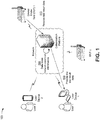
- Fig. 1 is a diagram of an overview of an example implementation 100 described herein.
- example implementation 100 may include a set of user devices, a set of DUTs, and a collaboration platform capable of enabling conferencing between the user devices and the DUTs.
- the collaboration platform may receive test result data from DUT 1 (e.g., a set-top box, a device executing a web application, a device executing a mobile application, or the like).
- the collaboration platform may receive, in real-time, the test result data that is generated by DUT 1.
- DUT 1 may generate the test result data based on executing a test case, based on receiving an input from a user device, based on detecting an event, or the like.
- the collaboration platform may determine network condition information associated with a user device and a network. For example, the collaboration platform may determine network condition information, such as a bandwidth value, a throughput value, a goodput value, a jitter value, a latency value, an amount of packet loss, or the like. Based on the network condition information, the collaboration platform may perform a technique (e.g., an encoding technique, a scaling technique, a transcoding technique, a compression technique, a technique to flag the test result data as high priority, etc.) to reduce communication issues and/or improve transmission of the test result data to the user device.
- a technique e.g., an encoding technique, a scaling technique, a transcoding technique, a compression technique, a technique to flag the test result data as high priority, etc.
- the collaboration platform may identify a user device that is to receive the test result data, and determine network condition information associated with the user device. For example, the user device may establish, via a network, a connection with the collaboration platform, and the collaboration platform may determine the network condition information based on the connection (e.g., may measure a bandwidth value, a latency value, or the like).
- the collaboration platform may provide the test result data.
- the collaboration platform may provide, to User Device 1, test result data based on performing the technique.
- User Device 1 may receive the test result data from the collaboration platform, and provide, via one or more output components, the test result data.
- the collaboration platform may provide information from the DUT(s) to the user device(s) based on network conditions and based on performing a technique to reduce communication issues and/or improve transmission of the test result data to the user device(s), thereby reducing latency, increasing throughput, reducing packet loss, and/or the like.
- Fig. 1 is provided merely as an example. Other examples are possible and may differ from what was described with regard to Fig. 1 . While a particular number of DUTs and/or user devices are shown in Fig. 1 , other implementations include other numbers of DUTs and/or user devices.
- FIG. 2 is a diagram of an example environment 200 in which systems and/or methods, described herein, may be implemented.
- environment 200 may include a set of user devices 210, a collaboration platform 220, a set of DUTs 230, and a network 240.
- Devices of environment 200 may interconnect via wired connections, wireless connections, or a combination of wired and wireless connections.
- User device 210 includes one or more devices capable of receiving, generating, storing, processing, and/or providing information associated with collaboration platform 220.
- user device 210 may include a communication and/or computing device, such as a mobile phone (e.g., a smart phone, a radiotelephone, etc.), a laptop computer, a tablet computer, a handheld computer, a gaming device, a wearable communication device (e.g., a smart wristwatch, a pair of smart eyeglasses, etc.), or a similar type of device.
- Collaboration platform 220 includes one or more devices capable of enabling conferencing between user devices 210 and DUTs 230.
- collaboration platform 220 may be designed to be modular such that certain software components can be swapped in or out depending on a particular need. As such, collaboration platform 220 may be easily and/or quickly reconfigured for different uses.
- collaboration platform 220 may be hosted in cloud computing environment 222.
- collaboration platform 220 may not be cloud-based (i.e., may be implemented outside of a cloud computing environment) or may be partially cloud-based.
- Cloud computing environment 222 includes an environment that hosts collaboration platform 220.
- Cloud computing environment 222 may provide computation, software, data access, storage, etc. services that do not require end-user (e.g., user device 210) knowledge of a physical location and configuration of system(s) and/or device(s) that hosts collaboration platform 220.
- cloud computing environment 222 may include a group of computing resources 224 (referred to collectively as “computing resources 224" and individually as “computing resource 224").
- Computing resource 224 includes one or more personal computers, workstation computers, server devices, or other types of computation and/or communication devices.
- computing resource 224 may host collaboration platform 220.
- the cloud resources may include compute instances executing in computing resource 224, storage devices provided in computing resource 224, data transfer devices provided by computing resource 224, etc.
- computing resource 224 may communicate with other computing resources 224 via wired connections, wireless connections, or a combination of wired and wireless connections.
- computing resource 224 includes a group of cloud resources, such as one or more applications (“APPs”) 224-1, one or more virtual machines (“VMs”) 224-2, virtualized storage (“VSs”) 224-3, one or more hypervisors (“HYPs”) 224-4, or the like.
- APPs applications
- VMs virtual machines
- VSs virtualized storage
- HOPs hypervisors
- Application 224-1 includes one or more software applications that may be provided to or accessed by user device 210. Application 224-1 may eliminate a need to install and execute the software applications on user device 210.
- application 224-1 may include software associated with collaboration platform 220 and/or any other software capable of being provided via cloud computing environment 222.
- one application 224-1 may send/receive information to/from one or more other applications 224-1, via virtual machine 224-2.
- Virtual machine 224-2 includes a software implementation of a machine (e.g., a computer) that executes programs like a physical machine.
- Virtual machine 224-2 may be either a system virtual machine or a process virtual machine, depending upon use and degree of correspondence to any real machine by virtual machine 224-2.
- a system virtual machine may provide a complete system platform that supports execution of a complete operating system ("OS").
- a process virtual machine may execute a single program, and may support a single process.
- virtual machine 224-2 may execute on behalf of a user (e.g., user device 210), and may manage infrastructure of cloud computing environment 222, such as data management, synchronization, or long-duration data transfers.
- Virtualized storage 224-3 includes one or more storage systems and/or one or more devices that use virtualization techniques within the storage systems or devices of computing resource 224.
- types of virtualizations may include block virtualization and file virtualization.
- Block virtualization may refer to abstraction (or separation) of logical storage from physical storage so that the storage system may be accessed without regard to physical storage or heterogeneous structure. The separation may permit administrators of the storage system flexibility in how the administrators manage storage for end users.
- File virtualization may eliminate dependencies between data accessed at a file level and a location where files are physically stored. This may enable optimization of storage use, server consolidation, and/or performance of non-disruptive file migrations.
- Hypervisor 224-4 may provide hardware virtualization techniques that allow multiple operating systems (e.g., "guest operating systems") to execute concurrently on a host computer, such as computing resource 224.
- Hypervisor 224-4 may present a virtual operating platform to the guest operating systems, and may manage the execution of the guest operating systems. Multiple instances of a variety of operating systems may share virtualized hardware resources.
- DUT 230 includes one or more devices capable of receiving, generating, storing, processing, and/or providing test result data.
- DUT 230 may include a set-top box, a mobile phone, a laptop computer, a tablet computer, a handheld computer, a gaming device, a wearable communication device, a computer, a portable electronic device, an IoT device, a vending machine, or a similar type of device.
- Network 240 may include one or more wired and/or wireless networks.
- network 240 may include a cellular network (e.g., a fifth generation (5G) network, a long-term evolution (LTE) network, a third generation (3G) network, a code division multiple access (CDMA) network, etc.), a public land mobile network (PLMN), a local area network (LAN), a wide area network (WAN), a metropolitan area network (MAN), a telephone network (e.g., the Public Switched Telephone Network (PSTN)), a private network, an ad hoc network, an intranet, the Internet, a fiber optic-based network, or the like, and/or a combination of these or other types of networks.
- 5G fifth generation
- LTE long-term evolution
- 3G third generation
- CDMA code division multiple access
- PLMN public land mobile network
- LAN local area network
- WAN wide area network
- MAN metropolitan area network
- PSTN Public Switched Telephone Network
- the number and arrangement of devices and networks shown in Fig. 2 are provided as an example. In practice, there may be additional devices and/or networks, fewer devices and/or networks, different devices and/or networks, or differently arranged devices and/or networks than those shown in Fig. 2 . Furthermore, two or more devices shown in Fig. 2 may be implemented within a single device, or a single device shown in Fig. 2 may be implemented as multiple, distributed devices. Additionally, or alternatively, a set of devices (e.g., one or more devices) of environment 200 may perform one or more functions described as being performed by another set of devices of environment 200.
- Fig. 3 is a diagram of example components of a device 300.
- Device 300 may correspond to user device 210, collaboration platform 220, and/or DUT 230.
- user device 210, collaboration platform 220, and/or DUT 230 may include one or more devices 300 and/or one or more components of device 300.
- device 300 may include a bus 310, a processor 320, a memory 330, a storage component 340, an input component 350, an output component 360, and a communication interface 370.
- Bus 310 includes a component that permits communication among the components of device 300.
- Processor 320 is implemented in hardware, firmware, or a combination of hardware and software.
- Processor 320 is a central processing unit (CPU), a graphics processing unit (GPU), an accelerated processing unit (APU), a microprocessor, a microcontroller, a digital signal processor (DSP), a field-programmable gate array (FPGA), an application-specific integrated circuit (ASIC), or another type of processing component.
- processor 320 includes one or more processors capable of being programmed to perform a function.
- Memory 330 includes a random access memory (RAM), a read only memory (ROM), and/or another type of dynamic or static storage device (e.g., a flash memory, a magnetic memory, and/or an optical memory) that stores information and/or instructions for use by processor 320.
- RAM random access memory
- ROM read only memory
- static storage device e.g., a flash memory, a magnetic memory, and/or an optical memory
- Storage component 340 stores information and/or software related to the operation and use of device 300.
- storage component 340 may include a hard disk (e.g., a magnetic disk, an optical disk, a magneto-optic disk, and/or a solid state disk), a compact disc (CD), a digital versatile disc (DVD), a floppy disk, a cartridge, a magnetic tape, and/or another type of non-transitory computer-readable medium, along with a corresponding drive.
- Input component 350 includes a component that permits device 300 to receive information, such as via user input (e.g., a touch screen display, a keyboard, a keypad, a mouse, a button, a switch, and/or a microphone). Additionally, or alternatively, input component 350 may include a sensor for sensing information (e.g., a global positioning system (GPS) component, an accelerometer, a gyroscope, and/or an actuator).
- Output component 360 includes a component that provides output information from device 300 (e.g., a display, a speaker, and/or one or more light-emitting diodes (LEDs)).
- LEDs light-emitting diodes
- Communication interface 370 includes a transceiver-like component (e.g., a transceiver and/or a separate receiver and transmitter) that enables device 300 to communicate with other devices, such as via a wired connection, a wireless connection, or a combination of wired and wireless connections.
- Communication interface 370 may permit device 300 to receive information from another device and/or provide information to another device.
- communication interface 370 may include an Ethernet interface, an optical interface, a coaxial interface, an infrared interface, a radio frequency (RF) interface, a universal serial bus (USB) interface, a Wi-Fi interface, a cellular network interface, or the like.
- RF radio frequency
- USB universal serial bus
- Device 300 may perform one or more processes described herein. Device 300 may perform these processes in response to processor 320 executing software instructions stored by a non-transitory computer-readable medium, such as memory 330 and/or storage component 340.
- a computer-readable medium is defined herein as a non-transitory memory device.
- a memory device includes memory space within a single physical storage device or memory space spread across multiple physical storage devices.
- Software instructions may be read into memory 330 and/or storage component 340 from another computer-readable medium or from another device via communication interface 370. When executed, software instructions stored in memory 330 and/or storage component 340 may cause processor 320 to perform one or more processes described herein. Additionally, or alternatively, hardwired circuitry may be used in place of or in combination with software instructions to perform one or more processes described herein. Thus, implementations described herein are not limited to any specific combination of hardware circuitry and software.
- device 300 may include additional components, fewer components, different components, or differently arranged components than those shown in Fig. 3 . Additionally, or alternatively, a set of components (e.g., one or more components) of device 300 may perform one or more functions described as being performed by another set of components of device 300.
- a set of components e.g., one or more components
- device 300 may include additional components, fewer components, different components, or differently arranged components than those shown in Fig. 3 . Additionally, or alternatively, a set of components (e.g., one or more components) of device 300 may perform one or more functions described as being performed by another set of components of device 300.
- a set of components e.g., one or more components
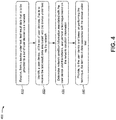
- Fig. 4 is a flow chart of an example process 400 for enabling device under test conferencing via a collaboration platform.
- one or more process blocks of Fig. 4 may be performed by collaboration platform 220.
- one or more process blocks of Fig. 4 may be performed by another device or a group of devices separate from or including collaboration platform 220, such as user device 210, and/or DUT 230.
- process 400 may include receiving, from a device under test, test result data that is to be provided to a set of user devices via a network (block 410).
- collaboration platform 220 may receive, from DUT 230, test result data associated with DUT 230 that is to be provided to a set of user devices 210.
- collaboration platform 220 may enable connectivity between a set of DUTs 230 and a set of user devices 210 via network 240.
- user device 210 and/or DUT 230 may execute client applications that enable usage of collaboration platform 220 and/or enable communication between user device 210 and DUT 230 (e.g., to establish a conference between user devices 210 and DUTs 230, to establish another type of communication session, or the like).
- collaboration platform 220 may perform a testing operation on DUT 230.
- collaboration platform 220 may provide, to DUT 230, an input that causes DUT 230 to generate an output.
- collaboration platform 220 may provide, to DUT 230, information associated with a test suite, and DUT 230 may execute a set of test cases associated with the test suite.
- DUT 230 may generate test result data, and provide the test result data to collaboration platform 220. In this way, collaboration platform 220 may obtain test result data based on performing the testing operation on DUT 230.
- user device 210 may control an operation of collaboration platform 220 which may cause collaboration platform 220 to perform a testing operation on DUT 230.
- user device 210 may be remotely located from collaboration platform 220 and/or DUT 230 (e.g., a threshold geographical distance, or the like). Additionally, or alternatively, user device 210 may communicate with collaboration platform 220 and/or DUT 230 via network 240.
- collaboration platform 220 may enable various types of communication sessions between the set of user devices 210 and DUTs 230 that enable various types of information to be exchanged between devices (e.g., test result data, such as multimedia information, video information, audio information, text information, or the like).
- collaboration platform 220 may receive information from one or more DUTs 230, and may provide the information to one or more user devices 210 via network 240. In this way, and as described elsewhere herein, collaboration platform 220 enables remote testing, monitoring, etc. of DUTs 230.
- information associated with DUT 230 may include status information.
- status information may include information that identifies a status of DUT 230.
- the status information may identify an availability of DUT 230 (e.g., available, unavailable, an expected time of availability, a schedule of available times, etc.). Additionally, or alternatively, the status information may identify user device 210 that is interacting with DUT 230.
- each DUT 230 and user device 210 may provide, to collaboration platform 220, status information. Additionally, or alternatively, user devices 210 may provide, for display, respective statuses of other user devices 210 and/or DUTs 230 that are in communication with collaboration platform 220.
- the information associated with DUT 230 may include testing information (e.g., test result data, or the like).
- the testing information may identify a current test suite (e.g., a set of test cases, test scripts, etc.) that is being executed by DUT 230.
- the information may identify a number of test cases that have been executed as compared to a total number of test cases in the test suite (e.g., a percentage of the test suite that has been executed, or the like).
- the testing information may identify respective statuses of various test cases (e.g., pass, fail, error, inconclusive, etc.).
- the information may identify an elapsed time of the execution of the test suite, an expected remaining duration, or the like.
- the information associated with DUT 230 may include text information.
- collaboration platform 220 may establish a text communication channel (e.g., or an instant messaging channel) between user device 210 and DUT 230.
- user device 210 may provide, to DUT 230, text information, such as a command, a query, a request, an instruction, or the like.
- user device 210 may provide a command, such as "press button 'TV guide'," and DUT 230 may execute the command, and/or may provide a response to user device 210 (e.g., an output of DUT 230 based on DUT 230 executing the command).
- user device 210 may provide, to DUT 230, a command such as "get status," and DUT 230 may provide a response, such as a testing status, memory usage status, processor usage status, or the like.
- the information associated with DUT 230 may include resource information.
- DUT 230 may provide, to user device 210, a resource, such as a file (e.g., an image file associated with a screen capture, a log file, and/or any other type of file generated by DUT 230).
- DUT 230 may provide, to user device 210, resource data, such as a list of components (e.g., memory, processor, etc.) and/or a list of component data (e.g., a type of memory, an available memory capacity, a type of processor, a processor capability, etc.).
- the information associated with DUT 230 may include audio and/or video information.
- DUT 230 may provide, to user device 210 and via collaboration platform 220, audio and/or video information that is generated by DUT 230 (e.g., generated based on DUT 230 executing a test suite, based on an input received from user device 210, or the like).
- DUT 230 may provide, to user device 210 via collaboration platform 220, the audio and/or video information in real-time, such as substantially concurrently with DUT 230 generating the information.
- a first user device 210 may interact with DUT 230 (e.g., provide a set of inputs), and collaboration platform 220 may provide, to a set of other user devices 210, information associated with DUT 230 (e.g., generated outputs).
- DUT 230 e.g., provide a set of inputs
- collaboration platform 220 may provide, to a set of other user devices 210, information associated with DUT 230 (e.g., generated outputs).
- multiple user devices 210 may provide, via output components, information associated with a particular DUT 230, thereby enabling multiple users to test and/or monitor DUT 230.
- user device 210 may receive the information, and record the information. For example, user device 210 may record the information for playback, such that a user may later view the information.
- collaboration platform 220 may receive test result data from DUT 230, record the test result data, and/or save the test result data. For example, collaboration platform 220 may record information associated with a session (e.g., between user device 210 and DUT 230), and provide the recorded information to user device 210 and/or another user device 210 for playback. Additionally, or alternatively, collaboration platform 220 may perform testing operations on a particular DUT 230, and record the results of the testing operations.
- user device 210 may provide, to collaboration platform 220, information that requests collaboration platform 220 to record a session (e.g., conference) between user device 210, DUTs 230, and/or other user devices 210.
- a session e.g., conference
- a user and/or another user, associated with another user device 210 may view the recorded information, share the recorded information, or the like.
- collaboration platform 220 may receive, from DUT 230, the test result data, determine a network condition associated with network 240 and/or user device 210, and provide, to user device 210, the multi-media information based on a technique and in real-time, as described elsewhere herein.
- process 400 may include identifying a user device, of the set of user devices, that is to receive the test result data associated with the device under test via the network (block 420).
- collaboration platform 220 may identify a particular user device 210, of the set of user devices 210, that is to receive the test result data associated with DUT 230 via network 240.
- collaboration platform 220 may identify user device 210 based on a request.
- user device 210 may provide, to collaboration platform 220, information that requests the test result data associated with DUT 230, and collaboration platform 220 may identify user device 210 based on the request.
- a user may interact with user device 210 to select a particular DUT 230.
- the user may desire to interact with the particular DUT 230 and/or receive test result data associated with the particular DUT 230.
- user device 210 may provide, to collaboration platform 220, information identifying the selection of the particular DUT 230.
- collaboration platform 220 may provide, to user device 210, information that identifies a list of DUTs 230 and/or other user devices 210 that are available for communication sessions (e.g., a user directory, a device directory, etc.).
- user device 210 may provide, for display via a user interface, information that identifies the list of DUTs 230 and/or other user devices 210.
- a user of user device 210 may interact with user device 210 to search the list of DUTs 230 and/or other user devices 210 (e.g., by device identifier and/or network address, by username, by device name, etc.), select particular DUTs 230 and/or user devices 210 (e.g., to interact with, to conference, etc.), register DUTs 230 to provide test result data, permit other user devices 210 to join a conference, or the like.
- user device 210 may provide, to DUT 230, information that requests DUT 230 to perform an action.
- user device 210 may control operation of collaboration platform 220, such that collaboration platform 220 performs testing of DUT 230.
- user device 210 may provide a set of resources (e.g., files associated with a test suite for DUT 230 to execute) or provide information that identifies the set of resources (e.g., a network address, and/or a memory location at which the resources may be retrieved).
- collaboration platform 220 may identify that user device 210 is to receive test result data associated with the execution of the test suite based on user device 210 providing the set of resources.
- collaboration platform 220 may identify user device 210 based on an event.
- user device 210 may provide, to collaboration platform 220, information that identifies that user device 210 is to receive test result data associated with DUT 230 based on an occurrence of an event.
- an event may be associated with testing of DUT 230.
- the event may correspond to the completion of an execution of a test suite or a portion of the test suite, an error associated with the execution of the test suite, or the like.
- an event may correspond to an operation of DUT 230.
- the event may correspond to a hardware error, a software error, a resource utilization that satisfies a threshold, or the like.
- collaboration platform 220 may receive, from DUT 230, information that identifies the event, and may identify user device(s) 210 based on a configuration, such as stored information that maps user device(s) 210 and event(s).
- collaboration platform 220 may identify a particular user device 210 that is to receive the test result data associated with DUT 230, and determine a network condition associated with network 240 and/or the identified user device 210, as described below.
- process 400 may include determining network condition information associated with the user device and the network, and performing a technique based on the network condition (block 430).
- collaboration platform 220 may determine network condition information associated with user device 210 and network 240.
- collaboration platform 220 may determine network condition information, such as information that identifies a bandwidth value, a throughput value, a goodput value, a jitter value, a latency value, an amount of packet loss, a delay value, a round-trip time value, a number of retransmissions, or the like.
- collaboration platform 220 may determine the network condition information based on a session, such as a sequence of packets associated with a connection, between collaboration platform 220 and user device 210. For example, collaboration platform 220 may measure, based on the session, one or more of the above values associated with the network condition information.
- collaboration platform 220 may perform a technique based on the network condition information. For example, collaboration platform 220 may perform an encoding technique, a re-encoding technique, a recoding technique, a transcoding technique, a transsizing technique, an adaptive bit rate streaming technique, a scaling technique, a compression technique, or the like, based on the network condition information. In some implementations, collaboration platform 220 may determine, based on the network condition information, that a value (e.g., a latency value, a bandwidth value, a throughput value, etc.) satisfies a threshold, and may perform the technique based on the value satisfying the threshold.
- a value e.g., a latency value, a bandwidth value, a throughput value, etc.
- collaboration platform 220 may determine a set of values that correspond to a set of parameters based on the network condition information (e.g., a latency value, a bandwidth value, and a throughput value). Additionally, or alternatively, collaboration platform 220 may generate a score based on the set of values. In some implementations, collaboration platform 220 may apply weight values to the set of values, and determine a score based on applying the weight values. Additionally, or alternatively, collaboration platform 220 may determine a technique, or a set of techniques, to perform based on the score and/or the set of values. That is, collaboration platform 220 may perform a first technique based on a first score, a second technique based on a second score, etc. In this way, collaboration platform 220 may take various parameters into account when selecting and/or performing the technique.
- the network condition information e.g., a latency value, a bandwidth value, and a throughput value.
- collaboration platform 220 may generate a score based on the set of values.
- collaboration platform 220 may include a set of codecs that collaboration platform 220 may use when providing test result data, and select a particular codec to use based on the network condition information.
- a first codec may operate in an improved manner (e.g., enable lower latency, higher audio and/or video quality, etc.) in association with a first network condition (e.g., identified by first network condition information) than as compared to a second network condition (e.g., identified by second network condition information), whereas a second codec may operate in a more improved manner in association with the second network condition than as compared to the first network condition. That is, various codecs may enable lower latency, higher throughput, higher audio and/or video quality, etc. in association with different network conditions (e.g., identified by various network condition information).
- collaboration platform 220 may include a set of codecs, and may select a particular codec based on the network condition information such that communication issues (e.g., high latency, low throughput, packet losses, etc.) are reduced than as compared to if the particular codec is not selected.
- collaboration platform 220 may select a particular codec based on first network condition information, and may select another codec based on second network condition information.
- collaboration platform 220 may store, in a data structure, information that maps particular codecs and particular network condition information. Additionally, collaboration platform 220 may determine network condition information, and identify a particular codec based on the network condition information.
- collaboration platform 220 may select a particular codec based on user device 210 including the particular codec and/or based on user device 210 being capable of decoding the information encoded by collaboration platform 220. Additionally, or alternatively, collaboration platform 220 may provide, to user device 210 and/or DUT 230, information that instructs user device 210 and/or DUT 230 to use a particular codec based on the network condition information.
- collaboration platform 220 may select a particular codec based on network condition information, and may select another codec based on a change in the network condition information, based on a value satisfying a threshold, or the like. As an example, in situations where a latency value satisfies a threshold, collaboration platform 220 may use a particular codec that compresses the information associated with DUT 230 such that communication issues are reduced (e.g., thereby enabling lower latency between user device 210 and DUT 230).
- collaboration platform 220 may perform a technique such that communication issues are reduced than as compared to situations where the technique is not performed, thereby conserving network resources and/or conserving user device 210 resources.
- process 400 may include providing, to the user device and based on performing the technique, the test result data associated with the device under test (block 440).
- collaboration platform 220 may provide, to user device 210 and based on performing the technique, the test result data associated with DUT 230.
- user device 210 may receive, from collaboration platform 220, the test result data associated with DUT 230, and may provide, via an output component, the information associated with DUT 230.
- user device 210 may receive the test result data in real-time, thereby enabling more accurate testing of DUT 230 than as compared to situations where the technique is not performed (e.g., situations associated with higher latency, a greater amount of packet loss, etc.).
- a user of user device 210 may be capable of more accurately discerning an effect of a user-initiated action (e.g., an input provided by user device 210 to DUT 230) on DUT 230 based on the test result data being provided in real-time.
- a user using user device 210, may monitor and/or diagnose potential issues with DUT 230. Additionally, or alternatively, user device 210 (e.g., based on a user input) provide, to DUT 230, information based on the test result data. For example, user device 210 may provide information that includes an instruction for DUT 230 (e.g., to stop execution of a test suite, to adjust a parameter, to re-configure a setting, or the like).
- an instruction for DUT 230 e.g., to stop execution of a test suite, to adjust a parameter, to re-configure a setting, or the like.
- process 400 may include additional blocks, fewer blocks, different blocks, or differently arranged blocks than those depicted in Fig. 4 . Additionally, or alternatively, two or more of the blocks of process 400 may be performed in parallel.
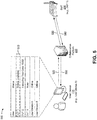
- Fig. 5 is a diagram of an example implementation 500 relating to the example process shown in Fig. 4 .
- Fig. 5 shows an example of enabling device under test conferencing via a collaboration platform.
- a user of a particular user device 210 may desire to interact with and/or control a particular DUT 230 to observe an output by the particular DUT 230 (e.g., DUT 1).
- user device 210 may provide, for display, information identifying status information associated with a set of user devices 210 and DUTs 230 (e.g., user devices 210 and DUTs 230 that are in communication with collaboration platform 220).
- the user may interact with user device 210 to select a particular DUT 230 (e.g., DUT 1).
- user device 210 may provide information to collaboration platform 220 (e.g., to identify DUT 230, to initiate a session with DUT 230, to request test result data from DUT 230, etc.).
- collaboration platform 220 may provide, to DUT 230, a request based on the information received from user device 210.
- DUT 230 may provide test result data to collaboration platform 220 based on the request.
- collaboration platform 220 may provide, to user device 210, the test result data from DUT 230 in real-time, thereby enabling user device 210 to provide, via an output component, the test result data to enable the user to perform testing of DUT 230.
- Fig. 5 is provided merely as an example. Other examples are possible and may differ from what was described with regard to Fig. 5 .
- Fig. 6 is a diagram of an example implementation 600 relating to the example process shown in Fig. 4 .
- Fig. 6 shows an example of enabling device under test conferencing via a collaboration platform.
- a particular DUT 230 may be used for automated testing (e.g., functional testing, monitoring services, or the like).
- DUT 230 may be executing a test case of a test suite.
- DUT 230 may detect an event and pause test case execution.
- DUT 230 may determine an error associated with an execution of the test case.
- DUT 230 may provide, to collaboration platform 220, information that identifies the event.
- collaboration platform 220 may determine a particular user device 210 (e.g., User Device 6) to notify of the event. For example, collaboration platform 220 may identify user device 210 based on stored information that maps an event and a particular user device 210 to notify of an occurrence of the event. Additionally, collaboration platform 220 may provide, to user device 210, information that identifies the event.
- a particular user device 210 e.g., User Device 6
- collaboration platform 220 may identify user device 210 based on stored information that maps an event and a particular user device 210 to notify of an occurrence of the event. Additionally, collaboration platform 220 may provide, to user device 210, information that identifies the event.
- user device 210 may provide, for display, information that identifies the event. Additionally, a user may provide an input to user device 210 (e.g., by selecting a "view" button) to cause user device 210 to request DUT 230 to share test result data associated with the test case execution, thereby enabling the user to assess the event.
- DUT 230 may notify multiple user devices 210 of the event (e.g., initiate a session with a list of user devices 210, automatically arrange a conference and wait for user devices 210 to join the conference, etc.). In such cases, collaboration platform 220 may notify and share information with multiple user devices 210, allowing multiple users to assess the event.
- Fig. 6 is provided merely as an example. Other examples are possible and may differ from what was described with regard to Fig. 6 .
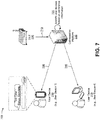
- Fig. 7 is a diagram of an example implementation 700 relating to the example process shown in Fig. 4 .
- Fig. 7 shows an example of enabling device under test conferencing via a collaboration platform.
- DUT 230 may allow users of multiple user devices 210 to observe testing of DUT 230.
- DUT 230 may provide, to collaboration platform 220, information associated with an execution of a test suite. For example, assume that DUT 230 is executing a test case of the test suite.
- collaboration platform 220 may identify user devices 210 based on conference information.
- the conference information may include information that identifies a set of user devices 210 that have requested to receive test result data from DUT 230.
- collaboration platform 220 may provide test result data, that was generated by DUT 230, to user devices 210.
- the test result data may include audio and/or video information that was generated by DUT 230 based on DUT 230 executing the test case.
- the test result data may include information that identifies a status of the execution of the test case.
- collaboration platform 220 may provide information to a particular user device 210 (e.g., User Device 1), via an instant messaging channel, that identifies a status of the test case that was executed by DUT 230 (e.g., Case 1 is complete).
- Fig. 7 is provided merely as an example. Other examples are possible and may differ from what was described with regard to Fig. 7 .
- Fig. 8 is a diagram of an example implementation 800 relating to the example process shown in Fig. 4 .
- Fig. 8 shows an example of enabling device under test conferencing via a collaboration platform.
- a user of user device 210 may initiate on-demand testing of DUT 230 using a file transfer.
- the user of user device 210 may send a session request via collaboration platform 220 to DUT 230 (e.g., DUT 3, which may automatically accept the session request) and may upload a series of test cases by file transfer to DUT 3 via collaboration platform 220.
- DUT 230 may execute the series of test cases automatically.
- the user may terminate the session once file transfer to DUT 230 is complete, and DUT 230 may execute the test cases without user device 210 being required to interact with DUT 230 during some or all of the time that DUT 230 continues to execute the test cases.
- DUT 230 may provide results to collaboration platform 220 and/or user device 210 after executing the test cases, and/or may establish a session with user device 210, via collaboration platform 220, in the event that a problem occurs while executing the test cases.
- Fig. 8 is provided merely as an example. Other examples are possible and may differ from what was described with regard to Fig. 8 .
- Implementations described herein provide connectivity of a set of DUTs and a set of user devices via a collaboration platform (e.g., a set of cloud servers executing a collaboration service, a set of devices to enable remote testing of a DUT, or the like).
- the collaboration platform may receive, from a DUT, test result data that is to be provided to one or more user devices, such that the one or more user devices may provide, via one or more output components, the information for diagnostic purposes and/or other purposes.
- the collaboration platform may identify a user device that is to receive the test result data (e.g., based on a request from the user device, based on a configuration, based on an event, or the like), and may determine network condition information (e.g., a latency value, a bandwidth value, a throughput value, a jitter value, etc.) based on a connection between the collaboration platform and the user device.
- network condition information e.g., a latency value, a bandwidth value, a throughput value, a jitter value, etc.
- the collaboration platform may provide, to the user device, the information based on the network condition information.
- the collaboration platform may perform a technique (e.g., an encoding technique, a scaling technique, a transcoding technique, or the like) to reduce communication issues and improve the transmission of test result data to the user device, such that testing efficacy is not compromised by current network conditions.
- a technique e.g., an encoding technique, a scaling technique, a transcoding technique, or the like
- some implementations described herein reduce latency, reduce a number of packet losses, etc., thereby conserving processor and/or memory resources of user devices, and thereby enabling remote testing of DUTs via a network.
- the term component is intended to be broadly construed as hardware, firmware, and/or a combination of hardware and software.
- satisfying a threshold may refer to a value being greater than the threshold, more than the threshold, higher than the threshold, greater than or equal to the threshold, less than the threshold, fewer than the threshold, lower than the threshold, less than or equal to the threshold, equal to the threshold, etc.
- a user interface may include a graphical user interface, a non-graphical user interface, a text-based user interface, etc.
- a user interface may provide information for display.
- a user may interact with the information, such as by providing input via an input component of a device that provides the user interface for display.
- a user interface may be configurable by a device and/or a user (e.g., a user may change the size of the user interface, information provided via the user interface, a position of information provided via the user interface, etc.).
- a user interface may be pre-configured to a standard configuration, a specific configuration based on a type of device on which the user interface is displayed, and/or a set of configurations based on capabilities and/or specifications associated with a device on which the user interface is displayed.
Landscapes
- Engineering & Computer Science (AREA)
- Computer Networks & Wireless Communication (AREA)
- Signal Processing (AREA)
- Theoretical Computer Science (AREA)
- Quality & Reliability (AREA)
- Business, Economics & Management (AREA)
- General Physics & Mathematics (AREA)
- Physics & Mathematics (AREA)
- General Engineering & Computer Science (AREA)
- Entrepreneurship & Innovation (AREA)
- Human Resources & Organizations (AREA)
- Strategic Management (AREA)
- Software Systems (AREA)
- Economics (AREA)
- Data Mining & Analysis (AREA)
- Marketing (AREA)
- Operations Research (AREA)
- Tourism & Hospitality (AREA)
- General Business, Economics & Management (AREA)
- Computer Hardware Design (AREA)
- Human Computer Interaction (AREA)
- Multimedia (AREA)
- Computing Systems (AREA)
- General Health & Medical Sciences (AREA)
- Medical Informatics (AREA)
- Environmental & Geological Engineering (AREA)
- Health & Medical Sciences (AREA)
- Information Transfer Between Computers (AREA)
- Data Exchanges In Wide-Area Networks (AREA)
- Computer And Data Communications (AREA)
Abstract
Description
- A device under test (DUT), also known as an equipment under test (EUT), an application under test (AUT), and/or a unit under test (UUT), is a term used to refer to a manufactured product undergoing testing, either at first manufacture or in a later stage of the DUT's life cycle as part of ongoing functional testing and calibration checks.
- In some possible implementations, a device may include one or more processors to perform a testing operation on a device under test. The one or more processors may obtain test result data based on performing the testing operation on the device under test. The one or more processors may identify a user device that is to receive the test result data associated with the device under test from the device and via a network. The device may be in communication with a set of user devices via the network. The set of user devices may include the user device. The user device may control operation of the device. The one or more processors may determine network condition information associated with the user device and the network. The one or more processors may provide, using a technique that is based on the network condition information, the test result data to the user device. The user device may receive the test result data based on controlling operation of the device.
- In some possible implementations, a method may include performing, by a device, a testing operation on a device under test. A user device may control operation of the device. The method may include obtaining, by the device, test result data based on the testing operation. The method may include identifying, by the device, the user device that is to receive the test result data associated with the device under test from the device and via a network. The device may be in communication with a set of user devices via the network. The set of user devices may include the user device. The method may include determining, by the device, network condition information associated with the user device and the network. The method may include performing, by the device, a technique based on the network condition information. The method may include providing, by the device and to the user device, the test result data associated with the device under test based on performing the technique.
- In some possible implementations, a non-transitory computer-readable medium may store one or more instructions that, when executed by one or more processors of a device, cause the one or more processors to receive, from a device under test, test result data associated with the device under test. The one or more instructions may cause the one or more processors to identify a user device, from a set of user devices, that is to receive the test result data associated with the device under test. The device may be in communication with the set of user devices via a network. The user device may control operation of the device. The one or more instructions may cause the one or more processors to determine network condition information associated with the user device and the network. The one or more instructions may cause the one or more processors to provide, to the user device, the test result data associated with the device under test based on the network condition information to permit the user device to provide, via an output component, the test result data associated with the device under test.
-
-
Fig. 1 is a diagram of an overview of an example implementation described herein; -
Fig. 2 is a diagram of an example environment in which systems and/or methods, described herein, may be implemented; -
Fig. 3 is a diagram of example components of one or more devices ofFig. 2 ; -
Fig. 4 is a flow chart of an example process for enabling device under test conferencing via a collaboration platform; -
Fig. 5 is a diagram of an example implementation relating to the example process shown inFig. 4 ; -
Fig. 6 is another diagram of an example implementation relating to the example process shown inFig. 4 ; -
Fig. 7 is another diagram of an example implementation relating to the example process shown inFig. 4 ; and -
Fig. 8 is another diagram of an example implementation relating to the example process shown inFig. 4 . - The following detailed description of example implementations refers to the accompanying drawings. The same reference numbers in different drawings may identify the same or similar elements.
- A user may desire to use a user device (e.g., a laptop computer, a mobile phone, etc.) to remotely (e.g., via a network) test a DUT (e.g., a set-top box, a desktop computer, an Internet of Things (IoT) device, a vending machine, or the like), interact with the DUT, monitor the DUT, or the like. In this case, the DUT may provide, to the user device, test result data that the user device may provide, via an output component (e.g., a display, a speaker, or the like), to enable the user to perform testing and/or monitoring. As such, the ability of the user device to receive and provide, via the output component, test result data associated with the DUT in real-time (e.g., substantially concurrently with the DUT generating the information) may be necessary to enable adequate testing of the DUT. However, in some cases, communication issues associated with a network, such as high latency, low throughput, packet loss, etc. can inhibit the scalability, viability, and/or efficacy of such remote testing of DUTs.
- Implementations described herein provide connectivity (e.g., conferencing) of a set of DUTs and a set of user devices via a collaboration platform (e.g., a set of cloud servers executing a collaboration service, a device that enables a user device to control and perform testing operations on a DUT remotely such as via a network, or the like). The collaboration platform may receive, from a DUT, test result data that is to be provided to one or more user devices, such that the one or more user devices may provide, via output components, the test result data for diagnostic purposes and/or other purposes. The collaboration platform may identify a user device that is to receive the test result data (e.g., based on a request from the user device, based on a configuration, based on an event, based on stored information, or the like), and may determine network condition information associated with a connection between the collaboration platform and the user device (e.g., a latency value, a bandwidth value, a throughput value, a jitter value, an amount of packet loss, etc.).
- The collaboration platform may provide, to the user device, the test result data based on the network condition information. For example, the collaboration platform may perform a technique (e.g., an encoding technique, a scaling technique, a transcoding technique, a compression technique, or the like) to reduce communication issues and improve the transmission of test result data to the user device, such that testing efficacy is not compromised by current network conditions. In this way, some implementations described herein reduce latency, reduce an amount of packet loss, etc., thereby conserving processor and/or memory resources of user devices, and thereby enabling remote testing of DUTs via a network.
-
Fig. 1 is a diagram of an overview of anexample implementation 100 described herein. As shown inFig. 1 ,example implementation 100 may include a set of user devices, a set of DUTs, and a collaboration platform capable of enabling conferencing between the user devices and the DUTs. As shown byreference number 110, the collaboration platform may receive test result data from DUT 1 (e.g., a set-top box, a device executing a web application, a device executing a mobile application, or the like). For example, the collaboration platform may receive, in real-time, the test result data that is generated byDUT 1. In some implementations,DUT 1 may generate the test result data based on executing a test case, based on receiving an input from a user device, based on detecting an event, or the like. - As shown by
reference number 120, the collaboration platform may determine network condition information associated with a user device and a network. For example, the collaboration platform may determine network condition information, such as a bandwidth value, a throughput value, a goodput value, a jitter value, a latency value, an amount of packet loss, or the like. Based on the network condition information, the collaboration platform may perform a technique (e.g., an encoding technique, a scaling technique, a transcoding technique, a compression technique, a technique to flag the test result data as high priority, etc.) to reduce communication issues and/or improve transmission of the test result data to the user device. - In some implementations, the collaboration platform may identify a user device that is to receive the test result data, and determine network condition information associated with the user device. For example, the user device may establish, via a network, a connection with the collaboration platform, and the collaboration platform may determine the network condition information based on the connection (e.g., may measure a bandwidth value, a latency value, or the like).
- As shown by
reference number 130, the collaboration platform may provide the test result data. For example, the collaboration platform may provide, toUser Device 1, test result data based on performing the technique. Additionally,User Device 1 may receive the test result data from the collaboration platform, and provide, via one or more output components, the test result data. - In this way, the collaboration platform may provide information from the DUT(s) to the user device(s) based on network conditions and based on performing a technique to reduce communication issues and/or improve transmission of the test result data to the user device(s), thereby reducing latency, increasing throughput, reducing packet loss, and/or the like.
- As indicated above,
Fig. 1 is provided merely as an example. Other examples are possible and may differ from what was described with regard toFig. 1 . While a particular number of DUTs and/or user devices are shown inFig. 1 , other implementations include other numbers of DUTs and/or user devices. -
Fig. 2 is a diagram of anexample environment 200 in which systems and/or methods, described herein, may be implemented. As shown inFig. 2 ,environment 200 may include a set ofuser devices 210, acollaboration platform 220, a set ofDUTs 230, and anetwork 240. Devices ofenvironment 200 may interconnect via wired connections, wireless connections, or a combination of wired and wireless connections. -
User device 210 includes one or more devices capable of receiving, generating, storing, processing, and/or providing information associated withcollaboration platform 220. For example,user device 210 may include a communication and/or computing device, such as a mobile phone (e.g., a smart phone, a radiotelephone, etc.), a laptop computer, a tablet computer, a handheld computer, a gaming device, a wearable communication device (e.g., a smart wristwatch, a pair of smart eyeglasses, etc.), or a similar type of device. -
Collaboration platform 220 includes one or more devices capable of enabling conferencing betweenuser devices 210 andDUTs 230. In some implementations,collaboration platform 220 may be designed to be modular such that certain software components can be swapped in or out depending on a particular need. As such,collaboration platform 220 may be easily and/or quickly reconfigured for different uses. - In some implementations, as shown,
collaboration platform 220 may be hosted in cloud computing environment 222. Notably, while implementations described herein describecollaboration platform 220 as being hosted in cloud computing environment 222, in some implementations,collaboration platform 220 may not be cloud-based (i.e., may be implemented outside of a cloud computing environment) or may be partially cloud-based. - Cloud computing environment 222 includes an environment that hosts
collaboration platform 220. Cloud computing environment 222 may provide computation, software, data access, storage, etc. services that do not require end-user (e.g., user device 210) knowledge of a physical location and configuration of system(s) and/or device(s) that hostscollaboration platform 220. As shown, cloud computing environment 222 may include a group of computing resources 224 (referred to collectively as "computingresources 224" and individually as "computing resource 224"). -
Computing resource 224 includes one or more personal computers, workstation computers, server devices, or other types of computation and/or communication devices. In some implementations,computing resource 224 may hostcollaboration platform 220. The cloud resources may include compute instances executing incomputing resource 224, storage devices provided incomputing resource 224, data transfer devices provided bycomputing resource 224, etc. In some implementations,computing resource 224 may communicate withother computing resources 224 via wired connections, wireless connections, or a combination of wired and wireless connections. - As further shown in
Fig. 2 ,computing resource 224 includes a group of cloud resources, such as one or more applications ("APPs") 224-1, one or more virtual machines ("VMs") 224-2, virtualized storage ("VSs") 224-3, one or more hypervisors ("HYPs") 224-4, or the like. - Application 224-1 includes one or more software applications that may be provided to or accessed by
user device 210. Application 224-1 may eliminate a need to install and execute the software applications onuser device 210. For example, application 224-1 may include software associated withcollaboration platform 220 and/or any other software capable of being provided via cloud computing environment 222. In some implementations, one application 224-1 may send/receive information to/from one or more other applications 224-1, via virtual machine 224-2. - Virtual machine 224-2 includes a software implementation of a machine (e.g., a computer) that executes programs like a physical machine. Virtual machine 224-2 may be either a system virtual machine or a process virtual machine, depending upon use and degree of correspondence to any real machine by virtual machine 224-2. A system virtual machine may provide a complete system platform that supports execution of a complete operating system ("OS"). A process virtual machine may execute a single program, and may support a single process. In some implementations, virtual machine 224-2 may execute on behalf of a user (e.g., user device 210), and may manage infrastructure of cloud computing environment 222, such as data management, synchronization, or long-duration data transfers.
- Virtualized storage 224-3 includes one or more storage systems and/or one or more devices that use virtualization techniques within the storage systems or devices of
computing resource 224. In some implementations, within the context of a storage system, types of virtualizations may include block virtualization and file virtualization. Block virtualization may refer to abstraction (or separation) of logical storage from physical storage so that the storage system may be accessed without regard to physical storage or heterogeneous structure. The separation may permit administrators of the storage system flexibility in how the administrators manage storage for end users. File virtualization may eliminate dependencies between data accessed at a file level and a location where files are physically stored. This may enable optimization of storage use, server consolidation, and/or performance of non-disruptive file migrations. - Hypervisor 224-4 may provide hardware virtualization techniques that allow multiple operating systems (e.g., "guest operating systems") to execute concurrently on a host computer, such as
computing resource 224. Hypervisor 224-4 may present a virtual operating platform to the guest operating systems, and may manage the execution of the guest operating systems. Multiple instances of a variety of operating systems may share virtualized hardware resources. -
DUT 230 includes one or more devices capable of receiving, generating, storing, processing, and/or providing test result data. For example,DUT 230 may include a set-top box, a mobile phone, a laptop computer, a tablet computer, a handheld computer, a gaming device, a wearable communication device, a computer, a portable electronic device, an IoT device, a vending machine, or a similar type of device. -
Network 240 may include one or more wired and/or wireless networks. For example,network 240 may include a cellular network (e.g., a fifth generation (5G) network, a long-term evolution (LTE) network, a third generation (3G) network, a code division multiple access (CDMA) network, etc.), a public land mobile network (PLMN), a local area network (LAN), a wide area network (WAN), a metropolitan area network (MAN), a telephone network (e.g., the Public Switched Telephone Network (PSTN)), a private network, an ad hoc network, an intranet, the Internet, a fiber optic-based network, or the like, and/or a combination of these or other types of networks. - The number and arrangement of devices and networks shown in
Fig. 2 are provided as an example. In practice, there may be additional devices and/or networks, fewer devices and/or networks, different devices and/or networks, or differently arranged devices and/or networks than those shown inFig. 2 . Furthermore, two or more devices shown inFig. 2 may be implemented within a single device, or a single device shown inFig. 2 may be implemented as multiple, distributed devices. Additionally, or alternatively, a set of devices (e.g., one or more devices) ofenvironment 200 may perform one or more functions described as being performed by another set of devices ofenvironment 200. -
Fig. 3 is a diagram of example components of adevice 300.Device 300 may correspond touser device 210,collaboration platform 220, and/orDUT 230. In some implementations,user device 210,collaboration platform 220, and/orDUT 230 may include one ormore devices 300 and/or one or more components ofdevice 300. As shown inFig. 3 ,device 300 may include abus 310, aprocessor 320, amemory 330, astorage component 340, aninput component 350, anoutput component 360, and acommunication interface 370. -
Bus 310 includes a component that permits communication among the components ofdevice 300.Processor 320 is implemented in hardware, firmware, or a combination of hardware and software.Processor 320 is a central processing unit (CPU), a graphics processing unit (GPU), an accelerated processing unit (APU), a microprocessor, a microcontroller, a digital signal processor (DSP), a field-programmable gate array (FPGA), an application-specific integrated circuit (ASIC), or another type of processing component. In some implementations,processor 320 includes one or more processors capable of being programmed to perform a function.Memory 330 includes a random access memory (RAM), a read only memory (ROM), and/or another type of dynamic or static storage device (e.g., a flash memory, a magnetic memory, and/or an optical memory) that stores information and/or instructions for use byprocessor 320. -
Storage component 340 stores information and/or software related to the operation and use ofdevice 300. For example,storage component 340 may include a hard disk (e.g., a magnetic disk, an optical disk, a magneto-optic disk, and/or a solid state disk), a compact disc (CD), a digital versatile disc (DVD), a floppy disk, a cartridge, a magnetic tape, and/or another type of non-transitory computer-readable medium, along with a corresponding drive. -
Input component 350 includes a component that permitsdevice 300 to receive information, such as via user input (e.g., a touch screen display, a keyboard, a keypad, a mouse, a button, a switch, and/or a microphone). Additionally, or alternatively,input component 350 may include a sensor for sensing information (e.g., a global positioning system (GPS) component, an accelerometer, a gyroscope, and/or an actuator).Output component 360 includes a component that provides output information from device 300 (e.g., a display, a speaker, and/or one or more light-emitting diodes (LEDs)). -
Communication interface 370 includes a transceiver-like component (e.g., a transceiver and/or a separate receiver and transmitter) that enablesdevice 300 to communicate with other devices, such as via a wired connection, a wireless connection, or a combination of wired and wireless connections.Communication interface 370 may permitdevice 300 to receive information from another device and/or provide information to another device. For example,communication interface 370 may include an Ethernet interface, an optical interface, a coaxial interface, an infrared interface, a radio frequency (RF) interface, a universal serial bus (USB) interface, a Wi-Fi interface, a cellular network interface, or the like. -
Device 300 may perform one or more processes described herein.Device 300 may perform these processes in response toprocessor 320 executing software instructions stored by a non-transitory computer-readable medium, such asmemory 330 and/orstorage component 340. A computer-readable medium is defined herein as a non-transitory memory device. A memory device includes memory space within a single physical storage device or memory space spread across multiple physical storage devices. - Software instructions may be read into
memory 330 and/orstorage component 340 from another computer-readable medium or from another device viacommunication interface 370. When executed, software instructions stored inmemory 330 and/orstorage component 340 may causeprocessor 320 to perform one or more processes described herein. Additionally, or alternatively, hardwired circuitry may be used in place of or in combination with software instructions to perform one or more processes described herein. Thus, implementations described herein are not limited to any specific combination of hardware circuitry and software. - The number and arrangement of components shown in
Fig. 3 are provided as an example. In practice,device 300 may include additional components, fewer components, different components, or differently arranged components than those shown inFig. 3 . Additionally, or alternatively, a set of components (e.g., one or more components) ofdevice 300 may perform one or more functions described as being performed by another set of components ofdevice 300. - The number and arrangement of components shown in
Fig. 3 are provided as an example. In practice,device 300 may include additional components, fewer components, different components, or differently arranged components than those shown inFig. 3 . Additionally, or alternatively, a set of components (e.g., one or more components) ofdevice 300 may perform one or more functions described as being performed by another set of components ofdevice 300. -
Fig. 4 is a flow chart of anexample process 400 for enabling device under test conferencing via a collaboration platform. In some implementations, one or more process blocks ofFig. 4 may be performed bycollaboration platform 220. In some implementations, one or more process blocks ofFig. 4 may be performed by another device or a group of devices separate from or includingcollaboration platform 220, such asuser device 210, and/orDUT 230. - As shown in
Fig. 4 ,process 400 may include receiving, from a device under test, test result data that is to be provided to a set of user devices via a network (block 410). For example,collaboration platform 220 may receive, fromDUT 230, test result data associated withDUT 230 that is to be provided to a set ofuser devices 210. In some implementations,collaboration platform 220 may enable connectivity between a set ofDUTs 230 and a set ofuser devices 210 vianetwork 240. For example,user device 210 and/orDUT 230 may execute client applications that enable usage ofcollaboration platform 220 and/or enable communication betweenuser device 210 and DUT 230 (e.g., to establish a conference betweenuser devices 210 andDUTs 230, to establish another type of communication session, or the like). - In some implementations,
collaboration platform 220 may perform a testing operation onDUT 230. For example,collaboration platform 220 may provide, toDUT 230, an input that causesDUT 230 to generate an output. Additionally, or alternatively,collaboration platform 220 may provide, toDUT 230, information associated with a test suite, andDUT 230 may execute a set of test cases associated with the test suite. Additionally, or alternatively,DUT 230 may generate test result data, and provide the test result data tocollaboration platform 220. In this way,collaboration platform 220 may obtain test result data based on performing the testing operation onDUT 230. - In some implementations,
user device 210 may control an operation ofcollaboration platform 220 which may causecollaboration platform 220 to perform a testing operation onDUT 230. In some implementations,user device 210 may be remotely located fromcollaboration platform 220 and/or DUT 230 (e.g., a threshold geographical distance, or the like). Additionally, or alternatively,user device 210 may communicate withcollaboration platform 220 and/orDUT 230 vianetwork 240. - In some implementations,
collaboration platform 220 may enable various types of communication sessions between the set ofuser devices 210 andDUTs 230 that enable various types of information to be exchanged between devices (e.g., test result data, such as multimedia information, video information, audio information, text information, or the like). In some implementations,collaboration platform 220 may receive information from one ormore DUTs 230, and may provide the information to one ormore user devices 210 vianetwork 240. In this way, and as described elsewhere herein,collaboration platform 220 enables remote testing, monitoring, etc. ofDUTs 230. - In some implementations, information associated with
DUT 230 may include status information. For example, status information may include information that identifies a status ofDUT 230. In some implementations, the status information may identify an availability of DUT 230 (e.g., available, unavailable, an expected time of availability, a schedule of available times, etc.). Additionally, or alternatively, the status information may identifyuser device 210 that is interacting withDUT 230. In some implementations, eachDUT 230 anduser device 210 may provide, tocollaboration platform 220, status information. Additionally, or alternatively,user devices 210 may provide, for display, respective statuses ofother user devices 210 and/orDUTs 230 that are in communication withcollaboration platform 220. - In some implementations, the information associated with
DUT 230 may include testing information (e.g., test result data, or the like). For example, the testing information may identify a current test suite (e.g., a set of test cases, test scripts, etc.) that is being executed byDUT 230. Additionally, or alternatively, the information may identify a number of test cases that have been executed as compared to a total number of test cases in the test suite (e.g., a percentage of the test suite that has been executed, or the like). Additionally, or alternatively, the testing information may identify respective statuses of various test cases (e.g., pass, fail, error, inconclusive, etc.). Additionally, or alternatively, the information may identify an elapsed time of the execution of the test suite, an expected remaining duration, or the like. - In some implementations, the information associated with
DUT 230 may include text information. In some implementations,collaboration platform 220 may establish a text communication channel (e.g., or an instant messaging channel) betweenuser device 210 andDUT 230. For example,user device 210 may provide, toDUT 230, text information, such as a command, a query, a request, an instruction, or the like. As a particular example,user device 210 may provide a command, such as "press button 'TV guide'," andDUT 230 may execute the command, and/or may provide a response to user device 210 (e.g., an output ofDUT 230 based onDUT 230 executing the command). As another example,user device 210 may provide, toDUT 230, a command such as "get status," andDUT 230 may provide a response, such as a testing status, memory usage status, processor usage status, or the like. - In some implementations, the information associated with
DUT 230 may include resource information. For example,DUT 230 may provide, touser device 210, a resource, such as a file (e.g., an image file associated with a screen capture, a log file, and/or any other type of file generated by DUT 230). Additionally, or alternatively,DUT 230 may provide, touser device 210, resource data, such as a list of components (e.g., memory, processor, etc.) and/or a list of component data (e.g., a type of memory, an available memory capacity, a type of processor, a processor capability, etc.). - In some implementations, the information associated with
DUT 230 may include audio and/or video information. For example,DUT 230 may provide, touser device 210 and viacollaboration platform 220, audio and/or video information that is generated by DUT 230 (e.g., generated based onDUT 230 executing a test suite, based on an input received fromuser device 210, or the like). In some implementations,DUT 230 may provide, touser device 210 viacollaboration platform 220, the audio and/or video information in real-time, such as substantially concurrently withDUT 230 generating the information. - In some implementations, a
first user device 210 may interact with DUT 230 (e.g., provide a set of inputs), andcollaboration platform 220 may provide, to a set ofother user devices 210, information associated with DUT 230 (e.g., generated outputs). In this way,multiple user devices 210 may provide, via output components, information associated with aparticular DUT 230, thereby enabling multiple users to test and/or monitorDUT 230. - In some implementations,
user device 210 may receive the information, and record the information. For example,user device 210 may record the information for playback, such that a user may later view the information. In some implementations,collaboration platform 220 may receive test result data fromDUT 230, record the test result data, and/or save the test result data. For example,collaboration platform 220 may record information associated with a session (e.g., betweenuser device 210 and DUT 230), and provide the recorded information touser device 210 and/or anotheruser device 210 for playback. Additionally, or alternatively,collaboration platform 220 may perform testing operations on aparticular DUT 230, and record the results of the testing operations. In some implementations,user device 210 may provide, tocollaboration platform 220, information that requestscollaboration platform 220 to record a session (e.g., conference) betweenuser device 210,DUTs 230, and/orother user devices 210. In this way, a user and/or another user, associated with anotheruser device 210, may view the recorded information, share the recorded information, or the like. - In some implementations,
collaboration platform 220 may receive, fromDUT 230, the test result data, determine a network condition associated withnetwork 240 and/oruser device 210, and provide, touser device 210, the multi-media information based on a technique and in real-time, as described elsewhere herein. - As further shown in
Fig. 4 ,process 400 may include identifying a user device, of the set of user devices, that is to receive the test result data associated with the device under test via the network (block 420). For example,collaboration platform 220 may identify aparticular user device 210, of the set ofuser devices 210, that is to receive the test result data associated withDUT 230 vianetwork 240. - In some implementations,
collaboration platform 220 may identifyuser device 210 based on a request. For example,user device 210 may provide, tocollaboration platform 220, information that requests the test result data associated withDUT 230, andcollaboration platform 220 may identifyuser device 210 based on the request. As a particular example, a user may interact withuser device 210 to select aparticular DUT 230. For example, the user may desire to interact with theparticular DUT 230 and/or receive test result data associated with theparticular DUT 230. In this case,user device 210 may provide, tocollaboration platform 220, information identifying the selection of theparticular DUT 230. - In some implementations,
collaboration platform 220 may provide, touser device 210, information that identifies a list ofDUTs 230 and/orother user devices 210 that are available for communication sessions (e.g., a user directory, a device directory, etc.). As an example,user device 210 may provide, for display via a user interface, information that identifies the list ofDUTs 230 and/orother user devices 210. In some implementations, a user ofuser device 210 may interact withuser device 210 to search the list ofDUTs 230 and/or other user devices 210 (e.g., by device identifier and/or network address, by username, by device name, etc.), selectparticular DUTs 230 and/or user devices 210 (e.g., to interact with, to conference, etc.), registerDUTs 230 to provide test result data, permitother user devices 210 to join a conference, or the like. - In some implementations,
user device 210 may provide, toDUT 230, information that requestsDUT 230 to perform an action. For example,user device 210 may control operation ofcollaboration platform 220, such thatcollaboration platform 220 performs testing ofDUT 230. As an example,user device 210 may provide a set of resources (e.g., files associated with a test suite forDUT 230 to execute) or provide information that identifies the set of resources (e.g., a network address, and/or a memory location at which the resources may be retrieved). In this case,collaboration platform 220 may identify thatuser device 210 is to receive test result data associated with the execution of the test suite based onuser device 210 providing the set of resources. - In some implementations,
collaboration platform 220 may identifyuser device 210 based on an event. For example,user device 210 may provide, tocollaboration platform 220, information that identifies thatuser device 210 is to receive test result data associated withDUT 230 based on an occurrence of an event. In some implementations, an event may be associated with testing ofDUT 230. For example, the event may correspond to the completion of an execution of a test suite or a portion of the test suite, an error associated with the execution of the test suite, or the like. Additionally, or alternatively, an event may correspond to an operation ofDUT 230. For example, the event may correspond to a hardware error, a software error, a resource utilization that satisfies a threshold, or the like. In some implementations,collaboration platform 220 may receive, fromDUT 230, information that identifies the event, and may identify user device(s) 210 based on a configuration, such as stored information that maps user device(s) 210 and event(s). - In some implementations,
collaboration platform 220 may identify aparticular user device 210 that is to receive the test result data associated withDUT 230, and determine a network condition associated withnetwork 240 and/or the identifieduser device 210, as described below. - As further shown in
Fig. 4 ,process 400 may include determining network condition information associated with the user device and the network, and performing a technique based on the network condition (block 430). For example,collaboration platform 220 may determine network condition information associated withuser device 210 andnetwork 240. In some implementations,collaboration platform 220 may determine network condition information, such as information that identifies a bandwidth value, a throughput value, a goodput value, a jitter value, a latency value, an amount of packet loss, a delay value, a round-trip time value, a number of retransmissions, or the like. - In some implementations,
collaboration platform 220 may determine the network condition information based on a session, such as a sequence of packets associated with a connection, betweencollaboration platform 220 anduser device 210. For example,collaboration platform 220 may measure, based on the session, one or more of the above values associated with the network condition information. - In some implementations,
collaboration platform 220 may perform a technique based on the network condition information. For example,collaboration platform 220 may perform an encoding technique, a re-encoding technique, a recoding technique, a transcoding technique, a transsizing technique, an adaptive bit rate streaming technique, a scaling technique, a compression technique, or the like, based on the network condition information. In some implementations,collaboration platform 220 may determine, based on the network condition information, that a value (e.g., a latency value, a bandwidth value, a throughput value, etc.) satisfies a threshold, and may perform the technique based on the value satisfying the threshold. - In some implementations,
collaboration platform 220 may determine a set of values that correspond to a set of parameters based on the network condition information (e.g., a latency value, a bandwidth value, and a throughput value). Additionally, or alternatively,collaboration platform 220 may generate a score based on the set of values. In some implementations,collaboration platform 220 may apply weight values to the set of values, and determine a score based on applying the weight values. Additionally, or alternatively,collaboration platform 220 may determine a technique, or a set of techniques, to perform based on the score and/or the set of values. That is,collaboration platform 220 may perform a first technique based on a first score, a second technique based on a second score, etc. In this way,collaboration platform 220 may take various parameters into account when selecting and/or performing the technique. - In some implementations,
collaboration platform 220 may include a set of codecs thatcollaboration platform 220 may use when providing test result data, and select a particular codec to use based on the network condition information. For example, a first codec may operate in an improved manner (e.g., enable lower latency, higher audio and/or video quality, etc.) in association with a first network condition (e.g., identified by first network condition information) than as compared to a second network condition (e.g., identified by second network condition information), whereas a second codec may operate in a more improved manner in association with the second network condition than as compared to the first network condition. That is, various codecs may enable lower latency, higher throughput, higher audio and/or video quality, etc. in association with different network conditions (e.g., identified by various network condition information). - In some implementations,
collaboration platform 220 may include a set of codecs, and may select a particular codec based on the network condition information such that communication issues (e.g., high latency, low throughput, packet losses, etc.) are reduced than as compared to if the particular codec is not selected. In some implementations,collaboration platform 220 may select a particular codec based on first network condition information, and may select another codec based on second network condition information. For example,collaboration platform 220 may store, in a data structure, information that maps particular codecs and particular network condition information. Additionally,collaboration platform 220 may determine network condition information, and identify a particular codec based on the network condition information. - In some implementations,
collaboration platform 220 may select a particular codec based onuser device 210 including the particular codec and/or based onuser device 210 being capable of decoding the information encoded bycollaboration platform 220. Additionally, or alternatively,collaboration platform 220 may provide, touser device 210 and/orDUT 230, information that instructsuser device 210 and/orDUT 230 to use a particular codec based on the network condition information. - In some implementations,
collaboration platform 220 may select a particular codec based on network condition information, and may select another codec based on a change in the network condition information, based on a value satisfying a threshold, or the like. As an example, in situations where a latency value satisfies a threshold,collaboration platform 220 may use a particular codec that compresses the information associated withDUT 230 such that communication issues are reduced (e.g., thereby enabling lower latency betweenuser device 210 and DUT 230). - In this way,
collaboration platform 220 may perform a technique such that communication issues are reduced than as compared to situations where the technique is not performed, thereby conserving network resources and/or conservinguser device 210 resources. - As further shown in
Fig. 4 ,process 400 may include providing, to the user device and based on performing the technique, the test result data associated with the device under test (block 440). For example,collaboration platform 220 may provide, touser device 210 and based on performing the technique, the test result data associated withDUT 230. In this way,user device 210 may receive, fromcollaboration platform 220, the test result data associated withDUT 230, and may provide, via an output component, the information associated withDUT 230. - Additionally, in this way,
user device 210 may receive the test result data in real-time, thereby enabling more accurate testing ofDUT 230 than as compared to situations where the technique is not performed (e.g., situations associated with higher latency, a greater amount of packet loss, etc.). For example, a user ofuser device 210 may be capable of more accurately discerning an effect of a user-initiated action (e.g., an input provided byuser device 210 to DUT 230) onDUT 230 based on the test result data being provided in real-time. - In some implementations, a user, using
user device 210, may monitor and/or diagnose potential issues withDUT 230. Additionally, or alternatively, user device 210 (e.g., based on a user input) provide, toDUT 230, information based on the test result data. For example,user device 210 may provide information that includes an instruction for DUT 230 (e.g., to stop execution of a test suite, to adjust a parameter, to re-configure a setting, or the like). - Although
Fig. 4 shows example blocks ofprocess 400, in some implementations,process 400 may include additional blocks, fewer blocks, different blocks, or differently arranged blocks than those depicted inFig. 4 . Additionally, or alternatively, two or more of the blocks ofprocess 400 may be performed in parallel. -
Fig. 5 is a diagram of anexample implementation 500 relating to the example process shown inFig. 4 .Fig. 5 shows an example of enabling device under test conferencing via a collaboration platform. - As shown in
Fig. 5 , a user of a particular user device 210 (e.g., User Device A) may desire to interact with and/or control aparticular DUT 230 to observe an output by the particular DUT 230 (e.g., DUT 1). In this case, as shown,user device 210 may provide, for display, information identifying status information associated with a set ofuser devices 210 and DUTs 230 (e.g.,user devices 210 andDUTs 230 that are in communication with collaboration platform 220). - As shown by
reference number 510, the user may interact withuser device 210 to select a particular DUT 230 (e.g., DUT 1). As shown byreference number 520,user device 210 may provide information to collaboration platform 220 (e.g., to identifyDUT 230, to initiate a session withDUT 230, to request test result data fromDUT 230, etc.). - As further shown in
FIG. 5 , and byreference number 530,collaboration platform 220 may provide, toDUT 230, a request based on the information received fromuser device 210. As shown byreference number 540,DUT 230 may provide test result data tocollaboration platform 220 based on the request. As shown byreference number 550,collaboration platform 220 may provide, touser device 210, the test result data fromDUT 230 in real-time, thereby enablinguser device 210 to provide, via an output component, the test result data to enable the user to perform testing ofDUT 230. - As indicated above,
Fig. 5 is provided merely as an example. Other examples are possible and may differ from what was described with regard toFig. 5 . -
Fig. 6 is a diagram of anexample implementation 600 relating to the example process shown inFig. 4 .Fig. 6 shows an example of enabling device under test conferencing via a collaboration platform. - As shown in
Fig. 6 , a particular DUT 230 (e.g., DUT 1) may be used for automated testing (e.g., functional testing, monitoring services, or the like). As an example, assume thatDUT 230 is executing a test case of a test suite. As shown by reference number 610,DUT 230 may detect an event and pause test case execution. For example,DUT 230 may determine an error associated with an execution of the test case. Additionally,DUT 230 may provide, tocollaboration platform 220, information that identifies the event. - As shown by reference number 620,
collaboration platform 220 may determine a particular user device 210 (e.g., User Device 6) to notify of the event. For example,collaboration platform 220 may identifyuser device 210 based on stored information that maps an event and aparticular user device 210 to notify of an occurrence of the event. Additionally,collaboration platform 220 may provide, touser device 210, information that identifies the event. - As further shown in
Fig. 6 ,user device 210 may provide, for display, information that identifies the event. Additionally, a user may provide an input to user device 210 (e.g., by selecting a "view" button) to causeuser device 210 to requestDUT 230 to share test result data associated with the test case execution, thereby enabling the user to assess the event. In alternative implementations,DUT 230 may notifymultiple user devices 210 of the event (e.g., initiate a session with a list ofuser devices 210, automatically arrange a conference and wait foruser devices 210 to join the conference, etc.). In such cases,collaboration platform 220 may notify and share information withmultiple user devices 210, allowing multiple users to assess the event. - As indicated above,
Fig. 6 is provided merely as an example. Other examples are possible and may differ from what was described with regard toFig. 6 . -
Fig. 7 is a diagram of anexample implementation 700 relating to the example process shown inFig. 4 .Fig. 7 shows an example of enabling device under test conferencing via a collaboration platform. - As shown in
Fig. 7 ,DUT 230 may allow users ofmultiple user devices 210 to observe testing ofDUT 230. As shown byreference number 710,DUT 230 may provide, tocollaboration platform 220, information associated with an execution of a test suite. For example, assume thatDUT 230 is executing a test case of the test suite. - As shown by
reference number 720,collaboration platform 220 may identifyuser devices 210 based on conference information. For example, the conference information may include information that identifies a set ofuser devices 210 that have requested to receive test result data fromDUT 230. - As shown by
reference numbers collaboration platform 220 may provide test result data, that was generated byDUT 230, touser devices 210. In some implementations, the test result data may include audio and/or video information that was generated byDUT 230 based onDUT 230 executing the test case. Alternatively, and as shown, the test result data may include information that identifies a status of the execution of the test case. For example,collaboration platform 220 may provide information to a particular user device 210 (e.g., User Device 1), via an instant messaging channel, that identifies a status of the test case that was executed by DUT 230 (e.g.,Case 1 is complete). - As indicated above,
Fig. 7 is provided merely as an example. Other examples are possible and may differ from what was described with regard toFig. 7 . -
Fig. 8 is a diagram of anexample implementation 800 relating to the example process shown inFig. 4 .Fig. 8 shows an example of enabling device under test conferencing via a collaboration platform. - As shown in
Fig. 8 , a user ofuser device 210 may initiate on-demand testing ofDUT 230 using a file transfer. As shown byreference number 810, the user ofuser device 210 may send a session request viacollaboration platform 220 to DUT 230 (e.g.,DUT 3, which may automatically accept the session request) and may upload a series of test cases by file transfer toDUT 3 viacollaboration platform 220. As shown byreference number 820,DUT 230 may execute the series of test cases automatically. In this case, the user may terminate the session once file transfer toDUT 230 is complete, andDUT 230 may execute the test cases withoutuser device 210 being required to interact withDUT 230 during some or all of the time thatDUT 230 continues to execute the test cases. Thereafter,DUT 230 may provide results tocollaboration platform 220 and/oruser device 210 after executing the test cases, and/or may establish a session withuser device 210, viacollaboration platform 220, in the event that a problem occurs while executing the test cases. - As indicated above,
Fig. 8 is provided merely as an example. Other examples are possible and may differ from what was described with regard toFig. 8 . - Implementations described herein provide connectivity of a set of DUTs and a set of user devices via a collaboration platform (e.g., a set of cloud servers executing a collaboration service, a set of devices to enable remote testing of a DUT, or the like). The collaboration platform may receive, from a DUT, test result data that is to be provided to one or more user devices, such that the one or more user devices may provide, via one or more output components, the information for diagnostic purposes and/or other purposes.
- The collaboration platform may identify a user device that is to receive the test result data (e.g., based on a request from the user device, based on a configuration, based on an event, or the like), and may determine network condition information (e.g., a latency value, a bandwidth value, a throughput value, a jitter value, etc.) based on a connection between the collaboration platform and the user device.
- The collaboration platform may provide, to the user device, the information based on the network condition information. For example, the collaboration platform may perform a technique (e.g., an encoding technique, a scaling technique, a transcoding technique, or the like) to reduce communication issues and improve the transmission of test result data to the user device, such that testing efficacy is not compromised by current network conditions. In this way, some implementations described herein reduce latency, reduce a number of packet losses, etc., thereby conserving processor and/or memory resources of user devices, and thereby enabling remote testing of DUTs via a network.
- The foregoing disclosure provides illustration and description, but is not intended to be exhaustive or to limit the implementations to the precise form disclosed. Modifications and variations are possible in light of the above disclosure or may be acquired from practice of the implementations.
- As used herein, the term component is intended to be broadly construed as hardware, firmware, and/or a combination of hardware and software.
- Some implementations are described herein in connection with thresholds. As used herein, satisfying a threshold may refer to a value being greater than the threshold, more than the threshold, higher than the threshold, greater than or equal to the threshold, less than the threshold, fewer than the threshold, lower than the threshold, less than or equal to the threshold, equal to the threshold, etc.
- Certain user interfaces have been described herein and/or shown in the figures. A user interface may include a graphical user interface, a non-graphical user interface, a text-based user interface, etc. A user interface may provide information for display. In some implementations, a user may interact with the information, such as by providing input via an input component of a device that provides the user interface for display. In some implementations, a user interface may be configurable by a device and/or a user (e.g., a user may change the size of the user interface, information provided via the user interface, a position of information provided via the user interface, etc.). Additionally, or alternatively, a user interface may be pre-configured to a standard configuration, a specific configuration based on a type of device on which the user interface is displayed, and/or a set of configurations based on capabilities and/or specifications associated with a device on which the user interface is displayed.
- It will be apparent that systems and/or methods, described herein, may be implemented in different forms of hardware, firmware, or a combination of hardware and software. The actual specialized control hardware or software code used to implement these systems and/or methods is not limiting of the implementations. Thus, the operation and behavior of the systems and/or methods were described herein without reference to specific software code-it being understood that software and hardware can be designed to implement the systems and/or methods based on the description herein.
- Even though particular combinations of features are recited in the claims and/or disclosed in the specification, these combinations are not intended to limit the disclosure of possible implementations. In fact, many of these features may be combined in ways not specifically recited in the claims and/or disclosed in the specification. Although each dependent claim listed below may directly depend on only one claim, the disclosure of possible implementations includes each dependent claim in combination with every other claim in the claim set.
- No element, act, or instruction used herein should be construed as critical or essential unless explicitly described as such. Also, as used herein, the articles "a" and "an" are intended to include one or more items, and may be used interchangeably with "one or more." Furthermore, as used herein, the term "set" is intended to include one or more items (e.g., related items, unrelated items, a combination of related and unrelated items, etc.), and may be used interchangeably with "one or more." Where only one item is intended, the term "one" or similar language is used. Also, as used herein, the terms "has," "have," "having," or the like are intended to be open-ended terms. Further, the phrase "based on" is intended to mean "based, at least in part, on" unless explicitly stated otherwise.
- The following items provide aspects of the present disclosure.
-
Item 1. A device, comprising:- one or more processors to:
- perform a testing operation on a device under test;
- obtain test result data based on performing the testing operation on the device under test;
- identify a user device that is to receive the test result data associated with the device under test from the device and via a network,
- the device being in communication with a set of user devices via the network,
- the set of user devices including the user device, and
- the user device to control operation of the device;
- determine network condition information associated with the user device and the network; and
- provide, using a technique that is based on the network condition information, the test result data to the user device,
- the user device to receive the test result data based on controlling operation of the device.
- one or more processors to:
-
Item 2. The device ofitem 1, where the one or more processors are further to:- select a particular codec, from a set of codecs, based on the network condition information; and
- where the one or more processors, when providing the test result data associated with the device under test, are to:
provide the test result data based on selecting the particular codec.
-
Item 3. The device ofitem - an encoding technique;
- an adaptive bit rate streaming technique;
- a scaling technique;
- a transcoding technique; or
- a compression technique.
- Item 4. The device of any one of
items 1 to 3, where the one or more processors are further to:- determine, based on the network condition information, that a value associated with the network condition information satisfies a threshold;
- perform the technique based on the value satisfying the threshold; and
- where the one or more processors, when providing the test result data associated with the device under test, are to:
provide the test result data based on performing the technique.
- Item 5. The device of any one of
items 1 to 4, wherein the user device is located remotely from the device. - Item 6. The device of any one of
items 1 to 5, where the one or more processors are further to:- record the test result data based on obtaining the test result data; and
- save the test result data.
- Item 7. The device of any one of
items 1 to 6, where the one or more processors are further to:
provide, to the user device, information that identifies a list of devices under test,- the list of devices under test including the device under test,
- the user device to provide, for display via a user interface, the information that identifies the list of devices under test to enable the list to be searched, and
- the user device being capable of controlling one or more of the devices under test.
-
Item 8. A method, comprising:- performing, by a device, a testing operation on a device under test, a user device to control operation of the device;
- obtaining, by the device, test result data based on the testing operation;
- identifying, by the device, the user device that is to receive the test result data associated with the device under test from the device and via a network,
- the device being in communication with a set of user devices via the network, and
- the set of user devices including the user device;
- determining, by the device, network condition information associated with the user device and the network;
- performing, by the device, a technique based on the network condition information; and
- providing, by the device and to the user device, the test result data associated with the device under test based on performing the technique.
- Item 9. The method of
item 8, where the technique includes at least one of:- an encoding technique;
- an adaptive bit rate streaming technique;
- a scaling technique;
- a transcoding technique; or
- a compression technique.
- Item 10. The method of
item 8 or 9, further comprising:- selecting, from a set of codecs, a codec to use in association with providing the test result data associated with the device under test; and
- where performing the technique comprises:
performing the technique based on selecting the codec.
- Item 11. The method of any one of
items 8 to 10, further comprising:- establishing a connection with the user device,
- the connection being associated with a session; and
- where determining the network condition information comprises:
determining the network condition information based on the session.
- establishing a connection with the user device,
- Item 12. The method of any one of
items 8 to 11, further comprising:- determining, based on the network condition information, that a value associated with the network condition information satisfies a threshold; and
- where performing the technique comprises:
performing the technique based on the value satisfying the threshold.
- Item 13. The method of any one of
items 8 to 12, further comprising:- receiving, from the user device, information that identifies an input to the device under test; and
- where performing the testing operation comprises:
performing the testing operation based on the information that identifies the input.
- Item 14. The method of any one of
items 8 to 13, where the user device is located remotely from the device. - Item 15. A non-transitory computer-readable medium storing instructions, the instructions comprising:
one or more instructions that, when executed by one or more processors of a device, cause the one or more processors to:- receive, from a device under test, test result data associated with the device under test;
- identify a user device, from a set of user devices, that is to receive the test result data associated with the device under test,
- the device being in communication with the set of user devices via a network, and
- the user device to control operation of the device;
- determine network condition information associated with the user device and the network; and
- provide, to the user device, the test result data associated with the device under test based on the network condition information to permit the user device to provide, via an output component, the test result data associated with the device under test.
- Item 16. The non-transitory computer-readable medium of item 15, where the one or more instructions, when executed by the one or more processors, further cause the one or more processors to:
- perform an encoding technique based on the network condition information; and
- where the one or more instructions, that cause the one or more processors to provide the test result data associated with the device under test, cause the one or more processors to:
provide the test result data based on performing the encoding technique.
- Item 17. The non-transitory computer-readable medium of item 15 or 16, where the one or more instructions, when executed by the one or more processors, further cause the one or more processors to:
- perform a testing operation on the device under test; and
- where the one or more instructions, that cause the one or more processors to receive the test result data, cause the one or more processors to:
receive the test result data based on performing the testing operation.
-
Item 18. The non-transitory computer-readable medium of any one of items 15 to 17, where the one or more instructions, when executed by the one or more processors, further cause the one or more processors to:- select a codec based on the network condition information; and
- where the one or more instructions, that cause the one or more processors to provide the test result data associated with the device under test, cause the one or more processors to:
provide the test result data associated with the device under test using the codec.
- Item 19. The non-transitory computer-readable medium of any one of items 15 to 18, where the device is located remotely from the user device.
- Item 20. The non-transitory computer-readable medium of any one of items 15 to 19, where the one or more instructions, when executed by the one or more processors, further cause the one or more processors to:
- provide a set of test cases to the device under test; and
- where the one or more instructions, that cause the one or more processors to receive, from the device under test, the test result data associated with the device under test, cause the one or more processors to:
receive the test result data based on providing the set of test cases to the device under test.
Claims (15)
- A device, comprising:
one or more processors to:perform a testing operation on a device under test;obtain test result data based on performing the testing operation on the device under test;identify a user device that is to receive the test result data associated with the device under test from the device and via a network,the device being in communication with a set of user devices via the network,the set of user devices including the user device, andthe user device to control operation of the device;determine network condition information associated with the user device and the network; andprovide, using a technique that is based on the network condition information, the test result data to the user device,the user device to receive the test result data based on controlling operation of the device. - The device of claim 1, wherein the one or more processors are further to:select a particular codec, from a set of codecs, based on the network condition information; andwherein the one or more processors, when providing the test result data associated with the device under test, are to:
provide the test result data based on selecting the particular codec. - The device of claim 1 or 2, wherein the technique includes at least one of:an encoding technique;an adaptive bit rate streaming technique;a scaling technique;a transcoding technique; ora compression technique.
- The device of any one of claims 1 to 3, wherein the one or more processors are further to:determine, based on the network condition information, that a value associated with the network condition information satisfies a threshold;perform the technique based on the value satisfying the threshold; andwherein the one or more processors, when providing the test result data associated with the device under test, are to:
provide the test result data based on performing the technique. - The device of any one of claims 1 to 4, wherein the user device is located remotely from the device.
- The device of any one of claims 1 to 5, wherein the one or more processors are further to:record the test result data based on obtaining the test result data; andsave the test result data.
- The device of any one of claims 1 to 6, wherein the one or more processors are further to:
provide, to the user device, information that identifies a list of devices under test,the list of devices under test including the device under test,the user device to provide, for display via a user interface, the information that identifies the list of devices under test to enable the list to be searched, andthe user device being capable of controlling one or more of the devices under test. - A method, comprising:performing, by a device, a testing operation on a device under test, a user device to control operation of the device;obtaining, by the device, test result data based on the testing operation;identifying, by the device, the user device that is to receive the test result data associated with the device under test from the device and via a network,the device being in communication with a set of user devices via the network, andthe set of user devices including the user device;determining, by the device, network condition information associated with the user device and the network;performing, by the device, a technique based on the network condition information; andproviding, by the device and to the user device, the test result data associated with the device under test based on performing the technique.
- The method of claim 8, wherein the technique includes at least one of:an encoding technique;an adaptive bit rate streaming technique;a scaling technique;a transcoding technique; ora compression technique.
- The method of claim 8 or 9, further comprising:selecting, from a set of codecs, a codec to use in association with providing the test result data associated with the device under test; andwherein performing the technique comprises:
performing the technique based on selecting the codec. - The method of any one of claims 8 to 10, further comprising:establishing a connection with the user device,the connection being associated with a session; andwherein determining the network condition information comprises:
determining the network condition information based on the session. - The method of any one of claims 8 to 11, further comprising:determining, based on the network condition information, that a value associated with the network condition information satisfies a threshold; andwherein performing the technique comprises:
performing the technique based on the value satisfying the threshold. - The method of any one of claims 8 to 12, further comprising:receiving, from the user device, information that identifies an input to the device under test; andwherein performing the testing operation comprises:
performing the testing operation based on the information that identifies the input. - The method of any one of claims 8 to 13, wherein the user device is located remotely from the device.
- A computer program product comprising machine executable instructions residing on non-transitory computer readable media, which, when loaded and executed by a processor, cause the processor to perform operations according to the method of any one of claims 8-14.
Applications Claiming Priority (1)
| Application Number | Priority Date | Filing Date | Title |
|---|---|---|---|
| US15/472,690 US10938687B2 (en) | 2017-03-29 | 2017-03-29 | Enabling device under test conferencing via a collaboration platform |
Publications (2)
| Publication Number | Publication Date |
|---|---|
| EP3382549A1 true EP3382549A1 (en) | 2018-10-03 |
| EP3382549B1 EP3382549B1 (en) | 2020-03-04 |
Family
ID=61899031
Family Applications (1)
| Application Number | Title | Priority Date | Filing Date |
|---|---|---|---|
| EP18162494.1A Active EP3382549B1 (en) | 2017-03-29 | 2018-03-19 | Enabling device under test conferencing via a collaboration platform |
Country Status (5)
| Country | Link |
|---|---|
| US (1) | US10938687B2 (en) |
| EP (1) | EP3382549B1 (en) |
| CN (1) | CN108696404B (en) |
| AU (1) | AU2018202020A1 (en) |
| DK (1) | DK3382549T3 (en) |
Families Citing this family (10)
| Publication number | Priority date | Publication date | Assignee | Title |
|---|---|---|---|---|
| JP6977422B2 (en) * | 2017-09-13 | 2021-12-08 | 株式会社Jvcケンウッド | Transcoding device, transcoding method and transcoding program |
| JP6878392B2 (en) * | 2018-12-20 | 2021-05-26 | アンリツ株式会社 | Mobile terminal test equipment and its test case extraction method |
| US10353804B1 (en) * | 2019-01-22 | 2019-07-16 | Capital One Services, Llc | Performance engineering platform and metric management |
| WO2021243091A1 (en) * | 2020-05-27 | 2021-12-02 | Tektronix, Inc. | System for test and measurement instrumentation data collection and exchange |
| CN113992536B (en) * | 2020-07-10 | 2023-06-06 | 佛山市顺德区顺达电脑厂有限公司 | Server testing method |
| CN112217900A (en) * | 2020-10-21 | 2021-01-12 | 中国商用飞机有限责任公司北京民用飞机技术研究中心 | Test different-place cooperation method and system based on 5G |
| US11533247B2 (en) * | 2021-03-19 | 2022-12-20 | Oracle International Corporation | Methods, systems, and computer readable media for autonomous network test case generation |
| WO2024107235A1 (en) * | 2022-11-14 | 2024-05-23 | Altiostar Networks India Private Limited | Functional testing of nf device |
| US20240211360A1 (en) * | 2022-12-21 | 2024-06-27 | Hcl Technologies Limited | Method and system for test script generation and execution |
| US12271280B2 (en) * | 2023-03-06 | 2025-04-08 | T-Mobile Innovations Llc | Systems and methods for performing automated end-to-end testing of computer systems |
Citations (7)
| Publication number | Priority date | Publication date | Assignee | Title |
|---|---|---|---|---|
| US20070064604A1 (en) * | 2005-09-20 | 2007-03-22 | Liren Chen | Adaptive quality of service policy for dynamic networks |
| EP2527587A2 (en) * | 2011-05-26 | 2012-11-28 | Precision Energy Services, Inc. | Reservoir evaluation system |
| EP2530997A1 (en) * | 2011-05-31 | 2012-12-05 | Broadcom Corporation | Adaptive video encoding based on predicted wireless channel conditions |
| US20130064521A1 (en) * | 2011-09-09 | 2013-03-14 | Deepak Gonsalves | Session recording with event replay in virtual mobile management |
| US20130212149A1 (en) * | 2012-02-07 | 2013-08-15 | Mts Systems Corporation | Cloud Computing Platform for Managing Data |
| WO2016055811A1 (en) * | 2014-10-10 | 2016-04-14 | Truphone Limited | Network testing for telecommunications |
| WO2017014846A1 (en) * | 2015-07-20 | 2017-01-26 | Qualcomm Incorporated | Flexible coding schemes |
Family Cites Families (32)
| Publication number | Priority date | Publication date | Assignee | Title |
|---|---|---|---|---|
| EP1059782A3 (en) * | 1999-06-10 | 2004-02-04 | Lucent Technologies Inc. | Method and apparatus for dynamically allocating bandwidth utilization in a packet telephony network |
| US6170362B1 (en) * | 1999-07-08 | 2001-01-09 | John Chen | Shock-proof structure of the handle cover of a hand tool |
| US6806715B1 (en) * | 2002-05-17 | 2004-10-19 | Cisco Technology, Inc. | Illuminable indicator testing apparatus |
| JP4227564B2 (en) * | 2004-06-08 | 2009-02-18 | キヤノン株式会社 | Management apparatus, information processing method, and program |
| US20070005299A1 (en) * | 2005-05-31 | 2007-01-04 | David Haggerty | Systems and methods providing a declarative screen model for automated testing |
| US20080155354A1 (en) * | 2006-12-20 | 2008-06-26 | Kolman Robert S | Method and apparatus for collection and comparison of test data of multiple test runs |
| US20080212942A1 (en) | 2007-01-12 | 2008-09-04 | Ictv, Inc. | Automatic video program recording in an interactive television environment |
| US20080209441A1 (en) * | 2007-02-27 | 2008-08-28 | Daven Walt Septon | Context-driven dynamic subscription based on user selections |
| US8204273B2 (en) * | 2007-11-29 | 2012-06-19 | Cernium Corporation | Systems and methods for analysis of video content, event notification, and video content provision |
| US20100023294A1 (en) | 2008-07-28 | 2010-01-28 | Credence Systems Corporation | Automated test system and method |
| US9571211B2 (en) * | 2010-11-05 | 2017-02-14 | Atc Logistics & Electronics, Inc. | Wireless enclosure for testing electronic devices |
| US9208071B2 (en) * | 2010-12-13 | 2015-12-08 | SanDisk Technologies, Inc. | Apparatus, system, and method for accessing memory |
| US8850398B1 (en) * | 2011-04-24 | 2014-09-30 | Israel L'Heureux | Automated testing of application programs from an application program ecosystem |
| US8753880B2 (en) * | 2011-07-08 | 2014-06-17 | University Of Rochester | Method of enriching stem and/or progenitor cells |
| TWI476586B (en) | 2011-07-13 | 2015-03-11 | Inst Information Industry | Cloud-based test system, method and computer readable storage medium storing thereof |
| US9726715B2 (en) * | 2011-08-03 | 2017-08-08 | Fluke Corporation | Maintenance management systems and methods |
| US9942580B2 (en) * | 2011-11-18 | 2018-04-10 | At&T Intellecutal Property I, L.P. | System and method for automatically selecting encoding/decoding for streaming media |
| EP2773068B1 (en) * | 2013-03-01 | 2019-04-10 | Viavi Solutions Deutschland GmbH | Test device and method |
| KR102030385B1 (en) * | 2013-03-07 | 2019-10-10 | 삼성전자주식회사 | Automated Test Equipment and Method of Controlling thereof |
| US9712406B2 (en) * | 2013-03-15 | 2017-07-18 | Netgear, Inc. | Method and apparatus for analyzing and verifying functionality of multiple network devices |
| EP3836494A1 (en) * | 2013-06-28 | 2021-06-16 | INTEL Corporation | Supervised online identity |
| US9148351B2 (en) * | 2013-07-15 | 2015-09-29 | Tektronix, Inc. | Systems and methods to handle codec changes in call quality calculations |
| US9665473B2 (en) * | 2014-03-25 | 2017-05-30 | Accenture Global Services Limited | Smart tester application for testing other applications |
| EP2980002B1 (en) * | 2014-07-28 | 2017-07-12 | Manitou Italia S.r.l. | A stabilization apparatus |
| US9679090B1 (en) * | 2014-10-27 | 2017-06-13 | Amazon Technologies, Inc. | Systematically exploring programs during testing |
| US20180013782A1 (en) * | 2014-12-26 | 2018-01-11 | Interdigital Patent Holdings, Inc. | Continuous device/uicc based authentication for lte systems |
| US9672831B2 (en) * | 2015-02-25 | 2017-06-06 | International Business Machines Corporation | Quality of experience for communication sessions |
| US10694023B2 (en) * | 2015-07-10 | 2020-06-23 | Rohde & Schwarz Gmbh & Co. Kg | Testing methods and systems for mobile communication devices |
| US20170127101A1 (en) * | 2015-11-02 | 2017-05-04 | Echostar Technologies L.L.C. | Reducing startup latency in a video place-shifting system |
| US9774686B1 (en) * | 2016-03-25 | 2017-09-26 | Verizon Patent And Licensing Inc. | Transaction tracking and monitoring |
| JP6480384B2 (en) * | 2016-06-29 | 2019-03-06 | 日精樹脂工業株式会社 | Clamping device |
| US20180189343A1 (en) * | 2016-12-30 | 2018-07-05 | Dropbox, Inc. | Notifications system for content collaborations |
-
2017
- 2017-03-29 US US15/472,690 patent/US10938687B2/en active Active
-
2018
- 2018-03-19 DK DK18162494.1T patent/DK3382549T3/en active
- 2018-03-19 EP EP18162494.1A patent/EP3382549B1/en active Active
- 2018-03-21 AU AU2018202020A patent/AU2018202020A1/en not_active Abandoned
- 2018-03-29 CN CN201810269720.6A patent/CN108696404B/en active Active
Patent Citations (7)
| Publication number | Priority date | Publication date | Assignee | Title |
|---|---|---|---|---|
| US20070064604A1 (en) * | 2005-09-20 | 2007-03-22 | Liren Chen | Adaptive quality of service policy for dynamic networks |
| EP2527587A2 (en) * | 2011-05-26 | 2012-11-28 | Precision Energy Services, Inc. | Reservoir evaluation system |
| EP2530997A1 (en) * | 2011-05-31 | 2012-12-05 | Broadcom Corporation | Adaptive video encoding based on predicted wireless channel conditions |
| US20130064521A1 (en) * | 2011-09-09 | 2013-03-14 | Deepak Gonsalves | Session recording with event replay in virtual mobile management |
| US20130212149A1 (en) * | 2012-02-07 | 2013-08-15 | Mts Systems Corporation | Cloud Computing Platform for Managing Data |
| WO2016055811A1 (en) * | 2014-10-10 | 2016-04-14 | Truphone Limited | Network testing for telecommunications |
| WO2017014846A1 (en) * | 2015-07-20 | 2017-01-26 | Qualcomm Incorporated | Flexible coding schemes |
Also Published As
| Publication number | Publication date |
|---|---|
| EP3382549B1 (en) | 2020-03-04 |
| DK3382549T3 (en) | 2020-05-18 |
| CN108696404B (en) | 2022-03-11 |
| US10938687B2 (en) | 2021-03-02 |
| US20180287906A1 (en) | 2018-10-04 |
| CN108696404A (en) | 2018-10-23 |
| AU2018202020A1 (en) | 2018-10-18 |
Similar Documents
| Publication | Publication Date | Title |
|---|---|---|
| US10938687B2 (en) | Enabling device under test conferencing via a collaboration platform | |
| EP3255889A1 (en) | System and method for testing and certification of media devices for use within a connected media environment | |
| JP7842894B2 (en) | A system and method for shutting down O-Cloud nodes during idle time to conserve energy consumption. | |
| US20140229527A1 (en) | Real-time, interactive measurement techniques for desktop virtualization | |
| US11632414B2 (en) | Metrics for measuring and monitoring uplink streaming | |
| US11102298B1 (en) | Locally providing cloud storage services for fleet management | |
| Dong et al. | Towards enabling residential virtual-desktop computing | |
| US12184495B2 (en) | Method and apparatus for provisioning of new edge servers in 5G networks using triggering events | |
| CN116250221B (en) | Method and apparatus for contribution reporting for uplink streaming in 5G networks | |
| KR102784988B1 (en) | Methods for implementing various uplink streaming deployment scenarios in 5G networks | |
| US10715871B1 (en) | Determining an end screen time for displaying an end screen user interface | |
| US12519844B2 (en) | Method and apparatus for network-driven edge configuration in 5G real-time communication sessions | |
| US12155707B2 (en) | Method and apparatus for management of split-rendering in 5G networks | |
| US11799937B2 (en) | CMAF content preparation template using NBMP workflow description document format in 5G networks | |
| HK40089039A (en) | Method, equipment and computer-readable medium for monitoring user equipment during uplink streaming sessions on 5gms | |
| US20240275836A1 (en) | Method and apparatus for signaling individual and group service operation points for multiple formats in 5g media streaming | |
| HK40089039B (en) | Method, equipment and computer-readable medium for monitoring user equipment during uplink streaming sessions on 5gms | |
| KR20140118435A (en) | Method and apparatus of providing server-client virture service by considering network environment | |
| HK40056102A (en) | Method and apparatus for managing capacity of media streaming network, and storage medium | |
| CN113472732A (en) | Method, apparatus and storage medium for managing capabilities of a media streaming network |
Legal Events
| Date | Code | Title | Description |
|---|---|---|---|
| PUAI | Public reference made under article 153(3) epc to a published international application that has entered the european phase |
Free format text: ORIGINAL CODE: 0009012 |
|
| STAA | Information on the status of an ep patent application or granted ep patent |
Free format text: STATUS: THE APPLICATION HAS BEEN PUBLISHED |
|
| AK | Designated contracting states |
Kind code of ref document: A1 Designated state(s): AL AT BE BG CH CY CZ DE DK EE ES FI FR GB GR HR HU IE IS IT LI LT LU LV MC MK MT NL NO PL PT RO RS SE SI SK SM TR |
|
| AX | Request for extension of the european patent |
Extension state: BA ME |
|
| STAA | Information on the status of an ep patent application or granted ep patent |
Free format text: STATUS: REQUEST FOR EXAMINATION WAS MADE |
|
| 17P | Request for examination filed |
Effective date: 20190328 |
|
| RBV | Designated contracting states (corrected) |
Designated state(s): AL AT BE BG CH CY CZ DE DK EE ES FI FR GB GR HR HU IE IS IT LI LT LU LV MC MK MT NL NO PL PT RO RS SE SI SK SM TR |
|
| GRAP | Despatch of communication of intention to grant a patent |
Free format text: ORIGINAL CODE: EPIDOSNIGR1 |
|
| STAA | Information on the status of an ep patent application or granted ep patent |
Free format text: STATUS: GRANT OF PATENT IS INTENDED |
|
| RIC1 | Information provided on ipc code assigned before grant |
Ipc: H04W 88/18 20090101ALI20190912BHEP Ipc: G06F 11/32 20060101ALI20190912BHEP Ipc: G06F 11/22 20060101AFI20190912BHEP Ipc: H04L 1/00 20060101ALI20190912BHEP Ipc: G06Q 10/10 20120101ALN20190912BHEP |
|
| RIC1 | Information provided on ipc code assigned before grant |
Ipc: G06F 11/32 20060101ALI20190916BHEP Ipc: G06Q 10/10 20120101ALN20190916BHEP Ipc: H04W 88/18 20090101ALI20190916BHEP Ipc: H04L 1/00 20060101ALI20190916BHEP Ipc: G06F 11/22 20060101AFI20190916BHEP |
|
| INTG | Intention to grant announced |
Effective date: 20191009 |
|
| GRAS | Grant fee paid |
Free format text: ORIGINAL CODE: EPIDOSNIGR3 |
|
| GRAA | (expected) grant |
Free format text: ORIGINAL CODE: 0009210 |
|
| STAA | Information on the status of an ep patent application or granted ep patent |
Free format text: STATUS: THE PATENT HAS BEEN GRANTED |
|
| AK | Designated contracting states |
Kind code of ref document: B1 Designated state(s): AL AT BE BG CH CY CZ DE DK EE ES FI FR GB GR HR HU IE IS IT LI LT LU LV MC MK MT NL NO PL PT RO RS SE SI SK SM TR |
|
| REG | Reference to a national code |
Ref country code: GB Ref legal event code: FG4D |
|
| REG | Reference to a national code |
Ref country code: CH Ref legal event code: EP |
|
| REG | Reference to a national code |
Ref country code: AT Ref legal event code: REF Ref document number: 1241188 Country of ref document: AT Kind code of ref document: T Effective date: 20200315 |
|
| REG | Reference to a national code |
Ref country code: DE Ref legal event code: R096 Ref document number: 602018002772 Country of ref document: DE |
|
| REG | Reference to a national code |
Ref country code: IE Ref legal event code: FG4D |
|
| REG | Reference to a national code |
Ref country code: DK Ref legal event code: T3 Effective date: 20200511 |
|
| REG | Reference to a national code |
Ref country code: NL Ref legal event code: FP |
|
| PG25 | Lapsed in a contracting state [announced via postgrant information from national office to epo] |
Ref country code: RS Free format text: LAPSE BECAUSE OF FAILURE TO SUBMIT A TRANSLATION OF THE DESCRIPTION OR TO PAY THE FEE WITHIN THE PRESCRIBED TIME-LIMIT Effective date: 20200304 Ref country code: NO Free format text: LAPSE BECAUSE OF FAILURE TO SUBMIT A TRANSLATION OF THE DESCRIPTION OR TO PAY THE FEE WITHIN THE PRESCRIBED TIME-LIMIT Effective date: 20200604 Ref country code: FI Free format text: LAPSE BECAUSE OF FAILURE TO SUBMIT A TRANSLATION OF THE DESCRIPTION OR TO PAY THE FEE WITHIN THE PRESCRIBED TIME-LIMIT Effective date: 20200304 |
|
| PG25 | Lapsed in a contracting state [announced via postgrant information from national office to epo] |
Ref country code: SE Free format text: LAPSE BECAUSE OF FAILURE TO SUBMIT A TRANSLATION OF THE DESCRIPTION OR TO PAY THE FEE WITHIN THE PRESCRIBED TIME-LIMIT Effective date: 20200304 Ref country code: LV Free format text: LAPSE BECAUSE OF FAILURE TO SUBMIT A TRANSLATION OF THE DESCRIPTION OR TO PAY THE FEE WITHIN THE PRESCRIBED TIME-LIMIT Effective date: 20200304 Ref country code: GR Free format text: LAPSE BECAUSE OF FAILURE TO SUBMIT A TRANSLATION OF THE DESCRIPTION OR TO PAY THE FEE WITHIN THE PRESCRIBED TIME-LIMIT Effective date: 20200605 Ref country code: HR Free format text: LAPSE BECAUSE OF FAILURE TO SUBMIT A TRANSLATION OF THE DESCRIPTION OR TO PAY THE FEE WITHIN THE PRESCRIBED TIME-LIMIT Effective date: 20200304 Ref country code: BG Free format text: LAPSE BECAUSE OF FAILURE TO SUBMIT A TRANSLATION OF THE DESCRIPTION OR TO PAY THE FEE WITHIN THE PRESCRIBED TIME-LIMIT Effective date: 20200604 |
|
| REG | Reference to a national code |
Ref country code: LT Ref legal event code: MG4D |
|
| PG25 | Lapsed in a contracting state [announced via postgrant information from national office to epo] |
Ref country code: RO Free format text: LAPSE BECAUSE OF FAILURE TO SUBMIT A TRANSLATION OF THE DESCRIPTION OR TO PAY THE FEE WITHIN THE PRESCRIBED TIME-LIMIT Effective date: 20200304 Ref country code: SK Free format text: LAPSE BECAUSE OF FAILURE TO SUBMIT A TRANSLATION OF THE DESCRIPTION OR TO PAY THE FEE WITHIN THE PRESCRIBED TIME-LIMIT Effective date: 20200304 Ref country code: IS Free format text: LAPSE BECAUSE OF FAILURE TO SUBMIT A TRANSLATION OF THE DESCRIPTION OR TO PAY THE FEE WITHIN THE PRESCRIBED TIME-LIMIT Effective date: 20200704 Ref country code: ES Free format text: LAPSE BECAUSE OF FAILURE TO SUBMIT A TRANSLATION OF THE DESCRIPTION OR TO PAY THE FEE WITHIN THE PRESCRIBED TIME-LIMIT Effective date: 20200304 Ref country code: LT Free format text: LAPSE BECAUSE OF FAILURE TO SUBMIT A TRANSLATION OF THE DESCRIPTION OR TO PAY THE FEE WITHIN THE PRESCRIBED TIME-LIMIT Effective date: 20200304 Ref country code: CZ Free format text: LAPSE BECAUSE OF FAILURE TO SUBMIT A TRANSLATION OF THE DESCRIPTION OR TO PAY THE FEE WITHIN THE PRESCRIBED TIME-LIMIT Effective date: 20200304 Ref country code: EE Free format text: LAPSE BECAUSE OF FAILURE TO SUBMIT A TRANSLATION OF THE DESCRIPTION OR TO PAY THE FEE WITHIN THE PRESCRIBED TIME-LIMIT Effective date: 20200304 Ref country code: PT Free format text: LAPSE BECAUSE OF FAILURE TO SUBMIT A TRANSLATION OF THE DESCRIPTION OR TO PAY THE FEE WITHIN THE PRESCRIBED TIME-LIMIT Effective date: 20200729 Ref country code: SM Free format text: LAPSE BECAUSE OF FAILURE TO SUBMIT A TRANSLATION OF THE DESCRIPTION OR TO PAY THE FEE WITHIN THE PRESCRIBED TIME-LIMIT Effective date: 20200304 |
|
| REG | Reference to a national code |
Ref country code: AT Ref legal event code: MK05 Ref document number: 1241188 Country of ref document: AT Kind code of ref document: T Effective date: 20200304 |
|
| REG | Reference to a national code |
Ref country code: DE Ref legal event code: R097 Ref document number: 602018002772 Country of ref document: DE |
|
| REG | Reference to a national code |
Ref country code: BE Ref legal event code: MM Effective date: 20200331 |
|
| PG25 | Lapsed in a contracting state [announced via postgrant information from national office to epo] |
Ref country code: MC Free format text: LAPSE BECAUSE OF FAILURE TO SUBMIT A TRANSLATION OF THE DESCRIPTION OR TO PAY THE FEE WITHIN THE PRESCRIBED TIME-LIMIT Effective date: 20200304 Ref country code: LU Free format text: LAPSE BECAUSE OF NON-PAYMENT OF DUE FEES Effective date: 20200319 |
|
| PLBE | No opposition filed within time limit |
Free format text: ORIGINAL CODE: 0009261 |
|
| STAA | Information on the status of an ep patent application or granted ep patent |
Free format text: STATUS: NO OPPOSITION FILED WITHIN TIME LIMIT |
|
| PG25 | Lapsed in a contracting state [announced via postgrant information from national office to epo] |
Ref country code: AT Free format text: LAPSE BECAUSE OF FAILURE TO SUBMIT A TRANSLATION OF THE DESCRIPTION OR TO PAY THE FEE WITHIN THE PRESCRIBED TIME-LIMIT Effective date: 20200304 |
|
| 26N | No opposition filed |
Effective date: 20201207 |
|
| PG25 | Lapsed in a contracting state [announced via postgrant information from national office to epo] |
Ref country code: BE Free format text: LAPSE BECAUSE OF NON-PAYMENT OF DUE FEES Effective date: 20200331 Ref country code: SI Free format text: LAPSE BECAUSE OF FAILURE TO SUBMIT A TRANSLATION OF THE DESCRIPTION OR TO PAY THE FEE WITHIN THE PRESCRIBED TIME-LIMIT Effective date: 20200304 Ref country code: PL Free format text: LAPSE BECAUSE OF FAILURE TO SUBMIT A TRANSLATION OF THE DESCRIPTION OR TO PAY THE FEE WITHIN THE PRESCRIBED TIME-LIMIT Effective date: 20200304 |
|
| PG25 | Lapsed in a contracting state [announced via postgrant information from national office to epo] |
Ref country code: TR Free format text: LAPSE BECAUSE OF FAILURE TO SUBMIT A TRANSLATION OF THE DESCRIPTION OR TO PAY THE FEE WITHIN THE PRESCRIBED TIME-LIMIT Effective date: 20200304 Ref country code: MT Free format text: LAPSE BECAUSE OF FAILURE TO SUBMIT A TRANSLATION OF THE DESCRIPTION OR TO PAY THE FEE WITHIN THE PRESCRIBED TIME-LIMIT Effective date: 20200304 Ref country code: CY Free format text: LAPSE BECAUSE OF FAILURE TO SUBMIT A TRANSLATION OF THE DESCRIPTION OR TO PAY THE FEE WITHIN THE PRESCRIBED TIME-LIMIT Effective date: 20200304 |
|
| PG25 | Lapsed in a contracting state [announced via postgrant information from national office to epo] |
Ref country code: MK Free format text: LAPSE BECAUSE OF FAILURE TO SUBMIT A TRANSLATION OF THE DESCRIPTION OR TO PAY THE FEE WITHIN THE PRESCRIBED TIME-LIMIT Effective date: 20200304 Ref country code: AL Free format text: LAPSE BECAUSE OF FAILURE TO SUBMIT A TRANSLATION OF THE DESCRIPTION OR TO PAY THE FEE WITHIN THE PRESCRIBED TIME-LIMIT Effective date: 20200304 |
|
| P01 | Opt-out of the competence of the unified patent court (upc) registered |
Effective date: 20230523 |
|
| PGFP | Annual fee paid to national office [announced via postgrant information from national office to epo] |
Ref country code: CH Payment date: 20250401 Year of fee payment: 8 |
|
| PGFP | Annual fee paid to national office [announced via postgrant information from national office to epo] |
Ref country code: FR Payment date: 20251231 Year of fee payment: 9 |
|
| PGFP | Annual fee paid to national office [announced via postgrant information from national office to epo] |
Ref country code: NL Payment date: 20260106 Year of fee payment: 9 |
|
| REG | Reference to a national code |
Ref country code: CH Ref legal event code: U11 Free format text: ST27 STATUS EVENT CODE: U-0-0-U10-U11 (AS PROVIDED BY THE NATIONAL OFFICE) Effective date: 20260401 |
|
| PGFP | Annual fee paid to national office [announced via postgrant information from national office to epo] |
Ref country code: GB Payment date: 20260106 Year of fee payment: 9 |
|
| PGFP | Annual fee paid to national office [announced via postgrant information from national office to epo] |
Ref country code: DE Payment date: 20260102 Year of fee payment: 9 Ref country code: DK Payment date: 20260313 Year of fee payment: 9 Ref country code: IE Payment date: 20260102 Year of fee payment: 9 |
|
| PGFP | Annual fee paid to national office [announced via postgrant information from national office to epo] |
Ref country code: IT Payment date: 20260220 Year of fee payment: 9 |