EP3382527A1 - Method and apparatus for managing a shared storage system - Google Patents
Method and apparatus for managing a shared storage system Download PDFInfo
- Publication number
- EP3382527A1 EP3382527A1 EP18164732.2A EP18164732A EP3382527A1 EP 3382527 A1 EP3382527 A1 EP 3382527A1 EP 18164732 A EP18164732 A EP 18164732A EP 3382527 A1 EP3382527 A1 EP 3382527A1
- Authority
- EP
- European Patent Office
- Prior art keywords
- request message
- read
- amount
- write request
- storage system
- Prior art date
- Legal status (The legal status is an assumption and is not a legal conclusion. Google has not performed a legal analysis and makes no representation as to the accuracy of the status listed.)
- Granted
Links
Images


Classifications
-
- G—PHYSICS
- G06—COMPUTING OR CALCULATING; COUNTING
- G06F—ELECTRIC DIGITAL DATA PROCESSING
- G06F3/00—Input arrangements for transferring data to be processed into a form capable of being handled by the computer; Output arrangements for transferring data from processing unit to output unit, e.g. interface arrangements
- G06F3/06—Digital input from, or digital output to, record carriers, e.g. RAID, emulated record carriers or networked record carriers
- G06F3/0601—Interfaces specially adapted for storage systems
- G06F3/0602—Interfaces specially adapted for storage systems specifically adapted to achieve a particular effect
- G06F3/061—Improving I/O performance
- G06F3/0611—Improving I/O performance in relation to response time
-
- H—ELECTRICITY
- H04—ELECTRIC COMMUNICATION TECHNIQUE
- H04L—TRANSMISSION OF DIGITAL INFORMATION, e.g. TELEGRAPHIC COMMUNICATION
- H04L67/00—Network arrangements or protocols for supporting network services or applications
- H04L67/01—Protocols
- H04L67/10—Protocols in which an application is distributed across nodes in the network
- H04L67/1097—Protocols in which an application is distributed across nodes in the network for distributed storage of data in networks, e.g. transport arrangements for network file system [NFS], storage area networks [SAN] or network attached storage [NAS]
-
- G—PHYSICS
- G06—COMPUTING OR CALCULATING; COUNTING
- G06F—ELECTRIC DIGITAL DATA PROCESSING
- G06F3/00—Input arrangements for transferring data to be processed into a form capable of being handled by the computer; Output arrangements for transferring data from processing unit to output unit, e.g. interface arrangements
- G06F3/06—Digital input from, or digital output to, record carriers, e.g. RAID, emulated record carriers or networked record carriers
- G06F3/0601—Interfaces specially adapted for storage systems
- G06F3/0628—Interfaces specially adapted for storage systems making use of a particular technique
- G06F3/0655—Vertical data movement, i.e. input-output transfer; data movement between one or more hosts and one or more storage devices
- G06F3/0659—Command handling arrangements, e.g. command buffers, queues, command scheduling
-
- G—PHYSICS
- G06—COMPUTING OR CALCULATING; COUNTING
- G06F—ELECTRIC DIGITAL DATA PROCESSING
- G06F3/00—Input arrangements for transferring data to be processed into a form capable of being handled by the computer; Output arrangements for transferring data from processing unit to output unit, e.g. interface arrangements
- G06F3/06—Digital input from, or digital output to, record carriers, e.g. RAID, emulated record carriers or networked record carriers
- G06F3/0601—Interfaces specially adapted for storage systems
- G06F3/0668—Interfaces specially adapted for storage systems adopting a particular infrastructure
- G06F3/067—Distributed or networked storage systems, e.g. storage area networks [SAN], network attached storage [NAS]
-
- G—PHYSICS
- G06—COMPUTING OR CALCULATING; COUNTING
- G06F—ELECTRIC DIGITAL DATA PROCESSING
- G06F9/00—Arrangements for program control, e.g. control units
- G06F9/06—Arrangements for program control, e.g. control units using stored programs, i.e. using an internal store of processing equipment to receive or retain programs
- G06F9/46—Multiprogramming arrangements
- G06F9/50—Allocation of resources, e.g. of the central processing unit [CPU]
- G06F9/5005—Allocation of resources, e.g. of the central processing unit [CPU] to service a request
- G06F9/5027—Allocation of resources, e.g. of the central processing unit [CPU] to service a request the resource being a machine, e.g. CPUs, Servers, Terminals
- G06F9/505—Allocation of resources, e.g. of the central processing unit [CPU] to service a request the resource being a machine, e.g. CPUs, Servers, Terminals considering the load
-
- H—ELECTRICITY
- H04—ELECTRIC COMMUNICATION TECHNIQUE
- H04L—TRANSMISSION OF DIGITAL INFORMATION, e.g. TELEGRAPHIC COMMUNICATION
- H04L67/00—Network arrangements or protocols for supporting network services or applications
- H04L67/50—Network services
- H04L67/60—Scheduling or organising the servicing of application requests, e.g. requests for application data transmissions using the analysis and optimisation of the required network resources
Definitions
- the present invention relates to the field of communication, and more particularly, to a method and apparatus for managing a shared storage system by controlling a client in the shared storage system.
- a shared storage system is commonly used for big data applications and may be accessed by multiple clients.
- the clients store data on the shared storage system, and subsequently read the data from the shared storage system as necessary. Since the shared storage system is commonly accessed by the multiple clients, it is necessary to control read requests and write requests from the multiple clients, to prevent a large number of read requests and write requests overloading the shared storage system.
- the shared storage system can preset a load threshold, and then the shared storage system can monitor the load generated by each client. When a client generates a load that is greater than the load threshold, the shared storage system rejects read requests and write requests initiated by the client, so that the shared storage system can avoid an excessive overall load.
- the present invention provides a method and an apparatus for managing a shared storage system according to the independent claims.
- the solutions are as follows.
- a method for managing a shared storage system includes: receiving a read-write request messages sent by a client device; processing the read-write request message; after processing the read-write request message, acquiring a current first load amount of the shared storage system; sending processing result information resulted from processing the read-write request message to the client device, wherein the processing result information includes the first load amount, and the first load amount is used to make the client device adjust frequency of sending the read-write request message to the shared storage system.
- the read-write request message includes a read request message, and the read request message carries an amount of data to be read by the client device;
- the method further includes:
- the read-write request message includes a write request message, and the write request message carries data to be written by the client device;
- the method further includes:
- the method according to the first aspect of the present invention further comprises:
- the method further comprises:
- a method for managing a shared storage system includes: sending a read-write request message to the shared storage system; receiving processing result information sent by the shared storage system and resulted from processing the read-write request message, wherein the processing result information includes a current first load amount of the shared storage system; and adjusting frequency of sending the read-write request message to the shared storage system in accordance with the first load amount.
- adjusting the frequency of sending the read-write request messages to the shared storage system in accordance with the first load amount includes:
- an apparatus for managing a shared storage system includes: a processor; and a memory configured to store executable instructions executed by the processor; wherein, the processor is configured to: receive a read-write request message sent by a client device; process the read-write request message; acquire a current first load amount of the shared storage system after processing the read-write request message; send processing result information resulted from processing the read-write request messages to the client device, the processing result information includes the first load amount, and the first load amount is used to make the client device adjust frequency of sending the read-write request message to the shared storage system.
- the read-write request message includes a read request message, and the read request message carries an amount of data to be read by the client device;
- the processor is further configured to acquire a current second load amount of the shared storage system when the amount of the data to be read exceeds a preset first load threshold, and process the read request message when the second load amount is less than a preset second load threshold.
- the processor is further configured to:
- an apparatus for controlling a client includes: a processor; and a memory configured to store executable instructions executed by the processor; wherein, the processor is configured to: send a read-write request message to a shared storage system; receive processing result information sent by the shared storage system and resulted from processing the read-write request message, the processing result information includes a current first load amount of the shared storage system; and adjust frequency of sending the read-write request messages to the shared storage system in accordance with the first load amount.
- the processor is further configured to reduce the frequency of sending the read-write request message to the shared storage system, when the first load amount exceeds a preset second load threshold.
- a non-transitory computer readable storage medium storing instructions that, when executed by one or more processors, cause the one or more processors to perform the method for controlling a client mentioned in the first aspect.
- a non-transitory computer readable storage medium storing instructions that, when executed by one or more processors, cause the one or more processors to perform the method for controlling a client mentioned in the second aspect.
- the shared storage system can acquire the current first load amount after processing the read-write request message from the client, and attach the first load amount into the processing result information sent to the client.
- the client can adjust the frequency of sending the read-write request message to the shared storage system in accordance with the first load amount.
- the load generated by the abnormal clients can be reduced and the clients can generate the load smoothly, so as to prevent the problem of overloading the shared storage system.
- the amount of load generated by a client can be referred as the amount of data which is read by the client from a shared storage system.
- the amount of the data to be read can be sent by the client through a read request message to the shared storage system.
- the amount of load generated by the client can be referred as the amount of data which is to be written by the client into the shared storage system.
- the data to be written can be sent by the client through a write request message to the shared storage system.
- the shared storage system can reject the read-write request message initiated by the client.
- the shared storage system can reject the read-write request message initiated by the client.
- abnormal actions from a few clients can cause a large amount of load generated by each of the few clients, and the large amount of load generated may exceed the load threshold.
- the shared storage system may be idle and have sufficient resources to process the load generated by the clients. Since the amount of load generated by the clients exceeds the load threshold, a denial may be made by the shared storage system, resulting in the read-write requests from the clients cannot be processed efficiently.
- Fig. 1 shows a diagram illustrating a network architecture in accordance with an aspect of the present disclosure.
- the network architecture comprises: a shared storage system and n clients, wherein n is an integer greater than or equal to 1, each of the n clients can establish a long connection with the shared storage system.
- Each of the clients may send data to the shared storage system through the long connection therewith, such that the shared storage system can store the data.
- each of the clients may read the data from the shared storage system through the long connection therewith.
- the shared storage system may be HDFS / HBASW clusters, or NAS / SAN devices, etc.
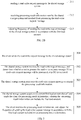
- FIG. 2A shows a flowchart illustrating a method for controlling a client in accordance with an aspect of the present disclosure.
- the method includes:
- step 201 receiving a read-write request messages from a client.
- step 202 after processing the read-write request message, acquiring a current first load amount of the shared storage system.
- step 203 sending processing result information resulted from processing the read-write request message to the client, wherein the processing result information includes the first load amount, the first load amount is used to make the client to adjust frequency of sending the read-write request message to the shared storage system.
- the processing result information may cause the client to adjust frequency of sending the read-write request message to the shared storage system according to the first load amount. For example, when the first load amount is above a preset threshold, the client may lower the frequency of sending the read-write request message to the shared storage system.
- the shared storage system can acquire the current first load amount after processing the read-write request message from the clients, and attach the first load amount to the processing result information sent to the clients.
- the client can adjust the frequency of sending the read-write request message to the shared storage system in accordance with the first load amount.
- the abnormal clients can adjust the frequency of sending the read-write request message to the shared storage system in accordance with the first load amount. That is, the abnormal clients can adjust the amount of load generated by the abnormal clients. In this manner, the load generated by the abnormal clients can be reduced, so that the clients can generate the load smoothly, thereby protecting the shared storage system from degraded availability due to abnormal load generated by the few clients.
- FIG. 2B shows a flowchart illustrating a method for controlling a client in accordance with another aspect of the present disclosure.
- the method includes:
- step 211 sending a read-write request message to the shared storage system.
- step 212 receiving processing result information sent by the shared storage system and resulted from processing the read-write request message, wherein the processing result information includes a current first load amount of the shared storage system.
- step 213 adjusting frequency of sending the read-write request message to the shared storage system in accordance with the first load amount.
- the client can receive the processing result information which carries the current first load amount of the shared storage system and is sent by the shared storage system, and adjust the frequency of sending the read-write request message to the shared storage system in accordance with the first load amount.
- the abnormal clients are caused to adjust the frequency of sending the read-write request message to the shared storage system in accordance with the first load amount, so as to adjust the amount of load generated by the abnormal clients. In this manner, the load generated by the abnormal clients can be reduced during a fixed time period, so that each of the clients can generate the load smoothly, thereby protecting the shared storage system from degraded availability due to the abnormal load generated by the few clients.
- Fig. 3 shows a flowchart illustrating a method for controlling a client in accordance with another aspect of the present disclosure.
- the method may include at least following steps:
- step 301 the client sends the read-write request message to the shared storage system.
- the read-write request message includes a read request message or a write request message.
- the client can send a read request message to the shared storage system, wherein the read request message carries information, such as, a file identifier and a beginning location of the stored file, and an amount of data to be read by the client.
- the stored file corresponding to the file identifier thereof can be stored in the shared storage system
- the data which is to be read by the client can be stored in the stored file
- the beginning location of the data to be read by the client and stored in the stored file can be the beginning location carried in the read request message.
- the client can send a write request message to the shared storage system, wherein the write request message carries information, such as, a file identifier and a beginning location of the stored file, and the data to be written by the client.
- the stored file corresponding to the file identifier thereof can be stored in the shared storage system, and the client may need to store the data to be written by the client in the stored file from the beginning location carried in the write request message.
- step 302 the shared storage system receives the read-write request message, and determines whether or not to process the read-write request message. If the read-write request message will be processed, step 303 is executed.
- the shared storage system extracts the amount of data to be read from the read request message.
- the amount of the data to be read exceeds a preset first load threshold
- a current second load amount of the shared storage system can be acquired.
- the second load amount is less than a preset second load threshold
- the amount of the data to be read does not exceed the preset first load threshold
- the amount of the data to be read exceeds the preset first load threshold and the second load amount is larger than or equal to a preset second load threshold, it is determined that the read request message will not be processed.
- the shared storage system extracts the data to be written from the write request message, and calculates the amount of the data to be written.
- the amount of the data to be written exceeds the preset first load threshold
- the current second load amount of the shared storage system can be acquired.
- the second load amount is less than the preset second load threshold, it is determined that the write request message can be processed.
- the amount of the data to be written does not exceed the preset first load threshold, it is determined that the write request message can be processed.
- the amount of the data to be write exceeds the preset first load threshold and the second load amount is larger than or equal to a preset second load threshold, it is determined that the write request message will not be processed.
- the shared storage system can also acquire the current second load amount.
- the second load amount is less than the preset second load threshold, it indicates that the current load amount of the shared storage system is low, and sufficient resources can be utilized to process the load generated by the clients.
- the shared storage system may not refuse the read-write request messages from the clients, and the read-write request messages from the clients can still be processed, i.e., the read or write request from the clients may still be processed.
- the operation of acquiring the current second load amount of the shared storage system may include:
- the shared storage system can acquire each of the read request messages received currently, acquire a first accumulated amount by accumulating the amount of the data to be read carried in each of the read request messages; acquire each of the write request messages received currently, calculate the amount of the data to be written carried in each of the write request messages, acquire a second accumulated amount by accumulating the amount of the data to be written carried in each of the write request messages; and acquire the current second load amount of the shared storage system by summing the first accumulated amount and the second accumulated amount.
- the shared storage system can send a notification message to the client, to notify the client.
- the client upon receiving the notification message, can stop sending the read-write request message to the shared storage system. Alternatively, the client can send the read-write request message to the shared storage system again.
- step 303 the shared storage system processes the read-write request message to acquire the processing result information.
- the shared storage system can extract information, such as, the file identifier and the beginning location of the stored file, and the amount of data to be read, from the read request message, and acquire the stored file corresponding to the file identifier thereof.
- the data to be read can be read from the beginning location of the stored file, such that, the processing result information resulted from processing the read request message may be the data to be read.
- the shared storage system can extract information, such as, the file identifier and the beginning location of the stored file, and the amount of data to be written, from the write request message, acquire the stored file corresponding to the file identifier thereof, and store the data to be written into the stored file from beginning location.
- the processing result information acquired by processing the write request message can be write success information.
- the processing result information acquired by processing the write request message can be write failure information.
- step 304 the shared storage system acquires the current first load amount thereof, and sends the client the processing result information, wherein the processing result information can include the first load amount.
- the shared storage system can attach the first load amount into the processing result information.
- the first load amount can be inserted into the processing result information.
- the operation of acquiring the current first load amount of the shared storage system may include:
- the shared storage system can use the second load amount acquired in step 302 as the current first load amount. As the time interval between a time point of performing step 304 and a time point of performing step 302 is small, the second load amount acquired in step 302 can be used as the current first load amount.
- the current first load amount can be calculated again in step 304, which includes:
- the shared storage system can acquire each of read request messages received currently, acquire a third accumulated amount by accumulating the amount of the data to be read carried by each of the read request messages; acquire each of write request messages received currently, calculate the amount of the data to be written carried by each of write request messages, acquire a fourth accumulated amount by accumulating the amount of the data to be written carried by each of the write request messages; acquire the current first load amount of the shared storage system by summing the third accumulated amount and the fourth accumulated amount.
- the shared storage system can send the data to be read to the client, and the data to be read can include the first load amount.
- the first load amount can be inserted in a location which is prior to the beginning location or behind the end location of the data to be read.
- the first load amount can be inserted into a preset location of the data to be read.
- the first load amount can be inserted into a location between the n th byte and the (n+1) th byte calculated from the beginning location of the data to be read.
- the first load amount can occupy m byte(s).
- a preset number of bits can be added for the first load amount when a data length of the first load amount is less that m byte(s).
- n can be an integer larger than or equal to 1, such as 1, 2, 3, 4 or 5 and so forth;
- m can be an integer larger than or equal to 1, such as 1, 2, 3, 4 or 5 and so forth.
- the inserted location into which the first load amount is inserted, of the data to be read can be scheduled between the shared storage system and the client, or the inserted location can be a default location agreed by both sides.
- the shared storage system can send the write success information to the client.
- the write success information can include the first load amount.
- the shared storage system can send the write failure information to the client.
- the write failure information can include the first load amount.
- the write success information can carry the first load amount.
- the first load amount can be carried in the reserved field of the write success information.
- a new filed can be added into the write success information, and the first load amount can be carried in the new field of the write success information.
- the write failure information can carry the first load amount.
- the first load amount can be carried in the reserved field of the write failure information.
- a new filed can be added into the write failure information, and the first load amount can be carried in the new field of the write failure information.
- the first load amount can be not included into the processing result information.
- the shared storage system can send the processing result information and the first load amount simultaneously to the client.
- the shared storage system can send the processing result information and the first load amount separately to the client.
- the client receives the processing result information, and adjusts the frequency of sending the read-write request message in accordance with the first load amount included in the processing result information.
- the client device may adjust the time period for sending the read-write request message or skip sending one or more read-write request messages to the shared storage system.
- the client can receive the processing result information, and extract the current first load amount of the shared storage system from the processing result information.
- the client can receive the processing result information and the first load amount.
- the frequency of sending the read-write request message to the shared storage system can be reduced.
- the frequency of sending the read-write request message to the shared storage system can be increased or unchanged.
- extracting the first load amount can includes:
- the inserted location scheduled between the shared storage system and the client or the default inserted location can be acquired, and the first load amount can be extracted in accordance with the acquired inserted location.
- m bytes of data can be read as the first load amount from the beginning location or the end location of the data to be read.
- the first load amount when the first load amount is inserted into a location behind the n th byte calculated from the beginning location of the data to be read by schedule between the shared storage system and the client or by default, m bytes of data between the n th byte and the (n+m) th byte calculated from the beginning location of the data to be read and can be extracted as the first load amount.
- the first load amount can be extracted from the reserved field of the write success information or the write failure information; alternatively, the first load amount can be extracted from the new field of the write success information or the write failure information.
- the abnormal clients generate a large amount of load in a period of time.
- the abnormal clients continue to send read-write request message to the shared storage system when the abnormal clients determine that the first load amount does not exceed the preset second load threshold, which indicates an idle shared storage system, such that the shared storage system can process the generated load timely.
- the abnormal clients can reduce the frequency of sending read-write request message to the shared storage system when the abnormal clients determine that the first load amount exceeds the preset second load threshold, which indicates an overloaded shared storage system. In this manner, before the shared storage system is overloaded, the load generated by the abnormal clients can be reduced, and the load pressure of the shared storage system can be lowered.
- the shared storage system when the shared storage system receives the read-write request message from the client, and the amount of the data to be read by the client or the amount of the data to be written by the client exceeds the preset first load threshold, the current second load amount can be acquired.
- the second load amount is less than the preset second load threshold, it indicates that the shared storage system is idle, and the read-write request message of the client can be processed.
- the shared storage system can also acquire the current first load amount after processing the read-write request message from the client, and attach the first load amount into the processing result information sent to the client.
- the client can adjust the frequency of sending the read-write request message to the shared storage system in accordance with the first load amount.
- the load generated by the abnormal clients can be reduced, such that the clients can generate the load smoothly, thereby preventing the shared storage system from availability reduction due to the abnormal load caused by the few clients.
- the apparatus may include: a processor; and a memory configured to store executable instructions executed by the processor; wherein, the processor is configured to receive a read-write request message sent by the client; process the read-write request message; after processing the read-write request message, acquire a current first load amount of the shared storage system; and send processing result information resulted from processing the read-write request message to the client, wherein the processing result information includes the first load amount, and the first load amount is used to enable the client to adjust frequency of sending the read-write request message to the shared storage system.
- the read-write request message includes a read request message, wherein the read request message carries an amount of data to be read by the client;
- the processor is further configured to, acquire a current second load amount of the shared storage system when the data amount of the data to be read exceeds a preset first load threshold, and process the read request message when the second load amount is less than a preset second load threshold.
- the read-write request message includes a write request message, and the write request message carries data to be written by the client.
- the processor is further configured to, acquire the current second load amount of the shared storage system when the amount of the data to be written exceeds the preset first load threshold, and process the write request message when the second load amount is less than a second load threshold.
- the shared storage system can also acquire the current first load amount after processing the read-write request message from the client, and attach the first load amount into the processing result information sent to the client.
- the client can adjust the frequency of sending the read-write request message to the shared storage system in accordance with the first load amount.
- the abnormal clients can adjust the frequency of sending the read-write request message to the shared storage system in accordance with the first load amount, so as to adjust the amount of load generated by the abnormal clients. In this manner, the load generated by the abnormal clients can be reduced, such that the clients can generate the load smoothly, thereby preventing the shared storage system from availability reduction due to the abnormal load caused by the few clients.
- the apparatus may include: a processor; and a memory configured to store executable instructions executed by the processor; wherein, the processor is configured to: send a read-write request message to a shared storage system; receive processing result information sent by the shared storage system and resulted from processing the read-write request message, wherein the processing result information includes a current first load amount of the shared storage system; and adjust frequency of sending the read-write request message to the shared storage system in accordance with the first load amount.
- the processor is further configured to reduce the frequency of sending the read-write request message to the shared storage system, when the first load amount exceeds a preset second load threshold.
- the client by receiving the processing result information which carries the first load amount of the shared storage system, the client can adjust the frequency of sending the read-write request message to the shared storage system in accordance with the first load amount. Before the shared storage system is overloaded, the load generated by the abnormal clients can be reduced, thereby preventing the shared storage system from availability reduction due to the abnormal load caused by the few clients.
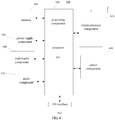
- Fig. 4 is a block diagram of an apparatus 600 in accordance with an exemplary embodiment.
- the apparatus 600 may be the clients in Fig. 1 and Fig. 3 .
- the apparatus 600 may be a mobile phone, a computer, a digital broadcast terminal, a messaging device, a game console, a tablet device, a medical device, a fitness device, a personal digital assistant, and the like.
- the apparatus 600 may include one or more of the following components: a processing component 602, a memory 604, a power supply component 606, a multimedia component 608, an audio component 610, an input/output (I/O) interface 612, a sensor component 614, and a communication component 616.
- the processing component 602 generally can control the overall operation of the apparatus 600, such as operations associated with display, phone call, data communication, camera operation, and recording operations.
- the processing component 602 may include one or more processors 620 to execute instructions, to complete all or part of the steps described above.
- the processing component 602 may include one or more modules to facilitate the interactions between the processing component 602 and other components.
- the processing component 602 may include a multimedia module to facilitate interaction between the multimedia component 608 and the processing component 602.
- the memory 604 can be configured to store various types of data to support the operation of the apparatus 600. Examples of such data can include instructions of any application or method, contact data, phonebook data, messages, pictures, videos, and the like, that operates on the apparatus 600.
- the memory 604 may be implemented by any type of volatile or nonvolatile memory device or a combination thereof, such as static random access memory (SRAM), electrically erasable programmable read only memory (EEPROM), erasable programmable read only memory (EPROM), programmable read only memory (PROM), read only memory (ROM), magnetic memory, flash memory, disk or CD.
- SRAM static random access memory
- EEPROM electrically erasable programmable read only memory
- EPROM erasable programmable read only memory
- PROM programmable read only memory
- ROM read only memory
- magnetic memory magnetic memory
- flash memory disk or CD.
- the power supply component 606 can provide power to the various components of the apparatus 600.
- the power supply component 806 may include a power management system, one or more power supplies, and other components associated with generating, managing, and distributing power for the apparatus 600.
- the multimedia component 608 may include a screen providing an output interface between the apparatus 600 and the user.
- the screen may include a liquid crystal display (LCD) and a touch panel (TP). If the screen includes a touch panel, the screen may be implemented as a touch screen to receive input signals from the user.
- the touch panel can include one or more touch sensors to sense touches, slide, and gestures on touch panels. The touch sensors may sense not only the boundary of the touch or slide actions, but also the duration and pressure associated with the touch or slide operation.
- the multimedia component 808 may include a front camera and/or a rear camera. When the apparatus 600 is at an operating mode, such as a shooting mode or a video mode, the front camera and/or the rear camera can receive external multimedia data. Each front camera and rear camera can be a fixed optical lens system or have focal length and optical zoom capability.
- the audio component 610 can be configured to output and/or input an audio signal.
- the audio component 610 can include a microphone (MIC) that is configured to receive external audio signals when the apparatus 600 is in the operating mode, such as a call mode, a recording mode, and a voice recognition mode.
- the received audio signals may be further stored in the memory 604 or transmitted via the communication component 616.
- the audio component 610 can also include a speaker for outputting the audio signals.
- the I/O interface 612 can provide the interface between the processing component 602 and a peripheral interface module, the peripheral interface module may be a keyboard, a mouse, buttons, or the like.
- the buttons may include, but are not limited to, a home button, a volume button, a start button, and a lock button.
- the sensor component 614 may include one or more sensors for providing condition assessments of the various aspects of the apparatus 600.
- the sensor component 614 may detect the on/off state of the apparatus 600, the relative positioning of the components, such as the components can be the display and keypad of the apparatus 600, and the sensor component 614 may also detect position changes of the apparatus 600 or any component thereof, presence or absence of the user contact with the apparatus 600, orientation, acceleration/deceleration, or the temperature changes of the apparatus 600.
- the sensor component 614 may include an approaching sensor configured to detect the presence of a nearby object without any physical contact.
- the sensor component 614 may also include a light sensor, such as a CMOS or CCD image sensor, for imaging applications.
- the sensor component 614 may also include acceleration sensors, gyro sensors, magnetic sensors, pressure sensors, or temperature sensors.
- the communication component 616 can be configured to facilitate wired or wireless communication between the apparatus 600 and other apparatuses.
- the apparatus 600 may access a wireless network based on a communication standard, such as WiFi, 2G or 3G, or a combination thereof.
- the communication component 616 can receive broadcast signals or broadcast-related information from an external broadcast management system via broadcast channels.
- the communication component 616 can also include a near field communication (NFC) module to facilitate short-range communication.
- the NFC module may be implemented based on radio frequency identification (RFID) technology, infrared data association (IrDA) technology, ultra-wideband (UWB) technology, Bluetooth (BT) technology and other techniques.
- RFID radio frequency identification
- IrDA infrared data association
- UWB ultra-wideband
- Bluetooth Bluetooth
- the apparatus 600 may be implemented by one or more application specific integrated circuits (ASICs), digital signal processors (DSPs), digital signal processing devices (DSPDs), programmable logic devices (PLDs), field programmable gate array (FPGA), a controller, a microcontroller, a microprocessor, or other electronic components for performing the method described above.
- ASICs application specific integrated circuits
- DSPs digital signal processors
- DSPDs digital signal processing devices
- PLDs programmable logic devices
- FPGA field programmable gate array
- controller a microcontroller, a microprocessor, or other electronic components for performing the method described above.
- non-transitory computer readable storage medium including instructions, such as the memory 604 including the instructions.
- the instructions may be executed by the processor 620 of the apparatus 600 to complete the method described above.
- the non-transitory computer readable storage medium may be a ROM, a random access memory (RAM), a CD-ROM, a magnetic tape, a floppy disk, an optical data storage device, etc.
- a non-transitory computer readable storage medium may include instructions that, when executed by the processor of the apparatus 600, cause the apparatus 600 to perform the method for controlling a client.
- the method includes:
- adjusting the frequency of sending the read-write request message to the shared storage system in accordance with the first load amount includes: when the first load amount exceeds a preset second load threshold, reducing the frequency of sending the read-write request message to the shared storage system.
- Fig. 5 is a structural schematic diagram of an apparatus 700 for controlling a client shown in accordance with an exemplary embodiment.
- the apparatus 700 may be the shared storage system in the embodiments shown in Fig. 1 and Fig. 3 .
- the apparatus 700 can be provided as a server.
- the apparatus 700 includes a processing component 722 which further includes one or more processors and a memory resource which is represented by a memory 732.
- the memory resource is used to save the instructions, such as applications, executed by the processing component 722.
- the applications saved in the memory 732 could include one or more than one modules, each of which corresponds to a set of instructions.
- the processing component 722 is configured to execute instructions, so as to perform the method for controlling clients above.
- the apparatus 700 could also include a power supply component 726, which is configured to manage the power supply of apparatus 700, a wired or wireless network interface 750, which is configured to connect the apparatus 700 to network, and an input and output (I/O) interface 758.
- the apparatus 700 is capable of operating operating systems saved in the memory 732 such as Windows ServerTM, Mac OS XTM, UnixTM, LinuxTM and FreeBSDTM, or the like.
Landscapes
- Engineering & Computer Science (AREA)
- Theoretical Computer Science (AREA)
- Physics & Mathematics (AREA)
- General Engineering & Computer Science (AREA)
- General Physics & Mathematics (AREA)
- Human Computer Interaction (AREA)
- Software Systems (AREA)
- Computer Networks & Wireless Communication (AREA)
- Signal Processing (AREA)
- Information Transfer Between Computers (AREA)
- Computer And Data Communications (AREA)
Abstract
Description
- The present invention relates to the field of communication, and more particularly, to a method and apparatus for managing a shared storage system by controlling a client in the shared storage system.
- A shared storage system is commonly used for big data applications and may be accessed by multiple clients. The clients store data on the shared storage system, and subsequently read the data from the shared storage system as necessary. Since the shared storage system is commonly accessed by the multiple clients, it is necessary to control read requests and write requests from the multiple clients, to prevent a large number of read requests and write requests overloading the shared storage system.
- In the related art, the shared storage system can preset a load threshold, and then the shared storage system can monitor the load generated by each client. When a client generates a load that is greater than the load threshold, the shared storage system rejects read requests and write requests initiated by the client, so that the shared storage system can avoid an excessive overall load.
- The present invention provides a method and an apparatus for managing a shared storage system according to the independent claims. The solutions are as follows.
- According to a first aspect of the present invention, a method for managing a shared storage system is provided. This method includes: receiving a read-write request messages sent by a client device; processing the read-write request message; after processing the read-write request message, acquiring a current first load amount of the shared storage system; sending processing result information resulted from processing the read-write request message to the client device, wherein the processing result information includes the first load amount, and the first load amount is used to make the client device adjust frequency of sending the read-write request message to the shared storage system.
- In some embodiments, the read-write request message includes a read request message, and the read request message carries an amount of data to be read by the client device; The method further includes:
- when the amount of the data to be read exceeds a preset first load threshold, acquiring a current second load amount of the shared storage system, and when the second load amount is less than a preset second load threshold, processing the read request message.
- In some embodiments, the read-write request message includes a write request message, and the write request message carries data to be written by the client device; The method further includes:
- when an amount of the data to be written exceeds a preset first load threshold, acquiring a current second load amount of the shared storage system, and when the second load amount is less than a preset second load threshold, processing the write request message.
- In a preferred embodiment, the method according to the first aspect of the present invention further comprises:
- acquiring each read request message received currently, acquiring a first accumulated amount by accumulating a first amount of data to be read in each read request message;
- acquiring each write request message received currently, calculating a second amount of data to be written in each write request message, acquiring a second accumulated amount by accumulating the second amount of data to be written in each write request message; and
- acquiring a current second load amount of the shared storage system by summing the first accumulated amount and the second accumulated amount.
- In this embodiment, it is preferred if the method further comprises:
- acquiring each unprocessed read request message after processing at least one read-write request message, acquiring a third accumulated amount by accumulating a third amount of data to be read carried by each unprocessed read request message;
- acquiring each unprocessed write request message after processing at least one read-write request message, calculating a fourth amount of data to be written in each unprocessed write request message, acquiring a fourth accumulated amount by accumulating the fourth amount of data to be written carried by each unprocessed write request message; and
- acquiring the current first load amount of the shared storage system by summing the third accumulated amount and the fourth accumulated amount.
- According to a second aspect of the present disclosure, a method for managing a shared storage system is provided. This method includes: sending a read-write request message to the shared storage system; receiving processing result information sent by the shared storage system and resulted from processing the read-write request message, wherein the processing result information includes a current first load amount of the shared storage system; and adjusting frequency of sending the read-write request message to the shared storage system in accordance with the first load amount.
- In some embodiments, adjusting the frequency of sending the read-write request messages to the shared storage system in accordance with the first load amount includes:
- when the first load amount exceeds a preset second load threshold, reducing the frequency of sending the read-write request message to the shared storage system.
- According to a third aspect of the present invention, an apparatus for managing a shared storage system is provided. This apparatus includes: a processor; and a memory configured to store executable instructions executed by the processor; wherein, the processor is configured to: receive a read-write request message sent by a client device; process the read-write request message; acquire a current first load amount of the shared storage system after processing the read-write request message; send processing result information resulted from processing the read-write request messages to the client device, the processing result information includes the first load amount, and the first load amount is used to make the client device adjust frequency of sending the read-write request message to the shared storage system.
- In some embodiments, the read-write request message includes a read request message, and the read request message carries an amount of data to be read by the client device;
- the processor is further configured to acquire a current second load amount of the shared storage system when the amount of the data to be read exceeds a preset first load threshold, and process the read request message when the second load amount is less than a preset second load threshold.
- In a preferred embodiment of the apparatus according to the third aspect of the present invention, the processor is further configured to:
- acquire each read request message received currently, acquire a first accumulated amount by accumulating a first amount of data to be read in each read request message;
- acquire each write request message received currently, calculate a second amount of data to be written in each write request message, acquire a second accumulated amount by accumulating the second amount of data to be written in each write request message; and
- acquire a current second load amount of the shared storage system by summing the first accumulated amount and the second accumulated amount.
- In this embodiment it is preferred if the processor is further configured to:
- acquire each unprocessed read request message after processing at least one read-write request message, acquire a third accumulated amount by accumulating a third amount of data to be read carried by each unprocessed read request message;
- acquire each unprocessed write request message after processing at least one read-write request message, calculate a fourth amount of data to be written in each unprocessed write request message, acquire a fourth accumulated amount by accumulating the fourth amount of data to be written carried by each unprocessed write request message; and
- acquire the current first load amount of the shared storage system by summing the third accumulated amount and the fourth accumulated amount.
- According to a fourth aspect of the present disclosure, an apparatus for controlling a client is provided. This apparatus includes: a processor; and a memory configured to store executable instructions executed by the processor; wherein, the processor is configured to: send a read-write request message to a shared storage system; receive processing result information sent by the shared storage system and resulted from processing the read-write request message, the processing result information includes a current first load amount of the shared storage system; and adjust frequency of sending the read-write request messages to the shared storage system in accordance with the first load amount.
- In some embodiments, the processor is further configured to reduce the frequency of sending the read-write request message to the shared storage system, when the first load amount exceeds a preset second load threshold.
- According to a fifth aspect of the present invention, a non-transitory computer readable storage medium, storing instructions that, when executed by one or more processors, cause the one or more processors to perform the method for controlling a client mentioned in the first aspect.
- According to a sixth aspect of the present disclosure, a non-transitory computer readable storage medium, storing instructions that, when executed by one or more processors, cause the one or more processors to perform the method for controlling a client mentioned in the second aspect.
- The technical solutions provided by the present disclosure may bring the following benefits:
- The shared storage system can acquire the current first load amount after processing the read-write request message from the client, and attach the first load amount into the processing result information sent to the client. Thus, the client can adjust the frequency of sending the read-write request message to the shared storage system in accordance with the first load amount. Before the shared storage system is overloaded, the load generated by the abnormal clients can be reduced and the clients can generate the load smoothly, so as to prevent the problem of overloading the shared storage system.
- Understandably, the foregoing general description and the following detailed description are only exemplary and explanatory, and do not limit the scope of the present invention.
- The drawings herein are incorporated in and constitute a part of this specification, show the embodiments consistent with the present disclosure, and together with the description, serve to explain the principles of the present disclosure.
-
Fig. 1 is a diagram illustrating a network architecture in accordance with an aspect of the present disclosure. -
Fig. 2A is a flowchart illustrating a method for controlling a client in accordance with an aspect of the present disclosure. -
Fig. 2B is a flowchart illustrating a method for controlling a client in accordance with an aspect of the present disclosure. -
Fig. 3 is a flowchart illustrating a method for controlling a client in accordance with an aspect of the present disclosure. -
Fig. 4 is a block diagram illustrating an apparatus for controlling a client in accordance with an aspect of the present disclosure. -
Fig. 5 is a block diagram illustrating an apparatus for controlling a client in accordance with an aspect of the present disclosure. - The embodiments of the present disclosure are illustrated openly and clearly in the above figures, and are described in more detail subsequently. The figures and description are not intended to limit the scope of the present invention by any means, but rather to describe concept of the present disclosure for those skilled in the art by referring to the specific embodiments.
- Hereinafter, exemplary embodiments can be described in detail, and examples thereof are shown in the figures. In the following description when referring to the figures, unless otherwise indicated, the same numerals in the different figures denote the same or similar elements. The embodiments described in the following exemplary embodiments do not represent all the embodiments consistent with the present disclosure. Rather, they are merely examples of the apparatus and method consistent with some aspects of the present invention as defined in the appended claims.
- The amount of load generated by a client can be referred as the amount of data which is read by the client from a shared storage system. The amount of the data to be read can be sent by the client through a read request message to the shared storage system. Alternatively, the amount of load generated by the client can be referred as the amount of data which is to be written by the client into the shared storage system. The data to be written can be sent by the client through a write request message to the shared storage system.
- Currently, when the amount of load generated by a client is greater than the load threshold, the shared storage system can reject the read-write request message initiated by the client. However, when there are a large number of requests from the clients, although the amount of load generated by each client is less than the load threshold, frequently sending by these clients the read-write request messages to the shared storage system can overload the shared storage system.
- Additionally, in some scenarios, abnormal actions from a few clients can cause a large amount of load generated by each of the few clients, and the large amount of load generated may exceed the load threshold. However, in these scenarios, the shared storage system may be idle and have sufficient resources to process the load generated by the clients. Since the amount of load generated by the clients exceeds the load threshold, a denial may be made by the shared storage system, resulting in the read-write requests from the clients cannot be processed efficiently.
- Referring now to
Fig. 1 , which shows a diagram illustrating a network architecture in accordance with an aspect of the present disclosure. The network architecture comprises: a shared storage system and n clients, wherein n is an integer greater than or equal to 1, each of the n clients can establish a long connection with the shared storage system. - Each of the clients may send data to the shared storage system through the long connection therewith, such that the shared storage system can store the data. Alternatively, each of the clients may read the data from the shared storage system through the long connection therewith.
- The shared storage system may be HDFS / HBASW clusters, or NAS / SAN devices, etc.
- Referring now to
Fig. 2A , which shows a flowchart illustrating a method for controlling a client in accordance with an aspect of the present disclosure. The method includes: - In
step 201, receiving a read-write request messages from a client. - In
step 202, after processing the read-write request message, acquiring a current first load amount of the shared storage system. - In
step 203, sending processing result information resulted from processing the read-write request message to the client, wherein the processing result information includes the first load amount, the first load amount is used to make the client to adjust frequency of sending the read-write request message to the shared storage system. The processing result information may cause the client to adjust frequency of sending the read-write request message to the shared storage system according to the first load amount. For example, when the first load amount is above a preset threshold, the client may lower the frequency of sending the read-write request message to the shared storage system. - In one or more embodiments, the shared storage system can acquire the current first load amount after processing the read-write request message from the clients, and attach the first load amount to the processing result information sent to the clients. Thus, the client can adjust the frequency of sending the read-write request message to the shared storage system in accordance with the first load amount. Before the shared storage system is overloaded, the abnormal clients can adjust the frequency of sending the read-write request message to the shared storage system in accordance with the first load amount. That is, the abnormal clients can adjust the amount of load generated by the abnormal clients. In this manner, the load generated by the abnormal clients can be reduced, so that the clients can generate the load smoothly, thereby protecting the shared storage system from degraded availability due to abnormal load generated by the few clients.
- Referring now to
Fig. 2B , which shows a flowchart illustrating a method for controlling a client in accordance with another aspect of the present disclosure. The method includes: - In
step 211, sending a read-write request message to the shared storage system. - In
step 212, receiving processing result information sent by the shared storage system and resulted from processing the read-write request message, wherein the processing result information includes a current first load amount of the shared storage system. - In
step 213, adjusting frequency of sending the read-write request message to the shared storage system in accordance with the first load amount. - In one or more embodiments, the client can receive the processing result information which carries the current first load amount of the shared storage system and is sent by the shared storage system, and adjust the frequency of sending the read-write request message to the shared storage system in accordance with the first load amount. Before the shared storage system is overloaded, the abnormal clients are caused to adjust the frequency of sending the read-write request message to the shared storage system in accordance with the first load amount, so as to adjust the amount of load generated by the abnormal clients. In this manner, the load generated by the abnormal clients can be reduced during a fixed time period, so that each of the clients can generate the load smoothly, thereby protecting the shared storage system from degraded availability due to the abnormal load generated by the few clients.
- Referring now to
Fig. 3 , which shows a flowchart illustrating a method for controlling a client in accordance with another aspect of the present disclosure. The method may include at least following steps: - In step 301: the client sends the read-write request message to the shared storage system.
- The read-write request message includes a read request message or a write request message.
- When the client needs to read data from the shared storage system, the client can send a read request message to the shared storage system, wherein the read request message carries information, such as, a file identifier and a beginning location of the stored file, and an amount of data to be read by the client. Here, the stored file corresponding to the file identifier thereof can be stored in the shared storage system, the data which is to be read by the client can be stored in the stored file, and the beginning location of the data to be read by the client and stored in the stored file can be the beginning location carried in the read request message.
- When the client needs to store data in the shared storage system, the client can send a write request message to the shared storage system, wherein the write request message carries information, such as, a file identifier and a beginning location of the stored file, and the data to be written by the client. Here, the stored file corresponding to the file identifier thereof can be stored in the shared storage system, and the client may need to store the data to be written by the client in the stored file from the beginning location carried in the write request message.
- In
step 302, the shared storage system receives the read-write request message, and determines whether or not to process the read-write request message. If the read-write request message will be processed,step 303 is executed. - When the read-write request message includes a read request message, in the current step, the shared storage system extracts the amount of data to be read from the read request message. When the amount of the data to be read exceeds a preset first load threshold, a current second load amount of the shared storage system can be acquired. When the second load amount is less than a preset second load threshold, it is determined that the read request message can be processed. When the amount of the data to be read does not exceed the preset first load threshold, it is determined that the read request message can be processed. In addition, when the amount of the data to be read exceeds the preset first load threshold and the second load amount is larger than or equal to a preset second load threshold, it is determined that the read request message will not be processed.
- When the read-write request message includes a write request message, in the current step, the shared storage system extracts the data to be written from the write request message, and calculates the amount of the data to be written. When the amount of the data to be written exceeds the preset first load threshold, the current second load amount of the shared storage system can be acquired. When the second load amount is less than the preset second load threshold, it is determined that the write request message can be processed. When the amount of the data to be written does not exceed the preset first load threshold, it is determined that the write request message can be processed. In addition, when the amount of the data to be write exceeds the preset first load threshold and the second load amount is larger than or equal to a preset second load threshold, it is determined that the write request message will not be processed.
- When the amount of the data to be written or the amount of the data to be read exceeds the preset first load threshold, it indicates that the clients generate a large amount of load. In order to process the read-write request message from the client, the shared storage system can also acquire the current second load amount. When the second load amount is less than the preset second load threshold, it indicates that the current load amount of the shared storage system is low, and sufficient resources can be utilized to process the load generated by the clients. Thus, when the few abnormal clients generate a large amount of load, the shared storage system may not refuse the read-write request messages from the clients, and the read-write request messages from the clients can still be processed, i.e., the read or write request from the clients may still be processed.
- In some embodiments, the operation of acquiring the current second load amount of the shared storage system may include:
- the shared storage system can acquire each of the read request messages received currently, acquire a first accumulated amount by accumulating the amount of the data to be read carried in each of the read request messages; acquire each of the write request messages received currently, calculate the amount of the data to be written carried in each of the write request messages, acquire a second accumulated amount by accumulating the amount of the data to be written carried in each of the write request messages; and acquire the current second load amount of the shared storage system by summing the first accumulated amount and the second accumulated amount.
- In some embodiments, when it is determined that the write request message is not processed, the shared storage system can send a notification message to the client, to notify the client.
- The client upon receiving the notification message, can stop sending the read-write request message to the shared storage system. Alternatively, the client can send the read-write request message to the shared storage system again.
- In
step 303, the shared storage system processes the read-write request message to acquire the processing result information. - When the read-write request message is the read request message, in the current step, the shared storage system can extract information, such as, the file identifier and the beginning location of the stored file, and the amount of data to be read, from the read request message, and acquire the stored file corresponding to the file identifier thereof. In accordance with the amount of the data to be read, the data to be read can be read from the beginning location of the stored file, such that, the processing result information resulted from processing the read request message may be the data to be read.
- When the read-write request message is the write request message, in the current step, the shared storage system can extract information, such as, the file identifier and the beginning location of the stored file, and the amount of data to be written, from the write request message, acquire the stored file corresponding to the file identifier thereof, and store the data to be written into the stored file from beginning location. When the data to be written is stored successfully, the processing result information acquired by processing the write request message can be write success information. When the data to be written is not stored successfully, the processing result information acquired by processing the write request message can be write failure information.
- In
step 304, the shared storage system acquires the current first load amount thereof, and sends the client the processing result information, wherein the processing result information can include the first load amount. - The shared storage system can attach the first load amount into the processing result information. In practical implementation, the first load amount can be inserted into the processing result information.
- The operation of acquiring the current first load amount of the shared storage system may include:
- The shared storage system can use the second load amount acquired in
step 302 as the current first load amount. As the time interval between a time point of performingstep 304 and a time point of performingstep 302 is small, the second load amount acquired instep 302 can be used as the current first load amount. - Alternatively, to make the current first load amount to be accurate and timely, the current first load amount can be calculated again in
step 304, which includes: - the shared storage system can acquire each of read request messages received currently, acquire a third accumulated amount by accumulating the amount of the data to be read carried by each of the read request messages; acquire each of write request messages received currently, calculate the amount of the data to be written carried by each of write request messages, acquire a fourth accumulated amount by accumulating the amount of the data to be written carried by each of the write request messages; acquire the current first load amount of the shared storage system by summing the third accumulated amount and the fourth accumulated amount.
- When the read-write request message is the read request message, the shared storage system can send the data to be read to the client, and the data to be read can include the first load amount. In some embodiments, in a specific implementation, the first load amount can be inserted in a location which is prior to the beginning location or behind the end location of the data to be read. Alternatively, the first load amount can be inserted into a preset location of the data to be read. For example, the first load amount can be inserted into a location between the nth byte and the (n+1)th byte calculated from the beginning location of the data to be read.
- Here, the first load amount can occupy m byte(s). A preset number of bits can be added for the first load amount when a data length of the first load amount is less that m byte(s). n can be an integer larger than or equal to 1, such as 1, 2, 3, 4 or 5 and so forth; m can be an integer larger than or equal to 1, such as 1, 2, 3, 4 or 5 and so forth.
- Here, the inserted location into which the first load amount is inserted, of the data to be read can be scheduled between the shared storage system and the client, or the inserted location can be a default location agreed by both sides.
- When the read-write request message is the write request message, the shared storage system can send the write success information to the client. The write success information can include the first load amount. Alternatively, the shared storage system can send the write failure information to the client. The write failure information can include the first load amount.
- The write success information can carry the first load amount. In a specific implementation, when the write success information includes a reserved field, the first load amount can be carried in the reserved field of the write success information. Alternatively, a new filed can be added into the write success information, and the first load amount can be carried in the new field of the write success information.
- Similarly, the write failure information can carry the first load amount. In a specific implementation, when the write failure information includes a reserved field, the first load amount can be carried in the reserved field of the write failure information. Alternatively, a new filed can be added into the write failure information, and the first load amount can be carried in the new field of the write failure information.
- In some embodiments, in
step 304, the first load amount can be not included into the processing result information. The shared storage system can send the processing result information and the first load amount simultaneously to the client. Alternatively, the shared storage system can send the processing result information and the first load amount separately to the client. - In
step 305, the client receives the processing result information, and adjusts the frequency of sending the read-write request message in accordance with the first load amount included in the processing result information. Alternatively or additionally, the client device may adjust the time period for sending the read-write request message or skip sending one or more read-write request messages to the shared storage system. - In the current step, the client can receive the processing result information, and extract the current first load amount of the shared storage system from the processing result information. Alternatively, the client can receive the processing result information and the first load amount. When the first load amount exceeds the preset second load threshold, the frequency of sending the read-write request message to the shared storage system can be reduced. When the first load amount does not exceed the preset second load threshold, the frequency of sending the read-write request message to the shared storage system can be increased or unchanged.
- In some embodiments, extracting the first load amount can includes:
- When the processing result information indicates the data to be read by the client, the inserted location scheduled between the shared storage system and the client or the default inserted location can be acquired, and the first load amount can be extracted in accordance with the acquired inserted location.
- For example, when the first load amount is inserted into the beginning location or the end location of the date to be read by schedule between the shared storage system and the client or by default, m bytes of data can be read as the first load amount from the beginning location or the end location of the data to be read.
- For another example, when the first load amount is inserted into a location behind the nth byte calculated from the beginning location of the data to be read by schedule between the shared storage system and the client or by default, m bytes of data between the nth byte and the (n+m)th byte calculated from the beginning location of the data to be read and can be extracted as the first load amount.
- When the processing result information indicates the write success information or the write failure information, the first load amount can be extracted from the reserved field of the write success information or the write failure information; alternatively, the first load amount can be extracted from the new field of the write success information or the write failure information.
- Here, for abnormal clients, the abnormal clients generate a large amount of load in a period of time. The abnormal clients continue to send read-write request message to the shared storage system when the abnormal clients determine that the first load amount does not exceed the preset second load threshold, which indicates an idle shared storage system, such that the shared storage system can process the generated load timely. The abnormal clients can reduce the frequency of sending read-write request message to the shared storage system when the abnormal clients determine that the first load amount exceeds the preset second load threshold, which indicates an overloaded shared storage system. In this manner, before the shared storage system is overloaded, the load generated by the abnormal clients can be reduced, and the load pressure of the shared storage system can be lowered.
- In one or more embodiments, when the shared storage system receives the read-write request message from the client, and the amount of the data to be read by the client or the amount of the data to be written by the client exceeds the preset first load threshold, the current second load amount can be acquired. When the second load amount is less than the preset second load threshold, it indicates that the shared storage system is idle, and the read-write request message of the client can be processed. Thus, the read-write request messages from the few abnormal clients can be processed effectively. The shared storage system can also acquire the current first load amount after processing the read-write request message from the client, and attach the first load amount into the processing result information sent to the client. Thus, the client can adjust the frequency of sending the read-write request message to the shared storage system in accordance with the first load amount. Before the shared storage system is overloaded, the load generated by the abnormal clients can be reduced, such that the clients can generate the load smoothly, thereby preventing the shared storage system from availability reduction due to the abnormal load caused by the few clients.
- The following is an apparatus in the embodiments of the present disclosure, which may be used to carry out the method in the embodiments of the present disclosure. The details not disclosed in the apparatus in the embodiments of the present disclosure, can be referenced to the method in the embodiments of the present disclosure.
- An apparatus for controlling a client is provided in an aspect of the present disclosure. The apparatus may include: a processor; and a memory configured to store executable instructions executed by the processor; wherein, the processor is configured to receive a read-write request message sent by the client; process the read-write request message; after processing the read-write request message, acquire a current first load amount of the shared storage system; and send processing result information resulted from processing the read-write request message to the client, wherein the processing result information includes the first load amount, and the first load amount is used to enable the client to adjust frequency of sending the read-write request message to the shared storage system.
- In some embodiments, the read-write request message includes a read request message, wherein the read request message carries an amount of data to be read by the client;
- In some embodiments, the processor is further configured to, acquire a current second load amount of the shared storage system when the data amount of the data to be read exceeds a preset first load threshold, and process the read request message when the second load amount is less than a preset second load threshold.
- In some embodiments, the read-write request message includes a write request message, and the write request message carries data to be written by the client.
- In some embodiments, the processor is further configured to, acquire the current second load amount of the shared storage system when the amount of the data to be written exceeds the preset first load threshold, and process the write request message when the second load amount is less than a second load threshold.
- In the embodiment of the present disclosure, the shared storage system can also acquire the current first load amount after processing the read-write request message from the client, and attach the first load amount into the processing result information sent to the client. Thus, the client can adjust the frequency of sending the read-write request message to the shared storage system in accordance with the first load amount. Before the shared storage system is overloaded, the abnormal clients can adjust the frequency of sending the read-write request message to the shared storage system in accordance with the first load amount, so as to adjust the amount of load generated by the abnormal clients. In this manner, the load generated by the abnormal clients can be reduced, such that the clients can generate the load smoothly, thereby preventing the shared storage system from availability reduction due to the abnormal load caused by the few clients.
- An apparatus for controlling a client is provided in an aspect of the present disclosure. The apparatus may include: a processor; and a memory configured to store executable instructions executed by the processor; wherein, the processor is configured to: send a read-write request message to a shared storage system; receive processing result information sent by the shared storage system and resulted from processing the read-write request message, wherein the processing result information includes a current first load amount of the shared storage system; and adjust frequency of sending the read-write request message to the shared storage system in accordance with the first load amount.
- In some embodiments, the processor is further configured to reduce the frequency of sending the read-write request message to the shared storage system, when the first load amount exceeds a preset second load threshold.
- In the embodiment of the present disclosure, by receiving the processing result information which carries the first load amount of the shared storage system, the client can adjust the frequency of sending the read-write request message to the shared storage system in accordance with the first load amount. Before the shared storage system is overloaded, the load generated by the abnormal clients can be reduced, thereby preventing the shared storage system from availability reduction due to the abnormal load caused by the few clients.
- With respect to the apparatus of the above embodiment, the specific manner of operation performed by each module has been described in detail in the embodiment of the method, and the description thereof may not be described in detail herein.
-
Fig. 4 is a block diagram of anapparatus 600 in accordance with an exemplary embodiment. Theapparatus 600 may be the clients inFig. 1 andFig. 3 . For example, theapparatus 600 may be a mobile phone, a computer, a digital broadcast terminal, a messaging device, a game console, a tablet device, a medical device, a fitness device, a personal digital assistant, and the like. - As shown in
Fig. 4 , theapparatus 600 may include one or more of the following components: aprocessing component 602, amemory 604, apower supply component 606, amultimedia component 608, anaudio component 610, an input/output (I/O)interface 612, asensor component 614, and acommunication component 616. - The
processing component 602 generally can control the overall operation of theapparatus 600, such as operations associated with display, phone call, data communication, camera operation, and recording operations. Theprocessing component 602 may include one ormore processors 620 to execute instructions, to complete all or part of the steps described above. In addition, theprocessing component 602 may include one or more modules to facilitate the interactions between theprocessing component 602 and other components. For example, theprocessing component 602 may include a multimedia module to facilitate interaction between themultimedia component 608 and theprocessing component 602. - The
memory 604 can be configured to store various types of data to support the operation of theapparatus 600. Examples of such data can include instructions of any application or method, contact data, phonebook data, messages, pictures, videos, and the like, that operates on theapparatus 600. Thememory 604 may be implemented by any type of volatile or nonvolatile memory device or a combination thereof, such as static random access memory (SRAM), electrically erasable programmable read only memory (EEPROM), erasable programmable read only memory (EPROM), programmable read only memory (PROM), read only memory (ROM), magnetic memory, flash memory, disk or CD. - The
power supply component 606 can provide power to the various components of theapparatus 600. The power supply component 806 may include a power management system, one or more power supplies, and other components associated with generating, managing, and distributing power for theapparatus 600. - The
multimedia component 608 may include a screen providing an output interface between theapparatus 600 and the user. In some embodiments, the screen may include a liquid crystal display (LCD) and a touch panel (TP). If the screen includes a touch panel, the screen may be implemented as a touch screen to receive input signals from the user. The touch panel can include one or more touch sensors to sense touches, slide, and gestures on touch panels. The touch sensors may sense not only the boundary of the touch or slide actions, but also the duration and pressure associated with the touch or slide operation. In some embodiments, the multimedia component 808 may include a front camera and/or a rear camera. When theapparatus 600 is at an operating mode, such as a shooting mode or a video mode, the front camera and/or the rear camera can receive external multimedia data. Each front camera and rear camera can be a fixed optical lens system or have focal length and optical zoom capability. - The
audio component 610 can be configured to output and/or input an audio signal. For example, theaudio component 610 can include a microphone (MIC) that is configured to receive external audio signals when theapparatus 600 is in the operating mode, such as a call mode, a recording mode, and a voice recognition mode. The received audio signals may be further stored in thememory 604 or transmitted via thecommunication component 616. In some embodiments, theaudio component 610 can also include a speaker for outputting the audio signals. - The I/
O interface 612 can provide the interface between theprocessing component 602 and a peripheral interface module, the peripheral interface module may be a keyboard, a mouse, buttons, or the like. The buttons may include, but are not limited to, a home button, a volume button, a start button, and a lock button. - The
sensor component 614 may include one or more sensors for providing condition assessments of the various aspects of theapparatus 600. For example, thesensor component 614 may detect the on/off state of theapparatus 600, the relative positioning of the components, such as the components can be the display and keypad of theapparatus 600, and thesensor component 614 may also detect position changes of theapparatus 600 or any component thereof, presence or absence of the user contact with theapparatus 600, orientation, acceleration/deceleration, or the temperature changes of theapparatus 600. Thesensor component 614 may include an approaching sensor configured to detect the presence of a nearby object without any physical contact. Thesensor component 614 may also include a light sensor, such as a CMOS or CCD image sensor, for imaging applications. In some embodiments, thesensor component 614 may also include acceleration sensors, gyro sensors, magnetic sensors, pressure sensors, or temperature sensors. - The
communication component 616 can be configured to facilitate wired or wireless communication between theapparatus 600 and other apparatuses. Theapparatus 600 may access a wireless network based on a communication standard, such as WiFi, 2G or 3G, or a combination thereof. In an exemplary embodiment, thecommunication component 616 can receive broadcast signals or broadcast-related information from an external broadcast management system via broadcast channels. In an exemplary embodiment, thecommunication component 616 can also include a near field communication (NFC) module to facilitate short-range communication. For example, the NFC module may be implemented based on radio frequency identification (RFID) technology, infrared data association (IrDA) technology, ultra-wideband (UWB) technology, Bluetooth (BT) technology and other techniques. - In an exemplary embodiment, the
apparatus 600 may be implemented by one or more application specific integrated circuits (ASICs), digital signal processors (DSPs), digital signal processing devices (DSPDs), programmable logic devices (PLDs), field programmable gate array (FPGA), a controller, a microcontroller, a microprocessor, or other electronic components for performing the method described above. - In an exemplary embodiment, there is also provided a non-transitory computer readable storage medium including instructions, such as the
memory 604 including the instructions. The instructions may be executed by theprocessor 620 of theapparatus 600 to complete the method described above. For example, the non-transitory computer readable storage medium may be a ROM, a random access memory (RAM), a CD-ROM, a magnetic tape, a floppy disk, an optical data storage device, etc. - A non-transitory computer readable storage medium may include instructions that, when executed by the processor of the
apparatus 600, cause theapparatus 600 to perform the method for controlling a client. The method includes: - sending a read-write request message to a shared storage system;
- receiving processing result information sent by the shared storage system and resulted from processing the read-write request message, wherein the processing result information includes a current first load amount of the shared storage system; and
- adjusting frequency of sending the read-write request message to the shared storage system in accordance with the first load amount.
- In some embodiments, adjusting the frequency of sending the read-write request message to the shared storage system in accordance with the first load amount includes:
when the first load amount exceeds a preset second load threshold, reducing the frequency of sending the read-write request message to the shared storage system. -
Fig. 5 is a structural schematic diagram of anapparatus 700 for controlling a client shown in accordance with an exemplary embodiment. Theapparatus 700 may be the shared storage system in the embodiments shown inFig. 1 andFig. 3 . For example, theapparatus 700 can be provided as a server. Referring to Fig. 7, theapparatus 700 includes aprocessing component 722 which further includes one or more processors and a memory resource which is represented by amemory 732. The memory resource is used to save the instructions, such as applications, executed by theprocessing component 722. The applications saved in thememory 732 could include one or more than one modules, each of which corresponds to a set of instructions. Moreover, theprocessing component 722 is configured to execute instructions, so as to perform the method for controlling clients above. - The
apparatus 700 could also include apower supply component 726, which is configured to manage the power supply ofapparatus 700, a wired orwireless network interface 750, which is configured to connect theapparatus 700 to network, and an input and output (I/O)interface 758. Theapparatus 700 is capable of operating operating systems saved in thememory 732 such as Windows ServerTM, Mac OS XTM, UnixTM, LinuxTM and FreeBSDTM, or the like. - Other embodiments of the present disclosure can be available to those skilled in the art upon consideration of the specification and practice of the invention disclosed herein. The present application is intended to cover any variations, uses, or adaptations of the present disclosure following general principles of the present disclosure and include the common general knowledge or conventional technical means in the art without departing from the present invention. The specification and examples can be shown as illustrative only, and the true scope of the invention is indicated by the following claims.
- Understandably, this disclosure is not limited to the precise constructions described above and shown in the enclosed drawings, and various modifications and changes may be made without departing from the scope thereof. The scope of the present invention can be limited only by the appended claims.
Claims (15)
- A method for managing a shared storage system, comprising:receiving(201) a read-write request message sent by a client device;processing the read-write request message;acquiring(202) a current first load amount of the shared storage system after processing the read-write request message; andsending(203) processing result information resulted from processing the read-write request message to the client device, wherein the processing result information comprises the first load amount, andcausing the client device to adjust frequency of sending the read-write request message to the shared storage system according to the first load amount.
- The method of claim 1, wherein the read-write request message comprises a read request message, the read request message carries an amount of data to be read by the client device, processing the read-write request message comprises:
acquiring a current second load amount of the shared storage system when the amount of the data to be read exceeds a preset first load threshold, and processing the read request message when the second load amount is less than a preset second load threshold. - The method of claim 1 or 2, wherein the read-write request message comprises a write request message, the write request message carries data to be written by the client device, processing the read-write request message comprises:
acquiring a current second load amount of the shared storage system when the amount of the data to be written exceeds a preset first load threshold, and processing the write request message when the second load amount is less than a preset second load threshold. - The method of any one of claims 1 to 3, further comprising:acquiring each read request message received currently, acquiring a first accumulated amount by accumulating a first amount of data to be read in each read request message;acquiring each write request message received currently, calculating a second amount of data to be written in each write request message, acquiring a second accumulated amount by accumulating the second amount of data to be written in each write request message; andacquiring a current second load amount of the shared storage system by summing the first accumulated amount and the second accumulated amount.
- The method of claim 4, further comprising:acquiring each unprocessed read request message after processing at least one read-write request message, acquiring a third accumulated amount by accumulating a third amount of data to be read carried by each unprocessed read request message;acquiring each unprocessed write request message after processing at least one read-write request message, calculating a fourth amount of data to be written in each unprocessed write request message, acquiring a fourth accumulated amount by accumulating the fourth amount of data to be written carried by each unprocessed write request message; andacquiring the current first load amount of the shared storage system by summing the third accumulated amount and the fourth accumulated amount.
- An apparatus for managing a shared storage system, comprising:a processor(620); anda memory(604) configured to store executable instructions executed by the processor(620);wherein, the processor(620) is configured to:receive a read-write request message sent by a client device;process the read-write request message;after processing the read-write request message, acquire a current first load amount of a shared storage system; andsend processing result information resulted from processing the read-write request message to the client device, wherein the processing result information comprises the first load amount, andcausing the client device to adjust frequency of sending the read-write request message to the shared storage system according to the first load amount.
- The apparatus of claim 6, wherein the read-write request message comprises a read request message, and the read request message carries an amount of data to be read by the client device; and the processor(620) is further configured to:
acquire a current second load amount of the shared storage system when the amount of the data to be read exceeds a preset first load threshold, and process the read request message when the second load amount is less than a preset second load threshold. - The apparatus of claim 6 or 7, wherein the read-write request message comprises a write request message, and the write request message carries data to be written by the client device; and the processor(620) is further configured to:
acquire a current second load amount of the shared storage system when the amount of the data to be written exceeds a preset first load threshold, and process the write request message when the second load amount is less than a second load threshold. - The apparatus of any one of claims 6 to 8, wherein the processor(620) is further configured to:acquire each read request message received currently, acquire a first accumulated amount by accumulating a first amount of data to be read in each read request message;acquire each write request message received currently, calculate a second amount of data to be written in each write request message, acquire a second accumulated amount by accumulating the second amount of data to be written in each write request message; andacquire a current second load amount of the shared storage system by summing the first accumulated amount and the second accumulated amount.
- The apparatus of claim 9, wherein the processor is further configured to:acquire each unprocessed read request message after processing at least one read-write request message, acquire a third accumulated amount by accumulating a third amount of data to be read carried by each unprocessed read request message;acquire each unprocessed write request message after processing at least one read-write request message, calculate a fourth amount of data to be written in each unprocessed write request message, acquire a fourth accumulated amount by accumulating the fourth amount of data to be written carried by each unprocessed write request message; andacquire the current first load amount of the shared storage system by summing the third accumulated amount and the fourth accumulated amount.
- A non-transitory computer readable storage medium having stored therein instructions that, when executed by one or more processors, cause one or more processors to perform operations comprising:receiving a read-write request message sent by a client device;processing the read-write request message;after processing the read-write request message, acquiring a current first load amount of a shared storage system; andsending processing result information resulted from processing the read-write request message to the client device, wherein the processing result information comprises the first load amount, andcausing the client device to adjust frequency of sending the read-write request message to the shared storage system according to the first load amount.
- The non-transitory computer readable storage medium of claim 11, wherein the read-write request message comprises a read request message, and the read request message carries an amount of data to be read by the client device; the operations further comprise:
acquiring a current second load amount of the shared storage system when the amount of the data to be read exceeds a preset first load threshold, and processing the read request message when the second load amount is less than a preset second load threshold. - The non-transitory computer readable storage medium of claim 11 or 12, wherein the read-write request message comprises a write request message, and the write request message carries data to be written by the client device; the operations further comprise:
acquiring a current second load amount of the shared storage system when the amount of the data to be written exceeds a preset first load threshold, and processing the write request message when the second load amount is less than a preset second load threshold. - The non-transitory computer readable storage medium of any one of claims 11 to 13, wherein the operations further comprise:acquiring each read request message received currently, acquiring a first accumulated amount by accumulating a first amount of data to be read in each read request message;acquiring each write request message received currently, calculating a second amount of data to be written in each write request message, acquiring a second accumulated amount by accumulating the second amount of data to be written in each write request message; andacquiring a current second load amount of the shared storage system by summing the first accumulated amount and the second accumulated amount.
- The non-transitory computer readable storage medium of claim 14, wherein the operations further comprise:acquiring each unprocessed read request message after processing at least one read-write request message, acquiring a third accumulated amount by accumulating a third amount of data to be read carried by each unprocessed read request message;acquiring each unprocessed write request message after processing at least one read-write request message, calculating a fourth amount of data to be written in each unprocessed write request message, acquiring a fourth accumulated amount by accumulating the fourth amount of data to be written carried by each unprocessed write request message; andacquiring the current first load amount of the shared storage system by summing the third accumulated amount and the fourth accumulated amount.
Applications Claiming Priority (1)
| Application Number | Priority Date | Filing Date | Title |
|---|---|---|---|
| CN201710194177.3A CN107040591B (en) | 2017-03-28 | 2017-03-28 | A method and device for controlling a client |
Publications (2)
| Publication Number | Publication Date |
|---|---|
| EP3382527A1 true EP3382527A1 (en) | 2018-10-03 |
| EP3382527B1 EP3382527B1 (en) | 2021-08-25 |
Family
ID=59534581
Family Applications (1)
| Application Number | Title | Priority Date | Filing Date |
|---|---|---|---|
| EP18164732.2A Active EP3382527B1 (en) | 2017-03-28 | 2018-03-28 | Method and apparatus for managing a shared storage system |
Country Status (3)
| Country | Link |
|---|---|
| US (1) | US10931755B2 (en) |
| EP (1) | EP3382527B1 (en) |
| CN (1) | CN107040591B (en) |
Families Citing this family (9)
| Publication number | Priority date | Publication date | Assignee | Title |
|---|---|---|---|---|
| CN109062513B (en) * | 2018-08-06 | 2021-10-15 | 郑州云海信息技术有限公司 | A method and apparatus for controlling and processing write operations |
| US11012512B1 (en) * | 2020-05-20 | 2021-05-18 | EMC IP Holding Company LLC | Host device with automated write throttling responsive to storage system write pressure condition |
| CN111817920A (en) * | 2020-07-17 | 2020-10-23 | 济南浪潮数据技术有限公司 | Method, device and system for optimizing load of distributed storage system and storage medium |
| CN113220235B (en) * | 2021-05-17 | 2024-02-06 | 北京青云科技股份有限公司 | Read-write request processing method, device, equipment and storage medium |
| US11550511B2 (en) | 2021-05-21 | 2023-01-10 | EMC IP Holding Company LLC | Write pressure throttling based on service level objectives |
| US12001679B2 (en) | 2022-03-31 | 2024-06-04 | Dell Products L.P. | Storage system configured to collaborate with host device to provide fine-grained throttling of input-output operations |
| US11934659B1 (en) | 2022-09-28 | 2024-03-19 | Dell Products L.P. | Host background copy process with rate adjustment utilizing input-output processing pressure feedback from storage system |
| CN116069869B (en) * | 2023-03-24 | 2023-06-06 | 江苏曼荼罗软件股份有限公司 | Data acquisition method and system for multiple devices |
| US12517656B2 (en) * | 2023-09-22 | 2026-01-06 | Dell Products L.P. | Cooperative adaptive throttling between hosts and data storage systems |
Citations (4)
| Publication number | Priority date | Publication date | Assignee | Title |
|---|---|---|---|---|
| US20130024634A1 (en) * | 2011-07-22 | 2013-01-24 | Hitachi, Ltd. | Information processing system and method for controlling the same |
| WO2013101947A1 (en) * | 2011-12-27 | 2013-07-04 | Solidfire, Inc. | Proportional quality of service based on client usage and system metrics |
| US20150178016A1 (en) * | 2013-12-24 | 2015-06-25 | Kt Corporation | Controlling hierarchical storage |
| US20170046072A1 (en) * | 2015-08-11 | 2017-02-16 | International Business Machines Corporation | Adjustment of volume synchronization |
Family Cites Families (8)
| Publication number | Priority date | Publication date | Assignee | Title |
|---|---|---|---|---|
| US20100274933A1 (en) * | 2009-04-24 | 2010-10-28 | Mediatek Inc. | Method and apparatus for reducing memory size and bandwidth |
| WO2012137252A1 (en) * | 2011-04-06 | 2012-10-11 | Hitachi, Ltd. | Storage apparatus and its data processing method |
| US8914497B1 (en) * | 2011-12-15 | 2014-12-16 | Amazon Technologies, Inc. | System and method for throttling service requests having non-uniform workloads |
| CN102724301B (en) * | 2012-05-29 | 2015-02-04 | 中国联合网络通信集团有限公司 | Cloud database system and method and equipment for reading and writing cloud data |
| WO2014101218A1 (en) * | 2012-12-31 | 2014-07-03 | 华为技术有限公司 | Computing and storage integrated cluster system |
| US10078533B2 (en) * | 2014-03-14 | 2018-09-18 | Amazon Technologies, Inc. | Coordinated admission control for network-accessible block storage |
| CN104253870B (en) * | 2014-09-29 | 2018-01-12 | 广州华多网络科技有限公司 | The method and apparatus of control data access cycle |
| CN106453669B (en) * | 2016-12-27 | 2020-07-31 | Tcl科技集团股份有限公司 | Load balancing method and server |
-
2017
- 2017-03-28 CN CN201710194177.3A patent/CN107040591B/en active Active
-
2018
- 2018-03-26 US US15/935,543 patent/US10931755B2/en active Active
- 2018-03-28 EP EP18164732.2A patent/EP3382527B1/en active Active
Patent Citations (4)
| Publication number | Priority date | Publication date | Assignee | Title |
|---|---|---|---|---|
| US20130024634A1 (en) * | 2011-07-22 | 2013-01-24 | Hitachi, Ltd. | Information processing system and method for controlling the same |
| WO2013101947A1 (en) * | 2011-12-27 | 2013-07-04 | Solidfire, Inc. | Proportional quality of service based on client usage and system metrics |
| US20150178016A1 (en) * | 2013-12-24 | 2015-06-25 | Kt Corporation | Controlling hierarchical storage |
| US20170046072A1 (en) * | 2015-08-11 | 2017-02-16 | International Business Machines Corporation | Adjustment of volume synchronization |
Also Published As
| Publication number | Publication date |
|---|---|
| CN107040591B (en) | 2020-06-19 |
| CN107040591A (en) | 2017-08-11 |
| US20180288155A1 (en) | 2018-10-04 |
| EP3382527B1 (en) | 2021-08-25 |
| US10931755B2 (en) | 2021-02-23 |
Similar Documents
| Publication | Publication Date | Title |
|---|---|---|
| EP3382527B1 (en) | Method and apparatus for managing a shared storage system | |
| EP3188066B1 (en) | A method and an apparatus for managing an application | |
| CN106488335B (en) | Live-broadcast control method and device | |
| US10292004B2 (en) | Method, device and medium for acquiring location information | |
| US11317350B2 (en) | Method and device for adjusting DRX-related parameter | |
| CN107888965B (en) | Image gift display method and device, terminal, system and storage medium | |
| CN107608561B (en) | Touch screen control method and device | |
| US10945019B2 (en) | Video uploading method, camera apparatus and storage medium | |
| CN106033397B (en) | Memory buffer area adjusting method, device and terminal | |
| JP2016532187A (en) | Application deletion notification method, application deletion notification device, program, and recording medium | |
| CN109408207A (en) | Micro services access control method, device and storage medium | |
| US11963086B2 (en) | Method and apparatus for access control barring | |
| EP2981116A1 (en) | Method and apparatus for accessing wi-fi network and computer program product | |
| KR20160064036A (en) | Method and apparatus for memory optimization | |
| CN104572230B (en) | Script file loading method and device and script file generating method and device | |
| CN105376318A (en) | File transmission method, device and system | |
| CN112256424B (en) | Virtual resource processing method, device and system, electronic equipment and storage medium | |
| US9674768B2 (en) | Method and device for accessing wireless network | |
| US20170187829A1 (en) | Application management method and device | |
| CN112752328A (en) | Network control method, device and storage medium | |
| CN110908814A (en) | Message processing method and device, electronic equipment and storage medium | |
| CN107026941B (en) | Method and device for processing reply of unread message | |
| CN112307229A (en) | Data processing method and apparatus, electronic device, computer-readable storage medium | |
| EP3806544A1 (en) | Ac restriction method and device | |
| CN111753235B (en) | Page loading method, device and storage medium |
Legal Events
| Date | Code | Title | Description |
|---|---|---|---|
| PUAI | Public reference made under article 153(3) epc to a published international application that has entered the european phase |
Free format text: ORIGINAL CODE: 0009012 |
|
| STAA | Information on the status of an ep patent application or granted ep patent |
Free format text: STATUS: THE APPLICATION HAS BEEN PUBLISHED |
|
| AK | Designated contracting states |
Kind code of ref document: A1 Designated state(s): AL AT BE BG CH CY CZ DE DK EE ES FI FR GB GR HR HU IE IS IT LI LT LU LV MC MK MT NL NO PL PT RO RS SE SI SK SM TR |
|
| AX | Request for extension of the european patent |
Extension state: BA ME |
|
| STAA | Information on the status of an ep patent application or granted ep patent |
Free format text: STATUS: REQUEST FOR EXAMINATION WAS MADE |
|
| 17P | Request for examination filed |
Effective date: 20190403 |
|
| RBV | Designated contracting states (corrected) |
Designated state(s): AL AT BE BG CH CY CZ DE DK EE ES FI FR GB GR HR HU IE IS IT LI LT LU LV MC MK MT NL NO PL PT RO RS SE SI SK SM TR |
|
| STAA | Information on the status of an ep patent application or granted ep patent |
Free format text: STATUS: EXAMINATION IS IN PROGRESS |
|
| 17Q | First examination report despatched |
Effective date: 20191119 |
|
| GRAP | Despatch of communication of intention to grant a patent |
Free format text: ORIGINAL CODE: EPIDOSNIGR1 |
|
| STAA | Information on the status of an ep patent application or granted ep patent |
Free format text: STATUS: GRANT OF PATENT IS INTENDED |
|
| INTG | Intention to grant announced |
Effective date: 20210310 |
|
| GRAS | Grant fee paid |
Free format text: ORIGINAL CODE: EPIDOSNIGR3 |
|
| GRAA | (expected) grant |
Free format text: ORIGINAL CODE: 0009210 |
|
| STAA | Information on the status of an ep patent application or granted ep patent |
Free format text: STATUS: THE PATENT HAS BEEN GRANTED |
|
| AK | Designated contracting states |
Kind code of ref document: B1 Designated state(s): AL AT BE BG CH CY CZ DE DK EE ES FI FR GB GR HR HU IE IS IT LI LT LU LV MC MK MT NL NO PL PT RO RS SE SI SK SM TR |
|
| REG | Reference to a national code |
Ref country code: CH Ref legal event code: EP |
|
| REG | Reference to a national code |
Ref country code: DE Ref legal event code: R096 Ref document number: 602018022245 Country of ref document: DE |
|
| REG | Reference to a national code |
Ref country code: IE Ref legal event code: FG4D Ref country code: AT Ref legal event code: REF Ref document number: 1424476 Country of ref document: AT Kind code of ref document: T Effective date: 20210915 |
|
| REG | Reference to a national code |
Ref country code: LT Ref legal event code: MG9D |
|
| REG | Reference to a national code |
Ref country code: NL Ref legal event code: MP Effective date: 20210825 |
|
| REG | Reference to a national code |
Ref country code: AT Ref legal event code: MK05 Ref document number: 1424476 Country of ref document: AT Kind code of ref document: T Effective date: 20210825 |
|
| PG25 | Lapsed in a contracting state [announced via postgrant information from national office to epo] |
Ref country code: SE Free format text: LAPSE BECAUSE OF FAILURE TO SUBMIT A TRANSLATION OF THE DESCRIPTION OR TO PAY THE FEE WITHIN THE PRESCRIBED TIME-LIMIT Effective date: 20210825 Ref country code: RS Free format text: LAPSE BECAUSE OF FAILURE TO SUBMIT A TRANSLATION OF THE DESCRIPTION OR TO PAY THE FEE WITHIN THE PRESCRIBED TIME-LIMIT Effective date: 20210825 Ref country code: HR Free format text: LAPSE BECAUSE OF FAILURE TO SUBMIT A TRANSLATION OF THE DESCRIPTION OR TO PAY THE FEE WITHIN THE PRESCRIBED TIME-LIMIT Effective date: 20210825 Ref country code: FI Free format text: LAPSE BECAUSE OF FAILURE TO SUBMIT A TRANSLATION OF THE DESCRIPTION OR TO PAY THE FEE WITHIN THE PRESCRIBED TIME-LIMIT Effective date: 20210825 Ref country code: ES Free format text: LAPSE BECAUSE OF FAILURE TO SUBMIT A TRANSLATION OF THE DESCRIPTION OR TO PAY THE FEE WITHIN THE PRESCRIBED TIME-LIMIT Effective date: 20210825 Ref country code: BG Free format text: LAPSE BECAUSE OF FAILURE TO SUBMIT A TRANSLATION OF THE DESCRIPTION OR TO PAY THE FEE WITHIN THE PRESCRIBED TIME-LIMIT Effective date: 20211125 Ref country code: AT Free format text: LAPSE BECAUSE OF FAILURE TO SUBMIT A TRANSLATION OF THE DESCRIPTION OR TO PAY THE FEE WITHIN THE PRESCRIBED TIME-LIMIT Effective date: 20210825 Ref country code: LT Free format text: LAPSE BECAUSE OF FAILURE TO SUBMIT A TRANSLATION OF THE DESCRIPTION OR TO PAY THE FEE WITHIN THE PRESCRIBED TIME-LIMIT Effective date: 20210825 Ref country code: NO Free format text: LAPSE BECAUSE OF FAILURE TO SUBMIT A TRANSLATION OF THE DESCRIPTION OR TO PAY THE FEE WITHIN THE PRESCRIBED TIME-LIMIT Effective date: 20211125 Ref country code: PT Free format text: LAPSE BECAUSE OF FAILURE TO SUBMIT A TRANSLATION OF THE DESCRIPTION OR TO PAY THE FEE WITHIN THE PRESCRIBED TIME-LIMIT Effective date: 20211227 |
|
| PG25 | Lapsed in a contracting state [announced via postgrant information from national office to epo] |
Ref country code: PL Free format text: LAPSE BECAUSE OF FAILURE TO SUBMIT A TRANSLATION OF THE DESCRIPTION OR TO PAY THE FEE WITHIN THE PRESCRIBED TIME-LIMIT Effective date: 20210825 Ref country code: LV Free format text: LAPSE BECAUSE OF FAILURE TO SUBMIT A TRANSLATION OF THE DESCRIPTION OR TO PAY THE FEE WITHIN THE PRESCRIBED TIME-LIMIT Effective date: 20210825 Ref country code: GR Free format text: LAPSE BECAUSE OF FAILURE TO SUBMIT A TRANSLATION OF THE DESCRIPTION OR TO PAY THE FEE WITHIN THE PRESCRIBED TIME-LIMIT Effective date: 20211126 |
|
| PG25 | Lapsed in a contracting state [announced via postgrant information from national office to epo] |
Ref country code: NL Free format text: LAPSE BECAUSE OF FAILURE TO SUBMIT A TRANSLATION OF THE DESCRIPTION OR TO PAY THE FEE WITHIN THE PRESCRIBED TIME-LIMIT Effective date: 20210825 |
|
| PG25 | Lapsed in a contracting state [announced via postgrant information from national office to epo] |
Ref country code: DK Free format text: LAPSE BECAUSE OF FAILURE TO SUBMIT A TRANSLATION OF THE DESCRIPTION OR TO PAY THE FEE WITHIN THE PRESCRIBED TIME-LIMIT Effective date: 20210825 |
|
| REG | Reference to a national code |
Ref country code: DE Ref legal event code: R097 Ref document number: 602018022245 Country of ref document: DE |
|
| PG25 | Lapsed in a contracting state [announced via postgrant information from national office to epo] |
Ref country code: SM Free format text: LAPSE BECAUSE OF FAILURE TO SUBMIT A TRANSLATION OF THE DESCRIPTION OR TO PAY THE FEE WITHIN THE PRESCRIBED TIME-LIMIT Effective date: 20210825 Ref country code: SK Free format text: LAPSE BECAUSE OF FAILURE TO SUBMIT A TRANSLATION OF THE DESCRIPTION OR TO PAY THE FEE WITHIN THE PRESCRIBED TIME-LIMIT Effective date: 20210825 Ref country code: RO Free format text: LAPSE BECAUSE OF FAILURE TO SUBMIT A TRANSLATION OF THE DESCRIPTION OR TO PAY THE FEE WITHIN THE PRESCRIBED TIME-LIMIT Effective date: 20210825 Ref country code: EE Free format text: LAPSE BECAUSE OF FAILURE TO SUBMIT A TRANSLATION OF THE DESCRIPTION OR TO PAY THE FEE WITHIN THE PRESCRIBED TIME-LIMIT Effective date: 20210825 Ref country code: CZ Free format text: LAPSE BECAUSE OF FAILURE TO SUBMIT A TRANSLATION OF THE DESCRIPTION OR TO PAY THE FEE WITHIN THE PRESCRIBED TIME-LIMIT Effective date: 20210825 Ref country code: AL Free format text: LAPSE BECAUSE OF FAILURE TO SUBMIT A TRANSLATION OF THE DESCRIPTION OR TO PAY THE FEE WITHIN THE PRESCRIBED TIME-LIMIT Effective date: 20210825 |
|
| PLBE | No opposition filed within time limit |
Free format text: ORIGINAL CODE: 0009261 |
|
| STAA | Information on the status of an ep patent application or granted ep patent |
Free format text: STATUS: NO OPPOSITION FILED WITHIN TIME LIMIT |
|
| PG25 | Lapsed in a contracting state [announced via postgrant information from national office to epo] |
Ref country code: IT Free format text: LAPSE BECAUSE OF FAILURE TO SUBMIT A TRANSLATION OF THE DESCRIPTION OR TO PAY THE FEE WITHIN THE PRESCRIBED TIME-LIMIT Effective date: 20210825 |
|
| 26N | No opposition filed |
Effective date: 20220527 |
|
| PG25 | Lapsed in a contracting state [announced via postgrant information from national office to epo] |
Ref country code: SI Free format text: LAPSE BECAUSE OF FAILURE TO SUBMIT A TRANSLATION OF THE DESCRIPTION OR TO PAY THE FEE WITHIN THE PRESCRIBED TIME-LIMIT Effective date: 20210825 |
|
| PG25 | Lapsed in a contracting state [announced via postgrant information from national office to epo] |
Ref country code: MC Free format text: LAPSE BECAUSE OF FAILURE TO SUBMIT A TRANSLATION OF THE DESCRIPTION OR TO PAY THE FEE WITHIN THE PRESCRIBED TIME-LIMIT Effective date: 20210825 |
|
| REG | Reference to a national code |
Ref country code: CH Ref legal event code: PL |
|
| REG | Reference to a national code |
Ref country code: BE Ref legal event code: MM Effective date: 20220331 |
|
| PG25 | Lapsed in a contracting state [announced via postgrant information from national office to epo] |
Ref country code: LU Free format text: LAPSE BECAUSE OF NON-PAYMENT OF DUE FEES Effective date: 20220328 Ref country code: LI Free format text: LAPSE BECAUSE OF NON-PAYMENT OF DUE FEES Effective date: 20220331 Ref country code: IE Free format text: LAPSE BECAUSE OF NON-PAYMENT OF DUE FEES Effective date: 20220328 Ref country code: CH Free format text: LAPSE BECAUSE OF NON-PAYMENT OF DUE FEES Effective date: 20220331 |
|
| PG25 | Lapsed in a contracting state [announced via postgrant information from national office to epo] |
Ref country code: BE Free format text: LAPSE BECAUSE OF NON-PAYMENT OF DUE FEES Effective date: 20220331 |
|
| P01 | Opt-out of the competence of the unified patent court (upc) registered |
Effective date: 20230523 |
|
| PG25 | Lapsed in a contracting state [announced via postgrant information from national office to epo] |
Ref country code: HU Free format text: LAPSE BECAUSE OF FAILURE TO SUBMIT A TRANSLATION OF THE DESCRIPTION OR TO PAY THE FEE WITHIN THE PRESCRIBED TIME-LIMIT; INVALID AB INITIO Effective date: 20180328 |
|
| PG25 | Lapsed in a contracting state [announced via postgrant information from national office to epo] |
Ref country code: MK Free format text: LAPSE BECAUSE OF FAILURE TO SUBMIT A TRANSLATION OF THE DESCRIPTION OR TO PAY THE FEE WITHIN THE PRESCRIBED TIME-LIMIT Effective date: 20210825 Ref country code: CY Free format text: LAPSE BECAUSE OF FAILURE TO SUBMIT A TRANSLATION OF THE DESCRIPTION OR TO PAY THE FEE WITHIN THE PRESCRIBED TIME-LIMIT Effective date: 20210825 |
|
| REG | Reference to a national code |
Ref country code: DE Ref legal event code: R082 Ref document number: 602018022245 Country of ref document: DE Representative=s name: DEHNS GERMANY PARTNERSCHAFT MBB, DE |
|
| PG25 | Lapsed in a contracting state [announced via postgrant information from national office to epo] |
Ref country code: MT Free format text: LAPSE BECAUSE OF FAILURE TO SUBMIT A TRANSLATION OF THE DESCRIPTION OR TO PAY THE FEE WITHIN THE PRESCRIBED TIME-LIMIT Effective date: 20210825 |
|
| PG25 | Lapsed in a contracting state [announced via postgrant information from national office to epo] |
Ref country code: TR Free format text: LAPSE BECAUSE OF FAILURE TO SUBMIT A TRANSLATION OF THE DESCRIPTION OR TO PAY THE FEE WITHIN THE PRESCRIBED TIME-LIMIT Effective date: 20210825 |
|
| PGFP | Annual fee paid to national office [announced via postgrant information from national office to epo] |
Ref country code: GB Payment date: 20260209 Year of fee payment: 9 |
|
| PGFP | Annual fee paid to national office [announced via postgrant information from national office to epo] |
Ref country code: DE Payment date: 20260204 Year of fee payment: 9 |
|
| PGFP | Annual fee paid to national office [announced via postgrant information from national office to epo] |
Ref country code: FR Payment date: 20260209 Year of fee payment: 9 |