EP3382333A1 - Measurement device, measurement method, and control program for measurement device - Google Patents
Measurement device, measurement method, and control program for measurement device Download PDFInfo
- Publication number
- EP3382333A1 EP3382333A1 EP18164174.7A EP18164174A EP3382333A1 EP 3382333 A1 EP3382333 A1 EP 3382333A1 EP 18164174 A EP18164174 A EP 18164174A EP 3382333 A1 EP3382333 A1 EP 3382333A1
- Authority
- EP
- European Patent Office
- Prior art keywords
- unit
- light
- information
- measurement
- measurement device
- Prior art date
- Legal status (The legal status is an assumption and is not a legal conclusion. Google has not performed a legal analysis and makes no representation as to the accuracy of the status listed.)
- Granted
Links
Images






Classifications
-
- G—PHYSICS
- G01—MEASURING; TESTING
- G01C—MEASURING DISTANCES, LEVELS OR BEARINGS; SURVEYING; NAVIGATION; GYROSCOPIC INSTRUMENTS; PHOTOGRAMMETRY OR VIDEOGRAMMETRY
- G01C15/00—Surveying instruments or accessories not provided for in groups G01C1/00 - G01C13/00
- G01C15/002—Active optical surveying means
-
- G—PHYSICS
- G01—MEASURING; TESTING
- G01S—RADIO DIRECTION-FINDING; RADIO NAVIGATION; DETERMINING DISTANCE OR VELOCITY BY USE OF RADIO WAVES; LOCATING OR PRESENCE-DETECTING BY USE OF THE REFLECTION OR RERADIATION OF RADIO WAVES; ANALOGOUS ARRANGEMENTS USING OTHER WAVES
- G01S17/00—Systems using the reflection or reradiation of electromagnetic waves other than radio waves, e.g. lidar systems
- G01S17/02—Systems using the reflection of electromagnetic waves other than radio waves
- G01S17/06—Systems determining position data of a target
- G01S17/42—Simultaneous measurement of distance and other co-ordinates
-
- G—PHYSICS
- G01—MEASURING; TESTING
- G01B—MEASURING LENGTH, THICKNESS OR SIMILAR LINEAR DIMENSIONS; MEASURING ANGLES; MEASURING AREAS; MEASURING IRREGULARITIES OF SURFACES OR CONTOURS
- G01B11/00—Measuring arrangements characterised by the use of optical techniques
- G01B11/002—Measuring arrangements characterised by the use of optical techniques for measuring two or more coordinates
-
- G—PHYSICS
- G01—MEASURING; TESTING
- G01S—RADIO DIRECTION-FINDING; RADIO NAVIGATION; DETERMINING DISTANCE OR VELOCITY BY USE OF RADIO WAVES; LOCATING OR PRESENCE-DETECTING BY USE OF THE REFLECTION OR RERADIATION OF RADIO WAVES; ANALOGOUS ARRANGEMENTS USING OTHER WAVES
- G01S7/00—Details of systems according to groups G01S13/00, G01S15/00, G01S17/00
- G01S7/48—Details of systems according to groups G01S13/00, G01S15/00, G01S17/00 of systems according to group G01S17/00
- G01S7/481—Constructional features, e.g. arrangements of optical elements
- G01S7/4811—Constructional features, e.g. arrangements of optical elements common to transmitter and receiver
Definitions
- the present invention relates to, for example, a measurement device, a measurement method, and a control program for a measurement device that irradiate a measurement target object with distance measurement light to measure a distance to the measurement target object, and detect a light emitting direction of the distance measurement light to acquire three-dimensional data on the measurement target object.
- three-dimensional laser scanners have been generally known as three-dimensional measurement devices that acquire three-dimensional data (three-dimensional point cloud data) on multiple points on a measurement target object (Patent Document 1, for example).
- Such a three-dimensional measurement device irradiates a measurement target object with a pulse laser beam, which is an example of the distance measurement light, and receives reflected light of each pulse laser beam reflected on the measurement target object to measure the distance to the measurement target object.
- the three-dimensional measurement device further detects a light emitting direction (horizontal and vertical angles) of the distance measurement light to acquire three-dimensional data on the measurement target object.
- the measurement target object when relatively highly reflective, an excessively large amount of reflected light might be reflected from a predetermined portion of the measurement target object, or reflected light with excessively high intensity might be reflected.
- the three-dimensional measurement device may acquire three-dimensional data on a pipe with a curved surface in a factory.
- the intensity of the reflected light, reflected from the surface of the pipe might largely vary among portions of the pipe.
- the three-dimensional measurement device may acquire three-dimensional data on an area including a road sign having a surface including a reflective material or the like.
- the intensity of the reflected light, reflected from the surface of the sign might be excessively higher than the intensity of reflected light reflected from a portion other than the surface of the sign.
- a dynamic range a range defined by upper and lower limits of an appropriately-processable amount of light received from the measurement target object irradiated with light such as a pulse laser beam emitted from the three-dimensional measurement device.
- a measurer might need to expand the dynamic range with a density filter or the like for example.
- Patent Document 1 Japanese Patent No. 5466807
- Some three-dimensional measurement devices feature high speed three-dimensional measurement. Unfortunately, such high speed measurement might be compromised with the measurer performing a cumbersome operation of expanding the dynamic range using the density filter or the like each time the three-dimensional measurement device fails to acquire three-dimensional data on a part of the measurement target object.
- an object of the present invention is to provide a measurement device, a measurement method, and a control program for a measurement device that expand the dynamic range easily and promptly as appropriate when three-dimensional data or the like on a part of a measurement target object is not acquirable so that the data can be acquired.
- a measurement device that includes a light source unit that sequentially emits a plurality of beams of distance measurement light to an identical target object, based on predetermined fixed output information, a light reception unit that receives reflected light, from the target object, based on which the measurement device acquires measurement information on the basis of the reflected light received by the light reception unit , and an output value reducing unit and/or an input value reducing unit, the output value reducing unit reducing a light output value of the light source unit, the input value reducing unit reducing an input value of the reflected light to the light reception unit.
- the configuration includes the output value reducing unit that reduces the output value of the light source unit such as a laser (such as reduction in the laser output by 50% for example) and/or the input value reducing unit that reduces the input value of the reflected light to the light reception unit such as a photodetector (such as reduction of sensitivity of the photodetector and a film that reduces the sensitivity for example).
- the output value reducing unit that reduces the output value of the light source unit such as a laser (such as reduction in the laser output by 50% for example) and/or the input value reducing unit that reduces the input value of the reflected light to the light reception unit such as a photodetector (such as reduction of sensitivity of the photodetector and a film that reduces the sensitivity for example).
- a signal corresponding to the received light might have an excessively large value, due to an excessively short distance, depending on the measurement point or reflectivity of the target.
- the signal received by the reception unit is saturated, resulting in a failure to accurately acquire measurement information (a coordinate (position) value, distance information, and the like) on the point.
- the output value reducing unit (such as reduction of the laser output by 50% for example) and/or the input value reducing unit that reduces the input value of the reflected light to the light reception unit such as a photodetector (such as reduction of sensitivity of the photodetector and a film that reduces the amount of received light for example) operates so that the saturation or the like of the "received signal" can be prevented.
- the measurement information (the coordinate (position) value, distance information, and the like) on the point that has not been acquirable can be accurately acquired.
- the dynamic range can be easily and promptly expanded as appropriate even when three-dimensional data or the like on some parts of a measurement target object is not acquirable, so that the data can be acquired.
- the configuration needs no additional photodetector with different sensitivity or the like for acquiring the received signal that is not accurately acquirable due to the saturation of the received signal or the like, and thus can have a simple structure and involves a smaller cost increase.
- the measurement device further includes a saturation information detection unit that detects saturation information on an amount of the reflected light received by the light reception unit, and the output value reducing unit and/or the input value reducing unit operates based on a detection result from the saturation information detection unit.
- a saturation information detection unit that detects saturation information on an amount of the reflected light received by the light reception unit, and the output value reducing unit and/or the input value reducing unit operates based on a detection result from the saturation information detection unit.
- the output value reducing unit and/or input value reducing unit operates based on the detection result from the saturation information detection unit.
- the output value reducing unit and/or input value reducing unit operates after a saturated state is established where a signal corresponding to the received light has an excessively large value and thus the signal received by the reception signal or the like saturates, resulting in a failure to accurately acquire the measurement information (the coordinate (position) value, distance information, and the like) on the point.
- the measurement information the coordinate (position) value, distance information, and the like
- the input value reducing unit includes an arrangement and retraction mechanism for a sensitivity reduction film.
- a measurement device that includes a light source unit that sequentially emits a plurality of beams of distance measurement light to an identical target object, based on predetermined fixed output information, and a light reception unit that receives reflected light, from the target object, based on which the measurement device acquires measurement information on the basis of the reflected light received by the light reception unit, and the measurement information is acquired from any one of waves in an amplitude decreasing waveform that is a waveform with an amplitude decreasing generated from a waveform of a reception signal corresponding to light received by the light reception unit.
- the light source unit that sequentially emits the plurality of beams of distance measurement light to an identical target object, based on the predetermined fixed output information, the amplitude decreasing waveform is generated from a waveform of the signal corresponding to the light received by the light reception unit, and the measurement information (such as a position or distance) is acquired from the amplitude decreasing waveform.
- the amplitude decreasing waveform, generated from the received signal has an amplitude decreasing.
- a distance to a point or the like, position (coordinate) information, or the like can be acquired from the waveform.
- the measurement information (such as a position or a distance) can be acquired from a second wave or after in the amplitude decreasing waveform involving no saturation.
- the measurement device further includes an output value reducing unit and/or an input value reducing unit, the output value reducing unit reducing an output value of the light source unit, the input value reducing unit reducing an input value of the reflected light to the light reception unit.
- the configuration further includes the output value reducing unit that reduces the output value of the light source unit and/or the input value reducing unit that reduces the input value of the reflected light to the light reception unit.
- the output value reducing unit that reduces the output value of the light source unit and/or the input value reducing unit that reduces the input value of the reflected light to the light reception unit operates so that effective measurement information can be acquired.
- a measurement method includes sequentially irradiating an identical target object with a plurality of beams of distance measurement light from a light source unit based on predetermined fixed output information, receiving reflected light from the target object with the light reception unit, acquiring measurement information based on the reflected light received by the light reception unit, and reducing an output value of the light source unit and/or an input value of the reflected light to the light reception unit.
- a control program causes a measurement device including a light source unit that emits light and a light reception unit that receives reflected light, from the target object, based on which the measurement device acquires measurement information on the basis of the reflected light received by the light reception unit, to perform a sequentially irradiating process to an identical target object with a plurality of beams of distance measurement light from the light source unit based on predetermined fixed output information, and a reducing process to an output value of the light source unit and/or an input value of the reflected light to the light reception unit.
- the present invention has an advantage of providing a measurement device, a measurement method, and a control program for a measurement device that expand the dynamic range easily and promptly as appropriate even when three-dimensional data or the like on some parts of a measurement target object is not acquirable, so that the data can be acquired.
- Fig. 1 is a schematic view of a main configuration or the like of a three-dimensional measurement device 1 that is an example of a measurement device according to the present invention.
- the three-dimensional measurement device 1 includes a leveling unit 3 to be capable of being attached to a tripod (not illustrated).
- the leveling unit 3 includes leveling screws 5a and 5b enabling adjustment of inclination of a base unit 2 on the leveling unit 3.
- a horizontal rotation unit 7 is provided on the base unit 2 via a bearing 6.
- the horizontal rotation unit 7 is supported by the bearing 6 to be capable of rotating (turn) in a horizontal direction.
- a frame unit 4 is formed on the horizontal rotation unit 7.
- the frame unit 4 can similarly rotate (turn) in the horizontal direction.
- a semiconductor laser 8 is provided as an example of a light source unit.
- Distance measurement light emitted from the semiconductor laser 8 is reflected by a mirror 9 and then is reflected by a first beam splitter 10 to reach a second beam splitter 11.
- the distance measurement light is reflected by the second beam splitter 11 to reach a scanning mirror 12.
- the frame unit 4 includes a vertical angle detection unit 13 and a vertical driving unit 14 that is connected to the scanning mirror 12.
- the vertical driving unit 14 rotates (pivots) a shaft connected to the scanning mirror 12 in a vertical direction
- the scanning mirror 12 similarly rotates in the vertical direction or makes other like actions.
- the distance measurement light emitted in a direction toward the target object (measurement target object), that is, in an upper direction in Fig. 1 reaches the target object, to be reflected.
- the resultant reflected light returns to the scanning mirror 12 in Fig. 1 to be reflected to reach the second beam splitter 11.
- the second beam splitter 11 directs a part of the reflected light to an imaging unit 15 to be an image.
- the remaining part of the reflected light is reflected by the second beam splitter 11, and transmits through the first beam splitter 10 to be received by a photodetector 17, which is an example of a light reception unit, via a film 16. Then, information on the distance to and a position (coordinates) of the target object is calculated and acquired.
- the film 16 is an example of an input value reducing unit or a sensitivity reduction film, and reduces the amount of the reflected light.
- the film 16 can be arranged at or retracted from a portion in front of the photodetector 17, with a shutter mechanism (not illustrated).
- the film 16 is disposed at a retracted position when not required.
- the configuration and the like of the film 16 will be described later.
- the frame unit 4 illustrated in Fig. 1 includes a control calculation unit 18 that controls the units, an acceleration sensor 19, a display unit 20, and an operation unit 21.
- the three-dimensional measurement device 1 illustrated in Fig. 1 rotates the scanning mirror 12 in the vertical direction to emit the distance measurement light, which is a laser beam, to the outside.
- the horizontal rotation unit 7 also rotates.
- the entire measurement range can be irradiated with the distance measurement light.
- the full 360° range can be irradiated with the distance measurement light with the horizontal rotation unit 7 rotating by 180°.
- the three-dimensional measurement device 1 illustrated in Fig. 1 includes a computer.
- the computer includes a central processing unit (CPU), a random access memory (RAM), a read only memory (ROM), and the like (not illustrated) connected to each other through a bus or the like.
- CPU central processing unit
- RAM random access memory
- ROM read only memory
- Fig. 2 is a schematic block diagram illustrating a main configuration of the three-dimensional measurement device 1 illustrated in Fig. 1 .
- control calculation unit 18 As illustrated in Fig. 2 , the control calculation unit 18 described above is provided and controls the semiconductor laser 8, the horizontal rotation unit 7, the vertical driving unit 14, and the photodetector 17 described above as well as a shutter 16a, to arrange the film 16 to be in front of the photodetector 17 or at the retracted position.
- the control calculation unit 18 also controls a time measuring device 25.
- the control calculation unit 18 further controls a "first various-information storage unit 30" and a "second various-information storage unit 40" illustrated in Fig. 2 .
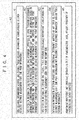
- Fig. 3 and Fig. 4 are schematic block diagrams respectively illustrating main configurations of the "first various-information storage unit 30" and the "second various-information storage unit 40". The details of the storage unit 30 and the like are described later.
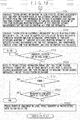
- Fig. 5 and Fig. 6 are each a schematic flowchart illustrating an example of a main operation of the three-dimensional measurement device 1 according to the present embodiment.
- a measurement process performed by the three-dimensional measurement device 1 illustrated in Fig. 1 is described below along with the configurations illustrated in Figs. 1 to 4 and the like.
- a user of the three-dimensional measurement device 1 illustrated in Fig. 1 mounts the three-dimensional measurement device 1 illustrated in Fig. 1 on the tripod, adjusts an angle with the leveling screws 5a and 5b and the like, and then performs the three-dimensional measurement for a target object (such as a building).
- a target object such as a building
- a "laser emitting processing unit (program) 31" in Fig. 3 operates and refers to an "output value of the semiconductor laser 8" in a "standard output information storage unit 32" stored in advance as illustrated in Fig. 3 .
- the storage unit stores therein a standard output value of the semiconductor laser 8.
- the standard output information storage unit 32 stores therein one unique type of data.
- the laser beams are sequentially emitted at a predetermined interval (distance measurement light emission), and "distance measurement light emission time point information", in which distance measurement light emission information and time point information are associated with each other, is stored in a “distance measurement light emission time point information storage unit 33" in Fig. 3 .
- emission time point information on the semiconductor laser 8 is stored.
- the "horizontal rotation unit 7" and the “vertical driving unit 14" are concurrently driven, and thus “horizontal rotation time point information”, in which rotation information and the time point information are associated with each other and “driving time point information”, in which driving information and the time point information are associated with each other are respectively stored in a “horizontal rotation time point information storage unit 34" and a “vertical driving time point information storage unit 35" in Fig. 3 .
- the distance measurement light is emitted via the scanning mirror 12 rotating in the vertical direction as illustrated in Fig. 1 , while the frame unit 4 is rotating in the horizontal direction.
- information on position (coordinate) calculation for the target object is essential.
- the photodetector 17 illustrated in Fig. 1 receives the reflected light.
- a "reflected light processing unit (program) 36" illustrated in Fig. 3 operates, and stores "reflected distance measurement light time point information" in which "reflected distance measurement light information” on the light received by the photodetector 17 and the time point information are associated with each other in a "reflected distance measurement light time point information storage unit 37" in Fig. 3 .
- signal information on the reflected light received by the photodetector 17 is stored together with the time point information.
- a "first distance information calculation processing unit (program) 38" in Fig. 3 operates to calculate "first distance information" on each reflected distance measurement light time point information and stores the information in a "first distance information storage unit 41" in Fig. 4 .
- the calculation is based on time difference information indicating difference in time point information between "each reflected distance measurement light time point information" in the "reflected distance measurement light time point information storage unit 36" in Fig. 3 and corresponding "distance measurement light emission time point information” in the "distance measurement light emission time point information storage unit 33" in Fig. 3 .
- distance information is acquired by based on the time difference information as a result of comparing the time point information indicated by the "each reflected distance measurement light time point information” in which each reflected light received by the photodetector 17 is associated with time point information with time point information indicated by the "distance measurement light emission time point information” indicating an emission instruction time point.
- distance information (an example of measurement information) indicating a distance to each point of the target object can be acquired.
- a "first position information calculation processing unit (program) 42" in Fig. 4 operates to calculate "position (coordinate) information” corresponding to each reflected distance measurement light time point information, and stores the information in a "position information storage unit 43" in Fig. 4 .
- the calculation is based on the first distance information in the "first distance information storage unit 41" in Fig. 4 , the "horizontal rotation time point information” in the “horizontal rotation time point information storage unit 34" in Fig. 3 and “vertical driving time point information” in the “vertical driving time point information storage unit 35" in Fig. 3 that correspond to each reflected distance measurement light time point information in the "reflected distance measurement light time point information storage unit 37" in Fig. 3 .
- the position (coordinate (X,Y,Z)) information (one example of the measurement information) is acquired with reference to and based on the distance information, the vertical position information, and the horizontal position information, associated with each other, with the time point that is the same as the "each reflected distance measurement light time point information" serving as the time point information indicating a time point at which the reflected light is received by the photodetector 17.
- the position information thus acquired is stored in the "position information storage unit 43" in Fig. 4 .
- a "saturation information detection processing unit (program) 44" in Fig. 4 that is an example of a saturation information detection unit operates, and refers to the "first distance information storage unit 41" and the “first position information storage unit 43" in Fig. 4 to determine whether or not there is reflected distance measurement light time point information not including "first distance information" and/or "first position information”.
- the laser output is uniform over the points of the measurement target object, resulting in a narrow dynamic range.
- a signal corresponding to the light received by the photodetector 17 might be large enough to saturate. Thus, failure to detect a peak value of the signal or the like may occur.
- the distance information or the position information might not be measurable in the processes described above, and is likely to be unmeasurable data (blank).
- the unmeasurable data (blank) is an example of saturation information.
- an "adjustment processing unit (program) 45" in Fig. 4 operates to reduce an output of the semiconductor laser 8 (for example, by 50%) (an example of an output value reducing unit), reduce the sensitivity of the photodetector 17 (for example, ⁇ 100 to ⁇ 50), and drives the shutter 16a to arrange the film 16 in front of the photodetector 17.
- the reduction of the sensitivity of the photodetector 17 and the film 16 are each an example of the input value reducing unit.
- a signal corresponding to a point in the signal saturated state can be detected, whereby highly accurate measurement can be performed.
- the signal corresponding to a point in the signal saturated state can be detected also with the output of the semiconductor laser 8 reduced or the like, whereby a wider dynamic range can be effectively achieved to prevent cost increase.
- Various dynamic ranges may be set with a reduction rate of the output value of the semiconductor laser 8, a reduction rate of the sensitivity of the photodetector 17, and the like or a combination of these appropriately set.
- This reduction of the output of the semiconductor laser 8 ensures that the dynamic range can be extremely easily expanded without fail when needed, and that the dynamic range can be easily set.
- the reflected light of an excessively large amount or with excessively high intensity might be reflected from a predetermined portion of the target object.
- the three-dimensional measurement device 1 may acquire three-dimensional data on a pipe with a curved surface in a factory.
- the intensity of the reflected light, reflected from the surface of the pipe might largely vary among portions of the pipe.
- the three-dimensional measurement device 1 may acquire three-dimensional data on an area including a road sign having a surface including a reflective material or the like.
- the intensity of the reflected light, reflected from the surface of the sign might be excessively higher than the intensity of reflected light reflected from a portion other than the surface of the sign.
- a measurer might need to expand the dynamic range with a density filter or the like for example.
- the three-dimensional measurement device 1 features high speed three-dimensional measurement. Unfortunately, such high speed measurement might be compromised with the measurer performing a cumbersome operation of expanding the dynamic range using the density filter or the like each time the three-dimensional measurement device 1 fails to acquire three-dimensional data on a part of the measurement target object.
- the dynamic range can be easily and promptly expanded as appropriate when three-dimensional data or the like on a part of a measurement target object is not acquirable so that the data can be acquired.
- all of the reduction of the output of the semiconductor laser 8, the reduction of the sensitivity of the photodetector 17, and the film 16 are simultaneously implemented.
- the present invention is not limited to this. Specifically, one of these options may be implemented first, and then the other options may be additionally implemented one by one when the blank point is found in ST7.
- any two of the reduction of the output of the semiconductor laser 8, the reduction of the sensitivity of the photodetector 17, and the film 16 may be combined.
- the processing when the point (without position or distance information) with the unmeasurable data (blank) is found in ST6 and ST7, the processing returns to ST1, and the horizontal rotation unit 7 is further rotated by 180° to be rotated by 360° in total.
- the present invention is not limited to this, and the following configuration may be employed.
- the three-dimensional measurement device 1 performs the additional measurement for the blank point only, and thus needs not to measure the entire range again.
- the measurement time can be largely reduced.
- Fig. 7 is a schematic block diagram illustrating a main configuration of a three-dimensional measurement device 100 according to a second embodiment of the present invention.
- the present embodiment has many components that are the same as those in the first embodiment.
- the same components are denoted with the same reference numerals and will not be elaborated upon here. Differences from the first embodiment are mainly described below.
- the three-dimensional measurement device 100 includes the semiconductor laser 8, the time measuring device 25, the horizontal rotation unit 7, the vertical driving unit 14, the photodetector 17, the shutter 16a, and the film 16, as in the configuration of the three-dimensional measurement device 100 according to the first embodiment described above.
- the present embodiment is different from the first embodiment in that a "third various-information storage unit 50", a “fourth various-information storage unit 60", and a “fifth various-information storage unit 70" are provided.
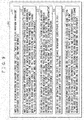
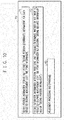
- Fig. 8 to Fig. 10 are schematic block diagrams respectively illustrating main configurations of the "third various-information storage unit 50", the "fourth various-information storage unit 60", and the "fifth various-information storage unit 70". The details of the storage unit 50 and the like are described later.
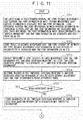
- Fig. 11 and Fig. 12 are each a schematic flowchart illustrating a main operation of the three-dimensional measurement device 100 according to the second embodiment of the present invention.
- a user of the three-dimensional measurement device 100 executes processes in ST11 and ST12 in Fig. 11 .
- an "amplitude decreasing waveform generation processing unit (program) 51" in Fig. 8 operates to convert a "waveform" of each reflected distance measurement light time point information into an "amplitude decreasing waveform” to generate an "amplitude decreasing waveform”.
- the amplitude decreasing waveform is described below.
- Fig. 13 is a schematic view illustrating a waveform of a normal signal. As illustrated in Fig. 13 , a signal generally has a waveform indicated by an arrow M. The position or distance information is acquired based on a peak value or the like of the signal.
- Fig. 14 is a schematic view illustrating an "amplitude decreasing waveform" generated by an electrical circuit based on the general waveform in Fig. 13 . As illustrated in Fig. 14 , the amplitude decreasing waveform has an amplitude decreasing over time.
- Fig. 15 is a schematic view illustrating a signal waveform as a target in the present embodiment.
- the output of the semiconductor laser 8 is uniform over the points of the measurement target object, resulting in a narrow dynamic range.
- a signal corresponding to the light received by the photodetector 17 might be large enough to saturate.
- the peak signal or the like fails to be detected as indicated by a broken line portion of a first wave (R1) of the amplitude decreasing waveform in Fig. 15 .
- the position or distance information of the corresponding point is the unmeasurable data (blank), and thus the measurement data amount decreases.
- the measurement information is acquired with a second wave (R2) (the second wave of the amplitude decreasing waveform) or after with the same component.
- the "amplitude decreasing waveform”, generated based on the waveform, is stored as the "amplitude decreasing waveform information" in an "amplitude decreasing waveform information storage unit 61" in Fig. 9 .
- an "amplitude decreasing waveform appropriateness determination processing unit (program) 62" in Fig. 9 operates to determine whether or not the "first wave (R1)" and the “second wave (R2)" of the amplitude decreasing waveform information, corresponding to each reflected distance measurement light time point information in the "amplitude decreasing waveform information storage unit 61" in Fig. 9 , are within an appropriate range.
- R2 when saturation is occurring at “R1" in Fig. 15 but “R2" is within the appropriate range, it is determined that R2 can be used as the measurement information after being subjected to predetermined processing.
- the "amplitude decreasing waveform" associated with the ineffective information can be prevented from being used, whereby the reliability of the measurement information can be prevented from being compromised.
- a "second distance information calculation processing unit (program) 63" in Fig. 9 operates to calculate “second distance information” on each reflected distance measurement light time point information, and stores the information in a "second distance information storage unit 64" in Fig. 9 .
- the calculation is based on time difference information indicating a difference between the "amplitude decreasing waveform" of the "amplitude decreasing waveform information” of each reflected distance measurement light time point information in the "amplitude decreasing waveform information storage unit 61" in Fig. 9 and the corresponding "distance measurement light emission time point information" in the "distance measurement light emission time point information storage unit 33" in Fig. 8 .
- a light reception range unable to be measured with R1 can be measured with R2 or after, whereby the dynamic range is technically widened.
- This technique can be implemented without increasing parts such as an electrical circuit, and thus results in a device that is favorable also in terms of cost.
- a "second position information calculation processing unit (program) 65" in Fig. 9 operates to acquire the "second distance information" in the "second distance information storage unit 64" in Fig. 9 , the "horizontal rotation time point information” in the “horizontal rotation time point information storage unit 34" in Fig. 8 corresponding to the "amplitude decreasing waveform” of the "amplitude decreasing waveform information” of the "each reflected distance measurement light time point information” in the "amplitude decreasing waveform information storage unit 61" in Fig. 9 , and the corresponding "vertical driving time point information” in the “vertical driving time point information storage unit 35" in Fig. 8 .
- the "second position (coordinate) information" is calculated for each reflected distance measurement light time point information based on these pieces of information, and stores the resultants information in a "second position information storage unit 71" in Fig. 10 .
- the position (coordinate) information on the point of the target object can also be acquired by calculating the position information on the point for each reflected distance measurement light time point information with "R2" when "R1" is saturated to result in the detection failure as in Fig. 15 , as in the case of the distance information described above.
- the dynamic range can be widened without increasing parts such as a circuit.
- a "second saturation information detection processing unit (program) 72" in Fig. 10 operates to refer to the "second distance information storage unit 64" in Fig. 9 and the “second position information storage unit 71" in Fig. 10 .
- the "reflected distance measurement light time point information" might be determined to be the ineffective information, that is, blank indicating the failure to measure the distance information or the position information.
- ST21 whether or not there is a point (without position or distance information) corresponding to the blank (measurement failure data) and whether or not the measurement has completed are determined.
- ST22 whether or not the measurement has been completed under all of the conditions is determined. When the measurement is determined to have not been completed in ST22, the processing proceeds to ST23.
- the "adjustment processing unit (program) 45" in Fig. 4 operates to reduce an output of the semiconductor laser 8 (for example, by 50%) (an example of an output value reducing unit), reduce the sensitivity of the photodetector 17 (for example, ⁇ 100 to ⁇ 50), and drives the shutter 16a to arrange the film 16 in front of the photodetector 17.
- measurement information can be acquired from substantially all of the points on the target object, whereby highly accurate measurement can be achieved.
- the signal at the position in the signal saturated state is detected only based on the second wave of the "amplitude decreasing waveform" or after.
- the three-dimensional measurement device 1 needs not to further perform the 180° measurement.
- the dynamic range can be effectively widened, whereby cost increase can also be prevented.
- the dynamic range can be easily and promptly expanded as appropriate when three-dimensional data or the like on a part of a measurement target object is not acquirable so that the data can be acquired, as in the first embodiment described above.
Landscapes
- Physics & Mathematics (AREA)
- Engineering & Computer Science (AREA)
- General Physics & Mathematics (AREA)
- Radar, Positioning & Navigation (AREA)
- Remote Sensing (AREA)
- Computer Networks & Wireless Communication (AREA)
- Electromagnetism (AREA)
- Optical Radar Systems And Details Thereof (AREA)
- Length Measuring Devices By Optical Means (AREA)
- Measurement Of Optical Distance (AREA)
Abstract
Description
- The present invention relates to, for example, a measurement device, a measurement method, and a control program for a measurement device that irradiate a measurement target object with distance measurement light to measure a distance to the measurement target object, and detect a light emitting direction of the distance measurement light to acquire three-dimensional data on the measurement target object.
- Conventionally, for example, three-dimensional laser scanners have been generally known as three-dimensional measurement devices that acquire three-dimensional data (three-dimensional point cloud data) on multiple points on a measurement target object (
Patent Document 1, for example). - Such a three-dimensional measurement device (three-dimensional laser scanner) irradiates a measurement target object with a pulse laser beam, which is an example of the distance measurement light, and receives reflected light of each pulse laser beam reflected on the measurement target object to measure the distance to the measurement target object. The three-dimensional measurement device further detects a light emitting direction (horizontal and vertical angles) of the distance measurement light to acquire three-dimensional data on the measurement target object.
- For example, when the measurement target object is relatively highly reflective, an excessively large amount of reflected light might be reflected from a predetermined portion of the measurement target object, or reflected light with excessively high intensity might be reflected.
- For example, the three-dimensional measurement device may acquire three-dimensional data on a pipe with a curved surface in a factory. In such a case, the intensity of the reflected light, reflected from the surface of the pipe, might largely vary among portions of the pipe.
- For example, the three-dimensional measurement device may acquire three-dimensional data on an area including a road sign having a surface including a reflective material or the like. In such a case, the intensity of the reflected light, reflected from the surface of the sign, might be excessively higher than the intensity of reflected light reflected from a portion other than the surface of the sign.
- These cases might result in the intensity of the reflected light overwhelming the maximum value of a dynamic range (a range defined by upper and lower limits of an appropriately-processable amount of light received from the measurement target object irradiated with light such as a pulse laser beam emitted from the three-dimensional measurement device).
- When this happens, normal scanning by the three-dimensional measurement device might fail to acquire the three-dimensional data on some parts of the measurement target object.
- When the three-dimensional data on some parts of the measurement target object fails to be acquired, a measurer might need to expand the dynamic range with a density filter or the like for example.
- Patent Document 1: Japanese Patent No.
5466807 - Some three-dimensional measurement devices feature high speed three-dimensional measurement. Unfortunately, such high speed measurement might be compromised with the measurer performing a cumbersome operation of expanding the dynamic range using the density filter or the like each time the three-dimensional measurement device fails to acquire three-dimensional data on a part of the measurement target object.
- In view of the above, an object of the present invention is to provide a measurement device, a measurement method, and a control program for a measurement device that expand the dynamic range easily and promptly as appropriate when three-dimensional data or the like on a part of a measurement target object is not acquirable so that the data can be acquired.
- The above-described object is achieved by a measurement device according to the present invention that includes a light source unit that sequentially emits a plurality of beams of distance measurement light to an identical target object, based on predetermined fixed output information, a light reception unit that receives reflected light, from the target object, based on which the measurement device acquires measurement information on the basis of the reflected light received by the light reception unit , and an output value reducing unit and/or an input value reducing unit, the output value reducing unit reducing a light output value of the light source unit, the input value reducing unit reducing an input value of the reflected light to the light reception unit.
- The configuration includes the output value reducing unit that reduces the output value of the light source unit such as a laser (such as reduction in the laser output by 50% for example) and/or the input value reducing unit that reduces the input value of the reflected light to the light reception unit such as a photodetector (such as reduction of sensitivity of the photodetector and a film that reduces the sensitivity for example).
- When an identical target object is sequentially irradiated with a plurality of beams of distance measurement light based on the predetermined fixed output information, a signal corresponding to the received light might have an excessively large value, due to an excessively short distance, depending on the measurement point or reflectivity of the target. As a result, the signal received by the reception unit is saturated, resulting in a failure to accurately acquire measurement information (a coordinate (position) value, distance information, and the like) on the point.
- However, in the configuration, the output value reducing unit (such as reduction of the laser output by 50% for example) and/or the input value reducing unit that reduces the input value of the reflected light to the light reception unit such as a photodetector (such as reduction of sensitivity of the photodetector and a film that reduces the amount of received light for example) operates so that the saturation or the like of the "received signal" can be prevented. Thus, the measurement information (the coordinate (position) value, distance information, and the like) on the point that has not been acquirable can be accurately acquired.
- Thus, with the configuration, the dynamic range can be easily and promptly expanded as appropriate even when three-dimensional data or the like on some parts of a measurement target object is not acquirable, so that the data can be acquired.
- Furthermore, the configuration needs no additional photodetector with different sensitivity or the like for acquiring the received signal that is not accurately acquirable due to the saturation of the received signal or the like, and thus can have a simple structure and involves a smaller cost increase.
- Preferably, the measurement device further includes a saturation information detection unit that detects saturation information on an amount of the reflected light received by the light reception unit, and the output value reducing unit and/or the input value reducing unit operates based on a detection result from the saturation information detection unit.
- In the configuration, the output value reducing unit and/or input value reducing unit operates based on the detection result from the saturation information detection unit.
- For example, the output value reducing unit and/or input value reducing unit operates after a saturated state is established where a signal corresponding to the received light has an excessively large value and thus the signal received by the reception signal or the like saturates, resulting in a failure to accurately acquire the measurement information (the coordinate (position) value, distance information, and the like) on the point. Thus, extremely highly effective acquisition of the measurement information (the coordinate (position) value, distance information, and the like) on the point that has not been acquirable can be achieved.
- Preferably, the input value reducing unit includes an arrangement and retraction mechanism for a sensitivity reduction film.
- The above-described object is achieved by a measurement device according to the present invention that includes a light source unit that sequentially emits a plurality of beams of distance measurement light to an identical target object, based on predetermined fixed output information, and a light reception unit that receives reflected light, from the target object, based on which the measurement device acquires measurement information on the basis of the reflected light received by the light reception unit, and the measurement information is acquired from any one of waves in an amplitude decreasing waveform that is a waveform with an amplitude decreasing generated from a waveform of a reception signal corresponding to light received by the light reception unit.
- In the configuration, the light source unit that sequentially emits the plurality of beams of distance measurement light to an identical target object, based on the predetermined fixed output information, the amplitude decreasing waveform is generated from a waveform of the signal corresponding to the light received by the light reception unit, and the measurement information (such as a position or distance) is acquired from the amplitude decreasing waveform.
- The amplitude decreasing waveform, generated from the received signal, has an amplitude decreasing. A distance to a point or the like, position (coordinate) information, or the like can be acquired from the waveform.
- Thus, in the configuration, for example, when the signal saturation or the like occurs with a first wave of the amplitude decreasing waveform based on the received signal corresponding to the light received by the light reception unit to result in a failure to acquire the measurement information from the waveform, the measurement information (such as a position or a distance) can be acquired from a second wave or after in the amplitude decreasing waveform involving no saturation.
- Preferably, the measurement device further includes an output value reducing unit and/or an input value reducing unit, the output value reducing unit reducing an output value of the light source unit, the input value reducing unit reducing an input value of the reflected light to the light reception unit.
- The configuration further includes the output value reducing unit that reduces the output value of the light source unit and/or the input value reducing unit that reduces the input value of the reflected light to the light reception unit.
- Thus, even when an effective signal cannot be acquired from the amplitude decreasing waveform, the output value reducing unit that reduces the output value of the light source unit and/or the input value reducing unit that reduces the input value of the reflected light to the light reception unit operates so that effective measurement information can be acquired.
- The above-described object is achieved by a measurement method according to the present invention that includes sequentially irradiating an identical target object with a plurality of beams of distance measurement light from a light source unit based on predetermined fixed output information, receiving reflected light from the target object with the light reception unit, acquiring measurement information based on the reflected light received by the light reception unit, and reducing an output value of the light source unit and/or an input value of the reflected light to the light reception unit.
- The above-described object is achieved by a control program according to the present invention that causes a measurement device including a light source unit that emits light and a light reception unit that receives reflected light, from the target object, based on which the measurement device acquires measurement information on the basis of the reflected light received by the light reception unit, to perform a sequentially irradiating process to an identical target object with a plurality of beams of distance measurement light from the light source unit based on predetermined fixed output information, and a reducing process to an output value of the light source unit and/or an input value of the reflected light to the light reception unit.
- The present invention has an advantage of providing a measurement device, a measurement method, and a control program for a measurement device that expand the dynamic range easily and promptly as appropriate even when three-dimensional data or the like on some parts of a measurement target object is not acquirable, so that the data can be acquired.
-
- [
Fig. 1] Fig. 1 is a schematic view of a main configuration or the like of a three-dimensional measurement device that is an example of a measurement device according to the present invention. - [
Fig. 2] Fig. 2 is a schematic block diagram illustrating a main configuration of the three-dimensional measurement device illustrated inFig. 1 . - [
Fig. 3] Fig. 3 is a schematic block diagram illustrating a main configuration of a first various-information storage unit. - [
Fig. 4] Fig. 4 is a schematic block diagram illustrating a main configuration of a second various-information storage unit. - [
Fig. 5] Fig. 5 is a schematic flowchart illustrating an example of a main operation of the three-dimensional measurement device according to an embodiment. - [
Fig. 6] Fig. 6 is a schematic flowchart illustrating an example of a main operation of the three-dimensional measurement device according to the present embodiment. - [
Fig. 7] Fig. 7 is a schematic block diagram illustrating a main configuration of a three-dimensional measurement device according to a second embodiment of the present invention. - [
Fig. 8] Fig. 8 is a schematic block diagram illustrating a main configuration of a third various-information storage unit. - [
Fig. 9] Fig. 9 is a schematic block diagram illustrating a main configuration of a fourth various-information storage unit. - [
Fig. 10] Fig. 10 is a schematic block diagram illustrating a main configuration of a fifth various-information storage unit. - [
Fig. 11] Fig. 11 is a schematic flowchart illustrating a main operation of the three-dimensional measurement device according to the second embodiment of the present invention. - [
Fig. 12] Fig. 12 is a schematic flowchart illustrating a main operation of the three-dimensional measurement device according to the second embodiment of the present invention. - [
Fig. 13] Fig. 13 is a schematic view illustrating a general signal waveform. - [
Fig. 14] Fig. 14 is a schematic view illustrating an "amplitude decreasing waveform" generated by processing data based on the general waveform inFig. 13 . - [
Fig. 15] Fig. 15 is a schematic view illustrating a signal waveform as a target of the present embodiment. - Preferred embodiments of the present invention are described below in detail with reference to the attached drawings.
- The embodiments described below are preferred examples of the present invention and thus have various technically preferable limitations. However, the scope of the present invention is not limited to these unless stated otherwise in the following description.
-
Fig. 1 is a schematic view of a main configuration or the like of a three-dimensional measurement device 1 that is an example of a measurement device according to the present invention. - As illustrating in
Fig. 1 , the three-dimensional measurement device 1 includes aleveling unit 3 to be capable of being attached to a tripod (not illustrated). - The leveling
unit 3 includes levelingscrews 5a and 5b enabling adjustment of inclination of a base unit 2 on theleveling unit 3. - A
horizontal rotation unit 7 is provided on the base unit 2 via abearing 6. Thehorizontal rotation unit 7 is supported by thebearing 6 to be capable of rotating (turn) in a horizontal direction. - A frame unit 4 is formed on the
horizontal rotation unit 7. Thus, when thehorizontal rotation unit 7 rotates, the frame unit 4 can similarly rotate (turn) in the horizontal direction. - Next, a main configuration in the frame unit 4 is described.
- First of all, as illustrated in
Fig. 1 , asemiconductor laser 8 is provided as an example of a light source unit. Distance measurement light emitted from thesemiconductor laser 8 is reflected by amirror 9 and then is reflected by afirst beam splitter 10 to reach asecond beam splitter 11. The distance measurement light is reflected by thesecond beam splitter 11 to reach ascanning mirror 12. - The frame unit 4 includes a vertical
angle detection unit 13 and avertical driving unit 14 that is connected to thescanning mirror 12. - Thus, when the
vertical driving unit 14 rotates (pivots) a shaft connected to thescanning mirror 12 in a vertical direction, thescanning mirror 12 similarly rotates in the vertical direction or makes other like actions. - Due to the rotation or the like of the
scanning mirror 12, the distance measurement light emitted in a direction toward the target object (measurement target object), that is, in an upper direction inFig. 1 reaches the target object, to be reflected. The resultant reflected light returns to thescanning mirror 12 inFig. 1 to be reflected to reach thesecond beam splitter 11. - The
second beam splitter 11 directs a part of the reflected light to animaging unit 15 to be an image. - The remaining part of the reflected light is reflected by the
second beam splitter 11, and transmits through thefirst beam splitter 10 to be received by aphotodetector 17, which is an example of a light reception unit, via afilm 16. Then, information on the distance to and a position (coordinates) of the target object is calculated and acquired. - The
film 16 is an example of an input value reducing unit or a sensitivity reduction film, and reduces the amount of the reflected light. - The
film 16 can be arranged at or retracted from a portion in front of thephotodetector 17, with a shutter mechanism (not illustrated). - Thus, the
film 16 is disposed at a retracted position when not required. The configuration and the like of thefilm 16 will be described later. - The frame unit 4 illustrated in
Fig. 1 includes acontrol calculation unit 18 that controls the units, anacceleration sensor 19, adisplay unit 20, and anoperation unit 21. - The three-
dimensional measurement device 1 illustrated inFig. 1 rotates thescanning mirror 12 in the vertical direction to emit the distance measurement light, which is a laser beam, to the outside. In this process, thehorizontal rotation unit 7 also rotates. - Thus, the entire measurement range can be irradiated with the distance measurement light.
- The full 360° range can be irradiated with the distance measurement light with the
horizontal rotation unit 7 rotating by 180°. - The three-
dimensional measurement device 1 illustrated inFig. 1 includes a computer. The computer includes a central processing unit (CPU), a random access memory (RAM), a read only memory (ROM), and the like (not illustrated) connected to each other through a bus or the like. -
Fig. 2 is a schematic block diagram illustrating a main configuration of the three-dimensional measurement device 1 illustrated inFig. 1 . - As illustrated in
Fig. 2 , thecontrol calculation unit 18 described above is provided and controls thesemiconductor laser 8, thehorizontal rotation unit 7, thevertical driving unit 14, and thephotodetector 17 described above as well as ashutter 16a, to arrange thefilm 16 to be in front of thephotodetector 17 or at the retracted position. Thecontrol calculation unit 18 also controls atime measuring device 25. - The
control calculation unit 18 further controls a "first various-information storage unit 30" and a "second various-information storage unit 40" illustrated inFig. 2 . -
Fig. 3 andFig. 4 are schematic block diagrams respectively illustrating main configurations of the "first various-information storage unit 30" and the "second various-information storage unit 40". The details of thestorage unit 30 and the like are described later. -
Fig. 5 andFig. 6 are each a schematic flowchart illustrating an example of a main operation of the three-dimensional measurement device 1 according to the present embodiment. - A measurement process performed by the three-
dimensional measurement device 1 illustrated inFig. 1 is described below along with the configurations illustrated inFigs. 1 to 4 and the like. - A user of the three-
dimensional measurement device 1 illustrated inFig. 1 mounts the three-dimensional measurement device 1 illustrated inFig. 1 on the tripod, adjusts an angle with the leveling screws 5a and 5b and the like, and then performs the three-dimensional measurement for a target object (such as a building). - First of all, in step (hereinafter, referred to as "ST") 1 in
Fig. 5 , a "laser emitting processing unit (program) 31" inFig. 3 operates and refers to an "output value of thesemiconductor laser 8" in a "standard outputinformation storage unit 32" stored in advance as illustrated inFig. 3 . - The storage unit stores therein a standard output value of the
semiconductor laser 8. - The standard output
information storage unit 32 according to the present embodiment stores therein one unique type of data. - The laser beams are sequentially emitted at a predetermined interval (distance measurement light emission), and "distance measurement light emission time point information", in which distance measurement light emission information and time point information are associated with each other, is stored in a "distance measurement light emission time point
information storage unit 33" inFig. 3 . Thus, emission time point information on thesemiconductor laser 8 is stored. - As described above, the "
horizontal rotation unit 7" and the "vertical driving unit 14" are concurrently driven, and thus "horizontal rotation time point information", in which rotation information and the time point information are associated with each other and "driving time point information", in which driving information and the time point information are associated with each other are respectively stored in a "horizontal rotation time pointinformation storage unit 34" and a "vertical driving time pointinformation storage unit 35" inFig. 3 . - As described above, the distance measurement light is emitted via the
scanning mirror 12 rotating in the vertical direction as illustrated inFig. 1 , while the frame unit 4 is rotating in the horizontal direction. Thus, information on position (coordinate) calculation for the target object is essential. - Next, the processing proceeds to ST2.
- In ST2, the
photodetector 17 illustrated inFig. 1 receives the reflected light. In response to this, a "reflected light processing unit (program) 36" illustrated inFig. 3 operates, and stores "reflected distance measurement light time point information" in which "reflected distance measurement light information" on the light received by thephotodetector 17 and the time point information are associated with each other in a "reflected distance measurement light time pointinformation storage unit 37" inFig. 3 . - With this process, signal information on the reflected light received by the
photodetector 17 is stored together with the time point information. - Next, the processing proceeds to ST3. In ST3, a "first distance information calculation processing unit (program) 38" in
Fig. 3 operates to calculate "first distance information" on each reflected distance measurement light time point information and stores the information in a "first distanceinformation storage unit 41" inFig. 4 . The calculation is based on time difference information indicating difference in time point information between "each reflected distance measurement light time point information" in the "reflected distance measurement light time pointinformation storage unit 36" inFig. 3 and corresponding "distance measurement light emission time point information" in the "distance measurement light emission time pointinformation storage unit 33" inFig. 3 . - Thus, "distance information" is acquired by based on the time difference information as a result of comparing the time point information indicated by the "each reflected distance measurement light time point information" in which each reflected light received by the
photodetector 17 is associated with time point information with time point information indicated by the "distance measurement light emission time point information" indicating an emission instruction time point. - Thus, distance information (an example of measurement information) indicating a distance to each point of the target object can be acquired.
- Next, the processing proceeds to ST4. In ST4, a "first position information calculation processing unit (program) 42" in
Fig. 4 operates to calculate "position (coordinate) information" corresponding to each reflected distance measurement light time point information, and stores the information in a "positioninformation storage unit 43" inFig. 4 . The calculation is based on the first distance information in the "first distanceinformation storage unit 41" inFig. 4 , the "horizontal rotation time point information" in the "horizontal rotation time pointinformation storage unit 34" inFig. 3 and "vertical driving time point information" in the "vertical driving time pointinformation storage unit 35" inFig. 3 that correspond to each reflected distance measurement light time point information in the "reflected distance measurement light time pointinformation storage unit 37" inFig. 3 . - Thus, the position (coordinate (X,Y,Z)) information (one example of the measurement information) is acquired with reference to and based on the distance information, the vertical position information, and the horizontal position information, associated with each other, with the time point that is the same as the "each reflected distance measurement light time point information" serving as the time point information indicating a time point at which the reflected light is received by the
photodetector 17. The position information thus acquired is stored in the "positioninformation storage unit 43" inFig. 4 . - Next, the processing proceeds to ST5. In ST5, whether or not the
horizontal rotation unit 7 has rotated by 180° is determined. When the rotation has occurred, it is determined that the full (360°) range measurement as described above has been completed. - In ST6, a "saturation information detection processing unit (program) 44" in
Fig. 4 that is an example of a saturation information detection unit operates, and refers to the "first distanceinformation storage unit 41" and the "first positioninformation storage unit 43" inFig. 4 to determine whether or not there is reflected distance measurement light time point information not including "first distance information" and/or "first position information". - In the present embodiment, the laser output is uniform over the points of the measurement target object, resulting in a narrow dynamic range. Thus, depending on factors such as a short distance to a target and a highly reflective target (target object), a signal corresponding to the light received by the
photodetector 17 might be large enough to saturate. Thus, failure to detect a peak value of the signal or the like may occur. - In this case, the distance information or the position information might not be measurable in the processes described above, and is likely to be unmeasurable data (blank).
- The unmeasurable data (blank) is an example of saturation information.
- Thus, in the present embodiment, whether or not there is a point (without position or distance information) with the unmeasurable data (blank) is determined in ST6, and then whether or not the measurement has been completed under all the conditions is determined in ST8.
- When the measurement is determined not to have been completed in ST8, the processing proceeds to ST9.
- In ST9, an "adjustment processing unit (program) 45" in
Fig. 4 operates to reduce an output of the semiconductor laser 8 (for example, by 50%) (an example of an output value reducing unit), reduce the sensitivity of the photodetector 17 (for example, ×100 to ×50), and drives theshutter 16a to arrange thefilm 16 in front of thephotodetector 17. - The reduction of the sensitivity of the
photodetector 17 and thefilm 16 are each an example of the input value reducing unit. - With the output value of the
semiconductor laser 8 reduced and the sensitivity and input of thephotodetector 17 reduced, the 180° rotation is performed, and steps ST1 to ST5 described above are executed again. - Thus, a signal corresponding to a point in the signal saturated state can be detected, whereby highly accurate measurement can be performed. In the present embodiment, the signal corresponding to a point in the signal saturated state can be detected also with the output of the
semiconductor laser 8 reduced or the like, whereby a wider dynamic range can be effectively achieved to prevent cost increase. - Various dynamic ranges may be set with a reduction rate of the output value of the
semiconductor laser 8, a reduction rate of the sensitivity of thephotodetector 17, and the like or a combination of these appropriately set. - This reduction of the output of the
semiconductor laser 8 ensures that the dynamic range can be extremely easily expanded without fail when needed, and that the dynamic range can be easily set. - When the target object is relatively highly reflective, the reflected light of an excessively large amount or with excessively high intensity might be reflected from a predetermined portion of the target object.
- For example, the three-
dimensional measurement device 1 may acquire three-dimensional data on a pipe with a curved surface in a factory. In such a case, the intensity of the reflected light, reflected from the surface of the pipe, might largely vary among portions of the pipe. - For example, the three-
dimensional measurement device 1 may acquire three-dimensional data on an area including a road sign having a surface including a reflective material or the like. In such a case, the intensity of the reflected light, reflected from the surface of the sign, might be excessively higher than the intensity of reflected light reflected from a portion other than the surface of the sign. - These cases might result in the intensity of the reflected light overwhelming the maximum value of a dynamic range.
- When this happens, normal scanning by the three-
dimensional measurement device 1 might fail to acquire the three-dimensional data on some parts of the measurement target object. - When the three-dimensional data on some parts of the measurement target object fails to be acquired, a measurer might need to expand the dynamic range with a density filter or the like for example.
- The three-
dimensional measurement device 1 features high speed three-dimensional measurement. Unfortunately, such high speed measurement might be compromised with the measurer performing a cumbersome operation of expanding the dynamic range using the density filter or the like each time the three-dimensional measurement device 1 fails to acquire three-dimensional data on a part of the measurement target object. - In view of the above, in the present embodiment, the dynamic range can be easily and promptly expanded as appropriate when three-dimensional data or the like on a part of a measurement target object is not acquirable so that the data can be acquired.
- In the example described in the present embodiment, all of the reduction of the output of the
semiconductor laser 8, the reduction of the sensitivity of thephotodetector 17, and thefilm 16 are simultaneously implemented. However, the present invention is not limited to this. Specifically, one of these options may be implemented first, and then the other options may be additionally implemented one by one when the blank point is found in ST7. - Any two of the reduction of the output of the
semiconductor laser 8, the reduction of the sensitivity of thephotodetector 17, and thefilm 16 may be combined. - In the present embodiment, when the point (without position or distance information) with the unmeasurable data (blank) is found in ST6 and ST7, the processing returns to ST1, and the
horizontal rotation unit 7 is further rotated by 180° to be rotated by 360° in total. However, the present invention is not limited to this, and the following configuration may be employed. - Specifically, when the point (without position or distance information, saturated area) with the unmeasurable data (blank) is found in ST6 and ST7, only the blank point is irradiated with a laser beam based on position or distance information or the like on the blank point, so that the measurement information (position and distance information or the like) can be acquired.
- In this case, the three-
dimensional measurement device 1 performs the additional measurement for the blank point only, and thus needs not to measure the entire range again. Thus, the measurement time can be largely reduced. -
Fig. 7 is a schematic block diagram illustrating a main configuration of a three-dimensional measurement device 100 according to a second embodiment of the present invention. - The present embodiment has many components that are the same as those in the first embodiment. The same components are denoted with the same reference numerals and will not be elaborated upon here. Differences from the first embodiment are mainly described below.
- As illustrated in
Fig. 7 , the three-dimensional measurement device 100 according to the present embodiment includes thesemiconductor laser 8, thetime measuring device 25, thehorizontal rotation unit 7, thevertical driving unit 14, thephotodetector 17, theshutter 16a, and thefilm 16, as in the configuration of the three-dimensional measurement device 100 according to the first embodiment described above. - The present embodiment is different from the first embodiment in that a "third various-
information storage unit 50", a "fourth various-information storage unit 60", and a "fifth various-information storage unit 70" are provided. -
Fig. 8 to Fig. 10 are schematic block diagrams respectively illustrating main configurations of the "third various-information storage unit 50", the "fourth various-information storage unit 60", and the "fifth various-information storage unit 70". The details of thestorage unit 50 and the like are described later. -
Fig. 11 andFig. 12 are each a schematic flowchart illustrating a main operation of the three-dimensional measurement device 100 according to the second embodiment of the present invention. - As illustrated in
Fig. 11 , first of all, a user of the three-dimensional measurement device 100 according to the present embodiment executes processes in ST11 and ST12 inFig. 11 . - The processes in ST11 and ST12 in
Fig. 11 are respectively the same as those in ST1 and ST2 in the first embodiment described above. As a result of these processes, signal information on the reflected light received by thephotodetector 17 is stored in association with time point information to be the "reflected distance measurement light time point information". - Next, the processing proceeds to ST13 in
Fig. 11 . In ST13, an "amplitude decreasing waveform generation processing unit (program) 51" inFig. 8 operates to convert a "waveform" of each reflected distance measurement light time point information into an "amplitude decreasing waveform" to generate an "amplitude decreasing waveform". - The amplitude decreasing waveform is described below.
-
Fig. 13 is a schematic view illustrating a waveform of a normal signal. As illustrated inFig. 13 , a signal generally has a waveform indicated by an arrow M. The position or distance information is acquired based on a peak value or the like of the signal. -
Fig. 14 is a schematic view illustrating an "amplitude decreasing waveform" generated by an electrical circuit based on the general waveform inFig. 13 . As illustrated inFig. 14 , the amplitude decreasing waveform has an amplitude decreasing over time. -
Fig. 15 is a schematic view illustrating a signal waveform as a target in the present embodiment. - In the present embodiment, the output of the
semiconductor laser 8 is uniform over the points of the measurement target object, resulting in a narrow dynamic range. Thus, depending on factors such as a short distance to a target and a highly reflective target (target object), a signal corresponding to the light received by thephotodetector 17 might be large enough to saturate. Thus, the peak signal or the like fails to be detected as indicated by a broken line portion of a first wave (R1) of the amplitude decreasing waveform inFig. 15 . - In such a case, the position or distance information of the corresponding point is the unmeasurable data (blank), and thus the measurement data amount decreases.
- In view of this, in the present embodiment, when a signal is saturated at the first wave (R1) (the first wave of the amplitude decreasing waveform) to result in a detection failure, the measurement information is acquired with a second wave (R2) (the second wave of the amplitude decreasing waveform) or after with the same component.
- Thus, in ST13, the "amplitude decreasing waveform", generated based on the waveform, is stored as the "amplitude decreasing waveform information" in an "amplitude decreasing waveform
information storage unit 61" inFig. 9 . - Next, the processing proceeds to ST14. In ST14, an "amplitude decreasing waveform appropriateness determination processing unit (program) 62" in
Fig. 9 operates to determine whether or not the "first wave (R1)" and the "second wave (R2)" of the amplitude decreasing waveform information, corresponding to each reflected distance measurement light time point information in the "amplitude decreasing waveforminformation storage unit 61" inFig. 9 , are within an appropriate range. - Specifically, when saturation is occurring at "R1" in
Fig. 15 but "R2" is within the appropriate range, it is determined that R2 can be used as the measurement information after being subjected to predetermined processing. - Next, the processing proceeds to ST15, and then proceeds to ST16 when the waves are not within the appropriate range. In ST16, information on this "amplitude decreasing waveform" is stored in the corresponding "amplitude decreasing waveform information" in the "amplitude decreasing waveform
information storage unit 61" inFig. 9 while being associated with "ineffective information". - Thus, the "amplitude decreasing waveform" associated with the ineffective information can be prevented from being used, whereby the reliability of the measurement information can be prevented from being compromised.
- Next, the processing proceeds to ST17. In ST17, a "second distance information calculation processing unit (program) 63" in
Fig. 9 operates to calculate "second distance information" on each reflected distance measurement light time point information, and stores the information in a "second distanceinformation storage unit 64" inFig. 9 . The calculation is based on time difference information indicating a difference between the "amplitude decreasing waveform" of the "amplitude decreasing waveform information" of each reflected distance measurement light time point information in the "amplitude decreasing waveforminformation storage unit 61" inFig. 9 and the corresponding "distance measurement light emission time point information" in the "distance measurement light emission time pointinformation storage unit 33" inFig. 8 . - Thus, in this process, when the detection fails due to saturation at "R1" as illustrated in
Fig. 15 , "R2" can be used to calculate and acquire distance information on the point of the corresponding each reflected distance measurement light time point information. - Thus, a light reception range unable to be measured with R1 can be measured with R2 or after, whereby the dynamic range is technically widened. This technique can be implemented without increasing parts such as an electrical circuit, and thus results in a device that is favorable also in terms of cost.
- Next, the processing proceeds to ST18. In ST18, a "second position information calculation processing unit (program) 65" in
Fig. 9 operates to acquire the "second distance information" in the "second distanceinformation storage unit 64" inFig. 9 , the "horizontal rotation time point information" in the "horizontal rotation time pointinformation storage unit 34" inFig. 8 corresponding to the "amplitude decreasing waveform" of the "amplitude decreasing waveform information" of the "each reflected distance measurement light time point information" in the "amplitude decreasing waveforminformation storage unit 61" inFig. 9 , and the corresponding "vertical driving time point information" in the "vertical driving time pointinformation storage unit 35" inFig. 8 . - The "second position (coordinate) information" is calculated for each reflected distance measurement light time point information based on these pieces of information, and stores the resultants information in a "second position
information storage unit 71" inFig. 10 . - The position (coordinate) information on the point of the target object can also be acquired by calculating the position information on the point for each reflected distance measurement light time point information with "R2" when "R1" is saturated to result in the detection failure as in
Fig. 15 , as in the case of the distance information described above. - Thus, the dynamic range can be widened without increasing parts such as a circuit.
- Then, the processing proceeds to ST19. In ST19, whether or not the
horizontal rotation unit 7 has rotated by 180° is determined. When the rotation has occurred, it is determined that the full range (360°) measurement has completed as described above, and the processing proceeds to ST20. - In ST20, a "second saturation information detection processing unit (program) 72" in
Fig. 10 operates to refer to the "second distanceinformation storage unit 64" inFig. 9 and the "second positioninformation storage unit 71" inFig. 10 . - Then, whether or not there is reflected distance measurement light time point information not including "second distance information" and/or "second position information" is determined.
- In the present embodiment, the "reflected distance measurement light time point information" might be determined to be the ineffective information, that is, blank indicating the failure to measure the distance information or the position information.
- Thus, in the present embodiment, in ST21, whether or not there is a point (without position or distance information) corresponding to the blank (measurement failure data) and whether or not the measurement has completed are determined. In ST22, whether or not the measurement has been completed under all of the conditions is determined. When the measurement is determined to have not been completed in ST22, the processing proceeds to ST23.
- In ST23, a process that is the same as that in ST9 in the first embodiment is performed.
- Specifically, the "adjustment processing unit (program) 45" in
Fig. 4 operates to reduce an output of the semiconductor laser 8 (for example, by 50%) (an example of an output value reducing unit), reduce the sensitivity of the photodetector 17 (for example, ×100 to ×50), and drives theshutter 16a to arrange thefilm 16 in front of thephotodetector 17. - With the output value of the
semiconductor laser 8 reduced and the sensitivity and input of thephotodetector 17 reduced, the 180° rotation is performed again, and steps ST1 to ST7 described above are executed. - Thus, measurement information can be acquired from substantially all of the points on the target object, whereby highly accurate measurement can be achieved.
- When it is determined in ST21 that there is no point (without position or distance information) corresponding to the blank (measurement failure data), the signal at the position in the signal saturated state is detected only based on the second wave of the "amplitude decreasing waveform" or after. Thus, the three-
dimensional measurement device 1 needs not to further perform the 180° measurement. - Thus, the dynamic range can be effectively widened, whereby cost increase can also be prevented.
- All things considered, in the present embodiment, the dynamic range can be easily and promptly expanded as appropriate when three-dimensional data or the like on a part of a measurement target object is not acquirable so that the data can be acquired, as in the first embodiment described above.
- Note that the present invention is not limited to the embodiments described above.
-
- 1 ... three-dimensional measurement device, 2 ... base unit, 3 ... leveling unit, 4 ... frame unit, 5a, 5b ... leveling screw, 6 ... bearing, 7 ... horizontal rotation unit, 8 ... semiconductor laser, 9 ... mirror, 10 ... first beam splitter, 11 ... second beam splitter, 12 ... scanning mirror, 13 ... vertical angle detection unit, 14 ... vertical driving unit, 15 ... imaging unit, 16 ... film, 16a ... shutter, 17 ...photodetector, 18 ... control calculation unit, 19 ... acceleration sensor, 20 ... display unit, 21 ... operation unit, 25 ... time measuring device, 30 ... first various-information storage unit, 31 ... laser emission processing unit (program), 32 ... dynamic range storage unit, 33 ... distance measurement light emission time point information storage unit, 34 ... horizontal rotation time point information storage unit, 35 ... vertical driving time point information storage unit, 36 ... reflected light processing unit (program), 37 ... reflected distance measurement light time point information storage unit, 38 ... first distance information calculation processing unit (program) 40 ... second various-information storage unit, 41 ... first distance information storage unit, 42 ... first position information calculation processing unit (program) 43 ... position information storage unit, 44 ... saturation information detection processing unit (program) 45, ... adjustment processing unit (program)
Claims (7)
- A measurement device comprising:a light source unit that sequentially emits a plurality of beams of distance measurement light to an identical target object, based on predetermined fixed output information;a light reception unit that receives reflected light, from the target object, based on which the measurement device acquires measurement information on the basis of the reflected light received by the light reception unit; andan output value reducing unit and/or an input value reducing unit, the output value reducing unit reducing a light output value of the light source unit, the input value reducing unit reducing an input value of the reflected light to the light reception unit.
- The measurement device according to claim 1 further comprising a saturation information detection unit that detects saturation information on an amount of the reflected light received by the light reception unit, wherein
the output value reducing unit and/or the input value reducing unit operates based on a detection result from the saturation information detection unit. - The measurement device according to claim 1 or 2, wherein the input value reducing unit preferably includes an arrangement and retraction mechanism for a sensitivity reduction film.
- A measurement device comprising:a light source unit that sequentially emits a plurality of beams of distance measurement light to an identical target object, based on predetermined fixed output information; anda light reception unit that receives reflected light, from the target object, based on which the measurement device acquires measurement information on the basis of the reflected light received by the light reception unit, whereinthe measurement information is acquired from any one of waves in an amplitude decreasing waveform that is a waveform with an amplitude decreasing generated from a waveform of a reception signal corresponding to light received by the light reception unit.
- The measurement device according to claim 4 further comprising an output value reducing unit and/or an input value reducing unit, the output value reducing unit reducing an output value of the light source unit, the input value reducing unit reducing an input value of the reflected light to the light reception unit.
- A measurement method comprising:sequentially irradiating an identical target object with a plurality of beams of distance measurement light from a light source unit based on predetermined fixed output information;receiving reflected light from the target object with the light reception unit;acquiring measurement information based on the reflected light received by the light reception unit; andreducing an output value of the light source unit and/or an input value of the reflected light to the light reception unit.
- A control program causing a measurement device including a light source unit that emits light and a light reception unit that receives reflected light, from the target object, based on which the measurement device acquires measurement information on the basis of the reflected light received by the light reception unit, to perform:a sequentially irradiating process to an identical target object with a plurality of beams of distance measurement light from the light source unit based on predetermined fixed output information; anda reducing process to an output value of the light source unit and/or an input value of the reflected light to the light reception unit.
Applications Claiming Priority (1)
| Application Number | Priority Date | Filing Date | Title |
|---|---|---|---|
| JP2017069965A JP7076947B2 (en) | 2017-03-31 | 2017-03-31 | Surveying equipment, surveying method and control program of surveying equipment |
Publications (2)
| Publication Number | Publication Date |
|---|---|
| EP3382333A1 true EP3382333A1 (en) | 2018-10-03 |
| EP3382333B1 EP3382333B1 (en) | 2019-12-11 |
Family
ID=61827566
Family Applications (1)
| Application Number | Title | Priority Date | Filing Date |
|---|---|---|---|
| EP18164174.7A Active EP3382333B1 (en) | 2017-03-31 | 2018-03-27 | Device and method for measuring a distance |
Country Status (3)
| Country | Link |
|---|---|
| US (1) | US11181639B2 (en) |
| EP (1) | EP3382333B1 (en) |
| JP (1) | JP7076947B2 (en) |
Cited By (1)
| Publication number | Priority date | Publication date | Assignee | Title |
|---|---|---|---|---|
| EP4310449A1 (en) * | 2022-07-14 | 2024-01-24 | Topcon Corporation | Laser scanning control device, laser scanning apparatus, laser scanning control method, and program |
Families Citing this family (1)
| Publication number | Priority date | Publication date | Assignee | Title |
|---|---|---|---|---|
| JP7311225B2 (en) * | 2019-05-15 | 2023-07-19 | 株式会社トプコン | Measuring system, measuring method and measuring program |
Citations (5)
| Publication number | Priority date | Publication date | Assignee | Title |
|---|---|---|---|---|
| US20040207832A1 (en) * | 2003-04-15 | 2004-10-21 | Fumio Ohtomo | Surveying instrument |
| EP2096404A2 (en) * | 2008-02-28 | 2009-09-02 | Kabushiki Kaisha TOPCON | Target and three-dimensional-shape measurement device using the same |
| DE102012112987B3 (en) * | 2012-12-21 | 2013-12-05 | Sick Ag | Optoelectronic sensor i.e. laser scanner, for detection and distance determination of static machine parts in monitored area, has evaluation unit determining object distance from signal by considering visibility measure and angle-dependence |
| JP5466807B2 (en) | 2006-09-26 | 2014-04-09 | 株式会社トプコン | Laser scanner |
| US20160320486A1 (en) * | 2014-01-14 | 2016-11-03 | Panasonic Intellectual Property Management Co., Ltd. | Range imaging apparatus and range imaging method |
Family Cites Families (6)
| Publication number | Priority date | Publication date | Assignee | Title |
|---|---|---|---|---|
| US6141105A (en) * | 1995-11-17 | 2000-10-31 | Minolta Co., Ltd. | Three-dimensional measuring device and three-dimensional measuring method |
| US5988862A (en) * | 1996-04-24 | 1999-11-23 | Cyra Technologies, Inc. | Integrated system for quickly and accurately imaging and modeling three dimensional objects |
| JP3911575B2 (en) | 2001-12-18 | 2007-05-09 | 株式会社トプコン | Pulse-type optical rangefinder |
| JP5469793B2 (en) | 2006-09-20 | 2014-04-16 | 株式会社トプコン | Distance measuring device |
| US9880267B2 (en) * | 2015-09-04 | 2018-01-30 | Microvision, Inc. | Hybrid data acquisition in scanned beam display |
| US10641897B1 (en) * | 2019-04-24 | 2020-05-05 | Aeye, Inc. | Ladar system and method with adaptive pulse duration |
-
2017
- 2017-03-31 JP JP2017069965A patent/JP7076947B2/en active Active
-
2018
- 2018-03-27 EP EP18164174.7A patent/EP3382333B1/en active Active
- 2018-03-27 US US15/936,628 patent/US11181639B2/en active Active
Patent Citations (5)
| Publication number | Priority date | Publication date | Assignee | Title |
|---|---|---|---|---|
| US20040207832A1 (en) * | 2003-04-15 | 2004-10-21 | Fumio Ohtomo | Surveying instrument |
| JP5466807B2 (en) | 2006-09-26 | 2014-04-09 | 株式会社トプコン | Laser scanner |
| EP2096404A2 (en) * | 2008-02-28 | 2009-09-02 | Kabushiki Kaisha TOPCON | Target and three-dimensional-shape measurement device using the same |
| DE102012112987B3 (en) * | 2012-12-21 | 2013-12-05 | Sick Ag | Optoelectronic sensor i.e. laser scanner, for detection and distance determination of static machine parts in monitored area, has evaluation unit determining object distance from signal by considering visibility measure and angle-dependence |
| US20160320486A1 (en) * | 2014-01-14 | 2016-11-03 | Panasonic Intellectual Property Management Co., Ltd. | Range imaging apparatus and range imaging method |
Cited By (1)
| Publication number | Priority date | Publication date | Assignee | Title |
|---|---|---|---|---|
| EP4310449A1 (en) * | 2022-07-14 | 2024-01-24 | Topcon Corporation | Laser scanning control device, laser scanning apparatus, laser scanning control method, and program |
Also Published As
| Publication number | Publication date |
|---|---|
| US11181639B2 (en) | 2021-11-23 |
| US20180284281A1 (en) | 2018-10-04 |
| JP7076947B2 (en) | 2022-05-30 |
| JP2018173298A (en) | 2018-11-08 |
| EP3382333B1 (en) | 2019-12-11 |
Similar Documents
| Publication | Publication Date | Title |
|---|---|---|
| US11644575B2 (en) | Surveying device and surveying method | |
| JP5081014B2 (en) | Target and three-dimensional shape measuring apparatus using the same | |
| CN108226902B (en) | A surface array laser radar measurement system | |
| US20210018318A1 (en) | Surveying apparatus | |
| JP5207665B2 (en) | Measuring system | |
| JP2009109210A5 (en) | ||
| US10935636B2 (en) | Laser scanner | |
| US11040424B2 (en) | Spindle abnormity detection device | |
| EP3382333B1 (en) | Device and method for measuring a distance | |
| US20210018316A1 (en) | Three-dimensional survey apparatus, three-dimensional survey method, and three-dimensional survey program | |
| JP6680628B2 (en) | Laser scanner | |
| US20230305152A2 (en) | Three-dimensional survey apparatus, three-dimensional survey method, and three-dimensional survey program | |
| US20200041626A1 (en) | Surveying Instrument | |
| JPH1138123A (en) | Radar optical axis measuring device and optical axis adjusting method | |
| US8111379B2 (en) | Automated determination of height and tilt of a substrate surface within a lithography system | |
| CN207937596U (en) | An area array laser radar measurement system | |
| CN108957468A (en) | Laser radar position detecting device, detection method and laser radar | |
| JP7336927B2 (en) | Three-dimensional surveying device, three-dimensional surveying method and three-dimensional surveying program | |
| US12253601B2 (en) | Three-dimensional survey apparatus, three-dimensional survey method, and three-dimensional survey program | |
| US20240272300A1 (en) | Distance measuring apparatus and distance measuring method | |
| JP6252178B2 (en) | Shape measuring device, posture control device, structure manufacturing system, and shape measuring method | |
| US20250389823A1 (en) | Laser distance measurement device, laser distance measurement method, and program | |
| JPH09189545A (en) | Distance measuring device | |
| JP2019117141A (en) | Contactless coordinate measuring device | |
| US20250370133A1 (en) | Distance measurement device, distance measurement method, and program |
Legal Events
| Date | Code | Title | Description |
|---|---|---|---|
| PUAI | Public reference made under article 153(3) epc to a published international application that has entered the european phase |
Free format text: ORIGINAL CODE: 0009012 |
|
| STAA | Information on the status of an ep patent application or granted ep patent |
Free format text: STATUS: THE APPLICATION HAS BEEN PUBLISHED |
|
| AK | Designated contracting states |
Kind code of ref document: A1 Designated state(s): AL AT BE BG CH CY CZ DE DK EE ES FI FR GB GR HR HU IE IS IT LI LT LU LV MC MK MT NL NO PL PT RO RS SE SI SK SM TR |
|
| AX | Request for extension of the european patent |
Extension state: BA ME |
|
| STAA | Information on the status of an ep patent application or granted ep patent |
Free format text: STATUS: REQUEST FOR EXAMINATION WAS MADE |
|
| 17P | Request for examination filed |
Effective date: 20190403 |
|
| RBV | Designated contracting states (corrected) |
Designated state(s): AL AT BE BG CH CY CZ DE DK EE ES FI FR GB GR HR HU IE IS IT LI LT LU LV MC MK MT NL NO PL PT RO RS SE SI SK SM TR |
|
| GRAP | Despatch of communication of intention to grant a patent |
Free format text: ORIGINAL CODE: EPIDOSNIGR1 |
|
| STAA | Information on the status of an ep patent application or granted ep patent |
Free format text: STATUS: GRANT OF PATENT IS INTENDED |
|
| INTG | Intention to grant announced |
Effective date: 20190626 |
|
| GRAS | Grant fee paid |
Free format text: ORIGINAL CODE: EPIDOSNIGR3 |
|
| GRAA | (expected) grant |
Free format text: ORIGINAL CODE: 0009210 |
|
| STAA | Information on the status of an ep patent application or granted ep patent |
Free format text: STATUS: THE PATENT HAS BEEN GRANTED |
|
| AK | Designated contracting states |
Kind code of ref document: B1 Designated state(s): AL AT BE BG CH CY CZ DE DK EE ES FI FR GB GR HR HU IE IS IT LI LT LU LV MC MK MT NL NO PL PT RO RS SE SI SK SM TR |
|
| REG | Reference to a national code |
Ref country code: GB Ref legal event code: FG4D |
|
| REG | Reference to a national code |
Ref country code: CH Ref legal event code: EP |
|
| REG | Reference to a national code |
Ref country code: AT Ref legal event code: REF Ref document number: 1212617 Country of ref document: AT Kind code of ref document: T Effective date: 20191215 |
|
| REG | Reference to a national code |
Ref country code: DE Ref legal event code: R096 Ref document number: 602018001525 Country of ref document: DE |
|
| REG | Reference to a national code |
Ref country code: IE Ref legal event code: FG4D |
|
| REG | Reference to a national code |
Ref country code: NL Ref legal event code: MP Effective date: 20191211 |
|
| REG | Reference to a national code |
Ref country code: LT Ref legal event code: MG4D |
|
| PG25 | Lapsed in a contracting state [announced via postgrant information from national office to epo] |
Ref country code: BG Free format text: LAPSE BECAUSE OF FAILURE TO SUBMIT A TRANSLATION OF THE DESCRIPTION OR TO PAY THE FEE WITHIN THE PRESCRIBED TIME-LIMIT Effective date: 20200311 Ref country code: FI Free format text: LAPSE BECAUSE OF FAILURE TO SUBMIT A TRANSLATION OF THE DESCRIPTION OR TO PAY THE FEE WITHIN THE PRESCRIBED TIME-LIMIT Effective date: 20191211 Ref country code: LV Free format text: LAPSE BECAUSE OF FAILURE TO SUBMIT A TRANSLATION OF THE DESCRIPTION OR TO PAY THE FEE WITHIN THE PRESCRIBED TIME-LIMIT Effective date: 20191211 Ref country code: SE Free format text: LAPSE BECAUSE OF FAILURE TO SUBMIT A TRANSLATION OF THE DESCRIPTION OR TO PAY THE FEE WITHIN THE PRESCRIBED TIME-LIMIT Effective date: 20191211 Ref country code: LT Free format text: LAPSE BECAUSE OF FAILURE TO SUBMIT A TRANSLATION OF THE DESCRIPTION OR TO PAY THE FEE WITHIN THE PRESCRIBED TIME-LIMIT Effective date: 20191211 Ref country code: NO Free format text: LAPSE BECAUSE OF FAILURE TO SUBMIT A TRANSLATION OF THE DESCRIPTION OR TO PAY THE FEE WITHIN THE PRESCRIBED TIME-LIMIT Effective date: 20200311 Ref country code: GR Free format text: LAPSE BECAUSE OF FAILURE TO SUBMIT A TRANSLATION OF THE DESCRIPTION OR TO PAY THE FEE WITHIN THE PRESCRIBED TIME-LIMIT Effective date: 20200312 |
|
| PG25 | Lapsed in a contracting state [announced via postgrant information from national office to epo] |
Ref country code: HR Free format text: LAPSE BECAUSE OF FAILURE TO SUBMIT A TRANSLATION OF THE DESCRIPTION OR TO PAY THE FEE WITHIN THE PRESCRIBED TIME-LIMIT Effective date: 20191211 Ref country code: RS Free format text: LAPSE BECAUSE OF FAILURE TO SUBMIT A TRANSLATION OF THE DESCRIPTION OR TO PAY THE FEE WITHIN THE PRESCRIBED TIME-LIMIT Effective date: 20191211 |
|
| PG25 | Lapsed in a contracting state [announced via postgrant information from national office to epo] |
Ref country code: AL Free format text: LAPSE BECAUSE OF FAILURE TO SUBMIT A TRANSLATION OF THE DESCRIPTION OR TO PAY THE FEE WITHIN THE PRESCRIBED TIME-LIMIT Effective date: 20191211 |
|
| PG25 | Lapsed in a contracting state [announced via postgrant information from national office to epo] |
Ref country code: EE Free format text: LAPSE BECAUSE OF FAILURE TO SUBMIT A TRANSLATION OF THE DESCRIPTION OR TO PAY THE FEE WITHIN THE PRESCRIBED TIME-LIMIT Effective date: 20191211 Ref country code: NL Free format text: LAPSE BECAUSE OF FAILURE TO SUBMIT A TRANSLATION OF THE DESCRIPTION OR TO PAY THE FEE WITHIN THE PRESCRIBED TIME-LIMIT Effective date: 20191211 Ref country code: PT Free format text: LAPSE BECAUSE OF FAILURE TO SUBMIT A TRANSLATION OF THE DESCRIPTION OR TO PAY THE FEE WITHIN THE PRESCRIBED TIME-LIMIT Effective date: 20200506 Ref country code: RO Free format text: LAPSE BECAUSE OF FAILURE TO SUBMIT A TRANSLATION OF THE DESCRIPTION OR TO PAY THE FEE WITHIN THE PRESCRIBED TIME-LIMIT Effective date: 20191211 Ref country code: CZ Free format text: LAPSE BECAUSE OF FAILURE TO SUBMIT A TRANSLATION OF THE DESCRIPTION OR TO PAY THE FEE WITHIN THE PRESCRIBED TIME-LIMIT Effective date: 20191211 Ref country code: ES Free format text: LAPSE BECAUSE OF FAILURE TO SUBMIT A TRANSLATION OF THE DESCRIPTION OR TO PAY THE FEE WITHIN THE PRESCRIBED TIME-LIMIT Effective date: 20191211 |
|
| PG25 | Lapsed in a contracting state [announced via postgrant information from national office to epo] |
Ref country code: SM Free format text: LAPSE BECAUSE OF FAILURE TO SUBMIT A TRANSLATION OF THE DESCRIPTION OR TO PAY THE FEE WITHIN THE PRESCRIBED TIME-LIMIT Effective date: 20191211 Ref country code: SK Free format text: LAPSE BECAUSE OF FAILURE TO SUBMIT A TRANSLATION OF THE DESCRIPTION OR TO PAY THE FEE WITHIN THE PRESCRIBED TIME-LIMIT Effective date: 20191211 Ref country code: IS Free format text: LAPSE BECAUSE OF FAILURE TO SUBMIT A TRANSLATION OF THE DESCRIPTION OR TO PAY THE FEE WITHIN THE PRESCRIBED TIME-LIMIT Effective date: 20200411 |
|
| REG | Reference to a national code |
Ref country code: DE Ref legal event code: R097 Ref document number: 602018001525 Country of ref document: DE |
|
| REG | Reference to a national code |
Ref country code: AT Ref legal event code: MK05 Ref document number: 1212617 Country of ref document: AT Kind code of ref document: T Effective date: 20191211 |
|
| PLBE | No opposition filed within time limit |
Free format text: ORIGINAL CODE: 0009261 |
|
| STAA | Information on the status of an ep patent application or granted ep patent |
Free format text: STATUS: NO OPPOSITION FILED WITHIN TIME LIMIT |
|
| PG25 | Lapsed in a contracting state [announced via postgrant information from national office to epo] |
Ref country code: DK Free format text: LAPSE BECAUSE OF FAILURE TO SUBMIT A TRANSLATION OF THE DESCRIPTION OR TO PAY THE FEE WITHIN THE PRESCRIBED TIME-LIMIT Effective date: 20191211 Ref country code: MC Free format text: LAPSE BECAUSE OF FAILURE TO SUBMIT A TRANSLATION OF THE DESCRIPTION OR TO PAY THE FEE WITHIN THE PRESCRIBED TIME-LIMIT Effective date: 20191211 |
|
| 26N | No opposition filed |
Effective date: 20200914 |
|
| PG25 | Lapsed in a contracting state [announced via postgrant information from national office to epo] |
Ref country code: AT Free format text: LAPSE BECAUSE OF FAILURE TO SUBMIT A TRANSLATION OF THE DESCRIPTION OR TO PAY THE FEE WITHIN THE PRESCRIBED TIME-LIMIT Effective date: 20191211 Ref country code: SI Free format text: LAPSE BECAUSE OF FAILURE TO SUBMIT A TRANSLATION OF THE DESCRIPTION OR TO PAY THE FEE WITHIN THE PRESCRIBED TIME-LIMIT Effective date: 20191211 |
|
| REG | Reference to a national code |
Ref country code: BE Ref legal event code: MM Effective date: 20200331 |
|
| PG25 | Lapsed in a contracting state [announced via postgrant information from national office to epo] |
Ref country code: LU Free format text: LAPSE BECAUSE OF NON-PAYMENT OF DUE FEES Effective date: 20200327 |
|
| PG25 | Lapsed in a contracting state [announced via postgrant information from national office to epo] |
Ref country code: IE Free format text: LAPSE BECAUSE OF NON-PAYMENT OF DUE FEES Effective date: 20200327 Ref country code: IT Free format text: LAPSE BECAUSE OF FAILURE TO SUBMIT A TRANSLATION OF THE DESCRIPTION OR TO PAY THE FEE WITHIN THE PRESCRIBED TIME-LIMIT Effective date: 20191211 Ref country code: FR Free format text: LAPSE BECAUSE OF NON-PAYMENT OF DUE FEES Effective date: 20200331 |
|
| PG25 | Lapsed in a contracting state [announced via postgrant information from national office to epo] |
Ref country code: PL Free format text: LAPSE BECAUSE OF FAILURE TO SUBMIT A TRANSLATION OF THE DESCRIPTION OR TO PAY THE FEE WITHIN THE PRESCRIBED TIME-LIMIT Effective date: 20191211 Ref country code: BE Free format text: LAPSE BECAUSE OF NON-PAYMENT OF DUE FEES Effective date: 20200331 |
|
| PG25 | Lapsed in a contracting state [announced via postgrant information from national office to epo] |
Ref country code: TR Free format text: LAPSE BECAUSE OF FAILURE TO SUBMIT A TRANSLATION OF THE DESCRIPTION OR TO PAY THE FEE WITHIN THE PRESCRIBED TIME-LIMIT Effective date: 20191211 Ref country code: MT Free format text: LAPSE BECAUSE OF FAILURE TO SUBMIT A TRANSLATION OF THE DESCRIPTION OR TO PAY THE FEE WITHIN THE PRESCRIBED TIME-LIMIT Effective date: 20191211 Ref country code: CY Free format text: LAPSE BECAUSE OF FAILURE TO SUBMIT A TRANSLATION OF THE DESCRIPTION OR TO PAY THE FEE WITHIN THE PRESCRIBED TIME-LIMIT Effective date: 20191211 |
|
| PG25 | Lapsed in a contracting state [announced via postgrant information from national office to epo] |
Ref country code: MK Free format text: LAPSE BECAUSE OF FAILURE TO SUBMIT A TRANSLATION OF THE DESCRIPTION OR TO PAY THE FEE WITHIN THE PRESCRIBED TIME-LIMIT Effective date: 20191211 |
|
| GBPC | Gb: european patent ceased through non-payment of renewal fee |
Effective date: 20220327 |
|
| PG25 | Lapsed in a contracting state [announced via postgrant information from national office to epo] |
Ref country code: GB Free format text: LAPSE BECAUSE OF NON-PAYMENT OF DUE FEES Effective date: 20220327 |
|
| PGFP | Annual fee paid to national office [announced via postgrant information from national office to epo] |
Ref country code: CH Payment date: 20250401 Year of fee payment: 8 |
|
| REG | Reference to a national code |
Ref country code: CH Ref legal event code: U11 Free format text: ST27 STATUS EVENT CODE: U-0-0-U10-U11 (AS PROVIDED BY THE NATIONAL OFFICE) Effective date: 20260401 |
|
| PGFP | Annual fee paid to national office [announced via postgrant information from national office to epo] |
Ref country code: DE Payment date: 20260128 Year of fee payment: 9 |