EP3381918A1 - 7-(thiazol-5-yl) pyrrolopyrimidine compound as tlr7 agonist - Google Patents
7-(thiazol-5-yl) pyrrolopyrimidine compound as tlr7 agonist Download PDFInfo
- Publication number
- EP3381918A1 EP3381918A1 EP16861614.2A EP16861614A EP3381918A1 EP 3381918 A1 EP3381918 A1 EP 3381918A1 EP 16861614 A EP16861614 A EP 16861614A EP 3381918 A1 EP3381918 A1 EP 3381918A1
- Authority
- EP
- European Patent Office
- Prior art keywords
- compound
- pharmaceutically acceptable
- virus
- acceptable salt
- viral infection
- Prior art date
- Legal status (The legal status is an assumption and is not a legal conclusion. Google has not performed a legal analysis and makes no representation as to the accuracy of the status listed.)
- Granted
Links
- 0 CCCCOc1nc(N)c2[n]cc(Cc3cnc(CN(*)I*)[s]3)c2n1 Chemical compound CCCCOc1nc(N)c2[n]cc(Cc3cnc(CN(*)I*)[s]3)c2n1 0.000 description 3
- RXYPXQSKLGGKOL-UHFFFAOYSA-N CN1CCN(C)CC1 Chemical compound CN1CCN(C)CC1 RXYPXQSKLGGKOL-UHFFFAOYSA-N 0.000 description 1
Images
Classifications
-
- A—HUMAN NECESSITIES
- A61—MEDICAL OR VETERINARY SCIENCE; HYGIENE
- A61K—PREPARATIONS FOR MEDICAL, DENTAL OR TOILETRY PURPOSES
- A61K31/00—Medicinal preparations containing organic active ingredients
- A61K31/33—Heterocyclic compounds
- A61K31/395—Heterocyclic compounds having nitrogen as a ring hetero atom, e.g. guanethidine or rifamycins
- A61K31/495—Heterocyclic compounds having nitrogen as a ring hetero atom, e.g. guanethidine or rifamycins having six-membered rings with two or more nitrogen atoms as the only ring heteroatoms, e.g. piperazine or tetrazines
- A61K31/505—Pyrimidines; Hydrogenated pyrimidines, e.g. trimethoprim
- A61K31/519—Pyrimidines; Hydrogenated pyrimidines, e.g. trimethoprim ortho- or peri-condensed with heterocyclic rings
-
- A—HUMAN NECESSITIES
- A61—MEDICAL OR VETERINARY SCIENCE; HYGIENE
- A61P—SPECIFIC THERAPEUTIC ACTIVITY OF CHEMICAL COMPOUNDS OR MEDICINAL PREPARATIONS
- A61P31/00—Antiinfectives, i.e. antibiotics, antiseptics, chemotherapeutics
- A61P31/12—Antivirals
-
- A—HUMAN NECESSITIES
- A61—MEDICAL OR VETERINARY SCIENCE; HYGIENE
- A61P—SPECIFIC THERAPEUTIC ACTIVITY OF CHEMICAL COMPOUNDS OR MEDICINAL PREPARATIONS
- A61P31/00—Antiinfectives, i.e. antibiotics, antiseptics, chemotherapeutics
- A61P31/12—Antivirals
- A61P31/14—Antivirals for RNA viruses
-
- A—HUMAN NECESSITIES
- A61—MEDICAL OR VETERINARY SCIENCE; HYGIENE
- A61P—SPECIFIC THERAPEUTIC ACTIVITY OF CHEMICAL COMPOUNDS OR MEDICINAL PREPARATIONS
- A61P31/00—Antiinfectives, i.e. antibiotics, antiseptics, chemotherapeutics
- A61P31/12—Antivirals
- A61P31/20—Antivirals for DNA viruses
-
- A—HUMAN NECESSITIES
- A61—MEDICAL OR VETERINARY SCIENCE; HYGIENE
- A61P—SPECIFIC THERAPEUTIC ACTIVITY OF CHEMICAL COMPOUNDS OR MEDICINAL PREPARATIONS
- A61P31/00—Antiinfectives, i.e. antibiotics, antiseptics, chemotherapeutics
- A61P31/12—Antivirals
- A61P31/20—Antivirals for DNA viruses
- A61P31/22—Antivirals for DNA viruses for herpes viruses
-
- C—CHEMISTRY; METALLURGY
- C07—ORGANIC CHEMISTRY
- C07D—HETEROCYCLIC COMPOUNDS
- C07D277/00—Heterocyclic compounds containing 1,3-thiazole or hydrogenated 1,3-thiazole rings
- C07D277/02—Heterocyclic compounds containing 1,3-thiazole or hydrogenated 1,3-thiazole rings not condensed with other rings
- C07D277/20—Heterocyclic compounds containing 1,3-thiazole or hydrogenated 1,3-thiazole rings not condensed with other rings having two or three double bonds between ring members or between ring members and non-ring members
-
- C—CHEMISTRY; METALLURGY
- C07—ORGANIC CHEMISTRY
- C07D—HETEROCYCLIC COMPOUNDS
- C07D487/00—Heterocyclic compounds containing nitrogen atoms as the only ring hetero atoms in the condensed system, not provided for by groups C07D451/00 - C07D477/00
- C07D487/02—Heterocyclic compounds containing nitrogen atoms as the only ring hetero atoms in the condensed system, not provided for by groups C07D451/00 - C07D477/00 in which the condensed system contains two hetero rings
- C07D487/04—Ortho-condensed systems
-
- Y—GENERAL TAGGING OF NEW TECHNOLOGICAL DEVELOPMENTS; GENERAL TAGGING OF CROSS-SECTIONAL TECHNOLOGIES SPANNING OVER SEVERAL SECTIONS OF THE IPC; TECHNICAL SUBJECTS COVERED BY FORMER USPC CROSS-REFERENCE ART COLLECTIONS [XRACs] AND DIGESTS
- Y02—TECHNOLOGIES OR APPLICATIONS FOR MITIGATION OR ADAPTATION AGAINST CLIMATE CHANGE
- Y02A—TECHNOLOGIES FOR ADAPTATION TO CLIMATE CHANGE
- Y02A50/00—TECHNOLOGIES FOR ADAPTATION TO CLIMATE CHANGE in human health protection, e.g. against extreme weather
- Y02A50/30—Against vector-borne diseases, e.g. mosquito-borne, fly-borne, tick-borne or waterborne diseases whose impact is exacerbated by climate change
Definitions
- a 7-(thiazol-5-yl)pyrrolopyrimidine cyclic compound or a pharmaceutically acceptable salt thereof as TLR7 agonist which is useful for treating or preventing viral infection, particularly hepatitis B or hepatitis C viral infection.
- Toll-like receptor is expressed by various immune cells and recognizes high reserved structural motifs: Pathogen Associated Molecular Pattern (PAMP) expressed by microorganism pathogens or Damage Associated Molecular Patterns (DAMP) released by dead cells.
- PAMP or DAMP stimulates Toll-like receptor to trigger signal cascade which induces the activations of transcriptional factors like AP-1, NF- ⁇ B and interferon regulators (pulse response function). It results in various cell responses, including productions of interferons, proinflammatory cytokines and effector cytokines, whereby immune response is produced.
- Toll-like receptors 1, 2, 4, 5 and 6 are mainly expressed on the cell surface while Toll-like receptors 3, 7, 8 and 9 are expressed in the endosome.
- Different Toll-like receptors recognize ligands derived from different pathogens.
- Toll-like receptor 7 (TLR7) is expressed and ligand recognized by plasmaeytoid dendritic cells (pDC) to induce the secretion of interferon ⁇ (IFN- ⁇ ).
- Toll-like receptor 7 (TLR7) and Toll-like receptor 8 (TLR8) are highly homologous and therefore the ligand of TLR7 in many cases is also that of TLR8.
- TLR8 stimulation mainly induces the productions of cytokines like tumor necrosis factor ⁇ (TNF- ⁇ ) and chemoattractant.
- Interferon ⁇ is one of the main medicines for treating chronic hepatitis B or hepatitis C while TNF- ⁇ is a proinflammatory cytokine, of which the over secretion will result severe side effects.
- TLR7 agonists like Imiquimod ( British Journal of Dermatology 2003; 149 (Suppl. 66): 5-8 ), Resiquimod ( Antiviral Research 64 (2004) 79-83 ), GS-9620 ( Gastroenterology (2013), 144(7), 1508-1517 ). Nevertheless, it is desirable to have novel TLR7 agonists with better selectivity, activity and safety.
- the 4-8 membered heterocycloalkyl may contain 0, 1, 2 or 3 additional heteroatoms selected from the group consisting of N, O and S.
- the 4-8 membered heterocycloalkyl may be 4 membered, 5 membered, 6 membered, 7 membered or 8 membered heterocycloalkyl.
- R 3 is independently selected from the group consisting of hydroxyl, F, Cl, Br, CN, methyl, ethyl, propyl, methoxyl, ethoxyl and propoxy.
- the group formed by R 1 , R 2 together with the N atom to which they are attached is selected from the group consisting of: and preferably
- the compound of formula (I) is the following compound:
- a pharmaceutical composition comprising a compound of formula (I) and/or a pharmaceutically acceptable salt thereof, and one or more pharmaceutically acceptable carriers and/or excipients.
- the pharmaceutical composition may further optionally comprise one or more additional therapeutical agents.
- a method for treating or preventing viral infection comprising administering to a subject in need thereof a compound of formula (I) or a pharmaceutically acceptable salt thereof, or the pharmaceutical composition according to the invention in therapeutically or prophylactically effective amount.
- a compound of formula (I) or a pharmaceutically acceptable salt thereof, or the pharmaceutical composition according to the invention for the manufacture of a medicament for treating or preventing viral infection.
- a compound of formula (I) or a pharmaceutically acceptable salt thereof, or the pharmaceutical composition according to the invention for use in treating or preventing viral infection.
- the viral infection is viral infection of dengue fever virus, yellow fever virus, west nile virus, Japanese encephalitis virus, tick borne encephalitis virus, Kunjin virus, Murray Valley encephalitis virus, St Louis encephalitis virus, Omsk Hemorrhagic Fever virus, bovine viral diarrhea virus, Zika virus, or hepatitis virus.
- the viral infection is hepatitis viral infection.
- the viral infection is hepatitis B or hepatitis C viral infection.
- the term “approximate” or “about” usually refers to the value of the variable and all the values of the variable within the experimental error (for example, within an average 95% confidence interval) or within ⁇ 10% of the specified value, or a wider range.
- ethyl is “optionally” substituted with halogen means that the ethyl is unsubstituted (CH 2 CH 3 ), mono-substituted (eg. CH 2 CH 2 F), multi-substituted (e.g. CHFCH 2 F, CH 2 CHF 2 etc.), or is completely substituted (CF 2 CF 3 ).
- CH 2 CH 3 mono-substituted
- CHFCH 2 F, CH 2 CHF 2 etc. multi-substituted
- CF 2 CF 3 is completely substituted
- C m-n used herein means that the moiety has m-n carbon atoms.
- C 1-4 alkyl means said alkyl has 1-4 carbon atoms.
- C 1-4 means said group may have 1 carbon atom, 2 carbon atoms, 3 carbon atoms or 4 carbon atoms.
- C 1-4 alkyl encompasses "C 2-3 alkyl", “C 1-3 alkyl”, “C 2-4 alkyl” as well as C 1 alkyl, C 2 alkyl, C 3 alkyl, C 4 alkyl or the like.
- substituted means any one or more hydrogen atoms on a given atom are replaced by substituent(s), provided that the valence of the given atom is normal and the compound after substitution is stable.
- any variable e.g. R
- R any variable
- substituents and/or the variants thereof are allowed only if such a combination will result in a stable compound.
- hetero means heteroatom or heteroatom radical (i.e. a radical containing heteroatom), i.e. the atoms beyond carbon and hydrogen atoms or the radical containing such atoms.
- the heteroatom is independently selected from the group consisting of O, N, S and the like.
- the two or more heteroatoms may be the same, or part or all of the two or more heteroatoms may be different.
- halo or halogen refers to F, Cl, Br or I.
- hydroxyl refers to -OH group.
- cyano refers to -CN group.
- alkyl refers to a linear or branched saturated aliphatic hydrocarbyl group composed of carbon and hydrogen atoms, which is linked to rest of the molecule via a single bond.
- C 1-4 alkyl comprise but not limited to methyl, ethyl, propyl, isopropyl, n-butyl, isobutyl, sec-butyl and tert-butyl.
- C 1-4 alkoxy refers to "C 1-4 alkyl", which is connected to the rest of the molecule via "-O-", wherein the "C 1-4 alkyl” is defined as above.
- heterocycloalkyl refers to a saturated monocyclic or polycyclic system group, wherein part of the ring atoms are heteroatoms selected from the group consisting of N, O, S, and rest of the ring atoms are C. Accordingly, the term “4-8 membered heterocycloalkyl” refers to the heterocycloalkyl containing 4 ⁇ 8 ring atoms in the system, wherein one or more ring atoms are heteroatoms selected from the group consisting of N, O, S.
- the examples of 4 membered heterocyclohydrocarbyl comprise but not limited to azetidinyl.
- the examples of 5 membered heterocycloalkyl comprise but not limited to pyrrolidinyl, isoxazolidinyl, oxazolidinyl, isothiazolidinyl, thiazolidinyl, imidazolidinyl.
- the examples of 6 membered heterocyclohydrocarbyl comprise but not limited to piperidinyl, morpholinyl, piperazinyl.
- the examples of 7 membered heterocyclohydrocarbyl comprise but not limited to azacycloheptanyl, oxaazabicyclo[2.2.1]heptyl, or the like.
- pharmaceutically acceptable refers to the compound, material, composition and/or dosage form, which are within the scope of reliable medical judgment, suitable for contact with human and animal tissues, without over toxicity, irritation, allergic reaction or other problems or complications and has acceptable benefit/risk ratio.
- composition refers to an active compound (e.g. a compound of formula (I) or a pharmaceutically acceptable salt thereof), which is optionally combined with one or more pharmaceutically acceptable chemical components (for example, but not limited to carrier and/or excipient).
- active compound e.g. a compound of formula (I) or a pharmaceutically acceptable salt thereof
- pharmaceutically acceptable chemical components for example, but not limited to carrier and/or excipient
- pharmaceutically acceptable carrier refers to those carriers which have no significant irritation and do not impair the bioactivity and property of the active compound.
- pharmaceutically acceptable carrier refers to inert substance which is administered together with active ingredient and is beneficial to the administration thereof, and comprises but not limited to any of the following substances approved by State Food and Drug Administration for use in human or animal (e.g. livestock): glidant, sweetening agent, diluent, preservative, dye/colorant, flavoring agent, surfactant, wetting agent, dispersant, disintegrant, suspending agent, stabilizing agent, isotonic agent, solvent or emulsifying agent.
- Non-limiting examples of the carriers comprise calcium carbonate, calcium phosphate, various sugars and starches, cellulose derivative, gelatine, vegetable oil and polyethylene glycol or the like. Other information regarding the carriers may be found in Remington: The Science and Practice of Pharmacy, 21st Ed., Lippincott, Williams & Wilkins (2005 ), of which the contents are incorporated herein by reference.
- the term "excipient” generally refers to the vehicle, diluent and/or medium used to formulate effective pharmaceutical composition.
- administration refers to a method that enables a compound or composition to be delivered to a desired site of biological action. Such methods comprise but not limited to oral, parenteral (including intravenous, subcutaneous, intraperitoneal, intramuscular, intravascular injection or infusion), local, rectal administration or the like.
- the term "effective amount”, “therapeutically effective amount” or “prophylactically effective amount” refers to the amount of the medicament or agent which is not toxic but sufficient to achieve the desired effect.
- the "effective amount” for an active substance in the composition refers to the amount required to achieve the desired effect in combination with another active substance in the composition.
- the effective amount may be determined individually and depends on the age and general condition of the receptor as well as specific active substance. The effective amount in specific case can be determined by a person skilled in the art through conventional test.
- active ingredient refers to a chemical entity useful for treating or preventing target disorder, disease or condition effectively.
- Protecting group refers to a type of substituent that is employed to block or protect a certain functionality while reacting with other functional groups on the compound.
- an “amino-protecting group” is a substituent attached to an amino group that blocks or protects the amino functionality in the compound.
- Suitable amino-protecting groups include but are not limited to acetyl, trifluoro group, t-butoxycarbonyl (BOC), benzyloxycarbonyl (CBZ), 9-fluorenylmethyl chloroformate (Fmoc), 2-(trimethylsilyl)ethoxyl methyl (SEM) and the like.
- General description of protecting groups and their use can be found in Greene and Wuts, Protective Groups In Organic Synthesis, Wiley and Sons, 1991 .
- the additional heteroatom(s) in the expression "the 4-8 membered heterocycloalkyl may contain 0, 1, 2 or 3 additional heteroatoms selected from the group consisting of N, O and S" refers to heteroatom(s) other than the N atom in moiety.
- the additional heteroatom may be selected from the group consisting of N, O and S, and the number may be 0, 1, 2 or 3.
- the compound according to the invention may be present in the form of pharmaceutically acceptable salt.
- pharmaceutically acceptable salt for example, the following examples may be mentioned: metal salts, ammonium salts, salts formed with organic bases, inorganic acids, organic acids, basic or acidic amino acids or the like.
- metal salts comprise but not limited to salts of alkaline metals, for example sodium salt, potassium salt or the like; salts of alkaline earth metals, for example calcium salt, magnesium salt, barium salt or the like; aluminum salt or the like.
- Non-limiting examples of the salts formed with organic bases comprise but not limited to those formed with trimethylamine, triethylamine, pyridine, methylpyridine, 2,6-dimethylpyridine, ethanolamine, diethanolamine, triethanolamine, cyclohexylamine, dicyclohexylamine or the like.
- Non-limiting examples of the salts formed with inorganic acids comprise but not limited to those formed with hydrochloric acid, hydrobromic acid, nitric acid, sulphuric acid, phosphoric acid or the like.
- Non-limiting examples of the salts formed with organic acids comprise but not limited to those formed with formic acid, acetic acid, trifluoroacetic acid, fumaric acid, oxalic acid, malic acid, maleic acid, tartaric acid, citric acid, succinic acid, methanesulfonic acid, benzene sulfonic acid, p-toluenesulfonic acid or the like.
- Non-limiting examples of the salts formed with basic amino acids comprise but not limited to those formed with arginine, lysine, ornithine or the like.
- Non-limiting examples of the salts formed with acidic amino acids comprise but not limited to those formed with aspartic acid, glutamic acid or the like.
- the pharmaceutically acceptable salts according to the invention may be prepared from the parent compound containing acidic or basic group through conventional chemical procedures. Generally, such salts may be prepared through the reaction of the compounds in the form of free acid or base with stoichiometric appropriate base or acid in water, organic solvent or the mixture thereof. Typically, nonaqueous medium like ether, ethyl acetate, ethanol, isopropanol or acetonitrile etc. are preferable.
- the compound according to the invention may have one or more stereoisomeric centers and each of the centers may exist in R configuration or S configuration or combination thereof. Therefore, the compounds according to the invention comprise all the individual configurational stereoisomeric forms, position isomeric forms, diastereomeric forms, enantiomeric forms and epimeric forms as well as their corresponding mixtures.
- the technology to reverse a particular stereoisomeric center or keep it unchanged as well as the technology of stereoisomers mixtures resolution is well-known in the art and a person skilled in the art can select particular procedure according to particular requirements.
- the compounds according to the invention may exist in unsolvated or solvated forms, including hydrate form.
- the solvated forms are equivalent to unsolvated forms and both of them are encompassed within the scope of the invention.
- the compounds according to the invention may exist in polymorphic or amorphous forms and such forms are encompassed within the scope of the invention.
- the compound according to the invention may contain atomic isotope in non-natural ratio at one or more atoms constituting said compound.
- the compound may be labeled with radioisotope, such as Tritium ( 3 H), Iodine-125( 125 I) or C-14( 14 C). Alternation of all the radioisotopes of the compound, either radioactive or not, is encompassed within the scope of the invention.
- the present invention also encompasses any pharmaceutically acceptable derivative of the compounds according to formula (I), e.g. ester, salt of the ester.
- a particularly preferable derivative is prodrug. Upon administration to a subject, such a derivative can directly or indirectly provide the compound according to the invention or its metabolite or residue with pharmaceutical activity.
- a particularly preferable derivative e.g. prodrug
- a method for treating or preventing viral infection comprising administering to a subject in need thereof a compound of formula (I) or a pharmaceutically acceptable salt thereof, or the pharmaceutical composition according to the invention in therapeutically or prophylactically effective amount.
- the method may optionally comprise administering one or more additional active agents for treating or preventing the viral infection.
- a compound of formula (I) or a pharmaceutically acceptable salt thereof, or the pharmaceutical composition according to the invention for the manufacture of a medicament for treating or preventing viral infection.
- the compound of formula (I) or the pharmaceutically acceptable salt thereof may be used in combination with one or more additional active agents for treating or preventing the viral infection.
- a compound of formula (I) or a pharmaceutically acceptable salt thereof, or the pharmaceutical composition according to the invention for use in treating or preventing viral infection.
- the compound of formula (I) or the pharmaceutically acceptable salt thereof may be used in combination with one or more additional active agents for treating or preventing the viral infection.
- the viral infection is viral infection of dengue fever virus, yellow fever virus, west nile virus, Japanese encephalitis virus, tick borne encephalitis virus, Kunjin virus, Murray Valley encephalitis virus, St Louis encephalitis virus, Omsk Hemorrhagic Fever virus, bovine viral diarrhea virus, Zika virus, or hepatitis virus.
- the viral infection is hepatitis viral infection, particularly hepatitis B or hepatitis C viral infection.
- composition comprising a compound of formula (I) or a pharmaceutically acceptable salt thereof, and one or more pharmaceutically acceptable carriers and/or excipients.
- the pharmaceutical composition may further optionally comprise one or more additional active agents.
- the pharmaceutical composition according to the invention may be prepared by combining the compound according to the invention or the salt thereof with a pharmaceutically acceptable carrier.
- a pharmaceutically acceptable carrier for example, it may be formulated into solid, semi-solid, liquid or gas formulation, such as tablet, pill, capsule, powder, granule, ointment, emulsion, suspension, solution, suppository, injection, inhalant, gel, microsphere, aerosol or the like.
- composition according to the invention may be prepared by the processes well-known in the art, such as conventional mixing, dissolution, granulation, dragee coating, levigation, emulsion, freeze-drying or the like.
- Typical routes for administering the compound according to the invention or the pharmaceutically acceptable salt thereof or the stereoisomer thereof or the pharmaceutical composition thereof comprise but not limited to oral, rectal, transmucosal, enteral administration or local, transcutaneous, inhalant, parenteral, sublingual, intravaginal, intranasal, intraocular, intraperitoneal, intramuscular, subcutaneous, intravenous administration.
- the active compounds may be mixed with the pharmaceutically acceptable carriers well-known in the art to prepare the pharmaceutical composition.
- the carriers may be used to prepare the compounds according to the invention into tablet, pill, troche, dragee, capsule, liquid, gel, slurry, suspension or the like useful for oral administration to the patient.
- Solid oral composition may be prepared by conventional mixing, filling or compressing processes, for example, by the following processes: mixing the active compounds with solid excipients, optionally milling the resultant mixture, adding other proper adjuvants if necessary, and then processing the mixture into granules so as to obtain the core of tablet or dragee.
- the proper adjuvants comprise but not limited to binder, diluent, disintegrant, lubricant, glidant, sweetener, corrigent or the like.
- Additional examples comprise microcrystalline cellulose, glucose solution, acacia gel, gelatine solution, sucrose and starch paste; talcum, starch, magnesium stearate, calcium stearate or stearic acid; lactose, sucrose, starch, mannitol, sorbitol or dicalcium phosphate; silicon dioxide; croscarmellose sodium, pregelatinized starch, sodium starch glycolate, alginic acid, maize starch, potato starch, methylcellulose, agar, carboxymethyl cellulose, crosslinked polyvinylpyrrolidone or the like.
- the core of dragee may be optionally coated through well-known processes in conventional pharmaceutical practice, especially by an enteric coating.
- composition according to the invention may be useful for parenteral administration, for example as appropriate unit dosage form like sterile solution, suspension or freeze dried product.
- Proper excipients may be used, such as filler, buffer or surfactant.
- the compound of formula (I) or the pharmaceutically acceptable salt thereof according to the invention may be administered by any suitable route and process, for example by oral or parenteral administration (e.g. intravenous administration).
- the therapeutically or prophylactically effective amount of the compound of formula (I) may range from about 0.0001 to 20 mg/Kg bodyweight/day, for example, 0.001 to 10 mg/Kg bodyweight/day.
- the dosing frequency of the compound of formula (I) depends on requirements of the individual patient, for example one or two or more times per day. Administration may be intermittent, for example, during the period of several days, the patient receives the daily dosage of the compound of formula (I), and then during the period of several days or a longer time, the patient does not receive the daily dosage of the compound of formula (I).
- a pharmaceutical combination e.g. a kit, which comprises a) a first active agent which is a compound as disclosed herein; b) one or more additional active agents.
- the pharmaceutical combination may comprise instructions for its administration if necessary. If necessary, the above a) and b) may be provided in the same container or different containers.
- the pharmaceutical combination may further comprise the agents for assisting administration in the same container or different containers, e.g. the pharmaceutically acceptable carriers and/or excipients as mentioned above.
- the kit may comprise a unit for diagnosis of viral infection (for example, the above-mentioned viral infections).
- the compound according to the invention can be prepared through various synthesis processes well-known to a person skilled in the art, including the specific embodiments illustrated below, the embodiments through combination of such specific embodiments with other chemical synthesis processes as well as equivalents well-known to a person skilled in the art.
- the preferable embodiments comprise but not limited to the working Examples herein.
- the chemical reaction of the specific embodiment according to the invention may be performed in appropriate solvent which should be suitable for the chemical change and required reagent and material according to the invention.
- a person skilled in the art sometimes needs to perform modification or selection to synthesis step or reaction procedure based on the known embodiments.
- the compound of general formula (I) according to the invention may be prepared by a person skilled in the field of organic synthesis with standard procedures according to the following scheme:
- compound of formula (I) compound of formula 5, with the protection of SEM, is used to give compound of formula 6, which is subjected to amino substitution to give compound of formula 7; compound of formula 7 is reacted with n-butanol under the action of Na to give compound of formula 8, which is subjected to deprotection of SEM protective group under the action of TFA to give compound of formula 9; compound of formula 9 is reacted with compound of formula 4 to give compound of formula 10, which is subjected to removal of hydroxyl to give compound of formula (I).
- the solvents used herein are commercially available and can be used without further purification.
- the reactions are generally performed under inert nitrogen in anhydrous solvent.
- Data of proton magnetic resonance is recoded in Bruker Avance III 400 (400 MHz) spectrometer, with the chemical shift shown as (ppm) at tetramethylsilane low field.
- Mass spectrometry is determined on Agilent 1200 plus 6110 (&1956A).
- LC/MS or Shimadzu MS includes a DAD: SPD-M20A (LC) and Shimadzu Micromass 2020 detector.
- Mass spectrometer is equipped with an electrospray ionization (ESI) operated at positive or negative mode.
- ESI electrospray ionization
- the compounds are nominated manually or by the ChemDraw® software.
- the names of commercially available compounds provided in the catalog of the supplier are used.
- High performance liquid chromatographic analysis is performed with Shimadzu LC20AB system equipped with Shimadzu SIL-20A auto-sampler and Japanese Shimadzu DAD: SPD-M20A detector on Xtimate C18 (3m filler, 2.1x300 mm) chromatographic column.
- 0-60AB_6 min method linear gradient is applied, wherein elution is initiated with 100%A (A is 0.0675% TFA aqueous solution) and terminated with 60%B (B is 0.0625% TFA in MeCN solution) (the whole process is 4.2 min), and then 60% B is used for elution for 1 min.
- the chromatographic column is further equilibrated for 0.8 min to reach 100:0 and the total operational time is 6 min.
- 10-80AB_6 min method linear gradient is applied, wherein elution is initiated with 90% A (A is 0.0675% TFA aqueous solution) and terminated with 80% B (B is 0.0625% TFA in acetonitrile solution) (the whole process is 4.2 min), and then 80% B is used for elution for 1 min.
- the chromatographic column is further equilibrated for 0.8 min to reach 90:10 and the total operational time is 6 min.
- the column temperature is 50°C and velocity is 0.8 mL/min.
- the scanning wave of diode array detector is 200-400 nm.
- Thin layer chromatographic (TLC) analysis is performed on silica gel GF254 of Sanpont-group. Speckles are detected with UV light generally and in some cases other processes may also be used.
- the thin layer plate is spread with iodine (about 1 g iodine is added into 10 g silica gel with complete mixing), vanillin aldehyde (about 1 g vanillin aldehyde is dissolved in 100 mL 10% H 2 SO 4 ), ninhydrin (available from Aldrich) or particular developer ((NH 4 ) 6 Mo 7 O 24 •4H 2 O, 5 g (NH 4 ) 2 Ce(IV)(NO 3 ) 6 , 450 mL H 2 O and 50 mL concentrated H 2 SO 4 are completely mixed) and the compound is detected.
- iodine about 1 g iodine is added into 10 g silica gel with complete mixing
- vanillin aldehyde about 1 g vanillin aldehy
- the flash column chromatography is performed on 40-63 ⁇ m (230-400 mesh) silica gel from Silicycle.
- Common solvents in flash column chromatography or thin layer chromatography comprise dichloromethane/methanol, ethyl acetate/methanol and hexane/ethyl acetate mixture.
- Preparative chromatographic analysis is performed on Gilson-281 Prep LC 322 system with Gilson UV/VIS-156 detector, and the chromatographic column is Agella Venusil ASB Prep C18, 5m, 150 ⁇ 21.2 mm; Phenomenex Gemini C18, 5 m, 150 ⁇ 30 mm; Boston Symmetrix C18, 5m, 150 ⁇ 30 mm; or Phenomenex Synergi C18, 4 m, 150 ⁇ 30 mm.
- Low gradient acetonitrile/water is used to elute the compound when the velocity is about 25 mL/min, wherein the water contains 0.05% HCl, 0.25% HCOOH or 0.5% NH 3 •H 2 O, and the total operational time is 8 -15 min.
- n-BuLi n-butyllithium
- THF tetrahydrofuran
- SEM 2-(trimethylsilyl)ethoxyl methyl
- DIPEA diisopropyl ethyl amine
- IPA isopropanol
- TFA trifluoroacetic acid
- DMF N,N-dimethylformamide
- n -BuOH n-butanol
- Et 3 SiH triethylsilane.
- the compounds according to the invention have high binding activity to Toll-like receptor 7 and low binding activity to Toll-like receptor 8, showing better selectivity, activity and safety as well as lower side effect, and can be used to effectively treat and prevent viral infection, particularly hepatitis B or hepatitis C viral infection.
- thiazol-2-formaldehyde (25.00 g, 220.90 mmol) and tetrahydrofuran (300.0 mL), which was stirred for 5 min and then glacial acetic acid (39.80 g, 662.90 mmol) was added.
- the system was cooled to 0-10°C with stirring and pyrrolidine (13.80 g, 194.40 mmol) was added dropwise. The temperature was kept below 10°C during addition.
- sodium triacetoxyborohydride (56.20 g, 265.10 mmol) was added in portions. The reaction was performed at 10-20°C for 12 hr and was monitored with TLC until the starting materials totally disappeared.
- reaction mixture was cooled to 25°C spontaneously and then poured slowly into 30 L of aqueous ammonium chloride and extracted with ethyl acetate (15L ⁇ 3).
- the combined organic phases were washed with saturated saline solution (20L ⁇ 2), dried over anhydrous Na 2 SO 4 , and filtered. After distillation of solvent under reduced pressure, the residue was slurried in n-heptane (4L). Filtration was performed to give solid, which was slurried in ethyl acetate (5L) to give the title compound as yellowish white solid (1.53kg, 4.55mol, 69.7%).
- reaction liquid was added with 100 mL of water for dilution and extracted with 100 mL of dichloromethane three times.
- the combined organic phases were dried over anhydrous sodium sulfate, filtered off solid and concentrated under reduced pressure to give residue, which was purified with column chromatography (mobile phase gradient: dichloromethane /methanol/aqueous ammonia/: 30/1/0.1 to 10/1/0.1) to give the title compound as brown solid (5.20 g, 12.92 mmol, yield: 26.6%).
- GS-9620 and R848 used have the following structures.
- GS-9620 can be prepared according the process disclosed in US20100143301 ;
- R848 is purchased from ABGENT (Catalog: IMG-2208, 0.5 mg).
- the compound according to the invention showed higher in vitro receptor binding activity to Toll-like receptor 7 than the control Toll-like receptor 7 agonist GS-9620 and lower in vitro receptor binding activity to Toll-like receptor 8 than the control Toll-like receptor 7 agonist GS-9620.
- the compound according to the invention has significant difference in selectivity for various receptors, showing better effect than the prior art.
- Table 3 Mouse number Injection procedure Blood collection AAV-HBV v.g./ 200 ⁇ L Injection means 30+6 1*10 11 200 ⁇ L/animal, caudal vein, from day 0 1. On day 14 and day 21 after virus injection, 30 mice were divided into 6 groups, according to HBV DNA, HBsAg and HBeAg blood level; 2. Blood was collected on day 26 of virus injection as prepared sample for administration.
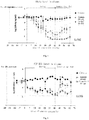
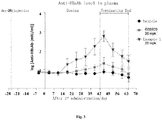
- Example 1 The detailed results of in vivo pharmacodynamics assay in mouse model infected with AAV-carrying hepatitis B virus were shown in Figures 1-3 .
- Example 1 compound has better efficacy than control Toll-like receptor 7 agonist GS-9620 under equivalent conditions, showing more advantageous effect.
Landscapes
- Health & Medical Sciences (AREA)
- Life Sciences & Earth Sciences (AREA)
- Chemical & Material Sciences (AREA)
- Organic Chemistry (AREA)
- Virology (AREA)
- Medicinal Chemistry (AREA)
- Veterinary Medicine (AREA)
- Public Health (AREA)
- General Health & Medical Sciences (AREA)
- Animal Behavior & Ethology (AREA)
- Pharmacology & Pharmacy (AREA)
- Chemical Kinetics & Catalysis (AREA)
- General Chemical & Material Sciences (AREA)
- Nuclear Medicine, Radiotherapy & Molecular Imaging (AREA)
- Oncology (AREA)
- Communicable Diseases (AREA)
- Molecular Biology (AREA)
- Biotechnology (AREA)
- Engineering & Computer Science (AREA)
- Epidemiology (AREA)
- Pharmaceuticals Containing Other Organic And Inorganic Compounds (AREA)
- Nitrogen Condensed Heterocyclic Rings (AREA)
- Medicinal Preparation (AREA)
Abstract
Description
- Provided is a 7-(thiazol-5-yl)pyrrolopyrimidine cyclic compound or a pharmaceutically acceptable salt thereof as TLR7 agonist, which is useful for treating or preventing viral infection, particularly hepatitis B or hepatitis C viral infection.
- Toll-like receptor is expressed by various immune cells and recognizes high reserved structural motifs: Pathogen Associated Molecular Pattern (PAMP) expressed by microorganism pathogens or Damage Associated Molecular Patterns (DAMP) released by dead cells. PAMP or DAMP stimulates Toll-like receptor to trigger signal cascade which induces the activations of transcriptional factors like AP-1, NF-κB and interferon regulators (pulse response function). It results in various cell responses, including productions of interferons, proinflammatory cytokines and effector cytokines, whereby immune response is produced.
- By far, 13 types of Toll-like receptors have been discovered in mammal. Toll-
like receptors like receptors 3, 7, 8 and 9 are expressed in the endosome. Different Toll-like receptors recognize ligands derived from different pathogens. Toll-like receptor 7 (TLR7) is expressed and ligand recognized by plasmaeytoid dendritic cells (pDC) to induce the secretion of interferon α (IFN-α). Toll-like receptor 7 (TLR7) and Toll-like receptor 8 (TLR8) are highly homologous and therefore the ligand of TLR7 in many cases is also that of TLR8. TLR8 stimulation mainly induces the productions of cytokines like tumor necrosis factor α (TNF-α) and chemoattractant. Interferon α is one of the main medicines for treating chronic hepatitis B or hepatitis C while TNF-α is a proinflammatory cytokine, of which the over secretion will result severe side effects. - There have been reported several TLR7 agonists, like Imiquimod (British Journal of Dermatology 2003; 149 (Suppl. 66): 5-8), Resiquimod (Antiviral Research 64 (2004) 79-83), GS-9620 (Gastroenterology (2013), 144(7), 1508-1517). Nevertheless, it is desirable to have novel TLR7 agonists with better selectivity, activity and safety.
- In an aspect, provided is a compound of formula (I) or a pharmaceutically acceptable salt thereof,

- R1 and R2 are each independently selected from the group consisting of H and C1-4alkyl, or
- R1 and R2 together with the N atom to which they are attached form a 4-8 membered heterocycloalkyl, the 4-8 membered heterocycloalkyl is optionally substituted with one or more R3, R3 is each independently selected from the group consisting of hydroxyl, halogen, cyano, C1-4alkyl and C1-4alkoxy.
- In an embodiment, the 4-8 membered heterocycloalkyl may contain 0, 1, 2 or 3 additional heteroatoms selected from the group consisting of N, O and S.
- In another embodiment, the 4-8 membered heterocycloalkyl may be 4 membered, 5 membered, 6 membered, 7 membered or 8 membered heterocycloalkyl.
- In another embodiment, R3 is independently selected from the group consisting of hydroxyl, F, Cl, Br, CN, methyl, ethyl, propyl, methoxyl, ethoxyl and propoxy.
- In a specific embodiment, the group formed by R1, R2 together with the N atom to which they are attached is selected from the group consisting of:


- In some embodiment, the compound of formula (I) is the following compound:

- In another aspect, provided is a pharmaceutical composition, comprising a compound of formula (I) and/or a pharmaceutically acceptable salt thereof, and one or more pharmaceutically acceptable carriers and/or excipients. The pharmaceutical composition may further optionally comprise one or more additional therapeutical agents.
- In another aspect, provided is a method for treating or preventing viral infection, comprising administering to a subject in need thereof a compound of formula (I) or a pharmaceutically acceptable salt thereof, or the pharmaceutical composition according to the invention in therapeutically or prophylactically effective amount.
- In a further aspect, provided is use of a compound of formula (I) or a pharmaceutically acceptable salt thereof, or the pharmaceutical composition according to the invention for the manufacture of a medicament for treating or preventing viral infection.
- In a yet aspect, provided is a compound of formula (I) or a pharmaceutically acceptable salt thereof, or the pharmaceutical composition according to the invention for use in treating or preventing viral infection.
- In some embodiments according to the invention, the viral infection is viral infection of dengue fever virus, yellow fever virus, west nile virus, Japanese encephalitis virus, tick borne encephalitis virus, Kunjin virus, Murray Valley encephalitis virus, St Louis encephalitis virus, Omsk Hemorrhagic Fever virus, bovine viral diarrhea virus, Zika virus, or hepatitis virus. In a preferable embodiment, the viral infection is hepatitis viral infection. In a further preferable embodiment, the viral infection is hepatitis B or hepatitis C viral infection.
-
-
Figure 1 : In vivo results of pharmacodynamics test in mouse model infected with AAV-carrying hepatitis B virus (plasma HBsAg copy level). -
Figure 2 : In vivo results of pharmacodynamics test in mouse model infected with AAV-carrying hepatitis B virus (plasma HBV DNA copy level). -
Figure 3 : In vivo results of pharmacodynamics test in mouse model infected with AAV-carrying hepatitis B virus (plasma Anti-HBsAb producing level). - Unless stated otherwise, the terms and phrases used herein have the following meaning. A specific term or phrase shall not be considered as unclear or indefinite when it is not specifically defined. It should be understood according to the general meaning. The trade name used herein refers to the corresponding product or the active ingredient.
- When used with a numerical variable, the term "approximate" or "about" usually refers to the value of the variable and all the values of the variable within the experimental error (for example, within an average 95% confidence interval) or within ± 10% of the specified value, or a wider range.
- The expression "comprise" or its synonyms "contain", "include", "have" or the like is open-ended, which does not exclude other unlisted elements, steps or ingredients. The expression "consist of" excludes any unlisted elements, steps or ingredients. The expression "substantially consist of' refers to specified elements, steps or ingredients within a given range, together with optional elements, steps or components which do not substantively affect the basic and novel feature of the claimed subject matter. It should be understood that the expression "comprise" encompasses the expressions "substantially consist of' and "consist of'.
- The term "optional" or "optionally" means the event described subsequent thereto may or may not happen. This term encompasses the cases that the event may or may not happen. For example, the expression that ethyl is "optionally" substituted with halogen means that the ethyl is unsubstituted (CH2CH3), mono-substituted (eg. CH2CH2F), multi-substituted (e.g. CHFCH2F, CH2CHF2 etc.), or is completely substituted (CF2CF3). It should be noted for a person skilled in the art that, for any group containing one or more substituents, a substitution or substitution mode which does not possibly exist in space and/or cannot be synthesized will not be introduced.
- The term Cm-n used herein means that the moiety has m-n carbon atoms. For example, "C1-4alkyl" means said alkyl has 1-4 carbon atoms.
- The numerical range herein refers to each of the integers therein and subranges constituted by the integers. For example, "C1-4" means said group may have 1 carbon atom, 2 carbon atoms, 3 carbon atoms or 4 carbon atoms. Accordingly, "C1-4alkyl" encompasses "C2-3alkyl", "C1-3alkyl", "C2-4alkyl" as well as C1alkyl, C2alkyl, C3alkyl, C4alkyl or the like.
- The term "substituted" means any one or more hydrogen atoms on a given atom are replaced by substituent(s), provided that the valence of the given atom is normal and the compound after substitution is stable.
- When any variable (e.g. R) occurs at the composition or structure of the compound over one time, it is defined independently at each case. Therefore, for example, if a group is substituted by 0-2 R, the group may be optionally substituted by at most two R and R has independent option at each case. Additionally, a combination of substituents and/or the variants thereof are allowed only if such a combination will result in a stable compound.
- Unless stated otherwise, the term "hetero" means heteroatom or heteroatom radical (i.e. a radical containing heteroatom), i.e. the atoms beyond carbon and hydrogen atoms or the radical containing such atoms. Preferably, the heteroatom is independently selected from the group consisting of O, N, S and the like. In an embodiment wherein two or more heteroatoms are involved, the two or more heteroatoms may be the same, or part or all of the two or more heteroatoms may be different.
- The term "halo" or "halogen" refers to F, Cl, Br or I.
- The term "hydroxyl" refers to -OH group.
- The term "cyano" refers to -CN group.
- The term "alkyl" refers to a linear or branched saturated aliphatic hydrocarbyl group composed of carbon and hydrogen atoms, which is linked to rest of the molecule via a single bond. Non-limiting examples of C1-4alkyl comprise but not limited to methyl, ethyl, propyl, isopropyl, n-butyl, isobutyl, sec-butyl and tert-butyl.
- The term "C1-4alkoxy" refers to "C1-4 alkyl", which is connected to the rest of the molecule via "-O-", wherein the "C1-4 alkyl" is defined as above.
- The term "heterocycloalkyl" refers to a saturated monocyclic or polycyclic system group, wherein part of the ring atoms are heteroatoms selected from the group consisting of N, O, S, and rest of the ring atoms are C. Accordingly, the term "4-8 membered heterocycloalkyl" refers to the heterocycloalkyl containing 4∼8 ring atoms in the system, wherein one or more ring atoms are heteroatoms selected from the group consisting of N, O, S. The examples of 4 membered heterocyclohydrocarbyl comprise but not limited to azetidinyl. The examples of 5 membered heterocycloalkyl comprise but not limited to pyrrolidinyl, isoxazolidinyl, oxazolidinyl, isothiazolidinyl, thiazolidinyl, imidazolidinyl. The examples of 6 membered heterocyclohydrocarbyl comprise but not limited to piperidinyl, morpholinyl, piperazinyl. The examples of 7 membered heterocyclohydrocarbyl comprise but not limited to azacycloheptanyl, oxaazabicyclo[2.2.1]heptyl, or the like.
- The term "pharmaceutically acceptable" refers to the compound, material, composition and/or dosage form, which are within the scope of reliable medical judgment, suitable for contact with human and animal tissues, without over toxicity, irritation, allergic reaction or other problems or complications and has acceptable benefit/risk ratio.
- The term "pharmaceutical composition" refers to an active compound (e.g. a compound of formula (I) or a pharmaceutically acceptable salt thereof), which is optionally combined with one or more pharmaceutically acceptable chemical components (for example, but not limited to carrier and/or excipient).
- The term "pharmaceutically acceptable carrier" refers to those carriers which have no significant irritation and do not impair the bioactivity and property of the active compound. The "pharmaceutically acceptable carrier" refers to inert substance which is administered together with active ingredient and is beneficial to the administration thereof, and comprises but not limited to any of the following substances approved by State Food and Drug Administration for use in human or animal (e.g. livestock): glidant, sweetening agent, diluent, preservative, dye/colorant, flavoring agent, surfactant, wetting agent, dispersant, disintegrant, suspending agent, stabilizing agent, isotonic agent, solvent or emulsifying agent. Non-limiting examples of the carriers comprise calcium carbonate, calcium phosphate, various sugars and starches, cellulose derivative, gelatine, vegetable oil and polyethylene glycol or the like. Other information regarding the carriers may be found in Remington: The Science and Practice of Pharmacy, 21st Ed., Lippincott, Williams & Wilkins (2005), of which the contents are incorporated herein by reference. The term "excipient" generally refers to the vehicle, diluent and/or medium used to formulate effective pharmaceutical composition.
- The term "administration" or "administrating" or the like refers to a method that enables a compound or composition to be delivered to a desired site of biological action. Such methods comprise but not limited to oral, parenteral (including intravenous, subcutaneous, intraperitoneal, intramuscular, intravascular injection or infusion), local, rectal administration or the like.
- As for pharmaceutical or pharmacological active agent, the term "effective amount", "therapeutically effective amount" or "prophylactically effective amount" refers to the amount of the medicament or agent which is not toxic but sufficient to achieve the desired effect. With respect to the oral formulation herein, the "effective amount" for an active substance in the composition refers to the amount required to achieve the desired effect in combination with another active substance in the composition. The effective amount may be determined individually and depends on the age and general condition of the receptor as well as specific active substance. The effective amount in specific case can be determined by a person skilled in the art through conventional test.
- The term "active ingredient", "therapeutic agent", "active substance" or "active agent" refers to a chemical entity useful for treating or preventing target disorder, disease or condition effectively.
- "Protecting group" refers to a type of substituent that is employed to block or protect a certain functionality while reacting with other functional groups on the compound. For example, an "amino-protecting group" is a substituent attached to an amino group that blocks or protects the amino functionality in the compound. Suitable amino-protecting groups include but are not limited to acetyl, trifluoro group, t-butoxycarbonyl (BOC), benzyloxycarbonyl (CBZ), 9-fluorenylmethyl chloroformate (Fmoc), 2-(trimethylsilyl)ethoxyl methyl (SEM) and the like. General description of protecting groups and their use can be found in Greene and Wuts, Protective Groups In Organic Synthesis, Wiley and Sons, 1991.
- Provided is a compound of formula (I) or a pharmaceutically acceptable salt thereof,

- The expression "the group formed by R1, R2 together with the N atom to which they are attached" refers to the group formed by


- The additional heteroatom(s) in the expression "the 4-8 membered heterocycloalkyl may contain 0, 1, 2 or 3 additional heteroatoms selected from the group consisting of N, O and S" refers to heteroatom(s) other than the N atom in

- In a preferable embodiment, provided is the compound of the following formula:

- It should be understood that the compound according to the invention may be present in the form of pharmaceutically acceptable salt. As pharmaceutically acceptable salt, for example, the following examples may be mentioned: metal salts, ammonium salts, salts formed with organic bases, inorganic acids, organic acids, basic or acidic amino acids or the like. Non-limiting examples of metal salts comprise but not limited to salts of alkaline metals, for example sodium salt, potassium salt or the like; salts of alkaline earth metals, for example calcium salt, magnesium salt, barium salt or the like; aluminum salt or the like. Non-limiting examples of the salts formed with organic bases comprise but not limited to those formed with trimethylamine, triethylamine, pyridine, methylpyridine, 2,6-dimethylpyridine, ethanolamine, diethanolamine, triethanolamine, cyclohexylamine, dicyclohexylamine or the like. Non-limiting examples of the salts formed with inorganic acids comprise but not limited to those formed with hydrochloric acid, hydrobromic acid, nitric acid, sulphuric acid, phosphoric acid or the like. Non-limiting examples of the salts formed with organic acids comprise but not limited to those formed with formic acid, acetic acid, trifluoroacetic acid, fumaric acid, oxalic acid, malic acid, maleic acid, tartaric acid, citric acid, succinic acid, methanesulfonic acid, benzene sulfonic acid, p-toluenesulfonic acid or the like. Non-limiting examples of the salts formed with basic amino acids comprise but not limited to those formed with arginine, lysine, ornithine or the like. Non-limiting examples of the salts formed with acidic amino acids comprise but not limited to those formed with aspartic acid, glutamic acid or the like.
- The pharmaceutically acceptable salts according to the invention may be prepared from the parent compound containing acidic or basic group through conventional chemical procedures. Generally, such salts may be prepared through the reaction of the compounds in the form of free acid or base with stoichiometric appropriate base or acid in water, organic solvent or the mixture thereof. Typically, nonaqueous medium like ether, ethyl acetate, ethanol, isopropanol or acetonitrile etc. are preferable.
- The compound according to the invention may have one or more stereoisomeric centers and each of the centers may exist in R configuration or S configuration or combination thereof. Therefore, the compounds according to the invention comprise all the individual configurational stereoisomeric forms, position isomeric forms, diastereomeric forms, enantiomeric forms and epimeric forms as well as their corresponding mixtures. The technology to reverse a particular stereoisomeric center or keep it unchanged as well as the technology of stereoisomers mixtures resolution is well-known in the art and a person skilled in the art can select particular procedure according to particular requirements.
- The compounds according to the invention may exist in unsolvated or solvated forms, including hydrate form. In general, the solvated forms are equivalent to unsolvated forms and both of them are encompassed within the scope of the invention. The compounds according to the invention may exist in polymorphic or amorphous forms and such forms are encompassed within the scope of the invention.
- The compound according to the invention may contain atomic isotope in non-natural ratio at one or more atoms constituting said compound. For example, the compound may be labeled with radioisotope, such as Tritium (3H), Iodine-125(125I) or C-14(14C). Alternation of all the radioisotopes of the compound, either radioactive or not, is encompassed within the scope of the invention.
- The present invention also encompasses any pharmaceutically acceptable derivative of the compounds according to formula (I), e.g. ester, salt of the ester. A particularly preferable derivative is prodrug. Upon administration to a subject, such a derivative can directly or indirectly provide the compound according to the invention or its metabolite or residue with pharmaceutical activity. A particularly preferable derivative (e.g. prodrug) is the compound, which upon administration to a subject, will increase bioavailability of the compound according to the invention or improve delivery of the parent compound to the tissues or organs of a living body.
- Provided is a method for treating or preventing viral infection, comprising administering to a subject in need thereof a compound of formula (I) or a pharmaceutically acceptable salt thereof, or the pharmaceutical composition according to the invention in therapeutically or prophylactically effective amount. The method may optionally comprise administering one or more additional active agents for treating or preventing the viral infection.
- Alternatively, provided is use of a compound of formula (I) or a pharmaceutically acceptable salt thereof, or the pharmaceutical composition according to the invention for the manufacture of a medicament for treating or preventing viral infection. In a particular embodiment, the compound of formula (I) or the pharmaceutically acceptable salt thereof may be used in combination with one or more additional active agents for treating or preventing the viral infection.
- Alternatively, provided is a compound of formula (I) or a pharmaceutically acceptable salt thereof, or the pharmaceutical composition according to the invention for use in treating or preventing viral infection. In a particular embodiment, the compound of formula (I) or the pharmaceutically acceptable salt thereof may be used in combination with one or more additional active agents for treating or preventing the viral infection.
- In some embodiments according to the invention, the viral infection is viral infection of dengue fever virus, yellow fever virus, west nile virus, Japanese encephalitis virus, tick borne encephalitis virus, Kunjin virus, Murray Valley encephalitis virus, St Louis encephalitis virus, Omsk Hemorrhagic Fever virus, bovine viral diarrhea virus, Zika virus, or hepatitis virus. In a preferable embodiment, the viral infection is hepatitis viral infection, particularly hepatitis B or hepatitis C viral infection.
- Provided is also a pharmaceutical composition, comprising a compound of formula (I) or a pharmaceutically acceptable salt thereof, and one or more pharmaceutically acceptable carriers and/or excipients. The pharmaceutical composition may further optionally comprise one or more additional active agents.
- The pharmaceutical composition according to the invention may be prepared by combining the compound according to the invention or the salt thereof with a pharmaceutically acceptable carrier. For example, it may be formulated into solid, semi-solid, liquid or gas formulation, such as tablet, pill, capsule, powder, granule, ointment, emulsion, suspension, solution, suppository, injection, inhalant, gel, microsphere, aerosol or the like.
- The pharmaceutical composition according to the invention may be prepared by the processes well-known in the art, such as conventional mixing, dissolution, granulation, dragee coating, levigation, emulsion, freeze-drying or the like.
- Typical routes for administering the compound according to the invention or the pharmaceutically acceptable salt thereof or the stereoisomer thereof or the pharmaceutical composition thereof comprise but not limited to oral, rectal, transmucosal, enteral administration or local, transcutaneous, inhalant, parenteral, sublingual, intravaginal, intranasal, intraocular, intraperitoneal, intramuscular, subcutaneous, intravenous administration.
- As for oral administration, the active compounds may be mixed with the pharmaceutically acceptable carriers well-known in the art to prepare the pharmaceutical composition. The carriers may be used to prepare the compounds according to the invention into tablet, pill, troche, dragee, capsule, liquid, gel, slurry, suspension or the like useful for oral administration to the patient.
- Solid oral composition may be prepared by conventional mixing, filling or compressing processes, for example, by the following processes: mixing the active compounds with solid excipients, optionally milling the resultant mixture, adding other proper adjuvants if necessary, and then processing the mixture into granules so as to obtain the core of tablet or dragee. The proper adjuvants comprise but not limited to binder, diluent, disintegrant, lubricant, glidant, sweetener, corrigent or the like. Additional examples comprise microcrystalline cellulose, glucose solution, acacia gel, gelatine solution, sucrose and starch paste; talcum, starch, magnesium stearate, calcium stearate or stearic acid; lactose, sucrose, starch, mannitol, sorbitol or dicalcium phosphate; silicon dioxide; croscarmellose sodium, pregelatinized starch, sodium starch glycolate, alginic acid, maize starch, potato starch, methylcellulose, agar, carboxymethyl cellulose, crosslinked polyvinylpyrrolidone or the like. The core of dragee may be optionally coated through well-known processes in conventional pharmaceutical practice, especially by an enteric coating.
- The pharmaceutical composition according to the invention may be useful for parenteral administration, for example as appropriate unit dosage form like sterile solution, suspension or freeze dried product. Proper excipients may be used, such as filler, buffer or surfactant.
- The compound of formula (I) or the pharmaceutically acceptable salt thereof according to the invention may be administered by any suitable route and process, for example by oral or parenteral administration (e.g. intravenous administration). The therapeutically or prophylactically effective amount of the compound of formula (I) may range from about 0.0001 to 20 mg/Kg bodyweight/day, for example, 0.001 to 10 mg/Kg bodyweight/day.
- The dosing frequency of the compound of formula (I) depends on requirements of the individual patient, for example one or two or more times per day. Administration may be intermittent, for example, during the period of several days, the patient receives the daily dosage of the compound of formula (I), and then during the period of several days or a longer time, the patient does not receive the daily dosage of the compound of formula (I).
- Provided is also a pharmaceutical combination, e.g. a kit, which comprises a) a first active agent which is a compound as disclosed herein; b) one or more additional active agents. The pharmaceutical combination may comprise instructions for its administration if necessary. If necessary, the above a) and b) may be provided in the same container or different containers. The pharmaceutical combination may further comprise the agents for assisting administration in the same container or different containers, e.g. the pharmaceutically acceptable carriers and/or excipients as mentioned above. Optionally, the kit may comprise a unit for diagnosis of viral infection (for example, the above-mentioned viral infections).
- The compound according to the invention can be prepared through various synthesis processes well-known to a person skilled in the art, including the specific embodiments illustrated below, the embodiments through combination of such specific embodiments with other chemical synthesis processes as well as equivalents well-known to a person skilled in the art. The preferable embodiments comprise but not limited to the working Examples herein. The chemical reaction of the specific embodiment according to the invention may be performed in appropriate solvent which should be suitable for the chemical change and required reagent and material according to the invention. To obtain the compound according to the invention, a person skilled in the art sometimes needs to perform modification or selection to synthesis step or reaction procedure based on the known embodiments.
- One important factor in designing any synthesis scheme in the art lies in selecting an appropriate protective group for reactive group (e.g. amino in the invention). A person skilled in the art may refer to Protective Groups In Organic Synthesis, Wiley and Sons, 1991 by Greene and Wuts. The above cited references above are incorporated herein by reference in entirety.
- For example, the compound of general formula (I) according to the invention may be prepared by a person skilled in the field of organic synthesis with standard procedures according to the following scheme:

- Preparation of compound of formula 4: compound of
formula 1 as starting material is reacted with compound offormula 2 via condensation reaction to give compound of formula 3, which is used to give compound offormula 4 under the action of n-butyllithium and DMF. - Preparation of compound of formula (I): compound of formula 5, with the protection of SEM, is used to give compound of formula 6, which is subjected to amino substitution to give compound of
formula 7; compound offormula 7 is reacted with n-butanol under the action of Na to give compound of formula 8, which is subjected to deprotection of SEM protective group under the action of TFA to give compound of formula 9; compound of formula 9 is reacted with compound offormula 4 to give compound of formula 10, which is subjected to removal of hydroxyl to give compound of formula (I). - The solvents used herein are commercially available and can be used without further purification. The reactions are generally performed under inert nitrogen in anhydrous solvent. Data of proton magnetic resonance is recoded in Bruker Avance III 400 (400 MHz) spectrometer, with the chemical shift shown as (ppm) at tetramethylsilane low field. Mass spectrometry is determined on Agilent 1200 plus 6110 (&1956A). LC/MS or Shimadzu MS includes a DAD: SPD-M20A (LC) and Shimadzu Micromass 2020 detector. Mass spectrometer is equipped with an electrospray ionization (ESI) operated at positive or negative mode.
- The compounds are nominated manually or by the ChemDraw® software. The names of commercially available compounds provided in the catalog of the supplier are used.
- High performance liquid chromatographic analysis is performed with Shimadzu LC20AB system equipped with Shimadzu SIL-20A auto-sampler and Japanese Shimadzu DAD: SPD-M20A detector on Xtimate C18 (3m filler, 2.1x300 mm) chromatographic column. 0-60AB_6 min method: linear gradient is applied, wherein elution is initiated with 100%A (A is 0.0675% TFA aqueous solution) and terminated with 60%B (B is 0.0625% TFA in MeCN solution) (the whole process is 4.2 min), and then 60% B is used for elution for 1 min. The chromatographic column is further equilibrated for 0.8 min to reach 100:0 and the total operational time is 6 min. 10-80AB_6 min method: linear gradient is applied, wherein elution is initiated with 90% A (A is 0.0675% TFA aqueous solution) and terminated with 80% B (B is 0.0625% TFA in acetonitrile solution) (the whole process is 4.2 min), and then 80% B is used for elution for 1 min. The chromatographic column is further equilibrated for 0.8 min to reach 90:10 and the total operational time is 6 min. The column temperature is 50°C and velocity is 0.8 mL/min. The scanning wave of diode array detector is 200-400 nm.
- Thin layer chromatographic (TLC) analysis is performed on silica gel GF254 of Sanpont-group. Speckles are detected with UV light generally and in some cases other processes may also be used. In these cases, the thin layer plate is spread with iodine (about 1 g iodine is added into 10 g silica gel with complete mixing), vanillin aldehyde (about 1 g vanillin aldehyde is dissolved in 100 mL 10% H2SO4), ninhydrin (available from Aldrich) or particular developer ((NH4)6Mo7O24•4H2O, 5 g (NH4)2Ce(IV)(NO3)6, 450 mL H2O and 50 mL concentrated H2SO4 are completely mixed) and the compound is detected. With a process similar as that described in Still, W. C.; Kahn, M.; and Mitra, M. Journal of Organic Chemistry, 1978, 43, 2923-2925, the flash column chromatography is performed on 40-63 µm (230-400 mesh) silica gel from Silicycle. Common solvents in flash column chromatography or thin layer chromatography comprise dichloromethane/methanol, ethyl acetate/methanol and hexane/ethyl acetate mixture.
- Preparative chromatographic analysis is performed on Gilson-281 Prep LC 322 system with Gilson UV/VIS-156 detector, and the chromatographic column is Agella Venusil ASB Prep C18, 5m, 150×21.2 mm; Phenomenex Gemini C18, 5 m, 150×30 mm; Boston Symmetrix C18, 5m, 150×30 mm; or Phenomenex Synergi C18, 4 m, 150×30 mm. Low gradient acetonitrile/water is used to elute the compound when the velocity is about 25 mL/min, wherein the water contains 0.05% HCl, 0.25% HCOOH or 0.5% NH3•H2O, and the total operational time is 8 -15 min.
- The following abbreviations are used herein: n-BuLi: n-butyllithium; THF: tetrahydrofuran; SEM: 2-(trimethylsilyl)ethoxyl methyl; DIPEA: diisopropyl ethyl amine; IPA: isopropanol; TFA: trifluoroacetic acid; DMF: N,N-dimethylformamide; n-BuOH: n-butanol; Et3SiH: triethylsilane.
- The compounds according to the invention have high binding activity to Toll-
like receptor 7 and low binding activity to Toll-like receptor 8, showing better selectivity, activity and safety as well as lower side effect, and can be used to effectively treat and prevent viral infection, particularly hepatitis B or hepatitis C viral infection. - The following Examples are provided for a person skilled in the art to clearly illustrate and practice the invention. They are illustrative and exemplary only and should not be understood as a limitation to the scope. Unless stated otherwise, the ratios (including percentages) or parts are based on weight.
-

- To a 500 mL reaction bottle were added thiazol-2-formaldehyde (25.00 g, 220.90 mmol) and tetrahydrofuran (300.0 mL), which was stirred for 5 min and then glacial acetic acid (39.80 g, 662.90 mmol) was added. The system was cooled to 0-10°C with stirring and pyrrolidine (13.80 g, 194.40 mmol) was added dropwise. The temperature was kept below 10°C during addition. After addition, sodium triacetoxyborohydride (56.20 g, 265.10 mmol) was added in portions. The reaction was performed at 10-20°C for 12 hr and was monitored with TLC until the starting materials totally disappeared. After completion of the reaction, to the reaction liquid was added aqueous saturated sodium bicarbonate slowly to pH of 9-10 and the reaction liquid was extracted with 150 mL of ethyl acetate three times. The organic phases were combined, dried over anhydrous sodium sulfate and concentrated under reduce pressure. The residue was purified with column chromatography (mobile phase gradient: ethyl acetate/petroleum ether: 3/1/-1/1) to give 15.00 g of title compound as yellow oil, yield: 40.3%.
1H NMR (400 MHz, CHLOROFORM-d) δ 7.71 (d, J=3.26 Hz, 1H), 7.26-7.32 (m, 1H), 4.02 (s, 2H), 2.60-2.75 (m, 4H), 1.84 (td, J=3.20, 6.65 Hz, 4H). -

- To a 500 mL three neck flask were added 2-(pyrrolidin-1-ylmethyl)thiazole (15.00 g, 89.10 mmol) and tetrahydrofuran (250.00 mL), which was cooled to -78°C with dry ice acetone. At -78°C n-butyllithium (2.5 M, 71.3 mL) was slowly added dropwise. After addition, the reaction mixture was stirred for 30 min at -78°C. At -78°C, to the reaction liquid was added DMF (13.00 g, 178.30 mmol) dropwise. After addition, the reaction mixture was further stirred at -78°C for 30 min. The completion of reaction was detected with TLC. The reaction liquid was quenched with 50 mL of saturated aqueous ammonium chloride and extracted with 150 mL of ethyl acetate. The combined organic phases were dried over saturated sodium sulfate, filtered and concentrated under reduced pressure to give 15.00 g of title compound as yellow oil and the crude was used for the next step directly.
1H NMR (400 MHz, CHLOROFORM-d) δ 10.03 (s, 1H), 8.32 (s, 1H), 4.03 (s, 2H), 2.73 (t, J=6.02 Hz, 4H), 1.86 (td, J=3.20, 6.65 Hz, 4H). -

- 2,4-dichloro-5H-pyrrolo[3,2-d]pyrimidine (4.00 kg, 21.28 mol) was dissolved in DMF (20.00 L); at room temperature (25°C) DIPEA (2.58 kg, 20.00 mol) was added in portions and the reaction mixture was stirred for 30 min subsequently. The reaction liquid was cooled to 0°C with ice bath and then SEM-C1 (4.00 kg, 24.00 mol) was slowly added dropwise at a rate of 1-2 drop/second over 5 hours. After addition, the reaction liquid was stirred for 4 hour at 0°C. Completion of the reaction was monitored with HPLC. The reaction liquid was quenched with 70 L of water and extracted with ethyl acetate (15L×3) after dilution. The combined organic phases were washed with 1M aqueous hydrochloric acid (5L×2) and saturated saline solution (7L×2) successively, and the solvent was distilled off under reduced pressure to give the tile compound (6.40kg, 20.11mol, yield 94.50%).
1H NMR (400 MHz, DMSO-d 6) δ 8.24 - 8.35 (m, 1 H), 6.70 - 6.85 (m, 1 H), 5.77 (s, 2 H), 3.45 - 3.57 (m, 2 H), 0.74 - 0.86 (m, 2 H), 0.00 (s, 9 H). -

- In a 10 L autoclave, 2,4-dichloro-5-((2-(trimethylsilyl)ethoxyl)methyl)-5H-pyrrolo[3,2-d]pyrimidine (1.60 kg, 5.03mol) was dissolved in isopropanol (1.60 L) and aqueous ammonia (4L) was added in one portion at room temperature (25°C). The reaction mixture was stirred at 95°C for 7 hours and the completion of reaction was monitored with HPLC. The reaction liquid was cooled to room temperature spontaneously and filtration with buchner funnel to give black brown solid. The solid was slurried with ethyl acetate/n-heptane (1/1, 5L×2), slurried with ethyl acetate (4 L) successively to give the title compound as brown solid (1.25kg, 4.18mol, yield 83.1%).
1H NMR (400 MHz, DMSO-d 6) δ 7.61 - 7.77 (m, 1 H), 6.97 - 7.19 (m, 2 H), 6.28 - 6.38 (m, 1 H), 5.54 - 5.67 (m, 2 H), 3.43 - 3.53 (m, 2 H), 0.76 - 0.91 (m, 2 H), 0.07 (s, 9 H). -

- Under the protection of nitrogen, to n-BuOH (17.0L) was slowly added metal sodium (525.05 g, 22.84 mol) in portions. After addition, the system was warmed to 60°C and continued to be stirred at that temperature until the complete dissolution of metal sodium. Then the system was cooled to 25°C and 2-chloro-5-((2-(trimethylsilyl)ethoxyl)methyl)-5H-pyrrolo[3,2-d]pyrimidin-4-amine (1.95kg, 6.53 mol) was added in portions. After uniform mixing with stirring, the reactants were stirred for 8 hours at 90°C and completion of the reaction was monitored with HPLC. The reaction mixture was cooled to 25°C spontaneously and then poured slowly into 30 L of aqueous ammonium chloride and extracted with ethyl acetate (15L×3). The combined organic phases were washed with saturated saline solution (20L×2), dried over anhydrous Na2SO4, and filtered. After distillation of solvent under reduced pressure, the residue was slurried in n-heptane (4L). Filtration was performed to give solid, which was slurried in ethyl acetate (5L) to give the title compound as yellowish white solid (1.53kg, 4.55mol, 69.7%).
1H NMR (400 MHz, DMSO-d 6) δ 7.49 - 7.54 (m, 1 H), 6.54 - 6.62 (m, 2 H), 6.15 - 6.20 (m, 1 H), 5.54 (s, 2 H), 4.10 - 4.22 (m, 2 H), 3.42 - 3.55 (m, 2 H), 1.58 - 1.73 (m, 2 H), 1.35 - 1.47 (m, 2 H), 0.90 - 0.96 (m, 3 H), 0.83 - 0.89 (m, 2 H), 0.05 (s, 9 H). -

- 2-butoxy-5-((2-(trimethylsilyl)ethoxyl)methyl)-5H-pyrrolo[3,2-d]pyrimidin-4-amine (1.10 kg, 3.27 mol) was dissolved in TFA (5.50 L) and the reaction liquid was stirred for 16 hours at 25°C. Completion of the reaction was monitored with HPLC and TFA was distilled off under reduced pressure. The residue was dissolved in methanol (1.2 L) and ice water (1.2 L) and pH of the system was adjusted to 12 with concentrated aqueous ammonia with uniform stirring and then stirred for 2 hours. Precipitate continued to appear in the solution. After filtration, the filter cake as white solid was slurried with 15% aqueous ammonia (1.2 L×3) and ethyl acetate (4L) to give the title compound as white solid (550.00 g, 2.67 mol, 81.7%).
1H NMR (400 MHz, METHANOL-d 4) δ 7.37 (d, J=2.89 Hz, 1 H), 6.29 (d, J=3.01 Hz, 1 H), 4.27 (t, J=6.53 Hz, 2 H), 1.75 (d, J=7.91 Hz, 2 H), 1.44 - 1.61 (m, 2 H), 1.00 (t, J=7.40 Hz, 3 H). -

- To a 500 mL three neck flask were added 2-butoxy-5H-pyrrolo[3,2-d]pyrimidin-4-amine (10.00 g, 48.49 mmol), potassium carbonate (7.37 g, 53.34 mmol), water (100 mL) and isopropanol (100 mL), to which was added 2-(pyrrolidin-1-ylmethyl)thiazol-5-formaldehyde (14.27 g, 72.74 mmol) with stirring. The reaction was performed at 25°C for 16 hr and 2-(pyrrolidin-1-methylene)thiazol-5-formaldehyde was monitored with LCMS for completion of the reaction. The reaction liquid was added with 100 mL of water for dilution and extracted with 100 mL of dichloromethane three times. The combined organic phases were dried over anhydrous sodium sulfate, filtered off solid and concentrated under reduced pressure to give residue, which was purified with column chromatography (mobile phase gradient: dichloromethane /methanol/aqueous ammonia/: 30/1/0.1 to 10/1/0.1) to give the title compound as brown solid (5.20 g, 12.92 mmol, yield: 26.6%). MS (ESI) m/z: 403.3 [M+H+].
-

- To a 100 mL eggplant flask were charged ((4-amino-2-butoxy-5H-pyrrolo[3,2-d]pyrimidin-7-yl)-hydroxylmethyl)-[2-(pyrrolidin-1-methylene)thiazol -5-yl]methanol (5.10 g, 12.60 mmol), triethylsilane (10.00 mL) and trifluoroacetic acid (40.00 mL) and the reaction mixture was stirred at 20°C for 12 hours. The raw materials were monitored with LCMS for completion of the reaction. The solvent was removed by concentration under reduced pressure. To the system was added 100 mL of ethyl acetate and then saturated sodium carbonate solution was added to adjust the solution to pH=9-10. Extraction was performed with 50 mL of ethyl acetate three times. The organic phases were combined, dried over anhydrous sodium sulfate, filtered off solid and concentrated under reduced pressure to give residue, which was separated with prep. High Performance Liquid Chromatography to give 4.2 g of 2-butoxy-7-(2-(pyrrolidin-1-ylmethyl)thiazol-5-yl)methyl)-5H-pyrrolo[3,2-d]pyrimidin-4-amine as light yellow oil (diformate of the title compound).
1HNMR (400 MHz, Methanol-d4 ) δ 8.30 (s, 2H), 7.61 (s, 1H), 7.41 (s, 1H), 4.51 (s, 2H), 4.44 (q, J=6.6 Hz, 2H), 4.24 (s, 2H), 3.33 - 3.28 (m, 4H), 2.02 (s, 4H), 1.83 - 1.73 (m, 2H), 1.56 - 1.46 (m, 2H), 0.99 (t, J=7.2 Hz, 3H). - Reagents:
- HEK-blue hTLR7 cell and HEK-blue hTLR8 cell (available from InvivoGen)
- DMEM medium
- heat inactivated fetal bovine serum
- Anti Mycoplasma reagent Normocin™
- bleomycin
- blasticidin
- The GS-9620 and R848 used have the following structures. GS-9620 can be prepared according the process disclosed in
US20100143301 ; R848 is purchased from ABGENT (Catalog: IMG-2208, 0.5 mg).
-
- 1. Preparation of 96-well compound plate:
The compounds were gradient diluted with DMSO in 3-fold using liquid work station POD starting at a concentration of 10 mmol/L and 10 points were diluted (2nd column to 11th column, and each point was duplicated). At 12th column, 1 µL of 5 mg/mL positive compound R848 was added as positive control; and at 1st column, 1 µL of DMSO was added as negative control. Each well contained 1 µL of DMSO. - 2. The cells in cell culture flask were collected and the cell density was diluted to 250,000 cells/mL.
- 3. 200 µL (50,000 cells/well) of cell suspension was added into prepared compound plate and the final concentration of DMSO in each well was 0.5%.
- 4. The culture plates containing cells and the compounds were incubated in CO2 incubator for 24 h at 37°C, 5%CO2.
- 5. After 24 h incubation, 20 µL of supernatant was removed from each well of the cell culture plates to a 96-well transparent assay plate. To each well of the assay plate was added 180 µL of Quanti-Blue reagent and the plate was incubated in an incubator at 37°C, 5%CO2 for 1 h.
- 6. After 1 h, the content of alkaline phosphatase in 20 µL of supernatant was determined using Microplate Reader at OD650.
- 7. EC50 of each compound was obtained with Prism software.
- Results were shown in Table 1:
Table 1 Test sample TLR7 EC50 (nM) TLR8 EC50 (nM) GS-9620 517 7867 Example 1 454.1 29332 - According to the above table, the compound according to the invention showed higher in vitro receptor binding activity to Toll-
like receptor 7 than the control Toll-like receptor 7 agonist GS-9620 and lower in vitro receptor binding activity to Toll-like receptor 8 than the control Toll-like receptor 7 agonist GS-9620. The compound according to the invention has significant difference in selectivity for various receptors, showing better effect than the prior art. - 12 male SD rats were divided into 4 groups with 3 SD rats in each group. 2 groups of animals were administered by intravenous injection (IV) 1 mg/kg of the control Toll-
like receptor 7 agonist GS-9620 and Example 1 compound as 10% hydroxypropyl-β-cyclodextrin aqueous solution (concentration is 0.5 mg/mL), respectively. The other 2 groups were administered orally (PO) 5 mg/kg of GS-9620 and 3 mg/kg of Example 1 compound as 0.5% methylcellulose/0.2% Tween 80 pure water suspension (concentration is 1 mg/mL). Each rat with intravenous injection was collected for whole blood samples which were prepared intoplasma 2, 15, 30 min and 1, 2, 4, 8, 24 h continuously after administration. Each rat with oral administration was collected for whole blood samples which were prepared into plasma 15, 30 min and 1, 2, 4, 8, 24 h continuously after administration. The plasma concentrations of GS-9620 and Example 1 compound were determined with LC-MS/MS. - The results were shown in Table 2.
Table 2 Mean plasma drug concentration Compound name GS-9620 Example 1 Time (h) IV1 (1mpk) PO1 (5mpk) IV2 (1mpk) PO2 (3mpk) 0.083 170 -- 500 - 0.25 102 56.3 277 45.4 0.5 65.4 33.2 197 52.0 1 48.1 83.4 120 86.8 2 21.6 136 66.1 113 4 13 16.7 30.6 23.6 8 4.17 9.49 13.1 5.64 24 ND ND ND ND C0 or Cmax(nM) 220 164 673 148 T1/2 (hr) 2.57 2.24 3.08 1.54 Vdss (L/kg) 32.8 -- 13.5 -- C1 (mL/min/kg) 205 -- 75.8 -- AUC0-last (nM.hr) 185 316 541 313 AUCO-inf (nM.hr) 201 359 573 325 - Under the equivalent conditions, as for both the intravenous injection and oral administration (converted administration amount), compared to control Toll-
like receptor 7 agonist GS-9620, the compound according to the invention showed higher exposure in rats. - Experimental design and procedures:
- Administration route: intragastric administration
- Administration time: since
day 26 after virus injection, one administration every three days, 6 weeks in total - Administration groups: group 1: vehicle, 10% HP-β-CD; group 2: GS-9620, 20mg/kg; groups 3: Example 1 compound, 20 mg/kg
- Blood collection: since day 3 after 1st administration, twice per week, 8 weeks in total;
- Liver collection: liver sample was collected on day 64 after 1st administration.
- The details were shown in Table 3 and Table 4.
Table 3 Mouse number Injection procedure Blood collection AAV-HBV v.g./ 200 µL Injection means 30+6 1*1011 200 µL/animal, caudal vein, from day 01. On day 14 andday 21 after virus injection, 30 mice were divided into 6 groups, according to HBV DNA, HBsAg and HBeAg blood level;2. Blood was collected on day 26 of virus injection as prepared sample for administration.*HBsAg: hepatitis B surface antigen; HBeAg: hepatitis B E antigen Table 4 Group Mouse number Experimental procedure Blood collection time Liver collection time Compound Administrat ion amount (mg/kg) Administration volume (mL/kg) Administration means 1 5 Vehicle / 10 After day 26 of virus injection, intragastric administration was performed, once every three days, 6 weeks in total.The first blood collection was performed on day 3 after administration, twice per week, 8 weeks in total. Day 64 after 1st administrat ion. 2 5 GS9620 20 3 5 Example 1 20 - The detailed results of in vivo pharmacodynamics assay in mouse model infected with AAV-carrying hepatitis B virus were shown in
Figures 1-3 . Data of HBV DNA copy number in plasma, HBsAg copy number in plasma and Anti-HBsAb (hepatitis B surface antigen antibody) producing level showed, Example 1 compound has better efficacy than control Toll-like receptor 7 agonist GS-9620 under equivalent conditions, showing more advantageous effect. - Unless otherwise indicated, all numbers expressing quantities of ingredients, cell culture, treatment conditions, and so forth used in the specification, including claims, are to be understood as being modified in all instances by the term "about". Accordingly, unless otherwise indicated to the contrary, the numerical parameters are approximations and may vary depending upon the desired properties sought to be obtained by the present invention. Unless otherwise indicated, the term "at least" preceding a series of elements is to be understood to refer to every element in the series. A person skilled in the art will recognize, or be able to ascertain using no more than routine experimentation, many equivalents to the specific embodiments of the invention described herein. Such equivalents are intended to be encompassed by the appended claims.
- Many modifications and variations of the invention can be made without departing from its spirit and scope, as will be apparent to a person skilled in the art. The specific embodiments described herein are offered by way of example only and are not meant to be limiting in any way. It is intended that the specification and examples be considered as exemplary only, with a true scope and spirit of the invention being indicated by the appended claims.
Claims (12)
- A compound of formula (I) or a pharmaceutically acceptable salt thereof,
 R1 and R2 are each independently selected from the group consisting of H and C1-4alkyl, orR1 and R2 together with the N atom to which they are attached form a 4-8 membered heterocycloalkyl, the 4-8 membered heterocycloalkyl is optionally substituted with one or more R3, R3 is each independently selected from the group consisting of hydroxyl, halogen, cyano, C1-4alkyl and C1-4alkoxy.
 - The compound according to claim 1 or the pharmaceutically acceptable salt thereof, characterized in that, the 4-8 membered heterocycloalkyl contains 0, 1, 2 or 3 additional heteroatoms selected from the group consisting of N, O and S.
- The compound according to claim 2 or the pharmaceutically acceptable salt thereof, characterized in that, the 4-8 membered heterocycloalkyl is 4 membered, 5 membered, 6 membered, 7 membered or 8 membered heterocycloalkyl.
- The compound according to claim 1 or the pharmaceutically acceptable salt thereof, characterized in that, R3 is independently selected from the group consisting of hydroxyl, F, Cl, Br, CN, methyl, ethyl, propyl, methoxyl, ethoxyl and propoxy.
- The compound according to claim 1 or the pharmaceutically acceptable salt thereof, characterized in that, the group formed by R1, R2 together with the N atom to which they are attached is selected from the group consisting of:


- The compound according to claim 5 or the pharmaceutically acceptable salt thereof, characterized in that, the group formed by R1, R2 together with the N atom to which they are attached is

- A compound of the following formula or a pharmaceutically acceptable salt thereof,

- A pharmaceutical composition, comprising the compound according to any one of claims 1-7 and/or the pharmaceutically acceptable salt thereof in therapeutically or prophylactically effective amount, and one or more pharmaceutically acceptable carriers and/or excipients.
- Use of the compound according to any one of claims 1-7 or the pharmaceutically acceptable salt thereof, or the pharmaceutical composition according to claim 8 for the manufacture of a medicament for treating or preventing viral infection.
- The use according to claim 9, characterized in that,
the viral infection is viral infection of dengue fever virus, yellow fever virus, west nile virus, Japanese encephalitis virus, tick borne encephalitis virus, Kunjin virus, Murray Valley encephalitis virus, St Louis encephalitis virus, Omsk Hemorrhagic Fever virus, bovine viral diarrhea virus, Zika virus, or hepatitis virus. - The use according to claim 10, characterized in that,
the viral infection is hepatitis viral infection. - The use according to claim 11, characterized in that,
the viral infection is hepatitis B or hepatitis C viral infection.
Applications Claiming Priority (2)
| Application Number | Priority Date | Filing Date | Title |
|---|---|---|---|
| CN201510744651 | 2015-11-05 | ||
| PCT/CN2016/104644 WO2017076346A1 (en) | 2015-11-05 | 2016-11-04 | 7-(thiazol-5-yl) pyrrolopyrimidine compound as tlr7 agonist |
Publications (3)
| Publication Number | Publication Date |
|---|---|
| EP3381918A1 true EP3381918A1 (en) | 2018-10-03 |
| EP3381918A4 EP3381918A4 (en) | 2019-04-03 |
| EP3381918B1 EP3381918B1 (en) | 2020-09-16 |
Family
ID=58662470
Family Applications (1)
| Application Number | Title | Priority Date | Filing Date |
|---|---|---|---|
| EP16861614.2A Active EP3381918B1 (en) | 2015-11-05 | 2016-11-04 | 7-(thiazol-5-yl) pyrrolopyrimidine compound as tlr7 agonist |
Country Status (22)
| Country | Link |
|---|---|
| US (1) | US10676478B2 (en) |
| EP (1) | EP3381918B1 (en) |
| JP (1) | JP6524355B2 (en) |
| KR (1) | KR102112192B1 (en) |
| CN (1) | CN108349982B (en) |
| AU (1) | AU2016349080B2 (en) |
| BR (1) | BR112018008880B1 (en) |
| CA (1) | CA3004173C (en) |
| CL (1) | CL2018001207A1 (en) |
| DK (1) | DK3381918T3 (en) |
| EA (1) | EA035116B1 (en) |
| ES (1) | ES2833927T3 (en) |
| HU (1) | HUE052770T2 (en) |
| IL (1) | IL259115B (en) |
| MX (1) | MX375353B (en) |
| MY (1) | MY189991A (en) |
| NZ (1) | NZ742453A (en) |
| PH (1) | PH12018500975A1 (en) |
| SG (1) | SG11201803699YA (en) |
| UA (1) | UA121345C2 (en) |
| WO (1) | WO2017076346A1 (en) |
| ZA (1) | ZA201803705B (en) |
Cited By (11)
| Publication number | Priority date | Publication date | Assignee | Title |
|---|---|---|---|---|
| US10457681B2 (en) | 2017-08-16 | 2019-10-29 | Bristol_Myers Squibb Company | Toll-like receptor 7 (TLR7) agonists having a tricyclic moiety, conjugates thereof, and methods and uses therefor |
| US10472361B2 (en) | 2017-08-16 | 2019-11-12 | Bristol-Myers Squibb Company | Toll-like receptor 7 (TLR7) agonists having a benzotriazole moiety, conjugates thereof, and methods and uses therefor |
| US10487084B2 (en) | 2017-08-16 | 2019-11-26 | Bristol-Myers Squibb Company | Toll-like receptor 7 (TLR7) agonists having a heterobiaryl moiety, conjugates thereof, and methods and uses therefor |
| US10494370B2 (en) | 2017-08-16 | 2019-12-03 | Bristol-Myers Squibb Company | Toll-like receptor 7 (TLR7) agonists having a pyridine or pyrazine moiety, conjugates thereof, and methods and uses therefor |
| US10508115B2 (en) | 2017-08-16 | 2019-12-17 | Bristol-Myers Squibb Company | Toll-like receptor 7 (TLR7) agonists having heteroatom-linked aromatic moieties, conjugates thereof, and methods and uses therefor |
| US10654856B2 (en) | 2016-02-05 | 2020-05-19 | Chia Tai Tianqing Pharmaceutical Group Co., Ltd. | Method for preparing pyrrolo[3,2-D]pyrimidine compound, and intermediates thereof |
| US10780091B2 (en) | 2016-02-05 | 2020-09-22 | Chia Tai Tianqing Pharmaceutical Group Co., Ltd. | TLR7 agonist maleate salt, crystalline forms C, D and E thereof, preparation methods and uses of maleate salt and crystalline forms |
| WO2020188448A1 (en) * | 2019-03-15 | 2020-09-24 | Janssen Sciences Ireland Unlimited Company | Toll-like receptor agonists for use in the treatment of hepatitis b |
| US10874640B2 (en) | 2016-08-26 | 2020-12-29 | Gilead Sciences, Inc. | Substituted pyrrolizine compounds and uses thereof |
| US11420974B2 (en) | 2018-02-26 | 2022-08-23 | Gilead Sciences, Inc. | Substituted pyrrolizine compounds and uses thereof |
| EP4029503A4 (en) * | 2019-09-29 | 2023-10-25 | Chia Tai Tianqing Pharmaceutical Group Co., Ltd. | DRUG COMBINATION WITH A TLR7 AGONIST |
Families Citing this family (52)
| Publication number | Priority date | Publication date | Assignee | Title |
|---|---|---|---|---|
| SG11201802769RA (en) | 2015-10-29 | 2018-05-30 | Novartis Ag | Antibody conjugates comprising toll-like receptor agonist |
| FI3526323T3 (en) | 2016-10-14 | 2023-06-06 | Prec Biosciences Inc | Engineered meganucleases specific for recognition sequences in the hepatitis b virus genome |
| KR102492187B1 (en) | 2017-12-20 | 2023-01-27 | 인스티튜트 오브 오가닉 케미스트리 앤드 바이오케미스트리 에이에스 씨알 브이.브이.아이. | 3'3' cyclic dinucleotides with phosphonate linkages that activate STING adapter proteins |
| JP7098748B2 (en) | 2017-12-20 | 2022-07-11 | インスティチュート オブ オーガニック ケミストリー アンド バイオケミストリー エーエスシーアール,ヴイ.ヴイ.アイ. | 2'3'cyclic dinucleotide with phosphonate binding that activates the STING adapter protein |
| US10870691B2 (en) | 2018-04-05 | 2020-12-22 | Gilead Sciences, Inc. | Antibodies and fragments thereof that bind hepatitis B virus protein X |
| TWI818007B (en) | 2018-04-06 | 2023-10-11 | 捷克科學院有機化學與生物化學研究所 | 2'3'-cyclic dinucleotides |
| TW202005654A (en) | 2018-04-06 | 2020-02-01 | 捷克科學院有機化學與生物化學研究所 | 2'2'-cyclic dinucleotides |
| TWI833744B (en) | 2018-04-06 | 2024-03-01 | 捷克科學院有機化學與生物化學研究所 | 3'3'-cyclic dinucleotides |
| TW201945388A (en) | 2018-04-12 | 2019-12-01 | 美商精密生物科學公司 | Optimized engineered meganucleases having specificity for a recognition sequence in the hepatitis B virus genome |
| WO2019209811A1 (en) | 2018-04-24 | 2019-10-31 | Bristol-Myers Squibb Company | Macrocyclic toll-like receptor 7 (tlr7) agonists |
| US20190359645A1 (en) | 2018-05-03 | 2019-11-28 | Institute Of Organic Chemistry And Biochemistry Ascr, V.V.I. | 2'3'-cyclic dinucleotides comprising carbocyclic nucleotide |
| CN112105620B (en) | 2018-05-25 | 2026-02-24 | 正大天晴药业集团股份有限公司 | TLR7 agonists and pharmaceutical combinations thereof for the treatment of lung cancer |
| WO2020028097A1 (en) | 2018-08-01 | 2020-02-06 | Gilead Sciences, Inc. | Solid forms of (r)-11-(methoxymethyl)-12-(3-methoxypropoxy)-3,3-dimethyl-8-0x0-2,3,8,13b-tetrahydro-1h-pyrido[2,1-a]pyrrolo[1,2-c] phthalazine-7-c arboxylic acid |
| US11554120B2 (en) | 2018-08-03 | 2023-01-17 | Bristol-Myers Squibb Company | 1H-pyrazolo[4,3-d]pyrimidine compounds as toll-like receptor 7 (TLR7) agonists and methods and uses therefor |
| CN116098905A (en) | 2018-10-12 | 2023-05-12 | 正大天晴药业集团股份有限公司 | TLR7 agonists and drug combinations thereof for the treatment of colorectal cancer |
| WO2020092528A1 (en) | 2018-10-31 | 2020-05-07 | Gilead Sciences, Inc. | Substituted 6-azabenzimidazole compounds having hpk1 inhibitory activity |
| PE20211655A1 (en) | 2018-10-31 | 2021-08-24 | Gilead Sciences Inc | 6-AZABENZIMIDAZOLE COMPOUNDS SUBSTITUTED AS HPK1 INHIBITORS |
| BR112021015577A8 (en) | 2019-02-08 | 2021-10-05 | Research & Business Found Sungkyunkwan Univ | Toll-like receptor 7/8 agonist cholesterol-complex, nanoparticle composition, adjuvant composition, vaccine composition, composition for regulating immune function, pharmaceutical composition and use of the complex |
| CN113543851B (en) | 2019-03-07 | 2025-03-18 | 捷克共和国有机化学与生物化学研究所 | 2'3'-Cyclic dinucleotides and prodrugs thereof |
| WO2020178768A1 (en) | 2019-03-07 | 2020-09-10 | Institute Of Organic Chemistry And Biochemistry Ascr, V.V.I. | 3'3'-cyclic dinucleotide analogue comprising a cyclopentanyl modified nucleotide as sting modulator |
| WO2020178770A1 (en) | 2019-03-07 | 2020-09-10 | Institute Of Organic Chemistry And Biochemistry Ascr, V.V.I. | 3'3'-cyclic dinucleotides and prodrugs thereof |
| TW202212339A (en) | 2019-04-17 | 2022-04-01 | 美商基利科學股份有限公司 | Solid forms of a toll-like receptor modulator |
| TW202210480A (en) | 2019-04-17 | 2022-03-16 | 美商基利科學股份有限公司 | Solid forms of a toll-like receptor modulator |
| TWI826690B (en) | 2019-05-23 | 2023-12-21 | 美商基利科學股份有限公司 | Substituted eneoxindoles and uses thereof |
| WO2021034804A1 (en) | 2019-08-19 | 2021-02-25 | Gilead Sciences, Inc. | Pharmaceutical formulations of tenofovir alafenamide |
| EP4458975A3 (en) | 2019-09-30 | 2025-02-12 | Gilead Sciences, Inc. | Hbv vaccines and methods treating hbv |
| ES3022990T3 (en) | 2019-12-06 | 2025-05-29 | Prec Biosciences Inc | Optimized engineered meganucleases having specificity for a recognition sequence in the hepatitis b virus genome |
| JP2023512204A (en) | 2020-01-27 | 2023-03-24 | ブリストル-マイヤーズ スクイブ カンパニー | 1H-pyrazolo[4,3-d]pyrimidine compounds as Toll-like receptor 7 (TLR7) agonists |
| JP2023512207A (en) | 2020-01-27 | 2023-03-24 | ブリストル-マイヤーズ スクイブ カンパニー | 1H-pyrazolo[4,3-d]pyrimidine compounds as Toll-like receptor 7 (TLR7) agonists |
| US20230144824A1 (en) | 2020-01-27 | 2023-05-11 | Bristol-Myers Squibb Company | 1H-PYRAZOLO[4,3-d]PYRIMIDINE COMPOUNDS AS TOLL-LIKE RECEPTOR 7 (TLR7) AGONISTS |
| KR20220132594A (en) | 2020-01-27 | 2022-09-30 | 브리스톨-마이어스 스큅 컴퍼니 | 1H-pyrazolo[4,3-d]pyrimidine compounds as toll-like receptor 7 (TLR7) agonists |
| CN115151546A (en) | 2020-01-27 | 2022-10-04 | 百时美施贵宝公司 | C3-substituted 1H-pyrazolo[4,3-d]pyrimidine compounds as Toll-like receptor 7 (TLR7) agonists |
| WO2021154661A1 (en) | 2020-01-27 | 2021-08-05 | Bristol-Myers Squibb Company | 1H-PYRAZOLO[4,3-d]PYRIMIDINE COMPOUNDS AS TOLL-LIKE RECEPTOR 7 (TLR7) AGONISTS |
| EP4097105A1 (en) | 2020-01-27 | 2022-12-07 | Bristol-Myers Squibb Company | 1h-pyrazolo[4,3-d]pyrimidine compounds as toll-like receptor 7 (tlr7) agonists |
| US20230122249A1 (en) | 2020-01-27 | 2023-04-20 | Bristol-Myers Squibb Company | 1H-PYRAZOLO[4,3-d]PYRIMIDINE COMPOUNDS AS TOLL-LIKE RECEPTOR 7 (TLR7) AGONISTS |
| KR20220132593A (en) | 2020-01-27 | 2022-09-30 | 브리스톨-마이어스 스큅 컴퍼니 | 1H-pyrazolo[4,3-d]pyrimidine compounds as toll-like receptor 7 (TLR7) agonists |
| EP4115901A4 (en) | 2020-03-02 | 2024-04-10 | Progeneer Inc. | LIVE PATHOGEN MIMETIC NANOPARTICLES BASED ON A PATHOGEN CELL WALL SKELETON AND PRODUCTION PROCESS THEREOF |
| CA3169348A1 (en) | 2020-03-20 | 2021-09-23 | Gilead Sciences, Inc. | Prodrugs of 4'-c-substituted-2-halo-2'-deoxyadenosine nucleosides and methods of making and using the same |
| WO2022031021A1 (en) | 2020-08-04 | 2022-02-10 | 성균관대학교산학협력단 | Mrna vaccine comprising adjuvant capable of kinetic control |
| EP4194010A4 (en) | 2020-08-04 | 2025-03-26 | Progeneer Inc. | CONJUGATE OF A FUNCTIONAL DRUG AND A TOLL-LIKE RECEPTOR 7 OR 8 AGONIST, THE ACTIVE SITE OF WHICH IS TEMPORARILY INACTIVATED, AND ASSOCIATED USE |
| EP4194008A4 (en) | 2020-08-04 | 2025-01-08 | Progeneer Inc. | KINETIC ACTION ADJUVANT SET |
| WO2022206752A1 (en) | 2021-03-29 | 2022-10-06 | 正大天晴药业集团股份有限公司 | Drug combination of toll-like receptor 7 agonist and anti-pd-l1 antibody |
| AU2022274607A1 (en) | 2021-05-13 | 2023-11-16 | Gilead Sciences, Inc. | COMBINATION OF A TLR8 MODULATING COMPOUND AND ANTI-HBV siRNA THERAPEUTICS |
| US11932634B2 (en) | 2021-06-23 | 2024-03-19 | Gilead Sciences, Inc. | Diacylglycerol kinase modulating compounds |
| WO2022271650A1 (en) | 2021-06-23 | 2022-12-29 | Gilead Sciences, Inc. | Diacylglyercol kinase modulating compounds |
| EP4359415A1 (en) | 2021-06-23 | 2024-05-01 | Gilead Sciences, Inc. | Diacylglyercol kinase modulating compounds |
| WO2022271659A1 (en) | 2021-06-23 | 2022-12-29 | Gilead Sciences, Inc. | Diacylglyercol kinase modulating compounds |
| CN119192202A (en) * | 2023-06-27 | 2024-12-27 | 浙江养生堂天然药物研究所有限公司 | Phosphorus- or sulfur-containing macrocyclic pyrazolopyrimidine compounds and uses thereof |
| WO2025240246A1 (en) | 2024-05-13 | 2025-11-20 | Gilead Sciences, Inc. | Combination therapies with ribavirin |
| WO2025240244A1 (en) | 2024-05-13 | 2025-11-20 | Gilead Sciences, Inc. | Combination therapies comprising bulevirtide and lonafarnib for use in the treatment of hepatitis d virus infection |
| WO2025240242A1 (en) | 2024-05-13 | 2025-11-20 | Gilead Sciences, Inc. | Combination therapies with ribavirin |
| WO2025240243A1 (en) | 2024-05-13 | 2025-11-20 | Gilead Sciences, Inc. | Combination therapies with bulevirtide and an inhibitory nucleic acid targeting hepatitis b virus |
Family Cites Families (7)
| Publication number | Priority date | Publication date | Assignee | Title |
|---|---|---|---|---|
| JP2009504803A (en) | 2005-08-22 | 2009-02-05 | ザ リージェンツ オブ ザ ユニバーシティ オブ カリフォルニア | TLR agonist |
| AU2009333559B2 (en) | 2008-12-09 | 2015-03-12 | Gilead Sciences, Inc. | Modulators of toll-like receptors |
| PL2922549T3 (en) * | 2012-11-20 | 2017-11-30 | Glaxosmithkline Llc | Novel compounds |
| CA2890201A1 (en) * | 2012-11-20 | 2014-05-30 | Glaxosmithkline Llc | Novel compounds |
| CN105367576A (en) | 2014-08-15 | 2016-03-02 | 正大天晴药业集团股份有限公司 | Pyrrolopyrimidine compounds as TLR7 agonists |
| MX386981B (en) * | 2014-08-15 | 2025-03-19 | Chia Tai Tianqing Pharmaceutical Group Co Ltd | PYRROLOPYRIMIDINE COMPOUNDS USED AS TOLL-LIKE RECEPTOR 7 (TLR7) AGONISTS. |
| CN105732635A (en) * | 2014-12-29 | 2016-07-06 | 南京明德新药研发股份有限公司 | Toll-like receptor 7 agonist |
-
2016
- 2016-11-04 CN CN201680064165.2A patent/CN108349982B/en active Active
- 2016-11-04 JP JP2018541478A patent/JP6524355B2/en active Active
- 2016-11-04 US US15/772,995 patent/US10676478B2/en active Active
- 2016-11-04 ES ES16861614T patent/ES2833927T3/en active Active
- 2016-11-04 AU AU2016349080A patent/AU2016349080B2/en active Active
- 2016-11-04 SG SG11201803699YA patent/SG11201803699YA/en unknown
- 2016-11-04 MX MX2018005708A patent/MX375353B/en active IP Right Grant
- 2016-11-04 WO PCT/CN2016/104644 patent/WO2017076346A1/en not_active Ceased
- 2016-11-04 CA CA3004173A patent/CA3004173C/en active Active
- 2016-11-04 KR KR1020187015405A patent/KR102112192B1/en active Active
- 2016-11-04 MY MYPI2018701754A patent/MY189991A/en unknown
- 2016-11-04 DK DK16861614.2T patent/DK3381918T3/en active
- 2016-11-04 EP EP16861614.2A patent/EP3381918B1/en active Active
- 2016-11-04 EA EA201891099A patent/EA035116B1/en unknown
- 2016-11-04 NZ NZ742453A patent/NZ742453A/en unknown
- 2016-11-04 UA UAA201806167A patent/UA121345C2/en unknown
- 2016-11-04 HU HUE16861614A patent/HUE052770T2/en unknown
- 2016-11-04 BR BR112018008880-3A patent/BR112018008880B1/en active IP Right Grant
-
2018
- 2018-05-03 IL IL259115A patent/IL259115B/en active IP Right Grant
- 2018-05-04 CL CL2018001207A patent/CL2018001207A1/en unknown
- 2018-05-04 PH PH12018500975A patent/PH12018500975A1/en unknown
- 2018-06-04 ZA ZA2018/03705A patent/ZA201803705B/en unknown
Cited By (25)
| Publication number | Priority date | Publication date | Assignee | Title |
|---|---|---|---|---|
| US10654856B2 (en) | 2016-02-05 | 2020-05-19 | Chia Tai Tianqing Pharmaceutical Group Co., Ltd. | Method for preparing pyrrolo[3,2-D]pyrimidine compound, and intermediates thereof |
| US10780091B2 (en) | 2016-02-05 | 2020-09-22 | Chia Tai Tianqing Pharmaceutical Group Co., Ltd. | TLR7 agonist maleate salt, crystalline forms C, D and E thereof, preparation methods and uses of maleate salt and crystalline forms |
| US12161625B2 (en) | 2016-08-26 | 2024-12-10 | Gilead Sciences, Inc. | Substituted pyrrolizine compounds and uses thereof |
| US10874640B2 (en) | 2016-08-26 | 2020-12-29 | Gilead Sciences, Inc. | Substituted pyrrolizine compounds and uses thereof |
| US10793569B2 (en) | 2017-08-16 | 2020-10-06 | Bristol-Myers Squibb Company | Toll-like receptor 7 (TLR7) agonists having heteroatom-linked aromatic moieties, conjugates thereof, and methods and uses therefor |
| US10919895B2 (en) | 2017-08-16 | 2021-02-16 | Bristol-Myers Squibb Company | Toll-like receptor 7 (TLR7) agonists having a pyridine or pyrazine moiety, conjugates thereof, and methods and uses therefor |
| US10689382B2 (en) | 2017-08-16 | 2020-06-23 | Bristol-Myers Squibb Company | Toll-like receptor 7 (TLR7) agonists having heteroatom-linked aromatic moieties, conjugates thereof, and methods and uses therefor |
| US10696676B2 (en) | 2017-08-16 | 2020-06-30 | Bristol-Myers Squibb Company | Toll-like receptor 7 (TLR7) agonists having a benzotriazole moiety, conjugates thereof, and methods and uses therefor |
| US10711003B2 (en) | 2017-08-16 | 2020-07-14 | Bristol-Myers Squibb Company | Toll-like receptor 7 (TLR7) agonists having a heterobiaryl moiety, conjugates thereof, and methods and uses therefor |
| US10723736B2 (en) | 2017-08-16 | 2020-07-28 | Bristol-Myers Squibb Company | Toll-like receptor 7 (TLR7) agonists having a pyridine or pyrazine moiety, conjugates thereof, and methods and uses therefor |
| US10494370B2 (en) | 2017-08-16 | 2019-12-03 | Bristol-Myers Squibb Company | Toll-like receptor 7 (TLR7) agonists having a pyridine or pyrazine moiety, conjugates thereof, and methods and uses therefor |
| US10472361B2 (en) | 2017-08-16 | 2019-11-12 | Bristol-Myers Squibb Company | Toll-like receptor 7 (TLR7) agonists having a benzotriazole moiety, conjugates thereof, and methods and uses therefor |
| US10457681B2 (en) | 2017-08-16 | 2019-10-29 | Bristol_Myers Squibb Company | Toll-like receptor 7 (TLR7) agonists having a tricyclic moiety, conjugates thereof, and methods and uses therefor |
| US10487084B2 (en) | 2017-08-16 | 2019-11-26 | Bristol-Myers Squibb Company | Toll-like receptor 7 (TLR7) agonists having a heterobiaryl moiety, conjugates thereof, and methods and uses therefor |
| US10913741B2 (en) | 2017-08-16 | 2021-02-09 | Bristol-Myers Squibb Company | Toll-like receptor 7 (TLR7) agonists having heteroatom-linked aromatic moieties, conjugates thereof, and methods and uses therefor |
| US10508115B2 (en) | 2017-08-16 | 2019-12-17 | Bristol-Myers Squibb Company | Toll-like receptor 7 (TLR7) agonists having heteroatom-linked aromatic moieties, conjugates thereof, and methods and uses therefor |
| US10927114B2 (en) | 2017-08-16 | 2021-02-23 | Bristol-Myers Squibb Company | Toll-like receptor 7 (TLR7) agonists having a heterobiaryl moiety, conjugates thereof, and methods and uses therefor |
| US10941145B2 (en) | 2017-08-16 | 2021-03-09 | Bristol-Myers Squibb Company | Toll-like receptor 7 (TLR7) agonists having a benzotriazole moiety, conjugates thereof, and methods and uses therefor |
| US10981914B2 (en) | 2017-08-16 | 2021-04-20 | Bristol-Myers Squibb Companay | Toll-like receptor 7 (TLR7) agonists having a tricyclic moiety, conjugates thereof, and methods and uses therefor |
| US11420974B2 (en) | 2018-02-26 | 2022-08-23 | Gilead Sciences, Inc. | Substituted pyrrolizine compounds and uses thereof |
| WO2020188448A1 (en) * | 2019-03-15 | 2020-09-24 | Janssen Sciences Ireland Unlimited Company | Toll-like receptor agonists for use in the treatment of hepatitis b |
| US12263172B2 (en) | 2019-03-15 | 2025-04-01 | Chia Tai Tianqing Pharmeceutical Group Co., Ltd. | Toll-like receptor agonists for use in the treatment of hepatitis b |
| TWI908718B (en) * | 2019-03-15 | 2025-12-21 | 大陸商正大天晴藥業集團股份有限公司 | Toll-like receptor agonist dosing regimen |
| EP4029503A4 (en) * | 2019-09-29 | 2023-10-25 | Chia Tai Tianqing Pharmaceutical Group Co., Ltd. | DRUG COMBINATION WITH A TLR7 AGONIST |
| US12336996B2 (en) | 2019-09-29 | 2025-06-24 | Chia Tai Tianqing Pharmaceutical Group Co., Ltd. | Drug combination containing TLR7 agonist |
Also Published As
Similar Documents
| Publication | Publication Date | Title |
|---|---|---|
| EP3381918B1 (en) | 7-(thiazol-5-yl) pyrrolopyrimidine compound as tlr7 agonist | |
| EP3190113B1 (en) | Pyrrolopyrimidine compounds used as tlr7 agonist | |
| EP3412672B1 (en) | Crystal form a of 2-butoxy-7-(4-(pyrrolidin-1-ylmethyl) benzyl)-5h-pyrrolo[3,2-d]pyrimidin-4-amine as tlr7 agonist, preparation method and use thereof | |
| AU2017214135B2 (en) | TLR7 agonist trifluoroacetate salt and crystalline form B thereof, preparation methods and uses | |
| AU2017215800B2 (en) | TLR7 agonist maleate salt, crystalline forms C, D and E thereof, preparation methods and uses of maleate salt and crystalline forms | |
| EP3272746B1 (en) | Salts of quinazoline derivative and method for preparing same | |
| CN116003387B (en) | Deuterated indazole propionamide compound, pharmaceutical composition and application | |
| CN112961081B (en) | Bibenzamide urea compound and preparation method and application thereof | |
| HK1250983B (en) | 7-(thiazol-5-yl) pyrrolopyrimidine compound as tlr7 agonist |
Legal Events
| Date | Code | Title | Description |
|---|---|---|---|
| STAA | Information on the status of an ep patent application or granted ep patent |
Free format text: STATUS: THE INTERNATIONAL PUBLICATION HAS BEEN MADE |
|
| PUAI | Public reference made under article 153(3) epc to a published international application that has entered the european phase |
Free format text: ORIGINAL CODE: 0009012 |
|
| STAA | Information on the status of an ep patent application or granted ep patent |
Free format text: STATUS: REQUEST FOR EXAMINATION WAS MADE |
|
| 17P | Request for examination filed |
Effective date: 20180518 |
|
| AK | Designated contracting states |
Kind code of ref document: A1 Designated state(s): AL AT BE BG CH CY CZ DE DK EE ES FI FR GB GR HR HU IE IS IT LI LT LU LV MC MK MT NL NO PL PT RO RS SE SI SK SM TR |
|
| AX | Request for extension of the european patent |
Extension state: BA ME |
|
| DAV | Request for validation of the european patent (deleted) | ||
| DAX | Request for extension of the european patent (deleted) | ||
| A4 | Supplementary search report drawn up and despatched |
Effective date: 20190301 |
|
| RIC1 | Information provided on ipc code assigned before grant |
Ipc: A61K 31/519 20060101ALI20190225BHEP Ipc: C07D 487/04 20060101AFI20190225BHEP Ipc: A61P 31/20 20060101ALI20190225BHEP Ipc: A61P 31/12 20060101ALI20190225BHEP Ipc: A61P 31/14 20060101ALI20190225BHEP |
|
| GRAP | Despatch of communication of intention to grant a patent |
Free format text: ORIGINAL CODE: EPIDOSNIGR1 |
|
| STAA | Information on the status of an ep patent application or granted ep patent |
Free format text: STATUS: GRANT OF PATENT IS INTENDED |
|
| INTG | Intention to grant announced |
Effective date: 20200323 |
|
| GRAS | Grant fee paid |
Free format text: ORIGINAL CODE: EPIDOSNIGR3 |
|
| GRAA | (expected) grant |
Free format text: ORIGINAL CODE: 0009210 |
|
| STAA | Information on the status of an ep patent application or granted ep patent |
Free format text: STATUS: THE PATENT HAS BEEN GRANTED |
|
| RAP1 | Party data changed (applicant data changed or rights of an application transferred) |
Owner name: CHIA TAI TIANQING PHARMACEUTICAL GROUP CO., LTD. |
|
| AK | Designated contracting states |
Kind code of ref document: B1 Designated state(s): AL AT BE BG CH CY CZ DE DK EE ES FI FR GB GR HR HU IE IS IT LI LT LU LV MC MK MT NL NO PL PT RO RS SE SI SK SM TR |
|
| REG | Reference to a national code |
Ref country code: GB Ref legal event code: FG4D |
|
| REG | Reference to a national code |
Ref country code: CH Ref legal event code: EP |
|
| REG | Reference to a national code |
Ref country code: DE Ref legal event code: R096 Ref document number: 602016044279 Country of ref document: DE |
|
| REG | Reference to a national code |
Ref country code: IE Ref legal event code: FG4D |
|
| REG | Reference to a national code |
Ref country code: AT Ref legal event code: REF Ref document number: 1314086 Country of ref document: AT Kind code of ref document: T Effective date: 20201015 |
|
| REG | Reference to a national code |
Ref country code: DK Ref legal event code: T3 Effective date: 20201104 |
|
| REG | Reference to a national code |
Ref country code: RO Ref legal event code: EPE |
|
| REG | Reference to a national code |
Ref country code: NL Ref legal event code: FP |
|
| PG25 | Lapsed in a contracting state [announced via postgrant information from national office to epo] |
Ref country code: BG Free format text: LAPSE BECAUSE OF FAILURE TO SUBMIT A TRANSLATION OF THE DESCRIPTION OR TO PAY THE FEE WITHIN THE PRESCRIBED TIME-LIMIT Effective date: 20201216 Ref country code: HR Free format text: LAPSE BECAUSE OF FAILURE TO SUBMIT A TRANSLATION OF THE DESCRIPTION OR TO PAY THE FEE WITHIN THE PRESCRIBED TIME-LIMIT Effective date: 20200916 Ref country code: GR Free format text: LAPSE BECAUSE OF FAILURE TO SUBMIT A TRANSLATION OF THE DESCRIPTION OR TO PAY THE FEE WITHIN THE PRESCRIBED TIME-LIMIT Effective date: 20201217 Ref country code: NO Free format text: LAPSE BECAUSE OF FAILURE TO SUBMIT A TRANSLATION OF THE DESCRIPTION OR TO PAY THE FEE WITHIN THE PRESCRIBED TIME-LIMIT Effective date: 20201216 Ref country code: FI Free format text: LAPSE BECAUSE OF FAILURE TO SUBMIT A TRANSLATION OF THE DESCRIPTION OR TO PAY THE FEE WITHIN THE PRESCRIBED TIME-LIMIT Effective date: 20200916 Ref country code: SE Free format text: LAPSE BECAUSE OF FAILURE TO SUBMIT A TRANSLATION OF THE DESCRIPTION OR TO PAY THE FEE WITHIN THE PRESCRIBED TIME-LIMIT Effective date: 20200916 |
|
| REG | Reference to a national code |
Ref country code: AT Ref legal event code: MK05 Ref document number: 1314086 Country of ref document: AT Kind code of ref document: T Effective date: 20200916 |
|
| PG25 | Lapsed in a contracting state [announced via postgrant information from national office to epo] |
Ref country code: LV Free format text: LAPSE BECAUSE OF FAILURE TO SUBMIT A TRANSLATION OF THE DESCRIPTION OR TO PAY THE FEE WITHIN THE PRESCRIBED TIME-LIMIT Effective date: 20200916 Ref country code: RS Free format text: LAPSE BECAUSE OF FAILURE TO SUBMIT A TRANSLATION OF THE DESCRIPTION OR TO PAY THE FEE WITHIN THE PRESCRIBED TIME-LIMIT Effective date: 20200916 |
|
| REG | Reference to a national code |
Ref country code: LT Ref legal event code: MG4D |
|
| PG25 | Lapsed in a contracting state [announced via postgrant information from national office to epo] |
Ref country code: CZ Free format text: LAPSE BECAUSE OF FAILURE TO SUBMIT A TRANSLATION OF THE DESCRIPTION OR TO PAY THE FEE WITHIN THE PRESCRIBED TIME-LIMIT Effective date: 20200916 Ref country code: PT Free format text: LAPSE BECAUSE OF FAILURE TO SUBMIT A TRANSLATION OF THE DESCRIPTION OR TO PAY THE FEE WITHIN THE PRESCRIBED TIME-LIMIT Effective date: 20210118 Ref country code: LT Free format text: LAPSE BECAUSE OF FAILURE TO SUBMIT A TRANSLATION OF THE DESCRIPTION OR TO PAY THE FEE WITHIN THE PRESCRIBED TIME-LIMIT Effective date: 20200916 Ref country code: SM Free format text: LAPSE BECAUSE OF FAILURE TO SUBMIT A TRANSLATION OF THE DESCRIPTION OR TO PAY THE FEE WITHIN THE PRESCRIBED TIME-LIMIT Effective date: 20200916 Ref country code: EE Free format text: LAPSE BECAUSE OF FAILURE TO SUBMIT A TRANSLATION OF THE DESCRIPTION OR TO PAY THE FEE WITHIN THE PRESCRIBED TIME-LIMIT Effective date: 20200916 |
|
| REG | Reference to a national code |
Ref country code: HU Ref legal event code: AG4A Ref document number: E052770 Country of ref document: HU |
|
| PG25 | Lapsed in a contracting state [announced via postgrant information from national office to epo] |
Ref country code: AT Free format text: LAPSE BECAUSE OF FAILURE TO SUBMIT A TRANSLATION OF THE DESCRIPTION OR TO PAY THE FEE WITHIN THE PRESCRIBED TIME-LIMIT Effective date: 20200916 Ref country code: AL Free format text: LAPSE BECAUSE OF FAILURE TO SUBMIT A TRANSLATION OF THE DESCRIPTION OR TO PAY THE FEE WITHIN THE PRESCRIBED TIME-LIMIT Effective date: 20200916 Ref country code: IS Free format text: LAPSE BECAUSE OF FAILURE TO SUBMIT A TRANSLATION OF THE DESCRIPTION OR TO PAY THE FEE WITHIN THE PRESCRIBED TIME-LIMIT Effective date: 20210116 Ref country code: PL Free format text: LAPSE BECAUSE OF FAILURE TO SUBMIT A TRANSLATION OF THE DESCRIPTION OR TO PAY THE FEE WITHIN THE PRESCRIBED TIME-LIMIT Effective date: 20200916 |
|
| REG | Reference to a national code |
Ref country code: ES Ref legal event code: FG2A Ref document number: 2833927 Country of ref document: ES Kind code of ref document: T3 Effective date: 20210616 |
|
| REG | Reference to a national code |
Ref country code: DE Ref legal event code: R097 Ref document number: 602016044279 Country of ref document: DE |
|
| PG25 | Lapsed in a contracting state [announced via postgrant information from national office to epo] |
Ref country code: MC Free format text: LAPSE BECAUSE OF FAILURE TO SUBMIT A TRANSLATION OF THE DESCRIPTION OR TO PAY THE FEE WITHIN THE PRESCRIBED TIME-LIMIT Effective date: 20200916 Ref country code: SK Free format text: LAPSE BECAUSE OF FAILURE TO SUBMIT A TRANSLATION OF THE DESCRIPTION OR TO PAY THE FEE WITHIN THE PRESCRIBED TIME-LIMIT Effective date: 20200916 |
|
| PLBE | No opposition filed within time limit |
Free format text: ORIGINAL CODE: 0009261 |
|
| STAA | Information on the status of an ep patent application or granted ep patent |
Free format text: STATUS: NO OPPOSITION FILED WITHIN TIME LIMIT |
|
| 26N | No opposition filed |
Effective date: 20210617 |
|
| PG25 | Lapsed in a contracting state [announced via postgrant information from national office to epo] |
Ref country code: SI Free format text: LAPSE BECAUSE OF FAILURE TO SUBMIT A TRANSLATION OF THE DESCRIPTION OR TO PAY THE FEE WITHIN THE PRESCRIBED TIME-LIMIT Effective date: 20200916 |
|
| PG25 | Lapsed in a contracting state [announced via postgrant information from national office to epo] |
Ref country code: MT Free format text: LAPSE BECAUSE OF FAILURE TO SUBMIT A TRANSLATION OF THE DESCRIPTION OR TO PAY THE FEE WITHIN THE PRESCRIBED TIME-LIMIT Effective date: 20200916 Ref country code: CY Free format text: LAPSE BECAUSE OF FAILURE TO SUBMIT A TRANSLATION OF THE DESCRIPTION OR TO PAY THE FEE WITHIN THE PRESCRIBED TIME-LIMIT Effective date: 20200916 |
|
| PG25 | Lapsed in a contracting state [announced via postgrant information from national office to epo] |
Ref country code: MK Free format text: LAPSE BECAUSE OF FAILURE TO SUBMIT A TRANSLATION OF THE DESCRIPTION OR TO PAY THE FEE WITHIN THE PRESCRIBED TIME-LIMIT Effective date: 20200916 |
|
| P01 | Opt-out of the competence of the unified patent court (upc) registered |
Effective date: 20230601 |
|
| PGFP | Annual fee paid to national office [announced via postgrant information from national office to epo] |
Ref country code: NL Payment date: 20250924 Year of fee payment: 10 |
|
| PGFP | Annual fee paid to national office [announced via postgrant information from national office to epo] |
Ref country code: GB Payment date: 20250918 Year of fee payment: 10 |
|
| PGFP | Annual fee paid to national office [announced via postgrant information from national office to epo] |
Ref country code: FR Payment date: 20250922 Year of fee payment: 10 |
|
| PGFP | Annual fee paid to national office [announced via postgrant information from national office to epo] |
Ref country code: IE Payment date: 20250923 Year of fee payment: 10 |
|
| PGFP | Annual fee paid to national office [announced via postgrant information from national office to epo] |
Ref country code: LU Payment date: 20251027 Year of fee payment: 10 |
|
| REG | Reference to a national code |
Ref country code: CH Ref legal event code: U11 Free format text: ST27 STATUS EVENT CODE: U-0-0-U10-U11 (AS PROVIDED BY THE NATIONAL OFFICE) Effective date: 20251201 |
|
| PGFP | Annual fee paid to national office [announced via postgrant information from national office to epo] |
Ref country code: HU Payment date: 20251013 Year of fee payment: 10 |
|
| PGFP | Annual fee paid to national office [announced via postgrant information from national office to epo] |
Ref country code: DE Payment date: 20250916 Year of fee payment: 10 |
|
| PGFP | Annual fee paid to national office [announced via postgrant information from national office to epo] |
Ref country code: DK Payment date: 20251112 Year of fee payment: 10 Ref country code: IT Payment date: 20251022 Year of fee payment: 10 |
|
| PGFP | Annual fee paid to national office [announced via postgrant information from national office to epo] |
Ref country code: TR Payment date: 20251030 Year of fee payment: 10 Ref country code: BE Payment date: 20251003 Year of fee payment: 10 |
|
| PGFP | Annual fee paid to national office [announced via postgrant information from national office to epo] |
Ref country code: CH Payment date: 20251201 Year of fee payment: 10 |
|
| PGFP | Annual fee paid to national office [announced via postgrant information from national office to epo] |
Ref country code: RO Payment date: 20251008 Year of fee payment: 10 |
|
| PGFP | Annual fee paid to national office [announced via postgrant information from national office to epo] |
Ref country code: ES Payment date: 20251210 Year of fee payment: 10 |