EP3379154A1 - Method for processing water and control apparatus - Google Patents
Method for processing water and control apparatus Download PDFInfo
- Publication number
- EP3379154A1 EP3379154A1 EP18162890.0A EP18162890A EP3379154A1 EP 3379154 A1 EP3379154 A1 EP 3379154A1 EP 18162890 A EP18162890 A EP 18162890A EP 3379154 A1 EP3379154 A1 EP 3379154A1
- Authority
- EP
- European Patent Office
- Prior art keywords
- water usage
- time
- water
- processor
- usage time
- Prior art date
- Legal status (The legal status is an assumption and is not a legal conclusion. Google has not performed a legal analysis and makes no representation as to the accuracy of the status listed.)
- Ceased
Links
Images


Classifications
-
- C—CHEMISTRY; METALLURGY
- C02—TREATMENT OF WATER, WASTE WATER, SEWAGE, OR SLUDGE
- C02F—TREATMENT OF WATER, WASTE WATER, SEWAGE, OR SLUDGE
- C02F1/00—Treatment of water, waste water, or sewage
- C02F1/001—Processes for the treatment of water whereby the filtration technique is of importance
-
- G—PHYSICS
- G06—COMPUTING OR CALCULATING; COUNTING
- G06Q—INFORMATION AND COMMUNICATION TECHNOLOGY [ICT] SPECIALLY ADAPTED FOR ADMINISTRATIVE, COMMERCIAL, FINANCIAL, MANAGERIAL OR SUPERVISORY PURPOSES; SYSTEMS OR METHODS SPECIALLY ADAPTED FOR ADMINISTRATIVE, COMMERCIAL, FINANCIAL, MANAGERIAL OR SUPERVISORY PURPOSES, NOT OTHERWISE PROVIDED FOR
- G06Q10/00—Administration; Management
- G06Q10/06—Resources, workflows, human or project management; Enterprise or organisation planning; Enterprise or organisation modelling
- G06Q10/063—Operations research, analysis or management
- G06Q10/0631—Resource planning, allocation, distributing or scheduling for enterprises or organisations
- G06Q10/06315—Needs-based resource requirements planning or analysis
-
- C—CHEMISTRY; METALLURGY
- C02—TREATMENT OF WATER, WASTE WATER, SEWAGE, OR SLUDGE
- C02F—TREATMENT OF WATER, WASTE WATER, SEWAGE, OR SLUDGE
- C02F1/00—Treatment of water, waste water, or sewage
-
- B—PERFORMING OPERATIONS; TRANSPORTING
- B67—OPENING, CLOSING OR CLEANING BOTTLES, JARS OR SIMILAR CONTAINERS; LIQUID HANDLING
- B67D—DISPENSING, DELIVERING OR TRANSFERRING LIQUIDS, NOT OTHERWISE PROVIDED FOR
- B67D7/00—Apparatus or devices for transferring liquids from bulk storage containers or reservoirs into vehicles or into portable containers, e.g. for retail sale purposes
- B67D7/06—Details or accessories
- B67D7/08—Arrangements of devices for controlling, indicating, metering or registering quantity or price of liquid transferred
- B67D7/30—Arrangements of devices for controlling, indicating, metering or registering quantity or price of liquid transferred with means for predetermining quantity of liquid to be transferred
-
- B—PERFORMING OPERATIONS; TRANSPORTING
- B67—OPENING, CLOSING OR CLEANING BOTTLES, JARS OR SIMILAR CONTAINERS; LIQUID HANDLING
- B67D—DISPENSING, DELIVERING OR TRANSFERRING LIQUIDS, NOT OTHERWISE PROVIDED FOR
- B67D7/00—Apparatus or devices for transferring liquids from bulk storage containers or reservoirs into vehicles or into portable containers, e.g. for retail sale purposes
- B67D7/06—Details or accessories
- B67D7/76—Arrangements of devices for purifying liquids to be transferred, e.g. of filters, of air or water separators
- B67D7/766—Arrangements of devices for purifying liquids to be transferred, e.g. of filters, of air or water separators of water separators
-
- C—CHEMISTRY; METALLURGY
- C02—TREATMENT OF WATER, WASTE WATER, SEWAGE, OR SLUDGE
- C02F—TREATMENT OF WATER, WASTE WATER, SEWAGE, OR SLUDGE
- C02F1/00—Treatment of water, waste water, or sewage
- C02F1/008—Control or steering systems not provided for elsewhere in subclass C02F
-
- G—PHYSICS
- G05—CONTROLLING; REGULATING
- G05D—SYSTEMS FOR CONTROLLING OR REGULATING NON-ELECTRIC VARIABLES
- G05D23/00—Control of temperature
-
- G—PHYSICS
- G06—COMPUTING OR CALCULATING; COUNTING
- G06F—ELECTRIC DIGITAL DATA PROCESSING
- G06F3/00—Input arrangements for transferring data to be processed into a form capable of being handled by the computer; Output arrangements for transferring data from processing unit to output unit, e.g. interface arrangements
- G06F3/01—Input arrangements or combined input and output arrangements for interaction between user and computer
- G06F3/048—Interaction techniques based on graphical user interfaces [GUI]
- G06F3/0487—Interaction techniques based on graphical user interfaces [GUI] using specific features provided by the input device, e.g. functions controlled by the rotation of a mouse with dual sensing arrangements, or of the nature of the input device, e.g. tap gestures based on pressure sensed by a digitiser
- G06F3/0488—Interaction techniques based on graphical user interfaces [GUI] using specific features provided by the input device, e.g. functions controlled by the rotation of a mouse with dual sensing arrangements, or of the nature of the input device, e.g. tap gestures based on pressure sensed by a digitiser using a touch-screen or digitiser, e.g. input of commands through traced gestures
-
- G—PHYSICS
- G06—COMPUTING OR CALCULATING; COUNTING
- G06F—ELECTRIC DIGITAL DATA PROCESSING
- G06F3/00—Input arrangements for transferring data to be processed into a form capable of being handled by the computer; Output arrangements for transferring data from processing unit to output unit, e.g. interface arrangements
- G06F3/12—Digital output to print unit, e.g. line printer, chain printer
- G06F3/1201—Dedicated interfaces to print systems
- G06F3/1202—Dedicated interfaces to print systems specifically adapted to achieve a particular effect
- G06F3/1218—Reducing or saving of used resources, e.g. avoiding waste of consumables or improving usage of hardware resources
- G06F3/122—Reducing or saving of used resources, e.g. avoiding waste of consumables or improving usage of hardware resources with regard to computing resources, e.g. memory, CPU
-
- G—PHYSICS
- G06—COMPUTING OR CALCULATING; COUNTING
- G06F—ELECTRIC DIGITAL DATA PROCESSING
- G06F9/00—Arrangements for program control, e.g. control units
- G06F9/06—Arrangements for program control, e.g. control units using stored programs, i.e. using an internal store of processing equipment to receive or retain programs
- G06F9/44—Arrangements for executing specific programs
- G06F9/448—Execution paradigms, e.g. implementations of programming paradigms
- G06F9/4482—Procedural
-
- G—PHYSICS
- G06—COMPUTING OR CALCULATING; COUNTING
- G06Q—INFORMATION AND COMMUNICATION TECHNOLOGY [ICT] SPECIALLY ADAPTED FOR ADMINISTRATIVE, COMMERCIAL, FINANCIAL, MANAGERIAL OR SUPERVISORY PURPOSES; SYSTEMS OR METHODS SPECIALLY ADAPTED FOR ADMINISTRATIVE, COMMERCIAL, FINANCIAL, MANAGERIAL OR SUPERVISORY PURPOSES, NOT OTHERWISE PROVIDED FOR
- G06Q10/00—Administration; Management
- G06Q10/10—Office automation; Time management
- G06Q10/109—Time management, e.g. calendars, reminders, meetings or time accounting
-
- G—PHYSICS
- G06—COMPUTING OR CALCULATING; COUNTING
- G06Q—INFORMATION AND COMMUNICATION TECHNOLOGY [ICT] SPECIALLY ADAPTED FOR ADMINISTRATIVE, COMMERCIAL, FINANCIAL, MANAGERIAL OR SUPERVISORY PURPOSES; SYSTEMS OR METHODS SPECIALLY ADAPTED FOR ADMINISTRATIVE, COMMERCIAL, FINANCIAL, MANAGERIAL OR SUPERVISORY PURPOSES, NOT OTHERWISE PROVIDED FOR
- G06Q50/00—Information and communication technology [ICT] specially adapted for implementation of business processes of specific business sectors, e.g. utilities or tourism
- G06Q50/06—Energy or water supply
-
- C—CHEMISTRY; METALLURGY
- C02—TREATMENT OF WATER, WASTE WATER, SEWAGE, OR SLUDGE
- C02F—TREATMENT OF WATER, WASTE WATER, SEWAGE, OR SLUDGE
- C02F2101/00—Nature of the contaminant
- C02F2101/10—Inorganic compounds
- C02F2101/20—Heavy metals or heavy metal compounds
-
- C—CHEMISTRY; METALLURGY
- C02—TREATMENT OF WATER, WASTE WATER, SEWAGE, OR SLUDGE
- C02F—TREATMENT OF WATER, WASTE WATER, SEWAGE, OR SLUDGE
- C02F2209/00—Controlling or monitoring parameters in water treatment
- C02F2209/005—Processes using a programmable logic controller [PLC]
- C02F2209/008—Processes using a programmable logic controller [PLC] comprising telecommunication features, e.g. modems or antennas
-
- C—CHEMISTRY; METALLURGY
- C02—TREATMENT OF WATER, WASTE WATER, SEWAGE, OR SLUDGE
- C02F—TREATMENT OF WATER, WASTE WATER, SEWAGE, OR SLUDGE
- C02F2209/00—Controlling or monitoring parameters in water treatment
- C02F2209/40—Liquid flow rate
-
- C—CHEMISTRY; METALLURGY
- C02—TREATMENT OF WATER, WASTE WATER, SEWAGE, OR SLUDGE
- C02F—TREATMENT OF WATER, WASTE WATER, SEWAGE, OR SLUDGE
- C02F2209/00—Controlling or monitoring parameters in water treatment
- C02F2209/44—Time
-
- C—CHEMISTRY; METALLURGY
- C02—TREATMENT OF WATER, WASTE WATER, SEWAGE, OR SLUDGE
- C02F—TREATMENT OF WATER, WASTE WATER, SEWAGE, OR SLUDGE
- C02F2303/00—Specific treatment goals
- C02F2303/02—Odour removal or prevention of malodour
-
- C—CHEMISTRY; METALLURGY
- C02—TREATMENT OF WATER, WASTE WATER, SEWAGE, OR SLUDGE
- C02F—TREATMENT OF WATER, WASTE WATER, SEWAGE, OR SLUDGE
- C02F2303/00—Specific treatment goals
- C02F2303/04—Disinfection
-
- C—CHEMISTRY; METALLURGY
- C02—TREATMENT OF WATER, WASTE WATER, SEWAGE, OR SLUDGE
- C02F—TREATMENT OF WATER, WASTE WATER, SEWAGE, OR SLUDGE
- C02F2303/00—Specific treatment goals
- C02F2303/18—Removal of treatment agents after treatment
- C02F2303/185—The treatment agent being halogen or a halogenated compound
-
- C—CHEMISTRY; METALLURGY
- C02—TREATMENT OF WATER, WASTE WATER, SEWAGE, OR SLUDGE
- C02F—TREATMENT OF WATER, WASTE WATER, SEWAGE, OR SLUDGE
- C02F2303/00—Specific treatment goals
- C02F2303/20—Prevention of biofouling
Definitions
- the present disclosure generally relates to the field of intelligent device technologies, and more particularly, to a method for processing water and a control apparatus.
- a water purifier is a water processing device for carrying out depth-type filtration and purification on water according to requirements for quality of water.
- the water purifier can effectively filter ion rusts, sandstones, colloid and chemical agents for adsorbing residual chlorine, taste, odor, hetercolour, pesticides and the like in water, and can effectively remove bacteria, impurities, toxins, heavy metals and the like in water.
- the water purifier is favored by more and more consumers.
- the water purifier can filter tap water to obtain pure water, and users may store pure water in advance according to the needs. However, if the amount of stored water is far larger than the amount of required water, when the users use water the next day, the pure water stored overnight is not suitable for drinking. Therefore, it is required to consider how to properly store a suitable amount of pure water.
- the present disclosure may provide a method for processing water and a control apparatus.
- a method for processing water may include:
- control apparatus applied to an apparatus for processing water.
- the control apparatus may include:
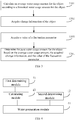
- FIG. 1 is a flow chart showing a method for water preparation according to an example. As shown in FIG.1 , the method for water preparation may be applied to a processor in communication with an apparatus for processing water such as an intelligent water purifier. The method for water preparation may include following blocks S101-S104.
- a water usage amount for an object may be determined.
- the water usage amount may indicate how much processed water the object consumes during a preset time period.
- the processed water is water processed by the apparatus.
- the processed water may be pure water from an intelligent water purifier.
- the processed water may be hot water from an intelligent water heater.
- the object may be a group of users using the water-processing apparatus.
- the object may be, but not limited to, a family, a working group, a team sharing a same office, or any group of people sharing a residence, etc.
- a water usage amount for the object may be determined in a variety of ways. For example, an average water usage amount for the object may be calculated by means of a historical water usage amount for the object, and the average water usage amount may be determined as the pure water usage amount for the object.
- water usage time for the object may be determined.
- the water usage time may indicate when the object may start to use the processed water.
- the pure water usage time for the object may be determined in a variety of ways.
- the pure water usage time for the object may be determined in the following ways.
- a distance between a current location of a user terminal corresponding to the object and a destination as well as a movement velocity may be acquired from a server, time required for the user terminal to reach the destination may be calculated according to the distance and the movement velocity, and the calculated time may be determined as the pure water usage time for the object.
- the processor may acquire, from the server, data required to calculate time for the current user to reach home, calculate the time to reach home according to the data, and determine the time to reach home as the pure water usage time for a family of the current user.
- a time query request may be sent to a user terminal corresponding to the object, a time query response returned by the user terminal may be received, and time carried in the time query response may be determined as the pure water usage time for the object.
- a mobile phone of the user may calculate the time to reach home according to a distance from the current location of the user to home as well as the traffic congestion, and may feed the time to reach home back to the processor after receiving the time query request of the processor.
- latest pure water usage time for the object may be determined based on historical usage time, and the latest pure water usage time may be determined as the pure water usage time for the object.
- the latest pure water usage time for a current family on last Tuesday may be acquired and determined as the pure water usage time of today.
- the latest pure water usage time every Tuesday within the latest three months may be acquired from the server, and an average value thereof may be calculated and determined as the pure water usage time today.
- earliest pure water usage time for the object may be determined based on historical usage time, and the earliest pure water usage time may be determined as the pure water usage time for the object.
- the earliest pure water usage time for a current family on last Friday may be acquired and determined as pure water usage time today.
- the earliest pure water usage time every Friday within the latest three months may be acquired from the server, and an average value thereof may be calculated and determined as the pure water usage time today.
- time required for water preparation may be calculated according to the water usage amount, a water preparation speed of the apparatus for processing water and a current amount of residual water.
- the residual water may indicate how much processed water are available to be used immediately.
- the processed water may be pure water or heated water.
- time of starting water preparation may be determined according to the time required for water preparation and the water usage time.
- the intelligent water purifier needs to start water preparation 25 minutes prior to the pure water usage time, so that the obtained amount of pure water may meet the current needs of the object, without too much pure water remained.
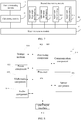
- an intelligent apparatus 21 of the current family may be connected to a server 23 via a router 22, and a mobile phone 24 of a user 1 and a mobile phone 25 of a user 2 in the current family may both be connected to the server 23.
- the intelligent apparatus may be an intelligent water purifier, an intelligent water heater, or other water processing device.
- the intelligent apparatus 21 may be an intelligent water purifier, which may calculate, according to the historical water usage amount for the current family, that an average water usage amount thereof is a (L), and determine the average water usage amount as the pure water usage amount for the current family, that is, the pure water usage amount for the current family is a (L).
- the intelligent apparatus 21 may obtain, by interacting with the mobile phone 24, that the time for the user 1 to reach home is 5pm, and may obtain, by interacting with the mobile phone 25, that the time for the user 2 to reach home is 6pm.
- the 5pm may be determined as the pure water usage time for the current family because the 5pm is earlier than the 6pm.
- time required for water preparation may be calculated according to the determined pure water usage amount, a water preparation speed of the apparatus for processing water and a current amount of residual pure water.
- Time of starting water preparation may be determined according to the time required for water preparation and the pure water usage time, and then water may be prepared since the time of starting water preparation. In this way, an appropriate amount of pure water may be obtained, thereby better meeting needs of the current object, and improving the use experience of the user.
- FIG. 3 is a flowchart of determining a pure water usage amount for an object shown according to an example. As shown in FIG. 3 , following blocks S301-S304 may be included.
- an average water usage amount for the object may be calculated according to a historical water usage amount for the object.
- change information of the object may be acquired.
- the change information of the object may include but be not limited to a change of the number of members in the object.
- the change information may indicate the current family members staying at the home.
- the intelligent water purifier may read preset data of each user terminal corresponding to the object, and determine the change information of the number of members of the object according to the preset data.
- the intelligent water purifier may learn travel data corresponding to each user by reading application program data of the user terminal and then determine the change information of the number of members of the current object according to the travel data corresponding to each user.
- the intelligent water purifier may read outlook calendar information of a mobile phone or computer of each user in the current family, learn the travel data of the user according to the outlook calendar information, determine whether the user will go on a business trip and the business trip time according to the travel data of the user, and then determine whether the number of members in the current residence changes.
- a value of a fluctuation parameter of the pure water usage amount may be acquired.
- the value of the fluctuation parameter may be acquired to determine the current pure water usage amount for the object according to the value of the fluctuation parameter.
- the intelligent water purifier may receive the value of the fluctuation parameter manually inputted by the user and also may calculate the value of the fluctuation parameter according to historical statistics information.
- Calculating the value of the fluctuation parameter value according to the historical statistics information may specifically include determining the value of the fluctuation parameter according to fluctuation of historical water usage amounts for users within this region and degrees of deviation from an average value.
- the pure water usage amount for the object may be determined based on the average water usage amount for the object, the change information of the object, and the value of the fluctuation parameter.
- the average water usage amount for the object may be adjusted according to the change information, and then the pure water usage amount for the object may be determined based on the adjusted average water usage amount for the object and the value of the fluctuation parameter, so that the determined pure water usage amount for the object is more accurate.
- the pure water usage amount for the object may be determined by acquiring change information and a value of a fluctuation parameter for the object, so that the determined pure water usage amount for the object is more accurate, thereby providing conditions for subsequently preparing a proper amount of pure water.
- the present disclosure may also provide an example of a control apparatus.
- FIG. 4 is a block diagram of a control apparatus according to an example. As shown in FIG. 4 , the control apparatus may be applied to an apparatus for processing water such as an intelligent water purifier.
- the control apparatus may include: a first determining module 41, a second determining module 42, a calculating module 43, and a water preparation module 44.
- the first determining module 41 may be configured to determine a pure water usage amount for an object.
- the object may be, but not limited to, a family.
- a pure water usage amount of the object may be determined in a variety of ways.
- an average water usage amount for the object may be calculated by means of a historical water usage amount for the object, and the average water usage amount may be determined as the pure water usage amount for the object.
- the second determining module 42 may be configured to determine pure water usage time for the object.
- the pure water usage time for the object may be determined in a variety of ways.
- the pure water usage time for the object may be determined in the following ways.
- a distance between a current location of a user terminal corresponding to the object and a destination as well as a movement velocity may be acquired from a server, time required for the user terminal to reach the destination may be calculated according to the distance and the movement velocity, and the calculated time may be determined as the pure water usage time for the object.
- a time query request may be sent to a user terminal corresponding to the object, a time query response returned by the user terminal may be received, and time carried in the time query response may be determined as the pure water usage time for the object.
- latest pure water usage time for the object may be determined based on historical usage time, and the latest pure water usage time may be determined as the pure water usage time for the object.
- earliest pure water usage time for the object may be determined based on historical usage time, and the earliest pure water usage time may be determined as the pure water usage time for the object.
- the calculating module 43 may be configured to calculate time required for water preparation according to the pure water usage amount determined by the first determining module 41, a water preparation speed of the apparatus for processing water and a current amount of residual pure water.
- the water preparation module 44 may be configured to determine time of starting water preparation according to the time required for water preparation calculated by the calculating module 43 and the pure water usage time determined by the second determining module 42.
- the intelligent water purifier may start water preparation 25 minutes prior to the pure water usage time, so that the obtained amount of pure water may meet the current needs of the object, without too much pure water remained.
- the apparatus as shown in FIG. 4 may be configured to implement the disclosed methods, with the same description of related content, and thus is not unnecessarily described herein.
- time required for water preparation may be calculated according to the pure water usage amount, a water preparation speed of the apparatus for processing water and a current amount of residual pure water.
- Time of starting water preparation may be determined according to the time required for water preparation and the pure water usage time, and then water may be prepared since the time of starting water preparation. In this way, an appropriate amount of pure water may be obtained, thereby better meeting current needs of the object, and improving the use experience of the user.
- FIG. 5 is a block diagram of another control apparatus shown according to an example.
- the first determining module 41 may include: a statistics submodule 411, an acquiring submodule 412, an acquiring submodule 413, and a determining submodule 414.
- the statistics submodule 411 may be configured to calculate the average water usage amount for the object.
- the acquiring submodule 412 may be configured to acquire change information of the object.
- the change information of the object may include but be not limited to change of the number of family members.
- control apparatus may read preset data of each user terminal corresponding to the object, and determine the change information on the number of members of the object according to the preset data.
- control apparatus may read outlook calendar information of a mobile phone or computer of each user in the current family, learn the travel data of the user according to the outlook calendar information, determine whether the user will go on a business trip and the business trip time according to the travel data of the user, and then determine whether the number of members in the current family changes.
- the acquiring submodule 413 may be configured to acquire a value of a fluctuation parameter of the pure water usage amount.
- the value of the fluctuation parameter may be acquired to determine the pure water usage amount for the current objectaccording to the value of the fluctuation parameter.
- control apparatus may receive the value of the fluctuation parameter manually inputted by the user and also may calculate the value of the fluctuation parameter according to historical statistics information.
- Calculating the value of the fluctuation parameter according to the historical statistics information may specifically include determining the value of the fluctuation parameter according to fluctuation of historical water usage amount of users within this region and degrees of deviation from an average value.
- the determining submodule 414 may be configured to determine the pure water usage amount for the object based on the average water usage amount calculated by the statistics submodule 411, the change information of the object acquired by the acquiring submodule 412, and the value of the fluctuation parameter acquired by the acquiring submodule 413.
- the average water usage amount for the object may be adjusted according to the change information, and then the pure water usage amount for the object may be determined based on the adjusted average water usage amount for the object and the value of the fluctuation parameter, so that the determined pure water usage amount for the object is more accurate.
- the apparatus as shown in FIG. 5 is configured to implement the method flow as shown in FIG. 3 , with the same description of related content, and thus is not unnecessarily described herein.
- the pure water usage amount for the object may be determined by acquiring change information and a value of a fluctuation parameter of the object, so that the determined pure water usage amount for the object is more accurate, thereby providing conditions for subsequently preparing a proper amount of pure water.
- FIG. 6 is a block diagram of another control apparatus shown according to an example.
- the acquiring submodule 413 may include at least one of a receiving unit 4131 and a calculating unit 4132.
- the receiving unit 4131 may be configured to receive a value of a fluctuation parameter inputted by a user.
- the calculating unit 4132 may be configured to calculate the value of the fluctuation parameter according to historical statistics information.
- a value of a fluctuation parameter may be acquired to determine the pure water usage amount for the current object according to the value of the fluctuation parameter.
- the value of the fluctuation parameter manually inputted by the user may be received, and also the value of the fluctuation parameter may be calculated according to historical statistics information.
- Calculating the value of the fluctuation parameter according to the historical statistics information may specifically include determining the value of the fluctuation parameter according to fluctuation of historical water usage amount of users within this region and a degree of deviation from an average value.
- the apparatus as shown in FIG. 6 may be configured to implement the method flow as shown in FIG. 3 , with the same description of related content, and thus is not unnecessarily described herein.
- the value of the fluctuation parameter manually inputted by the user may be received, or the value of the fluctuation parameter may be calculated according to historical statistics information, the implementation being flexible and diversified.
- FIG. 7 is a block diagram of another control apparatus shown according to an example.
- the second determining module 42 may include: an acquiring and calculating submodule 421, a sending and receiving submodule 422, and either one of a first statistics submodule 423 and a second statistics submodule 424.
- the acquiring and calculating submodule 421 may be configured to acquire, from a server, a distance between a current location of a user terminal corresponding to the object and a destination as well as a movement velocity, calculate time for the user terminal to reach the destination according to the distance and the movement velocity, and determine the calculated time as the pure water usage time for the object.
- control apparatus may acquire, from the server, data required to calculate time for the current user to reach home, calculate the time to reach home according to the data, and determine the time to reach home for the current user as the pure water usage time for a family of the current user.
- the sending and receiving submodule 422 may be configured to send a time query request to a user terminal corresponding to the object, receive a time query response returned by the user terminal, and determine time carried in the time query response as the pure water usage time for the object.
- a mobile phone of the user may calculate the time to reach home according to a distance from the current location of the user to home as well as the traffic congestion.
- the mobile phone may feed the time to reach home back to the control apparatus after receiving the time query request of the intelligent water purifier.
- the first statistics submodule 423 may be configured to determine latest pure water usage time for the object based on historical usage time, and to determine the latest pure water usage time as the pure water usage time for the object.
- the latest pure water usage time for a current family on last Tuesday may be acquired and determined as pure water usage time today.
- the latest pure water usage time every Tuesday within the latest three months may be acquired from the server, and an average value thereof may be calculated and determined as the pure water usage time today.
- the second statistics submodule 424 may be configured to determine earliest pure water usage time for the object based on the historical usage time, and to determine the earliest pure water usage time as the pure water usage time for the object.
- the earliest pure water usage time for a current family on last Friday may be acquired and determined as pure water usage time today.
- the earliest pure water usage time every Friday within the latest three months may be acquired from the server, and an average value thereof may be calculated and determined as the pure water usage time today.
- the apparatus as shown in FIG. 7 may be configured to implement the method flow as shown in FIG. 1 , with the same description of related content, and thus is not unnecessarily described herein.
- the pure water usage time for the object may be determined in a variety of ways, with flexible and diverse implementations.
- FIG. 8 is a block diagram of a control apparatus shown according to an example.
- the apparatus 800 may be a mobile phone, a computer, a digital broadcast terminal, a message transceiver device, a game console, a tablet device, a medical device, a fitness device, a personal digital assistant, an aircraft, and the like.
- the apparatus 800 may include one or more of the following components: a processing component 802, a storage medium 804, a power component 806, a multimedia component 808, an audio component 810, an input/output (I/O) interface 812, a sensor component 814, and a communication component 816.
- the processing component 802 typically controls overall operations of the apparatus 800, such as the operations associated with display, telephone calls, data communications, camera operations, and recording operations.
- the processing component 802 may include one or more processors 820 to execute instructions to perform all or part of the blocks in the above described methods.
- the processing component 802 may include one or more modules which facilitate the interaction between the processing component 802 and other components.
- the processing component 802 may include a multimedia module to facilitate the interaction between the multimedia component 808 and the processing component 802.
- the storage medium 804 is configured to store various types of data to support the operation of the apparatus 800. Examples of such data include instructions for any applications or methods operated on the apparatus 800, contact data, phonebook data, messages, pictures, video, etc.
- the storage medium 804 may be implemented using any type of volatile or non-volatile memory devices, or a combination thereof, such as a static random access memory (SRAM), an electrically erasable programmable read-only memory (EEPROM), an erasable programmable read-only memory (EPROM), a programmable read-only memory (PROM), a read-only memory (ROM), a magnetic memory, a flash memory, a magnetic or optical disk.
- SRAM static random access memory
- EEPROM electrically erasable programmable read-only memory
- EPROM erasable programmable read-only memory
- PROM programmable read-only memory
- ROM read-only memory
- magnetic memory a magnetic memory
- flash memory a flash memory
- magnetic or optical disk a magnetic
- the power component 806 provides power to various components of the apparatus 800.
- the power component 806 may include a power management system, one or more power sources, and any other components associated with the generation, management, and distribution of power in the apparatus 800.
- the multimedia component 808 includes a screen providing an output interface between the apparatus 800 and the user.
- the screen may include a liquid crystal display (LCD) and a touch panel (TP). If the screen includes the touch panel, the screen may be implemented as a touch screen to receive input signals from the user.
- the touch panel may include one or more touch sensors to sense touches, slips, and gestures on the touch panel. The touch sensors may not only sense a boundary of a touch or slip action, but also sense a period of time and a pressure associated with the touch or slip action.
- the multimedia component 808 may include a front camera and/or a rear camera. The front camera and/or the rear camera may receive external multimedia data while the apparatus 800 is in an operation mode, such as a photographing mode or a video mode. Each of the front camera and the rear camera may be a fixed optical lens system or have focus and optical zoom capability.
- the audio component 810 is configured to output and/or input audio signals.
- the audio component 810 includes a microphone ("MIC") configured to receive an external audio signal when the apparatus 800 is in an operation mode, such as a call mode, a recording mode, and a voice recognition mode.
- the received audio signal may be further stored in the memory 804 or transmitted via the communication component 816.
- the audio component 810 further includes a speaker to output audio signals.
- the I/O interface 812 provides an interface between the processing component 802 and peripheral interface modules, such as a keyboard, a click wheel, buttons, and the like.
- the buttons may include, but are not limited to, a home button, a volume button, a starting button, and a locking button.
- the sensor component 814 includes one or more sensors to provide status assessments of various aspects of the apparatus 800. For instance, the sensor component 814 may detect an open/closed status of the apparatus 800, relative positioning of components, e.g., the display and the keypad, of the apparatus 800, a change in position of the apparatus 800 or a component of the apparatus 800, a presence or absence of user contact with the apparatus 800, an orientation or an acceleration/deceleration of the apparatus 800, and a change in temperature of the apparatus 800.
- the sensor component 814 may include a proximity sensor configured to detect the presence of nearby objects without any physical contact.
- the sensor component 814 may also include a light sensor, such as a CMOS or CCD image sensor, for use in imaging applications.
- the sensor component 814 may also include an accelerometer sensor, a gyroscope sensor, a magnetic sensor, a pressure sensor, or a temperature sensor.
- the communication component 816 is configured to facilitate communication, wired or wirelessly, between the apparatus 800 and other devices.
- the apparatus 800 can access a wireless network based on a communication standard, such as WiFi, 2G, or 3G, or a combination thereof.
- the communication component 816 may receive a broadcast signal or broadcast associated information from an external broadcast management system via a broadcast channel.
- the communication component 816 may further include a near field communication (NFC) module to facilitate short-range communications.
- the NFC module may be implemented based on a radio frequency identification (RFID) technology, an infrared data association (IrDA) technology, an ultra-wideband (UWB) technology, a Bluetooth (BT) technology, and other technologies.
- RFID radio frequency identification
- IrDA infrared data association
- UWB ultra-wideband
- BT Bluetooth
- the apparatus 800 may be implemented with one or more application specific integrated circuits (ASICs), digital signal processors (DSPs), digital signal processing devices (DSPDs), programmable logic devices (PLDs), field programmable gate arrays (FPGAs), controllers, micro-controllers, microprocessors, or other electronic components, for performing the above described methods.
- ASICs application specific integrated circuits
- DSPs digital signal processors
- DSPDs digital signal processing devices
- PLDs programmable logic devices
- FPGAs field programmable gate arrays
- controllers micro-controllers, microprocessors, or other electronic components, for performing the above described methods.
- non-transitory machine-readable storage medium including instructions, such as included in the storage medium 804, executable by the processor 820 in the apparatus 800, for performing the above-described methods.
- the non-transitory machine-readable storage medium may be a ROM, a RAM, a CD-ROM, a magnetic tape, a floppy disc, an optical data storage device, and the like.
- a control apparatus applied to an apparatus for processing water may include:
- the processor When determining the pure water usage amount for an object, the processor is caused to:
- the processor When acquiring change information of the object, the processor is caused to:
- the processor When acquiring the value of the fluctuation parameter of the pure water usage amount, the processor is caused to:
- the processor When determining pure water usage time for the object, the processor is caused to:
- the processor When determining pure water usage time for the object, the processor is caused to:
- the processor When determining pure water usage time for the object, the processor is caused to:
- the processor When determining pure water usage time for the object, the processor is caused to:
- time required for water preparation may be calculated according to the pure water usage amount, a water preparation speed of the apparatus for processing water and a current amount of residual pure water
- time of starting water preparation may be determined according to the time required for water preparation and the determined pure water usage time, and then water may be prepared since the time of starting water preparation. In this way, an appropriate amount of pure water may be obtained, thereby better meeting current needs of the object, and improving the use experience of the user.
- the pure water usage amount for the object may be determined by acquiring change information and a value of a fluctuation parameter of the object, so that the determined pure water usage amount for the object is more accurate, thereby providing conditions for subsequently preparing a proper amount of pure water.
- Preset data of each user terminal corresponding to the object may be read, and the change information of the current object may be determined according to the preset data, the implementation being simple.
- the value of the fluctuation parameter manually inputted by the user may be received, or the value of the fluctuation parameter may be calculated according to historical statistics information, the implementation being flexible and diversified.
- the pure water usage time for the object may be determined in a variety of ways, the implementation being flexible and diversified.
Landscapes
- Engineering & Computer Science (AREA)
- Business, Economics & Management (AREA)
- Theoretical Computer Science (AREA)
- Physics & Mathematics (AREA)
- General Physics & Mathematics (AREA)
- Human Resources & Organizations (AREA)
- Economics (AREA)
- Software Systems (AREA)
- General Engineering & Computer Science (AREA)
- Strategic Management (AREA)
- Water Supply & Treatment (AREA)
- Health & Medical Sciences (AREA)
- Entrepreneurship & Innovation (AREA)
- Tourism & Hospitality (AREA)
- General Business, Economics & Management (AREA)
- Marketing (AREA)
- Chemical & Material Sciences (AREA)
- Hydrology & Water Resources (AREA)
- Organic Chemistry (AREA)
- Environmental & Geological Engineering (AREA)
- Life Sciences & Earth Sciences (AREA)
- Human Computer Interaction (AREA)
- Mechanical Engineering (AREA)
- Mathematical Physics (AREA)
- Public Health (AREA)
- Primary Health Care (AREA)
- General Health & Medical Sciences (AREA)
- Operations Research (AREA)
- Automation & Control Theory (AREA)
- Quality & Reliability (AREA)
- Data Mining & Analysis (AREA)
- Game Theory and Decision Science (AREA)
- Development Economics (AREA)
- Educational Administration (AREA)
- Telephone Function (AREA)
- Thermal Sciences (AREA)
- Combustion & Propulsion (AREA)
- Water Treatment By Sorption (AREA)
Abstract
Description
- This patent application claims the priority to the Chinese Patent Application No.
201710169946.4 - The present disclosure generally relates to the field of intelligent device technologies, and more particularly, to a method for processing water and a control apparatus.
- Also referred to as a water purification machine or a water filter, a water purifier is a water processing device for carrying out depth-type filtration and purification on water according to requirements for quality of water. The water purifier can effectively filter ion rusts, sandstones, colloid and chemical agents for adsorbing residual chlorine, taste, odor, hetercolour, pesticides and the like in water, and can effectively remove bacteria, impurities, toxins, heavy metals and the like in water. As a health-related product, the water purifier is favored by more and more consumers.
- The water purifier can filter tap water to obtain pure water, and users may store pure water in advance according to the needs. However, if the amount of stored water is far larger than the amount of required water, when the users use water the next day, the pure water stored overnight is not suitable for drinking. Therefore, it is required to consider how to properly store a suitable amount of pure water.
- The present disclosure may provide a method for processing water and a control apparatus.
- According to a first aspect of examples of the present disclosure, there is provided a method for processing water. The method may include:
- determining, by a processor in communication with an apparatus for processing water, a water usage amount for an object;
- determining, by the processor, water usage time for the object;
- calculating, by the processor, time required for water preparation according to the water usage amount, a water preparation speed of the apparatus for processing water and a current amount of residual water; and
- determining, by the processor, time of starting water preparation according to the time required for water preparation and the water usage time.
- According to a second aspect of the examples of the present disclosure, there is provided a control apparatus applied to an apparatus for processing water. The control apparatus may include:
- a processor, and
- a machine-readable storage medium, configured to store processor-executable instructions,
- by executing the executable instructions, the processor is caused to:
- determine a water usage amount for an object;
- determine water usage time for the object;
- calculate time required for water preparation according to the water usage amount, a water preparation speed of the apparatus for processing water and a current amount of residual water; and
- determine time of starting water preparation according to the time required for water preparation and the water usage time.
- It is to be understood that both the foregoing general description and the following detailed description are exemplary and explanatory only and are not restrictive of the present disclosure.
- The accompanying drawings, which are incorporated in and constitute a part of this specification, illustrate examples consistent with the present disclosure and, together with the description, serve to explain the principles of the present disclosure.
-
FIG. 1 is a flow chart showing a method for water preparation according to an example; -
FIG. 2 is a scene graph showing a method for water preparation according to an example; -
FIG. 3 is a flow chart of determining a water usage amount of an object shown according to an example; -
FIG. 4 is a block diagram of a control apparatus shown according to an example; -
FIG. 5 is a block diagram of another control apparatus shown according to an example; -
FIG. 6 is a block diagram of another control apparatus shown according to an example; -
FIG. 7 is a block diagram of another control apparatus shown according to an example; and -
FIG. 8 is a block diagram of a control apparatus shown according to an example. - Reference will now be made in detail to examples which are illustrated in the accompanying drawings. The following description refers to the accompanying drawings in which the same numbers in different drawings represent the same or similar elements unless otherwise represented. The implementations set forth in the following description of examples do not represent all implementations consistent with the present disclosure. Instead, they are merely examples of apparatuses and methods consistent with aspects related to the disclosure as recited in the appended claims.
-
FIG. 1 is a flow chart showing a method for water preparation according to an example. As shown inFIG.1 , the method for water preparation may be applied to a processor in communication with an apparatus for processing water such as an intelligent water purifier. The method for water preparation may include following blocks S101-S104. - At block S101, a water usage amount for an object may be determined. The water usage amount may indicate how much processed water the object consumes during a preset time period. The processed water is water processed by the apparatus. For example, the processed water may be pure water from an intelligent water purifier. In another example, the processed water may be hot water from an intelligent water heater.
- The object may be a group of users using the water-processing apparatus. For example, the object may be, but not limited to, a family, a working group, a team sharing a same office, or any group of people sharing a residence, etc.
- In this example, a water usage amount for the object may be determined in a variety of ways. For example, an average water usage amount for the object may be calculated by means of a historical water usage amount for the object, and the average water usage amount may be determined as the pure water usage amount for the object.
- At block S102, water usage time for the object may be determined. The water usage time may indicate when the object may start to use the processed water.
- In this example, the pure water usage time for the object may be determined in a variety of ways. For example, the pure water usage time for the object may be determined in the following ways.
- In the first way, a distance between a current location of a user terminal corresponding to the object and a destination as well as a movement velocity may be acquired from a server, time required for the user terminal to reach the destination may be calculated according to the distance and the movement velocity, and the calculated time may be determined as the pure water usage time for the object.
- For example, the processor may acquire, from the server, data required to calculate time for the current user to reach home, calculate the time to reach home according to the data, and determine the time to reach home as the pure water usage time for a family of the current user.
- In the second way, a time query request may be sent to a user terminal corresponding to the object, a time query response returned by the user terminal may be received, and time carried in the time query response may be determined as the pure water usage time for the object.
- For example, a mobile phone of the user may calculate the time to reach home according to a distance from the current location of the user to home as well as the traffic congestion, and may feed the time to reach home back to the processor after receiving the time query request of the processor.
- In the third way, latest pure water usage time for the object may be determined based on historical usage time, and the latest pure water usage time may be determined as the pure water usage time for the object.
- Supposing it is Tuesday today, the latest pure water usage time for a current family on last Tuesday may be acquired and determined as the pure water usage time of today. Alternatively, the latest pure water usage time every Tuesday within the latest three months may be acquired from the server, and an average value thereof may be calculated and determined as the pure water usage time today.
- In the fourth way, earliest pure water usage time for the object may be determined based on historical usage time, and the earliest pure water usage time may be determined as the pure water usage time for the object.
- Supposing it is Friday today, the earliest pure water usage time for a current family on last Friday may be acquired and determined as pure water usage time today. Alternatively, the earliest pure water usage time every Friday within the latest three months may be acquired from the server, and an average value thereof may be calculated and determined as the pure water usage time today.
- At block S103, time required for water preparation may be calculated according to the water usage amount, a water preparation speed of the apparatus for processing water and a current amount of residual water. For example, the residual water may indicate how much processed water are available to be used immediately. The processed water may be pure water or heated water.
- Supposing the water preparation speed of an intelligent water purifier is O.1L/min, if the amount of residual pure water of a current water tank is 0.5L and the pure water usage amount for the current family today is 3L, the time required for water preparation is: (3-0.5)/0.1=25 minutes.
- At block S104, time of starting water preparation may be determined according to the time required for water preparation and the water usage time.
- Continuing the description with the above example, the intelligent water purifier needs to start
water preparation 25 minutes prior to the pure water usage time, so that the obtained amount of pure water may meet the current needs of the object, without too much pure water remained. - Exemplary description of the present disclosure may be made with reference to
FIG. 2 . As shown inFIG. 2 , anintelligent apparatus 21 of the current family may be connected to aserver 23 via arouter 22, and amobile phone 24 of a user 1 and amobile phone 25 of a user 2 in the current family may both be connected to theserver 23. The intelligent apparatus may be an intelligent water purifier, an intelligent water heater, or other water processing device. - In one example, the
intelligent apparatus 21 may be an intelligent water purifier, which may calculate, according to the historical water usage amount for the current family, that an average water usage amount thereof is a (L), and determine the average water usage amount as the pure water usage amount for the current family, that is, the pure water usage amount for the current family is a (L). Theintelligent apparatus 21 may obtain, by interacting with themobile phone 24, that the time for the user 1 to reach home is 5pm, and may obtain, by interacting with themobile phone 25, that the time for the user 2 to reach home is 6pm. The 5pm may be determined as the pure water usage time for the current family because the 5pm is earlier than the 6pm. Supposing the water preparation speed of theintelligent apparatus 21 is 0.1L/min, time required for water preparation is (a-b)/0.1min if the amount of residual pure water of the current water tank is b (L), and theintelligent apparatus 21 needs to start water preparation (a-b)/0.1min prior to 5pm, so that a proper amount of processed water may be obtained. - According to the above example of the method for processing water, time required for water preparation may be calculated according to the determined pure water usage amount, a water preparation speed of the apparatus for processing water and a current amount of residual pure water. Time of starting water preparation may be determined according to the time required for water preparation and the pure water usage time, and then water may be prepared since the time of starting water preparation. In this way, an appropriate amount of pure water may be obtained, thereby better meeting needs of the current object, and improving the use experience of the user.
-
FIG. 3 is a flowchart of determining a pure water usage amount for an object shown according to an example. As shown inFIG. 3 , following blocks S301-S304 may be included. - At block S301, an average water usage amount for the object may be calculated according to a historical water usage amount for the object.
- At block S302, change information of the object may be acquired.
- The change information of the object may include but be not limited to a change of the number of members in the object. For example, when the object is a family, the change information may indicate the current family members staying at the home.
- In this example, the intelligent water purifier may read preset data of each user terminal corresponding to the object, and determine the change information of the number of members of the object according to the preset data.
- In an example, the intelligent water purifier may learn travel data corresponding to each user by reading application program data of the user terminal and then determine the change information of the number of members of the current object according to the travel data corresponding to each user.
- For example, the intelligent water purifier may read outlook calendar information of a mobile phone or computer of each user in the current family, learn the travel data of the user according to the outlook calendar information, determine whether the user will go on a business trip and the business trip time according to the travel data of the user, and then determine whether the number of members in the current residence changes.
- At block S303, a value of a fluctuation parameter of the pure water usage amount may be acquired.
- Since the water usage amount of each family has a small fluctuation, the value of the fluctuation parameter may be acquired to determine the current pure water usage amount for the object according to the value of the fluctuation parameter.
- In this example, the intelligent water purifier may receive the value of the fluctuation parameter manually inputted by the user and also may calculate the value of the fluctuation parameter according to historical statistics information.
- Calculating the value of the fluctuation parameter value according to the historical statistics information may specifically include determining the value of the fluctuation parameter according to fluctuation of historical water usage amounts for users within this region and degrees of deviation from an average value.
- At block S304, the pure water usage amount for the object may be determined based on the average water usage amount for the object, the change information of the object, and the value of the fluctuation parameter.
- In this example, after acquiring the change information of the object, the average water usage amount for the object may be adjusted according to the change information, and then the pure water usage amount for the object may be determined based on the adjusted average water usage amount for the object and the value of the fluctuation parameter, so that the determined pure water usage amount for the object is more accurate.
- According to the above example, the pure water usage amount for the object may be determined by acquiring change information and a value of a fluctuation parameter for the object, so that the determined pure water usage amount for the object is more accurate, thereby providing conditions for subsequently preparing a proper amount of pure water.
- Corresponding to the example of the above method for processing water, the present disclosure may also provide an example of a control apparatus.
-
FIG. 4 is a block diagram of a control apparatus according to an example. As shown inFIG. 4 , the control apparatus may be applied to an apparatus for processing water such as an intelligent water purifier. The control apparatus may include: a first determiningmodule 41, a second determiningmodule 42, a calculatingmodule 43, and awater preparation module 44. - The first determining
module 41 may be configured to determine a pure water usage amount for an object. - The object may be, but not limited to, a family.
- In this example, a pure water usage amount of the object may be determined in a variety of ways. For example, an average water usage amount for the object may be calculated by means of a historical water usage amount for the object, and the average water usage amount may be determined as the pure water usage amount for the object.
- The second determining
module 42 may be configured to determine pure water usage time for the object. - In this example, the pure water usage time for the object may be determined in a variety of ways. For example, the pure water usage time for the object may be determined in the following ways.
- In the first way, a distance between a current location of a user terminal corresponding to the object and a destination as well as a movement velocity may be acquired from a server, time required for the user terminal to reach the destination may be calculated according to the distance and the movement velocity, and the calculated time may be determined as the pure water usage time for the object.
- In the second way, a time query request may be sent to a user terminal corresponding to the object, a time query response returned by the user terminal may be received, and time carried in the time query response may be determined as the pure water usage time for the object.
- In the third way, latest pure water usage time for the object may be determined based on historical usage time, and the latest pure water usage time may be determined as the pure water usage time for the object.
- In the fourth way, earliest pure water usage time for the object may be determined based on historical usage time, and the earliest pure water usage time may be determined as the pure water usage time for the object.
- The calculating
module 43 may be configured to calculate time required for water preparation according to the pure water usage amount determined by the first determiningmodule 41, a water preparation speed of the apparatus for processing water and a current amount of residual pure water. - Supposing the water preparation speed of an intelligent water purifier is O.1L/min, if the amount of residual pure water of a current water tank is 0.5L and the pure water usage amount of the current family today is 3L, the time required for water preparation is: (3-0.5)/0.1=25 minutes.
- The
water preparation module 44 may be configured to determine time of starting water preparation according to the time required for water preparation calculated by the calculatingmodule 43 and the pure water usage time determined by the second determiningmodule 42. - Continuing the description with the above example, the intelligent water purifier may start
water preparation 25 minutes prior to the pure water usage time, so that the obtained amount of pure water may meet the current needs of the object, without too much pure water remained. - The apparatus as shown in
FIG. 4 may be configured to implement the disclosed methods, with the same description of related content, and thus is not unnecessarily described herein. - According to the above example of the control apparatus, time required for water preparation may be calculated according to the pure water usage amount, a water preparation speed of the apparatus for processing water and a current amount of residual pure water. Time of starting water preparation may be determined according to the time required for water preparation and the pure water usage time, and then water may be prepared since the time of starting water preparation. In this way, an appropriate amount of pure water may be obtained, thereby better meeting current needs of the object, and improving the use experience of the user.
-
FIG. 5 is a block diagram of another control apparatus shown according to an example. As shown inFIG. 5 , on the basis of the example as shown inFIG. 4 , the first determiningmodule 41 may include: astatistics submodule 411, an acquiringsubmodule 412, an acquiringsubmodule 413, and a determiningsubmodule 414. - The statistics submodule 411 may be configured to calculate the average water usage amount for the object.
- The acquiring
submodule 412 may be configured to acquire change information of the object. - The change information of the object may include but be not limited to change of the number of family members.
- In this example, the control apparatus may read preset data of each user terminal corresponding to the object, and determine the change information on the number of members of the object according to the preset data.
- For example, the control apparatus may read outlook calendar information of a mobile phone or computer of each user in the current family, learn the travel data of the user according to the outlook calendar information, determine whether the user will go on a business trip and the business trip time according to the travel data of the user, and then determine whether the number of members in the current family changes.
- The acquiring
submodule 413 may be configured to acquire a value of a fluctuation parameter of the pure water usage amount. - Since the water usage amount of each family has small fluctuation, the value of the fluctuation parameter may be acquired to determine the pure water usage amount for the current objectaccording to the value of the fluctuation parameter.
- In this example, the control apparatus may receive the value of the fluctuation parameter manually inputted by the user and also may calculate the value of the fluctuation parameter according to historical statistics information.
- Calculating the value of the fluctuation parameter according to the historical statistics information may specifically include determining the value of the fluctuation parameter according to fluctuation of historical water usage amount of users within this region and degrees of deviation from an average value.
- The determining
submodule 414 may be configured to determine the pure water usage amount for the object based on the average water usage amount calculated by the statistics submodule 411, the change information of the object acquired by the acquiringsubmodule 412, and the value of the fluctuation parameter acquired by the acquiringsubmodule 413. - In this example, after acquiring the change information of the object, the average water usage amount for the object may be adjusted according to the change information, and then the pure water usage amount for the object may be determined based on the adjusted average water usage amount for the object and the value of the fluctuation parameter, so that the determined pure water usage amount for the object is more accurate.
- The apparatus as shown in
FIG. 5 is configured to implement the method flow as shown inFIG. 3 , with the same description of related content, and thus is not unnecessarily described herein. - According to the above example, the pure water usage amount for the object may be determined by acquiring change information and a value of a fluctuation parameter of the object, so that the determined pure water usage amount for the object is more accurate, thereby providing conditions for subsequently preparing a proper amount of pure water.
-
FIG. 6 is a block diagram of another control apparatus shown according to an example. As shown inFIG. 6 , on the basis of the example as shown inFIG. 5 , the acquiringsubmodule 413 may include at least one of areceiving unit 4131 and a calculatingunit 4132. - The receiving
unit 4131 may be configured to receive a value of a fluctuation parameter inputted by a user. - The calculating
unit 4132 may be configured to calculate the value of the fluctuation parameter according to historical statistics information. - Since the water usage amount for each family has small fluctuation, a value of a fluctuation parameter may be acquired to determine the pure water usage amount for the current object according to the value of the fluctuation parameter.
- In this example, the value of the fluctuation parameter manually inputted by the user may be received, and also the value of the fluctuation parameter may be calculated according to historical statistics information.
- Calculating the value of the fluctuation parameter according to the historical statistics information may specifically include determining the value of the fluctuation parameter according to fluctuation of historical water usage amount of users within this region and a degree of deviation from an average value.
- The apparatus as shown in
FIG. 6 may be configured to implement the method flow as shown inFIG. 3 , with the same description of related content, and thus is not unnecessarily described herein. - According to the above example, the value of the fluctuation parameter manually inputted by the user may be received, or the value of the fluctuation parameter may be calculated according to historical statistics information, the implementation being flexible and diversified.
-
FIG. 7 is a block diagram of another control apparatus shown according to an example. As shown inFIG. 7 , on the basis of the example as shown inFIG. 4 , the second determiningmodule 42 may include: an acquiring and calculating submodule 421, a sending and receivingsubmodule 422, and either one of a first statistics submodule 423 and asecond statistics submodule 424. - The acquiring and calculating submodule 421 may be configured to acquire, from a server, a distance between a current location of a user terminal corresponding to the object and a destination as well as a movement velocity, calculate time for the user terminal to reach the destination according to the distance and the movement velocity, and determine the calculated time as the pure water usage time for the object.
- For example, the control apparatus may acquire, from the server, data required to calculate time for the current user to reach home, calculate the time to reach home according to the data, and determine the time to reach home for the current user as the pure water usage time for a family of the current user.
- The sending and receiving
submodule 422 may be configured to send a time query request to a user terminal corresponding to the object, receive a time query response returned by the user terminal, and determine time carried in the time query response as the pure water usage time for the object. - For example, a mobile phone of the user may calculate the time to reach home according to a distance from the current location of the user to home as well as the traffic congestion. Alternatively or additionally, the mobile phone may feed the time to reach home back to the control apparatus after receiving the time query request of the intelligent water purifier.
- The first statistics submodule 423 may be configured to determine latest pure water usage time for the object based on historical usage time, and to determine the latest pure water usage time as the pure water usage time for the object.
- Supposing it is Tuesday today, the latest pure water usage time for a current family on last Tuesday may be acquired and determined as pure water usage time today. Alternatively, the latest pure water usage time every Tuesday within the latest three months may be acquired from the server, and an average value thereof may be calculated and determined as the pure water usage time today.
- The second statistics submodule 424 may be configured to determine earliest pure water usage time for the object based on the historical usage time, and to determine the earliest pure water usage time as the pure water usage time for the object.
- Supposing it is Friday today, the earliest pure water usage time for a current family on last Friday may be acquired and determined as pure water usage time today. Alternatively, the earliest pure water usage time every Friday within the latest three months may be acquired from the server, and an average value thereof may be calculated and determined as the pure water usage time today.
- The apparatus as shown in
FIG. 7 may be configured to implement the method flow as shown inFIG. 1 , with the same description of related content, and thus is not unnecessarily described herein. - In the above example, the pure water usage time for the object may be determined in a variety of ways, with flexible and diverse implementations.
- With regard to the apparatus in the above examples, detailed description of specific modes for executing operations of modules and submodules has been made in the examples related to the method, and thus no detailed illustration will be made herein.
-
FIG. 8 is a block diagram of a control apparatus shown according to an example. For example, theapparatus 800 may be a mobile phone, a computer, a digital broadcast terminal, a message transceiver device, a game console, a tablet device, a medical device, a fitness device, a personal digital assistant, an aircraft, and the like. - Referring to
FIG. 8 , theapparatus 800 may include one or more of the following components: aprocessing component 802, astorage medium 804, apower component 806, amultimedia component 808, anaudio component 810, an input/output (I/O)interface 812, asensor component 814, and acommunication component 816. - The
processing component 802 typically controls overall operations of theapparatus 800, such as the operations associated with display, telephone calls, data communications, camera operations, and recording operations. Theprocessing component 802 may include one ormore processors 820 to execute instructions to perform all or part of the blocks in the above described methods. Moreover, theprocessing component 802 may include one or more modules which facilitate the interaction between theprocessing component 802 and other components. For instance, theprocessing component 802 may include a multimedia module to facilitate the interaction between themultimedia component 808 and theprocessing component 802. - The
storage medium 804 is configured to store various types of data to support the operation of theapparatus 800. Examples of such data include instructions for any applications or methods operated on theapparatus 800, contact data, phonebook data, messages, pictures, video, etc. Thestorage medium 804 may be implemented using any type of volatile or non-volatile memory devices, or a combination thereof, such as a static random access memory (SRAM), an electrically erasable programmable read-only memory (EEPROM), an erasable programmable read-only memory (EPROM), a programmable read-only memory (PROM), a read-only memory (ROM), a magnetic memory, a flash memory, a magnetic or optical disk. - The
power component 806 provides power to various components of theapparatus 800. Thepower component 806 may include a power management system, one or more power sources, and any other components associated with the generation, management, and distribution of power in theapparatus 800. - The
multimedia component 808 includes a screen providing an output interface between theapparatus 800 and the user. In some examples, the screen may include a liquid crystal display (LCD) and a touch panel (TP). If the screen includes the touch panel, the screen may be implemented as a touch screen to receive input signals from the user. The touch panel may include one or more touch sensors to sense touches, slips, and gestures on the touch panel. The touch sensors may not only sense a boundary of a touch or slip action, but also sense a period of time and a pressure associated with the touch or slip action. In some examples, themultimedia component 808 may include a front camera and/or a rear camera. The front camera and/or the rear camera may receive external multimedia data while theapparatus 800 is in an operation mode, such as a photographing mode or a video mode. Each of the front camera and the rear camera may be a fixed optical lens system or have focus and optical zoom capability. - The
audio component 810 is configured to output and/or input audio signals. For example, theaudio component 810 includes a microphone ("MIC") configured to receive an external audio signal when theapparatus 800 is in an operation mode, such as a call mode, a recording mode, and a voice recognition mode. The received audio signal may be further stored in thememory 804 or transmitted via thecommunication component 816. In some examples, theaudio component 810 further includes a speaker to output audio signals. - The I/
O interface 812 provides an interface between theprocessing component 802 and peripheral interface modules, such as a keyboard, a click wheel, buttons, and the like. The buttons may include, but are not limited to, a home button, a volume button, a starting button, and a locking button. - The
sensor component 814 includes one or more sensors to provide status assessments of various aspects of theapparatus 800. For instance, thesensor component 814 may detect an open/closed status of theapparatus 800, relative positioning of components, e.g., the display and the keypad, of theapparatus 800, a change in position of theapparatus 800 or a component of theapparatus 800, a presence or absence of user contact with theapparatus 800, an orientation or an acceleration/deceleration of theapparatus 800, and a change in temperature of theapparatus 800. Thesensor component 814 may include a proximity sensor configured to detect the presence of nearby objects without any physical contact. Thesensor component 814 may also include a light sensor, such as a CMOS or CCD image sensor, for use in imaging applications. In some examples, thesensor component 814 may also include an accelerometer sensor, a gyroscope sensor, a magnetic sensor, a pressure sensor, or a temperature sensor. - The
communication component 816 is configured to facilitate communication, wired or wirelessly, between theapparatus 800 and other devices. Theapparatus 800 can access a wireless network based on a communication standard, such as WiFi, 2G, or 3G, or a combination thereof. In one example, thecommunication component 816 may receive a broadcast signal or broadcast associated information from an external broadcast management system via a broadcast channel. In one example, thecommunication component 816 may further include a near field communication (NFC) module to facilitate short-range communications. For example, the NFC module may be implemented based on a radio frequency identification (RFID) technology, an infrared data association (IrDA) technology, an ultra-wideband (UWB) technology, a Bluetooth (BT) technology, and other technologies. - In examples, the
apparatus 800 may be implemented with one or more application specific integrated circuits (ASICs), digital signal processors (DSPs), digital signal processing devices (DSPDs), programmable logic devices (PLDs), field programmable gate arrays (FPGAs), controllers, micro-controllers, microprocessors, or other electronic components, for performing the above described methods. - In examples, there is also provided a non-transitory machine-readable storage medium including instructions, such as included in the
storage medium 804, executable by theprocessor 820 in theapparatus 800, for performing the above-described methods. For example, the non-transitory machine-readable storage medium may be a ROM, a RAM, a CD-ROM, a magnetic tape, a floppy disc, an optical data storage device, and the like. - According to an example of the present disclosure, a control apparatus applied to an apparatus for processing water may include:
- a processor, and
- a machine-readable storage medium, configured to store processor-executable instructions,
- by executing the executable instructions, the processor is caused to:
- determine a pure water usage amount for an object;
- determine pure water usage time for the object;
- calculate time required for water preparation according to the pure water usage amount, a water preparation speed of the apparatus for processing water and a current amount of residual pure water; and
- determine time of starting water preparation according to the time required for water preparation and the pure water usage time.
- When determining the pure water usage amount for an object, the processor is caused to:
- calculate an average water usage amount for the object according to a historical water usage amount for the object;
- acquire change information of the object;
- acquire a value of a fluctuation parameter of the pure water usage amount; and
- determine the pure water usage amount for the object based on the average water usage amount for the object, the change information and the value of the fluctuation parameter.
- When acquiring change information of the object, the processor is caused to:
- read preset data of a user terminal corresponding to each member of the object; and
- determine change information on the number of the members of the object according to the preset data.
- When acquiring the value of the fluctuation parameter of the pure water usage amount, the processor is caused to:
- receive the value of the fluctuation parameter inputted by a user corresponding to the object; or
- calculate the value of the fluctuation parameter according to historical statistics information.
- When determining pure water usage time for the object, the processor is caused to:
- acquire, from a server, a distance between a current location of a user terminal corresponding to the object and a destination as well as a movement velocity,
- calculate time for the user terminal to reach the destination according to the distance and the movement velocity, and
- determine the calculated time as the pure water usage time for the object.
- When determining pure water usage time for the object, the processor is caused to:
- send a time query request to a user terminal corresponding to the object,
- receive a time query response returned by the user terminal, and
- determine time carried in the time query response as the pure water usage time for the object.
- When determining pure water usage time for the object, the processor is caused to:
- determine latest pure water usage time for the object based on historical usage time, and
- determine the latest pure water usage time as the pure water usage time for the object.
- When determining pure water usage time for the object, the processor is caused to:
- determine earliest pure water usage time for the object based on historical usage time, and
- determine the earliest pure water usage time as the pure water usage time for the object.
- The technical solution provided by the example of the present disclosure may have the following beneficial effects: time required for water preparation may be calculated according to the pure water usage amount, a water preparation speed of the apparatus for processing water and a current amount of residual pure water, time of starting water preparation may be determined according to the time required for water preparation and the determined pure water usage time, and then water may be prepared since the time of starting water preparation. In this way, an appropriate amount of pure water may be obtained, thereby better meeting current needs of the object, and improving the use experience of the user.
- The pure water usage amount for the object may be determined by acquiring change information and a value of a fluctuation parameter of the object, so that the determined pure water usage amount for the object is more accurate, thereby providing conditions for subsequently preparing a proper amount of pure water.
- Preset data of each user terminal corresponding to the object may be read, and the change information of the current object may be determined according to the preset data, the implementation being simple.
- The value of the fluctuation parameter manually inputted by the user may be received, or the value of the fluctuation parameter may be calculated according to historical statistics information, the implementation being flexible and diversified.
- The pure water usage time for the object may be determined in a variety of ways, the implementation being flexible and diversified.
- Other examples of the present disclosure will be apparent to those skilled in the art from consideration of the specification and practice of the present disclosure disclosed here. This application is intended to cover any variations, uses, or adaptations of the present disclosure following the general principles thereof and including such departures from the present disclosure as come within known or customary practice in the art. It is intended that the specification and examples be considered as exemplary only, with a true scope and spirit of the present disclosure being indicated by the following claims.
- It will be appreciated that the present disclosure is not limited to the exact construction that has been described above and illustrated in the accompanying drawings, and that various modifications and changes can be made without departing from the scope thereof. It is intended that the scope of the present disclosure only be limited by the appended claims.
Claims (15)
- A method for processing water, comprising:determining, by a processor in communication with an apparatus for processing water, a water usage amount of processed water by an object in connection with the apparatus;determining, by the processor, water usage time for the object;calculating, by the processor, time required for water preparation according to the water usage amount, a water preparation speed of the apparatus for processing water, and a current amount of residual processed water; anddetermining, by the processor, time of starting water preparation according to the time required for water preparation and the water usage time.
- The method according to claim 1, wherein determining the water usage amount for the object comprises:calculating, by the processor, an average water usage amount for the object according to a historical water usage amount for the object;acquiring, by the processor, change information of the object;acquiring, by the processor, a value of a fluctuation parameter of the water usage amount; anddetermining, by the processor, the water usage amount for the object based on the average water usage amount for the object, the change information, and the value of the fluctuation parameter.
- The method according to claim 2, wherein acquiring the change information of the object comprises:reading, by the processor, preset data of a user terminal corresponding to each member of the object; anddetermining, by the processor, the change information on the number of the members of the object according to the preset data.
- The method according to claim 2 or 3, wherein acquiring the value of the fluctuation parameter of the water usage amount comprises:receiving, by the processor, the value of the fluctuation parameter inputted by a user corresponding to the object; orcalculating, by the processor, the value of the fluctuation parameter according to historical statistics information.
- The method according to any one of the preceding claims, wherein determining the water usage time for the object comprises:acquiring, by the processor, a distance between a current location of a user terminal corresponding to the object and a destination as well as a movement velocity from a server;calculating, by the processor, time for the user terminal to reach the destination according to the distance and the movement velocity; anddetermining, by the processor, the calculated time as the water usage time for the object.
- The method according to any one of the preceding claims, wherein determining the water usage time for the object comprises:sending, by the processor, a time query request to a user terminal corresponding to the object;receiving, by the processor, a time query response returned by the user terminal; anddetermining, by the processor, time carried in the time query response as the water usage time for the object.
- The method according to any one of the preceding claims, wherein determining the water usage time for the object comprises:determining, by the processor, latest water usage time for the object based on historical usage time; anddetermining, by the processor, the latest water usage time as the water usage time for the object.
- The method according to any one of the preceding claims, wherein determining the water usage time for the object comprises:determining, by the processor, earliest water usage time for the object based on historical usage time; anddetermining, by the processor, the earliest water usage time as the water usage time for the object.
- A control apparatus applied to an apparatus for processing water, comprising:a processor, anda machine-readable storage medium, configured to store processor-executable instructions;wherein when executing the executable instructions, the processor is caused to:determine a water usage amount of processed water from the apparatus by an object;determine water usage time for the object;calculate time required for water preparation according to the water usage amount, a water preparation speed of the apparatus for processing water and a current amount of residual processedwater; anddetermine time of starting water preparation according to the time required for water preparation and the water usage time.
- The apparatus according to claim 9, wherein when determining the water usage amount for the object, the processor is further caused to:calculate an average water usage amount for the object according to a historical water usage amount for the object;acquire change information of the object;acquire a value of a fluctuation parameter of the water usage amount; anddetermine the water usage amount for the object based on the average water usage amount for the object, the change information and the value of the fluctuation parameter.
- The apparatus according to claim 10, wherein when acquiring the change information of the object, the processor is caused to:read preset data of a user terminal corresponding to each member of the object; anddetermine the change information on the number of the members of the object according to the preset data.
- The apparatus according to claim 10 or 11, wherein when acquiring the value of the fluctuation parameter of the water usage amount, the processor is further caused to:receive the value of the fluctuation parameter inputted by a user corresponding to the object; orcalculate the value of the fluctuation parameter according to historical statistics information.
- The apparatus according to any one of claims 9 - 12, wherein when determining the water usage time for the object, the processor is further caused to:acquire, from a server, a distance between a current location of a user terminal corresponding to the object and a destination as well as a movement velocity;calculate time for the user terminal to reach the destination according to the distance and the movement velocity, anddetermine the calculated time as the water usage time for the object.
- The apparatus according to any one of claims 9 to 13, wherein when determining the water usage time for the object, the processor is further caused to:send a time query request to a user terminal corresponding to the object;receive a time query response returned by the user terminal; anddetermine time carried in the time query response as the water usage time for the object.
- The apparatus according to any one of claims 9 to 14, wherein when determining the water usage time for the object, the processor is further caused to:determine earliest water usage time and latest water usage time for the object based on historical usage time, andselect either of the earliest water usage time and the latest water usage time as the water usage time for the object.
Applications Claiming Priority (1)
| Application Number | Priority Date | Filing Date | Title |
|---|---|---|---|
| CN201710169946.4A CN106927519B (en) | 2017-03-21 | 2017-03-21 | Automatic water production method and device and intelligent water purifier |
Publications (1)
| Publication Number | Publication Date |
|---|---|
| EP3379154A1 true EP3379154A1 (en) | 2018-09-26 |
Family
ID=59432962
Family Applications (1)
| Application Number | Title | Priority Date | Filing Date |
|---|---|---|---|
| EP18162890.0A Ceased EP3379154A1 (en) | 2017-03-21 | 2018-03-20 | Method for processing water and control apparatus |
Country Status (3)
| Country | Link |
|---|---|
| US (1) | US10745291B2 (en) |
| EP (1) | EP3379154A1 (en) |
| CN (1) | CN106927519B (en) |
Cited By (1)
| Publication number | Priority date | Publication date | Assignee | Title |
|---|---|---|---|---|
| WO2021035284A1 (en) * | 2019-08-30 | 2021-03-04 | Combined Separation Systems Pty Ltd | Fluid testing system and apparatus |
Families Citing this family (6)
| Publication number | Priority date | Publication date | Assignee | Title |
|---|---|---|---|---|
| KR102882096B1 (en) * | 2016-10-31 | 2025-11-07 | 엘지전자 주식회사 | Apparatus for controlling water purifier, water purifier and control system for water purifier |
| CN108074347A (en) * | 2017-12-19 | 2018-05-25 | 深圳市清山泉环保科技有限公司 | Machine is shared in intelligent water purification |
| US20220371914A1 (en) * | 2019-05-01 | 2022-11-24 | Evoqua Water Technologies Llc | Docking Station for Mobile Deionization Trailers and Related Methods |
| CN110835128B (en) * | 2019-11-26 | 2021-12-07 | 陈文印 | Water purifier and method for purifying water quality in real time based on water quality |
| CN113023796A (en) * | 2019-12-24 | 2021-06-25 | 佛山市顺德区美的饮水机制造有限公司 | Water purifier working method, system, water purifier, server and computer medium |
| CN115300656B (en) * | 2022-08-04 | 2024-01-02 | 深圳市彩斓光电科技有限公司 | Household intelligent sterilization method and system, intelligent terminal and readable storage medium |
Citations (4)
| Publication number | Priority date | Publication date | Assignee | Title |
|---|---|---|---|---|
| WO2015121856A1 (en) * | 2014-02-12 | 2015-08-20 | Zemach Shai | Interactive learning water heating scheduler |
| CN105785803A (en) * | 2014-12-26 | 2016-07-20 | 北京奇虎科技有限公司 | Onboard control system capable of controlling intelligent rest room |
| WO2016193928A1 (en) * | 2015-06-03 | 2016-12-08 | Mobile Telephone Networks (Proprietary) Limited | A water heater controller |
| CN106969507A (en) * | 2017-05-25 | 2017-07-21 | 美的智慧家居科技有限公司 | Electric heater bathing temperature intelligent control method and device |
Family Cites Families (23)
| Publication number | Priority date | Publication date | Assignee | Title |
|---|---|---|---|---|
| US6375834B1 (en) * | 1999-06-30 | 2002-04-23 | Whirlpool Corporation | Water filter monitoring and indicating system |
| US6945289B2 (en) * | 2003-10-24 | 2005-09-20 | The Clorox Company | Bottled water dispenser with shutoff, variable filtration capacity and replaceable cartridge filter |
| US7497957B2 (en) * | 2005-01-21 | 2009-03-03 | Bernard Frank | System, method and apparatus for end-to-end control of water quality |
| US7767093B2 (en) * | 2005-01-21 | 2010-08-03 | Bernard Frank | Method for end-to-end control of water quality |
| CN101558011B (en) * | 2006-08-03 | 2013-03-27 | 溴化物有限公司 | Method, device and system for water treatment |
| US7699993B2 (en) * | 2006-09-29 | 2010-04-20 | Barnstead Thermolyne Corporation | Methods for wirelessly operating water purification systems |
| US7824543B2 (en) * | 2006-09-29 | 2010-11-02 | Barnstead Themolyne Corporation | Wireless water purification systems and wireless remote dispensing devices for water purification systems |
| US20090209285A1 (en) * | 2008-02-15 | 2009-08-20 | Sony Ericsson Mobile Communications Ab | Portable communication device having touch-sensitive input device ... |
| GB0818935D0 (en) * | 2008-10-16 | 2008-11-19 | Otv Sa | Water purification system and apparatus |
| KR101185308B1 (en) * | 2009-02-09 | 2012-09-21 | 엘지전자 주식회사 | Water purifying apparatus |
| US9233472B2 (en) * | 2013-01-18 | 2016-01-12 | Irobot Corporation | Mobile robot providing environmental mapping for household environmental control |
| EP2954273B1 (en) * | 2013-02-05 | 2020-07-29 | True Manufacturing Co., Inc. | Controlling a refrigeration appliance with a portable electronic device |
| JP6270337B2 (en) * | 2013-04-26 | 2018-01-31 | 株式会社東芝 | Water treatment equipment and water treatment system |
| US10319202B2 (en) * | 2013-08-13 | 2019-06-11 | The Chamberlain Group, Inc. | Simultaneous event capture and alert generation |
| CN105764856B (en) * | 2013-11-25 | 2019-05-03 | 栗田工业株式会社 | Control method, control program and water treatment system for water treatment equipment |
| US9665852B2 (en) * | 2014-05-13 | 2017-05-30 | Vws (Uk) Ltd. | Water purification unit |
| US9996065B2 (en) * | 2014-09-23 | 2018-06-12 | Xiaomi Inc. | Methods and devices for controlling appliances |
| DE102014117690A1 (en) * | 2014-12-02 | 2016-06-02 | Endress + Hauser Conducta Gesellschaft für Mess- und Regeltechnik mbH + Co. KG | Method for controlling a process |
| US9776888B1 (en) * | 2015-01-05 | 2017-10-03 | Data20 | Water monitoring device and method |
| CN105036207B (en) * | 2015-06-29 | 2018-06-08 | 佛山市美的清湖净水设备有限公司 | Water purifier and control method thereof |
| CN105135686A (en) * | 2015-08-31 | 2015-12-09 | 小米科技有限责任公司 | Intelligent water heater controlling method and device |
| CN205351793U (en) * | 2016-01-07 | 2016-06-29 | 赵怀方 | Constant temperature gas heater controller |
| CN205783315U (en) * | 2016-05-24 | 2016-12-07 | 河北惠沧节能科技有限公司 | A kind of central heating temperature automatic adjustment system |
-
2017
- 2017-03-21 CN CN201710169946.4A patent/CN106927519B/en active Active
-
2018
- 2018-03-20 EP EP18162890.0A patent/EP3379154A1/en not_active Ceased
- 2018-03-20 US US15/926,713 patent/US10745291B2/en active Active
Patent Citations (4)
| Publication number | Priority date | Publication date | Assignee | Title |
|---|---|---|---|---|
| WO2015121856A1 (en) * | 2014-02-12 | 2015-08-20 | Zemach Shai | Interactive learning water heating scheduler |
| CN105785803A (en) * | 2014-12-26 | 2016-07-20 | 北京奇虎科技有限公司 | Onboard control system capable of controlling intelligent rest room |
| WO2016193928A1 (en) * | 2015-06-03 | 2016-12-08 | Mobile Telephone Networks (Proprietary) Limited | A water heater controller |
| CN106969507A (en) * | 2017-05-25 | 2017-07-21 | 美的智慧家居科技有限公司 | Electric heater bathing temperature intelligent control method and device |
Cited By (2)
| Publication number | Priority date | Publication date | Assignee | Title |
|---|---|---|---|---|
| WO2021035284A1 (en) * | 2019-08-30 | 2021-03-04 | Combined Separation Systems Pty Ltd | Fluid testing system and apparatus |
| US20220317026A1 (en) * | 2019-08-30 | 2022-10-06 | Combined Separation Systems Pty Ltd | Fluid testing system and apparatus |
Also Published As
| Publication number | Publication date |
|---|---|
| CN106927519A (en) | 2017-07-07 |
| CN106927519B (en) | 2021-01-22 |
| US10745291B2 (en) | 2020-08-18 |
| US20180273397A1 (en) | 2018-09-27 |
Similar Documents
| Publication | Publication Date | Title |
|---|---|---|
| US10745291B2 (en) | Method for processing water and control apparatus | |
| RU2641655C2 (en) | Method, device and system for displaying content of short message, method and device for determining short message display | |
| EP3171548B1 (en) | A method and apparatus for controlling a home device | |
| EP3089402B1 (en) | Method and apparatus for grouping smart device in smart home system | |
| EP3015780A1 (en) | Method and device for controlling purification of air | |
| EP2996411B1 (en) | Method and device for adjusting transmission power | |
| US20170154604A1 (en) | Method and apparatus for adjusting luminance | |
| EP3145128B1 (en) | Information collection method and apparatus | |
| JP2018504724A (en) | Vehicle allocation reservation method and apparatus, program, and recording medium | |
| US20160121246A1 (en) | Method and device for reminding user about smart water purifier | |
| EP3474088B1 (en) | Method and apparatus for controlling alarm clock | |
| EP3045428B1 (en) | Method and device for prompting user based on smart water purifying equipment | |
| CN104474813B (en) | Filter core replacing prompt method and device | |
| RU2643462C2 (en) | Methods, units and devices for data transmission | |
| EP3322227B1 (en) | Methods and apparatuses for controlling wireless connection, computer program and recording medium | |
| KR20170037868A (en) | Method and device for shooting control | |
| EP3026876B1 (en) | Method for acquiring recommending information, terminal and server | |
| EP3599581A1 (en) | Method and apparatus for displaying a commodity | |
| EP3001305A1 (en) | Method and device for controlling display of video | |
| CN110674343A (en) | Account information processing method and device, server and terminal | |
| EP3024211A1 (en) | Method and device for announcing voice call | |
| EP2988458B1 (en) | Method and device for sending message | |
| US9774997B2 (en) | Communication message processing method, device, and storage medium | |
| CN106548606A (en) | Alarm method, equipment and system | |
| KR20160024836A (en) | Method, apparatus and terminal for call transfer |
Legal Events
| Date | Code | Title | Description |
|---|---|---|---|
| PUAI | Public reference made under article 153(3) epc to a published international application that has entered the european phase |
Free format text: ORIGINAL CODE: 0009012 |
|
| STAA | Information on the status of an ep patent application or granted ep patent |
Free format text: STATUS: REQUEST FOR EXAMINATION WAS MADE |
|
| 17P | Request for examination filed |
Effective date: 20180320 |
|
| AK | Designated contracting states |
Kind code of ref document: A1 Designated state(s): AL AT BE BG CH CY CZ DE DK EE ES FI FR GB GR HR HU IE IS IT LI LT LU LV MC MK MT NL NO PL PT RO RS SE SI SK SM TR |
|
| AX | Request for extension of the european patent |
Extension state: BA ME |
|
| RBV | Designated contracting states (corrected) |
Designated state(s): AL AT BE BG CH CY CZ DE DK EE ES FI FR GB GR HR HU IE IS IT LI LT LU LV MC MK MT NL NO PL PT RO RS SE SI SK SM TR |
|
| R17P | Request for examination filed (corrected) |
Effective date: 20180320 |
|
| STAA | Information on the status of an ep patent application or granted ep patent |
Free format text: STATUS: EXAMINATION IS IN PROGRESS |
|
| 17Q | First examination report despatched |
Effective date: 20200618 |
|
| STAA | Information on the status of an ep patent application or granted ep patent |
Free format text: STATUS: THE APPLICATION HAS BEEN REFUSED |
|
| 18R | Application refused |
Effective date: 20211117 |