EP3378943A1 - Method for producing psicose from fructose-containing substrate - Google Patents
Method for producing psicose from fructose-containing substrate Download PDFInfo
- Publication number
- EP3378943A1 EP3378943A1 EP16866642.8A EP16866642A EP3378943A1 EP 3378943 A1 EP3378943 A1 EP 3378943A1 EP 16866642 A EP16866642 A EP 16866642A EP 3378943 A1 EP3378943 A1 EP 3378943A1
- Authority
- EP
- European Patent Office
- Prior art keywords
- psicose
- weight
- fructose
- reaction
- solid content
- Prior art date
- Legal status (The legal status is an assumption and is not a legal conclusion. Google has not performed a legal analysis and makes no representation as to the accuracy of the status listed.)
- Granted
Links
Images


Classifications
-
- C—CHEMISTRY; METALLURGY
- C12—BIOCHEMISTRY; BEER; SPIRITS; WINE; VINEGAR; MICROBIOLOGY; ENZYMOLOGY; MUTATION OR GENETIC ENGINEERING
- C12P—FERMENTATION OR ENZYME-USING PROCESSES TO SYNTHESISE A DESIRED CHEMICAL COMPOUND OR COMPOSITION OR TO SEPARATE OPTICAL ISOMERS FROM A RACEMIC MIXTURE
- C12P19/00—Preparation of compounds containing saccharide radicals
- C12P19/02—Monosaccharides
-
- C—CHEMISTRY; METALLURGY
- C12—BIOCHEMISTRY; BEER; SPIRITS; WINE; VINEGAR; MICROBIOLOGY; ENZYMOLOGY; MUTATION OR GENETIC ENGINEERING
- C12N—MICROORGANISMS OR ENZYMES; COMPOSITIONS THEREOF; PROPAGATING, PRESERVING, OR MAINTAINING MICROORGANISMS; MUTATION OR GENETIC ENGINEERING; CULTURE MEDIA
- C12N9/00—Enzymes; Proenzymes; Compositions thereof; Processes for preparing, activating, inhibiting, separating or purifying enzymes
- C12N9/90—Isomerases (5.)
-
- C—CHEMISTRY; METALLURGY
- C12—BIOCHEMISTRY; BEER; SPIRITS; WINE; VINEGAR; MICROBIOLOGY; ENZYMOLOGY; MUTATION OR GENETIC ENGINEERING
- C12N—MICROORGANISMS OR ENZYMES; COMPOSITIONS THEREOF; PROPAGATING, PRESERVING, OR MAINTAINING MICROORGANISMS; MUTATION OR GENETIC ENGINEERING; CULTURE MEDIA
- C12N11/00—Carrier-bound or immobilised enzymes; Carrier-bound or immobilised microbial cells; Preparation thereof
-
- C—CHEMISTRY; METALLURGY
- C12—BIOCHEMISTRY; BEER; SPIRITS; WINE; VINEGAR; MICROBIOLOGY; ENZYMOLOGY; MUTATION OR GENETIC ENGINEERING
- C12N—MICROORGANISMS OR ENZYMES; COMPOSITIONS THEREOF; PROPAGATING, PRESERVING, OR MAINTAINING MICROORGANISMS; MUTATION OR GENETIC ENGINEERING; CULTURE MEDIA
- C12N11/00—Carrier-bound or immobilised enzymes; Carrier-bound or immobilised microbial cells; Preparation thereof
- C12N11/02—Enzymes or microbial cells immobilised on or in an organic carrier
- C12N11/04—Enzymes or microbial cells immobilised on or in an organic carrier entrapped within the carrier, e.g. gel or hollow fibres
-
- C—CHEMISTRY; METALLURGY
- C12—BIOCHEMISTRY; BEER; SPIRITS; WINE; VINEGAR; MICROBIOLOGY; ENZYMOLOGY; MUTATION OR GENETIC ENGINEERING
- C12N—MICROORGANISMS OR ENZYMES; COMPOSITIONS THEREOF; PROPAGATING, PRESERVING, OR MAINTAINING MICROORGANISMS; MUTATION OR GENETIC ENGINEERING; CULTURE MEDIA
- C12N11/00—Carrier-bound or immobilised enzymes; Carrier-bound or immobilised microbial cells; Preparation thereof
- C12N11/02—Enzymes or microbial cells immobilised on or in an organic carrier
- C12N11/10—Enzymes or microbial cells immobilised on or in an organic carrier the carrier being a carbohydrate
-
- C—CHEMISTRY; METALLURGY
- C12—BIOCHEMISTRY; BEER; SPIRITS; WINE; VINEGAR; MICROBIOLOGY; ENZYMOLOGY; MUTATION OR GENETIC ENGINEERING
- C12N—MICROORGANISMS OR ENZYMES; COMPOSITIONS THEREOF; PROPAGATING, PRESERVING, OR MAINTAINING MICROORGANISMS; MUTATION OR GENETIC ENGINEERING; CULTURE MEDIA
- C12N15/00—Mutation or genetic engineering; DNA or RNA concerning genetic engineering, vectors, e.g. plasmids, or their isolation, preparation or purification; Use of hosts therefor
- C12N15/09—Recombinant DNA-technology
- C12N15/63—Introduction of foreign genetic material using vectors; Vectors; Use of hosts therefor; Regulation of expression
- C12N15/74—Vectors or expression systems specially adapted for prokaryotic hosts other than E. coli, e.g. Lactobacillus, Micromonospora
- C12N15/77—Vectors or expression systems specially adapted for prokaryotic hosts other than E. coli, e.g. Lactobacillus, Micromonospora for Corynebacterium; for Brevibacterium
-
- C—CHEMISTRY; METALLURGY
- C12—BIOCHEMISTRY; BEER; SPIRITS; WINE; VINEGAR; MICROBIOLOGY; ENZYMOLOGY; MUTATION OR GENETIC ENGINEERING
- C12Y—ENZYMES
- C12Y501/00—Racemaces and epimerases (5.1)
- C12Y501/03—Racemaces and epimerases (5.1) acting on carbohydrates and derivatives (5.1.3)
-
- C—CHEMISTRY; METALLURGY
- C12—BIOCHEMISTRY; BEER; SPIRITS; WINE; VINEGAR; MICROBIOLOGY; ENZYMOLOGY; MUTATION OR GENETIC ENGINEERING
- C12R—INDEXING SCHEME ASSOCIATED WITH SUBCLASSES C12C - C12Q, RELATING TO MICROORGANISMS
- C12R2001/00—Microorganisms ; Processes using microorganisms
- C12R2001/01—Bacteria or Actinomycetales ; using bacteria or Actinomycetales
- C12R2001/15—Corynebacterium
Definitions
- the present invention relates to a method of obtaining a psicose-containing product from a fructose-containing substrate with high productivity in a short time at an industrial scale by an immobilization reaction using a biocatalyst for producing a psicose, and a method of preparing a liquid type or powder type of psicose continuously by isolating the psicose-containing product obtained by the method.
- the present invention provides a method of preparing a psicose-containing product from a fructose-containing substrate with high productivity on an industrial scale by an immobilization reaction using a biocatalyst for producing a psicose.
- the present invention provides a method of preparing a liquid type or powder type of psicose by isolating the psicose-containing product obtained by the method.
- An embodiment of the present invention relates to a method for preparing a psicose-containing product from a fructose-containing substrate by an immobilization reaction using a biocatalyst for producing a psicose.
- the present invention relates to a method for preparing a psicose-containing product including less than 20% by weight total solid content of psicose and glucose, based on 100% by weight solid content of psicose, glucose and fructose in the product, by carrying out an immobilization reaction at the reaction velocity of 8.5 to 20, based on 1 of the reaction flow rate at which the psicose contained in the psicose-containing product is produced at an amount of 25% by weight or higher with respect to 100% by weight solid content of the total saccharides in the psicose-containing product.
- Another embodiment of the present invention relates to a method for preparing a psicose as a liquid or powder product by preparing a psicose-containing product from a fructose-containing substrate by an immobilization reaction using a biocatalyst for producing a psicose, isolating a psicose fraction including 80% by weight or more or 90% by weight or more (e.g. 90% by weight) of psicose content and a raffinate fraction with a saccharide composition including 5% or less of psicose content by using a high-purity separation device, and performing an additional process in case of psicose fraction.
- One embodiment of the present invention relates to a method for preparing a psicose-containing product from a fructose-containing substrate by an immobilization reaction using a biocatalyst for producing a psicose.
- the substrate used for the immobilization reaction is a fructose-containing substrate, and the content of fructose used as a substrate for effective production of psicose may be 75 to 95 %(w/v), for example, 80 to 91 %(w/v), based on 100 (w/v)% solid content of total fructose-containing substrate.
- the fructose may be used for a method for preparing a psicose-containing product as a liquid form dissolved in a buffer solution or water (for example, distilled water).
- the fructose-containing substrate is not particularly limited, as long as containing fructose used for a psicose conversion reaction, and for example, may be an isomerized saccharide syrup. When the isomerized saccharide syrup is used as a substrate for produce a psicose, an isomerized saccharide syrup production process and a psicose production process may be proceeded continuously as a series of
- the psicose-containing product obtained according to the present invention may contain not only psicose but also fructose, glucose and various oligosaccharides.
- the total content of psicose and glucose comprised in the product may be less than 20 % by weight, when the total content of fructose, glucose and psicose comprised in the psicose-containing product is 100 % by weight, and for example, may be 9 % by weight or more to less than 20 % by weight.
- the total content of fructose, glucose and psicose comprised in the product is 100 % by weight
- the total solid content of psicose and glucose is 9 % by weight or more to less than 20 % by weight
- the fructose content is over 80 % by weight to 91 % by weight.
- the psicose content comprised in the product may be 4 % by weight to 29 % by weight, when the total content of fructose, glucose and psicose is 100 % by weight.
- the biocatalyst for producing a psicose applicable for the present invention for example, an enzyme or a microbial cell may be affected by a factor such as conversion reaction temperature, reaction time, fructose content of substrate, etc. For example, it may be used, in which a conversion rate of psicose from a substrate within 1 hour at the reaction temperature of 50 to 60 is 4 to 29 %.
- the biocatalyst may be a psicose conversion enzyme or a microbial cell for producing a psicose conversion enzyme, and the enzyme or microbial cell may be comprised in a bead, thereby being filled to a column for an immobilization reaction.
- the biocatalyst for producing a psicose is a microbial cell
- it may be a recombinant strain in which a gene encoding a strain for producing a psicose epimerase or a psicose epimerase is introduced.
- a strain producing a psicose epimerase may be a strain which has a high stability and can produce a psicose epimerase with high yield, and the recombinant strain may use various host cells, for example, E. coli, Bacillus sp. strain, Salmonella sp. strain and Corynebacterium sp. strain, etc., but preferably it may be Corynebacterium sp. strain, which is a GRAS strain, and may be Corynebacterium glutamicum.
- a psicose epimerase can use an encoding gene of enzymes derived from various strains, and for example, it may be an enzyme derived from Treponema monia disclosed in Korean Patent Publication No. 2014-0021974 , an enzyme derived from Ruminococcus torques disclosed in Korean Patent Publication No. 2014-0080282 and an enzyme derived from Clostridium scindens disclosed in Korean Patent No. 10-1318422 , and may also be an enzyme derived from Ensifer adhaerens.
- a psicose epimerase according to the present invention may be an enzyme derived from Clostridium scindens, and for example, may comprise an amino acid sequence of SEQ ID NO: 7, and may be encoded by a base sequence comprising a nucleic acid sequence of SEQ ID NO: 8 or SEQ ID NO: 9.
- the nucleic acid sequence of SEQ ID NO: 8 is E. coli optimized nucleic acid sequence
- SEQ ID NO: 9 is a nucleic acid sequence modified appropriately for Corynebacterium.
- expression of an enzyme can be regulated using a regulatory sequence positioned on the top of the nucleic acid sequence encoding psicose epimerase, and the regulatory sequence essentially comprises a transcriptional promoter, and it may further comprise a ribosome-binding region and/or a spacer sequence.
- the elements constituting the regulatory sequence may be directly linked or linked by including one or more linkers of a nucleic acid sequence having 1 to 100 bases, for example, 5 to 80 bases.
- the transcriptional promoter may be a nucleic acid molecule expressing a nucleic acid sequence encoding a psicose epimerase in a Corynebacterium sp. strain, but may be tac1, tac2, trc, sod promoter.
- the sod promoter is derived from Corynebacterium glutamicum, and preferably comprises the nucleic acid sequence of SEQ ID NO: 1 as a core region.
- the trc promoter is an E. coli-derived promoter and is prepared by the combination of trp promoter and lac UV5 promoter.
- the tac1 promoter is an E. coli-derived promoter and is prepared by the combination of trp promoter and lac UV5 promoter.
- the tac2 promoter is an E. coli-derived promoter and is prepared by the combination of trp promoter and lac UV5 promoter, and is an optimized form by modifying the sequence of Tac 1 promoter.
- the ribosome binding region and spacer may be chemically linked directly or indirectly linked by interposing a linker nucleic acid sequence in between.
- the ribosome binding region and spacer sequence may comprise one oligonucleotide sequentially linked in the 5' to 3' order.
- the nucleic acid sequences of promoter sequence, ribosome binding region and spacer sequence according to the one embodiment of the present invention is shown in the following Table 1. The bold underlined portions in Table 1 indicate ribosome binding region, spacer sequence, linker sequence, etc. in the regulatory sequence.
- the psicose epimerase according to the present invention is excellent in enzyme activity and thermal stability, and in the specific embodiment of the present invention, the combination of a transcriptional promoter or a regulatory sequence with a gene encoding a psicose epimerase, and all of tac1, tac2, trc, trip, sod promoters can provide more than adequate protein expression with the psicose epimerase used in the present invention, and when sod promoter is used, it is more preferable, as the result that protein folding is robust and thermal stability is high can be obtained.
- a method for producing psicose using a recombinant strain, etc. may be conducted by methods disclosed in Korean Patent Publication No. 2014-0021974 , Korean Patent Publication No. 2014-0080282 and Korean Patent No. 10-1318422 , but not particularly limited thereto.
- the method for producing a psicose comprises a step of reacting the Corynebacterium sp. Strain with a fructose-containing raw material.
- the step of reacting the Corynebacterium sp. Strain with a fructose may be conducted by a step of contacting a fructose into a carrier in which the strain or enzyme is immobilized.
- a psicose may be produced from a fructose reacting the immobilization enzyme or microbial cell with a fructose-containing substrate, thereby converting a fructose into a psicose.
- the reaction may be performed under the condition of pH 6 to 9.5, for example, pH 7 to 9, pH 7 to 8, or pH 8 to 9.
- the reaction may be performed under the temperature condition of 30°C or higher, for example, 40°C.
- the temperature is 80°C or higher, the browning phenomenon of fructose which is a substrate may be occurred, and therefore the reaction may be performed under the condition of 40 to 80°C, for example, 50 to 75°C, 60 to 75°C, or 68 to 75°C.
- the reaction time is 0.5 hours (30min) or longer, 1 hour or longer, 2 hours or longer, 3 hours or longer, 4 hours or longer, 5 hours or longer or 6 hours or longer. Since the rate of increase of psicose conversion rate is insignificant or rather decreased, when the reaction time is over 48 hours, it is preferable that the reaction time is 48 hours or less.
- the reaction time may be 0.5 to 48 hours, 1 to 48 hours, 2 to 48 hours, 3 to 48 hours, 4 to 48 hours, 5 to 48 hours, or 6 to 48 hours, and regarding industrial and economical aspects, may be approximately 0.5 to 48 hours, 0.5 to 36 hours, 0.5 to 24 hours, 0.5 to 12 hours, or 0.5 to 6 hours, but not limited thereto.
- the condition is selected as a condition in which the efficiency from a fructose into a psicose is maximized.
- the activation of the enzyme converting a fructose into a psicose may be controlled by a metal ion, and therefore, for the production of psicose, when the metal ion is added, the efficiency of conversion from a fructose into a psicose, namely the production of psicose may be increased.
- the composition for producing a psicose including the Corynebacterium sp. Strain may further comprise a metal ion.
- the method for producing a psicose using the Corynebacterium sp. Strain may further comprise a step of adding a metal ion.
- the metal ion may be added into a culture medium of the culturing step, or the culturing step may be performed in the culture medium in which the metal ion is added.
- the metal ion may be added into a fructose, or may be added into a carrier in which the Corynebacterium sp.
- strain is immobilized (before adding a fructose), or may be added into a mixture of a carrier in which the Corynebacterium sp. strain is immobilized and a fructose (after adding a fructose), or may be added at the time of adding a fructose in a form of mixture or respectively.
- the metal ion may be one or more kinds selected from the group consisting of copper ion, manganese ion, calcium ion, magnesium ion, zinc ion, nickel ion, cobalt ion, iron ion, aluminum ion, etc.
- the metal ion may be one or more kinds selected from the group consisting of manganese ion, magnesium ion, nickel ion and cobalt ion, etc., and in one embodiment, the metal ion may be a manganese ion, cobalt ion, or the mixture thereof.
- the amount of metal ion added When the amount of metal ion added is less than 0.5mM, the effect of psicose production yield enhancement is insignificant, and therefore, the amount of metal ion added may be 0.5mM or more. On the other hand, since the effect is insignificant compared to its excess, when the amount of metal ion added is over 5mM, the amount of metal ion added is 5mM or less.
- the amount of metal ion added may be in the range of 0.5mM to 5mM, for example, 0.5 mM to 2mM.
- the carrier may create environment to maintain the activity of immobilized strain or the enzyme produced from the strain for a long time, and may be all of publicly known carriers available for a use of enzyme immobilization.
- sodium alginate as the carrier may be used.
- the sodium alginate is natural colloidal polysaccharide plentifully present in a cell wall of seaweed, and is composed of mannuronic acid ( ⁇ -D-mannuronic acid) and gluronic acid ( ⁇ -L-gluronic acid), and in the content aspect, is randomly formed by making a ⁇ -1,4 bond, thereby stably immobilizing a strain or enzyme, and thus it may be advantageous to show an excellent psicose yield.
- the sodium alginate solution of 1.5 to 4.0 %(w/v) concentration (for example, sodium alginate aqueous solution), for example, the sodium alginate of 2.0 %(w/v) may be used for immobilization of strain.
- a microbial cell of strain, culture including an enzyme produced by the strain, or lysate of the strain may be immobilized into the sodium alginate carrier, by dropping the obtained mixture solution into approximately 0.2M calcium ion solution using an injection pump and vacuum pump, thereby producing a bead, after adding a microbial cell of strain, culture including an enzyme producing the strain, or lysate of the strain into 1 to 2 volume times of sodium alginate aqueous solution of a microbial cell of strain, culture including an enzyme producing the strain, or lysate of the strain.
- the enzyme may be purified by a method such as a common method, for example, dialysis, precipitation, adsorption, electrophoresis, affinity chromatography, ion exchange chromatography, etc., form the strain, strain culture or lysate of the strain.
- a method such as a common method, for example, dialysis, precipitation, adsorption, electrophoresis, affinity chromatography, ion exchange chromatography, etc., form the strain, strain culture or lysate of the strain.
- the carrier in which the microbial cell or enzyme is supported for example, bead may a bead for producing a psicose which reduces the bead size and reduce swelling by compression processing a bead, thereby increasing the production of psicose and is capable of being used stably for a long period.
- One embodiment may be a compressed bead compression processed which comprises an enzyme or microbial cell for producing a psicose and an alginate acid or its salt as a carrier, and may be a bead for producing a psicose which has 62 to 100 average diameter of compressed bead based on 100 average diameter of bead before a compression process.
- the compressed bead may reduce a swelling phenomenon when reacted with a liquid substrate, and specifically, the swelling rate of average diameter of bead may be 100 to 155, for example, 100 to 130, or 100 to 125, etc., based on 100 swelling rate of bead diameter before contacting with the liquid substrate.
- the method for preparing a compressed bead according to the present invention may comprise a method of treating a metal ion and a method of treating a metal ion and coating with a swelling inhibitor, and freeze-drying method.
- the metal ion of bead compression processing may be one or more kinds of divalent metal ions selected from the group consisting of Mn 2+ , Zn 2+ , Co 2+ , Mg 2+ , Ni 2+ , Fe 2+ , and Cu 2+
- the swelling inhibitor may be one or more kinds selected from the group consisting of chitosan, chitin, polyethylene glycol (PEG), polyethylene imine (PEI), chito-oligosaccharide and polylysine.
- the freeze-drying method may be performed by freezing in the temperature range of -90°C to -10°C, and drying the temperature range of-40°C to 20°C under the pressure of less than 10 mtorr.
- a desirable percentage of moisture content may be 50 to 88 %.
- a desirable percentage of moisture content may be 10 to 50 %.
- the present invention relates to a method for preparing a liquid or powder psicose by performing a separation process from a psicose-containing product from a fructose-containing substrate by an immobilization reaction using a biocatalyst for producing a psicose.
- One specific embodiment relates to a method for preparing a psicose obtaining a psicose-containing liquid product comprising, preparing a psicose-containing product from a fructose-containing substrate by an immobilization reaction using a biocatalyst for producing a psicose according to the present invention; decoloring or desalting the produced psicose-containing product, and concentrating the decolored or desalted product to 75 Brix (%) or more solid content of psicose.
- Another embodiment relates to a method of preparing a psicose-containing powder, comprising preparing a psicose-containing product from a fructose-containing substrate by an immobilization reaction using a biocatalyst for producing a psicose; decoloring or desalting the produced psicose-containing product, separating the decolored or desalted product to separate a psicose fraction of 90% by weight or more psicose content and a raffinate fraction having a saccharide composition of 5% or less of psicose content; concentrating the separated psicose fraction; crystallizing the concentrate in a psicose supersaturated state; and separating the crystallized psicose from a crystal mother liquor and drying.
- the psicose-containing product collected from a fructose by the method of the present invention may be achieved by a common method, one or more methods such as desalting, decoloring, concentration, high purity separation purification using SMB chromatography, crystallization, centrifugation, filtration, etc.
- the crystallization step may crystallizing a psicose by making the psicose in the supersaturated state, and one example of method for reaching the supersaturated state may be a method of cooling a psicose-containing solution, but not limited thereto.
- the basic principle of SMB used in the purification step using the SMB chromatography is to copy the flow of countercurrent of immobilized phase and mobile phase and to make continuous separation available by moving the position between columns at the certain time interval.
- Materials moving fast due to weak affinity with an absorbent are collected to a fraction including a high purity psicose separated by moving to the direction of liquid flow, and materials moving slowly due to strong affinity with an absorbent are collected to a raffinate fraction having a saccharide composition of 5% or less psicose content separated by moving to the direction of immobilized phase flow.
- SMB is commonly consisted of 4 areas, and is divided according to the position of entrance and exit. SMB technology may make continuous separation possible and obtain high concentration and high yield of product, compared to batch separation process. SMB experiment may be performed by determining a specific condition with respect to basic factors such as adsorption ratio, diffusion and dispersion of each material.
- Psicoses may be prepared continuously, by separating the fractionized high purity psicose and separated raffinate fraction having a saccharide composition of 5% or less psicose content.
- the present invention is a method of preparation of psicose-containing product from a fructose-containing substrate by an immobilization reaction using a biocatalyst for producing a psicose and a method for continuously preparing a liquid or powder psicose by isolating the psicose-containing product obtained by the method, and has an advantage of obtaining a psicose with high productivity within a short time on an industrial scale.
- Example 1 Establishment of psicose production system
- the gene encoding a psicose epimerase derived from Clostridiuim scindens ( Clostridiuim scindens ATCC 35704) (DPE gene; Gene bank: EDS06411.1) was synthesized as a modified polynucleotide form optimized for E. coli and called CDPE.
- sod promoter and T7 terminator obtained from pET21a vector were obtained as each template through PCR, and these were linked as one template by overlap PCR method and cloned into pGEM T-easy vector through T-vector cloning, to confirm the sequence including sod promoter (SEQ ID NO: 1), optimized CDPE sequence of SEQ ID NO: 8 and T7-terminator.
- the whole polynucleotide was inserted into the same restriction enzyme site of an expression vector pCES208( J. Microbiol. Biotechnol., 18:639-647, 2008 ) with restriction enzymes NotI and XbaI(NEB), to produce a recombinant vector pCES208/ psicose epimerase (pCES_sodCDPE).
- pCES_sodCDPE The cleavage map of the produced recombinant vector (pCES_sodCDPE) was shown in FIG. 1 .
- Corynebacterium glutamicum was transformed with the prepared recombinant vector (pCES_sodCDPE) using electroporation. Colonies were picked and inoculated in 4 ml of LB medium (tryptone 10 g/L, NaCl 10g/L, yeast extract 5g/L) supplemented with Kanamycin at final concentration of 15ug/ml, and then cultured for approximately 16 hours under the culture conditions of 30 °C and 250rpm. Then, 1ml of the culture solution was collected and inoculated in 100ml LB medium including 15ug/ml of Kanamycin, and the culture was continued for over 16 hours.
- LB medium tryptone 10 g/L, NaCl 10g/L, yeast extract 5g/L
- Example 1-1 In order to prepare psicose from fructose using the recombinant strain producing psicose epimerase in Example 1-1, the cells were collected by centrifugation in the cell culture.
- the cell suspension was treated with 0.05% (v/v) of en emulsifier (Ryoto(tkSugar Ester, M-1695) in a final volume and treated at 35 °C ( ⁇ 5 °C) for 60 minutes.
- en emulsifier RostkSugar Ester, M-1695
- the collected microbial cells were mixed with distilled water to a final microbial cell concentration of 5% (v/v), and 5% (v/v) of the collected microbial cells were mixed with 4% (v/v) of alginic acid dissolved in water at a mixing ratio of 1:1, and refrigerated at 4 °C to remove bubbles generated during mixing.
- the refrigerated mixture solution was extruded through Needle (inner diameter 0.20 ⁇ 0.30mm) and formed into a droplet shape due to the weight, and the dropped mixture solution was cured by being dropped into the prepared 100mM calcium chloride (CaCl 2 ) solution, to form spherical or elliptical beads (diameter 2.0 ⁇ 2.2mm).
- the formed beads were soaked in a 100mM calcium chloride solution and mixed evenly by a stirrer so as to be further cured.
- the beads were further cured by keeping refrigerator for 4 ⁇ 6 hours, and then cured for approximately 6 hours in a refrigerated state with replacing with a new 100mM calcium chloride solution. After the beads were completely cured, the beads were skimmed and the moisture was removed completely. The beads were stirred for 10 minutes after addition of water at 3 times as much as the volume of the beads. The process was repeated three times to remove the calcium chloride solution. After completely removing moisture of washed beads, a fructose-containing substrate (50 brix of fructose and 1mM MnCl 2 .4H 2 O) was inputted at 3 times as much as the volume of the beads, and then it was stirred for 10 minutes.
- a fructose-containing substrate 50 brix of fructose and 1mM MnCl 2 .4H 2 O
- Such treatment was carried out at 2 times or more to replace with a fructose-containing substrate used as a reaction substrate.
- the reaction substrate was adjusted to pH 6.8 ⁇ 7.2 with 3N NaOH.
- the liquid fructose or crystalline fructose can be used as the substrate depending on the product kinds.
- the beads replaced with the reaction substrate were filled into an immobilization reaction column, and then used for producing a psicose syrup.
- a psicose syrup was produced under the following reaction conditions.
- Example 1-2 After filling beads prepared in Example 1-2 into an immobilization reaction column, the amounts of produced psicose syrup depending on the column flow rate under the following reaction conditions were compared by feeding the reaction substrates at 5 times of column volume for 1 hour according to the ratio of increased flow rate, at the point when the psicose content (%) in the column was stabilized.
- the column was fed by a raw material of reaction substrate solution with 50% (w/w) of solid content including 88.8 % by weight or more of the fructose content and 4.8 % by weight of glucose content, based on 100 % by weight of the solid content of total saccharides.
- the analysis of saccharide content was detected with RI by injecting 10 ⁇ L of samples suitably diluted with water solvent at the flow rate of 0.6ml/min by using Aminex HPX-87C column (80 °C) of Biorad company, and within 30 minutes of analysis time, the fructose, psicose and other DP 1 or more saccharides were integrated, thereby analyzing each area.
- values corresponding to area by each saccharide composition were analyzed as the content of each saccharide, when the value of sum of total areas of fructose, psicose and other DP1 or more saccharides shown within 30 minutes of analysis time.
- the psicose conversion rate was gradually reduced.
- the psicose content was 4.6%, when reacted at the flow rate of 20 times higher than the flow rate of producing 27.1% psicose content in Table 2.
- the production condition for syrup composition including 9.7% by weight or more to less than 20% by weight of total solid content of glucose and psicose, on the basis of 100% by weight of the total content of fructose, glucose and psicose in the product, could be controlled in 8.5 to 20 times of the flow rate for producing the syrup composition including 25% by weight of psicose content in Example 1.
- Example 2 After filling beads prepared in Example 1-2 into an immobilization reaction column, the fructose-containing substrate and the reaction condition were the same as those of Example 2.
- the flow rate among column flow rate in which the total content of psicose and glucose was less than 20% by weight was selected and fixed, based on 100% by weight of the total content of fructose, glucose and psicose in the saccharides of the product, and the change in psicose content of the product was measured at different day numbers for reaction.
- the result of measuring the change in psicose content contained in the product were shown in the following Table 3, by fixing the flow rate as 8.5 times higher than the flow rate of producing 25% by weight of psicose content in 100% by weight of solid content of total saccharides in Example 1 and reacting for 15 days.
- the psicose content in the product were measured during the reaction for 15 days at the high reaction flow rate, a composition including 10% by weight or more to less than 15% by weight of psicose content and 15% by weight or more to less than 20% by weight of total content of psicose and glucose, on the basis of 100 % by weight of the total content of fructose, glucose and psicose, could be stably produced for 15 days.
- Example 5 Continuous recycle production of psicose
- a psicose production system was established as a continuous production process by continuously producing a psicose syrup having less than 20% by weight of total content of glucose and psicose, when the total content of fructose, glucose and psicose contained in the product was 100% by weight, and separating a psicose fraction from the product and a fructose raffinate fraction.
- the psicose conversion reaction was performed by controlling the flow rate of psicose conversion reaction column under the condition of producing less than 20% by weight of glucose and psicose based on 100% by weight of total content of fructose, glucose and psicose contained in the product, and psicose fraction with 90% or more of psicose purity and fructose raffinate fraction containing excess amount of fructose were separated from the psicose-containing product by using high-purity separation process.
- FIG. 4 The schematic diagram of the entire reaction process of psicose production was shown in FIG. 4 , and the process may be inserted or excluded according to a production quality or production process.
- the detailed production process was as follows.
- liquid fructose with 75 Brix (%) of solid content (when the total solid content was 100% by weight, the content of fructose was contained as 88.8% by weight) was added by water to 50 Brix(%) of the solid content, and adjusted to pH 7.0 by adding with 5N NaOH, to prepare a raw material of reaction.
- the raw material was provided into a reaction column which were filled with microbial cell immobilization beads of Example 1-2 (50°C constant temperature) and a syrup containing less than 20% by weight of glucose and psicose was produced according to the substantially same method of Example 3, when the fructose in the raw material was converted into a psicose, on the basis of 100 % by weight of the total content of fructose, glucose and psicose of reaction raw material.
- the produced psicose-containing syrup was decolored at 50°C for 30 minutes by adding 0.05%(w/w) of activated carbon to the solid content in the syrup, and the completely decolored psicose-containing syrup was passed through a micro filter, thereby removing the activated carbon.
- the psicose-containing syrup in which the activated carbon was removed was desalted by flowing through the column filled with cation exchange resin, anion exchange resin and a mixed resin thereof at room temperature in order to remove impurities such as ion component, etc., at the volumetric rate of 2 times (1 ⁇ 2times) of ion exchange resin per hour.
- the psicose was separated at the ratio of 0.15 based 1 of total solid weight in the raw material used for psicose conversion reaction, in the SMB (simulated moving bed) filled with calcium (Ca 2+ ) type ion exchange resin at the flow rate of 0.06SV, under the condition that the separation ratio of psicose:fructose was 0.7:1, to obtain a high-purity psicose fraction of 96% psicose purity with 4 Brix (%) of solid content.
- the triple-distilled water was used for the mobile phase of column because of food usage.
- raffinate fraction including 5.5% glucose, 83.9% fructose, 3.4% psicose, and 4.2% other saccharides as the content of composition except for the high-purity psicose fraction were collected at the ratio of 0.85, when the total solid weight of raw material used for psicose conversion reaction was 1.
- the fractionized raffinate was transferred and set to the solid content 50 Brix (%) as the fructose-containing substrate of psicose conversion, and adjusted to pH 7.0 by using 5N NaOH, to be provided into a reaction column and recycled to perform a psicose conversion reaction.
- the high-purity psicose separated in the SMB was transferred to a storage tank and concentrated to be the solid content 80 Brix (%) or more at 60°C, and was cooled to the supersaturated state according to the cooling crystallization method, to produce a psicose crystal. Then, the psicose powder with 99% psicose purity was finally obtained at 81% yield by centrifugal dehydration and drying.
Landscapes
- Chemical & Material Sciences (AREA)
- Life Sciences & Earth Sciences (AREA)
- Health & Medical Sciences (AREA)
- Organic Chemistry (AREA)
- Engineering & Computer Science (AREA)
- Genetics & Genomics (AREA)
- Wood Science & Technology (AREA)
- Zoology (AREA)
- Bioinformatics & Cheminformatics (AREA)
- General Engineering & Computer Science (AREA)
- Biotechnology (AREA)
- General Health & Medical Sciences (AREA)
- Biochemistry (AREA)
- Microbiology (AREA)
- Biomedical Technology (AREA)
- Molecular Biology (AREA)
- Medicinal Chemistry (AREA)
- Chemical Kinetics & Catalysis (AREA)
- General Chemical & Material Sciences (AREA)
- Plant Pathology (AREA)
- Biophysics (AREA)
- Physics & Mathematics (AREA)
- Dispersion Chemistry (AREA)
- Preparation Of Compounds By Using Micro-Organisms (AREA)
- Immobilizing And Processing Of Enzymes And Microorganisms (AREA)
Abstract
Description
- The present invention relates to a method of obtaining a psicose-containing product from a fructose-containing substrate with high productivity in a short time at an industrial scale by an immobilization reaction using a biocatalyst for producing a psicose, and a method of preparing a liquid type or powder type of psicose continuously by isolating the psicose-containing product obtained by the method.
- The development of biological methods for preparing a saccharide syrup has been focused mainly on producing a specific saccharide at the high concentration with high conversion rate by using an enzyme or a microbial cell.
- The reason for such a development of production of saccharide syrup is, since a following process such as concentration, etc. after production of saccharide syrup is needed, to minimize the need of such a following process and reduce cost and time taken for isolation and purification of specific saccharide by producing the specific saccharide with high purity.
- Recently, since a saccharide syrup having a specific composition has excellent sweetness quality and sweetness degree, there is a need to minimize the performance of additional concentration, isolation and purification processes, to manufacture the produced syrup itself or after passing through the minimal following process.
- In addition, there is a need to produce a syrup containing a specific saccharide with high productivity within a short time on an industrial scale, and also there is a need to prepare the syrup stably.
- The present invention provides a method of preparing a psicose-containing product from a fructose-containing substrate with high productivity on an industrial scale by an immobilization reaction using a biocatalyst for producing a psicose.
- In addition, the present invention provides a method of preparing a liquid type or powder type of psicose by isolating the psicose-containing product obtained by the method.
- An embodiment of the present invention relates to a method for preparing a psicose-containing product from a fructose-containing substrate by an immobilization reaction using a biocatalyst for producing a psicose.
- More specifically, the present invention relates to a method for preparing a psicose-containing product including less than 20% by weight total solid content of psicose and glucose, based on 100% by weight solid content of psicose, glucose and fructose in the product, by carrying out an immobilization reaction at the reaction velocity of 8.5 to 20, based on 1 of the reaction flow rate at which the psicose contained in the psicose-containing product is produced at an amount of 25% by weight or higher with respect to 100% by weight solid content of the total saccharides in the psicose-containing product.
- Another embodiment of the present invention relates to a method for preparing a psicose as a liquid or powder product by preparing a psicose-containing product from a fructose-containing substrate by an immobilization reaction using a biocatalyst for producing a psicose, isolating a psicose fraction including 80% by weight or more or 90% by weight or more (e.g. 90% by weight) of psicose content and a raffinate fraction with a saccharide composition including 5% or less of psicose content by using a high-purity separation device, and performing an additional process in case of psicose fraction.
- Hereinafter, the present invention will be described in more detail.
- One embodiment of the present invention relates to a method for preparing a psicose-containing product from a fructose-containing substrate by an immobilization reaction using a biocatalyst for producing a psicose.
- The substrate used for the immobilization reaction is a fructose-containing substrate, and the content of fructose used as a substrate for effective production of psicose may be 75 to 95 %(w/v), for example, 80 to 91 %(w/v), based on 100 (w/v)% solid content of total fructose-containing substrate. The fructose may be used for a method for preparing a psicose-containing product as a liquid form dissolved in a buffer solution or water (for example, distilled water). The fructose-containing substrate is not particularly limited, as long as containing fructose used for a psicose conversion reaction, and for example, may be an isomerized saccharide syrup. When the isomerized saccharide syrup is used as a substrate for produce a psicose, an isomerized saccharide syrup production process and a psicose production process may be proceeded continuously as a series of processes.
- The psicose-containing product obtained according to the present invention may contain not only psicose but also fructose, glucose and various oligosaccharides. The total content of psicose and glucose comprised in the product may be less than 20 % by weight, when the total content of fructose, glucose and psicose comprised in the psicose-containing product is 100 % by weight, and for example, may be 9 % by weight or more to less than 20 % by weight. When the total content of fructose, glucose and psicose comprised in the product is 100 % by weight, the total solid content of psicose and glucose is 9 % by weight or more to less than 20 % by weight, and the fructose content is over 80 % by weight to 91 % by weight. The psicose content comprised in the product may be 4 % by weight to 29 % by weight, when the total content of fructose, glucose and psicose is 100 % by weight.
- The biocatalyst for producing a psicose applicable for the present invention, for example, an enzyme or a microbial cell may be affected by a factor such as conversion reaction temperature, reaction time, fructose content of substrate, etc. For example, it may be used, in which a conversion rate of psicose from a substrate within 1 hour at the reaction temperature of 50 to 60 is 4 to 29 %.
- The biocatalyst may be a psicose conversion enzyme or a microbial cell for producing a psicose conversion enzyme, and the enzyme or microbial cell may be comprised in a bead, thereby being filled to a column for an immobilization reaction.
- In case that the biocatalyst for producing a psicose is a microbial cell, it may be a recombinant strain in which a gene encoding a strain for producing a psicose epimerase or a psicose epimerase is introduced.
- In a specific embodiment of the present invention, a strain producing a psicose epimerase may be a strain which has a high stability and can produce a psicose epimerase with high yield, and the recombinant strain may use various host cells, for example, E. coli, Bacillus sp. strain, Salmonella sp. strain and Corynebacterium sp. strain, etc., but preferably it may be Corynebacterium sp. strain, which is a GRAS strain, and may be Corynebacterium glutamicum.
- In case of using a recombinant strain, a psicose epimerase can use an encoding gene of enzymes derived from various strains, and for example, it may be an enzyme derived from Treponema primitia disclosed in Korean Patent Publication No.
2014-0021974 2014-0080282 10-1318422 - In the preparation of a recombinant strain according to one embodiment of the present invention, expression of an enzyme can be regulated using a regulatory sequence positioned on the top of the nucleic acid sequence encoding psicose epimerase, and the regulatory sequence essentially comprises a transcriptional promoter, and it may further comprise a ribosome-binding region and/or a spacer sequence. The elements constituting the regulatory sequence may be directly linked or linked by including one or more linkers of a nucleic acid sequence having 1 to 100 bases, for example, 5 to 80 bases.
- In one specific embodiment, the transcriptional promoter may be a nucleic acid molecule expressing a nucleic acid sequence encoding a psicose epimerase in a Corynebacterium sp. strain, but may be tac1, tac2, trc, sod promoter. The sod promoter is derived from Corynebacterium glutamicum, and preferably comprises the nucleic acid sequence of SEQ ID NO: 1 as a core region. The trc promoter is an E. coli-derived promoter and is prepared by the combination of trp promoter and lac UV5 promoter. The tac1 promoter is an E. coli-derived promoter and is prepared by the combination of trp promoter and lac UV5 promoter. The tac2 promoter is an E. coli-derived promoter and is prepared by the combination of trp promoter and lac UV5 promoter, and is an optimized form by modifying the sequence of Tac 1 promoter.
- The ribosome binding region and spacer may be chemically linked directly or indirectly linked by interposing a linker nucleic acid sequence in between. In one embodiment of the present invention, the ribosome binding region and spacer sequence may comprise one oligonucleotide sequentially linked in the 5' to 3' order. The nucleic acid sequences of promoter sequence, ribosome binding region and spacer sequence according to the one embodiment of the present invention is shown in the following Table 1. The bold underlined portions in Table 1 indicate ribosome binding region, spacer sequence, linker sequence, etc. in the regulatory sequence.
[Table 1] SEQ ID NO Sequence (5'-->3') Name 1 
Sod promoter 2 
tac1 promoter 3 
Tac2 promoter 4 tgacaattaatcatcggcctcgtataatgt trc promoter 5 gaaagga Ribosome binding region 6 ttacaaa Spacer sequence - It is preferable that the psicose epimerase according to the present invention is excellent in enzyme activity and thermal stability, and in the specific embodiment of the present invention, the combination of a transcriptional promoter or a regulatory sequence with a gene encoding a psicose epimerase, and all of tac1, tac2, trc, trip, sod promoters can provide more than adequate protein expression with the psicose epimerase used in the present invention, and when sod promoter is used, it is more preferable, as the result that protein folding is robust and thermal stability is high can be obtained.
- A method for producing psicose using a recombinant strain, etc. may be conducted by methods disclosed in Korean Patent Publication No.
2014-0021974 2014-0080282 10-1318422 - The method for producing a psicose comprises a step of reacting the Corynebacterium sp. Strain with a fructose-containing raw material. In one specific embodiment, the step of reacting the Corynebacterium sp. Strain with a fructose may be conducted by a step of contacting a fructose into a carrier in which the strain or enzyme is immobilized. A psicose may be produced from a fructose reacting the immobilization enzyme or microbial cell with a fructose-containing substrate, thereby converting a fructose into a psicose.
- In the method for producing a psicose, the reaction may be performed under the condition of pH 6 to 9.5, for example, pH 7 to 9, pH 7 to 8, or pH 8 to 9.
- In addition, the reaction may be performed under the temperature condition of 30°C or higher, for example, 40°C. When the temperature is 80°C or higher, the browning phenomenon of fructose which is a substrate may be occurred, and therefore the reaction may be performed under the condition of 40 to 80°C, for example, 50 to 75°C, 60 to 75°C, or 68 to 75°C.
- When the reaction time is longer, the psicose conversion rate is increased, and when the reaction time is shorter, the productivity becomes enhanced. For example, it is preferable that the reaction time is 0.5 hours (30min) or longer, 1 hour or longer, 2 hours or longer, 3 hours or longer, 4 hours or longer, 5 hours or longer or 6 hours or longer. Since the rate of increase of psicose conversion rate is insignificant or rather decreased, when the reaction time is over 48 hours, it is preferable that the reaction time is 48 hours or less. Thus, the reaction time may be 0.5 to 48 hours, 1 to 48 hours, 2 to 48 hours, 3 to 48 hours, 4 to 48 hours, 5 to 48 hours, or 6 to 48 hours, and regarding industrial and economical aspects, may be approximately 0.5 to 48 hours, 0.5 to 36 hours, 0.5 to 24 hours, 0.5 to 12 hours, or 0.5 to 6 hours, but not limited thereto. The condition is selected as a condition in which the efficiency from a fructose into a psicose is maximized.
- The activation of the enzyme converting a fructose into a psicose (for example, epimerase) may be controlled by a metal ion, and therefore, for the production of psicose, when the metal ion is added, the efficiency of conversion from a fructose into a psicose, namely the production of psicose may be increased.
- Thus, the composition for producing a psicose including the Corynebacterium sp. Strain may further comprise a metal ion. In addition, the method for producing a psicose using the Corynebacterium sp. Strain may further comprise a step of adding a metal ion. In one specific embodiment, the metal ion may be added into a culture medium of the culturing step, or the culturing step may be performed in the culture medium in which the metal ion is added. In other embodiment, the metal ion may be added into a fructose, or may be added into a carrier in which the Corynebacterium sp. strain is immobilized (before adding a fructose), or may be added into a mixture of a carrier in which the Corynebacterium sp. strain is immobilized and a fructose (after adding a fructose), or may be added at the time of adding a fructose in a form of mixture or respectively.
- The metal ion may be one or more kinds selected from the group consisting of copper ion, manganese ion, calcium ion, magnesium ion, zinc ion, nickel ion, cobalt ion, iron ion, aluminum ion, etc. For example, the metal ion may be one or more kinds selected from the group consisting of manganese ion, magnesium ion, nickel ion and cobalt ion, etc., and in one embodiment, the metal ion may be a manganese ion, cobalt ion, or the mixture thereof. When the amount of metal ion added is less than 0.5mM, the effect of psicose production yield enhancement is insignificant, and therefore, the amount of metal ion added may be 0.5mM or more. On the other hand, since the effect is insignificant compared to its excess, when the amount of metal ion added is over 5mM, the amount of metal ion added is 5mM or less. For example, the amount of metal ion added may be in the range of 0.5mM to 5mM, for example, 0.5 mM to 2mM.
- When an enzyme or a microbial cell for producing a psicose according to the present invention is used as immobilized into a carrier, the carrier may create environment to maintain the activity of immobilized strain or the enzyme produced from the strain for a long time, and may be all of publicly known carriers available for a use of enzyme immobilization. For example, sodium alginate as the carrier may be used. The sodium alginate is natural colloidal polysaccharide plentifully present in a cell wall of seaweed, and is composed of mannuronic acid (β-D-mannuronic acid) and gluronic acid (α-L-gluronic acid), and in the content aspect, is randomly formed by making a β-1,4 bond, thereby stably immobilizing a strain or enzyme, and thus it may be advantageous to show an excellent psicose yield.
- In one specific embodiment, to more enhance the yield of psicose, the sodium alginate solution of 1.5 to 4.0 %(w/v) concentration (for example, sodium alginate aqueous solution), for example, the sodium alginate of 2.0 %(w/v) may be used for immobilization of strain. For example, a microbial cell of strain, culture including an enzyme produced by the strain, or lysate of the strain may be immobilized into the sodium alginate carrier, by dropping the obtained mixture solution into approximately 0.2M calcium ion solution using an injection pump and vacuum pump, thereby producing a bead, after adding a microbial cell of strain, culture including an enzyme producing the strain, or lysate of the strain into 1 to 2 volume times of sodium alginate aqueous solution of a microbial cell of strain, culture including an enzyme producing the strain, or lysate of the strain. The enzyme may be purified by a method such as a common method, for example, dialysis, precipitation, adsorption, electrophoresis, affinity chromatography, ion exchange chromatography, etc., form the strain, strain culture or lysate of the strain.
- The carrier in which the microbial cell or enzyme is supported, for example, bead may a bead for producing a psicose which reduces the bead size and reduce swelling by compression processing a bead, thereby increasing the production of psicose and is capable of being used stably for a long period.
- One embodiment may be a compressed bead compression processed which comprises an enzyme or microbial cell for producing a psicose and an alginate acid or its salt as a carrier, and may be a bead for producing a psicose which has 62 to 100 average diameter of compressed bead based on 100 average diameter of bead before a compression process. The compressed bead may reduce a swelling phenomenon when reacted with a liquid substrate, and specifically, the swelling rate of average diameter of bead may be 100 to 155, for example, 100 to 130, or 100 to 125, etc., based on 100 swelling rate of bead diameter before contacting with the liquid substrate.
- The method for preparing a compressed bead according to the present invention may comprise a method of treating a metal ion and a method of treating a metal ion and coating with a swelling inhibitor, and freeze-drying method. The metal ion of bead compression processing may be one or more kinds of divalent metal ions selected from the group consisting of Mn2+, Zn2+, Co2+, Mg2+, Ni2+, Fe2+, and Cu2+, and the swelling inhibitor may be one or more kinds selected from the group consisting of chitosan, chitin, polyethylene glycol (PEG), polyethylene imine (PEI), chito-oligosaccharide and polylysine. The freeze-drying method may be performed by freezing in the temperature range of -90°C to -10°C, and drying the temperature range of-40°C to 20°C under the pressure of less than 10 mtorr.
- In case of bead in which the compression processing is performed by a method of treating a metal ion and a method of treating a metal ion and coating with a swelling inhibitor, a desirable percentage of moisture content may be 50 to 88 %. In addition, in case of compressed bead prepared by a freeze-drying, a desirable percentage of moisture content may be 10 to 50 %.
- The present invention relates to a method for preparing a liquid or powder psicose by performing a separation process from a psicose-containing product from a fructose-containing substrate by an immobilization reaction using a biocatalyst for producing a psicose.
- One specific embodiment relates to a method for preparing a psicose obtaining a psicose-containing liquid product comprising,
preparing a psicose-containing product from a fructose-containing substrate by an immobilization reaction using a biocatalyst for producing a psicose according to the present invention;
decoloring or desalting the produced psicose-containing product, and
concentrating the decolored or desalted product to 75 Brix (%) or more solid content of psicose. - Another embodiment relates to a method of preparing a psicose-containing powder, comprising
preparing a psicose-containing product from a fructose-containing substrate by an immobilization reaction using a biocatalyst for producing a psicose;
decoloring or desalting the produced psicose-containing product,
separating the decolored or desalted product to separate a psicose fraction of 90% by weight or more psicose content and a raffinate fraction having a saccharide composition of 5% or less of psicose content;
concentrating the separated psicose fraction;
crystallizing the concentrate in a psicose supersaturated state; and
separating the crystallized psicose from a crystal mother liquor and drying. - The psicose-containing product collected from a fructose by the method of the present invention may be achieved by a common method, one or more methods such as desalting, decoloring, concentration, high purity separation purification using SMB chromatography, crystallization, centrifugation, filtration, etc. The crystallization step may crystallizing a psicose by making the psicose in the supersaturated state, and one example of method for reaching the supersaturated state may be a method of cooling a psicose-containing solution, but not limited thereto.
- The basic principle of SMB used in the purification step using the SMB chromatography is to copy the flow of countercurrent of immobilized phase and mobile phase and to make continuous separation available by moving the position between columns at the certain time interval. Materials moving fast due to weak affinity with an absorbent are collected to a fraction including a high purity psicose separated by moving to the direction of liquid flow, and materials moving slowly due to strong affinity with an absorbent are collected to a raffinate fraction having a saccharide composition of 5% or less psicose content separated by moving to the direction of immobilized phase flow. Columns are continuously linked, and the entrance is composed of mixture and mobile phase, and the exit is composed of high purity psicose fraction and a fraction including a low content of psicose. SMB is commonly consisted of 4 areas, and is divided according to the position of entrance and exit. SMB technology may make continuous separation possible and obtain high concentration and high yield of product, compared to batch separation process. SMB experiment may be performed by determining a specific condition with respect to basic factors such as adsorption ratio, diffusion and dispersion of each material.
- Psicoses may be prepared continuously, by separating the fractionized high purity psicose and separated raffinate fraction having a saccharide composition of 5% or less psicose content.
- The present invention is a method of preparation of psicose-containing product from a fructose-containing substrate by an immobilization reaction using a biocatalyst for producing a psicose and a method for continuously preparing a liquid or powder psicose by isolating the psicose-containing product obtained by the method, and has an advantage of obtaining a psicose with high productivity within a short time on an industrial scale.
-
-
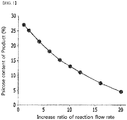
FIG. 1 is a graph showing the change of psicose content in the product depending on the column flow rate in the range of liquid fructose content of 75% to 95% and the range of 5% to less than 20% of the total content of glucose and psicose, in the psicose production by using an immobilization reaction filled with bead containing a cell for producing a psicose, according to an Example of the present invention. -
FIG. 2 is a formula showing the change of psicose content in the product depending on to column flow rate in the range of liquid fructose content of 75% to 95% and the range of 5% to less than 20% of total content of glucose and psicose, in the psicose production by using an immobilization reaction filled with bead containing a cell for producing a psicose according to an Example of the present invention. -
FIG. 3 shows an example of recombinant expression vector for preparing a psicose syrup of the present invention (pCES_sodCDPE). -
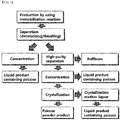
FIG. 4 is a process diagram showing a psicose production procedure according to an example of the present invention. - The gene encoding a psicose epimerase derived from Clostridiuim scindens (Clostridiuim scindens ATCC 35704) (DPE gene; Gene bank: EDS06411.1) was synthesized as a modified polynucleotide form optimized for E. coli and called CDPE. The polynucleotide optimized for E. coli and sod promoter and T7 terminator obtained from pET21a vector were obtained as each template through PCR, and these were linked as one template by overlap PCR method and cloned into pGEM T-easy vector through T-vector cloning, to confirm the sequence including sod promoter (SEQ ID NO: 1), optimized CDPE sequence of SEQ ID NO: 8 and T7-terminator.
- The whole polynucleotide was inserted into the same restriction enzyme site of an expression vector pCES208(J. Microbiol. Biotechnol., 18:639-647, 2008) with restriction enzymes NotI and XbaI(NEB), to produce a recombinant vector pCES208/ psicose epimerase (pCES_sodCDPE). The cleavage map of the produced recombinant vector (pCES_sodCDPE) was shown in
FIG. 1 . - Corynebacterium glutamicum was transformed with the prepared recombinant vector (pCES_sodCDPE) using electroporation. Colonies were picked and inoculated in 4 ml of LB medium (tryptone 10 g/L, NaCl 10g/L, yeast extract 5g/L) supplemented with Kanamycin at final concentration of 15ug/ml, and then cultured for approximately 16 hours under the culture conditions of 30 °C and 250rpm. Then, 1ml of the culture solution was collected and inoculated in 100ml LB medium including 15ug/ml of Kanamycin, and the culture was continued for over 16 hours. After lysis of cultured cells with beadbeater, only supernatant was obtained and mixed with a sample buffer at a mixing ratio of 1:1, and then heated at 100°C for 5 minutes. The prepared samples were subjected to electrophoresis on a 12% SDS-PAGE gel (composition: running gel - 3.3 ml H2O, 4.0
ml 30% acrylamide, 2.5 ml 1.5M Tris buffer(pH 8.8), 100µ ℓ 10% SDS, 100 µℓ, 10% APS, 4 µℓ TEMED / stacking gel - 1.4 ml H2O, 0.33ml 30% acrylamide, 0.25 ml 1.0M Tris buffer(pH 6.8), 20µ ℓ 10% SDS, 20µ ℓ 10% APS, 2 µℓ TEMED) at 180V for approximately 50 minutes, to confirm the protein expression. After the expression of CDPE was confirmed on the SDS-PAGE gel, His-tag purification was proceeded using Ni-NTA resin and the expression rate was calculated using a calculation formula (expression rate(%) = (Purified protein(mg) / Total soluble protein(mg)) X 100), for accurate measurement of expression level. The prepared Corynebacterium glutamicum transformant produced 16.62 mg of the total water-soluble proteins and 1.74 mg of purified enzyme protein. - In order to prepare psicose from fructose using the recombinant strain producing psicose epimerase in Example 1-1, the cells were collected by centrifugation in the cell culture.
- Then, the cell suspension was treated with 0.05% (v/v) of en emulsifier (Ryoto(tkSugar Ester, M-1695) in a final volume and treated at 35 °C (±5 °C) for 60 minutes. When the reaction was completed, the microbial cells were collected after removing the supernatant containing the emulsifier again by centrifugation.
- To prepare immobilized beads, the collected microbial cells were mixed with distilled water to a final microbial cell concentration of 5% (v/v), and 5% (v/v) of the collected microbial cells were mixed with 4% (v/v) of alginic acid dissolved in water at a mixing ratio of 1:1, and refrigerated at 4 °C to remove bubbles generated during mixing. The refrigerated mixture solution was extruded through Needle (inner diameter 0.20∼0.30mm) and formed into a droplet shape due to the weight, and the dropped mixture solution was cured by being dropped into the prepared 100mM calcium chloride (CaCl2) solution, to form spherical or elliptical beads (diameter 2.0∼2.2mm). The formed beads were soaked in a 100mM calcium chloride solution and mixed evenly by a stirrer so as to be further cured.
- After all mixture solution was extruded, the beads were further cured by keeping refrigerator for 4∼6 hours, and then cured for approximately 6 hours in a refrigerated state with replacing with a new 100mM calcium chloride solution. After the beads were completely cured, the beads were skimmed and the moisture was removed completely. The beads were stirred for 10 minutes after addition of water at 3 times as much as the volume of the beads. The process was repeated three times to remove the calcium chloride solution. After completely removing moisture of washed beads, a fructose-containing substrate (50 brix of fructose and 1mM MnCl2.4H2O) was inputted at 3 times as much as the volume of the beads, and then it was stirred for 10 minutes. Such treatment was carried out at 2 times or more to replace with a fructose-containing substrate used as a reaction substrate. The reaction substrate was adjusted to pH 6.8∼7.2 with 3N NaOH. The liquid fructose or crystalline fructose can be used as the substrate depending on the product kinds.
- The beads replaced with the reaction substrate were filled into an immobilization reaction column, and then used for producing a psicose syrup.
- After filling the prepared beads in Example 1-2 into an immobilization reaction column, a psicose syrup was produced under the following reaction conditions. A raw material which was 50% of solid content, and included 88.8 % by weight of fructose and 4.8 % by weight of glucose, among 100 % by weight of solid content of total saccharides of fructose-containing substrate (pH 6.8∼7.1) with 50% (w/w) or more of solid content, was provided to the following immobilization reaction column, thereby preparing the mixed saccharide of the psicose syrup.
-
- (1) Reaction temperature: 50°C of internal temperature of the column jacket
- (2) Reaction substrate: substrate containing 88.8% by weight of fructose and 4.8% by weight of glucose in the total solid content of fructose-containing substrate with 50% (w/w) or higher of solid content, and including less than 6.4% by weight of other saccharides of 1 or higher DP (Degree of Polymerization) except for the fructose and glucose.
- (3) Production standard: production of syrup including 24% by weight of psicose content in 100% by weight of solid content of total saccharides in the product.
- As the result of the reaction, 24 % by weight of psicose syrup with the weight ratio of glucose:fructose:psicose:oligosaccharide of 5:65:24:6 was collected from the reaction solution.
- After filling beads prepared in Example 1-2 into an immobilization reaction column, the amounts of produced psicose syrup depending on the column flow rate under the following reaction conditions were compared by feeding the reaction substrates at 5 times of column volume for 1 hour according to the ratio of increased flow rate, at the point when the psicose content (%) in the column was stabilized. The column was fed by a raw material of reaction substrate solution with 50% (w/w) of solid content including 88.8 % by weight or more of the fructose content and 4.8 % by weight of glucose content, based on 100 % by weight of the solid content of total saccharides.
- The analysis of saccharide content was detected with RI by injecting 10 µL of samples suitably diluted with water solvent at the flow rate of 0.6ml/min by using Aminex HPX-87C column (80 °C) of Biorad company, and within 30 minutes of analysis time, the fructose, psicose and other DP 1 or more saccharides were integrated, thereby analyzing each area. In addition, to analyze the content by each saccharide composition, values corresponding to area by each saccharide composition were analyzed as the content of each saccharide, when the value of sum of total areas of fructose, psicose and other DP1 or more saccharides shown within 30 minutes of analysis time.
-
- (1) Reaction temperature: 50°C of internal temperature of the column jacket,
- (2) Reaction substrate: substrate including 88.8% by weight of fructose and 4.8% by weight of glucose among 100% by weight of solid of total saccharides of fructose-containing substrate with the solid content of 50% (w/w) (pH 6.8∼7.2) and containing less than 6.4% of other saccharides of DP 1 or more except for fructose and glucose, which is a raw material including 94.9% by weight of fructose content and 5.1% by weight of glucose in the raw material substrate, when they were converted on the basis of 100 % by weight of total content of fructose, glucose and psicose,
- (3) Column flow rate: the psicose content in the product is evaluated depending on the ratio of increased flow rate, as the reaction is carried out by increasing the reaction flow rate by 1 to 20 times, based on 1 of the reaction flow rate at which the psicose contained in the psicose-containing product is produced at an amount of 25% by weight or higher with respect to 100% by weight solid content of the total saccharides in the psicose-containing product,
- (4) Production standard: total content of glucose and psicose ranges from 9% by weight or more to less than 20% by weight, in 100% by weight of total content of fructose, glucose and psicose in the product.
- The experimental result was shown in the following Table 2 and
FIG. 1 . In Table 2, contents of each saccharide were shown, based on 100% by weight of the total content of fructose, glucose and psicose in the solid content of total saccharides in the product.[Table 2] Increase ratio of flow rate Fructose content (wt%) Psicose content (wt%) Glucose content (wt%) Total content of psicose and glucose (wt%) Substrate before reaction 94.9 0 5.1 5.1 1 67.8 27.1 5.1 32.2 2 69.7 25.2 5.1 30.3 4 73.5 21.4 5.1 26.5 6 76.7 18.2 5.1 23.3 8 79.6 15.3 5.1 20.4 10 81.8 13.1 5.1 18.2 12 83.8 11.1 5.1 16.2 16 87.5 7.4 5.1 12.5 20 90.3 4.6 5.1 9.7 - As shown in Table 2, when the total solid content of fructose, glucose and psicose included in the reaction substrate was 100% by weight, a raw material including 94.9% of fructose content and 5.1% of glucose was used. Since the fructose was converted into psicose, as the conversion reaction was progressed, 94.9% of fructose content as the substrate was gradually reduced, and the psicose content was increased, with maintaining the same content of 5.1% of glucose.
- According to the increase of column flow rate, the psicose conversion rate was gradually reduced. The psicose content was 4.6%, when reacted at the flow rate of 20 times higher than the flow rate of producing 27.1% psicose content in Table 2. When reacted at the flow rate increased 10 times higher than the flow rate of producing 25% psicose content of Example 1, a syrup composition having less than 20% by weight of total content of glucose and psicose was produced.
- The change in psicose content by the change in the column flow rate in Table 2 was shown in
FIG. 1 , thereby showing the change in psicose content in the product according to the ratio of column flow rate increase. - As shown in
FIG. 2 , when numerical values of column flow rate were input into the formula, it could be seen that the production condition for syrup composition including 9.7% by weight or more to less than 20% by weight of total solid content of glucose and psicose, on the basis of 100% by weight of the total content of fructose, glucose and psicose in the product, could be controlled in 8.5 to 20 times of the flow rate for producing the syrup composition including 25% by weight of psicose content in Example 1. This result showed increased approximately 10 times higher than the flow rate for producing the syrup composition including 25% by weight of psicose content in Example 1, the column flow rate available for production of syrup composition having less than 20% by weight of total solid content of glucose and psicose, as the flow rate increased approximately 8.5 times higher than the flow rate for producing the syrup composition including 25% by weight of psicose content in Example 1. - In addition, as the result of analyzing the content of produced materials in which the production was completed in the reaction with 10 times higher of the column flow rate under the immobilization reaction conditions by using the formula of
FIG. 2 , a composition containing 76.5% by weight of fructose, 12.3% by weight of psicose, 4.8% by weight of glucose, and 6.4% of other saccharides of DP1 or more, based on 100% by weight of total saccharide solid content were obtained, when it was converted as 100% by weight of total content of fructose, glucose and psicose, the sum of psicose and glucose contents could be produced as 18.2% by weight. - After filling beads prepared in Example 1-2 into an immobilization reaction column, the fructose-containing substrate and the reaction condition were the same as those of Example 2.
- By using the formula of
FIG. 2 , the flow rate among column flow rate in which the total content of psicose and glucose was less than 20% by weight was selected and fixed, based on 100% by weight of the total content of fructose, glucose and psicose in the saccharides of the product, and the change in psicose content of the product was measured at different day numbers for reaction. Specifically, the result of measuring the change in psicose content contained in the product were shown in the following Table 3, by fixing the flow rate as 8.5 times higher than the flow rate of producing 25% by weight of psicose content in 100% by weight of solid content of total saccharides in Example 1 and reacting for 15 days. -
- (1) Reaction temperature: 50°C,
- (2) Reaction substrate: the same reaction substrate of Example 2,
- (3) Column condition: flow rate increased at 8.5 times higher than the flow rate of producing 25% by weight of psicose content in 10% by weight of solid content of total saccharides in Example 1, and
- (4) Production standard: total content of glucose and psicose ranges from 15% by weight or more to less than 20% by weight, when the total content of fructose, glucose and psicose in the product was 100% by weight.
- As shown in Table 3, the psicose content in the product were measured during the reaction for 15 days at the high reaction flow rate, a composition including 10% by weight or more to less than 15% by weight of psicose content and 15% by weight or more to less than 20% by weight of total content of psicose and glucose, on the basis of 100 % by weight of the total content of fructose, glucose and psicose, could be stably produced for 15 days.
- A psicose production system was established as a continuous production process by continuously producing a psicose syrup having less than 20% by weight of total content of glucose and psicose, when the total content of fructose, glucose and psicose contained in the product was 100% by weight, and separating a psicose fraction from the product and a fructose raffinate fraction.
- Specifically, the psicose conversion reaction was performed by controlling the flow rate of psicose conversion reaction column under the condition of producing less than 20% by weight of glucose and psicose based on 100% by weight of total content of fructose, glucose and psicose contained in the product, and psicose fraction with 90% or more of psicose purity and fructose raffinate fraction containing excess amount of fructose were separated from the psicose-containing product by using high-purity separation process.
- The schematic diagram of the entire reaction process of psicose production was shown in
FIG. 4 , and the process may be inserted or excluded according to a production quality or production process. The detailed production process was as follows. - After liquid fructose with 75 Brix (%) of solid content (when the total solid content was 100% by weight, the content of fructose was contained as 88.8% by weight) was added by water to 50 Brix(%) of the solid content, and adjusted to pH 7.0 by adding with 5N NaOH, to prepare a raw material of reaction. The raw material was provided into a reaction column which were filled with microbial cell immobilization beads of Example 1-2 (50°C constant temperature) and a syrup containing less than 20% by weight of glucose and psicose was produced according to the substantially same method of Example 3, when the fructose in the raw material was converted into a psicose, on the basis of 100 % by weight of the total content of fructose, glucose and psicose of reaction raw material.
- As a process for separating the produced psicose syrup, the produced psicose-containing syrup was decolored at 50°C for 30 minutes by adding 0.05%(w/w) of activated carbon to the solid content in the syrup, and the completely decolored psicose-containing syrup was passed through a micro filter, thereby removing the activated carbon.
- The psicose-containing syrup in which the activated carbon was removed was desalted by flowing through the column filled with cation exchange resin, anion exchange resin and a mixed resin thereof at room temperature in order to remove impurities such as ion component, etc., at the volumetric rate of 2 times (1∼2times) of ion exchange resin per hour. The psicose was separated at the ratio of 0.15 based 1 of total solid weight in the raw material used for psicose conversion reaction, in the SMB (simulated moving bed) filled with calcium (Ca2+) type ion exchange resin at the flow rate of 0.06SV, under the condition that the separation ratio of psicose:fructose was 0.7:1, to obtain a high-purity psicose fraction of 96% psicose purity with 4 Brix (%) of solid content. The triple-distilled water was used for the mobile phase of column because of food usage.
- At the same time, raffinate fraction including 5.5% glucose, 83.9% fructose, 3.4% psicose, and 4.2% other saccharides as the content of composition except for the high-purity psicose fraction were collected at the ratio of 0.85, when the total solid weight of raw material used for psicose conversion reaction was 1. After the fractionized raffinate was transferred and set to the solid content 50 Brix (%) as the fructose-containing substrate of psicose conversion, and adjusted to pH 7.0 by using 5N NaOH, to be provided into a reaction column and recycled to perform a psicose conversion reaction.
- The high-purity psicose separated in the SMB was transferred to a storage tank and concentrated to be the solid content 80 Brix (%) or more at 60°C, and was cooled to the supersaturated state according to the cooling crystallization method, to produce a psicose crystal. Then, the psicose powder with 99% psicose purity was finally obtained at 81% yield by centrifugal dehydration and drying.


| Reaction time (day) | Fructose content(wt%) | Psicose content (wt%) | Total content of psicose and glucose (wt%) |
| 0 | 80.5 | 14.4 | 19.5 |
| 1 | 80.1 | 14.8 | 19.9 |
| 2 | 80.1 | 14.8 | 19.9 |
| 4 | 80.1 | 14.8 | 19.9 |
| 6 | 80.1 | 14.8 | 19.9 |
| 8 | 80.1 | 14.8 | 19.9 |
| 9 | 80.2 | 14.7 | 19.8 |
| 12 | 80.3 | 14.6 | 19.7 |
| 13 | 80.5 | 14.4 | 19.5 |
| 14 | 80.6 | 14.3 | 19.4 |
| 15 | 80.7 | 14.2 | 19.3 |
Claims (17)
- A method for preparing a psicose-containing product from a fructose-containing substrate by an immobilization reaction using a biocatalyst for producing a psicose,
wherein the biocatalyst has 4% to 29% of the conversion rate of psicose from the fructose-containing substrate at a reaction temperature of 50 to 60 °C within one(1) hour,
wherein the immobilization reaction is performed at the reaction flow rate of 8.5 to 20, based on 1 of the reaction flow rate at which the psicose contained in the psicose-containing product is produced at an amount of 25% by weight or higher with respect to 100% by weight solid content of the total saccharides in the psicose-containing product, and
wherein the solid content of psicose and glucose is lower than 20% by weight, with respect to 100% by weight of solid content of psicose, glucose and fructose contained in the psicose-containing product. - A method performed to achieve that the solid content of psicose and glucose is 9% by weight or higher to lower than 20% by weight, based on 100% by weight total solid content of saccharide and psicose.
- The method of claim 1, wherein the immobilization reaction is performed at the reaction flow rate of 10 to 18, based on 1 of the reaction flow rate at which the psicose contained in the psicose-containing product is produced at an amount of 25% by weight or higher with respect to 100% by weight solid content of the total saccharides in the psicose-containing product.
- The method of claim 1, wherein the immobilization reaction is performed to achieve that the solid content of psicose and glucose is 9% by weight to lower than 20% by weight, and the solid content of fructose is 80 to 91 % by weight, based on 100% by weight of total content of fructose, glucose and psicose in the psicose-containing product.
- The method of claim 1, wherein the fructose-containing substrate comprises 75% by weight to 95% by weight of fructose in 100% by weight of solid content of total saccharides in the substrate.
- The method of claim 1, wherein the immobilization reaction is performed by using a biocatalyst for producing a psicose having 20 to 29 % of the psicose conversion rate from a fructose-containing substrate, and a substrate comprising 80% by weight to 95% by weight of fructose in 100% by weight of solid content of total saccharides in the fructose-containing substrate.
- The method of claim 1, wherein the fructose-containing substrate is an isomerized saccharide syrup.
- The method of claim 1, wherein the biocatalyst is an enzyme for producing a psicose or a microbial cell producing a psicose.
- The method of claim 1, wherein the immobilization reaction is performed by using an immobilization column filled with a bead containing an enzyme for producing a psicose or a microbial cell producing a psicose.
- The method of claim 9, wherein the immobilization reaction is performed by using a bead containing the microbial cell or enzyme which is treated with divalent metal ion and coated with one or more swelling inhibitors selected from the group consisting of chitosan, chitin, polyethylene glycol (PEG), polyethylene amine (PEI), chito-oligosaccharide and polylysine.
- The method of claim 9, wherein the immobilization reaction is performed by using a bead containing the microbial cell or enzyme which is treated by freeze-drying and compressed.
- The method of claim 8, wherein the microbial cell producing a psicose is a Corynebacterium strain transformed with a gene of psicose epimerase.
- The method of claim 12, wherein the Corynebacterium strain is one or more kinds of Corynebacterium sp. strains selected from the group consisting of Corynebacterium glutamicum, Corynebacterium acetoglutamicum, Corynebacterium acetoacidophilum, Corynebacterium thermoaminogenes, Corynebacterium melassecola and Corynebacterium efficiens.
- The method of claim 8, wherein the microbial cell producing a psicose is a strain producing a psicose epimerase.
- The method of claim 1, wherein the immobilization reaction is performed at 40 to 80 °C for 0.5 to 48 hours.
- A method for preparing a psicose by obtaining a psicose-containing liquid product comprising,
obtaining a psicose-containing product according to any one of claims 1 to 15,
decoloring or desalting the produced psicose-containing product, and
concentrating the decolored or desalted product to 75 Brix (%) or higher of solid content of psicose. - A method of preparing a psicose comprising preparing a psicose-containing powder comprising,
obtaining a psicose-containing product according to any one of claims 1 to 15,
decoloring or desalting the produced psicose-containing product,
separating the decolored or desalted product to separate a psicose fraction of 90% by weight or higher of psicose content and a raffinate fraction,
concentrating the separated psicose fraction,
preparing a concentrate in a psicose supersaturated state to crystallize a psicose, and
separating the crystallized psicose from a crystal mother liquor and drying.
Priority Applications (1)
| Application Number | Priority Date | Filing Date | Title |
|---|---|---|---|
| PL16866642T PL3378943T3 (en) | 2015-11-16 | 2016-11-16 | Method for producing psicose from fructose-containing substrate |
Applications Claiming Priority (2)
| Application Number | Priority Date | Filing Date | Title |
|---|---|---|---|
| KR1020150160710A KR102087396B1 (en) | 2015-11-16 | 2015-11-16 | Method of preparing psicose from fructose-containing substrate |
| PCT/KR2016/013197 WO2017086690A1 (en) | 2015-11-16 | 2016-11-16 | Method for producing psicose from fructose-containing substrate |
Publications (3)
| Publication Number | Publication Date |
|---|---|
| EP3378943A1 true EP3378943A1 (en) | 2018-09-26 |
| EP3378943A4 EP3378943A4 (en) | 2019-04-17 |
| EP3378943B1 EP3378943B1 (en) | 2021-08-11 |
Family
ID=58719057
Family Applications (1)
| Application Number | Title | Priority Date | Filing Date |
|---|---|---|---|
| EP16866642.8A Active EP3378943B1 (en) | 2015-11-16 | 2016-11-16 | Method for producing psicose from fructose-containing substrate |
Country Status (10)
| Country | Link |
|---|---|
| US (1) | US12312623B2 (en) |
| EP (1) | EP3378943B1 (en) |
| JP (1) | JP6820924B2 (en) |
| KR (1) | KR102087396B1 (en) |
| CN (1) | CN108474014A (en) |
| AU (1) | AU2016357609B2 (en) |
| HU (1) | HUE055744T2 (en) |
| IL (1) | IL259315B (en) |
| PL (1) | PL3378943T3 (en) |
| WO (1) | WO2017086690A1 (en) |
Cited By (2)
| Publication number | Priority date | Publication date | Assignee | Title |
|---|---|---|---|---|
| EP3553069A4 (en) * | 2016-12-08 | 2020-07-29 | Samyang Corporation | METHOD FOR PRODUCING PSICOSE |
| EP3647316A4 (en) * | 2017-06-30 | 2021-04-14 | Samyang Corporation | PROCESS FOR THE PRODUCTION OF ALLULOSE-BASED SWEETENER |
Families Citing this family (15)
| Publication number | Priority date | Publication date | Assignee | Title |
|---|---|---|---|---|
| KR102004941B1 (en) | 2016-12-08 | 2019-07-29 | 주식회사 삼양사 | Method of producing psicose efficiently |
| CN108866247A (en) * | 2018-09-18 | 2018-11-23 | 上海立足生物科技有限公司 | The method and apparatus that continuous large-scale separation prepares D-Psicose |
| CN109022625A (en) * | 2018-09-18 | 2018-12-18 | 上海立足生物科技有限公司 | A method of producing the D-Psicose of concentration |
| KR102487975B1 (en) * | 2019-10-31 | 2023-01-12 | 주식회사 삼양사 | Cell-immobilized bead with improved conversion activity and method of preparing the same |
| JP7641281B2 (en) * | 2019-10-31 | 2025-03-06 | サムヤン コーポレイション | Bacterial cell immobilization beads having excellent transformation activity and method for producing the same |
| MX2022005275A (en) * | 2019-10-31 | 2022-08-17 | Samyang Corp | Improved method for manufacturing allulose. |
| CN110951806B (en) * | 2019-12-24 | 2023-01-10 | 山东百龙创园生物科技股份有限公司 | Preparation process of D-psicose-containing crystalline composition |
| US20220340944A1 (en) * | 2020-06-03 | 2022-10-27 | Tianjin Institute Of Industrial Biotechnology, Chinese Academy Of Sciences | Allulose 3-epimerase mutant, engineered bacterium expressing same, and immobilized enzyme and immobilization method thereof |
| CN113080357B (en) * | 2021-05-17 | 2023-09-15 | 江苏赛威分离科技有限公司 | Low-calorie compound sweetener and production process thereof |
| CN113444753B (en) * | 2021-05-21 | 2022-09-27 | 诚志生命科技有限公司 | D-psicose-containing high fructose corn syrup and preparation method thereof |
| CN113912655B (en) * | 2021-09-30 | 2024-01-23 | 中粮营养健康研究院有限公司 | Method for separating psicose from mixed syrup by using simulated moving bed |
| CN114231579A (en) * | 2022-01-13 | 2022-03-25 | 福州大学 | Method for continuously and circularly preparing D-psicose |
| CN114601745B (en) * | 2022-03-25 | 2023-06-27 | 上海龙殷生物科技有限公司 | Skin care product raw material, cosmetic, preparation method and application |
| CN116987689B (en) * | 2023-09-27 | 2023-12-15 | 山东百龙创园生物科技股份有限公司 | A kind of preparation method of crystalline psicose |
| KR20250095788A (en) * | 2023-12-19 | 2025-06-27 | 대상 주식회사 | Novel promoter for constitutive expression, target protein expresssion system including same, and manufacturing method of allulose using the same |
Family Cites Families (16)
| Publication number | Priority date | Publication date | Assignee | Title |
|---|---|---|---|---|
| JP3711296B2 (en) | 1995-08-25 | 2005-11-02 | 株式会社林原生物化学研究所 | Method for producing L-psicose |
| KR100744479B1 (en) | 2005-06-01 | 2007-08-01 | 씨제이 주식회사 | Method of producing Psychos by Psychos Epimerase |
| KR100864399B1 (en) * | 2007-06-20 | 2008-10-20 | 경상대학교산학협력단 | Encapsulation method of agricultural useful microorganisms using alginate shell beads to improve cold resistance viability of useful agricultural microorganisms |
| KR20110035805A (en) * | 2009-09-30 | 2011-04-06 | 씨제이제일제당 (주) | Immobilization of Pseudomonas-Epimerase and Method for Producing Psychos using the Same |
| KR101189640B1 (en) | 2010-03-26 | 2012-10-12 | 씨제이제일제당 (주) | How to Make D-Pycosy Crystals |
| KR101203856B1 (en) * | 2011-08-24 | 2012-11-21 | 씨제이제일제당 (주) | D-psicose 3-epimerase variants improved thermostability and continuous production of D-psicose using the variants |
| CN104769125B (en) | 2012-08-10 | 2018-10-23 | 株式会社三养社 | Psicose epimerase and using its for being changed into the composition of psicose |
| GB2508586B (en) | 2012-09-27 | 2020-09-02 | Tate & Lyle Ingredients Americas Llc | A protein |
| JP6209526B2 (en) | 2012-10-30 | 2017-10-04 | 松谷化学工業株式会社 | Production method of D-allose |
| KR20140080282A (en) | 2012-12-20 | 2014-06-30 | 주식회사 삼양제넥스 | Method for preparing psicose from fructose by using D-psicose 3-epimerase |
| KR101318422B1 (en) | 2013-04-09 | 2013-10-15 | 주식회사 삼양제넥스 | D-psicose epimerase and method for producing psicose using the same |
| KR101455759B1 (en) | 2013-04-23 | 2014-10-28 | 씨제이제일제당(주) | D-psicose 3-epimerase variants and production method of D-psicose using them |
| KR102189458B1 (en) | 2013-09-03 | 2020-12-11 | 로께뜨프레르 | Improved variant of d-psicose 3-epimerase and uses thereof |
| KR101539097B1 (en) | 2013-12-26 | 2015-07-23 | 주식회사 삼양제넥스 | Polynucleotide encoding psicose epimerase and method of producing psicos using the same |
| KR101473918B1 (en) * | 2014-05-28 | 2014-12-17 | 대상 주식회사 | D-psicose 3-epimerase, manufacturing method thereof and manufacturing method of D-psicose using the same |
| KR101616050B1 (en) | 2015-05-28 | 2016-04-27 | 주식회사 삼양사 | Psicose-producing bead and preparation method for the same |
-
2015
- 2015-11-16 KR KR1020150160710A patent/KR102087396B1/en active Active
-
2016
- 2016-11-16 HU HUE16866642A patent/HUE055744T2/en unknown
- 2016-11-16 PL PL16866642T patent/PL3378943T3/en unknown
- 2016-11-16 WO PCT/KR2016/013197 patent/WO2017086690A1/en not_active Ceased
- 2016-11-16 US US15/774,340 patent/US12312623B2/en active Active
- 2016-11-16 EP EP16866642.8A patent/EP3378943B1/en active Active
- 2016-11-16 AU AU2016357609A patent/AU2016357609B2/en active Active
- 2016-11-16 CN CN201680066863.6A patent/CN108474014A/en active Pending
- 2016-11-16 JP JP2018525587A patent/JP6820924B2/en active Active
-
2018
- 2018-05-13 IL IL259315A patent/IL259315B/en unknown
Cited By (4)
| Publication number | Priority date | Publication date | Assignee | Title |
|---|---|---|---|---|
| EP3553069A4 (en) * | 2016-12-08 | 2020-07-29 | Samyang Corporation | METHOD FOR PRODUCING PSICOSE |
| US12024751B2 (en) | 2016-12-08 | 2024-07-02 | Samyang Corporation | Method for producing psicose |
| EP3647316A4 (en) * | 2017-06-30 | 2021-04-14 | Samyang Corporation | PROCESS FOR THE PRODUCTION OF ALLULOSE-BASED SWEETENER |
| US11820788B2 (en) | 2017-06-30 | 2023-11-21 | Samyang Corporation | Method for producing sweetener allulose |
Also Published As
| Publication number | Publication date |
|---|---|
| US12312623B2 (en) | 2025-05-27 |
| EP3378943B1 (en) | 2021-08-11 |
| CN108474014A (en) | 2018-08-31 |
| AU2016357609A1 (en) | 2018-05-31 |
| HUE055744T2 (en) | 2021-12-28 |
| KR102087396B1 (en) | 2020-03-10 |
| KR20170057078A (en) | 2017-05-24 |
| JP6820924B2 (en) | 2021-01-27 |
| IL259315B (en) | 2022-01-01 |
| JP2018533958A (en) | 2018-11-22 |
| US20230183764A1 (en) | 2023-06-15 |
| PL3378943T3 (en) | 2022-01-10 |
| IL259315A (en) | 2018-07-31 |
| AU2016357609B2 (en) | 2020-03-12 |
| EP3378943A4 (en) | 2019-04-17 |
| WO2017086690A1 (en) | 2017-05-26 |
Similar Documents
| Publication | Publication Date | Title |
|---|---|---|
| EP3378943B1 (en) | Method for producing psicose from fructose-containing substrate | |
| EP3295808B2 (en) | Saccharide mixture containing psicose with improved sweetness quality and crystallization | |
| CN110036017B (en) | Method for producing psicose using recycling | |
| EP3553069B1 (en) | Method for producing psicose | |
| CN110062762B (en) | Method for efficiently producing psicose | |
| KR101656063B1 (en) | Expression system for psicose epimerase and production for psicose using the same | |
| EP3395952B1 (en) | Composition for producing d-psicose comprising d-psicose 3-epimerase and salt and method for producing d-psicose using same | |
| KR101695830B1 (en) | Expression system for psicose epimerase and production for psicose using the same | |
| US11168317B2 (en) | Expression system for psicose epimerase and production for psicose using the same | |
| KR102016709B1 (en) | Expression system for amylosucrase and production for turanose using the same | |
| JP2002017391A (en) | Mass production of difructose dianhydride IV |
Legal Events
| Date | Code | Title | Description |
|---|---|---|---|
| STAA | Information on the status of an ep patent application or granted ep patent |
Free format text: STATUS: THE INTERNATIONAL PUBLICATION HAS BEEN MADE |
|
| PUAI | Public reference made under article 153(3) epc to a published international application that has entered the european phase |
Free format text: ORIGINAL CODE: 0009012 |
|
| STAA | Information on the status of an ep patent application or granted ep patent |
Free format text: STATUS: REQUEST FOR EXAMINATION WAS MADE |
|
| 17P | Request for examination filed |
Effective date: 20180530 |
|
| AK | Designated contracting states |
Kind code of ref document: A1 Designated state(s): AL AT BE BG CH CY CZ DE DK EE ES FI FR GB GR HR HU IE IS IT LI LT LU LV MC MK MT NL NO PL PT RO RS SE SI SK SM TR |
|
| AX | Request for extension of the european patent |
Extension state: BA ME |
|
| DAV | Request for validation of the european patent (deleted) | ||
| DAX | Request for extension of the european patent (deleted) | ||
| A4 | Supplementary search report drawn up and despatched |
Effective date: 20190314 |
|
| RIC1 | Information provided on ipc code assigned before grant |
Ipc: C12N 15/77 20060101ALI20190308BHEP Ipc: C12P 19/02 20060101AFI20190308BHEP Ipc: C12N 11/00 20060101ALI20190308BHEP Ipc: C12N 9/90 20060101ALI20190308BHEP |
|
| TPAC | Observations filed by third parties |
Free format text: ORIGINAL CODE: EPIDOSNTIPA |
|
| TPAC | Observations filed by third parties |
Free format text: ORIGINAL CODE: EPIDOSNTIPA |
|
| STAA | Information on the status of an ep patent application or granted ep patent |
Free format text: STATUS: EXAMINATION IS IN PROGRESS |
|
| 17Q | First examination report despatched |
Effective date: 20191125 |
|
| GRAP | Despatch of communication of intention to grant a patent |
Free format text: ORIGINAL CODE: EPIDOSNIGR1 |
|
| STAA | Information on the status of an ep patent application or granted ep patent |
Free format text: STATUS: GRANT OF PATENT IS INTENDED |
|
| INTG | Intention to grant announced |
Effective date: 20210303 |
|
| GRAS | Grant fee paid |
Free format text: ORIGINAL CODE: EPIDOSNIGR3 |
|
| GRAA | (expected) grant |
Free format text: ORIGINAL CODE: 0009210 |
|
| STAA | Information on the status of an ep patent application or granted ep patent |
Free format text: STATUS: THE PATENT HAS BEEN GRANTED |
|
| AK | Designated contracting states |
Kind code of ref document: B1 Designated state(s): AL AT BE BG CH CY CZ DE DK EE ES FI FR GB GR HR HU IE IS IT LI LT LU LV MC MK MT NL NO PL PT RO RS SE SI SK SM TR |
|
| REG | Reference to a national code |
Ref country code: CH Ref legal event code: EP |
|
| REG | Reference to a national code |
Ref country code: DE Ref legal event code: R096 Ref document number: 602016062178 Country of ref document: DE |
|
| REG | Reference to a national code |
Ref country code: IE Ref legal event code: FG4D Ref country code: AT Ref legal event code: REF Ref document number: 1419430 Country of ref document: AT Kind code of ref document: T Effective date: 20210915 |
|
| REG | Reference to a national code |
Ref country code: SK Ref legal event code: T3 Ref document number: E 38211 Country of ref document: SK |
|
| REG | Reference to a national code |
Ref country code: NL Ref legal event code: FP |
|
| REG | Reference to a national code |
Ref country code: LT Ref legal event code: MG9D |
|
| REG | Reference to a national code |
Ref country code: HU Ref legal event code: AG4A Ref document number: E055744 Country of ref document: HU |
|
| REG | Reference to a national code |
Ref country code: AT Ref legal event code: MK05 Ref document number: 1419430 Country of ref document: AT Kind code of ref document: T Effective date: 20210811 |
|
| PG25 | Lapsed in a contracting state [announced via postgrant information from national office to epo] |
Ref country code: PT Free format text: LAPSE BECAUSE OF FAILURE TO SUBMIT A TRANSLATION OF THE DESCRIPTION OR TO PAY THE FEE WITHIN THE PRESCRIBED TIME-LIMIT Effective date: 20211213 Ref country code: NO Free format text: LAPSE BECAUSE OF FAILURE TO SUBMIT A TRANSLATION OF THE DESCRIPTION OR TO PAY THE FEE WITHIN THE PRESCRIBED TIME-LIMIT Effective date: 20211111 Ref country code: HR Free format text: LAPSE BECAUSE OF FAILURE TO SUBMIT A TRANSLATION OF THE DESCRIPTION OR TO PAY THE FEE WITHIN THE PRESCRIBED TIME-LIMIT Effective date: 20210811 Ref country code: ES Free format text: LAPSE BECAUSE OF FAILURE TO SUBMIT A TRANSLATION OF THE DESCRIPTION OR TO PAY THE FEE WITHIN THE PRESCRIBED TIME-LIMIT Effective date: 20210811 Ref country code: FI Free format text: LAPSE BECAUSE OF FAILURE TO SUBMIT A TRANSLATION OF THE DESCRIPTION OR TO PAY THE FEE WITHIN THE PRESCRIBED TIME-LIMIT Effective date: 20210811 Ref country code: LT Free format text: LAPSE BECAUSE OF FAILURE TO SUBMIT A TRANSLATION OF THE DESCRIPTION OR TO PAY THE FEE WITHIN THE PRESCRIBED TIME-LIMIT Effective date: 20210811 Ref country code: BG Free format text: LAPSE BECAUSE OF FAILURE TO SUBMIT A TRANSLATION OF THE DESCRIPTION OR TO PAY THE FEE WITHIN THE PRESCRIBED TIME-LIMIT Effective date: 20211111 Ref country code: AT Free format text: LAPSE BECAUSE OF FAILURE TO SUBMIT A TRANSLATION OF THE DESCRIPTION OR TO PAY THE FEE WITHIN THE PRESCRIBED TIME-LIMIT Effective date: 20210811 Ref country code: SE Free format text: LAPSE BECAUSE OF FAILURE TO SUBMIT A TRANSLATION OF THE DESCRIPTION OR TO PAY THE FEE WITHIN THE PRESCRIBED TIME-LIMIT Effective date: 20210811 Ref country code: RS Free format text: LAPSE BECAUSE OF FAILURE TO SUBMIT A TRANSLATION OF THE DESCRIPTION OR TO PAY THE FEE WITHIN THE PRESCRIBED TIME-LIMIT Effective date: 20210811 |
|
| PG25 | Lapsed in a contracting state [announced via postgrant information from national office to epo] |
Ref country code: LV Free format text: LAPSE BECAUSE OF FAILURE TO SUBMIT A TRANSLATION OF THE DESCRIPTION OR TO PAY THE FEE WITHIN THE PRESCRIBED TIME-LIMIT Effective date: 20210811 Ref country code: GR Free format text: LAPSE BECAUSE OF FAILURE TO SUBMIT A TRANSLATION OF THE DESCRIPTION OR TO PAY THE FEE WITHIN THE PRESCRIBED TIME-LIMIT Effective date: 20211112 |
|
| PG25 | Lapsed in a contracting state [announced via postgrant information from national office to epo] |
Ref country code: DK Free format text: LAPSE BECAUSE OF FAILURE TO SUBMIT A TRANSLATION OF THE DESCRIPTION OR TO PAY THE FEE WITHIN THE PRESCRIBED TIME-LIMIT Effective date: 20210811 |
|
| REG | Reference to a national code |
Ref country code: DE Ref legal event code: R097 Ref document number: 602016062178 Country of ref document: DE |
|
| PG25 | Lapsed in a contracting state [announced via postgrant information from national office to epo] |
Ref country code: SM Free format text: LAPSE BECAUSE OF FAILURE TO SUBMIT A TRANSLATION OF THE DESCRIPTION OR TO PAY THE FEE WITHIN THE PRESCRIBED TIME-LIMIT Effective date: 20210811 Ref country code: RO Free format text: LAPSE BECAUSE OF FAILURE TO SUBMIT A TRANSLATION OF THE DESCRIPTION OR TO PAY THE FEE WITHIN THE PRESCRIBED TIME-LIMIT Effective date: 20210811 Ref country code: EE Free format text: LAPSE BECAUSE OF FAILURE TO SUBMIT A TRANSLATION OF THE DESCRIPTION OR TO PAY THE FEE WITHIN THE PRESCRIBED TIME-LIMIT Effective date: 20210811 Ref country code: CZ Free format text: LAPSE BECAUSE OF FAILURE TO SUBMIT A TRANSLATION OF THE DESCRIPTION OR TO PAY THE FEE WITHIN THE PRESCRIBED TIME-LIMIT Effective date: 20210811 Ref country code: AL Free format text: LAPSE BECAUSE OF FAILURE TO SUBMIT A TRANSLATION OF THE DESCRIPTION OR TO PAY THE FEE WITHIN THE PRESCRIBED TIME-LIMIT Effective date: 20210811 |
|
| PLBE | No opposition filed within time limit |
Free format text: ORIGINAL CODE: 0009261 |
|
| STAA | Information on the status of an ep patent application or granted ep patent |
Free format text: STATUS: NO OPPOSITION FILED WITHIN TIME LIMIT |
|
| PG25 | Lapsed in a contracting state [announced via postgrant information from national office to epo] |
Ref country code: MC Free format text: LAPSE BECAUSE OF FAILURE TO SUBMIT A TRANSLATION OF THE DESCRIPTION OR TO PAY THE FEE WITHIN THE PRESCRIBED TIME-LIMIT Effective date: 20210811 |
|
| 26N | No opposition filed |
Effective date: 20220512 |
|
| PG25 | Lapsed in a contracting state [announced via postgrant information from national office to epo] |
Ref country code: LU Free format text: LAPSE BECAUSE OF NON-PAYMENT OF DUE FEES Effective date: 20211116 |
|
| PG25 | Lapsed in a contracting state [announced via postgrant information from national office to epo] |
Ref country code: SI Free format text: LAPSE BECAUSE OF FAILURE TO SUBMIT A TRANSLATION OF THE DESCRIPTION OR TO PAY THE FEE WITHIN THE PRESCRIBED TIME-LIMIT Effective date: 20210811 |
|
| PG25 | Lapsed in a contracting state [announced via postgrant information from national office to epo] |
Ref country code: CY Free format text: LAPSE BECAUSE OF FAILURE TO SUBMIT A TRANSLATION OF THE DESCRIPTION OR TO PAY THE FEE WITHIN THE PRESCRIBED TIME-LIMIT Effective date: 20210811 |
|
| P01 | Opt-out of the competence of the unified patent court (upc) registered |
Effective date: 20230602 |
|
| PG25 | Lapsed in a contracting state [announced via postgrant information from national office to epo] |
Ref country code: MK Free format text: LAPSE BECAUSE OF FAILURE TO SUBMIT A TRANSLATION OF THE DESCRIPTION OR TO PAY THE FEE WITHIN THE PRESCRIBED TIME-LIMIT Effective date: 20210811 |
|
| PG25 | Lapsed in a contracting state [announced via postgrant information from national office to epo] |
Ref country code: MT Free format text: LAPSE BECAUSE OF FAILURE TO SUBMIT A TRANSLATION OF THE DESCRIPTION OR TO PAY THE FEE WITHIN THE PRESCRIBED TIME-LIMIT Effective date: 20210811 |
|
| PGFP | Annual fee paid to national office [announced via postgrant information from national office to epo] |
Ref country code: TR Payment date: 20250902 Year of fee payment: 10 Ref country code: NL Payment date: 20250909 Year of fee payment: 10 Ref country code: PL Payment date: 20250829 Year of fee payment: 10 Ref country code: IT Payment date: 20250909 Year of fee payment: 10 |
|
| PGFP | Annual fee paid to national office [announced via postgrant information from national office to epo] |
Ref country code: BE Payment date: 20250909 Year of fee payment: 10 Ref country code: GB Payment date: 20250909 Year of fee payment: 10 |
|
| PGFP | Annual fee paid to national office [announced via postgrant information from national office to epo] |
Ref country code: FR Payment date: 20250909 Year of fee payment: 10 |
|
| PGFP | Annual fee paid to national office [announced via postgrant information from national office to epo] |
Ref country code: IE Payment date: 20250908 Year of fee payment: 10 |
|
| PGFP | Annual fee paid to national office [announced via postgrant information from national office to epo] |
Ref country code: SK Payment date: 20250908 Year of fee payment: 10 |
|
| REG | Reference to a national code |
Ref country code: CH Ref legal event code: U11 Free format text: ST27 STATUS EVENT CODE: U-0-0-U10-U11 (AS PROVIDED BY THE NATIONAL OFFICE) Effective date: 20251201 |
|
| PGFP | Annual fee paid to national office [announced via postgrant information from national office to epo] |
Ref country code: HU Payment date: 20250929 Year of fee payment: 10 |
|
| PGFP | Annual fee paid to national office [announced via postgrant information from national office to epo] |
Ref country code: DE Payment date: 20250908 Year of fee payment: 10 |
|
| PGFP | Annual fee paid to national office [announced via postgrant information from national office to epo] |
Ref country code: CH Payment date: 20251201 Year of fee payment: 10 |