EP3378387A1 - Heart rate estimation from face videos using quality based fusion - Google Patents
Heart rate estimation from face videos using quality based fusion Download PDFInfo
- Publication number
- EP3378387A1 EP3378387A1 EP18150696.5A EP18150696A EP3378387A1 EP 3378387 A1 EP3378387 A1 EP 3378387A1 EP 18150696 A EP18150696 A EP 18150696A EP 3378387 A1 EP3378387 A1 EP 3378387A1
- Authority
- EP
- European Patent Office
- Prior art keywords
- face
- heart rate
- temporal
- face videos
- videos
- Prior art date
- Legal status (The legal status is an assumption and is not a legal conclusion. Google has not performed a legal analysis and makes no representation as to the accuracy of the status listed.)
- Granted
Links
Images

Classifications
-
- A—HUMAN NECESSITIES
- A61—MEDICAL OR VETERINARY SCIENCE; HYGIENE
- A61B—DIAGNOSIS; SURGERY; IDENTIFICATION
- A61B5/00—Measuring for diagnostic purposes; Identification of persons
- A61B5/02—Detecting, measuring or recording for evaluating the cardiovascular system, e.g. pulse, heart rate, blood pressure or blood flow
- A61B5/024—Measuring pulse rate or heart rate
- A61B5/02416—Measuring pulse rate or heart rate using photoplethysmograph signals, e.g. generated by infrared radiation
-
- A—HUMAN NECESSITIES
- A61—MEDICAL OR VETERINARY SCIENCE; HYGIENE
- A61B—DIAGNOSIS; SURGERY; IDENTIFICATION
- A61B5/00—Measuring for diagnostic purposes; Identification of persons
- A61B5/0059—Measuring for diagnostic purposes; Identification of persons using light, e.g. diagnosis by transillumination, diascopy, fluorescence
- A61B5/0077—Devices for viewing the surface of the body, e.g. camera, magnifying lens
-
- A—HUMAN NECESSITIES
- A61—MEDICAL OR VETERINARY SCIENCE; HYGIENE
- A61B—DIAGNOSIS; SURGERY; IDENTIFICATION
- A61B5/00—Measuring for diagnostic purposes; Identification of persons
- A61B5/117—Identification of persons
- A61B5/1171—Identification of persons based on the shapes or appearances of their bodies or parts thereof
- A61B5/1176—Recognition of faces
-
- A—HUMAN NECESSITIES
- A61—MEDICAL OR VETERINARY SCIENCE; HYGIENE
- A61B—DIAGNOSIS; SURGERY; IDENTIFICATION
- A61B5/00—Measuring for diagnostic purposes; Identification of persons
- A61B5/72—Signal processing specially adapted for physiological signals or for diagnostic purposes
- A61B5/7221—Determining signal validity, reliability or quality
-
- G—PHYSICS
- G06—COMPUTING OR CALCULATING; COUNTING
- G06T—IMAGE DATA PROCESSING OR GENERATION, IN GENERAL
- G06T7/00—Image analysis
- G06T7/0002—Inspection of images, e.g. flaw detection
- G06T7/0012—Biomedical image inspection
- G06T7/0014—Biomedical image inspection using an image reference approach
- G06T7/0016—Biomedical image inspection using an image reference approach involving temporal comparison
-
- G—PHYSICS
- G06—COMPUTING OR CALCULATING; COUNTING
- G06V—IMAGE OR VIDEO RECOGNITION OR UNDERSTANDING
- G06V40/00—Recognition of biometric, human-related or animal-related patterns in image or video data
- G06V40/10—Human or animal bodies, e.g. vehicle occupants or pedestrians; Body parts, e.g. hands
- G06V40/16—Human faces, e.g. facial parts, sketches or expressions
- G06V40/168—Feature extraction; Face representation
-
- G—PHYSICS
- G06—COMPUTING OR CALCULATING; COUNTING
- G06T—IMAGE DATA PROCESSING OR GENERATION, IN GENERAL
- G06T2207/00—Indexing scheme for image analysis or image enhancement
- G06T2207/30—Subject of image; Context of image processing
- G06T2207/30004—Biomedical image processing
- G06T2207/30076—Plethysmography
-
- G—PHYSICS
- G06—COMPUTING OR CALCULATING; COUNTING
- G06T—IMAGE DATA PROCESSING OR GENERATION, IN GENERAL
- G06T2207/00—Indexing scheme for image analysis or image enhancement
- G06T2207/30—Subject of image; Context of image processing
- G06T2207/30196—Human being; Person
- G06T2207/30201—Face
Definitions
- the embodiments herein generally relates to estimating heart rate and, more particularly, estimating heart rate using face videos acquired in a non-invasive manner and using quality based fusion.
- the heart rate (HR) can be used to infer user physiological parameters associated with diseases like myocardial infarction, diabetic neuropathy, and myocardial dysfunction.
- Traditional electrocardiography (ECG) and photo-plethysmography (PPG) based HR estimation require human skin contact which is not only user uncomfortable, but also infeasible when multiple user monitoring is required or extreme sensitive conditions is a prime concern as in the case of monitoring: i) neonates; ii) sleeping human; and iii) skin damaged patients.
- ECG electrocardiography
- PPG photo-plethysmography
- HR estimation require human skin contact which is not only user uncomfortable, but also infeasible when multiple user monitoring is required or extreme sensitive conditions is a prime concern as in the case of monitoring: i) neonates; ii) sleeping human; and iii) skin damaged patients.
- These scenarios require non-invasive mechanism of HR measurement. It can be accomplished by estimating HR from face videos acquired using any camera like web-cams, smartphone camera or
- PPG is extracted from the filtered temporal signals and subsequently it is used to estimate the HR using R-R intervals or Fast Fourier Transform (FFT) spectrum.
- FFT Fast Fourier Transform
- the camera also acquire several noises introduced by respiration, expression changes and eye blinking and environmental factors.
- the variations in the different face parts vary according to the facial structure such as placement of arteries and bones in the face. HR estimation is a challenging problem due to these factors, especially when required in near real-time.
- an embodiment herein provides a system and method for real time estimation of heart rate from one or more face videos acquired in non-invasive manner.
- a method for real time estimation of heart rate from one or more face videos acquired in non-invasive manner comprises one or more steps of receiving one or more face videos, obtaining one or more blocks consisting of facial skin areas of the received one or more face videos, extracting temporal fragments of the obtained one or more blocks of the one or more face videos, filtering the extracted temporal fragments using an image processing range filter and applying a predefined quality based fusion to estimate heart rate of the filtered temporal fragment of at least one face video of one or more face videos.
- the acquisition is based on the principle that there is a change in the blood flow when the heart beats. It introduces variations in the blood flow from heart to head through the carotid arteries that in turn results in the skin color change and head motion.
- the method employs the quality to improve the HR estimates.
- a system for real time estimation of heart rate from one or more face videos acquired in non-invasive manner comprises one or more steps of receiving one or more face videos, obtaining one or more blocks consisting of facial skin areas of the received one or more face videos, extracting temporal fragments of the obtained one or more blocks of the one or more face videos, filtering the extracted temporal fragments using an image processing range filter and applying a predefined quality based fusion to estimate heart rate of the filtered temporal fragment of at least one face video of one or more face videos.
- the acquisition is based on the principle that there is a change in the blood flow when the heart beats. It introduces variations in the blood flow from heart to head through the carotid arteries that in turn results in the skin color change and head motion.
- the system employs the quality to improve the HR estimates.
- a non-transitory computer medium storing one or more instruction which when executed by a processor on a system, cause the processor to perform method for real time estimation of heart rate from one or more face videos acquired in non-invasive manner.
- the method comprises one or more steps of receiving one or more face videos, obtaining one or more blocks consisting of facial skin areas of the received one or more face videos, extracting temporal fragments of the obtained one or more blocks of the one or more face videos, filtering the extracted temporal fragments using an image processing range filter and applying a predefined quality based fusion to estimate heart rate of the filtered temporal fragment of at least one face video of one or more face videos.
- the acquisition is based on the principle that there is a change in the blood flow when the heart beats. It introduces variations in the blood flow from heart to head through the carotid arteries that in turn results in the skin color change and head motion.
- the system employs the quality to improve the HR estimates.
- any block diagram herein represent conceptual views of illustrative systems embodying the principles of the present subject matter.
- any flow charts, flow diagrams, state transition diagrams, pseudo code, and the like represent various processes which may be substantially represented in computer readable medium and so executed by a computing device or processor, whether or not such computing device or processor is explicitly shown.
- a system 100 for real time estimation of heart rate from one or more face videos acquired in non-invasive manner comprises a memory 102, a processor 104 which is communicatively coupled with the memory, a receiving module 106, a parsing module 108, a extraction module 110, a filtration module 112, and an application module 114.
- the receiving module 106 is configured to receive one or more face videos. It would be appreciated that the acquisition of videos are not limited to only face. It can acquire from any part of the human body but the acquisition must be in a non-invasive manner. The acquisition is based on the principle that there is a change in the blood flow when the heart beats. The heart beats introduces variations in the blood flow from heart to head through the carotid arteries that in turn results in change in skin color and head motion.
- the rectangular face region is detected by applying Viola-Jones face detector on a frame of first video of the one or more face videos. Both frontal and profile face detectors are used for face detection. It would be appreciated that the model based face detection can also be used for better face detection.
- the parsing module 108 is configured to obtain one or more blocks consisting of facial skin areas of the received one or more face videos.
- the one or more blocks of the one or more face videos are referred as region of interest (ROI).
- ROI region of interest
- the extraction module 110 is configured to extract temporal fragments of the obtained one or more blocks of the one or more face videos. Temporal fragments depicting the color or motion variations in the one or more blocks are estimated from the ROI. Each temporal fragment is sufficiently large to observe a peak due to noise rather than the variation introduced by HR.
- t f i ⁇ x y ⁇ b k i I g x y ⁇ x y ⁇ b k i 1
- b i k denotes the i th block inside k th frame.
- the filtration module 112 is configured to filter the extracted temporal fragments using an image processing range filter.
- Each extracted temporal fragment is composed of local PPG and that is corrupted by noise.
- the local PPG is unknown and needs to be estimated from the fragment fragments.
- the PPG fragment contains one high frequency component corresponding to the HR pulse and small magnitude of other frequencies. Therefore, the estimated local PPG should possess high Kurtosis statistic which provides the shape information of the fragment both in terms of peakedness and tailness.
- the application module 114 is configured to apply a predefined quality based fusion to estimate heart rate of the filtered temporal fragment of at least one face video of one or more face videos.
- Each local HR estimate is weighed by its quality which indicates the confidence in accurate extraction of local HR from its local PPG.
- q j a j ⁇ b j b j
- q j denotes the quality for local PPG signal
- a j and b j denote the maximum and the second maximum amplitude of the frequency spectrum.
- H G and p denote the global HR and total number of local HR estimates respectively.
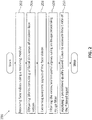
- a method 200 for real time estimation of heart rate from one or more face videos acquired in non-invasive manner is shown.
- each face video is divide into a plurality of temporal fragments.
- the acquisition is based on the principle that there is a change in the blood flow when the heart beats.
- the heart beats introduces variations in the blood flow from heart to head through the carotid arteries that in turn results in change in skin color and head motion.
- the process obtains one or more blocks consisting of facial skin areas of the received one or more face videos, wherein the one or more blocks are region of interest (ROI).
- ROI region of interest
- the process extracts temporal fragments of the obtained one or more blocks of the one or more face videos.
- Each extracted temporal fragment of the plurality of temporal fragments is used to estimate a local heart rate.
- the extracted temporal fragment is composed of local PPG and that is corrupted by noise. The variations in different temporal fragments are different depending the facial structure and thus the temporal fragments are normalized with blind source separation methodology.
- the process filters the extracted temporal fragments using an image processing range filter.
- the PPG fragment contains one high frequency component corresponding to the HR pulse and small magnitude of other frequencies. Therefore, the estimated local PPG should possess high Kurtosis statistic which provides the shape information of the fragment both in terms of peakedness and tailness.
- step 210 where the process applies a predefined quality based fusion to estimate heart rate of the filtered temporal fragment of at least one face video of one or more face videos.
- the local heart rate of each of the plurality of temporal fragments are consolidated to estimate global heart rate using quality based fusion.
- the embodiments of present disclosure herein addresses problem that in a non-invasive and near real-time HR estimation along with the color and motion variations, the cameras acquire noise introduced by respiration, expression changes, camera parameters changes (for eg. focus), eye blinking and environmental factors. Further, the variations in the different face parts vary according to the facial structure, i.e., location of arteries and bones in the face. HR estimation is a challenging problem due to these factors, especially when required in near real-time.
- the hardware device can be any kind of device which can be programmed including e.g. any kind of computer like a server or a personal computer, or the like, or any combination thereof.
- the device may also include means which could be e.g. hardware means like e.g. an application-specific integrated circuit (ASIC), a field-programmable gate array (FPGA), or a combination of hardware and software means, e.g.
- ASIC application-specific integrated circuit
- FPGA field-programmable gate array
- the means can include both hardware means and software means.
- the method embodiments described herein could be implemented in hardware and software.
- the device may also include software means.
- the embodiments may be implemented on different hardware devices, e.g. using a plurality of CPUs.
- the embodiments herein can comprise hardware and software elements.
- the embodiments that are implemented in software include but are not limited to, firmware, resident software, microcode, etc.
- the functions performed by various modules described herein may be implemented in other modules or combinations of other modules.
- a computer-usable or computer readable medium can be any apparatus that can comprise, store, communicate, propagate, or transport the program for use by or in connection with the instruction execution system, apparatus, or device.
- the medium can be an electronic, magnetic, optical, electromagnetic, infrared, or semiconductor system (or apparatus or device) or a propagation medium.
- Examples of a computer-readable medium include a semiconductor or solid state memory, magnetic tape, a removable computer diskette, a random access memory (RAM), a read-only memory (ROM), a rigid magnetic disk and an optical disk.
- Current examples of optical disks include compact disk-read only memory (CD-ROM), compact disk-read/write (CD-R/W) and DVD.
- a data processing system suitable for storing and/or executing program code will include at least one processor coupled directly or indirectly to memory elements through a system bus.
- the memory elements can include local memory employed during actual execution of the program code, bulk storage, and cache memories which provide temporary storage of at least some program code in order to reduce the number of times code must be retrieved from bulk storage during execution.
- I/O devices can be coupled to the system either directly or through intervening I/O controllers.
- Network adapters may also be coupled to the system to enable the data processing system to become coupled to other data processing systems or remote printers or storage devices through intervening private or public networks. Modems, cable modem and Ethernet cards are just a few of the currently available types of network adapters.
- a representative hardware environment for practicing the embodiments may include a hardware configuration of an information handling/computer system in accordance with the embodiments herein.
- the system herein comprises at least one processor or central processing unit (CPU).
- the CPUs are interconnected via system bus to various devices such as a random access memory (RAM), read-only memory (ROM), and an input/output (I/O) adapter.
- RAM random access memory
- ROM read-only memory
- I/O input/output
- the I/O adapter can connect to peripheral devices, such as disk units and tape drives, or other program storage devices that are readable by the system.
- the system can read the inventive instructions on the program storage devices and follow these instructions to execute the methodology of the embodiments herein.
- the system further includes a user interface adapter that connects a keyboard, mouse, speaker, microphone, and/or other user interface devices such as a touch screen device (not shown) to the bus to gather user input.
- a communication adapter connects the bus to a data processing network
- a display adapter connects the bus to a display device which may be embodied as an output device such as a monitor, printer, or transmitter, for example.
Landscapes
- Health & Medical Sciences (AREA)
- Life Sciences & Earth Sciences (AREA)
- Engineering & Computer Science (AREA)
- General Health & Medical Sciences (AREA)
- Physics & Mathematics (AREA)
- Medical Informatics (AREA)
- Veterinary Medicine (AREA)
- Biomedical Technology (AREA)
- Heart & Thoracic Surgery (AREA)
- Pathology (AREA)
- Molecular Biology (AREA)
- Surgery (AREA)
- Animal Behavior & Ethology (AREA)
- Public Health (AREA)
- Biophysics (AREA)
- Computer Vision & Pattern Recognition (AREA)
- Cardiology (AREA)
- Physiology (AREA)
- Theoretical Computer Science (AREA)
- General Physics & Mathematics (AREA)
- Artificial Intelligence (AREA)
- Nuclear Medicine, Radiotherapy & Molecular Imaging (AREA)
- Radiology & Medical Imaging (AREA)
- Quality & Reliability (AREA)
- Signal Processing (AREA)
- Psychiatry (AREA)
- Oral & Maxillofacial Surgery (AREA)
- Human Computer Interaction (AREA)
- Multimedia (AREA)
- Measuring And Recording Apparatus For Diagnosis (AREA)
- Image Analysis (AREA)
Abstract
Description
- The present invention claims priority to India Application (Title: Heart rate estimation from face videos using quality based fusion) No.
201721009872 - The embodiments herein generally relates to estimating heart rate and, more particularly, estimating heart rate using face videos acquired in a non-invasive manner and using quality based fusion.
- The heart rate (HR) can be used to infer user physiological parameters associated with diseases like myocardial infarction, diabetic neuropathy, and myocardial dysfunction. Traditional electrocardiography (ECG) and photo-plethysmography (PPG) based HR estimation require human skin contact which is not only user uncomfortable, but also infeasible when multiple user monitoring is required or extreme sensitive conditions is a prime concern as in the case of monitoring: i) neonates; ii) sleeping human; and iii) skin damaged patients. These scenarios require non-invasive mechanism of HR measurement. It can be accomplished by estimating HR from face videos acquired using any camera like web-cams, smartphone camera or surveillance camera in a non-invasive manner.
- Usually, existing face videos based HR estimation systems works in the following manner. Facial skin pixels are determined from the face video and referred as region of interest (ROI). Temporal signals depicting the motion or color variations in the frames across time, are estimated from the ROI using Eulerian or Lagrangian approaches. In a Lagrangian approach, temporal signals are determined by explicitly tracking the ROI or discriminating features over time. Such tracking is computationally expensive hence usually temporal signals are estimated using Eulerian approach, i.e., temporal signals are obtained by fixing ROI and analyzing its variations. The Eulerian approach works accurately for small variations. Noise in the temporal signals is filtered for accurate HR estimation. PPG is extracted from the filtered temporal signals and subsequently it is used to estimate the HR using R-R intervals or Fast Fourier Transform (FFT) spectrum. The confidence in the HR estimation known as quality, provides a useful indicator of the efficacy of estimated HR. In several quality measures have been proposed to evaluate the predicted HR in fitness monitoring environment. Existing systems do not use any quality parameter to improve the HR estimation, but rather to understand the effectiveness of the estimated HR.
- In addition, along with the color motion variations, the camera also acquire several noises introduced by respiration, expression changes and eye blinking and environmental factors. Further, the variations in the different face parts vary according to the facial structure such as placement of arteries and bones in the face. HR estimation is a challenging problem due to these factors, especially when required in near real-time.
- The following presents a simplified summary of some embodiments of the disclosure in order to provide a basic understanding of the embodiments. This summary is not an extensive overview of the embodiments. It is not intended to identify key/critical elements of the embodiments or to delineate the scope of the embodiments. Its sole purpose is to present some embodiments in a simplified form as a prelude to the more detailed description that is presented below.
- In view of the foregoing, an embodiment herein provides a system and method for real time estimation of heart rate from one or more face videos acquired in non-invasive manner.
- In one aspect, a method for real time estimation of heart rate from one or more face videos acquired in non-invasive manner. The method comprises one or more steps of receiving one or more face videos, obtaining one or more blocks consisting of facial skin areas of the received one or more face videos, extracting temporal fragments of the obtained one or more blocks of the one or more face videos, filtering the extracted temporal fragments using an image processing range filter and applying a predefined quality based fusion to estimate heart rate of the filtered temporal fragment of at least one face video of one or more face videos. The acquisition is based on the principle that there is a change in the blood flow when the heart beats. It introduces variations in the blood flow from heart to head through the carotid arteries that in turn results in the skin color change and head motion. In addition, the method employs the quality to improve the HR estimates.
- In another aspect, a system for real time estimation of heart rate from one or more face videos acquired in non-invasive manner. The method comprises one or more steps of receiving one or more face videos, obtaining one or more blocks consisting of facial skin areas of the received one or more face videos, extracting temporal fragments of the obtained one or more blocks of the one or more face videos, filtering the extracted temporal fragments using an image processing range filter and applying a predefined quality based fusion to estimate heart rate of the filtered temporal fragment of at least one face video of one or more face videos. The acquisition is based on the principle that there is a change in the blood flow when the heart beats. It introduces variations in the blood flow from heart to head through the carotid arteries that in turn results in the skin color change and head motion. In addition, the system employs the quality to improve the HR estimates.
- In another aspect, a non-transitory computer medium storing one or more instruction which when executed by a processor on a system, cause the processor to perform method for real time estimation of heart rate from one or more face videos acquired in non-invasive manner. The method comprises one or more steps of receiving one or more face videos, obtaining one or more blocks consisting of facial skin areas of the received one or more face videos, extracting temporal fragments of the obtained one or more blocks of the one or more face videos, filtering the extracted temporal fragments using an image processing range filter and applying a predefined quality based fusion to estimate heart rate of the filtered temporal fragment of at least one face video of one or more face videos. The acquisition is based on the principle that there is a change in the blood flow when the heart beats. It introduces variations in the blood flow from heart to head through the carotid arteries that in turn results in the skin color change and head motion. In addition, the system employs the quality to improve the HR estimates.
- It should be appreciated by those skilled in the art that any block diagram herein represent conceptual views of illustrative systems embodying the principles of the present subject matter. Similarly, it will be appreciated that any flow charts, flow diagrams, state transition diagrams, pseudo code, and the like represent various processes which may be substantially represented in computer readable medium and so executed by a computing device or processor, whether or not such computing device or processor is explicitly shown.
- The embodiments herein will be better understood from the following detailed description with reference to the drawings, in which:
-
Figure. 1 illustrates a system for real time estimation of heart rate from one or more face videos acquired in non-invasive manner according to an embodiment of the present disclosure; and -
Figure. 2 illustrates a method for real time estimation of heart rate from one or more face videos acquired in non-invasive manner according to an embodiment of the present disclosure. - The embodiments herein and the various features and advantageous details thereof are explained more fully with reference to the non-limiting embodiments that are illustrated in the accompanying drawings and detailed in the following description. The examples used herein are intended merely to facilitate an understanding of ways in which the embodiments herein may be practiced and to further enable those of skill in the art to practice the embodiments herein. Accordingly, the examples should not be construed as limiting the scope of the embodiments herein.
- Referring
fig. 1 , asystem 100 for real time estimation of heart rate from one or more face videos acquired in non-invasive manner. The system comprises amemory 102, aprocessor 104 which is communicatively coupled with the memory, areceiving module 106, aparsing module 108, aextraction module 110, afiltration module 112, and anapplication module 114. - In the preferred embodiment, the receiving
module 106 is configured to receive one or more face videos. It would be appreciated that the acquisition of videos are not limited to only face. It can acquire from any part of the human body but the acquisition must be in a non-invasive manner. The acquisition is based on the principle that there is a change in the blood flow when the heart beats. The heart beats introduces variations in the blood flow from heart to head through the carotid arteries that in turn results in change in skin color and head motion. - The rectangular face region is detected by applying Viola-Jones face detector on a frame of first video of the one or more face videos. Both frontal and profile face detectors are used for face detection. It would be appreciated that the model based face detection can also be used for better face detection.
- In the preferred embodiment, the
parsing module 108 is configured to obtain one or more blocks consisting of facial skin areas of the received one or more face videos. The one or more blocks of the one or more face videos are referred as region of interest (ROI). - In the preferred embodiment, the
extraction module 110 is configured to extract temporal fragments of the obtained one or more blocks of the one or more face videos. Temporal fragments depicting the color or motion variations in the one or more blocks are estimated from the ROI. Each temporal fragment is sufficiently large to observe a peak due to noise rather than the variation introduced by HR. - It would be appreciated that among all the color channels, green channel contains the strongest plethysmographic fragments. Hence, the raw temporal fragment for a block is given by the mean green value of pixels inside it for each frame. The temporal fragment for a block i, Ti is:


- In the preferred embodiment, the
filtration module 112 is configured to filter the extracted temporal fragments using an image processing range filter. Each extracted temporal fragment is composed of local PPG and that is corrupted by noise. The variations in different temporal fragments are different depending the facial structure, thus the temporal fragments are normalized using:


- Where Pa is the actual local PPG;
- A is the channel matrix;
- n is the time instant; and
- η is the noise.
- The local PPG is unknown and needs to be estimated from the fragment fragments. The estimated local PPG, Pe is given by:

- The PPG fragment contains one high frequency component corresponding to the HR pulse and small magnitude of other frequencies. Therefore, the estimated local PPG should possess high Kurtosis statistic which provides the shape information of the fragment both in terms of peakedness and tailness. The objective function required for local PPG extraction is:

- In the preferred embodiment, the
application module 114 is configured to apply a predefined quality based fusion to estimate heart rate of the filtered temporal fragment of at least one face video of one or more face videos. Each local HR estimate is weighed by its quality which indicates the confidence in accurate extraction of local HR from its local PPG.
- The local HR and their quality are fused using quality based fusion to estimate the global HR:

- Referring
fig. 2 , amethod 200 for real time estimation of heart rate from one or more face videos acquired in non-invasive manner. - Initially, at the
step 202, where the process receives one or more face videos, wherein each face video is divide into a plurality of temporal fragments. The acquisition is based on the principle that there is a change in the blood flow when the heart beats. The heart beats introduces variations in the blood flow from heart to head through the carotid arteries that in turn results in change in skin color and head motion. - At the
step 204, where the process obtains one or more blocks consisting of facial skin areas of the received one or more face videos, wherein the one or more blocks are region of interest (ROI). - At the
step 206, where the process extracts temporal fragments of the obtained one or more blocks of the one or more face videos. Each extracted temporal fragment of the plurality of temporal fragments is used to estimate a local heart rate. The extracted temporal fragment is composed of local PPG and that is corrupted by noise. The variations in different temporal fragments are different depending the facial structure and thus the temporal fragments are normalized with blind source separation methodology. - At the
step 208, the process filters the extracted temporal fragments using an image processing range filter. The PPG fragment contains one high frequency component corresponding to the HR pulse and small magnitude of other frequencies. Therefore, the estimated local PPG should possess high Kurtosis statistic which provides the shape information of the fragment both in terms of peakedness and tailness. - Finally at the
step 210, where the process applies a predefined quality based fusion to estimate heart rate of the filtered temporal fragment of at least one face video of one or more face videos. The local heart rate of each of the plurality of temporal fragments are consolidated to estimate global heart rate using quality based fusion. - The written description describes the subject matter herein to enable any person skilled in the art to make and use the embodiments. The scope of the subject matter embodiments is defined by the claims and may include other modifications that occur to those skilled in the art. Such other modifications are intended to be within the scope of the claims if they have similar elements that do not differ from the literal language of the claims or if they include equivalent elements with insubstantial differences from the literal language of the claims.
- The embodiments of present disclosure herein addresses problem that in a non-invasive and near real-time HR estimation along with the color and motion variations, the cameras acquire noise introduced by respiration, expression changes, camera parameters changes (for eg. focus), eye blinking and environmental factors. Further, the variations in the different face parts vary according to the facial structure, i.e., location of arteries and bones in the face. HR estimation is a challenging problem due to these factors, especially when required in near real-time.
- It is, however to be understood that the scope of the protection is extended to such a program and in addition to a computer-readable means having a message therein; such computer-readable storage means contain program-code means for implementation of one or more steps of the method, when the program runs on a server or mobile device or any suitable programmable device. The hardware device can be any kind of device which can be programmed including e.g. any kind of computer like a server or a personal computer, or the like, or any combination thereof. The device may also include means which could be e.g. hardware means like e.g. an application-specific integrated circuit (ASIC), a field-programmable gate array (FPGA), or a combination of hardware and software means, e.g. an ASIC and an FPGA, or at least one microprocessor and at least one memory with software modules located therein. Thus, the means can include both hardware means and software means. The method embodiments described herein could be implemented in hardware and software. The device may also include software means. Alternatively, the embodiments may be implemented on different hardware devices, e.g. using a plurality of CPUs.
- The embodiments herein can comprise hardware and software elements. The embodiments that are implemented in software include but are not limited to, firmware, resident software, microcode, etc. The functions performed by various modules described herein may be implemented in other modules or combinations of other modules. For the purposes of this description, a computer-usable or computer readable medium can be any apparatus that can comprise, store, communicate, propagate, or transport the program for use by or in connection with the instruction execution system, apparatus, or device.
- The medium can be an electronic, magnetic, optical, electromagnetic, infrared, or semiconductor system (or apparatus or device) or a propagation medium. Examples of a computer-readable medium include a semiconductor or solid state memory, magnetic tape, a removable computer diskette, a random access memory (RAM), a read-only memory (ROM), a rigid magnetic disk and an optical disk. Current examples of optical disks include compact disk-read only memory (CD-ROM), compact disk-read/write (CD-R/W) and DVD.
- A data processing system suitable for storing and/or executing program code will include at least one processor coupled directly or indirectly to memory elements through a system bus. The memory elements can include local memory employed during actual execution of the program code, bulk storage, and cache memories which provide temporary storage of at least some program code in order to reduce the number of times code must be retrieved from bulk storage during execution.
- Input/output (I/O) devices (including but not limited to keyboards, displays, pointing devices, etc.) can be coupled to the system either directly or through intervening I/O controllers. Network adapters may also be coupled to the system to enable the data processing system to become coupled to other data processing systems or remote printers or storage devices through intervening private or public networks. Modems, cable modem and Ethernet cards are just a few of the currently available types of network adapters.
- A representative hardware environment for practicing the embodiments may include a hardware configuration of an information handling/computer system in accordance with the embodiments herein. The system herein comprises at least one processor or central processing unit (CPU). The CPUs are interconnected via system bus to various devices such as a random access memory (RAM), read-only memory (ROM), and an input/output (I/O) adapter. The I/O adapter can connect to peripheral devices, such as disk units and tape drives, or other program storage devices that are readable by the system. The system can read the inventive instructions on the program storage devices and follow these instructions to execute the methodology of the embodiments herein.
- The system further includes a user interface adapter that connects a keyboard, mouse, speaker, microphone, and/or other user interface devices such as a touch screen device (not shown) to the bus to gather user input. Additionally, a communication adapter connects the bus to a data processing network, and a display adapter connects the bus to a display device which may be embodied as an output device such as a monitor, printer, or transmitter, for example.
- The preceding description has been presented with reference to various embodiments. Persons having ordinary skill in the art and technology to which this application pertains will appreciate that alterations and changes in the described structures and methods of operation can be practiced without meaningfully departing from the principle, spirit and scope.
Claims (12)
- A method for real time estimation of heart rate from one or more face videos acquired in non-invasive manner, wherein the method comprising:receiving one or more face videos, wherein the one or more face videos includes frontal, profile and multiple faces;obtaining one or more blocks consisting of facial skin areas of the received one or more face videos;extracting temporal fragments of the obtained one or more blocks of the one or more face videos;filtering the extracted temporal fragments using an image processing range filter; andapplying a predefined quality based fusion to estimate heart rate of the filtered temporal fragment of at least one face video of one or more face videos.
- The method of claim 1, wherein the one or more blocks are region of interest.
- The method of claim 1, wherein each face video is divide into a plurality of temporal fragments.
- The method of claim 3, wherein each temporal fragment is used to estimate a local heart rate.
- The method of claim 1, wherein the local heart rate of each of the plurality of temporal fragments are consolidated to estimate global heart rate using quality based fusion.
- A system (100) for real time estimation of heart rate from one or more face videos acquired in non-invasive manner, wherein the system (100) comprising:a memory (102);a processor (104) communicatively coupled with the memory;a receiving module (106) is configured to receive one or more face videos;a parsing module (108) is configured to obtain one or more blocks consisting of facial skin areas of the received one or more face videos;an extraction module (110) is configured to extract temporal fragments of the obtained one or more blocks of the one or more face videos;a filtration module (112) is configured to filter the extracted temporal fragments using an image processing range filter; andan application module (114) is configured to apply a predefined quality based fusion to estimate heart rate of the filtered temporal fragment of at least one face video of one or more face videos.
- The system (100) of claim 6, wherein the one or more face videos comprising of frontal, profile and multiple faces.
- The system (100) of claim 6, wherein the one or more blocks are region of interest.
- The system (100) of claim 6, wherein each face video is divide into a plurality of temporal fragments.
- The system (100) of claim 8, wherein each temporal fragment is used to estimate a local heart rate.
- The system (100) of claim 6, wherein the local heart rate of each of the plurality of temporal fragments are consolidated to estimate global heart rate using quality based fusion.
- A non-transitory computer medium storing one or more instruction which when executed by a processor on a system, cause the processor to perform method for real time estimation of heart rate from one or more face videos acquired in non-invasive manner comprising:receiving one or more face videos, wherein the one or more face videos includes frontal, profile and multiple faces;obtaining one or more blocks consisting of facial skin areas of the received one or more face videos;extracting temporal fragments of the obtained one or more blocks of the one or more face videos;filtering the extracted temporal fragments using an image processing range filter; andapplying a predefined quality based fusion to estimate heart rate of the filtered temporal fragment of at least one face video of one or more face videos.
Applications Claiming Priority (1)
| Application Number | Priority Date | Filing Date | Title |
|---|---|---|---|
| IN201721009872 | 2017-03-21 |
Publications (3)
| Publication Number | Publication Date |
|---|---|
| EP3378387A1 true EP3378387A1 (en) | 2018-09-26 |
| EP3378387B1 EP3378387B1 (en) | 2024-05-01 |
| EP3378387C0 EP3378387C0 (en) | 2024-05-01 |
Family
ID=61007457
Family Applications (1)
| Application Number | Title | Priority Date | Filing Date |
|---|---|---|---|
| EP18150696.5A Active EP3378387B1 (en) | 2017-03-21 | 2018-01-09 | Heart rate estimation from face videos using quality based fusion |
Country Status (2)
| Country | Link |
|---|---|
| US (1) | US10750959B2 (en) |
| EP (1) | EP3378387B1 (en) |
Cited By (3)
| Publication number | Priority date | Publication date | Assignee | Title |
|---|---|---|---|---|
| CN111127511A (en) * | 2018-12-18 | 2020-05-08 | 玄云子智能科技(深圳)有限责任公司 | Non-contact heart rate monitoring method |
| CN115424335A (en) * | 2022-11-03 | 2022-12-02 | 智慧眼科技股份有限公司 | Living body recognition model training method, living body recognition method and related equipment |
| CN116440387A (en) * | 2022-01-06 | 2023-07-18 | 安徽华米健康科技有限公司 | Audio playing method and device, wearable device and storage medium |
Families Citing this family (4)
| Publication number | Priority date | Publication date | Assignee | Title |
|---|---|---|---|---|
| CN111860391A (en) * | 2020-07-27 | 2020-10-30 | 深圳壹账通智能科技有限公司 | Heart rate estimation method, device, device and storage medium based on image recognition |
| CN112006673A (en) * | 2020-08-26 | 2020-12-01 | 西安电子科技大学 | Human heart rate detection method, system, storage medium, computer equipment and terminal |
| US12414696B2 (en) | 2021-10-26 | 2025-09-16 | Samsung Electronics Co., Ltd. | Multimodal contactless vital sign monitoring |
| US12557996B1 (en) | 2024-01-18 | 2026-02-24 | National Technology & Engineering Solutions Of Sandia, Llc | Processing short video to obtain frequency information |
Citations (2)
| Publication number | Priority date | Publication date | Assignee | Title |
|---|---|---|---|---|
| US20140161421A1 (en) * | 2012-12-07 | 2014-06-12 | Intel Corporation | Physiological Cue Processing |
| US20150302158A1 (en) * | 2014-04-21 | 2015-10-22 | Microsoft Corporation | Video-based pulse measurement |
Family Cites Families (10)
| Publication number | Priority date | Publication date | Assignee | Title |
|---|---|---|---|---|
| US8360986B2 (en) * | 2006-06-30 | 2013-01-29 | University Of Louisville Research Foundation, Inc. | Non-contact and passive measurement of arterial pulse through thermal IR imaging, and analysis of thermal IR imagery |
| US10143377B2 (en) | 2012-05-02 | 2018-12-04 | Augusta University Research Institute, Inc. | Single channel imaging measurement of dynamic changes in heart or respiration rate |
| US9301710B2 (en) | 2012-06-01 | 2016-04-05 | Xerox Corporation | Processing a video for respiration rate estimation |
| US9259186B2 (en) * | 2012-09-11 | 2016-02-16 | Covidien Lp | Methods and systems for determining noise information from a physiological signal |
| GB201302451D0 (en) | 2013-02-12 | 2013-03-27 | Isis Innovation | Method and system for signal analysis |
| US10028669B2 (en) * | 2014-04-02 | 2018-07-24 | Massachusetts Institute Of Technology | Methods and apparatus for physiological measurement using color band photoplethysmographic sensor |
| EP2960862B1 (en) | 2014-06-24 | 2017-03-22 | Vicarious Perception Technologies B.V. | A method for stabilizing vital sign measurements using parametric facial appearance models via remote sensors |
| US20160055635A1 (en) * | 2014-08-21 | 2016-02-25 | Sony Corporation | Method and system for video data processing |
| US10335045B2 (en) * | 2016-06-24 | 2019-07-02 | Universita Degli Studi Di Trento | Self-adaptive matrix completion for heart rate estimation from face videos under realistic conditions |
| CA3042952A1 (en) * | 2016-11-14 | 2018-05-17 | Nuralogix Corporation | System and method for camera-based heart rate tracking |
-
2018
- 2018-01-09 EP EP18150696.5A patent/EP3378387B1/en active Active
- 2018-01-16 US US15/872,458 patent/US10750959B2/en active Active
Patent Citations (2)
| Publication number | Priority date | Publication date | Assignee | Title |
|---|---|---|---|---|
| US20140161421A1 (en) * | 2012-12-07 | 2014-06-12 | Intel Corporation | Physiological Cue Processing |
| US20150302158A1 (en) * | 2014-04-21 | 2015-10-22 | Microsoft Corporation | Video-based pulse measurement |
Cited By (5)
| Publication number | Priority date | Publication date | Assignee | Title |
|---|---|---|---|---|
| CN111127511A (en) * | 2018-12-18 | 2020-05-08 | 玄云子智能科技(深圳)有限责任公司 | Non-contact heart rate monitoring method |
| CN111127511B (en) * | 2018-12-18 | 2022-03-29 | 玄云子智能科技(深圳)有限责任公司 | Non-contact heart rate monitoring method |
| CN116440387A (en) * | 2022-01-06 | 2023-07-18 | 安徽华米健康科技有限公司 | Audio playing method and device, wearable device and storage medium |
| CN115424335A (en) * | 2022-11-03 | 2022-12-02 | 智慧眼科技股份有限公司 | Living body recognition model training method, living body recognition method and related equipment |
| CN115424335B (en) * | 2022-11-03 | 2023-08-04 | 智慧眼科技股份有限公司 | Living body recognition model training method, living body recognition method and related equipment |
Also Published As
| Publication number | Publication date |
|---|---|
| US20180271390A1 (en) | 2018-09-27 |
| EP3378387B1 (en) | 2024-05-01 |
| EP3378387C0 (en) | 2024-05-01 |
| US10750959B2 (en) | 2020-08-25 |
Similar Documents
| Publication | Publication Date | Title |
|---|---|---|
| US10750959B2 (en) | Heart rate estimation from face videos using quality based fusion | |
| US10478079B2 (en) | Pulse estimation device, pulse estimation system, and pulse estimation method | |
| EP3453321A1 (en) | Non-invasive method and system for estimating blood pressure from photoplethysmogram using statistical post-processing | |
| US9245338B2 (en) | Increasing accuracy of a physiological signal obtained from a video of a subject | |
| US9320440B2 (en) | Discriminating between atrial fibrillation and sinus rhythm in physiological signals obtained from video | |
| US20140200460A1 (en) | Real-time physiological characteristic detection based on reflected components of light | |
| JP6115263B2 (en) | Pulse wave detection device, pulse wave detection method, and pulse wave detection program | |
| US11083382B2 (en) | Method, information processing apparatus and server for determining a physiological parameter of an individual | |
| US9986923B2 (en) | Selecting a region of interest for extracting physiological parameters from a video of a subject | |
| JPWO2015121949A1 (en) | Signal processing apparatus, signal processing method, and signal processing program | |
| DE102015207071A1 (en) | DETERMINING THE ARTERIAL PULSE WAVE TIME FROM VPG AND ECG SIGNALS | |
| US20220240789A1 (en) | Estimation apparatus, method and program | |
| US12521068B2 (en) | System and method of estimating vital signs of user using artificial intelligence | |
| Rumiński | Reliability of pulse measurements in videoplethysmography | |
| KR102444791B1 (en) | Method and device for non-invasive assessment of intracranial pressure | |
| KR101798228B1 (en) | Pulse rate measuring method using image | |
| US11989884B2 (en) | Method, apparatus and program | |
| CN106096544B (en) | Non-contact blink and heart rate joint detection system and method based on second-order blind identification | |
| JP6167849B2 (en) | Pulse wave detection device, pulse wave detection method, and pulse wave detection program | |
| US20160287106A1 (en) | Method for assessing patient risk for ventricular tachycardia | |
| WO2020171554A1 (en) | Method and apparatus for measuring body temperature using a camera | |
| CN118196707A (en) | A method and device for predicting abnormal behavior in computer-based examinations | |
| CN112022131B (en) | Long-term continuous non-contact heart rate measurement method and system | |
| Murashov et al. | Detecting events in video sequence of video-EEG monitoring | |
| KR101814290B1 (en) | A location information determination apparatus and method of a target using an impulse radar |
Legal Events
| Date | Code | Title | Description |
|---|---|---|---|
| PUAI | Public reference made under article 153(3) epc to a published international application that has entered the european phase |
Free format text: ORIGINAL CODE: 0009012 |
|
| STAA | Information on the status of an ep patent application or granted ep patent |
Free format text: STATUS: THE APPLICATION HAS BEEN PUBLISHED |
|
| AK | Designated contracting states |
Kind code of ref document: A1 Designated state(s): AL AT BE BG CH CY CZ DE DK EE ES FI FR GB GR HR HU IE IS IT LI LT LU LV MC MK MT NL NO PL PT RO RS SE SI SK SM TR |
|
| AX | Request for extension of the european patent |
Extension state: BA ME |
|
| STAA | Information on the status of an ep patent application or granted ep patent |
Free format text: STATUS: REQUEST FOR EXAMINATION WAS MADE |
|
| 17P | Request for examination filed |
Effective date: 20190326 |
|
| RBV | Designated contracting states (corrected) |
Designated state(s): AL AT BE BG CH CY CZ DE DK EE ES FI FR GB GR HR HU IE IS IT LI LT LU LV MC MK MT NL NO PL PT RO RS SE SI SK SM TR |
|
| STAA | Information on the status of an ep patent application or granted ep patent |
Free format text: STATUS: EXAMINATION IS IN PROGRESS |
|
| 17Q | First examination report despatched |
Effective date: 20220621 |
|
| GRAP | Despatch of communication of intention to grant a patent |
Free format text: ORIGINAL CODE: EPIDOSNIGR1 |
|
| STAA | Information on the status of an ep patent application or granted ep patent |
Free format text: STATUS: GRANT OF PATENT IS INTENDED |
|
| INTG | Intention to grant announced |
Effective date: 20231120 |
|
| GRAS | Grant fee paid |
Free format text: ORIGINAL CODE: EPIDOSNIGR3 |
|
| GRAA | (expected) grant |
Free format text: ORIGINAL CODE: 0009210 |
|
| STAA | Information on the status of an ep patent application or granted ep patent |
Free format text: STATUS: THE PATENT HAS BEEN GRANTED |
|
| AK | Designated contracting states |
Kind code of ref document: B1 Designated state(s): AL AT BE BG CH CY CZ DE DK EE ES FI FR GB GR HR HU IE IS IT LI LT LU LV MC MK MT NL NO PL PT RO RS SE SI SK SM TR |
|
| REG | Reference to a national code |
Ref country code: GB Ref legal event code: FG4D |
|
| REG | Reference to a national code |
Ref country code: CH Ref legal event code: EP |
|
| REG | Reference to a national code |
Ref country code: DE Ref legal event code: R096 Ref document number: 602018068777 Country of ref document: DE |
|
| REG | Reference to a national code |
Ref country code: IE Ref legal event code: FG4D |
|
| U01 | Request for unitary effect filed |
Effective date: 20240501 |
|
| U07 | Unitary effect registered |
Designated state(s): AT BE BG DE DK EE FI FR IT LT LU LV MT NL PT SE SI Effective date: 20240507 |
|
| PG25 | Lapsed in a contracting state [announced via postgrant information from national office to epo] |
Ref country code: IS Free format text: LAPSE BECAUSE OF FAILURE TO SUBMIT A TRANSLATION OF THE DESCRIPTION OR TO PAY THE FEE WITHIN THE PRESCRIBED TIME-LIMIT Effective date: 20240901 |
|
| PG25 | Lapsed in a contracting state [announced via postgrant information from national office to epo] |
Ref country code: HR Free format text: LAPSE BECAUSE OF FAILURE TO SUBMIT A TRANSLATION OF THE DESCRIPTION OR TO PAY THE FEE WITHIN THE PRESCRIBED TIME-LIMIT Effective date: 20240501 |
|
| PG25 | Lapsed in a contracting state [announced via postgrant information from national office to epo] |
Ref country code: GR Free format text: LAPSE BECAUSE OF FAILURE TO SUBMIT A TRANSLATION OF THE DESCRIPTION OR TO PAY THE FEE WITHIN THE PRESCRIBED TIME-LIMIT Effective date: 20240802 |
|
| PG25 | Lapsed in a contracting state [announced via postgrant information from national office to epo] |
Ref country code: ES Free format text: LAPSE BECAUSE OF FAILURE TO SUBMIT A TRANSLATION OF THE DESCRIPTION OR TO PAY THE FEE WITHIN THE PRESCRIBED TIME-LIMIT Effective date: 20240501 |
|
| PG25 | Lapsed in a contracting state [announced via postgrant information from national office to epo] |
Ref country code: PL Free format text: LAPSE BECAUSE OF FAILURE TO SUBMIT A TRANSLATION OF THE DESCRIPTION OR TO PAY THE FEE WITHIN THE PRESCRIBED TIME-LIMIT Effective date: 20240501 |
|
| PG25 | Lapsed in a contracting state [announced via postgrant information from national office to epo] |
Ref country code: PL Free format text: LAPSE BECAUSE OF FAILURE TO SUBMIT A TRANSLATION OF THE DESCRIPTION OR TO PAY THE FEE WITHIN THE PRESCRIBED TIME-LIMIT Effective date: 20240501 Ref country code: NO Free format text: LAPSE BECAUSE OF FAILURE TO SUBMIT A TRANSLATION OF THE DESCRIPTION OR TO PAY THE FEE WITHIN THE PRESCRIBED TIME-LIMIT Effective date: 20240801 Ref country code: IS Free format text: LAPSE BECAUSE OF FAILURE TO SUBMIT A TRANSLATION OF THE DESCRIPTION OR TO PAY THE FEE WITHIN THE PRESCRIBED TIME-LIMIT Effective date: 20240901 Ref country code: HR Free format text: LAPSE BECAUSE OF FAILURE TO SUBMIT A TRANSLATION OF THE DESCRIPTION OR TO PAY THE FEE WITHIN THE PRESCRIBED TIME-LIMIT Effective date: 20240501 Ref country code: GR Free format text: LAPSE BECAUSE OF FAILURE TO SUBMIT A TRANSLATION OF THE DESCRIPTION OR TO PAY THE FEE WITHIN THE PRESCRIBED TIME-LIMIT Effective date: 20240802 Ref country code: ES Free format text: LAPSE BECAUSE OF FAILURE TO SUBMIT A TRANSLATION OF THE DESCRIPTION OR TO PAY THE FEE WITHIN THE PRESCRIBED TIME-LIMIT Effective date: 20240501 Ref country code: RS Free format text: LAPSE BECAUSE OF FAILURE TO SUBMIT A TRANSLATION OF THE DESCRIPTION OR TO PAY THE FEE WITHIN THE PRESCRIBED TIME-LIMIT Effective date: 20240801 |
|
| PG25 | Lapsed in a contracting state [announced via postgrant information from national office to epo] |
Ref country code: CZ Free format text: LAPSE BECAUSE OF FAILURE TO SUBMIT A TRANSLATION OF THE DESCRIPTION OR TO PAY THE FEE WITHIN THE PRESCRIBED TIME-LIMIT Effective date: 20240501 |
|
| PG25 | Lapsed in a contracting state [announced via postgrant information from national office to epo] |
Ref country code: RO Free format text: LAPSE BECAUSE OF FAILURE TO SUBMIT A TRANSLATION OF THE DESCRIPTION OR TO PAY THE FEE WITHIN THE PRESCRIBED TIME-LIMIT Effective date: 20240501 Ref country code: SK Free format text: LAPSE BECAUSE OF FAILURE TO SUBMIT A TRANSLATION OF THE DESCRIPTION OR TO PAY THE FEE WITHIN THE PRESCRIBED TIME-LIMIT Effective date: 20240501 |
|
| PG25 | Lapsed in a contracting state [announced via postgrant information from national office to epo] |
Ref country code: SM Free format text: LAPSE BECAUSE OF FAILURE TO SUBMIT A TRANSLATION OF THE DESCRIPTION OR TO PAY THE FEE WITHIN THE PRESCRIBED TIME-LIMIT Effective date: 20240501 |
|
| PG25 | Lapsed in a contracting state [announced via postgrant information from national office to epo] |
Ref country code: SM Free format text: LAPSE BECAUSE OF FAILURE TO SUBMIT A TRANSLATION OF THE DESCRIPTION OR TO PAY THE FEE WITHIN THE PRESCRIBED TIME-LIMIT Effective date: 20240501 Ref country code: SK Free format text: LAPSE BECAUSE OF FAILURE TO SUBMIT A TRANSLATION OF THE DESCRIPTION OR TO PAY THE FEE WITHIN THE PRESCRIBED TIME-LIMIT Effective date: 20240501 Ref country code: RO Free format text: LAPSE BECAUSE OF FAILURE TO SUBMIT A TRANSLATION OF THE DESCRIPTION OR TO PAY THE FEE WITHIN THE PRESCRIBED TIME-LIMIT Effective date: 20240501 Ref country code: CZ Free format text: LAPSE BECAUSE OF FAILURE TO SUBMIT A TRANSLATION OF THE DESCRIPTION OR TO PAY THE FEE WITHIN THE PRESCRIBED TIME-LIMIT Effective date: 20240501 |
|
| REG | Reference to a national code |
Ref country code: DE Ref legal event code: R097 Ref document number: 602018068777 Country of ref document: DE |
|
| U20 | Renewal fee for the european patent with unitary effect paid |
Year of fee payment: 8 Effective date: 20250127 |
|
| PLBE | No opposition filed within time limit |
Free format text: ORIGINAL CODE: 0009261 |
|
| STAA | Information on the status of an ep patent application or granted ep patent |
Free format text: STATUS: NO OPPOSITION FILED WITHIN TIME LIMIT |
|
| 26N | No opposition filed |
Effective date: 20250204 |
|
| PG25 | Lapsed in a contracting state [announced via postgrant information from national office to epo] |
Ref country code: MC Free format text: LAPSE BECAUSE OF FAILURE TO SUBMIT A TRANSLATION OF THE DESCRIPTION OR TO PAY THE FEE WITHIN THE PRESCRIBED TIME-LIMIT Effective date: 20240501 |
|
| PG25 | Lapsed in a contracting state [announced via postgrant information from national office to epo] |
Ref country code: IE Free format text: LAPSE BECAUSE OF NON-PAYMENT OF DUE FEES Effective date: 20250109 |
|
| REG | Reference to a national code |
Ref country code: CH Ref legal event code: U11 Free format text: ST27 STATUS EVENT CODE: U-0-0-U10-U11 (AS PROVIDED BY THE NATIONAL OFFICE) Effective date: 20260201 |
|
| U20 | Renewal fee for the european patent with unitary effect paid |
Year of fee payment: 9 Effective date: 20260126 |
|
| PGFP | Annual fee paid to national office [announced via postgrant information from national office to epo] |
Ref country code: GB Payment date: 20260126 Year of fee payment: 9 |
|
| PGFP | Annual fee paid to national office [announced via postgrant information from national office to epo] |
Ref country code: CH Payment date: 20260201 Year of fee payment: 9 |