EP3378114B1 - Synthesized surface-functionalized, acidified metal oxide materials for energy storage, catalytic, photovoltaic, and sensor applications - Google Patents
Synthesized surface-functionalized, acidified metal oxide materials for energy storage, catalytic, photovoltaic, and sensor applications Download PDFInfo
- Publication number
- EP3378114B1 EP3378114B1 EP16866958.8A EP16866958A EP3378114B1 EP 3378114 B1 EP3378114 B1 EP 3378114B1 EP 16866958 A EP16866958 A EP 16866958A EP 3378114 B1 EP3378114 B1 EP 3378114B1
- Authority
- EP
- European Patent Office
- Prior art keywords
- metal oxide
- acidified
- oxide
- functionalized
- solid metal
- Prior art date
- Legal status (The legal status is an assumption and is not a legal conclusion. Google has not performed a legal analysis and makes no representation as to the accuracy of the status listed.)
- Active
Links
Images




Classifications
-
- B—PERFORMING OPERATIONS; TRANSPORTING
- B82—NANOTECHNOLOGY
- B82Y—SPECIFIC USES OR APPLICATIONS OF NANOSTRUCTURES; MEASUREMENT OR ANALYSIS OF NANOSTRUCTURES; MANUFACTURE OR TREATMENT OF NANOSTRUCTURES
- B82Y30/00—Nanotechnology for materials or surface science, e.g. nanocomposites
-
- C—CHEMISTRY; METALLURGY
- C01—INORGANIC CHEMISTRY
- C01G—COMPOUNDS CONTAINING METALS NOT COVERED BY SUBCLASSES C01D OR C01F
- C01G23/00—Compounds of titanium
- C01G23/04—Oxides; Hydroxides
- C01G23/047—Titanium dioxide
-
- C—CHEMISTRY; METALLURGY
- C01—INORGANIC CHEMISTRY
- C01G—COMPOUNDS CONTAINING METALS NOT COVERED BY SUBCLASSES C01D OR C01F
- C01G25/00—Compounds of zirconium
- C01G25/02—Oxides
-
- C—CHEMISTRY; METALLURGY
- C01—INORGANIC CHEMISTRY
- C01G—COMPOUNDS CONTAINING METALS NOT COVERED BY SUBCLASSES C01D OR C01F
- C01G49/00—Compounds of iron
- C01G49/02—Oxides; Hydroxides
-
- H—ELECTRICITY
- H01—ELECTRIC ELEMENTS
- H01M—PROCESSES OR MEANS, e.g. BATTERIES, FOR THE DIRECT CONVERSION OF CHEMICAL ENERGY INTO ELECTRICAL ENERGY
- H01M10/00—Secondary cells; Manufacture thereof
- H01M10/05—Accumulators with non-aqueous electrolyte
- H01M10/052—Li-accumulators
-
- H—ELECTRICITY
- H01—ELECTRIC ELEMENTS
- H01M—PROCESSES OR MEANS, e.g. BATTERIES, FOR THE DIRECT CONVERSION OF CHEMICAL ENERGY INTO ELECTRICAL ENERGY
- H01M4/00—Electrodes
- H01M4/02—Electrodes composed of, or comprising, active material
- H01M4/06—Electrodes for primary cells
-
- H—ELECTRICITY
- H01—ELECTRIC ELEMENTS
- H01M—PROCESSES OR MEANS, e.g. BATTERIES, FOR THE DIRECT CONVERSION OF CHEMICAL ENERGY INTO ELECTRICAL ENERGY
- H01M4/00—Electrodes
- H01M4/02—Electrodes composed of, or comprising, active material
- H01M4/36—Selection of substances as active materials, active masses, active liquids
- H01M4/362—Composites
- H01M4/364—Composites as mixtures
-
- H—ELECTRICITY
- H01—ELECTRIC ELEMENTS
- H01M—PROCESSES OR MEANS, e.g. BATTERIES, FOR THE DIRECT CONVERSION OF CHEMICAL ENERGY INTO ELECTRICAL ENERGY
- H01M4/00—Electrodes
- H01M4/02—Electrodes composed of, or comprising, active material
- H01M4/36—Selection of substances as active materials, active masses, active liquids
- H01M4/48—Selection of substances as active materials, active masses, active liquids of inorganic oxides or hydroxides
-
- H—ELECTRICITY
- H01—ELECTRIC ELEMENTS
- H01M—PROCESSES OR MEANS, e.g. BATTERIES, FOR THE DIRECT CONVERSION OF CHEMICAL ENERGY INTO ELECTRICAL ENERGY
- H01M4/00—Electrodes
- H01M4/02—Electrodes composed of, or comprising, active material
- H01M4/36—Selection of substances as active materials, active masses, active liquids
- H01M4/48—Selection of substances as active materials, active masses, active liquids of inorganic oxides or hydroxides
- H01M4/483—Selection of substances as active materials, active masses, active liquids of inorganic oxides or hydroxides for non-aqueous cells
-
- H—ELECTRICITY
- H01—ELECTRIC ELEMENTS
- H01M—PROCESSES OR MEANS, e.g. BATTERIES, FOR THE DIRECT CONVERSION OF CHEMICAL ENERGY INTO ELECTRICAL ENERGY
- H01M4/00—Electrodes
- H01M4/02—Electrodes composed of, or comprising, active material
- H01M4/36—Selection of substances as active materials, active masses, active liquids
- H01M4/48—Selection of substances as active materials, active masses, active liquids of inorganic oxides or hydroxides
- H01M4/50—Selection of substances as active materials, active masses, active liquids of inorganic oxides or hydroxides of manganese
-
- H—ELECTRICITY
- H01—ELECTRIC ELEMENTS
- H01M—PROCESSES OR MEANS, e.g. BATTERIES, FOR THE DIRECT CONVERSION OF CHEMICAL ENERGY INTO ELECTRICAL ENERGY
- H01M4/00—Electrodes
- H01M4/02—Electrodes composed of, or comprising, active material
- H01M4/36—Selection of substances as active materials, active masses, active liquids
- H01M4/48—Selection of substances as active materials, active masses, active liquids of inorganic oxides or hydroxides
- H01M4/52—Selection of substances as active materials, active masses, active liquids of inorganic oxides or hydroxides of nickel, cobalt or iron
-
- C—CHEMISTRY; METALLURGY
- C01—INORGANIC CHEMISTRY
- C01G—COMPOUNDS CONTAINING METALS NOT COVERED BY SUBCLASSES C01D OR C01F
- C01G19/00—Compounds of tin
- C01G19/02—Oxides
-
- C—CHEMISTRY; METALLURGY
- C01—INORGANIC CHEMISTRY
- C01P—INDEXING SCHEME RELATING TO STRUCTURAL AND PHYSICAL ASPECTS OF SOLID INORGANIC COMPOUNDS
- C01P2002/00—Crystal-structural characteristics
- C01P2002/80—Crystal-structural characteristics defined by measured data other than those specified in group C01P2002/70
- C01P2002/85—Crystal-structural characteristics defined by measured data other than those specified in group C01P2002/70 by XPS, EDX or EDAX data
-
- C—CHEMISTRY; METALLURGY
- C01—INORGANIC CHEMISTRY
- C01P—INDEXING SCHEME RELATING TO STRUCTURAL AND PHYSICAL ASPECTS OF SOLID INORGANIC COMPOUNDS
- C01P2006/00—Physical properties of inorganic compounds
- C01P2006/40—Electric properties
-
- H—ELECTRICITY
- H01—ELECTRIC ELEMENTS
- H01M—PROCESSES OR MEANS, e.g. BATTERIES, FOR THE DIRECT CONVERSION OF CHEMICAL ENERGY INTO ELECTRICAL ENERGY
- H01M10/00—Secondary cells; Manufacture thereof
- H01M10/04—Construction or manufacture in general
-
- H—ELECTRICITY
- H01—ELECTRIC ELEMENTS
- H01M—PROCESSES OR MEANS, e.g. BATTERIES, FOR THE DIRECT CONVERSION OF CHEMICAL ENERGY INTO ELECTRICAL ENERGY
- H01M4/00—Electrodes
- H01M4/02—Electrodes composed of, or comprising, active material
- H01M2004/021—Physical characteristics, e.g. porosity, surface area
-
- H—ELECTRICITY
- H01—ELECTRIC ELEMENTS
- H01M—PROCESSES OR MEANS, e.g. BATTERIES, FOR THE DIRECT CONVERSION OF CHEMICAL ENERGY INTO ELECTRICAL ENERGY
- H01M4/00—Electrodes
- H01M4/02—Electrodes composed of, or comprising, active material
- H01M4/13—Electrodes for accumulators with non-aqueous electrolyte, e.g. for lithium-accumulators; Processes of manufacture thereof
- H01M4/131—Electrodes based on mixed oxides or hydroxides, or on mixtures of oxides or hydroxides, e.g. LiCoOx
-
- H—ELECTRICITY
- H01—ELECTRIC ELEMENTS
- H01M—PROCESSES OR MEANS, e.g. BATTERIES, FOR THE DIRECT CONVERSION OF CHEMICAL ENERGY INTO ELECTRICAL ENERGY
- H01M4/00—Electrodes
- H01M4/02—Electrodes composed of, or comprising, active material
- H01M4/36—Selection of substances as active materials, active masses, active liquids
- H01M4/38—Selection of substances as active materials, active masses, active liquids of elements or alloys
- H01M4/387—Tin or alloys based on tin
-
- H—ELECTRICITY
- H01—ELECTRIC ELEMENTS
- H01M—PROCESSES OR MEANS, e.g. BATTERIES, FOR THE DIRECT CONVERSION OF CHEMICAL ENERGY INTO ELECTRICAL ENERGY
- H01M4/00—Electrodes
- H01M4/02—Electrodes composed of, or comprising, active material
- H01M4/62—Selection of inactive substances as ingredients for active masses, e.g. binders, fillers
- H01M4/621—Binders
-
- H—ELECTRICITY
- H01—ELECTRIC ELEMENTS
- H01M—PROCESSES OR MEANS, e.g. BATTERIES, FOR THE DIRECT CONVERSION OF CHEMICAL ENERGY INTO ELECTRICAL ENERGY
- H01M4/00—Electrodes
- H01M4/02—Electrodes composed of, or comprising, active material
- H01M4/62—Selection of inactive substances as ingredients for active masses, e.g. binders, fillers
- H01M4/621—Binders
- H01M4/622—Binders being polymers
-
- H—ELECTRICITY
- H01—ELECTRIC ELEMENTS
- H01M—PROCESSES OR MEANS, e.g. BATTERIES, FOR THE DIRECT CONVERSION OF CHEMICAL ENERGY INTO ELECTRICAL ENERGY
- H01M4/00—Electrodes
- H01M4/02—Electrodes composed of, or comprising, active material
- H01M4/62—Selection of inactive substances as ingredients for active masses, e.g. binders, fillers
- H01M4/624—Electric conductive fillers
-
- Y—GENERAL TAGGING OF NEW TECHNOLOGICAL DEVELOPMENTS; GENERAL TAGGING OF CROSS-SECTIONAL TECHNOLOGIES SPANNING OVER SEVERAL SECTIONS OF THE IPC; TECHNICAL SUBJECTS COVERED BY FORMER USPC CROSS-REFERENCE ART COLLECTIONS [XRACs] AND DIGESTS
- Y02—TECHNOLOGIES OR APPLICATIONS FOR MITIGATION OR ADAPTATION AGAINST CLIMATE CHANGE
- Y02E—REDUCTION OF GREENHOUSE GAS [GHG] EMISSIONS, RELATED TO ENERGY GENERATION, TRANSMISSION OR DISTRIBUTION
- Y02E60/00—Enabling technologies; Technologies with a potential or indirect contribution to GHG emissions mitigation
- Y02E60/10—Energy storage using batteries
-
- Y—GENERAL TAGGING OF NEW TECHNOLOGICAL DEVELOPMENTS; GENERAL TAGGING OF CROSS-SECTIONAL TECHNOLOGIES SPANNING OVER SEVERAL SECTIONS OF THE IPC; TECHNICAL SUBJECTS COVERED BY FORMER USPC CROSS-REFERENCE ART COLLECTIONS [XRACs] AND DIGESTS
- Y02—TECHNOLOGIES OR APPLICATIONS FOR MITIGATION OR ADAPTATION AGAINST CLIMATE CHANGE
- Y02P—CLIMATE CHANGE MITIGATION TECHNOLOGIES IN THE PRODUCTION OR PROCESSING OF GOODS
- Y02P70/00—Climate change mitigation technologies in the production process for final industrial or consumer products
- Y02P70/50—Manufacturing or production processes characterised by the final manufactured product
Definitions
- This disclosure is in the field of materials useful in chemical energy storage and power devices such as, but not limited to, batteries. More specifically, the disclosure relates to synthesized, acidified metal oxide (“AMO”) nanomaterials for use in applications such as electrochemical cell materials (batteries), catalysts, photovoltaic components, and sensors.
- AMO acidified metal oxide
- Metal oxides are compounds in which oxygen is bonded to metal, having a general formula M m O x . They are found in nature but can be artificially synthesized. In synthetic metal oxides the method of synthesis can have broad effects on the nature of the surface, including its acid/base characteristics. A change in the character of the surface can alter the properties of the oxide, affecting such things as its catalytic activity and electron mobility. The mechanisms by which the surface controls reactivity, however, are not always well characterized or understood. In photocatalysis, for example, the surface hydroxyl groups are thought to promote electron transfer from the conduction band to chemisorbed oxygen molecules.
- metal oxide literature both scientific papers and patents, is largely devoted to creating new, nanoscale, crystalline forms of metal oxides for improved energy storage and power applications.
- Metal oxide surface characteristics are ignored and, outside of the chemical catalysis literature, very little innovation is directed toward controlling or altering the surfaces of known metal oxides to achieve performance goals.
- the battery literature teaches that acidic groups are detrimental in batteries, where they can attack metal current collectors and housings and cause deterioration in other electrode components. Further, the prior art teaches that an active, catalytic electrode surface leads to electrolyte decomposition which can result in gas generation within the cell and ultimately in cell failure.
- KR 20080042962 discloses a positive electrode active material for a secondary battery and a lithium secondary battery including a nanowire of vanadium oxide (V 2 0 5 ) as a. main component and the nanowire is a vanadate compound in an acidified aqueous reaction system by adding an acidic ion exchanger.
- the nanowire is prepared by the sol-gel method by adding a vanadate compound to an acidified aqueous reaction system and controlling the specific surface area of the nanowire by adjusting the reaction time it relates to an active material and a lithium secondary battery including the same..
- Jouhannaud et al. "Rapid synthesis of tin (IV) oxide nanoaparticles by microwave induced thermohydrolysis (J. Solid State Chem 181 (2008), 1439-1444 ) disclose the synthesis of nanoparticles of tin dioxide by various synthesis methods such as sol-gel microemulsion, spray pyrolysis, gel combustion technique ( i . e ., Pechini method), decomposition of an organometallic precursor and hydrothermal synthesis.
- AMOs acidified metal oxides
- metal oxides are ideally arrays of metal and oxygen centers, ordered according to the crystalline structure of the oxide. In reality the arrays are imperfect, being prone to vacancies, distortion, and the effects of surface attachments. Regardless, any exposed metal centers are cationic (positively charged) and can accept electrons, thus functioning by definition as Lewis acid sites. Oxygen centers are anionic (negatively charged) and act as Lewis base sites to donate electrons. This leads to the well-known amphotericity of metal oxide surfaces.
- These surface hydroxyl groups can serve as either Br ⁇ nsted acids or as Br ⁇ nsted bases, because the groups can either give up or accept a proton.
- the tendency of an individual hydroxyl group to be a proton donor or a proton acceptor is affected by the coordination of the metal cation or oxygen anion to which it is attached. Imperfections of the metal oxide surface such as oxygen vacancies, or coordination of the surface groups with other chemical species, mean that all cations and anions are not equally coordinated. Acid-base sites will vary in number and in strengths. When broadly “totaled" across the surface of the oxide, this can give the surface an overall acidic or basic character.
- the quantity and strength of Lewis acid and base sites - from the exposed metal cations and oxygen anions, respectively) and Br ⁇ nsted acid and base sites (from the surface hydroxyl groups) - add broad utility and functionality to the metal oxide and its use in both chemical reactions and device applications.
- the sites are a strong contributor to the chemical reactivity of the metal oxide. They can serve as anchor sites to which other chemical groups, and even additional metal oxides, may be attached. And they can affect surface charge, hydrophilicity and biocompatibility.
- EWGs electron-withdrawing groups
- the EWG induces polarization of the hydroxide bonds and facilitates dissociation of hydrogen. For example, a stronger EWG should lead to a more polarized bond and therefore a more acidic proton.
- the acidity of Lewis sites can be increased by inducing polarization that facilitates the donation of electrons to the site. When compounds so made are placed in water, the acidic protons will dissociate and so reduce the aqueous pH measurement.
- pH paper and pH probes can be used to evaluate the acidity of metal oxides dispersed in aqueous solution. These measurements can be supplemented by the use of techniques including but not limited to colorimetric indicators, infrared spectroscopy, and temperature programmed desorption data to establish the acidified nature of the metal oxide surface. Surface groups can be examined by standard analytical techniques including but not limited to x-ray photoelectron spectroscopy.
- Surface functionalization can be accomplished post-synthesis, including but not limited to exposing the metal oxide to acidic solutions or to vapors containing the desired functional groups. It can also be accomplished via solid state methods, in which the metal oxide is mixed and/or milled with solids containing the desired functional groups. However, all of these methods require an additional surface functionalization step or steps beyond those required to synthesize the metal oxide itself.
- Synthesis and surface functionalization of the AMO material may be accomplished in a "single-pot" hydrothermal synthesis method or its equivalent in which the surface of the metal oxide is functionalized as the metal oxide is being synthesized from appropriate precursors.
- a precursor salt containing an EWG is solubilized and the resulting solution is acidified using an acid containing a second EWG. This acidified solution is then basified and the basified solution is heated then washed.
- a drying step produces the solid AMO material.
- This method results in an AMO of tin, surface-functionalized with chlorine, whose pH is approximately 2 when measured in an aqueous solution at 5 wt% and room temperature.
- its Hammet function H 0 > -12.
- an open system such as a flask is described here, a closed system such as an autoclave may also be used.
- the performance characteristics of the AMO nanomaterial differ from those of non-acidified metal oxide nanoparticles.
- FIG. 1 shows differences in the cyclic voltammagram of AMO tin prepared by the single-pot method relative to that of commercially available, non-AMO tin when cycled against Li.
- FIG. 2 shows the total reflectance of AMO tin oxide is different than that of commercially available, non-AMO tin oxide. The data indicates that the AMO has a lower band gap and therefore more desirable properties as a component of a photovoltaic system.
- the AMO material may be thought of as having the general formula M m O x /G where
- the AMOs are acidified tin oxides (SnxO y ), acidified titanium dioxides (Ti a O b ), acidified iron oxides (Fe c O d ), and acidified zirconium oxide (Zr e O f ).
- the electron-withdrawing groups (“EWGs”) are Cl, Br, BO 3 , SO 4 , PO 4 and CH 3 COO. Regardless of the specific metal or EWG, the AMO material is acidic but not superacidic, yielding a pH ⁇ 7 when suspended in an aqueous solution at 5 wt% and a Hammet function, H 0 > - 12, at least on its surface.
- the AMO material structure may be crystalline or amorphous (or a combination thereof), and may be utilized singly or as composites in combination with one another, with non-acidified metal oxides, or with other additives, binders, or conductive aids known in the art.
- the AMO material may be added to a conductive aid material such as graphite or conductive carbon (or their equivalents) in a range of 10 wt% to 80 wt% and upwards of 90 wt% to 95 wt%. In preferred embodiments, the AMO was added at 10 wt%, 33 wt%, 50 wt%, and 80 wt%.
- the AMO should be in nanoparticulate form (i.e., less than 1 micron in size) and substantially monodispersed. More preferably, the nanoparticulate size is less than 100 nm and, even more preferably, less than 20 nm or 10 nm.
- Mixed-metal AMOs in which another metal or metal oxide is present in addition to the simple, or binary oxide, also have been reduced to practice.
- These mixed-metal AMOs may be thought of as having the general formula M m N n O x /G and M m N n R r O x /G where:
- Embodiments of the mixed-metal AMO of this disclosure differ from those systems in that any embodiment must include at least one AMO which is acidic (but not superacidic) in simple M m O x /G form.
- Mixed metal and metal oxide systems are Sn x Fe c O y+d and Sn x Ti a O y+b , where y+d and y+b may be an integer or non-integer value.
- the mixed metal AMO material is produced via the single-pot method with one modification: synthesis begins with two metal precursor salts rather than one, in any proportion.
- Step 1 of the single-pot method may be altered as follows: Initially, 3.8 g of tin (II) chloride dihydrate (SnCl 2 2H 2 O) and 0.2 g of lithium chloride (LiCl) are dissolved in a solution of 20mL of absolute ethanol and 44 mL distilled water.
- metal precursor salts could also be used, in any proportion.
- the metal precursor salts could have the same or differing anionic groups, depending on the desired product; could be introduced at different points in the synthesis; or could be introduced as solids or introduced in a solvent.
- the method is broadly generalizable across a wide range of metal oxides and EWGs.
- metal oxides of iron, tin, antimony, bismuth, titanium, zirconium, manganese, and indium have been synthesized and simultaneously surface-functionalized with chlorides, sulfates, acetates, nitrates, phosphates, citrates, oxalates, borates, and bromides.
- Mixed metal AMOs of tin and iron, tin and manganese, tin and manganese and iron, tin and titanium, indium and tin, antimony and tin, aluminum and tin, lithium and iron, and lithium and tin also have been synthesized.
- surface functionalization can be accomplished using EWGs that are weaker than halogens and SO 4 yet still produce acidic but not superacidic surfaces.
- the method also has been used to synthesize AMOs surface-functionalized with acetate (CH 3 COO), oxalate (C 2 O 4 ), and citrate (C 6 H 5 O 7 ).
- the EWG there is a synergistic relationship between the EWG and other properties of the nanoparticles such as size, morphology (e.g., plate-like, spherical-like, needle- or rod-like), oxidation state, and crystallinity (amorphous, crystalline, or a mixture thereof).
- morphology e.g., plate-like, spherical-like, needle- or rod-like
- oxidation state e.g., oxidation state
- crystallinity amorphous, crystalline, or a mixture thereof.
- differences in morphology can occur between AMO nanoparticles synthesized under identical conditions except for the use of a different EWG for surface functionalization (see FIG. 4 ).
- the surface functionalization may act to "pin" the dimensions of the nanoparticles, stopping their growth. This pinning may occur on only one dimension of the nanoparticle, or in more than one dimension, depending upon exact synthesis conditions.
- the character of the AMO is very sensitive to synthesis conditions and procedures. For example, differences in morphology and performance of the AMO's nanoparticles can occur when synthesized under identical conditions except for having two different total reaction times (see FIGS. 5 & 6 ). Experimental design methodologies can be used to decide the best or optimal synthesis conditions and procedures to produce a desired characteristic or set of characteristics.
- both the anion present in the precursor salt and the anion present in the acid contribute to the surface functionalization of the AMO.
- tin chloride precursors and hydrochloric acid are used in a synthesis of an AMO of tin.
- the performance of these particles differ from an embodiment in which tin chloride precursors and sulfuric acid are used, or from an embodiment in which tin sulfate precursors and hydrochloric acid are used. Therefore, matching the precursor anion and acid anion is preferred.
- the disclosed method is a general procedure for synthesis of AMOs
- the synthesis procedures and conditions may be adjusted to yield sizes, morphologies, oxidation states, and crystalline states as are deemed to be desirable for different applications.
- catalytic applications might desire an AMO material which is more active in visible light ( see FIG. 8A ) or one which is more active in ultraviolet light ( see FIG. 8B ).
- the AMO material may be used as a battery electrode.
- a primary (single-use) battery application might desire an AMO with characteristics that lead to the highest capacity, while a secondary (rechargeable) battery application might desire the same AMO but with characteristics that lead to the highest cyclability (see FIG. 9 ).
- the AMO material can result in enhanced battery performance, without deterioration of battery components or gas generation (see FIG. 10 ). This is exactly opposite what the prior art teaches.
- a battery cell of this disclosure comprises an electrode including a surface-functionalized solid metal oxide in substantially monodispersed nanoparticulate form and having a cyclability against lithium of at least 150 to 200 charge-discharge cycles.
- the solid metal oxide has, at least on its surface, a pH less than 5.5 and a Hammet function H 0 greater than -12, the pH being measured when a dried form of the surface-functionalized solid metal oxide is re-suspended in water at 5 wt%.
- the pH is in a range of 2 to 5.
- the solid metal oxide may have a particle dimension less than 20 nm.
- the surface-functionalized solid metal oxide may comprise tin oxide or iron oxide.
- the solid metal oxide comprises an oxide of one or more of antimony, bismuth, titanium, zirconium, manganese, or indium.
- the solid metal oxide has a spherical morphology.
- the solid metal oxide may have an elongated morphology.
- the solid metal oxide may have a plate morphology.
- the surface-functionalized solid metal oxide may be configured as an anode of the battery cell.
- the cell may comprise a second electrode including a lithium metal.
- the cell may have a cyclability is at least 300 charge-discharge cycles, at least 400 charge-discharge cycles, at least 500 charge-discharge cycles, at least 600 charge-discharge cycles, at least 700 charge-discharge cycles, at least 800 charge-discharge cycles, or-at least 900 charge-discharge cycles.
- a lithiation capacity of the surface-functionalized solid metal oxide may be in a range of 900 mAh/g to at least 1400 mAh/g.
- the surface-functionalized solid metal oxide may be surface-functionalized with at least one electron-withdrawing group having a molecular weight less than 200.
- the solid metal oxide may be surface-functionalized with at least one electron-withdrawing surface group having a carbon chain length no greater than 4.
- the surface-functionalized solid metal oxide is surface-functionalized with at least one electron-withdrawing surface group selected from the group consisting of Cl, Br, BO 3 , SO 4 , PO 4 , CH3COO, C 2 O4, and C 6 H 5 O 7 .
- a battery cell of this disclosure comprises an electrode including a surface-functionalized solid metal oxide in substantially monodispersed nanoparticulate form and having a having a cyclability against lithium of at least 150 to 200 charge-discharge cycles; the surface-functionalized solid metal oxide further characterized by a formula M m O x /G, where
- the electrode may be configured as an anode.
- the surface-functionalized solid metal oxide has at least on its surface, a pH less than 5.5 and a Hammet function H 0 greater than -12, the pH being measured when a dried form of the surface-functionalized solid metal oxide is re-suspended in water at 5 wt%.
- the pH may be in a range of 2 to 5.
- the cyclability is at least 300 charge-discharge cycles, at least 400 charge-discharge cycles, at least 500 charge-discharge cycles, at least 600 charge-discharge cycles, at least 700 charge-discharge cycles, at least 800 charge-discharge cycles, or at least 900 charge-discharge cycles.
- the surface-functionalized solid metal oxide may be surface-functionalized with at least one electron-withdrawing group having a molecular weight less than 200.
- the solid metal oxide may be surface-functionalized with at least one electron-withdrawing surface group having a carbon chain length no greater than 4.
- the surface-functionalized solid metal oxide is surface-functionalized with at least one electron-withdrawing surface group selected from the group consisting of Cl, Br, BO 3 , SO 4 , PO 4 , CH3COO, C 2 O4, and C 6 H 5 O 7 .
- the surface-functionalized solid metal oxide is further characterized by a formula MmNnOx/G, where N n is a second metal different from M m and n is greater than zero and no greater than 5. In other embodiments, the surface-functionalized solid metal oxide is further characterized by a formula M m N n R r O x /G, where R r is a third metal different from M m and N n and r is greater than zero and no greater than 5.
- the surface-functionalized solid metal oxide may comprise tin oxide or iron oxide.
- the solid metal oxide comprises an oxide of one or more of antimony, bismuth, titanium, zirconium, manganese, or indium.
- the solid metal oxide has a spherical morphology.
- the solid metal oxide may have an elongated morphology.
- the solid metal oxide may have a plate morphology.
- the surface-functionalized solid metal oxide may comprise 10 wt% to 50 wt% of the electrode, 10 wt% to 33 wt% of the electrode, 33 wt% to 50 wt% of the electrode, or50 wt% to 80 wt% of the electrode.
- the metal may be tin, iron, antimony, bismuth, titanium, zirconium, manganese, and indium.
- the lithiation capacity of the surface-functionalized solid metal oxide may be in a range of 900 mAh/g to at least 1400 mAh/g.
- a particle dimension of the surface-functionalized solid metal oxide may be less than 20 nm.
- a battery cell of this disclosure includes an electrode including a surface-functionalized solid metal oxide being in nanoparticulate form having a particle size less than 20 nm and a cyclability against lithium of at least 150 to 200 charge-discharge cycles.
- the surface-functionalized solid metal oxide has, at least on its surface, a pH less than 5.5 and a Hammet function H 0 greater than -12, the pH being measured when a dried form of the surface-functionalized solid metal oxide is re-suspended in water at 5 wt%.
- the pH may be in a range of 2 to 5.
- the battery cell may have a cyclability of at least 300 charge-discharge cycles, at least 400 charge-discharge cycles, at least 500 charge-discharge cycles, at least 600 charge-discharge cycles, at least 700 charge-discharge cycles, at least 800 charge-discharge cycles, or at least 900 charge-discharge cycles.
- the surface-functionalized solid metal oxide may be surface-functionalized with at least one electron-withdrawing group-having a molecular weight less than 200. In other embodiments, the surface-functionalized solid metal oxide is surface-functionalized with at least one electron-withdrawing group-having a carbon chain length no greater than 4.I n some embodiments, the surface-functionalized solid metal oxide is surface-functionalized with at least one electron-withdrawing surface group selected from the group consisting of Cl, Br, BO 3 , SO 4 , PO 4 , CH3COO, C 2 O4, and C 6 H 5 O 7 .
- a lithiation capacity of the surface-functionalized solid metal oxide may be in a range of 900 mAh/g to at least 1400 mAh/g.
- the surface-functionalized solid metal oxide may be substantially monodispersed.
- the solid metal oxide may comprise tin oxide or iron oxide.
- the solid metal oxide comprises an oxide of one or more of antimony, bismuth, titanium, zirconium, manganese, or indium.
- the solid metal oxide has a spherical morphology.
- the solid metal oxide may have an elongated morphology.
- the solid metal oxide may have a plate morphology.
- the electrode may be configured as an anode.
- the battery cell may comprise a second electrode including lithium metal.
- the surface-functionalized solid metal oxide may comprise 10 wt% to 50 wt% of the electrode, 10 wt% to 33 wt% of the electrode, 33 wt% to 50 wt% of the electrode, or50 wt% to 80 wt% of the electrode.
- a battery cell of this disclosure includes an electrode including a surface-functionalized solid metal oxide in nanoparticulate form having a particle size less than 20 nm and a and a cyclability against lithium of at least 150 to 200 charge-discharge cycles; the surface-functionalized solid metal oxide further characterized by a formula M m O x /G, where
- the surface-functionalized solid metal oxide has, at least on its surface, a pH less than 5.5 and a Hammet function H 0 greater than -12, the pH being measured when a dried form of the surface-functionalized solid metal oxide is re-suspended in water at 5 wt%.
- the pH is in a range of 2 to 5.
- the cyclability may be at least 300 charge-discharge cycles, at least 400 charge-discharge cycles, at least 500 charge-discharge cycles, at least 600 charge-discharge cycles, at least 700 charge-discharge cycles, at least 800 charge-discharge cycles, or at least 900 charge-discharge cycles.
- the surface-functionalized solid metal oxide may be surface-functionalized with at least one electron-withdrawing group-having a molecular weight less than 200. In other embodiments, the surface-functionalized solid metal oxide is surface-functionalized with at least one electron-withdrawing group-having a carbon chain length no greater than 4.I n some embodiments, the surface-functionalized solid metal oxide is surface-functionalized with at least one electron-withdrawing surface group selected from the group consisting of Cl, Br, BO 3 , SO 4 , PO 4 , CH3COO, C 2 O4, and C 6 H 5 O 7 .
- the surface-functionalized solid metal oxide may be substantially monodispersed.
- the solid metal oxide may comprise tin oxide or iron oxide.
- the solid metal oxide comprises an oxide of one or more of antimony, bismuth, titanium, zirconium, manganese, or indium.
- the solid metal oxide has a spherical morphology.
- the solid metal oxide may have an elongated morphology.
- the solid metal oxide may have a plate morphology.
- a lithiation capacity of the surface-functionalized solid metal oxide may be in a range of 900 mAh/g to at least 1400 mAh/g.
- the surface-functionalized solid metal oxide may be substantially monodispersed.
- the solid metal oxide may comprise tin oxide or iron oxide.
- the solid metal oxide comprises an oxide of one or more of antimony, bismuth, titanium, zirconium, manganese, or indium.
- the solid metal oxide has a spherical morphology.
- the solid metal oxide may have an elongated morphology.
- the solid metal oxide may have a plate morphology.
- the electrode may be configured as an anode.
- the battery cell may comprise a second electrode including lithium metal.
- the surface-functionalized solid metal oxide may comprise 10 wt% to 50 wt% of the electrode, 10 wt% to 33 wt% of the electrode, 33 wt% to 50 wt% of the electrode, or50 wt% to 80 wt% of the electrode.
Landscapes
- Chemical & Material Sciences (AREA)
- Organic Chemistry (AREA)
- Inorganic Chemistry (AREA)
- Chemical Kinetics & Catalysis (AREA)
- Electrochemistry (AREA)
- General Chemical & Material Sciences (AREA)
- Engineering & Computer Science (AREA)
- Life Sciences & Earth Sciences (AREA)
- Environmental & Geological Engineering (AREA)
- General Life Sciences & Earth Sciences (AREA)
- Geology (AREA)
- Composite Materials (AREA)
- Materials Engineering (AREA)
- Nanotechnology (AREA)
- Manufacturing & Machinery (AREA)
- Physics & Mathematics (AREA)
- Condensed Matter Physics & Semiconductors (AREA)
- General Physics & Mathematics (AREA)
- Crystallography & Structural Chemistry (AREA)
- Hybrid Cells (AREA)
- Battery Electrode And Active Subsutance (AREA)
- Inorganic Compounds Of Heavy Metals (AREA)
- Catalysts (AREA)
- Secondary Cells (AREA)
Description
- This disclosure is in the field of materials useful in chemical energy storage and power devices such as, but not limited to, batteries. More specifically, the disclosure relates to synthesized, acidified metal oxide ("AMO") nanomaterials for use in applications such as electrochemical cell materials (batteries), catalysts, photovoltaic components, and sensors.
- Metal oxides are compounds in which oxygen is bonded to metal, having a general formula MmOx. They are found in nature but can be artificially synthesized. In synthetic metal oxides the method of synthesis can have broad effects on the nature of the surface, including its acid/base characteristics. A change in the character of the surface can alter the properties of the oxide, affecting such things as its catalytic activity and electron mobility. The mechanisms by which the surface controls reactivity, however, are not always well characterized or understood. In photocatalysis, for example, the surface hydroxyl groups are thought to promote electron transfer from the conduction band to chemisorbed oxygen molecules.
- Despite the importance of surface characteristics, the metal oxide literature, both scientific papers and patents, is largely devoted to creating new, nanoscale, crystalline forms of metal oxides for improved energy storage and power applications. Metal oxide surface characteristics are ignored and, outside of the chemical catalysis literature, very little innovation is directed toward controlling or altering the surfaces of known metal oxides to achieve performance goals.
- The chemical catalysis literature is largely devoted to the creation of "superacids"acidity greater than that of pure sulfuric acid (18.4 M H2SO4) - often used for large-scale reactions such as hydrocarbon cracking. Superacidity cannot be measured on the traditional as extending the pH scale into negative numbers below zero. Pure sulfuric acid has an H0 of -12.
- There are, however, many reaction systems and many applications for which superacidity is too strong. Superacidity may, for example, degrade system components or catalyze unwanted side reactions. However, acidity may still be useful in these same applications to provide enhanced reactivity and rate characteristics or improved electron mobility.
- The battery literature teaches that acidic groups are detrimental in batteries, where they can attack metal current collectors and housings and cause deterioration in other electrode components. Further, the prior art teaches that an active, catalytic electrode surface leads to electrolyte decomposition which can result in gas generation within the cell and ultimately in cell failure.
- Holland et al., NMR characterization of phosphonic acid capped SnO2 nanoparticles (Chem. Matl., vol. 19, no. 10, 2007, 2519-2526), discloses "capped SnO2 nanoparticles ... terminated with a carboxylic acid function group making them soluble in aqueous solution. See p,. 2520, col. 1, 1st full para; see also p. 2526, col. 2 at Conclusions (stating, "This not only permits characterization via solution state NMR but also allows the nanoparticles to be utilized in applications where aqueous solubility is a requirement."). Functionalization is attached to the nanoparticles, not to the particles themselves. The CEPA and PPA (see figures c and d, p.4) attached to the nanoparticles are long-chain organic phosphates.
-
US 2007/287067 A1 to Takahashi discloses JIS K1467, a method in which an EMD (manganese dioxide) material is dissolved in an excess of oxalic acid, and then the solution is titrated to determine the amount of oxalic acid left over (measured as the pH of the solution), which can then be used to calculate the valency (i.e., number of bonds with oxygen) of the EMD. Takahashi teaches that adding the surface sulfate changes the valency of the EMD. -
KR 20080042962 - Jouhannaud et al., "Rapid synthesis of tin (IV) oxide nanoaparticles by microwave induced thermohydrolysis (J. Solid State Chem 181 (2008), 1439-1444) disclose the synthesis of nanoparticles of tin dioxide by various synthesis methods such as sol-gel microemulsion, spray pyrolysis, gel combustion technique (i.e., Pechini method), decomposition of an organometallic precursor and hydrothermal synthesis.
- Queffelec et al., "Surface Modification Using Phosphonic Acids and Esters", XP055355977 (Chem. Rev. 2012, 112, 7, 3777-3807) disclose, see Chapter 4., Subchapter 4.3. "Modification of Metal Nanoparticles" on page 3786, col. 1,
paragraph 2 to page 3786, col. 1, line 3 that "the exceptional binding properties of phosphonic acids to oxide surfaces have attracted much attention and many examples of decorated inorganic nanoparticles using phosphonate terminated molecules have recently appeared in the literature, see for example the case of SnO2. - Sugunan, et al., "Catalysis by some metal oxides modified with phosphate ions", Indian J. Chem, vol. 41A, 2002, 2251-2255, disclose a phosphate modified SnO2 (PO4 3-SnO2) catalyst prepared from stannous chloride by oxidation with aqua regis by the hydroxide method.
- A need exists for a synthetic metal oxide that is acidic but not superacidic at least on its surface.
- The invention is as defined in the appended set of claims.
-
-
FIG. 1 shows differences in the cyclic voltammagram of AMO tin prepared by the method disclosed herein relative to that of commercially available, non-AMO tin when cycled against Li. -
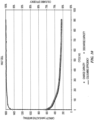
FIG. 2 shows the total reflectance of AMO tin oxide is different than that of commercially available, non-AMO tin oxide. -
FIG. 3 is X-ray photoelectron spectroscopy (XPS) data showing surface functionalization arising endogeneously from the synthesis method disclosed herein. Numbers shown are atomic concentrations in %. The far right column lists the corresponding pH of the synthesized nanoparticles as measured when dispersed at 5 wt% in aqueous solution. -
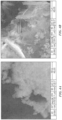
FIG. 4 shows differences in morphology between AMO nanoparticles synthesized under identical conditions except for the use of a different group for functionalization. -
FIG. 5 shows the difference in morphology and performance of AMO nanoparticles synthesized under identical conditions except for having two different total reaction times. -
FIG. 6 is representative half-cell data showing differences in behavior between spherical and elongated (needle-like or rod-like) AMOs upon cycling against lithium. -
FIG. 7 is X-ray photoelectron spectroscopy analysis of the surface of AMO nanoparticles synthesized using both a strong (phosphorous containing) and weak (acetate) electron withdrawing group shows greater atomic concentration of phosphorous than of the bonds associated with acetate groups. -
FIG. 8A shows an AMO which was more active than another AMO in visible light. -
FIG. 8B shows an AMO which was more active than other AMOs in ultraviolet light. -
FIG. 9 is a graph comparing two AMOs, one having higher capacity for use in a primary (single use) battery application and the other having higher cyclabilty for use in a secondary (rechargeable) battery application. -
FIG. 10 shows AMOs can result in enhanced battery performance, without deterioration of battery components or gas generation. - For the purposes of this disclosure, the following terms have the following meanings:
- Acidic oxide - a term used generally in the scientific literature to refer to binary compounds of oxygen with a nonmetallic element. An example is carbon dioxide, CO2. The oxides of some metalloids (e.g., Si, Te, Po) also have weakly acidic properties in their pure molecular state.
- Acidified metal oxide ("AMO") - a term used here to denote a binary compound of oxygen with a metallic element which has been synthesized or modified to have an acidity greater than that of its natural mineralogical state and also a Hammet function, H0 > - 12 (not superacidic). The average particle size is also less than that of the natural mineralogical state. Naturally occurring mineralogical forms do not fall within the scope of the inventive AMO material. A synthesized metal oxide, however, that is more acidic than its most abundant naturally occurring mineralogical form (of equivalent stoichiometry) but not superacidic falls within the bounds of this disclosure and can be said to be an AMO material provided it satisfies certain other conditions discussed in this disclosure.
- Acidic -a term used generally in the scientific literature to refer to compounds having a pH of less than 7 in aqueous solution.
- Electron-withdrawing group ("EWG") - an atom or molecular group that draws electron density towards itself. The strength of the EWG is based upon its known behavior in chemical reactions. Halogens, for example are known to be strong EWGs. Organic acid groups such as acetate are known to be weakly electron withdrawing.
- Hammet function - An additional means of quantifying acidity in highly concentrated acid solutions and in superacids, the acidity being defined by the following equation: H0 = pKBH+ + log([B]/[BH+]). On this scale, pure 18.4 molar H2SO4 has a H0 value of -12. The value H0 = -12 for pure sulfuric acid must not be interpreted as pH = -12, instead it means that the acid species present has a protonating ability equivalent to H3O+ at a fictitious (ideal) concentration of 1012 mol/L, as measured by its ability to protonate weak bases. The Hammett acidity function avoids water in its equation. It is used herein to provide a quantitative means of distinguishing the AMO material from superacids. The Hammet function can be correlated with colorimetric indicator tests and temperature programmed desorption results.
- Metal oxide - a term used generally in the scientific literature to refer to binary compounds of oxygen with a metallic element. Depending on their position in the periodic table, metal oxides range from weakly basic to amphoteric (showing both acidic and basic properties) in their pure molecular state. Weakly basic metal oxides are the oxides of lithium, sodium, magnesium, potassium, calcium, rubidium, strontium, indium, cesium, barium and tellurium. Amphoteric oxides are those of beryllium, aluminum, gallium, germanium, astatine, tin, antimony, lead and bismuth.
- Monodisperse - characterized by particles of uniform size which are substantially separated from one another, not agglomerated as grains of a larger particle.
- pH - a functional numeric scale used generally in the scientific literature to specify the acidity or alkalinity of an aqueous solution. It is the negative of the logarithm of the concentration of the hydronium ion [H3O+]. As used here it describes the relative acidity of nanoparticles suspended in aqueous solution.
- Surface functionalization - attachment of small atoms or molecular groups to the surface of a material.
- Superacid - substances that are more acidic than 100% H2SO4, having a Hammet function, H0< -12.
- The preferred embodiments described here provide illustrative examples of acidified metal oxides ("AMOs") materials useful in applications such as a battery electrode, catalyst, or photovoltaic component. The surface of these AMO materials is acidic but not superacidic.
- The surfaces of metal oxides are ideally arrays of metal and oxygen centers, ordered according to the crystalline structure of the oxide. In reality the arrays are imperfect, being prone to vacancies, distortion, and the effects of surface attachments. Regardless, any exposed metal centers are cationic (positively charged) and can accept electrons, thus functioning by definition as Lewis acid sites. Oxygen centers are anionic (negatively charged) and act as Lewis base sites to donate electrons. This leads to the well-known amphotericity of metal oxide surfaces.
- Under normal atmospheric conditions, the presence of water vapor will adsorb to the metal oxide surface either molecularly (hydration) or dissociatively (hydroxylation). Both OH- and H+ species can adsorb on the oxide surface. The negatively-charged hydroxyl species will attach at the metal, cationic (Lewis acid, electron accepting) centers, and the H+ will attach at the oxygen, anionic (Lewis base, electron donating) centers. Both adsorptions lead to the presence of the same functional group-a hydroxyl-on the metal oxide surface.
- These surface hydroxyl groups can serve as either Brønsted acids or as Brønsted bases, because the groups can either give up or accept a proton. The tendency of an individual hydroxyl group to be a proton donor or a proton acceptor is affected by the coordination of the metal cation or oxygen anion to which it is attached. Imperfections of the metal oxide surface such as oxygen vacancies, or coordination of the surface groups with other chemical species, mean that all cations and anions are not equally coordinated. Acid-base sites will vary in number and in strengths. When broadly "totaled" across the surface of the oxide, this can give the surface an overall acidic or basic character.
- The quantity and strength of Lewis acid and base sites - from the exposed metal cations and oxygen anions, respectively) and Brønsted acid and base sites (from the surface hydroxyl groups) - add broad utility and functionality to the metal oxide and its use in both chemical reactions and device applications. The sites are a strong contributor to the chemical reactivity of the metal oxide. They can serve as anchor sites to which other chemical groups, and even additional metal oxides, may be attached. And they can affect surface charge, hydrophilicity and biocompatibility.
- One way of altering the surface of metal oxides is to attach small chemical groups or electron-withdrawing groups ("EWGs") in a process known as surface functionalization. The EWG induces polarization of the hydroxide bonds and facilitates dissociation of hydrogen. For example, a stronger EWG should lead to a more polarized bond and therefore a more acidic proton. The acidity of Lewis sites can be increased by inducing polarization that facilitates the donation of electrons to the site. When compounds so made are placed in water, the acidic protons will dissociate and so reduce the aqueous pH measurement.
- Though somewhat imprecise when working with solid acid/base systems rather than liquid ones, traditional methods of pH measurement utilizing titrations, pH paper and pH probes can be used to evaluate the acidity of metal oxides dispersed in aqueous solution. These measurements can be supplemented by the use of techniques including but not limited to colorimetric indicators, infrared spectroscopy, and temperature programmed desorption data to establish the acidified nature of the metal oxide surface. Surface groups can be examined by standard analytical techniques including but not limited to x-ray photoelectron spectroscopy.
- Surface functionalization can be accomplished post-synthesis, including but not limited to exposing the metal oxide to acidic solutions or to vapors containing the desired functional groups. It can also be accomplished via solid state methods, in which the metal oxide is mixed and/or milled with solids containing the desired functional groups. However, all of these methods require an additional surface functionalization step or steps beyond those required to synthesize the metal oxide itself.
- Synthesis and surface functionalization of the AMO material may be accomplished in a "single-pot" hydrothermal synthesis method or its equivalent in which the surface of the metal oxide is functionalized as the metal oxide is being synthesized from appropriate precursors. A precursor salt containing an EWG is solubilized and the resulting solution is acidified using an acid containing a second EWG. This acidified solution is then basified and the basified solution is heated then washed. A drying step produces the solid AMO material.
- An embodiment of an AMO form of tin oxide was synthesized and simultaneously surface functionalized using the following single-pot method:
- 1. Initially, seven grams (7g) of a tin (II) chloride dihydrate (SnCl2 2H2O) is dissolved in a solution of 35mL of absolute ethanol and 77 mL distilled water.
- 2. The resulting solution is stirred for 30 minutes.
- 3. The solution is acidified by the addition of 7mL of 1.2M HCl, added dropwise, and the resulting solution is stirred for 15 minutes.
- 4. The solution is basified by the addition of 1M of an aqueous base, added dropwise until the pH of the solution is about 8.5.
- 5. The resulting opaque white suspension is then placed in a hot-water bath (~ 60° to 90° C) for at least 2 hours while under stirring.
- 6. The suspension is then washed with distilled water and with absolute ethanol.
- 7. The washed suspension is dried at 100°C for 1 hour in air and then annealed at 200°C for 4 hours in air.
- This method results in an AMO of tin, surface-functionalized with chlorine, whose pH is approximately 2 when measured in an aqueous solution at 5 wt% and room temperature. By definition its Hammet function, H0 > -12. Although an open system such as a flask is described here, a closed system such as an autoclave may also be used.
- A person skilled in the art would recognize the method's parameters can be varied as is typical in hydrothermal synthesis. These parameters include, but are not limited to, type and concentration of reagents, type and concentration of acid and base, reaction time, temperature and pressure, stir rate and time, number and types of washing steps, time and temperature of drying and calcination, and gas exposure during drying and calcination. Variations may be conducted singly, or in any combination, preferably using experimental design methodologies. Additionally, other metal oxide synthesis methods - e.g., spray pyrolysis methods, vapor phase growth methods, electrodeposition methods, solid state methods, and hydro- or solvo thermal process methods - might be adaptable to achieve the same or similar results as the method disclosed here.
- The performance characteristics of the AMO nanomaterial differ from those of non-acidified metal oxide nanoparticles. As one example,
FIG. 1 shows differences in the cyclic voltammagram of AMO tin prepared by the single-pot method relative to that of commercially available, non-AMO tin when cycled against Li. As another example,FIG. 2 shows the total reflectance of AMO tin oxide is different than that of commercially available, non-AMO tin oxide. The data indicates that the AMO has a lower band gap and therefore more desirable properties as a component of a photovoltaic system. - The AMO material may be thought of as having the general formula
MmOx/G
where - MmOx is the metal oxide, m being at least 1 and no greater than 5, x being at least 1 and no greater than 21;
- G is at least one EWG that is not hydroxide, and
- / simply makes a distinction between the metal oxide and the EWG, denoting no fixed mathematical relationship or ratio between the two.
- The AMOs are acidified tin oxides (SnxOy), acidified titanium dioxides (TiaOb), acidified iron oxides (FecOd), and acidified zirconium oxide (ZreOf). The electron-withdrawing groups ("EWGs") are Cl, Br, BO3, SO4, PO4 and CH3COO. Regardless of the specific metal or EWG, the AMO material is acidic but not superacidic, yielding a pH < 7 when suspended in an aqueous solution at 5 wt% and a Hammet function, H0 > - 12, at least on its surface.
- The AMO material structure may be crystalline or amorphous (or a combination thereof), and may be utilized singly or as composites in combination with one another, with non-acidified metal oxides, or with other additives, binders, or conductive aids known in the art. The AMO material may be added to a conductive aid material such as graphite or conductive carbon (or their equivalents) in a range of 10 wt% to 80 wt% and upwards of 90 wt% to 95 wt%. In preferred embodiments, the AMO was added at 10 wt%, 33 wt%, 50 wt%, and 80 wt%.
- To maximize the amount of overall surface area available, the AMO should be in nanoparticulate form (i.e., less than 1 micron in size) and substantially monodispersed. More preferably, the nanoparticulate size is less than 100 nm and, even more preferably, less than 20 nm or 10 nm.
- Mixed-metal AMOs, in which another metal or metal oxide is present in addition to the simple, or binary oxide, also have been reduced to practice. These mixed-metal AMOs may be thought of as having the general formula
MmNnOx/G and MmNnRrOx/G
where: - M is a metal and m is at least 1 and no greater than 5;
- N is a metal and n is greater than zero and no greater than 5;
- R is a metal and r is greater than zero and no greater than 5;
- O is total oxygen associated with all metals and x is at least 1 and no greater than 21;
- / simply makes a distinction between the metal oxide and the electron-withdrawing surface group, denoting no fixed mathematical relationship or ratio between the two; and
- G is at least one EWG that is not hydroxide.
- Some prior art mixed metal oxide systems, of which zeolites are the most prominent example, display strong acidity even though each simple oxide does not. Embodiments of the mixed-metal AMO of this disclosure differ from those systems in that any embodiment must include at least one AMO which is acidic (but not superacidic) in simple MmOx/G form. Mixed metal and metal oxide systems are SnxFecOy+d and SnxTiaOy+b, where y+d and y+b may be an integer or non-integer value.
- In one embodiment, the mixed metal AMO material is produced via the single-pot method with one modification: synthesis begins with two metal precursor salts rather than one, in any proportion. For example,
Step 1 of the single-pot method may be altered as follows: Initially, 3.8 g of tin (II) chloride dihydrate (SnCl2 2H2O) and 0.2 g of lithium chloride (LiCl) are dissolved in a solution of 20mL of absolute ethanol and 44 mL distilled water. - Three metal precursor salts could also be used, in any proportion. The metal precursor salts could have the same or differing anionic groups, depending on the desired product; could be introduced at different points in the synthesis; or could be introduced as solids or introduced in a solvent.
- Experimentation with the single-pot method led to seven key findings. First, in all cases both surface functionalization and acidity arise endogenously (see
FIG. 3 ), rather than created post-synthesis. Unlike prior art surface functionalization methods, the single-pot method does not require any additional step or steps for surface functionalization beyond those required to synthesize the metal oxide itself, nor does it make use of hydroxyl-containing organic compounds or hydrogen peroxide. - Second, the method is broadly generalizable across a wide range of metal oxides and EWGs. Using the method, metal oxides of iron, tin, antimony, bismuth, titanium, zirconium, manganese, and indium have been synthesized and simultaneously surface-functionalized with chlorides, sulfates, acetates, nitrates, phosphates, citrates, oxalates, borates, and bromides. Mixed metal AMOs of tin and iron, tin and manganese, tin and manganese and iron, tin and titanium, indium and tin, antimony and tin, aluminum and tin, lithium and iron, and lithium and tin also have been synthesized. Additionally, surface functionalization can be accomplished using EWGs that are weaker than halogens and SO4 yet still produce acidic but not superacidic surfaces. For example, the method also has been used to synthesize AMOs surface-functionalized with acetate (CH3COO), oxalate (C2O4), and citrate (C6H5O7).
- Third, there is a synergistic relationship between the EWG and other properties of the nanoparticles such as size, morphology (e.g., plate-like, spherical-like, needle- or rod-like), oxidation state, and crystallinity (amorphous, crystalline, or a mixture thereof). For example, differences in morphology can occur between AMO nanoparticles synthesized under identical conditions except for the use of a different EWG for surface functionalization (see
FIG. 4 ). The surface functionalization may act to "pin" the dimensions of the nanoparticles, stopping their growth. This pinning may occur on only one dimension of the nanoparticle, or in more than one dimension, depending upon exact synthesis conditions. - Fourth, the character of the AMO is very sensitive to synthesis conditions and procedures. For example, differences in morphology and performance of the AMO's nanoparticles can occur when synthesized under identical conditions except for having two different total reaction times (see
FIGS. 5 &6 ). Experimental design methodologies can be used to decide the best or optimal synthesis conditions and procedures to produce a desired characteristic or set of characteristics. - Fifth, both the anion present in the precursor salt and the anion present in the acid contribute to the surface functionalization of the AMO. In one preferred embodiment, tin chloride precursors and hydrochloric acid are used in a synthesis of an AMO of tin. The performance of these particles differ from an embodiment in which tin chloride precursors and sulfuric acid are used, or from an embodiment in which tin sulfate precursors and hydrochloric acid are used. Therefore, matching the precursor anion and acid anion is preferred.
- Sixth, when utilizing a precursor with a weak EWG and an acid with a strong EWG, or vice versa, the strongly withdrawing anion will dominate the surface functionalization. This opens up a broader range of synthesis possibilities, allowing functionalization with ions that are not readily available in both precursor salts and acids. It may also permit mixed functionalization with both strong and weak EWGs. In one example, a tin acetate precursor and phosphoric acid are used to synthesize an AMO of tin. X-ray photoelectron spectroscopy analysis of the surface shows a greater atomic concentrations of phosphorous than of the bonds associated with acetate groups (see
FIG. 7 ). - Seventh, and last, while the disclosed method is a general procedure for synthesis of AMOs, the synthesis procedures and conditions may be adjusted to yield sizes, morphologies, oxidation states, and crystalline states as are deemed to be desirable for different applications. As one example, catalytic applications might desire an AMO material which is more active in visible light (see
FIG. 8A ) or one which is more active in ultraviolet light (seeFIG. 8B ). - In another example, the AMO material may be used as a battery electrode. A primary (single-use) battery application might desire an AMO with characteristics that lead to the highest capacity, while a secondary (rechargeable) battery application might desire the same AMO but with characteristics that lead to the highest cyclability (see
FIG. 9 ). The AMO material can result in enhanced battery performance, without deterioration of battery components or gas generation (seeFIG. 10 ). This is exactly opposite what the prior art teaches. - In embodiments, a battery cell of this disclosure comprises an electrode including a surface-functionalized solid metal oxide in substantially monodispersed nanoparticulate form and having a cyclability against lithium of at least 150 to 200 charge-discharge cycles. The solid metal oxide has, at least on its surface, a pH less than 5.5 and a Hammet function H0 greater than -12, the pH being measured when a dried form of the surface-functionalized solid metal oxide is re-suspended in water at 5 wt%. In some embodiments, the pH is in a range of 2 to 5. The solid metal oxide may have a particle dimension less than 20 nm.
- The surface-functionalized solid metal oxide may comprise tin oxide or iron oxide. In other embodiments, the solid metal oxide comprises an oxide of one or more of antimony, bismuth, titanium, zirconium, manganese, or indium. In some embodiments, the solid metal oxide has a spherical morphology. In other embodiments, the solid metal oxide may have an elongated morphology. In yet other embodiments, the solid metal oxide may have a plate morphology.
- The surface-functionalized solid metal oxide may be configured as an anode of the battery cell. The cell may comprise a second electrode including a lithium metal. The cell may have a cyclability is at least 300 charge-discharge cycles, at least 400 charge-discharge cycles, at least 500 charge-discharge cycles, at least 600 charge-discharge cycles, at least 700 charge-discharge cycles, at least 800 charge-discharge cycles, or-at least 900 charge-discharge cycles. A lithiation capacity of the surface-functionalized solid metal oxide may be in a range of 900 mAh/g to at least 1400 mAh/g.
- The surface-functionalized solid metal oxide may be surface-functionalized with at least one electron-withdrawing group having a molecular weight less than 200. The solid metal oxide may be surface-functionalized with at least one electron-withdrawing surface group having a carbon chain length no greater than 4. In other embodiments, the surface-functionalized solid metal oxide is surface-functionalized with at least one electron-withdrawing surface group selected from the group consisting of Cl, Br, BO3, SO4, PO4, CH3COO, C2O4, and C6H5O7.
- In embodiments, a battery cell of this disclosure comprises an electrode including a surface-functionalized solid metal oxide in substantially monodispersed nanoparticulate form and having a having a cyclability against lithium of at least 150 to 200 charge-discharge cycles; the surface-functionalized solid metal oxide further characterized by a formula MmOx/G, where
- Mm is a metal, m is at least 1 and no greater than 5;
- Ox is total oxygen, x is at least 1 and no greater than 21;
- MmOx is a metal oxide;
- G is at least one electron-withdrawing surface group, and
- "/" makes a distinction between the metal oxide and the electron-withdrawing surface group.
- The electrode may be configured as an anode. The surface-functionalized solid metal oxide has at least on its surface, a pH less than 5.5 and a Hammet function H0 greater than -12, the pH being measured when a dried form of the surface-functionalized solid metal oxide is re-suspended in water at 5 wt%. The pH may be in a range of 2 to 5. In some embodiments, the cyclability is at least 300 charge-discharge cycles, at least 400 charge-discharge cycles, at least 500 charge-discharge cycles, at least 600 charge-discharge cycles, at least 700 charge-discharge cycles, at least 800 charge-discharge cycles, or at least 900 charge-discharge cycles.
- The surface-functionalized solid metal oxide may be surface-functionalized with at least one electron-withdrawing group having a molecular weight less than 200. The solid metal oxide may be surface-functionalized with at least one electron-withdrawing surface group having a carbon chain length no greater than 4. In other embodiments, the surface-functionalized solid metal oxide is surface-functionalized with at least one electron-withdrawing surface group selected from the group consisting of Cl, Br, BO3, SO4, PO4, CH3COO, C2O4, and C6H5O7.
- In some embodiments, the surface-functionalized solid metal oxide is further characterized by a formula MmNnOx/G, where Nn is a second metal different from Mm and n is greater than zero and no greater than 5. In other embodiments, the surface-functionalized solid metal oxide is further characterized by a formula MmNnRrOx/G, where Rr is a third metal different from Mm and Nn and r is greater than zero and no greater than 5.
- The surface-functionalized solid metal oxide may comprise tin oxide or iron oxide. In other embodiments, the solid metal oxide comprises an oxide of one or more of antimony, bismuth, titanium, zirconium, manganese, or indium. In some embodiments, the solid metal oxide has a spherical morphology. In other embodiments, the solid metal oxide may have an elongated morphology. In yet other embodiments, the solid metal oxide may have a plate morphology.
- The surface-functionalized solid metal oxide may comprise 10 wt% to 50 wt% of the electrode, 10 wt% to 33 wt% of the electrode, 33 wt% to 50 wt% of the electrode, or50 wt% to 80 wt% of the electrode. The metal may be tin, iron, antimony, bismuth, titanium, zirconium, manganese, and indium. The lithiation capacity of the surface-functionalized solid metal oxide may be in a range of 900 mAh/g to at least 1400 mAh/g. A particle dimension of the surface-functionalized solid metal oxide may be less than 20 nm.
- In embodiments, a battery cell of this disclosure includes an electrode including a surface-functionalized solid metal oxide being in nanoparticulate form having a particle size less than 20 nm and a cyclability against lithium of at least 150 to 200 charge-discharge cycles. The surface-functionalized solid metal oxide has, at least on its surface, a pH less than 5.5 and a Hammet function H0 greater than -12, the pH being measured when a dried form of the surface-functionalized solid metal oxide is re-suspended in water at 5 wt%. The pH may be in a range of 2 to 5. The battery cell may have a cyclability of at least 300 charge-discharge cycles, at least 400 charge-discharge cycles, at least 500 charge-discharge cycles, at least 600 charge-discharge cycles, at least 700 charge-discharge cycles, at least 800 charge-discharge cycles, or at least 900 charge-discharge cycles.
- The surface-functionalized solid metal oxide may be surface-functionalized with at least one electron-withdrawing group-having a molecular weight less than 200. In other embodiments, the surface-functionalized solid metal oxide is surface-functionalized with at least one electron-withdrawing group-having a carbon chain length no greater than 4.I n some embodiments, the surface-functionalized solid metal oxide is surface-functionalized with at least one electron-withdrawing surface group selected from the group consisting of Cl, Br, BO3, SO4, PO4, CH3COO, C2O4, and C6H5O7. A lithiation capacity of the surface-functionalized solid metal oxide may be in a range of 900 mAh/g to at least 1400 mAh/g.
- The surface-functionalized solid metal oxide may be substantially monodispersed. The solid metal oxide may comprise tin oxide or iron oxide. In other embodiments, the solid metal oxide comprises an oxide of one or more of antimony, bismuth, titanium, zirconium, manganese, or indium. In some embodiments, the solid metal oxide has a spherical morphology. In other embodiments, the solid metal oxide may have an elongated morphology. In yet other embodiments, the solid metal oxide may have a plate morphology.
- The electrode may be configured as an anode. The battery cell may comprise a second electrode including lithium metal. The surface-functionalized solid metal oxide may comprise 10 wt% to 50 wt% of the electrode, 10 wt% to 33 wt% of the electrode, 33 wt% to 50 wt% of the electrode, or50 wt% to 80 wt% of the electrode.
- In embodiments, a battery cell of this disclosure includes an electrode including a surface-functionalized solid metal oxide in nanoparticulate form having a particle size less than 20 nm and a and a cyclability against lithium of at least 150 to 200 charge-discharge cycles; the surface-functionalized solid metal oxide further characterized by a formula MmOx/G, where
- Mm is a metal, m is at least 1 and no greater than 5;
- Ox is total oxygen, x is at least 1 and no greater than 21;
- MmOx is a metal oxide;
- G is at least one electron-withdrawing surface group, and
- "/" makes a distinction between the metal oxide and the electron-withdrawing surface group.
- The surface-functionalized solid metal oxide has, at least on its surface, a pH less than 5.5 and a Hammet function H0 greater than -12, the pH being measured when a dried form of the surface-functionalized solid metal oxide is re-suspended in water at 5 wt%. In some embodiments, the pH is in a range of 2 to 5. The cyclability may be at least 300 charge-discharge cycles, at least 400 charge-discharge cycles, at least 500 charge-discharge cycles, at least 600 charge-discharge cycles, at least 700 charge-discharge cycles, at least 800 charge-discharge cycles, or at least 900 charge-discharge cycles.
- The surface-functionalized solid metal oxide may be surface-functionalized with at least one electron-withdrawing group-having a molecular weight less than 200. In other embodiments, the surface-functionalized solid metal oxide is surface-functionalized with at least one electron-withdrawing group-having a carbon chain length no greater than 4.I n some embodiments, the surface-functionalized solid metal oxide is surface-functionalized with at least one electron-withdrawing surface group selected from the group consisting of Cl, Br, BO3, SO4, PO4, CH3COO, C2O4, and C6H5O7.
- The surface-functionalized solid metal oxide may be substantially monodispersed. The solid metal oxide may comprise tin oxide or iron oxide. In other embodiments, the solid metal oxide comprises an oxide of one or more of antimony, bismuth, titanium, zirconium, manganese, or indium. In some embodiments, the solid metal oxide has a spherical morphology. In other embodiments, the solid metal oxide may have an elongated morphology. In yet other embodiments, the solid metal oxide may have a plate morphology. A lithiation capacity of the surface-functionalized solid metal oxide may be in a range of 900 mAh/g to at least 1400 mAh/g.
- The surface-functionalized solid metal oxide may be substantially monodispersed. The solid metal oxide may comprise tin oxide or iron oxide. In other embodiments, the solid metal oxide comprises an oxide of one or more of antimony, bismuth, titanium, zirconium, manganese, or indium. In some embodiments, the solid metal oxide has a spherical morphology. In other embodiments, the solid metal oxide may have an elongated morphology. In yet other embodiments, the solid metal oxide may have a plate morphology.
- The electrode may be configured as an anode. The battery cell may comprise a second electrode including lithium metal. The surface-functionalized solid metal oxide may comprise 10 wt% to 50 wt% of the electrode, 10 wt% to 33 wt% of the electrode, 33 wt% to 50 wt% of the electrode, or50 wt% to 80 wt% of the electrode.
Claims (4)
- A battery electrode comprising: comprising: a binder material and a conductive aid and at least one solid acidified metal oxide nanomaterial in a substantially monodisperse nanoparticulate form and having a pH < 5, the pH measured when a dried form of the at least one solid acidified metal oxide nanomaterial is suspended in water at room temperature and at 5 wt%, and a Hammett function H0 > -12, the at least one solid acidified metal oxide being surface functionalized with at least one electron withdrawing group selected from the group consisting of Cl, Br, BO3, SO4, PO4 and CH3COO, said at least one solid acidified metal oxide nanomaterial comprising at least one acidified tin oxide, acidified iron oxide, acidified manganese oxide, acidified titanium oxide, or acidified zirconium oxide.
- A battery electrode according to claim 1, the solid acidified metal oxide nanomaterial including at least one particle dimension < 100 nm in size, or < 20 nm in size, or < 10 nm in size.
- A battery electrode according to claim 1, the pH being < 4 or < 3.
- A battery electrode according to claim 1 further comprising a non-acidified solid metal oxide.
Priority Applications (1)
| Application Number | Priority Date | Filing Date | Title |
|---|---|---|---|
| EP24185204.5A EP4417579A3 (en) | 2015-11-16 | 2016-11-15 | Synthesized surface-functionalized, acidified metal oxide materials for energy storage, catalytic, photovoltaic, and sensor applications |
Applications Claiming Priority (3)
| Application Number | Priority Date | Filing Date | Title |
|---|---|---|---|
| US201562256059P | 2015-11-16 | 2015-11-16 | |
| US201562256065P | 2015-11-16 | 2015-11-16 | |
| PCT/US2016/062068 WO2017087404A1 (en) | 2015-11-16 | 2016-11-15 | Synthesized surface-functionalized, acidified metal oxide materials for energy storage, catalytic, photovoltaic, and sensor applications |
Related Child Applications (1)
| Application Number | Title | Priority Date | Filing Date |
|---|---|---|---|
| EP24185204.5A Division EP4417579A3 (en) | 2015-11-16 | 2016-11-15 | Synthesized surface-functionalized, acidified metal oxide materials for energy storage, catalytic, photovoltaic, and sensor applications |
Publications (4)
| Publication Number | Publication Date |
|---|---|
| EP3378114A1 EP3378114A1 (en) | 2018-09-26 |
| EP3378114A4 EP3378114A4 (en) | 2019-08-07 |
| EP3378114C0 EP3378114C0 (en) | 2024-07-31 |
| EP3378114B1 true EP3378114B1 (en) | 2024-07-31 |
Family
ID=58692177
Family Applications (2)
| Application Number | Title | Priority Date | Filing Date |
|---|---|---|---|
| EP16866958.8A Active EP3378114B1 (en) | 2015-11-16 | 2016-11-15 | Synthesized surface-functionalized, acidified metal oxide materials for energy storage, catalytic, photovoltaic, and sensor applications |
| EP24185204.5A Pending EP4417579A3 (en) | 2015-11-16 | 2016-11-15 | Synthesized surface-functionalized, acidified metal oxide materials for energy storage, catalytic, photovoltaic, and sensor applications |
Family Applications After (1)
| Application Number | Title | Priority Date | Filing Date |
|---|---|---|---|
| EP24185204.5A Pending EP4417579A3 (en) | 2015-11-16 | 2016-11-15 | Synthesized surface-functionalized, acidified metal oxide materials for energy storage, catalytic, photovoltaic, and sensor applications |
Country Status (7)
| Country | Link |
|---|---|
| US (3) | US9786910B2 (en) |
| EP (2) | EP3378114B1 (en) |
| JP (3) | JP6906541B2 (en) |
| KR (2) | KR20250023589A (en) |
| CN (2) | CN108370025B (en) |
| CA (1) | CA3005637A1 (en) |
| WO (2) | WO2017087404A1 (en) |
Families Citing this family (17)
| Publication number | Priority date | Publication date | Assignee | Title |
|---|---|---|---|---|
| JP6544235B2 (en) * | 2014-04-14 | 2019-07-17 | 東レ株式会社 | Method of manufacturing photovoltaic device |
| EP3378114B1 (en) * | 2015-11-16 | 2024-07-31 | Hheli, LLC | Synthesized surface-functionalized, acidified metal oxide materials for energy storage, catalytic, photovoltaic, and sensor applications |
| US11289700B2 (en) | 2016-06-28 | 2022-03-29 | The Research Foundation For The State University Of New York | KVOPO4 cathode for sodium ion batteries |
| WO2018093945A1 (en) | 2016-11-15 | 2018-05-24 | Hheli, Llc. | A surface-functionalized, acidified metal oxide material in an acidified electrolyte system or an acidified electrode system |
| CN117727928A (en) | 2017-04-10 | 2024-03-19 | 氢氦锂有限公司 | Batteries with new components |
| US12087901B2 (en) | 2017-04-10 | 2024-09-10 | HHeLI, LLC | High capacity batteries and components thereof |
| KR20200004417A (en) * | 2017-05-17 | 2020-01-13 | 에이치헬리, 엘엘씨 | Battery with Acidifying Cathode and Lithium Anode |
| JP7340460B2 (en) * | 2017-05-17 | 2023-09-07 | ヒーリー,エルエルシー | Battery cell with new structure |
| US10978731B2 (en) | 2017-06-21 | 2021-04-13 | HHeLI, LLC | Ultra high capacity performance battery cell |
| CN111373576B (en) | 2017-09-22 | 2023-09-01 | 氢氦锂有限公司 | Structure of ultra-high capacity performance battery cell |
| US11283267B2 (en) | 2018-09-10 | 2022-03-22 | HHeLI, LLC | Methods of use of ultra high capacity performance battery cell |
| US11482752B2 (en) | 2018-10-24 | 2022-10-25 | HHeLI, LLC | Polymer dipped pouch cell |
| WO2020113201A1 (en) * | 2018-12-01 | 2020-06-04 | Nanodian | Nanostructured inorganic electrode materials with functionalized surfaces |
| US12278342B2 (en) | 2019-06-12 | 2025-04-15 | HHeLI, LLC | Alkaline and acidified metal oxide blended active materials |
| US12401018B2 (en) | 2019-06-12 | 2025-08-26 | HHeLI, LLC | Blended active materials for battery cells |
| CN110451557A (en) * | 2019-07-25 | 2019-11-15 | 杭州电子科技大学 | A SnO2 Nanowhisker/Nanoparticle Composite Cluster with Hierarchical Structure and Its Application |
| EP4639648A2 (en) * | 2022-12-20 | 2025-10-29 | Conamix Inc. | Supramolecular binders |
Citations (1)
| Publication number | Priority date | Publication date | Assignee | Title |
|---|---|---|---|---|
| KR20080042962A (en) * | 2006-11-13 | 2008-05-16 | 주식회사 엘지화학 | Anode active material for secondary battery and lithium secondary battery comprising same |
Family Cites Families (95)
| Publication number | Priority date | Publication date | Assignee | Title |
|---|---|---|---|---|
| US6007945A (en) * | 1996-10-15 | 1999-12-28 | Electrofuel Inc. | Negative electrode for a rechargeable lithium battery comprising a solid solution of titanium dioxide and tin dioxide |
| JP4110608B2 (en) * | 1997-03-14 | 2008-07-02 | 宇部興産株式会社 | Anode material for non-aqueous secondary battery |
| GB9822569D0 (en) | 1998-10-16 | 1998-12-09 | Johnson Matthey Plc | Substrate |
| US6171571B1 (en) | 1999-05-10 | 2001-01-09 | Uop Llc | Crystalline multinary metal oxide compositions, process for preparing and processes for using the composition |
| JP3744751B2 (en) | 1999-12-08 | 2006-02-15 | 株式会社日本触媒 | Support, composite oxide catalyst, and method for producing acrylic acid |
| JP3812324B2 (en) | 2000-11-06 | 2006-08-23 | 日本電気株式会社 | Lithium secondary battery and manufacturing method thereof |
| US6670300B2 (en) | 2001-06-18 | 2003-12-30 | Battelle Memorial Institute | Textured catalysts, methods of making textured catalysts, and methods of catalyzing reactions conducted in hydrothermal conditions |
| DE60210709T2 (en) | 2001-06-18 | 2007-01-11 | Rohm And Haas Co. | Production of hydrothermally synthesized Mo-V-M-X-oxide catalysts for the oxidation of hydrocarbons |
| DE10205920A1 (en) | 2002-02-12 | 2003-08-21 | Itn Nanovation Gmbh | Nanoscale rutile and process for its production |
| US20030186805A1 (en) | 2002-03-28 | 2003-10-02 | Vanderspurt Thomas Henry | Ceria-based mixed-metal oxide structure, including method of making and use |
| EP1407819A3 (en) | 2002-10-01 | 2004-06-23 | Rohm And Haas Company | Hydrothermally synthesized Mo-V-M-Nb-X oxide catalysts for the selective oxidation of hydrocarbons |
| JP4061648B2 (en) | 2003-04-11 | 2008-03-19 | ソニー株式会社 | Positive electrode active material for nonaqueous electrolyte secondary battery and nonaqueous electrolyte secondary battery using the same |
| US7314682B2 (en) | 2003-04-24 | 2008-01-01 | Uchicago Argonne, Llc | Lithium metal oxide electrodes for lithium batteries |
| US7732096B2 (en) * | 2003-04-24 | 2010-06-08 | Uchicago Argonne, Llc | Lithium metal oxide electrodes for lithium batteries |
| JP4055642B2 (en) * | 2003-05-01 | 2008-03-05 | 日産自動車株式会社 | High speed charge / discharge electrodes and batteries |
| EP1651345A4 (en) | 2003-06-03 | 2009-10-28 | Univ Rice William M | SUPPORTED CATALYSTS USING NANOPARTICLES AS SUPPORT MATERIAL |
| US7147834B2 (en) | 2003-08-11 | 2006-12-12 | The Research Foundation Of State University Of New York | Hydrothermal synthesis of perovskite nanotubes |
| US7645439B2 (en) | 2003-10-10 | 2010-01-12 | Instituto Mexicano Del Petroleo | Nanostructured titanium oxide material and its synthesis procedure |
| US8617745B2 (en) | 2004-02-06 | 2013-12-31 | A123 Systems Llc | Lithium secondary cell with high charge and discharge rate capability and low impedance growth |
| KR20050091488A (en) * | 2004-03-12 | 2005-09-15 | 주식회사 유피케미칼 | The precursor compounds for the metal and ceramic film, and the method of synthesis |
| FR2872633B1 (en) | 2004-07-02 | 2006-09-15 | Commissariat Energie Atomique | METHOD FOR CHARGING A LITHIUM-ION BATTERY WITH NEGATIVE ELECTRODE |
| WO2006124670A2 (en) | 2005-05-12 | 2006-11-23 | Georgia Tech Research Corporation | Coated metal oxide nanoparticles and methods for producing same |
| DE602005023970D1 (en) | 2005-06-30 | 2010-11-18 | Tohoku Techno Arch Co Ltd | Organically modified fine particles |
| JP4640013B2 (en) * | 2005-07-25 | 2011-03-02 | Tdk株式会社 | Electrode element manufacturing method and electrochemical element manufacturing method |
| KR100950189B1 (en) | 2005-09-22 | 2010-03-29 | 미쓰비시 쥬시 가부시끼가이샤 | Manufacturing Method of Porous Laminate and Porous Laminate |
| CA2534243A1 (en) | 2006-01-25 | 2007-07-25 | Hydro Quebec | Coated metal oxide particles with low dissolution rate, methods for their preparation and use in electrochemical systems |
| KR100745745B1 (en) | 2006-02-21 | 2007-08-02 | 삼성전기주식회사 | Nanocomposite Materials and Manufacturing Method Thereof |
| KR100984591B1 (en) | 2006-05-04 | 2010-09-30 | 한국화학연구원 | Electrode active material with improved stability and electrochemical device using the same |
| US8148011B2 (en) | 2006-05-31 | 2012-04-03 | Uchicago Argonne, Llc | Surface stabilized electrodes for lithium batteries |
| CN101110476B (en) * | 2006-06-07 | 2012-04-11 | 东曹株式会社 | Electrolytic manganese dioxide, positive electrode active material, and battery |
| JP4888088B2 (en) | 2006-06-07 | 2012-02-29 | 東ソー株式会社 | Electrolytic manganese dioxide |
| JP2010510881A (en) | 2006-11-27 | 2010-04-08 | コリア リサーチ インスティテュート オブ ケミカル テクノロジー | Method for producing porous organic-inorganic hybrid, organic-inorganic hybrid obtained by the method, and catalytic use thereof |
| US10525433B2 (en) | 2006-12-12 | 2020-01-07 | Sol-Gel Technologies Ltd. | Formation of nanometric core-shell particles having a metal oxide shell |
| KR20090121291A (en) | 2007-02-01 | 2009-11-25 | 솔-겔 테크놀로지스 리미티드 | Method for producing particles containing metal oxide coatings and particles containing metal oxide coatings |
| US9048508B2 (en) | 2007-04-20 | 2015-06-02 | Mitsubishi Chemical Corporation | Nonaqueous electrolytes and nonaqueous-electrolyte secondary batteries employing the same |
| US8318384B2 (en) | 2007-04-30 | 2012-11-27 | The Governors Of The University Of Alberta | Anode catalyst and methods of making and using the same |
| JP2008285388A (en) * | 2007-05-21 | 2008-11-27 | Toyota Motor Corp | Lithium ion conductivity improver |
| US7928735B2 (en) | 2007-07-23 | 2011-04-19 | Yung-Sheng Huang | Battery performance monitor |
| JP2009043547A (en) | 2007-08-08 | 2009-02-26 | Fdk Energy Co Ltd | Electrolytic manganese dioxide for battery, positive electrode mix, and alkaline battery |
| US8614878B2 (en) | 2008-01-17 | 2013-12-24 | Fraser W. SEYMOUR | Nanoscale intercalation materials on carbon powder, process for production, and use thereof |
| US8493711B2 (en) | 2008-01-17 | 2013-07-23 | Fraser W. SEYMOUR | Monolithic electrode, related material, process for production, and use thereof |
| US8503162B2 (en) | 2008-01-17 | 2013-08-06 | Fraser W. SEYMOUR | Electrode, related material, process for production, and use thereof |
| DE102008017308B4 (en) | 2008-04-04 | 2014-09-25 | Süd-Chemie Ip Gmbh & Co. Kg | Process for the preparation of nanocrystalline bismuth-molybdenum mixed oxide catalysts |
| GB0808059D0 (en) | 2008-05-02 | 2008-06-11 | Oxis Energy Ltd | Rechargeable battery with negative lithium electrode |
| US8357628B2 (en) | 2008-08-29 | 2013-01-22 | Agilent Technologies, Inc. | Inorganic/organic hybrid totally porous metal oxide particles, methods for making them and separation devices using them |
| US8685283B2 (en) | 2008-08-29 | 2014-04-01 | Agilent Technologies, Inc. | Superficially porous metal oxide particles, methods for making them, and separation devices using them |
| EP2189217A1 (en) | 2008-11-17 | 2010-05-26 | Technical University of Denmark | Nanoparticular metal oxide/anatase catalysts. |
| CN101746733B (en) | 2008-12-11 | 2012-10-03 | 中科合成油技术有限公司 | Method and equipment for continuous preparation of metallic oxide material and catalyst |
| JP5381078B2 (en) | 2008-12-19 | 2014-01-08 | 日産自動車株式会社 | Electrode and manufacturing method thereof |
| KR101226522B1 (en) | 2008-12-22 | 2013-01-25 | 제일모직주식회사 | Supported Catalyst with Solid Sphere Structure, Method for Preparing Thereof and Carbon Nanotube Using the Same |
| EP2202205A1 (en) | 2008-12-23 | 2010-06-30 | Fraunhofer-Gesellschaft zur Förderung der angewandten Forschung e.V. | Nanosized titaniumdioxide particles with a crystalline core, a metal oxide shell and a further shell bearing organic groups and method for preparing said core-shell-particles |
| CN102414120B (en) | 2009-07-14 | 2015-06-24 | 日本艾罗西尔股份有限公司 | Surface-modified metal oxide powder and method for producing the same |
| US9017867B2 (en) | 2009-08-10 | 2015-04-28 | Battelle Memorial Institute | Self assembled multi-layer nanocomposite of graphene and metal oxide materials |
| JP5628503B2 (en) * | 2009-09-25 | 2014-11-19 | 御国色素株式会社 | Conductive material dispersion, electrode paste and conductive material-coated active material |
| KR101036067B1 (en) | 2009-11-27 | 2011-05-19 | 삼성에스디아이 주식회사 | Pouch type lithium secondary battery with safety member |
| CN102130330B (en) | 2010-01-15 | 2015-07-29 | 清华大学 | The preparation method of anode material for lithium-ion batteries |
| KR101816706B1 (en) | 2010-03-17 | 2018-02-21 | 삼성전자주식회사 | Porous oxide catalyst and process for preparing the same |
| US8691441B2 (en) | 2010-09-07 | 2014-04-08 | Nanotek Instruments, Inc. | Graphene-enhanced cathode materials for lithium batteries |
| EP2717350B1 (en) | 2010-09-16 | 2020-05-13 | ZPower, LLC | Electrode separator |
| US8871374B2 (en) | 2010-10-28 | 2014-10-28 | Uchicago Argonne, Llc | Amorphous titania/carbon composite electrode materials |
| US20130078518A1 (en) * | 2010-11-17 | 2013-03-28 | Uchicago Argonne, Llc | Electrode Structures and Surfaces For Li Batteries |
| KR101292757B1 (en) | 2011-01-05 | 2013-08-02 | 한양대학교 산학협력단 | Cathod active material of full gradient, method for preparing the same, lithium secondary battery comprising the same |
| JP6084172B2 (en) | 2011-03-15 | 2017-02-22 | センセオニクス,インコーポレーテッド | Integrated catalytic protection of oxidation sensitive materials |
| KR101292952B1 (en) | 2011-03-16 | 2013-08-02 | 삼성에스디아이 주식회사 | Electrode assembly and secondary battery using the same |
| US20130026409A1 (en) | 2011-04-08 | 2013-01-31 | Recapping, Inc. | Composite ionic conducting electrolytes |
| ES2395507B1 (en) | 2011-06-03 | 2013-12-19 | Nanobiomatters Research & Development, S.L. | NANOCOMPOSED MATERIALS BASED ON METAL OXIDES WITH MULTIFUNCTIONAL PROPERTIES |
| CN103650214B (en) | 2011-07-12 | 2016-04-20 | 应用材料公司 | Manufacture the method for the porosity change of lithium ion cell electrode film |
| JP2013048053A (en) | 2011-08-29 | 2013-03-07 | Sony Corp | Active material, electrode, secondary cell, battery pack, electric vehicle, power storage system, power tool, and electronic apparatus |
| US8921257B2 (en) | 2011-12-02 | 2014-12-30 | Saudi Basic Industries Corporation | Dual function partial oxidation catalyst for propane to acrylic acid conversion |
| CN104114649A (en) | 2011-12-05 | 2014-10-22 | 索尔维公司 | Use of atmospheric plasma for the surface of inorganic particles and inorganic particles comprising an organic fluorine-containing surface modification |
| US9437370B2 (en) | 2012-02-27 | 2016-09-06 | Nanotek Instruments, Inc. | Lithium-ion cell having a high-capacity anode and a high-capacity cathode |
| US9048496B2 (en) * | 2012-03-07 | 2015-06-02 | A123 Systems Llc | Surface treatment of electrochemically active materials for rechargeable cells |
| EP2831939B1 (en) | 2012-03-30 | 2022-07-13 | LiCAP New Energy Technologies (Tianjian) Co., Ltd. | Electrode for energy storage devices and method for making same |
| WO2013155982A1 (en) | 2012-04-20 | 2013-10-24 | 华东理工大学 | A supported metal-oxide double-active-center catalyst for ethylene polymerization, preparation method therefor and application thereof |
| WO2013161703A1 (en) | 2012-04-23 | 2013-10-31 | 日本化薬株式会社 | Method for producing molded catalyst and method for producing diene or unsaturated aldehyde and/or unsaturated carboxylic acid using said molded catalyst |
| US20130330640A1 (en) | 2012-06-12 | 2013-12-12 | Michael Edward Badding | Metal supported nanowire cathode catalysts for li-air batteries |
| US9548511B2 (en) | 2012-07-18 | 2017-01-17 | Nthdegree Technologies Worldwide Inc. | Diatomaceous energy storage devices |
| US9409156B2 (en) | 2012-10-19 | 2016-08-09 | Instituto Mexicano Del Petroleo | Oxidative dehydrogenation of ethane to ethylene and preparation of multimetallic mixed oxide catalyst for such process |
| US10573887B2 (en) * | 2012-11-30 | 2020-02-25 | Belenos Clean Power Holding Ag | Tin based anode material for a rechargeable battery and preparation method |
| KR20140096915A (en) * | 2013-01-29 | 2014-08-06 | 삼성에스디아이 주식회사 | Composite anode active material, anode and lithium battery containing the same, and preparation method thereof |
| DE102013206736A1 (en) | 2013-04-16 | 2014-10-16 | Robert Bosch Gmbh | Titanate-coated carbon as a negative electrode material in lithium-ion cells |
| EP2883609B1 (en) | 2013-07-10 | 2023-01-11 | LG Chem, Ltd. | Supported catalyst, carbon nanotube assembly, and preparation method therefor |
| US9564630B2 (en) | 2013-08-08 | 2017-02-07 | Nantek Instuments, Inc. | Anode active material-coated graphene sheets for lithium batteries and process for producing same |
| US20150069295A1 (en) * | 2013-09-09 | 2015-03-12 | National University Of Singapore | Hydrogel nanocomposite |
| CN103441255B (en) | 2013-09-16 | 2017-02-01 | 宁德新能源科技有限公司 | Positive pole material of lithium ion battery and preparation method of positive pole material |
| DE102013224206A1 (en) | 2013-11-27 | 2015-05-28 | Wacker Chemie Ag | Surface-modified particulate metal oxides |
| WO2015079624A1 (en) | 2013-11-29 | 2015-06-04 | ソニー株式会社 | Electrode and battery |
| EP3108525A4 (en) | 2014-02-21 | 2017-10-18 | Kratos LLC | Nanosilicon material preparation for functionalized group iva particle frameworks |
| EP3378114B1 (en) * | 2015-11-16 | 2024-07-31 | Hheli, LLC | Synthesized surface-functionalized, acidified metal oxide materials for energy storage, catalytic, photovoltaic, and sensor applications |
| CN105543961A (en) | 2015-12-22 | 2016-05-04 | 国家纳米科学中心 | A kind of nanometer TiO2 single crystal material, preparation method and application thereof |
| US10629941B2 (en) | 2016-01-22 | 2020-04-21 | GM Global Technology Operations LLC | Making a pouch format cell and attaching a tab to an electrode |
| CN117727928A (en) * | 2017-04-10 | 2024-03-19 | 氢氦锂有限公司 | Batteries with new components |
| KR20200004417A (en) * | 2017-05-17 | 2020-01-13 | 에이치헬리, 엘엘씨 | Battery with Acidifying Cathode and Lithium Anode |
| CN111095652A (en) * | 2017-09-15 | 2020-05-01 | 富士胶片株式会社 | Solid electrolyte composition, solid electrolyte-containing sheet and all-solid-state secondary battery, and solid electrolyte-containing sheet and all-solid-state secondary battery manufacturing method |
| US12278342B2 (en) * | 2019-06-12 | 2025-04-15 | HHeLI, LLC | Alkaline and acidified metal oxide blended active materials |
-
2016
- 2016-11-15 EP EP16866958.8A patent/EP3378114B1/en active Active
- 2016-11-15 JP JP2018545113A patent/JP6906541B2/en active Active
- 2016-11-15 WO PCT/US2016/062068 patent/WO2017087404A1/en not_active Ceased
- 2016-11-15 CA CA3005637A patent/CA3005637A1/en active Pending
- 2016-11-15 US US15/352,388 patent/US9786910B2/en active Active
- 2016-11-15 CN CN201680070252.9A patent/CN108370025B/en active Active
- 2016-11-15 KR KR1020257003487A patent/KR20250023589A/en active Pending
- 2016-11-15 EP EP24185204.5A patent/EP4417579A3/en active Pending
- 2016-11-15 KR KR1020187016824A patent/KR102764897B1/en active Active
- 2016-11-15 WO PCT/US2016/062073 patent/WO2017087408A1/en not_active Ceased
- 2016-11-15 CN CN202311010105.0A patent/CN117154069A/en active Pending
-
2017
- 2017-10-09 US US15/728,299 patent/US10978704B2/en active Active
-
2021
- 2021-04-01 US US17/220,637 patent/US11962004B2/en active Active
- 2021-06-28 JP JP2021106567A patent/JP7267345B2/en active Active
-
2023
- 2023-04-18 JP JP2023067598A patent/JP7513794B2/en active Active
Patent Citations (1)
| Publication number | Priority date | Publication date | Assignee | Title |
|---|---|---|---|---|
| KR20080042962A (en) * | 2006-11-13 | 2008-05-16 | 주식회사 엘지화학 | Anode active material for secondary battery and lithium secondary battery comprising same |
Non-Patent Citations (4)
| Title |
|---|
| CL?MENCE QUEFF?LEC ET AL: "Surface Modification Using Phosphonic Acids and Esters", CHEMICAL REVIEWS, vol. 112, no. 7, 11 July 2012 (2012-07-11), US, pages 3777 - 3807, XP055355977, ISSN: 0009-2665, DOI: 10.1021/cr2004212 * |
| GREGORY P. HOLLAND ET AL: "NMR Characterization of Phosphonic Acid Capped SnO 2 Nanoparticles", CHEMISTRY OF MATERIALS, vol. 19, no. 10, 1 May 2007 (2007-05-01), US, pages 2519 - 2526, XP055383492, ISSN: 0897-4756, DOI: 10.1021/cm062821u * |
| JOUHANNAUD J ET AL: "Rapid synthesis of tin (IV) oxide nanoparticles by microwave induced thermohydrolysis", JOURNAL OF SOLID STATE CHEMISTRY, ORLANDO, FL, US, vol. 181, no. 6, 1 June 2008 (2008-06-01), pages 1439 - 1444, XP022708364, ISSN: 0022-4596, [retrieved on 20080326], DOI: 10.1016/J.JSSC.2008.02.040 * |
| S SUGUNAN ET AL: "Catalysis by some meta1 oxides modified with phosphate ions", INDIAN JOURNAL OF CHCMISTRY, vol. 41a, 1 November 2002 (2002-11-01), pages 2251 - 2255, XP055383490 * |
Also Published As
| Publication number | Publication date |
|---|---|
| US20220059828A1 (en) | 2022-02-24 |
| JP2018536272A (en) | 2018-12-06 |
| US10978704B2 (en) | 2021-04-13 |
| EP3378114A4 (en) | 2019-08-07 |
| JP7267345B2 (en) | 2023-05-01 |
| EP3378114C0 (en) | 2024-07-31 |
| US9786910B2 (en) | 2017-10-10 |
| KR20250023589A (en) | 2025-02-18 |
| US20180034049A1 (en) | 2018-02-01 |
| US20230093787A9 (en) | 2023-03-23 |
| EP4417579A2 (en) | 2024-08-21 |
| CA3005637A1 (en) | 2017-05-26 |
| JP2021168300A (en) | 2021-10-21 |
| US11962004B2 (en) | 2024-04-16 |
| JP6906541B2 (en) | 2021-07-21 |
| EP4417579A3 (en) | 2024-11-20 |
| US20170141389A1 (en) | 2017-05-18 |
| WO2017087408A1 (en) | 2017-05-26 |
| JP7513794B2 (en) | 2024-07-09 |
| CN108370025A (en) | 2018-08-03 |
| KR102764897B1 (en) | 2025-02-07 |
| EP3378114A1 (en) | 2018-09-26 |
| WO2017087404A1 (en) | 2017-05-26 |
| WO2017087408A9 (en) | 2017-06-22 |
| KR20180071393A (en) | 2018-06-27 |
| CN117154069A (en) | 2023-12-01 |
| JP2023106374A (en) | 2023-08-01 |
| CN108370025B (en) | 2023-09-01 |
Similar Documents
| Publication | Publication Date | Title |
|---|---|---|
| US11962004B2 (en) | Synthesized, surface-functionalized, acidified metal oxide materials for energy storage, catalytic, photovoltaic and sensor applications | |
| Fogg et al. | Selective Ion-Exchange Intercalation of Isomeric Dicarboxylate Anions into the Layered Double Hydroxide [LiAl2 (OH) 6] Cl⊙ H2O | |
| González et al. | Reversible intercalation of aluminium into vanadium pentoxide xerogel for aqueous rechargeable batteries | |
| US11469417B2 (en) | Surface-functionalized, acidified metal oxide material in an acidified electrolyte system or an acidified electrode system | |
| Sato et al. | The surface structure of the proton-exchanged lithium manganese oxide spinels and their lithium-ion sieve properties | |
| Mi et al. | Large-scale urchin-like micro/nano-structured NiS: controlled synthesis, cation exchange and lithium-ion battery applications | |
| CN102612487A (en) | Ferric phosphate hydrate particle powder and process for production thereof, olivine-type lithium iron phosphate particle powder and process for production thereof, and non-aqueous electrolyte secondary battery | |
| JP6000537B2 (en) | Alkaline electrolyte and fuel cell provided with the electrolyte | |
| US8871374B2 (en) | Amorphous titania/carbon composite electrode materials | |
| CN114620698B (en) | Large-particle zirconium phosphate and preparation method thereof | |
| JP2021504875A (en) | Cathode material | |
| RU2473466C1 (en) | Lithium-cobalt-oxide material and method of its preparation | |
| JP6959591B2 (en) | Tritium absorbent and its manufacturing method and separation method of tritium from light water | |
| Joyce et al. | Synthesis and electrochemical evaluation of an amorphous titanium dioxide derived from a solid state precursor | |
| CN117352710B (en) | A bismuth carbon negative electrode composite material and its preparation method and application | |
| Song et al. | Grain growth kinetics of SnO2 nanocrystals synthesized by precipitation method | |
| Romanova et al. | Phase composition of aluminum-zirconium oxide nanocrystals prepared by electrochemical coprecipitation | |
| Jeon et al. | Regulating Mechanical Fractures and Surface Reactivities to Achieve High Electrochemical Stability in Ni‐Rich Cathodes With Boron and Tin | |
| SE2050955A1 (en) | Manufacture of a titanium dioxide bronze material | |
| González Jiménez et al. | Reversible intercalation of aluminium into vanadium pentoxide xerogel for aqueous rechargeable batteries |
Legal Events
| Date | Code | Title | Description |
|---|---|---|---|
| STAA | Information on the status of an ep patent application or granted ep patent |
Free format text: STATUS: THE INTERNATIONAL PUBLICATION HAS BEEN MADE |
|
| PUAI | Public reference made under article 153(3) epc to a published international application that has entered the european phase |
Free format text: ORIGINAL CODE: 0009012 |
|
| STAA | Information on the status of an ep patent application or granted ep patent |
Free format text: STATUS: REQUEST FOR EXAMINATION WAS MADE |
|
| 17P | Request for examination filed |
Effective date: 20180516 |
|
| AK | Designated contracting states |
Kind code of ref document: A1 Designated state(s): AL AT BE BG CH CY CZ DE DK EE ES FI FR GB GR HR HU IE IS IT LI LT LU LV MC MK MT NL NO PL PT RO RS SE SI SK SM TR |
|
| AX | Request for extension of the european patent |
Extension state: BA ME |
|
| DAV | Request for validation of the european patent (deleted) | ||
| DAX | Request for extension of the european patent (deleted) | ||
| REG | Reference to a national code |
Ref country code: DE Ref legal event code: R079 Free format text: PREVIOUS MAIN CLASS: H01M0004131000 Ipc: H01M0004480000 |
|
| STAA | Information on the status of an ep patent application or granted ep patent |
Free format text: STATUS: EXAMINATION IS IN PROGRESS |
|
| A4 | Supplementary search report drawn up and despatched |
Effective date: 20190709 |
|
| RIC1 | Information provided on ipc code assigned before grant |
Ipc: C01G 19/02 20060101ALI20190703BHEP Ipc: C01G 25/02 20060101ALI20190703BHEP Ipc: H01M 4/02 20060101ALI20190703BHEP Ipc: H01M 4/48 20100101AFI20190703BHEP Ipc: C01G 49/02 20060101ALI20190703BHEP Ipc: C01G 23/047 20060101ALI20190703BHEP |
|
| 17Q | First examination report despatched |
Effective date: 20190725 |
|
| P01 | Opt-out of the competence of the unified patent court (upc) registered |
Effective date: 20230530 |
|
| GRAP | Despatch of communication of intention to grant a patent |
Free format text: ORIGINAL CODE: EPIDOSNIGR1 |
|
| STAA | Information on the status of an ep patent application or granted ep patent |
Free format text: STATUS: GRANT OF PATENT IS INTENDED |
|
| INTG | Intention to grant announced |
Effective date: 20240229 |
|
| GRAS | Grant fee paid |
Free format text: ORIGINAL CODE: EPIDOSNIGR3 |
|
| GRAA | (expected) grant |
Free format text: ORIGINAL CODE: 0009210 |
|
| STAA | Information on the status of an ep patent application or granted ep patent |
Free format text: STATUS: THE PATENT HAS BEEN GRANTED |
|
| AK | Designated contracting states |
Kind code of ref document: B1 Designated state(s): AL AT BE BG CH CY CZ DE DK EE ES FI FR GB GR HR HU IE IS IT LI LT LU LV MC MK MT NL NO PL PT RO RS SE SI SK SM TR |
|
| REG | Reference to a national code |
Ref country code: CH Ref legal event code: EP Ref country code: GB Ref legal event code: FG4D |
|
| REG | Reference to a national code |
Ref country code: DE Ref legal event code: R096 Ref document number: 602016088696 Country of ref document: DE |
|
| REG | Reference to a national code |
Ref country code: IE Ref legal event code: FG4D |
|
| U01 | Request for unitary effect filed |
Effective date: 20240731 |
|
| U07 | Unitary effect registered |
Designated state(s): AT BE BG DE DK EE FI FR IT LT LU LV MT NL PT SE SI Effective date: 20240805 |
|
| P04 | Withdrawal of opt-out of the competence of the unified patent court (upc) registered |
Free format text: CASE NUMBER: APP_44667/2024 Effective date: 20240731 |
|
| U20 | Renewal fee for the european patent with unitary effect paid |
Year of fee payment: 9 Effective date: 20240904 |
|
| P05 | Withdrawal of opt-out of the competence of the unified patent court (upc) changed |
Free format text: CASE NUMBER: APP_44667/2024 Effective date: 20240805 |
|
| PG25 | Lapsed in a contracting state [announced via postgrant information from national office to epo] |
Ref country code: NO Free format text: LAPSE BECAUSE OF FAILURE TO SUBMIT A TRANSLATION OF THE DESCRIPTION OR TO PAY THE FEE WITHIN THE PRESCRIBED TIME-LIMIT Effective date: 20241031 |
|
| PG25 | Lapsed in a contracting state [announced via postgrant information from national office to epo] |
Ref country code: PL Free format text: LAPSE BECAUSE OF FAILURE TO SUBMIT A TRANSLATION OF THE DESCRIPTION OR TO PAY THE FEE WITHIN THE PRESCRIBED TIME-LIMIT Effective date: 20240731 Ref country code: GR Free format text: LAPSE BECAUSE OF FAILURE TO SUBMIT A TRANSLATION OF THE DESCRIPTION OR TO PAY THE FEE WITHIN THE PRESCRIBED TIME-LIMIT Effective date: 20241101 |
|
| PG25 | Lapsed in a contracting state [announced via postgrant information from national office to epo] |
Ref country code: IS Free format text: LAPSE BECAUSE OF FAILURE TO SUBMIT A TRANSLATION OF THE DESCRIPTION OR TO PAY THE FEE WITHIN THE PRESCRIBED TIME-LIMIT Effective date: 20241130 |
|
| PG25 | Lapsed in a contracting state [announced via postgrant information from national office to epo] |
Ref country code: HR Free format text: LAPSE BECAUSE OF FAILURE TO SUBMIT A TRANSLATION OF THE DESCRIPTION OR TO PAY THE FEE WITHIN THE PRESCRIBED TIME-LIMIT Effective date: 20240731 |
|
| PG25 | Lapsed in a contracting state [announced via postgrant information from national office to epo] |
Ref country code: ES Free format text: LAPSE BECAUSE OF FAILURE TO SUBMIT A TRANSLATION OF THE DESCRIPTION OR TO PAY THE FEE WITHIN THE PRESCRIBED TIME-LIMIT Effective date: 20240731 Ref country code: RS Free format text: LAPSE BECAUSE OF FAILURE TO SUBMIT A TRANSLATION OF THE DESCRIPTION OR TO PAY THE FEE WITHIN THE PRESCRIBED TIME-LIMIT Effective date: 20241031 |
|
| PG25 | Lapsed in a contracting state [announced via postgrant information from national office to epo] |
Ref country code: RS Free format text: LAPSE BECAUSE OF FAILURE TO SUBMIT A TRANSLATION OF THE DESCRIPTION OR TO PAY THE FEE WITHIN THE PRESCRIBED TIME-LIMIT Effective date: 20241031 Ref country code: PL Free format text: LAPSE BECAUSE OF FAILURE TO SUBMIT A TRANSLATION OF THE DESCRIPTION OR TO PAY THE FEE WITHIN THE PRESCRIBED TIME-LIMIT Effective date: 20240731 Ref country code: NO Free format text: LAPSE BECAUSE OF FAILURE TO SUBMIT A TRANSLATION OF THE DESCRIPTION OR TO PAY THE FEE WITHIN THE PRESCRIBED TIME-LIMIT Effective date: 20241031 Ref country code: IS Free format text: LAPSE BECAUSE OF FAILURE TO SUBMIT A TRANSLATION OF THE DESCRIPTION OR TO PAY THE FEE WITHIN THE PRESCRIBED TIME-LIMIT Effective date: 20241130 Ref country code: HR Free format text: LAPSE BECAUSE OF FAILURE TO SUBMIT A TRANSLATION OF THE DESCRIPTION OR TO PAY THE FEE WITHIN THE PRESCRIBED TIME-LIMIT Effective date: 20240731 Ref country code: GR Free format text: LAPSE BECAUSE OF FAILURE TO SUBMIT A TRANSLATION OF THE DESCRIPTION OR TO PAY THE FEE WITHIN THE PRESCRIBED TIME-LIMIT Effective date: 20241101 Ref country code: ES Free format text: LAPSE BECAUSE OF FAILURE TO SUBMIT A TRANSLATION OF THE DESCRIPTION OR TO PAY THE FEE WITHIN THE PRESCRIBED TIME-LIMIT Effective date: 20240731 |
|
| PG25 | Lapsed in a contracting state [announced via postgrant information from national office to epo] |
Ref country code: SM Free format text: LAPSE BECAUSE OF FAILURE TO SUBMIT A TRANSLATION OF THE DESCRIPTION OR TO PAY THE FEE WITHIN THE PRESCRIBED TIME-LIMIT Effective date: 20240731 |
|
| PG25 | Lapsed in a contracting state [announced via postgrant information from national office to epo] |
Ref country code: CZ Free format text: LAPSE BECAUSE OF FAILURE TO SUBMIT A TRANSLATION OF THE DESCRIPTION OR TO PAY THE FEE WITHIN THE PRESCRIBED TIME-LIMIT Effective date: 20240731 |
|
| PG25 | Lapsed in a contracting state [announced via postgrant information from national office to epo] |
Ref country code: SK Free format text: LAPSE BECAUSE OF FAILURE TO SUBMIT A TRANSLATION OF THE DESCRIPTION OR TO PAY THE FEE WITHIN THE PRESCRIBED TIME-LIMIT Effective date: 20240731 |
|
| PLBE | No opposition filed within time limit |
Free format text: ORIGINAL CODE: 0009261 |
|
| STAA | Information on the status of an ep patent application or granted ep patent |
Free format text: STATUS: NO OPPOSITION FILED WITHIN TIME LIMIT |
|
| REG | Reference to a national code |
Ref country code: CH Ref legal event code: PL |
|
| PG25 | Lapsed in a contracting state [announced via postgrant information from national office to epo] |
Ref country code: MC Free format text: LAPSE BECAUSE OF FAILURE TO SUBMIT A TRANSLATION OF THE DESCRIPTION OR TO PAY THE FEE WITHIN THE PRESCRIBED TIME-LIMIT Effective date: 20240731 |
|
| 26N | No opposition filed |
Effective date: 20250501 |
|
| REG | Reference to a national code |
Ref country code: CH Ref legal event code: PL |
|
| PG25 | Lapsed in a contracting state [announced via postgrant information from national office to epo] |
Ref country code: CH Free format text: LAPSE BECAUSE OF NON-PAYMENT OF DUE FEES Effective date: 20241130 |
|
| PG25 | Lapsed in a contracting state [announced via postgrant information from national office to epo] |
Ref country code: IE Free format text: LAPSE BECAUSE OF NON-PAYMENT OF DUE FEES Effective date: 20241115 |
|
| U20 | Renewal fee for the european patent with unitary effect paid |
Year of fee payment: 10 Effective date: 20251013 |
|
| PG25 | Lapsed in a contracting state [announced via postgrant information from national office to epo] |
Ref country code: RO Free format text: LAPSE BECAUSE OF FAILURE TO SUBMIT A TRANSLATION OF THE DESCRIPTION OR TO PAY THE FEE WITHIN THE PRESCRIBED TIME-LIMIT Effective date: 20240731 |
|
| PGFP | Annual fee paid to national office [announced via postgrant information from national office to epo] |
Ref country code: GB Payment date: 20251013 Year of fee payment: 10 |
|
| PG25 | Lapsed in a contracting state [announced via postgrant information from national office to epo] |
Ref country code: HU Free format text: LAPSE BECAUSE OF FAILURE TO SUBMIT A TRANSLATION OF THE DESCRIPTION OR TO PAY THE FEE WITHIN THE PRESCRIBED TIME-LIMIT; INVALID AB INITIO Effective date: 20161115 |
|
| PG25 | Lapsed in a contracting state [announced via postgrant information from national office to epo] |
Ref country code: CY Free format text: LAPSE BECAUSE OF FAILURE TO SUBMIT A TRANSLATION OF THE DESCRIPTION OR TO PAY THE FEE WITHIN THE PRESCRIBED TIME-LIMIT; INVALID AB INITIO Effective date: 20161115 |