EP3377103B2 - Functional antibody fragment complementation for a two-components system for redirected killing of unwanted cells - Google Patents
Functional antibody fragment complementation for a two-components system for redirected killing of unwanted cells Download PDFInfo
- Publication number
- EP3377103B2 EP3377103B2 EP16867215.2A EP16867215A EP3377103B2 EP 3377103 B2 EP3377103 B2 EP 3377103B2 EP 16867215 A EP16867215 A EP 16867215A EP 3377103 B2 EP3377103 B2 EP 3377103B2
- Authority
- EP
- European Patent Office
- Prior art keywords
- domain
- cell engaging
- cell
- cancer
- cells
- Prior art date
- Legal status (The legal status is an assumption and is not a legal conclusion. Google has not performed a legal analysis and makes no representation as to the accuracy of the status listed.)
- Active
Links
Images







Classifications
-
- A—HUMAN NECESSITIES
- A61—MEDICAL OR VETERINARY SCIENCE; HYGIENE
- A61P—SPECIFIC THERAPEUTIC ACTIVITY OF CHEMICAL COMPOUNDS OR MEDICINAL PREPARATIONS
- A61P35/00—Antineoplastic agents
-
- A—HUMAN NECESSITIES
- A61—MEDICAL OR VETERINARY SCIENCE; HYGIENE
- A61P—SPECIFIC THERAPEUTIC ACTIVITY OF CHEMICAL COMPOUNDS OR MEDICINAL PREPARATIONS
- A61P35/00—Antineoplastic agents
- A61P35/02—Antineoplastic agents specific for leukemia
-
- A—HUMAN NECESSITIES
- A61—MEDICAL OR VETERINARY SCIENCE; HYGIENE
- A61P—SPECIFIC THERAPEUTIC ACTIVITY OF CHEMICAL COMPOUNDS OR MEDICINAL PREPARATIONS
- A61P37/00—Drugs for immunological or allergic disorders
- A61P37/02—Immunomodulators
- A61P37/04—Immunostimulants
-
- A—HUMAN NECESSITIES
- A61—MEDICAL OR VETERINARY SCIENCE; HYGIENE
- A61P—SPECIFIC THERAPEUTIC ACTIVITY OF CHEMICAL COMPOUNDS OR MEDICINAL PREPARATIONS
- A61P43/00—Drugs for specific purposes, not provided for in groups A61P1/00-A61P41/00
-
- C—CHEMISTRY; METALLURGY
- C07—ORGANIC CHEMISTRY
- C07K—PEPTIDES
- C07K16/00—Immunoglobulins [IG], e.g. monoclonal or polyclonal antibodies
- C07K16/18—Immunoglobulins [IG], e.g. monoclonal or polyclonal antibodies against material from animals or humans
-
- C—CHEMISTRY; METALLURGY
- C07—ORGANIC CHEMISTRY
- C07K—PEPTIDES
- C07K16/00—Immunoglobulins [IG], e.g. monoclonal or polyclonal antibodies
- C07K16/18—Immunoglobulins [IG], e.g. monoclonal or polyclonal antibodies against material from animals or humans
- C07K16/28—Immunoglobulins [IG], e.g. monoclonal or polyclonal antibodies against material from animals or humans against receptors, cell surface antigens or cell surface determinants
- C07K16/2803—Immunoglobulins [IG], e.g. monoclonal or polyclonal antibodies against material from animals or humans against receptors, cell surface antigens or cell surface determinants against the immunoglobulin superfamily
- C07K16/2809—Immunoglobulins [IG], e.g. monoclonal or polyclonal antibodies against material from animals or humans against receptors, cell surface antigens or cell surface determinants against the immunoglobulin superfamily against the T-cell receptor (TcR)-CD3 complex
-
- C—CHEMISTRY; METALLURGY
- C07—ORGANIC CHEMISTRY
- C07K—PEPTIDES
- C07K16/00—Immunoglobulins [IG], e.g. monoclonal or polyclonal antibodies
- C07K16/18—Immunoglobulins [IG], e.g. monoclonal or polyclonal antibodies against material from animals or humans
- C07K16/28—Immunoglobulins [IG], e.g. monoclonal or polyclonal antibodies against material from animals or humans against receptors, cell surface antigens or cell surface determinants
- C07K16/2863—Immunoglobulins [IG], e.g. monoclonal or polyclonal antibodies against material from animals or humans against receptors, cell surface antigens or cell surface determinants against receptors for growth factors, growth regulators
-
- C—CHEMISTRY; METALLURGY
- C07—ORGANIC CHEMISTRY
- C07K—PEPTIDES
- C07K16/00—Immunoglobulins [IG], e.g. monoclonal or polyclonal antibodies
- C07K16/18—Immunoglobulins [IG], e.g. monoclonal or polyclonal antibodies against material from animals or humans
- C07K16/28—Immunoglobulins [IG], e.g. monoclonal or polyclonal antibodies against material from animals or humans against receptors, cell surface antigens or cell surface determinants
- C07K16/2896—Immunoglobulins [IG], e.g. monoclonal or polyclonal antibodies against material from animals or humans against receptors, cell surface antigens or cell surface determinants against molecules with a "CD"-designation, not provided for elsewhere
-
- C—CHEMISTRY; METALLURGY
- C07—ORGANIC CHEMISTRY
- C07K—PEPTIDES
- C07K16/00—Immunoglobulins [IG], e.g. monoclonal or polyclonal antibodies
- C07K16/18—Immunoglobulins [IG], e.g. monoclonal or polyclonal antibodies against material from animals or humans
- C07K16/28—Immunoglobulins [IG], e.g. monoclonal or polyclonal antibodies against material from animals or humans against receptors, cell surface antigens or cell surface determinants
- C07K16/30—Immunoglobulins [IG], e.g. monoclonal or polyclonal antibodies against material from animals or humans against receptors, cell surface antigens or cell surface determinants from tumour cells
-
- C—CHEMISTRY; METALLURGY
- C07—ORGANIC CHEMISTRY
- C07K—PEPTIDES
- C07K16/00—Immunoglobulins [IG], e.g. monoclonal or polyclonal antibodies
- C07K16/18—Immunoglobulins [IG], e.g. monoclonal or polyclonal antibodies against material from animals or humans
- C07K16/28—Immunoglobulins [IG], e.g. monoclonal or polyclonal antibodies against material from animals or humans against receptors, cell surface antigens or cell surface determinants
- C07K16/30—Immunoglobulins [IG], e.g. monoclonal or polyclonal antibodies against material from animals or humans against receptors, cell surface antigens or cell surface determinants from tumour cells
- C07K16/303—Liver or Pancreas
-
- A—HUMAN NECESSITIES
- A61—MEDICAL OR VETERINARY SCIENCE; HYGIENE
- A61K—PREPARATIONS FOR MEDICAL, DENTAL OR TOILETRY PURPOSES
- A61K39/00—Medicinal preparations containing antigens or antibodies
- A61K2039/505—Medicinal preparations containing antigens or antibodies comprising antibodies
-
- A—HUMAN NECESSITIES
- A61—MEDICAL OR VETERINARY SCIENCE; HYGIENE
- A61K—PREPARATIONS FOR MEDICAL, DENTAL OR TOILETRY PURPOSES
- A61K38/00—Medicinal preparations containing peptides
-
- A—HUMAN NECESSITIES
- A61—MEDICAL OR VETERINARY SCIENCE; HYGIENE
- A61K—PREPARATIONS FOR MEDICAL, DENTAL OR TOILETRY PURPOSES
- A61K39/00—Medicinal preparations containing antigens or antibodies
- A61K39/395—Antibodies; Immunoglobulins; Immune serum, e.g. antilymphocytic serum
- A61K39/39533—Antibodies; Immunoglobulins; Immune serum, e.g. antilymphocytic serum against materials from animals
- A61K39/39558—Antibodies; Immunoglobulins; Immune serum, e.g. antilymphocytic serum against materials from animals against tumor tissues, cells, antigens
-
- C—CHEMISTRY; METALLURGY
- C07—ORGANIC CHEMISTRY
- C07K—PEPTIDES
- C07K2317/00—Immunoglobulins specific features
- C07K2317/30—Immunoglobulins specific features characterized by aspects of specificity or valency
- C07K2317/31—Immunoglobulins specific features characterized by aspects of specificity or valency multispecific
-
- C—CHEMISTRY; METALLURGY
- C07—ORGANIC CHEMISTRY
- C07K—PEPTIDES
- C07K2317/00—Immunoglobulins specific features
- C07K2317/50—Immunoglobulins specific features characterized by immunoglobulin fragments
- C07K2317/56—Immunoglobulins specific features characterized by immunoglobulin fragments variable (Fv) region, i.e. VH and/or VL
- C07K2317/569—Single domain, e.g. dAb, sdAb, VHH, VNAR or nanobody®
-
- C—CHEMISTRY; METALLURGY
- C07—ORGANIC CHEMISTRY
- C07K—PEPTIDES
- C07K2317/00—Immunoglobulins specific features
- C07K2317/60—Immunoglobulins specific features characterized by non-natural combinations of immunoglobulin fragments
- C07K2317/62—Immunoglobulins specific features characterized by non-natural combinations of immunoglobulin fragments comprising only variable region components
- C07K2317/622—Single chain antibody (scFv)
-
- C—CHEMISTRY; METALLURGY
- C07—ORGANIC CHEMISTRY
- C07K—PEPTIDES
- C07K2317/00—Immunoglobulins specific features
- C07K2317/90—Immunoglobulins specific features characterized by (pharmaco)kinetic aspects or by stability of the immunoglobulin
- C07K2317/94—Stability, e.g. half-life, pH, temperature or enzyme-resistance
Definitions
- This application relates to targeted T-cell engaging agents for treating a condition characterized by the presence of unwanted cells.
- agents that can be used to treat a condition characterized by the presence of unwanted cells such as cancer or other disease-causing cells.
- demibodies have been designed each having an scFv portion binding to different antigens on a target cell, an Fc domain allowing pairing to a complementary demibody, and a binding partner capable of forming an association to another binding partner on a complementary demibody.
- WO 2007/062466 These demibodies, however, are not necessarily specific to cancer cells and could bind and have activity on other cells expressing the same antigens.
- WO 2013/104804 provides a first polypeptide with a targeting moiety binding to a first antigen and a first fragment of a functional domain, along with a second polypeptide with a targeting moiety binding to a second antigen and a second fragment of a functional domain that is complementary to the first fragment of the functional domain.
- this approach is not necessarily specific to cancer cells and could bind and have activity on other cells expressing the same antigens.
- US 2015/0183875 relates to a molecule comprising: (i) a targeting moiety capable of directly or indirectly targeting to unwanted cells, and (ii) a further moiety that has a masked immune cell binding region so as to prevent binding of the further moiety to an immune cell, wherein the masked immune cell binding region is capable of being selectively unmasked when the molecule is in the vicinity of the unwanted cells so as to allow binding of the further moiety to an immune cell.
- WO 2015/013671 relates to multispecific antibodies and to multispecific activatable antibodies that specifically bind to two or more different antigens or epitopes, as well as to methods of making and using these multispecific antibodies and/or multispecific activatable antibodies in a variety of therapeutic, diagnostic and prophylactic indications. Additional developments in this field of re-directed immunotherapy are required.
- This agent includes (a) a targeting moiety that is capable of targeting the unwanted cells; (b) a first T-cell engaging domain capable of activity when binding a second T-cell engaging domain, wherein the second T-cell engaging domain is not part of the agent; (c) at least one inert binding partner capable of binding the first T-cell engaging domain such that the first T-cell engaging domain does not bind to the second T-cell engaging domain unless the inert binding partner is removed; and (d) at least one cleavage site separating the first T-cell engaging domain and the inert binding partner.
- a two-component system for treating a condition characterized by the presence of unwanted cells comprising a first component comprising a targeted T-cell engaging agent comprising:
- the two-component system is a kit or composition for use in treating cancer, wherein the kit or composition comprises
- the second component of the two-component system further comprises a second targeting moiety that is capable of targeting the unwanted cells.
- the second component of the two-component system further comprises a second inert binding partner for the second T-cell engaging domain binding to the second T-cell engaging domain such that the second T cell engaging domain does not bind to the first T-cell engaging domain unless the inert binding partner is removed and
- the first and second targeting moieties of the two-component system are the same.
- the first and second targeting moieties of the two-component system are different
- the first and second cleavage sites may be the same.
- the first and second cleavage sites may be different.
- At least one cleavage site is a protease cleavage site.
- the at least one cleavage site may be capable of being cleaved outside the unwanted cells.
- At least one enzyme expressed by the unwanted cells is a protease.
- At least one inert binding partner specifically binds the T-cell engaging domain.
- At least one inert binding partner is a VH or VL domain.
- the first T-cell engaging domain is a VH domain and the first inert binding partner is a VL domain, and when the first T-cell engaging domain is a VL domain, the first inert binding partner is a VH domain.
- the second T-cell engaging domain is a VH domain and the second inert binding partner is a VL domain, and when the second T-cell engaging domain is a VL domain, the second inert binding partner is a VH domain.
- At least one targeting moiety is an antibody or functional fragment thereof.
- a set of nucleic acid molecules encodes the first and second components of the first aspect of the invention. Also disclosed is wherein a nucleic acid molecule encodes the component for use in a two-component system.
- one T-cell engaging domain is a VH domain and the other T-cell engaging domain is a VL domain.
- the cancer may be any one of breast cancer, ovarian cancer, endometrial cancer, cervical cancer, bladder cancer, renal cancer, melanoma, lung cancer, prostate cancer, testicular cancer, thyroid cancer, brain cancer, esophageal cancer, gastric cancer, pancreatic cancer, colorectal cancer, liver cancer, leukemia, myeloma, nonHodgkin lymphoma, Hodgkin lymphoma, acute myeloid leukemia, acute lymphoblastic leukemia, chronic lymphoblastic leukemia, lymphoproliferative disorder, myelodysplastic disorder, myeloproliferative disease or premalignant disease.
- Tables 1A and 1B provide a listing of certain sequences referenced herein.
- Table 1A Description of the Sequences and SEQ ID NOs Description Sequence # ADAM28 cleavage site KPAKFFRL 1 ADAM28 cleavage site DPAKFFRL 2 ADAM28 cleavage site KPMKFFRL 3 ADAM28 cleavage site LPAKFFRL 4 ADAM28 cleavage site LPMKFFRL 5 ADAM28 cleavage site KPAMFFRL 6 ADAM28 cleavage site YPAKFFRL 7 ADAM28 cleavage site KWAKFFRL 8 ADAM28 cleavage site DPMKFFRL 9 ADAM28 cleavage site DPAMFFRL 10 ADAM28 cleavage site DPMMFFRL 11 ADAM28 cleavage site KMAMFFRL 12 ADAM28 cleavage site KMAMFFIM 13 ADAM28 cleavage site KPAMFFIM 14 ADAM28 cleavage site LPAMFFRL 15 ADAM
- targeted T-cell engaging agents are described, including as part of a two-component system comprising a first component and a second component.
- a targeting moiety may be used to deliver the targeted T-cell engaging agent to an area of unwanted cells, allowing for a therapeutic effect to be delivered locally.
- the targeted T-cell engaging agent also contains a first T-cell engaging domain capable of activity when binding a second T-cell engaging domain, but the second T-cell engaging domain is not part of the targeted T-cell engaging agent. In other words, without the second T-cell engaging domain that is not part of the targeted T-cell engaging agent, the first T-cell engaging domain is not capable of T-cell engaging activity.
- the targeted T-cell engaging agent also comprises an inert binding partner capable of binding the first T-cell engaging domain and preventing it from binding to a second T-cell engaging domain.
- the inert binding partner binds to the first T-cell engaging domain such that the first T-cell engaging domain does not bind to the second T-cell engaging domain unless the inert binding partner is removed.
- the application does not exclude nonspecific binding or low levels of binding (for example, ⁇ 1%, ⁇ 5%, ⁇ 10%).
- the concept is one of functional insufficiency with the de novo VH/VL complementation insufficient for T-cell target binding.
- the targeted T-cell engaging agent includes a cleavage site separating the first T-cell engaging domain and the inert binding partner. The cleavage site is cleaved when the targeted T-cell engaging agent is in the microenvironment of the unwanted cells.
- the second T-cell engaging domain may be part of a second targeted T-cell engaging agent.
- a kit or composition may comprise two targeted T-cell engaging agents, one with a first T-cell engaging domain and another with a second T-cell engaging domain.
- the inert binding partners may be capable of dissociation once the cleavage site in each agent has been cleaved; after dissociation, the two T-cell engaging domains may be capable of binding to each other and exhibiting activity.
- the two-component system comprises one T-cell engaging domain that may be a VH domain and another T-cell engaging domain that may be a VL domain.
- the targeting moieties in the first component and the second component may be the same or they may be different.
- the cleavage sites in the first component and the second component may be the same or they may be different.
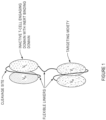
- Figure 1 shows one example of a targeted T-cell engaging agent construct comprising (a) an scFv targeting domain comprising a VH domain and a VL domain that bind the target, wherein the VH and VL domain are connected by a flexible linker; (b) an inactive T-cell engaging domain comprising a VL domain that binds to an inert VH domain, wherein the VH and VL domains are connected by a flexible linker having a cleavage site, and (c) a flexible linker joining the targeting domain and the inactive T-cell engaging domain.
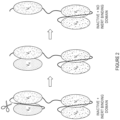
- Figure 2 shows the process by which the cleavable linker is cleaved and the inert binding partner is released to create an entity without an inert binding partner. This entity is still inactive because the VL domain in the T-cell engaging domain is not active on its own.
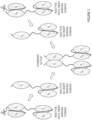
- Figure 3 illustrates the creation of an active targeted T-cell engaging agent after the inert binding partner is released from a pair of complementary targeted T-cell engaging agents.
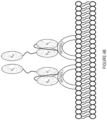
- Figures 4A-C illustrate the cleavage of the stepwise process of the targeted T-cell engaging agents binding to the target cell (4A), cleavage of the inert binding partners (4A and 4B), and binding to create an active targeted T-cell engaging agent (4C).
- the second T-cell engaging domain may not be bound to a targeting moiety and/or may not comprise a cleavage site and inert binding partner.
- the second T-cell engaging domain may be conjugated or linked to a targeting moiety (either the same targeting moiety or a different targeting moiety), but in such a disclosure it would not be conjugated or linked to an inert binding partner. In such a disclosure, only the first T-cell engaging domain is bound to an inert binding partner.
- the second T-cell engaging domain may also comprise a targeting moiety, a cleavage site, and an inert binding partner, each as described herein.
- the structural arrangement from N-terminus to C-terminus of the first component may comprise IBVL-L1-TCEVH-L2-TVL-L3-TVH.
- the structural arrangement from N-terminus to C-terminus of the second component may comprise TCEVL-L2-TVH-L3-TVL.
- the structural arrangement from N-terminus to C-terminus of the second component may comprise IBVH-L1-TCEVL-L2-TBVH-L3-TBVL.
- IB stands for inert binding partner and IBVL is a VL inert binding partner, whereas IBVH is a VH insert binding domain.
- TCE stands for T-cell engaging and an TCEVL is a VL portion of a T-cell engaging domain and a TCEVH is a VH portion of a T-cell engaging domain.
- TB stand for target binding domain and a TBVH is a VH portion of a target binding domain and a TBVL is a VL portion of a target binding domain.
- L1 is a linker with a protease cleavage site, while L2 and L3 are optionally linkers that optionally are not cleavable by the same protease as L1.
- the targeting moiety functions in the targeted T-cell engaging agent by delivering the agent to the local environment of the unwanted cells, enabling a localized treatment strategy.
- the targeting moiety targets the unwanted cells by specifically binding to the unwanted cells.
- the targeting moiety specifically binds the unwanted cells even while the inert binding partner is binding the first T-cell engaging domain.
- a first targeting moiety is bound, optionally by a linker, to a first T-cell engaging domain and, as part of a separate construct, a second targeting moiety is bound, optionally by a linker, to a second T-cell engaging domain.
- the targeting moieties are of the same type and, in others, the targeting moieties are different. When the targeting moieties are of different types, they can either target different epitopes (either overlapping or nonoverlapping) on the same target protein of the unwanted cell or they can target different target proteins. In situations when the targeting moieties target different proteins, the unwanted cell will express an antigen corresponding to each of the two types of targeting moieties, providing additional specificity for this approach.
- the targeting moiety may be an antibody or functional part thereof.
- functional part we mean any antibody fragment that retains its binding activity to the target on the unwanted cell, such as an scFv or VHH or other functional fragment including an immunoglobulin devoid of light chains, Fab, Fab', F(ab') 2 , Fv, antibody fragment, diabody, scAB, single-domain heavy chain antibody, single-domain light chain antibody, Fd, CDR regions, or any portion or peptide sequence of the antibody that is capable of binding antigen or epitope.
- full length antibody when the application refers to antibody it inherently includes a reference to a functional part thereof.
- Certain antibody targets may include: Her2/Neu (Epithelial malignancies); CD22 (B cells, autoimmune or malignant); EpCAM (CD326) (Epithelial malignancies); EGFR (epithelial malignancies); PMSA (Prostate Carcinoma); CD30 (B cell malignancies); CD20 (B cells, autoimmune, allergic or malignant); CD33 (Myeloid malignancies); membrane IgE (Allergic B cells); IgE Receptor (CD23) (Mast cells or B cells in allergic disease), CD80 (B cells, autoimmune, allergic or malignant); CD86 (B cells, autoimmune, allergic or malignant); CD2 (T cell or NK cell lymphomas); CA125 (multiple cancers including Ovarian carcinoma); Carbonic Anhydrase IX (multiple cancers including Renal Cell Carcinoma); CD70 (B cells, autoimmune, allergic or malignant); CD74 (B cells, autoimmune, allergic or malignant); CD56 (T
- Antibodies may include an anti-epidermal growth factor receptor antibody such as Cetuximab, an anti-Her2 antibody, an anti-CD20 antibody such as Rituximab, an anti-CD22 antibody such as Inotuzumab, G544 or BU59, an anti-CD70 antibody, an anti-CD33 antibody such as hp67.6 or Gemtuzumab, an anti-MUCI antibody such as GP1.4 and SM3, an anti-CD40 antibody, an anti-CD74 antibody, an anti-P-cadherin antibody, an anti-EpCAM antibody, an anti-CD138 antibody, an anti-E-cadherin antibody, an (anti-CEA antibody, an anti-FGFR3 antibody, and an anti ⁇ 4-integrin antibody such as natalizumab.
- an anti-epidermal growth factor receptor antibody such as Cetuximab, an anti-Her2 antibody, an anti-CD20 antibody such as Rituximab, an anti-CD22 antibody such as Inotuzumab
- Table 2A provides nonlimiting examples of cancer types, possible targeting moieties, and proteases that are expressed by those cancer types.
- the cancer may be identified from column 1, one or two targets chosen for the targeting moiety (as desired), and one or two proteases chosen for the cancer type, as well (as desired).
- Other sections of this application discuss when to use one versus two targeting moieties and one versus two protease cleavage sites.
- Table 2A Coordination of Cancer Type, Targets for Targeting Moiety, and Proteases that Can Cleave Cleavage Sites Cancer Targets for Targeting Moiety
- Proteases that can Cleave Cleavage Site Prostate Cancer ADAM17, CD59, EpCAM, HER2, Integrin ⁇ V, Integrin ⁇ V ⁇ 3, MCP-1, PCLA, PSCA, PSMA, RANKL, RG1, SLC44A4 STEAP-1, VEGF-C KLK3 (PSA), KLK4, ADAM17, Cathepsin B, uPA, uPAR, HPN, ST14, TMPRSS2 Breast Cancer CA125, CCN1, CD44, CD98, c-RET, DLL4, EpCAM, Episialin, GPNMB, HER2/neu, HER3, IGF-1R, Integrin ⁇ 6 ⁇ 4, LFL2, LIV-1, Ly6E, MUC1, MUC18, NRP1, Phosphatidylserine, PR
- Table 2B provides a nonlimiting list of potential targeting moieties to use in combination with particular cancer types.
- a targeting moiety for the first component would be present and a second targeting moiety for the second component may optionally be present. If only the first component has a targeting moiety or if the first and second components have the same targeting moiety, either the targeting moiety listed in column 1 or column 2 of the table may be used when the cancer type is listed in column 3.
- Table 2B Targeting Moieties for Use in Two-Component System Targeting Moiety for First Component Optional Targeting Moiety for Second Component Cancer Type Antibody against CD20 (such as Rituximab) Antibody against CD80 Lymphoma Antibody against CD20 (such as Rituximab) Antibody against CD22 (such as Inotuzumab) Lymphoma Antibody against CD20 (such as Rituximab) Antibody against CD70 Lymphoma Antibody against HER2 Antibody against EpCAM Epithelial malignancies Antibody against EGFR (such as Cetuximab) Antibody against mucin protein core Breast cancer Antibody against EGFR (such as Cetuximab) Antibody against HER2 Epithelial malignancies Antibody against EGFR (such as Cetuximab) Antibody against transferrin receptor Gliomas Antibody against gp95/gp97 Antibody against p-glycoprotein Drug-resistant melanomas Antibody against TRAIL-R1 Antibody against
- AML Antibody against CD33 Antibody against CD123 Myeloid Malignancies such as AML Antibody against CD49d Antibody against CD33 Myeloid Malignancies
- a targeting moiety is not an antibody, but is another type of targeting moiety.
- a targeting moiety may be a binding partner for a protein known to be expressed on the unwanted cell. Such expression levels may include overexpression.
- the following binding partners may bind to the following targets on an unwanted cell: Table 3: Non-Antibody Binding Partners and Corresponding Targets Binding Partner Target on Unwanted Cell IL-2 IL-2 receptor IL-4 IL-4 receptor IL-6 IL-6 receptor ⁇ -MSH MSH receptor (melanocyte stimulating hormone receptor) Transferrin TR (transferrin receptor) Folic acid FOLR (folate receptor 1) and/or FOLH1 (folate hydroxylase) EGF and/or TGF ⁇ EGFR (EGF receptor) PD1 PD-L1 and/or PD-L2 IL13 IL-13R (Glioblastoma) Stem cell factor CXCR4 Insulin-like growth factor (IGF) IGFR CD40 CD40L
- the binding partner need not comprise the full length or wildtype sequence for the binding partners listed in Table 3. All that is required is that the binding partner bind to the target on the unwanted cell and can thus include truncated forms, analogs, variants, and derivatives that are well known in the art.
- the binding partner may be an aptamer that is capable of binding to a protein known to be expressed on the unwanted cell.
- Aptamers that bind unwanted cells, such as cancer cells, are well known and methods for designing them are known.
- Cell-based SELEX systems may be used to select a panel of target cell-specific aptamers from a random candidate library.
- a ssDNA pool may be dissolved in binding buffer and denatured and then incubated with target cells. After washing the bound DNAs may be eluted by heating and then incubated with negative cells (if desired), centrifuged, and the supernatant removed. The supernatant may be amplified by PCR with biotin labeled primers.
- the selected sense ssDNA may be separated from the antisense biotinylated strand using streptavidin coated beads. To increase affinity, washing strength may be increased through increasing washing time, volume of buffer, and number of washes.
- the selected ssDNA pool may be PCR amplified and cloned into E. coli and sequenced. See Shangguan et al., Aptamers evolved from live cells as effective molecular probes for cancer study, PNAS 103(32:11838-11843 (2006 ); Lyu et al, Generating Cell Targeting Aptamers for Nanotherapeutics Using Cell-SELEX, Theranostics 6(9):1440-1452 (2016 ); see also Li et al., Inhibition of Cell Proliferation by an Anti-EGFR Aptamer, PLoS One 6(6):e20229 (2011 ). These references describe specific approaches for designing aptamers and specific aptamers binding to cancer cells.
- an aptamer may comprise SEQ ID NO: 94 to 164.
- an aptamer may comprise SEQ ID NO: 95.
- These aptamers are directed to EGFR and are provided only as representative of the aptamers that can bind to targets presented on unwanted cells. Other aptamers against other targets on unwanted cells are described in Zhu et al., Progress in Aptamer Mediated Drug Delivery Vehicles for Cancer Targeting, Theranostics 4(9):931-944 (2014 ).
- Aptamers for use herein may bind to the target on the unwanted cell with a K d in the nanomolar to picomolar range (such as 1 picomolar to 500 nanomolar or 1 picomolar to 100 nanomolar).
- the targeted T-cell engaging agent comprises a first T-cell engaging domain that is unable of engaging a T-cell alone. Instead, the first T-cell engaging domain is capable of activity when binding a second T-cell engaging domain, which is not part of the targeted T-cell engaging agent.
- the first and second T-cell engaging domains may be any two moieties that do not possess T-cell engaging activity alone, but do possess it when paired with each other.
- the first and second T-cell engaging domains are complementary halves of a functional active protein.
- the two T-cell engaging domains When the two T-cell engaging domains are associated together in the two-component system, they may bind to the CD3 antigen and/or T-cell receptor on the surface of the T-cell as these activate T cells.
- CD3 is present on all T cells and consists of subunits designated ⁇ , ⁇ , ⁇ , ⁇ , and ⁇ .
- the cytoplasmic tail of CD3 is sufficient to transduce the signals necessary for T cell activation in the absence of the other components of the TCR receptor complex. Normally, activation of T cell cytotoxicity depends first on binding of the TCR with a major histocompatibility complex (MHC) protein, itself bound to a foreign antigen, located on a separate cell.
- MHC major histocompatibility complex
- T cell cytotoxicity In a normal situation, only when this initial TCR-MHC binding has taken place can the CD3 dependent signally cascade responsible for T cell clonal expansion and, ultimately, T cell cytotoxicity ensue.
- activation of cytotoxic T cells in the absence of independent TCR-MHC can take place by virtue of the crosslinking of the CD3 and/or TCR molecules mimicking an immune synapse formation.
- T cells may be cytotoxically activated in a clonally independent fashion, i.e. in a manner that is independent of the specific TCR clone carried by the T cell. This allows for activation of the entire T cell compartment rather than only specific T cells of a certain clonal identity.
- the first T-cell engaging domain is a VH domain and the second T-cell engaging domain is a VL domain.
- the first T-cell engaging domain is a VL domain and the second T-cell engaging domain is a VH domain.
- the first and second T-cell engaging domains may comprise an scFv.
- the VH and VL domains may be specific for an antigen expressed on the surface of a T cell, such as CD3 or TCR. If the antigen is CD3, one potential T-cell engaging domain may be derived from muromonab.
- the targeted T-cell engaging agent also comprises at least one inert binding partner capable of binding the first T-cell engaging domain and preventing it from binding to a second T-cell engaging domain unless certain conditions occur.
- the first T-cell engaging domain is bound to the at least one inert binding partner, it does not possess a T-cell engaging activity.
- the at least one inert binding partner cripples the function of the first T-cell engaging domain by blocking it from binding its complementary pair (the second T-cell engaging domain) and preventing the two domains from joining together to have a T-cell engaging activity.
- the inert binding partner binds to the first T-cell engaging domain such that the first T-cell engaging domain does not bind to the second T-cell engaging domain unless the inert binding partner is removed.
- the application does not exclude nonspecific binding or low levels of binding (for example, ⁇ 1%, ⁇ 5%, ⁇ 10%).
- the inert binding partner may bind specifically to the T-cell engaging domain.
- the at least one inert binding partner may be a VH or VL domain.
- the inert binding partner may be a VL domain and when the first T-cell engaging domain is a VL domain, the inert binding partner may be a VH domain.
- a first component comprises a targeting moiety and a VL T-cell engaging domain and a VH inert binding partner
- the VH inert binding partner may have an equilibrium dissociation constant for binding to the VL T-cell engaging domain, which is greater than the equilibrium dissociation constant of the VL T-cell engaging domain for its partner VH T-cell engaging domain in the second component.
- the prior sentence may be equally true when VH is switched for VL and vice versa.
- the cleavage site may be (i) cleaved by an enzyme expressed by the unwanted cells; (ii) cleaved through a pH-sensitive cleavage reaction inside the unwanted cell; (iii) cleaved by a complement-dependent cleavage reaction; or (iv) cleaved by a protease that is colocalized to the unwanted cell by a targeting moiety that is the same or different from the targeting moiety in the agent.
- the cleavage site is a protease cleavage site.
- the cleavage sites function to release the inert binding partner from the first T-cell engaging domain.
- the cleavage sites can function in different ways to release the inert binding partner from the first T-cell engaging domain T-cell epitopes in the microenvironment of the unwanted cells.
- the cleavage may occur inside the unwanted cell or outside the unwanted cell, depending on the strategy employed. If cleavage occurs outside the unwanted cell, the T-cell engaging domain can be presented without first being internalized into a cell and being engaged in the classical antigen-processing pathways.
- At least one cleavage site may be cleaved by an enzyme expressed by the unwanted cells.
- Cancer cells for instance, are known to express certain enzymes, such as proteases, and these may be employed in this strategy to cleave the targeted T-cell engaging agent's cleavage site.
- cathepsin B cleaves FR, FK, VA and VR amongst others
- cathepsin D cleaves PRSFFRLGK (SEQ ID NO: 45)
- ADAM28 cleaves KPAKFFRL (SEQ ID NO: 1), DPAKFFRL (SEQ ID NO: 2), KPMKFFRL (SEQ ID NO: 3) and LPAKFFRL (SEQ ID NO: 4)
- MMP2 cleaves AIPVSLR (SEQ ID NO: 46), SLPLGLWAPNFN (SEQ ID NO: 47), HPVGLLAR (SEQ ID NO: 48), GPLGVRGK (SEQ ID NO: 49), and GPLGLWAQ (SEQ ID NO: 50), for example.
- cleavage sites listed in Table 1A or 2A may also be employed.
- Protease cleavage sites and proteases associated with cancer are well known in the art.
- Oncomine www.oncomine.org
- Oncomine is an online cancer gene expression database, so when the agent disclosed herein is for treating cancer, the skilled person may search the Oncomine database to identify a particular protease cleavage site (or two protease cleavage sites) that will be appropriate for treating a given cancer type.
- Alternative databases include the European Bioinformatic Institute (www.ebi.ac.uk), in particular (www.ebi.ac.uk/gxa).
- Protease databases include PMAP (www.proteolysis.org), ExPASy Peptide Cutter (ca.expasy.org/tools/peptidecutter) and PMAP.Cut DB (cutdb.burnham.org).
- At least one cleavage site may be cleaved through a pH-sensitive cleavage reaction inside the unwanted cell. If the targeted T-cell engaging agent is internalized into the cell, the cleavage reaction may occur inside the cell and may be triggered by a change in pH between the microenvironment outside the unwanted cell and the interior of the cell.
- some cancer types are known to have acidic environments in the interior of the cancer cells. Such an approach may be employed when the interior unwanted cell type has a characteristically different pH from the extracellular microenvironment, such as particularly the glycocalyx.
- a targeting agent when using a pH-sensitive cleavage site may require, when desired, more specificity.
- a targeting agent that binds only or highly preferably to cancer cells may be desired (such as, for example, an antibody binding to mesothelin for treatment of lung cancer).
- At least one cleavage site may be cleaved by a complement-dependent cleavage reaction.
- the patient's complement cascade may be triggered.
- the complement cascade may also be used to cleave the inert binding partner from the first T-cell engaging domain by using a cleavage site sensitive to a complement protease.
- C1r and C1s and the C3 convertases (C4B,2a and C3b,Bb) are serine proteases.
- C3/C5 and C5 are also complement proteases.
- Mannose-associated binding proteins (MASP), serine proteases also involved in the complement cascade and responsible for cleaving C4 and C2 into C4b2b (a C3 convertase) may also be used.
- C1s cleaves YLGRSYKV and MQLGRX.
- MASP2 is believed to cleave SLGRKIQI.
- Complement component C2a and complement factor Bb are believed to cleave GLARSNLDE.
- At least one cleavage site may be cleaved by a protease that is colocalized to the unwanted cell by a targeting moiety that is the same or different from the targeting moiety in the targeted T-cell engaging agent.
- a protease may be simultaneously directed to the microenvironment of the unwanted cells by conjugating the protease to a targeting agent that delivers the protease to that location.
- the targeting agent may be any targeting agent described herein.
- the protease may be affixed to the targeting agent through a peptide or chemical linker and may maintain sufficient enzymatic activity when bound to the targeting agent.
- Both the first component and second component may be mispaired with an inert binding partner.
- the protease cleavage site in the first component and the second component are the same.
- the protease cleavage sites in the first component and the second component are different cleavage sites for the same protease.
- the protease cleavage sites in the first component and the second component are cleavage sites for different proteases.
- the unwanted cell expresses both proteases.
- the inert binding partner in an uncleaved state interferes with the specific binding of a VL or VH T-cell engaging domain to its partner VH or VL, respectively, T-cell engaging domain in a second component.
- the inert binding partner in an uncleaved state inhibits the binding of the VL or VH T-cell engaging domain to its partner VH or VL, respectively, T-cell engaging domain in a second component such that the dissociation constant (Kd) of the VL or VH T-cell engaging domain to its partner VH or VL, respectively, T-cell engaging domain in a second component in an uncleaved state is at least 100 times greater than the Kd of the VL or VH T-cell engaging domain to its partner VH or VL, respectively, T-cell engaging domain in a second component in a cleaved state.
- Kd dissociation constant
- linkers may optionally be used to attach the separate parts of the targeted T-cell engaging agents together.
- linker we include any chemical moiety that attaches these parts together.
- the linkers may be flexible linkers.
- Linkers include peptides, polymers, nucleotides, nucleic acids, polysaccharides, and lipid organic species (such as polyethylene glycol).
- the linker is a peptide linker.
- Peptide linkers may be from about 2-100, 10-50, or 15-30 amino acids long.
- peptide linkers may be at least 10, at least 15, or at least 20 amino acids long and no more than 80, no more than 90, or no more than 100 amino acids long.
- the linker is a peptide linker that has a single or repeating GGGGS (SEQ ID NO: 85), GGGS (SEQ ID NO: 86), GS (SEQ ID NO: 87), GSGGS (SEQ ID NO: 88), GGSG (SEQ ID NO: 89), GGSGG (SEQ ID NO: 90), GSGSG (SEQ ID NO: 91), GSGGG (SEQ ID NO: 92), GGGSG (SEQ ID NO: 93), and/or GSSSG (SEQ ID NO: 94) sequence(s).
- the linker is a maleimide (MPA) or SMCC linker.
- the targeted T-cell engaging agents as described herein can be made using genetic engineering techniques.
- a nucleic acid may be expressed in a suitable host to produce a targeted T-cell engaging agent.
- a vector may be prepared comprising a nucleic acid sequence that encodes the targeted T-cell engaging agent including all of its component parts and linkers and that vector may be used to transform an appropriate host cell.
- Various regulatory elements may be used in the vector as well, depending on the nature of the host and the manner of introduction of the nucleic acid into the host, and whether episomal maintenance or integration is desired.
- the binding partner is an aptamer
- a person of ordinary skill in the art would appreciate how to conjugate an aptamer to a protein, namely the T-cell engaging domain.
- Aptamers may be conjugated using a thiol linkage or other standard conjugation chemistries.
- a maleimide, succinimide, or SH group may be affixed to the aptamer to attach it to the T-cell engaging domain.
- the targeted T-cell engaging agents may be employed as pharmaceutical compositions. As such, they may be prepared along with a pharmaceutically acceptable carrier. If parenteral administration is desired, for instance, the targeted T-cell engaging agents may be provided in sterile, pyrogen-free water for injection or sterile, pyrogen-free saline. Alternatively, the targeted T-cell engaging agents may be provided in lyophilized form for resuspension with the addition of a sterile liquid carrier.
- the targeted T-cell engaging agents described herein may be used in a method of treating a disease in a patient characterized by the presence of unwanted cells comprising administering a two-component system comprising at least one targeted T-cell engaging agent and a second component to the patient, as each of the components have been described in detail in various ways above. Additionally, the agents described herein may also be used in a method of targeting a patient's own immune response to unwanted cells comprising administering a two-component system to the patient.
- the amount of the agent administered to the patient may be chosen by the patient's physician so as to provide an effective amount to treat the condition in question.
- the first component and the second component of the two-component system may be administered in the same formulation or two different formulations within a sufficiently close period of time to be active in the patient.
- the patient receiving treatment may be a human.
- the patient may be a primate or any mammal.
- the patient may be an animal, such as a domesticated animal (for example, a dog or cat), a laboratory animal (for example, a laboratory rodent, such as a mouse, rat, or rabbit), or an animal important in agriculture (such as horses, cattle, sheep, or goats).
- a domesticated animal for example, a dog or cat
- a laboratory animal for example, a laboratory rodent, such as a mouse, rat, or rabbit
- an animal important in agriculture such as horses, cattle, sheep, or goats.
- the condition characterized by unwanted cells may include cancer.
- the cancer may be a solid or non-solid malignancy.
- the cancer may be a solid tumor wherein the solid tumor is not a lymphoma.
- the cancer may be any cancer such as breast cancer, ovarian cancer, endometrial cancer, cervical cancer, bladder cancer, renal cancer, melanoma, lung cancer, prostate cancer, testicular cancer, thyroid cancer, brain cancer, esophageal cancer, gastric cancer, pancreatic cancer, colorectal cancer, liver cancer, leukemia, myeloma, nonHodgkin lymphoma, Hodgkin lymphoma, acute myeloid leukemia, acute lymphoblastic leukemia, chronic lymphoblastic leukemia, lymphoproliferative disorder, myelodysplastic disorder, myeloproliferative disease and premalignant disease.
- the two-component system may be administered alone or in conjunction with other forms of therapy, including surgery, radiation, or traditional chemotherapy.
- Construct 6245 (SEQ ID NO: 165) was prepared as a bispecific antibody comprising an anti-EPCAM scFv and anti-CD3E scFv. This construct does not comprise any mispairing with an inert binding partner and has both active targeting and T-cell engaging moieties.
- Construct 6246 (SEQ ID NO: 166) and 6247 (SEQ ID NO: 167) are complementary precleaved constructs in a two-component system.
- the description refers to a construct with a functional targeting moiety and an unpaired T-cell engaging moiety (i.e., one that is not mispaired to an inert binding partner and one that is also not yet paired with its correct partner to form a functional T-cell engaging complex).
- Both constructs comprise an anti-EPCAM scFv.
- Construct 6246 comprises an anti-CD3E VH domain
- construct 6247 comprises an anti-CD3E VL domain. Neither construct contains an inert binding partner as a mispairing partner.
- Construct 6248 (SEQ ID NO: 168) and 6249 (SEQ ID NO: 169) are complementary constructs in a two-component system. Both constructs comprise an anti-EPCAM scFv.
- Construct 6248 comprises an anti-CD3E VH domain linked through a 25-mer linker having an MMP2 cleavage site (AIPVSLR (SEQ ID NO: 46)) to an inert binding partner VL domain from gantenerumab.
- Construct 6249 comprises an anti-CD3E VL domain linked through a 25-mer linker having an MMP2 cleavage site (AIPVSLR (SEQ ID NO: 46)) to an inert binding partner VH domain from clone alpha-MUC1-1 antibody.
- Constructs 9327 (SEQ ID NO: 170) and 9328 (SEQ ID NO: 171) are two-component system constructs using an scFv targeting domain; however, they do not have a protease cleavage site for releasing the inert binding partner that serves as a mispairing moiety. Both constructs comprise an anti-EpCAM scFv for targeting the constructs to the unwanted cells expressing EpCAM.
- Construct 9327 comprises an anti-CD3E VH domain linked by a 25-mer linker that does not have a protease cleavage site corresponding to a protease used in the examples to an inert binding partner VL domain from gantenerumab.
- Construct 9328 comprises an anti-CD3E VL domain linked by a 25-mer linker that does not have a protease cleavage site corresponding to a protease used in the examples to an inert binding partner VH domain from clone alpha-MUC1-1 antibody.
- Constructs 9329 (SEQ ID NO: 172) and 9330 (SEQ ID NO: 173) provide different targeting moieties. These constructs were intended to be used in two-component systems where one construct targets a first antigen on a cancer cell and the second construct targets a second antigen on the same cancer cell. Because the relative size of scFv and VHH targeting moieties are similar, these constructs were intended to "mix-and-match" with the pairable constructs having an anti-CD3E VL domain.
- Construct 9329 comprises an anti-glypican-3 VHH sequence. It also comprises an anti-CD3E VH domain attached by a 25-mer linker comprising an MMP2 cleavage site (AIPVSLR (SEQ ID NO: 46)) to an inert binding partner VL domain from gantenerumab.
- AIPVSLR SEQ ID NO: 46
- Construct 9330 comprises an anti-SDC1 scFv from indatuximab as the targeting moiety. It also comprises an anti-CD3E VH domain attached by a 25-mer linker comprising an MMP2 cleavage site (AIPVSLR (SEQ ID NO: 46)) to an inert binding partner VL domain from gantenerumab.
- AIPVSLR MMP2 cleavage site
- Construct 9332 (SEQ ID NO: 174) and 9333 (SEQ ID NO: 175) are both VHH/scFv bispecific constructs comprising an anti-EGFR VHH portion and an anti-CD3E scFv portion. These two constructs do not comprise any insert binding domain.
- Constructs 9334 (SEQ ID NO: 176) and 9335 (SEQ ID NO: 177) are complementary two-component system constructs using a targeting VHH domain. Both constructs comprise an anti-EGFR VHH domain for targeting to the unwanted cells expressing EGFR.
- Construct 9334 comprises an anti-CD3E VH domain linked by a 25-mer linker having an MMP2 cleavage site (AIPVSLR (SEQ ID NO: 46)) to an inert binding partner VL domain from gantenerumab.
- Construct 9335 was prepared comprising an anti-CD3E VH domain linked by a 25-mer linker having an MMP2 cleavage site (AIPVSLR (SEQ ID NO: 46)) to an inert binding partner VH domain from clone alpha-MUC1-1 antibody.
- AIPVSLR MMP2 cleavage site
- Constructs were generated by DNA2.0 (Newark, California) and expressed in HEK293T cells. Single-stranded oligonucleotides were designed to cover a specified sequence with a C-terminal hexahistidine tag to aid with down-stream purification. The oligonucleotides were chemically synthesized, then assembled using a variety of proprietary protocols depending on the sequence characteristics. In some instances, template independent PCR was used. In some instances, smaller sequences were assembled to create larger sequences by use of standard restriction enzyme digestion and ligase-mediated assembly. The assembled oligonucleotides were then cloned into standard E. coli plasmids and the complete double strand sequence verified by automated Sanger sequencing on ABI hardware. Constructs were expressed by transient transfection in HEK293T cells at the 150ml scale and antibody fragments purified using affinity chromatography.
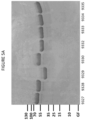
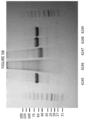
- Results are shown in Figure 5A . This shows that the proteins have been made and have very high purity, along with the correct molecular mass predicted by their sequence.
- Constructs 6245 (the bispecific construct not requiring pairing), 6248 and 6248 (pairable constructs with an inert binding partner and an MMP2 cleavage site) were produced adequately. Constructs 6246 and 6247 (not containing an inert binding partner) were produced at low yields and are believed to be unstable. It is likely that the VH/VL pairing is important for fragment stability.
- IFN ⁇ assays Generally: Expression of cytokine markers in vitro, such as IFN ⁇ expression, is known to have a predictive value for T cell responses and, thus, predicts in vivo results. As described in Ghanekar et al., Clin Diag Lab Immunol j8(3):628-31 (2001 ), IFN ⁇ expression in CD8+ T cells measured by cytokine flow cytometry (CFC) is a surrogate marker for the response of cytotoxic T lymphocytes. Ghanekar at 628. Prior work showed that there is a strong correlation between the expression of IFN ⁇ by CD8+ T cells and the activity of CTL effector cells. Ghanekar at 630.
- T Cell Line Culture Cytotoxic T cells were used in the IFN ⁇ assays and cultured in RPMI-1640 medium containing 4.0 mM L-glutamine, 1% penicillin and streptomycin, 10% heat-inactivated FBS, 1% heat-inactivated human serum (pooled AB serum, TCS Bioscience) and 1,000 U/ml IL-2. Cells were kept at a density of 1-2 x 10 6 cells/ml, and were fed by replacement of three quarters of the medium every 48 hours. They were originally generated by adding 10ug HLA-A*0201-restricted viral peptide NLVPMVATV to 10 million peripheral blood mononuclear cells (PBMCs) from an HLA-A*0201 + donor.
- PBMCs peripheral blood mononuclear cells
- T cells were cultured in RPMI-1640 medium containing 4.0 mM L-glutamine, 1% penicillin and streptomycin, 10% heat-inactivated FBS and 1% heat-inactivated human serum (pooled AB serum, TCS Bioscience) for four days before the media was changed to include 1000 U/ml IL-2.
- the T cells were predominantly CD8+ T cells with a small amount of CD4+ T cells as well.
- IFN ⁇ ELISA IFN ⁇ levels in tissue culture supernatants were assayed using either an eBioscience Ready-Set-Go ELISA kit (cat. no. 88-7316-88) or a BioLegend Human IFN ⁇ ELISA Max kit (cat. no. 430106) as per the manufacturer's instructions.
- IFN ⁇ was evaluated for various single constructs and mixed constructs.
- the IFN ⁇ production and ELISA assay protocols provided above were used, except as noted.
- SW620 cells were cultured in DMEM containing 10% FBS, and 1% penicillin/streptomycin solution. Cells were plated in a 96 well plate (100,000 cells per well) on the day prior to the experiment. On the day of the experiment the medium was aspirated and discarded. 20,000 T cells per well in T cell medium were added. Constructs (final concentration of 1 ⁇ g/ml) were made up in T cell medium and added to the culture. Controls were PHA-M (final concentration 10 ⁇ g/ml), SW620 cells plus T cells with no additions, and SW620 cells without T cells or other additions.
- IFN ⁇ was evaluated for various single constructs and mixed constructs. Single constructs were assessed, with construct 6425 (a bispecific scFv for EpCAM and CD3E) was serving as a positive control. Baseline IFN ⁇ was assessed in T-cells with SW620 cancer cells, SW620 cancer cells alone, and T-cells stimulated nonspecifically with phytohemagglutinin (PHA) to show the capacity of T-cells for IFN ⁇ expression.
- PHA phytohemagglutinin
- constructs were used at a final concentration of 1 ⁇ g/ml. Cultures were incubated for 4 hours and the supernatants were assayed for IFN ⁇ . Mean ⁇ standard deviation of triplicates are provided. was evaluated for various single constructs and mixed constructs. Cultures were incubated for 4 hours and the supernatants were assayed for IFN ⁇ . Mean ⁇ standard deviation of triplicates are provided. Constructs were used at a final concentration of 1 ⁇ g/ml. Cultures were incubated for 24 hours and the supernatants were assayed for IFN ⁇ . Mean ⁇ standard deviation of triplicates are provided.
- Construct 6245 serves as a positive control because this construct has both a targeting anti-EpCAM scFv and an anti-CD3E scFv; thus, it is a bispecific construct not requiring pairing for T-cell engaging (TCE) activity.
- the combination of 6246 and 6247 yields a much lower response than the combination of 6248 and 6249 likely because the 6246 and 6247 are not protected during manufacturing by the inert binding partner, which is believed to stabilize the unpaired anti-CD3E VH and VL domains in each construct, respectively.
- the mispaired constructs having an inert binding partner are more stable and easier to manufacture than precleaved constructs having an unpaired anti-CD3E VH or VL domain.
- IFN ⁇ was evaluated for various single constructs and mixed constructs.
- SW620 cells were cultured in DMEM containing 10% FBS, and 1% penicillin/streptomycin solution. Cells were plated in a 96 well plate (100,000 cells per well) on the day prior to the experiment. On the day of the experiment the medium was aspirated and discarded. 20,000 T cells per well in T cell medium were added. Constructs (final concentration of 1 ⁇ g/ml) were made up in T cell medium and added to the culture. Where mixtures of constructs were used, these were pre-mixed before addition to the cultures (final concentration of constructs was 1 ⁇ g/ml per construct).
- Controls were PHA-M (final concentration 10 ⁇ g/ml), SW620 cells plus T cells with no additions, and SW620 cells without T cells or other additions. Each condition was run in triplicate. The final volume in the culture was 200 ⁇ l per well. The culture was incubated for 24 hours at 37°C, 5% CO 2 and 100% relative humidity. The culture was centrifuged at 400 x g for 5 minutes and the supernatants aspirated and placed in a separate plate. Supernatants were stored at -20°C until analyzed for IFN ⁇ . Mean ⁇ standard deviation of triplicates are provided.
- Construct 6245 serves as a positive control because this construct has both a targeting anti-EpCAM scFv and an anti-CD3E scFv; thus, it is a bispecific construct not requiring pairing for T-cell engaging (TCE) activity.
- Constructs 6248 and 6249 (pairs of a two-component system each having an inert binding partner separated from the anti-CD3E T-cell engaging VL or VH, respectively, by a linker with an MMP2 cleavage site) showed more IFN ⁇ expression when paired together than when administered alone.
- the combination of 6246 and 6247 (pairs of a two-component system without any binding domain or protease cleavage site required for them to associate) yield a much lower response than the combination of 6248 and 6249 likely because the 6246 and 6247 are not protected during manufacturing by the inert binding partner, which is believed to stabilize the unpaired anti-CD3E VH and VL domains in each construct, respectively.
- the mispaired constructs having an inert binding partner are more stable and easier to manufacture than constructs with an unpaired anti-CD3E VH or VL domain.
- SW620 cells were cultured in DMEM containing 10% FBS, and 1% penicillin/streptomycin solution. Cells were plated in a 96 well plate (100,000 cells per well) on the day prior to the experiment. On the day of the experiment the medium was aspirated and discarded. 20,000 T cells per well in T cell medium were added. Constructs (final concentration ranging from 1 ng/ml to 1 ⁇ g/ml) were made up in T cell medium and added to the culture. Where mixtures of constructs were used, these were pre-mixed before addition to the cultures (final concentration of constructs ranged from 1 ng/ml to 1 ⁇ g/ml per construct).
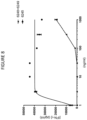
- Controls were SW620 cells plus T cells with no additions, and SW620 cells without T cells or other additions. Each condition was run in triplicate. The final volume in the culture was 200 ⁇ l per well. The culture was incubated for 24 hours at 37°C, 5% CO 2 and 100% relative humidity. The culture was centrifuged at 400 x g for 5 minutes and the supernatants aspirated and placed in a separate plate. Supernatants were stored at -20°C until analyzed for IFN ⁇ . Mean ⁇ standard deviation of triplicates were shown in Figure 8 .
- Construct 6245 served as a positive control and paired constructs 6248 and 6249 were assessed. Both the control construct and the paired two-component system showed IFN ⁇ expression. This demonstrates that the inert VL and VH domains are being cleaved from constructs 6248 and 6249, respectively, and that these two constructs are pairing to create a complete anti-CD3E scFv, which is capable of engaging T cells.
- the two-component system (6248 and 6249) has a lower potency than the bispecific 6245 construct, yet is still in an acceptable range and may actually offer dosing advantages in avoiding side effects.
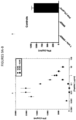
- SW620 cells were cultured in DMEM containing 10% FBS, and 1% penicillin/streptomycin solution. Cells were plated in a 96 well plate (100,000 cells per well) on the day prior to the experiment. On the day of the experiment the medium was aspirated and discarded. 20,000 T cells per well in T cell medium were added. Constructs (final concentration ranging from 1 ng/ml to 1 ⁇ g/ml) were made up in T cell medium and added to the culture. Where mixtures of constructs were used, these were pre-mixed before addition to the cultures (final concentration of constructs ranged from 10 ng/ml to 10 ⁇ g/ml per construct).
- Controls were PHA-M (final concentration 10 ⁇ g/ml), SW620 cells plus T cells with no additions, and SW620 cells without T cells or other additions. Each condition was run in triplicate. The final volume in the culture was 200 ⁇ l per well. The culture was incubated for 24 hours at 37°C, 5% CO2 and 100% relative humidity. The culture was centrifuged at 400 x g for 5 minutes and the supernatants aspirated and placed in a separate plate. Supernatants were stored at -200°C until analyzed for IFN ⁇ . Mean ⁇ standard deviation of triplicates were shown in Figures 9A-B .
- the two-component system (6248 and 6249) has a lower potency than the bispecific 6245 construct, yet is still in an acceptable range and may actually offer dosing advantages in avoiding side effects.
- SW620 cells were cultured in DMEM containing 10% FBS, and 1% penicillin/streptomycin solution. Cells were plated in a 96 well plate (100,000 cells per well) on the day prior to the experiment. On the day of the experiment the medium was aspirated and discarded. 20,000 T cells per well in T cell medium were added. Constructs (final concentration of 1 ⁇ g/ml) were made up in T cell medium and added to the culture. Where mixtures of constructs were used, these were pre-mixed before addition to the cultures (final concentration of constructs was 1 ⁇ g/ml per construct).
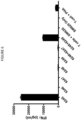
- Controls were PHA-M (final concentration 10 ⁇ g/ml), SW620 cells plus T cells with no additions, and SW620 cells without T cells or other additions. Each condition was run in triplicate. The final volume in the culture was 200 ⁇ l per well. The culture was incubated for 24 hours at 37°C, 5% CO 2 and 100% relative humidity. The culture was centrifuged at 400 x g for 5 minutes and the supernatants aspirated and placed in a separate plate. Supernatants were stored at -20°C until analyzed for IFN ⁇ . Figure 10 provides mean ⁇ standard deviation of triplicates.
- Figure 10 shows a very low level of IFN ⁇ expression for constructs with only a VH or VL for the anti-CD3E scFv; however, positive bispecific constructs with a full scFv (9332 and 9333) showed higher IFN ⁇ expression levels.
- SW620 cells were cultured in DMEM containing 10% FBS, and 1% penicillin/streptomycin solution. Cells were plated in a 96 well plate (100,000 cells per well) on the day prior to the experiment. On the day of the experiment the medium was aspirated and discarded. 20,000 T cells per well in T cell medium were added. Constructs were pre-mixed in the specified ratios in T cell medium and added to the culture (final concentration of constructs was 1 ⁇ g/ml in total).
- the two components 6248 and 6249 one containing the VH domain of the CD3 activating moiety (6249) and the other containing the VL domain of the CD3 activating moiety (6248), were pre-mixed at ratios 100:0, 90:10, 75:25, 50:50, 25:75, 10:90 and 0:100.
- the mixtures of the two components were added to 100,000 unwanted tumor cells and 20,000 T cells.
- Controls were PHA-M (final concentration 10 ⁇ g/ml), SW620 cells plus T cells with no additions, and SW620 cells without T cells or other additions. Each condition was run in triplicate. The final volume in the culture was 200 ⁇ l per well.
- the culture was incubated for 24 hours at 37°C, 5% CO 2 and 100% relative humidity.
- the culture was centrifuged at 400 x g for 5 minutes and the supernatants aspirated and placed in a separate plate. Supernatants were stored at -20°C until analyzed for IFN ⁇ .
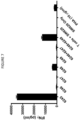
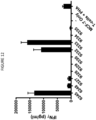
- FIG 12 shows experiments conducted in the MCF-7 tumor cell line.
- MCF-7 cells were cultured in DMEM containing 10% FBS, and 1% penicillin/streptomycin solution. Cells were plated in a 96 well plate (100,000 cells per well) on the day prior to the experiment. On the day of the experiment the medium was aspirated and discarded. 20,000 T cells per well in T cell medium were added. Constructs (final concentration of 1 ⁇ g/ml) were made up in T cell medium and added to the culture. Controls were PHA-M (final concentration 10 ⁇ g/ml), MCF-7 cells plus T cells with no additions, and MCF-7 cells without T cells or other additions. Each condition was run in triplicate.
- the final volume in the culture was 200 ⁇ l per well.
- the culture was incubated for 24 hours at 37°C, 5% CO 2 and 100% relative humidity.
- the culture was centrifuged at 400 x g for 5 minutes and the supernatants aspirated and placed in a separate plate. Supernatants were stored at -20°C until analyzed for IFN ⁇ .
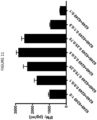
- SW620 cells were cultured in DMEM containing 10% FBS, and 1% penicillin/streptomycin solution. Cells were plated in a 96 well plate (100,000 cells per well) on the day prior to the experiment. On the day of the experiment the medium was aspirated and discarded. 20,000 T cells per well in T cell medium were added. Constructs (final concentration of 1 ⁇ g/ml) were made up in T cell medium and added to the culture. Where mixtures of constructs were used, these were pre-mixed before addition to the cultures (final concentration of constructs was 1 ⁇ g/ml per construct).
- Controls were PHA-M (final concentration 10 ⁇ g/ml), SW620 cells plus T cells with no additions, and SW620 cells without T cells or other additions. Each condition was run in triplicate. The final volume in the culture was 200 ⁇ l per well. The culture was incubated for 24 hours at 37°C, 5% CO 2 and 100% relative humidity. The culture was centrifuged at 400 x g for 5 minutes and the supernatants aspirated and placed in a separate plate. Supernatants were stored at -20°C until analyzed for IFN ⁇ .
- Constructs 9327 and 6248 do not show any activity because they both have VH domains for the anti-CD3E antibody and cannot make a functional anti-CD3E scFv; additionally, 9327 does not have a cleavage site.
- 9327 and 6249 show a very low level of activity because 9327 has no cleavage site and 6249 has a cleavage site, but the two together can make an anti-CD3E scFv if some low level of spontaneous cleavage occurs.
- Figure 14 also shows targeting two different proteins expressed on the same cancer cell.
- Construct 6248 binds EpCAM and is successfully paired with 9335, which binds EGFR.
- Construct 6249 also binds EpCAM and is successfully paired with 9334. This establishes that different molecules on a cancer cell may be targeted, providing yet a further layer of specificity for some versions of the two-component system described herein. This also provides further evidence that components 9335 and 9334 work in other contexts and further suggests these components were either too close or too far from each other in their combination with each other described above.
- SNU398 cells were cultured in RPMI1640 containing 10% FBS, 2 mM glutamine and 1% penicillin/streptomycin solution. Cells were plated in a 96 well plate (100,000 cells per well) on the day prior to the experiment. On the day of the experiment the medium was aspirated and discarded. 20,000 T cells per well in T cell medium were added. Constructs (final concentration of 1 ⁇ g/ml) were made up in T cell medium and added to the culture. Where mixtures of constructs were used, these were pre-mixed before addition to the cultures (final concentration of constructs was 1 ⁇ g/ml per construct).
- Controls were PHA-M (final concentration 10 ⁇ g/ml), SNU398 cells plus T cells with no additions, and SNU398 cells without T cells or other additions. Each condition was run in triplicate. The final volume in the culture was 200 ⁇ l per well. The culture was incubated for 24 hours at 37°C, 5% CO 2 and 100% relative humidity. The culture was centrifuged at 400 x g for 5 minutes and the supernatants aspirated and placed in a separate plate. Supernatants were stored at -20°C until analyzed for IFN ⁇ .
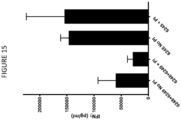
- Figure 15 shows that adding a protease inhibitor reduces the IFN ⁇ expression of the two-component system having a protease cleavage site (constructs 6248 and 6249).
- the protease inhibitor does not impact the 6245 bispecific construct as cleavage and pairing are not required for activity.
- SW620 cells were cultured in DMEM containing 10% FBS, and 1% penicillin/streptomycin solution. Cells were plated in a 96 well plate (100,000 cells per well) on the day prior to the experiment. On the day of the experiment the medium was aspirated and discarded. 20,000 T cells per well in T cell medium were added. Constructs (final concentration of 1 ⁇ g/ml) were made up in T cell medium and added to the culture. Where mixtures of constructs were used, these were pre-mixed before addition to the cultures (final concentration of constructs was 1 ⁇ g/ml per construct).
- Controls were PHA-M (final concentration 10 ⁇ g/ml), SW620 cells plus T cells with no additions, and SW620 cells without T cells or other additions. Each condition was run in triplicate. The final volume in the culture was 200 ⁇ l per well. The culture was incubated for 24 hours at 37°C, 5% CO 2 and 100% relative humidity. The culture was centrifuged at 400 x g for 5 minutes and the supernatants aspirated and placed in a separate plate. Supernatants were stored at -20°C until analyzed for IFN ⁇ .
- 9335 employs an anti-EGFR VHH as the targeting moiety and 6248 employs an anti-EPCAM scFv as the targeting moiety.
- a two-component system comprising a first component and a second component are administered to a patient having lymphoma.
- the first component comprises Rituximab or an anti-CD22 antibody as a targeting moiety, a VH domain from an antibody binding CD3 as a T-cell engaging domain, a VL domain as an inert binding partner, and the ADAM28 cleavage site KPAKFFRL.
- the second component also comprises Rituximab or an anti-CD22 antibody as a targeting moiety, the complementary VL domain from an antibody binding CD3 as a T-cell engaging domain, VH as an inert binding partner, and the ADAM28 cleavage site KPAKFFRL.
- VH domain from an antibody binding CD3 as a T-cell engaging domain of the first component and the VL domain from an antibody binding CD3 as a T-cell engaging domain of the second component are capable of binding to each other when not bound to an inert binding partner and possessing the activity to engage a T-cell.
- the patient is infused with the agent, which targets all B cells, healthy and malignant.
- the agent comes into contact with proteases whereby cleavage of the protease recognition domain releases the inert binding partners from both the first and the second T-cell engaging domains.
- the malignant B cells that are bound by the now-activated two-component system complex attracts the host immune system for cytolysis by T-cells due to the presence and activity of the complex of the first and second T-cell engaging domains.
- a two-component system chosen from System A-E is prepared according to Table 3 and administered to a patient having cancer. If an item is described as optional, the row of the table describes both two-component systems having or not having that item.
- Table 6 Certain Examples of the Two-Component System A First Component Targeting Moiety T-Cell Engaging Moiety Cleavage Site Inert binding partner Optional Linker(s) & Location(s) Antibody targeting HER2 V H of antibody targeting CD3 Any ADAM28 cleavage site Any VH domain that binds to the VL domain of the T-cell engaging domain without creating any binding specificity For example, GGGGS (SEQ ID No:45).
- T-Cell Engaging Moiety Cleavage Site Inert binding partner
- Optional Linker(s) & Location(s) antibody targeting EGFR such as Cetuximab V H of antibody targeting CD4
- Any ADAM28 cleavage site Any VH domain that binds to the VL domain of the T-cell engaging domain without creating any binding specificity
- GGGGS SEQ ID No:45
- Second Component Optional Targeting Moiety T-Cell Engaging Moiety
- Optional Cleavage Site Optional Inert binding partner
- Optional Linker(s) & Location(s) antibody targeting EGFR such as Cetuximab V L of antibody targeting CD4
- Any ADAM28 cleavage site Any VH domain that binds to the VL domain of the T-cell engaging domain without creating any binding specificity
- GGGGS SEQ ID No:45
- T-Cell Engaging Moiety C First Component Targeting Moiety T-Cell Engaging Moiety Cleavage Site Inert binding partner
- Optional Linker(s) & Location(s) antibody targeting CD20 such as Rituximab V H of antibody targeting CD8
- Any ADAM28 cleavage site Any VH domain that binds to the VL domain of the T-cell engaging domain without creating any binding specificity
- GGGGS SEQ ID No:45
- Second Component Optional Targeting Moiety T-Cell Engaging Moiety
- Optional Cleavage Site Optional Inert binding partner
- Optional Linker(s) & Location(s) antibody targeting CD20 such as Rituximab V L of antibody targeting CD8
- Any ADAM28 cleavage site Any VH domain that binds to the VL domain of the T-cell engaging domain without creating any binding specificity
- GGGGS SEQ ID No:45
- T-Cell Engaging Moiety Cleavage Site Inert binding partner
- Optional Linker(s) & Location(s) antibody targeting CD22 such as Inotuzumab V H of antibody targeting CD28
- Any ADAM28 cleavage site Any VH domain that binds to the VL domain of the T-cell engaging domain without creating any binding specificity
- GGGGS SEQ ID No:45
- Second Component Optional Targeting Moiety T-Cell Engaging Moiety
- Optional Cleavage Site Optional Inert binding partner
- Optional Linker(s) & Location(s) antibody targeting CD22 such as Inotuzumab V L of antibody targeting CD28
- Any ADAM28 cleavage site Any VH domain that binds to the VL domain of the T-cell engaging
- GGGGS SEQ ID No:45
- T-Cell Engaging Moiety Cleavage Site Inert binding partner
- Optional Linker(s) & Location(s) antibody targeting CD33 such as Gemtuzumab V H of antibody targeting T cell receptor (TCR)
- Any ADAM28 cleavage site Any VH domain that binds to the VL domain of the T-cell engaging domain without creating any binding specificity
- GGGGS SEQ ID No:45
- Second Component Optional Targeting Moiety T-Cell Engaging Moiety
- Optional Cleavage Site Optional Inert binding partner
- Optional Linker(s) & Location(s) antibody targeting CD33 such as Gemtuzumab V L of antibody targeting T cell receptor (TCR)
- Any ADAM28 cleavage site Any VH domain that binds to the VL domain of the T-cell engaging domain without creating any binding specificity For example, GGGGS (SEQ ID No:45).
- the term about refers to a numeric value, including, for example, whole numbers, fractions, and percentages, whether or not explicitly indicated.
- the term about generally refers to a range of numerical values (e.g., +/-5-10% of the recited range) that one of ordinary skill in the art would consider equivalent to the recited value (e.g., having the same function or result).
- the terms modify all of the values or ranges provided in the list.
- the term about may include numerical values that are rounded to the nearest significant figure.
Landscapes
- Health & Medical Sciences (AREA)
- Chemical & Material Sciences (AREA)
- Immunology (AREA)
- Organic Chemistry (AREA)
- Life Sciences & Earth Sciences (AREA)
- Medicinal Chemistry (AREA)
- General Health & Medical Sciences (AREA)
- Biochemistry (AREA)
- Genetics & Genomics (AREA)
- Molecular Biology (AREA)
- Proteomics, Peptides & Aminoacids (AREA)
- Biophysics (AREA)
- Veterinary Medicine (AREA)
- Public Health (AREA)
- Animal Behavior & Ethology (AREA)
- Pharmacology & Pharmacy (AREA)
- Nuclear Medicine, Radiotherapy & Molecular Imaging (AREA)
- General Chemical & Material Sciences (AREA)
- Chemical Kinetics & Catalysis (AREA)
- Engineering & Computer Science (AREA)
- Cell Biology (AREA)
- Bioinformatics & Cheminformatics (AREA)
- Oncology (AREA)
- Gastroenterology & Hepatology (AREA)
- Hematology (AREA)
- Biomedical Technology (AREA)
- Microbiology (AREA)
- Mycology (AREA)
- Epidemiology (AREA)
- Medicines That Contain Protein Lipid Enzymes And Other Medicines (AREA)
- Peptides Or Proteins (AREA)
- Medicines Containing Antibodies Or Antigens For Use As Internal Diagnostic Agents (AREA)
- Medicinal Preparation (AREA)
- Pharmaceuticals Containing Other Organic And Inorganic Compounds (AREA)
- Medicines Containing Material From Animals Or Micro-Organisms (AREA)
- Micro-Organisms Or Cultivation Processes Thereof (AREA)
Description
- This application relates to targeted T-cell engaging agents for treating a condition characterized by the presence of unwanted cells. In particular, it relates to agents that can be used to treat a condition characterized by the presence of unwanted cells, such as cancer or other disease-causing cells.
- Cancer and other diseases caused by the presence of unwanted cells create significant loss of life, suffering, and economic impact. Immunotherapeutic strategies for targeting cancer have been an active area of translational clinical research.
- A variety of other approaches have been explored for immunotherapy, but many of these prior approaches lack sufficient specificity to particular unwanted cells. For example, demibodies have been designed each having an scFv portion binding to different antigens on a target cell, an Fc domain allowing pairing to a complementary demibody, and a binding partner capable of forming an association to another binding partner on a complementary demibody.
WO 2007/062466 . These demibodies, however, are not necessarily specific to cancer cells and could bind and have activity on other cells expressing the same antigens. See alsoWO 2013/104804 , which provides a first polypeptide with a targeting moiety binding to a first antigen and a first fragment of a functional domain, along with a second polypeptide with a targeting moiety binding to a second antigen and a second fragment of a functional domain that is complementary to the first fragment of the functional domain. Likewise, this approach is not necessarily specific to cancer cells and could bind and have activity on other cells expressing the same antigens. - While some positive test data has been shown with prior approaches, clinically-effective therapeutic strategies must be able to elicit a strong immune response in an individual suffering from a disease such as cancer. Additionally, effective therapies should be very specific and not cause unwanted side effects to other cell types in the body.
US 2015/0183875 relates to a molecule comprising: (i) a targeting moiety capable of directly or indirectly targeting to unwanted cells, and (ii) a further moiety that has a masked immune cell binding region so as to prevent binding of the further moiety to an immune cell, wherein the masked immune cell binding region is capable of being selectively unmasked when the molecule is in the vicinity of the unwanted cells so as to allow binding of the further moiety to an immune cell.WO 2015/013671 relates to multispecific antibodies and to multispecific activatable antibodies that specifically bind to two or more different antigens or epitopes, as well as to methods of making and using these multispecific antibodies and/or multispecific activatable antibodies in a variety of therapeutic, diagnostic and prophylactic indications. Additional developments in this field of re-directed immunotherapy are required. - The presently claimed invention is as defined in the claims. For the avoidance of doubt, to the extent that subject matter not falling within the presently claimed invention is mentioned here, it is included merely for reference purposes. In accordance with the description, the inventors describe a targeted T-cell engaging agent for treating a condition characterized by the presence of unwanted cells. This agent includes (a) a targeting moiety that is capable of targeting the unwanted cells; (b) a first T-cell engaging domain capable of activity when binding a second T-cell engaging domain, wherein the second T-cell engaging domain is not part of the agent; (c) at least one inert binding partner capable of binding the first T-cell engaging domain such that the first T-cell engaging domain does not bind to the second T-cell engaging domain unless the inert binding partner is removed; and (d) at least one cleavage site separating the first T-cell engaging domain and the inert binding partner.
- Disclosed herein is a two-component system for treating a condition characterized by the presence of unwanted cells, the two-component system comprising a first component comprising a targeted T-cell engaging agent comprising:
- a. a first component comprising a targeted T-cell engaging agent comprising:
- i. a first targeting moiety that is capable of targeting the unwanted cells;
- ii. a first T-cell engaging domain capable of T-cell engaging activity when binding a second T-cell engaging domain, wherein the second T-cell engaging domain is not part of the first component;
- iii. a first inert binding partner for the first T-cell engaging domain binding to the first T-cell engaging domain such that the first T-cell engaging domain does not bind to the second T-cell engaging domain unless the inert binding partner is removed; and
- iv. a cleavage site separating the first T-cell engaging domain and the first inert binding partner, wherein the cleavage site is:
- (1) cleaved by an enzyme expressed by the unwanted cells;
- (2) cleaved through a pH-sensitive cleavage reaction inside the unwanted cell;
- (3) cleaved by a complement-dependent cleavage reaction; or
- (4) cleaved by a protease that is colocalized to the unwanted cell by a targeting moiety that is the same or different from the targeting moiety in the agent,
- b. a second component comprising a second T-cell engaging domain capable of T-cell engaging activity when binding the first T-cell engaging domain, wherein the first and second T-cell engaging domains are capable of binding when neither is bound to an inert binding partner.
- In a first aspect of the invention, the two-component system is a kit or composition for use in treating cancer, wherein the kit or composition comprises
- a. a first component comprising a targeted T-cell engaging agent comprising:
- i. a first targeting moiety that is capable of targeting to cancer cells wherein the first targeting moiety is an antibody or antigen-binding portion thereof;
- ii. a first T-cell engaging domain capable of T-cell engaging activity when binding a second T-cell engaging domain, wherein the second T-cell engaging domain is not part of the first component, and wherein the first T-cell engaging domain is either a VH or VL domain;
- iii. a first inert binding partner for the first T-cell engaging domain binding to the first T-cell engaging domain such that the first T-cell engaging domain does not bind to the second T-cell engaging domain unless the first inert binding partner is removed wherein if the first T-cell engaging domain is a VH domain the first inert binding partner is a VL domain and if the first T-cell engaging domain is a VL domain, the first inert binding partner is a VH domain; and
- iv. a first protease cleavage site separating the first T-cell engaging domain and the first inert binding partner, wherein the first protease cleavage site is capable of releasing the first inert binding partner from the first T-cell engaging domain in the presence of a protease expressed by the cancer cells,
- b. a second component comprising a targeted T-cell engaging agent comprising:
- i. a second targeting moiety that is capable of targeting the cancer cells wherein the second targeting moiety is an antibody or antigen-binding portion thereof;
- ii. second T-cell engaging domain capable of T-cell engaging activity when binding the first T-cell engaging domain, wherein the first and second T-cell engaging domains, when paired with each other, are capable of binding CD3 or the T cell receptor (TCR) when neither is bound to an inert binding partner and further wherein if the first T cell engaging domain is a VH domain, the second T-cell engaging domain is a VL domain, and if the first T-cell engaging domain is a VL domain, the second T-cell engaging domain is a VH domain;
- iii. a second inert binding partner for the second T-cell engaging domain binding to the second T-cell engaging domain such that the second T cell engaging domain does not bind to the first T-cell engaging domain unless the second inert binding partner is removed, wherein if the second T-cell engaging domain is a VH domain, the second inert binding partner is a VL domain, and if the second T-cell engaging domain is a VL domain, the second inert binding partner is a VH domain; and
- iv. a second protease cleavage site separating the second T-cell engaging domain and the second inert binding partner, wherein the second protease cleavage site is capable of releasing the second inert binding partner from the second T-cell engaging domain in the presence of a protease expressed by the cancer cells,
- In another disclosure, the second component of the two-component system further comprises a second targeting moiety that is capable of targeting the unwanted cells.
- In another disclosure, the second component of the two-component system further comprises a second inert binding partner for the second T-cell engaging domain binding to the second T-cell engaging domain such that the second T cell engaging domain does not bind to the first T-cell engaging domain unless the inert binding partner is removed and
- a. a cleavage site separating the second T-cell engaging domain and the second inert binding partner, wherein the cleavage site is:
- i. cleaved by an enzyme expressed by the unwanted cells;
- ii. cleaved through a pH-sensitive cleavage reaction inside the unwanted cell;
- iii. cleaved by a complement-dependent cleavage reaction; or
- iv. cleaved by a protease that is colocalized to the unwanted cell by a targeting moiety that is the same or different from the targeting moiety in the agent,
- In some embodiments, the first and second targeting moieties of the two-component system are the same.
- In some embodiments, the first and second targeting moieties of the two-component system are different
- The first and second cleavage sites may be the same.
- The first and second cleavage sites may be different.
- Disclosed is wherein at least one cleavage site is a protease cleavage site. The at least one cleavage site may be capable of being cleaved outside the unwanted cells.
- Also disclosed is wherein at least one enzyme expressed by the unwanted cells is a protease.
- Also disclosed is wherein at least one inert binding partner specifically binds the T-cell engaging domain.
- In a disclosure of the two-component system, at least one inert binding partner is a VH or VL domain.
- The first T-cell engaging domain is a VH domain and the first inert binding partner is a VL domain, and when the first T-cell engaging domain is a VL domain, the first inert binding partner is a VH domain. The second T-cell engaging domain is a VH domain and the second inert binding partner is a VL domain, and when the second T-cell engaging domain is a VL domain, the second inert binding partner is a VH domain.
- Disclosed is wherein at least one targeting moiety is an antibody or functional fragment thereof.
- In a second aspect of the invention, a set of nucleic acid molecules encodes the first and second components of the first aspect of the invention. Also disclosed is wherein a nucleic acid molecule encodes the component for use in a two-component system.
- In some embodiments of the invention, one T-cell engaging domain is a VH domain and the other T-cell engaging domain is a VL domain.
- In another disclosure, a component for use in a two-component system for treating a condition characterized by the presence of unwanted cells comprising a first targeted T-cell engaging agent comprises:
- a. a targeting moiety that is capable of targeting the unwanted cells;
- b. a first T-cell engaging domain capable of T-cell engaging activity when binding a second T-cell engaging domain, wherein the second T-cell engaging domain is not part of the first targeted T-cell engaging agent;
- c. an inert binding partner for the first T-cell engaging domain binding to the first T-cell engaging domain such that the first T-cell engaging domain does not bind to the second T-cell engaging domain unless the inert binding partner is removed; and
- d. a cleavage site separating the first T-cell engaging domain and the inert binding partner, wherein the cleavage site is:
- i. cleaved by an enzyme expressed by the unwanted cells;
- ii. cleaved through a pH-sensitive cleavage reaction inside the unwanted cell;
- iii. cleaved by a complement-dependent cleavage reaction; or
- Also disclosed is a method of treating a disease in a patient characterized by the presence of unwanted cells, which method comprises administering the disclosed two-component system to the patient. Also disclosed is a method of targeting an immune response of a patient to unwanted cells, which method comprises administering the disclosed two-component system. These unwanted cells may be cancer cells. The cancer may be any one of breast cancer, ovarian cancer, endometrial cancer, cervical cancer, bladder cancer, renal cancer, melanoma, lung cancer, prostate cancer, testicular cancer, thyroid cancer, brain cancer, esophageal cancer, gastric cancer, pancreatic cancer, colorectal cancer, liver cancer, leukemia, myeloma, nonHodgkin lymphoma, Hodgkin lymphoma, acute myeloid leukemia, acute lymphoblastic leukemia, chronic lymphoblastic leukemia, lymphoproliferative disorder, myelodysplastic disorder, myeloproliferative disease or premalignant disease.
- Additional objects and advantages will be set forth in part in the description which follows, and in part will be obvious from the description, or may be learned by practice. The objects and advantages of the invention will be realized and attained by means of the elements and combinations according to the appended claims.
- It is to be understood that both the foregoing general description and the following detailed description are exemplary and explanatory only and are not restrictive of the claims.
- The accompanying drawings, which are incorporated in and constitute a part of this specification, illustrate one (several) embodiment(s) and together with the description, serve to explain the principles described herein.
-
-
Figure 1 shows one example of a first component of a two-component system, where the first component is a targeted T-cell engaging agent in an inactive state with an inert binding partner. -
Figure 2 shows the process by which the cleavable linker is cleaved and the inert binding partner is released to create an active entity. -
Figure 3 illustrates the creation of an active targeted, T-cell engaging agent after the inert binding partner is released from a pair of complementary components in a two-component system. -
Figures 4A-C illustrate the cleavage of the stepwise process of the pair of complementary components in a two-component system binding to the target cell (A), cleavage of linker attaching the inert binding partners (A and B), and binding to create an active moiety capable of T-cell -
Figures 5A-B provide evaluation of constructs by SDS PAGE and Coomassie blue staining. -
Figure 6 shows IFNγ expression as a proxy for T cell response when cancer cells were treated with various individual constructs and combinations, with 6245 serving as a positive control and the combination of 6248 and 6249 showing beneficial results. -
Figure 7 shows IFNγ expression as a proxy for T cell response when cancer cells were treated with various individual constructs and combinations, with 6245 as a positive control and the combination of 6248 and 6249 showing beneficial results. -
Figure 8 shows IFNγ expression as a proxy for T cell response when cancer cells were treated with different concentrations of constructs, with 6245 as a positive control and the combination of 6248 and 6249 showing beneficial results. -
Figures 9A-B shows IFNγ expression as a proxy for T cell response when cancer cells were treated with controls or different concentrations of constructs, with 6245 as a positive control and the combination of 6248 and 6249 showing beneficial results. PHA also served as a positive control for nonspecific T-cell activation. -
Figure 10 shows IFNγ expression as a proxy for T cell response when cancer cells were treated with controls or different concentrations of constructs, with very low levels with constructs having only a VH or VL for the anti-CDE3 scFv, but positive control bispecific constructs (both 9332 and 9333) showed higher levels of activity. -
Figure 11 provides a stoichiometric assessment of complementary constructs of a two-component system. -
Figure 12 shows IFNγ expression as a proxy for T cell response when MCF-7 cancer cells were treated with controls or different concentrations of constructs. -
Figure 13 shows IFNγ expression as a proxy for T cell response when cancer cells were treated with controls or different concentrations of constructs targeting EpCAM. -
Figure 14 shows IFNγ expression as a proxy for T cell response when cancer cells were treated with controls or different concentrations of constructs targeting either biparatopic EGFR epitopes or a combination of EpCAM and EGFR targeting. -
Figure 15 shows the impact of protease inhibitors on constructs either containing protease cleavage sites or not containing protease cleavage sites. -
Figure 16 shows that different types of targeting moieties may be used, by successfully pairing a construct having a VHH targeting moiety with a construct having an scFv moiety. -
Figure 17 shows a sequence schematic forconstructs -
Tables 1A and 1B provide a listing of certain sequences referenced herein. Table 1A: Description of the Sequences and SEQ ID NOs Description Sequence # ADAM28 cleavage site KPAKFFRL 1 ADAM28 cleavage site DPAKFFRL 2 ADAM28 cleavage site KPMKFFRL 3 ADAM28 cleavage site LPAKFFRL 4 ADAM28 cleavage site LPMKFFRL 5 ADAM28 cleavage site KPAMFFRL 6 ADAM28 cleavage site YPAKFFRL 7 ADAM28 cleavage site KWAKFFRL 8 ADAM28 cleavage site DPMKFFRL 9 ADAM28 cleavage site DPAMFFRL 10 ADAM28 cleavage site DPMMFFRL 11 ADAM28 cleavage site KMAMFFRL 12 ADAM28 cleavage site KMAMFFIM 13 ADAM28 cleavage site KPAMFFIM 14 ADAM28 cleavage site LPAMFFRL 15 ADAM28 cleavage site LPMMFFRL 16 ADAM28 cleavage site LMAMFFRL 17 ADAM28 cleavage site LMAMFFIM 18 ADAM28 cleavage site LPAMFFIM 19 ADAM28 cleavage site LPAMFFYM 20 ADAM28 cleavage site KPMMFFRL 21 ADAM28 cleavage site KPAKFFYM 22 ADAM28 cleavage site KPAKFFIM 23 ADAM28 cleavage site IPMKFFRL 24 ADAM28 cleavage site IPAMFFRL 25 ADAM28 cleavage site IPMMFFRL 26 ADAM28 cleavage site IMAMFFRL 27 ADAM28 cleavage site IMAMFFIM 28 ADAM28 cleavage site IPAMFFIM 29 ADAM28 cleavage site IPAMFFYM 30 cathepsin B cleavage site FR 31 cathepsin B cleavage site FK 32 cathepsin B cleavage site VA 33 cathepsin B cleavage site VR 34 cathepsin B cleavage site V{Cit} 35 cathepsin B cleavage site HLVEALYL 36 cathepsin B cleavage site SLLKSRMVPNFN 37 cathepsin B cleavage site SLLIARRMPNFN 38 cathepsin B cleavage site KKFA 39 cathepsin B cleavage site AFKK 40 cathepsin B cleavage site QQQ 41 cathepsin D cleavage site PRSFFRLGK 42 cathepsin D cleavage site SGVVIATVIVIT 43 cathepsin K cleavage site GGP 44 MMP1 cleavage site SLGPQGIWGQFN 45 MMP2 cleavage site AIPVSLR 46 MMP2 cleavage site SLPLGLWAPNFN 47 MMP2 cleavage site HPVGLLAR 48 MMP2 cleavage site GPLGVRGK 49 MMP2 cleavage site GPLGLWAQ 50 MMP3 cleavage site STAVIVSA 51 MMP7 cleavage site GPLGLARK 52 MMP7 cleavage site RPLALWRS 53 MMP7 cleavage site SLRPLALWRSFN 54 MMP2/9 cleavage site GILGVP 55 MMP2/9 cleavage site GPLGIAGQ 56 MMP9 cleavage site AVRWLLTA 57 MMP9 cleavage site PLGLYAL 58 MMP9 cleavage site GPQGIAGQR 59 MMP9 cleavage site KPVSLSYR 60 MMP11 cleavage site AAATSIAM 61 MMP11 cleavage site AAGAMFLE 62 MMP13 cleavage site GPQGLAGQRGIV 63 MMP14 cleavage site PRHLR 64 MMP14 cleavage site PQGLLGAPGILG 65 MMP14 cleavage site PRSAKELR 66 PSA / KLK3 HSSKLQ 67 PSA / KLK3 SSKLQ 68 KLK4 RQQR 69 TMPRSS2 GGR 70 Legumain AAN 71 ST14 (Matriptase) QAR 72 C1s cleavage site YLGRSYKV 73 C1s cleavage site MQLGRX 74 MASP2 cleavage site SLGRKIQI 75 C2a and Bb cleavage site GLARSNLDE 76 uPa cleavage site TYSRSRYL 77 uPa cleavage site KKSPGRVVGGSV 78 uPa cleavage site NSGRAVTY 79 uPa cleavage site AFK 80 tissue-type plasminogen activator (tPA) GGSGQRGRKALE 81 ADAM10 PRYEAYKMGK 82 ADAM12 LAQAF 83 ADAM17 EHADLLAVVAK 84 flexible amino acid linker (may be presented in repeating fashion) GGGGS 85 flexible amino acid linker (may be presented in repeating fashion) GGGS 86 flexible amino acid linker (may be presented in repeating fashion) GS 87 flexible amino acid linker (may be presented in repeating fashion) GSGGS 88 flexible amino acid linker (may be presented in repeating fashion) GGSG 89 flexible amino acid linker (may be presented in repeating fashion) GGSGG 90 flexible amino acid linker (may be presented in repeating fashion) GSGSG 91 flexible amino acid linker (may be presented in repeating fashion) GSGGG 92 flexible amino acid linker (may be presented in repeating fashion) GGGSG 93 flexible amino acid linker (may be presented in repeating fashion) GSSSG 94 Anti-EGFR aptamer (tight binder with Kd=2.4 nM) 
95 Anti-EGFR aptamer 
96 Anti-EGFR aptamer 
97 Anti-EGFR aptamer 
98 Anti-EGFR aptamer 
99 Anti-EGFR aptamer 
100 Anti-EGFR aptamer 
101 Anti-EGFR aptamer 
102 Anti-EGFR aptamer 
103 Anti-EGFR aptamer 
104 Anti-EGFR aptamer 
105 Anti-EGFR aptamer 
106 Anti-EGFR aptamer 
107 Anti-EGFR aptamer 
108 Anti-EGFR aptamer 
109 Anti-EGFR aptamer 
110 Anti-EGFR aptamer 
111 Anti-EGFR aptamer 
112 Anti-EGFR aptamer 
113 Anti-EGFR aptamer 
114 Anti-EGFR aptamer 
115 Anti-EGFR aptamer 
116 Anti-EGFR aptamer 
117 Anti-EGFR aptamer 
118 Anti-EGFR aptamer 
119 Anti-EGFR aptamer 
120 Anti-EGFR aptamer 
121 Anti-EGFR aptamer 
122 Anti-EGFR aptamer 
123 Anti-EGFR aptamer 
124 Anti-EGFR aptamer 
125 Anti-EGFR aptamer 
126 Anti-EGFR aptamer 
127 Anti-EGFR aptamer 
128 Anti-EGFR aptamer 
129 Anti-EGFR aptamer 
130 Anti-EGFR aptamer 
131 Anti-EGFR aptamer 
132 Anti-EGFR aptamer 
133 Anti-EGFR aptamer 
134 Anti-EGFR aptamer 
135 Anti-EGFR aptamer 
136 Anti-EGFR aptamer 
137 Anti-EGFR aptamer 
138 Anti-EGFR aptamer 
139 Anti-EGFR aptamer 
140 Anti-EGFR aptamer 
141 Anti-EGFR aptamer 
142 Anti-EGFR aptamer 
143 Anti-EGFR aptamer 
144 Anti-EGFR aptamer 
145 Anti-EGFR aptamer 
146 Anti-EGFR aptamer 
147 Anti-EGFR aptamer 
148 Anti-EGFR aptamer 
149 Anti-EGFR aptamer 
150 Anti-EGFR aptamer 
151 Anti-EGFR aptamer 
152 Anti-EGFR aptamer 
153 Anti-EGFR aptamer 
154 Anti-EGFR aptamer 
155 Anti-EGFR aptamer 
156 Anti-EGFR aptamer 
157 Anti-EGFR aptamer 
158 Anti-EGFR aptamer 
159 Anti-EGFR aptamer 
160 Anti-EGFR aptamer 
161 Anti-EGFR aptamer 
162 Anti-EGFR aptamer 
163 Anti-EGFR aptamer 
164 Table 1B: Description of Construct Sequences and SEQ ID NOs Description Sequence # Construct 6245 
165 single chain; scFv anti-EPCAM [Mus musculus V-KAPPA (IGKV8-19*01 (98.00%)-IGKJ5*01 L126>I (112)) [12.3.9] (1-113) -15-mer tris(tetraglycyl-seryl) linker (114-128) -Mus musculus VH (IGHV1-54*01 (85.90%)-(IGHD)-IGHJ4*01, S123>T (243)) [8.8.14] (129-248)] -5-mer tetraglycyl-seryl linker (249-253) -scFv anti-CD3E [humanized VH (Homo sapiens IGHV1-46*01 (82.50%)-(IGHD)-IGHJ6*01) [8.8.12] (254-372) -18-mer linker (373-390) -V-KAPPA (Mus musculus IGKV4-59*01 (81.70%)-IGKJ1*01 L124>V (493) [5.3.9] (391-496)] -hexahistidine (497-502) CAS Registry Number 1005198-65-1 ChemID: 1005198-65-1 Construct 6246 
166 single chain; scFv anti-EPCAM [Mus musculus V-KAPPA (IGKV8-19*01 (98.00%)-IGKJ5*01 L126>I (112)) [12.3.9] (1-113) -15-mer tris(tetraglycyl-seryl) linker (114-128) -Mus musculus VH (IGHV1-54*01 (85.90%)-(IGHD)-IGHJ4*01, S123>T (243)) [8.8.14] (129-248)] -5-mer tetraglycyl-seryl linker (249-253) -scFv anti-CD3E [humanized VH (Homo sapiens IGHV1-46*01 (82.50%)-(IGHD)-IGHJ6*01) [8.8.12] (254-372) -18-mer linker (373-390) -hexahistidine (391-396) Construct 6247 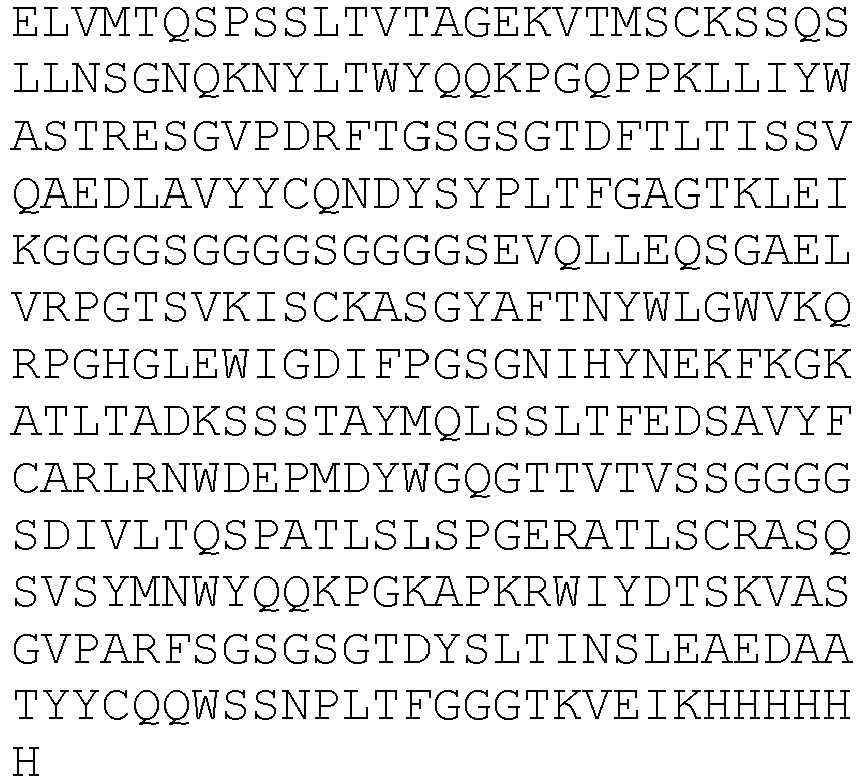
167 single chain; scFv anti-EPCAM [Mus musculus V-KAPPA (IGKV8-19*01 (98.00%)-IGKJ5*01 L126>I (112)) [12.3.9] (1-113) -15-mer tris(tetraglycyl-seryl) linker (114-128) -Mus musculus VH (IGHV1-54*01 (85.90%)-(IGHD)-IGHJ4*01, S123>T (243)) [8.8.14] (129-248)] -5-mer tetraglycyl-seryl linker (249-253) -anti-CD3E-V-KAPPA (Mus musculus IGKV4-59*01 (81.70%)-IGKJ1*01 L124>V (356) [5.3.9] (254-359)] -hexahistidine (360-365) Construct 6248 
168 single chain; scFv anti-EPCAM [Mus musculus V-KAPPA (IGKV8-19*01 (98.00%)-IGKJ5*01 L126>I (112)) [12.3.9] (1-113) -15-mer tris(tetraglycyl-seryl) linker (114-128) -Mus musculus VH (IGHV1-54*01 (85.90%)-(IGHD)-IGHJ4*01, S123>T (243)) [8.8.14] (129-248)] -5-mer tetraglycyl-seryl linker (249-253) -scFv anti-CD3E [humanized VH (Homo sapiens IGHV1-46*01 (82.50%)-(IGHD)-IGHJ6*01) [8.8.12] (254-372) -25-mer linker (373-397 containing MMP2 cleavage site AIPVSLR (SEQ ID NO: 46)) -V-KAPPA (Homo sapiens V-KAPPA from gantenerumab, CAS: 1043556-46-2; 398-505); 87-hexahistidine (506-511) Construct 6249 
169 single chain; scFv anti-EPCAM [Mus musculus V-KAPPA (IGKV8-19*01 (98.00%)-IGKJ5*01 L126>I (112)) [12.3.9] (1-113) -15-mer tris(tetraglycyl-seryl) linker (114-128) -Mus musculus VH (IGHV1-54*01 (85.90%)-(IGHD)-IGHJ4*01, S123>T (243)) [8.8.14] (129-248)] -5-mer tetraglycyl-seryl linker (249-253) -scFv anti-CD3E V-KAPPA (Mus musculus IGKV4-59*01 (81.70%)-IGKJ1*01 L124>V (493) [5.3.9] (254-359)] -25-mer linker (360-384 containing MMP2 cleavage site AIPVSLR (SEQ ID NO: 46)) - Ig heavy chain V region (clone alpha-MUC1-1, GenBank Accession S36265; 385-502)-hexahistidine (503-508) Construct 9327 
170 EpCAM VLVH-VHDVL single chain; scFv anti-EPCAM [Mus musculus V-KAPPA (IGKV8-19*01 (98.00%)-IGKJ5*01 L126>I (112)) [12.3.9] (1-113) -15-mer tris(tetraglycyl-seryl) linker (114-128) -Mus musculus VH (IGHV1-54*01 (85.90%)-(IGHD)-IGHJ4*01, S123>T (243)) [8.8.14] (129-248)] -5-mer tetraglycyl-seryl linker (249-253) -scFv anti-CD3E [humanized VH (Homo sapiens IGHV1-46*01 (82.50%)-(IGHD)-IGHJ6*01) [8.8.12] (254-372) -25-mer linker (373-397) -V-KAPPA (Homo sapiens V-KAPPA from gantenerumab, CAS: 1043556-46-2; 398-505); -hexahistidine (506-511) 
Anti-EpCAM sequence from Brischwein K et al, Mol. Immunol. (2006) 43:1129-43 Construct 9328 
171 single chain; scFv anti-EPCAM [Mus musculus V-KAPPA (IGKV8-19*01 (98.00%)-IGKJ5*01 L126>I (112)) [12.3.9] (1-113) -15-mer tris(tetraglycyl-seryl) linker (114-128) -Mus musculus VH (IGHV1-54*01 (85.90%)-(IGHD)-IGHJ4*01, S123>T (243)) [8.8.14] (129-248)] -5-mer tetraglycyl-seryl linker (249-253) -scFv anti-CD3E V-KAPPA (Mus musculus IGKV4-59*01 (81.70%)-IGKJ1*01 L124>V (493) [5.3.9] (254-359)] -25-mer linker(360-384) - Ig heavy chain V region (clone alpha-MUC1-1, GenBank Accession S36265; 385-502)-hexahistidine (503-508) Construct 9329 
172 Glypican3 VHH-CD3ε(VH-MMP2-VL) Anti-human Glypican-3 VHH sequence from US Patent 2012145469 ; residues 1-116) -5-mer tris (tetraglycyl-seryl) linker (117-122)-scFv anti-CD3E [humanized VH (Homo sapiens IGHV1-46*01 (82.50%)-(IGHD)-IGHJ6*01) [8.8.12] (123-241) -25-mer linker (242-266 containing MMP2 cleavage site AIPVSLR (SEQ ID NO: 46)) -V-KAPPA (Homo sapiens V-KAPPA from gantenerumab, CAS: 1043556-46-2; 267-374); -hexahistidine (375-380)Construct 9330 
173 anti-[Homo sapiens SDC1 (syndecan-1, CD138), scFv, from indatuximab CAS: 1238517-16-2, US Patent US20140010828 ], [Mus musculus V-KAPPA (IGKV10-94*01 -IGKJ1*01) [6.3.9] (1-108) -15-mer tris(tetraglycyl-seryl) linker (109-123)[Mus musculus VH (IGHV1-9*01 - (IGHD)-IGHJ4*01) [8.8.15] (124-245) -5-mer tris(tetraglycyl-seryl) linker (246-250)-scFv anti-CD3E [humanized VH (Homo sapiens IGHV1-46*01(82.50%)-(IGHD)-IGHJ6*01) [8.8.12] (251-369) -25-mer linker (370-394 containing MMP2 cleavage site AIPVSLR (SEQ ID NO: 46)) -V-KAPPA (Homo sapiens V-KAPPA from gantenerumab, CAS: 1043556-46-2; 395-502); -hexahistidine (503-508) Construct 9332 
174 EGFR VHH-CD3ε(VH-VL) Anti-human EGFR VHH sequence from 7D12 sequence from Schmitz KR et al, Structure. 2013 Jul 2;21(7):1214-24; residues 1-124) -30-mer tris (tetraglycyl-seryl) linker (125-154)-scFv anti-CD3E [humanized VH (Homo sapiens IGHV1-46*01 (82.50%)-(IGHD)-IGHJ6*01) [8.8.12] (155-273) -18-merlinker (274-291) -V-KAPPA (Mus musculus IGKV4-59*01 (81.70%)- IGKJ1* 01 L124>V (394) [5.3.9] (292-397)] -hexahistidine (398-403) Anti-human CD3ε sequence from Brischwein K et al, Mol. Immunol. (2006) 43:1129-43US Patent US7919089 Construct 9333 
175 EGFR VHH-CD3ε(VH-VL) Anti-human EGFR VHH sequence from 9G8 sequence from Schmitz KR et al, Structure. 2013 Jul 2;21(7):1214-24; residues 1-127) -30-mer tris(tetraglycyl-seryl) linker (128-157)-scFv anti-CD3E [humanized VH (Homo sapiens IGHV1-46*01 (82.50%)-(IGHD)-IGHJ6*01) [8.8.12] (158-276) -18-mer linker (277-294) -V-KAPPA (Mus musculus IGKV4-59*01 (81.70%)- IGKJ1* 01 L124>V (394) [5.3.9] (292-397)] -hexahistidine (401-406)
Construct 9334
176 EGFR VHH-CD3ε(VH-MMP2-VL) Anti-human EGFR VHH sequence from 7D12 sequence from Schmitz KR et al, Structure. 2013 Jul 2;21(7):1214-24; residues 1-124) -30-mer tris (tetraglycyl-seryl) linker (125-154)-scFv anti-CD3E [humanized VH (Homo sapiens IGHV1-46*01 (82.50%)-(IGHD)-IGHJ6*01) [8.8.12] (155-273) -25-mer linker (274-298 containing MMP2 cleavage site AIPVSLR (SEQ ID NO: 46)) -V-KAPPA (Homo sapiens V-KAPPA from gantenerumab, CAS: 1043556-46-2; 299-406); -hexahistidine (407-412) Construct 9335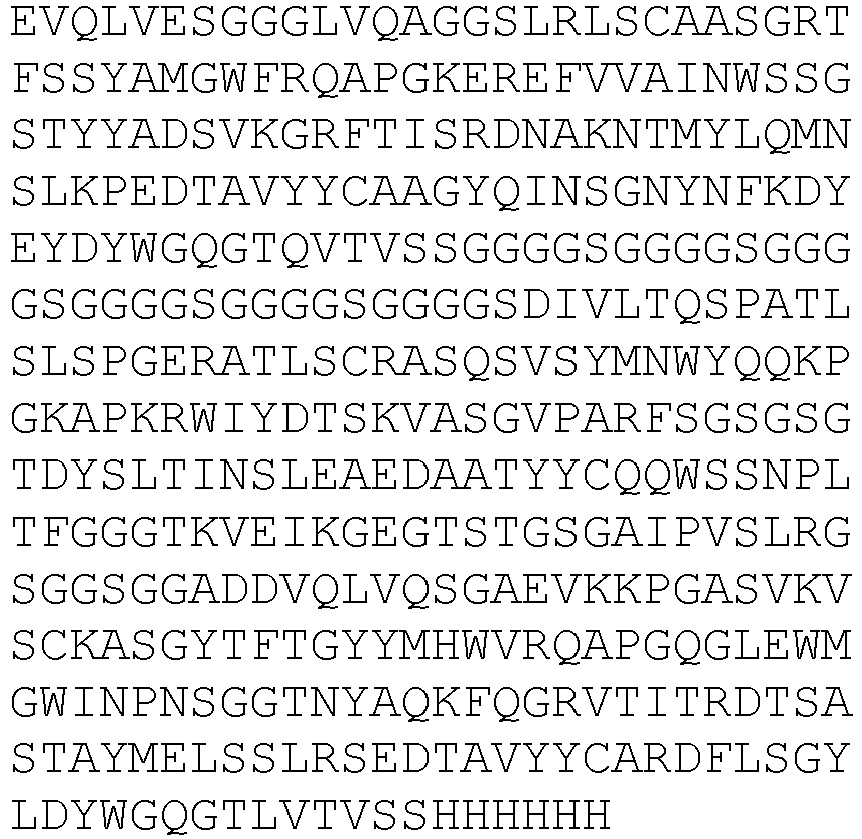
177 EGFR VHH-CD3ε(VL-MMP2-VH) Anti-human EGFR VHH sequence from 9G8 sequence from Schmitz KR et al, Structure. 2013 Jul 2;21(7):1214-24; residues 1-127) -30-mer tris(tetraglycyl-seryl) linker (128-157)-scFv anti-CD3E V-KAPPA (Mus musculus IGKV4-59*01 (81.70%)- IGKJ1* 01 L124>V (493)[5.3.9] (158-263)]-25-mer linker (264-288 containing MMP2 cleavage site AIPVSLR (SEQ ID NO: 46)) - Ig heavy chain V region (clone alpha-MUC1-1, GenBank Accession S36265; 289-406)-hexahistidine (307-412) - A variety of targeted T-cell engaging agents are described, including as part of a two-component system comprising a first component and a second component. In each disclosure, however, a targeting moiety may be used to deliver the targeted T-cell engaging agent to an area of unwanted cells, allowing for a therapeutic effect to be delivered locally. The targeted T-cell engaging agent also contains a first T-cell engaging domain capable of activity when binding a second T-cell engaging domain, but the second T-cell engaging domain is not part of the targeted T-cell engaging agent. In other words, without the second T-cell engaging domain that is not part of the targeted T-cell engaging agent, the first T-cell engaging domain is not capable of T-cell engaging activity. The targeted T-cell engaging agent also comprises an inert binding partner capable of binding the first T-cell engaging domain and preventing it from binding to a second T-cell engaging domain. In other words, the inert binding partner binds to the first T-cell engaging domain such that the first T-cell engaging domain does not bind to the second T-cell engaging domain unless the inert binding partner is removed. By does not bind, the application does not exclude nonspecific binding or low levels of binding (for example, ≤ 1%, ≤5%, ≤10%). The concept is one of functional insufficiency with the de novo VH/VL complementation insufficient for T-cell target binding. Proteolytic cleavage liberates the inert VH or VL groups allowing the opportunity for re-pairing of active VH and VL pairs at the cell surface. Furthermore, the targeted T-cell engaging agent includes a cleavage site separating the first T-cell engaging domain and the inert binding partner. The cleavage site is cleaved when the targeted T-cell engaging agent is in the microenvironment of the unwanted cells.
- The second T-cell engaging domain may be part of a second targeted T-cell engaging agent. Thus, a kit or composition may comprise two targeted T-cell engaging agents, one with a first T-cell engaging domain and another with a second T-cell engaging domain. In such a kit or composition, the inert binding partners may be capable of dissociation once the cleavage site in each agent has been cleaved; after dissociation, the two T-cell engaging domains may be capable of binding to each other and exhibiting activity.
- In disclosures with two targeted T-cell engaging agents, the two-component system comprises one T-cell engaging domain that may be a VH domain and another T-cell engaging domain that may be a VL domain. In disclosures with two targeted T-cell engaging agents, the targeting moieties in the first component and the second component may be the same or they may be different.
- In disclosures with two targeted T-cell engaging agents, the cleavage sites in the first component and the second component may be the same or they may be different.
-
Figure 1 shows one example of a targeted T-cell engaging agent construct comprising (a) an scFv targeting domain comprising a VH domain and a VL domain that bind the target, wherein the VH and VL domain are connected by a flexible linker; (b) an inactive T-cell engaging domain comprising a VL domain that binds to an inert VH domain, wherein the VH and VL domains are connected by a flexible linker having a cleavage site, and (c) a flexible linker joining the targeting domain and the inactive T-cell engaging domain. -
Figure 2 shows the process by which the cleavable linker is cleaved and the inert binding partner is released to create an entity without an inert binding partner. This entity is still inactive because the VL domain in the T-cell engaging domain is not active on its own. -
Figure 3 illustrates the creation of an active targeted T-cell engaging agent after the inert binding partner is released from a pair of complementary targeted T-cell engaging agents. -
Figures 4A-C illustrate the cleavage of the stepwise process of the targeted T-cell engaging agents binding to the target cell (4A), cleavage of the inert binding partners (4A and 4B), and binding to create an active targeted T-cell engaging agent (4C). - Alternatively, the second T-cell engaging domain may not be bound to a targeting moiety and/or may not comprise a cleavage site and inert binding partner. In some instances, the second T-cell engaging domain may be conjugated or linked to a targeting moiety (either the same targeting moiety or a different targeting moiety), but in such a disclosure it would not be conjugated or linked to an inert binding partner. In such a disclosure, only the first T-cell engaging domain is bound to an inert binding partner. In another disclosure, the second T-cell engaging domain may also comprise a targeting moiety, a cleavage site, and an inert binding partner, each as described herein.
- The structural arrangement from N-terminus to C-terminus of the first component may comprise IBVL-L1-TCEVH-L2-TVL-L3-TVH. The structural arrangement from N-terminus to C-terminus of the second component may comprise TCEVL-L2-TVH-L3-TVL. The structural arrangement from N-terminus to C-terminus of the second component may comprise IBVH-L1-TCEVL-L2-TBVH-L3-TBVL. In each of these, IB stands for inert binding partner and IBVL is a VL inert binding partner, whereas IBVH is a VH insert binding domain. TCE stands for T-cell engaging and an TCEVL is a VL portion of a T-cell engaging domain and a TCEVH is a VH portion of a T-cell engaging domain. TB stand for target binding domain and a TBVH is a VH portion of a target binding domain and a TBVL is a VL portion of a target binding domain. L1 is a linker with a protease cleavage site, while L2 and L3 are optionally linkers that optionally are not cleavable by the same protease as L1.
- The targeting moiety functions in the targeted T-cell engaging agent by delivering the agent to the local environment of the unwanted cells, enabling a localized treatment strategy. In certain instances, the targeting moiety targets the unwanted cells by specifically binding to the unwanted cells. In some instances, the targeting moiety specifically binds the unwanted cells even while the inert binding partner is binding the first T-cell engaging domain.
- In some disclosures, a first targeting moiety is bound, optionally by a linker, to a first T-cell engaging domain and, as part of a separate construct, a second targeting moiety is bound, optionally by a linker, to a second T-cell engaging domain. In this way, each complementary part of the T-cell engaging domain is delivered to the unwanted cells by a separate targeting moiety. In some disclosures, the targeting moieties are of the same type and, in others, the targeting moieties are different. When the targeting moieties are of different types, they can either target different epitopes (either overlapping or nonoverlapping) on the same target protein of the unwanted cell or they can target different target proteins. In situations when the targeting moieties target different proteins, the unwanted cell will express an antigen corresponding to each of the two types of targeting moieties, providing additional specificity for this approach.
- The targeting moiety may be an antibody or functional part thereof. By functional part, we mean any antibody fragment that retains its binding activity to the target on the unwanted cell, such as an scFv or VHH or other functional fragment including an immunoglobulin devoid of light chains, Fab, Fab', F(ab')2, Fv, antibody fragment, diabody, scAB, single-domain heavy chain antibody, single-domain light chain antibody, Fd, CDR regions, or any portion or peptide sequence of the antibody that is capable of binding antigen or epitope. Unless specifically noted as "full length antibody," when the application refers to antibody it inherently includes a reference to a functional part thereof.
- Certain antibody targets (with examples of unwanted cell types in parentheses) may include: Her2/Neu (Epithelial malignancies); CD22 (B cells, autoimmune or malignant); EpCAM (CD326) (Epithelial malignancies); EGFR (epithelial malignancies); PMSA (Prostate Carcinoma); CD30 (B cell malignancies); CD20 (B cells, autoimmune, allergic or malignant); CD33 (Myeloid malignancies); membrane IgE (Allergic B cells); IgE Receptor (CD23) (Mast cells or B cells in allergic disease), CD80 (B cells, autoimmune, allergic or malignant); CD86 (B cells, autoimmune, allergic or malignant); CD2 (T cell or NK cell lymphomas); CA125 (multiple cancers including Ovarian carcinoma); Carbonic Anhydrase IX (multiple cancers including Renal Cell Carcinoma); CD70 (B cells, autoimmune, allergic or malignant); CD74 (B cells, autoimmune, allergic or malignant); CD56 (T cell or NK cell lymphomas); CD40 (B cells, autoimmune, allergic or malignant); CD19 (B cells, autoimmune, allergic or malignant); c-met/HGFR (Gastrointestinal tract and hepatic malignancies; TRAIL-R1 (multiple malignancies including ovarian and colorectal carcinoma); DRS (multiple malignancies including ovarian and colorectal carcinoma); PD-1 (B cells, autoimmune, allergic or malignant); PD1L (Multiple malignancies including epithelial adenocarcinoma); IGF-1R (Most malignancies including epithelial adenocarcinoma); VEGF-R2 (The vasculature associated with the majority of malignancies including epithelial adenocarcinomas; Prostate stem cell antigen (PSCA) (Prostate Adenocarcinoma); MUC1 (Epithelial malignancies); CanAg (tumors such as carcinomas of the colon and pancreas); Mesothelin (many tumors including mesothelioma and ovarian and pancreatic adenocarcinoma); P-cadherin (Epithelial malignancies, including breast adenocarcinoma); Myostatin (GDF8) (many tumors including sarcoma and ovarian and pancreatic adenocarcinoma); Cripto (TDGF1) (Epithelial malignancies including colon, breast, lung, ovarian, and pancreatic cancers); ACVRL 1/ALK1 (multiple malignancies including leukemias and lymphomas); MUC5AC (Epithelial malignancies, including breast adenocarcinoma); CEACAM (Epithelial malignancies, including breast adenocarcinoma); CD137 (B cells or T cells, autoimmune, allergic or malignant); CXCR4 (B cells or T cells, autoimmune, allergic or malignant); Neuropilin 1 (Epithelial malignancies, including lung cancer); Glypicans (multiple cancers including liver, brain and breast cancers); HER3/EGFR (Epithelial malignancies); PDGFRa (Epithelial malignancies); EphA2 (multiple cancers including neuroblastoma, melanoma, breast cancer, and small cell lung carcinoma); CD38 (Myeloma); CD138 (Myeloma); α4-integrin (AML, myeloma, CLL, and most lymphomas).
- Antibodies may include an anti-epidermal growth factor receptor antibody such as Cetuximab, an anti-Her2 antibody, an anti-CD20 antibody such as Rituximab, an anti-CD22 antibody such as Inotuzumab, G544 or BU59, an anti-CD70 antibody, an anti-CD33 antibody such as hp67.6 or Gemtuzumab, an anti-MUCI antibody such as GP1.4 and SM3, an anti-CD40 antibody, an anti-CD74 antibody, an anti-P-cadherin antibody, an anti-EpCAM antibody, an anti-CD138 antibody, an anti-E-cadherin antibody, an (anti-CEA antibody, an anti-FGFR3 antibody, and an anti α4-integrin antibody such as natalizumab.
Table 2A provides nonlimiting examples of cancer types, possible targeting moieties, and proteases that are expressed by those cancer types. In order to prepare a two-component system, the cancer may be identified from column 1, one or two targets chosen for the targeting moiety (as desired), and one or two proteases chosen for the cancer type, as well (as desired). Other sections of this application discuss when to use one versus two targeting moieties and one versus two protease cleavage sites.Table 2A: Coordination of Cancer Type, Targets for Targeting Moiety, and Proteases that Can Cleave Cleavage Sites Cancer Targets for Targeting Moiety Proteases that can Cleave Cleavage Site Prostate Cancer ADAM17, CD59, EpCAM, HER2, Integrin αV, Integrin αVβ3, MCP-1, PCLA, PSCA, PSMA, RANKL, RG1, SLC44A4 STEAP-1, VEGF-C KLK3 (PSA), KLK4, ADAM17, Cathepsin B, uPA, uPAR, HPN, ST14, TMPRSS2 Breast Cancer CA125, CCN1, CD44, CD98, c-RET, DLL4, EpCAM, Episialin, GPNMB, HER2/neu, HER3, IGF-1R, Integrin α6β4, LFL2, LIV-1, Ly6E, MUC1, MUC18, NRP1, Phosphatidylserine, PRLR, TACSTD-2, Tenascin C, TWEAKR, VANGL2, PD-L1, PD-L2 MMP2, MMP9, Cathepsin L, Cathepsin K, Cathepsin B, MMP11, HPN, ST14, ADAM28 Table 2A: Coordination of Cancer Type, Targets for Targeting Moiety, and Proteases that Can Cleave Cleavage Sites Cancer Targets for Targeting Moiety Proteases that can Cleave Cleavage Site Myeloma BCMA, IGF-1R, DKK-1, ICAM-1, CD138/Syndecan1, CD38, GRP78, FGFR3, SLAMF6, CD48, TfR(CD71) APRIL, CD40, CD19, DR5, CXCR4 MMP2, MMP9, MMP1, MMP7, TMPRSS2, PRSS22, KLK11 B-cell Lymphoma CD20, CD22, CD19, CD37, CD70, HLA-DR, CD70b ADAM28, Cathepsin B, MMP9 Renal Cell carcinoma PD-L, PD-L2, CAIX, TPBG, CD70, ENPP3, FGFR1 ST14, MMP9 Gastric Carcinoma VEGFR-2, CLDN18, GCC, C242, HER2/neu, FGFR2, EpCAM, GPR49, HER3, IGFR MMP2, MMP9, Cathepsin B, uPA, uPAR Glioblastoma HER2/neu, EGFR, ALK, EphA2, GD2, EGFRvIII, ALK MMP2, MMP9, T-cell lymphoma CD2, CD4, CD5, CD71, CD30 Cathepsin B, Cathepsin D, MMP9 Hodgkin Lymphoma CD30, CD40, IL-3Ra, CD30 Cathepsin B Lung Cancer EGFR, IGF-1R, HER3, Integrin α5β1, Lewis y/b antigen, EGFL7, TPBG, DKK-1, NaPi2b, flt4, cMet, CD71 Cathepsin B, MMP2, MMP9, ST14, ADAM17 Pancreatic Carcinoma SLC44A4, uPAR, MUC1, MUCH16, TACSTD-2, CEA, EphhA4, mesothelin, EGFR, MUC13, MU5AC, AGF-1R, HER3, CD71 Cathepsin B, ST14, ADAM28 Head and Neck cancer EGFR, EpCAM, HER2 Cathepsin B, ST14, ADAM17 Acute myeloid leukemia CD33, CD133, CD123, CD45, CD98, c-Kit, Lewis Y, Siglec-15, FLT-3 ADAM17, Cathepsin B, uPA, uPAR Melanoma MUC18, CD40, GD2, CEACAM1, Cadherin-19, GM3, Integrin α5β1, TYRP1, GD3, Integrin αV Cathepsin B, MMP9 Ovarian Cancer HER2/neu, EpCAM, CA125, DLL4, Integrin αVβ3, MUC5A, NaPi2B, Mesothelin, CLDN6 Cathepsin B, MMP2, MMP9 Liver Cancer Glypican-3, FGFR4, ENPP3, PIVKA-II, PLVAP, cMet, EpCAM Cathepsin B, MMP9 Colorectal Carcinoma EGFR, Lewis y/b, Progastrin, GPR49, CEA, CLDN1, A33, CK8, Integrin αV, EpCAM, DLL4, EGFL7, FAP, Cathepsin S, Cathepsin L, Cathepsin B, uPA, uPAR, MMP2, MMP9, ST14 - For example, when targeting moieties in the first and second components are different, Table 2B provides a nonlimiting list of potential targeting moieties to use in combination with particular cancer types. In a two-component system, a targeting moiety for the first component would be present and a second targeting moiety for the second component may optionally be present. If only the first component has a targeting moiety or if the first and second components have the same targeting moiety, either the targeting moiety listed in
column 1 or column 2 of the table may be used when the cancer type is listed in column 3.Table 2B: Targeting Moieties for Use in Two-Component System Targeting Moiety for First Component Optional Targeting Moiety for Second Component Cancer Type Antibody against CD20 (such as Rituximab) Antibody against CD80 Lymphoma Antibody against CD20 (such as Rituximab) Antibody against CD22 (such as Inotuzumab) Lymphoma Antibody against CD20 (such as Rituximab) Antibody against CD70 Lymphoma Antibody against HER2 Antibody against EpCAM Epithelial malignancies Antibody against EGFR (such as Cetuximab) Antibody against mucin protein core Breast cancer Antibody against EGFR (such as Cetuximab) Antibody against HER2 Epithelial malignancies Antibody against EGFR (such as Cetuximab) Antibody against transferrin receptor Gliomas Antibody against gp95/gp97 Antibody against p-glycoprotein Drug-resistant melanomas Antibody against TRAIL-R1 Antibody against DR5 Multiple malignancies, including ovarian and colorectal carcinoma Antibody against IL-4 Antibody against IL-6 Lymphomas and leukemias Antibody against CD19 Antibody against CD22 Lymphoma Antibody against PMSA Antibody against PSCA Prostate carcinoma Antibody against P-cadherin Antibody against Cripto (TDGF1) Epithelial malignancies Antibody against CD74 Antibody against CD40 Lymphomas Antibody against PD1L Antibody against IGF-1R Epithelial adenocarcinoma Antibody against CD38 Antibody against CD138 Myeloma Antibody against BCMA Antibody against CD138 or CD38 Myeloma Antibody against CD33 Antibody against CD133 Myeloid Malignancies, e.g. AML Antibody against CD33 Antibody against CD123 Myeloid Malignancies such as AML Antibody against CD49d Antibody against CD33 Myeloid Malignancies Antibody against PSMA Antibody against PSCA Prostate Cancer Antibody against Glypican 3 Antibody against cMet or EpCAM Hepatocellular carcinoma Antibody against EpCAM Antibody against EGFR Lung Cancer Antibody against EpCAM Antibody against MUC1 Pancreatic Cancer Antibody against EpCAM Antibody against EGFR Colorectal Carcinoma Antibody against MUC1 Antibody against EGFR Ovarian Carcinoma Antibody against GD2 Antibody against HER2 Sarcoma Antibody against HER2 Antibody against HER3 Breast Cancer Antibody against IL-13R Antibody against EGFR Brain Cancer - Also disclosed is wherein the targeting moiety is not an antibody, but is another type of targeting moiety. For example, a targeting moiety may be a binding partner for a protein known to be expressed on the unwanted cell. Such expression levels may include overexpression. For example, the following binding partners may bind to the following targets on an unwanted cell:
Table 3: Non-Antibody Binding Partners and Corresponding Targets Binding Partner Target on Unwanted Cell IL-2 IL-2 receptor IL-4 IL-4 receptor IL-6 IL-6 receptor α-MSH MSH receptor (melanocyte stimulating hormone receptor) Transferrin TR (transferrin receptor) Folic acid FOLR (folate receptor 1) and/or FOLH1 (folate hydroxylase) EGF and/or TGFα EGFR (EGF receptor) PD1 PD-L1 and/or PD-L2 IL13 IL-13R (Glioblastoma) Stem cell factor CXCR4 Insulin-like growth factor (IGF) IGFR CD40 CD40L - The binding partner need not comprise the full length or wildtype sequence for the binding partners listed in Table 3. All that is required is that the binding partner bind to the target on the unwanted cell and can thus include truncated forms, analogs, variants, and derivatives that are well known in the art.
- Additionally, the binding partner may be an aptamer that is capable of binding to a protein known to be expressed on the unwanted cell. Aptamers that bind unwanted cells, such as cancer cells, are well known and methods for designing them are known.
- Cell-based SELEX systems may be used to select a panel of target cell-specific aptamers from a random candidate library. A ssDNA pool may be dissolved in binding buffer and denatured and then incubated with target cells. After washing the bound DNAs may be eluted by heating and then incubated with negative cells (if desired), centrifuged, and the supernatant removed. The supernatant may be amplified by PCR with biotin labeled primers. The selected sense ssDNA may be separated from the antisense biotinylated strand using streptavidin coated beads. To increase affinity, washing strength may be increased through increasing washing time, volume of buffer, and number of washes. After the desired rounds of selection, the selected ssDNA pool may be PCR amplified and cloned into E. coli and sequenced. See Shangguan et al., Aptamers evolved from live cells as effective molecular probes for cancer study, PNAS 103(32:11838-11843 (2006); Lyu et al, Generating Cell Targeting Aptamers for Nanotherapeutics Using Cell-SELEX, Theranostics 6(9):1440-1452 (2016); see also Li et al., Inhibition of Cell Proliferation by an Anti-EGFR Aptamer, PLoS One 6(6):e20229 (2011). These references describe specific approaches for designing aptamers and specific aptamers binding to cancer cells.
- For example, an aptamer may comprise SEQ ID NO: 94 to 164. In some embodiments, an aptamer may comprise SEQ ID NO: 95. These aptamers are directed to EGFR and are provided only as representative of the aptamers that can bind to targets presented on unwanted cells. Other aptamers against other targets on unwanted cells are described in Zhu et al., Progress in Aptamer Mediated Drug Delivery Vehicles for Cancer Targeting, Theranostics 4(9):931-944 (2014).
- Aptamers for use herein may bind to the target on the unwanted cell with a Kd in the nanomolar to picomolar range (such as 1 picomolar to 500 nanomolar or 1 picomolar to 100 nanomolar).
- The targeted T-cell engaging agent comprises a first T-cell engaging domain that is unable of engaging a T-cell alone. Instead, the first T-cell engaging domain is capable of activity when binding a second T-cell engaging domain, which is not part of the targeted T-cell engaging agent. Thus, the first and second T-cell engaging domains may be any two moieties that do not possess T-cell engaging activity alone, but do possess it when paired with each other. In other words, the first and second T-cell engaging domains are complementary halves of a functional active protein.
- When the two T-cell engaging domains are associated together in the two-component system, they may bind to the CD3 antigen and/or T-cell receptor on the surface of the T-cell as these activate T cells. CD3 is present on all T cells and consists of subunits designated γ, δ, ε, ζ, and η. The cytoplasmic tail of CD3 is sufficient to transduce the signals necessary for T cell activation in the absence of the other components of the TCR receptor complex. Normally, activation of T cell cytotoxicity depends first on binding of the TCR with a major histocompatibility complex (MHC) protein, itself bound to a foreign antigen, located on a separate cell. In a normal situation, only when this initial TCR-MHC binding has taken place can the CD3 dependent signally cascade responsible for T cell clonal expansion and, ultimately, T cell cytotoxicity ensue. However, in some instances, when the two-component system binds to CD3 and/or the TCR, activation of cytotoxic T cells in the absence of independent TCR-MHC can take place by virtue of the crosslinking of the CD3 and/or TCR molecules mimicking an immune synapse formation. This means that T cells may be cytotoxically activated in a clonally independent fashion, i.e. in a manner that is independent of the specific TCR clone carried by the T cell. This allows for activation of the entire T cell compartment rather than only specific T cells of a certain clonal identity.
- In a disclosure, the first T-cell engaging domain is a VH domain and the second T-cell engaging domain is a VL domain. In another disclosure, the first T-cell engaging domain is a VL domain and the second T-cell engaging domain is a VH domain. In such disclosures, when paired together the first and second T-cell engaging domains may comprise an scFv.
- If the first and second T-cell engaging domains are a pair of VH and VL domains, the VH and VL domains may be specific for an antigen expressed on the surface of a T cell, such as CD3 or TCR. If the antigen is CD3, one potential T-cell engaging domain may be derived from muromonab.
- The targeted T-cell engaging agent also comprises at least one inert binding partner capable of binding the first T-cell engaging domain and preventing it from binding to a second T-cell engaging domain unless certain conditions occur. When the first T-cell engaging domain is bound to the at least one inert binding partner, it does not possess a T-cell engaging activity. In other words, the at least one inert binding partner cripples the function of the first T-cell engaging domain by blocking it from binding its complementary pair (the second T-cell engaging domain) and preventing the two domains from joining together to have a T-cell engaging activity. In other words, the inert binding partner binds to the first T-cell engaging domain such that the first T-cell engaging domain does not bind to the second T-cell engaging domain unless the inert binding partner is removed. By does not bind, the application does not exclude nonspecific binding or low levels of binding (for example, ≤ 1%, ≤5%, ≤10%).
- The inert binding partner may bind specifically to the T-cell engaging domain.
- The at least one inert binding partner may be a VH or VL domain. When the T-cell engaging domain in the targeted T-cell engaging agent is a VH domain, the inert binding partner may be a VL domain and when the first T-cell engaging domain is a VL domain, the inert binding partner may be a VH domain.
- If a first component comprises a targeting moiety and a VL T-cell engaging domain and a VH inert binding partner, the VH inert binding partner may have an equilibrium dissociation constant for binding to the VL T-cell engaging domain, which is greater than the equilibrium dissociation constant of the VL T-cell engaging domain for its partner VH T-cell engaging domain in the second component. The prior sentence may be equally true when VH is switched for VL and vice versa.
- Based on empirical evidence in the examples, it is believed that using the inert binding partner as a mispairing partner with the T-cell engaging domain in the construct results in constructs that are more stable and easier to manufacture.
- Also disclosed herein for reference purposes only, the cleavage site may be (i) cleaved by an enzyme expressed by the unwanted cells; (ii) cleaved through a pH-sensitive cleavage reaction inside the unwanted cell; (iii) cleaved by a complement-dependent cleavage reaction; or (iv) cleaved by a protease that is colocalized to the unwanted cell by a targeting moiety that is the same or different from the targeting moiety in the agent. In the context of the invention, the cleavage site is a protease cleavage site.
- The cleavage sites function to release the inert binding partner from the first T-cell engaging domain. The cleavage sites can function in different ways to release the inert binding partner from the first T-cell engaging domain T-cell epitopes in the microenvironment of the unwanted cells. The cleavage may occur inside the unwanted cell or outside the unwanted cell, depending on the strategy employed. If cleavage occurs outside the unwanted cell, the T-cell engaging domain can be presented without first being internalized into a cell and being engaged in the classical antigen-processing pathways.
- At least one cleavage site may be cleaved by an enzyme expressed by the unwanted cells. Cancer cells, for instance, are known to express certain enzymes, such as proteases, and these may be employed in this strategy to cleave the targeted T-cell engaging agent's cleavage site. By way of nonlimiting example, cathepsin B cleaves FR, FK, VA and VR amongst others; cathepsin D cleaves PRSFFRLGK (SEQ ID NO: 45), ADAM28 cleaves KPAKFFRL (SEQ ID NO: 1), DPAKFFRL (SEQ ID NO: 2), KPMKFFRL (SEQ ID NO: 3) and LPAKFFRL (SEQ ID NO: 4); and MMP2 cleaves AIPVSLR (SEQ ID NO: 46), SLPLGLWAPNFN (SEQ ID NO: 47), HPVGLLAR (SEQ ID NO: 48), GPLGVRGK (SEQ ID NO: 49), and GPLGLWAQ (SEQ ID NO: 50), for example. Other cleavage sites listed in Table 1A or 2A may also be employed. Protease cleavage sites and proteases associated with cancer are well known in the art. Oncomine (www.oncomine.org) is an online cancer gene expression database, so when the agent disclosed herein is for treating cancer, the skilled person may search the Oncomine database to identify a particular protease cleavage site (or two protease cleavage sites) that will be appropriate for treating a given cancer type. Alternative databases include the European Bioinformatic Institute (www.ebi.ac.uk), in particular (www.ebi.ac.uk/gxa). Protease databases include PMAP (www.proteolysis.org), ExPASy Peptide Cutter (ca.expasy.org/tools/peptidecutter) and PMAP.Cut DB (cutdb.burnham.org).
- Also disclosed herein for reference purposes only, at least one cleavage site may be cleaved through a pH-sensitive cleavage reaction inside the unwanted cell. If the targeted T-cell engaging agent is internalized into the cell, the cleavage reaction may occur inside the cell and may be triggered by a change in pH between the microenvironment outside the unwanted cell and the interior of the cell. Specifically, some cancer types are known to have acidic environments in the interior of the cancer cells. Such an approach may be employed when the interior unwanted cell type has a characteristically different pH from the extracellular microenvironment, such as particularly the glycocalyx. Because pH cleavage can occur in all cells in the lysozymes, selection of a targeting agent when using a pH-sensitive cleavage site may require, when desired, more specificity. For example, when a pH-sensitive cleavage site is used, a targeting agent that binds only or highly preferably to cancer cells may be desired (such as, for example, an antibody binding to mesothelin for treatment of lung cancer).
- Also disclosed herein for reference purposes only, at least one cleavage site may be cleaved by a complement-dependent cleavage reaction. Once targeted T-cell engaging agents bind to the unwanted cell, the patient's complement cascade may be triggered. In such a case, the complement cascade may also be used to cleave the inert binding partner from the first T-cell engaging domain by using a cleavage site sensitive to a complement protease. For example, C1r and C1s and the C3 convertases (C4B,2a and C3b,Bb) are serine proteases. C3/C5 and C5 are also complement proteases. Mannose-associated binding proteins (MASP), serine proteases also involved in the complement cascade and responsible for cleaving C4 and C2 into C4b2b (a C3 convertase) may also be used. For example, and without limitation, C1s cleaves YLGRSYKV and MQLGRX. MASP2 is believed to cleave SLGRKIQI. Complement component C2a and complement factor Bb are believed to cleave GLARSNLDE.
- Also disclosed herein for reference purposes only, at least one cleavage site may be cleaved by a protease that is colocalized to the unwanted cell by a targeting moiety that is the same or different from the targeting moiety in the targeted T-cell engaging agent. For example, any protease may be simultaneously directed to the microenvironment of the unwanted cells by conjugating the protease to a targeting agent that delivers the protease to that location. The targeting agent may be any targeting agent described herein. The protease may be affixed to the targeting agent through a peptide or chemical linker and may maintain sufficient enzymatic activity when bound to the targeting agent.
- Both the first component and second component may be mispaired with an inert binding partner. In a disclosure, the protease cleavage site in the first component and the second component are the same. In another disclosure, the protease cleavage sites in the first component and the second component are different cleavage sites for the same protease. In another disclosure, the protease cleavage sites in the first component and the second component are cleavage sites for different proteases. In some disclosures employing two different proteases, the unwanted cell expresses both proteases.
- In a disclosure, in a first component, the inert binding partner in an uncleaved state interferes with the specific binding of a VL or VH T-cell engaging domain to its partner VH or VL, respectively, T-cell engaging domain in a second component. In a disclosure, the inert binding partner in an uncleaved state inhibits the binding of the VL or VH T-cell engaging domain to its partner VH or VL, respectively, T-cell engaging domain in a second component such that the dissociation constant (Kd) of the VL or VH T-cell engaging domain to its partner VH or VL, respectively, T-cell engaging domain in a second component in an uncleaved state is at least 100 times greater than the Kd of the VL or VH T-cell engaging domain to its partner VH or VL, respectively, T-cell engaging domain in a second component in a cleaved state.
- In addition to the cleavage site, linkers may optionally be used to attach the separate parts of the targeted T-cell engaging agents together. By linker, we include any chemical moiety that attaches these parts together. In some embodiments, the linkers may be flexible linkers. Linkers include peptides, polymers, nucleotides, nucleic acids, polysaccharides, and lipid organic species (such as polyethylene glycol). In some embodiments, the linker is a peptide linker. Peptide linkers may be from about 2-100, 10-50, or 15-30 amino acids long. In some embodiments, peptide linkers may be at least 10, at least 15, or at least 20 amino acids long and no more than 80, no more than 90, or no more than 100 amino acids long. In some embodiments, the linker is a peptide linker that has a single or repeating GGGGS (SEQ ID NO: 85), GGGS (SEQ ID NO: 86), GS (SEQ ID NO: 87), GSGGS (SEQ ID NO: 88), GGSG (SEQ ID NO: 89), GGSGG (SEQ ID NO: 90), GSGSG (SEQ ID NO: 91), GSGGG (SEQ ID NO: 92), GGGSG (SEQ ID NO: 93), and/or GSSSG (SEQ ID NO: 94) sequence(s).
- In some embodiments, the linker is a maleimide (MPA) or SMCC linker.
- The targeted T-cell engaging agents as described herein can be made using genetic engineering techniques. Specifically, a nucleic acid may be expressed in a suitable host to produce a targeted T-cell engaging agent. For example, a vector may be prepared comprising a nucleic acid sequence that encodes the targeted T-cell engaging agent including all of its component parts and linkers and that vector may be used to transform an appropriate host cell.
- Various regulatory elements may be used in the vector as well, depending on the nature of the host and the manner of introduction of the nucleic acid into the host, and whether episomal maintenance or integration is desired.
- Chemical linkage techniques, such as using maleimide or SMCC linkers, may also be employed.
- In instances where the binding partner is an aptamer, a person of ordinary skill in the art would appreciate how to conjugate an aptamer to a protein, namely the T-cell engaging domain. Aptamers may be conjugated using a thiol linkage or other standard conjugation chemistries. A maleimide, succinimide, or SH group may be affixed to the aptamer to attach it to the T-cell engaging domain.
- The targeted T-cell engaging agents may be employed as pharmaceutical compositions. As such, they may be prepared along with a pharmaceutically acceptable carrier. If parenteral administration is desired, for instance, the targeted T-cell engaging agents may be provided in sterile, pyrogen-free water for injection or sterile, pyrogen-free saline. Alternatively, the targeted T-cell engaging agents may be provided in lyophilized form for resuspension with the addition of a sterile liquid carrier.
- The targeted T-cell engaging agents described herein may be used in a method of treating a disease in a patient characterized by the presence of unwanted cells comprising administering a two-component system comprising at least one targeted T-cell engaging agent and a second component to the patient, as each of the components have been described in detail in various ways above. Additionally, the agents described herein may also be used in a method of targeting a patient's own immune response to unwanted cells comprising administering a two-component system to the patient.
- The amount of the agent administered to the patient may be chosen by the patient's physician so as to provide an effective amount to treat the condition in question. The first component and the second component of the two-component system may be administered in the same formulation or two different formulations within a sufficiently close period of time to be active in the patient.
- The patient receiving treatment may be a human. The patient may be a primate or any mammal. Alternatively, the patient may be an animal, such as a domesticated animal (for example, a dog or cat), a laboratory animal (for example, a laboratory rodent, such as a mouse, rat, or rabbit), or an animal important in agriculture (such as horses, cattle, sheep, or goats).
- The condition characterized by unwanted cells may include cancer. The cancer may be a solid or non-solid malignancy. The cancer may be a solid tumor wherein the solid tumor is not a lymphoma. The cancer may be any cancer such as breast cancer, ovarian cancer, endometrial cancer, cervical cancer, bladder cancer, renal cancer, melanoma, lung cancer, prostate cancer, testicular cancer, thyroid cancer, brain cancer, esophageal cancer, gastric cancer, pancreatic cancer, colorectal cancer, liver cancer, leukemia, myeloma, nonHodgkin lymphoma, Hodgkin lymphoma, acute myeloid leukemia, acute lymphoblastic leukemia, chronic lymphoblastic leukemia, lymphoproliferative disorder, myelodysplastic disorder, myeloproliferative disease and premalignant disease.
- The two-component system may be administered alone or in conjunction with other forms of therapy, including surgery, radiation, or traditional chemotherapy.
- Various constructs, both control and experimental, were prepared and used in the examples.
- A single chain scFv construct was used in this application in order to serve as a positive control. Construct 6245 (SEQ ID NO: 165) was prepared as a bispecific antibody comprising an anti-EPCAM scFv and anti-CD3E scFv. This construct does not comprise any mispairing with an inert binding partner and has both active targeting and T-cell engaging moieties.
- Construct 6246 (SEQ ID NO: 166) and 6247 (SEQ ID NO: 167) are complementary precleaved constructs in a two-component system. By precleaved, the description refers to a construct with a functional targeting moiety and an unpaired T-cell engaging moiety (i.e., one that is not mispaired to an inert binding partner and one that is also not yet paired with its correct partner to form a functional T-cell engaging complex). Both constructs comprise an anti-EPCAM scFv.
Construct 6246 comprises an anti-CD3E VH domain, whereasconstruct 6247 comprises an anti-CD3E VL domain. Neither construct contains an inert binding partner as a mispairing partner. - Construct 6248 (SEQ ID NO: 168) and 6249 (SEQ ID NO: 169) are complementary constructs in a two-component system. Both constructs comprise an anti-EPCAM scFv.
Construct 6248 comprises an anti-CD3E VH domain linked through a 25-mer linker having an MMP2 cleavage site (AIPVSLR (SEQ ID NO: 46)) to an inert binding partner VL domain from gantenerumab.Construct 6249 comprises an anti-CD3E VL domain linked through a 25-mer linker having an MMP2 cleavage site (AIPVSLR (SEQ ID NO: 46)) to an inert binding partner VH domain from clone alpha-MUC1-1 antibody. - Constructs 9327 (SEQ ID NO: 170) and 9328 (SEQ ID NO: 171) are two-component system constructs using an scFv targeting domain; however, they do not have a protease cleavage site for releasing the inert binding partner that serves as a mispairing moiety. Both constructs comprise an anti-EpCAM scFv for targeting the constructs to the unwanted cells expressing EpCAM.
Construct 9327 comprises an anti-CD3E VH domain linked by a 25-mer linker that does not have a protease cleavage site corresponding to a protease used in the examples to an inert binding partner VL domain from gantenerumab.Construct 9328 comprises an anti-CD3E VL domain linked by a 25-mer linker that does not have a protease cleavage site corresponding to a protease used in the examples to an inert binding partner VH domain from clone alpha-MUC1-1 antibody. - Because these constructs do not have a protease cleavage site corresponding to a protease used in the examples, the inert binding partner will remain attached to the construct, preventing the two would-be complementary components of the two-component system from coming together to create an active anti-CD3E scFv.
- Constructs 9329 (SEQ ID NO: 172) and 9330 (SEQ ID NO: 173) provide different targeting moieties. These constructs were intended to be used in two-component systems where one construct targets a first antigen on a cancer cell and the second construct targets a second antigen on the same cancer cell. Because the relative size of scFv and VHH targeting moieties are similar, these constructs were intended to "mix-and-match" with the pairable constructs having an anti-CD3E VL domain.
-
Construct 9329 comprises an anti-glypican-3 VHH sequence. It also comprises an anti-CD3E VH domain attached by a 25-mer linker comprising an MMP2 cleavage site (AIPVSLR (SEQ ID NO: 46)) to an inert binding partner VL domain from gantenerumab. -
Construct 9330 comprises an anti-SDC1 scFv from indatuximab as the targeting moiety. It also comprises an anti-CD3E VH domain attached by a 25-mer linker comprising an MMP2 cleavage site (AIPVSLR (SEQ ID NO: 46)) to an inert binding partner VL domain from gantenerumab. - Construct 9332 (SEQ ID NO: 174) and 9333 (SEQ ID NO: 175) are both VHH/scFv bispecific constructs comprising an anti-EGFR VHH portion and an anti-CD3E scFv portion. These two constructs do not comprise any insert binding domain.
- Constructs 9334 (SEQ ID NO: 176) and 9335 (SEQ ID NO: 177) are complementary two-component system constructs using a targeting VHH domain. Both constructs comprise an anti-EGFR VHH domain for targeting to the unwanted cells expressing EGFR.
Construct 9334 comprises an anti-CD3E VH domain linked by a 25-mer linker having an MMP2 cleavage site (AIPVSLR (SEQ ID NO: 46)) to an inert binding partner VL domain from gantenerumab.Construct 9335 was prepared comprising an anti-CD3E VH domain linked by a 25-mer linker having an MMP2 cleavage site (AIPVSLR (SEQ ID NO: 46)) to an inert binding partner VH domain from clone alpha-MUC1-1 antibody. - Thus, as a summary, the constructs are as provided in Table 4, with more detail and sequences provided above in Table 1B, with IBD standing for Inert binding partner.
Table 4: Construct Summary No. Targeting Moiety T-Cell Engaging Moiety? IBD? Cleavage? Pair with? 6245 anti-EpCAM scFv anti-CD3E scFv no IBD, no cleavage no pairing necessary for TCE activity (positive control) 6246 anti-EPCAM scFv anti-CD3E VH no IBD, no cleavage pairs with at least 6247 6247 anti-EPCAM scFv anti-CD3E VL no IBD, no cleavage pairs with at least 6246 6248 anti-EPCAM scFv anti-CD3E VH MMP2 cleavage site and inert VL pairs with at least 6249 6249 anti-EPCAM scFv anti-CD3E VL MMP2 cleavage site and inert VH pairs with at least 6248 9327 anti-EpCAM scFv anti-CD3E VH no cleavage site and inert VL cannot easily pair with 9328 because no cleavage site (negative control) 9328 anti-EpCAM scFv anti-CD3E VL no cleavage site and inert VH cannot easily pair with 9327 because no cleavage site (negative control) 9329 anti-Glypican-3 VHH anti-CD3E VH MMP2 cleavage site and inert VL "mix-and-match" with pairable constructs having an anti-CD3E VL domain 9330 anti-SDC1 scFv from indatuximab anti-CD3E VH MMP2 cleavage site and inert VL "mix-and-match" with pairable constructs having an anti-CD3E VL domain 9332 anti-EGFR VHH (7D12) anti-CD3E scFv no IBD, no cleavage no pairing necessary for TCE activity (positive control) 9333 anti-EGFR VHH (9D8) anti-CD3E scFv no IBD, no cleavage no pairing necessary for TCE activity (positive control) 9334 anti-EGFR VHH anti-CD3E VH MMP2 cleavage site and inert VL pairs with at least 9335 9335 anti-EGFR VHH anti-CD3E VL MMP2 cleavage site and inert VH pairs with at least 9334 - Constructs were generated by DNA2.0 (Newark, California) and expressed in HEK293T cells. Single-stranded oligonucleotides were designed to cover a specified sequence with a C-terminal hexahistidine tag to aid with down-stream purification. The oligonucleotides were chemically synthesized, then assembled using a variety of proprietary protocols depending on the sequence characteristics. In some instances, template independent PCR was used. In some instances, smaller sequences were assembled to create larger sequences by use of standard restriction enzyme digestion and ligase-mediated assembly. The assembled oligonucleotides were then cloned into standard E. coli plasmids and the complete double strand sequence verified by automated Sanger sequencing on ABI hardware. Constructs were expressed by transient transfection in HEK293T cells at the 150ml scale and antibody fragments purified using affinity chromatography.
- Before experiments began, constructs were thawed on ice and aliquoted under sterile conditions into low protein-binding tubes. Aliquots were stored at - 80°C until required. Aliquots were thawed on ice immediately prior to use. Aliquots were used for a maximum of five freeze-thaw cycles.
- Aliquots of antibody were thawed on ice, and diluted in 25 mM Tris pH7.4 to a final concentration of 2.0 mg/ml. If the constructs were already more dilute than this, the dilution step was omitted. An appropriate volume of 6X gel sample buffer (0.5 M Tris pH 6.8, 12% (w/v) SDS, 25% (v/v) glycerol, 5 mM EDTA, 200 mM N-ethylmaleimide) was added to each sample, which was then heated to 90°C for 10 minutes.
- 10 µg of each construct was run on a 4-20% pre-cast gradient gel. Once run, gels were fixed for 30 minutes in stain buffer (10% (v/v) acetic acid, 50% (v/v) methanol and 40% (v/v) dH2O) and then stained for 2 hours in Coomassie blue R-250 (0.25% in stain buffer), followed by de-staining for 2 to 3 hours in stain buffer with several changes of buffer as required. Gels were stored in 7% (v/v) acetic acid before documentation.
- Results are shown in
Figure 5A . This shows that the proteins have been made and have very high purity, along with the correct molecular mass predicted by their sequence. - Additional constructs were evaluated in
Figure 5B . The method used forFigure 5A was used for 5B. - Constructs 6245 (the bispecific construct not requiring pairing), 6248 and 6248 (pairable constructs with an inert binding partner and an MMP2 cleavage site) were produced adequately.
Constructs 6246 and 6247 (not containing an inert binding partner) were produced at low yields and are believed to be unstable. It is likely that the VH/VL pairing is important for fragment stability. - Thus, we believe that the constructs mispaired with an inert binding partner are more stable and easier to manufacture.
- The yield of the constructs assessed in
Figure 5B was as follows:Table 5: Yields Construct Yield (mg) 6245 13.29 6246 0.57 6247 3.24 6248 17.54 6249 43.52 - Preparations of single constructs and mixed constructs were tested for their IFNγ expression in order to test the ability of the complementary constructs in a two-component system to elicit a T-cell response.
- Background of IFNγ Assays Generally: Expression of cytokine markers in vitro, such as IFNγ expression, is known to have a predictive value for T cell responses and, thus, predicts in vivo results. As described in Ghanekar et al., Clin Diag Lab Immunol j8(3):628-31 (2001), IFNγ expression in CD8+ T cells measured by cytokine flow cytometry (CFC) is a surrogate marker for the response of cytotoxic T lymphocytes. Ghanekar at 628. Prior work showed that there is a strong correlation between the expression of IFNγ by CD8+ T cells and the activity of CTL effector cells. Ghanekar at 630. Prior work shows that the use of data on IFNγ expression allows greater accuracy in assessing CD8+ T-cell responses in a clinical setting. Id. at 631. This demonstrates that the cytokine expression assays herein were known to have predictive value for in vivo and clinical responses. While the methods herein do not follow the exact method steps of Ghanekar because there are multiple ways to assess IFNγ expression, Ghanekar demonstrates that IFNγ expression is a proxy for T-cell activity.
- T Cell Line Culture: Cytotoxic T cells were used in the IFNγ assays and cultured in RPMI-1640 medium containing 4.0 mM L-glutamine, 1% penicillin and streptomycin, 10% heat-inactivated FBS, 1% heat-inactivated human serum (pooled AB serum, TCS Bioscience) and 1,000 U/ml IL-2. Cells were kept at a density of 1-2
x 106 cells/ml, and were fed by replacement of three quarters of the medium every 48 hours. They were originally generated by adding 10ug HLA-A*0201-restricted viral peptide NLVPMVATV to 10 million peripheral blood mononuclear cells (PBMCs) from an HLA-A*0201 + donor. Cells were cultured in RPMI-1640 medium containing 4.0 mM L-glutamine, 1% penicillin and streptomycin, 10% heat-inactivated FBS and 1% heat-inactivated human serum (pooled AB serum, TCS Bioscience) for four days before the media was changed to include 1000 U/ml IL-2. The T cells were predominantly CD8+ T cells with a small amount of CD4+ T cells as well. - Tumor Cell Line Culture: The following cell lines were used: SW620, MCF-7, SNU398, and U266. Cells were cultured in DMEM containing 10% FBS, and 1% penicillin/streptomycin solution except SNU398 and U266 cells which were cultured in RPMI-1640 medium containing 10% heat-inactivated FBS, 2 mM glutamine and 1% penicillin/streptomycin solution. SW620 cells are derived from a human colon cancer metastasis. MCF-7 cells are derived from a human breast cancer metastatic site (pleural effusion). SNU398 cells are derived from a human anaplastic hepatocellular carcinoma patient in 1990. U266 cells are derived from a human male multiple myeloma patient secreting IgE.
- Impact of Constructs on IFNγ Production: Adherent cell lines were plated in a 96 well plate (100,000 cells per well) for at least 16 hours. Non-adherent cells (100,000 cells per well) were plated on the day of the experiment by centrifuging the culture at 400 x g for 5 minutes and resuspending the cells in T cell medium. 20,000 T cells per well in T cell medium were added. Constructs were made up in T cell medium and added to the cultures. Where mixtures of constructs were used, these were pre-mixed before addition to the cultures. The final volume in the culture was 200 µl per well. Cultures were incubated for 24 hours at 37°C, 5% CO2 and 100% relative humidity. The cultures were centrifuged at 400 x g for 5 minutes and the supernatants aspirated and placed in a separate plate. Supernatants were stored at -20°C until analyzed for IFNγ.
- IFNγ ELISA: IFNγ levels in tissue culture supernatants were assayed using either an eBioscience Ready-Set-Go ELISA kit (cat. no. 88-7316-88) or a BioLegend Human IFNγ ELISA Max kit (cat. no. 430106) as per the manufacturer's instructions.
- IFNγ was evaluated for various single constructs and mixed constructs. The IFNγ production and ELISA assay protocols provided above were used, except as noted. SW620 cells were cultured in DMEM containing 10% FBS, and 1% penicillin/streptomycin solution. Cells were plated in a 96 well plate (100,000 cells per well) on the day prior to the experiment. On the day of the experiment the medium was aspirated and discarded. 20,000 T cells per well in T cell medium were added. Constructs (final concentration of 1 µg/ml) were made up in T cell medium and added to the culture. Controls were PHA-M (
final concentration 10 µg/ml), SW620 cells plus T cells with no additions, and SW620 cells without T cells or other additions. Each condition was run in triplicate. The final volume in the culture was 200 µl per well. The culture was incubated for 24 hours at 37°C, 5% CO2 and 100% relative humidity. The culture was centrifuged at 400 x g for 5 minutes and the supernatants aspirated and placed in a separate plate. Supernatants were stored at -20°C until analyzed for IFNγ. - IFNγ was evaluated for various single constructs and mixed constructs. Single constructs were assessed, with construct 6425 (a bispecific scFv for EpCAM and CD3E) was serving as a positive control. Baseline IFNγ was assessed in T-cells with SW620 cancer cells, SW620 cancer cells alone, and T-cells stimulated nonspecifically with phytohemagglutinin (PHA) to show the capacity of T-cells for IFNγ expression.
- In SW620 tumor cells, constructs were used at a final concentration of 1 µg/ml. Cultures were incubated for 4 hours and the supernatants were assayed for IFNγ. Mean ± standard deviation of triplicates are provided. was evaluated for various single constructs and mixed constructs. Cultures were incubated for 4 hours and the supernatants were assayed for IFNγ. Mean ± standard deviation of triplicates are provided. Constructs were used at a final concentration of 1 µg/ml. Cultures were incubated for 24 hours and the supernatants were assayed for IFNγ. Mean ± standard deviation of triplicates are provided.
-
Construct 6245 serves as a positive control because this construct has both a targeting anti-EpCAM scFv and an anti-CD3E scFv; thus, it is a bispecific construct not requiring pairing for T-cell engaging (TCE) activity. -
Constructs 6248 and 6249 (pairs of a two-component system each having an inert binding partner separated from the anti-CD3E T-cell engaging VL or VH, respectively, by a linker with an MMP2 cleavage site) showed more IFNγ expression when paired together than when administered alone. The combination of 6246 and 6247 (pairs of a two-component system without any mispairing to an inert binding partner or protease cleavage site required for them to associate) yield a much lower response than the combination of 6248 and 6249 likely because the 6246 and 6247 are not protected during manufacturing by the inert binding partner, which is believed to stabilize the unpaired anti-CD3E VH and VL domains in each construct, respectively. Thus, we believe that the mispaired constructs having an inert binding partner are more stable and easier to manufacture than precleaved constructs having an unpaired anti-CD3E VH or VL domain. - IFNγ was evaluated for various single constructs and mixed constructs. SW620 cells were cultured in DMEM containing 10% FBS, and 1% penicillin/streptomycin solution. Cells were plated in a 96 well plate (100,000 cells per well) on the day prior to the experiment. On the day of the experiment the medium was aspirated and discarded. 20,000 T cells per well in T cell medium were added. Constructs (final concentration of 1 µg/ml) were made up in T cell medium and added to the culture. Where mixtures of constructs were used, these were pre-mixed before addition to the cultures (final concentration of constructs was 1 µg/ml per construct). Controls were PHA-M (
final concentration 10 µg/ml), SW620 cells plus T cells with no additions, and SW620 cells without T cells or other additions. Each condition was run in triplicate. The final volume in the culture was 200 µl per well. The culture was incubated for 24 hours at 37°C, 5% CO2 and 100% relative humidity. The culture was centrifuged at 400 x g for 5 minutes and the supernatants aspirated and placed in a separate plate. Supernatants were stored at -20°C until analyzed for IFNγ. Mean ± standard deviation of triplicates are provided. -
Construct 6245 serves as a positive control because this construct has both a targeting anti-EpCAM scFv and an anti-CD3E scFv; thus, it is a bispecific construct not requiring pairing for T-cell engaging (TCE) activity. -
Constructs 6248 and 6249 (pairs of a two-component system each having an inert binding partner separated from the anti-CD3E T-cell engaging VL or VH, respectively, by a linker with an MMP2 cleavage site) showed more IFNγ expression when paired together than when administered alone. The combination of 6246 and 6247 (pairs of a two-component system without any binding domain or protease cleavage site required for them to associate) yield a much lower response than the combination of 6248 and 6249 likely because the 6246 and 6247 are not protected during manufacturing by the inert binding partner, which is believed to stabilize the unpaired anti-CD3E VH and VL domains in each construct, respectively. Thus, we believe that the mispaired constructs having an inert binding partner are more stable and easier to manufacture than constructs with an unpaired anti-CD3E VH or VL domain. - SW620 cells were cultured in DMEM containing 10% FBS, and 1% penicillin/streptomycin solution. Cells were plated in a 96 well plate (100,000 cells per well) on the day prior to the experiment. On the day of the experiment the medium was aspirated and discarded. 20,000 T cells per well in T cell medium were added. Constructs (final concentration ranging from 1 ng/ml to 1 µg/ml) were made up in T cell medium and added to the culture. Where mixtures of constructs were used, these were pre-mixed before addition to the cultures (final concentration of constructs ranged from 1 ng/ml to 1 µg/ml per construct). Controls were SW620 cells plus T cells with no additions, and SW620 cells without T cells or other additions. Each condition was run in triplicate. The final volume in the culture was 200 µl per well. The culture was incubated for 24 hours at 37°C, 5% CO2 and 100% relative humidity. The culture was centrifuged at 400 x g for 5 minutes and the supernatants aspirated and placed in a separate plate. Supernatants were stored at -20°C until analyzed for IFNγ. Mean ± standard deviation of triplicates were shown in
Figure 8 . -
Construct 6245 served as a positive control and pairedconstructs constructs - The two-component system (6248 and 6249) has a lower potency than the bispecific 6245 construct, yet is still in an acceptable range and may actually offer dosing advantages in avoiding side effects.
- SW620 cells were cultured in DMEM containing 10% FBS, and 1% penicillin/streptomycin solution. Cells were plated in a 96 well plate (100,000 cells per well) on the day prior to the experiment. On the day of the experiment the medium was aspirated and discarded. 20,000 T cells per well in T cell medium were added. Constructs (final concentration ranging from 1 ng/ml to 1 µg/ml) were made up in T cell medium and added to the culture. Where mixtures of constructs were used, these were pre-mixed before addition to the cultures (final concentration of constructs ranged from 10 ng/ml to 10 µg/ml per construct). Controls were PHA-M (
final concentration 10 µg/ml), SW620 cells plus T cells with no additions, and SW620 cells without T cells or other additions. Each condition was run in triplicate. The final volume in the culture was 200 µl per well. The culture was incubated for 24 hours at 37°C, 5% CO2 and 100% relative humidity. The culture was centrifuged at 400 x g for 5 minutes and the supernatants aspirated and placed in a separate plate. Supernatants were stored at -200°C until analyzed for IFNγ. Mean ± standard deviation of triplicates were shown inFigures 9A-B . - Both the control construct and the paired two-component system showed IFNγ expression. This demonstrates that the inert VL and VH domains are being cleaved from
constructs - The two-component system (6248 and 6249) has a lower potency than the bispecific 6245 construct, yet is still in an acceptable range and may actually offer dosing advantages in avoiding side effects.
- SW620 cells were cultured in DMEM containing 10% FBS, and 1% penicillin/streptomycin solution. Cells were plated in a 96 well plate (100,000 cells per well) on the day prior to the experiment. On the day of the experiment the medium was aspirated and discarded. 20,000 T cells per well in T cell medium were added. Constructs (final concentration of 1 µg/ml) were made up in T cell medium and added to the culture. Where mixtures of constructs were used, these were pre-mixed before addition to the cultures (final concentration of constructs was 1 µg/ml per construct). Controls were PHA-M (
final concentration 10 µg/ml), SW620 cells plus T cells with no additions, and SW620 cells without T cells or other additions. Each condition was run in triplicate. The final volume in the culture was 200 µl per well. The culture was incubated for 24 hours at 37°C, 5% CO2 and 100% relative humidity. The culture was centrifuged at 400 x g for 5 minutes and the supernatants aspirated and placed in a separate plate. Supernatants were stored at -20°C until analyzed for IFNγ.Figure 10 provides mean ± standard deviation of triplicates. -
Figure 10 shows a very low level of IFNγ expression for constructs with only a VH or VL for the anti-CD3E scFv; however, positive bispecific constructs with a full scFv (9332 and 9333) showed higher IFNγ expression levels. - Complementary constructs of a two-component system (6248 and 6249) were added together in varying ratios, as shown in
Figure 11 . - SW620 cells were cultured in DMEM containing 10% FBS, and 1% penicillin/streptomycin solution. Cells were plated in a 96 well plate (100,000 cells per well) on the day prior to the experiment. On the day of the experiment the medium was aspirated and discarded. 20,000 T cells per well in T cell medium were added. Constructs were pre-mixed in the specified ratios in T cell medium and added to the culture (final concentration of constructs was 1 µg/ml in total). The two
components final concentration 10 µg/ml), SW620 cells plus T cells with no additions, and SW620 cells without T cells or other additions. Each condition was run in triplicate. The final volume in the culture was 200 µl per well. The culture was incubated for 24 hours at 37°C, 5% CO2 and 100% relative humidity. The culture was centrifuged at 400 x g for 5 minutes and the supernatants aspirated and placed in a separate plate. Supernatants were stored at -20°C until analyzed for IFNγ. - The results in
Figure 11 demonstrate an increasing activation of T cells as the ratio of the two components reaches equilibrium. When there is an excess of either the component containing the VH domain of the CD3 activating moiety (6249) or the other component containing the VL domain of the CD3 activating moiety (6248), the activation of T cells is decreased as the activation is reliant on both the VH and VL of the CD3 activating moiety coming together. Therefore, IFNγ expression levels were much lower when all or nearly all of the constructs provided were of one type or the other. The highest IFNγ expression level corresponds to the scenario where an equal amount of each of the two complementary constructs were provided. This provides further evidence demonstrating that the IFNγ expression is caused by the two halves of the anti-CD3E scFv coming together from the two constructs in the two-component system. -
Figure 12 shows experiments conducted in the MCF-7 tumor cell line. MCF-7 cells were cultured in DMEM containing 10% FBS, and 1% penicillin/streptomycin solution. Cells were plated in a 96 well plate (100,000 cells per well) on the day prior to the experiment. On the day of the experiment the medium was aspirated and discarded. 20,000 T cells per well in T cell medium were added. Constructs (final concentration of 1 µg/ml) were made up in T cell medium and added to the culture. Controls were PHA-M (final concentration 10 µg/ml), MCF-7 cells plus T cells with no additions, and MCF-7 cells without T cells or other additions. Each condition was run in triplicate. The final volume in the culture was 200 µl per well. The culture was incubated for 24 hours at 37°C, 5% CO2 and 100% relative humidity. The culture was centrifuged at 400 x g for 5 minutes and the supernatants aspirated and placed in a separate plate. Supernatants were stored at -20°C until analyzed for IFNγ. - Similar results were achieved to the other cell lines used. In
Figure 12 , positive control constructs 6245, 9332, and 9333 (each having a full anti-CD3E scFv) showed much higher IFNγ expression levels than any of the single components comprising only a VH or VL domain from the anti-CD3E antibody.Figure 12 also provides baseline IFNγ expression levels for MCF-7 cells alone or T-cells stimulated nonspecifically with PHA. - SW620 cells were cultured in DMEM containing 10% FBS, and 1% penicillin/streptomycin solution. Cells were plated in a 96 well plate (100,000 cells per well) on the day prior to the experiment. On the day of the experiment the medium was aspirated and discarded. 20,000 T cells per well in T cell medium were added. Constructs (final concentration of 1 µg/ml) were made up in T cell medium and added to the culture. Where mixtures of constructs were used, these were pre-mixed before addition to the cultures (final concentration of constructs was 1 µg/ml per construct). Controls were PHA-M (
final concentration 10 µg/ml), SW620 cells plus T cells with no additions, and SW620 cells without T cells or other additions. Each condition was run in triplicate. The final volume in the culture was 200 µl per well. The culture was incubated for 24 hours at 37°C, 5% CO2 and 100% relative humidity. The culture was centrifuged at 400 x g for 5 minutes and the supernatants aspirated and placed in a separate plate. Supernatants were stored at -20°C until analyzed for IFNγ. - In
Figure 13 , the data show that the two-component system of 6248 and 6249 functions as expected because these constructs have an inert binding partner that can be cleaved by an MMP2 cleavage site and pairable anti-CD3E variable domains (one VH in 6248 and one VL in 6249).Constructs -
Constructs - In
Figure 14 , the pairing ofconstructs 9334 and 9335 (providing biparatopic approach to targeting EFGR, with targeting antibody scFvs to different epitopes on EGFR) did not create an IFNγ signal. It is believed that either the epitopes on EGFR were too far apart for the two anti-CD3E variable domains to reach each other or the epitopes were too close and creating steric hindrance for binding on the antibody side. It is, however, very reasonable to test biparatopic combinations. Another antibody for EGFR can be identified and tested for combinations in this approach. -
Figure 14 also shows targeting two different proteins expressed on the same cancer cell.Construct 6248 binds EpCAM and is successfully paired with 9335, which binds EGFR.Construct 6249 also binds EpCAM and is successfully paired with 9334. This establishes that different molecules on a cancer cell may be targeted, providing yet a further layer of specificity for some versions of the two-component system described herein. This also provides further evidence thatcomponents - The combination of 9334 and 6249 provides useful information in this figure, demonstrating that dual targeting can be achieved because
construct 9334 targets EGFR and 9249 targets EpCAM. - The combination of 9334 and 6248 was not expected to have activity because both constructs comprise a VH from the anti-CD3E antibody and neither construct comprises a VL from that antibody.
- SNU398 cells were cultured in RPMI1640 containing 10% FBS, 2 mM glutamine and 1% penicillin/streptomycin solution. Cells were plated in a 96 well plate (100,000 cells per well) on the day prior to the experiment. On the day of the experiment the medium was aspirated and discarded. 20,000 T cells per well in T cell medium were added. Constructs (final concentration of 1 µg/ml) were made up in T cell medium and added to the culture. Where mixtures of constructs were used, these were pre-mixed before addition to the cultures (final concentration of constructs was 1 µg/ml per construct). Controls were PHA-M (
final concentration 10 µg/ml), SNU398 cells plus T cells with no additions, and SNU398 cells without T cells or other additions. Each condition was run in triplicate. The final volume in the culture was 200 µl per well. The culture was incubated for 24 hours at 37°C, 5% CO2 and 100% relative humidity. The culture was centrifuged at 400 x g for 5 minutes and the supernatants aspirated and placed in a separate plate. Supernatants were stored at -20°C until analyzed for IFNγ. -
Figure 15 shows that adding a protease inhibitor reduces the IFNγ expression of the two-component system having a protease cleavage site (constructs 6248 and 6249). The protease inhibitor does not impact the 6245 bispecific construct as cleavage and pairing are not required for activity. - SW620 cells were cultured in DMEM containing 10% FBS, and 1% penicillin/streptomycin solution. Cells were plated in a 96 well plate (100,000 cells per well) on the day prior to the experiment. On the day of the experiment the medium was aspirated and discarded. 20,000 T cells per well in T cell medium were added. Constructs (final concentration of 1 µg/ml) were made up in T cell medium and added to the culture. Where mixtures of constructs were used, these were pre-mixed before addition to the cultures (final concentration of constructs was 1 µg/ml per construct). Controls were PHA-M (
final concentration 10 µg/ml), SW620 cells plus T cells with no additions, and SW620 cells without T cells or other additions. Each condition was run in triplicate. The final volume in the culture was 200 µl per well. The culture was incubated for 24 hours at 37°C, 5% CO2 and 100% relative humidity. The culture was centrifuged at 400 x g for 5 minutes and the supernatants aspirated and placed in a separate plate. Supernatants were stored at -20°C until analyzed for IFNγ. - The functional combination of 9335 and 6248 shows that different kinds of antibody fragments may be combined in a first component and second component, respectively. 9335 employs an anti-EGFR VHH as the targeting moiety and 6248 employs an anti-EPCAM scFv as the targeting moiety.
- A two-component system comprising a first component and a second component are administered to a patient having lymphoma. The first component comprises Rituximab or an anti-CD22 antibody as a targeting moiety, a VH domain from an antibody binding CD3 as a T-cell engaging domain, a VL domain as an inert binding partner, and the ADAM28 cleavage site KPAKFFRL. The second component also comprises Rituximab or an anti-CD22 antibody as a targeting moiety, the complementary VL domain from an antibody binding CD3 as a T-cell engaging domain, VH as an inert binding partner, and the ADAM28 cleavage site KPAKFFRL. The VH domain from an antibody binding CD3 as a T-cell engaging domain of the first component and the VL domain from an antibody binding CD3 as a T-cell engaging domain of the second component are capable of binding to each other when not bound to an inert binding partner and possessing the activity to engage a T-cell.
- The patient is infused with the agent, which targets all B cells, healthy and malignant. Upon binding malignant cells, the agent comes into contact with proteases whereby cleavage of the protease recognition domain releases the inert binding partners from both the first and the second T-cell engaging domains.
- The malignant B cells that are bound by the now-activated two-component system complex attracts the host immune system for cytolysis by T-cells due to the presence and activity of the complex of the first and second T-cell engaging domains.
- A two-component system chosen from System A-E is prepared according to Table 3 and administered to a patient having cancer. If an item is described as optional, the row of the table describes both two-component systems having or not having that item.
Table 6: Certain Examples of the Two-Component System A First Component Targeting Moiety T-Cell Engaging Moiety Cleavage Site Inert binding partner Optional Linker(s) & Location(s) Antibody targeting HER2 VH of antibody targeting CD3 Any ADAM28 cleavage site Any VH domain that binds to the VL domain of the T-cell engaging domain without creating any binding specificity For example, GGGGS (SEQ ID No:45). Located between the VH and VL of the targeting moiety, between the targeting moiety and the inactive T-cell engaging domain, and/or between the VH and VL of the inactive T-cell engaging domain (See Figure 1 ).Second Component Optional Targeting Moiety T-Cell Engaging Moiety Optional Cleavage Site Optional Inert binding partner Optional Linker(s) & Location(s) Antibody targeting HER2 VL of antibody targeting CD3 Any ADAM28 cleavage site Any VH domain that binds to the VL domain of the T-cell engaging domain without creating any binding specificity For example, GGGGS (SEQ ID No:45). Located between the VH and VL of the targeting moiety, between the targeting moiety and the inactive T-cell engaging domain, and/or between the VH and VL of the inactive T-cell engaging domain (See Figure 1 ).B First Component Targeting Moiety T-Cell Engaging Moiety Cleavage Site Inert binding partner Optional Linker(s) & Location(s) antibody targeting EGFR, such as Cetuximab VH of antibody targeting CD4 Any ADAM28 cleavage site Any VH domain that binds to the VL domain of the T-cell engaging domain without creating any binding specificity For example, GGGGS (SEQ ID No:45). Located between the VH and VL of the targeting moiety, between the targeting moiety and the inactive T-cell engaging domain, and/or between the VH and VL of the inactive T-cell engaging domain (See Figure 1 ).Second Component Optional Targeting Moiety T-Cell Engaging Moiety Optional Cleavage Site Optional Inert binding partner Optional Linker(s) & Location(s) antibody targeting EGFR, such as Cetuximab VL of antibody targeting CD4 Any ADAM28 cleavage site Any VH domain that binds to the VL domain of the T-cell engaging domain without creating any binding specificity For example, GGGGS (SEQ ID No:45). Located between the VH and VL of the targeting moiety, between the targeting moiety and the inactive T-cell engaging domain, and/or between the VH and VL of the inactive T-cell engaging domain (See Figure 1 ).C First Component Targeting Moiety T-Cell Engaging Moiety Cleavage Site Inert binding partner Optional Linker(s) & Location(s) antibody targeting CD20, such as Rituximab VH of antibody targeting CD8 Any ADAM28 cleavage site Any VH domain that binds to the VL domain of the T-cell engaging domain without creating any binding specificity For example, GGGGS (SEQ ID No:45). Located between the VH and VL of the targeting moiety, between the targeting moiety and the inactive T-cell engaging domain, and/or between the VH and VL of the inactive T-cell engaging domain (See Figure 1 ).Second Component Optional Targeting Moiety T-Cell Engaging Moiety Optional Cleavage Site Optional Inert binding partner Optional Linker(s) & Location(s) antibody targeting CD20, such as Rituximab VL of antibody targeting CD8 Any ADAM28 cleavage site Any VH domain that binds to the VL domain of the T-cell engaging domain without creating any binding specificity For example, GGGGS (SEQ ID No:45). Located between the VH and VL of the targeting moiety, between the targeting moiety and the inactive T-cell engaging domain, and/or between the VH and VL of the inactive T-cell engaging domain (See Figure 1 ).D First Component Targeting Moiety T-Cell Engaging Moiety Cleavage Site Inert binding partner Optional Linker(s) & Location(s) antibody targeting CD22, such as Inotuzumab VH of antibody targeting CD28 Any ADAM28 cleavage site Any VH domain that binds to the VL domain of the T-cell engaging domain without creating any binding specificity For example, GGGGS (SEQ ID No:45). Located between the VH and VL of the targeting moiety, between the targeting moiety and the inactive T-cell engaging domain, and/or between the VH and VL of the inactive T-cell engaging domain (See Figure 1 ).Second Component Optional Targeting Moiety T-Cell Engaging Moiety Optional Cleavage Site Optional Inert binding partner Optional Linker(s) & Location(s) antibody targeting CD22, such as Inotuzumab VL of antibody targeting CD28 Any ADAM28 cleavage site Any VH domain that binds to the VL domain of the T-cell engaging For example, GGGGS (SEQ ID No:45). Located between the VH and VL of the targeting moiety, between the targeting domain without creating any binding specificity moiety and the inactive T-cell engaging domain, and/or between the VH and VL of the inactive T-cell engaging domain (See Figure 1 ).E First Component Targeting Moiety T-Cell Engaging Moiety Cleavage Site Inert binding partner Optional Linker(s) & Location(s) antibody targeting CD33, such as Gemtuzumab VH of antibody targeting T cell receptor (TCR) Any ADAM28 cleavage site Any VH domain that binds to the VL domain of the T-cell engaging domain without creating any binding specificity For example, GGGGS (SEQ ID No:45). Located between the VH and VL of the targeting moiety, between the targeting moiety and the inactive T-cell engaging domain, and/or between the VH and VL of the inactive T-cell engaging domain (See Figure 1 ).Second Component Optional Targeting Moiety T-Cell Engaging Moiety Optional Cleavage Site Optional Inert binding partner Optional Linker(s) & Location(s) antibody targeting CD33, such as Gemtuzumab VL of antibody targeting T cell receptor (TCR) Any ADAM28 cleavage site Any VH domain that binds to the VL domain of the T-cell engaging domain without creating any binding specificity For example, GGGGS (SEQ ID No:45). Located between the VH and VL of the targeting moiety, between the targeting moiety and the inactive T-cell engaging domain, and/or between the VH and VL of the inactive T-cell engaging domain (See Figure 1 ). - The foregoing written specification is considered to be sufficient to enable one skilled in the art to practice the embodiments of the invention. The foregoing description and Examples detail certain embodiments of the invention and other disclosures, and describes the best mode contemplated by the inventors. It will be appreciated, however, that no matter how detailed the foregoing may appear in text, the embodiment may be practiced in many ways and should be construed in accordance with the appended claims.
- As used herein, the term about refers to a numeric value, including, for example, whole numbers, fractions, and percentages, whether or not explicitly indicated. The term about generally refers to a range of numerical values (e.g., +/-5-10% of the recited range) that one of ordinary skill in the art would consider equivalent to the recited value (e.g., having the same function or result). When terms such as at least and about precede a list of numerical values or ranges, the terms modify all of the values or ranges provided in the list. In some instances, the term about may include numerical values that are rounded to the nearest significant figure.
Claims (7)
- A kit or composition for use in treating cancer wherein the kit or composition comprises:a. a first component comprising a targeted T-cell engaging agent comprising:i. a first targeting moiety that is capable of targeting to cancer cells wherein the first targeting moiety is an antibody or antigen-binding portion thereof;ii. a first T-cell engaging domain capable of T-cell engaging activity when binding a second T-cell engaging domain, wherein the second T-cell engaging domain is not part of the first component, and wherein the first T-cell engaging domain is either a VH or VL domain;iii. a first inert binding partner for the first T-cell engaging domain binding to the first T-cell engaging domain such that the first T-cell engaging domain does not bind to the second T-cell engaging domain unless the first inert binding partner is removed wherein if the first T-cell engaging domain is a VH domain the first inert binding partner is a VL domain and if the first T-cell engaging domain is a VL domain, the first inert binding partner is a VH domain; andiv. a first protease cleavage site separating the first T-cell engaging domain and the first inert binding partner, wherein the first protease cleavage site is capable of releasing the first inert binding partner from the first T-cell engaging domain in the presence of a protease expressed by the cancer cells;b. a second component comprising a targeted T-cell engaging agent comprising:i. a second targeting moiety that is capable of targeting the cancer cells wherein the second targeting moiety is an antibody or antigen-binding portion thereof;ii. second T-cell engaging domain capable of T-cell engaging activity when binding the first T-cell engaging domain, wherein the first and second T-cell engaging domains, when paired with each other, are capable of binding CD3 or the T cell receptor (TCR) when neither is bound to an inert binding partner and further wherein if the first T cell engaging domain is a VH domain, the second T-cell engaging domain is a VL domain, and if the first T-cell engaging domain is a VL domain, the second T-cell engaging domain is a VH domain;iii. a second inert binding partner for the second T-cell engaging domain binding to the second T-cell engaging domain such that the second T cell engaging domain does not bind to the first T-cell engaging domain unless the second inert binding partner is removed, wherein if the second T-cell engaging domain is a VH domain, the second inert binding partner is a VL domain, and if the second T-cell engaging domain is a VL domain, the second inert binding partner is a VH domain; andiv. a second protease cleavage site separating the second T-cell engaging domain and the second inert binding partner, wherein the second protease cleavage site is capable of releasing the second inert binding partner from the second T-cell engaging domain in the presence of a protease expressed by the cancer cellswherein cleavage of the second protease cleavage site causes loss of the second inert binding partner and complementation with the first T-cell engaging domain of the kit or composition.
- The kit or composition for use according to claim 1, wherein the first and the second targeting moieties are different.
- The kit or composition for use according to claim 1, wherein the protease cleavage sites of the first component and second component are different.
- A set of nucleic acid molecules encoding the first and second components of the kit or composition of claim 1.
- The kit or composition for use according to claim 1, wherein the cancer is any one of breast cancer, ovarian cancer, endometrial cancer, cervical cancer, bladder cancer, renal cancer, melanoma, lung cancer, prostate cancer, testicular cancer, thyroid cancer, brain cancer, esophageal cancer, gastric cancer, pancreatic cancer, colorectal cancer, liver cancer, leukemia, myeloma, nonHodgkin lymphoma, Hodgkin lymphoma, acute myeloid leukemia, acute lymphoblastic leukemia, chronic lymphoblastic leukemia, lymphoproliferative disorder, myelodysplastic disorder, myeloproliferative disease or premalignant disease.
- The kit or composition for use according to claim 1 wherein the kit or composition targets an immune response of a patient to cancer cells.
- The kit or composition for use according to claim 1, wherein the first and second T-cell engaging domains are capable of forming an scFv.
Priority Applications (2)
| Application Number | Priority Date | Filing Date | Title |
|---|---|---|---|
| PL16867215.2T PL3377103T5 (en) | 2015-11-19 | 2016-11-18 | FUNCTIONAL ANTIBODY FRAGMENT COMPLEMENTATION FOR A TWO-COMPONENT SYSTEM FOR RE-REGULATED KILLING OF UNWANTED CELLS |
| EP21150773.6A EP3903818A1 (en) | 2015-11-19 | 2016-11-18 | Functional antibody fragment complementation for a two-components system for redirected killing of unwanted cells |
Applications Claiming Priority (3)
| Application Number | Priority Date | Filing Date | Title |
|---|---|---|---|
| US201562257552P | 2015-11-19 | 2015-11-19 | |
| US201562270907P | 2015-12-22 | 2015-12-22 | |
| PCT/US2016/062748 WO2017087789A1 (en) | 2015-11-19 | 2016-11-18 | Functional antibody fragment complementation for a two-components system for redirected killing of unwanted cells |
Related Child Applications (2)
| Application Number | Title | Priority Date | Filing Date |
|---|---|---|---|
| EP21150773.6A Division-Into EP3903818A1 (en) | 2015-11-19 | 2016-11-18 | Functional antibody fragment complementation for a two-components system for redirected killing of unwanted cells |
| EP21150773.6A Division EP3903818A1 (en) | 2015-11-19 | 2016-11-18 | Functional antibody fragment complementation for a two-components system for redirected killing of unwanted cells |
Publications (4)
| Publication Number | Publication Date |
|---|---|
| EP3377103A1 EP3377103A1 (en) | 2018-09-26 |
| EP3377103A4 EP3377103A4 (en) | 2018-12-05 |
| EP3377103B1 EP3377103B1 (en) | 2021-03-17 |
| EP3377103B2 true EP3377103B2 (en) | 2025-03-12 |
Family
ID=58717947
Family Applications (2)
| Application Number | Title | Priority Date | Filing Date |
|---|---|---|---|
| EP21150773.6A Pending EP3903818A1 (en) | 2015-11-19 | 2016-11-18 | Functional antibody fragment complementation for a two-components system for redirected killing of unwanted cells |
| EP16867215.2A Active EP3377103B2 (en) | 2015-11-19 | 2016-11-18 | Functional antibody fragment complementation for a two-components system for redirected killing of unwanted cells |
Family Applications Before (1)
| Application Number | Title | Priority Date | Filing Date |
|---|---|---|---|
| EP21150773.6A Pending EP3903818A1 (en) | 2015-11-19 | 2016-11-18 | Functional antibody fragment complementation for a two-components system for redirected killing of unwanted cells |
Country Status (13)
| Country | Link |
|---|---|
| US (2) | US10035856B2 (en) |
| EP (2) | EP3903818A1 (en) |
| JP (4) | JP7073258B2 (en) |
| CN (2) | CN112807429A (en) |
| AU (2) | AU2016358296B2 (en) |
| CA (1) | CA3003482A1 (en) |
| DK (1) | DK3377103T4 (en) |
| ES (1) | ES2873846T5 (en) |
| FI (1) | FI3377103T4 (en) |
| HU (1) | HUE054131T2 (en) |
| PL (1) | PL3377103T5 (en) |
| PT (1) | PT3377103T (en) |
| WO (1) | WO2017087789A1 (en) |
Families Citing this family (43)
| Publication number | Priority date | Publication date | Assignee | Title |
|---|---|---|---|---|
| EP3297672B1 (en) | 2015-05-21 | 2021-09-01 | Harpoon Therapeutics, Inc. | Trispecific binding proteins and methods of use |
| HUE054131T2 (en) * | 2015-11-19 | 2021-08-30 | Revitope Ltd | Functional antibody fragment complementation for a two-components system for redirected killing of unwanted cells |
| US12128102B2 (en) | 2016-03-08 | 2024-10-29 | Takeda Pharmaceutical Company Limited | Constrained conditionally activated binding proteins |
| AU2017229687A1 (en) * | 2016-03-08 | 2018-09-20 | Takeda Pharmaceutical Company Limited | Inducible binding proteins and methods of use |
| US11623958B2 (en) | 2016-05-20 | 2023-04-11 | Harpoon Therapeutics, Inc. | Single chain variable fragment CD3 binding proteins |
| HRP20251020T1 (en) | 2016-05-20 | 2025-10-24 | Harpoon Therapeutics, Inc. | CD3-BINDING SINGLE-CHAIN VARIABLE FRAGMENT PROTEINS |
| KR102530742B1 (en) | 2016-05-20 | 2023-05-09 | 하푼 테라퓨틱스, 인크. | single domain serum albumin binding protein |
| KR102275008B1 (en) | 2016-11-23 | 2021-07-13 | 하푼 테라퓨틱스, 인크. | prostate specific membrane antigen binding protein |
| JP7215997B2 (en) | 2016-11-23 | 2023-01-31 | ハープーン セラピューティクス,インク. | Trispecific proteins targeting prostate specific membrane antigen (PSMA) and methods of use |
| WO2018160754A2 (en) | 2017-02-28 | 2018-09-07 | Harpoon Therapeutics, Inc. | Inducible monovalent antigen binding protein |
| BR112019018915A2 (en) | 2017-03-15 | 2020-04-14 | Pandion Therapeutics Inc | targeted immunotolerance |
| US20200115461A1 (en) * | 2017-05-03 | 2020-04-16 | Harpoon Therapeutics, Inc. | Compositions and methods for adoptive cell therapies |
| SG10202107880XA (en) | 2017-05-12 | 2021-09-29 | Harpoon Therapeutics Inc | Mesothelin binding proteins |
| US10730954B2 (en) | 2017-05-12 | 2020-08-04 | Harpoon Therapeutics, Inc. | MSLN targeting trispecific proteins and methods of use |
| AU2018273914A1 (en) | 2017-05-24 | 2019-11-14 | Pandion Operations, Inc. | Targeted immunotolerance |
| CN110891602A (en) | 2017-06-23 | 2020-03-17 | 帕多瓦有限责任公司 | Chimeric virus-like particles and their use as antigen-specific redirectors of immune responses |
| CN111356700A (en) | 2017-09-08 | 2020-06-30 | 马弗里克治疗公司 | Constrained conditionally activated binding proteins |
| IL315737A (en) | 2017-10-13 | 2024-11-01 | Harpoon Therapeutics Inc | B cell maturation antigen binding proteins |
| CA3078969A1 (en) | 2017-10-13 | 2019-04-18 | Harpoon Therapeutics, Inc. | Trispecific proteins and methods of use |
| USRE50550E1 (en) | 2017-12-06 | 2025-08-26 | Pandion Operations, Inc. | IL-2 muteins and uses thereof |
| US10946068B2 (en) | 2017-12-06 | 2021-03-16 | Pandion Operations, Inc. | IL-2 muteins and uses thereof |
| US10174091B1 (en) | 2017-12-06 | 2019-01-08 | Pandion Therapeutics, Inc. | IL-2 muteins |
| MX2020012217A (en) | 2018-05-14 | 2021-03-02 | Harpoon Therapeutics Inc | Binding moiety for conditional activation of immunoglobulin molecules. |
| KR102956533B1 (en) * | 2018-07-02 | 2026-04-24 | 더 제너럴 하스피탈 코포레이션 | Antibody Tumor-Targeting Assembly Complex |
| US12195544B2 (en) | 2018-09-21 | 2025-01-14 | Harpoon Therapeutics, Inc. | EGFR binding proteins and methods of use |
| CN119306844A (en) | 2018-09-25 | 2025-01-14 | 哈普恩治疗公司 | DLL3 binding proteins and methods of use |
| JP7728701B2 (en) * | 2018-12-17 | 2025-08-25 | レビトープ リミテッド | Twin immune cell engager |
| JP7641005B2 (en) | 2018-12-27 | 2025-03-06 | ヴェリミューン インコーポレイテッド | Conjugated virus-like particles and their use as antitumor immune redirectors |
| JP2022524337A (en) * | 2019-03-05 | 2022-05-02 | 武田薬品工業株式会社 | Conditionally activated binding protein containing FC regions and moieties that target tumor antigens |
| EP4592313A3 (en) | 2019-03-05 | 2025-11-19 | Takeda Pharmaceutical Company Limited | Constrained conditionally activated binding proteins |
| CA3138854A1 (en) | 2019-05-02 | 2020-11-05 | The General Hospital Corporation | Teac and attac immunooncology compositions and methods |
| WO2020232303A1 (en) | 2019-05-14 | 2020-11-19 | Harpoon Therapeutics, Inc. | EpCAM BINDING PROTEINS AND METHODS OF USE |
| AU2020279240A1 (en) | 2019-05-20 | 2021-12-23 | Pandion Operations, Inc. | MAdCAM targeted immunotolerance |
| AR119382A1 (en) * | 2019-07-12 | 2021-12-15 | Hoffmann La Roche | PRE-TARGETING ANTIBODIES AND METHODS OF USE |
| US11981715B2 (en) | 2020-02-21 | 2024-05-14 | Pandion Operations, Inc. | Tissue targeted immunotolerance with a CD39 effector |
| BR112022016550A2 (en) | 2020-02-21 | 2022-11-16 | Harpoon Therapeutics Inc | FLT3-BINDING PROTEINS AND METHODS OF USE |
| WO2022008688A1 (en) * | 2020-07-10 | 2022-01-13 | F. Hoffmann-La Roche Ag | Antibodies which bind to cancer cells and target radionuclides to said cells |
| MX2023004465A (en) | 2020-10-19 | 2023-06-19 | Verimmune Inc | Virus-inspired compositions and methods of redirecting preexisting immune responses using the same for treatment of cancer. |
| JP2023550148A (en) | 2020-11-20 | 2023-11-30 | シンシア・イノベーション・インコーポレイテッド | Armed dual CAR-T compositions and methods used in cancer immunotherapy |
| PE20240690A1 (en) * | 2021-01-12 | 2024-04-10 | Hoffmann La Roche | SPLIT ANTIBODIES THAT BIND TO CANCER CELLS AND DIRECT RADIONUCLIDES TO THESE CELLS |
| AU2022318255A1 (en) | 2021-07-27 | 2024-01-18 | Morphosys Ag | Combinations of antigen binding molecules |
| WO2025036892A1 (en) | 2023-08-14 | 2025-02-20 | Morphosys Ag | Cycat halfbody molecules comprising sterically occluding moieties |
| WO2025237931A1 (en) * | 2024-05-15 | 2025-11-20 | F. Hoffmann-La Roche Ag | Recombinant binding proteins with conditionally activatable t cell and nk cell recruiting effector domains |
Citations (2)
| Publication number | Priority date | Publication date | Assignee | Title |
|---|---|---|---|---|
| WO2013104804A2 (en) † | 2012-01-13 | 2013-07-18 | Julius-Maximilians-Universität Würzburg | Dual antigen-induced bipartite functional complementation |
| WO2013128194A1 (en) † | 2012-02-28 | 2013-09-06 | The University Of Birmingham | Immunotherapeutic molecules and uses |
Family Cites Families (104)
| Publication number | Priority date | Publication date | Assignee | Title |
|---|---|---|---|---|
| US3578568A (en) | 1968-11-29 | 1971-05-11 | Atlantic Richfield Co | Purification of low molecular weight epoxides by extractive distillation with a glycol or glycol ether |
| US5530101A (en) | 1988-12-28 | 1996-06-25 | Protein Design Labs, Inc. | Humanized immunoglobulins |
| EP0659438A1 (en) | 1993-12-23 | 1995-06-28 | Boehringer Mannheim Gmbh | Conjugates consisting of peptidic T cell antigens and cell binding groups, and their use for therapy |
| US5773001A (en) | 1994-06-03 | 1998-06-30 | American Cyanamid Company | Conjugates of methyltrithio antitumor agents and intermediates for their synthesis |
| EP0871673B1 (en) | 1995-05-03 | 2006-04-05 | Bioenhancementsments Ltd. | Bispecific antibodies in which the binding capability is reversibly inhibited by a photocleavable moiety |
| US20040197336A1 (en) | 1995-05-03 | 2004-10-07 | Self Colin Henry | Bispecific antibodies in which the binding capability is reversibly inhibited by a photocleavable moiety |
| WO1997023237A1 (en) | 1995-12-22 | 1997-07-03 | Immunomedics, Inc. | Use of immunoconjugates to enhance the efficacy of multi-stage cascade boosting vaccines |
| AU715632B2 (en) | 1996-09-12 | 2000-02-03 | Merck & Co., Inc. | Conjugates useful in the treatment of prostate cancer |
| HRP970566A2 (en) | 1996-10-30 | 1998-08-31 | Jones Deborah Defeo | Conjugates useful in the treatment of prostate canser |
| GB9624993D0 (en) | 1996-11-30 | 1997-01-15 | Aepact Ltd | Tumour therapy |
| WO1998041641A1 (en) | 1997-03-20 | 1998-09-24 | The Government Of The United States As Represented By The Secretary Of The Department Of Health And Human Services | Recombinant antibodies and immunoconjugates targeted to cd-22 bearing cells and tumors |
| ATE256473T1 (en) | 1997-07-10 | 2004-01-15 | Merck & Co Inc | CONJUGATES USEFUL IN THE TREATMENT OF PROSTATE CANCER |
| ES2207278T3 (en) | 1998-07-28 | 2004-05-16 | Micromet Ag | HETEROMINICBODIES. |
| EP1309705B1 (en) | 2000-07-25 | 2012-02-15 | Immunomedics Inc. | Multivalent target binding protein |
| WO2002044197A2 (en) | 2000-12-01 | 2002-06-06 | Fish Eleanor N | Cytokine receptor binding peptides |
| EP1353937A4 (en) | 2000-12-29 | 2005-04-13 | Savient Pharmaceuticals Inc | Specific human antibodies for selective cancer therapy |
| KR100945108B1 (en) | 2001-06-13 | 2010-03-02 | 젠맵 에이/에스 | Human Monoclonal Antibodies to Epidermal Growth Factor Receptor (EVF) |
| US7355012B2 (en) | 2001-09-26 | 2008-04-08 | United States Of America As Represented By The Secretary Of The Department Of Health And Human Services | Mutated anti-CD22 antibodies with increased affinity to CD22-expressing leukemia cells |
| CA2468878A1 (en) | 2001-11-30 | 2003-06-05 | Crucell Holland B.V. | Antigen presenting cell targeting conjugate, an antigen presenting cell contacted with such conjugate, their use for vaccination or as medicament, and methods for their productionor generation |
| CA2476166C (en) | 2002-02-14 | 2011-11-15 | Immunomedics, Inc. | Anti-cd20 antibodies and fusion proteins thereof and methods of use |
| EP1354600A1 (en) | 2002-04-19 | 2003-10-22 | Affimed Therapeutics AG | Antibody combination useful for tumor therapy |
| US8029803B2 (en) | 2002-06-20 | 2011-10-04 | Paladin Labs, Inc. | Chimeric antigens for eliciting an immune response |
| ES2369542T3 (en) | 2002-07-31 | 2011-12-01 | Seattle Genetics, Inc. | CONJUGATES OF AURISTATINE AND ITS USE TO TREAT CANCER, AN AUTOIMMUNE DISEASE OR AN INFECTIOUS DISEASE. |
| DK1578446T3 (en) | 2002-11-07 | 2015-06-29 | Immunogen Inc | ANTI-CD33 ANTIBODIES AND PROCEDURES FOR TREATING ACUTE MYELOID LEUKEMIA BY USING IT |
| CA2515100A1 (en) | 2003-02-06 | 2004-08-19 | Micromet Ag | Trimeric polypeptide construct to induce an enduring t cell response |
| CN1812999A (en) * | 2003-05-31 | 2006-08-02 | 麦克罗梅特股份公司 | Pharmaceutical composition comprising a bispecific antibody specific for EpCAM |
| NZ543202A (en) | 2003-05-31 | 2008-04-30 | Micromet Ag | Pharmaceutical composition comprising a bispecific antibody for epcam |
| US8007805B2 (en) | 2003-08-08 | 2011-08-30 | Paladin Labs, Inc. | Chimeric antigens for breaking host tolerance to foreign antigens |
| US8076459B2 (en) | 2003-10-16 | 2011-12-13 | Micromet Ag | Multispecfic deimmunized CD3-binders |
| DK1691833T3 (en) | 2003-11-28 | 2010-05-03 | Micromet Ag | Compositions comprising polypeptides |
| US7235641B2 (en) | 2003-12-22 | 2007-06-26 | Micromet Ag | Bispecific antibodies |
| US20050180979A1 (en) * | 2004-02-13 | 2005-08-18 | Micromet Ag | Anti-EpCAM immunoglobulins |
| GB0404187D0 (en) | 2004-02-25 | 2004-03-31 | Biotransformations Ltd | Binding agents |
| US20060045881A1 (en) | 2004-08-26 | 2006-03-02 | Board Of Regents, The University Of Texas System | Anti-cancer vaccines |
| CA2578131A1 (en) | 2004-09-10 | 2006-03-23 | Wyeth | Humanized anti-5t4 antibodies and anti-5t4 antibody/calicheamicin conjugates |
| WO2006087196A2 (en) | 2005-02-16 | 2006-08-24 | University Of Zürich | Methods for treating cancer using an immunotoxin comprising an exotoxin a moiety having a furin cleavage site replaced with a cancer-associated protease site cleaved by mmp-2 or mmp-9 |
| EP1948802A4 (en) | 2005-10-13 | 2009-01-14 | Virexx Medical Corp | Chimeric antigen containing hepatitis c virus polypeptide and fc fragment for eliciting an immune response |
| DE602006012358D1 (en) | 2005-11-18 | 2010-04-01 | Dabur Pharma Ltd | TARGETED FUSION PROTEINS FOR CANCER THERAPY |
| EP1962961B1 (en) * | 2005-11-29 | 2013-01-09 | The University Of Sydney | Demibodies: dimerisation-activated therapeutic agents |
| JP2009521474A (en) | 2005-12-21 | 2009-06-04 | メディミューン,エルエルシー | EphA2BiTE molecules and uses thereof |
| GB0605702D0 (en) | 2006-03-21 | 2006-05-03 | Biotransformations Ltd | Materials and methods for immune cell stimulation |
| US20080171059A1 (en) | 2006-08-07 | 2008-07-17 | Shanshan Wu Howland | Methods and compositions for increased priming of t-cells through cross-presentation of exogenous antigens |
| WO2008052322A1 (en) | 2006-10-30 | 2008-05-08 | Viventia Biotech Inc. | Immunotoxγn fusions comprising an antibody fragment and a plant toxin linked by protease cleavable linkers |
| WO2008063113A1 (en) | 2006-11-20 | 2008-05-29 | Cepep Iii Ab | Cell -penetrating peptides and constructs containing them consisting 15-25 amino acids of tumor supressor protein p14arf or p19arf |
| EP2423220B1 (en) | 2007-01-30 | 2015-04-29 | Epivax, Inc. | Regulatory t cell epitopes, compositions and uses thereof |
| US8057798B2 (en) | 2007-02-02 | 2011-11-15 | Baylor Research Institute | Vaccines based on targeting antigen to DCIR expressed on antigen-presenting cells |
| WO2008147530A1 (en) | 2007-05-24 | 2008-12-04 | The Regents Of The University Of California | Integrated fluidics devices with magnetic sorting |
| CA2696263C (en) | 2007-08-15 | 2017-06-13 | Bing Liu | Monospecific and multispecific antibodies and method of use |
| GB0716160D0 (en) | 2007-08-17 | 2007-09-26 | Biotransformations Ltd | Materials and methods for treating cancers which express folate receptors |
| EP2190861A4 (en) | 2007-08-22 | 2011-03-30 | Univ California | ACTIVATED BINDING POLYPEPTIDES AND METHODS OF IDENTIFICATION AND USE THEREOF |
| EP2352763B2 (en) | 2008-10-01 | 2022-09-21 | Amgen Research (Munich) GmbH | Bispecific single chain antibodies with specificity for high molecular weight target antigens |
| US20110178279A1 (en) | 2009-08-03 | 2011-07-21 | Williams John C | Development of masked therapeutic antibodies to limit off-target effects: application to anti-egfr antibodies |
| US8895702B2 (en) | 2008-12-08 | 2014-11-25 | City Of Hope | Development of masked therapeutic antibodies to limit off-target effects; application to anti-EGFR antibodies |
| US20100189727A1 (en) | 2008-12-08 | 2010-07-29 | Tegopharm Corporation | Masking Ligands For Reversible Inhibition Of Multivalent Compounds |
| EP3543256A1 (en) | 2009-01-12 | 2019-09-25 | Cytomx Therapeutics Inc. | Modified antibody compositions, methods of making and using thereof |
| US8399219B2 (en) | 2009-02-23 | 2013-03-19 | Cytomx Therapeutics, Inc. | Protease activatable interferon alpha proprotein |
| CN108373509A (en) | 2009-03-10 | 2018-08-07 | 贝勒研究院 | The antiviral vaccine of target antigen presenting cells |
| RU2012115480A (en) | 2009-09-18 | 2013-10-27 | Микромет Аг | DOSAGE MODE ON ADMINISTRATION OF THE EPCAMxCD3 BASIC SPECIFIC ANTIBODY |
| IN2012DN02692A (en) | 2009-11-05 | 2015-09-04 | Ct Molecular Med & Immunology | |
| US9193791B2 (en) | 2010-08-03 | 2015-11-24 | City Of Hope | Development of masked therapeutic antibodies to limit off-target effects |
| CN103068846B9 (en) | 2010-08-24 | 2016-09-28 | 弗·哈夫曼-拉罗切有限公司 | Bispecific antibodies comprising disulfide-stabilized Fv fragments |
| BR112013002167A2 (en) | 2010-08-24 | 2016-05-31 | Roche Glycart Ag | bispecific antibody, pharmaceutical composition, use, method of treatment of a cancer patient and a patient suffering from inflammation |
| WO2012123755A1 (en) * | 2011-03-17 | 2012-09-20 | The University Of Birmingham | Re-directed immunotherapy |
| JP6400470B2 (en) | 2011-05-16 | 2018-10-03 | ジェネロン(シャンハイ)コーポレイション リミテッド | Multispecific Fab fusion proteins and methods of use |
| LT2748201T (en) * | 2011-08-23 | 2018-02-26 | Roche Glycart Ag | Bispecific t cell activating antigen binding molecules |
| EP2814846B1 (en) * | 2012-02-13 | 2020-01-08 | Seattle Children's Hospital d/b/a Seattle Children's Research Institute | Bispecific chimeric antigen receptors and therapeutic uses thereof |
| AU2013201525B8 (en) | 2012-02-28 | 2014-08-07 | The University Of Sydney | Therapeutic and diagnostic agents |
| EP2819695B1 (en) * | 2012-03-02 | 2018-06-27 | Academia Sinica | ANTI-EPITHELIAL CELL ADHESION MOLECULE (EpCAM) ANTIBODIES AND METHODS OF USE THEREOF |
| US10040827B2 (en) | 2012-03-19 | 2018-08-07 | Deutsches Krebsforschungszentrum | B-cell receptor complex binding proteins containing T-cell epitopes |
| PE20150605A1 (en) | 2012-04-27 | 2015-05-28 | Cytomx Therapeutics Inc | ACTIVABLE ANTIBODIES THAT JOIN THE RECEPTOR OF THE EPIDERMAL GROWTH FACTOR |
| SG11201408554QA (en) | 2012-06-22 | 2015-02-27 | Cytomx Therapeutics Inc | Anti-jagged 1/jagged 2 cross-reactive antibodies, activatable anti-jagged antibodies and methods of use thereof |
| WO2013192546A1 (en) | 2012-06-22 | 2013-12-27 | Cytomx Therapeutics, Inc. | Activatable antibodies having non-binding steric moieties and mehtods of using the same |
| EP2882844B1 (en) | 2012-08-10 | 2018-10-03 | Cytomx Therapeutics Inc. | Protease-resistant systems for polypeptide display and methods of making and using thereof |
| US9682143B2 (en) | 2012-08-14 | 2017-06-20 | Ibc Pharmaceuticals, Inc. | Combination therapy for inducing immune response to disease |
| GB201216649D0 (en) * | 2012-09-18 | 2012-10-31 | Univ Birmingham | Agents and methods |
| US9487590B2 (en) | 2012-09-25 | 2016-11-08 | Cytomx Therapeutics, Inc. | Activatable antibodies that bind interleukin-6 receptor and methods of use thereof |
| JP6605957B2 (en) | 2013-01-04 | 2019-11-13 | シトムクス セラピューティクス,インコーポレイティド | Compositions and methods for detecting protease activity in biological systems |
| US10487155B2 (en) | 2013-01-14 | 2019-11-26 | Xencor, Inc. | Heterodimeric proteins |
| US10968276B2 (en) | 2013-03-12 | 2021-04-06 | Xencor, Inc. | Optimized anti-CD3 variable regions |
| US9255155B2 (en) | 2013-01-31 | 2016-02-09 | The Regents Of The University Of California | Antibodies specific for urokinase-type plasminogen activator and methods of treating cancer |
| UY35484A (en) * | 2013-03-15 | 2014-10-31 | Amgen Res Munich Gmbh | Single chain binding molecule comprising N-end ABP |
| EP2970498A4 (en) | 2013-03-15 | 2016-11-23 | Bayer Healthcare Llc | Pro-drug antibodies against tissue factor pathway inhibitor |
| BR112015030514A2 (en) | 2013-06-04 | 2017-08-29 | Cytomx Therapeutics Inc | COMPOSITIONS AND METHODS FOR CONJUGATION OF ACTIVABABLE ANTIBODIES |
| GB201312133D0 (en) * | 2013-07-05 | 2013-08-21 | Univ Birmingham | Immunotherapy |
| JP6693872B2 (en) | 2013-07-25 | 2020-05-13 | シトムクス セラピューティクス,インコーポレイティド | Multispecific antibodies, multispecific activatable antibodies, and methods of use thereof |
| KR20250051130A (en) | 2013-09-25 | 2025-04-16 | 싸이톰스 테라퓨틱스, 인크. | Matrix metalloproteinase substrates and other cleavable moieties and methods of use thereof |
| AU2014337367B2 (en) | 2013-10-15 | 2020-04-30 | The Scripps Research Institute | Peptidic chimeric antigen receptor T cell switches and uses thereof |
| US9540440B2 (en) | 2013-10-30 | 2017-01-10 | Cytomx Therapeutics, Inc. | Activatable antibodies that bind epidermal growth factor receptor and methods of use thereof |
| WO2015089283A1 (en) | 2013-12-11 | 2015-06-18 | Cytomx Therapeutics, Inc. | Antibodies that bind activatable antibodies and methods of use thereof |
| EP3628328B1 (en) | 2014-01-31 | 2022-09-14 | Cytomx Therapeutics Inc. | Matriptase and u-plasminogen activator substrates and other cleavable moieties and methods of use thereof |
| PL3122781T3 (en) | 2014-03-28 | 2020-06-15 | Xencor, Inc. | Bispecific antibodies that bind to cd38 and cd3 |
| CA2955947A1 (en) | 2014-07-25 | 2016-01-28 | Cytomx Therapeutics, Inc. | Anti-cd3 antibodies, activatable anti-cd3 antibodies, multispecific anti-cd3 antibodies, multispecific activatable anti-cd3 antibodies, and methods of using the same |
| IL300408B2 (en) | 2015-01-20 | 2025-11-01 | Cytomx Therapeutics Inc | Penitentiary substrates for cleavage by metalloferon protease and serine protease and their uses |
| CN104606127B (en) * | 2015-01-21 | 2017-07-21 | 浙江峰盛生物工程有限公司 | The load platinum medicine albumin nano granular of targeting EGFR and its preparation and application |
| MA42971A (en) | 2015-03-13 | 2018-08-15 | Cytomx Therapeutics Inc | ANTI-PDL1 ANTIBODIES, ACTIVABLE ANTI-PLD1 ANTIBODIES, AND METHODS OF USE THEREOF |
| BR112017023872A2 (en) | 2015-05-04 | 2018-07-24 | Cytomx Therapeutics Inc | anti-cd166 antibodies, activatable anti-cd166 antibodies and methods of use |
| AU2016258988A1 (en) | 2015-05-04 | 2017-12-07 | Cytomx Therapeutics, Inc | Anti-ITGa3 antibodies, activatable anti-ITGa3 antibodies, and methods of use thereof |
| TWI787796B (en) | 2015-05-04 | 2022-12-21 | 美商Cytomx生物製藥公司 | Anti-cd71 antibodies, activatable anti-cd71 antibodies, and methods of use thereof |
| MX383464B (en) | 2015-07-13 | 2025-03-14 | Cytomx Therapeutics Inc | ANTI-PD-1 ANTIBODIES, ACTIVATABLE ANTI-PD-1 ANTIBODIES, AND METHODS OF USING THE SAME. |
| HUE054131T2 (en) * | 2015-11-19 | 2021-08-30 | Revitope Ltd | Functional antibody fragment complementation for a two-components system for redirected killing of unwanted cells |
| AU2017229687A1 (en) | 2016-03-08 | 2018-09-20 | Takeda Pharmaceutical Company Limited | Inducible binding proteins and methods of use |
| KR102956533B1 (en) * | 2018-07-02 | 2026-04-24 | 더 제너럴 하스피탈 코포레이션 | Antibody Tumor-Targeting Assembly Complex |
| JP7728701B2 (en) * | 2018-12-17 | 2025-08-25 | レビトープ リミテッド | Twin immune cell engager |
| CA3138854A1 (en) * | 2019-05-02 | 2020-11-05 | The General Hospital Corporation | Teac and attac immunooncology compositions and methods |
-
2016
- 2016-11-18 HU HUE16867215A patent/HUE054131T2/en unknown
- 2016-11-18 CN CN202110051430.6A patent/CN112807429A/en active Pending
- 2016-11-18 AU AU2016358296A patent/AU2016358296B2/en active Active
- 2016-11-18 CA CA3003482A patent/CA3003482A1/en active Pending
- 2016-11-18 WO PCT/US2016/062748 patent/WO2017087789A1/en not_active Ceased
- 2016-11-18 ES ES16867215T patent/ES2873846T5/en active Active
- 2016-11-18 JP JP2018525598A patent/JP7073258B2/en active Active
- 2016-11-18 CN CN201680065969.4A patent/CN108289952B/en active Active
- 2016-11-18 EP EP21150773.6A patent/EP3903818A1/en active Pending
- 2016-11-18 US US15/355,511 patent/US10035856B2/en active Active
- 2016-11-18 PT PT168672152T patent/PT3377103T/en unknown
- 2016-11-18 PL PL16867215.2T patent/PL3377103T5/en unknown
- 2016-11-18 DK DK16867215.2T patent/DK3377103T4/en active
- 2016-11-18 FI FIEP16867215.2T patent/FI3377103T4/en active
- 2016-11-18 EP EP16867215.2A patent/EP3377103B2/en active Active
-
2018
- 2018-06-28 US US16/021,777 patent/US12673993B2/en active Active
-
2020
- 2020-08-17 AU AU2020220048A patent/AU2020220048B2/en active Active
-
2022
- 2022-05-11 JP JP2022078408A patent/JP7525542B2/en active Active
-
2024
- 2024-07-18 JP JP2024114909A patent/JP7864778B2/en active Active
-
2026
- 2026-05-13 JP JP2026080884A patent/JP2026119274A/en active Pending
Patent Citations (2)
| Publication number | Priority date | Publication date | Assignee | Title |
|---|---|---|---|---|
| WO2013104804A2 (en) † | 2012-01-13 | 2013-07-18 | Julius-Maximilians-Universität Würzburg | Dual antigen-induced bipartite functional complementation |
| WO2013128194A1 (en) † | 2012-02-28 | 2013-09-06 | The University Of Birmingham | Immunotherapeutic molecules and uses |
Also Published As
| Publication number | Publication date |
|---|---|
| DK3377103T4 (en) | 2025-05-19 |
| PT3377103T (en) | 2021-05-26 |
| PL3377103T5 (en) | 2025-07-07 |
| JP2026119274A (en) | 2026-07-16 |
| ES2873846T5 (en) | 2025-06-23 |
| CN108289952B (en) | 2021-02-05 |
| EP3377103B1 (en) | 2021-03-17 |
| JP2024138533A (en) | 2024-10-08 |
| CA3003482A1 (en) | 2017-05-26 |
| US12673993B2 (en) | 2026-07-07 |
| FI3377103T4 (en) | 2025-04-16 |
| JP7073258B2 (en) | 2022-05-23 |
| AU2020220048B2 (en) | 2021-12-02 |
| DK3377103T3 (en) | 2021-04-19 |
| CN112807429A (en) | 2021-05-18 |
| EP3903818A1 (en) | 2021-11-03 |
| ES2873846T3 (en) | 2021-11-04 |
| EP3377103A4 (en) | 2018-12-05 |
| JP7525542B2 (en) | 2024-07-30 |
| EP3377103A1 (en) | 2018-09-26 |
| JP7864778B2 (en) | 2026-05-25 |
| AU2016358296A1 (en) | 2018-05-17 |
| PL3377103T3 (en) | 2021-10-04 |
| JP2018538262A (en) | 2018-12-27 |
| HUE054131T2 (en) | 2021-08-30 |
| CN108289952A (en) | 2018-07-17 |
| US10035856B2 (en) | 2018-07-31 |
| AU2020220048A1 (en) | 2020-09-03 |
| US20170152316A1 (en) | 2017-06-01 |
| WO2017087789A1 (en) | 2017-05-26 |
| JP2022106978A (en) | 2022-07-20 |
| US20180346568A1 (en) | 2018-12-06 |
| AU2016358296B2 (en) | 2020-05-21 |
Similar Documents
| Publication | Publication Date | Title |
|---|---|---|
| AU2020220048B2 (en) | Functional antibody fragment complementation for a two-components system for redirected killing of unwanted cells | |
| Liu et al. | FAP-targeted CAR-T suppresses MDSCs recruitment to improve the antitumor efficacy of claudin18. 2-targeted CAR-T against pancreatic cancer | |
| JP7093302B2 (en) | Compositions and Methods Related to Multimodal Therapeutic Cell Lines for Cancer Indications | |
| Bluemel et al. | Epitope distance to the target cell membrane and antigen size determine the potency of T cell-mediated lysis by BiTE antibodies specific for a large melanoma surface antigen | |
| JP6273215B2 (en) | Immunotherapy molecules and uses | |
| CN115175933A (en) | CD3 antigen binding fragments and compositions comprising the same | |
| JP2018518972A (en) | Masking chimeric antigen receptor T cells for tumor specific activation | |
| CN114364696A (en) | TEAC and ATTAC immunooncology compositions and methods | |
| JP2017524715A (en) | Combination therapy using anti-CD40 antibody | |
| CN112673021A (en) | Antibody tumor targeting assembly compound | |
| CN113728007B (en) | Humanized anti-folate receptor 1 chimeric antigen receptor and its use | |
| CN113754766A (en) | anti-B7-H3 antibody and preparation and application thereof | |
| CN116964090A (en) | conditional bispecific binding protein | |
| Zhang et al. | S100A4 blockage alleviates agonistic anti-CD137 antibody-induced liver pathology without disruption of antitumor immunity | |
| US12006356B2 (en) | Anti-CCT5 binding molecules and chimeric antigen receptors comprising the same | |
| JP2023535358A (en) | Stealth Chimeric Antigen Receptors and Their Use in Reducing Cytotoxicity to Normal Cells | |
| US20220175945A1 (en) | Antibodies and enonomers | |
| HK40063961A (en) | Functional antibody fragment complementation for a two-components system for redirected killing of unwanted cells | |
| CN114616247B (en) | OX40/PD-L1 bispecific antibody | |
| HK40085458A (en) | Anti-tumor associated antigen antibodies and uses thereof |
Legal Events
| Date | Code | Title | Description |
|---|---|---|---|
| STAA | Information on the status of an ep patent application or granted ep patent |
Free format text: STATUS: THE INTERNATIONAL PUBLICATION HAS BEEN MADE |
|
| PUAI | Public reference made under article 153(3) epc to a published international application that has entered the european phase |
Free format text: ORIGINAL CODE: 0009012 |
|
| STAA | Information on the status of an ep patent application or granted ep patent |
Free format text: STATUS: REQUEST FOR EXAMINATION WAS MADE |
|
| 17P | Request for examination filed |
Effective date: 20180525 |
|
| AK | Designated contracting states |
Kind code of ref document: A1 Designated state(s): AL AT BE BG CH CY CZ DE DK EE ES FI FR GB GR HR HU IE IS IT LI LT LU LV MC MK MT NL NO PL PT RO RS SE SI SK SM TR |
|
| AX | Request for extension of the european patent |
Extension state: BA ME |
|
| A4 | Supplementary search report drawn up and despatched |
Effective date: 20181107 |
|
| RIC1 | Information provided on ipc code assigned before grant |
Ipc: A61K 39/395 20060101AFI20181031BHEP Ipc: C07K 16/18 20060101ALI20181031BHEP Ipc: C07K 16/26 20060101ALI20181031BHEP Ipc: A61P 35/00 20060101ALI20181031BHEP Ipc: A61K 39/00 20060101ALI20181031BHEP Ipc: A61K 38/00 20060101ALI20181031BHEP Ipc: A61K 45/06 20060101ALI20181031BHEP Ipc: C07K 16/28 20060101ALI20181031BHEP Ipc: C07K 16/30 20060101ALI20181031BHEP Ipc: C07K 14/47 20060101ALI20181031BHEP |
|
| DAV | Request for validation of the european patent (deleted) | ||
| DAX | Request for extension of the european patent (deleted) | ||
| STAA | Information on the status of an ep patent application or granted ep patent |
Free format text: STATUS: EXAMINATION IS IN PROGRESS |
|
| 17Q | First examination report despatched |
Effective date: 20191022 |
|
| RIC1 | Information provided on ipc code assigned before grant |
Ipc: A61K 45/06 20060101ALI20200813BHEP Ipc: C07K 16/30 20060101ALI20200813BHEP Ipc: A61P 37/04 20060101ALI20200813BHEP Ipc: A61K 39/00 20060101ALI20200813BHEP Ipc: C07K 16/26 20060101ALI20200813BHEP Ipc: A61P 35/00 20060101ALI20200813BHEP Ipc: A61K 39/395 20060101AFI20200813BHEP Ipc: C07K 14/47 20060101ALI20200813BHEP Ipc: A61K 38/00 20060101ALI20200813BHEP Ipc: C07K 16/28 20060101ALI20200813BHEP Ipc: C07K 16/18 20060101ALI20200813BHEP Ipc: A61P 35/02 20060101ALI20200813BHEP Ipc: A61P 43/00 20060101ALI20200813BHEP |
|
| GRAP | Despatch of communication of intention to grant a patent |
Free format text: ORIGINAL CODE: EPIDOSNIGR1 |
|
| STAA | Information on the status of an ep patent application or granted ep patent |
Free format text: STATUS: GRANT OF PATENT IS INTENDED |
|
| INTG | Intention to grant announced |
Effective date: 20201027 |
|
| GRAS | Grant fee paid |
Free format text: ORIGINAL CODE: EPIDOSNIGR3 |
|
| GRAA | (expected) grant |
Free format text: ORIGINAL CODE: 0009210 |
|
| STAA | Information on the status of an ep patent application or granted ep patent |
Free format text: STATUS: THE PATENT HAS BEEN GRANTED |
|
| AK | Designated contracting states |
Kind code of ref document: B1 Designated state(s): AL AT BE BG CH CY CZ DE DK EE ES FI FR GB GR HR HU IE IS IT LI LT LU LV MC MK MT NL NO PL PT RO RS SE SI SK SM TR |
|
| REG | Reference to a national code |
Ref country code: GB Ref legal event code: FG4D |
|
| REG | Reference to a national code |
Ref country code: CH Ref legal event code: EP |
|
| REG | Reference to a national code |
Ref country code: DE Ref legal event code: R096 Ref document number: 602016054611 Country of ref document: DE |
|
| REG | Reference to a national code |
Ref country code: IE Ref legal event code: FG4D |
|
| REG | Reference to a national code |
Ref country code: AT Ref legal event code: REF Ref document number: 1371615 Country of ref document: AT Kind code of ref document: T Effective date: 20210415 |
|
| REG | Reference to a national code |
Ref country code: DK Ref legal event code: T3 Effective date: 20210412 |
|
| REG | Reference to a national code |
Ref country code: FI Ref legal event code: FGE |
|
| REG | Reference to a national code |
Ref country code: SE Ref legal event code: TRGR |
|
| REG | Reference to a national code |
Ref country code: NL Ref legal event code: FP |
|
| REG | Reference to a national code |
Ref country code: CH Ref legal event code: NV Representative=s name: ISLER AND PEDRAZZINI AG, CH |
|
| REG | Reference to a national code |
Ref country code: PT Ref legal event code: SC4A Ref document number: 3377103 Country of ref document: PT Date of ref document: 20210526 Kind code of ref document: T Free format text: AVAILABILITY OF NATIONAL TRANSLATION Effective date: 20210517 |
|
| REG | Reference to a national code |
Ref country code: GR Ref legal event code: EP Ref document number: 20210401400 Country of ref document: GR Effective date: 20210709 |
|
| REG | Reference to a national code |
Ref country code: LT Ref legal event code: MG9D |
|
| PG25 | Lapsed in a contracting state [announced via postgrant information from national office to epo] |
Ref country code: BG Free format text: LAPSE BECAUSE OF FAILURE TO SUBMIT A TRANSLATION OF THE DESCRIPTION OR TO PAY THE FEE WITHIN THE PRESCRIBED TIME-LIMIT Effective date: 20210617 Ref country code: HR Free format text: LAPSE BECAUSE OF FAILURE TO SUBMIT A TRANSLATION OF THE DESCRIPTION OR TO PAY THE FEE WITHIN THE PRESCRIBED TIME-LIMIT Effective date: 20210317 |
|
| REG | Reference to a national code |
Ref country code: NO Ref legal event code: T2 Effective date: 20210317 |
|
| REG | Reference to a national code |
Ref country code: HU Ref legal event code: AG4A Ref document number: E054131 Country of ref document: HU |
|
| PG25 | Lapsed in a contracting state [announced via postgrant information from national office to epo] |
Ref country code: LV Free format text: LAPSE BECAUSE OF FAILURE TO SUBMIT A TRANSLATION OF THE DESCRIPTION OR TO PAY THE FEE WITHIN THE PRESCRIBED TIME-LIMIT Effective date: 20210317 Ref country code: RS Free format text: LAPSE BECAUSE OF FAILURE TO SUBMIT A TRANSLATION OF THE DESCRIPTION OR TO PAY THE FEE WITHIN THE PRESCRIBED TIME-LIMIT Effective date: 20210317 |
|
| PG25 | Lapsed in a contracting state [announced via postgrant information from national office to epo] |
Ref country code: LT Free format text: LAPSE BECAUSE OF FAILURE TO SUBMIT A TRANSLATION OF THE DESCRIPTION OR TO PAY THE FEE WITHIN THE PRESCRIBED TIME-LIMIT Effective date: 20210317 Ref country code: EE Free format text: LAPSE BECAUSE OF FAILURE TO SUBMIT A TRANSLATION OF THE DESCRIPTION OR TO PAY THE FEE WITHIN THE PRESCRIBED TIME-LIMIT Effective date: 20210317 Ref country code: SM Free format text: LAPSE BECAUSE OF FAILURE TO SUBMIT A TRANSLATION OF THE DESCRIPTION OR TO PAY THE FEE WITHIN THE PRESCRIBED TIME-LIMIT Effective date: 20210317 |
|
| REG | Reference to a national code |
Ref country code: AT Ref legal event code: UEP Ref document number: 1371615 Country of ref document: AT Kind code of ref document: T Effective date: 20210317 |
|
| PG25 | Lapsed in a contracting state [announced via postgrant information from national office to epo] |
Ref country code: IS Free format text: LAPSE BECAUSE OF FAILURE TO SUBMIT A TRANSLATION OF THE DESCRIPTION OR TO PAY THE FEE WITHIN THE PRESCRIBED TIME-LIMIT Effective date: 20210717 Ref country code: RO Free format text: LAPSE BECAUSE OF FAILURE TO SUBMIT A TRANSLATION OF THE DESCRIPTION OR TO PAY THE FEE WITHIN THE PRESCRIBED TIME-LIMIT Effective date: 20210317 Ref country code: SK Free format text: LAPSE BECAUSE OF FAILURE TO SUBMIT A TRANSLATION OF THE DESCRIPTION OR TO PAY THE FEE WITHIN THE PRESCRIBED TIME-LIMIT Effective date: 20210317 |
|
| REG | Reference to a national code |
Ref country code: DE Ref legal event code: R026 Ref document number: 602016054611 Country of ref document: DE |
|
| PLBI | Opposition filed |
Free format text: ORIGINAL CODE: 0009260 |
|
| PLBI | Opposition filed |
Free format text: ORIGINAL CODE: 0009260 |
|
| PLAX | Notice of opposition and request to file observation + time limit sent |
Free format text: ORIGINAL CODE: EPIDOSNOBS2 |
|
| REG | Reference to a national code |
Ref country code: FI Ref legal event code: MDE Opponent name: CHERRY BIOLABS GMBH |
|
| 26 | Opposition filed |
Opponent name: CHERRY BIOLABS GMBH Effective date: 20211216 |
|
| PG25 | Lapsed in a contracting state [announced via postgrant information from national office to epo] |
Ref country code: AL Free format text: LAPSE BECAUSE OF FAILURE TO SUBMIT A TRANSLATION OF THE DESCRIPTION OR TO PAY THE FEE WITHIN THE PRESCRIBED TIME-LIMIT Effective date: 20210317 |
|
| REG | Reference to a national code |
Ref country code: FI Ref legal event code: MDE Opponent name: TAKEDA PHARMACEUTICAL COMPANY LIMITED Ref country code: FI Ref legal event code: MDE Opponent name: CHERRY BIOLABS GMBH |
|
| 26 | Opposition filed |
Opponent name: TAKEDA PHARMACEUTICAL COMPANY LIMITED Effective date: 20211217 |
|
| PG25 | Lapsed in a contracting state [announced via postgrant information from national office to epo] |
Ref country code: SI Free format text: LAPSE BECAUSE OF FAILURE TO SUBMIT A TRANSLATION OF THE DESCRIPTION OR TO PAY THE FEE WITHIN THE PRESCRIBED TIME-LIMIT Effective date: 20210317 |
|
| REG | Reference to a national code |
Ref country code: DE Ref legal event code: R082 Ref document number: 602016054611 Country of ref document: DE Representative=s name: SIMMONS & SIMMONS LLP, DE |
|
| PLBB | Reply of patent proprietor to notice(s) of opposition received |
Free format text: ORIGINAL CODE: EPIDOSNOBS3 |
|
| PG25 | Lapsed in a contracting state [announced via postgrant information from national office to epo] |
Ref country code: IS Free format text: LAPSE BECAUSE OF FAILURE TO SUBMIT A TRANSLATION OF THE DESCRIPTION OR TO PAY THE FEE WITHIN THE PRESCRIBED TIME-LIMIT Effective date: 20210717 |
|
| PG25 | Lapsed in a contracting state [announced via postgrant information from national office to epo] |
Ref country code: MC Free format text: LAPSE BECAUSE OF FAILURE TO SUBMIT A TRANSLATION OF THE DESCRIPTION OR TO PAY THE FEE WITHIN THE PRESCRIBED TIME-LIMIT Effective date: 20210317 |
|
| PG25 | Lapsed in a contracting state [announced via postgrant information from national office to epo] |
Ref country code: CY Free format text: LAPSE BECAUSE OF FAILURE TO SUBMIT A TRANSLATION OF THE DESCRIPTION OR TO PAY THE FEE WITHIN THE PRESCRIBED TIME-LIMIT Effective date: 20210317 |
|
| P01 | Opt-out of the competence of the unified patent court (upc) registered |
Effective date: 20230530 |
|
| PLBP | Opposition withdrawn |
Free format text: ORIGINAL CODE: 0009264 |
|
| PG25 | Lapsed in a contracting state [announced via postgrant information from national office to epo] |
Ref country code: MK Free format text: LAPSE BECAUSE OF FAILURE TO SUBMIT A TRANSLATION OF THE DESCRIPTION OR TO PAY THE FEE WITHIN THE PRESCRIBED TIME-LIMIT Effective date: 20210317 |
|
| REG | Reference to a national code |
Ref country code: FI Ref legal event code: FGE |
|
| PLBP | Opposition withdrawn |
Free format text: ORIGINAL CODE: 0009264 |
|
| PG25 | Lapsed in a contracting state [announced via postgrant information from national office to epo] |
Ref country code: MT Free format text: LAPSE BECAUSE OF FAILURE TO SUBMIT A TRANSLATION OF THE DESCRIPTION OR TO PAY THE FEE WITHIN THE PRESCRIBED TIME-LIMIT Effective date: 20210317 |
|
| PUAH | Patent maintained in amended form |
Free format text: ORIGINAL CODE: 0009272 |
|
| STAA | Information on the status of an ep patent application or granted ep patent |
Free format text: STATUS: PATENT MAINTAINED AS AMENDED |
|
| 27A | Patent maintained in amended form |
Effective date: 20250312 |
|
| AK | Designated contracting states |
Kind code of ref document: B2 Designated state(s): AL AT BE BG CH CY CZ DE DK EE ES FI FR GB GR HR HU IE IS IT LI LT LU LV MC MK MT NL NO PL PT RO RS SE SI SK SM TR |
|
| REG | Reference to a national code |
Ref country code: DE Ref legal event code: R102 Ref document number: 602016054611 Country of ref document: DE |
|
| REG | Reference to a national code |
Ref country code: NL Ref legal event code: FP |
|
| REG | Reference to a national code |
Ref country code: DK Ref legal event code: T4 Effective date: 20250513 |
|
| REG | Reference to a national code |
Ref country code: SE Ref legal event code: RPEO |
|
| REG | Reference to a national code |
Ref country code: ES Ref legal event code: DC2A Ref document number: 2873846 Country of ref document: ES Kind code of ref document: T5 Effective date: 20250623 |
|
| REG | Reference to a national code |
Ref country code: GR Ref legal event code: EP Ref document number: 20250401073 Country of ref document: GR Effective date: 20250707 |
|
| REG | Reference to a national code |
Ref country code: CH Ref legal event code: U11 Free format text: ST27 STATUS EVENT CODE: U-0-0-U10-U11 (AS PROVIDED BY THE NATIONAL OFFICE) Effective date: 20251201 |
|
| PGFP | Annual fee paid to national office [announced via postgrant information from national office to epo] |
Ref country code: PT Payment date: 20251106 Year of fee payment: 10 |
|
| PGFP | Annual fee paid to national office [announced via postgrant information from national office to epo] |
Ref country code: HU Payment date: 20251121 Year of fee payment: 10 |
|
| PGFP | Annual fee paid to national office [announced via postgrant information from national office to epo] |
Ref country code: NL Payment date: 20251119 Year of fee payment: 10 Ref country code: LU Payment date: 20251119 Year of fee payment: 10 |
|
| PGFP | Annual fee paid to national office [announced via postgrant information from national office to epo] |
Ref country code: DE Payment date: 20251119 Year of fee payment: 10 |
|
| PGFP | Annual fee paid to national office [announced via postgrant information from national office to epo] |
Ref country code: GB Payment date: 20251121 Year of fee payment: 10 |
|
| PGFP | Annual fee paid to national office [announced via postgrant information from national office to epo] |
Ref country code: NO Payment date: 20251125 Year of fee payment: 10 |
|
| PGFP | Annual fee paid to national office [announced via postgrant information from national office to epo] |
Ref country code: AT Payment date: 20251120 Year of fee payment: 10 |
|
| PGFP | Annual fee paid to national office [announced via postgrant information from national office to epo] |
Ref country code: IT Payment date: 20251125 Year of fee payment: 10 Ref country code: FI Payment date: 20251125 Year of fee payment: 10 Ref country code: DK Payment date: 20251125 Year of fee payment: 10 |
|
| PGFP | Annual fee paid to national office [announced via postgrant information from national office to epo] |
Ref country code: FR Payment date: 20251126 Year of fee payment: 10 |
|
| PGFP | Annual fee paid to national office [announced via postgrant information from national office to epo] |
Ref country code: TR Payment date: 20251112 Year of fee payment: 10 Ref country code: BE Payment date: 20251119 Year of fee payment: 10 Ref country code: GR Payment date: 20251120 Year of fee payment: 10 |
|
| PGFP | Annual fee paid to national office [announced via postgrant information from national office to epo] |
Ref country code: CH Payment date: 20251201 Year of fee payment: 10 Ref country code: SE Payment date: 20251119 Year of fee payment: 10 |
|
| PGFP | Annual fee paid to national office [announced via postgrant information from national office to epo] |
Ref country code: IE Payment date: 20251121 Year of fee payment: 10 Ref country code: CZ Payment date: 20251111 Year of fee payment: 10 |
|
| PGFP | Annual fee paid to national office [announced via postgrant information from national office to epo] |
Ref country code: PL Payment date: 20251107 Year of fee payment: 10 |
|
| PGFP | Annual fee paid to national office [announced via postgrant information from national office to epo] |
Ref country code: ES Payment date: 20251229 Year of fee payment: 10 |
|
| REG | Reference to a national code |
Ref country code: AT Ref legal event code: UEP Ref document number: 1371615 Country of ref document: AT Kind code of ref document: T Effective date: 20250312 |