EP3377062B1 - Aminonaphthoquinone compounds for treatment and/or prevention of fibrosis diseases - Google Patents
Aminonaphthoquinone compounds for treatment and/or prevention of fibrosis diseases Download PDFInfo
- Publication number
- EP3377062B1 EP3377062B1 EP16867152.7A EP16867152A EP3377062B1 EP 3377062 B1 EP3377062 B1 EP 3377062B1 EP 16867152 A EP16867152 A EP 16867152A EP 3377062 B1 EP3377062 B1 EP 3377062B1
- Authority
- EP
- European Patent Office
- Prior art keywords
- methyl
- dihydronaphthalen
- dioxo
- chloro
- benzamide
- Prior art date
- Legal status (The legal status is an assumption and is not a legal conclusion. Google has not performed a legal analysis and makes no representation as to the accuracy of the status listed.)
- Active
Links
Images






Classifications
-
- A—HUMAN NECESSITIES
- A61—MEDICAL OR VETERINARY SCIENCE; HYGIENE
- A61K—PREPARATIONS FOR MEDICAL, DENTAL OR TOILETRY PURPOSES
- A61K31/00—Medicinal preparations containing organic active ingredients
- A61K31/16—Amides, e.g. hydroxamic acids
- A61K31/165—Amides, e.g. hydroxamic acids having aromatic rings, e.g. colchicine, atenolol, progabide
- A61K31/166—Amides, e.g. hydroxamic acids having aromatic rings, e.g. colchicine, atenolol, progabide having the carbon of a carboxamide group directly attached to the aromatic ring, e.g. procainamide, procarbazine, metoclopramide, labetalol
-
- A—HUMAN NECESSITIES
- A61—MEDICAL OR VETERINARY SCIENCE; HYGIENE
- A61K—PREPARATIONS FOR MEDICAL, DENTAL OR TOILETRY PURPOSES
- A61K31/00—Medicinal preparations containing organic active ingredients
- A61K31/33—Heterocyclic compounds
- A61K31/395—Heterocyclic compounds having nitrogen as a ring hetero atom, e.g. guanethidine or rifamycins
- A61K31/435—Heterocyclic compounds having nitrogen as a ring hetero atom, e.g. guanethidine or rifamycins having six-membered rings with one nitrogen as the only ring hetero atom
- A61K31/44—Non condensed pyridines; Hydrogenated derivatives thereof
- A61K31/4409—Non condensed pyridines; Hydrogenated derivatives thereof only substituted in position 4, e.g. isoniazid, iproniazid
-
- A—HUMAN NECESSITIES
- A61—MEDICAL OR VETERINARY SCIENCE; HYGIENE
- A61K—PREPARATIONS FOR MEDICAL, DENTAL OR TOILETRY PURPOSES
- A61K31/00—Medicinal preparations containing organic active ingredients
- A61K31/12—Ketones
- A61K31/122—Ketones having the oxygen directly attached to a ring, e.g. quinones, vitamin K1, anthralin
-
- A—HUMAN NECESSITIES
- A61—MEDICAL OR VETERINARY SCIENCE; HYGIENE
- A61K—PREPARATIONS FOR MEDICAL, DENTAL OR TOILETRY PURPOSES
- A61K31/00—Medicinal preparations containing organic active ingredients
- A61K31/33—Heterocyclic compounds
- A61K31/395—Heterocyclic compounds having nitrogen as a ring hetero atom, e.g. guanethidine or rifamycins
- A61K31/40—Heterocyclic compounds having nitrogen as a ring hetero atom, e.g. guanethidine or rifamycins having five-membered rings with one nitrogen as the only ring hetero atom, e.g. sulpiride, succinimide, tolmetin, buflomedil
-
- A—HUMAN NECESSITIES
- A61—MEDICAL OR VETERINARY SCIENCE; HYGIENE
- A61K—PREPARATIONS FOR MEDICAL, DENTAL OR TOILETRY PURPOSES
- A61K31/00—Medicinal preparations containing organic active ingredients
- A61K31/33—Heterocyclic compounds
- A61K31/395—Heterocyclic compounds having nitrogen as a ring hetero atom, e.g. guanethidine or rifamycins
- A61K31/40—Heterocyclic compounds having nitrogen as a ring hetero atom, e.g. guanethidine or rifamycins having five-membered rings with one nitrogen as the only ring hetero atom, e.g. sulpiride, succinimide, tolmetin, buflomedil
- A61K31/403—Heterocyclic compounds having nitrogen as a ring hetero atom, e.g. guanethidine or rifamycins having five-membered rings with one nitrogen as the only ring hetero atom, e.g. sulpiride, succinimide, tolmetin, buflomedil condensed with carbocyclic rings, e.g. carbazole
- A61K31/404—Indoles, e.g. pindolol
-
- A—HUMAN NECESSITIES
- A61—MEDICAL OR VETERINARY SCIENCE; HYGIENE
- A61K—PREPARATIONS FOR MEDICAL, DENTAL OR TOILETRY PURPOSES
- A61K31/00—Medicinal preparations containing organic active ingredients
- A61K31/33—Heterocyclic compounds
- A61K31/395—Heterocyclic compounds having nitrogen as a ring hetero atom, e.g. guanethidine or rifamycins
- A61K31/41—Heterocyclic compounds having nitrogen as a ring hetero atom, e.g. guanethidine or rifamycins having five-membered rings with two or more ring hetero atoms, at least one of which being nitrogen, e.g. tetrazole
- A61K31/415—1,2-Diazoles
-
- A—HUMAN NECESSITIES
- A61—MEDICAL OR VETERINARY SCIENCE; HYGIENE
- A61K—PREPARATIONS FOR MEDICAL, DENTAL OR TOILETRY PURPOSES
- A61K31/00—Medicinal preparations containing organic active ingredients
- A61K31/33—Heterocyclic compounds
- A61K31/395—Heterocyclic compounds having nitrogen as a ring hetero atom, e.g. guanethidine or rifamycins
- A61K31/41—Heterocyclic compounds having nitrogen as a ring hetero atom, e.g. guanethidine or rifamycins having five-membered rings with two or more ring hetero atoms, at least one of which being nitrogen, e.g. tetrazole
- A61K31/415—1,2-Diazoles
- A61K31/416—1,2-Diazoles condensed with carbocyclic ring systems, e.g. indazole
-
- A—HUMAN NECESSITIES
- A61—MEDICAL OR VETERINARY SCIENCE; HYGIENE
- A61K—PREPARATIONS FOR MEDICAL, DENTAL OR TOILETRY PURPOSES
- A61K31/00—Medicinal preparations containing organic active ingredients
- A61K31/33—Heterocyclic compounds
- A61K31/395—Heterocyclic compounds having nitrogen as a ring hetero atom, e.g. guanethidine or rifamycins
- A61K31/41—Heterocyclic compounds having nitrogen as a ring hetero atom, e.g. guanethidine or rifamycins having five-membered rings with two or more ring hetero atoms, at least one of which being nitrogen, e.g. tetrazole
- A61K31/4164—1,3-Diazoles
- A61K31/4184—1,3-Diazoles condensed with carbocyclic rings, e.g. benzimidazoles
-
- A—HUMAN NECESSITIES
- A61—MEDICAL OR VETERINARY SCIENCE; HYGIENE
- A61K—PREPARATIONS FOR MEDICAL, DENTAL OR TOILETRY PURPOSES
- A61K31/00—Medicinal preparations containing organic active ingredients
- A61K31/33—Heterocyclic compounds
- A61K31/395—Heterocyclic compounds having nitrogen as a ring hetero atom, e.g. guanethidine or rifamycins
- A61K31/41—Heterocyclic compounds having nitrogen as a ring hetero atom, e.g. guanethidine or rifamycins having five-membered rings with two or more ring hetero atoms, at least one of which being nitrogen, e.g. tetrazole
- A61K31/425—Thiazoles
- A61K31/426—1,3-Thiazoles
-
- A—HUMAN NECESSITIES
- A61—MEDICAL OR VETERINARY SCIENCE; HYGIENE
- A61K—PREPARATIONS FOR MEDICAL, DENTAL OR TOILETRY PURPOSES
- A61K31/00—Medicinal preparations containing organic active ingredients
- A61K31/33—Heterocyclic compounds
- A61K31/395—Heterocyclic compounds having nitrogen as a ring hetero atom, e.g. guanethidine or rifamycins
- A61K31/435—Heterocyclic compounds having nitrogen as a ring hetero atom, e.g. guanethidine or rifamycins having six-membered rings with one nitrogen as the only ring hetero atom
- A61K31/4353—Heterocyclic compounds having nitrogen as a ring hetero atom, e.g. guanethidine or rifamycins having six-membered rings with one nitrogen as the only ring hetero atom ortho- or peri-condensed with heterocyclic ring systems
- A61K31/437—Heterocyclic compounds having nitrogen as a ring hetero atom, e.g. guanethidine or rifamycins having six-membered rings with one nitrogen as the only ring hetero atom ortho- or peri-condensed with heterocyclic ring systems the heterocyclic ring system containing a five-membered ring having nitrogen as a ring hetero atom, e.g. indolizine, beta-carboline
-
- A—HUMAN NECESSITIES
- A61—MEDICAL OR VETERINARY SCIENCE; HYGIENE
- A61K—PREPARATIONS FOR MEDICAL, DENTAL OR TOILETRY PURPOSES
- A61K31/00—Medicinal preparations containing organic active ingredients
- A61K31/33—Heterocyclic compounds
- A61K31/395—Heterocyclic compounds having nitrogen as a ring hetero atom, e.g. guanethidine or rifamycins
- A61K31/435—Heterocyclic compounds having nitrogen as a ring hetero atom, e.g. guanethidine or rifamycins having six-membered rings with one nitrogen as the only ring hetero atom
- A61K31/44—Non condensed pyridines; Hydrogenated derivatives thereof
-
- A—HUMAN NECESSITIES
- A61—MEDICAL OR VETERINARY SCIENCE; HYGIENE
- A61K—PREPARATIONS FOR MEDICAL, DENTAL OR TOILETRY PURPOSES
- A61K31/00—Medicinal preparations containing organic active ingredients
- A61K31/33—Heterocyclic compounds
- A61K31/395—Heterocyclic compounds having nitrogen as a ring hetero atom, e.g. guanethidine or rifamycins
- A61K31/435—Heterocyclic compounds having nitrogen as a ring hetero atom, e.g. guanethidine or rifamycins having six-membered rings with one nitrogen as the only ring hetero atom
- A61K31/44—Non condensed pyridines; Hydrogenated derivatives thereof
- A61K31/4402—Non condensed pyridines; Hydrogenated derivatives thereof only substituted in position 2, e.g. pheniramine, bisacodyl
-
- A—HUMAN NECESSITIES
- A61—MEDICAL OR VETERINARY SCIENCE; HYGIENE
- A61K—PREPARATIONS FOR MEDICAL, DENTAL OR TOILETRY PURPOSES
- A61K31/00—Medicinal preparations containing organic active ingredients
- A61K31/33—Heterocyclic compounds
- A61K31/395—Heterocyclic compounds having nitrogen as a ring hetero atom, e.g. guanethidine or rifamycins
- A61K31/435—Heterocyclic compounds having nitrogen as a ring hetero atom, e.g. guanethidine or rifamycins having six-membered rings with one nitrogen as the only ring hetero atom
- A61K31/44—Non condensed pyridines; Hydrogenated derivatives thereof
- A61K31/4406—Non condensed pyridines; Hydrogenated derivatives thereof only substituted in position 3, e.g. zimeldine
-
- A—HUMAN NECESSITIES
- A61—MEDICAL OR VETERINARY SCIENCE; HYGIENE
- A61K—PREPARATIONS FOR MEDICAL, DENTAL OR TOILETRY PURPOSES
- A61K31/00—Medicinal preparations containing organic active ingredients
- A61K31/33—Heterocyclic compounds
- A61K31/395—Heterocyclic compounds having nitrogen as a ring hetero atom, e.g. guanethidine or rifamycins
- A61K31/435—Heterocyclic compounds having nitrogen as a ring hetero atom, e.g. guanethidine or rifamycins having six-membered rings with one nitrogen as the only ring hetero atom
- A61K31/44—Non condensed pyridines; Hydrogenated derivatives thereof
- A61K31/445—Non condensed piperidines, e.g. piperocaine
- A61K31/4453—Non condensed piperidines, e.g. piperocaine only substituted in position 1, e.g. propipocaine, diperodon
-
- A—HUMAN NECESSITIES
- A61—MEDICAL OR VETERINARY SCIENCE; HYGIENE
- A61K—PREPARATIONS FOR MEDICAL, DENTAL OR TOILETRY PURPOSES
- A61K31/00—Medicinal preparations containing organic active ingredients
- A61K31/33—Heterocyclic compounds
- A61K31/395—Heterocyclic compounds having nitrogen as a ring hetero atom, e.g. guanethidine or rifamycins
- A61K31/435—Heterocyclic compounds having nitrogen as a ring hetero atom, e.g. guanethidine or rifamycins having six-membered rings with one nitrogen as the only ring hetero atom
- A61K31/47—Quinolines; Isoquinolines
-
- A—HUMAN NECESSITIES
- A61—MEDICAL OR VETERINARY SCIENCE; HYGIENE
- A61K—PREPARATIONS FOR MEDICAL, DENTAL OR TOILETRY PURPOSES
- A61K31/00—Medicinal preparations containing organic active ingredients
- A61K31/33—Heterocyclic compounds
- A61K31/395—Heterocyclic compounds having nitrogen as a ring hetero atom, e.g. guanethidine or rifamycins
- A61K31/435—Heterocyclic compounds having nitrogen as a ring hetero atom, e.g. guanethidine or rifamycins having six-membered rings with one nitrogen as the only ring hetero atom
- A61K31/47—Quinolines; Isoquinolines
- A61K31/4706—4-Aminoquinolines; 8-Aminoquinolines, e.g. chloroquine, primaquine
-
- A—HUMAN NECESSITIES
- A61—MEDICAL OR VETERINARY SCIENCE; HYGIENE
- A61K—PREPARATIONS FOR MEDICAL, DENTAL OR TOILETRY PURPOSES
- A61K31/00—Medicinal preparations containing organic active ingredients
- A61K31/33—Heterocyclic compounds
- A61K31/395—Heterocyclic compounds having nitrogen as a ring hetero atom, e.g. guanethidine or rifamycins
- A61K31/495—Heterocyclic compounds having nitrogen as a ring hetero atom, e.g. guanethidine or rifamycins having six-membered rings with two or more nitrogen atoms as the only ring heteroatoms, e.g. piperazine or tetrazines
-
- A—HUMAN NECESSITIES
- A61—MEDICAL OR VETERINARY SCIENCE; HYGIENE
- A61K—PREPARATIONS FOR MEDICAL, DENTAL OR TOILETRY PURPOSES
- A61K31/00—Medicinal preparations containing organic active ingredients
- A61K31/33—Heterocyclic compounds
- A61K31/395—Heterocyclic compounds having nitrogen as a ring hetero atom, e.g. guanethidine or rifamycins
- A61K31/495—Heterocyclic compounds having nitrogen as a ring hetero atom, e.g. guanethidine or rifamycins having six-membered rings with two or more nitrogen atoms as the only ring heteroatoms, e.g. piperazine or tetrazines
- A61K31/4965—Non-condensed pyrazines
-
- A—HUMAN NECESSITIES
- A61—MEDICAL OR VETERINARY SCIENCE; HYGIENE
- A61K—PREPARATIONS FOR MEDICAL, DENTAL OR TOILETRY PURPOSES
- A61K31/00—Medicinal preparations containing organic active ingredients
- A61K31/33—Heterocyclic compounds
- A61K31/395—Heterocyclic compounds having nitrogen as a ring hetero atom, e.g. guanethidine or rifamycins
- A61K31/495—Heterocyclic compounds having nitrogen as a ring hetero atom, e.g. guanethidine or rifamycins having six-membered rings with two or more nitrogen atoms as the only ring heteroatoms, e.g. piperazine or tetrazines
- A61K31/505—Pyrimidines; Hydrogenated pyrimidines, e.g. trimethoprim
-
- A—HUMAN NECESSITIES
- A61—MEDICAL OR VETERINARY SCIENCE; HYGIENE
- A61K—PREPARATIONS FOR MEDICAL, DENTAL OR TOILETRY PURPOSES
- A61K31/00—Medicinal preparations containing organic active ingredients
- A61K31/33—Heterocyclic compounds
- A61K31/395—Heterocyclic compounds having nitrogen as a ring hetero atom, e.g. guanethidine or rifamycins
- A61K31/495—Heterocyclic compounds having nitrogen as a ring hetero atom, e.g. guanethidine or rifamycins having six-membered rings with two or more nitrogen atoms as the only ring heteroatoms, e.g. piperazine or tetrazines
- A61K31/505—Pyrimidines; Hydrogenated pyrimidines, e.g. trimethoprim
- A61K31/519—Pyrimidines; Hydrogenated pyrimidines, e.g. trimethoprim ortho- or peri-condensed with heterocyclic rings
-
- A—HUMAN NECESSITIES
- A61—MEDICAL OR VETERINARY SCIENCE; HYGIENE
- A61K—PREPARATIONS FOR MEDICAL, DENTAL OR TOILETRY PURPOSES
- A61K31/00—Medicinal preparations containing organic active ingredients
- A61K31/33—Heterocyclic compounds
- A61K31/395—Heterocyclic compounds having nitrogen as a ring hetero atom, e.g. guanethidine or rifamycins
- A61K31/535—Heterocyclic compounds having nitrogen as a ring hetero atom, e.g. guanethidine or rifamycins having six-membered rings with at least one nitrogen and one oxygen as the ring hetero atoms, e.g. 1,2-oxazines
- A61K31/5375—1,4-Oxazines, e.g. morpholine
-
- A—HUMAN NECESSITIES
- A61—MEDICAL OR VETERINARY SCIENCE; HYGIENE
- A61K—PREPARATIONS FOR MEDICAL, DENTAL OR TOILETRY PURPOSES
- A61K45/00—Medicinal preparations containing active ingredients not provided for in groups A61K31/00 - A61K41/00
- A61K45/06—Mixtures of active ingredients without chemical characterisation, e.g. antiphlogistics and cardiaca
-
- A—HUMAN NECESSITIES
- A61—MEDICAL OR VETERINARY SCIENCE; HYGIENE
- A61K—PREPARATIONS FOR MEDICAL, DENTAL OR TOILETRY PURPOSES
- A61K9/00—Medicinal preparations characterised by special physical form
- A61K9/20—Pills, tablets, discs, rods
-
- A—HUMAN NECESSITIES
- A61—MEDICAL OR VETERINARY SCIENCE; HYGIENE
- A61K—PREPARATIONS FOR MEDICAL, DENTAL OR TOILETRY PURPOSES
- A61K9/00—Medicinal preparations characterised by special physical form
- A61K9/48—Preparations in capsules, e.g. of gelatin, of chocolate
-
- A—HUMAN NECESSITIES
- A61—MEDICAL OR VETERINARY SCIENCE; HYGIENE
- A61P—SPECIFIC THERAPEUTIC ACTIVITY OF CHEMICAL COMPOUNDS OR MEDICINAL PREPARATIONS
- A61P1/00—Drugs for disorders of the alimentary tract or the digestive system
- A61P1/16—Drugs for disorders of the alimentary tract or the digestive system for liver or gallbladder disorders, e.g. hepatoprotective agents, cholagogues, litholytics
-
- A—HUMAN NECESSITIES
- A61—MEDICAL OR VETERINARY SCIENCE; HYGIENE
- A61P—SPECIFIC THERAPEUTIC ACTIVITY OF CHEMICAL COMPOUNDS OR MEDICINAL PREPARATIONS
- A61P11/00—Drugs for disorders of the respiratory system
-
- A—HUMAN NECESSITIES
- A61—MEDICAL OR VETERINARY SCIENCE; HYGIENE
- A61P—SPECIFIC THERAPEUTIC ACTIVITY OF CHEMICAL COMPOUNDS OR MEDICINAL PREPARATIONS
- A61P13/00—Drugs for disorders of the urinary system
- A61P13/12—Drugs for disorders of the urinary system of the kidneys
-
- A—HUMAN NECESSITIES
- A61—MEDICAL OR VETERINARY SCIENCE; HYGIENE
- A61P—SPECIFIC THERAPEUTIC ACTIVITY OF CHEMICAL COMPOUNDS OR MEDICINAL PREPARATIONS
- A61P43/00—Drugs for specific purposes, not provided for in groups A61P1/00-A61P41/00
-
- A—HUMAN NECESSITIES
- A61—MEDICAL OR VETERINARY SCIENCE; HYGIENE
- A61P—SPECIFIC THERAPEUTIC ACTIVITY OF CHEMICAL COMPOUNDS OR MEDICINAL PREPARATIONS
- A61P9/00—Drugs for disorders of the cardiovascular system
-
- C—CHEMISTRY; METALLURGY
- C07—ORGANIC CHEMISTRY
- C07C—ACYCLIC OR CARBOCYCLIC COMPOUNDS
- C07C15/00—Cyclic hydrocarbons containing only six-membered aromatic rings as cyclic parts
-
- A—HUMAN NECESSITIES
- A61—MEDICAL OR VETERINARY SCIENCE; HYGIENE
- A61K—PREPARATIONS FOR MEDICAL, DENTAL OR TOILETRY PURPOSES
- A61K9/00—Medicinal preparations characterised by special physical form
- A61K9/0012—Galenical forms characterised by the site of application
- A61K9/0019—Injectable compositions; Intramuscular, intravenous, arterial, subcutaneous administration; Compositions to be administered through the skin in an invasive manner
Definitions
- the present disclosure relates to aminonaphthoquinone compounds to treat and/or prevent fibrosis diseases.
- Fibrosis is an excessive growth of fibrous connective tissue in an organ, any part, or tissue thereof, for example in a liver, any part or tissue thereof, especially in response to an injury. Fibrosis affects many organ systems, including the lung, kidney, liver and heart; and many disease processes, including cardiomyopathies, hypertension, chronic hepatitis C infection, adult respiratory distress syndrome, and sarcoidosis are accompanied by fibrosis. For example, hepatic fibrosis is overly exuberant wound healing in which excessive connective tissue builds up in the liver. Chronic liver diseases can lead to liver fibrosis with the principle causes chronic viral hepatitis B and alcoholic liver disease.
- Pulmonary fibrosis (literally “scarring of the lungs”) is a respiratory disease in which scars are formed in the lung tissues, leading to serious breathing problems. Scar formation, the accumulation of excess fibrous connective tissue (the process called fibrosis), leads to thickening of the walls, and causes reduced oxygen supply in the blood. As a consequence patients suffer from perpetual shortness of breath. Renal fibrosis is the inevitable consequence of an excessive accumulation of extracellular matrix that occurs in virtually every type of chronic kidney disease. Intestinal fibrosis is a common complication of inflammatory bowel disease (IBD) and can occur in both ulcerative colitis (UC) and Crohn's disease (CD), but is much more prevalent in CD.
- IBD inflammatory bowel disease
- UC ulcerative colitis
- CD Crohn's disease
- Fibrosis can also occur in the heart, e.g., cardiac fibrosis can occur as a thickening of a heart valve.
- Proteasomes play a major role in the degradation of many proteins that are involved in cell cycling, proliferation, and apoptosis. They have at least three distinct endopeptidase activities which include hydrolysis of peptide bonds on the carboxyl side of hydrophobic, basic, and acidic amino acid residues. Proteasomes, through their protein degradation activity, have been implicated in several important cell functions, including DNA repair, cell cycle progression, signal transduction, transcription, and antigen presentation. Proteasome inhibition represents an important new strategy in cancer treatment. US 7,442,830 , US 8,003,819 and US 8,058,262 relate to boronic acid and boronic ester compounds useful as proteasome inhibitors.
- US 8,389,564 provides salinosporamide used to treating and/or ameliorating a disease or condition, such as cancer, a microbial disease and/or inflammation.
- WO 2010/005534 provides compounds having activity as inhibitors of proteasomes.
- US 2005/0222043 relates to the use of at least one proteasome inhibitor, preferably in the form of a threonine protease inhibitor, in the treatment of fibrotic diseases of the cardiovascular system.
- the present disclosure provides a compound of Formula (I) or a pharmaceutically acceptable salt or solvate thereof for use in a method for prevention and/or treatment of a fibrosis disease in a subject, comprising administering an effective amount of a compound of Formula (I) described herein or a pharmaceutically acceptable salt, or solvate thereof as an active ingredient to the subject.
- the effective amount is in a range of about 1.5 mg/kg/day to about 20 mg/kg/day to the subject.
- the effective amount of the active ingredient ranges from about 1.5 mg/kg/day to about 15 mg/kg/day, about 1.5 mg/kg/day to about 13 mg/kg/day, about 1.5 mg/kg/day to about 12 mg/kg/day, about 1.5 mg/kg/day to about 10 mg/kg/day, about 2.0 mg/kg/day to about 20 mg/kg/day, about 2.0 mg/kg/day to about 15 mg/kg/day, about 2.0 mg/kg/day to about 13 mg/kg/day or about 2.0 mg/kg/day to about 12 mg/kg/day, about 5 mg/kg/day to about 20 mg/kg/day, about 5 mg/kg/day to about 15 mg/kg/day or about 5 mg/kg/day to about 10 mg/kg/day, or in a range between any of the two above recited values.
- the active ingredient of the method of the present disclosure is further co-administered with a second anti-fibrosis agent.
- the second anti-fibrosis agent is ESBRIET (pirfenidone), OFEV (nintedanib), LOXL2 antibody (such as suppressuzumab), IL-13 antibody (lebrikizumab), ⁇ V ⁇ 6 antibody (such as STX-100), CTGF antibody (such as FG-3019), tipelukast (such as MN-001) or aerosol pirfenidone (such as GP-101).
- the fibrosis disease is skin fibrosis, lung fibrosis, renal fibrosis, intestinal fibrosis, cystic fibrosis, cardiac fibrosis, uterine leiomyoma or adenomyosis.
- the lung fibrosis is idiopathic pulmonary fibrosis.
- the present disclosure also provides a pharmaceutical composition
- a pharmaceutical composition comprising a compound of Formula (I) or a pharmaceutically acceptable salt, solvate thereof as an active ingredient in one or more unit dosage forms.
- the dosage form is in one or more capsule forms or tablet forms.
- the present disclosure is, at least in part, based on the discovery of using aminonaphthoquinone compounds and their effective dose in the prevention and/or treatment of fibrosis diseases.
- the compounds can effectively prevent and/or treat a fibrosis disease without cytotoxicity or genotoxicity.
- the term "pharmaceutically acceptable salt” refers to those salts which are, within the scope of sound medical judgment, suitable for use in contact with the tissues of humans and lower animals without undue toxicity, irritation, allergic response and the like, and are commensurate with a reasonable benefit/risk ratio.
- Pharmaceutically acceptable salts are well known in the art. For example, Berge et al., describe pharmaceutically acceptable salts in detail in J. Pharmaceutical Sciences, 1977, 66, 1-19 .
- Pharmaceutically acceptable salts of the compounds of the present disclosure include those derived from suitable inorganic and organic acids and bases.
- Examples of pharmaceutically acceptable, nontoxic acid addition salts are salts of an amino group formed with inorganic acids such as hydrochloric acid, hydrobromic acid, phosphoric acid, sulfuric acid, and perchloric acid or with organic acids such as acetic acid, oxalic acid, maleic acid, tartaric acid, citric acid, succinic acid, or malonic acid or by using other methods known in the art such as ion exchange.
- inorganic acids such as hydrochloric acid, hydrobromic acid, phosphoric acid, sulfuric acid, and perchloric acid
- organic acids such as acetic acid, oxalic acid, maleic acid, tartaric acid, citric acid, succinic acid, or malonic acid or by using other methods known in the art such as ion exchange.
- salts include adipate, alginate, ascorbate, aspartate, benzenesulfonate, benzoate, bisulfate, borate, butyrate, camphorate, camphorsulfonate, citrate, cyclopentanepropionate, digluconate, dodecylsulfate, ethanesulfonate, formate, fumarate, glucoheptonate, glycerophosphate, gluconate, hemisulfate, heptanoate, hexanoate, hydroiodide, 2-hydroxy-ethanesulfonate, lactobionate, lactate, laurate, lauryl sulfate, malate, maleate, malonate, methanesulfonate, 2-naphthalenesulfonate, nicotinate, nitrate, oleate, oxalate, palmitate, pamoate, pectinate,
- Salts derived from appropriate bases include alkali metal, alkaline earth metal and ammonium salts.
- Representative alkali or alkaline earth metal salts include sodium, lithium, potassium, calcium, magnesium, and the like.
- Further pharmaceutically acceptable salts include, when appropriate, nontoxic ammonium, quaternary ammonium, and amine cations formed using counterions such as halide, hydroxide, carboxylate, sulfate, phosphate, nitrate, lower alkyl sulfonate, and aryl sulfonate.
- solvate refers to forms of the compound that are associated with a solvent, usually by a solvolysis reaction. This physical association may include hydrogen bonding.
- solvents include water, methanol, ethanol, acetic acid, DMSO, THF, diethyl ether, and the like.
- the compounds described herein may be prepared, e.g., in crystalline form, and may be solvated.
- Suitable solvates include pharmaceutically acceptable solvates and further include both stoichiometric solvates and non-stoichiometric solvates. In certain instances, the solvate will be capable of isolation, for example, when one or more solvent molecules are incorporated in the crystal lattice of a crystalline solid.
- “Solvate” encompasses both solution-phase and isolable solvates. Representative solvates include hydrates, ethanolates, and methanolates.
- prodrug refers to compounds, including derivatives of the compounds described herein, which have cleavable groups and become by solvolysis or under physiological conditions the compounds described herein, which are pharmaceutically active in vivo. Such examples include, but are not limited to, choline ester derivatives and the like, N-alkylmorpholine esters and the like. Other derivatives of the compounds of the present disclosure have activity in both their acid and acid derivative forms, but in the acid sensitive form often offer advantages of solubility, tissue compatibility, or delayed release in the mammalian organism (see, Bundgard, H., Design of Prodrugs, pp. 7-9, 21-24, Elsevier, Amsterdam 1985 ).
- Prodrugs include acid derivatives well known to practitioners of the art, such as, for example, esters prepared by reaction of the parent acid with a suitable alcohol, or amides prepared by reaction of the parent acid compound with a substituted or unsubstituted amine, or acid anhydrides, or mixed anhydrides. Prodrugs are however not part of the present invention.
- administer refers to implanting, absorbing, ingesting, injecting, inhaling, or otherwise introducing an inventive compound, or a pharmaceutical composition thereof, in or on a subject.
- condition As used herein, the terms “condition,” “disease,” and “disorder” are used interchangeably.
- an "effective amount" of a compound described herein refers to an amount sufficient to elicit the desired biological response, i.e., treating the condition.
- the effective amount of a compound described herein may vary depending on such factors as the desired biological endpoint, the pharmacokinetics of the compound, the condition being treated, the mode of administration, and the age and health of the subject.
- An effective amount encompasses therapeutic and prophylactic treatment.
- a “therapeutically effective amount” of a compound described herein is an amount sufficient to provide a therapeutic benefit in the treatment of a condition or to delay or minimize one or more symptoms associated with the condition.
- a therapeutically effective amount of a compound means an amount of therapeutic agent, alone or in combination with other therapies, which provides a therapeutic benefit in the treatment of the condition.
- the term "therapeutically effective amount” can encompass an amount that improves overall therapy, reduces or avoids symptoms or causes of the condition, and/or enhances the therapeutic efficacy of another therapeutic agent.
- a “prophylactically effective amount” of a compound described herein is an amount sufficient to prevent a condition, or one or more symptoms associated with the condition or prevent its recurrence.
- a prophylactically effective amount of a compound means an amount of a therapeutic agent, alone or in combination with other agents, which provides a prophylactic benefit in the prevention of the condition.
- the term “prophylactically effective amount” can encompass an amount that improves overall prophylaxis or enhances the prophylactic efficacy of another prophylactic agent.
- the term "pharmaceutically acceptable carrier” refers to a solid, semisolid, or liquid filler, diluent, encapsulating material, formulation auxiliary, or carrier conventional in the art for use with a therapeutic agent for administration to a subject.
- a pharmaceutically acceptable carrier is non-toxic to recipients at the dosages and concentrations employed and is compatible with other ingredients of the formulation.
- Pharmaceutically acceptable carriers are determined in part by the particular composition being administered, as well as by the particular method used to administer the composition.
- the term "subject” is defined herein to include animals such as mammals, including, but not limited to, primates (e.g., humans), cows, sheep, goats, horses, dogs, cats, rabbits, rats, mice and the like. In specific embodiments, the subject is a human.
- the terms "subject” and “patient” are used interchangeably herein in reference, for example, to a mammalian subject, such as a human.
- the terms “treat,” “treating” and “treatment” refer to the eradication or amelioration of a disease or disorder, or of one or more symptoms associated with the disease or disorder. In certain embodiments, the terms refer to minimizing the spread or worsening of the disease or disorder resulting from the administration of one or more prophylactic or therapeutic agents to a subject with such a disease or disorder. In some embodiments, the terms refer to the administration of a compound or dosage form provided herein, with or without one or more additional active agents, after the diagnosis or onset of symptoms of the particular disease.
- the terms “prevent,” “preventing” and “prevention” refer to the prevention of the onset, recurrence or spread of a disease or disorder, or of one or more symptoms thereof.
- the terms refer to the treatment with or administration of a compound or an antibody or dosage form provided herein, with or without one or more other additional active agents, prior to the onset of symptoms, particularly to patients at risk of disease or disorders provided herein.
- the terms encompass the inhibition or reduction of a symptom of the particular disease.
- prevention may be interchangeably used with the term “prophylactic treatment.”
- the terms “co-administration” and “in combination with” include the administration of two or more therapeutic agents simultaneously, concurrently, separately or sequentially within no specific time limits unless otherwise indicated.
- the therapeutic agents are in the same composition or unit dosage form. In other embodiments, the therapeutic agents are in separate compositions or unit dosage forms.
- the present disclosure provides a method for prevention and/or treatment of a fibrosis disease in a subject, comprising administering an effective amount of a compound with the following general Formula (I) or an isomer, a stereoisomer, a pharmaceutically acceptable salt, solvate or prodrug thereof as an active ingredient to a subj ect, wherein
- the present invention provides a compound with the general Formula (I) described herein or a pharmaceutically acceptable salt, or solvate thereof for prevention and/or treatment of a fibrosis disease in a subject, wherein m is 0; R 1 is halogen; n is any integer of 1-4; R 3 is H; X is -C(O)-; R 4 is H; and R 5 is OH; C 3-8 cycloalkyl; phenyl unsubstituted or substituted with one to three same or different substituents selected from OH, CN, halogen, NH 2 or C 1-4 alkylpiperazinyl; C 1-6 alkylpiperazinyl; C 1-6 alkylpyridinyl; C 1-6 alkylpyrrolidinyl; pyridinyl; pyrimidinyl; pyrazinyl; piperazinyl; pyrrolidinyl; thiazolyl; benzimidazolyl; pyrazolyl;
- m is 0; R 1 is halogen; n is any integer of 1-2; R 3 is H; X is -C(O); R 4 is H; and R 5 is OH; C 3-8 cycloalkyl; pyridinyl; phenyl substituted by one to three of NH 2 , halogen, OH, CN or C 1-4 alkylpiperazinyl; pyrinidinyl unsubstituted or substituted with NH 2 ; pyrazinyl unsubstituted or substituted with NH 2 ; thiazolyl unsubstituted or substituted with NH 2 ; benzimidazolyl unsubstituted or substituted with NH 2 ; pyrazolyl unsubstituted or substituted with NH 2 ; indazolyl unsubstituted or substituted with NH 2 ; thiazolyl unsubstituted or substituted with NH 2
- m is 0; R 1 is halogen; n is any integer of 1-2; R 3 is H; X is C(O); R 4 is H; R 5 is (CH 2 ) 1-4 R 6 wherein R 6 is unsubstituted or substituted pyrrolidinyl, morpholinoyl, pyridinyl, piperidinyl, piperazinyl, or indolyl.
- the compounds include the following:
- the compounds of the present disclosure can be prepared using methods known to those skilled in the art in view of this disclosure.
- the compounds and their preparation methods described herein are disclosed in PCT/US2015/041767 and USSN 62/199,207 .
- the preferred compounds of the present disclosure can be prepared as shown in the following schemes:
- the effective amount is in a range of about 1.5 mg/kg/day to about 20 mg/kg/day. In another embodiment, the effective amount for a human is in a range of about 2.0 mg/kg/day to about 15 mg/kg/day.
- the present disclosure also provides a use of an effective amount of a compound of Formula (I) or a pharmaceutically acceptable salt, solvate or prodrug as an active ingredient for the manufacture of a medicament for prevention and/or treatment of a fibrosis disease.
- the effective amount of the active ingredient or an isomer, a stereoisomer, a pharmaceutically acceptable salt, solvate or prodrug thereof used in the present disclosure ranges from about 1.5 mg/kg/day to about 15 mg/kg/day, about 1.5 mg/kg/day to about 13 mg/kg/day, about 1.5 mg/kg/day to about 12 mg/kg/day, about 1.5 mg/kg/day to about 10 mg/kg/day, about 2.0 mg/kg/day to about 20 mg/kg/day, about 2.0 mg/kg/day to about 15 mg/kg/day, about 2.0 mg/kg/day to about 13 mg/kg/day or about 2.0 mg/kg/day to about 12 mg/kg/day, about 5 mg/kg/day to about 20 mg/kg/day, about 5 mg/kg/day to about 15 mg/kg/day or about 5 mg/kg/day to about 10 mg/kg/day, or in a range between any of the above recited values.
- the effective amount used in the present disclosure is
- the active ingredient of the present disclosure is further co-administered with a second anti-fibrosis agent.
- the second anti-fibrosis agent is ESBRIET (pirfenidone), OFEV (nintedanib), LOXL2 antibody (such as suppressuzumab), IL-13 antibody (lebrikizumab), ⁇ V ⁇ 6 antibody (such as STX-100), CTGF antibody (such as FG-3019), tipelukast (such as MN-001) or aerosol pirfenidone (such as GP-101).
- the co-administration is simultaneous, separate or sequential administration.
- the fibrosis disease is skin fibrosis, lung fibrosis, renal fibrosis, intestinal fibrosis, cystic fibrosis, cardiac fibrosis, uterine leiomyoma or adenomyosis.
- the lung fibrosis is idiopathic pulmonary fibrosis.
- the treatment of lung fibrosis further comprises a co-administered therapy with lung transplantation, hyperbaric oxygen therapy (HBOT) or pulmonary rehabilitation.
- HBOT hyperbaric oxygen therapy
- the present disclosure provides a pharmaceutical composition
- a pharmaceutical composition comprising a compound of Formula (I) or a pharmaceutically acceptable salt, or solvate thereof as defined in the claims, as an active ingredient in one or more unit dosage forms.
- the dosage form is in one or more capsule forms or tablet forms.
- the compound of Formula (I) is 4-(((3-chloro-1,4-dioxo-1,4-dihydronaphthalen-2-yl)amino)methyl)-N-(pyridin-3-yl)benzamide.
- the pharmaceutical composition of the present disclosure is in one or more capsule forms or tablet forms.
- the pharmaceutical composition of the present disclosure comprises about 100 mg to about 300 mg, about 150 mg to about 300 mg, about 150 mg to about 250 mg, about 200 mg to 250 mg, about 220 mg to about 280 mg, about 220 mg to about 250 mg or about 200 mg to about 220 mg of the active ingredient in a single tablet; preferably, about 200 mg or 220 mg, or in a range between any of the above recited values in a single tablet.
- the pharmaceutical composition of the present disclosure comprises about 100 mg to about 500 mg, about 150 mg to about 500 mg, about 180 mg to about 500 mg, about 200 mg to about 500 mg, about 150 mg to about 350 mg, about 150 mg to about 300 mg, about 200 mg to about 400 mg, about 200 mg to about 400 about 350 mg, about 200 mg to about 300 mg, about 250 mg to about 500 mg, about 250 mg to about 400 mg, about 250 mg to about 350 mg or about 250 mg to about 300 mg, or in a range between any of the above recited values of the active ingredient in a single capsule; preferably, about 250 mg of the active ingredient in a single capsule.
- the pharmaceutical composition of the present disclosure comprises a second anti-fibrosis agent.
- the second anti-fibrosis agent is ESBRIET (pirfenidone), OFEV (nintedanib), LOXL2 antibody (such as suppressuzumab), IL-13 antibody (lebrikizumab), ⁇ V ⁇ 6 antibody (such as STX-100), CTGF antibody (such as FG-3019), tipelukast (such as MN-001) or aerosol pirfenidone (such as GP-101).
- the present disclosure provides a pharmaceutical formulation or composition comprising a compound or a pharmaceutically acceptable salt, or solvate thereof, together with one or more pharmaceutically acceptable carriers thereof and optionally one or more other therapeutic ingredients.
- the carrier(s) must be "acceptable” in the sense of being compatible with the other ingredients of the formulation and not deleterious to the recipient thereof. Proper formulation is dependent upon the route of administration chosen.
- Formulations may take the form of tablets, pills, capsules, semisolids, powders, sustained release formulations, solutions, suspensions, elixirs, aerosols, or any other appropriate compositions; and comprise at least one compound of present disclosure in combination with at least one pharmaceutically acceptable excipient.
- Suitable excipients are well known to persons of ordinary skill in the art, and they, and the methods of formulating the compositions, may be found in such standard references as Remington: The Science and Practice of Pharmacy, A. Gennaro, ed., 20th edition, Lippincott, Williams & Wilkins, Philadelphia, Pa .
- Suitable liquid carriers, especially for injectable solutions include water, aqueous saline solution, aqueous dextrose solution, and glycols.
- compositions of the present disclosure may be manufactured in a manner that is itself known, e.g., by means of conventional mixing, dissolving, granulating, dragee-making, levigating, emulsifying, encapsulating, entrapping or compression processes.
- the formulations include those suitable for oral, parenteral (including subcutaneous, intradermal, intramuscular, intravenous, intraarticular, and intramedullary), intraperitoneal, transmucosal, transdermal, rectal and topical (including dermal, buccal, sublingual and intraocular) administration, although the most suitable route may depend, for example, upon the condition and disorder of the recipient. Oral administration is a preferred route.
- the formulations may conveniently be presented in unit dosage form and may be prepared by any of the methods well known in the art of pharmacy. All methods include the step of bringing into association a compound of the present disclosure or a pharmaceutically acceptable salt, or solvate thereof ("active ingredient") with the carrier which constitutes one or more accessory ingredients. In general, the formulations are prepared by uniformly and intimately bringing into association the active ingredient with liquid carriers or finely divided solid carriers or both and then, if necessary, shaping the product into the desired formulation.
- suitable pharmaceutical compositions of the present disclosure include powders, granules, pills, tablets, lozenges, chews, gels, and capsules as well as liquids, syrups, suspensions, elixirs, and emulsions. These compositions may also include anti-oxidants, flavorants, preservatives, suspending, thickening and emulsifying agents, colorants, flavoring agents and other pharmaceutically acceptable additives. Formulations for oral administration may be formulated to be immediate release or modified release, where modified release includes delayed, sustained, pulsed, controlled, targeted and programmed release.
- parenteral administration the compounds of the present disclosure are administered directly into the blood stream, into muscle, or into an internal organ via an intravenous, intraarterial, intraperitoneal, intramuscular, subcutaneous or other injection or infusion.
- Parenteral formulations may be prepared in aqueous injection solutions which may contain, in addition to the compound of the present disclosure, buffers, antioxidants, bacteriostats, salts, carbohydrates, and other additives commonly employed in such solutions.
- Parenteral administrations may be immediate release or modified release (such as an injected or implanted depot).
- Compounds or compositions of the present disclosure may also be administered topically, (intra)dermally, or transdermally to the skin or mucosa.
- Typical formulations include gels, hydrogels, lotions, solutions, creams, ointments, dressings, foams, skin patches, wafers, implants and microemulsions.
- Compounds or compositions of the present disclosure may also be administered via inhalation or intranasal administration, such as with a dry powder, an aerosol spray or as drops. Additional routes of administration for compounds of the present disclosure include intravaginal and rectal (by means of a suppository, pessary or enema), and ocular and aural.
- Dosage regimens can be adjusted to provide the optimum therapeutic response. For example, several divided dosages may be administered daily or the dosage may be proportionally reduced as indicated by the exigencies of the therapeutic situation.
- Dosage unit form refers to physically discrete units suited as unitary dosages for the subjects to be treated; each containing a therapeutically effective quantity of the compound and at least one pharmaceutical excipient.
- a drug product will comprise a dosage unit form within a container that is labelled or accompanied by a label indicating the intended method of treatment.
- WI-38 cells a normal human embryonic lung fibroblast cell line, were obtained from American Type Culture Collection (Manassas, VA). Cells were grown in MEM nutrient mixture, containing 10% FCS, 2 mM L-glutamine, 0.1 mM NEAA, 1 mM sodium pyruvate, 50 U/ml penicillin G, and 100 ⁇ g/ml streptomycin, in a humidified 37 °C incubator with 5% CO 2 Cells were used between passages 18 and 30 for all experiments. After reaching confluence, cells were seeded onto 6-cm dishes for immunoblotting.
- Proteins were visualized by specific primary antibodies and then incubated with HRP-conjugated secondary antibodies. The immunoreactivity was detected using enhanced chemiluminescence (ECL) following the manufacturer's instructions. Quantitative data were obtained using a computing densitometer with scientific imaging systems (Kodak, Rochester, NY).
- Results are expressed as the mean ⁇ SEM for the indicated number of separate experiments. Means were checked for statistical difference using t-test and P-values ⁇ 0.05 were considered significant.
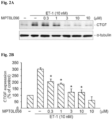
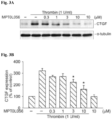
- MPT0L0560 also inhibited ET-1- and thrombin- induced CTGF expression form WI-38 lung fibroblasts, as shown in Figure 2 and 3 , respectively.
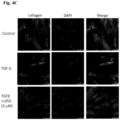
- MPT0L056 also inhibited TGF- ⁇ -induced collagen expression in WI-38 cells.
- pro-fibrogenic mediators pro-fibrogenic mediators and ⁇ -SMA, fibronectin were also examined.
- WI-38 lung fibroblasts were incubated with different concentrations of MPT0L056 (0.3, 1, 3 or 10 ⁇ M) for 30 min before and during incubation for 24 h with TGF- ⁇ (10 ng/mL).
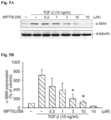
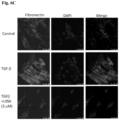
- L056 significantly inhibited TGF- ⁇ -induced ⁇ -SMA (see Figure 5 ) and fibronectin expression (see Figure 6 ) from WI-38 lung fibroblasts in a concentration-dependent manner.
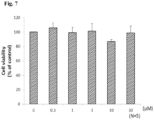
- WI-38 lung fibroblasts were incubated with different concentrations of MPT0L056 (0.3, 1, 3 or 10 ⁇ M) for 2 hours before MTT-assay.
- Figure 7 shows the effect of L056 on cell viability in WI38 cells. These data indicated that L056 did not affect cell viability.
- mice C57BL/6JNarl mice (8 weeks) were treated with bleomycin (BLM, 0.05 U/50 ⁇ l) or PBS (50 ⁇ l) by endotracheal administration.
- L056 25, 50, 100 mg/kg/day, q.d.
- pirfenidone 200 mg/kg/day, q.d.
- H&E hematoxylin-eosin
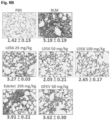
- Figure 8 shows the antifibrotic effects of MPT0L056 on bleomydcin-induced pulmonary fibrosis in mice.
- the results show that MPT0L056 inhibits BLM-induced lung fibrosis in a dose-dependent manner (see Fig. 8(A) ), and the efficacy of L056 in the inhibition is significantly higher than the PBS control (see Fig. 8(B) ).
- pro-fibrogenic mediators The pro-fibrogenic mediators, pro-fibrogenic mediators, collagen, CTGF, fibronectin and ⁇ -SMA were also examined and the results are shown in Fig. 9 (A) to (D) , respectively. These data indicated that pro-fibrogenic mediators expression were inhibited by L056 treatment in bleomycin-induced mice lung fibrosis model.
- mice C57BL/6JNarl mice (8 weeks) were treated with CCl4 (1 ⁇ l/ ⁇ g/ BW, q.w.) or PBS (1 ⁇ l/ ⁇ g/ BW, q.w.) by i.p. injection for 6 weeks.
- MPT0L056 25, 50 and 100 mg/kg/day, q.d.
- silymarin 200 mg/kg/day, q.d.
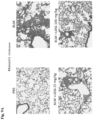
- mice were sacrificed, and the ⁇ -SMA analysis of liver tissue was performed by IHC staining (original magnification, x100) (see Fig. 11 ).
- Figure 10 shows the antifibrotic effects of MPT0L056 and silymarin on CCl4-induced liver fibrosis in mice.
- Figure 10 (A) shows the results of sirius red stain.
- Figure 10 (B) the inhibition of MPT0L056 on CCl4-induced liver fibrosis is dose-dependent, and the efficacy of MPT0L056 in inhibition is higher than silymarin.
- the results of MPT0L056 in reducing refibrosis score are shown in the table below.
Landscapes
- Health & Medical Sciences (AREA)
- Chemical & Material Sciences (AREA)
- Public Health (AREA)
- Veterinary Medicine (AREA)
- General Health & Medical Sciences (AREA)
- Life Sciences & Earth Sciences (AREA)
- Animal Behavior & Ethology (AREA)
- Pharmacology & Pharmacy (AREA)
- Medicinal Chemistry (AREA)
- Epidemiology (AREA)
- Organic Chemistry (AREA)
- Engineering & Computer Science (AREA)
- Bioinformatics & Cheminformatics (AREA)
- Chemical Kinetics & Catalysis (AREA)
- General Chemical & Material Sciences (AREA)
- Nuclear Medicine, Radiotherapy & Molecular Imaging (AREA)
- Pulmonology (AREA)
- Cardiology (AREA)
- Heart & Thoracic Surgery (AREA)
- Urology & Nephrology (AREA)
- Gastroenterology & Hepatology (AREA)
- Pharmaceuticals Containing Other Organic And Inorganic Compounds (AREA)
- Acyclic And Carbocyclic Compounds In Medicinal Compositions (AREA)
- Medicines Containing Antibodies Or Antigens For Use As Internal Diagnostic Agents (AREA)
- Medicines That Contain Protein Lipid Enzymes And Other Medicines (AREA)
- Organic Low-Molecular-Weight Compounds And Preparation Thereof (AREA)
Description
- The present disclosure relates to aminonaphthoquinone compounds to treat and/or prevent fibrosis diseases.
- Normal tissue repair processes are critical for maintaining proper tissue function. Fibrosis is an excessive growth of fibrous connective tissue in an organ, any part, or tissue thereof, for example in a liver, any part or tissue thereof, especially in response to an injury. Fibrosis affects many organ systems, including the lung, kidney, liver and heart; and many disease processes, including cardiomyopathies, hypertension, chronic hepatitis C infection, adult respiratory distress syndrome, and sarcoidosis are accompanied by fibrosis. For example, hepatic fibrosis is overly exuberant wound healing in which excessive connective tissue builds up in the liver. Chronic liver diseases can lead to liver fibrosis with the principle causes chronic viral hepatitis B and alcoholic liver disease. Pulmonary fibrosis (literally "scarring of the lungs") is a respiratory disease in which scars are formed in the lung tissues, leading to serious breathing problems. Scar formation, the accumulation of excess fibrous connective tissue (the process called fibrosis), leads to thickening of the walls, and causes reduced oxygen supply in the blood. As a consequence patients suffer from perpetual shortness of breath. Renal fibrosis is the inevitable consequence of an excessive accumulation of extracellular matrix that occurs in virtually every type of chronic kidney disease. Intestinal fibrosis is a common complication of inflammatory bowel disease (IBD) and can occur in both ulcerative colitis (UC) and Crohn's disease (CD), but is much more prevalent in CD. Fibrosis can also occur in the heart, e.g., cardiac fibrosis can occur as a thickening of a heart valve. Current therapies to treat fibrotic conditions, including dermal fibrosis and liver fibrosis, have a limited efficacy.
- Proteasomes play a major role in the degradation of many proteins that are involved in cell cycling, proliferation, and apoptosis. They have at least three distinct endopeptidase activities which include hydrolysis of peptide bonds on the carboxyl side of hydrophobic, basic, and acidic amino acid residues. Proteasomes, through their protein degradation activity, have been implicated in several important cell functions, including DNA repair, cell cycle progression, signal transduction, transcription, and antigen presentation. Proteasome inhibition represents an important new strategy in cancer treatment.
US 7,442,830 ,US 8,003,819 andUS 8,058,262 relate to boronic acid and boronic ester compounds useful as proteasome inhibitors.US 8,389,564 provides salinosporamide used to treating and/or ameliorating a disease or condition, such as cancer, a microbial disease and/or inflammation.WO 2010/005534 provides compounds having activity as inhibitors of proteasomes.US 2005/0222043 relates to the use of at least one proteasome inhibitor, preferably in the form of a threonine protease inhibitor, in the treatment of fibrotic diseases of the cardiovascular system. - However, there is still a need for novel compounds for the treatment of fibrosis diseases.
- The present disclosure provides a compound of Formula (I) or a pharmaceutically acceptable salt or solvate thereof for use in a method for prevention and/or treatment of a fibrosis disease in a subject, comprising administering an effective amount of a compound of Formula (I) described herein or a pharmaceutically acceptable salt, or solvate thereof as an active ingredient to the subject. Preferably, the effective amount is in a range of about 1.5 mg/kg/day to about 20 mg/kg/day to the subject. In some embodiments, the effective amount of the active ingredient ranges from about 1.5 mg/kg/day to about 15 mg/kg/day, about 1.5 mg/kg/day to about 13 mg/kg/day, about 1.5 mg/kg/day to about 12 mg/kg/day, about 1.5 mg/kg/day to about 10 mg/kg/day, about 2.0 mg/kg/day to about 20 mg/kg/day, about 2.0 mg/kg/day to about 15 mg/kg/day, about 2.0 mg/kg/day to about 13 mg/kg/day or about 2.0 mg/kg/day to about 12 mg/kg/day, about 5 mg/kg/day to about 20 mg/kg/day, about 5 mg/kg/day to about 15 mg/kg/day or about 5 mg/kg/day to about 10 mg/kg/day, or in a range between any of the two above recited values. In some embodiments, the active ingredient of the method of the present disclosure is further co-administered with a second anti-fibrosis agent. Preferably, the second anti-fibrosis agent is ESBRIET (pirfenidone), OFEV (nintedanib), LOXL2 antibody (such as simtuzumab), IL-13 antibody (lebrikizumab), αVβ6 antibody (such as STX-100), CTGF antibody (such as FG-3019), tipelukast (such as MN-001) or aerosol pirfenidone (such as GP-101). According to the present invention, the fibrosis disease is skin fibrosis, lung fibrosis, renal fibrosis, intestinal fibrosis, cystic fibrosis, cardiac fibrosis, uterine leiomyoma or adenomyosis. In a further embodiment, the lung fibrosis is idiopathic pulmonary fibrosis.
- The present disclosure also provides a pharmaceutical composition comprising a compound of Formula (I) or a pharmaceutically acceptable salt, solvate thereof as an active ingredient in one or more unit dosage forms. Preferably, the dosage form is in one or more capsule forms or tablet forms.
-
-
Fig. 1A and Fig. 1B show the effect of L056 on TGF-β-induced CTGF expression in WI-38 cells. WI-38 lung fibroblasts were incubated with different concentrations of L056 (0.3, 1, 3 or 10 µM) for 30 min before and during incubation for 2 h with TGF-β (10 ng/mL). L056 significantly inhibited TGF-β-induced CTGF production from WI-38 lung fibroblasts in a concentration-dependent manner.Fig. 1A , Western blot plot;Fig. 1B , Quantitative assay of Western blot. -
Fig. 2A and Fig. 2B show the effect of L056 on ET-1-induced CTGF expression in WI-38 cells. WI-38 lung fibroblasts were incubated with different concentrations of L056 (0.3, 1, 3 or 10 µM) for 30 min before and during incubation for 2 h with ET-1 (10 nM). L056 significantly inhibited ET-1-induced CTGF production from WI-38 lung fibroblasts in a concentration-dependent manner.Fig. 2A , Western blot plot;Fig. 2B , Quantitative assay of Western blot. -
Fig. 3A and Fig. 3B show the effect of L056 on thrombin-induced CTGF expression in WI-38 cells. WI-38 lung fibroblasts were incubated with different concentrations of L056 (0.3, 1, 3 or 10 µM) for 30 min before and during incubation for 2 h with thrombin (1 U/ml). L056 significantly inhibited thrombin-induced CTGF production from WI-38 lung fibroblasts in a concentration-dependent manner.Fig. 3A , Western blot plot;Fig. 3B , Quantitative assay of Western blot. -
Fig. 4A, Fig. 4B andFig. 4C show the effect of L056 on TGF-β-induced collagen expression in WI-38 cells. WI-38 lung fibroblasts were incubated with different concentrations of L056 (0.3, 1, 3 or 10 µM) for 30 min before and during incubation for 2 h with TGF-β (10 ng/mL). L056 significantly inhibited TGF-β-induced collagen production from WI-38 lung fibroblasts in a concentration-dependent manner.Fig. 4A , Western blot plot;Fig. 4B , Quantitative assay of Western blot;Fig. 4C , Immunofluorescence plot. -
Fig. 5A and Fig. 5B show the effect of L056 on TGF-β-induced α-SMA expression in WI-38 cells. WI-38 lung fibroblasts were incubated with different concentrations of L056 (0.3, 1, 3 or 10 µM) for 30 min before and during incubation for 2 h with TGF-β (10 ng/mL). L056 significantly inhibited TGF-β-induced α-SMA production from WI-38 lung fibroblasts in a concentration-dependent manner.Fig. 5A , Western blot plot;Fig. 5B , Quantitative assay of Western blot. -
Fig. 6A, Fig. 6B andFig. 6C show the effect of L056 on TGF-β-induced fibronectin expression in WI-38 cells. WI-38 lung fibroblasts were incubated with different concentrations of L056 (0.3, 1, 3 or 10 µM) for 30 min before and during incubation for 2 h with TGF-β (10 ng/mL). L056 significantly inhibited TGF-β-induced fibronectin production from WI-38 lung fibroblasts in a concentration-dependent manner.Fig. 6A , Western blot plot;Fig. 6B , Quantitative assay of Western blot;Fig. 6C , Immunofluorescence plot. -
Fig. 7 shows the effect of L056 on cell viability in WI38 cells. -
Fig. 8A andFig. 8B show the effect of L056 effect on fibrosis score of BLM-induced lung fibrosis in mice. C57BL/6 mice (8 weeks) were treated with bleomycin (BLM, 0.05 U/50 µl) or PBS (50 µl) by endotracheal administration. L056 (25, 50, 100 mg/kg/day, q.d.), nintedanib (OFEV) (200 mg/kg/day, q.d.) or esbriet (ie., pirfenidone) (200 mg/kg/day, q.d.) were administered orally to bleomycin-treated mice from 10 to 38 days after BLM treatment. On day 39, the mice were sacrificed and, the histologic analysis of lung tissue was performed by hematoxylin-eosin (H&E) staining (original magnification, x100). Semi quantitative analysis of the histology showed that bleomycin administration led to elevated histology fibrosis score in the lungs.Fig. 8A , Histology fibrosis score plot;Fig. 8B , H&E staining plot. -
Fig. 9A to Fig. 9D show the inhibitory effects on pro-fibrogenic mediators, collagen, CTGF, fibronectin and α-SMA, respectively.Fig. 9A , H&E staining plot for collagen;Fig. 9B , H&E staining plot for CTGF;Fig. 9C , H&E staining plot for fibronectin;Fig. 9D , H&E staining plot for α-SMA. -
Fig. 10A and Fig. 10B show the effect of L056 on CCl4-induced liver fibrosis in mice (therapeutic model).Fig. 10A , sirius red stain;Fig. 10B , the inhibition of MPT0L056 on CCl4-induced liver fibrosis. -
Figure 11 shows the effect of L056 on CCl4-induced α-SMA expression in mice (therapeutic model). - The present disclosure is, at least in part, based on the discovery of using aminonaphthoquinone compounds and their effective dose in the prevention and/or treatment of fibrosis diseases. Particularly, the compounds can effectively prevent and/or treat a fibrosis disease without cytotoxicity or genotoxicity.
- As used herein, except where the context requires otherwise, the term "comprise" and variations of the term, such as "comprising," "comprises" and "comprised" are not intended to exclude other additives, components, integers or steps.
- As used herein, except where the context requires otherwise, the method steps disclosed are not intended to be limiting nor are they intended to indicate that each step is essential to the method or that each step must occur in the order disclosed.
- As used herein, the use of "or" means "and/or" unless stated otherwise. In the context of a multiple dependent claim, the use of "or" refers back to more than one preceding independent or dependent claim in the alternative only.
- As used herein, all numbers are approximate, and may be varied to account for measurement error and the rounding of significant digits. The use of "about" before certain measured quantities includes variations due to sample impurities, measurement error, human error, and statistical variation, as well as the rounding of significant digits.
- As used herein, the term "pharmaceutically acceptable salt" refers to those salts which are, within the scope of sound medical judgment, suitable for use in contact with the tissues of humans and lower animals without undue toxicity, irritation, allergic response and the like, and are commensurate with a reasonable benefit/risk ratio. Pharmaceutically acceptable salts are well known in the art. For example, Berge et al., describe pharmaceutically acceptable salts in detail in J. Pharmaceutical Sciences, 1977, 66, 1-19. Pharmaceutically acceptable salts of the compounds of the present disclosure include those derived from suitable inorganic and organic acids and bases. Examples of pharmaceutically acceptable, nontoxic acid addition salts are salts of an amino group formed with inorganic acids such as hydrochloric acid, hydrobromic acid, phosphoric acid, sulfuric acid, and perchloric acid or with organic acids such as acetic acid, oxalic acid, maleic acid, tartaric acid, citric acid, succinic acid, or malonic acid or by using other methods known in the art such as ion exchange. Other pharmaceutically acceptable salts include adipate, alginate, ascorbate, aspartate, benzenesulfonate, benzoate, bisulfate, borate, butyrate, camphorate, camphorsulfonate, citrate, cyclopentanepropionate, digluconate, dodecylsulfate, ethanesulfonate, formate, fumarate, glucoheptonate, glycerophosphate, gluconate, hemisulfate, heptanoate, hexanoate, hydroiodide, 2-hydroxy-ethanesulfonate, lactobionate, lactate, laurate, lauryl sulfate, malate, maleate, malonate, methanesulfonate, 2-naphthalenesulfonate, nicotinate, nitrate, oleate, oxalate, palmitate, pamoate, pectinate, persulfate, 3-phenylpropionate, phosphate, picrate, pivalate, propionate, stearate, succinate, sulfate, tartrate, thiocyanate, p-toluenesulfonate, undecanoate, valerate salts, and the like. Salts derived from appropriate bases include alkali metal, alkaline earth metal and ammonium salts. Representative alkali or alkaline earth metal salts include sodium, lithium, potassium, calcium, magnesium, and the like. Further pharmaceutically acceptable salts include, when appropriate, nontoxic ammonium, quaternary ammonium, and amine cations formed using counterions such as halide, hydroxide, carboxylate, sulfate, phosphate, nitrate, lower alkyl sulfonate, and aryl sulfonate.
- The term "solvate" refers to forms of the compound that are associated with a solvent, usually by a solvolysis reaction. This physical association may include hydrogen bonding. Conventional solvents include water, methanol, ethanol, acetic acid, DMSO, THF, diethyl ether, and the like. The compounds described herein may be prepared, e.g., in crystalline form, and may be solvated. Suitable solvates include pharmaceutically acceptable solvates and further include both stoichiometric solvates and non-stoichiometric solvates. In certain instances, the solvate will be capable of isolation, for example, when one or more solvent molecules are incorporated in the crystal lattice of a crystalline solid. "Solvate" encompasses both solution-phase and isolable solvates. Representative solvates include hydrates, ethanolates, and methanolates.
- The term "prodrug" refers to compounds, including derivatives of the compounds described herein, which have cleavable groups and become by solvolysis or under physiological conditions the compounds described herein, which are pharmaceutically active in vivo. Such examples include, but are not limited to, choline ester derivatives and the like, N-alkylmorpholine esters and the like. Other derivatives of the compounds of the present disclosure have activity in both their acid and acid derivative forms, but in the acid sensitive form often offer advantages of solubility, tissue compatibility, or delayed release in the mammalian organism (see, Bundgard, H., Design of Prodrugs, pp. 7-9, 21-24, Elsevier, Amsterdam 1985). Prodrugs include acid derivatives well known to practitioners of the art, such as, for example, esters prepared by reaction of the parent acid with a suitable alcohol, or amides prepared by reaction of the parent acid compound with a substituted or unsubstituted amine, or acid anhydrides, or mixed anhydrides. Prodrugs are however not part of the present invention.
- The terms "administer," "administering," or "administration," as used herein, refers to implanting, absorbing, ingesting, injecting, inhaling, or otherwise introducing an inventive compound, or a pharmaceutical composition thereof, in or on a subject.
- As used herein, the terms "condition," "disease," and "disorder" are used interchangeably.
- An "effective amount" of a compound described herein refers to an amount sufficient to elicit the desired biological response, i.e., treating the condition. As will be appreciated by those of ordinary skill in this art, the effective amount of a compound described herein may vary depending on such factors as the desired biological endpoint, the pharmacokinetics of the compound, the condition being treated, the mode of administration, and the age and health of the subject. An effective amount encompasses therapeutic and prophylactic treatment.
- A "therapeutically effective amount" of a compound described herein is an amount sufficient to provide a therapeutic benefit in the treatment of a condition or to delay or minimize one or more symptoms associated with the condition. A therapeutically effective amount of a compound means an amount of therapeutic agent, alone or in combination with other therapies, which provides a therapeutic benefit in the treatment of the condition. The term "therapeutically effective amount" can encompass an amount that improves overall therapy, reduces or avoids symptoms or causes of the condition, and/or enhances the therapeutic efficacy of another therapeutic agent.
- A "prophylactically effective amount" of a compound described herein is an amount sufficient to prevent a condition, or one or more symptoms associated with the condition or prevent its recurrence. A prophylactically effective amount of a compound means an amount of a therapeutic agent, alone or in combination with other agents, which provides a prophylactic benefit in the prevention of the condition. The term "prophylactically effective amount" can encompass an amount that improves overall prophylaxis or enhances the prophylactic efficacy of another prophylactic agent.
- As used herein, the term "pharmaceutically acceptable carrier" refers to a solid, semisolid, or liquid filler, diluent, encapsulating material, formulation auxiliary, or carrier conventional in the art for use with a therapeutic agent for administration to a subject. A pharmaceutically acceptable carrier is non-toxic to recipients at the dosages and concentrations employed and is compatible with other ingredients of the formulation. Pharmaceutically acceptable carriers are determined in part by the particular composition being administered, as well as by the particular method used to administer the composition.
- As used herein, the term "subject" is defined herein to include animals such as mammals, including, but not limited to, primates (e.g., humans), cows, sheep, goats, horses, dogs, cats, rabbits, rats, mice and the like. In specific embodiments, the subject is a human. The terms "subject" and "patient" are used interchangeably herein in reference, for example, to a mammalian subject, such as a human.
- As used herein, the terms "treat," "treating" and "treatment" refer to the eradication or amelioration of a disease or disorder, or of one or more symptoms associated with the disease or disorder. In certain embodiments, the terms refer to minimizing the spread or worsening of the disease or disorder resulting from the administration of one or more prophylactic or therapeutic agents to a subject with such a disease or disorder. In some embodiments, the terms refer to the administration of a compound or dosage form provided herein, with or without one or more additional active agents, after the diagnosis or onset of symptoms of the particular disease.
- As used herein, the terms "prevent," "preventing" and "prevention" refer to the prevention of the onset, recurrence or spread of a disease or disorder, or of one or more symptoms thereof. In certain embodiments, the terms refer to the treatment with or administration of a compound or an antibody or dosage form provided herein, with or without one or more other additional active agents, prior to the onset of symptoms, particularly to patients at risk of disease or disorders provided herein. The terms encompass the inhibition or reduction of a symptom of the particular disease. In this regard, the term "prevention" may be interchangeably used with the term "prophylactic treatment."
- As used herein, the terms "co-administration" and "in combination with" include the administration of two or more therapeutic agents simultaneously, concurrently, separately or sequentially within no specific time limits unless otherwise indicated. In one embodiment, the therapeutic agents are in the same composition or unit dosage form. In other embodiments, the therapeutic agents are in separate compositions or unit dosage forms.
- In a non-claimed aspect, the present disclosure provides a method for prevention and/or treatment of a fibrosis disease in a subject, comprising administering an effective amount of a compound with the following general Formula (I) or an isomer, a stereoisomer, a pharmaceutically acceptable salt, solvate or prodrug thereof as an active ingredient to a subj ect,

- R1 is halogen, C1-10alkyl, C2-10alkenyl, C2-10alkynyl, NH2, NO2, OH or CN;
- each R2 is the same or different, representing H, C1-10alkyl, C2-10alkenyl, C2-10alkynyl, NH2, NO2, C1-10alkyloxy, C1-10alkylthio, C1-10alkylamino, C1-10alkyloxyC1-10alkyl, OH or CN, C6-10aryl or C5-7heterocyclic having 1 to 3 heteroatoms selected from the group consisting of N, O and S;
- R3 is H, C1-10alkyl, C2-10alkenyl, C2-10alkynyl, NH2, NO2, OH or CN;
- R4 is H, C1-10alkyl, C2-10alkenyl, C2-10alkynyl, NH2, NO2, OH or CN, or R4 together with nitrogen atom attached therefrom and R5 form a fused bicyclic ring having 0 to 3 heteroatoms selected from O; N and S;
- R5 is absent, OH, C3-10cycloalkyl, C6-10aryl, C5-7heterocyclic ring having 0 to 3 heteroatoms selected from O; N and S or C10-12 fused heterocyclic ring having 0 to 3 heteroatoms selected from O; N and S, each of cycloalkyl, aryl, heterocyclic ring and fused heterocyclic ring is unsubstituted or substituted with one to three of OH; halogen; NH2; NO2, CN, C1-10alkyl; C2-10alkenyl; C2-10alkynyl; C1-10alkyloxy; C5-10heteroaryl having 1 to 3 heteroatoms selected from the group consisting of N, O and S, unsubstituted or substituted with C1-10alkyl, C2-10 alkenyl, C2-10alkynyl, OH, halogen, CN, NH2 or NO2; -S(O)2-phenyl wherein the phenyl is unsubstituted or substituted with halogen, OH, CN, NH2, NO2, C1-10alkyl, C2-10alkenyl, C2-10alkynyl or C1-10alkyloxy; -C(O)NHOH; -C(O)NH2; -C(O)-phenyl wherein phenyl is unsubstituted or substituted with 1-5 same or different substituents selected from the group consisting of OH, halogen, CN, NH2, NO2, C1-10alkyl, C2-10alkenyl, C2-10alkynyl or C1-10alkyloxy; -C(O)NRaRb; NHS(O)2phenyl wherein phenyl is optionally substituted with OH, halogen, CN, NH2, NO2, C1-10alkyl, C2-10alkenyl, C2-10alkynyl or C1-10alkyloxy; C1-10alkylene-heteroaryl; -S(O)2-heteroaryl; -S(O)2-heterocylic ring; -S(O)2N(H)-heteroaryl; -alkylene-N(H)-heteroaryl; heterocylic ring unsubstituted or substituted with C1-10alkyl; or
- R5 is alkylene-R6 wherein R6 is OH, NO2, CN, alkyl, alkenyl, alkynyl, NRaRb, cycloalkyl, aryl, heterocyclic ring having 0 to 3 heteroatoms selected from O; N and S or fused heterocyclic ring having 0 to 3 hetero atoms selected from O, N and S, each of cycloalkyl, aryl, heterocyclic ring and fused heterocyclic ring is unsubstituted or substituted with one to three of OH; halogen; NH2; NO2, CN, alkyl; alkenyl; alkynyl; alkyloxy; heteroaryl having 1 to 3 heteroatoms selected from the group consisting of N, O and S, unsubstituted or substituted with alkyl, alkenyl, alkynyl, OH, halogen, CN, NH2 or NO2; and
- Ra and Rb are the same or different, independently representing H; OH; alkyl; alkenyl; alkynyl; alkyloxy; cycloalkyl; heterocylyl; alkyleneamino; alkylene-N-(alkyl)2; aryl unsubstituted or substituted with OH, halogen, CN, NH2, NO2, alkyl, alkenyl, alkynyl, alkyloxy or heteroaryl; heteroaryl unsubstituted or substituted with OH, halogen, CN, NH2, NO2, alkyl, alkenyl, alkynyl or alkyloxy; alkylene-heteroaryl; or alkylene-heterocylyl unsubstituted or substituted with alkyl;
- X is -C(O), -S(O)2 or -NH-C(O)-;
- Y is -C- or -N-;
- m is an integer of 0-3; and
- n is an integer of 0-7.
- The present invention provides a compound with the general Formula (I) described herein or a pharmaceutically acceptable salt, or solvate thereof for prevention and/or treatment of a fibrosis disease in a subject, wherein m is 0; R1 is halogen; n is any integer of 1-4; R3 is H; X is -C(O)-; R4 is H; and R5 is OH; C3-8cycloalkyl; phenyl unsubstituted or substituted with one to three same or different substituents selected from OH, CN, halogen, NH2 or C1-4alkylpiperazinyl; C1-6alkylpiperazinyl; C1-6alkylpyridinyl; C1-6alkylpyrrolidinyl; pyridinyl; pyrimidinyl; pyrazinyl; piperazinyl; pyrrolidinyl; thiazolyl; benzimidazolyl; pyrazolyl; indazolyl; pyrazolyl; quinolinyl; indolyl; C1-4indolyl; indazolyl; azaindolyl; azaindazolyl; deazapurinyl; indanyl; morpholinoyl or C1-4alkylmorpholinoyl, each of which is unsubstituted or substituted with one, two or three groups selected from OH, CN, halogen or NH2, wherein the fibrosis disease is as defined in the claims.
- In some embodiments of formula (I), m is 0; R1 is halogen; n is any integer of 1-2; R3 is H; X is -C(O); R4 is H; and R5 is OH; C3-8cycloalkyl; pyridinyl; phenyl substituted by one to three of NH2, halogen, OH, CN or C1-4alkylpiperazinyl; pyrinidinyl unsubstituted or substituted with NH2; pyrazinyl unsubstituted or substituted with NH2; thiazolyl unsubstituted or substituted with NH2; benzimidazolyl unsubstituted or substituted with NH2; pyrazolyl unsubstituted or substituted with NH2; indazolyl unsubstituted or substituted with NH2; thiazolyl unsubstituted or substituted with NH2; quinolinyl unsubstituted or substituted with NH2; indolyl unsubstituted or substituted with NH2; indazolyl unsubstituted or substituted with NH2; azaindazolyl unsubstituted or substituted with NH2; deazapurinyl unsubstituted or substituted with NH2; indanyl unsubstituted or substituted with NH2; or morpholinoyl unsubstituted or substituted with NH2.
- In some embodiments of formula (I), m is 0; R1 is halogen; n is any integer of 1-4; R3 is H; X is C(O); R4 is H; R5 is alkylene-R6 wherein R6 is NRaRb, C5-7heterocyclic ring having 0 to 3 hetero atoms selected from O, N and S; or C10-12 fused heterocyclic ring having 0 to 3 hetero atoms selected from O, N and S; and Ra and Rb are alkyl.
- In some embodiments of formula (I), m is 0; R1 is halogen; n is any integer of 1-2; R3 is H; X is C(O); R4 is H; R5 is (CH2)1-4R6 wherein R6 is unsubstituted or substituted pyrrolidinyl, oxolanyl, thiolanyl, pyrrolyl, furanyl, thiophenyl, piperidinyl, oxanyl, thianyl, morpholinoyl, pyridinyl, piperidinyl, piperazinyl, thiopyranyl, pyrazinyl, pyrimidinyl, pyridazinyl, thiazolyl; benzimidazolyl; pyrazolyl; indazolyl; pyrazolyl; quinolinyl; indolyl; indazolyl; azaindolyl; azaindazolyl; deazapurinyl; or indanyl.
- In some embodiments of formula (I), m is 0; R1 is halogen; n is any integer of 1-2; R3 is H; X is C(O); R4 is H; R5 is (CH2)1-4R6 wherein R6 is unsubstituted or substituted pyrrolidinyl, morpholinoyl, pyridinyl, piperidinyl, piperazinyl, or indolyl.
- In some embodiments of formula (I), the compounds include the following:


- Examples 16 and 22 do not form part of the present invention.
- The compounds of the present disclosure can be prepared using methods known to those skilled in the art in view of this disclosure. The compounds and their preparation methods described herein are disclosed in
PCT/US2015/041767 andUSSN 62/199,207 

- In one embodiment, the effective amount is in a range of about 1.5 mg/kg/day to about 20 mg/kg/day. In another embodiment, the effective amount for a human is in a range of about 2.0 mg/kg/day to about 15 mg/kg/day. On the other hand, the present disclosure also provides a use of an effective amount of a compound of Formula (I) or a pharmaceutically acceptable salt, solvate or prodrug as an active ingredient for the manufacture of a medicament for prevention and/or treatment of a fibrosis disease.
- In some further embodiments, the effective amount of the active ingredient or an isomer, a stereoisomer, a pharmaceutically acceptable salt, solvate or prodrug thereof used in the present disclosure ranges from about 1.5 mg/kg/day to about 15 mg/kg/day, about 1.5 mg/kg/day to about 13 mg/kg/day, about 1.5 mg/kg/day to about 12 mg/kg/day, about 1.5 mg/kg/day to about 10 mg/kg/day, about 2.0 mg/kg/day to about 20 mg/kg/day, about 2.0 mg/kg/day to about 15 mg/kg/day, about 2.0 mg/kg/day to about 13 mg/kg/day or about 2.0 mg/kg/day to about 12 mg/kg/day, about 5 mg/kg/day to about 20 mg/kg/day, about 5 mg/kg/day to about 15 mg/kg/day or about 5 mg/kg/day to about 10 mg/kg/day, or in a range between any of the above recited values. In a further embodiment, the effective amount used in the present disclosure is about 2.3 mg/kg/day to about 11 mg/kg/day.
- In one embodiment, the active ingredient of the present disclosure is further co-administered with a second anti-fibrosis agent. Preferably, the second anti-fibrosis agent is ESBRIET (pirfenidone), OFEV (nintedanib), LOXL2 antibody (such as simtuzumab), IL-13 antibody (lebrikizumab), αVβ6 antibody (such as STX-100), CTGF antibody (such as FG-3019), tipelukast (such as MN-001) or aerosol pirfenidone (such as GP-101). In a further embodiment, the co-administration is simultaneous, separate or sequential administration.
- The fibrosis disease is skin fibrosis, lung fibrosis, renal fibrosis, intestinal fibrosis, cystic fibrosis, cardiac fibrosis, uterine leiomyoma or adenomyosis. In a further embodiment, the lung fibrosis is idiopathic pulmonary fibrosis. In another further embodiment, the treatment of lung fibrosis further comprises a co-administered therapy with lung transplantation, hyperbaric oxygen therapy (HBOT) or pulmonary rehabilitation.
- In another aspect, the present disclosure provides a pharmaceutical composition comprising a compound of Formula (I) or a pharmaceutically acceptable salt, or solvate thereof as defined in the claims, as an active ingredient in one or more unit dosage forms. Preferably, the dosage form is in one or more capsule forms or tablet forms. In one embodiment, the compound of Formula (I) is 4-(((3-chloro-1,4-dioxo-1,4-dihydronaphthalen-2-yl)amino)methyl)-N-(pyridin-3-yl)benzamide.
- In some embodiments, the pharmaceutical composition of the present disclosure is in one or more capsule forms or tablet forms. In a further embodiment, the pharmaceutical composition of the present disclosure comprises about 100 mg to about 300 mg, about 150 mg to about 300 mg, about 150 mg to about 250 mg, about 200 mg to 250 mg, about 220 mg to about 280 mg, about 220 mg to about 250 mg or about 200 mg to about 220 mg of the active ingredient in a single tablet; preferably, about 200 mg or 220 mg, or in a range between any of the above recited values in a single tablet. In another further embodiment, the pharmaceutical composition of the present disclosure comprises about 100 mg to about 500 mg, about 150 mg to about 500 mg, about 180 mg to about 500 mg, about 200 mg to about 500 mg, about 150 mg to about 350 mg, about 150 mg to about 300 mg, about 200 mg to about 400 mg, about 200 mg to about 400 about 350 mg, about 200 mg to about 300 mg, about 250 mg to about 500 mg, about 250 mg to about 400 mg, about 250 mg to about 350 mg or about 250 mg to about 300 mg, or in a range between any of the above recited values of the active ingredient in a single capsule; preferably, about 250 mg of the active ingredient in a single capsule.
- In one embodiment, the pharmaceutical composition of the present disclosure comprises a second anti-fibrosis agent. Preferably, the second anti-fibrosis agent is ESBRIET (pirfenidone), OFEV (nintedanib), LOXL2 antibody (such as simtuzumab), IL-13 antibody (lebrikizumab), αVβ6 antibody (such as STX-100), CTGF antibody (such as FG-3019), tipelukast (such as MN-001) or aerosol pirfenidone (such as GP-101).
- While it may be possible for the compounds of the present disclosure to be administered as the raw chemical, it is also possible to present them as a pharmaceutical formulation. Accordingly, the present disclosure provides a pharmaceutical formulation or composition comprising a compound or a pharmaceutically acceptable salt, or solvate thereof, together with one or more pharmaceutically acceptable carriers thereof and optionally one or more other therapeutic ingredients. The carrier(s) must be "acceptable" in the sense of being compatible with the other ingredients of the formulation and not deleterious to the recipient thereof. Proper formulation is dependent upon the route of administration chosen. Formulations may take the form of tablets, pills, capsules, semisolids, powders, sustained release formulations, solutions, suspensions, elixirs, aerosols, or any other appropriate compositions; and comprise at least one compound of present disclosure in combination with at least one pharmaceutically acceptable excipient. Suitable excipients are well known to persons of ordinary skill in the art, and they, and the methods of formulating the compositions, may be found in such standard references as Remington: The Science and Practice of Pharmacy, A. Gennaro, ed., 20th edition, Lippincott, Williams & Wilkins, Philadelphia, Pa. Suitable liquid carriers, especially for injectable solutions, include water, aqueous saline solution, aqueous dextrose solution, and glycols. The pharmaceutical compositions of the present disclosure may be manufactured in a manner that is itself known, e.g., by means of conventional mixing, dissolving, granulating, dragee-making, levigating, emulsifying, encapsulating, entrapping or compression processes.
- The formulations include those suitable for oral, parenteral (including subcutaneous, intradermal, intramuscular, intravenous, intraarticular, and intramedullary), intraperitoneal, transmucosal, transdermal, rectal and topical (including dermal, buccal, sublingual and intraocular) administration, although the most suitable route may depend, for example, upon the condition and disorder of the recipient. Oral administration is a preferred route. The formulations may conveniently be presented in unit dosage form and may be prepared by any of the methods well known in the art of pharmacy. All methods include the step of bringing into association a compound of the present disclosure or a pharmaceutically acceptable salt, or solvate thereof ("active ingredient") with the carrier which constitutes one or more accessory ingredients. In general, the formulations are prepared by uniformly and intimately bringing into association the active ingredient with liquid carriers or finely divided solid carriers or both and then, if necessary, shaping the product into the desired formulation.
- For oral administration, suitable pharmaceutical compositions of the present disclosure include powders, granules, pills, tablets, lozenges, chews, gels, and capsules as well as liquids, syrups, suspensions, elixirs, and emulsions. These compositions may also include anti-oxidants, flavorants, preservatives, suspending, thickening and emulsifying agents, colorants, flavoring agents and other pharmaceutically acceptable additives. Formulations for oral administration may be formulated to be immediate release or modified release, where modified release includes delayed, sustained, pulsed, controlled, targeted and programmed release.
- For parenteral administration, the compounds of the present disclosure are administered directly into the blood stream, into muscle, or into an internal organ via an intravenous, intraarterial, intraperitoneal, intramuscular, subcutaneous or other injection or infusion. Parenteral formulations may be prepared in aqueous injection solutions which may contain, in addition to the compound of the present disclosure, buffers, antioxidants, bacteriostats, salts, carbohydrates, and other additives commonly employed in such solutions. Parenteral administrations may be immediate release or modified release (such as an injected or implanted depot).
- Compounds or compositions of the present disclosure may also be administered topically, (intra)dermally, or transdermally to the skin or mucosa. Typical formulations include gels, hydrogels, lotions, solutions, creams, ointments, dressings, foams, skin patches, wafers, implants and microemulsions. Compounds or compositions of the present disclosure may also be administered via inhalation or intranasal administration, such as with a dry powder, an aerosol spray or as drops. Additional routes of administration for compounds of the present disclosure include intravaginal and rectal (by means of a suppository, pessary or enema), and ocular and aural.
- Dosage regimens can be adjusted to provide the optimum therapeutic response. For example, several divided dosages may be administered daily or the dosage may be proportionally reduced as indicated by the exigencies of the therapeutic situation.
- It is especially advantageous to formulate the compounds in dosage unit form for ease of administration and uniformity of dosage. Dosage unit form as used herein refers to physically discrete units suited as unitary dosages for the subjects to be treated; each containing a therapeutically effective quantity of the compound and at least one pharmaceutical excipient. A drug product will comprise a dosage unit form within a container that is labelled or accompanied by a label indicating the intended method of treatment.
- Examples are provided in order to exemplify the preparation of specific compounds according to the present invention.
-

- A mixture of 97 (0.36 g, 1.05 mmol), EDC.HCl (0.30 g, 1.58 mmol), HOBt (0.17 g, 1.26 mmol), NMM (0.28 ml, 2.52 mmol) and DMF (2.5 ml) was stirred for a while, to which was then added the o-(tetrahydro-2H-pyran-2-yl)hydroxylamine (0.15 g, 1.26 mmol) at room temperature, and the mixture was stirred overnight. The residue was purified by flash column over silica gel (ethyl acetate: n-hexane = 2:1, Rf = 0.45) to obtain the oily product. The oily product was then dissolved in MeOH (3 ml) and 10% TFA (aq.) (3 ml) added at room temperature and the mixture was stirred overnight. H2O was added to the reaction to produce the precipitant. The residue was filtered without further purification to afford 1 (0.24 g, 98.93 %) as a red solid. 1H-NMR (500MHz, DMSO-d6): δ 4.98 (s, 2H), 7.35 (d, J= 8.5 Hz, 2H), 7.68 (d, J= 8.5 Hz, 2H), 7.73 (m, 1H), 7.81 (m, 1H), 7.96 (m, 2H), 8.03 (s, 1H).
-

- A mixture of 97 (0.25 g, 0.73 mmol), EDC.HCl (0.21 g, 1.10 mmol), HOBt (0.12 g, 0.88 mmol), NMM (0.19 ml, 1.75 mmol) and DMF (2.0 ml) was stirred for a while, to which was then added 2-aminopyridine (0.08 g, 0.88 mmol) at room temperature and the mixture was stirred overnight. The residue was purified by flash column over silica gel (dichloromethane: methanol = 30:1, Rf = 0.50) to afford 2 (0.04 g, 13.11 %) as a red solid. 1H-NMR (300MHz, CDCl3): δ 5.15 (d, J= 6.6 Hz, 2H), 6.33 (s, 1H), 7.08-7.12 (m, 1H), 7.49 (d, J= 8.4 Hz, 2H), 7.67 (m, 1H), 7.77 (m, 2H), 7.97 (d, J= 8.4 Hz, 2H), 8.08 (m, 1H), 8.18 (m, 1H), 8.33 (m, 1H), 8.40 (d, J= 8.4 Hz, 1H), 8.59 (br, 1H).
-

- A mixture of 97 (0.25 g, 0.73 mmol), EDC.HCl (0.21 g, 1.10 mmol), HOBt (0.12 g, 0.88 mmol), NMM (0.19 ml, 1.75 mmol) and DMF (2.0 ml) was stirred for a while, to which was then added o-Phenylenediamine (0.08 g, 0.88 mmol) at room temperature and the mixture was stirred overnight. The residue was purified by flash column over silica gel (dichloromethane: methanol = 30:1, Rf = 0.50) to afford 3 (0.06 g, 19.03 %) as a red solid. 1H-NMR (300 MHz, DMSO-d6): δ 4.86 (s, 2H), 5.03 (s, 2H), 6.57 (t, J= 7.8 Hz, 1H), 6.75 (d, J= 6.6 Hz, 1H), 6.95 (t, J= 7.8 Hz, 1H), 7.14 (d, J= 6.6 Hz, 1H), 7.42 (d, J= 7.8 Hz, 2H), 7.74 (t, J= 7.2 Hz, 1H), 7.82 (t, J= 7.2 Hz, 1H), 7.95 (m, 4H), 8.10 (br, 1H), 9.59 (s, 1H).
-

- A mixture of 97 (0.10 g, 0.29 mmol), HBTU (0.11 g, 0.29 mmol), DIPEA (0.06 ml, 0.35 mmol) and DMF (1.0 ml) was stirred for a while, to which was then added 3-aminopyridine (0.03 g, 0.35 mmol). The reaction was stirred for 16 h at room temperature. The residue was filtered without further purification to afford 4 (0.08 g, 66.02 %). 1H NMR (300 MHz, DMSO-d6): δ 5.03 (d, J= 7.2 Hz, 2H), 7.37 (q, J= 4.8 Hz, 1H), 7.46 (d, J= 8.1 Hz, 2H), 7.74-7.82 (m, 2H), 7.91 (d, J= 8.1 Hz, 2H), 7.95-7.98 (m, 2H), 8.13-8.17 (m, 2H), 8.27-8.29 (m, 1H), 10.42 (s, 1H).
-

- A mixture of 97 (0.10 g, 0.29 mmol), HBTU (0.11 g, 0.29 mmol), DIPEA (0.06 ml, 0.35 mmol) and DMF (1.0 ml) was stirred for a while, to which was then added 4-aminopyridine (0.03 g, 0.35 mmol). The reaction was stirred for 16 h at room temperature. The residue was filtered without further purification to afford 5 (0.08g, 66.02%). 1H NMR (300 MHz, DMSO-d6): δ 5.03 (d, J= 7.2 Hz, 2H), 7.37 (d, J= 8.4 Hz, 2H), 7.73-7.76 (m, 3H), 7.79-7.84 (m, 1H), 7.90 (d, J= 8.4 Hz, 2H), 7.95-7.98 (m, 2H), 8.08-8.13 (m, 1H), 8.43-8.45 (m, 2H), 10.53 (s, 1H).
-

- A mixture of 97 (0.30 g, 0.88 mmol), HBTU (0.50 g, 1.32 mmol), DIPEA (0.23 ml, 1.32 mmol) and DMF (2.5 ml) was stirred for a while, to which was then added 3-fluoroaniline (0.13 g, 1.32 mmol) at room temperature and the mixture was stirred overnight. The residue was purified by flash column over silica gel (ethyl acetate: n-hexane = 1:2, Rf = 0.30) to afford 9 (0.04g, 10.45%) as a red solid. 1H-NMR (300MHz, DMSO-d6): δ 5.03 (s, 2H), 6.92 (m, 1H), 7.36 (m, 1H), 7.45 (d, J= 8.1 Hz, 2H), 7.52 (m, 1H), 7.72 (m, 2H), 7.80 (m, 1H), 7.88 (d, J= 8.4 Hz, 2H), 7.97 (m, 2H), 8.11 (br, 1H), 10.37 (s, 1H).
-

- A mixture of 97 (0.30 g, 0.88 mmol), HBTU (0.50 g, 1.32 mmol), DIPEA (0.23 ml, 1.32 mmol) and DMF (2.5 ml) was stirred for a while, to which was then added 4-fluoroaniline (0.13g, 1.32mmol) at room temperature and the mixture was stirred overnight. The residue was purified by flash column over silica gel (ethyl acetate: n-hexane = 1:2, Rf = 0.35) to afford 10 (0.02 g, 5.23 %) as a red solid. 1H-NMR (300 MHz, DMSO-d6): δ 5.02 (s, 2H), 7.16 (t, J= 9.0 Hz, 2H), 7.43 (d, J= 8.1 Hz, 2H), 7.75 (m, 3H), 7.82 (m, 1H), 7.88 (d, J= 8.4 Hz, 2H), 7.97 (m, 2H), 8.08 (br, 1H), 10.24 (s, 1H).
-

- A mixture of 97 (0.30 g, 0.88 mmol), HBTU (0.50 g, 1.32 mmol), DIPEA (0.23 ml, 1.32 mmol) and DMF (2.5 ml) was stirred for a while, to which was then added aniline (0.12 g, 1.32 mmol) at room temperature and the mixture was stirred overnight. The residue was filtered by suction filtration to yield a red product. The residue was filtered without further purification to afford 11 (0.28 g, 76.33 %) as a red solid. 1H-NMR (300MHz, DMSO-d6): δ 5.02 (s, 2H), 7.07 (t, J= 7.5 Hz, 1H), 7.32 (d, J= 7.5 Hz, 2H), 7.44 (d, J= 8.4 Hz, 2H), 7.75 (m, 3H), 7.83 (m, 1H), 7.88 (d, J= 8.4 Hz, 2H), 7.97 (m, 2H), 8.10 (br, 1H), 10.18 (s, 1H).
-

- A mixture of 97 (0.30 g, 0.88 mmol), HBTU (0.50 g, 1.32 mmol), DIPEA (0.23 ml, 1.32 mmol) and DMF (2.5 ml) was stirred for a while, to which was then added 2-fluoroaniline (0.13 g, 1.32 mmol) at room temperature and the mixture was stirred overnight. The residue was purified by flash column over silica gel (ethyl acetate: n-hexane = 1:2, Rf = 0.25) to afford 12 (0.02 g, 5.23 %) as a red solid. 1H-NMR (300 MHz, DMSO-d6): δ 5.03 (s, 2H), 7.23 (m, 3H), 7.44 (d, J= 8.1 Hz, 2H), 7.56 (t, J= 7.5 Hz, 1H), 7.74 (m, 1H), 7.80 (m, 1H), 7.91 (d, J= 8.1 Hz, 2H), 7.97 (m, 2H), 8.10 (br, 1H), 10.05(s, 1H).
-

- A mixture of 97 (0.30 g, 0.88 mmol), HBTU (0.50 g, 1.32 mmol), DIPEA (0.23 ml, 1.32 mmol) and DMF (2.5 ml) was stirred for a while, to which was then added 2-aminothiazole (0.13 g, 1.32 mmol) at room temperature and the mixture was stirred overnight. The residue was filtered by suction filtration to yield a red product. The residue was filtered without further purification to afford 13 (0.15 g, 40.21 %) as a red solid. 1H-NMR (300 MHz, DMSO-d6): δ 5.03 (d, J= 7.2 Hz, 2H), 7.26 (d, J= 3.6 Hz, 1H), 7.45 (d, J= 8.4 Hz, 2H), 7.53 (d, J= 3.6 Hz, 1H), 7.75 (m, 1H), 7.82 (m, 1H), 7.97 (m, 2H), 8.04 (d, J= 8.4 Hz, 2H), 8.10 (t, J= 7.5 Hz, 1H), 12.55 (s, 1H).
-

- A mixture of 97 (0.30 g, 0.88 mmol), HBTU (0.50 g, 1.32 mmol), DIPEA (0.23 ml, 1.32 mmol) and DMF (2.5 ml) was stirred for a while, to which was then added 2-aminobenzimidazole (0.18 g, 1.32 mmol) at room temperature and the mixture was stirred overnight. The residue was filtered by suction filtration to yield a red product. The residue was filtered without further purification to afford 14 (0.27 g, 67.16 %) as a red solid. 1H-NMR (300 MHz, DMSO-d6): δ 5.03 (d, J= 6.9 Hz, 2H), 7.11 (m, 2H), 7.43 (d, J= 9.0 Hz, 4H), 7.74 (m, 1H), 7.82 (m, 1H), 7.96 (d, J= 5.7 Hz, 2H), 8.07 (d, J= 8.4 Hz, 3H), 12.22 (s, 1H).
-

- A mixture of 97 (0.15 g, 0.44 mmol), HBTU (0.25 g, 0.66 mmol), DIPEA (0.11 ml, 0.66 mmol) and DMF (2.5 ml) was stirred for a while, to which was then added 4-aminophenol (0.07 g, 0.66 mmol) at room temperature and the mixture was stirred overnight. The residue was purified by flash column over silica gel (ethyl acetate: n-hexane = 1:2, Rf = 0.30) to afford 15 (0.02 g, 10.50 %) as a brown solid. 1H-NMR (300 MHz, DMSO-d6): δ 5.01 (d, J= 6.3 Hz, 2H), 6.70 (d, J= 9.0 Hz, 2H), 7.41 (d, J= 8.4 Hz, 2H), 7.48 (d, J= 8.7 Hz, 2H), 7.74 (m, 1H), 7.80 (m, 1H), 7.85 (d, J= 8.4 Hz, 2H), 7.98 (m, 2H), 8.09 (br, 1H), 9.25 (br, 1H), 9.95 (s, 1H).
-

- A mixture of 97 (0.30 g, 0.88 mmol), HBTU (0.50 g, 1.32 mmol), DIPEA (0.23 ml, 1.32 mmol) and DMF (2.5 ml) was stirred for a while, to which was then added 3-ethynylaniline (0.15 g, 1.32 mmol) at room temperature and the mixture was stirred overnight. The residue was purified by flash column over silica gel (ethyl acetate: n-hexane = 1:4, Rf = 0.25) to afford 16 (0.12 g, 30.93 %) as a red solid. 1H-NMR (300 MHz, DMSO-d6): δ 4.17 (s, 1H), 5.03 (s, 2H), 7.18 (d, J= 7.5 Hz, 1H), 7.34 (t, J= 8.1 Hz, 1H), 7.45 (d, J= 8.4 Hz, 2H), 7.87 (m, 8H), 8.11 (br, 1H), 10.27 (s, 1H).
-

- A mixture of 97 (0.30 g, 0.88 mmol), HBTU (0.50 g, 1.32 mmol), DIPEA (0.23 ml, 1.32 mmol) and DMF (2.5 ml) was stirred for a while, to which was then added 2-fluoro-4-iodoaniline (0.31 g, 1.32 mmol) at room temperature and the mixture was stirred overnight. The residue was purified by flash column over silica gel (ethyl acetate: n-hexane = 1:2, Rf = 0.45) to afford 17 (0.02 g, 4.05 %) as a red solid. 1H-NMR (300 MHz, CDCl3): δ 5.03 (d, J= 6.9 Hz, 2H), 7.41 (m, 3H), 7.56 (m, 1H), 7.73 (m, 1H), 7.81 (m, 1H), 7.90 (d, J= 8.4 Hz, 2H), 7.96 (m, 2H), 8.10 (m, 1H), 10.09 (s, 1H).
-

- A mixture of 97 (0.30 g, 0.88 mmol), HBTU (0.50 g, 1.32 mmol), DIPEA (0.23 ml, 1.32 mmol) and DMF (2.5 ml) was stirred for a while, to which was then added 5-aminobenzimidazole (0.18 g, 1.32 mmol) at room temperature and the mixture was stirred overnight. The residue was filtered by suction filtration to yield a red product. The residue was filtered without further purification to afford 18 (0.26 g, 64.67 %) as a red solid. 1H-NMR (300MHz, DMSO-d6): δ 5.03 (d, J= 7.2 Hz, 2H), 7.43-7.48 (m, 3H), 7.54 (d, J= 8.7 Hz, 1H), 7.72-7.77 (m, 1H), 7.80-7.85 (m, 1H), 7.91 (d, J= 8.4 Hz, 2H), 7.96-7.99 (m, 2H), 8.09-8.15 (m, 2H), 8.20 (s, 1H), 10.20 (s, 1H).
-

- A mixture of 97 (0.30 g, 0.88 mmol), HBTU (0.50 g, 1.32 mmol), DIPEA (0.23 ml, 1.32 mmol) and DMF (2.5 ml) was stirred for a while, to which was then added 3-aminopyrazole (0.11 g, 1.32 mmol) at room temperature and the mixture was stirred overnight. The residue was filtered by suction filtration to yield a red product. The residue was filtered without further purification to afford 19 (0.17 g, 47.49 %) as a red solid. 1H-NMR (300 MHz, DMSO-d6): δ 5.03 (s, 2H), 5.64 (s, 2H), 5.99 (d, J= 3.0 Hz, 1H), 7.42 (d, J= 8.4 Hz, 2H), 7.71-7.77 (m, 1H), 7.79-7.85 (m, 1H), 7.92-7.98 (m, 4H), 8.11 (s, 1H), 8.15 (d, J= 3.0 Hz, 1H).
-

- A mixture of 97 (0.30 g, 0.88 mmol), HBTU (0.50 g, 1.32 mmol), DIPEA (0.23 ml, 1.32 mmol) and DMF (2.5 ml) was stirred for a while, to which was then added cyclopropylamine (0.09 ml, 1.32 mmol) at room temperature and the mixture was stirred overnight. The residue was filtered by suction filtration to yield a red product. The residue was filtered without further purification to afford 20 (0.12 g, 35.81 %) as a red solid. 1H-NMR (300 MHz, DMSO-d6): δ 0.52-0.55 (m, 2H), 0.63-0.69 (m, 2H), 2.77-2.83 (m, 1H), 4.98 (s, 2H), 7.34 (d, J= 8.4 Hz, 2H), 7.72-7.75 (m, 3H), 7.82 (t, J= 7.5 Hz, 1H), 7.96 (d, J= 7.8 Hz, 2H), 8.05 (s, 1H), 8.36 (d, J= 4.2 Hz, 1H).
-

- A mixture of 97 (0.30 g, 0.88 mmol), HBTU (0.50 g, 1.32 mmol), DIPEA (0.23 ml, 1.32 mmol) and DMF (2.5 ml) was stirred for a while, to which was then added cyclopentylamine (0.13 ml, 1.32 mmol) at room temperature and the mixture was stirred overnight. The residue was filtered by suction filtration to yield a red product. The residue was filtered without further purification to afford 21 (0.25 g, 69.48 %) as a red solid. 1H-NMR (300 MHz, DMSO-d6): δ 1.50-1.56 (m, 4H), 1.66 (br, 2H), 1.80-1.89 (m, 2H), 4.15-4.22 (m, 1H), 4.98 (s, 2H), 7.35 (d, J= 8.4 Hz, 2H), 7.71-7.84 (m, 4H), 7.96 (d, J= 7.8, 2H), 8.06 (s, 1H), 8.19 (d, J= 7.2 Hz, 1H).
-

- A mixture of 97 (0.30 g, 0.88 mmol), HBTU (0.50 g, 1.32 mmol), DIPEA (0.23 ml, 1.32 mmol) and DMF (2.5 ml) was stirred for a while, to which was then added 5-aminoindazole (0.18 g, 1.32 mmol) at room temperature and the mixture was stirred overnight. The residue was filtered by suction filtration to yield a red product. The residue was filtered without further purification to afford 22 (0.20 g, 49.74 %) as a red solid. 1H-NMR (300 MHz, DMSO-d6): δ 5.04 (d, J=7.2 Hz, 2H), 7.43-7.51 (m, 3H), 7.59-7.62 (m, 1H), 7.72-7.77 (m, 1H), 7.80-7.85 (m, 1H), 7.90-7.99 (m, 4H), 8.03 (s, 1H), 8.13 (t, J= 7.2 Hz, 1H), 8.21 (s, 1H), 10.20 (s, 1H), 12.99 (s, 1H).
-
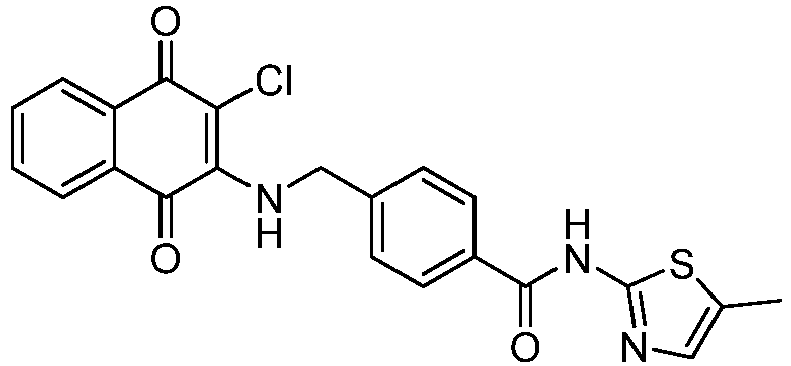
- A mixture of 97 (0.30 g, 0.88 mmol), HBTU (0.50 g, 1.32 mmol), DIPEA (0.23 ml, 1.32 mmol) and DMF (2.5 ml) was stirred for a while, to which was then added 2-amino-5-methylthiazole (0.15 g, 1.32 mmol) at room temperature and the mixture was stirred overnight. The residue was filtered by suction filtration to yield a red product. The residue was filtered without further purification to afford 23 (0.38 g, 98.61 %) as a red solid. 1H-NMR (300 MHz, DMSO-d6): δ 2.36 (s, 3H), 5.03 (d, J= 7.2 Hz, 2H), 7.20 (s, 1H), 7.45 (d, J= 8.1 Hz, 2H), 7.72-7.78 (m, 1H), 7.80-7.85 (m, 1H), 7.50-7.99 (m, 2H), 8.03 (d, J= 8.1 Hz, 2H), 8.10 (t, J= 8.1 Hz, 1H), 12.21 (br, 1H).
-

- A mixture of 97 (0.30 g, 0.88 mmol), HBTU (0.50 g, 1.32 mmol), DIPEA (0.23 ml, 1.32 mmol) and DMF (2.5 ml) was stirred for a while, to which was then added 3-amino-5-methylpyrazole (0.13 g, 1.32 mmol) at room temperature and the mixture was stirred overnight. The residue was purified by flash column over silica gel (ethyl acetate: n-hexane = 1:9, Rf = 0.20) to afford 24 (0.05 g, 13.50 %) as a red solid. 1H-NMR (300 MHz, CDCl3): δ 5.14 (d, J= 6.3 Hz, 2H), 5.34 (s, 1H), 5.60 (br, 2H), 6.29 (br, 1H), 7.44 (d, J= 8.4 Hz, 2H), 7.64-7.68 (m, 1H), 7.73-7.78 (m, 1H), 8.07 (d, J= 7.8 Hz, 1H), 8.12 (d, J= 8.4 Hz, 2H), 8.17 (d, J= 6.3 Hz, 1H).
-

- A mixture of 97 (0.30g, 0.88 mmol), HBTU (0.50 g, 1.32 mmol), DIPEA (0.23 ml, 1.32 mmol) and DMF (2.5 ml) was stirred for a while, to which was then added 3-amino-5-methylpyrazole (0.13 g, 1.32 mmol) at room temperature and the mixture was stirred overnight. The residue was purified by flash column over silica gel (ethyl acetate: n-hexane = 1:4, Rf = 0.25) to afford 25 (0.04 g, 10.80 %) as a red solid. 1H-NMR (300 MHz, DMSO-d6): δ 2.49 (s, 3H), 5.03 (s, 2H), 5.44 (s, 2H), 5.78 (s, 1H), 7.38 (d, J= 8.4 Hz, 2H), 7.73-7.86 (m, 4H), 7.98 (d, J= 7.8 Hz, 2H), 8.10 (s, 1H).
-

- A mixture of 97 (0.30 g, 0.88 mmol), HBTU (0.50 g, 1.32 mmol), DIPEA (0.23 ml, 1.32 mmol) and DMF (2.5 ml) was stirred for a while, to which was then added 4-amino-3-nitropyridine (0.18 g, 1.32 mmol) at room temperature and the mixture was stirred overnight. The residue was purified by flash column over silica gel (ethyl acetate: n-hexane = 1:2, Rf = 0.25) to afford 26 (0.06 g, 14.73 %) as a red solid. 1H-NMR (300 MHz, DMSO-d6): δ 5.05 (d, J= 6.9 Hz, 2H), 7.52 (d, J= 8.4 Hz, 2H), 7.72-7.78 (m, 1H), 7.80-7.86 (m, 1H), 7.92 (d, J= 8.4 Hz, 2H), 7.96-8.00 (m, 4H), 8.13 (t, J= 6.9 Hz, 1H), 8.76 (d, J= 5.7 Hz, 1H), 9.12 (s, 1H), 11.07 (s, 1H).
-

- A mixture of 97 (0.30 g, 0.88 mmol), HBTU (0.50 g, 1.32 mmol), DIPEA (0.23 ml, 1.32 mmol) and DMF (2.5 ml) was stirred for a while, to which was then added 6-aminoquinoline (0.19 g, 1.32 mmol) at room temperature and the mixture was stirred overnight. The residue was purified by flash column over silica gel (ethyl acetate: n-hexane = 1:2, Rf = 0.20) to afford 28 (0.11 g, 26.72 %) as a red solid. 1H-NMR (300 MHz, DMSO-d6): δ 5.04 (s, 2H), 7.46-7.49 (m, 3H), 7.72-7.77 (m, 1H), 7.80-7.85 (m, 1H), 7.94-8.00 (m, 6H), 8.12 (br, 1H), 8.30 (d, J= 8.7 Hz, 1H), 8.51 (s, 1H), 8.78-8.80 (m, 1H), 10.52 (s, 1H).
-

- A mixture of 97 (0.30 g, 0.88 mmol), HBTU (0.50 g, 1.32 mmol), DIPEA (0.23 ml, 1.32 mmol) and DMF (2.5 ml) was stirred for a while, to which was then added 8-aminoquinoline (0.19 g, 1.32 mmol) at room temperature and the mixture was stirred overnight. The residue was filtered by suction filtration to yield a red product. The residue was filtered without further purification to afford 29 (0.15 g, 36.43 %) as a red solid. 1H-NMR (300 MHz, DMSO-d6): δ 5.07 (d, J= 6.9 Hz, 2H), 7.55 (d, J= 8.4 Hz, 2H), 7.62-7.69 (m, 2H), 7.72-7.78 (m, 2H), 7.81-7.84 (m, 1H), 7.86-8.02 (m, 4H), 8.14 (t, J= 6.6 Hz, 1H), 8.44-8.47 (m, 1H), 8.70-8.73 (m, 1H), 8.94-8.95 (m, 1H), 10.62 (s, 1H).
-

- A mixture of 97 (0.30 g, 0.88 mmol), HBTU (0.50 g, 1.32 mmol), DIPEA (0.23 ml, 1.32 mmol) and DMF (2.5 ml) was stirred for a while, to which was then added 3-aminoquinoline (0.19 g, 1.32 mmol) at room temperature and the mixture was stirred overnight. The residue was purified by flash column over silica gel (ethyl acetate: n-hexane = 1:2, Rf = 0.43) to afford 30 (0.10 g, 24.29 %) as a red solid. 1H-NMR (300 MHz, DMSO-d6): δ 5.05 (s, 2H), 7.49 (d, J= 8.4 Hz, 2H), 7.55-7.60 (m, 1H), 7.63-7.68 (m, 1H), 7.72-7.85 (m, 2H), 7.93-7.99 (m, 6H), 8.11 (br, 1H), 8.82 (s, 1H), 9.12 (s, 1H), 10.66 (br, 1H).
-

- A mixture of 97 (0.30 g, 0.88 mmol), HBTU (0.50 g, 1.32 mmol), DIPEA (0.23 ml, 1.32 mmol) and DMF (2.5 ml) was stirred for a while, to which was then added 5-aminoquinoline (0.13 g, 1.32 mmol) at room temperature and the mixture was stirred overnight. The residue was purified by flash column over silica gel (ethyl acetate: n-hexane = 1:2, Rf = 0.20) to afford 31 (0.10 g, 24.29 %) as a red solid. 1H-NMR (300 MHz, DMSO-d6): δ 5.06 (s, 2H), 7.47-7.53 (m, 3H), 7.68 (d, J= 6.9 Hz, 1H), 7.73-7.83 (m, 3H), 7.92-8.05 (m, 5H), 8.14 (s, 1H), 8.37 (d, J= 8.7 Hz, 1H), 8.91 (s, 1H), 10.48 (s, 1H).
-

- A mixture of 97 (0.30 g, 0.88 mmol), HBTU (0.50 g, 1.32 mmol), DIPEA (0.23 ml, 1.32 mmol) and DMF (2.5 ml) was stirred for a while, to which was then added 2-methylquinolin-4-amine (0.21 g, 1.32 mmol) at room temperature and the mixture was stirred overnight. The residue was purified by flash column over silica gel (ethyl acetate: n-hexane = 1:1, Rf = 0.13) to afford 32 (0.22 g, 51.87 %) as a red solid. 1H-NMR (300 MHz, DMSO-d6): δ 2.65 (s, 3H), 5.07 (d, J= 6.9 Hz, 2H), 7.49-7.52 (m, 3H), 7.70-7.76 (m, 2H), 7.78-7.86 (m, 2H), 7.91-7.80 (m, 3H), 8.03 (d, J= 8.4 Hz, 2H), 8.13-8.18 (m, 2H), 10.54 (s, 1H).
-

- A mixture of 97 (0.26 g, 0.76 mmol), HBTU (0.43 g, 1.13 mmol), DIPEA (0.20 ml, 1.13 mmol) and DMF (2.5 ml) was stirred for a while, to which was then added 5-aminoindole (0.15 g, 1.13 mmol) at room temperature and the mixture was stirred overnight. The residue was purified by flash column over silica gel (ethyl acetate: n-hexane = 2:3, Rf = 0.35) to afford 33 (0.03 g, 8.66 %) as a red solid. 1H-NMR (300MHz, DMSO-d6): δ 5.04 (d, J= 6.6 Hz, 2H), 6.39 (s, 1H), 7.30-7.38 (m, 3H), 7.44 (d, J= 8.1 Hz, 2H), 7.73-7.78 (m, 1H), 7.81-7.86 (m, 1H), 7.91 (d, J= 8.4 Hz, 2H), 7.96-8.00 (m, 3H), 8.11 (s, 1H), 10.02 (s, 1H), 11.01 (s, 1H).
-

- A mixture of 97 (0.26 g, 0.76 mmol), HBTU (0.43 g, 1.13 mmol), DIPEA (0.20 ml, 1.13 mmol) and DMF (2.5 ml) was stirred for a while, to which was then added 5-amino2-methylindole (0.17 g, 1.13 mmol) at room temperature and the mixture was stirred overnight. The residue was purified by flash column over silica gel (ethyl acetate: n-hexane = 1:1, Rf = 0.13) to afford 34 (0.08 g, 22.40 %) as a red solid. 1H-NMR (300 MHz, DMSO-d6): δ 2.36 (s, 3H), 5.03 (s, 2H), 6.08 (s, 1H), 7.18-7.28 (m, 2H), 7.43 (d, J= 8.4 Hz, 2H), 7.73-7.86 (m, 3H), 7.90 (d, J= 8.1 Hz, 2H), 7.95-8.00 (m, 2H), 8.11 (br, 1H), 9.96 (s, 1H), 10.82 (s, 1H).
-

- A mixture of 97 (0.30 g, 0.88 mmol), HBTU (0.50 g, 1.32 mmol), DIPEA (0.23 ml, 1.32 mmol) and DMF (2.5 ml) was stirred for a while, to which was then added 7-aminoindole (0.17 g, 1.32 mmol) at room temperature and the mixture was stirred overnight. The residue was purified by flash column over silica gel (ethyl acetate: n-hexane = 1:1, Rf = 0.13) to afford 35 (0.02 g, 4.99 %) as a red solid. 1H-NMR (300 MHz, DMSO-d6): δ 5.04 (s, 2H), 6.44 (s, 1H), 6.97 (t, J= 7.8 Hz, 1H), 7.30-7.33 (m, 2H), 7.39 (d, J=7.8 Hz, 1H), 7.46 (d, J= 8.1 Hz, 2H), 7.72-7.78 (m, 1H), 7.80-7.86 (m, 1H), 7.86-7.99 (m, 4H), 8.12 (br, 1H), 10.05 (s, 1H), 10.86 (s, 1H).
-

- A mixture of 97 (0.30 g, 0.88 mmol), HBTU (0.50 g, 1.32 mmol), DIPEA (0.23 ml, 1.32 mmol) and DMF (2.5ml) was stirred for a while, to which was then added 4-aminoindole (0.17 g, 1.32 mmol) at room temperature and the mixture was stirred overnight. The residue was purified by flash column over silica gel (ethyl acetate: n-hexane = 1:1, Rf = 0.45) to afford 36 (0.30 g, 74.78 %) as a red solid. 1H-NMR (300 MHz, DMSO-d6): δ 5.04 (s, 2H), 6.56 (s, 1H), 7.04 (t, J= 7.8 Hz, 1H), 7.20 (d, J= 1.5 Hz, 1H), 7.27 (t, J= 3.0 Hz, 1H), 7.35 (d, J= 7.2 Hz, 1H), 7.44 (d, J= 8.4 Hz, 2H), 7.72-7.77 (m, 1H), 7.80-7.85 (m, 1H), 7.93-7.99 (m, 4H), 8.11 (br, 1H), 9.99 (s, 1H), 11.10 (s, 1H).
-

- A mixture of 97 (0.30 g, 0.88 mmol), HBTU (0.50 g, 1.32 mmol), DIPEA (0.23 ml, 1.32 mmol) and DMF (2.5 ml) was stirred for a while, to which was then added 4-(4-ethylpiperazin-1-yl)aniline (0.27 g, 1.32 mmol) at room temperature and the mixture was stirred overnight. The residue was filtered by suction filtration to yield a red product. The residue was filtered without further purification to afford 37 (0.40 g, 85.92 %) as a red solid. 1H-NMR (300 MHz, DMSO-d6): δ 1.01 (t, J= 7.2 Hz, 3H), 2.34 (q, J= 7.2 Hz, 2H), 3.07 (br, 4H), 5.01 (s, 2H), 6.89 (d, J= 9.0 Hz, 2H), 7.41 (d, J= 8.1 Hz, 2H), 7.56 (d, J= 9.0 Hz, 2H), 7.74 (t, J= 8.1 Hz, 1H), 7.77-7.88 (m, 3H), 7.95-7.98 (m, 2H), 8.09 (s, 1H), 9.98 (s, 1H).
-

- A mixture of 97 (0.30 g, 0.88mmol), HBTU (0.50 g, 1.32mmol), DIPEA (0.23 ml, 1.32 mmol) and DMF (2.5 ml) was stirred for a while, to which was then added 6-aminoindazole (0.18 g, 1.32 mmol) at room temperature and the mixture was stirred overnight. The residue was filtered by suction filtration to yield a red product. The residue was filtered without further purification to afford 38 (0.13 g, 37.94 %) as a red solid. 1H-NMR (300 MHz, DMSO-d6): δ 5.05 (s, 2H), 7.36 (d, J= 8.4 Hz, 1H), 7.46 (d, J= 8.1 Hz, 2H), 7.68 (d, J= 8.7 Hz, 1H), 7.75 (t, J= 6.9 Hz, 1H), 7.83 (t, J= 6.9 Hz, 1H), 7.92 (d, J= 8.1 Hz, 2H), 7.97-7.98 (m, 3H), 8.12 (br, 1H), 8.24 (s, 1H), 10.32 (s, 1H), 12.94 (s, 1H).
-

- A mixture of 97 (0.30 g, 0.88 mmol), HBTU (0.50 g, 1.32 mmol), DIPEA (0.23 ml, 1.32 mmol) and DMF (2.5 ml) was stirred for a while, to which was then added 5-amino-7-azaindole (0.18 g, 1.32 mmol) at room temperature and the mixture was stirred overnight. The residue was filtered by suction filtration to yield a red product. The residue was filtered without further purification to afford 39 (0.31 g, 77.10 %) as a red solid. 1H-NMR (300 MHz, DMSO-d6): δ 5.05 (d, J= 7.2 Hz, 2H), 6.44 (s, 1H), 7.45-7.47 (m, 3H), 7.76 (t, J= 8.1 Hz, 1H), 7.84 (t, J= 7.8 Hz, 1H), 7.93-8.00 (m, 4H), 8.12 (br, 1H), 8.31 (s, 1H), 8.44 (s, 1H), 10.23 (s, 1H), 11.57 (s, 1H).
-

- A mixture of 97 (0.28 g, 0.82 mmol), HBTU (0.47 g, 1.23 mmol), DIPEA (0.21 ml, 1.23 mmol) and DMF (2.5 ml) was stirred for a while, to which was then added 5-amino-7-azaindazole (0.12 g, 0.90 mmol) at room temperature and the mixture was stirred overnight. The residue was purified by flash column over silica gel (ethyl acetate: n-hexane = 2:1, Rf = 0.18) to afford 40 (0.09 g, 23.97 %) as a red solid. 1H-NMR (300 MHz, DMSO-d6): δ 5.05 (s, 2H), 7.48 (d, J= 8.4 Hz, 2H), 7.73-7.78 (m, 1H), 7.81-7.86 (m, 1H), 7.94-8.00 (m, 4H), 8.14 (s, 2H), 8.60 (d, J= 2.4 Hz, 1H), 8.73 (d, J= 2.1 Hz, 1H), 10.44 (s, 1H), 13.59 (br, 1H).
-

- A mixture of 97 (0.30 g, 0.88 mmol), HBTU (0.50 g, 1.32 mmol), DIPEA (0.23 ml, 1.32 mmol) and DMF (2.5 ml) was stirred for a while, to which was then added 6-amino-9-methyl-7-deazapurine (0.20 g, 1.32 mmol) at room temperature and the mixture was stirred overnight. The residue was purified by flash column over silica gel (ethyl acetate: n-hexane = 2:1, Rf = 0.45) to afford 41 (0.07 g, 16.86 %) as a red solid. 1H-NMR (300 MHz, DMSO-d6): δ 3.81 (s, 3H), 5.05 (d, J= 7.2 Hz, 2H), 6.61 (d, J= 3.6 Hz, 1H), 7.44-7.47 (m, 3H), 7.72-7.78 (m, 1H), 7.81-7.86 (m, 1H), 7.95-8.04 (m, 4H), 8.12 (t, J= 7.5 Hz, 1H), 8.57 (s, 1H), 11.00 (s, 1H).
-

- A mixture of 97 (0.30 g, 0.88 mmol), HBTU (0.50 g, 1.32 mmol), DIPEA (0.13 ml, 1.32 mmol) and DMF (2.5 ml) was stirred for a while, to which was then added 4-aminoindane (0.24 ml, 1.32 mmol) at room temperature and the mixture was stirred overnight. The residue was filtered by suction filtration to yield a red product. The residue was filtered without further purification to afford 42 (0.33 g, 82.07 %) as a red solid. 1H-NMR (300 MHz, DMSO-d6): δ 1.89-1.98 (m, 2H), 2.81 (t, J= 7.5 Hz, 2H), 2.88 (t, J= 7.5 Hz, 2H), 5.02 (d, J= 7.2 Hz, 2H), 7.05-7.13 (m, 2H), 7.22 (d, J= 7.5 Hz, 1H), 7.42 (d, J= 8.1 Hz, 2H), 7.71-7.76 (m, 1H), 7.79-7.85 (m, 1H), 7.89 (d, J= 8.4 Hz, 2H), 7.95-7.98 (m, 2H), 8.10 (t, J= 7.5 Hz, 1H), 9.82 (s, 1H).
-

- A mixture of 2,3-dibromo-1,4-naphthaquinone (0.31 g, 0.97 mmol), 4-(aminomethyl)-N-(pyridin-2-yl)benzamide (0.20 g, 0.88 mmol) and EtOH (10 ml) was stirred and refluxed overnight. The residue was purified by flash column over silica gel (ethyl acetate: n-hexane = 1:2, Rf = 0.20) to afford 6 (0.13 g, 31.95 %) as a red solid. 1H-NMR (300 MHz, DMSO-d6): δ 5.05 (d, J= 7.2 Hz, 2H), 7.14 (m, 1H), 7.41 (d, J= 8.1 Hz, 2H), 7.73 (t, J= 7.5 Hz, 1H), 7.81 (m, 2H), 7.97 (m, 5H), 8.15 (d, J= 8.1 Hz, 1H), 8.36 (d, J= 4.8 Hz, 1H), 10.69 (s, 1H).
-

- 4-(aminomethyl)benzoic acid (5.0 g, 32.95 mmol) was added slowly to the corresponding sodium hydroxide (1.45 g, 36.25 mmole) and di-t-butyl-dicarbonate (7.95 g, 36.25 mmol) in H2O (62.5 ml) and THF (25 ml) at 0 °C. The reaction mixture was warmed to room temperature, and stirring was continued for another 18 h. The solution was evaporated to give a residue. To the residue, DMF (0.36 mL) , pyridine (18 mL), oxalyl chloride ( 6.24 ml) and toluene (144 ml) were added and the mixture was stirred at rt for 6 hrs. The solution was filtered, washed with toluene, and the filtrate evaporated to give a residue. To the residue, pyridine (112 mL), and 4-aminopyrimidine (3.74 g, 39.4 mmol) were added and the mixture was stirred at room temperature for 16 hrs. The solution was evaporated to give a residue, which was purified by flash column over silica gel (EtOAc : n-hexane = 2 : 3) to afford 100 (3.03g, 28.00%). 1H NMR (300 MHz, CDCl3): δ 1.48 (s, 3H), 4.41 (d, J= 6.0 Hz, 2H), 5.02 (brs, 1H), 7.45 (d, J= 8.4 Hz, 2H), 7.91 (d, J= 8.1 Hz, 2H), 8.33-8.36 (m, 1H), 8.69 (d, J= 5.7 Hz, 1H), 8.72 (brs, 1H), 8.88 (s, 1H).
-

- 4-(aminomethyl)benzoic acid (5.0 g, 32.95 mmol) was added slowly to the corresponding sodium hydroxide (1.45 g, 36.25 mmol) and di-t-butyl-dicarbonate (7.95 g, 36.25 mmol) in H2O (62.5 ml) and THF (25 mL) at 0 °C. The reaction mixture was warmed to room temperature, and stirring was continued for another 18 h. The solution was evaporated to give a residue. To the residue, DMF (0.36 ml), pyridine (18 ml), oxalyl chloride (6.24 ml) and toluene (144 ml) were added and the mixture was stirred at room temperature for 6 hrs. The solution was filtered, washed with toluene, and the filtrate evaporated to give a residue. To the residue, pyridine (112 ml), and 2-aminopyrazine (3.74g, 39.4mmol) were added and the mixture was stirred at room temperature for 16 hrs. The residue was purified by flash column over silica gel (EtOAc : n-hexane = 2 : 3) to afford 101 (3.90 g, 36.05 %). 1H NMR (300 MHz, DMSO-d6): δ 1.44 (s, 3H), 4.37 (d, J= 5.4 Hz, 2H), 4.98 (brs, 1H), 7.41 (d, J= 8.4 Hz, 2H), 7.88 (d, J= 8.4 Hz, 2H), 8.23-8.25 (m, 1H), 8.34-8.36 (m, 1H), 8.54 (s, 1H), 9.67 (s, 1H).
-

- A mixture of 2,3-dichloro-1,4-naphthoquinone (0.25 g, 1.10 mmol) and 100 (0.28 g, 1.23 mmol) and ethanol (10 ml) was refluxed for 16 h. The reaction mixture was filtered washed. The residue was filtered without further purification to afford 7 (0.08 g, 17.36 %) as a red solid. 1H NMR (300 MHz, DMSO-d6): δ 5.04 (d, J= 6.6 Hz, 2H), 7.45 (d, J= 8.1 Hz, 2H), 7.72-7.85 (m, 2H), 7.97-7.99 (m, 4H), 8.11 (m, 1H), 8.19 (d, J= 4.5 Hz, 1H), 8.70 (d, J= 5.4 Hz, 1H), 8.93 (s, 1H), 11.18 (s, 1H).
-

- A mixture of 2,3-dichloro-1,4-naphthoquinone (1.19 g, 5.26 mmol) and 101 (1.5 g, 6.57 mmol) and ethanol (20 ml) was refluxed for 16 h. The reaction mixture was filtered and washed. The residue was filtered without further purification to afford 8 (0.48 g, 21.79 %) as a red solid. 1H NMR (300 MHz, DMSO-d6): δ 5.04 (d, J= 7.2 Hz, 2H), 7.45 (d, J= 8.4 Hz, 2H), 7.74-7.85 (m, 2H), 7.95-8.01 (m, 4H), 8.11 (t, J= 6.9 Hz, 1H), 8.40 (d, J= 2.4 Hz, 1H), 8.44-8.46 (m, 1H), 9.39 (d, J= 1.5 Hz, 1H), 11.04 (s, 1H).
-

- A mixture of 97 (0.30 g, 0.88 mmol), HBTU (0.50 g, 1.32 mmol), DIPEA (0.23 ml, 1.32 mmol) and DMF (2.5 ml) was stirred for a while, to which was then added 4-aminomethylpyridine (0.13 ml, 1.32 mmol) at room temperature and stirred overnight. The residue was purified by flash column over silica gel (dichloromethane: methanol = 9:1, Rf = 0.48) to afford 27 (0.31 g, 81.57 %) as a red solid. 1H-NMR (300 MHz, DMSO-d6): δ 4.47 (d, J= 6.0 Hz, 2H), 5.01 (s, 1H), 7.28 (d, J= 5.7 Hz, 2H), 7.41 (d, J= 8.1 Hz, 2H), 7.75 (t, J= 6.3 Hz, 1H), 7.80-7.87 (m, 3H), 7.97 (d, J= 7.8 Hz, 2H), 8.08 (s, 1H), 8.48 (d, J= 6.0 Hz, 2H), 9.08 (t, J= 6.0 Hz, 1H).
-

- A mixture of 97 (0.30 g, 0.88 mmol), HBTU (0.50 g, 1.32 mmol), DIPEA (0.13 ml, 1.32 mmol) and DMF (2.5 ml) was stirred for a while, to which was then added 2-morpholinoethanamine (0.17 ml, 1.32 mmol) at room temperature, and the mixture was stirred overnight. The residue was filtered by suction filtration to yield a red product. The residue was without further purification to afford 43 (0.23 g, 57.58 %) as a red solid. 1H-NMR (300 MHz, DMSO-d6): δ 2.38-2.45 (m, 6H), 3.54 (s, 4H), 4.99 (s, 2H), 7.36 (d, J= 8.1 Hz, 2H), 7.71-7.84 (m, 4H), 7.96 (d, J= 7.5 Hz, 2H), 8.05 (s, 1H), 8.33 (t, J= 5.1 Hz, 1H).
-
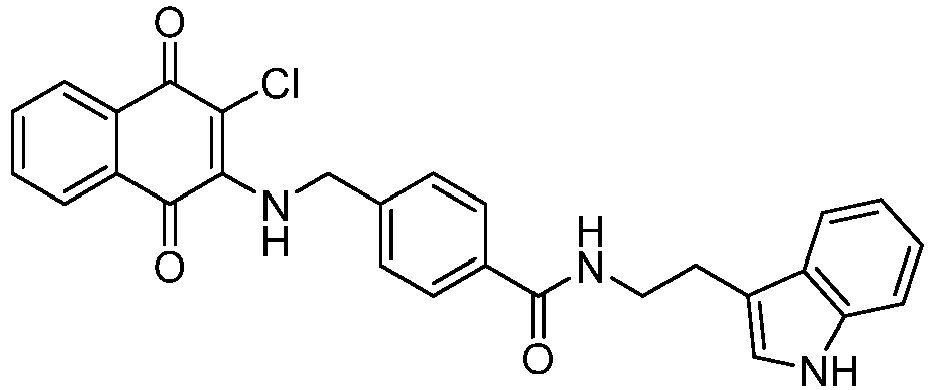
- A mixture of 97 (0.30 g, 0.88 mmol), HBTU (0.50 g, 1.32 mmol), DIPEA (0.13 ml, 1.32mmol) and DMF (2.5 ml) was stirred for a while, to which was then added tryptamine (0.21 g, 1.32 mmol) at room temperature and stirred overnight. The residue was purified by flash column over silica gel (ethyl acetate: n-hexane = 2:1, Rf = 0.45) to afford 44 (0.13 g, 30.53 %) as a red solid. 1H-NMR (300 MHz, DMSO-d6): δ 2.72-2.94 (m, 2H), 3.47-3.54 (m, 2H), 4.99 (s, 2H), 6.92-6.98 (m, 1H), 7.01-7.07 (m, 1H), 7.15 (d, J= 2.4 Hz, 1H), 7.31 (d, J= 8.1 Hz, 1H), 7.36 (d, J= 8.1 Hz, 2H), 7.55 (d, J= 7.5 Hz, 1H), 7.73-7.82 (m, 4H), 7.96 (d, J= 8.1 Hz, 2H), 8.06 (s, 1H), 8.54 (t, J= 5.7 Hz, 1H), 10.78 (s, 1H).
-

- A mixture of 97 (0.30 g, 0.88 mmol), EDC.HCl (0.25 g, 1.32 mmol), HOBt (0.14 g, 1.06 mmol), NMM (0.23 ml, 2.11 mmol) and DMF (2.5 ml) was stirred for a while, to which was then added 2-dimethylaminoethylamine (0.12 ml, 1.06 mmol) at room temperature and stirred overnight. The residue was purified by flash column over silica gel (dichloromethane: methanol = 9:1, Rf = 0.33) to afford 45 (0.05 g, 13.79 %) as a red solid. 1H-NMR (300 MHz, CD3OD): δ 2.92 (s, 6H), 3.72 (t, J= 6.0 Hz, 2H), 5.10 (s, 2H), 7.44 (d, J= 8.4 Hz, 2H), 7.68-7.81 (m, 2H), 7.85 (d, J= 8.4 Hz, 2H), 8.02-8.06 (m, 2H).
-

- A mixture of 97 (0.30 g, 0.88 mmol), EDC.HCl (0.25 g, 1.32 mmol), HOBt (0.14 g, 1.06 mmol), NMM (0.23 ml, 2.11 mmol) and DMF (2.5 ml) was stirred for a while, to which was then added 2-(pyrrolidin-1-yl)ethanamine (0.13 ml, 1.06 mmol) at room temperature and stirred overnight. The residue was purified by flash column over silica gel (dichloromethane: methanol = 9:1, Rf = 0.33) to afford 46 (0.22 g, 57.09 %) as a red solid. 1H-NMR (300 MHz, DMSO-d6): δ 1.89 (s, 4H), 3.22-3.25 (m, 5H), 3.54-3.60 (m, 3H), 5.00 (t, J= 7.2 Hz, 2H), 7.38 (d, J= 8.1 Hz, 2H), 7.72-7.82 (m, 2H), 7.85 (d, J= 8.4 Hz, 2H), 7.94-7.98 (m, 2H), 8.08 (t, J= 7.2 Hz, 1H), 8.74 (t, J= 5.7 Hz, 1H).
-

- A mixture of 97 (0.30 g, 0.88 mmol), EDC.HCl (0.25 g, 1.32 mmol), HOBt (0.14 g, 1.06 mmol), NMM (0.23 ml, 2.11 mmol) and DMF (2.5 ml) was stirred for a while, to which was then added 2-diethylaminoethylamine (0.15 ml, 1.06 mmol) at room temperature and stirred overnight. The residue was purified by flash column over silica gel (dichloromethane: methanol = 9:1, Rf = 0.30) to afford 47 (0.06 g, 15.50 %) as a red solid. 1H-NMR (300 MHz, CD3OD): δ 1.33 (t, J= 7.2 Hz, 6H), 3.32-3.38 (m, 3H), 3.73 (t, J= 6.0 Hz, 2H), 5.10 (s, 2H), 7.45 (d, J= 8.1 Hz, 2H), 7.67-7.80 (m, 2H), 7.85 (d, J= 8.1 Hz, 2H), 8.02-8.06 (m, 2H).
-

- A mixture of 97 (0.30 g, 0.88 mmol), EDC.HCl (0.25 g, 1.32 mmol), HOBt (0.14 g, 1.06 mmol), NMM (0.23 ml, 2.11 mmol) and DMF (2.5 ml) was stirred for a while, to which was then added 2-(piperidin-1-yl)ethanamine (0.15 ml, 1.06 mmol) at room temperature and stirred overnight. The residue was purified by flash column over silica gel (dichloromethane: methanol = 9:1, Rf = 0.55) to afford 48 (0.08 g, 20.11 %) as a red solid. 1H-NMR (300 MHz, DMSO-d6): δ 1.42-1.44 (m, 2H), 1.58-1.60 (m, 4H), 2.78 (br, 6H), 3.44-3.48 (m, 2H), 4.99 (d, J= 7.2 Hz, 2H), 7.37 (d, J= 8.4 Hz, 2H), 7.71-7.84 (m, 4H), 7.94-7.97 (m, 2H), 8.07 (t, J= 7.2 Hz, 1H), 8.53 (br, 1H).
-

- A mixture of 97 (0.30 g, 0.88 mmol), EDC.HCl (0.25 g, 1.32 mmol), HOBt (0.14 g, 1.06 mmol), NMM (0.23 ml, 2.11 mmol) and DMF (2.5 ml) was stirred for a while, to which was then added 2-(4-methylpiperazin-1-yl)ethylamine (0.16 ml, 1.06 mmol) at room temperature and stirred overnight. The residue was purified by flash column over silica gel (dichloromethane: methanol = 9:1, Rf = 0.19) to afford 49 (0.08 g, 19.47 %) as a red solid. 1H-NMR (300 MHz, DMSO-d6): δ 2.13 (s, 3H), 2.36-2.42 (br, 12H), 4.91 (d, J= 6.3 Hz, 2H), 7.29 (d, J= 7.8 Hz, 2H), 7.67-7.77 (m, 4H), 7.88 (d, J= 6.9 Hz, 2H), 7.98 (br, 1H), 8.25 (br, 1H).
- WI-38 cells, a normal human embryonic lung fibroblast cell line, were obtained from American Type Culture Collection (Manassas, VA). Cells were grown in MEM nutrient mixture, containing 10% FCS, 2 mM L-glutamine, 0.1 mM NEAA, 1 mM sodium pyruvate, 50 U/ml penicillin G, and 100 µg/ml streptomycin, in a humidified 37 °C incubator with 5% CO2 Cells were used between
passages 18 and 30 for all experiments. After reaching confluence, cells were seeded onto 6-cm dishes for immunoblotting. - The compound, 4-(((3-chloro-1,4-dioxo-1,4-dihydronaphthalen-2-yl)amino)methyl)-N-(pyridin-4-yl)benzamide (MPT0L056 or L056 used herein), was used in the assay described herein.
- Western blot analyses were performed as described previously (Chen BC, Chang YS, Kang JC, Hsu MJ, Sheu JR, Chen TL, et al. Peptidoglycan induces nuclear factor-kappaB activation and cyclooxygenase-2 expression via Ras, Raf-1, and ERK in RAW 264.7 macrophages. J Biol Chem 2004;279:20889-97). Briefly, WI-38 lung fibroblasts were cultured in 6-cm dishes. After reaching confluence, cells were pretreated with specific inhibitors (E028 and G009) as indicated for 30 min, and then treated with the vehicle (H2O) or 10 ng/ml TGF-β for 2 h (CTGF assay) or 24 h (collagen I assay). Whole-cell lysates (30 µg) were subjected to 12% (CTGF) or 8% (collagen I) SDS-PAGE, and transferred onto a polyvinylidene difluoride membrane which was then incubated in TBST buffer (150 mM NaCl, 20 mM Tris-HCl, and 0.02
% Tween 20; pH 7.4) containing 5% BSA. Proteins were visualized by specific primary antibodies and then incubated with HRP-conjugated secondary antibodies. The immunoreactivity was detected using enhanced chemiluminescence (ECL) following the manufacturer's instructions. Quantitative data were obtained using a computing densitometer with scientific imaging systems (Kodak, Rochester, NY). - Results are expressed as the mean ± SEM for the indicated number of separate experiments. Means were checked for statistical difference using t-test and P-values < 0.05 were considered significant.
- To determine whether the inhibitory effects of the compound MPT0L056 on pro-fibrogenic mediators (TGF-β, thrombin, and ET-1) were related to the modulation of CTGF and Collagen I production, Western blot analysis was performed. First, WI-38 lung fibroblasts were incubated with different concentrations of MPT0L056 (0.3, 1, 3 or 10 µM) for 30 min before and during incubation for 2 h with TGF-β (10 ng/mL). L056 significantly inhibited TGF-β-induced CTGF production from WI-38 lung fibroblasts in a concentration-dependent manner (
Figure 1 ). Furthermore, we examined the effects of MPT0L056 on other pro-fibrogenic mediators. MPT0L0560 also inhibited ET-1- and thrombin- induced CTGF expression form WI-38 lung fibroblasts, as shown inFigure 2 and3 , respectively. In addition, as shown inFigure 4 , MPT0L056 also inhibited TGF-β-induced collagen expression in WI-38 cells. These results showed that MPT0L056 inhibited pro-fibrogenic mediators-induced CTGF expression and collagen production. - In addition, pro-fibrogenic mediators, pro-fibrogenic mediators and α-SMA, fibronectin were also examined.
- WI-38 lung fibroblasts were incubated with different concentrations of MPT0L056 (0.3, 1, 3 or 10 µM) for 30 min before and during incubation for 24 h with TGF-β (10 ng/mL). L056 significantly inhibited TGF-β-induced α-SMA (see
Figure 5 ) and fibronectin expression (seeFigure 6 ) from WI-38 lung fibroblasts in a concentration-dependent manner. These results indicated that MPT0L056 inhibited TGF-β-mediated fibrogenic protein expression in WI-38 cells. - WI-38 lung fibroblasts were incubated with different concentrations of MPT0L056 (0.3, 1, 3 or 10 µM) for 2 hours before MTT-assay.
Figure 7 shows the effect of L056 on cell viability in WI38 cells. These data indicated that L056 did not affect cell viability. - C57BL/6JNarl mice (8 weeks) were treated with bleomycin (BLM, 0.05 U/50 µl) or PBS (50 µl) by endotracheal administration. L056 (25, 50, 100 mg/kg/day, q.d.) and pirfenidone (200 mg/kg/day, q.d.) were administered orally to bleomycin-treated mice from 10 to 38 days after BLM treatment. On day 39, the mice were sacrificed, and the histologic analysis of lung tissue was performed by hematoxylin-eosin (H&E) staining (original magnification, x100).
- The results of MPT0L056 in reducing refibrosis score are shown in the table below.
Group Mean ± SEM Efficacy % PBS 1.42 ± 0.13 BLM 5.19 ± 0.19 BLM+ L056 25 mg3.27 ± 0.03 50.94 % BLM+ L056 50 mg2.03 ± 0.21 83.90 % BLM+ L056 100 mg2.65 ± 0.17 67.38 % BLM+ Esbriet 200 mg3.91 ± 0.21 34.08 % BLM+OFEV 60 mg 3.62 ± 0.30 41.66 % -
Figure 8 shows the antifibrotic effects of MPT0L056 on bleomydcin-induced pulmonary fibrosis in mice. The results show that MPT0L056 inhibits BLM-induced lung fibrosis in a dose-dependent manner (seeFig. 8(A) ), and the efficacy of L056 in the inhibition is significantly higher than the PBS control (seeFig. 8(B) ). - The pro-fibrogenic mediators, pro-fibrogenic mediators, collagen, CTGF, fibronectin and α-SMA were also examined and the results are shown in
Fig. 9 (A) to (D) , respectively. These data indicated that pro-fibrogenic mediators expression were inhibited by L056 treatment in bleomycin-induced mice lung fibrosis model. - C57BL/6JNarl mice (8 weeks) were treated with CCl4 (1 µl/µg/ BW, q.w.) or PBS (1 µl/µg/ BW, q.w.) by i.p. injection for 6 weeks. MPT0L056 (25, 50 and 100 mg/kg/day, q.d.) and silymarin (200 mg/kg/day, q.d.) were administered orally to CCl4-injected mice from 2 weeks to 6 weeks. On day 43, the mice were sacrificed, and the α-SMA analysis of liver tissue was performed by IHC staining (original magnification, x100) (see
Fig. 11 ).Figure 10 shows the antifibrotic effects of MPT0L056 and silymarin on CCl4-induced liver fibrosis in mice.Figure 10 (A) shows the results of sirius red stain. As shown inFigure 10 (B) , the inhibition of MPT0L056 on CCl4-induced liver fibrosis is dose-dependent, and the efficacy of MPT0L056 in inhibition is higher than silymarin. The results of MPT0L056 in reducing refibrosis score are shown in the table below.Group Mean ± SEM Efficacy % Control 0,75 ± 0.16 CCl4 3.75 ± 0.22 CCl4+ L056 25 mg2.40 ± 0.53 45.00% CCl4+ L056 50 mg2.35 ± 0,25 46.67 % CCl4+ L056 100 mg1.70 ± 0.18 68.33 % CCl4+ Silymarin 200 mg2.93 ± 0.26 27.50 %
Claims (13)
- A compound of Formula (I) or a pharmaceutically acceptable salt or solvate thereof for use in a method of prevention and/or treatment of a fibrosis disease in a subject,
 R1 is halogen;each R2 is the same or different, representing H, C1-10alkyl, C2-10alkenyl, C2-10alkynyl, NH2, NO2, C1-10alkyloxy, C1-10alkylthio, C1-10alkylamino, C1-10alkyloxyC1-10alkyl, OH or CN, C6-10aryl or C5-7heterocyclic having 1 to 3 heteroatoms selected from the group consisting of N, O and S;R3 is H;R4 is H;R5 is OH; C3-8cycloalkyl; phenyl unsubstituted or substituted with one to three same or different substituents selected from OH, CN, halogen, NH2 or C1-4alkylpiperazinyl; C1-6alkylpiperazinyl; C1-6alkylpyridinyl; C1-6alkylpyrrolidinyl; pyridinyl; pyrimidinyl; pyrazinyl; piperazinyl; pyrrolidinyl; thiazolyl; benzimidazolyl; pyrazolyl; indazolyl; pyrazolyl; quinolinyl; indolyl; C1-4indolyl; indazolyl; azaindolyl; azaindazolyl; deazapurinyl; indanyl; morpholinoyl or C1-4alkylmorpholinoyl, each of which is unsubstituted or substituted with one, two or three groups selected from OH, CN, halogen or NH2; or R5 is alkylene-R6 wherein R6 is NRaRb, C5-7heterocyclic ring having 0 to 3 hetero atoms selected from O, N and S; or C10-12 fused heterocyclic ring having 0 to 3 hetero atoms selected from O, N and S; and Ra and Rb are alkyl; andX is -C(O);m is 0; andn is an integer of 1-4;wherein the fibrosis disease is skin fibrosis, lung fibrosis, renal fibrosis, intestinal fibrosis, cystic fibrosis, cardiac fibrosis, uterine leiomyoma or adenomyosis.
 - The compound for use of Claim 1, wherein m is 0; R1 is halogen; n is any integer of 1-2; R3 is H; X is -C(O); R4 is H; and R5 is OH; C3-8cycloalkyl; pyridinyl; phenyl substituted by one to three of NH2, halogen, OH, CN or C1-4alkylpiperazinyl; pyrinidinyl unsubstituted or substituted with NH2; pyrazinyl unsubstituted or substituted with NH2; thiazolyl unsubstituted or substituted with NH2; benzimidazolyl unsubstituted or substituted with NH2; pyrazolyl unsubstituted or substituted with NH2 indazolyl unsubstituted or substituted with NH2; thiazolyl unsubstituted or substituted with NH2; quinolinyl unsubstituted or substituted with NH2; indolyl unsubstituted or substituted with NH2; indazolyl unsubstituted or substituted with NH2; azaindazolyl unsubstituted or substituted with NH2; deazapurinyl unsubstituted or substituted with NH2; indanyl unsubstituted or substituted with NH2; or morpholinoyl unsubstituted or substituted with NH2.
- The compound for use of Claim 1, wherein m is 0; R1 is halogen; n is any integer of 1-2; R3 is H; X is C(O); R4 is H; R5 is (CH2)1-4R6 wherein R6 is unsubstituted or substituted pyrrolidinyl, oxolanyl, thiolanyl, pyrrolyl, furanyl, thiophenyl, piperidinyl, oxanyl, thianyl, morpholinoyl, pyridinyl, piperidinyl, piperazinyl, thiopyranyl, pyrazinyl, pyrimidinyl, pyridazinyl, thiazolyl; benzimidazolyl; pyrazolyl; indazolyl; pyrazolyl; quinolinyl; indolyl; indazolyl; azaindolyl; azaindazolyl; deazapurinyl; or indanyl.
- The compound for use of Claim 1, wherein m is 0; R1 is halogen; n is any integer of 1-2; R3 is H; X is C(O); R4 is H; R5 is (CH2)1-4R6 wherein R6 is unsubstituted or substituted pyrrolidinyl, morpholinoyl, pyridinyl, piperidinyl, piperazinyl, or indolyl.
- The compound for use of Claim 1, wherein the compound is selected from:4-(((3-chloro-1,4-dioxo-1,4-dihydronaphthalen-2-yl)amino)methyl)-N-(pyridin-4-yl)benzamide;4-(((3-chloro-1,4-dioxo-1,4-dihydronaphthalen-2-yl)amino)methyl)-N-hydroxybenzamide;4-(((3-chloro-1,4-dioxo-1,4-dihydronaphthalen-2-yl)amino)methyl)-N-(pyridin-2-yl)benzamide;N-(2-aminophenyl)-4-(((3-chloro-1,4-dioxo-1,4-dihydronaphthalen-2-yl)amino)methyl)benzamide;4-(((3-chloro-1,4-dioxo-1,4-dihydronaphthalen-2-yl)amino)methyl)-N-(pyridin-3-yl)benzamide;4-(((3-chloro-1,4-dioxo-1,4-dihydronaphthalen-2-yl)amino)methyl)-N-(3-fluorophenyl)benzamide;4-(((3-chloro-1,4-dioxo-1,4-dihydronaphthalen-2-yl)amino)methyl)-N-(4-fluorophenyl)benzamide;4-(((3-chloro-1,4-dioxo-1,4-dihydronaphthalen-2-yl)amino)methyl)-N-phenylbenzamide;4-(((3-chloro-1,4-dioxo-1,4-dihydronaphthalen-2-yl)amino)methyl)-N-(2-fluorophenyl)benzamide;4-(((3-chloro-1,4-dioxo-1,4-dihydronaphthalen-2-yl)amino)methyl)-N-(thiazol-2-yl)benzamide;N-(1H-benzo[d]imidazol-2-yl)-4-(((3-chloro-1,4-dioxo-1,4-dihydronaphthalen-2-yl)amino)methyl)benzamide;4-(((3-chloro-1,4-dioxo-1,4-dihydronaphthalen-2-yl)amino)methyl)-N-(4-hydroxyphenyl)benzamide;4-(((3-chloro-1,4-dioxo-1,4-dihydronaphthalen-2-yl)amino)methyl)-N-(3-ethynylphenyl)benzamide;4-(((3-chloro-1,4-dioxo-1,4-dihydronaphthalen-2-yl)amino)methyl)-N-(2-fluoro-4-iodophenyl)benzamide;N-(1H-benzo[d]imidazol-5-yl)-4-((3-chloro-1,4-dioxo-1,4-dihydronaphthalen-2-ylamino)methyl)benzamide;4-((3-chloro-1,4-dioxo-1,4-dihydronaphthalen-2-ylamino)methyl)-N-cyclopropylbenzamide;4-((3-chloro-1,4-dioxo-1,4-dihydronaphthalen-2-ylamino)methyl)-N-cyclopentylbenzamide;4-((3-chloro-1,4-dioxo-1,4-dihydronaphthalen-2-ylamino)methyl)-N-(1H-indazol-5-yl)benzamide;4-((3-chloro-1,4-dioxo-1,4-dihydronaphthalen-2-ylamino)methyl)-N-(5-methylthiazol-2-yl)benzamide;4-((3-chloro-1,4-dioxo-1,4-dihydronaphthalen-2-ylamino)methyl)-N-(5-methyl-3H-pyrazol-3-yl)benzamide;4-((3-chloro-1,4-dioxo-1,4-dihydronaphthalen-2-ylamino)methyl)-N-(3-nitropyridin-4-yl)benzamide;4-((3-chloro-1,4-dioxo-1,4-dihydronaphthalen-2-ylamino)methyl)-N-(quinolin-6-yl)benzamide;4-((3-chloro-1,4-dioxo-1,4-dihydronaphthalen-2-ylamino)methyl)-N-(quinolin-8-yl)benzamide;4-((3-chloro-1,4-dioxo-1,4-dihydronaphthalen-2-ylamino)methyl)-N-(quinolin-3-yl)benzamide;4-((3-chloro-1,4-dioxo-1,4-dihydronaphthalen-2-ylamino)methyl)-N-(quinolin-5-yl)benzamide;4-((3-chloro-1,4-dioxo-1,4-dihydronaphthalen-2-ylamino)methyl)-N-(2-methylquinolin-4-yl)benzamide;4-((3-chloro-1,4-dioxo-1,4-dihydronaphthalen-2-ylamino)methyl)-N-(1H-indol-7-yl)benzamide;4-((3-chloro-1,4-dioxo-1,4-dihydronaphthalen-2-ylamino)methyl)-N-(2-methyl-1H-indol-5-yl)benzamide;4-((3-chloro-1,4-dioxo-1,4-dihydronaphthalen-2-ylamino)methyl)-N-(1H-indol-5-yl)benzamide;4-((3-chloro-1,4-dioxo-1,4-dihydronaphthalen-2-ylamino)methyl)-N-(1H-indol-4-yl)benzamide;4-((3-chloro-1,4-dioxo-1,4-dihydronaphthalen-2-ylamino)methyl)-N-(4-(4-ethylpiperazin-1 - yl)phenyl)benzamide;4-((3-chloro-1,4-dioxo-1,4-dihydronaphthalen-2-ylamino)methyl)-N-(1H-indazol-6-yl)benzamide;4-((3-chloro-1,4-dioxo-1,4-dihydronaphthalen-2-ylamino)methyl)-N-(1H-pyrrolo[2,3-b]pyridin-5-yl)benzamide;4-((3-chloro-1,4-dioxo-1,4-dihydronaphthalen-2-ylamino)methyl)-N-(1H-pyrazolo[3,4-b]pyridin-5-yl)benzamide;4-((3-chloro-1,4-dioxo-1,4-dihydronaphthalen-2-ylamino)methyl)-N-(7-methyl-7H-pyrrolo[2,3-d]pyrimidin-4-yl)benzamide;4-((3-chloro-1,4-dioxo-1,4-dihydronaphthalen-2-ylamino)methyl)-N-(2,3-dihydro-1H-inden-4-yl)benzamide;4-(((3-bromo-1,4-dioxo-1,4-dihydronaphthalen-2-yl)amino)methyl)-N-(pyridin-2-yl)benzamide;4-(((3-chloro-1,4-dioxo-1,4-dihydronaphthalen-2-yl)amino)methyl)-N-(pyrimidin-4-yl)benzamide;4-(((3-chloro-1,4-dioxo-1,4-dihydronaphthalen-2-yl)amino)methyl)-N-(pyrazin-2-yl)benzamide;4-(((3-chloro-1,4-dioxo-1,4-dihydronaphthalen-2-yl)amino)methyl)-N-(pyridin-4-ylmethyl)benzamide;4-(((3-chloro-1,4-dioxo-1,4-dihydronaphthalen-2-yl)amino)methyl)-N-(2-morpholinoethyl)benzamide;N-(2-(1H-indol-3-yl)ethyl)-4-(((3-chloro-1,4-dioxo-1,4-dihydronaphthalen-2-yl)amino)methyl)benzamide;4-(((3-chloro-1,4-dioxo-1,4-dihydronaphthalen-2-yl)amino)methyl)-N-(2-(dimethylamino)ethyl)benzamide;4-(((3-chloro-1,4-dioxo-1,4-dihydronaphthalen-2-yl)amino)methyl)-N-(2-(pyrrolidin-1-yl)ethyl)benzamide;4-(((3-chloro-1,4-dioxo-1,4-dihydronaphthalen-2-yl)amino)methyl)-N-(2-(diethylamino)ethyl)benzamide;4-(((3-chloro-1,4-dioxo-1,4-dihydronaphthalen-2-yl)amino)methyl)-N-(2-(piperidin-1-yl)ethyl)benzamide; and4-(((3-chloro-1,4-dioxo-1,4-dihydronaphthalen-2-yl)amino)methyl)-N-(2-(4-methylpiperazin-1-yl)ethyl)benzamide.
- The compound for use of Claim 1, wherein the compound is 4-(((3-chloro-1,4-dioxo-1,4-dihydronaphthalen-2-yl)amino)methyl)-N-(pyridin-4-yl)benzamide, having the following formula:

- The compound for use of Claim 1, wherein the effective amount of the active ingredient used in the method of the invention ranges from about 1.5 mg/kg/day to about 20 mg/kg/day, from about 5.0 mg/kg/day to about 15 mg/kg/day, or from about 1.5 mg/kg/day to about 8 mg/kg/day.
- The compound for use of Claim 1, wherein the active ingredient is for simultaneous, separate or sequential co-administeration with a second anti-fibrosis agent; preferably, wherein the second anti-fibrosis agent is pirfenidone, nintedanib, LOXL2 antibody, simtuzumab, IL-13 antibody, lebrikizumab, αVβ6 antibody, STX-100, CTGF antibody, FG-3019, tipelukast, MN-001, aerosol pirfenidone or GP-101.
- The compound for use of Claim 1, wherein the lung fibrosis is idiopathic pulmonary fibrosis; optionally, wherein the treatment of lung fibrosis or idiopathic pulmonary fibrosis further comprises a co-administered therapy with lung transplantation, hyperbaric oxygen therapy (HBOT) or pulmonary rehabilitation.
- A pharmaceutical composition for use in a method for the prevention and/or treatment of skin fibrosis, lung fibrosis, renal fibrosis, intestinal fibrosis, cystic fibrosis, cardiac fibrosis, uterine leiomyoma or adenomyosis, comprising about a daily dose of a compound of Formula (I) as defined in Claim 1 or a pharmaceutically acceptable salt or solvate thereof as an active ingredient in one or more unit dosage forms; optionally, wherein the compound is in a range from about 100 mg to about 1,400 mg; optionally, wherein the pharmaceutical composition is in one or more capsule forms or tablet forms.
- The pharmaceutical composition for use of Claim 10, comprising about 140 mg to about 1,050 mg of the active ingredient in one or more unit dosage forms, about 100 mg to about 300 mg of the active ingredient in a single tablet, or about 100 mg to about 500 mg of the active ingredient in a single capsule.
- The pharmaceutical composition for use of Claim 10, further comprising a second anti-fibrosis agent.
- The pharmaceutical composition for use of Claim 12, wherein the second anti-fibrosis agent is pirfenidone, nintedanib, LOXL2 antibody, simtuzumab, IL-13 antibody, lebrikizumab, αVβ6 antibody, STX-100, CTGF antibody, FG-3019, tipelukast, MN-001, aerosol pirfenidone or GP-101.
Applications Claiming Priority (2)
| Application Number | Priority Date | Filing Date | Title |
|---|---|---|---|
| US201562256516P | 2015-11-17 | 2015-11-17 | |
| PCT/US2016/062568 WO2017087695A1 (en) | 2015-11-17 | 2016-11-17 | Aminonaphthoquinone compounds for treatment and/or prevention of fibrosis diseases |
Publications (4)
| Publication Number | Publication Date |
|---|---|
| EP3377062A1 EP3377062A1 (en) | 2018-09-26 |
| EP3377062A4 EP3377062A4 (en) | 2019-07-03 |
| EP3377062B1 true EP3377062B1 (en) | 2023-09-06 |
| EP3377062C0 EP3377062C0 (en) | 2023-09-06 |
Family
ID=58717862
Family Applications (1)
| Application Number | Title | Priority Date | Filing Date |
|---|---|---|---|
| EP16867152.7A Active EP3377062B1 (en) | 2015-11-17 | 2016-11-17 | Aminonaphthoquinone compounds for treatment and/or prevention of fibrosis diseases |
Country Status (8)
| Country | Link |
|---|---|
| US (2) | US11833122B2 (en) |
| EP (1) | EP3377062B1 (en) |
| JP (2) | JP7085994B2 (en) |
| KR (1) | KR20180096609A (en) |
| CN (2) | CN120204220A (en) |
| ES (1) | ES2955665T3 (en) |
| TW (1) | TWI673049B (en) |
| WO (1) | WO2017087695A1 (en) |
Families Citing this family (3)
| Publication number | Priority date | Publication date | Assignee | Title |
|---|---|---|---|---|
| MD3762368T2 (en) | 2018-03-08 | 2022-07-31 | Incyte Corp | Aminopyrazine diol compounds as pi3k-y inhibitors |
| US11046658B2 (en) | 2018-07-02 | 2021-06-29 | Incyte Corporation | Aminopyrazine derivatives as PI3K-γ inhibitors |
| KR20240159339A (en) * | 2023-04-28 | 2024-11-05 | 한국원자력의학원 | Combination therapy of Dacomitinib and nintedanib for the prevention or treatment of pulmonary fibrosis |
Family Cites Families (7)
| Publication number | Priority date | Publication date | Assignee | Title |
|---|---|---|---|---|
| US20040167189A1 (en) * | 2002-03-22 | 2004-08-26 | The Government Of The U.S.A., As Represented By The Secretary, Dept. Of Health And Human Services | Materials and methods for inhibiting Wip1 |
| AU2003255287A1 (en) * | 2002-07-25 | 2004-02-16 | Charite-Universitats Medizin Berlin | Use of a proteasome inhibitor in the treatment of fibrotic diseases |
| BRPI0510802A (en) | 2004-05-10 | 2007-11-06 | Proteolix Inc | enzyme inhibiting compounds |
| CN101180071A (en) * | 2004-12-07 | 2008-05-14 | 普罗特奥里克斯公司 | Composition for inhibiting proteasome |
| WO2010005534A2 (en) * | 2008-06-30 | 2010-01-14 | H. Lee Moffitt Cancer Center And Research Institute, Inc. | Proteasome inhibitors for selectively inducing apoptosis in cancer cells |
| CN108135871B (en) * | 2015-07-23 | 2022-11-04 | 博蔚医药生物科技股份有限公司 | Minnaphthoquinone compound and pharmaceutical composition for blocking disease ubiquitination-proteasome system |
| NZ739185A (en) | 2015-07-30 | 2022-10-28 | Calgent Biotechnology Co Ltd | Compounds and pharmaceutical composition associated with ubiquitination-proteasome system |
-
2016
- 2016-11-17 CN CN202510406652.3A patent/CN120204220A/en active Pending
- 2016-11-17 WO PCT/US2016/062568 patent/WO2017087695A1/en not_active Ceased
- 2016-11-17 ES ES16867152T patent/ES2955665T3/en active Active
- 2016-11-17 CN CN201680067312.1A patent/CN108697697A/en active Pending
- 2016-11-17 JP JP2018525670A patent/JP7085994B2/en active Active
- 2016-11-17 US US15/776,698 patent/US11833122B2/en active Active
- 2016-11-17 TW TW105137577A patent/TWI673049B/en active
- 2016-11-17 KR KR1020187016101A patent/KR20180096609A/en not_active Ceased
- 2016-11-17 EP EP16867152.7A patent/EP3377062B1/en active Active
-
2022
- 2022-06-07 JP JP2022092059A patent/JP7667764B2/en active Active
-
2023
- 2023-10-23 US US18/492,627 patent/US12453708B2/en active Active
Also Published As
| Publication number | Publication date |
|---|---|
| ES2955665T3 (en) | 2023-12-05 |
| CN108697697A (en) | 2018-10-23 |
| EP3377062A4 (en) | 2019-07-03 |
| JP2019501126A (en) | 2019-01-17 |
| US12453708B2 (en) | 2025-10-28 |
| JP7667764B2 (en) | 2025-04-23 |
| KR20180096609A (en) | 2018-08-29 |
| CA3005614A1 (en) | 2017-05-26 |
| JP7085994B2 (en) | 2022-06-17 |
| TW201720433A (en) | 2017-06-16 |
| EP3377062C0 (en) | 2023-09-06 |
| US11833122B2 (en) | 2023-12-05 |
| WO2017087695A1 (en) | 2017-05-26 |
| US20180325845A1 (en) | 2018-11-15 |
| EP3377062A1 (en) | 2018-09-26 |
| US20240130984A1 (en) | 2024-04-25 |
| JP2022116328A (en) | 2022-08-09 |
| CN120204220A (en) | 2025-06-27 |
| TWI673049B (en) | 2019-10-01 |
Similar Documents
| Publication | Publication Date | Title |
|---|---|---|
| JP7795521B2 (en) | Functionalized peptides as antiviral agents | |
| US12453708B2 (en) | Aminonaphthoquinone compounds for treatment and/or prevention of fibrosis diseases | |
| CN113831301B (en) | Benzothiazole derivatives and uses thereof | |
| EP3878848A1 (en) | Autotaxin inhibiting indole compounds | |
| KR20060015283A (en) | Novel pyridopyrazines and their use as kinase inhibitors | |
| TWI783205B (en) | Halogenated allylamine compounds and uses thereof | |
| CN107163044B (en) | A class of naphthalene ethylenedione compounds with protease modification activity and their derivatives | |
| CN103874697A (en) | Dibenzooxepin derivative | |
| CA3087926A1 (en) | Cycloalkyl substituted pyrazolopyrimidines having activity against rsv | |
| CN107162982B (en) | Imidazole compounds with anticancer activity and derivatives thereof | |
| CN114671878B (en) | Substituted nitrogen-containing bicyclic compounds and uses thereof | |
| CA3005614C (en) | Aminonaphthoquinone compounds for treatment and/or prevention of fibrosis diseases | |
| CN118176181A (en) | SARM1 modulators, their preparation and use | |
| EP4351574B1 (en) | Inhibitors of ttbk1 | |
| CN109280028B (en) | Quinoline compounds and their application in DPP-4 enzyme inhibitors | |
| RU2773333C2 (en) | SUBSTITUTED IMIDAZO[1,2-b]PYRIDAZINES, SUBSTITUTED IMIDAZO[1,5-b]PYRIDAZINES, RELATED COMPOUNDS AND THEIR USE FOR TREATMENT OF PATHOLOGICAL CONDITIONS | |
| HK40112482A (en) | Sarm1 modulators, preparations, and uses thereof | |
| HK40079290A (en) | Benzothiazole derivative and application thereof | |
| HK40096316A (en) | Functionalized peptides as antiviral agents | |
| WO2019232663A1 (en) | Amino-substituted indolizine compound having anticancer activity and derivative thereof |
Legal Events
| Date | Code | Title | Description |
|---|---|---|---|
| STAA | Information on the status of an ep patent application or granted ep patent |
Free format text: STATUS: THE INTERNATIONAL PUBLICATION HAS BEEN MADE |
|
| PUAI | Public reference made under article 153(3) epc to a published international application that has entered the european phase |
Free format text: ORIGINAL CODE: 0009012 |
|
| STAA | Information on the status of an ep patent application or granted ep patent |
Free format text: STATUS: REQUEST FOR EXAMINATION WAS MADE |
|
| 17P | Request for examination filed |
Effective date: 20180615 |
|
| AK | Designated contracting states |
Kind code of ref document: A1 Designated state(s): AL AT BE BG CH CY CZ DE DK EE ES FI FR GB GR HR HU IE IS IT LI LT LU LV MC MK MT NL NO PL PT RO RS SE SI SK SM TR |
|
| AX | Request for extension of the european patent |
Extension state: BA ME |
|
| DAV | Request for validation of the european patent (deleted) | ||
| DAX | Request for extension of the european patent (deleted) | ||
| A4 | Supplementary search report drawn up and despatched |
Effective date: 20190605 |
|
| RIC1 | Information provided on ipc code assigned before grant |
Ipc: A61K 31/415 20060101ALI20190531BHEP Ipc: A61K 31/4184 20060101ALI20190531BHEP Ipc: A61K 31/519 20060101ALI20190531BHEP Ipc: A61K 31/40 20060101ALI20190531BHEP Ipc: A61K 31/4706 20060101ALI20190531BHEP Ipc: A61K 31/166 20060101ALI20190531BHEP Ipc: A61K 31/4453 20060101ALI20190531BHEP Ipc: A61K 31/5375 20060101ALI20190531BHEP Ipc: A61K 31/4965 20060101ALI20190531BHEP Ipc: A61K 31/4402 20060101ALI20190531BHEP Ipc: A61K 31/416 20060101ALI20190531BHEP Ipc: A61K 31/122 20060101ALI20190531BHEP Ipc: A61K 31/4406 20060101ALI20190531BHEP Ipc: A61K 31/426 20060101ALI20190531BHEP Ipc: A61K 31/505 20060101ALI20190531BHEP Ipc: A61K 31/44 20060101ALI20190531BHEP Ipc: A61K 31/495 20060101ALI20190531BHEP Ipc: A61K 31/47 20060101ALI20190531BHEP Ipc: A61K 31/4409 20060101AFI20190531BHEP Ipc: A61K 31/437 20060101ALI20190531BHEP Ipc: A61K 31/404 20060101ALI20190531BHEP |
|
| RAP1 | Party data changed (applicant data changed or rights of an application transferred) |
Owner name: BRIDGENT BIOTECHNOLOGY INC. |
|
| STAA | Information on the status of an ep patent application or granted ep patent |
Free format text: STATUS: EXAMINATION IS IN PROGRESS |
|
| RAP1 | Party data changed (applicant data changed or rights of an application transferred) |
Owner name: CALGENT BIOTECHNOLOGY CO., LTD. |
|
| 17Q | First examination report despatched |
Effective date: 20200702 |
|
| GRAP | Despatch of communication of intention to grant a patent |
Free format text: ORIGINAL CODE: EPIDOSNIGR1 |
|
| STAA | Information on the status of an ep patent application or granted ep patent |
Free format text: STATUS: GRANT OF PATENT IS INTENDED |
|
| RIC1 | Information provided on ipc code assigned before grant |
Ipc: A61K 9/48 20060101ALN20230309BHEP Ipc: A61K 9/20 20060101ALN20230309BHEP Ipc: A61K 9/00 20060101ALN20230309BHEP Ipc: A61K 31/495 20060101ALN20230309BHEP Ipc: A61K 31/4965 20060101ALN20230309BHEP Ipc: A61K 31/505 20060101ALN20230309BHEP Ipc: A61K 31/519 20060101ALN20230309BHEP Ipc: A61P 11/00 20060101ALN20230309BHEP Ipc: A61K 45/06 20060101ALN20230309BHEP Ipc: A61K 31/5375 20060101ALN20230309BHEP Ipc: A61K 31/4706 20060101ALI20230309BHEP Ipc: A61K 31/47 20060101ALI20230309BHEP Ipc: A61K 31/4453 20060101ALI20230309BHEP Ipc: A61K 31/4406 20060101ALI20230309BHEP Ipc: A61K 31/4402 20060101ALI20230309BHEP Ipc: A61K 31/44 20060101ALI20230309BHEP Ipc: A61K 31/437 20060101ALI20230309BHEP Ipc: A61K 31/4184 20060101ALI20230309BHEP Ipc: A61K 31/416 20060101ALI20230309BHEP Ipc: A61K 31/415 20060101ALI20230309BHEP Ipc: A61K 31/404 20060101ALI20230309BHEP Ipc: A61K 31/40 20060101ALI20230309BHEP Ipc: A61K 31/426 20060101ALI20230309BHEP Ipc: A61K 31/166 20060101ALI20230309BHEP Ipc: A61K 31/122 20060101ALI20230309BHEP Ipc: A61K 31/4409 20060101AFI20230309BHEP |
|
| RIC1 | Information provided on ipc code assigned before grant |
Ipc: A61K 9/48 20060101ALN20230320BHEP Ipc: A61K 9/20 20060101ALN20230320BHEP Ipc: A61K 9/00 20060101ALN20230320BHEP Ipc: A61K 31/495 20060101ALN20230320BHEP Ipc: A61K 31/4965 20060101ALN20230320BHEP Ipc: A61K 31/505 20060101ALN20230320BHEP Ipc: A61K 31/519 20060101ALN20230320BHEP Ipc: A61P 11/00 20060101ALN20230320BHEP Ipc: A61K 45/06 20060101ALN20230320BHEP Ipc: A61K 31/5375 20060101ALN20230320BHEP Ipc: A61K 31/4706 20060101ALI20230320BHEP Ipc: A61K 31/47 20060101ALI20230320BHEP Ipc: A61K 31/4453 20060101ALI20230320BHEP Ipc: A61K 31/4406 20060101ALI20230320BHEP Ipc: A61K 31/4402 20060101ALI20230320BHEP Ipc: A61K 31/44 20060101ALI20230320BHEP Ipc: A61K 31/437 20060101ALI20230320BHEP Ipc: A61K 31/4184 20060101ALI20230320BHEP Ipc: A61K 31/416 20060101ALI20230320BHEP Ipc: A61K 31/415 20060101ALI20230320BHEP Ipc: A61K 31/404 20060101ALI20230320BHEP Ipc: A61K 31/40 20060101ALI20230320BHEP Ipc: A61K 31/426 20060101ALI20230320BHEP Ipc: A61K 31/166 20060101ALI20230320BHEP Ipc: A61K 31/122 20060101ALI20230320BHEP Ipc: A61K 31/4409 20060101AFI20230320BHEP |
|
| INTG | Intention to grant announced |
Effective date: 20230403 |
|
| GRAS | Grant fee paid |
Free format text: ORIGINAL CODE: EPIDOSNIGR3 |
|
| GRAA | (expected) grant |
Free format text: ORIGINAL CODE: 0009210 |
|
| STAA | Information on the status of an ep patent application or granted ep patent |
Free format text: STATUS: THE PATENT HAS BEEN GRANTED |
|
| AK | Designated contracting states |
Kind code of ref document: B1 Designated state(s): AL AT BE BG CH CY CZ DE DK EE ES FI FR GB GR HR HU IE IS IT LI LT LU LV MC MK MT NL NO PL PT RO RS SE SI SK SM TR |
|
| REG | Reference to a national code |
Ref country code: GB Ref legal event code: FG4D |
|
| REG | Reference to a national code |
Ref country code: CH Ref legal event code: EP |
|
| REG | Reference to a national code |
Ref country code: IE Ref legal event code: FG4D |
|
| REG | Reference to a national code |
Ref country code: DE Ref legal event code: R096 Ref document number: 602016082639 Country of ref document: DE |
|
| U01 | Request for unitary effect filed |
Effective date: 20230907 |
|
| REG | Reference to a national code |
Ref country code: NO Ref legal event code: T2 Effective date: 20230906 |
|
| U07 | Unitary effect registered |
Designated state(s): AT BE BG DE DK EE FI FR IT LT LU LV MT NL PT SE SI Effective date: 20230920 |
|
| U20 | Renewal fee for the european patent with unitary effect paid |
Year of fee payment: 8 Effective date: 20231004 |
|
| REG | Reference to a national code |
Ref country code: ES Ref legal event code: FG2A Ref document number: 2955665 Country of ref document: ES Kind code of ref document: T3 Effective date: 20231205 |
|
| PG25 | Lapsed in a contracting state [announced via postgrant information from national office to epo] |
Ref country code: GR Free format text: LAPSE BECAUSE OF FAILURE TO SUBMIT A TRANSLATION OF THE DESCRIPTION OR TO PAY THE FEE WITHIN THE PRESCRIBED TIME-LIMIT Effective date: 20231207 |
|
| PG25 | Lapsed in a contracting state [announced via postgrant information from national office to epo] |
Ref country code: RS Free format text: LAPSE BECAUSE OF FAILURE TO SUBMIT A TRANSLATION OF THE DESCRIPTION OR TO PAY THE FEE WITHIN THE PRESCRIBED TIME-LIMIT Effective date: 20230906 Ref country code: HR Free format text: LAPSE BECAUSE OF FAILURE TO SUBMIT A TRANSLATION OF THE DESCRIPTION OR TO PAY THE FEE WITHIN THE PRESCRIBED TIME-LIMIT Effective date: 20230906 Ref country code: GR Free format text: LAPSE BECAUSE OF FAILURE TO SUBMIT A TRANSLATION OF THE DESCRIPTION OR TO PAY THE FEE WITHIN THE PRESCRIBED TIME-LIMIT Effective date: 20231207 |
|
| PG25 | Lapsed in a contracting state [announced via postgrant information from national office to epo] |
Ref country code: SM Free format text: LAPSE BECAUSE OF FAILURE TO SUBMIT A TRANSLATION OF THE DESCRIPTION OR TO PAY THE FEE WITHIN THE PRESCRIBED TIME-LIMIT Effective date: 20230906 Ref country code: RO Free format text: LAPSE BECAUSE OF FAILURE TO SUBMIT A TRANSLATION OF THE DESCRIPTION OR TO PAY THE FEE WITHIN THE PRESCRIBED TIME-LIMIT Effective date: 20230906 Ref country code: SK Free format text: LAPSE BECAUSE OF FAILURE TO SUBMIT A TRANSLATION OF THE DESCRIPTION OR TO PAY THE FEE WITHIN THE PRESCRIBED TIME-LIMIT Effective date: 20230906 |
|
| PG25 | Lapsed in a contracting state [announced via postgrant information from national office to epo] |
Ref country code: PL Free format text: LAPSE BECAUSE OF FAILURE TO SUBMIT A TRANSLATION OF THE DESCRIPTION OR TO PAY THE FEE WITHIN THE PRESCRIBED TIME-LIMIT Effective date: 20230906 |
|
| REG | Reference to a national code |
Ref country code: DE Ref legal event code: R097 Ref document number: 602016082639 Country of ref document: DE |
|
| PG25 | Lapsed in a contracting state [announced via postgrant information from national office to epo] |
Ref country code: MC Free format text: LAPSE BECAUSE OF FAILURE TO SUBMIT A TRANSLATION OF THE DESCRIPTION OR TO PAY THE FEE WITHIN THE PRESCRIBED TIME-LIMIT Effective date: 20230906 |
|
| PLBE | No opposition filed within time limit |
Free format text: ORIGINAL CODE: 0009261 |
|
| STAA | Information on the status of an ep patent application or granted ep patent |
Free format text: STATUS: NO OPPOSITION FILED WITHIN TIME LIMIT |
|
| PG25 | Lapsed in a contracting state [announced via postgrant information from national office to epo] |
Ref country code: MC Free format text: LAPSE BECAUSE OF FAILURE TO SUBMIT A TRANSLATION OF THE DESCRIPTION OR TO PAY THE FEE WITHIN THE PRESCRIBED TIME-LIMIT Effective date: 20230906 |
|
| 26N | No opposition filed |
Effective date: 20240607 |
|
| U20 | Renewal fee for the european patent with unitary effect paid |
Year of fee payment: 9 Effective date: 20241010 |
|
| PG25 | Lapsed in a contracting state [announced via postgrant information from national office to epo] |
Ref country code: CY Free format text: LAPSE BECAUSE OF FAILURE TO SUBMIT A TRANSLATION OF THE DESCRIPTION OR TO PAY THE FEE WITHIN THE PRESCRIBED TIME-LIMIT; INVALID AB INITIO Effective date: 20161117 |
|
| PG25 | Lapsed in a contracting state [announced via postgrant information from national office to epo] |
Ref country code: HU Free format text: LAPSE BECAUSE OF FAILURE TO SUBMIT A TRANSLATION OF THE DESCRIPTION OR TO PAY THE FEE WITHIN THE PRESCRIBED TIME-LIMIT; INVALID AB INITIO Effective date: 20161117 |
|
| REG | Reference to a national code |
Ref country code: CH Ref legal event code: U11 Free format text: ST27 STATUS EVENT CODE: U-0-0-U10-U11 (AS PROVIDED BY THE NATIONAL OFFICE) Effective date: 20251201 |
|
| U20 | Renewal fee for the european patent with unitary effect paid |
Year of fee payment: 10 Effective date: 20251027 |
|
| PG25 | Lapsed in a contracting state [announced via postgrant information from national office to epo] |
Ref country code: TR Free format text: LAPSE BECAUSE OF FAILURE TO SUBMIT A TRANSLATION OF THE DESCRIPTION OR TO PAY THE FEE WITHIN THE PRESCRIBED TIME-LIMIT Effective date: 20230906 |
|
| PGFP | Annual fee paid to national office [announced via postgrant information from national office to epo] |
Ref country code: IS Payment date: 20251030 Year of fee payment: 10 |
|
| PGFP | Annual fee paid to national office [announced via postgrant information from national office to epo] |
Ref country code: GB Payment date: 20251030 Year of fee payment: 10 |
|
| PGFP | Annual fee paid to national office [announced via postgrant information from national office to epo] |
Ref country code: NO Payment date: 20251028 Year of fee payment: 10 |
|
| PGFP | Annual fee paid to national office [announced via postgrant information from national office to epo] |
Ref country code: CH Payment date: 20251201 Year of fee payment: 10 |
|
| PGFP | Annual fee paid to national office [announced via postgrant information from national office to epo] |
Ref country code: IE Payment date: 20251027 Year of fee payment: 10 Ref country code: CZ Payment date: 20251029 Year of fee payment: 10 |
|
| PGFP | Annual fee paid to national office [announced via postgrant information from national office to epo] |
Ref country code: ES Payment date: 20251203 Year of fee payment: 10 |