EP3376814A1 - Terminal device, base station device, wireless communication system, and wireless communication method - Google Patents
Terminal device, base station device, wireless communication system, and wireless communication method Download PDFInfo
- Publication number
- EP3376814A1 EP3376814A1 EP15908320.3A EP15908320A EP3376814A1 EP 3376814 A1 EP3376814 A1 EP 3376814A1 EP 15908320 A EP15908320 A EP 15908320A EP 3376814 A1 EP3376814 A1 EP 3376814A1
- Authority
- EP
- European Patent Office
- Prior art keywords
- resource
- preamble
- random access
- timing
- transmission
- Prior art date
- Legal status (The legal status is an assumption and is not a legal conclusion. Google has not performed a legal analysis and makes no representation as to the accuracy of the status listed.)
- Withdrawn
Links
Images



Classifications
-
- H—ELECTRICITY
- H04—ELECTRIC COMMUNICATION TECHNIQUE
- H04W—WIRELESS COMMUNICATION NETWORKS
- H04W74/00—Wireless channel access
- H04W74/08—Non-scheduled access, e.g. ALOHA
- H04W74/0808—Non-scheduled access, e.g. ALOHA using carrier sensing, e.g. carrier sense multiple access [CSMA]
-
- H—ELECTRICITY
- H04—ELECTRIC COMMUNICATION TECHNIQUE
- H04W—WIRELESS COMMUNICATION NETWORKS
- H04W74/00—Wireless channel access
- H04W74/08—Non-scheduled access, e.g. ALOHA
-
- H—ELECTRICITY
- H04—ELECTRIC COMMUNICATION TECHNIQUE
- H04W—WIRELESS COMMUNICATION NETWORKS
- H04W74/00—Wireless channel access
- H04W74/08—Non-scheduled access, e.g. ALOHA
- H04W74/0833—Random access procedures, e.g. with 4-step access
-
- H—ELECTRICITY
- H04—ELECTRIC COMMUNICATION TECHNIQUE
- H04W—WIRELESS COMMUNICATION NETWORKS
- H04W16/00—Network planning, e.g. coverage or traffic planning tools; Network deployment, e.g. resource partitioning or cells structures
- H04W16/14—Spectrum sharing arrangements between different networks
-
- H—ELECTRICITY
- H04—ELECTRIC COMMUNICATION TECHNIQUE
- H04W—WIRELESS COMMUNICATION NETWORKS
- H04W72/00—Local resource management
- H04W72/04—Wireless resource allocation
-
- H—ELECTRICITY
- H04—ELECTRIC COMMUNICATION TECHNIQUE
- H04W—WIRELESS COMMUNICATION NETWORKS
- H04W72/00—Local resource management
- H04W72/04—Wireless resource allocation
- H04W72/044—Wireless resource allocation based on the type of the allocated resource
- H04W72/0446—Resources in time domain, e.g. slots or frames
Definitions
- the present invention relates to a terminal device, a base station device, a wireless communication system, and a wireless communication method.
- LTE Long Term Evolution
- LAN Local Area Network
- LAA Licensed Assisted Access
- LTE Long Term Evolution
- LAA is a technology for transmitting and receiving data in unlicensed bands by subsidiarily using licensed bands which are used in wireless communication systems, such as mobile telephone networks, and for which licenses are needed.
- LAA License-Assisted Access
- control data, and the like are transmitted and received in for example licensed bands and best-effort user data, and the like, are transmitted and received in unlicensed bands.
- sub-frames for an uplink and a downlink are adaptively arranged in accordance with the amount of traffic in the uplink and the downlink.
- a terminal device if there is data to be transmitted by using an uplink, a terminal device sometimes controls communication with the base station device by using random access. Specifically, the terminal device selects a preamble at random and transmits it to the base station device in order to make a request for scheduling in the uplink and, if a response is received from the base station device, transmits data by using the uplink.
- the base station device notifies information on such as a preamble candidate selected by the terminal device or a resource used for transmission of a preamble.
- Resources for transmission of a preamble, specified by the information, are arranged in a periodically fixed pattern. Therefore, the terminal device selects any preamble from preamble candidates and then transmits the selected preamble by using the periodically arranged resources.
- this kind of random access is used when, for example, the terminal device is first connected to the base station device, when timing advance (TA) is conducted to adjust timing of transmission from the terminal device in accordance with a propagation delay, or the like.
- TA timing advance
- unlicensed bands are frequency bands shared by a different wireless communication system such as wireless LAN; therefore, when LAA is performed by using an unlicensed band, LBT (Listen Before Talk) is typically introduced.
- LBT Listen Before Talk
- a device which transmits signals by using an unlicensed band, performs a reception process on the unlicensed band before signals are transmitted so as to check whether the unlicensed band is available.
- the received power is equal to or less than a predetermined value, it is determined that the unlicensed band is available, and transmission is started by using the unlicensed band.
- LBT is conducted in unlicensed bands as described above, it is not practical that resources for transmission of a preamble are periodically arranged as for random access in LTE. Specifically, it is difficult to arrange an LAA sub-frame in an unlicensed band when the unlicensed band is being used by a different wireless communication system as a result of LBT, and resources for transmission of a preamble are not arranged. That is, with regard to unlicensed bands, in terms of equitability with other wireless communication systems, unlicensed bands are not occupied by LAA in a flexible manner, and it is difficult to periodically arrange resources for transmission of a preamble.
- sub-frames for the uplink and the downlink are adaptively arranged in accordance with the amount of traffic in order to improve the usage efficiency of frequencies in an unlicensed band.
- resources for transmission of a preamble are periodically arranged as for random access in LTE, sub-frames for the uplink are arranged in fixed timing. As a result, it is difficult to adaptively arrange sub-frames in accordance with the amount of traffic, and the usage efficiency of frequency in unlicensed bands is decreased.
- the disclosed technology has been made in consideration of the above aspect, and it has an object to provide a terminal device, a base station device, a wireless communication system, and a wireless communication method, with which random access may be conducted in an unlicensed band that is shared by wireless communication systems.
- a terminal device includes a processor and a memory connected to the processor.
- the processor executes a process including: receiving a resource specifying signal that specifies a random access resource used to transmit a preamble for random access; selecting one preamble from a plurality of preamble candidates previously acquired; and transmitting the selected preamble by using a random access resource arranged in timing based on a reception timing of the resource specifying signal.
- the terminal device the base station device, the wireless communication system, and the wireless communication method disclosed in the present application, there is an advantage such that random access may be conducted in an unlicensed band shared by wireless communication systems.
- FIG. 1 is a block diagram that illustrates a configuration of a base station device 100 according to a first embodiment.
- the base station device 100 illustrated in FIG. 1 includes a wireless unit 110, a processor 120, a memory 130, and a network interface (hereinafter, abbreviated as "network I/F") 140.
- network I/F network interface
- the wireless unit 110 is connected to an antenna, and it performs wireless transmission processing on transmission signals output from the processor 120 and wirelessly transmits them via an antenna. Furthermore, the wireless unit 110 performs wireless reception processing on reception signals received via the antenna and outputs them to the processor 120.
- the wireless unit 110 is capable of transmitting and receiving signals in a licensed band occupied by the wireless communication system to which the base station device 100 belongs and is capable of transmitting and receiving signals in an unlicensed band shared by multiple wireless communication systems.
- the processor 120 includes, for example, a CPU (Central Processing Unit), FPGA (Field Programmable Gate Array), or DSP (Digital Signal Processor), and it performs overall control on the wireless unit 110, the memory 130, and the network I/F 140. Furthermore, the processor 120 conducts random access processing in an unlicensed band. Specifically, the processor 120 includes a random-access processing unit (hereafter, abbreviated as "RA processing unit”) 121, a random access resource (hereafter, abbreviated as "RA resource”) information generating unit 122, and an LBT processing unit 123.
- RA processing unit random-access processing unit
- RA resource random access resource
- the RA processing unit 121 determines that random access is conducted in an unlicensed band at a predetermined cycle and gives a command to the RA-resource information generating unit 122 so as to transmit RA resource information.
- the predetermined cycle is determined in accordance with, for example, the number of terminal devices connected to the base station device 100.
- the transmission timing of RA resource information may be quasi-periodic transmission timing in accordance with an LBT process.
- the quasi-periodic transmission timing refers to, for example, transmission timing that enables transmission in accordance with a result of a LBT process within a window, windows for transmitting RA resource information being periodically arranged.
- the actual transmission timing of RA resource information does not need to be completely periodic.
- Information about the length of a cycle or the length of a window may be notified by for example RRC signaling, or it may be simultaneously transmitted with RA resource information.
- the RA processing unit 121 acquires a preamble transmitted from a terminal device by using the RA resource designated by RA resource information and determines the terminal device for which transmission is allowed in the uplink from the terminal device to the base station device 100. Furthermore, the RA processing unit 121 transmits a random access response (hereafter, abbreviated as "RA response"), which indicates the terminal device for which transmission is allowed, via the wireless unit 110.
- RA response a random access response
- the RA processing unit 121 conducts timing advance to adjust timing of transmission from the terminal device in accordance with the reception timing of a preamble from the terminal device for which transmission is allowed.
- the RA processing unit 121 transmits a timing advance command (hereafter, referred to as "TA command") included in a RA response to give a command so as to advance the transmission timing by the amount that corresponds to a propagation delay from the terminal device.
- TA command a timing advance command included in a RA response to give a command so as to advance the transmission timing by the amount that corresponds to a propagation delay from the terminal device.
- the RA-resource information generating unit 122 generates RA resource information for specifying an RA resource in accordance with a command from the RA processing unit 121. Specifically, the RA-resource information generating unit 122 generates RA resource information that indicates the timing in which a preamble transmitted from the terminal device is received on the basis of the downlink sub-frame including RA resource information and the frequency used for transmission of a preamble in an unlicensed band. Furthermore, the RA-resource information generating unit 122 may generate RA resource information that indicates the number of times RA resources are repeated and the time interval between the RA resources so as to receive preambles transmitted in multiple timings.
- the RA resource is a resource that is made up of a time and a frequency and that is used by a terminal device to transmit a preamble. Therefore, as illustrated in FIG. 2 , for example, RA resources R1, R2, and R3 are allocated in a frequency within an unlicensed band in timings based on time t 0 at the beginning of the sub-frame for transmitting RA resource information 151.
- the RA resource R1 is allocated after time t 1 from the time t 0
- each of the RA resources R2 and R3 is allocated with an interval of the time t 2 after the RA resource R1.
- the RA resource information 151 includes information on the time t 1 and t 2 , information on the frequency of the RA resources R1, R2, and R3, and the like. Furthermore, the time length of each of the RA resources R1, R2, and R3 may be, for example, the length of one sub-frame.
- the LBT processing unit 123 After the RA-resource information generating unit 122 generates RA resource information, the LBT processing unit 123 performs an LBT process to check availability of an unlicensed band. Specifically, the LBT processing unit 123 performs a reception process on an unlicensed band to determine whether the received power is equal to or less than a predetermined threshold. Then, if the received power is continuously equal to or less than the predetermined threshold during more than a predetermined time period, the LBT processing unit 123 determines that an unlicensed band is available and transmits RA resource information with a downlink sub-frame. That is, the LBT processing unit 123 transmits a resource specifying signal that includes RA resource information. Furthermore, if an unlicensed band is already being used by the wireless communication system to which the base station device 100 belongs, the LBT processing unit 123 may transmit a resource specifying signal that includes RA resource information without performing LBT.
- the memory 130 includes for example a RAM (Random Access Memory) or a ROM (Read Only Memory), and it stores information used during operation of the processor 120.
- RAM Random Access Memory
- ROM Read Only Memory
- the network I/F 140 is an interface connected to a higher-level network or other base station devices with wire.
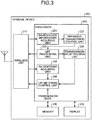
- FIG. 3 is a block diagram that illustrates a configuration of a terminal device 200 according to the first embodiment.
- the terminal device 200 illustrated in FIG. 3 includes a wireless unit 210, a processor 220, a memory 230, and a display 240.
- the wireless unit 210 is connected to an antenna, and it performs wireless reception processing on reception signals received via the antenna and outputs them to the processor 220. Furthermore, the wireless unit 210 performs wireless transmission processing on transmission signals output from the processor 220 and wirelessly transmits them via the antenna.
- the wireless unit 210 is capable of transmitting and receiving signals in a licensed band occupied by the wireless communication system to which the terminal device 200 belongs and is capable of transmitting and receiving signals in an unlicensed band shared by multiple wireless communication systems.
- the processor 220 includes, for example, a CPU, FPGA, or DSP, and it performs overall control on the wireless unit 210, the memory 230, and the display 240. Furthermore, the processor 220 performs random access processing in an unlicensed band. Specifically, the processor 220 includes an RA-resource information acquiring unit 221, a preamble-transmission control unit 222, an LBT processing unit 223, a transmission-delay holding unit 224, an RA-response acquiring unit 225, and an uplink-timing control unit 226.
- the RA-resource information acquiring unit 221 acquires RA resource information from unlicensed-band signals received by the wireless unit 210 if for example there is data to be transmitted by using the uplink in the unlicensed band. That is, the RA-resource information acquiring unit 221 acquires RA resource information that is transmitted from the base station device 100 at a predetermined cycle.
- the RA resource information indicates the time until the timing of an RA resource based on a downlink sub-frame including RA resource information and the frequency used as an RA resource in an unlicensed band.
- the preamble-transmission control unit 222 controls transmission of a preamble for random access in accordance with RA resource information acquired by the RA-resource information acquiring unit 221. Specifically, the preamble-transmission control unit 222 selects one preamble at random from preamble candidates notified by for example RRC signaling. Then, the preamble-transmission control unit 222 gives a command to the LBT processing unit 223 so as to transmit the selected preamble by using the RA resource indicated by the RA resource information.
- the LBT processing unit 223 Prior to transmission of signals by using an unlicensed band, the LBT processing unit 223 performs a reception process on an unlicensed band to determine whether a different wireless communication system is using the unlicensed band. Specifically, if the received power in the unlicensed band is equal to or more than the predetermined threshold, the LBT processing unit 223 determines that the unlicensed band is being used by a different wireless communication system, i.e., busy state. Conversely, if the received power in the unlicensed band is less than the predetermined threshold, the LBT processing unit 223 determines that the unlicensed band is not being used by different wireless communication systems, i.e., idle state. Furthermore, if the idle state continues for a predetermined time period, the LBT processing unit 223 starts transmission of signals by using the unlicensed band.
- the LBT processing unit 223 determines whether an unlicensed band is in a busy state or an idle state. Then, if an idle state continues for a predetermined time period, the LBT processing unit 223 transmits the preamble, for which the preamble-transmission control unit 222 has given a command, via the wireless unit 210. At this time, the LBT processing unit 223 notifies the transmission-delay holding unit 224 of a transmission delay from the beginning of the RA resource indicated by the RA resource information to actual transmission of the preamble. That is, the LBT processing unit 223 notifies the transmission-delay holding unit 224 of a transmission delay after an idle state of the unlicensed band continues for a predetermined time period and transmission of a preamble becomes enabled.
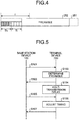
- the LBT processing unit 223 transmits the preamble 252 only when a transmission delay is equal to or less than the maximum allowable delay ⁇ .
- the LBT processing unit 223 cancels transmission of a preamble.
- the maximum allowable delay ⁇ is determined in consideration of the guard period length to prevent interference between sub-frames, the timing adjustment capability of the base station device 100, and the like, in addition to the time length of the RA resource 251 and the time length of the preamble 252.
- the transmission-delay holding unit 224 holds a transmission delay from the timing of the beginning of the RA resource to the actual transmission of a preamble by the LBT processing unit 223. That is, the transmission-delay holding unit 224 holds a transmission delay for transmission of a preamble that occurs due to an LBT process.
- the RA-response acquiring unit 225 acquires an RA response from signals of the unlicensed band, received by the wireless unit 210. That is, the RA-response acquiring unit 225 acquires an RA response with which the base station device 100 that has received the preamble allows any terminal device to conduct transmission in an uplink.
- the uplink-timing control unit 226 refers to the RA response by using the RA-response acquiring unit 225 to determine whether transmission by the terminal device 200 is allowed and, if transmission is allowed, controls the transmission timing of transmission data. Specifically, the uplink-timing control unit 226 acquires a timing advance command (TA command) included in an RA response and transmits transmission data in delayed timing after the transmission timing designated by the TA command is delayed by the transmission delay held by the transmission-delay holding unit 224.
- TA command timing advance command
- TA commands designate the transmission timing of the terminal device 200 based on the reception timing of a preamble by the base station device 100.
- the reception timing of a preamble by the base station device 100 is delayed by not only a propagation delay between the terminal device 200 and the base station device 100 but also by a transmission delay for an LBT process by the LBT processing unit 223. Therefore, if transmission data is transmitted at the transmission timing that follows the TA command, the transmission data is transmitted at excessively early timing by the transmission delay of the LBT process. Therefore, the uplink-timing control unit 226 delays the transmission timing designated by a TA command by the transmission delay that is held by the transmission-delay holding unit 224.
- the memory 230 includes, for example, a RAM or a ROM, and it stores information used for operation by the processor 220.
- the display 240 includes, for example, a liquid crystal panel, and it displays various types of information in accordance with commands from the processor 220.
- the display 240 may present the type of communication indicating, for example, whether it is in the middle of communication using a licensed band or in the middle of communication using an unlicensed band.
- FIG. 5 illustrates a wireless communication process when the terminal device 200 uses the uplink in an unlicensed band to transmit data. Therefore, in the following explanation, wireless communications between the base station device 100 and the terminal device 200 are conducted by using an unlicensed band if not otherwise specified.
- RA resource information generated by the RA-resource information generating unit 122 is periodically transmitted (Step S101).
- the terminal device 200 receives RA resource information and the RA-resource information acquiring unit 221 acquires the RA resource information.
- the preamble-transmission control unit 222 determines a preamble at random from preamble candidates that are previously notified (Step S102).
- the determined preamble is notified to the LBT processing unit 223, and the preamble is transmitted by the LBT processing unit 223 by using the RA resource indicated by the RA resource information (Step S103). That is, in the timing of the RA resource, the preamble is transmitted by using the frequency of the RA resource.
- the timing of the RA resource is a timing based on the beginning of a downlink sub-frame including RA resource information.
- an LBT process is performed by the LBT processing unit 223 and, if the idle state of an unlicensed band continues for a predetermined time period, a preamble is transmitted. For this reason, the timing in which a preamble is actually transmitted is timing after the beginning of the RA resource. Therefore, a transmission delay from the beginning of the RA resource to actual transmission of a preamble is notified to the transmission-delay holding unit 224 by the LBT processing unit 223 and it is held (Step S104).
- the base station device 100 receives a preamble transmitted from the terminal device 200, and the RA processing unit 121 selects the terminal device for which transmission is allowed from the terminal devices that have transmitted a preamble. Then, the RA processing unit 121 transmits an RA response indicating the terminal device for which transmission is allowed (Step S105).
- the RA response includes a TA command that gives a command to advance the transmission timing by the amount that corresponds to a propagation delay. Furthermore, it is assumed here that the transmitted RA response indicates that transmission from the terminal device 200 is allowed.
- RA responses transmitted from the base station device 100 are received by the terminal device 200 and acquired by the RA-response acquiring unit 225. Then, the uplink-timing control unit 226 checks that transmission from the terminal device 200 is allowed in accordance with the RA response and then adjusts the transmission timing of the transmission data (Step S106). Specifically, the transmission timing indicated by the TA command included in the RA response is delayed by the transmission delay that is held by the transmission-delay holding unit 224, and the delayed timing is set as transmission timing. Then, the transmission data is transmitted at this transmission timing (Step S107).
- a preamble is transmitted by using an RA resource in timing based on a downlink sub-frame including RA resource information
- random access may be executed without periodically allocating RA resources.
- the transmission timing of transmission data is adjusted in consideration of a transmission delay that occurs due to an LBT process during transmission of a preamble, it is possible to prevent the transmission timing from being excessively advanced due to timing advance.
- RA trigger a random access trigger
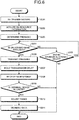
- the RA-resource information acquiring unit 221 acquires RA resource information (Step S202).
- RA triggers include, for example, a start of wireless communication with a new base station device due to handover or requests for adjustment of timing advance as well as requests for scheduling of the uplink described above.
- RA resource information acquired by the RA-resource information acquiring unit 221 includes the timing of an RA resource based on a downlink sub-frame including the RA resource information and the frequency of the RA resource. Furthermore, RA resource information may include the maximum allowable delay that is allowed after the beginning of an RA resource until the start of transmission of a preamble, a time interval between RA resources, or the like.
- the preamble-transmission control unit 222 determines one preamble at random from preamble candidates (Step S203). Preamble candidates are previously notified from the base station device 100 by for example RRC signaling. The determined preamble is notified to the LBT processing unit 223, and transmission of the preamble using the RA resource is commanded.
- the LBT processing unit 223 performs an LBT process to determine whether an unlicensed band is available in the timing of the RA resource (Step S204). Specifically, a reception process is performed on the unlicensed band, and it is determined whether the received power is equal to or more than a predetermined threshold. As a result of determination, if the received power is equal to or more than the predetermined threshold, it is determined that it is a busy state where the unlicensed band is being used by a different wireless communication system and the unlicensed band is not available (No at Step S204). In this case, it is determined whether the time elapsing from the beginning of the RA resource falls within the maximum allowable delay indicated by the RA resource information (Step S205). Then, if the maximum allowable delay is exceeded (No at Step S205), transmission of the preamble using the current RA resource is cancelled, and an LBT process is performed again in the timing of the subsequent RA resources.
- the LBT process is continuously performed, and it is determined whether the unlicensed band is in a busy state or an idle state. Then, if the idle state, where the received power of the unlicensed band is less than the predetermined threshold, continues for a predetermined time period, it is determined that the unlicensed band is available (Yes at Step S204). In this case, the preamble determined by the preamble-transmission control unit 222 is transmitted by using the frequency of the RA resource (Step S206). Here, as transmission of the preamble is started without exceeding the maximum allowable delay after the timing of the beginning of the RA resource, transmission of the preamble is completed within the time of the RA resource.
- the transmission-delay holding unit 224 holds a transmission delay caused by the LBT process before transmission of the preamble is started (Step S207). As the transmission delay is different from a propagation delay that corresponds to the distance from the terminal device 200 to the base station device 100, it is subtracted from the time adjusted by timing advance.
- the base station device 100 selects the terminal device for which transmission is allowed from the terminal devices that have transmitted a preamble. Then, the selected terminal device is notified, and the RA response including the TA command is transmitted from the base station device 100.
- the RA response is received by the wireless unit 210 in the terminal device 200 (Step S208) and is acquired by the RA-response acquiring unit 225.
- the uplink-timing control unit 226 refers to the acquired RA response and determines whether the terminal device 200 is allowed to conduct transmission (Step S209).
- the terminal device 200 acquires RA resource information again and repeatedly performs the above-described process. Conversely, if transmission by the terminal device 200 is allowed (Yes at Step S209), the uplink-timing control unit 226 acquires the transmission delay that is held by the transmission-delay holding unit 224. Then, by the uplink-timing control unit 226, the transmission timing designated by the TA command included in the RA response is delayed by the transmission delay, and the timing is set as a transmission timing (Step S210). Thus, it is possible to set transmission timing by eliminating the effect of a transmission delay due to an LBT process out of relation to a propagation delay, and accurate timing advance is enabled.
- the uplink-timing control unit 226 transmits transmission data at the set transmission timing (Step S211), whereby a random access process is completed.
- the time and the frequency of an RA resource for transmitting a preamble are notified by using RA resource information, and the RA resource is allocated at a time based on a downlink sub-frame including the RA resource information. Therefore, without periodically allocating RA resources, the terminal device can transmit preambles, whereby random access may be conducted in an unlicensed band that is shared by wireless communication systems.
- a second embodiment is characterized in that it is determined whether delay of transmission of a preamble is allowed or not depending on an RA trigger that is a trigger for the start of random access.
- the configurations of the base station device and the terminal device according to the second embodiment are the same as those of the base station device 100 ( FIG. 1 ) and the terminal device 200 ( FIG. 3 ) according to the first embodiment, their explanations are omitted. According to the second embodiment, operation of the terminal device during random access is different from that in the first embodiment.
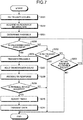
- FIG. 7 is a flowchart that illustrates a random access process of the terminal device according to the second embodiment.
- the same parts as those in FIG. 6 are attached with the same reference numerals, and their detailed explanations are omitted.
- RA-resource information acquiring unit 221 acquires RA resource information (Step S202).
- RA triggers include, for example, a start of wireless communication with a new base station device due to handover or requests for adjustment of timing advance as well as requests for scheduling of the uplink described above.
- the preamble-transmission control unit 222 determines one preamble at random from preamble candidates for each RA trigger (Step S301). That is, according to the present embodiment, preamble candidates are different depending on an RA trigger. For example, if the RA trigger is a request for timing advance adjustment, preambles with identification numbers 1 to 16 are used as preamble candidates, and if the RA trigger is a request for scheduling in the uplink, preambles with identification numbers 17 to 64 are used as preamble candidates. These types of preamble candidates are previously notified from the base station device by for example RRC signaling. Furthermore, when a preamble is determined by the preamble-transmission control unit 222, one preamble is selected from preamble candidates that correspond to an RA trigger.
- the determined preamble is notified to the LBT processing unit 223, and transmission of the preamble using the RA resource is commanded.
- the LBT processing unit 223 performs an LBT process to determine whether an unlicensed band is available in the timing of the RA resource (Step S204). As a result, if it is determined that the unlicensed band is being used by a different wireless communication system, i.e., a busy state, and the unlicensed band is not available (No at Step S204), it is determined whether the RA trigger is a request for timing advance adjustment (Step S302).
- an RA response including a TA command is transmitted from the base station device in accordance with a propagation delay before a preamble is received by the base station device. Therefore, it is preferable that the timing in which a preamble is transmitted from the terminal device is determined from the timing of the RA resource without including a transmission delay due to an LBT process. Specifically, as the base station device, which receives a preamble, does not distinguish between a transmission delay due to an LBT process and a propagation delay, it is preferable that the base station device knows the transmission delay before a preamble is transmitted.
- the base station device is capable of accurately estimating a propagation delay of a preamble transmitted from the terminal device and is capable of including the TA command designating appropriate transmission timing in an RA response.
- Step S302 if the RA trigger is not a request for timing advance adjustment (No at Step S302), it is determined whether the time elapsing from the beginning of the RA resource falls within the maximum allowable delay indicated by the RA resource information (Step S205). Then, if the maximum allowable delay is exceeded (No at Step S205), transmission of the preamble using the current RA resource is cancelled, and an LBT process is performed again in the timing of the subsequent RA resources.
- the LBT process is continuously performed, and it is determined whether the unlicensed band is in a busy state or an idle state. Then, if the idle state, where the received power of the unlicensed band is less than the predetermined threshold, continues for a predetermined time period, it is determined that the unlicensed band is available (Yes at Step S204). In this case, the preamble determined by the preamble-transmission control unit 222 is transmitted by using the frequency of the RA resource (Step S206).
- the transmission-delay holding unit 224 holds a transmission delay caused by the LBT process before transmission of the preamble is started (Step S207). Then, the base station device selects the terminal device for which transmission is allowed from the terminal devices that have transmitted a preamble, notifies the selected terminal device, and transmits the RA response including the TA command.
- the RA response is received by the wireless unit 210 (Step S208) and is acquired by the RA-response acquiring unit 225.
- the uplink-timing control unit 226 refers to the acquired RA response and determines whether the terminal device is allowed to conduct transmission (Step S209).
- the uplink-timing control unit 226 acquires the transmission delay that is held by the transmission-delay holding unit 224 and adjusts the transmission timing (Step S210). Then, the uplink-timing control unit 226 transmits transmission data at the adjusted transmission timing (Step S211), whereby a random access process is completed.
- the base station device is capable of accurately estimating a propagation delay of a preamble and is capable of including the TA command designating appropriate transmission timing in an RA response.
- a third embodiment is characterized in that, if no RA response is received after the elapse of a predetermined time after a preamble is transmitted, subsequent preambles are transmitted by using multiple RA resources in a frequency direction.
- the configurations of the base station device and the terminal device according to the third embodiment are the same as those of the base station device 100 ( FIG. 1 ) and the terminal device 200 ( FIG. 3 ) according to the first embodiment, their explanations are omitted. According to the third embodiment, arrangement of RA resources is different from that in the first embodiment.
- FIG. 8 is a specific example of arrangement of RA resources according to the third embodiment.
- RA resources R11, R12, R21, R22, R31, and R32 are allocated in frequencies within an unlicensed band in timings based on the time t 0 at the beginning of the sub-frame for transmitting RA resource information 301.
- the RA resources R11 and R12 are allocated after the time t 1 from the time t 0
- the RA resources R21, R22 and the RA resources R31, R32 are allocated with an interval of the time t 2 after the RA resources R11, R12, respectively.
- the RA resources R11, R12 are allocated in different frequencies at the same time.
- the RA resources R21, R22 are also allocated in different frequencies at the same time
- the RA resources R31, R32 are also allocated in different frequencies at the same time.
- multiple RA resources are arranged in a frequency direction; thus, for example, even if there is provision on the upper limit of a transmission power per frequency, the transmission power for preambles may be increased in keeping with the provision by transmitting an identical preamble with multiple RA resources. As a result, preambles may be received by a base station device without fail.
- FIG. 9 is a flowchart that illustrates a random access process by the terminal device according to the third embodiment.
- the same parts as those in FIG. 6 are attached with the same reference numerals, and their detailed explanations are omitted.
- the RA-resource information acquiring unit 221 acquires RA resource information (Step S202). After RA resource information is acquired, the preamble-transmission control unit 222 determines whether random access using the previous RA resource has failed (Step S401). Specifically, the preamble-transmission control unit 222 determines whether the current RA resource information has been acquired without receiving any RA response although a preamble has been already transmitted by using an RA resource.
- Step S401 the current RA resource information is referred to, and it is determined that the RA resources used becomes larger than that for the case where the random access failed (Step S402).
- the RA resources illustrated in FIG. 8 for example, if the previous preamble transmission is conducted by using only the RA resource R11, it is determined that the RA resources R11, R12 are used for the current preamble transmission. In this way, if the previous random access has failed, it is determined that the current preamble transmission is conducted by simultaneously using multiple RA resources in a frequency direction.
- the transmission power of a preamble may be increased, and the preamble may be properly received by the base station device.
- RA responses may be transmitted from the base station device, and random access may be successful.
- the preamble-transmission control unit 222 determines one preamble at random from preamble candidates (Step S203). The determined preamble is notified to the LBT processing unit 223, and transmission of the preamble using the RA resource is commanded.
- the LBT processing unit 223 performs an LBT process to determine whether an unlicensed band is available in the timing of the RA resource (Step S204). As a result, if it is determined that it is a busy state where an unlicensed band is being used by a different wireless communication system and the unlicensed band is not available (No at Step S204), it is determined whether the time elapsing from the beginning of the RA resource falls within the maximum allowable delay indicated by RA resource information (Step S205). Then, if the maximum allowable delay is exceeded (No at Step S205), transmission of the preamble using the current RA resource is cancelled, and an LBT process is performed again in the timing of the subsequent RA resources.
- the LBT process is continuously performed, and it is determined whether the unlicensed band is in a busy state or an idle state. Then, if the idle state, where the received power of the unlicensed band is less than the predetermined threshold, continues for a predetermined time period, it is determined that the unlicensed band is available (Yes at Step S204).
- the preamble determined by the preamble-transmission control unit 222 is transmitted by using the frequency of the RA resource (Step S206).
- the number of RA resources used for transmission of a preamble is different depending on whether the previous random access failed. That is, if the previous random access failed, a preamble is transmitted by simultaneously using more RA resources than those for the previous random access.
- the transmission-delay holding unit 224 holds a transmission delay caused by the LBT process before transmission of the preamble is started (Step S207). Then, the base station device selects the terminal device for which transmission is allowed from the terminal devices that have transmitted a preamble, notifies the selected terminal device, and transmits the RA response including the TA command.
- the RA response is received by the wireless unit 210 (Step S208) and is acquired by the RA-response acquiring unit 225.
- the uplink-timing control unit 226 refers to the acquired RA response and determines whether the terminal device is allowed to conduct transmission (Step S209).
- the uplink-timing control unit 226 acquires the transmission delay that is held by the transmission-delay holding unit 224 and adjusts the transmission timing (Step S210). Then, the uplink-timing control unit 226 transmits transmission data in the adjusted transmission timing (Step S211), whereby a random access process is completed.
- a preamble is transmitted by simultaneously using more RA resources than those for the previous. Therefore, even if there is provision on the upper limit of a transmission power per frequency, the transmission power for preambles may be increased, and the base station device may properly receive preambles. As a result, RA responses may be transmitted from the base station device and random access may be successful.
- a fourth embodiment is characterized in that the base station device transmits a trigger signal if an unlicensed band is available as a result of an LBT process and the terminal device transmits a preamble in timing based on the timing of the trigger signal.
- FIG. 10 is a block diagram that illustrates a configuration of the base station device 100 according to the fourth embodiment.
- the base station device 100 illustrated in FIG. 10 includes a processor 410 instead of the processor 120 in the base station device 100 illustrated in FIG. 1 .
- the processor 410 includes, for example, a CPU, FPGA, or DSP, and it performs overall control on the wireless unit 110, the memory 130, and the network I/F 140. Furthermore, the processor 410 performs a random access process in an unlicensed band. Specifically, the processor 410 includes the RA processing unit 121, an RA-resource information generating unit 411, an LBT processing unit 412, and a trigger-signal generating unit 413.
- the RA-resource information generating unit 411 generates RA resource information in accordance with a command from the RA processing unit 121. Specifically, the RA-resource information generating unit 411 generates RA resource information that gives a command to transmit a preamble in the timing in which a trigger signal is received and that indicates the frequency used for transmission of a preamble in an unlicensed band. Furthermore, the RA-resource information generating unit 411 may generate RA resource information that specifies the type of trigger signal that corresponds to transmission of a preamble.
- the RA-resource information generating unit 411 may generate RA resource information that specifies a trigger signal that serves as a trigger for transmission of a preamble.
- the LBT processing unit 412 After the RA-resource information generating unit 411 generates RA resource information, the LBT processing unit 412 performs an LBT process to check availability of an unlicensed band. Specifically, the LBT processing unit 412 performs a reception process on an unlicensed band to determine whether the received power is equal to or less than the predetermined threshold. Then, if the received power is continuously equal to or less than the predetermined threshold during more than a predetermined time period, the LBT processing unit 412 determines that an unlicensed band is available and transmits RA resource information with a downlink sub-frame. Furthermore, if an unlicensed band is already being used by the wireless communication system to which the base station device 100 belongs, the LBT processing unit 412 may transmit RA resource information without performing LBT.
- the LBT processing unit 412 performs an LBT process in accordance with a command from the trigger-signal generating unit 413. Then, if it is determined that an unlicensed band is available, the LBT processing unit 412 transmits the trigger signal generated by the trigger-signal generating unit 413. That is, if it is determined that the unlicensed band can be occupied by the wireless communication system to which the base station device 100 belongs, the LBT processing unit 412 transmits a trigger signal that serves as a trigger for transmission of a preamble.
- the trigger-signal generating unit 413 After the LBT processing unit 412 transmits RA resource information, the trigger-signal generating unit 413 generates a trigger signal. Then, the trigger-signal generating unit 413 gives a command to the LBT processing unit 412 so as to transmit the generated trigger signal.
- the trigger signal is a trigger for transmission of a preamble
- an RA resource is arranged immediately after the trigger signal. That is, the trigger signal is one of the resource specifying signals to specify an RA resource.
- the trigger-signal generating unit 413 may generate different types of trigger signals, such as a trigger signal that serves as a trigger for transmission of data or a trigger signal that serves as a trigger for transmission of a preamble. Furthermore, the trigger-signal generating unit 413 may generate a single trigger signal that is transmitted separately from other signals or may generate for example a trigger signal that is simultaneously transmitted with other pieces of control information, or the like.
- FIG. 11(a) is a diagram that illustrates an example of a single trigger signal.
- the trigger-signal generating unit 413 generates a single trigger signal 502.
- the trigger signal 502 is transmitted if the LBT processing unit 412 determines that an unlicensed band is available, and an RA resource 503 is arranged in timing based on the trigger signal 502.
- the time interval between the trigger signal 502 and the RA resource 503 is an extremely short time, e.g., about several ⁇ s to several dozens of ⁇ s.
- the same sequence as synchronization signals of for example Zadoff-Chu sequence or M-sequence for example Zadoff-Chu sequence or M-sequence.
- FIG. 11(b) is a diagram that illustrates an example of the trigger signal that is simultaneously transmitted with other pieces of control information, or the like.
- the trigger-signal generating unit 413 generates an encoded and modulated trigger signal 504 together with other pieces of control information.
- the trigger signal 504 is transmitted in a sub-frame together with other pieces of control information if the LBT processing unit 412 determines that an unlicensed band is available, and an RA resource 505 is arranged in timing based on the downlink burst signal including the trigger signal 504.
- the time interval between the burst signal including the trigger signal 504 and the RA resource 505 is an extremely short time, e.g., about several ⁇ s to several dozens of ⁇ s.
- the RA resources 503, 505 are arranged alone; however, data and other pieces of control information may be simultaneously transmitted by using frequencies that are not used for RA resources.
- the RA resource 503 may be arranged immediately after the trigger signal 502 and uplink data 511 may be transmitted at a different frequency from that of the RA resource 503.
- the type of the trigger signal 502 may indicate whether data or other pieces of control information are allowed to be transmitted, or the type of the trigger signal 502 that allows transmission of data or other pieces of control information may be identified by using the RA resource information 501.
- FIG. 13 is a block diagram that illustrates a configuration of the terminal device 200 according to the fourth embodiment.
- the terminal device 200 illustrated in FIG. 13 includes a processor 420 instead of the processor 220 in the terminal device 200 illustrated in FIG. 3 .
- the processor 420 includes, for example, a CPU, FPGA, or DSP, and it performs overall control on the wireless unit 210, the memory 230, and the display 240. Furthermore, the processor 420 performs a random access process in an unlicensed band. Specifically, the processor 420 includes the RA-resource information acquiring unit 221, a trigger-signal detecting unit 421, a preamble-transmission control unit 422, the RA-response acquiring unit 225, and an uplink-timing control unit 423.
- the trigger-signal detecting unit 421 monitors signals in an unlicensed band, transmitted from the base station device 100, and detects a trigger signal from signals in the unlicensed band. Specifically, if a trigger signal is transmitted alone, the trigger-signal detecting unit 421 calculates correlation between a known trigger signal sequence and a signal in the unlicensed band, thereby detecting a trigger signal. Furthermore, if a trigger signal is transmitted together with other pieces of control information, or the like, the trigger-signal detecting unit 421 demodulates and decodes a signal in the unlicensed band, thereby detecting a trigger signal.
- the preamble-transmission control unit 422 controls transmission of a preamble for random access in accordance with RA resource information acquired by the RA-resource information acquiring unit 221. Specifically, the preamble-transmission control unit 422 selects one preamble at random from preamble candidates that are notified by for example RRC signaling. Then, the preamble-transmission control unit 422 transmits the selected preamble by using the RA resource allocated in the frequency indicated by the RA resource information in timing based on the timing in which the trigger-signal detecting unit 421 detects the trigger signal. Specifically, the preamble-transmission control unit 422 transmits a preamble without performing an LBT process immediately after a trigger signal is detected.
- the uplink-timing control unit 423 refers to the RA response by using the RA-response acquiring unit 225 to determine whether transmission by the terminal device 200 is allowed and, if transmission is allowed, controls the timing in which transmission data is transmitted. Specifically, the uplink-timing control unit 423 acquires a TA command included in an RA response and transmits transmission data at the transmission timing specified by the TA command. That is, according to the present embodiment, as the terminal device 200 does not perform an LBT process, a transmission delay due to an LBT process does not occur during transmission of a preamble. Therefore, TA commands generated by the base station device 100 designate appropriate transmission timing to which only the propagation delay of a preamble is applied. Thus, the uplink-timing control unit 423 transmits transmission data at the transmission timing that follows a TA command.
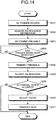
- FIG. 14 is a flowchart that illustrates a random access process of the terminal device 200 according to the fourth embodiment.
- the same parts as those in FIG. 6 are attached with the same reference numerals, and their detailed explanations are omitted.
- RA-resource information acquiring unit 221 acquires RA resource information (Step S202).
- RA triggers include, for example, a start of wireless communication with a new base station device due to handover or requests for adjustment of timing advance as well as requests for scheduling of the uplink described above.
- the preamble-transmission control unit 222 determines one preamble at random from preamble candidates (Step S203). Then, the trigger-signal detecting unit 421 monitors signals in an unlicensed band and determines whether a trigger signal has been detected (Step S501). Specifically, the trigger-signal detecting unit 421 determines whether a trigger signal has been detected by calculating the correlation between a reception signal in an unlicensed band and a predetermined sequence, demodulating and decoding a reception signal, or the like. Then, a stand-by state continues until a trigger signal is detected (No at Step S501).
- the preamble-transmission control unit 422 transmits the determined preamble by using the frequency of the RA resource (Step S206). That is, the time of the RA resource is based on the trigger signal, and the frequency of the RA resource is indicated by the RA resource information.
- the time interval from detection of a trigger signal to an RA resource is an extremely short time, e.g., about several ⁇ s to several dozens of ⁇ s, and the unlicensed band does not get occupied by a different wireless communication system during the interval.
- the base station device selects the terminal device for which transmission is allowed from the terminal devices that have transmitted a preamble, notifies the selected terminal device, and transmits the RA response including the TA command.
- the RA response is received by the wireless unit 210 (Step S208) and is acquired by the RA-response acquiring unit 225.
- the uplink-timing control unit 423 refers to the acquired RA response and determines whether the terminal device 200 is allowed to conduct transmission (Step S209).
- the uplink-timing control unit 423 adjusts the transmission timing in accordance with the TA command included in the RA response (Step S210). Then, the uplink-timing control unit 423 transmits transmission data at the adjusted transmission timing (Step S211), whereby a random access process is completed.
- the base station device performs an LBT process and transmits a trigger signal after RA resource information is transmitted, and the terminal device transmits a preamble by using the RA resource that is arranged immediately after the trigger signal. Therefore, the terminal device does not need to perform an LBT process, and uncertain transmission delay due to an LBT process does not occur during transmission of a preamble. As a result, processing loads on the terminal device may be reduced, and proper timing advance adjustment may be conducted.
Landscapes
- Engineering & Computer Science (AREA)
- Computer Networks & Wireless Communication (AREA)
- Signal Processing (AREA)
- Mobile Radio Communication Systems (AREA)
Abstract
Description
- The present invention relates to a terminal device, a base station device, a wireless communication system, and a wireless communication method.
- In recent years, traffic has been increasing in wireless communication systems using for example LTE (Long Term Evolution); therefore, there is a demand to take measures so as to contain more traffic and improve communication quality. Thus, there is a consideration on use of the LTE technology in unlicensed bands (Unlicensed band) which are used for wireless LAN (Local Area Network), for example, and for which licenses are not needed.
- Specifically, there is a technology called LAA (Licensed Assisted Access) using the LTE technology in unlicensed bands. LAA is a technology for transmitting and receiving data in unlicensed bands by subsidiarily using licensed bands which are used in wireless communication systems, such as mobile telephone networks, and for which licenses are needed.
- If the LAA is used, it is considered that control data, and the like, are transmitted and received in for example licensed bands and best-effort user data, and the like, are transmitted and received in unlicensed bands. Furthermore, in order to improve the usage efficiency of frequencies in an unlicensed band, it is preferable that sub-frames for an uplink and a downlink are adaptively arranged in accordance with the amount of traffic in the uplink and the downlink.
- Furthermore, for the LTE in licensed bands, if there is data to be transmitted by using an uplink, a terminal device sometimes controls communication with the base station device by using random access. Specifically, the terminal device selects a preamble at random and transmits it to the base station device in order to make a request for scheduling in the uplink and, if a response is received from the base station device, transmits data by using the uplink.
- By RRC (Radio Resource Control) signaling, the base station device notifies information on such as a preamble candidate selected by the terminal device or a resource used for transmission of a preamble. Resources for transmission of a preamble, specified by the information, are arranged in a periodically fixed pattern. Therefore, the terminal device selects any preamble from preamble candidates and then transmits the selected preamble by using the periodically arranged resources. Furthermore, this kind of random access is used when, for example, the terminal device is first connected to the base station device, when timing advance (TA) is conducted to adjust timing of transmission from the terminal device in accordance with a propagation delay, or the like.
-
- Patent Literature 1: Japanese National Publication of International Patent Application No.
2014-500685 - Patent Literature 2: Japanese National Publication of International Patent Application No.
2006-515497 - However, with regard to unlicensed bands, there is a problem in that it is difficult to conduct random access as in LTE. Specifically, unlicensed bands are frequency bands shared by a different wireless communication system such as wireless LAN; therefore, when LAA is performed by using an unlicensed band, LBT (Listen Before Talk) is typically introduced. During LBT, a device, which transmits signals by using an unlicensed band, performs a reception process on the unlicensed band before signals are transmitted so as to check whether the unlicensed band is available. During LBT, as a result of the reception process on the unlicensed band, if the received power is equal to or less than a predetermined value, it is determined that the unlicensed band is available, and transmission is started by using the unlicensed band.
- As LBT is conducted in unlicensed bands as described above, it is not practical that resources for transmission of a preamble are periodically arranged as for random access in LTE. Specifically, it is difficult to arrange an LAA sub-frame in an unlicensed band when the unlicensed band is being used by a different wireless communication system as a result of LBT, and resources for transmission of a preamble are not arranged. That is, with regard to unlicensed bands, in terms of equitability with other wireless communication systems, unlicensed bands are not occupied by LAA in a flexible manner, and it is difficult to periodically arrange resources for transmission of a preamble.
- Furthermore, even if resources for transmission of a preamble may be periodically arranged in an unlicensed band, the usage efficiency of a frequency in the unlicensed band is sometimes decreased. That is, as described above, it is preferable that sub-frames for the uplink and the downlink are adaptively arranged in accordance with the amount of traffic in order to improve the usage efficiency of frequencies in an unlicensed band. Nevertheless, if resources for transmission of a preamble are periodically arranged as for random access in LTE, sub-frames for the uplink are arranged in fixed timing. As a result, it is difficult to adaptively arrange sub-frames in accordance with the amount of traffic, and the usage efficiency of frequency in unlicensed bands is decreased.
- The disclosed technology has been made in consideration of the above aspect, and it has an object to provide a terminal device, a base station device, a wireless communication system, and a wireless communication method, with which random access may be conducted in an unlicensed band that is shared by wireless communication systems.
- According to an aspect of an embodiment, a terminal device includes a processor and a memory connected to the processor. The processor executes a process including: receiving a resource specifying signal that specifies a random access resource used to transmit a preamble for random access; selecting one preamble from a plurality of preamble candidates previously acquired; and transmitting the selected preamble by using a random access resource arranged in timing based on a reception timing of the resource specifying signal.
- According to an aspect of the terminal device, the base station device, the wireless communication system, and the wireless communication method disclosed in the present application, there is an advantage such that random access may be conducted in an unlicensed band shared by wireless communication systems.
-
-
FIG. 1 is a block diagram that illustrates a configuration of a base station device according to a first embodiment; -
FIG. 2 is a diagram that illustrates a specific example of arrangement of RA resources according to the first embodiment; -
FIG. 3 is a block diagram that illustrates a configuration of a terminal device according to the first embodiment; -
FIG. 4 is a diagram that illustrates a specific example of preamble transmission timing; -
FIG. 5 is a sequence diagram that illustrates a wireless communication process according to the first embodiment; -
FIG. 6 is a flowchart that illustrates a random access process according to the first embodiment; -
FIG. 7 is a flowchart that illustrates a random access process according to a second embodiment; -
FIG. 8 is a diagram that illustrates a specific example of arrangement of RA resources according to a third embodiment; -
FIG. 9 is a flowchart that illustrates a random access process according to a third embodiment; -
FIG. 10 is a block diagram that illustrates a configuration of a base station device according to a fourth embodiment; -
FIG. 11 is a diagram that illustrates a specific example of a trigger signal; -
FIG. 12 is a diagram that illustrates a specific example of an up signal; -
FIG. 13 is a block diagram that illustrates a configuration of a terminal device according to the fourth embodiment; and -
FIG. 14 is a flowchart that illustrates a random access process according to the fourth embodiment. - With reference to drawings, a detailed explanation is given below of an embodiment of a terminal device, a base station device, a wireless communication system, and a wireless communication method disclosed in the subject application. Furthermore, the embodiment is not a limitation on the present invention.
-
FIG. 1 is a block diagram that illustrates a configuration of abase station device 100 according to a first embodiment. Thebase station device 100 illustrated inFIG. 1 includes awireless unit 110, aprocessor 120, amemory 130, and a network interface (hereinafter, abbreviated as "network I/F") 140. - The
wireless unit 110 is connected to an antenna, and it performs wireless transmission processing on transmission signals output from theprocessor 120 and wirelessly transmits them via an antenna. Furthermore, thewireless unit 110 performs wireless reception processing on reception signals received via the antenna and outputs them to theprocessor 120. Thewireless unit 110 is capable of transmitting and receiving signals in a licensed band occupied by the wireless communication system to which thebase station device 100 belongs and is capable of transmitting and receiving signals in an unlicensed band shared by multiple wireless communication systems. - The
processor 120 includes, for example, a CPU (Central Processing Unit), FPGA (Field Programmable Gate Array), or DSP (Digital Signal Processor), and it performs overall control on thewireless unit 110, thememory 130, and the network I/F 140. Furthermore, theprocessor 120 conducts random access processing in an unlicensed band. Specifically, theprocessor 120 includes a random-access processing unit (hereafter, abbreviated as "RA processing unit") 121, a random access resource (hereafter, abbreviated as "RA resource")information generating unit 122, and anLBT processing unit 123. - The RA processing unit 121 determines that random access is conducted in an unlicensed band at a predetermined cycle and gives a command to the RA-resource
information generating unit 122 so as to transmit RA resource information. Here, the predetermined cycle is determined in accordance with, for example, the number of terminal devices connected to thebase station device 100. Furthermore, the transmission timing of RA resource information may be quasi-periodic transmission timing in accordance with an LBT process. The quasi-periodic transmission timing refers to, for example, transmission timing that enables transmission in accordance with a result of a LBT process within a window, windows for transmitting RA resource information being periodically arranged. In such a case where the quasi-periodic transmission timing is followed, the actual transmission timing of RA resource information does not need to be completely periodic. Information about the length of a cycle or the length of a window may be notified by for example RRC signaling, or it may be simultaneously transmitted with RA resource information. - The RA processing unit 121 acquires a preamble transmitted from a terminal device by using the RA resource designated by RA resource information and determines the terminal device for which transmission is allowed in the uplink from the terminal device to the
base station device 100. Furthermore, the RA processing unit 121 transmits a random access response (hereafter, abbreviated as "RA response"), which indicates the terminal device for which transmission is allowed, via thewireless unit 110. Here, the RA processing unit 121 conducts timing advance to adjust timing of transmission from the terminal device in accordance with the reception timing of a preamble from the terminal device for which transmission is allowed. That is, the RA processing unit 121 transmits a timing advance command (hereafter, referred to as "TA command") included in a RA response to give a command so as to advance the transmission timing by the amount that corresponds to a propagation delay from the terminal device. - The RA-resource
information generating unit 122 generates RA resource information for specifying an RA resource in accordance with a command from the RA processing unit 121. Specifically, the RA-resourceinformation generating unit 122 generates RA resource information that indicates the timing in which a preamble transmitted from the terminal device is received on the basis of the downlink sub-frame including RA resource information and the frequency used for transmission of a preamble in an unlicensed band. Furthermore, the RA-resourceinformation generating unit 122 may generate RA resource information that indicates the number of times RA resources are repeated and the time interval between the RA resources so as to receive preambles transmitted in multiple timings. - Here, the RA resource is a resource that is made up of a time and a frequency and that is used by a terminal device to transmit a preamble. Therefore, as illustrated in
FIG. 2 , for example, RA resources R1, R2, and R3 are allocated in a frequency within an unlicensed band in timings based on time t0 at the beginning of the sub-frame for transmittingRA resource information 151. InFIG. 2 , the RA resource R1 is allocated after time t1 from the time t0, and each of the RA resources R2 and R3 is allocated with an interval of the time t2 after the RA resource R1. Therefore, theRA resource information 151 includes information on the time t1 and t2, information on the frequency of the RA resources R1, R2, and R3, and the like. Furthermore, the time length of each of the RA resources R1, R2, and R3 may be, for example, the length of one sub-frame. - After the RA-resource
information generating unit 122 generates RA resource information, theLBT processing unit 123 performs an LBT process to check availability of an unlicensed band. Specifically, theLBT processing unit 123 performs a reception process on an unlicensed band to determine whether the received power is equal to or less than a predetermined threshold. Then, if the received power is continuously equal to or less than the predetermined threshold during more than a predetermined time period, theLBT processing unit 123 determines that an unlicensed band is available and transmits RA resource information with a downlink sub-frame. That is, theLBT processing unit 123 transmits a resource specifying signal that includes RA resource information. Furthermore, if an unlicensed band is already being used by the wireless communication system to which thebase station device 100 belongs, theLBT processing unit 123 may transmit a resource specifying signal that includes RA resource information without performing LBT. - The
memory 130 includes for example a RAM (Random Access Memory) or a ROM (Read Only Memory), and it stores information used during operation of theprocessor 120. - The network I/
F 140 is an interface connected to a higher-level network or other base station devices with wire. -
FIG. 3 is a block diagram that illustrates a configuration of aterminal device 200 according to the first embodiment. Theterminal device 200 illustrated inFIG. 3 includes a wireless unit 210, a processor 220, amemory 230, and adisplay 240. - The wireless unit 210 is connected to an antenna, and it performs wireless reception processing on reception signals received via the antenna and outputs them to the processor 220. Furthermore, the wireless unit 210 performs wireless transmission processing on transmission signals output from the processor 220 and wirelessly transmits them via the antenna. The wireless unit 210 is capable of transmitting and receiving signals in a licensed band occupied by the wireless communication system to which the
terminal device 200 belongs and is capable of transmitting and receiving signals in an unlicensed band shared by multiple wireless communication systems. - The processor 220 includes, for example, a CPU, FPGA, or DSP, and it performs overall control on the wireless unit 210, the
memory 230, and thedisplay 240. Furthermore, the processor 220 performs random access processing in an unlicensed band. Specifically, the processor 220 includes an RA-resourceinformation acquiring unit 221, a preamble-transmission control unit 222, anLBT processing unit 223, a transmission-delay holding unit 224, an RA-response acquiring unit 225, and an uplink-timing control unit 226. - The RA-resource
information acquiring unit 221 acquires RA resource information from unlicensed-band signals received by the wireless unit 210 if for example there is data to be transmitted by using the uplink in the unlicensed band. That is, the RA-resourceinformation acquiring unit 221 acquires RA resource information that is transmitted from thebase station device 100 at a predetermined cycle. The RA resource information indicates the time until the timing of an RA resource based on a downlink sub-frame including RA resource information and the frequency used as an RA resource in an unlicensed band. - The preamble-
transmission control unit 222 controls transmission of a preamble for random access in accordance with RA resource information acquired by the RA-resourceinformation acquiring unit 221. Specifically, the preamble-transmission control unit 222 selects one preamble at random from preamble candidates notified by for example RRC signaling. Then, the preamble-transmission control unit 222 gives a command to theLBT processing unit 223 so as to transmit the selected preamble by using the RA resource indicated by the RA resource information. - Prior to transmission of signals by using an unlicensed band, the
LBT processing unit 223 performs a reception process on an unlicensed band to determine whether a different wireless communication system is using the unlicensed band. Specifically, if the received power in the unlicensed band is equal to or more than the predetermined threshold, theLBT processing unit 223 determines that the unlicensed band is being used by a different wireless communication system, i.e., busy state. Conversely, if the received power in the unlicensed band is less than the predetermined threshold, theLBT processing unit 223 determines that the unlicensed band is not being used by different wireless communication systems, i.e., idle state. Furthermore, if the idle state continues for a predetermined time period, theLBT processing unit 223 starts transmission of signals by using the unlicensed band. - After the preamble-
transmission control unit 222 gives a command so as to transmit a preamble, theLBT processing unit 223 determines whether an unlicensed band is in a busy state or an idle state. Then, if an idle state continues for a predetermined time period, theLBT processing unit 223 transmits the preamble, for which the preamble-transmission control unit 222 has given a command, via the wireless unit 210. At this time, theLBT processing unit 223 notifies the transmission-delay holding unit 224 of a transmission delay from the beginning of the RA resource indicated by the RA resource information to actual transmission of the preamble. That is, theLBT processing unit 223 notifies the transmission-delay holding unit 224 of a transmission delay after an idle state of the unlicensed band continues for a predetermined time period and transmission of a preamble becomes enabled. - Specifically, it is assumed that, as illustrated in
FIG. 4 , for example, after a busy state continues for a time Tb from the beginning of anRA resource 251 indicated by RA resource information, an idle state continues for a time Ti and then apreamble 252 is transmitted. In this case, the sum of the time Tb and the time Ti is notified as a transmission delay to the transmission-delay holding unit 224. Furthermore, if the RA resource information includes information on the maximum allowable delay τ, theLBT processing unit 223 transmits thepreamble 252 only when a transmission delay is equal to or less than the maximum allowable delay τ. In other words, if transmission of a preamble is not enabled after the maximum allowable delay τ is exceeded, theLBT processing unit 223 cancels transmission of a preamble. Here, the maximum allowable delay τ is determined in consideration of the guard period length to prevent interference between sub-frames, the timing adjustment capability of thebase station device 100, and the like, in addition to the time length of theRA resource 251 and the time length of thepreamble 252. - With reference back to
FIG. 3 , the transmission-delay holding unit 224 holds a transmission delay from the timing of the beginning of the RA resource to the actual transmission of a preamble by theLBT processing unit 223. That is, the transmission-delay holding unit 224 holds a transmission delay for transmission of a preamble that occurs due to an LBT process. - After transmission of the preamble is completed, the RA-
response acquiring unit 225 acquires an RA response from signals of the unlicensed band, received by the wireless unit 210. That is, the RA-response acquiring unit 225 acquires an RA response with which thebase station device 100 that has received the preamble allows any terminal device to conduct transmission in an uplink. - The uplink-
timing control unit 226 refers to the RA response by using the RA-response acquiring unit 225 to determine whether transmission by theterminal device 200 is allowed and, if transmission is allowed, controls the transmission timing of transmission data. Specifically, the uplink-timing control unit 226 acquires a timing advance command (TA command) included in an RA response and transmits transmission data in delayed timing after the transmission timing designated by the TA command is delayed by the transmission delay held by the transmission-delay holding unit 224. - TA commands designate the transmission timing of the
terminal device 200 based on the reception timing of a preamble by thebase station device 100. However, the reception timing of a preamble by thebase station device 100 is delayed by not only a propagation delay between theterminal device 200 and thebase station device 100 but also by a transmission delay for an LBT process by theLBT processing unit 223. Therefore, if transmission data is transmitted at the transmission timing that follows the TA command, the transmission data is transmitted at excessively early timing by the transmission delay of the LBT process. Therefore, the uplink-timing control unit 226 delays the transmission timing designated by a TA command by the transmission delay that is held by the transmission-delay holding unit 224. - The
memory 230 includes, for example, a RAM or a ROM, and it stores information used for operation by the processor 220. - The
display 240 includes, for example, a liquid crystal panel, and it displays various types of information in accordance with commands from the processor 220. Thedisplay 240 may present the type of communication indicating, for example, whether it is in the middle of communication using a licensed band or in the middle of communication using an unlicensed band. - Next, with reference to the sequence diagram illustrated in
FIG. 5 , an explanation is given of a wireless communication process by thebase station device 100 and theterminal device 200 that are configured as described above.FIG. 5 illustrates a wireless communication process when theterminal device 200 uses the uplink in an unlicensed band to transmit data. Therefore, in the following explanation, wireless communications between thebase station device 100 and theterminal device 200 are conducted by using an unlicensed band if not otherwise specified. - In accordance with a command from the RA processing unit 121 in the
base station device 100, RA resource information generated by the RA-resourceinformation generating unit 122 is periodically transmitted (Step S101). When there occurs transmission data to be transmitted in the uplink, theterminal device 200 receives RA resource information and the RA-resourceinformation acquiring unit 221 acquires the RA resource information. Then, the preamble-transmission control unit 222 determines a preamble at random from preamble candidates that are previously notified (Step S102). The determined preamble is notified to theLBT processing unit 223, and the preamble is transmitted by theLBT processing unit 223 by using the RA resource indicated by the RA resource information (Step S103). That is, in the timing of the RA resource, the preamble is transmitted by using the frequency of the RA resource. The timing of the RA resource is a timing based on the beginning of a downlink sub-frame including RA resource information. - For transmission of a preamble using an RA resource, an LBT process is performed by the
LBT processing unit 223 and, if the idle state of an unlicensed band continues for a predetermined time period, a preamble is transmitted. For this reason, the timing in which a preamble is actually transmitted is timing after the beginning of the RA resource. Therefore, a transmission delay from the beginning of the RA resource to actual transmission of a preamble is notified to the transmission-delay holding unit 224 by theLBT processing unit 223 and it is held (Step S104). - The
base station device 100 receives a preamble transmitted from theterminal device 200, and the RA processing unit 121 selects the terminal device for which transmission is allowed from the terminal devices that have transmitted a preamble. Then, the RA processing unit 121 transmits an RA response indicating the terminal device for which transmission is allowed (Step S105). The RA response includes a TA command that gives a command to advance the transmission timing by the amount that corresponds to a propagation delay. Furthermore, it is assumed here that the transmitted RA response indicates that transmission from theterminal device 200 is allowed. - RA responses transmitted from the
base station device 100 are received by theterminal device 200 and acquired by the RA-response acquiring unit 225. Then, the uplink-timing control unit 226 checks that transmission from theterminal device 200 is allowed in accordance with the RA response and then adjusts the transmission timing of the transmission data (Step S106). Specifically, the transmission timing indicated by the TA command included in the RA response is delayed by the transmission delay that is held by the transmission-delay holding unit 224, and the delayed timing is set as transmission timing. Then, the transmission data is transmitted at this transmission timing (Step S107). - As described above, as a preamble is transmitted by using an RA resource in timing based on a downlink sub-frame including RA resource information, random access may be executed without periodically allocating RA resources. Furthermore, as the transmission timing of transmission data is adjusted in consideration of a transmission delay that occurs due to an LBT process during transmission of a preamble, it is possible to prevent the transmission timing from being excessively advanced due to timing advance.
- Next, with reference to the flowchart illustrated in
FIG. 6 , an explanation is given of operation of theterminal device 200 during random access. - For example, when a random access trigger (hereafter, referred to as "RA trigger") occurs, such as generation of data to be transmitted by using the uplink in an unlicensed band (Step S201), the RA-resource
information acquiring unit 221 acquires RA resource information (Step S202). RA triggers include, for example, a start of wireless communication with a new base station device due to handover or requests for adjustment of timing advance as well as requests for scheduling of the uplink described above. - RA resource information acquired by the RA-resource
information acquiring unit 221 includes the timing of an RA resource based on a downlink sub-frame including the RA resource information and the frequency of the RA resource. Furthermore, RA resource information may include the maximum allowable delay that is allowed after the beginning of an RA resource until the start of transmission of a preamble, a time interval between RA resources, or the like. - After the RA resource information is acquired, the preamble-
transmission control unit 222 determines one preamble at random from preamble candidates (Step S203). Preamble candidates are previously notified from thebase station device 100 by for example RRC signaling. The determined preamble is notified to theLBT processing unit 223, and transmission of the preamble using the RA resource is commanded. - In response to this command, the
LBT processing unit 223 performs an LBT process to determine whether an unlicensed band is available in the timing of the RA resource (Step S204). Specifically, a reception process is performed on the unlicensed band, and it is determined whether the received power is equal to or more than a predetermined threshold. As a result of determination, if the received power is equal to or more than the predetermined threshold, it is determined that it is a busy state where the unlicensed band is being used by a different wireless communication system and the unlicensed band is not available (No at Step S204). In this case, it is determined whether the time elapsing from the beginning of the RA resource falls within the maximum allowable delay indicated by the RA resource information (Step S205). Then, if the maximum allowable delay is exceeded (No at Step S205), transmission of the preamble using the current RA resource is cancelled, and an LBT process is performed again in the timing of the subsequent RA resources. - Conversely, if the time elapsing from the beginning of the RA resource falls within the maximum allowable delay (Yes at Step S205), the LBT process is continuously performed, and it is determined whether the unlicensed band is in a busy state or an idle state. Then, if the idle state, where the received power of the unlicensed band is less than the predetermined threshold, continues for a predetermined time period, it is determined that the unlicensed band is available (Yes at Step S204). In this case, the preamble determined by the preamble-
transmission control unit 222 is transmitted by using the frequency of the RA resource (Step S206). Here, as transmission of the preamble is started without exceeding the maximum allowable delay after the timing of the beginning of the RA resource, transmission of the preamble is completed within the time of the RA resource. - Simultaneously with transmission of the preamble, the transmission-delay holding unit 224 holds a transmission delay caused by the LBT process before transmission of the preamble is started (Step S207). As the transmission delay is different from a propagation delay that corresponds to the distance from the
terminal device 200 to thebase station device 100, it is subtracted from the time adjusted by timing advance. - After the preamble is transmitted, the
base station device 100 selects the terminal device for which transmission is allowed from the terminal devices that have transmitted a preamble. Then, the selected terminal device is notified, and the RA response including the TA command is transmitted from thebase station device 100. The RA response is received by the wireless unit 210 in the terminal device 200 (Step S208) and is acquired by the RA-response acquiring unit 225. The uplink-timing control unit 226 refers to the acquired RA response and determines whether theterminal device 200 is allowed to conduct transmission (Step S209). - If transmission by a different terminal device other than the
terminal device 200 is allowed (No at Step S209), theterminal device 200 acquires RA resource information again and repeatedly performs the above-described process. Conversely, if transmission by theterminal device 200 is allowed (Yes at Step S209), the uplink-timing control unit 226 acquires the transmission delay that is held by the transmission-delay holding unit 224. Then, by the uplink-timing control unit 226, the transmission timing designated by the TA command included in the RA response is delayed by the transmission delay, and the timing is set as a transmission timing (Step S210). Thus, it is possible to set transmission timing by eliminating the effect of a transmission delay due to an LBT process out of relation to a propagation delay, and accurate timing advance is enabled. - Then, the uplink-
timing control unit 226 transmits transmission data at the set transmission timing (Step S211), whereby a random access process is completed. - As described above, according to the present embodiment, the time and the frequency of an RA resource for transmitting a preamble are notified by using RA resource information, and the RA resource is allocated at a time based on a downlink sub-frame including the RA resource information. Therefore, without periodically allocating RA resources, the terminal device can transmit preambles, whereby random access may be conducted in an unlicensed band that is shared by wireless communication systems.
- A second embodiment is characterized in that it is determined whether delay of transmission of a preamble is allowed or not depending on an RA trigger that is a trigger for the start of random access.
- As the configurations of the base station device and the terminal device according to the second embodiment are the same as those of the base station device 100 (
FIG. 1 ) and the terminal device 200 (FIG. 3 ) according to the first embodiment, their explanations are omitted. According to the second embodiment, operation of the terminal device during random access is different from that in the first embodiment. -
FIG. 7 is a flowchart that illustrates a random access process of the terminal device according to the second embodiment. InFIG. 7 , the same parts as those inFIG. 6 are attached with the same reference numerals, and their detailed explanations are omitted. - For example, when an RA trigger occurs, such as generation of data to be transmitted by using the uplink in an unlicensed band (Step S201), the RA-resource
information acquiring unit 221 acquires RA resource information (Step S202). RA triggers include, for example, a start of wireless communication with a new base station device due to handover or requests for adjustment of timing advance as well as requests for scheduling of the uplink described above. - After the RA resource information is acquired, the preamble-
transmission control unit 222 determines one preamble at random from preamble candidates for each RA trigger (Step S301). That is, according to the present embodiment, preamble candidates are different depending on an RA trigger. For example, if the RA trigger is a request for timing advance adjustment, preambles with identification numbers 1 to 16 are used as preamble candidates, and if the RA trigger is a request for scheduling in the uplink, preambles with identification numbers 17 to 64 are used as preamble candidates. These types of preamble candidates are previously notified from the base station device by for example RRC signaling. Furthermore, when a preamble is determined by the preamble-transmission control unit 222, one preamble is selected from preamble candidates that correspond to an RA trigger. - The determined preamble is notified to the
LBT processing unit 223, and transmission of the preamble using the RA resource is commanded. In response to this command, theLBT processing unit 223 performs an LBT process to determine whether an unlicensed band is available in the timing of the RA resource (Step S204). As a result, if it is determined that the unlicensed band is being used by a different wireless communication system, i.e., a busy state, and the unlicensed band is not available (No at Step S204), it is determined whether the RA trigger is a request for timing advance adjustment (Step S302). - Here, if random access is conducted for timing advance adjustment, an RA response including a TA command is transmitted from the base station device in accordance with a propagation delay before a preamble is received by the base station device. Therefore, it is preferable that the timing in which a preamble is transmitted from the terminal device is determined from the timing of the RA resource without including a transmission delay due to an LBT process. Specifically, as the base station device, which receives a preamble, does not distinguish between a transmission delay due to an LBT process and a propagation delay, it is preferable that the base station device knows the transmission delay before a preamble is transmitted.
- Therefore, if an unlicensed band is not available and the RA trigger is a request for timing advance adjustment (Yes at Step S302), transmission of the preamble using the current RA resource is cancelled, and an LBT process is performed again in the timing of the subsequent RA resources. Thus, if the RA trigger is a request for timing advance adjustment, no uncertain transmission delay occurs due to an LBT process. As a result, the base station device is capable of accurately estimating a propagation delay of a preamble transmitted from the terminal device and is capable of including the TA command designating appropriate transmission timing in an RA response.
- Conversely, as a result of determination at Step S302, if the RA trigger is not a request for timing advance adjustment (No at Step S302), it is determined whether the time elapsing from the beginning of the RA resource falls within the maximum allowable delay indicated by the RA resource information (Step S205). Then, if the maximum allowable delay is exceeded (No at Step S205), transmission of the preamble using the current RA resource is cancelled, and an LBT process is performed again in the timing of the subsequent RA resources.
- Conversely, if the time elapsing from the beginning of the RA resource falls within the maximum allowable delay (Yes at Step S205), the LBT process is continuously performed, and it is determined whether the unlicensed band is in a busy state or an idle state. Then, if the idle state, where the received power of the unlicensed band is less than the predetermined threshold, continues for a predetermined time period, it is determined that the unlicensed band is available (Yes at Step S204). In this case, the preamble determined by the preamble-
transmission control unit 222 is transmitted by using the frequency of the RA resource (Step S206). - Simultaneously with transmission of the preamble, the transmission-delay holding unit 224 holds a transmission delay caused by the LBT process before transmission of the preamble is started (Step S207). Then, the base station device selects the terminal device for which transmission is allowed from the terminal devices that have transmitted a preamble, notifies the selected terminal device, and transmits the RA response including the TA command. The RA response is received by the wireless unit 210 (Step S208) and is acquired by the RA-
response acquiring unit 225. The uplink-timing control unit 226 refers to the acquired RA response and determines whether the terminal device is allowed to conduct transmission (Step S209). - If transmission by a different terminal device other than the terminal device is allowed (No at Step S209), RA resource information is acquired again and the above-described process is repeatedly performed. Conversely, if transmission by the terminal device is allowed (Yes at Step S209), the uplink-
timing control unit 226 acquires the transmission delay that is held by the transmission-delay holding unit 224 and adjusts the transmission timing (Step S210). Then, the uplink-timing control unit 226 transmits transmission data at the adjusted transmission timing (Step S211), whereby a random access process is completed. - As described above, according to the present embodiment, if the RA trigger is a request for timing advance adjustment, a transmission delay due to an LBT process when a preamble is transmitted from the terminal device is not allowed, and if other RA triggers, a transmission delay within the maximum allowable delay is allowed. Therefore, if random access is conducted for timing advance adjustment, the base station device is capable of accurately estimating a propagation delay of a preamble and is capable of including the TA command designating appropriate transmission timing in an RA response.
- A third embodiment is characterized in that, if no RA response is received after the elapse of a predetermined time after a preamble is transmitted, subsequent preambles are transmitted by using multiple RA resources in a frequency direction.
- As the configurations of the base station device and the terminal device according to the third embodiment are the same as those of the base station device 100 (
FIG. 1 ) and the terminal device 200 (FIG. 3 ) according to the first embodiment, their explanations are omitted. According to the third embodiment, arrangement of RA resources is different from that in the first embodiment. -
FIG. 8 is a specific example of arrangement of RA resources according to the third embodiment. As illustrated inFIG. 8 , RA resources R11, R12, R21, R22, R31, and R32 are allocated in frequencies within an unlicensed band in timings based on the time t0 at the beginning of the sub-frame for transmittingRA resource information 301. InFIG. 8 , the RA resources R11 and R12 are allocated after the time t1 from the time t0, and the RA resources R21, R22 and the RA resources R31, R32 are allocated with an interval of the time t2 after the RA resources R11, R12, respectively. Furthermore, the RA resources R11, R12 are allocated in different frequencies at the same time. Similarly, the RA resources R21, R22 are also allocated in different frequencies at the same time, and the RA resources R31, R32 are also allocated in different frequencies at the same time. - As described above, multiple RA resources are arranged in a frequency direction; thus, for example, even if there is provision on the upper limit of a transmission power per frequency, the transmission power for preambles may be increased in keeping with the provision by transmitting an identical preamble with multiple RA resources. As a result, preambles may be received by a base station device without fail.
-
FIG. 9 is a flowchart that illustrates a random access process by the terminal device according to the third embodiment. InFIG. 9 , the same parts as those inFIG. 6 are attached with the same reference numerals, and their detailed explanations are omitted. - For example, when an RA trigger occurs, such as generation of data to be transmitted by using the uplink in an unlicensed band (Step S201), the RA-resource
information acquiring unit 221 acquires RA resource information (Step S202). After RA resource information is acquired, the preamble-transmission control unit 222 determines whether random access using the previous RA resource has failed (Step S401). Specifically, the preamble-transmission control unit 222 determines whether the current RA resource information has been acquired without receiving any RA response although a preamble has been already transmitted by using an RA resource. - As a result of determination, if the previous random access has failed (Yes at Step S401), the current RA resource information is referred to, and it is determined that the RA resources used becomes larger than that for the case where the random access failed (Step S402). Specifically, in arrangement of the RA resources illustrated in
FIG. 8 , for example, if the previous preamble transmission is conducted by using only the RA resource R11, it is determined that the RA resources R11, R12 are used for the current preamble transmission. In this way, if the previous random access has failed, it is determined that the current preamble transmission is conducted by simultaneously using multiple RA resources in a frequency direction. Therefore, even if there is provision on the upper limit of a transmission power per frequency, the transmission power of a preamble may be increased, and the preamble may be properly received by the base station device. As a result, RA responses may be transmitted from the base station device, and random access may be successful. - If the previous random access was successful (No at Step S401) or after the RA resources used are increased, the preamble-
transmission control unit 222 determines one preamble at random from preamble candidates (Step S203). The determined preamble is notified to theLBT processing unit 223, and transmission of the preamble using the RA resource is commanded. - In response to the command, the
LBT processing unit 223 performs an LBT process to determine whether an unlicensed band is available in the timing of the RA resource (Step S204). As a result, if it is determined that it is a busy state where an unlicensed band is being used by a different wireless communication system and the unlicensed band is not available (No at Step S204), it is determined whether the time elapsing from the beginning of the RA resource falls within the maximum allowable delay indicated by RA resource information (Step S205). Then, if the maximum allowable delay is exceeded (No at Step S205), transmission of the preamble using the current RA resource is cancelled, and an LBT process is performed again in the timing of the subsequent RA resources. - Conversely, if the time elapsing from the beginning of the RA resource falls within the maximum allowable delay (Yes at Step S205), the LBT process is continuously performed, and it is determined whether the unlicensed band is in a busy state or an idle state. Then, if the idle state, where the received power of the unlicensed band is less than the predetermined threshold, continues for a predetermined time period, it is determined that the unlicensed band is available (Yes at Step S204). In this case, the preamble determined by the preamble-
transmission control unit 222 is transmitted by using the frequency of the RA resource (Step S206). Here, the number of RA resources used for transmission of a preamble is different depending on whether the previous random access failed. That is, if the previous random access failed, a preamble is transmitted by simultaneously using more RA resources than those for the previous random access. - Simultaneously with transmission of the preamble, the transmission-delay holding unit 224 holds a transmission delay caused by the LBT process before transmission of the preamble is started (Step S207). Then, the base station device selects the terminal device for which transmission is allowed from the terminal devices that have transmitted a preamble, notifies the selected terminal device, and transmits the RA response including the TA command. The RA response is received by the wireless unit 210 (Step S208) and is acquired by the RA-
response acquiring unit 225. The uplink-timing control unit 226 refers to the acquired RA response and determines whether the terminal device is allowed to conduct transmission (Step S209). - If transmission by a different terminal device other than the terminal device is allowed (No at Step S209), RA resource information is acquired again and the above-described process is repeatedly performed. Conversely, if transmission by the terminal device is allowed (Yes at Step S209), the uplink-
timing control unit 226 acquires the transmission delay that is held by the transmission-delay holding unit 224 and adjusts the transmission timing (Step S210). Then, the uplink-timing control unit 226 transmits transmission data in the adjusted transmission timing (Step S211), whereby a random access process is completed. - As described above, according to the present embodiment, if the previous random access failed, a preamble is transmitted by simultaneously using more RA resources than those for the previous. Therefore, even if there is provision on the upper limit of a transmission power per frequency, the transmission power for preambles may be increased, and the base station device may properly receive preambles. As a result, RA responses may be transmitted from the base station device and random access may be successful.
- A fourth embodiment is characterized in that the base station device transmits a trigger signal if an unlicensed band is available as a result of an LBT process and the terminal device transmits a preamble in timing based on the timing of the trigger signal.
-
FIG. 10 is a block diagram that illustrates a configuration of thebase station device 100 according to the fourth embodiment. InFIG. 10 , the same parts as those inFIG. 1 are attached with the same reference numerals, and their explanations are omitted. Thebase station device 100 illustrated inFIG. 10 includes a processor 410 instead of theprocessor 120 in thebase station device 100 illustrated inFIG. 1 . - The processor 410 includes, for example, a CPU, FPGA, or DSP, and it performs overall control on the
wireless unit 110, thememory 130, and the network I/F 140. Furthermore, the processor 410 performs a random access process in an unlicensed band. Specifically, the processor 410 includes the RA processing unit 121, an RA-resourceinformation generating unit 411, an LBT processing unit 412, and a trigger-signal generating unit 413. - The RA-resource
information generating unit 411 generates RA resource information in accordance with a command from the RA processing unit 121. Specifically, the RA-resourceinformation generating unit 411 generates RA resource information that gives a command to transmit a preamble in the timing in which a trigger signal is received and that indicates the frequency used for transmission of a preamble in an unlicensed band. Furthermore, the RA-resourceinformation generating unit 411 may generate RA resource information that specifies the type of trigger signal that corresponds to transmission of a preamble. Specifically, if there are types of trigger signals, such as a trigger signal that serves as a trigger for transmission of data or a trigger signal that serves as a trigger for transmission of a preamble, the RA-resourceinformation generating unit 411 may generate RA resource information that specifies a trigger signal that serves as a trigger for transmission of a preamble. - After the RA-resource
information generating unit 411 generates RA resource information, the LBT processing unit 412 performs an LBT process to check availability of an unlicensed band. Specifically, the LBT processing unit 412 performs a reception process on an unlicensed band to determine whether the received power is equal to or less than the predetermined threshold. Then, if the received power is continuously equal to or less than the predetermined threshold during more than a predetermined time period, the LBT processing unit 412 determines that an unlicensed band is available and transmits RA resource information with a downlink sub-frame. Furthermore, if an unlicensed band is already being used by the wireless communication system to which thebase station device 100 belongs, the LBT processing unit 412 may transmit RA resource information without performing LBT. - Furthermore, after the RA resource information is transmitted, the LBT processing unit 412 performs an LBT process in accordance with a command from the trigger-
signal generating unit 413. Then, if it is determined that an unlicensed band is available, the LBT processing unit 412 transmits the trigger signal generated by the trigger-signal generating unit 413. That is, if it is determined that the unlicensed band can be occupied by the wireless communication system to which thebase station device 100 belongs, the LBT processing unit 412 transmits a trigger signal that serves as a trigger for transmission of a preamble. - After the LBT processing unit 412 transmits RA resource information, the trigger-
signal generating unit 413 generates a trigger signal. Then, the trigger-signal generating unit 413 gives a command to the LBT processing unit 412 so as to transmit the generated trigger signal. As the trigger signal is a trigger for transmission of a preamble, an RA resource is arranged immediately after the trigger signal. That is, the trigger signal is one of the resource specifying signals to specify an RA resource. The trigger-signal generating unit 413 may generate different types of trigger signals, such as a trigger signal that serves as a trigger for transmission of data or a trigger signal that serves as a trigger for transmission of a preamble. Furthermore, the trigger-signal generating unit 413 may generate a single trigger signal that is transmitted separately from other signals or may generate for example a trigger signal that is simultaneously transmitted with other pieces of control information, or the like. - Here, with reference to
FIG. 11 , a specific example of the trigger signal is explained.FIG. 11(a) is a diagram that illustrates an example of a single trigger signal. As illustrated inFIG. 11(a) , afterRA resource information 501 is transmitted, the trigger-signal generating unit 413 generates asingle trigger signal 502. Then, thetrigger signal 502 is transmitted if the LBT processing unit 412 determines that an unlicensed band is available, and anRA resource 503 is arranged in timing based on thetrigger signal 502. The time interval between thetrigger signal 502 and theRA resource 503 is an extremely short time, e.g., about several µs to several dozens of µs. It is preferable to use, as thetrigger signal 502 that is transmitted alone as described above, the same sequence as synchronization signals of for example Zadoff-Chu sequence or M-sequence. - Furthermore,
FIG. 11(b) is a diagram that illustrates an example of the trigger signal that is simultaneously transmitted with other pieces of control information, or the like. As illustrated inFIG. 11(b) , after theRA resource information 501 is transmitted, the trigger-signal generating unit 413 generates an encoded and modulatedtrigger signal 504 together with other pieces of control information. Then, thetrigger signal 504 is transmitted in a sub-frame together with other pieces of control information if the LBT processing unit 412 determines that an unlicensed band is available, and anRA resource 505 is arranged in timing based on the downlink burst signal including thetrigger signal 504. The time interval between the burst signal including thetrigger signal 504 and theRA resource 505 is an extremely short time, e.g., about several µs to several dozens of µs. - Here, in
FIGS. 11(a), (b) , theRA resources FIG. 12 , for example, theRA resource 503 may be arranged immediately after thetrigger signal 502 anduplink data 511 may be transmitted at a different frequency from that of theRA resource 503. In this case, the type of thetrigger signal 502 may indicate whether data or other pieces of control information are allowed to be transmitted, or the type of thetrigger signal 502 that allows transmission of data or other pieces of control information may be identified by using theRA resource information 501. -
FIG. 13 is a block diagram that illustrates a configuration of theterminal device 200 according to the fourth embodiment. InFIG. 13 , the same parts as those inFIG. 3 are attached with the same reference numerals, and their explanations are omitted. Theterminal device 200 illustrated inFIG. 13 includes aprocessor 420 instead of the processor 220 in theterminal device 200 illustrated inFIG. 3 . - The
processor 420 includes, for example, a CPU, FPGA, or DSP, and it performs overall control on the wireless unit 210, thememory 230, and thedisplay 240. Furthermore, theprocessor 420 performs a random access process in an unlicensed band. Specifically, theprocessor 420 includes the RA-resourceinformation acquiring unit 221, a trigger-signal detecting unit 421, a preamble-transmission control unit 422, the RA-response acquiring unit 225, and an uplink-timing control unit 423. - The trigger-
signal detecting unit 421 monitors signals in an unlicensed band, transmitted from thebase station device 100, and detects a trigger signal from signals in the unlicensed band. Specifically, if a trigger signal is transmitted alone, the trigger-signal detecting unit 421 calculates correlation between a known trigger signal sequence and a signal in the unlicensed band, thereby detecting a trigger signal. Furthermore, if a trigger signal is transmitted together with other pieces of control information, or the like, the trigger-signal detecting unit 421 demodulates and decodes a signal in the unlicensed band, thereby detecting a trigger signal. - The preamble-
transmission control unit 422 controls transmission of a preamble for random access in accordance with RA resource information acquired by the RA-resourceinformation acquiring unit 221. Specifically, the preamble-transmission control unit 422 selects one preamble at random from preamble candidates that are notified by for example RRC signaling. Then, the preamble-transmission control unit 422 transmits the selected preamble by using the RA resource allocated in the frequency indicated by the RA resource information in timing based on the timing in which the trigger-signal detecting unit 421 detects the trigger signal. Specifically, the preamble-transmission control unit 422 transmits a preamble without performing an LBT process immediately after a trigger signal is detected. - The uplink-
timing control unit 423 refers to the RA response by using the RA-response acquiring unit 225 to determine whether transmission by theterminal device 200 is allowed and, if transmission is allowed, controls the timing in which transmission data is transmitted. Specifically, the uplink-timing control unit 423 acquires a TA command included in an RA response and transmits transmission data at the transmission timing specified by the TA command. That is, according to the present embodiment, as theterminal device 200 does not perform an LBT process, a transmission delay due to an LBT process does not occur during transmission of a preamble. Therefore, TA commands generated by thebase station device 100 designate appropriate transmission timing to which only the propagation delay of a preamble is applied. Thus, the uplink-timing control unit 423 transmits transmission data at the transmission timing that follows a TA command. -
FIG. 14 is a flowchart that illustrates a random access process of theterminal device 200 according to the fourth embodiment. InFIG. 14 , the same parts as those inFIG. 6 are attached with the same reference numerals, and their detailed explanations are omitted. - For example, when an RA trigger occurs, such as generation of data to be transmitted by using the uplink in an unlicensed band (Step S201), the RA-resource
information acquiring unit 221 acquires RA resource information (Step S202). RA triggers include, for example, a start of wireless communication with a new base station device due to handover or requests for adjustment of timing advance as well as requests for scheduling of the uplink described above. - After the RA resource information is acquired, the preamble-
transmission control unit 222 determines one preamble at random from preamble candidates (Step S203). Then, the trigger-signal detecting unit 421 monitors signals in an unlicensed band and determines whether a trigger signal has been detected (Step S501). Specifically, the trigger-signal detecting unit 421 determines whether a trigger signal has been detected by calculating the correlation between a reception signal in an unlicensed band and a predetermined sequence, demodulating and decoding a reception signal, or the like. Then, a stand-by state continues until a trigger signal is detected (No at Step S501). - After a trigger signal is detected (Yes at Step S501), the preamble-
transmission control unit 422 transmits the determined preamble by using the frequency of the RA resource (Step S206). That is, the time of the RA resource is based on the trigger signal, and the frequency of the RA resource is indicated by the RA resource information. The time interval from detection of a trigger signal to an RA resource is an extremely short time, e.g., about several µs to several dozens of µs, and the unlicensed band does not get occupied by a different wireless communication system during the interval. - The base station device selects the terminal device for which transmission is allowed from the terminal devices that have transmitted a preamble, notifies the selected terminal device, and transmits the RA response including the TA command. The RA response is received by the wireless unit 210 (Step S208) and is acquired by the RA-
response acquiring unit 225. The uplink-timing control unit 423 refers to the acquired RA response and determines whether theterminal device 200 is allowed to conduct transmission (Step S209). - If transmission by a different terminal device other than the
terminal device 200 is allowed (No at Step S209), RA resource information is acquired again and the above-described process is repeatedly performed. Conversely, if transmission by theterminal device 200 is allowed (Yes at Step S209), the uplink-timing control unit 423 adjusts the transmission timing in accordance with the TA command included in the RA response (Step S210). Then, the uplink-timing control unit 423 transmits transmission data at the adjusted transmission timing (Step S211), whereby a random access process is completed. - As described above, according to the present embodiment, the base station device performs an LBT process and transmits a trigger signal after RA resource information is transmitted, and the terminal device transmits a preamble by using the RA resource that is arranged immediately after the trigger signal. Therefore, the terminal device does not need to perform an LBT process, and uncertain transmission delay due to an LBT process does not occur during transmission of a preamble. As a result, processing loads on the terminal device may be reduced, and proper timing advance adjustment may be conducted.
-
- 110, 210 WIRELESS UNIT
- 120, 220, 410, 420 PROCESSOR
- 121 RA PROCESSING UNIT
- 122, 411 RA-RESOURCE INFORMATION GENERATING UNIT
- 123, 223, 412 LBT PROCESSING UNIT
- 130, 230 MEMORY
- 140 NETWORK I/F
- 221 RA-RESOURCE INFORMATION ACQUIRING UNIT
- 222, 422 PREAMBLE-TRANSMISSION CONTROL UNIT
- 224 TRANSMISSION-DELAY HOLDING UNIT
- 225 RA-RESPONSE ACQUIRING UNIT
- 226, 423 UPLINK-TIMING CONTROL UNIT
- 240 DISPLAY
- 413 TRIGGER-SIGNAL GENERATING UNIT
- 421 TRIGGER-SIGNAL DETECTING UNIT
Claims (12)
- A terminal device comprising:a processor; anda memory connected to the processor, whereinthe processor executes a process comprising:receiving a resource specifying signal that specifies a random access resource used to transmit a preamble for random access;selecting one preamble from a plurality of preamble candidates previously acquired; andtransmitting the preamble selected by using a random access resource arranged in timing based on a reception timing of the resource specifying signal.
- The terminal device according to claim 1, wherein
the receiving includes receiving the resource specifying signal including resource information indicating a time from reception timing of the resource specifying signal to timing of the random access resource and a frequency of the random access resource, and
the transmitting includes transmitting the preamble selected by using the random access resource indicated by the resource information. - The terminal device according to claim 2, wherein
the receiving includes receiving the resource specifying signal including the resource information indicating a maximum allowable delay that is allowed when a preamble is transmitted by using the random access resource, and
the transmitting includes:determining whether a frequency band that is targeted for random access is occupiable by a wireless communication system to which the terminal device belongs; andtransmitting the preamble selected when it is determined that the frequency band is occupiable before the maximum allowable delay elapses after the timing of the random access resource. - The terminal device according to claim 3, wherein
the transmitting includes:when it is determined that the frequency band is not occupiable, determining whether the random access is started by using a request for adjustment of transmission timing by the terminal device as a trigger; andwhen it is determined that the request for adjustment of transmission timing is a trigger, cancelling transmission of the preamble selected and, when it is determined that the request for adjustment of transmission timing is not a trigger, repeatedly determining whether the frequency band is occupiable until the maximum allowable delay has elapsed. - The terminal device according to claim 2, wherein
the receiving includes receiving the resource specifying signal including the resource information on a plurality of random access resources that are arranged at an identical time and that have different frequencies, and
the transmitting includes:determining whether there is a response to a preamble previously transmitted by using the random access resource; andwhen it is determined that there is no response, transmitting the preamble selected by using more random access resources than previously used random access resources. - The terminal device according to claim 1, wherein
the receiving includes receiving the resource specifying signal that is transmitted when it is determined that a frequency band targeted for random access is occupiable by a wireless communication system to which the terminal device and a counterpart device belong as a result of determination made by the counterpart device, and
the transmitting includes transmitting the preamble selected within a predetermined time after timing in which the resource specifying signal is received. - A base station device comprising:a processor; anda memory connected to the processor, whereinthe processor executes a process comprising:generating a resource specifying signal that specifies a random access resource used to transmit a preamble for random access and that is transmitted in timing that is a basis for timing in which the random access resource is arranged; andtransmitting the resource specifying signal generated.
- The base station device according to claim 7, wherein the generating includes generating the resource specifying signal including resource information indicating a time from transmission timing of the resource specifying signal to timing of the random access resource and a frequency of the random access resource.
- The base station device according to claim 7, wherein the transmitting includes:determining whether a frequency band targeted for random access is occupiable by a wireless communication system to which the base station device and a counterpart device belong; andtransmitting the resource specifying signal generated when it is determined that the frequency band is occupiable.
- A wireless communication system comprising:a base station device; anda terminal device, whereinthe base station device includes a first processor and a first memory connected to the first processor,the first processor executes a process comprising:generating a resource specifying signal that specifies a random access resource used to transmit a preamble for random access and that is transmitted in timing that is a basis for timing in which the random access resource is arranged; andtransmitting the resource specifying signal generated,the terminal device includes a second processor and a second memory connected to the second processor,the second processor executes a process comprising:receiving the resource specifying signal;selecting one preamble from a plurality of preamble candidates previously acquired; andtransmitting the preamble selected by using a random access resource arranged in timing based on a reception timing of the resource specifying signal.
- A wireless communication method comprising:receiving a resource specifying signal that specifies a random access resource used to transmit a preamble for random access;selecting one preamble from a plurality of preamble candidates previously acquired; andtransmitting the preamble selected by using a random access resource arranged in timing based on a reception timing of the resource specifying signal.
- A wireless communication method comprising:generating a resource specifying signal that specifies a random access resource used to transmit a preamble for random access and that is transmitted in timing that is a basis for timing in which the random access resource is arranged; andtransmitting the resource specifying signal generated.
Applications Claiming Priority (1)
| Application Number | Priority Date | Filing Date | Title |
|---|---|---|---|
| PCT/JP2015/081908 WO2017081800A1 (en) | 2015-11-12 | 2015-11-12 | Terminal device, base station device, wireless communication system, and wireless communication method |
Publications (2)
| Publication Number | Publication Date |
|---|---|
| EP3376814A1 true EP3376814A1 (en) | 2018-09-19 |
| EP3376814A4 EP3376814A4 (en) | 2018-10-31 |
Family
ID=58694782
Family Applications (1)
| Application Number | Title | Priority Date | Filing Date |
|---|---|---|---|
| EP15908320.3A Withdrawn EP3376814A4 (en) | 2015-11-12 | 2015-11-12 | Terminal device, base station device, wireless communication system, and wireless communication method |
Country Status (4)
| Country | Link |
|---|---|
| US (2) | US10966244B2 (en) |
| EP (1) | EP3376814A4 (en) |
| JP (1) | JP6593450B2 (en) |
| WO (1) | WO2017081800A1 (en) |
Families Citing this family (12)
| Publication number | Priority date | Publication date | Assignee | Title |
|---|---|---|---|---|
| WO2017081800A1 (en) * | 2015-11-12 | 2017-05-18 | 富士通株式会社 | Terminal device, base station device, wireless communication system, and wireless communication method |
| WO2017129751A1 (en) * | 2016-01-29 | 2017-08-03 | Telefonaktiebolaget Lm Ericsson (Publ) | Clear channel assessment technique |
| CN109219152A (en) | 2017-06-29 | 2019-01-15 | 索尼公司 | Electronic equipment and wireless communications method in wireless communication system |
| CN109309961B (en) * | 2017-07-28 | 2023-06-02 | 华为技术有限公司 | A method for configuring random access, network equipment and terminal equipment |
| CN111052846B (en) * | 2017-08-10 | 2023-06-27 | 索尼公司 | Method and electronic device for performing radio communication |
| KR102509033B1 (en) * | 2018-05-10 | 2023-03-09 | 삼성전자주식회사 | Method and apparatus for accessing channel in wireless communication system |
| US11219061B2 (en) * | 2018-07-24 | 2022-01-04 | Qualcomm Incorporated | Listen-before-talk (LBT) modes for random access procedures |
| US12120060B2 (en) * | 2018-09-19 | 2024-10-15 | Qualcomm Incorporated | Acknowledgement codebook design for multiple transmission reception points |
| US12225589B2 (en) * | 2018-11-01 | 2025-02-11 | Panasonic Intellectual Property Corporation Of America | Transmission device, reception device, transmission method, and reception method using random access preamble |
| JP7270649B2 (en) * | 2019-01-10 | 2023-05-10 | 京セラ株式会社 | Communication control method |
| WO2020191524A1 (en) * | 2019-03-22 | 2020-10-01 | Qualcomm Incorporated | Extended signaling for multi-subscriber identity module (msim) user-equipment (ue) for new radio (nr) |
| EP3963930B1 (en) * | 2019-04-30 | 2025-04-09 | Nokia Technologies OY | Mechanism for providing multiple transmission opportunities |
Family Cites Families (217)
| Publication number | Priority date | Publication date | Assignee | Title |
|---|---|---|---|---|
| JP3717472B2 (en) * | 2002-11-08 | 2005-11-16 | 松下電器産業株式会社 | Transmitting apparatus and automatic gain control method |
| US7269152B2 (en) | 2003-02-14 | 2007-09-11 | Motorola, Inc. | Method and apparatus for transmitting information within a communication system |
| WO2005088853A1 (en) * | 2004-03-09 | 2005-09-22 | Neocific Inc. | Methods and apparatus for random access in multi-carrier communication systems |
| US7643515B2 (en) * | 2004-11-10 | 2010-01-05 | Qualcomm Incorporated | Method and apparatus for deriving transmission timing of a downlink control channel in support of enhanced uplink operation |
| US8457076B2 (en) * | 2006-01-20 | 2013-06-04 | Lg-Ericsson Co., Ltd. | Apparatus and method for transmitting and receiving a RACH signal in SC-FDMA system |
| PL2034755T3 (en) * | 2006-06-01 | 2013-06-28 | Huawei Tech Co Ltd | Method for connecting mobile station to base station |
| WO2007148930A1 (en) * | 2006-06-21 | 2007-12-27 | Electronics And Telecommunications Research Institute | Method to transmit downlink signaling message on cellular systems for packet transmission and method for receiving the message |
| US8345621B2 (en) * | 2006-08-08 | 2013-01-01 | Lg Electronics Inc. | Method and apparatus for transmitting signals according to the segmented access |
| KR20090086993A (en) | 2006-12-28 | 2009-08-14 | 후지쯔 가부시끼가이샤 | Wireless communication system and method for transmitting random access channel with base station |
| EP2117243B1 (en) * | 2007-02-02 | 2018-05-09 | Mitsubishi Electric Corporation | Communication method, base station, communication system, mobile terminal |
| US9288024B2 (en) * | 2007-09-12 | 2016-03-15 | Apple Inc. | Systems and methods for uplink signaling using time-frequency resources |
| JPWO2009038074A1 (en) * | 2007-09-18 | 2011-01-06 | シャープ株式会社 | Wireless communication system, base station apparatus, mobile station apparatus, and random access method |
| KR101457688B1 (en) * | 2007-10-04 | 2014-11-12 | 엘지전자 주식회사 | Method of Data Transmission Detecting Errors in Receiving Control Channel |
| US9510360B2 (en) * | 2007-10-06 | 2016-11-29 | Alcatel-Lucent Usa Inc. | Method and apparatus for a coordinated scheduling method to avoid multiplexing of control and data for power limited users in the LTE reverse link |
| CN101843160B (en) * | 2007-10-29 | 2014-01-22 | 交互数字专利控股公司 | Handling random access channel responses |
| US20090111445A1 (en) * | 2007-10-29 | 2009-04-30 | Motorola, Inc. | Method and apparatus for controlling uplink transmission timing in a communication network |
| EP2234292B1 (en) * | 2007-11-02 | 2014-08-27 | China Academy of Telecommunications Technology | A method and an apparatus for determining the radio frame structure of time division duplex system |
| ES2373869T3 (en) * | 2007-12-12 | 2012-02-09 | Telefonaktiebolaget L M Ericsson (Publ) | CONFIGURATION OF EXTENDED RANDOM ACCESS TRANSMITTED BY A BASE STATION OF AN E-UTRAN FOR RANDOM ACCESS OF A USER EQUIPMENT TO A RADIO CHANNEL. |
| CN101483915B (en) * | 2008-01-07 | 2012-06-27 | 三星电子株式会社 | Device and method for transmitting random access preamble signal |
| US8031668B2 (en) * | 2008-06-23 | 2011-10-04 | Sunplus Mmobile Inc. | Method for optimizing discontinuous reception in random access and scheduling request |
| US9480084B2 (en) * | 2008-07-01 | 2016-10-25 | Telefonaktiebolaget Lm Ericsson (Publ) | Methods and apparatuses for performing preamble assignment for random access in a telecommunications system |
| US8996077B2 (en) * | 2008-07-14 | 2015-03-31 | Nokia Corporation | Method and apparatus to limit periodic uplink transmissions |
| JP5171765B2 (en) * | 2008-09-30 | 2013-03-27 | 創新音▲速▼股▲ふん▼有限公司 | Method and apparatus for improving interaction between scheduling request procedure and random access procedure |
| US8228851B2 (en) * | 2008-11-03 | 2012-07-24 | Htc Corporation | Method for handling random access response reception and an E-UTRAN and user equipment thereof |
| JP5285497B2 (en) * | 2009-03-12 | 2013-09-11 | 株式会社エヌ・ティ・ティ・ドコモ | Mobile communication method and radio base station |
| US8411647B2 (en) * | 2009-04-24 | 2013-04-02 | Electronics And Telecommunications Research Institute | Random access system for using multi-carrier structure in mobile communication system |
| KR101607336B1 (en) * | 2009-06-07 | 2016-03-30 | 엘지전자 주식회사 | Apparatus and method of setting up radio bearer in wireless communication system |
| KR101632739B1 (en) * | 2009-06-18 | 2016-06-22 | 한국전자통신연구원 | Data Transmission Method In Communication Systems and Relay Performing the Method |
| JP2011030197A (en) * | 2009-07-23 | 2011-02-10 | Innovative Sonic Corp | Method of scheduling request and communication device |
| JP4999893B2 (en) * | 2009-08-06 | 2012-08-15 | シャープ株式会社 | Wireless communication system, base station apparatus, mobile station apparatus, and wireless communication method |
| US20120257588A1 (en) * | 2009-10-06 | 2012-10-11 | Ntt Docomo, Inc. | Base station device and mobile communication method |
| CN102055700B (en) * | 2009-10-28 | 2015-06-03 | 中兴通讯股份有限公司 | Method and device for CC configuration in CA |
| US8774209B2 (en) * | 2009-12-02 | 2014-07-08 | Qualcomm Incorporated | Apparatus and method for spectrum sharing using listen-before-talk with quiet periods |
| CN105050178B (en) * | 2010-01-12 | 2019-05-03 | 华为技术有限公司 | A method and device for determining timing advance grouping |
| CN102812760B (en) * | 2010-02-15 | 2016-03-30 | 瑞典爱立信有限公司 | Method and device in a radio communication system |
| US8798030B2 (en) * | 2010-04-07 | 2014-08-05 | Qualcomm Incorporated | Facilitating uplink synchronization in TD-SCDMA multi-carrier systems |
| EP2567583B1 (en) * | 2010-05-06 | 2016-03-09 | Telefonaktiebolaget LM Ericsson (publ) | Method and arrangement in a wireless communication system |
| US8861452B2 (en) * | 2010-08-16 | 2014-10-14 | Qualcomm Incorporated | Method and apparatus for use of licensed spectrum for control channels in cognitive radio communications |
| KR20120032648A (en) * | 2010-09-29 | 2012-04-06 | 주식회사 팬택 | Device and method and for transmitting rach preamble |
| EP3742656A1 (en) | 2010-12-06 | 2020-11-25 | Interdigital Patent Holdings, Inc. | Method to enable wireless operation in license exempt spectrum |
| WO2012110076A1 (en) * | 2011-02-14 | 2012-08-23 | Nokia Siemens Networks Oy | Secondary spectrum use |
| KR102073027B1 (en) * | 2011-04-05 | 2020-02-04 | 삼성전자 주식회사 | Method and appratus of operating multiple time alignment timer in mobile communication system using carrier aggregation |
| WO2012135998A1 (en) * | 2011-04-04 | 2012-10-11 | Renesas Mobile Corporation | Random access procedures with cross-carrier scheduling |
| EP2705720B1 (en) * | 2011-05-05 | 2015-01-28 | Telefonaktiebolaget LM Ericsson (PUBL) | Methods and arrangements for adapting random access allocation of resources to user equipments |
| US8885458B2 (en) * | 2011-07-13 | 2014-11-11 | Telefonaktiebolaget L M Ericsson (Publ) | Simplified signaling for small data transmissions |
| WO2013020200A1 (en) * | 2011-08-08 | 2013-02-14 | Research In Motion Limited | Method and system for uplink interference management in heterogeneous cellular networks |
| EP2742748A4 (en) * | 2011-08-12 | 2015-08-26 | Intel Corp | System and method of uplink power control in a wireless communication system |
| US8824415B2 (en) * | 2011-08-15 | 2014-09-02 | Telefonaktiebolaget L M Ericsson (Publ) | Cross-scheduled random access order transmitting and receiving methods, devices and systems |
| EP2761944A4 (en) * | 2011-09-30 | 2015-04-15 | Ericsson Telefon Ab L M | DETERMINING A POINT IN TIME FOR TRANSMISSIONS |
| EP2763471B1 (en) * | 2011-09-30 | 2018-07-04 | Sharp Kabushiki Kaisha | Terminal and communication method |
| WO2013051991A1 (en) * | 2011-10-07 | 2013-04-11 | Telefonaktiebolaget L M Ericsson (Publ) | Uplink synchronization method and user equipment |
| US9191166B2 (en) * | 2011-11-04 | 2015-11-17 | Samsung Electronics Co., Ltd. | Apparatus and method for defining timing reference for secondary cells in a secondary timing advance group |
| JP2015065485A (en) | 2011-12-22 | 2015-04-09 | パナソニック株式会社 | Wireless communication terminal, wireless communication apparatus, and transmission control method |
| US10206181B2 (en) * | 2012-01-30 | 2019-02-12 | Texas Instruments Incorporated | Simultaneous transmission in multiple timing advance groups |
| IN2012DE00421A (en) * | 2012-02-15 | 2015-06-05 | Alcatel Lucent | |
| CN103260251B (en) * | 2012-02-17 | 2016-06-15 | 华为技术有限公司 | Data transmission method, base station and subscriber equipment |
| US9363829B2 (en) * | 2012-02-24 | 2016-06-07 | Interdigital Patent Holdings, Inc. | Random access in dynamic and shared spectrums |
| CN104186010B (en) * | 2012-03-16 | 2018-09-21 | 交互数字专利控股公司 | Random Access Procedure in Wireless Systems |
| US9107056B2 (en) * | 2012-04-18 | 2015-08-11 | Qualcomm Incorporated | Small cell activation procedure |
| CN104272821A (en) * | 2012-05-10 | 2015-01-07 | 瑞典爱立信有限公司 | Uplink timing error reduction method and apparatus |
| US9526092B2 (en) * | 2012-05-14 | 2016-12-20 | Industrial Technology Research Institute | Method of allocating resources for scheduling request and user equipment using the same and a control node using the same |
| US9031017B2 (en) * | 2012-06-21 | 2015-05-12 | Nokia Solutions And Networks Oy | Power control for LTE deployment in unlicensed band |
| EP3618556A1 (en) * | 2012-07-05 | 2020-03-04 | Sony Corporation | Communication control device, communication control method, program, terminal device, and communication control system |
| US20150181546A1 (en) * | 2012-07-23 | 2015-06-25 | Interdigital Patent Holdings, Inc. | Methods and apparatus for frequency synchronization, power control, and cell configuration for ul-only operation in dss bands |
| KR102156886B1 (en) * | 2012-09-25 | 2020-09-17 | 삼성전자주식회사 | Method and apparatus to utilizing a plurality of cells in a communication system |
| GB2506887B (en) * | 2012-10-10 | 2015-09-30 | Broadcom Corp | Apparatus and method for use in a communication system |
| CN108112090B (en) * | 2012-11-02 | 2021-07-16 | 华为技术有限公司 | Method, base station and user equipment for determining channel loss |
| EP2892291B1 (en) * | 2012-11-02 | 2021-01-06 | Sony Corporation | Communication control apparatus, communication control method, terminal apparatus, program and communication control system |
| EP2938153B1 (en) * | 2013-01-15 | 2017-12-06 | Huawei Technologies Co., Ltd. | Radio communication methods, user equipment, and network side device |
| EP3709730A1 (en) * | 2013-01-16 | 2020-09-16 | Interdigital Patent Holdings, Inc. | Discovery signal generation and reception |
| US10405267B2 (en) * | 2013-04-03 | 2019-09-03 | Interdigital Patent Holdings, Inc. | Cell detection, identification, and measurements for small cell deployments |
| CN104185296B (en) * | 2013-05-20 | 2018-02-06 | 华为技术有限公司 | Channel access method and access point |
| US9883404B2 (en) * | 2013-06-11 | 2018-01-30 | Qualcomm Incorporated | LTE/LTE—A uplink carrier aggregation using unlicensed spectrum |
| BR112015032701A2 (en) * | 2013-07-01 | 2017-07-25 | Huawei Tech Co Ltd | Synchronization method based on air interface, base station, control apparatus and wireless communications system |
| WO2015010332A1 (en) * | 2013-07-26 | 2015-01-29 | 华为技术有限公司 | Data transmission method, device and system |
| US9326122B2 (en) * | 2013-08-08 | 2016-04-26 | Intel IP Corporation | User equipment and method for packet based device-to-device (D2D) discovery in an LTE network |
| AU2013397749A1 (en) * | 2013-08-09 | 2016-01-07 | Huawei Technologies Co., Ltd. | Timing value adjustment method and apparatus |
| CN104349476B (en) * | 2013-08-09 | 2019-09-24 | 中兴通讯股份有限公司 | Random access channel resource configuration method and system |
| EP3043612B1 (en) * | 2013-09-05 | 2020-11-18 | LG Electronics Inc. | Method for resource allocation for device-to-device direct communication in wireless communication system, and apparatus therefor |
| JP2015065603A (en) * | 2013-09-26 | 2015-04-09 | 株式会社Nttドコモ | Radio communication terminal, radio base station and radio communication method |
| EP3063999B1 (en) * | 2013-10-30 | 2019-02-27 | Telefonaktiebolaget LM Ericsson (publ) | Methods and wireless devices for enabling synchronization in d2d communications |
| CN104619025A (en) * | 2013-11-01 | 2015-05-13 | 中兴通讯股份有限公司 | Physical random access channel resource allocation method and physical random access channel resource allocation system |
| US20150223075A1 (en) | 2014-01-31 | 2015-08-06 | Intel IP Corporation | Systems, methods and devices for channel reservation |
| KR101748304B1 (en) * | 2014-01-24 | 2017-06-16 | 후아웨이 테크놀러지 컴퍼니 리미티드 | Measurement method, configuration method, related device and system |
| CN105940748A (en) * | 2014-01-30 | 2016-09-14 | 瑞典爱立信有限公司 | Interference signaling method for device-to-device operation |
| JP6346958B2 (en) * | 2014-02-16 | 2018-06-20 | エルジー エレクトロニクス インコーポレイティド | Method and apparatus for uplink data transfer in wireless communication system |
| WO2015125901A1 (en) * | 2014-02-21 | 2015-08-27 | 京セラ株式会社 | Mbms control method, user terminal, and base station |
| US10257875B2 (en) * | 2014-03-20 | 2019-04-09 | Kyocera Corporation | User terminal, communication control method, and base station |
| KR101982306B1 (en) * | 2014-03-21 | 2019-05-24 | 후아웨이 테크놀러지 컴퍼니 리미티드 | Random access response method, base station, and terminal |
| JP6415074B2 (en) * | 2014-03-28 | 2018-10-31 | 株式会社Nttドコモ | Wireless communication terminal, wireless base station, and wireless communication method |
| KR20160147920A (en) * | 2014-04-29 | 2016-12-23 | 후아웨이 테크놀러지 컴퍼니 리미티드 | Random access device and method |
| JPWO2015166840A1 (en) * | 2014-04-30 | 2017-04-20 | 株式会社Nttドコモ | User apparatus, base station, communication access method, and communication method |
| CN105101223A (en) * | 2014-05-16 | 2015-11-25 | 北京三星通信技术研究有限公司 | Method and device for transmitting data on unlicensed frequency range |
| US9497717B2 (en) * | 2014-05-23 | 2016-11-15 | Ruckus Wireless, Inc. | Out-of-band acknowledgement of wireless communication |
| US10687337B2 (en) * | 2014-05-28 | 2020-06-16 | Convida Wireless, Llc | Communications device, infrastructure equipment and methods for LTE communication within unused GSM channels |
| US9787443B2 (en) * | 2014-05-30 | 2017-10-10 | Qualcomm Incorporated | Techniques for managing transmissions of uplink data over an unlicensed radio frequency spectrum band |
| US9426826B1 (en) * | 2014-06-10 | 2016-08-23 | Sprint Communications Company L.P. | Contention resolution for an orthogonal frequency-division multiplexing wireless access node |
| US9967802B2 (en) * | 2014-06-13 | 2018-05-08 | Qualcomm Incorporated | Wireless communications over unlicensed radio frequency spectrum |
| US10064064B2 (en) * | 2014-06-23 | 2018-08-28 | Intel IP Corporation | LTE-U communication devices and methods for aperiodic beacon and reference signal transmission |
| US9642157B2 (en) * | 2014-06-27 | 2017-05-02 | Qualcomm Incorporated | Methods and apparatus for efficient support of variable bit rate voice traffic on long term evolution uplink |
| KR101863713B1 (en) * | 2014-06-27 | 2018-06-01 | 후아웨이 테크놀러지 컴퍼니 리미티드 | METHOD AND APPARATUS FOR PROCESSING RESOURCE INDICATION |
| US20160014805A1 (en) * | 2014-07-10 | 2016-01-14 | Qualcomm Incorporated | Methods and apparatus for ranging and timing offset for scheduling multi-user uplink frames |
| JP6609252B2 (en) * | 2014-07-31 | 2019-11-20 | 株式会社Nttドコモ | User terminal, radio base station, and radio communication method |
| KR102040624B1 (en) * | 2014-08-07 | 2019-11-27 | 엘지전자 주식회사 | Method and user equipment for receiving discovery signal, and method and base station for transmitting discovery signal |
| JP6399328B2 (en) * | 2014-08-08 | 2018-10-03 | 華為技術有限公司Huawei Technologies Co.,Ltd. | Method and apparatus for reporting a buffer status report |
| KR102139534B1 (en) * | 2014-08-10 | 2020-07-30 | 엘지전자 주식회사 | Method and apparatus for a station to receive signals in a wireless communication system |
| EP3562249B1 (en) * | 2014-08-15 | 2024-07-24 | InterDigital Patent Holdings, Inc. | Supporting random access and paging procedures for reduced capability wtrus in an lte system |
| US20160050667A1 (en) * | 2014-08-18 | 2016-02-18 | Samsung Electronics Co., Ltd. | Communication on licensed and unlicensed bands |
| US10128925B2 (en) * | 2014-08-22 | 2018-11-13 | Lg Electronics Inc. | Method for uplink multi-user transmission in wireless communication system and apparatus therefor |
| CN106664714B (en) * | 2014-08-26 | 2020-05-08 | 瑞典爱立信有限公司 | Periodic Uplink Grant Alignment in Cellular Networks |
| US20160095092A1 (en) * | 2014-09-25 | 2016-03-31 | Intel Corporation | Resource allocation and use for device-to-device assisted positioning in wireless cellular technologies |
| EP3198747B1 (en) * | 2014-09-25 | 2021-01-13 | Apple Inc. | Transmission of common control messages for machine-type communication (mtc) user equipments with reduced bandwidth |
| EP3190845B1 (en) * | 2014-09-26 | 2018-11-14 | Huawei Technologies Co., Ltd. | Uplink signal transmission method and related device |
| CN105451360A (en) * | 2014-09-26 | 2016-03-30 | 夏普株式会社 | Method for configuring random access response window, base station and user device |
| JP6418244B2 (en) * | 2014-09-30 | 2018-11-07 | 富士通株式会社 | Wireless communication system, wireless communication apparatus, base station, and wireless communication method |
| US10098055B2 (en) * | 2014-10-02 | 2018-10-09 | Telefonaktiebolaget Lm Ericsson (Publ) | System information distribution in multi-operator scenarios |
| BR112017006696A2 (en) * | 2014-10-03 | 2017-12-26 | Ericsson Telefon Ab L M | method for performing a random access procedure, wireless terminal and network node apparatus, computer program product, and non-transient computer readable medium. |
| US9991995B2 (en) * | 2014-10-06 | 2018-06-05 | Newracom, Inc. | Multiuser signaling and access request mechanisms |
| US9730245B2 (en) * | 2014-10-09 | 2017-08-08 | Qualcomm Incorporated | Random access procedure in a cellular internet of things system |
| US20160105886A1 (en) * | 2014-10-09 | 2016-04-14 | Qualcomm Incorporated | Memory based power and timing control in a cellular internet of things system |
| US10342040B2 (en) * | 2014-10-30 | 2019-07-02 | Lg Electronics Inc. | Method and apparatus for performing access initiation and response for cell on unlicensed carrier in wireless communication system |
| US9699804B2 (en) * | 2014-11-06 | 2017-07-04 | Alcatel Lucent | Methods and systems for scheduling unlicensed band transmissions |
| US20180279372A1 (en) * | 2014-11-06 | 2018-09-27 | Ntt Docomo, Inc. | User terminal, radio base station, radio communication system and radio communication method |
| WO2016072216A1 (en) * | 2014-11-06 | 2016-05-12 | 株式会社Nttドコモ | User terminal, wireless base station, and wireless communication method |
| WO2016070413A1 (en) * | 2014-11-07 | 2016-05-12 | Mediatek Singapore Pte. Ltd. | Methods for enhanced contention based access response message |
| US9723651B2 (en) * | 2014-11-10 | 2017-08-01 | Qualcomm Incorporated | Enhanced connection management for multiple access networks |
| US10433317B2 (en) * | 2014-11-25 | 2019-10-01 | Lg Electronics Inc. | Method for assisting device-to-device communication in wireless communication system supporting device-to-device communication and device therefor |
| EP3225070A1 (en) * | 2014-11-26 | 2017-10-04 | IDAC Holdings, Inc. | Initial access in high frequency wireless systems |
| WO2016085287A1 (en) * | 2014-11-27 | 2016-06-02 | 엘지전자 주식회사 | Random access method and apparatus therefor |
| WO2016085295A1 (en) * | 2014-11-27 | 2016-06-02 | 엘지전자 주식회사 | Method and apparatus for performing direct device-to-device communication in wireless communication system supporting unlicensed band |
| WO2016089146A1 (en) * | 2014-12-05 | 2016-06-09 | 엘지전자(주) | Method and device for selecting cell in wireless communication system |
| EP3588888B1 (en) * | 2014-12-05 | 2021-03-10 | Lg Electronics Inc. | Data transmission method in wireless communication system and device therefor |
| US9907073B2 (en) * | 2014-12-08 | 2018-02-27 | Newracom, Inc. | Efficient DL OFDMA frequency selectivity harvesting |
| CN107409370B (en) * | 2014-12-23 | 2020-08-21 | Idac控股公司 | Method performed by a WTRU for communicating data and the WTRU |
| US10091822B2 (en) * | 2014-12-23 | 2018-10-02 | Mediatek Inc. | Allocation of uplink resources in orthogonal frequency-division multiple access (OFDMA) wireless networks |
| CN107113871B (en) * | 2014-12-31 | 2021-01-08 | 瑞典爱立信有限公司 | Timing random access of UE to relay AP |
| EP3209079B1 (en) * | 2015-01-14 | 2019-05-08 | Huawei Technologies Co., Ltd. | Terminal, network device, and data transmission method in random access process |
| US10034277B2 (en) * | 2015-01-16 | 2018-07-24 | Intel Corporation | User equipment and base station for dynamic CSI-RS and CSI-IM transmission in LTE systems |
| WO2016120172A1 (en) * | 2015-01-30 | 2016-08-04 | Telefonaktiebolaget Lm Ericsson (Publ) | Burst slot numbering for licensed assisted access |
| US9930695B2 (en) * | 2015-02-03 | 2018-03-27 | Intel IP Corporation | Orthogonal frequency-division multiple access distributed channel access |
| US10149314B2 (en) * | 2015-02-03 | 2018-12-04 | Intel IP Corporation | Cascaded trigger frame indication |
| US10123350B2 (en) * | 2015-02-06 | 2018-11-06 | Htc Corporation | Communication device and wireless communication system for handling random access procedure |
| US10201016B2 (en) * | 2015-02-18 | 2019-02-05 | Qualcomm Incorporated | Techniques for cell access using an unlicensed radio frequency spectrum band |
| US10136452B2 (en) * | 2015-02-24 | 2018-11-20 | Qualcomm Incorporated | Enhanced PRACH for standalone contention based communications including unlicensed spectrum |
| US20160262185A1 (en) * | 2015-03-03 | 2016-09-08 | Intel IP Corporation | Orthogonal frequency division multiple access based distributed channel access |
| US10568116B2 (en) * | 2015-03-06 | 2020-02-18 | Lg Electronics Inc. | Method for transmitting signal in wireless communication system, and apparatus therefor |
| US9930654B2 (en) * | 2015-03-17 | 2018-03-27 | Motorola Mobility Llc | Method and apparatus for scheduling user equipment uplink transmissions on an unlicensed carrier |
| KR20170127556A (en) * | 2015-03-17 | 2017-11-21 | 텔레폰악티에볼라겟엘엠에릭슨(펍) | Scheduling in Authorized Assisted Access |
| EP3267755B1 (en) * | 2015-03-24 | 2019-11-27 | Huawei Technologies Co., Ltd. | Method for sending uplink multi-user transmission triggering frame, access point, and station |
| US10631330B2 (en) * | 2015-04-03 | 2020-04-21 | Qualcomm Incorporated | Random access procedures under coverage limitations |
| EP3282789B1 (en) * | 2015-04-06 | 2020-12-02 | Fujitsu Limited | Base station, terminal, wireless communication system and base station control method |
| EP3281481A4 (en) * | 2015-04-08 | 2018-12-05 | Nokia Solutions and Networks Oy | Random access response message transmission |
| CN107660348B (en) * | 2015-04-08 | 2021-08-13 | 交互数字专利控股公司 | Systems and methods for LTE operation in unlicensed bands |
| WO2016163687A1 (en) * | 2015-04-09 | 2016-10-13 | Lg Electronics Inc. | Method for performing a random access procedure in a carrier aggregation with at least one scell operating in an unlicensed spectrum and a device therefor |
| CN107534864B (en) * | 2015-04-09 | 2021-09-10 | 三星电子株式会社 | LBT techniques for frequency reuse in communication systems using unlicensed bands |
| KR102658360B1 (en) * | 2015-04-09 | 2024-04-17 | 삼성전자주식회사 | Method and apparatus for resource assignment for cellular network using unlicensed band |
| WO2016163849A1 (en) * | 2015-04-09 | 2016-10-13 | 엘지전자 주식회사 | Method and device for transmitting/receiving frame related to multi-user transmission in wireless lan system |
| WO2016163845A1 (en) * | 2015-04-10 | 2016-10-13 | Lg Electronics Inc. | Method and apparatus for performing contention based random access procedure over contention free random access procedure in wireless communication system |
| US10021573B2 (en) * | 2015-04-13 | 2018-07-10 | Industrial Technology Research Institute | Method and device for uplink transmission by using unlicensed spectrum |
| WO2016167438A1 (en) * | 2015-04-15 | 2016-10-20 | 엘지전자 주식회사 | Method for transmitting/receiving signal in wireless lan system and device therefor |
| US9955478B2 (en) * | 2015-04-17 | 2018-04-24 | Qualcomm Incorporated | Techniques for managing communications in a shared radio frequency spectrum band |
| US10028142B2 (en) * | 2015-04-21 | 2018-07-17 | Newracom, Inc. | Apparatus and methods for channel access in WLAN |
| US10116360B2 (en) * | 2015-04-23 | 2018-10-30 | Newracom, Inc. | Method and apparatus for uplink multi-user transmission in a high efficiency wireless LAN |
| EP3286940A4 (en) * | 2015-04-24 | 2018-12-26 | Newracom, Inc. | Multi-user communication in wireless networks |
| US10314066B2 (en) * | 2015-05-05 | 2019-06-04 | Qualcomm Incorporated | Techniques for protecting communications in wireless local area networks |
| US10548167B2 (en) * | 2015-05-13 | 2020-01-28 | Lg Electronics Inc. | Method and device for performing random access process in unlicensed band |
| US9775168B2 (en) * | 2015-05-19 | 2017-09-26 | Telefonaktiebolaget L M Ericsson (Publ) | Methods assigning resources for dedicated scheduling requests using MAC messages and related wireless terminals and base stations |
| WO2016186473A1 (en) * | 2015-05-20 | 2016-11-24 | 엘지전자 주식회사 | Method for performing random access in wireless lan system and device for same |
| US10116361B2 (en) * | 2015-06-02 | 2018-10-30 | Newracom, Inc. | Methods for uplink multiuser signaling and transmission |
| EP3989471B1 (en) * | 2015-06-02 | 2024-11-27 | Atlas Global Technologies LLC | Random access ppdu for wlan systems |
| EP3308580B1 (en) * | 2015-06-11 | 2020-03-25 | Intel IP Corporation | Low overhead system information acquisition for wireless communication |
| WO2016208897A1 (en) * | 2015-06-22 | 2016-12-29 | 엘지전자 주식회사 | Method for transmitting uplink channel and nb-iot device |
| WO2017007074A1 (en) * | 2015-07-03 | 2017-01-12 | 엘지전자 주식회사 | Method and device for performing random access in wireless communication system |
| US10187907B2 (en) * | 2015-07-05 | 2019-01-22 | Ofinno Technologies, Llc | Preamble transmission in a wireless device |
| US20170019863A1 (en) * | 2015-07-14 | 2017-01-19 | Intel IP Corporation | Uplink power control for user devices at varying distances from an access point |
| US20170041953A1 (en) * | 2015-08-07 | 2017-02-09 | Qualcomm Incorporated | Bandwidth dependent carrier sensing for ofdma |
| US10201014B2 (en) * | 2015-08-12 | 2019-02-05 | Qualcomm Incorporated | Contention-based co-existence on a shared communication medium |
| CN107980240B (en) * | 2015-08-14 | 2021-06-11 | 瑞典爱立信有限公司 | Channel access configuration |
| KR102056683B1 (en) * | 2015-08-14 | 2019-12-17 | 텔레폰악티에볼라겟엘엠에릭슨(펍) | Random Access Procedure for MTC Operation |
| WO2017028002A1 (en) * | 2015-08-14 | 2017-02-23 | Lenovo Innovations Limited (Hong Kong) | Uplink/downlink scheduling in wireless communication system |
| US10736133B2 (en) * | 2015-08-14 | 2020-08-04 | Lenovo Innovations Limited (Hong Kong) | Burst-based transmission scheduling in a wireless communication system |
| US20180220457A1 (en) * | 2015-08-14 | 2018-08-02 | Telefonaktiebolaget Lm Ericsson (Publ) | Listen-before-talk with adaptive post-backoff wait time |
| TWI823214B (en) * | 2015-08-25 | 2023-11-21 | 美商內數位專利控股公司 | Wireless transmit/receive unit and method performed thereby |
| JP6654690B2 (en) * | 2015-08-26 | 2020-02-26 | パナソニック インテレクチュアル プロパティ コーポレーション オブ アメリカPanasonic Intellectual Property Corporation of America | Improved random access procedure in unlicensed cells |
| US10080244B2 (en) * | 2015-08-28 | 2018-09-18 | Qualcomm Incorporated | Random access channel design for narrowband wireless communication |
| TWI710272B (en) * | 2015-09-11 | 2020-11-11 | 美商內數位專利控股公司 | METHOD AND APPARATUS FOR MULTI-USER CONCURRENT RANDOM ACCESS FOR WIRELESS LOCAL AREA NETWORKS (WLANs) |
| US10728078B2 (en) * | 2015-10-19 | 2020-07-28 | Lg Electronics Inc. | Method and user equipment for receiving downlink signal, and method and base station for transmitting downlink signal |
| CN108293265B (en) * | 2015-10-21 | 2021-07-27 | 松下电器(美国)知识产权公司 | User equipment and wireless communication method |
| CN108029146B (en) * | 2015-10-26 | 2022-10-11 | 苹果公司 | Configuring downlink listen-before-talk priority levels for uplink grant transmissions in grant assisted access |
| US20180302924A1 (en) * | 2015-10-26 | 2018-10-18 | Lg Electronics Inc. | Method for performing random access in wireless lan system and apparatus therefor |
| US10420148B2 (en) * | 2015-10-30 | 2019-09-17 | Kabushiki Kaisha Toshiba | Wireless communication terminal and wireless communication method |
| EP4322682A3 (en) * | 2015-11-03 | 2024-05-29 | Telefonaktiebolaget LM Ericsson (publ) | Methods and apparatus for scheduling in uplink |
| US20180279340A1 (en) * | 2015-11-06 | 2018-09-27 | Telefonaktiebolaget Lm Ericsson (Publ) | Scheduling and Accessing of Uplink Resources |
| WO2017081800A1 (en) * | 2015-11-12 | 2017-05-18 | 富士通株式会社 | Terminal device, base station device, wireless communication system, and wireless communication method |
| KR20180084735A (en) * | 2015-11-13 | 2018-07-25 | 광동 오포 모바일 텔레커뮤니케이션즈 코포레이션 리미티드 | Radio resource allocation method and apparatus |
| EP3412096B1 (en) * | 2016-02-03 | 2023-04-05 | LG Electronics Inc. | Method and wireless device for performing user equipment triggered semi-persistent scheduling activation in wireless communication system |
| EP3487254B1 (en) * | 2016-07-15 | 2025-09-03 | NTT DoCoMo, Inc. | User terminal and radio communication method |
| CN116015567B (en) * | 2016-08-10 | 2025-03-11 | 交互数字专利控股公司 | Timing advance and processing power in latency-reduced systems |
| US11316586B2 (en) * | 2016-09-26 | 2022-04-26 | Telefonaktiebolaget Lm Ericsson (Publ) | Frequency adjustment for high speed LTE deployments |
| CN111095846B (en) * | 2017-08-08 | 2023-04-28 | 苹果公司 | Systems and methods for multiplexing tracking reference signal and synchronization signal blocks |
| US11019487B2 (en) * | 2017-12-11 | 2021-05-25 | Qualcomm Incorporated | Systems and methods for uplink high efficiency location in a wireless network |
| CA3034076A1 (en) * | 2018-02-15 | 2019-08-15 | Comcast Cable Communications, Llc | Random access using supplementary uplink |
| WO2019217829A1 (en) * | 2018-05-10 | 2019-11-14 | Convida Wireless, Llc | Small data transmission with non-orthogonal multiple access |
| CN110536420B (en) * | 2018-05-23 | 2022-04-01 | 中国移动通信有限公司研究院 | Method and equipment for configuring time domain detection position of physical downlink control channel |
| WO2020102975A1 (en) * | 2018-11-20 | 2020-05-28 | Qualcomm Incorporated | Random access channel (rach) -less procedure |
| WO2020191524A1 (en) * | 2019-03-22 | 2020-10-01 | Qualcomm Incorporated | Extended signaling for multi-subscriber identity module (msim) user-equipment (ue) for new radio (nr) |
| US11627608B2 (en) * | 2019-12-31 | 2023-04-11 | Qualcomm Incorporated | Indicating system timing information in high band communications |
| US11812473B2 (en) * | 2020-02-07 | 2023-11-07 | Qualcomm Incorporated | Random access procedures for new radio (NR) networks |
| US11528676B2 (en) * | 2020-03-10 | 2022-12-13 | Mediatek Singapore Pte. Ltd. | User equipment timing advance reporting in non-terrestrial network communications |
| JP2023525375A (en) * | 2020-05-15 | 2023-06-15 | アップル インコーポレイテッド | Enhanced uplink transmission in wireless communications |
| US11659482B2 (en) * | 2020-06-29 | 2023-05-23 | Centre of Excellence in Wireless Technology and | Method of signalling in an integrated access and backhaul network |
| US12035361B2 (en) * | 2020-08-05 | 2024-07-09 | Apple Inc. | UE-initiated channel access procedure in wireless communication on shared spectrum |
| CN116058060B (en) * | 2020-08-06 | 2025-12-09 | 华为技术有限公司 | Methods and apparatus for UE-initiated COT for FBE |
| WO2022032629A1 (en) * | 2020-08-14 | 2022-02-17 | Qualcomm Incorporated | Uplink resources for ue initiated csi and downlink grant csi |
| TW202241197A (en) * | 2020-12-21 | 2022-10-16 | 香港商翼勝科技有限公司 | Channel access method, user equipment, and base station |
| US11659574B2 (en) * | 2021-08-18 | 2023-05-23 | Qualcomm Incorporated | BWP configurations for UEs having different capabilities |
| US11824804B2 (en) * | 2021-09-16 | 2023-11-21 | Qualcomm Incorporated | Reference signal for activating communication mode |
-
2015
- 2015-11-12 WO PCT/JP2015/081908 patent/WO2017081800A1/en not_active Ceased
- 2015-11-12 EP EP15908320.3A patent/EP3376814A4/en not_active Withdrawn
- 2015-11-12 JP JP2017549945A patent/JP6593450B2/en active Active
-
2018
- 2018-05-01 US US15/968,322 patent/US10966244B2/en active Active
-
2020
- 2020-12-21 US US17/129,008 patent/US11856601B2/en active Active
Also Published As
| Publication number | Publication date |
|---|---|
| US20210112594A1 (en) | 2021-04-15 |
| US20180255579A1 (en) | 2018-09-06 |
| WO2017081800A1 (en) | 2017-05-18 |
| JPWO2017081800A1 (en) | 2018-08-30 |
| EP3376814A4 (en) | 2018-10-31 |
| JP6593450B2 (en) | 2019-10-23 |
| US10966244B2 (en) | 2021-03-30 |
| US11856601B2 (en) | 2023-12-26 |
Similar Documents
| Publication | Publication Date | Title |
|---|---|---|
| US11856601B2 (en) | Terminal device, base station device, wireless communication system, and wireless communication method for allocating random access resources in an unlicensed band | |
| WO2022061754A1 (en) | Channel occupancy time for sidelink communication in unlicensed band | |
| CN114828219B (en) | Data receiving method and device, storage medium, and terminal | |
| US10045378B2 (en) | Channel monitoring method and device | |
| JP6462141B2 (en) | Method and system for scheduling unlicensed band transmission | |
| US10764910B2 (en) | Listen-before-talk period for slotted access with scheduled traffic | |
| US11219066B2 (en) | Wireless communications system, base station, terminal, and processing method | |
| US12074811B2 (en) | Method and apparatus for performing fractional subframe transmission | |
| WO2021099040A1 (en) | Methods for interference coordination of a side-link and related network node, wireless nodes and user equipment | |
| CN112889338A (en) | Random access in a communication system | |
| CN107666712B (en) | Uplink transmission method and device | |
| CN108243497B (en) | Method for autonomous uplink signal transmission, and corresponding terminal device and network device | |
| CN109729586B (en) | Window-based scheduling method, apparatus, and computer-readable medium | |
| JP6950724B2 (en) | Terminal equipment, base station equipment, wireless communication systems and wireless communication methods | |
| CN117597995A (en) | Methods, devices and computer-readable media for communications | |
| AU2017258846B2 (en) | Method and apparatus for performing fractional subframe transmission | |
| CN119096624A (en) | Method, device and computer readable medium for communication | |
| WO2020029197A1 (en) | Methods and devices for v2v communication | |
| JP6683220B2 (en) | Wireless communication system, terminal and base station | |
| WO2017166321A1 (en) | Uplink information transmission method, terminal apparatus, and access network apparatus |
Legal Events
| Date | Code | Title | Description |
|---|---|---|---|
| STAA | Information on the status of an ep patent application or granted ep patent |
Free format text: STATUS: THE INTERNATIONAL PUBLICATION HAS BEEN MADE |
|
| PUAI | Public reference made under article 153(3) epc to a published international application that has entered the european phase |
Free format text: ORIGINAL CODE: 0009012 |
|
| STAA | Information on the status of an ep patent application or granted ep patent |
Free format text: STATUS: REQUEST FOR EXAMINATION WAS MADE |
|
| 17P | Request for examination filed |
Effective date: 20180427 |
|
| AK | Designated contracting states |
Kind code of ref document: A1 Designated state(s): AL AT BE BG CH CY CZ DE DK EE ES FI FR GB GR HR HU IE IS IT LI LT LU LV MC MK MT NL NO PL PT RO RS SE SI SK SM TR |
|
| AX | Request for extension of the european patent |
Extension state: BA ME |
|
| A4 | Supplementary search report drawn up and despatched |
Effective date: 20180928 |
|
| RIC1 | Information provided on ipc code assigned before grant |
Ipc: H04W 16/14 20090101ALN20180924BHEP Ipc: H04W 72/04 20090101ALN20180924BHEP Ipc: H04W 74/08 20090101AFI20180924BHEP |
|
| DAV | Request for validation of the european patent (deleted) | ||
| DAX | Request for extension of the european patent (deleted) | ||
| STAA | Information on the status of an ep patent application or granted ep patent |
Free format text: STATUS: EXAMINATION IS IN PROGRESS |
|
| 17Q | First examination report despatched |
Effective date: 20190916 |
|
| STAA | Information on the status of an ep patent application or granted ep patent |
Free format text: STATUS: THE APPLICATION IS DEEMED TO BE WITHDRAWN |
|
| 18D | Application deemed to be withdrawn |
Effective date: 20211127 |