EP3376792A1 - Header compression optimization method during and after handovers in cellular communication network - Google Patents
Header compression optimization method during and after handovers in cellular communication network Download PDFInfo
- Publication number
- EP3376792A1 EP3376792A1 EP18165959.0A EP18165959A EP3376792A1 EP 3376792 A1 EP3376792 A1 EP 3376792A1 EP 18165959 A EP18165959 A EP 18165959A EP 3376792 A1 EP3376792 A1 EP 3376792A1
- Authority
- EP
- European Patent Office
- Prior art keywords
- window
- compression
- values
- handover
- encoding
- Prior art date
- Legal status (The legal status is an assumption and is not a legal conclusion. Google has not performed a legal analysis and makes no representation as to the accuracy of the status listed.)
- Granted
Links
Images


Classifications
-
- H—ELECTRICITY
- H04—ELECTRIC COMMUNICATION TECHNIQUE
- H04W—WIRELESS COMMUNICATION NETWORKS
- H04W28/00—Network traffic management; Network resource management
- H04W28/02—Traffic management, e.g. flow control or congestion control
- H04W28/06—Optimizing the usage of the radio link, e.g. header compression, information sizing, discarding information
-
- H—ELECTRICITY
- H04—ELECTRIC COMMUNICATION TECHNIQUE
- H04L—TRANSMISSION OF DIGITAL INFORMATION, e.g. TELEGRAPHIC COMMUNICATION
- H04L47/00—Traffic control in data switching networks
- H04L47/10—Flow control; Congestion control
- H04L47/38—Flow control; Congestion control by adapting coding or compression rate
-
- H—ELECTRICITY
- H04—ELECTRIC COMMUNICATION TECHNIQUE
- H04L—TRANSMISSION OF DIGITAL INFORMATION, e.g. TELEGRAPHIC COMMUNICATION
- H04L69/00—Network arrangements, protocols or services independent of the application payload and not provided for in the other groups of this subclass
- H04L69/04—Protocols for data compression, e.g. ROHC
-
- H—ELECTRICITY
- H04—ELECTRIC COMMUNICATION TECHNIQUE
- H04L—TRANSMISSION OF DIGITAL INFORMATION, e.g. TELEGRAPHIC COMMUNICATION
- H04L69/00—Network arrangements, protocols or services independent of the application payload and not provided for in the other groups of this subclass
- H04L69/16—Implementation or adaptation of Internet protocol [IP], of transmission control protocol [TCP] or of user datagram protocol [UDP]
-
- H—ELECTRICITY
- H04—ELECTRIC COMMUNICATION TECHNIQUE
- H04L—TRANSMISSION OF DIGITAL INFORMATION, e.g. TELEGRAPHIC COMMUNICATION
- H04L69/00—Network arrangements, protocols or services independent of the application payload and not provided for in the other groups of this subclass
- H04L69/16—Implementation or adaptation of Internet protocol [IP], of transmission control protocol [TCP] or of user datagram protocol [UDP]
- H04L69/161—Implementation details of TCP/IP or UDP/IP stack architecture; Specification of modified or new header fields
-
- H—ELECTRICITY
- H04—ELECTRIC COMMUNICATION TECHNIQUE
- H04L—TRANSMISSION OF DIGITAL INFORMATION, e.g. TELEGRAPHIC COMMUNICATION
- H04L69/00—Network arrangements, protocols or services independent of the application payload and not provided for in the other groups of this subclass
- H04L69/22—Parsing or analysis of headers
-
- H—ELECTRICITY
- H04—ELECTRIC COMMUNICATION TECHNIQUE
- H04W—WIRELESS COMMUNICATION NETWORKS
- H04W28/00—Network traffic management; Network resource management
- H04W28/02—Traffic management, e.g. flow control or congestion control
- H04W28/0226—Traffic management, e.g. flow control or congestion control based on location or mobility
-
- H—ELECTRICITY
- H04—ELECTRIC COMMUNICATION TECHNIQUE
- H04W—WIRELESS COMMUNICATION NETWORKS
- H04W36/00—Hand-off or reselection arrangements
- H04W36/0005—Control or signalling for completing the hand-off
- H04W36/0011—Control or signalling for completing the hand-off for data sessions of end-to-end connection
-
- H—ELECTRICITY
- H04—ELECTRIC COMMUNICATION TECHNIQUE
- H04L—TRANSMISSION OF DIGITAL INFORMATION, e.g. TELEGRAPHIC COMMUNICATION
- H04L67/00—Network arrangements or protocols for supporting network services or applications
- H04L67/50—Network services
- H04L67/56—Provisioning of proxy services
- H04L67/565—Conversion or adaptation of application format or content
- H04L67/5651—Reducing the amount or size of exchanged application data
-
- H—ELECTRICITY
- H04—ELECTRIC COMMUNICATION TECHNIQUE
- H04W—WIRELESS COMMUNICATION NETWORKS
- H04W28/00—Network traffic management; Network resource management
- H04W28/16—Central resource management; Negotiation of resources or communication parameters, e.g. negotiating bandwidth or QoS [Quality of Service]
- H04W28/18—Negotiating wireless communication parameters
-
- H—ELECTRICITY
- H04—ELECTRIC COMMUNICATION TECHNIQUE
- H04W—WIRELESS COMMUNICATION NETWORKS
- H04W36/00—Hand-off or reselection arrangements
- H04W36/08—Reselecting an access point
-
- H—ELECTRICITY
- H04—ELECTRIC COMMUNICATION TECHNIQUE
- H04W—WIRELESS COMMUNICATION NETWORKS
- H04W80/00—Wireless network protocols or protocol adaptations to wireless operation
-
- H—ELECTRICITY
- H04—ELECTRIC COMMUNICATION TECHNIQUE
- H04W—WIRELESS COMMUNICATION NETWORKS
- H04W80/00—Wireless network protocols or protocol adaptations to wireless operation
- H04W80/04—Network layer protocols, e.g. mobile IP [Internet Protocol]
-
- H—ELECTRICITY
- H04—ELECTRIC COMMUNICATION TECHNIQUE
- H04W—WIRELESS COMMUNICATION NETWORKS
- H04W84/00—Network topologies
- H04W84/02—Hierarchically pre-organised networks, e.g. paging networks, cellular networks, WLAN [Wireless Local Area Network] or WLL [Wireless Local Loop]
- H04W84/04—Large scale networks; Deep hierarchical networks
- H04W84/042—Public Land Mobile systems, e.g. cellular systems
Definitions
- the present invention pertains to telecommunication field and concerns a method of optimizing IP (Internet Protocol) Header Compression of data packets stream exchanged between a first mobile terminal camping on a cell in a cellular communication network and a second terminal connected to Internet.
- IP Internet Protocol
- the method comprises the steps of:
- the second terminal may be either a mobile terminal or a specific node of the cellular communication network.
- the invention concerns as well a mobile terminal adapted for implementing the method.
- IP telephone is gaining momentum thanks to improved technical solutions.
- IP will become a commonly used way to carry telephone.
- Some future cellular telephony links might also be based on IP and IP telephony.
- Cellular phones may have IP stacks supporting not only audio and video, but also web browsing, e-mail,gaming, etc.
- IP Internet Protocol
- UDP User Datagram Protocol
- RTP Real-Time Protocol
- IPv6 the IP header is 40 octets for a total of 60 octets.
- the size of the payload depends on the speech coding and frame sizes being used and may be as low as 15-20 octets.
- ROHC Robust Header Compression
- a robust scheme tolerates loss and residual errors on the link over which header compression takes place without losing additional packets or introducing additional errors in decompression headers.
- Fig. 1 illustrates one of ROHC's main principles for compression is W-LSB (Window-base Least Significant Bit) encoding.
- W-LSB Window-base Least Significant Bit
- Fig. 1 illustrates an example with three reference values v 1 , v 2 and v 3 .
- Normal behavior of the ROHC compressor in U and O-mode is, for each value, to choose k large enough so that, using any of the n previously sent values as a reference, the result of decompressing this value between 0 and 2 k -1 will be the original value.
- the set of "n" previously sent values is usually called the “window” and n is called the “maximum window width”.
- n is chosen according to the probability of loosing a packet and/or receiving an incorrect packet, so that the probability of loosing n consecutive reference values is low enough.
- the interpretation interval is described as the following function f(v_ref, k).
- f v_ref , k v_ref ⁇ p , v_ref + 2 k ⁇ 1 ⁇ p where p is an integer.
- the function f has the following property: for any value k, the k least significant bits will uniquely identify a value in f(v_ref, k).
- the parameter p is introduced so that the interpretation interval can be shifted with respect to v_ref choosing a good value for p will yield a more efficient encoding for fields with certain characteristics.
- the compressor will instead pick the smallest k that puts v in the interval f(v_ref-c, k).
- the decompressor When receiving m LSBs, the decompressor uses the interpretation interval f (v_ref-d, m), called interval_d. It picks as the decompressed value the one in interval_d whose LSBs match the received m bits.
- the compressor may not be able to determine the exact value of v_ref_d that will be used by the decompressor for a particular value v, since some candidates for v_ref_d may have been lost or damaged. However, by using feedback or by making reasonable assumptions, the compressor then calculates a number k of candidates such that no matter which v_ref_d in the candidate set the decompressor uses, v is covered by the resulting interval_d.
- the compressor Since the decompressor always uses as the reference the last received value where a CRC (Cycle Redundancy Check) succeeded, the compressor maintains a sliding window containing the candidates for v_ref_d.
- CRC Chip Redundancy Check
- This sliding window is initially empty. The following operations are performed on the sliding window by the compressor:
- the confidence may be obtained by various means.
- the window width is an implementation dependent optimization parameter.
- the decompressor follows the procedure described in the previous section, except that in R-mode where it must acknowledge each header received with a succeeding CDC.
- An object of the present invention is to adapt the sliding compression window when a handover procedure occurs.
- Another object of the present invention is to keep compression during the handover procedure.
- Still another object of the present invention is to use the smallest possible compressed format according to handover duration, and to not use the large IR-DYN packet format as currently specified by 3GPP.
- the present invention is intended to improve the technique for compressing IP header files of an IP packet stream exchanged over cellular links between a first mobile terminal camping on a cell in a cellular communication network and a second mobile terminal of a specific in the cellular communication network.
- the specific node is, for example, the Radio Network Controller RNC for a UMTS network or the SGSN (Serving GPRS) for a GSM network.
- new reference values i.e., values which are transmitted in a header format so that a decompressor will use it for future decompression
- no reference value is removed from the window as long as the handover or mobility procedure is on going. This permanently enlarges the window while the handover or mobility procedure is ongoing.
- the ROHC RTP compression uses Window-based Least Significant Bit encoding (W-LSB).
- the above described method of the present invention is implemented in a mobile terminal camping on a cell in a cellular communication network and exchanging data packets stream with a second terminal in the cellular communication network, the mobile terminal comprising a compressor and a decompressor, means for encoding the IP header field, and means for exchanging between the first mobile terminal and the second terminal a compression window comprising at least one reference value used by the first mobile terminal for compression and to be used by the second terminal for decompression, the mobile terminal characterized by further comprising:
- the present invention enables to use more compact formats, depending on handover duration, from UO-0 3 bytes, enables to remain in the steady state, to never discard received packets, it also saves radio resources and does not require to modify ROHC specification.
- RAN2 is currently defining optimized Radio Access Bearers (RABs) for voice over IMS with the assumption to have 2 RAB definitions, one for each ROHC phase, and use RRC signaling to switch between two. Avoiding fallback to initialization phase can therefore also save RRC signaling.
- RABs Radio Access Bearers
- the IP header value to be compressed is either the RTP Timestamp (Real Time Protocol Timestamp) or the RTP Sequence Number (Real Time Protocol Sequence Number) of a packet data stream transmitted from a first cellular mobile terminal to a second cellular mobile terminal during a handover or mobility procedure in a cellular communication network.
- Both mobile terminals comprises a compressor and a decompressor adapted for implementing the optimized method according to the present invention.
- the context of the compressor is the state that it uses to compress a header.
- the context of the decompressor is the state that it uses to decompress a header. Either of these or the two I combinations are usually referred to as "context".
- the context contains relevant information from previous headers in the packet stream, such as static fields and possible reference values for compression and decompression. Moreover, additional information describing the packet stream is also part of the context, for example, information about how the IP Identifier field changes and the typical inter-packet increase in sequence number or timestamps.
- g(v ref , x n ) is the minimal number of bits to encode x 1 according to reference value v ref , i.e., the minimal number of bits necessary to properly reconstruct the original value using v ref
- Encoding x n according to all reference values means using at least this number of bits for x n in the ROHC packet where it is transmitted.
- the UO-0 packet format When operating in O-mode over a regular voice/IP stream, only 4 bits of timestamp needs transmission, i.e., the UO-0 packet format can be used, which is 3butes for each header including 2 bytes UDP checksum.
- the ROHC compressed packet size is determined as following: as the number of reference values in the sliding window increases, more bits of SN needs to be transmitted (around 2 window size ), and the ROHC packet header formats are, depending on the number of values in the window:
- the packet compressed during the handover or mobility procedure might not be transmitted, but what matters are that the ROHC compressor is updated to properly compress packets after handover or mobility completion.
- the compressed packet size is described as above, but are really transmitted.
- the sliding window has then the usual form when no handover or mobility procedure occurs, and the compressed packet size is reversed to 3 bytes (UO-0 format).
- a 1 second handover could be handled with 5 bytes headers and a less than 5 seconds handover with 6 bytes headers, rather than with IR-DYN headers0 (15 bytes) as currently specified by 3GPP.
- the compressor determines the new value v to send it to the decompresor, at step 4, the decompressor verifies if the window contains the maximum window width values .
- the compressor sends a W-LSB encoded value at step 6.
- the decompressor adds said value to the window, and the decompressor removes the oldest value from the window at step 10.
- the compressor sends the original value v, and the decompressor adds the value to the window at step 14.
- Fig. 3 illustrating the case when there are max_width values in the window and when a handover or mobility procedure is initiated.
- the compressor determines the new value v to send it to the decompressor.
- W-LSB encode the new value.
- the compressor sends the W-LSB encoded value to the decompressor at step 22.
- the decompressor adds the W-LSB encoded value to the window and the optimization procedure is restarted from the step 20.
- the oldest value is not removed from the window during the handover or mobility procedure.
- Fig. 4 illustrates the method according to the present invention after the handover or mobility is complete.
- the compressor determines the new value v to send it to the decompressor.
- the decompressor verifies if the window contains the maximum window width values that were transmitted after the handover or mobility procedure is complete.
- the compressor send the W-LSB encoded value to the decompressor at step 34.
- the decompressor adds the W-LSB encoded value to the window, and the decompressor removes all values from the window except the Max-width most recent ones at step 38, and normal procedure is resumed at step 39.
- step 40 in Fig. 4 the compressor sends the W-LSB encoded value to the decompressor, and at step 42, the decompressor adds the W-LSB encoded value to the window and restarts the optimization procedure from step 30.
- Max_width is set according to the error rate of the link after the handover or mobility. It could be different if the new link has different error properties than the old one.
Landscapes
- Engineering & Computer Science (AREA)
- Computer Networks & Wireless Communication (AREA)
- Signal Processing (AREA)
- Computer Security & Cryptography (AREA)
- Mobile Radio Communication Systems (AREA)
- Data Exchanges In Wide-Area Networks (AREA)
- Compression, Expansion, Code Conversion, And Decoders (AREA)
Abstract
Description
- The present invention pertains to telecommunication field and concerns a method of optimizing IP (Internet Protocol) Header Compression of data packets stream exchanged between a first mobile terminal camping on a cell in a cellular communication network and a second terminal connected to Internet.
- The method comprises the steps of:
- encoding the IP header field, and
- exchanging between the first mobile terminal and the second terminal a compression window comprising at least one reference value used by the first mobile terminal (respectively the second terminal) for compression and to be used by the second terminal (respectively the first terminal) for decompression.
- The second terminal may be either a mobile terminal or a specific node of the cellular communication network.
- The invention concerns as well a mobile terminal adapted for implementing the method.
- Today, IP telephone is gaining momentum thanks to improved technical solutions. In the years to come, IP will become a commonly used way to carry telephone. Some future cellular telephony links might also be based on IP and IP telephony. Cellular phones may have IP stacks supporting not only audio and video, but also web browsing, e-mail,gaming, etc.
- A problem with IP over cellular links when used for interactive voice conversations is the large header overhead. Speech data for IP telephony will most likely be carried by RTP (Real-Time Protocol) . A packet will then, in addition to link layer framing, have an IPv4 header (20 octets), a UDP (User Datagram Protocol) header (8 octets), and an RTP (Real-Time Protocol) header (12 octets) for a total of 40 octets. With IPv6, the IP header is 40 octets for a total of 60 octets. The size of the payload depends on the speech coding and frame sizes being used and may be as low as 15-20 octets.
- Robust Header Compression (ROHC) was created to overcome the limitation of IPHC (IP Header Compression) and the RFC2507 specification of 3GPP for the use on cellular links which usually suffer high error rates and large transmission delay. ROHC is designated to enable taking into account the error rate of transmission link while performing header compression, so as to ensure the success of decompression of headers that were transmitted through this link. This is why ROHC is adapted to the use on radio link.
- However, during handover procedures in a cellular communication network, such as intra-RNC (Radio Network Controller) hard handover and inter-RNC hard handover (combined hard handover and SNRS relocation with context relocation) in UMTS (Universal Mobile Telecommunication System), an unusually long sequence of consecutive packets can be lost, which is likely to cause decompression failures, packet losses, and partial re-initialization of compression context using large headers (IR-DYN format, 15 bytes), so degraded compression efficiency.
- It is therefore desirable to enhance the performance of the header compression scheme to cope with the above-described problem during handover procedure.
- Such performance can be described with three parameters: compression efficiency, robustness, and compression transparency. A robust scheme tolerates loss and residual errors on the link over which header compression takes place without losing additional packets or introducing additional errors in decompression headers.
-
Fig. 1 illustrates one of ROHC's main principles for compression is W-LSB (Window-base Least Significant Bit) encoding. - If a value v is an encoded value on k bits, the LSB (Least Significant Bit) encoded value e ranges between 0 and 2k-1, "e" is the rest of the integer division of v by 2k, also written e = y [2k].
- If the decompressor uses a reference value vref (previously received not encoded or decompressed) to determine v from e. it picks up only the value v in the interval f(vref, k) so that e = y [2k]. The value is unique because the interval is of
size 2k. - If the compressor has chosen k large enough so that there is a set of reference values vi so that a value v is in the interval f(vi, k) for each vi, i.e., v is in the intersection of these intervals, and then whichever single one of the vi values is used as a reference, there is a unique value v so that e = y [2k].
-
Fig. 1 illustrates an example with three reference values v1, v2 and v3. - Normal behavior of the ROHC compressor in U and O-mode (Optimistic mode) is, for each value, to choose k large enough so that, using any of the n previously sent values as a reference, the result of decompressing this value between 0 and 2k-1 will be the original value. The set of "n" previously sent values is usually called the "window" and n is called the "maximum window width"., n is chosen according to the probability of loosing a packet and/or receiving an incorrect packet, so that the probability of loosing n consecutive reference values is low enough.
- Appropriate robustness is obtained by keeping a sufficient number of reference values in the compressor window to cope with possible losses or errors according to transmission link properties.
In the header compression technique, described in RFC 3095 of the 3GPP, the scheme is guaranteed to be correct if the compressor and the decompressor each use interpretation intervals: - in which the original value resides; and
- in which the original value is only the value that has the exact same k least significant bits as those transmitted.
- The interpretation interval is described as the following function f(v_ref, k).

- The function f has the following property: for any value k, the k least significant bits will uniquely identify a value in f(v_ref, k).
- The parameter p is introduced so that the interpretation interval can be shifted with respect to v_ref choosing a good value for p will yield a more efficient encoding for fields with certain characteristics.
- When compressing a value v, the compressor finds the minimal value of k such that v falls into the interval f (v_ref-c, k). Call this function k = g(v_ref_c, v).
- When only a few distant value of k are possible, for example, due to limitations imposed by packet formats, the compressor will instead pick the smallest k that puts v in the interval f(v_ref-c, k).
- When receiving m LSBs, the decompressor uses the interpretation interval f (v_ref-d, m), called interval_d. It picks as the decompressed value the one in interval_d whose LSBs match the received m bits.
- The compressor may not be able to determine the exact value of v_ref_d that will be used by the decompressor for a particular value v, since some candidates for v_ref_d may have been lost or damaged. However, by using feedback or by making reasonable assumptions, the compressor then calculates a number k of candidates such that no matter which v_ref_d in the candidate set the decompressor uses, v is covered by the resulting interval_d.
- Since the decompressor always uses as the reference the last received value where a CRC (Cycle Redundancy Check) succeeded, the compressor maintains a sliding window containing the candidates for v_ref_d.
- This sliding window is initially empty. The following operations are performed on the sliding window by the compressor:
- After sending a value v (compressed or uncompressed) protected by a CRC, the compressor adds v to the sliding window.
- For each value v being compressed, the compressor chooses k = max (g (v_min, v), g (v_max, v)), where v_min and v_max are the minimal and maximum values in the sliding window, and g is function defined above.
- When the compressor is sufficiently confident that a certain value v and all values older than v will not be used as reference by the decompressor, the window is advanced by removing those values (including v).
- The confidence may be obtained by various means.
- In R-mode (Bidirectional Reliable mode), an ACK (Acknowledge) signal, from the decompressor implies that values older than the acknowledged one can be removed from the sliding window.
In U/O-modes (Unidirectional/Optimistic modes), there is always a CRC to verify correct decompression, and a sliding window with a limited maximum width is used. - The window width is an implementation dependent optimization parameter.
- The decompressor follows the procedure described in the previous section, except that in R-mode where it must acknowledge each header received with a succeeding CDC.
- As seen above, in conventional ROHC operations, when a new value is transmitted, it is added to the window, and the oldest value is removed from the window. This may create difficulties for the decompressor when an intersystem or intercellular handover procedure occurs. In fact, during the handover procedure, an unusually large number of consecutive packets can be lost. This situation can result in synchronization to be lost, a negative acknowledgement indication to be sent back to the compressor, and all received packets to be discarded until the compressor has reversed to the second step of the initialization phase. Consequently, it might result in future loss of synchronization, or to spontaneously fallback in the initialization phase, using the IR-DYN format, around 15-bytes long, to avoid the round-trip delay of the negative feedback indication during which all received packets are discarded.
- Currently existing improvements for ROHC compressor are either to change behavior in a way which is not compatible with normal ROHC behavior as in 3GPP 25.323 which proposes to in O-mode to "not update the context", which is impossible according to ROHC specification.
- An object of the present invention is to adapt the sliding compression window when a handover procedure occurs.
- Another object of the present invention is to keep compression during the handover procedure.
- Still another object of the present invention is to use the smallest possible compressed format according to handover duration, and to not use the large IR-DYN packet format as currently specified by 3GPP.
- The present invention is intended to improve the technique for compressing IP header files of an IP packet stream exchanged over cellular links between a first mobile terminal camping on a cell in a cellular communication network and a second mobile terminal of a specific in the cellular communication network. The specific node is, for example, the Radio Network Controller RNC for a UMTS network or the SGSN (Serving GPRS) for a GSM network.
- According to the present invention, when handover or mobility procedure is started, new reference values, i.e., values which are transmitted in a header format so that a decompressor will use it for future decompression, are normally added to a sliding compression window, but no reference value is removed from the window as long as the handover or mobility procedure is on going. This permanently enlarges the window while the handover or mobility procedure is ongoing.
- Further, when the number of values transmitted on the new radio link, i.e., after the handover or mobility procedure is complete,' are appropriate to cope against the error properties on the new link, all older values can be removed at once from the compression window, thereby reverting to normal window operation.
- The above described objects of the present invention are achieved by a method for optimizing ROHC RTP (Robust Header Compression Real Time Protocol) compression applied to IP header of data packets stream exchanged between a first mobile terminal camping on a cell in a cellular communication network and a second terminal connected to Internet, the method comprising the steps of:
- encoding the IP header field, and
- exchanging between the first mobile terminal and the second terminal a compression window comprising at least one reference value used by the first mobile terminal (respectively the second terminal) for compression and to be used by the second terminal (respectively the first terminal) for decompression,
- when a handover or mobility procedure is started, adding at least one new reference value to the compression window for the subsequent decompression without removing the previous reference values from the window as long as the handover or mobility procedure is ongoing, and
- after the handover or mobility procedure is complete, removing all previous values at once from the compression window.
- According to a preferred embodiment of the present invention, the ROHC RTP compression uses Window-based Least Significant Bit encoding (W-LSB).
- The above described method of the present invention is implemented in a mobile terminal camping on a cell in a cellular communication network and exchanging data packets stream with a second terminal in the cellular communication network, the mobile terminal comprising a compressor and a decompressor, means for encoding the IP header field, and means for exchanging between the first mobile terminal and the second terminal a compression window comprising at least one reference value used by the first mobile terminal for compression and to be used by the second terminal for decompression,
the mobile terminal characterized by further comprising: - means for adding at least one new reference value to the compression window for the subsequent decompression when a handover or mobility procedure is started, without removing the previous reference values from the window as long as the handover or mobility procedure is ongoing, and
- means for removing all previous values at once from the compression window after the handover or mobility procedure is complete.
- Thus, the present invention enables to use more compact formats, depending on handover duration, from UO-0 3 bytes, enables to remain in the steady state, to never discard received packets, it also saves radio resources and does not require to modify ROHC specification.
- In addition, RAN2 is currently defining optimized Radio Access Bearers (RABs) for voice over IMS with the assumption to have 2 RAB definitions, one for each ROHC phase, and use RRC signaling to switch between two. Avoiding fallback to initialization phase can therefore also save RRC signaling.
-
-
Fig. 1 illustrates one of ROHC's (Robust Header Compression) main principle in the prior art. -
Fig. 2 illustrates a flow chart of normal behavior of ROHC compressor according to the present invention in U- and O-modes (Unidirectional and Optimistic modes). -
Fig. 3 illustrates a flow chart of behavior of ROHC compressor according to the present invention when a handover or mobility procedure is initiated. -
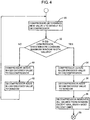
Fig. 4 illustrates a flow chart of behavior of ROHC compressor according to the present invention after the handover or mobility procedure is complete. - The following description is made in the case where the IP header value to be compressed is either the RTP Timestamp (Real Time Protocol Timestamp) or the RTP Sequence Number (Real Time Protocol Sequence Number) of a packet data stream transmitted from a first cellular mobile terminal to a second cellular mobile terminal during a handover or mobility procedure in a cellular communication network. Both mobile terminals comprises a compressor and a decompressor adapted for implementing the optimized method according to the present invention.
- The context of the compressor is the state that it uses to compress a header. The context of the decompressor is the state that it uses to decompress a header. Either of these or the two I combinations are usually referred to as "context". The context contains relevant information from previous headers in the packet stream, such as static fields and possible reference values for compression and decompression. Moreover, additional information describing the packet stream is also part of the context, for example, information about how the IP Identifier field changes and the typical inter-packet increase in sequence number or timestamps.
- Let us call (xn), with n between 0 and an undetermined large number, the sequence of values for one of the RTP (Real Time Protocol) header fields to be W-LSB (Window-based Least Significant Bit) encoded. Assume the encoding window contains k values, (w1, ..., wk).
- If g(vref, xn) is the minimal number of bits to encode x1 according to reference value vref, i.e., the minimal number of bits necessary to properly reconstruct the original value using vref, then the minimal number of bits to encode xi according to the all reference values in the encoding window is Max(k = 0 to k) g (wl, xn). Encoding xn according to all reference values means using at least this number of bits for xn in the ROHC packet where it is transmitted.
- In conventional ROHC O-mode (Optimistic mode) operation, when a new value is transmitted, it is added to the window, and the oldest value is removed from the window, i.e., if the compressor uses:
- (x0, x1, ...,

- (x0, x1, ..., xn-k,

- (x0, x1, ..., xn-k, xn+1-k,

- When operating in O-mode over a regular voice/IP stream, only 4 bits of timestamp needs transmission, i.e., the UO-0 packet format can be used, which is 3butes for each header including 2 bytes UDP checksum.
- When handover or mobility procedure is started, it is proposed to update the window differently. If xs is the first value to be sent after mobility is started, the compressor uses:
- (x0, x1, ...,

- (x0, x1, ...,

- (x0, x1, ...,

- In other words, when a new value is transmitted during handover or mobility procedure, no old reference value is removed from the sliding window as the new one is added, and the number of values in the window is increased by one for each transmitted values.
- The ROHC compressed packet size is determined as following: as the number of reference values in the sliding window increases, more bits of SN needs to be transmitted (around 2window size), and the ROHC packet header formats are, depending on the number of values in the window:
- up to 16: UO-0 (3 bytes long, including 4 bits of SN)
- up to 64: UO-2 (5 bytes long, including 6 bits of SN)
- up to 512: UO-2 extension 0 (6 bytes long, including 9 bits of SN)
- The packet compressed during the handover or mobility procedure might not be transmitted, but what matters are that the ROHC compressor is updated to properly compress packets after handover or mobility completion.
- When handover or mobility procedure is complete, it becomes possible to send compressed values according to the sliding window, and update it in the same way. If xe is the first value to be transmitted after end of handover or mobility procedure and m is the number of values in the sliding window to ensure proper operation on the new radio link according to its error properties, it is proposed to wait until xe can be removed from the sliding window to remove all older values (indicated in italics) from the window at the same time, i.e. , the compressor uses:
- (x0, x1, ...,

- (x0, x1, ...,

- (x0, x1, ...,

- (x0, x1, ...,

- The compressed packet size is described as above, but are really transmitted.
- Then, the window is updated to:
- (x0, x1, ...,

- (x0, x1, ..., xs-k , ..., xs-1 , xe,

- The sliding window has then the usual form when no handover or mobility procedure occurs, and the compressed packet size is reversed to 3 bytes (UO-0 format).
- With the method of the present invention, for a typical voice/IP call using an AMR codec which yields 1 frame every 20 ms, a 1 second handover could be handled with 5 bytes headers and a less than 5 seconds handover with 6 bytes headers, rather than with IR-DYN headers0 (15 bytes) as currently specified by 3GPP.
- Normal behavior of the ROHC compressor in U- and O-modes (Unidirectional and Optimistic modes) is illustrated in
Fig. 2 . - In
Fig. 2 , atstep 2, the compressor determines the new value v to send it to the decompresor, atstep 4, the decompressor verifies if the window contains the maximum window width values . - If the window contains Max_width values, the compressor sends a W-LSB encoded value at
step 6. Atstep 8, the decompressor adds said value to the window, and the decompressor removes the oldest value from the window atstep 10. - Else, at
step 12, the compressor sends the original value v, and the decompressor adds the value to the window atstep 14. - Referring now to
Fig. 3 illustrating the case when there are max_width values in the window and when a handover or mobility procedure is initiated. - In this situation, as illustrated in
Fig. 3 , atstep 20, the compressor determines the new value v to send it to the decompressor. In the meanwhile, W-LSB encode the new value. The compressor sends the W-LSB encoded value to the decompressor atstep 22. Atstep 24, the decompressor adds the W-LSB encoded value to the window and the optimization procedure is restarted from thestep 20. - As shown in
Fig. 3 , the oldest value is not removed from the window during the handover or mobility procedure. -
Fig. 4 illustrates the method according to the present invention after the handover or mobility is complete. InFig. 4 , atstep 30, the compressor determines the new value v to send it to the decompressor. Atstep 32, the decompressor verifies if the window contains the maximum window width values that were transmitted after the handover or mobility procedure is complete. - If the window contain Max_width values, the compressor send the W-LSB encoded value to the decompressor at
step 34. Atstep 36, the decompressor adds the W-LSB encoded value to the window, and the decompressor removes all values from the window except the Max-width most recent ones atstep 38, and normal procedure is resumed atstep 39. - Else, at
step 40 inFig. 4 , the compressor sends the W-LSB encoded value to the decompressor, and atstep 42, the decompressor adds the W-LSB encoded value to the window and restarts the optimization procedure fromstep 30. - According to the present invention, as illustrated in
Fig. 4 , Max_width is set according to the error rate of the link after the handover or mobility. It could be different if the new link has different error properties than the old one. - The present invention is further disclosed in the following examples:
- 1. A method for optimizing ROHC RTP (Robust Header Compression Real Time Protocol) compression applied to IP header of data packets stream exchanged between a first mobile terminal camping,on a cell in a cellular communication network and a second terminal connected to Internet, said method comprising the steps of:
- encoding the IP header field, and
- exchanging between said first mobile terminal and said second terminal a compression window comprising at least one reference value used by said first mobile terminal (respectively the second, terminal) for compression and to be used by said second terminal (respectively the first terminal) for decompression,
- when a handover or mobility procedure is started, adding at least one new reference value to the compression window for the subsequent decompression without removing the previous reference values from the window as long as the handover or mobility procedure is ongoing, and
- after the handover or mobility procedure is complete, removing all previous values at once from the compression window.
- 2. The method according to example1, wherein said header compression uses Window-based Least Significant Bit encoding (W-LSB) .
- 3. The method according to example 2, wherein the W-LSB encoded header fields is the RTP Timestamp (Real Time Protocol Timestamp).
- 4. The method according to example 2, wherein the W-LSB encoded header fields is the RTP Sequence Number (Real Time Protocol Sequence Number).
- 5. A mobile terminal camping on a cell in a cellular communication network and exchanging data packets stream with a second terminal in the cellular communication network, said mobile terminal comprising a compressor and a decompressor, means for encoding the IP header field, and means for exchanging between a first mobile terminal and the second terminal a compression window comprising at least one reference value used by said first mobile terminal for compression and to be used by said second terminal for decompression,
said mobile terminal being characterized by further comprising:- means for adding at least one new reference value to the compression window for the subsequent decompression when a handover or mobility procedure is started, without removing the previous reference values from the window as long as the handover or mobility procedure is ongoing, and
- means for removing all previous values at once from the compression window after the handover or mobility procedure is complete.
Claims (8)
- A method performed by a terminal of a cellular communication network, the method comprising:adding a value representing a header field of a data packet to a compression window;encoding (20, 30) a value representing a header field of a data packet based on said compression window;determining (32) if one or more values previously added to said compression window should be removed from said compression window;removing (10, 36) said one or more previously added values from said compression window accordingly; andsending (22, 34) data packets including said encoded values for receipt by a Radio Network Controller, RNC;wherein no values are removed from the compression window when a handover or mobility procedure is in progress.
- The method according to claim 1, wherein the encoding (20, 30) comprises a Window-based Least Significant Bit, W-LSB, encoding.
- The method according to claim 1 or 2, wherein the encoding (20, 30) comprises an Optimistic mode encoding in accordance with RObust Header Compression, ROHC.
- The method according to any of claims 1 to 3, wherein the terminal comprises a user equipment, UE.
- A terminal of a cellular communication network, the terminal comprising:compressing means for compressing header fields of data packets, said compressing means being configured for:(i) adding a value representing a header field of a data packet to a compression window;(ii) encoding a value representing a header field of a data packet based on said compression window;(iii) determining if one or more values previously added to said compression window should be removed from said compression window; and(iv) removing said one or more previously added values from said compression window accordingly; andmeans for sending data packets including said encoded values for receipt by a Radio Network Controller, RNC;wherein, the compressing means is further configured such that no values are removed from the compression window when a handover or mobility procedure is in progress.
- The terminal according to claim 5, wherein the encoding comprises a Window-based Least Significant Bit, W-LSB, encoding.
- The terminal according to claim 5 or 6, wherein the encoding comprises an Optimistic mode encoding in accordance with RObust Header Compression, ROHC.
- The terminal according to any of claims 5 to 7, comprising a user equipment, UE.
Applications Claiming Priority (3)
| Application Number | Priority Date | Filing Date | Title |
|---|---|---|---|
| EP05109404A EP1773004A1 (en) | 2005-10-10 | 2005-10-10 | Header compression optimisation method during and after handovers in a cellular communication network |
| PCT/JP2006/320356 WO2007043601A1 (en) | 2005-10-10 | 2006-10-05 | Header compression optimization method during and after handovers in cellular communication network |
| EP06811653.2A EP1935203B1 (en) | 2005-10-10 | 2006-10-05 | Header compression optimization method during and after handovers in cellular communication network |
Related Parent Applications (2)
| Application Number | Title | Priority Date | Filing Date |
|---|---|---|---|
| EP06811653.2A Division-Into EP1935203B1 (en) | 2005-10-10 | 2006-10-05 | Header compression optimization method during and after handovers in cellular communication network |
| EP06811653.2A Division EP1935203B1 (en) | 2005-10-10 | 2006-10-05 | Header compression optimization method during and after handovers in cellular communication network |
Publications (2)
| Publication Number | Publication Date |
|---|---|
| EP3376792A1 true EP3376792A1 (en) | 2018-09-19 |
| EP3376792B1 EP3376792B1 (en) | 2022-03-16 |
Family
ID=35911278
Family Applications (3)
| Application Number | Title | Priority Date | Filing Date |
|---|---|---|---|
| EP05109404A Withdrawn EP1773004A1 (en) | 2005-10-10 | 2005-10-10 | Header compression optimisation method during and after handovers in a cellular communication network |
| EP06811653.2A Active EP1935203B1 (en) | 2005-10-10 | 2006-10-05 | Header compression optimization method during and after handovers in cellular communication network |
| EP18165959.0A Active EP3376792B1 (en) | 2005-10-10 | 2006-10-05 | Header compression optimization method during and after handovers in cellular communication network |
Family Applications Before (2)
| Application Number | Title | Priority Date | Filing Date |
|---|---|---|---|
| EP05109404A Withdrawn EP1773004A1 (en) | 2005-10-10 | 2005-10-10 | Header compression optimisation method during and after handovers in a cellular communication network |
| EP06811653.2A Active EP1935203B1 (en) | 2005-10-10 | 2006-10-05 | Header compression optimization method during and after handovers in cellular communication network |
Country Status (5)
| Country | Link |
|---|---|
| US (7) | US8218499B2 (en) |
| EP (3) | EP1773004A1 (en) |
| JP (1) | JP4936079B2 (en) |
| CN (2) | CN102421143B (en) |
| WO (1) | WO2007043601A1 (en) |
Families Citing this family (16)
| Publication number | Priority date | Publication date | Assignee | Title |
|---|---|---|---|---|
| US8918051B1 (en) * | 2007-06-18 | 2014-12-23 | Marvell International Ltd. | Method and apparatus for performing a handoff of a data communication session from one network to another network |
| CN101364937B (en) * | 2007-08-10 | 2013-12-18 | 华为技术有限公司 | Method and system for keeping robust header compression mechanism communication |
| US8418037B2 (en) * | 2007-09-03 | 2013-04-09 | Zte Corporation | Method and device for decoding by using window-based least significant bits in robust header compression |
| US8488553B2 (en) * | 2008-06-05 | 2013-07-16 | Alcatel Lucent | Method for providing seamless transition between networks following different protocols |
| US9374749B2 (en) | 2008-11-14 | 2016-06-21 | Qualcomm Incorporated | Methods and systems using same base station carrier handoff for multicarrier support |
| WO2010118579A1 (en) * | 2009-04-16 | 2010-10-21 | 华为技术有限公司 | Method and apparatus for improving header compression performance |
| CN102045769A (en) * | 2010-12-23 | 2011-05-04 | 南京邮电大学 | Heading compress text transfer method in Internet of things (IOT) prestressed handover |
| US8730885B2 (en) * | 2011-02-07 | 2014-05-20 | Alcatel Lucent | Method for improved robust header compression with low signal energy |
| WO2012167435A1 (en) * | 2011-06-10 | 2012-12-13 | 华为技术有限公司 | Method and apparatus for lossless handover |
| CN103517331B (en) * | 2012-06-20 | 2018-07-24 | 中兴通讯股份有限公司 | The preparation method and device of deleted bit mask |
| CN111277556B (en) * | 2019-01-30 | 2023-04-07 | 维沃移动通信有限公司 | Processing method and communication device |
| CN111507072A (en) | 2019-01-31 | 2020-08-07 | 瑞昱半导体股份有限公司 | Compression end and decompression end based on robust header compression and data processing method thereof |
| CN111866969B (en) * | 2019-04-30 | 2021-10-26 | 华为技术有限公司 | Data processing method, communication device and system |
| US11330665B2 (en) * | 2020-01-09 | 2022-05-10 | Qualcomm Incorporated | Increasing throughput efficiency in a PDCP channel with ROHC TCP profile |
| WO2024205597A1 (en) * | 2023-03-31 | 2024-10-03 | Zeku, Inc. | Apparatus and method for updating a sliding window size for robust header compression based on changing channel conditions |
| CN119450577B (en) * | 2024-09-19 | 2025-12-02 | 北京玄戒技术有限公司 | Data processing methods, devices, electronic equipment, chips and storage media |
Citations (1)
| Publication number | Priority date | Publication date | Assignee | Title |
|---|---|---|---|---|
| US20020097722A1 (en) * | 2000-11-16 | 2002-07-25 | Liao Hong Bin | Robust, inferentially synchronized transmission of compressed transport-layer-protocol headers |
Family Cites Families (12)
| Publication number | Priority date | Publication date | Assignee | Title |
|---|---|---|---|---|
| US6300887B1 (en) * | 1999-11-09 | 2001-10-09 | Nokia Networks Oy | Efficient handoff procedure for header compression |
| US7539130B2 (en) * | 2000-03-28 | 2009-05-26 | Nokia Corporation | Method and system for transmitting and receiving packets |
| KR100742868B1 (en) | 2000-07-27 | 2007-07-26 | 텔레폰악티에볼라겟엘엠에릭슨(펍) | Header Compression Context Control Method During Handover in Mobile Data Network |
| JP3639517B2 (en) * | 2000-10-04 | 2005-04-20 | 三洋電機株式会社 | Moving picture decoding apparatus and moving picture decoding method |
| CN1364033A (en) * | 2000-11-28 | 2002-08-14 | 国枝博昭 | A High Performance Coding and Compression System for Dynamic Image Information |
| US7290063B2 (en) * | 2001-01-10 | 2007-10-30 | Nokia Corporation | Relocating context information in header compression |
| WO2003041424A2 (en) * | 2001-11-06 | 2003-05-15 | Koninklijke Philips Electronics N.V. | Wireless communication arrangements with encapsulation and header compression |
| JP2003224610A (en) * | 2002-01-29 | 2003-08-08 | Mitsubishi Electric Corp | Header compressed packet transfer system and header compressed packet transfer method |
| KR100883063B1 (en) * | 2002-02-16 | 2009-02-10 | 엘지전자 주식회사 | Contextual reassignment method |
| JP2007502070A (en) * | 2003-08-08 | 2007-02-01 | サムスン エレクトロニクス カンパニー リミテッド | Method and apparatus for configuring a protocol for multimedia broadcast / multicast service |
| SE0401346D0 (en) * | 2004-05-24 | 2004-05-24 | Ericsson Telefon Ab L M | Methods for Increased Tolerance Against Packet Reordering for the Secure Reference Principle in Robust Header Compression |
| EP1603339A1 (en) * | 2004-06-01 | 2005-12-07 | STMicroelectronics S.r.l. | Method and system for communicating video data in a packet-switched network, related network and computer program product therefor |
-
2005
- 2005-10-10 EP EP05109404A patent/EP1773004A1/en not_active Withdrawn
-
2006
- 2006-10-05 US US12/089,758 patent/US8218499B2/en active Active
- 2006-10-05 CN CN201110438024.1A patent/CN102421143B/en active Active
- 2006-10-05 CN CN2006800376757A patent/CN101283620B/en not_active Expired - Fee Related
- 2006-10-05 EP EP06811653.2A patent/EP1935203B1/en active Active
- 2006-10-05 EP EP18165959.0A patent/EP3376792B1/en active Active
- 2006-10-05 WO PCT/JP2006/320356 patent/WO2007043601A1/en not_active Ceased
- 2006-10-05 JP JP2008506885A patent/JP4936079B2/en active Active
-
2012
- 2012-02-23 US US13/403,171 patent/US8817748B2/en active Active
-
2014
- 2014-07-21 US US14/336,264 patent/US9246832B2/en active Active
-
2015
- 2015-12-14 US US14/967,744 patent/US9538426B2/en active Active
-
2016
- 2016-11-21 US US15/357,477 patent/US9936420B2/en active Active
-
2018
- 2018-03-01 US US15/909,780 patent/US10194349B2/en active Active
- 2018-12-31 US US16/237,530 patent/US10631202B2/en active Active
Patent Citations (1)
| Publication number | Priority date | Publication date | Assignee | Title |
|---|---|---|---|---|
| US20020097722A1 (en) * | 2000-11-16 | 2002-07-25 | Liao Hong Bin | Robust, inferentially synchronized transmission of compressed transport-layer-protocol headers |
Non-Patent Citations (1)
| Title |
|---|
| BORMANN C ET AL: "RObust Header Compression (ROHC): Framework and four profiles: RTP, UDP, ESP, and uncompressed; rfc3095.txt", IETF STANDARD, INTERNET ENGINEERING TASK FORCE, IETF, CH, July 2001 (2001-07-01), XP015008878, ISSN: 0000-0003 * |
Also Published As
| Publication number | Publication date |
|---|---|
| HK1169255A1 (en) | 2013-01-18 |
| US20170142612A1 (en) | 2017-05-18 |
| US20190141569A1 (en) | 2019-05-09 |
| US20090232093A1 (en) | 2009-09-17 |
| US10631202B2 (en) | 2020-04-21 |
| EP1935203B1 (en) | 2018-05-30 |
| JP2009512231A (en) | 2009-03-19 |
| US8218499B2 (en) | 2012-07-10 |
| EP1935203A1 (en) | 2008-06-25 |
| US20140328322A1 (en) | 2014-11-06 |
| US9538426B2 (en) | 2017-01-03 |
| US20180192322A1 (en) | 2018-07-05 |
| CN101283620B (en) | 2012-02-08 |
| WO2007043601A1 (en) | 2007-04-19 |
| US20120213200A1 (en) | 2012-08-23 |
| US8817748B2 (en) | 2014-08-26 |
| CN101283620A (en) | 2008-10-08 |
| CN102421143A (en) | 2012-04-18 |
| EP1935203A4 (en) | 2008-10-01 |
| EP3376792B1 (en) | 2022-03-16 |
| US9936420B2 (en) | 2018-04-03 |
| US9246832B2 (en) | 2016-01-26 |
| US20160105823A1 (en) | 2016-04-14 |
| US10194349B2 (en) | 2019-01-29 |
| EP1773004A1 (en) | 2007-04-11 |
| JP4936079B2 (en) | 2012-05-23 |
| CN102421143B (en) | 2015-01-07 |
Similar Documents
| Publication | Publication Date | Title |
|---|---|---|
| US10631202B2 (en) | Header compression optimization method during and after handovers in cellular communication network | |
| JP4582565B2 (en) | Robust header compression in packet communication | |
| RU2424627C2 (en) | Dynamic robust header compression | |
| EP2014056B1 (en) | Methods and systems for enhancing local repair in robust header compression | |
| CN101107829B (en) | Methods and systems for enhancing local repair in robust header compression | |
| KR20040019578A (en) | Method and apparatus transmitting a header compressed packet data | |
| KR20040004358A (en) | A method for header compression context control during handover in mobile data communication networks | |
| EP2190163B1 (en) | A method for repairing the window-based least significant bits decoding in the robust header compression | |
| HK1169255B (en) | Header compression optimization method during and after handovers in cellular communication network | |
| HK1113961A (en) | Methods and systems for enhancing local repair in robust header compression |
Legal Events
| Date | Code | Title | Description |
|---|---|---|---|
| PUAI | Public reference made under article 153(3) epc to a published international application that has entered the european phase |
Free format text: ORIGINAL CODE: 0009012 |
|
| STAA | Information on the status of an ep patent application or granted ep patent |
Free format text: STATUS: THE APPLICATION HAS BEEN PUBLISHED |
|
| AC | Divisional application: reference to earlier application |
Ref document number: 1935203 Country of ref document: EP Kind code of ref document: P |
|
| AK | Designated contracting states |
Kind code of ref document: A1 Designated state(s): DE FR GB IT |
|
| STAA | Information on the status of an ep patent application or granted ep patent |
Free format text: STATUS: REQUEST FOR EXAMINATION WAS MADE |
|
| 17P | Request for examination filed |
Effective date: 20190313 |
|
| RBV | Designated contracting states (corrected) |
Designated state(s): DE FR GB IT |
|
| STAA | Information on the status of an ep patent application or granted ep patent |
Free format text: STATUS: EXAMINATION IS IN PROGRESS |
|
| 17Q | First examination report despatched |
Effective date: 20200615 |
|
| RIC1 | Information provided on ipc code assigned before grant |
Ipc: H04W 80/04 20090101ALN20210916BHEP Ipc: H04W 84/04 20090101ALN20210916BHEP Ipc: H04W 80/00 20090101ALN20210916BHEP Ipc: H04W 36/08 20090101ALN20210916BHEP Ipc: H04W 28/18 20090101ALN20210916BHEP Ipc: H04L 29/08 20060101ALI20210916BHEP Ipc: H04L 29/06 20060101ALI20210916BHEP Ipc: H04W 36/00 20090101ALI20210916BHEP Ipc: H04W 28/06 20090101AFI20210916BHEP |
|
| GRAP | Despatch of communication of intention to grant a patent |
Free format text: ORIGINAL CODE: EPIDOSNIGR1 |
|
| STAA | Information on the status of an ep patent application or granted ep patent |
Free format text: STATUS: GRANT OF PATENT IS INTENDED |
|
| INTG | Intention to grant announced |
Effective date: 20211022 |
|
| GRAS | Grant fee paid |
Free format text: ORIGINAL CODE: EPIDOSNIGR3 |
|
| GRAA | (expected) grant |
Free format text: ORIGINAL CODE: 0009210 |
|
| STAA | Information on the status of an ep patent application or granted ep patent |
Free format text: STATUS: THE PATENT HAS BEEN GRANTED |
|
| AC | Divisional application: reference to earlier application |
Ref document number: 1935203 Country of ref document: EP Kind code of ref document: P |
|
| AK | Designated contracting states |
Kind code of ref document: B1 Designated state(s): DE FR GB IT |
|
| REG | Reference to a national code |
Ref country code: GB Ref legal event code: FG4D |
|
| REG | Reference to a national code |
Ref country code: DE Ref legal event code: R096 Ref document number: 602006060299 Country of ref document: DE |
|
| REG | Reference to a national code |
Ref country code: DE Ref legal event code: R097 Ref document number: 602006060299 Country of ref document: DE |
|
| PLBE | No opposition filed within time limit |
Free format text: ORIGINAL CODE: 0009261 |
|
| STAA | Information on the status of an ep patent application or granted ep patent |
Free format text: STATUS: NO OPPOSITION FILED WITHIN TIME LIMIT |
|
| 26N | No opposition filed |
Effective date: 20221219 |
|
| GBPC | Gb: european patent ceased through non-payment of renewal fee |
Effective date: 20221005 |
|
| PG25 | Lapsed in a contracting state [announced via postgrant information from national office to epo] |
Ref country code: IT Free format text: LAPSE BECAUSE OF FAILURE TO SUBMIT A TRANSLATION OF THE DESCRIPTION OR TO PAY THE FEE WITHIN THE PRESCRIBED TIME-LIMIT Effective date: 20220316 Ref country code: FR Free format text: LAPSE BECAUSE OF NON-PAYMENT OF DUE FEES Effective date: 20221031 |
|
| PG25 | Lapsed in a contracting state [announced via postgrant information from national office to epo] |
Ref country code: GB Free format text: LAPSE BECAUSE OF NON-PAYMENT OF DUE FEES Effective date: 20221005 |
|
| PGFP | Annual fee paid to national office [announced via postgrant information from national office to epo] |
Ref country code: DE Payment date: 20251021 Year of fee payment: 20 |