EP3376449A1 - Household commodities inventory management server - Google Patents
Household commodities inventory management server Download PDFInfo
- Publication number
- EP3376449A1 EP3376449A1 EP18156919.5A EP18156919A EP3376449A1 EP 3376449 A1 EP3376449 A1 EP 3376449A1 EP 18156919 A EP18156919 A EP 18156919A EP 3376449 A1 EP3376449 A1 EP 3376449A1
- Authority
- EP
- European Patent Office
- Prior art keywords
- identification code
- portable terminal
- commodity
- predetermined area
- received identification
- Prior art date
- Legal status (The legal status is an assumption and is not a legal conclusion. Google has not performed a legal analysis and makes no representation as to the accuracy of the status listed.)
- Withdrawn
Links
Images

Classifications
-
- G—PHYSICS
- G06—COMPUTING OR CALCULATING; COUNTING
- G06Q—INFORMATION AND COMMUNICATION TECHNOLOGY [ICT] SPECIALLY ADAPTED FOR ADMINISTRATIVE, COMMERCIAL, FINANCIAL, MANAGERIAL OR SUPERVISORY PURPOSES; SYSTEMS OR METHODS SPECIALLY ADAPTED FOR ADMINISTRATIVE, COMMERCIAL, FINANCIAL, MANAGERIAL OR SUPERVISORY PURPOSES, NOT OTHERWISE PROVIDED FOR
- G06Q10/00—Administration; Management
- G06Q10/08—Logistics, e.g. warehousing, loading or distribution; Inventory or stock management
- G06Q10/087—Inventory or stock management, e.g. order filling, procurement or balancing against orders
-
- G—PHYSICS
- G06—COMPUTING OR CALCULATING; COUNTING
- G06N—COMPUTING ARRANGEMENTS BASED ON SPECIFIC COMPUTATIONAL MODELS
- G06N20/00—Machine learning
-
- G—PHYSICS
- G06—COMPUTING OR CALCULATING; COUNTING
- G06F—ELECTRIC DIGITAL DATA PROCESSING
- G06F16/00—Information retrieval; Database structures therefor; File system structures therefor
- G06F16/20—Information retrieval; Database structures therefor; File system structures therefor of structured data, e.g. relational data
- G06F16/23—Updating
-
- G—PHYSICS
- G06—COMPUTING OR CALCULATING; COUNTING
- G06Q—INFORMATION AND COMMUNICATION TECHNOLOGY [ICT] SPECIALLY ADAPTED FOR ADMINISTRATIVE, COMMERCIAL, FINANCIAL, MANAGERIAL OR SUPERVISORY PURPOSES; SYSTEMS OR METHODS SPECIALLY ADAPTED FOR ADMINISTRATIVE, COMMERCIAL, FINANCIAL, MANAGERIAL OR SUPERVISORY PURPOSES, NOT OTHERWISE PROVIDED FOR
- G06Q10/00—Administration; Management
- G06Q10/08—Logistics, e.g. warehousing, loading or distribution; Inventory or stock management
- G06Q10/087—Inventory or stock management, e.g. order filling, procurement or balancing against orders
- G06Q10/0877—Inventory or stock management, e.g. order filling, procurement or balancing against orders by inventory control or reporting using inventory tracking or counting
-
- G—PHYSICS
- G06—COMPUTING OR CALCULATING; COUNTING
- G06Q—INFORMATION AND COMMUNICATION TECHNOLOGY [ICT] SPECIALLY ADAPTED FOR ADMINISTRATIVE, COMMERCIAL, FINANCIAL, MANAGERIAL OR SUPERVISORY PURPOSES; SYSTEMS OR METHODS SPECIALLY ADAPTED FOR ADMINISTRATIVE, COMMERCIAL, FINANCIAL, MANAGERIAL OR SUPERVISORY PURPOSES, NOT OTHERWISE PROVIDED FOR
- G06Q10/00—Administration; Management
- G06Q10/08—Logistics, e.g. warehousing, loading or distribution; Inventory or stock management
- G06Q10/087—Inventory or stock management, e.g. order filling, procurement or balancing against orders
- G06Q10/0872—Inventory or stock management, e.g. order filling, procurement or balancing against orders using inventory planning
Definitions
- Embodiments described herein relate generally to an inventory management server.
- a consumer creates a list of articles that the consumer has previously purchased or the like. Then, when the consumer wants to purchase a new article, it can be determined whether or not the article was previously purchased, based on the list.
- One of the objects of the present invention is to improve prior art techniques and overcome at least some of the prior art problems as for instance above illustrated.
- an inventory management server for providing inventory management comprising:
- the processor is further configure to:
- the processor determines whether purchase of the commodity corresponding to the received identification code should be reviewed based further on the stored result of the learning processing.
- an inventor management method comprising:
- the method according to the second aspect optionally further comprising:
- the method according to the second aspect optionally further comprising:
- the method according to the second aspect optionally further comprising:
- determining whether purchase of the commodity corresponding to the received identification code should be reviewed is further based on the stored result of the learning processing.
- the method according to the second aspect optionally further comprising:
- the method according to the second aspect optionally further comprising:
- a non-transitory computer readable medium causing an inventory management server to perform an inventory management method, the method comprising:
- the method optionally further comprising:
- the method optionally further comprising:
- the method optionally further comprising:
- determining whether purchase of the commodity corresponding to the received identification code should be reviewed is further based on the stored result of the learning processing.
- the method optionally further comprising:
- the stored location data corresponding to the predetermined area is set in advance by a user corresponding to the member code.
- An inventory management server for providing inventory management includes a storage device that stores, in association with each of a plurality of member codes: an inventory database data including an identification code of each of a plurality of commodities owned by a user, and location data corresponding to a predetermined area.
- a processor receives, from a portable terminal, an identification code acquired by the portable terminal and position information indicating a position of the portable terminal when the identification code is acquired. The processor determines whether the position information corresponds to a position within the predetermined area. If the position information corresponds to a position within the predetermined area, the storage device updates the inventory database based on the received identification code.
- the processor determines, based on comparing the received identification code to the inventory database, whether purchase of a commodity corresponding to the received identification code should be reviewed. Screen data for displaying a screen indicating the determination is transmitted to the portable terminal.
- FIG. 1 is a block diagram illustrating an example configuration of a webserver according to the embodiment.
- the webserver 1 provides a web service for a user using a portable terminal 3 via a communication network 2.
- the web service is used for performing inventory management of articles stored in a house of the user. It is assumed that the user who uses the web service is previously registered as a member. A user who uses the web service by using the portable terminal 3 is referred to as a "member" below.
- the communication network 2 is, for example, a combination of a mobile data communication network and the Internet.
- the portable terminal 3 may be, for example, a smart phone, a tablet terminal, and the like.
- the webserver 1 includes a processor 11, a main memory 12, an auxiliary storage device 13, a communication interface 14, and a transmission system 15.
- a computer device for a general-purpose server may be used as hardware of the webserver 1.
- the processor 11, the main memory 12, and the auxiliary storage device 13 are connected to each other by the transmission system 15, so as to function as a computer that controls the webserver 1.
- the processor 11 corresponds to the main controller of the computer.
- the processor 11 controls the components to realize various functions as the webserver 1, in accordance with an operating system or an application program.
- the main memory 12 corresponds to the main storage device of the computer.
- the main memory 12 includes a nonvolatile memory area and a volatile memory area.
- the main memory 12 stores the operating system or the application program in the nonvolatile memory area.
- the main memory 12 stores data required when the processor 11 performs various types of information processing in the nonvolatile or volatile memory area.
- the volatile memory area is used as a work area in which data is appropriately rewritten by the processor 11.
- the auxiliary storage device 13 corresponds to the auxiliary storage device of the computer.
- the auxiliary storage device 13 may be, for example, an electric erasable programmable read-only memory (EEPROM), a hard disk drive (HDD), a solid state drive (SSD), and the like.
- EEPROM electric erasable programmable read-only memory
- HDD hard disk drive
- SSD solid state drive
- the auxiliary storage device 13 preserves data used when the processor 11 performs various types of information processing, or data generated by processing in the processor 11.
- the auxiliary storage device 13 may store the application program.
- One of application programs stored in the auxiliary storage device 13 is an inventory management application 13a which is a program (which will be described later) for providing the web service.
- a portion of a storage area in the auxiliary storage device 13 is used for a commodity master database (commodity master DB) 13b, a category master database (category master DB) 13c, and an inventory database (inventory DB) 13d.
- the commodity master DB 13b includes various types of information regarding each commodity which may be distributed. As information included in the commodity master DB 13b, for example, a commodity code, a commodity category code, and the like are provided.
- the commodity code is a unique code for each commodity item.
- the commodity category code is a code which is unique to a commodity category to which a commodity belongs.
- the category master DB 13c is a set of various types of information regarding a commodity category. As information included in the category master DB 13c, for example, the category code, a commodity category name, and the like are provided.
- the commodity category name is the name determined to cause a person to easily recognize a commodity category.
- the inventory DB 13d is a set of data for managing article stored in a house of a member, for each member.
- the auxiliary storage device 13 stores a member code of each member and a member database for managing information of a position and the like of a house of a member, for example.
- the computer device and the inventory management application 13a may be separately provided to the user of the webserver 1.
- the inventory management application 13a is written onto the auxiliary storage device 13 included in the computer device, under an operation of a user or a serviceman.
- the inventory management application 13a may be transferred by being recorded in a removable recording medium such as a magnetic disk, a magneto-optical disk, an optical disk, and a semiconductor memory, or by communication via a network.
- the webserver 1 may be provided to the user in a state where the inventory management application 13a is already written in the auxiliary storage device 13.
- the communication interface 14 provides for data communication via the communication network 2.
- the transmission system 15 includes a bus line and an interface circuit.
- the bus line includes an address bus, a data bus, and the like.
- the interface circuit connects the components to the bus line.
- the transmission system 15 transmits data or a signal which is transmitted and received between the components which are connected to each other.
- the webserver 1 When a member performs member registration for using a web service provided by the webserver 1, for example, the webserver 1 issues a unique member code that is different from the member codes of all other members. During the member registration, the member provides an address of a house. The webserver 1 updates the member database so as to indicate position information and the like corresponding to the address, in association with the member code.
- the member causes the portable terminal 3 to execute an application program for using the web service.
- the member inputs the member code which is issued as described above, in the application program.
- the member registers a possessed article, or when the member confirms whether or not it is proper that a target article to be possessed will be possessed, the member inputs an identification code relating to the target article into to the portable terminal 3.
- the web service provided by the webserver 1 is used for causing a member to register a commodity purchased by the member and to confirm whether or not purchase of a new commodity is proper in consideration of previous purchase history.
- possession of an article corresponds to purchase of a commodity.
- JAN Japanese article number
- a commodity code is input to the portable terminal 3, for example, via a wireless signal transmitted by a radiofrequency identification (RFID) tag that is attached to an article and read by a tag reader.
- RFID radiofrequency identification
- the commodity code is input based on a camera included in the portable terminal 3 reading a bar code displayed on a commodity as an object for indicating a commodity code.
- the commodity code may be input by other various methods, for example, a manual input by an operation of a touch panel included in the portable terminal 3. It is assumed that the member performs an input for the registration in the house of the member, and performs an input for the confirmation outside of the house of the member.
- the portable terminal 3 transmits request data including the commodity code to the webserver 1.
- the portable terminal 3 causes the request data to include input date-and-time data, input position data, and a member code assigned to the member, in addition to the commodity code.
- the input date-and-time data indicates a time when the commodity code is input.
- the input position data indicates a position of the portable terminal 3 when the commodity code is input.
- the request data may include any type of data.
- the communication interface 14 receives the request data.
- the processor 11 starts information processing illustrated in FIG. 2 , based on the inventory management application 13a. Details of the information processing which will be described below are just an example, and various types of information processing in which it is possible to obtain the similar function can be appropriately used.
- the processor 11 stores the request data received by the communication interface 14 as described above, in the main memory 12 or the auxiliary storage device 13 (Act 1).
- the request data includes the commodity code acquired in the portable terminal 3, and position information indicating the position of the portable terminal 3 when the commodity code is read by the portable terminal 3. Since the processor 11 performs the information processing based on the inventory management application 13a, the computer which uses the processor 11 as the core functions as acquisition means.
- the processor 11 confirms whether or not a position indicated by the position information included in the request data is a position corresponding to the house of the member (Act 2). For example, if the position is in a predetermined region included in a position indicated by the position information which is stored in the member database in association with the member code included in the request data, the processor 11 determines Yes in Act 2 and proceeds to Act 3.
- the predetermined region is set to be a circular area which has a predetermined radius having the position indicated by the position information stored in the member database set as the center.
- the predetermined region may be determined by any method. Considering accuracy of position detection in the portable terminal 3, it is preferable that the predetermined region is determined as a region in which the input position can be assumed to be in the house of the member.
- the processor 11 transmits selection screen data for displaying a selection screen to the portable terminal 3 (Act 3).
- the selection screen is a screen for causing the member to select whether to perform registration or deletion of the commodity code.
- a display device included in the portable terminal 3 displays the selection screen based on the above-described application program.
- the member performs an operation for designating registration or deletion, on the portable terminal 3 in accordance with the selection screen.
- the webserver 1 is notified of details of this operation by the portable terminal 3.
- the processor 11 confirms whether or not registration is designated by the operation (Act 4). If a notification indicating that registration is designated is received from the portable terminal 3, the processor 11 determines Yes in Act 4 and proceeds to Act 5.
- the processor 11 updates the inventory DB 13d so as to store the member code, the commodity code, and the input date-and-time data which are included in the request data, in association with each other (Act 5). Since the processor 11 performs the information processing illustrated in FIG. 2 whenever request data is sent from the portable terminal 3, the commodity code is added to the inventory DB 13d every time the information processing is performed.
- the inventory DB 13d stores the list of commodities possessed by the member.
- the processor 11 performs the information processing based on the inventory management application 13a, including adding the commodity code to the list of commodities. Then, the processor 11 proceeds to Act 7.
- the processor 11 determines No in Act 4 and proceeds to Act 6.
- the processor 11 determines either addition or deletion, in accordance with an instruction by the member as the user.
- the processor 11 performs the information processing based on the inventory management application 13a, including performing the decision of either addition or deletion.
- the processor 11 updates the inventory DB 13d such that the commodity code included in the request data is deleted from commodity codes stored in association with the member code included in the request data (Act 6). That is, The processor 11 deletes the commodity code as the acquired identification code, from the list shown in the inventory DB 13d. The processor 11 performs the information processing based on the inventory management application 13a, including performing deletion. Then, the processor 11 proceeds to Act 7.
- the processor 11 performs learning processing for a consumption trend regarding a commodity which is the update target in the inventory DB 13d (Act 7). That is, for example, if the processor 11 updates the inventory DB 13d by performing addition of a commodity code, the processor 11 obtains, for example, data of a purchase period and the like indicating a tendency regarding purchase of a commodity identified by the added commodity code or purchase of a commodity having a commodity category to which the above commodity belongs. For example, if the processor 11 updates the inventory DB 13d by performing deletion, the processor 11 obtains, for example, data of time required for consumption, which indicates a tendency regarding consumption of a commodity identified by the deleted commodity code or consumption of a commodity having a commodity category to which the above commodity belongs .
- the manner of the learning processing may be determined by, for example, a creator of the inventory management application 13a, a manager of the webserver 1, or the like.
- the processor 11 uses the commodity master DB 13b and the inventory DB 13d as the reference for the learning processing. If the processor 11 performs the learning processing in consideration of a commodity category, the processor 11 also uses the category master DB 13c as the reference.
- the processor 11 stores data obtained by the learning processing herein, in the auxiliary storage device 13.
- the processor 11 performs the information processing based on the inventory management application 13a, including the learning processing. If the processor 11 ends the learning processing, the processor 11 completes processing regarding the request data which is sent from the portable terminal 3.
- the processor 11 determines No in Act 2 and proceeds to Act 8 .
- the processor 11 determines whether or not a commodity identified by the commodity code included in the request data (referred to as a confirmation target commodity below) or a commodity of a commodity category to which the confirmation target commodity belongs (referred to as a same-kind commodity) was previously purchased (Act 8) . In addition, the processor 11 may confirm whether or not the commodity was purchased in the previous predetermined period. A manner for determining that the commodity is previously purchased may be determined, for example, by a creator of the inventory management application 13a, a manager of the webserver 1, or the like. The processor 11 uses the commodity master DB 13b and the inventory DB 13d as the reference for the confirmation. If the processor 11 performs the confirmation by considering a commodity category, the processor 11 also uses the category master DB 13c as the reference. If the commodity was previously purchased, the processor 11 determines Yes in Act 8 and proceeds to Act 9.
- a confirmation target commodity a commodity identified by the commodity code included in the request data
- a same-kind commodity referred to as a same-kind commodity
- the processor 11 determines the remaining amount of confirmation target commodities or the remaining amount of same-kind commodities in the house of the member (Act 9) .
- this determination can be performed by using the inventory DB 13d and data of a time and the like required for consumption, which is obtained in the learning processing.
- the processor 11 determines whether or not reviewing of purchase of the confirmation target commodity is needed (Act 10). For example, if the remaining amount determined as described above is equal to or greater than a threshold predetermined for the confirmation target commodity, the processor 11 determines that review is needed.
- a manner of the determination may be determined, for example, by a creator of the inventory management application 13a, a manager of the webserver 1, or the like.
- the processor 11 determines that purchase of the commodity as an article is to be reviewed, based on the list shown in the inventory DB 13d.
- the processor 11 performs the information processing based on the inventory management application 13a, including performing the determination of whether the purchase is to be reviewed.
- the processor 11 performs the determination when it is determined that an acquisition position is not the house of the member.
- the position which is determined to be not the house of the member is set as a confirmation position.
- a position which is predetermined may be set as the confirmation position. If the processor 11 determines Yes in Act 10 because review is needed, the processor 11 proceeds to Act 11.
- the processor 11 transmits warning screen data for displaying a warning screen to the portable terminal 3 (Act 11).
- the warning screen is a screen for reporting a message indicating to the member that purchase of the confirmation target commodity is to be reviewed because there is a probability that inventory in the house of the member is sufficient.
- the display device included in the portable terminal 3 displays the warning screen based on the above-described application program.
- transmission of the warning screen data is an example of notification processing for notifying the member as the user to determine that purchase of the commodity is to be reviewed.
- the processor 11 performs the information processing based on the inventory management application 13a including transmission of the warning screen data. If the processor 11 ends transmission of the warning screen data, the processor 11 completes processing with respect to the request data which is sent from the portable terminal 3.
- the processor 11 transmits notification screen data indicating a notification screen to the portable terminal 3 (Act 12).
- the notification screen is a screen for reporting a message indicating that purchase of the confirmation target commodity is proper, to the member.
- the display device included in the portable terminal 3 displays the notification screen based on the above-described application program.
- the member recognizes that purchase of a commodity for which the commodity code is input is proper. If the processor 11 ends transmission of the notification screen data, the processor 11 completes processing regarding the request data which is sent from the portable terminal 3.
- the list of commodities purchased by the member is managed in the inventory DB 13d.
- the member may input a commodity code of the commodity to the portable terminal 3 in which the application program for using the web service is executed, in the house of the member.
- the member may reduce labor of the member when the member registers a new commodity purchased by the member, in the list.
- the webserver 1 when the input position of the commodity code is in the house of the member, designation of the member regarding which one of addition and deletion is received and the list is updated by performing addition or is updated by performing deletion.
- the member must designate either addition or deletion, but the member may also delete a commodity code from the list.
- a commodity code of a consumed commodity is deleted from the list, and thus it is possible to maintain the list to accurately indicate an inventory status in the house of the member.
- the member may input a commodity code to the portable terminal 3.
- the input commodity code is a commodity code of a commodity for which performing confirmation of whether or not purchase of the commodity is proper in consideration of the previous purchase circumstances is desired, in a place which is not the house of the member such as a store.
- the member can perform such confirmation by a simple operation.
- the webserver 1 when the list is updated by performing addition or is updated by performing deletion, a tendency regarding consumption of a commodity identified by the added or deleted commodity code or a commodity of a commodity category to which the above commodity belongs is learned.
- data obtained by the learning is used for determination of whether or not purchase of a commodity is to be reviewed.
- All types of information processing illustrated in FIG. 2 may be performed by the processor provided in the portable terminal 3. That is, the function as the information management device may be provided in the portable terminal 3.
- the processor acquires a commodity code and a position information from an input device and a position detection device, and preserves the acquired commodity code and position information in a storage device included in the portable terminal 3.
- the processor causes the display device included in the portable terminal 3 to display the various screens without transmission of data of the various screens.
- the processor may store at least one of the commodity master DB 13b, the category master DB 13c, and the inventory DB 13d in the storage device included in the portable terminal 3.
- the consumption date or the freshness date of a commodity identified by the commodity code may be acquired along with the commodity code, and may be preserved in the inventory DB 13d.
- the processor 11 may determine No in Act 10 when the consumption date or the freshness date of the commodity is expired, even if the confirmation target commodity or the same-kind commodity is in stock in the house of a member.
- Some or all of the functions realized by the processor 11 through the information processing may be realized by hardware such as a logic circuit, which performs the information processing without the bases of the program.
- Each of the functions may be realized by combining software control with the hardware such as a logic circuit.
- the registration position is not limited to the house of a member, and any position may be set. A plurality of registration positions may be set for one member.
Landscapes
- Engineering & Computer Science (AREA)
- Theoretical Computer Science (AREA)
- Business, Economics & Management (AREA)
- Physics & Mathematics (AREA)
- General Physics & Mathematics (AREA)
- Economics (AREA)
- Data Mining & Analysis (AREA)
- General Engineering & Computer Science (AREA)
- Software Systems (AREA)
- Marketing (AREA)
- Finance (AREA)
- Entrepreneurship & Innovation (AREA)
- Human Resources & Organizations (AREA)
- Accounting & Taxation (AREA)
- Operations Research (AREA)
- Quality & Reliability (AREA)
- Strategic Management (AREA)
- Tourism & Hospitality (AREA)
- General Business, Economics & Management (AREA)
- Development Economics (AREA)
- Databases & Information Systems (AREA)
- Artificial Intelligence (AREA)
- Evolutionary Computation (AREA)
- Medical Informatics (AREA)
- Computer Vision & Pattern Recognition (AREA)
- Computing Systems (AREA)
- Mathematical Physics (AREA)
- Management, Administration, Business Operations System, And Electronic Commerce (AREA)
- Computer Networks & Wireless Communication (AREA)
- Signal Processing (AREA)
Abstract
A server for providing inventory management includes a storage device that stores: an inventory database data including an identification code of each of a plurality of commodities owned by a user, and location data corresponding to a predetermined area. A processor receives, from a portable terminal, an identification code acquired by the portable terminal and position information indicating a position of the portable terminal. The processor determines whether the position information corresponds to a position within the predetermined area. If the position information corresponds to a position within the predetermined area, the storage device updates the inventory database based on the received identification code. If the position information does not correspond to a position within the predetermined area, the processor determines, based on comparing the received identification code to the inventory database, whether purchase of a commodity corresponding to the received identification code should be reviewed.
Description
- This application is based upon and claims the benefit of priority from Japanese Patent Application No.
2017-050118, filed March 15, 2017 - Embodiments described herein relate generally to an inventory management server.
- A consumer creates a list of articles that the consumer has previously purchased or the like. Then, when the consumer wants to purchase a new article, it can be determined whether or not the article was previously purchased, based on the list.
- However, the burden is very large for the consumer to manually create and manage a useful list which allows for effective determination.
- One of the objects of the present invention is to improve prior art techniques and overcome at least some of the prior art problems as for instance above illustrated.
- According to a first aspect of the present invention, it is provided an inventory management server for providing inventory management comprising:
- a storage device that stores, in association with each of a plurality of member codes:
- an inventory database data including an identification code of each of a plurality of commodities owned by a user, and
- location data corresponding to a predetermined area;
- a communication interface; and
- a processor configured to:
- receive, from a portable terminal via the communication interface, an identification code acquired by the portable terminal and position information indicating a position of the portable terminal when the identification code is acquired,
- determine whether the position information corresponds to a position within the predetermined area,
- if the position information corresponds to a position within the predetermined area, control the storage device to update the inventory database based on the received identification code, and
- if the position information does not correspond to a position within the predetermined area:
- determine, based on comparing the received identification code to the inventory database, whether purchase of a commodity corresponding to the received identification code should be reviewed, and
- transmit, to the portable terminal via the communication interface, screen data for displaying a screen indicating the determination.
- In the server according to the first aspect, the processor is optionally further configured to:
- if the position information corresponds to a position within the predetermined area, transmit, to the portable terminal via the communication interface, selection screen data for displaying a screen requesting a selection input selecting one of adding the received identification code to the inventory database and deleting the received identification code from the inventory database.
- In the server according to the first aspect, optionally:
- the processor is further configured to receive, from the portable terminal via the communication interface, the selection input, and
- the processor controls the storage device to update the inventory database based further on the received selection input.
- In the server according to the first aspect, optionally, the processor is further configure to:
- if the position information corresponds to a position within the predetermined area, perform a learning processing to determine a consumption trend with respect to the commodity corresponding to the received identification code, and
- control the storage device to store the result of the learning processing.
- In the server according to the first aspect, optionally, the processor determines whether purchase of the commodity corresponding to the received identification code should be reviewed based further on the stored result of the learning processing.
- In the server according to the first aspect, optionally:
- the storage device further stores a commodity category database that identifies one or more categories of commodities, and
- the processor determines whether purchase of a commodity corresponding to the received identification code should be reviewed further based on comparing the received identification code to the commodity category database.
- According to a second aspect of the present invention, it is provided an inventor management method comprising:
- storing, in association with each of a plurality of member codes:
- an inventory database data including an identification code of each of a plurality of commodities owned by a user, and
- location data corresponding to a predetermined area;
- receiving, from a portable terminal, an identification code acquired by the portable terminal and position information indicating a position of the portable terminal when the identification code is acquired;
- determining whether the position information corresponds to a position within the predetermined area;
- if the position information corresponds to a position within the predetermined area, updating the inventory database based on the received identification code; and
- if the position information does not correspond to a position within the predetermined area:
- determining, based on comparing the received identification code to the inventory database, whether purchase of a commodity corresponding to the received identification code should be reviewed, and
- transmitting, to the portable terminal, screen data for displaying a screen indicating the determination.
- The method according to the second aspect optionally further comprising:
- if the position information corresponds to a position within the predetermined area, transmitting, to the portable terminal via the communication interface, selection screen data for displaying a screen requesting a selection input selecting one of adding the received identification code to the inventory database and deleting the received identification code from the inventory database.
- The method according to the second aspect optionally further comprising:
- receiving, from the portable terminal, the selection input, wherein the inventory database is updated based further on the received selection input.
- The method according to the second aspect optionally further comprising:
- if the position information corresponds to a position within the predetermined area, performing a learning processing to determine a consumption trend with respect to the commodity corresponding to the received identification code; and
- storing the result of the learning processing.
- In the method according to the second aspect, optionally, determining whether purchase of the commodity corresponding to the received identification code should be reviewed is further based on the stored result of the learning processing.
- The method according to the second aspect optionally further comprising:
- storing a commodity category database that identifies one or more categories of commodities, wherein determining whether purchase of a commodity corresponding to the received identification code should be reviewed is further based on comparing the received identification code to the commodity category database.
- The method according to the second aspect optionally further comprising:
- generating, with a camera on the portable device, an image of the commodity, wherein the identification code is acquired from the generated image.
- According to a third aspect of the present invention, it is provided a non-transitory computer readable medium causing an inventory management server to perform an inventory management method, the method comprising:
- storing, in association with each of a plurality of member codes:
- an inventory database data including an identification code of each of a plurality of commodities owned by a user, and
- location data corresponding to a predetermined area;
- receiving, from a portable terminal, an identification code acquired by the portable terminal and position information indicating a position of the portable terminal when the identification code is acquired;
- determining whether the position information corresponds to a position within the predetermined area;
- if the position information corresponds to a position within the predetermined area, updating the inventory database based on the received identification code; and
- if the position information does not correspond to a position within the predetermined area:
- determining, based on comparing the received identification code to the inventory database, whether purchase of a commodity corresponding to the received identification code should be reviewed, and
- transmitting, to the portable terminal, screen data for displaying a screen indicating the determination.
- The medium according to the third aspect, the method optionally further comprising:
- if the position information corresponds to a position within the predetermined area, transmitting, to the portable terminal via the communication interface, selection screen data for displaying a screen requesting a selection input selecting one of adding the received identification code to the inventory database and deleting the received identification code from the inventory database.
- The medium according to the third aspect, the method optionally further comprising:
- receiving, from the portable terminal, the selection input, wherein the inventory database is updated based further on the received selection input.
- The medium according to the third aspect, the method optionally further comprising:
- if the position information corresponds to a position within the predetermined area, performing a learning processing to determine a consumption trend with respect to the commodity corresponding to the received identification code; and
- storing the result of the learning processing.
- In the medium according to the third aspect, optionally, determining whether purchase of the commodity corresponding to the received identification code should be reviewed is further based on the stored result of the learning processing.
- The medium according to the third aspect, the method optionally further comprising:
- storing a commodity category database that identifies one or more categories of commodities, wherein determining whether purchase of a commodity corresponding to the received identification code should be reviewed is further based on comparing the received identification code to the commodity category database.
- In the medium according to the third aspect, optionally: the stored location data corresponding to the predetermined area is set in advance by a user corresponding to the member code.
-
-
FIG. 1 is a block diagram illustrating an example configuration of a webserver according to an embodiment. -
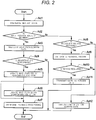
FIG. 2 is a flowchart illustrating a list management processing performed by the webserver. - An inventory management server for providing inventory management includes a storage device that stores, in association with each of a plurality of member codes: an inventory database data including an identification code of each of a plurality of commodities owned by a user, and location data corresponding to a predetermined area. A processor receives, from a portable terminal, an identification code acquired by the portable terminal and position information indicating a position of the portable terminal when the identification code is acquired. The processor determines whether the position information corresponds to a position within the predetermined area. If the position information corresponds to a position within the predetermined area, the storage device updates the inventory database based on the received identification code. If the position information does not correspond to a position within the predetermined area, the processor determines, based on comparing the received identification code to the inventory database, whether purchase of a commodity corresponding to the received identification code should be reviewed. Screen data for displaying a screen indicating the determination is transmitted to the portable terminal.
- Hereinafter, an example of an embodiment will be described with reference to the drawings. In this embodiment, a webserver having a function as a list management device will be described as an example.
-
FIG. 1 is a block diagram illustrating an example configuration of a webserver according to the embodiment. - The
webserver 1 provides a web service for a user using aportable terminal 3 via a communication network 2. The web service is used for performing inventory management of articles stored in a house of the user. It is assumed that the user who uses the web service is previously registered as a member. A user who uses the web service by using theportable terminal 3 is referred to as a "member" below. The communication network 2 is, for example, a combination of a mobile data communication network and the Internet. Theportable terminal 3 may be, for example, a smart phone, a tablet terminal, and the like. - The
webserver 1 includes aprocessor 11, amain memory 12, anauxiliary storage device 13, acommunication interface 14, and atransmission system 15. As hardware of thewebserver 1, for example, a computer device for a general-purpose server may be used. - In the
webserver 1, theprocessor 11, themain memory 12, and theauxiliary storage device 13 are connected to each other by thetransmission system 15, so as to function as a computer that controls thewebserver 1. - The
processor 11 corresponds to the main controller of the computer. Theprocessor 11 controls the components to realize various functions as thewebserver 1, in accordance with an operating system or an application program. - The
main memory 12 corresponds to the main storage device of the computer. Themain memory 12 includes a nonvolatile memory area and a volatile memory area. Themain memory 12 stores the operating system or the application program in the nonvolatile memory area. Themain memory 12 stores data required when theprocessor 11 performs various types of information processing in the nonvolatile or volatile memory area. In themain memory 12, the volatile memory area is used as a work area in which data is appropriately rewritten by theprocessor 11. - The
auxiliary storage device 13 corresponds to the auxiliary storage device of the computer. Theauxiliary storage device 13 may be, for example, an electric erasable programmable read-only memory (EEPROM), a hard disk drive (HDD), a solid state drive (SSD), and the like. Theauxiliary storage device 13 preserves data used when theprocessor 11 performs various types of information processing, or data generated by processing in theprocessor 11. Theauxiliary storage device 13 may store the application program. - One of application programs stored in the
auxiliary storage device 13 is aninventory management application 13a which is a program (which will be described later) for providing the web service. A portion of a storage area in theauxiliary storage device 13 is used for a commodity master database (commodity master DB) 13b, a category master database (category master DB) 13c, and an inventory database (inventory DB) 13d. - The
commodity master DB 13b includes various types of information regarding each commodity which may be distributed. As information included in thecommodity master DB 13b, for example, a commodity code, a commodity category code, and the like are provided. The commodity code is a unique code for each commodity item. The commodity category code is a code which is unique to a commodity category to which a commodity belongs. - The
category master DB 13c is a set of various types of information regarding a commodity category. As information included in thecategory master DB 13c, for example, the category code, a commodity category name, and the like are provided. The commodity category name is the name determined to cause a person to easily recognize a commodity category. - The
inventory DB 13d is a set of data for managing article stored in a house of a member, for each member. - The
auxiliary storage device 13 stores a member code of each member and a member database for managing information of a position and the like of a house of a member, for example. - When a computer device for a general-purpose server is used as the
webserver 1, the computer device and theinventory management application 13a may be separately provided to the user of thewebserver 1. Thus, theinventory management application 13a is written onto theauxiliary storage device 13 included in the computer device, under an operation of a user or a serviceman. At this time, theinventory management application 13a may be transferred by being recorded in a removable recording medium such as a magnetic disk, a magneto-optical disk, an optical disk, and a semiconductor memory, or by communication via a network. Thewebserver 1 may be provided to the user in a state where theinventory management application 13a is already written in theauxiliary storage device 13. - The
communication interface 14 provides for data communication via the communication network 2. - The
transmission system 15 includes a bus line and an interface circuit. The bus line includes an address bus, a data bus, and the like. The interface circuit connects the components to the bus line. Thetransmission system 15 transmits data or a signal which is transmitted and received between the components which are connected to each other. - Next, an operation of the
webserver 1 as described above will be described. - When a member performs member registration for using a web service provided by the
webserver 1, for example, thewebserver 1 issues a unique member code that is different from the member codes of all other members. During the member registration, the member provides an address of a house. Thewebserver 1 updates the member database so as to indicate position information and the like corresponding to the address, in association with the member code. - The member causes the
portable terminal 3 to execute an application program for using the web service. The member inputs the member code which is issued as described above, in the application program. When the member registers a possessed article, or when the member confirms whether or not it is proper that a target article to be possessed will be possessed, the member inputs an identification code relating to the target article into to theportable terminal 3. Typically, the web service provided by thewebserver 1 is used for causing a member to register a commodity purchased by the member and to confirm whether or not purchase of a new commodity is proper in consideration of previous purchase history. Thus, such a use form will be specifically described below. That is, possession of an article corresponds to purchase of a commodity. It is assumed that, for example, a commodity code such as a Japanese article number (JAN) code is provided as the identification code of an article. An article may be possessed by the member in another manner, such as acceptance without payment. Thus, an article is not limited to a commodity that is sold. - A commodity code is input to the
portable terminal 3, for example, via a wireless signal transmitted by a radiofrequency identification (RFID) tag that is attached to an article and read by a tag reader. Alternatively, for example, the commodity code is input based on a camera included in theportable terminal 3 reading a bar code displayed on a commodity as an object for indicating a commodity code. The commodity code may be input by other various methods, for example, a manual input by an operation of a touch panel included in theportable terminal 3. It is assumed that the member performs an input for the registration in the house of the member, and performs an input for the confirmation outside of the house of the member. - If the identification code is input as described above, the
portable terminal 3 transmits request data including the commodity code to thewebserver 1. Theportable terminal 3 causes the request data to include input date-and-time data, input position data, and a member code assigned to the member, in addition to the commodity code. The input date-and-time data indicates a time when the commodity code is input. The input position data indicates a position of theportable terminal 3 when the commodity code is input. The request data may include any type of data. - If the request data is transmitted to the
webserver 1 via the communication network 2, thecommunication interface 14 receives the request data. In response, theprocessor 11 starts information processing illustrated inFIG. 2 , based on theinventory management application 13a. Details of the information processing which will be described below are just an example, and various types of information processing in which it is possible to obtain the similar function can be appropriately used. - The
processor 11 stores the request data received by thecommunication interface 14 as described above, in themain memory 12 or the auxiliary storage device 13 (Act 1). As described above, the request data includes the commodity code acquired in theportable terminal 3, and position information indicating the position of theportable terminal 3 when the commodity code is read by theportable terminal 3. Since theprocessor 11 performs the information processing based on theinventory management application 13a, the computer which uses theprocessor 11 as the core functions as acquisition means. - The
processor 11 confirms whether or not a position indicated by the position information included in the request data is a position corresponding to the house of the member (Act 2). For example, if the position is in a predetermined region included in a position indicated by the position information which is stored in the member database in association with the member code included in the request data, theprocessor 11 determines Yes in Act 2 and proceeds toAct 3. As an example, the predetermined region is set to be a circular area which has a predetermined radius having the position indicated by the position information stored in the member database set as the center. The predetermined region may be determined by any method. Considering accuracy of position detection in theportable terminal 3, it is preferable that the predetermined region is determined as a region in which the input position can be assumed to be in the house of the member. - The
processor 11 transmits selection screen data for displaying a selection screen to the portable terminal 3 (Act 3). The selection screen is a screen for causing the member to select whether to perform registration or deletion of the commodity code. In theportable terminal 3, a display device included in theportable terminal 3 displays the selection screen based on the above-described application program. The member performs an operation for designating registration or deletion, on theportable terminal 3 in accordance with the selection screen. Thewebserver 1 is notified of details of this operation by theportable terminal 3. - The
processor 11 confirms whether or not registration is designated by the operation (Act 4). If a notification indicating that registration is designated is received from theportable terminal 3, theprocessor 11 determines Yes in Act 4 and proceeds to Act 5. - The
processor 11 updates theinventory DB 13d so as to store the member code, the commodity code, and the input date-and-time data which are included in the request data, in association with each other (Act 5). Since theprocessor 11 performs the information processing illustrated inFIG. 2 whenever request data is sent from theportable terminal 3, the commodity code is added to theinventory DB 13d every time the information processing is performed. Theinventory DB 13d stores the list of commodities possessed by the member. Theprocessor 11 performs the information processing based on theinventory management application 13a, including adding the commodity code to the list of commodities. Then, theprocessor 11 proceeds to Act 7. - Meanwhile, if deletion is designated on the selection screen and a notification indicating that deletion is designated is received from the
portable terminal 3, theprocessor 11 determines No in Act 4 and proceeds to Act 6. Theprocessor 11 determines either addition or deletion, in accordance with an instruction by the member as the user. Theprocessor 11 performs the information processing based on theinventory management application 13a, including performing the decision of either addition or deletion. - The
processor 11 updates theinventory DB 13d such that the commodity code included in the request data is deleted from commodity codes stored in association with the member code included in the request data (Act 6). That is, Theprocessor 11 deletes the commodity code as the acquired identification code, from the list shown in theinventory DB 13d. Theprocessor 11 performs the information processing based on theinventory management application 13a, including performing deletion. Then, theprocessor 11 proceeds to Act 7. - The
processor 11 performs learning processing for a consumption trend regarding a commodity which is the update target in theinventory DB 13d (Act 7). That is, for example, if theprocessor 11 updates theinventory DB 13d by performing addition of a commodity code, theprocessor 11 obtains, for example, data of a purchase period and the like indicating a tendency regarding purchase of a commodity identified by the added commodity code or purchase of a commodity having a commodity category to which the above commodity belongs. For example, if theprocessor 11 updates theinventory DB 13d by performing deletion, theprocessor 11 obtains, for example, data of time required for consumption, which indicates a tendency regarding consumption of a commodity identified by the deleted commodity code or consumption of a commodity having a commodity category to which the above commodity belongs . The manner of the learning processing may be determined by, for example, a creator of theinventory management application 13a, a manager of thewebserver 1, or the like. Theprocessor 11 uses thecommodity master DB 13b and theinventory DB 13d as the reference for the learning processing. If theprocessor 11 performs the learning processing in consideration of a commodity category, theprocessor 11 also uses thecategory master DB 13c as the reference. Theprocessor 11 stores data obtained by the learning processing herein, in theauxiliary storage device 13. Theprocessor 11 performs the information processing based on theinventory management application 13a, including the learning processing. If theprocessor 11 ends the learning processing, theprocessor 11 completes processing regarding the request data which is sent from theportable terminal 3. - If the input position is not in the predetermined region, the
processor 11 determines No in Act 2 and proceeds to Act 8 . - The
processor 11 determines whether or not a commodity identified by the commodity code included in the request data (referred to as a confirmation target commodity below) or a commodity of a commodity category to which the confirmation target commodity belongs (referred to as a same-kind commodity) was previously purchased (Act 8) . In addition, theprocessor 11 may confirm whether or not the commodity was purchased in the previous predetermined period. A manner for determining that the commodity is previously purchased may be determined, for example, by a creator of theinventory management application 13a, a manager of thewebserver 1, or the like. Theprocessor 11 uses thecommodity master DB 13b and theinventory DB 13d as the reference for the confirmation. If theprocessor 11 performs the confirmation by considering a commodity category, theprocessor 11 also uses thecategory master DB 13c as the reference. If the commodity was previously purchased, theprocessor 11 determines Yes in Act 8 and proceeds to Act 9. - The
processor 11 determines the remaining amount of confirmation target commodities or the remaining amount of same-kind commodities in the house of the member (Act 9) . For example, this determination can be performed by using theinventory DB 13d and data of a time and the like required for consumption, which is obtained in the learning processing. Here, it is not necessary that the actual remaining amount of confirmation target commodities or the remaining amount of same-kind commodities in the house of the member is accurately determined, and errors may be included. - The
processor 11 determines whether or not reviewing of purchase of the confirmation target commodity is needed (Act 10). For example, if the remaining amount determined as described above is equal to or greater than a threshold predetermined for the confirmation target commodity, theprocessor 11 determines that review is needed. Here, a manner of the determination may be determined, for example, by a creator of theinventory management application 13a, a manager of thewebserver 1, or the like. Theprocessor 11 determines that purchase of the commodity as an article is to be reviewed, based on the list shown in theinventory DB 13d. Theprocessor 11 performs the information processing based on theinventory management application 13a, including performing the determination of whether the purchase is to be reviewed. In the embodiment, theprocessor 11 performs the determination when it is determined that an acquisition position is not the house of the member. The position which is determined to be not the house of the member is set as a confirmation position. However, a position which is predetermined may be set as the confirmation position. If theprocessor 11 determines Yes in Act 10 because review is needed, theprocessor 11 proceeds toAct 11. - The
processor 11 transmits warning screen data for displaying a warning screen to the portable terminal 3 (Act 11). The warning screen is a screen for reporting a message indicating to the member that purchase of the confirmation target commodity is to be reviewed because there is a probability that inventory in the house of the member is sufficient. In theportable terminal 3, the display device included in theportable terminal 3 displays the warning screen based on the above-described application program. Thus, as described above, the member recognizes that purchase of a commodity of which the commodity code is input is to be reviewed. In this manner, transmission of the warning screen data is an example of notification processing for notifying the member as the user to determine that purchase of the commodity is to be reviewed. Theprocessor 11 performs the information processing based on theinventory management application 13a including transmission of the warning screen data. If theprocessor 11 ends transmission of the warning screen data, theprocessor 11 completes processing with respect to the request data which is sent from theportable terminal 3. - When the
processor 11 determines No in Act 8 because the commodity is not previously purchased, or when theprocessor 11 determines No in Act 10 because review of the purchase is not needed, theprocessor 11 proceeds toAct 12. - The
processor 11 transmits notification screen data indicating a notification screen to the portable terminal 3 (Act 12). The notification screen is a screen for reporting a message indicating that purchase of the confirmation target commodity is proper, to the member. In theportable terminal 3, the display device included in theportable terminal 3 displays the notification screen based on the above-described application program. Thus, as described above, the member recognizes that purchase of a commodity for which the commodity code is input is proper. If theprocessor 11 ends transmission of the notification screen data, theprocessor 11 completes processing regarding the request data which is sent from theportable terminal 3. - As described above, according to the
webserver 1, the list of commodities purchased by the member is managed in theinventory DB 13d. In order to add or delete a commodity to or from the list, the member may input a commodity code of the commodity to theportable terminal 3 in which the application program for using the web service is executed, in the house of the member. Thus, it is possible to reduce labor of the member when the member registers a new commodity purchased by the member, in the list. - According to the
webserver 1, when the input position of the commodity code is in the house of the member, designation of the member regarding which one of addition and deletion is received and the list is updated by performing addition or is updated by performing deletion. Thus, the member must designate either addition or deletion, but the member may also delete a commodity code from the list. Thus, a commodity code of a consumed commodity is deleted from the list, and thus it is possible to maintain the list to accurately indicate an inventory status in the house of the member. - According to the
webserver 1, if the input position of the commodity code is different from the house of the member, determination of whether or not purchase of a commodity identified by the commodity code is to be reviewed is performed with reference to the list, and the determination result is presented for the member. Thus, the member may input a commodity code to theportable terminal 3. The input commodity code is a commodity code of a commodity for which performing confirmation of whether or not purchase of the commodity is proper in consideration of the previous purchase circumstances is desired, in a place which is not the house of the member such as a store. Thus, the member can perform such confirmation by a simple operation. - In the
webserver 1, when the list is updated by performing addition or is updated by performing deletion, a tendency regarding consumption of a commodity identified by the added or deleted commodity code or a commodity of a commodity category to which the above commodity belongs is learned. In thewebserver 1, data obtained by the learning is used for determination of whether or not purchase of a commodity is to be reviewed. Thus, it is possible to more properly determine whether or not purchase of a commodity is to be reviewed, based on the learned tendency regarding consumption of a commodity. - Various modification forms as follows can be obtained from the embodiment.
- All types of information processing illustrated in
FIG. 2 may be performed by the processor provided in theportable terminal 3. That is, the function as the information management device may be provided in theportable terminal 3. In this case, inAct 1, the processor acquires a commodity code and a position information from an input device and a position detection device, and preserves the acquired commodity code and position information in a storage device included in theportable terminal 3. InAct 3,Act 11, andAct 12, the processor causes the display device included in theportable terminal 3 to display the various screens without transmission of data of the various screens. In this case, the processor may store at least one of thecommodity master DB 13b, thecategory master DB 13c, and theinventory DB 13d in the storage device included in theportable terminal 3. - In the embodiment, an example in which a member purchases a commodity is described. However, it is possible to manage an article accepted for free by a member, without distinction.
- The consumption date or the freshness date of a commodity identified by the commodity code may be acquired along with the commodity code, and may be preserved in the
inventory DB 13d. Theprocessor 11 may determine No in Act 10 when the consumption date or the freshness date of the commodity is expired, even if the confirmation target commodity or the same-kind commodity is in stock in the house of a member. - Some or all of the functions realized by the
processor 11 through the information processing may be realized by hardware such as a logic circuit, which performs the information processing without the bases of the program. Each of the functions may be realized by combining software control with the hardware such as a logic circuit. - The registration position is not limited to the house of a member, and any position may be set. A plurality of registration positions may be set for one member.
- While certain embodiments have been described, these embodiments have been presented by way of example only, and are not intended to limit the scope of the inventions. Indeed, the novel embodiments described herein may be embodied in a variety of other forms; furthermore, various omissions, substitutions and changes in the form of the embodiments described herein may be made without departing from the spirit of the inventions. The accompanying claims and their equivalents are intended to cover such forms or modifications as would fall within the scope and spirit of the inventions.
Claims (15)
- An inventory management server for providing inventory management comprising:a storage device that stores, in association with each of a plurality of member codes:an inventory database data including an identification code of each of a plurality of commodities owned by a user, andlocation data corresponding to a predetermined area;a communication interface; anda processor configured to:receive, from a portable terminal via the communication interface, an identification code acquired by the portable terminal and position information indicating a position of the portable terminal when the identification code is acquired,determine whether the position information corresponds to a position within the predetermined area,if the position information corresponds to a position within the predetermined area, control the storage device to update the inventory database based on the received identification code, andif the position information does not correspond to a position within the predetermined area:determine, based on comparing the received identification code to the inventory database, whether purchase of a commodity corresponding to the received identification code should be reviewed, andtransmit, to the portable terminal via the communication interface, screen data for displaying a screen indicating the determination.
- The server according to claim 1, wherein the processor is further configured to:if the position information corresponds to a position within the predetermined area, transmit, to the portable terminal via the communication interface, selection screen data for displaying a screen requesting a selection input selecting one of adding the received identification code to the inventory database and deleting the received identification code from the inventory database.
- The server according to claim 2, wherein:the processor is further configured to receive, from the portable terminal via the communication interface, the selection input, andthe processor controls the storage device to update the inventory database based further on the received selection input.
- The server according to any of claims 1 to 3, wherein the processor is further configure to:if the position information corresponds to a position within the predetermined area, perform a learning processing to determine a consumption trend with respect to the commodity corresponding to the received identification code, andcontrol the storage device to store the result of the learning processing.
- The server according to claim 4, wherein the processor determines whether purchase of the commodity corresponding to the received identification code should be reviewed based further on the stored result of the learning processing.
- The server according to any of claims 1 to 5, wherein:the storage device further stores a commodity category database that identifies one or more categories of commodities, andthe processor determines whether purchase of a commodity corresponding to the received identification code should be reviewed further based on comparing the received identification code to the commodity category database.
- An inventor management method comprising:storing, in association with each of a plurality of member codes:an inventory database data including an identification code of each of a plurality of commodities owned by a user, andlocation data corresponding to a predetermined area;receiving, from a portable terminal, an identification code acquired by the portable terminal and position information indicating a position of the portable terminal when the identification code is acquired;determining whether the position information corresponds to a position within the predetermined area;if the position information corresponds to a position within the predetermined area, updating the inventory database based on the received identification code; andif the position information does not correspond to a position within the predetermined area:determining, based on comparing the received identification code to the inventory database, whether purchase of a commodity corresponding to the received identification code should be reviewed, andtransmitting, to the portable terminal, screen data for displaying a screen indicating the determination.
- The method according to claim 7, further comprising:if the position information corresponds to a position within the predetermined area, transmitting, to the portable terminal via the communication interface, selection screen data for displaying a screen requesting a selection input selecting one of adding the received identification code to the inventory database and deleting the received identification code from the inventory database.
- The method according to claim 8, further comprising:receiving, from the portable terminal, the selection input, wherein the inventory database is updated based further on the received selection input.
- The method according to any of claims 7 to 9, further comprising:if the position information corresponds to a position within the predetermined area, performing a learning processing to determine a consumption trend with respect to the commodity corresponding to the received identification code; andstoring the result of the learning processing.
- The method according to claim 10, wherein determining whether purchase of the commodity corresponding to the received identification code should be reviewed is further based on the stored result of the learning processing.
- The method according to any of claims 7 to 11, further comprising:storing a commodity category database that identifies one or more categories of commodities, wherein determining whether purchase of a commodity corresponding to the received identification code should be reviewed is further based on comparing the received identification code to the commodity category database.
- The method according to any of claims 7 to 12, further comprising:generating, with a camera on the portable device, an image of the commodity, wherein the identification code is acquired from the generated image.
- A non-transitory computer readable medium causing an inventory management server to perform an inventory management method, the method comprising:storing, in association with each of a plurality of member codes:an inventory database data including an identification code of each of a plurality of commodities owned by a user, andlocation data corresponding to a predetermined area;receiving, from a portable terminal, an identification code acquired by the portable terminal and position information indicating a position of the portable terminal when the identification code is acquired;determining whether the position information corresponds to a position within the predetermined area;if the position information corresponds to a position within the predetermined area, updating the inventory database based on the received identification code; andif the position information does not correspond to a position within the predetermined area:determining, based on comparing the received identification code to the inventory database, whether purchase of a commodity corresponding to the received identification code should be reviewed, andtransmitting, to the portable terminal, screen data for displaying a screen indicating the determination.
- The non-transitory computer readable medium according to claim 14, wherein the stored location data corresponding to the predetermined area is set in advance by a user corresponding to the member code.
Applications Claiming Priority (1)
| Application Number | Priority Date | Filing Date | Title |
|---|---|---|---|
| JP2017050118A JP6873761B2 (en) | 2017-03-15 | 2017-03-15 | Information management device and its program |
Publications (1)
| Publication Number | Publication Date |
|---|---|
| EP3376449A1 true EP3376449A1 (en) | 2018-09-19 |
Family
ID=61226470
Family Applications (1)
| Application Number | Title | Priority Date | Filing Date |
|---|---|---|---|
| EP18156919.5A Withdrawn EP3376449A1 (en) | 2017-03-15 | 2018-02-15 | Household commodities inventory management server |
Country Status (3)
| Country | Link |
|---|---|
| US (1) | US10902378B2 (en) |
| EP (1) | EP3376449A1 (en) |
| JP (1) | JP6873761B2 (en) |
Families Citing this family (3)
| Publication number | Priority date | Publication date | Assignee | Title |
|---|---|---|---|---|
| CN110956307A (en) * | 2019-10-28 | 2020-04-03 | 苏宁云计算有限公司 | Business data standardization processing method and device |
| CN113836158B (en) * | 2021-09-22 | 2025-02-14 | 上海哔哩哔哩科技有限公司 | Commodity inventory deduction method and device |
| CN116610685B (en) * | 2023-04-25 | 2024-05-24 | 阿里健康科技(中国)有限公司 | Method, device, equipment and medium for updating standard information base |
Citations (1)
| Publication number | Priority date | Publication date | Assignee | Title |
|---|---|---|---|---|
| US20140006131A1 (en) * | 2012-06-30 | 2014-01-02 | At&T Mobility Ii Llc | Interactive Inventory Systems and Methods |
Family Cites Families (13)
| Publication number | Priority date | Publication date | Assignee | Title |
|---|---|---|---|---|
| JP2000048091A (en) * | 1998-07-29 | 2000-02-18 | Daiwa House Ind Co Ltd | Household inventory management system |
| JP2001134707A (en) * | 1999-11-08 | 2001-05-18 | Nippon Telegr & Teleph Corp <Ntt> | Consumer goods vault, consumer goods vault management system, consumer goods management method in consumer goods vault, and recording medium recording program for processing |
| JP2009205293A (en) | 2008-02-26 | 2009-09-10 | Nec Corp | Merchandise purchase information management system, database management program, and alert display management program |
| JP2009258947A (en) | 2008-04-16 | 2009-11-05 | Panasonic Corp | Portable terminal, food management method, and program |
| JP5477908B2 (en) * | 2010-06-11 | 2014-04-23 | Necカシオモバイルコミュニケーションズ株式会社 | Content transaction system, terminal device and program |
| US9298900B2 (en) * | 2011-09-24 | 2016-03-29 | Elwha Llc | Behavioral fingerprinting via inferred personal relation |
| JP5842696B2 (en) * | 2012-03-22 | 2016-01-13 | 株式会社デンソーウェーブ | Shopping support system, communication system and cash register terminal |
| US9451403B2 (en) * | 2012-08-30 | 2016-09-20 | Ebay Inc. | Systems and method for configuring mobile device applications based on location |
| US20140192182A1 (en) * | 2013-01-10 | 2014-07-10 | General Electric Company | Method for viewing virtual objects within an appliance |
| JP5620565B1 (en) * | 2013-12-11 | 2014-11-05 | 東芝テック株式会社 | Product sales data processing apparatus and program |
| JP6514925B2 (en) | 2014-03-28 | 2019-05-15 | パナソニック インテレクチュアル プロパティ コーポレーション オブ アメリカPanasonic Intellectual Property Corporation of America | INFORMATION NOTIFICATION DEVICE AND INFORMATION NOTIFICATION METHOD |
| US10055736B2 (en) * | 2014-12-30 | 2018-08-21 | Paypal, Inc. | Dynamic authentication through user information and intent |
| US11128709B2 (en) * | 2015-12-15 | 2021-09-21 | At&T Intellectual Property I, L.P. | Method and apparatus for receiving nutritional information via a network |
-
2017
- 2017-03-15 JP JP2017050118A patent/JP6873761B2/en active Active
-
2018
- 2018-02-07 US US15/890,888 patent/US10902378B2/en active Active
- 2018-02-15 EP EP18156919.5A patent/EP3376449A1/en not_active Withdrawn
Patent Citations (1)
| Publication number | Priority date | Publication date | Assignee | Title |
|---|---|---|---|---|
| US20140006131A1 (en) * | 2012-06-30 | 2014-01-02 | At&T Mobility Ii Llc | Interactive Inventory Systems and Methods |
Non-Patent Citations (2)
| Title |
|---|
| ANDREAS KOMNINOS ET AL: "me-Commerce: An Infrastructure for Personal Predictive Mobile Commerce", MOBILE BUSINESS, 2006. ICMB '06. INTERNATIONAL CONFERENCE ON, IEEE COMPUTER SOCIETY, US, 1 June 2006 (2006-06-01), pages 39, XP031056560, ISBN: 978-0-7695-2595-2, DOI: 10.1109/ICMB.2006.29 * |
| GEORGE ROUSSOS ET AL: "Systems architecture for pervasive retail", APPLIED COMPUTING 2003 : PROCEEDINGS OF THE 2003 ACM SYMPOSIUM ON APPLIED COMPUTING, MELBOURNE, FLORIDA, USA, MARCH 9 - 12, 2003, ASSOCIATION FOR COMPUTING MACHINERY, NEW YORK, NY, 9 March 2003 (2003-03-09), pages 631 - 636, XP058356107, ISBN: 978-1-58113-624-1, DOI: 10.1145/952532.952656 * |
Also Published As
| Publication number | Publication date |
|---|---|
| US10902378B2 (en) | 2021-01-26 |
| US20180268354A1 (en) | 2018-09-20 |
| JP6873761B2 (en) | 2021-05-19 |
| JP2018156154A (en) | 2018-10-04 |
Similar Documents
| Publication | Publication Date | Title |
|---|---|---|
| KR102359043B1 (en) | Electronic device for providing information to courier and control method thereof | |
| TWI878410B (en) | Electronic apparatus and operation method thereof | |
| JP7242258B2 (en) | Inventory control device | |
| KR102389764B1 (en) | Method for providing product information and device therefor | |
| US12014413B2 (en) | Method, electronic device, and non-transitory computer-readable storage medium for providing information and electronic device using the same | |
| KR100715077B1 (en) | Method And System For Communication Between Supplier And Customer Device | |
| US20190139018A1 (en) | Registration apparatus, registration system and registration method | |
| US11238404B2 (en) | Electronic apparatus and operation method thereof | |
| US10902378B2 (en) | Inventory management server | |
| TW202201340A (en) | Delivery status management method and electronic apparatus performing the same | |
| US20170017983A1 (en) | Electronic coupon and receipt management system | |
| US20180253711A1 (en) | Inventory management system and method | |
| KR102801602B1 (en) | Server and method for providing information thereof | |
| JP4994857B2 (en) | Vending machine price changing system, vending machine price changing method, and vending machine price changing program | |
| KR20230064562A (en) | Method for providing information related to rental item and electronic device using the same | |
| JP5080104B2 (en) | Electronic shelf label system | |
| US20200364766A1 (en) | Article management apparatus, commodity sales management apparatus, information processing method, and article management method | |
| US20170017979A1 (en) | Electronic receipt system, server device, and program | |
| US20180300781A1 (en) | Trial system, trial method, trial processing device, and trial processing method | |
| JP2017097837A (en) | Advertising system | |
| US11966902B2 (en) | Information providing apparatus and information providing method | |
| JP5871864B2 (en) | Display control apparatus and display control program | |
| US20160247216A1 (en) | Systems and methods for gift management | |
| KR102961276B1 (en) | Electronic apparatus and providing information method thereof | |
| EP3376459A1 (en) | Portable terminal for confirming a commodity purchase history |
Legal Events
| Date | Code | Title | Description |
|---|---|---|---|
| PUAI | Public reference made under article 153(3) epc to a published international application that has entered the european phase |
Free format text: ORIGINAL CODE: 0009012 |
|
| AK | Designated contracting states |
Kind code of ref document: A1 Designated state(s): AL AT BE BG CH CY CZ DE DK EE ES FI FR GB GR HR HU IE IS IT LI LT LU LV MC MK MT NL NO PL PT RO RS SE SI SK SM TR |
|
| AX | Request for extension of the european patent |
Extension state: BA ME |
|
| STAA | Information on the status of an ep patent application or granted ep patent |
Free format text: STATUS: THE APPLICATION IS DEEMED TO BE WITHDRAWN |
|
| 18D | Application deemed to be withdrawn |
Effective date: 20190320 |