EP3376344A1 - Character input device, character input method, and character input program - Google Patents
Character input device, character input method, and character input program Download PDFInfo
- Publication number
- EP3376344A1 EP3376344A1 EP18150951.4A EP18150951A EP3376344A1 EP 3376344 A1 EP3376344 A1 EP 3376344A1 EP 18150951 A EP18150951 A EP 18150951A EP 3376344 A1 EP3376344 A1 EP 3376344A1
- Authority
- EP
- European Patent Office
- Prior art keywords
- character
- stamp
- reading
- input
- unit
- Prior art date
- Legal status (The legal status is an assumption and is not a legal conclusion. Google has not performed a legal analysis and makes no representation as to the accuracy of the status listed.)
- Granted
Links
Images





Classifications
-
- G—PHYSICS
- G06—COMPUTING OR CALCULATING; COUNTING
- G06F—ELECTRIC DIGITAL DATA PROCESSING
- G06F3/00—Input arrangements for transferring data to be processed into a form capable of being handled by the computer; Output arrangements for transferring data from processing unit to output unit, e.g. interface arrangements
- G06F3/01—Input arrangements or combined input and output arrangements for interaction between user and computer
- G06F3/018—Input/output arrangements for oriental characters
-
- G—PHYSICS
- G06—COMPUTING OR CALCULATING; COUNTING
- G06F—ELECTRIC DIGITAL DATA PROCESSING
- G06F3/00—Input arrangements for transferring data to be processed into a form capable of being handled by the computer; Output arrangements for transferring data from processing unit to output unit, e.g. interface arrangements
- G06F3/01—Input arrangements or combined input and output arrangements for interaction between user and computer
- G06F3/02—Input arrangements using manually operated switches, e.g. using keyboards or dials
- G06F3/023—Arrangements for converting discrete items of information into a coded form, e.g. arrangements for interpreting keyboard generated codes as alphanumeric codes, operand codes or instruction codes
- G06F3/0233—Character input methods
-
- G—PHYSICS
- G06—COMPUTING OR CALCULATING; COUNTING
- G06F—ELECTRIC DIGITAL DATA PROCESSING
- G06F3/00—Input arrangements for transferring data to be processed into a form capable of being handled by the computer; Output arrangements for transferring data from processing unit to output unit, e.g. interface arrangements
- G06F3/01—Input arrangements or combined input and output arrangements for interaction between user and computer
- G06F3/048—Interaction techniques based on graphical user interfaces [GUI]
- G06F3/0487—Interaction techniques based on graphical user interfaces [GUI] using specific features provided by the input device, e.g. functions controlled by the rotation of a mouse with dual sensing arrangements, or of the nature of the input device, e.g. tap gestures based on pressure sensed by a digitiser
- G06F3/0488—Interaction techniques based on graphical user interfaces [GUI] using specific features provided by the input device, e.g. functions controlled by the rotation of a mouse with dual sensing arrangements, or of the nature of the input device, e.g. tap gestures based on pressure sensed by a digitiser using a touch-screen or digitiser, e.g. input of commands through traced gestures
- G06F3/04883—Interaction techniques based on graphical user interfaces [GUI] using specific features provided by the input device, e.g. functions controlled by the rotation of a mouse with dual sensing arrangements, or of the nature of the input device, e.g. tap gestures based on pressure sensed by a digitiser using a touch-screen or digitiser, e.g. input of commands through traced gestures for inputting data by handwriting, e.g. gesture or text
-
- G—PHYSICS
- G06—COMPUTING OR CALCULATING; COUNTING
- G06F—ELECTRIC DIGITAL DATA PROCESSING
- G06F40/00—Handling natural language data
- G06F40/10—Text processing
- G06F40/166—Editing, e.g. inserting or deleting
- G06F40/171—Editing, e.g. inserting or deleting by use of digital ink
-
- G—PHYSICS
- G06—COMPUTING OR CALCULATING; COUNTING
- G06F—ELECTRIC DIGITAL DATA PROCESSING
- G06F40/00—Handling natural language data
- G06F40/20—Natural language analysis
- G06F40/237—Lexical tools
- G06F40/242—Dictionaries
-
- G—PHYSICS
- G06—COMPUTING OR CALCULATING; COUNTING
- G06V—IMAGE OR VIDEO RECOGNITION OR UNDERSTANDING
- G06V30/00—Character recognition; Recognising digital ink; Document-oriented image-based pattern recognition
- G06V30/10—Character recognition
- G06V30/14—Image acquisition
- G06V30/142—Image acquisition using hand-held instruments; Constructional details of the instruments
- G06V30/1423—Image acquisition using hand-held instruments; Constructional details of the instruments the instrument generating sequences of position coordinates corresponding to handwriting
-
- G—PHYSICS
- G06—COMPUTING OR CALCULATING; COUNTING
- G06V—IMAGE OR VIDEO RECOGNITION OR UNDERSTANDING
- G06V30/00—Character recognition; Recognising digital ink; Document-oriented image-based pattern recognition
- G06V30/10—Character recognition
- G06V30/32—Digital ink
- G06V30/36—Matching; Classification
Definitions
- This invention relates to a character input technology provided with a function of utilizing handwritten characters.
- JP 2009-15743A , JP 2008-129687A and WO 2012/46546A1 are examples of background art.
- JP 2009-15743A JP 2008-129687A and WO 2012/46546A1 are used.
- character strings need to be registered in advance for pictographs and other images. Even in the case of creating an image that contains a character string, the character string must be associated separately after saving the image, and efficiency is impaired.
- an object of the present invention is to automatically acquire a reading of handwritten characters from an image of the handwritten character and to register both the image and the reading together. Also, an object of the present invention is to efficiently utilize the image of the handwritten character, by using the reading.
- a character input device of this invention is provided with an operation unit configured to accept an input operation of a handwritten character and display the handwritten character, a stamp creation unit configured to perform image conversion on the handwritten character to create a stamp, a character recognition unit configured to recognize a reading of the handwritten character, and a saving unit configured to save the stamp and the reading of the handwritten character. Also, an input character management unit is configured to associate the stamp with the reading of the handwritten character.
- characters input by handwriting can be converted to a stamp and managed. Also, a reading of the stamp can be automatically recognized, and this reading and the stamp can be saved in association with each other. Also, the stamp can be utilized at the timing at which it is saved.
- an operation unit of the character input device of this invention has a key input function. Also, the input character management unit associates the stamp with a character string keyed in with the operation unit, in the case where a reading cannot be recognized by the character recognition unit.
- the input character management unit of the character input device of this invention associates the reading which is changed with the operation unit with the stamp.
- the operation unit of the character input device of this invention is provided with a candidate display unit.
- the input character management unit outputs the stamp as a conversion candidate to the candidate display unit when the character string input with the operation unit matches the reading.
- a stamp that matches a character string input with the operation unit can be output to the candidate display unit as one conversion candidate.
- the character input device of this invention includes a transmission unit configured to transmit the stamp to an application, and the stamp which is selected with the candidate display unit is transmitted.
- an image and a reading of handwritten characters can be efficiently registered, and the image of the handwritten characters can be efficiently utilized, by using the reading.
- Fig. 1 is a block diagram showing a main configuration of the character input device according to the first embodiment of the present invention.
- Fig. 2A is a schematic diagram of an operation unit according to the first embodiment of the present invention, and
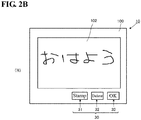
- Fig. 2B is a schematic diagram of the operation unit when a handwriting input function has been activated.
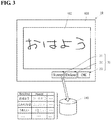
- Fig. 3 is a diagram showing the association between the character input device and a stamp saving unit according to the first embodiment of the present invention.
- Fig. 4 is a flowchart at the time of a new registration according to the first embodiment of the present invention.
- Figs. 1 is a block diagram showing a main configuration of the character input device according to the first embodiment of the present invention.
- Fig. 2A is a schematic diagram of an operation unit according to the first embodiment of the present invention
- Fig. 2B is a schematic diagram of the operation unit when a handwriting input function has been activated.
- Fig. 3 is a diagram showing the association between the character input device and a
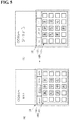
- FIG. 5A and 5B are schematic diagrams of operations of the character input device at the time of using a handwritten stamp according to the first embodiment of the present invention.
- Fig. 6 is a flowchart at the time of utilizing a stamp according to the first embodiment of the present invention.
- the character input device of the present invention is used by a device that can perform manipulation and character input, as a result of a display screen such as a touch panel being pressed.
- a character input device 10 is provided with an operation unit 100, an input character management unit 110, a stamp creation unit 120, a character recognition unit 130, a saving unit 140, a dictionary data unit 141 and a transmission unit 150.
- the operation unit 100 is provided with a software keyboard 101, a character input unit 102, a candidate display unit 103 and an operation acceptance unit 105.
- Fig. 2A and Fig. 2B are diagrams showing the operation unit 100.
- the operation unit 100 is provided with a software keyboard 101.
- a handwriting input button 20 is included in the software keyboard 101.
- the operation unit 100 is provided with a character input unit 102 and an operation button group 30.
- the operation button group is provided with a stamp button 31, a delete button 32, and an OK button 33.
- the character input unit 102 is an area in which characters can be handwritten with a finger or the like. For example, the characters " " " ("ohayou” (good morning)) are written by hand in the character input unit 102. Henceforth, characters written by hand will be described as handwritten characters.
- the stamp button 31 is pressed, in the case of converting handwritten characters to a stamp. Also, the delete button 32 is pressed, in the case of deleting handwritten characters. The OK button 33 is pressed, when finalizing handwritten characters.
- Fig. 3 is a diagram specifically showing the relationship with the saving unit 140 in the case where an operation has been performed using the operation button group 30, with the saving unit 140 and a data image of the saving unit 140 having been added to the configuration of Fig. 2B .
- FIG. 1 A method of creating a stamp from handwritten characters and utilizing the stamp will be described using Figs. 1 and 3 . Note that a state in which the character input unit 102 has already been activated and " " has been input by handwriting on the operation unit 100 with the character input unit 102 is initially shown.
- the operation acceptance unit 105 accepts processing that results from the stamp button 31 being pressed, and conveys this processing to the input character management unit 110.
- the input character management unit 110 outputs image data that includes the handwritten characters " " to the stamp creation unit 120.
- the stamp creation unit 120 extracts the handwritten character portion " ", and creates a stamp.
- the input character management unit 110 conveys the handwritten characters " " " to the character recognition unit 130.
- the character recognition unit 130 performs character recognition on the handwritten characters " “, and recognizes the character string " “ consisting of the combination of characters " ", “ “ and “ “. As a result of this method, a reading of the stamp " " input by handwriting with the character input unit 102 is automatically acquired.
- the input character management unit 110 associates the stamp created by the stamp creation unit 120 and the reading recognized by the character recognition unit 130, and saves the associated stamp and reading to the saving unit 140.
- the input character management unit 110 outputs the stamp " " to the transmission unit 150.
- the transmission unit 150 receives the stamp " ", and transmits the received stamp to an external application.
- handwritten characters input with the character input unit 102 can be saved as a stamp, a reading of the handwritten characters can be automatically recognized, and the reading and the stamp can be saved in association with each other. Furthermore, the stamp can be directly utilized by an application.
- the user does not need to switch applications to perform the operations of inputting handwritten characters and saving the characters as a stamp. That is, rather than the complex flow involved in operations such as utilizing stamps after preliminarily registering the stamps, a stamp can be easily registered with a normal series of operations for handwritten character input and this stamp can be utilized.
- characters input by handwriting to the character input unit 102 may be katakana characters, alphabetic characters, numeric characters, symbols, Chinese characters or the like.
- the input character management unit 110 performs display indicating that the handwritten characters cannot be recognized on a message display unit which is not illustrated.
- the input character management unit 110 prompts the user to set a reading for the handwritten characters.
- the operation acceptance unit 105 accepts characters that are keyed in with the software keyboard 101. Furthermore, the input character management unit 110 associates the stamp and the keyed-in reading of the handwritten characters, and saves the associated stamp and reading to the saving unit 140.
- Fig. 4 is a flowchart of a character input method according to the first embodiment of the present invention.
- the computational processing device accepts input of handwritten characters (S101).
- the computational processing device performs image conversion to convert the handwritten characters to a stamp (S102).
- the computational processing device judges whether a reading of the handwritten characters can be recognized. If character recognition of the handwritten characters is possible (S103: Yes), the computational processing device further judges whether the reading can be acquired. If the reading can be acquired (S104: Yes), the computational processing device saves the stamp and the reading in association with each other (S105).
- the computational processing device transmits the saved stamp to an application, and the stamp is utilized (S106).
- the computational processing device accepts a reading by key input (S111).
- the computational processing device saves the stamp and the keyed-in reading in association with each other (S105), and the stamp is utilized (S106).
- the computational processing device judges whether morphological analysis is possible. In the case where morphological analysis is possible (S121: Yes), the computational processing device performs morphological analysis and acquires the reading (S122). The computational processing device saves the stamp and the reading acquired by morphological analysis in association with each other (S105), and the stamp is utilized (S106).
- a method of creating a stamp from handwritten characters and utilizing the stamp was shown.
- Figs. 5A, 5B and 6 a method of utilizing a stamp that has already been saved according to the first embodiment of the present invention is shown.
- the character input device 10 is provided with the operation unit 100.
- the operation unit 100 is provided with the software keyboard 101 and the candidate display unit 103.
- the character input device 10 has been activated by an application that is not included in the present invention.
- the dictionary data unit 141 (refer to Fig. 1 ) includes dictionary data that enables character conversion and predictive conversion.
- Both the results obtained by searching the saving unit 140 and the results obtained by searching the dictionary data unit 141 are displayed on the candidate display unit 103. Note that the order in which the candidates are displayed depends on the search logic.
- Fig. 5B is a diagram showing the result of having selected “ “ (handwritten)” in Fig. 5A .
- the operation acceptance unit 105 detects that the user has selected “ (handwritten)”.
- the operation acceptance unit 105 conveys that " (handwritten)" has been selected to the input character management unit 110.
- the input character management unit 110 finds the stamp “ “ that is saved in the saving unit 140, and receives the stamp “ “.”
- the input character management unit 110 outputs the stamp “ “” to the transmission unit 150.
- the transmission unit 150 transmits the stamp “ “ to the application. As a result, the stamp " " is inserted in the application of Fig. 5B .
- Fig. 6 shows a flowchart of a method of utilizing a stamp. Furthermore, the computational processing device searches the dictionary data unit 141 (S201), and extracts dictionary data to serve as candidates (S202). The computational processing device accepts key input using the software keyboard 101 (S203). The computational processing device searches the saving unit 140 for readings that match the character string that was keyed in (S204), and extracts stamps to serve as candidates (S205). The computational processing device displays the stamps serving as candidates and the dictionary data serving as candidates on the candidate display unit 103 (S206).
- the computational processing device displays only the keyed-in characters on the candidate display unit 103.
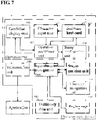
- Fig. 7 is a functional block diagram of the character input device according to the second embodiment of the present invention.
- Fig. 8 is a flowchart at the time of changing a reading according to the second embodiment of the present invention.
- a character input device 10A according to the second embodiment differs from the character input device 10 according to the first embodiment in that a stamp confirmation unit 104 is added to an operation unit 100A.
- the remaining configuration of the character input device 10A is similar to the character input device 10, and description of similar points will be omitted.
- the stamp confirmation unit 104 displays and edits readings of registered stamps.
- the operation acceptance unit 105 accepts an instruction for displaying registered stamps from the stamp confirmation unit 104.
- the input character management unit 110 searches the saving unit 140, and acquires a list of data in which stamps and readings are associated.
- the input character management unit 110 outputs the list acquired from the saving unit 140 to the stamp confirmation unit 104.
- the stamp confirmation unit 104 displays the associations between stamps and readings.
- the stamp confirmation unit 104 accepts a correction of the reading.
- the reading is keyed in with the software keyboard 101.
- the operation acceptance unit 105 accepts the stamp and the corrected reading, and outputs the stamp and the reading to the input character management unit 110.
- the input character management unit 110 saves the stamp and the keyed-in reading of the handwritten characters to the saving unit 140 in association with each other.
- Fig. 8 shows a flowchart for confirming and correcting the reading of a stamp.
- the computational processing device accepts selection of a correction method (S301). In the case of performing correction based on the reading of a stamp (S302: Yes), the computational processing device accepts key input (S303). The computational processing device judges whether stamps exist (S304: Yes), and displays a list of stamps and readings (S305). The computational processing device selects a stamp (S306), confirms whether the reading of the stamp needs to be corrected, and, in the case of correcting the reading (S307: Yes), updates the reading (S308). Also, in the case of performing correction by selecting a stamp (S302: No), the computational processing device displays a list of stamps (S311). The computational processing device selects a stamp (S306), confirms whether the reading of the stamp needs to be corrected, and, in the case of correcting the reading (S307: Yes), updates the reading (S308).
- the configuration need only be provided with a function of being able to input readings, such as by audio input, for example, and is not limited to key input.
Landscapes
- Engineering & Computer Science (AREA)
- Theoretical Computer Science (AREA)
- General Engineering & Computer Science (AREA)
- Physics & Mathematics (AREA)
- General Physics & Mathematics (AREA)
- Human Computer Interaction (AREA)
- General Health & Medical Sciences (AREA)
- Health & Medical Sciences (AREA)
- Artificial Intelligence (AREA)
- Audiology, Speech & Language Pathology (AREA)
- Computational Linguistics (AREA)
- Multimedia (AREA)
- Computer Vision & Pattern Recognition (AREA)
- Character Discrimination (AREA)
- Machine Translation (AREA)
- Document Processing Apparatus (AREA)
Abstract
Description
- This application claims priority to Japanese Patent Application No.
2017-049504 filed March 15, 2017 - This invention relates to a character input technology provided with a function of utilizing handwritten characters.
- Technologies for preliminarily registering character strings in a mobile communication terminal or the like in association with pictographs, so as to be able to efficiently call the pictographs registered in advance, at the time of performing character input with the terminal are known, as shown in
JP 2009-15743A - Also, technologies for registering keywords for pictographs or images in advance and manipulating pictographs and images based on the keywords are known, as shown in
JP 2008-129687A WO 2012/46546A1 -
JP 2009-15743A JP 2008-129687A WO 2012/46546A1 - However, in the case where the technologies shown in
JP 2009-15743A JP 2008-129687A WO 2012/46546A1 - Accordingly, an object of the present invention is to automatically acquire a reading of handwritten characters from an image of the handwritten character and to register both the image and the reading together. Also, an object of the present invention is to efficiently utilize the image of the handwritten character, by using the reading.
- A character input device of this invention is provided with an operation unit configured to accept an input operation of a handwritten character and display the handwritten character, a stamp creation unit configured to perform image conversion on the handwritten character to create a stamp, a character recognition unit configured to recognize a reading of the handwritten character, and a saving unit configured to save the stamp and the reading of the handwritten character. Also, an input character management unit is configured to associate the stamp with the reading of the handwritten character.
- With this configuration, characters input by handwriting can be converted to a stamp and managed. Also, a reading of the stamp can be automatically recognized, and this reading and the stamp can be saved in association with each other. Also, the stamp can be utilized at the timing at which it is saved.
- Also, an operation unit of the character input device of this invention has a key input function. Also, the input character management unit associates the stamp with a character string keyed in with the operation unit, in the case where a reading cannot be recognized by the character recognition unit.
- With this configuration, even in the case where a reading cannot be recognized by the character recognition unit, a character string keyed in with the operation unit is associated with the stamp.
- Also, the input character management unit of the character input device of this invention associates the reading which is changed with the operation unit with the stamp.
- With this configuration the reading can be changed.
- Also, the operation unit of the character input device of this invention is provided with a candidate display unit. The input character management unit outputs the stamp as a conversion candidate to the candidate display unit when the character string input with the operation unit matches the reading.
- With this configuration, a stamp that matches a character string input with the operation unit can be output to the candidate display unit as one conversion candidate.
- Also, the character input device of this invention includes a transmission unit configured to transmit the stamp to an application, and the stamp which is selected with the candidate display unit is transmitted.
- With this configuration, a stamp selected with the candidate display unit and keyed-in characters can be transmitted to an application.
- According to this invention, an image and a reading of handwritten characters can be efficiently registered, and the image of the handwritten characters can be efficiently utilized, by using the reading.
-
-
Fig. 1 is a block diagram showing a main configuration of a character input device according to a first embodiment of the present invention. -
Fig. 2A is a schematic diagram of an operation unit according to the first embodiment of the present invention, andFig. 2B is a schematic diagram of the operation unit when a handwriting input function has been activated. -
Fig. 3 is a diagram showing the association between the operation unit and a saving unit according to the first embodiment of the present invention. -
Fig. 4 is a flowchart at the time of a new registration according to the first embodiment of the present invention. -
Figs. 5A and 5B are schematic diagrams of operations of the character input device at the time of using a handwriting stamp according to the first embodiment of the present invention. -
Fig. 6 is a flowchart at the time of utilizing a stamp according to the first embodiment of the present invention. -
Fig. 7 is a functional block diagram of a character input device according to a second embodiment of the present invention. -
Fig. 8 is a flowchart at the time of changing a reading according to the second embodiment of the present invention. - A character input device, a character input method and a character input program according to a first embodiment of the present invention will be described, with reference to the drawings.
Fig. 1 is a block diagram showing a main configuration of the character input device according to the first embodiment of the present invention.Fig. 2A is a schematic diagram of an operation unit according to the first embodiment of the present invention, andFig. 2B is a schematic diagram of the operation unit when a handwriting input function has been activated.Fig. 3 is a diagram showing the association between the character input device and a stamp saving unit according to the first embodiment of the present invention.Fig. 4 is a flowchart at the time of a new registration according to the first embodiment of the present invention.Figs. 5A and 5B are schematic diagrams of operations of the character input device at the time of using a handwritten stamp according to the first embodiment of the present invention.Fig. 6 is a flowchart at the time of utilizing a stamp according to the first embodiment of the present invention. - The character input device of the present invention is used by a device that can perform manipulation and character input, as a result of a display screen such as a touch panel being pressed.
- As shown in
Fig. 1 , acharacter input device 10 is provided with anoperation unit 100, an inputcharacter management unit 110, astamp creation unit 120, acharacter recognition unit 130, a savingunit 140, adictionary data unit 141 and atransmission unit 150. Theoperation unit 100 is provided with asoftware keyboard 101, acharacter input unit 102, acandidate display unit 103 and anoperation acceptance unit 105. -
Fig. 2A andFig. 2B are diagrams showing theoperation unit 100. As shown inFig. 2A , theoperation unit 100 is provided with asoftware keyboard 101. Ahandwriting input button 20 is included in thesoftware keyboard 101. As shown inFig. 2B , theoperation unit 100 is provided with acharacter input unit 102 and anoperation button group 30. The operation button group is provided with astamp button 31, adelete button 32, and anOK button 33. - As a result of pressing the
handwriting input button 20 inFig. 2A , theoperation unit 100 switches to the mode ofFig. 2B . Thecharacter input unit 102 is an area in which characters can be handwritten with a finger or the like. For example, the characters "" " ("ohayou" (good morning)) are written by hand in the
character input unit 102. Henceforth, characters written by hand will be described as handwritten characters. - The
stamp button 31 is pressed, in the case of converting handwritten characters to a stamp. Also, thedelete button 32 is pressed, in the case of deleting handwritten characters. TheOK button 33 is pressed, when finalizing handwritten characters. -
Fig. 3 is a diagram specifically showing the relationship with the savingunit 140 in the case where an operation has been performed using theoperation button group 30, with the savingunit 140 and a data image of the savingunit 140 having been added to the configuration ofFig. 2B . - A method of creating a stamp from handwritten characters and utilizing the stamp will be described using
Figs. 1 and3 . Note that a state in which thecharacter input unit 102 has already been activated and "" has been input by handwriting on the
operation unit 100 with thecharacter input unit 102 is initially shown. - The
operation acceptance unit 105 accepts processing that results from thestamp button 31 being pressed, and conveys this processing to the inputcharacter management unit 110. The inputcharacter management unit 110 outputs image data that includes the handwritten characters "" to the
stamp creation unit 120. Thestamp creation unit 120 extracts the handwritten character portion "", and creates a stamp.
- Furthermore, the input
character management unit 110 conveys the handwritten characters "" to the
character recognition unit 130. Thecharacter recognition unit 130 performs character recognition on the handwritten characters "", and recognizes the character string " " consisting of the combination of characters "
 ", "
 " and "
 ". As a result of this method, a reading of the stamp "
 " input by handwriting with the

character input unit 102 is automatically acquired. - The input
character management unit 110 associates the stamp created by thestamp creation unit 120 and the reading recognized by thecharacter recognition unit 130, and saves the associated stamp and reading to the savingunit 140. - Next, the input
character management unit 110 outputs the stamp " " to the

transmission unit 150. Thetransmission unit 150 receives the stamp "", and transmits the received stamp to an external application.
- As a result of this processing, handwritten characters input with the
character input unit 102 can be saved as a stamp, a reading of the handwritten characters can be automatically recognized, and the reading and the stamp can be saved in association with each other. Furthermore, the stamp can be directly utilized by an application. - Accordingly, the user does not need to switch applications to perform the operations of inputting handwritten characters and saving the characters as a stamp. That is, rather than the complex flow involved in operations such as utilizing stamps after preliminarily registering the stamps, a stamp can be easily registered with a normal series of operations for handwritten character input and this stamp can be utilized.
- In the above description, processing according to an example using the hiragana characters "" was shown. However, characters input by handwriting to the

character input unit 102 may be katakana characters, alphabetic characters, numeric characters, symbols, Chinese characters or the like. - Note that the case where a reading cannot be recognized with regard to characters input by handwriting with the
character input unit 102 will be described. In the case where a character string of handwritten characters cannot be recognized, the inputcharacter management unit 110 performs display indicating that the handwritten characters cannot be recognized on a message display unit which is not illustrated. The inputcharacter management unit 110 prompts the user to set a reading for the handwritten characters. Theoperation acceptance unit 105 accepts characters that are keyed in with thesoftware keyboard 101. Furthermore, the inputcharacter management unit 110 associates the stamp and the keyed-in reading of the handwritten characters, and saves the associated stamp and reading to the savingunit 140. - Note that, in the abovementioned description, a mode in which the respective processing is executed by individual functional units was shown. However, the abovementioned processing may be realized and stored in the form of a program, and the program may be executed by a computational processing device such as a CPU. In this case, the flow of
Fig. 4 need only be executed. -
Fig. 4 is a flowchart of a character input method according to the first embodiment of the present invention. The computational processing device accepts input of handwritten characters (S101). The computational processing device performs image conversion to convert the handwritten characters to a stamp (S102). The computational processing device judges whether a reading of the handwritten characters can be recognized. If character recognition of the handwritten characters is possible (S103: Yes), the computational processing device further judges whether the reading can be acquired. If the reading can be acquired (S104: Yes), the computational processing device saves the stamp and the reading in association with each other (S105). The computational processing device transmits the saved stamp to an application, and the stamp is utilized (S106). - If character recognition of the handwritten characters is not possible (S103: No), the computational processing device accepts a reading by key input (S111). The computational processing device saves the stamp and the keyed-in reading in association with each other (S105), and the stamp is utilized (S106).
- Also, if the reading of the handwritten characters cannot be acquired (S104: No), the computational processing device judges whether morphological analysis is possible. In the case where morphological analysis is possible (S121: Yes), the computational processing device performs morphological analysis and acquires the reading (S122). The computational processing device saves the stamp and the reading acquired by morphological analysis in association with each other (S105), and the stamp is utilized (S106).
- If morphological analysis is not possible (S121: No), the computational processing device judges that character recognition is not possible (S103: No), and performs processing for accepting input of a reading by key input (S111).
- In the above description, a method of creating a stamp from handwritten characters and utilizing the stamp was shown. In
Figs. 5A, 5B and6 , a method of utilizing a stamp that has already been saved according to the first embodiment of the present invention is shown. - As shown in
Figs. 5A and 5B , thecharacter input device 10 is provided with theoperation unit 100. Theoperation unit 100 is provided with thesoftware keyboard 101 and thecandidate display unit 103. Also, it is assumed that thecharacter input device 10 has been activated by an application that is not included in the present invention. Note that it is assumed that the dictionary data unit 141 (refer toFig. 1 ) includes dictionary data that enables character conversion and predictive conversion. - As shown in
Fig. 5A , "" (oya), for example, is input, using the
software keyboard 101. Candidates obtained by searching the savingunit 140 and candidates obtained by searching thedictionary data unit 141 are displayed on thecandidate display unit 103. - First, "" ("ohayou"), "
 " ("ohayo") and "
 " ("ohayou") are returned as results, by searching the

dictionary data unit 141 for candidates containing the character string "". Next, " " (handwritten)" is returned as results, by searching the saving

unit 140 for stamps containing the character string "". Note that the above candidates are examples, and the wording and number of candidates that are displayed depends on the search logic.
- Both the results obtained by searching the saving
unit 140 and the results obtained by searching thedictionary data unit 141 are displayed on thecandidate display unit 103. Note that the order in which the candidates are displayed depends on the search logic. -
Fig. 5B is a diagram showing the result of having selected "" (handwritten)" in
Fig. 5A . As a result of "" (handwritten)" being selected on the
candidate display unit 103 inFig. 5A , theoperation acceptance unit 105 detects that the user has selected "(handwritten)". The
operation acceptance unit 105 conveys that "(handwritten)" has been selected to the input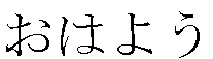
character management unit 110. - The input
character management unit 110 finds the stamp "" that is saved in the saving
unit 140, and receives the stamp "". The input
character management unit 110 outputs the stamp "" to the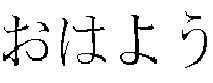
transmission unit 150. Thetransmission unit 150 transmits the stamp "" to the application. As a result, the stamp "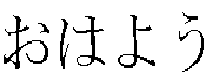 " is inserted in the application of
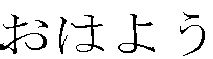
Fig. 5B . - Note that, in the abovementioned description, a mode in which the respective processing is executed by individual functional units was shown. However, the abovementioned processing may be realized and stored in the form of a program, and the program may be executed by a computational processing device such as a CPU. In this case, the flow of
Fig. 6 need only be executed. -
Fig. 6 shows a flowchart of a method of utilizing a stamp. Furthermore, the computational processing device searches the dictionary data unit 141 (S201), and extracts dictionary data to serve as candidates (S202). The computational processing device accepts key input using the software keyboard 101 (S203). The computational processing device searches the savingunit 140 for readings that match the character string that was keyed in (S204), and extracts stamps to serve as candidates (S205). The computational processing device displays the stamps serving as candidates and the dictionary data serving as candidates on the candidate display unit 103 (S206). - Note that, in the case where corresponding data does not exist in the saving unit and the dictionary data, the computational processing device displays only the keyed-in characters on the
candidate display unit 103. - A character input device, a character input method and a character input program according to a second embodiment of the present invention will be described, with reference to the drawings.
Fig. 7 is a functional block diagram of the character input device according to the second embodiment of the present invention.Fig. 8 is a flowchart at the time of changing a reading according to the second embodiment of the present invention. - As shown in
Fig. 7 , acharacter input device 10A according to the second embodiment differs from thecharacter input device 10 according to the first embodiment in that astamp confirmation unit 104 is added to anoperation unit 100A. The remaining configuration of thecharacter input device 10A is similar to thecharacter input device 10, and description of similar points will be omitted. - The
stamp confirmation unit 104 displays and edits readings of registered stamps. Theoperation acceptance unit 105 accepts an instruction for displaying registered stamps from thestamp confirmation unit 104. The inputcharacter management unit 110 searches the savingunit 140, and acquires a list of data in which stamps and readings are associated. The inputcharacter management unit 110 outputs the list acquired from the savingunit 140 to thestamp confirmation unit 104. - The
stamp confirmation unit 104 displays the associations between stamps and readings. Here, in the case of correcting the reading of a stamp, thestamp confirmation unit 104 accepts a correction of the reading. For example, in the case of correcting a reading, the reading is keyed in with thesoftware keyboard 101. Theoperation acceptance unit 105 accepts the stamp and the corrected reading, and outputs the stamp and the reading to the inputcharacter management unit 110. Furthermore, the inputcharacter management unit 110 saves the stamp and the keyed-in reading of the handwritten characters to the savingunit 140 in association with each other. - Note that, in the abovementioned description, a mode in which the respective processing is executed by individual functional units was shown. However, the abovementioned processing may be realized and stored in the form of a program, and the program may be executed by a computational processing device such as a CPU. In this case, the flow of
Fig. 8 need only be executed. -
Fig. 8 shows a flowchart for confirming and correcting the reading of a stamp. The computational processing device accepts selection of a correction method (S301). In the case of performing correction based on the reading of a stamp (S302: Yes), the computational processing device accepts key input (S303). The computational processing device judges whether stamps exist (S304: Yes), and displays a list of stamps and readings (S305). The computational processing device selects a stamp (S306), confirms whether the reading of the stamp needs to be corrected, and, in the case of correcting the reading (S307: Yes), updates the reading (S308). Also, in the case of performing correction by selecting a stamp (S302: No), the computational processing device displays a list of stamps (S311). The computational processing device selects a stamp (S306), confirms whether the reading of the stamp needs to be corrected, and, in the case of correcting the reading (S307: Yes), updates the reading (S308). - Note that although, in the above embodiments, the case where the processing of the present invention is activated by an external application that is not included in the present invention was described, it is also possible to execute the processing of the present invention independently.
- Also, although, in the configurations of the above embodiments, a configuration using key input was described, the configuration need only be provided with a function of being able to input readings, such as by audio input, for example, and is not limited to key input.
Claims (7)
- A character input device, comprising:an operation unit configured to accept an input operation of a handwritten character and display the handwritten character;a stamp creation unit configured to perform image conversion on the handwritten character to create a stamp;a character recognition unit configured to recognize a reading of the handwritten character; anda saving unit configured to save the stamp and the reading of the handwritten character.
- The character input device according to claim 1,
wherein the operation unit has a key input function, and
the character input device comprises an input character management unit configured to, in a case where the reading cannot be recognized by the character recognition unit, associate the stamp with a character string keyed in with the operation unit. - The character input device according to claim 1,
wherein the operation unit has a key input function, and
the character input device comprises an input character management unit configured to associate the stamp with the reading which is changed with the operation unit. - The character input device according to claim 2 or 3,
wherein the operation unit includes a candidate display unit, and
the input character management unit outputs the stamp as a conversion candidate to the candidate display unit when a character string input with the operation unit matches the reading. - The character input device according to claim 4, comprising:a transmission unit configured to transmit the stamp to an application,wherein the stamp which is selected with the candidate display unit is transmitted.
- A character input method according to which a computational processing device executes:a step having a function of accepting input of and displaying a handwritten character;a step of performing image conversion to convert the handwritten character to a stamp;a step of recognizing a reading of the handwritten character; anda step of saving the stamp and the reading of the handwritten character.
- A character input program that causes a computational processing device to execute:processing having a function of accepting input of and displaying a handwritten character;processing for performing image conversion to convert the handwritten character to a stamp;processing for recognizing a reading of the handwritten character; andprocessing for saving the stamp and the reading of the handwritten character.
Applications Claiming Priority (1)
| Application Number | Priority Date | Filing Date | Title |
|---|---|---|---|
| JP2017049504A JP2018152006A (en) | 2017-03-15 | 2017-03-15 | Character input device, character input method, and character input program |
Publications (2)
| Publication Number | Publication Date |
|---|---|
| EP3376344A1 true EP3376344A1 (en) | 2018-09-19 |
| EP3376344B1 EP3376344B1 (en) | 2020-09-23 |
Family
ID=60972019
Family Applications (1)
| Application Number | Title | Priority Date | Filing Date |
|---|---|---|---|
| EP18150951.4A Not-in-force EP3376344B1 (en) | 2017-03-15 | 2018-01-10 | Character input device, character input method, and character input program |
Country Status (3)
| Country | Link |
|---|---|
| US (1) | US20180268210A1 (en) |
| EP (1) | EP3376344B1 (en) |
| JP (2) | JP2018152006A (en) |
Citations (5)
| Publication number | Priority date | Publication date | Assignee | Title |
|---|---|---|---|---|
| US20040071344A1 (en) * | 2000-11-10 | 2004-04-15 | Lui Charlton E. | System and method for accepting disparate types of user input |
| JP2008129687A (en) | 2006-11-17 | 2008-06-05 | Nec Saitama Ltd | Special character input support device and electronic equipment with the same |
| JP2009015743A (en) | 2007-07-09 | 2009-01-22 | Fujifilm Corp | Document creation support system, document creation support method, and document creation support program |
| WO2012046546A1 (en) | 2010-10-08 | 2012-04-12 | Necカシオモバイルコミュニケーションズ株式会社 | Character conversion system and character conversion method and computer program |
| US20160321238A1 (en) * | 2015-04-29 | 2016-11-03 | Kabushiki Kaisha Toshiba | Electronic device, method and storage medium |
Family Cites Families (2)
| Publication number | Priority date | Publication date | Assignee | Title |
|---|---|---|---|---|
| JPH0749923A (en) * | 1993-08-06 | 1995-02-21 | Toshiba Corp | OCR device |
| JP2015094977A (en) * | 2013-11-08 | 2015-05-18 | 株式会社東芝 | Electronic device and method |
-
2017
- 2017-03-15 JP JP2017049504A patent/JP2018152006A/en not_active Ceased
-
2018
- 2018-01-10 US US15/866,569 patent/US20180268210A1/en not_active Abandoned
- 2018-01-10 EP EP18150951.4A patent/EP3376344B1/en not_active Not-in-force
-
2022
- 2022-02-02 JP JP2022014814A patent/JP2022074154A/en not_active Withdrawn
Patent Citations (5)
| Publication number | Priority date | Publication date | Assignee | Title |
|---|---|---|---|---|
| US20040071344A1 (en) * | 2000-11-10 | 2004-04-15 | Lui Charlton E. | System and method for accepting disparate types of user input |
| JP2008129687A (en) | 2006-11-17 | 2008-06-05 | Nec Saitama Ltd | Special character input support device and electronic equipment with the same |
| JP2009015743A (en) | 2007-07-09 | 2009-01-22 | Fujifilm Corp | Document creation support system, document creation support method, and document creation support program |
| WO2012046546A1 (en) | 2010-10-08 | 2012-04-12 | Necカシオモバイルコミュニケーションズ株式会社 | Character conversion system and character conversion method and computer program |
| US20160321238A1 (en) * | 2015-04-29 | 2016-11-03 | Kabushiki Kaisha Toshiba | Electronic device, method and storage medium |
Also Published As
| Publication number | Publication date |
|---|---|
| US20180268210A1 (en) | 2018-09-20 |
| JP2022074154A (en) | 2022-05-17 |
| EP3376344B1 (en) | 2020-09-23 |
| JP2018152006A (en) | 2018-09-27 |
Similar Documents
| Publication | Publication Date | Title |
|---|---|---|
| US9508028B2 (en) | Converting text strings into number strings, such as via a touchscreen input | |
| US8928610B2 (en) | Information display device and document data editing method | |
| CN1965287B (en) | User interface for inputting symbols in a handheld mobile communication device | |
| US8904282B2 (en) | Electronic device having capability for interpreting user inputs and method therefor | |
| US20030112277A1 (en) | Input of data using a combination of data input systems | |
| JP2003162687A (en) | Handwritten character input device, handwritten character recognition program | |
| WO2010109294A1 (en) | Method and apparatus for text input | |
| US20140250354A1 (en) | Terminal, function starting-up method and program for terminal | |
| US7395512B2 (en) | Character input system and communication terminal | |
| US20050268231A1 (en) | Method and device for inputting Chinese phrases | |
| CN100368963C (en) | Method and apparatus for inputting ideographic characters into a device | |
| JPH10124505A (en) | Character input device | |
| EP3376344B1 (en) | Character input device, character input method, and character input program | |
| JP2013214187A (en) | Character input device, method for controlling character input device, control program and recording medium | |
| KR20050030681A (en) | Alphabets character inputting apparatus and method for regonition of alphabets thereof | |
| JP2017062584A (en) | Electronic apparatus and method | |
| EP3537341A1 (en) | Character input device, character input method, and character input program | |
| US20060192765A1 (en) | Chinese character auxiliary input method and device | |
| CN101868772A (en) | Method for accelerating candidate selection in Chinese input | |
| JP2001282781A (en) | Data input method, recording medium for data input using the method, and arithmetic processing device | |
| JPH10320107A (en) | Handwritten character input device with handwritten character recognition function | |
| JP5261133B2 (en) | Character string converter with dictionary search function | |
| JP2009301167A (en) | Apparatus for predicting and converting character string | |
| KR100632856B1 (en) | Hangul input method for mobile terminal | |
| JP5521299B2 (en) | Character input conversion method and character input conversion device |
Legal Events
| Date | Code | Title | Description |
|---|---|---|---|
| PUAI | Public reference made under article 153(3) epc to a published international application that has entered the european phase |
Free format text: ORIGINAL CODE: 0009012 |
|
| STAA | Information on the status of an ep patent application or granted ep patent |
Free format text: STATUS: REQUEST FOR EXAMINATION WAS MADE |
|
| 17P | Request for examination filed |
Effective date: 20180110 |
|
| AK | Designated contracting states |
Kind code of ref document: A1 Designated state(s): AL AT BE BG CH CY CZ DE DK EE ES FI FR GB GR HR HU IE IS IT LI LT LU LV MC MK MT NL NO PL PT RO RS SE SI SK SM TR |
|
| AX | Request for extension of the european patent |
Extension state: BA ME |
|
| STAA | Information on the status of an ep patent application or granted ep patent |
Free format text: STATUS: EXAMINATION IS IN PROGRESS |
|
| 17Q | First examination report despatched |
Effective date: 20190314 |
|
| RIC1 | Information provided on ipc code assigned before grant |
Ipc: G06F 3/023 20060101ALI20200302BHEP Ipc: G06F 3/01 20060101AFI20200302BHEP Ipc: G06F 3/0488 20130101ALI20200302BHEP Ipc: G06F 40/171 20200101ALI20200302BHEP |
|
| GRAP | Despatch of communication of intention to grant a patent |
Free format text: ORIGINAL CODE: EPIDOSNIGR1 |
|
| STAA | Information on the status of an ep patent application or granted ep patent |
Free format text: STATUS: GRANT OF PATENT IS INTENDED |
|
| INTG | Intention to grant announced |
Effective date: 20200420 |
|
| GRAS | Grant fee paid |
Free format text: ORIGINAL CODE: EPIDOSNIGR3 |
|
| GRAA | (expected) grant |
Free format text: ORIGINAL CODE: 0009210 |
|
| STAA | Information on the status of an ep patent application or granted ep patent |
Free format text: STATUS: THE PATENT HAS BEEN GRANTED |
|
| AK | Designated contracting states |
Kind code of ref document: B1 Designated state(s): AL AT BE BG CH CY CZ DE DK EE ES FI FR GB GR HR HU IE IS IT LI LT LU LV MC MK MT NL NO PL PT RO RS SE SI SK SM TR |
|
| REG | Reference to a national code |
Ref country code: GB Ref legal event code: FG4D |
|
| REG | Reference to a national code |
Ref country code: CH Ref legal event code: EP |
|
| REG | Reference to a national code |
Ref country code: IE Ref legal event code: FG4D |
|
| REG | Reference to a national code |
Ref country code: AT Ref legal event code: REF Ref document number: 1317047 Country of ref document: AT Kind code of ref document: T Effective date: 20201015 Ref country code: DE Ref legal event code: R096 Ref document number: 602018007944 Country of ref document: DE |
|
| PG25 | Lapsed in a contracting state [announced via postgrant information from national office to epo] |
Ref country code: HR Free format text: LAPSE BECAUSE OF FAILURE TO SUBMIT A TRANSLATION OF THE DESCRIPTION OR TO PAY THE FEE WITHIN THE PRESCRIBED TIME-LIMIT Effective date: 20200923 Ref country code: SE Free format text: LAPSE BECAUSE OF FAILURE TO SUBMIT A TRANSLATION OF THE DESCRIPTION OR TO PAY THE FEE WITHIN THE PRESCRIBED TIME-LIMIT Effective date: 20200923 Ref country code: NO Free format text: LAPSE BECAUSE OF FAILURE TO SUBMIT A TRANSLATION OF THE DESCRIPTION OR TO PAY THE FEE WITHIN THE PRESCRIBED TIME-LIMIT Effective date: 20201223 Ref country code: GR Free format text: LAPSE BECAUSE OF FAILURE TO SUBMIT A TRANSLATION OF THE DESCRIPTION OR TO PAY THE FEE WITHIN THE PRESCRIBED TIME-LIMIT Effective date: 20201224 Ref country code: BG Free format text: LAPSE BECAUSE OF FAILURE TO SUBMIT A TRANSLATION OF THE DESCRIPTION OR TO PAY THE FEE WITHIN THE PRESCRIBED TIME-LIMIT Effective date: 20201223 Ref country code: FI Free format text: LAPSE BECAUSE OF FAILURE TO SUBMIT A TRANSLATION OF THE DESCRIPTION OR TO PAY THE FEE WITHIN THE PRESCRIBED TIME-LIMIT Effective date: 20200923 |
|
| REG | Reference to a national code |
Ref country code: AT Ref legal event code: MK05 Ref document number: 1317047 Country of ref document: AT Kind code of ref document: T Effective date: 20200923 |
|
| PG25 | Lapsed in a contracting state [announced via postgrant information from national office to epo] |
Ref country code: LV Free format text: LAPSE BECAUSE OF FAILURE TO SUBMIT A TRANSLATION OF THE DESCRIPTION OR TO PAY THE FEE WITHIN THE PRESCRIBED TIME-LIMIT Effective date: 20200923 Ref country code: RS Free format text: LAPSE BECAUSE OF FAILURE TO SUBMIT A TRANSLATION OF THE DESCRIPTION OR TO PAY THE FEE WITHIN THE PRESCRIBED TIME-LIMIT Effective date: 20200923 |
|
| REG | Reference to a national code |
Ref country code: NL Ref legal event code: MP Effective date: 20200923 |
|
| REG | Reference to a national code |
Ref country code: LT Ref legal event code: MG4D |
|
| PG25 | Lapsed in a contracting state [announced via postgrant information from national office to epo] |
Ref country code: SM Free format text: LAPSE BECAUSE OF FAILURE TO SUBMIT A TRANSLATION OF THE DESCRIPTION OR TO PAY THE FEE WITHIN THE PRESCRIBED TIME-LIMIT Effective date: 20200923 Ref country code: LT Free format text: LAPSE BECAUSE OF FAILURE TO SUBMIT A TRANSLATION OF THE DESCRIPTION OR TO PAY THE FEE WITHIN THE PRESCRIBED TIME-LIMIT Effective date: 20200923 Ref country code: EE Free format text: LAPSE BECAUSE OF FAILURE TO SUBMIT A TRANSLATION OF THE DESCRIPTION OR TO PAY THE FEE WITHIN THE PRESCRIBED TIME-LIMIT Effective date: 20200923 Ref country code: PT Free format text: LAPSE BECAUSE OF FAILURE TO SUBMIT A TRANSLATION OF THE DESCRIPTION OR TO PAY THE FEE WITHIN THE PRESCRIBED TIME-LIMIT Effective date: 20210125 Ref country code: RO Free format text: LAPSE BECAUSE OF FAILURE TO SUBMIT A TRANSLATION OF THE DESCRIPTION OR TO PAY THE FEE WITHIN THE PRESCRIBED TIME-LIMIT Effective date: 20200923 Ref country code: CZ Free format text: LAPSE BECAUSE OF FAILURE TO SUBMIT A TRANSLATION OF THE DESCRIPTION OR TO PAY THE FEE WITHIN THE PRESCRIBED TIME-LIMIT Effective date: 20200923 |
|
| PG25 | Lapsed in a contracting state [announced via postgrant information from national office to epo] |
Ref country code: ES Free format text: LAPSE BECAUSE OF FAILURE TO SUBMIT A TRANSLATION OF THE DESCRIPTION OR TO PAY THE FEE WITHIN THE PRESCRIBED TIME-LIMIT Effective date: 20200923 Ref country code: AT Free format text: LAPSE BECAUSE OF FAILURE TO SUBMIT A TRANSLATION OF THE DESCRIPTION OR TO PAY THE FEE WITHIN THE PRESCRIBED TIME-LIMIT Effective date: 20200923 Ref country code: AL Free format text: LAPSE BECAUSE OF FAILURE TO SUBMIT A TRANSLATION OF THE DESCRIPTION OR TO PAY THE FEE WITHIN THE PRESCRIBED TIME-LIMIT Effective date: 20200923 Ref country code: PL Free format text: LAPSE BECAUSE OF FAILURE TO SUBMIT A TRANSLATION OF THE DESCRIPTION OR TO PAY THE FEE WITHIN THE PRESCRIBED TIME-LIMIT Effective date: 20200923 Ref country code: IS Free format text: LAPSE BECAUSE OF FAILURE TO SUBMIT A TRANSLATION OF THE DESCRIPTION OR TO PAY THE FEE WITHIN THE PRESCRIBED TIME-LIMIT Effective date: 20210123 |
|
| REG | Reference to a national code |
Ref country code: DE Ref legal event code: R097 Ref document number: 602018007944 Country of ref document: DE |
|
| PG25 | Lapsed in a contracting state [announced via postgrant information from national office to epo] |
Ref country code: SK Free format text: LAPSE BECAUSE OF FAILURE TO SUBMIT A TRANSLATION OF THE DESCRIPTION OR TO PAY THE FEE WITHIN THE PRESCRIBED TIME-LIMIT Effective date: 20200923 |
|
| PLBE | No opposition filed within time limit |
Free format text: ORIGINAL CODE: 0009261 |
|
| STAA | Information on the status of an ep patent application or granted ep patent |
Free format text: STATUS: NO OPPOSITION FILED WITHIN TIME LIMIT |
|
| PG25 | Lapsed in a contracting state [announced via postgrant information from national office to epo] |
Ref country code: MC Free format text: LAPSE BECAUSE OF FAILURE TO SUBMIT A TRANSLATION OF THE DESCRIPTION OR TO PAY THE FEE WITHIN THE PRESCRIBED TIME-LIMIT Effective date: 20200923 Ref country code: DK Free format text: LAPSE BECAUSE OF FAILURE TO SUBMIT A TRANSLATION OF THE DESCRIPTION OR TO PAY THE FEE WITHIN THE PRESCRIBED TIME-LIMIT Effective date: 20200923 Ref country code: SI Free format text: LAPSE BECAUSE OF FAILURE TO SUBMIT A TRANSLATION OF THE DESCRIPTION OR TO PAY THE FEE WITHIN THE PRESCRIBED TIME-LIMIT Effective date: 20200923 |
|
| REG | Reference to a national code |
Ref country code: CH Ref legal event code: PL |
|
| 26N | No opposition filed |
Effective date: 20210624 |
|
| PG25 | Lapsed in a contracting state [announced via postgrant information from national office to epo] |
Ref country code: LU Free format text: LAPSE BECAUSE OF NON-PAYMENT OF DUE FEES Effective date: 20210110 |
|
| REG | Reference to a national code |
Ref country code: BE Ref legal event code: MM Effective date: 20210131 |
|
| PG25 | Lapsed in a contracting state [announced via postgrant information from national office to epo] |
Ref country code: IT Free format text: LAPSE BECAUSE OF FAILURE TO SUBMIT A TRANSLATION OF THE DESCRIPTION OR TO PAY THE FEE WITHIN THE PRESCRIBED TIME-LIMIT Effective date: 20200923 |
|
| PG25 | Lapsed in a contracting state [announced via postgrant information from national office to epo] |
Ref country code: CH Free format text: LAPSE BECAUSE OF NON-PAYMENT OF DUE FEES Effective date: 20210131 Ref country code: LI Free format text: LAPSE BECAUSE OF NON-PAYMENT OF DUE FEES Effective date: 20210131 |
|
| PG25 | Lapsed in a contracting state [announced via postgrant information from national office to epo] |
Ref country code: IE Free format text: LAPSE BECAUSE OF NON-PAYMENT OF DUE FEES Effective date: 20210110 |
|
| PG25 | Lapsed in a contracting state [announced via postgrant information from national office to epo] |
Ref country code: BE Free format text: LAPSE BECAUSE OF NON-PAYMENT OF DUE FEES Effective date: 20210131 |
|
| PGFP | Annual fee paid to national office [announced via postgrant information from national office to epo] |
Ref country code: GB Payment date: 20221201 Year of fee payment: 6 Ref country code: FR Payment date: 20221208 Year of fee payment: 6 |
|
| PGFP | Annual fee paid to national office [announced via postgrant information from national office to epo] |
Ref country code: DE Payment date: 20221130 Year of fee payment: 6 |
|
| PG25 | Lapsed in a contracting state [announced via postgrant information from national office to epo] |
Ref country code: NL Free format text: LAPSE BECAUSE OF NON-PAYMENT OF DUE FEES Effective date: 20200923 Ref country code: CY Free format text: LAPSE BECAUSE OF FAILURE TO SUBMIT A TRANSLATION OF THE DESCRIPTION OR TO PAY THE FEE WITHIN THE PRESCRIBED TIME-LIMIT Effective date: 20200923 |
|
| PG25 | Lapsed in a contracting state [announced via postgrant information from national office to epo] |
Ref country code: HU Free format text: LAPSE BECAUSE OF FAILURE TO SUBMIT A TRANSLATION OF THE DESCRIPTION OR TO PAY THE FEE WITHIN THE PRESCRIBED TIME-LIMIT; INVALID AB INITIO Effective date: 20180110 |
|
| PG25 | Lapsed in a contracting state [announced via postgrant information from national office to epo] |
Ref country code: MK Free format text: LAPSE BECAUSE OF FAILURE TO SUBMIT A TRANSLATION OF THE DESCRIPTION OR TO PAY THE FEE WITHIN THE PRESCRIBED TIME-LIMIT Effective date: 20200923 |
|
| PG25 | Lapsed in a contracting state [announced via postgrant information from national office to epo] |
Ref country code: TR Free format text: LAPSE BECAUSE OF FAILURE TO SUBMIT A TRANSLATION OF THE DESCRIPTION OR TO PAY THE FEE WITHIN THE PRESCRIBED TIME-LIMIT Effective date: 20200923 |
|
| REG | Reference to a national code |
Ref country code: DE Ref legal event code: R119 Ref document number: 602018007944 Country of ref document: DE |
|
| GBPC | Gb: european patent ceased through non-payment of renewal fee |
Effective date: 20240110 |
|
| PG25 | Lapsed in a contracting state [announced via postgrant information from national office to epo] |
Ref country code: MT Free format text: LAPSE BECAUSE OF FAILURE TO SUBMIT A TRANSLATION OF THE DESCRIPTION OR TO PAY THE FEE WITHIN THE PRESCRIBED TIME-LIMIT Effective date: 20200923 |
|
| PG25 | Lapsed in a contracting state [announced via postgrant information from national office to epo] |
Ref country code: DE Free format text: LAPSE BECAUSE OF NON-PAYMENT OF DUE FEES Effective date: 20240801 |
|
| PG25 | Lapsed in a contracting state [announced via postgrant information from national office to epo] |
Ref country code: GB Free format text: LAPSE BECAUSE OF NON-PAYMENT OF DUE FEES Effective date: 20240110 |
|
| PG25 | Lapsed in a contracting state [announced via postgrant information from national office to epo] |
Ref country code: FR Free format text: LAPSE BECAUSE OF NON-PAYMENT OF DUE FEES Effective date: 20240131 |
|
| PG25 | Lapsed in a contracting state [announced via postgrant information from national office to epo] |
Ref country code: GB Free format text: LAPSE BECAUSE OF NON-PAYMENT OF DUE FEES Effective date: 20240110 Ref country code: FR Free format text: LAPSE BECAUSE OF NON-PAYMENT OF DUE FEES Effective date: 20240131 Ref country code: DE Free format text: LAPSE BECAUSE OF NON-PAYMENT OF DUE FEES Effective date: 20240801 |