EP3375934A1 - Process of making a flocks-based thermal and/or acoustic insulating material - Google Patents
Process of making a flocks-based thermal and/or acoustic insulating material Download PDFInfo
- Publication number
- EP3375934A1 EP3375934A1 EP18162261.4A EP18162261A EP3375934A1 EP 3375934 A1 EP3375934 A1 EP 3375934A1 EP 18162261 A EP18162261 A EP 18162261A EP 3375934 A1 EP3375934 A1 EP 3375934A1
- Authority
- EP
- European Patent Office
- Prior art keywords
- mixture
- substance
- process according
- web
- property
- Prior art date
- Legal status (The legal status is an assumption and is not a legal conclusion. Google has not performed a legal analysis and makes no representation as to the accuracy of the status listed.)
- Granted
Links
Images

Classifications
-
- D—TEXTILES; PAPER
- D21—PAPER-MAKING; PRODUCTION OF CELLULOSE
- D21H—PULP COMPOSITIONS; PREPARATION THEREOF NOT COVERED BY SUBCLASSES D21C OR D21D; IMPREGNATING OR COATING OF PAPER; TREATMENT OF FINISHED PAPER NOT COVERED BY CLASS B31 OR SUBCLASS D21G; PAPER NOT OTHERWISE PROVIDED FOR
- D21H21/00—Non-fibrous material added to the pulp, characterised by its function, form or properties; Paper-impregnating or coating material, characterised by its function, form or properties
- D21H21/14—Non-fibrous material added to the pulp, characterised by its function, form or properties; Paper-impregnating or coating material, characterised by its function, form or properties characterised by function or properties in or on the paper
- D21H21/34—Ignifugeants
-
- D—TEXTILES; PAPER
- D21—PAPER-MAKING; PRODUCTION OF CELLULOSE
- D21B—FIBROUS RAW MATERIALS OR THEIR MECHANICAL TREATMENT
- D21B1/00—Fibrous raw materials or their mechanical treatment
- D21B1/04—Fibrous raw materials or their mechanical treatment by dividing raw materials into small particles, e.g. fibres
- D21B1/06—Fibrous raw materials or their mechanical treatment by dividing raw materials into small particles, e.g. fibres by dry methods
- D21B1/066—Fibrous raw materials or their mechanical treatment by dividing raw materials into small particles, e.g. fibres by dry methods the raw material being pulp sheets
-
- D—TEXTILES; PAPER
- D21—PAPER-MAKING; PRODUCTION OF CELLULOSE
- D21H—PULP COMPOSITIONS; PREPARATION THEREOF NOT COVERED BY SUBCLASSES D21C OR D21D; IMPREGNATING OR COATING OF PAPER; TREATMENT OF FINISHED PAPER NOT COVERED BY CLASS B31 OR SUBCLASS D21G; PAPER NOT OTHERWISE PROVIDED FOR
- D21H21/00—Non-fibrous material added to the pulp, characterised by its function, form or properties; Paper-impregnating or coating material, characterised by its function, form or properties
- D21H21/14—Non-fibrous material added to the pulp, characterised by its function, form or properties; Paper-impregnating or coating material, characterised by its function, form or properties characterised by function or properties in or on the paper
- D21H21/36—Biocidal agents, e.g. fungicidal, bactericidal, insecticidal agents
-
- D—TEXTILES; PAPER
- D21—PAPER-MAKING; PRODUCTION OF CELLULOSE
- D21J—FIBREBOARD; MANUFACTURE OF ARTICLES FROM CELLULOSIC FIBROUS SUSPENSIONS OR FROM PAPIER-MACHE
- D21J1/00—Fibreboard
- D21J1/16—Special fibreboard
- D21J1/20—Insulating board
Definitions
- the present invention refers to a process of making a flocks-based, cellulose-based thermal and/or acoustic insulating material.
- the majority of the known processes for manufacturing insulating flocks of the present type comprise using waste paper or paperboard as a raw material, and usually comprise a series of steps in which such material is firstly mechanically treated for being shredded and reduced in flocks, and then is treated by a series of additives for sanitizing the material, for example biologic inhibitors (boric acid, borax, etc.).
- biologic inhibitors for sanitizing the material, for example biologic inhibitors (boric acid, borax, etc.).
- the insulating materials obtained by such processes have the inconvenience of containing undesired substances (e. g. magazines, newspapers, etc.), optical whitening inks, coats, etc., and boron salts considered toxic by the latest European updates regarding in general the health protection.
- Some boron compounds were reclassified as mutagens and/or toxic for the reproduction system, according to what was established by the European Commission (No. 790/2009). The present limits for boric acid, borates, and tetraborates, were set by the SCCNFP in 1998.
- the CSSC were required to do an evaluation about the safety, based on the same scientific data by which the classification of the present compounds, listed in the CSSC original document, was modified.
- the CSSC is in the opinion of that all the substances listed in the tables attached to the document, apart from dibutyl hydrogen borate, are effectively regulated by number 1a of Annex III, while tetraborates are regulated both by number 1a and number 1b in the same Annex.
- dibutyl hydrogen borate no limit was set by the European Commission (No. 790/2009) and no evaluation was produced with reference to the risk thereof.
- the CSSC is in the opinion that the toxicity threshold of these substances is similar to the one of other boron compounds, and therefore they are considered safe if used under the conditions by which are used these latter.
- the CSSC observes that the octaborates are not classified as toxic for the reproduction system, and that does not exist a specific concentration limit set for them.
- Such process comprises introducing a group of additives, for example, fungicides, fire-retardant agents, dyes, etc., in the containing vat and/or in a pipe transporting the cellulose sludge pulp to a sludge press.
- a group of additives for example, fungicides, fire-retardant agents, dyes, etc.
- the Applicants have provided a new type of process of manufacturing a flocks-based, cellulose-based, insulating material, enabling to obtain a plurality of advantages, both with reference to the provision of the process and with reference to the quality of the manufactured product.
- the described process has the object of manufacturing a flocks-based, cellulose-based material.
- such process is characterized by the fact of providing the following steps:
- such process is characterized by the fact of providing the following steps:
- such process is characterized by the fact of providing the following steps:
- such process is characterized by the fact of providing the following steps:
- such process is characterized by the fact of providing the following steps:
- the step of applying a coating is made by a "size-press” station or a "film-press” station, or a coater, or a mill-finishing machine, or a spraying bar predisposed to apply, on both sides of said web, a mixture containing said first substance and said second substance.
- the mixture further contains a third substance having an anti-dusting property.
- the coating on the web with a determined density, preferably comprised between 5 and 30 gr/m 2 .
- the web exhibits a thickness comprised between 0.1 and 0.5 mm.
- the substance is selected between one or more in the group comprising rosin salts, water-repellent resins, and water-repellent paraffins.
- An independent aspect of the invention provides to use a paper making line for manufacturing a flocks-based insulating material, wherein said line comprises a "size-press” station, or a "film-press” station, or a coater, or a mill-finishing machine, or a spraying bar, such use comprising the steps of:
- said mixture comprises also a third substance having an anti-dusting property.
- the process of making the present cellulose-based thermal and/or acoustic insulating material comprises making an actual paper web, optionally, by adding to the cellulose-based pulp, from which it is desired to obtain such web, a mixture (A) and/or by subjecting such web to a specific treatment of the surface by a mixture (B) for providing the insulating material with determined properties.
- the web As soon as the web has taken a final configuration from the point of view of its composition and structure, it is mechanically processed for obtaining flocks forming the final product.
- making flocks by obtaining an intermediate product consisting in an actual paper web enables to be capable of precisely and repeatably controlling the thickness and density of the final flocks; further, it enables to always precisely and repeatably control the quantity of additives introduced to them.
- mixture (A) means a mixture which can be added by mass to the cellulose-based pulp before forming the paper web or sheet.
- mixture (B) means a mixture which can be used for treating the surface of a paper web or sheet obtained by the cellulose-based pulp.
- the substances with a fireproof property useable both in mixture (A) and in mixture (B) can be ammonium phosphate salts, urea, or aluminum salts.
- ammonium phosphate salts urea
- aluminum salts aluminum sulfate and/or aluminum polychloride both directly reacted during the manufacturing step can be used.
- the substances with an anti-mould property useable both in mixture (A) and in mixture (B) can be cupric salts, such as for example copper sulfate, copper oxychloride, Bordeaux slurry.
- mixture (A) and mixture (B) can have the same or a different composition from each other.
- the mixture (A) comprises at least one substance having an anti-mould property
- the mixture (A) comprises at least one substance having an anti-mould property
- the cupric salt such as calcium and/or magnesium hydroxides, can be in a powder state and liquid state.
- the weight percentage of said combination is comprised between 0.01% and 10% by the total weight of the final cellulose-based product (flocks) to be obtained.
- the percentage by weight of the cupric salt is comprised between 2% and 40%, by the total weight of said combination.
- the mixture (A) comprises the combination of cupric salt and calcium hydroxide, magnesium hydroxide or a mixture thereof (substances capable of making basic the product); the percentage by weight of calcium hydroxide, magnesium hydroxide, or a mixture thereof, is comprised between 60% and 98% by weight with respect to the total weight of said combination.
- such salt is present in a percentage comprised between 0.1% and 1% by weight with respect to the total weight of the final cellulose-based product to be obtained.
- the weight ratio of the cupric salt to the fireproof substance is comprised between 1:2 and 1:50 in the cellulose-based final product obtained by applying the process of the present invention.
- mixture (A) and/or mixture (B) can comprise at least one substance having an anti-dusting property.
- the substances capable of imparting an anti-dusting property can be amide-based organic polymers, carboxymethylcellulose; cold-soluble polyvinyl alcohols, and also monomers of mono-disaccharide sugars (glucose, mannose, saccharose, etc.); preferably, mixtures (A) and/or (B) comprise such elements as ligands and with an anti-dusting property.
- the anti-dusting property consists in more bonding cellulose fibrils and several fillers together, contained in the paper web, in order to reduce the dispersion thereof in air as an aerosol of fine particulate.
- Such property enables to avoid to form dust during the steps of flocking and blowing the insulating material, improving in this way from one side the safety of the working environment - due to the smaller amount of suspended dusts - and, on the other side, by making more uniform and time constant the average size of a cellulose flock.
- the herein described process can be directly executed in a standard line for manufacturing paper, as will be shown in the following, suitably adapted for being capable of reproducing the present process.
- the raw materials of the process can be unaltered raw materials, particularly wood, or can be secondary materials, for example waste paper, paper making sludge, or a combination thereof.
- the process comprises making a pulp for manufacturing the paper web, which generally speaking, can have the same characteristics as a standard pulp for producing paper (step 10 of the diagram in Fig. 1 ).
- a mixture (A) comprising at least one substance having a fireproof property and/or at least one substance having an anti-mould property, can be added to the cellulose-based pulp (step 10 of the diagram in Fig. 1 - in which additives by mass are added).
- the mixture (A) further comprises also an additional substance having the anti-dusting property.
- the mixture (A) comprises at least one substance having an anti-mould property
- such mixture comprises also calcium hydroxide, magnesium hydroxide, or a mixture thereof.
- such pulp comprising said additives
- the headbox of the line which in turn, supplies the pulp on a forming wire, on which the pulp is evenly distributed and starts moving along the line until a sheet is formed.
- the water content in the pulp is gradually decreased by passing the pulp through a series of cylinders groups, particularly - as an example of the main cylinders groups of the line: drainer cylinders, press cylinders, and drying cylinders.
- the grammage and thickness of the sheet can be suitably adjusted as a function of particular applications to which the insulating material is destined.
- Preferred grammage values are comprised between 5 and 200 gr/m 2 .
- the sheet thickness is comprised between 0.1 and 0.5 mm.
- Such adjustment is performed by acting on the same parameters on which it is possible to act, for adjusting density and thickness, in the field of a standard process for making paper.
- the density is controlled at the headbox by adjusting the distribution of the pulp on the forming wire.
- the sheet thickness is controlled by the above-mentioned press cylinders, by adjusting the height development in the formed nip through such cylinders.
- the surface of the obtained web or sheet could be treated by a mixture (B) comprising at least one substance having a fireproof property and/or at least one substance having an anti-mould property, downstream the drying cylinders, when the sheet has already a stable defined structure (step 30 in Fig. 1 ).
- the mixture (B) further comprises a substance having an anti-dusting property.
- such treatment provides to cover the sheet, preferably on both sides, with a group of substances adapted to impart it determined properties in view of the final use of the material as insulating material.
- a coating material a mixture (B) comprising at least one substance having a fireproof property, and at least one further substance having an anti-mould property.
- such surface treatment of the sheet is obtained by a so-called “size-press” station or by a “film-press” station, such stations are usually used for apply a coat to the paper.
- Fig. 2 which schematically illustrates a "size-press" station
- such station usually comprises two squeezing cylinders 101 through which the sheet moves and, above such cylinders, there is a kind of well 103 containing the mixture for coating the paper.
- the sheet is completely dipped in the mixture before arriving to the two cylinders, and in this way, the paper is completely deeply impregnated by the mixture.
- the mixture quantity which remains applied on the sheet depends on the pressure between the two cylinders.
- the sheet moves to an infrared oven for being dried.
- a film-press station is different from the above described size-press station or coater, or mill-finishing machine because the mixture is not directly applied on the sheet, but on one of the two squeezing cylinders, which then transfers it on the sheet.
- the present treatment enables to completely coat the surface of the paper web and, further, to accurately control the density and thickness of the coating. Also, in this case, the parameters used for performing such kind of adjustment can be the same as those used for adjusting the density and thickness of the coating made in the scope of a standard coating process.
- the values of the density of the deposited coating are comprised between 5 and 20 gr/m 2 .
- hydrophobic the paper web by treating the surface of the web itself by at least one or more particular substances adapted for this purpose.
- the surface treatment will be a spreading; the substance can be selected among one or more in a group comprising rosin salts, water-repellent resins, and water-repellent paraffins.
- the so-formed paper web can be subjected to a directly in-line step for grinding it into flocks, so that downstream the web manufacturing line, it is possible to provide a grinding station adapted to perform such step.
- the web after being possibly cut-to-size along the opposite longitudinal edges, can be also wound in a reel and then can be stored in such format.
- This option clearly enables to substantially reduce the occupied space in a warehouse and enables to make easier to transport the material.
- the web instead of being wound in a reel, can be cut in single sheets which are stored as packs.
- it also foreseeable to transform the paper web in flocks only when the insulating material is installed, so that the web is directly subjected to the grinding step on the field.
- grinding and making the flocks can be done in a factory and the produced flocks are in this case packaged inside bags for being transported.
- the grinding step is performed by a hammer mill.
- FIG. 3 illustrates an example of a movable machine adapted to perform such step. As illustrated, this machine is preferably provided with wheels.
- Such machine is adapted to directly house the reel, and is also capable, according to a continuous process, to blow the formed flocks on the field.
- such machine comprises a chamber 201 containing one or more grinding tools (a micro mill), in which the sheet unwound from the reel, is shredded for reducing it to the desired dimensions.
- a chamber 201 containing one or more grinding tools (a micro mill), in which the sheet unwound from the reel, is shredded for reducing it to the desired dimensions.
- Such chamber communicates with a second chamber 206 in which the formed flocks are gathered.
- the machine comprises a fan 208 for suctioning the formed flocks and supplying them, through a tube 212, directly on the field.
- a partitioning membrane provided with openings (for example a mesh - not illustrated), such openings have predetermined dimensions for only enabling the passage of flocks having dimensions less than a given threshold value.
Landscapes
- Life Sciences & Earth Sciences (AREA)
- Engineering & Computer Science (AREA)
- Pest Control & Pesticides (AREA)
- Wood Science & Technology (AREA)
- Mechanical Engineering (AREA)
- Paper (AREA)
- Adhesives Or Adhesive Processes (AREA)
Abstract
- preparing a cellulose-based pulp;
- adding to said pulp a mixture (A) comprising at least one substance having a fireproof property and/or at least one substance having an anti-mould property;
- making a paper web having a determined thickness and grammage, from said pulp;
- applying on both sides of the web the mixture (B) by means of "applicators" inserted during the re-wetting and drying steps;
- subjecting said web to a grinding operation in order to obtain flocks forming said flocks-based insulating material.
Description
- The present invention refers to a process of making a flocks-based, cellulose-based thermal and/or acoustic insulating material.
- The majority of the known processes for manufacturing insulating flocks of the present type comprise using waste paper or paperboard as a raw material, and usually comprise a series of steps in which such material is firstly mechanically treated for being shredded and reduced in flocks, and then is treated by a series of additives for sanitizing the material, for example biologic inhibitors (boric acid, borax, etc.).
- The insulating materials obtained by such processes have the inconvenience of containing undesired substances (e. g. magazines, newspapers, etc.), optical whitening inks, coats, etc., and boron salts considered toxic by the latest European updates regarding in general the health protection.
- Some boron compounds were reclassified as mutagens and/or toxic for the reproduction system, according to what was established by the European Commission (No. 790/2009). The present limits for boric acid, borates, and tetraborates, were set by the SCCNFP in 1998.
- Using cosmetic products made of substances classified as carcinogenic, mutagenic or toxic for the reproduction system (CMR), categorized in classes 1, 2 and 3 and in the Annex I of the directive 67/548/EEC, should be banned: only the substances falling into the class 3 can be used, provided that they are evaluated and approved by competent agencies.
- In light of the new classification of some compounds, the CSSC were required to do an evaluation about the safety, based on the same scientific data by which the classification of the present compounds, listed in the CSSC original document, was modified.
- Octaborates, and particularly disodium octaborate tetrahydrate, cited in the suggestion of the SCCNFP in 1998 as the substances used in tests, are not explicitly listed in the Annex III of the Cosmetic Directive. Therefore, it was requested to specify if this class of substances is comprised in numbers 1a and 1b of the Annex III. On the contrary, the boric acid and sodium perborate were treated in a distinct document.
- Based on the present chemical, biological and toxicologic knowledges, the CSSC is in the opinion of that all the substances listed in the tables attached to the document, apart from dibutyl hydrogen borate, are effectively regulated by number 1a of Annex III, while tetraborates are regulated both by number 1a and number 1b in the same Annex. With reference to dibutyl hydrogen borate, no limit was set by the European Commission (No. 790/2009) and no evaluation was produced with reference to the risk thereof.
- Regarding to the maximum limits of the concentration set by the European Commission (No. 790/2009) which are less than the ones present in the Cosmetic Directive, CSSC is in the opinion that using boric acid, borates, and tetraborates is safe for consumers under the conditions listed in number 1a of Annex III of the Cosmetic Directive. However, the maximum concentration of tetraborates should be reduced to values less than 5.5% (calculated by the mass of boric acid).
- With reference to the octaborates, the CSSC is in the opinion that the toxicity threshold of these substances is similar to the one of other boron compounds, and therefore they are considered safe if used under the conditions by which are used these latter. However, the CSSC observes that the octaborates are not classified as toxic for the reproduction system, and that does not exist a specific concentration limit set for them.
- Moreover, in the art it is known a type of process for manufacturing a flocks-based, cellulose-based insulating material, comprising using papermaking sludge as raw material. This process is described, for example, in document
WO 2010/067338 . The industrial process described in such document comprises, with reference to the basic steps thereof, mixing the waste papermaking sludge with waste paper and, possibly, with first extraction cellulose directly obtained from wood, grinding the material mixed in this way in order to obtain the desired size, treating the material in a pulper for separating and insulating the single cellulose fibers, further mechanically treating them inside a mill, and lastly a step of drying the material. Such process comprises introducing a group of additives, for example, fungicides, fire-retardant agents, dyes, etc., in the containing vat and/or in a pipe transporting the cellulose sludge pulp to a sludge press. - In such context, the Applicants have provided a new type of process of manufacturing a flocks-based, cellulose-based, insulating material, enabling to obtain a plurality of advantages, both with reference to the provision of the process and with reference to the quality of the manufactured product.
- Such process is characterized by the fact of exhibiting the steps disclosed in claim 1.
- The characteristics indicated in claims are integrally comprised in the herein given technical teachings.
- Further characteristics and advantages of the present invention will be better understood from the following description made with reference to the attached drawings given only in an exemplifying non-restrictive way, wherein:
-
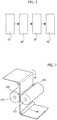
Fig. 1 schematically shows an embodiment of the herein described process; -
Fig. 2 represents an embodiment example of a specific step of the herein described process; -
Fig. 3 represents an example of a machine for performing the grinding operation provided in the herein described process. - The following description illustrates several specific details for the purpose of providing a thorough comprehension of the embodiments. The embodiments can be provided without one or more of the specific details, or with other methods, components, or materials, etc.. In other cases, known structures, materials or operations are not specifically shown or described for avoiding to make obscure the different aspects of the embodiment.
- The herein used references are only given for convenience and do not therefore define the scope and range of the embodiments.
- As hereinbefore discussed, the described process has the object of manufacturing a flocks-based, cellulose-based material.
- Such process is characterized by the fact of providing the following steps:
- preparing a cellulose-based pulp;
- optionally adding to said pulp a mixture (A) by mass comprising at least one substance having a fireproof property and/or at least one substance having an anti-mould property;
- making a paper web having a determined thickness and grammage, from said pulp;
- optionally, as an alternative or in combination with the step of adding by mass, applying on said web a coating consisting of a mixture (B) comprising at least one substance having a fireproof property and/or at least one substance having an anti-mould property;
- subjecting said (optionally coated) web to a grinding operation for obtaining flocks forming said flocks-based insulating material.
- In a preferred aspect, such process is characterized by the fact of providing the following steps:
- preparing a cellulose-based pulp;
- adding to said pulp a mixture (A) comprising at least one substance having a fireproof property and/or at least one substance having an anti-mould property;
- making a paper web having a determined thickness and grammage, from said pulp;
- subjecting said web to a grinding operation for obtaining flocks forming said flocks-based insulating material.
- In a more preferred aspect, such process is characterized by the fact of providing the following steps:
- preparing a cellulose-based pulp;
- adding to said pulp a mixture (A) comprising at least one substance having a fireproof property and at least one substance having an anti-mould property;
- making a paper web having a determined thickness and grammage, from said pulp;
- subjecting said web to a grinding operation for obtaining flocks forming said flocks-based insulating material.
- In another preferred aspect, such process is characterized by the fact of providing the following steps:
- preparing a cellulose-based pulp;
- adding to said pulp a mixture (A) comprising at least one substance having a fireproof property and/or at least one substance having an anti-mould property;
- making a paper web having a determined thickness and grammage, from said pulp;
- applying on said web a coating consisting of a mixture (B) comprising at least one substance having a fireproof property and/or at least one substance having an anti-mould property;
- subjecting said coated web to a grinding operation for obtaining flocks forming said flocks-based insulating material.
- In another further preferred aspect, such process is characterized by the fact of providing the following steps:
- preparing a cellulose-based pulp;
- making a paper web having a determined thickness and grammage, from said pulp;
- applying on said web a coating consisting of a mixture (B) comprising at least one substance having a fireproof property and/or at least one substance having an anti-mould property;
- subjecting said coated web to a grinding operation for obtaining flocks forming said flocks-based insulating material.
- In a more preferred aspect, such process is characterized by the fact of providing the following steps:
- preparing a cellulose-based pulp;
- making a paper web having a determined thickness and grammage, from said pulp;
- applying on said web a coating consisting of a mixture (B) comprising a first substance having a fireproof property and a second substance having an anti-mould property;
- subjecting said coated web to a grinding operation for obtaining flocks forming said flocks-based insulating material.
- In an additional aspect according to anyone of the preceding aspects, the step of applying a coating is made by a "size-press" station or a "film-press" station, or a coater, or a mill-finishing machine, or a spraying bar predisposed to apply, on both sides of said web, a mixture containing said first substance and said second substance.
- In an additional aspect, according to anyone of the preceding aspects, the mixture further contains a third substance having an anti-dusting property.
- In an additional aspect, according to anyone of the preceding aspects, it is provided to apply the coating on the web, with a determined density, preferably comprised between 5 and 30 gr/m2.
- In an additional aspect, according to anyone of the preceding aspects, the web exhibits a thickness comprised between 0.1 and 0.5 mm.
- In an additional aspect, according to anyone of the preceding aspects, it is provided to make said web with a grammage comprised between 50 and 400 gr/m2 (in an exemplifying non-restrictive way, between 50 and 300 gr/m2).
- In an additional aspect, according to anyone of the preceding aspects, it is provided to wind said web of coated paper, in a reel, and then to unwind the web from said reel and to subject it to said grinding operation.
- In an additional aspect, according to anyone of the preceding aspects, it is provided to make hydrophobic the paper web by treating the surface of the web by at least one substance adapted to make it hydrophobic, said surface treatment particularly consisting in spreading.
- In a further aspect, according to the preceding aspect, the substance is selected between one or more in the group comprising rosin salts, water-repellent resins, and water-repellent paraffins.
- An independent aspect of the invention provides to use a paper making line for manufacturing a flocks-based insulating material, wherein said line comprises a "size-press" station, or a "film-press" station, or a coater, or a mill-finishing machine, or a spraying bar, such use comprising the steps of:
- supplying to said station, a mixture containing a first substance having a fireproof property, and a second substance having an anti-mould property,
- making, by said line, a paper web exhibiting a determined grammage and thickness, and by said "size-press" station, or "film-press" station, or a coater, or a mill-finishing machine, or a spraying bar, applying on both sides of said web, a coating consisting of said mixture.
- In an additional aspect, according to the preceding aspect, said mixture comprises also a third substance having an anti-dusting property.
- The process of making the present cellulose-based thermal and/or acoustic insulating material comprises making an actual paper web, optionally, by adding to the cellulose-based pulp, from which it is desired to obtain such web, a mixture (A) and/or by subjecting such web to a specific treatment of the surface by a mixture (B) for providing the insulating material with determined properties.
- As soon as the web has taken a final configuration from the point of view of its composition and structure, it is mechanically processed for obtaining flocks forming the final product.
- In view of what is hereinbefore described, the completely novel approach of such process is therefore clear with respect to the known processes discussed at the beginning.
- Moreover, as said, all such processes provide to obtain simple water-based mixtures or a dry material, and to introduce in such mixtures, possible additives. Then, such mixtures are directly mechanically processed.
- In such known processes, necessarily there are intrinsic limits with reference to the control level which can be performed on the structure and consistency of the single flocks and on the additive quantity applied to these, due to the methods used both for forming the flocks and for introducing the different additives.
- On the contrary, such inconveniences are completely overcome by the herein described process.
- Indeed, as specifically described in the following, making flocks by obtaining an intermediate product consisting in an actual paper web, enables to be capable of precisely and repeatably controlling the thickness and density of the final flocks; further, it enables to always precisely and repeatably control the quantity of additives introduced to them.
- In the scope of the present description, the term "mixture (A)" means a mixture which can be added by mass to the cellulose-based pulp before forming the paper web or sheet.
- In the scope of the present description, the term "mixture (B)" means a mixture which can be used for treating the surface of a paper web or sheet obtained by the cellulose-based pulp.
- The substances with a fireproof property useable both in mixture (A) and in mixture (B) can be ammonium phosphate salts, urea, or aluminum salts. With reference to this matter, aluminum sulfate and/or aluminum polychloride both directly reacted during the manufacturing step can be used.
- The substances with an anti-mould property useable both in mixture (A) and in mixture (B) can be cupric salts, such as for example copper sulfate, copper oxychloride, Bordeaux slurry.
- In the scope of the present description, the mixture (A) and mixture (B) can have the same or a different composition from each other.
- In the embodiments according to the process of the present invention, wherein the mixture (A) comprises at least one substance having an anti-mould property, is also present calcium hydroxide, magnesium hydroxide, or a mixture thereof.
- The cupric salt, such as calcium and/or magnesium hydroxides, can be in a powder state and liquid state.
- In the embodiments according to the process of the present invention, wherein the mixture (A) comprises the combination of cupric salt and calcium hydroxide, magnesium hydroxide or a mixture thereof, the weight percentage of said combination is comprised between 0.01% and 10% by the total weight of the final cellulose-based product (flocks) to be obtained.
- Preferably, in the embodiments according to the process of the present invention, wherein the mixture (A) comprises the combination of cupric salt and calcium hydroxide, magnesium hydroxide, or a mixture thereof, the percentage by weight of the cupric salt is comprised between 2% and 40%, by the total weight of said combination.
- Still more particularly, in the embodiments according to the process of the present invention wherein the mixture (A) comprises the combination of cupric salt and calcium hydroxide, magnesium hydroxide or a mixture thereof (substances capable of making basic the product); the percentage by weight of calcium hydroxide, magnesium hydroxide, or a mixture thereof, is comprised between 60% and 98% by weight with respect to the total weight of said combination.
- Preferably, in the embodiments according to the process of the present invention wherein the mixture (B) comprises cupric salt, such salt is present in a percentage comprised between 0.1% and 1% by weight with respect to the total weight of the final cellulose-based product to be obtained.
- Preferably, the weight ratio of the cupric salt to the fireproof substance is comprised between 1:2 and 1:50 in the cellulose-based final product obtained by applying the process of the present invention.
- In the embodiments according to the process of the present invention, moreover the mixture (A) and/or mixture (B) can comprise at least one substance having an anti-dusting property.
- The substances capable of imparting an anti-dusting property can be amide-based organic polymers, carboxymethylcellulose; cold-soluble polyvinyl alcohols, and also monomers of mono-disaccharide sugars (glucose, mannose, saccharose, etc.); preferably, mixtures (A) and/or (B) comprise such elements as ligands and with an anti-dusting property.
- With reference to this matter, it is observed that the anti-dusting property consists in more bonding cellulose fibrils and several fillers together, contained in the paper web, in order to reduce the dispersion thereof in air as an aerosol of fine particulate. Such property enables to avoid to form dust during the steps of flocking and blowing the insulating material, improving in this way from one side the safety of the working environment - due to the smaller amount of suspended dusts - and, on the other side, by making more uniform and time constant the average size of a cellulose flock.
- The herein described process can be directly executed in a standard line for manufacturing paper, as will be shown in the following, suitably adapted for being capable of reproducing the present process.
- The raw materials of the process can be unaltered raw materials, particularly wood, or can be secondary materials, for example waste paper, paper making sludge, or a combination thereof.
- From such raw materials, the process comprises making a pulp for manufacturing the paper web, which generally speaking, can have the same characteristics as a standard pulp for producing paper (step 10 of the diagram in
Fig. 1 ). - According to the process of the present invention, a mixture (A) comprising at least one substance having a fireproof property and/or at least one substance having an anti-mould property, can be added to the cellulose-based pulp (
step 10 of the diagram inFig. 1 - in which additives by mass are added). Preferably, according to the process according to the invention, the mixture (A) further comprises also an additional substance having the anti-dusting property. - In an embodiment according to the process of the present invention, wherein the mixture (A) comprises at least one substance having an anti-mould property, such mixture comprises also calcium hydroxide, magnesium hydroxide, or a mixture thereof.
- In the preferred embodiment, wherein the process is made in a conventional line for manufacturing paper, such pulp, comprising said additives, is stored inside the headbox of the line, which in turn, supplies the pulp on a forming wire, on which the pulp is evenly distributed and starts moving along the line until a sheet is formed.
- Specifically, in a per se known way, the water content in the pulp is gradually decreased by passing the pulp through a series of cylinders groups, particularly - as an example of the main cylinders groups of the line: drainer cylinders, press cylinders, and drying cylinders.
- Downstream these cylinders, there is the already formed paper web having a moisture content equal to about 5%. Making the paper web is shown in
Fig. 1 bystep 20. - The grammage and thickness of the sheet can be suitably adjusted as a function of particular applications to which the insulating material is destined. Preferred grammage values are comprised between 5 and 200 gr/m2. Preferably, the sheet thickness is comprised between 0.1 and 0.5 mm.
- Such adjustment is performed by acting on the same parameters on which it is possible to act, for adjusting density and thickness, in the field of a standard process for making paper. Particularly, the density is controlled at the headbox by adjusting the distribution of the pulp on the forming wire. On the contrary, the sheet thickness is controlled by the above-mentioned press cylinders, by adjusting the height development in the formed nip through such cylinders.
- If, as an alternative to what was beforehand described (being not excluded the possibility of combining the processes) the paper web were made from cellulose-based pulp to which the cited additives are not added, then, the surface of the obtained web or sheet could be treated by a mixture (B) comprising at least one substance having a fireproof property and/or at least one substance having an anti-mould property, downstream the drying cylinders, when the sheet has already a stable defined structure (
step 30 inFig. 1 ). Preferably, according to the process of the invention, the mixture (B) further comprises a substance having an anti-dusting property. - In an embodiment according to the process of the present invention, such treatment provides to cover the sheet, preferably on both sides, with a group of substances adapted to impart it determined properties in view of the final use of the material as insulating material. Specifically, such treatment provides to use as a coating material a mixture (B) comprising at least one substance having a fireproof property, and at least one further substance having an anti-mould property.
- In different preferred embodiments, as in the illustrated one, such surface treatment of the sheet is obtained by a so-called "size-press" station or by a "film-press" station, such stations are usually used for apply a coat to the paper.
- With reference to
Fig. 2 , which schematically illustrates a "size-press" station, such station usually comprises two squeezingcylinders 101 through which the sheet moves and, above such cylinders, there is a kind of well 103 containing the mixture for coating the paper. - The sheet is completely dipped in the mixture before arriving to the two cylinders, and in this way, the paper is completely deeply impregnated by the mixture. The mixture quantity which remains applied on the sheet depends on the pressure between the two cylinders.
- Usually, downstream the two cylinders, the sheet moves to an infrared oven for being dried.
- A film-press station is different from the above described size-press station or coater, or mill-finishing machine because the mixture is not directly applied on the sheet, but on one of the two squeezing cylinders, which then transfers it on the sheet.
- The present treatment enables to completely coat the surface of the paper web and, further, to accurately control the density and thickness of the coating. Also, in this case, the parameters used for performing such kind of adjustment can be the same as those used for adjusting the density and thickness of the coating made in the scope of a standard coating process.
- Preferably, the values of the density of the deposited coating are comprised between 5 and 20 gr/m2.
- In an optional but advantageous embodiment, it is possible to make hydrophobic the paper web by treating the surface of the web itself by at least one or more particular substances adapted for this purpose. Particularly, the surface treatment will be a spreading; the substance can be selected among one or more in a group comprising rosin salts, water-repellent resins, and water-repellent paraffins.
- The so-formed paper web can be subjected to a directly in-line step for grinding it into flocks, so that downstream the web manufacturing line, it is possible to provide a grinding station adapted to perform such step.
- Alternatively, the web, after being possibly cut-to-size along the opposite longitudinal edges, can be also wound in a reel and then can be stored in such format. This option clearly enables to substantially reduce the occupied space in a warehouse and enables to make easier to transport the material. Possibly, the web instead of being wound in a reel, can be cut in single sheets which are stored as packs. In view of the above given advantages, it also foreseeable to transform the paper web in flocks only when the insulating material is installed, so that the web is directly subjected to the grinding step on the field. Alternatively, grinding and making the flocks can be done in a factory and the produced flocks are in this case packaged inside bags for being transported. Preferably, the grinding step is performed by a hammer mill.
- In
Fig. 1 , the grinding process is anyway generally indicated by thestep 40. - With reference to the step of grinding the web on the field,
Fig. 3 illustrates an example of a movable machine adapted to perform such step. As illustrated, this machine is preferably provided with wheels. - Such machine is adapted to directly house the reel, and is also capable, according to a continuous process, to blow the formed flocks on the field.
- Particularly, as it is visible in
Fig. 3 , in the several embodiments, and also in the illustrated one, such machine comprises achamber 201 containing one or more grinding tools (a micro mill), in which the sheet unwound from the reel, is shredded for reducing it to the desired dimensions. Such chamber communicates with asecond chamber 206 in which the formed flocks are gathered. Moreover, the machine comprises afan 208 for suctioning the formed flocks and supplying them, through atube 212, directly on the field. Between the first and second chambers, it is provided a partitioning membrane provided with openings (for example a mesh - not illustrated), such openings have predetermined dimensions for only enabling the passage of flocks having dimensions less than a given threshold value. - Obviously, being understood that the principles of the invention are true, the manufacturing details and the embodiments can be changed, also substantially, from what was herein illustrated in an exemplifying non-restrictive way, without, however, falling out of the scope of the invention, as it is defined in the attached claims.
Claims (15)
- Process of making a flocks-based, cellulose-based thermal and/or acoustic insulating materials, characterized by the fact it comprises the following steps:- preparing a cellulose-based pulp;- adding to said pulp a mixture (A) comprising at least one substance having a fireproof property and/or at least one substance having an anti-mould property;- making a paper web having determined thickness and grammage, from said pulp to which said mixture is added;- subjecting said web to a grinding operation in order to obtain flocks forming said flocks-based insulating material.
- Process according to claim 1, wherein the mixture (A) comprises at least one substance having a fireproof property and at least one substance having the anti-mould property.
- Process according to claim 1 or 2, wherein the substance having a fireproof property is selected among ammonium phosphate salts, urea and aluminum salts and/or the substance having the anti-mould property is selected among cupric salts, preferably is selected among copper sulfate, copper oxychloride, and Bordeaux slurry.
- Process according to claim 1, or 2, or 3, wherein the mixture (A) comprises the substance having an anti-mould property including a copper-based compound, such as a cupric salt, and particularly also calcium hydroxide, magnesium hydroxide, or a mixture of calcium hydroxide and magnesium hydroxide.
- Process according to claim 4, wherein the weight percentage of the combination of cupric salt and calcium hydroxide, magnesium hydroxide or a mixture thereof, is comprised between 0.01% and 10% with respect to the total weight of the final flocks-based, cellulose-based product.
- Process according to claim 4 or 5, wherein the weight percentage of the cupric salt is comprised between 2% and 40% with respect to the total weight of the combination of cupric salt and calcium hydroxide, magnesium hydroxide and a mixture thereof.
- Process according to claim 4 or 5 or 6, wherein the weight percentage of calcium hydroxide, magnesium hydroxide and a mixture thereof is comprised between 60% and 98% with respect to the total weight of the combination of cupric salt and calcium hydroxide, magnesium hydroxide and a mixture thereof.
- Process according to anyone of the preceding claims, wherein the mixture (A) further comprises at least one substance having an anti-dusting property, preferably selected among starch-based organic polymers; carboxymethylcellulose; cold-soluble polyvinyl alcohols; monomers of mono-disaccharide sugars, preferably glucose, mannose, saccharose.
- Process according to anyone of the preceding claims adjusted in order to obtain a web, the thickness thereof being comprised between 0.1 and 0.5 mm and having a grammage comprised between 50 and 200 gr/m2.
- Process according to anyone of the preceding claims, comprising the steps of:- making hydrophobic the paper web by treating the surface of the web by at least one substance adapted to make it hydrophobic, said surface treatment particularly consisting in spreading, optionally the substance being selected among one or more in the group comprising rosin salts, water-repellent resins, and water-repellent paraffins;- optionally, winding said paper web in a reel, and, then, unwinding the web from said reel and subjecting it to said grinding operation.
- Process according to anyone of the preceding claims, comprising the step of applying on said web a coating consisting of a mixture (B) comprising at least one substance having a fireproof property and/or at least one substance having an anti-mould property, wherein the substance having the fireproof property is selected among ammonium phosphate salts, urea and aluminum salts, and/or the substance having the anti-mould property is selected among cupric salts, preferably is selected among copper sulfate, copper oxychloride, and Bordeaux slurry.
- Process according to the preceding claim, wherein the mixture (B) comprises cupric salt, such salt being present in a percentage comprised between 0,1% and 1% by weight with respect to the total weight of the final cellulose-based product to be obtained.
- Process according to anyone of the preceding claims 11 or 12, wherein the mixture (B) further comprises at least one substance having an anti-dusting property, preferably selected among starch-based organic polymers; carboxymethylcellulose; cold-soluble polyvinyl alcohols; monomers of mono-disaccharide sugars, preferably glucose, mannose, saccharose.
- Process according to anyone of the preceding claims 11 or 12, wherein the step of applying on said web a coating consisting in a mixture (B) comprises coating the sheet preferably on both sides:- by a "size-press" station, wherein the sheet is dipped in the mixture (B) before reaching two cylinders, and the paper is impregnated by the mixture (B); downstream the two cylinders, the sheet passes through a drying station, such as an infrared oven; or- by a film-press station, wherein the mixture (B) is applied on at least one of two squeezing cylinders, from which is transferred on the sheet.
- Process according to the preceding claim, wherein the density of the coating obtained from the mixture (B) has values comprised between 5 and 20 gr/m2.
Priority Applications (1)
| Application Number | Priority Date | Filing Date | Title |
|---|---|---|---|
| SI201830881T SI3375934T1 (en) | 2017-03-16 | 2018-03-16 | Process of making a flocks-based thermal and/or acoustic insulating material |
Applications Claiming Priority (1)
| Application Number | Priority Date | Filing Date | Title |
|---|---|---|---|
| IT102017000029362A IT201700029362A1 (en) | 2017-03-16 | 2017-03-16 | PROCEDURE FOR REALIZING A THERMAL AND / OR ACOUSTIC INSULATING MATERIAL IN FLAKES |
Publications (2)
| Publication Number | Publication Date |
|---|---|
| EP3375934A1 true EP3375934A1 (en) | 2018-09-19 |
| EP3375934B1 EP3375934B1 (en) | 2023-01-11 |
Family
ID=59521495
Family Applications (1)
| Application Number | Title | Priority Date | Filing Date |
|---|---|---|---|
| EP18162261.4A Active EP3375934B1 (en) | 2017-03-16 | 2018-03-16 | Process of making a flocks-based thermal and/or acoustic insulating material |
Country Status (6)
| Country | Link |
|---|---|
| EP (1) | EP3375934B1 (en) |
| ES (1) | ES2941487T3 (en) |
| HU (1) | HUE061712T2 (en) |
| IT (1) | IT201700029362A1 (en) |
| PL (1) | PL3375934T3 (en) |
| SI (1) | SI3375934T1 (en) |
Cited By (2)
| Publication number | Priority date | Publication date | Assignee | Title |
|---|---|---|---|---|
| WO2024100087A1 (en) | 2022-11-09 | 2024-05-16 | Circusol Holding B.V. | Method and system for manufacturing cellulose-based insulation |
| EP4650052A1 (en) | 2024-05-15 | 2025-11-19 | CircuSol Holding B.V. | Fiberising grinder |
Citations (6)
| Publication number | Priority date | Publication date | Assignee | Title |
|---|---|---|---|---|
| US4184311A (en) * | 1977-03-25 | 1980-01-22 | Rood Leonard D | Fire retardant insulation |
| AU676553B2 (en) * | 1993-06-16 | 1997-03-13 | Aaltje Elisabeth Maude | Method and apparatus for producing insulation materials |
| WO1999022084A1 (en) * | 1997-10-27 | 1999-05-06 | Aislo Oy | Method of producing insulation material, organic fibrous material, and blow insulation method for performing insulation |
| US20060008496A1 (en) * | 2004-07-06 | 2006-01-12 | Sandeep Kulkarni | Insulation paper facing containing an antimicotic or fungicide and methods of making and using the same |
| WO2012004725A1 (en) * | 2010-07-07 | 2012-01-12 | Nesocell S.R.L. | Method for producing insulating material |
| US20120199303A1 (en) * | 2011-02-08 | 2012-08-09 | International Paper Company | Partially Fire Resistant Insulation Material Comprising Unrefined Virgin Pulp Fibers and Wood Ash Fire Retardant Component |
-
2017
- 2017-03-16 IT IT102017000029362A patent/IT201700029362A1/en unknown
-
2018
- 2018-03-16 EP EP18162261.4A patent/EP3375934B1/en active Active
- 2018-03-16 ES ES18162261T patent/ES2941487T3/en active Active
- 2018-03-16 PL PL18162261.4T patent/PL3375934T3/en unknown
- 2018-03-16 SI SI201830881T patent/SI3375934T1/en unknown
- 2018-03-16 HU HUE18162261A patent/HUE061712T2/en unknown
Patent Citations (6)
| Publication number | Priority date | Publication date | Assignee | Title |
|---|---|---|---|---|
| US4184311A (en) * | 1977-03-25 | 1980-01-22 | Rood Leonard D | Fire retardant insulation |
| AU676553B2 (en) * | 1993-06-16 | 1997-03-13 | Aaltje Elisabeth Maude | Method and apparatus for producing insulation materials |
| WO1999022084A1 (en) * | 1997-10-27 | 1999-05-06 | Aislo Oy | Method of producing insulation material, organic fibrous material, and blow insulation method for performing insulation |
| US20060008496A1 (en) * | 2004-07-06 | 2006-01-12 | Sandeep Kulkarni | Insulation paper facing containing an antimicotic or fungicide and methods of making and using the same |
| WO2012004725A1 (en) * | 2010-07-07 | 2012-01-12 | Nesocell S.R.L. | Method for producing insulating material |
| US20120199303A1 (en) * | 2011-02-08 | 2012-08-09 | International Paper Company | Partially Fire Resistant Insulation Material Comprising Unrefined Virgin Pulp Fibers and Wood Ash Fire Retardant Component |
Cited By (2)
| Publication number | Priority date | Publication date | Assignee | Title |
|---|---|---|---|---|
| WO2024100087A1 (en) | 2022-11-09 | 2024-05-16 | Circusol Holding B.V. | Method and system for manufacturing cellulose-based insulation |
| EP4650052A1 (en) | 2024-05-15 | 2025-11-19 | CircuSol Holding B.V. | Fiberising grinder |
Also Published As
| Publication number | Publication date |
|---|---|
| SI3375934T1 (en) | 2023-06-30 |
| EP3375934B1 (en) | 2023-01-11 |
| HUE061712T2 (en) | 2023-08-28 |
| ES2941487T3 (en) | 2023-05-23 |
| PL3375934T3 (en) | 2023-05-22 |
| IT201700029362A1 (en) | 2018-09-16 |
Similar Documents
| Publication | Publication Date | Title |
|---|---|---|
| US8617718B2 (en) | Mold-resistant gypsum panel paper | |
| EP3177408B1 (en) | Method for the continuous coating of a cellulose-based fibrous substrate web with fatty acid chloride | |
| EP3375934B1 (en) | Process of making a flocks-based thermal and/or acoustic insulating material | |
| CN108824068A (en) | Substitute the extraordinary veneer glass fibre belt one-shot forming technique of protecting paper of gypsum board | |
| DE102018118271A1 (en) | LIGHT RELEASE BASE PAPER | |
| CN104846684A (en) | Environment-friendly plastics-absorption double-surface coated white board paper and preparation technology thereof | |
| US8273214B2 (en) | Manufacture of a veil made of glass and cellulose fibers in cationic medium | |
| CN106087523A (en) | A kind of papermaking process of on-line coater water-transfer printing paper base stock body paper | |
| WO2009043611A1 (en) | Method for the production of an abrasion-resistant film and finish film produced according to said method | |
| CA2336869C (en) | Additive for paper making | |
| US10851497B2 (en) | Paper with enhanced strength and enhanced resistance to fats | |
| US10753044B2 (en) | Process for producing a flaked thermal-insulating and/or acoustic-insulating material | |
| CN116289302B (en) | Anti-yellowing base paper and preparation method thereof | |
| EP4689280A1 (en) | Method for producing a base paper | |
| EP3314057B1 (en) | Method for controlling hydrophobic particles in aqueous environment in paper or board manufacture | |
| CA2523395A1 (en) | Wallpaper and method for production thereof | |
| CN111826990A (en) | Production method of mildew-proof and high-strength corrugated base paper | |
| EP3805455A1 (en) | Paper and process for manufacturing paper using microfibrillated cellulose between the layers thereof | |
| EP1194647A1 (en) | Colorant application on the wet end of a paper machine | |
| CZ27280U1 (en) | Paper of enhanced strength and increased resistance to fats | |
| JP2005248335A (en) | Negative ion generating paperboard |
Legal Events
| Date | Code | Title | Description |
|---|---|---|---|
| PUAI | Public reference made under article 153(3) epc to a published international application that has entered the european phase |
Free format text: ORIGINAL CODE: 0009012 |
|
| STAA | Information on the status of an ep patent application or granted ep patent |
Free format text: STATUS: THE APPLICATION HAS BEEN PUBLISHED |
|
| AK | Designated contracting states |
Kind code of ref document: A1 Designated state(s): AL AT BE BG CH CY CZ DE DK EE ES FI FR GB GR HR HU IE IS IT LI LT LU LV MC MK MT NL NO PL PT RO RS SE SI SK SM TR |
|
| AX | Request for extension of the european patent |
Extension state: BA ME |
|
| STAA | Information on the status of an ep patent application or granted ep patent |
Free format text: STATUS: REQUEST FOR EXAMINATION WAS MADE |
|
| 17P | Request for examination filed |
Effective date: 20190318 |
|
| RBV | Designated contracting states (corrected) |
Designated state(s): AL AT BE BG CH CY CZ DE DK EE ES FI FR GB GR HR HU IE IS IT LI LT LU LV MC MK MT NL NO PL PT RO RS SE SI SK SM TR |
|
| STAA | Information on the status of an ep patent application or granted ep patent |
Free format text: STATUS: EXAMINATION IS IN PROGRESS |
|
| 17Q | First examination report despatched |
Effective date: 20210903 |
|
| GRAP | Despatch of communication of intention to grant a patent |
Free format text: ORIGINAL CODE: EPIDOSNIGR1 |
|
| STAA | Information on the status of an ep patent application or granted ep patent |
Free format text: STATUS: GRANT OF PATENT IS INTENDED |
|
| INTG | Intention to grant announced |
Effective date: 20220817 |
|
| RIN1 | Information on inventor provided before grant (corrected) |
Inventor name: RE, RUGGERO |
|
| GRAS | Grant fee paid |
Free format text: ORIGINAL CODE: EPIDOSNIGR3 |
|
| GRAA | (expected) grant |
Free format text: ORIGINAL CODE: 0009210 |
|
| STAA | Information on the status of an ep patent application or granted ep patent |
Free format text: STATUS: THE PATENT HAS BEEN GRANTED |
|
| AK | Designated contracting states |
Kind code of ref document: B1 Designated state(s): AL AT BE BG CH CY CZ DE DK EE ES FI FR GB GR HR HU IE IS IT LI LT LU LV MC MK MT NL NO PL PT RO RS SE SI SK SM TR |
|
| REG | Reference to a national code |
Ref country code: GB Ref legal event code: FG4D |
|
| REG | Reference to a national code |
Ref country code: CH Ref legal event code: EP |
|
| REG | Reference to a national code |
Ref country code: DE Ref legal event code: R096 Ref document number: 602018045223 Country of ref document: DE |
|
| REG | Reference to a national code |
Ref country code: IE Ref legal event code: FG4D |
|
| REG | Reference to a national code |
Ref country code: AT Ref legal event code: REF Ref document number: 1543482 Country of ref document: AT Kind code of ref document: T Effective date: 20230215 |
|
| REG | Reference to a national code |
Ref country code: NL Ref legal event code: FP |
|
| REG | Reference to a national code |
Ref country code: LT Ref legal event code: MG9D |
|
| REG | Reference to a national code |
Ref country code: ES Ref legal event code: FG2A Ref document number: 2941487 Country of ref document: ES Kind code of ref document: T3 Effective date: 20230523 |
|
| REG | Reference to a national code |
Ref country code: SK Ref legal event code: T3 Ref document number: E 41465 Country of ref document: SK |
|
| PG25 | Lapsed in a contracting state [announced via postgrant information from national office to epo] |
Ref country code: RS Free format text: LAPSE BECAUSE OF FAILURE TO SUBMIT A TRANSLATION OF THE DESCRIPTION OR TO PAY THE FEE WITHIN THE PRESCRIBED TIME-LIMIT Effective date: 20230111 Ref country code: PT Free format text: LAPSE BECAUSE OF FAILURE TO SUBMIT A TRANSLATION OF THE DESCRIPTION OR TO PAY THE FEE WITHIN THE PRESCRIBED TIME-LIMIT Effective date: 20230511 Ref country code: NO Free format text: LAPSE BECAUSE OF FAILURE TO SUBMIT A TRANSLATION OF THE DESCRIPTION OR TO PAY THE FEE WITHIN THE PRESCRIBED TIME-LIMIT Effective date: 20230411 Ref country code: LV Free format text: LAPSE BECAUSE OF FAILURE TO SUBMIT A TRANSLATION OF THE DESCRIPTION OR TO PAY THE FEE WITHIN THE PRESCRIBED TIME-LIMIT Effective date: 20230111 Ref country code: LT Free format text: LAPSE BECAUSE OF FAILURE TO SUBMIT A TRANSLATION OF THE DESCRIPTION OR TO PAY THE FEE WITHIN THE PRESCRIBED TIME-LIMIT Effective date: 20230111 Ref country code: HR Free format text: LAPSE BECAUSE OF FAILURE TO SUBMIT A TRANSLATION OF THE DESCRIPTION OR TO PAY THE FEE WITHIN THE PRESCRIBED TIME-LIMIT Effective date: 20230111 |
|
| REG | Reference to a national code |
Ref country code: HU Ref legal event code: AG4A Ref document number: E061712 Country of ref document: HU |
|
| PG25 | Lapsed in a contracting state [announced via postgrant information from national office to epo] |
Ref country code: SE Free format text: LAPSE BECAUSE OF FAILURE TO SUBMIT A TRANSLATION OF THE DESCRIPTION OR TO PAY THE FEE WITHIN THE PRESCRIBED TIME-LIMIT Effective date: 20230111 Ref country code: IS Free format text: LAPSE BECAUSE OF FAILURE TO SUBMIT A TRANSLATION OF THE DESCRIPTION OR TO PAY THE FEE WITHIN THE PRESCRIBED TIME-LIMIT Effective date: 20230511 Ref country code: GR Free format text: LAPSE BECAUSE OF FAILURE TO SUBMIT A TRANSLATION OF THE DESCRIPTION OR TO PAY THE FEE WITHIN THE PRESCRIBED TIME-LIMIT Effective date: 20230412 Ref country code: FI Free format text: LAPSE BECAUSE OF FAILURE TO SUBMIT A TRANSLATION OF THE DESCRIPTION OR TO PAY THE FEE WITHIN THE PRESCRIBED TIME-LIMIT Effective date: 20230111 |
|
| REG | Reference to a national code |
Ref country code: DE Ref legal event code: R097 Ref document number: 602018045223 Country of ref document: DE |
|
| PG25 | Lapsed in a contracting state [announced via postgrant information from national office to epo] |
Ref country code: SM Free format text: LAPSE BECAUSE OF FAILURE TO SUBMIT A TRANSLATION OF THE DESCRIPTION OR TO PAY THE FEE WITHIN THE PRESCRIBED TIME-LIMIT Effective date: 20230111 Ref country code: RO Free format text: LAPSE BECAUSE OF FAILURE TO SUBMIT A TRANSLATION OF THE DESCRIPTION OR TO PAY THE FEE WITHIN THE PRESCRIBED TIME-LIMIT Effective date: 20230111 Ref country code: MC Free format text: LAPSE BECAUSE OF FAILURE TO SUBMIT A TRANSLATION OF THE DESCRIPTION OR TO PAY THE FEE WITHIN THE PRESCRIBED TIME-LIMIT Effective date: 20230111 Ref country code: EE Free format text: LAPSE BECAUSE OF FAILURE TO SUBMIT A TRANSLATION OF THE DESCRIPTION OR TO PAY THE FEE WITHIN THE PRESCRIBED TIME-LIMIT Effective date: 20230111 Ref country code: DK Free format text: LAPSE BECAUSE OF FAILURE TO SUBMIT A TRANSLATION OF THE DESCRIPTION OR TO PAY THE FEE WITHIN THE PRESCRIBED TIME-LIMIT Effective date: 20230111 |
|
| PLBE | No opposition filed within time limit |
Free format text: ORIGINAL CODE: 0009261 |
|
| STAA | Information on the status of an ep patent application or granted ep patent |
Free format text: STATUS: NO OPPOSITION FILED WITHIN TIME LIMIT |
|
| 26N | No opposition filed |
Effective date: 20231012 |
|
| PG25 | Lapsed in a contracting state [announced via postgrant information from national office to epo] |
Ref country code: LU Free format text: LAPSE BECAUSE OF NON-PAYMENT OF DUE FEES Effective date: 20230316 |
|
| REG | Reference to a national code |
Ref country code: AT Ref legal event code: UEP Ref document number: 1543482 Country of ref document: AT Kind code of ref document: T Effective date: 20230111 |
|
| REG | Reference to a national code |
Ref country code: IE Ref legal event code: MM4A |
|
| PG25 | Lapsed in a contracting state [announced via postgrant information from national office to epo] |
Ref country code: IE Free format text: LAPSE BECAUSE OF NON-PAYMENT OF DUE FEES Effective date: 20230316 |
|
| PG25 | Lapsed in a contracting state [announced via postgrant information from national office to epo] |
Ref country code: BG Free format text: LAPSE BECAUSE OF FAILURE TO SUBMIT A TRANSLATION OF THE DESCRIPTION OR TO PAY THE FEE WITHIN THE PRESCRIBED TIME-LIMIT Effective date: 20230111 |
|
| PG25 | Lapsed in a contracting state [announced via postgrant information from national office to epo] |
Ref country code: BG Free format text: LAPSE BECAUSE OF FAILURE TO SUBMIT A TRANSLATION OF THE DESCRIPTION OR TO PAY THE FEE WITHIN THE PRESCRIBED TIME-LIMIT Effective date: 20230111 |
|
| PGFP | Annual fee paid to national office [announced via postgrant information from national office to epo] |
Ref country code: DE Payment date: 20250327 Year of fee payment: 8 |
|
| PGFP | Annual fee paid to national office [announced via postgrant information from national office to epo] |
Ref country code: NL Payment date: 20250327 Year of fee payment: 8 |
|
| PGFP | Annual fee paid to national office [announced via postgrant information from national office to epo] |
Ref country code: SI Payment date: 20250331 Year of fee payment: 8 Ref country code: AT Payment date: 20250402 Year of fee payment: 8 Ref country code: BE Payment date: 20250327 Year of fee payment: 8 |
|
| PGFP | Annual fee paid to national office [announced via postgrant information from national office to epo] |
Ref country code: FR Payment date: 20250325 Year of fee payment: 8 |
|
| PGFP | Annual fee paid to national office [announced via postgrant information from national office to epo] |
Ref country code: GB Payment date: 20250327 Year of fee payment: 8 |
|
| PGFP | Annual fee paid to national office [announced via postgrant information from national office to epo] |
Ref country code: PL Payment date: 20250402 Year of fee payment: 8 |
|
| PGFP | Annual fee paid to national office [announced via postgrant information from national office to epo] |
Ref country code: ES Payment date: 20250401 Year of fee payment: 8 |
|
| PGFP | Annual fee paid to national office [announced via postgrant information from national office to epo] |
Ref country code: HU Payment date: 20250422 Year of fee payment: 8 |
|
| PGFP | Annual fee paid to national office [announced via postgrant information from national office to epo] |
Ref country code: IT Payment date: 20250422 Year of fee payment: 8 |
|
| PGFP | Annual fee paid to national office [announced via postgrant information from national office to epo] |
Ref country code: CH Payment date: 20250401 Year of fee payment: 8 |
|
| PG25 | Lapsed in a contracting state [announced via postgrant information from national office to epo] |
Ref country code: CY Free format text: LAPSE BECAUSE OF FAILURE TO SUBMIT A TRANSLATION OF THE DESCRIPTION OR TO PAY THE FEE WITHIN THE PRESCRIBED TIME-LIMIT; INVALID AB INITIO Effective date: 20180316 |
|
| PGFP | Annual fee paid to national office [announced via postgrant information from national office to epo] |
Ref country code: SK Payment date: 20250401 Year of fee payment: 8 |
|
| PGFP | Annual fee paid to national office [announced via postgrant information from national office to epo] |
Ref country code: CZ Payment date: 20250401 Year of fee payment: 8 |
|
| PG25 | Lapsed in a contracting state [announced via postgrant information from national office to epo] |
Ref country code: TR Free format text: LAPSE BECAUSE OF FAILURE TO SUBMIT A TRANSLATION OF THE DESCRIPTION OR TO PAY THE FEE WITHIN THE PRESCRIBED TIME-LIMIT Effective date: 20230111 |