EP3374527B1 - Method for determining a head and neck squamous cell carcinoma - Google Patents
Method for determining a head and neck squamous cell carcinoma Download PDFInfo
- Publication number
- EP3374527B1 EP3374527B1 EP17804665.2A EP17804665A EP3374527B1 EP 3374527 B1 EP3374527 B1 EP 3374527B1 EP 17804665 A EP17804665 A EP 17804665A EP 3374527 B1 EP3374527 B1 EP 3374527B1
- Authority
- EP
- European Patent Office
- Prior art keywords
- seq
- cpg
- coordinates
- region
- chromosome
- Prior art date
- Legal status (The legal status is an assumption and is not a legal conclusion. Google has not performed a legal analysis and makes no representation as to the accuracy of the status listed.)
- Active
Links
Images





Classifications
-
- C—CHEMISTRY; METALLURGY
- C12—BIOCHEMISTRY; BEER; SPIRITS; WINE; VINEGAR; MICROBIOLOGY; ENZYMOLOGY; MUTATION OR GENETIC ENGINEERING
- C12Q—MEASURING OR TESTING PROCESSES INVOLVING ENZYMES, NUCLEIC ACIDS OR MICROORGANISMS; COMPOSITIONS OR TEST PAPERS THEREFOR; PROCESSES OF PREPARING SUCH COMPOSITIONS; CONDITION-RESPONSIVE CONTROL IN MICROBIOLOGICAL OR ENZYMOLOGICAL PROCESSES
- C12Q1/00—Measuring or testing processes involving enzymes, nucleic acids or microorganisms; Compositions therefor; Processes of preparing such compositions
- C12Q1/68—Measuring or testing processes involving enzymes, nucleic acids or microorganisms; Compositions therefor; Processes of preparing such compositions involving nucleic acids
- C12Q1/6876—Nucleic acid products used in the analysis of nucleic acids, e.g. primers or probes
- C12Q1/6883—Nucleic acid products used in the analysis of nucleic acids, e.g. primers or probes for diseases caused by alterations of genetic material
- C12Q1/6886—Nucleic acid products used in the analysis of nucleic acids, e.g. primers or probes for diseases caused by alterations of genetic material for cancer
-
- C—CHEMISTRY; METALLURGY
- C12—BIOCHEMISTRY; BEER; SPIRITS; WINE; VINEGAR; MICROBIOLOGY; ENZYMOLOGY; MUTATION OR GENETIC ENGINEERING
- C12Q—MEASURING OR TESTING PROCESSES INVOLVING ENZYMES, NUCLEIC ACIDS OR MICROORGANISMS; COMPOSITIONS OR TEST PAPERS THEREFOR; PROCESSES OF PREPARING SUCH COMPOSITIONS; CONDITION-RESPONSIVE CONTROL IN MICROBIOLOGICAL OR ENZYMOLOGICAL PROCESSES
- C12Q2523/00—Reactions characterised by treatment of reaction samples
- C12Q2523/10—Characterised by chemical treatment
- C12Q2523/125—Bisulfite(s)
-
- C—CHEMISTRY; METALLURGY
- C12—BIOCHEMISTRY; BEER; SPIRITS; WINE; VINEGAR; MICROBIOLOGY; ENZYMOLOGY; MUTATION OR GENETIC ENGINEERING
- C12Q—MEASURING OR TESTING PROCESSES INVOLVING ENZYMES, NUCLEIC ACIDS OR MICROORGANISMS; COMPOSITIONS OR TEST PAPERS THEREFOR; PROCESSES OF PREPARING SUCH COMPOSITIONS; CONDITION-RESPONSIVE CONTROL IN MICROBIOLOGICAL OR ENZYMOLOGICAL PROCESSES
- C12Q2525/00—Reactions involving modified oligonucleotides, nucleic acids, or nucleotides
- C12Q2525/10—Modifications characterised by
- C12Q2525/155—Modifications characterised by incorporating/generating a new priming site
-
- C—CHEMISTRY; METALLURGY
- C12—BIOCHEMISTRY; BEER; SPIRITS; WINE; VINEGAR; MICROBIOLOGY; ENZYMOLOGY; MUTATION OR GENETIC ENGINEERING
- C12Q—MEASURING OR TESTING PROCESSES INVOLVING ENZYMES, NUCLEIC ACIDS OR MICROORGANISMS; COMPOSITIONS OR TEST PAPERS THEREFOR; PROCESSES OF PREPARING SUCH COMPOSITIONS; CONDITION-RESPONSIVE CONTROL IN MICROBIOLOGICAL OR ENZYMOLOGICAL PROCESSES
- C12Q2525/00—Reactions involving modified oligonucleotides, nucleic acids, or nucleotides
- C12Q2525/10—Modifications characterised by
- C12Q2525/179—Modifications characterised by incorporating arbitrary or random nucleotide sequences
-
- C—CHEMISTRY; METALLURGY
- C12—BIOCHEMISTRY; BEER; SPIRITS; WINE; VINEGAR; MICROBIOLOGY; ENZYMOLOGY; MUTATION OR GENETIC ENGINEERING
- C12Q—MEASURING OR TESTING PROCESSES INVOLVING ENZYMES, NUCLEIC ACIDS OR MICROORGANISMS; COMPOSITIONS OR TEST PAPERS THEREFOR; PROCESSES OF PREPARING SUCH COMPOSITIONS; CONDITION-RESPONSIVE CONTROL IN MICROBIOLOGICAL OR ENZYMOLOGICAL PROCESSES
- C12Q2525/00—Reactions involving modified oligonucleotides, nucleic acids, or nucleotides
- C12Q2525/10—Modifications characterised by
- C12Q2525/191—Modifications characterised by incorporating an adaptor
-
- C—CHEMISTRY; METALLURGY
- C12—BIOCHEMISTRY; BEER; SPIRITS; WINE; VINEGAR; MICROBIOLOGY; ENZYMOLOGY; MUTATION OR GENETIC ENGINEERING
- C12Q—MEASURING OR TESTING PROCESSES INVOLVING ENZYMES, NUCLEIC ACIDS OR MICROORGANISMS; COMPOSITIONS OR TEST PAPERS THEREFOR; PROCESSES OF PREPARING SUCH COMPOSITIONS; CONDITION-RESPONSIVE CONTROL IN MICROBIOLOGICAL OR ENZYMOLOGICAL PROCESSES
- C12Q2535/00—Reactions characterised by the assay type for determining the identity of a nucleotide base or a sequence of oligonucleotides
- C12Q2535/122—Massive parallel sequencing
-
- C—CHEMISTRY; METALLURGY
- C12—BIOCHEMISTRY; BEER; SPIRITS; WINE; VINEGAR; MICROBIOLOGY; ENZYMOLOGY; MUTATION OR GENETIC ENGINEERING
- C12Q—MEASURING OR TESTING PROCESSES INVOLVING ENZYMES, NUCLEIC ACIDS OR MICROORGANISMS; COMPOSITIONS OR TEST PAPERS THEREFOR; PROCESSES OF PREPARING SUCH COMPOSITIONS; CONDITION-RESPONSIVE CONTROL IN MICROBIOLOGICAL OR ENZYMOLOGICAL PROCESSES
- C12Q2537/00—Reactions characterised by the reaction format or use of a specific feature
- C12Q2537/10—Reactions characterised by the reaction format or use of a specific feature the purpose or use of
- C12Q2537/143—Multiplexing, i.e. use of multiple primers or probes in a single reaction, usually for simultaneously analyse of multiple analysis
-
- C—CHEMISTRY; METALLURGY
- C12—BIOCHEMISTRY; BEER; SPIRITS; WINE; VINEGAR; MICROBIOLOGY; ENZYMOLOGY; MUTATION OR GENETIC ENGINEERING
- C12Q—MEASURING OR TESTING PROCESSES INVOLVING ENZYMES, NUCLEIC ACIDS OR MICROORGANISMS; COMPOSITIONS OR TEST PAPERS THEREFOR; PROCESSES OF PREPARING SUCH COMPOSITIONS; CONDITION-RESPONSIVE CONTROL IN MICROBIOLOGICAL OR ENZYMOLOGICAL PROCESSES
- C12Q2600/00—Oligonucleotides characterized by their use
- C12Q2600/118—Prognosis of disease development
-
- C—CHEMISTRY; METALLURGY
- C12—BIOCHEMISTRY; BEER; SPIRITS; WINE; VINEGAR; MICROBIOLOGY; ENZYMOLOGY; MUTATION OR GENETIC ENGINEERING
- C12Q—MEASURING OR TESTING PROCESSES INVOLVING ENZYMES, NUCLEIC ACIDS OR MICROORGANISMS; COMPOSITIONS OR TEST PAPERS THEREFOR; PROCESSES OF PREPARING SUCH COMPOSITIONS; CONDITION-RESPONSIVE CONTROL IN MICROBIOLOGICAL OR ENZYMOLOGICAL PROCESSES
- C12Q2600/00—Oligonucleotides characterized by their use
- C12Q2600/154—Methylation markers
-
- G—PHYSICS
- G01—MEASURING; TESTING
- G01N—INVESTIGATING OR ANALYSING MATERIALS BY DETERMINING THEIR CHEMICAL OR PHYSICAL PROPERTIES
- G01N2800/00—Detection or diagnosis of diseases
- G01N2800/52—Predicting or monitoring the response to treatment, e.g. for selection of therapy based on assay results in personalised medicine; Prognosis
-
- G—PHYSICS
- G01—MEASURING; TESTING
- G01N—INVESTIGATING OR ANALYSING MATERIALS BY DETERMINING THEIR CHEMICAL OR PHYSICAL PROPERTIES
- G01N2800/00—Detection or diagnosis of diseases
- G01N2800/70—Mechanisms involved in disease identification
- G01N2800/7023—(Hyper)proliferation
- G01N2800/7028—Cancer
Definitions
- the present invention refers to a method performed in vitro to determine a Head and Neck Squamous Cell Carcinoma, preferably at early stage, based on the measuring of the hypermethylation and/or hypomethylation level(s) of CpGs/CpG islands of specific set of genes.
- Oral and pharyngeal cancer are the sixth most common cancer in the world.
- the annual estimated incidence is approximately 600,000 per year, two-thirds of these cases occurring in developing countries.
- the mortality rates of these tumors have remained unchanged (50% within 5 years after diagnosis) and are mostly related to tobacco smoking and alcohol intake.
- Oral cancer patients are usually diagnosed in an advanced stage, which is associated with worse prognosis and higher radio- and chemotherapy morbidity.
- patient's quality of life is extremely compromised, since surgical therapy usually involves mutilating which often has significant effects on swallowing, speech, and physical appearance.
- OSCC Oral Squamous Cell Carcinoma
- HNSCC Head and Neck Squamous Cell Carcinoma
- OPML oral pre-malignant lesions
- the oral cavity is easily accessible for examination, several factors limit the identification and early treatment of OPMLs.
- the current gold standard for screening and detecting is the visual and tactile palpation during an extra- and intraoral examination by the healthcare professional in a routine dental or physical examination.
- Stage I the ideal time for identification is before the dysplastic cells have been able to break through the basement membrane - the overall five-year survival rate is greater than 80 percent.
- OSCC or High Grade Squamous Intraepithelial Lesion are usually diagnosed based on an incisional biopsy. Nevertheless, the incisional biopsy requires a minimally invasive surgical approach that can create discomfort and be refused by the patient.
- KIFA and EDNRB are differentially methylated in primary HNSCC and salivary rinses.
- the present invention solves the needs reported above with a method involving the measurement of the methylation level(s) of informative CpGs/CpG islands in specific genomic regions of a selected number of genes.
- the ability to correlate the methylation levels of several CpGs/CpG islands of a selected number of genes grants the method an accuracy beyond any other methods currently available.
- the disclosed method allows the early detection of HNSCC with high specificity and sensitivity starting from a biological sample, such as an oral brushing.
- HNSCCs Head and Neck Squamous Cell Carcinoma
- HNSCCs are tumors developing in the mucous membranes of mouth, nose, or throat and, generally, classified by their location. Indeed, this kind of carcinoma can occur in the mouth (oral cavity), in the middle part of the throat near the mouth (oropharynx), in the space behind the nose (nasal cavity and paranasal sinuses), in the upper part of the throat near the nasal cavity (nasopharynx), in the larynx, or in the lower part of the throat near the larynx (hypopharynx).
- OSCC Order Squamous Cell Carcinoma
- HG-SIL High Grade Squamous Intraepithelial Lesion
- OPML Order-Malignant Lesion
- WHO World Health Organization
- OPML leukoplakia, erythroplakia, palatal lesion of reverse cigar smoking, oral lichen planus, oral submucous fibrosis (SMF) and discoid lupus erythematosus.
- DNA methylation means epigenetic modifications of nucleic acids that alter their accessibility and structure, preferably chromatin structure, thereby regulating patterns of gene expression. They can be modified by exogenous influences and, as such, can contribute to or be the result of environmental alterations of phenotype or pathophenotype.
- CpG islands are regions of the human genome with elevated G+C content. These regions have generally about 1 kb length and, usually overlap the promoter region of 60-70% of all human genes. They are also present in repeats as transposable elements and functions to repress transcription. Within these regions, the majority of CpG pairs are chemically modified by the covalent attachment of a methyl group to the C5 position of the cytosine ring. Aberrant DNA methylation of CpGs in the proximity of transcription start sites often leads to alterations in gene function and pathway deregulation in human cancer.
- genomic DNA region means regions of genomic DNA such as the gene promoter, the 5'UTR, the gene body, the 3'UTR and shores (refers to DNA sequence that occur up to about 2 kb distant from a CpG island of comparatively low CpG density that are located near traditional CpG islands).
- a first aspect of the present invention refers to a method for detecting (for determining the presence of) a Head and Neck Squamous Cell Carcinoma (HNSCC) comprising the steps of:
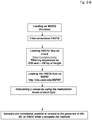
- Figure 1 - A and B summarize in a flow chart the key steps of the method of the invention.
- the flow chart refers to a non-limiting example of an application of the method of the invention to a specific set of genes.
- Figure 1-A summarizes a specific embodiment of the invention involving 1) collecting the biological sample and purifying the DNA; 2) treating the DNA with bisulfite; and 3) amplifying the genomic regions of interest.
- Figure 2-B summarizes a specific embodiment exemplifying the methylation level measurement step, in other words the last phase of the method allowing the determination of the eventual positivity of the sample for a HNSCC.
- the method of the invention allows determining if the biological sample belongs to an individual affected by a HNSCC (HNSCC positive).
- HNSCC is detected (determined) at early stage. Therefore, the detection is an early stage detection.
- the method can be also used as prognostic tool and/or for the follow up of a therapeutic treatment of a HNSCC.
- the method of the invention is also useful in the prevention of these kind of carcinomas.
- the method of the invention is also for prognosing a Head and Neck Squamous Cell Carcinoma and/or for the follow up of a therapeutic treatment of a HNSCC and/or for the prevention of a HNSCC.
- EPHX3 is acronym of epoxide hydrolase or the following synonyms: FLJ22408, ABHD9, EH3;
- KIF1A is acronym of kinesin family member 1 or the following synonyms: UNC104, C2orf20, ATSV, HSN2C, SPG30, MRD9;
- LRRTM1 is acronym of leucine rich repeat transmembrane neuronal 1 or the following synonyms: FLJ32082;
- FLI1 is acronym ofFIi-1 proto-oncogene, ETS transcription factor or the following synonyms: EWSR2, SIC-1;
- ITGA4 is acronym of integrin subunit alpha 4or the following synonyms: IA4, CD49D;
- LINC00599 is acronym of long intergenic non-protein coding RNA 599 or the following synonyms: MIRN124A1, MIRN124-1, MIR124A1, MIR124A, Rncr3, mir-124-1;
- NTM is acronym of neurotrimin or the following synonym
- hypermethylation means that the measured methylation level of the at least one CpG/CpG island is increase in a tested sample (isolated from an individual suspected to be affected by a HNSCC) compared to a negative sample (a biological sample isolated from a healthy individual not affected by a HNSCC), wherein the negative sample is preferably a sample of DNA isolated from normal mucosa of healthy individuals not affected by a HNSCC.
- hypomethylation means that the measured methylation level of the at least one CpG/CpG island is reduced in a tested sample (isolated from an individual suspected to be affected by a HNSCC) compared to a negative sample (a biological sample isolated from a healthy individual not affected by a HNSCC), wherein the negative sample is preferably a sample of DNA isolated from normal mucosa of healthy individuals not affected by a HNSCC.
- the biological sample of step (i) is isolated from an individual who can be affected or suspected to be affected by a HNSCC, preferably he has been surgically treated for a HNSCC, preferably a OSCC.
- said HNSCC is any tumor developing in oral cavity, nose, and throat.
- said HNSCC is any Oral Squamous Cell Carcinoma or its precursor, preferably High-Grade Squamous Intraepithelial Lesion (HG-SIL), or an Oral Premalignant Lesion or a cancerization field.
- Cancerization field means an area of mucosal epithelium made up of genetically altered cells eventually clonally related to the carcinoma, and therefore possible cause of local recurrence or secondary tumors.
- said Oral Premalignant Lesion is preferably selected from: leukoplakia, erythroplakia, palatal lesion of reverse cigar smoking, oral lichen planus, oral submucous fibrosis (SMF), and discoid lupus erythematosus wherein an oral cancer is more likely to occur than in its apparently normal counterpart and can be detected by the present invention if the lesion is a real precursor of HNSCC.
- the biological sample is any biological sample, preferably said sample is selected from: brushing from oral mucosa, plasma, saliva and any sample containing epithelial cells, preferably said cells being from oral cavity.
- the sample is isolated from the buccal cavity, preferably oral mucosa, more preferably by brushing, preferably by using a cytobrush or DNA buccal swab. This procedure allows obtaining a sample comprising exfoliated cells from buccal cavity, preferably from oral mucosa.
- the sample collection is preceded by oral rinses, at least 1-3 times, preferably with chlorhexidine 0.12% or any germicidal mouthwash.
- the sample collection is made by gently brushing a surface of the body region of interest, preferably said region showing a clinical lesion, preferably 1-10 times, more preferably about five times. It is advisable in the collecting procedure avoiding 1) to collect blood, and 2) to do not use any local anaesthetic.
- the collected sample is preferably placed in a container containing a preservative solution (i.e. DNA/RNA ShieldTM), to allow nucleic acid preservation. More preferably, the sample is stored at low temperature, preferably about +4°C.
- a preservative solution i.e. DNA/RNA ShieldTM
- the sample undergoes to step (i) involving isolating (extracting-purifying) a nucleic acid from the biological sample.
- the nucleic acid isolated is DNA, preferably the genomic DNA. Any technique used in a laboratory to extract nucleic acids, in particular to extract high pure DNA, can be used, for example the MasterPureTM DNA purification kit.
- the nucleic acid preferably the purified genomic DNA
- Bisulfite converts an unmethylated cytosine (C) to uracil (U), such that uracil (U) is read thymine (T) when the treated nucleic acid is sequenced. This conversion does not affect a methylated C, which remains C in the sequence. Any method allowing to address this purpose should be considered an alternative to the bisulfite treatment and, therefore, part of the disclosure.
- the bisulfite treatment of the nucleic acid is performed according to any common lab protocols or using commercially available kits, such as EZ Methylation-LightningTM kit.
- the bisulfite treatment is performed using an amount of nucleic acid, preferably of DNA, ranging from 50 ng to 10 ⁇ g, preferably from 250 ng to 1 ⁇ g.
- the bisulfite treatment involves a first step of denaturation of the nucleic acid, preferably at 98°C for 10-20 minutes, more preferably about 8 minutes and/or the incubation of the denaturated nucleic acid with sodium bisulfite.
- the bisulfite is used in a concentration of about 2.3-3.6 M, more preferably in the presence of hydroquinone, preferably in a concentration of about 10 mM.
- the reaction is preferably performed at a temperature ranging preferably from 45 to 60°C, more preferably from 50 to 55°C, still more preferably of about 54°C for at least one hour.
- the nucleic acid is purified preferably by using a column technology and more preferably with a first ethanol based wash, a desulfonation step of 20 minutes at room temperature, two washing steps with buffered ethanol, and the elution step following the instruction of the provider.
- the nucleic acid preferably the DNA is amplified, preferably by using a PCR (polymerase Chain Reaction) protocol.
- the amplification is performed preferably by using at least one primer pair said primer pair allowing the amplification of at least one sequence, preferably a portion/sequence of the genomic region of at least one gene of interest said sequence comprising at least one CpG/CpG island.
- the primer pair allows the amplification of a sequence of the genomic DNA region of at least one gene selected from: EPHX3, KIF1A, LRRTM1, FLI1, ITGA4, LINC00599, NTM, PARP15, ZAP70, miR193, miR296, GP1BB, hTERT and any combination thereof.
- At least one of the following combination of genes are amplified, meaning that at least one sequence of the genomic (DNA) region of at least one of the following combination of genes said region comprising at least one CpG/CpG island, is amplified in the method of the invention: b) LRRTM1, PARP15, ZAP70, miR193, miR296, hTERT; and/ and, optionally, of at least one of the following genes: FLI1, LINC00599, GP1BB, EPHX3, ITGA4, NTM, KIF1A.
- the genomic region of a gene means any regulating region of the gene, more preferably the promoter (generally upstream the ATG start site of a gene) region of the gene, the 5' and/or 3' UTRs, and/or any coding region (gene body), preferably exons and/or introns and/or shores.
- said region is preferably selected from SEQ ID NO: 53-65 wherein:
- SEQ ID NO: 59 is the region of KIF1A promoter spanning from 241759586 to 241759727 of the chromosome 2 strand - with respect to hg19 coordinates showing the following CpGs/CpG islands having coordinates: 241759726, 241759722, 241759719, 241759717, 241759715, 241759702, 241759697, 241759688, 241759686, 241759681, 241759676, 241759671, 241759665, 241759663, 241759656, 241759651, 241759649, 241759646, 241759643, 241759640, 241759632, 241759621, 241759618, 241759614, 241759602, 241759596, 241759588;
- the at least one sequence of PARP15 amplified for the methylation level analysis according to step (iii) is SEQ ID NO: 53 corresponding to the region of genomic DNA (strand +)mapped on chromosome 3 and having coordinates from 122296564 to 122296723 with respect to hg19 coordinates and the at least one CpG/CpG island evaluated on this sequence corresponds to a coordinate selected from: 122296564, 122296586, 122296613, 122296617, 122296623, 122296630, 122296637, 122296645, 122296649, 122296656, 122296663, 122296671, 122296677, 122296680, 122296692, 122296708, 122296710, 122296717, 122296723 and combination thereof, preferably is 122296586.
- the at least one sequence of ITGA4 amplified for the methylation level analysis according to step (iii) (amplicon) is SEQ ID NO: 54 corresponding to the region of genomic DNA (strand +)mapped on chromosome 2 and having coordinatesfrom 182322887 to 182323053 with respect to hg19 coordinates and the at least one CpG/CpG island evaluated on this sequence corresponds to a coordinate selected from: 182322890, 182322898, 182322902, 182322908, 182322915, 182322937, 182322956, 182322962, 182322980, 182322985, 182323004, 182323016, 182323024, 182323028; and combination thereof, preferably is 182322902.
- the at least one sequence of NTM amplified for the methylation level analysis according to step (iii) (amplicon) is SEQ ID NO: 55 corresponding to the region of genomic DNA (strand +)mapped on chromosome 11 and having coordinates from 131781042 to 131781185 with respect to hg19 coordinates and the at least one CpG/CpGisland evaluated on this sequence corresponds to a coordinate selected from: 131781046, 131781058, 131781060, 131781080, 131781082, 131781084, 131781098, 131781110, 131781113, 131781122, 131781144, 131781151, 131781158, 131781167, 131781183; and combination thereof, preferably is 131781082 or 131781167.
- the at least one sequence of ZAP70 amplified for the methylation level analysis according to step (iii) (amplicon) is SEQ ID NO: 56 corresponding to the region of genomic DNA (strand +)mapped on chromosome 12 and having coordinatesfrom 98340750 to 98340885 with respect to hg19 coordinates and the at least one CpG/CpGisland evaluated on this sequence corresponds to a coordinate selected from: 98340751, 98340762, 98340764, 98340766, 98340772, 98340775, 98340794, 98340801, 98340809, 98340813, 98340816, 98340823, 98340828, 98340834, 98340844, 98340854, 98340859, 98340869, 98340877, 98340881and combination thereof, preferably is 98340751 or 98340854.
- the at least one sequence of MIR193 amplified for the methylation level analysis according to step (iii) (amplicon) is SEQ ID NO: 57 corresponding to the region of genomic DNA (strand +)mapped on chromosome 17 and having coordinatesfrom 29886860 to 29887068 with respect to hg19 coordinates and the at least one CpG/CpG island evaluated on this sequence corresponds to a coordinate selected from: 29886868, 29886870, 29886875, 29886881, 29886885, 29886890, 29886903, 29886910, 29886913, 29886936, 29886939, 29886944, 29886949, 29886951, 29886964, 29886967, 29886971, 29886983, 29886992, 29886995, 29887001, 29887008, 29887015, 29887045, 29887049, 29887063and combination thereof, preferably is 29886870 or 29
- the at least one sequence of EPHX3 amplified for the methylation level analysis according to step (iii) (amplicon) is SEQ ID NO: 58 corresponding to the region of genomic DNA (strand -)mapped on chromosome 19 and having coordinatesfrom 15342826 to 15343049 with respect to hg19 coordinates and the at least one CpG/CpG island evaluated on this sequence corresponds to a coordinate selected from: 15342895,15342889, 15342885, 15342875, 15342869, 15342866, 15342864, 15342855, 15342851, 15342848, 15342845, 15342840, 15342838, 15342831, 15343002, 15343000, 15342991, 15342988, 15342985, 15342983, 15342976, 15342962, 15342960, 15342934, 15342928, 15342918, 15342916, 15342913,
- the at least one sequence of KIF1A amplified for the methylation level analysis according to step (iii) (amplicon) is SEQ ID NO: 59 corresponding to the region of genomic DNA (strand -) mapped on chromosome 2 and having coordinates from 241759586 to 241759727 with respect to hg19 coordinates and the at least one CpG/CpG island evaluated on this sequence corresponds to a coordinate selected from: 241759726, 241759722, 241759719, 241759717, 241759715, 241759702, 241759697, 241759688, 241759686, 241759681, 241759676, 241759671, 241759665, 241759663, 241759656, 241759651, 241759649, 241759646, 241759643, 241759640, 241759632, 241759621, 241759618, 241759614, 241759602, 241759596, 241
- the at least one sequence of LINC00599 amplified for the methylation level analysis according to step (iii) (amplicon) is SEQ ID NO: 60 corresponding to the region of genomic DNA (strand -)mapped on chromosome 8 and having coordinatesfrom 9760739 to 9760890 with respect to hg19 coordinates and the at least one CpG/CpG island evaluated on this sequence corresponds to a coordinate selected from: 9760888,9760881,9760878, 9760870,9760856,9760852,9760848, 9760839, 9760832, 9760822, 9760820, 9760815, 9760811, 9760809, 9760805, 9760803, 9760777, 9760764, 9760759, 9760752 and combination thereof, preferably is 9760888.
- the at least one sequence of FLI1 amplified for the methylation level analysis according to step (iii) (amplicon) is SEQ ID NO: 61 corresponding to the region of genomic DNA (strand +)mapped on chromosome 11 and having coordinatesfrom 128564020 to 128564160 with respect to hg19 coordinates and the at least one CpG/CpGisland evaluated on this sequence corresponds to a coordinate selected from: 128564022, 128564033, 128564051, 128564063, 128564065, 128564068, 128564078, 128564089, 128564106, 128564134, 128564158 and combination thereof, preferably is 128564051 or 128564158.
- the at least one sequence of GP1BB amplified for the methylation level analysis according to step (iii) (amplicon) is SEQ ID NO: 62 corresponding to the region of genomic DNA (strand +)mapped on chromosome 22 and having coordinatesfrom 19710829 to 19710960 with respect to hg19 coordinates and the at least one CpG/CpG island evaluated on this sequence corresponds to a coordinate selected from: 19710839, 19710842, 19710847, 19710855, 19710864, 19710880, 19710890, 19710902, 19710909, 19710916, 19710919, 19710937, 19710944, 19710946, 19710948, 19710952,19710954, 19710956, and combination thereof, preferably is 19710946 or 19710956.
- the at least one sequence of MIR296 amplified for the methylation level analysis according to step (iii) (amplicon) is SEQ ID NO: 63 corresponding to the region of genomic DNA (strand -)mapped on chromosome 20 and having coordinatesfrom 57392355 to 57392545 with respect to hg19 coordinates and the at least one CpG/CpG island evaluated on this sequence corresponds to a coordinate selected from: 57392543, 57392538, 57392536, 57392517, 57392501, 57392469, 57392452, 57392440, 57392437, 57392430, 57392419, 57392394, 57392386, 57392374, 57392363, and combination thereof, preferably is 57392363 or 57392374.
- the at least one sequence of LRRTM1 amplified for the methylation level analysis according to step (iii) (amplicon) is SEQ ID NO: 64 corresponding to the region of genomic DNA (strand -)mapped on chromosome 2 and having coordinatesfrom 80531676 to 80531807 with respect to hg19 coordinates and the at least one CpG/CpG island evaluated on this sequence corresponds to a coordinate selected from: 80531806, 80531803, 80531799, 80531796, 80531789, 80531786, 80531783, 80531780, 80531776, 80531763, 80531759, 80531756, 80531752, 80531749, 80531745, 80531742, 80531738, 80531719, 80531702, 80531697, 80531695, 80531677 and combination thereof, preferably is 80531697 or 80531799.
- the at least one sequence of Human TERT (hTERT) amplified for the methylation level analysis according to step (iii) (amplicon) is SEQ ID NO: 65 corresponding to the region of genomic DNA (strand -)mapped on chromosome 21 and having coordinatesfrom 1279743 to 1279851 with respect to hg19 coordinates and the at least one CpG/CpG island evaluated on this sequence corresponds to a coordinate selected from: 1279847, 1279838, 1279829, 1279775, 1279758, 1279746 and combination thereof, preferably is 1279775, 1279747 or 1279758.
- phase (iii) of measuring the epigenetic modifications (methylation) of set (1) - KIF1A and human TERT- involves measuring 1) the hypermethylation of at least one of the CpG/CpG island of SEQ ID NO: 59 reported above, more preferably the CpG/CpG island having the coordinate 241759686, 241759681, 241759651 ,241759621 of SEQ ID NO: 59 and/or 2) the hypomethylation of at least one of the CpG/CpG island of SEQ ID NO: 65 reported above, more preferably the CpG/CpG island having the coordinate 1279775 and/or, 1279747 and/or 1279758 of SEQ ID NO: 65.
- phase (iii) of measuring the epigenetic modifications of set (2) - LRRTM1, PARP15, ZAP70, miR193, miR296, hTERT- involves measuring 1) the hypermethylation of at least one of the CpG/CpG island of SEQ ID NO: 64 for LRRTM1, SEQ ID NO: 53 for PARP15, SEQ ID NO: 56 forZAP70, SEQ ID NO: 57 for miR193, more preferably the hypermethylation of the CpG/CpG island having the following coordinates: 80531799 and/or 80531697 for LRRTM1. 122296586 for PARP. 98340854 and/or 98340751 for ZAP70.
- phase (iii) of measuring the epigenetic modifications of set (3) - KIF1A, LRRTM1, ZAP70, miR193, miR296, hTERT- involves measuring 1) the hypermethylation of at least one of the CpG/CpG island of SEQ ID NO: 59 for KIF1A, SEQ ID NO: 64 for LRRTM1, SEQ ID NO: 56 forZAP70, SEQ ID NO: 57 formiR193, more preferably the hypermethylation of the CpG/CpG island having the following coordinates: 241759686, 241759681,241759651, 241759621 for KIF1A, 80531799 and/or 80531697 for LRRTM1, 98340854 and/or 98340751 for ZAP70, 29886944 and/or 29886870 for miR193 respectively and any combination thereof; and/or 2) the hypomethylation of at least one of the CpG/CpG island of SEQ ID NO:
- phase (iii) of measuring the epigenetic modifications of set (4) - KIF1A, LRRTM1, FLI1, LINC00599, PARP15, ZAP70, miR193, miR296, GP1BB, hTERT- involves measuring 1) the hypermethylation of at least one of the CpG/CpG island of SEQ ID NO: 59 for KIF1A, SEQ ID NO: 64 for LRRTM1, SEQ ID NO: 61 for FLI1, SEQ ID NO: 60 for LINC00599, SEQ ID NO: 53 for PARP15, SEQ ID NO: 56 for ZAP70, SEQ ID NO: 57 for miR193, more preferably the hypermethylation of the CpG/CpG island having the following coordinates: 241759686, 241759681,241759651, 241759621 for KIF1A, 80531799 and/or 80531697 for LRRTM1, 128564158 and/or 128564051 for FLI
- phase (iii) of measuring the epigenetic modifications of set (5) - EPHX3, KIF1A , LRRTM1,FLI1, ITGA4, LINC00599, NTM, PARP15, ZAP70, miR193, miR296, GP1BB, hTERT - involves measuring 1) the hypermethylation of at least one of the CpG/CpG island of KIF1A, preferably 1-4 CpG/CpG island of KIF1A, more preferably selected from SEQ ID NO: 59, SEQ ID NO: 58 for EPHX3, SEQ ID NO: 64 for LRRTM1, SEQ ID NO: 61 for FLI1, SEQ ID NO: 54 for ITGA4, SEQ ID NO: 60 for LINC00599, SEQ ID NO: 55 for NTM, SEQ ID NO: 53 for PARP15, SEQ ID NO: 56 for ZAP70, SEQ ID NO: 57 for miR193, and/or 2) the hypomethylation of at least one
- a locus-specific amplicon library is preferably generated, more preferably a locus-specific bisulfite amplicon library.
- a platform selected from: MiSEQ, NEXT500 or MiniSEQ - Illumina, IonTorrent, Pacific Biosciences and 454 GSJunior platform.
- IonTorrent is one of next-generation sequencing machine that utilizes massively parallel sequencing technologies to generate thousands of megabases of sequence information by semiconductor chips.
- Illumina MiSEQ, NEXT500 or MiniSEQ are next-generation sequencing machines, which utilize sequence by synthesis chemistry to perform parallel sequencing of billions of DNA fragments in parallel with high precision, minimizing incorporation bias and reducing raw error rates compared to other technologies, especially for homopolymers. In any case, any method to obtain the same purpose has to be considered part of the present disclosure.
- the amplification steps involves a first step of amplification -a template specific amplification - and a second round of amplification allowing the barcoding of the template-specific amplicons obtained from the first amplification step.
- the first amplification step uses preferably a multiplex strategy, preferably by using tagged primer pairs and a DNA polymerase, preferably the PhusionTM U DNA polymerase ( Fig. 1-A ).
- the amplification conditions for this first amplification step are the following:
- a final extension step at about 72°C for about 5 min is preferably added at the end of the last cycle.
- the multiplex allows to amplify at least one sequence of at least one genomic DNA region comprising at least one CpG/CpG island of at least one gene selected from: PARP15, ITGA4, LRRTM1, human TERT, NTM, MIR193a, KIF1A, LINC00599, ZAP70, EPHX3, MIR296, FLI1N, GP1BB and combination thereof, preferably at least one of the following combinations of genes:
- the primer pair is selected from the following tagged primer pairs:
- primer pairs can be used for each platform depending on the regions of the genes to amplify.
- Each tagged primer pair comprises two primers (a forward and a reverse primer) for amplifying the region of interest.
- Each primer of the pair is a fusion primer comprising1) a template specific portion hybridizing the specific sequence to amplify (3' - portion); and 2) a universal sequence (5'- portion) that does not have a complementary region in the genome (does not hybridize with any sequence in the genome). Therefore, the universal sequence is fused to a sequence targeting the template-specific sequence ends - that preferably define the boundaries of the amplicon.
- universal sequence is a sequence that does not have a complementary region in the genome, in other words it does not hybridize with any sequence in the genome.
- this sequence is recognized by a second primer combination carrying Illumina or IonTorrent adaptors and/or indexes.
- the two forward primers or the two reverse primers for each region to be amplified for the platforms IonTorrent and Illumina, for example SEQ ID NO: 1 and SEQ ID NO: 27, have preferably the same 3' end (because this end is the template specific end) and a different 5' end depending of the used platform.
- Fig. 1-A are named Univ-A and Univ- B ends of each amplicon.
- multiplex amplification products can be combined, more preferably the amplification products of following set of genes are combined (a)-(b) and (c)-(d) for purification with magnetic beads.
- the first amplification products (template specific), preferably the multiplex amplification products named amplicons, and/or the combinations are preferably purified, after the amplification step, preferably by using SPRI -AMPure XT. Moreover, they can be also quantified, after purification, preferably with the FluorometerQuantusTM or QubitTM or similar.
- the amplicons eventually after purification and or quantification, are used as template, preferably in an amount of about 100 ng, for a second round of amplification. This second round is for barcoding the sample and it involves 5-10, preferably about 6 cycles.
- This second amplification step is performed preferably in the presence of a further primer pair (forward and reverse).
- Each primer of the pair comprises starting from the 5' end: 1) an adaptor sequence specific for the specific next generation sequencing platform used, such as Illumina and/or IonTorrent, and/or 2) a samples-specific barcode sequences, such as multiplex identifiers (MIDs) or indexes, and /or 3) a universal liker tag complementary to the universal sequence of the primer pair used in the first amplification step ( Fig 1-A ).
- samples-specific barcode sequences or indexes are short sequence that have been introduced artificially to specific target sequence allowing the identification of each sample (in other words to identify the individual) in parallel sequencing when samples from different individuals undergo to the method.
- Individual "barcode” sequences are added to each sample so they can be distinguished and sorted during data analysis. This approach is cost and time effective because pooling samples exponentially increases the number of samples analyzed in a single run.
- multiplex identifiers or indexes are inserted during the second round of amplification and include also adaptors specific for the specific next generation sequencing platform is intended to use, allowing the annealing of target sequences to the chip or the flow cell.
- amplicon library means a pool of target sequences derived from various samples, which are needed to be sequenced in parallel. Any sequencing technique has to be considered part of the present disclosure.
- Table I SEQ ID NO: 1 PARP15-forward SEQ ID NO: 2 PARP15-reverse SEQ ID NO: 3 ITGA4-forward SEQ ID NO: 4 ITGA4-reverse SEQ ID NO: 5 NMT-forward SEQ ID NO: 6 NMT-reverse SEQ ID NO: 7 ZAP70-forward SEQ ID NO: 8 ZAP70-reverse SEQ ID NO: 9 MIR193A-forward SEQ ID NO: 10 MIR193A-reverse SEQ ID NO: 11 EPHX3-forward SEQ ID NO: 12 EPHX3-reverse SEQ ID NO: 13 KIF1 A-forward SEQ ID NO: 14 KIF1 A-reverse SEQ ID NO: 15 LINC00599-forward SEQ ID NO: 16 LINC00599-reverse SEQ ID NO: 17 FL
- Table II summarize several information on the genes analysed in the present method, the mapping information and the size of the amplified genomic region the reference of the sequence (NM reference on NCBI) and the number of the CpGs/CpG islands.
- the quantitative methylation level measurement is performed using the common tools used for this purpose, preferably selected from: BISMARK, BS-Seeeker2, BISMA, BSPAT, and QUMA.
- Figure 1-B summarize a specific embodiment exemplifying the methylation level measurement step, in other words the last phase of the method allowing the determination of the eventual positivity of the sample for HNSCC.
- the analysis is based on the fact that bisulfite treatments of nuclei acid sequences converts an unmethylated cytosine (C) to uracil (U), such that uracil (U) is read thymine (T) when the treated nucleic acid is sequenced. This conversion does not affect a methylated C which remains C in the sequence. Therefore, sequencing reads showing C after bisulfite treatments mean a methylated cytosine, instead a T in the sequencing reads after bisulfite treatments mean and unmethylated cytosine.
- a FASTQ file comprising all the sequences obtained from a sample/individual (the reads) are qualitatively filtered by using cloud computing known for this purpose.
- FASTQ files are generally produced by Next Generation Sequencing runs.
- a filter of Q30 for 90% of bases is applied.
- This filtering step allows to obtain high quality sequences.
- the high quality sequences are preferably converted in a FASTA format and eventually trimmed, preferably 25 base pairs, at one and/or both ends in order to eliminate the primer sequence.
- sequences preferably the high-quality sequences, obtained for each region amplified, are analyzed for the quantitative methylation level measurement by using the common tools used for this purpose, preferably selected from: BISMARK, BS-Seeeker2, BISMA, BSPAT, and QUMA.
- the FASTA for each region amplified is uploaded on this tool.
- the reference sequences to upload for every sequence alignment needed by these tools are selected from: SEQ ID NO: 53-65.
- the methylation level data can be analyzed by using a Linear Discriminat Analysis, preferably selecting at least one, preferably all, CpG selected from: 19710956 for GP1BB; 98340854 for ZAP70; 241759621 for KIF1A; 1279758 for TERT; 80531799 for LRRTM1; 131781167 for NTM; 29886944 for MIR193; 122296586 for PARP15; 182322902 for ITGA4; 128564158 for FLI1; 9760888 for LINC0059; 15342885 for EPHX3; and 57392374 for MIR296.
- a Linear Discriminat Analysis preferably selecting at least one, preferably all, CpG selected from: 19710956 for GP1BB; 98340854 for ZAP70; 241759621 for KIF1A; 1279758 for TERT; 80531799 for LRRTM1; 131781167 for NTM; 29886944 for MIR
- LDA Linear Discriminat Analysis
- the discriminant coefficient for each epigenetic modification is based on the number and the type of genomic regions used during the analysis.
- the discriminant coefficient (c i ) is calculated taking into consideration the levels (rates) of each methylation analysed in such way that the difference between positive and negative samples is maximized.
- the constant (K) is a fixed number that is added to the discriminant function and is calculated in such way that the difference between positive and negative samples is maximized.
- the final value of y is calculated after adding the constant to the summary of the product between the threshold of the methylation level for each at least one CpG/CpG island and the respective coefficient.
- a threshold that discriminates between positive and N negative samples is preferably, but not limited to, calculated through a ROC curve analysis.
- a sample is considered HNSCC positive if:
- the linear discriminant analysis generates a score that weighted the at least one, preferably all, CpG selected from: 19710956 for GP1BB; 98340854 for ZAP70; 241759621 for KIF1A; 1279758 for TERT; 80531799 for LRRTM1; 131781167 for NTM; 29886944 for MIR193; 122296586 for PARP15; 182322902 for ITGA4; 128564158 for FLI1; 9760888 for LINC0059; 15342885 for EPHX3; and 57392374 for MIR296, from the gene(s) investigated.
- CpG selected from: 19710956 for GP1BB; 98340854 for ZAP70; 241759621 for KIF1A; 1279758 for TERT; 80531799 for LRRTM1; 131781167 for NTM; 29886944 for MIR193; 122296586 for PARP15; 182322902 for ITGA4
- the method as disclosed above allow to detect the presence of field cancerization, preferably in surgically resected patients for HNSCC around the site of intervention.
- the invention shows that the presence of field cancerization with altered methylation pattern is related to poor prognosis and high risk of recurrence or secondary tumors.
- a further aspect of the present invention refers to detect the presence of field cancerization in surgically resected patients for HNSCC around the site of intervention.
- the presence of field cancerization with altered methylation pattern is related to poor prognosis and high risk of recurrence or secondary tumors.
- a further aspect of the present invention refers to a kit to determine the presence and/or the risk for HNSCC, preferably HG-SIL and/or OSCC in a biological test sample, preferably containing exfoliating brush of oral mucosa obtained from and individual, who preferably shows OPML or suspect lesions, said kit comprising reagents for sodium bisulfite conversion and a set of oligonucleotides, enzymes and buffers that specifically amplify at least one of the sequences SEQ ID NO: 53-SEQ ID NO: 65 with at least one primer pairs selected from the group consisting of SEQ ID NO: 1-52 and from SEQ ID NO: 66-69.
- Oral brushing samples were always picked before incisional biopsy for histological diagnosis and staging of each lesion.
- HG-SIL Histological diagnoses were performed following the WHO criteria (Thompson, 2006). Distinction between HG-SIL and LG-SIL was made according to Ljubjana classification 2014(Gale, Blagus et al. 2014).
- a total of 150 oral brushing sample series for the training dataset was composed of:
- the validation dataset was composed of:
- a cytobrush was used to collect exfoliated cells from oral mucosa.
- each cytobrush sample was placed in a 2 ml tube containing absolute ethanol for cell preservation.
- DNA from exfoliating brush samples was purified using The MasterPureTM Complete DNA extraction kit (Epicentre, Madison, WI).
- locus-specific bisulfite amplicon libraries were generated multiplexing with tagged primers (see Table 1) using Phusion U DNA polymerase (ThermoFisher) in 25 ⁇ l.
- Illumina platform needs a different method to evaluate amplicons, the NexteraTM approach which requires adaptors at the 5'end as described in Table 1. The insertion of one N or two N in the middle guarantees the minimum complexity for clustering. Barcoding was performed by using NexteraTM index kit.
- Cycling conditions for the first template specific PCR were: initial incubation at 98°C for 2 min followed by 1 cycle of 98°C 10 sec, 62°C 2 min, 72°C 1 min, followed by 35 cycles at 98°C for 10 s, 62°C for 40 s and 72°C for 20 sec. A final extension step at 72°C for 5 min was added at the end of the last cycle.
- Reaction conditions for multiplex were: ultrapure water: 8.8 ⁇ l, Buffer 5x HF: 5 ⁇ l, betaine 5M: 5 ⁇ l, dNTPs 10 mM: 0.5, primers 0.1 ⁇ M: 1.5 ⁇ l, MgCl2 50 mM: 0.5 ⁇ l, Phusion U: 0.2 ⁇ l, DNA bisulfite treated: 3.5 ⁇ l.
- Amplification products from multiplex 1-2 and 3-4 were combined and purified using SPRI -AMPure XT (Agencourt-Beckman Coulter, Beverly, MA), quantified with the FluorometerQuantusTM (Promega, Madison, WI) and then employed as template (100 ng) for a second round of PCR (6 cycles).
- Sample-specific barcode sequences (Indexes) and universal linker tags (P5/P7adaptor sequences) were added in this second PCR performed with 6 cycles (98°C 1 min./98°C 10 sec./63°C 30 sec./72°C3 min.).
- the amplicon library was purified using AgencourtAMPure XP beads (Beckman Coulter, Krefeld, Germany), then quantitated with the FluorometerQuantusTM (Promega, Madison, WI).
- the first round uses fusion primers targeting the template-specific sequences (defining the boundaries of the amplicons) fused to a universal sequence that will be the target of the second round primers ( Fig. 1 ).
- fusion primers targeting the template-specific sequences (defining the boundaries of the amplicons) fused to a universal sequence that will be the target of the second round primers ( Fig. 1 ).
- different universal tails should be designed for the Primer A and Primer B ends of the amplicons (Univ-A and Univ-B on the Fig.1-A ).
- the Univ-A sequence is targeted by a fusion primer that is tailed by the 454 Sequencing system's Primer A sequence plus an MID sequence to identify the sample; and same for the Univ-B sequence, with Primer B ( Fig.1-A ).
- the forward Universal A Tailed sequence of choice is GTAATACGACGGTCAGT and the reverse Universal B Tailed sequence of choice is CAGGAAACAGCTATGAC.
- Test Result Variable(s) Discriminant Scores from Function 1 for Analysis 1 Area Std. Error a Asymptotic Sig. b Asymptotic 95% Confidence Interval Lower Bound Upper Bound .924 .033 .000 .861 .988
- the sample when the y value exceeds the threshold of -0.5306765, the sample should be considered positive and related to the presence of HG-SIL or OSCC.
- LRRTM1 CpG 80531799
- PARP15 CpG 122296586
- ZAP70 CpG 98340854
- MIR193 CpG 29886944
- MIR296 CpG 57392374
- TERT CpG 1279758
- Test Result Variable(s) Discriminant Scores from Function 1 for Analysis 1 Positive if Greater Than or Equal To a Sensitivity 1 - Specificity -.1924607 .971 .077
- the smallest cutoff value is the minimum observed test value minus 1
- the largest cutoff value is the maximum observed test value plus 1. All the other cutoff values are the averages of two consecutive ordered observed test values.
- the sample is considered positive and related to the presence of HG-SIL or OSCC.
- KIF1A CpG 241759621
- LRRTM1 CpG 80531799
- ZAP70 CpG 98340854
- MIR193 CpG 29886944
- MIR296 CpG 57392374
- TERT CpG 1279758
- the sample should be considered positive and related to the presence of HG-SIL or OSCC.
- KIF1A CpG 241759621
- LRRTM1 CpG 80531799
- FLI1 CpG 128564158
- LINC00599 CpG 9760888
- PARP15 CPG 122296586
- ZAP70 CpG 98340854
- MIR193 CpG 29886944
- MIR296 CpG 57392374
- GP1BB CpG 19710956
- hTERT CpG 1279758.
- the sample should be considered positive and related to the presence of HG-SIL or OSCC.
- Set (e) involves the following genes with their CpGs: 19710956 for GP1BB; 98340854 for ZAP70; 241759621 for KIF1A; 1279758 for TERT; 80531799 for LRRTM1; 131781167 for NTM; 29886944 for MIR193; 122296586 for PARP15; 182322902 for ITGA4; 128564158 for FLI1; 9760888 for LINC0059; 15342885 for EPHX3; and 57392374 for MIR296.
- the sample should be considered positive and related to the presence of HG-SIL or OSCC.
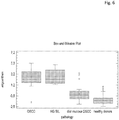
- This test identifies a statistical difference between the OSCC group vs healthy donors and vs contralateral mucosa. Furthermore, multiple range test shows a statistical difference between the HGSIL group and healthy donors and contralateral mucosa: Table II indicating for each group the mean score value: pathology Count Mean Homogeneous Groups Healthy donors 65 -1.586 C Distant mucosa in OSCC patients 30 -0.444399 B OSCC 29 2.66856 A HG SIL 6 2.71892 A Table III indicating the significance for each group comparison: Contrast Sig.
Landscapes
- Chemical & Material Sciences (AREA)
- Life Sciences & Earth Sciences (AREA)
- Health & Medical Sciences (AREA)
- Organic Chemistry (AREA)
- Proteomics, Peptides & Aminoacids (AREA)
- Engineering & Computer Science (AREA)
- Immunology (AREA)
- Pathology (AREA)
- Analytical Chemistry (AREA)
- Zoology (AREA)
- Genetics & Genomics (AREA)
- Wood Science & Technology (AREA)
- Physics & Mathematics (AREA)
- Biotechnology (AREA)
- Microbiology (AREA)
- Molecular Biology (AREA)
- Hospice & Palliative Care (AREA)
- Biophysics (AREA)
- Oncology (AREA)
- Biochemistry (AREA)
- Bioinformatics & Cheminformatics (AREA)
- General Engineering & Computer Science (AREA)
- General Health & Medical Sciences (AREA)
- Measuring Or Testing Involving Enzymes Or Micro-Organisms (AREA)
- Investigating Or Analysing Biological Materials (AREA)
Description
- The present invention refers to a method performed in vitro to determine a Head and Neck Squamous Cell Carcinoma, preferably at early stage, based on the measuring of the hypermethylation and/or hypomethylation level(s) of CpGs/CpG islands of specific set of genes.
- Oral and pharyngeal cancer, grouped together, are the sixth most common cancer in the world. The annual estimated incidence is approximately 600,000 per year, two-thirds of these cases occurring in developing countries. The mortality rates of these tumors have remained unchanged (50% within 5 years after diagnosis) and are mostly related to tobacco smoking and alcohol intake. Oral cancer patients are usually diagnosed in an advanced stage, which is associated with worse prognosis and higher radio- and chemotherapy morbidity. Moreover, patient's quality of life is extremely compromised, since surgical therapy usually involves mutilating which often has significant effects on swallowing, speech, and physical appearance.
- In particular, Oral Squamous Cell Carcinoma (OSCC) is the most frequent Head and Neck Squamous Cell Carcinoma (HNSCC - the neoplastic diseases affecting head and neck regions) and is usually preceded by oral pre-malignant lesions (OPML). Clinical and histological features of OPML are not able to provide enough information to identify the lesions, leading to a high risk of enduring malignant transformation and develop an OSCC during follow-up. In addition, patients affected by OSCC can developed a second primary OSCC, with a frequency ranging between 17% and 30%.
- Although the oral cavity is easily accessible for examination, several factors limit the identification and early treatment of OPMLs. For this purpose, the current gold standard for screening and detecting, is the visual and tactile palpation during an extra- and intraoral examination by the healthcare professional in a routine dental or physical examination.
- However, this disease is not easy to identify in its earliest stages and has often eluded medical and dental professionals because it can be "occult," or hidden from plain view. Indeed, normal-looking tissue may often hide the truth within the cells below the mucosa's surface.
- If the disease is identified in earlier stages (Stage I or Stage II) - the ideal time for identification is before the dysplastic cells have been able to break through the basement membrane - the overall five-year survival rate is greater than 80 percent.
- Unfortunately, all too often the manifestations of this invasive and devastating disease are detected in the late stages (Stages III-IV), when the lesions have typically advanced so deeply that it is impossible to treat without radical surgical intervention and significant loss of the patient's quality of life.
- In particular, OSCC or High Grade Squamous Intraepithelial Lesion (HG-SIL) are usually diagnosed based on an incisional biopsy. Nevertheless, the incisional biopsy requires a minimally invasive surgical approach that can create discomfort and be refused by the patient.
- It looks evident from the comments reported above that improved oral cancer prevention, early detection, diagnostic, and clinical management tools are needed to identify high-risk patients, such as those exposed to smoking and alcohol consumption, patients without adequate access to health care, and with high-risk lesions such as leukoplakia, which may progress to carcinoma lesions. In particular, considering how much HNPCC is widespread, there is a huge need of developing a non-invasive method to early detect this kind of tumors, and in particular oral premalignant lesions (OPML) which may develop neoplastic lesions, in order to reduce the burden of OSCC.
- Over the last decade, Quantitative Methylation Specific PCR (qMSP) preceded by bisulfite treatment has been proposed as a method to evaluate biomarkers useful in OSCC detection. In this regard, various genes have been previously studied for promoter methylation status in OSCC tissues. Guerrero - Preston et al, 2014 and the related patent application
WO2015066170A1 refer to a comprehensive integrated genomic and epigenomic analysis in HNSCC, focusing on identifying genes that have concurrent promoter methylation, mutation and expression downregulation. In particular, these documents evaluated the methylation pattern of PAX1, PAX5, ZIC4 and PLCB1. Moreover, Morandi et al. developed a non-invasive method to early detect OSCC and HG-SIL by epigenetic modifications analysis in the oral mucosa evaluating GP1BB and ZAP70 methylation status (Morandi, L. 2015). - However, the above-mentioned study is limited for number of cases and for low sensitivity and specificity of the method. Therefore, is still felt the need to identify methods allowing early and accurate detection of HNSCC, in particular HG-SIL/OSCC. This is not easy to obtain also because identifying the key genes and locating the informative and efficient methylation sites on their sequences are not trivial and obvious activities. Indeed, it is well known, for example that the gene network involved in carcinogenesis is really complex and wide and that the promoter region of genes spans more than one thousand base pairs and contains approximately one hundred potential methylation sites.
WO2011112880 relates to hypermethylation biomarkers for detection of head and neck squamous cell cancer. According to Demokan et al, Int. J. Cancer: 127, 2351-2359 2010, KIFA and EDNRB are differentially methylated in primary HNSCC and salivary rinses. The present invention solves the needs reported above with a method involving the measurement of the methylation level(s) of informative CpGs/CpG islands in specific genomic regions of a selected number of genes. - The ability to correlate the methylation levels of several CpGs/CpG islands of a selected number of genes grants the method an accuracy beyond any other methods currently available. Moreover, the disclosed method allows the early detection of HNSCC with high specificity and sensitivity starting from a biological sample, such as an oral brushing.
-
-
Figures 1A-B show the flow chart of an example of application of the method of the invention to a specific set of genes. -
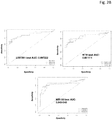
Figures 2A-D show the ROC analysis discriminating OSCC vs normal healthy donors showing the three best performing CpGs from each gene. -
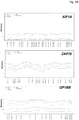
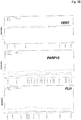
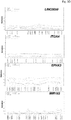
Figures 3A-D show the methylation profile plot from the genes evaluated. For each group of samples the lines represent the methylation mean for each position. Asterisks indicate a statistical significance as calculated by the Kruskal-Wallis test. -
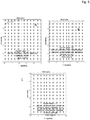
Figures 4 and5 show the ROC analysis of the specific combinations of genes exemplified. -
Figure 6 shows the box plots obtained using the scores calculated from the algorithm showed a between-group significant difference (Kruskal-Wallis test T=78,8587, p <0.05). - In the context of the present invention, "Head and Neck Squamous Cell Carcinoma (HNSCCs)" are tumors developing in the mucous membranes of mouth, nose, or throat and, generally, classified by their location. Indeed, this kind of carcinoma can occur in the mouth (oral cavity), in the middle part of the throat near the mouth (oropharynx), in the space behind the nose (nasal cavity and paranasal sinuses), in the upper part of the throat near the nasal cavity (nasopharynx), in the larynx, or in the lower part of the throat near the larynx (hypopharynx).
- In the context of the present invention, "Oral Squamous Cell Carcinoma (OSCC)" represents 95% of all forms of HNSCC and during the past decade, its incidence has increased by 50%. OSCC, emerge from the accumulation of genetic changes and epigenetic anomalies in the signaling pathways that are associated with cancer, resulting in phenotypes that facilitate OSCC development. It derives from the stratified squamous epithelium of the oral mucosa. The majority of OSCC are diagnosed at a late phase, in stages III or IV, which markedly decreases the chances of survival and leads to a significant deterioration in patient quality of life.
- "High Grade Squamous Intraepithelial Lesion (HG-SIL)" has been introduced by Gale et al. 2014. The classification provides two grades: 1) low-grade, and 2) high-grade lesions and, specifically for the larynx, an additional grade-carcinoma in situ (CIS) which must be separated from high-grade laryngeal SILs. This study provided clear morphological criteria with which to define prognostic groups. The retrospective follow-up study demonstrated a highly significant difference in the risk of malignant progression between low grade and high-grade lesions improving patient management and clinical decision-making.
- In the context of the present invention, "Oral Pre-Malignant Lesion (OPML)"is a morphologically altered tissue in which oral cancer is more likely to occur than in its apparently normal counterpart. Recently, the World Health Organization (WHO) identified the following OPML: leukoplakia, erythroplakia, palatal lesion of reverse cigar smoking, oral lichen planus, oral submucous fibrosis (SMF) and discoid lupus erythematosus.
- In the context of the present invention, "DNA methylation" means epigenetic modifications of nucleic acids that alter their accessibility and structure, preferably chromatin structure, thereby regulating patterns of gene expression. They can be modified by exogenous influences and, as such, can contribute to or be the result of environmental alterations of phenotype or pathophenotype.
- In the context of the present invention, "CpG islands" are regions of the human genome with elevated G+C content. These regions have generally about 1 kb length and, usually overlap the promoter region of 60-70% of all human genes. They are also present in repeats as transposable elements and functions to repress transcription. Within these regions, the majority of CpG pairs are chemically modified by the covalent attachment of a methyl group to the C5 position of the cytosine ring. Aberrant DNA methylation of CpGs in the proximity of transcription start sites often leads to alterations in gene function and pathway deregulation in human cancer.
- In the context of the present invention, "genomic DNA region" means regions of genomic DNA such as the gene promoter, the 5'UTR, the gene body, the 3'UTR and shores (refers to DNA sequence that occur up to about 2 kb distant from a CpG island of comparatively low CpG density that are located near traditional CpG islands).
- A first aspect of the present invention refers to a method for detecting (for determining the presence of) a Head and Neck Squamous Cell Carcinoma (HNSCC) comprising the steps of:
- (i) Purifying a nucleic acid, preferably the DNA, more preferably the genomic DNA, from an isolated sample obtained from an individual;
- (ii) Treating the purified nucleic acid, preferably the DNA, with bisulfite, preferably sodium bisulfite;
- (iii) Amplifying the nucleic acid after step (ii) by using at least one primer pair said primer pair allowing the amplification of at least one sequence of the genomic region of at least one gene of each one of the genes comprised in the following set of genes (in other words at least one portion of the genomic/chromosomic region of a gene, that is a portion of its genomic mapping site comprising the coding and regulative regions of the gene):
LRRTM1, PARP15, ZAP70, miR193, miR296, hTERT and, optionally, of at least one of the following genes:
FLI1, LINC00599, GP1BB, EPHX3, ITGA4, NTM, KIF1A;,said sequence comprises at least one CpG, preferably at least one CpG island; - (iv) Measuring the methylation level of the at least one CpG/CpG island of the amplified sequence of the genomic region and belonging to the following set of genes:
LRRTM1, PARP15, ZAP70, miR193, miR296, hTERT;and optionally, of at least one of the following genes: FLI1, LINC00599, GP1BB, EPHX3, ITGA4, NTM, KIF1A;
wherein the hypermethylation of the at least one CpG/CpG island falling in the sequence of at least one of the following genes of the sets: EPHX3, KIF1A, LRRTM1,FLI1, ITGA4, LINC00599, NTM, PARP15, ZAP70, miR193 and/or the hypomethylation of the at least one CpG/CpG island falling in the sequence of at least one of the following genes of the sets: miR296, GP1BB, hTERT is(are) indicative of a HNSCC positive sample wherein the hypermethylation and/or hypomethylation is/are evaluated with respect to the methylation level measured for the same CpGs/CpG islands of the same regions of the same genes in a sample isolated from a healthy individual (negative control), preferably in a population of healthy individuals. -
Figure 1 - A and B summarize in a flow chart the key steps of the method of the invention. In particular, the flow chart refers to a non-limiting example of an application of the method of the invention to a specific set of genes. -
Figure 1-A summarizes a specific embodiment of the invention involving 1) collecting the biological sample and purifying the DNA; 2) treating the DNA with bisulfite; and 3) amplifying the genomic regions of interest. -
Figure 2-B summarizes a specific embodiment exemplifying the methylation level measurement step, in other words the last phase of the method allowing the determination of the eventual positivity of the sample for a HNSCC. - The method of the invention allows determining if the biological sample belongs to an individual affected by a HNSCC (HNSCC positive). Preferably, the HNSCC is detected (determined) at early stage. Therefore, the detection is an early stage detection. Thus, the method can be also used as prognostic tool and/or for the follow up of a therapeutic treatment of a HNSCC. Finally, the method of the invention is also useful in the prevention of these kind of carcinomas.
- Therefore, the method of the invention is also for prognosing a Head and Neck Squamous Cell Carcinoma and/or for the follow up of a therapeutic treatment of a HNSCC and/or for the prevention of a HNSCC.
- In this context, EPHX3 is acronym of epoxide hydrolase or the following synonyms: FLJ22408, ABHD9, EH3; KIF1A is acronym of kinesin family member 1 or the following synonyms: UNC104, C2orf20, ATSV, HSN2C, SPG30, MRD9; LRRTM1 is acronym of leucine rich repeat transmembrane neuronal 1 or the following synonyms: FLJ32082; FLI1 is acronym ofFIi-1 proto-oncogene, ETS transcription factor or the following synonyms: EWSR2, SIC-1; ITGA4 is acronym of integrin subunit alpha 4or the following synonyms: IA4, CD49D; LINC00599 is acronym of long intergenic non-protein coding RNA 599 or the following synonyms: MIRN124A1, MIRN124-1, MIR124A1, MIR124A, Rncr3, mir-124-1; NTM is acronym of neurotrimin or the following synonyms: NT, NTRI, IGLON2, HNT; PARP15 is acronym of poly(ADP-ribose) polymerase family member 15 or the following synonyms: FLJ40597, pART7, ARTD7, BAL3; ZAP70 is acronym of zeta chain of T cell receptor associated protein kinase 70 or the following synonyms: IMD48, TZK, STD, ZAP-70, SRK, STCD, ADMIO2; miR193 is acronym of microRNA 193a or the following synonyms: MIRN193A, mir-193a, hsa-mir-193a, hsa-mir-193, MIRN193; miR296 is acronym of microRNA 296 or the following synonyms: hsa-mir-296, mir-296, MIRN296, miRNA296; GP1BB is acronym of glycoprotein lb platelet beta subunit or the following synonyms: GPIBB, GPIbbeta, CD42C, BS, BDPLT1, CD42c; hTERT is acronym of telomerase reverse transcriptase or the following synonyms: TRT, TCS1, DKCA2, EST2, PFBMFT1, CMM9, hEST2, DKCB4, hTRT, TP2.
- In the context of the present invention, hypermethylation means that the measured methylation level of the at least one CpG/CpG island is increase in a tested sample (isolated from an individual suspected to be affected by a HNSCC) compared to a negative sample (a biological sample isolated from a healthy individual not affected by a HNSCC), wherein the negative sample is preferably a sample of DNA isolated from normal mucosa of healthy individuals not affected by a HNSCC.
- In the context of the present invention, hypomethylation means that the measured methylation level of the at least one CpG/CpG island is reduced in a tested sample (isolated from an individual suspected to be affected by a HNSCC) compared to a negative sample (a biological sample isolated from a healthy individual not affected by a HNSCC), wherein the negative sample is preferably a sample of DNA isolated from normal mucosa of healthy individuals not affected by a HNSCC.
- The biological sample of step (i) is isolated from an individual who can be affected or suspected to be affected by a HNSCC, preferably he has been surgically treated for a HNSCC, preferably a OSCC. According to a preferred embodiment, said HNSCC is any tumor developing in oral cavity, nose, and throat. Preferably, said HNSCC is any Oral Squamous Cell Carcinoma or its precursor, preferably High-Grade Squamous Intraepithelial Lesion (HG-SIL), or an Oral Premalignant Lesion or a cancerization field. Cancerization field means an area of mucosal epithelium made up of genetically altered cells eventually clonally related to the carcinoma, and therefore possible cause of local recurrence or secondary tumors.
- According to a preferred embodiment, said Oral Premalignant Lesion (OPML) is preferably selected from: leukoplakia, erythroplakia, palatal lesion of reverse cigar smoking, oral lichen planus, oral submucous fibrosis (SMF), and discoid lupus erythematosus wherein an oral cancer is more likely to occur than in its apparently normal counterpart and can be detected by the present invention if the lesion is a real precursor of HNSCC.
- Therefore, the method is ex vivo. The biological sample is any biological sample, preferably said sample is selected from: brushing from oral mucosa, plasma, saliva and any sample containing epithelial cells, preferably said cells being from oral cavity. According to a preferred embodiment, the sample is isolated from the buccal cavity, preferably oral mucosa, more preferably by brushing, preferably by using a cytobrush or DNA buccal swab. This procedure allows obtaining a sample comprising exfoliated cells from buccal cavity, preferably from oral mucosa.
- According to a preferred embodiment, the sample collection is preceded by oral rinses, at least 1-3 times, preferably with chlorhexidine 0.12% or any germicidal mouthwash.
- According to a further preferred embodiment, the sample collection is made by gently brushing a surface of the body region of interest, preferably said region showing a clinical lesion, preferably 1-10 times, more preferably about five times. It is advisable in the collecting procedure avoiding 1) to collect blood, and 2) to do not use any local anaesthetic.
- The collected sample is preferably placed in a container containing a preservative solution (i.e. DNA/RNA Shield™), to allow nucleic acid preservation. More preferably, the sample is stored at low temperature, preferably about +4°C.
- According to a further preferred embodiment, the sample undergoes to step (i) involving isolating (extracting-purifying) a nucleic acid from the biological sample. Preferably, the nucleic acid isolated is DNA, preferably the genomic DNA. Any technique used in a laboratory to extract nucleic acids, in particular to extract high pure DNA, can be used, for example the MasterPure™ DNA purification kit.
- After purification, the nucleic acid, preferably the purified genomic DNA, is treated with bisulfite, preferably sodium bisulfite (step ii).
- Bisulfite converts an unmethylated cytosine (C) to uracil (U), such that uracil (U) is read thymine (T) when the treated nucleic acid is sequenced. This conversion does not affect a methylated C, which remains C in the sequence. Any method allowing to address this purpose should be considered an alternative to the bisulfite treatment and, therefore, part of the disclosure.
- The bisulfite treatment of the nucleic acid is performed according to any common lab protocols or using commercially available kits, such as EZ Methylation-Lightning™ kit. Preferably, the bisulfite treatment is performed using an amount of nucleic acid, preferably of DNA, ranging from 50 ng to 10 µg, preferably from 250 ng to 1 µg.
- Preferably, the bisulfite treatment involves a first step of denaturation of the nucleic acid, preferably at 98°C for 10-20 minutes, more preferably about 8 minutes and/or the incubation of the denaturated nucleic acid with sodium bisulfite. Preferably, the bisulfite is used in a concentration of about 2.3-3.6 M, more preferably in the presence of hydroquinone, preferably in a concentration of about 10 mM. The reaction is preferably performed at a temperature ranging preferably from 45 to 60°C, more preferably from 50 to 55°C, still more preferably of about 54°C for at least one hour.
- At the end of the treatment, the nucleic acid is purified preferably by using a column technology and more preferably with a first ethanol based wash, a desulfonation step of 20 minutes at room temperature, two washing steps with buffered ethanol, and the elution step following the instruction of the provider.
- After bisulfite treatment, the nucleic acid, preferably the DNA is amplified, preferably by using a PCR (polymerase Chain Reaction) protocol. The amplification is performed preferably by using at least one primer pair said primer pair allowing the amplification of at least one sequence, preferably a portion/sequence of the genomic region of at least one gene of interest said sequence comprising at least one CpG/CpG island. Preferably, the primer pair allows the amplification of a sequence of the genomic DNA region of at least one gene selected from: EPHX3, KIF1A, LRRTM1, FLI1, ITGA4, LINC00599, NTM, PARP15, ZAP70, miR193, miR296, GP1BB, hTERT and any combination thereof. Preferably, at least one of the following combination of genes are amplified, meaning that at least one sequence of the genomic (DNA) region of at least one of the following combination of genes said region comprising at least one CpG/CpG island, is amplified in the method of the invention:
b) LRRTM1, PARP15, ZAP70, miR193, miR296, hTERT;and/ and, optionally, of at least one of the following genes:
FLI1, LINC00599, GP1BB, EPHX3, ITGA4, NTM, KIF1A. - However, any further combination of genes can be amplified according to the method of the invention.
- Preferably, the genomic region of a gene means any regulating region of the gene, more preferably the promoter (generally upstream the ATG start site of a gene) region of the gene, the 5' and/or 3' UTRs, and/or any coding region (gene body), preferably exons and/or introns and/or shores.
- According to a preferred embodiment of the invention, said region is preferably selected from SEQ ID NO: 53-65 wherein:
- SEQ ID NO: 53 is the region of PARP15 promoter spanning from 122296564 to 122296725 of the
chromosome 3 strand + with respect to hg19 coordinates showing the following CpGs/CpG islands having coordinates: 122296564, 122296586, 122296613, 122296617, 122296623, 122296630, 122296637, 122296645, 122296649, 122296656, 122296663, 122296671, 122296677, 122296680, 122296692, 122296708, 122296710, 122296717, 122296723; - SEQ ID NO: 54 is the region of ITGA4 promoter spanning from 182322887 to 182323053 of the
chromosome 2 strand + with respect to hg19 coordinates showing the following CpGs/CpG islands having coordinates: 182322890, 182322898, 182322902, 182322908, 182322915, 182322937, 182322956, 182322962, 182322980, 182322985, 182323004,182323016,182323024,182323028; - SEQ ID NO: 55 is the region of NTM promoter spanning from 131781042 to 131781185 of the chromosome 11 strand + with respect to hg19 coordinates showing the following CpGs/CpG islands having coordinates: 131781046, 131781058, 131781060, 131781080, 131781082, 131781084, 131781098, 131781110, 131781113, 131781122, 131781144, 131781151, 131781158, 131781167, 131781183;
- SEQ ID NO: 56 is the region of ZAP70 promoter spanning from 98340750 to 98340885 of the
chromosome 12 strand + with respect to hg19 coordinates showing the following CpGs/CpG islands having coordinates::98340751, 98340762, 98340764, 98340766, 98340772, 98340775, 98340794, 98340801, 98340809, 98340813, 98340816, 98340823, 98340828, 98340834, 98340844, 98340854, 98340859, 98340869, 98340877,98340881; - SEQ ID NO: 57 is the region of MIR193A promoter spanning from 29886860 to 29887068 of the chromosome 17 strand + with respect to hg19 coordinates showing the following CpGs/CpG islands having coordinates: 29886868, 29886870, 29886875, 29886881, 29886885, 29886890, 29886903, 29886910, 29886913, 29886936, 29886939, 29886944, 29886949, 29886951, 29886964, 29886967, 29886971, 29886983, 29886992, 29886995, 29887001, 29887008, 29887015, 29887045, 29887049, 29887063;
- SEQ ID NO: 58 is the region of EPHX3 promoter spanning from 15342826 to 15343049 of the
chromosome 19 strand - with respect to hg19 coordinates showing the following CpGs/CpG islands having coordinates: 15342895,15342889, 15342885, 15342875, 15342869, 15342866, 15342864, 15342855, 15342851, 15342848, 15342845, 15342840, 15342838, 15342831, 15343002, 15343000, 15342991, 15342988, 15342985, 15342983, 15342976, 15342962, 15342960, 15342934, 15342928, 15342918, 15342916, 15342913, 15342906; - SEQ ID NO: 59 is the region of KIF1A promoter spanning from 241759586 to 241759727 of the
chromosome 2 strand - with respect to hg19 coordinates showing the following CpGs/CpG islands having coordinates: 241759726, 241759722, 241759719, 241759717, 241759715, 241759702, 241759697, 241759688, 241759686, 241759681, 241759676, 241759671, 241759665, 241759663, 241759656, 241759651, 241759649, 241759646, 241759643, 241759640, 241759632, 241759621, 241759618, 241759614, 241759602, 241759596, 241759588; - SEQ ID NO: 60 is the region of LINC00599 promoter spanning from 9760739 to 9760890 of the chromosome 8 strand - with respect to hg19 coordinates showing the following CpGs/CpG islands having coordinates: 9760888,9760881,9760878, 9760870,9760856,9760852,9760848, 9760839, 9760832, 9760822, 9760820, 9760815, 9760811, 9760809, 9760805, 9760803, 9760777, 9760764, 9760759, 9760752;
- SEQ ID NO: 61 is the region of FLI1 promoter spanning from 128564020 to 128564160 of the chromosome 11 strand + with respect to hg19 coordinates showing the following CpGs/CpG islands having coordinates: 128564022, 128564033, 128564051, 128564063, 128564065, 128564068, 128564078, 128564089, 128564106, 128564134, 128564158;
- SEQ ID NO: 62 is the region of GP1BB promoter spanning from 19710829 to 19710960 of the
chromosome 22 strand + with respect to hg19 coordinates showing the following CpGs/CpG islands having coordinates: 19710839, 19710842, 19710847, 19710855, 19710864, 19710880, 19710890, 19710902, 19710909, 19710916, 19710919, 19710937, 19710944, 19710946, 19710948, 19710952,19710954, 19710956; - SEQ ID NO: 63 is the region of MIR296 promoter spanning from 57392355 to 57392545of the
chromosome 20 strand - with respect to hg19 coordinates showing the following CpGs/CpG islands having coordinates: 57392543, 57392538, 57392536, 57392517, 57392501, 57392469, 57392452, 57392440, 57392437, 57392430, 57392419, 57392394, 57392386, 57392374, 57392363; - SEQ ID NO: 64 is the region of LRRTM1 promoter spanning from 80531676 to 80531807 of the
chromosome 2 strand - with respect to hg19 coordinates showing the following CpGs/CpG islands having coordinates: 80531806, 80531803, 80531799, 80531796, 80531789, 80531786, 80531783, 80531780, 80531776, 80531763, 80531759, 80531756, 80531752, 80531749, 80531745, 80531742, 80531738, 80531719, 80531702, 80531697, 80531695, 80531677; - SEQ ID NO: 65 is the region of human TERT (hTERT) promoter spanning from 1279743 to 1279851 of the
chromosome 21 strand - with respect to hg19 coordinates showing the following CpGs/CpG islands having coordinates: 1279847, 1279838, 1279829, 1279775, 1279758, 1279746. - In the context of the present invention, a locus of a CpG/CpG island has been mapped according to the human reference genome 19 (hg19), using blat (https://genome.ucsc.edu/cgi-bin/hgBlat?command=start), in which there is indication of chromosome number, position, positive or negative strand and percentage of identity. According to a preferred embodiment, the at least one sequence of PARP15 amplified for the methylation level analysis according to step (iii) (amplicon is the name of the amplification product) is SEQ ID NO: 53 corresponding to the region of genomic DNA (strand +)mapped on
chromosome 3 and having coordinates from 122296564 to 122296723 with respect to hg19 coordinates and the at least one CpG/CpG island evaluated on this sequence corresponds to a coordinate selected from: 122296564, 122296586, 122296613, 122296617, 122296623, 122296630, 122296637, 122296645, 122296649, 122296656, 122296663, 122296671, 122296677, 122296680, 122296692, 122296708, 122296710, 122296717, 122296723 and combination thereof, preferably is 122296586. - According to a preferred embodiment, the at least one sequence of ITGA4 amplified for the methylation level analysis according to step (iii) (amplicon) is SEQ ID NO: 54 corresponding to the region of genomic DNA (strand +)mapped on
chromosome 2 and having coordinatesfrom 182322887 to 182323053 with respect to hg19 coordinates and the at least one CpG/CpG island evaluated on this sequence corresponds to a coordinate selected from: 182322890, 182322898, 182322902, 182322908, 182322915, 182322937, 182322956, 182322962, 182322980, 182322985, 182323004, 182323016, 182323024, 182323028; and combination thereof, preferably is 182322902. - According to a preferred embodiment, the at least one sequence of NTM amplified for the methylation level analysis according to step (iii) (amplicon) is SEQ ID NO: 55 corresponding to the region of genomic DNA (strand +)mapped on chromosome 11 and having coordinates from 131781042 to 131781185 with respect to hg19 coordinates and the at least one CpG/CpGisland evaluated on this sequence corresponds to a coordinate selected from: 131781046, 131781058, 131781060, 131781080, 131781082, 131781084, 131781098, 131781110, 131781113, 131781122, 131781144, 131781151, 131781158, 131781167, 131781183; and combination thereof, preferably is 131781082 or 131781167.
- According to a preferred embodiment, the at least one sequence of ZAP70 amplified for the methylation level analysis according to step (iii) (amplicon) is SEQ ID NO: 56 corresponding to the region of genomic DNA (strand +)mapped on
chromosome 12 and having coordinatesfrom 98340750 to 98340885 with respect to hg19 coordinates and the at least one CpG/CpGisland evaluated on this sequence corresponds to a coordinate selected from: 98340751, 98340762, 98340764, 98340766, 98340772, 98340775, 98340794, 98340801, 98340809, 98340813, 98340816, 98340823, 98340828, 98340834, 98340844, 98340854, 98340859, 98340869, 98340877, 98340881and combination thereof, preferably is 98340751 or 98340854. - According to a preferred embodiment, the at least one sequence of MIR193 amplified for the methylation level analysis according to step (iii) (amplicon) is SEQ ID NO: 57 corresponding to the region of genomic DNA (strand +)mapped on chromosome 17 and having coordinatesfrom 29886860 to 29887068 with respect to hg19 coordinates and the at least one CpG/CpG island evaluated on this sequence corresponds to a coordinate selected from: 29886868, 29886870, 29886875, 29886881, 29886885, 29886890, 29886903, 29886910, 29886913, 29886936, 29886939, 29886944, 29886949, 29886951, 29886964, 29886967, 29886971, 29886983, 29886992, 29886995, 29887001, 29887008, 29887015, 29887045, 29887049, 29887063and combination thereof, preferably is 29886870 or 29886944.
- According to a preferred embodiment, the at least one sequence of EPHX3 amplified for the methylation level analysis according to step (iii) (amplicon) is SEQ ID NO: 58 corresponding to the region of genomic DNA (strand -)mapped on
chromosome 19 and having coordinatesfrom 15342826 to 15343049 with respect to hg19 coordinates and the at least one CpG/CpG island evaluated on this sequence corresponds to a coordinate selected from: 15342895,15342889, 15342885, 15342875, 15342869, 15342866, 15342864, 15342855, 15342851, 15342848, 15342845, 15342840, 15342838, 15342831, 15343002, 15343000, 15342991, 15342988, 15342985, 15342983, 15342976, 15342962, 15342960, 15342934, 15342928, 15342918, 15342916, 15342913, 15342906 and combination thereof, preferably is 15342840 or 15342885. - According to a preferred embodiment, the at least one sequence of KIF1A amplified for the methylation level analysis according to step (iii) (amplicon) is SEQ ID NO: 59 corresponding to the region of genomic DNA (strand -) mapped on
chromosome 2 and having coordinates from 241759586 to 241759727 with respect to hg19 coordinates and the at least one CpG/CpG island evaluated on this sequence corresponds to a coordinate selected from: 241759726, 241759722, 241759719, 241759717, 241759715, 241759702, 241759697, 241759688, 241759686, 241759681, 241759676, 241759671, 241759665, 241759663, 241759656, 241759651, 241759649, 241759646, 241759643, 241759640, 241759632, 241759621, 241759618, 241759614, 241759602, 241759596, 241759588 and combination thereof, preferably is selected from: 241759686, 241759681,241759651, and 241759621 and combination thereof; - According to a preferred embodiment, the at least one sequence of LINC00599 amplified for the methylation level analysis according to step (iii) (amplicon) is SEQ ID NO: 60 corresponding to the region of genomic DNA (strand -)mapped on chromosome 8 and having coordinatesfrom 9760739 to 9760890 with respect to hg19 coordinates and the at least one CpG/CpG island evaluated on this sequence corresponds to a coordinate selected from: 9760888,9760881,9760878, 9760870,9760856,9760852,9760848, 9760839, 9760832, 9760822, 9760820, 9760815, 9760811, 9760809, 9760805, 9760803, 9760777, 9760764, 9760759, 9760752 and combination thereof, preferably is 9760888.
- According to a preferred embodiment, the at least one sequence of FLI1 amplified for the methylation level analysis according to step (iii) (amplicon) is SEQ ID NO: 61 corresponding to the region of genomic DNA (strand +)mapped on chromosome 11 and having coordinatesfrom 128564020 to 128564160 with respect to hg19 coordinates and the at least one CpG/CpGisland evaluated on this sequence corresponds to a coordinate selected from: 128564022, 128564033, 128564051, 128564063, 128564065, 128564068, 128564078, 128564089, 128564106, 128564134, 128564158 and combination thereof, preferably is 128564051 or 128564158.
- According to a preferred embodiment, the at least one sequence of GP1BB amplified for the methylation level analysis according to step (iii) (amplicon) is SEQ ID NO: 62 corresponding to the region of genomic DNA (strand +)mapped on
chromosome 22 and having coordinatesfrom 19710829 to 19710960 with respect to hg19 coordinates and the at least one CpG/CpG island evaluated on this sequence corresponds to a coordinate selected from: 19710839, 19710842, 19710847, 19710855, 19710864, 19710880, 19710890, 19710902, 19710909, 19710916, 19710919, 19710937, 19710944, 19710946, 19710948, 19710952,19710954, 19710956, and combination thereof, preferably is 19710946 or 19710956. - According to a preferred embodiment, the at least one sequence of MIR296 amplified for the methylation level analysis according to step (iii) (amplicon) is SEQ ID NO: 63 corresponding to the region of genomic DNA (strand -)mapped on
chromosome 20 and having coordinatesfrom 57392355 to 57392545 with respect to hg19 coordinates and the at least one CpG/CpG island evaluated on this sequence corresponds to a coordinate selected from: 57392543, 57392538, 57392536, 57392517, 57392501, 57392469, 57392452, 57392440, 57392437, 57392430, 57392419, 57392394, 57392386, 57392374, 57392363, and combination thereof, preferably is 57392363 or 57392374. According to a preferred embodiment, the at least one sequence of LRRTM1 amplified for the methylation level analysis according to step (iii) (amplicon) is SEQ ID NO: 64 corresponding to the region of genomic DNA (strand -)mapped onchromosome 2 and having coordinatesfrom 80531676 to 80531807 with respect to hg19 coordinates and the at least one CpG/CpG island evaluated on this sequence corresponds to a coordinate selected from: 80531806, 80531803, 80531799, 80531796, 80531789, 80531786, 80531783, 80531780, 80531776, 80531763, 80531759, 80531756, 80531752, 80531749, 80531745, 80531742, 80531738, 80531719, 80531702, 80531697, 80531695, 80531677 and combination thereof, preferably is 80531697 or 80531799. - According to a preferred embodiment, the at least one sequence of Human TERT (hTERT) amplified for the methylation level analysis according to step (iii) (amplicon) is SEQ ID NO: 65 corresponding to the region of genomic DNA (strand -)mapped on
chromosome 21 and having coordinatesfrom 1279743 to 1279851 with respect to hg19 coordinates and the at least one CpG/CpG island evaluated on this sequence corresponds to a coordinate selected from: 1279847, 1279838, 1279829, 1279775, 1279758, 1279746 and combination thereof, preferably is 1279775, 1279747 or 1279758. According to a further preferred embodiment, phase (iii) of measuring the epigenetic modifications (methylation) of set (1) - KIF1A and human TERT- involves measuring 1) the hypermethylation of at least one of the CpG/CpG island of SEQ ID NO: 59 reported above, more preferably the CpG/CpG island having the coordinate 241759686, 241759681, 241759651 ,241759621 of SEQ ID NO: 59 and/or 2) the hypomethylation of at least one of the CpG/CpG island of SEQ ID NO: 65 reported above, more preferably the CpG/CpG island having the coordinate 1279775 and/or, 1279747 and/or 1279758 of SEQ ID NO: 65. - According to a preferred embodiment phase (iii) of measuring the epigenetic modifications of set (2) - LRRTM1, PARP15, ZAP70, miR193, miR296, hTERT- involves measuring 1) the hypermethylation of at least one of the CpG/CpG island of SEQ ID NO: 64 for LRRTM1, SEQ ID NO: 53 for PARP15, SEQ ID NO: 56 forZAP70, SEQ ID NO: 57 for miR193, more preferably the hypermethylation of the CpG/CpG island having the following coordinates: 80531799 and/or 80531697 for LRRTM1. 122296586 for PARP. 98340854 and/or 98340751 for ZAP70. 29886870 and or 29886944 for miR193 respectively and combination thereof; and/or 2) the hypomethylation of at least one of the CpG/CpG island of SEQ ID NO: 63 for miR296, SEQ ID NO: 65 for TERT, preferably the CpG/CpG island having the following coordinates: 57392374 and or 57392363 for miR296, 1279758 and or 1279775 and /or 1279747 for TERT respectively.
- According to a further preferred embodiment, phase (iii) of measuring the epigenetic modifications of set (3) - KIF1A, LRRTM1, ZAP70, miR193, miR296, hTERT- involves measuring 1) the hypermethylation of at least one of the CpG/CpG island of SEQ ID NO: 59 for KIF1A, SEQ ID NO: 64 for LRRTM1, SEQ ID NO: 56 forZAP70, SEQ ID NO: 57 formiR193, more preferably the hypermethylation of the CpG/CpG island having the following coordinates: 241759686, 241759681,241759651, 241759621 for KIF1A, 80531799 and/or 80531697 for LRRTM1, 98340854 and/or 98340751 for ZAP70, 29886944 and/or 29886870 for miR193 respectively and any combination thereof; and/or 2) the hypomethylation of at least one of the CpG/CpG island of SEQ ID NO: 63 for miR296, SEQ ID NO: 65 for TERT, more preferably the hypomethylation of the CpG/CpG island having the following coordinates: 57392374 and or 57392363 for miR296, 1279758 and or 1279775 and /or 1279747 for TERT respectively.
- According to a further preferred embodiment phase (iii) of measuring the epigenetic modifications of set (4) - KIF1A, LRRTM1, FLI1, LINC00599, PARP15, ZAP70, miR193, miR296, GP1BB, hTERT- involves measuring 1) the hypermethylation of at least one of the CpG/CpG island of SEQ ID NO: 59 for KIF1A, SEQ ID NO: 64 for LRRTM1, SEQ ID NO: 61 for FLI1, SEQ ID NO: 60 for LINC00599, SEQ ID NO: 53 for PARP15, SEQ ID NO: 56 for ZAP70, SEQ ID NO: 57 for miR193, more preferably the hypermethylation of the CpG/CpG island having the following coordinates: 241759686, 241759681,241759651, 241759621 for KIF1A, 80531799 and/or 80531697 for LRRTM1, 128564158 and/or 128564051 for FLI1, 9760888 for LINC0059, 122296586 for PARP15, 98340854 and/or 98340751 for ZAP70 any combination thereof; and/or 2) the hypomethylation of at least one of the CpG/CpG island of SEQ ID NO: 63 for miR296, SEQ ID NO: 62 for GP1BB, SEQ ID NO: 65 for TERT, more preferably the hypomethylation of the CpG/CpG island having the following coordinates: 57392374 and/or 57392363 for miR296, 19710956 and/or 19710946 for GP1BB, 1279758 and or 1279775 and /or 1279747 for TERT.
- According to a further preferred embodiment phase (iii) of measuring the epigenetic modifications of set (5) - EPHX3, KIF1A, LRRTM1,FLI1, ITGA4, LINC00599, NTM, PARP15, ZAP70, miR193, miR296, GP1BB, hTERT - involves measuring 1) the hypermethylation of at least one of the CpG/CpG island of KIF1A, preferably 1-4 CpG/CpG island of KIF1A, more preferably selected from SEQ ID NO: 59, SEQ ID NO: 58 for EPHX3, SEQ ID NO: 64 for LRRTM1, SEQ ID NO: 61 for FLI1, SEQ ID NO: 54 for ITGA4, SEQ ID NO: 60 for LINC00599, SEQ ID NO: 55 for NTM, SEQ ID NO: 53 for PARP15, SEQ ID NO: 56 for ZAP70, SEQ ID NO: 57 for miR193, and/or 2) the hypomethylation of at least one of the CpG/CpG island of SEQ ID NO: 63 for miR296, SEQ ID NO: 62 for GP1BB, SEQ ID NO: 65 for human TERT.
- All the sequences disclosed in the present patent application are listed in Table I and the CpGs/CpG islands for each region are in bold. Sequences showing 80-99,9% identity with these sequences have to be considered part of the disclosure.
- In general, for the amplification step, a locus-specific amplicon library is preferably generated, more preferably a locus-specific bisulfite amplicon library. To this end is advisable to use a platform selected from: MiSEQ, NEXT500 or MiniSEQ - Illumina, IonTorrent, Pacific Biosciences and 454 GSJunior platform.
- In the context of the present invention, IonTorrent is one of next-generation sequencing machine that utilizes massively parallel sequencing technologies to generate thousands of megabases of sequence information by semiconductor chips. In the context of the present invention, Illumina MiSEQ, NEXT500 or MiniSEQ are next-generation sequencing machines, which utilize sequence by synthesis chemistry to perform parallel sequencing of billions of DNA fragments in parallel with high precision, minimizing incorporation bias and reducing raw error rates compared to other technologies, especially for homopolymers. In any case, any method to obtain the same purpose has to be considered part of the present disclosure.
- According to a preferred embodiment, the amplification steps involves a first step of amplification -a template specific amplification - and a second round of amplification allowing the barcoding of the template-specific amplicons obtained from the first amplification step.
- The first amplification step uses preferably a multiplex strategy, preferably by using tagged primer pairs and a DNA polymerase, preferably the Phusion™ U DNA polymerase (
Fig. 1-A ). - Preferably, the amplification conditions for this first amplification step are the following:
- 1) At least one step at about 98°C for about 2 min;
- 2) At least 1 cycle at about 98°C for about 10 sec, about 62°C for about 2 min, about 72°C for about 1 min;
- 3) At least 30-40, preferably about 35 cycles, at about 98°C for about 10 sec, about 62°C for about 40 sec and about 72°C for about 20 sec.
- A final extension step at about 72°C for about 5 min is preferably added at the end of the last cycle.
- By using multiplex conditions several regions of interest of the genes can be amplified together in order to minimize costs and hands on time. This means that at least one region of interest for at least one gene can be amplified (amplicon) at the same time by using multiplex conditions. For the purpose of the present invention, the multiplex allows to amplify at least one sequence of at least one genomic DNA region comprising at least one CpG/CpG island of at least one gene selected from: PARP15, ITGA4, LRRTM1, human TERT, NTM, MIR193a, KIF1A, LINC00599, ZAP70, EPHX3, MIR296, FLI1N, GP1BB and combination thereof, preferably at least one of the following combinations of genes:
- (a) PARP15, ITGA4, LRRTM1, human TERT; and/or
- (b) NTM, MIR193a, KIF1A; and/or
- (c) LINC00599, ZAP70, EPHX3; and/or
- (d) MIR296, FLI1N, GP1BB.
- According to a preferred embodiment, for the first amplification step - the template specific amplification step - the primer pair is selected from the following tagged primer pairs:
- SEQ ID NO: 1 and 2 and/or SEQ ID NO: 27 and 28 for amplifying PARP15 preferably with IonTorrent and Illumina platforms respectively; and/or
- SEQ ID NO: 3 and 4 and/or SEQ ID NO: 29 and 30 for amplifying ITGA4 preferably with IonTorrent and Illumina platforms respectively; and/or
- SEQ ID NO: 5 and 6 and/or SEQ ID NO: 31 and 32 for amplifying NMT preferably with IonTorrent and Illumina platforms respectively; and/or
- SEQ ID NO: 7 and 8 and/or SEQ ID NO: 33 and 34 for amplifying ZAP70 preferably with IonTorrent and Illumina platforms respectively; and/or
- SEQ ID NO: 9 and 10 and/or SEQ ID NO: 35 and 36 for amplifying MIR193A preferably with IonTorrent and Illumina platforms respectively; and/or
- SEQ ID NO: 11 and 12 and/or SEQ ID NO: 37 and 38 for amplifying EPHX3 preferably with IonTorrent and Illumina platforms respectively; and/or
- SEQ ID NO: 13 and 14 and/or SEQ ID NO: 39 and 40 for amplifying KIF1A preferably with IonTorrent and Illumina platforms respectively; and/or
- SEQ ID NO: 15 and 16 and/or SEQ ID NO: 41 and 42 for amplifying LINC00599, preferably with IonTorrent and Illumina platforms respectively; and/or
- SEQ ID NO: 17 and 18 and/or SEQ ID NO: 43 and 44 for amplifying FLI1, preferably with IonTorrent and Illumina platforms respectively;and/or
- SEQ ID NO: 19 and 20 and/or SEQ ID NO: 45 and 46 for amplifying GP1BB, preferably with IonTorrent and Illumina platforms respectively; and/or
- SEQ ID NO: 21 and 22 and/or SEQ ID NO: 47 and 48 for amplifying MIR296, preferably with IonTorrent and Illumina platforms respectively; and/or
- SEQ ID NO: 23 and 24 and/or SEQ ID NO: 49 and 50 for amplifying LRRTM1, preferably with IonTorrent and Illumina platforms respectively; and/or
- SEQ ID NO: 25 and 26 and/or SEQ ID NO: 51 and 52 for amplifying human TERT, preferably with IonTorrent and Illumina platforms respectively.
- Any combination of primer pairs can be used for each platform depending on the regions of the genes to amplify.
- Each tagged primer pair comprises two primers (a forward and a reverse primer) for amplifying the region of interest. Each primer of the pair is a fusion primer comprising1) a template specific portion hybridizing the specific sequence to amplify (3' - portion); and 2) a universal sequence (5'- portion) that does not have a complementary region in the genome (does not hybridize with any sequence in the genome). Therefore, the universal sequence is fused to a sequence targeting the template-specific sequence ends - that preferably define the boundaries of the amplicon.
- In the context of the present invention, "universal sequence" is a sequence that does not have a complementary region in the genome, in other words it does not hybridize with any sequence in the genome. In particular, this sequence is recognized by a second primer combination carrying Illumina or IonTorrent adaptors and/or indexes.
- The two forward primers or the two reverse primers for each region to be amplified for the platforms IonTorrent and Illumina, for example SEQ ID NO: 1 and SEQ ID NO: 27, have preferably the same 3' end (because this end is the template specific end) and a different 5' end depending of the used platform.
- According to a preferred embodiment, in order to maintain the sequencing directionality, different universal sequences (tails) have to be designed for the two fusion primers of the first amplification step (in
Fig. 1-A are named Univ-A and Univ- B ends of each amplicon). Preferably, after PCR, multiplex amplification products can be combined, more preferably the amplification products of following set of genes are combined (a)-(b) and (c)-(d) for purification with magnetic beads. - The first amplification products (template specific), preferably the multiplex amplification products named amplicons, and/or the combinations are preferably purified, after the amplification step, preferably by using SPRI -AMPure XT. Moreover, they can be also quantified, after purification, preferably with the FluorometerQuantus™ or Qubit™ or similar.
- The amplicons, eventually after purification and or quantification, are used as template, preferably in an amount of about 100 ng, for a second round of amplification. This second round is for barcoding the sample and it involves 5-10, preferably about 6 cycles.
- This second amplification step is performed preferably in the presence of a further primer pair (forward and reverse). Each primer of the pair comprises starting from the 5' end: 1) an adaptor sequence specific for the specific next generation sequencing platform used, such as Illumina and/or IonTorrent, and/or 2) a samples-specific barcode sequences, such as multiplex identifiers (MIDs) or indexes, and /or 3) a universal liker tag complementary to the universal sequence of the primer pair used in the first amplification step (
Fig 1-A ). - In the context of the present invention, "samples-specific barcode sequences or indexes" are short sequence that have been introduced artificially to specific target sequence allowing the identification of each sample (in other words to identify the individual) in parallel sequencing when samples from different individuals undergo to the method. Individual "barcode" sequences are added to each sample so they can be distinguished and sorted during data analysis. This approach is cost and time effective because pooling samples exponentially increases the number of samples analyzed in a single run.
- In the context of the present invention, "multiplex identifiers or indexes" are inserted during the second round of amplification and include also adaptors specific for the specific next generation sequencing platform is intended to use, allowing the annealing of target sequences to the chip or the flow cell.
- In the context of the present invention, "amplicon library" means a pool of target sequences derived from various samples, which are needed to be sequenced in parallel. Any sequencing technique has to be considered part of the present disclosure.
Table I SEQ ID NO: 1 PARP15-forward 
SEQ ID NO: 2 PARP15-reverse 
SEQ ID NO: 3 ITGA4-forward 
SEQ ID NO: 4 ITGA4-reverse 
SEQ ID NO: 5 NMT-forward 
SEQ ID NO: 6 NMT-reverse 
SEQ ID NO: 7 ZAP70-forward 
SEQ ID NO: 8 ZAP70-reverse 
SEQ ID NO: 9 MIR193A-forward 
SEQ ID NO: 10 MIR193A-reverse 
SEQ ID NO: 11 EPHX3-forward 
SEQ ID NO: 12 EPHX3-reverse 
SEQ ID NO: 13 KIF1 A-forward 
SEQ ID NO: 14 KIF1 A-reverse 
SEQ ID NO: 15 LINC00599-forward 
SEQ ID NO: 16 LINC00599-reverse 
SEQ ID NO: 17 FLI1-forward 
SEQ ID NO: 18 FLI1-reverse 
SEQ ID NO: 19 GP1 BB-forward 
SEQ ID NO: 20 GP1 BB-reverse 
SEQ ID NO: 21 MIR296-forward 
SEQ ID NO: 22 MIR296-reverse 
SEQ ID NO: 23 LRRTM1-forward 
SEQ ID NO: 24 LRRTM1-reverse 
SEQ ID NO: 25 hTERT-forward 
SEQ ID NO: 26 hTERT-reverse 
SEQ ID NO: 27 PARP15-forward 
SEQ ID NO: 28 PARP15-reverse 
SEQ ID NO: 29 ITGA4-forward 
SEQ ID NO: 30 ITGA4-reverse 
SEQ ID NO: 31 NMT-forward 
SEQ ID NO: 32 NMT-reverse 
SEQ ID NO: 33 ZAP70-forward 
SEQ ID NO: 34 ZAP70-reverse 
SEQ ID NO: 35 MIR193A-forward 
SEQ ID NO: 36 MIR193A-reverse 
SEQ ID NO: 37 EPHX3-forward 
SEQ ID NO: 38 EPHX3-reverse 
SEQ ID NO: 39 KIF1 A-forward 
SEQ ID NO: 40 KIF1 A-reverse 
SEQ ID NO: 41 LINC00599-forward 
SEQ ID NO: 42 LINC00599-reverse 
SEQ ID NO: 43 FLI1-forward 
SEQ ID NO: 44 FLI1-reverse 
SEQ ID NO: 45 GP1 BB-forward 
SEQ ID NO: 46 GP1 BB-reverse 
SEQ ID NO: 47 MIR296-forward 
SEQ ID NO: 48 MIR296-reverse 
SEQ ID NO: 49 LRRTM1-forward 
SEQ ID NO: 50 LRRTM1-reverse 
SEQ ID NO: 51 hTERT-forward 
SEQ ID NO: 52 hTERT-reverse 
SEQ ID NO: 53 PARP15 amplicon 122296564-122296725 
SEQ ID NO: 54 ITGA4 amplicon 182322887-182323053 
SEQ ID NO: 55 NTM amplicon 131781042-131781185 
SEQ ID NO: 56 ZAP70 amplicon 98340750-98340885 
SEQ ID NO: 57 MIR193A amplicon 29886860-29887068 
SEQ ID NO: 58 EPHX3 amplicon 15342826-15343049 
SEQ ID NO: 59 KIF1A amplicon 241459586-241759727 
SEQ ID NO: 60 LINC00599 amplicon 
9760739-9760890 
SEQ ID NO: 61 FLI1 amplicon 128564020-128564160 
SEQ ID NO: 62 GP1BB amplicon 19710829-19710960 
SEQ ID NO: 63 MIR296 amplicon 57392355-57392545 
SEQ ID NO: 64 LRRTM1 amplicon 80531676-80531807 
SEQ ID NO: 65 Human TERT amplicon 1279743-1279851 
SEQ ID NO: 66 IonTorrent A 
SEQ ID NO: 67 IonTorrent P 
SEQ ID NO: 68 P5 index 503 
SEQ ID NO: 69 P7 index 702 
SEQ ID NO: 70 Forward Universal A GTAATACGACGGTCAGT SEQ ID NO: 71 reverse Universal B CAGGAAACAGCTATGAC - Table II summarize several information on the genes analysed in the present method, the mapping information and the size of the amplified genomic region the reference of the sequence (NM reference on NCBI) and the number of the CpGs/CpG islands.


- After determining the sequences of the amplicons, preferably according to the disclosure above, the quantitative methylation level measurement is performed using the common tools used for this purpose, preferably selected from: BISMARK, BS-Seeeker2, BISMA, BSPAT, and QUMA.
Figure 1-B summarize a specific embodiment exemplifying the methylation level measurement step, in other words the last phase of the method allowing the determination of the eventual positivity of the sample for HNSCC. - The analysis is based on the fact that bisulfite treatments of nuclei acid sequences converts an unmethylated cytosine (C) to uracil (U), such that uracil (U) is read thymine (T) when the treated nucleic acid is sequenced. This conversion does not affect a methylated C which remains C in the sequence. Therefore, sequencing reads showing C after bisulfite treatments mean a methylated cytosine, instead a T in the sequencing reads after bisulfite treatments mean and unmethylated cytosine.
- According to a preferred embodiment, after the sequencing step, a FASTQ file comprising all the sequences obtained from a sample/individual (the reads) are qualitatively filtered by using cloud computing known for this purpose. FASTQ files are generally produced by Next Generation Sequencing runs. Preferably, for Illumina FASTQ a filter of Q30 for 90% of bases is applied. Less stringent filtering is applied for IonTorrent (Q scores are defined as the property that is logarithmically related to the base calling error probability (P)2 as Q=-10 logio P. For example, if Phred assigns a Q score of 30 (Q30) to a base, this is equivalent to the probability of an
incorrect base call 1 in 1000 times. In this case, the base call accuracy is 99.9%). This filtering step allows to obtain high quality sequences. After the filtering step the high quality sequences are preferably converted in a FASTA format and eventually trimmed, preferably 25 base pairs, at one and/or both ends in order to eliminate the primer sequence. - The sequences, preferably the high-quality sequences, obtained for each region amplified, are analyzed for the quantitative methylation level measurement by using the common tools used for this purpose, preferably selected from: BISMARK, BS-Seeeker2, BISMA, BSPAT, and QUMA. Preferably, the FASTA for each region amplified is uploaded on this tool.
- These tools compare the wild type sequence and the sequence after bisulfite treatment and give a quantitative measurement of the methylation level. Therefore, these tools allow the measurement of the methylation level for the CpGs/CpG islands falling in each amplified region.
- Preferably the reference sequences to upload for every sequence alignment needed by these tools are selected from: SEQ ID NO: 53-65.
- Preferably, the hypomethylation value obtained for the hypomethylated CpG reported above of the hypomethylated genes, preferably selected from: TERT, MIR296 and GP1BB, is inverted as follows: r = 1-x, wherein x is the obtained hypomethylation value and r is the value to be included in the linear discriminant analysis.
- According to a preferred embodiment, the methylation level data can be analyzed by using a Linear Discriminat Analysis, preferably selecting at least one, preferably all, CpG selected from: 19710956 for GP1BB; 98340854 for ZAP70; 241759621 for KIF1A; 1279758 for TERT; 80531799 for LRRTM1; 131781167 for NTM; 29886944 for MIR193; 122296586 for PARP15; 182322902 for ITGA4; 128564158 for FLI1; 9760888 for LINC0059; 15342885 for EPHX3; and 57392374 for MIR296.
- Preferably, to quantify the methylation level of more than one sequence in order to obtain a total methylation level a multiclass Linear Discriminat Analysis (LDA) is preferably used. This means that, for example, when the CpG methylation level of at least one genomic region of more than one gene of interest, such as the set of genes disclosed above, is measured it is advisable to use this algorithm.
- According to method of the present invention, the Linear Discriminant function that weighs the contribution of each methylated CpG is calculated by using the following formula:
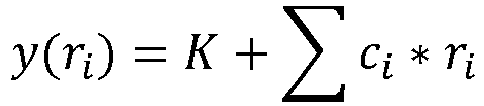
- In particular, the discriminant coefficient for each epigenetic modification (methylation) is based on the number and the type of genomic regions used during the analysis.
- The discriminant coefficient (ci) is calculated taking into consideration the levels (rates) of each methylation analysed in such way that the difference between positive and negative samples is maximized.
- The constant (K) is a fixed number that is added to the discriminant function and is calculated in such way that the difference between positive and negative samples is maximized.
- The final value of y is calculated after adding the constant to the summary of the product between the threshold of the methylation level for each at least one CpG/CpG island and the respective coefficient.
- For a correct grouping of each sample, a threshold that discriminates between positive and N negative samples is preferably, but not limited to, calculated through a ROC curve analysis.
- Values above certain y are to be considered positive.
- According to a preferred embodiment, by using the Linear Discriminat Analysis and a ROC, a sample is considered HNSCC positive if:
- (a) using the combination of Human TERT and KIF1A - when y exceeds the threshold of -0.5306765 (AUC: 0.924) with sensitivity of 0.914 and 1-specificity of 0.123); and/or
- (b) using the combination of LRRTM1, PARP15, ZAP70, miR193, miR296, hTERT - when y exceeds the threshold of -0.1582287 (AUC: 0.962) with sensitivity of 0.944 and 1-specificity of 0.085; and/or
- (c) KIF1A, LRRTM1, ZAP70, miR193, miR296, hTERT - when y exceeds the threshold of -0.1258801 (AUC: 0.962) with sensitivity of 0.917 and 1-specificity of 0.07; and/or
- (d) KIF1A, LRRTM1, FLI1, LINC00599, PARP15, ZAP70, miR193, miR296, GP1BB, hTERT - when y exceeds the threshold of 0.4430684 (AUC: 0.970) with sensitivity of 0.972 and 1-specificity of 0.056; and/or
- (e) EPHX3, KIF1A, LRRTM1, FLI1, ITGA4, LINC00599, NTM, PARP15, ZAP70, miR193, miR296, GP1BB, hTERT - when y exceeds the threshold of 1.0582872 (AUC: 0.971) with sensitivity of 0.917 and 1-specificity of 0.
- The linear discriminant analysis (LDA) generates a score that weighted the at least one, preferably all, CpG selected from: 19710956 for GP1BB; 98340854 for ZAP70; 241759621 for KIF1A; 1279758 for TERT; 80531799 for LRRTM1; 131781167 for NTM; 29886944 for MIR193; 122296586 for PARP15; 182322902 for ITGA4; 128564158 for FLI1; 9760888 for LINC0059; 15342885 for EPHX3; and 57392374 for MIR296, from the gene(s) investigated.
- This accuracy meets the clinical requirements and thus the method of the invention is ideal to be used in place of and/or alongside the current reference methods.
- According to a further aspect of the present invention, the method as disclosed above allow to detect the presence of field cancerization, preferably in surgically resected patients for HNSCC around the site of intervention. In particular, the invention shows that the presence of field cancerization with altered methylation pattern is related to poor prognosis and high risk of recurrence or secondary tumors.
- A further aspect of the present invention refers to detect the presence of field cancerization in surgically resected patients for HNSCC around the site of intervention. The presence of field cancerization with altered methylation pattern is related to poor prognosis and high risk of recurrence or secondary tumors.
- A further aspect of the present invention, refers to a kit to determine the presence and/or the risk for HNSCC, preferably HG-SIL and/or OSCC in a biological test sample, preferably containing exfoliating brush of oral mucosa obtained from and individual, who preferably shows OPML or suspect lesions, said kit comprising reagents for sodium bisulfite conversion and a set of oligonucleotides, enzymes and buffers that specifically amplify at least one of the sequences SEQ ID NO: 53-SEQ ID NO: 65 with at least one primer pairs selected from the group consisting of SEQ ID NO: 1-52 and from SEQ ID NO: 66-69.
- For the setting up and the validation phases of the present method, all consecutive patients referred to the Department of Oral Sciences, University of Bologna, from January 2015 to July 2016.
- Lesions with an obvious aetiology, such as trauma and infective aphthous ulcerations, were excluded.
- All patients presenting with oral lesions that required incisional biopsy to diagnostic purposed underwent also oral brushing of the same lesion.
- Oral brushing samples were always picked before incisional biopsy for histological diagnosis and staging of each lesion.
- Histological diagnoses were performed following the WHO criteria (Thompson, 2006). Distinction between HG-SIL and LG-SIL was made according to Ljubjana classification 2014(Gale, Blagus et al. 2014).
- A total of 150 oral brushing sample series for the training dataset was composed of:
- 65 normal healthy donors;
- 28 OSCC,
- 1 OSCC with sarcomatoid feature
- 6 HG-SIL,
- 35 normal mucosa around the site of intervention of patients previously surgically treated for an OSCC;
- The validation dataset was composed of:
- 2 OSCC;
- 3 PVL(proliferative verrucous leukoplakia)
- 14 OLP(oral lichen planus)
- 1 oral fibroma
- 20 Healthy normal donors
- A cytobrush was used to collect exfoliated cells from oral mucosa.
- In OSCC and OPML lesions all surface of lesions was gently brushed repeatedly five times.
- Brushing cell collection was always performed before incisional biopsy and without use of any local anaesthetic.
- After brushing, each cytobrush sample was placed in a 2 ml tube containing absolute ethanol for cell preservation.
- All clinical investigations have been conducted according to the principles expressed in the Declaration of Helsinki. The study was approved by local Ethics Committee (number of study: 14092, protocol number: 899/CE). All information regarding the human material used in this study was managed using anonymous numerical codes.
- DNA from exfoliating brush samples was purified using The MasterPure™ Complete DNA extraction kit (Epicentre, Madison, WI).
- Sodium bisulfite treatment of genomic DNA was carried out with the EZ DNA Methylation-Lightning™ Kit (Zymo Research Europe, Freiberg, Germany) according to the manufacturer's protocol.
- For Illumina Platform (MiSEQ), locus-specific bisulfite amplicon libraries were generated multiplexing with tagged primers (see Table 1) using Phusion U DNA polymerase (ThermoFisher) in 25 µl. Illumina platform needs a different method to evaluate amplicons, the Nextera™ approach which requires adaptors at the 5'end as described in Table 1. The insertion of one N or two N in the middle guarantees the minimum complexity for clustering. Barcoding was performed by using Nextera™ index kit.
- Cycling conditions for the first template specific PCR were: initial incubation at 98°C for 2 min followed by 1 cycle of 98°
C 10 sec, 62°C 2 min, 72°C 1 min, followed by 35 cycles at 98°C for 10 s, 62°C for 40 s and 72°C for 20 sec. A final extension step at 72°C for 5 min was added at the end of the last cycle. - Multiplex PCR consisted of:
-
Multiplex 1 PARP15; ITGA4; LRRTM1; TERT -
Multiplex 2 NTM; MIR193a; KIF1A -
Multiplex 3 LINC00599; MIR137HG; ZAP70; EPHX3 -
Multiplex 4 MIR296; FLI1N; GP1BB - Reaction conditions for multiplex were: ultrapure water: 8.8 µl, Buffer 5x HF: 5 µl, betaine 5M: 5 µl,
dNTPs 10 mM: 0.5, primers 0.1 µM: 1.5 µl, MgCl2 50 mM: 0.5 µl, Phusion U: 0.2 µl, DNA bisulfite treated: 3.5 µl. - Amplification products from multiplex 1-2 and 3-4 were combined and purified using SPRI -AMPure XT (Agencourt-Beckman Coulter, Beverly, MA), quantified with the FluorometerQuantus™ (Promega, Madison, WI) and then employed as template (100 ng) for a second round of PCR (6 cycles).
- Sample-specific barcode sequences (Indexes) and universal linker tags (P5/P7adaptor sequences) were added in this second PCR performed with 6 cycles (98°
C 1 min./98°C 10 sec./63°C 30 sec./72°C3 min.). - The amplicon library was purified using AgencourtAMPure XP beads (Beckman Coulter, Krefeld, Germany), then quantitated with the FluorometerQuantus™ (Promega, Madison, WI).
- The libraries were diluted, pooled at 4 nM and loaded on Nano Flow cell into MiSEQ. Alternatively, for amplicon sequencing experimental design for 454/IonTorrent platforms, the 'Universal Tailed' design requires two sets of primer pairs, used in two successive rounds of PCR.
- The first round uses fusion primers targeting the template-specific sequences (defining the boundaries of the amplicons) fused to a universal sequence that will be the target of the second round primers (
Fig. 1 ). In order to maintain sequencing directionality, different universal tails should be designed for the Primer A and Primer B ends of the amplicons (Univ-A and Univ-B on theFig.1-A ). - In the second round, the Univ-A sequence is targeted by a fusion primer that is tailed by the 454 Sequencing system's Primer A sequence plus an MID sequence to identify the sample; and same for the Univ-B sequence, with Primer B (
Fig.1-A ). - As reported in Table I, the forward Universal A Tailed sequence of choice is GTAATACGACGGTCAGT and the reverse Universal B Tailed sequence of choice is CAGGAAACAGCTATGAC.
- In order to identify putative the CpG islands on promoter region of the following genes: ZAP70, ITGA4, KIF1A, PARP15, EPHX3, NTM, LRRTM1, FLI1, MIR193, LINC00599, MIR296, hTERT and GP1BB, genomic sequence as stored on Ensembl genome browser (http://www.ensembl.org/index.html), including 1000 bp upstream the ATG site were employed as query sequence. MethPrimer (http://www.urogene.org/cgi-bin/methprimer/methprimer.cgi) design were applied to identify CpGs and the best primers of choice (see Table 1).
- In the second round of PCR, Universal A and B are recognized to add the specific Adaptors for 454 as follows including Adaptor a + key + MID + Universal A or B:
- ADPTUNIAFwMID2: CGTATCGCCTCCCTCGCGCCATCAGACGCTCGACA-GTAATACGACGGTCAGT (SEQ ID NO: 72)
- ADPTUNIBRvMID5: CTATGCGCCTTGCCAGCCCGCTCAGATCAGACACG-CAGGAAACAGCTATGAC (SEQ ID NO: 73)
- The same approach was used for IonTorrent/Proton platform as follows:
- Primer A: IonXpress 1: CCATCTCATCCCTGCGTGTCTCCGACTCAG-CTAAGGTAACGAT-GTAATACGACGGTCAGT (SEQ ID NO: 74)
- Primer P: CCTCTCTATGGGCAGTCGGTGAT-CAGGAAACAGCTATGAC (SEQ ID NO: 75)
- After the end of run, each FASTQ file obtained after the NGS was processed as follows:
- Using Galaxy, the open web-based platform for data intensive biomedical research (https://usegalaxy.org), load both R1 and R2 FASTQ files.
- Using Pear to merge paired-end reads (R1 Forward and R2 Reverse).
- Using FASTQ Groomer to render FASTQ file compatible with all formats.
- Filtering by Quality: filter for >Q30 at 90% and > 100 bp long
- Converting FASTQ file to FASTA
- Trimming from the beginning up to this position 25 bp and remove everything from this position to the end: -25 bp (Ignore lines beginning with these characters)
- Downloading the FASTA file.
- Then using Perl to extract reads from each gene of the analysed sets as follows:
(For instance to extract hTERT make the command line: grep-B 1 "GGAGAGTGTGGGGTGAGGTGGATAG" Name of source file.fasta>Name of Output file.fasta) - For example for set (e), once extracted all 13 files, load each one to BISMA (http://services.ibc.uni-stuttgart.de/BDPC/BISMA/manual unique.php)in order to calculate CpGpercentage for each CpG of each gene.
- Creating a Table with CpG methylation level dividing two group, one for normal healthy samples (indicated as class 0), the other one for OSCC and HG-SIL(class 1) for each CpG of each gene; then calculating ROC curve for each of the CpG evaluated and select the best CpG for each gene;
Figures 3A-C describe ROC analysis and the best three CpG for each gene evaluated. - The behaviour of each CpG respect to their position along the human genome, is graphically pointed out by methylation plotter tool (http://maplab.imppc.org/methylation_plotter/) in
Figures 3A-C . - A table including the best CpGs for each gene has been created wherein
class 0= normal donors andclass 1 = OSCC. - Using this table for LDA discriminant analysis by the tool SPSS (Selecting the following options: variable interval: 0-1; Statistics: not standardized values; Classifications: calculate from group dimension; create a summary Table; Save Discriminant Score). - Then make a ROC curve analysis finding the right threshold.
- Set (a) involves the following CpGs: 241759621 for KIF1A and 1279758 for TERT. The Linear Discriminant Analysis calculated the following coefficients:
-
Function 1 KIF1A 5.338 TERT .707 (Constant) -.808 
- By the ROC curve analysis (
Fig.4A ), larger values of the test result variables indicate stronger evidence for a positive actual state. The positive actual state is 1. - Test Result Variable(s): Discriminant Scores from
Function 1 forAnalysis 1Area Std. Errora Asymptotic Sig.b Asymptotic 95% Confidence Interval Lower Bound Upper Bound .924 .033 .000 .861 .988 - Therefore, when the y value exceeds the threshold of -0.5306765, the sample should be considered positive and related to the presence of HG-SIL or OSCC.
- Set (b) involves the following genes: LRRTM1 (CpG 80531799), PARP15 (CpG 122296586), ZAP70 (CpG 98340854), MIR193 (CpG 29886944), MIR296 (CpG 57392374), TERT (CpG 1279758).
- In this case, the Linear Discriminant Analysis calculated the following coefficients:
-
Function 1 LRRTM1 2.422 PARP15 1.335 ZAP70 3.571 MIR193 3.073 MIR296 4.730 TERT .165 (Constant) -3.470 - Then the algorithm will be the following: y = -3.470 + 2.422 ∗ (LRRTM1 value) + 3.073 ∗ (miR193 value) + 4.730 ∗ (1 - miR296 value) + 0.165 ∗ (1- hTERT value) +1.335 ∗ (PARP15 value) + 3.571 ∗ (ZAP70 value).
- By the ROC curve analysis (
Fig.4B ), larger values of the test result variables indicate stronger evidence for a positive actual state. The positive actual state is 1. - Test Result Variable(s): Discriminant Scores from
Function 1 forAnalysis 1Area Std. Errora Asymptotic Sig.b Asymptotic 95% Confidence Interval Lower Bound Upper Bound .975 .019 .000 .937 1.000 Under the nonparametric assumption b. Null hypothesis: true area = 0.5 - Test Result Variable(s): Discriminant Scores from
Function 1 forAnalysis 1Positive if Greater Than or Equal Toa Sensitivity 1 - Specificity -.1924607 .971 .077 - The smallest cutoff value is the minimum observed test value minus 1, and the largest cutoff value is the maximum observed test value plus 1. All the other cutoff values are the averages of two consecutive ordered observed test values.
- Therefore, when the y value exceeds the threshold of 0.1924607, the sample is considered positive and related to the presence of HG-SIL or OSCC.
- Set (c) involves the following genes: KIF1A (CpG 241759621), LRRTM1 (CpG 80531799), ZAP70 (CpG 98340854), MIR193 (CpG 29886944), MIR296 (CpG 57392374), TERT (CpG 1279758).
-
Function 1 KIF1A 1.744 LRRTM1 1.844 ZAP70 3.656 MIR193 2.852 MIR296 5.441 TERT .228 (Constant) -3.474 - By the ROC curve analysis (
Fig.5A ), larger values of the test result variables indicate stronger evidence for a positive actual state. The positive actual state is 1. - Test Result Variable(s): Discriminant Scores from
Function 1 forAnalysis 1Area Std. Errora Asymptotic Sig.b Asymptotic 95% Confidence Interval Lower Bound Upper Bound .973 .019 .000 .936 1.000 
- Therefore, when the y value exceeds the threshold of -0.2394214 (sensitivity: 0.943; 1-specificity: 0.077), the sample should be considered positive and related to the presence of HG-SIL or OSCC.
- Set (d) involves the following genes: KIF1A (CpG 241759621), LRRTM1 (CpG 80531799), FLI1 (CpG 128564158), LINC00599 (CpG 9760888), PARP15 (CPG 122296586), ZAP70 (CpG 98340854), MIR193 (CpG 29886944), MIR296 (CpG 57392374), GP1BB (CpG 19710956), hTERT (CpG 1279758).
-
Function 1 KIF1A 1.585 LRRTM1 1.631 ZAP70 1.996 MIR193 .625 MIR296 8.743 TERT -.083 FLI1 -2.630 LINC0599 -.443 PARP15 1.995 GP1BB 3.899 (Constant) -3.977 - By the ROC curve analysis (
Fig.5B ), larger values of the test result variables indicate stronger evidence for a positive actual state. The positive actual state is 1. - Test Result Variable(s): Discriminant Scores from
Function 1 forAnalysis 1Area Std. Errora Asymptotic Sig.b Asymptotic 95% Confidence Interval Lower Bound Upper Bound .973 .026 .000 .922 1.000 
- Therefore, when the y value exceeds the threshold of 0.6760154 (sensitivity: 0.971; 1-specificity: 0.015), the sample should be considered positive and related to the presence of HG-SIL or OSCC.
- Set (e) involves the following genes with their CpGs: 19710956 for GP1BB; 98340854 for ZAP70; 241759621 for KIF1A; 1279758 for TERT; 80531799 for LRRTM1; 131781167 for NTM; 29886944 for MIR193; 122296586 for PARP15; 182322902 for ITGA4; 128564158 for FLI1; 9760888 for LINC0059; 15342885 for EPHX3; and 57392374 for MIR296.
-
Function 1 KIF1A 1.789 ZAP70 1.983 GP1BB 3.801 LRRTM1 1.428 TERT -.265 PARP15 2.338 FLI1 -3.471 NTM -.637 LINC0599 -.036 EPHX3 -.415 ITGA4 2.276 MIR193 .894 MIR296 7.938 (Constant) -3.954 - By the ROC curve analysis (Fig.5D), larger values of the test result variables indicate stronger evidence for a positive actual state. The positive actual state is 1.
- Test Result Variable(s): Discriminant Scores from
Function 1 forAnalysis 1Area Std. Errora Asymptotic Sig.b Asymptotic 95% Confidence Interval Lower Bound Upper Bound .973 .026 .000 .921 1.000 
- Therefore, when the y value exceeds the threshold of 0.8732193 (sensitivity: 0.971; 1-specificity: 0), the sample should be considered positive and related to the presence of HG-SIL or OSCC.
- A Duncan's Multiple Range Test evaluating the final score of patients from different groups (65 Normal donors, 29 OSCC, 6 HGSIL, 30 distant mucosa in OSCC patients) has been calculated using the combination "e" as follows:

- This test identifies a statistical difference between the OSCC group vs healthy donors and vs contralateral mucosa. Furthermore, multiple range test shows a statistical difference between the HGSIL group and healthy donors and contralateral mucosa:
Table II indicating for each group the mean score value: pathology Count Mean Homogeneous Groups Healthy donors 65 -1.586 C Distant mucosa in OSCC patients 30 -0.444399 B OSCC 29 2.66856 A HG SIL 6 2.71892 A Table III indicating the significance for each group comparison: Contrast Sig. Difference +/-Limits OSCC - HG SIL -0.0503633 0.983538 OSCC - distant mucosa in OSCC patients * 3.11296 0.571081 OSCC - healthy donors * 4.25456 0.489711 HG SIL - distant mucosa in OSCC patients * 3.16332 0.980724 HG SIL - healthy donors * 4.30492 0.935683 Distant mucosa in OSCC patients-healthy donors * 1.1416 0.484034 * denotes a statistically significant difference. - By these data, Multiple Range Test for LDA-generated scores (combination "e") identifies a significant difference between the OSCC group and healthy donors and contralateral mucosa. Furthermore, multiple range test showed a significant difference between the HGSIL group and healthy donors and contralateral mucosa, demostrating that OSCC and HGSIL have a different epigenetic behavior than normal donors and normal cotralateral mucosa.
- Considering the validation dataset, all normal donors were detected under the threshold value, as well as one oral fibroma and 12 out of 14 OLP; on the contrary the remaining two OLP, all PVL and all OSCC were positives as expected.
- Kruskal-Wallis test (
Fig.5 ) showed a significant between-group difference for scores generated with linear discriminant analysis (LDA) (T=78,8587, p <0.05).
Claims (15)
- Method for detecting and/or for the prognosis of a Head and Neck Squamous Cell Carcinoma (HNSCC) comprising the steps of:(i) Purifying the genomic DNA from an isolated sample obtained from an individual;(ii) Treating the genomic DNA, with bisulfite, preferably sodium bisulfite;(iii) Amplifying the genomic DNA, after step (ii) by using at least one primer pair said primer pair allowing the amplification of at least one sequence of the genomic DNA region of each one of the genes comprised in the following set of genes:
(b) LRRTM1, PARP15, ZAP70, miR193, miR296, hTERT and, optionally, of at least one of the following genes:
FLI1, LINC00599, GP1BB, EPHX3, ITGA4, NTM, KIF1A, wherein said sequence comprises at least one CpG and/or CpG island;(iv) Measuring the methylation level of the CpG and/or CpG island falling in the sequence amplified according to the step (ii) and belonging to the following set of genes:
LRRTM1, PARP15, ZAP70, miR193, miR296, hTERT and, optionally, of at least one of the following genes: FLI1, LINC00599, GP1BB, EPHX3, ITGA4, NTM, KIF1A;
wherein the hypermethylation of the at least one CpG and/or CpG island falling in the sequence of at least one of the following genes of the sets: EPHX3, KIF1A, LRRTM1,FLI1, ITGA4, LINC00599, NTM, PARP15, ZAP70, miR193 and/or the hypomethylation of the at least one CpG and/or CpG island falling in the sequence of at least one of the following genes of the sets: miR296, GP1BB, hTERT is(are) indicative of a HNSCC positive sample wherein the hypermetylation and/or the hypomethylation is(are) evaluated compared to the methylation level measured in a sample isolated from an healthy individual. - Method according to claim 1, wherein the HNSCC is any tumor developing in the mouth, nose, and throat, preferably it is Oral Squamous Cell Carcinoma (OSCC), or a precursor of OSCC, preferably high-grade squamous intraepithelial lesion (HG-SIL), or an Oral Pre-Malignant Lesion (OPML), or a cancerization field, wherein said OPML is preferably selected from: leukoplakia, erythroplakia, palatal lesion of reverse cigar smoking, oral lichen planus, oral submucous fibrosis (SMF) and discoid lupus erythematosus.
- Method according to claim 1 or 2, wherein the biological sample is selected from: a brushing from oral mucosa or DNA buccal swab, plasma, saliva or any sample containing epithelial cells preferably from oral cavity.
- Method according to anyone of claims 1-3, wherein said genomic DNA region is selected from: a regulating region of a gene, preferably the gene promoter, the 5'UTR, the 3'UTR, and the coding regions, preferably exons and/or introns and/or shores.
- Method according to anyone of claims 1-4, wherein the amplification step (iii) involves 1) a first template-specific amplification step to amplify the at least one sequence of the genomic DNA region; and 2) a second amplification step for barcoding the template-specific amplification products and sample identification.
- Method according to anyone of claims 1-5, wherein the template-specific amplification step is performed using at least one fusion primer pair said fusion primer pair comprising a forward and a reverse primer for amplifying the genomic DNA region of interest, wherein each primer of the pair is a fusion primer comprising a template specific portion hybridizing to at least a portion of said at least one sequence of the genomic region and a second portion that is a universal sequence.
- Method according to anyone of claims 1-6, wherein the second amplification step involves using at least one fusion primer pair said fusion primer pair comprising a forward and a reverse primer wherein each primer of the pair comprises, starting from the 5' end of the primer sequence: 1) an adaptor sequence specific for the sequencing platform used, preferably said sequencing platform being Illumina and/or IonTorrent; 2) a sample-specific barcode sequence, preferably a multiplex identifier (MIDs) or an index; and 3) a universal liker tag complementary to the universal sequence of the primer pair used in the first amplification step.
- Method according to anyone of claims 1-7, wherein the at least one primer pair of step (iii) or the fusion primer pair of claim 6 is selected from:- SEQ ID NO: 1 and 2 and/or SEQ ID NO: 27 and 28 for amplifying PARP15 preferably with IonTorrent and Illumina platforms respectively; and/or- SEQ ID NO: 3 and 4 and/or SEQ ID NO: 29 and 30 for amplifying ITGA4 preferably with IonTorrent and Illumina platforms respectively; and/or- SEQ ID NO: 5 and 6 and/or SEQ ID NO: 31 and 32 for amplifying NMT preferably with IonTorrent and Illumina platforms respectively; and/or- SEQ ID NO: 7 and 8 and/or SEQ ID NO: 33 and 34 for amplifying ZAP70 preferably with IonTorrent and Illumina platforms respectively; and/or- SEQ ID NO: 9 and 10 and/or SEQ ID NO: 35 and 36 for amplifying MIR193A preferably with IonTorrent and Illumina platforms respectively; and/or- SEQ ID NO: 11 and 12 and/or SEQ ID NO: 37 and 38 for amplifying EPKH3 preferably with IonTorrent and Illumina platforms respectively; and/or- SEQ ID NO: 13 and 14 and/or SEQ ID NO: 39 and 40 for amplifying KIF1A preferably with IonTorrent and Illumina platforms respectively; and/or- SEQ ID NO: 15 and 16 and/or SEQ ID NO: 41 and 42 for amplifying LINC00599, preferably with IonTorrent and Illumina platforms respectively; and/or- SEQ ID NO: 17 and 18 and/or SEQ ID NO: 43 and 44 for amplifying FLI1, preferably with IonTorrent and Illumina platforms respectively; and/or- SEQ ID NO: 19 and 20 and/or SEQ ID NO: 45 and 46 for amplifying GP1BB, preferably with IonTorrent and Illumina platforms respectively; and/or- SEQ ID NO: 21 and 22 and/or SEQ ID NO: 47 and 48 for amplifying MIR296, preferably with IonTorrent and Illumina platforms respectively; and/or- SEQ ID NO: 23 and 24 and/or SEQ ID NO: 49 and 50 for amplifying LRRTM1, preferably with IonTorrent and Illumina platforms respectively; and/or- SEQ ID NO: 25 and 26 and/or SEQ ID NO: 51 and 52 for amplifying human TERT, preferably with IonTorrent and Illumina platforms respectively.
- Method according to anyone of claims 1-8, wherein the at least one sequence of the genomic DNA region is selected from SEQ ID NO: 53-65 wherein:- SEQ ID NO: 53 is the region of PARP15 spanning from 122296564 to 122296725 of the chromosome 3 strand + with respect to hg19 coordinates; and/or- SEQ ID NO: 54 is the region of ITGA4 spanning from 182322887 to 182323053 of the chromosome 2 strand + with respect to hg19 coordinates; and/or- SEQ ID NO: 55 is the region of NTM spanning from 131781042 to 131781185 of the chromosome 11 strand + with respect to hg19 coordinates; and/or- SEQ ID NO: 56 is the region of ZAP70 spanning from 98340750 to 98340885 of the chromosome 12 strand + with respect to hg19coordinates;and/or- SEQ ID NO: 57 is the region of MIR193A spanning from 29886860 to 29887068 of the chromosome 17 strand + with respect to hg19 coordinates; and/or- SEQ ID NO: 58 is the region of EPHX3 spanning from 15342826 to 15343049 of the chromosome 19 strand - with respect to hg19 coordinates;and/or- SEQ ID NO: 59 is the region of KIF1A spanning from 241759586 to 241759727 of the chromosome 2 strand - with respect to hg19 coordinates; and/or- SEQ ID NO: 60 is the region of LINC00599 spanning from 9760739 to 9760890 of the chromosome 8 strand - with respect to hg19coordinates; and/or- SEQ ID NO: 61 is the region of FLI1 spanning from 128564020 to 128564160 of the chromosome 11 strand + with respect to hg19 coordinates; and/or- SEQ ID NO: 62 is the region of GP1BB spanning from19710829 to 19710960 of the chromosome 22 strand + with respect to hg19 coordinates; and/or- SEQ ID NO: 63 is the region of MIR296 spanning from 57392355 to 57392545of the chromosome 20 strand - with respect to hg19 coordinates; and/or- SEQ ID NO: 64 is the region of LRRTM1 spanning from 80531676 to 80531807 of the chromosome 2 strand - with respect to hg19 coordinates; and/or- SEQ ID NO: 65 is the region of human TERT (hTERT) spanning from 1279743 to 1279851 of the chromosome 21 strand - with respect to hg19 coordinates.
- Method according to anyone of claims 1-9, wherein the at least one CpG/CpG island is selected from:- A CpG/CpG island falling in the genomic region of PARP15 SEQ ID NO: 53 having coordinates from 122296564 to 122296725 of the chromosome 3 strand + with respect to hg19 coordinates, preferably at least one coordinate selected from: 122296564, 122296586, 122296613, 122296617, 122296623, 122296630, 122296637, 122296645, 122296649, 122296656, 122296663, 12229665, 122296671, 122296677, 122296680, 122296692, 122296708, 122296710, 122296717, 122296723 and combination thereof, more preferably the CpG/CpG island coordinate is 122296586; and/or- A CpG/CpG island falling in the genomic region of ITGA4 SEQ ID NO: 54 having coordinates from 182322887 to 182323053 of the chromosome 2 strand + with respect to hg19 coordinates, preferably at least one coordinate selected from: 182322890, 182322898, 182322902, 182322908, 182322915, 182322937, 182322956, 182322962, 182322980, 182322985, 182323004, 182323016, 182323024, 182323028 and combination thereof, more preferably the CpG/CpG island coordinate is 182322902; and/or- A CpG/CpG island falling in the genomic region of NTM SEQ ID NO: 55 having coordinates from 131781042 to 131781185 of the chromosome 11 strand + with respect to hg19 coordinates, preferably at least one coordinate selected from: 131781046, 131781058, 131781060, 131781080, 131781082, 131781084, 131781098, 131781110, 131781113, 131781122, 131781144, 131781151, 131781158, 131781167, 131781183 and combination thereof, more preferably the CpG/CpG island coordinate is 131781082 and/or 131781167; and/or- A CpG/CpG island falling in the genomic region of ZAP70 SEQ ID NO: 56 having coordinates from 98340750 to 98340885 of the chromosome 12 strand + with respect to hg19 coordinates, preferably at least one coordinate selected from: 98340751, 98340762, 98340764, 98340766, 98340772, 98340775, 98340794, 98340801, 98340809, 98340813, 98340816, 98340823, 98340828, 98340834, 98340844, 98340854, 98340859, 98340869, 98340877, 98340881 and combination thereof, more preferably the CpG/CpG island coordinate is 98340751 and/or 98340854;and/or- A CpG/CpG island falling in the genomic region of MIR193A SEQ ID NO: 57 having coordinates from 29886860 to 29887068 of the chromosome 17 strand + with respect to hg19 coordinates, preferably at least one coordinate selected from: 29886868, 29886870, 29886875, 29886881, 29886885, 29886890, 29886903, 29886910, 29886913, 29886936, 29886939, 29886944, 29886949, 29886951, 29886964, 29886967, 29886971, 29886983, 29886992, 29886995, 29887001, 29887008, 29887015, 29887045, 29887049, 29887063 and combination thereof, more preferably the CpG/CpG island coordinate is 29886870 and/or 29886944; and/or- A CpG/CpG island falling in the genomic region of EPHX3 SEQ ID NO: 58 having coordinates from 15342826 to 15343049 of the chromosome 19 strand - with respect to hg19coordinates, preferably at least one coordinate selected from: 15342895,15342889, 15342885, 15342875, 15342869, 15342866, 15342864, 15342855, 15342851, 15342848, 15342845, 15342840, 15342838, 15342831, 15343002, 15343000, 15342991, 15342988, 15342985, 15342983, 15342976, 15342962, 15342960, 15342934, 15342928, 15342918, 15342916, 15342913, 15342906 and combination thereof, more preferably the CpG/CpG island coordinate is 15342840 and/or 15342885; and/or- A CpG/CpG island falling in the genomic region of KIF1A SEQ ID NO: 59 having coordinates from 241759586 to 241759727 of the chromosome 2 strand - with respect to hg19 coordinates, preferably at least one coordinate selected from: 241759726, 241759722, 241759719, 241759717, 241759715, 241759702, 241759697, 241759688, 241759686, 241759681, 241759676, 241759671, 241759665, 241759663, 241759656, 241759651, 241759649, 241759646, 241759643, 241759640, 241759632, 241759621, 241759618, 241759614, 241759602, 241759596, 241759588and combination thereof, more preferably the CpG/CpG island coordinate is 241759686 and/or 241759681 and/or 241759651 and/or 241759621 ; and/or- A CpG/CpG island falling in the genomic region of LINC00599 SEQ ID NO: 60 having coordinates from 9760739 to 9760890 of the chromosome 8 strand - with respect to hg19 coordinates, preferably at least one coordinate selected from: 9760888, 9760881, 9760878, 9760870, 9760856, 9760852, 9760848, 9760839, 9760832, 9760822, 9760820, 9760815, 9760811, 9760809, 9760805, 9760803, 9760777, 9760764, 9760759, 9760752 and combination thereof, more preferably the CpG/CpG island coordinate is 9760888; and/or- A CpG/CpG island falling in the genomic region of FLI1 SEQ ID NO: 61 having coordinates from 128564020 to 128564160 of the chromosome 11 strand + with respect to hg19coordinates, preferably at least one coordinate selected from: 128564022, 128564033, 128564051, 128564063, 128564065, 128564068, 128564078, 128564089, , 128564106, 128564134, 128564158 and combination thereof, more preferably the CpG/CpG island coordinate is 128564158 and/or 128564051; and/or- A CpG/CpG island falling in the genomic region of GP1BB SEQ ID NO: 62 having coordinates from 19710829 to 19710960 of the chromosome 22 strand + with respect to hg19 coordinates, preferably at least one coordinate selected from: 19710839, 19710842, 19710847, 19710855, 19710864, 19710880, 19710890, 19710902, 19710909, 19710916, 19710919, 19710937, 19710944, 19710946, 19710948, 19710952,19710954, 19710956 and combination thereof, more preferably the CpG/CpG island coordinate is 19710956 and/or 197109946; and/or- A CpG/CpG island falling in the genomic region of MIR296 SEQ ID NO: 63 having coordinates from 57392355 to 57392545of the chromosome 20 strand - with respect to hg19 coordinates, preferably at least one coordinate selected from: 57392543, 57392538, 57392536, 57392517, 57392501, 57392469, 57392452, 57392440, 57392437, 57392430, 57392419, 57392394, 57392386, 57392374, 57392363 and combination thereof, more preferably the CpG/CpG island coordinate is 57392374 and/or 57392363; and/or- A CpG/CpG island falling in the genomic region of LRRTM1 SEQ ID NO: 64 having coordinates from 80531676 to 80531807 of the chromosome 2 strand - with respect to hg19coordinates, preferably at least one coordinate selected from: 80531806, 80531803, 80531799, 80531796, 80531789, 80531786, 80531783, 80531780, 80531776, 80531763, 80531759, 80531756, 80531752, 80531749, 80531745, 80531742, 80531738, 80531719, 80531702, 80531697, 80531695, 80531677 and combination thereof, more preferably the CpG/CpG island coordinate is 80531799 and/or 80531697; and/or- A CpG/CpG island falling in the genomic region of TERT (hTERT) SEQ ID NO: 65 having coordinates from 1279743 to 1279851 of the chromosome 21 strand - with respect to hg19 coordinates, preferably at least one coordinate selected from: 1279847, 1279838, 1279829, 1279775, 1279758, 1279746 and combination thereof, more preferably the CpG/CpG island coordinate is 1279758 and/or 1279775 and/or 1279747.
- Method according to anyone of claims 1-9, wherein after the amplification step (iii), the amplified sequences are sequenced, preferably by using a next generation sequencing (NGS) platform, more preferably said NGS platform being Illumina and/or IonTorrent.
- Method according to anyone of claims 1-11, wherein the sequences are filtered by applying an error filter ranging from Q30 for at least 90% of bases for Illumina platform and preferably Q20 or less for other platforms.
- Method according to anyone of claims 1-12, wherein the step (iv) is performed using a tool allowing a quantitative measurement of the methylation level based on comparing a whole human genomic sequence and the sequence after the bisulfite treatment, preferably said tool being selected from: BISMARK, BS-Seeeker2, BISMA, BSPAT, and QUMA.
- Method according to anyone of claims 1-13, wherein a multiclass Linear Discriminat Analysis is used to measure the total methylation level of the at least one CpG/CpG island of at least one genomic DNA region of more than one gene of interest, preferably the set of genes of claim 1.
- Method according to anyone of claims 1-14, wherein after the Linear Discriminat Analysis a ROC curve is obtained to define a threshold able to determine the HNSCC positive sample, preferably the OSCC/HG-SIL positive sample.
Applications Claiming Priority (2)
| Application Number | Priority Date | Filing Date | Title |
|---|---|---|---|
| IT102016000111174A IT201600111174A1 (en) | 2016-11-04 | 2016-11-04 | Method for determining a Head and Neck Squamous Cell Carcinoma |
| PCT/IB2017/056875 WO2018083646A2 (en) | 2016-11-04 | 2017-11-03 | Method for determining a head and neck squamous cell carcinoma |
Publications (2)
| Publication Number | Publication Date |
|---|---|
| EP3374527A2 EP3374527A2 (en) | 2018-09-19 |
| EP3374527B1 true EP3374527B1 (en) | 2020-12-23 |
Family
ID=58163076
Family Applications (1)
| Application Number | Title | Priority Date | Filing Date |
|---|---|---|---|
| EP17804665.2A Active EP3374527B1 (en) | 2016-11-04 | 2017-11-03 | Method for determining a head and neck squamous cell carcinoma |
Country Status (7)
| Country | Link |
|---|---|
| US (1) | US12344898B2 (en) |
| EP (1) | EP3374527B1 (en) |
| CN (1) | CN110168107B (en) |
| BR (1) | BR112019008911A2 (en) |
| ES (1) | ES2863531T3 (en) |
| IT (1) | IT201600111174A1 (en) |
| WO (1) | WO2018083646A2 (en) |
Families Citing this family (2)
| Publication number | Priority date | Publication date | Assignee | Title |
|---|---|---|---|---|
| AU2020283954B2 (en) * | 2019-05-28 | 2026-04-30 | Case Western Reserve University | Compositions and methods for preserving DNA methylation |
| WO2021242872A1 (en) | 2020-05-27 | 2021-12-02 | Case Western Reserve University | Compositions and methods for preserving dna methylation |
Family Cites Families (5)
| Publication number | Priority date | Publication date | Assignee | Title |
|---|---|---|---|---|
| CA2659082A1 (en) * | 2006-06-07 | 2007-12-21 | Tethys Bioscience, Inc. | Markers associated with arteriovascular events and methods of use thereof |
| US9328379B2 (en) * | 2010-03-12 | 2016-05-03 | The Johns Hopkins University | Hypermethylation biomarkers for detection of head and neck squamous cell cancer |
| TWI408235B (en) * | 2010-06-03 | 2013-09-11 | Univ China Medical | Gene marker and method for detection of oral cancer |
| US10457992B2 (en) | 2013-10-30 | 2019-10-29 | The Johns Hopkins University | Hypermethylation biomarkers associated with poor survival outcomes for head and neck squamous cell cancer |
| CN105671187B (en) * | 2016-04-08 | 2020-06-05 | 南方医科大学 | Group of genes for molecular typing of head and neck squamous cell carcinoma and application thereof |
-
2016
- 2016-11-04 IT IT102016000111174A patent/IT201600111174A1/en unknown
-
2017
- 2017-11-03 BR BR112019008911A patent/BR112019008911A2/en unknown
- 2017-11-03 EP EP17804665.2A patent/EP3374527B1/en active Active
- 2017-11-03 ES ES17804665T patent/ES2863531T3/en active Active
- 2017-11-03 US US16/347,387 patent/US12344898B2/en active Active
- 2017-11-03 WO PCT/IB2017/056875 patent/WO2018083646A2/en not_active Ceased
- 2017-11-03 CN CN201780082316.1A patent/CN110168107B/en active Active
Non-Patent Citations (1)
| Title |
|---|
| None * |
Also Published As
| Publication number | Publication date |
|---|---|
| ES2863531T3 (en) | 2021-10-11 |
| EP3374527A2 (en) | 2018-09-19 |
| CN110168107A (en) | 2019-08-23 |
| BR112019008911A2 (en) | 2019-08-06 |
| IT201600111174A1 (en) | 2018-05-04 |
| CN110168107B (en) | 2024-08-02 |
| WO2018083646A2 (en) | 2018-05-11 |
| WO2018083646A3 (en) | 2018-06-14 |
| US12344898B2 (en) | 2025-07-01 |
| US20200299773A1 (en) | 2020-09-24 |
Similar Documents
| Publication | Publication Date | Title |
|---|---|---|
| ES2908347T3 (en) | Mutation detection for cancer screening and fetal analysis | |
| CN110257494B (en) | Method and system for obtaining individual ages of Chinese population and amplification detection system | |
| CN108866192B (en) | Methylation-modification-based tumor marker STAMP-EP1 | |
| CN112538545B (en) | Application of the fungal microbiome as a biomarker for therapeutic screening and lung cancer diagnosis | |
| WO2017076299A1 (en) | Multiplex pcr primer, and application | |
| JP6395131B2 (en) | Method for acquiring information on lung cancer, and marker and kit for acquiring information on lung cancer | |
| WO2025073215A1 (en) | Dna methylation marker tagme-4 and use thereof in tumor detection | |
| WO2024192928A1 (en) | Gene combination for liver cancer detection, and related reagent and application | |
| WO2024178886A1 (en) | Methylation reference gene and use thereof | |
| TWI408235B (en) | Gene marker and method for detection of oral cancer | |
| EP4678769A1 (en) | Use of plasma cell-free dna methylation marker in liver tumor detection | |
| US12344898B2 (en) | Method for determining a head and neck squamous cell carcinoma | |
| WO2025223353A1 (en) | Dna methylation markers tagme-11, 12, and 13 suitable for tumor identification and use thereof | |
| WO2025073217A1 (en) | Novel dna methylation marker tagme-6 and use thereof as target for tumor diagnosis | |
| KR102701683B1 (en) | DNA Methylation marker for Diagnosing Lung cancer and Uses thereof | |
| WO2025073218A1 (en) | Identification of dna methylation marker tagme-7 and use thereof in tumor detection | |
| CN118460724A (en) | A methylation marker for lymph node metastasis of early gastric cancer and its application | |
| CN108753934B (en) | Method and kit for detecting gene mutation and preparation method thereof | |
| CN109161590B (en) | Application of DNA methylation sites of integrin beta 4 gene in preparation of biomarkers for early diagnosis of asthma and/or COPD | |
| CN117660612A (en) | Polygene methylation joint detection method and kit | |
| CN116676393A (en) | Methylation markers, primer pairs and methods for early screening of cervical cancer | |
| US20220275452A1 (en) | Tumor marker stamp-ep7 based on methylated modification and use thereof | |
| CN108642173B (en) | Method and kit for non-invasive detection of SLC26A4 gene mutation | |
| EP4458989B1 (en) | Kit for identifying tumor tissue-of-origin and data analysis method | |
| KR20260056455A (en) | A Method for Diagnosing and Monitoring Colon Cancer Using Colon Cancer-Specific Methylation Regions |
Legal Events
| Date | Code | Title | Description |
|---|---|---|---|
| STAA | Information on the status of an ep patent application or granted ep patent |
Free format text: STATUS: UNKNOWN |
|
| STAA | Information on the status of an ep patent application or granted ep patent |
Free format text: STATUS: THE INTERNATIONAL PUBLICATION HAS BEEN MADE |
|
| PUAI | Public reference made under article 153(3) epc to a published international application that has entered the european phase |
Free format text: ORIGINAL CODE: 0009012 |
|
| STAA | Information on the status of an ep patent application or granted ep patent |
Free format text: STATUS: REQUEST FOR EXAMINATION WAS MADE |
|
| 17P | Request for examination filed |
Effective date: 20180613 |
|
| AK | Designated contracting states |
Kind code of ref document: A2 Designated state(s): AL AT BE BG CH CY CZ DE DK EE ES FI FR GB GR HR HU IE IS IT LI LT LU LV MC MK MT NL NO PL PT RO RS SE SI SK SM TR |
|
| AX | Request for extension of the european patent |
Extension state: BA ME |
|
| STAA | Information on the status of an ep patent application or granted ep patent |
Free format text: STATUS: EXAMINATION IS IN PROGRESS |
|
| RIN1 | Information on inventor provided before grant (corrected) |
Inventor name: TARSITANO, ACHILLE Inventor name: GISSI, DAVIDE BARTOLOMEO Inventor name: MORANDI, LUCA |
|
| 17Q | First examination report despatched |
Effective date: 20190328 |
|
| REG | Reference to a national code |
Ref country code: DE Ref legal event code: R079 Ref document number: 602017030174 Country of ref document: DE Free format text: PREVIOUS MAIN CLASS: C12Q0001680000 Ipc: C12Q0001688600 |
|
| GRAP | Despatch of communication of intention to grant a patent |
Free format text: ORIGINAL CODE: EPIDOSNIGR1 |
|
| STAA | Information on the status of an ep patent application or granted ep patent |
Free format text: STATUS: GRANT OF PATENT IS INTENDED |
|
| DAV | Request for validation of the european patent (deleted) | ||
| DAX | Request for extension of the european patent (deleted) | ||
| RIC1 | Information provided on ipc code assigned before grant |
Ipc: C12Q 1/6886 20180101AFI20200127BHEP |
|
| INTG | Intention to grant announced |
Effective date: 20200211 |
|
| GRAJ | Information related to disapproval of communication of intention to grant by the applicant or resumption of examination proceedings by the epo deleted |
Free format text: ORIGINAL CODE: EPIDOSDIGR1 |
|
| STAA | Information on the status of an ep patent application or granted ep patent |
Free format text: STATUS: EXAMINATION IS IN PROGRESS |
|
| GRAP | Despatch of communication of intention to grant a patent |
Free format text: ORIGINAL CODE: EPIDOSNIGR1 |
|
| STAA | Information on the status of an ep patent application or granted ep patent |
Free format text: STATUS: GRANT OF PATENT IS INTENDED |
|
| INTC | Intention to grant announced (deleted) | ||
| INTG | Intention to grant announced |
Effective date: 20200709 |
|
| GRAS | Grant fee paid |
Free format text: ORIGINAL CODE: EPIDOSNIGR3 |
|
| GRAA | (expected) grant |
Free format text: ORIGINAL CODE: 0009210 |
|
| STAA | Information on the status of an ep patent application or granted ep patent |
Free format text: STATUS: THE PATENT HAS BEEN GRANTED |
|
| AK | Designated contracting states |
Kind code of ref document: B1 Designated state(s): AL AT BE BG CH CY CZ DE DK EE ES FI FR GB GR HR HU IE IS IT LI LT LU LV MC MK MT NL NO PL PT RO RS SE SI SK SM TR |
|
| REG | Reference to a national code |
Ref country code: GB Ref legal event code: FG4D |
|
| REG | Reference to a national code |
Ref country code: DE Ref legal event code: R096 Ref document number: 602017030174 Country of ref document: DE |
|
| REG | Reference to a national code |
Ref country code: AT Ref legal event code: REF Ref document number: 1347787 Country of ref document: AT Kind code of ref document: T Effective date: 20210115 |
|
| REG | Reference to a national code |
Ref country code: IE Ref legal event code: FG4D |
|
| REG | Reference to a national code |
Ref country code: NL Ref legal event code: FP |
|
| PG25 | Lapsed in a contracting state [announced via postgrant information from national office to epo] |
Ref country code: FI Free format text: LAPSE BECAUSE OF FAILURE TO SUBMIT A TRANSLATION OF THE DESCRIPTION OR TO PAY THE FEE WITHIN THE PRESCRIBED TIME-LIMIT Effective date: 20201223 Ref country code: RS Free format text: LAPSE BECAUSE OF FAILURE TO SUBMIT A TRANSLATION OF THE DESCRIPTION OR TO PAY THE FEE WITHIN THE PRESCRIBED TIME-LIMIT Effective date: 20201223 Ref country code: NO Free format text: LAPSE BECAUSE OF FAILURE TO SUBMIT A TRANSLATION OF THE DESCRIPTION OR TO PAY THE FEE WITHIN THE PRESCRIBED TIME-LIMIT Effective date: 20210323 Ref country code: GR Free format text: LAPSE BECAUSE OF FAILURE TO SUBMIT A TRANSLATION OF THE DESCRIPTION OR TO PAY THE FEE WITHIN THE PRESCRIBED TIME-LIMIT Effective date: 20210324 |
|
| REG | Reference to a national code |
Ref country code: CH Ref legal event code: NV Representative=s name: ICB INGENIEURS CONSEILS EN BREVETS SA, CH |
|
| REG | Reference to a national code |
Ref country code: AT Ref legal event code: MK05 Ref document number: 1347787 Country of ref document: AT Kind code of ref document: T Effective date: 20201223 |
|
| PG25 | Lapsed in a contracting state [announced via postgrant information from national office to epo] |
Ref country code: LV Free format text: LAPSE BECAUSE OF FAILURE TO SUBMIT A TRANSLATION OF THE DESCRIPTION OR TO PAY THE FEE WITHIN THE PRESCRIBED TIME-LIMIT Effective date: 20201223 Ref country code: SE Free format text: LAPSE BECAUSE OF FAILURE TO SUBMIT A TRANSLATION OF THE DESCRIPTION OR TO PAY THE FEE WITHIN THE PRESCRIBED TIME-LIMIT Effective date: 20201223 Ref country code: BG Free format text: LAPSE BECAUSE OF FAILURE TO SUBMIT A TRANSLATION OF THE DESCRIPTION OR TO PAY THE FEE WITHIN THE PRESCRIBED TIME-LIMIT Effective date: 20210323 |
|
| PG25 | Lapsed in a contracting state [announced via postgrant information from national office to epo] |
Ref country code: HR Free format text: LAPSE BECAUSE OF FAILURE TO SUBMIT A TRANSLATION OF THE DESCRIPTION OR TO PAY THE FEE WITHIN THE PRESCRIBED TIME-LIMIT Effective date: 20201223 |
|
| REG | Reference to a national code |
Ref country code: LT Ref legal event code: MG9D |
|
| PG25 | Lapsed in a contracting state [announced via postgrant information from national office to epo] |
Ref country code: SK Free format text: LAPSE BECAUSE OF FAILURE TO SUBMIT A TRANSLATION OF THE DESCRIPTION OR TO PAY THE FEE WITHIN THE PRESCRIBED TIME-LIMIT Effective date: 20201223 Ref country code: RO Free format text: LAPSE BECAUSE OF FAILURE TO SUBMIT A TRANSLATION OF THE DESCRIPTION OR TO PAY THE FEE WITHIN THE PRESCRIBED TIME-LIMIT Effective date: 20201223 Ref country code: PT Free format text: LAPSE BECAUSE OF FAILURE TO SUBMIT A TRANSLATION OF THE DESCRIPTION OR TO PAY THE FEE WITHIN THE PRESCRIBED TIME-LIMIT Effective date: 20210423 Ref country code: LT Free format text: LAPSE BECAUSE OF FAILURE TO SUBMIT A TRANSLATION OF THE DESCRIPTION OR TO PAY THE FEE WITHIN THE PRESCRIBED TIME-LIMIT Effective date: 20201223 Ref country code: CZ Free format text: LAPSE BECAUSE OF FAILURE TO SUBMIT A TRANSLATION OF THE DESCRIPTION OR TO PAY THE FEE WITHIN THE PRESCRIBED TIME-LIMIT Effective date: 20201223 Ref country code: EE Free format text: LAPSE BECAUSE OF FAILURE TO SUBMIT A TRANSLATION OF THE DESCRIPTION OR TO PAY THE FEE WITHIN THE PRESCRIBED TIME-LIMIT Effective date: 20201223 Ref country code: SM Free format text: LAPSE BECAUSE OF FAILURE TO SUBMIT A TRANSLATION OF THE DESCRIPTION OR TO PAY THE FEE WITHIN THE PRESCRIBED TIME-LIMIT Effective date: 20201223 |
|
| PG25 | Lapsed in a contracting state [announced via postgrant information from national office to epo] |
Ref country code: AT Free format text: LAPSE BECAUSE OF FAILURE TO SUBMIT A TRANSLATION OF THE DESCRIPTION OR TO PAY THE FEE WITHIN THE PRESCRIBED TIME-LIMIT Effective date: 20201223 Ref country code: PL Free format text: LAPSE BECAUSE OF FAILURE TO SUBMIT A TRANSLATION OF THE DESCRIPTION OR TO PAY THE FEE WITHIN THE PRESCRIBED TIME-LIMIT Effective date: 20201223 |
|
| REG | Reference to a national code |
Ref country code: DE Ref legal event code: R097 Ref document number: 602017030174 Country of ref document: DE |
|
| PG25 | Lapsed in a contracting state [announced via postgrant information from national office to epo] |
Ref country code: IS Free format text: LAPSE BECAUSE OF FAILURE TO SUBMIT A TRANSLATION OF THE DESCRIPTION OR TO PAY THE FEE WITHIN THE PRESCRIBED TIME-LIMIT Effective date: 20210423 |
|
| REG | Reference to a national code |
Ref country code: ES Ref legal event code: FG2A Ref document number: 2863531 Country of ref document: ES Kind code of ref document: T3 Effective date: 20211011 |
|
| PG25 | Lapsed in a contracting state [announced via postgrant information from national office to epo] |
Ref country code: AL Free format text: LAPSE BECAUSE OF FAILURE TO SUBMIT A TRANSLATION OF THE DESCRIPTION OR TO PAY THE FEE WITHIN THE PRESCRIBED TIME-LIMIT Effective date: 20201223 |
|
| PLBE | No opposition filed within time limit |
Free format text: ORIGINAL CODE: 0009261 |
|
| STAA | Information on the status of an ep patent application or granted ep patent |
Free format text: STATUS: NO OPPOSITION FILED WITHIN TIME LIMIT |
|
| PG25 | Lapsed in a contracting state [announced via postgrant information from national office to epo] |
Ref country code: DK Free format text: LAPSE BECAUSE OF FAILURE TO SUBMIT A TRANSLATION OF THE DESCRIPTION OR TO PAY THE FEE WITHIN THE PRESCRIBED TIME-LIMIT Effective date: 20201223 |
|
| 26N | No opposition filed |
Effective date: 20210924 |
|
| PG25 | Lapsed in a contracting state [announced via postgrant information from national office to epo] |
Ref country code: SI Free format text: LAPSE BECAUSE OF FAILURE TO SUBMIT A TRANSLATION OF THE DESCRIPTION OR TO PAY THE FEE WITHIN THE PRESCRIBED TIME-LIMIT Effective date: 20201223 |
|
| PG25 | Lapsed in a contracting state [announced via postgrant information from national office to epo] |
Ref country code: IS Free format text: LAPSE BECAUSE OF FAILURE TO SUBMIT A TRANSLATION OF THE DESCRIPTION OR TO PAY THE FEE WITHIN THE PRESCRIBED TIME-LIMIT Effective date: 20210423 |
|
| PG25 | Lapsed in a contracting state [announced via postgrant information from national office to epo] |
Ref country code: MC Free format text: LAPSE BECAUSE OF FAILURE TO SUBMIT A TRANSLATION OF THE DESCRIPTION OR TO PAY THE FEE WITHIN THE PRESCRIBED TIME-LIMIT Effective date: 20201223 |
|
| PG25 | Lapsed in a contracting state [announced via postgrant information from national office to epo] |
Ref country code: LU Free format text: LAPSE BECAUSE OF NON-PAYMENT OF DUE FEES Effective date: 20211103 Ref country code: BE Free format text: LAPSE BECAUSE OF NON-PAYMENT OF DUE FEES Effective date: 20211130 |
|
| REG | Reference to a national code |
Ref country code: BE Ref legal event code: MM Effective date: 20211130 |
|
| PG25 | Lapsed in a contracting state [announced via postgrant information from national office to epo] |
Ref country code: IE Free format text: LAPSE BECAUSE OF NON-PAYMENT OF DUE FEES Effective date: 20211103 |
|
| PG25 | Lapsed in a contracting state [announced via postgrant information from national office to epo] |
Ref country code: HU Free format text: LAPSE BECAUSE OF FAILURE TO SUBMIT A TRANSLATION OF THE DESCRIPTION OR TO PAY THE FEE WITHIN THE PRESCRIBED TIME-LIMIT; INVALID AB INITIO Effective date: 20171103 |
|
| P01 | Opt-out of the competence of the unified patent court (upc) registered |
Effective date: 20230523 |
|
| PG25 | Lapsed in a contracting state [announced via postgrant information from national office to epo] |
Ref country code: CY Free format text: LAPSE BECAUSE OF FAILURE TO SUBMIT A TRANSLATION OF THE DESCRIPTION OR TO PAY THE FEE WITHIN THE PRESCRIBED TIME-LIMIT Effective date: 20201223 |
|
| PG25 | Lapsed in a contracting state [announced via postgrant information from national office to epo] |
Ref country code: MK Free format text: LAPSE BECAUSE OF FAILURE TO SUBMIT A TRANSLATION OF THE DESCRIPTION OR TO PAY THE FEE WITHIN THE PRESCRIBED TIME-LIMIT Effective date: 20201223 |
|
| PG25 | Lapsed in a contracting state [announced via postgrant information from national office to epo] |
Ref country code: MT Free format text: LAPSE BECAUSE OF FAILURE TO SUBMIT A TRANSLATION OF THE DESCRIPTION OR TO PAY THE FEE WITHIN THE PRESCRIBED TIME-LIMIT Effective date: 20201223 |
|
| REG | Reference to a national code |
Ref country code: CH Ref legal event code: U11 Free format text: ST27 STATUS EVENT CODE: U-0-0-U10-U11 (AS PROVIDED BY THE NATIONAL OFFICE) Effective date: 20251201 |
|
| PG25 | Lapsed in a contracting state [announced via postgrant information from national office to epo] |
Ref country code: TR Free format text: LAPSE BECAUSE OF FAILURE TO SUBMIT A TRANSLATION OF THE DESCRIPTION OR TO PAY THE FEE WITHIN THE PRESCRIBED TIME-LIMIT Effective date: 20201223 |
|
| PGFP | Annual fee paid to national office [announced via postgrant information from national office to epo] |
Ref country code: NL Payment date: 20251126 Year of fee payment: 9 |
|
| PGFP | Annual fee paid to national office [announced via postgrant information from national office to epo] |
Ref country code: DE Payment date: 20251126 Year of fee payment: 9 |
|
| PGFP | Annual fee paid to national office [announced via postgrant information from national office to epo] |
Ref country code: GB Payment date: 20251127 Year of fee payment: 9 |
|
| PGFP | Annual fee paid to national office [announced via postgrant information from national office to epo] |
Ref country code: IT Payment date: 20251127 Year of fee payment: 9 |
|
| PGFP | Annual fee paid to national office [announced via postgrant information from national office to epo] |
Ref country code: FR Payment date: 20251126 Year of fee payment: 9 |
|
| PGFP | Annual fee paid to national office [announced via postgrant information from national office to epo] |
Ref country code: CH Payment date: 20251201 Year of fee payment: 9 |
|
| PGFP | Annual fee paid to national office [announced via postgrant information from national office to epo] |
Ref country code: ES Payment date: 20251209 Year of fee payment: 9 |
|
| REG | Reference to a national code |
Ref country code: CH Ref legal event code: R17 Free format text: ST27 STATUS EVENT CODE: U-0-0-R10-R17 (AS PROVIDED BY THE NATIONAL OFFICE) Effective date: 20260212 |
|
| REG | Reference to a national code |
Ref country code: CH Ref legal event code: R17 Free format text: ST27 STATUS EVENT CODE: U-0-0-R10-R17 (AS PROVIDED BY THE NATIONAL OFFICE) Effective date: 20260316 |