EP3373510A1 - Method and device for realizing session identifier synchronization - Google Patents
Method and device for realizing session identifier synchronization Download PDFInfo
- Publication number
- EP3373510A1 EP3373510A1 EP16858931.5A EP16858931A EP3373510A1 EP 3373510 A1 EP3373510 A1 EP 3373510A1 EP 16858931 A EP16858931 A EP 16858931A EP 3373510 A1 EP3373510 A1 EP 3373510A1
- Authority
- EP
- European Patent Office
- Prior art keywords
- session identifier
- terminal
- server
- verification
- application program
- Prior art date
- Legal status (The legal status is an assumption and is not a legal conclusion. Google has not performed a legal analysis and makes no representation as to the accuracy of the status listed.)
- Granted
Links
Images





Classifications
-
- G—PHYSICS
- G06—COMPUTING OR CALCULATING; COUNTING
- G06F—ELECTRIC DIGITAL DATA PROCESSING
- G06F21/00—Security arrangements for protecting computers, components thereof, programs or data against unauthorised activity
- G06F21/30—Authentication, i.e. establishing the identity or authorisation of security principals
- G06F21/45—Structures or tools for the administration of authentication
-
- H—ELECTRICITY
- H04—ELECTRIC COMMUNICATION TECHNIQUE
- H04L—TRANSMISSION OF DIGITAL INFORMATION, e.g. TELEGRAPHIC COMMUNICATION
- H04L9/00—Cryptographic mechanisms or cryptographic arrangements for secret or secure communications; Network security protocols
- H04L9/08—Key distribution or management, e.g. generation, sharing or updating, of cryptographic keys or passwords
- H04L9/0816—Key establishment, i.e. cryptographic processes or cryptographic protocols whereby a shared secret becomes available to two or more parties, for subsequent use
- H04L9/0819—Key transport or distribution, i.e. key establishment techniques where one party creates or otherwise obtains a secret value, and securely transfers it to the other(s)
- H04L9/0825—Key transport or distribution, i.e. key establishment techniques where one party creates or otherwise obtains a secret value, and securely transfers it to the other(s) using asymmetric-key encryption or public key infrastructure [PKI], e.g. key signature or public key certificates
-
- H—ELECTRICITY
- H04—ELECTRIC COMMUNICATION TECHNIQUE
- H04L—TRANSMISSION OF DIGITAL INFORMATION, e.g. TELEGRAPHIC COMMUNICATION
- H04L63/00—Network architectures or network communication protocols for network security
- H04L63/08—Network architectures or network communication protocols for network security for authentication of entities
- H04L63/083—Network architectures or network communication protocols for network security for authentication of entities using passwords
-
- H—ELECTRICITY
- H04—ELECTRIC COMMUNICATION TECHNIQUE
- H04L—TRANSMISSION OF DIGITAL INFORMATION, e.g. TELEGRAPHIC COMMUNICATION
- H04L63/00—Network architectures or network communication protocols for network security
- H04L63/08—Network architectures or network communication protocols for network security for authentication of entities
- H04L63/0861—Network architectures or network communication protocols for network security for authentication of entities using biometrical features, e.g. fingerprint, retina-scan
-
- H—ELECTRICITY
- H04—ELECTRIC COMMUNICATION TECHNIQUE
- H04L—TRANSMISSION OF DIGITAL INFORMATION, e.g. TELEGRAPHIC COMMUNICATION
- H04L67/00—Network arrangements or protocols for supporting network services or applications
- H04L67/01—Protocols
- H04L67/12—Protocols specially adapted for proprietary or special-purpose networking environments, e.g. medical networks, sensor networks, networks in vehicles or remote metering networks
-
- H—ELECTRICITY
- H04—ELECTRIC COMMUNICATION TECHNIQUE
- H04L—TRANSMISSION OF DIGITAL INFORMATION, e.g. TELEGRAPHIC COMMUNICATION
- H04L67/00—Network arrangements or protocols for supporting network services or applications
- H04L67/14—Session management
- H04L67/146—Markers for unambiguous identification of a particular session, e.g. session cookie or URL-encoding
-
- H—ELECTRICITY
- H04—ELECTRIC COMMUNICATION TECHNIQUE
- H04L—TRANSMISSION OF DIGITAL INFORMATION, e.g. TELEGRAPHIC COMMUNICATION
- H04L9/00—Cryptographic mechanisms or cryptographic arrangements for secret or secure communications; Network security protocols
- H04L9/06—Cryptographic mechanisms or cryptographic arrangements for secret or secure communications; Network security protocols the encryption apparatus using shift registers or memories for block-wise or stream coding, e.g. DES systems or RC4; Hash functions; Pseudorandom sequence generators
- H04L9/0618—Block ciphers, i.e. encrypting groups of characters of a plain text message using fixed encryption transformation
- H04L9/0631—Substitution permutation network [SPN], i.e. cipher composed of a number of stages or rounds each involving linear and nonlinear transformations, e.g. AES algorithms
-
- H—ELECTRICITY
- H04—ELECTRIC COMMUNICATION TECHNIQUE
- H04L—TRANSMISSION OF DIGITAL INFORMATION, e.g. TELEGRAPHIC COMMUNICATION
- H04L9/00—Cryptographic mechanisms or cryptographic arrangements for secret or secure communications; Network security protocols
- H04L9/06—Cryptographic mechanisms or cryptographic arrangements for secret or secure communications; Network security protocols the encryption apparatus using shift registers or memories for block-wise or stream coding, e.g. DES systems or RC4; Hash functions; Pseudorandom sequence generators
- H04L9/0643—Hash functions, e.g. MD5, SHA, HMAC or f9 MAC
-
- H—ELECTRICITY
- H04—ELECTRIC COMMUNICATION TECHNIQUE
- H04L—TRANSMISSION OF DIGITAL INFORMATION, e.g. TELEGRAPHIC COMMUNICATION
- H04L9/00—Cryptographic mechanisms or cryptographic arrangements for secret or secure communications; Network security protocols
- H04L9/08—Key distribution or management, e.g. generation, sharing or updating, of cryptographic keys or passwords
- H04L9/0816—Key establishment, i.e. cryptographic processes or cryptographic protocols whereby a shared secret becomes available to two or more parties, for subsequent use
- H04L9/0819—Key transport or distribution, i.e. key establishment techniques where one party creates or otherwise obtains a secret value, and securely transfers it to the other(s)
- H04L9/0822—Key transport or distribution, i.e. key establishment techniques where one party creates or otherwise obtains a secret value, and securely transfers it to the other(s) using key encryption key
-
- H—ELECTRICITY
- H04—ELECTRIC COMMUNICATION TECHNIQUE
- H04L—TRANSMISSION OF DIGITAL INFORMATION, e.g. TELEGRAPHIC COMMUNICATION
- H04L9/00—Cryptographic mechanisms or cryptographic arrangements for secret or secure communications; Network security protocols
- H04L9/32—Cryptographic mechanisms or cryptographic arrangements for secret or secure communications; Network security protocols including means for verifying the identity or authority of a user of the system or for message authentication, e.g. authorization, entity authentication, data integrity or data verification, non-repudiation, key authentication or verification of credentials
-
- H—ELECTRICITY
- H04—ELECTRIC COMMUNICATION TECHNIQUE
- H04L—TRANSMISSION OF DIGITAL INFORMATION, e.g. TELEGRAPHIC COMMUNICATION
- H04L9/00—Cryptographic mechanisms or cryptographic arrangements for secret or secure communications; Network security protocols
- H04L9/32—Cryptographic mechanisms or cryptographic arrangements for secret or secure communications; Network security protocols including means for verifying the identity or authority of a user of the system or for message authentication, e.g. authorization, entity authentication, data integrity or data verification, non-repudiation, key authentication or verification of credentials
- H04L9/3226—Cryptographic mechanisms or cryptographic arrangements for secret or secure communications; Network security protocols including means for verifying the identity or authority of a user of the system or for message authentication, e.g. authorization, entity authentication, data integrity or data verification, non-repudiation, key authentication or verification of credentials using a predetermined code, e.g. password, passphrase or PIN
-
- H—ELECTRICITY
- H04—ELECTRIC COMMUNICATION TECHNIQUE
- H04L—TRANSMISSION OF DIGITAL INFORMATION, e.g. TELEGRAPHIC COMMUNICATION
- H04L9/00—Cryptographic mechanisms or cryptographic arrangements for secret or secure communications; Network security protocols
- H04L9/32—Cryptographic mechanisms or cryptographic arrangements for secret or secure communications; Network security protocols including means for verifying the identity or authority of a user of the system or for message authentication, e.g. authorization, entity authentication, data integrity or data verification, non-repudiation, key authentication or verification of credentials
- H04L9/3226—Cryptographic mechanisms or cryptographic arrangements for secret or secure communications; Network security protocols including means for verifying the identity or authority of a user of the system or for message authentication, e.g. authorization, entity authentication, data integrity or data verification, non-repudiation, key authentication or verification of credentials using a predetermined code, e.g. password, passphrase or PIN
- H04L9/3231—Biological data, e.g. fingerprint, voice or retina
-
- G—PHYSICS
- G06—COMPUTING OR CALCULATING; COUNTING
- G06F—ELECTRIC DIGITAL DATA PROCESSING
- G06F2221/00—Indexing scheme relating to security arrangements for protecting computers, components thereof, programs or data against unauthorised activity
- G06F2221/21—Indexing scheme relating to G06F21/00 and subgroups addressing additional information or applications relating to security arrangements for protecting computers, components thereof, programs or data against unauthorised activity
- G06F2221/2137—Time limited access, e.g. to a computer or data
Definitions
- the present invention relates to the technological field of network security, and particularly to methods and apparatuses for realizing session identifier synchronization.
- the present application provides a new technical solution, which can allow a user to log into an application program on other terminals without the need of re-entering a new password, and ensure the login security of the application program.
- a method for realizing a password synchronization includes initiating a first request for logging into an application program to a server, the first request including a first session identifier, the first session identifier being generated from a login account and an original password of the application program, and the original password being a login password corresponding to the login account prior to modification; performing a validity verification on a user of a terminal and sending a verification result that is obtained to the server to allow the server to perform a check on the verification result if the first session identifier is determined to be invalid by the server; and receiving a second session identifier from the server and storing the second session identifier into the terminal if the verification result is verified and approved by the server, the second session identifier being generated from the login account and a new password, and the new password being a login password corresponding to the login account after the modification.
- an apparatus for realizing a password synchronization which includes a first sending module used for initiating a first request for logging into an application program to a server, the first request including a first session identifier, the first session identifier being generated from a login account and an original password of the application program, and the original password being a login password corresponding to the login account prior to modification; a first verification module used for performing a validity verification on a user of a terminal and sending a verification result that is obtained to the server to allow the server to perform a check on the verification result if the first session identifier sent by the first sending module is determined to be invalid by the server; and a first receiving module used for receiving a second session identifier from the server and storing the second session identifier into the terminal if the verification result that is obtained by the first verification module is verified and approved by the server, the second session identifier being generated from the login account and a new password, and the new password being a login password corresponding to
- an apparatus for realizing a password synchronization which includes a second verification module used for verifying validity of a first session identifier included in a first request for logging into an application program when the first request is initiated in a terminal, the first session identifier being generated from a login account and an original password of the application program, and the original password being a login password corresponding to the login account prior to modification; a commanding module used for instructing the terminal to perform a validity verification on a user of the terminal if the first session identifier is verified by the second verification module to be invalid; a third receiving module used for receiving a verification result of the validity verification of the user that is performed by the terminal according to an instruction of the commanding module; and a third sending module used for sending a second session identifier to the terminal if the verification result that is received by the third receiving module is verified and approved by a server, the second session identifier being generated from the login account and a new password, and the new password being a login
- the present application can allow a user to log into an application program through a second session identifier, thus avoiding the user who uses a terminal from re-entering a new password to log into the application program, and greatly improving the user experience for logging into the application program.
- the workload of a server related to verification of user legitimacy can be reduced by performing validity verifications of the users are performed on the terminal side, thus avoiding the waste of resources of the server.
- first, second and third may be used in the present application to describe various types of information, these pieces of information are not limited to these terms. These terms are merely used to distinguish between information of a same type. For example, without departing the scope of the present application, a first piece of information can also be called as a second piece of information. Similarly, a second piece of information can also be called as a first piece of information. Depending on the context, a phrase “if” that is used herein may be interpreted as "in an event that", "when", or "in response to”.
- FIG. 1 is a flowchart illustrating a process of modifying a login password associated with an application program through a first terminal.
- a first terminal and a second terminal both avoid the need of inputting a login password each time when an application program is logged in through a function of recording passwords. If a user modifies the original password of the application program through the first terminal, a login failure occurs when the second terminal still uses the original password that is recorded to log into the application program because the login password has been modified. As shown in FIG. 1 , the following steps are included.
- a first terminal sends a password modification request to a server, and provides information that is needed for password modification, e.g., a login account, an original password, and a new password, etc., to the server.
- information that is needed for password modification e.g., a login account, an original password, and a new password, etc.
- the server performs a check on the provided information, and verifies whether the original password is correct.
- Step 101 is performed again to instruct a user to resend a password modification request to the server through the first terminal if the original password is incorrect.
- Step 103 is performed if the original password is correct.
- the server stores the new password in a backend database, generates a new session identifier based on the login account and the new password, and sets an original session identifier that is generated based on the login account and the original password to be invalid.
- the new session identifier is returned to the first terminal.
- the first terminal receives the new session identifier returned by the server, and stores the new session identifier into a local secure space of the first terminal to complete a process of modifying a password of an application program of the first terminal.
- a second terminal initiates a login request to the server using the original session identifier, wherein the second terminal records the original session identifier in the second terminal through a manner of password recording after an application program is first logged in therein.
- the server performs verification on the original session identifier of the second terminal, determines that the original session identifier that is used has been invalid, and returns a request for re-inputting a password to the second terminal.
- the second terminal needs to input the new password that has been modified again. When both hands of the user are occupied, inputting the new password through the second terminal may result in certain security risks.
- the present application uses the following embodiments to enable the second terminal to log into the server without the need of inputting the new password after the login password is modified in the first terminal, thus resolving the deficiencies of existing technologies that the new password is needed to be inputted in order to log into the server providing the application program when the user needs to log into the application program through the second terminal.
- FIG. 2 is a flowchart illustrating a first exemplary method for realizing session identifier synchronization in accordance with an embodiment of the present invention.
- a terminal on which the method is applied is the second terminal as shown in FIG. 1 .
- the following steps are included.
- Step 201 A first request for logging into an application program is initiated to a server, the first request including a first session identifier, the first session identifier being generated from a login account and an original password of the application program, and the original password being a login password corresponding to the login account before modification.
- a terminal when an application program is logged in for the first time, a terminal can send a character string corresponding to a first session identifier to a server through a manner of password recording, and can record the first session identifier in a first terminal locally.
- the terminal can log into the application program using the recorded first session identifier, thus enabling a user to avoid an operation of re-inputting a login password.
- a method of generating a first session identifier can be determined by the server.
- a first session identifier can be generated based on a login account and an original password of a user using a hash algorithm such as md5 or shal, etc.
- a first session identifier 3EC3ED381B9CF4359F4C1CB02CDF64) is obtained through a md5 algorithm by performing column calculation of the MD4 algorithm on the login account, the original password and the timestamp.
- Step 202 If the server determines that the first session identifier is invalid, a validity verification is performed on a user of the terminal, and a verification result that is obtained is sent to the server, to allow the server to perform a check on the verification result.
- the validity verification may be performed using a biological characteristic of the user of the terminal.
- a validity verification local to a terminal may be performed on a user using biological characteristics such as a fingerprint, an iris, a human face, etc., of the user.
- the verification result and a random number corresponding to the verification result can be encrypted using a symmetric secret key of the server. The encrypted verification result is sent to the server, thereby ensuring that the verification result is not illegally intercepted and manipulated during a transmission process, and ensuring the security of the verification result transmitted between the terminal and the server.
- Step 203 If the verification result is approved by the server, a second session identifier that comes from the server is received and stored in the terminal, the second session identifier being generated from the login account and a new password, and the new password being a login password corresponding to the login account after the modification.
- the second session identifier in order to prevent the second session identifier from being illegally intercepted and manipulated during a transmission process, can be encrypted using a public key of the terminal. After receiving the encrypted second session identifier, the terminal decrypts the encrypted second session identifier using a private key of the terminal to obtain the second session identifier.
- a method of generating the second session identifier can be referenced to the above method of generating the first session identifier. For example, after the user changes the login password to zhangxiao using the first terminal in the embodiment shown in FIG. 1 , a second session identifier (2EF430338DF56A6FE40819CBF75982A9) is obtained using the same hash calculation for the first session identifier.
- step 201 - step 203 the user can log into the application program using the second session identifier, and the user who uses the terminal is avoided from re-inputting the new password to log into the application program, thus greatly improving the login experience of the application program of the user.
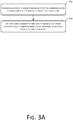
- FIG. 3A is a flowchart illustrating a second exemplary method for realizing session identifier synchronization in accordance with an embodiment of the present invention.
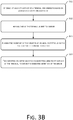
- FIG. 3B is a flowchart illustrating how to synchronize a key between a terminal and a server in FIG. 3A . As shown in FIG. 3A , the following steps are included.
- Step 301 A random number of a verification character string corresponding to a verification result is generated using a hash calculation.
- a terminal and a server may agree on a same hash algorithm, to ensure that the terminal and the server can generate a same random number based on the hash algorithm.
- a verification character string in a verification result may be, for example, "001" and "000", wherein "001" represents that verification is passed, and "000” represents that the verification fails.
- Step 302 The verification character string and the random number are encrypted using a symmetric secret key of the server, to obtain an encrypted verification result.
- how the terminal obtains the symmetric secret key of the server can be referenced to a process shown in FIG. 3B .
- key synchronization between a server and a terminal includes the following steps.
- Step 311 a public key and a private key of a terminal are generated based on asymmetric encryption algorithm.
- the asymmetric encryption algorithm may be, for example, RSA, a knapsack algorithm, Elgamal, D-H, an elliptic curve encryption algorithm (ECC), etc.
- the present embodiment does not have any limitation on an asymmetric encryption algorithm, provided that a public key and a private key can be generated based on the asymmetric encryption algorithm.
- Step 312 The public key of the terminal is sent to a server.
- Step 313 A symmetric secret key of the server that has been encrypted using the public key of the terminal is received.
- the server generates a symmetric secret key thereof, encrypts the symmetric secret key using the public key of the terminal, and sends the encrypted symmetric secret key to the terminal. Furthermore, the server may also encrypt and store a new password that is modified using the symmetric secret key, thereby avoiding a risk due to a leakage of the new password that is modified by a user through a first terminal as shown in FIG. 1 .
- Step 314 The encrypted symmetric secret key is decrypted using the private key of the terminal, to obtain the symmetric secret key of the server.
- the server is able to obtain the public key of the terminal, and the terminal can obtain the symmetric key of the server, thus realizing a process of key synchronization between the symmetric secret key of the server and the private key of the terminal.
- the confidentiality of a verification result can be guaranteed through a symmetric encryption technology, and tampering of the verification result by an illegitimate user can be prevented.
- Using a random number can prevent encrypted data from reuses.
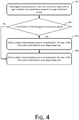
- FIG. 4 is a flowchart illustrating a third exemplary method for realizing session identifier synchronization in accordance with an embodiment of the present invention.
- the present embodiment uses an example of how a terminal performs validity verification on a user locally for explanation. As shown in FIG. 4 , the following steps are included.
- Step 401 a biological characteristic of a user of a terminal is collected in a login interface of an application program through a biometric sensor.
- the biological characteristic can be such biological characteristic as a fingerprint, an iris or a human face of the user. If the biological characteristic is a fingerprint, the current login interface of the application program can obtain the fingerprint of the user, thus avoiding the user from leaving the login interface currently displayed by the application program. This achieves performing an operation of fingerprint recognition directly on the login interface, and simplifies the procedure of performing validity verification on the user locally.
- Step 402 Verification is performed on the biological characteristic, to determine whether the verification is passed. If the biological characteristic passes the verification, step 403 is performed. If the biological characteristic fails to pass the verification, step 404 is performed.
- Step 403 If the biological characteristic passes the verification, the user of the terminal is confirmed to be an illegitimate user.
- verification of a biological characteristic may be referenced to relevant description of existing technologies, and details are not given in the present embodiment.
- Step 404 If the biological characteristic fails to pass the verification, the login interface of the application program prompts for using a login account and a login password for logging into the application program.
- the present embodiment when a same application program has a large number of users resetting login passwords through ones of a plurality of terminals and logging into the application program through other terminals, the present embodiment can optimize the workload of a server through a local identity verification mechanism, and prevent the server from suffering attacks of distributed denials of services (DDOS) from attackers.
- DDOS distributed denials of services
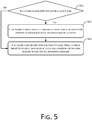
- FIG. 5 is a flowchart illustrating a fourth exemplary method for realizing session identifier synchronization in accordance with an embodiment of the present invention.
- a server can set a valid period for the second session identifier to ensure the security of user login. Therefore, an allotted time for a user to log into an application program is restricted through the valid period of the second session identifier. As shown in FIG. 5 , the following steps are included.
- Step 501 A determination is made as to whether a second session identifier is within a valid period, and step 502 is performed if the second session identifier is within the valid period, or step 503 is performed if the second session identifier is outside the valid period.
- Step 502 If the second session identifier is within the valid period, an application program is logged into using the second session identifier.
- Step 503 If the second session identifier is outside the valid period, a user is prompted to use a login account and a valid password of the login account to log into the application program.
- a valid period can be obtained from a server. For example, a user resets a new password through a first terminal. A time of generation of a second session identifier from the new password by a server is 12:12 on October 10, 2015, and a valid period is one month. The terminal can obtain the time of generation and the valid period of the second session identifier from the server. As such, a determination can be made as to whether the user can directly log into an application program using the second session identifier based on the second session identifier. If the second session identifier is past outside one month, a login interface of the application program can prompt the user that a login account and a valid login password of the login account are needed for logging in the application program.
- login activities of a user are restricted through a valid period of a second session identifier, thereby preventing an illegitimate user from illegally logging into an application program after obtaining the second session identifier, and ensuring the security of user logins of the application program.
- FIG. 6 is a flowchart illustrating a first exemplary method for realizing session identifier synchronization in accordance with another embodiment of the present invention.
- FIG. 6 an example of applying the method in a server is used for illustrative description. As shown in FIG. 6 , the following steps are included.
- Step 601 When a first request for logging in an application program is initiated by a terminal, verification is performed on validity of a first session identifier included in the first request, the first session identifier being generated from a login account and an original password associated with the application program, and the original password being a login password corresponding to the login account before modification.
- the first session identifier can be compared with a valid session identifier that is stored in a server. If the first session identifier is the same as the valid session identifier that is stored, the first session identifier is determined to be valid. If the first session identifier is not the same as the valid session identifier that is stored, the first session identifier is determined to be invalid.
- Step 602 If the first session identifier is verified to be invalid, an instruction is made to the terminal to perform validity verification on a user of the terminal.
- methods for performing the validity verification of the user of the terminal can be referenced to relevant description of the foregoing embodiments, and are not repeatedly described herein.
- Step 603 A verification result of the validity verification of the user is received from the terminal.
- the encrypted verification result is sent to the server.
- the server further needs to result the encrypted verification result using the symmetric secret key.
- Step 604 If the verification result is verified and approved by the server, a second session identifier is sent to the terminal, the second session identifier being generated from the login account and a new password, and the new password being a login password corresponding to the login account after the modification.
- a legitimate user can be allowed to log into the server. Furthermore, the legitimate user can obtain the second session identifier. This prevents the legitimate user from re-inputting the new password to log into the application program when using the terminal, and thus greatly improves the experience of user logins of the application program. After a large number of users need to reset login passwords of an application program, the workload of the server related to verifying user validity can be reduced by performing validity verification on the users on the terminal side, thus avoiding the waste of resources of the server.
- FIG. 7 is a flowchart illustrating a second exemplary method for realizing session identifier synchronization in accordance with another embodiment of the present invention. As shown in FIG. 7 , the following steps are included.
- Step 701 If a verification result has been encrypted by a terminal using a symmetric secret key of a server, the encrypted verification result is decrypted using the symmetric secret key of the server to obtain a verification character string and a random number corresponding to the verification result.
- Step 702 Verification is performed on the verification character string and the random number, and a second session identifier is sent to the terminal if the verification character string and the random number pass the verification.
- the terminal and the server may agree on a same hash algorithm, to ensure that the terminal and the server can generate a same random number based on the hash algorithm, and thereby perform a dual verification using the random number.
- a verification character string in a verification result may be, for example, "001" and "000", wherein "001" represents that verification is passed, and "000" represents that the verification fails.
- the second session identifier can be encrypted using a public key of the terminal, thereby ensuring the security of the second session identifier during a transmission process.
- the confidentiality of a verification result can be guaranteed through a symmetric encryption technology, and tampering of the verification result by an illegitimate user can be prevented.
- Using a random number can prevent encrypted data from reuses.
- FIG. 8 is a flowchart illustrating a third exemplary method for realizing session identifier synchronization in accordance with another embodiment of the present invention.
- the server can set a valid period for the second session identifier in order to ensure the security of user logins. Therefore, an allotted time for a user to log into an application program is restricted through the valid period of the second session identifier. As shown in FIG. 8 , the following steps are included.
- Step 801 A determination is made as to whether a second session identifier is within a valid period, and step 802 is performed if the second session identifier is within the valid period, or step 803 is performed if the second session identifier is outside the valid period.
- Step 802 If the second session identifier is within the valid period, a user is allowed to log into an application program using the second session identifier.
- Step 803 If the second session identifier is outside the valid period, the user is not allowed to log into the application program using the second session identifier.
- a server can determine a valid period of a second session identifier based on an allotted time set by a user. For example, a user resets a new password through a first terminal, and a valid period is one month. A time of generation of a second session identifier from the new password by a server is 12:12 on October 10, 2015, and the server can determine that an expiration time of the second session identifier is 12:12 on November 10, 2015. The user can directly log into the application program using the second session identifier within this allotted time. After the allotted time is past, the user is not allowed to log into the application program using the second session identifier.
- login activities of a user are restricted through a valid period of a second session identifier, thereby preventing an illegitimate user from illegally logging into an application program after obtaining the second session identifier, and ensuring the security of user logins of the application program.
- a user logs in an application program through a vehicle-mounted terminal after the user resets a login password of the application program using a mobile phone
- the vehicle-mounted terminal has recorded an invalid first session identifier before the user resets the login password. Since a server has set the first session identifier as invalid, the user is therefore not able to log into the application program through the vehicle-mounted terminal. Since the user is driving, the user is therefore not convenient to input a new password.
- a second session identifier can be obtained from the server through the vehicle-mounted terminal upon determining that the user is a legitimate user of the vehicle-mounted terminal. Therefore, the application program is logged into using the second session identifier, thus being able to reduce the risk when the user is driving.
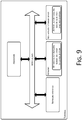
- the present application further discloses a schematic structural diagram of a terminal in accordance with an exemplary embodiment of the present application as shown in FIG. 9 .
- the terminal includes a processor, an internal bus, a network interface, memory, and a non-volatile storage device on a hardware level.
- the processor reads corresponding computer instructions from the non-volatile storage device into the memory for running, forming an apparatus for realizing session identifier synchronization on a logical level.
- the present application does not exclude other implementations, such as logical components or a combination of software and hardware, etc.
- execution entit(ies) of the following processing procedure is/are not limited to various logical units, and may also be hardware or logical components.
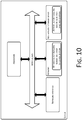
- the present application further discloses a schematic structural diagram of a server in accordance with an exemplary embodiment of the present application as shown in FIG. 10 .
- the server includes a processor, an internal bus, a network interface, memory, and a non-volatile storage device on a hardware level.
- the processor reads corresponding computer instructions from the non-volatile storage device into the memory for running, forming an apparatus for realizing session identifier synchronization on a logical level.
- the present application does not exclude other implementations, such as logical components or a combination of software and hardware, etc.
- execution entit(ies) of the following processing procedure is/are not limited to various logical units, and may also be hardware or logical components.
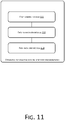
- FIG. 11 shows a schematic structural diagram of a first exemplary apparatus for realizing session identifier synchronization in accordance with an embodiment of the present invention.
- the apparatus for realizing session identifier synchronization may include a first sending module 111, a first verification module 112, and a first receiving module 113.
- the first sending module 111 is used for initiating a first request for logging into an application program to a server, the first request including a first session identifier, the first session identifier being generated from a login account and an original password of the application program, and the original password being a login password corresponding to the login account prior to modification.
- the first verification module 112 is used for performing a validity verification on a user of a terminal and sending a verification result that is obtained to the server to allow the server to perform a check on the verification result if the first session identifier sent by the first sending module 111 is determined to be invalid by the server.
- the first receiving module 113 is used for receiving a second session identifier from the server and storing the second session identifier into the terminal if the verification result that is obtained by the first verification module 112 is verified and approved by the server, the second session identifier being generated from the login account and a new password, and the new password being a login password corresponding to the login account after the modification.
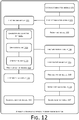
- FIG. 12 shows a schematic structural diagram of a second exemplary apparatus for realizing session identifier synchronization in accordance with an embodiment of the present invention.
- the apparatus as shown in FIG. 12 may further include a first generation module 114 used for generating a random number of a verification character string corresponding to the verification result obtained by the first verification module 112; and a first encryption module 115 used for encrypting the verification character string obtained by the first verification result and the random number generated by the first generation module 114 using a symmetric secret key of the server, to obtain an encrypted verification result.
- a first generation module 114 used for generating a random number of a verification character string corresponding to the verification result obtained by the first verification module 112
- a first encryption module 115 used for encrypting the verification character string obtained by the first verification result and the random number generated by the first generation module 114 using a symmetric secret key of the server, to obtain an encrypted verification result.
- the apparatus may further include a second generation module 116 used for generating a public key and a private key of the terminal using an asymmetric encryption algorithm; a second sending module 117 used for sending the public key of the terminal that is generated by the second generation module 116 to the server; a second receiving module 118 used for receiving the symmetric secret key of the server that has been encrypted using the public key of the terminal sent by the second sending module 117 from the server; and a first decryption module 119 used for decrypting the encrypted symmetric secret key using the private key of the terminal that is generated by the second generation module 118, to obtain the symmetric secret key of the server.
- a second generation module 116 used for generating a public key and a private key of the terminal using an asymmetric encryption algorithm
- a second sending module 117 used for sending the public key of the terminal that is generated by the second generation module 116 to the server
- a second receiving module 118 used for receiving the symmetric secret key of the server that has been encrypted using the public key of the terminal sent by
- the first verification module 112 may include a characteristic collection unit 1121 used for collecting a biological characteristic of a user of the terminal on a login interface of the application program through a biometric sensor; a verification unit 1122 used for performing verification on the biological characteristic that is collected by the characteristic collection unit 1121; a first determination unit used for determining that the user of the terminal is a legitimate user if the biological characteristic passes the verification of the verification unit 1122; and a prompting unit 1123 used for providing a prompt on the login interface of the application program for logging in the application program using the login account and the login password.
- a characteristic collection unit 1121 used for collecting a biological characteristic of a user of the terminal on a login interface of the application program through a biometric sensor
- a verification unit 1122 used for performing verification on the biological characteristic that is collected by the characteristic collection unit 1121
- a first determination unit used for determining that the user of the terminal is a legitimate user if the biological characteristic passes the verification of the verification unit 1122
- a prompting unit 1123 used for
- the apparatus may further include a first determination module 120 used for determining whether the second session identifier received by the first receiving module 113 is within a valid period; a second determination module 121 used for determining that the second session identifier is used for logging into the application program if the first determination module 120 determines that the second session identifier is within the valid period; and a prompting module 122 used for prompting the user to log into the application program using the login account and a valid login password of the login account if the first determination module 120 determines that the second session identifier is past outside the valid period.
- a first determination module 120 used for determining whether the second session identifier received by the first receiving module 113 is within a valid period
- a second determination module 121 used for determining that the second session identifier is used for logging into the application program if the first determination module 120 determines that the second session identifier is within the valid period
- a prompting module 122 used for prompting the user to log into the application program using the login account and a
- FIG. 13 shows a schematic structural diagram of a third exemplary apparatus for realizing session identifier synchronization in accordance with an embodiment of the present invention.
- the apparatus for realizing session identifier synchronization may include a second verification module 131, and a commanding module 132, a third receiving module 133, and a third sending module 134.
- the second verification module 131 is used for verifying validity of a first session identifier included in a first request for logging into an application program when the first request is initiated in a terminal, the first session identifier being generated from a login account and an original password of the application program, and the original password being a login password corresponding to the login account prior to modification.
- the commanding module 132 is used for instructing the terminal to perform validity verification on a user of the terminal if the first session identifier is verified to be invalid by the second verification module 131.
- the third receiving module 133 is used for receiving a verification result of the validity verification of the user that is performed by the terminal according to an instruction of the commanding module 132.
- the third sending module 134 is used for sending a second session identifier to the terminal if the verification result that is received by the third receiving module 134 is verified and approved by a server, the second session identifier being generated from the login account and a new password, and the new password being a login password corresponding to the login account after the modification.
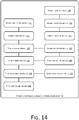
- FIG. 14 shows a schematic structural diagram of a fourth exemplary apparatus for realizing session identifier synchronization in accordance with an embodiment of the present invention.
- the apparatus as shown in FIG. 14 may further include a second decryption module 135 used for decrypting an encrypted verification result using a symmetric secret key of the server to obtain a verification character string corresponding to the verification result and a random number if the verification result obtained by the third receiving module 133 has been encrypted by the terminal using the symmetric secret key of the server; and a third verification module 136 used for performing verification on the verification character string and the random number that are obtained after decryption by the second decryption module 135. If the verification character string and the random number pass the verification, the third sending module 134 performs the step of sending the second session identifier to the terminal.
- the apparatus may further include a third generation module 137 used for generating the symmetric secret key of the server based on a symmetric encryption algorithm, to enable the second decryption module 135 to decrypt the encrypted verification result using the symmetric secret key of the server; a second encryption module 138 used for encrypting the symmetric secret key generated by the third generation module 137 using a public key of the terminal; and a fourth sending module 139 used for sending the symmetric secret key encrypted by the second encryption module 138 to the terminal, to allow the terminal to use a private key corresponding to the public key to decrypt the symmetric secret key that is encrypted, to obtain the symmetric key of the server.
- a third generation module 137 used for generating the symmetric secret key of the server based on a symmetric encryption algorithm, to enable the second decryption module 135 to decrypt the encrypted verification result using the symmetric secret key of the server
- a second encryption module 138 used for encrypting the symmetric secret key generated by the third generation module 137 using a public key
- the apparatus may further include a third determination module 140 used for determining whether the second session identifier sent by the third sending module 134 is within a valid period; a first controlling module 141 used for allowing the user to log into the application program using the second session identifier if the third determination module 140 determines that the second session identifier is within the valid period; and a second controlling module 142 used for forbidding the user to log into the application program using the second session identifier if the third determination module 140 determines that the second session identifier is past outside the valid period.
- a third determination module 140 used for determining whether the second session identifier sent by the third sending module 134 is within a valid period
- a first controlling module 141 used for allowing the user to log into the application program using the second session identifier if the third determination module 140 determines that the second session identifier is within the valid period
- a second controlling module 142 used for forbidding the user to log into the application program using the second session identifier if the third determination
Landscapes
- Engineering & Computer Science (AREA)
- Computer Security & Cryptography (AREA)
- Computer Networks & Wireless Communication (AREA)
- Signal Processing (AREA)
- Health & Medical Sciences (AREA)
- General Health & Medical Sciences (AREA)
- Biomedical Technology (AREA)
- Computing Systems (AREA)
- Computer Hardware Design (AREA)
- General Engineering & Computer Science (AREA)
- Biodiversity & Conservation Biology (AREA)
- Life Sciences & Earth Sciences (AREA)
- Theoretical Computer Science (AREA)
- Power Engineering (AREA)
- Software Systems (AREA)
- Physics & Mathematics (AREA)
- General Physics & Mathematics (AREA)
- Medical Informatics (AREA)
- Information Transfer Between Computers (AREA)
- Computer And Data Communications (AREA)
Abstract
Description
- The present application claims priority to Chinese Patent Application No.
201510702527.3, filed on 26 October 2015 - The present invention relates to the technological field of network security, and particularly to methods and apparatuses for realizing session identifier synchronization.
- Along with the continuous development of embedding technologies and terminal technologies, an increasing number of terminal devices are being applied in the daily working lives of the people. Application programs that are installed in terminal devices are also designed with a number of different types of versions to be suitable to be used in different operating systems, such as Windows, Linux, Android, iOS, etc. When a user access application programs on different terminal devices using an account thereof, a problem of identity verification of the account arises. In order to prevent the user from repeatedly inputting identity verification information, many application programs are incorporated with a password recording function. However, after a user resets a password associated with an application program on one of terminal devices, the user needs to input a new password for that application program when the user needs to log into the application program through other terminal devices, as the passwords previously recorded in the other terminal devices have become invalid. In some scenarios, inputing a new password through another terminal device may not be convenient for a user. For example, for a user working on other tasks, inputting a new password into a terminal device when both hands are occupied will create certain security risks.
- Accordingly, the present application provides a new technical solution, which can allow a user to log into an application program on other terminals without the need of re-entering a new password, and ensure the login security of the application program.
- In order to achieve the aforementioned goals, the present provides the following technical solution.
- According to a first aspect of the present application, a method for realizing a password synchronization is provided, which includes initiating a first request for logging into an application program to a server, the first request including a first session identifier, the first session identifier being generated from a login account and an original password of the application program, and the original password being a login password corresponding to the login account prior to modification; performing a validity verification on a user of a terminal and sending a verification result that is obtained to the server to allow the server to perform a check on the verification result if the first session identifier is determined to be invalid by the server; and receiving a second session identifier from the server and storing the second session identifier into the terminal if the verification result is verified and approved by the server, the second session identifier being generated from the login account and a new password, and the new password being a login password corresponding to the login account after the modification.
- According to a second aspect of the present application, a method for realizing a password synchronization is provided, which includes verifying validity of a first session identifier included in a first request for logging into an application program when the first request is initiated in a terminal, the first session identifier being generated from a login account and an original password of the application program, and the original password being a login password corresponding to the login account prior to modification; instructing the terminal to perform a validity verification on a user of the terminal if the first session identifier is verified to be invalid; receiving a verification result of the validity verification of the user from the terminal; and sending a second session identifier to the terminal if the verification result is verified and approved by a server, the second session identifier being generated from the login account and a new password, and the new password being a login password corresponding to the login account after the modification.
- According to a third aspect of the present application, an apparatus for realizing a password synchronization is provided, which includes a first sending module used for initiating a first request for logging into an application program to a server, the first request including a first session identifier, the first session identifier being generated from a login account and an original password of the application program, and the original password being a login password corresponding to the login account prior to modification; a first verification module used for performing a validity verification on a user of a terminal and sending a verification result that is obtained to the server to allow the server to perform a check on the verification result if the first session identifier sent by the first sending module is determined to be invalid by the server; and a first receiving module used for receiving a second session identifier from the server and storing the second session identifier into the terminal if the verification result that is obtained by the first verification module is verified and approved by the server, the second session identifier being generated from the login account and a new password, and the new password being a login password corresponding to the login account after the modification.
- According to a fourth aspect of the present application, an apparatus for realizing a password synchronization is provided, which includes a second verification module used for verifying validity of a first session identifier included in a first request for logging into an application program when the first request is initiated in a terminal, the first session identifier being generated from a login account and an original password of the application program, and the original password being a login password corresponding to the login account prior to modification; a commanding module used for instructing the terminal to perform a validity verification on a user of the terminal if the first session identifier is verified by the second verification module to be invalid; a third receiving module used for receiving a verification result of the validity verification of the user that is performed by the terminal according to an instruction of the commanding module; and a third sending module used for sending a second session identifier to the terminal if the verification result that is received by the third receiving module is verified and approved by a server, the second session identifier being generated from the login account and a new password, and the new password being a login password corresponding to the login account after the modification.
- As can be seen from the above technical solution, the present application can allow a user to log into an application program through a second session identifier, thus avoiding the user who uses a terminal from re-entering a new password to log into the application program, and greatly improving the user experience for logging into the application program. When a large number of users need to reset login passwords associated with application programs, the workload of a server related to verification of user legitimacy can be reduced by performing validity verifications of the users are performed on the terminal side, thus avoiding the waste of resources of the server.
-
-
FIG. 1 is a flowchart illustrating a process of modifying a login password associated with an application program through a first terminal. -
FIG. 2 is a flowchart illustrating a first exemplary method for realizing session identifier synchronization in accordance with an embodiment of the present invention. -
FIG. 3A is a flowchart illustrating a second exemplary method for realizing session identifier synchronization in accordance with an embodiment of the present invention. -
FIG. 3B is a flowchart illustrating how to synchronize a key between a terminal and a server inFIG. 3A . -
FIG. 4 is a flowchart illustrating a third exemplary method for realizing session identifier synchronization in accordance with an embodiment of the present invention. -
FIG. 5 is a flowchart illustrating a fourth exemplary method for realizing session identifier synchronization in accordance with an embodiment of the present invention. -
FIG. 6 is a flowchart illustrating a first exemplary method for realizing session identifier synchronization in accordance with another embodiment of the present invention. -
FIG. 7 is a flowchart illustrating a second exemplary method for realizing session identifier synchronization in accordance with another embodiment of the present invention. -
FIG. 8 is a flowchart illustrating a third exemplary method for realizing session identifier synchronization in accordance with another embodiment of the present invention. -
FIG. 9 is a schematic structural of a terminal in accordance with an exemplary embodiment of the present invention. -
FIG. 10 is a schematic structural diagram of a server in accordance with an exemplary embodiment of the present invention. -
FIG. 11 is a schematic structural diagram of a first exemplary apparatus for realizing session identifier synchronization in accordance with an embodiment of the present invention. -
FIG. 12 is a schematic structural diagram of a second exemplary apparatus for realizing session identifier synchronization in accordance with an embodiment of the present invention. -
FIG. 13 is a schematic structural diagram of a third exemplary apparatus for realizing session identifier synchronization in accordance with an embodiment of the present invention. -
FIG. 14 is a schematic structural diagram of a fourth exemplary apparatus for realizing session identifier synchronization in accordance with an embodiment of the present invention. - Exemplary embodiments are described in detail herein, with examples being represented in accompanying drawings. When accompanying drawings are involved in the following description, the same numerals in different accompanying drawings represent the same or similar elements unless stated otherwise. Implementations described in the following exemplary embodiments represent merely some and not all of the implementations that are consistent with the present application, and are examples of methods and apparatuses that are consistent with aspects of the present application which are described in detail in appended claims.
- Terms used in the present application are merely used for the purpose of describing specific embodiments, and are not intended to limit the present application. Singular forms - "a type", "said", and "the" that are used in the present application and the appended claims are intended to include plural forms, unless other meanings are clearly expressed in a context. A term "and/or" used in the specification refers to and includes any or all possible combinations of one or more associated items that are listed.
- It should be understood that terms such as "first", "second" and "third" may be used in the present application to describe various types of information, these pieces of information are not limited to these terms. These terms are merely used to distinguish between information of a same type. For example, without departing the scope of the present application, a first piece of information can also be called as a second piece of information. Similarly, a second piece of information can also be called as a first piece of information. Depending on the context, a phrase "if" that is used herein may be interpreted as "in an event that", "when", or "in response to".
-
FIG. 1 is a flowchart illustrating a process of modifying a login password associated with an application program through a first terminal. Before an original password is modified, a first terminal and a second terminal both avoid the need of inputting a login password each time when an application program is logged in through a function of recording passwords. If a user modifies the original password of the application program through the first terminal, a login failure occurs when the second terminal still uses the original password that is recorded to log into the application program because the login password has been modified. As shown inFIG. 1 , the following steps are included. - At
step 101, a first terminal sends a password modification request to a server, and provides information that is needed for password modification, e.g., a login account, an original password, and a new password, etc., to the server. - At
step 102, the server performs a check on the provided information, and verifies whether the original password is correct.Step 101 is performed again to instruct a user to resend a password modification request to the server through the first terminal if the original password is incorrect.Step 103 is performed if the original password is correct. - At
step 103, the server stores the new password in a backend database, generates a new session identifier based on the login account and the new password, and sets an original session identifier that is generated based on the login account and the original password to be invalid. - At
step 104, the new session identifier is returned to the first terminal. - At
step 105, the first terminal receives the new session identifier returned by the server, and stores the new session identifier into a local secure space of the first terminal to complete a process of modifying a password of an application program of the first terminal. - At
step 106, after the server modifies the password, a second terminal initiates a login request to the server using the original session identifier, wherein the second terminal records the original session identifier in the second terminal through a manner of password recording after an application program is first logged in therein. - At
step 107, the server performs verification on the original session identifier of the second terminal, determines that the original session identifier that is used has been invalid, and returns a request for re-inputting a password to the second terminal. Under this circumstance, the second terminal needs to input the new password that has been modified again. When both hands of the user are occupied, inputting the new password through the second terminal may result in certain security risks. - Accordingly, the present application uses the following embodiments to enable the second terminal to log into the server without the need of inputting the new password after the login password is modified in the first terminal, thus resolving the deficiencies of existing technologies that the new password is needed to be inputted in order to log into the server providing the application program when the user needs to log into the application program through the second terminal.
- The following embodiments are provided for describing the present application in further detail.
-
FIG. 2 is a flowchart illustrating a first exemplary method for realizing session identifier synchronization in accordance with an embodiment of the present invention. A terminal on which the method is applied is the second terminal as shown inFIG. 1 . As shown inFIG. 2 , the following steps are included. - Step 201: A first request for logging into an application program is initiated to a server, the first request including a first session identifier, the first session identifier being generated from a login account and an original password of the application program, and the original password being a login password corresponding to the login account before modification.
- In some embodiments, when an application program is logged in for the first time, a terminal can send a character string corresponding to a first session identifier to a server through a manner of password recording, and can record the first session identifier in a first terminal locally. When the application program is logged in again, the terminal can log into the application program using the recorded first session identifier, thus enabling a user to avoid an operation of re-inputting a login password. In some embodiments, a method of generating a first session identifier can be determined by the server. A first session identifier can be generated based on a login account and an original password of a user using a hash algorithm such as md5 or shal, etc. For example, based on a login account and an original password as zhangxiao and zx098, and a login timestamp as 20151026, a first session identifier (3EC3ED381B9CF4359F4C1CB02CDF64) is obtained through a md5 algorithm by performing column calculation of the MD4 algorithm on the login account, the original password and the timestamp.
- Step 202: If the server determines that the first session identifier is invalid, a validity verification is performed on a user of the terminal, and a verification result that is obtained is sent to the server, to allow the server to perform a check on the verification result.
- In some embodiments, the validity verification may be performed using a biological characteristic of the user of the terminal. For example, a validity verification local to a terminal may be performed on a user using biological characteristics such as a fingerprint, an iris, a human face, etc., of the user. In some embodiments, before the terminal sends the verification result to the server, the verification result and a random number corresponding to the verification result can be encrypted using a symmetric secret key of the server. The encrypted verification result is sent to the server, thereby ensuring that the verification result is not illegally intercepted and manipulated during a transmission process, and ensuring the security of the verification result transmitted between the terminal and the server.
- Step 203: If the verification result is approved by the server, a second session identifier that comes from the server is received and stored in the terminal, the second session identifier being generated from the login account and a new password, and the new password being a login password corresponding to the login account after the modification.
- In some embodiments, in order to prevent the second session identifier from being illegally intercepted and manipulated during a transmission process, the second session identifier can be encrypted using a public key of the terminal. After receiving the encrypted second session identifier, the terminal decrypts the encrypted second session identifier using a private key of the terminal to obtain the second session identifier. In some embodiments, a method of generating the second session identifier can be referenced to the above method of generating the first session identifier. For example, after the user changes the login password to zhangxiao using the first terminal in the embodiment shown in
FIG. 1 , a second session identifier (2EF430338DF56A6FE40819CBF75982A9) is obtained using the same hash calculation for the first session identifier. - Through step 201 -
step 203, the user can log into the application program using the second session identifier, and the user who uses the terminal is avoided from re-inputting the new password to log into the application program, thus greatly improving the login experience of the application program of the user. -
FIG. 3A is a flowchart illustrating a second exemplary method for realizing session identifier synchronization in accordance with an embodiment of the present invention.FIG. 3B is a flowchart illustrating how to synchronize a key between a terminal and a server inFIG. 3A . As shown inFIG. 3A , the following steps are included. - Step 301: A random number of a verification character string corresponding to a verification result is generated using a hash calculation.
- In some embodiments, a terminal and a server may agree on a same hash algorithm, to ensure that the terminal and the server can generate a same random number based on the hash algorithm. In some embodiments, a verification character string in a verification result may be, for example, "001" and "000", wherein "001" represents that verification is passed, and "000" represents that the verification fails.
- Step 302: The verification character string and the random number are encrypted using a symmetric secret key of the server, to obtain an encrypted verification result.
- In some embodiments, how the terminal obtains the symmetric secret key of the server can be referenced to a process shown in
FIG. 3B . As shown inFIG. 3B , key synchronization between a server and a terminal includes the following steps. - Step 311: a public key and a private key of a terminal are generated based on asymmetric encryption algorithm.
- In some embodiments, the asymmetric encryption algorithm may be, for example, RSA, a knapsack algorithm, Elgamal, D-H, an elliptic curve encryption algorithm (ECC), etc. The present embodiment does not have any limitation on an asymmetric encryption algorithm, provided that a public key and a private key can be generated based on the asymmetric encryption algorithm.
- Step 312: The public key of the terminal is sent to a server.
- Step 313: A symmetric secret key of the server that has been encrypted using the public key of the terminal is received.
- In some embodiments, the server generates a symmetric secret key thereof, encrypts the symmetric secret key using the public key of the terminal, and sends the encrypted symmetric secret key to the terminal. Furthermore, the server may also encrypt and store a new password that is modified using the symmetric secret key, thereby avoiding a risk due to a leakage of the new password that is modified by a user through a first terminal as shown in
FIG. 1 . - Step 314: The encrypted symmetric secret key is decrypted using the private key of the terminal, to obtain the symmetric secret key of the server.
- Through step 311 -
step 314, the server is able to obtain the public key of the terminal, and the terminal can obtain the symmetric key of the server, thus realizing a process of key synchronization between the symmetric secret key of the server and the private key of the terminal. - In the present embodiment, the confidentiality of a verification result can be guaranteed through a symmetric encryption technology, and tampering of the verification result by an illegitimate user can be prevented. Using a random number can prevent encrypted data from reuses.
-
FIG. 4 is a flowchart illustrating a third exemplary method for realizing session identifier synchronization in accordance with an embodiment of the present invention. The present embodiment uses an example of how a terminal performs validity verification on a user locally for explanation. As shown inFIG. 4 , the following steps are included. - Step 401: a biological characteristic of a user of a terminal is collected in a login interface of an application program through a biometric sensor.
- In some embodiments, the biological characteristic can be such biological characteristic as a fingerprint, an iris or a human face of the user. If the biological characteristic is a fingerprint, the current login interface of the application program can obtain the fingerprint of the user, thus avoiding the user from leaving the login interface currently displayed by the application program. This achieves performing an operation of fingerprint recognition directly on the login interface, and simplifies the procedure of performing validity verification on the user locally.
- Step 402: Verification is performed on the biological characteristic, to determine whether the verification is passed. If the biological characteristic passes the verification,
step 403 is performed. If the biological characteristic fails to pass the verification,step 404 is performed. - Step 403: If the biological characteristic passes the verification, the user of the terminal is confirmed to be an illegitimate user.
- In some embodiments, verification of a biological characteristic may be referenced to relevant description of existing technologies, and details are not given in the present embodiment.
- Step 404: If the biological characteristic fails to pass the verification, the login interface of the application program prompts for using a login account and a login password for logging into the application program.
- In the present embodiment, when a same application program has a large number of users resetting login passwords through ones of a plurality of terminals and logging into the application program through other terminals, the present embodiment can optimize the workload of a server through a local identity verification mechanism, and prevent the server from suffering attacks of distributed denials of services (DDOS) from attackers.
-
FIG. 5 is a flowchart illustrating a fourth exemplary method for realizing session identifier synchronization in accordance with an embodiment of the present invention. After a terminal obtains and stores a second session identifier through the above embodiments, a server can set a valid period for the second session identifier to ensure the security of user login. Therefore, an allotted time for a user to log into an application program is restricted through the valid period of the second session identifier. As shown inFIG. 5 , the following steps are included. - Step 501: A determination is made as to whether a second session identifier is within a valid period, and step 502 is performed if the second session identifier is within the valid period, or step 503 is performed if the second session identifier is outside the valid period.
- Step 502: If the second session identifier is within the valid period, an application program is logged into using the second session identifier.
- Step 503: If the second session identifier is outside the valid period, a user is prompted to use a login account and a valid password of the login account to log into the application program.
- In some embodiments, a valid period can be obtained from a server. For example, a user resets a new password through a first terminal. A time of generation of a second session identifier from the new password by a server is 12:12 on October 10, 2015, and a valid period is one month. The terminal can obtain the time of generation and the valid period of the second session identifier from the server. As such, a determination can be made as to whether the user can directly log into an application program using the second session identifier based on the second session identifier. If the second session identifier is past outside one month, a login interface of the application program can prompt the user that a login account and a valid login password of the login account are needed for logging in the application program.
- In the present embodiment, login activities of a user are restricted through a valid period of a second session identifier, thereby preventing an illegitimate user from illegally logging into an application program after obtaining the second session identifier, and ensuring the security of user logins of the application program.
-
FIG. 6 is a flowchart illustrating a first exemplary method for realizing session identifier synchronization in accordance with another embodiment of the present invention. In order to be consistent with the embodiment shown inFIG. 1 , an example of applying the method in a server is used for illustrative description. As shown inFIG. 6 , the following steps are included. - Step 601: When a first request for logging in an application program is initiated by a terminal, verification is performed on validity of a first session identifier included in the first request, the first session identifier being generated from a login account and an original password associated with the application program, and the original password being a login password corresponding to the login account before modification.
- In some embodiments, the first session identifier can be compared with a valid session identifier that is stored in a server. If the first session identifier is the same as the valid session identifier that is stored, the first session identifier is determined to be valid. If the first session identifier is not the same as the valid session identifier that is stored, the first session identifier is determined to be invalid.
- Step 602: If the first session identifier is verified to be invalid, an instruction is made to the terminal to perform validity verification on a user of the terminal.
- In some embodiments, methods for performing the validity verification of the user of the terminal can be referenced to relevant description of the foregoing embodiments, and are not repeatedly described herein.
- Step 603: A verification result of the validity verification of the user is received from the terminal.
- In some embodiments, if a verification result and a random number corresponding to the verification result are encrypted using a symmetric secret key of the server before the terminal sends the verification result to the server, the encrypted verification result is sent to the server. In this case, the server further needs to result the encrypted verification result using the symmetric secret key.
- Step 604: If the verification result is verified and approved by the server, a second session identifier is sent to the terminal, the second session identifier being generated from the login account and a new password, and the new password being a login password corresponding to the login account after the modification.
- Through step 601 -
step 604, a legitimate user can be allowed to log into the server. Furthermore, the legitimate user can obtain the second session identifier. This prevents the legitimate user from re-inputting the new password to log into the application program when using the terminal, and thus greatly improves the experience of user logins of the application program. After a large number of users need to reset login passwords of an application program, the workload of the server related to verifying user validity can be reduced by performing validity verification on the users on the terminal side, thus avoiding the waste of resources of the server. -
FIG. 7 is a flowchart illustrating a second exemplary method for realizing session identifier synchronization in accordance with another embodiment of the present invention. As shown inFIG. 7 , the following steps are included. - Step 701: If a verification result has been encrypted by a terminal using a symmetric secret key of a server, the encrypted verification result is decrypted using the symmetric secret key of the server to obtain a verification character string and a random number corresponding to the verification result.
- Step 702: Verification is performed on the verification character string and the random number, and a second session identifier is sent to the terminal if the verification character string and the random number pass the verification.
- In some embodiments, the terminal and the server may agree on a same hash algorithm, to ensure that the terminal and the server can generate a same random number based on the hash algorithm, and thereby perform a dual verification using the random number. In some embodiments, a verification character string in a verification result may be, for example, "001" and "000", wherein "001" represents that verification is passed, and "000" represents that the verification fails. In some embodiments, the second session identifier can be encrypted using a public key of the terminal, thereby ensuring the security of the second session identifier during a transmission process.
- Details about how the terminal obtains the symmetric key of the server and how the server obtains the public key of the terminal can be referenced to the above description of
FIG. 3B , and are not repeatedly described herein. - In the present embodiment, the confidentiality of a verification result can be guaranteed through a symmetric encryption technology, and tampering of the verification result by an illegitimate user can be prevented. Using a random number can prevent encrypted data from reuses.
-
FIG. 8 is a flowchart illustrating a third exemplary method for realizing session identifier synchronization in accordance with another embodiment of the present invention. After a server generates a second session identifier using the above embodiment, the server can set a valid period for the second session identifier in order to ensure the security of user logins. Therefore, an allotted time for a user to log into an application program is restricted through the valid period of the second session identifier. As shown inFIG. 8 , the following steps are included. - Step 801: A determination is made as to whether a second session identifier is within a valid period, and step 802 is performed if the second session identifier is within the valid period, or step 803 is performed if the second session identifier is outside the valid period.
- Step 802: If the second session identifier is within the valid period, a user is allowed to log into an application program using the second session identifier.
- Step 803: If the second session identifier is outside the valid period, the user is not allowed to log into the application program using the second session identifier.
- In some embodiments, a server can determine a valid period of a second session identifier based on an allotted time set by a user. For example, a user resets a new password through a first terminal, and a valid period is one month. A time of generation of a second session identifier from the new password by a server is 12:12 on October 10, 2015, and the server can determine that an expiration time of the second session identifier is 12:12 on November 10, 2015. The user can directly log into the application program using the second session identifier within this allotted time. After the allotted time is past, the user is not allowed to log into the application program using the second session identifier.
- In the present embodiment, login activities of a user are restricted through a valid period of a second session identifier, thereby preventing an illegitimate user from illegally logging into an application program after obtaining the second session identifier, and ensuring the security of user logins of the application program.
- As an exemplary scenario, if a user logs in an application program through a vehicle-mounted terminal after the user resets a login password of the application program using a mobile phone, the vehicle-mounted terminal has recorded an invalid first session identifier before the user resets the login password. Since a server has set the first session identifier as invalid, the user is therefore not able to log into the application program through the vehicle-mounted terminal. Since the user is driving, the user is therefore not convenient to input a new password. Using the above embodiments for performing biometric verification of the user, a second session identifier can be obtained from the server through the vehicle-mounted terminal upon determining that the user is a legitimate user of the vehicle-mounted terminal. Therefore, the application program is logged into using the second session identifier, thus being able to reduce the risk when the user is driving.
- For the above methods of realizing session identifier synchronization, the present application further discloses a schematic structural diagram of a terminal in accordance with an exemplary embodiment of the present application as shown in
FIG. 9 . Referring toFIG. 9 , the terminal includes a processor, an internal bus, a network interface, memory, and a non-volatile storage device on a hardware level. Apparently, hardware needed by other services may also be included. The processor reads corresponding computer instructions from the non-volatile storage device into the memory for running, forming an apparatus for realizing session identifier synchronization on a logical level. Apparently, besides software implementations, the present application does not exclude other implementations, such as logical components or a combination of software and hardware, etc. In other words, execution entit(ies) of the following processing procedure is/are not limited to various logical units, and may also be hardware or logical components. - For the above methods of realizing session identifier synchronization, the present application further discloses a schematic structural diagram of a server in accordance with an exemplary embodiment of the present application as shown in
FIG. 10 . Referring toFIG. 10 , the server includes a processor, an internal bus, a network interface, memory, and a non-volatile storage device on a hardware level. Apparently, hardware needed by other services may also be included. The processor reads corresponding computer instructions from the non-volatile storage device into the memory for running, forming an apparatus for realizing session identifier synchronization on a logical level. Apparently, besides software implementations, the present application does not exclude other implementations, such as logical components or a combination of software and hardware, etc. In other words, execution entit(ies) of the following processing procedure is/are not limited to various logical units, and may also be hardware or logical components. -
FIG. 11 shows a schematic structural diagram of a first exemplary apparatus for realizing session identifier synchronization in accordance with an embodiment of the present invention. As shown inFIG. 11 , the apparatus for realizing session identifier synchronization may include afirst sending module 111, afirst verification module 112, and afirst receiving module 113. - The
first sending module 111 is used for initiating a first request for logging into an application program to a server, the first request including a first session identifier, the first session identifier being generated from a login account and an original password of the application program, and the original password being a login password corresponding to the login account prior to modification. - The
first verification module 112 is used for performing a validity verification on a user of a terminal and sending a verification result that is obtained to the server to allow the server to perform a check on the verification result if the first session identifier sent by thefirst sending module 111 is determined to be invalid by the server. - The
first receiving module 113 is used for receiving a second session identifier from the server and storing the second session identifier into the terminal if the verification result that is obtained by thefirst verification module 112 is verified and approved by the server, the second session identifier being generated from the login account and a new password, and the new password being a login password corresponding to the login account after the modification. -
FIG. 12 shows a schematic structural diagram of a second exemplary apparatus for realizing session identifier synchronization in accordance with an embodiment of the present invention. In one embodiment, on a basis of the embodiment as shown inFIG. 11 , the apparatus as shown inFIG. 12 may further include afirst generation module 114 used for generating a random number of a verification character string corresponding to the verification result obtained by thefirst verification module 112; and afirst encryption module 115 used for encrypting the verification character string obtained by the first verification result and the random number generated by thefirst generation module 114 using a symmetric secret key of the server, to obtain an encrypted verification result. - In one embodiment, the apparatus may further include a
second generation module 116 used for generating a public key and a private key of the terminal using an asymmetric encryption algorithm; asecond sending module 117 used for sending the public key of the terminal that is generated by thesecond generation module 116 to the server; asecond receiving module 118 used for receiving the symmetric secret key of the server that has been encrypted using the public key of the terminal sent by thesecond sending module 117 from the server; and afirst decryption module 119 used for decrypting the encrypted symmetric secret key using the private key of the terminal that is generated by thesecond generation module 118, to obtain the symmetric secret key of the server. - In some embodiments, the
first verification module 112 may include acharacteristic collection unit 1121 used for collecting a biological characteristic of a user of the terminal on a login interface of the application program through a biometric sensor; averification unit 1122 used for performing verification on the biological characteristic that is collected by thecharacteristic collection unit 1121; a first determination unit used for determining that the user of the terminal is a legitimate user if the biological characteristic passes the verification of theverification unit 1122; and aprompting unit 1123 used for providing a prompt on the login interface of the application program for logging in the application program using the login account and the login password. - In some embodiments, the apparatus may further include a
first determination module 120 used for determining whether the second session identifier received by thefirst receiving module 113 is within a valid period; asecond determination module 121 used for determining that the second session identifier is used for logging into the application program if thefirst determination module 120 determines that the second session identifier is within the valid period; and aprompting module 122 used for prompting the user to log into the application program using the login account and a valid login password of the login account if thefirst determination module 120 determines that the second session identifier is past outside the valid period. -
FIG. 13 shows a schematic structural diagram of a third exemplary apparatus for realizing session identifier synchronization in accordance with an embodiment of the present invention. As shown inFIG. 13 , the apparatus for realizing session identifier synchronization may include asecond verification module 131, and acommanding module 132, athird receiving module 133, and athird sending module 134. - The
second verification module 131 is used for verifying validity of a first session identifier included in a first request for logging into an application program when the first request is initiated in a terminal, the first session identifier being generated from a login account and an original password of the application program, and the original password being a login password corresponding to the login account prior to modification. - The
commanding module 132 is used for instructing the terminal to perform validity verification on a user of the terminal if the first session identifier is verified to be invalid by thesecond verification module 131. - The
third receiving module 133 is used for receiving a verification result of the validity verification of the user that is performed by the terminal according to an instruction of thecommanding module 132. - The
third sending module 134 is used for sending a second session identifier to the terminal if the verification result that is received by thethird receiving module 134 is verified and approved by a server, the second session identifier being generated from the login account and a new password, and the new password being a login password corresponding to the login account after the modification. -
FIG. 14 shows a schematic structural diagram of a fourth exemplary apparatus for realizing session identifier synchronization in accordance with an embodiment of the present invention. In one embodiment, on a basis of the embodiment as shown inFIG. 13 , the apparatus as shown inFIG. 14 may further include asecond decryption module 135 used for decrypting an encrypted verification result using a symmetric secret key of the server to obtain a verification character string corresponding to the verification result and a random number if the verification result obtained by thethird receiving module 133 has been encrypted by the terminal using the symmetric secret key of the server; and athird verification module 136 used for performing verification on the verification character string and the random number that are obtained after decryption by thesecond decryption module 135. If the verification character string and the random number pass the verification, thethird sending module 134 performs the step of sending the second session identifier to the terminal. - In some embodiments, the apparatus may further include a
third generation module 137 used for generating the symmetric secret key of the server based on a symmetric encryption algorithm, to enable thesecond decryption module 135 to decrypt the encrypted verification result using the symmetric secret key of the server; asecond encryption module 138 used for encrypting the symmetric secret key generated by thethird generation module 137 using a public key of the terminal; and afourth sending module 139 used for sending the symmetric secret key encrypted by thesecond encryption module 138 to the terminal, to allow the terminal to use a private key corresponding to the public key to decrypt the symmetric secret key that is encrypted, to obtain the symmetric key of the server. - In some embodiments, the apparatus may further include a
third determination module 140 used for determining whether the second session identifier sent by thethird sending module 134 is within a valid period; afirst controlling module 141 used for allowing the user to log into the application program using the second session identifier if thethird determination module 140 determines that the second session identifier is within the valid period; and asecond controlling module 142 used for forbidding the user to log into the application program using the second session identifier if thethird determination module 140 determines that the second session identifier is past outside the valid period. - As can be seen from the above embodiments, when a user logs in an application program through a second terminal after the user modifies a login password of the application program on a first terminal, this same user can be allowed to log into the application program in the second terminal that is different from the first terminal, thus avoiding a manner of inputting the modified login password to log into the application program. Therefore, the user experience is improved, and the security of logins is guaranteed.
- One skilled in the art can easily think of other implementations of the present application after considering the specification and practicing the invention disclosed herein. The present application is intended to cover any modifications, uses or adaptive changes. These modifications, uses or adaptive changes follow common principles of the present application, and include well-known knowledge or common technical measures in the current technical field that is/are not described in the present application. The specification and the embodiments are viewed as exemplary only. The actual scope and the spirit of the present application are indicated by the appended claims.
- It is also noted that terms "include", "contain", or any other variations are intended to cover non-exclusive inclusion. Therefore, A process, method, product or device that includes a series of elements not only includes these elements, but also includes other elements that are not explicitly listed, or may further include elements that are inherent in the process, method, product or device. Without further limitations, an element defined by a statement "including a ..." does not exclude a further addition of the same element in a process, method, product or device including this element.
- The above description refers to preferred embodiments of the present application only, and is not used as a limitation to the present application. Any modifications, equivalent replacements, improvements, etc., that are made in the spirit and the principles of the present application shall all be included in the scope of protection of the present application.
Claims (18)
- A method for realizing session identifier synchronization, which is applied in a terminal, wherein the method comprises:initiating a first request for logging into an application program to a server, the first request including a first session identifier, the first session identifier being generated from a login account and an original password of the application program, and the original password being a login password corresponding to the login account prior to modification;performing a validity verification on a user of the terminal and sending a verification result that is obtained to the server to allow the server to perform a check on the verification result if the first session identifier is determined to be invalid by the server; andreceiving a second session identifier from the server and storing the second session identifier into the terminal if the verification result is verified and approved by the server, the second session identifier being generated from the login account and a new password, and the new password being a login password corresponding to the login account after the modification.
- The method of claim 1, wherein the method further comprises:generating a random number of a verification character string corresponding to the verification result through a hash algorithm; andencrypting the verification character string and the random number using a symmetric secret key of the server to obtain an encrypted verification result.
- The method of claim 2, wherein the method further comprises:generating a public key and a private key of the terminal based on an asymmetric encryption algorithm;sending the public key of the terminal to the server;receiving a symmetric secret key of the server that is encrypted using the public key of the terminal from the server; anddecrypting the symmetric secret key that is encrypted using the private key of the terminal to obtain the symmetric secret key of the server.
- The method of claim 1, wherein performing the validity verification on the user of the terminal comprises:collecting a biological characteristic of the user of the terminal on a login interface of the application program using a biometric sensor;performing a verification on the biological characteristic;determining that the user of the terminal is a legitimate user if the biological characteristic passes the verification; andproviding a prompt on the login interface of the application program for logging into the application program using the login account and the login password if the biological characteristic fails to pass the verification.
- The method of any one of claims 1-4, wherein the method further comprises:determining whether the second session identifier is within a valid period;determining that the application program is logged in using the second session identifier if the second session identifier is within the valid period; andprompting a user to log into the application program using the login account and a valid login password of the login account if the second session identifier is past outside the valid period.
- A method for realizing session identifier synchronization, which is applied in a server, wherein the method comprises:verifying validity of a first session identifier included in a first request for logging into an application program when the first request is initiated in a terminal, the first session identifier being generated from a login account and an original password of the application program, and the original password being a login password corresponding to the login account prior to modification;instructing the terminal to perform a validity verification on a user of the terminal if the first session identifier is verified to be invalid;receiving a verification result of the validity verification of the user from the terminal; andsending a second session identifier to the terminal if the verification result is verified and approved by the server, the second session identifier being generated from the login account and a new password, and the new password being a login password corresponding to the login account after the modification.
- The method of claim 6, wherein the method further comprises:decrypting an encrypted verification result using a symmetric secret key of the server to obtain a verification character string and a random number corresponding to the verification result if the verification result is encrypted by the terminal using the symmetric secret key of the server;performing a verification on the verification character string and the random number; andsending the second session identifier to the terminal if the verification character string and the random number passes the verification.
- The method of claim 7, wherein the method further comprises:generating the symmetric secret key of the server based on a symmetric encryption algorithm;encrypting the symmetric secret key using a public key of the terminal; andsending the encrypted symmetric secret key to the terminal to allow the terminal to decrypt the encrypted symmetric secret key using a private key corresponding to the public key to obtain the symmetric secret key of the server.
- The method of any one of claims 6-8, wherein the method further comprises:determining whether the second session identifier is within a valid period;allowing the user to log into the application program through the second session identifier if the second session identifier is within the valid period; andforbidding the user to log into the application program through the second session identifier if the second session identifier is past outside the valid period.
- An apparatus for realizing session identifier synchronization, the apparatus comprising:a first sending module used for initiating a first request for logging into an application program to a server, the first request including a first session identifier, the first session identifier being generated from a login account and an original password of the application program, and the original password being a login password corresponding to the login account prior to modification;a first verification module used for performing a validity verification on a user of a terminal and sending a verification result that is obtained to the server to allow the server to perform a check on the verification result if the first session identifier sent by the first sending module is determined to be invalid by the server; anda first receiving module used for receiving a second session identifier from the server and storing the second session identifier into the terminal if the verification result that is obtained by the first verification module is verified and approved by the server, the second session identifier being generated from the login account and a new password, and the new password being a login password corresponding to the login account after the modification.
- The apparatus of claim 10, wherein the apparatus further comprises:a first generation module used for generating a random number of a verification character string corresponding to the verification result obtained by the first verification module; anda first encryption module used for encrypting the verification character string obtained by the first verification result and the random number generated by the first generation module using a symmetric secret key of the server, to obtain an encrypted verification result.
- The apparatus of claim 11, wherein the apparatus further comprises:a second generation module used for generating a public key and a private key of the terminal using an asymmetric encryption algorithm;a second sending module used for sending the public key of the terminal that is generated by the second generation module to the server;a second receiving module used for receiving the symmetric secret key of the server that has been encrypted using the public key of the terminal sent by the second sending module from the server; anda first decryption module used for decrypting the encrypted symmetric secret key using the private key of the terminal that is generated by the second generation module, to obtain the symmetric secret key of the server.
- The apparatus of claim 10, wherein the first verification module comprises:a characteristic collection unit used for collecting a biological characteristic of a user of the terminal on a login interface of the application program through a biometric sensor;a verification unit used for performing verification on the biological characteristic that is collected by the characteristic collection unit;a first determination unit used for determining that the user of the terminal is a legitimate user if the biological characteristic passes the verification of the verification unit; anda prompting unit used for providing a prompt on the login interface of the application program for logging in the application program using the login account and the login password.
- The apparatus of any one of claims 10-13, wherein the apparatus further comprises:a first determination module used for determining whether the second session identifier received by the first receiving module is within a valid period;a second determination module used for determining that the second session identifier is used for logging into the application program if the first determination module determines that the second session identifier is within the valid period; anda prompting module used for prompting the user to log into the application program using the login account and a valid login password of the login account if the first determination module 120 determines that the second session identifier is past outside the valid period.
- An apparatus for realizing session identifier synchronization, the apparatus comprising:a second verification module used for verifying validity of a first session identifier included in a first request for logging into an application program when the first request is initiated in a terminal, the first session identifier being generated from a login account and an original password of the application program, and the original password being a login password corresponding to the login account prior to modification;a commanding module used for instructing the terminal to perform a validity verification on a user of the terminal if the first session identifier is verified by the second verification module to be invalid; a third receiving module used for receiving a verification result of the validity verification of the user that is performed by the terminal according to an instruction of the commanding module; anda third sending module used for sending a second session identifier to the terminal if the verification result that is received by the third receiving module is verified and approved by a server, the second session identifier being generated from the login account and a new password, and the new password being a login password corresponding to the login account after the modification.
- The apparatus of claim 15, wherein the apparatus further comprises:a second decryption module used for decrypting an encrypted verification result using a symmetric secret key of the server to obtain a verification character string corresponding to the verification result and a random number if the verification result obtained by the third receiving module has been encrypted by the terminal using the symmetric secret key of the server; anda third verification module used for performing verification on the verification character string and the random number that are obtained after decryption by the second decryption module, wherein the third sending module sends the second session identifier to the terminal if the verification character string and the random number pass the verification.
- The apparatus of claim 16, wherein the apparatus further comprises:a third generation module used for generating the symmetric secret key of the server based on a symmetric encryption algorithm, to enable the second decryption module to decrypt the encrypted verification result using the symmetric secret key of the server;a second encryption module used for encrypting the symmetric secret key generated by the third generation module using a public key of the terminal; anda fourth sending module used for sending the symmetric secret key encrypted by the second encryption module to the terminal, to allow the terminal to use a private key corresponding to the public key to decrypt the symmetric secret key that is encrypted, to obtain the symmetric key of the server.
- The apparatus of any one of claims 15-17, wherein the apparatus further comprises:a third determination module used for determining whether the second session identifier sent by the third sending module is within a valid period;a first controlling module used for allowing the user to log into the application program using the second session identifier if the third determination module determines that the second session identifier is within the valid period; anda second controlling module used for forbidding the user to log into the application program using the second session identifier if the third determination module 140 determines that the second session identifier is past outside the valid period.
Applications Claiming Priority (2)
| Application Number | Priority Date | Filing Date | Title |
|---|---|---|---|
| CN201510702527.3A CN106612180B (en) | 2015-10-26 | 2015-10-26 | Method and device for realizing session identification synchronization |
| PCT/CN2016/102323 WO2017071496A1 (en) | 2015-10-26 | 2016-10-18 | Method and device for realizing session identifier synchronization |
Publications (3)
| Publication Number | Publication Date |
|---|---|
| EP3373510A1 true EP3373510A1 (en) | 2018-09-12 |
| EP3373510A4 EP3373510A4 (en) | 2019-06-26 |
| EP3373510B1 EP3373510B1 (en) | 2021-08-04 |
Family
ID=58612861
Family Applications (1)
| Application Number | Title | Priority Date | Filing Date |
|---|---|---|---|
| EP16858931.5A Active EP3373510B1 (en) | 2015-10-26 | 2016-10-18 | Method and device for realizing session identifier synchronization |
Country Status (6)
| Country | Link |
|---|---|
| US (1) | US10719602B2 (en) |
| EP (1) | EP3373510B1 (en) |
| JP (1) | JP6921066B2 (en) |
| KR (1) | KR102689195B1 (en) |
| CN (1) | CN106612180B (en) |
| WO (1) | WO2017071496A1 (en) |
Cited By (2)
| Publication number | Priority date | Publication date | Assignee | Title |
|---|---|---|---|---|
| CN110912901A (en) * | 2019-11-27 | 2020-03-24 | 中国银行股份有限公司 | Application login verification method, device and system |
| EP4035334A4 (en) * | 2019-09-25 | 2023-10-18 | Valimail Inc. | CENTRALIZED SESSION KEY ISSUANCE AND ROTATION |
Families Citing this family (24)
| Publication number | Priority date | Publication date | Assignee | Title |
|---|---|---|---|---|
| US10218698B2 (en) * | 2015-10-29 | 2019-02-26 | Verizon Patent And Licensing Inc. | Using a mobile device number (MDN) service in multifactor authentication |
| EP3586257B1 (en) * | 2017-02-22 | 2022-10-26 | Fingerprint Cards Anacatum IP AB | Biometrics-based remote login |
| US11144620B2 (en) * | 2018-06-26 | 2021-10-12 | Counseling and Development, Inc. | Systems and methods for establishing connections in a network following secure verification of interested parties |
| CN110851526B (en) * | 2018-08-02 | 2023-04-11 | 阿里巴巴集团控股有限公司 | Data synchronization method, device and system |
| CN111181900B (en) * | 2018-11-13 | 2022-04-22 | 深圳光启高等理工研究院 | Data message sending and receiving method, storage medium and processor |
| US10389708B1 (en) | 2019-01-03 | 2019-08-20 | Capital One Services, Llc | Secure authentication of a user associated with communication with a service representative |
| CN112291182B (en) * | 2019-07-23 | 2022-06-21 | 腾讯科技(深圳)有限公司 | Method and device for keeping user account login state, electronic equipment and storage medium |
| CN111327675B (en) * | 2020-01-19 | 2022-05-17 | 支付宝实验室(新加坡)有限公司 | Session establishment method, cross-border payment method, device and system |
| US11030299B1 (en) * | 2020-01-27 | 2021-06-08 | Capital One Services, Llc | Systems and methods for password managers |
| CN111581616B (en) * | 2020-05-11 | 2023-05-12 | 青岛聚好联科技有限公司 | Multi-terminal login control method and device |
| CN111814133A (en) * | 2020-05-27 | 2020-10-23 | 平安国际智慧城市科技股份有限公司 | Mobile application unified login method and device |
| CN112260997B (en) * | 2020-09-23 | 2023-05-26 | 曙光信息产业(北京)有限公司 | Data access method, device, computer equipment and storage medium |
| US10972436B1 (en) * | 2020-10-24 | 2021-04-06 | 360 It, Uab | System and method for session affinity in proxy media routing |
| CN114697055B (en) * | 2020-12-28 | 2024-07-16 | 中国移动通信集团终端有限公司 | Service access method, device, equipment and system |
| CN113051585B (en) * | 2021-03-10 | 2022-05-13 | 宁波小遛共享信息科技有限公司 | Data verification method and device, electronic equipment and storage medium |
| CN112965955B (en) * | 2021-03-17 | 2024-01-12 | 北京奇艺世纪科技有限公司 | Data migration method, device, computer equipment and storage medium |
| EP4392885B1 (en) * | 2021-08-25 | 2026-02-25 | Xero Limited | Systems and methods for managing access credential requests |
| CN114697084B (en) * | 2022-03-14 | 2024-03-26 | 浙江大豪科技有限公司 | Sewing equipment data access method |
| CN114866335A (en) * | 2022-06-09 | 2022-08-05 | 三星电子(中国)研发中心 | Password synchronization method, electronic equipment and server for password synchronization |
| CN115766107A (en) * | 2022-10-26 | 2023-03-07 | 杭州迪普科技股份有限公司 | User login status confirmation method and device |
| CN115733672B (en) * | 2022-11-03 | 2024-08-27 | 支付宝(杭州)信息技术有限公司 | Data processing method, device and equipment |
| CN116150731B (en) * | 2022-11-28 | 2023-09-15 | 深圳市富临通实业股份有限公司 | Method for preventing MCU internal program from plagiarism based on UID |
| CN116566662A (en) * | 2023-04-24 | 2023-08-08 | 北京邮电大学 | Identity authentication method, session encryption method and related equipment of communication network |
| CN117909957B (en) * | 2023-12-18 | 2024-07-19 | 海南榕树家信息科技有限公司 | Login request processing method, login request processing device, electronic equipment and computer readable medium |
Family Cites Families (15)
| Publication number | Priority date | Publication date | Assignee | Title |
|---|---|---|---|---|
| US6609198B1 (en) * | 1999-08-05 | 2003-08-19 | Sun Microsystems, Inc. | Log-on service providing credential level change without loss of session continuity |
| JP4863777B2 (en) * | 2006-06-07 | 2012-01-25 | 富士通株式会社 | Communication processing method and computer system |
| US8365245B2 (en) * | 2008-02-19 | 2013-01-29 | International Business Machines Corporation | Previous password based authentication |
| CN101594350A (en) | 2008-05-26 | 2009-12-02 | 鸿富锦精密工业(深圳)有限公司 | E-mail password verification system and method |
| CN101316169B (en) * | 2008-07-18 | 2010-11-03 | 张曌 | Network identity verification method based on internet third party biological characteristic validation |
| CN101583112B (en) * | 2008-08-12 | 2011-09-21 | 中兴通讯股份有限公司 | Method and device for marking session information |
| US8973113B1 (en) * | 2010-04-15 | 2015-03-03 | Crimson Corporation | Systems and methods for automatically resetting a password |
| CN102469074A (en) * | 2010-11-03 | 2012-05-23 | 腾讯科技(深圳)有限公司 | Website access method and system |
| JP5613596B2 (en) * | 2011-03-08 | 2014-10-29 | Kddi株式会社 | Authentication system, terminal device, authentication server, and program |
| CN102882903B (en) * | 2011-07-12 | 2017-07-28 | 腾讯科技(深圳)有限公司 | A kind of many website application message acquisition methods and system |
| US9166969B2 (en) * | 2012-12-06 | 2015-10-20 | Cisco Technology, Inc. | Session certificates |
| US9098687B2 (en) * | 2013-05-03 | 2015-08-04 | Citrix Systems, Inc. | User and device authentication in enterprise systems |
| EP2983120A4 (en) * | 2013-05-31 | 2016-05-25 | Huawei Tech Co Ltd | METHOD AND DEVICE FOR PROCESSING TRANSFER INFORMATION |
| CN103618604A (en) * | 2013-11-26 | 2014-03-05 | 中国联合网络通信集团有限公司 | Identity authentication method and system |
| US10491580B2 (en) * | 2014-06-23 | 2019-11-26 | Telefonaktiebolaget Lm Ericsson (Publ) | Methods and apparatuses for enabling an establishment of a second secure session over a communication network |
-
2015
- 2015-10-26 CN CN201510702527.3A patent/CN106612180B/en active Active
-
2016
- 2016-10-18 JP JP2018521402A patent/JP6921066B2/en active Active
- 2016-10-18 EP EP16858931.5A patent/EP3373510B1/en active Active
- 2016-10-18 WO PCT/CN2016/102323 patent/WO2017071496A1/en not_active Ceased
- 2016-10-18 KR KR1020187011624A patent/KR102689195B1/en active Active
-
2018
- 2018-04-25 US US15/963,028 patent/US10719602B2/en active Active
Cited By (3)
| Publication number | Priority date | Publication date | Assignee | Title |
|---|---|---|---|---|
| EP4035334A4 (en) * | 2019-09-25 | 2023-10-18 | Valimail Inc. | CENTRALIZED SESSION KEY ISSUANCE AND ROTATION |
| US11909880B2 (en) | 2019-09-25 | 2024-02-20 | Valimail Inc. | Centralized credential issuance and rotation |
| CN110912901A (en) * | 2019-11-27 | 2020-03-24 | 中国银行股份有限公司 | Application login verification method, device and system |
Also Published As
| Publication number | Publication date |
|---|---|
| US20180247049A1 (en) | 2018-08-30 |
| CN106612180B (en) | 2020-06-09 |
| JP6921066B2 (en) | 2021-08-18 |
| CN106612180A (en) | 2017-05-03 |
| EP3373510B1 (en) | 2021-08-04 |
| JP2019502189A (en) | 2019-01-24 |
| KR20180075513A (en) | 2018-07-04 |
| US10719602B2 (en) | 2020-07-21 |
| EP3373510A4 (en) | 2019-06-26 |
| WO2017071496A1 (en) | 2017-05-04 |
| KR102689195B1 (en) | 2024-07-29 |
Similar Documents
| Publication | Publication Date | Title |
|---|---|---|
| US10719602B2 (en) | Method and device for realizing session identifier synchronization | |
| US11544365B2 (en) | Authentication system using a visual representation of an authentication challenge | |
| EP3824592B1 (en) | Public-private key pair protected password manager | |
| US20180082050A1 (en) | Method and a system for secure login to a computer, computer network, and computer website using biometrics and a mobile computing wireless electronic communication device | |
| US10797879B2 (en) | Methods and systems to facilitate authentication of a user | |
| EP4274165B1 (en) | System and method for efficiently enrolling, registering, and authenticating with multiple authentication devices | |
| US8775794B2 (en) | System and method for end to end encryption | |
| US8769289B1 (en) | Authentication of a user accessing a protected resource using multi-channel protocol | |
| KR20210133985A (en) | Systems and methods for assuring new authenticators | |
| US9294474B1 (en) | Verification based on input comprising captured images, captured audio and tracked eye movement | |
| US20250240168A1 (en) | Systems and methods for enhanced mobile device authentication | |
| KR102137122B1 (en) | Security check method, device, terminal and server | |
| CN110659467A (en) | Remote user identity authentication method, device, system, terminal and server | |
| CN109145628B (en) | Data acquisition method and system based on trusted execution environment | |
| CN110941809A (en) | File encryption and decryption method and device, fingerprint password device and readable storage medium | |
| CN104580256A (en) | Method and device for logging in through user equipment and verifying user's identity | |
| CN105577619B (en) | Client login method, client and system | |
| CN106533677B (en) | A kind of user login method, user terminal and server | |
| CN107171784B (en) | Emergency command scheduling method and system for emergency environment events | |
| CN110445774B (en) | Security protection method, device and equipment for IoT (Internet of things) equipment | |
| WO2024139347A1 (en) | Method, system and apparatus for securely acquiring sensitive information, and electronic device | |
| TWI746504B (en) | Method and device for realizing synchronization of session identification | |
| US20250385792A1 (en) | User authentication for a resource using context based encryption of authentication tokens | |
| CN111740938A (en) | Information processing method, device, client and server | |
| Bergman | Login hardening with Multi-factor Authentication |
Legal Events
| Date | Code | Title | Description |
|---|---|---|---|
| STAA | Information on the status of an ep patent application or granted ep patent |
Free format text: STATUS: THE INTERNATIONAL PUBLICATION HAS BEEN MADE |
|
| PUAI | Public reference made under article 153(3) epc to a published international application that has entered the european phase |
Free format text: ORIGINAL CODE: 0009012 |
|
| STAA | Information on the status of an ep patent application or granted ep patent |
Free format text: STATUS: REQUEST FOR EXAMINATION WAS MADE |
|
| 17P | Request for examination filed |
Effective date: 20180713 |
|
| AK | Designated contracting states |
Kind code of ref document: A1 Designated state(s): AL AT BE BG CH CY CZ DE DK EE ES FI FR GB GR HR HU IE IS IT LI LT LU LV MC MK MT NL NO PL PT RO RS SE SI SK SM TR |
|
| AX | Request for extension of the european patent |
Extension state: BA ME |
|
| DAV | Request for validation of the european patent (deleted) | ||
| DAX | Request for extension of the european patent (deleted) | ||
| A4 | Supplementary search report drawn up and despatched |
Effective date: 20190527 |
|
| RIC1 | Information provided on ipc code assigned before grant |
Ipc: H04L 9/32 20060101AFI20190521BHEP Ipc: H04L 9/08 20060101ALI20190521BHEP |
|
| GRAP | Despatch of communication of intention to grant a patent |
Free format text: ORIGINAL CODE: EPIDOSNIGR1 |
|
| STAA | Information on the status of an ep patent application or granted ep patent |
Free format text: STATUS: GRANT OF PATENT IS INTENDED |
|
| INTG | Intention to grant announced |
Effective date: 20210318 |
|
| GRAS | Grant fee paid |
Free format text: ORIGINAL CODE: EPIDOSNIGR3 |
|
| GRAA | (expected) grant |
Free format text: ORIGINAL CODE: 0009210 |
|
| STAA | Information on the status of an ep patent application or granted ep patent |
Free format text: STATUS: THE PATENT HAS BEEN GRANTED |
|
| AK | Designated contracting states |
Kind code of ref document: B1 Designated state(s): AL AT BE BG CH CY CZ DE DK EE ES FI FR GB GR HR HU IE IS IT LI LT LU LV MC MK MT NL NO PL PT RO RS SE SI SK SM TR |
|
| REG | Reference to a national code |
Ref country code: GB Ref legal event code: FG4D |
|
| REG | Reference to a national code |
Ref country code: AT Ref legal event code: REF Ref document number: 1418114 Country of ref document: AT Kind code of ref document: T Effective date: 20210815 |
|
| REG | Reference to a national code |
Ref country code: CH Ref legal event code: EP |
|
| REG | Reference to a national code |
Ref country code: DE Ref legal event code: R096 Ref document number: 602016061766 Country of ref document: DE |
|
| REG | Reference to a national code |
Ref country code: IE Ref legal event code: FG4D |
|
| REG | Reference to a national code |
Ref country code: LT Ref legal event code: MG9D |
|
| REG | Reference to a national code |
Ref country code: NL Ref legal event code: MP Effective date: 20210804 |
|
| REG | Reference to a national code |
Ref country code: AT Ref legal event code: MK05 Ref document number: 1418114 Country of ref document: AT Kind code of ref document: T Effective date: 20210804 |
|
| PG25 | Lapsed in a contracting state [announced via postgrant information from national office to epo] |
Ref country code: LT Free format text: LAPSE BECAUSE OF FAILURE TO SUBMIT A TRANSLATION OF THE DESCRIPTION OR TO PAY THE FEE WITHIN THE PRESCRIBED TIME-LIMIT Effective date: 20210804 Ref country code: AT Free format text: LAPSE BECAUSE OF FAILURE TO SUBMIT A TRANSLATION OF THE DESCRIPTION OR TO PAY THE FEE WITHIN THE PRESCRIBED TIME-LIMIT Effective date: 20210804 Ref country code: BG Free format text: LAPSE BECAUSE OF FAILURE TO SUBMIT A TRANSLATION OF THE DESCRIPTION OR TO PAY THE FEE WITHIN THE PRESCRIBED TIME-LIMIT Effective date: 20211104 Ref country code: NO Free format text: LAPSE BECAUSE OF FAILURE TO SUBMIT A TRANSLATION OF THE DESCRIPTION OR TO PAY THE FEE WITHIN THE PRESCRIBED TIME-LIMIT Effective date: 20211104 Ref country code: PT Free format text: LAPSE BECAUSE OF FAILURE TO SUBMIT A TRANSLATION OF THE DESCRIPTION OR TO PAY THE FEE WITHIN THE PRESCRIBED TIME-LIMIT Effective date: 20211206 Ref country code: HR Free format text: LAPSE BECAUSE OF FAILURE TO SUBMIT A TRANSLATION OF THE DESCRIPTION OR TO PAY THE FEE WITHIN THE PRESCRIBED TIME-LIMIT Effective date: 20210804 Ref country code: FI Free format text: LAPSE BECAUSE OF FAILURE TO SUBMIT A TRANSLATION OF THE DESCRIPTION OR TO PAY THE FEE WITHIN THE PRESCRIBED TIME-LIMIT Effective date: 20210804 Ref country code: ES Free format text: LAPSE BECAUSE OF FAILURE TO SUBMIT A TRANSLATION OF THE DESCRIPTION OR TO PAY THE FEE WITHIN THE PRESCRIBED TIME-LIMIT Effective date: 20210804 Ref country code: RS Free format text: LAPSE BECAUSE OF FAILURE TO SUBMIT A TRANSLATION OF THE DESCRIPTION OR TO PAY THE FEE WITHIN THE PRESCRIBED TIME-LIMIT Effective date: 20210804 Ref country code: SE Free format text: LAPSE BECAUSE OF FAILURE TO SUBMIT A TRANSLATION OF THE DESCRIPTION OR TO PAY THE FEE WITHIN THE PRESCRIBED TIME-LIMIT Effective date: 20210804 |
|
| PG25 | Lapsed in a contracting state [announced via postgrant information from national office to epo] |
Ref country code: PL Free format text: LAPSE BECAUSE OF FAILURE TO SUBMIT A TRANSLATION OF THE DESCRIPTION OR TO PAY THE FEE WITHIN THE PRESCRIBED TIME-LIMIT Effective date: 20210804 Ref country code: LV Free format text: LAPSE BECAUSE OF FAILURE TO SUBMIT A TRANSLATION OF THE DESCRIPTION OR TO PAY THE FEE WITHIN THE PRESCRIBED TIME-LIMIT Effective date: 20210804 Ref country code: GR Free format text: LAPSE BECAUSE OF FAILURE TO SUBMIT A TRANSLATION OF THE DESCRIPTION OR TO PAY THE FEE WITHIN THE PRESCRIBED TIME-LIMIT Effective date: 20211105 |
|
| PG25 | Lapsed in a contracting state [announced via postgrant information from national office to epo] |
Ref country code: NL Free format text: LAPSE BECAUSE OF FAILURE TO SUBMIT A TRANSLATION OF THE DESCRIPTION OR TO PAY THE FEE WITHIN THE PRESCRIBED TIME-LIMIT Effective date: 20210804 |
|
| PG25 | Lapsed in a contracting state [announced via postgrant information from national office to epo] |
Ref country code: DK Free format text: LAPSE BECAUSE OF FAILURE TO SUBMIT A TRANSLATION OF THE DESCRIPTION OR TO PAY THE FEE WITHIN THE PRESCRIBED TIME-LIMIT Effective date: 20210804 |
|
| REG | Reference to a national code |
Ref country code: DE Ref legal event code: R097 Ref document number: 602016061766 Country of ref document: DE |
|
| REG | Reference to a national code |
Ref country code: CH Ref legal event code: PL |
|
| PG25 | Lapsed in a contracting state [announced via postgrant information from national office to epo] |
Ref country code: SM Free format text: LAPSE BECAUSE OF FAILURE TO SUBMIT A TRANSLATION OF THE DESCRIPTION OR TO PAY THE FEE WITHIN THE PRESCRIBED TIME-LIMIT Effective date: 20210804 Ref country code: SK Free format text: LAPSE BECAUSE OF FAILURE TO SUBMIT A TRANSLATION OF THE DESCRIPTION OR TO PAY THE FEE WITHIN THE PRESCRIBED TIME-LIMIT Effective date: 20210804 Ref country code: RO Free format text: LAPSE BECAUSE OF FAILURE TO SUBMIT A TRANSLATION OF THE DESCRIPTION OR TO PAY THE FEE WITHIN THE PRESCRIBED TIME-LIMIT Effective date: 20210804 Ref country code: EE Free format text: LAPSE BECAUSE OF FAILURE TO SUBMIT A TRANSLATION OF THE DESCRIPTION OR TO PAY THE FEE WITHIN THE PRESCRIBED TIME-LIMIT Effective date: 20210804 Ref country code: CZ Free format text: LAPSE BECAUSE OF FAILURE TO SUBMIT A TRANSLATION OF THE DESCRIPTION OR TO PAY THE FEE WITHIN THE PRESCRIBED TIME-LIMIT Effective date: 20210804 Ref country code: AL Free format text: LAPSE BECAUSE OF FAILURE TO SUBMIT A TRANSLATION OF THE DESCRIPTION OR TO PAY THE FEE WITHIN THE PRESCRIBED TIME-LIMIT Effective date: 20210804 |
|
| PLBE | No opposition filed within time limit |
Free format text: ORIGINAL CODE: 0009261 |
|
| STAA | Information on the status of an ep patent application or granted ep patent |
Free format text: STATUS: NO OPPOSITION FILED WITHIN TIME LIMIT |
|
| REG | Reference to a national code |
Ref country code: BE Ref legal event code: MM Effective date: 20211031 |
|
| PG25 | Lapsed in a contracting state [announced via postgrant information from national office to epo] |
Ref country code: MC Free format text: LAPSE BECAUSE OF FAILURE TO SUBMIT A TRANSLATION OF THE DESCRIPTION OR TO PAY THE FEE WITHIN THE PRESCRIBED TIME-LIMIT Effective date: 20210804 |
|
| 26N | No opposition filed |
Effective date: 20220506 |
|
| PG25 | Lapsed in a contracting state [announced via postgrant information from national office to epo] |
Ref country code: LU Free format text: LAPSE BECAUSE OF NON-PAYMENT OF DUE FEES Effective date: 20211018 Ref country code: IT Free format text: LAPSE BECAUSE OF FAILURE TO SUBMIT A TRANSLATION OF THE DESCRIPTION OR TO PAY THE FEE WITHIN THE PRESCRIBED TIME-LIMIT Effective date: 20210804 Ref country code: BE Free format text: LAPSE BECAUSE OF NON-PAYMENT OF DUE FEES Effective date: 20211031 |
|
| PG25 | Lapsed in a contracting state [announced via postgrant information from national office to epo] |
Ref country code: SI Free format text: LAPSE BECAUSE OF FAILURE TO SUBMIT A TRANSLATION OF THE DESCRIPTION OR TO PAY THE FEE WITHIN THE PRESCRIBED TIME-LIMIT Effective date: 20210804 Ref country code: LI Free format text: LAPSE BECAUSE OF NON-PAYMENT OF DUE FEES Effective date: 20211031 Ref country code: CH Free format text: LAPSE BECAUSE OF NON-PAYMENT OF DUE FEES Effective date: 20211031 |
|
| PG25 | Lapsed in a contracting state [announced via postgrant information from national office to epo] |
Ref country code: IE Free format text: LAPSE BECAUSE OF NON-PAYMENT OF DUE FEES Effective date: 20211018 |
|
| PG25 | Lapsed in a contracting state [announced via postgrant information from national office to epo] |
Ref country code: HU Free format text: LAPSE BECAUSE OF FAILURE TO SUBMIT A TRANSLATION OF THE DESCRIPTION OR TO PAY THE FEE WITHIN THE PRESCRIBED TIME-LIMIT; INVALID AB INITIO Effective date: 20161018 |
|
| P01 | Opt-out of the competence of the unified patent court (upc) registered |
Effective date: 20230418 |
|
| PG25 | Lapsed in a contracting state [announced via postgrant information from national office to epo] |
Ref country code: CY Free format text: LAPSE BECAUSE OF FAILURE TO SUBMIT A TRANSLATION OF THE DESCRIPTION OR TO PAY THE FEE WITHIN THE PRESCRIBED TIME-LIMIT Effective date: 20210804 |
|
| PG25 | Lapsed in a contracting state [announced via postgrant information from national office to epo] |
Ref country code: MK Free format text: LAPSE BECAUSE OF FAILURE TO SUBMIT A TRANSLATION OF THE DESCRIPTION OR TO PAY THE FEE WITHIN THE PRESCRIBED TIME-LIMIT Effective date: 20210804 |
|
| PG25 | Lapsed in a contracting state [announced via postgrant information from national office to epo] |
Ref country code: TR Free format text: LAPSE BECAUSE OF FAILURE TO SUBMIT A TRANSLATION OF THE DESCRIPTION OR TO PAY THE FEE WITHIN THE PRESCRIBED TIME-LIMIT Effective date: 20210804 |
|
| PG25 | Lapsed in a contracting state [announced via postgrant information from national office to epo] |
Ref country code: MT Free format text: LAPSE BECAUSE OF FAILURE TO SUBMIT A TRANSLATION OF THE DESCRIPTION OR TO PAY THE FEE WITHIN THE PRESCRIBED TIME-LIMIT Effective date: 20210804 |
|
| PGFP | Annual fee paid to national office [announced via postgrant information from national office to epo] |
Ref country code: DE Payment date: 20251027 Year of fee payment: 10 |
|
| PGFP | Annual fee paid to national office [announced via postgrant information from national office to epo] |
Ref country code: GB Payment date: 20251024 Year of fee payment: 10 |
|
| PGFP | Annual fee paid to national office [announced via postgrant information from national office to epo] |
Ref country code: FR Payment date: 20251028 Year of fee payment: 10 |