EP3373374A1 - Method for sealing pouch case of secondary battery - Google Patents
Method for sealing pouch case of secondary battery Download PDFInfo
- Publication number
- EP3373374A1 EP3373374A1 EP17856806.9A EP17856806A EP3373374A1 EP 3373374 A1 EP3373374 A1 EP 3373374A1 EP 17856806 A EP17856806 A EP 17856806A EP 3373374 A1 EP3373374 A1 EP 3373374A1
- Authority
- EP
- European Patent Office
- Prior art keywords
- pouch
- sealing
- pressure
- casing according
- external force
- Prior art date
- Legal status (The legal status is an assumption and is not a legal conclusion. Google has not performed a legal analysis and makes no representation as to the accuracy of the status listed.)
- Granted
Links
Images




Classifications
-
- H—ELECTRICITY
- H01—ELECTRIC ELEMENTS
- H01M—PROCESSES OR MEANS, e.g. BATTERIES, FOR THE DIRECT CONVERSION OF CHEMICAL ENERGY INTO ELECTRICAL ENERGY
- H01M10/00—Secondary cells; Manufacture thereof
- H01M10/04—Construction or manufacture in general
- H01M10/0404—Machines for assembling batteries
-
- H—ELECTRICITY
- H01—ELECTRIC ELEMENTS
- H01M—PROCESSES OR MEANS, e.g. BATTERIES, FOR THE DIRECT CONVERSION OF CHEMICAL ENERGY INTO ELECTRICAL ENERGY
- H01M10/00—Secondary cells; Manufacture thereof
- H01M10/04—Construction or manufacture in general
- H01M10/0481—Compression means other than compression means for stacks of electrodes and separators
-
- H—ELECTRICITY
- H01—ELECTRIC ELEMENTS
- H01M—PROCESSES OR MEANS, e.g. BATTERIES, FOR THE DIRECT CONVERSION OF CHEMICAL ENERGY INTO ELECTRICAL ENERGY
- H01M10/00—Secondary cells; Manufacture thereof
- H01M10/04—Construction or manufacture in general
- H01M10/049—Processes for forming or storing electrodes in the battery container
-
- H—ELECTRICITY
- H01—ELECTRIC ELEMENTS
- H01M—PROCESSES OR MEANS, e.g. BATTERIES, FOR THE DIRECT CONVERSION OF CHEMICAL ENERGY INTO ELECTRICAL ENERGY
- H01M10/00—Secondary cells; Manufacture thereof
- H01M10/05—Accumulators with non-aqueous electrolyte
- H01M10/058—Construction or manufacture
- H01M10/0585—Construction or manufacture of accumulators having only flat construction elements, i.e. flat positive electrodes, flat negative electrodes and flat separators
-
- H—ELECTRICITY
- H01—ELECTRIC ELEMENTS
- H01M—PROCESSES OR MEANS, e.g. BATTERIES, FOR THE DIRECT CONVERSION OF CHEMICAL ENERGY INTO ELECTRICAL ENERGY
- H01M10/00—Secondary cells; Manufacture thereof
- H01M10/60—Heating or cooling; Temperature control
- H01M10/61—Types of temperature control
- H01M10/615—Heating or keeping warm
-
- H—ELECTRICITY
- H01—ELECTRIC ELEMENTS
- H01M—PROCESSES OR MEANS, e.g. BATTERIES, FOR THE DIRECT CONVERSION OF CHEMICAL ENERGY INTO ELECTRICAL ENERGY
- H01M50/00—Constructional details or processes of manufacture of the non-active parts of electrochemical cells other than fuel cells, e.g. hybrid cells
- H01M50/10—Primary casings; Jackets or wrappings
- H01M50/102—Primary casings; Jackets or wrappings characterised by their shape or physical structure
- H01M50/105—Pouches or flexible bags
-
- H—ELECTRICITY
- H01—ELECTRIC ELEMENTS
- H01M—PROCESSES OR MEANS, e.g. BATTERIES, FOR THE DIRECT CONVERSION OF CHEMICAL ENERGY INTO ELECTRICAL ENERGY
- H01M50/00—Constructional details or processes of manufacture of the non-active parts of electrochemical cells other than fuel cells, e.g. hybrid cells
- H01M50/10—Primary casings; Jackets or wrappings
- H01M50/116—Primary casings; Jackets or wrappings characterised by the material
- H01M50/117—Inorganic material
- H01M50/119—Metals
-
- H—ELECTRICITY
- H01—ELECTRIC ELEMENTS
- H01M—PROCESSES OR MEANS, e.g. BATTERIES, FOR THE DIRECT CONVERSION OF CHEMICAL ENERGY INTO ELECTRICAL ENERGY
- H01M50/00—Constructional details or processes of manufacture of the non-active parts of electrochemical cells other than fuel cells, e.g. hybrid cells
- H01M50/10—Primary casings; Jackets or wrappings
- H01M50/116—Primary casings; Jackets or wrappings characterised by the material
- H01M50/121—Organic material
-
- H—ELECTRICITY
- H01—ELECTRIC ELEMENTS
- H01M—PROCESSES OR MEANS, e.g. BATTERIES, FOR THE DIRECT CONVERSION OF CHEMICAL ENERGY INTO ELECTRICAL ENERGY
- H01M50/00—Constructional details or processes of manufacture of the non-active parts of electrochemical cells other than fuel cells, e.g. hybrid cells
- H01M50/10—Primary casings; Jackets or wrappings
- H01M50/116—Primary casings; Jackets or wrappings characterised by the material
- H01M50/124—Primary casings; Jackets or wrappings characterised by the material having a layered structure
-
- H—ELECTRICITY
- H01—ELECTRIC ELEMENTS
- H01M—PROCESSES OR MEANS, e.g. BATTERIES, FOR THE DIRECT CONVERSION OF CHEMICAL ENERGY INTO ELECTRICAL ENERGY
- H01M50/00—Constructional details or processes of manufacture of the non-active parts of electrochemical cells other than fuel cells, e.g. hybrid cells
- H01M50/10—Primary casings; Jackets or wrappings
- H01M50/116—Primary casings; Jackets or wrappings characterised by the material
- H01M50/124—Primary casings; Jackets or wrappings characterised by the material having a layered structure
- H01M50/126—Primary casings; Jackets or wrappings characterised by the material having a layered structure comprising three or more layers
-
- H—ELECTRICITY
- H01—ELECTRIC ELEMENTS
- H01M—PROCESSES OR MEANS, e.g. BATTERIES, FOR THE DIRECT CONVERSION OF CHEMICAL ENERGY INTO ELECTRICAL ENERGY
- H01M50/00—Constructional details or processes of manufacture of the non-active parts of electrochemical cells other than fuel cells, e.g. hybrid cells
- H01M50/10—Primary casings; Jackets or wrappings
- H01M50/183—Sealing members
-
- H—ELECTRICITY
- H01—ELECTRIC ELEMENTS
- H01M—PROCESSES OR MEANS, e.g. BATTERIES, FOR THE DIRECT CONVERSION OF CHEMICAL ENERGY INTO ELECTRICAL ENERGY
- H01M50/00—Constructional details or processes of manufacture of the non-active parts of electrochemical cells other than fuel cells, e.g. hybrid cells
- H01M50/10—Primary casings; Jackets or wrappings
- H01M50/183—Sealing members
- H01M50/186—Sealing members characterised by the disposition of the sealing members
-
- B—PERFORMING OPERATIONS; TRANSPORTING
- B29—WORKING OF PLASTICS; WORKING OF SUBSTANCES IN A PLASTIC STATE IN GENERAL
- B29L—INDEXING SCHEME ASSOCIATED WITH SUBCLASS B29C, RELATING TO PARTICULAR ARTICLES
- B29L2031/00—Other particular articles
- B29L2031/34—Electrical apparatus, e.g. sparking plugs or parts thereof
- B29L2031/3468—Batteries, accumulators or fuel cells
-
- B—PERFORMING OPERATIONS; TRANSPORTING
- B29—WORKING OF PLASTICS; WORKING OF SUBSTANCES IN A PLASTIC STATE IN GENERAL
- B29L—INDEXING SCHEME ASSOCIATED WITH SUBCLASS B29C, RELATING TO PARTICULAR ARTICLES
- B29L2031/00—Other particular articles
- B29L2031/712—Containers; Packaging elements or accessories, Packages
- B29L2031/7146—Battery-cases
-
- H—ELECTRICITY
- H01—ELECTRIC ELEMENTS
- H01M—PROCESSES OR MEANS, e.g. BATTERIES, FOR THE DIRECT CONVERSION OF CHEMICAL ENERGY INTO ELECTRICAL ENERGY
- H01M50/00—Constructional details or processes of manufacture of the non-active parts of electrochemical cells other than fuel cells, e.g. hybrid cells
- H01M50/10—Primary casings; Jackets or wrappings
- H01M50/172—Arrangements of electric connectors penetrating the casing
- H01M50/174—Arrangements of electric connectors penetrating the casing adapted for the shape of the cells
- H01M50/178—Arrangements of electric connectors penetrating the casing adapted for the shape of the cells for pouch or flexible bag cells
-
- H—ELECTRICITY
- H01—ELECTRIC ELEMENTS
- H01M—PROCESSES OR MEANS, e.g. BATTERIES, FOR THE DIRECT CONVERSION OF CHEMICAL ENERGY INTO ELECTRICAL ENERGY
- H01M50/00—Constructional details or processes of manufacture of the non-active parts of electrochemical cells other than fuel cells, e.g. hybrid cells
- H01M50/50—Current conducting connections for cells or batteries
- H01M50/543—Terminals
- H01M50/547—Terminals characterised by the disposition of the terminals on the cells
- H01M50/55—Terminals characterised by the disposition of the terminals on the cells on the same side of the cell
-
- H—ELECTRICITY
- H01—ELECTRIC ELEMENTS
- H01M—PROCESSES OR MEANS, e.g. BATTERIES, FOR THE DIRECT CONVERSION OF CHEMICAL ENERGY INTO ELECTRICAL ENERGY
- H01M50/00—Constructional details or processes of manufacture of the non-active parts of electrochemical cells other than fuel cells, e.g. hybrid cells
- H01M50/50—Current conducting connections for cells or batteries
- H01M50/543—Terminals
- H01M50/552—Terminals characterised by their shape
- H01M50/553—Terminals adapted for prismatic, pouch or rectangular cells
-
- H—ELECTRICITY
- H01—ELECTRIC ELEMENTS
- H01M—PROCESSES OR MEANS, e.g. BATTERIES, FOR THE DIRECT CONVERSION OF CHEMICAL ENERGY INTO ELECTRICAL ENERGY
- H01M50/00—Constructional details or processes of manufacture of the non-active parts of electrochemical cells other than fuel cells, e.g. hybrid cells
- H01M50/50—Current conducting connections for cells or batteries
- H01M50/543—Terminals
- H01M50/564—Terminals characterised by their manufacturing process
- H01M50/566—Terminals characterised by their manufacturing process by welding, soldering or brazing
-
- Y—GENERAL TAGGING OF NEW TECHNOLOGICAL DEVELOPMENTS; GENERAL TAGGING OF CROSS-SECTIONAL TECHNOLOGIES SPANNING OVER SEVERAL SECTIONS OF THE IPC; TECHNICAL SUBJECTS COVERED BY FORMER USPC CROSS-REFERENCE ART COLLECTIONS [XRACs] AND DIGESTS
- Y02—TECHNOLOGIES OR APPLICATIONS FOR MITIGATION OR ADAPTATION AGAINST CLIMATE CHANGE
- Y02E—REDUCTION OF GREENHOUSE GAS [GHG] EMISSIONS, RELATED TO ENERGY GENERATION, TRANSMISSION OR DISTRIBUTION
- Y02E60/00—Enabling technologies; Technologies with a potential or indirect contribution to GHG emissions mitigation
- Y02E60/10—Energy storage using batteries
-
- Y—GENERAL TAGGING OF NEW TECHNOLOGICAL DEVELOPMENTS; GENERAL TAGGING OF CROSS-SECTIONAL TECHNOLOGIES SPANNING OVER SEVERAL SECTIONS OF THE IPC; TECHNICAL SUBJECTS COVERED BY FORMER USPC CROSS-REFERENCE ART COLLECTIONS [XRACs] AND DIGESTS
- Y02—TECHNOLOGIES OR APPLICATIONS FOR MITIGATION OR ADAPTATION AGAINST CLIMATE CHANGE
- Y02P—CLIMATE CHANGE MITIGATION TECHNOLOGIES IN THE PRODUCTION OR PROCESSING OF GOODS
- Y02P70/00—Climate change mitigation technologies in the production process for final industrial or consumer products
- Y02P70/50—Manufacturing or production processes characterised by the final manufactured product
Definitions
- the present disclosure relates to a method for sealing a pouch casing of a pouch-type secondary battery. More particularly, the present disclosure relates to a method for sealing a pouch casing of a secondary battery which can improve the durability of a sealing portion of a pouch-type secondary battery by improving a sealing process carried out for a pouch casing during the manufacture of a pouch-type secondary battery.
- Such secondary batteries not only have a primary advantage of reducing use of fossil fuel significantly but also generate no byproduct resulting from use of energy, and thus have been given many attentions as novel energy sources capable of providing ecofriendly characteristics and improving energy efficiency.
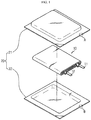
- FIG. 1 is an exploded perspective view illustrating the structure of the conventional pouch-type secondary battery schematically.
- the conventional pouch-type secondary battery includes an electrode assembly 10 and a pouch casing 20 as a fundamental structure.
- the electrode assembly 10 includes a positive electrode plate, a negative electrode plate and a separator interposed between the positive electrode plate and the negative electrode plate so that they may be insulated electrically from each other.
- the electrode assembly 10 is provided with a positive electrode tab extended from the positive electrode plate and a negative electrode tab extended from the negative electrode plate.
- the positive electrode tab and the negative electrode tab may be bound to a positive electrode lead 11 and a negative electrode lead 12, respectively, through resistance welding, ultrasonic welding, laser welding, or the like.
- Such electrode leads are exposed to the outside of the pouch casing to carry out a function of connecting the secondary battery with an external applicable instrument electrically, as electrodes of the secondary battery.
- the electrode assembly 10 is introduced to the pouch casing 20 together with an electrolyte.
- the pouch casing 20 may be divided into an upper pouch 21 and a lower pouch 22, and may also be referred to as a single cap or double cap depending on the location of a portion where the electrode assembly 10 is received.
- Such a pouch casing 20 may include aluminum foil inserted therein in order to protect an electrolyte introduced into the pouch casing and the electrode assembly 10, to supplement the electrochemical properties of a battery cell and to improve heat radiation property.
- the aluminum foil may have an insulation layer formed on the outside thereof, and the insulation layer may be coated with an insulation material, such as polyethylene terephthalate (PET) resin or nylon resin, to ensure insulation between the battery cell and the outside.
- PET polyethylene terephthalate
- the pouch casing 20 may be bonded or adhered at the outer circumferential portion thereof through hot fusion, or the like, during a sealing process.
- the bottom surface of the upper pouch 21 and the top surface of the lower pouch 22 may have an adhesive layer including casted polypropylene (PP) or polypropylene (PP) for the purpose of adhesion with each other.
- PP polypropylene
- PP polypropylene
- Such an adhesive layer functions to perform adhesion of the pouch casing 20 and serves as an insulation layer capable of preventing electric contact between the aluminum layer and the electrolyte introduced into the pouch casing 20.
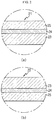
- FIG. 2 is an enlarged sectional view illustrating portion A and portion B of FIG. 1 .
- the upper pouch 21 has a predetermined layered structure having an insulation layer 25, an aluminum layer 24 and an adhesive layer 23 successively, and the lower pouch 22 includes an adhesive layer 23, an aluminum layer 24 and an insulation layer 25.
- heat and pressure may be applied to the bottom adhesive layer of the upper pouch 21 and the top adhesive layer 23 of the lower pouch 22.
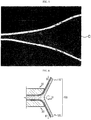
- FIG. 3 to FIG. 5 are schematic views illustrating a sealing portion pushed in a direction toward the inside of a cell, when a pouch casing is sealed according to the related art.
- the adhesive layer present at the sealing portion melts and flows due to the heat generated during sealing to form a temporary attachment region C, where the sealing portion is pushed in a direction toward the inside of the cell based on the parallel bonded end of the sealing portion.
- a temporary attachment region has a ball shape locally and the ball-shaped temporary attachment region is vulnerable to insulation and high-temperature durability.
- the present disclosure is designed to solve the problems of the related art, and therefore the present disclosure is directed to providing a method for sealing a pouch casing which can improve the durability of a sealing portion when sealing a pouch-type secondary battery.
- a method for sealing a pouch casing of a pouch-type secondary battery which includes the steps of: a receiving step in which an electrode assembly is received in an inner space formed between an upper pouch and a lower pouch; and a sealing step in which a first pressure is applied to an outer circumferential sealing portion, where the upper pouch and the lower pouch are sealed, in the longitudinal direction, and then the pressure is relieved, wherein the sealing step is carried out by applying external force to the upper pouch in the upward direction and to the lower pouch in the downward direction, or by applying a second pressure working in perpendicular to the first pressure to the sealing portion from the inner part of the pouch casing in a direction toward the outside.
- the sealing step may be carried out so that the shape of a temporary attachment region, formed by the sealing portion pushed in a direction toward the inner space based on the parallel bonded end of the outer circumferential sealing portion of the upper pouch and the lower pouch, may not have a ball shape locally.
- the sealing step may be carried out by a heating block which performs hot fusion of the outer circumferential sealing portion of the upper pouch and the lower pouch through the transfer of a heat source.
- the sealing step may be carried out by applying external force to the upper pouch in the upward direction and to the lower pouch in the downward direction by using a vacuum adsorption pad.
- the second pressure in the sealing step may be a pneumatic pressure.
- the extent of the external force applied to the upper pouch in the upward direction may be 2-5 times of the weight of the upper pouch
- the extent of the external force applied to the lower pouch in the downward direction may be 2-5 times of the weight of the lower pouch.
- the external force application time may be 1.5-2 times of the first pressure application time.
- the second pressure may be 0.1-0.15 MPa.
- the second pressure application time may be 1.5-2 times of the first pressure application time.
- the upper pouch and the lower pouch independently may include a metal layer, an insulation layer formed on one surface of the metal layer, and an adhesive layer formed on the other surface of the metal layer.
- the metal layer may be an aluminum layer.
- the insulation layer may include polyethylene terephthalate resin, nylon resin or a combination thereof.
- the adhesive layer may include casted polypropylene, polypropylene or a combination thereof.
- FIG. 6 is a schematic view illustrating the method for sealing a pouch casing according to an embodiment of the present disclosure.
- the method for sealing a pouch casing includes the steps of: (S10) a receiving step in which an electrode assembly is received in an inner space formed between an upper pouch and a lower pouch; and (S20) a sealing step in which a first pressure is applied to an outer circumferential sealing portion, where the upper pouch and the lower pouch are sealed, in the longitudinal direction, and then the pressure is relieved.
- a step of injecting an electrolyte and a step of aligning the sealing portion of the pouch casing 100 to seal the pouch casing 100 may be further carried out.
- sealing step S20 is carried out by applying external force to the upper pouch 110 in the upward direction D and to the lower pouch 120 in the downward direction D', or by applying a second pressure working in perpendicular to the first pressure to the sealing portion from the inner part of the pouch casing 100 in a direction E toward the outside.
- the pouch casing 100 When external force is applied to the upper pouch 110 in the upward direction D and to the lower pouch 120 in the downward direction D', or a second pressure working in perpendicular to the first pressure is applied to the sealing portion from the inner part of the pouch casing 100 in a direction E toward the outside, the pouch casing 100 is in close contact with a press jig 30 used for the sealing step to the highest degree.
- a press jig 30 used for the sealing step to the highest degree.
- the extent of the external force applied to the upper pouch in the upward direction and that of the external force applied to the lower pouch in the downward direction may vary with the size and weight of the upper pouch and those of the lower pouch, respectively.
- external force is applied in an extent corresponding to 2-5 times of the weight of each of the upper pouch and the lower pouch.
- an upper or lower pouch has a weight of about 10 gf.
- the extent of external force applied to each of the upper pouch and the lower pouch is preferably about 20-50 gf.
- the temporary attachment region may have a ball shape locally.
- sealing of the upper and lower pouches may be affected adversely and the adhesive layer melted upon sealing may be deformed.
- the external force application time may be 1.5-2-times of the first pressure application time.
- the total external force application time may be 1.5-2 times of the first pressure application time.
- the second pressure may be 0.1-0.15 Mpa.
- the second pressure when the second pressure is less than 0.1 MPa, sufficient force cannot be applied to the temporary attachment region, thereby making it difficult to control the shape of the temporary attachment region.
- the second pressure exceeds 0.15 MPa, the adhesive layer of the pouch melted during sealing may be deformed undesirably.
- the second pressure application time may be 1.5-2 times of the first pressure application time.
- the total second pressure application time may be 1.5-2 times of the first pressure application time.
- the sealing step may be carried out by a heating block which performs hot fusion of the outer circumferential sealing portion of the upper pouch and the lower pouch through the transfer of a heat source.
- each of the upper pouch 110 and the lower pouch 120 includes a multilayer structure having a metal layer including an insulation layer, an adhesive layer, or the like.
- sealing step S20 is carried out by applying heat and pressure from a heating block to the outer circumferential adhesive layer of the upper pouch 110 and the lower pouch 120.
- sealing step S20 the external force working on each of the upper pouch and the lower pouch may be applied by a vacuum adsorption pad and the second pressure applied to the sealing portion may be applied by pneumatic pressure.
- FIG. 7 shows a sealing portion formed by the method for sealing a pouch according to an embodiment of the present disclosure. Referring to FIG. 7 , it can be seen that the temporary attachment region formed in the inner space of the secondary battery shows no ball shape locally.
- the upper pouch and the lower pouch may include a metal layer inserted therein in order to protect an electrolyte and an electrode assembly introduced into the pouch casing, to supplement the electrochemical properties of a battery cell and to improve heat dissipation property, or the like.
- Each of the upper pouch and the lower pouch may include a metal layer, an insulation layer formed on one surface of the metal layer and an adhesive layer formed on the other surface of the metal layer.
- the metal layer may be foil made of aluminum.
- the insulation layer coated with an insulation material such as polyethylene terephthalate (PET) resin or nylon resin, may be formed on one surface of the metal layer in order to ensure insulation between the battery cell and the outside.
- PET polyethylene terephthalate
- the adhesive layer such as casted polypropylene (CPP) or polypropylene (PP), may be formed on the other surface of the metal layer in order to attach the upper pouch and the lower pouch to each other.
- CPP casted polypropylene
- PP polypropylene
- Such an adhesive layer not only performs adhesion between the upper pouch and the lower pouch but also functions as an insulation layer which prevents electric contact between the metal layer and the electrolyte injected into the pouch casing.
- a sealing test was carried out for an upper pouch and lower pouch including a metal foil layer made of aluminum, a polyethylene terephthalate resin layer formed on one surface of the metal foil layer, and a polypropylene adhesive layer formed on the other surface of the metal foil layer, and having a weight of 10 gf.
- the adhesive layers were allowed to be in contact with each other.
- a test is carried out by applying a different extent of external force to each of the upper pouch and the lower pouch.
- the following Table 1 shows the test conditions, shape of a temporary attachment region and high-temperature sealing strength.
- the high-temperature sealing strength was determined by measuring sealing strength in a chamber at a high temperature of 80°C (measured at a rate of 50 mm/min).
- the test was carried out while controlling the external force application time might be 1.5 times of the first pressure application time. When the external force application time exceeds 2 times of the first pressure application time, the adhesive layer cannot be controlled sufficiently and sealing strength is degraded.
- Example 1 Example 2 Comparative Example 1 Comparative Example 2 Extent of external force 20 gf 50 gf 0 100 gf Shape of temporary attachment region Ball shape is not generated Ball shape is not generated Ball shape is generated Deformation High-temperature sealing strength 9.3 kgf/15mm 8.5 kgf/15mm 4.9 kgf/15mm 2.9 kgf/15mm
- Example 1 external force corresponding to 2 times of the weight of the pouch was applied to each of the upper pouch and the lower pouch in the upward direction and the downward direction, respectively.
- Example 2 external force corresponding to 5 times of the weight of the pouch was applied.
- the shape of temporary attachment region is not a ball shape but has an adequate degree of sealing strength.
- the shape of temporary attachment region is a ball shape locally and the high-temperature sealing strength is decreased to about a half of the high-temperature sealing strength of each example.
- Comparative Example 2 shows a high-temperature sealing strength of 2.9 kgf/15 mm, which is significantly lower than that of each Example.
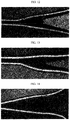
- FIG. 8 to FIG. 11 show the shape of each of the sealing portions according to Examples 1 and 2 and Comparative Examples 1 and 2. It can be seen that the drawings support the results of the above Table 1.
- Example 3 Comparative Example 3 Comparative Example 4 Extent of second pressure 0.1 MPa 0.15 MPa 0 0.2 MPa Shape of temporary attachment region Ball shape is reduced Ball shape is not generated Ball shape is generated Adhesive layer is damaged High-temperature sealing strength 7.3 kgf/15mm 9.0 kgf/15mm 4.9 kgf/15mm 4.3 kgf/15mm
- Example 3 although a minute ball shape is formed in the temporary attachment region, the ball shape is insignificant as compared to Comparative Examples. In the case of Example 4, no ball shape is generated and an adequate degree of sealing strength is provided.
- Comparative Example 4 shows a high-temperature sealing strength of 4.3 kgf/15 mm, which is significantly lower than that of each Example.
- FIG. 12 to FIG. 15 show the shape of each of the sealing portions according to Examples 3 and 4 and Comparative Examples 3 and 4. It can be seen that the drawings support the results of the above Table 2.
- Example 5 Extent of external force 20 gf Extent of second pressure 0.1 MPa Shape of temporary attachment region Ball shape is not generated High-temperature sealing strength 8.5 kgf/15mm
- FIG. 16 shows the sealing portion according to example 5.
Landscapes
- Chemical & Material Sciences (AREA)
- Chemical Kinetics & Catalysis (AREA)
- Electrochemistry (AREA)
- General Chemical & Material Sciences (AREA)
- Engineering & Computer Science (AREA)
- Manufacturing & Machinery (AREA)
- Inorganic Chemistry (AREA)
- Sealing Battery Cases Or Jackets (AREA)
Abstract
Description
- The present disclosure relates to a method for sealing a pouch casing of a pouch-type secondary battery. More particularly, the present disclosure relates to a method for sealing a pouch casing of a secondary battery which can improve the durability of a sealing portion of a pouch-type secondary battery by improving a sealing process carried out for a pouch casing during the manufacture of a pouch-type secondary battery.
- The present application claims priority to Korean Patent Application No.
10-2016-0125013 filed on September 28, 2016 - Secondary batteries which show easy applicability to different product groups and have electrical properties, such as high energy density, have been applied generally to electric vehicles (EV) or hybrid vehicles (HV) driven by an electrical driving source as well as to portable instruments.
- Such secondary batteries not only have a primary advantage of reducing use of fossil fuel significantly but also generate no byproduct resulting from use of energy, and thus have been given many attentions as novel energy sources capable of providing ecofriendly characteristics and improving energy efficiency.
-
FIG. 1 is an exploded perspective view illustrating the structure of the conventional pouch-type secondary battery schematically. Referring toFIG. 1 , the conventional pouch-type secondary battery includes anelectrode assembly 10 and apouch casing 20 as a fundamental structure. - Herein, the
electrode assembly 10 includes a positive electrode plate, a negative electrode plate and a separator interposed between the positive electrode plate and the negative electrode plate so that they may be insulated electrically from each other. In addition, theelectrode assembly 10 is provided with a positive electrode tab extended from the positive electrode plate and a negative electrode tab extended from the negative electrode plate. - The positive electrode tab and the negative electrode tab may be bound to a
positive electrode lead 11 and anegative electrode lead 12, respectively, through resistance welding, ultrasonic welding, laser welding, or the like. Such electrode leads are exposed to the outside of the pouch casing to carry out a function of connecting the secondary battery with an external applicable instrument electrically, as electrodes of the secondary battery. - The
electrode assembly 10 is introduced to thepouch casing 20 together with an electrolyte. - The
pouch casing 20 may be divided into anupper pouch 21 and alower pouch 22, and may also be referred to as a single cap or double cap depending on the location of a portion where theelectrode assembly 10 is received. - Such a
pouch casing 20 may include aluminum foil inserted therein in order to protect an electrolyte introduced into the pouch casing and theelectrode assembly 10, to supplement the electrochemical properties of a battery cell and to improve heat radiation property. Herein, the aluminum foil may have an insulation layer formed on the outside thereof, and the insulation layer may be coated with an insulation material, such as polyethylene terephthalate (PET) resin or nylon resin, to ensure insulation between the battery cell and the outside. - The
pouch casing 20 may be bonded or adhered at the outer circumferential portion thereof through hot fusion, or the like, during a sealing process. To accomplish this, the bottom surface of theupper pouch 21 and the top surface of thelower pouch 22 may have an adhesive layer including casted polypropylene (PP) or polypropylene (PP) for the purpose of adhesion with each other. Such an adhesive layer functions to perform adhesion of thepouch casing 20 and serves as an insulation layer capable of preventing electric contact between the aluminum layer and the electrolyte introduced into thepouch casing 20. -
FIG. 2 is an enlarged sectional view illustrating portion A and portion B ofFIG. 1 . Referring toFIG. 2 , theupper pouch 21 has a predetermined layered structure having aninsulation layer 25, analuminum layer 24 and anadhesive layer 23 successively, and thelower pouch 22 includes anadhesive layer 23, analuminum layer 24 and aninsulation layer 25. - To carry out sealing of the
pouch casing 20, heat and pressure may be applied to the bottom adhesive layer of theupper pouch 21 and the topadhesive layer 23 of thelower pouch 22. -
FIG. 3 to FIG. 5 are schematic views illustrating a sealing portion pushed in a direction toward the inside of a cell, when a pouch casing is sealed according to the related art. - Referring to
FIG. 3 to FIG. 5 , the adhesive layer present at the sealing portion melts and flows due to the heat generated during sealing to form a temporary attachment region C, where the sealing portion is pushed in a direction toward the inside of the cell based on the parallel bonded end of the sealing portion. Such a temporary attachment region has a ball shape locally and the ball-shaped temporary attachment region is vulnerable to insulation and high-temperature durability. Currently, there is no separate system for controlling the shape of such a temporary attachment region. - The present disclosure is designed to solve the problems of the related art, and therefore the present disclosure is directed to providing a method for sealing a pouch casing which can improve the durability of a sealing portion when sealing a pouch-type secondary battery.
- Other objects and advantages of the present disclosure may be understood from the following detailed description and will become more fully apparent from the exemplary embodiments of the present disclosure. Also, it will be easily understood that the objects and advantages of the present disclosure may be realized by the means shown in the appended claims and combinations thereof.
- In one aspect of the present disclosure, there is provided a method for sealing a pouch casing of a pouch-type secondary battery, which includes the steps of: a receiving step in which an electrode assembly is received in an inner space formed between an upper pouch and a lower pouch; and a sealing step in which a first pressure is applied to an outer circumferential sealing portion, where the upper pouch and the lower pouch are sealed, in the longitudinal direction, and then the pressure is relieved, wherein the sealing step is carried out by applying external force to the upper pouch in the upward direction and to the lower pouch in the downward direction, or by applying a second pressure working in perpendicular to the first pressure to the sealing portion from the inner part of the pouch casing in a direction toward the outside.
- Herein, the sealing step may be carried out so that the shape of a temporary attachment region, formed by the sealing portion pushed in a direction toward the inner space based on the parallel bonded end of the outer circumferential sealing portion of the upper pouch and the lower pouch, may not have a ball shape locally.
- In addition, the sealing step may be carried out by a heating block which performs hot fusion of the outer circumferential sealing portion of the upper pouch and the lower pouch through the transfer of a heat source.
- In addition, the sealing step may be carried out by applying external force to the upper pouch in the upward direction and to the lower pouch in the downward direction by using a vacuum adsorption pad.
- In addition, the second pressure in the sealing step may be a pneumatic pressure.
- In addition, the extent of the external force applied to the upper pouch in the upward direction may be 2-5 times of the weight of the upper pouch, and the extent of the external force applied to the lower pouch in the downward direction may be 2-5 times of the weight of the lower pouch.
- In addition, in the sealing step, the external force application time may be 1.5-2 times of the first pressure application time.
- In addition, in the sealing step, the second pressure may be 0.1-0.15 MPa.
- In addition, in the sealing step, the second pressure application time may be 1.5-2 times of the first pressure application time.
- Meanwhile, the upper pouch and the lower pouch independently may include a metal layer, an insulation layer formed on one surface of the metal layer, and an adhesive layer formed on the other surface of the metal layer.
- Herein, the metal layer may be an aluminum layer.
- In addition, the insulation layer may include polyethylene terephthalate resin, nylon resin or a combination thereof.
- Further, the adhesive layer may include casted polypropylene, polypropylene or a combination thereof.
- According to the present disclosure, it is possible to transfer heat uniformly to the whole of a portion corresponding to a temporary attachment region during a sealing process of a pouch casing in a pouch-type secondary battery, and to control the temporary attachment region so that it may not have a ball shape locally.
- Therefore, it is possible to improve the insulation property and high-temperature durability of the temporary attachment region.
- As a result, according to the present disclosure, it is possible to stably ensure the insulation property of a pouch casing of a secondary battery and to effectively prevent ignition, explosion or fire accidents caused by an internal short-circuit.
- The accompanying drawings illustrate a preferred embodiment of the present disclosure and together with the foregoing disclosure, serve to provide further understanding of the technical disclosure of the present disclosure, and thus, the present disclosure is not construed as being limited to the drawing.
-
FIG. 1 is an exploded perspective view illustrating the structure of the conventional pouch-type secondary battery schematically. -
FIG. 2 is an enlarged sectional view of portion A and portion B ofFIG. 1 . -
FIG. 3 to FIG. 5 is a schematic view illustrating the temporary attachment region of a sealing portion pushed in a direction toward the inside of a cell when sealing a pouch casing according to the related art. -
FIG. 6 is a schematic view illustrating the method for sealing a pouch casing according to an embodiment of the present disclosure. -
FIG. 7 shows a sealing portion formed by the method for sealing a pouch casing according to an embodiment of the present disclosure. -
FIG. 8 andFIG. 9 show a sealing portion formed by the method for sealing a pouch casing according to Examples of the present disclosure. -
FIG. 10 and FIG. 11 show a sealing portion formed by the method for sealing a pouch casing according to Comparative Examples of the present disclosure. -
FIG. 12 and FIG. 13 show a sealing portion formed by the method for sealing a pouch casing according to Examples of the present disclosure. -
FIG. 14 andFIG. 15 show a sealing portion formed by the method for sealing a pouch casing according to Comparative Examples of the present disclosure. -
FIG. 16 shows a sealing portion formed by the method for sealing a pouch casing according to Example of the present disclosure. -
- 20: Pouch casing
- 21: Upper pouch
- 22: Lower pouch
- 30: Press jig
- 100: Pouch casing
- 110: Upper pouch
- 120: Lower pouch
- Hereinafter, preferred embodiments of the present disclosure will be described in detail with reference to the accompanying drawings. Prior to the description, it should be understood that the terms used in the specification and the appended claims should not be construed as limited to general and dictionary meanings, but interpreted based on the meanings and concepts corresponding to technical aspects of the present disclosure on the basis of the principle that the inventor is allowed to define terms appropriately for the best explanation.
- Therefore, the description proposed herein is just a preferable example for the purpose of illustrations only, not intended to limit the scope of the disclosure, so it should be understood that other equivalents and modifications could be made thereto without departing from the scope of the disclosure.
- In addition, details of well-known features and techniques may be omitted to avoid unnecessarily obscuring the present disclosure. The following embodiments are provided to make those skilled in the art understand the present disclosure more completely, and thus features, sizes, etc. of some constitutional elements in the drawings may be exaggerated for the purpose of well-defined description.
-
FIG. 6 is a schematic view illustrating the method for sealing a pouch casing according to an embodiment of the present disclosure. - The method for sealing a pouch casing according to an embodiment of the present disclosure includes the steps of: (S10) a receiving step in which an electrode assembly is received in an inner space formed between an upper pouch and a lower pouch; and (S20) a sealing step in which a first pressure is applied to an outer circumferential sealing portion, where the upper pouch and the lower pouch are sealed, in the longitudinal direction, and then the pressure is relieved.
- After the electrode assembly is received in the inner space of the
pouch casing 100 in receiving step (S10), a step of injecting an electrolyte and a step of aligning the sealing portion of thepouch casing 100 to seal thepouch casing 100 may be further carried out. - Referring to
FIG. 6 , sealing step S20 is carried out by applying external force to theupper pouch 110 in the upward direction D and to thelower pouch 120 in the downward direction D', or by applying a second pressure working in perpendicular to the first pressure to the sealing portion from the inner part of thepouch casing 100 in a direction E toward the outside. - When external force is applied to the
upper pouch 110 in the upward direction D and to thelower pouch 120 in the downward direction D', or a second pressure working in perpendicular to the first pressure is applied to the sealing portion from the inner part of thepouch casing 100 in a direction E toward the outside, thepouch casing 100 is in close contact with apress jig 30 used for the sealing step to the highest degree. Thus, heat transfer occurs uniformly also into the temporary attachment region of the sealing portion pushed in a direction toward the inner space based on the parallel bonded end of the outer circumferential sealing portion. Therefore, it is possible to control the temporary attachment region so that it may not have a ball shape locally. - In this manner, it is possible to improve the insulation property and high-temperature durability of the temporary attachment region. Ultimately, it is possible to stably ensure the insulation property of the pouch casing of a secondary battery and to effectively prevent ignition, explosion and fire accidents caused by an internal short-circuit.
- Meanwhile, the extent of the external force applied to the upper pouch in the upward direction and that of the external force applied to the lower pouch in the downward direction may vary with the size and weight of the upper pouch and those of the lower pouch, respectively. Preferably, external force is applied in an extent corresponding to 2-5 times of the weight of each of the upper pouch and the lower pouch. For example, in the case of a pouch-type secondary battery for vehicles, an upper or lower pouch has a weight of about 10 gf. In this case, the extent of external force applied to each of the upper pouch and the lower pouch is preferably about 20-50 gf. When external force is applied to an extent less than 2 times of the weight, the temporary attachment region may have a ball shape locally. When external force is applied to an extent larger than 5 times of the weight, sealing of the upper and lower pouches may be affected adversely and the adhesive layer melted upon sealing may be deformed.
- In addition, in the sealing step, the external force application time may be 1.5-2-times of the first pressure application time.
- In other words, while the first pressure working on the upper and lower pouches is applied, application of the external force is started simultaneously, so that the external force may be still applied even after the first pressure is relieved (depressurized). In addition, the total external force application time may be 1.5-2 times of the first pressure application time.
- This considers the time required for cooling the adhesive layer of the pouch to allow maintenance of the shape after the adhesive layer is melted during sealing. When the time is less than the above-defined range, the adhesive layer cannot be cooled sufficiently so that the temporary attachment region may not be controlled adequately. When the time exceeds the above-defined range, unnecessary external force is applied after cooling is already accomplished, which is not cost efficient.
- Meanwhile, the second pressure may be 0.1-0.15 Mpa. Herein, when the second pressure is less than 0.1 MPa, sufficient force cannot be applied to the temporary attachment region, thereby making it difficult to control the shape of the temporary attachment region. When the second pressure exceeds 0.15 MPa, the adhesive layer of the pouch melted during sealing may be deformed undesirably.
- In addition, in the sealing step, the second pressure application time may be 1.5-2 times of the first pressure application time.
- In other words, while the first pressure working on the upper and lower pouches is applied, application of the second pressure is started simultaneously, so that the second pressure may be still applied even after the first pressure is relieved (depressurized). In addition, the total second pressure application time may be 1.5-2 times of the first pressure application time.
- This considers the time required for cooling the adhesive layer of the pouch to allow maintenance of the shape after the adhesive layer is melted during sealing. When the time is less than the above-defined range, the adhesive layer cannot be cooled sufficiently so that the temporary attachment region may not be controlled adequately. When the time exceeds the above-defined range, the second pressure is applied unnecessarily after cooling is already accomplished, which is not cost efficient.
- Meanwhile, the sealing step may be carried out by a heating block which performs hot fusion of the outer circumferential sealing portion of the upper pouch and the lower pouch through the transfer of a heat source.
- Herein, each of the
upper pouch 110 and thelower pouch 120 includes a multilayer structure having a metal layer including an insulation layer, an adhesive layer, or the like. According to the present disclosure, sealing step S20 is carried out by applying heat and pressure from a heating block to the outer circumferential adhesive layer of theupper pouch 110 and thelower pouch 120. - Meanwhile, in sealing step S20, the external force working on each of the upper pouch and the lower pouch may be applied by a vacuum adsorption pad and the second pressure applied to the sealing portion may be applied by pneumatic pressure.
-
FIG. 7 shows a sealing portion formed by the method for sealing a pouch according to an embodiment of the present disclosure. Referring toFIG. 7 , it can be seen that the temporary attachment region formed in the inner space of the secondary battery shows no ball shape locally. - Meanwhile, the upper pouch and the lower pouch may include a metal layer inserted therein in order to protect an electrolyte and an electrode assembly introduced into the pouch casing, to supplement the electrochemical properties of a battery cell and to improve heat dissipation property, or the like. Each of the upper pouch and the lower pouch may include a metal layer, an insulation layer formed on one surface of the metal layer and an adhesive layer formed on the other surface of the metal layer.
- Herein, the metal layer may be foil made of aluminum.
- In addition, the insulation layer coated with an insulation material, such as polyethylene terephthalate (PET) resin or nylon resin, may be formed on one surface of the metal layer in order to ensure insulation between the battery cell and the outside.
- In addition, the adhesive layer, such as casted polypropylene (CPP) or polypropylene (PP), may be formed on the other surface of the metal layer in order to attach the upper pouch and the lower pouch to each other. Such an adhesive layer not only performs adhesion between the upper pouch and the lower pouch but also functions as an insulation layer which prevents electric contact between the metal layer and the electrolyte injected into the pouch casing.
- Examples will be described more fully hereinafter so that the present disclosure can be understood with ease. The following examples may, however, be embodied in many different forms and should not be construed as limited to the exemplary embodiments set forth therein. Rather, these exemplary embodiments are provided so that the present disclosure will be thorough and complete, and will fully convey the scope of the present disclosure to those skilled in the art.
- A sealing test was carried out for an upper pouch and lower pouch including a metal foil layer made of aluminum, a polyethylene terephthalate resin layer formed on one surface of the metal foil layer, and a polypropylene adhesive layer formed on the other surface of the metal foil layer, and having a weight of 10 gf. Herein, when the upper pouch and the lower pouch are sealed, the adhesive layers were allowed to be in contact with each other.
- A test is carried out by applying a different extent of external force to each of the upper pouch and the lower pouch. The following Table 1 shows the test conditions, shape of a temporary attachment region and high-temperature sealing strength. Herein, the high-temperature sealing strength was determined by measuring sealing strength in a chamber at a high temperature of 80°C (measured at a rate of 50 mm/min). In addition, the test was carried out while controlling the external force application time might be 1.5 times of the first pressure application time. When the external force application time exceeds 2 times of the first pressure application time, the adhesive layer cannot be controlled sufficiently and sealing strength is degraded.
[Table 1] Example 1 Example 2 Comparative Example 1 Comparative Example 2 Extent of external force 20 gf 50 gf 0 100 gf Shape of temporary attachment region Ball shape is not generated Ball shape is not generated Ball shape is generated Deformation High-temperature sealing strength 9.3 kgf/15mm 8.5 kgf/15mm 4.9 kgf/15mm 2.9 kgf/15mm - In Example 1, external force corresponding to 2 times of the weight of the pouch was applied to each of the upper pouch and the lower pouch in the upward direction and the downward direction, respectively. In Example 2, external force corresponding to 5 times of the weight of the pouch was applied. In the case of Examples, it can be seen that the shape of temporary attachment region is not a ball shape but has an adequate degree of sealing strength.
- Meanwhile, in the case of Comparative Example 1 in which no external force is applied, the shape of temporary attachment region is a ball shape locally and the high-temperature sealing strength is decreased to about a half of the high-temperature sealing strength of each example.
- In addition, in the case of Comparative Example 2 in which external force is applied excessively, the interface between the metal layer and the adhesive layer is damaged and the shape of temporary attachment region is deformed. Particularly, it can be seen that Comparative Example 2 shows a high-temperature sealing strength of 2.9 kgf/15 mm, which is significantly lower than that of each Example.
-
FIG. 8 to FIG. 11 show the shape of each of the sealing portions according to Examples 1 and 2 and Comparative Examples 1 and 2. It can be seen that the drawings support the results of the above Table 1. - While the upper pouch and the lower pouch are pressurized against each other under the first pressure, pneumatic pressure as second pressure working in perpendicular to the first pressure was applied to the sealing portion in a direction toward the outside of the pouch casing to carry out a test. The following Table 2 shows the test conditions, the shape of temporary attachment region and high-temperature sealing strength according to each of Examples and Comparative Examples. Herein, the high-temperature sealing strength was determined by measuring sealing strength in a chamber at a high temperature 80°C (measured at a rate of 50 mm/min), and the second pressure (pneumatic pressure) application time was controlled to be 1.5 times of the first pressure application time. When the pneumatic pressure application time was larger than 2 times of the first pressure application time, the temporary attachment region could not be controlled sufficiently and the sealing strength was decreased.
[Table 2] Example 3 Example 4 Comparative Example 3 Comparative Example 4 Extent of second pressure 0.1 MPa 0.15 MPa 0 0.2 MPa Shape of temporary attachment region Ball shape is reduced Ball shape is not generated Ball shape is generated Adhesive layer is damaged High-temperature sealing strength 7.3 kgf/15mm 9.0 kgf/15mm 4.9 kgf/15mm 4.3 kgf/15mm - In the case of Example 3, although a minute ball shape is formed in the temporary attachment region, the ball shape is insignificant as compared to Comparative Examples. In the case of Example 4, no ball shape is generated and an adequate degree of sealing strength is provided.
- Meanwhile, in the case of Comparative Example 3 in which pneumatic pressure as second pressure is not applied, it can be seen that the shape of temporary attachment region is a ball shape locally and the high-temperature sealing strength is 4.9 kgf/15 mm, which is significantly lower than that of each Example.
- In addition, in the case of Comparative Example 4 in which the second pressure is applied excessively, the adhesive layer is damaged. In addition, it can be seen that Comparative Example 4 shows a high-temperature sealing strength of 4.3 kgf/15 mm, which is significantly lower than that of each Example.
-
FIG. 12 to FIG. 15 show the shape of each of the sealing portions according to Examples 3 and 4 and Comparative Examples 3 and 4. It can be seen that the drawings support the results of the above Table 2. - A test was carried out by applying external force according to Example 1 in combination with the second pressure according to Example 3. The following Table 3 shows the test conditions, the shape of temporary attachment region and high-temperature sealing strength according to Example 5.
[Table 3] Example 5 Extent of external force 20 gf Extent of second pressure 0.1 MPa Shape of temporary attachment region Ball shape is not generated High-temperature sealing strength 8.5 kgf/15mm - In the case of Example 5, it can be seen that no ball shape of temporary attachment region is generated and an adequate degree of sealing strength is provided.
FIG. 16 shows the sealing portion according to example 5. - The features described in each of embodiments may be realized in a single embodiment in combination. On the contrary, various features described in a single embodiment may be realized in different embodiments individually or in an adequate subcombination.
- In the specification or drawings, the terms, such as 'top', 'bottom', 'inner' and 'outer', are used to differentiate one element relatively from another element and have instrumental concepts to increase the efficiency of description. Thus, such terms should not be interpreted as concepts used to differentiate any physical position or order on the absolute basis.
- The present disclosure has been described in detail with reference to particular embodiments and drawings, but it should be understood that the scope of the present disclosure is not limited thereto. It should be also understood that various changes and modifications within the scope of the disclosure will become apparent to those skilled in the art from this detailed description.
Claims (13)
- A method for sealing a pouch casing of a pouch-type secondary battery, which comprises the steps of:a receiving step in which an electrode assembly is received in an inner space formed between an upper pouch and a lower pouch; anda sealing step in which a first pressure is applied to an outer circumferential sealing portion, where the upper pouch and the lower pouch are sealed, in the longitudinal direction, and then the pressure is relieved,wherein the sealing step is carried out by applying external force to the upper pouch in the upward direction and to the lower pouch in the downward direction, or by applying a second pressure working in perpendicular to the first pressure to the sealing portion from the inner part of the pouch casing in a direction toward the outside.
- The method for sealing a pouch casing according to claim 1, wherein the sealing step is carried out so that the shape of a temporary attachment region, formed by the sealing portion pushed in a direction toward the inner space based on the parallel bonded end of the outer circumferential sealing portion of the upper pouch and the lower pouch, may not have a ball shape locally.
- The method for sealing a pouch casing according to claim 1, wherein the sealing step is carried out by a heating block which performs hot fusion of the outer circumferential sealing portion of the upper pouch and the lower pouch through the transfer of a heat source.
- The method for sealing a pouch casing according to claim 1, wherein the sealing step is carried out by applying external force to the upper pouch in the upward direction and to the lower pouch in the downward direction by using a vacuum adsorption pad.
- The method for sealing a pouch casing according to claim 1, wherein the second pressure in the sealing step is a pneumatic pressure.
- The method for sealing a pouch casing according to claim 1, wherein the extent of the external force applied to the upper pouch in the upward direction is 2-5 times of the weight of the upper pouch, and the extent of the external force applied to the lower pouch in the downward direction is 2-5 times of the weight of the lower pouch.
- The method for sealing a pouch casing according to claim 1, wherein the external force application time in the sealing step is 1.5-2 times of the first pressure application time.
- The method for sealing a pouch casing according to claim 1, wherein the second pressure in the sealing step is 0.1-0.15 MPa.
- The method for sealing a pouch casing according to claim 1, wherein the second pressure application time in the sealing step is 1.5-2 times of the first pressure application time.
- The method for sealing a pouch casing according to claim 1, wherein the upper pouch and the lower pouch independently include a metal layer, an insulation layer formed on one surface of the metal layer, and an adhesive layer formed on the other surface of the metal layer.
- The method for sealing a pouch casing according to claim 10, wherein the metal layer is an aluminum layer.
- The method for sealing a pouch casing according to claim 10, wherein the insulation layer includes polyethylene terephthalate resin, nylon resin or a combination thereof.
- The method for sealing a pouch casing according to claim 10, wherein the adhesive layer includes casted polypropylene, polypropylene or a combination thereof.
Priority Applications (1)
| Application Number | Priority Date | Filing Date | Title |
|---|---|---|---|
| PL17856806T PL3373374T3 (en) | 2016-09-28 | 2017-09-28 | Method for sealing pouch case of secondary battery |
Applications Claiming Priority (2)
| Application Number | Priority Date | Filing Date | Title |
|---|---|---|---|
| KR20160125013 | 2016-09-28 | ||
| PCT/KR2017/010880 WO2018062920A1 (en) | 2016-09-28 | 2017-09-28 | Method for sealing pouch case of secondary battery |
Publications (3)
| Publication Number | Publication Date |
|---|---|
| EP3373374A1 true EP3373374A1 (en) | 2018-09-12 |
| EP3373374A4 EP3373374A4 (en) | 2018-09-12 |
| EP3373374B1 EP3373374B1 (en) | 2019-09-11 |
Family
ID=61759976
Family Applications (1)
| Application Number | Title | Priority Date | Filing Date |
|---|---|---|---|
| EP17856806.9A Active EP3373374B1 (en) | 2016-09-28 | 2017-09-28 | Method for sealing pouch case of secondary battery |
Country Status (6)
| Country | Link |
|---|---|
| US (1) | US10727453B2 (en) |
| EP (1) | EP3373374B1 (en) |
| KR (1) | KR102002614B1 (en) |
| CN (1) | CN108370058B (en) |
| PL (1) | PL3373374T3 (en) |
| WO (1) | WO2018062920A1 (en) |
Cited By (2)
| Publication number | Priority date | Publication date | Assignee | Title |
|---|---|---|---|---|
| WO2020096224A1 (en) * | 2018-11-06 | 2020-05-14 | 주식회사 아모그린텍 | Pouch-type battery cartridge and pouch-type battery pack comprising same |
| WO2021234092A1 (en) | 2020-05-20 | 2021-11-25 | Saft | Electrochemical unit and corresponding manufacturing method and facility |
Families Citing this family (11)
| Publication number | Priority date | Publication date | Assignee | Title |
|---|---|---|---|---|
| KR102555751B1 (en) * | 2017-10-17 | 2023-07-14 | 주식회사 엘지에너지솔루션 | Gas Dischargeable Pouch-Type Case for Secondary Battery |
| CN111341946B (en) * | 2018-12-18 | 2022-05-17 | 宁德新能源科技有限公司 | Cells and batteries |
| US12494533B2 (en) * | 2019-06-10 | 2025-12-09 | Nippon Steel Corporation | Battery case and method of production of same |
| EP4201651A4 (en) * | 2020-10-12 | 2024-04-10 | LG Energy Solution, Ltd. | DEVICE FOR SEALING A BATTERY CASING AND SECONDARY BATTERY PRODUCED THEREFROM |
| US20230163342A1 (en) * | 2021-01-28 | 2023-05-25 | Lg Energy Solution, Ltd. | Battery Cell Manufacturing Device and Battery Cell Manufacturing Method |
| CN116457996A (en) * | 2021-04-15 | 2023-07-18 | 株式会社 Lg新能源 | Secondary battery |
| CN115885417A (en) * | 2021-04-15 | 2023-03-31 | 株式会社 Lg新能源 | Secondary battery |
| JP2024503375A (en) * | 2021-11-30 | 2024-01-25 | エルジー エナジー ソリューション リミテッド | Pouch-type batteries and sealing devices for pouch-type batteries |
| KR20250007245A (en) * | 2023-07-05 | 2025-01-14 | 주식회사 엘지에너지솔루션 | pouch type secondary cell and manufacturing method of the same |
| KR20250020047A (en) * | 2023-08-03 | 2025-02-11 | 주식회사 엘지에너지솔루션 | Sealing Block to Prevent Crack of Pouch-Type Battery Case, Sealing Method for Pouch-Type Battery Case Using Thereof, and Pouch-Type Secondary Battery Made by The Same |
| KR20250177596A (en) | 2024-06-17 | 2025-12-24 | 주식회사 엘지에너지솔루션 | Secondary battery sealing method and secondary battery sealing device using the same |
Family Cites Families (22)
| Publication number | Priority date | Publication date | Assignee | Title |
|---|---|---|---|---|
| JP2004087239A (en) | 2002-08-26 | 2004-03-18 | Nissan Motor Co Ltd | Battery and method of manufacturing the same, and assembled battery and assembled battery module |
| KR100544119B1 (en) * | 2003-06-24 | 2006-01-23 | 삼성에스디아이 주식회사 | Pouch Type Lithium Secondary Battery |
| CN1297019C (en) * | 2003-12-20 | 2007-01-24 | 鸿富锦精密工业(深圳)有限公司 | Method for sealing lithium ion battery |
| CN100361326C (en) * | 2004-03-23 | 2008-01-09 | 日本电气株式会社 | Film-covered electrical device and manufacturing method thereof |
| JP2006040747A (en) * | 2004-07-28 | 2006-02-09 | Nissan Motor Co Ltd | Laminated battery manufacturing method, laminated battery, and heat sealer |
| KR100880386B1 (en) * | 2005-06-03 | 2009-01-23 | 주식회사 엘지화학 | Secondary battery of novel structure and battery pack including same |
| CN201508861U (en) * | 2009-07-22 | 2010-06-16 | 比亚迪股份有限公司 | A battery cap assembly and a cylindrical lithium-ion battery using the assembly |
| DE102009028986A1 (en) * | 2009-08-28 | 2011-03-03 | SB LiMotive Company Ltd., Suwon | Method and device for applying pressure to a battery |
| KR101417152B1 (en) * | 2009-10-09 | 2014-08-07 | 주식회사 엘지화학 | Method for manufacturing pouch type battery and sealing device for pouch |
| CN101764200A (en) * | 2010-01-20 | 2010-06-30 | 张力 | Packaging shell body of battery capacitor |
| KR101264527B1 (en) * | 2010-03-19 | 2013-05-14 | 주식회사 엘지화학 | Pouch case and battery pack using the same |
| US20110311862A1 (en) * | 2010-06-21 | 2011-12-22 | Samsung Sdi Co., Ltd. | Secondary battery |
| KR101203667B1 (en) * | 2010-11-30 | 2012-11-21 | 주식회사 엘지화학 | Method for manufacturing pouch type secondary electric cell with optimum sealing and pouch type secondary electric cell and hitting jig for sealing |
| KR101371040B1 (en) * | 2011-06-16 | 2014-03-10 | 에스케이이노베이션 주식회사 | Pouch type secondary battery and methods for producing it |
| CN104662697B (en) * | 2012-12-24 | 2017-03-08 | 株式会社Lg 化学 | There is the pocket type secondary cell of the sealing surplus for improving durability |
| JP6090473B2 (en) * | 2012-12-28 | 2017-03-08 | エルジー・ケム・リミテッド | Pouch case sealing device and sealing method for secondary battery |
| KR101469188B1 (en) * | 2013-04-23 | 2014-12-09 | (주)오렌지파워 | Pouch type rechargeable battery comprising inclined sealing part, and manufacturing method of the same |
| KR101838315B1 (en) | 2013-10-18 | 2018-03-13 | 주식회사 엘지화학 | Method For Manufacturing Pouch Type Lithium Secondary Battery |
| US20150171431A1 (en) * | 2013-12-17 | 2015-06-18 | Samsung Electronics Co., Ltd. | Secondary battery and method of manufacturing the same |
| KR101772057B1 (en) | 2014-05-30 | 2017-08-28 | 주식회사 엘지화학 | Apparatus and method for sealing pouch case of secondary battery |
| KR20160002176A (en) * | 2014-06-30 | 2016-01-07 | 주식회사 엘지화학 | Secondary battery |
| CN105527049B (en) * | 2016-03-03 | 2018-07-06 | 国轩新能源(苏州)有限公司 | Compression testing device in a kind of lithium ion battery |
-
2017
- 2017-09-28 PL PL17856806T patent/PL3373374T3/en unknown
- 2017-09-28 US US15/776,248 patent/US10727453B2/en active Active
- 2017-09-28 KR KR1020170126595A patent/KR102002614B1/en active Active
- 2017-09-28 CN CN201780004500.4A patent/CN108370058B/en active Active
- 2017-09-28 WO PCT/KR2017/010880 patent/WO2018062920A1/en not_active Ceased
- 2017-09-28 EP EP17856806.9A patent/EP3373374B1/en active Active
Cited By (3)
| Publication number | Priority date | Publication date | Assignee | Title |
|---|---|---|---|---|
| WO2020096224A1 (en) * | 2018-11-06 | 2020-05-14 | 주식회사 아모그린텍 | Pouch-type battery cartridge and pouch-type battery pack comprising same |
| WO2021234092A1 (en) | 2020-05-20 | 2021-11-25 | Saft | Electrochemical unit and corresponding manufacturing method and facility |
| FR3110772A1 (en) | 2020-05-20 | 2021-11-26 | Saft | Electrochemical assembly, corresponding manufacturing process and installation |
Also Published As
| Publication number | Publication date |
|---|---|
| PL3373374T3 (en) | 2019-12-31 |
| US20190207171A1 (en) | 2019-07-04 |
| CN108370058B (en) | 2021-06-25 |
| EP3373374B1 (en) | 2019-09-11 |
| EP3373374A4 (en) | 2018-09-12 |
| CN108370058A (en) | 2018-08-03 |
| KR102002614B1 (en) | 2019-07-22 |
| WO2018062920A1 (en) | 2018-04-05 |
| US10727453B2 (en) | 2020-07-28 |
| KR20180035181A (en) | 2018-04-05 |
Similar Documents
| Publication | Publication Date | Title |
|---|---|---|
| EP3373374B1 (en) | Method for sealing pouch case of secondary battery | |
| CN215955368U (en) | Pouch type battery case and pouch type secondary battery | |
| US9755195B2 (en) | Apparatus and method for sealing pouch case of secondary battery | |
| JP5418477B2 (en) | Battery manufacturing method | |
| JP4720065B2 (en) | Film outer battery and battery pack | |
| KR102347901B1 (en) | Pouch-Type Battery Case Having Structure to Prevent Crack and Method for Preparing the Same | |
| CN106328834A (en) | Package for power storage device and power storage device | |
| EP4094928B1 (en) | Apparatus and method for folding a side | |
| EP4300704A1 (en) | Cylindrical battery cell having spiral welding part, and battery module comprising same | |
| EP4037049A1 (en) | Secondary battery and sealing block | |
| KR20200052061A (en) | The Apparatus And The Method For Forming Pouch | |
| CN117616611A (en) | Battery cell pressure device and battery cell charging and discharging device including the same | |
| CN115149160A (en) | Pouch-type battery case, its forming apparatus, and pouch-type secondary battery | |
| US20230402686A1 (en) | Pouch Film for Secondary Battery and Manufacturing Method Thereof | |
| EP4439839A1 (en) | Pouch-type battery case and lithium secondary battery comprising same | |
| JP2023522778A (en) | Manufacturing method of pouch-type battery cell including secondary sealing and pouch-type battery cell manufactured by the method | |
| KR102914707B1 (en) | Pouch film, pouch case comprising the same and secondary battery | |
| US20250309321A1 (en) | Apparatus for forming folding guide line and battery cell | |
| KR102819258B1 (en) | Pouch film laminate and secondary battery | |
| CN120435791A (en) | Secondary battery and sealing device for manufacturing the same | |
| KR20170001048A (en) | The method for lithium secondary battery and lithium secondary battery using the same | |
| KR20120118316A (en) | Pouch-type secondary battery |
Legal Events
| Date | Code | Title | Description |
|---|---|---|---|
| STAA | Information on the status of an ep patent application or granted ep patent |
Free format text: STATUS: THE INTERNATIONAL PUBLICATION HAS BEEN MADE |
|
| PUAI | Public reference made under article 153(3) epc to a published international application that has entered the european phase |
Free format text: ORIGINAL CODE: 0009012 |
|
| STAA | Information on the status of an ep patent application or granted ep patent |
Free format text: STATUS: REQUEST FOR EXAMINATION WAS MADE |
|
| 17P | Request for examination filed |
Effective date: 20180605 |
|
| A4 | Supplementary search report drawn up and despatched |
Effective date: 20180806 |
|
| AK | Designated contracting states |
Kind code of ref document: A1 Designated state(s): AL AT BE BG CH CY CZ DE DK EE ES FI FR GB GR HR HU IE IS IT LI LT LU LV MC MK MT NL NO PL PT RO RS SE SI SK SM TR |
|
| AX | Request for extension of the european patent |
Extension state: BA ME |
|
| GRAP | Despatch of communication of intention to grant a patent |
Free format text: ORIGINAL CODE: EPIDOSNIGR1 |
|
| STAA | Information on the status of an ep patent application or granted ep patent |
Free format text: STATUS: GRANT OF PATENT IS INTENDED |
|
| RIC1 | Information provided on ipc code assigned before grant |
Ipc: H01M 2/02 20060101ALI20190612BHEP Ipc: H01M 10/04 20060101AFI20190612BHEP Ipc: H01M 10/0585 20100101ALN20190612BHEP |
|
| DAV | Request for validation of the european patent (deleted) | ||
| DAX | Request for extension of the european patent (deleted) | ||
| INTG | Intention to grant announced |
Effective date: 20190703 |
|
| GRAS | Grant fee paid |
Free format text: ORIGINAL CODE: EPIDOSNIGR3 |
|
| GRAA | (expected) grant |
Free format text: ORIGINAL CODE: 0009210 |
|
| STAA | Information on the status of an ep patent application or granted ep patent |
Free format text: STATUS: THE PATENT HAS BEEN GRANTED |
|
| AK | Designated contracting states |
Kind code of ref document: B1 Designated state(s): AL AT BE BG CH CY CZ DE DK EE ES FI FR GB GR HR HU IE IS IT LI LT LU LV MC MK MT NL NO PL PT RO RS SE SI SK SM TR |
|
| REG | Reference to a national code |
Ref country code: GB Ref legal event code: FG4D |
|
| REG | Reference to a national code |
Ref country code: CH Ref legal event code: EP |
|
| REG | Reference to a national code |
Ref country code: AT Ref legal event code: REF Ref document number: 1179676 Country of ref document: AT Kind code of ref document: T Effective date: 20190915 |
|
| REG | Reference to a national code |
Ref country code: DE Ref legal event code: R096 Ref document number: 602017007027 Country of ref document: DE Ref country code: IE Ref legal event code: FG4D |
|
| REG | Reference to a national code |
Ref country code: NL Ref legal event code: MP Effective date: 20190911 |
|
| REG | Reference to a national code |
Ref country code: LT Ref legal event code: MG4D |
|
| PG25 | Lapsed in a contracting state [announced via postgrant information from national office to epo] |
Ref country code: FI Free format text: LAPSE BECAUSE OF FAILURE TO SUBMIT A TRANSLATION OF THE DESCRIPTION OR TO PAY THE FEE WITHIN THE PRESCRIBED TIME-LIMIT Effective date: 20190911 Ref country code: HR Free format text: LAPSE BECAUSE OF FAILURE TO SUBMIT A TRANSLATION OF THE DESCRIPTION OR TO PAY THE FEE WITHIN THE PRESCRIBED TIME-LIMIT Effective date: 20190911 Ref country code: LT Free format text: LAPSE BECAUSE OF FAILURE TO SUBMIT A TRANSLATION OF THE DESCRIPTION OR TO PAY THE FEE WITHIN THE PRESCRIBED TIME-LIMIT Effective date: 20190911 Ref country code: BG Free format text: LAPSE BECAUSE OF FAILURE TO SUBMIT A TRANSLATION OF THE DESCRIPTION OR TO PAY THE FEE WITHIN THE PRESCRIBED TIME-LIMIT Effective date: 20191211 Ref country code: SE Free format text: LAPSE BECAUSE OF FAILURE TO SUBMIT A TRANSLATION OF THE DESCRIPTION OR TO PAY THE FEE WITHIN THE PRESCRIBED TIME-LIMIT Effective date: 20190911 Ref country code: NO Free format text: LAPSE BECAUSE OF FAILURE TO SUBMIT A TRANSLATION OF THE DESCRIPTION OR TO PAY THE FEE WITHIN THE PRESCRIBED TIME-LIMIT Effective date: 20191211 |
|
| PG25 | Lapsed in a contracting state [announced via postgrant information from national office to epo] |
Ref country code: ES Free format text: LAPSE BECAUSE OF FAILURE TO SUBMIT A TRANSLATION OF THE DESCRIPTION OR TO PAY THE FEE WITHIN THE PRESCRIBED TIME-LIMIT Effective date: 20190911 Ref country code: LV Free format text: LAPSE BECAUSE OF FAILURE TO SUBMIT A TRANSLATION OF THE DESCRIPTION OR TO PAY THE FEE WITHIN THE PRESCRIBED TIME-LIMIT Effective date: 20190911 Ref country code: GR Free format text: LAPSE BECAUSE OF FAILURE TO SUBMIT A TRANSLATION OF THE DESCRIPTION OR TO PAY THE FEE WITHIN THE PRESCRIBED TIME-LIMIT Effective date: 20191212 Ref country code: RS Free format text: LAPSE BECAUSE OF FAILURE TO SUBMIT A TRANSLATION OF THE DESCRIPTION OR TO PAY THE FEE WITHIN THE PRESCRIBED TIME-LIMIT Effective date: 20190911 Ref country code: AL Free format text: LAPSE BECAUSE OF FAILURE TO SUBMIT A TRANSLATION OF THE DESCRIPTION OR TO PAY THE FEE WITHIN THE PRESCRIBED TIME-LIMIT Effective date: 20190911 |
|
| REG | Reference to a national code |
Ref country code: AT Ref legal event code: MK05 Ref document number: 1179676 Country of ref document: AT Kind code of ref document: T Effective date: 20190911 |
|
| PG25 | Lapsed in a contracting state [announced via postgrant information from national office to epo] |
Ref country code: NL Free format text: LAPSE BECAUSE OF FAILURE TO SUBMIT A TRANSLATION OF THE DESCRIPTION OR TO PAY THE FEE WITHIN THE PRESCRIBED TIME-LIMIT Effective date: 20190911 Ref country code: AT Free format text: LAPSE BECAUSE OF FAILURE TO SUBMIT A TRANSLATION OF THE DESCRIPTION OR TO PAY THE FEE WITHIN THE PRESCRIBED TIME-LIMIT Effective date: 20190911 Ref country code: IT Free format text: LAPSE BECAUSE OF FAILURE TO SUBMIT A TRANSLATION OF THE DESCRIPTION OR TO PAY THE FEE WITHIN THE PRESCRIBED TIME-LIMIT Effective date: 20190911 Ref country code: RO Free format text: LAPSE BECAUSE OF FAILURE TO SUBMIT A TRANSLATION OF THE DESCRIPTION OR TO PAY THE FEE WITHIN THE PRESCRIBED TIME-LIMIT Effective date: 20190911 Ref country code: EE Free format text: LAPSE BECAUSE OF FAILURE TO SUBMIT A TRANSLATION OF THE DESCRIPTION OR TO PAY THE FEE WITHIN THE PRESCRIBED TIME-LIMIT Effective date: 20190911 Ref country code: PT Free format text: LAPSE BECAUSE OF FAILURE TO SUBMIT A TRANSLATION OF THE DESCRIPTION OR TO PAY THE FEE WITHIN THE PRESCRIBED TIME-LIMIT Effective date: 20200113 |
|
| PG25 | Lapsed in a contracting state [announced via postgrant information from national office to epo] |
Ref country code: SK Free format text: LAPSE BECAUSE OF FAILURE TO SUBMIT A TRANSLATION OF THE DESCRIPTION OR TO PAY THE FEE WITHIN THE PRESCRIBED TIME-LIMIT Effective date: 20190911 Ref country code: SM Free format text: LAPSE BECAUSE OF FAILURE TO SUBMIT A TRANSLATION OF THE DESCRIPTION OR TO PAY THE FEE WITHIN THE PRESCRIBED TIME-LIMIT Effective date: 20190911 Ref country code: IS Free format text: LAPSE BECAUSE OF FAILURE TO SUBMIT A TRANSLATION OF THE DESCRIPTION OR TO PAY THE FEE WITHIN THE PRESCRIBED TIME-LIMIT Effective date: 20200224 Ref country code: CZ Free format text: LAPSE BECAUSE OF FAILURE TO SUBMIT A TRANSLATION OF THE DESCRIPTION OR TO PAY THE FEE WITHIN THE PRESCRIBED TIME-LIMIT Effective date: 20190911 |
|
| REG | Reference to a national code |
Ref country code: DE Ref legal event code: R097 Ref document number: 602017007027 Country of ref document: DE |
|
| PLBE | No opposition filed within time limit |
Free format text: ORIGINAL CODE: 0009261 |
|
| STAA | Information on the status of an ep patent application or granted ep patent |
Free format text: STATUS: NO OPPOSITION FILED WITHIN TIME LIMIT |
|
| PG2D | Information on lapse in contracting state deleted |
Ref country code: IS |
|
| PG25 | Lapsed in a contracting state [announced via postgrant information from national office to epo] |
Ref country code: LU Free format text: LAPSE BECAUSE OF NON-PAYMENT OF DUE FEES Effective date: 20190928 Ref country code: DK Free format text: LAPSE BECAUSE OF FAILURE TO SUBMIT A TRANSLATION OF THE DESCRIPTION OR TO PAY THE FEE WITHIN THE PRESCRIBED TIME-LIMIT Effective date: 20190911 Ref country code: IE Free format text: LAPSE BECAUSE OF NON-PAYMENT OF DUE FEES Effective date: 20190928 Ref country code: IS Free format text: LAPSE BECAUSE OF FAILURE TO SUBMIT A TRANSLATION OF THE DESCRIPTION OR TO PAY THE FEE WITHIN THE PRESCRIBED TIME-LIMIT Effective date: 20200112 |
|
| REG | Reference to a national code |
Ref country code: BE Ref legal event code: MM Effective date: 20190930 |
|
| 26N | No opposition filed |
Effective date: 20200615 |
|
| PG25 | Lapsed in a contracting state [announced via postgrant information from national office to epo] |
Ref country code: MC Free format text: LAPSE BECAUSE OF FAILURE TO SUBMIT A TRANSLATION OF THE DESCRIPTION OR TO PAY THE FEE WITHIN THE PRESCRIBED TIME-LIMIT Effective date: 20190911 Ref country code: SI Free format text: LAPSE BECAUSE OF FAILURE TO SUBMIT A TRANSLATION OF THE DESCRIPTION OR TO PAY THE FEE WITHIN THE PRESCRIBED TIME-LIMIT Effective date: 20190911 Ref country code: BE Free format text: LAPSE BECAUSE OF NON-PAYMENT OF DUE FEES Effective date: 20190930 |
|
| REG | Reference to a national code |
Ref country code: CH Ref legal event code: PL |
|
| PG25 | Lapsed in a contracting state [announced via postgrant information from national office to epo] |
Ref country code: CY Free format text: LAPSE BECAUSE OF FAILURE TO SUBMIT A TRANSLATION OF THE DESCRIPTION OR TO PAY THE FEE WITHIN THE PRESCRIBED TIME-LIMIT Effective date: 20190911 |
|
| PG25 | Lapsed in a contracting state [announced via postgrant information from national office to epo] |
Ref country code: HU Free format text: LAPSE BECAUSE OF FAILURE TO SUBMIT A TRANSLATION OF THE DESCRIPTION OR TO PAY THE FEE WITHIN THE PRESCRIBED TIME-LIMIT; INVALID AB INITIO Effective date: 20170928 Ref country code: MT Free format text: LAPSE BECAUSE OF FAILURE TO SUBMIT A TRANSLATION OF THE DESCRIPTION OR TO PAY THE FEE WITHIN THE PRESCRIBED TIME-LIMIT Effective date: 20190911 |
|
| PG25 | Lapsed in a contracting state [announced via postgrant information from national office to epo] |
Ref country code: CH Free format text: LAPSE BECAUSE OF NON-PAYMENT OF DUE FEES Effective date: 20200930 Ref country code: LI Free format text: LAPSE BECAUSE OF NON-PAYMENT OF DUE FEES Effective date: 20200930 |
|
| PG25 | Lapsed in a contracting state [announced via postgrant information from national office to epo] |
Ref country code: TR Free format text: LAPSE BECAUSE OF FAILURE TO SUBMIT A TRANSLATION OF THE DESCRIPTION OR TO PAY THE FEE WITHIN THE PRESCRIBED TIME-LIMIT Effective date: 20190911 |
|
| PG25 | Lapsed in a contracting state [announced via postgrant information from national office to epo] |
Ref country code: MK Free format text: LAPSE BECAUSE OF FAILURE TO SUBMIT A TRANSLATION OF THE DESCRIPTION OR TO PAY THE FEE WITHIN THE PRESCRIBED TIME-LIMIT Effective date: 20190911 |
|
| P01 | Opt-out of the competence of the unified patent court (upc) registered |
Effective date: 20230408 |
|
| REG | Reference to a national code |
Ref country code: DE Ref legal event code: R081 Ref document number: 602017007027 Country of ref document: DE Owner name: LG ENERGY SOLUTION, LTD., KR Free format text: FORMER OWNER: LG CHEM. LTD., SEOUL, KR |
|
| REG | Reference to a national code |
Ref country code: GB Ref legal event code: 732E Free format text: REGISTERED BETWEEN 20230824 AND 20230831 |
|
| PGFP | Annual fee paid to national office [announced via postgrant information from national office to epo] |
Ref country code: DE Payment date: 20250820 Year of fee payment: 9 |
|
| PGFP | Annual fee paid to national office [announced via postgrant information from national office to epo] |
Ref country code: PL Payment date: 20250825 Year of fee payment: 9 |
|
| PGFP | Annual fee paid to national office [announced via postgrant information from national office to epo] |
Ref country code: GB Payment date: 20250820 Year of fee payment: 9 |
|
| PGFP | Annual fee paid to national office [announced via postgrant information from national office to epo] |
Ref country code: FR Payment date: 20250821 Year of fee payment: 9 |