EP3373138A1 - Method, device, terminal and storage medium for adjusting broadcast message queue - Google Patents
Method, device, terminal and storage medium for adjusting broadcast message queue Download PDFInfo
- Publication number
- EP3373138A1 EP3373138A1 EP17193565.3A EP17193565A EP3373138A1 EP 3373138 A1 EP3373138 A1 EP 3373138A1 EP 17193565 A EP17193565 A EP 17193565A EP 3373138 A1 EP3373138 A1 EP 3373138A1
- Authority
- EP
- European Patent Office
- Prior art keywords
- broadcast
- message queue
- messages
- broadcast message
- broadcast messages
- Prior art date
- Legal status (The legal status is an assumption and is not a legal conclusion. Google has not performed a legal analysis and makes no representation as to the accuracy of the status listed.)
- Granted
Links
Images


Classifications
-
- H—ELECTRICITY
- H04—ELECTRIC COMMUNICATION TECHNIQUE
- H04H—BROADCAST COMMUNICATION
- H04H20/00—Arrangements for broadcast or for distribution combined with broadcast
- H04H20/42—Arrangements for resource management
- H04H20/423—Transmitter side
-
- G—PHYSICS
- G06—COMPUTING OR CALCULATING; COUNTING
- G06F—ELECTRIC DIGITAL DATA PROCESSING
- G06F9/00—Arrangements for program control, e.g. control units
- G06F9/06—Arrangements for program control, e.g. control units using stored programs, i.e. using an internal store of processing equipment to receive or retain programs
- G06F9/46—Multiprogramming arrangements
- G06F9/54—Interprogram communication
- G06F9/542—Event management; Broadcasting; Multicasting; Notifications
-
- G—PHYSICS
- G06—COMPUTING OR CALCULATING; COUNTING
- G06F—ELECTRIC DIGITAL DATA PROCESSING
- G06F9/00—Arrangements for program control, e.g. control units
- G06F9/06—Arrangements for program control, e.g. control units using stored programs, i.e. using an internal store of processing equipment to receive or retain programs
- G06F9/46—Multiprogramming arrangements
- G06F9/54—Interprogram communication
- G06F9/546—Message passing systems or structures, e.g. queues
-
- H—ELECTRICITY
- H04—ELECTRIC COMMUNICATION TECHNIQUE
- H04H—BROADCAST COMMUNICATION
- H04H20/00—Arrangements for broadcast or for distribution combined with broadcast
- H04H20/65—Arrangements characterised by transmission systems for broadcast
- H04H20/71—Wireless systems
- H04H20/72—Wireless systems of terrestrial networks
-
- H—ELECTRICITY
- H04—ELECTRIC COMMUNICATION TECHNIQUE
- H04W—WIRELESS COMMUNICATION NETWORKS
- H04W4/00—Services specially adapted for wireless communication networks; Facilities therefor
- H04W4/60—Subscription-based services using application servers or record carriers, e.g. SIM application toolkits
-
- G—PHYSICS
- G06—COMPUTING OR CALCULATING; COUNTING
- G06F—ELECTRIC DIGITAL DATA PROCESSING
- G06F2209/00—Indexing scheme relating to G06F9/00
- G06F2209/54—Indexing scheme relating to G06F9/54
- G06F2209/548—Queue
Definitions
- the embodiments of the disclosure relate to a system broadcast technology, and in particular, to a method, device, terminal and storage medium for adjusting a broadcast message queue.
- the embodiment of the disclosure also provides a terminal.
- the terminal includes a memory, a processor and a computer program that is stored on the memory and can run on the processor.
- the computer program when executed by the processor, cause the processor to execute operations including: determining a target broadcast sender of each of a plurality of broadcast messages in a broadcast message queue, the a plurality of broadcast messages being arranged in the broadcast message queue according to broadcast timings of the respective broadcast messages; making statistics on frequency information of identical broadcast messages sent by the target broadcast sender; and when the frequency information of the identical broadcast messages exceeds a predetermined threshold, deleting at least part of the identical broadcast messages in the broadcast message queue so as to adjust the broadcast message queue.
- the predetermined threshold may be determined according to a response speed of the terminal.
- the broadcast message queue refers to a form of a queue formed after broadcast messages enter the queue sequentially in an order of broadcast timings.
- the broadcast message queue may be a default broadcast queue, or may be a third-party application broadcast queue.
- the broadcast message queue may be a queue composed of system broadcasts such as a screen-on broadcast, a screen-off broadcast, an unlocking broadcast, a network state change broadcast, a Bluetooth state change broadcast, a language switching broadcast and a theme switching broadcast.
- the broadcast message may be a queue composed of broadcasts sent by third-party application software.
- An information source can be determined according to each broadcast message of the broadcast message queue. That is, a target broadcast sender corresponding to each broadcast message is determined. For example, a target broadcast sender can be determined by acquiring a relevant identifier of a broadcast message or relevant configuration parameters.
- a predetermined number of broadcast messages, that enter the queue late in a queuing order, of the identical broadcast messages are retained in the broadcast message queue, and broadcast messages ahead of the predetermined number of broadcast messages are removed.
- the predetermined number is determined according to the length of the broadcast message queue.
- the identical broadcast messages in the broadcast message queue are adjusted to form a new queuing order.
- Broadcast receivers of the current broadcast message may be identified sequentially with reference to an order of entering the new queue. For example, a broadcast receiver may be determined by looking up a list of receivers that have been registered for the corresponding broadcast message.
- the broadcast message is distributed to each broadcast receiver sequentially.
- the adjusted queue is: broadcast messages A1, A4, B1 and C.
- the broadcast message to be distributed currently is the broadcast message A1.
- Applications D, E and F are identified as broadcast receivers.
- the broadcast message A1 is distributed to the applications D, E and F respectively. In this way, a distribution process of the broadcast message A1 is completed, and then the broadcast message A4 is distributed.
- the I/O subsystem 509 may connect the input and output peripherals such as the touch screen 512 and other input/control equipment 510 on the equipment to the peripheral interface 503.
- the I/O subsystem 509 may include a display controller 5091 and one or more input controllers 5092 for controlling the other input/control equipment 510.
- the one or more input controllers 5092 receive an electric signal from the other input/control equipment 510 or send an electric signal to the other input/control equipment 510.
- Said other input/control equipment 510 may include a physical button (e.g., press button, rocker button, etc.), a dial, a sliding switch, an operating rod and a clicking roller.
- the input controller 5092 may be connected to any one of a keyboard, an infrared port, a Universal Serial Bus (USB) interface and a pointing device such as a mouse.
- USB Universal Serial Bus
- the audio circuit 506 is mainly used for receiving audio data from the peripheral interface 503, converting the audio data into an electric signal, and sending the electric signal to the loudspeaker 511.
Landscapes
- Engineering & Computer Science (AREA)
- Software Systems (AREA)
- Theoretical Computer Science (AREA)
- Physics & Mathematics (AREA)
- General Engineering & Computer Science (AREA)
- General Physics & Mathematics (AREA)
- Signal Processing (AREA)
- Multimedia (AREA)
- Computer Networks & Wireless Communication (AREA)
- Business, Economics & Management (AREA)
- General Business, Economics & Management (AREA)
- Telephonic Communication Services (AREA)
- Mobile Radio Communication Systems (AREA)
Abstract
Description
- This application is filed based upon and claims priority to Chinese Patent Application No.
201710140648.2 - The embodiments of the disclosure relate to a system broadcast technology, and in particular, to a method, device, terminal and storage medium for adjusting a broadcast message queue.
- An Android system is an operating system, widely applied at present, of a terminal such as a mobile phone. The Android system has many different applications. The Android system implements rapid information transfer across different applications by utilizing a broadcast mechanism. When different applications need to be informed of a message, the message will be sent to different applications by means of a broadcast.
- In the Android system, no restriction is imposed on a broadcast message sent by a broadcast sender, so the broadcast sender may send any number of broadcasts at will or may send broadcasts quite frequently. This may result in generating too many broadcast messages to be processed in a broadcast message queue. Thus, the processing speed is low, congestion of the broadcast messages are caused, and normal running of the system is influenced accordingly.
- The embodiments of the disclosure provide a method, device, terminal and storage medium for adjusting a broadcast message queue, capable of avoiding congestion of broadcast messages and reducing influence on system performances caused by broadcasts.
- According to a first aspect of the disclosure, the embodiment of the disclosure provides a method for adjusting a broadcast message queue carried out in a terminal. The method includes: determining a target broadcast sender of each of a plurality of broadcast messages in a broadcast message queue, the a plurality of broadcast messages being arranged in the broadcast message queue according to broadcast timings of the respective broadcast messages; making statistics on frequency information of identical broadcast messages sent by the target broadcast sender; and when the frequency information of the identical broadcast messages exceeds a predetermined threshold, deleting at least part of the identical broadcast messages in the broadcast message queue so as to adjust the broadcast message queue.
- According to a second aspect of the disclosure, the embodiment of the disclosure also provides a device for adjusting a broadcast message queue. The device includes: a sender determination module, configured to determine a target broadcast sender of each of a plurality of broadcast messages in a broadcast message queue, the a plurality of broadcast messages being arranged in the broadcast message queue according to broadcast timings of the respective broadcast messages; a frequency information statistics module, configured to make statistics on frequency information of identical broadcast messages sent by the target broadcast sender; and a message adjustment module, configured to delete, when the frequency information of the identical broadcast messages exceeds a predetermined threshold, at least part of the identical broadcast messages in the broadcast message queue so as to adjust the broadcast message queue.
- According to a third aspect of the disclosure, the embodiment of the disclosure also provides a terminal. The terminal includes a memory, a processor and a computer program that is stored on the memory and can run on the processor. The computer program, when executed by the processor, cause the processor to execute operations including: determining a target broadcast sender of each of a plurality of broadcast messages in a broadcast message queue, the a plurality of broadcast messages being arranged in the broadcast message queue according to broadcast timings of the respective broadcast messages; making statistics on frequency information of identical broadcast messages sent by the target broadcast sender; and when the frequency information of the identical broadcast messages exceeds a predetermined threshold, deleting at least part of the identical broadcast messages in the broadcast message queue so as to adjust the broadcast message queue.
- According to a fourth aspect of the disclosure, there is provided a non-transient computer-readable storage medium having stored thereon instructions that, when executed by a processor, cause the processor to execute the method for adjusting a broadcast message queue as described above.
- According to the method for adjusting a broadcast message queue provided in the embodiment of the disclosure, statistics are made on frequency information of identical broadcast messages sent by the same broadcast sender, it is judged whether the broadcast messages are sent too frequently, and at least part of the identical broadcast messages is deleted so as to adjust the broadcast message queue. As such, a broadcast congestion and a system congestion caused by high-frequency sending of a broadcast message can be avoided effectively, and influence on system performances caused by broadcasts can be reduced.
- A person of ordinary skill in the art will know that though the following detailed description will be made with reference to illustrative embodiments and accompanying drawings, the disclosure is not limited to these embodiments. Instead, the scope of the disclosure is wide, and intended to be defined only by the appended claims.
- Other features, purposes and advantages of the disclosure will become more apparent by reading the detailed description made on nonrestrictive embodiments with reference to the following drawings.
-
FIG. 1 is a flowchart illustrating a method for adjusting a broadcast message queue according to some embodiments of the disclosure. -
FIG. 2 is a flowchart illustrating a method for adjusting a broadcast message queue according to an embodiment of the disclosure. -
FIG. 3 is a flowchart illustrating a method for adjusting a broadcast message queue according to an embodiment of the disclosure. -
FIG. 4 is a structure block diagram illustrating a device for adjusting a broadcast message queue according to some embodiments of the disclosure. -
FIG. 5 is a structure block diagram illustrating a device for adjusting a broadcast message queue according to another embodiment of the disclosure. -
FIG. 6 is a structure block diagram illustrating a device for adjusting a broadcast message queue according to yet another embodiment of the disclosure. -
FIG. 7 is a structure diagram illustrating a terminal according to some embodiments of the disclosure. - The disclosure will be further illustrated in detail below with reference to the drawings and the embodiments. It will be appreciated that specific embodiments described herein are only used to explain the disclosure and not to limit the disclosure. In addition, it is also to be noted that for convenience of description, only parts relevant to the disclosure, instead of all contents, are illustrated in the drawings.
- Before exemplified embodiments are discussed in more detail, it is to be noted that some exemplified embodiments are described as processes or methods illustrated in the flowchart. Although the flowchart describes various steps as a sequence process, many of the steps may be implemented paralleled, concurrently or simultaneously. In addition, the sequence of all steps may be re-arranged. When the operation is completed, the process may be ended, but additional steps not included in the drawings may also be provided. The process may correspond to a method, a function, a regulation, a sub-routine, a sub-program or the like.
- The embodiments of the disclosure provide a method, device, terminal and storage medium for adjusting a broadcast message queue, capable of avoiding congestion of broadcast messages and reducing influence on system performances caused by broadcasts.
- At least some embodiments of the present disclosure provide a method for adjusting a broadcast message queue carried out in a terminal, including: determining a target broadcast sender of each of a plurality of broadcast messages in a broadcast message queue, the plurality of broadcast messages being arranged in the broadcast message queue according to broadcast timings of the respective broadcast messages; making statistics on frequency information of identical broadcast messages sent by the target broadcast sender; and when the frequency information of the identical broadcast messages exceeds a predetermined threshold, deleting at least part of the identical broadcast messages in the broadcast message queue so as to adjust the broadcast message queue.
- According to at least some embodiments, deleting at least part of the identical broadcast messages in the broadcast message queue so as to adjust the broadcast message queue may include: retaining a predetermined number of broadcast messages, that enter the queue late in a queuing order, of the identical broadcast messages in the broadcast message queue, and removing broadcast messages ahead of the predetermined number of broadcast messages.
- According to at least some embodiments, the predetermined number may be determined according to the length of the broadcast message queue.
- According to at least some embodiments, after deleting at least part of the identical broadcast messages in the broadcast message queue so as to adjust the broadcast message queue, the method may further include: identifying a broadcast receiver of each broadcast message according to a queuing order of the broadcast messages in the adjusted broadcast message queue, and distributing the broadcast message to the broadcast receiver.
- According to at least some embodiments, the frequency information may be frequency information within a predetermined time period before the current time.
- According to at least some embodiments, determining a target broadcast sender of each of a plurality of broadcast messages in a broadcast message queue may include: determining, according to an identifier or configuration parameter of each broadcast message, a target broadcast sender of the broadcast message.
- According to at least some embodiments, the predetermined threshold may be determined according to a response speed of the terminal.
- According to at least some embodiments, the method may further include: when establishing each of the plurality of broadcast messages, naming the broadcast message. Here, making statistics on frequency information of identical broadcast messages sent by the target broadcast sender may include: judging, according to names of broadcast messages sent by the target broadcast sender, whether the broadcast messages are identical broadcast messages.
- At least some embodiments of the present disclosure provide a device for adjusting a broadcast message queue, including: a sender determination module, configured to determine a target broadcast sender of each of a plurality of broadcast messages in a broadcast message queue, the a plurality of broadcast messages being arranged in the broadcast message queue according to broadcast timings of the respective broadcast messages; a frequency information statistics module, configured to make statistics on frequency information of identical broadcast messages sent by the target broadcast sender; and a message adjustment module, configured to delete, when the frequency information of the identical broadcast messages exceeds a predetermined threshold, at least part of the identical broadcast messages in the broadcast message queue so as to adjust the broadcast message queue.
- According to at least some embodiments, the message adjustment module may be specifically configured to: retain a predetermined number of broadcast messages, that enter the queue late in a queuing order, of the identical broadcast messages in the broadcast message queue, and remove broadcast messages ahead of the predetermined number of broadcast messages.
- According to at least some embodiments, the predetermined number may be determined according to the length of the broadcast message queue.
- According to at least some embodiments, the device may further include: a broadcast receiver identification module, configured to identify, after adjusting the identical broadcast messages in the broadcast message queue, a broadcast receiver of each broadcast message according to a queuing order of the broadcast messages in the adjusted broadcast message queue; and a broadcast message distribution module, configured to distribute the broadcast message to the broadcast receiver.
- According to at least some embodiments, the frequency information may be frequency information within a predetermined time period before the current time.
- According to at least some embodiments, the sender determination module may be configured to: determine a target broadcast sender of each of the broadcast messages according to an identifier or configuration parameter of the broadcast message.
- According to at least some embodiments, the predetermined threshold may be determined according to a response speed of the terminal.
- According to at least some embodiments, the device may further include: a naming module configured to, when establishing each of the plurality of broadcast messages, name the broadcast message. Here, the frequency information statistics module is configured to: judge, according to names of broadcast messages sent by the target broadcast sender, whether the broadcast messages are identical broadcast messages.
- At least some embodiments of the present disclosure provide a terminal, including a memory, a processor and a computer program that is stored on the memory and can run on the processor, wherein the computer program, when executed by the processor, cause the processor to execute operations including: determining a target broadcast sender of each of a plurality of broadcast messages in a broadcast message queue, the plurality of broadcast messages being arranged in the broadcast message queue according to broadcast timings of the respective broadcast messages; making statistics on frequency information of identical broadcast messages sent by the target broadcast sender; and when the frequency information of the identical broadcast messages exceeds a predetermined threshold, deleting at least part of the identical broadcast messages in the broadcast message queue so as to adjust the broadcast message queue.
- According to at least some embodiments, deleting at least part of the identical broadcast messages in the broadcast message queue so as to adjust the broadcast message queue may include: retaining a predetermined number of broadcast messages, that enter the queue late in a queuing order, of the identical broadcast messages in the broadcast message queue, and removing broadcast messages ahead of the predetermined number of broadcast messages.
- According to at least some embodiments, the processor may be further configured to execute the computer program so as to determine the predetermined number according to the length of the broadcast message queue.
- According to at least some embodiments, the processor may be further configured to execute the computer program so as to identify, after deleting at least part of the identical broadcast messages in the broadcast message queue so as to adjust the broadcast message queue, a broadcast receiver of each broadcast message according to a queuing order of the broadcast messages in the adjusted broadcast message queue, and to distribute the broadcast message to the broadcast receiver.
- According to at least some embodiments, the frequency information may be frequency information within a predetermined time period before the current time.
- According to at least some embodiments, determining a target broadcast sender of each of a plurality of broadcast messages in a broadcast message queue may include: determining, according to an identifier or configuration parameter of each broadcast message, a target broadcast sender of the broadcast message.
- According to at least some embodiments, the processor may be further configured to execute the computer program so as to determine the predetermined threshold according to a response speed of the terminal.
- According to at least some embodiments, the processor may be further configured to: name, when establishing each of the plurality of broadcast messages, the broadcast message. Here, making statistics on frequency information of identical broadcast messages sent by the target broadcast sender may include: judging, according to names of broadcast messages sent by the target broadcast sender, whether the broadcast messages are identical broadcast messages.
- At least some embodiments of the present disclosure provide a non-transitory computer-readable storage medium having stored thereon instructions that, when executed by a processor, cause the processor to execute the method for adjusting a broadcast message queue as described above.
-
FIG. 1 is a flowchart illustrating a method for adjusting a broadcast message queue according to some embodiments of the disclosure. The present embodiment is applicable to a situation of adjusting a broadcast message sending queue. The method may be executed by a device for adjusting a broadcast message queue. The device may be implemented by software and/or hardware. The device may be integrated in a terminal. The terminal may be a smart phone, a tablet personal computer or the like. The method includes the operations in blocks 101-103 illustrated inFIG. 1 . - In the
block 101, a target broadcast sender is determined according to a broadcast message in a broadcast message queue. - Herein, a broadcast mechanism is substantially a communication manner between assemblies in an operating system of the terminal, and is a mechanism widely applied to message transmission between applications. For example, in an Android system of the terminal, after some operations are completed, a broadcast message will be sent. The broadcast message may be various event message data generated in the operating system. For example, if a short message is sent or a call is made, a broadcast will be sent. When a certain application receives the broadcast, corresponding processing may be performed. The broadcast mechanism includes three essential elements: a broadcaster, a broadcast receiver and an intention content. The broadcaster is used for sending a broadcast, and the broadcast receiver is used for receiving the broadcast. A broadcast receiver may inform the system of a broadcast of interest through a call function. A broadcast receiver may register with the system, thereby having a right of receiving this type of broadcast message. The intention content is used for storing media of broadcast-related information. The broadcast has some similarities with a traditional radio broadcast. The reason why it is referred to as the broadcast is that a sender is only responsible for sending without caring about whether a receiver receives message data and caring about how the receiver processes the message data. In addition, the broadcast may be received by more than one application, and may not be received by any application.
- In the Android system, ActivityManagerService is a broadcast center in the broadcast mechanism of the Android system, and is responsible for registration and issuing operations of all broadcasts in the system. Here, broadcast registration refers to a process of registering, by an application, a broadcast receiver with ActivityManagerService. Broadcast issuing includes: a broadcast sender sends a broadcast to ActivityManagerService, and after receiving the broadcast, ActivityManagerService checks an own registration center to determine broadcast receivers which subscribe for the broadcast, and then sends the broadcast to these broadcast receivers one by one.
- In the embodiment of the disclosure, the broadcast message queue refers to a form of a queue formed after broadcast messages enter the queue sequentially in an order of broadcast timings. The broadcast message queue may be a default broadcast queue, or may be a third-party application broadcast queue. Exemplarily, the broadcast message queue may be a queue composed of system broadcasts such as a screen-on broadcast, a screen-off broadcast, an unlocking broadcast, a network state change broadcast, a Bluetooth state change broadcast, a language switching broadcast and a theme switching broadcast. Alternatively, the broadcast message may be a queue composed of broadcasts sent by third-party application software. An information source can be determined according to each broadcast message of the broadcast message queue. That is, a target broadcast sender corresponding to each broadcast message is determined. For example, a target broadcast sender can be determined by acquiring a relevant identifier of a broadcast message or relevant configuration parameters.
- In the
block 102, statistics on frequency information of identical broadcast messages sent by the target broadcast sender are made. - Herein, a broadcast message can be named when the broadcast message is established, and identical broadcast messages may be broadcast messages with identical names. Exemplarily, a plurality of broadcast messages of which the names are 'screen-on broadcast' may be referred to as identical broadcast messages. Within a period of time, the same broadcast sender will probably send a plurality of broadcast messages. Some of these broadcast messages are identical. By making statistics on frequency information of the identical broadcast messages sent by the same target broadcast sender, it can be judged whether the broadcast sender frequently sends the identical broadcast messages. The frequency information may be frequency information within a period of time before the current time or frequency information within a period of time after the current time. In an example of a statistical manner of the frequency information, the frequency information may be calculated by utilizing a ratio of the quantity of the identical broadcast messages sent by the target broadcast sender to a time length. Exemplarily, an application A is taken as a target broadcast sender. It is assumed that frequency messages of screen-on broadcasts within 5s are counted. If the application A successively sends 30 screen-on broadcasts within 5s, frequency information may be 6 per second.
- Preferably, the frequency information is frequency information within a period of time before the current time.
- Herein, when the frequency information is determined by using predetermined time before the current time, broadcast information queuing before the current time can be adjusted in time, so influence on sending of subsequent broadcast messages caused by broadcast congestion can be avoided.
- In the
block 103, when the frequency information of the identical broadcast messages exceeds a predetermined threshold, at least part of the identical broadcast messages in the broadcast message queue are deleted so as to adjust the broadcast message queue. - Herein, the predetermined threshold may be set according to a response speed of the terminal, and is metric for indicating that the broadcast messages are sent too frequently. The frequency information of the identical broadcast messages, obtained by statistics, may be compared with the predetermined threshold to judge whether the same broadcast sender frequently sends the identical broadcast messages. For example, when the frequency information is greater than the predetermined threshold, it may be determined that the broadcast sender frequently sends the broadcast messages. At least part of the frequently-sent broadcast messages may be deleted so as to adjust the broadcast message queue. This may avoid influence on sending of other broadcast messages due to broadcast congestion caused by too many broadcasts. Broadcasts that are not frequently sent may not be processed.
- The method for adjusting a broadcast message queue provided in the embodiment of the disclosure makes statistics on frequency information of identical broadcast messages sent by the same broadcast sender, judges whether the broadcast messages are sent too frequently, and deletes at least part of the identical broadcast messages so as to adjust the broadcast message queue. As such, a broadcast congestion and a system blocking caused by high-frequency sending of broadcast messages can be avoided, and influence on system performances caused by broadcasts can be reduced.
-
FIG. 2 is a flowchart illustrating a method for adjusting a broadcast message queue according to one embodiment of the disclosure. The method in the present embodiment includes operations in blocks 201-203 illustrated inFIG. 2 . - In the
block 201, a target broadcast sender is determined according to a broadcast message in a broadcast message queue. - In the
block 202, statistics on frequency information of identical broadcast messages sent by the target broadcast sender are made. - In the
block 203, when the frequency information of the identical broadcast messages exceeds a predetermined threshold, a predetermined number of broadcast messages, that enter the queue late in a queuing order, of the identical broadcast messages are retained in the broadcast message queue, and broadcast messages ahead of the predetermined number of broadcast messages are removed. - Herein, according to the frequency information of the identical broadcast messages, it is judged whether the broadcast messages of the broadcast sender are sent too frequently. For the broadcast messages which are sent too frequently, according to an order in which the broadcast messages enter a queue initially, only a predetermined number of broadcast messages that enter the queue late in a queuing order are retained so as to reduce the frequency of such type of broadcast messages. Exemplarily, the predetermined threshold is set as 2. When frequency information, obtained by statistics, of identical broadcast messages sent by an application A is 4, the frequency exceeds the predetermined threshold. When the predetermined number is set as 3, three broadcast messages, that enter the queue late in a queuing order, in the identical broadcast messages are retained in the broadcast message queue, and all other broadcast messages are removed.
- Preferably, the predetermined number is determined according to the length of the broadcast message queue.
- Herein, the predetermined number may be a value capable of avoiding the problem of broadcast message congestion. The predetermined number may be determined with reference to the length of the broadcast message queue. Additionally or alternatively, adjustment can be performed on the predetermined number at any time according to the quantity of all broadcast messages queuing in a current broadcast message queue. As such, not only the system blocking can be avoided, but also the quantity of broadcast messages to be sent can be guaranteed to the greatest extent, thereby properly reducing loss of broadcast messages.
- According to the method for adjusting a broadcast message queue provided in the embodiment of the disclosure, statistics are made on frequency information of identical broadcast messages sent by a target broadcast sender, and judges whether the broadcast messages are sent too frequently. In addition, in case of sending broadcast messages too frequently, at least part of the identical broadcast messages sent by the target broadcast sender are adjusted according to an adjustment method in which only a predetermined number of broadcast messages, that enter the queue late in a queuing order, in a broadcast message queue are retained. The adjustment method is simple and convenient, and high in operability. In addition, the adjustment method may reduce the quantity of broadcast messages to be sent, thereby effectively avoiding a broadcast congestion and a system blocking caused by high-frequency sending of broadcast messages, and reducing influence on system performances caused by broadcasts. Meanwhile, the adjustment method ensures smooth distribution of the broadcast messages, that enter the queue late in a queuing order. Moreover, the adjustment method may retains the latest broadcast messages of the identical broadcast messages, thereby avoiding loss of the latest broadcast messages.
-
FIG. 3 is a flowchart illustrating a method for adjusting a broadcast message queue according to one embodiment of the disclosure. The method in the present embodiment includes operations in blocks 301-305 illustrated inFIG. 3 . - In the
block 301, a target broadcast sender is determined according to a broadcast message in a broadcast message queue. - In the
block 302, statistics on frequency information of identical broadcast messages sent by the target broadcast sender are made. - In the
block 303, when the frequency information of the identical broadcast messages exceeds a predetermined threshold, at least part of the identical broadcast messages in the broadcast message queue are deleted so as to adjust the broadcast message queue. - In the
block 304, a broadcast receiver of a current broadcast message is identified according to a queuing order of the broadcast messages in the adjusted broadcast message queue. - In the
block 305, the current broadcast message is distributed to the broadcast receiver. - Herein, the identical broadcast messages in the broadcast message queue are adjusted to form a new queuing order. Broadcast receivers of the current broadcast message may be identified sequentially with reference to an order of entering the new queue. For example, a broadcast receiver may be determined by looking up a list of receivers that have been registered for the corresponding broadcast message. The broadcast message is distributed to each broadcast receiver sequentially. Exemplarily, the adjusted queue is: broadcast messages A1, A4, B1 and C. The broadcast message to be distributed currently is the broadcast message A1. Applications D, E and F are identified as broadcast receivers. Thus, the broadcast message A1 is distributed to the applications D, E and F respectively. In this way, a distribution process of the broadcast message A1 is completed, and then the broadcast message A4 is distributed.
- According to the method for adjusting a broadcast message queue provided in the embodiment of the disclosure, statistics are made on frequency information of identical broadcast messages sent by the same broadcast sender, it is judged whether the broadcast messages are sent too frequently, and adjustment is performed on the identical broadcast messages. In this way, a broadcast congestion and a system blocking caused by high-frequency sending of a broadcast message can be avoided effectively, and influence on system performances caused by broadcasts can be reduced. After a broadcast receiver of a broadcast message to be distributed currently is identified, the broadcast messages in the adjusted broadcast message queue are distributed sequentially according to a queuing order. As such, ordered distribution of the broadcast message can be assured. Timely response of the broadcast receiver to the broadcast message can be ensured, and the phenomenon of no response to an important broadcast message can be avoided.
-
FIG. 4 is a structure block diagram illustrating a device for adjusting a broadcast message queue according to an embodiment of the disclosure. The device may be implemented by software and/or hardware, and may be integrated in a terminal. The broadcast messages in the terminal may be controlled by executing a method for adjusting a broadcast message queue. As illustrated inFIG. 4 , the device includes asender determination module 401, a frequencyinformation statistics module 402 and amessage adjustment module 403. - The
sender determination module 401 is configured to determine a target broadcast sender according to a broadcast message in a broadcast message queue. - The frequency
information statistics module 402 is configured to make statistics on frequency information of identical broadcast messages sent by the target broadcast sender. - The
message adjustment module 403 is configured to delete, when the frequency information of the identical broadcast messages exceeds a predetermined threshold, at least part of the identical broadcast messages in the broadcast message queue so as to adjust the broadcast message queue. - The device for adjusting a broadcast message queue provided in the embodiment of the disclosure makes statistics on frequency information of identical broadcast messages sent by the same broadcast sender, judges whether the broadcast messages are sent too frequently, and deletes at least part of the identical broadcast messages so as to adjust the broadcast message queue. In this way, a broadcast congestion and a system blocking caused by high-frequency sending of a broadcast message can be avoid effectively, and influence on system performances caused by broadcasts can be reduced.
- In some embodiments, the
message adjustment module 403 may be configured to retain a predetermined number of broadcast messages, that enter the queue late in a queuing order, of the identical broadcast messages in the broadcast message queue. And themessage adjustment module 403 may be configured to remove broadcast messages ahead of the predetermined number of broadcast messages. - In some embodiments, the predetermined number may be determined according to the length of the broadcast message queue.
-
FIG. 5 is a structure block diagram illustrating a device for adjusting a broadcast message queue according to another embodiment of the disclosure. As illustrated inFIG. 5 , in some embodiments, the device for adjusting a broadcast message queue may further include a broadcastreceiver identification module 404 and a broadcastmessage distribution module 405, in addition to thesender determination module 401, frequencyinformation statistics module 402 andmessage adjustment module 403. - The broadcast
receiver identification module 404 may be configured to identify, after the identical broadcast messages in the broadcast message queue have been adjusted, a broadcast receiver of a current broadcast message according to a queuing order of the broadcast messages in the adjusted broadcast message queue. - The broadcast
message distribution module 405 may be configured to distribute the current broadcast message to the broadcast receiver. - In some embodiments, the frequency information may be frequency information within a predetermined time period before the current time.
-
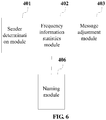
FIG. 6 is a structure block diagram illustrating a device for adjusting a broadcast message queue according to yet another embodiment of the disclosure. As illustrated inFIG. 6 , in some embodiments, the device for adjusting a broadcast message queue may further include anaming module 406, in addition to thesender determination module 401, frequencyinformation statistics module 402 andmessage adjustment module 403. - The
naming module 406 may be configured to, when establishing each of the plurality of broadcast messages, name the broadcast message. In such a case, the frequencyinformation statistics module 402 may be configured to judge whether the broadcast messages are identical broadcast messages, according to names of broadcast messages sent by the target broadcast sender, i.e., the name of the broadcast message given by the namingmodule 406. - Here, it will easily appreciated that new embodiments may be provided by combining the embodiments illustrated in
FIGs. 5 and6 . For example, the device for adjusting the broadcast message queue may include all of thesender determination module 401, frequencyinformation statistics module 402,message adjustment module 403, broadcastreceiver identification module 404, a broadcastmessage distribution module 405 and namingmodule 406. - The device for adjusting a broadcast message queue may execute the method for adjusting a broadcast message queue provided in any embodiment of the disclosure, and has corresponding functional modules for executing the method for adjusting a broadcast message queue as well as beneficial effects. For technical details not elaborated in the present embodiment, reference may be made to the method provided in any embodiment of the disclosure.
- An embodiment of the disclosures also provides a terminal. The terminal may include a device for adjusting a broadcast message queue provided in any embodiment of the disclosure.
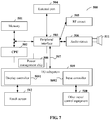
FIG. 7 is a structure diagram illustrating a terminal according to embodiments of the disclosure. As illustrated inFIG. 7 , the terminal may include: a housing (not illustrated in the figure), amemory 501, a Central Processing Unit (CPU) 502 (also referred to as a processor, and referred to as CPU for short hereinafter), a computer program that is stored on thememory 501 and can run on theprocessor 502, a circuit board (not illustrated in the figure) and a power circuit (not illustrated in the figure). The circuit board is disposed inside a space encircled by the housing; and theCPU 502 and thememory 501 are disposed on the circuit board. The power circuit is used for supplying power to various circuits or devices of the terminal. Thememory 501 is used for storing the computer program that can run on the processor. TheCPU 502 reads and executes the computer program stored in thememory 501. - The terminal further includes: a
peripheral interface 503, a Radio Frequency (RF)circuit 505, anaudio circuit 506, aloudspeaker 511, apower management chip 508, an Input/Output (I/O)subsystem 509, atouch screen 512, other input/control equipment 510 and anexternal port 504. These components perform communication through one or more communication buses orsignal lines 507. - It will be appreciated that the terminal 500 illustrated in the figure is only an example of a terminal, and the terminal 500 may have components more or less than those illustrated in the figure, two or more components may be combined, or the terminal 500 may have different component configurations. Various components illustrated in the figure may be implemented in hardware, software, or a combination of hardware and software. The hardware may include one or more signal processing and/or dedicated integrated circuits.
- A terminal for adjusting a broadcast message queue provided in the present embodiment will be described in detail below. A mobile phone is taken as an example of the terminal.
- The
memory 501 may be accessed by theCPU 502, theperipheral interface 503 and the like. Thememory 501 may include a high-speed random access memory. Or thememory 501 may include a nonvolatile memory such as one or more disk storage devices, flash devices or other volatile solid storage devices. - The
peripheral interface 503 may connect input and output peripherals of equipment to theCPU 502 and thememory 501. - The I/
O subsystem 509 may connect the input and output peripherals such as thetouch screen 512 and other input/control equipment 510 on the equipment to theperipheral interface 503. The I/O subsystem 509 may include adisplay controller 5091 and one ormore input controllers 5092 for controlling the other input/control equipment 510. The one ormore input controllers 5092 receive an electric signal from the other input/control equipment 510 or send an electric signal to the other input/control equipment 510. Said other input/control equipment 510 may include a physical button (e.g., press button, rocker button, etc.), a dial, a sliding switch, an operating rod and a clicking roller. It is to be noted that theinput controller 5092 may be connected to any one of a keyboard, an infrared port, a Universal Serial Bus (USB) interface and a pointing device such as a mouse. - The
touch screen 512 is an input/output interface between a user terminal and a user, and displays a visual output to the user. The visual output may include a graph, a text, an icon, a video and the like. - The
display controller 5091 in the I/O subsystem 509 receives an electric signal from thetouch screen 512 or sends an electric signal to thetouch screen 512. Thetouch screen 512 detects a contact on the touch screen. Thedisplay controller 5091 converts the detected contact into an interaction with a user interface object displayed on thetouch screen 512 to realize a human-computer interaction. The user interface object displayed on thetouch screen 512 may be an icon of game running, an icon of connection to a corresponding network, or the like. It is to be noted that the equipment may further include an optical mouse. The optical mouse may be a touch-sensitive surface that does not display the visual output or an extension of a touch-sensitive surface formed by the touch screen. - The
RF circuit 505 is mainly used for establishing communications between a mobile phone and a wireless network (i.e., network side) to realize data receiving and sending between the mobile phone and the wireless network such as receiving and sending of a short message, an E-mail and the like. Specifically, theRF circuit 505 receives and sends an RF signal. The RF signal is also referred to as an electromagnetic signal. TheRF circuit 505 converts an electric signal into an electromagnetic signal or converts an electromagnetic signal into an electric signal, and communicates with a communication network and other equipment through the electromagnetic signal. TheRF circuit 505 may include known circuits for executing these functions, which includes, but is not limited to, an antenna system, an RF transceiver, one or more amplifiers, a tuner, one or more oscillators, a digital signal processor, a Coder-Decoder (CODEC) chip group, a Subscriber Identity Module (SIM) and the like. - The
audio circuit 506 is mainly used for receiving audio data from theperipheral interface 503, converting the audio data into an electric signal, and sending the electric signal to theloudspeaker 511. - The
loudspeaker 511 is used for restoring a voice signal that is received, by the mobile phone, from the wireless network through theRF circuit 505 into a sound, and playing the sound for the user. - The
power management chip 508 is used for performing power supply and power management on theCPU 502, the I/O subsystem and hardwares connected to the peripheral interface. - When the
CPU 502 provided in the embodiments of the disclosure executes the computer program stored in thememory 501, the following operations may be implemented: determining a target broadcast sender of each of a plurality of broadcast messages in a broadcast message queue; making statistics on frequency information of identical broadcast messages sent by the target broadcast sender; and when the frequency information of the identical broadcast messages exceeds a predetermined threshold, deleting at least part of the identical broadcast messages in the broadcast message queue so as to adjust the broadcast message queue. - The above-mentioned terminal can execute the method provided in any of the embodiments of the disclosure, and has corresponding functional modules for executing the method as well as beneficial effects.
- It is to be noted that the above is only the preferable embodiments and the adopted technical principle of the disclosure. A person skilled in the art will understand that the disclosure is not limited to the specific embodiments herein. As will occur to a person skilled in the art, various apparent changes, re-adjustments and replacements can be made without departing from the scope of protection of the disclosure. Therefore, although the disclosure is described in detail through the above embodiments, the disclosure is not limited to the above embodiments. More other equivalent embodiments may also be included without departing from the concept of the disclosure, and the scope of the disclosure is defined by the scope of the appended claims.
Claims (15)
- A method for adjusting a broadcast message queue carried out in a terminal, comprising:determining (101) a target broadcast sender of each of a plurality of broadcast messages in a broadcast message queue, the plurality of broadcast messages being arranged in the broadcast message queue according to broadcast timings of the respective broadcast messages;making (102) statistics on frequency information of identical broadcast messages sent by the target broadcast sender; andwhen the frequency information of the identical broadcast messages exceeds a predetermined threshold, deleting (103) at least part of the identical broadcast messages in the broadcast message queue so as to adjust the broadcast message queue.
- The method according to claim 1, wherein deleting (103) at least part of the identical broadcast messages in the broadcast message queue so as to adjust the broadcast message queue comprises:retaining a predetermined number of broadcast messages, that enter the queue late in a queuing order, of the identical broadcast messages in the broadcast message queue, and removing broadcast messages ahead of the predetermined number of broadcast messages.
- The method according to claim 2, wherein the predetermined number is determined according to the length of the broadcast message queue.
- The method according to claim 1, wherein after deleting (103) at least part of the identical broadcast messages in the broadcast message queue so as to adjust the broadcast message queue, the method further comprises:identifying a broadcast receiver of each broadcast message according to a queuing order of the broadcast messages in the adjusted broadcast message queue, and distributing the broadcast message to the broadcast receiver.
- The method according to any one of claims 1-4, wherein the frequency information is frequency information within a predetermined time period before the current time.
- The method according to any one of claims 1-5, wherein determining a target broadcast sender of each of a plurality of broadcast messages in a broadcast message queue comprises: determining, according to an identifier or configuration parameter of each broadcast message, a target broadcast sender of the broadcast message.
- The method according to any one of claims 1-6, wherein the predetermined threshold is determined according to a response speed of the terminal.
- The method according to any one of claims 1-7, further comprising: when establishing each of the plurality of broadcast messages, naming the broadcast message,
wherein making statistics on frequency information of identical broadcast messages sent by the target broadcast sender comprises: judging, according to names of broadcast messages sent by the target broadcast sender, whether the broadcast messages are identical broadcast messages. - A terminal, comprising:a sender determination module (401) configured to determine a target broadcast sender of each of a plurality of broadcast messages in a broadcast message queue, the plurality of broadcast messages being arranged in the broadcast message queue according to broadcast timings of the respective broadcast messages;a frequency information statistics module (402) configured to make statistics on frequency information of identical broadcast messages sent by the target broadcast sender; anda message adjustment module (403) configured to delete, when the frequency information of the identical broadcast messages exceeds a predetermined threshold, at least part of the identical broadcast messages in the broadcast message queue so as to adjust the broadcast message queue.
- The terminal according to claim 9, wherein the message adjustment module (403) is specifically configured to retain a predetermined number of broadcast messages, that enter the queue late in a queuing order, of the identical broadcast messages in the broadcast message queue, and remove broadcast messages ahead of the predetermined number of broadcast messages.
- The terminal according to claim 10, wherein the predetermined number is determined according to the length of the broadcast message queue.
- The terminal according to any one of claims 9-11, further comprising a broadcast receiver identification module (404) configured to identify, after deleting at least part of the identical broadcast messages in the broadcast message queue so as to adjust the broadcast message queue, a broadcast receiver of each broadcast message according to a queuing order of the broadcast messages in the adjusted broadcast message queue, and a broadcast message distribution module (405) configured to distribute the broadcast message to the broadcast receiver.
- The terminal according to any one of claims 9-12, wherein the frequency information is frequency information within a predetermined time period before the current time.
- The terminal according to any one of claims 9-13, wherein the sender determination module (401) is configured to determine, according to an identifier or configuration parameter of each broadcast message, a target broadcast sender of the broadcast message.
- A non-transitory computer-readable storage medium having stored thereon instructions that, when executed by a processor, cause the processor to execute the method according to any one of claims 1-8.
Applications Claiming Priority (1)
| Application Number | Priority Date | Filing Date | Title |
|---|---|---|---|
| CN201710140648.2A CN106844069A (en) | 2017-03-10 | 2017-03-10 | Method, device and terminal for adjusting broadcast message queue |
Publications (3)
| Publication Number | Publication Date |
|---|---|
| EP3373138A1 true EP3373138A1 (en) | 2018-09-12 |
| EP3373138B1 EP3373138B1 (en) | 2019-11-06 |
| EP3373138B8 EP3373138B8 (en) | 2019-12-18 |
Family
ID=59144950
Family Applications (1)
| Application Number | Title | Priority Date | Filing Date |
|---|---|---|---|
| EP17193565.3A Active EP3373138B8 (en) | 2017-03-10 | 2017-09-27 | Method, device, terminal and storage medium for adjusting broadcast message queue |
Country Status (5)
| Country | Link |
|---|---|
| US (1) | US10097292B2 (en) |
| EP (1) | EP3373138B8 (en) |
| CN (1) | CN106844069A (en) |
| ES (1) | ES2763091T3 (en) |
| WO (1) | WO2018161557A1 (en) |
Cited By (1)
| Publication number | Priority date | Publication date | Assignee | Title |
|---|---|---|---|---|
| CN116827467A (en) * | 2023-07-14 | 2023-09-29 | 银河互联网电视有限公司 | Emergency broadcast message platform broadcasting method, system, device and equipment |
Families Citing this family (9)
| Publication number | Priority date | Publication date | Assignee | Title |
|---|---|---|---|---|
| CN106921947B (en) * | 2017-03-10 | 2020-09-29 | Oppo广东移动通信有限公司 | Method, device and terminal for adjusting broadcast message queue |
| CN106844069A (en) * | 2017-03-10 | 2017-06-13 | 广东欧珀移动通信有限公司 | Method, device and terminal for adjusting broadcast message queue |
| CN106899943B (en) * | 2017-03-10 | 2019-12-06 | Oppo广东移动通信有限公司 | Method, device and terminal equipment for controlling broadcast sender to send broadcast message |
| CN107729158B (en) * | 2017-09-20 | 2022-01-11 | 惠州Tcl移动通信有限公司 | Method for simplifying application program register, storage medium and electronic equipment |
| CN108093385B (en) * | 2017-12-26 | 2021-06-01 | 海信视像科技股份有限公司 | Method for Bluetooth controller to process broadcast packet, Bluetooth controller and Bluetooth device |
| CN109800259B (en) * | 2018-12-11 | 2021-08-10 | 深圳市金证科技股份有限公司 | Data acquisition method and device and terminal equipment |
| CN112965875A (en) * | 2021-03-09 | 2021-06-15 | 中消云(北京)物联网科技研究院有限公司 | Message queue monitoring method and device |
| CN114064283A (en) * | 2021-11-23 | 2022-02-18 | 展讯通信(天津)有限公司 | Broadcast information processing method and device, chip and electronic equipment |
| CN119292801A (en) * | 2024-01-10 | 2025-01-10 | 荣耀终端有限公司 | Broadcast distribution method and electronic device |
Citations (3)
| Publication number | Priority date | Publication date | Assignee | Title |
|---|---|---|---|---|
| US5848228A (en) * | 1995-12-28 | 1998-12-08 | Cegelec | Method of ordering a plurality of messages from a plurality of sources and system for implementing the method |
| US20150026542A1 (en) * | 2012-03-06 | 2015-01-22 | Appear Tv As | Method, Device and System For Packet Transmission Over IP Networks |
| WO2016085917A1 (en) * | 2014-11-25 | 2016-06-02 | Loud-Hailer, Inc. | Local and temporal method and system of broadcasting via peer-to-peer network |
Family Cites Families (11)
| Publication number | Priority date | Publication date | Assignee | Title |
|---|---|---|---|---|
| CN100463542C (en) * | 2005-03-03 | 2009-02-18 | 中兴通讯股份有限公司 | Method for sending broadcast channel assignment message in CDMA system trunking communication system |
| CN101500199B (en) * | 2009-02-19 | 2011-04-20 | 广东创我科技发展有限公司 | Message receiving apparatus, processing method and communication terminal |
| US20100262651A1 (en) * | 2009-04-09 | 2010-10-14 | Samsung Electronics Co., Ltd. | Method to prevent server overload for broadcast protocols by adaptively applying prescribed response behavior profiles |
| CN103491507B (en) * | 2013-09-05 | 2017-08-01 | 广东欧珀移动通信有限公司 | A method and device for orderly broadcast priority relocation |
| CN103595547B (en) * | 2013-11-15 | 2016-07-13 | 北京奇虎科技有限公司 | Broadcast interception method and device for smart devices |
| CN103684808B (en) * | 2013-12-30 | 2017-02-08 | 腾讯科技(深圳)有限公司 | Method for sending broadcast messages and server |
| CN105208590B (en) * | 2015-08-17 | 2018-07-06 | 广东欧珀移动通信有限公司 | The detection restoration methods and mobile terminal of mobile terminal operating system interim card exception |
| CN105357648A (en) | 2015-10-10 | 2016-02-24 | 上海斐讯数据通信技术有限公司 | Method and Android system for sending broadcast message to application program |
| CN106453136B (en) * | 2016-09-05 | 2019-06-25 | 深圳前海微众银行股份有限公司 | Method and device for establishing message queue |
| CN106844069A (en) * | 2017-03-10 | 2017-06-13 | 广东欧珀移动通信有限公司 | Method, device and terminal for adjusting broadcast message queue |
| CN106851014B (en) * | 2017-03-10 | 2020-06-30 | Oppo广东移动通信有限公司 | Method, device and terminal for adjusting broadcast message queue |
-
2017
- 2017-03-10 CN CN201710140648.2A patent/CN106844069A/en active Pending
- 2017-09-27 EP EP17193565.3A patent/EP3373138B8/en active Active
- 2017-09-27 ES ES17193565T patent/ES2763091T3/en active Active
- 2017-09-30 WO PCT/CN2017/104801 patent/WO2018161557A1/en not_active Ceased
- 2017-10-26 US US15/794,818 patent/US10097292B2/en active Active
Patent Citations (3)
| Publication number | Priority date | Publication date | Assignee | Title |
|---|---|---|---|---|
| US5848228A (en) * | 1995-12-28 | 1998-12-08 | Cegelec | Method of ordering a plurality of messages from a plurality of sources and system for implementing the method |
| US20150026542A1 (en) * | 2012-03-06 | 2015-01-22 | Appear Tv As | Method, Device and System For Packet Transmission Over IP Networks |
| WO2016085917A1 (en) * | 2014-11-25 | 2016-06-02 | Loud-Hailer, Inc. | Local and temporal method and system of broadcasting via peer-to-peer network |
Cited By (1)
| Publication number | Priority date | Publication date | Assignee | Title |
|---|---|---|---|---|
| CN116827467A (en) * | 2023-07-14 | 2023-09-29 | 银河互联网电视有限公司 | Emergency broadcast message platform broadcasting method, system, device and equipment |
Also Published As
| Publication number | Publication date |
|---|---|
| EP3373138B1 (en) | 2019-11-06 |
| ES2763091T3 (en) | 2020-05-27 |
| US20180262285A1 (en) | 2018-09-13 |
| EP3373138B8 (en) | 2019-12-18 |
| US10097292B2 (en) | 2018-10-09 |
| WO2018161557A1 (en) | 2018-09-13 |
| CN106844069A (en) | 2017-06-13 |
Similar Documents
| Publication | Publication Date | Title |
|---|---|---|
| EP3373138B1 (en) | Method, device, terminal and storage medium for adjusting broadcast message queue | |
| US10819455B2 (en) | Broadcast processing method, non-transitory storage medium, and electronic device | |
| US11051272B2 (en) | Method for arranging broadcast message in operating system and electronic device | |
| CN106851014B (en) | Method, device and terminal for adjusting broadcast message queue | |
| CN106851015A (en) | Adjust method, device and the terminal of broadcast message queue | |
| US20200007578A1 (en) | Broadcast-controlling method in operating system and mobile terminal | |
| CN106921947A (en) | Adjust method, device and the terminal of broadcast message queue | |
| US10908976B2 (en) | Broadcast queue adjustment method, terminal, and storage medium | |
| WO2018161963A1 (en) | Method and device for managing broadcast recipient, and terminal | |
| CN106851593A (en) | A kind of broadcast transmission method, device and terminal | |
| CN106953852A (en) | Registration method and device of broadcast receiver and terminal equipment | |
| CN107070670A (en) | Method, device and terminal equipment for controlling broadcast sender to send broadcast message | |
| US10990460B2 (en) | Method of generating broadcast queue, storage medium, and terminal | |
| EP3373137B1 (en) | Method, apparatus and terminal device for sending broadcast | |
| CN106936994A (en) | A kind of control method of broadcast recipients, device and mobile terminal | |
| CN106919461B (en) | Method and device for adjusting broadcast receiver queue and terminal equipment | |
| CN106899943A (en) | Control broadcast transmission person sends method, device and the terminal device of broadcast message | |
| CN106851595A (en) | Ordered broadcast processing method, device and terminal equipment | |
| CN106850458A (en) | Method, device and terminal for broadcast message queuing | |
| CN106851594B (en) | Broadcast sending method, device and terminal |
Legal Events
| Date | Code | Title | Description |
|---|---|---|---|
| PUAI | Public reference made under article 153(3) epc to a published international application that has entered the european phase |
Free format text: ORIGINAL CODE: 0009012 |
|
| STAA | Information on the status of an ep patent application or granted ep patent |
Free format text: STATUS: REQUEST FOR EXAMINATION WAS MADE |
|
| 17P | Request for examination filed |
Effective date: 20170927 |
|
| AK | Designated contracting states |
Kind code of ref document: A1 Designated state(s): AL AT BE BG CH CY CZ DE DK EE ES FI FR GB GR HR HU IE IS IT LI LT LU LV MC MK MT NL NO PL PT RO RS SE SI SK SM TR |
|
| AX | Request for extension of the european patent |
Extension state: BA ME |
|
| GRAP | Despatch of communication of intention to grant a patent |
Free format text: ORIGINAL CODE: EPIDOSNIGR1 |
|
| STAA | Information on the status of an ep patent application or granted ep patent |
Free format text: STATUS: GRANT OF PATENT IS INTENDED |
|
| INTG | Intention to grant announced |
Effective date: 20190603 |
|
| GRAS | Grant fee paid |
Free format text: ORIGINAL CODE: EPIDOSNIGR3 |
|
| GRAA | (expected) grant |
Free format text: ORIGINAL CODE: 0009210 |
|
| STAA | Information on the status of an ep patent application or granted ep patent |
Free format text: STATUS: THE PATENT HAS BEEN GRANTED |
|
| AK | Designated contracting states |
Kind code of ref document: B1 Designated state(s): AL AT BE BG CH CY CZ DE DK EE ES FI FR GB GR HR HU IE IS IT LI LT LU LV MC MK MT NL NO PL PT RO RS SE SI SK SM TR |
|
| REG | Reference to a national code |
Ref country code: GB Ref legal event code: FG4D |
|
| REG | Reference to a national code |
Ref country code: CH Ref legal event code: EP Ref country code: AT Ref legal event code: REF Ref document number: 1199715 Country of ref document: AT Kind code of ref document: T Effective date: 20191115 |
|
| REG | Reference to a national code |
Ref country code: IE Ref legal event code: FG4D |
|
| REG | Reference to a national code |
Ref country code: DE Ref legal event code: R096 Ref document number: 602017008415 Country of ref document: DE |
|
| REG | Reference to a national code |
Ref country code: CH Ref legal event code: PK Free format text: BERICHTIGUNG B8 |
|
| REG | Reference to a national code |
Ref country code: DE Ref legal event code: R082 Ref document number: 602017008415 Country of ref document: DE Representative=s name: NOVAGRAAF BREVETS, FR |
|
| RAP2 | Party data changed (patent owner data changed or rights of a patent transferred) |
Owner name: GUANGDONG OPPO MOBILE TELECOMMUNICATIONS CORP., LT |
|
| REG | Reference to a national code |
Ref country code: NL Ref legal event code: FP |
|
| REG | Reference to a national code |
Ref country code: LT Ref legal event code: MG4D |
|
| PG25 | Lapsed in a contracting state [announced via postgrant information from national office to epo] |
Ref country code: SE Free format text: LAPSE BECAUSE OF FAILURE TO SUBMIT A TRANSLATION OF THE DESCRIPTION OR TO PAY THE FEE WITHIN THE PRESCRIBED TIME-LIMIT Effective date: 20191106 Ref country code: LV Free format text: LAPSE BECAUSE OF FAILURE TO SUBMIT A TRANSLATION OF THE DESCRIPTION OR TO PAY THE FEE WITHIN THE PRESCRIBED TIME-LIMIT Effective date: 20191106 Ref country code: PT Free format text: LAPSE BECAUSE OF FAILURE TO SUBMIT A TRANSLATION OF THE DESCRIPTION OR TO PAY THE FEE WITHIN THE PRESCRIBED TIME-LIMIT Effective date: 20200306 Ref country code: PL Free format text: LAPSE BECAUSE OF FAILURE TO SUBMIT A TRANSLATION OF THE DESCRIPTION OR TO PAY THE FEE WITHIN THE PRESCRIBED TIME-LIMIT Effective date: 20191106 Ref country code: GR Free format text: LAPSE BECAUSE OF FAILURE TO SUBMIT A TRANSLATION OF THE DESCRIPTION OR TO PAY THE FEE WITHIN THE PRESCRIBED TIME-LIMIT Effective date: 20200207 Ref country code: LT Free format text: LAPSE BECAUSE OF FAILURE TO SUBMIT A TRANSLATION OF THE DESCRIPTION OR TO PAY THE FEE WITHIN THE PRESCRIBED TIME-LIMIT Effective date: 20191106 Ref country code: NO Free format text: LAPSE BECAUSE OF FAILURE TO SUBMIT A TRANSLATION OF THE DESCRIPTION OR TO PAY THE FEE WITHIN THE PRESCRIBED TIME-LIMIT Effective date: 20200206 Ref country code: BG Free format text: LAPSE BECAUSE OF FAILURE TO SUBMIT A TRANSLATION OF THE DESCRIPTION OR TO PAY THE FEE WITHIN THE PRESCRIBED TIME-LIMIT Effective date: 20200206 Ref country code: FI Free format text: LAPSE BECAUSE OF FAILURE TO SUBMIT A TRANSLATION OF THE DESCRIPTION OR TO PAY THE FEE WITHIN THE PRESCRIBED TIME-LIMIT Effective date: 20191106 |
|
| REG | Reference to a national code |
Ref country code: ES Ref legal event code: FG2A Ref document number: 2763091 Country of ref document: ES Kind code of ref document: T3 Effective date: 20200527 |
|
| PG25 | Lapsed in a contracting state [announced via postgrant information from national office to epo] |
Ref country code: RS Free format text: LAPSE BECAUSE OF FAILURE TO SUBMIT A TRANSLATION OF THE DESCRIPTION OR TO PAY THE FEE WITHIN THE PRESCRIBED TIME-LIMIT Effective date: 20191106 Ref country code: HR Free format text: LAPSE BECAUSE OF FAILURE TO SUBMIT A TRANSLATION OF THE DESCRIPTION OR TO PAY THE FEE WITHIN THE PRESCRIBED TIME-LIMIT Effective date: 20191106 Ref country code: IS Free format text: LAPSE BECAUSE OF FAILURE TO SUBMIT A TRANSLATION OF THE DESCRIPTION OR TO PAY THE FEE WITHIN THE PRESCRIBED TIME-LIMIT Effective date: 20200306 |
|
| PG25 | Lapsed in a contracting state [announced via postgrant information from national office to epo] |
Ref country code: AL Free format text: LAPSE BECAUSE OF FAILURE TO SUBMIT A TRANSLATION OF THE DESCRIPTION OR TO PAY THE FEE WITHIN THE PRESCRIBED TIME-LIMIT Effective date: 20191106 |
|
| PG25 | Lapsed in a contracting state [announced via postgrant information from national office to epo] |
Ref country code: DK Free format text: LAPSE BECAUSE OF FAILURE TO SUBMIT A TRANSLATION OF THE DESCRIPTION OR TO PAY THE FEE WITHIN THE PRESCRIBED TIME-LIMIT Effective date: 20191106 Ref country code: EE Free format text: LAPSE BECAUSE OF FAILURE TO SUBMIT A TRANSLATION OF THE DESCRIPTION OR TO PAY THE FEE WITHIN THE PRESCRIBED TIME-LIMIT Effective date: 20191106 Ref country code: CZ Free format text: LAPSE BECAUSE OF FAILURE TO SUBMIT A TRANSLATION OF THE DESCRIPTION OR TO PAY THE FEE WITHIN THE PRESCRIBED TIME-LIMIT Effective date: 20191106 Ref country code: RO Free format text: LAPSE BECAUSE OF FAILURE TO SUBMIT A TRANSLATION OF THE DESCRIPTION OR TO PAY THE FEE WITHIN THE PRESCRIBED TIME-LIMIT Effective date: 20191106 |
|
| REG | Reference to a national code |
Ref country code: DE Ref legal event code: R097 Ref document number: 602017008415 Country of ref document: DE |
|
| REG | Reference to a national code |
Ref country code: AT Ref legal event code: MK05 Ref document number: 1199715 Country of ref document: AT Kind code of ref document: T Effective date: 20191106 |
|
| PG25 | Lapsed in a contracting state [announced via postgrant information from national office to epo] |
Ref country code: SK Free format text: LAPSE BECAUSE OF FAILURE TO SUBMIT A TRANSLATION OF THE DESCRIPTION OR TO PAY THE FEE WITHIN THE PRESCRIBED TIME-LIMIT Effective date: 20191106 Ref country code: SM Free format text: LAPSE BECAUSE OF FAILURE TO SUBMIT A TRANSLATION OF THE DESCRIPTION OR TO PAY THE FEE WITHIN THE PRESCRIBED TIME-LIMIT Effective date: 20191106 |
|
| PLBE | No opposition filed within time limit |
Free format text: ORIGINAL CODE: 0009261 |
|
| STAA | Information on the status of an ep patent application or granted ep patent |
Free format text: STATUS: NO OPPOSITION FILED WITHIN TIME LIMIT |
|
| 26N | No opposition filed |
Effective date: 20200807 |
|
| PG25 | Lapsed in a contracting state [announced via postgrant information from national office to epo] |
Ref country code: SI Free format text: LAPSE BECAUSE OF FAILURE TO SUBMIT A TRANSLATION OF THE DESCRIPTION OR TO PAY THE FEE WITHIN THE PRESCRIBED TIME-LIMIT Effective date: 20191106 Ref country code: AT Free format text: LAPSE BECAUSE OF FAILURE TO SUBMIT A TRANSLATION OF THE DESCRIPTION OR TO PAY THE FEE WITHIN THE PRESCRIBED TIME-LIMIT Effective date: 20191106 |
|
| REG | Reference to a national code |
Ref country code: CH Ref legal event code: PL |
|
| REG | Reference to a national code |
Ref country code: BE Ref legal event code: MM Effective date: 20200930 |
|
| PG25 | Lapsed in a contracting state [announced via postgrant information from national office to epo] |
Ref country code: LU Free format text: LAPSE BECAUSE OF NON-PAYMENT OF DUE FEES Effective date: 20200927 |
|
| PG25 | Lapsed in a contracting state [announced via postgrant information from national office to epo] |
Ref country code: LI Free format text: LAPSE BECAUSE OF NON-PAYMENT OF DUE FEES Effective date: 20200930 Ref country code: IE Free format text: LAPSE BECAUSE OF NON-PAYMENT OF DUE FEES Effective date: 20200927 Ref country code: CH Free format text: LAPSE BECAUSE OF NON-PAYMENT OF DUE FEES Effective date: 20200930 Ref country code: BE Free format text: LAPSE BECAUSE OF NON-PAYMENT OF DUE FEES Effective date: 20200930 |
|
| PG25 | Lapsed in a contracting state [announced via postgrant information from national office to epo] |
Ref country code: TR Free format text: LAPSE BECAUSE OF FAILURE TO SUBMIT A TRANSLATION OF THE DESCRIPTION OR TO PAY THE FEE WITHIN THE PRESCRIBED TIME-LIMIT Effective date: 20191106 Ref country code: MT Free format text: LAPSE BECAUSE OF FAILURE TO SUBMIT A TRANSLATION OF THE DESCRIPTION OR TO PAY THE FEE WITHIN THE PRESCRIBED TIME-LIMIT Effective date: 20191106 Ref country code: CY Free format text: LAPSE BECAUSE OF FAILURE TO SUBMIT A TRANSLATION OF THE DESCRIPTION OR TO PAY THE FEE WITHIN THE PRESCRIBED TIME-LIMIT Effective date: 20191106 |
|
| PG25 | Lapsed in a contracting state [announced via postgrant information from national office to epo] |
Ref country code: MK Free format text: LAPSE BECAUSE OF FAILURE TO SUBMIT A TRANSLATION OF THE DESCRIPTION OR TO PAY THE FEE WITHIN THE PRESCRIBED TIME-LIMIT Effective date: 20191106 Ref country code: MC Free format text: LAPSE BECAUSE OF FAILURE TO SUBMIT A TRANSLATION OF THE DESCRIPTION OR TO PAY THE FEE WITHIN THE PRESCRIBED TIME-LIMIT Effective date: 20191106 |
|
| PGFP | Annual fee paid to national office [announced via postgrant information from national office to epo] |
Ref country code: FR Payment date: 20221223 Year of fee payment: 7 |
|
| PGFP | Annual fee paid to national office [announced via postgrant information from national office to epo] |
Ref country code: IT Payment date: 20221227 Year of fee payment: 7 |
|
| P01 | Opt-out of the competence of the unified patent court (upc) registered |
Effective date: 20230412 |
|
| PGFP | Annual fee paid to national office [announced via postgrant information from national office to epo] |
Ref country code: NL Payment date: 20230403 Year of fee payment: 7 |
|
| PGFP | Annual fee paid to national office [announced via postgrant information from national office to epo] |
Ref country code: GB Payment date: 20230920 Year of fee payment: 7 |
|
| PGFP | Annual fee paid to national office [announced via postgrant information from national office to epo] |
Ref country code: DE Payment date: 20221222 Year of fee payment: 7 |
|
| PGFP | Annual fee paid to national office [announced via postgrant information from national office to epo] |
Ref country code: ES Payment date: 20231019 Year of fee payment: 7 |
|
| REG | Reference to a national code |
Ref country code: DE Ref legal event code: R119 Ref document number: 602017008415 Country of ref document: DE |
|
| REG | Reference to a national code |
Ref country code: NL Ref legal event code: MM Effective date: 20241001 |
|
| GBPC | Gb: european patent ceased through non-payment of renewal fee |
Effective date: 20240927 |
|
| PG25 | Lapsed in a contracting state [announced via postgrant information from national office to epo] |
Ref country code: NL Free format text: LAPSE BECAUSE OF NON-PAYMENT OF DUE FEES Effective date: 20241001 |
|
| PG25 | Lapsed in a contracting state [announced via postgrant information from national office to epo] |
Ref country code: DE Free format text: LAPSE BECAUSE OF NON-PAYMENT OF DUE FEES Effective date: 20250401 |
|
| PG25 | Lapsed in a contracting state [announced via postgrant information from national office to epo] |
Ref country code: GB Free format text: LAPSE BECAUSE OF NON-PAYMENT OF DUE FEES Effective date: 20240927 |
|
| PG25 | Lapsed in a contracting state [announced via postgrant information from national office to epo] |
Ref country code: IT Free format text: LAPSE BECAUSE OF NON-PAYMENT OF DUE FEES Effective date: 20240927 |
|
| PG25 | Lapsed in a contracting state [announced via postgrant information from national office to epo] |
Ref country code: FR Free format text: LAPSE BECAUSE OF NON-PAYMENT OF DUE FEES Effective date: 20240930 |
|
| REG | Reference to a national code |
Ref country code: ES Ref legal event code: FD2A Effective date: 20251104 |
|
| PG25 | Lapsed in a contracting state [announced via postgrant information from national office to epo] |
Ref country code: ES Free format text: LAPSE BECAUSE OF NON-PAYMENT OF DUE FEES Effective date: 20240928 |