EP3370476A1 - Device and method of handling transferring of a state - Google Patents
Device and method of handling transferring of a state Download PDFInfo
- Publication number
- EP3370476A1 EP3370476A1 EP18159760.0A EP18159760A EP3370476A1 EP 3370476 A1 EP3370476 A1 EP 3370476A1 EP 18159760 A EP18159760 A EP 18159760A EP 3370476 A1 EP3370476 A1 EP 3370476A1
- Authority
- EP
- European Patent Office
- Prior art keywords
- rrc
- cell
- communication device
- inactive state
- layer
- Prior art date
- Legal status (The legal status is an assumption and is not a legal conclusion. Google has not performed a legal analysis and makes no representation as to the accuracy of the status listed.)
- Withdrawn
Links
Images

Classifications
-
- H—ELECTRICITY
- H04—ELECTRIC COMMUNICATION TECHNIQUE
- H04W—WIRELESS COMMUNICATION NETWORKS
- H04W36/00—Hand-off or reselection arrangements
- H04W36/0005—Control or signalling for completing the hand-off
- H04W36/0011—Control or signalling for completing the hand-off for data sessions of end-to-end connection
- H04W36/0016—Hand-off preparation specially adapted for end-to-end data sessions
-
- H—ELECTRICITY
- H04—ELECTRIC COMMUNICATION TECHNIQUE
- H04B—TRANSMISSION
- H04B7/00—Radio transmission systems, i.e. using radiation field
- H04B7/02—Diversity systems; Multi-antenna system, i.e. transmission or reception using multiple antennas
- H04B7/04—Diversity systems; Multi-antenna system, i.e. transmission or reception using multiple antennas using two or more spaced independent antennas
- H04B7/0413—MIMO systems
-
- H—ELECTRICITY
- H04—ELECTRIC COMMUNICATION TECHNIQUE
- H04B—TRANSMISSION
- H04B7/00—Radio transmission systems, i.e. using radiation field
- H04B7/02—Diversity systems; Multi-antenna system, i.e. transmission or reception using multiple antennas
- H04B7/04—Diversity systems; Multi-antenna system, i.e. transmission or reception using multiple antennas using two or more spaced independent antennas
- H04B7/06—Diversity systems; Multi-antenna system, i.e. transmission or reception using multiple antennas using two or more spaced independent antennas at the transmitting station
- H04B7/0613—Diversity systems; Multi-antenna system, i.e. transmission or reception using multiple antennas using two or more spaced independent antennas at the transmitting station using simultaneous transmission
- H04B7/0615—Diversity systems; Multi-antenna system, i.e. transmission or reception using multiple antennas using two or more spaced independent antennas at the transmitting station using simultaneous transmission of weighted versions of same signal
- H04B7/0617—Diversity systems; Multi-antenna system, i.e. transmission or reception using multiple antennas using two or more spaced independent antennas at the transmitting station using simultaneous transmission of weighted versions of same signal for beam forming
-
- H—ELECTRICITY
- H04—ELECTRIC COMMUNICATION TECHNIQUE
- H04B—TRANSMISSION
- H04B7/00—Radio transmission systems, i.e. using radiation field
- H04B7/02—Diversity systems; Multi-antenna system, i.e. transmission or reception using multiple antennas
- H04B7/04—Diversity systems; Multi-antenna system, i.e. transmission or reception using multiple antennas using two or more spaced independent antennas
- H04B7/06—Diversity systems; Multi-antenna system, i.e. transmission or reception using multiple antennas using two or more spaced independent antennas at the transmitting station
- H04B7/0697—Diversity systems; Multi-antenna system, i.e. transmission or reception using multiple antennas using two or more spaced independent antennas at the transmitting station using spatial multiplexing
-
- H—ELECTRICITY
- H04—ELECTRIC COMMUNICATION TECHNIQUE
- H04L—TRANSMISSION OF DIGITAL INFORMATION, e.g. TELEGRAPHIC COMMUNICATION
- H04L5/00—Arrangements affording multiple use of the transmission path
- H04L5/0001—Arrangements for dividing the transmission path
- H04L5/0003—Two-dimensional division
- H04L5/0005—Time-frequency
- H04L5/0007—Time-frequency the frequencies being orthogonal, e.g. OFDM(A) or DMT
-
- H—ELECTRICITY
- H04—ELECTRIC COMMUNICATION TECHNIQUE
- H04L—TRANSMISSION OF DIGITAL INFORMATION, e.g. TELEGRAPHIC COMMUNICATION
- H04L5/00—Arrangements affording multiple use of the transmission path
- H04L5/22—Arrangements affording multiple use of the transmission path using time-division multiplexing
-
- H—ELECTRICITY
- H04—ELECTRIC COMMUNICATION TECHNIQUE
- H04W—WIRELESS COMMUNICATION NETWORKS
- H04W16/00—Network planning, e.g. coverage or traffic planning tools; Network deployment, e.g. resource partitioning or cells structures
- H04W16/24—Cell structures
-
- H—ELECTRICITY
- H04—ELECTRIC COMMUNICATION TECHNIQUE
- H04W—WIRELESS COMMUNICATION NETWORKS
- H04W36/00—Hand-off or reselection arrangements
- H04W36/08—Reselecting an access point
-
- H—ELECTRICITY
- H04—ELECTRIC COMMUNICATION TECHNIQUE
- H04W—WIRELESS COMMUNICATION NETWORKS
- H04W60/00—Affiliation to network, e.g. registration; Terminating affiliation with the network, e.g. de-registration
- H04W60/04—Affiliation to network, e.g. registration; Terminating affiliation with the network, e.g. de-registration using triggered events
-
- H—ELECTRICITY
- H04—ELECTRIC COMMUNICATION TECHNIQUE
- H04W—WIRELESS COMMUNICATION NETWORKS
- H04W64/00—Locating users or terminals or network equipment for network management purposes, e.g. mobility management
- H04W64/006—Locating users or terminals or network equipment for network management purposes, e.g. mobility management with additional information processing, e.g. for direction or speed determination
-
- H—ELECTRICITY
- H04—ELECTRIC COMMUNICATION TECHNIQUE
- H04W—WIRELESS COMMUNICATION NETWORKS
- H04W76/00—Connection management
- H04W76/20—Manipulation of established connections
- H04W76/27—Transitions between radio resource control [RRC] states
-
- H—ELECTRICITY
- H04—ELECTRIC COMMUNICATION TECHNIQUE
- H04W—WIRELESS COMMUNICATION NETWORKS
- H04W48/00—Access restriction; Network selection; Access point selection
- H04W48/20—Selecting an access point
-
- H—ELECTRICITY
- H04—ELECTRIC COMMUNICATION TECHNIQUE
- H04W—WIRELESS COMMUNICATION NETWORKS
- H04W74/00—Wireless channel access
- H04W74/08—Non-scheduled access, e.g. ALOHA
- H04W74/0833—Random access procedures, e.g. with 4-step access
-
- H—ELECTRICITY
- H04—ELECTRIC COMMUNICATION TECHNIQUE
- H04W—WIRELESS COMMUNICATION NETWORKS
- H04W76/00—Connection management
- H04W76/10—Connection setup
- H04W76/18—Management of setup rejection or failure
-
- Y—GENERAL TAGGING OF NEW TECHNOLOGICAL DEVELOPMENTS; GENERAL TAGGING OF CROSS-SECTIONAL TECHNOLOGIES SPANNING OVER SEVERAL SECTIONS OF THE IPC; TECHNICAL SUBJECTS COVERED BY FORMER USPC CROSS-REFERENCE ART COLLECTIONS [XRACs] AND DIGESTS
- Y02—TECHNOLOGIES OR APPLICATIONS FOR MITIGATION OR ADAPTATION AGAINST CLIMATE CHANGE
- Y02D—CLIMATE CHANGE MITIGATION TECHNOLOGIES IN INFORMATION AND COMMUNICATION TECHNOLOGIES [ICT], I.E. INFORMATION AND COMMUNICATION TECHNOLOGIES AIMING AT THE REDUCTION OF THEIR OWN ENERGY USE
- Y02D30/00—Reducing energy consumption in communication networks
- Y02D30/70—Reducing energy consumption in communication networks in wireless communication networks
Definitions
- the present invention relates to a device and a method used in a wireless communication system, and more particularly, to a device and a method of handling transferring of a state.
- a radio access network known as an evolved universal terrestrial radio access network (E-UTRAN) includes at least one evolved Node-B (eNB) for communicating with a user equipment (UE), and for communicating with a core network.
- the core network may include a mobility management and a Quality of Service (QoS) control for the UE.
- QoS Quality of Service
- the present invention therefore provides a communication device and method for handling transferring of a state to solve the abovementioned problem.
- a communication device for handling transferring of a state comprises a storage device and a processing circuit coupled to the storage device.
- the storage device stores, and the processing circuit is configured to execute instructions of: entering a RRC_CONNECTED state of a radio resource control (RRC) layer; receiving a first RRC message from the network in the RRC_CONNECTED state of the RRC layer, wherein the first RRC message configures the communication device to enter a RRC_INACTIVE state; entering the RRC_INACTIVE state in response to the first RRC message; initiating a RRC procedure or a data transmission in the RRC_INACTIVE state via a first cell of the network, wherein the RRC procedure is used for the communication device to enter the RRC_CONNECTED state; performing a cell selection/reselection to a second cell of the network, when initiating the RRC procedure; and keeping being in the RRC_INACTIVE state in response to the cell selection/reselection.
- RRC radio resource control
- Fig. 1 is a schematic diagram of a wireless communication system 10 according to an example of the present invention.
- the wireless communication system 10 is briefly composed of a network and a plurality of communication devices.
- the network and a communication device communicate with each other via one or more cells on one or more carriers of licensed band(s) and/or unlicensed band(s).
- the one or more cells may be operated in the same or different frame structure types, or in the same or different duplexing modes, i.e. frequency-division duplexing (FDD) and time-division duplexing (TDD) .
- FDD frequency-division duplexing
- TDD time-division duplexing
- the network may include a radio access network (RAN) including at least one base station (BS).
- the RAN may be an evolved universal terrestrial radio access network (E-UTRAN) including at least one evolved Node-B (eNB).
- the RAN may be a fifth generation (5G) network (or called new radio (NR) network) including at least one 5G BS (e.g., gNB) which employs orthogonal frequency-division multiplexing (OFDM) and/or non-OFDM and a transmission time interval (TTI) shorter than 1ms (e.g. 100 or 200 microseconds), to communicate with the communication devices.
- 5G fifth generation
- NR new radio
- BS e.g., gNB
- OFDM orthogonal frequency-division multiplexing
- TTI transmission time interval
- a BS may also be used to refer any of the eNB and the 5G BS.
- the network may also include a core network which includes network entities connecting to the RAN.
- a communication device may be a user equipment (UE), a narrowband Internet of Things (NB-IoT) UE, a machine type communication (MTC) device, a mobile phone, a laptop, a tablet computer, an electronic book, a portable computer system, a vehicle, or an aircraft.
- UE user equipment
- NB-IoT narrowband Internet of Things
- MTC machine type communication
- the network and the communication device can be seen as a transmitter or a receiver according to direction (i.e., transmission direction), e.g., for an uplink (UL), the communication device is the transmitter and the network is the receiver, and for a downlink (DL), the network is the transmitter and the communication device is the receiver.
- direction i.e., transmission direction
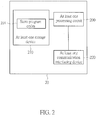
- Fig. 2 is a schematic diagram of a communication device 20 according to an example of the present invention.
- the communication device 20 may be a communication device or the network shown in Fig. 1 , but is not limited herein.
- the communication device 20 may include at least one processing circuit 200 such as microprocessor(s) or Application Specific Integrated Circuit(s) (ASIC(s)), at least one storage device 210 and at least one communication interfacing device 220.
- the at least one storage device 210 may include any data storage device that may store program codes 214, accessed and executed by the at least one processing circuit 200.
- Examples of the at least one storage device 210 include but are not limited to a subscriber identity module (SIM), read-only memory (ROM), flash memory, random-access memory (RAM), hard disk, optical data storage device, non-volatile storage device, non-transitory computer-readable medium (e.g., tangible media), etc.
- SIM subscriber identity module
- ROM read-only memory
- RAM random-access memory
- the at least one communication interfacing device 220 includes at least one transceiver and is used to transmit and receive signals (e.g., data, messages and/or packets) according to processing results of the at least one processing circuit 200.
- a UE may be configured by a network (e.g., a BS) to enter a RRC_INACTIVE state.
- the RRC_INACTIVE state may represent either a RRC_CONNECTED state with a light radio resource control (RRC) connection in the LTE system or a RRC_INACTIVE state in the NR system (i.e., 5G) .
- RRC light radio resource control
- 5G NR system
- the UE in the RRC_INACTIVE state initiates a RRC procedure (e.g., RRC connection resume procedure) to enter the RRC_CONNECTED state.
- a RRC procedure e.g., RRC connection resume procedure
- the UE may select or reselect a second cell, i.e., may perform a cell selection/reselection to the second cell.
- a RRC layer of the UE may indicate "RRC connection failure" to a non-access stratum (NAS) layer of the UE.
- the UE may perform a (combined) tracking area update procedure due to the RRC connection failure to recover a NAS signaling connection. However, this recovery is not necessary.
- a UE is used to represent a communication device in Fig. 1 , to simplify the illustration of the embodiments.
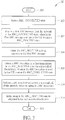
- a process 30 in Fig. 3 may be utilized in a UE, and includes the following steps:
- the UE enters a RRC_CONNECTED state of a RRC layer.
- the UE in the RRC_CONNECTED state receives a first RRC message from the network (e.g., RAN or BS), wherein the first RRC message configures the UE to enter a RRC_INACTIVE state of the RRC layer.
- the UE enters the RRC_INACTIVE state in response to the first RRC message.
- the UE in the RRC_INACTIVE state initiates a RRC procedure via a first cell of the network, wherein the RRC procedure is used for the UE to enter the RRC_CONNECTED state.
- the UE performs a cell selection/reselection (or the data transmission) to a second cell of the network, when (e.g., while) initiating the RRC procedure.
- the UE keeps being in the RRC_INACTIVE state in response to the cell selection/reselection. That is, the UE does not transfer from the RRC_INACTIVE state to another state even if the cell selection/reselection is performed.
- latency caused by state transferring and power consumption of the communication device are improved.
- the UE when initiating the RRC procedure, transmits a RRC request message of the RRC procedure via the first cell to the network. Before the UE receives a RRC response message of the RRC procedure in response to the RRC request message, the UE selects/reselects the second cell. The UE keeps itself in the RRC_INACTIVE state in response to the cell selection/reselection.
- the UE when initiating the RRC procedure, the UE has not transmitted a RRC request message and performs the cell selection/reselection. The UE keeps itself in the RRC_INACTIVE state in response to the cell selection/reselection.
- the RRC request message is a RRC Connection Resume Request message
- the RRC response message is a RRC Connection Resume message
- the UE initiates the data transmission to transmit an application data, e.g., an Internet Protocol (IP) packet or a short message.
- application data e.g., an Internet Protocol (IP) packet or a short message.
- IP Internet Protocol
- the UE may perform a random access (RA) procedure by transmitting a RA preamble to the network.
- the UE may transmit the RRC request message or an IP packet together with the RA preamble.
- the UE transmit the RRC request message or the IP packet, before or after receiving a RA response responding to the RA preamble from the network.
- the UE transmit the RRC request message or the IP packet using a UL grant in the RA response.
- the UE may transmit the RRC request message or the IP packet directly without performing the RA procedure. That is, the UE does not transmit the RA preamble, and directly transmit the RRC request message or the IP packet in a time-frequency resource which may be configured by the network or may be predetermined by the UE.
- the UE receives system information broadcasted by the second cell.
- the instruction of keeping being in the RRC_INACTIVE state in response to the cell selection/reselection comprises keeping being in the RRC_INACTIVE state when the second cell indicates that the second cell supports the RRC_INACTIVE state in the system information.
- the UE enters the RRC_IDLE state, when the second cell indicates that the second cell does not support the RRC_INACTIVE state in the system information.
- the system information comprises a system information block (SIB).
- the UE enters a MM-CONNECTED mode of a Mobility Management (MM) layer of the UE, when entering the RRC_CONNECTED state of a RRC layer of the UE.
- the UE keeps itself in the MM-CONNECTED mode when entering the RRC_INACTIVE state in response to the first RRC message.
- the UE keeps itself in the MM-CONNECTED mode in response to the cell selection/reselection.
- the instruction of keeping being in the MM-CONNECTED mode in response to the cell selection/reselection comprises keeping being in the MM-CONNECTED mode when the second cell indicates that the second cell supports the RRC_INACTIVE state in the system information.
- the UE receives system information broadcasted by the second cell. Then, the UE does not initiate a tracking area update procedure, when the second cell indicates that the second cell supports the RRC_INACTIVE state in the system information and the first cell and the second cell belong to the same tracking area. The UE initiates the tracking area update procedure, when the second cell indicates that the second cell does not support the RRC_INACTIVE state in the system information.
- the system information comprises a SIB.
- a RRC layer of the UE sends a first indication indicating "RRC connection failure" to a MM layer of the UE in response to the cell selection/reselection, when the UE performs the cell selection/reselection to the second cell and the second cell does not support the RRC_INACTIVE state.
- the MM layer initiates the tracking area update procedure.
- the RRC layer does not send the first indication indicating "RRC connection failure" to the MM layer in response to the cell selection/reselection, when the UE performs the cell selection/reselection to the second cell and the second cell supports the RRC_INACTIVE state.
- the MM layer is not triggered by the first indication to initiate the tracking area update procedure (e.g., transmit a tracking area update request message) .
- the RRC layer may send a second indication indicating occurrence of a cell selection/reselection or a change of a cell, to the MM layer.
- the MM layer is not triggered by the second indication to initiate the tracking area update procedure.
- the RRC layer is an evolved universal terrestrial radio access (E-UTRA) RRC layer or a NR RRC layer.
- the MM layer is an Evolved Packet System (EPS) MM layer or a NextGen (e.g., Next Generation or 5G/NR Core) MM layer.
- E-UTRA evolved universal terrestrial radio access
- NR RRC NR RRC layer
- the MM layer is an Evolved Packet System (EPS) MM layer or a NextGen (e.g., Next Generation or 5G/NR Core) MM layer.
- EPS Evolved Packet System
- NextGen Next Generation or 5G/NR Core
- the first RRC message indicates the UE to enter the RRC_INACTIVE state and includes a RAN paging area.
- the RAN transmits information of the RAN paging area to a core network (CN), when the RAN configures the UE to enter the RRC_INACTIVE state. That is, the CN receives the information of the RAN paging area from the RAN.
- CN core network
- the RAN receives the information of the RAN paging area from the CN before transmitting the first RRC message to the UE.
- the UE may keep being in the RRC_INACTIVE state in response to the cell selection/reselection, when the first cell and the second cell belong to the same radio access technology (RAT) (e.g. NR or E-UTRA).
- RAT radio access technology
- the UE may change to a RRC_IDLE state of the RRC layer in response to the cell selection/reselection, when the first cell and the second cell belong to different RATs.
- the UE may change to a MM_IDLE state of the MM layer in response to the cell selection/reselection, when the first cell and the second cell belong to different RATs.
- the first cell may be a NR cell and the second cell may be an E-UTRA cell or a universal terrestrial radio access (UTRA) cell.
- the present invention provides a method and a communication device for handling transferring of a state.
- a communication device for handling transferring of a state.
Landscapes
- Engineering & Computer Science (AREA)
- Signal Processing (AREA)
- Computer Networks & Wireless Communication (AREA)
- Mobile Radio Communication Systems (AREA)
Abstract
Description
- This application claims the benefit of
U.S. Provisional Application No. 62/466,379 filed on Mar. 3, 2017 - The present invention relates to a device and a method used in a wireless communication system, and more particularly, to a device and a method of handling transferring of a state.
- In a long-term evolution (LTE) system, a radio access network known as an evolved universal terrestrial radio access network (E-UTRAN) includes at least one evolved Node-B (eNB) for communicating with a user equipment (UE), and for communicating with a core network. The core network may include a mobility management and a Quality of Service (QoS) control for the UE.
- The present invention therefore provides a communication device and method for handling transferring of a state to solve the abovementioned problem.
- A communication device for handling transferring of a state comprises a storage device and a processing circuit coupled to the storage device. The storage device stores, and the processing circuit is configured to execute instructions of: entering a RRC_CONNECTED state of a radio resource control (RRC) layer; receiving a first RRC message from the network in the RRC_CONNECTED state of the RRC layer, wherein the first RRC message configures the communication device to enter a RRC_INACTIVE state; entering the RRC_INACTIVE state in response to the first RRC message; initiating a RRC procedure or a data transmission in the RRC_INACTIVE state via a first cell of the network, wherein the RRC procedure is used for the communication device to enter the RRC_CONNECTED state; performing a cell selection/reselection to a second cell of the network, when initiating the RRC procedure; and keeping being in the RRC_INACTIVE state in response to the cell selection/reselection.
- These and other objectives of the present invention will no doubt become obvious to those of ordinary skill in the art after reading the following detailed description of the preferred embodiment that is illustrated in the various figures and drawings.
-
-
Fig. 1 is a schematic diagram of a wireless communication system according to an example of the present invention. -
Fig. 2 is a schematic diagram of a communication device according to an example of the present invention. -
Fig. 3 is a flowchart of a process according to an example of the present invention. -
Fig. 1 is a schematic diagram of awireless communication system 10 according to an example of the present invention. Thewireless communication system 10 is briefly composed of a network and a plurality of communication devices. The network and a communication device communicate with each other via one or more cells on one or more carriers of licensed band(s) and/or unlicensed band(s). The one or more cells may be operated in the same or different frame structure types, or in the same or different duplexing modes, i.e. frequency-division duplexing (FDD) and time-division duplexing (TDD) . - In
Fig. 1 , the network and the communication devices are simply utilized for illustrating the structure of thewireless communication system 10. The network may include a radio access network (RAN) including at least one base station (BS). Practically, the RAN may be an evolved universal terrestrial radio access network (E-UTRAN) including at least one evolved Node-B (eNB). The RAN may be a fifth generation (5G) network (or called new radio (NR) network) including at least one 5G BS (e.g., gNB) which employs orthogonal frequency-division multiplexing (OFDM) and/or non-OFDM and a transmission time interval (TTI) shorter than 1ms (e.g. 100 or 200 microseconds), to communicate with the communication devices. In general, a BS may also be used to refer any of the eNB and the 5G BS. Furthermore, the network may also include a core network which includes network entities connecting to the RAN. - A communication device may be a user equipment (UE), a narrowband Internet of Things (NB-IoT) UE, a machine type communication (MTC) device, a mobile phone, a laptop, a tablet computer, an electronic book, a portable computer system, a vehicle, or an aircraft. In addition, the network and the communication device can be seen as a transmitter or a receiver according to direction (i.e., transmission direction), e.g., for an uplink (UL), the communication device is the transmitter and the network is the receiver, and for a downlink (DL), the network is the transmitter and the communication device is the receiver.
-
Fig. 2 is a schematic diagram of acommunication device 20 according to an example of the present invention. Thecommunication device 20 may be a communication device or the network shown inFig. 1 , but is not limited herein. Thecommunication device 20 may include at least oneprocessing circuit 200 such as microprocessor(s) or Application Specific Integrated Circuit(s) (ASIC(s)), at least onestorage device 210 and at least onecommunication interfacing device 220. The at least onestorage device 210 may include any data storage device that may storeprogram codes 214, accessed and executed by the at least oneprocessing circuit 200. Examples of the at least onestorage device 210 include but are not limited to a subscriber identity module (SIM), read-only memory (ROM), flash memory, random-access memory (RAM), hard disk, optical data storage device, non-volatile storage device, non-transitory computer-readable medium (e.g., tangible media), etc. The at least onecommunication interfacing device 220 includes at least one transceiver and is used to transmit and receive signals (e.g., data, messages and/or packets) according to processing results of the at least oneprocessing circuit 200. - A UE may be configured by a network (e.g., a BS) to enter a RRC_INACTIVE state. To simplify the following description, the RRC_INACTIVE state may represent either a RRC_CONNECTED state with a light radio resource control (RRC) connection in the LTE system or a RRC_INACTIVE state in the NR system (i.e., 5G) . Unless explicitly specified, the RRC_CONNECTED state is without the light RRC connection.
- When a UE camps on a first cell, the UE in the RRC_INACTIVE state initiates a RRC procedure (e.g., RRC connection resume procedure) to enter the RRC_CONNECTED state. During the RRC procedure, the UE may select or reselect a second cell, i.e., may perform a cell selection/reselection to the second cell. A RRC layer of the UE may indicate "RRC connection failure" to a non-access stratum (NAS) layer of the UE. The UE may perform a (combined) tracking area update procedure due to the RRC connection failure to recover a NAS signaling connection. However, this recovery is not necessary. In the tracking area update procedure, transmission of a tracking area update request message and reception of a tracking area update accept message cause extra power consumption. In addition, the UE unnecessarily transfers from the RRC_INACTIVE state to the RRC_IDLE state. This introduces more latency for transferring to the RRC_CONNECTED state from the RRC_IDLE state than from the RRC_INACTIVE state. A similar problem may occur to the UE that the UE in the RRC_INACTIVE state performs a cell selection/reselection to the second cell while the UE in the RRC_INACTIVE state performs data transmission.
- In the following embodiments, a UE is used to represent a communication device in
Fig. 1 , to simplify the illustration of the embodiments. - A
process 30 inFig. 3 may be utilized in a UE, and includes the following steps: - Step 300: Start.
- Step 302: Enter a RRC_CONNECTED state of a RRC layer.
- Step 304: Receive a first RRC message from the network in the RRC_CONNECTED state, wherein the first RRC message configures the UE to enter a RRC_INACTIVE state of the RRC layer.
- Step 306: Enter the RRC_INACTIVE state in response to the first RRC message.
- Step 308: Initiate a RRC procedure or a data transmission in the RRC_INACTIVE state via a first cell of the network, wherein the RRC procedure is used for the UE to enter the RRC_CONNECTED state.
- Step 310: Perform a cell selection/reselection to a second cell of the network, when initiating the RRC procedure.
- Step 312: Keep being in the RRC_INACTIVE state in response to the cell selection/reselection.
- Step 314: End.
- According to the
process 30, the UE enters a RRC_CONNECTED state of a RRC layer. The UE in the RRC_CONNECTED state receives a first RRC message from the network (e.g., RAN or BS), wherein the first RRC message configures the UE to enter a RRC_INACTIVE state of the RRC layer. The UE enters the RRC_INACTIVE state in response to the first RRC message. The UE in the RRC_INACTIVE state initiates a RRC procedure via a first cell of the network, wherein the RRC procedure is used for the UE to enter the RRC_CONNECTED state. The UE performs a cell selection/reselection (or the data transmission) to a second cell of the network, when (e.g., while) initiating the RRC procedure. The UE keeps being in the RRC_INACTIVE state in response to the cell selection/reselection. That is, the UE does not transfer from the RRC_INACTIVE state to another state even if the cell selection/reselection is performed. Thus, latency caused by state transferring and power consumption of the communication device are improved. - Realization of the processes above is not limited to the above description. The following examples may be applied to the processes above.
- In one example, when initiating the RRC procedure, the UE transmits a RRC request message of the RRC procedure via the first cell to the network. Before the UE receives a RRC response message of the RRC procedure in response to the RRC request message, the UE selects/reselects the second cell. The UE keeps itself in the RRC_INACTIVE state in response to the cell selection/reselection.
- In one example, when initiating the RRC procedure, the UE has not transmitted a RRC request message and performs the cell selection/reselection. The UE keeps itself in the RRC_INACTIVE state in response to the cell selection/reselection.
- In one example, the RRC request message is a RRC Connection Resume Request message, and the RRC response message is a RRC Connection Resume message.
- In one example, the UE initiates the data transmission to transmit an application data, e.g., an Internet Protocol (IP) packet or a short message.
- In one example, to transmit the RRC request message or the IP packet, the UE may perform a random access (RA) procedure by transmitting a RA preamble to the network. The UE may transmit the RRC request message or an IP packet together with the RA preamble. The UE transmit the RRC request message or the IP packet, before or after receiving a RA response responding to the RA preamble from the network. The UE transmit the RRC request message or the IP packet using a UL grant in the RA response.
- In one example, the UE may transmit the RRC request message or the IP packet directly without performing the RA procedure. That is, the UE does not transmit the RA preamble, and directly transmit the RRC request message or the IP packet in a time-frequency resource which may be configured by the network or may be predetermined by the UE.
- In one example, the UE receives system information broadcasted by the second cell. In one example, the instruction of keeping being in the RRC_INACTIVE state in response to the cell selection/reselection comprises keeping being in the RRC_INACTIVE state when the second cell indicates that the second cell supports the RRC_INACTIVE state in the system information. The UE enters the RRC_IDLE state, when the second cell indicates that the second cell does not support the RRC_INACTIVE state in the system information. In one example, the system information comprises a system information block (SIB).
- In one example, the UE enters a MM-CONNECTED mode of a Mobility Management (MM) layer of the UE, when entering the RRC_CONNECTED state of a RRC layer of the UE. The UE keeps itself in the MM-CONNECTED mode when entering the RRC_INACTIVE state in response to the first RRC message. The UE keeps itself in the MM-CONNECTED mode in response to the cell selection/reselection. In one example, the instruction of keeping being in the MM-CONNECTED mode in response to the cell selection/reselection comprises keeping being in the MM-CONNECTED mode when the second cell indicates that the second cell supports the RRC_INACTIVE state in the system information.
- In one example, the UE receives system information broadcasted by the second cell. Then, the UE does not initiate a tracking area update procedure, when the second cell indicates that the second cell supports the RRC_INACTIVE state in the system information and the first cell and the second cell belong to the same tracking area. The UE initiates the tracking area update procedure, when the second cell indicates that the second cell does not support the RRC_INACTIVE state in the system information. In one example, the system information comprises a SIB. In one example, a RRC layer of the UE sends a first indication indicating "RRC connection failure" to a MM layer of the UE in response to the cell selection/reselection, when the UE performs the cell selection/reselection to the second cell and the second cell does not support the RRC_INACTIVE state. Thus, the MM layer initiates the tracking area update procedure. In one example, the RRC layer does not send the first indication indicating "RRC connection failure" to the MM layer in response to the cell selection/reselection, when the UE performs the cell selection/reselection to the second cell and the second cell supports the RRC_INACTIVE state. Thus, the MM layer is not triggered by the first indication to initiate the tracking area update procedure (e.g., transmit a tracking area update request message) . In one example, the RRC layer may send a second indication indicating occurrence of a cell selection/reselection or a change of a cell, to the MM layer. The MM layer is not triggered by the second indication to initiate the tracking area update procedure.
- In one example, the RRC layer is an evolved universal terrestrial radio access (E-UTRA) RRC layer or a NR RRC layer. In one example, the MM layer is an Evolved Packet System (EPS) MM layer or a NextGen (e.g., Next Generation or 5G/NR Core) MM layer.
- In one example, the first RRC message indicates the UE to enter the RRC_INACTIVE state and includes a RAN paging area.
- In one example, the RAN transmits information of the RAN paging area to a core network (CN), when the RAN configures the UE to enter the RRC_INACTIVE state. That is, the CN receives the information of the RAN paging area from the RAN.
- In one example, the RAN receives the information of the RAN paging area from the CN before transmitting the first RRC message to the UE.
- In one example, the UE may keep being in the RRC_INACTIVE state in response to the cell selection/reselection, when the first cell and the second cell belong to the same radio access technology (RAT) (e.g. NR or E-UTRA). The UE may change to a RRC_IDLE state of the RRC layer in response to the cell selection/reselection, when the first cell and the second cell belong to different RATs. The UE may change to a MM_IDLE state of the MM layer in response to the cell selection/reselection, when the first cell and the second cell belong to different RATs. For example, the first cell may be a NR cell and the second cell may be an E-UTRA cell or a universal terrestrial radio access (UTRA) cell.
- Those skilled in the art should readily make combinations, modifications and/or alterations on the abovementioned description and examples. For example, the skilled person easily makes new embodiments of the network based on the embodiments and examples of the UE, and makes new embodiments of the UE based on the embodiments and examples of the network. The abovementioned description, steps and/or processes including suggested steps can be realized by means that could be hardware, software, firmware (known as a combination of a hardware device and computer instructions and data that reside as read-only software on the hardware device), an electronic system, or combination thereof. An example of the means may be the
communication device 20. Any of the above processes and examples above may be compiled into theprogram code 214. - To sum up, the present invention provides a method and a communication device for handling transferring of a state. Thus, latency caused by state transferring and power consumption of the communication device are improved.
- Those skilled in the art will readily observe that numerous modifications and alterations of the device and method may be made while retaining the teachings of the invention. Accordingly, the above disclosure should be construed as limited only by the metes and bounds of the appended claims.
Claims (13)
- A communication device for handling transferring of a state, comprising:a storage device; anda processing circuit, coupled to the storage device, wherein the storage device stores, and the processing circuit is configured to execute instructions of:entering a RRC_CONNECTED state of a radio resource control (RRC) layer;receiving a first RRC message from the network in the RRC_CONNECTED state, wherein the first RRC message configures the communication device to enter a RRC_INACTIVE state of the RRC layer;entering the RRC_INACTIVE state in response to the first RRC message;initiating a RRC procedure or a data transmission in the RRC_INACTIVE state via a first cell of the network, wherein the RRC procedure is used for the communication device to enter the RRC_CONNECTED state;performing a cell selection/reselection to a second cell of the network, when initiating the RRC procedure; andkeeping being in the RRC_INACTIVE state in response to the cell selection/reselection.
- The communication device of claim 1, wherein the instructions further comprise:transmitting a RRC request message of the RRC procedure via the first cell to the network, when initiating the RRC procedure; andselecting/reselecting the second cell, before receiving a RRC response message of the RRC procedure in response to the RRC request message.
- The communication device of claim 2, wherein the RRC request message is a RRCConnectionResumeRequest message, and the RRC response message is a RRCConnectionResume message.
- The communication device of claim 2, wherein the communication device transmits the RRC request message without performing a random access (RA) procedure.
- The communication device of claim 1, wherein the communication device initiates the data transmission to transmit an application data.
- The communication device of claim 1, wherein the instruction of keeping being in the RRC_INACTIVE state in response to the cell selection/reselection comprises:keeping being in the RRC_INACTIVE state in response to the cell selection/reselection, when the second cell indicates that the second cell supports the RRC_INACTIVE state in system information.
- The communication device of claim 6, wherein the instructions further comprise:entering the RRC_IDLE state, when the second cell indicates that the second cell does not support the RRC_INACTIVE state in system information.
- The communication device of claim 1, wherein the instructions further comprise:entering a MM-CONNECTED mode of a Mobility Management (MM) layer of the UE, when entering the RRC_CONNECTED state;keeping being in the MM-CONNECTED mode, when entering the RRC_INACTIVE state in response to the first RRC message; and keeping being in the MM-CONNECTED mode in response to the cell selection/reselection.
- The communication device of claim 8, wherein the instruction of keeping being in the MM-CONNECTED mode in response to the cell selection/reselection comprises:keeping being in the MM-CONNECTED mode in response to the cell selection/reselection, when the second cell indicates that the second cell supports the RRC_INACTIVE state in system information.
- The communication device of claim 8, wherein the MM layer is an Evolved Packet System (EPS) MM layer or a NextGen MM layer.
- The communication device of claim 1, wherein the instructions further comprise:the RRC layer of the UE sending an indication indicating "RRC connection failure" to a MM layer of the UE in response to the cell selection/reselection, when the UE performs the cell selection/reselection to the second cell and the second cell does not support the RRC_INACTIVE state; andthe RRC layer of the UE not sending the indication indicating "RRC connection failure" to the MM layer in response to the cell selection/reselection, when the UE performs the cell selection/reselection to the second cell and the second cell supports the RRC_INACTIVE state.
- The communication device of claim 1, wherein the instructions further comprise:not initiating a tracking area update procedure, when the second cell indicates that the second cell supports the RRC_INACTIVE state in system information and the first cell and the second cell belong to a same tracking area; andinitiating the tracking area update procedure, when the second cell indicates that the second cell does not support the RRC_INACTIVE state in the system information.
- The communication device of claim 1, wherein the RRC layer is an evolved universal terrestrial radio access (E-UTRA) RRC layer or a new radio (NR) RRC layer.
Applications Claiming Priority (1)
| Application Number | Priority Date | Filing Date | Title |
|---|---|---|---|
| US201762466379P | 2017-03-03 | 2017-03-03 |
Publications (1)
| Publication Number | Publication Date |
|---|---|
| EP3370476A1 true EP3370476A1 (en) | 2018-09-05 |
Family
ID=61569075
Family Applications (1)
| Application Number | Title | Priority Date | Filing Date |
|---|---|---|---|
| EP18159760.0A Withdrawn EP3370476A1 (en) | 2017-03-03 | 2018-03-02 | Device and method of handling transferring of a state |
Country Status (4)
| Country | Link |
|---|---|
| US (1) | US10492108B2 (en) |
| EP (1) | EP3370476A1 (en) |
| CN (1) | CN108541034B (en) |
| TW (1) | TWI656801B (en) |
Cited By (4)
| Publication number | Priority date | Publication date | Assignee | Title |
|---|---|---|---|---|
| CN113115385A (en) * | 2021-03-30 | 2021-07-13 | 上海龙旗科技股份有限公司 | Method and apparatus for reselection of new radio terminal in control connection restoration |
| WO2021149965A1 (en) * | 2020-01-22 | 2021-07-29 | Lg Electronics Inc. | Method and apparatus for performing random access procedure with data transmission in wireless communication system |
| EP4021078A4 (en) * | 2020-06-23 | 2022-12-28 | Honor Device Co., Ltd. | METHOD OF INCREASING TERMINAL AND TERMINAL RADIO MESSAGING REACTION SPEED |
| WO2023096278A1 (en) | 2021-11-25 | 2023-06-01 | Samsung Electronics Co., Ltd. | Method and apparatus for cell reselection in a wireless communication system |
Families Citing this family (11)
| Publication number | Priority date | Publication date | Assignee | Title |
|---|---|---|---|---|
| US10849022B2 (en) * | 2017-03-17 | 2020-11-24 | Ofinno, Llc | Cell selection of inactive state wireless device |
| KR102222830B1 (en) * | 2017-03-21 | 2021-03-04 | 삼성전자 주식회사 | Method and appatarus for supporting discontinuous reception mode of connected mode in mobile communication system |
| WO2018182224A1 (en) * | 2017-03-25 | 2018-10-04 | 엘지전자 주식회사 | Access control method and device for supporting same |
| US10805860B2 (en) * | 2017-04-18 | 2020-10-13 | Lg Electronics Inc. | Method and device for performing access barring check |
| US11419022B2 (en) * | 2018-05-11 | 2022-08-16 | FG Innovation Company Limited | Cell prioritization for cell (re)selection in wireless communication systems |
| US11540250B2 (en) * | 2018-08-06 | 2022-12-27 | Samsung Electronics Co., Ltd. | Method and apparatus for transmitting or receiving signal in mobile communication system |
| CN111132332A (en) * | 2018-10-31 | 2020-05-08 | 华硕电脑股份有限公司 | Method and apparatus for transmitting using preconfigured uplink resources |
| AU2020460273B2 (en) * | 2020-07-30 | 2023-10-12 | Huawei Technologies Co., Ltd. | Communication method and communication apparatus |
| US11665772B2 (en) * | 2020-08-10 | 2023-05-30 | Acer Incorporated | Apparatuses and methods for small data transmission in a radio resource control (RRC) inactive state |
| EP4218317A4 (en) * | 2020-09-23 | 2024-06-12 | Lenovo (Beijing) Limited | METHODS AND APPARATUSES FOR DATA TRANSMISSION AND AN RNAU PROCEDURE OF A UE IN AN RRC INACTIVE STATE |
| WO2022160315A1 (en) * | 2021-01-30 | 2022-08-04 | 华为技术有限公司 | Communication method and apparatus |
Citations (2)
| Publication number | Priority date | Publication date | Assignee | Title |
|---|---|---|---|---|
| WO2015085273A1 (en) * | 2013-12-06 | 2015-06-11 | Interdigital Patent Holdings, Inc. | Layered connectivity in wireless systems |
| CN105657861A (en) * | 2016-03-11 | 2016-06-08 | 深圳市金立通信设备有限公司 | UE management method, UE and base station |
Family Cites Families (14)
| Publication number | Priority date | Publication date | Assignee | Title |
|---|---|---|---|---|
| US20040203623A1 (en) | 2002-05-03 | 2004-10-14 | Wu Frank Chih-Hsiang | Scheme to retransmit radio resource control messages during a radio link control reset in a wireless communication system |
| US7747275B2 (en) | 2004-05-06 | 2010-06-29 | M-Stack Limited | Cell selection in mobile communications |
| US8072948B2 (en) * | 2005-07-14 | 2011-12-06 | Interdigital Technology Corporation | Wireless communication system and method of implementing an evolved system attachment procedure |
| US20100291941A1 (en) | 2009-05-15 | 2010-11-18 | Te-Ming Chen | Method for improving cell load balance in cellular network and associated user equipment |
| JP5964860B2 (en) * | 2011-01-21 | 2016-08-03 | ブラックベリー リミテッド | Network device and process for determining connection content for connections used for (local) offload |
| CN102665245B (en) * | 2012-04-19 | 2016-03-30 | 华为技术有限公司 | A kind of method and apparatus for reducing hand off signaling |
| US9307569B2 (en) | 2012-06-08 | 2016-04-05 | Apple Inc. | Adjusting connection states of a mobile wireless device based on a period of inactivity |
| US9161267B2 (en) | 2012-08-06 | 2015-10-13 | Apple Inc. | Performing neighboring cell searches while transitioning to connected-mode |
| US9564958B2 (en) | 2013-08-08 | 2017-02-07 | Intel IP Corporation | Power saving mode optimizations and related procedures |
| US20160165642A1 (en) * | 2014-12-05 | 2016-06-09 | Nokia Corporation | Latency Reduction for User Equipment with Bursty Interactive Traffic |
| CN105992252B (en) * | 2015-02-13 | 2021-07-09 | 北京三星通信技术研究有限公司 | Method and apparatus for processing UE context of user equipment UE |
| US10595167B2 (en) * | 2017-01-12 | 2020-03-17 | Asustek Computer Inc. | Method and apparatus of handling interest indication in a wireless communication system |
| EP3657899B1 (en) * | 2017-02-10 | 2022-06-22 | Samsung Electronics Co., Ltd. | Method and apparatus for inactive mode operation in a wireless communication system |
| KR102222830B1 (en) * | 2017-03-21 | 2021-03-04 | 삼성전자 주식회사 | Method and appatarus for supporting discontinuous reception mode of connected mode in mobile communication system |
-
2018
- 2018-03-02 EP EP18159760.0A patent/EP3370476A1/en not_active Withdrawn
- 2018-03-02 US US15/910,025 patent/US10492108B2/en active Active
- 2018-03-05 CN CN201810179806.XA patent/CN108541034B/en active Active
- 2018-03-05 TW TW107107308A patent/TWI656801B/en active
Patent Citations (2)
| Publication number | Priority date | Publication date | Assignee | Title |
|---|---|---|---|---|
| WO2015085273A1 (en) * | 2013-12-06 | 2015-06-11 | Interdigital Patent Holdings, Inc. | Layered connectivity in wireless systems |
| CN105657861A (en) * | 2016-03-11 | 2016-06-08 | 深圳市金立通信设备有限公司 | UE management method, UE and base station |
Non-Patent Citations (3)
| Title |
|---|
| ERICSSON: "Mobility between LTE and NR for inactive UEs", vol. RAN WG2, no. Athens, Greece; 20170213 - 20170217, 12 February 2017 (2017-02-12), XP051211654, Retrieved from the Internet <URL:http://www.3gpp.org/ftp/Meetings_3GPP_SYNC/RAN2/Docs/> [retrieved on 20170212] * |
| ERICSSON: "TP on inter-RAT inactive mobility", vol. RAN WG2, no. Athens, Greece; 20170213 - 20170217, 28 February 2017 (2017-02-28), XP051237398, Retrieved from the Internet <URL:http://www.3gpp.org/ftp/tsg_ran/WG2_RL2/TSGR2_97/Docs/> [retrieved on 20170228] * |
| QUALCOMM INCORPORATED: "UE mobility while in RRC inactive mode - SA2 aspects", vol. SA WG2, no. Dubrovnik, Croatia; 20170213 - 20170217, 13 February 2017 (2017-02-13), XP051217037, Retrieved from the Internet <URL:http://www.3gpp.org/ftp/Meetings_3GPP_SYNC/SA2/Docs/> [retrieved on 20170213] * |
Cited By (9)
| Publication number | Priority date | Publication date | Assignee | Title |
|---|---|---|---|---|
| WO2021149965A1 (en) * | 2020-01-22 | 2021-07-29 | Lg Electronics Inc. | Method and apparatus for performing random access procedure with data transmission in wireless communication system |
| US12324022B2 (en) | 2020-01-22 | 2025-06-03 | Lg Electronics Inc. | Method and apparatus for performing random access procedure with data transmission in wireless communication system |
| EP4021078A4 (en) * | 2020-06-23 | 2022-12-28 | Honor Device Co., Ltd. | METHOD OF INCREASING TERMINAL AND TERMINAL RADIO MESSAGING REACTION SPEED |
| US12464495B2 (en) | 2020-06-23 | 2025-11-04 | Honor Device Co., Ltd. | Method for increasing paging response speed of terminal and terminal |
| CN113115385A (en) * | 2021-03-30 | 2021-07-13 | 上海龙旗科技股份有限公司 | Method and apparatus for reselection of new radio terminal in control connection restoration |
| CN113115385B (en) * | 2021-03-30 | 2023-05-02 | 上海龙旗科技股份有限公司 | Reselection method and device for new radio terminal in control connection recovery |
| WO2023096278A1 (en) | 2021-11-25 | 2023-06-01 | Samsung Electronics Co., Ltd. | Method and apparatus for cell reselection in a wireless communication system |
| EP4427495A4 (en) * | 2021-11-25 | 2025-03-05 | Samsung Electronics Co., Ltd. | METHOD AND APPARATUS FOR CELL RESELECTION IN WIRELESS COMMUNICATION SYSTEM |
| US12526711B2 (en) | 2021-11-25 | 2026-01-13 | Samsung Electronics Co., Ltd. | Method and apparatus for cell reselection in a wireless communication system |
Also Published As
| Publication number | Publication date |
|---|---|
| TW201834484A (en) | 2018-09-16 |
| CN108541034B (en) | 2021-08-17 |
| CN108541034A (en) | 2018-09-14 |
| TWI656801B (en) | 2019-04-11 |
| US20180255484A1 (en) | 2018-09-06 |
| US10492108B2 (en) | 2019-11-26 |
Similar Documents
| Publication | Publication Date | Title |
|---|---|---|
| US10492108B2 (en) | Device and method of handling transferring of a state | |
| US20180227737A1 (en) | Device and Method for Handling New Radio Capabilities | |
| US10470199B2 (en) | Device and method of handling a PDU session in inter-system mobility between a LTE system and a NR/5G system | |
| US10887761B2 (en) | Device and method for handling a temporary user equipment capability | |
| US10397891B2 (en) | Device and method of handling multiple cellular radio operations | |
| US10506640B2 (en) | Device and method of handling system information | |
| US10575349B2 (en) | Device and method for handling a new radio connection in inter-system mobility | |
| US10292078B1 (en) | Device and method of handling an evolved packet system bearer context | |
| US20170202047A1 (en) | Device and Method of Handling Radio Resource Control Connection | |
| US10218474B2 (en) | Device and method of handling scheduling request transmission | |
| EP3258732A1 (en) | Device and method of handling a user equipment access stratum context | |
| US9736864B2 (en) | Device and method of handling system information | |
| US20170048747A1 (en) | Device and Method of Handling Application Specific Congestion Control | |
| US20170332436A1 (en) | Device and Method Handling a Radio Resource Control Connection Resume Procedure | |
| US10660142B2 (en) | Device and method of handling a radio resource control connection | |
| EP3373696A1 (en) | Device and method of handling network slice information | |
| US11516870B2 (en) | Device and method of handling a cell selection procedure | |
| US20230012119A1 (en) | Method and apparatus for data transmission | |
| US10257771B2 (en) | Device and method of handling system information | |
| US20170094598A1 (en) | Device and Method of handling Power Preference | |
| US9668185B2 (en) | Device and method of handling system information |
Legal Events
| Date | Code | Title | Description |
|---|---|---|---|
| PUAI | Public reference made under article 153(3) epc to a published international application that has entered the european phase |
Free format text: ORIGINAL CODE: 0009012 |
|
| 17P | Request for examination filed |
Effective date: 20180302 |
|
| AK | Designated contracting states |
Kind code of ref document: A1 Designated state(s): AL AT BE BG CH CY CZ DE DK EE ES FI FR GB GR HR HU IE IS IT LI LT LU LV MC MK MT NL NO PL PT RO RS SE SI SK SM TR |
|
| AX | Request for extension of the european patent |
Extension state: BA ME |
|
| RBV | Designated contracting states (corrected) |
Designated state(s): AL AT BE BG CH CY CZ DE DK EE ES FI FR GB GR HR HU IE IS IT LI LT LU LV MC MK MT NL NO PL PT RO RS SE SI SK SM TR |
|
| STAA | Information on the status of an ep patent application or granted ep patent |
Free format text: STATUS: THE APPLICATION HAS BEEN WITHDRAWN |
|
| 18W | Application withdrawn |
Effective date: 20200813 |