EP3370444A1 - Bluetooth low energy device state transition - Google Patents
Bluetooth low energy device state transition Download PDFInfo
- Publication number
- EP3370444A1 EP3370444A1 EP17198517.9A EP17198517A EP3370444A1 EP 3370444 A1 EP3370444 A1 EP 3370444A1 EP 17198517 A EP17198517 A EP 17198517A EP 3370444 A1 EP3370444 A1 EP 3370444A1
- Authority
- EP
- European Patent Office
- Prior art keywords
- ble
- state transition
- transition notification
- devices
- duration
- Prior art date
- Legal status (The legal status is an assumption and is not a legal conclusion. Google has not performed a legal analysis and makes no representation as to the accuracy of the status listed.)
- Granted
Links
Images

Classifications
-
- H—ELECTRICITY
- H04—ELECTRIC COMMUNICATION TECHNIQUE
- H04W—WIRELESS COMMUNICATION NETWORKS
- H04W48/00—Access restriction; Network selection; Access point selection
- H04W48/16—Discovering, processing access restriction or access information
-
- H—ELECTRICITY
- H04—ELECTRIC COMMUNICATION TECHNIQUE
- H04W—WIRELESS COMMUNICATION NETWORKS
- H04W52/00—Power management, e.g. Transmission Power Control [TPC] or power classes
- H04W52/02—Power saving arrangements
- H04W52/0209—Power saving arrangements in terminal devices
-
- H—ELECTRICITY
- H04—ELECTRIC COMMUNICATION TECHNIQUE
- H04W—WIRELESS COMMUNICATION NETWORKS
- H04W4/00—Services specially adapted for wireless communication networks; Facilities therefor
- H04W4/80—Services using short range communication, e.g. near-field communication [NFC], radio-frequency identification [RFID] or low energy communication
-
- H—ELECTRICITY
- H04—ELECTRIC COMMUNICATION TECHNIQUE
- H04W—WIRELESS COMMUNICATION NETWORKS
- H04W52/00—Power management, e.g. Transmission Power Control [TPC] or power classes
- H04W52/02—Power saving arrangements
- H04W52/0209—Power saving arrangements in terminal devices
- H04W52/0225—Power saving arrangements in terminal devices using monitoring of external events, e.g. the presence of a signal
-
- H—ELECTRICITY
- H04—ELECTRIC COMMUNICATION TECHNIQUE
- H04W—WIRELESS COMMUNICATION NETWORKS
- H04W52/00—Power management, e.g. Transmission Power Control [TPC] or power classes
- H04W52/02—Power saving arrangements
- H04W52/0209—Power saving arrangements in terminal devices
- H04W52/0225—Power saving arrangements in terminal devices using monitoring of external events, e.g. the presence of a signal
- H04W52/0229—Power saving arrangements in terminal devices using monitoring of external events, e.g. the presence of a signal where the received signal is a wanted signal
-
- H—ELECTRICITY
- H04—ELECTRIC COMMUNICATION TECHNIQUE
- H04W—WIRELESS COMMUNICATION NETWORKS
- H04W72/00—Local resource management
- H04W72/04—Wireless resource allocation
- H04W72/044—Wireless resource allocation based on the type of the allocated resource
- H04W72/0446—Resources in time domain, e.g. slots or frames
-
- H—ELECTRICITY
- H04—ELECTRIC COMMUNICATION TECHNIQUE
- H04W—WIRELESS COMMUNICATION NETWORKS
- H04W8/00—Network data management
- H04W8/005—Discovery of network devices, e.g. terminals
-
- H—ELECTRICITY
- H04—ELECTRIC COMMUNICATION TECHNIQUE
- H04W—WIRELESS COMMUNICATION NETWORKS
- H04W84/00—Network topologies
- H04W84/18—Self-organising networks, e.g. ad-hoc networks or sensor networks
Definitions
- Beacon sensor devices may facilitate connection with network devices by sending advertisement data frames.
- the advertisement data frames may be sent wirelessly to network devices.
- An advertisement data frame may correspond to a particular format.
- the beacon sensor device may continue to send advertisement data frames using the particular format.
- a Bluetooth low energy (BLE) device is a beacon sensor device that uses BLE technology.
- a beacon sensor device such as a BLE device, refers to any type of device capable of transmitting and receiving advertisements and responses.
- a BLE device can broadcast an identifier to neighboring devices such as a client device or another BLE device.
- a client device can, for example, refer to a device including a processing resource, memory, and input/output interfaces for wired and/or wireless communication.
- a client device may include a laptop computer, a desktop computer, a mobile device, and/or other wireless devices, although examples of the disclosure are not limited to such devices.
- a mobile device may refer to devices that are (or may be) carried and/or worn by a user.
- a mobile device can be a phone (e.g., a smart phone), a tablet, a personal digital assistant (PDA), smart glasses, and/or a wrist-worn device (e.g., a smart watch), among other types of mobile devices.
- a phone e.g., a smart phone
- a tablet e.g., a personal digital assistant (PDA), smart glasses, and/or a wrist-worn device (e.g., a smart watch), among other types of mobile devices.
- PDA personal digital assistant
- smart glasses e.g., a smart watch
- a BLE device can be part of a network of BLE devices.
- BLE devices within the network can be interconnected and may share a common active or dormant state.
- a network as a whole may be in a dormant state or an active state.
- 'interconnect' or used descriptively as 'interconnected' can, for example, refer to a communication pathway established over an information-carrying medium.
- the 'interconnect' may be a wired interconnect, wherein the medium is a physical medium (e.g., electrical wire, optical fiber, cable, bus traces, etc.), a wireless interconnect (e.g., air in combination with wireless signaling technology) or a combination of these technologies.
- BLE devices operate in a dormant state.
- a dormant state can, for example, refer to a condition of a BLE device in which it is inactive but prepared to receive a new service request.
- a BLE device in a dormant state can have reduced power consumption compared to an active (also known as operational) state.
- an active state can, for example, refer to a condition of a BLE device when it is operating in a defined mode, and a system or service is aware of its operational state.
- a wakeup phase can, for example, refer to a transitional phase between a dormant state and an active state in which a BLE device advertises a wakeup signal to neighboring devices.
- a shutdown phase can, for example, refer to a transitional phase between an active state and a dormant state in which a BLE device advertises a shutdown signal to neighboring devices.
- BLE devices within a network can scan at uniform intervals and for a uniform scanning duration to determine if a neighboring BLE device within its network or an external device (BLE or not) is advertising a signal to transition to a different state.
- a scanning interval can, for example, refer to an intervening time between scans. Put another way, a scanning interval is a break in scanning activity.
- a scanning duration can, for example, refer to a length of time that scanning continues.
- a BLE device in an active state may scan every five minutes for a duration of 200 milliseconds (ms) to see if a nearby BLE device is advertising a signal to transition to a dormant state.
- ms milliseconds
- such an approach may take a longer-than-desired time for the network to respond to the new state transition stimulus.
- an expected time to wake up in a first scan interval is two-and-a-half minutes, and in a 100-hop network where one BLE device can see one other BLE device, an average wakeup time for the network may be 250 minutes (four hours).
- a wakeup time can increase from two-and-a-half minutes to seven-and-a-half minutes for a second attempt and twelve-and-a-half minutes for a third attempt.
- examples of the present disclosure can decrease BLE device state transition times using non-uniform scanning intervals and uniform or non-uniform scan durations.
- examples herein refer to BLE devices
- other beacon sensor devices can be used.
- examples of the present disclosure can include scanning BLE devices at non-uniform intervals.
- a scan interval time can be doubled after each scan.
- intervals can be one minute, two minutes, four minutes, and eight minutes.
- BLE devices can have a response time of thirty seconds in a first scan interval, two minutes in a second scan interval, five minutes in a third scan interval, and eleven minutes in a fourth scan interval.
- a 100-hop network can wake or go dormant faster as opposed to networks scanning at uniform intervals. For instance, a network may transition states in 50 minutes, as opposed to 250 minutes as in other approaches.
- examples of the present disclosure can demonstrate network longevity and a responsive network during times of operation. For end customers, examples of the present disclosure may result in a reduction in the frequency of BLE device replacement. For network administrators, examples of the present disclosure may result in few service calls to address battery depletion due to a network being awake during times of non-use.
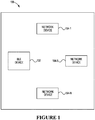
- FIG. 1 illustrates an example environment 100 for a BLE device.
- environment 100 may include multiple components.
- Environment 100 may include a BLE device 102.
- BLE device 102 can scan other BLE devices within environment 100 (e.g., within a network) for state transition notifications and/or can advertise their own wakeup or shutdown signal to other BLE devices.
- Network Environment 100 may further include a plurality of network devices 104-1, 104-2...104-N (referred to collectively hereinafter as network devices 104).
- a network device can, for example, refer to a device that is adapted to transmit and/or receive signaling and to process information within such signaling such as a station (e.g., any data processing equipment such as a computer, cellular phone, personal digital assistant, tablet devices, etc.), an access point, data transfer devices (such as network switches, routers, controllers, etc.) or the like.
- network devices 104 can include other BLE devices.
- a message For transmission, information may be transmitted as a message, namely a collection of bits in a predetermined format.
- One type of message namely a wireless message, includes a header and payload data having a predetermined number of bits of information.
- the wireless message may be placed in a format as one or more packets, frames or cells.
- Network devices 104 may receive transmissions, such as state transition notifications, from BLE device 102.
- a state transition notification can, for example, refer to a notification instructing a BLE or other network device to transition to an active state or a dormant state. Additionally or alternatively, a state transition notification can include a notification that the BLE device doing the notifying is transitioning to an active state or a dormant state. Further discussion regarding the transmissions is presented herein with regards to Figures 2 , 3 , and 4 .
- FIG. 2 illustrates an example BLE device 206 according to the disclosure.
- BLE device 206 may be a device capable of transmitting and receiving notifications and responses.
- BLE device 206 may include multiple components.
- BLE device 206 may include a communication resource 208.
- a communication resource can, for example, refer to hardware to transmit and/or receive communications.
- Communication resource 208 may be hardware device suitable for retrieval and execution of instructions such as instructions 212.
- instructions 212 when executed by communication resource 208, may cause communication resource 208 to detect a state transition notification.
- the detection can be in response to a scan by BLE device 206 of other BLE devices for the state transition notification.
- the state transition notification may be a dormant-to-active state transition notification or an active-to-dormant state transition notification. For instance, if the BLE is currently in a dormant state, the state transition notification is a dormant-to-active state transition notification. If the BLE is currently in an active state, the state transition notification is an active-to-dormant state transition notification.
- the state transition notification can be generated by a mobile device and/or another BLE device.
- the state transition notification can be generated by a mobile phone (e.g., smartphone), computing device, tablet, notebook computing device, or a laptop computing device, among others.
- a network administrator may initiate the state transition notification via the mobile device. In such an example, the network administrator can initiate the state transition notification to shut down or wake up a network of BLE devices.
- BLE device 206 may further include a processing resource 214 and a memory resource 216.
- a processing resource 214 may further include a memory resource 216.
- the following descriptions refer to a single processing resource and a single memory resource, the descriptions may also apply to a system with multiple processing resources and multiple memory resources.
- the instructions may be distributed (e.g., stored) across multiple memory resources and the instructions may be distributed (e.g., executed by) across multiple processing resources.
- Processing resource 214 may be a central processing unit (CPU), a semiconductor based microprocessor, and/or other hardware devices suitable for retrieval and execution of instructions stored in memory resource 216. Processing resource 214 may fetch, decode, and execute instructions 218, 220, or a combination thereof. As an alternative or in addition to retrieving and executing instructions, processing resource 214 may include at least one electronic circuit that includes electronic components for performing the functionality of instructions 218, 220, or a combination thereof.
- Memory resource 216 may be any electronic, magnetic, optical, or other physical storage device that stores executable instructions.
- memory resource 216 may be, for example, Random Access Memory (RAM), an Electrically-Erasable Programmable Read-Only Memory (EEPROM), a storage drive, an optical disc, and the like.
- Memory resource 216 may be disposed within BLE device 206, as shown in Figure 2 . In this situation, the executable instructions may be "installed" on the BLE device 206. Additionally and/or alternatively, memory resource 216 may be a portable, external or remote storage medium, for example, that allows BLE device 206 to download the instructions from the portable/external/remote storage medium. In this situation, the executable instructions may be part of an "installation package". As described herein, memory resource 216 may be encoded with executable instructions for a BLE device.
- BLE device 206 may include instructions 218 to cause a processing resource, such as processing resource 214, to perform, at particular, non-uniform time intervals, a plurality of scans of a same duration of other BLE devices within a same network as BLE device 206 for a state transition notification.
- the plurality of scans may be performed for dormant-to-active state transition notifications or for active-to-dormant state transition notifications.
- each of the plurality of scans can be performed for a same duration of 150 ms, and the particular non-uniform time intervals can be one minute, two minutes, four minutes, and eight minutes.
- the duration in some examples, can be different than 150 ms, and the non-uniform time intervals can be different.
- a cumulative duration for the plurality of scans can be 600 ms, and a sum of the time intervals can be fifteen minutes.
- BLE device 206 may include instructions 220 to cause processing resource 214 to transition, in response to the communication resource detecting the state transition notification, the BLE device to a state corresponding to the state transition notification. For instance, the BLE device can be transitioned to a dormant state or an active state. As described previously, instructions 212 may cause communication resource 208 to detect a state transition notification. Communication resource 208 may transmit the state transition notification to processing resource 214.
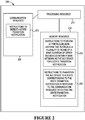
- beacon sensor device 310 can be a BLE device, but examples are not so limited. Similar to BLE device 206 illustrated in Figure 2 , beacon sensor device 310 may be a device capable of transmitting and receiving advertisements and responses. Beacon sensor device 310 may include multiple components. For example, beacon sensor device 310 may include a communication resource 320. Communication resource 320 may be a hardware device suitable for retrieval and execution of instructions such as instructions 317.
- instructions 317 when executed by communication resource 320, may cause communication resource 320 to detect a state transition notification.
- the communication resource can receive the state transition notification from a mobile device and/or in response to a scan of other BLE devices within a network.
- Beacon sensor device 310 may further include a processing resource 322 and a memory resource 319. Similar to BLE device 206, although the following descriptions refer to a single processing resource and a single memory resource, the descriptions may also apply to a system with multiple processing resources and multiple memory resources. In such examples, the instructions may be distributed (e.g., stored) across multiple memory resources and the instructions may be distributed (e.g., executed by) across multiple processing resources.
- Processing resource 322 may be a central processing unit (CPU), a semiconductor based microprocessor, and/or other hardware devices suitable for retrieval and execution of instructions stored in memory resource 319. Processing resource 322 may fetch, decode, and execute instructions 350, 352, and 354 or a combination thereof. As an alternative or in addition to retrieving and executing instructions, processing resource 322 may include at least one electronic circuit that includes electronic components for performing the functionality of instructions 350, 352, and 354.
- Memory resource 319 may be any electronic, magnetic, optical, or other physical storage device that stores executable instructions.
- memory resource 319 may be, for example, RAM, an EEPROM, a storage drive, an optical disc, and the like.
- Memory resource 319 may be disposed within beacon sensor device 310, as shown in Figure 3 .
- the executable instructions may be "installed" on the beacon sensor device 310.
- memory resource 319 may be a portable, external or remote storage medium, for example, that allows beacon sensor device 310 to download the instructions from the portable/external/remote storage medium.
- the executable instructions may be part of an "installation package".
- memory resource 319 may be encoded with executable instructions for a BLE device.
- Beacon sensor device 310 may include instructions 350 to cause a processing resource, such as processing resource 322, to perform for a duration, a first scan of a neighboring beacon sensor device for the state transition notification.
- a neighboring beacon sensor device can, for example, refer to a device detectable by the beacon sensor device (e.g., beacon sensor device 310) performing a scan.
- Beacon sensor device 310 can scan a neighboring device for the state transition notification, and may or may not detect the state transition notification. For instance, the neighboring beacon sensor device may not be transmitting a state transition notification, and thus beacon sensor device 310 cannot detect a state transition notification in the duration.
- beacon sensor device 310 may include instructions 352 to cause a processing resource, such as processing resource 322, to perform, subsequent to the first scan, a plurality of scans of the neighboring beacon sensor device for the state transition notification until a sum of the scan intervals reaches a threshold.
- a processing resource such as processing resource 322
- Each of the plurality of scans can be performed for the duration at non-uniform time intervals. For instance, after a first time interval has passed subsequent to the first scan, a second scan can be performed for the duration.
- a third scan can be performed after a second time interval. This can continue until the state transition notification is detected or a threshold scan interval sum is reached. For instance, the threshold scan interval sum can be fifteen minutes.
- the processing resource can perform, subsequent to the first scan, a plurality of scans of the neighboring beacon sensor device for the state transition notification until a cumulative scan duration reaches a threshold.
- the cumulative scan duration can be 600 ms.
- the first and subsequent plurality of scans can be performed iteratively until a state transition notification is detected.
- Beacon sensor device 310 may include instructions 354 to cause a processing resource, such as processing resource 322, to transition the BLE device to a state corresponding to the state transition notification in response to the communication resource detecting the state transition notification. For instance, beacon sensor device 310 can be transitioned to an active state or a dormant state.
- a processing resource such as processing resource 322
- instructions 317 may cause communication resource 320 to detect a state transition notification. Communication resource 320 may then transmit the state transition notification to processing resource 322.
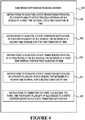
- Figure 4 illustrates an example of medium 424 for a BLE device according to the disclosure.
- the components illustrated in Figure 4 may perform a number of functions related to a BLE device.
- the following descriptions refer to a single processing resource and a single machine-readable storage medium 424, the descriptions may also apply to a system including multiple processing resources and multiple machine-readable storage mediums.
- the medium 424 may be distributed across multiple machine readable storage mediums and multiple processing resources.
- the instructions executed in the medium 424 may be stored across multiple machine-readable storage mediums and executed across multiple processing resources, such as in a distributed or virtual computing environment.
- the medium 424 may comprise a non-transitory machine-readable storage medium 424 storing machine readable instructions to cause a processing resource (not illustrated in Figure 4 ) to perform a number of operations relating to a BLE device.
- the processing resource may be a central processing unit (CPU), microprocessor, and/or other hardware device suitable for retrieval and execution of instructions stored in machine-readable storage medium 424.
- the medium 424 may include instructions 426 to cause the processing resource to scan for a state transition notification, by a first plurality of BLE devices, a network of BLE devices at a first time interval for a first duration of time.
- the first duration of time in some examples, can be 133 ms; however, other time durations can be used.
- a BLE device within the network can broadcast a dormant state transition notification.
- the first plurality of BLE devices may scan the network for 150 ms while listening for a wireless transmission including a BLE device shutdown signal that includes instructions that trigger the BLE device to transition to a dormant state. Put another way, each of the first plurality of BLE devices can scan for a shutdown signal.
- a BLE device within the network can broadcast an active state transition notification.
- the first plurality of BLE devices may scan the network for 150 ms while listening for a wireless transmission including a BLE device wakeup signal that includes instructions that trigger the BLE device to transition to an active state. Put another way, each of the first plurality of BLE devices can scan for a wakeup signal.
- the first scanning time interval for the plurality of BLE devices can be one minute. If BLE devices within the first plurality of BLE devices do not detect a state transition notification during the scan, they will stop scanning for a second time interval. This subset of BLE devices may be referred to as a second plurality of BLE device.
- the medium 424 may include instructions 428 to cause the processing resource to scan for the state transition notification, by the second plurality of BLE devices, the network at the second time interval for the first duration of time.
- the second time interval can be twice the length of the first time interval.
- the second time interval can be two minutes. If BLE devices within the second plurality of BLE devices do not detect a state transition notification during the scan, they will stop scanning for a third time interval. This subset of BLE devices may be referred to as a third plurality of BLE device.
- the medium 424 may further include instructions 430 to cause the processing resource to scan for the state transition notification, by the third plurality of BLE devices, the network at the third time interval for the first duration of time.
- the third time interval can be twice the length of the second time interval.
- the third time interval can be four minutes. If BLE devices within the third plurality of BLE devices do not detect a state transition notification during the scan, they will stop scanning for a fourth time interval. This subset of BLE devices may be referred to as a fourth plurality of BLE device.
- the medium 424 may further include instructions 431 to cause the processing resource to scan for the state transition notification, by the fourth plurality of BLE devices, the network at the fourth time interval for a second duration of time.
- the second time interval can be 200 ms.
- Non-uniform scan durations can result in an increased probability of detecting a state transition notification by scanning more in the longest scan interval (e.g., the fourth time interval).
- the fourth time interval can be twice the length of the third time interval.
- the fourth time interval can be eight minutes. If BLE devices remain that have not detected a state transition notification, the process can be repeated by returning to the first interval scan.
- the first and the second duration of time can be the same duration of time.
- the first plurality of BLE devices can include a BLE device within the second plurality of BLE devices, a BLE device within the third plurality of BLE devices, and a BLE device within the fourth plurality of BLE devices.
- the second plurality of BLE devices can include a BLE device within the third plurality of BLE devices, and a BLE device within the fourth plurality of BLE devices, and the third plurality of BLE devices can include a BLE device within the fourth plurality of BLE devices.
- the medium 424 may further include instructions 432 to cause the processing resource to transition the first, the second, the third, and the fourth plurality of BLE devices to a state corresponding to the state transition notification.
- the state corresponding to the state transition notification can be a dormant state or an active state.
- a BLE device can transition to a shutdown or a wakeup state.
- a BLE device can remain in the wakeup or shutdown state for a particular period of time, and can transmit dormant or active state transition notifications.
- a BLE device in the shutdown or wakeup state can alert neighboring beacons of the instructions received to transition to dormant or active states.
- a BLE device can transition to a dormant state or an active state. While in dormant state, a BLE device can reduce its power consumption as compared to operation in the active state.
- designators such as “N”, etc., particularly with respect to reference numerals in the drawings, can, for example, indicate that a number of the particular feature so designated can be included.
- a number of a particular thing can, for example, refer to one or more of such things.
- a “plurality of” is intended to refer to more than one of such things. Multiple like elements may be referenced herein generally by their reference numeral without a specific identifier at the end.
Landscapes
- Engineering & Computer Science (AREA)
- Computer Networks & Wireless Communication (AREA)
- Signal Processing (AREA)
- Databases & Information Systems (AREA)
- Computer Security & Cryptography (AREA)
- Mobile Radio Communication Systems (AREA)
Abstract
Description
- Beacon sensor devices may facilitate connection with network devices by sending advertisement data frames. The advertisement data frames may be sent wirelessly to network devices. An advertisement data frame may correspond to a particular format. The beacon sensor device may continue to send advertisement data frames using the particular format. A Bluetooth low energy (BLE) device is a beacon sensor device that uses BLE technology.
-
-
Figure 1 illustrates a diagram of an example of a wireless network consistent with the disclosure. -
Figure 2 illustrates a diagram of an example of a BLE device consistent with the disclosure. -
Figure 3 illustrates a diagram of an example of a beacon sensor device consistent with the disclosure. -
Figure 4 illustrates a diagram of an example of a non-transitory machine-readable medium and processor for BLE device state transition consistent with the disclosure. - A beacon sensor device, such as a BLE device, refers to any type of device capable of transmitting and receiving advertisements and responses. A BLE device can broadcast an identifier to neighboring devices such as a client device or another BLE device. As used herein, a client device can, for example, refer to a device including a processing resource, memory, and input/output interfaces for wired and/or wireless communication. A client device may include a laptop computer, a desktop computer, a mobile device, and/or other wireless devices, although examples of the disclosure are not limited to such devices. A mobile device may refer to devices that are (or may be) carried and/or worn by a user. For instance, a mobile device can be a phone (e.g., a smart phone), a tablet, a personal digital assistant (PDA), smart glasses, and/or a wrist-worn device (e.g., a smart watch), among other types of mobile devices.
- A BLE device can be part of a network of BLE devices. For instance, BLE devices within the network can be interconnected and may share a common active or dormant state. For example, a network as a whole may be in a dormant state or an active state. As used herein, 'interconnect' or used descriptively as 'interconnected' can, for example, refer to a communication pathway established over an information-carrying medium. The 'interconnect' may be a wired interconnect, wherein the medium is a physical medium (e.g., electrical wire, optical fiber, cable, bus traces, etc.), a wireless interconnect (e.g., air in combination with wireless signaling technology) or a combination of these technologies.
- In order to maintain desired network lifetimes for battery-operated BLE devices, BLE devices operate in a dormant state. As used herein, a dormant state can, for example, refer to a condition of a BLE device in which it is inactive but prepared to receive a new service request. For instance, a BLE device in a dormant state can have reduced power consumption compared to an active (also known as operational) state. As used herein, an active state can, for example, refer to a condition of a BLE device when it is operating in a defined mode, and a system or service is aware of its operational state. A wakeup phase, as used herein, can, for example, refer to a transitional phase between a dormant state and an active state in which a BLE device advertises a wakeup signal to neighboring devices. A shutdown phase, as used herein, can, for example, refer to a transitional phase between an active state and a dormant state in which a BLE device advertises a shutdown signal to neighboring devices.
- In some approaches, during active and/or dormant states, BLE devices within a network can scan at uniform intervals and for a uniform scanning duration to determine if a neighboring BLE device within its network or an external device (BLE or not) is advertising a signal to transition to a different state. As used herein, a scanning interval can, for example, refer to an intervening time between scans. Put another way, a scanning interval is a break in scanning activity. As used herein, a scanning duration can, for example, refer to a length of time that scanning continues. For instance, a BLE device in an active state may scan every five minutes for a duration of 200 milliseconds (ms) to see if a nearby BLE device is advertising a signal to transition to a dormant state. However, in a multi-hop network, such an approach may take a longer-than-desired time for the network to respond to the new state transition stimulus.
- For instance, with the example uniform intervals and uniform durations, an expected time to wake up in a first scan interval is two-and-a-half minutes, and in a 100-hop network where one BLE device can see one other BLE device, an average wakeup time for the network may be 250 minutes (four hours). In response to a BLE device not detecting a stimulus in a first attempt, a wakeup time can increase from two-and-a-half minutes to seven-and-a-half minutes for a second attempt and twelve-and-a-half minutes for a third attempt.
- In contrast, examples of the present disclosure can decrease BLE device state transition times using non-uniform scanning intervals and uniform or non-uniform scan durations. While examples herein refer to BLE devices, other beacon sensor devices can be used. For instance, examples of the present disclosure can include scanning BLE devices at non-uniform intervals. A scan interval time can be doubled after each scan. For example, intervals can be one minute, two minutes, four minutes, and eight minutes. By doing so, BLE devices can have a response time of thirty seconds in a first scan interval, two minutes in a second scan interval, five minutes in a third scan interval, and eleven minutes in a fourth scan interval. By splitting scan-periods into shorter, non-uniform intervals, a 100-hop network can wake or go dormant faster as opposed to networks scanning at uniform intervals. For instance, a network may transition states in 50 minutes, as opposed to 250 minutes as in other approaches.
- By decreasing wakeup and/or shutdown times for BLE devices, examples of the present disclosure can demonstrate network longevity and a responsive network during times of operation. For end customers, examples of the present disclosure may result in a reduction in the frequency of BLE device replacement. For network administrators, examples of the present disclosure may result in few service calls to address battery depletion due to a network being awake during times of non-use.
-
Figure 1 illustrates anexample environment 100 for a BLE device. As shown inFigure 1 ,environment 100 may include multiple components.Environment 100 may include aBLE device 102.BLE device 102 can scan other BLE devices within environment 100 (e.g., within a network) for state transition notifications and/or can advertise their own wakeup or shutdown signal to other BLE devices. -
Environment 100 may further include a plurality of network devices 104-1, 104-2...104-N (referred to collectively hereinafter as network devices 104). As used herein, a network device can, for example, refer to a device that is adapted to transmit and/or receive signaling and to process information within such signaling such as a station (e.g., any data processing equipment such as a computer, cellular phone, personal digital assistant, tablet devices, etc.), an access point, data transfer devices (such as network switches, routers, controllers, etc.) or the like. In some examples,network devices 104 can include other BLE devices. As used herein, can, for example, refer to data, address, control, management (e.g., statistics) or any combination thereof. For transmission, information may be transmitted as a message, namely a collection of bits in a predetermined format. One type of message, namely a wireless message, includes a header and payload data having a predetermined number of bits of information. The wireless message may be placed in a format as one or more packets, frames or cells.Network devices 104 may receive transmissions, such as state transition notifications, from BLEdevice 102. As used herein, a state transition notification can, for example, refer to a notification instructing a BLE or other network device to transition to an active state or a dormant state. Additionally or alternatively, a state transition notification can include a notification that the BLE device doing the notifying is transitioning to an active state or a dormant state. Further discussion regarding the transmissions is presented herein with regards toFigures 2 ,3 , and4 . -
Figure 2 illustrates anexample BLE device 206 according to the disclosure.BLE device 206 may be a device capable of transmitting and receiving notifications and responses. As shown inFigure 2 ,BLE device 206 may include multiple components. For example,BLE device 206 may include acommunication resource 208. As used herein, a communication resource can, for example, refer to hardware to transmit and/or receive communications.Communication resource 208 may be hardware device suitable for retrieval and execution of instructions such asinstructions 212. - In some examples,
instructions 212, when executed bycommunication resource 208, may causecommunication resource 208 to detect a state transition notification. The detection, as will be discussed further herein, can be in response to a scan byBLE device 206 of other BLE devices for the state transition notification. The state transition notification may be a dormant-to-active state transition notification or an active-to-dormant state transition notification. For instance, if the BLE is currently in a dormant state, the state transition notification is a dormant-to-active state transition notification. If the BLE is currently in an active state, the state transition notification is an active-to-dormant state transition notification. - The state transition notification can be generated by a mobile device and/or another BLE device. For instance, the state transition notification can be generated by a mobile phone (e.g., smartphone), computing device, tablet, notebook computing device, or a laptop computing device, among others. In some examples, a network administrator may initiate the state transition notification via the mobile device. In such an example, the network administrator can initiate the state transition notification to shut down or wake up a network of BLE devices.
-
BLE device 206 may further include aprocessing resource 214 and amemory resource 216. Although the following descriptions refer to a single processing resource and a single memory resource, the descriptions may also apply to a system with multiple processing resources and multiple memory resources. In such examples, the instructions may be distributed (e.g., stored) across multiple memory resources and the instructions may be distributed (e.g., executed by) across multiple processing resources. -
Processing resource 214 may be a central processing unit (CPU), a semiconductor based microprocessor, and/or other hardware devices suitable for retrieval and execution of instructions stored inmemory resource 216.Processing resource 214 may fetch, decode, and executeinstructions processing resource 214 may include at least one electronic circuit that includes electronic components for performing the functionality ofinstructions -
Memory resource 216 may be any electronic, magnetic, optical, or other physical storage device that stores executable instructions. Thus,memory resource 216 may be, for example, Random Access Memory (RAM), an Electrically-Erasable Programmable Read-Only Memory (EEPROM), a storage drive, an optical disc, and the like.Memory resource 216 may be disposed withinBLE device 206, as shown inFigure 2 . In this situation, the executable instructions may be "installed" on theBLE device 206. Additionally and/or alternatively,memory resource 216 may be a portable, external or remote storage medium, for example, that allowsBLE device 206 to download the instructions from the portable/external/remote storage medium. In this situation, the executable instructions may be part of an "installation package". As described herein,memory resource 216 may be encoded with executable instructions for a BLE device. -
BLE device 206 may includeinstructions 218 to cause a processing resource, such asprocessing resource 214, to perform, at particular, non-uniform time intervals, a plurality of scans of a same duration of other BLE devices within a same network asBLE device 206 for a state transition notification. The plurality of scans may be performed for dormant-to-active state transition notifications or for active-to-dormant state transition notifications. In some examples, each of the plurality of scans can be performed for a same duration of 150 ms, and the particular non-uniform time intervals can be one minute, two minutes, four minutes, and eight minutes. The duration, in some examples, can be different than 150 ms, and the non-uniform time intervals can be different. A cumulative duration for the plurality of scans can be 600 ms, and a sum of the time intervals can be fifteen minutes. - In some examples,
BLE device 206 may includeinstructions 220 to causeprocessing resource 214 to transition, in response to the communication resource detecting the state transition notification, the BLE device to a state corresponding to the state transition notification. For instance, the BLE device can be transitioned to a dormant state or an active state. As described previously,instructions 212 may causecommunication resource 208 to detect a state transition notification.Communication resource 208 may transmit the state transition notification toprocessing resource 214. -
Figure 3 illustrates a diagram of an example of abeacon sensor device 310 consistent with the disclosure. In such an example, beacon sensor device can be a BLE device, but examples are not so limited. Similar toBLE device 206 illustrated inFigure 2 ,beacon sensor device 310 may be a device capable of transmitting and receiving advertisements and responses.Beacon sensor device 310 may include multiple components. For example,beacon sensor device 310 may include acommunication resource 320.Communication resource 320 may be a hardware device suitable for retrieval and execution of instructions such asinstructions 317. - In some examples,
instructions 317, when executed bycommunication resource 320, may causecommunication resource 320 to detect a state transition notification. As will be discussed further herein, the communication resource can receive the state transition notification from a mobile device and/or in response to a scan of other BLE devices within a network. -
Beacon sensor device 310 may further include aprocessing resource 322 and amemory resource 319. Similar toBLE device 206, although the following descriptions refer to a single processing resource and a single memory resource, the descriptions may also apply to a system with multiple processing resources and multiple memory resources. In such examples, the instructions may be distributed (e.g., stored) across multiple memory resources and the instructions may be distributed (e.g., executed by) across multiple processing resources. -
Processing resource 322 may be a central processing unit (CPU), a semiconductor based microprocessor, and/or other hardware devices suitable for retrieval and execution of instructions stored inmemory resource 319.Processing resource 322 may fetch, decode, and executeinstructions processing resource 322 may include at least one electronic circuit that includes electronic components for performing the functionality ofinstructions -
Memory resource 319 may be any electronic, magnetic, optical, or other physical storage device that stores executable instructions. Thus,memory resource 319 may be, for example, RAM, an EEPROM, a storage drive, an optical disc, and the like.Memory resource 319 may be disposed withinbeacon sensor device 310, as shown inFigure 3 . In this situation, the executable instructions may be "installed" on thebeacon sensor device 310. Additionally and/or alternatively,memory resource 319 may be a portable, external or remote storage medium, for example, that allowsbeacon sensor device 310 to download the instructions from the portable/external/remote storage medium. In this situation, the executable instructions may be part of an "installation package". As described herein,memory resource 319 may be encoded with executable instructions for a BLE device. -
Beacon sensor device 310 may includeinstructions 350 to cause a processing resource, such asprocessing resource 322, to perform for a duration, a first scan of a neighboring beacon sensor device for the state transition notification. As used herein, a neighboring beacon sensor device can, for example, refer to a device detectable by the beacon sensor device (e.g., beacon sensor device 310) performing a scan.Beacon sensor device 310 can scan a neighboring device for the state transition notification, and may or may not detect the state transition notification. For instance, the neighboring beacon sensor device may not be transmitting a state transition notification, and thusbeacon sensor device 310 cannot detect a state transition notification in the duration. - In response to not detecting the state transition notification,
beacon sensor device 310 may includeinstructions 352 to cause a processing resource, such asprocessing resource 322, to perform, subsequent to the first scan, a plurality of scans of the neighboring beacon sensor device for the state transition notification until a sum of the scan intervals reaches a threshold. Each of the plurality of scans can be performed for the duration at non-uniform time intervals. For instance, after a first time interval has passed subsequent to the first scan, a second scan can be performed for the duration. In response to not detecting the state transition notification, a third scan can be performed after a second time interval. This can continue until the state transition notification is detected or a threshold scan interval sum is reached. For instance, the threshold scan interval sum can be fifteen minutes. This can include a one minute, a two minute, a four minute, and an eight minute scan interval, for instance. In some instances the processing resource can perform, subsequent to the first scan, a plurality of scans of the neighboring beacon sensor device for the state transition notification until a cumulative scan duration reaches a threshold. For instance, the cumulative scan duration can be 600 ms. In some instances, the first and subsequent plurality of scans can be performed iteratively until a state transition notification is detected. -
Beacon sensor device 310 may includeinstructions 354 to cause a processing resource, such asprocessing resource 322, to transition the BLE device to a state corresponding to the state transition notification in response to the communication resource detecting the state transition notification. For instance,beacon sensor device 310 can be transitioned to an active state or a dormant state. - As described previously,
instructions 317 may causecommunication resource 320 to detect a state transition notification.Communication resource 320 may then transmit the state transition notification toprocessing resource 322. -
Figure 4 illustrates an example ofmedium 424 for a BLE device according to the disclosure. As described herein, the components illustrated inFigure 4 may perform a number of functions related to a BLE device. Although the following descriptions refer to a single processing resource and a single machine-readable storage medium 424, the descriptions may also apply to a system including multiple processing resources and multiple machine-readable storage mediums. In such examples, the medium 424 may be distributed across multiple machine readable storage mediums and multiple processing resources. Put another way, the instructions executed in the medium 424 may be stored across multiple machine-readable storage mediums and executed across multiple processing resources, such as in a distributed or virtual computing environment. - As illustrated in
Figure 4 , the medium 424 may comprise a non-transitory machine-readable storage medium 424 storing machine readable instructions to cause a processing resource (not illustrated inFigure 4 ) to perform a number of operations relating to a BLE device. The processing resource may be a central processing unit (CPU), microprocessor, and/or other hardware device suitable for retrieval and execution of instructions stored in machine-readable storage medium 424. - The medium 424 may include
instructions 426 to cause the processing resource to scan for a state transition notification, by a first plurality of BLE devices, a network of BLE devices at a first time interval for a first duration of time. The first duration of time, in some examples, can be 133 ms; however, other time durations can be used. - For instance, in an active state, a BLE device within the network can broadcast a dormant state transition notification. The first plurality of BLE devices may scan the network for 150 ms while listening for a wireless transmission including a BLE device shutdown signal that includes instructions that trigger the BLE device to transition to a dormant state. Put another way, each of the first plurality of BLE devices can scan for a shutdown signal. Similar, in a dormant state, a BLE device within the network can broadcast an active state transition notification. The first plurality of BLE devices may scan the network for 150 ms while listening for a wireless transmission including a BLE device wakeup signal that includes instructions that trigger the BLE device to transition to an active state. Put another way, each of the first plurality of BLE devices can scan for a wakeup signal.
- The first scanning time interval for the plurality of BLE devices can be one minute. If BLE devices within the first plurality of BLE devices do not detect a state transition notification during the scan, they will stop scanning for a second time interval. This subset of BLE devices may be referred to as a second plurality of BLE device.
- For instance, the medium 424 may include
instructions 428 to cause the processing resource to scan for the state transition notification, by the second plurality of BLE devices, the network at the second time interval for the first duration of time. In some examples, the second time interval can be twice the length of the first time interval. For instance, the second time interval can be two minutes. If BLE devices within the second plurality of BLE devices do not detect a state transition notification during the scan, they will stop scanning for a third time interval. This subset of BLE devices may be referred to as a third plurality of BLE device. - For example, the medium 424 may further include
instructions 430 to cause the processing resource to scan for the state transition notification, by the third plurality of BLE devices, the network at the third time interval for the first duration of time. In some examples, the third time interval can be twice the length of the second time interval. For instance, the third time interval can be four minutes. If BLE devices within the third plurality of BLE devices do not detect a state transition notification during the scan, they will stop scanning for a fourth time interval. This subset of BLE devices may be referred to as a fourth plurality of BLE device. - For example, the medium 424 may further include
instructions 431 to cause the processing resource to scan for the state transition notification, by the fourth plurality of BLE devices, the network at the fourth time interval for a second duration of time. The second time interval can be 200 ms. Non-uniform scan durations can result in an increased probability of detecting a state transition notification by scanning more in the longest scan interval (e.g., the fourth time interval). For example, the fourth time interval can be twice the length of the third time interval. For instance, the fourth time interval can be eight minutes. If BLE devices remain that have not detected a state transition notification, the process can be repeated by returning to the first interval scan. In some instances, the first and the second duration of time can be the same duration of time. - Because the plurality of BLE devices can include subsets, the first plurality of BLE devices can include a BLE device within the second plurality of BLE devices, a BLE device within the third plurality of BLE devices, and a BLE device within the fourth plurality of BLE devices. The second plurality of BLE devices can include a BLE device within the third plurality of BLE devices, and a BLE device within the fourth plurality of BLE devices, and the third plurality of BLE devices can include a BLE device within the fourth plurality of BLE devices.
- The medium 424 may further include
instructions 432 to cause the processing resource to transition the first, the second, the third, and the fourth plurality of BLE devices to a state corresponding to the state transition notification. For instance, the state corresponding to the state transition notification can be a dormant state or an active state. For example, when a shutdown or wakeup signal is received, a BLE device can transition to a shutdown or a wakeup state. A BLE device can remain in the wakeup or shutdown state for a particular period of time, and can transmit dormant or active state transition notifications. For instance, before transitioning to a dormant or an active state, a BLE device in the shutdown or wakeup state can alert neighboring beacons of the instructions received to transition to dormant or active states. - Subsequent to the shutdown or wakeup state, a BLE device can transition to a dormant state or an active state. While in dormant state, a BLE device can reduce its power consumption as compared to operation in the active state.
- In the foregoing detailed description of the present disclosure, reference is made to the accompanying drawings that form a part hereof, and in which is shown by way of illustration how various examples of the disclosure may be practiced. These examples are described in sufficient detail to enable those of ordinary skill in the art to practice the examples of this disclosure, and it is to be understood that other examples may be utilized and that process, electrical, and/or structural changes may be made without departing from the scope of the present disclosure.
- As used herein, designators such as "N", etc., particularly with respect to reference numerals in the drawings, can, for example, indicate that a number of the particular feature so designated can be included. As used herein, "a number of" a particular thing can, for example, refer to one or more of such things. A "plurality of" is intended to refer to more than one of such things. Multiple like elements may be referenced herein generally by their reference numeral without a specific identifier at the end.
- The figures herein follow a numbering convention in which the first digit corresponds to the drawing figure number and the remaining digits identify an element or component in the drawing. Elements shown in the various figures herein can be added, exchanged, and/or eliminated so as to provide a number of additional examples of the present disclosure. In addition, the proportion and the relative scale of the elements provided in the figures are intended to illustrate the examples of the present disclosure, and should not be taken in a limiting sense.
Claims (15)
- A Bluetooth low energy (BLE) device comprising:a communication resource;a processing resource;a memory resource storing machine readable instructions to cause the processing resource to:perform at particular, non-uniform time intervals, a plurality of scans of a same duration of other BLE devices within a same network as the BLE device for a state transition notification; andin response to the communication resource detecting the state transition notification, transition the BLE device to a state corresponding to the state transition notification.
- The BLE device of claim 1, further comprising the memory resource to cause the processing resource to perform the plurality of scans for a dormant-to-active state transition notification.
- The BLE device of claim 1, further comprising the memory resource to cause the processing resource to perform the plurality of scans for an active-to-dormant state transition notification.
- The BLE device of claim 1, wherein the same duration is 150 milliseconds.
- The BLE device of claim 1, wherein the particular non-uniform time intervals are one minute, two minutes, four minutes, and eight minutes.
- A beacon sensor device comprising:a communication resource;a processing resource; anda memory resource storing machine readable instructions to cause the processing resource to iteratively:perform for a duration, a first scan of a neighboring beacon sensor device for a state transition notification;perform, subsequent to the first scan, a plurality of scans of the neighboring beacon sensor device for the state transition notification until a sum of scan intervals reaches a threshold,
wherein each of the plurality of scans is performed for a particular duration at non-uniform time intervals; andin response to the communication resource detecting the state transition notification during the first scan or one of the plurality of scans, transition the beacon sensor device to a state corresponding to the state transition notification. - The beacon sensor device of claim 6, wherein the threshold scan interval sum is fifteen minutes.
- The beacon sensor device of claim 6, further comprising the memory resource to cause the processing resource to perform, subsequent to the first scan, a plurality of scans of the neighboring beacon sensor device for the state transition notification until a cumulative scan duration reaches a threshold.
- A method comprising:scanning for a state transition notification, by a first plurality of Bluetooth low energy (BLE) devices, a network of BLE devices at a first time interval for a first duration of time;scanning for the state transition notification, by a second plurality of BLE devices, the network at a second time interval for the first duration of time;scanning for the state transition notification, by a third plurality of BLE devices, the network at a third time interval for the first duration of time;scanning for the state transition notification, by a fourth plurality of BLE devices, the network at a fourth time interval for a second duration of time; andtransitioning the first, the second, the third, and the fourth plurality of BLE devices to a state corresponding to the state transition notification.
- The method of claim 9, wherein (i) the second time interval is twice the length of the first time interval and/or (ii) the third time interval is twice the length of the second time interval.
- The method of claim 9, wherein the fourth time interval is twice the length of the third time interval.
- The method of claim 9, wherein the first duration of time is 133 milliseconds and the second duration of time is 200 milliseconds.
- The method of claim 9, wherein the state corresponding to the state transition notification is a dormant state or an active state.
- The method of claim 9, wherein:the first plurality of BLE devices comprises a BLE device within the second plurality of BLE devices, a BLE device within the third plurality of BLE devices, and a BLE device within the fourth plurality of BLE devices;the second plurality of BLE devices comprises a BLE device within the third plurality of BLE devices, and a BLE device within the fourth plurality of BLE devices; andthe third plurality of BLE devices comprises a BLE device within the fourth plurality of BLE devices.
- A non-transitory machine readable storage medium having stored thereon machine readable instructions to cause a computer processor to carry out the method of any of claims 9 to 14.
Applications Claiming Priority (1)
| Application Number | Priority Date | Filing Date | Title |
|---|---|---|---|
| US15/447,890 US10492126B2 (en) | 2017-03-02 | 2017-03-02 | Bluetooth low energy device state transition |
Publications (2)
| Publication Number | Publication Date |
|---|---|
| EP3370444A1 true EP3370444A1 (en) | 2018-09-05 |
| EP3370444B1 EP3370444B1 (en) | 2021-09-01 |
Family
ID=60186139
Family Applications (1)
| Application Number | Title | Priority Date | Filing Date |
|---|---|---|---|
| EP17198517.9A Active EP3370444B1 (en) | 2017-03-02 | 2017-10-26 | Bluetooth low energy device state transition |
Country Status (3)
| Country | Link |
|---|---|
| US (1) | US10492126B2 (en) |
| EP (1) | EP3370444B1 (en) |
| CN (1) | CN108541048B (en) |
Citations (2)
| Publication number | Priority date | Publication date | Assignee | Title |
|---|---|---|---|---|
| US20110153818A1 (en) * | 2009-12-23 | 2011-06-23 | Apple Inc. | Efficient service advertisement and discovery in multiple wireless networks |
| US9503969B1 (en) * | 2015-08-25 | 2016-11-22 | Afero, Inc. | Apparatus and method for a dynamic scan interval for a wireless device |
Family Cites Families (18)
| Publication number | Priority date | Publication date | Assignee | Title |
|---|---|---|---|---|
| US20070047506A1 (en) | 2005-08-31 | 2007-03-01 | Froehling Timothy P | Methods and devices for dynamically adjusting page scan intervals of bluetooth enabled devices |
| US8019340B2 (en) | 2007-03-07 | 2011-09-13 | Motorola Mobility, Inc. | Reduced scanning within a uniform period in out-of-service conditions |
| KR100881223B1 (en) | 2007-05-28 | 2009-02-05 | (주)케이티에프테크놀로지스 | Bluetooth device and method for dynamically adjusting query scan period, and recording medium recording program for implementing the same |
| US9662438B2 (en) * | 2010-02-05 | 2017-05-30 | Deka Products Limited Partnership | Devices, methods and systems for wireless control of medical devices |
| US8971807B2 (en) * | 2011-08-12 | 2015-03-03 | Wicentric, Inc. | Systems and methods for low power short range wireless device communication advertisement |
| US9020433B2 (en) * | 2011-10-05 | 2015-04-28 | Apple Inc. | Low power wireless device discovery |
| CN104488348B (en) * | 2012-06-01 | 2018-04-24 | 诺基亚技术有限公司 | The method, apparatus and computer program product found for the adaptive equipment in wireless network |
| WO2014080252A1 (en) | 2012-11-26 | 2014-05-30 | Nokia Corporation | Handling bluetooth low energy advertisement messages |
| US20140357192A1 (en) * | 2013-06-04 | 2014-12-04 | Tal Azogui | Systems and methods for connectionless proximity determination |
| US9462623B2 (en) | 2014-07-29 | 2016-10-04 | Em Microelectronic Marin S.A. | Method and system for optimized bluetooth low energy communications using dynamic broadcasting schedule |
| US9282582B1 (en) | 2014-10-31 | 2016-03-08 | Aruba Networks, Inc. | Sleep control for network of bluetooth low energy devices |
| CN105898677B (en) * | 2015-02-12 | 2019-06-18 | 深圳富泰宏精密工业有限公司 | Interactive communication system, method and device |
| WO2016159844A1 (en) * | 2015-03-31 | 2016-10-06 | Telefonaktiebolaget Lm Ericsson (Publ) | Methods and arrangements for communication between advertising and advertisement responding wireless devices |
| US9961633B2 (en) * | 2015-07-26 | 2018-05-01 | Qualcomm Incorporated | Bluetooth low energy combined listen and scan window |
| KR101673308B1 (en) * | 2015-08-20 | 2016-11-07 | 현대자동차주식회사 | Method And Apparatus For Automatic Bluetooth Connection Using Bluetooth Dual_Mode |
| CN105430547B (en) * | 2015-10-23 | 2019-03-29 | 小米科技有限责任公司 | The dormancy method and device of bluetooth headset |
| CN105873200A (en) * | 2016-05-20 | 2016-08-17 | 美的集团股份有限公司 | Method and device for periodically awaking node |
| CN106131802B (en) * | 2016-07-05 | 2019-11-15 | 北京小米移动软件有限公司 | Data broadcasting method, data broadcasting apparatus and electronic equipment |
-
2017
- 2017-03-02 US US15/447,890 patent/US10492126B2/en active Active
- 2017-10-26 EP EP17198517.9A patent/EP3370444B1/en active Active
- 2017-10-27 CN CN201711029667.4A patent/CN108541048B/en active Active
Patent Citations (2)
| Publication number | Priority date | Publication date | Assignee | Title |
|---|---|---|---|---|
| US20110153818A1 (en) * | 2009-12-23 | 2011-06-23 | Apple Inc. | Efficient service advertisement and discovery in multiple wireless networks |
| US9503969B1 (en) * | 2015-08-25 | 2016-11-22 | Afero, Inc. | Apparatus and method for a dynamic scan interval for a wireless device |
Also Published As
| Publication number | Publication date |
|---|---|
| CN108541048A (en) | 2018-09-14 |
| EP3370444B1 (en) | 2021-09-01 |
| US10492126B2 (en) | 2019-11-26 |
| US20180255504A1 (en) | 2018-09-06 |
| CN108541048B (en) | 2021-08-24 |
Similar Documents
| Publication | Publication Date | Title |
|---|---|---|
| EP2785113B1 (en) | Method and apparatus for waking up device | |
| US20250159611A1 (en) | Wake-Up Signal Monitoring Method and Electronic Device and Network Device | |
| JP2024507892A (en) | State switching method and device, beacon signal transmission method and device | |
| US20250358742A1 (en) | Communication method and communication apparatus | |
| WO2024002071A1 (en) | Lp-wus-based paging method and apparatus, device, system, and storage medium | |
| US11350384B2 (en) | Method and device for instructing a user equipment to monitor a downlink information | |
| CA2548411A1 (en) | Methods and apparatus for providing a tolerable delay for slotted messages in wireless communication networks | |
| US20190387552A1 (en) | On-demand processing method, user equipment and base station | |
| CN103582087A (en) | Discontinuously-received parameter configuration method and data transmitting method and device | |
| WO2024037514A1 (en) | Information transmission method and apparatus, and communication device | |
| US20220015127A1 (en) | Information transmission method, base station and terminal | |
| EP4090085A1 (en) | Communication method and apparatus | |
| US20210084584A1 (en) | Access point wake up | |
| WO2024120230A1 (en) | Network device management method and apparatus and storage medium | |
| US10306556B2 (en) | Access point notification of wireless stations about availability of data | |
| WO2023169571A1 (en) | Wake-up signal receiving method and apparatus, terminal, and network side device | |
| US20240147372A1 (en) | Power-Saving Signal Monitoring Method and Device | |
| WO2023030083A1 (en) | Discontinuous reception method, device and readable storage medium | |
| EP3370444B1 (en) | Bluetooth low energy device state transition | |
| US12495361B2 (en) | Modifying idle mode drx on wireless devices | |
| CN115460698B (en) | PDCCH monitoring method and device, terminal, network equipment and readable storage medium | |
| WO2026073382A1 (en) | Device, reader, and device state transition method for random access | |
| CN111800847B (en) | Equipment control method and device | |
| US20250261279A1 (en) | Communication method and apparatus | |
| WO2026066636A1 (en) | Communication method, system, and related device |
Legal Events
| Date | Code | Title | Description |
|---|---|---|---|
| PUAI | Public reference made under article 153(3) epc to a published international application that has entered the european phase |
Free format text: ORIGINAL CODE: 0009012 |
|
| STAA | Information on the status of an ep patent application or granted ep patent |
Free format text: STATUS: THE APPLICATION HAS BEEN PUBLISHED |
|
| AK | Designated contracting states |
Kind code of ref document: A1 Designated state(s): AL AT BE BG CH CY CZ DE DK EE ES FI FR GB GR HR HU IE IS IT LI LT LU LV MC MK MT NL NO PL PT RO RS SE SI SK SM TR |
|
| AX | Request for extension of the european patent |
Extension state: BA ME |
|
| RAP1 | Party data changed (applicant data changed or rights of an application transferred) |
Owner name: HEWLETT PACKARD ENTERPRISE DEVELOPMENT LP |
|
| STAA | Information on the status of an ep patent application or granted ep patent |
Free format text: STATUS: REQUEST FOR EXAMINATION WAS MADE |
|
| 17P | Request for examination filed |
Effective date: 20190222 |
|
| RBV | Designated contracting states (corrected) |
Designated state(s): AL AT BE BG CH CY CZ DE DK EE ES FI FR GB GR HR HU IE IS IT LI LT LU LV MC MK MT NL NO PL PT RO RS SE SI SK SM TR |
|
| STAA | Information on the status of an ep patent application or granted ep patent |
Free format text: STATUS: EXAMINATION IS IN PROGRESS |
|
| 17Q | First examination report despatched |
Effective date: 20200226 |
|
| GRAP | Despatch of communication of intention to grant a patent |
Free format text: ORIGINAL CODE: EPIDOSNIGR1 |
|
| STAA | Information on the status of an ep patent application or granted ep patent |
Free format text: STATUS: GRANT OF PATENT IS INTENDED |
|
| INTG | Intention to grant announced |
Effective date: 20210608 |
|
| GRAS | Grant fee paid |
Free format text: ORIGINAL CODE: EPIDOSNIGR3 |
|
| GRAA | (expected) grant |
Free format text: ORIGINAL CODE: 0009210 |
|
| STAA | Information on the status of an ep patent application or granted ep patent |
Free format text: STATUS: THE PATENT HAS BEEN GRANTED |
|
| AK | Designated contracting states |
Kind code of ref document: B1 Designated state(s): AL AT BE BG CH CY CZ DE DK EE ES FI FR GB GR HR HU IE IS IT LI LT LU LV MC MK MT NL NO PL PT RO RS SE SI SK SM TR |
|
| REG | Reference to a national code |
Ref country code: GB Ref legal event code: FG4D |
|
| REG | Reference to a national code |
Ref country code: CH Ref legal event code: EP Ref country code: AT Ref legal event code: REF Ref document number: 1427533 Country of ref document: AT Kind code of ref document: T Effective date: 20210915 |
|
| REG | Reference to a national code |
Ref country code: DE Ref legal event code: R096 Ref document number: 602017045073 Country of ref document: DE |
|
| REG | Reference to a national code |
Ref country code: IE Ref legal event code: FG4D |
|
| REG | Reference to a national code |
Ref country code: LT Ref legal event code: MG9D |
|
| REG | Reference to a national code |
Ref country code: NL Ref legal event code: MP Effective date: 20210901 |
|
| PG25 | Lapsed in a contracting state [announced via postgrant information from national office to epo] |
Ref country code: LT Free format text: LAPSE BECAUSE OF FAILURE TO SUBMIT A TRANSLATION OF THE DESCRIPTION OR TO PAY THE FEE WITHIN THE PRESCRIBED TIME-LIMIT Effective date: 20210901 Ref country code: BG Free format text: LAPSE BECAUSE OF FAILURE TO SUBMIT A TRANSLATION OF THE DESCRIPTION OR TO PAY THE FEE WITHIN THE PRESCRIBED TIME-LIMIT Effective date: 20211201 Ref country code: NO Free format text: LAPSE BECAUSE OF FAILURE TO SUBMIT A TRANSLATION OF THE DESCRIPTION OR TO PAY THE FEE WITHIN THE PRESCRIBED TIME-LIMIT Effective date: 20211201 Ref country code: ES Free format text: LAPSE BECAUSE OF FAILURE TO SUBMIT A TRANSLATION OF THE DESCRIPTION OR TO PAY THE FEE WITHIN THE PRESCRIBED TIME-LIMIT Effective date: 20210901 Ref country code: FI Free format text: LAPSE BECAUSE OF FAILURE TO SUBMIT A TRANSLATION OF THE DESCRIPTION OR TO PAY THE FEE WITHIN THE PRESCRIBED TIME-LIMIT Effective date: 20210901 Ref country code: HR Free format text: LAPSE BECAUSE OF FAILURE TO SUBMIT A TRANSLATION OF THE DESCRIPTION OR TO PAY THE FEE WITHIN THE PRESCRIBED TIME-LIMIT Effective date: 20210901 Ref country code: RS Free format text: LAPSE BECAUSE OF FAILURE TO SUBMIT A TRANSLATION OF THE DESCRIPTION OR TO PAY THE FEE WITHIN THE PRESCRIBED TIME-LIMIT Effective date: 20210901 Ref country code: SE Free format text: LAPSE BECAUSE OF FAILURE TO SUBMIT A TRANSLATION OF THE DESCRIPTION OR TO PAY THE FEE WITHIN THE PRESCRIBED TIME-LIMIT Effective date: 20210901 |
|
| REG | Reference to a national code |
Ref country code: AT Ref legal event code: MK05 Ref document number: 1427533 Country of ref document: AT Kind code of ref document: T Effective date: 20210901 |
|
| PG25 | Lapsed in a contracting state [announced via postgrant information from national office to epo] |
Ref country code: PL Free format text: LAPSE BECAUSE OF FAILURE TO SUBMIT A TRANSLATION OF THE DESCRIPTION OR TO PAY THE FEE WITHIN THE PRESCRIBED TIME-LIMIT Effective date: 20210901 Ref country code: LV Free format text: LAPSE BECAUSE OF FAILURE TO SUBMIT A TRANSLATION OF THE DESCRIPTION OR TO PAY THE FEE WITHIN THE PRESCRIBED TIME-LIMIT Effective date: 20210901 Ref country code: GR Free format text: LAPSE BECAUSE OF FAILURE TO SUBMIT A TRANSLATION OF THE DESCRIPTION OR TO PAY THE FEE WITHIN THE PRESCRIBED TIME-LIMIT Effective date: 20211202 |
|
| PG25 | Lapsed in a contracting state [announced via postgrant information from national office to epo] |
Ref country code: AT Free format text: LAPSE BECAUSE OF FAILURE TO SUBMIT A TRANSLATION OF THE DESCRIPTION OR TO PAY THE FEE WITHIN THE PRESCRIBED TIME-LIMIT Effective date: 20210901 |
|
| REG | Reference to a national code |
Ref country code: CH Ref legal event code: PL |
|
| PG25 | Lapsed in a contracting state [announced via postgrant information from national office to epo] |
Ref country code: IS Free format text: LAPSE BECAUSE OF FAILURE TO SUBMIT A TRANSLATION OF THE DESCRIPTION OR TO PAY THE FEE WITHIN THE PRESCRIBED TIME-LIMIT Effective date: 20220101 Ref country code: SM Free format text: LAPSE BECAUSE OF FAILURE TO SUBMIT A TRANSLATION OF THE DESCRIPTION OR TO PAY THE FEE WITHIN THE PRESCRIBED TIME-LIMIT Effective date: 20210901 Ref country code: SK Free format text: LAPSE BECAUSE OF FAILURE TO SUBMIT A TRANSLATION OF THE DESCRIPTION OR TO PAY THE FEE WITHIN THE PRESCRIBED TIME-LIMIT Effective date: 20210901 Ref country code: RO Free format text: LAPSE BECAUSE OF FAILURE TO SUBMIT A TRANSLATION OF THE DESCRIPTION OR TO PAY THE FEE WITHIN THE PRESCRIBED TIME-LIMIT Effective date: 20210901 Ref country code: PT Free format text: LAPSE BECAUSE OF FAILURE TO SUBMIT A TRANSLATION OF THE DESCRIPTION OR TO PAY THE FEE WITHIN THE PRESCRIBED TIME-LIMIT Effective date: 20220103 Ref country code: NL Free format text: LAPSE BECAUSE OF FAILURE TO SUBMIT A TRANSLATION OF THE DESCRIPTION OR TO PAY THE FEE WITHIN THE PRESCRIBED TIME-LIMIT Effective date: 20210901 Ref country code: EE Free format text: LAPSE BECAUSE OF FAILURE TO SUBMIT A TRANSLATION OF THE DESCRIPTION OR TO PAY THE FEE WITHIN THE PRESCRIBED TIME-LIMIT Effective date: 20210901 Ref country code: CZ Free format text: LAPSE BECAUSE OF FAILURE TO SUBMIT A TRANSLATION OF THE DESCRIPTION OR TO PAY THE FEE WITHIN THE PRESCRIBED TIME-LIMIT Effective date: 20210901 Ref country code: AL Free format text: LAPSE BECAUSE OF FAILURE TO SUBMIT A TRANSLATION OF THE DESCRIPTION OR TO PAY THE FEE WITHIN THE PRESCRIBED TIME-LIMIT Effective date: 20210901 |
|
| REG | Reference to a national code |
Ref country code: DE Ref legal event code: R097 Ref document number: 602017045073 Country of ref document: DE |
|
| REG | Reference to a national code |
Ref country code: BE Ref legal event code: MM Effective date: 20211031 |
|
| PG25 | Lapsed in a contracting state [announced via postgrant information from national office to epo] |
Ref country code: MC Free format text: LAPSE BECAUSE OF FAILURE TO SUBMIT A TRANSLATION OF THE DESCRIPTION OR TO PAY THE FEE WITHIN THE PRESCRIBED TIME-LIMIT Effective date: 20210901 |
|
| PLBE | No opposition filed within time limit |
Free format text: ORIGINAL CODE: 0009261 |
|
| STAA | Information on the status of an ep patent application or granted ep patent |
Free format text: STATUS: NO OPPOSITION FILED WITHIN TIME LIMIT |
|
| PG25 | Lapsed in a contracting state [announced via postgrant information from national office to epo] |
Ref country code: LU Free format text: LAPSE BECAUSE OF NON-PAYMENT OF DUE FEES Effective date: 20211026 Ref country code: IT Free format text: LAPSE BECAUSE OF FAILURE TO SUBMIT A TRANSLATION OF THE DESCRIPTION OR TO PAY THE FEE WITHIN THE PRESCRIBED TIME-LIMIT Effective date: 20210901 Ref country code: DK Free format text: LAPSE BECAUSE OF FAILURE TO SUBMIT A TRANSLATION OF THE DESCRIPTION OR TO PAY THE FEE WITHIN THE PRESCRIBED TIME-LIMIT Effective date: 20210901 Ref country code: BE Free format text: LAPSE BECAUSE OF NON-PAYMENT OF DUE FEES Effective date: 20211031 |
|
| 26N | No opposition filed |
Effective date: 20220602 |
|
| PG25 | Lapsed in a contracting state [announced via postgrant information from national office to epo] |
Ref country code: SI Free format text: LAPSE BECAUSE OF FAILURE TO SUBMIT A TRANSLATION OF THE DESCRIPTION OR TO PAY THE FEE WITHIN THE PRESCRIBED TIME-LIMIT Effective date: 20210901 Ref country code: LI Free format text: LAPSE BECAUSE OF NON-PAYMENT OF DUE FEES Effective date: 20211031 Ref country code: CH Free format text: LAPSE BECAUSE OF NON-PAYMENT OF DUE FEES Effective date: 20211031 |
|
| PG25 | Lapsed in a contracting state [announced via postgrant information from national office to epo] |
Ref country code: FR Free format text: LAPSE BECAUSE OF NON-PAYMENT OF DUE FEES Effective date: 20211101 |
|
| PG25 | Lapsed in a contracting state [announced via postgrant information from national office to epo] |
Ref country code: IE Free format text: LAPSE BECAUSE OF NON-PAYMENT OF DUE FEES Effective date: 20211026 |
|
| REG | Reference to a national code |
Ref country code: DE Ref legal event code: R082 Ref document number: 602017045073 Country of ref document: DE Representative=s name: PROCK, THOMAS, DR., GB |
|
| PG25 | Lapsed in a contracting state [announced via postgrant information from national office to epo] |
Ref country code: HU Free format text: LAPSE BECAUSE OF FAILURE TO SUBMIT A TRANSLATION OF THE DESCRIPTION OR TO PAY THE FEE WITHIN THE PRESCRIBED TIME-LIMIT; INVALID AB INITIO Effective date: 20171026 |
|
| REG | Reference to a national code |
Ref country code: DE Ref legal event code: R081 Ref document number: 602017045073 Country of ref document: DE Owner name: HEWLETT PACKARD ENTERPRISE DEVELOPMENT LP, SPR, US Free format text: FORMER OWNER: HEWLETT PACKARD ENTERPRISE DEVELOPMENT LP, HOUSTON, TX, US |
|
| PG25 | Lapsed in a contracting state [announced via postgrant information from national office to epo] |
Ref country code: CY Free format text: LAPSE BECAUSE OF FAILURE TO SUBMIT A TRANSLATION OF THE DESCRIPTION OR TO PAY THE FEE WITHIN THE PRESCRIBED TIME-LIMIT Effective date: 20210901 |
|
| PG25 | Lapsed in a contracting state [announced via postgrant information from national office to epo] |
Ref country code: MK Free format text: LAPSE BECAUSE OF FAILURE TO SUBMIT A TRANSLATION OF THE DESCRIPTION OR TO PAY THE FEE WITHIN THE PRESCRIBED TIME-LIMIT Effective date: 20210901 |
|
| PG25 | Lapsed in a contracting state [announced via postgrant information from national office to epo] |
Ref country code: MT Free format text: LAPSE BECAUSE OF FAILURE TO SUBMIT A TRANSLATION OF THE DESCRIPTION OR TO PAY THE FEE WITHIN THE PRESCRIBED TIME-LIMIT Effective date: 20210901 |
|
| PG25 | Lapsed in a contracting state [announced via postgrant information from national office to epo] |
Ref country code: TR Free format text: LAPSE BECAUSE OF FAILURE TO SUBMIT A TRANSLATION OF THE DESCRIPTION OR TO PAY THE FEE WITHIN THE PRESCRIBED TIME-LIMIT Effective date: 20210901 |
|
| PGFP | Annual fee paid to national office [announced via postgrant information from national office to epo] |
Ref country code: DE Payment date: 20251028 Year of fee payment: 9 |
|
| PGFP | Annual fee paid to national office [announced via postgrant information from national office to epo] |
Ref country code: GB Payment date: 20251023 Year of fee payment: 9 |