EP3370330A1 - Switching power source device and droop characteristic correction method - Google Patents
Switching power source device and droop characteristic correction method Download PDFInfo
- Publication number
- EP3370330A1 EP3370330A1 EP16870343.7A EP16870343A EP3370330A1 EP 3370330 A1 EP3370330 A1 EP 3370330A1 EP 16870343 A EP16870343 A EP 16870343A EP 3370330 A1 EP3370330 A1 EP 3370330A1
- Authority
- EP
- European Patent Office
- Prior art keywords
- power converter
- droop characteristic
- output voltage
- correction value
- correction
- Prior art date
- Legal status (The legal status is an assumption and is not a legal conclusion. Google has not performed a legal analysis and makes no representation as to the accuracy of the status listed.)
- Granted
Links
Images


Classifications
-
- H—ELECTRICITY
- H02—GENERATION; CONVERSION OR DISTRIBUTION OF ELECTRIC POWER
- H02M—APPARATUS FOR CONVERSION BETWEEN AC AND AC, BETWEEN AC AND DC, OR BETWEEN DC AND DC, AND FOR USE WITH MAINS OR SIMILAR POWER SUPPLY SYSTEMS; CONVERSION OF DC OR AC INPUT POWER INTO SURGE OUTPUT POWER; CONTROL OR REGULATION THEREOF
- H02M3/00—Conversion of DC power input into DC power output
- H02M3/02—Conversion of DC power input into DC power output without intermediate conversion into AC
- H02M3/04—Conversion of DC power input into DC power output without intermediate conversion into AC by static converters
- H02M3/10—Conversion of DC power input into DC power output without intermediate conversion into AC by static converters using discharge tubes with control electrode or semiconductor devices with control electrode
- H02M3/145—Conversion of DC power input into DC power output without intermediate conversion into AC by static converters using discharge tubes with control electrode or semiconductor devices with control electrode using devices of a triode or transistor type requiring continuous application of a control signal
- H02M3/155—Conversion of DC power input into DC power output without intermediate conversion into AC by static converters using discharge tubes with control electrode or semiconductor devices with control electrode using devices of a triode or transistor type requiring continuous application of a control signal using semiconductor devices only
-
- H—ELECTRICITY
- H02—GENERATION; CONVERSION OR DISTRIBUTION OF ELECTRIC POWER
- H02M—APPARATUS FOR CONVERSION BETWEEN AC AND AC, BETWEEN AC AND DC, OR BETWEEN DC AND DC, AND FOR USE WITH MAINS OR SIMILAR POWER SUPPLY SYSTEMS; CONVERSION OF DC OR AC INPUT POWER INTO SURGE OUTPUT POWER; CONTROL OR REGULATION THEREOF
- H02M3/00—Conversion of DC power input into DC power output
- H02M3/02—Conversion of DC power input into DC power output without intermediate conversion into AC
- H02M3/04—Conversion of DC power input into DC power output without intermediate conversion into AC by static converters
- H02M3/10—Conversion of DC power input into DC power output without intermediate conversion into AC by static converters using discharge tubes with control electrode or semiconductor devices with control electrode
- H02M3/145—Conversion of DC power input into DC power output without intermediate conversion into AC by static converters using discharge tubes with control electrode or semiconductor devices with control electrode using devices of a triode or transistor type requiring continuous application of a control signal
- H02M3/155—Conversion of DC power input into DC power output without intermediate conversion into AC by static converters using discharge tubes with control electrode or semiconductor devices with control electrode using devices of a triode or transistor type requiring continuous application of a control signal using semiconductor devices only
- H02M3/156—Conversion of DC power input into DC power output without intermediate conversion into AC by static converters using discharge tubes with control electrode or semiconductor devices with control electrode using devices of a triode or transistor type requiring continuous application of a control signal using semiconductor devices only with automatic control of output voltage or current, e.g. switching regulators
- H02M3/158—Conversion of DC power input into DC power output without intermediate conversion into AC by static converters using discharge tubes with control electrode or semiconductor devices with control electrode using devices of a triode or transistor type requiring continuous application of a control signal using semiconductor devices only with automatic control of output voltage or current, e.g. switching regulators including plural semiconductor devices as final control devices for a single load
- H02M3/1584—Conversion of DC power input into DC power output without intermediate conversion into AC by static converters using discharge tubes with control electrode or semiconductor devices with control electrode using devices of a triode or transistor type requiring continuous application of a control signal using semiconductor devices only with automatic control of output voltage or current, e.g. switching regulators including plural semiconductor devices as final control devices for a single load with a plurality of power processing stages connected in parallel
-
- H—ELECTRICITY
- H02—GENERATION; CONVERSION OR DISTRIBUTION OF ELECTRIC POWER
- H02M—APPARATUS FOR CONVERSION BETWEEN AC AND AC, BETWEEN AC AND DC, OR BETWEEN DC AND DC, AND FOR USE WITH MAINS OR SIMILAR POWER SUPPLY SYSTEMS; CONVERSION OF DC OR AC INPUT POWER INTO SURGE OUTPUT POWER; CONTROL OR REGULATION THEREOF
- H02M3/00—Conversion of DC power input into DC power output
- H02M3/02—Conversion of DC power input into DC power output without intermediate conversion into AC
- H02M3/04—Conversion of DC power input into DC power output without intermediate conversion into AC by static converters
- H02M3/06—Conversion of DC power input into DC power output without intermediate conversion into AC by static converters using resistors or capacitors, e.g. potential divider
- H02M3/07—Conversion of DC power input into DC power output without intermediate conversion into AC by static converters using resistors or capacitors, e.g. potential divider using capacitors charged and discharged alternately by semiconductor devices with control electrode, e.g. charge pumps
-
- H—ELECTRICITY
- H03—ELECTRONIC CIRCUITRY
- H03K—PULSE TECHNIQUE
- H03K17/00—Electronic switching or gating, i.e. not by contact-making and –breaking
- H03K17/14—Modifications for compensating variations of physical values, e.g. of temperature
- H03K17/145—Modifications for compensating variations of physical values, e.g. of temperature in field-effect transistor switches
-
- H—ELECTRICITY
- H03—ELECTRONIC CIRCUITRY
- H03K—PULSE TECHNIQUE
- H03K3/00—Circuits for generating electric pulses; Monostable, bistable or multistable circuits
- H03K3/02—Generators characterised by the type of circuit or by the means used for producing pulses
- H03K3/53—Generators characterised by the type of circuit or by the means used for producing pulses by the use of an energy-accumulating element discharged through the load by a switching device controlled by an external signal and not incorporating positive feedback
- H03K3/57—Generators characterised by the type of circuit or by the means used for producing pulses by the use of an energy-accumulating element discharged through the load by a switching device controlled by an external signal and not incorporating positive feedback the switching device being a semiconductor device
-
- H—ELECTRICITY
- H02—GENERATION; CONVERSION OR DISTRIBUTION OF ELECTRIC POWER
- H02M—APPARATUS FOR CONVERSION BETWEEN AC AND AC, BETWEEN AC AND DC, OR BETWEEN DC AND DC, AND FOR USE WITH MAINS OR SIMILAR POWER SUPPLY SYSTEMS; CONVERSION OF DC OR AC INPUT POWER INTO SURGE OUTPUT POWER; CONTROL OR REGULATION THEREOF
- H02M3/00—Conversion of DC power input into DC power output
- H02M3/02—Conversion of DC power input into DC power output without intermediate conversion into AC
- H02M3/04—Conversion of DC power input into DC power output without intermediate conversion into AC by static converters
- H02M3/10—Conversion of DC power input into DC power output without intermediate conversion into AC by static converters using discharge tubes with control electrode or semiconductor devices with control electrode
- H02M3/145—Conversion of DC power input into DC power output without intermediate conversion into AC by static converters using discharge tubes with control electrode or semiconductor devices with control electrode using devices of a triode or transistor type requiring continuous application of a control signal
- H02M3/155—Conversion of DC power input into DC power output without intermediate conversion into AC by static converters using discharge tubes with control electrode or semiconductor devices with control electrode using devices of a triode or transistor type requiring continuous application of a control signal using semiconductor devices only
- H02M3/156—Conversion of DC power input into DC power output without intermediate conversion into AC by static converters using discharge tubes with control electrode or semiconductor devices with control electrode using devices of a triode or transistor type requiring continuous application of a control signal using semiconductor devices only with automatic control of output voltage or current, e.g. switching regulators
- H02M3/158—Conversion of DC power input into DC power output without intermediate conversion into AC by static converters using discharge tubes with control electrode or semiconductor devices with control electrode using devices of a triode or transistor type requiring continuous application of a control signal using semiconductor devices only with automatic control of output voltage or current, e.g. switching regulators including plural semiconductor devices as final control devices for a single load
Definitions
- the present invention relates to a switching power-supply apparatus including power converters connected in parallel, and a droop characteristic correction method performed by the switching power-supply apparatus.
- Patent Document 1 discloses a DC power-supply apparatus for performing parallel operation of a plurality of DC power supplies connected in parallel.
- the DC power-supply apparatus described in Patent Document 1 performs droop control in which as a detected output current of a DC power supply increases, an output voltage is reduced.
- droop characteristics of the respective DC power supplies vary, there is a risk that currents concentrate on one DC power supply, an overcurrent state occurs, and more heat is generated.
- a maximum output power of the whole apparatus falls below an expected value. Accordingly, it is important to control load factors of the respective DC power supplies to be even.
- Patent Document 1 Japanese Unexamined Patent Application Publication No. 8-289468
- the droop characteristics may vary due to variations in characteristics of individual components.
- it may be considered, for example, before factory shipment, to calculate a correction value from a detection result of an output voltage with respect to an output current, store the correction value in a memory, and correct a droop characteristic using the stored correction value when actually used.
- Patent Document 1 only a total output current of the plurality of DC power supplies connected in parallel is detectable. Accordingly, the same correction value is to be used for droop characteristics set for each of the plurality of DC power supplies. As a result, it is difficult to correct variations in detection results of output currents of the respective DC power supplies separately and precisely.
- the present invention aims to provide a switching power-supply apparatus and a droop characteristic correction method capable of correcting variations in droop characteristics generated for respective power converters.
- a switching power-supply apparatus includes: a first power converter and a second power converter connected in parallel, a first output voltage detector configured to detect a magnitude of an output voltage of the first power converter, a first controller configured to perform PWM control on the first power converter so as to equalize a magnitude of an output voltage detected by the first output voltage detector and a target voltage value, a second output voltage detector configured to detect a magnitude of an output voltage of the second power converter, a second controller configured to perform PWM control on the second power converter so as to equalize a magnitude of an output voltage detected by the second output voltage detector and the target voltage value, a first droop characteristic generator configured to generate a droop characteristic that reduces an output voltage of the first power converter as an output current of the first power converter increases, a second droop characteristic generator configured to generate a droop characteristic that reduces an output voltage of the second power converter as an output current of the second power converter increases, an operation selector configured to make only selected one of the first power converter and the second power
- the detected output current and output voltage of the switching power-supply apparatus correspond to an output current and an output voltage, respectively, of one of the first power converter and the second power converter made to operate.
- a droop characteristic of each of the first power converter and the second power converter may be obtained from this detection result.
- a correction value of the droop characteristic may be obtained for each of the first power converter and the second power converter.
- variations in the droop characteristics may be eliminated by correcting the droop characteristics of the first power converter and the second power converter separately. Accordingly, variations in output currents of the first power converter and the second power converter may be prevented, thereby making it unnecessary to design a switching power-supply apparatus in consideration of the variations, and also enabling the size of a switching power-supply apparatus to be reduced.
- the switching power-supply apparatus may have a configuration that the first receiver receives a first voltage offset value adapted to the first power converter, the second receiver receives a second voltage offset value adapted to the second power converter, the first correction unit corrects a magnitude of an output voltage detected by the first output voltage detector with the first voltage offset value, and the second correction unit corrects a magnitude of an output voltage detected by the second output voltage detector with the second voltage offset value.
- the switching power-supply apparatus may include means for prohibiting modification of a first correction value and a second correction value stored in the storage unit.
- a droop characteristic correction method is performed by a switching power-supply apparatus that performs PWM control separately on a first power converter and a second power converter connected in parallel, and makes a magnitude of an output voltage of the first power converter and a magnitude of an output voltage of the second power converter be equal to a target voltage value.
- the method includes: a first generation step of generating a droop characteristic that reduces an output voltage of the first power converter as an output current of the first power converter increases; a second generation step of generating a droop characteristic that reduces an output voltage of the second power converter as an output current of the second power converter increases; an action selection step of making only selected one of the first power converter and the second power converter operate; a first receiving step of receiving from an external device a first correction value that corrects a droop characteristic generated in the first generating step; a second receiving step of receiving from the external device a second correction value that corrects a droop characteristic generated in the second generating step; a storage step of storing a first correction value received in the first receiving step and a second correction value received in the second receiving step; a first correction step of correcting a droop characteristic generated in the first generation step with the first correction value; and a second correction step of correcting a droop characteristic generated in the second generation step with the second correction value.
- the detected output current and output voltage of the switching power-supply apparatus correspond to an output current and an output voltage, respectively, of one of the first power converter and the second power converter made to operate.
- a droop characteristic of each of the first power converter and the second power converter may be obtained from this detection result.
- a correction value for correcting the droop characteristic may be obtained for each of the first power converter and the second power converter.
- variations in droop characteristics may be eliminated by correcting the droop characteristic of the first power converter and the droop characteristic of the second power converter separately, thereby making it unnecessary to design a switching power-supply apparatus in consideration of the variations, and also enabling the size of a switching power-supply apparatus to be reduced.
- variations in droop characteristics may be eliminated, thereby making it unnecessary to design a switching power-supply apparatus in consideration of the variations, and also enabling the size of a switching power-supply apparatus to be reduced.
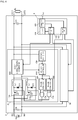
- Fig. 1 is a circuit diagram of a switching power-supply apparatus 1 according to Embodiment 1.
- the switching power-supply apparatus 1 is a multiphase DC-DC converter that performs multiphase control on a plurality of step-down converter circuits connected in parallel, steps down a voltage inputted from an input unit IN1 and outputs the voltage from an output unit OUT1, and steps down a voltage inputted from an input unit IN2 and outputs the voltage from an output unit OUT2.
- a DC power supply Vin is connected to the input units IN1 and IN2.
- a load RL is connected to the output units OUT1 and OUT2.
- An input capacitor C1, a converter 11A, a droop characteristic generator 12A, and a smoothing capacitor C21 are connected in order between the input units IN1 and IN2 and the output units OUT1 and OUT2.
- a circuit including a converter 11B, a droop characteristic generator 12B, and a smoothing capacitor C22 is connected in parallel with a circuit including the converter 11A, the droop characteristic generator 12A, and the smoothing capacitor C21.
- the converter 11A corresponds to a "first power converter” according to the present invention
- the converter 11B corresponds to a “second power converter” according to the present invention
- the droop characteristic generator 12A corresponds to a "first droop characteristic generator” according to the present invention
- the droop characteristic generator 12B corresponds to a "second droop characteristic generator” according to the present invention.
- the switching power-supply apparatus 1 includes PWM signal output units 13A and 13B, voltage controllers 14A and 14B, and voltage detectors 15A and 15B as circuits for performing constant voltage control on the converters 11A and 11B.
- the converter 11B, the droop characteristic generator 12B, the PWM signal output unit 13B, the voltage controller 14B, and the voltage detector 15B have the same configurations as the converter 11A, the droop characteristic generator 12A, the PWM signal output unit 13A, the voltage controller 14A, and the voltage detector 15A, respectively, each of these constituent elements is illustrated as a block in the drawings.
- Each of the converters 11A and 11B is a step-down converter circuit including an n-type MOS-FET switch Q11, a diode D11, and an inductor L11.
- a gate of the switch Q11 of the converter 11A is connected to the PWM signal output unit 13A
- a gate of the switch Q11 of the converter 11B is connected to the PWM signal output unit 13B, and gate signals are inputted from the PWM signal output units 13A and 13B, respectively.
- Each of the droop characteristic generators 12A and 12B generates a correction value for drooping for obtaining current-voltage characteristics, namely droop characteristics, that reduce an output voltage of the converter 11A as an output current of the converter 11A increases, and reduce an output voltage of the converter 11B as an output current of the converter 11B increases, respectively.
- the droop characteristic generators 12A and 12B each include resistors R11 and R12, and a variable gain amplifier G11. A voltage across the resistor R11 is inputted into the variable gain amplifier G11, and the variable gain amplifier G11 amplifies the voltage with a gain set by a microcomputer 16 described later.
- the droop characteristic generator 12A outputs a signal in accordance with a magnitude of an output current of the converter 11A
- the droop characteristic generator 12B outputs a signal in accordance with a magnitude of an output current of the converter 11B.
- the correction value for drooping increases as the output current increases.
- These correction values for drooping are inputted into the voltage detectors 15A and 15B, respectively.
- apparent magnitudes of output voltages detected by the respective voltage detectors 15A and 15B increase.
- the PWM signal output unit 13A described later controls the converter 11A
- the PWM signal output unit 13B described later controls the converter 11B so as to decrease the output voltage.
- the converters 11A and 11B have such characteristics that output voltages thereof reduce as output currents increase, respectively.
- the voltage detectors 15A and 15B each include voltage-dividing resistors R21 and R22, and detect the output voltages of the converters 11A and 11B (specifically, divided voltages thereof), respectively.
- a node between the voltage-dividing resistors R21 and R22 in the voltage detector 15A is connected to the voltage controller 14A, and a node between the voltage-dividing resistors R21 and R22 in the voltage detector 15B is connected to the voltage controller 14B.
- the voltage detector 15A corresponds to a "first output voltage detector” according to the present invention.
- the voltage detector 15B corresponds to a "second output voltage detector” according to the present invention.
- the voltage controllers 14A and 14B each include an error amplifier 141 and a phase compensation circuit including capacitors C31 and C32 and resistors R31 and R32.
- a reference voltage Vref is inputted into a non-inverted input terminal (+) of each of the error amplifiers 141.
- the output voltages (specifically, divided voltages thereof) detected by the voltage detectors 15A and 15B are inputted into inverted input terminals (-), respectively.
- the reference voltage Vref corresponds to a target voltage value outputted by each of the converters 11A and 11B.
- the error amplifier 141 in the voltage controller 14A amplifies an error between the output voltage of the converter 11A and the reference voltage Vref and outputs the resultant signal
- the error amplifier 141 in the voltage controller 14B amplifies an error between the output voltage of the converter 11B and the reference voltage Vref and outputs the resultant signal.
- An output signal from the error amplifiers 141 in the voltage controller 14A is inputted into the PWM signal output unit 13A
- an output signal from the error amplifier 141 in the voltage controller 14B is inputted into the PWM signal output unit 13B.
- the PWM signal output units 13A and 13B each include an AND gate 131, a comparator 132, and a clock generator 133.
- An output of the AND gates 131 in the PWM signal output unit 13A is connected to a gate of the switch Q11 of the converter 11A and an output of the AND gate 131 in the PWM signal output unit 13B is connected to a gate of the switch Q11 of the converter 11B.
- An output of the comparator 132 and a switching unit 161 of the microcomputer 16 are connected to an input of the AND gate 131.
- the PWM signal output unit 13A and the voltage controller 14A correspond to a "first controller” according to the present invention. Further, the PWM signal output unit 13B and the voltage controller 14B correspond to a "second controller” according to the present invention.
- the AND gate 131 When an L-level signal is inputted from the switching unit 161 of the microcomputer 16 to the AND gate 131, the AND gate 131 outputs the L-level signal. This turns the switch Q11 off.
- the AND gate 131 When an H-level signal is inputted from the switching unit 161 of the microcomputer 16 to the AND gate 131, the AND gate 131 outputs an H-level signal or an L-level signal outputted from the comparator 132 as is. This turns the switch Q11 on/off.
- the clock generator 133 outputs a clock signal to the AND gate 131. Note that, the clock generator 133 of the voltage controller 14A and the clock generator 133 of the voltage controller 14B generate clock signals having different phases from each other.
- An output signal from the voltage controller 14A and a clock signal generated by the clock generator 133 are inputted into the comparator 132 in the PWM signal output unit 13A, and an output signal from the voltage controller 14B and a clock signal generated by the clock generator 133 are inputted into the comparator 132 in the PWM signal output unit 13B.
- the comparator 132 generates a PWM signal from the two signals and outputs the PWM signal.
- the PWM signal outputted from the comparator 132 is inputted through the AND gate 131 to the switch Q11. As described above, the PWM signal output units 13A and 13B perform PWM control on the converters 11A and 11B, respectively.
- the microcomputer 16 includes, a correction unit 162, a communication unit 163 and a memory 164, besides the above-described switching unit 161.
- the communication unit 163 is a communication device for communicating with a measuring jig (external device) connected to a port P1, and corresponds to a "first receiver” and a "second receiver” according to the present invention.
- the switching unit 161 makes only one of the converters 11A and 11B operate, and makes the other halt.
- the switching unit 161 outputs the H-level signal to the AND gate 131 of the PWM signal output unit 13A, and outputs the L-level signal to the AND gate of the PWM signal output unit 13B.
- the switching unit 161 outputs the L-level signal to the AND gate 131 of the PWM signal output unit 13A, and outputs the H-level signal to the AND gate of the PWM signal output unit 13B.
- the switching unit 161 and the AND gate 131 correspond to an "operation selector" according to the present invention.
- the correction unit 162 corrects gains set for the variable gain amplifiers G11 of the droop characteristic generators 12A and 12B, respectively. Accordingly, correction values for drooping generated by the droop characteristic generator 12A or 12B, respectively, are corrected. By correcting the correction values for drooping generated by the droop characteristic generators 12A and 12B, respectively, the variations in the droop characteristics are corrected.
- This correction unit 162 corresponds to a "first correction unit” and a "second correction unit” according to the present invention.
- Fig. 2 is a diagram illustrating droop characteristics.
- a solid line indicates a droop characteristic of the converter 11A, and a dashed line indicates a droop characteristic of the converter 11B.
- the correction unit 162 corrects the correction values for drooping to suppress the variations in droop characteristics.
- the correction unit 162 corrects the correction values for drooping using respective correction values determined by the external measuring jig.
- the measuring jig determines the correction value for each of the droop characteristic generators 12A and 12B.
- the communication unit 163 receives the correction value determined by the measuring jig and stores the value in the memory 164.
- the memory 164 corresponds to a "storage unit" according to the present invention.
- the correction value is determined before factory shipment of the switching power-supply apparatus 1.
- the determined correction value is stored in the memory 164.
- the correction unit 162 corrects the gain set for the variable gain amplifier G11 of each of the droop characteristic generators 12A and 12B with the correction value stored in the memory 164.
- the correction value for the gain of the variable gain amplifier G11 is determined.
- the switching unit 161 When a correction value (second correction value) for the gain of the variable gain amplifier of the droop characteristic generator 12B is determined, the switching unit 161 outputs the L-level signal to the AND gate 131 of the PWM signal output unit 13A to halt operation of the converter 11A. The switching unit 161 outputs the H-level signal to the AND gate of the PWM signal output unit 13B. Then, same operations as the above-described (2) to (5) are performed.
- the correction unit 162 After the factory shipment, upon startup of the switching power-supply apparatus 1, the correction unit 162 reads the correction values stored in the memory 164, and corrects the gains of the variable gain amplifiers G11 of the respective droop characteristic generators 12A and 12B.
- one of the converters 11A and 11B connected in parallel may be halted, thereby correcting the droop characteristics generated by the respective droop characteristic generators 12A and 12B, separately.
- This makes it possible to suppress the variations in the droop characteristics, and obtain the determined correction value for each of the droop characteristic generators 12A and 12B. Accordingly, the characteristic of each of the droop characteristic generators 12A and 12B may be separately adjusted, thereby preventing the variations in the droop characteristics.
- the microcomputer 16 may prohibit a write access to the memory 164 to protect the correction value against modification after the factory shipment, and, for example, may make it impossible to modify the stored correction value unless a password is sent.
- Various devices other than the above-described measuring jig may be connected to the port P1.
- mistakenly modified memory content of the memory 164 by a connected device leads to malfunction of the switching power-supply apparatus 1. Accordingly, by protecting the correction value against the modification, this malfunction may be prevented.
- Fig. 3 is a circuit diagram of a switching power-supply apparatus 2 according to Embodiment 2.
- an offset adjustment voltage is inputted to a node between the resistors R21 and 22 of the voltage detector 15A to adjust an output voltage from the voltage detector 15A, and to a node between the resistors R21 and 22 of the voltage detector 15B to adjust an output voltage from the voltage detector 15B.
- Configurations that are the same as in Embodiment 1 will be given the same reference numerals, and the description thereof will be omitted.
- the switching power-supply apparatus 2 receives, from a measuring jig, correction values for correcting correction values for drooping generated by the respective droop characteristic generators 12A and 12B.
- correction values include the correction value for correcting the gain of the variable gain amplifier G11 described in Embodiment 1, and correction values for adjusting offsets of output voltages of the respective voltage detectors 15A and 15B (a first voltage offset value and a second voltage offset value).
- the correction unit 162 corrects gains set for the variable gain amplifiers G11, and outputs an offset adjustment voltage to the voltage detector 15A to adjust an offset of the output voltage of the voltage detector 15A, and to the voltage detector 15B to adjust an offset of the output voltage of the voltage detector 15B, based on the correction values.
- a resistor R41 is provided on a wiring route between the correction unit 162 and the voltage detector 15A and a resistor R42 is provided on a wiring route between the correction unit 162 and the voltage detector 15B. Interposing the resistor R41 makes it possible to add a compensation voltage to an offset adjustment voltage outputted to the voltage detector 15A to compensate a variation in the voltage detector 15A and interposing the resistor R42 makes it possible to add a compensation voltage to an offset adjustment voltage outputted to the voltage detector 15B to compensate a variation in the voltage detector 15B.
- Embodiment 1 The same method as in Embodiment 1 is used for determining the correction value with the measuring jig. That is, operation of one of the converters 11A and 11B is halted. Then, a load of the load RL is modified, and an output voltage and an output current of the switching power-supply apparatus 1 are measured by the measuring jig. A droop measurement value is set from the detected output voltage and output current. Whether or not this droop characteristic is an appropriate value is evaluated, and in a case of an inappropriate value, the correction value is adjusted, and the adjusted correction value is sent to the switching power-supply apparatus 1. The above-described operations are repeated until the droop characteristic becomes an appropriate value.
- the variations in the output currents of the respective converters 11A and 11B may be further prevented. As a result, it is no longer necessary to design a switching power-supply apparatus in consideration of the variations, thereby reducing the size of the switching power-supply apparatus 2.
- the switching power-supply apparatus includes two converters 11A and 11B, the number of the converters may be three or more.
- Fig. 4 is a circuit diagram of a switching power-supply apparatus 3 according to Embodiment 3.
- the switching power-supply apparatus 3 includes converter units 31 and 32 connected in parallel.
- the converter unit 31 corresponds to a "first power converter” according to the present invention
- the converter unit 32 corresponds to a "second power converter” according to the present invention. Since the converter units 31 and 32 have the same configuration, hereinafter the converter unit 31 will be described. Note that, circuits and elements that are the same as in Embodiment 1 will be given the same reference numerals, and the description thereof will be omitted.
- the converter unit 31 includes two AND gates 17A and 17B, and two phase controllers 18A and 18B.
- An output of the AND gate 17A is connected to a gate of the switch Q11 of the converter 11A 1
- an output of the AND gate 17B is connected to a gate of the switch Q11 of the converter 11A 2 .
- An input of the AND gate 17A is connected to the switching unit 161 of the microcomputer 16 and another input thereof is connected to the phase controller 18A
- an input of the AND gate 17B is connected to the switching unit 161 of the microcomputer 16 and another input thereof is connected to the phase controller 18B.
- the AND gates 17A and 17B halt the converter 11A by receiving an L-level signal from the switching unit 161.
- Each of the phase controllers 18A and 18B generates a PWM signal from an output signal from the voltage controller 14A and a clock signal, and outputs the PWM signal.
- the phase controllers 18A and 18B each generate the PWM signals with clock signals having different phases from each other.
- the microcomputer 16 receives from the measuring jig a correction value adapted to the converter unit 31.
- the correction unit 162 corrects, based on the correction value, a gain of a variable gain amplifier of the droop characteristic generator 12A included in the converter unit 31, to correct a correction value for drooping.
- the microcomputer 16 receives a correction value adapted to the converter unit 32 from the measuring jig.
- the correction unit 162 corrects, based on the correction value, a gain of a variable gain amplifier of a droop characteristic generator included in the converter unit 32, to correct a correction value for drooping.
- Embodiment 3 describes that the switching power-supply apparatus 3 includes the two converter units 31 and 32, the number of converter units may be three or more. Further, although the number of the converters included in each of the converter units 31 and 32 is two, the number of the converters may be three or more. Reference Signs List
Landscapes
- Engineering & Computer Science (AREA)
- Power Engineering (AREA)
- Dc-Dc Converters (AREA)
Abstract
Description
- The present invention relates to a switching power-supply apparatus including power converters connected in parallel, and a droop characteristic correction method performed by the switching power-supply apparatus.
-
Patent Document 1 discloses a DC power-supply apparatus for performing parallel operation of a plurality of DC power supplies connected in parallel. The DC power-supply apparatus described inPatent Document 1 performs droop control in which as a detected output current of a DC power supply increases, an output voltage is reduced. At this time, when droop characteristics of the respective DC power supplies vary, there is a risk that currents concentrate on one DC power supply, an overcurrent state occurs, and more heat is generated. In addition, there is a risk that a maximum output power of the whole apparatus falls below an expected value. Accordingly, it is important to control load factors of the respective DC power supplies to be even. Citation List - Patent Document
-
Patent Document 1, Japanese Unexamined Patent Application Publication No.8-289468 - As described above, when each of the plurality of DC power supplies performs the droop control, the droop characteristics may vary due to variations in characteristics of individual components. Thus, it may be considered, for example, before factory shipment, to calculate a correction value from a detection result of an output voltage with respect to an output current, store the correction value in a memory, and correct a droop characteristic using the stored correction value when actually used. However, in
Patent Document 1, only a total output current of the plurality of DC power supplies connected in parallel is detectable. Accordingly, the same correction value is to be used for droop characteristics set for each of the plurality of DC power supplies. As a result, it is difficult to correct variations in detection results of output currents of the respective DC power supplies separately and precisely. - Then, the present invention aims to provide a switching power-supply apparatus and a droop characteristic correction method capable of correcting variations in droop characteristics generated for respective power converters. Solution to Problem
- A switching power-supply apparatus according to the present invention includes: a first power converter and a second power converter connected in parallel, a first output voltage detector configured to detect a magnitude of an output voltage of the first power converter, a first controller configured to perform PWM control on the first power converter so as to equalize a magnitude of an output voltage detected by the first output voltage detector and a target voltage value, a second output voltage detector configured to detect a magnitude of an output voltage of the second power converter, a second controller configured to perform PWM control on the second power converter so as to equalize a magnitude of an output voltage detected by the second output voltage detector and the target voltage value, a first droop characteristic generator configured to generate a droop characteristic that reduces an output voltage of the first power converter as an output current of the first power converter increases, a second droop characteristic generator configured to generate a droop characteristic that reduces an output voltage of the second power converter as an output current of the second power converter increases, an operation selector configured to make only selected one of the first power converter and the second power converter operate, a first receiver configured to receive from an external device a first correction value for correcting a droop characteristic generated by the first droop characteristic generator, a second receiver configured to receive from the external device a second correction value for correcting a droop characteristic generated by the second droop characteristic generator, a storage unit configured to store a first correction value received by the first receiver and a second correction value received by the second receiver, a first correction unit configured to correct a droop characteristic generated by the first droop characteristic generator with the first correction value, and a second correction unit configured to correct a droop characteristic generated by the second droop characteristic generator with the second correction value.
- With this configuration, it is possible to make only one of the first power converter and the second power converter operate. Thus, the detected output current and output voltage of the switching power-supply apparatus correspond to an output current and an output voltage, respectively, of one of the first power converter and the second power converter made to operate. A droop characteristic of each of the first power converter and the second power converter may be obtained from this detection result. As a result, a correction value of the droop characteristic may be obtained for each of the first power converter and the second power converter. Thus, variations in the droop characteristics may be eliminated by correcting the droop characteristics of the first power converter and the second power converter separately. Accordingly, variations in output currents of the first power converter and the second power converter may be prevented, thereby making it unnecessary to design a switching power-supply apparatus in consideration of the variations, and also enabling the size of a switching power-supply apparatus to be reduced.
- The switching power-supply apparatus may have a configuration that the first receiver receives a first voltage offset value adapted to the first power converter, the second receiver receives a second voltage offset value adapted to the second power converter, the first correction unit corrects a magnitude of an output voltage detected by the first output voltage detector with the first voltage offset value, and the second correction unit corrects a magnitude of an output voltage detected by the second output voltage detector with the second voltage offset value.
- With this configuration, variations in droop characteristics may be further reduced, thereby making it unnecessary to design a switching power-supply apparatus in consideration of the variation, and also enabling the size of a switching power-supply apparatus to be reduced.
- The switching power-supply apparatus may include means for prohibiting modification of a first correction value and a second correction value stored in the storage unit.
- With this configuration, it is possible to prevent a possibility that droop characteristics undesirably vary due to modification of a first correction value and a second correction value.
- A droop characteristic correction method according to the present invention is performed by a switching power-supply apparatus that performs PWM control separately on a first power converter and a second power converter connected in parallel, and makes a magnitude of an output voltage of the first power converter and a magnitude of an output voltage of the second power converter be equal to a target voltage value. The method includes: a first generation step of generating a droop characteristic that reduces an output voltage of the first power converter as an output current of the first power converter increases; a second generation step of generating a droop characteristic that reduces an output voltage of the second power converter as an output current of the second power converter increases; an action selection step of making only selected one of the first power converter and the second power converter operate; a first receiving step of receiving from an external device a first correction value that corrects a droop characteristic generated in the first generating step; a second receiving step of receiving from the external device a second correction value that corrects a droop characteristic generated in the second generating step; a storage step of storing a first correction value received in the first receiving step and a second correction value received in the second receiving step; a first correction step of correcting a droop characteristic generated in the first generation step with the first correction value; and a second correction step of correcting a droop characteristic generated in the second generation step with the second correction value.
- With this configuration, it is possible to make only one of the first power converter and the second power converter operate. Thus, the detected output current and output voltage of the switching power-supply apparatus correspond to an output current and an output voltage, respectively, of one of the first power converter and the second power converter made to operate. A droop characteristic of each of the first power converter and the second power converter may be obtained from this detection result. As a result, a correction value for correcting the droop characteristic may be obtained for each of the first power converter and the second power converter. Thus, variations in droop characteristics may be eliminated by correcting the droop characteristic of the first power converter and the droop characteristic of the second power converter separately, thereby making it unnecessary to design a switching power-supply apparatus in consideration of the variations, and also enabling the size of a switching power-supply apparatus to be reduced.
- According to the present invention, variations in droop characteristics may be eliminated, thereby making it unnecessary to design a switching power-supply apparatus in consideration of the variations, and also enabling the size of a switching power-supply apparatus to be reduced.
-
- [
Fig. 1] Fig. 1 is a circuit diagram of a switching power-supply apparatus according toEmbodiment 1. - [
Fig. 2] Fig. 2 is a diagram illustrating droop characteristics. - [
Fig. 3] Fig. 3 is a circuit diagram of a switching power-supply apparatus according toEmbodiment 2. - [
Fig. 4] Fig. 4 is a circuit diagram of a switching power-supply apparatus according toEmbodiment 3. Description of Embodiments -
Fig. 1 is a circuit diagram of a switching power-supply apparatus 1 according toEmbodiment 1. - The switching power-
supply apparatus 1 is a multiphase DC-DC converter that performs multiphase control on a plurality of step-down converter circuits connected in parallel, steps down a voltage inputted from an input unit IN1 and outputs the voltage from an output unit OUT1, and steps down a voltage inputted from an input unit IN2 and outputs the voltage from an output unit OUT2. A DC power supply Vin is connected to the input units IN1 and IN2. A load RL is connected to the output units OUT1 and OUT2. - An input capacitor C1, a
converter 11A, adroop characteristic generator 12A, and a smoothing capacitor C21 are connected in order between the input units IN1 and IN2 and the output units OUT1 and OUT2. A circuit including aconverter 11B, adroop characteristic generator 12B, and a smoothing capacitor C22 is connected in parallel with a circuit including theconverter 11A, thedroop characteristic generator 12A, and the smoothing capacitor C21. - The
converter 11A corresponds to a "first power converter" according to the present invention, and theconverter 11B corresponds to a "second power converter" according to the present invention. In addition, thedroop characteristic generator 12A corresponds to a "first droop characteristic generator" according to the present invention, and thedroop characteristic generator 12B corresponds to a "second droop characteristic generator" according to the present invention. - The switching power-
supply apparatus 1 includes PWMsignal output units voltage controllers voltage detectors converters converter 11B, thedroop characteristic generator 12B, the PWMsignal output unit 13B, thevoltage controller 14B, and thevoltage detector 15B have the same configurations as theconverter 11A, thedroop characteristic generator 12A, the PWMsignal output unit 13A, thevoltage controller 14A, and thevoltage detector 15A, respectively, each of these constituent elements is illustrated as a block in the drawings. - Each of the
converters converter 11A is connected to the PWMsignal output unit 13A, and a gate of the switch Q11 of theconverter 11B is connected to the PWMsignal output unit 13B, and gate signals are inputted from the PWMsignal output units - Each of the
droop characteristic generators converter 11A as an output current of theconverter 11A increases, and reduce an output voltage of theconverter 11B as an output current of theconverter 11B increases, respectively. Specifically, thedroop characteristic generators microcomputer 16 described later. Thedroop characteristic generator 12A outputs a signal in accordance with a magnitude of an output current of theconverter 11A, and thedroop characteristic generator 12B outputs a signal in accordance with a magnitude of an output current of theconverter 11B. These signals, as the correction values for drooping, are inputted into thevoltage detectors - The correction value for drooping increases as the output current increases. These correction values for drooping are inputted into the
voltage detectors respective voltage detectors signal output unit 13A described later controls theconverter 11A and the PWMsignal output unit 13B described later controls theconverter 11B so as to decrease the output voltage. As a result, theconverters - The
voltage detectors converters voltage detector 15A is connected to thevoltage controller 14A, and a node between the voltage-dividing resistors R21 and R22 in thevoltage detector 15B is connected to thevoltage controller 14B. Thevoltage detector 15A corresponds to a "first output voltage detector" according to the present invention. Thevoltage detector 15B corresponds to a "second output voltage detector" according to the present invention. - The
voltage controllers error amplifier 141 and a phase compensation circuit including capacitors C31 and C32 and resistors R31 and R32. A reference voltage Vref is inputted into a non-inverted input terminal (+) of each of theerror amplifiers 141. The output voltages (specifically, divided voltages thereof) detected by thevoltage detectors converters error amplifier 141 in thevoltage controller 14A amplifies an error between the output voltage of theconverter 11A and the reference voltage Vref and outputs the resultant signal, and theerror amplifier 141 in thevoltage controller 14B amplifies an error between the output voltage of theconverter 11B and the reference voltage Vref and outputs the resultant signal. An output signal from theerror amplifiers 141 in thevoltage controller 14A is inputted into the PWMsignal output unit 13A, and an output signal from theerror amplifier 141 in thevoltage controller 14B is inputted into the PWMsignal output unit 13B. - The PWM
signal output units gate 131, acomparator 132, and aclock generator 133. An output of the ANDgates 131 in the PWMsignal output unit 13A is connected to a gate of the switch Q11 of theconverter 11A and an output of the ANDgate 131 in the PWMsignal output unit 13B is connected to a gate of the switch Q11 of theconverter 11B. An output of thecomparator 132 and aswitching unit 161 of themicrocomputer 16 are connected to an input of the ANDgate 131. - The PWM
signal output unit 13A and thevoltage controller 14A correspond to a "first controller" according to the present invention. Further, the PWMsignal output unit 13B and thevoltage controller 14B correspond to a "second controller" according to the present invention. - When an L-level signal is inputted from the
switching unit 161 of themicrocomputer 16 to the ANDgate 131, the ANDgate 131 outputs the L-level signal. This turns the switch Q11 off. When an H-level signal is inputted from theswitching unit 161 of themicrocomputer 16 to the ANDgate 131, the ANDgate 131 outputs an H-level signal or an L-level signal outputted from thecomparator 132 as is. This turns the switch Q11 on/off. - The
clock generator 133 outputs a clock signal to the ANDgate 131. Note that, theclock generator 133 of thevoltage controller 14A and theclock generator 133 of thevoltage controller 14B generate clock signals having different phases from each other. - An output signal from the
voltage controller 14A and a clock signal generated by theclock generator 133 are inputted into thecomparator 132 in the PWMsignal output unit 13A, and an output signal from thevoltage controller 14B and a clock signal generated by theclock generator 133 are inputted into thecomparator 132 in the PWMsignal output unit 13B. Thecomparator 132 generates a PWM signal from the two signals and outputs the PWM signal. The PWM signal outputted from thecomparator 132 is inputted through the ANDgate 131 to the switch Q11. As described above, the PWMsignal output units converters - The
microcomputer 16 includes, acorrection unit 162, acommunication unit 163 and amemory 164, besides the above-describedswitching unit 161. Thecommunication unit 163 is a communication device for communicating with a measuring jig (external device) connected to a port P1, and corresponds to a "first receiver" and a "second receiver" according to the present invention. - The
switching unit 161 makes only one of theconverters converter 11A is made to operate, theswitching unit 161 outputs the H-level signal to the ANDgate 131 of the PWMsignal output unit 13A, and outputs the L-level signal to the AND gate of the PWMsignal output unit 13B. When only theconverter 11B is made to operate, theswitching unit 161 outputs the L-level signal to the ANDgate 131 of the PWMsignal output unit 13A, and outputs the H-level signal to the AND gate of the PWMsignal output unit 13B. Theswitching unit 161 and the ANDgate 131 correspond to an "operation selector" according to the present invention. - The
correction unit 162 corrects gains set for the variable gain amplifiers G11 of the droopcharacteristic generators characteristic generator characteristic generators correction unit 162 corresponds to a "first correction unit" and a "second correction unit" according to the present invention. -
Fig. 2 is a diagram illustrating droop characteristics. A solid line indicates a droop characteristic of theconverter 11A, and a dashed line indicates a droop characteristic of theconverter 11B. - For example, when an output voltage of the
converter 11A is Vo, then an output current of theconverter 11A is Io1, and an output current of theconverter 11B is Io2, thus a difference occurs between the output currents. As described above, variations in droop characteristics lead to variations in load factors of therespective converters converters supply apparatus 1. - Accordingly, in the switching power-
supply apparatus 1, thecorrection unit 162 corrects the correction values for drooping to suppress the variations in droop characteristics. Thecorrection unit 162 corrects the correction values for drooping using respective correction values determined by the external measuring jig. The measuring jig determines the correction value for each of the droopcharacteristic generators communication unit 163 receives the correction value determined by the measuring jig and stores the value in thememory 164. Thememory 164 corresponds to a "storage unit" according to the present invention. - Hereinafter, a method for determining the correction value and correcting the gain with the determined correction value will be described. The correction value is determined before factory shipment of the switching power-
supply apparatus 1. The determined correction value is stored in thememory 164. After the factory shipment, thecorrection unit 162 corrects the gain set for the variable gain amplifier G11 of each of the droopcharacteristic generators memory 164. - (1) When a correction value (first correction value) for the variable gain amplifier G11 of the droop
characteristic generator 12A is determined, theswitching unit 161 outputs the L-level signal to the AND gate of the PWMsignal output unit 13B to halt operation of theconverter 11B. Theswitching unit 161 outputs the H-level signal to the ANDgate 131 of the PWMsignal output unit 13A. - (2) A load of the load RL is modified, and an output voltage and an output current of the switching power-
supply apparatus 1 are measured, by the measuring jig. At this time, since the operation of theconverter 11B is halted, the output voltage and the output current detected by the measuring jig are an output voltage and an output current of theconverter 11A, respectively. - (3) A droop characteristic is set from the detected output voltage and output current with the measuring jig. At this time, since the droop characteristic corresponds to a slope of an amount of a voltage drop with respect to a current, output voltages and output currents for at least two loads are detected, respectively.
- (4) The measuring jig evaluates whether or not the droop characteristic is an appropriate value. In a case of an inappropriate value, the correction value for the variable gain amplifier G11 of the droop
characteristic generator 12A is adjusted, and the adjusted correction value is sent to the switching power-supply apparatus 1. Thecorrection unit 162 corrects the gain set for the variable gain amplifier G11 of the droopcharacteristic generator 12A with the correction value. Accordingly, the correction value for drooping is also corrected.
Note that, the correction value determined by the measuring jig may be the gain set for the variable gain amplifier G11, or may be an adjustment value for adjusting the already set gain by addition or subtraction. - (5) The above-described operations (2) to (4) are repeated until the measuring jig evaluates the droop characteristic as an appropriate value.
- As a result, the correction value for the gain of the variable gain amplifier G11 is determined.
- When a correction value (second correction value) for the gain of the variable gain amplifier of the droop
characteristic generator 12B is determined, theswitching unit 161 outputs the L-level signal to the ANDgate 131 of the PWMsignal output unit 13A to halt operation of theconverter 11A. Theswitching unit 161 outputs the H-level signal to the AND gate of the PWMsignal output unit 13B. Then, same operations as the above-described (2) to (5) are performed. - After the factory shipment, upon startup of the switching power-
supply apparatus 1, thecorrection unit 162 reads the correction values stored in thememory 164, and corrects the gains of the variable gain amplifiers G11 of the respective droopcharacteristic generators - As described above, one of the
converters characteristic generators characteristic generators characteristic generators converters supply apparatus 1 to be reduced. - Note that, the
microcomputer 16 may prohibit a write access to thememory 164 to protect the correction value against modification after the factory shipment, and, for example, may make it impossible to modify the stored correction value unless a password is sent. Various devices other than the above-described measuring jig may be connected to the port P1. Thus, mistakenly modified memory content of thememory 164 by a connected device leads to malfunction of the switching power-supply apparatus 1. Accordingly, by protecting the correction value against the modification, this malfunction may be prevented. -
Fig. 3 is a circuit diagram of a switching power-supply apparatus 2 according toEmbodiment 2. In the switching power-supply apparatus 2 according to the present embodiment, an offset adjustment voltage is inputted to a node between the resistors R21 and 22 of thevoltage detector 15A to adjust an output voltage from thevoltage detector 15A, and to a node between the resistors R21 and 22 of thevoltage detector 15B to adjust an output voltage from thevoltage detector 15B. Configurations that are the same as inEmbodiment 1 will be given the same reference numerals, and the description thereof will be omitted. - The switching power-
supply apparatus 2 receives, from a measuring jig, correction values for correcting correction values for drooping generated by the respective droopcharacteristic generators Embodiment 1, and correction values for adjusting offsets of output voltages of therespective voltage detectors correction unit 162 corrects gains set for the variable gain amplifiers G11, and outputs an offset adjustment voltage to thevoltage detector 15A to adjust an offset of the output voltage of thevoltage detector 15A, and to thevoltage detector 15B to adjust an offset of the output voltage of thevoltage detector 15B, based on the correction values. - A resistor R41 is provided on a wiring route between the
correction unit 162 and thevoltage detector 15A and a resistor R42 is provided on a wiring route between thecorrection unit 162 and thevoltage detector 15B. Interposing the resistor R41 makes it possible to add a compensation voltage to an offset adjustment voltage outputted to thevoltage detector 15A to compensate a variation in thevoltage detector 15A and interposing the resistor R42 makes it possible to add a compensation voltage to an offset adjustment voltage outputted to thevoltage detector 15B to compensate a variation in thevoltage detector 15B. - The same method as in
Embodiment 1 is used for determining the correction value with the measuring jig. That is, operation of one of theconverters supply apparatus 1 are measured by the measuring jig. A droop measurement value is set from the detected output voltage and output current. Whether or not this droop characteristic is an appropriate value is evaluated, and in a case of an inappropriate value, the correction value is adjusted, and the adjusted correction value is sent to the switching power-supply apparatus 1. The above-described operations are repeated until the droop characteristic becomes an appropriate value. - As described above, by adjusting not only the gain of the variable gain amplifier G11 but also the offsets of the output voltages of the
respective voltage detectors respective converters supply apparatus 2. - Note that, in
Embodiments converters -
Fig. 4 is a circuit diagram of a switching power-supply apparatus 3 according toEmbodiment 3. - The switching power-
supply apparatus 3 according to the present embodiment includesconverter units converter unit 31 corresponds to a "first power converter" according to the present invention, and theconverter unit 32 corresponds to a "second power converter" according to the present invention. Since theconverter units converter unit 31 will be described. Note that, circuits and elements that are the same as inEmbodiment 1 will be given the same reference numerals, and the description thereof will be omitted. - In the
converter unit 31, twoconverters converter unit 31 includes two ANDgates phase controllers gate 17A is connected to a gate of the switch Q11 of theconverter 11A1, and an output of the ANDgate 17B is connected to a gate of the switch Q11 of theconverter 11A2. - An input of the AND
gate 17A is connected to theswitching unit 161 of themicrocomputer 16 and another input thereof is connected to thephase controller 18A, and an input of the ANDgate 17B is connected to theswitching unit 161 of themicrocomputer 16 and another input thereof is connected to thephase controller 18B. As described inEmbodiment 1, the ANDgates converter 11A by receiving an L-level signal from theswitching unit 161. Each of thephase controllers voltage controller 14A and a clock signal, and outputs the PWM signal. At this time, thephase controllers - The
microcomputer 16 receives from the measuring jig a correction value adapted to theconverter unit 31. In addition, thecorrection unit 162 corrects, based on the correction value, a gain of a variable gain amplifier of the droopcharacteristic generator 12A included in theconverter unit 31, to correct a correction value for drooping. Similarly, themicrocomputer 16 receives a correction value adapted to theconverter unit 32 from the measuring jig. Thecorrection unit 162 corrects, based on the correction value, a gain of a variable gain amplifier of a droop characteristic generator included in theconverter unit 32, to correct a correction value for drooping. - As described above, even when a plurality of
converter units converters respective converter units Embodiments supply apparatus 3. - Note that, although
Embodiment 3 describes that the switching power-supply apparatus 3 includes the twoconverter units converter units -
- 1, 2, 3 SWITCHING POWER-SUPPLY APPARATUS
- 11A, 11B CONVERTER
- 12A, 12B DROOP CHARACTERISTIC GENERATOR
- 13A, 13B PWM SIGNAL OUTPUT UNIT
- 14A, 14B VOLTAGE CONTROLLER
- 15A, 15B VOLTAGE DETECTOR
- 16 MICROCOMPUTER
- 17A, 17B AND GATE
- 18A, 18B PHASE CONTROLLER
- 19 MICROCOMPUTER
- 31 CONVERTER UNIT
- 31, 32 CONVERTER UNIT
- 32 CONVERTER UNIT
- 31, 32 CONVERTER UNIT
- 131 AND GATE
- 132 COMPARATOR
- 133 CLOCK GENERATOR
- 141 ERROR AMPLIFIER
- 161 SWITCHING UNIT
- 162 CORRECTION UNIT
- 163 COMMUNICATION UNIT
- 164 MEMORY
- C1 INPUT CAPACITOR
- C21, C22 SMOOTHING CAPACITOR
- C31, C32 CAPACITOR
- D11 DIODE
- G11 VARIABLE GAIN AMPLIFIER
- IN1, IN2 INPUT UNIT
- L11 INDUCTOR
- OUT1, OUT2 OUTPUT UNIT
- P1 PORT
- Q11 SWITCH
- R11, R12 RESISTOR
- R21, R22 VOLTAGE-DIVIDING RESISTOR
- R31, R32 RESISTOR
- RL LOAD
- Vin DC POWER SUPPLY
- Vref REFERENCE VOLTAGE
Claims (4)
- A switching power-supply apparatus comprising:a first power converter and a second power converter connected in parallel;a first output voltage detector configured to detect a magnitude of an output voltage of the first power converter;a first controller configured to perform PWM control on the first power converter so as to equalize a magnitude of an output voltage detected by the first output voltage detector and a target voltage value;a second output voltage detector configured to detect a magnitude of an output voltage of the second power converter;a second controller configured to perform PWM control on the second power converter so as to equalize a magnitude of an output voltage detected by the second output voltage detector and the target voltage value;a first droop characteristic generator configured to generate a droop characteristic that reduces an output voltage of the first power converter as an output current of the first power converter increases;a second droop characteristic generator configured to generate a droop characteristic that reduces an output voltage of the second power converter as an output current of the second power converter increases;an operation selector configured to make only selected one of the first power converter and the second power converter operate;a first receiver configured to receive from an external device a first correction value for correcting a droop characteristic generated by the first droop characteristic generator;a second receiver configured to receive from the external device a second correction value for correcting a droop characteristic generated by the second droop characteristic generator;a storage unit configured to store a first correction value received by the first receiver and a second correction value received by the second receiver;a first correction unit configured to correct a droop characteristic generated by the first droop characteristic generator with the first correction value; anda second correction unit configured to correct a droop characteristic generated by the second droop characteristic generator with the second correction value.
- The switching power-supply apparatus according to Claim 1, wherein
the first receiver receives a first voltage offset value adapted to the first power converter,
the second receiver receives a second voltage offset value adapted to the second power converter,
the first correction unit corrects a magnitude of an output voltage detected by the first output voltage detector with the first voltage offset value, and
the second correction unit corrects a magnitude of an output voltage detected by the second output voltage detector with the second voltage offset value. - The switching power-supply apparatus according to Claim 1 or 2, further comprising:
means for prohibiting modification of a first correction value and a second correction value stored in the storage unit. - A droop characteristic correction method performed by a switching power-supply apparatus that performs PWM control separately on a first power converter and a second power converter connected in parallel, and makes a magnitude of an output voltage of the first power converter and a magnitude of an output voltage of the second power converter be equal to a target voltage value, the method comprising:a first generation step of generating a droop characteristic that reduces an output voltage of the first power converter as an output current of the first power converter increases;a second generation step of generating a droop characteristic that reduces an output voltage of the second power converter as an output current of the second power converter increases;an action selection step of making only selected one of the first power converter and the second power converter operate;a first receiving step of receiving from an external device a first correction value that corrects a droop characteristic generated in the first generating step;a second receiving step of receiving from the external device a second correction value that corrects a droop characteristic generated in the second generating step;a storage step of storing a first correction value received in the first receiving step and a second correction value received in the second receiving step;a first correction step of correcting a droop characteristic generated in the first generation step with the first correction value; anda second correction step of correcting a droop characteristic generated in the second generation step with the second correction value.
Applications Claiming Priority (2)
| Application Number | Priority Date | Filing Date | Title |
|---|---|---|---|
| JP2015233106 | 2015-11-30 | ||
| PCT/JP2016/081664 WO2017094403A1 (en) | 2015-11-30 | 2016-10-26 | Switching power source device and droop characteristic correction method |
Publications (3)
| Publication Number | Publication Date |
|---|---|
| EP3370330A1 true EP3370330A1 (en) | 2018-09-05 |
| EP3370330A4 EP3370330A4 (en) | 2019-07-17 |
| EP3370330B1 EP3370330B1 (en) | 2022-01-05 |
Family
ID=58796945
Family Applications (1)
| Application Number | Title | Priority Date | Filing Date |
|---|---|---|---|
| EP16870343.7A Active EP3370330B1 (en) | 2015-11-30 | 2016-10-26 | Switching power source device comprising two power converters having a droop characteristic correction |
Country Status (5)
| Country | Link |
|---|---|
| US (1) | US10128748B2 (en) |
| EP (1) | EP3370330B1 (en) |
| JP (1) | JP6521094B2 (en) |
| CN (1) | CN108352783B (en) |
| WO (1) | WO2017094403A1 (en) |
Cited By (1)
| Publication number | Priority date | Publication date | Assignee | Title |
|---|---|---|---|---|
| EP4096042A1 (en) * | 2021-05-24 | 2022-11-30 | Hamilton Sundstrand Corporation | Passive power sharing of paralleled sources |
Families Citing this family (1)
| Publication number | Priority date | Publication date | Assignee | Title |
|---|---|---|---|---|
| JP7018847B2 (en) * | 2018-08-03 | 2022-02-14 | Ntn株式会社 | Switching power supply system and DC power supply system |
Family Cites Families (10)
| Publication number | Priority date | Publication date | Assignee | Title |
|---|---|---|---|---|
| JPH08289468A (en) | 1995-04-11 | 1996-11-01 | Fuji Elelctrochem Co Ltd | DC power supply for parallel operation |
| US7304462B2 (en) * | 2005-02-02 | 2007-12-04 | Power-One, Inc. | Compensated droop method for paralleling of power supplies (C-droop method) |
| JP4466620B2 (en) * | 2006-07-10 | 2010-05-26 | トヨタ自動車株式会社 | Power supply system and vehicle equipped with the same |
| JP2009261079A (en) | 2008-04-15 | 2009-11-05 | Diamond Electric Mfg Co Ltd | Digital converter and method of controlling the same |
| TWI415359B (en) * | 2011-09-16 | 2013-11-11 | Nat Univ Tsing Hua | Drop control system for synchronous adjustment of commercial power parallel |
| US8754619B1 (en) * | 2012-11-29 | 2014-06-17 | Raytheon Company | Multiphase power converter |
| US9000786B2 (en) * | 2013-02-15 | 2015-04-07 | Dell Products Lp | Methods and systems for defective phase identification and current sense calibration for multi-phase voltage regulator circuits |
| JP5958431B2 (en) | 2013-07-19 | 2016-08-02 | 株式会社村田製作所 | Switching power supply |
| CN106104412B (en) * | 2014-04-14 | 2018-12-04 | 株式会社村田制作所 | Power-supply system |
| US9548669B2 (en) * | 2015-05-15 | 2017-01-17 | Telefonaktiebolaget L M Ericsson (Publ) | Synchronous start-up of parallel power converters in a switched-mode power supply |
-
2016
- 2016-10-26 EP EP16870343.7A patent/EP3370330B1/en active Active
- 2016-10-26 CN CN201680063333.6A patent/CN108352783B/en active Active
- 2016-10-26 WO PCT/JP2016/081664 patent/WO2017094403A1/en not_active Ceased
- 2016-10-26 JP JP2017553710A patent/JP6521094B2/en active Active
-
2018
- 2018-04-27 US US15/964,105 patent/US10128748B2/en active Active
Cited By (2)
| Publication number | Priority date | Publication date | Assignee | Title |
|---|---|---|---|---|
| EP4096042A1 (en) * | 2021-05-24 | 2022-11-30 | Hamilton Sundstrand Corporation | Passive power sharing of paralleled sources |
| US11905029B2 (en) | 2021-05-24 | 2024-02-20 | Hamilton Sundstrand Corporation | Passive power sharing of paralleled sources |
Also Published As
| Publication number | Publication date |
|---|---|
| JPWO2017094403A1 (en) | 2018-09-06 |
| JP6521094B2 (en) | 2019-05-29 |
| EP3370330A4 (en) | 2019-07-17 |
| CN108352783B (en) | 2020-05-29 |
| WO2017094403A1 (en) | 2017-06-08 |
| EP3370330B1 (en) | 2022-01-05 |
| US20180248478A1 (en) | 2018-08-30 |
| CN108352783A (en) | 2018-07-31 |
| US10128748B2 (en) | 2018-11-13 |
Similar Documents
| Publication | Publication Date | Title |
|---|---|---|
| US9621036B2 (en) | Circuits and techniques for improving regulation in a regulator having more than one mode of operation | |
| CN110808685B (en) | Open-circuit current sensing in a multi-phase buck regulator | |
| US10243466B2 (en) | Switching power supply apparatus and error correction method | |
| US9570999B2 (en) | DC-DC converter and DC-DC converter system thereof | |
| JP4688227B2 (en) | Power supply paralleling compensated droop method (C-droop method) | |
| KR102145165B1 (en) | Switching regulator and electronic apparatus | |
| EP3435533B1 (en) | Power supply and control method thereof | |
| US9166473B2 (en) | DC/DC power converter with feedback control operable in linear and non-linear modes | |
| US7294994B2 (en) | Power supply | |
| US20200259418A1 (en) | Parallel power supply device | |
| US10608537B2 (en) | Input calibration for switching voltage regulators | |
| US7193871B2 (en) | DC-DC converter circuit | |
| US9935546B2 (en) | Switching-mode power supply with helper current source | |
| EP3370330B1 (en) | Switching power source device comprising two power converters having a droop characteristic correction | |
| US20190013732A1 (en) | Compensation Ramp Offset Removal | |
| US10454374B2 (en) | Power supply | |
| CN109565241B (en) | DC voltage converter and method for regulating a DC voltage converter | |
| US8963370B2 (en) | Load sharing apparatus | |
| US11695332B2 (en) | Voltage regulator for series-connected loads | |
| JP2015139307A (en) | DC / DC converter | |
| CN114402517B (en) | Control device for a DC voltage converter and method for controlling a DC voltage converter | |
| KR102318449B1 (en) | Power conversion device | |
| KR20140120116A (en) | Switching dc-dc converter, circuit and method to convert voltage thereof | |
| JP2016119742A (en) | Switching power supply device | |
| JP2012208093A (en) | Power supply device and test device |
Legal Events
| Date | Code | Title | Description |
|---|---|---|---|
| STAA | Information on the status of an ep patent application or granted ep patent |
Free format text: STATUS: THE INTERNATIONAL PUBLICATION HAS BEEN MADE |
|
| PUAI | Public reference made under article 153(3) epc to a published international application that has entered the european phase |
Free format text: ORIGINAL CODE: 0009012 |
|
| STAA | Information on the status of an ep patent application or granted ep patent |
Free format text: STATUS: REQUEST FOR EXAMINATION WAS MADE |
|
| 17P | Request for examination filed |
Effective date: 20180528 |
|
| AK | Designated contracting states |
Kind code of ref document: A1 Designated state(s): AL AT BE BG CH CY CZ DE DK EE ES FI FR GB GR HR HU IE IS IT LI LT LU LV MC MK MT NL NO PL PT RO RS SE SI SK SM TR |
|
| AX | Request for extension of the european patent |
Extension state: BA ME |
|
| DAV | Request for validation of the european patent (deleted) | ||
| DAX | Request for extension of the european patent (deleted) | ||
| A4 | Supplementary search report drawn up and despatched |
Effective date: 20190614 |
|
| RIC1 | Information provided on ipc code assigned before grant |
Ipc: H02M 3/155 20060101AFI20190607BHEP Ipc: H02M 3/158 20060101ALI20190607BHEP |
|
| GRAP | Despatch of communication of intention to grant a patent |
Free format text: ORIGINAL CODE: EPIDOSNIGR1 |
|
| STAA | Information on the status of an ep patent application or granted ep patent |
Free format text: STATUS: GRANT OF PATENT IS INTENDED |
|
| INTG | Intention to grant announced |
Effective date: 20210804 |
|
| GRAS | Grant fee paid |
Free format text: ORIGINAL CODE: EPIDOSNIGR3 |
|
| GRAA | (expected) grant |
Free format text: ORIGINAL CODE: 0009210 |
|
| STAA | Information on the status of an ep patent application or granted ep patent |
Free format text: STATUS: THE PATENT HAS BEEN GRANTED |
|
| AK | Designated contracting states |
Kind code of ref document: B1 Designated state(s): AL AT BE BG CH CY CZ DE DK EE ES FI FR GB GR HR HU IE IS IT LI LT LU LV MC MK MT NL NO PL PT RO RS SE SI SK SM TR |
|
| REG | Reference to a national code |
Ref country code: GB Ref legal event code: FG4D |
|
| REG | Reference to a national code |
Ref country code: CH Ref legal event code: EP |
|
| REG | Reference to a national code |
Ref country code: AT Ref legal event code: REF Ref document number: 1461479 Country of ref document: AT Kind code of ref document: T Effective date: 20220115 |
|
| REG | Reference to a national code |
Ref country code: DE Ref legal event code: R096 Ref document number: 602016068195 Country of ref document: DE |
|
| REG | Reference to a national code |
Ref country code: IE Ref legal event code: FG4D |
|
| REG | Reference to a national code |
Ref country code: LT Ref legal event code: MG9D |
|
| REG | Reference to a national code |
Ref country code: NL Ref legal event code: MP Effective date: 20220105 |
|
| REG | Reference to a national code |
Ref country code: AT Ref legal event code: MK05 Ref document number: 1461479 Country of ref document: AT Kind code of ref document: T Effective date: 20220105 |
|
| PG25 | Lapsed in a contracting state [announced via postgrant information from national office to epo] |
Ref country code: NL Free format text: LAPSE BECAUSE OF FAILURE TO SUBMIT A TRANSLATION OF THE DESCRIPTION OR TO PAY THE FEE WITHIN THE PRESCRIBED TIME-LIMIT Effective date: 20220105 |
|
| PG25 | Lapsed in a contracting state [announced via postgrant information from national office to epo] |
Ref country code: SE Free format text: LAPSE BECAUSE OF FAILURE TO SUBMIT A TRANSLATION OF THE DESCRIPTION OR TO PAY THE FEE WITHIN THE PRESCRIBED TIME-LIMIT Effective date: 20220105 Ref country code: RS Free format text: LAPSE BECAUSE OF FAILURE TO SUBMIT A TRANSLATION OF THE DESCRIPTION OR TO PAY THE FEE WITHIN THE PRESCRIBED TIME-LIMIT Effective date: 20220105 Ref country code: PT Free format text: LAPSE BECAUSE OF FAILURE TO SUBMIT A TRANSLATION OF THE DESCRIPTION OR TO PAY THE FEE WITHIN THE PRESCRIBED TIME-LIMIT Effective date: 20220505 Ref country code: NO Free format text: LAPSE BECAUSE OF FAILURE TO SUBMIT A TRANSLATION OF THE DESCRIPTION OR TO PAY THE FEE WITHIN THE PRESCRIBED TIME-LIMIT Effective date: 20220405 Ref country code: LT Free format text: LAPSE BECAUSE OF FAILURE TO SUBMIT A TRANSLATION OF THE DESCRIPTION OR TO PAY THE FEE WITHIN THE PRESCRIBED TIME-LIMIT Effective date: 20220105 Ref country code: HR Free format text: LAPSE BECAUSE OF FAILURE TO SUBMIT A TRANSLATION OF THE DESCRIPTION OR TO PAY THE FEE WITHIN THE PRESCRIBED TIME-LIMIT Effective date: 20220105 Ref country code: ES Free format text: LAPSE BECAUSE OF FAILURE TO SUBMIT A TRANSLATION OF THE DESCRIPTION OR TO PAY THE FEE WITHIN THE PRESCRIBED TIME-LIMIT Effective date: 20220105 Ref country code: BG Free format text: LAPSE BECAUSE OF FAILURE TO SUBMIT A TRANSLATION OF THE DESCRIPTION OR TO PAY THE FEE WITHIN THE PRESCRIBED TIME-LIMIT Effective date: 20220405 |
|
| PG25 | Lapsed in a contracting state [announced via postgrant information from national office to epo] |
Ref country code: PL Free format text: LAPSE BECAUSE OF FAILURE TO SUBMIT A TRANSLATION OF THE DESCRIPTION OR TO PAY THE FEE WITHIN THE PRESCRIBED TIME-LIMIT Effective date: 20220105 Ref country code: LV Free format text: LAPSE BECAUSE OF FAILURE TO SUBMIT A TRANSLATION OF THE DESCRIPTION OR TO PAY THE FEE WITHIN THE PRESCRIBED TIME-LIMIT Effective date: 20220105 Ref country code: GR Free format text: LAPSE BECAUSE OF FAILURE TO SUBMIT A TRANSLATION OF THE DESCRIPTION OR TO PAY THE FEE WITHIN THE PRESCRIBED TIME-LIMIT Effective date: 20220406 Ref country code: FI Free format text: LAPSE BECAUSE OF FAILURE TO SUBMIT A TRANSLATION OF THE DESCRIPTION OR TO PAY THE FEE WITHIN THE PRESCRIBED TIME-LIMIT Effective date: 20220105 Ref country code: AT Free format text: LAPSE BECAUSE OF FAILURE TO SUBMIT A TRANSLATION OF THE DESCRIPTION OR TO PAY THE FEE WITHIN THE PRESCRIBED TIME-LIMIT Effective date: 20220105 |
|
| PG25 | Lapsed in a contracting state [announced via postgrant information from national office to epo] |
Ref country code: IS Free format text: LAPSE BECAUSE OF FAILURE TO SUBMIT A TRANSLATION OF THE DESCRIPTION OR TO PAY THE FEE WITHIN THE PRESCRIBED TIME-LIMIT Effective date: 20220505 |
|
| REG | Reference to a national code |
Ref country code: DE Ref legal event code: R097 Ref document number: 602016068195 Country of ref document: DE |
|
| PG25 | Lapsed in a contracting state [announced via postgrant information from national office to epo] |
Ref country code: SM Free format text: LAPSE BECAUSE OF FAILURE TO SUBMIT A TRANSLATION OF THE DESCRIPTION OR TO PAY THE FEE WITHIN THE PRESCRIBED TIME-LIMIT Effective date: 20220105 Ref country code: SK Free format text: LAPSE BECAUSE OF FAILURE TO SUBMIT A TRANSLATION OF THE DESCRIPTION OR TO PAY THE FEE WITHIN THE PRESCRIBED TIME-LIMIT Effective date: 20220105 Ref country code: RO Free format text: LAPSE BECAUSE OF FAILURE TO SUBMIT A TRANSLATION OF THE DESCRIPTION OR TO PAY THE FEE WITHIN THE PRESCRIBED TIME-LIMIT Effective date: 20220105 Ref country code: EE Free format text: LAPSE BECAUSE OF FAILURE TO SUBMIT A TRANSLATION OF THE DESCRIPTION OR TO PAY THE FEE WITHIN THE PRESCRIBED TIME-LIMIT Effective date: 20220105 Ref country code: DK Free format text: LAPSE BECAUSE OF FAILURE TO SUBMIT A TRANSLATION OF THE DESCRIPTION OR TO PAY THE FEE WITHIN THE PRESCRIBED TIME-LIMIT Effective date: 20220105 Ref country code: CZ Free format text: LAPSE BECAUSE OF FAILURE TO SUBMIT A TRANSLATION OF THE DESCRIPTION OR TO PAY THE FEE WITHIN THE PRESCRIBED TIME-LIMIT Effective date: 20220105 |
|
| PLBE | No opposition filed within time limit |
Free format text: ORIGINAL CODE: 0009261 |
|
| STAA | Information on the status of an ep patent application or granted ep patent |
Free format text: STATUS: NO OPPOSITION FILED WITHIN TIME LIMIT |
|
| PG25 | Lapsed in a contracting state [announced via postgrant information from national office to epo] |
Ref country code: AL Free format text: LAPSE BECAUSE OF FAILURE TO SUBMIT A TRANSLATION OF THE DESCRIPTION OR TO PAY THE FEE WITHIN THE PRESCRIBED TIME-LIMIT Effective date: 20220105 |
|
| 26N | No opposition filed |
Effective date: 20221006 |
|
| PG25 | Lapsed in a contracting state [announced via postgrant information from national office to epo] |
Ref country code: SI Free format text: LAPSE BECAUSE OF FAILURE TO SUBMIT A TRANSLATION OF THE DESCRIPTION OR TO PAY THE FEE WITHIN THE PRESCRIBED TIME-LIMIT Effective date: 20220105 |
|
| PG25 | Lapsed in a contracting state [announced via postgrant information from national office to epo] |
Ref country code: MC Free format text: LAPSE BECAUSE OF FAILURE TO SUBMIT A TRANSLATION OF THE DESCRIPTION OR TO PAY THE FEE WITHIN THE PRESCRIBED TIME-LIMIT Effective date: 20220105 |
|
| REG | Reference to a national code |
Ref country code: CH Ref legal event code: PL |
|
| REG | Reference to a national code |
Ref country code: BE Ref legal event code: MM Effective date: 20221031 |
|
| GBPC | Gb: european patent ceased through non-payment of renewal fee |
Effective date: 20221026 |
|
| PG25 | Lapsed in a contracting state [announced via postgrant information from national office to epo] |
Ref country code: LU Free format text: LAPSE BECAUSE OF NON-PAYMENT OF DUE FEES Effective date: 20221026 |
|
| PG25 | Lapsed in a contracting state [announced via postgrant information from national office to epo] |
Ref country code: LI Free format text: LAPSE BECAUSE OF NON-PAYMENT OF DUE FEES Effective date: 20221031 Ref country code: IT Free format text: LAPSE BECAUSE OF FAILURE TO SUBMIT A TRANSLATION OF THE DESCRIPTION OR TO PAY THE FEE WITHIN THE PRESCRIBED TIME-LIMIT Effective date: 20220105 Ref country code: FR Free format text: LAPSE BECAUSE OF NON-PAYMENT OF DUE FEES Effective date: 20221031 Ref country code: CH Free format text: LAPSE BECAUSE OF NON-PAYMENT OF DUE FEES Effective date: 20221031 |
|
| PG25 | Lapsed in a contracting state [announced via postgrant information from national office to epo] |
Ref country code: BE Free format text: LAPSE BECAUSE OF NON-PAYMENT OF DUE FEES Effective date: 20221031 |
|
| PG25 | Lapsed in a contracting state [announced via postgrant information from national office to epo] |
Ref country code: IE Free format text: LAPSE BECAUSE OF NON-PAYMENT OF DUE FEES Effective date: 20221026 Ref country code: GB Free format text: LAPSE BECAUSE OF NON-PAYMENT OF DUE FEES Effective date: 20221026 |
|
| PG25 | Lapsed in a contracting state [announced via postgrant information from national office to epo] |
Ref country code: HU Free format text: LAPSE BECAUSE OF FAILURE TO SUBMIT A TRANSLATION OF THE DESCRIPTION OR TO PAY THE FEE WITHIN THE PRESCRIBED TIME-LIMIT; INVALID AB INITIO Effective date: 20161026 |
|
| PG25 | Lapsed in a contracting state [announced via postgrant information from national office to epo] |
Ref country code: CY Free format text: LAPSE BECAUSE OF FAILURE TO SUBMIT A TRANSLATION OF THE DESCRIPTION OR TO PAY THE FEE WITHIN THE PRESCRIBED TIME-LIMIT Effective date: 20220105 |
|
| PG25 | Lapsed in a contracting state [announced via postgrant information from national office to epo] |
Ref country code: MK Free format text: LAPSE BECAUSE OF FAILURE TO SUBMIT A TRANSLATION OF THE DESCRIPTION OR TO PAY THE FEE WITHIN THE PRESCRIBED TIME-LIMIT Effective date: 20220105 |
|
| PG25 | Lapsed in a contracting state [announced via postgrant information from national office to epo] |
Ref country code: TR Free format text: LAPSE BECAUSE OF FAILURE TO SUBMIT A TRANSLATION OF THE DESCRIPTION OR TO PAY THE FEE WITHIN THE PRESCRIBED TIME-LIMIT Effective date: 20220105 |
|
| PG25 | Lapsed in a contracting state [announced via postgrant information from national office to epo] |
Ref country code: MT Free format text: LAPSE BECAUSE OF FAILURE TO SUBMIT A TRANSLATION OF THE DESCRIPTION OR TO PAY THE FEE WITHIN THE PRESCRIBED TIME-LIMIT Effective date: 20220105 |
|
| PGFP | Annual fee paid to national office [announced via postgrant information from national office to epo] |
Ref country code: DE Payment date: 20251021 Year of fee payment: 10 |