EP3367101A1 - Method, apparatus and computer program for prediction of occurence of severe asthma attack in a patient - Google Patents
Method, apparatus and computer program for prediction of occurence of severe asthma attack in a patient Download PDFInfo
- Publication number
- EP3367101A1 EP3367101A1 EP18158733.8A EP18158733A EP3367101A1 EP 3367101 A1 EP3367101 A1 EP 3367101A1 EP 18158733 A EP18158733 A EP 18158733A EP 3367101 A1 EP3367101 A1 EP 3367101A1
- Authority
- EP
- European Patent Office
- Prior art keywords
- asthma patient
- occurrence
- biomarker
- parameter set
- possibility
- Prior art date
- Legal status (The legal status is an assumption and is not a legal conclusion. Google has not performed a legal analysis and makes no representation as to the accuracy of the status listed.)
- Granted
Links
Images









Classifications
-
- G—PHYSICS
- G01—MEASURING; TESTING
- G01N—INVESTIGATING OR ANALYSING MATERIALS BY DETERMINING THEIR CHEMICAL OR PHYSICAL PROPERTIES
- G01N33/00—Investigating or analysing materials by specific methods not covered by groups G01N1/00 - G01N31/00
- G01N33/48—Biological material, e.g. blood, urine; Haemocytometers
- G01N33/50—Chemical analysis of biological material, e.g. blood, urine; Testing involving biospecific ligand binding methods; Immunological testing
- G01N33/68—Chemical analysis of biological material, e.g. blood, urine; Testing involving biospecific ligand binding methods; Immunological testing involving proteins, peptides or amino acids
- G01N33/6893—Chemical analysis of biological material, e.g. blood, urine; Testing involving biospecific ligand binding methods; Immunological testing involving proteins, peptides or amino acids related to diseases not provided for elsewhere
Definitions
- the present invention relates to a method, an apparatus and a computer program for assisting prediction of the possibility of occurrence of a severe attack of an asthma patient.
- Asthma is characterized by chronic inflammation of the respiratory tract and various degrees of reversible airway narrowing and increased airway hyperresponsiveness, and clinically, recurrent cough, wheezing and dyspnea.
- emphasis is placed on (1) repeated paroxysmal cough, wheezing and dyspnea, (2) reversible airflow restriction, and (3) not related to other cardiopulmonary diseases or the like.
- Treatment of asthma aims to control the occurrence frequency of attacks and ensure a daily life that does not differ from that of healthy person.
- a treatment policy is determined by monitoring asthma symptoms and respiratory function.
- symptomatic therapy in which asthma symptoms and respiratory function are monitored to determine a treatment policy, is the mainstream, and an established method for predicting the risk of asthma exacerbation such as the risk of occurrence of a severe attack is not known.
- interleukin 17 a cytokine secreted by Th17 cells, one of helper T cells, shows high levels in sera of severe asthma patients ( Ioana Agache et al., "Increased serum IL-17 is an independent risk factor for severe asthma” Respir Med 2010, 104(8): 1131-1137 ).
- elevated levels of IL-17 also occur in mild and moderate asthma patients, and there was no known relation between the concentration of IL-17 in the serum and the exacerbation risk such as the possibility of occurrence of a future severe attack.
- IL-17 is a member of the IL-17 family including IL-17A, IL-17B and the like, the one used as a biomarker in the present invention is IL-17A.
- IL-17A may be simply referred to as "IL-17".
- the diagnostic criteria for diagnosing a patient as severe in the GINA guideline is based on whether or not the symptoms of asthma can be controlled even by a high-capacity inhaled corticosteroid (ICS). Whether or not severe attacks as described in the present invention will occur even in patients diagnosed as severe in the same guideline has not been made clear.
- ICS corticosteroid
- An object of the present invention is to acquire information on the asthma exacerbation risk and contribute to the determination of a patient's treatment policy based on the information.
- the present inventors have examined the concentrations of various cytokines in sera of asthma patients and clinical data of the patients and consequently found that there is a significant correlation between the concentration of IL-17 and the subsequent exacerbation history of the patient, and the present invention is based thereon. In addition, the present inventors have found that a group of patients with high exacerbation risk can be distinguished by combining the concentration of IL-17 with the concentration of other interleukins.
- a method for assisting prediction of the possibility of occurrence of a severe attack of an asthma patient comprising measuring a biomarker in a blood sample of an asthma patient and determining the possibility of occurrence of a severe attack of the asthma patient based on the measured level of the biomarker, whereby the biomarker includes IL-17.
- a method for assisting prediction of the possibility of occurrence of a severe attack of an asthma patient comprising measuring IL-17 and at least one other cytokine biomarker, more particularly a biomarker selected from the group consisting of IL-10 (interleukin 10), IL-4 (interleukin 4), IL-25 (interleukin 25), IL-9 (interleukin 9) and IFN- ⁇ (interferon gamma) in a blood sample of an asthma patient to acquire a parameter set of biomarkers, classifying the asthma patient into the group with the highest correlation by performing cluster analysis using the parameter set of biomarkers, a first parameter set and a second parameter set, and determining the possibility of the occurrence of a severe attack of the asthma patient based on the result obtained in the classification step, in which the parameter set of biomarkers contains the measured level of IL-17 and the measured level of at least one biomarker selected from the group consisting of IL-10, IL-4, IL
- an apparatus for assisting prediction of the possibility of occurrence of a severe attack of an asthma patient comprising a computer containing a processor and a memory under control of the processor, in which the memory stores a computer program for making the computer execute the following steps: measuring a biomarker in a blood sample of an asthma patient, and determining the possibility of occurrence of a severe attack of the asthma patient based on the measured level of the biomarker, and the biomarker includes IL-17.
- an apparatus for assisting prediction of the possibility of occurrence of a severe attack of an asthma patient comprising a computer containing a processor and a memory under control of the processor, in which the memory stores a computer program for making the computer execute the following steps: measuring IL-17 and at least one biomarker selected from the group consisting of IL-10, IL-4, IL-25, IL-9 and IFN- ⁇ in a blood sample of an asthma patient to acquire a parameter set of biomarkers, classifying the asthma patient into the group with the highest correlation by performing cluster analysis using the parameter set of biomarkers, a first parameter set and a second parameter set, and determining the possibility of occurrence of a severe attack of the asthma patient based on the result obtained in the classification step, the memory stores the first parameter set and the second parameter set, the processor receives the parameter set of biomarkers measured in the measurement step, and reads the first parameter set and the second parameter set from the memory, in the classification step, the cluster analysis is performed by comparing the parameter
- the asthma patient When classified into the same group as the first parameter set, the asthma patient is determined to have a high possibility of occurrence of a severe attack and have low drug response. When classified into the same group as the second parameter set, the asthma patient is determined to have high drug response while having a high possibility of occurrence of a severe attack, or have a low possibility of occurrence of a severe attack.
- the parameter set of biomarkers contains the measured level of IL-17 and the measured level of at least one biomarker selected from the group consisting of IL-10, IL-4, IL-25, IL-9 and IFN- ⁇
- the first parameter set contains the measured level of IL-17 in a blood sample of an asthma patient previously known to have an occurrence history of a severe attack and have low drug response
- the second parameter set contains the measured level of IL-17 in a blood sample of an asthma patient previously known to have high drug response while having an occurrence history of a severe attack, or to have no occurrence history of a severe attack, and the measured level of at least one selected biomarker in the blood sample of the asthma patient.
- a computer program for assisting prediction of the possibility of occurrence of a severe attack of an asthma patient which is recorded on a computer readable medium, the computer program comprising making the computer execute the following steps: measuring a biomarker in a blood sample of an asthma patient and determining the possibility of occurrence of a severe attack of the asthma patient based on the measured level of the biomarker, in which the biomarker includes IL-17.
- a computer program for assisting prediction of the possibility of occurrence of a severe attack of an asthma patient which is recorded on a computer readable medium
- the computer program comprising making the computer execute the following steps: measuring IL-17 and at least one biomarker selected from the group consisting of IL-10, IL-4, IL-25, IL-9 and IFN- ⁇ in a blood sample of an asthma patient to acquire a parameter set of biomarkers, classifying the asthma patient into the group with the highest correlation by performing cluster analysis using the parameter set of biomarkers, a first parameter set and a second parameter set, and determining the possibility of occurrence of a severe attack of the asthma patient based on the result obtained in the classification step, in which the parameter set of biomarkers contains the measured level of IL-17 and the measured level of at least one biomarker selected from the group consisting of IL-10, IL-4, IL-25, IL-9 and IFN- ⁇ , the first parameter set contains the measured level of IL-17 in a blood sample of an
- a method for assisting prediction of the possibility of occurrence of a severe attack of an asthma patient of the present invention includes a step of measuring a biomarker in a blood sample of an asthma patient.
- Asthma patients are, for example, patients diagnosed as suffering from asthma by a doctor, adults or children who may be suffering from asthma, and the like.
- Blood samples are blood (whole blood), serum or plasma. Especially preferred are blood samples that are easy to collect, for example, peripheral blood, and serum and plasma acquired therefrom, and the like.
- the biomarker includes IL-17.
- IL-17 is known as a cytokine that causes Th17 inflammation associated with autoimmune diseases and bacterial inflammatory responses, induces IL-8, IL-6 and causes neutrophilic inflammation.
- doctors with data to assist prediction of the possibility of occurrence of a severe attack, by measuring IL-17 in a blood sample of an asthma patient.
- This is revolutionary in that it can provide a new and established method capable of predicting beforehand the asthma exacerbation risk such as the risk of occurrence of a severe attack, and allow a different basis for asthma treatment, for which presently so-called symptomatic therapy is mainstream, in which asthma symptoms and respiratory function are monitored to determine a treatment policy.
- the biomarker preferably further includes at least one other cytokine, preferably a cytokine selected from the group consisting of IL-10, IL-4, IL-25, IL-9 and IFN- ⁇ .
- IL-10 is a cytokine produced from anti-inflammatory cells such as Treg, MSC and M2 macrophages.
- IL-10 is known as an anti-inflammatory cytokine.
- IL-4 is known as a Th2 cytokine that induces allergic immune responses such as atopy.
- IL-25 is known as a ProTh2 cytokine that causes Th2 inflammation.
- IL-9 is known as a cytokine secreted from Th2 immune cells. IL-9 proliferates mast cells and cells responsible for Th2 immune responses.
- IFN- ⁇ is known as a Th1 cytokine that responds to viral infections and the like. IFN- ⁇ is secreted from Th1 cells, cytotoxic CD8 cells and the like. IFN- ⁇ activates macrophages and the like. Also, IFN- ⁇ suppresses Th2 immune responses.
- the biomarkers used consist of IL-17 and one more other cytokine biomarker selected from this group.
- IL-10 By measuring at least one biomarker selected from the group consisting of IL-10, IL-4, IL-25, IL-9 and IFN- ⁇ , in addition to IL-17, it is possible to enhance determination accuracy on the possibility of occurrence of a severe attack, or provide doctors with information on whether or not the drug response is high, among the asthma patients determined to have a high possibility of occurrence of a severe attack due to high measured level of IL-17.
- drug response is high means that agents prescribed for asthma treatment such as inhaled steroids, leukotriene receptor antagonists (LTRA), long-acting ⁇ 2 stimulants (LABA) and the like relatively easily work.
- asthma patients with high drug response do not have a severe attack even when they receive treatment of Step 3 or 4 prescribed in Asthma Prevention/Management Guideline 2009.
- drug response is low means that agents prescribed for asthma treatment relatively hardly work.
- asthma patients with low drug response have a severe attack even when they receive treatment of Step 3 or 4 prescribed in Asthma Prevention/Management Guideline 2009.
- the method for measuring a biomarker is not particularly limited as long as it is a measurement method based on an antigen-antibody reaction well known to those skilled in the art. Examples thereof include ELISA method, western blot method and the like, and ELISA method is preferably used.
- the antibody used in these measurement methods is not particularly limited as long as it is an antibody capable of specifically recognizing and binding each biomarker in a blood sample.
- the antibody can be a monoclonal or polyclonal full-length antibody or antibody fragment (Fab, F(ab') 2 ), or the like.
- the method for preparing such antibody is known to those skilled in the art.
- the antibody may be a commercially available product.
- a commercially available protein quantification kit known to those skilled in the art such as Human IL-17 Quantikine ELISA Kit manufactured by R&D Systems, LEGEND MAX (trademark) Human IL-17A ELISA Kit manufactured by BioLegend Inc. or the like may be used.
- the measurement step the case of measuring a biomarker by a sandwich ELISA method will be described below.
- a complex containing a biomarker in a blood sample, an antibody for capturing the biomarker (hereinafter also referred to as “capture antibody”) and an antibody for detecting the biomarker (hereinafter also referred to as “detection antibody”) is formed on a solid phase.
- This complex can be formed by mixing a blood sample, a capture antibody, and a detection antibody. Then, a solution containing the complex is brought into contact with a solid phase capable of capturing the capture antibody, whereby the complex can be formed on the solid phase.
- a solid phase preliminarily immobilized with the capture antibody may be used.
- a solid phase immobilized with the capture antibody, the blood sample, and the detection antibody are brought into contact with each other, whereby the complex can be formed on the solid phase.
- both the capture antibody and the detection antibody are monoclonal antibodies, it is preferable that the epitopes be different from each other.
- the mode of immobilization of the capture antibody on the solid phase is not particularly limited.
- the capture antibody and the solid phase may be bound directly, or the capture antibody and the solid phase may be indirectly bound via another substance.
- Examples of the direct bond include physical adsorption and the like.
- Examples of the indirect bond include a bond via a combination of biotin and avidin or streptavidin (hereinafter, also referred to as "avidins").
- avidins biotin and avidin or streptavidin
- the material of the solid phase is not particularly limited, and it can be selected from, for example, organic polymer compounds, inorganic compounds, biopolymers, and the like.
- organic polymer compound include latex, polystyrene, polypropylene, and the like.
- inorganic compound include magnetic bodies (iron oxide, chromium oxide, ferrite, etc.), silica, alumina, glass, and the like.
- biopolymer include insoluble agarose, insoluble dextran, gelatin, cellulose, and the like. Two or more of these may be used in combination.
- the shape of the solid phase is not particularly limited, and examples thereof include particles, membranes, microplates, microtubes, test tubes, and the like.
- a biomarker can be measured by detecting the complex formed on the solid phase by a method known in the art. For example, when an antibody labeled with a labeling substance is used as a detection antibody, a biomarker can be measured by detecting a signal generated by the labeling substance. Alternatively, also when a labeled secondary antibody against the detection antibody is used, the biomarker can be measured in the same manner.
- B/F (Bound/Free) separation for removing an unreacted free component not forming a complex may be performed between the process of forming the complex and the process of detecting the complex.
- the unreacted free component refers to a component not constituting a complex. Examples thereof include capture antibodies not bound to the biomarker, detection antibodies, and the like.
- the means of B/F separation is not particularly limited, and when the solid phase is a particle, B/F separation can be performed by recovering only the solid phase capturing the complex by centrifugation. When the solid phase is a container such as a microplate or a microtube, B/F separation can be performed by removing a liquid containing an unreacted free component.
- B/F separation can be performed by aspirating and removing a liquid containing an unreacted free component by a nozzle while magnetically constraining the magnetic particles with a magnet. After removing the unreacted free component, the solid phase capturing the complex may be washed with a suitable aqueous medium such as PBS.
- detecting a signal herein includes qualitatively detecting the presence or absence of a signal, quantifying a signal intensity, and semi-quantitatively detecting the intensity of a signal.
- Semi-quantitative detection means to show the intensity of the signal in stages such as “no signal generated”, “weak”, “medium”, “strong”, and the like. In the present methods, it is preferable to detect the intensity of a signal quantitatively or semi-quantitatively.
- the labeling substance is not particularly limited as long as a detectable signal is generated.
- it may be a substance which itself generates a signal (hereinafter, also referred to as "signal generating substance") or a substance which catalyzes the reaction of other substances to generate a signal.
- the signal generating substance include fluorescent substances, radioactive isotopes, and the like.
- the substance that catalyzes the reaction of other substances to generate a detectable signal include enzymes and the like.
- the enzymes include alkaline phosphatase, peroxidase, ⁇ -galactosidase, luciferase, and the like.
- fluorescent substances include fluorescent dyes such as fluorescein isothiocyanate (FITC), rhodamine and Alexa Fluor (registered trademark), fluorescent proteins such as GFP, and the like.
- fluorescent dyes such as fluorescein isothiocyanate (FITC), rhodamine and Alexa Fluor (registered trademark), fluorescent proteins such as GFP, and the like.
- radioisotopes include 125 I, 14 C, 32 P, and the like.
- an enzyme is preferable as a labeling substance, and alkaline phosphatase and peroxidase are particularly preferable.
- a measurement method according to the type of signal derived from the labeling substance may be appropriately selected.
- the labeling substance is an enzyme
- signals such as light and color generated by reacting a substrate for the enzyme can be measured by using a known apparatus such as a spectrophotometer.
- the substrate of the enzyme can be appropriately selected from known substrates according to the type of the enzyme.
- examples of the substrate include chemiluminescent substrates such as CDP-Star (registered trademark) (disodium 4-chloro-3-(methoxyspiro[1,2-dioxetane-3,2'-(5'-chloro)tricyclo[3.3.1.13,7]decan]-4-yl)phenyl phosphate) and CSPD (registered trademark) (disodium 3-(4-methoxyspiro[1,2-dioxetane-3,2-(5'-chloro)tricyclo[3.3.1.13,7]decan]-4-yl)phenyl phosphate), and chromogenic substrates such as 5-bromo-4-chloro-3-indolyl phosphate (BCIP), disodium 5-bromo-6-chloro-indolyl phosphate
- BCIP 5-bromo-4-chloro-3
- examples of the substrate include chemiluminescent substrates such as luminol and derivatives thereof, and chromogenic substrates such as 2,2'-azinobis(3-ethylbenzothiazoline-6-ammonium sulfonate) (ABTS), 1,2-phenylenediamine (OPD) and 3,3',5,5'-tetramethylbenzidine (TMB).
- chemiluminescent substrates such as luminol and derivatives thereof
- chromogenic substrates such as 2,2'-azinobis(3-ethylbenzothiazoline-6-ammonium sulfonate) (ABTS), 1,2-phenylenediamine (OPD) and 3,3',5,5'-tetramethylbenzidine (TMB).
- the labeling substance is a radioactive isotope
- radiation as a signal can be measured using a known apparatus such as a scintillation counter.
- fluorescence as a signal can be measured using a known apparatus such as a fluorescence microplate reader.
- the excitation wavelength and the fluorescence wavelength can be appropriately determined according to the type of fluorescent substance used.
- the detection result of the signal may be used as the measured level of the biomarker.
- the signal intensity value itself or a value acquired from the intensity value can be used as the measured level of the biomarker.
- the value acquired from the signal intensity value include a value obtained by subtracting the signal intensity value of a negative control sample or a background value from the signal intensity value of the biomarker.
- the negative control sample can be appropriately selected, and examples thereof include urine obtained from a healthy subject and the like.
- the measured level of the biomarker can be expressed in any form or unit such as concentration, intensity, level, mass (weight) or ratio.
- measurement data of the biomarker may be acquired for a plurality of standard samples of known biomarker concentration, and a calibration curve showing the relationship between the biomarker concentration and the measurement data of the biomarker may be prepared.
- the measurement data of the biomarker acquired from a blood sample can be applied to this calibration curve to acquire the value of the biomarker concentration in the blood sample and used as the measured level of the biomarker.
- the biomarker in the blood sample may be measured by a sandwich ELISA method using a capture antibody immobilized on magnetic particles and a detection antibody labeled with a labeling substance.
- measurement may be carried out using a commercially available fully automated immunoassay system such as HISCL series (manufactured by Sysmex Corporation).
- the prediction assisting method of the present invention includes a step of determining the possibility of occurrence of a severe attack of an asthma patient based on the measured level of the biomarker obtained as described above.
- the possibility of occurrence of a severe attack of an asthma patient is preferably a possibility of occurrence of a severe attack occurring in an asthma patient within 12 months.
- the possibility of occurrence of a severe attack of the asthma patient is determined to be high, and when the measured level of the biomarker is less than the predetermined threshold level, the possibility of occurrence of a severe attack of the asthma patient is determined to be low.
- the above-described predetermined threshold level is not particularly limited.
- the predetermined threshold level can be appropriately set.
- the predetermined threshold level may be set as follows. First, blood is sampled from a plurality of asthma patients, and the biomarker concentration in the blood samples is measured. Data of the measured biomarker concentration is classified into data of asthma patient group having an occurrence history of a severe attack and data of asthma patient group having no occurrence history of a severe attack.
- the phrase "having an occurrence history of a severe attack” means that an asthma patient has had a severe attack in the past.
- a value that can most accurately distinguish the biomarker concentration in the blood samples of the asthma patient group having an occurrence history of a severe attack from the biomarker concentration in the blood samples of the asthma patient group having no occurrence history of a severe attack is set as the predetermined threshold level.
- the threshold level it is preferable to consider sensitivity, specificity, positive predictive value, negative predictive value, and the like.
- the measured level of at least one biomarker selected from the group consisting of IL-10, IL-4, IL-25, IL-9 and IFN- ⁇ is further used.
- the measured level of each biomarker is compared with the predetermined threshold level corresponding to each, and a determination is made based on the comparison result. More specifically, when the measured level of IL-17 is equal to or greater than the predetermined threshold level and the measured level of any one biomarker other than IL-17 is equal to or larger than the corresponding predetermined threshold level, it can be determined that the possibility of occurrence of a severe attack of the asthma patient is high, and the drug response is low. Such determination is supported by Figs. 9A to 9E . For example, in the determination of Fig.
- the measured level of IL-17 is equal to or greater than the predetermined threshold level and all the measured levels of the biomarkers other than IL-17 are less than the corresponding predetermined threshold level, or when the measured level of IL-17 is less than the predetermined threshold level, it can be determined that the drug response is high while the possibility of occurrence of a severe attack of the asthma patient is high, or the possibility of occurrence of a severe attack of the asthma patient is low. Such determination is supported by Fig. 7 .
- a determination is made using multivariate analysis like multiple logistic analysis (logistic regression analysis).
- multivariate analysis in addition to the measured level of IL-17, the measured level of at least one biomarker selected from the group consisting of IL-10, IL-4, IL-25, IL-9 and IFN- ⁇ are substituted into discriminant prepared by multivariate analysis, for example, multiple logistic analysis, to acquire a value acquired from the measured level of the biomarker by multivariate analysis, for example, a predicted value, and in the determination step, a value acquired from the measured level of the biomarker by multivariate analysis is compared with the predetermined threshold level corresponding to a value acquired by multivariate analysis, and the possibility of occurrence of a severe attack of the asthma patient is determined based on the comparison result.
- the coefficients can be determined by a known method such as a maximum likelihood method.
- P 1 1 + exp ⁇ b 0 + b 1 ⁇ IL ⁇ 17 + b 2 ⁇ IL ⁇ 10
- P 1 1 + exp ⁇ b 0 + b 1 ⁇ IL ⁇ 17 + b 2 ⁇ IL ⁇ 10 + b 3 ⁇ IL ⁇ 4
- predetermined threshold level corresponding to each of the above biomarkers and the threshold level corresponding to the predicted value are not particularly limited and can be set empirically, for example, by accumulating biomarker data in blood samples collected from asthma patients.
- predetermined cutoff values may be set as follows. Blood samples are collected from a healthy person and an asthma patient, and measured levels of biomarkers are acquired. Then, from the acquired measured levels, values that can distinguish between the healthy person and the asthma patient for each biomarker are obtained, and the obtained values are set as predetermined cutoff values corresponding to each biomarker.
- the measured levels of biomarkers acquired from liquid samples of a healthy person and an asthma patient are substituted into discriminant prepared by multivariate analysis to acquire a predicted value of the healthy person and a predicted value of the asthma patient. Then, based on the acquired predicted values, values that can distinguish between the healthy person and the asthma patient are obtained, and the obtained values are set as predetermined cutoff values corresponding to the predicted values.
- a determination is made using cluster analysis.
- a step of measuring IL-17 and at least one biomarker selected from the group consisting of IL-10, IL-4, IL-25, IL-9 and IFN- ⁇ in a blood sample of an asthma patient and acquiring a parameter set of biomarkers is included.
- the "parameter set of biomarkers” herein means a group of measured levels of a plurality of types of biomarkers obtained for one asthma patient, including the measured level of IL-17 and the measured level of at least one biomarker selected from the group consisting of IL-10, IL-4, IL-25, IL-9 and IFN- ⁇ .
- the parameter set of biomarkers means the measured level of IL-17, the measured level of IL-10, the measured level of IL-25 and the measured level of IFN- ⁇ in the blood sample of the asthma patient.
- a step of classifying the asthma patient into the group with the highest correlation by performing cluster analysis using the parameter set of biomarkers obtained in the above measurement step, a first parameter set and a second parameter set is included.
- classifying the asthma patient into the group with the highest correlation refers to determining whether there is a higher correlation of the values in the parameter set of biomarkers with the first parameter set or the second parameter set.
- the cluster analysis is preferably hierarchical cluster analysis.
- the group with the highest correlation is preferably determined using the Euclidean distance obtained by the nearest neighbor method.
- the first parameter set contains the measured level of IL-17 in a blood sample of an asthma patient previously known to have an occurrence history of a severe attack and have low drug response, and the measured level of at least one biomarker selected in the blood sample of the asthma patient.
- the second parameter set contains the measured level of IL-17 in a blood sample of an asthma patient previously known to have high drug response while having an occurrence history of a severe attack, or have no occurrence history of a severe attack, and the measured level of at least one selected biomarker in the blood sample of the asthma patient.
- the parameter set of biomarkers contains the measured level of IL-17, the measured level of IL-10, the measured level of IL-25 and the measured level of IFN- ⁇ in a blood sample of an asthma patient
- the first parameter set contains the measured level of IL-17, the measured level of IL-10, the measured level of IL-25 and the measured level of IFN- ⁇ in a blood sample of an asthma patient previously known to have an occurrence history of a severe attack and have low drug response
- the second parameter set contains the measured level of IL-17, the measured level of IL-10, the measured level of IL-25 and the measured level of IFN- ⁇ in a blood sample of an asthma patient previously known to have high drug response while having an occurrence history of a severe attack, or have no occurrence history of a severe attack.
- Classification by cluster analysis is preferably performed by comparing the parameter set of biomarkers, the first parameter set, and the second parameter set.
- the prediction assisting method provided herein using cluster analysis for determination includes a third step of determining the possibility of occurrence of a severe attack of an asthma patient, based on the result obtained in the above classification step. For example, in the determination step, when classified into the same group as the first parameter set, the asthma patient is determined to have a high possibility of occurrence of a severe attack and have low drug response, and when classified into the same group as the second parameter set, the asthma patient is determined to have high drug response while having a high possibility of occurrence of a severe attack, or have a low possibility of occurrence of a severe attack.
- Figs. 8A and 8C Such determination is supported by Figs. 8A and 8C . That is, as shown in Figs.
- the measured levels may be normalized, in order to make the weights of the measured levels in the analysis uniform.
- the normalization is not particularly limited, and can be performed by methods known to those skilled in the art, for example, by normalizing measured levels so as to follow a log-normal distribution.
- a step of administering an attack therapeutic agent to an asthma patient determined to have a high possibility of occurrence of a severe attack is included.
- the attack therapeutic agent include antibody drugs such as omalizumab and mepolizumab, oral steroids, and the like.
- the scope of the present disclosure also includes a reagent kit used for the method for assisting prediction of the possibility of occurrence of a severe attack of the asthma patient. That is, there is provided a reagent kit for predicting the possibility of occurrence of a severe attack of an asthma patient (hereinafter also referred to as "reagent kit”), comprising a first capture body that specifically binds to IL-17 for capturing IL-17, a second capture body that specifically binds to IL-17 for detecting IL-17, and a labeling substance.
- the labeling substance is an enzyme
- the reagent kit may further contain a substrate for the enzyme.
- the forms of the first capture body, the second capture body, the labeling substance and the substrate are not particularly limited, and they may be a solid (for example, powder, crystal, freeze-dried product, etc.) or liquid (for example, solution, suspension, emulsion, etc.).
- the first capture body, the second capture body, the labeling substance and the substrate be stored in separate containers or individually packaged.
- the details of the blood sample, the first capture body, the second capture body, the labeling substance and the substrate are the same as those described in the explanation of the prediction assisting method.
- both the first capture body and the second capture body be anti-IL-17 antibodies.
- both the first capture body and the second capture body are monoclonal antibodies, it is preferable that the epitopes are different from each other.
- a container storing the above-described various reagents may be packed in a box and provided to the user.
- This box may contain a package insert of the reagent kit.
- this package insert it is preferable to describe, for example, the constitution of the reagent kit, the protocol for measuring biomarker concentration in a blood sample, and the like.
- An example of the external appearance of the reagent kit is shown in Fig. 1A .
- 510 denotes a reagent kit
- 511 denotes a first container storing a first capture body
- 512 denotes a second container storing a second capture body
- 513 denotes a third container storing an enzyme as a labeling substance
- 514 denotes a fourth container storing a substrate of the enzyme
- 515 denotes a package insert
- 516 denotes a packing box.
- the reagent kit may further contain a solid phase for immobilizing the first capture body.
- a solid phase for immobilizing the first capture body.
- the first capture body, the second capture body, the labeling substance, the substrate and the solid phase be stored in separate containers or individually packaged.
- An example of the external appearance of a reagent kit further containing a solid phase is shown in Fig. 1B .
- the details of the solid phase are the same as those described in the explanation of the prediction assisting method.
- 520 denotes a reagent kit
- 521 denotes a first container storing a first capture body
- 522 denotes a second container storing a second capture body
- 523 denotes a third container storing an enzyme as a labeling substance
- 524 denotes a fourth container storing a substrate of the enzyme
- 525 denotes a solid phase (96-well microplate)
- 526 denotes a package insert
- 527 denotes a packing box.
- the first capture body may be previously immobilized on a solid phase.
- the labeling substance may be previously bound to the second capture body.
- a reagent kit contains a solid phase on which a first capture body is immobilized, a second capture body to which a labeling substance is bound, and a substrate. An example of the external appearance of the reagent kit is shown in Fig. 1C .
- 530 denotes a reagent kit
- 531 denotes a first container storing a second capture body to which an enzyme as a labeling substance is bound
- 532 denotes a second container storing a substrate of the enzyme
- 533 denotes a solid phase (96-well microplate) on which a first capture body is immobilized
- 534 denotes a package insert
- 535 denotes a packing box.
- the reagent kit may further comprise one or more capture body that specifically binds to at least one biomarker selected from the group consisting of IL-10, IL-4, IL-25, IL-9 and IFN- ⁇ , and one or more capture body that specifically binds to the at least one biomarker for detecting the at least one biomarker, for acquiring a measured level of the at least one biomarker.
- the reagent kit may appropriately contain a washing liquid of the solid phase, an enzyme reaction terminating agent, a calibrator, and the like.
- the scope of the present disclosure also includes the use of the above reagents for the manufacture of a reagent kit for predicting the possibility of occurrence of a severe attack of an asthma patient. That is, the present disclosure also relates to a use of a first capture body that specifically binds to IL-17 for capturing IL-17, a second capture body that specifically binds to IL-17 for detecting IL-17, and a labeling substance, for the manufacture of a reagent kit for predicting the possibility of occurrence of a severe attack of an asthma patient.
- the present disclosure includes an apparatus suitable for acquiring data to assist prediction of the possibility of occurrence of a severe attack of an asthma patient.
- the present disclosure also includes a computer program product for making a computer acquire data to assist prediction of the possibility of occurrence of a severe attack of an asthma patient.
- the medium included in the computer program product may be a computer-readable medium in which a computer program is non-temporarily recorded.
- FIG. 2 is a schematic diagram of prediction assisting apparatus, for acquiring data to assist prediction of the possibility of occurrence of a severe attack of an asthma patient.
- a prediction assisting apparatus 11 shown in Fig. 2 includes a measurement device 22, and a determination device 33 connected to the measurement device 22.
- the type of measurement device is not particularly limited, and it can be appropriately selected according to the method for measuring a biomarker.
- the measurement device 22 is a plate reader capable of detecting a signal generated by an ELISA method using a labeled antibody.
- the plate reader is not particularly limited as long as it can detect a signal based on the labeling substance used for measurement of the biomarker, and it can be appropriately selected according to the type of the labeling substance.
- the signal is optical information such as a chemiluminescent signal or a fluorescence signal.
- the measurement device 22 acquires optical information based on the labeled antibody specifically bound to the biomarker, and the measurement device 22 transmits the obtained optical information to the determination device 33.
- the optical information acquired by the measurement device 22 also includes information on a specimen of known concentration for calculation of the measured level of the biomarker and the like.
- the determination device 33 includes a computer main body 33a, an input unit 33b, and a display unit 33c that displays specimen information, determination results, and the like.
- the determination device 33 receives the optical information from the measurement device 22. Then, a processor of the determination device 33 executes a program for acquiring data to assist prediction of the possibility of occurrence of a severe attack of an asthma patient, based on the optical information.
- Fig. 3 is a block diagram showing software of the computer main body 33a of the prediction assisting apparatus 11 by functional blocks.
- the determination device 33 includes a receiving unit 301, a storage unit 302, a calculation unit 303, a determination unit 304, and an output unit 305.
- the receiving unit 301 is communicably connected to the measurement device 22 via a network.
- the receiving unit 301 receives the information transmitted from the measurement device 22.
- the storage unit 302 stores an equation for calculating a threshold level required for determination and a measured level of each biomarker, a processing program (for example, a program for executing multivariate analysis such as multiple logistic analysis and cluster analysis), and the like.
- the calculation unit 303 uses the information acquired by the receiving unit 301, calculates a measured level of biomarker or a value acquired by multivariate analysis, according to the equation stored in the storage unit 302.
- the determination unit 304 determines whether the measured level of biomarker or the value acquired by multivariate analysis calculated by the calculation unit 303 is equal to or greater than or less than the threshold value stored in the storage unit 302.
- the output unit 305 outputs the determination result of the determination unit 304 as data for assisting prediction of the possibility of occurrence of a severe attack of an asthma patient.
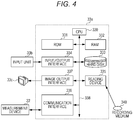
- Fig. 4 is a block diagram showing a hardware configuration of the computer main body 33a shown in Fig. 3 .
- the computer main body 33a includes a CPU (Central Processing Unit) 330, a ROM (Read Only Memory) 331, a RAM (Random Access Memory) 332, a hard disk 333, an input/output interface 334, a reading device 335, a communication interface 336, and an image output interface 337.
- the CPU 330, the ROM 331, the RAM 332, the hard disk 333, the input/output interface 334, the reading device 335, the communication interface 336 and the image output interface 337 are data-communicably connected by a bus 338.
- the CPU 330 can execute a computer program stored in the ROM 331 and a computer program loaded in the RAM 332. Each function shown in Fig. 3 is executed by the CPU 330 executing an application program. Accordingly, the determination device 33 functions as a device for acquiring data for assisting prediction of the possibility of occurrence of a severe attack of an asthma patient.
- the ROM 331 is constituted of a mask ROM, a PROM, an EPROM, an EEPROM, and the like.
- a computer program executed by the CPU 330 and data used therefor are recorded.
- the RAM 332 is constituted of an SRAM, a DRAM, and the like.
- the RAM 332 is used for reading the computer program recorded in the ROM 331 and the hard disk 333.
- the RAM 332 is also used as a work area of the CPU 330 when executing these computer programs.
- the hard disk 333 has installed therein an operating system for making the CPU 330 execute, a computer program such as an application program (a computer program for acquiring data to assist prediction of the possibility of occurrence of a severe attack of an asthma patient) and data used for executing the computer program.
- a computer program such as an application program (a computer program for acquiring data to assist prediction of the possibility of occurrence of a severe attack of an asthma patient) and data used for executing the computer program.
- the reading device 335 is constituted of a flexible disk drive, a CD-ROM drive, a DVD-ROM drive, and the like.
- the reading device 335 can read a computer program or data recorded on a portable recording medium 340.
- the input/output interface 334 is constituted of, for example, a serial interface such as USB, IEEE1394 or RS-232C, a parallel interface such as SCSI, IDE or IEEE1284, and an analog interface including a D/A converter, an A/D converter and the like.
- the input unit 33b such as a keyboard and a mouse is connected to the input/output interface 334. The operator can input various commands and data to the computer main body 33a through the input unit 33b.
- the communication interface 336 is, for example, an Ethernet (registered trademark) interface or the like.
- the computer main body 33a can transmit print data to a printer or the like through the communication interface 336.
- the measurement device 22 can transmit measurement data (optical information) to the determination device 33 through the communication interface 336.
- the image output interface 337 is connected to the display unit 33c constituted of an LCD, a CRT, and the like. Accordingly, the display unit 33c can output the video signal corresponding to the image data given from the CPU 330.
- the display unit 33c displays an image (screen) according to the inputted video signal.
- Fig. 5A is an example of a flowchart for acquiring data on prediction of the possibility of occurrence of a severe attack of an asthma patient.
- the measured level of IL-17 is acquired from the optical information based on the labeled antibody specifically bound to IL-17 and a determination is made using the obtained level will be described as an example.
- the present invention is not limited to this example.
- Step S1-1 the receiving unit 301 of the prediction assisting apparatus 11 receives optical information from the measurement device 22.
- Step SI-2 the calculation unit 303 calculates a measured level of IL-17, according to the equation for calculating the measured level of IL-17 stored in the storage unit 302, from the optical information received by the receiving unit 301.
- Step SI-3 the determination unit 304 determines whether the value calculated in Step S1-2 is less than or equal to or greater than the threshold value stored in the storage unit 302.
- the routine progresses to Step S1-4, and the determination unit 304 transmits to the output unit 305 a determination result indicating that the possibility of occurrence of a severe attack of an asthma patient is high.
- the routine progresses to Step S1-5, and the determination unit 304 transmits to the output unit 305 a determination result indicating that the possibility of occurrence of a severe attack of an asthma patient is low.
- Step S1-6 the output unit 305 outputs the determination result.
- the output unit 305 displays it on the display unit 33c. Accordingly, the prediction assisting apparatus 11 can provide doctors and the like with data to assist prediction of the possibility of occurrence of a severe attack of an asthma patient.
- Fig. 5B is an example of a flowchart for acquiring data on prediction of the possibility of occurrence of a severe attack of an asthma patient, using multiple logistic analysis.
- a processing procedure for acquiring data to assist prediction of the possibility of occurrence of a severe attack of an asthma patient by the prediction assisting apparatus 11 in this embodiment will be described.
- a case where a measured level of biomarker is acquired from optical information based on a labeled antibody specifically bound to the biomarker and predicted value P is acquired by substituting the obtained measured level into discriminant, and a determination is performed using the predicted value P will be described as an example.
- the present invention is not limited to this example.
- Step S2-1 the receiving unit 301 of the prediction assisting apparatus 11 receives optical information from the measurement device 22.
- Step S2-2 the calculation unit 303 calculates a measured level of biomarker, according to the equation for calculating the measured level of biomarker stored in the storage unit 302, from the optical information received by the receiving unit 301, and further, in Step S2-3, the predicted value P is calculated according to the discriminant stored in the storage unit 302.
- Step S2-4 the determination unit 304 determines whether the predicted value P calculated in Step S2-3 is less than or equal to or greater than the threshold value stored in the storage unit 302.
- the routine progresses to Step S2-5, and the determination unit 304 transmits to the output unit 305 a determination result indicating that the possibility of occurrence of a severe attack of an asthma patient is high.
- the routine progresses to Step S2-6, and the determination unit 304 transmits to the output unit 305 a determination result indicating that the possibility of occurrence of a severe attack of an asthma patient is low.
- Step S2-7 the output unit 305 outputs the determination result.
- the output unit 305 displays it on the display unit 33c. Accordingly, the prediction assisting apparatus 11 can provide doctors and the like with data to assist prediction of the possibility of occurrence of a severe attack of an asthma patient.
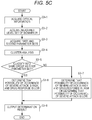
- Fig. 5C is an example of a flowchart for acquiring data on prediction of the possibility of occurrence of a severe attack of an asthma patient, using cluster analysis.
- a processing procedure for acquiring data to assist prediction of the possibility of occurrence of a severe attack of an asthma patient by the prediction assisting apparatus 11 will be described.
- a case where a parameter set of biomarkers is acquired from optical information based on a labeled antibody specifically bound to the biomarker and the like is acquired, and a determination is performed using the obtained parameter set will be described as an example.
- the present invention is not limited to this example.
- the storage unit 302 stores the first and second parameter sets
- the determination unit 304 performs cluster analysis to classify the asthma patient into the same group as one of the first and second parameter sets, and whether or not the possibility of occurrence of a severe attack is high and whether or not the drug response is high are determined based on the classification result.
- Step S3-1 the receiving unit 301 of the prediction assisting apparatus 11 receives optical information from the measurement device 22.
- the calculation unit 303 calculates a measured level of biomarker, according to the equation for calculating the measured level of biomarker stored in the storage unit 302, from the optical information received by the receiving unit 301, and acquire a parameter set of biomarkers.
- Step S3-3 the determination unit 304 reads the first and second parameter sets stored in the storage unit 302.
- Step S3-4 cluster analysis is performed using the parameter set of biomarkers acquired in Step S3-2 and the first and second parameter sets read in Step S3-3 to classify the asthma patient into the same group as one of the first and second parameter sets, and the routine proceeds to Step S3-5.
- the routine proceeds to Step S3-6, and the determination unit 304 transmits to the output unit 305 a determination result indicating that the possibility of occurrence of a severe attack of the asthma patient is high, and the drug response Is low.
- the routine proceeds to Step S3-7, and the determination unit 304 transmits to the output section 305 a determination result indicating that the drug response is high while the possibility of occurrence of a severe attack of the asthma patient is high, or the possibility of occurrence of a severe attack of the asthma patient is low.
- Step S3-8 the output unit 305 outputs the determination result.
- the output unit 305 displays it on the display unit 33c. Accordingly, the prediction assisting apparatus 11 can provide doctors and the like with data to assist prediction of the possibility of occurrence of a severe attack of an asthma patient.
- Serum samples of 77 asthma patients were obtained. The following clinical data was given to these samples. . History of severe attack within 12 months • Control status of asthma • ER delivery history within 12 months • Treatment step • Amount of therapeutic agent being administered • Respiratory function • Factor of atopy
- ELISA measurement was performed as follows, using the serum sample obtained above, to measure the level of IL-17.
- ELISA measurement was performed by standard chemiluminescence ELISA, using anti-IL-17A antibody (eBio64CAP17 [eBioscience]) as a solid phase antibody and anti-IL-17A antibody (eBio64DEC17 [eBioscience]) as a detection antibody. That is, first, 50 ⁇ L of a solid phase antibody diluent (1 ⁇ g/mL solid phase antibody, 0.05% NaN 3 , PBS PH7.4) was added to a 96 or 384-well ELISA plate, and the antibody was immobilized overnight at 4°C.
- a solid phase antibody diluent (1 ⁇ g/mL solid phase antibody, 0.05% NaN 3 , PBS PH7.4
- the antibody was washed 3 times with washing buffer (0.05% Tween20, 0.05% NaN 3 , PBS PH7.4) and blocked with 250 ⁇ L of blocking buffer (1% BSA, 0.5% Casein, 0.05% Tween20, 0.05% NaN 3 , PBS PH7.4) at room temperature for 2 hours or more. 50 ⁇ L of serum diluted 4 times with ELISA Dilution Buffer (1% BSA, 0.5% Casein, 0.05% NaN 3 , PBS PH7.4) was added thereto, and the mixture was reacted overnight at 4°C.
- the reactant was washed three times with washing buffer, and 50 ⁇ L of a labeled antibody solution (0.5 ⁇ g/mL labeled antibody, 1% BSA, 0.5% Casein, 0.05% NaN 3 , PBS PH7.4) was added thereto.
- the reaction was performed at room temperature for 2 hours, and the reactant was washed three times with washing buffer.
- 50 ⁇ L of an alkaline phosphatase-labeled streptavidin solution (1:1000 diluted Streptavidin-Alkaline Phosphatase [R&D Systems AR001], 1% BSA, 0.5% Casein, 0.05% NaN 3 , PBS PH7.4) was added thereto, and the mixture was reacted for 20 minutes.
- the reactant was washed three times with washing buffer and washed once with 250 ⁇ L of ALP activation buffer (20 mM Tris 10 mM MgCl pH9.8), and 100 ⁇ L of substrate (CDP-Star Ready-to-use Sapphire II Tropix) was added thereto, then luminescent signal was detected with a chemiluminescence detection device (FLUO star OPTIMA BMG LabTech).
- ALP activation buffer 20 mM Tris 10 mM MgCl pH9.8
- substrate CDP-Star Ready-to-use Sapphire II Tropix
- StatFlex version 6.0 (YUMIT) was used for statistical analysis. The data was divided into two groups of the patient group having a history of a severe attack within 12 months and the patient group having no history of a severe attack within 12 months, and the serum IL-17 concentration difference was tested. As a result, it was recognized that the serum IL-17 concentration was a significantly high value in the patient group having occurrence of a severe attack.
- the ROC curves were obtained, and the sensitivity and specificity were calculated by setting a cutoff of the occurrence and non-occurrence of a severe attack. The cutoff setting was set to the point closest to the point (sensitivity, 1-specificity) being (1, 0) in the ROC curve (indicated by an arrow in Fig. 6B ).
- Example 2 On the basis of the data obtained in Example 1, the patients were divided into a group of patients (20 subjects) with a higher value and a group of patients (57 subjects) with a lower value of the concentration of IL-17 than the 75 percentile of the examined asthma patients, and contrasted with the situation of exacerbation.
- Table 2 As shown in Table 2, in asthma patients having no history of a severe attack within 12 months, the IL-17 level was low in 43 out of 51 patients. In contrast, asthma patients having a history of a severe attack within 12 months, the IL-17 level was high in 12 out of 26 patients, and the percentage of patients with high IL-17 level increased.
- ELISA measurement was performed as follows, in the same manner as in Example 1.
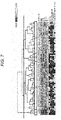
- the serum concentrations of IL-17 and other cytokines obtained in the above examples were standardized, and cluster analysis was performed. More specifically, ELISA measurement results of each cytokine were subjected to logarithmic transformation and normalized, then standardized using the average value and the standard deviation. A hierarchical cluster analysis was performed with the nearest neighbor method • Euclidean distance, using the hclust function contained in R package stats. Thereafter, the patients were classified into clusters of G1 to G4, based on the phylogenetic trees obtained as a result of the hierarchical cluster analysis.
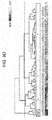
- Fig. 7 The results are shown in Fig. 7 . As shown in Fig. 7 , it was possible to distinguish patient clusters (G4) having generally high measured levels of IL-17, IL-10, IL-4, IL-25, IL-9 and IFN- ⁇ .
- Figs. 8A to 8C show profiles of the patients as subjects of the cluster analysis of this example. The contents of the notation of symptoms described in the heat map of the lower part of Fig. 7 are as follows. [Table 3] Indication of symptoms Explanation ICS dose • Dose of ICS (inhaled corticosteroid) that plays a central role in asthma treatment • Therapies of Steps 1 to 4 are prepared according to the severity of patient in the guidelines. The dose of ICS is the highest in Step 4, and the lowest in Step 1.
- Step 1 Low-dose inhaled corticosteroid
- Step 2 Low-to medium-dose inhaled corticosteroid and one of other asthma drugs
- Step 3 Combination of medium-to high-dose inhaled corticosteroid and other asthma drugs Severe exacerbation within 12 month • Occurred Have severe attack within 12 months • Not occurred No severe attack within 12 months Control status • Uncontrolled asthma Inadequate asthma control • Controlled asthma Good asthma control
- Figs. 8A to 8C The percentages of severity for each cluster (G1 to G4) in each symptom are shown in Figs. 8A to 8C .
- G4 100% of the patients received medium- to high-dose inhaled corticosteroid therapy and treatment with other asthma drugs ( Fig. 8A ), but the patients were inadequately controlled by both treatment ( Fig. 8B ), and a severe attack occurred within 12 months in 75% of the patients ( Fig. 8C ).
- the serum concentrations of IL-17 and other cytokines obtained in the above examples were standardized, and cluster analysis of the concentration of IL-17 and the concentration of any other cytokine was performed.
- the patients were classified into clusters of G1 to G4, based on the phylogenetic trees obtained as a result of the cluster analysis.
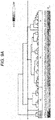
- Figs. 9A to 9E The results are shown in Figs. 9A to 9E .
- G4 patients refractory asthma patient population inadequately controlled even by medium- to high-dose inhaled corticosteroid therapy and treatment with other asthma drugs
Landscapes
- Life Sciences & Earth Sciences (AREA)
- Health & Medical Sciences (AREA)
- Engineering & Computer Science (AREA)
- Molecular Biology (AREA)
- Chemical & Material Sciences (AREA)
- Biomedical Technology (AREA)
- Urology & Nephrology (AREA)
- Hematology (AREA)
- Immunology (AREA)
- Biotechnology (AREA)
- Microbiology (AREA)
- Cell Biology (AREA)
- Proteomics, Peptides & Aminoacids (AREA)
- Food Science & Technology (AREA)
- Medicinal Chemistry (AREA)
- Physics & Mathematics (AREA)
- Analytical Chemistry (AREA)
- Biochemistry (AREA)
- General Health & Medical Sciences (AREA)
- General Physics & Mathematics (AREA)
- Pathology (AREA)
- Investigating Or Analysing Biological Materials (AREA)
Abstract
Description
- The present invention relates to a method, an apparatus and a computer program for assisting prediction of the possibility of occurrence of a severe attack of an asthma patient.
- Asthma is characterized by chronic inflammation of the respiratory tract and various degrees of reversible airway narrowing and increased airway hyperresponsiveness, and clinically, recurrent cough, wheezing and dyspnea. In the differential diagnosis of asthma, emphasis is placed on (1) repeated paroxysmal cough, wheezing and dyspnea, (2) reversible airflow restriction, and (3) not related to other cardiopulmonary diseases or the like. Treatment of asthma aims to control the occurrence frequency of attacks and ensure a daily life that does not differ from that of healthy person. In the current guidelines, a treatment policy is determined by monitoring asthma symptoms and respiratory function. That is, currently, so-called symptomatic therapy, in which asthma symptoms and respiratory function are monitored to determine a treatment policy, is the mainstream, and an established method for predicting the risk of asthma exacerbation such as the risk of occurrence of a severe attack is not known.
- It is known that interleukin 17 (IL-17), a cytokine secreted by Th17 cells, one of helper T cells, shows high levels in sera of severe asthma patients (Ioana Agache et al., "Increased serum IL-17 is an independent risk factor for severe asthma" Respir Med 2010, 104(8): 1131-1137). However, elevated levels of IL-17 also occur in mild and moderate asthma patients, and there was no known relation between the concentration of IL-17 in the serum and the exacerbation risk such as the possibility of occurrence of a future severe attack. Although IL-17 is a member of the IL-17 family including IL-17A, IL-17B and the like, the one used as a biomarker in the present invention is IL-17A. Hereinafter, IL-17A may be simply referred to as "IL-17".
- Although the terms "risk factor" and "predictor" are used in Ioana Agache et al. (2010, above), they are used in a meaning different from the exacerbation risk (prediction of the possibility of future exacerbation) referred in the present invention. That is, Ioana Agache et al. (2010, above) has reported that asthma patients are classified into severe, moderate and mild, in accordance with the Global Initiative for Asthma (GINA) asthma guidelines, and the serum levels of IL-17 are significantly higher in patients classified as severe in this classification. Based on this result, these terms are used as indications as to whether patients can be diagnosed as severe asthma only on the basis of the blood IL-17 concentration. The diagnostic criteria for diagnosing a patient as severe in the GINA guideline is based on whether or not the symptoms of asthma can be controlled even by a high-capacity inhaled corticosteroid (ICS). Whether or not severe attacks as described in the present invention will occur even in patients diagnosed as severe in the same guideline has not been made clear.
- An object of the present invention is to acquire information on the asthma exacerbation risk and contribute to the determination of a patient's treatment policy based on the information.
- The present inventors have examined the concentrations of various cytokines in sera of asthma patients and clinical data of the patients and consequently found that there is a significant correlation between the concentration of IL-17 and the subsequent exacerbation history of the patient, and the present invention is based thereon. In addition, the present inventors have found that a group of patients with high exacerbation risk can be distinguished by combining the concentration of IL-17 with the concentration of other interleukins.
- More specifically, according to the present invention, there is provided a method for assisting prediction of the possibility of occurrence of a severe attack of an asthma patient, the method comprising measuring a biomarker in a blood sample of an asthma patient and determining the possibility of occurrence of a severe attack of the asthma patient based on the measured level of the biomarker, whereby the biomarker includes IL-17.
- In addition, according to the present invention, there is provided a method for assisting prediction of the possibility of occurrence of a severe attack of an asthma patient, the method comprising measuring IL-17 and at least one other cytokine biomarker, more particularly a biomarker selected from the group consisting of IL-10 (interleukin 10), IL-4 (interleukin 4), IL-25 (interleukin 25), IL-9 (interleukin 9) and IFN-γ (interferon gamma) in a blood sample of an asthma patient to acquire a parameter set of biomarkers, classifying the asthma patient into the group with the highest correlation by performing cluster analysis using the parameter set of biomarkers, a first parameter set and a second parameter set, and determining the possibility of the occurrence of a severe attack of the asthma patient based on the result obtained in the classification step, in which the parameter set of biomarkers contains the measured level of IL-17 and the measured level of at least one biomarker selected from the group consisting of IL-10, IL-4, IL-25, IL-9 and IFN-γ, the first parameter set contains the measured level of IL-17 in a blood sample of an asthma patient previously known to have an occurrence history of a severe attack and have low drug response, and the measured level of at least one selected biomarker in the blood sample of the asthma patient, and the second parameter set contains the measured level of IL-17 in a blood sample of an asthma patient previously known to have high drug response while having an occurrence history of a severe attack, or have no occurrence history of a severe attack, and the measured level of at least one selected biomarker in the blood sample of the asthma patient.
- According to the present invention, there is provided an apparatus for assisting prediction of the possibility of occurrence of a severe attack of an asthma patient, the apparatus comprising a computer containing a processor and a memory under control of the processor, in which the memory stores a computer program for making the computer execute the following steps: measuring a biomarker in a blood sample of an asthma patient, and determining the possibility of occurrence of a severe attack of the asthma patient based on the measured level of the biomarker, and the biomarker includes IL-17.
- According to the present invention, there is provided an apparatus for assisting prediction of the possibility of occurrence of a severe attack of an asthma patient, the apparatus comprising a computer containing a processor and a memory under control of the processor, in which the memory stores a computer program for making the computer execute the following steps: measuring IL-17 and at least one biomarker selected from the group consisting of IL-10, IL-4, IL-25, IL-9 and IFN-γ in a blood sample of an asthma patient to acquire a parameter set of biomarkers, classifying the asthma patient into the group with the highest correlation by performing cluster analysis using the parameter set of biomarkers, a first parameter set and a second parameter set, and determining the possibility of occurrence of a severe attack of the asthma patient based on the result obtained in the classification step, the memory stores the first parameter set and the second parameter set, the processor receives the parameter set of biomarkers measured in the measurement step, and reads the first parameter set and the second parameter set from the memory, in the classification step, the cluster analysis is performed by comparing the parameter set of biomarkers measured in the measurement step, the first parameter set and the second parameter set.The asthma patient is classified into a group, based on the highest correlation with the first or second parameter set, in the determination step. When classified into the same group as the first parameter set, the asthma patient is determined to have a high possibility of occurrence of a severe attack and have low drug response. When classified into the same group as the second parameter set, the asthma patient is determined to have high drug response while having a high possibility of occurrence of a severe attack, or have a low possibility of occurrence of a severe attack. Preferably, the parameter set of biomarkers contains the measured level of IL-17 and the measured level of at least one biomarker selected from the group consisting of IL-10, IL-4, IL-25, IL-9 and IFN-γ, the first parameter set contains the measured level of IL-17 in a blood sample of an asthma patient previously known to have an occurrence history of a severe attack and have low drug response, and the measured level of at least one selected biomarker in the blood sample of the asthma patient, and the second parameter set contains the measured level of IL-17 in a blood sample of an asthma patient previously known to have high drug response while having an occurrence history of a severe attack, or to have no occurrence history of a severe attack, and the measured level of at least one selected biomarker in the blood sample of the asthma patient.
- According to the present invention, there is provided a computer program for assisting prediction of the possibility of occurrence of a severe attack of an asthma patient, which is recorded on a computer readable medium, the computer program comprising making the computer execute the following steps: measuring a biomarker in a blood sample of an asthma patient and determining the possibility of occurrence of a severe attack of the asthma patient based on the measured level of the biomarker, in which the biomarker includes IL-17.
- According to the present invention, there is provided a computer program for assisting prediction of the possibility of occurrence of a severe attack of an asthma patient, which is recorded on a computer readable medium, the computer program comprising making the computer execute the following steps: measuring IL-17 and at least one biomarker selected from the group consisting of IL-10, IL-4, IL-25, IL-9 and IFN-γ in a blood sample of an asthma patient to acquire a parameter set of biomarkers, classifying the asthma patient into the group with the highest correlation by performing cluster analysis using the parameter set of biomarkers, a first parameter set and a second parameter set, and determining the possibility of occurrence of a severe attack of the asthma patient based on the result obtained in the classification step, in which the parameter set of biomarkers contains the measured level of IL-17 and the measured level of at least one biomarker selected from the group consisting of IL-10, IL-4, IL-25, IL-9 and IFN-γ, the first parameter set contains the measured level of IL-17 in a blood sample of an asthma patient previously known to have an occurrence history of a severe attack and have low drug response, and the measured level of at least one selected biomarker in the blood sample of the asthma patient, and the second parameter set contains the measured level of IL-17 in a blood sample of an asthma patient previously known to have high drug response while having an occurrence history of a severe attack, or have no occurrence history of a severe attack, and the measured level of at least one selected biomarker in the blood sample of the asthma patient.
- According to the present invention, it is possible to provide a method for assisting prediction of the possibility of occurrence of a severe attack of an asthma patient.
-
-
Fig. 1A is an example of the external appearance of an embodiment of a reagent kitof the present invention. -
Fig. 1B is an example of the external appearance of an embodiment of a reagent kit of the present invention. -
Fig. 1C is an example of the external appearance of a reagent kit of an embodiment of the present invention. -
Fig. 2 is a schematic diagram showing an example of a prediction assisting apparatus. -
Fig. 3 is a block diagram showing a functional configuration of the prediction assisting apparatus inFig. 2 . -
Fig. 4 is a block diagram showing a hardware configuration of the prediction assisting apparatus shown inFig. 2 . -
Fig. 5A is an example of a flowchart of determination for acquiring data to assist prediction of the possibility of occurrence of a severe attack of an asthma patient, using the prediction assisting apparatus shown inFig. 2 . -
Fig. 5B is an example of a flowchart of determination for acquiring data to assist prediction of the possibility of occurrence of a severe attack of an asthma patient, using the prediction assisting apparatus shown inFig. 2 . -
Fig. 5C is an example of a flowchart of determination for acquiring data to assist prediction of the possibility of occurrence of a severe attack of an asthma patient, using the prediction assisting apparatus shown inFig. 2 . -
Fig. 6A is an example of determination by a prediction assisting method of the present invention. -
Fig. 6B is an ROC curve in a case in Example 1. -
Fig. 7 is a diagram showing results of cluster analysis in Example 3. -
Fig. 8A is a graph showing treatment steps of asthma patients to be analyzed in Example 3. -
Fig. 8B is a graph showing control status of asthma patients to be analyzed in Example 3. -
Fig. 8C is a graph showing the presence or absence of a history of a severe attack within 12 months of asthma patients to be analyzed in Example 3. -
Fig. 9A is a diagram showing results of cluster analysis performed using IL-17 and IL-25 in Example 4. -
Fig. 9B is a diagram showing results of cluster analysis performed using IL-17 and IL-4 in Example 4. -
Fig. 9C is a diagram showing results of cluster analysis performed using IL-17 and IL-9 in Example 4. -
Fig. 9D is a diagram showing results of cluster analysis performed using IL-17 and IL-10 in Example 4. -
Fig. 9E is a diagram showing results of cluster analysis performed using IL-17 and IFN-γ in Example 4. - A method for assisting prediction of the possibility of occurrence of a severe attack of an asthma patient of the present invention (hereinafter also simply referred to as "prediction assisting method") includes a step of measuring a biomarker in a blood sample of an asthma patient.
- Asthma patients are, for example, patients diagnosed as suffering from asthma by a doctor, adults or children who may be suffering from asthma, and the like.
- Blood samples are blood (whole blood), serum or plasma. Especially preferred are blood samples that are easy to collect, for example, peripheral blood, and serum and plasma acquired therefrom, and the like.
- The biomarker includes IL-17. IL-17 is known as a cytokine that causes Th17 inflammation associated with autoimmune diseases and bacterial inflammatory responses, induces IL-8, IL-6 and causes neutrophilic inflammation. In the present invention, it is possible to provide doctors with data to assist prediction of the possibility of occurrence of a severe attack, by measuring IL-17 in a blood sample of an asthma patient. This is revolutionary in that it can provide a new and established method capable of predicting beforehand the asthma exacerbation risk such as the risk of occurrence of a severe attack, and allow a different basis for asthma treatment, for which presently so-called symptomatic therapy is mainstream, in which asthma symptoms and respiratory function are monitored to determine a treatment policy.
- The biomarker preferably further includes at least one other cytokine, preferably a cytokine selected from the group consisting of IL-10, IL-4, IL-25, IL-9 and IFN-γ. IL-10 is a cytokine produced from anti-inflammatory cells such as Treg, MSC and M2 macrophages. IL-10 is known as an anti-inflammatory cytokine. IL-4 is known as a Th2 cytokine that induces allergic immune responses such as atopy. IL-25 is known as a ProTh2 cytokine that causes Th2 inflammation. IL-9 is known as a cytokine secreted from Th2 immune cells. IL-9 proliferates mast cells and cells responsible for Th2 immune responses. IFN-γ is known as a Th1 cytokine that responds to viral infections and the like. IFN-γ is secreted from Th1 cells, cytotoxic CD8 cells and the like. IFN-γ activates macrophages and the like. Also, IFN-γ suppresses Th2 immune responses. In particular embodiments, the biomarkers used consist of IL-17 and one more other cytokine biomarker selected from this group. By measuring at least one biomarker selected from the group consisting of IL-10, IL-4, IL-25, IL-9 and IFN-γ, in addition to IL-17, it is possible to enhance determination accuracy on the possibility of occurrence of a severe attack, or provide doctors with information on whether or not the drug response is high, among the asthma patients determined to have a high possibility of occurrence of a severe attack due to high measured level of IL-17. The phrase "drug response is high" means that agents prescribed for asthma treatment such as inhaled steroids, leukotriene receptor antagonists (LTRA), long-acting β2 stimulants (LABA) and the like relatively easily work. For example, asthma patients with high drug response do not have a severe attack even when they receive treatment of
Step Step - The method for measuring a biomarker is not particularly limited as long as it is a measurement method based on an antigen-antibody reaction well known to those skilled in the art. Examples thereof include ELISA method, western blot method and the like, and ELISA method is preferably used. The antibody used in these measurement methods is not particularly limited as long as it is an antibody capable of specifically recognizing and binding each biomarker in a blood sample. The antibody can be a monoclonal or polyclonal full-length antibody or antibody fragment (Fab, F(ab')2), or the like. The method for preparing such antibody is known to those skilled in the art. Alternatively, the antibody may be a commercially available product. For example, a commercially available protein quantification kit known to those skilled in the art, such as Human IL-17 Quantikine ELISA Kit manufactured by R&D Systems, LEGEND MAX (trademark) Human IL-17A ELISA Kit manufactured by BioLegend Inc. or the like may be used. As an example of the measurement step, the case of measuring a biomarker by a sandwich ELISA method will be described below.
- First, a complex containing a biomarker in a blood sample, an antibody for capturing the biomarker (hereinafter also referred to as "capture antibody") and an antibody for detecting the biomarker (hereinafter also referred to as "detection antibody") is formed on a solid phase. This complex can be formed by mixing a blood sample, a capture antibody, and a detection antibody. Then, a solution containing the complex is brought into contact with a solid phase capable of capturing the capture antibody, whereby the complex can be formed on the solid phase. Alternatively, a solid phase preliminarily immobilized with the capture antibody may be used. That is, a solid phase immobilized with the capture antibody, the blood sample, and the detection antibody are brought into contact with each other, whereby the complex can be formed on the solid phase. When both the capture antibody and the detection antibody are monoclonal antibodies, it is preferable that the epitopes be different from each other.
- The mode of immobilization of the capture antibody on the solid phase is not particularly limited. For example, the capture antibody and the solid phase may be bound directly, or the capture antibody and the solid phase may be indirectly bound via another substance. Examples of the direct bond include physical adsorption and the like. Examples of the indirect bond include a bond via a combination of biotin and avidin or streptavidin (hereinafter, also referred to as "avidins"). In this case, by preliminarily modifying the capture antibody with biotin and previously binding avidins to the solid phase, the capture antibody and the solid phase can be indirectly bound via the bond between the biotin and the avidins.
- The material of the solid phase is not particularly limited, and it can be selected from, for example, organic polymer compounds, inorganic compounds, biopolymers, and the like. Examples of the organic polymer compound include latex, polystyrene, polypropylene, and the like. Examples of the inorganic compound include magnetic bodies (iron oxide, chromium oxide, ferrite, etc.), silica, alumina, glass, and the like. Examples of the biopolymer include insoluble agarose, insoluble dextran, gelatin, cellulose, and the like. Two or more of these may be used in combination. The shape of the solid phase is not particularly limited, and examples thereof include particles, membranes, microplates, microtubes, test tubes, and the like.
- A biomarker can be measured by detecting the complex formed on the solid phase by a method known in the art. For example, when an antibody labeled with a labeling substance is used as a detection antibody, a biomarker can be measured by detecting a signal generated by the labeling substance. Alternatively, also when a labeled secondary antibody against the detection antibody is used, the biomarker can be measured in the same manner.
- In the present methods, B/F (Bound/Free) separation for removing an unreacted free component not forming a complex may be performed between the process of forming the complex and the process of detecting the complex. The unreacted free component refers to a component not constituting a complex. Examples thereof include capture antibodies not bound to the biomarker, detection antibodies, and the like. The means of B/F separation is not particularly limited, and when the solid phase is a particle, B/F separation can be performed by recovering only the solid phase capturing the complex by centrifugation. When the solid phase is a container such as a microplate or a microtube, B/F separation can be performed by removing a liquid containing an unreacted free component. When the solid phase is a magnetic particle, B/F separation can be performed by aspirating and removing a liquid containing an unreacted free component by a nozzle while magnetically constraining the magnetic particles with a magnet. After removing the unreacted free component, the solid phase capturing the complex may be washed with a suitable aqueous medium such as PBS.
- The phrase "detecting a signal" herein includes qualitatively detecting the presence or absence of a signal, quantifying a signal intensity, and semi-quantitatively detecting the intensity of a signal. Semi-quantitative detection means to show the intensity of the signal in stages such as "no signal generated", "weak", "medium", "strong", and the like. In the present methods, it is preferable to detect the intensity of a signal quantitatively or semi-quantitatively.
- The labeling substance is not particularly limited as long as a detectable signal is generated. For example, it may be a substance which itself generates a signal (hereinafter, also referred to as "signal generating substance") or a substance which catalyzes the reaction of other substances to generate a signal. Examples of the signal generating substance include fluorescent substances, radioactive isotopes, and the like. Examples of the substance that catalyzes the reaction of other substances to generate a detectable signal include enzymes and the like. Examples of the enzymes include alkaline phosphatase, peroxidase, β-galactosidase, luciferase, and the like. Examples of the fluorescent substances include fluorescent dyes such as fluorescein isothiocyanate (FITC), rhodamine and Alexa Fluor (registered trademark), fluorescent proteins such as GFP, and the like. Examples of the radioisotopes include 125I, 14C, 32P, and the like. Among them, an enzyme is preferable as a labeling substance, and alkaline phosphatase and peroxidase are particularly preferable.
- Methods for detecting a signal themselves are known in the art. In the present methods, a measurement method according to the type of signal derived from the labeling substance may be appropriately selected. For example, when the labeling substance is an enzyme, signals such as light and color generated by reacting a substrate for the enzyme can be measured by using a known apparatus such as a spectrophotometer.
- The substrate of the enzyme can be appropriately selected from known substrates according to the type of the enzyme. For example, when alkaline phosphatase is used as the enzyme, examples of the substrate include chemiluminescent substrates such as CDP-Star (registered trademark) (disodium 4-chloro-3-(methoxyspiro[1,2-dioxetane-3,2'-(5'-chloro)tricyclo[3.3.1.13,7]decan]-4-yl)phenyl phosphate) and CSPD (registered trademark) (disodium 3-(4-methoxyspiro[1,2-dioxetane-3,2-(5'-chloro)tricyclo[3.3.1.13,7]decan]-4-yl)phenyl phosphate), and chromogenic substrates such as 5-bromo-4-chloro-3-indolyl phosphate (BCIP), disodium 5-bromo-6-chloro-indolyl phosphate and p-nitrophenyl phosphate. Also, when peroxidase is used as the enzyme, examples of the substrate include chemiluminescent substrates such as luminol and derivatives thereof, and chromogenic substrates such as 2,2'-azinobis(3-ethylbenzothiazoline-6-ammonium sulfonate) (ABTS), 1,2-phenylenediamine (OPD) and 3,3',5,5'-tetramethylbenzidine (TMB).
- When the labeling substance is a radioactive isotope, radiation as a signal can be measured using a known apparatus such as a scintillation counter. In addition, when the labeling substance is a fluorescent substance, fluorescence as a signal can be measured using a known apparatus such as a fluorescence microplate reader. The excitation wavelength and the fluorescence wavelength can be appropriately determined according to the type of fluorescent substance used.
- The detection result of the signal may be used as the measured level of the biomarker. For example, when quantitatively detecting the intensity of a signal, the signal intensity value itself or a value acquired from the intensity value can be used as the measured level of the biomarker. Examples of the value acquired from the signal intensity value include a value obtained by subtracting the signal intensity value of a negative control sample or a background value from the signal intensity value of the biomarker. The negative control sample can be appropriately selected, and examples thereof include urine obtained from a healthy subject and the like. The measured level of the biomarker can be expressed in any form or unit such as concentration, intensity, level, mass (weight) or ratio.
- In the present methods, measurement data of the biomarker may be acquired for a plurality of standard samples of known biomarker concentration, and a calibration curve showing the relationship between the biomarker concentration and the measurement data of the biomarker may be prepared. The measurement data of the biomarker acquired from a blood sample can be applied to this calibration curve to acquire the value of the biomarker concentration in the blood sample and used as the measured level of the biomarker.
- In the present methods, the biomarker in the blood sample may be measured by a sandwich ELISA method using a capture antibody immobilized on magnetic particles and a detection antibody labeled with a labeling substance. In this case, measurement may be carried out using a commercially available fully automated immunoassay system such as HISCL series (manufactured by Sysmex Corporation).
- The prediction assisting method of the present invention includes a step of determining the possibility of occurrence of a severe attack of an asthma patient based on the measured level of the biomarker obtained as described above.
- The possibility of occurrence of a severe attack of an asthma patient is preferably a possibility of occurrence of a severe attack occurring in an asthma patient within 12 months.
- In a preferred embodiment, when the measured level of the biomarker is equal to or greater than a predetermined threshold level, the possibility of occurrence of a severe attack of the asthma patient is determined to be high, and when the measured level of the biomarker is less than the predetermined threshold level, the possibility of occurrence of a severe attack of the asthma patient is determined to be low.
- The above-described predetermined threshold level is not particularly limited. The predetermined threshold level can be appropriately set. For example, the predetermined threshold level may be set as follows. First, blood is sampled from a plurality of asthma patients, and the biomarker concentration in the blood samples is measured. Data of the measured biomarker concentration is classified into data of asthma patient group having an occurrence history of a severe attack and data of asthma patient group having no occurrence history of a severe attack. The phrase "having an occurrence history of a severe attack" means that an asthma patient has had a severe attack in the past. Then, a value that can most accurately distinguish the biomarker concentration in the blood samples of the asthma patient group having an occurrence history of a severe attack from the biomarker concentration in the blood samples of the asthma patient group having no occurrence history of a severe attack, and the value is set as the predetermined threshold level. In setting the threshold level, it is preferable to consider sensitivity, specificity, positive predictive value, negative predictive value, and the like.
- In a preferred embodiment, in addition to the measured level of IL-17, the measured level of at least one biomarker selected from the group consisting of IL-10, IL-4, IL-25, IL-9 and IFN-γ is further used. By using a plurality of biomarkers, it is possible to enhance accuracy of determination and further determine drug response.
- In one embodiment, for example, the measured level of each biomarker is compared with the predetermined threshold level corresponding to each, and a determination is made based on the comparison result. More specifically, when the measured level of IL-17 is equal to or greater than the predetermined threshold level and the measured level of any one biomarker other than IL-17 is equal to or larger than the corresponding predetermined threshold level, it can be determined that the possibility of occurrence of a severe attack of the asthma patient is high, and the drug response is low. Such determination is supported by
Figs. 9A to 9E . For example, in the determination ofFig. 9A , in a group of patients (G4) whose measured level of IL-17 is higher than a predetermined threshold level corresponding to IL-17 and whose measured level of IL-25 is higher than a predetermined threshold level corresponding to IL-25, there are many patients with a history of a severe attack. - On the other hand, when the measured level of IL-17 is equal to or greater than the predetermined threshold level and all the measured levels of the biomarkers other than IL-17 are less than the corresponding predetermined threshold level, or when the measured level of IL-17 is less than the predetermined threshold level, it can be determined that the drug response is high while the possibility of occurrence of a severe attack of the asthma patient is high, or the possibility of occurrence of a severe attack of the asthma patient is low. Such determination is supported by
Fig. 7 . - In another embodiment, for example, a determination is made using multivariate analysis like multiple logistic analysis (logistic regression analysis). In such multivariate analysis, in addition to the measured level of IL-17, the measured level of at least one biomarker selected from the group consisting of IL-10, IL-4, IL-25, IL-9 and IFN-γ are substituted into discriminant prepared by multivariate analysis, for example, multiple logistic analysis, to acquire a value acquired from the measured level of the biomarker by multivariate analysis, for example, a predicted value, and in the determination step, a value acquired from the measured level of the biomarker by multivariate analysis is compared with the predetermined threshold level corresponding to a value acquired by multivariate analysis, and the possibility of occurrence of a severe attack of the asthma patient is determined based on the comparison result.
- An example of determination using multiple logistic analysis as multivariate analysis will be more specifically described. For example, when the measured levels of IL-17 and IL-10 are acquired, the predicted value may be calculated using a regression equation of the following formula (I). Also, when the measured levels of IL-17, IL-10 and IL-4 are acquired, the predicted value may be calculated using a regression equation of the following formula (II). These regression equations are equations built based on the multiple logistic model. In the formulae, [IL-17], [IL-10] and [IL-4] are measured levels of IL-17, IL-10 and IL-4, respectively, b0 is a coefficient of the intercept, and b1 to b3 are coefficients of each free protein biomarker. The coefficients can be determined by a known method such as a maximum likelihood method.


- The predetermined threshold level corresponding to each of the above biomarkers and the threshold level corresponding to the predicted value are not particularly limited and can be set empirically, for example, by accumulating biomarker data in blood samples collected from asthma patients. Alternatively, predetermined cutoff values may be set as follows. Blood samples are collected from a healthy person and an asthma patient, and measured levels of biomarkers are acquired. Then, from the acquired measured levels, values that can distinguish between the healthy person and the asthma patient for each biomarker are obtained, and the obtained values are set as predetermined cutoff values corresponding to each biomarker. Alternatively, the measured levels of biomarkers acquired from liquid samples of a healthy person and an asthma patient are substituted into discriminant prepared by multivariate analysis to acquire a predicted value of the healthy person and a predicted value of the asthma patient. Then, based on the acquired predicted values, values that can distinguish between the healthy person and the asthma patient are obtained, and the obtained values are set as predetermined cutoff values corresponding to the predicted values.
- In another embodiment, a determination is made using cluster analysis. In this embodiment, a step of measuring IL-17 and at least one biomarker selected from the group consisting of IL-10, IL-4, IL-25, IL-9 and IFN-γ in a blood sample of an asthma patient and acquiring a parameter set of biomarkers is included. The "parameter set of biomarkers" herein means a group of measured levels of a plurality of types of biomarkers obtained for one asthma patient, including the measured level of IL-17 and the measured level of at least one biomarker selected from the group consisting of IL-10, IL-4, IL-25, IL-9 and IFN-γ. For example, when measuring IL-17, IL-10, IL-25 and IFN-γ in a blood sample of an asthma patient, the parameter set of biomarkers means the measured level of IL-17, the measured level of IL-10, the measured level of IL-25 and the measured level of IFN-γ in the blood sample of the asthma patient.
- In particular embodiments, as a second step, a step of classifying the asthma patient into the group with the highest correlation by performing cluster analysis using the parameter set of biomarkers obtained in the above measurement step, a first parameter set and a second parameter set is included. The terms "classifying the asthma patient into the group with the highest correlation" as used herein refers to determining whether there is a higher correlation of the values in the parameter set of biomarkers with the first parameter set or the second parameter set.
- The cluster analysis is preferably hierarchical cluster analysis. The group with the highest correlation is preferably determined using the Euclidean distance obtained by the nearest neighbor method.
- The first parameter set contains the measured level of IL-17 in a blood sample of an asthma patient previously known to have an occurrence history of a severe attack and have low drug response, and the measured level of at least one biomarker selected in the blood sample of the asthma patient. The second parameter set contains the measured level of IL-17 in a blood sample of an asthma patient previously known to have high drug response while having an occurrence history of a severe attack, or have no occurrence history of a severe attack, and the measured level of at least one selected biomarker in the blood sample of the asthma patient.
- For example, when the parameter set of biomarkers contains the measured level of IL-17, the measured level of IL-10, the measured level of IL-25 and the measured level of IFN-γ in a blood sample of an asthma patient, the first parameter set contains the measured level of IL-17, the measured level of IL-10, the measured level of IL-25 and the measured level of IFN-γ in a blood sample of an asthma patient previously known to have an occurrence history of a severe attack and have low drug response, and the second parameter set contains the measured level of IL-17, the measured level of IL-10, the measured level of IL-25 and the measured level of IFN-γ in a blood sample of an asthma patient previously known to have high drug response while having an occurrence history of a severe attack, or have no occurrence history of a severe attack.
- Classification by cluster analysis is preferably performed by comparing the parameter set of biomarkers, the first parameter set, and the second parameter set.
- The prediction assisting method provided herein using cluster analysis for determination includes a third step of determining the possibility of occurrence of a severe attack of an asthma patient, based on the result obtained in the above classification step. For example, in the determination step, when classified into the same group as the first parameter set, the asthma patient is determined to have a high possibility of occurrence of a severe attack and have low drug response, and when classified into the same group as the second parameter set, the asthma patient is determined to have high drug response while having a high possibility of occurrence of a severe attack, or have a low possibility of occurrence of a severe attack. Such determination is supported by
Figs. 8A and 8C . That is, as shown inFigs. 8A and 8C , in a cluster (G4) which has a high possibility of occurrence of a severe attack and has low drug response, many patients have a severe attack within 12 months even when they have received treatment ofStep 3 shown in Table 3. On the other hand, as shown inFigs. 8A and 8C , in clusters (G1 to G3) which have high drug response while having a high possibility of occurrence of a severe attack, or have a low possibility of occurrence of a severe attack, as a result of receiving treatment ofStep 2 orStep 3 as shown in Table 3, more than half of patients do not have a severe attack within 12 months. - In the case of performing multivariate analysis or cluster analysis as described above, the measured levels may be normalized, in order to make the weights of the measured levels in the analysis uniform. The normalization is not particularly limited, and can be performed by methods known to those skilled in the art, for example, by normalizing measured levels so as to follow a log-normal distribution.
- In one embodiment, a step of administering an attack therapeutic agent to an asthma patient determined to have a high possibility of occurrence of a severe attack is included. By administering an attack therapeutic agent before a severe attack actually occurs, the possibility of a severe attack and the degree of attack of the patient can be reduced becomes high. Examples of the attack therapeutic agent include antibody drugs such as omalizumab and mepolizumab, oral steroids, and the like.
- The scope of the present disclosure also includes a reagent kit used for the method for assisting prediction of the possibility of occurrence of a severe attack of the asthma patient. That is, there is provided a reagent kit for predicting the possibility of occurrence of a severe attack of an asthma patient (hereinafter also referred to as "reagent kit"), comprising a first capture body that specifically binds to IL-17 for capturing IL-17, a second capture body that specifically binds to IL-17 for detecting IL-17, and a labeling substance. When the labeling substance is an enzyme, the reagent kit may further contain a substrate for the enzyme.
- In the kits provided herein, the forms of the first capture body, the second capture body, the labeling substance and the substrate are not particularly limited, and they may be a solid (for example, powder, crystal, freeze-dried product, etc.) or liquid (for example, solution, suspension, emulsion, etc.). In the kits provided herein, it is preferable that the first capture body, the second capture body, the labeling substance and the substrate be stored in separate containers or individually packaged. The details of the blood sample, the first capture body, the second capture body, the labeling substance and the substrate are the same as those described in the explanation of the prediction assisting method. In the kits provided herein, it is preferable that both the first capture body and the second capture body be anti-IL-17 antibodies. When both the first capture body and the second capture body are monoclonal antibodies, it is preferable that the epitopes are different from each other.
- In particular embodiment, a container storing the above-described various reagents may be packed in a box and provided to the user. This box may contain a package insert of the reagent kit. In this package insert, it is preferable to describe, for example, the constitution of the reagent kit, the protocol for measuring biomarker concentration in a blood sample, and the like. An example of the external appearance of the reagent kit is shown in
Fig. 1A . In the figure, 510 denotes a reagent kit, 511 denotes a first container storing a first capture body, 512 denotes a second container storing a second capture body, 513 denotes a third container storing an enzyme as a labeling substance, 514 denotes a fourth container storing a substrate of the enzyme, 515 denotes a package insert, and 516 denotes a packing box. - The reagent kit may further contain a solid phase for immobilizing the first capture body. In this case, it is preferable that the first capture body, the second capture body, the labeling substance, the substrate and the solid phase be stored in separate containers or individually packaged. An example of the external appearance of a reagent kit further containing a solid phase is shown in
Fig. 1B . The details of the solid phase are the same as those described in the explanation of the prediction assisting method. In the figure, 520 denotes a reagent kit, 521 denotes a first container storing a first capture body, 522 denotes a second container storing a second capture body, 523 denotes a third container storing an enzyme as a labeling substance, 524 denotes a fourth container storing a substrate of the enzyme, 525 denotes a solid phase (96-well microplate), 526 denotes a package insert, and 527 denotes a packing box. - In a further embodiment, the first capture body may be previously immobilized on a solid phase. The labeling substance may be previously bound to the second capture body. In this case, a reagent kit contains a solid phase on which a first capture body is immobilized, a second capture body to which a labeling substance is bound, and a substrate. An example of the external appearance of the reagent kit is shown in
Fig. 1C . In the figure, 530 denotes a reagent kit, 531 denotes a first container storing a second capture body to which an enzyme as a labeling substance is bound, 532 denotes a second container storing a substrate of the enzyme, 533 denotes a solid phase (96-well microplate) on which a first capture body is immobilized, 534 denotes a package insert, and 535 denotes a packing box. - The reagent kit may further comprise one or more capture body that specifically binds to at least one biomarker selected from the group consisting of IL-10, IL-4, IL-25, IL-9 and IFN-γ, and one or more capture body that specifically binds to the at least one biomarker for detecting the at least one biomarker, for acquiring a measured level of the at least one biomarker.
- In addition to the various reagents described above, the reagent kit may appropriately contain a washing liquid of the solid phase, an enzyme reaction terminating agent, a calibrator, and the like.
- The scope of the present disclosure also includes the use of the above reagents for the manufacture of a reagent kit for predicting the possibility of occurrence of a severe attack of an asthma patient. That is, the present disclosure also relates to a use of a first capture body that specifically binds to IL-17 for capturing IL-17, a second capture body that specifically binds to IL-17 for detecting IL-17, and a labeling substance, for the manufacture of a reagent kit for predicting the possibility of occurrence of a severe attack of an asthma patient.
- The present disclosure includes an apparatus suitable for acquiring data to assist prediction of the possibility of occurrence of a severe attack of an asthma patient. The present disclosure also includes a computer program product for making a computer acquire data to assist prediction of the possibility of occurrence of a severe attack of an asthma patient. The medium included in the computer program product may be a computer-readable medium in which a computer program is non-temporarily recorded.
- Hereinafter, an example of an apparatus suitable for implementing the above-described method of the present invention will be described with reference to the drawings. However, the present disclosure is not limited to only the embodiment shown in this example.
Fig. 2 is a schematic diagram of prediction assisting apparatus, for acquiring data to assist prediction of the possibility of occurrence of a severe attack of an asthma patient. Aprediction assisting apparatus 11 shown inFig. 2 includes ameasurement device 22, and adetermination device 33 connected to themeasurement device 22. - In the apparatus provided herein, the type of measurement device is not particularly limited, and it can be appropriately selected according to the method for measuring a biomarker. In the example shown in
Fig. 2 , themeasurement device 22 is a plate reader capable of detecting a signal generated by an ELISA method using a labeled antibody. The plate reader is not particularly limited as long as it can detect a signal based on the labeling substance used for measurement of the biomarker, and it can be appropriately selected according to the type of the labeling substance. In the example described below, the signal is optical information such as a chemiluminescent signal or a fluorescence signal. - When the plate subjected to an antigen-antibody reaction is set in the
measurement device 22, themeasurement device 22 acquires optical information based on the labeled antibody specifically bound to the biomarker, and themeasurement device 22 transmits the obtained optical information to thedetermination device 33. The optical information acquired by themeasurement device 22 also includes information on a specimen of known concentration for calculation of the measured level of the biomarker and the like. - The
determination device 33 includes a computermain body 33a, aninput unit 33b, and adisplay unit 33c that displays specimen information, determination results, and the like. Thedetermination device 33 receives the optical information from themeasurement device 22. Then, a processor of thedetermination device 33 executes a program for acquiring data to assist prediction of the possibility of occurrence of a severe attack of an asthma patient, based on the optical information. -
Fig. 3 is a block diagram showing software of the computermain body 33a of theprediction assisting apparatus 11 by functional blocks. As shown inFig. 3 , thedetermination device 33 includes a receivingunit 301, astorage unit 302, acalculation unit 303, adetermination unit 304, and anoutput unit 305. The receivingunit 301 is communicably connected to themeasurement device 22 via a network. - The receiving
unit 301 receives the information transmitted from themeasurement device 22. Thestorage unit 302 stores an equation for calculating a threshold level required for determination and a measured level of each biomarker, a processing program (for example, a program for executing multivariate analysis such as multiple logistic analysis and cluster analysis), and the like. Using the information acquired by the receivingunit 301, thecalculation unit 303 calculates a measured level of biomarker or a value acquired by multivariate analysis, according to the equation stored in thestorage unit 302. Thedetermination unit 304 determines whether the measured level of biomarker or the value acquired by multivariate analysis calculated by thecalculation unit 303 is equal to or greater than or less than the threshold value stored in thestorage unit 302. Theoutput unit 305 outputs the determination result of thedetermination unit 304 as data for assisting prediction of the possibility of occurrence of a severe attack of an asthma patient. -
Fig. 4 is a block diagram showing a hardware configuration of the computermain body 33a shown inFig. 3 . As shown inFig. 4 , the computermain body 33a includes a CPU (Central Processing Unit) 330, a ROM (Read Only Memory) 331, a RAM (Random Access Memory) 332, ahard disk 333, an input/output interface 334, areading device 335, acommunication interface 336, and animage output interface 337. TheCPU 330, theROM 331, theRAM 332, thehard disk 333, the input/output interface 334, thereading device 335, thecommunication interface 336 and theimage output interface 337 are data-communicably connected by abus 338. - The
CPU 330 can execute a computer program stored in theROM 331 and a computer program loaded in theRAM 332. Each function shown inFig. 3 is executed by theCPU 330 executing an application program. Accordingly, thedetermination device 33 functions as a device for acquiring data for assisting prediction of the possibility of occurrence of a severe attack of an asthma patient. - The
ROM 331 is constituted of a mask ROM, a PROM, an EPROM, an EEPROM, and the like. In theROM 331, a computer program executed by theCPU 330 and data used therefor are recorded. - The
RAM 332 is constituted of an SRAM, a DRAM, and the like. TheRAM 332 is used for reading the computer program recorded in theROM 331 and thehard disk 333. TheRAM 332 is also used as a work area of theCPU 330 when executing these computer programs. - The
hard disk 333 has installed therein an operating system for making theCPU 330 execute, a computer program such as an application program (a computer program for acquiring data to assist prediction of the possibility of occurrence of a severe attack of an asthma patient) and data used for executing the computer program. - The
reading device 335 is constituted of a flexible disk drive, a CD-ROM drive, a DVD-ROM drive, and the like. Thereading device 335 can read a computer program or data recorded on aportable recording medium 340. - The input/
output interface 334 is constituted of, for example, a serial interface such as USB, IEEE1394 or RS-232C, a parallel interface such as SCSI, IDE or IEEE1284, and an analog interface including a D/A converter, an A/D converter and the like. Theinput unit 33b such as a keyboard and a mouse is connected to the input/output interface 334. The operator can input various commands and data to the computermain body 33a through theinput unit 33b. - The
communication interface 336 is, for example, an Ethernet (registered trademark) interface or the like. The computermain body 33a can transmit print data to a printer or the like through thecommunication interface 336. Themeasurement device 22 can transmit measurement data (optical information) to thedetermination device 33 through thecommunication interface 336. - The
image output interface 337 is connected to thedisplay unit 33c constituted of an LCD, a CRT, and the like. Accordingly, thedisplay unit 33c can output the video signal corresponding to the image data given from theCPU 330. Thedisplay unit 33c displays an image (screen) according to the inputted video signal. - Next, a processing procedure for acquiring data to assist prediction of the possibility of occurrence of a severe attack of an asthma patient by the
prediction assisting apparatus 11 will be described.Fig. 5A is an example of a flowchart for acquiring data on prediction of the possibility of occurrence of a severe attack of an asthma patient. A case where the measured level of IL-17 is acquired from the optical information based on the labeled antibody specifically bound to IL-17 and a determination is made using the obtained level will be described as an example. However, the present invention is not limited to this example. - First, in Step S1-1, the receiving
unit 301 of theprediction assisting apparatus 11 receives optical information from themeasurement device 22. Next, in Step SI-2, thecalculation unit 303 calculates a measured level of IL-17, according to the equation for calculating the measured level of IL-17 stored in thestorage unit 302, from the optical information received by the receivingunit 301. - Thereafter, in Step SI-3, the
determination unit 304 determines whether the value calculated in Step S1-2 is less than or equal to or greater than the threshold value stored in thestorage unit 302. When the calculated value is equal to or greater than the threshold value, the routine progresses to Step S1-4, and thedetermination unit 304 transmits to the output unit 305 a determination result indicating that the possibility of occurrence of a severe attack of an asthma patient is high. Also, when the calculated value is less than the threshold value, the routine progresses to Step S1-5, and thedetermination unit 304 transmits to the output unit 305 a determination result indicating that the possibility of occurrence of a severe attack of an asthma patient is low. - Then, in Step S1-6, the
output unit 305 outputs the determination result. Theoutput unit 305 displays it on thedisplay unit 33c. Accordingly, theprediction assisting apparatus 11 can provide doctors and the like with data to assist prediction of the possibility of occurrence of a severe attack of an asthma patient. -
Fig. 5B is an example of a flowchart for acquiring data on prediction of the possibility of occurrence of a severe attack of an asthma patient, using multiple logistic analysis. A processing procedure for acquiring data to assist prediction of the possibility of occurrence of a severe attack of an asthma patient by theprediction assisting apparatus 11 in this embodiment will be described. Here, a case where a measured level of biomarker is acquired from optical information based on a labeled antibody specifically bound to the biomarker and predicted value P is acquired by substituting the obtained measured level into discriminant, and a determination is performed using the predicted value P will be described as an example. However, the present invention is not limited to this example. - First, in Step S2-1, the receiving
unit 301 of theprediction assisting apparatus 11 receives optical information from themeasurement device 22. Next, in Step S2-2, thecalculation unit 303 calculates a measured level of biomarker, according to the equation for calculating the measured level of biomarker stored in thestorage unit 302, from the optical information received by the receivingunit 301, and further, in Step S2-3, the predicted value P is calculated according to the discriminant stored in thestorage unit 302. - Thereafter, in Step S2-4, the
determination unit 304 determines whether the predicted value P calculated in Step S2-3 is less than or equal to or greater than the threshold value stored in thestorage unit 302. When the predicted value P is equal to or greater than the threshold value, the routine progresses to Step S2-5, and thedetermination unit 304 transmits to the output unit 305 a determination result indicating that the possibility of occurrence of a severe attack of an asthma patient is high. Also, when the predicted value P is less than the threshold value, the routine progresses to Step S2-6, and thedetermination unit 304 transmits to the output unit 305 a determination result indicating that the possibility of occurrence of a severe attack of an asthma patient is low. - Then, in Step S2-7, the
output unit 305 outputs the determination result. Theoutput unit 305 displays it on thedisplay unit 33c. Accordingly, theprediction assisting apparatus 11 can provide doctors and the like with data to assist prediction of the possibility of occurrence of a severe attack of an asthma patient. -
Fig. 5C is an example of a flowchart for acquiring data on prediction of the possibility of occurrence of a severe attack of an asthma patient, using cluster analysis. A processing procedure for acquiring data to assist prediction of the possibility of occurrence of a severe attack of an asthma patient by theprediction assisting apparatus 11 will be described. Here, a case where a parameter set of biomarkers is acquired from optical information based on a labeled antibody specifically bound to the biomarker and the like is acquired, and a determination is performed using the obtained parameter set will be described as an example. However, the present invention is not limited to this example. - In this embodiment, the
storage unit 302 stores the first and second parameter sets, and thedetermination unit 304 performs cluster analysis to classify the asthma patient into the same group as one of the first and second parameter sets, and whether or not the possibility of occurrence of a severe attack is high and whether or not the drug response is high are determined based on the classification result. - More specifically, first, in Step S3-1, the receiving
unit 301 of theprediction assisting apparatus 11 receives optical information from themeasurement device 22. Next, in Step S3-2, thecalculation unit 303 calculates a measured level of biomarker, according to the equation for calculating the measured level of biomarker stored in thestorage unit 302, from the optical information received by the receivingunit 301, and acquire a parameter set of biomarkers. - Thereafter, in Step S3-3, the
determination unit 304 reads the first and second parameter sets stored in thestorage unit 302. In Step S3-4, cluster analysis is performed using the parameter set of biomarkers acquired in Step S3-2 and the first and second parameter sets read in Step S3-3 to classify the asthma patient into the same group as one of the first and second parameter sets, and the routine proceeds to Step S3-5. When the asthma patient is classified into the same group as the first parameter set, the routine proceeds to Step S3-6, and thedetermination unit 304 transmits to the output unit 305 a determination result indicating that the possibility of occurrence of a severe attack of the asthma patient is high, and the drug response Is low. On the other hand, when the asthma patient is not classified into the same group as the first parameter set, that is, when the asthma patient is classified into the same group as the second parameter set, the routine proceeds to Step S3-7, and thedetermination unit 304 transmits to the output section 305 a determination result indicating that the drug response is high while the possibility of occurrence of a severe attack of the asthma patient is high, or the possibility of occurrence of a severe attack of the asthma patient is low. - Then, in Step S3-8, the
output unit 305 outputs the determination result. Theoutput unit 305 displays it on thedisplay unit 33c. Accordingly, theprediction assisting apparatus 11 can provide doctors and the like with data to assist prediction of the possibility of occurrence of a severe attack of an asthma patient. - Hereinafter, the present invention will be described in detail with reference to examples, but is not limited to these examples.
- Serum samples of 77 asthma patients were obtained. The following clinical data was given to these samples. . History of severe attack within 12 months • Control status of asthma • ER delivery history within 12 months • Treatment step • Amount of therapeutic agent being administered • Respiratory function • Factor of atopy
- ELISA measurement was performed as follows, using the serum sample obtained above, to measure the level of IL-17. ELISA measurement was performed by standard chemiluminescence ELISA, using anti-IL-17A antibody (eBio64CAP17 [eBioscience]) as a solid phase antibody and anti-IL-17A antibody (eBio64DEC17 [eBioscience]) as a detection antibody. That is, first, 50 µL of a solid phase antibody diluent (1 µg/mL solid phase antibody, 0.05% NaN3, PBS PH7.4) was added to a 96 or 384-well ELISA plate, and the antibody was immobilized overnight at 4°C. The antibody was washed 3 times with washing buffer (0.05% Tween20, 0.05% NaN3, PBS PH7.4) and blocked with 250 µL of blocking buffer (1% BSA, 0.5% Casein, 0.05% Tween20, 0.05% NaN3, PBS PH7.4) at room temperature for 2 hours or more. 50 µL of serum diluted 4 times with ELISA Dilution Buffer (1% BSA, 0.5% Casein, 0.05% NaN3, PBS PH7.4) was added thereto, and the mixture was reacted overnight at 4°C. The reactant was washed three times with washing buffer, and 50 µL of a labeled antibody solution (0.5 µg/mL labeled antibody, 1% BSA, 0.5% Casein, 0.05% NaN3, PBS PH7.4) was added thereto. The reaction was performed at room temperature for 2 hours, and the reactant was washed three times with washing buffer. 50 µL of an alkaline phosphatase-labeled streptavidin solution (1:1000 diluted Streptavidin-Alkaline Phosphatase [R&D Systems AR001], 1% BSA, 0.5% Casein, 0.05% NaN3, PBS PH7.4) was added thereto, and the mixture was reacted for 20 minutes. The reactant was washed three times with washing buffer and washed once with 250 µL of ALP activation buffer (20
mM Tris 10 mM MgCl pH9.8), and 100 µL of substrate (CDP-Star Ready-to-use Sapphire II Tropix) was added thereto, then luminescent signal was detected with a chemiluminescence detection device (FLUO star OPTIMA BMG LabTech). - For each cytokine, a calibration curve was prepared from standard luminescent signals of known concentration. The luminescent signal obtained from the specimen was applied to the calibration curve to calculate the cytokine concentration in the serum. Analysis software MARS (BGM LABTECH) was used for analysis.
- StatFlex version 6.0 (YUMIT) was used for statistical analysis. The data was divided into two groups of the patient group having a history of a severe attack within 12 months and the patient group having no history of a severe attack within 12 months, and the serum IL-17 concentration difference was tested. As a result, it was recognized that the serum IL-17 concentration was a significantly high value in the patient group having occurrence of a severe attack. In addition, the ROC curves were obtained, and the sensitivity and specificity were calculated by setting a cutoff of the occurrence and non-occurrence of a severe attack. The cutoff setting was set to the point closest to the point (sensitivity, 1-specificity) being (1, 0) in the ROC curve (indicated by an arrow in
Fig. 6B ). - The results are shown in
Figs. 6A and 6B and Table 1. From these results, it was shown that the asthma patient group having a history of a severe attack and the asthma patient group having no history of a severe attack can be separated with significant difference, based on the blood IL-17 concentration.[Table 1] Symptoms of exacerbation p Value (welch's t-test) IL-17 Cutoff value (pg/mL) Sensitivity (%) Specificity (%) AUC Presence or absence of occurrence of severe attack within 12 months 0.011 5.29 65 80 0.72 - On the basis of the data obtained in Example 1, the patients were divided into a group of patients (20 subjects) with a higher value and a group of patients (57 subjects) with a lower value of the concentration of IL-17 than the 75 percentile of the examined asthma patients, and contrasted with the situation of exacerbation. The results are shown in Table 2 below. As shown in Table 2, in asthma patients having no history of a severe attack within 12 months, the IL-17 level was low in 43 out of 51 patients. In contrast, asthma patients having a history of a severe attack within 12 months, the IL-17 level was high in 12 out of 26 patients, and the percentage of patients with high IL-17 level increased. From these results, a significant difference (P value = 0.006) was found to exist in the blood IL-17A concentration between the asthma patient group having a history of a severe attack within 12 months and the asthma patient group having no history of a severe attack within 12 months.
[Table 2] Clinical symptoms of asthma patients and concentration of IL-17A IL-17A P value Low† High‡ History of severe attack within 12 months Yes 14 12 0.006* No 43 8 - As described above, based on the results of Examples 1 and 2, it was found that it is possible to measure the level of IL-17 in the blood sample of the subject and acquire information on the possibility of occurrence of a severe attack of asthma in the subject based on the obtained measured level.
- In order to measure the amount of each cytokine other than IL-17, ELISA measurement was performed as follows, in the same manner as in Example 1.
- IL-10 ELISA measurement was performed by standard chemiluminescence ELISA, using anti-IL-10 antibody (JES3-9D7 [eBioscience]) as a solid phase antibody and anti-IL-10 antibody (JES3-12G8 [eBioscience]) as a detection antibody. That is, first, 50 µL of a solid phase antibody diluent (2 µg/mL solid phase antibody, 0.05% NaN3, PBS PH7.4) was added to a 96 or 384-well ELISA plate, and the antibody was immobilized overnight at 4°C. The antibody was washed three times with washing buffer. The washed antibody was blocked with 250 µL of blocking buffer at room temperature for 2 hours or more. 50 µL of serum diluted 4 times with ELISA Dilution Buffer was added thereto, and the mixture was reacted overnight at 4°C. The reactant was washed three times with washing buffer, and 50 µL of a labeled antibody solution (0.5 µg/mL labeled antibody, 1% BSA, 0.5% Casein, 0.05% NaN3, PBS PH7.4) was added thereto. The reaction was performed at room temperature for 2 hours, and the reactant was washed three times with washing buffer. 50 µL of an alkaline phosphatase-labeled streptavidin solution (1:1000 diluted Streptavidin-Alkaline Phosphatase [R&D Systems AR001], 1% BSA, 0.5% Casein, 0.05% NaN3, PBS PH7.4) was added thereto, and the mixture was reacted for 20 minutes. The reactant was washed three times with washing buffer and washed once with 250 µL of ALP activation buffer (20
mM Tris 10 mM MgCl pH9.8), and 100 µL of substrate (CDP-Star Ready-to-use Sapphire II Tropix) was added thereto, then luminescent signal was detected with a chemiluminescence detection device (FLUO star OPTIMA BMG LabTech). - IL-4 ELISA measurement was performed by standard chemiluminescence ELISA, using anti-IL-4 antibody (8D4-8 [Biolegend]) as a solid phase antibody and anti-IL-4 antibody (MP4-25D2 [Biolegend]) as a detection antibody. That is, first, 50 µL of a solid phase antibody diluent (2 µg/mL solid phase antibody, 0.05% NaN3, PBS PH7.4) was added to a 96 or 384-well ELISA plate, and the antibody was immobilized overnight at 4°C. The antibody was washed three times with washing buffer. The washed antibody was blocked with 250 µL of blocking buffer at room temperature for 2 hours or more. 50 µL of serum diluted 4 times with ELISA Dilution Buffer (1% BSA, 0.05% NaN3, PBS PH7.4) was added thereto, and the mixture was reacted overnight at 4°C. The reactant was washed three times with washing buffer, and 50 µL of a labeled antibody solution (0.5 µg/mL labeled antibody, 1% BSA, 0.05% NaN3, PBS PH 7.4) was added thereto. The reaction was performed at room temperature for 2 hours, and the reactant was washed three times with washing buffer. 50 µL of an alkaline phosphatase-labeled streptavidin solution (1 : 1000 diluted Streptavidin-Alkaline Phosphatase [R&D Systems AR001], 1% BSA, 0.05% NaN3, PBS PH7.4) was added thereto, and the mixture was reacted for 20 minutes. The reactant was washed three times with washing buffer and washed once with 250 µL of ALP activation buffer (20
mM Tris 10 mM MgCl pH9.8), and 100 µL of substrate (CDP-Star Ready-to-use Sapphire II Tropix) was added thereto, then luminescent signal was detected with a chemiluminescence detection device (FLUO star OPTIMA BMG LabTech). - ELISA development kit (900-K234) manufactured by PeproTech, Inc. was used for IL-25 ELISA measurement.
First, 100 µL of antibody diluent (1 µg/mL solid phase antibody, PBS pH12.0) was added to an ELISA plate, and the antibody was immobilized overnight at 4°C. The antibody was washed three times with washing buffer. The washed antibody was blocked with 250 µL of blocking buffer at room temperature for 2 hours or more. 100 µL of serum diluted 4 times with ELISA Dilution Buffer (1% BSA, 0.5% Casein, 0.05% NaN3, PBS pH7.4) was added thereto, and the mixture was reacted overnight at 4°C. The reactant was washed three times with washing buffer, and 100 µL of a labeled antibody solution (0.25 µg/mL labeled antibody, 1% BSA, 0.5% Casein, 0.05% NaN3, PBS) was added thereto. The reaction was performed at room temperature for 2 hours, and the reactant was washed three times with washing buffer. 100 µL of an alkaline phosphatase-labeled streptavidin solution (1:1000 diluted Streptavidin-Alkaline Phosphatase, 1% BSA, 0.05% NaN3, PBS H7.4) was added thereto, and the mixture was reacted for 20 minutes. The reactant was washed three times with washing buffer and washed with 250 µL of ALP activation buffer, and 100 µL of substrate was added thereto, then luminescent signal was detected with a chemiluminescence detection device. - ELISA development kit (900-K20) manufactured by PeproTech, Inc. was used for IL-9 ELISA measurement. First, 100 µL of antibody diluent (2 µg/mL solid phase antibody, PBS pH12.0) was added to an ELISA plate, and the antibody was immobilized overnight at 4°C. The antibody was washed three times with washing buffer. The washed antibody was blocked with 250 µL of blocking buffer at room temperature for 2 hours or more. 100 µL of serum diluted 4 times with ELISA Dilution Buffer (lowcross buffer [CANDOR]) was added thereto, and the mixture was reacted overnight at 4°C. The reactant was washed three times with washing buffer, and 100 µL of a labeled antibody solution (0.25 µg/mL labeled antibody, lowcross buffer [CANDOR]) was added thereto. The reaction was performed at room temperature for 2 hours, and the reactant was washed three times with washing buffer. 100 µL of an alkaline phosphatase-labeled streptavidin solution (1 : 1000 diluted lowcross buffer [CANDOR]) was added thereto, and the mixture was reacted for 20 minutes. The reactant was washed three times with washing buffer and washed with 250 µL of ALP activation buffer, and 100 µL of substrate was added thereto, then luminescent signal was detected with a chemiluminescence detection device.
- IFN-γ ELISA measurement was performed by standard chemiluminescence ELISA, using anti-IFN-y antibody (NIB42 [Biolegend]) as a solid phase antibody and anti-IFN-y antibody (4S.B3 [Biolegend]) as a detection antibody. That is, first, 50 µL of a solid phase antibody diluent (2 µg/mL solid phase antibody, 0.05% NaN3, PBS PH7.4) was added to a 96 or 384-well ELISA plate, and the antibody was immobilized overnight at 4°C. The antibody was washed three times with washing buffer. The washed antibody was blocked with 250 µL of blocking buffer at room temperature for 2 hours or more. 50 µL of serum diluted 4 times with ELISA Dilution Buffer (1% BSA, 0.05% NaN3, PBS PH7.4) was added thereto, and the mixture was reacted overnight at 4°C. The reactant was washed three times with washing buffer, and 50 µL of a labeled antibody solution (0.5 µg/mL labeled antibody, 1% BSA, 0.05% NaN3, PBS PH 7.4) was added thereto. The reaction was performed at room temperature for 2 hours, and the reactant was washed three times with washing buffer. 50 µL of an alkaline phosphatase-labeled streptavidin solution (1 : 1000 diluted Streptavidin-Alkaline Phosphatase [R&D Systems AR001], 1% BSA, 0.05% NaN3, PBS PH7.4) was added thereto, and the mixture was reacted for 20 minutes. The reactant was washed three times with washing buffer and washed once with 250 µL of ALP activation buffer (20
mM Tris 10 mM MgCl pH9.8), and 100 µL of substrate (CDP-Star Ready-to-use Sapphire II Tropix) was added thereto, then luminescent signal was detected with a chemiluminescence detection device (FLUO star OPTIMA BMG LabTech). - The serum concentrations of IL-17 and other cytokines obtained in the above examples were standardized, and cluster analysis was performed. More specifically, ELISA measurement results of each cytokine were subjected to logarithmic transformation and normalized, then standardized using the average value and the standard deviation. A hierarchical cluster analysis was performed with the nearest neighbor method • Euclidean distance, using the hclust function contained in R package stats. Thereafter, the patients were classified into clusters of G1 to G4, based on the phylogenetic trees obtained as a result of the hierarchical cluster analysis.
- The results are shown in
Fig. 7 . As shown inFig. 7 , it was possible to distinguish patient clusters (G4) having generally high measured levels of IL-17, IL-10, IL-4, IL-25, IL-9 and IFN-γ.Figs. 8A to 8C show profiles of the patients as subjects of the cluster analysis of this example. The contents of the notation of symptoms described in the heat map of the lower part ofFig. 7 are as follows.[Table 3] Indication of symptoms Explanation ICS dose • Dose of ICS (inhaled corticosteroid) that plays a central role in asthma treatment • Therapies of Steps 1 to 4 are prepared according to the severity of patient in the guidelines. The dose of ICS is the highest inStep 4, and the lowest inStep 1.Daily medication step • Step 1 Low-dose inhaled corticosteroid• Step 2 Low-to medium-dose inhaled corticosteroid and one of other asthma drugs• Step 3 Combination of medium-to high-dose inhaled corticosteroid and other asthma drugsSevere exacerbation within 12 month • Occurred Have severe attack within 12 months • Not occurred No severe attack within 12 months Control status • Uncontrolled asthma Inadequate asthma control • Controlled asthma Good asthma control - The percentages of severity for each cluster (G1 to G4) in each symptom are shown in
Figs. 8A to 8C . In the group of patients distinguished as G4, 100% of the patients received medium- to high-dose inhaled corticosteroid therapy and treatment with other asthma drugs (Fig. 8A ), but the patients were inadequately controlled by both treatment (Fig. 8B ), and a severe attack occurred within 12 months in 75% of the patients (Fig. 8C ). - The serum concentrations of IL-17 and other cytokines obtained in the above examples were standardized, and cluster analysis of the concentration of IL-17 and the concentration of any other cytokine was performed. The patients were classified into clusters of G1 to G4, based on the phylogenetic trees obtained as a result of the cluster analysis.
- The results are shown in
Figs. 9A to 9E . As shown inFigs. 9A to 9E , G4 patients (refractory asthma patient population inadequately controlled even by medium- to high-dose inhaled corticosteroid therapy and treatment with other asthma drugs) could be distinguished, based on the measured levels of IL-17 and one other cytokine.
Claims (15)
- A method for assisting prediction of the possibility of occurrence of a severe attack of an asthma patient, the method comprising the steps of:measuring a biomarker in a blood sample of an asthma patient; anddetermining the possibility of occurrence of a severe attack of the asthma patient based on the measured level of the biomarker,wherein the biomarker comprises IL-17.
- The method according to claim 1, wherein,
in the determination step, when the measured level of the biomarker is equal to or greater than a predetermined threshold level, the possibility of occurrence of a severe attack of the asthma patient is determined to be high, and
when the measured level of the biomarker is less than the predetermined threshold level, the possibility of occurrence of a severe attack of the asthma patient is determined to be low. - The method according to claim 1 or 2, wherein the biomarker further comprises at least one selected from the group consisting of IL-10, IL-4, IL-25, IL-9 and IFN-γ.
- The method according to claim 3, wherein, in the determination step, the measured level of the biomarker acquired in the measurement step is compared with the predetermined threshold level corresponding to each biomarker, and the possibility of occurrence of a severe attack of the asthma patient is determined based on the comparison result.
- The method according to claim 4, wherein, in the determination step, when the measured level of IL-17 is equal to or greater than the predetermined threshold level and the measured level of any one biomarker other than IL-17 is equal to or larger than the corresponding predetermined threshold level, it is determined that the possibility of occurrence of a severe attack of the asthma patient is high, and the drug response is low.
- The method according to claim 5, wherein, when the measured level of IL-17 is equal to or greater than the predetermined threshold level and all the measured levels of the biomarkers other than IL-17 are less than the corresponding predetermined threshold level, or when the measured level of IL-17 is less than the predetermined threshold level, it is determined that the drug response is high while the possibility of occurrence of a severe attack of the asthma patient is high, or the possibility of occurrence of a severe attack of the asthma patient is low.
- The method according to claim 3, wherein, in the determination step, a value acquired by multivariate analysis from the measured level of the biomarker acquired in the measurement step is compared with the predetermined threshold level corresponding to a value acquired by the multivariate analysis, and the possibility of occurrence of a severe attack of the asthma patient is determined based on the comparison of these values so obtained.
- The method according to claim 7, wherein the multivariate analysis is multiple logistic analysis.
- A method for assisting prediction of the possibility of occurrence of a severe attack of an asthma patient, the method comprising the steps of:measuring IL-17 and at least one biomarker selected from the group consisting of IL-10, IL-4, IL-25, IL-9 and IFN-γ in a blood sample of an asthma patient to acquire a parameter set of biomarkers;classifying the asthma patient into the group with the highest correlation by performing cluster analysis using the parameter set of biomarkers, a first parameter set and a second parameter set; anddetermining the possibility of occurrence of a severe attack of the asthma patient based on the result obtained in the classification step;wherein the parameter set of biomarkers comprises the measured level of IL-17 biomarker and the measured level of at least one biomarker selected from the group consisting of IL-10, IL-4, IL-25, IL-9 and IFN-γ,the first parameter set comprises the measured level of IL-17 in a blood sample of an asthma patient previously known to have an occurrence history of a severe attack and have low drug response, and the measured level of at least one selected biomarker in the blood sample of an asthma patient, andthe second parameter set comprises the measured level of IL-17 in a blood sample of an asthma patient previously known to have high drug response while having an occurrence history of a severe attack, or to have no occurrence history of a severe attack, and the measured level of at least one selected biomarker in the blood sample of an asthma patient.
- The method according to claim 9, wherein, in the classification step, the cluster analysis is performed by comparing the parameter set of biomarkers measured in the measurement step, the first parameter set, and the second parameter set.
- The method according to claim 9 or 10, wherein,
in the determination step,
when classified into the same group as the first parameter set, the asthma patient is determined to have a high possibility of occurrence of a severe attack and have low drug response, and
when classified into the same group as the second parameter set, the asthma patient is determined to have high drug response while having a high possibility of occurrence of a severe attack, or have a low possibility of occurrence of a severe attack. - The method according to any one of claims 1 to 11, wherein in the determination step, the possibility of a severe attack occurring in the asthma patient within 12 months is determined.
- An apparatus for assisting prediction of the possibility of occurrence of a severe attack of an asthma patient, the apparatus comprising
a computer containing a processor and a memory under control of the processor, wherein the memory stores a computer program for making the computer execute the following steps:measuring a biomarker in a blood sample of an asthma patient; anddetermining the possibility of occurrence of a severe attack of the asthma patient based on the measured level of the biomarker,and the biomarker comprises IL-17. - An apparatus for assisting prediction of the possibility of occurrence of a severe attack of an asthma patient, the apparatus comprising
a computer containing a processor and a memory under control of the processor, wherein the memory stores a computer program for making the computer execute the following steps:measuring IL-17 and at least one biomarker selected from the group consisting of IL-10, IL-4, IL-25, IL-9 and IFN-γ in a blood sample of an asthma patient to acquire a parameter set of biomarkers;classifying the asthma patient into the group with the highest correlation by performing cluster analysis using the parameter set of biomarkers, a first parameter set and a second parameter set; anddetermining the possibility of occurrence of a severe attack of the asthma patient based on the result obtained in the classification step,the memory stores the first parameter set and the second parameter set,the processorreceives the parameter set of biomarkers measured in the measurement step, andreads the first parameter set and the second parameter set from the memory,in the classification step, the cluster analysis is performed by comparing the parameter set of biomarkers measured in the measurement step, the first parameter set and the second parameter set, and the asthma patient is classified into the group with the highest correlation,in the determination step, when classified into the same group as the first parameter set, the asthma patient is determined to have a high possibility of occurrence of a severe attack and have low drug response, and when classified into the same group as the second parameter set, the asthma patient is determined to have high drug response while having a high possibility of occurrence of a severe attack, or have a low possibility of occurrence of a severe attack,the parameter set of biomarkers comprises the measured level of IL-17 and the measured level of at least one biomarker selected from the group consisting of IL-10, IL-4, IL-25, IL-9 and IFN-γ,the first parameter set comprises the measured level of IL-17 in a blood sample of an asthma patient previously known to have an occurrence history of a severe attack and have low drug response, and the measured level of at least one selected biomarker in the blood sample of the asthma patient, andthe second parameter set comprises the measured level of IL-17 in a blood sample of an asthma patient previously known to have high drug response while having an occurrence history of a severe attack, or have no occurrence history of a severe attack, and the measured level of at least one selected biomarker in the blood sample of the asthma patient. - A computer program for assisting prediction of the possibility of occurrence of a severe attack of an asthma patient, which is recorded on a computer readable medium, the computer program comprising making the computer execute the following steps:measuring a biomarker in a blood sample of an asthma patient; anddetermining the possibility of occurrence of a severe attack of the asthma patient based on the measured level of the biomarker,wherein the biomarker comprises IL-17.
Applications Claiming Priority (1)
| Application Number | Priority Date | Filing Date | Title |
|---|---|---|---|
| JP2017035107A JP6868418B2 (en) | 2017-02-27 | 2017-02-27 | Methods, devices and computer programs to help predict the likelihood of severe seizures in asthma patients |
Publications (2)
| Publication Number | Publication Date |
|---|---|
| EP3367101A1 true EP3367101A1 (en) | 2018-08-29 |
| EP3367101B1 EP3367101B1 (en) | 2023-07-19 |
Family
ID=61386742
Family Applications (1)
| Application Number | Title | Priority Date | Filing Date |
|---|---|---|---|
| EP18158733.8A Active EP3367101B1 (en) | 2017-02-27 | 2018-02-27 | Method, apparatus and computer program for prediction of occurence of severe asthma attack in a patient |
Country Status (2)
| Country | Link |
|---|---|
| EP (1) | EP3367101B1 (en) |
| JP (1) | JP6868418B2 (en) |
Cited By (1)
| Publication number | Priority date | Publication date | Assignee | Title |
|---|---|---|---|---|
| WO2023144313A1 (en) | 2022-01-30 | 2023-08-03 | Bioinitials Ag | Sensing device for predicting the risk of an copd and/or asthma attack, measurement arrangement and method for the maintenance of the sensing device |
Families Citing this family (1)
| Publication number | Priority date | Publication date | Assignee | Title |
|---|---|---|---|---|
| JP7778347B2 (en) * | 2021-10-12 | 2025-12-02 | 国立大学法人山口大学 | Disease severity prediction system |
Family Cites Families (2)
| Publication number | Priority date | Publication date | Assignee | Title |
|---|---|---|---|---|
| US8053199B2 (en) * | 2007-07-23 | 2011-11-08 | Brasier Allan R | Molecular phenotyping of severe asthma |
| JP6250351B2 (en) * | 2013-09-30 | 2017-12-20 | シスメックス株式会社 | Method for obtaining information on eosinophilic airway inflammation and marker for obtaining such information |
-
2017
- 2017-02-27 JP JP2017035107A patent/JP6868418B2/en active Active
-
2018
- 2018-02-27 EP EP18158733.8A patent/EP3367101B1/en active Active
Non-Patent Citations (7)
| Title |
|---|
| AGACHE I ET AL: "Increased serum IL-17 is an independent risk factor for severe asthma", RESPIRATORY MEDICINE, BAILLIERE TINDALL, LONDON, GB, vol. 104, no. 8, 1 August 2010 (2010-08-01), pages 1131 - 1137, XP027106581, ISSN: 0954-6111, [retrieved on 20100626] * |
| AL-RAMLI W ET AL: "TH17-associated cytokines (IL-17A and IL-17F) in severe asthma", JOURNAL OF ALLERGY AND CLINICAL IMMUNOLOGY, ELSEVIER, AMSTERDAM, NL, vol. 123, no. 5, 1 May 2009 (2009-05-01), pages 1185 - 1187, XP026083387, ISSN: 0091-6749, [retrieved on 20090410], DOI: 10.1016/J.JACI.2009.02.024 * |
| BULLENS DOMINIQUE MA ET AL: "IL-17 mRNA in sputum of asthmatic patients: linking T cell driven inflammation and granulocytic influx?", RESPIRATORY RESEARCH, BIOMED CENTRAL LTD., LONDON, GB, vol. 7, no. 1, 3 November 2006 (2006-11-03), pages 135, XP021021478, ISSN: 1465-9921, DOI: 10.1186/1465-9921-7-135 * |
| IOANA AGACHE ET AL.: "Increased serum IL-17 is an independent risk factor for severe asthma", RESPIR MED, vol. 104, no. 8, 2010, pages 1131 - 1137, XP027106581 |
| JULIE CHESNÉ ET AL: "IL-17 in Severe Asthma. Where Do We Stand?", AMERICAN JOURNAL OF RESPIRATORY AND CRITICAL CARE MEDICINE., vol. 190, no. 10, 15 November 2014 (2014-11-15), US, pages 1094 - 1101, XP055465216, ISSN: 1073-449X, DOI: 10.1164/rccm.201405-0859PP * |
| NIRAV R. BHAKTA ET AL: "IL-17 and "TH2-high" asthma: Adding fuel to the fire?", JOURNAL OF ALLERGY AND CLINICAL IMMUNOLOGY, vol. 134, no. 5, 1 November 2014 (2014-11-01), AMSTERDAM, NL, pages 1187 - 1188, XP055465218, ISSN: 0091-6749, DOI: 10.1016/j.jaci.2014.07.034 * |
| TAKEHIRO HASEGAWA ET AL: "Increased serum IL-17A and Th2 cytokine levels in patients with severe uncontrolled asthma", EUROPEAN CYTOKINE NETWORK, 1 January 2017 (2017-01-01), Heidelberg, pages 8 - 18, XP055465270, Retrieved from the Internet <URL:http://www.jle.com/download/ecn-309763-increased_serum_il_17a_and_th2_cytokine_levels_in_patients_with_severe_uncontrolled_asthma--Wsd0h38AAQEAAD-wh7MAAAAQ-a.pdf> [retrieved on 20180407], DOI: 10.1684/ecn.2017.0390 * |
Cited By (1)
| Publication number | Priority date | Publication date | Assignee | Title |
|---|---|---|---|---|
| WO2023144313A1 (en) | 2022-01-30 | 2023-08-03 | Bioinitials Ag | Sensing device for predicting the risk of an copd and/or asthma attack, measurement arrangement and method for the maintenance of the sensing device |
Also Published As
| Publication number | Publication date |
|---|---|
| JP2018141677A (en) | 2018-09-13 |
| EP3367101B1 (en) | 2023-07-19 |
| JP6868418B2 (en) | 2021-05-12 |
Similar Documents
| Publication | Publication Date | Title |
|---|---|---|
| JP7482490B2 (en) | Method for obtaining information on the pathology of patients with interstitial pneumonia and its use | |
| EP3367101B1 (en) | Method, apparatus and computer program for prediction of occurence of severe asthma attack in a patient | |
| CN114384250B (en) | Method, device and program for obtaining information related to respiratory infection, method and kit for monitoring measured values of biomarkers | |
| EP4047370A1 (en) | Method for assisting determination of exacerbation risk of covid-19, use of reagent kit, apparatus for acquiring information on exacerbation risk of covid-19 | |
| US20210311074A1 (en) | Method for obtaining information on risk of reduced respiratory function in patient with interstitial pneumonia | |
| EP3896452B1 (en) | Method for assisting prediction of exacerbation of respiratory infection and reagent kit | |
| EP2853896A2 (en) | A method and apparatus for obtaining an information related to eosinophilic airway inflammation | |
| JP7018618B2 (en) | Methods to assist in predicting the severity of respiratory infections, monitoring biomarker measurements, and reagent kits used in these methods. | |
| AU2017232049A1 (en) | Method and apparatus for assisting diagnosis of risk of progression of diabetic nephropathy | |
| AU2017232047A1 (en) | Method and apparatus for assisting diagnosis of risk of progression to stage 2 or higher diabetic nephropathy | |
| US20180156825A1 (en) | Method for assisting diagnosis of conditions of myelofibrosis |
Legal Events
| Date | Code | Title | Description |
|---|---|---|---|
| PUAI | Public reference made under article 153(3) epc to a published international application that has entered the european phase |
Free format text: ORIGINAL CODE: 0009012 |
|
| STAA | Information on the status of an ep patent application or granted ep patent |
Free format text: STATUS: THE APPLICATION HAS BEEN PUBLISHED |
|
| AK | Designated contracting states |
Kind code of ref document: A1 Designated state(s): AL AT BE BG CH CY CZ DE DK EE ES FI FR GB GR HR HU IE IS IT LI LT LU LV MC MK MT NL NO PL PT RO RS SE SI SK SM TR |
|
| AX | Request for extension of the european patent |
Extension state: BA ME |
|
| STAA | Information on the status of an ep patent application or granted ep patent |
Free format text: STATUS: REQUEST FOR EXAMINATION WAS MADE |
|
| 17P | Request for examination filed |
Effective date: 20190227 |
|
| RBV | Designated contracting states (corrected) |
Designated state(s): AL AT BE BG CH CY CZ DE DK EE ES FI FR GB GR HR HU IE IS IT LI LT LU LV MC MK MT NL NO PL PT RO RS SE SI SK SM TR |
|
| STAA | Information on the status of an ep patent application or granted ep patent |
Free format text: STATUS: EXAMINATION IS IN PROGRESS |
|
| 17Q | First examination report despatched |
Effective date: 20190425 |
|
| GRAP | Despatch of communication of intention to grant a patent |
Free format text: ORIGINAL CODE: EPIDOSNIGR1 |
|
| STAA | Information on the status of an ep patent application or granted ep patent |
Free format text: STATUS: GRANT OF PATENT IS INTENDED |
|
| INTG | Intention to grant announced |
Effective date: 20230213 |
|
| GRAS | Grant fee paid |
Free format text: ORIGINAL CODE: EPIDOSNIGR3 |
|
| GRAA | (expected) grant |
Free format text: ORIGINAL CODE: 0009210 |
|
| STAA | Information on the status of an ep patent application or granted ep patent |
Free format text: STATUS: THE PATENT HAS BEEN GRANTED |
|
| AK | Designated contracting states |
Kind code of ref document: B1 Designated state(s): AL AT BE BG CH CY CZ DE DK EE ES FI FR GB GR HR HU IE IS IT LI LT LU LV MC MK MT NL NO PL PT RO RS SE SI SK SM TR |
|
| REG | Reference to a national code |
Ref country code: GB Ref legal event code: FG4D |
|
| REG | Reference to a national code |
Ref country code: CH Ref legal event code: EP |
|
| REG | Reference to a national code |
Ref country code: DE Ref legal event code: R096 Ref document number: 602018053477 Country of ref document: DE |
|
| REG | Reference to a national code |
Ref country code: IE Ref legal event code: FG4D |
|
| REG | Reference to a national code |
Ref country code: CH Ref legal event code: PK Free format text: TITEL |
|
| REG | Reference to a national code |
Ref country code: LT Ref legal event code: MG9D |
|
| REG | Reference to a national code |
Ref country code: NL Ref legal event code: MP Effective date: 20230719 |
|
| REG | Reference to a national code |
Ref country code: AT Ref legal event code: MK05 Ref document number: 1589961 Country of ref document: AT Kind code of ref document: T Effective date: 20230719 |
|
| PG25 | Lapsed in a contracting state [announced via postgrant information from national office to epo] |
Ref country code: NL Free format text: LAPSE BECAUSE OF FAILURE TO SUBMIT A TRANSLATION OF THE DESCRIPTION OR TO PAY THE FEE WITHIN THE PRESCRIBED TIME-LIMIT Effective date: 20230719 |
|
| PG25 | Lapsed in a contracting state [announced via postgrant information from national office to epo] |
Ref country code: GR Free format text: LAPSE BECAUSE OF FAILURE TO SUBMIT A TRANSLATION OF THE DESCRIPTION OR TO PAY THE FEE WITHIN THE PRESCRIBED TIME-LIMIT Effective date: 20231020 |
|
| PG25 | Lapsed in a contracting state [announced via postgrant information from national office to epo] |
Ref country code: IS Free format text: LAPSE BECAUSE OF FAILURE TO SUBMIT A TRANSLATION OF THE DESCRIPTION OR TO PAY THE FEE WITHIN THE PRESCRIBED TIME-LIMIT Effective date: 20231119 |
|
| PG25 | Lapsed in a contracting state [announced via postgrant information from national office to epo] |
Ref country code: SE Free format text: LAPSE BECAUSE OF FAILURE TO SUBMIT A TRANSLATION OF THE DESCRIPTION OR TO PAY THE FEE WITHIN THE PRESCRIBED TIME-LIMIT Effective date: 20230719 Ref country code: RS Free format text: LAPSE BECAUSE OF FAILURE TO SUBMIT A TRANSLATION OF THE DESCRIPTION OR TO PAY THE FEE WITHIN THE PRESCRIBED TIME-LIMIT Effective date: 20230719 Ref country code: PT Free format text: LAPSE BECAUSE OF FAILURE TO SUBMIT A TRANSLATION OF THE DESCRIPTION OR TO PAY THE FEE WITHIN THE PRESCRIBED TIME-LIMIT Effective date: 20231120 Ref country code: NO Free format text: LAPSE BECAUSE OF FAILURE TO SUBMIT A TRANSLATION OF THE DESCRIPTION OR TO PAY THE FEE WITHIN THE PRESCRIBED TIME-LIMIT Effective date: 20231019 Ref country code: LV Free format text: LAPSE BECAUSE OF FAILURE TO SUBMIT A TRANSLATION OF THE DESCRIPTION OR TO PAY THE FEE WITHIN THE PRESCRIBED TIME-LIMIT Effective date: 20230719 Ref country code: LT Free format text: LAPSE BECAUSE OF FAILURE TO SUBMIT A TRANSLATION OF THE DESCRIPTION OR TO PAY THE FEE WITHIN THE PRESCRIBED TIME-LIMIT Effective date: 20230719 Ref country code: IS Free format text: LAPSE BECAUSE OF FAILURE TO SUBMIT A TRANSLATION OF THE DESCRIPTION OR TO PAY THE FEE WITHIN THE PRESCRIBED TIME-LIMIT Effective date: 20231119 Ref country code: HR Free format text: LAPSE BECAUSE OF FAILURE TO SUBMIT A TRANSLATION OF THE DESCRIPTION OR TO PAY THE FEE WITHIN THE PRESCRIBED TIME-LIMIT Effective date: 20230719 Ref country code: GR Free format text: LAPSE BECAUSE OF FAILURE TO SUBMIT A TRANSLATION OF THE DESCRIPTION OR TO PAY THE FEE WITHIN THE PRESCRIBED TIME-LIMIT Effective date: 20231020 Ref country code: FI Free format text: LAPSE BECAUSE OF FAILURE TO SUBMIT A TRANSLATION OF THE DESCRIPTION OR TO PAY THE FEE WITHIN THE PRESCRIBED TIME-LIMIT Effective date: 20230719 Ref country code: AT Free format text: LAPSE BECAUSE OF FAILURE TO SUBMIT A TRANSLATION OF THE DESCRIPTION OR TO PAY THE FEE WITHIN THE PRESCRIBED TIME-LIMIT Effective date: 20230719 |
|
| PG25 | Lapsed in a contracting state [announced via postgrant information from national office to epo] |
Ref country code: PL Free format text: LAPSE BECAUSE OF FAILURE TO SUBMIT A TRANSLATION OF THE DESCRIPTION OR TO PAY THE FEE WITHIN THE PRESCRIBED TIME-LIMIT Effective date: 20230719 |
|
| REG | Reference to a national code |
Ref country code: DE Ref legal event code: R097 Ref document number: 602018053477 Country of ref document: DE |
|
| PG25 | Lapsed in a contracting state [announced via postgrant information from national office to epo] |
Ref country code: ES Free format text: LAPSE BECAUSE OF FAILURE TO SUBMIT A TRANSLATION OF THE DESCRIPTION OR TO PAY THE FEE WITHIN THE PRESCRIBED TIME-LIMIT Effective date: 20230719 |
|
| PG25 | Lapsed in a contracting state [announced via postgrant information from national office to epo] |
Ref country code: SM Free format text: LAPSE BECAUSE OF FAILURE TO SUBMIT A TRANSLATION OF THE DESCRIPTION OR TO PAY THE FEE WITHIN THE PRESCRIBED TIME-LIMIT Effective date: 20230719 Ref country code: RO Free format text: LAPSE BECAUSE OF FAILURE TO SUBMIT A TRANSLATION OF THE DESCRIPTION OR TO PAY THE FEE WITHIN THE PRESCRIBED TIME-LIMIT Effective date: 20230719 Ref country code: ES Free format text: LAPSE BECAUSE OF FAILURE TO SUBMIT A TRANSLATION OF THE DESCRIPTION OR TO PAY THE FEE WITHIN THE PRESCRIBED TIME-LIMIT Effective date: 20230719 Ref country code: EE Free format text: LAPSE BECAUSE OF FAILURE TO SUBMIT A TRANSLATION OF THE DESCRIPTION OR TO PAY THE FEE WITHIN THE PRESCRIBED TIME-LIMIT Effective date: 20230719 Ref country code: DK Free format text: LAPSE BECAUSE OF FAILURE TO SUBMIT A TRANSLATION OF THE DESCRIPTION OR TO PAY THE FEE WITHIN THE PRESCRIBED TIME-LIMIT Effective date: 20230719 Ref country code: CZ Free format text: LAPSE BECAUSE OF FAILURE TO SUBMIT A TRANSLATION OF THE DESCRIPTION OR TO PAY THE FEE WITHIN THE PRESCRIBED TIME-LIMIT Effective date: 20230719 Ref country code: SK Free format text: LAPSE BECAUSE OF FAILURE TO SUBMIT A TRANSLATION OF THE DESCRIPTION OR TO PAY THE FEE WITHIN THE PRESCRIBED TIME-LIMIT Effective date: 20230719 |
|
| PLBE | No opposition filed within time limit |
Free format text: ORIGINAL CODE: 0009261 |
|
| STAA | Information on the status of an ep patent application or granted ep patent |
Free format text: STATUS: NO OPPOSITION FILED WITHIN TIME LIMIT |
|
| PG25 | Lapsed in a contracting state [announced via postgrant information from national office to epo] |
Ref country code: IT Free format text: LAPSE BECAUSE OF FAILURE TO SUBMIT A TRANSLATION OF THE DESCRIPTION OR TO PAY THE FEE WITHIN THE PRESCRIBED TIME-LIMIT Effective date: 20230719 |
|
| 26N | No opposition filed |
Effective date: 20240422 |
|
| PG25 | Lapsed in a contracting state [announced via postgrant information from national office to epo] |
Ref country code: SI Free format text: LAPSE BECAUSE OF FAILURE TO SUBMIT A TRANSLATION OF THE DESCRIPTION OR TO PAY THE FEE WITHIN THE PRESCRIBED TIME-LIMIT Effective date: 20230719 |
|
| PG25 | Lapsed in a contracting state [announced via postgrant information from national office to epo] |
Ref country code: MC Free format text: LAPSE BECAUSE OF FAILURE TO SUBMIT A TRANSLATION OF THE DESCRIPTION OR TO PAY THE FEE WITHIN THE PRESCRIBED TIME-LIMIT Effective date: 20230719 |
|
| REG | Reference to a national code |
Ref country code: CH Ref legal event code: PL |
|
| PG25 | Lapsed in a contracting state [announced via postgrant information from national office to epo] |
Ref country code: LU Free format text: LAPSE BECAUSE OF NON-PAYMENT OF DUE FEES Effective date: 20240227 |
|
| PG25 | Lapsed in a contracting state [announced via postgrant information from national office to epo] |
Ref country code: CH Free format text: LAPSE BECAUSE OF NON-PAYMENT OF DUE FEES Effective date: 20240229 |
|
| PG25 | Lapsed in a contracting state [announced via postgrant information from national office to epo] |
Ref country code: LU Free format text: LAPSE BECAUSE OF NON-PAYMENT OF DUE FEES Effective date: 20240227 Ref country code: CH Free format text: LAPSE BECAUSE OF NON-PAYMENT OF DUE FEES Effective date: 20240229 |
|
| PG25 | Lapsed in a contracting state [announced via postgrant information from national office to epo] |
Ref country code: BG Free format text: LAPSE BECAUSE OF FAILURE TO SUBMIT A TRANSLATION OF THE DESCRIPTION OR TO PAY THE FEE WITHIN THE PRESCRIBED TIME-LIMIT Effective date: 20230719 |
|
| PG25 | Lapsed in a contracting state [announced via postgrant information from national office to epo] |
Ref country code: BG Free format text: LAPSE BECAUSE OF FAILURE TO SUBMIT A TRANSLATION OF THE DESCRIPTION OR TO PAY THE FEE WITHIN THE PRESCRIBED TIME-LIMIT Effective date: 20230719 |
|
| REG | Reference to a national code |
Ref country code: BE Ref legal event code: MM Effective date: 20240229 |
|
| PG25 | Lapsed in a contracting state [announced via postgrant information from national office to epo] |
Ref country code: BE Free format text: LAPSE BECAUSE OF NON-PAYMENT OF DUE FEES Effective date: 20240229 |
|
| PGFP | Annual fee paid to national office [announced via postgrant information from national office to epo] |
Ref country code: FR Payment date: 20241231 Year of fee payment: 8 |
|
| PG25 | Lapsed in a contracting state [announced via postgrant information from national office to epo] |
Ref country code: IE Free format text: LAPSE BECAUSE OF NON-PAYMENT OF DUE FEES Effective date: 20240227 |
|
| PG25 | Lapsed in a contracting state [announced via postgrant information from national office to epo] |
Ref country code: IE Free format text: LAPSE BECAUSE OF NON-PAYMENT OF DUE FEES Effective date: 20240227 Ref country code: BE Free format text: LAPSE BECAUSE OF NON-PAYMENT OF DUE FEES Effective date: 20240229 |
|
| PGFP | Annual fee paid to national office [announced via postgrant information from national office to epo] |
Ref country code: DE Payment date: 20241231 Year of fee payment: 8 |
|
| PGFP | Annual fee paid to national office [announced via postgrant information from national office to epo] |
Ref country code: GB Payment date: 20250102 Year of fee payment: 8 |
|
| PG25 | Lapsed in a contracting state [announced via postgrant information from national office to epo] |
Ref country code: CY Free format text: LAPSE BECAUSE OF FAILURE TO SUBMIT A TRANSLATION OF THE DESCRIPTION OR TO PAY THE FEE WITHIN THE PRESCRIBED TIME-LIMIT; INVALID AB INITIO Effective date: 20180227 |
|
| PG25 | Lapsed in a contracting state [announced via postgrant information from national office to epo] |
Ref country code: HU Free format text: LAPSE BECAUSE OF FAILURE TO SUBMIT A TRANSLATION OF THE DESCRIPTION OR TO PAY THE FEE WITHIN THE PRESCRIBED TIME-LIMIT; INVALID AB INITIO Effective date: 20180227 |
|
| PG25 | Lapsed in a contracting state [announced via postgrant information from national office to epo] |
Ref country code: TR Free format text: LAPSE BECAUSE OF FAILURE TO SUBMIT A TRANSLATION OF THE DESCRIPTION OR TO PAY THE FEE WITHIN THE PRESCRIBED TIME-LIMIT Effective date: 20230719 |