EP3364413A1 - Method of determining noise signal, and method and device for audio noise removal - Google Patents
Method of determining noise signal, and method and device for audio noise removal Download PDFInfo
- Publication number
- EP3364413A1 EP3364413A1 EP16854895.6A EP16854895A EP3364413A1 EP 3364413 A1 EP3364413 A1 EP 3364413A1 EP 16854895 A EP16854895 A EP 16854895A EP 3364413 A1 EP3364413 A1 EP 3364413A1
- Authority
- EP
- European Patent Office
- Prior art keywords
- signal
- variance
- voice
- frame
- frame signal
- Prior art date
- Legal status (The legal status is an assumption and is not a legal conclusion. Google has not performed a legal analysis and makes no representation as to the accuracy of the status listed.)
- Granted
Links
Images


Classifications
-
- G—PHYSICS
- G10—MUSICAL INSTRUMENTS; ACOUSTICS
- G10L—SPEECH ANALYSIS TECHNIQUES OR SPEECH SYNTHESIS; SPEECH RECOGNITION; SPEECH OR VOICE PROCESSING TECHNIQUES; SPEECH OR AUDIO CODING OR DECODING
- G10L25/00—Speech or voice analysis techniques not restricted to a single one of groups G10L15/00 - G10L21/00
- G10L25/78—Detection of presence or absence of voice signals
- G10L25/84—Detection of presence or absence of voice signals for discriminating voice from noise
-
- G—PHYSICS
- G10—MUSICAL INSTRUMENTS; ACOUSTICS
- G10L—SPEECH ANALYSIS TECHNIQUES OR SPEECH SYNTHESIS; SPEECH RECOGNITION; SPEECH OR VOICE PROCESSING TECHNIQUES; SPEECH OR AUDIO CODING OR DECODING
- G10L21/00—Speech or voice signal processing techniques to produce another audible or non-audible signal, e.g. visual or tactile, in order to modify its quality or its intelligibility
- G10L21/02—Speech enhancement, e.g. noise reduction or echo cancellation
- G10L21/0208—Noise filtering
- G10L21/0216—Noise filtering characterised by the method used for estimating noise
- G10L21/0232—Processing in the frequency domain
-
- G—PHYSICS
- G10—MUSICAL INSTRUMENTS; ACOUSTICS
- G10L—SPEECH ANALYSIS TECHNIQUES OR SPEECH SYNTHESIS; SPEECH RECOGNITION; SPEECH OR VOICE PROCESSING TECHNIQUES; SPEECH OR AUDIO CODING OR DECODING
- G10L21/00—Speech or voice signal processing techniques to produce another audible or non-audible signal, e.g. visual or tactile, in order to modify its quality or its intelligibility
- G10L21/02—Speech enhancement, e.g. noise reduction or echo cancellation
- G10L21/0208—Noise filtering
-
- G—PHYSICS
- G10—MUSICAL INSTRUMENTS; ACOUSTICS
- G10L—SPEECH ANALYSIS TECHNIQUES OR SPEECH SYNTHESIS; SPEECH RECOGNITION; SPEECH OR VOICE PROCESSING TECHNIQUES; SPEECH OR AUDIO CODING OR DECODING
- G10L21/00—Speech or voice signal processing techniques to produce another audible or non-audible signal, e.g. visual or tactile, in order to modify its quality or its intelligibility
- G10L21/02—Speech enhancement, e.g. noise reduction or echo cancellation
- G10L21/0208—Noise filtering
- G10L21/0216—Noise filtering characterised by the method used for estimating noise
-
- G—PHYSICS
- G10—MUSICAL INSTRUMENTS; ACOUSTICS
- G10L—SPEECH ANALYSIS TECHNIQUES OR SPEECH SYNTHESIS; SPEECH RECOGNITION; SPEECH OR VOICE PROCESSING TECHNIQUES; SPEECH OR AUDIO CODING OR DECODING
- G10L21/00—Speech or voice signal processing techniques to produce another audible or non-audible signal, e.g. visual or tactile, in order to modify its quality or its intelligibility
- G10L21/02—Speech enhancement, e.g. noise reduction or echo cancellation
- G10L21/0316—Speech enhancement, e.g. noise reduction or echo cancellation by changing the amplitude
- G10L21/0324—Details of processing therefor
-
- G—PHYSICS
- G10—MUSICAL INSTRUMENTS; ACOUSTICS
- G10L—SPEECH ANALYSIS TECHNIQUES OR SPEECH SYNTHESIS; SPEECH RECOGNITION; SPEECH OR VOICE PROCESSING TECHNIQUES; SPEECH OR AUDIO CODING OR DECODING
- G10L25/00—Speech or voice analysis techniques not restricted to a single one of groups G10L15/00 - G10L21/00
- G10L25/03—Speech or voice analysis techniques not restricted to a single one of groups G10L15/00 - G10L21/00 characterised by the type of extracted parameters
- G10L25/18—Speech or voice analysis techniques not restricted to a single one of groups G10L15/00 - G10L21/00 characterised by the type of extracted parameters the extracted parameters being spectral information of each sub-band
-
- G—PHYSICS
- G10—MUSICAL INSTRUMENTS; ACOUSTICS
- G10L—SPEECH ANALYSIS TECHNIQUES OR SPEECH SYNTHESIS; SPEECH RECOGNITION; SPEECH OR VOICE PROCESSING TECHNIQUES; SPEECH OR AUDIO CODING OR DECODING
- G10L25/00—Speech or voice analysis techniques not restricted to a single one of groups G10L15/00 - G10L21/00
- G10L25/03—Speech or voice analysis techniques not restricted to a single one of groups G10L15/00 - G10L21/00 characterised by the type of extracted parameters
- G10L25/21—Speech or voice analysis techniques not restricted to a single one of groups G10L15/00 - G10L21/00 characterised by the type of extracted parameters the extracted parameters being power information
-
- G—PHYSICS
- G10—MUSICAL INSTRUMENTS; ACOUSTICS
- G10L—SPEECH ANALYSIS TECHNIQUES OR SPEECH SYNTHESIS; SPEECH RECOGNITION; SPEECH OR VOICE PROCESSING TECHNIQUES; SPEECH OR AUDIO CODING OR DECODING
- G10L25/00—Speech or voice analysis techniques not restricted to a single one of groups G10L15/00 - G10L21/00
- G10L25/48—Speech or voice analysis techniques not restricted to a single one of groups G10L15/00 - G10L21/00 specially adapted for particular use
- G10L25/51—Speech or voice analysis techniques not restricted to a single one of groups G10L15/00 - G10L21/00 specially adapted for particular use for comparison or discrimination
-
- G—PHYSICS
- G10—MUSICAL INSTRUMENTS; ACOUSTICS
- G10L—SPEECH ANALYSIS TECHNIQUES OR SPEECH SYNTHESIS; SPEECH RECOGNITION; SPEECH OR VOICE PROCESSING TECHNIQUES; SPEECH OR AUDIO CODING OR DECODING
- G10L21/00—Speech or voice signal processing techniques to produce another audible or non-audible signal, e.g. visual or tactile, in order to modify its quality or its intelligibility
- G10L21/02—Speech enhancement, e.g. noise reduction or echo cancellation
- G10L21/0208—Noise filtering
- G10L21/0216—Noise filtering characterised by the method used for estimating noise
- G10L2021/02168—Noise filtering characterised by the method used for estimating noise the estimation exclusively taking place during speech pauses
-
- G—PHYSICS
- G10—MUSICAL INSTRUMENTS; ACOUSTICS
- G10L—SPEECH ANALYSIS TECHNIQUES OR SPEECH SYNTHESIS; SPEECH RECOGNITION; SPEECH OR VOICE PROCESSING TECHNIQUES; SPEECH OR AUDIO CODING OR DECODING
- G10L25/00—Speech or voice analysis techniques not restricted to a single one of groups G10L15/00 - G10L21/00
- G10L25/78—Detection of presence or absence of voice signals
- G10L2025/783—Detection of presence or absence of voice signals based on threshold decision
Definitions
- the present application relates to the field of voice denoising technologies, and in particular, to a noise signal determining method and apparatus and a voice denoising method and apparatus.
- a voice denoising technology can improve voice quality by removing environment noises from a voice signal.
- a power spectrum of a noise signal in a voice signal needs to be determined first in the voice denoising process, and then the voice signal can be denoised according to the determined power spectrum of the noise signal.
- a power spectrum of a noise signal in a voice signal generally can be determined in the following manner: analyzing first N frame signals in a voice signal segment on the assumption that the first N frame signals are noise signals (i.e., including no human voice signals), to obtain the power spectra of the noise signals in the voice signal.
- first N frame signals in a voice signal which are assumed to be noise signals in the prior art are usually inconsistent with actual noise signals, and thus the accuracy of obtained noise signal power spectra is affected.
- Objectives of embodiments of the present application are to provide a noise signal determining method and apparatus and a voice denoising method and apparatus, to solve the problem in the prior art that the accuracy of obtained noise signal power spectra is affected as first N frame signals assumed to be noise signals are inconsistent with actual noise signals.
- a noise signal determining method including:
- a voice denoising method including:
- a noise signal determining apparatus including:
- a voice denoising apparatus including:
- the noise signal determining method and apparatus as well as the voice denoising method and apparatus provided in the embodiments of the present application can accurately obtain several noise frames included in the to-be-analyzed voice signal segment.
- the to-be-processed voice can be denoised based on an average power of the determined noise frames in the voice denoising process, and thus the voice denoising effect is improved.
- FIG. 1 shows a flowchart of a noise signal determining method according to an embodiment of the present application.
- the noise signal determining method of this embodiment includes the following steps: S101: Fourier transform is performed on each frame signal in the to-be-analyzed voice signal segment to acquire a power spectrum of each frame signal in the voice signal segment.
- the to-be-analyzed voice signal segment can be captured from a to-be-processed voice based on a certain rule.
- the to-be-analyzed voice signal segment can be a "suspected noise frame segment" that possibly includes many noise frames based on preliminary determination.
- the method further includes:
- a noise signal in a time domain of a voice signal, is generally a voice signal segment having a small amplitude variation or having consistent amplitudes, while a voice signal segment including a human speech voice generally fluctuates greatly in amplitude variation.
- a preset threshold used for recognizing a "suspected noise frame segment" included in a to-be-processed voice i.e., a to-be-denoised voice
- a voice signal segment having an amplitude variation less than the preset threshold in the to-be-processed voice can be determined as the to-be-analyzed voice signal segment.
- a frame signal refers to a single-frame voice signal, and one voice signal segment can include several frame signals.
- One frame signal can include several sampling points, e.g., 1024 sampling points. Two adjacent frame signals can overlap each other (for example, an overlap ratio can be 50%).
- a short-time Fourier transform STFT
- STFT short-time Fourier transform
- the power spectrum can include multiple power values corresponding to different frequencies, e.g., 1024 power values.
- the to-be-analyzed voice signal is first N frame signals in a voice signal segment.
- the to-be-analyzed voice signal is a voice signal in the first 1.5s: ⁇ f 1 ',f 2 ' ,..., f n ' ⁇ , wherein f 1 ', f 2 ', ..., f n ' represent frame signals included in the voice signal respectively.
- the embodiment of the present application aims to determine noise signals from the frame signals in the analyzed voice signal.
- Multiple power values corresponding to each frame signal can be calculated based on the power spectrum of the to-be-analyzed voice signal: ⁇ f 1 ' , f 2 ' , ..., f n ' ⁇ obtained after the STFT.
- a power spectrum of a frame signal at a frequency is a+bi, wherein the real part a can represent the amplitude and the imaginary part b can represent the phase.
- a power value of the frame signal at the frequency can be: a 2 +b 2 . Power values of each frame signal at different frequencies can be obtained based on the above process.
- each of the frame signals ⁇ f 1 ',f 2 ', ..., f n ' ⁇ includes 1024 sampling points
- 1024 power values of each frame signal at different frequencies can be obtained based on the power spectrum.
- power values corresponding to the frame signal f 1 ' is ⁇ p 1 1 , p 1 2 , ..., p 1 1024 ⁇
- power values corresponding to the frame signal f 2 ' is ⁇ p 2 1 , p 2 2 , ..., p 2 1024 ⁇ , ...
- power values corresponding to the frame signal f n ' is ⁇ p n 1 , p n 2 , ..., p n 1024 ⁇ .
- S102 A variance of power values of each frame signal in the voice signal segment at various frequencies is determined based on the power spectrum of the frame signal.
- variances ⁇ Var (f 1 '), Var (f 2 '), ..., Var (f n ') ⁇ of the power values of the frame signals ⁇ f 1 ', f 2 ', ..., f n ' ⁇ can be calculated according to a variance calculation formula.
- Var (f 1 ') is a variance of ⁇ p 1 1 , p 1 2, ..., p 1 1024 ⁇
- Var ( f 2 ') is a variance of ⁇ p 2 1 , p 2 2 , ..., p 2 1024 ⁇
- Var ( f n ' ) is a variance of ⁇ p n 1 , p n 2 , ...,p n 1024 ⁇ .
- energy (i.e., a power value) of a frame signal including a speech segment generally varies with bands greatly, while energy of a frame signal without a speech segment (i.e., a noise signal) varies with bands slightly and is evenly distributed. Therefore, it can be determined whether each frame signal is a noise signal based on a variance of power values of the frame signal.
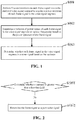
- FIG. 2 shows a flowchart of steps for determining whether a frame signal is a noise signal according to an embodiment of the present application.
- the above step S103 can include the following steps:
- a variance of power values of a frame signal exceeds the first threshold T 1 , it is indicated that a variation amplitude of energy (i.e., power values) of the frame signal with bands exceeds the first threshold T 1 . Therefore, it can be determined that the frame signal is not a noise signal.
- a variance of power values of a frame signal does not exceed the first threshold T 1 , it is indicated that a variation amplitude of energy (i.e., power values) of the frame signal with bands does not exceed the first threshold T 1 . Therefore, it can be determined that the frame signal is a noise signal.
- noise frame signals ⁇ f 1 ', f 2 ',...,f m ' ⁇ and non-noise frame signals ⁇ f ' m+1 , f' m+2 , ...,f n ' ⁇ can be determined sequentially in the to-be-analyzed voice signals ⁇ f 1 ', f 2 ', ..., f n ' ⁇ . Therefore, noise signals included in a voice signal segment can be determined, and voice denoising can be performed according to these noise signals ⁇ f 1 ', f 2 ', ..., f m ' ⁇ .
- the above step S102 can specifically include the following steps: S1021: Power values of each of the frame signals ⁇ f 1 ', f 2', ..., f n ' ⁇ at various frequencies are at least classified into a first power value set corresponding to a first frequency interval and a second power value set corresponding to a second frequency interval according to frequency intervals to which frequencies corresponding to the power spectrum of the frame signal belong, the first frequency interval being lower than the second frequency interval.
- a variance of each frame signal can be acquired in the frequency domain through statistics.
- Non-noise signals are generally concentrated in low-mid frequency bands, while noise signals are generally distributed uniformly in all frequency bands. Therefore, a variance of power values of each frame signal at various frequencies can be acquired through statistics in at least two different frequency bands (i.e., the above frequency intervals).
- the first frequency interval can be 0 ⁇ 2000 Hz (low frequency band), and the second frequency interval can be 2000 ⁇ 4000 Hz (high frequency band).
- 1024 power values corresponding to each frame signal are classified into a first power value set A corresponding to 0 ⁇ 2000 Hz and a second power value set B corresponding to 2000 ⁇ 4000 Hz according to the frequency intervals corresponding to the power values.
- 1024 corresponding power values are ⁇ p 1 1 , p 1 2 , ..., p 1 1024 ⁇ .
- power values included in the first power value set A are, for example, ⁇ p 1 1 , p 1 2 , ..., p 1 126 ⁇
- power values included in the first power set A are, for example, ⁇ p 1 127 , p 1 128 , ..., p 1 1024 ⁇
- the rest can be deduced by analogy.
- variances of signal power values can be acquired through statistics in more than two frequency bands in other embodiments of the present application.
- power values included in the first power value set A are, for example, ⁇ p 1 127 , p 1 128 , ..., p 1 1024 ⁇ . Therefore, a first variation Var high ( f 1 ') of the power values p 1 127 ⁇ p 1 1024 can be calculated according to a variance formula.
- S1021 A second variance of power values included in the second power value set is determined.
- power values included in the second power value set B are, for example, ⁇ p 1 1 , p 1 2 , ..., p 1 126 ⁇ . Therefore, a second variation Var low ( f 1 ') of the power values p 1 1 ⁇ p 1 126 can be calculated according to a variance formula.
- FIG. 4 shows a schematic curve graph of variances according to an embodiment of the present application.
- the horizontal axis indicates a frame number of a frame signal
- the vertical axis indicates the magnitude of a variance.
- a first variance curve shows the trend of a first variance of each frame signal
- the first variance curve shows the trend of a second variance of each frame signal.
- the step S1031 can specifically include: determining whether the first variance of the power values of the frame signal is greater than a first threshold T 1 ; and if yes, determining the frame signal as a noise signal.
- determining whether the first variance Var high ( f 1 ') is greater than the first threshold T 1 is determined whether the first variance Var high ( f 1 ') is greater than the first threshold T 1 .
- step S103 can further specifically include:
- a difference between the first variance and the second variance is
- the method can further include: ranking the frame signals in the to-be-analyzed voice signal segment according to magnitudes of the variances.
- the determining whether each frame signal in the voice signal segment is a noise signal based on the variance includes: determining whether each frame signal in the voice signal segment is a noise signal based on the variance of power values of each ranked frame signal at various frequencies.
- variances 1 Var ( f 1 '), Var ( f 2 '), ..., Var ( f n ') ⁇ of power values of the frame signals ⁇ f 1 ', f 2 ', ..., f n ' ⁇ can be determined in this embodiment.
- the frame signals can be ranked in ascending order of the variances of power values. A signal with a smaller variance is more likely a noise signal. Therefore, noise frame signals in the to-be-analyzed voice signal can be ranked to the front.
- power values of each of the frame signals ⁇ f 1 ', f 2 ', ..., f n ' ⁇ at various frequencies can be classified into a first power value set A corresponding to a first frequency interval (e.g., 0 ⁇ 2000 Hz) and a second power value set B corresponding to a second frequency interval (e.g., 2000 ⁇ 4000 Hz) according to the frequency intervals to which frequencies corresponding to the power spectrum of the frame signal belong.
- first variances ⁇ Var low ( f 1 '), Var low ( f 2 '), ..., Var low ( f n ') ⁇ of power values included in the first power value sets corresponding to the frame signals ⁇ f 1 ', f 2 ', ..., f n ' ⁇ can be determined respectively
- second variances ⁇ Var high ( f 1 '), Var high ( f 2 '), ..., Var high ( f n ') ⁇ of power values included in the second power value sets corresponding to the frame signals ⁇ f 1 ', f 2 ', ..., f n ' ⁇ can be determined respectively.
- noise signals included in the to-be-analyzed voice signals can be determined in the following manner: V a r l o w f i ' > T 1
- each frame signal f i ' It can be determined based on formula (1) whether a first variance of power values of each frame signal f i ' is greater than a first threshold T 1 . If no, the frame signal f i ' is determined as a noise frame signal. A set of determined noise frame signals is determined as a noise signal.
- each frame signal f i ' It can be determined based on formula (2) whether a second variance of power values of each frame signal f i ' is greater than a second threshold T 2 . If no, the frame signal f i ' is determined as a noise frame signal. A set of determined noise frame signals is determined as a noise signal.
- noise frames included in the to-be-analyzed voice signal can be recognized by using the above formulas (1) to (4). That is, any frame signal f i ' meeting any one of the above formulas (1) to (4) can be determined as a non-noise signal (a noise end frame). In other words, any frame signal f i ' meeting none of the above formulas (1) to (4) can be determined as a noise signal.
- a noise end frame f m ' can be determined based on the above process, and then the noise frames include: ⁇ f 1 ', f 2 ', ..., f' m-1 ⁇ .
- the noise end frame can be determined based on some of the formulas (1) to (4), such as the formulas (1) and (2), or the formulas (2) and (3).
- formulas for determining the noise end frame in the embodiment of the present application are not limited to the formulas listed above.
- the thresholds T 1 , T 2 , T 3 and T 4 are all obtained from statistics on a large quantity of testing samples.
- FIG. 5 is a flowchart of a voice denoising method according to an embodiment of the present application, including the following steps:
- noise frames ⁇ f 1 ', f 2 ', ..., f' m-1 ⁇ included in a to-be-analyzed voice segment are acquired according to the above method, frame numbers of original signals (before ranking) corresponding to the noise frames respectively can be determined, and an average power of these frame signals can be obtained through statistics to obtain a power spectrum estimation value P noise of the noise signal.
- the voice can be denoised after the power spectrum estimation value P noise of the noise signal is obtained.
- the denoising method is well known to those of ordinary skill in the art and will not be described specifically here.
- the step of ranking the frame signals according to the variances may be omitted, and noise frames can be determined directly based on variances of the original signals.
- the power spectrum estimation value P noise is generally calculated by using some of the frames, to avoid over-estimation. For example, first 30 frames can be captured to calculate the power spectrum estimation value P noise if the determined noise signal includes 50 frames. As such, the accuracy of the power spectrum estimation value can be improved.
- An embodiment of the present application further provides a noise signal determining apparatus corresponding to the above process implementation.
- the apparatus can be implemented through software, and can also be implemented through hardware or a combination of software and hardware.
- an apparatus in a logic sense can be formed by reading a corresponding computer program through a Central Process Unit (CPU) of a server into a memory and running the computer program. Refer to FIG. 8 for a hardware structure of the apparatus.
- CPU Central Process Unit
- FIG. 6 is a block diagram of a noise signal determining apparatus according to an embodiment of the present application.
- functions of units in the apparatus can correspond to functions of the steps in the above noise signal determining method. Refer to the above method embodiment for details.
- the noise signal determining apparatus 100 includes:
- the apparatus further includes: a segment acquiring unit configured to:
- the noise determining unit 103 is configured to:
- the variance determining unit 102 is configured to:
- the noise determining unit 103 is configured to:
- the variance determining unit 102 is specifically configured to:
- the noise determining unit 103 is configured to:
- An embodiment of the present application further provides a voice denoising apparatus corresponding to the above process implementation.
- the apparatus can be implemented through software, and can also be implemented through hardware or a combination of software and hardware.
- an apparatus in a logic sense can be formed by reading a corresponding computer program through a Central Process Unit (CPU) of a server into a memory and running the computer program. Refer to FIG. 8 for a hardware structure of the apparatus.
- CPU Central Process Unit
- FIG. 7 is a block diagram of a voice denoising apparatus according to an embodiment of the present application.
- functions of units in the apparatus can correspond to functions of the steps in the above voice denoising method. Refer to the above method embodiment for details.
- the voice denoising apparatus 200 includes:
- the apparatus further includes: a ranking unit 204 configured to: rank the frame signals in the to-be-analyzed voice signal segment according to magnitudes of the variances.
- a ranking unit 204 configured to: rank the frame signals in the to-be-analyzed voice signal segment according to magnitudes of the variances.
- the noise determining unit 205 is specifically configured to: determine whether each frame signal in the voice signal segment is a noise signal based on the variance of power values of each ranked frame signal at various frequencies.
- the noise signal determining method and apparatus as well as the voice denoising method and apparatus provided in the embodiments of the present application can accurately determine several noise frames included in the to-be-analyzed voice signal segment.
- the to-be-processed voice can be denoised based on an average power of the determined several noise frames in the voice denoising process, and thus the voice denoising effect is improved.
- the apparatus is divided into various units in terms of functions for respective descriptions.
- functions of the units may be implemented in the same software and/or hardware component or multiple software and/or hardware components.
- the embodiments of the present invention may be provided as a method, a system, or a computer program product. Therefore, the present invention may be implemented as a complete hardware embodiment, a complete software embodiment, or an embodiment combining software and hardware. Moreover, the present invention may be in the form of a computer program product implemented on one or more computer usable storage media (including, but not limited to, a magnetic disk memory, a CD-ROM, an optical memory, and the like) including computer usable program codes.
- a computer usable storage media including, but not limited to, a magnetic disk memory, a CD-ROM, an optical memory, and the like
- the present invention is described with reference to flowcharts and/or block diagrams according to the method, the device (system) and the computer program product according to the embodiments of the present invention.
- a computer program instruction may be used to implement each process and/or block and a combination of processes and/or blocks in the flowcharts and/or block diagrams.
- the computer program instructions may be provided to a general-purpose computer, a special-purpose computer, an embedded processor or other programmable data processing device to generate a machine, such that the computer or a processor of other programmable data processing device executes an instruction to generate an apparatus configured to implement functions designated in one or more processes in a flowchart and/or one or more blocks in a block diagram.
- the computer program instructions may also be stored in a computer readable storage that can guide a computer or other programmable data processing device to work in a specific manner, such that the instruction stored in the computer readable storage generates a manufacture including an instruction apparatus which implements functions designated by one or more processes in a flowchart and/or one or more blocks in a block diagram.
- the computer program instructions may also be loaded in a computer or other programmable data processing device, such that a series of operation steps are executed on the computer or other programmable device to generate a computer implemented processing. Therefore, the instruction executed in the computer or other programmable device provides steps for implementing functions designated in one or more processes in a flowchart and/or one or more blocks in a block diagram.
- the embodiments of the present application may be provided as a method, a system, or a computer program product. Therefore, the present application may be implemented in the form of a complete hardware embodiment, a complete software embodiment, or an embodiment combining software and hardware. Moreover, the present application may be in the form of a computer program product implemented on one or more computer usable storage media (including, but not limited to, a magnetic disk memory, a CD-ROM, an optical memory, and the like) including computer usable program codes.
- a computer usable storage media including, but not limited to, a magnetic disk memory, a CD-ROM, an optical memory, and the like
- the present application may be described in a common context of a computer executable instruction executed by a computer, for example, a program module.
- the program module includes a routine, a program, an object, an assembly, a data structure, and the like used for executing a specific task or implementing a specific abstract data type.
- the present application may also be implemented in distributed computing environments, in which a task is executed by using remote processing devices connected through a communications network.
- the program module may be located in local and remote computer storage media including a storage device.
Landscapes
- Engineering & Computer Science (AREA)
- Physics & Mathematics (AREA)
- Multimedia (AREA)
- Health & Medical Sciences (AREA)
- Audiology, Speech & Language Pathology (AREA)
- Human Computer Interaction (AREA)
- Signal Processing (AREA)
- Acoustics & Sound (AREA)
- Computational Linguistics (AREA)
- Quality & Reliability (AREA)
- Spectroscopy & Molecular Physics (AREA)
- Circuit For Audible Band Transducer (AREA)
- Telephone Function (AREA)
- Telephonic Communication Services (AREA)
- Noise Elimination (AREA)
- Mobile Radio Communication Systems (AREA)
Abstract
Description
- The present application claims priority to Chinese Patent Application No.
201510670697.8, filed on October 13, 2015 - The present application relates to the field of voice denoising technologies, and in particular, to a noise signal determining method and apparatus and a voice denoising method and apparatus.
- A voice denoising technology can improve voice quality by removing environment noises from a voice signal. A power spectrum of a noise signal in a voice signal needs to be determined first in the voice denoising process, and then the voice signal can be denoised according to the determined power spectrum of the noise signal.
- In the prior art, a power spectrum of a noise signal in a voice signal generally can be determined in the following manner: analyzing first N frame signals in a voice signal segment on the assumption that the first N frame signals are noise signals (i.e., including no human voice signals), to obtain the power spectra of the noise signals in the voice signal.
- In an actual application scenario, first N frame signals in a voice signal which are assumed to be noise signals in the prior art are usually inconsistent with actual noise signals, and thus the accuracy of obtained noise signal power spectra is affected.
- Objectives of embodiments of the present application are to provide a noise signal determining method and apparatus and a voice denoising method and apparatus, to solve the problem in the prior art that the accuracy of obtained noise signal power spectra is affected as first N frame signals assumed to be noise signals are inconsistent with actual noise signals.
- To solve the above technical problem, the noise signal determining method and apparatus and the voice denoising method and apparatus provided in the embodiments of the present application are implemented as follows:
A noise signal determining method, including: - performing Fourier transform on each frame signal in a to-be-analyzed voice signal segment to acquire a power spectrum of each frame signal in the voice signal segment;
- determining a variance of power values of each frame signal in the voice signal segment at various frequencies based on the power spectrum of the frame signal; and
- determining whether each frame signal in the voice signal segment is a noise signal based on the variance.
- A voice denoising method, including:
- determining a to-be-analyzed voice signal segment included in a to-be-processed voice;
- performing Fourier transform on each frame signal in the to-be-analyzed voice signal segment to acquire a power spectrum of each frame signal in the voice signal segment;
- determining a variance of power values of each frame signal in the voice signal segment at various frequencies based on the power spectrum of the frame signal;
- determining whether each frame signal in the voice signal segment is a noise signal based on the variance to obtain several noise frames included in the voice signal segment; and
- determining an average power corresponding to the several noise frames included in the voice signal segment, and denoising the to-be-processed voice based on the average power of the noise frames.
- A noise signal determining apparatus, including:
- a power spectrum acquiring unit configured to perform Fourier transform on each frame signal in a to-be-analyzed voice signal segment to acquire a power spectrum of each frame signal in the voice signal segment;
- a variance determining unit configured to determine a variance of power values of each frame signal in the voice signal segment at various frequencies based on the power spectrum of the frame signal; and
- a noise determining unit configured to determine whether each frame signal in the voice signal segment is a noise signal based on the variance.
- A voice denoising apparatus, including:
- a segment determining unit configured to determine a to-be-analyzed voice signal segment included in a to-be-processed voice;
- a power spectrum acquiring unit configured to perform Fourier transform on each frame signal in the to-be-analyzed voice signal segment to acquire a power spectrum of each frame signal in the voice signal segment;
- a variance determining unit configured to determine a variance of power values of each frame signal in the voice signal segment at various frequencies based on the power spectrum of the frame signal;
- a noise determining unit configured to determine whether each frame signal in the voice signal segment is a noise signal based on the variance, and obtain several noise frames included in the voice signal segment; and
- a voice denoising unit configured to determine an average power corresponding to the several noise frames included in the voice signal segment, and denoise the to-be-processed voice based on the average power of the noise frames.
- As can be seen from the above technical solutions provided in the embodiments of the present application, by performing Fourier transform on a to-be-analyzed voice signal segment to acquire a power spectrum of each frame signal, determining a variance of power values of each frame signal in the to-be-analyzed voice signal segment at various frequencies, and finally determining whether the frame signal is a noise signal based on the variance, the noise signal determining method and apparatus as well as the voice denoising method and apparatus provided in the embodiments of the present application can accurately obtain several noise frames included in the to-be-analyzed voice signal segment. The to-be-processed voice can be denoised based on an average power of the determined noise frames in the voice denoising process, and thus the voice denoising effect is improved.
- To describe the technical solutions in the embodiments of the present application or the prior art more clearly, the following briefly introduces the accompanying drawings used for describing the embodiments or the prior art. Apparently, the accompanying drawings described below are merely some embodiments recited in the present application, and those of ordinary skill in the art may still derive other drawings from these accompanying drawings without creative efforts.
-
FIG. 1 is a flowchart of a noise signal determining method according to an embodiment of the present application; -
FIG. 2 is a flowchart of steps for determining whether a frame signal is a noise signal according to an embodiment of the present application; -
FIG. 3 is a flowchart of steps for determining a variance of power values of a frame signal at various sampling points according to an embodiment of the present application; -
FIG. 4 is a curve graph of variances of power values according to an embodiment of the present application; -
FIG. 5 is a flowchart of a voice denoising method according to an embodiment of the present application; -
FIG. 6 is a block diagram of a noise signal determining apparatus according to an embodiment of the present application; -
FIG. 7 is a block diagram of a voice denoising apparatus according to an embodiment of the present application; and -
FIG. 8 is a schematic structural diagram of a hardware implementation example of an apparatus provided in the present application. - In order to make those skilled in the art better understand the technical solutions of the present application, the technical solutions in the embodiments of the present application will be described clearly and completely below with reference to the accompanying drawings in the embodiments of the present application. It is apparent that the described embodiments are merely some, not all of the embodiments of the present application. Based on the embodiments of the present application, those of ordinary skill in the art can obtain other embodiments without creative efforts, which all fall within the protection scope of the present application.
-
FIG. 1 shows a flowchart of a noise signal determining method according to an embodiment of the present application. In order to determine a noise signal in a to-be-analyzed voice signal segment, the noise signal determining method of this embodiment includes the following steps:
S101: Fourier transform is performed on each frame signal in the to-be-analyzed voice signal segment to acquire a power spectrum of each frame signal in the voice signal segment. - The to-be-analyzed voice signal segment can be captured from a to-be-processed voice based on a certain rule. The to-be-analyzed voice signal segment can be a "suspected noise frame segment" that possibly includes many noise frames based on preliminary determination. Preferably, before the step S101, the method further includes:
- determining a voice signal segment with an amplitude variation less than a preset threshold in the to-be-processed voice as the to-be-analyzed voice signal segment based on an amplitude variation of a time-domain signal of the to-be-processed voice; or
- capturing first N frame voice signals in the to-be-processed voice as the to-be-analyzed voice signal segment.
- In the embodiment of the present application, in a time domain of a voice signal, a noise signal is generally a voice signal segment having a small amplitude variation or having consistent amplitudes, while a voice signal segment including a human speech voice generally fluctuates greatly in amplitude variation. Based on such a rule, a preset threshold used for recognizing a "suspected noise frame segment" included in a to-be-processed voice (i.e., a to-be-denoised voice) may be set in advance. Therefore, a voice signal segment having an amplitude variation less than the preset threshold in the to-be-processed voice can be determined as the to-be-analyzed voice signal segment.
- In the embodiment of the present application, framing can be performed on a voice signal first. A frame signal refers to a single-frame voice signal, and one voice signal segment can include several frame signals. One frame signal can include several sampling points, e.g., 1024 sampling points. Two adjacent frame signals can overlap each other (for example, an overlap ratio can be 50%). In this embodiment, a short-time Fourier transform (STFT) can be performed on a voice signal in a time domain to acquire a power spectrum (frequency domain) of the voice signal. The power spectrum can include multiple power values corresponding to different frequencies, e.g., 1024 power values.
- In the embodiment of the present application, it can be generally assumed by default that a voice signal in a period of time (e.g., 1.5s) before a person speaks is a noise signal (an environment noise) in a voice signal segment including a human voice. Therefore, it can be determined in the embodiment of the present application that the to-be-analyzed voice signal is first N frame signals in a voice signal segment. For example, the to-be-analyzed voice signal is a voice signal in the first 1.5s: {f 1 ',f 2 ',...,fn '}, wherein f 1', f 2', ..., f n' represent frame signals included in the voice signal respectively. The embodiment of the present application aims to determine noise signals from the frame signals in the analyzed voice signal.
- Multiple power values corresponding to each frame signal can be calculated based on the power spectrum of the to-be-analyzed voice signal: {f 1 ', f 2 ', ..., f n'} obtained after the STFT. Assume that a power spectrum of a frame signal at a frequency is a+bi, wherein the real part a can represent the amplitude and the imaginary part b can represent the phase. Then a power value of the frame signal at the frequency can be: a2+b2. Power values of each frame signal at different frequencies can be obtained based on the above process. For example, if each of the frame signals {f 1 ',f 2 ', ...,f n'} includes 1024 sampling points, 1024 power values of each frame signal at different frequencies can be obtained based on the power spectrum. For example, power values corresponding to the frame signal f 1' is {p 1 1, p 1 2 , ..., p 1 1024}, power values corresponding to the frame signal f 2' is {p 2 1 , p 2 2 , ..., p 2 1024}, ..., and power values corresponding to the frame signal f n' is {p n 1, p n 2, ..., p n 1024}.
- S102: A variance of power values of each frame signal in the voice signal segment at various frequencies is determined based on the power spectrum of the frame signal.
- Based on the power values of frame signals {f 1', f2', ...,f n'} at various frequencies, variances {Var(f1'), Var(f2'), ..., Var(fn')} of the power values of the frame signals {f 1', f 2', ..., f n'} can be calculated according to a variance calculation formula. For example, if each frame signal includes 1024 sampling points, Var(f1') is a variance of {p 1 1,p 12, ...,p 1 1024}, Var(f 2') is a variance of {p 2 1, p 2 2, ...,p 2 1024}, ..., and Var(fn') is a variance of {p n 1, p n 2, ...,p n 1024}.
- S103: It is determined whether each frame signal in the voice signal segment is a noise signal based on the variance.
- In the embodiment of the present application, energy (i.e., a power value) of a frame signal including a speech segment generally varies with bands greatly, while energy of a frame signal without a speech segment (i.e., a noise signal) varies with bands slightly and is evenly distributed. Therefore, it can be determined whether each frame signal is a noise signal based on a variance of power values of the frame signal.
-
FIG. 2 shows a flowchart of steps for determining whether a frame signal is a noise signal according to an embodiment of the present application. In the embodiment of the present application, the above step S103 can include the following steps: - S1031: It is determined whether the variance of the power values of the frame signal is greater than a first threshold T1.
- S1032: If no, the frame signal is determined as a noise signal.
- If a variance of power values of a frame signal exceeds the first threshold T1, it is indicated that a variation amplitude of energy (i.e., power values) of the frame signal with bands exceeds the first threshold T1. Therefore, it can be determined that the frame signal is not a noise signal. In contrast, if a variance of power values of a frame signal does not exceed the first threshold T1, it is indicated that a variation amplitude of energy (i.e., power values) of the frame signal with bands does not exceed the first threshold T1. Therefore, it can be determined that the frame signal is a noise signal.
- Based on the above process, noise frame signals {f 1',f 2 ',...,fm '} and non-noise frame signals {f 'm+1,f' m+2, ...,fn'} can be determined sequentially in the to-be-analyzed voice signals {f 1',f 2', ..., fn'}. Therefore, noise signals included in a voice signal segment can be determined, and voice denoising can be performed according to these noise signals {f 1',f 2 ',...,f m'}.
- Referring to
FIG. 3 , in the embodiment of the present application, the above step S102 can specifically include the following steps:
S1021: Power values of each of the frame signals {f 1',f2', ..., f n'} at various frequencies are at least classified into a first power value set corresponding to a first frequency interval and a second power value set corresponding to a second frequency interval according to frequency intervals to which frequencies corresponding to the power spectrum of the frame signal belong, the first frequency interval being lower than the second frequency interval. - In a specific embodiment, a variance of each frame signal can be acquired in the frequency domain through statistics. Non-noise signals are generally concentrated in low-mid frequency bands, while noise signals are generally distributed uniformly in all frequency bands. Therefore, a variance of power values of each frame signal at various frequencies can be acquired through statistics in at least two different frequency bands (i.e., the above frequency intervals).
- For example, the first frequency interval can be 0∼2000 Hz (low frequency band), and the second frequency interval can be 2000∼4000 Hz (high frequency band). If each frame signal includes 1024 sampling points, 1024 power values corresponding to each frame signal are classified into a first power value set A corresponding to 0∼2000 Hz and a second power value set B corresponding to 2000∼4000 Hz according to the frequency intervals corresponding to the power values. Using the frame signal f 1' as an example, 1024 corresponding power values are {p 1 1, p 1 2 , ..., p1 1024}. According to the frequency intervals, it can be derived that power values included in the first power value set A are, for example, {p 1 1, p 1 2, ..., p 1 126}, power values included in the first power set A are, for example, {p 1 127, p 1 128, ..., p 1 1024}, and the rest can be deduced by analogy.
- It should be noted that variances of signal power values can be acquired through statistics in more than two frequency bands in other embodiments of the present application.
- S1022: A first variance of power values included in the first power value set is determined.
- As described above, using the frame signal f 1' as an example, power values included in the first power value set A are, for example, {p 1 127, p 1 128, ..., p 1 1024}. Therefore, a first variation Varhigh (f 1') of the power values p 1 127∼p 1 1024 can be calculated according to a variance formula.
- S1021: A second variance of power values included in the second power value set is determined.
- As described above, using the frame signal f 1' as an example, power values included in the second power value set B are, for example, {p 1 1 , p 1 2, ..., p 1 126}. Therefore, a second variation Varlow (f 1') of the power values p 1 1 ∼p1 126 can be calculated according to a variance formula.
-
FIG. 4 shows a schematic curve graph of variances according to an embodiment of the present application. In the graph, the horizontal axis indicates a frame number of a frame signal, and the vertical axis indicates the magnitude of a variance. A first variance curve shows the trend of a first variance of each frame signal, and the first variance curve shows the trend of a second variance of each frame signal. As can be seen from the graph that the variance fluctuates slightly in the high frequency band 2000-4000 Hz, and the variance fluctuates greatly in thelow frequency band 0∼2000 Hz. This can prove that non-noise signals are mainly concentrated in the low frequency band. - As described above, in a preferred embodiment of the present application, the step S1031 can specifically include:
determining whether the first variance of the power values of the frame signal is greater than a first threshold T1; and if yes, determining the frame signal as a noise signal. Using the frame signal f 1 ', as an example, it is determined whether the first variance Varhigh (f1 ') is greater than the first threshold T1. - In the embodiment of the present application, the above step S103 can further specifically include:
- determining whether a difference between the first variance and the second variance is greater than a second threshold T2; and
- if no, determining the frame signal as a noise signal.
- Using the frame signal f 1' as an example, a difference between the first variance and the second variance is |Varhigh (f 1')-Varlow (f 1')|. If |Varhigh (f 1')-Varlow (f 1')|<T2, the frame signal f 1' is determined as a noise signal. Noise signals can be determined sequentially from the to-be-analyzed voice frame signals {f 1',f 2 ', ...,f n'} according to this step.
- In the embodiment of the present application, between the step S102 and the step S103, the method can further include:
ranking the frame signals in the to-be-analyzed voice signal segment according to magnitudes of the variances. - Then the determining whether each frame signal in the voice signal segment is a noise signal based on the variance includes:
determining whether each frame signal in the voice signal segment is a noise signal based on the variance of power values of each ranked frame signal at various frequencies. - As described above, variances 1 Var(f 1'), Var(f2 '), ..., Var(f n')} of power values of the frame signals {f 1', f 2', ...,f n'} can be determined in this embodiment. The frame signals can be ranked in ascending order of the variances of power values. A signal with a smaller variance is more likely a noise signal. Therefore, noise frame signals in the to-be-analyzed voice signal can be ranked to the front. In the embodiment of the present application, if variances are respectively acquired through statistics in the low frequency band (e.g., 0∼2000 Hz) and the high frequency band (e.g., 2000∼4000 Hz), power values of each of the frame signals {f 1', f 2', ..., f n'} at various frequencies can be classified into a first power value set A corresponding to a first frequency interval (e.g., 0∼2000 Hz) and a second power value set B corresponding to a second frequency interval (e.g., 2000∼4000 Hz) according to the frequency intervals to which frequencies corresponding to the power spectrum of the frame signal belong. Then first variances {Varlow (f 1'), Varlow (f 2'), ..., Varlow (fn ')} of power values included in the first power value sets corresponding to the frame signals {f 1', f 2', ..., f n'} can be determined respectively, and second variances {Varhigh (f 1'), Varhigh (f2 '), ..., Varhigh (fn ')} of power values included in the second power value sets corresponding to the frame signals {f 1', f 2', ..., f n'} can be determined respectively. In the step S104 above, based on the variance statistics at high frequencies and low frequencies, noise signals included in the to-be-analyzed voice signals (which can be voice signals ranked according to magnitudes of variances) can be determined in the following manner:


- It can be determined based on formula (2) whether a second variance of power values of each frame signal fi ' is greater than a second threshold T2. If no, the frame signal f i' is determined as a noise frame signal. A set of determined noise frame signals is determined as a noise signal.
- It can be determined based on formula (3) whether a difference Varhigh (f' i+1)-Varhigh (f' i-1) between a second variance Varhigh (f' i-1) of power values of a frame signal f' i-1 prior to a frame signal f i' and a second variance Varhigh (f' i+1) of power values of a frame signal f' i+1 next to the frame signal f'i is greater than a third threshold T3. If no, the frame signal f'i is determined as a noise frame signal. A set of determined noise frame signals is determined as a noise signal.
- It can be determined based on formula (4) whether a difference Varlow (f' i+1)-Varlow (f' i-1) between a first variance Varlow (f' i-1) of power values of a frame signal f' i-1 prior to a frame signal f i' and a first variance Varlow (f' i+1) of power values of a frame signal f' i+1 next to the frame signal fi ' is greater than a fourth threshold T4. If no, the frame signal fi ' is determined as a noise frame signal. A set of determined noise frame signals is determined as a noise signal.
- In the embodiment of the present application, noise frames included in the to-be-analyzed voice signal can be recognized by using the above formulas (1) to (4). That is, any frame signal f i ' meeting any one of the above formulas (1) to (4) can be determined as a non-noise signal (a noise end frame). In other words, any frame signal fi' meeting none of the above formulas (1) to (4) can be determined as a noise signal. A noise end frame fm' can be determined based on the above process, and then the noise frames include: {f 1',f 2 ',...,f' m-1}.
- It should be noted that, in other embodiments of the present application, the noise end frame can be determined based on some of the formulas (1) to (4), such as the formulas (1) and (2), or the formulas (2) and (3). Moreover, formulas for determining the noise end frame in the embodiment of the present application are not limited to the formulas listed above. The thresholds T1, T2, T3 and T4 are all obtained from statistics on a large quantity of testing samples.
-
FIG. 5 is a flowchart of a voice denoising method according to an embodiment of the present application, including the following steps: - S201: A to-be-analyzed voice signal segment included in a to-be-processed voice is determined.
- S202: Fourier transform is performed on each frame signal in the to-be-analyzed voice signal segment to acquire a power spectrum of each frame signal in the voice signal segment.
- S203: A variance of power values of each frame signal in the voice signal segment at various frequencies is determined based on the power spectrum of the frame signal.
- S204: It is determined whether each frame signal in the voice signal segment is a noise signal based on the variance, and several noise frames included in the voice signal segment are obtained.
- S205: An average power corresponding to the several noise frames included in the voice signal segment is determined, and the to-be-processed voice is denoised based on the average power of the noise frames.
- In the embodiment of the present application, after noise frames {f 1',f 2 ', ..., f' m-1} included in a to-be-analyzed voice segment are acquired according to the above method, frame numbers of original signals (before ranking) corresponding to the noise frames respectively can be determined, and an average power of these frame signals can be obtained through statistics to obtain a power spectrum estimation value Pnoise of the noise signal. The voice can be denoised after the power spectrum estimation value Pnoise of the noise signal is obtained. The denoising method is well known to those of ordinary skill in the art and will not be described specifically here.
- Definitely, in other feasible embodiments of the present application, the step of ranking the frame signals according to the variances may be omitted, and noise frames can be determined directly based on variances of the original signals. In addition, after multiple frames of noise signal are determined in the present application, the power spectrum estimation value Pnoise is generally calculated by using some of the frames, to avoid over-estimation. For example, first 30 frames can be captured to calculate the power spectrum estimation value Pnoise if the determined noise signal includes 50 frames. As such, the accuracy of the power spectrum estimation value can be improved.
- An embodiment of the present application further provides a noise signal determining apparatus corresponding to the above process implementation. The apparatus can be implemented through software, and can also be implemented through hardware or a combination of software and hardware. By using a software implementation manner as an example, an apparatus in a logic sense can be formed by reading a corresponding computer program through a Central Process Unit (CPU) of a server into a memory and running the computer program. Refer to
FIG. 8 for a hardware structure of the apparatus. -
FIG. 6 is a block diagram of a noise signal determining apparatus according to an embodiment of the present application. In this embodiment, functions of units in the apparatus can correspond to functions of the steps in the above noise signal determining method. Refer to the above method embodiment for details. The noisesignal determining apparatus 100 includes: - a power
spectrum acquiring unit 101 configured to perform Fourier transform on each frame signal in a to-be-analyzed voice signal segment to acquire a power spectrum of each frame signal in the voice signal segment; - a
variance determining unit 102 configured to determine a variance of power values of each frame signal in the voice signal segment at various frequencies based on the power spectrum of the frame signal; and - a
noise determining unit 103 configured to determine whether each frame signal in the voice signal segment is a noise signal based on the variance. - Preferably, the apparatus further includes: a segment acquiring unit configured to:
- determine a voice signal segment with an amplitude variation less than a preset threshold in a to-be-processed voice as the to-be-analyzed voice signal segment based on an amplitude variation of a time-domain signal of the to-be-processed voice; or
- capture first N frame voice signals in a to-be-processed voice as the to-be-analyzed voice signal segment.
- Preferably, the
noise determining unit 103 is configured to: - determine whether the variance corresponding to each frame signal in the voice signal segment is greater than a first threshold; and
- if no, determine the frame signal as a noise signal.
- Preferably, the
variance determining unit 102 is configured to: - at least classify power values of the frame signal at various frequencies into a first power value set corresponding to a first frequency interval according to frequency intervals to which frequencies corresponding to the power spectrum belong; and
- determine a first variance of power values included in the first power value set.
- Then the
noise determining unit 103 is configured to: - determine whether the first variance is greater than the first threshold; and
- if no, determine the frame signal as a noise signal.
- Preferably, the
variance determining unit 102 is specifically configured to: - at least classify power values of each frame signal at various frequencies into a first power value set corresponding to a first frequency interval and a second power value set corresponding to a second frequency interval according to frequency intervals to which frequencies corresponding to the power values of the frame signal belong, wherein the first frequency interval is lower than the second frequency interval;
- determine a first variance of power values included in the first power value set; and
- determine a second variance of power values included in the second power value set.
- Then the
noise determining unit 103 is configured to: - determine whether a difference between the first variance and the second variance which correspond to each frame signal is greater than a second threshold; and
- if no, determine the frame signal as a noise signal.
- An embodiment of the present application further provides a voice denoising apparatus corresponding to the above process implementation. The apparatus can be implemented through software, and can also be implemented through hardware or a combination of software and hardware. By using a software implementation manner as an example, an apparatus in a logic sense can be formed by reading a corresponding computer program through a Central Process Unit (CPU) of a server into a memory and running the computer program. Refer to
FIG. 8 for a hardware structure of the apparatus. -
FIG. 7 is a block diagram of a voice denoising apparatus according to an embodiment of the present application. In this embodiment, functions of units in the apparatus can correspond to functions of the steps in the above voice denoising method. Refer to the above method embodiment for details. In this embodiment, thevoice denoising apparatus 200 includes: - a
segment determining unit 201 configured to determine a to-be-analyzed voice signal segment included in a to-be-processed voice; - a power
spectrum acquiring unit 202 configured to perform Fourier transform on each frame signal in the to-be-analyzed voice signal segment to acquire a power spectrum of each frame signal in the voice signal segment; - a
variance determining unit 203 configured to determine a variance of power values of each frame signal in the voice signal segment at various frequencies based on the power spectrum of the frame signal; - a
noise determining unit 205 configured to determine whether each frame signal in the voice signal segment is a noise signal based on the variance, and obtain several noise frames included in the voice signal segment; and - a
voice denoising unit 10 configured to determine an average power corresponding to the several noise frames included in the voice signal segment, and denoise the to-be-processed voice based on the average power of the noise frames. - Preferably, the apparatus further includes: a ranking
unit 204 configured to:
rank the frame signals in the to-be-analyzed voice signal segment according to magnitudes of the variances. - Then the
noise determining unit 205 is specifically configured to:
determine whether each frame signal in the voice signal segment is a noise signal based on the variance of power values of each ranked frame signal at various frequencies. - By performing Fourier transform on a to-be-analyzed voice signal segment to acquire a power spectrum of each frame signal, determining a variance of power values of each frame signal in the to-be-analyzed voice signal segment at various frequencies, and finally determining whether the frame signal is a noise signal based on the variance, the noise signal determining method and apparatus as well as the voice denoising method and apparatus provided in the embodiments of the present application can accurately determine several noise frames included in the to-be-analyzed voice signal segment. The to-be-processed voice can be denoised based on an average power of the determined several noise frames in the voice denoising process, and thus the voice denoising effect is improved.
- For ease of description, the apparatus is divided into various units in terms of functions for respective descriptions. Definitely, when the present application is implemented, functions of the units may be implemented in the same software and/or hardware component or multiple software and/or hardware components.
- Those skilled in the art should understand that the embodiments of the present invention may be provided as a method, a system, or a computer program product. Therefore, the present invention may be implemented as a complete hardware embodiment, a complete software embodiment, or an embodiment combining software and hardware. Moreover, the present invention may be in the form of a computer program product implemented on one or more computer usable storage media (including, but not limited to, a magnetic disk memory, a CD-ROM, an optical memory, and the like) including computer usable program codes.
- The present invention is described with reference to flowcharts and/or block diagrams according to the method, the device (system) and the computer program product according to the embodiments of the present invention. It should be understood that a computer program instruction may be used to implement each process and/or block and a combination of processes and/or blocks in the flowcharts and/or block diagrams. The computer program instructions may be provided to a general-purpose computer, a special-purpose computer, an embedded processor or other programmable data processing device to generate a machine, such that the computer or a processor of other programmable data processing device executes an instruction to generate an apparatus configured to implement functions designated in one or more processes in a flowchart and/or one or more blocks in a block diagram.
- The computer program instructions may also be stored in a computer readable storage that can guide a computer or other programmable data processing device to work in a specific manner, such that the instruction stored in the computer readable storage generates a manufacture including an instruction apparatus which implements functions designated by one or more processes in a flowchart and/or one or more blocks in a block diagram.
- The computer program instructions may also be loaded in a computer or other programmable data processing device, such that a series of operation steps are executed on the computer or other programmable device to generate a computer implemented processing. Therefore, the instruction executed in the computer or other programmable device provides steps for implementing functions designated in one or more processes in a flowchart and/or one or more blocks in a block diagram.
- It should be further noted that the term "include", "comprise" or other variations thereof are intended to cover non-exclusive including, so that a process, method, commodity or device including a series of elements not only includes the elements, but also includes other elements not clearly listed, or further includes inherent elements of the process, method, commodity or device. In a case without any more limitations, an element defined by "including a/an..." does not exclude that the process, method, commodity or device including the element further has other identical elements.
- Those skilled in the art should understand that the embodiments of the present application may be provided as a method, a system, or a computer program product. Therefore, the present application may be implemented in the form of a complete hardware embodiment, a complete software embodiment, or an embodiment combining software and hardware. Moreover, the present application may be in the form of a computer program product implemented on one or more computer usable storage media (including, but not limited to, a magnetic disk memory, a CD-ROM, an optical memory, and the like) including computer usable program codes.
- The present application may be described in a common context of a computer executable instruction executed by a computer, for example, a program module. Generally, the program module includes a routine, a program, an object, an assembly, a data structure, and the like used for executing a specific task or implementing a specific abstract data type. The present application may also be implemented in distributed computing environments, in which a task is executed by using remote processing devices connected through a communications network. In the distributed computer environments, the program module may be located in local and remote computer storage media including a storage device.
- The embodiments in the specification are described progressively, identical or similar parts of the embodiments may be obtained with reference to each other, and each embodiment emphasizes a part different from other embodiments. Especially, the system embodiment is basically similar to the method embodiment, so it is described simply. For related parts, refer to the descriptions of the parts in the method embodiment.
- The above descriptions are merely embodiments of the present application, and are not intended to limit the present application. Various modifications and variations of the present application are possible to those skilled in the art. Any modification, equivalent replacement, improvement and the like made within the spirit and principle of the present application should all fall within the scope of claims of the present application.
Claims (18)
- A noise signal determining method, comprising:performing Fourier transform on each frame signal in a to-be-analyzed voice signal segment to acquire a power spectrum of each frame signal in the voice signal segment;determining a variance of power values of each frame signal in the voice signal segment at various frequencies based on the power spectrum of the frame signal; anddetermining whether each frame signal in the voice signal segment is a noise signal based on the variance.
- The method of claim 1, wherein before the step of performing Fourier transform on each frame signal in a to-be-analyzed voice signal segment to acquire a power spectrum of each frame signal in the voice signal segment, the method further comprises:determining a voice signal segment with an amplitude variation less than a preset threshold in a to-be-processed voice as the to-be-analyzed voice signal segment based on an amplitude variation of a time-domain signal of the to-be-processed voice; orcapturing first N frame voice signals in a to-be-processed voice as the to-be-analyzed voice signal segment.
- The method of claim 1, wherein the step of determining whether each frame signal in the voice signal segment is a noise signal based on the variance comprises:determining whether the variance corresponding to each frame signal in the voice signal segment is greater than a first threshold; andif no, determining the frame signal as a noise signal.
- The method of claim 3, wherein the step of determining a variance of power values of each frame signal in the voice signal segment at various frequencies based on the power spectrum of the frame signal comprises:at least classifying power values of the frame signal at various frequencies into a first power value set corresponding to a first frequency interval according to frequency intervals to which frequencies corresponding to the power spectrum belong; anddetermining a first variance of power values comprised in the first power value set;then the step of determining whether the variance is greater than a first threshold comprises:
determining whether the first variance is greater than the first threshold. - The method of claim 1, wherein the step of determining a variance of power values of each frame signal in the voice signal segment at various frequencies based on the power spectrum of the frame signal comprises:at least classifying power values of each frame signal at various frequencies into a first power value set corresponding to a first frequency interval and a second power value set corresponding to a second frequency interval according to frequency intervals to which frequencies corresponding to the power values of the frame signal belong, wherein the first frequency interval is lower than the second frequency interval;determining a first variance of power values comprised in the first power value set; anddetermining a second variance of power values comprised in the second power value set;then the step of determining whether each frame signal in the voice signal segment is a noise signal based on the variances comprises:determining whether a difference between the first variance and the second variance which correspond to each frame signal is greater than a second threshold; andif no, determining the frame signal as a noise signal.
- The method of claim 1, wherein after the step of determining a variance of power values of each frame signal in the voice signal segment at various frequencies based on the power spectrum of the frame signal and before the step of determining whether each frame signal in the voice signal segment is a noise signal based on the variance, the method further comprises:ranking the frame signals in the to-be-analyzed voice signal segment according to magnitudes of the variances;then the step of determining whether each frame signal in the voice signal segment is a noise signal based on the variance comprises:
determining whether each frame signal in the voice signal segment is a noise signal based on the variance of power values of each ranked frame signal at various frequencies. - A voice denoising method, comprising:determining a to-be-analyzed voice signal segment comprised in a to-be-processed voice;performing Fourier transform on each frame signal in the to-be-analyzed voice signal segment to acquire a power spectrum of each frame signal in the voice signal segment;determining a variance of power values of each frame signal in the voice signal segment at various frequencies based on the power spectrum of the frame signal;determining whether each frame signal in the voice signal segment is a noise signal based on the variance to obtain several noise frames comprised in the voice signal segment; anddetermining an average power corresponding to the several noise frames comprised in the voice signal segment, and denoising the to-be-processed voice based on the average power of the noise frames.
- The method of claim 7, wherein the step of determining a to-be-analyzed voice signal segment comprised in a to-be-processed voice comprises:determining a voice signal segment with an amplitude variation less than a preset threshold in the to-be-processed voice as the to-be-analyzed voice signal segment based on an amplitude variation of a time-domain signal of the to-be-processed voice; orcapturing first N frame voice signals in the to-be-processed voice as the to-be-analyzed voice signal segment.
- The method of claim 7, wherein the step of determining whether each frame signal in the voice signal segment is a noise signal based on the variance comprises:determining whether the variance corresponding to each frame signal in the voice signal segment is greater than a first threshold; andif no, determining the frame signal as a noise signal.
- The method of claim 9, wherein the step of determining a variance of power values of each frame signal in the voice signal segment at various frequencies based on the power spectrum of the frame signal comprises:at least classifying power values of the frame signal at various frequencies into a first power value set corresponding to a first frequency interval according to frequency intervals to which frequencies corresponding to the power spectrum belong; anddetermining a first variance of power values comprised in the first power value set;then the step of determining whether the variance is greater than a first threshold comprises:
determining whether the first variance is greater than the first threshold. - The method of claim 7, wherein the step of determining a variance of power values of each frame signal in the voice signal segment at various frequencies based on the power spectrum of the frame signal comprises:at least classifying power values of each frame signal at various frequencies into a first power value set corresponding to a first frequency interval and a second power value set corresponding to a second frequency interval according to frequency intervals to which frequencies corresponding to the power values of the frame signal belong, wherein the first frequency interval is lower than the second frequency interval;determining a first variance of power values comprised in the first power value set; anddetermining a second variance of power values comprised in the second power value set;then the step of determining whether each frame signal in the voice signal segment is a noise signal based on the variances comprises:determining whether a difference between the first variance and the second variance which correspond to each frame signal is greater than a second threshold; andif no, determining the frame signal as a noise signal.
- The method of claim 7, wherein after the step of determining a variance of power values of each frame signal in the voice signal segment at various frequencies based on the power spectrum of the frame signal and before the step of determining whether each frame signal in the voice signal segment is a noise signal based on the variance, the method further comprises:ranking the frame signals in the to-be-analyzed voice signal segment according to magnitudes of the variances;then the step of determining whether each frame signal in the voice signal segment is a noise signal based on the variance comprises:
determining whether each frame signal in the voice signal segment is a noise signal based on the variance of power values of each ranked frame signal at various frequencies. - A noise signal determining apparatus, comprising:a power spectrum acquiring unit configured to perform Fourier transform on each frame signal in a to-be-analyzed voice signal segment to acquire a power spectrum of each frame signal in the voice signal segment;a variance determining unit configured to determine a variance of power values of each frame signal in the voice signal segment at various frequencies based on the power spectrum of the frame signal; anda noise determining unit configured to determine whether each frame signal in the voice signal segment is a noise signal based on the variance.
- The apparatus of claim 13, further comprising:
a segment acquiring unit configured to:determine a voice signal segment with an amplitude variation less than a preset threshold in a to-be-processed voice as the to-be-analyzed voice signal segment based on an amplitude variation of a time-domain signal of the to-be-processed voice; orcapture first N frame voice signals in a to-be-processed voice as the to-be-analyzed voice signal segment. - The apparatus of claim 13, wherein the noise determining unit is configured to:determine whether the variance corresponding to each frame signal in the voice signal segment is greater than a first threshold; andif no, determine the frame signal as a noise signal.
- The apparatus of claim 13, wherein the variance determining unit is configured to:at least classify power values of the frame signal at various frequencies into a first power value set corresponding to a first frequency interval according to frequency intervals to which frequencies corresponding to the power spectrum belong; anddetermine a first variance of power values comprised in the first power value set;then the noise determining unit is configured to:determine whether the first variance is greater than the first threshold; andif no, determine the frame signal as a noise signal.
- The apparatus of claim 13, wherein the variance determining unit is specifically configured to:at least classify power values of each frame signal at various frequencies into a first power value set corresponding to a first frequency interval and a second power value set corresponding to a second frequency interval according to frequency intervals to which frequencies corresponding to the power values of the frame signal belong, wherein the first frequency interval is lower than the second frequency interval;determine a first variance of power values comprised in the first power value set; anddetermine a second variance of power values comprised in the second power value set;then the noise determining unit is configured to:determine whether a difference between the first variance and the second variance which correspond to each frame signal is greater than a second threshold; andif no, determine the frame signal as a noise signal.
- A voice denoising apparatus, comprising:a segment determining unit configured to determine a to-be-analyzed voice signal segment comprised in a to-be-processed voice;a power spectrum acquiring unit configured to perform Fourier transform on each frame signal in the to-be-analyzed voice signal segment to acquire a power spectrum of each frame signal in the voice signal segment;a variance determining unit configured to determine a variance of power values of each frame signal in the voice signal segment at various frequencies based on the power spectrum of the frame signal;a noise determining unit configured to determine whether each frame signal in the voice signal segment is a noise signal based on the variance, and obtain several noise frames comprised in the voice signal segment; anda voice denoising unit configured to determine an average power corresponding to the several noise frames comprised in the voice signal segment, and denoise the to-be-processed voice based on the average power of the noise frames.
Priority Applications (1)
| Application Number | Priority Date | Filing Date | Title |
|---|---|---|---|
| PL16854895T PL3364413T3 (en) | 2015-10-13 | 2016-10-08 | Method of determining noise signal and apparatus thereof |
Applications Claiming Priority (2)
| Application Number | Priority Date | Filing Date | Title |
|---|---|---|---|
| CN201510670697.8A CN106571146B (en) | 2015-10-13 | 2015-10-13 | Noise signal determination method, speech denoising method and device |
| PCT/CN2016/101444 WO2017063516A1 (en) | 2015-10-13 | 2016-10-08 | Method of determining noise signal, and method and device for audio noise removal |
Publications (3)
| Publication Number | Publication Date |
|---|---|
| EP3364413A1 true EP3364413A1 (en) | 2018-08-22 |
| EP3364413A4 EP3364413A4 (en) | 2019-06-26 |
| EP3364413B1 EP3364413B1 (en) | 2020-06-10 |
Family
ID=58508605
Family Applications (1)
| Application Number | Title | Priority Date | Filing Date |
|---|---|---|---|
| EP16854895.6A Active EP3364413B1 (en) | 2015-10-13 | 2016-10-08 | Method of determining noise signal and apparatus thereof |
Country Status (9)
| Country | Link |
|---|---|
| US (1) | US10796713B2 (en) |
| EP (1) | EP3364413B1 (en) |
| JP (1) | JP6784758B2 (en) |
| KR (1) | KR102208855B1 (en) |
| CN (1) | CN106571146B (en) |
| ES (1) | ES2807529T3 (en) |
| PL (1) | PL3364413T3 (en) |
| SG (2) | SG10202005490WA (en) |
| WO (1) | WO2017063516A1 (en) |
Families Citing this family (11)
| Publication number | Priority date | Publication date | Assignee | Title |
|---|---|---|---|---|
| US10504538B2 (en) * | 2017-06-01 | 2019-12-10 | Sorenson Ip Holdings, Llc | Noise reduction by application of two thresholds in each frequency band in audio signals |
| KR102096533B1 (en) * | 2018-09-03 | 2020-04-02 | 국방과학연구소 | Method and apparatus for detecting voice activity |
| CN110689901B (en) * | 2019-09-09 | 2022-06-28 | 苏州臻迪智能科技有限公司 | Method, device, electronic device and readable storage medium for speech noise reduction |
| JP7331588B2 (en) * | 2019-09-26 | 2023-08-23 | ヤマハ株式会社 | Information processing method, estimation model construction method, information processing device, estimation model construction device, and program |
| EP4060662B1 (en) * | 2019-12-13 | 2025-12-03 | Mitsubishi Electric Corporation | Information processing device, detection method, and detection program |
| KR102784793B1 (en) | 2020-08-06 | 2025-03-21 | 라인플러스 주식회사 | Method and apparatus for noise reduction based on time and frequency analysis using deep learning |
| CN116134834A (en) * | 2020-12-31 | 2023-05-16 | 深圳市韶音科技有限公司 | Method and system for generating audio |
| CN112967738B (en) * | 2021-02-01 | 2024-06-14 | 腾讯音乐娱乐科技(深圳)有限公司 | Human voice detection method, device, electronic device and computer-readable storage medium |
| CN115249484A (en) * | 2021-04-27 | 2022-10-28 | 大众问问(北京)信息科技有限公司 | Voice signal processing method, apparatus, computer device and storage medium |
| US20240257823A1 (en) * | 2023-01-30 | 2024-08-01 | MIXHalo Corp. | Systems and methods for remote real-time audio monitoring |
| CN119865647B (en) * | 2024-12-23 | 2026-01-02 | 海信视像科技股份有限公司 | Display equipment, server and audio noise reduction and model training method thereof |
Family Cites Families (18)
| Publication number | Priority date | Publication date | Assignee | Title |
|---|---|---|---|---|
| JP2966452B2 (en) * | 1989-12-11 | 1999-10-25 | 三洋電機株式会社 | Noise reduction system for speech recognizer |
| JPH0836400A (en) * | 1994-07-25 | 1996-02-06 | Kokusai Electric Co Ltd | Voice condition judgment circuit |
| US6529868B1 (en) * | 2000-03-28 | 2003-03-04 | Tellabs Operations, Inc. | Communication system noise cancellation power signal calculation techniques |
| US7299173B2 (en) * | 2002-01-30 | 2007-11-20 | Motorola Inc. | Method and apparatus for speech detection using time-frequency variance |
| CN101197130B (en) | 2006-12-07 | 2011-05-18 | 华为技术有限公司 | Sound activity detecting method and detector thereof |
| WO2008111462A1 (en) * | 2007-03-06 | 2008-09-18 | Nec Corporation | Noise suppression method, device, and program |
| EP2031583B1 (en) * | 2007-08-31 | 2010-01-06 | Harman Becker Automotive Systems GmbH | Fast estimation of spectral noise power density for speech signal enhancement |
| JP2009216733A (en) * | 2008-03-06 | 2009-09-24 | Nippon Telegr & Teleph Corp <Ntt> | Filter estimation device, signal enhancement device, filter estimation method, signal enhancement method, program and recording medium |
| JP4327886B1 (en) | 2008-05-30 | 2009-09-09 | 株式会社東芝 | SOUND QUALITY CORRECTION DEVICE, SOUND QUALITY CORRECTION METHOD, AND SOUND QUALITY CORRECTION PROGRAM |
| WO2011111091A1 (en) * | 2010-03-09 | 2011-09-15 | 三菱電機株式会社 | Noise suppression device |
| CN101853661B (en) * | 2010-05-14 | 2012-05-30 | 中国科学院声学研究所 | Noise spectrum estimation and voice activity detection method based on unsupervised learning |
| CN102314883B (en) * | 2010-06-30 | 2013-08-21 | 比亚迪股份有限公司 | Music noise judgment method and voice noise elimination method |
| JP4937393B2 (en) | 2010-09-17 | 2012-05-23 | 株式会社東芝 | Sound quality correction apparatus and sound correction method |
| CN101968957B (en) * | 2010-10-28 | 2012-02-01 | 哈尔滨工程大学 | A Speech Detection Method under Noisy Condition |
| CN102800322B (en) * | 2011-05-27 | 2014-03-26 | 中国科学院声学研究所 | Method for estimating noise power spectrum and voice activity |
| CN103903629B (en) * | 2012-12-28 | 2017-02-15 | 联芯科技有限公司 | Noise estimation method and device based on hidden Markov model |
| CN103489446B (en) * | 2013-10-10 | 2016-01-06 | 福州大学 | Based on the twitter identification method that adaptive energy detects under complex environment |
| CN103632677B (en) * | 2013-11-27 | 2016-09-28 | 腾讯科技(成都)有限公司 | Noisy Speech Signal processing method, device and server |
-
2015
- 2015-10-13 CN CN201510670697.8A patent/CN106571146B/en active Active
-
2016
- 2016-10-08 PL PL16854895T patent/PL3364413T3/en unknown
- 2016-10-08 KR KR1020187013177A patent/KR102208855B1/en active Active
- 2016-10-08 WO PCT/CN2016/101444 patent/WO2017063516A1/en not_active Ceased
- 2016-10-08 SG SG10202005490WA patent/SG10202005490WA/en unknown
- 2016-10-08 JP JP2018519388A patent/JP6784758B2/en active Active
- 2016-10-08 EP EP16854895.6A patent/EP3364413B1/en active Active
- 2016-10-08 SG SG11201803004YA patent/SG11201803004YA/en unknown
- 2016-10-08 ES ES16854895T patent/ES2807529T3/en active Active
-
2018
- 2018-04-12 US US15/951,928 patent/US10796713B2/en active Active
Also Published As
| Publication number | Publication date |
|---|---|
| EP3364413B1 (en) | 2020-06-10 |
| US10796713B2 (en) | 2020-10-06 |
| US20180293997A1 (en) | 2018-10-11 |
| KR20180067608A (en) | 2018-06-20 |
| JP2018534618A (en) | 2018-11-22 |
| JP6784758B2 (en) | 2020-11-11 |
| EP3364413A4 (en) | 2019-06-26 |
| PL3364413T3 (en) | 2020-10-19 |
| ES2807529T3 (en) | 2021-02-23 |
| SG11201803004YA (en) | 2018-05-30 |
| WO2017063516A1 (en) | 2017-04-20 |
| CN106571146A (en) | 2017-04-19 |
| KR102208855B1 (en) | 2021-01-29 |
| SG10202005490WA (en) | 2020-07-29 |
| CN106571146B (en) | 2019-10-15 |
Similar Documents
| Publication | Publication Date | Title |
|---|---|---|
| EP3364413B1 (en) | Method of determining noise signal and apparatus thereof | |
| CN109767783B (en) | Voice enhancement method, device, equipment and storage medium | |
| CN106486131B (en) | Method and device for voice denoising | |
| EP2828856B1 (en) | Audio classification using harmonicity estimation | |
| CN110706693B (en) | Method and device for determining voice endpoint, storage medium and electronic device | |
| JP6793706B2 (en) | Methods and devices for detecting audio signals | |
| CN103903633B (en) | Method and apparatus for detecting voice signal | |
| CN105976810B (en) | Method and device for detecting end point of effective speech segment of voice | |
| CN109616098B (en) | Voice endpoint detection method and device based on frequency domain energy | |
| CN106098079B (en) | Method and device for extracting audio signal | |
| JP2018534618A5 (en) | ||
| CN110875049A (en) | Voice signal processing method and device | |
| US20160196828A1 (en) | Acoustic Matching and Splicing of Sound Tracks | |
| AU2015271580A1 (en) | Method for processing speech/audio signal and apparatus | |
| US10283129B1 (en) | Audio matching using time-frequency onsets | |
| CN107481732B (en) | A noise reduction method, device and terminal equipment in oral language evaluation | |
| CN105355206A (en) | Voiceprint feature extraction method and electronic equipment | |
| CN112017649B (en) | Audio processing method, device, electronic device and readable storage medium | |
| HK1235538B (en) | Noise signal determining method, and voice de-noising method and apparatus | |
| HK1235538A (en) | Noise signal determining method, and voice de-noising method and apparatus | |
| HK1235538A1 (en) | Noise signal determining method, and voice de-noising method and apparatus | |
| WO2019100327A1 (en) | Signal processing method, device and terminal | |
| TWI585757B (en) | Stutter detection method and device, computer program product | |
| WO2018117170A1 (en) | Biological-sound analysis device, biological-sound analysis method, program, and storage medium | |
| US20150187367A1 (en) | Adaptive speech filter for attenuation of ambient noise |
Legal Events
| Date | Code | Title | Description |
|---|---|---|---|
| STAA | Information on the status of an ep patent application or granted ep patent |
Free format text: STATUS: THE INTERNATIONAL PUBLICATION HAS BEEN MADE |
|
| PUAI | Public reference made under article 153(3) epc to a published international application that has entered the european phase |
Free format text: ORIGINAL CODE: 0009012 |
|
| STAA | Information on the status of an ep patent application or granted ep patent |
Free format text: STATUS: REQUEST FOR EXAMINATION WAS MADE |
|
| 17P | Request for examination filed |
Effective date: 20180509 |
|
| AK | Designated contracting states |
Kind code of ref document: A1 Designated state(s): AL AT BE BG CH CY CZ DE DK EE ES FI FR GB GR HR HU IE IS IT LI LT LU LV MC MK MT NL NO PL PT RO RS SE SI SK SM TR |
|
| AX | Request for extension of the european patent |
Extension state: BA ME |
|
| DAV | Request for validation of the european patent (deleted) | ||
| DAX | Request for extension of the european patent (deleted) | ||
| REG | Reference to a national code |
Ref country code: DE Ref legal event code: R079 Ref document number: 602016038023 Country of ref document: DE Free format text: PREVIOUS MAIN CLASS: G10L0021023200 Ipc: G10L0025780000 |
|
| A4 | Supplementary search report drawn up and despatched |
Effective date: 20190529 |
|
| RIC1 | Information provided on ipc code assigned before grant |
Ipc: G10L 21/0232 20130101ALI20190523BHEP Ipc: G10L 25/21 20130101ALI20190523BHEP Ipc: G10L 25/78 20130101AFI20190523BHEP |
|
| GRAP | Despatch of communication of intention to grant a patent |
Free format text: ORIGINAL CODE: EPIDOSNIGR1 |
|
| STAA | Information on the status of an ep patent application or granted ep patent |
Free format text: STATUS: GRANT OF PATENT IS INTENDED |
|
| INTG | Intention to grant announced |
Effective date: 20200227 |
|
| GRAS | Grant fee paid |
Free format text: ORIGINAL CODE: EPIDOSNIGR3 |
|
| GRAA | (expected) grant |
Free format text: ORIGINAL CODE: 0009210 |
|
| STAA | Information on the status of an ep patent application or granted ep patent |
Free format text: STATUS: THE PATENT HAS BEEN GRANTED |
|
| AK | Designated contracting states |
Kind code of ref document: B1 Designated state(s): AL AT BE BG CH CY CZ DE DK EE ES FI FR GB GR HR HU IE IS IT LI LT LU LV MC MK MT NL NO PL PT RO RS SE SI SK SM TR |
|
| REG | Reference to a national code |
Ref country code: GB Ref legal event code: FG4D |
|
| REG | Reference to a national code |
Ref country code: CH Ref legal event code: EP Ref country code: AT Ref legal event code: REF Ref document number: 1279820 Country of ref document: AT Kind code of ref document: T Effective date: 20200615 |
|
| REG | Reference to a national code |
Ref country code: CH Ref legal event code: NV Representative=s name: NOVAGRAAF INTERNATIONAL SA, CH |
|
| REG | Reference to a national code |
Ref country code: DE Ref legal event code: R096 Ref document number: 602016038023 Country of ref document: DE |
|
| REG | Reference to a national code |
Ref country code: IE Ref legal event code: FG4D |
|
| REG | Reference to a national code |
Ref country code: FI Ref legal event code: FGE |
|
| REG | Reference to a national code |
Ref country code: NL Ref legal event code: FP |
|
| REG | Reference to a national code |
Ref country code: NO Ref legal event code: T2 Effective date: 20200610 |
|
| REG | Reference to a national code |
Ref country code: LT Ref legal event code: MG4D |
|
| PG25 | Lapsed in a contracting state [announced via postgrant information from national office to epo] |
Ref country code: LT Free format text: LAPSE BECAUSE OF FAILURE TO SUBMIT A TRANSLATION OF THE DESCRIPTION OR TO PAY THE FEE WITHIN THE PRESCRIBED TIME-LIMIT Effective date: 20200610 Ref country code: GR Free format text: LAPSE BECAUSE OF FAILURE TO SUBMIT A TRANSLATION OF THE DESCRIPTION OR TO PAY THE FEE WITHIN THE PRESCRIBED TIME-LIMIT Effective date: 20200911 Ref country code: SE Free format text: LAPSE BECAUSE OF FAILURE TO SUBMIT A TRANSLATION OF THE DESCRIPTION OR TO PAY THE FEE WITHIN THE PRESCRIBED TIME-LIMIT Effective date: 20200610 |
|
| PG25 | Lapsed in a contracting state [announced via postgrant information from national office to epo] |
Ref country code: BG Free format text: LAPSE BECAUSE OF FAILURE TO SUBMIT A TRANSLATION OF THE DESCRIPTION OR TO PAY THE FEE WITHIN THE PRESCRIBED TIME-LIMIT Effective date: 20200910 Ref country code: RS Free format text: LAPSE BECAUSE OF FAILURE TO SUBMIT A TRANSLATION OF THE DESCRIPTION OR TO PAY THE FEE WITHIN THE PRESCRIBED TIME-LIMIT Effective date: 20200610 Ref country code: HR Free format text: LAPSE BECAUSE OF FAILURE TO SUBMIT A TRANSLATION OF THE DESCRIPTION OR TO PAY THE FEE WITHIN THE PRESCRIBED TIME-LIMIT Effective date: 20200610 Ref country code: LV Free format text: LAPSE BECAUSE OF FAILURE TO SUBMIT A TRANSLATION OF THE DESCRIPTION OR TO PAY THE FEE WITHIN THE PRESCRIBED TIME-LIMIT Effective date: 20200610 |
|
| REG | Reference to a national code |
Ref country code: AT Ref legal event code: MK05 Ref document number: 1279820 Country of ref document: AT Kind code of ref document: T Effective date: 20200610 |
|
| PG25 | Lapsed in a contracting state [announced via postgrant information from national office to epo] |
Ref country code: AL Free format text: LAPSE BECAUSE OF FAILURE TO SUBMIT A TRANSLATION OF THE DESCRIPTION OR TO PAY THE FEE WITHIN THE PRESCRIBED TIME-LIMIT Effective date: 20200610 |
|
| REG | Reference to a national code |
Ref country code: CH Ref legal event code: PUE Owner name: ADVANCED NEW TECHNOLOGIES CO., LTD., KY Free format text: FORMER OWNER: ALIBABA GROUP HOLDING LIMITED, KY |
|
| RAP2 | Party data changed (patent owner data changed or rights of a patent transferred) |
Owner name: ADVANCED NEW TECHNOLOGIES CO., LTD. |
|
| PG25 | Lapsed in a contracting state [announced via postgrant information from national office to epo] |
Ref country code: EE Free format text: LAPSE BECAUSE OF FAILURE TO SUBMIT A TRANSLATION OF THE DESCRIPTION OR TO PAY THE FEE WITHIN THE PRESCRIBED TIME-LIMIT Effective date: 20200610 Ref country code: AT Free format text: LAPSE BECAUSE OF FAILURE TO SUBMIT A TRANSLATION OF THE DESCRIPTION OR TO PAY THE FEE WITHIN THE PRESCRIBED TIME-LIMIT Effective date: 20200610 Ref country code: SM Free format text: LAPSE BECAUSE OF FAILURE TO SUBMIT A TRANSLATION OF THE DESCRIPTION OR TO PAY THE FEE WITHIN THE PRESCRIBED TIME-LIMIT Effective date: 20200610 Ref country code: RO Free format text: LAPSE BECAUSE OF FAILURE TO SUBMIT A TRANSLATION OF THE DESCRIPTION OR TO PAY THE FEE WITHIN THE PRESCRIBED TIME-LIMIT Effective date: 20200610 Ref country code: CZ Free format text: LAPSE BECAUSE OF FAILURE TO SUBMIT A TRANSLATION OF THE DESCRIPTION OR TO PAY THE FEE WITHIN THE PRESCRIBED TIME-LIMIT Effective date: 20200610 Ref country code: PT Free format text: LAPSE BECAUSE OF FAILURE TO SUBMIT A TRANSLATION OF THE DESCRIPTION OR TO PAY THE FEE WITHIN THE PRESCRIBED TIME-LIMIT Effective date: 20201012 |
|
| REG | Reference to a national code |
Ref country code: DE Ref legal event code: R082 Ref document number: 602016038023 Country of ref document: DE Representative=s name: FISH & RICHARDSON P.C., DE Ref country code: DE Ref legal event code: R081 Ref document number: 602016038023 Country of ref document: DE Owner name: ADVANCED NEW TECHNOLOGIES CO., LTD., GEORGE TO, KY Free format text: FORMER OWNER: ALIBABA GROUP HOLDING LIMITED, GEORGE TOWN, GRAND CAYMAN, KY |
|
| REG | Reference to a national code |
Ref country code: NO Ref legal event code: CHAD Owner name: ADVANCED NEW TECHNOLOGIES CO., KY |
|
| REG | Reference to a national code |
Ref country code: NL Ref legal event code: PD Owner name: ADVANCED NEW TECHNOLOGIES CO., LTD.; KY Free format text: DETAILS ASSIGNMENT: CHANGE OF OWNER(S), ASSIGNMENT; FORMER OWNER NAME: ALIBABA GROUP HOLDING LIMITED Effective date: 20210112 |
|
| REG | Reference to a national code |
Ref country code: ES Ref legal event code: FG2A Ref document number: 2807529 Country of ref document: ES Kind code of ref document: T3 Effective date: 20210223 |
|
| PG25 | Lapsed in a contracting state [announced via postgrant information from national office to epo] |
Ref country code: SK Free format text: LAPSE BECAUSE OF FAILURE TO SUBMIT A TRANSLATION OF THE DESCRIPTION OR TO PAY THE FEE WITHIN THE PRESCRIBED TIME-LIMIT Effective date: 20200610 Ref country code: IS Free format text: LAPSE BECAUSE OF FAILURE TO SUBMIT A TRANSLATION OF THE DESCRIPTION OR TO PAY THE FEE WITHIN THE PRESCRIBED TIME-LIMIT Effective date: 20201010 |
|
| REG | Reference to a national code |
Ref country code: DE Ref legal event code: R097 Ref document number: 602016038023 Country of ref document: DE |
|
| REG | Reference to a national code |
Ref country code: GB Ref legal event code: 732E Free format text: REGISTERED BETWEEN 20210218 AND 20210224 |
|
| PLBE | No opposition filed within time limit |
Free format text: ORIGINAL CODE: 0009261 |
|
| STAA | Information on the status of an ep patent application or granted ep patent |
Free format text: STATUS: NO OPPOSITION FILED WITHIN TIME LIMIT |
|
| PG25 | Lapsed in a contracting state [announced via postgrant information from national office to epo] |
Ref country code: DK Free format text: LAPSE BECAUSE OF FAILURE TO SUBMIT A TRANSLATION OF THE DESCRIPTION OR TO PAY THE FEE WITHIN THE PRESCRIBED TIME-LIMIT Effective date: 20200610 |
|
| 26N | No opposition filed |
Effective date: 20210311 |
|
| PG25 | Lapsed in a contracting state [announced via postgrant information from national office to epo] |
Ref country code: SI Free format text: LAPSE BECAUSE OF FAILURE TO SUBMIT A TRANSLATION OF THE DESCRIPTION OR TO PAY THE FEE WITHIN THE PRESCRIBED TIME-LIMIT Effective date: 20200610 |
|
| PG25 | Lapsed in a contracting state [announced via postgrant information from national office to epo] |
Ref country code: LU Free format text: LAPSE BECAUSE OF NON-PAYMENT OF DUE FEES Effective date: 20201008 Ref country code: MC Free format text: LAPSE BECAUSE OF FAILURE TO SUBMIT A TRANSLATION OF THE DESCRIPTION OR TO PAY THE FEE WITHIN THE PRESCRIBED TIME-LIMIT Effective date: 20200610 |
|
| REG | Reference to a national code |
Ref country code: BE Ref legal event code: MM Effective date: 20201031 |
|
| PG25 | Lapsed in a contracting state [announced via postgrant information from national office to epo] |
Ref country code: BE Free format text: LAPSE BECAUSE OF NON-PAYMENT OF DUE FEES Effective date: 20201031 |
|
| PG25 | Lapsed in a contracting state [announced via postgrant information from national office to epo] |
Ref country code: IE Free format text: LAPSE BECAUSE OF NON-PAYMENT OF DUE FEES Effective date: 20201008 |
|
| PG25 | Lapsed in a contracting state [announced via postgrant information from national office to epo] |
Ref country code: MT Free format text: LAPSE BECAUSE OF FAILURE TO SUBMIT A TRANSLATION OF THE DESCRIPTION OR TO PAY THE FEE WITHIN THE PRESCRIBED TIME-LIMIT Effective date: 20200610 Ref country code: CY Free format text: LAPSE BECAUSE OF FAILURE TO SUBMIT A TRANSLATION OF THE DESCRIPTION OR TO PAY THE FEE WITHIN THE PRESCRIBED TIME-LIMIT Effective date: 20200610 |
|
| PG25 | Lapsed in a contracting state [announced via postgrant information from national office to epo] |
Ref country code: MK Free format text: LAPSE BECAUSE OF FAILURE TO SUBMIT A TRANSLATION OF THE DESCRIPTION OR TO PAY THE FEE WITHIN THE PRESCRIBED TIME-LIMIT Effective date: 20200610 |
|
| PGFP | Annual fee paid to national office [announced via postgrant information from national office to epo] |
Ref country code: TR Payment date: 20221006 Year of fee payment: 7 |
|
| P01 | Opt-out of the competence of the unified patent court (upc) registered |
Effective date: 20230521 |
|
| PGFP | Annual fee paid to national office [announced via postgrant information from national office to epo] |
Ref country code: PL Payment date: 20230919 Year of fee payment: 8 |
|
| PGFP | Annual fee paid to national office [announced via postgrant information from national office to epo] |
Ref country code: ES Payment date: 20231102 Year of fee payment: 8 |
|
| PGFP | Annual fee paid to national office [announced via postgrant information from national office to epo] |
Ref country code: NO Payment date: 20231027 Year of fee payment: 8 Ref country code: IT Payment date: 20231023 Year of fee payment: 8 Ref country code: FI Payment date: 20231025 Year of fee payment: 8 Ref country code: CH Payment date: 20231101 Year of fee payment: 8 |
|
| REG | Reference to a national code |
Ref country code: CH Ref legal event code: PL |
|
| PG25 | Lapsed in a contracting state [announced via postgrant information from national office to epo] |
Ref country code: FI Free format text: LAPSE BECAUSE OF NON-PAYMENT OF DUE FEES Effective date: 20241008 |
|
| PG25 | Lapsed in a contracting state [announced via postgrant information from national office to epo] |
Ref country code: NO Free format text: LAPSE BECAUSE OF NON-PAYMENT OF DUE FEES Effective date: 20241031 |
|
| PG25 | Lapsed in a contracting state [announced via postgrant information from national office to epo] |
Ref country code: CH Free format text: LAPSE BECAUSE OF NON-PAYMENT OF DUE FEES Effective date: 20241031 |
|
| PGFP | Annual fee paid to national office [announced via postgrant information from national office to epo] |
Ref country code: NL Payment date: 20250826 Year of fee payment: 10 |
|
| PG25 | Lapsed in a contracting state [announced via postgrant information from national office to epo] |
Ref country code: IT Free format text: LAPSE BECAUSE OF NON-PAYMENT OF DUE FEES Effective date: 20241008 |
|
| PGFP | Annual fee paid to national office [announced via postgrant information from national office to epo] |
Ref country code: GB Payment date: 20250821 Year of fee payment: 10 |
|
| PGFP | Annual fee paid to national office [announced via postgrant information from national office to epo] |
Ref country code: FR Payment date: 20250821 Year of fee payment: 10 |
|
| REG | Reference to a national code |
Ref country code: ES Ref legal event code: FD2A Effective date: 20251128 |
|
| PGFP | Annual fee paid to national office [announced via postgrant information from national office to epo] |
Ref country code: DE Payment date: 20250902 Year of fee payment: 10 |
|
| PG25 | Lapsed in a contracting state [announced via postgrant information from national office to epo] |
Ref country code: ES Free format text: LAPSE BECAUSE OF NON-PAYMENT OF DUE FEES Effective date: 20241009 |