EP3362582B1 - A method for producing a concentrate containing metais, rare metals and rare earth metals from residuals generated in the zinc production chain and concentrate obtained by said method - Google Patents
A method for producing a concentrate containing metais, rare metals and rare earth metals from residuals generated in the zinc production chain and concentrate obtained by said method Download PDFInfo
- Publication number
- EP3362582B1 EP3362582B1 EP16795442.9A EP16795442A EP3362582B1 EP 3362582 B1 EP3362582 B1 EP 3362582B1 EP 16795442 A EP16795442 A EP 16795442A EP 3362582 B1 EP3362582 B1 EP 3362582B1
- Authority
- EP
- European Patent Office
- Prior art keywords
- metals
- iron
- zinc
- reactor
- optionally
- Prior art date
- Legal status (The legal status is an assumption and is not a legal conclusion. Google has not performed a legal analysis and makes no representation as to the accuracy of the status listed.)
- Active
Links
Images
Classifications
-
- C—CHEMISTRY; METALLURGY
- C22—METALLURGY; FERROUS OR NON-FERROUS ALLOYS; TREATMENT OF ALLOYS OR NON-FERROUS METALS
- C22B—PRODUCTION AND REFINING OF METALS; PRETREATMENT OF RAW MATERIALS
- C22B1/00—Preliminary treatment of ores or scrap
- C22B1/005—Preliminary treatment of scrap
-
- C—CHEMISTRY; METALLURGY
- C22—METALLURGY; FERROUS OR NON-FERROUS ALLOYS; TREATMENT OF ALLOYS OR NON-FERROUS METALS
- C22B—PRODUCTION AND REFINING OF METALS; PRETREATMENT OF RAW MATERIALS
- C22B1/00—Preliminary treatment of ores or scrap
- C22B1/02—Roasting processes
-
- C—CHEMISTRY; METALLURGY
- C22—METALLURGY; FERROUS OR NON-FERROUS ALLOYS; TREATMENT OF ALLOYS OR NON-FERROUS METALS
- C22B—PRODUCTION AND REFINING OF METALS; PRETREATMENT OF RAW MATERIALS
- C22B13/00—Obtaining lead
- C22B13/02—Obtaining lead by dry processes
- C22B13/025—Recovery from waste materials
-
- C—CHEMISTRY; METALLURGY
- C22—METALLURGY; FERROUS OR NON-FERROUS ALLOYS; TREATMENT OF ALLOYS OR NON-FERROUS METALS
- C22B—PRODUCTION AND REFINING OF METALS; PRETREATMENT OF RAW MATERIALS
- C22B19/00—Obtaining zinc or zinc oxide
- C22B19/30—Obtaining zinc or zinc oxide from metallic residues or scraps
-
- C—CHEMISTRY; METALLURGY
- C22—METALLURGY; FERROUS OR NON-FERROUS ALLOYS; TREATMENT OF ALLOYS OR NON-FERROUS METALS
- C22B—PRODUCTION AND REFINING OF METALS; PRETREATMENT OF RAW MATERIALS
- C22B41/00—Obtaining germanium
-
- C—CHEMISTRY; METALLURGY
- C22—METALLURGY; FERROUS OR NON-FERROUS ALLOYS; TREATMENT OF ALLOYS OR NON-FERROUS METALS
- C22B—PRODUCTION AND REFINING OF METALS; PRETREATMENT OF RAW MATERIALS
- C22B58/00—Obtaining gallium or indium
-
- C—CHEMISTRY; METALLURGY
- C22—METALLURGY; FERROUS OR NON-FERROUS ALLOYS; TREATMENT OF ALLOYS OR NON-FERROUS METALS
- C22B—PRODUCTION AND REFINING OF METALS; PRETREATMENT OF RAW MATERIALS
- C22B7/00—Working up raw materials other than ores, e.g. scrap, to produce non-ferrous metals and compounds thereof; Methods of a general interest or applied to the winning of more than two metals
- C22B7/001—Dry processes
-
- Y—GENERAL TAGGING OF NEW TECHNOLOGICAL DEVELOPMENTS; GENERAL TAGGING OF CROSS-SECTIONAL TECHNOLOGIES SPANNING OVER SEVERAL SECTIONS OF THE IPC; TECHNICAL SUBJECTS COVERED BY FORMER USPC CROSS-REFERENCE ART COLLECTIONS [XRACs] AND DIGESTS
- Y02—TECHNOLOGIES OR APPLICATIONS FOR MITIGATION OR ADAPTATION AGAINST CLIMATE CHANGE
- Y02P—CLIMATE CHANGE MITIGATION TECHNOLOGIES IN THE PRODUCTION OR PROCESSING OF GOODS
- Y02P10/00—Technologies related to metal processing
- Y02P10/20—Recycling
Definitions
- the present invention relates to the technical field of the recovery of metals, rare metals and rare earth metals, from residuals produced in the metallic zinc production chain.
- the present invention relates to the extraction of indium, germanium, silver, zinc, lead, iron and any other metals, rare metals and rare earth metals occurring in residuals, such as, for example, sludges chemically similar to the jarosite and goethite, by transforming into chemical form suitable to be valued in the reference markets.
- zinc blende or sphalerite
- sphalerite a mineral composed of zinc sulfide.
- the mineral matrix there are also contained other elements, in the form of sulfides, which can be separated and sent to the dedicated processing lines: among these, the main ones are lead and silver, as frequently the blende (zinc sulfide based minerals) and argentiferous galena (lead sulfide based minerals) are in the same mineral deposit.
- the composition of the minerals from which zinc is extracted may also be present further metals, rare metals and rare earth metals;
- the sphalerite for example, is the most common mineral from which indium is extracted, which is present, typically, at concentrations ranging from 70 mg/kg to 200 mg/kg; in some particular cases, this concentration is between 500 mg/kg and 800 mg/kg.
- iron in the form of iron sulfide or oxide, but this, from the point of view of the zinc production, is a disturbing element rather than a qualifying factor.
- the zinc containing raw material is subjected to a treatment sequence, by thermal, hydrometallurgical and electrochemical means, up to the production of metallic zinc.
- a treatment sequence by thermal, hydrometallurgical and electrochemical means, up to the production of metallic zinc.
- lead, silver and any minor elements are selectively separated and sent to dedicated processing lines.
- the iron is separated usually in the form of insoluble salt and handled as a waste. Because of the extraction and separation yields of the different elements, allowed by industrial processes, however in the waste products remain significant concentrations of some of the elements of interest. Indeed it is well known that the industry of the zinc production during the process chain thereof, produces wastes that still have a significant content of zinc and lead containing compounds. In these wastes there are also present additional elements such as indium, germanium, silver and possible other metals, rare metals and rare earth metals, potentially exploitable. These residual metals, finally, contain significant amounts of iron compounds.
- wastes in the form of goethite are iron oxy-hydroxides (FeO • OH).
- Wastes in the form of jarosite are mixed hydrated sulfates, of the type MFe 3 ( SO 4) 2 ( OH ) 6 , (wherein M represents: H 3 O + , Na + , K + , NH 4 + , Ag + , Li + , or 1/2 Pb 2+ , Zn 2+ );
- M represents: H 3 O + , Na + , K + , NH 4 + , Ag + , Li + , or 1/2 Pb 2+ , Zn 2+
- mixed sulfides of these same metals There are also present, to a lesser extent, mixed sulfides of these same metals.
- these residuals are in the form of shovelable sludge, therefore with a variable content of imbibition water, usually up 35-40% by weight.
- US 2010/0189637 A1 describes a method for treating residues comprising zinc ferrites and non-ferrous metals selected from among the group made up of lead, silver, indium, germanium and gallium or mixtures thereof in the form of oxides and sulfates. This method does not provide an extra heating step for removing crystalline water from leach residues before a step of removing sulphur.
- the object of the present invention a method based, as a whole, on the simultaneous concentration and extraction, by a thermal route (by transforming the same into chemical form of oxides, sulfides or a mixture of these compounds), of indium, germanium, zinc, lead and silver, and possible other rare metals and rare earth metals occurring in the residuals generated by the zinc production chain, such as, for example, jarositic and/or goethitic sludges and/or mixed sludges from the zinc extraction processes by means of direct leaching.
- the method allows the extraction of iron in the form of metallic iron, with chemical composition ranging from stainless steel to cast iron.
- the method allows sulfur compounds to be extracted in the form of SOx and, if appropriate, to use the same for the production of sulfuric acid.
- the closed reactor is divided into a first section suitable to ensure temperatures up to 510°C and one or more successive sections, suitable to assure temperatures up to 1350°C.
- the gaseous flow coming out from the sections up to 510°C mainly composed of water in gas phase, is conveyed to an heat recovery and condensation system; the exiting gas flow from subsequent sections up to 1350°C, when the treated material contains jarosite or mixed sludges from the direct leaching, is conveyed to a sulfuric acid production system.
- the material obtained after the treatment up to 1350°C is subjected to a carbon reduction reaction, at average temperatures of the reactor ranging from 1000°C to 1850°C.
- the reactor wherein this carbon reduction reaction is carried out may be, but not limited to, a microwave generated plasma reactor, a transferred arc thermal plasma reactor, a non transferred arc thermal plasma reactor, a mixed thermal plasma reactor (transferred arc and non-transferred arc), a reactor of the EAF type, an induction reactor.
- the material obtained after the treatment up to 1350°C, to be submitted to the carbon reduction reaction is optionally ground in order to have the optimal particle size; subsequently this material is supplemented with one or more carbon containing reagents.
- the amount of carbon to be added to the material treated up to 1350°C is from 1.1 and 3 times the stoichiometric value of the iron oxides, expressed as Fe 2 O 3 , occurring in the material obtained by the treatment up to 1350°C.
- the carbon is added in the form of vegetable coal, carbon coke, residuals from the processing of petroleum or derivatives thereof, plastic containing residuals, or mixtures thereof.
- a further contribution to the formation of a reducing environment is given by the use, concurrently to the above described reagents, of one or more reagents in a gaseous physical state, containing carbon and hydrogen, such as, for example, methane.
- the material obtained after the treatment up to 1350°C and to be submitted to a carbon reduction reaction at reactor average temperatures ranging from 1000°C to 1850°C is added a melting and basicity index corrector agent; this parameter, in a given material, represents the ratio of the calcium and magnesium contents expressed as CaO and MgO to the silicon and aluminium contents, expressed as SiO 2 and Al 2 O 3 i.e. (CaO+MgO)/(SiO 2 +Al 2 O 3 ).
- the possible addition of calcium is carried out using one or more compounds containing calcium oxide, or calcium carbonate, in the form of industrial reagents or supplied from optionally waste carbonate mineral, as the dust of marble, or a mixture thereof.
- the compounds transformed in a volatile chemical form containing indium, germanium, silver, zinc, lead and other possible rare metals and rare earth metals, transported in the gaseous flow, are again transformed into solid particulate or powder, by a combination of lowering of the temperature and, possibly, addition of an oxygen containing gas.
- the separation of the solid particulate or powders may be achieved by the use of mechanical (for example cyclones and separation chambers), electrostatic (for example electrostatic filter), filtering septum (physical filters of suitable porosity) separation systems or wet separation (for example wet scrubbers) also in combination therebetween.
- the obtained solid particulate as whole is a concentrate enriched in indium, germanium, silver, zinc, lead and other possible rare metals and rare earth metals, in the chemical form of oxides or sulfides or mixtures of oxides and sulfides.
- these last two phenomena are brought to completion in a secondary reactor, always maintained at a temperature between 1000°C and 1850°C, in which the materials in the liquid state are transferred, at the end of the development of volatile compounds containing indium, germanium, silver, zinc, lead and other possible rare metals and rare earth metals.
- the stratified iron is removed from the reactor by pouring from a dedicated exhausts of the primary or secondary reactor, when used.
- the molten aluminosilicates, operatively defined slag are removed from the reactor by pouring from a dedicated exhausts of the primary or secondary reactor, when used.
- the cooling mode of the poured slag is chosen based on the final solid structure to be obtained, i.e. amorphous (vitrified) or crystalline (ceramized).
- the product (A) has the chemical form suitable to be sent back to the extraction processes of indium, zinc, lead, silver and other exploitable elements.
- the metallic iron (B), with the chemical composition from cast iron to alloy steel, is characterized and sent to the reference market, based on the obtained quality.
- the slag (C) is characterized and sent to the reference market, based on the obtained quality.
- the subsequent described steps are intended to concentrate the indium, germanium, silver, zinc and lead, included in the matrix of hydrated sulfates, typical for these jarositic sludges, and to transform the same into a chemical form suitable to be treated in plant lines that normally treat the mineral or raw material the zinc is extracted from, i.e., oxides, sulfides or a mixture of oxides and sulfides.
- the step subsequent to drying at 110°C involves to treat the material in a temperature range from 110°C to 510°C.
- This step results in the de-hydroxylation of jarosite sludges, with water development in gas phase.
- the gaseous flow thus developed is conveyed, re-condensed and collected.
- this step coincides with the elimination of crystallization water.
- the drying and the elimination of crystallization water were carried out separately, with the sole purpose of experimentally define these two steps of the method but they can be carried out simultaneously, in a temperature range from room temperature to 510°C.
- the next step of the heat treatment covers a range of temperatures which can range from 510°C to 1350°C.
- the sulfates occurring in the jarositic sludges decompose with gas phase SOx evolution and the compounds remaining in the solid are converted into oxides.
- the thus developed gaseous flow is conveyed to capture systems for the analysis and sent to a plant for sulfuric acid production.
- the temperature range used in this second step is between 510°C and 1000°C: considering the composition of the used sample, not all of the occurring sulfates decompose in this temperature range, therefore it is expected to detect a content of residual sulfur in the material at the end of treatment.
- Table 2 the elemental analyses of the jarosite dried at 110°C and the material treated at 1000°C are reported: Table 2 Jarosite at 110°C Jarosite treated at 1000°C Parameter U.M.
- the material obtained after the treatment at 1000°C is used to prepare the feed to the next treatment section.
- a strong reducing reaction at high temperature is carried out.
- a reactor with a transferred arc plasma which allows to use, as a carbon source for the reduction, in addition to the traditional reagents, also waste or scrap with a high carbon content.
- the feed for the reactor with a transferred arc plasma was formed by mixing the material treated at 1000°C, carbon and calcium carbonate. At the end of the treatment in the transferred arc plasma reactor, are obtained three types of products:
- indium concentration is comparable to the that found in high concentration sphalerite of this element.
- elements such as germanium and niobium, which in the previous steps were not at significant concentration, are present in the mixture of powders at very high concentrations.
- Table 4 the characterization analyses of the slag obtained in this example are indicated: in this case it is chosen to use the cooling conditions suitable to a vitrified product.
- the matrix obtained is actually vitrified, as confirmed by XRD (X ray diffraction) analysis: the instrument detects a totally amorphous matrix, as shown in Figure 2 .
- the resulting material is a secondary raw material with an intrinsic commercial value and a reference market.
Landscapes
- Chemical & Material Sciences (AREA)
- Engineering & Computer Science (AREA)
- Organic Chemistry (AREA)
- Materials Engineering (AREA)
- Mechanical Engineering (AREA)
- Metallurgy (AREA)
- Manufacturing & Machinery (AREA)
- Life Sciences & Earth Sciences (AREA)
- Environmental & Geological Engineering (AREA)
- General Life Sciences & Earth Sciences (AREA)
- Geology (AREA)
- Geochemistry & Mineralogy (AREA)
- Manufacture And Refinement Of Metals (AREA)
Description
- "A method for producing a concentrate containing metals, rare metals and rare earth metals from residuals generated in the zinc production chain and concentrate obtained by said method".
- The present invention relates to the technical field of the recovery of metals, rare metals and rare earth metals, from residuals produced in the metallic zinc production chain. In particular the present invention relates to the extraction of indium, germanium, silver, zinc, lead, iron and any other metals, rare metals and rare earth metals occurring in residuals, such as, for example, sludges chemically similar to the jarosite and goethite, by transforming into chemical form suitable to be valued in the reference markets.
- In the industrial production of metallic zinc, in addition to extract zinc from scrap resulting from the steel production, it is mainly used, as a raw material, zinc blende (or sphalerite), that is, a mineral composed of zinc sulfide. In the mineral matrix there are also contained other elements, in the form of sulfides, which can be separated and sent to the dedicated processing lines: among these, the main ones are lead and silver, as frequently the blende (zinc sulfide based minerals) and argentiferous galena (lead sulfide based minerals) are in the same mineral deposit. According to the presence of so-called minor elements, in the composition of the minerals from which zinc is extracted, may also be present further metals, rare metals and rare earth metals; the sphalerite, for example, is the most common mineral from which indium is extracted, which is present, typically, at concentrations ranging from 70 mg/kg to 200 mg/kg; in some particular cases, this concentration is between 500 mg/kg and 800 mg/kg. In the used mineral, it is finally present iron, in the form of iron sulfide or oxide, but this, from the point of view of the zinc production, is a disturbing element rather than a qualifying factor.
- The zinc containing raw material is subjected to a treatment sequence, by thermal, hydrometallurgical and electrochemical means, up to the production of metallic zinc. During this treatment sequence, lead, silver and any minor elements are selectively separated and sent to dedicated processing lines. The iron, however, is separated usually in the form of insoluble salt and handled as a waste. Because of the extraction and separation yields of the different elements, allowed by industrial processes, however in the waste products remain significant concentrations of some of the elements of interest. Indeed it is well known that the industry of the zinc production during the process chain thereof, produces wastes that still have a significant content of zinc and lead containing compounds. In these wastes there are also present additional elements such as indium, germanium, silver and possible other metals, rare metals and rare earth metals, potentially exploitable. These residual metals, finally, contain significant amounts of iron compounds.
- Depending on the used processes, such residuals are a blend or a mixture of substances chemically similar to goethite, or to jarosite. Wastes in the form of goethite are iron oxy-hydroxides (FeO • OH). Wastes in the form of jarosite are mixed hydrated sulfates, of the type MFe 3(SO4)2(OH)6 , (wherein M represents: H3O+, Na+, K+, NH4 +, Ag+, Li+, or 1/2 Pb2+, Zn2+); There are also present, to a lesser extent, mixed sulfides of these same metals. Usually, in both cases, resulting from wet extraction/separation cycles, these residuals are in the form of shovelable sludge, therefore with a variable content of imbibition water, usually up 35-40% by weight.
- Currently, these residuals, due to technical or economic choice, are not handled as by-products but as wastes: therefore they must be stabilized, made inert and conferred in a sanitary landfill. The quantities of these wastes are, usually, between 100.000 and 250.000 tons/year, depending on the production site. These large quantities constitute an environmental problem under different points of view: the residuals must be treated so as to make them suitable to meet the limits of disposability in landfills, and this operation entails, due to the type of material, the addition of solid reactants. It goes well to further increase the amount of material going to occupy the landfill volumes. The depletion of the available landfill volume is a problem for the continuation of the industrial activities: because of the so-called "NIMBY" effect (Not In My Back Yard), not only in Europe and USA, but also in many of the economically emerging powers, landfill disposal is seen as the last option, after having implemented the so-called principle of the 3Rs (Reduce, Reuse, Recycle). As a consequence of this, the obtaining of a concession for new landfill areas is increasingly difficult. On the other hand, the concentration of indium, germanium, silver, zinc, lead, iron and any other metals, rare metals and rare earth metals, in these residuals, is such that every year, with landfill disposal, are lost materials for a potential enhancement, for each manufacturing site, of tens of millions of euro.
- The chemical form of jarosite or goethite, according to which these residuals occur, does not allow a simple extraction of the potentially exploitable elements, however, because of just reported economic and environmental factors, the industrial world is pushing on the research to find technically and economically viable solutions, to be used to realize the further extraction of the metals (or compounds thereof) and to find alternatives to landfill.
- The research lines in the literature involve extraction processes based on hydrometallurgy, possibly associated with processes of pyrometallurgical type. In many of these processes, however, indium, germanium, and possible other rare metals and rare earth metals, because of concentration or chemical form thereof, however, are not extracted during recovery processes of silver, zinc, lead and, possibly, iron compounds. Therefore, even with a re-processing of the wastes produced by the zinc production chain, these high value-added elements should still lost.
-
US 2010/0189637 A1 describes a method for treating residues comprising zinc ferrites and non-ferrous metals selected from among the group made up of lead, silver, indium, germanium and gallium or mixtures thereof in the form of oxides and sulfates. This method does not provide an extra heating step for removing crystalline water from leach residues before a step of removing sulphur. - The needs to reduce or eliminate the quantity of jarositic and/or goethitic inert made sludge to be sent to landfills, to have an alternative method that transforms indium, germanium, silver, zinc, lead, iron and possible other metals, rare metals and rare earth metals occurring in these sludge into recoverable and exploitable compounds are simultaneously satisfied by the method according to the present invention that provides, in addition, further advantages which will become apparent hereinafter.
- The object of the invention, i.e. the subject matter of the invention, is realized by the method defined in the appended claims.
- It is therefore the object of the present invention a method based, as a whole, on the simultaneous concentration and extraction, by a thermal route (by transforming the same into chemical form of oxides, sulfides or a mixture of these compounds), of indium, germanium, zinc, lead and silver, and possible other rare metals and rare earth metals occurring in the residuals generated by the zinc production chain, such as, for example, jarositic and/or goethitic sludges and/or mixed sludges from the zinc extraction processes by means of direct leaching.
- At the same time, the method allows the extraction of iron in the form of metallic iron, with chemical composition ranging from stainless steel to cast iron. According to the application thereof to jarositic sludges or mixed sludges produced by the extraction of zinc by means of direct leaching, finally, the method allows sulfur compounds to be extracted in the form of SOx and, if appropriate, to use the same for the production of sulfuric acid.
- In such a method, the operations leading to concentrate indium, germanium, silver, zinc, lead, iron and possible other metals, rare metals and rare earth metals in jarositic, goethitic sludges and mixed sludges resulting from zinc extraction processes by direct leaching, are:
- (If any) pre-drying at a temperature between 80°C and 200°C;
- loading of the material, obtained in the previous step, in a suitable closed reactor, such as rotary kiln or microwave kiln, and heat treatment up to a temperature of 1350°C, in the presence of a carrier gas suitable to create a neutral or oxidizing environment;
- using of a carrier gas, preferably selected from nitrogen, air, oxygen or mixture thereof;
- the method of thermal treatment up to 1350°C in a closed reactor can be carried out in "continuous", "semi-batch" or "batch." mode
- According to the invention, the closed reactor is divided into a first section suitable to ensure temperatures up to 510°C and one or more successive sections, suitable to assure temperatures up to 1350°C.
- According to the invention, the gaseous flow coming out from the sections up to 510°C, mainly composed of water in gas phase, is conveyed to an heat recovery and condensation system; the exiting gas flow from subsequent sections up to 1350°C, when the treated material contains jarosite or mixed sludges from the direct leaching, is conveyed to a sulfuric acid production system.
- At the end of these thermal pre-treatments, an increase of the concentration of indium, germanium, zinc, lead, silver, and possible rare metals and rare earth metals is obtained; however, the matrix in which these elements are contained is not yet suitable to promote an effective and efficient separation thereof, particularly due to the iron oxide content.
- To separate the elements of interest from the iron oxides, the material obtained after the treatment up to 1350°C is subjected to a carbon reduction reaction, at average temperatures of the reactor ranging from 1000°C to 1850°C. The reactor wherein this carbon reduction reaction is carried out may be, but not limited to, a microwave generated plasma reactor, a transferred arc thermal plasma reactor, a non transferred arc thermal plasma reactor, a mixed thermal plasma reactor (transferred arc and non-transferred arc), a reactor of the EAF type, an induction reactor.
- The material obtained after the treatment up to 1350°C, to be submitted to the carbon reduction reaction, is optionally ground in order to have the optimal particle size; subsequently this material is supplemented with one or more carbon containing reagents. There are, in the technique of this specific field, several possible ways to define the amount of carbon to be added to the material treated up to 1350°C: according the described method, the amount of added carbon (regardless of the type of reagent used) is from 1.1 and 3 times the stoichiometric value of the iron oxides, expressed as Fe2O3, occurring in the material obtained by the treatment up to 1350°C. By way of example and not of limitation, the carbon is added in the form of vegetable coal, carbon coke, residuals from the processing of petroleum or derivatives thereof, plastic containing residuals, or mixtures thereof. In a particular embodiment of the described method, a further contribution to the formation of a reducing environment is given by the use, concurrently to the above described reagents, of one or more reagents in a gaseous physical state, containing carbon and hydrogen, such as, for example, methane. If necessary, the material obtained after the treatment up to 1350°C and to be submitted to a carbon reduction reaction at reactor average temperatures ranging from 1000°C to 1850°C, is added a melting and basicity index corrector agent; this parameter, in a given material, represents the ratio of the calcium and magnesium contents expressed as CaO and MgO to the silicon and aluminium contents, expressed as SiO2 and Al2O3 i.e. (CaO+MgO)/(SiO2+Al2O3). According to the present invention, the possible addition of calcium is carried out using one or more compounds containing calcium oxide, or calcium carbonate, in the form of industrial reagents or supplied from optionally waste carbonate mineral, as the dust of marble, or a mixture thereof.
- Once the feed for the carbon reduction reaction, consisting of the material previously treated up to 1350°C, reducing agent and possibly the melting and basicity index corrector agent has been prepared, the same is introduced into a dedicated reactor, which operates, under steady state conditions, at an average temperature from 1000°C to 1850°C.
- During the carbon reduction process, compounds containing indium, germanium, silver, zinc, lead and other possible rare metals and rare earth metals are transformed in volatile chemical form and extracted from the matrix, moving them away from the reactor by suction through the duct leading to the off gas treatment section. Together with these compounds, also sulfur compounds, if present in the matrix fed to the reactor, are conveyed in the gas phase. Along the off gas treatment section systems for the physical/mechanical separation of dusts from the gaseous flow are positioned.
- The compounds transformed in a volatile chemical form containing indium, germanium, silver, zinc, lead and other possible rare metals and rare earth metals, transported in the gaseous flow, are again transformed into solid particulate or powder, by a combination of lowering of the temperature and, possibly, addition of an oxygen containing gas.
- The separation of the solid particulate or powders may be achieved by the use of mechanical (for example cyclones and separation chambers), electrostatic (for example electrostatic filter), filtering septum (physical filters of suitable porosity) separation systems or wet separation (for example wet scrubbers) also in combination therebetween. The obtained solid particulate as whole is a concentrate enriched in indium, germanium, silver, zinc, lead and other possible rare metals and rare earth metals, in the chemical form of oxides or sulfides or mixtures of oxides and sulfides.
- During the carbon reduction reaction, simultaneously to the phenomena resulting in the removal of indium, germanium, silver, zinc, lead and other possible rare metals and rare earth metals, transported in the gaseous flow, additional phenomena occur: the occurring iron oxides undergo to a chemical reduction, resulting in liquid metallic iron, which separates from the remaining liquid matrix and stratifies in the lower part of the reactor. In addition, the remaining occurring compounds, based on aluminosilicates, stratify in liquid form in the upper part of the reactor. In a preferred embodiment of the method, these last two phenomena are brought to completion in a secondary reactor, always maintained at a temperature between 1000°C and 1850°C, in which the materials in the liquid state are transferred, at the end of the development of volatile compounds containing indium, germanium, silver, zinc, lead and other possible rare metals and rare earth metals.
- The stratified iron is removed from the reactor by pouring from a dedicated exhausts of the primary or secondary reactor, when used. Similarly, the molten aluminosilicates, operatively defined slag, are removed from the reactor by pouring from a dedicated exhausts of the primary or secondary reactor, when used. The cooling mode of the poured slag is chosen based on the final solid structure to be obtained, i.e. amorphous (vitrified) or crystalline (ceramized).
- In summary, at the end of carbon reduction process three types of products are obtained:
- A. concentrate of powders enriched in indium, germanium, silver, zinc and lead in the form of oxides, sulfides or mixture of oxides and sulfides;
- B. metallic iron, with chemical composition from cast iron to alloy steel;
- C. inert vitrified/ceramized slag, based on aluminosilicates;
- The product (A) has the chemical form suitable to be sent back to the extraction processes of indium, zinc, lead, silver and other exploitable elements.
- The metallic iron (B), with the chemical composition from cast iron to alloy steel, is characterized and sent to the reference market, based on the obtained quality.
- The slag (C) is characterized and sent to the reference market, based on the obtained quality.
- It is reported until now a general type description of the invention. With the help of
Figure 1 , and Example 1, now will be reported a more detailed description of an embodiment thereof, aimed to achieve a better understanding of the method, objects, features and advantages thereof. -
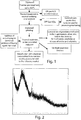
Figure 1 is a simplified and qualitative block diagram of one embodiment of the method according to the invention. -
Figure 2 shows the X-ray diffractogram of the inert slag based on aluminosilicates, obtained in the embodiment of the method, described in Example 1. - In this example jarositic sludges have been used, whose average composition is illustrated in the following Table 1:
Table 1 Parameter Value U.M. Al 0.70 % Ca 1.3 % Cd 0.07 % Cu 0.35 % Fe 30.1 % Mg 0.71 % Pb 4.4 % S total 10.0 % SiO2 2,6 % Zn 8.8 % % H2O 34.00 % - In the composition of jarositic sludges, reported in Table 1, there are not reported indium, germanium, silver and other elements, as in this step the same are present at relatively low concentrations.
- The subsequent described steps are intended to concentrate the indium, germanium, silver, zinc and lead, included in the matrix of hydrated sulfates, typical for these jarositic sludges, and to transform the same into a chemical form suitable to be treated in plant lines that normally treat the mineral or raw material the zinc is extracted from, i.e., oxides, sulfides or a mixture of oxides and sulfides.
- An aliquot of jarositic sludge sample was dried at 110°C to remove imbibition water; from the thus obtained material, 500 grams of sample were withdrawn, which were treated in a rotary kiln, but, alternatively, a microwave kiln can be used, at a controlled temperature, so as to selectively remove the crystallization water and sulfur compounds.
- The step subsequent to drying at 110°C involves to treat the material in a temperature range from 110°C to 510°C. This step results in the de-hydroxylation of jarosite sludges, with water development in gas phase. The gaseous flow thus developed is conveyed, re-condensed and collected. In technical terms, this step coincides with the elimination of crystallization water. The drying and the elimination of crystallization water were carried out separately, with the sole purpose of experimentally define these two steps of the method but they can be carried out simultaneously, in a temperature range from room temperature to 510°C.
- The next step of the heat treatment covers a range of temperatures which can range from 510°C to 1350°C. In this range of temperatures, the sulfates occurring in the jarositic sludges decompose with gas phase SOx evolution and the compounds remaining in the solid are converted into oxides. The thus developed gaseous flow is conveyed to capture systems for the analysis and sent to a plant for sulfuric acid production.
- In the described example, the temperature range used in this second step is between 510°C and 1000°C: considering the composition of the used sample, not all of the occurring sulfates decompose in this temperature range, therefore it is expected to detect a content of residual sulfur in the material at the end of treatment. In the following Table 2 the elemental analyses of the jarosite dried at 110°C and the material treated at 1000°C are reported:
Table 2 Jarosite at 110°C Jarosite treated at 1000°C Parameter U.M. Found values Found values s Ag mg/Kg 207 242 Al mg/Kg 6884 8139 AS mg/Kg 7789 18230 Ba mg/Kg 6148 9485 Ca mg/Kg 12723 7634 Cd mg/Kg 577 716 Co mg/Kg 12 23 Cr mg/Kg 332 727 Cu mg/Kg 3407 3999 Fe mg/Kg 300711 363041 Gd mg/Kg 46 58 In mg/Kg 256 297 K mg/Kg 3153 3156 Mg mg/Kg 3583 1168 Mn mg/Kg 5783 8482 Mo mg/Kg 57 117 Nb mg/Kg 360 144 Nl mg/Kg 31 344 Pb mg/Kg 43946 52334 S mg/Kg 100332 63096 Se mg/Kg 46 17 Si mg/Kg 25677 25872 Ti mg/Kg 797 786 Zn mg/Kg 87610 106740 Zr mg/Kg 31 78 - It can be noted how a first concentration of indium is obtained, with respect to the untreated sludge which is similar to that typical occurring in sphalerite.
- The material obtained after the treatment at 1000°C is used to prepare the feed to the next treatment section. In order to extract from the material indium, germanium, silver, zinc and lead in the form of oxides, sulfides or mixture of oxides and sulfides, a strong reducing reaction at high temperature is carried out. For the realization of the reducing conditions it is used a reactor with a transferred arc plasma, which allows to use, as a carbon source for the reduction, in addition to the traditional reagents, also waste or scrap with a high carbon content. The feed for the reactor with a transferred arc plasma was formed by mixing the material treated at 1000°C, carbon and calcium carbonate. At the end of the treatment in the transferred arc plasma reactor, are obtained three types of products:
- mix of powders enriched in indium, germanium, silver, zinc and lead in the form of oxides, sulfides or mixture of oxides and sulfides;
- metallic iron, with the chemical composition from cast iron to alloy steel;
- inert vitrified/ceramized slag, based on aluminosilicates;
- In the following Table 3 are shown the main elements that make up the powder mix.

- It can be seen as result from the treatments, that the indium concentration is comparable to the that found in high concentration sphalerite of this element. In addition, elements such as germanium and niobium, which in the previous steps were not at significant concentration, are present in the mixture of powders at very high concentrations.
- A significant concentration effect is also found for silver, as well as for lead and zinc.
- The analyses by XRD (X ray diffraction) and SEM-EDXS electron microscopy confirm that the powders are composed predominantly of a mixture of oxides and sulfides of the main elements indicated in the table. The concentrations obtained for these elements, together with the chemical form thereof (mixture of oxides and sulfides), make this material suitable to be sent back to the extraction treatment of zinc and other elements, together with the commonly used raw materials (for example sphalerite mineral).
- In the following Table 4 the characterization analyses of the slag obtained in this example are indicated: in this case it is chosen to use the cooling conditions suitable to a vitrified product.
Table 4 Paramter U.M. Found values Si mg/Kg 261576 Na mg/Kg 119306 Fe mg/Kg 108712 Al mg/Kg 80667 Ca mg/Kg 47397 K mg/Kg 10666 Ti mg/Kg 6970 Ba mg/Kg 5137 Mn mg/Kg 4789 Mg mg/Kg 1563 - The matrix obtained is actually vitrified, as confirmed by XRD (X ray diffraction) analysis: the instrument detects a totally amorphous matrix, as shown in
Figure 2 . - By changing the cooling conditions of this melt, it is possible to obtain a ceramized slag (i.e. with a crystalline organization of the matrix), with the same chemical composition. In both cases, the resulting material is a secondary raw material with an intrinsic commercial value and a reference market.
Claims (13)
- A method for thermally producing a solid concentrate - substantially iron free - enriched in its contents of indium, germanium, zinc, silver, lead and optionally other metals, starting from residual materials produced by the zinc production chain, such as jarosite and/or goethite sludges and/or mixed sludges deriving from the zinc extraction processes by direct leaching, with the contemporaneous production of an alloy of iron with a chemical composition from cast iron to alloy steel and of an inert product with a physical structure from vitrified amorphous to crystallized ceramic, wherein the residual material to be treated is subjected to the following operations:- optional drying at a temperature comprised between 80°C and 200ºC;- heating of the material, optionally dried, at a temperature comprised in the range of 110-510ºC in closed kiln, with emission from the kiln of an aeriform flow prevalently composed of water;- further heating, at a temperature lower or equal to 1350ºC, with an increase in concentration and in chemical form of oxides, sulphides or of a mixture thereof, of indium, germanium, zinc, silver, lead and optionally other metals, however on a matrix not yet suitable to allow their effective and efficient separation due to the high contents of iron oxides, and with emission from the kiln, when the treated material contains jarosite or mixed sludges deriving from the direct leaching, of a flow of sulphur compounds in SOx form;- carbon reducing treatment of the resulting product, optionally ground, in a carbon reduction reactor, at temperatures from 1000ºC to 1800ºC, in presence of a carbon amount comprised between 1.1 and 3 times the stoichiometric value of the iron oxides expressed as Fe2O3 and optionally of a melting and basicity index corrector agent, intended as a ratio between the calcium and magnesium contents expressed as CaO and MgO and the silicon and aluminium contents, expressed as SiO2 and Al2O3 i.e. (CaO+MgO)/(SiO2+Al2O3), with consequent development of compounds of indium, germanium, zinc, silver, lead and optionally of other metals in volatile chemical form;- transformation of the volatile compounds of metals contained in the off-gas in solid particulate or powders, by lowering of the off-gases temperature and optional addition of a gas which contains oxygen, and by using of an abatement system, the whole of the solid particulate or of the powders being a concentrate - substantially free of iron oxides - enriched in indium, germanium, zinc, silver, lead and optionally other metals in chemical form of oxides or sulphides or mixtures of oxides and sulphides;- contemporaneous transformation, by effect of the carbon reduction at a high temperature, of the iron oxides in liquid metallic alloy of iron, with a composition from cast iron to alloy steel, which separates from the remaining liquid matrix stratifying in the low part of the reactor, and of the melting and basicity index corrector agent which separates from the remaining liquid matrix stratifying in the high part of the reactor in form of liquid slag based on aluminosilicates;- collection of the alloy of liquid iron placed below and of the liquid slag placed up by means of dedicated exhausts of the reactor with separation therefore of the alloy of iron and of the amorphous (vitrified) or crystalline (ceramized) inert slag according to the cooling methods of the poured slag;- sending of the concentrate enriched in indium, germanium, zinc, silver, lead and optionally other metals, in form of oxides and/or sulphides and/or mixtures thereof, to conventional apparatuses for separation of these metals in substantial absence of iron, with their consequent recovery and exploitation;- sending of the alloy of iron and of the vitrified/ceramized inert slag to the respective markets of reference according to their quality.
- The method according to claim 1, wherein the other metals to be extracted are rare metals or rare earth metals.
- The method according to claim 1 or 2, wherein the heating at 110-510ºC and the further heating at a temperature lower or equal to 1350ºC are made in a rotary kiln, or in a microwave kiln.
- The method according to any claims from 1 to 3, wherein the aeriform flow going out from the kiln, where the optionally dried material has been heated at 110-510ºC, prevalently composed of water in its aeriform state, is conveyed to a system for heat recovery and condensation.
- The method according to any of the preceding claims, wherein the neutral or oxidizing environment is obtained by a gas chosen from the group comprising nitrogen, oxygen, air and combinations thereof.
- The method according to any of the preceding claims, wherein the SOx flow coming out from the reactor during heating at a temperature lower or equal to 1350ºC, when the treated material contains jarosite or mixed sludges coming from the direct leaching, is used for the sulphuric acid production.
- The method according to any of the preceding claims, wherein the reactor for carrying out the carbon reducing treatment is chosen from the group comprising microwave plasma reactor, non-transferred arc thermal plasma reactor, mixed (transferred arc and non-transferred arc) thermal plasma reactor, EAF reactor and induction reactor.
- The method according to any of the preceding claims, wherein in the carbon reducing treatment it is added carbon in a form chosen from the group comprising vegetal carbon, coke, residues containing plastics, gases containing carbon and hydrogen in their molecule, and mixtures thereof.
- The method according to claim 8, wherein the gas containing carbon and hydrogen it its molecule is the methane.
- The method according to any of the preceding claims, wherein the separation systems from the off-gases of the volatile compounds of indium, germanium, zinc, silver, lead and optionally other metals are chosen from the group comprising mechanical systems, electrostatic systems, systems using a filtering septum and wet separation systems.
- The method according to claim 10 wherein the mechanical systems are cyclones and/or separation chambers, the electrostatic systems are electrostatic filters, the systems using a filtering septum are porous physical filters and the wet systems are wet scrubbers.
- The method according to any of the preceding claims, wherein separation of the liquid alloy of iron, with a chemical composition from cast iron to alloy steel, and of liquid inert slag is carried out in a secondary reactor.
- The method according to claims from 1 to 12, wherein the further heating until 1350ºC in closed kiln is continuously carried out, in "semi-batch" or in "batch".
Priority Applications (1)
| Application Number | Priority Date | Filing Date | Title |
|---|---|---|---|
| PL16795442T PL3362582T3 (en) | 2015-10-14 | 2016-09-13 | A method for producing a concentrate containing metais, rare metals and rare earth metals from residuals generated in the zinc production chain and concentrate obtained by said method |
Applications Claiming Priority (3)
| Application Number | Priority Date | Filing Date | Title |
|---|---|---|---|
| ITUB2015A004661A ITUB20154661A1 (en) | 2015-10-14 | 2015-10-14 | Process for the preparation of a concentrate containing metals, rare metals and rare earths from residues generated in the zinc production chain, and thus obtainable concentrate. |
| ITUB2015A004943A ITUB20154943A1 (en) | 2015-10-28 | 2015-10-28 | Process for the preparation of a concentrate containing metals, rare metals and rare earths from residues generated in the zinc production chain, and thus obtainable concentrate. |
| PCT/IT2016/000210 WO2017064735A1 (en) | 2015-10-14 | 2016-09-13 | A method for producing a concentrate containing metais, rare metals and rare earth metals from residuals generated in the zinc production chain and concentrate obtained by said method |
Publications (2)
| Publication Number | Publication Date |
|---|---|
| EP3362582A1 EP3362582A1 (en) | 2018-08-22 |
| EP3362582B1 true EP3362582B1 (en) | 2021-08-25 |
Family
ID=57321378
Family Applications (1)
| Application Number | Title | Priority Date | Filing Date |
|---|---|---|---|
| EP16795442.9A Active EP3362582B1 (en) | 2015-10-14 | 2016-09-13 | A method for producing a concentrate containing metais, rare metals and rare earth metals from residuals generated in the zinc production chain and concentrate obtained by said method |
Country Status (5)
| Country | Link |
|---|---|
| EP (1) | EP3362582B1 (en) |
| CN (1) | CN108350520A (en) |
| ES (1) | ES2887206T3 (en) |
| PL (1) | PL3362582T3 (en) |
| WO (1) | WO2017064735A1 (en) |
Families Citing this family (2)
| Publication number | Priority date | Publication date | Assignee | Title |
|---|---|---|---|---|
| IT202000009316A1 (en) * | 2020-04-28 | 2021-10-28 | Ecotec Gestione Impianti S R L | PROCEDURE FOR THE SIMULTANEOUS TREATMENT OF RESIDUES FROM THE NON-FERROUS METALLURGICAL INDUSTRY, WITH THE OBTAINING OF PRODUCTS THAT CAN BE REFURBISHED AND SECONDARY RAW MATERIALS, IN ACCORDANCE WITH THE STRATEGIES OF THE CIRCULAR ECONOMY. |
| CN112442606A (en) * | 2020-11-24 | 2021-03-05 | 荆门市格林美新材料有限公司 | Method for recovering germanium from germanium-containing copper-cobalt alloy |
Family Cites Families (4)
| Publication number | Priority date | Publication date | Assignee | Title |
|---|---|---|---|---|
| NO135428C (en) * | 1974-03-21 | 1977-04-05 | Norske Zinkkompani As | |
| DE602004007154T2 (en) * | 2003-09-29 | 2008-02-21 | Umicore | METHOD AND DEVICE FOR OBTAINING NON-STEEL METALS FROM ZINC RESIDUES |
| JP5183638B2 (en) * | 2006-11-02 | 2013-04-17 | ユミコア ソシエテ アノニム | Recovery of non-ferrous metals from zinc and lead industry byproducts using electrothermal smelting in submerged plasma |
| EP1997919A1 (en) * | 2007-05-24 | 2008-12-03 | Paul Wurth S.A. | Method of recovering zinc- and sulphate-rich residue |
-
2016
- 2016-09-13 PL PL16795442T patent/PL3362582T3/en unknown
- 2016-09-13 EP EP16795442.9A patent/EP3362582B1/en active Active
- 2016-09-13 WO PCT/IT2016/000210 patent/WO2017064735A1/en not_active Ceased
- 2016-09-13 ES ES16795442T patent/ES2887206T3/en active Active
- 2016-09-13 CN CN201680060236.1A patent/CN108350520A/en active Pending
Non-Patent Citations (1)
| Title |
|---|
| None * |
Also Published As
| Publication number | Publication date |
|---|---|
| WO2017064735A8 (en) | 2018-04-19 |
| WO2017064735A1 (en) | 2017-04-20 |
| PL3362582T3 (en) | 2021-12-20 |
| CN108350520A (en) | 2018-07-31 |
| ES2887206T3 (en) | 2021-12-22 |
| EP3362582A1 (en) | 2018-08-22 |
Similar Documents
| Publication | Publication Date | Title |
|---|---|---|
| Oustadakis et al. | Hydrometallurgical process for zinc recovery from electric arc furnace dust (EAFD): Part I: Characterization and leaching by diluted sulphuric acid | |
| US5667553A (en) | Methods for recycling electric arc furnace dust | |
| Li et al. | Study on separating of zinc and iron from zinc leaching residues by roasting with ammonium sulphate | |
| CA2623628C (en) | A process for separating iron from other metals in iron containing feed stocks | |
| AU2008257833B2 (en) | Method for the valorisation of zinc- and sulphate-rich residue | |
| US5922261A (en) | Process for recovering iron from iron-rich material | |
| Zhang et al. | A green approach for simultaneously preparing Ti5Si3 and Ti5Si4-TiAl3 alloys using spent SCR catalyst, Ti-bearing blast furnace slag, and Al alloy scrap | |
| Tang et al. | A cleaner process for lead recovery from lead-containing hazardous solid waste and zinc leaching residue via reducing-matting smelting | |
| Mombelli et al. | Jarosite wastes reduction through blast furnace sludges for cast iron production | |
| ES2203095T3 (en) | PROCESS OF TREATMENT OF STEEL POWDER BY HUMEDA. | |
| Chen et al. | Speciation of toxic pollutants in Pb/Zn smelter slags by X-ray Absorption Spectroscopy in the context of the literature | |
| Wang et al. | Recovery of Cu-Fe-S matte from electroplating sludge via the sulfurization-smelting method | |
| Bayoumi et al. | Hybrid hydro-pyrometallurgical process for Zn recovery from electric arc furnace dust | |
| AU2004221471B2 (en) | Recovery of metal values from cermet | |
| Ruan et al. | Utilization and detoxification of gypsum sludge by replacing limestone in reduction smelting of high lead slag | |
| Zheng et al. | Solid waste remediation in the metallurgical industry: Application and environmental impact | |
| EP3362582A1 (en) | A method for producing a concentrate containing metais, rare metals and rare earth metals from residuals generated in the zinc production chain and concentrate obtained by said method | |
| Lewis et al. | Prioritising objectives for waste reprocessing: a case study in secondary lead refining | |
| US10337083B2 (en) | Processes for preparing various metals and derivatives thereof from copper- and sulfur-containing material | |
| Fan et al. | Review on iron recovery and cleaning of copper slag | |
| AU703815B2 (en) | Process for recovering iron from iron-containing material | |
| Li et al. | Selective Separation of Arsenic from Arsenic-bearing Copper Dust by Vulcanization Reduction | |
| Lucas et al. | Conditioning of bauxite residue with bottom ash in view of recovery of valuable metals: A sustainable approach | |
| ITUB20154661A1 (en) | Process for the preparation of a concentrate containing metals, rare metals and rare earths from residues generated in the zinc production chain, and thus obtainable concentrate. | |
| Wang et al. | Integration of Traditional Methods for Elemental Recovery in a Zero‐waste Recycling Flow Sheet |
Legal Events
| Date | Code | Title | Description |
|---|---|---|---|
| STAA | Information on the status of an ep patent application or granted ep patent |
Free format text: STATUS: UNKNOWN |
|
| STAA | Information on the status of an ep patent application or granted ep patent |
Free format text: STATUS: THE INTERNATIONAL PUBLICATION HAS BEEN MADE |
|
| PUAI | Public reference made under article 153(3) epc to a published international application that has entered the european phase |
Free format text: ORIGINAL CODE: 0009012 |
|
| STAA | Information on the status of an ep patent application or granted ep patent |
Free format text: STATUS: REQUEST FOR EXAMINATION WAS MADE |
|
| 17P | Request for examination filed |
Effective date: 20180503 |
|
| AK | Designated contracting states |
Kind code of ref document: A1 Designated state(s): AL AT BE BG CH CY CZ DE DK EE ES FI FR GB GR HR HU IE IS IT LI LT LU LV MC MK MT NL NO PL PT RO RS SE SI SK SM TR |
|
| AX | Request for extension of the european patent |
Extension state: BA ME |
|
| DAV | Request for validation of the european patent (deleted) | ||
| DAX | Request for extension of the european patent (deleted) | ||
| STAA | Information on the status of an ep patent application or granted ep patent |
Free format text: STATUS: EXAMINATION IS IN PROGRESS |
|
| 17Q | First examination report despatched |
Effective date: 20191023 |
|
| GRAP | Despatch of communication of intention to grant a patent |
Free format text: ORIGINAL CODE: EPIDOSNIGR1 |
|
| STAA | Information on the status of an ep patent application or granted ep patent |
Free format text: STATUS: GRANT OF PATENT IS INTENDED |
|
| INTG | Intention to grant announced |
Effective date: 20210412 |
|
| GRAS | Grant fee paid |
Free format text: ORIGINAL CODE: EPIDOSNIGR3 |
|
| GRAA | (expected) grant |
Free format text: ORIGINAL CODE: 0009210 |
|
| STAA | Information on the status of an ep patent application or granted ep patent |
Free format text: STATUS: THE PATENT HAS BEEN GRANTED |
|
| AK | Designated contracting states |
Kind code of ref document: B1 Designated state(s): AL AT BE BG CH CY CZ DE DK EE ES FI FR GB GR HR HU IE IS IT LI LT LU LV MC MK MT NL NO PL PT RO RS SE SI SK SM TR |
|
| REG | Reference to a national code |
Ref country code: CH Ref legal event code: EP |
|
| REG | Reference to a national code |
Ref country code: DE Ref legal event code: R096 Ref document number: 602016062784 Country of ref document: DE |
|
| REG | Reference to a national code |
Ref country code: IE Ref legal event code: FG4D Ref country code: AT Ref legal event code: REF Ref document number: 1423859 Country of ref document: AT Kind code of ref document: T Effective date: 20210915 |
|
| REG | Reference to a national code |
Ref country code: FI Ref legal event code: FGE |
|
| REG | Reference to a national code |
Ref country code: NO Ref legal event code: T2 Effective date: 20210825 |
|
| REG | Reference to a national code |
Ref country code: LT Ref legal event code: MG9D |
|
| REG | Reference to a national code |
Ref country code: ES Ref legal event code: FG2A Ref document number: 2887206 Country of ref document: ES Kind code of ref document: T3 Effective date: 20211222 |
|
| REG | Reference to a national code |
Ref country code: NL Ref legal event code: MP Effective date: 20210825 |
|
| REG | Reference to a national code |
Ref country code: AT Ref legal event code: MK05 Ref document number: 1423859 Country of ref document: AT Kind code of ref document: T Effective date: 20210825 |
|
| PG25 | Lapsed in a contracting state [announced via postgrant information from national office to epo] |
Ref country code: SE Free format text: LAPSE BECAUSE OF FAILURE TO SUBMIT A TRANSLATION OF THE DESCRIPTION OR TO PAY THE FEE WITHIN THE PRESCRIBED TIME-LIMIT Effective date: 20210825 Ref country code: RS Free format text: LAPSE BECAUSE OF FAILURE TO SUBMIT A TRANSLATION OF THE DESCRIPTION OR TO PAY THE FEE WITHIN THE PRESCRIBED TIME-LIMIT Effective date: 20210825 Ref country code: HR Free format text: LAPSE BECAUSE OF FAILURE TO SUBMIT A TRANSLATION OF THE DESCRIPTION OR TO PAY THE FEE WITHIN THE PRESCRIBED TIME-LIMIT Effective date: 20210825 Ref country code: PT Free format text: LAPSE BECAUSE OF FAILURE TO SUBMIT A TRANSLATION OF THE DESCRIPTION OR TO PAY THE FEE WITHIN THE PRESCRIBED TIME-LIMIT Effective date: 20211227 Ref country code: LT Free format text: LAPSE BECAUSE OF FAILURE TO SUBMIT A TRANSLATION OF THE DESCRIPTION OR TO PAY THE FEE WITHIN THE PRESCRIBED TIME-LIMIT Effective date: 20210825 Ref country code: AT Free format text: LAPSE BECAUSE OF FAILURE TO SUBMIT A TRANSLATION OF THE DESCRIPTION OR TO PAY THE FEE WITHIN THE PRESCRIBED TIME-LIMIT Effective date: 20210825 |
|
| PG25 | Lapsed in a contracting state [announced via postgrant information from national office to epo] |
Ref country code: LV Free format text: LAPSE BECAUSE OF FAILURE TO SUBMIT A TRANSLATION OF THE DESCRIPTION OR TO PAY THE FEE WITHIN THE PRESCRIBED TIME-LIMIT Effective date: 20210825 Ref country code: GR Free format text: LAPSE BECAUSE OF FAILURE TO SUBMIT A TRANSLATION OF THE DESCRIPTION OR TO PAY THE FEE WITHIN THE PRESCRIBED TIME-LIMIT Effective date: 20211126 |
|
| PG25 | Lapsed in a contracting state [announced via postgrant information from national office to epo] |
Ref country code: NL Free format text: LAPSE BECAUSE OF FAILURE TO SUBMIT A TRANSLATION OF THE DESCRIPTION OR TO PAY THE FEE WITHIN THE PRESCRIBED TIME-LIMIT Effective date: 20210825 |
|
| PG25 | Lapsed in a contracting state [announced via postgrant information from national office to epo] |
Ref country code: DK Free format text: LAPSE BECAUSE OF FAILURE TO SUBMIT A TRANSLATION OF THE DESCRIPTION OR TO PAY THE FEE WITHIN THE PRESCRIBED TIME-LIMIT Effective date: 20210825 |
|
| REG | Reference to a national code |
Ref country code: CH Ref legal event code: PL |
|
| REG | Reference to a national code |
Ref country code: DE Ref legal event code: R097 Ref document number: 602016062784 Country of ref document: DE |
|
| PG25 | Lapsed in a contracting state [announced via postgrant information from national office to epo] |
Ref country code: SM Free format text: LAPSE BECAUSE OF FAILURE TO SUBMIT A TRANSLATION OF THE DESCRIPTION OR TO PAY THE FEE WITHIN THE PRESCRIBED TIME-LIMIT Effective date: 20210825 Ref country code: SK Free format text: LAPSE BECAUSE OF FAILURE TO SUBMIT A TRANSLATION OF THE DESCRIPTION OR TO PAY THE FEE WITHIN THE PRESCRIBED TIME-LIMIT Effective date: 20210825 Ref country code: RO Free format text: LAPSE BECAUSE OF FAILURE TO SUBMIT A TRANSLATION OF THE DESCRIPTION OR TO PAY THE FEE WITHIN THE PRESCRIBED TIME-LIMIT Effective date: 20210825 Ref country code: MC Free format text: LAPSE BECAUSE OF FAILURE TO SUBMIT A TRANSLATION OF THE DESCRIPTION OR TO PAY THE FEE WITHIN THE PRESCRIBED TIME-LIMIT Effective date: 20210825 Ref country code: EE Free format text: LAPSE BECAUSE OF FAILURE TO SUBMIT A TRANSLATION OF THE DESCRIPTION OR TO PAY THE FEE WITHIN THE PRESCRIBED TIME-LIMIT Effective date: 20210825 Ref country code: CZ Free format text: LAPSE BECAUSE OF FAILURE TO SUBMIT A TRANSLATION OF THE DESCRIPTION OR TO PAY THE FEE WITHIN THE PRESCRIBED TIME-LIMIT Effective date: 20210825 Ref country code: AL Free format text: LAPSE BECAUSE OF FAILURE TO SUBMIT A TRANSLATION OF THE DESCRIPTION OR TO PAY THE FEE WITHIN THE PRESCRIBED TIME-LIMIT Effective date: 20210825 |
|
| PLBE | No opposition filed within time limit |
Free format text: ORIGINAL CODE: 0009261 |
|
| STAA | Information on the status of an ep patent application or granted ep patent |
Free format text: STATUS: NO OPPOSITION FILED WITHIN TIME LIMIT |
|
| PG25 | Lapsed in a contracting state [announced via postgrant information from national office to epo] |
Ref country code: LU Free format text: LAPSE BECAUSE OF NON-PAYMENT OF DUE FEES Effective date: 20210913 Ref country code: IE Free format text: LAPSE BECAUSE OF NON-PAYMENT OF DUE FEES Effective date: 20210913 |
|
| 26N | No opposition filed |
Effective date: 20220527 |
|
| PG25 | Lapsed in a contracting state [announced via postgrant information from national office to epo] |
Ref country code: SI Free format text: LAPSE BECAUSE OF FAILURE TO SUBMIT A TRANSLATION OF THE DESCRIPTION OR TO PAY THE FEE WITHIN THE PRESCRIBED TIME-LIMIT Effective date: 20210825 Ref country code: LI Free format text: LAPSE BECAUSE OF NON-PAYMENT OF DUE FEES Effective date: 20210930 Ref country code: CH Free format text: LAPSE BECAUSE OF NON-PAYMENT OF DUE FEES Effective date: 20210930 |
|
| P01 | Opt-out of the competence of the unified patent court (upc) registered |
Effective date: 20230518 |
|
| PG25 | Lapsed in a contracting state [announced via postgrant information from national office to epo] |
Ref country code: CY Free format text: LAPSE BECAUSE OF FAILURE TO SUBMIT A TRANSLATION OF THE DESCRIPTION OR TO PAY THE FEE WITHIN THE PRESCRIBED TIME-LIMIT Effective date: 20210825 |
|
| PG25 | Lapsed in a contracting state [announced via postgrant information from national office to epo] |
Ref country code: HU Free format text: LAPSE BECAUSE OF FAILURE TO SUBMIT A TRANSLATION OF THE DESCRIPTION OR TO PAY THE FEE WITHIN THE PRESCRIBED TIME-LIMIT; INVALID AB INITIO Effective date: 20160913 |
|
| PGFP | Annual fee paid to national office [announced via postgrant information from national office to epo] |
Ref country code: PL Payment date: 20230628 Year of fee payment: 8 |
|
| PGFP | Annual fee paid to national office [announced via postgrant information from national office to epo] |
Ref country code: GB Payment date: 20230720 Year of fee payment: 8 Ref country code: BG Payment date: 20230714 Year of fee payment: 8 |
|
| PGFP | Annual fee paid to national office [announced via postgrant information from national office to epo] |
Ref country code: FR Payment date: 20230710 Year of fee payment: 8 Ref country code: DE Payment date: 20230718 Year of fee payment: 8 Ref country code: BE Payment date: 20230818 Year of fee payment: 8 |
|
| PGFP | Annual fee paid to national office [announced via postgrant information from national office to epo] |
Ref country code: ES Payment date: 20231004 Year of fee payment: 8 |
|
| PG25 | Lapsed in a contracting state [announced via postgrant information from national office to epo] |
Ref country code: MK Free format text: LAPSE BECAUSE OF FAILURE TO SUBMIT A TRANSLATION OF THE DESCRIPTION OR TO PAY THE FEE WITHIN THE PRESCRIBED TIME-LIMIT Effective date: 20210825 |
|
| PG25 | Lapsed in a contracting state [announced via postgrant information from national office to epo] |
Ref country code: MT Free format text: LAPSE BECAUSE OF FAILURE TO SUBMIT A TRANSLATION OF THE DESCRIPTION OR TO PAY THE FEE WITHIN THE PRESCRIBED TIME-LIMIT Effective date: 20210825 |
|
| REG | Reference to a national code |
Ref country code: DE Ref legal event code: R119 Ref document number: 602016062784 Country of ref document: DE |
|
| PG25 | Lapsed in a contracting state [announced via postgrant information from national office to epo] |
Ref country code: BG Free format text: LAPSE BECAUSE OF NON-PAYMENT OF DUE FEES Effective date: 20240913 |
|
| GBPC | Gb: european patent ceased through non-payment of renewal fee |
Effective date: 20240913 |
|
| PG25 | Lapsed in a contracting state [announced via postgrant information from national office to epo] |
Ref country code: DE Free format text: LAPSE BECAUSE OF NON-PAYMENT OF DUE FEES Effective date: 20250401 |
|
| PG25 | Lapsed in a contracting state [announced via postgrant information from national office to epo] |
Ref country code: GB Free format text: LAPSE BECAUSE OF NON-PAYMENT OF DUE FEES Effective date: 20240913 |
|
| REG | Reference to a national code |
Ref country code: BE Ref legal event code: MM Effective date: 20240930 |
|
| PG25 | Lapsed in a contracting state [announced via postgrant information from national office to epo] |
Ref country code: BE Free format text: LAPSE BECAUSE OF NON-PAYMENT OF DUE FEES Effective date: 20240930 |
|
| PG25 | Lapsed in a contracting state [announced via postgrant information from national office to epo] |
Ref country code: FR Free format text: LAPSE BECAUSE OF NON-PAYMENT OF DUE FEES Effective date: 20240930 |
|
| PGFP | Annual fee paid to national office [announced via postgrant information from national office to epo] |
Ref country code: FI Payment date: 20250912 Year of fee payment: 10 |
|
| PGFP | Annual fee paid to national office [announced via postgrant information from national office to epo] |
Ref country code: NO Payment date: 20250909 Year of fee payment: 10 |
|
| PGFP | Annual fee paid to national office [announced via postgrant information from national office to epo] |
Ref country code: IT Payment date: 20250916 Year of fee payment: 10 |
|
| REG | Reference to a national code |
Ref country code: ES Ref legal event code: FD2A Effective date: 20251030 |
|
| PG25 | Lapsed in a contracting state [announced via postgrant information from national office to epo] |
Ref country code: TR Free format text: LAPSE BECAUSE OF FAILURE TO SUBMIT A TRANSLATION OF THE DESCRIPTION OR TO PAY THE FEE WITHIN THE PRESCRIBED TIME-LIMIT Effective date: 20210825 |
|
| PG25 | Lapsed in a contracting state [announced via postgrant information from national office to epo] |
Ref country code: ES Free format text: LAPSE BECAUSE OF NON-PAYMENT OF DUE FEES Effective date: 20240914 |
|
| PG25 | Lapsed in a contracting state [announced via postgrant information from national office to epo] |
Ref country code: PL Free format text: LAPSE BECAUSE OF NON-PAYMENT OF DUE FEES Effective date: 20240913 |